EP4582713A1 - Rolling bearing and rolling body production method - Google Patents
Rolling bearing and rolling body production method Download PDFInfo
- Publication number
- EP4582713A1 EP4582713A1 EP23860363.3A EP23860363A EP4582713A1 EP 4582713 A1 EP4582713 A1 EP 4582713A1 EP 23860363 A EP23860363 A EP 23860363A EP 4582713 A1 EP4582713 A1 EP 4582713A1
- Authority
- EP
- European Patent Office
- Prior art keywords
- rolling element
- rolling
- production method
- minutes
- hardness
- Prior art date
- Legal status (The legal status is an assumption and is not a legal conclusion. Google has not performed a legal analysis and makes no representation as to the accuracy of the status listed.)
- Pending
Links
Images
Classifications
-
- C—CHEMISTRY; METALLURGY
- C21—METALLURGY OF IRON
- C21D—MODIFYING THE PHYSICAL STRUCTURE OF FERROUS METALS; GENERAL DEVICES FOR HEAT TREATMENT OF FERROUS OR NON-FERROUS METALS OR ALLOYS; MAKING METAL MALLEABLE, e.g. BY DECARBURISATION OR TEMPERING
- C21D9/00—Heat treatment, e.g. annealing, hardening, quenching or tempering, adapted for particular articles; Furnaces therefor
- C21D9/36—Heat treatment, e.g. annealing, hardening, quenching or tempering, adapted for particular articles; Furnaces therefor for balls; for rollers
-
- F—MECHANICAL ENGINEERING; LIGHTING; HEATING; WEAPONS; BLASTING
- F16—ENGINEERING ELEMENTS AND UNITS; GENERAL MEASURES FOR PRODUCING AND MAINTAINING EFFECTIVE FUNCTIONING OF MACHINES OR INSTALLATIONS; THERMAL INSULATION IN GENERAL
- F16C—SHAFTS; FLEXIBLE SHAFTS; ELEMENTS OR CRANKSHAFT MECHANISMS; ROTARY BODIES OTHER THAN GEARING ELEMENTS; BEARINGS
- F16C19/00—Bearings with rolling contact, for exclusively rotary movement
- F16C19/22—Bearings with rolling contact, for exclusively rotary movement with bearing rollers essentially of the same size in one or more circular rows, e.g. needle bearings
-
- C—CHEMISTRY; METALLURGY
- C21—METALLURGY OF IRON
- C21D—MODIFYING THE PHYSICAL STRUCTURE OF FERROUS METALS; GENERAL DEVICES FOR HEAT TREATMENT OF FERROUS OR NON-FERROUS METALS OR ALLOYS; MAKING METAL MALLEABLE, e.g. BY DECARBURISATION OR TEMPERING
- C21D1/00—General methods or devices for heat treatment, e.g. annealing, hardening, quenching or tempering
- C21D1/18—Hardening; Quenching with or without subsequent tempering
-
- C—CHEMISTRY; METALLURGY
- C21—METALLURGY OF IRON
- C21D—MODIFYING THE PHYSICAL STRUCTURE OF FERROUS METALS; GENERAL DEVICES FOR HEAT TREATMENT OF FERROUS OR NON-FERROUS METALS OR ALLOYS; MAKING METAL MALLEABLE, e.g. BY DECARBURISATION OR TEMPERING
- C21D1/00—General methods or devices for heat treatment, e.g. annealing, hardening, quenching or tempering
- C21D1/26—Methods of annealing
-
- C—CHEMISTRY; METALLURGY
- C21—METALLURGY OF IRON
- C21D—MODIFYING THE PHYSICAL STRUCTURE OF FERROUS METALS; GENERAL DEVICES FOR HEAT TREATMENT OF FERROUS OR NON-FERROUS METALS OR ALLOYS; MAKING METAL MALLEABLE, e.g. BY DECARBURISATION OR TEMPERING
- C21D1/00—General methods or devices for heat treatment, e.g. annealing, hardening, quenching or tempering
- C21D1/56—General methods or devices for heat treatment, e.g. annealing, hardening, quenching or tempering characterised by the quenching agents
- C21D1/58—Oils
-
- C—CHEMISTRY; METALLURGY
- C21—METALLURGY OF IRON
- C21D—MODIFYING THE PHYSICAL STRUCTURE OF FERROUS METALS; GENERAL DEVICES FOR HEAT TREATMENT OF FERROUS OR NON-FERROUS METALS OR ALLOYS; MAKING METAL MALLEABLE, e.g. BY DECARBURISATION OR TEMPERING
- C21D1/00—General methods or devices for heat treatment, e.g. annealing, hardening, quenching or tempering
- C21D1/56—General methods or devices for heat treatment, e.g. annealing, hardening, quenching or tempering characterised by the quenching agents
- C21D1/60—Aqueous agents
-
- C—CHEMISTRY; METALLURGY
- C21—METALLURGY OF IRON
- C21D—MODIFYING THE PHYSICAL STRUCTURE OF FERROUS METALS; GENERAL DEVICES FOR HEAT TREATMENT OF FERROUS OR NON-FERROUS METALS OR ALLOYS; MAKING METAL MALLEABLE, e.g. BY DECARBURISATION OR TEMPERING
- C21D6/00—Heat treatment of ferrous alloys
-
- C—CHEMISTRY; METALLURGY
- C21—METALLURGY OF IRON
- C21D—MODIFYING THE PHYSICAL STRUCTURE OF FERROUS METALS; GENERAL DEVICES FOR HEAT TREATMENT OF FERROUS OR NON-FERROUS METALS OR ALLOYS; MAKING METAL MALLEABLE, e.g. BY DECARBURISATION OR TEMPERING
- C21D8/00—Modifying the physical properties of ferrous metals or ferrous alloys by deformation combined with, or followed by, heat treatment
-
- F—MECHANICAL ENGINEERING; LIGHTING; HEATING; WEAPONS; BLASTING
- F16—ENGINEERING ELEMENTS AND UNITS; GENERAL MEASURES FOR PRODUCING AND MAINTAINING EFFECTIVE FUNCTIONING OF MACHINES OR INSTALLATIONS; THERMAL INSULATION IN GENERAL
- F16C—SHAFTS; FLEXIBLE SHAFTS; ELEMENTS OR CRANKSHAFT MECHANISMS; ROTARY BODIES OTHER THAN GEARING ELEMENTS; BEARINGS
- F16C19/00—Bearings with rolling contact, for exclusively rotary movement
- F16C19/22—Bearings with rolling contact, for exclusively rotary movement with bearing rollers essentially of the same size in one or more circular rows, e.g. needle bearings
- F16C19/24—Bearings with rolling contact, for exclusively rotary movement with bearing rollers essentially of the same size in one or more circular rows, e.g. needle bearings for radial load mainly
- F16C19/26—Bearings with rolling contact, for exclusively rotary movement with bearing rollers essentially of the same size in one or more circular rows, e.g. needle bearings for radial load mainly with a single row of rollers
-
- F—MECHANICAL ENGINEERING; LIGHTING; HEATING; WEAPONS; BLASTING
- F16—ENGINEERING ELEMENTS AND UNITS; GENERAL MEASURES FOR PRODUCING AND MAINTAINING EFFECTIVE FUNCTIONING OF MACHINES OR INSTALLATIONS; THERMAL INSULATION IN GENERAL
- F16C—SHAFTS; FLEXIBLE SHAFTS; ELEMENTS OR CRANKSHAFT MECHANISMS; ROTARY BODIES OTHER THAN GEARING ELEMENTS; BEARINGS
- F16C33/00—Parts of bearings; Special methods for making bearings or parts thereof
- F16C33/30—Parts of ball or roller bearings
- F16C33/32—Balls
-
- F—MECHANICAL ENGINEERING; LIGHTING; HEATING; WEAPONS; BLASTING
- F16—ENGINEERING ELEMENTS AND UNITS; GENERAL MEASURES FOR PRODUCING AND MAINTAINING EFFECTIVE FUNCTIONING OF MACHINES OR INSTALLATIONS; THERMAL INSULATION IN GENERAL
- F16C—SHAFTS; FLEXIBLE SHAFTS; ELEMENTS OR CRANKSHAFT MECHANISMS; ROTARY BODIES OTHER THAN GEARING ELEMENTS; BEARINGS
- F16C33/00—Parts of bearings; Special methods for making bearings or parts thereof
- F16C33/30—Parts of ball or roller bearings
- F16C33/34—Rollers; Needles
-
- C—CHEMISTRY; METALLURGY
- C21—METALLURGY OF IRON
- C21D—MODIFYING THE PHYSICAL STRUCTURE OF FERROUS METALS; GENERAL DEVICES FOR HEAT TREATMENT OF FERROUS OR NON-FERROUS METALS OR ALLOYS; MAKING METAL MALLEABLE, e.g. BY DECARBURISATION OR TEMPERING
- C21D2211/00—Microstructure comprising significant phases
- C21D2211/001—Austenite
-
- F—MECHANICAL ENGINEERING; LIGHTING; HEATING; WEAPONS; BLASTING
- F16—ENGINEERING ELEMENTS AND UNITS; GENERAL MEASURES FOR PRODUCING AND MAINTAINING EFFECTIVE FUNCTIONING OF MACHINES OR INSTALLATIONS; THERMAL INSULATION IN GENERAL
- F16C—SHAFTS; FLEXIBLE SHAFTS; ELEMENTS OR CRANKSHAFT MECHANISMS; ROTARY BODIES OTHER THAN GEARING ELEMENTS; BEARINGS
- F16C2202/00—Solid materials defined by their properties
- F16C2202/02—Mechanical properties
- F16C2202/04—Hardness
-
- F—MECHANICAL ENGINEERING; LIGHTING; HEATING; WEAPONS; BLASTING
- F16—ENGINEERING ELEMENTS AND UNITS; GENERAL MEASURES FOR PRODUCING AND MAINTAINING EFFECTIVE FUNCTIONING OF MACHINES OR INSTALLATIONS; THERMAL INSULATION IN GENERAL
- F16C—SHAFTS; FLEXIBLE SHAFTS; ELEMENTS OR CRANKSHAFT MECHANISMS; ROTARY BODIES OTHER THAN GEARING ELEMENTS; BEARINGS
- F16C2204/00—Metallic materials; Alloys
- F16C2204/60—Ferrous alloys, e.g. steel alloys
- F16C2204/66—High carbon steel, i.e. carbon content above 0.8 wt%, e.g. through-hardenable steel
-
- F—MECHANICAL ENGINEERING; LIGHTING; HEATING; WEAPONS; BLASTING
- F16—ENGINEERING ELEMENTS AND UNITS; GENERAL MEASURES FOR PRODUCING AND MAINTAINING EFFECTIVE FUNCTIONING OF MACHINES OR INSTALLATIONS; THERMAL INSULATION IN GENERAL
- F16C—SHAFTS; FLEXIBLE SHAFTS; ELEMENTS OR CRANKSHAFT MECHANISMS; ROTARY BODIES OTHER THAN GEARING ELEMENTS; BEARINGS
- F16C2204/00—Metallic materials; Alloys
- F16C2204/60—Ferrous alloys, e.g. steel alloys
- F16C2204/70—Ferrous alloys, e.g. steel alloys with chromium as the next major constituent
-
- F—MECHANICAL ENGINEERING; LIGHTING; HEATING; WEAPONS; BLASTING
- F16—ENGINEERING ELEMENTS AND UNITS; GENERAL MEASURES FOR PRODUCING AND MAINTAINING EFFECTIVE FUNCTIONING OF MACHINES OR INSTALLATIONS; THERMAL INSULATION IN GENERAL
- F16C—SHAFTS; FLEXIBLE SHAFTS; ELEMENTS OR CRANKSHAFT MECHANISMS; ROTARY BODIES OTHER THAN GEARING ELEMENTS; BEARINGS
- F16C2223/00—Surface treatments; Hardening; Coating
- F16C2223/10—Hardening, e.g. carburizing, carbo-nitriding
Definitions
- the present invention relates to a rolling bearing and a rolling element production method.
- PTL 1 discloses the following rolling bearing. At least one member of an outer ring, an inner ring, or a rolling element is obtained by performing a quenching treatment and a tempering treatment. A hardness of a surface layer portion thereof is HRC60 or higher and HRC65 or lower. Furthermore, a residual austenite of a raceway surface is 15% by volume or more and 24% by volume or less.
- a residual austenite content can be increased by performing the quenching treatment and the tempering treatment without performing a special heat treatment such as a carburizing and carbo-nitriding treatment, and thus, the flacking life can be improved. However, it is necessary to further improve the flacking life.
- an object of the present invention is to provide a rolling bearing and a rolling element production method, which can improve the flacking life.
- a rolling bearing including: an inner ring; an outer ring; and a rolling element.
- the rolling element has a hardness of HRC61.1 or higher and a residual austenite content of 31 vol% or less, and a ratio of a hardness of the rolling element to a hardness of the inner ring and the outer ring is 1 or higher.
- a rolling element production method which is used for a rolling bearing, the production method includes: a quenching step in which a material is processed into a predetermined shape to form the rolling element, the heated material is subsequently immersed in oil or water at 60°C or higher and 120°C or lower, the material is held in a state of being immersed in the oil or the water, and a temperature of the material is held at 60°C or higher and 120°C or lower for 20 minutes or longer; a first low temperature holding step in which the material is cooled after the quenching step and the material is held at a temperature of 5°C or higher and 35°C or lower for 30 minutes or longer; a vacuum cleaning step in which vacuum cleaning is performed on the material at a temperature of 100°C or higher and 140°C or lower for 40 minutes or longer after the first low temperature holding step; and a second low temperature holding step in which the material is cooled after the vacuum cleaning step and the temperature of the material is held at 35°C or lower.
- a rolling bearing 1 according to an embodiment of the present invention will be described with reference to FIG. 1 .
- the rolling bearing 1 includes an inner ring 2, an outer ring 3, a plurality of rolling elements 4, and a holder 5.
- the inner ring 2 and the outer ring 3 will be collectively referred to as a raceway ring.
- a second low temperature holding step is performed in which the material is cooled and the temperature of the material is held at 35°C or lower.
- the material may be cooled in the same manner as in the first low temperature holding step, and oil cooling or water cooling may be used when the material is cooled to a low temperature of approximately 0°C to 10°C.
- the temperature of the material may be set to 0°C or lower, but this configuration is not preferable since energy is wasted. Since the second low temperature holding step is performed, the residual austenite can be further stabilized. When the temperature of the material exceeds 35°C in the second low temperature holding step, an advantageous effect of stabilizing the residual austenite is reduced.
- the temperature of the material is held at 35°C or lower for 15 minutes or longer.
- the rolling rolling element 4 in which a residual austenite content is 31 vol% or less, a hardness is HRC61.1 or higher, and a surface residual compressive stress is 100 MPa or lower can be produced without any difficulty while energy is reduced.
- the residual compressive stress is an average value in a circumferential direction at a depth of 100 ⁇ m.
Landscapes
- Engineering & Computer Science (AREA)
- Chemical & Material Sciences (AREA)
- Mechanical Engineering (AREA)
- General Engineering & Computer Science (AREA)
- Crystallography & Structural Chemistry (AREA)
- Thermal Sciences (AREA)
- Physics & Mathematics (AREA)
- Materials Engineering (AREA)
- Metallurgy (AREA)
- Organic Chemistry (AREA)
- Oil, Petroleum & Natural Gas (AREA)
- Rolling Contact Bearings (AREA)
- Heat Treatment Of Articles (AREA)
Abstract
Description
- The present invention relates to a rolling bearing and a rolling element production method.
- Recently, in a bearing industry as a whole, there is a strong trend to pursue a longer life. Owing to advancements in steelmaking technology, cleanliness of bearing steel has been significantly improved.
Therefore, a life problem caused by interior-originating flacking is reduced, and there is a shortened life problem caused by surface-originating flacking occurring from an indentation formed by foreign matter contamination in a lubricant. - In order to improve this flacking life, for example, PTL 1 discloses the following rolling bearing. At least one member of an outer ring, an inner ring, or a rolling element is obtained by performing a quenching treatment and a tempering treatment. A hardness of a surface layer portion thereof is HRC60 or higher and HRC65 or lower. Furthermore, a residual austenite of a raceway surface is 15% by volume or more and 24% by volume or less.
- PTL 1:
JP 2009-41652 A - According to the method disclosed in PTL 1, a residual austenite content can be increased by performing the quenching treatment and the tempering treatment without performing a special heat treatment such as a carburizing and carbo-nitriding treatment, and thus, the flacking life can be improved. However, it is necessary to further improve the flacking life.
- Therefore, the present invention has been made in view of the above-described problems, and an object of the present invention is to provide a rolling bearing and a rolling element production method, which can improve the flacking life.
- According to an aspect of the present invention, there is provided a rolling bearing including: an inner ring; an outer ring; and a rolling element. The rolling element has a hardness of HRC61.1 or higher and a residual austenite content of 31 vol% or less, and a ratio of a hardness of the rolling element to a hardness of the inner ring and the outer ring is 1 or higher.
- According to an aspect of the present invention, there is provided a rolling element production method which is used for a rolling bearing, the production method includes: a quenching step in which a material is processed into a predetermined shape to form the rolling element, the heated material is subsequently immersed in oil or water at 60°C or higher and 120°C or lower, the material is held in a state of being immersed in the oil or the water, and a temperature of the material is held at 60°C or higher and 120°C or lower for 20 minutes or longer; a first low temperature holding step in which the material is cooled after the quenching step and the material is held at a temperature of 5°C or higher and 35°C or lower for 30 minutes or longer; a vacuum cleaning step in which vacuum cleaning is performed on the material at a temperature of 100°C or higher and 140°C or lower for 40 minutes or longer after the first low temperature holding step; and a second low temperature holding step in which the material is cooled after the vacuum cleaning step and the temperature of the material is held at 35°C or lower.
- According to an aspect of the present invention, it is possible to provide a rolling bearing and a rolling element production method, which can improve a flacking life.
-
-
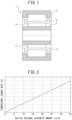
FIG. 1 is a cross-sectional view illustrating a rolling bearing according to an embodiment of the present invention; -
FIG. 2 is a graph illustrating a relationship between a residual austenite content and a dimensional change rate; and -
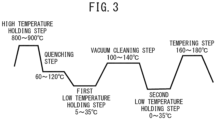
FIG. 3 is a view for describing a heat treatment method of a rolling element. - In the following detailed description, an embodiment of the present invention will be described with reference to the drawings. In the description of the drawings, the same or similar reference numerals will be assigned to the same or similar elements, and repeated descriptions will be omitted. Each drawing is schematic, and may differ from the actual one in some cases. In addition, the embodiment will be described below as examples of a device and a method for embodying the technical idea of the present invention, and the technical idea of the present invention does not specify a material, a structure, a disposition, or the like of configuration components as the followings. The technical idea of the present invention may be modified in various ways within the technical scope specified by the appended claims.
- A rolling bearing 1 according to an embodiment of the present invention will be described with reference to
FIG. 1 . As illustrated inFIG. 1 , the rolling bearing 1 includes an inner ring 2, an outer ring 3, a plurality ofrolling elements 4, and aholder 5. The inner ring 2 and the outer ring 3 will be collectively referred to as a raceway ring. - A ratio of a hardness of the
rolling element 4 to a hardness of the inner ring 2 and the outer ring 3 is 1 or higher. That is, the hardness of therolling element 4 is equal to or higher than the hardness of the inner ring 2 and the outer ring 3. - It has been found that early flacking under the above-described foreign matter contamination in the lubricant is caused by a tangential force acting on a rolling surface between the raceway ring and the
rolling element 4. Factors that affect the tangential force include a surface shape, a surface roughness, and the like of the rolling surface. When a rolling device such as the rolling bearing is used in an environment in which an oil film is insufficiently formed on a rolling portion, protrusion interference in the surface roughness occurs between two rolling surfaces. In a protrusion interference portion where the protrusion interference occurs, a friction coefficient increases, and local contact stress increases. Therefore, it is known that a life of the rolling device is shortened due to occurrence of surface damage. When the tangential force acting on the raceway ring increases due to Mindrin slip or the like, the inner ring 2 and the outer ring 3 are likely to be damaged due to rotation. Therefore, the surface hardness of therolling element 4 is set to be harder than the raceway surface, and a proper hardness difference is assigned to a contact member. In this manner, the surface roughness is improved, and damage to therolling element 4 can be suppressed as much as possible. - In the present embodiment, the
rolling element 4 is a roller. In addition, therolling element 4 has a hardness of HRC61.1 or higher and a residual austenite content of 31 vol% or less. Furthermore, in therolling element 4, it is preferable that a surface residual compressive stress is 100 MPa or lower. Since there is a relationship illustrated inFIG. 2 between the residual austenite content and a dimensional change rate, as an initial residual austenite content is larger, a dimensional change tends to increase. When the residual austenite content increases, a gap between therolling element 4 and the raceway ring is narrowed, and seizure or the like occurs. Consequently, a life is easily shortened. Therefore, since an upper limit of the residual austenite content is set to 31 vol%, dimensional stability can be improved, and a surface pressure increase caused by a time-dependent change in dimensions or occurrence of the seizure or the like can be suppressed. Therefore, a life of the rolling bearing can be improved. In addition, since the hardness of therolling element 4 is set to HRC61.1 or higher, therolling element 4 can be harder than the inner ring 2 and the outer ring 3. - The inner ring 2 and the outer ring 3 are not particularly limited as long as a hardness ratio to the
rolling element 4 is satisfied, and the production method, the material, or the like are not particularly limited. It is preferable that the inner ring 2, the outer ring 3, and therolling element 4 are formed of the same material of SUJ2 or SUJ3, which is high carbon chromium bearing steel specified in JIS G 4805. - Next, a production method of the
rolling element 4 according to the present embodiment will be described. In the present embodiment, therolling element 4 is produced by using a heat treatment pattern illustrated inFIG. 3 . As illustrated inFIG. 3 , first, a high temperature holding step is performed in which a material (also referred to as a process target material or a workpiece) processed into a predetermined shape is heated to form therolling element 4 and the material is held at a temperature of 800°C or higher and 900°C or lower for a prescribed time. In the high temperature holding step, it is preferable that a time for holding the material at the temperature of 800°C or higher and 900°C or lower is 30 minutes or longer and 90 minutes or shorter. - After the high temperature holding step, a quenching step is performed in which a quenching treatment is performed on the heated material. In the quenching step, the material is immersed in oil or water at 60°C or higher and 120°C or lower (quenching treatment). In a state where the material is immersed in the oil or the water, a temperature of the material is held at 60°C or higher and 120°C or lower, preferably at 90°C. In addition, the time for holding the temperature of the material at 60°C or higher and 120°C or lower in a state in which the material is immersed in the oil or the water is 20 minutes or longer, preferably 24 minutes or longer. When the temperature of the material is lower than 60°C, residual austenite is not stable. In addition, when the temperature of the material exceeds 120°C, energy is wasted, and production costs increase.
- After the quenching step, a first low temperature holding step is performed in which the material is cooled and the temperature of the material is held at 5°C or higher and 35°C or lower for 30 minutes or longer. In the first low temperature holding step, the material subjected to the quenching treatment is cooled in such a manner that the material is left unattended and stationary at room temperature. In this case, air cooling may be performed by using a fan or the like. In addition, in the first low temperature holding step, since the material is held at a temperature of 5°C or higher and 35°C or lower, the residual austenite can be further stabilized.
- After the first low temperature holding step, a vacuum cleaning step is performed in which vacuum cleaning is performed on the material at a temperature of 100°C or higher and 140°C or lower, preferably 120°C for 40 minutes or longer. In the vacuum cleaning step, it is preferable to use a vacuum cleaner which is able to heat and can set a temperature. In addition, it is preferable that a time for performing the vacuum cleaning is 40 minutes or longer. The vacuum cleaning has excellent cleaning power, and moreover, can remove air bubbles. A cleaning liquid and the material come into contact with every corner of the material. In this manner, the material is uniformly and quickly heated. Furthermore, in the vacuum cleaning, a loss of a solvent is small, and an environmental impact is reduced.
- After the vacuum cleaning step, a second low temperature holding step is performed in which the material is cooled and the temperature of the material is held at 35°C or lower. In the second low temperature holding step, the material may be cooled in the same manner as in the first low temperature holding step, and oil cooling or water cooling may be used when the material is cooled to a low temperature of approximately 0°C to 10°C. The temperature of the material may be set to 0°C or lower, but this configuration is not preferable since energy is wasted. Since the second low temperature holding step is performed, the residual austenite can be further stabilized. When the temperature of the material exceeds 35°C in the second low temperature holding step, an advantageous effect of stabilizing the residual austenite is reduced. In addition, in the second low temperature holding step, it is preferable that the temperature of the material is held at 35°C or lower for 15 minutes or longer.
- After the second low temperature holding step, a tempering step is performed in which the material is held at a temperature of 160°C or higher and 180°C or lower for 90 minutes or longer and 150 minutes or shorter. The tempering step is not essential, but when a tempering treatment is performed, toughness can be improved, and dimensional stability can be improved.
- In the production method of the rolling rolling
element 4 according to the present embodiment, at least a quenching step, a first low temperature holding step, a vacuum cleaning step, and a second low temperature holding step are performed. In this manner, the rollingelement 4 in which a residual austenite content is 31 vol% or less, a hardness is HRC61.1 or higher, and a surface residual compressive stress is 100 MPa or lower can be produced without any difficulty while energy is reduced. The residual compressive stress is an average value in a circumferential direction at a depth of 100 µm. - In addition, in the production method of the rolling
element 4 according to the present embodiment, a special facility is not required, and heat treatment conditions can be optimized by using a general facility. Therefore, it is not necessary to provide a new facility, and a life of the rolling bearing can be lengthened at a lower cost. Furthermore, since a nitriding treatment or the like used for a surface treatment of the bearing is not required, the production method leads to reduction of CO2. - Furthermore, in the rolling bearing in the present embodiment, there is no restriction on a magnitude of the hardness of the inner ring 2 and the outer ring 3. Therefore, a material to be used is less restricted, and production can be easily performed.
- Hitherto, although the present invention has been described with reference to the specific embodiment, the present invention is not intended to be limited by these descriptions. Referring to the description of the present invention, the disclosed embodiment and other embodiments of the present invention including various modification examples are apparent to those skilled in the art. Therefore, it should be understood that the embodiments of the invention described in the appended claims also include embodiments including these modification examples alone or in combination, which are described in the present specification.
- For example, in the above-described embodiment, the inner ring 2, the outer ring 3, and the rolling
element 4 are formed of the same material of SUJ2 or SUJ3, which is high carbon chromium bearing steel specified in JIS G 4805, but the present invention is not limited to this example. The inner ring 2, the outer ring 3, and the rollingelement 4 may be formed of materials other than SUJ2 and SUJ3, or may be respectively formed of different materials. -
- (1) According to an aspect of the present invention, there is provided the rolling bearing 1. The rolling bearing 1 includes the inner ring 2, the outer ring 3, and the rolling
element 4. The rollingelement 4 has the hardness of HRC61.1 or higher and the residual austenite content of 31 vol% or less, and the ratio of the hardness of the rollingelement 4 to the hardness of the inner ring 2 and the outer ring 3 is 1 or higher.
According to the configuration of (1) above, the surface hardness of the rollingelement 4 is harder than the surface hardness of the inner ring 2 and the outer ring 3, and the surface roughness is improved by a proper hardness difference from the contact member. Therefore, damage to the rollingelement 4 can be suppressed. In addition, with regard to the rollingelement 4, dimensional stability is improved while the hardness is improved, and a surface pressure increase caused by a time-dependent change in dimensions or occurrence of the seizure or the like can be suppressed. In this manner, a flacking life of the rolling bearing 1 can be improved. - (2) In the configuration of (1) above, the rolling
element 4 is a roller. - (3) In the configuration of (1) or (2) above, the rolling
element 4 is formed of the material of SUJ2 or SUJ3, which is high carbon chromium bearing steel specified in JIS G 4805. - (4) According to an aspect of the present invention, there is provided the production method of the rolling
element 4, which is used for the rolling bearing. The production method of the rollingelement 4 includes: the quenching step in which the material is processed into a predetermined shape to form the rollingelement 4, the heated material is subsequently immersed in the oil or the water at 60°C or higher and 120°C or lower, the material is held in a state of being immersed in the oil or the water, and the temperature of the material is held at 60°C or higher and 120°C or lower for 20 minutes or longer; the first low temperature holding step in which the material is cooled after the quenching step and the material is held at a temperature of 5°C or higher and 35°C or lower for 30 minutes or longer; the vacuum cleaning step in which the vacuum cleaning is performed on the material at a temperature of 100°C or higher and 140°C or lower for 40 minutes or longer after the first low temperature holding step; and the second low temperature holding step in which the material is cooled after the vacuum cleaning step and the temperature of the material is held at 35°C or lower.
According to the configuration of (4) above, the rollingelement 4 having the configuration of (1) above can be stably produced. In addition, heat treatment conditions can be optimized by using a general facility, and the life of the rolling bearing can be lengthened at a low cost. - (5) In the configuration of (4) above, the production method further includes: the tempering step in which the material is held at a temperature of 160°C or higher and 180°C or lower for 90 minutes or longer and 150 minutes or shorter after the second low temperature holding step.
- (6) In the configuration of (4) or (5) above, the rolling
element 4 is a roller. - (7) In the configuration of any one of (4) to (6) above, the rolling
element 4 is formed of the material of SUJ2 or SUJ3, which is high carbon chromium bearing steel specified in JIS G 4805. - (8) The rolling bearing according to the aspect of the present invention is the rolling bearing including the inner ring, the outer ring, and the rolling element, and is produced by the rolling bearing production method according to the configuration of any one of (4) to (7) above.
- Examples adopted by the inventors will be described. In the present example, the rolling
element 4 is produced by using the rolling element production method according to the above-described embodiment, and the residual stress, the residual austenite content, and the hardness are investigated. Table 1 shows results of the heat treatment conditions, the residual stress, the residual austenite content, and the hardness in Examples 1 to 6 adopting the heat treatment conditions in the above-described embodiment, and in Comparative Examples 1 and 2 adopting the heat treatment conditions different from the heat treatment conditions in the above-described embodiment.[Table 1] Quenching Step Oil Drainage [min] First Low Temperature Holding Step Vacuum Cleaning Step Second Low Temperature Holding Step Tempering Step Residual Stress [MPa] Residual Austenite Content [vol%] Hardness [HMV] Quenching Oil Temperature [°C] Time [min] Cooling Method Time [min] Method Time [min] Method•Temperature Temperature [°C] Ex. 1 90 24 40 Radiational Cooling 30 Vacuum 120°C 40 0°C to 10°C 180 20 20 758 Ex. 2 90 24 40 - - Vacuum 120° C 0°C to 10°C 180 54 18 772 Ex. 3 90 24 40 Radiational Cooling 30 Vacuum 120° C 0°C to 10°C 180 43 19 778 Ex. 4 60 24 40 Fan Cooling 30 Vacuum 120°C 40 0°C to 10°C 160 81 23 784 Ex. 5 60 24 40 Fan Cooling 30 Vacuum 120°C 40 0°C to 10°C 180 58 20 759 Ex. 6 60 24 40 Fan Cooling 30 Vacuum 120°C 40 0°C to 10°C 200 27 13 741 Comp. Ex. 1 90 24 40 Radiational Cooling 30 Hot Water 80° C 30 Radiational Cooling 15 min 180 13 26 731 Comp. Ex. 2 60 24 40 Radiational Cooling 30 Vacuum 120°C 40 Radiational Cooling 30 min 180 59 26 736 - In the present example, first, as the high temperature holding step, the material obtained by processing the material of SUJ2 into a shape of the rolling
element 4 is heated to 845°C. Next, as the quenching step, the heated material is immersed in the oil at 60°C or 90°C to perform the quenching treatment. A time for immersing the material in the oil is set to 24 minutes. Furthermore, oil drainage is performed for 40 minutes, and thereafter, the first low temperature holding step is performed. In the first low temperature holding step, the material is held at a temperature of 5°C or higher and 35°C or lower for 30 minutes by using a method of radiational cooling in which the material is left unattended and cooled at room temperature or a method of fan cooling in which air cooling is performed on the material by using a fan. Next, as the vacuum cleaning step, the vacuum cleaning is performed at a temperature of 120°C for 40 minutes. In Comparative Example 1, the cleaning is performed with hot water at 80°C for 30 minutes instead of the vacuum cleaning. Furthermore, as the second low temperature holding step, the material is cooled and held at a temperature of 0°C or higher and 10°C or lower. In Comparative Examples 1 and 2, the cooling is performed by the radiational cooling for 15 minutes or 30 minutes. Thereafter, as the tempering step, the material is heated and held at a temperature of 160°C, 180°C, or 200°C. - According to the present example, it is confirmed that the rolling
element 4 can be produced in which the residual austenite content is 31 vol% or less, the hardness is HRC61.1 or higher, and the surface residual compressive stress is 100 MPa or lower. HRC61.1 or higher corresponds to 740 or higher in HMV (SAE J417). -
- 1:
- rolling bearing
- 2:
- inner ring
- 3:
- outer ring
- 4:
- rolling element
Claims (7)
- A rolling bearing comprising:an inner ring;an outer ring; anda rolling element,wherein the rolling element has a hardness of HRC61.1 or higher and a residual austenite content of 31 vol% or less, and a ratio of a hardness of the rolling element to a hardness of the inner ring and the outer ring is 1 or higher.
- The rolling bearing according to claim 1, wherein the rolling element is a roller.
- The rolling bearing according to claim 1 or 2, wherein the rolling element, the inner ring, and the outer ring are formed of the same material of SUJ2 or SUJ3, which is high carbon chromium bearing steel specified in JIS G 4805.
- A rolling element production method which is used for a rolling bearing, the production method comprising:a quenching step in which a material is processed into a predetermined shape to form the rolling element, the heated material is subsequently immersed in oil or water at 60°C or higher and 120°C or lower, the material is held in a state of being immersed in the oil or the water, and a temperature of the material is held at 60°C or higher and 120°C or lower for 20 minutes or longer;a first low temperature holding step in which the material is cooled after the quenching step and the material is held at a temperature of 5°C or higher and 35°C or lower for 30 minutes or longer;a vacuum cleaning step in which vacuum cleaning is performed on the material at a temperature of 100°C or higher and 140°C or lower for 40 minutes or longer after the first low temperature holding step; anda second low temperature holding step in which the material is cooled after the vacuum cleaning step and the temperature of the material is held at 35°C or lower.
- The rolling element production method according to claim 4, further comprising a tempering step in which the material is held at a temperature of 160°C or higher and 180°C or lower for 90 minutes or longer and 150 minutes or shorter after the second low temperature holding step.
- The rolling element production method according to claim 4 or 5, wherein the rolling element is a roller.
- The rolling element production method according to claim 4 or 5, wherein the rolling element is formed of a material of SUJ2 or SUJ3, which is high carbon chromium bearing steel specified in JIS G 4805.
Applications Claiming Priority (2)
| Application Number | Priority Date | Filing Date | Title |
|---|---|---|---|
| JP2022138275 | 2022-08-31 | ||
| PCT/JP2023/031296 WO2024048601A1 (en) | 2022-08-31 | 2023-08-29 | Rolling bearing and rolling body production method |
Publications (1)
| Publication Number | Publication Date |
|---|---|
| EP4582713A1 true EP4582713A1 (en) | 2025-07-09 |
Family
ID=90099612
Family Applications (1)
| Application Number | Title | Priority Date | Filing Date |
|---|---|---|---|
| EP23860363.3A Pending EP4582713A1 (en) | 2022-08-31 | 2023-08-29 | Rolling bearing and rolling body production method |
Country Status (6)
| Country | Link |
|---|---|
| US (1) | US20260063171A1 (en) |
| EP (1) | EP4582713A1 (en) |
| JP (1) | JPWO2024048601A1 (en) |
| KR (1) | KR20250037522A (en) |
| CN (1) | CN119731444A (en) |
| WO (1) | WO2024048601A1 (en) |
Family Cites Families (6)
| Publication number | Priority date | Publication date | Assignee | Title |
|---|---|---|---|---|
| JP3128803B2 (en) * | 1990-04-27 | 2001-01-29 | 日本精工株式会社 | Rolling bearing |
| JP4114218B2 (en) * | 1996-09-19 | 2008-07-09 | 日本精工株式会社 | Rolling bearing |
| JP2002155314A (en) * | 2000-11-15 | 2002-05-31 | Nsk Ltd | Hardening method of rolling parts |
| JP3845843B2 (en) * | 2001-11-14 | 2006-11-15 | 株式会社ジェイテクト | Rolling and sliding parts and manufacturing method thereof |
| JP2009041652A (en) | 2007-08-08 | 2009-02-26 | Nsk Ltd | Rolling bearing and manufacturing method thereof |
| JP2015203153A (en) * | 2014-04-16 | 2015-11-16 | 日本精工株式会社 | Rolling bearing |
-
2023
- 2023-08-29 JP JP2024544297A patent/JPWO2024048601A1/ja active Pending
- 2023-08-29 US US19/105,863 patent/US20260063171A1/en active Pending
- 2023-08-29 EP EP23860363.3A patent/EP4582713A1/en active Pending
- 2023-08-29 KR KR1020257004649A patent/KR20250037522A/en active Pending
- 2023-08-29 CN CN202380060015.4A patent/CN119731444A/en active Pending
- 2023-08-29 WO PCT/JP2023/031296 patent/WO2024048601A1/en not_active Ceased
Also Published As
| Publication number | Publication date |
|---|---|
| JPWO2024048601A1 (en) | 2024-03-07 |
| KR20250037522A (en) | 2025-03-17 |
| US20260063171A1 (en) | 2026-03-05 |
| CN119731444A (en) | 2025-03-28 |
| WO2024048601A1 (en) | 2024-03-07 |
Similar Documents
| Publication | Publication Date | Title |
|---|---|---|
| KR20050004843A (en) | Method of producing bearing raceway member | |
| EP2913548A1 (en) | Rolling bearing | |
| JP5045491B2 (en) | Large rolling bearing | |
| JP2005042879A (en) | Roller bearing with race ring formed of steel plate | |
| JP2014531010A (en) | Method for manufacturing track element of bearing assembly and track element | |
| JP5152832B2 (en) | Hardening method of high carbon chromium bearing steel, high carbon chromium bearing steel, bearing parts and rolling bearing | |
| JP4178980B2 (en) | Method for heat treatment of annular member | |
| JP4186568B2 (en) | Rolling bearing and method for manufacturing inner ring of rolling bearing | |
| JP2009024243A (en) | Quenching method | |
| US20260063171A1 (en) | Rolling Bearing and Rolling Element Production Method | |
| US10422376B2 (en) | Thrust roller bearing | |
| JP2006200627A (en) | Rolling bearing component and its manufacturing method, and rolling bearing | |
| JP2004232858A (en) | Rolling bearing and its manufacturing method | |
| JP2003148485A (en) | Rolling bearing | |
| JPH09329139A (en) | Spherical roller bearing | |
| US20070047862A1 (en) | Drawn cup needle roller bearing | |
| JP2009203523A (en) | Heat treatment method of steel ring | |
| EP1683876B1 (en) | Method of manufacturing a bearing washer for thrust bearings and method of manufacturing a thrust bearing | |
| JP2000320555A (en) | Shaft assembly and valve mechanism having the same | |
| JP2006200019A (en) | Method for manufacturing bearing washer of thrust bearing and method for manufacturing thrust bearing | |
| JP2003342710A (en) | Rolling bearing component and method of manufacturing the same | |
| CN114107883B (en) | Local ion nitriding method for inner cavity of precipitation hardening stainless steel annular part | |
| JP2007186760A (en) | Method of manufacturing bearing ring for rolling bearing and rolling bearing | |
| JP2006233288A (en) | Machine part with groove for rolling and production method therefor | |
| JPH07145820A (en) | Rolling bearing for vacuum equipment |
Legal Events
| Date | Code | Title | Description |
|---|---|---|---|
| STAA | Information on the status of an ep patent application or granted ep patent |
Free format text: STATUS: THE INTERNATIONAL PUBLICATION HAS BEEN MADE |
|
| PUAI | Public reference made under article 153(3) epc to a published international application that has entered the european phase |
Free format text: ORIGINAL CODE: 0009012 |
|
| STAA | Information on the status of an ep patent application or granted ep patent |
Free format text: STATUS: REQUEST FOR EXAMINATION WAS MADE |
|
| 17P | Request for examination filed |
Effective date: 20250219 |
|
| AK | Designated contracting states |
Kind code of ref document: A1 Designated state(s): AL AT BE BG CH CY CZ DE DK EE ES FI FR GB GR HR HU IE IS IT LI LT LU LV MC ME MK MT NL NO PL PT RO RS SE SI SK SM TR |
|
| DAV | Request for validation of the european patent (deleted) | ||
| DAX | Request for extension of the european patent (deleted) | ||
| REG | Reference to a national code |
Ref country code: DE Ref legal event code: R079 Free format text: PREVIOUS MAIN CLASS: F16C0033320000 Ipc: F16C0033620000 |
|
| RIC1 | Information provided on ipc code assigned before grant |
Ipc: F16C 33/62 20060101AFI20260703BHEP Ipc: F16C 33/34 20060101ALI20260703BHEP Ipc: F16C 19/26 20060101ALI20260703BHEP Ipc: C21D 1/26 20060101ALI20260703BHEP Ipc: C21D 9/36 20060101ALI20260703BHEP Ipc: C21D 9/40 20060101ALI20260703BHEP Ipc: C22C 38/18 20060101ALI20260703BHEP Ipc: C21D 1/58 20060101ALI20260703BHEP Ipc: C21D 1/60 20060101ALI20260703BHEP |