EP4582528A1 - Culture control device and culture control method - Google Patents
Culture control device and culture control method Download PDFInfo
- Publication number
- EP4582528A1 EP4582528A1 EP23879432.5A EP23879432A EP4582528A1 EP 4582528 A1 EP4582528 A1 EP 4582528A1 EP 23879432 A EP23879432 A EP 23879432A EP 4582528 A1 EP4582528 A1 EP 4582528A1
- Authority
- EP
- European Patent Office
- Prior art keywords
- culture
- lactic acid
- ratio
- rate
- glycolytic
- Prior art date
- Legal status (The legal status is an assumption and is not a legal conclusion. Google has not performed a legal analysis and makes no representation as to the accuracy of the status listed.)
- Pending
Links
Images


Classifications
-
- C—CHEMISTRY; METALLURGY
- C12—BIOCHEMISTRY; BEER; SPIRITS; WINE; VINEGAR; MICROBIOLOGY; ENZYMOLOGY; MUTATION OR GENETIC ENGINEERING
- C12M—APPARATUS FOR ENZYMOLOGY OR MICROBIOLOGY; APPARATUS FOR CULTURING MICROORGANISMS FOR PRODUCING BIOMASS, FOR GROWING CELLS OR FOR OBTAINING FERMENTATION OR METABOLIC PRODUCTS, i.e. BIOREACTORS OR FERMENTERS
- C12M41/00—Means for regulation, monitoring, measurement or control, e.g. flow regulation
- C12M41/48—Automatic or computerized control
-
- C—CHEMISTRY; METALLURGY
- C12—BIOCHEMISTRY; BEER; SPIRITS; WINE; VINEGAR; MICROBIOLOGY; ENZYMOLOGY; MUTATION OR GENETIC ENGINEERING
- C12M—APPARATUS FOR ENZYMOLOGY OR MICROBIOLOGY; APPARATUS FOR CULTURING MICROORGANISMS FOR PRODUCING BIOMASS, FOR GROWING CELLS OR FOR OBTAINING FERMENTATION OR METABOLIC PRODUCTS, i.e. BIOREACTORS OR FERMENTERS
- C12M41/00—Means for regulation, monitoring, measurement or control, e.g. flow regulation
- C12M41/30—Means for regulation, monitoring, measurement or control, e.g. flow regulation of concentration
- C12M41/32—Means for regulation, monitoring, measurement or control, e.g. flow regulation of concentration of substances in solution
Definitions
- the selection unit 20 selects culture termination when the difference between a glycolytic ratio calculated after the calculation of the initial glycolytic ratio and the initial glycolytic ratio is equal to or greater than a predetermined threshold. Further, the selection unit 20 selects culture medium replacement when the difference is less than the threshold.
- the culture control device 8 monitors the timing of culture replacement and culture termination based on the glucose consumption rate, the lactic acid production rate, and the glycolytic ratio.
- the principle of cell metabolism is used to determine changes in the state of the cells 10 and changes in the culture environment, and the culture is controlled according to the results. Thereby, the culture can be more easily controlled.
- the culture control device 8 selects the culture termination when the difference between the glycolytic ratio and the initial glycolytic ratio is equal to or greater than the threshold, and selects culture medium replacement when the difference is less than the threshold. Further, the culture control device 8 executes the selection of culture termination or culture medium replacement when changes over time in at least one of the glucose consumption rate and the lactic acid production rate are unchanged or decreasing. As a result, culture according to changes in the state of the cells 10 and changes in the culture environment can be carried out more reliably.
- the embodiments may be defined by the items described in the following.
- the culture control device (8) according to Item 1,
- the culture control device (8) according to Item 1 or 2,
- the culture control device (8) according to any one of Items 1 through 5, including: a display unit (22) that displays a selection result of the selection unit (20).
- a culture control device when selecting culture medium replacement, the selection unit (20) outputs a signal instructing culture medium replacement to a culture medium replacement device (6).
- a culture control method including:
- the present disclosure can be used for culture control devices and culture control methods.
Landscapes
- Chemical & Material Sciences (AREA)
- Engineering & Computer Science (AREA)
- Wood Science & Technology (AREA)
- Health & Medical Sciences (AREA)
- Life Sciences & Earth Sciences (AREA)
- Bioinformatics & Cheminformatics (AREA)
- Organic Chemistry (AREA)
- Zoology (AREA)
- Analytical Chemistry (AREA)
- Microbiology (AREA)
- Sustainable Development (AREA)
- Biotechnology (AREA)
- Biochemistry (AREA)
- General Engineering & Computer Science (AREA)
- General Health & Medical Sciences (AREA)
- Genetics & Genomics (AREA)
- Biomedical Technology (AREA)
- Computer Hardware Design (AREA)
- Micro-Organisms Or Cultivation Processes Thereof (AREA)
Abstract
Description
- The present disclosure relates to a culture control device and a culture control method.
-
Patent Literature 1 discloses a cell culture device that includes a cell state determination device and an operation control correction device. In this cell culture device, in order to create a database for classifying the state of the cells into normal and abnormal states and to determine the culture conditions for returning cells in an abnormal state to a normal state, culture experiments were conducted in advance under various culture conditions so as to acquire culture data. - Paten Literature 1:
JP 2018-117567 - When culturing cells that cannot be secured in sufficient quantities, it is difficult to carry out various culture experiments in advance. For example, in regenerative medicine using autologous cells, the cells themselves are valuable. For this reason, it is difficult to acquire culture data of the autologous cells in advance. In general, the state of the cells varies from donor to donor. For this reason, the culture data acquired using alternative cells may not be suitable for culturing target cells. For the above reasons, the conventional culture control described above has not been easy to implement.
- The present disclosure has been made in view of such a situation, and a purpose thereof is to provide a technology for easier control of culture.
- The present disclosure addresses the issue described above, and one embodiment of the present disclosure relates to a culture control device. This device includes: a calculation unit that calculates a rate at which cells in a culture medium consume glucose, a rate at which the cells produce lactic acid, and a glycolytic ratio, which is the ratio of the lactic acid production rate to the glucose consumption rate; and a selection unit that selects either culture medium replacement or culture termination on the basis of the glucose consumption rate, the lactic acid production rate, and the glycolytic ratio.
- Another embodiment of the present disclosure relates to a culture control method. This method includes: calculating a rate at which cells in a culture medium consume glucose, a rate at which the cells produce lactic acid, and a glycolytic ratio, which is the ratio of the lactic acid production rate to the glucose consumption rate; and selecting either culture medium replacement or culture termination on the basis of the glucose consumption rate, the lactic acid production rate, and the glycolytic ratio.
- Optional combinations of the above-explained constituting elements, and implementations of the present disclosure in the form of methods, apparatuses, and systems may also be practiced as additional modes of the present disclosure.
- According to the present disclosure, culture can be more easily controlled.
-
- [
Fig. 1] Fig. 1 is a schematic diagram of a culture system including a culture control device according to an embodiment. - [
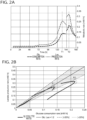
Fig. 2] Fig. 2A is a diagram showing changes over time in glucose (Glc) consumption rate and lactic acid (Lac) production rate.Fig. 2B is a diagram showing a glycolytic ratio calculated from the glucose consumption rate and the lactic acid production rate shown inFig. 2A . - [
Fig. 3] Fig. 3 is a flowchart showing an example of control executed by a culture control device. - Hereinafter, the present disclosure will be described based on a preferred embodiment with reference to the figures. The embodiments do not limit the present disclosure and are shown for illustrative purposes, and not all the features described in the embodiments and combinations thereof are necessarily essential to the present disclosure. The same or equivalent constituting elements, members, and processes illustrated in each drawing shall be denoted by the same reference numerals, and duplicative explanations will be omitted appropriately. The scales and shapes shown in the figures are defined for convenience's sake to make the explanation easy and shall not be interpreted limitatively unless otherwise specified. Terms like "first", "second", etc., used in the specification and claims do not indicate an order or importance by any means unless specified otherwise and are used to distinguish a certain feature from the others. Those of the members that are not important in describing the embodiment are omitted from the drawings.
-
Fig. 1 is a schematic diagram of aculture system 1 including aculture control device 8 according to an embodiment. InFig. 1 , some parts of the configuration of theculture control device 8 are depicted as functional blocks. These functional blocks may be implemented by elements such as CPUs or memory of a computer or by circuits as hardware configurations, and by computer programs or the like as software configurations. Therefore, it will be obvious to those skilled in the art that the functional blocks may be implemented in a variety of manners by a combination of hardware and software. - The
culture system 1 includes aculture vessel 2, asensor 4, a culturemedium replacement device 6, and aculture control device 8. Theculture vessel 2 housescells 10 to be cultured and aculture medium 12. Examples of theculture vessel 2 include known dishes, well plates, culture bags, and the like. Although not particularly limited, examples of thecells 10 include human iPS cells, for example. Theculture medium 12 can be appropriately selected according to thecells 10 to be cultured. - The
sensor 4 measures the glucose concentration and lactic acid concentration of theculture medium 12. An example of thesensor 4 is an electrochemical sensor provided with a working electrode, a counter electrode, and a reference electrode on a substrate. Thesensor 4 has two working electrodes. One working electrode is provided with a reagent layer containing glucose oxidoreductase and a redox mediator. The other working electrode is provided with a reagent layer containing lactate oxidoreductase and a redox mediator. Thesensor 4 is connected to theculture control device 8, and outputs a current corresponding to the glucose concentration and a current corresponding to the lactic acid concentration in theculture medium 12 to theculture control device 8. The structure of thesensor 4 is not limited to the above-described one. For example, a sensor for measuring glucose concentration and a sensor for measuring lactic acid concentration may be separate. Since the structure of thesensor 4 is known, further detailed description will be omitted. - The culture
medium replacement device 6 replaces theculture medium 12 housed in theculture vessel 2. The culturemedium replacement device 6 has adischarge tube 14 and asuction tube 16. Further, the culturemedium replacement device 6 has a culture medium tank (not shown) that houses anew culture medium 12 that is supplied to theculture vessel 2 and a drainage tank (not shown) that houses anold culture medium 12 that is recovered from theculture vessel 2. One end of thedischarge tube 14 is connected to the culture medium tank, and the other end is connected to theculture vessel 2. One end of thesuction tube 16 is connected to the drainage tank, and the other end is connected to theculture vessel 2. The culturemedium replacement device 6 performs culture medium replacement upon receiving a signal instructing culture medium replacement from theculture control device 8. More specifically, the culturemedium replacement device 6 drives a built-in pump (not shown) to supply anew culture medium 12 from the culture tank to theculture vessel 2 via thedischarge tube 14, and collects theold culture medium 12 from theculture vessel 2 to the drainage tank via thesuction tube 16. - The
culture control device 8 controls cell culture according to the state of thecells 10 and the culture environment. As an example, theculture control device 8 includes acalculation unit 18 and aselection unit 20. Thecalculation unit 18 and theselection unit 20 operate when an integrated circuit constituting the units executes a program stored in the memory. Thecalculation unit 18 calculates a rate at which thecells 10 in theculture medium 12 consume glucose (hereinafter appropriately referred to as glucose consumption rate), a rate at which thecells 10 in theculture medium 12 produce lactic acid (hereinafter appropriately referred to as lactic acid production rate), and a glycolytic ratio. The glycolytic ratio is the ratio of the lactic acid production rate to the glucose consumption rate (lactic acid production rate/glucose consumption rate). In glycolysis, which is the main metabolic pathway thecells 10 have, one glucose molecule is converted to two lactic acid molecules. The glycolytic ratio is 100% when one glucose molecule is consumed and two lactic acid molecules are produced per unit time. - The
selection unit 20 selects either the replacement of theculture medium 12 and the culture termination of thecells 10 based on the glucose consumption rate, the lactic acid production rate, and the glycolytic ratio calculated by thecalculation unit 18. When the state of thecells 10 changes in the process of culture or the culture environment of thecells 10 changes, at least one of the glucose consumption rate and the lactic acid production rate can change accordingly. Further, the glycolytic ratio can also change along with this change. Therefore, the glucose consumption rate, the lactic acid production rate, and the glycolytic ratio can be used as indicators to determine the timing of culture medium change and termination of culture. The glucose consumption rate, the lactic acid production rate, and the glycolytic ratio can be easily acquired during culture. Therefore, by monitoring these three parameters during cell culture, the culture can be easily controlled. -
Fig. 2A is a diagram showing changes over time in glucose (Glc) consumption rate and lactic acid (Lac) production rate.Fig. 2B is a diagram showing a glycolytic ratio calculated from the glucose consumption rate and the lactic acid production rate shown inFig. 2A . Thecalculation unit 18 according to the present embodiment repeatedly acquires measurement results of glucose concentration and lactic acid concentration from thesensor 4. For example, thecalculation unit 18 acquires each concentration every minute. Then, thecalculation unit 18 repeatedly calculates the glucose consumption rate by differentiating the acquired glucose concentration with respect to time. Further, the acquired lactic acid concentration is differentiated with respect to time so as to repeatedly calculate the lactic acid production rate. The calculated glucose consumption rate and lactic acid production rate are stored in a memory (not shown). - In general, the
cells 10 are placed in anormal culture medium 12 in substantially the same state as before the culture at the initial stage of the culture within a predetermined time from the start of the culture. As shown inFig. 2A , in the initial stage of the culture, the glucose consumption rate and the lactic acid production rate are less than or equal to predetermined values. Further, both rates are roughly constant with only a slight increase. Also, the glycolytic ratio is constant. Thecalculation unit 18 calculates the initial glycolytic ratio at the initial stage of the culture. The initial glycolytic ratio serves as the criterion for selecting medium exchange or culture termination. The aforementioned "predetermined time" can be set as appropriate by the designer through experiments and simulations. As an example, the predetermined time is two hours. - The number of cells gradually increases with the passage of incubation time. This accelerates a decrease in the glucose concentration and an increase in the lactic acid concentration in the
culture medium 12. Therefore, as shown inFig. 2A , the glucose consumption rate and the lactic acid production rate gradually increase. In the example shown inFig. 2A , both the glucose consumption rate and the lactic acid production rate peak at time T1 and then start to decrease. When the cell culture is being performed normally, the glucose consumption rate and the lactic acid production rate should increase with an increase in the number of cells. Therefore, if at least one of the glucose consumption rate and the lactic acid production rate is unchanged or decreased, it can be assumed that theculture medium 12 has deteriorated or the state of thecells 10 has changed. - Therefore, the
selection unit 20 executes the selection of culture medium replacement or culture termination when at least one of the following is satisfied: the calculated glucose consumption rate is equal to or less than the previously calculated glucose consumption rate; and the calculated lactic acid production rate is equal to or less than the previously calculated lactic acid production rate. - In the selection, the
selection unit 20 according to the present embodiment selects culture termination when the difference between a glycolytic ratio calculated after the calculation of the initial glycolytic ratio and the initial glycolytic ratio is equal to or greater than a predetermined threshold. Further, theselection unit 20 selects culture medium replacement when the difference is less than the threshold. - For example, the
selection unit 20 converts the difference into a ratio with respect to the initial glycolytic ratio, and selects culture termination or culture medium replacement based on whether the ratio is equal to or greater than the threshold. Theselection unit 20 may execute the selection based on the magnitude of the difference. The aforementioned "threshold" can be set as appropriate by the designer through experiments and simulation runs. As an example, the threshold is 20% of the initial glycolytic ratio. - When the difference between the calculated glycolytic ratio and the initial glycolytic ratio is less than the threshold, that is, when the glycolytic ratio has not changed significantly, there is a high possibility that the state of the
cells 10 is maintained as the state at the initial stage of the culture. In this case, it can be assumed that the change in the glucose consumption rate and/or the change in the lactic acid production rate is caused by a deterioration of the culture environment due to a decrease in the pH of theculture medium 12, etc. Thus, theselection unit 20 selects culture medium replacement when the difference is less than the threshold. Further, when the difference is equal to or greater than the threshold, that is, when the glycolytic ratio changes significantly, there is a high possibility that the state of thecells 10 have changed from the state at the initial stage of the culture. For example, when the state of thecells 10 changes, the metabolic pathway of glucose can change from glycolysis to another. In this case, components other than lactic acid are produced from one molecule of glucose. As a result, the glycolytic ratio changes significantly. Therefore, theselection unit 20 selects the culture termination when the difference is equal to or greater than the threshold. - A chain line region R1 in
Fig. 2B represents a glycolytic ratio at a time period including time T1. In the example shown inFig. 2B , the glycolytic ratio of 100% (that is, Glc:Lac = 1:2) represents the initial glycolytic ratio, and ±20% of the initial glycolytic ratio represents a threshold for judgment. The difference in the glycolytic ratio in the time period including time T1 from the initial glycolytic ratio is less than the threshold. Therefore, theselection unit 20 selects culture medium replacement. When selecting culture medium replacement, theselection unit 20 outputs a signal instructing culture medium replacement to the culturemedium replacement device 6. Thereby, the culture of thecells 10 can be continued under a more suitable culture environment. - The
culture control device 8 according to the present embodiment includes adisplay unit 22 that displays the selection result of theselection unit 20. When selecting the culture medium replacement, theselection unit 20 may output a signal for the notification of the execution of the culture medium replacement to thedisplay unit 22. Thereby, the user of theculture system 1 can learn the execution of the culture medium replacement. Further, when theculture system 1 does not include a culturemedium replacement device 6, the user can perform culture medium replacement at an appropriate time. - In the example shown in
Fig. 2A , culture medium replacement was performed at 144 hours from the start of culture without performing culture medium replacement after the time T1 in order to observe the transition of the glucose consumption rate and the lactic acid production rate. After the continuation of cell culture after the culture medium replacement, the glucose consumption rate and the lactic acid production rate peaked again at time T2, and then began to decrease. A chain line region R2 inFig. 2B represents a glycolytic ratio at a time period including the time T2. The difference in the glycolytic ratio in the time period including the time T2 from the initial glycolytic ratio is equal to or greater than the threshold. Therefore, theselection unit 20 selects culture termination. Theselection unit 20 outputs a signal for the notification of the culture termination to thedisplay unit 22. This allows the user of theculture system 1 to perform necessary processes at an appropriate time. Examples of the processes performed after the culture termination include subculture, differentiation induction, and disposal of thecells 10. - The
selection unit 20 preferably executes the above-described selection when at least one of the following conditions is satisfied: the calculated glucose consumption rate is less than the previous glucose consumption rate; and the calculated lactic acid production rate is less than the previous lactic acid production rate. As shown inFig. 2A , from the start of culture to a predetermined time, especially up to about 60 hours of culture, the change in the glucose consumption rate and the change in the lactic acid production rate are substantially unchanged. In these periods, there is a high possibility that thecells 10 maintain the initial state of culture, and there is a high possibility that there is less deterioration of the culture environment caused due to a decrease in the pH of theculture medium 12 or the like. Therefore, selection by theselection unit 20 is preferably not executed in these periods. For this reason, the trigger of the selection execution is limited to a decrease in the glucose consumption rate and the lactic acid production rate. Thereby, theselection unit 20 can execute selection at a more appropriate time. Therefore, culture control according to the state of thecells 10 and the culture environment can be performed with higher accuracy. - Alternatively, the
selection unit 20 may execute the selection described above when at least one of the following conditions is satisfied: the calculated glucose consumption rate is equal to or greater than the predetermined value and is equal to or less than the previous glucose consumption rate; and the calculated lactic acid production rate is equal to or greater than the predetermined value and is equal to or less than the previous lactic acid production rate. As shown inFig. 2A , near the time T1 and the time T2 when the glucose consumption rate and the lactic acid production rate turn from rise to decrease, the glucose consumption rate and the lactic acid production rate are higher than those at the initial stage of culture. For this reason, by including that the glucose consumption rate and the lactic acid production rate are equal to or greater than the respective predetermined values in the trigger of the selection execution, theselection unit 20 can execute the selection at a more appropriate time. Therefore, culture control according to the state of thecells 10 and the culture environment can be performed with higher accuracy. The aforementioned "predetermined values" can be set as appropriate by the designer through experiments and simulations. As an example, the predetermined values are 0.1 mM/h. -
Fig. 3 is a flowchart showing an example of control executed by aculture control device 8. This flow is repeatedly executed at a predetermined time. First, theculture control device 8 acquires a glucose concentration and a lactic acid concentration from the sensor 4 (S101). Then, each acquired concentration is differentiated with respect to time to calculate the glucose consumption rate and the lactic acid production rate (S102). Further, theculture control device 8 calculates the glycolytic ratio from the calculated glucose consumption rate and the calculated lactic acid production rate (S103). Subsequently, theculture control device 8 determines whether a generation flag of the initial glycolytic ratio is on (S104). - When the generation flag is off (N in S104), the
culture control device 8 determines whether the elapsed time from the start of culture has reached a predetermined time (S105). When the predetermined time is not reached (N of S105), theculture control device 8 goes back to the process in step S101. When the predetermined time is reached (Y of S105), theculture control device 8 calculates the initial glycolytic ratio and sets the generation flag to on (S106). For example, theculture control device 8 sets the average value of the glycolytic ratio calculated from the start of culture to the arrival of the predetermined time as the initial glycolytic ratio. The method for calculating the initial glycolytic ratio is not limited to those described above. For example, theculture control device 8 may define the initial glycolytic ratio as the latest glycolytic ratio held at a time when it is determined that the elapsed time from the start of culture has reached the predetermined time. - Subsequently, the
culture control device 8 determines whether the last calculated (that is, the latest) glucose consumption rate is equal to or greater than the predetermined value and is equal to or less than the previously calculated glucose consumption rate (S107). When the generation flag is on (Y in S104), theculture control device 8 skips the processes in steps S105 and S106 and proceeds to the process in step S107. When the glucose consumption rate is less than the predetermined value or higher than the previous value (N of S107), theculture control device 8 determines whether the last calculated lactic acid production rate is equal to or greater than the predetermined value and is equal to or less than the previously calculated lactic acid production rate (S108). - When the lactic acid production rate is equal to or greater than the predetermined value and is equal to or less than the previous value (Y of S108), the
culture control device 8 determines whether the difference between the last calculated glycolytic ratio and the initial glycolytic ratio is equal to or greater than the threshold (S109). When the glucose consumption rate is equal to or greater than the predetermined value and is equal to or less than the previous value (Y in S107), theculture control device 8 skips the process in step S108 and proceeds to the process in step S109. When the lactic acid production rate is less than the predetermined value or higher than the previous value (N in S108), theculture control device 8 goes back to the process in step S101. - When the difference between the glycolytic ratio and the initial glycolytic ratio is equal to or greater than the threshold (Y of S109), the
culture control device 8 selects the culture termination. Then, theculture control device 8 outputs a signal instructing the notification of the culture termination to the display unit 22 (S110). Thereafter, theculture control device 8 sets the generation flag of the initial glycolytic ratio to off (S112) and ends the routine. When the difference between the glycolytic ratio and the initial glycolytic ratio is less than the threshold (N in S109), theculture control device 8 selects culture medium replacement. Then, theculture control device 8 outputs a signal instructing the execution of culture medium replacement to the culture medium replacement device 6 (S111), and the process returns to the process in step S101. - When returning to step S101 after the culture medium replacement is performed, the previously calculated ratio is used for the initial glycolytic ratio. In a situation where culture medium replacement is selected in the process in step S109, there is a high possibility that the state of the
cells 10 is maintained. This allows for the diversion of the initial glycolytic ratio. Note that the usage mode of the initial glycolytic ratio is not limited to this structure. For example, the initial glycolytic ratio may be updated each time culture medium replacement is performed. Thereby, culture using the optimal initial glycolytic ratio for thecells 10 can be carried out more reliably. Further, the flowchart described above may be changed as follows. That is, it may be determined whether the lactic acid production rate is equal to or greater than the predetermined value and is equal to or less than the previous value in step S107, and it may be determined whether the glucose consumption rate is equal to or greater than the predetermined value and is equal to or less than the previous value in step S108. Further, in addition to the culture medium replacement according to the flowchart described above, the culture medium replacement may be performed periodically or irregularly. - As explained above, the
culture control device 8 according to the present embodiment monitors the timing of culture replacement and culture termination based on the glucose consumption rate, the lactic acid production rate, and the glycolytic ratio. In other words, the principle of cell metabolism is used to determine changes in the state of thecells 10 and changes in the culture environment, and the culture is controlled according to the results. Thereby, the culture can be more easily controlled. Further, theculture control device 8 selects the culture termination when the difference between the glycolytic ratio and the initial glycolytic ratio is equal to or greater than the threshold, and selects culture medium replacement when the difference is less than the threshold. Further, theculture control device 8 executes the selection of culture termination or culture medium replacement when changes over time in at least one of the glucose consumption rate and the lactic acid production rate are unchanged or decreasing. As a result, culture according to changes in the state of thecells 10 and changes in the culture environment can be carried out more reliably. - Described above is a detailed explanation on the embodiments of the present disclosure. The above-described embodiments merely show specific examples for carrying out the present disclosure. The details of the embodiment do not limit the technical scope of the present disclosure, and many design modifications such as change, addition, deletion, etc., of the constituent elements may be made without departing from the spirit of the present invention defined in the claims. New embodiments resulting from added design change will provide the advantages of the embodiments and variations that are combined. In the above-described embodiments, the details for which such design change is possible are emphasized with the notations "according to the present embodiment", "in the present embodiment", etc. However, design change is also allowed for those without such notations. Optional combinations of the above constituting elements are also valid as embodiments of the present disclosure. Hatching applied to a cross section of a drawing does not limit the material of an object to which the hatching is applied.
- The embodiments may be defined by the items described in the following.
- A culture control device (8) including:
- a calculation unit (18) that calculates a rate at which cells (10) in a culture medium (12) consume glucose, a rate at which the cells (10) produce lactic acid, and a glycolytic ratio, which is the ratio of the lactic acid production rate to the glucose consumption rate;
- a selection unit (20) that selects either culture medium replacement or culture termination on the basis of the glucose consumption rate, the lactic acid production rate, and the glycolytic ratio.
- The culture control device (8) according to
Item 1, - wherein the calculation unit (18) calculates an initial glycolytic ratio within a predetermined time from the start of culture of the cells (10), and
- wherein the selection unit (20) selects the culture termination when the difference between the glycolytic ratio calculated after the calculation of the initial glycolytic ratio and the initial glycolytic ratio is equal to or greater than a predetermined threshold, and selects the culture medium replacement when the difference is less than the threshold.
- The culture control device (8) according to
Item - wherein the calculation unit (18) repeatedly acquires measurement results from a sensor (4) measuring glucose concentration of the culture medium (12) and a sensor (4) measuring lactic acid concentration of the culture medium (12), repeatedly calculating a glucose consumption rate from the acquired glucose concentration, and repeatedly calculating a lactic acid production rate from the acquired lactic acid concentration, and
- wherein the selection unit (20) executes the selection when at least one of the following conditions is satisfied; the calculated glucose consumption rate is equal to or less than the previous glucose consumption rate; and the calculated lactic acid production rate is equal to or less than the previous lactic acid production rate.
- The culture control device (8) according to Item 3,
wherein the selection unit (20) executes the selection when at least one of the following conditions is satisfied: the calculated glucose consumption rate is less than the previous glucose consumption rate; and the calculated lactic acid production rate is less than the previous lactic acid production rate. - The culture control device (8) according to Item 3,
wherein the selection unit (20) executes the selection when at least one of the following conditions is satisfied: the calculated glucose consumption rate is equal to or greater than a predetermined value and is equal to or less than the previous glucose consumption rate; and the calculated lactic acid production rate is equal to or greater than a predetermined value and is equal to or less than the previous lactic acid production rate. - The culture control device (8) according to any one of
Items 1 through 5, including:
a display unit (22) that displays a selection result of the selection unit (20). - A culture control device according to any one of
Items 1 through 6,
when selecting culture medium replacement, the selection unit (20) outputs a signal instructing culture medium replacement to a culture medium replacement device (6). - A culture control method including:
- calculating a rate at which cells (10) in a culture medium (12) consume glucose, a rate at which the cells (10) produce lactic acid, and a glycolytic ratio, which is the ratio of the lactic acid production rate to the glucose consumption rate; and
- selecting either culture medium replacement or culture termination on the basis of the glucose consumption rate, the lactic acid production rate, and the glycolytic ratio.
- The present disclosure can be used for culture control devices and culture control methods.
- 1 culture system, 2 culture vessel, 4 sensor, 6 culture medium replacement device, 8 culture control device, 10 cell, 12 culture medium, 18 calculation unit, 20 selection unit, 22 display unit
Claims (8)
- A culture control device comprising:a calculation unit that calculates a rate at which cells in a culture medium consume glucose, a rate at which the cells produce lactic acid, and a glycolytic ratio, which is the ratio of the lactic acid production rate to the glucose consumption rate; anda selection unit that selects either culture medium replacement or culture termination on the basis of the glucose consumption rate, the lactic acid production rate, and the glycolytic ratio.
- The culture control device according to Claim 1,wherein the calculation unit calculates an initial glycolytic ratio within a predetermined time from the start of culture of the cells, andwherein the selection unit selects the culture termination when the difference between the glycolytic ratio calculated after the calculation of the initial glycolytic ratio and the initial glycolytic ratio is equal to or greater than a predetermined threshold, and selects the culture medium replacement when the difference is less than the threshold.
- The culture control device according to Claim 1 or 2,wherein the calculation unit repeatedly acquires measurement results from a sensor measuring glucose concentration of the culture medium and a sensor measuring lactic acid concentration of the culture medium, repeatedly calculating a glucose consumption rate from the acquired glucose concentration, and repeatedly calculating a lactic acid production rate from the acquired lactic acid concentration, andwherein the selection unit executes the selection when at least one of the following conditions is satisfied; the calculated glucose consumption rate is equal to or less than the previous glucose consumption rate; and the calculated lactic acid production rate is equal to or less than the previous lactic acid production rate.
- The culture control device according to Claim 3,
wherein the selection unit executes the selection when at least one of the following conditions is satisfied; the calculated glucose consumption rate is less than the previous glucose consumption rate; and the calculated lactic acid production rate is less than the previous lactic acid production rate. - The culture control device according to Claim 3,
wherein the selection unit executes the selection when at least one of the following conditions is satisfied; the calculated glucose consumption rate is equal to or greater than a predetermined value and is equal to or less than the previous glucose consumption rate; and the calculated lactic acid production rate is equal to or less than a predetermined value and is equal to or less than the previous lactic acid production rate. - The culture control device according to Claim 1 or 2, comprising:
a display unit that displays a selection result of the selection unit. - The culture control device according to Claim 1 or 2,
wherein when selecting the culture medium replacement, the selection unit outputs a signal instructing the culture medium replacement to the culture medium replacement device. - A culture control method comprising:calculating a rate at which cells in a culture medium consume glucose, a rate at which the cells produce lactic acid, and a glycolytic ratio, which is the ratio of the lactic acid production rate to the glucose consumption rate; andselecting either culture medium replacement or culture termination on the basis of the glucose consumption rate, the lactic acid production rate, and the glycolytic ratio.
Applications Claiming Priority (2)
| Application Number | Priority Date | Filing Date | Title |
|---|---|---|---|
| JP2022166507 | 2022-10-17 | ||
| PCT/JP2023/028531 WO2024084779A1 (en) | 2022-10-17 | 2023-08-04 | Culture control device and culture control method |
Publications (2)
| Publication Number | Publication Date |
|---|---|
| EP4582528A1 true EP4582528A1 (en) | 2025-07-09 |
| EP4582528A4 EP4582528A4 (en) | 2025-12-17 |
Family
ID=90737374
Family Applications (1)
| Application Number | Title | Priority Date | Filing Date |
|---|---|---|---|
| EP23879432.5A Pending EP4582528A4 (en) | 2022-10-17 | 2023-08-04 | CULTURE CONTROL DEVICE AND CULTURE CONTROL METHOD |
Country Status (5)
| Country | Link |
|---|---|
| US (1) | US20250215377A1 (en) |
| EP (1) | EP4582528A4 (en) |
| JP (1) | JPWO2024084779A1 (en) |
| CN (1) | CN119816584A (en) |
| WO (1) | WO2024084779A1 (en) |
Family Cites Families (11)
| Publication number | Priority date | Publication date | Assignee | Title |
|---|---|---|---|---|
| JP2933941B2 (en) * | 1989-03-14 | 1999-08-16 | 株式会社日立製作所 | Control method, control device, culture method, and culture device for culture conditions of animal cells |
| KR0132666B1 (en) * | 1989-03-14 | 1998-04-14 | Hitachi Kk | Method for controlling cultivation conditions for animal cells |
| JPH05103663A (en) * | 1991-10-15 | 1993-04-27 | Toyobo Co Ltd | Method for controlling culture of animal cell |
| WO1998041611A1 (en) * | 1997-03-20 | 1998-09-24 | Regents Of The University Of Minnesota | Process for the continuous culture of cells |
| CA2668771C (en) * | 2006-11-08 | 2016-03-15 | Wyeth | Rationally designed media for cell culture |
| JP4883067B2 (en) * | 2008-09-29 | 2012-02-22 | 株式会社日立プラントテクノロジー | Culture apparatus and culture method |
| CN110214272B (en) * | 2016-06-20 | 2023-08-29 | 明尼苏达大学董事会 | Aerobic glycolysis determination by positional isotope discrimination |
| JP6824050B2 (en) | 2017-01-25 | 2021-02-03 | 株式会社日立プラントサービス | Cell culture device |
| US20220048984A1 (en) * | 2018-12-21 | 2022-02-17 | Gloriana Therapeutics Sarl | Mammalian Cell Culture-Produced Neublastin Antibodies |
| JP2022106510A (en) * | 2021-01-07 | 2022-07-20 | Phcホールディングス株式会社 | Cell culture control device and cell culture device equipped with this, cell culture control method, cell culture control program |
| WO2022163181A1 (en) * | 2021-02-01 | 2022-08-04 | Phcホールディングス株式会社 | Cell culture control device, cell culture device provided with same, cell culture control method, and cell culture control program |
-
2023
- 2023-08-04 EP EP23879432.5A patent/EP4582528A4/en active Pending
- 2023-08-04 WO PCT/JP2023/028531 patent/WO2024084779A1/en not_active Ceased
- 2023-08-04 JP JP2024551238A patent/JPWO2024084779A1/ja active Pending
- 2023-08-04 CN CN202380065969.4A patent/CN119816584A/en active Pending
-
2025
- 2025-03-21 US US19/086,513 patent/US20250215377A1/en active Pending
Also Published As
| Publication number | Publication date |
|---|---|
| WO2024084779A1 (en) | 2024-04-25 |
| US20250215377A1 (en) | 2025-07-03 |
| EP4582528A4 (en) | 2025-12-17 |
| JPWO2024084779A1 (en) | 2024-04-25 |
| CN119816584A (en) | 2025-04-11 |
Similar Documents
| Publication | Publication Date | Title |
|---|---|---|
| Jia et al. | A coronary artery disease-associated tRNAThr mutation altered mitochondrial function, apoptosis and angiogenesis | |
| Osman et al. | The response of GS‐NS0 myeloma cells to pH shifts and pH perturbations | |
| EP4290523A1 (en) | Estimation device, learning device, optimization device, estimation method, learning method, and optimization method | |
| Stolovicki et al. | Synthetic gene recruitment reveals adaptive reprogramming of gene regulation in yeast | |
| US20230174920A1 (en) | Cell culture control device, cell culture device provided with same, cell culture control method, and cell culture control program | |
| Last | Human evolution, life history theory, and the end of biological reproduction | |
| Chae et al. | Framework for online optimization of recombinant protein expression in high‐cell‐density Escherichia coli cultures using GFP‐fusion monitoring | |
| Dowd et al. | Predictive control of hollow‐fiber bioreactors for the production of monoclonal antibodies | |
| US20250215377A1 (en) | Culture control device and culture control method | |
| CN112639478A (en) | Method for verifying the performance of a culture device | |
| Chen et al. | Systematic inference of functional phosphorylation events in yeast metabolism | |
| EP4632060A1 (en) | Fermentative production process support method | |
| CN104787875B (en) | A kind of aeration control method and system of sequencing batch active sludge | |
| EP4632076A1 (en) | Cultivation behavior prediction method | |
| Lamers et al. | The concentration of blood components related to fuel metabolism during prolonged fasting in children | |
| Maki et al. | Analysis of possible mechanisms for in vitro oscillations of insulin secretion | |
| Cazzador et al. | Growth and production modeling in hybridoma continuous cultures | |
| Qiu et al. | Proteome constrained metabolic modeling of Sus scrofa muscle stem cells for cultured meat production | |
| Thelwall et al. | Analysis of CHO-K1 cell growth in a fixed bed bioreactor using magnetic resonance spectroscopy and imaging | |
| EP4722333A1 (en) | Data processing device and data processing method | |
| Stoll et al. | Development of an on-line control system for the cultivation of animal cells in a hollow-fiber reactor using flow injection analysis and a visual programming language | |
| JPH05103663A (en) | Method for controlling culture of animal cell | |
| Pluschkell et al. | Improved methods for investigating the external redox potential in hybridoma cell culture | |
| Grammatikos et al. | Monitoring of intracellular ribonucleotide pools is a powerful tool in the development and characterization of mammalian cell culture processes | |
| Dorka | Modelling batch and fed-batch mammalian cell cultures for optimizing MAb productivity |
Legal Events
| Date | Code | Title | Description |
|---|---|---|---|
| STAA | Information on the status of an ep patent application or granted ep patent |
Free format text: STATUS: THE INTERNATIONAL PUBLICATION HAS BEEN MADE |
|
| PUAI | Public reference made under article 153(3) epc to a published international application that has entered the european phase |
Free format text: ORIGINAL CODE: 0009012 |
|
| STAA | Information on the status of an ep patent application or granted ep patent |
Free format text: STATUS: REQUEST FOR EXAMINATION WAS MADE |
|
| 17P | Request for examination filed |
Effective date: 20250331 |
|
| AK | Designated contracting states |
Kind code of ref document: A1 Designated state(s): AL AT BE BG CH CY CZ DE DK EE ES FI FR GB GR HR HU IE IS IT LI LT LU LV MC ME MK MT NL NO PL PT RO RS SE SI SK SM TR |
|
| A4 | Supplementary search report drawn up and despatched |
Effective date: 20251119 |
|
| RIC1 | Information provided on ipc code assigned before grant |
Ipc: C12M 1/00 20060101AFI20251113BHEP Ipc: C12N 1/00 20060101ALI20251113BHEP |
|
| DAV | Request for validation of the european patent (deleted) | ||
| DAX | Request for extension of the european patent (deleted) |