EP4580295A2 - Kommunikationsparametersignalisierung für peer-to-peer-kommunikation - Google Patents
Kommunikationsparametersignalisierung für peer-to-peer-kommunikation Download PDFInfo
- Publication number
- EP4580295A2 EP4580295A2 EP25176560.8A EP25176560A EP4580295A2 EP 4580295 A2 EP4580295 A2 EP 4580295A2 EP 25176560 A EP25176560 A EP 25176560A EP 4580295 A2 EP4580295 A2 EP 4580295A2
- Authority
- EP
- European Patent Office
- Prior art keywords
- devices
- txop
- wireless station
- wireless
- parameters
- Prior art date
- Legal status (The legal status is an assumption and is not a legal conclusion. Google has not performed a legal analysis and makes no representation as to the accuracy of the status listed.)
- Pending
Links
Images



Classifications
-
- H—ELECTRICITY
- H04—ELECTRIC COMMUNICATION TECHNIQUE
- H04W—WIRELESS COMMUNICATION NETWORKS
- H04W28/00—Network traffic management; Network resource management
- H04W28/02—Traffic management, e.g. flow control or congestion control
- H04W28/0268—Traffic management, e.g. flow control or congestion control using specific QoS parameters for wireless networks, e.g. QoS class identifier [QCI] or guaranteed bit rate [GBR]
-
- H—ELECTRICITY
- H04—ELECTRIC COMMUNICATION TECHNIQUE
- H04W—WIRELESS COMMUNICATION NETWORKS
- H04W48/00—Access restriction; Network selection; Access point selection
- H04W48/16—Discovering, processing access restriction or access information
-
- H—ELECTRICITY
- H04—ELECTRIC COMMUNICATION TECHNIQUE
- H04W—WIRELESS COMMUNICATION NETWORKS
- H04W48/00—Access restriction; Network selection; Access point selection
- H04W48/20—Selecting an access point
-
- H—ELECTRICITY
- H04—ELECTRIC COMMUNICATION TECHNIQUE
- H04W—WIRELESS COMMUNICATION NETWORKS
- H04W72/00—Local resource management
- H04W72/04—Wireless resource allocation
- H04W72/044—Wireless resource allocation based on the type of the allocated resource
- H04W72/0446—Resources in time domain, e.g. slots or frames
-
- H—ELECTRICITY
- H04—ELECTRIC COMMUNICATION TECHNIQUE
- H04W—WIRELESS COMMUNICATION NETWORKS
- H04W72/00—Local resource management
- H04W72/04—Wireless resource allocation
- H04W72/044—Wireless resource allocation based on the type of the allocated resource
- H04W72/0453—Resources in frequency domain, e.g. a carrier in FDMA
-
- H—ELECTRICITY
- H04—ELECTRIC COMMUNICATION TECHNIQUE
- H04W—WIRELESS COMMUNICATION NETWORKS
- H04W72/00—Local resource management
- H04W72/20—Control channels or signalling for resource management
- H04W72/21—Control channels or signalling for resource management in the uplink direction of a wireless link, i.e. towards the network
-
- H—ELECTRICITY
- H04—ELECTRIC COMMUNICATION TECHNIQUE
- H04W—WIRELESS COMMUNICATION NETWORKS
- H04W74/00—Wireless channel access
- H04W74/002—Transmission of channel access control information
-
- H—ELECTRICITY
- H04—ELECTRIC COMMUNICATION TECHNIQUE
- H04W—WIRELESS COMMUNICATION NETWORKS
- H04W74/00—Wireless channel access
- H04W74/002—Transmission of channel access control information
- H04W74/006—Transmission of channel access control information in the downlink, i.e. towards the terminal
-
- H—ELECTRICITY
- H04—ELECTRIC COMMUNICATION TECHNIQUE
- H04W—WIRELESS COMMUNICATION NETWORKS
- H04W74/00—Wireless channel access
- H04W74/08—Non-scheduled access, e.g. ALOHA
- H04W74/0808—Non-scheduled access, e.g. ALOHA using carrier sensing, e.g. carrier sense multiple access [CSMA]
- H04W74/0816—Non-scheduled access, e.g. ALOHA using carrier sensing, e.g. carrier sense multiple access [CSMA] with collision avoidance
-
- H—ELECTRICITY
- H04—ELECTRIC COMMUNICATION TECHNIQUE
- H04W—WIRELESS COMMUNICATION NETWORKS
- H04W76/00—Connection management
- H04W76/10—Connection setup
- H04W76/11—Allocation or use of connection identifiers
-
- H—ELECTRICITY
- H04—ELECTRIC COMMUNICATION TECHNIQUE
- H04W—WIRELESS COMMUNICATION NETWORKS
- H04W8/00—Network data management
- H04W8/22—Processing or transfer of terminal data, e.g. status or physical capabilities
- H04W8/24—Transfer of terminal data
-
- H—ELECTRICITY
- H04—ELECTRIC COMMUNICATION TECHNIQUE
- H04W—WIRELESS COMMUNICATION NETWORKS
- H04W84/00—Network topologies
- H04W84/02—Hierarchically pre-organised networks, e.g. paging networks, cellular networks, WLAN [Wireless Local Area Network] or WLL [Wireless Local Loop]
- H04W84/10—Small scale networks; Flat hierarchical networks
- H04W84/12—WLAN [Wireless Local Area Networks]
-
- H—ELECTRICITY
- H04—ELECTRIC COMMUNICATION TECHNIQUE
- H04W—WIRELESS COMMUNICATION NETWORKS
- H04W74/00—Wireless channel access
- H04W74/04—Scheduled access
Definitions
- One aspect provides a method for wireless communications at a wireless station.
- the method generally includes: establishing a connection with a second wireless station; obtaining from the second wireless station information identifying parameters for wireless communications between the wireless station and the second wireless station; and communicating with the second wireless station during a transmission opportunity (TXOP) based on the parameters for wireless communications between the wireless station and the second wireless station.
- TXOP transmission opportunity
- An OFDMA system utilizes orthogonal frequency division multiplexing (OFDM), which is a modulation technique that partitions the overall system bandwidth into multiple orthogonal sub-carriers. These sub-carriers may also be called tones, bins, etc. With OFDM, each sub-carrier may be independently modulated with data.
- An SC-FDMA system may utilize interleaved FDMA (IFDMA) to transmit on sub-carriers that are distributed across the system bandwidth, localized FDMA (LFDMA) to transmit on a block of adjacent sub-carriers, or enhanced FDMA (EFDMA) to transmit on multiple blocks of adjacent sub-carriers.
- IFDMA interleaved FDMA
- LFDMA localized FDMA
- EFDMA enhanced FDMA
- modulation symbols are sent in the frequency domain with OFDM and in the time domain with SC-FDMA.
- a wireless node implemented in accordance with the teachings herein may comprise an access point or an access terminal.
- An access point may comprise, be implemented as, or known as a Node B, Radio Network Controller (“RNC”), evolved Node B (eNB), next generation Node B (gNB), Base Station Controller (“BSC”), Base Transceiver Station (“BTS”), Base Station (“BS”), Transceiver Function (“TF”), Radio Router, Radio Transceiver, Basic Service Set (“BSS”), Extended Service Set (“ESS”), Radio Base Station (“RBS”), or some other terminology.
- RNC Radio Network Controller
- eNB evolved Node B
- gNB next generation Node B
- BSC Base Station Controller
- BTS Base Transceiver Station
- BSS Base Station
- TF Transceiver Function
- Radio Router Radio Transceiver
- BSS Basic Service Set
- ESS Extended Service Set
- RBS Radio Base Station
- An access terminal may comprise, be implemented as, or known as a subscriber station, a subscriber unit, a mobile station (MS), a remote station, a remote terminal, a user terminal (UT), a user agent, a user device, user equipment (UE), a user station, or some other terminology.
- an access terminal may comprise a cellular telephone, a cordless telephone, a Session Initiation Protocol ("SIP”) phone, a wireless local loop (“WLL”) station, a personal digital assistant (“PDA”), a handheld device having wireless connection capability, a Station (“STA”), or some other suitable processing device connected to a wireless modem.
- SIP Session Initiation Protocol
- WLL wireless local loop
- PDA personal digital assistant
- STA Station
- a phone e.g., a cellular phone or smart phone
- a computer e.g., a laptop
- a tablet e.g., a portable communication device
- a portable computing device e.g., a personal data assistant
- an entertainment device e.g., a music or video device, or a satellite radio
- GPS global positioning system
- the node is a wireless node.
- Such wireless node may provide, for example, connectivity for or to a network (e.g., a wide area network such as the Internet or a cellular network) via a wired or wireless communication link.
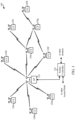
- FIG. 1 illustrates a multiple-access multiple-input multiple-output (MIMO) system 100 with access points and user terminals.
- An access point is generally a fixed station that communicates with the user terminals and may also be referred to as a base station or some other terminology.
- a user terminal may be fixed or mobile and may also be referred to as a mobile station, a wireless device, or some other terminology.
- Access point 110 may communicate with one or more user terminals 120 (also referred to herein as stations (STAs)) at any given moment on the downlink and uplink.
- STAs stations
- user terminals 120 capable of communicating via Spatial Division Multiple Access (SDMA)
- the user terminals 120 may also include some user terminals that do not support SDMA.
- an AP 110 may be configured to communicate with both SDMA and non-SDMA user terminals. This approach may conveniently allow older versions of user terminals ("legacy" stations) to remain deployed in an enterprise, extending their useful lifetime, while allowing newer or future user terminals being implemented with technology such as SDMA, OFDM or OFDMA to be introduced as deemed appropriate.
- the system 100 employs multiple transmit and multiple receive antennas for data transmission on the downlink and uplink.
- the access point 110 is equipped with N ap antennas and represents the multiple-input (MI) for downlink transmissions and the multiple-output (MO) for uplink transmissions.
- a set of K selected user terminals 120 collectively represents the multiple-output for downlink transmissions and the multiple-input for uplink transmissions.
- MI multiple-input
- MO multiple-output
- K selected user terminals 120 collectively represents the multiple-output for downlink transmissions and the multiple-input for uplink transmissions.
- N ap ⁇ K ⁇ 1 if the data symbol streams for the K user terminals are not multiplexed in code, frequency or time by some means.
- K may be greater than N ap if the data symbol streams can be multiplexed using TDMA technique, different code channels with CDMA, disjoint sets of subbands with OFDM, and so on.
- Each selected user terminal transmits user-specific data to and/or receives user-specific data from the access point.
- each selected user terminal may be equipped with one or multiple antennas (i.e., N ut ⁇ 1).
- the K selected user terminals can have the same or different number of antennas.
- the SDMA system may be a time division duplex (TDD) system or a frequency division duplex (FDD) system.
- TDD time division duplex
- FDD frequency division duplex
- MIMO system 100 may also utilize a single carrier or multiple carriers for transmission.
- Each user terminal may be equipped with a single antenna (e.g., in order to keep costs down) or multiple antennas (e.g., where the additional cost can be supported).
- the system 100 may also be a TDMA system if the user terminals 120 share the same frequency channel by dividing transmission/reception into different time slots, each time slot being assigned to different user terminal 120.
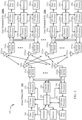
- FIG. 2 illustrates a block diagram of access point 110 and two user terminals 120m and 120x in MIMO system 100.
- the access point 110 is equipped with N t antennas 224a through 224t.
- User terminal 120m is equipped with N ut,m antennas 252ma through 252mu
- user terminal 120x is equipped with N ut,x antennas 252xa through 252xu.
- the access point 110 is a transmitting entity for the downlink and a receiving entity for the uplink.
- Each user terminal 120 is a transmitting entity for the uplink and a receiving entity for the downlink.
- a “transmitting entity” is an independently operated apparatus or device capable of transmitting data via a wireless channel
- a “receiving entity” is an independently operated apparatus or device capable of receiving data via a wireless channel.
- the subscript "dn” denotes the downlink
- the subscript "up” denotes the uplink
- N up user terminals are selected for simultaneous transmission on the uplink
- N dn user terminals are selected for simultaneous transmission on the downlink
- N up may or may not be equal to N dn
- N up and N dn may be static values or can change for each scheduling interval.
- the beam-steering or some other spatial processing technique may be used at the access point and user terminal.
- a transmit (TX) data processor 288 receives traffic data from a data source 286 and control data from a controller 280.
- TX data processor 288 processes (e.g., encodes, interleaves, and modulates) the traffic data for the user terminal based on the coding and modulation schemes associated with the rate selected for the user terminal and provides a data symbol stream.
- a TX spatial processor 290 performs spatial processing on the data symbol stream and provides N ut,m transmit symbol streams for the N ut,m antennas.
- a TX data processor 210 receives traffic data from a data source 208 for N dn user terminals scheduled for downlink transmission, control data from a controller 230, and possibly other data from a scheduler 234. The various types of data may be sent on different transport channels. TX data processor 210 processes (e.g., encodes, interleaves, and modulates) the traffic data for each user terminal based on the rate selected for that user terminal. TX data processor 210 provides N dn downlink data symbol streams for the N dn user terminals.
- N ut,m antennas 252 receive the N ap downlink signals from access point 110.
- Each receiver unit 254 processes a received signal from an associated antenna 252 and provides a received symbol stream.
- An RX spatial processor 260 performs receiver spatial processing on N ut,m received symbol streams from N ut,m receiver units 254 and provides a recovered downlink data symbol stream for the user terminal. The receiver spatial processing is performed in accordance with the CCMI, MMSE or some other technique.
- An RX data processor 270 processes (e.g., demodulates, deinterleaves and decodes) the recovered downlink data symbol stream to obtain decoded data for the user terminal.
- the wireless device 302 may also include a housing 308 that may include a transmitter 310 and a receiver 312 to allow transmission and reception of data between the wireless device 302 and a remote location.
- the transmitter 310 and receiver 312 may be combined into a transceiver 314.
- a single or a plurality of transmit antennas 316 may be attached to the housing 308 and electrically coupled to the transceiver 314.
- the wireless device 302 may also include (not shown) multiple transmitters, multiple receivers, and multiple transceivers.
- the various components of the wireless device 302 may be coupled together by a bus system 322, which may include a power bus, a control signal bus, and a status signal bus in addition to a data bus.
- a bus system 322 may include a power bus, a control signal bus, and a status signal bus in addition to a data bus.
- Wireless communications systems may include systems in which a wireless station, such as a smartphone, tablet computer, laptop computer, desktop computer, or the like serves as a soft access point for one or more peer wireless stations. These peer wireless stations may be used for various real-time applications, such as extended reality or computer gaming, in which traffic may have stringent latency requirements (which may be referred to as "latency sensitive traffic").
- a wireless station such as a smartphone, tablet computer, laptop computer, desktop computer, or the like serves as a soft access point for one or more peer wireless stations.
- These peer wireless stations may be used for various real-time applications, such as extended reality or computer gaming, in which traffic may have stringent latency requirements (which may be referred to as "latency sensitive traffic").
- TXOP triggered transmission opportunity
- PPDUs data packets
- One example of parameters that may be defined for communications between devices in a network may include a subchannel puncturing pattern which identifies which subchannels are active and which subchannels are inactive during a TXOP.
- the puncturing pattern may be communicated from the AP to the wireless station via a disabled subchannel bitmap field included in one or more management frames transmitted by the AP, with each bit in the bitmap corresponding to a specific subchannel and a value indicating whether the subchannel is enabled (bit value of 0) or disabled (bit value of 1).
- the subchannels indicated as disabled in the disabled subchannel bitmap may not be used for communications with any device connected to the AP (e.g., any station that is a member of the basic service set (BSS) associated with the AP).
- BSS basic service set
- Additional subchannels may be punctured (not used) beyond those identified in the disabled subchannel bitmap. These additional subchannels may be punctured when the AP solicits a response from a connected wireless station by assigning resource units in the non-punctured channels. Thus, the bandwidth used for communications may be narrower than that identified by the AP in the disabled subchannel bitmap, but may not be wider than that identified by the AP in the disabled subchannel bitmap.
- Peer wireless stations may not be communicatively coupled to the AP that signaled the parameters to a wireless station communicatively coupled to the AP, and thus, may not be aware of parameters established for communications between the AP and the wireless station to which these peer wireless stations are connected. Because the peer wireless stations may not be aware of these parameters, the peer wireless stations may communicate using a different set of parameters. For example, in the subchannel puncturing example discussed above, a peer wireless station may communicate on subchannels indicated as disabled in the disabled subchannel bitmap, which may violate a rule for communications in a wireless network stating that communications may not be performed on subchannels that are disabled.
- FIG. 4 illustrates an example timeline 400 for communications between a wireless station and a peer wireless station during a shared transmission opportunity (TXOP).
- TXOP shared transmission opportunity
- STA1 can transmit a clear to send (CTS) frame 414 to the AP.
- Data frames 416 may be transmitted to the peer STA, and in response, the peer STA may transmit a block acknowledgment (BA) 418 to acknowledge receipt of the transmitted data frames from STA1 (or indicate that certain frames are to be retransmitted due to a failure to successfully receive those frames).
- BA block acknowledgment
- STA1 may allow the peer STA to transmit data to STA1. To do so, STA1 may transmit a trigger frame 420 to the peer STA. In response to receiving the trigger frame 420, the peer STA may transmit one or more data frames 422 to STA1, and STA1 may respond with a BA 424.
- TXOP duration 404 a portion of TXOP 402 may still remain for the AP to communicate with other STAs in the AP's basic service set. Between the end of shared TXOP duration 404 and the end of TXOP 402, thus, the AP may transmit data frames (e.g., data frames 426) to other stations (e.g., STA2) in the network.
- data frames e.g., data frames 426
- the peer STA may not be aware of the parameters for wireless communications established by the AP for members of the AP's BSS. Thus, it is possible for the peer STA to select transmission parameters that violate one or more transmission rules, such as transmitting on a bandwidth wider than that identified by the AP (e.g., transmitting on channels identified as punctured by the AP). Further, during peer-to-peer communications between a STA1 and the peer STA, it may be possible to use a different puncturing pattern from that identified in a subchannel puncturing pattern provided to STA1, and the AP may not be aware of this puncturing pattern. Thus, the AP may also violate the one or more transmission rules, such as transmitted on a bandwidth wider than that used for communications between STA1 and the peer STA during TXOP 402.
- aspects of the present disclosure provide techniques for signaling parameters for wireless communications to devices with which a wireless station communicates so that wireless devices in a network are aware of the parameters that define how communications are to be performed during a TXOP and do not violate rules for communications during a TXOP.
- signalsing these parameters to devices with which the wireless station communicates - such as APs and other peer wireless stations using the wireless station as a virtual (or soft) AP - aspects of the present disclosure may ensure that devices within a wireless communication network are aware of the parameters established for wireless communications even when those devices are not communicatively coupled to the AP and would ordinarily not be aware of such parameters.
- the devices with which the wireless station communicates may perform transmissions during a TXOP without violating rules defining how transmissions are to be performed during the TXOP (e.g., bandwidth limitations, etc.).
- FIG. 5 illustrates example operations 500 that may be performed at a wireless station (e.g., user terminal 120 illustrated in FIG. 1 ) to communicate with one or more other devices during a transmission opportunity, in accordance with certain aspects of the present disclosure.
- a wireless station e.g., user terminal 120 illustrated in FIG. 1
- FIG. 5 illustrates example operations 500 that may be performed at a wireless station (e.g., user terminal 120 illustrated in FIG. 1 ) to communicate with one or more other devices during a transmission opportunity, in accordance with certain aspects of the present disclosure.
- operations 500 may begin at block 510, where the wireless station obtains, from an AP, a transmission opportunity (TXOP) sharing trigger indicating a duration in which the TXOP is shared by the wireless station and one or more other devices.
- TXOP transmission opportunity
- the TXOP sharing trigger may indicate a duration of a shared TXOP in which the wireless station can communicate with one or more other devices, such as other APs or peer wireless stations connected to the wireless station and using the wireless station as a virtual (or soft) AP.
- the wireless station relays, to the one or more other devices, information identifying parameters for wireless communications between the wireless station and the one or more other devices.
- the parameters for wireless communications may include, for example, a puncturing pattern associated with subchannels in the wireless communication network.
- the puncturing pattern may indicate which subchannels are active and which subchannels are disabled for the duration of the TXOP. It should be noted that the wireless device need not use all of the subchannels indicated as active in the puncturing pattern, and that additional subchannels beyond those identified by the AP may be punctured by the wireless device or the one or more other devices.
- the parameters for wireless communications between the wireless station and the one or more other devices may be obtained from the AP and may be forwarded to the one or more other stations.
- the wireless station can relay the parameters for wireless communications between the wireless station and the one or more other devices via one or more dedicated information elements in a frame transmitted to the one or more other devices (e.g., one or more IEs in data frames transmitted to the one or more other devices, one or more IEs in management frames transmitted by the wireless station to the one or more other devices, a header of a frame transmitted to the one or more other devices, etc.).
- the information may be relayed to the one or more other devices, for example, via a quality of service (QoS) information element or a traffic specification (TSPEC) information element in a management frame.
- QoS quality of service
- TSPEC traffic specification
- the information may also or alternatively be relayed to the one or more devices via at least one of a stream classification service (SCS) request frame or a target wake time (TWT) request frame used to indicate a time at which the one or more other devices are to operate (e.g., receive and/or transmit on a link between the wireless station and the one or more other devices).
- the wireless station can relay the parameters for wireless communications between the wireless station and the one or more other devices by outputting this information for transmission during a tunneled direct link setup (TDLS) procedure between the wireless station and the one or more other devices.
- TDLS tunneled direct link setup
- the wireless station communicates with the one or more other devices based on the parameters for wireless communications between the wireless station and the one or more other devices.
- communications with the one or more other devices may be based on a bandwidth of a frame in which one or more of the TXOP sharing trigger or a clear to send (CTS) message is carried.
- the bandwidth may be, for example, based on an indicated maximum bandwidth supported for wireless communications between the wireless station and the one or more other devices.
- the bandwidth used for communications with the one or more other devices may be less than the bandwidth of the frame in which the TXOP or CTS message is carried (e.g., may include additional punctured channels), but may not exceed the bandwidth of the frame in which the TXOP or CTS message is carried.
- the wireless station may be aware of an ability for the one or more other devices (which may not be connected to the AP) to support puncturing.
- the wireless station can signal, to the AP, information about the ability of the one or more other devices to support puncturing of one or more subchannels.
- the wireless station may obtain information about the punctured subchannels in the network, which may be received as a bitmap having a plurality of bits where each bit represents an activation or deactivation status of a specific subchannel.
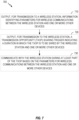
- FIG. 6 illustrates example operations 600 at a wireless station (e.g., user terminal 120 illustrated in FIG. 1 or another AP, such as an AP 110 illustrated in FIG. 1 ) to communicate with a second wireless station during a transmission opportunity, in accordance with certain aspects of the present disclosure.
- operations 600 may be performed at a peer wireless station to the second wireless station that is not also connected to the AP with which the second wireless station communicates.
- operations 600 may allow the wireless station, which may not be communicatively coupled to an AP, to be configured with transmission parameters that may allow the wireless station to communicate with the second wireless station without violating rules, for example, defining a maximum bandwidth that can be used for communications between the wireless station and the second wireless station or other communications rules.
- the AP communicates with the wireless station during at least part of the TXOP based on the parameters for wireless communications between the wireless station and the one or more other devices.
- the wireless station may disable (or puncture) further subchannels beyond those indicated as punctured in the signaling output for transmission to the wireless station at block 710.
- the AP may obtain information identifying one or more punctured subchannels that are punctured during the TXOP. Subsequent communications between the AP and the wireless station (and/or the one or more other devices) may be further based on the identified punctured channels.
- the AP may further output, for transmission to the wireless station, information identifying transmission parameters for wireless communications between the wireless station and the one or more other devices. These parameters may include a variety of parameters, as discussed above, including a channel bandwidth, a maximum transmission power, an MCS, a link identifier, spatial parameters (e.g., NSS, NSTS, etc.), and/or timing information.
- the link identifier may be output as a link identifier bitmap in which a bit set to high in the bitmap indicates the link identifier used for communications between the AP and the wireless station.
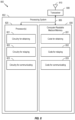
- FIG. 8 depicts an example communications device 800 that includes various components operable, configured, or adapted to perform operations for the techniques disclosed herein, such as the operations depicted and described with respect to FIG. 5 .
- communication device 800 may be a user terminal 120 as described, for example with respect to FIGS. 1 and 2 .
- Communications device 800 includes a processing system 802 coupled to a transceiver 808 (e.g., a transmitter and/or a receiver).
- Transceiver 808 is configured to transmit (or send) and receive signals for the communications device 800 via an antenna 810, such as the various signals as described herein.
- Processing system 802 may be configured to perform processing functions for communications device 800, including processing signals received and/or to be transmitted by communications device 800.
- Processing system 802 includes one or more processors 820 coupled to a computer-readable medium/memory 830 via a bus 806.
- computer-readable medium/memory 830 is configured to store instructions (e.g., computer-executable code) that when executed by the one or more processors 820, cause the one or more processors 820 to perform the operations illustrated in FIG. 5 , or other operations for performing the various techniques discussed herein.
- computer-readable medium/memory 830 stores code 831 for obtaining, code 832 for relaying, and code 833 for communicating.
- the one or more processors 820 include circuitry configured to implement the code stored in the computer-readable medium/memory 830, including circuitry 821 for obtaining, circuitry 822 for relaying, and circuitry 823 for communicating.
- Various components of communications device 800 may provide means for performing the methods described herein, including with respect to FIG. 5 .
- means for obtaining may include the RX spatial processor 260, RX data processor 270, controller 280, transceivers 254 and/or antenna(s) 252 of the user terminal 120 illustrated in FIG. 2 and/or processor 820, transceiver 808, and antenna 810 of the communication device 800 in FIG. 8 .
- means for relaying may include the TX spatial processor 290, TX data processor 288, controller 280, transceivers 254 and/or antenna(s) 252 of the user terminal 120 illustrated in FIG. 2 and/or processor 820, transceiver 808 and antenna 810 of the communication device 800 in FIG. 8 .
- means for communicating may include the RX spatial processor 260, RX data processor 270, controller 280, TX spatial processor 290, TX data processor 288, transceivers 254 and/or antenna(s) 252 of the user terminal 120 illustrated in FIG. 2 and/or processor 820, transceiver 808 and antenna 810 of the communication device 800 in FIG. 8 .
- FIG. 8 is an example, and many other examples and configurations of communication device 800 are possible.
- FIG. 9 depicts an example communications device 900 that includes various components operable, configured, or adapted to perform operations for the techniques disclosed herein, such as the operations depicted and described with respect to FIG. 6 .
- communication device 900 may be a user terminal 120 as described, for example with respect to FIGS. 1 and 2 .
- Communications device 900 includes a processing system 902 coupled to a transceiver 908 (e.g., a transmitter and/or a receiver).
- Transceiver 908 is configured to transmit (or send) and receive signals for the communications device 900 via an antenna 910, such as the various signals as described herein.
- Processing system 902 may be configured to perform processing functions for communications device 900, including processing signals received and/or to be transmitted by communications device 900.
- Processing system 902 includes one or more processors 920 coupled to a computer-readable medium/memory 930 via a bus 906.
- computer-readable medium/memory 930 is configured to store instructions (e.g., computer-executable code) that when executed by the one or more processors 920, cause the one or more processors 920 to perform the operations illustrated in FIG. 6 , or other operations for performing the various techniques discussed herein.
- computer-readable medium/memory 930 stores code 931 for establishing, code 932 for obtaining, and code 933 for communicating.
- the one or more processors 920 include circuitry configured to implement the code stored in the computer-readable medium/memory 930, including circuitry 921 for establishing, circuitry 922 for obtaining, and circuitry 923 for communicating.
- communications device 900 may provide means for performing the methods described herein, including with respect to FIG. 6 .
- means for establishing may include the RX spatial processor 260, RX data processor 270, controller 280, TX spatial processor 290, TX data processor 288, transceivers 254 and/or antenna(s) 252 of the user terminal 120 illustrated in FIG. 2 and/or processor 920, transceiver 908 and antenna 910 of the communication device 900 in FIG. 9 .
- means for obtaining may include the RX spatial processor 260, RX data processor 270, controller 280, transceivers 254 and/or antenna(s) 252 of the user terminal 120 illustrated in FIG. 2 and/or processor 920, transceiver 908, and antenna 910 of the communication device 900 in FIG. 9 .
- means for communicating may include the RX spatial processor 260, RX data processor 270, controller 280, TX spatial processor 290, TX data processor 288, transceivers 254 and/or antenna(s) 252 of the user terminal 120 illustrated in FIG. 2 and/or processor 920, transceiver 908, and antenna 910 of the communication device 900 in FIG. 9 .
- FIG. 9 is an example, and many other examples and configurations of communication device 900 are possible.
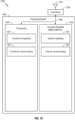
- FIG. 10 depicts an example communications device 1000 that includes various components operable, configured, or adapted to perform operations for the techniques disclosed herein, such as the operations depicted and described with respect to FIG. 7 .
- communication device 1000 may be an AP 110 as described, for example with respect to FIGS. 1 and 2 .
- Communications device 1000 includes a processing system 1002 coupled to a transceiver 1008 (e.g., a transmitter and/or a receiver).
- Transceiver 1008 is configured to transmit (or send) and receive signals for the communications device 1000 via an antenna 1010, such as the various signals as described herein.
- Processing system 1002 may be configured to perform processing functions for communications device 1000, including processing signals received and/or to be transmitted by communications device 1000.
- computer-readable medium/memory 1030 stores code 1031 for outputting and code 1032 for communicating.
- the one or more processors 1020 include circuitry configured to implement the code stored in the computer-readable medium/memory 1030, including circuitry 1021 for outputting and circuitry 1022 for communicating.
Landscapes
- Engineering & Computer Science (AREA)
- Computer Networks & Wireless Communication (AREA)
- Signal Processing (AREA)
- Computer Security & Cryptography (AREA)
- Databases & Information Systems (AREA)
- Mobile Radio Communication Systems (AREA)
Priority Applications (1)
| Application Number | Priority Date | Filing Date | Title |
|---|---|---|---|
| EP25213399.6A EP4669012A3 (de) | 2021-11-12 | 2022-09-27 | Kommunikationsparametersignalisierung für peer-to-peer-kommunikation |
Applications Claiming Priority (3)
| Application Number | Priority Date | Filing Date | Title |
|---|---|---|---|
| US17/525,708 US11956823B2 (en) | 2021-11-12 | 2021-11-12 | Communication parameter signaling for peer-to-peer communications |
| EP22790180.8A EP4430908B1 (de) | 2021-11-12 | 2022-09-27 | Kommunikationsparametersignalisierung für peer-to-peer-kommunikation |
| PCT/US2022/077095 WO2023086703A1 (en) | 2021-11-12 | 2022-09-27 | Communication parameter signaling for peer-to-peer communications |
Related Parent Applications (2)
| Application Number | Title | Priority Date | Filing Date |
|---|---|---|---|
| EP22790180.8A Division EP4430908B1 (de) | 2021-11-12 | 2022-09-27 | Kommunikationsparametersignalisierung für peer-to-peer-kommunikation |
| EP22790180.8A Division-Into EP4430908B1 (de) | 2021-11-12 | 2022-09-27 | Kommunikationsparametersignalisierung für peer-to-peer-kommunikation |
Related Child Applications (1)
| Application Number | Title | Priority Date | Filing Date |
|---|---|---|---|
| EP25213399.6A Division EP4669012A3 (de) | 2021-11-12 | 2022-09-27 | Kommunikationsparametersignalisierung für peer-to-peer-kommunikation |
Publications (2)
| Publication Number | Publication Date |
|---|---|
| EP4580295A2 true EP4580295A2 (de) | 2025-07-02 |
| EP4580295A3 EP4580295A3 (de) | 2025-10-08 |
Family
ID=83692654
Family Applications (3)
| Application Number | Title | Priority Date | Filing Date |
|---|---|---|---|
| EP22790180.8A Active EP4430908B1 (de) | 2021-11-12 | 2022-09-27 | Kommunikationsparametersignalisierung für peer-to-peer-kommunikation |
| EP25213399.6A Pending EP4669012A3 (de) | 2021-11-12 | 2022-09-27 | Kommunikationsparametersignalisierung für peer-to-peer-kommunikation |
| EP25176560.8A Pending EP4580295A3 (de) | 2021-11-12 | 2022-09-27 | Kommunikationsparametersignalisierung für peer-to-peer-kommunikation |
Family Applications Before (2)
| Application Number | Title | Priority Date | Filing Date |
|---|---|---|---|
| EP22790180.8A Active EP4430908B1 (de) | 2021-11-12 | 2022-09-27 | Kommunikationsparametersignalisierung für peer-to-peer-kommunikation |
| EP25213399.6A Pending EP4669012A3 (de) | 2021-11-12 | 2022-09-27 | Kommunikationsparametersignalisierung für peer-to-peer-kommunikation |
Country Status (7)
| Country | Link |
|---|---|
| US (2) | US11956823B2 (de) |
| EP (3) | EP4430908B1 (de) |
| JP (1) | JP2024543343A (de) |
| KR (1) | KR20240104102A (de) |
| CN (1) | CN118251961A (de) |
| TW (1) | TW202325087A (de) |
| WO (1) | WO2023086703A1 (de) |
Families Citing this family (8)
| Publication number | Priority date | Publication date | Assignee | Title |
|---|---|---|---|---|
| US11956823B2 (en) | 2021-11-12 | 2024-04-09 | Qualcomm Incorporated | Communication parameter signaling for peer-to-peer communications |
| US20240039666A1 (en) * | 2022-07-29 | 2024-02-01 | Mediatek Inc. | Method and apparatus for managing peer-to-peer services when station is temporarily unavailable on primary band due to subband transition |
| US20240357650A1 (en) * | 2023-04-21 | 2024-10-24 | Apple Inc. | Infrastructure and peer-to-peer (p2p) medium access sharing |
| US20240397506A1 (en) * | 2023-05-23 | 2024-11-28 | Samsung Electronics Co., Ltd. | Transmission opportunity relaying in wireless networks |
| US20250126066A1 (en) * | 2023-10-11 | 2025-04-17 | Qualcomm Incorporated | Techniques for end-to-end operations between devices |
| WO2025090685A1 (en) * | 2023-10-23 | 2025-05-01 | Maxlinear, Inc. | Coordinated scheduling for repeaters |
| CN120239951A (zh) * | 2023-10-31 | 2025-07-01 | 北京小米移动软件有限公司 | 数据中继传输方法、通信设备、站点设备及接入点设备 |
| WO2025217884A1 (zh) * | 2024-04-18 | 2025-10-23 | 北京小米移动软件有限公司 | 通信方法、站点设备、接入点设备及通信系统 |
Family Cites Families (16)
| Publication number | Priority date | Publication date | Assignee | Title |
|---|---|---|---|---|
| CN104185188B (zh) * | 2013-05-27 | 2017-11-24 | 华为技术有限公司 | 干扰处理方法及设备 |
| US9992741B2 (en) | 2016-01-11 | 2018-06-05 | Intel IP Corporation | Device and method of providing grant frame for bandwidth scheduling |
| CN107787018B (zh) | 2016-08-26 | 2020-05-08 | 华为技术有限公司 | 通信方法、设备及系统 |
| US11057174B2 (en) * | 2017-12-22 | 2021-07-06 | Qualcomm Incorporated | Wireless communication with partial channel puncturing |
| US11546938B2 (en) * | 2019-08-09 | 2023-01-03 | Qualcomm Incorporated | Physical layer preamble and signaling for wireless communication |
| US11516841B2 (en) * | 2019-09-06 | 2022-11-29 | Mediatek Singapore Pte. Ltd. | Enhanced high-throughput multi-link channel access and operation |
| SG10202001391SA (en) * | 2020-02-14 | 2021-09-29 | Panasonic Ip Corp America | Communication apparatus and communication method for control signaling |
| US12108447B2 (en) * | 2020-04-27 | 2024-10-01 | Apple Inc. | Request to send (RTS)/clear to send (CTS) frames and transmission rules |
| CN115669095A (zh) * | 2020-04-29 | 2023-01-31 | 交互数字专利控股公司 | 用于无线局域网系统的协调多接入点传输 |
| US12414156B2 (en) * | 2020-08-17 | 2025-09-09 | Sony Group Corporation | Request trigger frame and TXOP sharing launched by non-AP STA |
| US11856606B2 (en) * | 2020-12-01 | 2023-12-26 | Sony Group Corporation | Coordinated stations in OBSS with shared TXOP in time domain |
| JP7719531B2 (ja) * | 2021-05-25 | 2025-08-06 | ウィルス インスティテュート オブ スタンダーズ アンド テクノロジー インコーポレイティド | 共有txopを用いる無線通信装置及び無線通信装置の動作方法 |
| CN116941310A (zh) | 2021-06-21 | 2023-10-24 | Oppo广东移动通信有限公司 | 无线通信的方法、站点设备和接入点设备 |
| WO2023287164A1 (ko) * | 2021-07-12 | 2023-01-19 | 한국전자통신연구원 | 다중 링크를 지원하는 통신 시스템에서 직접 통신을 위한 방법 및 장치 |
| US12432778B2 (en) | 2021-09-15 | 2025-09-30 | Sony Group Corporation | Preemption / interruption of an ongoing low priority PPDU |
| US11956823B2 (en) | 2021-11-12 | 2024-04-09 | Qualcomm Incorporated | Communication parameter signaling for peer-to-peer communications |
-
2021
- 2021-11-12 US US17/525,708 patent/US11956823B2/en active Active
-
2022
- 2022-09-27 WO PCT/US2022/077095 patent/WO2023086703A1/en not_active Ceased
- 2022-09-27 EP EP22790180.8A patent/EP4430908B1/de active Active
- 2022-09-27 EP EP25213399.6A patent/EP4669012A3/de active Pending
- 2022-09-27 EP EP25176560.8A patent/EP4580295A3/de active Pending
- 2022-09-27 CN CN202280073952.9A patent/CN118251961A/zh active Pending
- 2022-09-27 JP JP2024526630A patent/JP2024543343A/ja active Pending
- 2022-09-27 KR KR1020247014828A patent/KR20240104102A/ko active Pending
- 2022-10-06 TW TW111137962A patent/TW202325087A/zh unknown
-
2024
- 2024-03-13 US US18/603,419 patent/US12532359B2/en active Active
Also Published As
| Publication number | Publication date |
|---|---|
| EP4669012A3 (de) | 2026-03-25 |
| TW202325087A (zh) | 2023-06-16 |
| US11956823B2 (en) | 2024-04-09 |
| EP4669012A2 (de) | 2025-12-24 |
| CN118251961A (zh) | 2024-06-25 |
| KR20240104102A (ko) | 2024-07-04 |
| US20240306205A1 (en) | 2024-09-12 |
| EP4580295A3 (de) | 2025-10-08 |
| US12532359B2 (en) | 2026-01-20 |
| EP4430908B1 (de) | 2025-12-17 |
| EP4430908A1 (de) | 2024-09-18 |
| WO2023086703A1 (en) | 2023-05-19 |
| US20230156793A1 (en) | 2023-05-18 |
| EP4430908C0 (de) | 2025-12-17 |
| JP2024543343A (ja) | 2024-11-21 |
Similar Documents
| Publication | Publication Date | Title |
|---|---|---|
| EP4669012A2 (de) | Kommunikationsparametersignalisierung für peer-to-peer-kommunikation | |
| JP6453426B2 (ja) | マルチユーザフレーム交換のためのプロトコル | |
| KR102611217B1 (ko) | 향상된 ofdma 랜덤 액세스를 위한 시스템들, 방법들 및 디바이스들 | |
| KR102032998B1 (ko) | 채널 상태 정보 사운딩 및 피드백을 위한 방법들 및 장치 | |
| US10075873B2 (en) | Methods and apparatus for channel state information sounding and feedback | |
| EP3197082B1 (de) | Protokolle für den austausch mehrerer benutzerrahmen | |
| JP6321174B2 (ja) | 送信の機会(txop)をシェアすること | |
| CN105493429B (zh) | 用于多用户上行链路无线传输的确收的方法和装置 | |
| JP6602795B2 (ja) | マルチユーザ送信のための保護 | |
| TW201521377A (zh) | 用於通道狀態資訊回饋的方法和裝置 | |
| CN102124797A (zh) | 多信道sdma | |
| EP2638744B1 (de) | Leistungsregelung tv-whitespace-vorrichtungen | |
| CN108029135A (zh) | 无线设备的改进的效率和共存 | |
| US20160128048A1 (en) | Control channel on plcp service data unit (psdu) tones |
Legal Events
| Date | Code | Title | Description |
|---|---|---|---|
| PUAI | Public reference made under article 153(3) epc to a published international application that has entered the european phase |
Free format text: ORIGINAL CODE: 0009012 |
|
| STAA | Information on the status of an ep patent application or granted ep patent |
Free format text: STATUS: REQUEST FOR EXAMINATION WAS MADE |
|
| 17P | Request for examination filed |
Effective date: 20250515 |
|
| AC | Divisional application: reference to earlier application |
Ref document number: 4430908 Country of ref document: EP Kind code of ref document: P |
|
| AK | Designated contracting states |
Kind code of ref document: A2 Designated state(s): AL AT BE BG CH CY CZ DE DK EE ES FI FR GB GR HR HU IE IS IT LI LT LU LV MC MK MT NL NO PL PT RO RS SE SI SK SM TR |
|
| REG | Reference to a national code |
Ref country code: DE Ref legal event code: R079 Free format text: PREVIOUS MAIN CLASS: H04W0074040000 Ipc: H04W0074000000 |
|
| PUAL | Search report despatched |
Free format text: ORIGINAL CODE: 0009013 |
|
| AK | Designated contracting states |
Kind code of ref document: A3 Designated state(s): AL AT BE BG CH CY CZ DE DK EE ES FI FR GB GR HR HU IE IS IT LI LT LU LV MC MK MT NL NO PL PT RO RS SE SI SK SM TR |
|
| RIC1 | Information provided on ipc code assigned before grant |
Ipc: H04W 74/00 20090101AFI20250902BHEP Ipc: H04W 72/0446 20230101ALN20250902BHEP Ipc: H04W 72/0453 20230101ALN20250902BHEP Ipc: H04W 74/04 20090101ALN20250902BHEP Ipc: H04W 74/0816 20240101ALN20250902BHEP |