EP4580283A2 - Definition einer prs- und srs-assoziation zur verbesserung der multi-rtt-positionierung in szenarien mit eingeschränkter verarbeitungskapazität - Google Patents
Definition einer prs- und srs-assoziation zur verbesserung der multi-rtt-positionierung in szenarien mit eingeschränkter verarbeitungskapazität Download PDFInfo
- Publication number
- EP4580283A2 EP4580283A2 EP25176465.0A EP25176465A EP4580283A2 EP 4580283 A2 EP4580283 A2 EP 4580283A2 EP 25176465 A EP25176465 A EP 25176465A EP 4580283 A2 EP4580283 A2 EP 4580283A2
- Authority
- EP
- European Patent Office
- Prior art keywords
- prs
- reception
- resources
- transmission
- prss
- Prior art date
- Legal status (The legal status is an assumption and is not a legal conclusion. Google has not performed a legal analysis and makes no representation as to the accuracy of the status listed.)
- Pending
Links
Images









Classifications
-
- H—ELECTRICITY
- H04—ELECTRIC COMMUNICATION TECHNIQUE
- H04B—TRANSMISSION
- H04B17/00—Monitoring; Testing
- H04B17/30—Monitoring; Testing of propagation channels
- H04B17/309—Measuring or estimating channel quality parameters
- H04B17/318—Received signal strength
- H04B17/328—Reference signal received power [RSRP]; Reference signal received quality [RSRQ]
-
- H—ELECTRICITY
- H04—ELECTRIC COMMUNICATION TECHNIQUE
- H04B—TRANSMISSION
- H04B7/00—Radio transmission systems, i.e. using radiation field
- H04B7/02—Diversity systems; Multi-antenna system, i.e. transmission or reception using multiple antennas
- H04B7/04—Diversity systems; Multi-antenna system, i.e. transmission or reception using multiple antennas using two or more spaced independent antennas
- H04B7/06—Diversity systems; Multi-antenna system, i.e. transmission or reception using multiple antennas using two or more spaced independent antennas at the transmitting station
- H04B7/0613—Diversity systems; Multi-antenna system, i.e. transmission or reception using multiple antennas using two or more spaced independent antennas at the transmitting station using simultaneous transmission
- H04B7/0615—Diversity systems; Multi-antenna system, i.e. transmission or reception using multiple antennas using two or more spaced independent antennas at the transmitting station using simultaneous transmission of weighted versions of same signal
- H04B7/0617—Diversity systems; Multi-antenna system, i.e. transmission or reception using multiple antennas using two or more spaced independent antennas at the transmitting station using simultaneous transmission of weighted versions of same signal for beam forming
-
- H—ELECTRICITY
- H04—ELECTRIC COMMUNICATION TECHNIQUE
- H04L—TRANSMISSION OF DIGITAL INFORMATION, e.g. TELEGRAPHIC COMMUNICATION
- H04L5/00—Arrangements affording multiple use of the transmission path
- H04L5/0001—Arrangements for dividing the transmission path
- H04L5/0014—Three-dimensional division
- H04L5/0023—Time-frequency-space
-
- H—ELECTRICITY
- H04—ELECTRIC COMMUNICATION TECHNIQUE
- H04L—TRANSMISSION OF DIGITAL INFORMATION, e.g. TELEGRAPHIC COMMUNICATION
- H04L5/00—Arrangements affording multiple use of the transmission path
- H04L5/003—Arrangements for allocating sub-channels of the transmission path
- H04L5/0048—Allocation of pilot signals, i.e. of signals known to the receiver
-
- H—ELECTRICITY
- H04—ELECTRIC COMMUNICATION TECHNIQUE
- H04L—TRANSMISSION OF DIGITAL INFORMATION, e.g. TELEGRAPHIC COMMUNICATION
- H04L5/00—Arrangements affording multiple use of the transmission path
- H04L5/003—Arrangements for allocating sub-channels of the transmission path
- H04L5/0048—Allocation of pilot signals, i.e. of signals known to the receiver
- H04L5/0051—Allocation of pilot signals, i.e. of signals known to the receiver of dedicated pilots, i.e. pilots destined for a single user or terminal
-
- H—ELECTRICITY
- H04—ELECTRIC COMMUNICATION TECHNIQUE
- H04W—WIRELESS COMMUNICATION NETWORKS
- H04W16/00—Network planning, e.g. coverage or traffic planning tools; Network deployment, e.g. resource partitioning or cells structures
- H04W16/24—Cell structures
- H04W16/28—Cell structures using beam steering
-
- H—ELECTRICITY
- H04—ELECTRIC COMMUNICATION TECHNIQUE
- H04W—WIRELESS COMMUNICATION NETWORKS
- H04W24/00—Supervisory, monitoring or testing arrangements
- H04W24/08—Testing, supervising or monitoring using real traffic
Definitions
- the present disclosure relates generally to communication systems, and more particularly, to wireless communication involving positioning.
- Wireless communication systems are widely deployed to provide various telecommunication services such as telephony, video, data, messaging, and broadcasts.
- Typical wireless communication systems may employ multiple-access technologies capable of supporting communication with multiple users by sharing available system resources. Examples of such multiple-access technologies include code division multiple access (CDMA) systems, time division multiple access (TDMA) systems, frequency division multiple access (FDMA) systems, orthogonal frequency division multiple access (OFDMA) systems, single-carrier frequency division multiple access (SC-FDMA) systems, and time division synchronous code division multiple access (TD-SCDMA) systems.
- CDMA code division multiple access
- TDMA time division multiple access
- FDMA frequency division multiple access
- OFDMA orthogonal frequency division multiple access
- SC-FDMA single-carrier frequency division multiple access
- TD-SCDMA time division synchronous code division multiple access
- 5G New Radio is part of a continuous mobile broadband evolution promulgated by Third Generation Partnership Project (3GPP) to meet new requirements associated with latency, reliability, security, scalability (e.g., with Internet of Things (IoT)), and other requirements.
- 3GPP Third Generation Partnership Project
- 5G NR includes services associated with enhanced mobile broadband (eMBB), massive machine type communications (mMTC), and ultra-reliable low latency communications (URLLC).
- eMBB enhanced mobile broadband
- mMTC massive machine type communications
- URLLC ultra-reliable low latency communications
- Some aspects of 5G NR may be based on the 4G Long Term Evolution (LTE) standard.
- LTE Long Term Evolution
- a method, a computer-readable medium, and an apparatus are provided for wireless communication at a user equipment (UE).
- the apparatus determines an association between one or more reception properties of one or more positioning reference signal (PRS) resources and one or more transmission properties of one or more sounding reference signal (SRS) resources.
- the apparatus transmits, to at least one serving base station (BS), information indicating the one or more PRS resources that the UE is configured to measure in a future measurement occasion.
- the apparatus measures PRSs received from one or more BSs on the one or more PRS resources based on the one or more reception properties.
- the apparatus transmits, to the one or more BSs after measuring the PRSs, SRSs on the one or more SRS resources based on the one or more transmission properties.
- a method, a computer-readable medium, and an apparatus are provided for wireless communication at a base station.
- the apparatus receives, from a UE, information indicating one or more PRS resources that the UE is configured to measure or has measured in one measurement occasion.
- the apparatus transmits PRSs on the indicated one or more PRS resources based on one or more transmission properties.
- the apparatus receives, from the UE after transmitting the PRSs, SRSs on one or more SRS resources based on one or more reception properties that are associated with the one or more transmission properties.
- the apparatus measures the received SRSs on the one or more SRS resources corresponding to the indicated one or more PRS resources.
- a method, a computer-readable medium, and an apparatus are provided for wireless communication at a UE.
- the apparatus receives, from at least one serving BS, information indicating one or more SRS resources or one or more PRS resources corresponding to the one or more SRS resources, the one or more SRS resources being associated with one or more transmission properties.
- the apparatus transmits, to one or more BSs, SRSs based on the one or more transmission properties, the SRSs being transmitted on the indicated one or more SRS resources or on the one or more SRS resources corresponding to the indicated one or more PRS resources.
- the apparatus prioritizes measuring, after transmitting the SRSs, PRSs received from the at least one BS on the one or more PRS resources in one measurement occasion, the PRSs being received based on one or more reception properties that are associated with the one or more transmission properties.
- the one or more aspects comprise the features hereinafter fully described and particularly pointed out in the claims.
- the following description and the annexed drawings set forth in detail certain illustrative features of the one or more aspects. These features are indicative, however, of but a few of the various ways in which the principles of various aspects may be employed, and this description is intended to include all such aspects and their equivalents.
- processors include microprocessors, microcontrollers, graphics processing units (GPUs), central processing units (CPUs), application processors, digital signal processors (DSPs), reduced instruction set computing (RISC) processors, systems on a chip (SoC), baseband processors, field programmable gate arrays (FPGAs), programmable logic devices (PLDs), state machines, gated logic, discrete hardware circuits, and other suitable hardware configured to perform the various functionality described throughout this disclosure.
- processors in the processing system may execute software.
- the functions described may be implemented in hardware, software, or any combination thereof. If implemented in software, the functions may be stored on or encoded as one or more instructions or code on a computer-readable medium.
- Computer-readable media includes computer storage media. Storage media may be any available media that can be accessed by a computer.
- such computer-readable media can comprise a random-access memory (RAM), a read-only memory (ROM), an electrically erasable programmable ROM (EEPROM), optical disk storage, magnetic disk storage, other magnetic storage devices, combinations of the aforementioned types of computer-readable media, or any other medium that can be used to store computer executable code in the form of instructions or data structures that can be accessed by a computer.
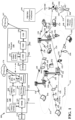
- the EPC 160 may include a Mobility Management Entity (MME) 162, other MMEs 164, a Serving Gateway 166, a Multimedia Broadcast Multicast Service (MBMS) Gateway 168, a Broadcast Multicast Service Center (BM-SC) 170, and a Packet Data Network (PDN) Gateway 172.
- MME Mobility Management Entity
- MBMS Multimedia Broadcast Multicast Service
- BM-SC Broadcast Multicast Service Center
- PDN Packet Data Network
- the MME 162 may be in communication with a Home Subscriber Server (HSS) 174.
- HSS Home Subscriber Server
- the MME 162 is the control node that processes the signaling between the UEs 104 and the EPC 160.
- the MME 162 provides bearer and connection management. All user Internet protocol (IP) packets are transferred through the Serving Gateway 166, which itself is connected to the PDN Gateway 172.
- IP Internet protocol
- the PDN Gateway 172 provides UE IP address allocation as well as other functions.
- the PDN Gateway 172 and the BM-SC 170 are connected to the IP Services 176.
- the IP Services 176 may include the Internet, an intranet, an IP Multimedia Subsystem (IMS), a PS Streaming Service, and/or other IP services.
- the BM-SC 170 may provide functions for MBMS user service provisioning and delivery.
- the BM-SC 170 may serve as an entry point for content provider MBMS transmission, may be used to authorize and initiate MBMS Bearer Services within a public land mobile network (PLMN), and may be used to schedule MBMS transmissions.
- PLMN public land mobile network
- the MBMS Gateway 168 may be used to distribute MBMS traffic to the base stations 102 belonging to a Multicast Broadcast Single Frequency Network (MBSFN) area broadcasting a particular service, and may be responsible for session management (start/stop) and for collecting eMBMS related charging information.
- MMSFN Multicast Broadcast Single Frequency Network
- the core network 190 may include an Access and Mobility Management Function (AMF) 192, other AMFs 193, a Session Management Function (SMF) 194, and a User Plane Function (UPF) 195.
- the AMF 192 may be in communication with a Unified Data Management (UDM) 196.
- the AMF 192 is the control node that processes the signaling between the UEs 104 and the core network 190.
- the AMF 192 provides QoS flow and session management. All user Internet protocol (IP) packets are transferred through the UPF 195.
- the UPF 195 provides UE IP address allocation as well as other functions.
- the UPF 195 is connected to the IP Services 197.
- the IP Services 197 may include the Internet, an intranet, an IP Multimedia Subsystem (IMS), a Packet Switch (PS) Streaming (PSS) Service, and/or other IP services.
- IMS IP Multimedia Subsystem
- PS Packet Switch
- PSS Packet Switch
- the base station may include and/or be referred to as a gNB, Node B, eNB, an access point, a base transceiver station, a radio base station, a radio transceiver, a transceiver function, a basic service set (BSS), an extended service set (ESS), a transmit reception point (TRP), or some other suitable terminology.
- the base station 102 provides an access point to the EPC 160 or core network 190 for a UE 104.
- Examples of UEs 104 include a cellular phone, a smart phone, a session initiation protocol (SIP) phone, a laptop, a personal digital assistant (PDA), a satellite radio, a global positioning system, a multimedia device, a video device, a digital audio player (e.g., MP3 player), a camera, a game console, a tablet, a smart device, a wearable device, a vehicle, an electric meter, a gas pump, a large or small kitchen appliance, a healthcare device, an implant, a sensor/actuator, a display, or any other similar functioning device.
- SIP session initiation protocol
- PDA personal digital assistant
- the 5G NR frame structure is assumed to be TDD, with subframe 4 being configured with slot format 28 (with mostly DL), where D is DL, U is UL, and F is flexible for use between DL/UL, and subframe 3 being configured with slot format 1 (with all UL). While subframes 3, 4 are shown with slot formats 1, 28, respectively, any particular subframe may be configured with any of the various available slot formats 0-61. Slot formats 0, 1 are all DL, UL, respectively. Other slot formats 2-61 include a mix of DL, UL, and flexible symbols.
- UEs are configured with the slot format (dynamically through DL control information (DCI), or semi-statically/statically through radio resource control (RRC) signaling) through a received slot format indicator (SFI).
- DCI DL control information
- RRC radio resource control
- SFI received slot format indicator
- a frame (10 ms) may be divided into 10 equally sized subframes (1 ms). Each subframe may include one or more time slots. Subframes may also include mini-slots, which may include 7, 4, or 2 symbols. Each slot may include 7 or 14 symbols, depending on the slot configuration. For slot configuration 0, each slot may include 14 symbols, and for slot configuration 1, each slot may include 7 symbols.
- the symbols on DL may be cyclic prefix (CP) OFDM (CP-OFDM) symbols.
- the symbols on UL may be CP-OFDM symbols (for high throughput scenarios) or discrete Fourier transform (DFT) spread OFDM (DFT-s-OFDM) symbols (also referred to as single carrier frequency-division multiple access (SC-FDMA) symbols) (for power limited scenarios; limited to a single stream transmission).
- the number of slots within a subframe is based on the slot configuration and the numerology. For slot configuration 0, different numerologies ⁇ 0 to 4 allow for 1, 2, 4, 8, and 16 slots, respectively, per subframe. For slot configuration 1, different numerologies 0 to 2 allow for 2, 4, and 8 slots, respectively, per subframe. Accordingly, for slot configuration 0 and numerology ⁇ , there are 14 symbols/slot and 2 ⁇ slots/subframe.
- the subcarrier spacing and symbol length/duration are a function of the numerology.
- the subcarrier spacing may be equal to 2 ⁇ * 15 kHz, where ⁇ is the numerology 0 to 4.
- the symbol length/duration is inversely related to the subcarrier spacing.
- the slot duration is 0.25 ms
- the subcarrier spacing is 60 kHz
- the symbol duration is approximately 16.67 ⁇ s.
- Each BWP may have a particular numerology.
- a resource grid may be used to represent the frame structure.
- Each time slot includes a resource block (RB) (also referred to as physical RBs (PRBs)) that extends 12 consecutive subcarriers.
- RB resource block
- PRBs physical RBs
- the resource grid is divided into multiple resource elements (REs). The number of bits carried by each RE depends on the modulation scheme.
- the RS may include demodulation RS (DM-RS) (indicated as R for one particular configuration, but other DM-RS configurations are possible) and channel state information reference signals (CSI-RS) for channel estimation at the UE.
- DM-RS demodulation RS
- CSI-RS channel state information reference signals
- the RS may also include beam measurement RS (BRS), beam refinement RS (BRRS), and phase tracking RS (PT-RS).
- BRS beam measurement RS
- BRRS beam refinement RS
- PT-RS phase tracking RS
- FIG. 2B illustrates an example of various DL channels within a subframe of a frame.
- the physical downlink control channel (PDCCH) carries DCI within one or more control channel elements (CCEs) (e.g., 1, 2, 4, 8, or 16 CCEs), each CCE including six RE groups (REGs), each REG including 12 consecutive REs in an OFDM symbol of an RB.
- CCEs control channel elements
- a PDCCH within one BWP may be referred to as a control resource set (CORESET).
- a UE is configured to monitor PDCCH candidates in a PDCCH search space (e.g., common search space, UE-specific search space) during PDCCH monitoring occasions on the CORESET, where the PDCCH candidates have different DCI formats and different aggregation levels.
- a PDCCH search space e.g., common search space, UE-specific search space
- a primary synchronization signal may be within symbol 2 of particular subframes of a frame.
- the PSS is used by a UE 104 to determine subframe/symbol timing and a physical layer identity.
- a secondary synchronization signal may be within symbol 4 of particular subframes of a frame.
- the SSS is used by a UE to determine a physical layer cell identity group number and radio frame timing. Based on the physical layer identity and the physical layer cell identity group number, the UE can determine a physical cell identifier (PCI). Based on the PCI, the UE can determine the locations of the aforementioned DM-RS.
- PCI physical cell identifier
- the physical broadcast channel which carries a master information block (MIB), may be logically grouped with the PSS and SSS to form a synchronization signal (SS)/PBCH block (also referred to as SS block (SSB)).
- the MIB provides a number of RBs in the system bandwidth and a system frame number (SFN).
- the physical downlink shared channel (PDSCH) carries user data, broadcast system information not transmitted through the PBCH such as system information blocks (SIBs), and paging messages.
- SIBs system information blocks
- some of the REs carry DM-RS (indicated as R for one particular configuration, but other DM-RS configurations are possible) for channel estimation at the base station.
- the UE may transmit DM-RS for the physical uplink control channel (PUCCH) and DM-RS for the physical uplink shared channel (PUSCH).
- the PUSCH DM-RS may be transmitted in the first one or two symbols of the PUSCH.
- the PUCCH DM-RS may be transmitted in different configurations depending on whether short or long PUCCHs are transmitted and depending on the particular PUCCH format used.
- the UE may transmit sounding reference signals (SRS).
- the SRS may be transmitted in the last symbol of a subframe.
- the SRS may have a comb structure, and a UE may transmit SRS on one of the combs.
- the SRS may be used by a base station for channel quality estimation to enable frequency-dependent scheduling on the UL.
- FIG. 2D illustrates an example of various UL channels within a subframe of a frame.
- the PUCCH may be located as indicated in one configuration.
- the PUCCH carries uplink control information (UCI), such as scheduling requests, a channel quality indicator (CQI), a precoding matrix indicator (PMI), a rank indicator (RI), and hybrid automatic repeat request (HARQ) ACK/NACK feedback.
- UCI uplink control information
- the PUSCH carries data, and may additionally be used to carry a buffer status report (BSR), a power headroom report (PHR), and/or UCI.
- BSR buffer status report
- PHR power headroom report
- FIG. 3 is a block diagram of a base station 310 in communication with a UE 350 in an access network.
- IP packets from the EPC 160 may be provided to a controller/processor 375.
- the controller/processor 375 implements layer 3 and layer 2 functionality.
- Layer 3 includes a radio resource control (RRC) layer
- layer 2 includes a service data adaptation protocol (SDAP) layer, a packet data convergence protocol (PDCP) layer, a radio link control (RLC) layer, and a medium access control (MAC) layer.
- RRC radio resource control
- SDAP service data adaptation protocol
- PDCP packet data convergence protocol
- RLC radio link control
- MAC medium access control
- the controller/processor 375 provides RRC layer functionality associated with broadcasting of system information (e.g., MIB, SIBs), RRC connection control (e.g., RRC connection paging, RRC connection establishment, RRC connection modification, and RRC connection release), inter radio access technology (RAT) mobility, and measurement configuration for UE measurement reporting; PDCP layer functionality associated with header compression / decompression, security (ciphering, deciphering, integrity protection, integrity verification), and handover support functions; RLC layer functionality associated with the transfer of upper layer packet data units (PDUs), error correction through ARQ, concatenation, segmentation, and reassembly of RLC service data units (SDUs), re-segmentation of RLC data PDUs, and reordering of RLC data PDUs; and MAC layer functionality associated with mapping between logical channels and transport channels, multiplexing of MAC SDUs onto transport blocks (TBs), demultiplexing of MAC SDUs from TBs, scheduling information reporting, error correction
- the transmit (TX) processor 316 and the receive (RX) processor 370 implement layer 1 functionality associated with various signal processing functions.
- Layer 1 which includes a physical (PHY) layer, may include error detection on the transport channels, forward error correction (FEC) coding/decoding of the transport channels, interleaving, rate matching, mapping onto physical channels, modulation/demodulation of physical channels, and MIMO antenna processing.
- the TX processor 316 handles mapping to signal constellations based on various modulation schemes (e.g., binary phase-shift keying (BPSK), quadrature phase-shift keying (QPSK), M-phase-shift keying (M-PSK), M-quadrature amplitude modulation (M-QAM)).
- BPSK binary phase-shift keying
- QPSK quadrature phase-shift keying
- M-PSK M-phase-shift keying
- M-QAM M-quadrature amplitude modulation
- Each stream may then be mapped to an OFDM subcarrier, multiplexed with a reference signal (e.g., pilot) in the time and/or frequency domain, and then combined together using an Inverse Fast Fourier Transform (IFFT) to produce a physical channel carrying a time domain OFDM symbol stream.
- the OFDM stream is spatially precoded to produce multiple spatial streams.
- Channel estimates from a channel estimator 374 may be used to determine the coding and modulation scheme, as well as for spatial processing.
- the channel estimate may be derived from a reference signal and/or channel condition feedback transmitted by the UE 350.
- Each spatial stream may then be provided to a different antenna 320 via a separate transmitter 318 TX.
- Each transmitter 318 TX may modulate an RF carrier with a respective spatial stream for transmission.
- each receiver 354 RX receives a signal through its respective antenna 352.
- Each receiver 354 RX recovers information modulated onto an RF carrier and provides the information to the receive (RX) processor 356.
- the TX processor 368 and the RX processor 356 implement layer 1 functionality associated with various signal processing functions.
- the RX processor 356 may perform spatial processing on the information to recover any spatial streams destined for the UE 350. If multiple spatial streams are destined for the UE 350, they may be combined by the RX processor 356 into a single OFDM symbol stream.
- the RX processor 356 then converts the OFDM symbol stream from the time-domain to the frequency domain using a Fast Fourier Transform (FFT).
- FFT Fast Fourier Transform
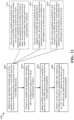
- the apparatus 1202 includes means for transmitting, to the one or more BSs after measuring the PRSs, SRSs on the one or more SRS resources based on the one or more transmission properties (e.g., the SRS transmission component 1246 and/or the transmission component 1234).
- the information may be transmitted via at least one of UCI, a MAC-CE, or RRC signaling.
- the one or more reception properties for the reception of the PRSs may be associated with a reception timing
- the one or more transmission properties for the transmission of the SRSs may be associated with a transmission timing
- the one or more BSs may include the at least one serving BS, or the one or more BSs may be different from the at least one serving BS.
- the information indicating the one or more PRS resources may be transmitted after the PRSs are measured, and may indicate a subset of the one or more PRS resources that the UE has measured.
- the apparatus 1202 includes means for determining a quality metric for the one or more PRS resources, and means for determining the subset of the one or more PRS resources that have a quality metric that exceeds a threshold, where the information may indicate the subset of one or more PRS resources that have the quality metric exceeding the threshold.
- the quality metric may include at least one of an RSRP, a line of sight probability, or a timing delay calibration value.
- the information may be transmitted before or after the PRS is measured, within a configured duration of the measurement of the PRSs.
- the aforementioned means may be one or more of the aforementioned components of the apparatus 1202 configured to perform the functions recited by the aforementioned means.
- the apparatus 1202 may include the TX Processor 368, the RX Processor 356, and the controller/processor 359.
- the aforementioned means may be the TX Processor 368, the RX Processor 356, and the controller/processor 359 configured to perform the functions recited by the aforementioned means.
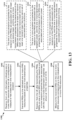
- FIG. 13 is a flowchart 1300 of a method of wireless communication.
- the method may be performed by a base station or a component of a base station (e.g., the base station 102, 180, 310, 702, 802; the BS 604, 606, 608, 610, 801, 803, 805, 807; the apparatus 1402; a processing system, which may include the memory 376 and which may be the entire base station 310 or a component of the base station 310, such as the TX processor 316 the RX processor 370, and/or the controller/processor 375).
- a dashed line e.g., the base station 102, 180, 310, 702, 802; the BS 604, 606, 608, 610, 801, 803, 805, 807; the apparatus 1402; a processing system, which may include the memory 376 and which may be the entire base station 310 or a component of the base station 310, such as the TX processor 316 the RX processor 370, and/or
- the method may enable the base station to receive a list of PRS resources from a UE in which the UE plans to measure in a given occasion, such that the base station may measure the SRS corresponding to the PRS which the UE has measured so that right pairs of SRS/PRS are measured by the base station in a measuring occasion.
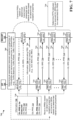
- the base station may receive, from a UE, information indicating one or more PRS resources that the UE is configured to measure or has measured in one measurement occasion, such as described in connection with FIGs. 7 and 8 .
- the base station 702 may receive information 708 from the UE 704 indicating PRS resources in which the UE 704 plans or is configured to measure or has measured in one measurement occasion.
- the reception of the information may be performed, e.g., by the PRS resource indication process component 1440 and/or the reception component 1430 of the apparatus 1402 in FIG. 14 .
- the information may be received via at least one UCI, a MAC-CE, or RRC signaling.
- the base station may transmit PRSs on the indicated one or more PRS resources based on one or more transmission properties, such as described in connection with FIGs. 7 and 8 .
- the base station 702 may transmit DL-PRSs on the DL-PRS resources 710, 712, and 714 to the UE 704 based on the information and based on the one or more transmission properties at the base station.
- the transmission of the PRS may be performed, e.g., by the PRS transmission component 1442 and/or the transmission component 1434 of the apparatus 1402 in FIG. 14 .
- the base station may receive, from the UE after transmitting the PRSs, SRSs on one or more SRS resources based on one or more reception properties that are associated with the one or more transmission properties, such as described in connection with FIGs. 7 and 8 .
- the base station 702 may receive SRSs from the UE 704 on SRS resources 726, 728, and 730 based on one or more reception properties that are associated with the one or more transmission properties at the base station 702.
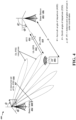
- the base station 702 may receive SRSs from the UE 704 through at least one receive beam at the base station 702, where a beam used for transmitting a DL-PRS and a beam used for receiving a corresponding UL-SRS may have a same set of associated beam directions.
- the reception of the SRS may be performed, e.g., by the SRS reception component 1444 and/or the reception component 1430 of the apparatus 1402 in FIG. 14 .
- the one or more transmission properties for the transmission of the PRSs may be associated with at least one transmit beam
- the one or more reception properties for the reception of the SRSs may be associated with at least one receive beam, where the at least one transmit beam and the at least one receive beam may have a same set of associated beam directions.
- the one or more transmission properties for the transmission of the PRSs may be associated with a transmission power
- the one or more reception properties for the reception of the SRSs may be associated with a reception power
- the one or more transmission properties for the transmission of the PRSs may be associated with a transmission timing
- the one or more reception properties for the reception of the SRSs may be associated with a reception timing
- the base station may measure the received SRSs on the one or more SRS resources corresponding to the indicated one or more PRS resources, such as described in connection with FIGs. 7 and 8 .
- the base station 702 may measure UL-SRSs received from the UE 704 on SRS resources 726, 728, and 730.
- the measurement of the SRS may be performed, e.g., by the SRS measurement component 1446 of the apparatus 1402 in FIG. 14 .
- the base station may determine at least one RTT in association with the transmitted PRSs and the measured SRSs.
- the base station may send the received information indicating the one or more PRS resources to at least one other BS.
- the information indicating the one or more PRS resources may be received from the UE via at least one other BS.
- the information indicating the one or more PRS resources may be received before the PRSs are transmitted, or the information indicating the one or more PRS resources may be received after the PRSs are transmitted.
- the information may be received before or after the PRSs are transmitted, within a configured duration of the transmission of the PRSs.
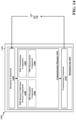
- FIG. 14 is a diagram 1400 illustrating an example of a hardware implementation for an apparatus 1402.
- the apparatus 1402 is a BS and includes a baseband unit 1404.
- the baseband unit 1404 may communicate through a cellular RF transceiver with the UE 104.
- the baseband unit 1404 may include a computer-readable medium / memory.
- the baseband unit 1404 is responsible for general processing, including the execution of software stored on the computer-readable medium / memory.
- the software when executed by the baseband unit 1404, causes the baseband unit 1404 to perform the various functions described supra.
- the computer-readable medium / memory may also be used for storing data that is manipulated by the baseband unit 1404 when executing software.
- the baseband unit 1404 further includes a reception component 1430, a communication manager 1432, and a transmission component 1434.
- the communication manager 1432 includes the one or more illustrated components.
- the components within the communication manager 1432 may be stored in the computer-readable medium / memory and/or configured as hardware within the baseband unit 1404.
- the baseband unit 1404 may be a component of the BS 310 and may include the memory 376 and/or at least one of the TX processor 316, the RX processor 370, and the controller/processor 375.
- the communication manager 1432 includes a PRS resource indication process component 1440 that is configured to receive, from a UE, information indicating one or more PRS resources that the UE is configured to measure or has measured in one measurement occasion, e.g., as described in connection with 1302 of FIG. 13 .
- the communication manager 1432 further includes a PRS transmission component 1442 that is configured to transmit PRSs on the indicated one or more PRS resources based on one or more transmission properties, e.g., as described in connection with 1304 of FIG. 13 .
- the communication manager 1432 further includes an SRS reception component 1444 that is configured to receive, from the UE after transmitting the PRSs, SRSs on one or more SRS resources based on one or more reception properties that are associated with the one or more transmission properties, e.g., as described in connection with 1306 of FIG. 13 .
- the communication manager 1432 further includes an SRS measurement component 1446 that is configured to measure the received SRSs on the one or more SRS resources corresponding to the indicated one or more PRS resources, e.g., as described in connection with 1308 of FIG. 13 .
- the apparatus may include additional components that perform each of the blocks of the algorithm in the aforementioned flowchart of FIG. 13 .
- each block in the aforementioned flowchart of FIG. 13 may be performed by a component and the apparatus may include one or more of those components.
- the components may be one or more hardware components specifically configured to carry out the stated processes/algorithm, implemented by a processor configured to perform the stated processes/algorithm, stored within a computer-readable medium for implementation by a processor, or some combination thereof.
- the apparatus 1402 includes means for receiving, from a UE, information indicating one or more PRS resources that the UE is configured to measure or has measured in one measurement occasion (e.g., the PRS resource indication process component 1440 and/or the reception component 1430).
- the apparatus 1402 includes means for transmitting PRSs on the indicated one or more PRS resources based on one or more transmission properties (e.g., the PRS transmission component 1442 and/or the transmission component 1434).
- the apparatus 1402 includes means for receiving, from the UE after transmitting the PRSs, SRSs on one or more SRS resources based on one or more reception properties that are associated with the one or more transmission properties (e.g., the SRS reception component 1444 and/or the reception component 1430).
- the apparatus 1402 includes means for measuring the received SRSs on the one or more SRS resources corresponding to the indicated one or more PRS resources (e.g., the SRS measurement component 1446).
- the information may be received via at least one UCI, a MAC-CE, or RRC signaling.
- the one or more transmission properties for the transmission of the PRSs may be associated with at least one transmit beam
- the one or more reception properties for the reception of the SRSs may be associated with at least one receive beam, where the at least one transmit beam and the at least one receive beam may have a same set of associated beam directions.
- the one or more transmission properties for the transmission of the PRSs may be associated with a transmission power
- the one or more reception properties for the reception of the SRSs may be associated with a reception power
- the one or more transmission properties for the transmission of the PRSs may be associated with a transmission timing
- the one or more reception properties for the reception of the SRSs may be associated with a reception timing
- the base station may determine at least one RTT in association with the transmitted PRSs and the measured SRSs.
- the base station may send the received information indicating the one or more PRS resources to at least one other BS.
- the information indicating the one or more PRS resources may be received from the UE via at least one other BS.
- the information indicating the one or more PRS resources may be received before the PRSs are transmitted, or the information indicating the one or more PRS resources may be received after the PRSs are transmitted.
- the information may be received before or after the PRSs are transmitted, within a configured duration of the transmission of the PRSs.
- the aforementioned means may be one or more of the aforementioned components of the apparatus 1402 configured to perform the functions recited by the aforementioned means.
- the apparatus 1402 may include the TX Processor 316, the RX Processor 370, and the controller/processor 375.
- the aforementioned means may be the TX Processor 316, the RX Processor 370, and the controller/processor 375 configured to perform the functions recited by the aforementioned means.
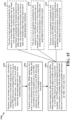
- FIG. 15 is a flowchart 1500 of a method of wireless communication.
- the method may be performed by a UE or a component of a UE (e.g., the UE 104, 350, 404, 602, 904; the apparatus 1602; a processing system, which may include the memory 360 and which may be the entire UE 350 or a component of the UE 350, such as the TX processor 368, the RX processor 356, and/or the controller/processor 359).
- a processing system which may include the memory 360 and which may be the entire UE 350 or a component of the UE 350, such as the TX processor 368, the RX processor 356, and/or the controller/processor 359.
- Optional aspects are illustrated with a dashed line.
- the method may enable the UE to receive a list of SRS resources from a base station in which the UE may prioritize its PRS measurements based at least in part on the list.
- the UE may receive, from at least one serving BS, information indicating one or more SRS resources or one or more PRS resources corresponding to the one or more SRS resources, the one or more SRS resources being associated with one or more transmission properties, such as described in connection with FIG. 9 .
- the UE 904 may receive information 908 from the base station 902 indicating a list of UL-SRS resources (or a list of DL-PRS resources corresponding to the list of UL-SRS resources) that the UE 904 may transmit or may be configured to transmit, the list of UL-SRS resources may be associated with one or more transmission properties at the UE.
- the reception of the information indicating the SRS resources may be performed, e.g., by the SRS resource indication process component 1640 and/or the reception component 1630 of the apparatus 1602 in FIG. 16 .
- the information may be received via at least one of DCI, a MAC-CE, or RRC signaling.
- the UE may transmit, to one or more BSs, SRSs based on the one or more transmission properties, the SRSs being transmitted on the indicated one or more SRS resources or on the one or more SRS resources corresponding to the indicated one or more PRS resources, such as described in connection with FIG. 9 .
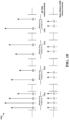
- the UE 904 may transmit SRSs to the first BS 901, the second BS 903, the third BS 905, and the fourth BS 907 based on one or more transmission properties at the UE.
- the transmission of SRSs may be performed, e.g., by the SRS transmission component 1642 and/or the transmission component 1634 of the apparatus 1602 in FIG. 16 .
- the UE may prioritize measuring, after transmitting the SRSs, PRSs received from the at least one BS on the one or more PRS resources in one measurement occasion, the PRSs being received based on one or more reception properties that are associated with the one or more transmission properties, such as described in connection with FIG. 9 .
- the UE 904 may prioritize measuring DL-PRSs transmitted from the first BS 901, the second BS 903, the third BS 905, and the fourth BS 907, where the UE 904 may receive the DL-PRSs based on one or more reception properties that are associated with the one or more transmission properties.
- the measurement of the PRSs may be performed, e.g., by the PRS measurement component 1644 and/or the reception component 1630 of the apparatus 1602 in FIG. 16 .
- the one or more transmission properties for the transmission of the SRSs may be associated with at least one transmit beam
- the one or more reception properties for the reception of the PRSs may be associated with at least one receive beam, where the at least one receive beam and the at least one transmit beam may have a same set of associated beam directions.
- the one or more transmission properties for the transmission of the SRSs may be associated with a transmission power
- the one or more reception properties for the reception of the PRSs may be associated with a reception power
- the one or more transmission properties for the transmission of the SRSs may be associated with a transmission timing
- the one or more reception properties for the reception of the PRSs may be associated with a reception timing
- the UE may determine a time difference between the transmission of the SRSs and the reception of the PRSs, and the UE may transmit, to the at least one serving BS, information indicating the time difference in a measurement report.
- the one or more BSs may include the at least one serving BS, or the one or more BSs may be different from the at least one serving BS.
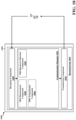
- FIG. 16 is a diagram 1600 illustrating an example of a hardware implementation for an apparatus 1602.
- the apparatus 1602 is a UE and includes a cellular baseband processor 1604 (also referred to as a modem) coupled to a cellular RF transceiver 1622 and one or more subscriber identity modules (SIM) cards 1620, an application processor 1606 coupled to a secure digital (SD) card 1608 and a screen 1610, a Bluetooth module 1612, a wireless local area network (WLAN) module 1614, a Global Positioning System (GPS) module 1616, and a power supply 1618.
- the cellular baseband processor 1604 communicates through the cellular RF transceiver 1622 with the UE 104 and/or BS 102/180.
- the cellular baseband processor 1604 may include a computer-readable medium / memory.
- the computer-readable medium / memory may be non-transitory.
- the cellular baseband processor 1604 is responsible for general processing, including the execution of software stored on the computer-readable medium / memory.
- the software when executed by the cellular baseband processor 1604, causes the cellular baseband processor 1604 to perform the various functions described supra.
- the computer-readable medium / memory may also be used for storing data that is manipulated by the cellular baseband processor 1604 when executing software.
- the cellular baseband processor 1604 further includes a reception component 1630, a communication manager 1632, and a transmission component 1634.
- the communication manager 1632 includes the one or more illustrated components.
- the components within the communication manager 1632 may be stored in the computer-readable medium / memory and/or configured as hardware within the cellular baseband processor 1604.
- the cellular baseband processor 1604 may be a component of the UE 350 and may include the memory 360 and/or at least one of the TX processor 368, the RX processor 356, and the controller/processor 359.
- the apparatus 1602 may be a modem chip and include just the baseband processor 1604, and in another configuration, the apparatus 1602 may be the entire UE (e.g., see 350 of FIG. 3 ) and include the aforediscussed additional modules of the apparatus 1602.
- the communication manager 1632 includes an SRS resource indication process component 1640 that is configured to receive, from at least one serving BS, information indicating one or more SRS resources or one or more PRS resources corresponding to the one or more SRS resources, the one or more SRS resources being associated with one or more transmission properties, e.g., as described in connection with 1502 of FIG. 15 .
- the communication manager 1632 further includes an SRS transmission component 1642 that is configured to transmit, to one or more BSs, SRSs based on the one or more transmission properties, the SRSs being transmitted on the indicated one or more SRS resources or on the one or more SRS resources corresponding to the indicated one or more PRS resources, e.g., as described in connection with 1504 of FIG. 15 .
- the communication manager 1632 further includes a PRS measurement component 1644 that is configured to prioritize measuring, after transmitting the SRSs, PRSs received from the at least one BS on the one or more PRS resources in one measurement occasion, the PRSs being received based on one or more reception properties that are associated with the one or more transmission properties, e.g., as described in connection with 1506 of FIG. 15 .
- a PRS measurement component 1644 that is configured to prioritize measuring, after transmitting the SRSs, PRSs received from the at least one BS on the one or more PRS resources in one measurement occasion, the PRSs being received based on one or more reception properties that are associated with the one or more transmission properties, e.g., as described in connection with 1506 of FIG. 15 .
- the apparatus may include additional components that perform each of the blocks of the algorithm in the aforementioned flowchart of FIG. 15 .
- each block in the aforementioned flowchart of FIG. 15 may be performed by a component and the apparatus may include one or more of those components.
- the components may be one or more hardware components specifically configured to carry out the stated processes/algorithm, implemented by a processor configured to perform the stated processes/algorithm, stored within a computer-readable medium for implementation by a processor, or some combination thereof.
- the apparatus 1602 includes means for prioritize measuring, after transmitting the SRSs, PRSs received from the at least one BS on the one or more PRS resources in one measurement occasion, the PRSs being received based on one or more reception properties that are associated with the one or more transmission properties (e.g., the PRS measurement component 1644 and/or the reception component 1630).
- the information may be received via at least one of DCI, a MAC-CE, or RRC signaling.
- the one or more transmission properties for the transmission of the SRSs may be associated with at least one transmit beam
- the one or more reception properties for the reception of the PRSs may be associated with at least one receive beam, where the at least one receive beam and the at least one transmit beam may have a same set of associated beam directions.
- the one or more transmission properties for the transmission of the SRSs may be associated with a transmission power
- the one or more reception properties for the reception of the PRSs may be associated with a reception power
- FIG. 17 is a flowchart 1700 of a method of wireless communication.
- the method may be performed by a base station or a component of a base station (e.g., the base station 102, 180, 310, 902; the BS 604, 606, 608, 610, 901, 903, 905, 907; the apparatus 1802; a processing system, which may include the memory 376 and which may be the entire base station 310 or a component of the base station 310, such as the TX processor 316 the RX processor 370, and/or the controller/processor 375).
- a dashed line may enable the base station to indicate a list of SRS resources to a UE in which the UE may prioritize its PRS measurements based at least in part on the list.
- the base station may measure SRSs received from a UE on one or more SRS resources in a measurement occasion, such as described in connection with FIG. 9 .
- the base station 902 may measure SRSs received from the UE 904 on SRS resources 910, 912, 914 and 916.
- the measurement of the SRSs may be performed, e.g., by the SRS measurement component 1840 and/or the reception component 1830 of the apparatus 1802 in FIG. 18 .
- the base station may determine a subset of SRS resources of the one or more SRS resources, the subset of SRS resources corresponding to one or more reception properties at the BS, such as described in connection with FIG. 9 .
- the base station 902 may determine a list of SRS resources in which the UE 904 may prioritize its measurement on, and the list of SRS resources may correspond to one or more reception properties at the BS.
- the determination of the subset of SRS resources may be performed, e.g., by the SRS resources selection component 1842 of the apparatus 1802 in FIG. 18 .
- the base station in determining the subset of SRS resources, may determine a quality metric for the one or more SRS resources, and the base station may determine the subset of SRS resources based on the SRS resources in the subset having a quality metric exceeding a threshold.
- the quality metric may include at least one of an RSRP, a line of sight probability, or a timing delay calibration value.
- the base station may transmit, to the UE, PRSs on one or more PRS resources based on one or more transmission properties at the BS, the one or more PRS resources corresponding to the determined subset of SRS resources, the one or more transmission properties being associated with the one or more reception properties, such as described in connection with FIG. 9 .
- the first BS 901, the second BS 903, the third BS 905, and the fourth BS 907 may transmit DL-PRSs on PRS resources 926, 928, 930, 932 based on one or more transmission properties that are associated with one or more reception properties.
- the first BS 901 may transmit DL-PRSs through at least one transmit beam at the first BS 901, where the at least one transmit beam may have a same set of associated beam directions with at least one receive beam for receiving the corresponding SRSs.
- the transmission of the PRSs may be performed, e.g., by the PRS transmission component 1844 and/or the transmission component 1834 of the apparatus 1802 in FIG. 18 .
- the one or more reception properties for the reception of the SRSs may be associated with at least one receive beam, and the one or more transmission properties for the transmission of the PRSs may be associated with at least one transmit beam, where the at least one transmit beam and the at least one receive beam may have a same set of associated beam directions.
- the one or more reception properties for the reception of the SRSs may be associated with a reception timing
- the one or more transmission properties for the transmission of the PRSs may be associated with a transmission timing
- the base station may transmit, to the UE, information indicating the subset of SRS resources or the one or more PRS resources corresponding to the subset of SRS resources.
- the information may be transmitted via at least one of DCI, a MAC-CE, or RRC signaling.
- the information may be transmitted after the SRSs are measured, within a configured duration of the measurement of the SRSs.
- FIG. 18 is a diagram 1800 illustrating an example of a hardware implementation for an apparatus 1802.
- the apparatus 1802 is a BS and includes a baseband unit 1804.
- the baseband unit 1804 may communicate through a cellular RF transceiver with the UE 104.
- the baseband unit 1804 may include a computer-readable medium / memory.
- the baseband unit 1804 is responsible for general processing, including the execution of software stored on the computer-readable medium / memory.
- the software when executed by the baseband unit 1804, causes the baseband unit 1804 to perform the various functions described supra.
- the computer-readable medium / memory may also be used for storing data that is manipulated by the baseband unit 1804 when executing software.
- the baseband unit 1804 further includes a reception component 1830, a communication manager 1832, and a transmission component 1834.
- the communication manager 1832 includes the one or more illustrated components.
- the components within the communication manager 1832 may be stored in the computer-readable medium / memory and/or configured as hardware within the baseband unit 1804.
- the baseband unit 1804 may be a component of the BS 310 and may include the memory 376 and/or at least one of the TX processor 316, the RX processor 370, and the controller/processor 375.
- the communication manager 1832 includes an SRS measurement component 1840 that is configured to measure SRSs received from a UE on one or more SRS resources in a measurement occasion, e.g., as described in connection with 1702 of FIG. 17 .
- the communication manager 1832 further includes an SRS resources selection component 1842 that is configured to determine a subset of SRS resources of the one or more SRS resources, the subset of SRS resources corresponding to one or more reception properties at the BS, e.g., as described in connection with 1704 of FIG. 17 .
- the communication manager 1832 further includes a PRS transmission component 1844 that is configured to transmit, to the UE, PRSs on one or more PRS resources based on one or more transmission properties at the BS, the one or more PRS resources corresponding to the determined subset of SRS resources, the one or more transmission properties being associated with the one or more reception properties, e.g., as described in connection with 1706 of FIG. 17 .
- a PRS transmission component 1844 that is configured to transmit, to the UE, PRSs on one or more PRS resources based on one or more transmission properties at the BS, the one or more PRS resources corresponding to the determined subset of SRS resources, the one or more transmission properties being associated with the one or more reception properties, e.g., as described in connection with 1706 of FIG. 17 .
- the apparatus may include additional components that perform each of the blocks of the algorithm in the aforementioned flowchart of FIG. 17 .
- each block in the aforementioned flowchart of FIG. 17 may be performed by a component and the apparatus may include one or more of those components.
- the components may be one or more hardware components specifically configured to carry out the stated processes/algorithm, implemented by a processor configured to perform the stated processes/algorithm, stored within a computer-readable medium for implementation by a processor, or some combination thereof.
- the apparatus 1802 includes means for measuring SRSs received from a UE on one or more SRS resources in a measurement occasion (e.g., the SRS measurement component 1840 and/or the reception component 1830).
- the apparatus 1802 includes means for determining a subset of SRS resources of the one or more SRS resources, the subset of SRS resources corresponding to one or more reception properties at the BS (e.g., the SRS resources selection component 1842).
- the apparatus 1802 includes means for transmitting, to the UE, PRSs on one or more PRS resources based on one or more transmission properties at the BS, the one or more PRS resources corresponding to the determined subset of SRS resources, the one or more transmission properties being associated with the one or more reception properties (e.g., the PRS transmission component 1844 and/or the transmission component 1834).
- the apparatus 1802 in determining the subset of SRS resources, includes means for determining a quality metric for the one or more SRS resources, and means for determining the subset of SRS resources based on the SRS resources in the subset having a quality metric exceeding a threshold.
- the quality metric may include at least one of an RSRP, a line of sight probability, or a timing delay calibration value.
- the one or more reception properties for the reception of the SRSs may be associated with at least one receive beam
- the one or more transmission properties for the transmission of the PRSs may be associated with at least one transmit beam, where the at least one transmit beam and the at least one receive beam may have a same set of associated beam directions.
- the one or more reception properties for the reception of the SRSs may be associated with a reception power
- the one or more transmission properties for the transmission of the PRSs may be associated with a transmission power
- the one or more reception properties for the reception of the SRSs may be associated with a reception timing
- the one or more transmission properties for the transmission of the PRSs may be associated with a transmission timing
- the apparatus 1802 includes means for transmitting, to the UE, information indicating the subset of SRS resources or the one or more PRS resources corresponding to the subset of SRS resources.
- the information may be transmitted via at least one of DCI, a MAC-CE, or RRC signaling.
- the information may be transmitted after the SRSs are measured, within a configured duration of the measurement of the SRSs.
- the aforementioned means may be one or more of the aforementioned components of the apparatus 1802 configured to perform the functions recited by the aforementioned means.
- the apparatus 1802 may include the TX Processor 316, the RX Processor 370, and the controller/processor 375.
- the aforementioned means may be the TX Processor 316, the RX Processor 370, and the controller/processor 375 configured to perform the functions recited by the aforementioned means.
- Aspect 1 is an apparatus for wireless communication at a UE, including: a memory; a transceiver; and a processor, communicatively connected to the memory and the transceiver, the processor configured to: determine an association between one or more reception properties of one or more PRS resources and one or more transmission properties of one or more SRS resources; transmit, to at least one serving BS, information indicating the one or more PRS resources that the UE is configured to measure in a future measurement occasion; measure PRSs received from one or more BSs on the one or more PRS resources based on the one or more reception properties; and transmit, to the one or more BSs after measuring the PRSs, SRSs on the one or more SRS resources based on the one or more transmission properties.
- the apparatus of aspect 1 further includes that the one or more reception properties for the reception of the PRSs are associated with at least one receive beam, and the one or more transmission properties for the transmission of the SRSs are associated with at least one transmit beam, the at least one receive beam and the at least one transmit beam having a same set of associated beam directions.
- the apparatus of aspect 1 or aspect 2 further includes that the one or more reception properties for the reception of the PRSs are associated with a reception power, and the one or more transmission properties for the transmission of the SRSs are associated with a transmission power.
- the apparatus of any of aspects 1-3 further includes that the one or more reception properties for the reception of the PRSs are associated with a reception timing, and the one or more transmission properties for the transmission of the SRSs are associated with a transmission timing.
- the apparatus of any of aspects 1-4 further includes that the information is transmitted via at least one of DCI, a MAC-CE, or RRC signaling.
- the apparatus of any of aspects 1-5 further includes that the one or more BSs include the at least one serving BS.
- the apparatus of any of aspects 1-6 further includes that the one or more BSs are different from the at least one serving BS.
- the apparatus of any of aspects 1-7 further includes that the information indicating the one or more PRS resources is transmitted before the PRSs are measured, and indicates the one or more PRS resources that the UE intends to measure.
- the apparatus of any of aspects 1-8 further includes that the processor is further configured to: determine that a quality metric for the one or more PRS resources exceeds a threshold during a previous measurement occasion, where the information indicates the one or more PRS resources that have the quality metric exceeding the threshold.
- the apparatus of any of aspects 1-9 further includes that the quality metric includes at least one of a RSRP, a line of sight probability, or a timing delay calibration value.
- the apparatus of any of aspects 1-10 further includes that the information indicating the one or more PRS resources is transmitted after the PRSs are measured, and indicates a subset of the one or more PRS resources that the UE has measured.
- the apparatus of any of aspects 1-11 further includes that the processor is further configured to: determine a quality metric for the one or more PRS resources; and determine the subset of the one or more PRS resources that have a quality metric that exceeds a threshold, where the information indicates the subset of one or more PRS resources that have the quality metric exceeding the threshold.
- the apparatus of any of aspects 1-12 further includes that the quality metric includes at least one of an RSRP, a line of sight probability, or a timing delay calibration value.
- the apparatus of any of aspects 1-13 further includes that the information is transmitted before or after the PRS is measured, within a configured duration of the measurement of the PRSs.
- the aspect of any of aspects 1-14 further includes that the UE autonomously determines the one or more PRS resources that the UE is configured to measure from a set of PRS resources, the one or more PRS resources being a subset of the set of PRS resources.
- Aspect 16 is a method of wireless communication at a UE, including: determining an association between one or more reception properties of one or more PRS resources and one or more transmission properties of one or more SRS resources; transmitting, to at least one serving BS, information indicating the one or more PRS resources that the UE is configured to measure in a future measurement occasion; measuring PRSs received from one or more BSs on the one or more PRS resources based on the one or more reception properties; and transmitting, to the one or more BSs after measuring the PRSs, SRSs on the one or more SRS resources based on the one or more transmission properties.
- the method of aspect 16 further includes that the one or more reception properties for the reception of the PRSs are associated with at least one receive beam, and the one or more transmission properties for the transmission of the SRSs are associated with at least one transmit beam, the at least one receive beam and the at least one transmit beam having a same set of associated beam directions.
- the method of aspect 16 or aspect 17 further includes that the one or more reception properties for the reception of the PRSs are associated with a reception power, and the one or more transmission properties for the transmission of the SRSs are associated with a transmission power.
- the method of any of aspects 16-18 further includes that the one or more reception properties for the reception of the PRSs are associated with a reception timing, and the one or more transmission properties for the transmission of the SRSs are associated with a transmission timing.
- the method of any of aspects 16-19 further includes that the information is transmitted via at least one of DCI, a MAC-CE, or RRC signaling.
- the method of any of aspects 16-20 further includes that the one or more BSs include the at least one serving BS.
- the method of any of aspects 16-21 further includes that the one or more BSs are different from the at least one serving BS.
- the method of any of aspects 16-22 further includes that the information indicating the one or more PRS resources is transmitted before the PRSs are measured, and indicates the one or more PRS resources that the UE intends to measure.
- the method of any of aspects 16-23 further includes: determining that a quality metric for the one or more PRS resources exceeds a threshold during a previous measurement occasion, where the information indicates the one or more PRS resources that have the quality metric exceeding the threshold.
- the method of any of aspects 16-24 further includes that the quality metric includes at least one of a RSRP, a line of sight probability, or a timing delay calibration value.
- the method of any of aspects 16-25 further includes that the information indicating the one or more PRS resources is transmitted after the PRSs are measured, and indicates a subset of the one or more PRS resources that the UE has measured.
- the method of any of aspects 16-26 further includes: determining a quality metric for the one or more PRS resources; and determining the subset of the one or more PRS resources that have a quality metric that exceeds a threshold, where the information indicates the subset of one or more PRS resources that have the quality metric exceeding the threshold.
- the method of any of aspects 16-27 further includes that the quality metric includes at least one of an RSRP, a line of sight probability, or a timing delay calibration value.
- the method of any of aspects 16-28 further includes that the information is transmitted before or after the PRS is measured, within a configured duration of the measurement of the PRSs.
- the aspect of any of aspects 16-29 further includes that the UE autonomously determines the one or more PRS resources that the UE is configured to measure from a set of PRS resources, the one or more PRS resources being a subset of the set of PRS resources.
- Aspect 31 is an apparatus for wireless communication including means for implementing a method as in any of aspects 16 to 30.
- Aspect 32 is a non-transitory computer-readable medium storing computer executable code, where the code when executed by a processor causes the processor to implement a method as in any of aspects 16 to 30.
- Aspect 33 is a method of wireless communication at a BS, including: receiving, from a UE, information indicating one or more PRS resources that the UE is configured to measure or has measured in one measurement occasion; transmitting PRSs on the indicated one or more PRS resources based on one or more transmission properties; receiving, from the UE after transmitting the PRSs, SRSs on one or more SRS resources based on one or more reception properties that are associated with the one or more transmission properties; and measuring the received SRSs on the one or more SRS resources corresponding to the indicated one or more PRS resources.
- the method of aspect 33 further includes that the one or more transmission properties for the transmission of the PRSs are associated with at least one transmit beam, and the one or more reception properties for the reception of the SRSs are associated with at least one receive beam, the at least one transmit beam and the at least one receive beam having a same set of associated beam directions.
- the method of aspect 33 or aspect 34 further includes that the one or more transmission properties for the transmission of the PRSs are associated with a transmission power, and the one or more reception properties for the reception of the SRSs are associated with a reception power.
- the method of any of aspects 33-35 further includes that the one or more transmission properties for the transmission of the PRSs are associated with a transmission timing, and the one or more reception properties for the reception of the SRSs are associated with a reception timing.
- the method of any of aspects 33-36 further includes that the information is received via at least one of UCI, a MAC-CE, or RRC signaling.
- the method of any of aspects 33-37 further includes determining at least one RTT in association with the transmitted PRSs and the measured SRSs.
- the method of any of aspects 33-38 further includes sending the received information indicating the one or more PRS resources to at least one other BS.
- the method of any of aspects 33-39 further includes that the information indicating the one or more PRS resources is received from the UE via at least one other BS.
- the method of any of aspects 33-40 further includes that the information indicating the one or more PRS resources is received before the PRSs are transmitted.
- the method of any of aspects 33-41 further includes that the information indicating the one or more PRS resources is received after the PRSs are transmitted.
- the method of any of aspects 33-42 further includes that the information is received before or after the PRSs are transmitted, within a configured duration of the transmission of the PRSs.
- Aspect 44 is an apparatus for wireless communication including at least one processor coupled to a memory and configured to implement a method as in any of aspects 33 to 43.
- Aspect 45 is an apparatus for wireless communication including means for implementing a method as in any of aspects 33 to 43.
- Aspect 46 is a non-transitory computer-readable medium storing computer executable code, where the code when executed by a processor causes the processor to implement a method as in any of aspects 33 to 43.
- Aspect 47 is an apparatus for wireless communication at a UE, including: a memory; a transceiver; and a processor, communicatively connected to the memory and the transceiver, the processor configured to: receive, from at least one serving BS, information indicating one or more SRS resources or one or more PRS resources corresponding to the one or more SRS resources, the one or more SRS resources being associated with one or more transmission properties; transmit, to one or more BSs, SRSs based on the one or more transmission properties, the SRSs being transmitted on the indicated one or more SRS resources or on the one or more SRS resources corresponding to the indicated one or more PRS resources; and prioritize measuring, after transmitting the SRSs, PRSs received from the at least one BS on the one or more PRS resources in one measurement occasion, the PRSs being received based on one or more reception properties that are associated with the one or more transmission properties.
- the apparatus of aspect 47 further includes that the one or more transmission properties for the transmission of the SRSs are associated with at least one transmit beam, and the one or more reception properties for the reception of the PRSs are associated with at least one receive beam, the at least one receive beam and the at least one transmit beam having a same set of associated beam directions.
- the apparatus of aspect 47 or aspect 48 further includes that the one or more transmission properties for the transmission of the SRSs are associated with a transmission power, and the one or more reception properties for the reception of the PRSs are associated with a reception power.
- the apparatus of any of aspects 47-49 further includes that the one or more transmission properties for the transmission of the SRSs are associated with a transmission timing, and the one or more reception properties for the reception of the PRSs are associated with a reception timing.
- the apparatus of any of aspects 47-50 further includes that the information is received via at least one of DCI, a MAC-CE, or RRC signaling.
- the apparatus of any of aspects 47-51 further includes that the processor is further configured to: determine a time difference between the transmission of the SRSs and the reception of the PRSs; and transmit, to the at least one serving BS, information indicating the time difference in a measurement report.
- the apparatus of any of aspects 47-52 further includes that the one or more BSs include the at least one serving BS.
- the apparatus of any of aspects 47-53 further includes that the one or more BSs are different from the at least one serving BS.
- Aspect 55 is a method of wireless communication at a UE, including: receiving, from at least one serving BS, information indicating one or more SRS resources or one or more PRS resources corresponding to the one or more SRS resources, the one or more SRS resources being associated with one or more transmission properties; transmitting, to one or more BSs, SRSs based on the one or more transmission properties, the SRSs being transmitted on the indicated one or more SRS resources or on the one or more SRS resources corresponding to the indicated one or more PRS resources; and prioritizing measuring, after transmitting the SRSs, PRSs received from the at least one BS on the one or more PRS resources in one measurement occasion, the PRSs being received based on one or more reception properties that are associated with the one or more transmission properties.
- the method of aspect 55 further includes that the one or more transmission properties for the transmission of the SRSs are associated with at least one transmit beam, and the one or more reception properties for the reception of the PRSs are associated with at least one receive beam, the at least one receive beam and the at least one transmit beam having a same set of associated beam directions.
- the method of aspect 55 or aspect 56 further includes that the one or more transmission properties for the transmission of the SRSs are associated with a transmission power, and the one or more reception properties for the reception of the PRSs are associated with a reception power.
- the method of any of aspects 55-57 further includes that the one or more transmission properties for the transmission of the SRSs are associated with a transmission timing, and the one or more reception properties for the reception of the PRSs are associated with a reception timing.
- the method of any of aspects 55-58 further includes that the information is received via at least one of DCI, a MAC-CE, or RRC signaling.
- the method of any of aspects 55-59 further includes: determining a time difference between the transmission of the SRSs and the reception of the PRSs; and transmitting, to the at least one serving BS, information indicating the time difference in a measurement report.
- the method of any of aspects 55-60 further includes that the one or more BSs include the at least one serving BS.
- the method of any of aspects 55-61 further includes that the one or more BSs are different from the at least one serving BS.
- Aspect 63 is an apparatus for wireless communication including means for implementing a method as in any of aspects 55 to 62.
- Aspect 64 is a non-transitory computer-readable medium storing computer executable code, where the code when executed by a processor causes the processor to implement a method as in any of aspects 55 to 62.
- Aspect 65 is a method of wireless communication at a BS, including: measuring SRSs received from a UE on one or more SRS resources in a measurement occasion; determining a subset of SRS resources of the one or more SRS resources, the subset of SRS resources corresponding to one or more reception properties at the BS; and transmitting, to the UE, PRSs on one or more PRS resources based on one or more transmission properties at the BS, the one or more PRS resources corresponding to the determined subset of SRS resources, the one or more transmission properties being associated with the one or more reception properties.
- the method of aspect 65 further includes that the one or more reception properties for the reception of the SRSs are associated with at least one receive beam, and the one or more transmission properties for the transmission of the PRSs are associated with at least one transmit beam, the at least one transmit beam and the at least one receive beam having a same set of associated beam directions.
- the method of aspect 65 or aspect 66 further includes that the one or more reception properties for the reception of the SRSs are associated with a reception power, and the one or more transmission properties for the transmission of the PRSs are associated with a transmission power.
- the method of any of aspects 65-67 further includes that the one or more reception properties for the reception of the SRSs are associated with a reception timing, and the one or more transmission properties for the transmission of the PRSs are associated with a transmission timing.
- the method of any of aspects 65-68 further includes transmitting, to the UE, information indicating the subset of SRS resources or the one or more PRS resources corresponding to the subset of SRS resources.
- the method of any of aspects 65-69 further includes that the information is transmitted via at least one of DCI, a MAC-CE, or RRC signaling.
- the method of any of aspects 65-70 further includes that the information is transmitted after the SRSs are measured, within a configured duration of the measurement of the SRSs.
- the method of any of aspects 65-71 further includes that the determining the subset of SRS resources includes: determining a quality metric for the one or more SRS resources; and determining the subset of SRS resources based on the SRS resources in the subset having a quality metric exceeding a threshold.
- the method of any of aspects 65-72 further includes that the quality metric includes at least one of an RSRP, a line of sight probability, or a timing delay calibration value.
- Aspect 74 is an apparatus for wireless communication including at least one processor coupled to a memory and configured to implement a method as in any of aspects 65 to 73.
- Aspect 75 is an apparatus for wireless communication including means for implementing a method as in any of aspects 65 to 73.
- Aspect 76 is a non-transitory computer-readable medium storing computer executable code, where the code when executed by a processor causes the processor to implement a method as in any of aspects 65 to 73.
- Combinations such as "at least one of A, B, or C,” “one or more of A, B, or C,” “at least one of A, B, and C,” “one or more of A, B, and C,” and "A, B, C, or any combination thereof” include any combination of A, B, and/or C, and may include multiples of A, multiples of B, or multiples of C.
- combinations such as “at least one of A, B, or C,” “one or more of A, B, or C,” “at least one of A, B, and C,” “one or more of A, B, and C,” and “A, B, C, or any combination thereof” may be A only, B only, C only, A and B, A and C, B and C, or A and B and C, where any such combinations may contain one or more member or members of A, B, or C.
Landscapes
- Engineering & Computer Science (AREA)
- Signal Processing (AREA)
- Computer Networks & Wireless Communication (AREA)
- Quality & Reliability (AREA)
- Physics & Mathematics (AREA)
- Electromagnetism (AREA)
- Mobile Radio Communication Systems (AREA)
Applications Claiming Priority (3)
| Application Number | Priority Date | Filing Date | Title |
|---|---|---|---|
| GR20210100258 | 2021-04-14 | ||
| PCT/US2022/020451 WO2022220978A1 (en) | 2021-04-14 | 2022-03-15 | Defining prs & srs association to improve multi-rtt positioning in processing capability constrained scenarios |
| EP22717959.5A EP4324145B1 (de) | 2021-04-14 | 2022-03-15 | Definition einer prs- und srs-assoziation zur verbesserung der multi-rtt-positionierung in szenarien mit eingeschränkter verarbeitungskapazität |
Related Parent Applications (2)
| Application Number | Title | Priority Date | Filing Date |
|---|---|---|---|
| EP22717959.5A Division-Into EP4324145B1 (de) | 2021-04-14 | 2022-03-15 | Definition einer prs- und srs-assoziation zur verbesserung der multi-rtt-positionierung in szenarien mit eingeschränkter verarbeitungskapazität |
| EP22717959.5A Division EP4324145B1 (de) | 2021-04-14 | 2022-03-15 | Definition einer prs- und srs-assoziation zur verbesserung der multi-rtt-positionierung in szenarien mit eingeschränkter verarbeitungskapazität |
Publications (2)
| Publication Number | Publication Date |
|---|---|
| EP4580283A2 true EP4580283A2 (de) | 2025-07-02 |
| EP4580283A3 EP4580283A3 (de) | 2025-08-27 |
Family
ID=81346261
Family Applications (2)
| Application Number | Title | Priority Date | Filing Date |
|---|---|---|---|
| EP25176465.0A Pending EP4580283A3 (de) | 2021-04-14 | 2022-03-15 | Definition einer prs- und srs-assoziation zur verbesserung der multi-rtt-positionierung in szenarien mit eingeschränkter verarbeitungskapazität |
| EP22717959.5A Active EP4324145B1 (de) | 2021-04-14 | 2022-03-15 | Definition einer prs- und srs-assoziation zur verbesserung der multi-rtt-positionierung in szenarien mit eingeschränkter verarbeitungskapazität |
Family Applications After (1)
| Application Number | Title | Priority Date | Filing Date |
|---|---|---|---|
| EP22717959.5A Active EP4324145B1 (de) | 2021-04-14 | 2022-03-15 | Definition einer prs- und srs-assoziation zur verbesserung der multi-rtt-positionierung in szenarien mit eingeschränkter verarbeitungskapazität |
Country Status (8)
| Country | Link |
|---|---|
| US (1) | US20240097851A1 (de) |
| EP (2) | EP4580283A3 (de) |
| JP (1) | JP2024514131A (de) |
| KR (1) | KR20230169153A (de) |
| CN (1) | CN117157933A (de) |
| BR (1) | BR112023020455A2 (de) |
| TW (1) | TW202245518A (de) |
| WO (1) | WO2022220978A1 (de) |
Families Citing this family (3)
| Publication number | Priority date | Publication date | Assignee | Title |
|---|---|---|---|---|
| CN108400855B (zh) * | 2017-02-07 | 2022-09-13 | 中兴通讯股份有限公司 | 一种相位噪声导频的配置、确定、信息反馈方法及装置 |
| US20240113826A1 (en) * | 2022-09-27 | 2024-04-04 | Samsung Electronics Co., Ltd. | Method and apparatus for estimating channel state information in advanced mimo antenna systems for cellular communications |
| EP4666489A1 (de) * | 2023-02-13 | 2025-12-24 | Qualcomm Incorporated | Übertragung von vorkonfigurierten srs-ressourcen mit bedingter positionierung eines nicht verbundenen zustands von src-ressourcen |
Family Cites Families (3)
| Publication number | Priority date | Publication date | Assignee | Title |
|---|---|---|---|---|
| US11310816B2 (en) * | 2018-07-10 | 2022-04-19 | Qualcomm Incorporated | Associating a downlink reference signal for positioning of a user equipment with an uplink reference signal for transmission by the user equipment |
| EP3873018B1 (de) * | 2018-11-12 | 2023-06-28 | LG Electronics Inc. | Verfahren zum senden und empfangen eines uplink-referenzsignals zur positionierung und vorrichtung dafür |
| US11828865B2 (en) * | 2019-09-25 | 2023-11-28 | Qualcomm Incorporated | Positioning in networks with frequency reuse |
-
2022
- 2022-03-15 TW TW111109493A patent/TW202245518A/zh unknown
- 2022-03-15 JP JP2023561837A patent/JP2024514131A/ja active Pending
- 2022-03-15 BR BR112023020455A patent/BR112023020455A2/pt unknown
- 2022-03-15 WO PCT/US2022/020451 patent/WO2022220978A1/en not_active Ceased
- 2022-03-15 CN CN202280027500.7A patent/CN117157933A/zh active Pending
- 2022-03-15 EP EP25176465.0A patent/EP4580283A3/de active Pending
- 2022-03-15 US US18/276,012 patent/US20240097851A1/en active Pending
- 2022-03-15 KR KR1020237034696A patent/KR20230169153A/ko active Pending
- 2022-03-15 EP EP22717959.5A patent/EP4324145B1/de active Active
Also Published As
| Publication number | Publication date |
|---|---|
| EP4324145A1 (de) | 2024-02-21 |
| WO2022220978A1 (en) | 2022-10-20 |
| EP4324145B1 (de) | 2025-10-22 |
| BR112023020455A2 (pt) | 2023-11-21 |
| EP4324145C0 (de) | 2025-10-22 |
| EP4580283A3 (de) | 2025-08-27 |
| KR20230169153A (ko) | 2023-12-15 |
| US20240097851A1 (en) | 2024-03-21 |
| CN117157933A (zh) | 2023-12-01 |
| TW202245518A (zh) | 2022-11-16 |
| JP2024514131A (ja) | 2024-03-28 |
Similar Documents
| Publication | Publication Date | Title |
|---|---|---|
| EP4190007B1 (de) | Mobilität zwischen zellen über serving- und non-serving-zellen | |
| US11653321B2 (en) | Methods and apparatus to facilitate beam-based sequence spaces for synchronization signals | |
| EP4098016A1 (de) | Ereignisausgelöster uplink-strahlbericht | |
| US11012979B2 (en) | Signaling a subset of coresets selected in COT | |
| WO2022227030A1 (en) | Configuration and measurement enhancements for double-sided round trip time | |
| EP4278576A1 (de) | Pucch-dmrs-bündelungsanzeige für pucch-wiederholungen | |
| US11496194B2 (en) | Methods and apparatus for group beam reporting for beam squint | |
| US11723039B2 (en) | Directional grant for sidelink communication | |
| US20220317278A1 (en) | Protocol exchange parameters for sidelink-based ranging and positioning | |
| EP4580283A2 (de) | Definition einer prs- und srs-assoziation zur verbesserung der multi-rtt-positionierung in szenarien mit eingeschränkter verarbeitungskapazität | |
| US20230403715A1 (en) | User equipment cooperation | |
| US20230180141A1 (en) | Cell identifier for pucch/pusch pathloss reference or beam reference signal | |
| US11924786B2 (en) | SSB adaptive power transmission | |
| EP4315909A1 (de) | Simultane rx/tx für mehrere träger | |
| EP4021031A1 (de) | Schmalbandauswahl für messungsberichte bei einem zufallszugriff | |
| EP4397120A1 (de) | Kollisionsregelberücksichtigungen zwischen prs und anderen downlink-kanälen | |
| US20240389066A1 (en) | Beam information in dl-aod positioning | |
| US20240114510A1 (en) | Pscch and pssch transmission on contiguous rb sets in sl-u | |
| WO2022165738A1 (en) | Unified transmission configuration indication for nondedicated channels |
Legal Events
| Date | Code | Title | Description |
|---|---|---|---|
| PUAI | Public reference made under article 153(3) epc to a published international application that has entered the european phase |
Free format text: ORIGINAL CODE: 0009012 |
|
| STAA | Information on the status of an ep patent application or granted ep patent |
Free format text: STATUS: THE APPLICATION HAS BEEN PUBLISHED |
|
| AC | Divisional application: reference to earlier application |
Ref document number: 4324145 Country of ref document: EP Kind code of ref document: P |
|
| AK | Designated contracting states |
Kind code of ref document: A2 Designated state(s): AL AT BE BG CH CY CZ DE DK EE ES FI FR GB GR HR HU IE IS IT LI LT LU LV MC MK MT NL NO PL PT RO RS SE SI SK SM TR |
|
| REG | Reference to a national code |
Ref country code: DE Ref legal event code: R079 Free format text: PREVIOUS MAIN CLASS: H04W0072040000 Ipc: H04L0005000000 |
|
| PUAL | Search report despatched |
Free format text: ORIGINAL CODE: 0009013 |
|
| AK | Designated contracting states |
Kind code of ref document: A3 Designated state(s): AL AT BE BG CH CY CZ DE DK EE ES FI FR GB GR HR HU IE IS IT LI LT LU LV MC MK MT NL NO PL PT RO RS SE SI SK SM TR |
|
| RIC1 | Information provided on ipc code assigned before grant |
Ipc: H04L 5/00 20060101AFI20250722BHEP Ipc: H04W 24/10 20090101ALI20250722BHEP Ipc: H04W 72/04 20230101ALI20250722BHEP Ipc: H04W 24/08 20090101ALI20250722BHEP Ipc: H04B 7/06 20060101ALI20250722BHEP |
|
| STAA | Information on the status of an ep patent application or granted ep patent |
Free format text: STATUS: REQUEST FOR EXAMINATION WAS MADE |
|
| 17P | Request for examination filed |
Effective date: 20260223 |