EP4580265A1 - Drahtloskommunikationsverfahren, endgerätevorrichtung und netzwerkvorrichtung - Google Patents
Drahtloskommunikationsverfahren, endgerätevorrichtung und netzwerkvorrichtung Download PDFInfo
- Publication number
- EP4580265A1 EP4580265A1 EP22956135.2A EP22956135A EP4580265A1 EP 4580265 A1 EP4580265 A1 EP 4580265A1 EP 22956135 A EP22956135 A EP 22956135A EP 4580265 A1 EP4580265 A1 EP 4580265A1
- Authority
- EP
- European Patent Office
- Prior art keywords
- prach
- transmitting power
- repetitions
- adjustment amount
- power
- Prior art date
- Legal status (The legal status is an assumption and is not a legal conclusion. Google has not performed a legal analysis and makes no representation as to the accuracy of the status listed.)
- Pending
Links
Images


Classifications
-
- H—ELECTRICITY
- H04—ELECTRIC COMMUNICATION TECHNIQUE
- H04W—WIRELESS COMMUNICATION NETWORKS
- H04W52/00—Power management, e.g. Transmission Power Control [TPC] or power classes
- H04W52/04—Transmission power control [TPC]
- H04W52/06—TPC algorithms
- H04W52/14—Separate analysis of uplink or downlink
- H04W52/146—Uplink power control
-
- H—ELECTRICITY
- H04—ELECTRIC COMMUNICATION TECHNIQUE
- H04W—WIRELESS COMMUNICATION NETWORKS
- H04W52/00—Power management, e.g. Transmission Power Control [TPC] or power classes
- H04W52/04—Transmission power control [TPC]
-
- H—ELECTRICITY
- H04—ELECTRIC COMMUNICATION TECHNIQUE
- H04W—WIRELESS COMMUNICATION NETWORKS
- H04W52/00—Power management, e.g. Transmission Power Control [TPC] or power classes
- H04W52/04—Transmission power control [TPC]
- H04W52/06—TPC algorithms
- H04W52/14—Separate analysis of uplink or downlink
-
- H—ELECTRICITY
- H04—ELECTRIC COMMUNICATION TECHNIQUE
- H04W—WIRELESS COMMUNICATION NETWORKS
- H04W52/00—Power management, e.g. Transmission Power Control [TPC] or power classes
- H04W52/04—Transmission power control [TPC]
- H04W52/30—Transmission power control [TPC] using constraints in the total amount of available transmission power
- H04W52/32—TPC of broadcast or control channels
- H04W52/325—Power control of control or pilot channels
-
- H—ELECTRICITY
- H04—ELECTRIC COMMUNICATION TECHNIQUE
- H04W—WIRELESS COMMUNICATION NETWORKS
- H04W52/00—Power management, e.g. Transmission Power Control [TPC] or power classes
- H04W52/04—Transmission power control [TPC]
- H04W52/30—Transmission power control [TPC] using constraints in the total amount of available transmission power
- H04W52/36—Transmission power control [TPC] using constraints in the total amount of available transmission power with a discrete range or set of values, e.g. step size, ramping or offsets
- H04W52/362—Aspects of the step size
-
- H—ELECTRICITY
- H04—ELECTRIC COMMUNICATION TECHNIQUE
- H04W—WIRELESS COMMUNICATION NETWORKS
- H04W52/00—Power management, e.g. Transmission Power Control [TPC] or power classes
- H04W52/04—Transmission power control [TPC]
- H04W52/38—TPC being performed in particular situations
- H04W52/48—TPC being performed in particular situations during retransmission after error or non-acknowledgment
-
- H—ELECTRICITY
- H04—ELECTRIC COMMUNICATION TECHNIQUE
- H04W—WIRELESS COMMUNICATION NETWORKS
- H04W52/00—Power management, e.g. Transmission Power Control [TPC] or power classes
- H04W52/04—Transmission power control [TPC]
- H04W52/38—TPC being performed in particular situations
- H04W52/50—TPC being performed in particular situations at the moment of starting communication in a multiple access environment
-
- H—ELECTRICITY
- H04—ELECTRIC COMMUNICATION TECHNIQUE
- H04W—WIRELESS COMMUNICATION NETWORKS
- H04W74/00—Wireless channel access
- H04W74/08—Non-scheduled access, e.g. ALOHA
- H04W74/0808—Non-scheduled access, e.g. ALOHA using carrier sensing, e.g. carrier sense multiple access [CSMA]
-
- H—ELECTRICITY
- H04—ELECTRIC COMMUNICATION TECHNIQUE
- H04W—WIRELESS COMMUNICATION NETWORKS
- H04W74/00—Wireless channel access
- H04W74/08—Non-scheduled access, e.g. ALOHA
- H04W74/0833—Random access procedures, e.g. with 4-step access
-
- H—ELECTRICITY
- H04—ELECTRIC COMMUNICATION TECHNIQUE
- H04W—WIRELESS COMMUNICATION NETWORKS
- H04W74/00—Wireless channel access
- H04W74/002—Transmission of channel access control information
- H04W74/006—Transmission of channel access control information in the downlink, i.e. towards the terminal
Definitions
- PRACH repetitions are introduced.
- the PRACH repetitions correspond to the same random access response (RAR) receiving window, and a network may perform a combined reception on the PRACH repetitions, to improve detection performance, thereby improving the coverage of the PRACH.
- RAR random access response
- PUSCH physical uplink shared channel
- the embodiments of the present application provide a wireless communication method, a terminal device, and a network device.
- the PUSCH transmitting power may be determined more reasonably in the random access process in the PRACH repetition scenario, thereby improving the transmission performance of the PUSCH in the random access process.
- a wireless communication method includes:
- a wireless communication method in a second aspect, includes:
- a terminal device for performing the method in the first aspect.
- the terminal device includes a functional module for performing the method in the above first aspect.
- a network device is provided for performing the method in the second aspect.
- the network device includes a functional module for performing the method in the above second aspect.
- a terminal device including a processor and a memory; where the memory is configured to store a computer program, and the processor is configured to call the computer program stored in the memory and run the computer program, to cause the terminal device to perform the method in the above first aspect.
- a network device including a processor and a memory; where the memory is configured to store a computer program, and the processor is configured to call the computer program stored in the memory and run the computer program, to cause the network device to perform the method in the above second aspect.
- an apparatus for implementing the method in any one of the first aspect to the second aspect above.
- a computer-readable storage medium for storing a computer program, where the computer program causes a computer to perform the method in any one of the first aspect to the second aspect above.
- a computer program product including computer program instructions, and the computer program instructions cause a computer to perform the method in any one of the first aspect to the second aspect above.
- a computer program when executed on a computer, causes the computer to perform the method in any one of the first aspect to the second aspect above.
- the network device may transmit at least one of the correspondence between the number of PRACH repetitions and the power adjustment amount, the correspondence between the increment of the number of PRACH repetitions and the power adjustment amount, the correspondence between the power adjustment amount, and the number of PRACH repetitions and the PRACH transmitting power, the correspondence between the number of times that the PRACH repetition processes are performed and the power adjustment amount, the RAR, or the power offset parameter related to the PRACH repetitions, so that the terminal device may determine the PUSCH transmitting power in the random access process based on the content transmitted by the network device, and may more reasonably determine the PUSCH transmitting power in the random access process, thereby improving the transmission performance of the PUSCH in the random access process.
- the terminal device may be deployed on land, including indoor or outdoor, handheld, wearable, or in-vehicle; the terminal device may also be deployed on water (e.g., on a steamship); and the terminal device may also be deployed in air (e.g., on an airplane, on a balloon, or on a satellite).
- the network device may be a device for communicating with a mobile device.
- the network device may be an access point (AP) in WLAN, a base station (Base Transceiver Station, BTS) in GSM or CDMA, a base station (NodeB, NB) in WCDMA, an evolved base station (Evolutional NodeB, eNB or eNodeB) in LTE, a relay station or an access point, an in-vehicle device, a wearable device, a network device or a station (gNB) or a transmission reception point (TRP) in the NR network, or a network device in the future evolved PLMN network, or a network device in the NTN network, etc.
- AP access point
- BTS Base Transceiver Station
- NodeB, NB base station
- Evolutional NodeB, eNB or eNodeB evolved base station
- gNB network device or a station
- TRP transmission reception point
- the term "correspond” may mean that there is a direct correspondence or indirect correspondence between the two, or it may mean that there is an association relationship between the two, or it may mean that a relationship of indicating and being indicated, or configuring and being configured, or the like.
- the "protocol” may refer to a standard protocol in the field of communication, for example, it may be an evolution of an existing LTE protocol, NR protocol, Wi-Fi protocol, or protocols related to other communication systems, which is not limited in the present application.
- an association relationship between a synchronization signal block (SSB) and the PRACH resource is also indicated, so that the UE may determine PRACH resources it may use, including the PRACH occassion and preamble, based on the detected SSB and the association relationship.
- the UE determines a SSB that meets a threshold value of reference signal received power (RSRP) through ameasurement results of the SSB, and uses a PRACH resource associated with the SSB to transmit the preamble.
- RSRP reference signal received power
- the SSB may also be referred to as a synchronization signal/physical broadcast channel block (SS/PBCH block).
- SS/PBCH block synchronization signal/physical broadcast channel block
- PRACH repetitions (repetition) related to the present application are described.
- a UE After transmiting a PRACH, a UE receives a RAR transmitted by a network in a RAR receiving window. In a case where the UE does not receive the RAR, it will retransmit the PRACH on the next available PRACH resource and the PRACH power will be lifted by one step.
- the UE cannot increase the PRACH power indefinitely to make the network to detect it.
- the PRACH repetitions are introduced in the NR evolution. As shown in FIG. 2 , PRACH repetitions (transmitting 4 random access message 1 (message 1, Msg 1)) correspond to the same RAR receiving window (random access message 2 (message 2, Msg 2)).
- the network may perform combined reception on PRACH repetitions to improve the detection performance, thereby improving the coverage of the PRACH.
- the power control of PRACH adopts an open-loop power control mechanism.
- the UE sets a of PRACH transmitting power based on factors such as an expected receive power configured by the network and a path loss measured by a downlink reference signal.
- the UE needs to restransmit the PRACH.
- the retransmitted PRACH transmitting power is lifted based on the last transmitted PRACH power until the random access process is successfully completed.
- a initial transmitting power of PRACH is determined according to the target received power configured by the high layer, the measured path loss, and the number of power lifted times and step size of the PRACH.
- a initial power of PRACH may be determined through the open-loop power control, and then the power may be gradually lifted, so that the network may successfully detect the preamble transmitted by the UE. This has the advantage of avoiding transmitting with more power than necessary, which may reduce interference caused by the UE.
- the setting of the Msg3 PUSCH transmitting power is related to the power of PRACH. Specifically, based on a result of the PRACH power being lifted, the Msg3 PUSCH transmitting power is determined by a power offset parameter and a TPC command indicated in an RAR. Therefore, in a case where the PRACH transmitting power is gradually lifted during multiple transmissions, the network may successfully detect the preamble transmitted by the UE.
- the transmitting power of the preamble detected by the network is of reference significance for the Msg3 PUSCHtransmitting power, which may make the power setting of the Msg3 PUSCH more reasonable and improve coverage performance of its transmission.
- the terminal device may determine the PUSCH transmitting power in the random access process based on at least one of the number of PRACH repetitions, the PRACH transmitting power of the PRACH repetitions, the number of times that the PRACH repetition processes are performed, the information indicated in the RAR, or the power offset parameter related to the PRACH repetitions.
- the PUSCH transmitting power in the random access process may be determined more reasonably, thereby improving the transmission performance of the PUSCH in the random access process.
- the transmitting powers of different PRACH transmissions may be different, for example, may be lifted up.
- the Msg3 PUSCH transmitting power refers to a power of a certain PRACH in the PRACH repetition process responded by the network, such as the first PRACH transmission or the last PRACH transmission.
- the Msg3 PUSCH transmitting power refers to a total lifting amount of PRACH transmitting power in multiple PRACH repetitions.
- determining, by the terminal device, the adjustment amount of the PUSCH transmitting power according to the number of times that the PRACH repetition processes are performed includes: determining, by the terminal device, a power adjustment amount related to the number of times that the PRACH repetition processes are performed according to the number of times that the PRACH repetition processes are performed; and determining, by the terminal device, the adjustment amount of the PUSCH transmitting power according to the power adjustment amount related to the number of times that the PRACH repetition processes are performed.
- the first information is the information indicated in the RAR, that is, the terminal device determines the PUSCH transmitting power in the random access process according to the information indicated in the RAR.
- determining, by the terminal device, the PUSCH transmitting power in the random access process according to the information indicated in the RAR corresponding to the target PRACH repetition process includes:
- determining, by the terminal device, the adjustment amount of the PUSCH transmitting power according to the value of N includes:
- a correspondence between the number of PRACH repetitions and the power adjustment amount is agreed upon by a protocol, or the correspondence between the number of PRACH repetitions and the power adjustment amount is configured by a network device.
- the correspondence between the number of PRACH repetitions and the power adjustment amount may also be determined based on a preset rule, and the preset rule may be a function, a table, and the like.
- the corresponding preamble information is indicated to the terminal device.
- the RAR indicates information of the number of the PRACH transmissions in one PRACH repetition process.
- the power of the Msg3 PUSCH may be calculated based on the number information and power information of the indicated PRACH, the specific method may refer to Embodiment 1 to Embodiment 3.
- the number information corresponds to a sequence number of the PRACH transmission indicated by the RAR, which indicates the number of times of the PRACH transmission in the PRACH repetition process, that is, how many PRACH repetitions have been completed up to the PRACH transmission.
- the first information is the power offset parameter related to the PRACH repetitions, that is, the terminal device determines the PUSCH transmitting power in the random access process according to the power offset parameter related to the PRACH repetitions.
- the power offset parameter related to the PRACH repetitions may be set, where (i.e., the above formula 2).
- the terminal device determines the PUSCH transmitting power in the random access process according to the power offset parameter related to the PRACH repetitions.
- determining, by the terminal device, the PUSCH transmitting power in the random access process according to the power offset parameter related to the PRACH repetitions includes:
- Po P O_PRE + ⁇ Rep_PREAMBLE_Msg3
- P O_PRE is a target received power of the preamble
- ⁇ Rep_PREAMBLE_Msg3 is the power offset parameter of the Msg3
- the power offset parameter is a power offset parameter related to the PRACH repetitions.
- Po in Embodiment 6 may also be applied to the solutions of Embodiment 1 to Embodiment 5 above. That is, the solutions of Embodiment 1 to Embodiment 5 are improvements to f ( i ) in the above formula 2. Further, the solution of Embodiment 6 may also be an improvement Po in the above formula 2.
- terminal side embodiments of the present application are described in detail above in combination with FIGS. 3 to 4 .
- the network side embodiments of the present application will be described in detail below in combination with FIG. 5 . It should be understood that the network side embodiments and the terminal side embodiments correspond to each other, and similar descriptions may refer to the terminal side embodiments.
- FIG. 5 is a schematic flowchart of a wireless communication method 300 according to the embodiments of the present application. As shown in FIG. 5 , the wireless communication method 300 may include at least part of the following contents.
- the network device transmits second information, where the second information is used to determine a PUSCH transmitting power in a random access process; the second information is at least one of: a correspondence between the number of PRACH repetitions and a power adjustment amount, a correspondence between an increment of the number of PRACH repetitions and a power adjustment amount, a correspondence between a power adjustment amount, and the number of PRACH repetitions and a PRACH transmitting power, a correspondence between the number of times that the PRACH repetition processes are performed and a power adjustment amount, a RAR, or a power offset parameter related to PRACH repetitions.
- the second information is at least one of: a correspondence between the number of PRACH repetitions and a power adjustment amount, a correspondence between an increment of the number of PRACH repetitions and a power adjustment amount, a correspondence between a power adjustment amount, and the number of PRACH repetitions and a PRACH transmitting power, a correspondence between the number of times that the PRACH repetition processes are performed and a power adjustment amount, a RAR, or
- the network device may transmit at least one of: the correspondence between the number of PRACH repetitions and the power adjustment amount, the correspondence between the increment of the number of PRACH repetitions and the power adjustment amount, the correspondence between the power adjustment amount, and the number of PRACH repetitions and the PRACH transmitting power, the correspondence between the number of times that the PRACH repetition processes are performed and the power adjustment amount, the RAR, or the power offset parameter related to the PRACH repetitions, so that the terminal device may determine the PUSCH transmitting power in the random access process based on the content transmitted by the network device, and may more reasonably determine the PUSCH transmitting power in the random access process, thereby improving the transmission performance of the PUSCH in the random access process.
- the PUSCH transmitting power in the random access process is determined based on an adjustment amount of the PUSCH transmitting power, and the adjustment amount of the PUSCH transmitting power is determined based on the following information:
- the PUSCH transmitting power in the random access process is determined based on an adjustment amount of the PUSCH transmitting power, and the adjustment amount of the PUSCH transmitting power is determined based on the following information:
- the PUSCH transmitting power in the random access process is determined based on an adjustment amount of the PUSCH transmitting power, and the adjustment amount of the PUSCH transmitting power is determined based on the information indicated in the RAR corresponding to a target PRACH repetition process; where the information indicated in the RAR is a parameter N, a value of N represents an N-th PRACH transmission in the target PRACH repetition process, and N is a positive integer.
- the second target PRACH transmission is a first PRACH transmission or a last PRACH transmission in the target PRACH repetition process
- the third target PRACH transmission is a first PRACH transmission or a last PRACH transmission in the first PRACH repetition process.
- PRACH transmitting powers of different PRACH transmissions in one PRACH repetition process are different.
- the processing unit 410 is specifically configured to:
- the processing unit 410 is specifically configured to:
- the processing unit 410 is specifically configured to:
- a correspondence between the power adjustment amount, and the number of PRACH repetitions and the PRACH transmitting power is agreed upon by the protocol, or the correspondence between the power adjustment amount, and the number of PRACH repetitions and the PRACH transmitting powe is configured by the network device.
- the processing unit 410 is specifically configured to:
- the processing unit 410 is specifically configured to:
- the processing unit 410 is specifically configured to:
- the processing unit 410 is specifically configured to:
- the processing unit 410 is specifically configured to:
- the processing unit 410 is specifically configured to:
- a correspondence between the number of PRACH repetitions and the power adjustment amount is agreed upon by the protocol, or the correspondence between the number of PRACH repetitions and the power adjustment amount is configured by a network device.
- the processing unit 410 is specifically configured to: determine the PUSCH transmitting power in the random access process according to the power offset parameter related to the PRACH repetitions.
- the processing unit 410 is specifically configured to:
- a communication unit may be a communication interface or a transceiver, or an input/output interface of a communication chip or a system on chip.
- the processing unit above may be one or more processors.
- terminal device 400 may correspond to the terminal device in the method embodiments of the present application, and the above and other operations and/or functions of various units in the terminal device 400 are respectively for realizing the corresponding processes of the terminal device in the method 200 shown in FIG. 3 , which will not be repeated here for the sake of brevity.
- FIG. 7 shows a schematic block diagram of a network device 500 according to the embodiments of the present application.
- the network device 500 includes:
- the PUSCH transmitting power in the random access process is determined based on an adjustment amount of the PUSCH transmitting power, and the adjustment amount of the PUSCH transmitting power is determined based on the following information:
- the PUSCH transmitting power in the random access process is determined based on an adjustment amount of the PUSCH transmitting power, and the adjustment amount of the PUSCH transmitting power is determined based on the following information:
- the PUSCH transmitting power in the random access process is determined based on an adjustment amount of the PUSCH transmitting power, and the adjustment amount of the PUSCH transmitting power is determined based on the following information:
- the PUSCH transmitting power in the random access process is determined based on an adjustment amount of the PUSCH transmitting power, and the adjustment amount of the PUSCH transmitting power is determined based on information indicated in the RAR corresponding to a target PRACH repetition process; where the information indicated in the RAR is a parameter N, a value of N represents an N-th PRACH transmission in the target PRACH repetition process, and N is a positive integer.
- the PUSCH transmitting power in the random access process is determined based on the power offset parameter related to the PRACH repetitions.
- the communication unit may be a communication interface or a transceiver, or an input/output interface of a communication chip or a system on chip.
- a processing unit above may be one or more processors.
- the network device 500 may correspond to the network device in the method embodiments of the present application, and the above and other operations and/or functions of various units in the network device 500 are respectively for realizing the corresponding processes of the network device in the method 300 shown in FIG. 5 , which will not be repeated here for the sake of brevity.
- the communication device 600 may further include a memory 620.
- the processor 610 may call a computer program from the memory 620 and run the computer program to implement the methods in the embodiments of the present application.
- the processor 610 may implement the functions of a processing unit in a terminal device, or the processor 610 may implement the functions of a processing unit in a network device, which will not be repeated here for the sake of brevity.
- the transceiver 630 may implement the functions of a communication unit in a network device, which will not be repeated here for the sake of brevity.
- the communication device 600 may specifically be a network device of the embodiments of the present application, and the communication device 600 may implement the corresponding processes implemented by the network device in various methods of the embodiments of the present application, which will not be repeated here for the sake of brevity.
- the communication device 600 may specifically be a terminal device of the embodiments of the present application, and the communication device 600 may implement the corresponding processes implemented by the terminal device in various methods of the embodiments of the present application, which will not be repeated here for the sake of brevity.
- FIG. 9 is a schematic structural diagram of an apparatus according to the embodiments of the present application.
- the apparatus 700 shown in FIG. 9 includes a processor 710, and the processor 710 may call a computer program from a memory and run the computer program to implement the methods in the embodiments of the present application.
- the apparatus 700 may further include a memory 720.
- the processor 710 may call a computer program from the memory 720 and run the computer program to implement the methods in the embodiments of the present application.
- the memory 720 may be a separate device independent of the processor 710, or may be integrated into the processor 710.
- the apparatus 700 may further include an input interface 730.
- the processor 710 may control the input interface 730 to communicate with other devices or chips, and specifically, may obtain information or data transmitted by other devices or chips.
- the processor 710 may be located on a chip or off a chip.
- the processor 710 may implement the functions of a processing unit in a terminal device, or the processor 710 may implement the functions of a processing unit in a network device, which will not be repeated here for the sake of brevity.
- the apparatus 700 may further include an output interface 740.
- the processor 710 may control the output interface 740 to communicate with other devices or chips, and specifically, may output information or data to other devices or chips.
- the processor 710 may be located on a chip or off a chip.
- the apparatus may be applied to the network device in the embodiments of the present application, and the apparatus may implement the corresponding processes implemented by the network device in the various methods of the embodiments of the present application, which will not be repeated here, for the sake of brevity.
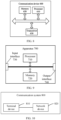
- FIG. 10 is a schematic block diagram of a communication system 800 provided in the embodiments of the present application. As shown in FIG. 10 , the communication system 800 includes a terminal device 810 and a network device 820.
- the terminal device 810 may be configured to implement the corresponding functions implemented by the terminal device in the above methods
- the network device 820 may be configured to implement the corresponding functions implemented by the network device in the above methods, which will not be repeated here for the sake of brevity.
- the processor in the embodiments of the present application may be an integrated circuit chip and have a processing capability of signals.
- various steps of the above method embodiments may be completed by an integrated logic circuit of hardware in the processor or an instruction in a software form.
- the above processor may be a general-purpose processor, a digital signal processor (DSP), an application specific integrated circuit (ASIC), a field programmable gate array (FPGA) or other programmable logic devices, a discrete gate or transistor logic device, a discrete hardware component.
- DSP digital signal processor
- ASIC application specific integrated circuit
- FPGA field programmable gate array
- Various methods, steps and logical block diagrams disclosed in the embodiments of the present application may be implemented or performed.
- the general-purpose processor may be a microprocessor, or the processor may also be any conventional processor, etc.
- the steps of the method disclosed in combination with the embodiments of the present application may be directly embodied as being performed and completed by a hardware decoding processor, or by using a combination of hardware and software modules in the decoding processor.
- the software module may be located in the mature storage medium in the art such as the random memory, the flash memory, the read-only memory, the programmable read-only memory or electrically erasable programmable memory, the register.
- the storage medium is located in the memory, and the processor reads the information in the memory and completes the steps of the above methods in combination with its hardware.
- the memory in the embodiments of the present application may be a volatile memory or a non-volatile memory, or may include both volatile (transitory) and non-volatile (non-transitory) memories.
- the non-volatile memory may be a read-only memory (ROM), a programmable ROM (PROM), an erasable PROM (EPROM), an electrically EPROM (EEPROM) or a flash memory.
- the volatile memory may be a random access memory (RAM), which is used as an external cache.
- RAMs are available, for example, a static RAM (SRAM), a dynamic RAM (DRAM), a synchronous DRAM (SDRAM), a double data rate SDRAM (DDR SDRAM), an enhanced SDRAM (ESDRAM), a synchlink DRAM (SLDRAM) and a direct rambus RAM (DR RAM).
- SRAM static RAM
- DRAM dynamic RAM
- SDRAM synchronous DRAM
- DDR SDRAM double data rate SDRAM
- ESDRAM enhanced SDRAM
- SLDRAM synchlink DRAM
- DR RAM direct rambus RAM
- the memory in embodiments of the present application may also be a static Random Access Memory (static RAM, SRAM), a Dynamic Random Access Memory (dynamic RAM, DRAM), a synchronous DRAM (SDRAM), a double data rate SDRAM (DDR SDRAM), an enhanced SDRAM (ESDRAM), a synch link DRAM (SLDRAM), and a Direct Rambus RAM (DR RAM), etc. That is, the memory in the embodiments of the present application is intended to include, but not limited to, these and any other suitable types of memories.
- static RAM static Random Access Memory
- DRAM Dynamic Random Access Memory
- SDRAM synchronous DRAM
- DDR SDRAM double data rate SDRAM
- ESDRAM enhanced SDRAM
- SLDRAM synch link DRAM
- DR RAM Direct Rambus RAM
- a computer program product is further provided in the embodiments of the present application, including computer program instructions.
- the computer program product may be applied to the network device in the embodiments of the present application, and the computer program instructions cause the computer to perform the corresponding processes implemented by the network device in the various methods of the embodiments of the present application, which will not be repeated here for the sake of brevity.
- the computer program product may be applied to the terminal device in the embodiments of the present application, and the computer program instructions cause the computer to perform the corresponding processes implemented by the terminal device in the various methods of the embodiments of the present application, which will not be repeated here for the sake of brevity.
- a computer program is further provided in the embodiments of the present application.
- the computer program may be applied to the network device in the embodiments of the present application.
- the computer program when executed on a computer, causes the computer to perform the corresponding processes implemented by the network device in the various methods of the embodiments of the present application, which will not be repeated here for the sake of brevity.
- the computer program may be applied to the terminal device in the embodiments of the present application.
- the computer program when executed on a computer,causes the computer to perform the corresponding processes implemented by the terminal device in the various methods of the embodiments of the present application, which will not be repeated here for the sake of brevity.
- the disclosed systems, apparatus, and method may be implemented in other ways.
- the apparatus embodiments described above are only schematic, for example, division of the units is only division of logical functions, and there may be other division methods in an actual implementation, for example, a plurality of units or components may be combined or integrated into another system, or some features may be ignored or not performed.
- the coupling or direct coupling or communicative connection between each other as shown or discussed may be indirect coupling or communicative connection of apparatus or units via some interfaces, which may be electrical, mechanical, or in other forms.
- the units illustrated as separate components may be or may not be physically separated, and the components shown as units may be or may not be physical units, that is, they may be located in one place, or may be distributed onto a plurality of network units. A part or all of the units may be selected according to actual needs, to implement the purpose of the schemes of the embodiments.
- the various functional units in the various embodiments of the present application may be integrated into one processing unit, or the various units may exist physically separately, or two or more units may be integrated into one unit.
- the described functions are implemented in a form of a software functional unit and sold or used as an independent product, they may be stored in a computer readable storage medium.
- the technical solution of the present application essentially, or a part of the technical solution that contributes to the prior art, or a part of the technical solution, may be embodied in a form of a software product, and the computer software product is stored in a storage medium, and includes a plurality of instructions for enabling a computer device (which may be a personal computer, a server, or a network device, etc.) to perform all or some of steps of the methods described in the various embodiments of the present application.
- the storage medium mentioned above includes a USB flash drive (U disk), a mobile hard disk, a read-only memory (ROM), a random access memory (RAM), a diskette, or an optical disk, and various mediums that may store program codes.
Landscapes
- Engineering & Computer Science (AREA)
- Computer Networks & Wireless Communication (AREA)
- Signal Processing (AREA)
- Mobile Radio Communication Systems (AREA)
Applications Claiming Priority (1)
| Application Number | Priority Date | Filing Date | Title |
|---|---|---|---|
| PCT/CN2022/115211 WO2024040590A1 (zh) | 2022-08-26 | 2022-08-26 | 无线通信的方法、终端设备和网络设备 |
Publications (1)
| Publication Number | Publication Date |
|---|---|
| EP4580265A1 true EP4580265A1 (de) | 2025-07-02 |
Family
ID=90012196
Family Applications (1)
| Application Number | Title | Priority Date | Filing Date |
|---|---|---|---|
| EP22956135.2A Pending EP4580265A1 (de) | 2022-08-26 | 2022-08-26 | Drahtloskommunikationsverfahren, endgerätevorrichtung und netzwerkvorrichtung |
Country Status (4)
| Country | Link |
|---|---|
| US (1) | US20250126570A1 (de) |
| EP (1) | EP4580265A1 (de) |
| CN (1) | CN119605264A (de) |
| WO (1) | WO2024040590A1 (de) |
Family Cites Families (5)
| Publication number | Priority date | Publication date | Assignee | Title |
|---|---|---|---|---|
| EP4117352B1 (de) * | 2018-09-27 | 2026-02-18 | Comcast Cable Communications, LLC | Leistungssteuerung für neuübertragungen |
| CN112868267A (zh) * | 2018-10-27 | 2021-05-28 | Oppo广东移动通信有限公司 | 随机接入的方法、终端设备和网络设备 |
| US11350463B2 (en) * | 2019-01-31 | 2022-05-31 | Qualcomm Incorporated | Random access channel (RACH) procedure power control |
| EP4266769A4 (de) * | 2020-12-30 | 2024-03-06 | Guangdong Oppo Mobile Telecommunications Corp., Ltd. | Direktzugriffsverfahren sowie elektronische vorrichtung und speichermedium |
| US11903037B2 (en) * | 2021-01-15 | 2024-02-13 | Qualcomm Incorporated | Requests for physical uplink shared channel repetition associated with a radio resource control connection request message in a random access channel procedure |
-
2022
- 2022-08-26 CN CN202280098496.3A patent/CN119605264A/zh active Pending
- 2022-08-26 EP EP22956135.2A patent/EP4580265A1/de active Pending
- 2022-08-26 WO PCT/CN2022/115211 patent/WO2024040590A1/zh not_active Ceased
-
2024
- 2024-12-26 US US19/002,365 patent/US20250126570A1/en active Pending
Also Published As
| Publication number | Publication date |
|---|---|
| US20250126570A1 (en) | 2025-04-17 |
| CN119605264A (zh) | 2025-03-11 |
| WO2024040590A1 (zh) | 2024-02-29 |
Similar Documents
| Publication | Publication Date | Title |
|---|---|---|
| EP3668194B1 (de) | Verfahren und vorrichtung zur direktzugriffsleistungssteuerung und kommunikationssystem | |
| US12010636B2 (en) | Wireless communication method, terminal device, and network device | |
| EP3618511B1 (de) | Verfahren und vorrichtung zur bestimmung der uplink-signalsendeleistung | |
| EP2773161B1 (de) | Vorrichtung und Verfahren zur relaisunterstützten Uplink-Kommunikation | |
| US11963108B2 (en) | Power allocation method and terminal device | |
| EP2770792B1 (de) | Vorrichtung und Verfahren zur relaisunterstützten Uplink-Kommunikation | |
| EP3756289B1 (de) | Effizientes verfahren zur dl-cinr-messung und meldung in nb iot | |
| US12089260B2 (en) | Random access method, terminal device and network device | |
| CN115669133B (zh) | 无线通信的方法、终端设备和网络设备 | |
| US20240040627A1 (en) | Wireless comminication method, and electronic device | |
| US20240313882A1 (en) | Wireless communication method, terminal device, and network device | |
| US20240365401A1 (en) | Wireless communication method and terminal device | |
| EP4258583B1 (de) | Verfahren und vorrichtung zur drahtlosen kommunikation | |
| CN112205061A (zh) | 一种资源关联方法及装置、终端、网络设备 | |
| EP4221423A1 (de) | Direktzugriffsverfahren und -endgeräte | |
| US20250142632A1 (en) | Wireless communication method, terminal device and network device | |
| EP4216651B1 (de) | Sidelink-übertragungsverfahren und endgerät | |
| US20250133601A1 (en) | Method of transmission with repetition, terminal device and network device | |
| US20230422240A1 (en) | Wireless communication method, terminal device, and network device | |
| US20260075644A1 (en) | Channel access method and device | |
| US12501274B2 (en) | Method for using configured grant resources, terminal device, and network device | |
| CN119014071A (zh) | 转发器的配置方法及装置 | |
| EP4580265A1 (de) | Drahtloskommunikationsverfahren, endgerätevorrichtung und netzwerkvorrichtung | |
| US20250071823A1 (en) | Wireless communication method and terminal device | |
| US20250063606A1 (en) | Wireless communication method, terminal device and network device |
Legal Events
| Date | Code | Title | Description |
|---|---|---|---|
| STAA | Information on the status of an ep patent application or granted ep patent |
Free format text: STATUS: THE INTERNATIONAL PUBLICATION HAS BEEN MADE |
|
| PUAI | Public reference made under article 153(3) epc to a published international application that has entered the european phase |
Free format text: ORIGINAL CODE: 0009012 |
|
| STAA | Information on the status of an ep patent application or granted ep patent |
Free format text: STATUS: REQUEST FOR EXAMINATION WAS MADE |
|
| 17P | Request for examination filed |
Effective date: 20250321 |
|
| AK | Designated contracting states |
Kind code of ref document: A1 Designated state(s): AL AT BE BG CH CY CZ DE DK EE ES FI FR GB GR HR HU IE IS IT LI LT LU LV MC MK MT NL NO PL PT RO RS SE SI SK SM TR |
|
| DAV | Request for validation of the european patent (deleted) | ||
| DAX | Request for extension of the european patent (deleted) |