EP4580255A1 - Nahtlose weiterreichung einer protokolldateneinheitssitzung - Google Patents
Nahtlose weiterreichung einer protokolldateneinheitssitzung Download PDFInfo
- Publication number
- EP4580255A1 EP4580255A1 EP24161526.9A EP24161526A EP4580255A1 EP 4580255 A1 EP4580255 A1 EP 4580255A1 EP 24161526 A EP24161526 A EP 24161526A EP 4580255 A1 EP4580255 A1 EP 4580255A1
- Authority
- EP
- European Patent Office
- Prior art keywords
- handover
- pdu session
- network device
- agf
- network
- Prior art date
- Legal status (The legal status is an assumption and is not a legal conclusion. Google has not performed a legal analysis and makes no representation as to the accuracy of the status listed.)
- Pending
Links
Images






Classifications
-
- H—ELECTRICITY
- H04—ELECTRIC COMMUNICATION TECHNIQUE
- H04W—WIRELESS COMMUNICATION NETWORKS
- H04W36/00—Hand-off or reselection arrangements
- H04W36/08—Reselecting an access point
-
- H—ELECTRICITY
- H04—ELECTRIC COMMUNICATION TECHNIQUE
- H04W—WIRELESS COMMUNICATION NETWORKS
- H04W36/00—Hand-off or reselection arrangements
- H04W36/16—Performing reselection for specific purposes
- H04W36/18—Performing reselection for specific purposes for allowing seamless reselection, e.g. soft reselection
-
- H—ELECTRICITY
- H04—ELECTRIC COMMUNICATION TECHNIQUE
- H04W—WIRELESS COMMUNICATION NETWORKS
- H04W36/00—Hand-off or reselection arrangements
- H04W36/0005—Control or signalling for completing the hand-off
- H04W36/0011—Control or signalling for completing the hand-off for data sessions of end-to-end connection
-
- H—ELECTRICITY
- H04—ELECTRIC COMMUNICATION TECHNIQUE
- H04W—WIRELESS COMMUNICATION NETWORKS
- H04W36/00—Hand-off or reselection arrangements
- H04W36/0005—Control or signalling for completing the hand-off
- H04W36/0011—Control or signalling for completing the hand-off for data sessions of end-to-end connection
- H04W36/0022—Control or signalling for completing the hand-off for data sessions of end-to-end connection for transferring data sessions between adjacent core network technologies
-
- H—ELECTRICITY
- H04—ELECTRIC COMMUNICATION TECHNIQUE
- H04W—WIRELESS COMMUNICATION NETWORKS
- H04W36/00—Hand-off or reselection arrangements
- H04W36/0005—Control or signalling for completing the hand-off
- H04W36/0055—Transmission or use of information for re-establishing the radio link
- H04W36/0058—Transmission of hand-off measurement information, e.g. measurement reports
-
- H—ELECTRICITY
- H04—ELECTRIC COMMUNICATION TECHNIQUE
- H04W—WIRELESS COMMUNICATION NETWORKS
- H04W36/00—Hand-off or reselection arrangements
- H04W36/14—Reselecting a network or an air interface
-
- H—ELECTRICITY
- H04—ELECTRIC COMMUNICATION TECHNIQUE
- H04W—WIRELESS COMMUNICATION NETWORKS
- H04W88/00—Devices specially adapted for wireless communication networks, e.g. terminals, base stations or access point devices
- H04W88/16—Gateway arrangements
Definitions
- a network device such as a dual access fifth generation (5G) residential gateway, may support wireless access to a data network via a radio access network (RAN), and may support wireline access to the data network via an access gateway function (AGF).
- 5G fifth generation
- RAN radio access network
- AMF access gateway function
- the method may include receiving a handover request to handover a protocol data unit (PDU) session of a network device from a radio access network (RAN) to the device, and providing, to the RAN, a handover request acknowledgment message acknowledging receipt of the handover request.
- the method may include receiving, from the RAN, a sequence number status transfer indicating provision of a handover command by the RAN to the network device, and receiving, from the RAN, uplink data packets and downlink data packets associated with the PDU session.
- the method may include receiving, from the network device, a request to establish the PDU session, and establishing the PDU session of the network device based on the request to establish the PDU session.
- the first device may include one or more memories and one or more processors.
- the one or more processors may be configured to receive a handover request to handover a PDU session of a network device from a second device to the first device, and provide, to the second device, a handover request acknowledgment message acknowledging receipt of the handover request.
- the one or more processors may be configured to receive, from the second device, a sequence number status transfer indicating provision of a handover command by the second device to the network device, and receive, from the second device, uplink data packets and downlink data packets associated with the PDU session.
- the one or more processors may be configured to receive, from the network device, a request to establish the PDU session, and establish the PDU session of the network device based on the request to establish the PDU session.
- Some implementations described herein relate to a computer-readable medium that encodes a set of instructions.
- the set of instructions when executed by one or more processors of a first device, may cause the first device to receive a handover request to handover a PDU session of a network device from a second device to the first device, and provide, to the second device, a handover request acknowledgment message acknowledging receipt of the handover request.
- the set of instructions when executed by one or more processors of the first device, may cause the first device to receive, from the second device, a sequence number status transfer indicating provision of a handover command by the second device to the network device, and receive, from the second device, uplink data packets and downlink data packets associated with the PDU session.
- the set of instructions when executed by one or more processors of the first device, may cause the first device to receive, from the network device, a request to establish the PDU session, and establish the PDU session of the network device based on the request to establish the PDU session.
- the set of instructions when executed by one or more processors of the first device, may cause the first device to receive, from the network device, a handover complete message indicating that the handover of the PDU session of the network device from the second device to the first device is complete, and provide the downlink data packets associated with the PDU session to the network device based on receiving the handover complete message.
- the set of instructions when executed by one or more processors of the first device, may cause the first device to provide the uplink data packets associated with the PDU session to a user plane function based on receiving the handover complete message.
- a PDU session established via a wireless access can be moved to a wireline access (e.g., via an AGF), and vice versa, only by releasing and then reestablishing the PDU session.
- subscriber traffic associated with the PDU session during a transition from one access type to another type will be dropped.
- An assigned subscriber network address e.g., an Internet protocol (IP) address
- IP Internet protocol
- UPF Allocated user plane function
- computing resources e.g., processing resources, memory resources, communication resources, and/or the like
- networking resources e.g., networking resources, and/or other resources associated with failing to provide seamless handover of PDU sessions between the AGF and the RAN, handling lost subscriber traffic based on failing to provide seamless handover of the PDU sessions, causing multiple changes in a network due to releasing and reestablishing PDU sessions during handover, and/or the like.
- the device may receive a handover request to handover a protocol data unit (PDU) session of a network device from a radio access network (RAN) to the device, and may provide, to the RAN, a handover request acknowledgment message acknowledging receipt of the handover request.
- PDU protocol data unit
- the device may receive, from the RAN, a sequence number status transfer indicating provision of a handover command by the RAN to the network device, and may receive, from the RAN, uplink data packets and downlink data packets associated with the PDU session.
- the device may receive, from the network device, a request to establish the PDU session, and may establish the PDU session of the network device based on the request to establish the PDU session.
- the AGF provides seamless handover of a PDU session between a wireless network and a wireline network.
- a seamless handover of a PDU session between wireless access (e.g., a RAN) and wireline access (e.g., the AGF) may be provided.
- the AGF may support a protocol (e.g., an Xn application protocol (XnAP) or a next generation application protocol (NGAP) specific to session and service continuity (SSC) mode 3) that enables handover of a PDU session from a RAN to an AGF and from an AGF to a RAN.
- XnAP Xn application protocol
- NGAP next generation application protocol
- SSC session and service continuity
- the AGF may utilize additional messages (e.g., a handover request, a handover command, a handover complete, and/or the like) so that a network device (e.g., a residential gateway) may communicate with the AGF during a handover procedure.
- a network device e.g., a residential gateway
- the AGF may include buffering and support for an end marker packet (e.g., a last packet to be transmitted during a handover) to provide a lossless handover.
- the AGF may conserve computing resources, networking resources, and/or other resources that would have otherwise been consumed by failing to provide seamless handover of PDU sessions between the AGF and the RAN, handling lost subscriber traffic based on failing to provide seamless handover of the PDU sessions, causing multiple changes in a network due to releasing and reestablishing PDU sessions during handover, and/or the like.
- Figs. 1A-1M are diagrams of an example 100 associated with providing seamless handover of a PDU session between a wireless network and a wireline network.
- the example 100 includes a network device, a radio access network (RAN), a data network, and a core network that includes an access gateway function, an access and mobility management function (AMF), and a user plane function (UPF). Further details of the network device, the RAN, the core network, AGF, the AMF, UPF, and the data network are provided elsewhere herein.
- RAN radio access network
- AMF access and mobility management function
- UPF user plane function
- the network device may utilize the RAN to communicate with the core network and to further communicate with the data network, via the core network.
- a single network device, RAN, core network, AGF, AMF, UPF, and data network are depicted in Fig. 1A , in some implementations, more than one network device, RAN, core network, AGF, AMF, UPF, and data network may be provided.
- implementations are described in connection with a fifth generation (5G) core network, the implementations may be utilized with other types of core networks, such as a fourth generation (4G) core network.
- 5G fifth generation
- 4G fourth generation
- Figs. 1B and 1C depict a message flow diagram associated with utilizing XnAP for lossless handover from a wireless network to a wireline network.
- the RAN and the AGF may perform an XnAP setup procedure to enable utilization of XnAP for the message flows.
- the network device may interact with the RAN and the AMF to perform a wireless network device registration and a wireless PDU session setup for the network device.
- the network device may register for a wireless PDU session via the RAN and the AMF.
- the RAN and the AMF may register the network device and may establish the wireless PDU session for the network device.
- the network device may interact with the AGF and the AMF to perform a wireline network device registration.
- the network device may exchange uplink (UL) and downlink (DL) data packets with the data network. For example, once the wireless PDU session is established, the network device may exchange the UL and the DL data packets with the data network. As shown at step 5, the network device may provide a measurement report to the RAN. The measurement report may include information indicating a state of the wireless PDU session (e.g., a degraded state, a good state, an excellent state, and/or the like). As shown at step 6, the RAN may make a handover decision for the network device based on the measurement report.
- a state of the wireless PDU session e.g., a degraded state, a good state, an excellent state, and/or the like.
- the handover decision may be to handover the wireless PDU session to the wireline network.
- the handover decision may be to maintain the wireless PDU session.
- the RAN may provide an XnAP handover request to the AGF.
- the RAN may generate the XnAP handover request based on determining that the wireless PDU session is to be handed over to the wireline network (e.g., the handover decision).
- the XnAP handover request may include a request to handover the wireless PDU session to the wireline network (e.g., to the AGF).
- the AGF may provide an XnAP handover request acknowledgment (Ack) to the RAN. For example, if the AGF agrees to accept the XnAP handover request from the RAN, the AGF may generate the XnAP handover request acknowledgment.
- Ack XnAP handover request acknowledgment
- the XnAP handover request acknowledgment may indicate that the AGF will accept the handover of the wireless PDU session to the AGF.
- the RAN may provide a handover command to the network device. For example, when the RAN receives the XnAP handover request acknowledgment, the RAN may generate the handover command.
- the handover command may include information instructing the network device to handover the wireless PDU session to the AGF.
- the RAN may provide an XnAP sequence number (SN) status transfer message to the AGF.
- the XnAP SM status transfer message may include information indicating a status of the transfer of the wireless PDU session from the RAN.
- the RAN may provide UL and DL data packets associated with the wireless PDU session to the AGF.
- the UL and DL data packets may include UL data packets not yet received by the data network and DL data packets not yet received by the network device.
- the network device may interact with the AGF to perform a wireline PDU session setup for the network device.
- the network device may request establishment of the wireline PDU session from the AGF, and the AGF may establish the wireline PDU session based on the request.
- the network device may provide a handover complete message to the AGF.
- the handover complete message may indicate that the handover of the wireless PDU session to the wireline PDU session is complete.
- the AGF may provide the DL data packets (e.g., received from the RAN and yet to be received by the network device) to the network device.
- the AGF may provide an NGAP path switch request to the AMF.
- the NGAP path switch request may include a request to switch the path of the PDU session from wireless to wireline.
- the AMF may provide an NGAP path switch request acknowledgment to the AGF.
- the NGAP path switch request acknowledgment may indicate that the AMF approved the request to switch the path of the PDU session from wireless to wireline.
- the AGF may provide the UL data packets (e.g., received from the RAN and yet to be received by the data network) to the UPF.
- the AGF may provide an XnAP context release message to the RAN.
- the XnAP context release message may indicate that the RAN may release context associated with the wireless PDU session.
- the network device may exchange UL and DL data packets with the data network. For example, once the wireline PDU session is established, the network device may exchange the UL and the DL data packets with the data network.
- Figs. 1D and 1E depict a message flow diagram associated with utilizing XnAP for wireline lossless handover when triggered by the network device.
- an active AGF and a backup AGF may perform an XnAP setup procedure to enable utilization of XnAP for the message flows.
- the network device may interact with the active AGF and the AMF to perform a wireline network device registration and a wireline PDU session setup for the network device.
- the network device may register for a wireline PDU session via the active AGF and the AMF.
- the active AGF and the AMF may register the network device and may establish the wireline PDU session for the network device.
- the network device may exchange uplink (UL) and downlink (DL) data packets with the data network. For example, once the wireline PDU session is established, the network device may exchange the UL and the DL data packets with the data network.
- the network device may provide a handover request to the active AGF.
- the handover request may include a request to handover the wireline PDU session from the active AGF to the backup AGF.
- the active AGF may make a handover decision for the network device based on the handover request. For example, the handover decision may be to handover the wireline PDU session from the active AGF to the backup AGF.
- the active AGF may provide an XnAP handover request to the backup AGF.
- the active AGF may generate the XnAP handover request based on determining that the wireline PDU session is to be handed over to the backup AGF (e.g., the handover decision).
- the XnAP handover request may include a request to handover the wireline PDU session from the active AGF to the backup AGF.
- the backup AGF may provide an XnAP handover request acknowledgment (Ack) to the active AGF. For example, if the backup AGF agrees to accept the XnAP handover request from the active AGF, the backup AGF may generate the XnAP handover request acknowledgment.
- Ack XnAP handover request acknowledgment
- the XnAP handover request acknowledgment may indicate that the backup AGF will accept the handover of the wireline PDU session to the backup AGF.
- the active AGF may provide a handover command to the network device. For example, when the active AGF receives the XnAP handover request acknowledgment, the active AGF may generate the handover command.
- the handover command may include information instructing the network device to handover the wireline PDU session to the backup AGF.
- the active AGF may provide an XnAP sequence number (SN) status transfer message to the backup AGF.
- the XnAP SM status transfer message may include information indicating a status of the transfer of the wireline PDU session from the active AGF.
- the active AGF may provide UL and DL data packets associated with the wireline PDU session to the backup AGF.
- the UL and DL data packets may include UL data packets not yet received by the data network and DL data packets not yet received by the network device.
- the network device may interact with the backup AGF to perform a wireline PDU session setup for the network device.
- the network device may request establishment of the wireline PDU session from the backup AGF, and the backup AGF may establish the wireline PDU session based on the request.
- the network device may provide a handover complete message to the backup AGF.
- the handover complete message may indicate that the handover of the wireline PDU session is complete.
- the backup AGF may provide the DL data packets (e.g., received from the active AGF and yet to be received by the network device) to the network device.
- the backup AGF may provide an NGAP path switch request to the AMF.
- the NGAP path switch request may include a request to switch the path of the PDU session from the active AGF to the backup AGF.
- the AMF may provide an NGAP path switch request acknowledgment to the backup AGF.
- the NGAP path switch request acknowledgment may indicate that the AMF approved the request to switch the path of the PDU session from the active AGF to the backup AGF.
- the backup AGF may provide the UL data packets (e.g., received from the active AGF and yet to be received by the data network) to the UPF.
- the backup AGF may provide an XnAP context release message to the active AGF.
- the XnAP context release message may indicate that the active AGF may release context associated with the wireline PDU session.
- the network device may exchange UL and DL data packets with the data network. For example, once the wireline PDU session is established, the network device may exchange the UL and the DL data packets with the data network.
- Figs. 1F and 1G depict a message flow diagram associated with utilizing XnAP for wireline lossless handover when triggered by the AGF.
- an active AGF and a backup AGF may perform an XnAP setup procedure to enable utilization of XnAP for the message flows.
- the network device may interact with the active AGF and the AMF to perform a wireline network device registration and a wireline PDU session setup for the network device.
- the network device may register for a wireline PDU session via the active AGF and the AMF.
- the active AGF and the AMF may register the network device and may establish the wireline PDU session for the network device.
- the network device may exchange UL and DL data packets with the data network. For example, once the wireline PDU session is established, the network device may exchange the UL and the DL data packets with the data network.
- the active AGF may make a handover decision for the network device. For example, the handover decision may be to handover the wireline PDU session from the active AGF to the backup AGF.
- the active AGF may provide an XnAP handover request to the backup AGF.
- the active AGF may generate the XnAP handover request based on determining that the wireline PDU session is to be handed over to the backup AGF (e.g., the handover decision).
- the XnAP handover request may include a request to handover the wireline PDU session from the active AGF to the backup AGF.
- the backup AGF may provide an XnAP handover request acknowledgment (Ack) to the active AGF. For example, if the backup AGF agrees to accept the XnAP handover request from the active AGF, the backup AGF may generate the XnAP handover request acknowledgment.
- Ack XnAP handover request acknowledgment
- the XnAP handover request acknowledgment may indicate that the backup AGF will accept the handover of the wireline PDU session to the backup AGF.
- the active AGF may provide a handover command to the network device. For example, when the active AGF receives the XnAP handover request acknowledgment, the active AGF may generate the handover command.
- the handover command may include information instructing the network device to handover the wireline PDU session to the backup AGF.
- the active AGF may provide an XnAP SN status transfer message to the backup AGF.
- the XnAP SM status transfer message may include information indicating a status of the transfer of the wireline PDU session from the active AGF.
- the active AGF may provide UL and DL data packets associated with the wireline PDU session to the backup AGF.
- the UL and DL data packets may include UL data packets not yet received by the data network and DL data packets not yet received by the network device.
- the network device may interact with the backup AGF to perform a wireline PDU session setup for the network device.
- the network device may request establishment of the wireline PDU session from the backup AGF, and the backup AGF may establish the wireline PDU session based on the request.
- the network device may provide a handover complete message to the backup AGF.
- the handover complete message may indicate that the handover of the wireline PDU session is complete.
- the backup AGF may provide the DL data packets (e.g., received from the active AGF and yet to be received by the network device) to the network device.
- the backup AGF may provide an NGAP path switch request to the AMF.
- the NGAP path switch request may include a request to switch the path of the PDU session from the active AGF to the backup AGF.
- the AMF may provide an NGAP path switch request acknowledgment to the backup AGF.
- the NGAP path switch request acknowledgment may indicate that the AMF approved the request to switch the path of the PDU session from the active AGF to the backup AGF.
- the backup AGF may provide the UL data packets (e.g., received from the active AGF and yet to be received by the data network) to the UPF.
- the backup AGF may provide an XnAP context release message to the active AGF.
- the XnAP context release message may indicate that the active AGF may release context associated with the wireline PDU session.
- the network device may exchange UL and DL data packets with the data network. For example, once the wireline PDU session is established, the network device may exchange the UL and the DL data packets with the data network.
- Figs. 1H and 1I depict a message flow diagram associated with utilizing NGAP for lossless handover from a wireless network to a wireline network.
- the network device may interact with the RAN and the AMF to perform a wireless network device registration and a wireless PDU session setup for the network device.
- the network device may register for a wireless PDU session via the RAN and the AMF.
- the RAN and the AMF may register the network device and may establish the wireless PDU session for the network device.
- the network device may interact with the AGF and the AMF to perform a wireline network device registration.
- the network device may exchange UL and DL data packets with the data network. For example, once the wireless PDU session is established, the network device may exchange the UL and the DL data packets with the data network.
- the network device may provide a measurement report to the RAN.
- the measurement report may include information indicating a state of the wireless PDU session (e.g., a degraded state, a good state, an excellent state, and/or the like).
- the RAN may make a handover decision for the network device based on the measurement report. For example, if the measurement report indicates that the wireless PDU session is degraded, the handover decision may be to handover the wireless PDU session to the wireline network. In another example, if the measurement report indicates that the wireless PDU session is not degraded, the handover decision may be to maintain the wireless PDU session.
- the RAN may provide an NGAP handover required message to the AMF.
- the RAN may generate the NGAP handover required message based on determining that the wireless PDU session is to be handed over to the wireline network (e.g., the handover decision).
- the AMF may provide an NGAP handover request to the AGF.
- the AMF may generate the NGAP handover request based on receiving the NGAP handover required message from the RAN.
- the NGAP handover request may include a request to handover the wireless PDU session to the wireline network (e.g., to the AGF).
- the AGF may perform a handover admission process that determines whether to handover the wireless PDU session to the wireline network. As shown at step 9, if the AGF determines to handover the wireless PDU session to the wireline network (e.g., in the handover admission process), the AGF may provide a handover command to the RAN.
- the handover command may include information instructing the RAN to handover the wireless PDU session to the AGF.
- the RAN may provide a handover command to the network device.
- the RAN may generate the handover command or may utilize the handover command generated by the AGF.
- the handover command may include information instructing the network device to handover the wireless PDU session to the AGF.
- the RAN may provide an XnAP sequence number (SN) status transfer message to the AGF.
- the XnAP SN status transfer message may include information indicating a status of the transfer of the wireless PDU session from the RAN.
- the RAN may provide UL and DL data packets associated with the wireless PDU session to the AGF.
- the UL and DL data packets may include UL data packets not yet received by the data network and DL data packets not yet received by the network device.
- the network device may interact with the AGF to perform a wireline PDU session setup for the network device.
- the network device may request establishment of the wireline PDU session from the AGF, and the AGF may establish the wireline PDU session based on the request.
- the network device may provide a handover complete message to the AGF.
- the handover complete message may indicate that the handover of the wireless PDU session to the wireline PDU session is complete.
- the AGF may provide an NGAP handover notify message to the AMF.
- the NGAP notify message may notify the AMF that the handover of the wireless PDU session to the wireline PDU session is complete.
- the AGF may provide the DL data packets (e.g., received from the RAN and yet to be received by the network device) to the network device.
- the AGF may provide the UL data packets (e.g., received from the RAN and yet to be received by the data network) to the UPF.
- the network device may exchange UL and DL data packets with the data network. For example, once the wireline PDU session is established, the network device may exchange the UL and the DL data packets with the data network.
- the AMF may provide an NGAP context release command to the RAN.
- the NGAP context release command may instruct the RAN to release context associated with the wireless PDU session.
- the RAN may provide an NGAP context release complete message to the AMF.
- the NGAP context release complete message may indicate that the RAN released the context associated with the wireless PDU session.
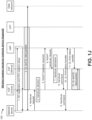
- Figs. 1J and 1K depict a message flow diagram associated with utilizing NGAP for wireline lossless handover when triggered by the network device.
- the network device may interact with an active AGF and the AMF to perform a wireline network device registration and a wireline PDU session setup for the network device.
- the network device may register for a wireline PDU session via the active AGF and the AMF.
- the active AGF and the AMF may register the network device and may establish the wireline PDU session for the network device.
- the network device may exchange UL and DL data packets with the data network.
- the network device may exchange the UL and the DL data packets with the data network.
- the network device may provide a handover request to the active AGF.
- the handover request may include a request to handover the wireline PDU session from the active AGF to the backup AGF.
- the active AGF may make a handover decision for the network device based on the handover request. For example, the handover decision may be to handover the wireline PDU session from the active AGF to the backup AGF.
- the active AGF may provide an NGAP handover required message to the backup AMF.
- the active AGF may generate the NGAP handover required message based on determining that the wireline PDU session is to be handed over from the active AGF to the backup AGF (e.g., the handover decision).
- the AMF may provide an NGAP handover request to the backup AGF.
- the AMF may generate the NGAP handover request based on receiving the NGAP handover required message from the active AGF.
- the NGAP handover request may include a request to handover the wireline PDU session from the active AGF to the backup AGF.
- the backup AGF may perform a handover admission process that determines whether to handover the wireline PDU session from the active AGF to the backup AGF. As shown at step 8, if the backup AGF determines to handover the wireline PDU session from the active AGF to the backup AGF (e.g., in the handover admission process), the backup AGF may provide a handover command to the active AGF.
- the handover command may include information instructing the active AGF to handover the wireline PDU session from the active AGF to the backup AGF.
- the active AGF may provide a handover command to the network device.
- the active AGF may generate the handover command or may utilize the handover command generated by the backup AGF.
- the handover command may include information instructing the network device to handover the wireline PDU session from the active AGF to the backup AGF.
- the active AGF may provide a UL RAN status transfer message to the AMF.
- the UL RAN status transfer message may include information indicating a status of the transfer of UL data of the wireline PDU session from the active AGF to the backup AGF.
- the AMF may provide a DL RAN status transfer message to the backup AGF.
- the DL RAN status transfer message may include information indicating a status of the transfer of DL data of the wireline PDU session from the active AGF to the backup AGF.
- the active AGF may provide UL and DL data packets associated with the wireless PDU session to the backup AGF.
- the UL and DL data packets may include UL data packets not yet received by the data network and DL data packets not yet received by the network device.
- the network device may interact with the backup AGF to perform a wireline PDU session setup for the network device.
- the network device may request establishment of the wireline PDU session from the backup AGF, and the backup AGF may establish the wireline PDU session based on the request.
- the network device may provide a handover complete message to the backup AGF.
- the handover complete message may indicate that the handover of the wireline PDU session from the active AGF to the backup AGF is complete.
- the backup AGF may provide the DL data packets (not yet received by the network device) to the network device.
- the backup AGF may provide an NGAP handover notify message to the AMF.
- the NGAP notify message may notify the AMF that the handover of the wireline PDU session from the active AGF to the backup AGF is complete.
- the AGF may provide the UL data packets (e.g., not yet to be received by the data network) to the UPF.
- the network device may exchange UL and DL data packets with the data network. For example, once the wireline PDU session is established with the backup AGF, the network device may exchange the UL and the DL data packets with the data network.
- the AMF may provide an NGAP context release command to the active AGF.
- the NGAP context release command may instruct the active AGF to release context associated with the wireless PDU session.
- the active AGF may provide an NGAP context release complete message to the AMF.
- the NGAP context release complete message may indicate that the active AGF released the context associated with the wireline PDU session.
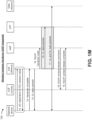
- Figs. 1L and 1M depict a message flow diagram associated with utilizing NGAP for wireline lossless handover when triggered by the AGF.
- an active AGF and a backup AGF may perform an NGAP setup procedure to enable utilization of NGAP for the message flows.
- the network device may interact with the active AGF and the AMF to perform a wireline network device registration and a wireline PDU session setup for the network device.
- the network device may register for a wireline PDU session via the active AGF and the AMF.
- the active AGF and the AMF may register the network device and may establish the wireline PDU session for the network device.
- the network device may exchange UL and DL data packets with the data network. For example, once the wireline PDU session is established, the network device may exchange the UL and the DL data packets with the data network.
- the active AGF may make a handover decision for the network device. For example, the handover decision may be to handover the wireline PDU session from the active AGF to the backup AGF.
- the active AGF may provide an NGAP handover required message to the AMF.
- the active RAN may generate the NGAP handover required message based on determining that the wireline PDU session is to be handed over from the active AGF to the backup AGF (e.g., the handover decision).
- the AMF may provide an NGAP handover request to the backup AGF.
- the AMF may generate the NGAP handover request based on receiving the NGAP handover required message from the active AGF.
- the NGAP handover request may include a request to handover the wireline PDU session from the active AGF to the backup AGF.
- the backup AGF may perform a handover admission process that determines whether to handover the wireline PDU session from the active AGF to the backup AGF.
- the backup AGF may provide a handover command to the active AGF.
- the backup AGF may generate the handover command based on the handover admission process determining to handover the wireline PDU session from the active AGF to the backup AGF.
- the active AGF may provide a handover command to the network device.
- the active AGF may generate the handover command or may forward the handover command to the network device.
- the handover command may include information instructing the network device to handover the wireline PDU session from the active AGF to the backup AGF.
- the active AGF may provide a UL RAN status transfer message to the AMF.
- the UL RAN status transfer message may include information indicating a status of the transfer of UL data of the wireline PDU session from the active AGF to the backup AGF.
- the AMF may provide a DL RAN status transfer message to the backup AGF.
- the DL RAN status transfer message may include information indicating a status of the transfer of DL data of the wireline PDU session from the active AGF to the backup AGF.
- the active AGF may provide UL and DL data packets associated with the wireline PDU session to the backup AGF.
- the UL and DL data packets may include UL data packets not yet received by the data network and DL data packets not yet received by the network device.
- the network device may interact with the backup AGF to perform a network device registration and a wireline PDU session setup for the network device.
- the network device may request establishment of the wireline PDU session from the backup AGF, and the backup AGF may establish the wireline PDU session based on the request.
- the network device may provide a handover complete message to the backup AGF.
- the handover complete message may indicate that the handover of the wireline PDU session is complete.
- the backup AGF may provide the DL data packets (e.g., received from the active AGF and yet to be received by the network device) to the network device.
- the backup AGF may provide an NGAP handover notify message to the AMF.
- the NGAP handover notify message may include a request to switch the PDU session from the active AGF to the backup AGF.
- the backup AGF may provide the UL data packets (e.g., received from the active AGF and yet to be received by the data network) to the UPF.
- the network device may exchange UL and DL data packets with the data network. For example, once the wireline PDU session is established, the network device may exchange the UL and the DL data packets with the data network.
- the AMF may provide an NGAP context release command to the active AGF.
- the NGAP context release command may instruct the active AGF to release context associated with the wireline PDU session.
- the active AGF may provide an NGAP context release complete message to the AMF.
- the NGAP context release complete message may indicate that the active AGF released the context associated with the wireline PDU session.
- the AGF provides seamless handover of a PDU session between a wireless network and a wireline network.
- a seamless handover of a PDU session between wireless access (e.g., a RAN) and wireline access (e.g., the AGF) may be provided.
- the AGF may support a protocol (e.g., an XnAP or an NGAP specific to SSC mode 3) that enables handover of a PDU session from a RAN to an AGF and from an AGF to a RAN.
- the AGF may utilize additional messages (e.g., a handover request, a handover command, a handover complete, and/or the like) so that a network device (e.g., a residential gateway) may communicate with the AGF during a handover procedure.
- a network device e.g., a residential gateway
- the AGF may include buffering and support for an end marker packet (e.g., a last packet to be transmitted during a handover) to provide a lossless handover.
- the AGF may conserve computing resources, networking resources, and/or other resources that would have otherwise been consumed by failing to provide seamless handover of PDU sessions between the AGF and the RAN, handling lost subscriber traffic based on failing to provide seamless handover of the PDU sessions, causing multiple changes in a network due to releasing and reestablishing PDU sessions during handover, and/or the like.
- Figs. 1A-1M are provided as an example. Other examples may differ from what is described with regard to Figs. 1A-1M .
- the number and arrangement of devices shown in Figs. 1A-1M are provided as an example. In practice, there may be additional devices, fewer devices, different devices, or differently arranged devices than those shown in Figs. 1A-1M .
- two or more devices shown in Figs. 1A-1M may be implemented within a single device, or a single device shown in Figs. 1A-1M may be implemented as multiple, distributed devices.
- a set of devices (e.g., one or more devices) shown in Figs. 1A-1M may perform one or more functions described as being performed by another set of devices shown in Figs. 1A-1M .
- Fig. 2 is a diagram of an example environment 200 in which systems and/or methods described herein may be implemented.
- the example environment 200 may include a network device 205, a RAN 210, a core network 215, and a data network 275.
- Devices and/or networks of the example environment 200 may interconnect via wired connections, wireless connections, or a combination of wired and wireless connections.
- the network device 205 may include one or more devices capable of receiving, processing, storing, routing, and/or providing traffic (e.g., a packet and/or other information or metadata) in a manner described herein.
- the network device 205 may include a router, such as a label switching router (LSR), a label edge router (LER), an ingress router, an egress router, a provider router (e.g., a provider edge router or a provider core router), a virtual router, or another type of router.
- LSR label switching router
- LER label edge router
- an ingress router egress router
- a provider router e.g., a provider edge router or a provider core router
- virtual router e.g., a virtual router, or another type of router.
- the RAN 210 may transfer traffic between a UE (e.g., using a cellular RAT), one or more base stations (e.g., using a wireless interface or a backhaul interface, such as a wired backhaul interface), and/or the core network 215.
- the RAN 210 may provide one or more cells that cover geographic areas.
- the core network 215 may include a number of functional elements.
- the functional elements may include, for example, a network slice selection function (NSSF) 220, a network exposure function (NEF) 225, an authentication server function (AUSF) 230, a unified data management (UDM) device 235, a policy control function (PCF) 240, an application function (AF) 245, an access and mobility management function (AMF) 250, a session management function (SMF) 255, a user plane function (UPF) 260, and/or an access gateway function (AGF) 265.
- NSF network slice selection function
- NEF network exposure function
- AUSF authentication server function
- UDM unified data management
- PCF policy control function
- AF application function
- AMF access and mobility management function
- SMF session management function
- UPF user plane function
- AMF access gateway function
- AMF access gateway function
- the NEF 225 includes one or more devices that support exposure of capabilities and/or events in the wireless telecommunications system to help other entities in the wireless telecommunications system discover network services.
- the UDM 235 includes one or more devices that store user data and profiles in the wireless telecommunications system.
- the UDM 235 may be used for fixed access and/or mobile access in the core network 215.
- the PCF 240 includes one or more devices that provide a policy framework that incorporates network slicing, roaming, packet processing, and/or mobility management, among other examples.
- the AMF 250 includes one or more devices that act as a termination point for non-access stratum (NAS) signaling and/or mobility management, among other examples.
- NAS non-access stratum
- the SMF 255 includes one or more devices that support the establishment, modification, and release of communication sessions in the wireless telecommunications system.
- the SMF 255 may configure traffic steering policies at the UPF 260 and/or may enforce user equipment Internet protocol (IP) address allocation and policies, among other examples.
- IP Internet protocol
- the UPF 260 includes one or more devices that serve as an anchor point for intraRAT and/or interRAT mobility.
- the UPF 260 may apply rules to packets, such as rules pertaining to packet routing, traffic reporting, and/or handling user plane QoS, among other examples.
- the AGF 265 includes one or more devices that provide authentication, authorization and accounting (AAA) services plus hierarchical traffic shaping and policing for fixed network and 5G residential gateways (e.g., the network device 205) being served from the UPF 260 within the core network 215.
- AAA authentication, authorization and accounting
- 5G residential gateways e.g., the network device 205
- IP Internet protocol
- IMS multimedia subsystem
- the message bus 270 represents a communication structure for communication among the functional elements. In other words, the message bus 270 may permit communication between two or more functional elements.
- the data network 275 includes one or more wired and/or wireless data networks.
- the data network 275 may include an IP Multimedia Subsystem (IMS), a public land mobile network (PLMN), a local area network (LAN), a wide area network (WAN), a metropolitan area network (MAN), a private network such as a corporate intranet, an ad hoc network, the Internet, a fiber optic-based network, a cloud computing network, a third-party services network, an operator services network, and/or a combination of these or other types of networks.
- IMS IP Multimedia Subsystem
- PLMN public land mobile network
- LAN local area network
- WAN wide area network
- MAN metropolitan area network
- private network such as a corporate intranet, an ad hoc network
- the Internet a fiber optic-based network
- cloud computing network such as a corporate intranet
- third-party services network such as a corporate intranet
- operator services network such as a corporate intranet
- the number and arrangement of devices and networks shown in Fig. 2 are provided as an example. In practice, there may be additional devices and/or networks, fewer devices and/or networks, different devices and/or networks, or differently arranged devices and/or networks than those shown in Fig. 2 . Furthermore, two or more devices shown in Fig. 2 may be implemented within a single device, or a single device shown in Fig. 2 may be implemented as multiple, distributed devices. Additionally, or alternatively, a set of devices (e.g., one or more devices) of the example environment 200 may perform one or more functions described as being performed by another set of devices of the example environment 200.
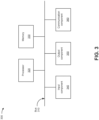
- Fig. 3 is a diagram of example components of a device 300, which may correspond to the network device 205, the RAN 210, the NSSF 220, the NEF 225, the AUSF 230, the UDM 235, the PCF 240, the AF 245, the AMF 250, the SMF 255, the UPF 275, and/or the AGF 265.
- the network device 205, the RAN 210, the NSSF 220, the NEF 225, the AUSF 230, the UDM 235, the PCF 240, the AF 245, the AMF 250, the SMF 255, the UPF 275, and/or the AGF 265 may include one or more devices 300 and/or one or more components of the device 300.
- the device 300 may include a bus 310, a processor 320, a memory 330, an input component 340, an output component 350, and a communication component 360.
- the bus 310 includes one or more components that enable wired and/or wireless communication among the components of the device 300.
- the bus 310 may couple together two or more components of Fig. 3 , such as via operative coupling, communicative coupling, electronic coupling, and/or electric coupling.
- the processor 320 includes a central processing unit, a graphics processing unit, a microprocessor, a controller, a microcontroller, a digital signal processor, a field-programmable gate array, an application-specific integrated circuit, and/or another type of processing component.
- the processor 320 is implemented in hardware, firmware, or a combination of hardware and software.
- the processor 320 includes one or more processors capable of being programmed to perform one or more operations or processes described elsewhere herein.
- the memory 330 includes volatile and/or nonvolatile memory.
- the memory 330 may include random access memory (RAM), read only memory (ROM), a hard disk drive, and/or another type of memory (e.g., a flash memory, a magnetic memory, and/or an optical memory).
- the memory 330 may include internal memory (e.g., RAM, ROM, or a hard disk drive) and/or removable memory (e.g., removable via a universal serial bus connection).
- the memory 330 may be a non-transitory computer-readable medium.
- Memory 330 stores information, instructions, and/or software (e.g., one or more software applications) related to the operation of the device 300.
- the memory 330 includes one or more memories that are coupled to one or more processors (e.g., the processor 320), such as via the bus 310.
- the input component 340 enables the device 300 to receive input, such as user input and/or sensed input.
- the input component 340 may include a touch screen, a keyboard, a keypad, a mouse, a button, a microphone, a switch, a sensor, a global positioning system sensor, an accelerometer, a gyroscope, and/or an actuator.
- the output component 350 enables the device 300 to provide output, such as via a display, a speaker, and/or a light-emitting diode.
- the communication component 360 enables the device 300 to communicate with other devices via a wired connection and/or a wireless connection.
- the communication component 360 may include a receiver, a transmitter, a transceiver, a modem, a network interface card, and/or an antenna.
- the device 300 may perform one or more operations or processes described herein.
- a non-transitory computer-readable medium e.g., the memory 330
- the processor 320 may execute the set of instructions to perform one or more operations or processes described herein.
- execution of the set of instructions, by one or more processors 320 causes the one or more processors 320 and/or the device 300 to perform one or more operations or processes described herein.
- hardwired circuitry may be used instead of or in combination with the instructions to perform one or more operations or processes described herein.
- the processor 320 may be configured to perform one or more operations or processes described herein.
- implementations described herein are not limited to any specific combination of hardware circuitry and software.
- the number and arrangement of components shown in Fig. 3 are provided as an example.
- the device 300 may include additional components, fewer components, different components, or differently arranged components than those shown in Fig. 3 .
- a set of components (e.g., one or more components) of the device 300 may perform one or more functions described as being performed by another set of components of the device 300.
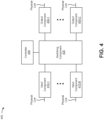
- Fig. 4 is a diagram of example components of one or more devices of Fig. 2 .
- the example components may be included in a device 400.
- the device 400 may correspond to the network device 205.
- the network device 205 may include one or more devices 400 and/or one or more components of the device 400.
- the device 400 may include one or more input components 410-1 through 410-B (B ⁇ 1) (hereinafter referred to collectively as input components 410, and individually as input component 410), a switching component 420, one or more output components 430-1 through 430-C (C ⁇ 1) (hereinafter referred to collectively as output components 430, and individually as output component 430), and a controller 440.
- the input component 410 may be one or more points of attachment for physical links and may be one or more points of entry for incoming traffic, such as packets.
- the input component 410 may process incoming traffic, such as by performing data link layer encapsulation or decapsulation.
- the input component 410 may transmit and/or receive packets.
- the input component 410 may include an input line card that includes one or more packet processing components (e.g., in the form of integrated circuits), such as one or more interface cards (IFCs), packet forwarding components, line card controller components, input ports, processors, memories, and/or input queues.
- the device 400 may include one or more input components 410.
- the switching component 420 may interconnect the input components 410 with the output components 430.
- the switching component 420 may be implemented via one or more crossbars, via busses, and/or with shared memories.
- the shared memories may act as temporary buffers to store packets from the input components 410 before the packets are eventually scheduled for delivery to the output components 430.
- the switching component 420 may enable the input components 410, the output components 430, and/or the controller 440 to communicate with one another.
- the output component 430 may store packets and may schedule packets for transmission on output physical links.
- the output component 430 may support data link layer encapsulation or decapsulation, and/or a variety of higher-level protocols.
- the output component 430 may transmit packets and/or receive packets.
- the output component 430 may include an output line card that includes one or more packet processing components (e.g., in the form of integrated circuits), such as one or more IFCs, packet forwarding components, line card controller components, output ports, processors, memories, and/or output queues.
- the device 400 may include one or more output components 430.
- the input component 410 and the output component 430 may be implemented by the same set of components (e.g., and input/output component may be a combination of the input component 410 and the output component 430).
- the controller 440 includes a processor in the form of, for example, a CPU, a GPU, an accelerated processing unit (APU), a microprocessor, a microcontroller, a DSP, an FPGA, an ASIC, and/or another type of processor.
- the processor is implemented in hardware, firmware, or a combination of hardware and software.
- the controller 440 may include one or more processors that can be programmed to perform a function.
- the controller 440 may include a RAM, a ROM, and/or another type of dynamic or static storage device (e.g., a flash memory, a magnetic memory, an optical memory, etc.) that stores information and/or instructions for use by the controller 440.
- a RAM random access memory
- ROM read-only memory
- another type of dynamic or static storage device e.g., a flash memory, a magnetic memory, an optical memory, etc.
- the controller 440 may communicate with other devices, networks, and/or systems connected to the device 400 to exchange information regarding network topology.
- the controller 440 may create routing tables based on the network topology information, may create forwarding tables based on the routing tables, and may forward the forwarding tables to the input components 410 and/or output components 430.
- the input components 410 and/or the output components 430 may use the forwarding tables to perform route lookups for incoming and/or outgoing packets.
- the controller 440 may perform one or more processes described herein. The controller 440 may perform these processes in response to executing software instructions stored by a computer-readable medium.
- a computer-readable medium can include a non-transitory memory device.
- a memory device includes memory space within a single physical storage device or memory space spread across multiple physical storage devices. Additionally, or alternatively, a computer-readable medium can include transient media such as carrier waves and transmission media.
- Software instructions may be read into a memory and/or storage component associated with the controller 440 from another computer-readable medium or from another device via a communication interface. When executed, software instructions stored in a memory and/or storage component associated with the controller 440 may cause the controller 440 to perform one or more processes described herein. Additionally, or alternatively, hardwired circuitry may be used in place of or in combination with software instructions to perform one or more processes described herein. Thus, implementations described herein are not limited to any specific combination of hardware circuitry and software.
- the device 400 may include additional components, fewer components, different components, or differently arranged components than those shown in Fig. 4 . Additionally, or alternatively, a set of components (e.g., one or more components) of the device 400 may perform one or more functions described as being performed by another set of components of the device 400.
- Fig. 5 is a flowchart of an example process 500 for providing seamless handover of a PDU session between a wireless network and a wireline network.
- one or more process blocks of Fig. 5 may be performed by a device (e.g., the AGF 265).
- one or more process blocks of Fig. 5 may be performed by another device or a group of devices separate from or including the device, such as a network device (e.g., the network device 205).
- one or more process blocks of Fig. 5 may be performed by one or more components of the device 300, such as the processor 320, the memory 330, the input component 340, the output component 350, and/or the communication component 360.
- one or more process blocks of Fig. 5 may be performed by one or more components of the device 400, such as the input component 410, the switching component 420, the output component 430, and/or the controller 440.
- process 500 may include receiving a handover request to handover a PDU session of a network device from a RAN to the device (block 510).
- the device may receive a handover request to handover a PDU session of a network device from a RAN to the device, as described above.
- the network device is a dual access residential gateway and the device is an access gateway function.
- the RAN generates the handover request based on a measurement report received from the network device and a handover decision generated based on the measurement report.
- process 500 may include providing, to the RAN, a handover request acknowledgment message acknowledging receipt of the handover request (block 520).
- the device may provide, to the RAN, a handover request acknowledgment message acknowledging receipt of the handover request, as described above.
- process 500 may include receiving, from the network device, a request to establish the PDU session (block 550).
- the device may receive, from the network device, a request to establish the PDU session, as described above.
- process 500 may include establishing the PDU session of the network device based on the request to establish the PDU session (block 560).
- the device may establish the PDU session of the network device based on the request to establish the PDU session, as described above.
- process 500 includes receiving, from the network device, a handover complete message indicating that the handover of the PDU session of the network device from the RAN to the device is complete. In some implementations, process 500 includes providing the downlink data packets associated with the PDU session to the network device. In some implementations, process 500 includes providing the uplink data packets associated with the PDU session to a user plane function. In some implementations, process 500 includes enabling additional uplink data packets and additional downlink data packets associated with the PDU session to be exchanged between the network device and a data network, via the device, based on establishing the PDU session.
Landscapes
- Engineering & Computer Science (AREA)
- Computer Networks & Wireless Communication (AREA)
- Signal Processing (AREA)
- Mobile Radio Communication Systems (AREA)
Applications Claiming Priority (2)
| Application Number | Priority Date | Filing Date | Title |
|---|---|---|---|
| US202363616387P | 2023-12-29 | 2023-12-29 | |
| US18/405,978 US20250220537A1 (en) | 2023-12-29 | 2024-01-05 | Seamless handover of a protocol data unit session |
Publications (1)
| Publication Number | Publication Date |
|---|---|
| EP4580255A1 true EP4580255A1 (de) | 2025-07-02 |
Family
ID=90362411
Family Applications (1)
| Application Number | Title | Priority Date | Filing Date |
|---|---|---|---|
| EP24161526.9A Pending EP4580255A1 (de) | 2023-12-29 | 2024-03-05 | Nahtlose weiterreichung einer protokolldateneinheitssitzung |
Country Status (3)
| Country | Link |
|---|---|
| US (1) | US20250220537A1 (de) |
| EP (1) | EP4580255A1 (de) |
| CN (1) | CN120238990A (de) |
Citations (2)
| Publication number | Priority date | Publication date | Assignee | Title |
|---|---|---|---|---|
| US11197221B2 (en) * | 2016-06-30 | 2021-12-07 | FG Innovation Company Limited | Terminal apparatus, control apparatus, and communication control method |
| EP3941116A1 (de) * | 2020-07-17 | 2022-01-19 | Apple Inc. | Handover einer pdu-sitzung |
Family Cites Families (5)
| Publication number | Priority date | Publication date | Assignee | Title |
|---|---|---|---|---|
| CN111405625B (zh) * | 2018-09-28 | 2021-06-29 | 华为技术有限公司 | 一种切换方法、基站、通信系统及存储介质 |
| CN115516914A (zh) * | 2020-05-14 | 2022-12-23 | Oppo广东移动通信有限公司 | 切换的方法和设备 |
| US20220022103A1 (en) * | 2020-07-17 | 2022-01-20 | Apple Inc. | PDU Session Handover |
| JP2025532232A (ja) * | 2022-09-29 | 2025-09-29 | 1Finity株式会社 | セル間モビリティ手順のトリガ方法及び装置 |
| KR20240096380A (ko) * | 2022-12-16 | 2024-06-26 | 아서스 테크놀러지 라이센싱 아이엔씨. | 무선 통신 시스템에서 핸드오버 준비를 핸들링하기 위한 방법 및 장치 |
-
2024
- 2024-01-05 US US18/405,978 patent/US20250220537A1/en active Pending
- 2024-03-01 CN CN202410236858.1A patent/CN120238990A/zh active Pending
- 2024-03-05 EP EP24161526.9A patent/EP4580255A1/de active Pending
Patent Citations (2)
| Publication number | Priority date | Publication date | Assignee | Title |
|---|---|---|---|---|
| US11197221B2 (en) * | 2016-06-30 | 2021-12-07 | FG Innovation Company Limited | Terminal apparatus, control apparatus, and communication control method |
| EP3941116A1 (de) * | 2020-07-17 | 2022-01-19 | Apple Inc. | Handover einer pdu-sitzung |
Non-Patent Citations (2)
| Title |
|---|
| "3rd Generation Partnership Project; Technical Specification Group Services and System Aspects; Wireless and wireline convergence access support for the 5G System (5GS) (Release 18)", no. V18.4.0, 19 December 2023 (2023-12-19), pages 1 - 94, XP052552982, Retrieved from the Internet <URL:https://ftp.3gpp.org/Specs/archive/23_series/23.316/23316-i40.zip 23316-i40.docx> [retrieved on 20231219] * |
| CABLELABS ET AL: "Access SNPN via 3GPP and N3GPP AN using same credentials and credential holder", vol. SA WG2, no. Electronic meeting; 20220516 - 20220520, 23 May 2022 (2022-05-23), XP052160607, Retrieved from the Internet <URL:https://ftp.3gpp.org/tsg_sa/WG2_Arch/TSGS2_151E_Electronic_2022-05/Docs/S2-2205135.zip S2-2205135was3948r02_FS_eNPN_Ph2_23700-08_Sol_Access_SNPN_via_3GPP_and_N3GPP_AN_using_same_credentials_and_credential_holder.docx> [retrieved on 20220523] * |
Also Published As
| Publication number | Publication date |
|---|---|
| CN120238990A (zh) | 2025-07-01 |
| US20250220537A1 (en) | 2025-07-03 |
Similar Documents
| Publication | Publication Date | Title |
|---|---|---|
| US11937171B2 (en) | Systems and methods for enabling optimized reporting related to policy control request triggers | |
| US11601947B2 (en) | Systems and methods for network slice selection according to application specific request | |
| US12452736B2 (en) | Systems and methods for supporting multi-access edge computing using application-based quality of service flows | |
| US20250097812A1 (en) | Systems and methods for receiving route selection policies with core network type indicators | |
| US12016075B2 (en) | Systems and methods for transferring multiple packet data unit sessions with a same data network name configuration between networks | |
| US12231955B2 (en) | Systems and methods for instructing a user equipment to utilize a fifth generation (5G) network instead of a wireless network | |
| US12581384B2 (en) | Systems and methods for network slice performance optimization | |
| EP4580255A1 (de) | Nahtlose weiterreichung einer protokolldateneinheitssitzung | |
| US11528651B2 (en) | Systems and methods for prioritizing user equipment access to fifth generation (5G) ultra-wideband networks and wireless networks | |
| EP4475579A1 (de) | Unterstützung einer mit einem drahtgebundenen heim-gateway integrierten funkzugangsstation am gebäude | |
| US12356483B2 (en) | Systems and methods for preventing user device pinging in asynchronous communication mode | |
| US12610352B2 (en) | Systems and methods for supporting usage limits for a group of user equipment based on network slice admission control and policy and charging control | |
| EP4664839A1 (de) | Unterstützung der analytik für eine zugangsgatewayfunktion über eine netzwerkdatenanalytikfunktion | |
| US12156269B2 (en) | Systems and methods for enabling an alternate quality of service for non-guaranteed bit rate flows | |
| EP4354919B1 (de) | Lokales multicast-breakout für teilnehmerendgerät in einer drahtlosen 5g-drahtleitungskonvergenz an einer zugangsgatewayfunktion | |
| US20240422524A1 (en) | Systems and methods for supporting policy and charging control decisions based on network slice admission control information | |
| US20250385842A1 (en) | Supporting analytics for an access gateway function via a network data analytics function | |
| US20240422652A1 (en) | Systems and methods for supporting network slice admission control based on subscription and policy control | |
| US20250024397A1 (en) | Systems and methods for enhanced policy propagation | |
| US12550095B2 (en) | Systems and methods for supporting usage limits in access and mobility management and session management functions | |
| US12580863B2 (en) | Systems and methods for providing analytics from a network data analytics function based on network policies | |
| US20240023171A1 (en) | Systems and methods for protocol conversion for low power wide area technologies | |
| EP4355014A1 (de) | Lokales breakout für teilnehmerendgerät in einer drahtlosen 5g-drahtleitungskonvergenz an einer zugangsgatewayfunktion | |
| US20250024401A1 (en) | Systems and methods for supporting a network data analytics function based on inputs from an anchor user plane function | |
| US20260025735A1 (en) | Systems and methods for providing over-the-air user equipment route selection policy configuration updates |
Legal Events
| Date | Code | Title | Description |
|---|---|---|---|
| PUAI | Public reference made under article 153(3) epc to a published international application that has entered the european phase |
Free format text: ORIGINAL CODE: 0009012 |
|
| STAA | Information on the status of an ep patent application or granted ep patent |
Free format text: STATUS: THE APPLICATION HAS BEEN PUBLISHED |
|
| AK | Designated contracting states |
Kind code of ref document: A1 Designated state(s): AL AT BE BG CH CY CZ DE DK EE ES FI FR GB GR HR HU IE IS IT LI LT LU LV MC ME MK MT NL NO PL PT RO RS SE SI SK SM TR |
|
| STAA | Information on the status of an ep patent application or granted ep patent |
Free format text: STATUS: REQUEST FOR EXAMINATION WAS MADE |
|
| 17P | Request for examination filed |
Effective date: 20260102 |