EP4580252A1 - Kommunikationsverfahren, -vorrichtung und -system - Google Patents
Kommunikationsverfahren, -vorrichtung und -system Download PDFInfo
- Publication number
- EP4580252A1 EP4580252A1 EP23870781.4A EP23870781A EP4580252A1 EP 4580252 A1 EP4580252 A1 EP 4580252A1 EP 23870781 A EP23870781 A EP 23870781A EP 4580252 A1 EP4580252 A1 EP 4580252A1
- Authority
- EP
- European Patent Office
- Prior art keywords
- cell
- terminal device
- indication information
- target cell
- access network
- Prior art date
- Legal status (The legal status is an assumption and is not a legal conclusion. Google has not performed a legal analysis and makes no representation as to the accuracy of the status listed.)
- Pending
Links
Images


Classifications
-
- H—ELECTRICITY
- H04—ELECTRIC COMMUNICATION TECHNIQUE
- H04W—WIRELESS COMMUNICATION NETWORKS
- H04W36/00—Hand-off or reselection arrangements
- H04W36/0005—Control or signalling for completing the hand-off
- H04W36/0055—Transmission or use of information for re-establishing the radio link
-
- H—ELECTRICITY
- H04—ELECTRIC COMMUNICATION TECHNIQUE
- H04B—TRANSMISSION
- H04B17/00—Monitoring; Testing
- H04B17/30—Monitoring; Testing of propagation channels
- H04B17/309—Measuring or estimating channel quality parameters
- H04B17/318—Received signal strength
- H04B17/328—Reference signal received power [RSRP]; Reference signal received quality [RSRQ]
-
- H—ELECTRICITY
- H04—ELECTRIC COMMUNICATION TECHNIQUE
- H04L—TRANSMISSION OF DIGITAL INFORMATION, e.g. TELEGRAPHIC COMMUNICATION
- H04L5/00—Arrangements affording multiple use of the transmission path
- H04L5/003—Arrangements for allocating sub-channels of the transmission path
- H04L5/0048—Allocation of pilot signals, i.e. of signals known to the receiver
-
- H—ELECTRICITY
- H04—ELECTRIC COMMUNICATION TECHNIQUE
- H04W—WIRELESS COMMUNICATION NETWORKS
- H04W24/00—Supervisory, monitoring or testing arrangements
- H04W24/08—Testing, supervising or monitoring using real traffic
-
- H—ELECTRICITY
- H04—ELECTRIC COMMUNICATION TECHNIQUE
- H04W—WIRELESS COMMUNICATION NETWORKS
- H04W36/00—Hand-off or reselection arrangements
- H04W36/0005—Control or signalling for completing the hand-off
- H04W36/0055—Transmission or use of information for re-establishing the radio link
- H04W36/0058—Transmission of hand-off measurement information, e.g. measurement reports
-
- H—ELECTRICITY
- H04—ELECTRIC COMMUNICATION TECHNIQUE
- H04W—WIRELESS COMMUNICATION NETWORKS
- H04W36/00—Hand-off or reselection arrangements
- H04W36/08—Reselecting an access point
- H04W36/087—Reselecting an access point between radio units of access points
-
- H—ELECTRICITY
- H04—ELECTRIC COMMUNICATION TECHNIQUE
- H04W—WIRELESS COMMUNICATION NETWORKS
- H04W88/00—Devices specially adapted for wireless communication networks, e.g. terminals, base stations or access point devices
- H04W88/08—Access point devices
- H04W88/085—Access point devices with remote components
Definitions
- Embodiments of this application relate to the field of communication technologies, and in particular, to a communication method, apparatus, and system.
- a communication link between the terminal device and a network device changes.
- the network device indicates, based on movement of the terminal device, the terminal device to perform a cell handover, so that the terminal device performs the handover from a source cell to a target cell.
- the terminal device To improve a data transmission capacity between the terminal device and the target cell, after the handover, the terminal device immediately completes beam direction alignment with the target cell, so that the terminal device communicates, in an accurate beam direction, with an access network device corresponding to the target cell.
- the data transmission capacity between the terminal device and the target cell is improved to a limited extent through only beam direction alignment. How to further improve the data transmission capacity is still an important problem that needs to be urgently resolved.
- Embodiments of this application provide a communication method, apparatus, and system, to improve a data transmission capacity between a terminal device and a target cell in time and effectively after the terminal device performs a handover to the target cell in a cell handover scenario.
- an embodiment of this application provides a communication method.
- the method may be applied to a terminal device or a chip in the terminal device.
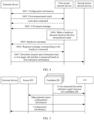
- the method may include: receiving first indication information from a first access network device on a radio resource of a source cell, where the first indication information indicates the terminal device to measure a downlink channel state for a downlink reference signal of at least one candidate cell; receiving second indication information from the first access network device, where the second indication information indicates the terminal device to perform a handover from the source cell to a target cell, and the at least one candidate cell includes the target cell; and sending uplink information to a second access network device on a radio resource of the target cell, where the uplink information includes downlink channel state information of the target cell, and the downlink channel state information of the target cell is obtained by the terminal device by measuring a downlink reference signal of the target cell based on the first indication information.
- the method may further include: receiving third indication information from the first access network device on a radio resource of the source cell, where the third indication information indicates an association relationship between the downlink reference signal of the at least one candidate cell and an uplink radio resource of the source cell, and/or indicates an association relationship between the downlink reference signal of the at least one candidate cell and an uplink radio resource of the at least one candidate cell.
- the terminal device can learn, based on the third indication information from the first access network device, which information needs to be reported to the first access network device and which information needs to be reported to the second access network device. In this way, after performing the handover to the target cell, the terminal device can use the available radio resource of the target cell as early as possible, and send, to the second access network device that manages the target cell, the downlink channel state information that is of the target cell and that is measured based on the first indication information, to improve the data transmission capacity between the terminal device and the target cell.
- the third indication information is carried in a first message.
- the first message further indicates the terminal device to measure a reference signal received power RSRP of the downlink reference signal of the at least one candidate cell.
- the first access network device includes a first DU, the first DU is controlled by a CU, and at least one DU centrally controlled by the CU includes the first DU.
- the receiving third indication information from the first access network device includes: receiving the third indication information from the CU.
- a message that carries the first indication information may be referred to as a CIS request message.
- the CSI request message may be flexibly implemented in at least one implementation. Specific examples are as follows:
- the method further includes: receiving fourth indication information from the first access network device on a radio resource of the source cell, where the fourth indication information indicates the terminal device to report the downlink channel state information of the target cell to the target cell after the terminal device performs the handover to the target cell.
- the terminal device can learn, based on the fourth indication information from the first access network device, that the downlink channel state information of the target cell needs to be sent to the second access network device as early as possible.
- the terminal device can further send the fifth indication information to the second access network device, to notify the second access network device whether the terminal device has synchronously sent the downlink channel state information of the target cell in the uplink information.
- the second access network device can parse the received uplink message in time to obtain the downlink channel state information of the target cell, to perform data transmission scheduling based on the downlink channel state information of the target cell.
- the second access network device does not need to indicate the terminal device to measure CSI of the target cell, which helps reduce signaling overheads.
- the method further includes: receiving sixth indication information from the first access network device on a radio resource of the source cell, where the sixth indication information indicates the terminal device to send an uplink channel sounding reference signal to the at least one candidate cell; and sending an uplink channel sounding reference signal to the target cell on a radio resource of the target cell.
- the at least one candidate cell belongs to N candidate cell groups, N is an integer greater than or equal to 1, and each candidate cell group includes a primary cell and at least one secondary cell.
- the method further includes: receiving seventh indication information from the first access network device on a radio resource of the source cell, where the seventh indication information indicates the terminal device to send, to the second access network device, downlink channel state information obtained by measuring, based on the first indication information, a downlink reference signal of a primary cell in a target cell group to which the target cell belongs, and the target cell includes the primary cell in the target cell group; or the seventh indication information indicates the terminal device to send, to the second access network device, downlink channel state information obtained by measuring, based on the first indication information, downlink reference signals of all cells in the target cell group to which the target cell belongs, and the target cell includes the primary cell and/or a secondary cell in the target cell group.
- the terminal device determines, by receiving the seventh indication information from the first access network device, whether to report the downlink channel state information of the primary cell in the target cell group or report the downlink channel state information of all the cells in the target cell group to the second access network device.
- the second access network device performs transmission scheduling in different handover cases based on received downlink state information, to improve the data transmission capacity between the terminal device and the target cell.
- the downlink state information of the target cell includes at least one of the following: a precoding matrix index PMI, channel quality information CQI, or a rank indicator RI.
- an embodiment of this application provides a communication method.
- the method is applied to a first access network device or a chip in the first access network device.
- the first access network device manages a source cell of a terminal device.
- the method may include: sending first indication information and fourth indication information to the terminal device on a radio resource of the source cell, where the first indication information indicates the terminal device to measure a downlink channel state for a downlink reference signal of at least one candidate cell, and the fourth indication information is used by the terminal device to report downlink channel state information of a target cell to the target cell after the terminal device performs a handover to the target cell; and sending second indication information to the terminal device on a radio resource of the source cell, where the second indication information indicates the terminal device to perform the handover from the source cell to the target cell.
- the first access network device that manages the source cell can deliver the first indication information and the fourth indication information to the terminal device in advance, to indicate the terminal device to measure the downlink channel state for the downlink reference signal of the candidate cell in advance.
- the terminal device can use an available radio resource of the target cell as early as possible, and send, to a second access network device that manages the target cell, the downlink channel state information that is of the target cell and that is measured based on the first indication information, to improve a data transmission capacity between the terminal device and the target cell.
- the fourth indication information is carried in a first message, and the fourth indication information includes third indication information.
- the third indication information indicates an association relationship between the downlink reference signal of the at least one candidate cell and an uplink radio resource of the source cell, and/or indicates an association relationship between the downlink reference signal of the at least one candidate cell and an uplink radio resource of the at least one candidate cell.
- the first access network device can send the third indication information to the terminal device, so that the terminal device learns which information needs to be reported to the first access network device and which information needs to be reported to the second access network device.
- the terminal device can use the available radio resource of the target cell as early as possible, and send, to the second access network device that manages the target cell, the downlink channel state information that is of the target cell and that is measured based on the first indication information, to improve the data transmission capacity between the terminal device and the target cell.
- the first message further indicates the terminal device to measure a reference signal received power RSRP of the downlink reference signal of the at least one candidate cell.
- the first access network device includes a first DU, the first DU is controlled by a CU, and at least one DU centrally controlled by the CU includes the first DU and a third DU that manages the at least one candidate cell.
- the method further includes: sending first resource configuration information to the CU via the first DU, and receiving the third indication information sent by the CU based on the first resource configuration information; or receiving second resource configuration information from the third DU via the CU, and sending the third indication information to the terminal device based on the second resource configuration information.
- the communication method in this embodiment of this application is applicable to a CU-DU separated architecture.
- the first DU and the third DU can perform communicative interaction with the CU, to complete association between the to-be-measured downlink reference signal and an uplink radio resource and indicate the association to the terminal device.
- the terminal device learns how to report the downlink channel state information to the first access network device or the second access network device.
- the first indication information is carried in a second message.
- the second message further includes activation indication information.
- the activation indication information indicates the terminal device to activate a transmission configuration indicator TCI state associated with the downlink reference signal of the at least one candidate cell. That the first indication information indicates the terminal device to measure a downlink channel state for a downlink reference signal of at least one candidate cell specifically includes:
- the first indication information indicates the terminal device to measure the downlink channel state for the downlink reference signal that is of the at least one candidate cell and that is associated with the to-be-activated TCI state.
- the second message can be used as an implementation of a CSI request message that carries the first indication information, and the first indication information is sent or received in association with the activation indication information.
- the implementation of the CSI request message is more flexible.
- the first indication information is carried in a third message.
- the third message further includes the second indication information.
- the second indication information includes identification information of the target cell. That the first indication information indicates the terminal device to measure a downlink channel state for a downlink reference signal of at least one candidate cell specifically includes: The first indication information indicates the terminal device to measure a downlink channel state for a downlink reference signal of the target cell.
- the third message can be used as an implementation of the CSI request message that carries the first indication information, and is sent or received in association with handover indication information (namely, the second indication information).
- the implementation of the CSI request message is more flexible.
- the method further includes: sending the fourth indication information to the terminal device on a radio resource of the source cell, where the fourth indication information indicates the terminal device to report the downlink channel state information of the target cell to the target cell after the terminal device performs the handover to the target cell.
- the first access network device can send the fourth indication information to the terminal device.
- the terminal device learns that the downlink channel state information of the target cell needs to be sent to the second access network device as early as possible.
- the method further includes: sending sixth indication information to the terminal device on a radio resource of the source cell, where the sixth indication information indicates the terminal device to send an uplink channel sounding reference signal to the at least one candidate cell.
- the first access network device can send the sixth indication information to the terminal device, to indicate the terminal device to send an uplink channel sounding reference signal to the target cell in advance, instead of making the terminal device wait for the second access network device that manages the target cell to indicate the terminal device to send the uplink channel sounding reference signal to the target cell.
- the second access network device can receive the uplink channel sounding reference signal from the terminal device in advance, and perform operations such as channel estimation and calculation on the received uplink channel sounding reference signal, to sense accurate CSI, so as to improve the data transmission capacity between the terminal device and the target cell.
- the at least one candidate cell belongs to N candidate cell groups, N is an integer greater than or equal to 1, and each candidate cell group includes a primary cell and at least one secondary cell.
- the method further includes: receiving eighth indication information from a third access network device, where the third access network device manages the N candidate cell groups, and the eighth indication information indicates the primary cell and the at least one secondary cell in each of the N candidate cell groups; and sending seventh indication information to the terminal device on a radio resource of the source cell based on the eighth indication information, where the seventh indication information indicates the terminal device to send, to the second access network device, downlink channel state information obtained by measuring, based on the first indication information, a downlink reference signal of a primary cell in a target cell group to which the target cell belongs, and the target cell includes the primary cell in the target cell group; or the seventh indication information indicates the terminal device to send, to the second access network device, downlink channel state information obtained by measuring, based on the first indication information, downlink reference signals of the primary cell and at
- the second indication information indicates the terminal device to perform the handover from the source cell to the target cell specifically includes: The second indication information indicates the terminal device to perform the handover from the source cell to the primary cell in the target cell group, or the second indication information indicates the terminal device to perform the handover from the source cell to the primary cell or the secondary cell in the target cell group.
- the first access network device can send the seventh indication information to the terminal device, so that the terminal device learns whether to report the downlink channel state information of the primary cell in the target cell group or report downlink channel state information of all cells in the target cell group to the second access network device.
- the second access network device performs transmission scheduling in different handover cases based on received downlink state information, to improve the data transmission capacity between the terminal device and the target cell.
- the first access network device sends a CSI request message to the terminal device.
- the terminal device receives the CSI request message from the first access network device.
- the handover command obtained by combining the CSI request message with the handover indication information may not explicitly indicate the terminal device whether to perform CSI measurement on a reference signal associated with a target beam direction, but implicitly indicates the terminal device whether to perform CSI measurement on the reference signal associated with the target beam direction. For example, it may be agreed on in a protocol that, after receiving the handover command, the terminal device is required by default to perform CSI measurement on the reference signal associated with the target beam direction (for example, the target TCI state) indicated by the handover command.
- the terminal device after receiving the CSI request message from the first access network device, performs, based on the indication information in the CSI request message, CSI measurement on to-be-measured downlink reference signals associated with a plurality of TCI states.
- the to-be-measured downlink reference signals associated with these TCI states may not correspond to a same cell group, or may not be reference signals corresponding to an optimal beam direction of a same cell group.
- the terminal device does not need to report CSI of all the reference signals to the target cell group.
- the terminal device reports, to the second access network device based on the target TCI state indicated in the handover command, CSI of the reference signal associated with the target TCI state.
- the terminal device and the target cell x are considered to be in a synchronization state, and do not need to re-perform a downlink synchronization process and/or an uplink synchronization process. This accelerates the cell handover process.
- the handover command does not need to explicitly indicate whether the target cell x is the primary cell or the secondary cell in the source cell group, but the terminal device may identify, based on cell information (for example, a physical cell identifier), that the cell x is the primary cell or the secondary cell in the source cell group. In this case, the terminal device may maintain downlink synchronization and/or uplink synchronization information with the cell x.
- the uplink message that carries the downlink channel state information of the target cell group may include dedicated signaling for reporting the CSI.
- the second access network device learns, based on the dedicated signaling, that the uplink message includes the downlink channel state information of the target cell.
- a specific MAC CE is used to carry the downlink channel state information, so that the second access network device can learn, based on the MAC CE in the uplink message, that the uplink message includes the downlink channel state information of the target cell group.
- An implementation of the fifth indication information is not limited in embodiments of this application.
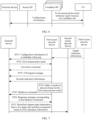
- the communication method applied when the terminal device performs the handover to at least one target cell is described in detail with reference to FIG. 7 .
- the first access network device can flexibly indicate the terminal device to perform CSI measurement on some reference signals of the at least one candidate cell group in advance. In this way, after performing the handover to the target cell group, the terminal device can provide a report to the second access network device as early as possible.
- the downlink channel state information of the target cell group is provided to the second access network device, to help the second access network device sense accurate CSI information in time in an initial phase in which the terminal device performs the handover to the target cell group, so that the second access network device performs uplink and downlink data transmission scheduling on the terminal device in a good scheduling manner. This improves the data transmission capacity between the terminal device and the target cell.
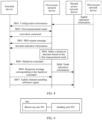
- Scenario 3 When the terminal device performs a handover from a single source cell to a single target cell, or the terminal device performs a handover from a source cell (group) to a target cell group, a first access network device requests the terminal device to send an uplink reference signal (for example, an SRS) to a second access network device.
- an uplink reference signal for example, an SRS
- the first access network device sends configuration information of at least one candidate cell (group) to the terminal device.
- the terminal device receives the configuration information from the first access network device.
- the configuration information may further include uplink reference signal configuration information of the candidate cell, for example, an SRS configuration, and may include at least one of the following: an SRS resource or resource set identifier, a time domain location, and a frequency domain location.
- an SRS configuration may include at least one of the following: an SRS resource or resource set identifier, a time domain location, and a frequency domain location.
- S802 The terminal device performs measurement based on received measurement configuration information, and reports a first measurement result to the first access network device on a radio resource of the source cell. Correspondingly, the first access network device receives the first measurement result from the terminal device.
- the first access network device sends an SRS request message to the terminal device.
- the terminal device receives the SRS request message from the first access network device.
- the SRS request message may include sixth indication information.
- the sixth indication information may indicate the terminal device to send an uplink channel sounding reference signal to the at least one candidate cell.
- the sixth indication information may include identification information of each to-be-sent uplink channel sounding reference signal (for example, an identifier of an SRS resource or resource set).
- the identification information may be a unique identifier of the uplink channel sounding reference signal.
- the sixth indication information may include identification information of each candidate cell and identification information of a to-be-sent uplink channel sounding reference signal of each candidate cell.
- the identification information of the candidate cell and the identification information of the uplink channel sounding reference signal may be used as 2-tuple information, to uniquely identify the to-be-sent uplink channel sounding reference signal.
- the sixth indication information may further indicate a sending occasion of the uplink channel sounding reference signal.
- the sending occasion includes any one of the following: before the terminal device performs the cell handover, when the terminal device performs the cell handover, and after the terminal device performs the handover to the target cell.
- the terminal device may consider, as a start moment at which the terminal device performs a cell handover action, a moment at which a handover command from the first receiving network device is received, and consider, as a handover completion moment, a moment at which the terminal device accesses the target cell and starts to use a radio resource of the target cell to perform communicative interaction with the second access network device.
- a time period before the start moment is before the terminal device performs the cell handover.
- a time period between the start moment and the handover completion moment is when the terminal device performs the cell handover. After the handover completion moment, the terminal device completes the cell handover.
- Manner (2) The SRS request message and activation indication information from the first access network device may be combined and carried in a same message that is referred to as an activation command and represented as a fourth message.
- the SRS request message and handover indication information (namely, second indication information) from the first access network device may be combined and carried in a same message that is referred to as a handover command and represented as a fifth message.
- a signaling format and content that correspond to the SRS request message may be the same as the signaling format and the content that correspond to the CSI request message described with reference to S403 or S703.
- S403 or S703 For detailed implementation details, refer to the foregoing related descriptions with reference to the CSI request message. Details are not described herein again.
- the first access network device makes a handover decision based on the first measurement result from the terminal device, and determines the target cell (group) from the at least one candidate cell (group).
- the first access network device sends a handover command to the terminal device, where the handover command indicates the terminal device to perform the handover from the source cell (group) to the target cell (group).
- the terminal device receives the handover command from the first access network device.
- the handover command is the second indication information.
- the second indication information may include identity information of the target cell (group).
- the handover command may further include beam direction information that needs to be used when the terminal device communicates with the target cell (group).
- the handover command obtained by combining the SRS request message with the handover indication information may not explicitly indicate the terminal device to send the uplink SRS, but implicitly indicates the terminal device to send the uplink SRS. For example, it may be agreed on in a protocol that the terminal device is required by default to send the uplink SRS to the target cell after performing the handover to the target cell. Details are not described herein again.
- S806 (an optional step): The terminal device sends a response message corresponding to the handover command to the first access network device, where the response message indicates whether the terminal device successfully receives the handover command in S805.
- the terminal device sends an uplink channel sounding reference signal (for example, an SRS) to the second access network device on a radio resource of the target cell (group).
- an uplink channel sounding reference signal for example, an SRS
- the second access network device receives the uplink channel sounding reference signal from the terminal device.
- An occasion on which the terminal device sends the uplink channel sounding reference signal to the second access network device may be before the terminal device performs the cell handover, or after the terminal device performs the cell handover, or in a process in which the terminal device performs the cell handover.
- the sending occasion is not limited in embodiments of this application.
- the second access network device may perform operations such as channel estimation and calculation on the received uplink channel sounding reference signal, to sense accurate uplink channel state information.
- the access network device may more appropriately determine, using the uplink channel state information, a specific manner used to schedule uplink and downlink data transmission for the terminal device. For example, when a channel state is good, a base station may schedule a data packet with more data content for transmission, or schedule a higher-order modulation and coding scheme, or use a precoding scheme applicable to a current channel state, to improve a data transmission capacity.
- the first access network device sends ninth indication information to the second access network device, where the ninth indication information indicates to receive the uplink channel sounding reference signal from the terminal device.
- the second access network device receives the ninth indication information from the first access network device.
- the ninth indication information may include at least one of the following: identity information of the terminal device, identity information of the target cell (group)/candidate cell (group), the identification information of the uplink channel sounding reference signal (for example, the identifier of the SRS resource or resource set), and sending occasion indication information.
- an occasion of performing S808 is not limited, and S808 may be performed before S803, or may be performed after S803.
- S808 may be understood as intra-device interaction. If the source cell and the target cell are managed by different network devices, for example, the source cell is managed by a DU 1, and the target cell is managed by a DU 2, when S808 is implemented, the DU 1 needs to send the ninth indication information to the DU 2 via a CU.
- the first access network device can flexibly indicate the terminal device to send the uplink reference signal (for example, the SRS) to the target cell (group) as early as possible, so that the second access network device to which the target cell (group) belongs obtains a channel state through estimation in advance. This helps perform appropriate data transmission scheduling on the terminal device in the target cell (group), thereby improving the data transmission capacity between the terminal device and the target cell (group).
- the uplink reference signal for example, the SRS
- an embodiment of this application provides a communication apparatus.
- a structure of the communication apparatus may be shown in FIG. 9 , and the communication apparatus includes a receiving unit 901 and a sending unit 902.
- the communication apparatus 900 may be configured to implement the methods performed by the terminal devices in the embodiments shown in FIG. 2 to FIG. 8 .
- the apparatus may be a terminal device, a chip or a chip set in the terminal device, or a part that is of the chip and that is configured to perform a related method function.
- the receiving unit 901 is configured to: receive first indication information from a first access network device on a radio resource of a source cell, where the first indication information indicates the terminal device to measure a downlink channel state for a downlink reference signal of at least one candidate cell; and receive second indication information from the first access network device, where the second indication information indicates the terminal device to perform a handover from the source cell to a target cell, and the at least one candidate cell includes the target cell.
- the sending unit 902 is configured to send uplink information to a second access network device on a radio resource of the target cell, where the uplink information includes downlink channel state information of the target cell, and the downlink channel state information of the target cell is obtained by the terminal device by measuring a downlink reference signal of the target cell based on the first indication information.
- the receiving unit 901 may be specifically configured to receive third indication information from the first access network device on a radio resource of the source cell, where the third indication information indicates an association relationship between the downlink reference signal of the at least one candidate cell and an uplink radio resource of the source cell, and/or indicates an association relationship between the downlink reference signal of the at least one candidate cell and an uplink radio resource of the at least one candidate cell.
- the third indication information is carried in a first message.
- the first message further indicates the terminal device to measure a reference signal received power RSRP of the downlink reference signal of the at least one candidate cell.
- the first access network device includes a first DU.
- the first DU is controlled by a CU, and at least one DU centrally controlled by the CU includes the first DU.
- the receiving unit 901 is specifically configured to receive the third indication information from the CU.
- the first indication information is carried in a second message.
- the second message further includes activation indication information.
- the activation indication information indicates the terminal device to activate a transmission configuration indicator TCI state associated with the downlink reference signal of the at least one candidate cell. That the first indication information indicates the terminal device to measure a downlink channel state for a downlink reference signal of at least one candidate cell specifically includes:
- the first indication information indicates the terminal device to measure the downlink channel state for the downlink reference signal that is of the at least one candidate cell and that is associated with the to-be-activated TCI state.
- the first indication information is carried in a third message.
- the third message further includes the second indication information.
- the second indication information includes identification information of the target cell. That the first indication information indicates the terminal device to measure a downlink channel state for a downlink reference signal of at least one candidate cell specifically includes: The first indication information indicates the terminal device to measure a downlink channel state for a downlink reference signal of the target cell.
- the receiving unit 901 is specifically configured to receive fourth indication information from the first access network device on a radio resource of the source cell, where the fourth indication information indicates the terminal device to report the downlink channel state information of the target cell to the target cell after the terminal device performs the handover to the target cell.
- the uplink information further includes fifth indication information.
- the fifth indication information indicates whether the uplink information includes the downlink channel state information of the target cell.
- the receiving unit 901 is specifically configured to: receive sixth indication information from the first access network device on a radio resource of the source cell, where the sixth indication information indicates the terminal device to send an uplink channel sounding reference signal to the at least one candidate cell; and send an uplink channel sounding reference signal to the target cell on a radio resource of the target cell.
- the at least one candidate cell belongs to N candidate cell groups, N is an integer greater than or equal to 1, and each candidate cell group includes a primary cell and at least one secondary cell.
- the method further includes: receiving seventh indication information from the first access network device on a radio resource of the source cell, where the seventh indication information indicates the terminal device to send, to the second access network device, downlink channel state information obtained by measuring, based on the first indication information, a downlink reference signal of a primary cell in a target cell group to which the target cell belongs, and the target cell includes the primary cell in the target cell group; or the seventh indication information indicates the terminal device to send, to the second access network device, downlink channel state information obtained by measuring, based on the first indication information, downlink reference signals of all cells in the target cell group to which the target cell belongs, and the target cell includes the primary cell and/or a secondary cell in the target cell group.
- the second indication information indicates the terminal device to perform a handover from the source cell to a target cell specifically includes: The second indication information indicates the terminal device to perform the handover from the source cell to the primary cell in the target cell group, or the second indication information indicates the terminal device to perform the handover from the source cell to the primary cell or the secondary cell in the target cell group.
- the downlink state information of the target cell includes at least one of the following: a precoding matrix index PMI, channel quality information CQI, or a rank indicator RI.
- the communication apparatus may be specifically configured to implement the methods performed by the first access network devices in the embodiments in FIG. 2 to FIG. 8 .
- the device may be a first access network device, a chip or a chip set in the first access network device, or a part that is of the chip and that is configured to perform a related method function.
- the sending unit 902 is specifically configured to: send first indication information and fourth indication information to the terminal device on a radio resource of a source cell, where the first indication information indicates the terminal device to measure a downlink channel state for a downlink reference signal of at least one candidate cell, and the fourth indication information is used by the terminal device to report downlink channel state information of a target cell to the target cell after the terminal device performs a handover to the target cell; and send second indication information to the terminal device on a radio resource of the source cell, where the second indication information indicates the terminal device to perform the handover from the source cell to the target cell.
- the fourth indication information is carried in a first message, and the fourth indication information includes third indication information.
- the third indication information indicates an association relationship between the downlink reference signal of the at least one candidate cell and an uplink radio resource of the source cell, and/or indicates an association relationship between the downlink reference signal of the at least one candidate cell and an uplink radio resource of the at least one candidate cell.
- the first indication information is carried in a second message.
- the second message further includes activation indication information.
- the activation indication information indicates the terminal device to activate a transmission configuration indicator TCI state associated with the downlink reference signal of the at least one candidate cell. That the first indication information indicates the terminal device to measure a downlink channel state for a downlink reference signal of at least one candidate cell specifically includes:
- the first indication information indicates the terminal device to measure the downlink channel state for the downlink reference signal that is of the at least one candidate cell and that is associated with the to-be-activated TCI state.
- the first indication information is carried in a third message.
- the third message further includes the second indication information.
- the second indication information includes identification information of the target cell. That the first indication information indicates the terminal device to measure a downlink channel state for a downlink reference signal of at least one candidate cell specifically includes: The first indication information indicates the terminal device to measure a downlink channel state for a downlink reference signal of the target cell.
- the sending unit 902 is specifically configured to send the fourth indication information to the terminal device on a radio resource of the source cell, where the fourth indication information indicates the terminal device to report the downlink channel state information of the target cell to the target cell after the terminal device performs the handover to the target cell.
- the at least one candidate cell belongs to N candidate cell groups, N is an integer greater than or equal to 1, and each candidate cell group includes a primary cell and at least one secondary cell.
- the receiving unit 901 is further configured to receive eighth indication information from a third access network device, where the third access network device manages the N candidate cell groups, and the eighth indication information indicates the primary cell and the at least one secondary cell in each of the N candidate cell groups.
- the sending unit 902 is further configured to send seventh indication information to the terminal device on a radio resource of the source cell based on the eighth indication information, where the seventh indication information indicates the terminal device to send, to the second access network device, downlink channel state information obtained by measuring, based on the first indication information, a downlink reference signal of a primary cell in a target cell group to which the target cell belongs, and the target cell includes the primary cell in the target cell group; or the seventh indication information indicates the terminal device to send, to the second access network device, downlink channel state information obtained by measuring, based on the first indication information, downlink reference signals of the primary cell and at least one secondary cell in the target cell group to which the target cell belongs, and the target cell includes the primary cell and/or the secondary cell in the target cell group.
- that second indication information indicates the terminal device to perform the handover from the source cell to the target cell specifically includes: The second indication information indicates the terminal device to perform the handover from the source cell to the primary cell in the target cell group, or the second indication information indicates the terminal device to perform the handover from the source cell to the primary cell or the secondary cell in the target cell group.
- the downlink state information includes at least one of the following: a precoding matrix index PMI, channel quality information CQI, or a rank indicator RI.
- the communication apparatus may be specifically configured to implement the methods performed by the terminal devices in the embodiments in FIG. 2 to FIG. 8 .
- the device may be a terminal device, a chip or a chip set in the terminal devices, or a part that is of the chip and that is configured to perform a related method function.
- the receiving unit 901 is configured to: receive sixth indication information from a first access network device on a radio resource of a source cell, where the sixth indication information indicates the terminal device to send an uplink channel sounding reference signal to at least one candidate cell; and receive second indication information from the first access network device, where the second indication information indicates the terminal device to perform a handover from the source cell to a target cell, and the at least one candidate cell includes the target cell.
- the sending unit 902 is configured to send an uplink channel sounding reference signal to the target cell on a radio resource of the target cell.
- the receiving unit 901 is further configured to receive third indication information from the first access network device on a radio resource of the source cell, where the third indication information indicates an association relationship between an uplink channel sounding reference signal of the at least one candidate cell and an uplink radio resource of the source cell, and/or indicates an association relationship between a downlink reference signal of the at least one candidate cell and an uplink radio resource of the at least one candidate cell.
- the third indication information is carried in a first message.
- the first message further indicates the terminal device to measure a reference signal received power RSRP of the downlink reference signal of the at least one candidate cell.
- the sixth indication information is carried in a fourth message.
- the fourth message further includes activation indication information.
- the activation indication information indicates the terminal device to activate a transmission configuration indicator TCI state associated with the downlink reference signal of the at least one candidate cell. That the sixth indication information indicates the terminal device to send an uplink channel sounding reference signal to at least one candidate cell specifically includes:
- the sixth indication information indicates the terminal device to send the uplink channel sounding reference signal to the at least one candidate cell based on the TCI state.
- the sixth indication information is carried in a fifth message.
- the fifth message further includes the second indication information.
- the second indication information includes identification information of the target cell. That the sixth indication information indicates the terminal device to send an uplink channel sounding reference signal to at least one candidate cell specifically includes:
- the sixth indication information indicates the terminal device to send the uplink channel sounding reference signal to the target cell.
- the sixth indication information further indicates a sending occasion of the uplink channel sounding reference signal.
- the sending occasion includes any one of the following: before the terminal device performs the handover to the target cell, when the terminal device performs the handover to the target cell, and after the terminal device performs the handover to the target cell.
- tenth indication information from the first access network device is received on a radio resource of the source cell.
- the tenth indication information indicates the terminal device to send the uplink channel sounding reference signal to the target cell after the terminal device performs the handover to the target cell.
- the communication apparatus may be specifically configured to implement the methods performed by the first access network devices in the embodiments in FIG. 2 to FIG. 8 .
- the device may be a first access network device, a chip or a chip set in the first access network device, or a part that is of the chip and that is configured to perform a related method function.
- the sending unit 902 is configured to: send sixth indication information to the terminal device on a radio resource of the source cell, where the sixth indication information indicates the terminal device to send an uplink channel sounding reference signal to at least one candidate cell; and send second indication information to the terminal device on a radio resource of the source cell, where the second indication information indicates the terminal device to perform a handover from the source cell to a target cell, and the at least one candidate cell includes the target cell.
- the sending unit is further configured to send a first message to the terminal device, where the first message includes third indication information, and the third indication information indicates an association relationship between the uplink channel sounding reference signal of the at least one candidate cell and an uplink radio resource of the source cell, and/or indicates an association relationship between a downlink reference signal of the at least one candidate cell and an uplink radio resource of the at least one candidate cell.
- the first message further indicates the terminal device to measure a reference signal received power RSRP of the downlink reference signal of the at least one candidate cell.
- the first access network device includes a first DU
- the first DU is controlled by a CU
- at least one DU centrally controlled by the CU includes the first DU and a third DU that manages the at least one candidate cell.
- the sending unit 902 is specifically configured to: send first resource configuration information to the CU via the first DU, and receive the third indication information sent by the CU based on the first resource configuration information; or receive second resource configuration information from the third DU via the CU, and send the third indication information to the terminal device based on the second resource configuration information.
- the sixth indication information is carried in a fourth message.
- the fourth message further includes activation indication information.
- the activation indication information indicates the terminal device to activate a transmission configuration indicator TCI state associated with the downlink reference signal of the at least one candidate cell. That the sixth indication information indicates the terminal device to send an uplink channel sounding reference signal to at least one candidate cell specifically includes:
- the sixth indication information indicates the terminal device to send the uplink channel sounding reference signal to the at least one candidate cell based on the TCI state.
- the sixth indication information is carried in a fifth message.
- the fifth message further includes the second indication information.
- the second indication information includes identification information of the target cell. That the sixth indication information indicates the terminal device to send an uplink channel sounding reference signal to at least one candidate cell specifically includes:
- the sixth indication information indicates the terminal device to send the uplink channel sounding reference signal to the target cell.
- the sixth indication information further indicates a sending occasion of the uplink channel sounding reference signal.
- the sending occasion includes any one of the following: before the terminal device performs the handover to the target cell, when the terminal device performs the handover to the target cell, and after the terminal device performs the handover to the target cell.
- the sending unit 902 is specifically configured to send ninth indication information to a second access network device that manages the target cell, where the ninth indication information indicates to receive the uplink channel sounding reference signal from the terminal device.
- a communication apparatus 1000 may be shown in FIG. 10 .
- the communication apparatus may be a terminal device or a chip in the terminal device, or may be a network or a chip in the network.
- the communication apparatus may include a processor 1001, a communication interface 1002, and a memory 1003.
- the processor 1001 is configured to execute the program code stored in the memory 1003, and is specifically configured to perform the foregoing action. Details are not described herein again in this application.
- a specific connection medium between the communication interface 1002, the processor 1001, and the memory 1003 is not limited.
- the memory 1003, the processor 1001, and the communication interface 1002 are connected to each other through a bus 1004 in FIG. 10 .
- the bus is represented by using a thick line in FIG. 10 .
- a connection manner between other components is merely an example for description, and is not limited thereto.
- the bus may be classified into an address bus, a data bus, a control bus, and the like. For ease of representation, only one thick line is used to represent the bus in FIG. 10 , but this does not mean that there is only one bus or only one type of bus.
- An embodiment of the present invention further provides a computer-readable storage medium, configured to store computer software instructions that need to be executed by the foregoing processor.
- the computer-readable storage medium includes a program that needs to be executed by the foregoing processor.
- All or a part of the foregoing embodiments may be implemented by using software, hardware, firmware, or any combination thereof.
- all or a part of the foregoing embodiments may be implemented in a form of a computer program product.
- the computer program product includes one or more computer instructions.
- the computer may be a general-purpose computer, a dedicated computer, a computer network, or another programmable apparatus.
- the computer instruction may be stored in a computer-readable storage medium or may be transmitted from a computer-readable storage medium to another computer-readable storage medium.
- the computer instruction may be transmitted from a website, computer, server, or data center to another website, computer, server, or data center in a wired (for example, a coaxial cable, an optical fiber, or a digital subscriber line (DSL)) or wireless (for example, infrared, radio, or microwave) manner.
- the computer-readable storage medium may be any usable medium accessible by a computer, or a data storage device like a server or a data center, integrating one or more usable media.
- the usable medium may be a magnetic medium (for example, a floppy disk, a hard disk, or a magnetic tape), an optical medium (for example, a DVD), a semiconductor medium (for example, a solid-state drive (Solid-State Drive, SSD)), or the like.
- a magnetic medium for example, a floppy disk, a hard disk, or a magnetic tape
- an optical medium for example, a DVD
- a semiconductor medium for example, a solid-state drive (Solid-State Drive, SSD)
- These computer program instructions may be provided for a general-purpose computer, a dedicated computer, an embedded processor, or a processor of another programmable data processing device to generate a machine, so that the instructions executed by the computer or the processor of the another programmable data processing device generate an apparatus for implementing a specific function in one or more procedures in the flowcharts and/or a specific function in one or more blocks in the block diagrams.
- These computer program instructions may alternatively be stored in a computer-readable memory that can indicate a computer or another programmable data processing device to work in a specific manner, so that the instructions stored in the computer-readable memory generate an artifact that includes an instruction apparatus.
- the instruction apparatus implements a specific function in one or more procedures in the flowcharts and/or a specific function in one or more blocks in the block diagrams.
- These computer program instructions may alternatively be loaded onto a computer or another programmable data processing device, so that a series of operations and steps are performed on the computer or the another programmable device to generate computer-implemented processing.
- the instructions executed on the computer or the another programmable device provide steps for implementing a specific function in one or more procedures in the flowcharts and/or a specific function in one or more blocks in the block diagrams.
Landscapes
- Engineering & Computer Science (AREA)
- Signal Processing (AREA)
- Computer Networks & Wireless Communication (AREA)
- Quality & Reliability (AREA)
- Physics & Mathematics (AREA)
- Electromagnetism (AREA)
- Mobile Radio Communication Systems (AREA)
Applications Claiming Priority (2)
| Application Number | Priority Date | Filing Date | Title |
|---|---|---|---|
| CN202211231930.9A CN117812652A (zh) | 2022-09-30 | 2022-09-30 | 一种通信方法、装置和系统 |
| PCT/CN2023/121424 WO2024067552A1 (zh) | 2022-09-30 | 2023-09-26 | 一种通信方法、装置和系统 |
Publications (2)
| Publication Number | Publication Date |
|---|---|
| EP4580252A1 true EP4580252A1 (de) | 2025-07-02 |
| EP4580252A4 EP4580252A4 (de) | 2025-11-26 |
Family
ID=90428677
Family Applications (1)
| Application Number | Title | Priority Date | Filing Date |
|---|---|---|---|
| EP23870781.4A Pending EP4580252A4 (de) | 2022-09-30 | 2023-09-26 | Kommunikationsverfahren, -vorrichtung und -system |
Country Status (4)
| Country | Link |
|---|---|
| US (1) | US20250254573A1 (de) |
| EP (1) | EP4580252A4 (de) |
| CN (1) | CN117812652A (de) |
| WO (1) | WO2024067552A1 (de) |
Families Citing this family (2)
| Publication number | Priority date | Publication date | Assignee | Title |
|---|---|---|---|---|
| CN121418959A (zh) * | 2024-07-24 | 2026-01-27 | 华为技术有限公司 | 一种感知方法及装置 |
| WO2026031074A1 (zh) * | 2024-08-08 | 2026-02-12 | Oppo广东移动通信有限公司 | 无线通信的方法、终端设备和网络设备 |
Family Cites Families (6)
| Publication number | Priority date | Publication date | Assignee | Title |
|---|---|---|---|---|
| WO2016010468A1 (en) * | 2014-07-17 | 2016-01-21 | Telefonaktiebolaget L M Ericsson (Publ) | Making handover decisions in a wireles network |
| JP2019083358A (ja) * | 2016-03-17 | 2019-05-30 | シャープ株式会社 | 端末装置、基地局装置、通信方法、および、集積回路 |
| CN110637418B (zh) * | 2017-05-05 | 2023-04-14 | 瑞典爱立信有限公司 | 切换完成之前的信道状态信息参考信号(csi-rs)配置激活 |
| CN109429261A (zh) * | 2017-08-31 | 2019-03-05 | 索尼公司 | 用于无线通信的电子设备和方法 |
| CA3090158A1 (en) * | 2019-08-15 | 2021-02-15 | Comcast Cable Communications, Llc | Sidelink communications |
| CN114390611B (zh) * | 2020-10-22 | 2024-02-02 | 大唐移动通信设备有限公司 | 小区切换方法、终端、基站、装置和存储介质 |
-
2022
- 2022-09-30 CN CN202211231930.9A patent/CN117812652A/zh active Pending
-
2023
- 2023-09-26 EP EP23870781.4A patent/EP4580252A4/de active Pending
- 2023-09-26 WO PCT/CN2023/121424 patent/WO2024067552A1/zh not_active Ceased
-
2025
- 2025-03-27 US US19/092,745 patent/US20250254573A1/en active Pending
Also Published As
| Publication number | Publication date |
|---|---|
| WO2024067552A1 (zh) | 2024-04-04 |
| EP4580252A4 (de) | 2025-11-26 |
| CN117812652A (zh) | 2024-04-02 |
| US20250254573A1 (en) | 2025-08-07 |
Similar Documents
| Publication | Publication Date | Title |
|---|---|---|
| US12531680B2 (en) | Signal transmission method and communications apparatus | |
| US20250351208A1 (en) | System and method for providing time domain allocations in a communication system | |
| US20240179587A1 (en) | Communication method and apparatus | |
| WO2021062973A1 (zh) | 数据传输的方法和装置 | |
| US11564213B2 (en) | Communication method and communications apparatus | |
| US12483370B2 (en) | Method for monitoring control channels and determining transmission configuration indication, and terminal | |
| EP4383855A1 (de) | Kommunikationsverfahren und -vorrichtung | |
| US20250254573A1 (en) | Communication method, apparatus, and system | |
| US12213197B2 (en) | Communication method, communications apparatus, and storage medium | |
| EP4142400A1 (de) | Verfahren und vorrichtung zur ressourcenbestimmung | |
| EP4510693A1 (de) | Kommunikationsverfahren und -vorrichtung | |
| US20250113220A1 (en) | Frequency domain resource configuration method and apparatus | |
| CN117042104A (zh) | 一种定时指示的方法及通信装置 | |
| CN116980904A (zh) | 信息处理方法、网络侧设备及终端 | |
| EP4561240A1 (de) | Kommunikationsverfahren und -vorrichtung | |
| JP7737553B2 (ja) | 通信方法および通信装置 | |
| TW202433980A (zh) | 一種調度資訊的確定方法及裝置 | |
| CN120512745A (zh) | 波束管理方法、装置及存储介质 | |
| US20240298192A1 (en) | Beam indication method and apparatus | |
| EP4572402A1 (de) | Konfigurationsverfahren und -vorrichtung | |
| CN121771739A (zh) | 事件评估方法、装置及可读存储介质 | |
| WO2026032661A1 (en) | Measurement enhancement for event-triggered reporting with inter-cell beam operation | |
| WO2026066882A1 (zh) | 事件评估方法、装置及可读存储介质 |
Legal Events
| Date | Code | Title | Description |
|---|---|---|---|
| STAA | Information on the status of an ep patent application or granted ep patent |
Free format text: STATUS: THE INTERNATIONAL PUBLICATION HAS BEEN MADE |
|
| PUAI | Public reference made under article 153(3) epc to a published international application that has entered the european phase |
Free format text: ORIGINAL CODE: 0009012 |
|
| STAA | Information on the status of an ep patent application or granted ep patent |
Free format text: STATUS: REQUEST FOR EXAMINATION WAS MADE |
|
| 17P | Request for examination filed |
Effective date: 20250326 |
|
| AK | Designated contracting states |
Kind code of ref document: A1 Designated state(s): AL AT BE BG CH CY CZ DE DK EE ES FI FR GB GR HR HU IE IS IT LI LT LU LV MC ME MK MT NL NO PL PT RO RS SE SI SK SM TR |
|
| REG | Reference to a national code |
Ref country code: DE Ref legal event code: R079 Free format text: PREVIOUS MAIN CLASS: H04W0036000000 Ipc: H04L0005000000 |
|
| A4 | Supplementary search report drawn up and despatched |
Effective date: 20251028 |
|
| RIC1 | Information provided on ipc code assigned before grant |
Ipc: H04L 5/00 20060101AFI20251022BHEP Ipc: H04W 36/00 20090101ALI20251022BHEP Ipc: H04W 36/08 20090101ALN20251022BHEP Ipc: H04W 88/08 20090101ALN20251022BHEP |
|
| DAV | Request for validation of the european patent (deleted) | ||
| DAX | Request for extension of the european patent (deleted) |