EP4580229A2 - Verbindungsaufhängung für mehrere sims - Google Patents
Verbindungsaufhängung für mehrere sims Download PDFInfo
- Publication number
- EP4580229A2 EP4580229A2 EP25176807.3A EP25176807A EP4580229A2 EP 4580229 A2 EP4580229 A2 EP 4580229A2 EP 25176807 A EP25176807 A EP 25176807A EP 4580229 A2 EP4580229 A2 EP 4580229A2
- Authority
- EP
- European Patent Office
- Prior art keywords
- sim
- connection
- response
- usim
- suspension
- Prior art date
- Legal status (The legal status is an assumption and is not a legal conclusion. Google has not performed a legal analysis and makes no representation as to the accuracy of the status listed.)
- Pending
Links
Images




Classifications
-
- H—ELECTRICITY
- H04—ELECTRIC COMMUNICATION TECHNIQUE
- H04W—WIRELESS COMMUNICATION NETWORKS
- H04W76/00—Connection management
- H04W76/20—Manipulation of established connections
- H04W76/27—Transitions between radio resource control [RRC] states
-
- H—ELECTRICITY
- H04—ELECTRIC COMMUNICATION TECHNIQUE
- H04W—WIRELESS COMMUNICATION NETWORKS
- H04W60/00—Affiliation to network, e.g. registration; Terminating affiliation with the network, e.g. de-registration
- H04W60/005—Multiple registrations, e.g. multihoming
-
- H—ELECTRICITY
- H04—ELECTRIC COMMUNICATION TECHNIQUE
- H04W—WIRELESS COMMUNICATION NETWORKS
- H04W76/00—Connection management
- H04W76/30—Connection release
- H04W76/38—Connection release triggered by timers
-
- H—ELECTRICITY
- H04—ELECTRIC COMMUNICATION TECHNIQUE
- H04W—WIRELESS COMMUNICATION NETWORKS
- H04W8/00—Network data management
- H04W8/18—Processing of user or subscriber data, e.g. subscribed services, user preferences or user profiles; Transfer of user or subscriber data
- H04W8/183—Processing at user equipment or user record carrier
-
- H—ELECTRICITY
- H04—ELECTRIC COMMUNICATION TECHNIQUE
- H04W—WIRELESS COMMUNICATION NETWORKS
- H04W88/00—Devices specially adapted for wireless communication networks, e.g. terminals, base stations or access point devices
- H04W88/02—Terminal devices
- H04W88/06—Terminal devices adapted for operation in multiple networks or having at least two operational modes, e.g. multi-mode terminals
Definitions
- the subject matter disclosed herein relates generally to wireless communications and more particularly relates to suspending a connection of one SIM during multi-SIM operation.
- Certain UEs support multiple subscriber identity modules, e.g., USIM-1 and USIM-2, to same MNO or different MNOs.
- the following modes of operation of Multi/Dual-USIM devices are defined in GSMA TS.37 document: Passive, Dual-SIM/Dual-Standby, and Dual-SIM/Dual-Active.
- Dual SIM Dual Active both SIMs can be used in both idle and connected modes. Each SIM has a dedicated transceiver, meaning that there are no interdependencies on idle or connected mode operation at the modem level. Note that in some DSDA devices the second transceiver may be 2G-only.
- a method of a network function for suspending a connection of one SIM during multi-SIM operation includes receiving an RRC layer suspension request from a UE.
- the method includes maintaining a UE AS context for the UE.
- the method includes disabling downlink transmissions to the UE in response to the RRC layer suspension request.
- the method includes enabling downlink transmissions to the UE in response to receiving an RRC layer connection resume request from the UE.
- the disclosed embodiments may be implemented as a hardware circuit comprising custom very-large-scale integration ("VLSI") circuits or gate arrays, off-the-shelf semiconductors such as logic chips, transistors, or other discrete components.
- VLSI very-large-scale integration
- the disclosed embodiments may also be implemented in programmable hardware devices such as field programmable gate arrays, programmable array logic, programmable logic devices, or the like.
- the disclosed embodiments may include one or more physical or logical blocks of executable code which may, for instance, be organized as an object, procedure, or function.
- embodiments may take the form of a program product embodied in one or more computer readable storage devices storing machine readable code, computer readable code, and/or program code, referred hereafter as code.
- the storage devices may be tangible, non-transitory, and/or non-transmission.
- the storage devices may not embody signals. In a certain embodiment, the storage devices only employ signals for accessing code.
- the computer readable medium may be a computer readable storage medium.
- the computer readable storage medium may be a storage device storing the code.
- the storage device may be, for example, but not limited to, an electronic, magnetic, optical, electromagnetic, infrared, holographic, micromechanical, or semiconductor system, apparatus, or device, or any suitable combination of the foregoing.
- a storage device More specific examples (a non-exhaustive list) of the storage device would include the following: an electrical connection having one or more wires, a portable computer diskette, a hard disk, a random-access memory (“RAM”), a read-only memory (“ROM”), an erasable programmable read-only memory (“EPROM” or Flash memory), a portable compact disc read-only memory (“CD-ROM”), an optical storage device, a magnetic storage device, or any suitable combination of the foregoing.
- a computer readable storage medium may be any tangible medium that can contain, or store, a program for use by or in connection with an instruction execution system, apparatus, or device.
- a list with a conjunction of "and/or” includes any single item in the list or a combination of items in the list.
- a list of A, B and/or C includes only A, only B, only C, a combination of A and B, a combination of B and C, a combination of A and C or a combination of A, B and C.
- a list using the terminology "one or more of” includes any single item in the list or a combination of items in the list.
- one or more of A, B and C includes only A, only B, only C, a combination of A and B, a combination of B and C, a combination of A and C or a combination of A, B and C.
- a list using the terminology “one of” includes one and only one of any single item in the list.
- “one of A, B and C” includes only A, only B or only C and excludes combinations of A, B and C.
- a member selected from the group consisting of A, B, and C includes one and only one of A, B, or C, and excludes combinations of A, B, and C.”
- "a member selected from the group consisting of A, B, and C and combinations thereof” includes only A, only B, only C, a combination of A and B, a combination of B and C, a combination of A and C or a combination of A, B and C.
- the code may also be stored in a storage device that can direct a computer, other programmable data processing apparatus, or other devices to function in a particular manner, such that the instructions stored in the storage device produce an article of manufacture including instructions which implement the function/act specified in the schematic flowchart diagrams and/or schematic block diagrams.
- the code may also be loaded onto a computer, other programmable data processing apparatus, or other devices to cause a series of operational steps to be performed on the computer, other programmable apparatus, or other devices to produce a computer implemented process such that the code which execute on the computer or other programmable apparatus provide processes for implementing the functions/acts specified in the schematic flowchart diagrams and/or schematic block diagram.
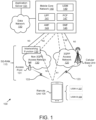
- a non-3GPP access network 130 may be controlled by an MNO of the mobile core network 140 and may have direct access to the mobile core network 140.
- a non-3GPP AN deployment is referred to as a "trusted non-3GPP access network.”
- a non-3GPP access network 130 is considered as “trusted” when it is operated by the MNO, or a trusted partner, and supports certain security features, such as strong air-interface encryption.
- a non-3GPP AN deployment that is not controlled by an operator (or trusted partner) of the mobile core network 140 does not have direct access to the mobile core network 140, or does not support the certain security features is referred to as a "non-trusted" non-3GPP access network.
- the mobile core network 140 supports different types of mobile data connections and different types of network slices, wherein each mobile data connection utilizes a specific network slice.
- Each network slice includes a set of CP and UP network functions, wherein each network slice is optimized for a specific type of service or traffic class.
- the different network slices are not shown in Fig. 1 for ease of illustration, but their support is assumed.
- each network slice includes an SMF and a UPF, but the various network slices share the AMF 143, the PCF 147, and the UDM 149.
- each network slice includes an AMF, an SMF and a UPF.
- any number and type of network functions may be included in the mobile core network 140.
- the depicted network functions may be replaced with appropriate EPC entities, such as an MME, S-GW, P-GW, HSS, and the like.
- the remote unit 105 includes the USIM-A 107 and the USIM-B 109.
- the USIM-A 107 and USIM-B 109 are depicted as associated with the same PLMN.
- the USIM-A 107 and USIM-B 109 may be associated with the same or different network slices of the same PLMN. In such a situation, the PLMN may interpret the remote unit 105 as two different remote units having each own registration with the network.
- the USIM-A 107 and USIM-B 109 may be associated with different PLMNs.
- the remote unit 105 is able to determine whether to apply short or long connection suspension (e.g. based on the indication about the service type in the Paging message, or MO service type, or other indications about the upcoming communication). In case of short suspended state, the remote unit 105 indicates (e.g. in an RRC message) to the source USIM RAN node to enter short suspended state.
- the remote unit 105 maintains a timer for short suspended state.
- One or more of following mechanism to configure the timer can be applied: the remote unit 105 may receive timer configuration via unicast message (e.g., suspend accept as part of the RRC signaling procedure for suspension) from the RAN node, or the timer configuration may be broadcasted in the SIB, or the timer configuration may be negotiated during NAS procedure (e.g. registration procedure or UE configuration update).
- the SIB may advertise multiple-USIM support (i.e. the feature is supported in the network), multiple-USIM preferences, timer value, etc.
- the value of the timer may affect whether the remote unit 105 decides to enter short suspended state or long suspended state.
- the 5G-RAN 115 implements means for the short suspend state described in detail below with reference to Figures 3 and 4A-4B .
- the short suspend state may share features with the legacy RRC inactive state, but with the difference that the remote unit 105 is marked as not reachable (i.e., no RAN paging for downlink data or signaling is performed, the RRC connection is suspended even if there is ongoing UL/DL data or signaling transmission (even buffered in e.g. PDCP layer) and/or no RAN notification area is assigned to the UE).
- the remote unit 105 may initiate application/service level signaling before performing a connection suspension procedure to inform the application server 151 (or other communication peer) about the temporary unavailability of the device, so that the service or communication exchange can be interrupted (or paused or terminated) at the application/service layer in a controlled way.
- the remote unit 105 may inform the application server 151 (or communication peer) of its availability available for communication.
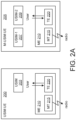
- FIG. 2A depicts both a single USIM UE 200 and a multi-USIM UE 205, according to embodiments of the disclosure.
- the UE 200 comprises a Mobile Equipment ("ME") 210 with a single USIM 203 registered for use at a time, while the multi-USIM UE 205 includes an ME with multiple USIMs (e.g., a first USIM (USIM-1) 207 and a second USIM (USIM-2) 209) registered for use at the same time.
- the USIM-1 207 and USIM-2 209 may be associated with the same PLMN or different PLMNs.
- the USIM-1 207 and USIM-2 209 may be associated with different network slices of the same PLMN. Note that both USIM-1 207 and USIM-2 209 can be used for idle mode network connection at the same time.
- Each ME 210 (e.g. transceiver or modem) includes (1) one or more Mobile Terminations (MT) 215 specific to management of the PLMN access interface (3GPP or non-3GPP); and (2) one or more Terminal Equipment (TE) 220 functions necessary for the operation of the access protocols by the user.
- MT Mobile Terminations
- TE Terminal Equipment
- the UE 200 and multi-USIM UE 205 can implement the universal subscriber identity module(s) (“USIM”, sometimes referred as subscriber identification module, "SIM") as an integrated circuit or card which needs to be inserted in the UE, and/or as embedded-SIM (“eSIM”) or embedded universal integrated circuit card (“eUICC”) - a form of programmable SIM that is embedded directly into a device.
- USB universal subscriber identity module
- eSIM embedded-SIM
- eUICC embedded universal integrated circuit card
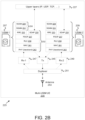
- FIG. 2B depicts a protocol stack 225 of the multi-USIM UE 205.
- the protocol stack 225 includes the upper layers 227 (e.g., IP layer, transport (UDP, TCP) layer(s), etc.).
- the protocol stack 225 includes the 5GS Session Management (“5GSM”) sublayer 229 and the 5GS Mobility Management (“5GMM”) sublayer 231, which comprise the NAS layer 230.
- the AMF 143 includes a NAS layer may establish a NAS signaling connection with the multi-USIM UE 205.
- the AS layer 232 (also referred to as the "Radio Protocol” of the protocol stack 225 includes the RRC layer 233, the Service Data Adaptation Protocol ("SDAP") layer 235, the PCDP layer 237, the RLC layer 239, the MAC layer 241, and the PHY layer 243 (baseband).
- the RAN node (e.g., base unit 121) includes corresponding AS layers and may establish an AS signaling connection with the multi-USIM UE 205.
- the RAN node may not notify the core network due to one or more of the following reasons: 1) because the duration of the short suspended state does not impact e.g. the NAS timers running in the AMF or SMF for NAS messages retransmission, or 2) because there are no established DRBs with delay critical or high reliability QoS flows (e.g. for URLLC, or emergency or priority services). If the UE request short suspended state transition (e.g. by sending a RRC connection release request) and the RAN node rejects the transition to short suspended state, as follow-up action the UE may request the transition to long suspended state (e.g. by sending NAS MM request message) to the core network (e.g. AMF or MME).
- the core network e.g. AMF or MME
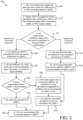
- Figure 3 depicts a flowchart 300 describing behavior of a multi-SIM UE for suspending a connection of one SIM during multi-SIM operation, according to embodiments of the disclosure.
- the procedure depicted in the flowchart 300 may be implemented by a multi-SIM remote unit 105 and/or the multi-USIM UE 205.
- the UE After MT communication with USIM-2 209 is over, the UE indicates to the PLMN2 release assistance indication (RAI) in order to return to USIM-1 207 network ASAP.
- RAI release assistance indication
- a timer value for a short suspended state can be 3 seconds.
- the timer starts running in the multi-SIM UE 205 and in the RAN node upon entering the short suspend state. If the timer expires, the network (e.g. RAN node) and multi-SIM UE 205 may transit to long suspended state.
- the network e.g. RAN node
- the multi-SIM UE 205 can transit to long suspended state (see block 340). In certain embodiments, this transition is done implicitly at the multi-SIM UE 205 (i.e. without signaling to the network) by deleting the AS context and indicating to the NAS layer to suspend the connection (long suspension).
- the RAN node may perform UE AS context release and access network (AN) connection release procedure (e.g. TS23.502 clause 4.2.6).
- the multi-SIM UE 205 transitions out of the short connection suspension and resumes connection for the USIM-2 209 (see block 335). Resuming connection is discussed in further detail below with reference to Figures 4B and 5A-5B . After resuming connection, the multi-SIM UE 205 is in a normal state (e.g., CM-Connected state) for the USIM-2 209 (see block 360).
- a normal state e.g., CM-Connected state
- the multi-SIM UE 205 selects the long connection suspension, then at step 9 the UE performs NAS MM procedure for long suspension of the USIM-2 209 (see block 345).
- the long suspension connection involves deleting the AS context at the UE and the RAN node.
- the multi-SIM UE 205 remains in the long connection suspended state for USIM-2 209 until the communication of USIM-1 207 ends (see block 350).
- the multi-SIM UE 205 performs NAS MM procedure to resume connection of USIM-2 at the conclusion of the communication of USIM-1 207 (see block 355). Resuming connection is discussed in further detail below with reference to Figures 4B and 5A-5B .
- the multi-SIM UE 205 is in a normal state (e.g., CM-Connected state) for the USIM-2 209 (see block 360).
- Figure 3 shows the example of two different suspended states (e.g. short suspended state and long suspended state)
- the present disclosure is not limited to two states.
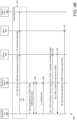
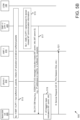
- Figures 4A-4B depict a procedure 400 for the scenario of suspended connection for one USIM (e.g. for USIM-1), according to embodiments of the disclosure.
- the procedure 400 introduces AS protocols (e.g., RRC procedure) to implement the signaling for radio transmission suspension.
- the procedure 400 involves the UE 205, the (R)AN-2/AMF-2 entity 405, the (R)AN-1 node 410, the AMF-1 415, and the SMF-1/LTPF-1 entity 420. While the (R)AN-2/AMF-2 405 is depicted as a combined entity, in various embodiments the AMP-2 is not co-located with the (R)AN-2.
- the (R)AN-2/AMF-2 405 is part of PLMN2 where the USIM-2 is registered, whereas the entities (R)AN-1 node 410, the AMF-1 415, and the SMF-1/UPF-1 420 are part of PLMN1 to which USIM-1 is registered.
- the SMF-1/LTPF-1 420 is depicted as a combined entity, in various embodiments the SMF-1 is not co-located with the UPF-1.
- the procedure 400 begins at step 0 as the UE 205 registers (or attaches) to one or more mobile communication networks using multiple SIMs (e.g., USIM-1 and USIM-2, see signaling 421).
- SIMs e.g., USIM-1 and USIM-2, see signaling 421.
- the UE 205 Upon registration with more than one USIMs (e.g., where the UE 205 is already registered with USIM-1 and initiates registration with USIM-2), the UE 205 performs NAS MM procedure (e.g. Registration request or TAU procedure) to indicate its multiple-SIM ("MuSIM”) capabilities to each network (i.e. for each activated USIM). This can be e.g. indicated in NAS MM messages to network serving node (e.g. AMF/MME).
- NAS MM procedure e.g. Registration request or TAU procedure
- MuSIM multiple-SIM
- network serving node e.g. AMF/MME
- the MuSIM UE capability may include: 1) MuSIM support: (e.g., yes/no), 2) support of suspended states: (e.g., long suspend state, and/or short suspend state, etc.), and/or 3) support of Release Assistance Information ("RAI") for CP transmissions, SMS transmissions, and/or UP transmissions.
- RAI Release Assistance Information
- This support of RAI may be helpful in determining in the network (e.g. in the RAN node or in the AMF) to quickly terminate the control plane transmission.
- a RAN node will generally have a so-called "inactivity timer" with a value (e.g., 10 seconds) which is triggered by UL/DL data.
- the UE 205 may also send two distinct indications to the network, the one about the MuSIM UE capability and another one about MuSIM required.
- the latter indication (MuSIM required) would mean to the network that the network should reconfigure internally to start sending service/traffic type indication in the paging message for this UE 205.
- the MuSIM feature/enhancements support means that the network supports at least the means to 1) send service/traffic type indication in the paging message and/or 2) transition to long suspended state and/or short suspended state.
- the network e.g. AMF or MME
- the network can delete the stored MuSIM support capability in the UE's context stored in AMP/MME upon Deregistration or Detach procedure.
- the network may send in the NAS MM response (e.g. registration accept message) a network indication to the UE which for example may include: 1) MuSIM preference/support: (e.g., yes/no), 2) preference/support of suspended states: (e.g., long suspend state, and/or short suspend state, and/or preferred duration of short suspended state etc.), and/or 3) support of Release Assistance Information ("RAI") for CP transmissions, SMS transmissions, and/or UP transmissions.
- MuSIM preference/support e.g., yes/no
- preference/support of suspended states e.g., long suspend state, and/or short suspend state, and/or preferred duration of short suspended state etc.
- RAI Release Assistance Information
- the UE 205 concludes that the network does not prefer or support MuSIM feature/enhancements and the UE determines to not apply the MuSIM feature/enhancements (i.e. the UE would not initiate any of the procedures for long suspended state or short suspended state.
- the network e.g. AMF or MME
- the network is able to determine appropriate configuration the UE whether to apply or not the mechanisms for MuSIM feature/enhancements and/or the long or short suspended connection state and/or other parameters required for the MuSIM enhancements (e.g. time for short suspension connection state).
- the one network e.g. PLMN-1 including (R)AN-1 node 410, the AMP-1 415, and the SMF-1/UPF-1) serving USIM-1 supports MuSIM capability or wants to apply MuSIM feature
- the other network e.g. PLMN-2 including (R)AN-2/AMF-2 405) serving USIM-2 does not support MuSIM capability (or does not want to apply the MuSIM feature).
- the UE 205 may apply the solution for connection suspension and resumption towards PLMN-1 as described in Figure 3 and below in step 3 and 6, but the UE 205 would trigger the procedures for connection suspension and resumption for MO services.
- the UE 205 is aware that triggers for MT service would not contain service/traffic type in the MT request (e.g. paging) message.
- the network may decide to apply the MuSIM feature/enhancements based on network operator policy or configuration. For example, the network can decide to enable/apply the MuSIM enhancements for non-roaming UEs, but not enable/apply the MuSIM enhancements to roaming UEs. In another example, the network may decide to apply the MuSIM enhancements to high-profile subscribers (e.g. gold or silver members), but not apply the MuSIM enhancements to low-profile subscribers (e.g. bronze members or pre-paid subscribers). It is advantageous if both networks PLMN1 and PLMN-2 apply the MuSIM enhancements to have all benefits of this solution, but it is still possible to have certain/partial advantages if only one of the multiple networks apply MuSIM enhancements.
- the network may send a configuration indication to the RAN node (e.g. gNB or eNB) during the UE initial context setup procedure or UE context modification procedure, whether the short suspended state is allowed for this UE.
- This indication would help the RAN node to determine whether to apply the short suspended state if the UE sends such a request as per step 3a-1 (see signaling 431). For example, if the AMP/MME does not include the indication that short suspended state is allowed (or supported), the RAN node should reject the UE's request to transition to short suspended state as per step 3a-1.
- the procedure 400 assumes that (after registration/attachment) the UE 205 is in a connected state (e.g., CM-Connected state) for USIM-1 and in an idle state (e.g., ECM/CM-Idle state) for USIM-2 (see block 423).
- the UE 205 receives core network (CN) initiated Paging message for USIM-2 209 (see signaling 425), where the Paging message can include additional paging information indicating service (or traffic) type which causes the MT communication, i.e. paging procedure.
- CN core network
- the granularity of the paging information can discriminate between the following service categories: a) IMS and non-IMS based Voice/video service; b) IMS and non-IMS based SMS or USSD; c) IMS service other than voice/video or SMS; and/or d) Other service not listed above, e.g. data services including video.
- the trigger for USIM-2 209 communication can be mobile originated (MO) communication (see block 427).
- the upper layers in the UE 205 need to indicate additional information about the service/traffic type to the NAS layer, so that the NAS layer can take decision about service priority and service duration.
- the NAS layer may only know which PDU Session (e.g. IMS PDU Session) is to be activated, but whether the service over IMS is voice, video or SMS may not be visible to NAS layer.
- PDU Session e.g. IMS PDU Session
- UE enhancement is needed to indicate service/traffic type to the NAS layer similar to the additional paging information for MT communication in step 1a.
- the UE 205 determines whether to apply short suspended connection or long suspended connection (see block 429). Refer to Figure 3 for discussion of how the UE 205 determines which type of suspended connection to apply.
- steps 3a show UE procedure to apply the short suspended connection (also referred to as “short connection suspension”, see group 430) while step 3b shows UE procedure to apply the long suspended connection (also referred to as “long connection suspension”, see group 440).
- the (R)AN-1 node 410 keeps the UE context (security, bearer context, N2 and N3 connections), however the (R)AN-1 node 410 stops DL transmissions (e.g. disables sending DL PDUs and instead buffers DL PDUs, e.g., in the PDCP layer, see block 435). Such state can be also described as RRC_INACTIVE state with disabled radio transmission. Additionally, the UE 205 also keeps the UE context, but stops UL transmissions (e.g. disables sending UL PDUs and optionally buffers UL PDUs, e.g., in the PDCP layer, see block 437). In various embodiments, the short suspended is not applied if there are GBR bearers. In case of GBR flows/bearers, the UE 205 may determine to apply long suspended state.
- the network sends the stored 'missed MT comm info' to the UE.
- the 'missed MT comm info' can be sent to the UE via control plane signaling, e.g. using NAS session management signaling (e.g. NAS N1-SM signaling) from SMF to UE.
- NAS session management signaling e.g. NAS N1-SM signaling
- a UE can use NAS Service Request procedure and include 'PDU Session status' indication to indicate which PDU Sessions are still valid for the suspended connection.
- the UE's 5GSM layer 229 may internally process the information and forward to the information to the corresponding application(s). If needed, the application(s) may trigger the establishment of UP resources.
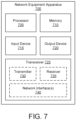
- the processor 705 controls the transceiver 725 sends a reply to the UE containing a configuration (or preference) of whether to apply the M-USIM feature/enhancements, or of which suspension mode to use (e.g., single suspension state, or multiple suspension states) or short suspension duration time (e.g. to be considered by the UE when determining whether to apply short or long connection suspended state).
- the processor 705 controls the transceiver 725 may also send an indication (or configuration) message to the RAN node, for example a gNB or eNB, whether the short suspended state is allowed for this UE.
- the input device 715 may include any known computer input device including a touch panel, a button, a keyboard, a stylus, a microphone, or the like.
- the input device 715 may be integrated with the output device 720, for example, as a touchscreen or similar touch-sensitive display.
- the input device 715 includes a touchscreen such that text may be input using a virtual keyboard displayed on the touchscreen and/or by handwriting on the touchscreen.
- the input device 715 includes two or more different devices, such as a keyboard and a touch panel.
- the output device 720 may include any known electronically controllable display or display device.
- the output device 720 may be designed to output visual, audible, and/or haptic signals.
- the output device 720 includes an electronic display capable of outputting visual data to a user.
- the output device 720 may include, but is not limited to, an LCD display, an LED display, an OLED display, a projector, or similar display device capable of outputting images, text, or the like to a user.
- the output device 720 may include a wearable display such as a smart watch, smart glasses, a heads-up display, or the like.
- the output device 720 may be a component of a smart phone, a personal digital assistant, a television, a table computer, a notebook (laptop) computer, a personal computer, a vehicle dashboard, or the like.
- the transceiver 725 may communicate with one or more remote units and/or with one or more interworking functions that provide access to one or more PLMNs.
- the transceiver 725 may also communicate with one or more network functions (e.g., in the mobile core network 140).
- the transceiver 725 operates under the control of the processor 705 to transmit messages, data, and other signals and also to receive messages, data, and other signals.
- the processor 705 may selectively activate the transceiver (or portions thereof) at particular times in order to send and receive messages.
- the transceiver 725 may include one or more transmitters 730 and one or more receivers 735.
- the one or more transmitters 730 and/or the one or more receivers 735 may share transceiver hardware and/or circuitry.
- the one or more transmitters 730 and/or the one or more receivers 735 may share antenna(s), antenna tuner(s), amplifier(s), filter(s), oscillator(s), mixer(s), modulator/demodulator(s), power supply, and the like.
- the transceiver 725 implements multiple logical transceivers using different communication protocols or protocol stacks, while using common physical hardware.
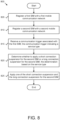
- Figure 8 depicts a method 800 for suspending a connection of one SIM during multi-SIM operation, according to embodiments of the disclosure.
- the method 800 is performed by an apparatus, such as the remote unit 105, the multi-SIM UE 205, and/or the user equipment apparatus 600.
- the method 800 may be performed by a processor executing program code, for example, a microcontroller, a microprocessor, a CPU, a GPU, an auxiliary processing unit, a FPGA, or the like.
- the method 800 begins and registers 805 a first SIM with a first mobile communication network.
- the method 800 includes registering 810 a second SIM with a second mobile communication network.
- the method 800 includes receiving 815 a communication trigger associated with the first SIM, the communication trigger indicating a service type.
- the method 800 includes determining 820 whether to apply a short connection suspension for the second SIM or a long connection suspension for the second SIM. Here, the determination is based on the service type.
- the method 800 includes applying 825 one of the short connection suspension and the long connection suspension for the second SIM.
- the method 800 ends.
- Figure 9 depicts a method 900 for suspending a connection of one SIM during multi-SIM operation, according to embodiments of the disclosure.
- the method 900 is performed by a network apparatus, such as the base unit 121, the (R)AN-1 node 410, the network equipment apparatus 700, a gNB, an eNB, and/or a RAN node.
- the method 900 may be performed by a processor executing program code, for example, a microcontroller, a microprocessor, a CPU, a GPU, an auxiliary processing unit, a FPGA, or the like.
- the method 900 begins and receives 905 an RRC layer suspension request from a UE (e.g., a remote unit 105).
- the method 900 includes maintaining 910 a UE AS context for the UE.
- the method 900 includes disabling 915 downlink transmissions to the UE in response to the RRC layer suspension request.
- the method 900 includes enabling 920 downlink transmissions to the UE in response to receiving an RRC layer connection resume request from the UE.
- the method 900 ends.
- the first apparatus may be implemented by a UE, such as the remote unit 105, the multi-SIM UE 205, and/or the user equipment apparatus 600.
- the first apparatus includes a processor, a first SIM registered with a first mobile communication network, a second SIM registered with a second mobile communication network, and a transceiver that communicates with the first and second mobile communication networks.
- the processor receives a communication trigger associated with the first SIM, the communication trigger indicating a service type and determines whether to apply a short connection suspension for the second SIM or a long connection suspension for the second SIM, said determination based on the service type.
- the processor additionally applies the selected one of the short connection suspension and the long connection suspension for the second SIM.
- an application or service type associated with the first SIM is configured with higher priority than an application or service currently in use with the second SIM.
- the processor determines not to suspend the connection for the second SIM if the second SIM is involved in emergency communication session.
- registering the first SIM and the second SIM includes indicating support for one or more of the following parameters: multi SIM enhancements, the short connection suspension, or long connection suspension, receiving a network preference indicating whether to apply multi SIM enhancements, or the short connection suspension, or long connection suspension, and configuring the processor whether to apply multi SIM enhancements, or the short connection suspension, or long connection suspension based on the received network preference.
- not receiving any network preference may be interpreted by the UE as an indication of non-support of multi SIM enhancements in the network.
- applying the short connection suspension for the second SIM includes transmitting an RRC layer suspension request and applying the long connection suspension for the second SIM includes transmitting an NAS layer suspension request.
- applying the long connection suspension for the second SIM further includes: transitioning to an NAS idle state in response to reception of a suspension response message from the second network.
- the suspension response message includes one or more of: an RRC layer message or NAS layer message.
- the suspension response message is a response to the NAS layer suspension request message.
- applying the short connection suspension further includes disabling transmissions for the second SIM in response to receiving an RRC layer suspension response.
- applying the short connection suspension includes maintaining an Access Stratum context for the second SIM.
- registering the first SIM and the second SIM includes indicating device support for one or more of the following parameters: multi SIM enhancements, the short connection suspension, or long connection suspension.
- registering the first SIM and the second SIM also includes receiving a network preference indicating whether to apply multi SIM enhancements, or the short connection suspension, or long connection suspension, and configuring the device to apply multi SIM enhancements, or the short connection suspension, or long connection suspension based on the received network preference.
Landscapes
- Engineering & Computer Science (AREA)
- Computer Networks & Wireless Communication (AREA)
- Signal Processing (AREA)
- Databases & Information Systems (AREA)
- Mobile Radio Communication Systems (AREA)
Priority Applications (1)
| Application Number | Priority Date | Filing Date | Title |
|---|---|---|---|
| EP25176807.3A EP4580229A3 (de) | 2019-09-06 | 2019-09-06 | Verbindungsaufhängung für mehrere sims |
Applications Claiming Priority (3)
| Application Number | Priority Date | Filing Date | Title |
|---|---|---|---|
| EP19769729.5A EP4026390A1 (de) | 2019-09-06 | 2019-09-06 | Verbindungsaufhängung für mehrere teilnehmeridentitätsmodule (sim) |
| PCT/EP2019/073833 WO2021043417A1 (en) | 2019-09-06 | 2019-09-06 | Connection suspension for multiple sims |
| EP25176807.3A EP4580229A3 (de) | 2019-09-06 | 2019-09-06 | Verbindungsaufhängung für mehrere sims |
Related Parent Applications (1)
| Application Number | Title | Priority Date | Filing Date |
|---|---|---|---|
| EP19769729.5A Division EP4026390A1 (de) | 2019-09-06 | 2019-09-06 | Verbindungsaufhängung für mehrere teilnehmeridentitätsmodule (sim) |
Publications (2)
| Publication Number | Publication Date |
|---|---|
| EP4580229A2 true EP4580229A2 (de) | 2025-07-02 |
| EP4580229A3 EP4580229A3 (de) | 2025-12-17 |
Family
ID=67988959
Family Applications (2)
| Application Number | Title | Priority Date | Filing Date |
|---|---|---|---|
| EP25176807.3A Pending EP4580229A3 (de) | 2019-09-06 | 2019-09-06 | Verbindungsaufhängung für mehrere sims |
| EP19769729.5A Withdrawn EP4026390A1 (de) | 2019-09-06 | 2019-09-06 | Verbindungsaufhängung für mehrere teilnehmeridentitätsmodule (sim) |
Family Applications After (1)
| Application Number | Title | Priority Date | Filing Date |
|---|---|---|---|
| EP19769729.5A Withdrawn EP4026390A1 (de) | 2019-09-06 | 2019-09-06 | Verbindungsaufhängung für mehrere teilnehmeridentitätsmodule (sim) |
Country Status (4)
| Country | Link |
|---|---|
| US (2) | US20220053448A1 (de) |
| EP (2) | EP4580229A3 (de) |
| CN (2) | CN114365582B (de) |
| WO (1) | WO2021043417A1 (de) |
Families Citing this family (48)
| Publication number | Priority date | Publication date | Assignee | Title |
|---|---|---|---|---|
| JP7140184B2 (ja) * | 2018-03-15 | 2022-09-21 | 富士通株式会社 | 無線通信システム、基地局、移動局および無線通信方法 |
| EP3868151A1 (de) * | 2018-10-17 | 2021-08-25 | Google LLC | Auswahl von kernnetzwerktypen |
| WO2020167041A1 (en) * | 2019-02-15 | 2020-08-20 | Samsung Electronics Co., Ltd. | Method and ue for handling ul nas transport message failure in wireless communication network |
| EP3742666A1 (de) * | 2019-05-20 | 2020-11-25 | Gemalto Sa | Verfahren und system zur optimierung des energieverbrauchs von iot-geräten zur usim fernwartung |
| US11974327B2 (en) * | 2019-08-16 | 2024-04-30 | Sharp Kabushiki Kaisha | Method and apparatus for signaling multi-USIM UE busy status |
| WO2021031067A1 (en) * | 2019-08-19 | 2021-02-25 | Qualcomm Incorporated | Suspend and resume techniques with radio access network (ran) and user plane function (upf) buffered downlink data for multi-usim user equipment |
| CN116346297A (zh) * | 2019-09-12 | 2023-06-27 | 华为技术有限公司 | 一种通信方法与装置 |
| WO2021066562A1 (en) * | 2019-10-04 | 2021-04-08 | Samsung Electronics Co., Ltd. | Method and system for providing paging cause to musim user equipment |
| EP4057721B1 (de) * | 2019-11-06 | 2025-04-09 | LG Electronics Inc. | Verfahren und endgerät zum ausrufen eines multi-sim-endgeräts |
| EP4070619A4 (de) * | 2019-12-02 | 2023-11-22 | Nokia Technologies Oy | Hilfsinformationen für multi-usim-benutzergerät mit nichtverfügbarer zeit |
| EP4079048A1 (de) * | 2019-12-19 | 2022-10-26 | Telefonaktiebolaget Lm Ericsson (Publ) | Scheiben- und/oder teilnehmeridentifizierungsmodulvorrichtungsschloss |
| US11751279B2 (en) * | 2020-01-07 | 2023-09-05 | Mediatek Inc. | Apparatuses and methods for multi-radio access technology (RAT) coordination |
| CN117545031A (zh) * | 2020-01-20 | 2024-02-09 | 维沃移动通信有限公司 | 消息通知方法、终端和网络设备 |
| KR20220123694A (ko) * | 2020-01-22 | 2022-09-08 | 엘지전자 주식회사 | 무선 통신 시스템에서 소형 데이터의 고속 전송을 위한 방법 및 장치 |
| CN115066978A (zh) * | 2020-02-12 | 2022-09-16 | 联想(北京)有限公司 | 用于缺席时间请求的方法及设备 |
| WO2021196084A1 (zh) * | 2020-04-01 | 2021-10-07 | Oppo广东移动通信有限公司 | 一种信号传输方法及装置、终端设备 |
| US12363524B2 (en) * | 2020-04-17 | 2025-07-15 | Sharp Kabushiki Kaisha | IP-based system supporting multi-USIMs |
| EP4021142B1 (de) | 2020-07-17 | 2024-02-07 | Guangdong Oppo Mobile Telecommunications Corp., Ltd. | Paging-verbot für ein endgerät mit mehreren universellen teilnehmeridentitätsmodulen |
| US12167359B2 (en) * | 2020-09-25 | 2024-12-10 | Lg Electronics Inc. | Method and apparatus for connection management in wireless communication system |
| US11510061B1 (en) * | 2020-12-30 | 2022-11-22 | Trend Micro Incorporated | Mitigation of cyberattacks on cellular devices |
| CN114765822B (zh) * | 2021-01-15 | 2024-12-17 | 维沃移动通信有限公司 | 返回网络的通知方法、装置及终端 |
| US12396060B2 (en) * | 2021-02-26 | 2025-08-19 | Samsung Electronics Co., Ltd. | Method and MUSIM UE for handling retry of NAS procedure in network |
| CN117322054A (zh) * | 2021-03-15 | 2023-12-29 | 诺基亚技术有限公司 | 具有多用户订阅标识的设备中用于间隙的配置 |
| US11683851B2 (en) * | 2021-03-15 | 2023-06-20 | Qualcomm Incorporated | Multi-USIM suspension and optimized resumption |
| WO2022198441A1 (zh) * | 2021-03-23 | 2022-09-29 | 北京小米移动软件有限公司 | 网络切换方法及装置、存储介质 |
| CN117178627A (zh) * | 2021-04-01 | 2023-12-05 | 联想(新加坡)私人有限公司 | 在终端远离通信网络的同时保持终端处于连接状态 |
| US12004251B2 (en) | 2021-04-06 | 2024-06-04 | Samsung Electronics Co., Ltd. | Method and UE for determining request for resources from network apparatus in wireless network |
| EP4238390A4 (de) * | 2021-04-09 | 2024-03-20 | Samsung Electronics Co., Ltd. | Verfahren und system zur steuerung der sms-kommunikation in einem drahtloskommunikationsnetzwerk |
| CN115226206B (zh) * | 2021-04-21 | 2024-12-20 | 维沃移动通信有限公司 | 信息处理方法、装置、终端及存储介质 |
| CN117242830A (zh) * | 2021-04-26 | 2023-12-15 | 三星电子株式会社 | 无线网络中处理服务请求过程的方法、ue及网络装置 |
| US20240357550A1 (en) * | 2021-05-10 | 2024-10-24 | Beijing Xiaomi Mobile Software Co., Ltd. | Method and device of processing information |
| JP2022180868A (ja) * | 2021-05-25 | 2022-12-07 | 株式会社デンソー | ユーザ装置及び通信制御方法 |
| US20240284547A1 (en) * | 2021-06-16 | 2024-08-22 | Beijing Xiaomi Mobile Software Co., Ltd. | Communication status changing method and apparatus |
| JP2023006094A (ja) * | 2021-06-30 | 2023-01-18 | 株式会社デンソー | ユーザ装置、基地局及び通信制御方法 |
| US20230035327A1 (en) * | 2021-07-29 | 2023-02-02 | Mediatek Inc. | Musim guard timers for nas signaling connection release and rejection of paging |
| WO2023018220A1 (en) * | 2021-08-10 | 2023-02-16 | Samsung Electronics Co., Ltd. | Methods and apparatus for handling musim per access |
| WO2023038434A1 (en) * | 2021-09-08 | 2023-03-16 | Lg Electronics Inc. | Service reception among multiple networks in wireless communications |
| US12446109B2 (en) * | 2021-09-28 | 2025-10-14 | Mediatek Inc. | MUSIM SR procedure and MM congestion control |
| US20230111055A1 (en) * | 2021-09-28 | 2023-04-13 | Mediatek Inc. | Musim sr procedure transmission failure |
| WO2023062269A1 (en) * | 2021-10-14 | 2023-04-20 | Nokia Technologies Oy | Multiple universal subscriber identity module (musim) switching |
| US12015993B2 (en) * | 2021-12-03 | 2024-06-18 | Qualcomm Incorporated | Dynamic modem partitioning techniques for multiple subscriber identification modules |
| CN116233959A (zh) * | 2021-12-06 | 2023-06-06 | 上海朗帛通信技术有限公司 | 一种被用于无线通信的方法和设备 |
| CN118648315A (zh) * | 2022-02-01 | 2024-09-13 | 三星电子株式会社 | 用于在5g网络中操作具有多rrc连接支持的多sim设备的方法和系统 |
| KR20230120113A (ko) * | 2022-02-08 | 2023-08-16 | 삼성전자주식회사 | 무선 네트워크에서 다중 usim 기능을 전환하는 방법 및 무선 네트워크 |
| US20240080914A1 (en) * | 2022-07-27 | 2024-03-07 | Nokia Technologies Oy | Carrier specific aperiodic gap for capability sharing for musim operation for dual tx/rx device |
| CN119012346A (zh) * | 2023-05-19 | 2024-11-22 | 维沃移动通信有限公司 | 信息处理方法及通信设备 |
| CN119922685A (zh) * | 2023-10-31 | 2025-05-02 | 上海朗帛通信技术有限公司 | 一种被用于无线通信的方法和设备 |
| CN118158234B (zh) * | 2024-05-11 | 2024-08-16 | 山东和同信息科技股份有限公司 | 基于云平台的智能水务仪表运行数据储存管理系统及方法 |
Citations (1)
| Publication number | Priority date | Publication date | Assignee | Title |
|---|---|---|---|---|
| WO2019076439A1 (en) | 2017-10-17 | 2019-04-25 | Motorola Mobility Llc | SUSPENSION OF SERVICES IN A CENTRAL NETWORK |
Family Cites Families (9)
| Publication number | Priority date | Publication date | Assignee | Title |
|---|---|---|---|---|
| CN103517454A (zh) * | 2012-06-27 | 2014-01-15 | 联发科技股份有限公司 | 增强信令连接释放指示处理方法 |
| US9072070B2 (en) * | 2012-11-29 | 2015-06-30 | Intel Mobile Communications GmbH | Mobile wireless devices and methods of operation |
| US9198183B2 (en) * | 2013-06-19 | 2015-11-24 | Qualcomm, Incorporated | Accommodating multi-SIM-multi-standby communication device tuneaway events at a communication network base station |
| US9066330B2 (en) * | 2013-09-30 | 2015-06-23 | Qualcomm Incorporated | Simultaneous voice and data for Dual-SIM-Dual-Standby (DSDS) wireless device |
| US10021544B2 (en) * | 2015-01-26 | 2018-07-10 | Apple Inc. | Dual SIM dual standby with caller ID enhancement |
| US10405171B2 (en) * | 2015-09-25 | 2019-09-03 | Intel IP Corporation | Communication terminal and method for communicating data |
| WO2017128287A1 (en) * | 2016-01-29 | 2017-08-03 | Qualcomm Incorporated | Control element extension for concurrent radio access technologies |
| US10568073B2 (en) * | 2016-12-07 | 2020-02-18 | Samsung Electronics Co., Ltd. | Methods and dual SIM dual standby (DSDS) devices for managing data communication |
| US20180359284A1 (en) * | 2017-06-09 | 2018-12-13 | Qualcomm Incorporated | System and method for signaling by a dual-sim dual-standby device |
-
2019
- 2019-09-06 EP EP25176807.3A patent/EP4580229A3/de active Pending
- 2019-09-06 US US17/279,075 patent/US20220053448A1/en active Pending
- 2019-09-06 CN CN201980100075.8A patent/CN114365582B/zh active Active
- 2019-09-06 WO PCT/EP2019/073833 patent/WO2021043417A1/en not_active Ceased
- 2019-09-06 EP EP19769729.5A patent/EP4026390A1/de not_active Withdrawn
- 2019-09-06 CN CN202511146597.5A patent/CN121126580A/zh active Pending
-
2024
- 2024-08-02 US US18/793,323 patent/US20250024403A1/en active Pending
Patent Citations (1)
| Publication number | Priority date | Publication date | Assignee | Title |
|---|---|---|---|---|
| WO2019076439A1 (en) | 2017-10-17 | 2019-04-25 | Motorola Mobility Llc | SUSPENSION OF SERVICES IN A CENTRAL NETWORK |
Also Published As
| Publication number | Publication date |
|---|---|
| US20220053448A1 (en) | 2022-02-17 |
| CN114365582A (zh) | 2022-04-15 |
| US20250024403A1 (en) | 2025-01-16 |
| EP4580229A3 (de) | 2025-12-17 |
| WO2021043417A1 (en) | 2021-03-11 |
| CN121126580A (zh) | 2025-12-12 |
| CN114365582B (zh) | 2025-08-01 |
| EP4026390A1 (de) | 2022-07-13 |
Similar Documents
| Publication | Publication Date | Title |
|---|---|---|
| US20250024403A1 (en) | Connection suspension for multiple sims | |
| US20250126588A1 (en) | Paging for multiple sims | |
| US12052796B2 (en) | Suspending services in a core network | |
| US11197346B2 (en) | User equipment having multiple subscriber identity modules with improved suspend / resume operation | |
| US12403210B2 (en) | User equipment having multiple subscriber identity modules with improved suspend / resume operation | |
| US12177937B2 (en) | GUTI reallocation for MT-EDT | |
| WO2019064068A1 (en) | METHOD AND APPARATUS FOR MANAGING DUAL RECORDING WITH A PLURALITY OF NETWORKS IN ONE OR MORE RADIO COMMUNICATION SYSTEMS | |
| EP3827616B1 (de) | Übertragung einer datenverbindung an ein funkzugangsnetzwerk | |
| EP3861794A1 (de) | Verfahren und vorrichtung zur bestimmung, ob hilfsinformationen zur auswahl von netzwerk-slices übertragen werden | |
| WO2021161276A1 (en) | Measurement configuration for non-public radio cell | |
| WO2022009177A1 (en) | Paging management for multiple universal subscriber identity modules | |
| US20240259997A1 (en) | Paging management | |
| CN118743290A (zh) | 节能和rrc状态感知的无线电资源分配 | |
| US20240196468A1 (en) | Keeping a terminal in a connected state while the terminal is away from a communication network | |
| WO2024062010A1 (en) | Service enhancements on mcx | |
| WO2022070169A1 (en) | Leaving a wireless network by a multi-sim ue for a stipulated time after receiving a paging message | |
| WO2022009179A1 (en) | Paging management for multiple universal subscriber identity modules |
Legal Events
| Date | Code | Title | Description |
|---|---|---|---|
| PUAI | Public reference made under article 153(3) epc to a published international application that has entered the european phase |
Free format text: ORIGINAL CODE: 0009012 |
|
| STAA | Information on the status of an ep patent application or granted ep patent |
Free format text: STATUS: THE APPLICATION HAS BEEN PUBLISHED |
|
| AC | Divisional application: reference to earlier application |
Ref document number: 4026390 Country of ref document: EP Kind code of ref document: P |
|
| AK | Designated contracting states |
Kind code of ref document: A2 Designated state(s): AL AT BE BG CH CY CZ DE DK EE ES FI FR GB GR HR HU IE IS IT LI LT LU LV MC MK MT NL NO PL PT RO RS SE SI SK SM TR |
|
| REG | Reference to a national code |
Ref country code: DE Ref legal event code: R079 Free format text: PREVIOUS MAIN CLASS: H04W0008180000 Ipc: H04W0076270000 |
|
| PUAL | Search report despatched |
Free format text: ORIGINAL CODE: 0009013 |
|
| AK | Designated contracting states |
Kind code of ref document: A3 Designated state(s): AL AT BE BG CH CY CZ DE DK EE ES FI FR GB GR HR HU IE IS IT LI LT LU LV MC MK MT NL NO PL PT RO RS SE SI SK SM TR |
|
| RIC1 | Information provided on ipc code assigned before grant |
Ipc: H04W 76/27 20180101AFI20251110BHEP Ipc: H04W 60/00 20090101ALI20251110BHEP Ipc: H04W 8/18 20090101ALN20251110BHEP Ipc: H04W 76/38 20180101ALN20251110BHEP Ipc: H04W 88/06 20090101ALN20251110BHEP |