EP4580194A2 - System und verfahren zur erzeugung eines videostroms - Google Patents
System und verfahren zur erzeugung eines videostroms Download PDFInfo
- Publication number
- EP4580194A2 EP4580194A2 EP25176147.4A EP25176147A EP4580194A2 EP 4580194 A2 EP4580194 A2 EP 4580194A2 EP 25176147 A EP25176147 A EP 25176147A EP 4580194 A2 EP4580194 A2 EP 4580194A2
- Authority
- EP
- European Patent Office
- Prior art keywords
- video stream
- produced
- digital video
- primary
- streams
- Prior art date
- Legal status (The legal status is an assumption and is not a legal conclusion. Google has not performed a legal analysis and makes no representation as to the accuracy of the status listed.)
- Pending
Links
Images


Classifications
-
- H—ELECTRICITY
- H04—ELECTRIC COMMUNICATION TECHNIQUE
- H04N—PICTORIAL COMMUNICATION, e.g. TELEVISION
- H04N7/00—Television systems
- H04N7/08—Systems for the simultaneous or sequential transmission of more than one television signal, e.g. additional information signals, the signals occupying wholly or partially the same frequency band, e.g. by time division
- H04N7/0806—Systems for the simultaneous or sequential transmission of more than one television signal, e.g. additional information signals, the signals occupying wholly or partially the same frequency band, e.g. by time division the signals being two or more video signals
-
- H—ELECTRICITY
- H04—ELECTRIC COMMUNICATION TECHNIQUE
- H04N—PICTORIAL COMMUNICATION, e.g. TELEVISION
- H04N21/00—Selective content distribution, e.g. interactive television or video on demand [VOD]
- H04N21/40—Client devices specifically adapted for the reception of or interaction with content, e.g. set-top-box [STB]; Operations thereof
- H04N21/47—End-user applications
- H04N21/478—Supplemental services, e.g. displaying phone caller identification, shopping application
- H04N21/4788—Supplemental services, e.g. displaying phone caller identification, shopping application communicating with other users, e.g. chatting
-
- G—PHYSICS
- G06—COMPUTING OR CALCULATING; COUNTING
- G06V—IMAGE OR VIDEO RECOGNITION OR UNDERSTANDING
- G06V20/00—Scenes; Scene-specific elements
- G06V20/40—Scenes; Scene-specific elements in video content
- G06V20/44—Event detection
-
- H—ELECTRICITY
- H04—ELECTRIC COMMUNICATION TECHNIQUE
- H04L—TRANSMISSION OF DIGITAL INFORMATION, e.g. TELEGRAPHIC COMMUNICATION
- H04L12/00—Data switching networks
- H04L12/02—Details
- H04L12/16—Arrangements for providing special services to substations
- H04L12/18—Arrangements for providing special services to substations for broadcast or conference, e.g. multicast
- H04L12/1813—Arrangements for providing special services to substations for broadcast or conference, e.g. multicast for computer conferences, e.g. chat rooms
-
- H—ELECTRICITY
- H04—ELECTRIC COMMUNICATION TECHNIQUE
- H04L—TRANSMISSION OF DIGITAL INFORMATION, e.g. TELEGRAPHIC COMMUNICATION
- H04L12/00—Data switching networks
- H04L12/02—Details
- H04L12/16—Arrangements for providing special services to substations
- H04L12/18—Arrangements for providing special services to substations for broadcast or conference, e.g. multicast
- H04L12/1813—Arrangements for providing special services to substations for broadcast or conference, e.g. multicast for computer conferences, e.g. chat rooms
- H04L12/1827—Network arrangements for conference optimisation or adaptation
-
- H—ELECTRICITY
- H04—ELECTRIC COMMUNICATION TECHNIQUE
- H04L—TRANSMISSION OF DIGITAL INFORMATION, e.g. TELEGRAPHIC COMMUNICATION
- H04L51/00—User-to-user messaging in packet-switching networks, transmitted according to store-and-forward or real-time protocols, e.g. e-mail
- H04L51/07—User-to-user messaging in packet-switching networks, transmitted according to store-and-forward or real-time protocols, e.g. e-mail characterised by the inclusion of specific contents
- H04L51/10—Multimedia information
-
- H—ELECTRICITY
- H04—ELECTRIC COMMUNICATION TECHNIQUE
- H04L—TRANSMISSION OF DIGITAL INFORMATION, e.g. TELEGRAPHIC COMMUNICATION
- H04L65/00—Network arrangements, protocols or services for supporting real-time applications in data packet communication
- H04L65/40—Support for services or applications
- H04L65/403—Arrangements for multi-party communication, e.g. for conferences
-
- H—ELECTRICITY
- H04—ELECTRIC COMMUNICATION TECHNIQUE
- H04L—TRANSMISSION OF DIGITAL INFORMATION, e.g. TELEGRAPHIC COMMUNICATION
- H04L65/00—Network arrangements, protocols or services for supporting real-time applications in data packet communication
- H04L65/60—Network streaming of media packets
- H04L65/75—Media network packet handling
- H04L65/765—Media network packet handling intermediate
-
- H—ELECTRICITY
- H04—ELECTRIC COMMUNICATION TECHNIQUE
- H04L—TRANSMISSION OF DIGITAL INFORMATION, e.g. TELEGRAPHIC COMMUNICATION
- H04L65/00—Network arrangements, protocols or services for supporting real-time applications in data packet communication
- H04L65/80—Responding to QoS
-
- H—ELECTRICITY
- H04—ELECTRIC COMMUNICATION TECHNIQUE
- H04N—PICTORIAL COMMUNICATION, e.g. TELEVISION
- H04N21/00—Selective content distribution, e.g. interactive television or video on demand [VOD]
- H04N21/20—Servers specifically adapted for the distribution of content, e.g. VOD servers; Operations thereof
- H04N21/21—Server components or server architectures
- H04N21/218—Source of audio or video content, e.g. local disk arrays
- H04N21/2187—Live feed
-
- H—ELECTRICITY
- H04—ELECTRIC COMMUNICATION TECHNIQUE
- H04N—PICTORIAL COMMUNICATION, e.g. TELEVISION
- H04N21/00—Selective content distribution, e.g. interactive television or video on demand [VOD]
- H04N21/20—Servers specifically adapted for the distribution of content, e.g. VOD servers; Operations thereof
- H04N21/23—Processing of content or additional data; Elementary server operations; Server middleware
- H04N21/234—Processing of video elementary streams, e.g. splicing of video streams or manipulating encoded video stream scene graphs
-
- H—ELECTRICITY
- H04—ELECTRIC COMMUNICATION TECHNIQUE
- H04N—PICTORIAL COMMUNICATION, e.g. TELEVISION
- H04N21/00—Selective content distribution, e.g. interactive television or video on demand [VOD]
- H04N21/20—Servers specifically adapted for the distribution of content, e.g. VOD servers; Operations thereof
- H04N21/23—Processing of content or additional data; Elementary server operations; Server middleware
- H04N21/234—Processing of video elementary streams, e.g. splicing of video streams or manipulating encoded video stream scene graphs
- H04N21/23418—Processing of video elementary streams, e.g. splicing of video streams or manipulating encoded video stream scene graphs involving operations for analysing video streams, e.g. detecting features or characteristics
-
- H—ELECTRICITY
- H04—ELECTRIC COMMUNICATION TECHNIQUE
- H04N—PICTORIAL COMMUNICATION, e.g. TELEVISION
- H04N21/00—Selective content distribution, e.g. interactive television or video on demand [VOD]
- H04N21/20—Servers specifically adapted for the distribution of content, e.g. VOD servers; Operations thereof
- H04N21/23—Processing of content or additional data; Elementary server operations; Server middleware
- H04N21/236—Assembling of a multiplex stream, e.g. transport stream, by combining a video stream with other content or additional data, e.g. inserting a URL [Uniform Resource Locator] into a video stream, multiplexing software data into a video stream; Remultiplexing of multiplex streams; Insertion of stuffing bits into the multiplex stream, e.g. to obtain a constant bit-rate; Assembling of a packetised elementary stream
- H04N21/2365—Multiplexing of several video streams
-
- H—ELECTRICITY
- H04—ELECTRIC COMMUNICATION TECHNIQUE
- H04N—PICTORIAL COMMUNICATION, e.g. TELEVISION
- H04N21/00—Selective content distribution, e.g. interactive television or video on demand [VOD]
- H04N21/20—Servers specifically adapted for the distribution of content, e.g. VOD servers; Operations thereof
- H04N21/23—Processing of content or additional data; Elementary server operations; Server middleware
- H04N21/242—Synchronization processes, e.g. processing of PCR [Program Clock References]
-
- H—ELECTRICITY
- H04—ELECTRIC COMMUNICATION TECHNIQUE
- H04N—PICTORIAL COMMUNICATION, e.g. TELEVISION
- H04N21/00—Selective content distribution, e.g. interactive television or video on demand [VOD]
- H04N21/20—Servers specifically adapted for the distribution of content, e.g. VOD servers; Operations thereof
- H04N21/25—Management operations performed by the server for facilitating the content distribution or administrating data related to end-users or client devices, e.g. end-user or client device authentication, learning user preferences for recommending movies
- H04N21/262—Content or additional data distribution scheduling, e.g. sending additional data at off-peak times, updating software modules, calculating the carousel transmission frequency, delaying a video stream transmission, generating play-lists
-
- H—ELECTRICITY
- H04—ELECTRIC COMMUNICATION TECHNIQUE
- H04N—PICTORIAL COMMUNICATION, e.g. TELEVISION
- H04N21/00—Selective content distribution, e.g. interactive television or video on demand [VOD]
- H04N21/20—Servers specifically adapted for the distribution of content, e.g. VOD servers; Operations thereof
- H04N21/25—Management operations performed by the server for facilitating the content distribution or administrating data related to end-users or client devices, e.g. end-user or client device authentication, learning user preferences for recommending movies
- H04N21/262—Content or additional data distribution scheduling, e.g. sending additional data at off-peak times, updating software modules, calculating the carousel transmission frequency, delaying a video stream transmission, generating play-lists
- H04N21/2625—Content or additional data distribution scheduling, e.g. sending additional data at off-peak times, updating software modules, calculating the carousel transmission frequency, delaying a video stream transmission, generating play-lists for delaying content or additional data distribution, e.g. because of an extended sport event
-
- H—ELECTRICITY
- H04—ELECTRIC COMMUNICATION TECHNIQUE
- H04N—PICTORIAL COMMUNICATION, e.g. TELEVISION
- H04N21/00—Selective content distribution, e.g. interactive television or video on demand [VOD]
- H04N21/40—Client devices specifically adapted for the reception of or interaction with content, e.g. set-top-box [STB]; Operations thereof
- H04N21/43—Processing of content or additional data, e.g. demultiplexing additional data from a digital video stream; Elementary client operations, e.g. monitoring of home network or synchronising decoder's clock; Client middleware
- H04N21/4302—Content synchronisation processes, e.g. decoder synchronisation
- H04N21/4307—Synchronising the rendering of multiple content streams or additional data on devices, e.g. synchronisation of audio on a mobile phone with the video output on the TV screen
- H04N21/43072—Synchronising the rendering of multiple content streams or additional data on devices, e.g. synchronisation of audio on a mobile phone with the video output on the TV screen of multiple content streams on the same device
-
- H—ELECTRICITY
- H04—ELECTRIC COMMUNICATION TECHNIQUE
- H04N—PICTORIAL COMMUNICATION, e.g. TELEVISION
- H04N21/00—Selective content distribution, e.g. interactive television or video on demand [VOD]
- H04N21/40—Client devices specifically adapted for the reception of or interaction with content, e.g. set-top-box [STB]; Operations thereof
- H04N21/43—Processing of content or additional data, e.g. demultiplexing additional data from a digital video stream; Elementary client operations, e.g. monitoring of home network or synchronising decoder's clock; Client middleware
- H04N21/443—OS processes, e.g. booting an STB, implementing a Java virtual machine in an STB or power management in an STB
- H04N21/4431—OS processes, e.g. booting an STB, implementing a Java virtual machine in an STB or power management in an STB characterized by the use of Application Program Interface [API] libraries
-
- H—ELECTRICITY
- H04—ELECTRIC COMMUNICATION TECHNIQUE
- H04N—PICTORIAL COMMUNICATION, e.g. TELEVISION
- H04N21/00—Selective content distribution, e.g. interactive television or video on demand [VOD]
- H04N21/60—Network structure or processes for video distribution between server and client or between remote clients; Control signalling between clients, server and network components; Transmission of management data between server and client, e.g. sending from server to client commands for recording incoming content stream; Communication details between server and client
- H04N21/63—Control signaling related to video distribution between client, server and network components; Network processes for video distribution between server and clients or between remote clients, e.g. transmitting basic layer and enhancement layers over different transmission paths, setting up a peer-to-peer communication via Internet between remote STB's; Communication protocols; Addressing
- H04N21/64—Addressing
- H04N21/6405—Multicasting
-
- H—ELECTRICITY
- H04—ELECTRIC COMMUNICATION TECHNIQUE
- H04N—PICTORIAL COMMUNICATION, e.g. TELEVISION
- H04N21/00—Selective content distribution, e.g. interactive television or video on demand [VOD]
- H04N21/80—Generation or processing of content or additional data by content creator independently of the distribution process; Content per se
- H04N21/85—Assembly of content; Generation of multimedia applications
- H04N21/854—Content authoring
-
- H—ELECTRICITY
- H04—ELECTRIC COMMUNICATION TECHNIQUE
- H04N—PICTORIAL COMMUNICATION, e.g. TELEVISION
- H04N21/00—Selective content distribution, e.g. interactive television or video on demand [VOD]
- H04N21/80—Generation or processing of content or additional data by content creator independently of the distribution process; Content per se
- H04N21/85—Assembly of content; Generation of multimedia applications
- H04N21/854—Content authoring
- H04N21/8547—Content authoring involving timestamps for synchronizing content
-
- H—ELECTRICITY
- H04—ELECTRIC COMMUNICATION TECHNIQUE
- H04N—PICTORIAL COMMUNICATION, e.g. TELEVISION
- H04N21/00—Selective content distribution, e.g. interactive television or video on demand [VOD]
- H04N21/80—Generation or processing of content or additional data by content creator independently of the distribution process; Content per se
- H04N21/85—Assembly of content; Generation of multimedia applications
- H04N21/854—Content authoring
- H04N21/8549—Creating video summaries, e.g. movie trailer
-
- H—ELECTRICITY
- H04—ELECTRIC COMMUNICATION TECHNIQUE
- H04N—PICTORIAL COMMUNICATION, e.g. TELEVISION
- H04N5/00—Details of television systems
- H04N5/04—Synchronising
-
- H—ELECTRICITY
- H04—ELECTRIC COMMUNICATION TECHNIQUE
- H04N—PICTORIAL COMMUNICATION, e.g. TELEVISION
- H04N7/00—Television systems
- H04N7/14—Systems for two-way working
- H04N7/15—Conference systems
-
- H—ELECTRICITY
- H04—ELECTRIC COMMUNICATION TECHNIQUE
- H04N—PICTORIAL COMMUNICATION, e.g. TELEVISION
- H04N7/00—Television systems
- H04N7/14—Systems for two-way working
- H04N7/15—Conference systems
- H04N7/152—Multipoint control units therefor
Definitions
- the present invention relates to a system, computer software product and method for producing a digital video stream, and in particular for producing a digital video stream based on two or more different digital input video streams.
- the digital video stream is produced in the context of a digital video conference or a digital video conference or meeting system, particularly involving a plurality of different concurrent users.
- the produced digital video stream may be published externally or within a digital video conference or digital video conference system.
- the present invention is applied in contexts that are not digital video conferences, but where several digital video input streams are handled concurrently and combined into a produced digital video stream.
- contexts may be educational or instructional.
- the invention also relates to a system for providing a second digital video stream, the system comprising a central server in turn comprising a collecting function, wherein a first primary digital video stream is collected from a first participant client, a second primary digital video stream is collected from a second participant client and a third primary digital video stream is collected from a third participant client; a publishing function, wherein at least one of said first primary digital video stream, said second primary digital video and a first produced video stream having been produced based on at least one of said first and second primary video streams is provided to at least one of said first participant client and said second participating client; a second production function, wherein the second produced video stream is produced as a digital video stream based on said first primary digital video stream, said second primary digital video stream and said third primary digital video stream, said second production step introducing a time-delay so that the second produced video stream is time-unsynchronised with any video streams provided to said first or second participant clients in the publishing step, wherein said publishing function comprises continuously providing said second produced video stream to at least one
- the invention also relates to a system for providing a shared digital video stream, the system comprising a central server in turn comprising a collecting function, wherein a first primary digital video stream is collected from a first participant client, a second primary digital video stream is collected from a second participant client and a third primary digital video stream is collected from a third participant client; a first production function, wherein a first produced video stream is produced as a digital video stream based on said first and second primary digital video streams, the first produced digital video stream being continuously produced for publication with a first latency; a second production function, wherein the second produced video stream is produced as a digital video stream based on said first, second and third primary digital video streams, the second produced digital video stream being continuously produced for publication with a second latency, the second latency being larger than the first latency; and a publishing function, wherein at least one of said first primary digital video stream, said second primary digital video stream and said first produced video stream is continuously provided to at least one of the first participating client and the second participating client and said second produced
- the invention relates to a system.
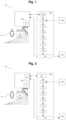
- Figure 1 illustrates a system 100 according to the present invention, arranged to perform a method according to the invention for providing a digital video stream, such as a shared digital video stream.
- the system 100 may comprise a video communication service 110, but the video communication service 110 may also be external to the system 100 in some embodiments. As will be discussed, there may be more than one video communication service 110.
- the system 100 may comprise one or several participant clients 121, but one, some or all participant clients 121 may also be external to the system 100 in some embodiments.
- the system 100 may comprise a central server 130.
- central server is a computer-implemented functionality that is arranged to be accessed in a logically centralised manner, such as via a well-defined API (Application Programming Interface).
- API Application Programming Interface
- the functionality of such a central server may be implemented purely in computer software, or in a combination of software with virtual and/or physical hardware. It may be implemented on a standalone physical or virtual server computer or be distributed across several interconnected physical and/or virtual server computers.
- the physical or virtual hardware that the central server 130 runs on may comprise a per se conventional CPU, a per se conventional GPU, a per se conventional RAM/ROM memory, a per se conventional computer bus, and a per se conventional external communication functionality such as an internet connection.
- Each video communication service 110 is also a central server in said sense, that may be a different central server than the central server 130 or a part of the central server 130.
- each of said participant clients 121 may be a central server in said sense, with the corresponding interpretation, and physical or virtual hardware that each participant client 121 runs on, in other words that computer software defining the functionality of the participant client 121, may also comprise a per se conventional CPU/GPU, a per se conventional RAM/ROM memory, a per se conventional computer bus, and a per se conventional external communication functionality such as an internet connection.
- Each participant client 121 also typically comprises or is in communication with a computer screen, arranged to display video content provided to the participant client 121 as a part of an ongoing video communication; a loudspeaker, arranged to emit sound content provided to the participant client 121 as a part of said video communication; a video camera; and a microphone, arranged to record sound locally to a human participant 122 to said video communication, the participant 122 using the participant client 121 in question to participate in said video communication.
- a respective human-machine interface of each participating client 121 allows a respective participant 122 to interact with the client 121 in question, in a video communication, with other participants and/or audio/video streams provided by various sources.
- each of the participating clients 121 comprises a respective input means 123, that may comprise said video camera; said microphone; a keyboard; a computer mouse or trackpad; and/or an API to receive a digital video stream, a digital audio stream and/or other digital data.
- the input means 123 is specifically arranged to receive a video stream and/or an audio stream from a central server, such as the video communication service 110 and/or the central server 130, such a video stream and/or audio stream being provided as a part of a video communication and preferably being produced based on corresponding digital data input streams provided to said central server from at least two sources of such digital data input streams, for instance participant clients 121 and/or external sources (see below).
- each of the participating clients 121 comprises a respective output means 124, that may comprise said computer screen; said loudspeaker; and an API to emit a digital video and/or audio stream, such stream being representative of a captured video and/or audio locally to the participant 122 using the participant client 121 in question.
- each participant client 121 may be a mobile device, such as a mobile phone, arranged with a screen, a loudspeaker, a microphone and an internet connection, the mobile device executing computer software locally or accessing remotely executed computer software to perform the functionality of the participant client 121 in question.
- the participant client 121 may also be a thick or thin laptop or stationary computer, executing a locally installed application, using a remotely accessed functionality via a web browser, and so forth, as the case may be.
- participant clients 121 used in one and the same video communication of the present type.
- Each of the participating clients may be allocated to such a respective group.
- the groups may reflect different roles of the participating clients, different virtual or physical locations of the participating clients and/or different interaction rights of the participating clients.
- a virtual location may be defined in terms of the physical location, but may also involve a virtual grouping that may partly overlap with said physical locations. For instance, a physically present audience may be divided into a first and a second virtual group, and some physically present audience participants may be grouped together with some physically distant audience participants in one and the same virtual group.
- interaction rights may be, for instance, “full interaction” (no restrictions), “can talk but only after requesting the microphone” (such as raising a virtual hand in a video conference service), “cannot talk but write in common chat” or “view/listen only”.
- each role defined and/or physical/virtual location may be defined in terms of certain predetermined interaction rights.
- all participants having the same interaction rights form a group.
- any defined roles, locations and/or interaction rights may reflect various group allocations, and different groups may be disjoint or overlapping, as the case may be.
- the video communication may be provided at least partly by the video communication service 110 and at least partly by the central server 130, as will be described and exemplified herein.
- a "video communication" is an interactive, digital communication session involving at least two, preferably at least three or even at least four, video streams, and preferably also matching audio streams that are used to produce one or several mixed or joint digital video/audio streams that in turn is or are consumed by one or several consumers (such as participant clients of the discussed type), that may or may not also be contributing to the video communication via video and/or audio.
- Such a video communication is real-time, with or without a certain latency or delay.
- At least one, preferably at least two, or even at least four, participants 122 to such a video communication is involved in the video communication in an interactive manner, both providing and consuming video/audio information.
- At least one of the participant clients 121, or all of the participant clients 121, may comprise a local synchronisation software function 125, that will be described in closer detail below.
- the video communication service 110 may comprise or have access to a common time reference, as will also be described in closer detail below.
- Each of the at least one central server 130 may comprise a respective API 137, for digitally communicating with entities external to the central server 130 in question. Such communication may involve both input and output.
- the system 100 may furthermore be arranged to digitally communicate with, and in particular to receive digital information, such as audio and/or video stream data, from, an external information source 300, such as an externally provided video stream.
- an external information source 300 such as an externally provided video stream.
- the information source 300 is "external" means that it is not provided from or as a part of the central server 130.
- the digital data provided by the external information source 300 is independent of the central server 130, and the central server 130 cannot affect the information contents thereof.
- the external information source 130 may be live captured video and/or audio, such as of a public sporting event or an ongoing news event or reporting.
- the external information source 130 may also be captured by a web camera or similar, but not by any one of the participating clients 121.
- Such captured video may hence depict the same locality as any one of the participant clients 121, but not be captured as a part of the activity of the participant client 121 per se.
- an externally provided information source 300 may be provided as, and in their capacity as, participants to a video communication of the above-defined type, whereas an externally provided information source 300 is not, but is instead provided as a part of a context that is external to said video conference
- each of the participating clients 121 may constitute the source of a respective information (video and/or audio) stream 120, provided to the video communication service 110 by the participating client 121 in question as described.
- the system 100 such as the central server 130, may be further arranged to digitally communicate with, and in particular to emit digital information to, an external consumer 150.
- a digital video and/or audio stream produced by the central server 130 may be provided continuously, in real-time or near real-time, to one or several external consumers 150 via said API 137.
- the consumer 150 is "external" means that the consumer 150 is not provided as a part of the central server 130, and/or that it is not a party to the said video communication.
- a number of participant clients 121 take part in a digital video communication provided by the video communication service 110.
- Each participant client 121 may hence have an ongoing login, session or similar to the video communication service 110, and may take part in one and the same ongoing video communication provided by the video communication service 110.
- the video communication is "shared" among the participant clients 121 and therefore also by corresponding human participants 122.
- the central server 130 comprises an automatic participant client 140, being an automated client corresponding to participant clients 121 but not associated with a human participant 122. Instead, the automatic participant client 140 is added as a participant client to the video communication service 110 to take part in the same shared video communication as participant clients 121. As such a participant client, the automatic participant client 140 is granted access to continuously produced digital video and/or audio stream(s) provided as a part of the ongoing video communication by the video communication service 110, and can be consumed by the central server 130 via the automatic participant client 140.
- the central server 130 may comprise a collecting function 131 arranged to receive video and/or audio streams of said type from the automatic participant client 140, and possibly also from said external information source(s) 300, for processing as described below, and then to provide a produced, such as shared, video stream via the API 137. For instance, this produced video stream may be consumed by the external consumer 150 and/or by the video communication service 110 to in turn be distributed by the video communication service 110 to all or any requesting one of the participant clients 121.
- a collecting function 131 arranged to receive video and/or audio streams of said type from the automatic participant client 140, and possibly also from said external information source(s) 300, for processing as described below, and then to provide a produced, such as shared, video stream via the API 137. For instance, this produced video stream may be consumed by the external consumer 150 and/or by the video communication service 110 to in turn be distributed by the video communication service 110 to all or any requesting one of the participant clients 121.
- FIG. 4 illustrates the central server 130 in closer detail.
- said collecting function 131 may comprise one or, preferably, several, format-specific collecting functions 131a.
- Each one of said format-specific collecting functions 131a may be arranged to receive a video and/or audio stream having a predetermined format, such as a predetermined binary encoding format and/or a predetermined stream data container, and may be specifically arranged to parse binary video and/or audio data of said format into individual video frames, sequences of video frames and/or time slots.
- the central server 130 may further comprise an event detection function 132, arranged to receive video and/or audio stream data, such as binary stream data, from the collecting function 131 and to perform a respective event detection on each individual one of the received data streams.
- the event detection function 132 may comprise an Al (Artificial Intelligence) component 132a for performing said event detection. The event detection may take place without first time-synchronising the individual collected streams.
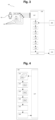
- the method starts.
- respective primary digital video streams 210, 301 are collected, such as by said collecting function 131, from at least two of said digital video sources 120, 300.
- Each such primary data stream 210, 301 may comprise an audio part 214 and/or a video part 215.
- video in this context, refers to moving and/or still image contents of such a data stream.
- Each primary data stream 210, 301 may be encoded according to any video/audio encoding specification (using a respective codec used by the entity providing the primary stream 210, 301 in question), and the encoding formats may be different across different ones of said primary streams 210, 301 concurrently used in one and the same video communication.
- the collecting step is shown in Figures 6a and 6b .
- Figure 6b it is also illustrated how the collecting function 131 can store each primary video stream 210, 301 as bundled audio/video information or as audio stream data separated from associated video stream data.
- Figure 6b illustrates how the primary video stream 210, 301 data is stored as individual frames 213 or collections/clusters of frames, "frames" here referring to time-limited parts of image data and/or any associated audio data, such as each frame being an individual still image or a consecutive series of images (such as such a series constituting at the most 1 second of moving images) together forming moving-image video content.
- frames here referring to time-limited parts of image data and/or any associated audio data, such as each frame being an individual still image or a consecutive series of images (such as such a series constituting at the most 1 second of moving images) together forming moving-image video content.
- said primary digital video streams 210, 301 are analysed, such as by said event detection function 132 and in particular said Al component 132a, to detect at least one event 211 selected from a first set of events. This is illustrated in Figure 6c .
- this event detections step may be performed for at least one, such as at least two, such as all, primary video streams 210, 301, and that it may be performed individually for each such primary video stream 210, 301.
- the event detection step preferably takes place for said individual primary video stream 210, 301 only taking into consideration information contained as a part of that particular primary video stream 210, 301 in question, and particularly without taking into consideration information contained as a part of other primary video streams.
- the event detection preferably takes place without taking into consideration any common time reference 260 associated with the several primary video streams 210, 301.
- the event detection preferably takes into consideration information contained as a part of the individually analysed primary video stream in question across a certain time interval, such as a historic time interval of the primary video stream that is longer than 0 seconds, such as at least 0.1 seconds, such as at least 1 second.
- the primary digital video streams 210 are time-synchronised.
- This time-synchronisation may be with respect to a common time reference 260.
- the time-synchronisation may involve aligning the primary video streams 210, 301 in relation to each other, for instance using said common time reference 260, so that they can be combined to form a time-synchronised context.
- the common time reference 260 may be a stream of data, a heartbeat signal or other pulsed data, or a time anchor applicable to each of the individual primary video streams 210, 301.
- the common time reference can be applied to each of the individual primary video streams 210, 301 in a way so that the informational contents of the primary video stream 210, 301 in question can be unambiguously related to the common time reference with respect to a common time axis.
- the common time reference may allow the primary video streams 210, 301 to be aligned, via time shifting, so as to be time-synchronised in the present sense.
- the time-synchronisation may be based on known information about a time difference between the primary video streams 210, 301 in question, such as based on measurements.
- the time-synchronisation may comprise determining, for each primary video streams 210, 301, one or several timestamps 261, such as in relation to the common time reference 260 or for each video stream 210, 301 in relation to another video stream 210, 301 or to other video streams 210, 301.
- the hence time-synchronised primary digital video streams 210, 301 are analysed to detect at least one pattern 212 selected from a first set of patterns. This is illustrated in Figure 6e .
- the pattern detection step may preferably be performed based on video and/or audio information contained as a part of at least two of the time-synchronised primary video streams 210, 301 considered jointly.
- Said first set of patterns may contain any number of types of patterns, such as several participants talking interchangeably or concurrently; or a presentation slide change occurring concurrently as a different event, such as a different participant talking. This list is not exhaustive, but illustrative.
- detected patterns 212 may relate not to information contained in several of said primary video streams 210, 301 but only in one of said primary video streams 210, 301. In such cases, it is preferred that such pattern 212 is detected based on video and/or audio information contained in that single primary video stream 210, 301 spanning across at least two detected events 211, for instance two or more consecutive detected presentation slide changes or connection quality changes. As an example, several consecutive slide changes that follow on each other rapidly over time may be detected as one single slide change pattern, as opposed to one individual slide change pattern for each detected slide change event.
- the first set of events and said first set of patterns may comprise events/patterns being of predetermined types, defined using respective sets of parameters and parameter intervals.
- the events/patterns in said sets may also, or additionally, be defined and detected using various Al tools.
- the shared digital video stream is produced as an output digital video stream 230 based on consecutively considered frames 213 of the time-synchronised primary digital video streams 210, 301 and said detected patterns 212.
- the present invention allows for the completely automatic production of video streams, such as of the output digital video stream 230.
- such production may involve the selection of what video and/or audio information from what primary video stream 210, 301 to use to what extent in such output video stream 230; a video screen layout of an output video stream 230; a switching pattern between different such uses or layouts across time; and so forth.
- FIG. 6f shows one or several additional pieces of time-related (that may be related to the common time reference 260) digital video information 220, such as an additional digital video information stream, that can be time-synchronised (such as to said common time reference 260) and used in concert with the time-synchronised primary video streams 210, 301 in the production of the output video stream 230.
- the additional stream 220 may comprise information with respect to any video and/or audio special effects to use, such as dynamically based on detected patterns; a planned time schedule for the video communication; and so forth.
- the produced output digital video stream 230 is continuously provided to a consumer 110, 150 of the produced digital video stream as described above.
- the produced digital video stream may be provided to one or several participant clients 121, such as via the video communication service 110.
- the method ends.
- the method may iterate any number of times, as illustrated in Figure 5 , to produce the output video stream 230 as a continuously provided stream.
- the output video stream 230 is produced to be consumed in real-time or near real-time (taking into consideration a total latency added by all steps along the way), and continuously (publishing taking place immediately when more information is available, however not counting the below-described deliberately added latencies or delays).
- the output video stream 230 may be consumed in an interactive manner, so that the output video stream 230 may be fed back into the video communication service 110 or into any other context forming a basis for the production of a primary video stream 210 again being fed to the collection function 131 so as to form a closed feedback loop; or so that the output video stream 230 may be consumed into a different (external to system 100 or at least external to the central server 130) context but there forming the basis of a real-time, interactive video communication.
- At least two, such as at least three, such as at least four, or even at least five, of said primary digital video streams 210, 301 are provided as a part of a shared digital video communication, such as provided by said video communication service 110, the video communication involving a respective remotely connected participant client 121 providing the primary digital video stream 210 in question.
- the collecting step may comprise collecting at least one of said primary digital video streams 210 from the shared digital video communication service 110 itself, such as via an automatic participant client 140 in turn being granted access to video and/or audio stream data from within the video communication service 110 in question; and/or via an API 112 of the video communication service 110.
- the primary video streams 210, 301 are not formatted in the same manner. Such different formatting can be in the form of them being delivered to the collecting function 131 in different types of data containers (such as AVI or MPEG), but in preferred embodiments at least one of the primary video streams 210, 301 is formatted according to a deviating format (as compared to at least one other of said primary video streams 210, 301) in terms of said deviating primary digital video stream 210, 301 having a deviating video encoding; a deviating fixed or variable frame rate; a deviating aspect ratio; a deviating video resolution; and/or a deviating audio sample rate.
- a deviating format as compared to at least one other of said primary video streams 210, 301
- the collecting function 131 is preconfigured to read and interpret all encoding formats, container standards, etc. that occur in all collected primary video streams 210, 301. This makes it possible to perform the processing as described herein, not requiring any decoding until relatively late in the process (such as not until after the primary stream in question is put in a respective buffer; not until after the event detection step; or even not until after the event detection step).
- the collecting function 131 may be arranged to perform a decoding and analysis of such primary video stream 210, 301, followed by a conversion into a format that can be handled by, for instance, the event detection function. It is noted that, even in this case, it is preferred not to perform any reencoding at this stage.
- primary video streams 220 being fetched from multi-party video events typically have requirements on low latency and are therefore typically associated with variable framerate and variable pixel resolution to enable participants 122 to have an effective communication. In other words, overall video and audio quality will be decreased as necessary for the sake of low latency.
- External video feeds 301 will typically have a more stable framerate, higher quality but therefore possibly higher latency.
- the collecting step comprises converting at least two, such as all, of the primary digital video streams 210, 301 into a common protocol 240.
- the term "protocol" refers to an information-structuring standard or data structure specifying how to store information contained in a digital video/audio stream.
- the common protocol preferably does not, however, specify how to store the digital video and/or audio information as such on a binary level (i.e. the encoded/compressed data instructive of the sounds and images themselves), but instead forms a structure of predetermined format for storing such data.
- the common protocol prescribes storing digital video data in raw, binary form without performing any digital video decoding or digital video encoding in connection to such storing, possibly by not at all amending the existing binary form apart from possibly concatenating and/or splitting apart the binary form byte sequence.
- Figure 7 illustrates, as an example, the primary video streams 210, 301 shown in Figure 6a , restructured by the respective format-specific collecting function 131a and using said common protocol 240.
- the common protocol 240 prescribes storing digital video and/or audio data in data sets 241, preferably divided into discreet, consecutive sets of data along a time line pertaining to the primary video stream 210, 301 in question.
- Each such data set may include one or several video frames, and also associated audio data.
- the common protocol 240 may also prescribe storing metadata 242 associated with specified time points in relation to the stored digital video and/or audio data sets 241.
- the metadata 242 may comprise information about the raw binary format of the primary digital video stream 210 in question, such as regarding a digital video encoding method or codec used to produce said raw binary data; a resolution of the video data; a video frame rate; a frame rate variability flag; a video resolution; a video aspect ratio; an audio compression algorithm; or an audio sampling rate.
- the metadata 242 may also comprise information on a timestamp of the stored data, such as in relation to a time reference of the primary video stream 210, 301 in question as such or to a different video stream as discussed above.
- the converting of the primary video streams 210, 301 performed by each format-specific collecting function 131a may hence comprise splitting raw, binary data of each thus converted primary digital video stream 210, 301 into an ordered set of said smaller sets of data 241.
- the converting may also comprise associating each (or a subset, such as a regularly distributed subset along a respective time line of the primary stream 210, 301 in question) of said smaller sets 241 with a respective time along a shared time line, such as in relation to said common time reference 260.
- This associating may be performed by analysis of the raw binary video and/or audio data in any of the principle ways described below, or in other ways, and may be performed in order to be able to perform the subsequent time-synchronising of the primary video streams 210, 301.
- at least part of this association of each of the data sets 241 may also or instead be performed by the synchronisation function 133.
- the collecting step may instead comprise associating each, or a subset, of the smaller sets 241 with a respective time of a time line specific for the primary stream 210, 301 in question.
- Each of said primary digital video streams 210, 301 may be stored in an individual data storage buffer 250, as individual frames 213 or sequences of frames 213 as described above, and also each associated with a corresponding time stamp in turn associated with said common time reference 260.
- the video communication service 110 is Microsoft ® Teams ® , running a video conference involving concurrent participants 122.
- the automatic participant client 140 is registered as a meeting participant in the Teems ® meeting.
- the primary video input signals 210 are available to and obtained by the collecting function 130 via the automatic participant client 140. These are raw signals in H264 format and contain timestamp information for every video frame.
- the common protocol 240 it becomes possible to reserve memory in the collecting function 131 for the primary video stream 210 associated with each Teams ® meeting participant 122, and also for any external video sources 300, and then to change the amount of memory allocated on the fly during the process. This way, it becomes possible to change the number of input streams and as a result keep each buffer effective. For instance, since information like resolution, framerate and so forth may be variable but stored as metadata in the common protocol 240, this information can be used to quickly resize each buffer as need may be.
- said at least one additional piece of digital video information 220 is also stored in a respective individual buffer 250, as individual frames or sequences of frames each associated with a corresponding time stamp in turn associated with said common time reference 260.
- the event detection step may comprise storing, using said common protocol 240, metadata 242 descriptive of a detected event 211, associated with the primary digital video stream 210, 301 in which the event 211 in question was detected.
- the event detection step comprises a first trained neural network or other machine learning component analysing at least one, such as several or even all, of said primary digital video streams 210, 301 individually in order to automatically detect any of said events 211. This may involve the Al component 132a classifying, in a managed classification, the primary video stream 210, 301 data into a set of predefined events and/or, in an unmanaged classification, into a dynamically determined set of events.
- the detected event 211 is a change of presentation slides in a presentation being or being comprised in the primary video stream 210, 301 in question.
- the presenter of the presentation decides to change the slide in the presentation he/she is giving at that time to an audience, this means that what is interesting for a given viewer can change.
- the newly shown slide is only a high level picture that can best be seen briefly in a so-called "butterfly" mode (for instance, displaying in the output video stream 230 the slide side-by-side with a video of the presenter).
- the slide may contain much detail, text with small font sizes, and so forth.
- the slide should instead be presented in full-screen and perhaps during a somewhat longer time period than what is usually the case.
- a butterfly mode may not be as appropriate, since the slide in this case may be more interesting to a viewer of the presentation than the face of the presenter.
- the event detection step may comprise at least one of the following: Firstly, the event 211 can be detected based on an image analysis of a difference between a first image of a detected slide and a subsequent second image of a detected slide.
- the nature of the primary video stream 220, 301 being that of showing a slide can be automatically determined using per se conventional digital image processing, such as using motion detection in combination with OCR (Optical Character Recognition).
- This may involve checking, using automatic computer image processing techniques, whether the detected slide has changed significantly enough to actually categorise it as a slide change. This may be done by checking the delta between current slide and previous slide with respect to RGB colour values. For instance, one may assess how much the RGB values have changed globally in the screen area covered by the slide in question, and whether it is possible to find groups of pixels that belong together and that change in concert. This way, relevant slide changes can be detected while, for instance, filtering out irrelevant changes such as shown computer mouse movements across the screen. This approach also allows full configurability - for instance, sometimes it is desired to be able to capture computer mouse movement, for instance when the presenter wishes to present something in detail using the computer mouse to point to different things.
- the event 211 may be detected based on an image analysis of an informational complexity of said second image itself, to determine the type of event with greater specificity.
- the event detection function 132 may call the relevant format-specific collecting function for image interpreting services, or the event detection function 132 may itself include functionality for assessing image information, such as on individual pixel level, for a number of different supported raw binary video data formats.
- participant clients 121 are associated with different physical locations and different internet connections, it can happen that someone will lose connection to the video communication service 110 or to the central server 130. In that situation, it is desirable to avoid showing a black or empty screen in the produced output video stream 230.
- connection loss can be detected as an event by the event detection function 132, such as by applying a 2-class classification algorithm where the 2 classes used are connected / not connected (no data).
- no data differs from the presenter sending out a black screen intentionally. Because a brief black screen, such as of only 1 or 2 frames, may not be noticeable in the end production stream 230, one may apply said 2-class classification algorithm over time to create a time series. Then, a threshold value, specifying a minimum length for a connection interruption, can be used to decide whether there is a lost connection or not.
- detected events of these exemplified types may be used by the pattern detection function 134 to take various actions, as suitable and desired.
- the individual primary video streams 210, 301 may each be related to the common time reference 260 or to each other in the time domain, making it possible for the synchronisation function 133 to time-synchronise them in relation to each other.
- the common time reference 260 is based on or comprises a common audio signal 111 (see Figures 1-3 ), the common audio signal 111 being common for the shared digital video communication service 110 involving at least two remotely connected participant clients 121 as described above, each providing a respective one of said primary digital video streams 210.
- a common audio signal is produced and can be captured by the central server 130 via the automatic participant client 140 and/or via the API 112.
- a common audio signal may be used as a heartbeat signal to time-synchronise the individual primary video streams 220 by binding each of these to specific time points based on this heartbeat signal.
- Such a common audio signal may be provided as a separate (in relation to each of the other primary video streams 210) signal, whereby the other primary video streams 210 may each be individually time-correlated to the common audio signal, based on audio contained in the other primary video stream 210 in question or even based on image information contained therein (such as using automatic image processing-based lip syncing techniques).
- such a common audio signal is used as a heartbeat for all primary video streams 210in the central server 130 (but perhaps not external primary video streams 301).
- all other signals are mapped to this common audio time heartbeat to make sure that everything is in time sync.
- the time-synchronisation is achieved using a time synchronisation element 231 introduced into the output digital video stream 230 and detected by a respective local time-synchronising software function 125 provided as a part of one or several individual ones of the participant clients 121, the local software function 125 being arranged to detect a time of arrival of the time synchronisation element 231 in the output video stream 230.
- the output video stream 230 is fed back into the video communication service 110 or otherwise made available to each participant client 121 and the local software function 125 in question.
- the time synchronisation element 231 may be a visual marker, such as a pixel changing colours in a predetermined sequence or manner, placed or updated in the output video 230 at regular time intervals; a visual clock updated and displayed in the output video 230; a sound signal (that may be designed to be non-audible to participants 122 by, for instance, having low enough amplitude and/or high enough frequency) and added to an audio forming part of the output video stream 230.
- the local software function 125 is arranged to, using suitable image and/or audio processing, automatically detect respective times of arrival of each of the (or each of the) time synchronisation element(s) 231.
- the common time reference 260 may be determined at least party based on said detected times of arrival.
- each of the local software functions 125 may communicate to the central server 130 respective information signifying said detected time of arrival.
- Such communication may take place via a direct communication link between the participant client 121 in question and the central server 130. However, the communication may also take place via the primary video stream 210 associated with the participant client 121 in question. For instance, the participating client 121 may introduce a visual or audible code, such as of the above discussed type, in the primary video stream 210 produced by that participant client 121 in question, for automatic detection by the central server 130 and used to determine the common time reference 260.
- a visual or audible code such as of the above discussed type
- each participant client 121 may perform an image detection in a common video stream available for viewing by all participant clients 121 to the video communication service 110 and relay the results of such image detection to the central server 130, in a way corresponding to the ones discussed above, to there be used to over time determine respective offsets of each participant client 121 in relation to each other.
- a common time reference 260 may be determined as a set of individual relative offsets. For instance, a selected reference pixel of a commonly available video stream may be monitored by several, or all, participating clients 121, such as by said local software function 125, and a current colour of that pixel may be communicated to the central server 130.
- the central server 130 may calculate a respective time series based on consecutively received such colour values from each of a number of (or all) the participant clients 121, and perform a cross-correlation resulting in an estimated set of relative time offsets across the different participant clients 121.
- a common time reference 260 may be determined at least partly based on a detected discrepancy between an audio part 214 of a first one of said primary digital video streams 210, 301 and an image part 215 of said first primary digital video streams 210, 301.
- Such discrepancy may, for instance, be based on a digital lip sync video image analysis of a talking participant 122 viewed in said first primary digital video stream 210, 301 in question.
- lip sync analysis is conventional as such, and may for instance use a trained neural network.
- the analysis may be performed by the synchronisation function 133 for each primary video stream 210, 301 in relation to available common audio information, and relative offsets across the individual primary video streams 210, 301 may be determined based on this information.
- Figure 8b illustrates a method according to said second aspect.
- the result of this first production is hence a produced digital video stream of the above-described type, that may for instance visually comprise one or several of the primary video streams in question, in processed or non-processed form, as sub-parts.
- This first produced video stream may comprise live-captured video streams, slides, externally provided video or imagery, and so forth, as generally described above in relation to video output streams produced by the central server 130.
- the first produced video stream may also be produced based on detected events and/or patterns of deliberately delayed or real-time first and/or second primary video streams, provided by first group 121' participant clients, in the general way described above.
- the second produced digital video stream is then produced as a digital video stream based on both said first produced video stream and also based on said first and second primary digital video streams collected from the first group of participant clients 121'.
- the first and second primary digital video streams may be provided to the second production function 135" from the collecting function 131; whereas the first produced video stream may be provided from the first production function 135' to the second production function 135".
- the first and second production functions 135', 135" are one and the same logical unit (which may be the case), the production simply takes place in two consecutive steps in that production function.
- first and/or second primary video streams fed to the second production step 135" may be preformatted in various ways prior to the second production step 135". They may also be deliberately delayed in order to detect events and/or patterns as generally described above.
- the second production step may be similar to any of the production steps described above, and all that has been said above with respect to the functioning of the production functions 135, 135' is also correspondingly applicable to the second production function 135".
- the second production function 135" may produce the second produced video stream by formatting the primary video streams in various ways as a part of the production process.
- the first and second primary video streams may be time-synchronised to each other, such as using a common time reference in any of the ways discussed above, before being fed to the first production function 135'.
- the first and second primary digital video streams may be deliberately time-delayed (for instance, deliberately time-delayed in addition to any already-applied time delay performed for time-synchronising the primary video streams to each other and/or to be able to detect events and/or patterns for use in the first production function 135').
- the purpose and result of this now deliberately introduced time delay is to time-synchronise them with the first produced video stream before used in the second produced video stream.
- the additional delay introduced with respect to the first and second primary video streams is then equal to, substantially equal to or at least determined as a function of the latency associated with performing the first production step.
- the exact latency to add may be determined, for instance, based on a detected common time reference of the general type described above.
- the first production step in which the first produced video is produced, is normally associated with a certain latency (due to data processing of the first production step 135' itself), that may depend on for instance an available computer power and a first production step 135' complexity.
- This latency is typically not present (or any latency is at any rate smaller) for said first and second video streams themselves, that are simply captured, optionally processed in the mentioned ways and thereafter provided by the collecting function 131 to and for use by the second production function 135".
- the second produced video stream is then produced based on the time-delayed first and second primary digital video streams.
- the first produced video stream may be fed into the second production step 135", the second produced video stream hence being produced using two (or more) production steps 135', 135" where the same primary video streams are used in at least two such production steps associated with different latencies in relation to a common time reference of the primary video streams provided by the collecting function 131.
- the first group 121' participant clients are part of a debate panel, communicating using the video communication service 110 at a relative low latency, each one of these participant clients continuously being fed the first produced video stream (or the respective primary video stream of each other, as described in connection to Figure 8a , above).
- An audience to the debate panel is constituted by the second group 121" participant clients, continuously being fed the second produced video stream in turn being associated with a slightly higher latency.
- the second produced video stream may be automatically produced, in the general manner discussed above, to automatically shift between views of individual debate panel speakers (participant clients allocated to the first group 121', such views being provided directly from the collection function 131) and a produced view showing all debate panel speakers (this view being the first produced video stream).
- the audience can receive a well-produced experience while the panel speakers may interact with each other at minimum latency.
- the delay deliberately added to the first and second primary video streams in connection to the second production step may be at least 0.1 s, such as at least 0.2 s, such as least 0.5 s; and may be at the most 5 s, such as at the most 2 s, such as at the most 1 s. It may also depend on an inherit latency associated with each primary video stream, so as to achieve a full time-synchronisation between the first and second primary video streams and also the first produced video stream.
- first and second primary video streams may all be additionally deliberately delayed so as to improve pattern detection for use in the second production function 135" in the general way described above.
- Figure 9 illustrates a number of alternative or concurrent ways of publishing the various produced video streams produced by the central server 130.
- said first produced video stream may be continuously provided to at least one of a first participating client 121 and a second participating client 121.
- this first participating client may be the participating client from the group 121' providing the first primary digital video stream
- the second participating client may be the participating client from the group 121' providing the second primary digital video stream.
- the first produced video stream may be continuously provided to at least one of said first participating client and said second participating client.
- one or several of the participating clients of the group 121' may also receive the second produced video stream, by the second publishing function 136", in turn being arranged to receive the second produced video stream from the second production function 135".
- each of the primary video stream-providing participating clients being allocated to the first group 121' may be provided with the first produced video stream, involving a certain delay or latency due to the synchronisation between said primary video streams and also a possibly deliberately added delay or latency added in order to allow sufficient time for an event and/or pattern detection, as described above.
- each of the participating clients being allocated to the second group 121" may be provided with the second produced video stream, also including said deliberately added delay in connection to the second production step, added with the purpose of time-synchronising the first produced video stream with said first and second primary video streams.
- This extra delay may or may not cause communication difficulties between the participating clients of the second group 121", for instance since they interact in a different manner than the first group 121' participants with the video communication service 110 (see below).
- each of the participating clients allocated to the second group 121" may be provided directly with the first produced video stream.
- first group 121' participant clients form a sub-group of all participating clients 121 currently participating in the video communication service 110 in question, being present in and using the service in question in a "time zone" that is slightly ahead (such as 1-3 seconds ahead) of any participating client instead being continuously provided a produced video stream, such as the first or the second produced video stream.
- a produced video stream such as the first or the second produced video stream.
- other participating clients (not allocated to the first group 121' but instead to the second group 121") will be continuously provided the second produced video stream, which is produced based on (and may at each point in time contain either or both of) the first and second primary video streams, but then in a slightly later "time zone".
- the first produced video stream is produced directly based on the first and second primary video streams, without any delay or latency added to time-synchronise them to an already-produced video stream based on the primary video streams themselves, a more direct, low-latency video communication service 110 experience is then made available to these participating clients 121.
- this may also mean that the participating clients 121 allocated to the first group 121' are not provided access to the second produced video stream.
- said first and second primary digital video streams may be provided as a part of a shared digital video communication service 110 of the above-discussed general type, and said first participating client and said second participating client (belonging to the same first group 121') may both be respective remotely connected participant clients to said shared digital video communication service 110.
- Said second group 121" participating clients (and also the third group 121′′′ participating clients) may also be remotely connected participant clients to said shared digital video communication service 1110.
- remotely connected does not necessarily imply that such participant clients 121 or corresponding users 122 are located in different rooms, premises or geographic locations, but that users 122 audio/visually interact with the video communication service 110 using the participating client 121 in question.
- Said collecting step may comprise collecting said first and/or second primary digital video streams from the shared digital video communication service 110, such as in any of the ways discussed above.
- Figure 8c illustrates a method according to said third aspect.
- the method shown in Figure 8c is similar to the one illustrated in Figures 8a and 8b , and these four aspects of the invention are freely combinable. All that is said in relation to one of these aspects is readily applicable, in the corresponding manner, to the other aspects, pending compatibility.
- the method starts.
- a subsequent collecting step from said first participant client, allocated to said first group 121', the first primary digital video stream is collected, and the second primary digital video stream is collected from the second participant client, also being allocated to the same first group 121'.
- a third digital video stream is collected from a third participant client, which may be not allocated to the first group 121'.
- the third participant client may be allocated to the second group 121".
- This collecting step may be similar to the collecting step described in relation to Figure 8b .
- the first produced video stream may be produced as a digital video stream based on said collected first and second primary digital video streams. It is noted here that it may be so that the first produced video stream is not produced based on said third primary video stream.
- the first produced digital video stream is continuously produced for publication, to some consuming client, with a first latency.
- the first produced digital video stream is produced so that, if each newly produced frame of the first produced digital video stream is published immediately upon production of that frame in question, the publication of that frame takes place at the first latency.
- the second produced video stream is produced as a digital video stream based on all three primary digital streams, in other words all of said first, second and third primary digital video streams.
- the second produced digital video stream is continuously produced for publication with a second latency.
- the second latency being larger than the first latency.
- a subsequent publishing step which may be similar to the publishing step described in relation to Figure 8b , at least one of said first primary digital video stream, said second primary digital video stream and said first produced video stream (such as any set of one or more of these streams) is continuously provided to at least one of the first participating client and the second participating client.
- This is similar to the method described in relation to Figure 8a , above.
- said second produced video stream is continuously provided to at least one other participating client.
- the same example used to illustrate a practical application of the second-aspect solution can also be used to illustrate how this third aspect can be put into practise. Since the third primary video stream is collected from a second group 121" participant client, having lower requirements on latency than the first-group 121' participating clients providing the first and second primary video streams, the second produced video stream will be provided in a way with more latency, making it possible to achieve a desired automatic production, whereas the first group 121' panel debate speakers can interact among themselves with lower latency.
- the second produced video stream may be continuously be provided to at least one consuming client that is not the first or second participating client. More generally, is may be continuously provided to a participating client 121 that is not allocated to the first group 121' and/or to an external consumer 150.
- the collecting step 131 may comprise collecting at least one of said primary digital video streams, such as an additional primary video stream in addition to the first and second primary video streams, as an external digital video stream 301 of the above-discussed type, collected from an information source 300 being external to said shared digital video communication service 110.
- an external video stream 301 may be time-synchronised to the first and second primary video streams by a synchronising function 133 logically situated (in terms of data flow) between the collecting function 131 and the first production function 135'.
- the first and/or second produced video stream may then be produced based on said external digital video stream 301.
- the first 135' and/or second 135" production step may further comprise producing the respective produced (first and/or second) video stream in question based on a set of predetermined and/or dynamically variable parameters regarding visibility of individual ones of said first and/or second primary digital video streams 210 in said produced digital video stream in question; visual and/or audial video content arrangement; used visual or audio effects; and/or modes of output of the produced digital video stream in question.
- the first 135' and/or second 135" production step may be performed by the central server 130, providing said second produced video stream to one or several concurrent (external and/or participating) consumer clients as a live video stream via an API 137 of the above-discussed general type.
- the different groups 121', 121", 121′′′ of participant clients 121 may have different requirements in terms of latency tolerance. This may in particular be true in case they participate in one and the same live video communication service 110 as participating clients 121 to such service 110. This will be further exemplified below.
- Figure 8d illustrates a method according to said fourth aspect of the invention.
- the method starts.
- a method for producing said second produced digital video stream may comprise a subsequent allocation step, that may be an initial step but that may also be performed at any time during the method, for instance as a re-allocation step.
- a plurality of participating clients 121 may be allocated across at least two groups 121', 121", 121′′′ of such participating clients 121.
- the allocation is into at least the first 121' and third 121′′′ groups, but participant clients 121 may, of course, also be allocated into the third group 121"'.
- the first primary digital video stream and the second primary digital video stream may be collected, such as by the collection function 131 and in a subsequent collecting step, from respective participant clients 121 allocated to said first group 121' of participant clients.
- a fourth primary digital video stream and a fifth primary digital video stream may also be collected, such as by the collecting function 131 and in said collecting step, but from respective participant clients 121 allocated to the third group 121′′′ of participant clients.
- the participant clients 121 allocated to the third group 121" may have less strict latency requirements than the participant clients 121 allocated to the first group 121'.
- the first group 121' participating clients 121 may be the members of the above-discussed debate panel (interacting with each other in real-time hence requiring low latency)
- the third group 121" participating clients 121 may constitute a panel of experts or similar, that interact with the panel but in a more structured way (such as using clear questions/answers), thus being able to tolerate higher latency than the first group 121'.
- the first produced video stream may be produced as described above, by the first production function 135' and based on the first and second primary video streams (and any additional input content, as discussed).
- a third produced video stream is also produced, in a corresponding manner, but by a third production function 135′′′ and based on (at least) the fourth and fifth primary video stream.
- Both the first produced video stream and the third produced video stream may be fed to the second production function 135" to base the production of the second produced video stream on, as the case may be.
- the second produced video stream is produced based on at least one of said first and second primary video streams, and further based on at least one of said fourth and fifth primary video streams, such as in the way described above.
- the second production function 135" may be provided with the fourth and fifth primary video streams from the collecting function 131 in the corresponding manner as the first and second primary video streams, including any cross-stream time-synchronisation, event detection, and so forth.
- the second produced video stream may be directly or indirectly based on the first and/or second primary video stream, for instance by the second produced video stream being based on the first produced video stream, in turn being based on the first and second primary video streams; and correspondingly for the fourth and fifth primary video streams and the third produced video stream.
- Said third produced video stream is produced in a subsequent third production step.
- the third production step comprises deliberately introducing a time-delay with respect to said fourth and fifth primary video streams so as to be time-synchronised to each other but time-unsynchronised (not time-synchronised) to the first produced video stream. It is understood that this time-delay may be introduced in the third production function 135′′′ itself, or in a corresponding synchronising function 133 upstream of the third production function 135′′′ in question.
- the first production step 135' may involve introducing a deliberate delay or latency of the type discussed above, introduced in addition to any delay introduced as a part of the synchronisation of the first and second primary video streams, and introduced so as to achieve sufficient time, for instance, to perform an efficient event and/or pattern detection.
- introduction of a deliberate delay or latency may take place as a part of a synchronising performed by said synchronising function 133 (not shown in Figure 9 for reasons of simplicity).
- the corresponding may be true for the third production step 135"', but introducing a deliberate delay or latency that is different from the deliberately introduced delay or latency for the first production step 135'.
- the deliberately introduced delays or latencies result in a time-unsynchronisa-tion between the first produced video stream and the third produced video stream.
- the first and third produced video streams do not follow a common timeline in case they are both immediately and continuously published upon production of each individual frame.
- the second produced video stream may be associated with higher latency than the first produced video stream, and possibly also higher latency than the third produced video stream.
- the second production function 135" may be arranged to synchronize the first, second, fourth and fifth primary video streams by adding additional respective delays thereto before incorporating them into the second produced video stream.
- the third produced video stream is continuously provided to at least one participant client allocated to said third group 121"', where it may be continuously published to the user 122 in question.
- the first produced video stream may be continuously provided to at least one participant client allocated to the first group 121', where it may be published to that user 122 in question; and/or the second produced video stream may be provided and published as described above.
- Said first production step 135' may comprise time-delaying the first and second primary video streams so as to time-synchronising them to each other, as described above.
- said third production step 135′′′ may comprise time-delaying said fourth and fifth primary video streams so as to time-synchronise them to each other, but using a larger maximum time-delay than a maximum time-delay used for time-delaying said first and second primary video streams in said first production step 135' (or corresponding synchronisation step 133), resulting in that the first produced video stream is not time-synchronised with the third produced video stream in the described way.
- respective participating clients 121 allocated to each of said groups 121', 121", 121′′′ may participate in one and the same video communication service 110 within which the second produced video stream is continuously published.
- different ones of said groups 121', 121", 121′′′ may be associated with different participator interaction rights in said video communication service 110, and different ones of said groups 121', 121", 121′′′ may be associated with different maximum time-delays (latencies) used for producing a respective produced video stream published to participant clients 121 allocated to the group 121', 121", 121′′′ in question.
- the first group 121' of panel debating participant clients may be associated with full interaction rights, and can speak whenever they wish to.
- the third group 121′′′ of participant clients may be associated with slightly restricted interaction rights, for instance that they need to request the floor before being able to speak by the video communication service 110 unmuting their mics.
- the second group 121" of audience participant users may be associated with even more restricted interaction rights, such as only being able to pose questions in writing in a common chat room but not being able to speak.
- various groups of participant users may be associated with different interaction rights and different latencies for the respective produced video stream that is published to them, in a way so that latency is an increasing function of decreasing interaction rights.
- the freer the participant user 121 in question is allowed, by the video communication service 110, to interact with other users, the lower the accepted latency.
- a group having a largest latency may be a viewer-only group, with no interaction rights apart from passive participation in the video communication service.
- time zone i.e. at what latency
- the first and second participating clients are provided each other's primary video streams, described above in connection to Figure 8a
- first produced digital video stream being provided to the first and second participant clients (in the sense that the time-synchronised set of raw or processed first and second primary digital video streams are made available to both the first and second participant clients).
- participant clients groups 121', 121", 121′′′ are experiencing interaction with each other in real-time, or at least near real-time (depending on unavoidable hardware and software latencies). These participant clients are provided video, including sound, from each other to achieve such interaction and communication between the users 122 in question.
- the first group 121' may serve users 122 at the core of the meeting, the interaction of which may be of interest for other (non-first group 121') participant clients to take part of.
- the present invention also relates to a computer software function for providing the second digital video stream according to what has been described above.
- a computer software function may then be arranged to, when executing, perform at least some of the above-described collecting, event detection, synchronising, pattern detection, production, and publishing steps described above, in particular with respect to the first, second, third and/or fourth aspects.
- the computer software function may be arranged to execute on physical or virtual hardware of the central server 130, as described above.
- the central server 130 may be arranged to control group 121', 121", 121′′′ allocation to individual participant clients 121. For instance, changing group allocation for a particular such participant client dynamically during the course of the live video communication service session may be a part of the automatic production of said video communication service by the central server 130. Such reallocation may be triggered based on a predetermined time-table or dynamically, for instance as a function of parameter data that may change dynamically over time, for instance upon the request (provided via the client 121 in question) of individual participant client users 122.
- the central server 130 may be arranged to dynamically change the group structure during the course of the video communication service, such as only using a certain group for a predetermined time slot (such as during a planned panel debate).
- the present invention may further comprise an interaction step, in which at least one participant client of a first group, the first group being associated with a first latency, interacts in a two-way (bi-directional) manner with at least one participant client of a second group, the second being associated with a second latency, the second latency being different from the first latency.
- these participating clients may all be participants to one and the same communication service of the above-described type.
- said participant clients being associated with different latencies (or "time zones” as discussed above), are temporarily put in the same "time zone", in other words associated with the same latency. For instance, this may take place by one of said participant clients that is associated with a larger latency temporarily is temporarily provided with one or several primary/produced digital video streams having och being produced using a smaller latency than the latency associated with the participant client in question.
- the participating client that normally is continuously provided with one or several video streams having a larger latency wants to interact with a participating client that is continuously provided with one or several video streams having a smaller latency
- the former participating client is instead temporarily continuously provided with one or several of the latter video streams.
- the higher-latency participant client temporarily switches to lower-latency "time zone" that the lower-latency participant client is associated with. After the interaction, the higher-latency participant client is then switched back to the higher-latency communication environment used before the interaction.
- a member of the above-discussed audience to a panel debate may want to pose a question.
- the audience member is given the word and is switched to the paneld debate "time zone".
- the audience member will see the panel with lower latency, but in a less elaborate production. More particularly, the audience member may see one or several of the same video streams provided to the panel members during the interaction. The rest of the audience will remain in the higher-latency audience "time zone", and will therefore not notice any difference.
- the speaking audience member will again be provided with the higher-latency video stream or streams as before the interaction.
- the switch between different "time zones" can be effected automatically by the central server 130.
- One example is a demonstration situation, wherein primary video streams include a view of the presenter, a shared digital slide-based presentation, and a live video of a product being demonstrated.
- primary video streams include a view of a teacher, a live video of a physical entity being the topic of the teaching, and respective live video of several students that may pose questions and engage in dialogue with the teacher.
- a video communication service may provide one or several of the primary video streams, and/or several of the primary video streams may be provided as external video sources of the types discussed herein.
- the various groups were exemplified as a debate panel, a panel of experts and an audience. However, it is realized that any division of participant user in a digital video communication service into two or more groups is possible, reflecting a current object and structure of the communication to be performed. For instance, one or more groups may include participant users accessing the video communication service remotely, from a different geographic location, whereas one or more other groups include participant users accessing the video communication service from a common central location such as a lecture hall. The same principles as described above apply to all such cases.
Landscapes
- Engineering & Computer Science (AREA)
- Multimedia (AREA)
- Signal Processing (AREA)
- Databases & Information Systems (AREA)
- Computer Networks & Wireless Communication (AREA)
- Computer Security & Cryptography (AREA)
- General Engineering & Computer Science (AREA)
- Physics & Mathematics (AREA)
- Theoretical Computer Science (AREA)
- General Physics & Mathematics (AREA)
- Library & Information Science (AREA)
- Software Systems (AREA)
- Two-Way Televisions, Distribution Of Moving Picture Or The Like (AREA)
- Studio Devices (AREA)
- Television Systems (AREA)
Applications Claiming Priority (3)
| Application Number | Priority Date | Filing Date | Title |
|---|---|---|---|
| SE2151461A SE545576C2 (en) | 2021-11-30 | 2021-11-30 | System and method for producing a video stream |
| EP22901918.7A EP4441992A4 (de) | 2021-11-30 | 2022-11-07 | System und verfahren zur erzeugung eines videostroms |
| PCT/SE2022/051033 WO2023101588A1 (en) | 2021-11-30 | 2022-11-07 | System and method for producing a video stream |
Related Parent Applications (1)
| Application Number | Title | Priority Date | Filing Date |
|---|---|---|---|
| EP22901918.7A Division EP4441992A4 (de) | 2021-11-30 | 2022-11-07 | System und verfahren zur erzeugung eines videostroms |
Publications (2)
| Publication Number | Publication Date |
|---|---|
| EP4580194A2 true EP4580194A2 (de) | 2025-07-02 |
| EP4580194A3 EP4580194A3 (de) | 2025-10-08 |
Family
ID=86612859
Family Applications (3)
| Application Number | Title | Priority Date | Filing Date |
|---|---|---|---|
| EP25176147.4A Pending EP4580194A3 (de) | 2021-11-30 | 2022-11-07 | System und verfahren zur erzeugung eines videostroms |
| EP22901919.5A Pending EP4441993A4 (de) | 2021-11-30 | 2022-11-07 | System und verfahren zur erzeugung eines videostroms |
| EP22901918.7A Pending EP4441992A4 (de) | 2021-11-30 | 2022-11-07 | System und verfahren zur erzeugung eines videostroms |
Family Applications After (2)
| Application Number | Title | Priority Date | Filing Date |
|---|---|---|---|
| EP22901919.5A Pending EP4441993A4 (de) | 2021-11-30 | 2022-11-07 | System und verfahren zur erzeugung eines videostroms |
| EP22901918.7A Pending EP4441992A4 (de) | 2021-11-30 | 2022-11-07 | System und verfahren zur erzeugung eines videostroms |
Country Status (9)
| Country | Link |
|---|---|
| US (5) | US12069406B2 (de) |
| EP (3) | EP4580194A3 (de) |
| JP (3) | JP2024544628A (de) |
| KR (3) | KR20240121231A (de) |
| CN (3) | CN118355651A (de) |
| AU (3) | AU2022400604A1 (de) |
| CA (3) | CA3273779A1 (de) |
| SE (1) | SE545576C2 (de) |
| WO (2) | WO2023101588A1 (de) |
Families Citing this family (2)
| Publication number | Priority date | Publication date | Assignee | Title |
|---|---|---|---|---|
| US12500997B2 (en) | 2024-01-31 | 2025-12-16 | Livearena Technologies Ab | Method and device for producing a video stream |
| WO2025195615A1 (de) * | 2024-03-18 | 2025-09-25 | Eyeson Gmbh | Computer-implementiertes verfahren zur übertragung und darstellung von zumindest videodaten |
Family Cites Families (13)
| Publication number | Priority date | Publication date | Assignee | Title |
|---|---|---|---|---|
| JP3305037B2 (ja) * | 1993-04-07 | 2002-07-22 | 富士通株式会社 | 多地点制御装置、テレビ会議端末装置及び多地点テレビ会議システム |
| US7084898B1 (en) * | 2003-11-18 | 2006-08-01 | Cisco Technology, Inc. | System and method for providing video conferencing synchronization |
| US8818175B2 (en) * | 2010-03-08 | 2014-08-26 | Vumanity Media, Inc. | Generation of composited video programming |
| EP2629512A1 (de) * | 2012-02-14 | 2013-08-21 | Alcatel Lucent | Verfahren und Anordnung zur Erzeugung und Aktualisierung einer zusammengestellten Videokonversation |
| US9118807B2 (en) * | 2013-03-15 | 2015-08-25 | Cisco Technology, Inc. | Split frame multistream encode |
| US10038877B1 (en) * | 2017-03-13 | 2018-07-31 | Microsoft Technology Licensing, Llc | Event conditioned views for teleconferencing sessions |
| US10541824B2 (en) * | 2017-06-21 | 2020-01-21 | Minerva Project, Inc. | System and method for scalable, interactive virtual conferencing |
| US11463747B2 (en) * | 2018-04-05 | 2022-10-04 | Tvu Networks Corporation | Systems and methods for real time control of a remote video production with multiple streams |
| EP4133634A4 (de) * | 2020-04-07 | 2024-10-23 | Assia Spe, Llc | Systeme und verfahren zur fernzusammenarbeit |
| BR112022020923A2 (pt) * | 2020-04-17 | 2022-12-06 | Benoit Fredette | Local virtual |
| EP3908006A3 (de) * | 2020-05-01 | 2022-01-26 | TVU Networks Corporation | Systeme und verfahren zur echtzeitsteuerung einer entfernten videoproduktion mit mehreren strömen |
| US11924580B2 (en) * | 2020-05-07 | 2024-03-05 | Intel Corporation | Generating real-time director's cuts of live-streamed events using roles |
| US11082467B1 (en) * | 2020-09-03 | 2021-08-03 | Facebook, Inc. | Live group video streaming |
-
2021
- 2021-11-30 SE SE2151461A patent/SE545576C2/en unknown
-
2022
- 2022-11-07 CA CA3273779A patent/CA3273779A1/en active Pending
- 2022-11-07 AU AU2022400604A patent/AU2022400604A1/en active Pending
- 2022-11-07 AU AU2022401642A patent/AU2022401642A1/en active Pending
- 2022-11-07 CA CA3238678A patent/CA3238678A1/en active Pending
- 2022-11-07 WO PCT/SE2022/051033 patent/WO2023101588A1/en not_active Ceased
- 2022-11-07 WO PCT/SE2022/051034 patent/WO2023101589A1/en not_active Ceased
- 2022-11-07 JP JP2024532232A patent/JP2024544628A/ja active Pending
- 2022-11-07 CN CN202280079471.9A patent/CN118355651A/zh active Pending
- 2022-11-07 CA CA3238674A patent/CA3238674A1/en active Pending
- 2022-11-07 CN CN202510635095.2A patent/CN120455723A/zh active Pending
- 2022-11-07 EP EP25176147.4A patent/EP4580194A3/de active Pending
- 2022-11-07 KR KR1020247018586A patent/KR20240121231A/ko active Pending
- 2022-11-07 EP EP22901919.5A patent/EP4441993A4/de active Pending
- 2022-11-07 EP EP22901918.7A patent/EP4441992A4/de active Pending
- 2022-11-07 KR KR1020247018585A patent/KR20240118770A/ko active Pending
- 2022-11-07 JP JP2024532231A patent/JP2024542647A/ja active Pending
- 2022-11-07 KR KR1020257019636A patent/KR20250091328A/ko active Pending
- 2022-11-07 CN CN202280079607.6A patent/CN118355652A/zh active Pending
-
2024
- 2024-01-31 US US18/427,857 patent/US12069406B2/en active Active
- 2024-05-20 US US18/668,301 patent/US12316997B2/en active Active
- 2024-05-20 US US18/668,302 patent/US12316998B2/en active Active
- 2024-05-20 US US18/668,306 patent/US12356112B2/en active Active
-
2025
- 2025-05-13 US US19/206,078 patent/US20250324017A1/en active Pending
- 2025-05-14 AU AU2025203482A patent/AU2025203482A1/en active Pending
- 2025-05-14 JP JP2025080868A patent/JP2025114803A/ja active Pending
Also Published As
Similar Documents
| Publication | Publication Date | Title |
|---|---|---|
| US12184908B2 (en) | System and method for producing a video stream | |
| US12494230B2 (en) | System and method for producing a video stream | |
| US20250324017A1 (en) | System and method for producing a video stream | |
| US20250054518A1 (en) | System and method for producing a video stream |
Legal Events
| Date | Code | Title | Description |
|---|---|---|---|
| PUAI | Public reference made under article 153(3) epc to a published international application that has entered the european phase |
Free format text: ORIGINAL CODE: 0009012 |
|
| STAA | Information on the status of an ep patent application or granted ep patent |
Free format text: STATUS: THE APPLICATION HAS BEEN PUBLISHED |
|
| AC | Divisional application: reference to earlier application |
Ref document number: 4441992 Country of ref document: EP Kind code of ref document: P |
|
| AK | Designated contracting states |
Kind code of ref document: A2 Designated state(s): AL AT BE BG CH CY CZ DE DK EE ES FI FR GB GR HR HU IE IS IT LI LT LU LV MC ME MK MT NL NO PL PT RO RS SE SI SK SM TR |
|
| REG | Reference to a national code |
Ref country code: DE Ref legal event code: R079 Free format text: PREVIOUS MAIN CLASS: H04N0021262000 Ipc: H04N0007150000 |
|
| PUAL | Search report despatched |
Free format text: ORIGINAL CODE: 0009013 |
|
| AK | Designated contracting states |
Kind code of ref document: A3 Designated state(s): AL AT BE BG CH CY CZ DE DK EE ES FI FR GB GR HR HU IE IS IT LI LT LU LV MC ME MK MT NL NO PL PT RO RS SE SI SK SM TR |
|
| RIC1 | Information provided on ipc code assigned before grant |
Ipc: H04N 7/15 20060101AFI20250903BHEP Ipc: H04L 12/18 20060101ALI20250903BHEP Ipc: H04L 65/403 20220101ALI20250903BHEP Ipc: H04N 21/2187 20110101ALI20250903BHEP Ipc: H04N 21/234 20110101ALI20250903BHEP Ipc: H04N 21/262 20110101ALI20250903BHEP |