EP4580184A1 - Videoverarbeitungsverfahren und -vorrichtung, vorrichtung und computerspeichermedium - Google Patents
Videoverarbeitungsverfahren und -vorrichtung, vorrichtung und computerspeichermedium Download PDFInfo
- Publication number
- EP4580184A1 EP4580184A1 EP22956081.8A EP22956081A EP4580184A1 EP 4580184 A1 EP4580184 A1 EP 4580184A1 EP 22956081 A EP22956081 A EP 22956081A EP 4580184 A1 EP4580184 A1 EP 4580184A1
- Authority
- EP
- European Patent Office
- Prior art keywords
- roi
- video
- target object
- information associated
- frames
- Prior art date
- Legal status (The legal status is an assumption and is not a legal conclusion. Google has not performed a legal analysis and makes no representation as to the accuracy of the status listed.)
- Pending
Links
Images

Classifications
-
- G—PHYSICS
- G06—COMPUTING OR CALCULATING; COUNTING
- G06T—IMAGE DATA PROCESSING OR GENERATION, IN GENERAL
- G06T5/00—Image enhancement or restoration
- G06T5/50—Image enhancement or restoration using two or more images, e.g. averaging or subtraction
-
- G—PHYSICS
- G06—COMPUTING OR CALCULATING; COUNTING
- G06T—IMAGE DATA PROCESSING OR GENERATION, IN GENERAL
- G06T5/00—Image enhancement or restoration
- G06T5/70—Denoising; Smoothing
-
- G—PHYSICS
- G06—COMPUTING OR CALCULATING; COUNTING
- G06T—IMAGE DATA PROCESSING OR GENERATION, IN GENERAL
- G06T5/00—Image enhancement or restoration
- G06T5/73—Deblurring; Sharpening
-
- G—PHYSICS
- G06—COMPUTING OR CALCULATING; COUNTING
- G06T—IMAGE DATA PROCESSING OR GENERATION, IN GENERAL
- G06T7/00—Image analysis
- G06T7/10—Segmentation; Edge detection
- G06T7/11—Region-based segmentation
-
- G—PHYSICS
- G06—COMPUTING OR CALCULATING; COUNTING
- G06T—IMAGE DATA PROCESSING OR GENERATION, IN GENERAL
- G06T7/00—Image analysis
- G06T7/20—Analysis of motion
- G06T7/215—Motion-based segmentation
-
- H—ELECTRICITY
- H04—ELECTRIC COMMUNICATION TECHNIQUE
- H04N—PICTORIAL COMMUNICATION, e.g. TELEVISION
- H04N19/00—Methods or arrangements for coding, decoding, compressing or decompressing digital video signals
- H04N19/10—Methods or arrangements for coding, decoding, compressing or decompressing digital video signals using adaptive coding
- H04N19/134—Methods or arrangements for coding, decoding, compressing or decompressing digital video signals using adaptive coding characterised by the element, parameter or criterion affecting or controlling the adaptive coding
- H04N19/142—Detection of scene cut or scene change
-
- H—ELECTRICITY
- H04—ELECTRIC COMMUNICATION TECHNIQUE
- H04N—PICTORIAL COMMUNICATION, e.g. TELEVISION
- H04N19/00—Methods or arrangements for coding, decoding, compressing or decompressing digital video signals
- H04N19/10—Methods or arrangements for coding, decoding, compressing or decompressing digital video signals using adaptive coding
- H04N19/134—Methods or arrangements for coding, decoding, compressing or decompressing digital video signals using adaptive coding characterised by the element, parameter or criterion affecting or controlling the adaptive coding
- H04N19/146—Data rate or code amount at the encoder output
-
- H—ELECTRICITY
- H04—ELECTRIC COMMUNICATION TECHNIQUE
- H04N—PICTORIAL COMMUNICATION, e.g. TELEVISION
- H04N19/00—Methods or arrangements for coding, decoding, compressing or decompressing digital video signals
- H04N19/10—Methods or arrangements for coding, decoding, compressing or decompressing digital video signals using adaptive coding
- H04N19/134—Methods or arrangements for coding, decoding, compressing or decompressing digital video signals using adaptive coding characterised by the element, parameter or criterion affecting or controlling the adaptive coding
- H04N19/167—Position within a video image, e.g. region of interest [ROI]
-
- G—PHYSICS
- G06—COMPUTING OR CALCULATING; COUNTING
- G06T—IMAGE DATA PROCESSING OR GENERATION, IN GENERAL
- G06T2207/00—Indexing scheme for image analysis or image enhancement
- G06T2207/10—Image acquisition modality
- G06T2207/10016—Video; Image sequence
-
- G—PHYSICS
- G06—COMPUTING OR CALCULATING; COUNTING
- G06T—IMAGE DATA PROCESSING OR GENERATION, IN GENERAL
- G06T2207/00—Indexing scheme for image analysis or image enhancement
- G06T2207/20—Special algorithmic details
- G06T2207/20021—Dividing image into blocks, subimages or windows
Definitions
- this application provides a video processing method and device, an apparatus, and a computer storage medium, in order to reduce transmission bandwidth.
- some embodiments of this application provide a video processing method, which includes:
- some embodiments of this application provide a video processing method, which includes:
- some embodiments of this application provide a video processing device, which includes:
- some embodiments of this application provide an apparatus, which includes:
- some embodiments of this application provide a computer storage medium, the computer storage medium storing computer program instructions, which, when executed by a processor, are used to perform the video processing method as set forth in either the first aspect or the second aspect.
- the video processing method of the embodiments of this application can divide a video into a ROI region(s) and a non-ROI region(s) based on information associated with a global motion state between frames of the video. Different image processing methods are then applied to the ROI and non-ROI regions in the video, so that the clarity of the ROI and non-ROI regions differs.
- the video processing methods herein can improve a user's subjective video quality experience, while also reducing the overall consumption of transmission resources, enhancing transmission timeliness.
- the embodiments of this application are applicable to any video transmission/communication scenario involving devices with video capture capabilities. These devices include, but are not limited to, handheld gimbals, action cameras, movable devices directly mounted with or indirectly mounted via a carrier to a photographing device, mobile phones with camera functions, tablet computers, smart wearable devices, computers, and similar electronic devices.
- the movable device can be a self-propelled transport vehicle.
- the transport vehicle includes one or more propulsion units that allow the vehicle to move within an environment.
- the movable device can traverse on land, underground, on water, in water, in the air, in space, or any combination thereof.
- the movable device can be an aircraft (e.g., rotary-wing aircraft, fixed-wing aircraft), a ground-based transport vehicle, a water-based transport vehicle, or an air-based transport vehicle.
- the movable device can be manned or unmanned.
- the carrier may include one or more devices configured to accommodate the photographing device and/or allow the photographing device to be adjusted (e.g., rotated) relative to the movable device.
- the carrier can be a gimbal.
- the carrier may be configured to allow the photographing device to rotate around one or more rotational axes, including yaw, pitch, or roll axes, etc.
- the carrier may be configured to allow rotation around each axis by 360° or more to better control the photographing device's viewpoint.
- the UAV can be a drone or a racing drone.
- the UAV 10 flies in the air, with the photographing device 11 mounted on the UAV 10 via a gimbal 12.
- the photographing device 11 captures a video, which is then transmitted via a wireless video transmission system to the remote control terminal 20.
- the remote control terminal 20 then sends the video to a smart terminal 30 with display functionality for viewing.
- the video captured by the photographing device 11 can also be directly transmitted to the smart terminal 30 for display via the wireless video transmission system.
- the smart terminal can be wearable devices such as smart glasses, goggles, or head-mounted displays, or user devices like smartphones, computers, and tablets.
- the smart terminal can include any type of wearable computer or device incorporating augmented reality (AR) or virtual reality (VR) technologies.
- AR augmented reality
- VR virtual reality
- the user can watch the video captured by the UAV through the smart terminal.
- users can experience an immersive aerial photography and racing experience from the perspective of the movable device.
- the UAV needs to transmit a large amount of video data back to the remote controller or smart terminal, and there are high requirements for real-time or low-latency image or video transmission. Therefore, how to save transmission resources is an urgent problem to solve.
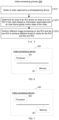
- FIG. 2 is a schematic flowchart of a video processing method provided by some embodiments of this application. This video processing method can be executed by a video processing device.
- the method/process 100 includes steps S110 to S130:
- the information associated with the global motion state between frames of the video refers to information that reflects the global motion state between the current frame and historical frames, indicating the global changes between the current frame and historical frames.
- the historical frame can be any frame prior to the current frame. If a global motion change represented by the information associated with the global motion state satisfies a preset change condition, the video is divided into multiple regions. The greater the global motion change between frames, the more intense the global changes between the frames, and the more high-speed motion content that is less sensitive to the human eye in the video, making it more likely to undergo division processing.
- the information associated with the global motion state between video frames includes at least one of the following or a combination thereof: global motion information between video frames, and information associated with the motion state of a target object.
- the target object includes at least one of the photographing device or the equipment that carries the photographing device.
- the global motion information between video frames includes: a global motion vector (GMV) between video frames.
- GMV global motion vector
- the information associated with the motion state of the target object includes: a motion speed of the target object and a relative distance between the target object and a photographed object; or, a motion speed of the target object and a relative height between the target object and a photographed object.
- the target object is the photographing device
- the information associated with the motion state of the target object is the information associated with the motion state of the photographing device.
- this information may be reflected by the motion state of a device carrying the photographing device.
- the information associated with the motion state of the target object can be represented by that of the gimbal carrying the photographing device.
- the information associated with the motion state of the target object can be represented by the motion state of the movable device.
- the information associated with the motion state of the target object can be represented by the motion state of the movable device or the carrier.
- the information associated with the motion state of the target object may include: a flight speed of the aircraft and a relative height between the aircraft and a photographed object.
- the flight speed and height information of the aircraft can be easily obtained from the aircraft's own navigation system, or by mapping a user's stick input, or by using a motion sensor(s) carried by the carrier, photographing device, or movable device itself. This is not restricted herein.
- the video is divided into a plurality of regions, which includes: if a global motion change represented by the information associated with the global motion state between video frames meets a preset change condition, the video is divided into the plurality of regions.
- a global motion change represented by the information associated with the global motion state between video frames meets the preset change condition, at least one of the following scenarios applies:
- any one of the above scenarios or multiple scenarios meeting the conditions can trigger the step of dividing the video into multiple regions.
- other information that can reflect the global motion state between the current and historical frames of the video may also be used as the basis for division. This application does not impose any limitations on this.
- the video processing device when transmission resources are sufficient, meaning that the transmission conditions of the transmission device corresponding to the photographing device meet the preset transmission conditions, the video processing device does not perform the division of ROI and non-ROI regions. In this case, the image quality of the entire video remains high, and there is no need to sacrifice the image quality of the non-ROI region(s) to improve the image quality of the ROI region(s).
- the video processing device divides the video into multiple regions based on the information associated with the global motion state between video frames.
- the transmission conditions can be represented by the transmission bitrate.
- some embodiments of the application provide a specific method for determining the division of the ROI and the non-ROI.
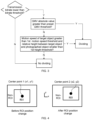
- the specific steps are as follows: The video processing device first determines whether the transmission bitrate of the transmission device corresponding to the photographing device is lower than a bitrate threshold. If not, no division is performed.
- the video processing device further determines whether an absolute value of a GMV between frames of the video exceeds a GMV threshold. If it does, division is performed.
- the method may also include: based on information associated with the global motion state between frames of the video, the video processing device determines an area of the ROI and/or an area of the non-ROI.
- the video processing device adaptively adjusts the allocation of transmission resources between the ROI and non-ROI regions based on the information associated with the global motion state between frames of the video.
- the size of the entire image is represented by the field of view (FOV) of the photographing device, and the area of the ROI and/or non-ROI is positively correlated with the FOV size.
- FOV field of view
- the transmission bitrate exceeds a threshold, it could be a specific case where the transmission conditions meet the preset conditions, and if the bitrate falls below the threshold, it could indicate that the transmission conditions do not meet the preset conditions. It should also be understood that, in addition to transmission bitrate, other information reflecting the transmission conditions of the transmission device can also be used for determining, and this application does not impose any restrictions in this regard.
- the first bitrate threshold is smaller than the second bitrate threshold
- the first GMV threshold is greater than the second GMV threshold
- the first motion speed threshold is greater than the second motion speed threshold
- the first height threshold is greater than the second height threshold.
- a threshold can be set for the proportion of the ROI in the entire image.
- a minimum and maximum proportion relative to the FOV can be defined to ensure that the dynamic adjustment remains within a reasonable range.
- the method/process 100 may further include: based on information associated with a change in an attitude the target object, the video processing device determines the positional change of the ROI.
- the video processing device adaptively adjusts the position of the ROI in the frame to enhance the user's visual experience. For example, when the gimbal's viewpoint changes, this can lead to an attitude change in at least one axis, such as yaw, pitch, or roll.
- the information associated with the target object's attitude change can be user input, such as in the case of an aircraft scenario where the user's joystick movement is mapped to the change.
- this information can be obtained using an attitude sensor(s) carried by the gimbal, photographing device, or movable device.
- the video processing device can preset an attitude change threshold. If the information associated with the target object's attitude change meets the preset condition (e.g., if the information associated with the attitude change exceeds the threshold), then the position of the ROI is adjusted accordingly. If the information associated with the target object's attitude change is below the threshold, it is considered to be due to unstable control or system errors (e.g., unexpected jitter). In this case, the position of the ROI and/or non-ROI will not follow the change.
- the preset condition e.g., if the information associated with the attitude change exceeds the threshold
- the position of the ROI is adjusted accordingly. If the information associated with the target object's attitude change is below the threshold, it is considered to be due to unstable control or system errors (e.g., unexpected jitter). In this case, the position of the ROI and/or non-ROI will not follow the change.
- a horizontal displacement of the ROI is positively correlated with a horizontal component of the information associated with the target object's attitude change, and/or a vertical displacement of the ROI is positively correlated with a vertical component of the information associated with the target object's attitude change.
- the information associated with the target object's attitude change includes at least one of the following: an attitude change in speed, an attitude change in linear velocity, an attitude change in angular velocity, an attitude change in acceleration, or an attitude change in angular acceleration.
- an attitude change in speed is used to represent attitude change
- the angular change can be decomposed into horizontal and vertical components. These components should be understood as vectors that include both direction and magnitude.
- the horizontal displacement of the ROI is positively correlated with the horizontal component of the target object's attitude change in angular velocity
- the vertical displacement of the ROI is positively correlated with the vertical component of the target object's attitude change in angular velocity.
- the video processing device performs different image processing on the ROI and non-ROI to create different levels of clarity between them.
- the clarity of the non-ROI is lower than that of the ROI.
- the clarity of the ROI and/or non-ROI is related to the transmission conditions of the transmission device corresponding to the photographing device. For example, the clarity of the ROI and/or non-ROI decreases as the transmission bitrate decreases.
- the ROI itself can include multiple ROls, with clarity gradually changing from outer to inner regions.
- the outer ROI region has lower clarity than the inner ROI region.
- this embodiment of the application also provides a video processing method/process 200.
- the method/process 200 involves dynamically adjusting the areas of the ROI and/or non-ROI regions in the video.
- the method/process 200 does not impose any special restrictions on how the ROI and non-ROI regions in the video are divided or the basis for their division.
- the apparatus can include, but is not limited to: handheld gimbals, action cameras, mobile devices, smartphones, tablets, smart wearable devices, and computers.
- Some embodiments of this application further provide a computer storage medium, which stores a computer program(s).
- the computer program When executed by a processor, it enables the processor to implement the steps of the video processing method provided in the embodiments described above.
- the computer storage medium may store one or more computer program instructions.
- the processor can execute the program instructions stored in the storage device to realize the functions and/or other desired functions in this embodiment (implemented by the processor), such as executing the corresponding steps of the video processing method according to the embodiments of the present application.
- the computer storage medium may also store various application programs and various data, such as data generated and/or used by application programs.
Landscapes
- Engineering & Computer Science (AREA)
- Physics & Mathematics (AREA)
- General Physics & Mathematics (AREA)
- Theoretical Computer Science (AREA)
- Multimedia (AREA)
- Computer Vision & Pattern Recognition (AREA)
- Signal Processing (AREA)
- Image Analysis (AREA)
- Studio Devices (AREA)
Applications Claiming Priority (1)
| Application Number | Priority Date | Filing Date | Title |
|---|---|---|---|
| PCT/CN2022/114915 WO2024040535A1 (zh) | 2022-08-25 | 2022-08-25 | 视频处理方法、装置、设备和计算机存储介质 |
Publications (1)
| Publication Number | Publication Date |
|---|---|
| EP4580184A1 true EP4580184A1 (de) | 2025-07-02 |
Family
ID=90012133
Family Applications (1)
| Application Number | Title | Priority Date | Filing Date |
|---|---|---|---|
| EP22956081.8A Pending EP4580184A1 (de) | 2022-08-25 | 2022-08-25 | Videoverarbeitungsverfahren und -vorrichtung, vorrichtung und computerspeichermedium |
Country Status (4)
| Country | Link |
|---|---|
| US (1) | US20250148578A1 (de) |
| EP (1) | EP4580184A1 (de) |
| CN (1) | CN119586130A (de) |
| WO (1) | WO2024040535A1 (de) |
Family Cites Families (16)
| Publication number | Priority date | Publication date | Assignee | Title |
|---|---|---|---|---|
| CN100579228C (zh) * | 2008-04-15 | 2010-01-06 | 北京航空航天大学 | 航拍交通视频快速帧间预测方法 |
| EP2514207A2 (de) * | 2009-12-14 | 2012-10-24 | Thomson Licensing | Objektbewusste videocodierungsstrategien |
| US8532336B2 (en) * | 2010-08-17 | 2013-09-10 | International Business Machines Corporation | Multi-mode video event indexing |
| US9811732B2 (en) * | 2015-03-12 | 2017-11-07 | Qualcomm Incorporated | Systems and methods for object tracking |
| IN2015CH02866A (de) * | 2015-06-09 | 2015-07-17 | Wipro Ltd | |
| US9865062B2 (en) * | 2016-02-12 | 2018-01-09 | Qualcomm Incorporated | Systems and methods for determining a region in an image |
| US20180082428A1 (en) * | 2016-09-16 | 2018-03-22 | Qualcomm Incorporated | Use of motion information in video data to track fast moving objects |
| JP2021166317A (ja) * | 2018-06-28 | 2021-10-14 | ソニーグループ株式会社 | 画像処理装置および方法 |
| EP3648059B1 (de) * | 2018-10-29 | 2021-02-24 | Axis AB | Videoverarbeitungsvorrichtung und verfahren zum bestimmen von bewegungsmetadaten für ein codiertes video |
| EP3959884A4 (de) * | 2019-04-25 | 2022-06-01 | OP Solutions, LLC | Signalisierung eines globalen bewegungsvektors in einem bildkopf |
| WO2021030454A1 (en) * | 2019-08-12 | 2021-02-18 | Photon-X, Inc. | Data management system for spatial phase imaging |
| WO2021248349A1 (en) * | 2020-06-10 | 2021-12-16 | Plantronics, Inc. | Combining high-quality foreground with enhanced low-quality background |
| CN111918066B (zh) * | 2020-09-08 | 2022-03-15 | 北京字节跳动网络技术有限公司 | 视频编码方法、装置、设备及存储介质 |
| CN114531615B (zh) * | 2020-11-03 | 2023-10-27 | 腾讯科技(深圳)有限公司 | 视频数据处理方法、装置、计算机设备和存储介质 |
| CN114554212A (zh) * | 2021-12-31 | 2022-05-27 | 深圳市大疆创新科技有限公司 | 视频处理装置及方法、计算机存储介质 |
| US11893699B2 (en) * | 2022-03-15 | 2024-02-06 | Zeality Inc | Method and processing unit for providing content in a bandwidth constrained environment |
-
2022
- 2022-08-25 CN CN202280098560.8A patent/CN119586130A/zh active Pending
- 2022-08-25 WO PCT/CN2022/114915 patent/WO2024040535A1/zh not_active Ceased
- 2022-08-25 EP EP22956081.8A patent/EP4580184A1/de active Pending
-
2025
- 2025-01-10 US US19/017,379 patent/US20250148578A1/en active Pending
Also Published As
| Publication number | Publication date |
|---|---|
| US20250148578A1 (en) | 2025-05-08 |
| WO2024040535A1 (zh) | 2024-02-29 |
| CN119586130A (zh) | 2025-03-07 |
Similar Documents
| Publication | Publication Date | Title |
|---|---|---|
| US12579613B2 (en) | Gaze direction-based adaptive pre-filtering of video data | |
| US20220174252A1 (en) | Selective culling of multi-dimensional data sets | |
| CN111052750B (zh) | 用于点云流传输的方法和装置 | |
| US11024083B2 (en) | Server, user terminal device, and control method therefor | |
| CN107667534B (zh) | 在有限的带宽连接中播放球形视频 | |
| US10748250B2 (en) | Method and apparatus for managing immersive data | |
| CN110856019B (zh) | 码率分配的方法、装置、终端及存储介质 | |
| WO2017181429A1 (en) | Systems and methods for processing image data based on region-of-interest (roi) of a user | |
| CN112470484B (zh) | 用于流式传输视频的方法和设备 | |
| EP3364273A1 (de) | Elektronische vorrichtung und verfahren zum senden und empfangen von bilddaten in der elektronischen vorrichtung | |
| US20160378177A1 (en) | Visualized content transmission control method, sending method and apparatuses thereof | |
| JP2012511200A (ja) | 写実的画像形成の処理負荷を分散するためのシステム及び方法 | |
| US20250142150A1 (en) | Electronic Device Content Provisioning Adjustments based on Wireless Communication Channel Bandwidth Condition | |
| US20160378178A1 (en) | Visualized content transmission control method, sending method and apparatuses thereof | |
| CN113810696B (zh) | 一种信息传输方法、相关设备及系统 | |
| EP4580184A1 (de) | Videoverarbeitungsverfahren und -vorrichtung, vorrichtung und computerspeichermedium | |
| CN111684784B (zh) | 图像处理方法和装置 | |
| US20240297977A1 (en) | Head motion dependent viewport region modification for omnidirectional conversational vdd | |
| JP2017098921A (ja) | 送信装置、送信方法、およびプログラム | |
| US11818419B2 (en) | Mobile device content provisioning adjustments based on wireless communication channel bandwidth condition | |
| CN121763580A (zh) | 智能眼镜的控制方法、装置、计算机设备、计算机可读存储介质和程序产品 |
Legal Events
| Date | Code | Title | Description |
|---|---|---|---|
| STAA | Information on the status of an ep patent application or granted ep patent |
Free format text: STATUS: THE INTERNATIONAL PUBLICATION HAS BEEN MADE |
|
| PUAI | Public reference made under article 153(3) epc to a published international application that has entered the european phase |
Free format text: ORIGINAL CODE: 0009012 |
|
| STAA | Information on the status of an ep patent application or granted ep patent |
Free format text: STATUS: REQUEST FOR EXAMINATION WAS MADE |
|
| 17P | Request for examination filed |
Effective date: 20250121 |
|
| AK | Designated contracting states |
Kind code of ref document: A1 Designated state(s): AL AT BE BG CH CY CZ DE DK EE ES FI FR GB GR HR HU IE IS IT LI LT LU LV MC MK MT NL NO PL PT RO RS SE SI SK SM TR |
|
| DAV | Request for validation of the european patent (deleted) | ||
| DAX | Request for extension of the european patent (deleted) |