EP4580133A1 - Implementation method of mlse equalizer, chip, electronic device, and computer readable medium - Google Patents
Implementation method of mlse equalizer, chip, electronic device, and computer readable medium Download PDFInfo
- Publication number
- EP4580133A1 EP4580133A1 EP23867553.2A EP23867553A EP4580133A1 EP 4580133 A1 EP4580133 A1 EP 4580133A1 EP 23867553 A EP23867553 A EP 23867553A EP 4580133 A1 EP4580133 A1 EP 4580133A1
- Authority
- EP
- European Patent Office
- Prior art keywords
- path
- symbol
- optimal
- paths
- group
- Prior art date
- Legal status (The legal status is an assumption and is not a legal conclusion. Google has not performed a legal analysis and makes no representation as to the accuracy of the status listed.)
- Pending
Links
Images

Classifications
-
- H—ELECTRICITY
- H04—ELECTRIC COMMUNICATION TECHNIQUE
- H04L—TRANSMISSION OF DIGITAL INFORMATION, e.g. TELEGRAPHIC COMMUNICATION
- H04L25/00—Baseband systems
- H04L25/02—Details ; arrangements for supplying electrical power along data transmission lines
- H04L25/03—Shaping networks in transmitter or receiver, e.g. adaptive shaping networks
- H04L25/03006—Arrangements for removing intersymbol interference
- H04L25/03178—Arrangements involving sequence estimation techniques
-
- H—ELECTRICITY
- H04—ELECTRIC COMMUNICATION TECHNIQUE
- H04L—TRANSMISSION OF DIGITAL INFORMATION, e.g. TELEGRAPHIC COMMUNICATION
- H04L25/00—Baseband systems
- H04L25/02—Details ; arrangements for supplying electrical power along data transmission lines
- H04L25/03—Shaping networks in transmitter or receiver, e.g. adaptive shaping networks
- H04L25/03006—Arrangements for removing intersymbol interference
- H04L25/03178—Arrangements involving sequence estimation techniques
- H04L25/03184—Details concerning the metric
-
- H—ELECTRICITY
- H04—ELECTRIC COMMUNICATION TECHNIQUE
- H04L—TRANSMISSION OF DIGITAL INFORMATION, e.g. TELEGRAPHIC COMMUNICATION
- H04L25/00—Baseband systems
- H04L25/02—Details ; arrangements for supplying electrical power along data transmission lines
- H04L25/03—Shaping networks in transmitter or receiver, e.g. adaptive shaping networks
- H04L25/03006—Arrangements for removing intersymbol interference
- H04L25/03178—Arrangements involving sequence estimation techniques
- H04L25/03203—Trellis search techniques
-
- H—ELECTRICITY
- H04—ELECTRIC COMMUNICATION TECHNIQUE
- H04L—TRANSMISSION OF DIGITAL INFORMATION, e.g. TELEGRAPHIC COMMUNICATION
- H04L25/00—Baseband systems
- H04L25/02—Details ; arrangements for supplying electrical power along data transmission lines
- H04L25/03—Shaping networks in transmitter or receiver, e.g. adaptive shaping networks
- H04L25/03006—Arrangements for removing intersymbol interference
- H04L25/03178—Arrangements involving sequence estimation techniques
- H04L25/03203—Trellis search techniques
- H04L25/03229—Trellis search techniques with state-reduction using grouping of states
Definitions
- the present application relates to, but is not limited to, the technical field of information processing.
- the bandwidth and the communication channels of communication equipment and devices have a more and more important influence on digital communication, where the main factors of the influence include the more and more serious intersymbol interference (ISI), noise interference, attenuation of signal power, and so on. Therefore, in the presence of these multiple distortion sources, the equalization technique for signal compensation has become an integral part of almost all communication systems.
- ISI intersymbol interference
- noise interference noise interference
- attenuation of signal power and so on. Therefore, in the presence of these multiple distortion sources, the equalization technique for signal compensation has become an integral part of almost all communication systems.
- the maximum likelihood sequence estimation (MLSE) equalizer is one of the equalizers with excellent performance, and can effectively compensate for non-linearity and signal power of a signal on a receiving side. It has been proved by related simulation experiments and papers that compared with a decision feedback equalizer (DFE), the MLSE equalizer can achieve better effects in terms of signal non-linearity and medium and high frequency component compensation, but consumes much more resources of a chip, such as memory resources, computing resources and other resources, than the DFE equalizer due to a different algorithm principle and architecture.
- DFE decision feedback equalizer
- the number of tap coefficients, the computation depth and the complexity of the algorithm implementation are in direct proportion to the consumption of the resources of the chip, such as the memory resources, the computing resources and other resources.
- the numbers of branch metric sub-modules, add-compare-select (ACS) sub-modules and path management sub-modules will be doubled. Therefore, when an MLSE algorithm with better performance and more tap coefficients is used, the requirements of the MLSE equalizer on resources for data storage, computation and the like are also exponentially increased, which poses a great challenge to chips with limited resources, such as area, power consumption, computing resources and the like.
- the present application provides a method and a chip for implementing an MLSE equalizer, an electronic device, and a computer readable medium.
- the present application provides a method for implementing an MLSE equalizer, including: determining, according to an optimal path of a (k-1) th symbol, a first path corresponding to a k th symbol and having a branch path metric value to be calculated, where k is an integer greater than or equal to 2; calculating the branch path metric value of the k th symbol under the first path; determining, according to the branch path metric value of the k th symbol under the first path and an optimal accumulated path distance of the (k-1) th symbol under the optimal path of the (k-1) th symbol, an optimal path of the k th symbol and an optimal accumulated path distance of the k th symbol under the optimal path of the k th symbol; and storing the optimal path of the k th symbol and the optimal accumulated path distance of the k th symbol under the optimal path of the k th symbol.
- the branch path metric value corresponding to each first path is calculated.
- the optimal paths of group 1, group 2, group 3 and group 4 form an optimal path of the 4th symbol, and the optimal accumulated path distances of group 1, group 2, group 3 and group 4 form an optimal accumulated path distance of the 4th symbol.
- another implementation of the present application provides an electronic device, including: at least one processor; and a memory having at least one program stored thereon which, when executed by the at least one processor, causes any one of the above methods for implementing an MLSE equalizer to be implemented.
- the processor is a device with a data processing capability, including but not limited to a central processing unit (CPU), or the like.
- the memory is a device with a data storage capability, including but not limited to, a random access memory (RAM, more specifically SDRAM, DDR, etc.), a read-only memory (ROM), an electrically erasable programmable read-only memory (EEPROM) or a flash memory (FLASH).
- RAM random access memory
- ROM read-only memory
- EEPROM electrically erasable programmable read-only memory
- FLASH flash memory
- the processor and the memory are connected to each other via a bus, and further connected to other components of a computing device.
- Still another implementation of the present application provides a computer-readable medium having a computer program stored thereon which, when executed by a processor, causes any one of the above methods for implementing an MLSE equalizer to be implemented.
- FIG. 3 is a block diagram of a chip for implementing an MLSE equalizer according to the present application.
- yet another implementation of the present application provides a chip for implementing an MLSE equalizer, including: a data interface 301 and processing circuit 302.
- the processing circuit is configured to read an instruction stored on a peripheral control circuit through the data interface, and perform any one of the above methods for implementing an MLSE equalizer.
- the chip for implementing an MLSE equalizer includes, for example, an application specific integrated circuit (ASIC) chip or a field-programmable gate array (FPGA) chip.
- ASIC application specific integrated circuit
- FPGA field-programmable gate array
- the chip further includes: a decision output sub-circuit 405 configured to obtain a decided level signal according to the optimal accumulated path distance of the k th symbol under the optimal path of the k th symbol.
- the number of first paths is smaller than the number of second paths, and a value of each symbol in each second path includes m possible output levels, where m is an integer greater than or equal to 1.
- a first target symbol in the first path takes the same value as a corresponding symbol in the optimal path of the (k-1) th symbol.
- the first target symbol includes the (k-(n-1)) th to (k-t) th symbols, where n is the number of tap coefficients and is less than or equal to k, and t is an integer greater than or equal to 1 and less than or equal to n-2.
- a value of a second target symbol in the first path includes m possible output levels of a standard constellation point.
- the second target symbol includes the (k-t+1) th to (k) th symbols.
- the add-compare-select sub-circuit 403 is configured to determine, according to the branch path metric value of the k th symbol under the first path and the optimal accumulated path distance of the (k-1) th symbol under the optimal path of the (k-1) th symbol, the optimal path of the k th symbol and the optimal accumulated path distance of the k th symbol under the optimal path of the k th symbol by: grouping the first paths, where paths in the same group include paths having the same values from the (k-t+1) th to k th symbols among the first paths; for the paths in the same group, determining an optimal path and an optimal accumulated path distance corresponding to the group according to the branch path metric value of the k th symbol under the paths in the group and the optimal accumulated path distance of the (k-1) th symbol under a path selected from optimal paths of the (k-1) th symbol, where the path selected from the optimal paths of the (k-1) th symbol includes: a path of
- the first target symbol when t is 1, the first target symbol includes: the (k-(n-1)) th to (k-t) th symbols, and the second target symbol includes: the k th symbol.
- the add-compare-select sub-circuit 403 is configured to determine, according to the branch path metric value of the k th symbol under the first path and the optimal accumulated path distance of the (k-1) th symbol under the optimal path of the (k-1) th symbol, the optimal path of the k th symbol and the optimal accumulated path distance of the k th symbol under the optimal path of the k th symbol by: grouping the first paths, where paths in the same group include paths having the same value of the k th symbol among the first paths; and for the paths in the same group, determining an optimal path and an optimal accumulated path distance corresponding to the group according to the branch path metric value of the k th symbol under the paths in the group and the optimal accumulated path distance of the (k-1) th symbol under a path selected from optimal paths of the (k-1) th symbol, where the path selected from the optimal paths of the (k-1) th symbol includes: a path of the optimal paths of the (k-1) th symbol, the
- Such software may be distributed on a computer-readable medium which may include a computer storage medium (or non-transitory medium) and a communication medium (or transitory medium).
- a computer storage medium or non-transitory medium
- a communication medium or transitory medium
- the term computer storage medium includes volatile and nonvolatile, removable and non-removable medium implemented in any method or technology for storing information, such as computer-readable instructions, data structures, program modules or other data.
- the computer storage medium includes, but is not limited to, an RAM, an ROM, an EEPROM, a flash or any other memory technology, a CD-ROM, a digital versatile disk (DVD) or any other optical disk storage, a magnetic cartridge, a magnetic tape, a magnetic disk storage or any other magnetic memory, or may be any other medium used for storing the desired information and accessible by a computer.
- a communication medium typically includes a computer-readable instruction, a data structure, a program module, or other data in a modulated data signal, such as a carrier wave or other transport mechanism, and may include any information delivery medium.
Landscapes
- Engineering & Computer Science (AREA)
- Power Engineering (AREA)
- Computer Networks & Wireless Communication (AREA)
- Signal Processing (AREA)
- Digital Transmission Methods That Use Modulated Carrier Waves (AREA)
Abstract
Description
- This application claims priority to
Chinese patent application No. 202211161260.8 filed with CNIPA on September 22, 2022 - The present application relates to, but is not limited to, the technical field of information processing.
- With the increasing demand for communication performance and communication rate, the bandwidth and the communication channels of communication equipment and devices have a more and more important influence on digital communication, where the main factors of the influence include the more and more serious intersymbol interference (ISI), noise interference, attenuation of signal power, and so on. Therefore, in the presence of these multiple distortion sources, the equalization technique for signal compensation has become an integral part of almost all communication systems.
- The maximum likelihood sequence estimation (MLSE) equalizer is one of the equalizers with excellent performance, and can effectively compensate for non-linearity and signal power of a signal on a receiving side. It has been proved by related simulation experiments and papers that compared with a decision feedback equalizer (DFE), the MLSE equalizer can achieve better effects in terms of signal non-linearity and medium and high frequency component compensation, but consumes much more resources of a chip, such as memory resources, computing resources and other resources, than the DFE equalizer due to a different algorithm principle and architecture. Especially for an MLSE equalizer with multiple tap coefficients, the number of tap coefficients, the computation depth and the complexity of the algorithm implementation are in direct proportion to the consumption of the resources of the chip, such as the memory resources, the computing resources and other resources. For example, each time one tap coefficient is increased in the MLSE equalizer, the numbers of branch metric sub-modules, add-compare-select (ACS) sub-modules and path management sub-modules will be doubled. Therefore, when an MLSE algorithm with better performance and more tap coefficients is used, the requirements of the MLSE equalizer on resources for data storage, computation and the like are also exponentially increased, which poses a great challenge to chips with limited resources, such as area, power consumption, computing resources and the like.
- The present application provides a method and a chip for implementing an MLSE equalizer, an electronic device, and a computer readable medium.
- In a first aspect, the present application provides a method for implementing an MLSE equalizer, including: determining, according to an optimal path of a (k-1)th symbol, a first path corresponding to a kth symbol and having a branch path metric value to be calculated, where k is an integer greater than or equal to 2; calculating the branch path metric value of the kth symbol under the first path; determining, according to the branch path metric value of the kth symbol under the first path and an optimal accumulated path distance of the (k-1)th symbol under the optimal path of the (k-1)th symbol, an optimal path of the kth symbol and an optimal accumulated path distance of the kth symbol under the optimal path of the kth symbol; and storing the optimal path of the kth symbol and the optimal accumulated path distance of the kth symbol under the optimal path of the kth symbol.
- In a second aspect, the present application further provides an electronic device, including: at least one processor; and a memory having at least one program stored thereon which, when executed by the at least one processor, causes any one of the methods for implementing an MLSE equalizer described herein to be implemented.
- In a third aspect, the present application further provides a computer-readable medium having a computer program stored thereon which, when executed by a processor, causes any one of the methods for implementing an MLSE equalizer described herein to be implemented.
- In a fourth aspect, the present application provides a chip for implementing a maximum likelihood sequence estimation equalizer, including: a data interface and a processing circuit, wherein the processing circuit is configured to read an instruction stored on a peripheral control circuit through the data interface, and perform any one of the methods for implementing a maximum likelihood sequence estimation equalizer described herein.
-
-
FIG. 1 is a schematic diagram showing an implementation of an MLSE equalizer in the existing art; -
FIG. 2 is a flowchart of a method for implementing an MLSE equalizer according to the present application; -
FIG. 3 is a block diagram of a chip for implementing an MLSE equalizer according to the present application; and -
FIG. 4 is a block diagram of a processing circuit according to the present application. - To improve understanding of the technical solutions of the present application for those skilled in the art, the method and chip for implementing an MLSE equalizer, the electronic device, and the computer readable medium according to the present application will be described below in detail in conjunction with the accompanying drawings.
- Example implementations will be described more sufficiently below with reference to the accompanying drawings, but which may be embodied in different forms and should not be construed as limited to the implementations set forth herein. Rather, these implementations are provided so that the present application will be thorough and complete, and will fully convey the scope of the present application to those skilled in the art.
- Implementations of the present application and features thereof may be combined with each other without conflict.
- As used herein, the term "and/or" includes any and all combinations of at least one associated listed item.
- The terminology used herein is for the purpose of describing specific implementations only and is not intended to limit the present application. As used herein, the singular forms "a", "an" and "the" are intended to include the plural forms as well, unless the context clearly indicates otherwise. It will be further understood that as used herein, the terms "comprise" and/or "consist of ..." specify the presence of the stated features, integers, steps, operations, elements, and/or components, but do not preclude the presence or addition of at least one other feature, integer, step, operation, element, component, and/or group thereof.
- Unless otherwise defined, all terms (including technical and scientific terms) used herein have the same meaning as commonly understood by one of ordinary skill in the art. It will be further understood that terms, such as those defined in commonly used dictionaries, should be interpreted as having a meaning that is consistent with their meaning in the context of the existing art and the present application, and will not be interpreted in an idealized or overly formal sense unless expressly so defined herein.
-
FIG. 1 is a schematic diagram showing an implementation of an MLSE equalizer in the existing art. As shown inFIG. 1 , an MLSE equalizer includes four sub-modules, i.e., abranch metric sub-module 101, an add-compare-select sub-module 102, apath management sub-module 103, and adecision output sub-module 104. - In
FIG. 1 , X(k) is a signal to be equalized input to the MLSE equalizer, and Y(k) is a level signal decoded and output from the MLSE equalizer after decision. - The
branch metric sub-module 101 is configured to calculate branch path metric values of a kth symbol under different paths. Generally, the branch path metric value is represented by a distance between sequential sampling points. The distance may be any one of a Euclidean distance, a Manhattan distance, a Chebyshev distance, or the like. For example, in the case of the Euclidean distance, the branch path metric value is calculated by:
- In the existing art, each symbol has m possible output levels, and mn branch metric values are included in equation (1). If one branch metric value is calculated by one
branch metric sub-module 101, then mnbranch metric sub-modules 101 are desired. Taking NRZ modulation as an example, each symbol has 2 possible output levels, and when n=3, 8 branch metric values are included in equation (1), and the possible output levels corresponding to (xk-2, xk-1, xk) are: (-1, -1, -1), (+1, -1, -1), (-1, +1, -1), (+1, +1, - 1), (-1, -1, +1), (+1, -1, +1), (-1, +1, +1), and (+1, +1, +1), which requires 8 branchmetric sub-modules 101. - The add-compare-
select sub-module 102 is configured to accumulate, according to the branch path metric values of the kth symbol under different paths output from thebranch metric sub-module 101, an optimal accumulated path distance of a previous symbol under paths corresponding to the branch path metric values, and then select an optimal path (i.e., a survivor path) of a current symbol. - Taking the Euclidean distance as an example, the optimal accumulated path distance of the kth symbol under a path xk-(n-2)xk-(n-3) ···xk is calculated by:

- In the existing art, if one possible value of D(xk-(n-2), xk-(n-3),···, xk) is calculated by one add-compare-
select sub-module 102, then mn-1 add-compare-select sub-modules 102 are desired. Taking NRZ modulation as an example, 2n-1 add-compare-select sub-modules 102 are desired. - The
path management sub-module 103 is configured to store a survivor path node selected by the add-compare-select sub-module 102 and the optimal path values under different paths, and perform related operations of traceback and decoding subsequently to output a decoded decision value. - In the existing art, the number of optimal path values stored in the
path management sub-module 103 is mn-1. - The
decision output sub-module 104 is configured to decide and output the decoded decision value under the survivor path to obtain a decided level signal. -
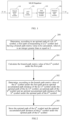
FIG. 2 is a flowchart of a method for implementing an MLSE equalizer according to the present application. - In a first aspect, referring to
FIG. 2 , in an implementation of the present application, there is provided a method for implementing an MLSE equalizer, which includes the followingoperations 200 to 203. - At
operation 200, determining, according to an optimal path of a (k-1)th symbol, a first path corresponding to a kth symbol and having a branch path metric value to be calculated, where k is an integer greater than or equal to 2. - In some exemplary implementations, the number of first paths is smaller than the number of second paths, and a value of each symbol in each second path includes m possible output levels, where m is an integer greater than or equal to 1. The number of first paths is smaller than the number of second paths, where the second paths are paths having branch path metric values to be calculated in the existing art. Therefore, the number of paths having branch path metric values to be calculated is reduced, so that the number of optimal paths to be determined and stored is also reduced, and the required computing resources and storage resources are saved.
- In some exemplary implementations, a first target symbol in the first path takes the same value as a corresponding symbol in the optimal path of the (k-1)th symbol. The first target symbol includes the (k-(n-1))th to (k-t)th symbols, where n is the number of tap coefficients and is less than or equal to k, and t is an integer greater than or equal to 1 and less than or equal to n-2. A value of a second target symbol in the first path includes m possible output levels of a standard constellation point. The second target symbol includes the (k-t+1)th to (k)th symbols.
- In other words, the first target symbol in the first path has only one value, while the second target symbol has m values.
- In some exemplary implementations, the first target symbol includes: the (k-(n-1))th to (k-1)th symbols, and the second target symbol includes: the kth symbol, which is the same as the case when t takes
value 1. - In some exemplary implementations, m is the number of possible output levels of each symbol corresponding to the modulation scheme of the signal to be equalized. For example, m takes
value 2 for NRZ modulation. - The modulation scheme is not limited in the implementations of the present application. For example, any one of NRZ, quadrature amplitude modulation (QAM), phase shift keying (PSK), N level pulse amplitude modulation (PAM-N), or the like may be adopted.
- Taking NRZ modulation as an example, each symbol has two possible output levels, i.e., -1 and +1.
- If n is 3, then the (k-1)th symbol has two optimal paths xk-3xk-2xk-1, and if the two optimal paths are (-1, -1, -1) and (-1, +1, +1) respectively, then it can be determined from these two optimal paths that the first path includes four paths: (-1, -1, -1), (-1, -1, +1), (+1, +1, -1), and (+1, +1, +1), which is the same as the above case when t takes
value 1. - If n is 4, then the (k-1)th symbol has four optimal paths xk-4xk-3xk-2xk-1, and if the four optimal paths are (-1, -1, -1, -1), (+1, -1, -1, +1), (-1, +1, +1,+1), and (+1, +1, +1, - 1) respectively, then it can be determined from these four optimal paths that the first path includes eight paths: (-1, -1, -1, -1), (-1, -1, -1, +1), (-1, -1, +1, +1), (-1, -1, +1, -1), (+1, +1, +1, +1), (+1, +1, +1, -1), (+1, +1, -1, +1) and (+1, +1, -1, -1), which is the same as the case when t takes
value 2. - At
operation 201, calculating the branch path metric value of the kth symbol under the first path. - In some exemplary implementations, the branch path metric value of the kth symbol under the first path is calculated by equation (1).
- At
operation 202, determining, according to the branch path metric value of the kth symbol under the first path and an optimal accumulated path distance of the (k-1)th symbol under the optimal path of the (k-1)th symbol, an optimal path of the kth symbol and an optimal accumulated path distance of the kth symbol under the optimal path of the kth symbol. - In some exemplary implementations, determining, according to the branch path metric value of the kth symbol under the first path and the optimal accumulated path distance of the (k-1)th symbol under the optimal path of the (k-1)th symbol, the optimal path of the kth symbol and the optimal accumulated path distance of the kth symbol under the optimal path of the kth symbol includes: grouping the first paths, where paths in the same group include paths having the same values from the (k-t+1)th to kth symbols among the first paths; for the paths in the same group, determining an optimal path and an optimal accumulated path distance corresponding to the group according to the branch path metric value of the kth symbol under the paths in the group and the optimal accumulated path distance of the (k-1)th symbol under a path selected from optimal paths of the (k-1)th symbol, where the path selected from the optimal paths of the (k-1)th symbol includes: a path of the optimal paths of the (k-1)th symbol having the same values from the (k-t+1)th to (k-1)th symbols as the paths in the group; forming the optimal path of the kth symbol from optimal paths corresponding to all groups; and forming the optimal accumulated path distance of the kth symbol under the optimal path of the kth symbol from optimal accumulated path distances corresponding to all groups.
- In some exemplary implementations, assuming that the first path is x k-(n-1)x k-(n-2) ... x k-tx k-t+1 ... x k-1 x k, and the optimal path of the (k-1)th symbol is x k-1-(n-1)x k-1-(n-2) ... x k-1-tx k-t ... x k-1, then the part x k-(n-1)x k-(n-2) ... x k-t in each first path belonging to the same group is the same as the part x k-(n-1)x k-(n-2) ... x k-t in the optimal path of the (k-1)th symbol, and the part x k-t+1 ... x k-1 x k in each first path belonging to the same group adopts possible output levels of a standard constellation point. The grouping process and the determination process of the optimal path and the optimal accumulated path distance may refer to the description in Example 2.
- In some exemplary implementations, determining the optimal path and the optimal accumulated path distance corresponding to the group according to the branch path metric value of the kth symbol under the paths in the group and the optimal accumulated path distance of the (k-1)th symbol under the path selected from optimal paths of the (k-1)th symbol includes: for each path in the group, calculating a sum of the branch path metric value of the kth symbol under the path and the optimal accumulated path distance of the (k-1)th symbol under the path selected from the optimal paths of the (k-1)th symbol, and taking the sum as the accumulated path distance of the kth symbol under the path; taking a path corresponding to a minimum accumulated path distance of the paths in the group as the optimal path corresponding to the group; and taking the minimum accumulated path distance of the paths in the group as the optimal accumulated path distance corresponding to the group.
- In the implementations of the present application, no matter what value n takes, only mt+1 branch path metric values, i.e., mt+1 first paths, are calculated for each symbol, and mt optimal paths and optimal accumulated path distances are stored, so that the number of branch path metric values to be calculated, and the number of optimal paths and optimal accumulated path distances to be stored, are reduced, thereby saving the computing resources and storage resources.
- In some exemplary implementations, determining, according to the branch path metric value of the kth symbol under the first path and the optimal accumulated path distance of the (k-1)th symbol under the optimal path of the (k-1)th symbol, the optimal path of the kth symbol and the optimal accumulated path distance of the kth symbol under the optimal path of the kth symbol includes: grouping the first paths, where paths in the same group include paths having the same value of the kth symbol among the first paths; and for the paths in the same group, determining an optimal path and an optimal accumulated path distance corresponding to the group according to the branch path metric value of the kth symbol under the paths in the group and the optimal accumulated path distance of the (k-1)th symbol under a path selected from optimal paths of the (k-1)th symbol, where the path selected from the optimal paths of the (k-1)th symbol includes: a path of the optimal paths of the (k-1)th symbol having the same value of the (k-1)th symbol as the paths in the group; forming the optimal path of the kth symbol from optimal paths corresponding to all groups; and forming the optimal accumulated path distance of the kth symbol under the optimal path of the kth symbol from optimal accumulated path distances corresponding to all groups.
- In some exemplary implementations, assuming that the first path is x k-(n-1)x k-(n-2) ... x k-1 x k, the optimal path of the (k-1)th symbol is x k-1-(n-1)x k-1-(n-2) ... x k-1, then the part x k-(n-1)x k-(n-2) ... x k-1 in each first path belonging to the same group is the same as the part x k-(n-1)x k-(n-2) ... x k-1 in the optimal path of the (k-1)th symbol, and the part x k in each first path belonging to the same group adopts possible output levels of a standard constellation point. The grouping process and the determination process of the optimal path and the optimal accumulated path distance may refer to the description in Example 1.
- In some exemplary implementations, determining the optimal path and the optimal accumulated path distance corresponding to the group according to the branch path metric value of the kth symbol under the paths in the group and the optimal accumulated path distance of the (k-1)th symbol under the path selected from optimal paths of the (k-1)th symbol includes: for each path in the group, calculating a sum of the branch path metric value of the kth symbol under the path of the group and the optimal accumulated path distance of the (k-1)th symbol under the path selected from the optimal paths of the (k-1)th symbol, and taking the sum as the accumulated path distance of the kth symbol under the path; taking a path corresponding to a minimum accumulated path distance of the paths in the group as the optimal path corresponding to the group; and taking the minimum accumulated path distance of the paths in the group as the optimal accumulated path distance corresponding to the group.
- In the implementations of the present application, no matter what value n takes, only m2 branch path metric values, i.e., m2 first paths, are calculated for each symbol, and m optimal paths and optimal accumulated path distances are stored, so that the number of branch path metric values to be calculated, and the number of optimal paths and optimal accumulated path distances to be stored, are reduced.
- At
operation 203, storing the optimal path of the kth symbol and the optimal accumulated path distance of the kth symbol under the optimal path of the kth symbol. - In some exemplary implementations, when the optimal path of the kth symbol is buffered, a value of each symbol in the optimal optical path may be buffered.
- In some exemplary implementations, after storing the optimal path of the kth symbol and the optimal accumulated path distance of the kth symbol under the optimal path of the kth symbol, the method further includes: obtaining a decided level signal according to the optimal accumulated path distance of the kth symbol under the optimal path of the kth symbol.
- In some exemplary implementations, obtaining the decided level signal according to the optimal accumulated path distance of the kth symbol under the optimal path of the kth symbol includes: performing related operations of traceback and decoding on the optimal accumulated path distance of the kth symbol under the optimal path of the kth symbol, to obtain a decoded decision value which is decided and output to obtain a decided level signal.
- In the method for implementing an MLSE equalizer according to the implementations of the present application, according to an optimal path of a (k-1)th symbol, a first path corresponding to a kth symbol and having a branch path metric value to be calculated is determined, which reduces the number of paths having branch path metric values to be calculated so that the number of optimal paths to be determined and stored is also reduced, and the required computing resources and storage resources are saved.
- To facilitate understanding of the method for implementing an MLSE equalizer according to the implementations of the present application, two examples are listed below for explanation, which are not intended to limit the scope of the method for implementing an MLSE equalizer according to the implementations of the present application.
- In this example, n=3, t=1, NRZ modulation is adopted, and each symbol has two values, +1 and -1.
- The MLSE equalizer in this example is implemented as follows.
- A signal to be equalized is acquired.
- A standard constellation point corresponding to a 1st symbol of the signal to be equalized has two values, i.e., -1 and +1, the 1st symbol does not have an optimal path and an optimal accumulated path distance of a previous symbol, and an initialized optimal accumulated path distance is 0.
- A 2nd symbol has four first paths, (x1=-1, x2=-1), (x1=-1, x2=+1), (x1=+1, x2=-1) and (x1=+1, x2=+1), each having a branch path metric value to be calculated.
- According to a value of the 2nd symbol of the signal to be equalized, the branch path metric value corresponding to each first path is calculated.
- Of the above four paths, the paths (x1=-1, x2=-1) and (x1=+1, x2=-1) are grouped into
group 1, and the paths (x1=-1, x2=+1) and (x1=+1, x2=+1) are grouped intogroup 2. - For
group 1, an accumulated path distance D(x1=-1, x2=-1)=D(x1=-1)+P(x1=-1, x2=-1) of the 2nd symbol under the path (x1=-1, x2=-1) is calculated; and an accumulated path distance D(x1=+1, x2=-1)=D(x1=+1)+P(x1=+1, x2=-1)= P(x1=*1, x2=-1) of the 2nd symbol under the path (x1=+1, x2=-1) is calculated. Assuming that D(x1=-1, x2=-1) is less than D(x1=+1, x2=-1), then the optimal path corresponding togroup 1 is (x1=-1, x2=-1), and the optimal accumulated path distance ofgroup 1 is D(x1=-1, x2=-1). - For
group 2, an accumulated path distance D(x1=-1, x2=+1)=D(x1=-1)+P(x1=-1, x2=+1) of the 2nd symbol under the path (x1=-1, x2=+1) is calculated; and an accumulated path distance D(x1=+1, x2=+1)=D(x1=+1)+P(x1=+1, x2=+1) of the 2nd symbol under the path (x1=+1, x2=+1) is calculated. Assuming that D(x1=-1, x2=+1) is less than D(x1=+1, x2=+1), then the optimal path corresponding togroup 2 is (x1=-1, x2=+1), and the optimal accumulated path distance ofgroup 2 is D(x1=-1, x2=+1). - The optimal path of
group 1 and the optimal path ofgroup 2 form an optimal path of the 2nd symbol, and the optimal accumulated path distance ofgroup 1 and the optimal accumulated path distance ofgroup 2 form an optimal accumulated path distance of the 2nd symbol. - Therefore, the optimal path of the 2nd symbol includes the paths (x1=-1, x2=-1) and (x1=-1, x2=+1), and the optimal accumulated path distance of the 2nd symbol includes D(x1=-1, x2=-1) and D(x1=-1, x2=+1).
- According to the optimal path of the 2nd symbol, the first paths of the 3rd symbol having branch path metric values to be calculated are determined and include four first paths, i.e., (x1=-1, x2=-1, x3=-1), (x1=-1, x2=-1, x3=+1), (x1=-1, x2=+1, x3=-1) and (x1=-1, x2=+1, x3=+1). In other words, among the first paths having branch path metric values to be calculated of the 3rd symbol, a path from the 1st symbol to the 2nd symbol is the optimal path of the 2nd symbol.
- According to a value of the 3rd symbol of the signal to be equalized, the branch path metric value corresponding to each first path is calculated.
- Of the above four paths, the paths (x1=-1, x2=-1, x3=-1) and (x1=-1, x2=+1, x3=-1) are grouped into
group 1, and the paths (x1=-1, x2=-1, x3=+1) and (x1=-1, x2=+1, x3=+1) are grouped intogroup 2. - For
group 1, an accumulated path distance D(x1=-1, x2=-1, x3=-1)=D(x1=-1, x2=-1)+P(x1=-1, x2=-1, x3=-1) of the 3rd symbol under the path (x1=-1, x2=-1, x3=-1) is calculated; and an accumulated path distance D(x1=-1, x2=+1, x3=-1)=D(x1=-1, x2=+1)+P(x1=-1, x2=+1, x3=-1) of the 3rd symbol under the path (x1=-1, x2=+1, x3=-1) is calculated. Assuming that D(x1=-1, x2=-1, x3=-1) is greater than D(x1=-1, x2=+1, x3=-1), then the optimal path corresponding togroup 1 is (x1=-1, x2=+1, x3=-1), and the optimal accumulated path distance ofgroup 1 is D(x1=-1, x2=+1, x3=-1). - For
group 2, an accumulated path distance D(x1=-1, x2=-1, x3=+1)=D(x1=-1, x2=-1)+P(x1=-1, x2=-1, x3=+1) of the 3rd symbol under the path (x1=-1, x2=-1, x3=+1) is calculated; and an accumulated path distance D(x1=-1, x2=+1, x3=+1)=D(x1=-1, x2=+1)+P(x1=-1, x2=+1, x3=+1) of the 3rd symbol under the path (x1=-1, x2=+1, x3=+1) is calculated. Assuming that D(x1=-1, x2=-1, x3=+1) is less than D(x1=-1, x2=+1, x3=+1), then the optimal path corresponding togroup 2 is (x1=-1, x2=-1, x3=+1), and the optimal accumulated path distance ofgroup 2 is D(x1=-1, x2=-1, x3=+1). - The optimal path of
group 1 and the optimal path ofgroup 2 form an optimal path of the 3rd symbol, and the optimal accumulated path distance ofgroup 1 and the optimal accumulated path distance ofgroup 2 form an optimal accumulated path distance of the 3rd symbol. - Therefore, the optimal path of the 3rd symbol includes the paths (x1=-1, x2=+1, x3=-1) and (x1=-1, x2=-1, x3=+1), and the optimal accumulated path distance of the 3rd symbol includes D(x1=-1, x2=+1, x3=-1) and D(x1=-1, x2=-1, x3=+1).
- According to the optimal path of the 3rd symbol, the first paths of the 4th symbol having branch path metric values to be calculated are determined and include four first paths, i.e., (x1=-1, x2=+1, x3=-1, x4=-1), (x1=-1, x2=+1, x3=-1, x4=+1), (x1=-1, x2=-1, x3=+1, x4=-1) and (x1=-1, x2=-1, x3=+1, x4=+1). In other words, among the first paths having branch path metric values to be calculated of the 4th symbol, a path from the 1st symbol to the 3rd symbol is the optimal path of the 3rd symbol.
- According to a value of the 4th symbol of the signal to be equalized, the branch path metric value corresponding to each first path is calculated.
- Of the above four paths, the paths (x1=-1, x2=+1, x3=-1, x4=-1) and (x1=-1, x2=-1, x3=+1, x4=-1) are grouped into
group 1, and the paths (x1=-1, x2=+1, x3=-1, x4=+1) and (x1=-1, x2=-1, x3=+1, x4=+1) are grouped intogroup 2. - For
group 1, an accumulated path distance D(x1=-1, x2=+1, x3=-1, x4=-1)=D(x1=-1, x2=+1, x3=-1)+P(x1=-1, x2=+1, x3=-1, x4=-1) of the 4th symbol under the path (x1=-1, x2=+1, x3=-1, x4=-1) is calculated; and an accumulated path distance D(x1=-1, x2=-1, x3=+1, x4=-1)=D(x1=-1, x2=-1, x3=+1)+P(x1=-1, x2=-1, x3=+1, x4=-1) of the 4th symbol under the path (x1=-1, x2=-1, x3=+1, x4=-1) is calculated. Assuming that D(x1=-1, x2=+1, x3=-1, x4=-1) is less than D(x1=-1, x2=-1, x3=+1, x4=-1), then the optimal path corresponding togroup 1 is (x1=-1, x2=+1, x3=-1, x4=-1), and the optimal accumulated path distance ofgroup 1 is D(x1=-1, x2=+-1, x3=-1, x4=-1). - For
group 2, an accumulated path distance D(x1=-1, x2=+1, x3=-1, x4=+1)=D(x1=-1, x2=+1, x3=-1)+P(x1=-1, x2=+1, x3=-1, x4=+1) of the 4th symbol under the path (x1=-1, x2=+1, x3=-1, x4=+1) is calculated; and an accumulated path distance D(x1=-1, x2=-1, x3=+1, x4=+1)=D(x1=-1, x2=-1, x3=+1)+P(x1=-1, x2=-1, x3=+1, x4=+1) of the 4th symbol under the path (x1=-1, x2=-1, x3=+1, x4=+1) is calculated. Assuming that D(x1=-1, x2=+1, x3=-1, x4=+1) is greater than D(x1=-1, x2=-1, x3=+1, x4=+1), then the optimal path corresponding togroup 2 is (x1=-1, x2=-1, x3=+1, x4=+1), and the optimal accumulated path distance ofgroup 2 is D(x1=-1, x2=-1, x3=+1, x4=+1). - The optimal path of
group 1 and the optimal path ofgroup 2 form an optimal path of the 4th symbol, and the optimal accumulated path distance ofgroup 1 and the optimal accumulated path distance ofgroup 2 form an optimal accumulated path distance of the 4th symbol. - Therefore, the optimal path of the 4th symbol includes the paths (x1=-1, x2=+1, x3=-1, x4=-1) and (x1=-1, x2=-1, x3=+1, x4=+1), and the optimal accumulated path distance of the 4th symbol includes D(x1=-1, x2=+1, x3=-1, x4=-1) and D(x1=-1, x2=-1, x3=+1, x4=+1).
- In this example, n=4, t=2, NRZ modulation is adopted, and each symbol has two values, +1 and -1.
- An exemplary implementation process of an MLSE equalizer is as follows.
- A signal to be equalized is acquired.
- A standard constellation point corresponding to a 1st symbol of the signal to be equalized has two values, i.e., -1 and +1, the 1st symbol does not have an optimal path and an optimal accumulated path distance of a previous symbol, and an initialized optimal accumulated path distance is 0.
- A 2nd symbol has four first paths, (x1=-1, x2=-1), (x1=-1, x2=+1), (x1=+1, x2=-1), (x1=*1, x2=+1), each having a branch path metric value to be calculated.
- According to a value of the 2nd symbol of the signal to be equalized, the branch path metric value corresponding to each first path is calculated.
- Of the above four paths, the paths (x1=-1, x2=-1) and (x1=+1, x2=-1) are grouped into
group 1, and the paths (x1=-1, x2=+1) and (x1=+1, x2=+1) are grouped intogroup 2. - For
group 1, an accumulated path distance D(x1=-1, x2=-1)=D(x1=-1)+P(x1=-1, x2=-1) of the 2nd symbol under the path (x1=-1, x2=-1) is calculated; and an accumulated path distance D(x1=+1, x2=-1)=D(x1=+1)+P(x1=+1, x2=-1) of the 2nd symbol under the path (x1=+1, x2=-1) is calculated. Assuming that D(x1=-1, x2=-1) is less than D(x1=+1, x2=-1), then the optimal path corresponding togroup 1 is (x1=-1, x2=-1), and the optimal accumulated path distance ofgroup 1 is D(x1=-1, x2=-1). - For
group 2, an accumulated path distance D(x1=-1, x2=+1)=D(x1=-1)+P(x1=-1, x2=+1) of the 2nd symbol under the path (x1=-1, x2=+1) is calculated; and an accumulated path distance D(x1=+1, x2=+1)=D(x1=+1)+P(x1=+1, x2=+1) of the 2nd symbol under the path (x1=+1, x2=+1) is calculated. Assuming that D(x1=-1, x2=+1) is less than D(x1=+1, x2=+1), then the optimal path corresponding togroup 2 is (x1=-1, x2=+1), and the optimal accumulated path distance ofgroup 2 is D(x1=-1, x2=+1). - The optimal path of
group 1 and the optimal path ofgroup 2 form an optimal path of the 2nd symbol, and the optimal accumulated path distance ofgroup 1 and the optimal accumulated path distance ofgroup 2 form an optimal accumulated path distance of the 2nd symbol. - Therefore, the optimal path of the 2nd symbol includes the paths (x1=-1, x2=-1) and (x1=-1, x2=+1), and the optimal accumulated path distance of the 2nd symbol includes D(x1=-1, x2=-1) and D(x1=-1, x2=+1).
- According to the optimal path of the 2nd symbol, the first paths of the 3rd symbol having branch path metric values to be calculated are determined and include four first paths, i.e., (x1=-1, x2=-1, x3=-1), (x1=-1, x2=-1, x3=+1), (x1=-1, x2=+1, x3=-1) and (x1=-1, x2=+1, x3=+1). In other words, among the first paths having branch path metric values to be calculated of the 3rd symbol, a path from the 1st symbol to the 2nd symbol is the optimal path of the 2nd symbol.
- According to a value of the 3rd symbol of the signal to be equalized, the branch path metric value corresponding to each first path is calculated.
- Of the above four paths, the paths (x1=-1, x2=-1, x3=-1) and (x1=-1, x2=+1, x3=-1) are grouped into
group 1, and the paths (x1=-1, x2=-1, x3=+1) and (x1=-1, x2=+1, x3=+1) are grouped intogroup 2. - For
group 1, an accumulated path distance D(x1=-1, x2=-1, x3=-1)=D(x1=-1, x2=-1)+P(x1=-1, x2=-1, x3=-1) of the 3rd symbol under the path (x1=-1, x2=-1, x3=-1) is calculated; and the accumulated path distance D(x1=-1, x2=+1, x3=-1)=D(x1=-1, x2=+1)+P(x1=-1, x2=+1, x3=-1) for the 3rd symbol under the path (x1=-1, x2=+1, x3=-1) is calculated. Assuming that D(x1=-1, x2=-1, x3=-1) is greater than D(x1=-1, x2=+1, x3=-1), then the optimal path corresponding togroup 1 is (x1=-1, x2=+1, x3=-1), and the optimal accumulated path distance ofgroup 1 is D(x1=-1, x2=+1, x3=-1). - For
group 2, an accumulated path distance D(x1=-1, x2=-1, x3=+1)=D(x1=-1, x2=-1)+P(x1=-1, x2=-1, x3=+1) of the 3rd symbol under the path (x1=-1, x2=-1, x3=+1) is calculated; and an accumulated path distance D(x1=-1, x2=+1, x3=+1)=D(x1=-1, x2=+1)+P(x1=-1, x2=+1, x3=+1) of the 3rd symbol under the path (x1=-1, x2=+1, x3=+1) is calculated. Assuming that D(x1=-1, x2=-1, x3=+1) is less than D(x1=-1, x2=+1, x3=+1), then the optimal path corresponding togroup 2 is (x1=-1, x2=-1, x3=+1), and the optimal accumulated path distance ofgroup 2 is D(x1=-1, x2=-1, x3=+1). - The optimal path of
group 1 and the optimal path ofgroup 2 form an optimal path of the 3rd symbol, and the optimal accumulated path distance ofgroup 1 and the optimal accumulated path distance ofgroup 2 form an optimal accumulated path distance of the 3rd symbol. - Therefore, the optimal path of the 3rd symbol includes the paths (x1=-1, x2=+1, x3=-1) and (x1=-1, x2=-1, x3=+1), and the optimal accumulated path distance of the 3rd symbol includes D(x1=-1, x2=+1, x3=-1) and D(x1=-1, x2=-1, x3=+1).
- According to the optimal path of the 3rd symbol, the first paths of the 4th symbol having branch path metric values to be calculated are determined and include eight first paths, i.e., (x1=-1, x2=+1, x3=-1, x4=-1), (x1=-1, x2=+1, x3=-1, x4=+1), (x1=-1, x2=+1, x3=+1, x4=-1), (x1=-1, x2=+1, x3=+1, x4=+1), (x1=-1, x2=-1, x3=+1, x4=-1), (x1=-1, x2=-1, x3=+1, x4=+1), (x1=-1, x2=-1, x3=-1, x4=-1) and (x1=-1, x2=-1, x3=-1, x4=+1). In other words, among the first paths having branch path metric values to be calculated of the 4th symbol, a path from the 1st symbol to the 2nd symbol is the optimal path of the 3rd symbol.
- According to a value of the 4th symbol of the signal to be equalized, the branch path metric value corresponding to each first path is calculated.
- Of the above eight paths, the paths (x1=-1, x2=+1, x3=-1, x4=-1) and (x1=-1, x2=-1, x3=-1, x4=-1) are grouped into
group 1, and the paths (x1=-1, x2=+1, x3=-1, x4=+1) and (x1=-1, x2=-1, x3=-1, x4=+1) are grouped intogroup 2, the paths (x1=-1, x2=+1, x3=+1, x4=-1) and (x1=-1, x2=-1, x3=+1, x4=-1) are grouped into group 3, and the paths (x1=-1, x2=+1, x3=+1, x4=+1) and (x1=-1, x2=-1, x3=+1, x4=+1) are grouped into group 4. - For
group 1, an accumulated path distance D(x1=-1, x2=+1, x3=-1, x4=-1)=D(x1=-1, x2=+1, x3=-1)+P(x1=-1, x2=+1, x3=-1, x4=-1) of the 4th symbol under the path (x1=-1, x2=+1, x3=-1, x4=-1) is calculated; and an accumulated path distance D(x1=-1, x2=-1, x3=-1, x4=-1)=D(x1=-1, x2=-1, x3=-1)+P(x1=-1, x2=-1, x3=-1, x4=-1) of the 4th symbol under the path (x1=-1, x2=-1, x3=-1, x4=-1) is calculated. Assuming that D(x1=-1, x2=+1, x3=-1, x4=-1) is less than D(x1=-1, x2=-1, x3=-1, x4=-1), then the optimal path corresponding togroup 1 is (x1=-1, x2=+1, x3=-1, x4=-1), and the optimal accumulated path distance ofgroup 1 is D(x1=-1, x2=+-1, x3=-1, x4=-1). - For
group 2, an accumulated path distance D(x1=-1, x2=+1, x3=-1, x4=+1)=D(x1=-1, x2=+1, x3=-1)+P(x1=-1, x2=+1, x3=-1, x4=+1) of the 4th symbol under the path (x1=-1, x2=+1, x3=-1, x4=+1) is calculated; and an accumulated path distance D(x1=-1, x2=-1, x3=-1, x4=+1)=D(x1=-1, x2=-1, x3=-1)+P(x1=-1, x2=-1, x3=-1, x4=+1) of the 4th symbol under the path (x1=-1, x2=-1, x3=-1, x4=+1) is calculated. Assuming that D(x1=-1, x2=+1, x3=-1, x4=+1) is greater than D(x1=-1, x2=-1, x3=-1, x4=+1), then the optimal path corresponding togroup 2 is (x1=-1, x2=-1, x3=-1, x4=+1), and the optimal accumulated path distance ofgroup 2 is D(x1=-1, x2=-1, x3=-1, x4=+1). - For group 3, an accumulated path distance D(x1=-1, x2=+1, x3=+1, x4=-1)=D(x1=-1, x2=+1, x3=+1)+P(x1=-1, x2=+1, x3=+1, x4=-1) of the 4th symbol under the path (x1=-1, x2=+1, x3=+1, x4=-1) is calculated; and an accumulated path distance D(x1=-1, x2=-1, x3=+1, x4=-1)=D(x1=-1, x2=-1, x3=+1)+P(x1=-1, x2=-1, x3=+1, x4=-1) of the 4th symbol under the path (x1=-1, x2=-1, x3=+1, x4=-1) is calculated. Assuming that D(x1=-1, x2=+1, x3=+1, x4=-1) is less than D(x1=-1, x2=-1, x3=+1, x4=-1), then the optimal path corresponding to group 3 is (x1=-1, x2=+1, x3=+1, x4=-1), and the optimal accumulated path distance of group 3 is D(x1=-1, x2=+1, x3=+1, x4=-1).
- For group 4, an accumulated path distance D(x1=-1, x2=+1, x3=+1, x4=+1)=D(x1=-1, x2=+1, x3=+1)+P(x1=-1, x2=+1, x3=+1, x4=+1) of the 4th symbol under the path (x1=-1, x2=+1, x3=+1, x4=+1) is calculated; and an accumulated path distance D(x1=-1, x2=-1, x3=+1, x4=+1)=D(x1=-1, x2=-1, x3=+1)+P(x1=-1, x2=-1, x3=+1, x4=+1) of the 4th symbol under the path (x1=-1, x2=-1, x3=+1, x4=+1) is calculated. Assuming that D(x1=-1, x2=+1, x3=+1, x4=+1) is greater than D(x1=-1, x2=-1, x3=+1, x4=+1), then the optimal path corresponding to group 4 is (x1=-1, x2=-1, x3=+1, x4=+1), and the optimal accumulated path distance of group 4 is D(x1=-1, x2=-1, x3=+1, x4=+1).
- The optimal paths of
group 1,group 2, group 3 and group 4 form an optimal path of the 4th symbol, and the optimal accumulated path distances ofgroup 1,group 2, group 3 and group 4 form an optimal accumulated path distance of the 4th symbol. - Therefore, the optimal path of the 4th symbol includes the paths (x1=-1, x2=+1, x3=-1, x4=-1), (x1=-1, x2=-1, x3=-1, x4=+1), (x1=-1, x2=+1, x3=+1, x4=-1), and (x1=-1, x2=-1, x3=+1, x4=+1), and the optimal accumulated path distance of the 4th symbol includes D(x1=-1, x2=+1, x3=-1, x4=-1), D(x1=-1, x2=-1, x3=-1, x4=+1), D(x1=-1, x2=+1, x3=+1, x4=-1) and D(x1=-1, x2=-1, x3=+1, x4=+1).
- In a second aspect, another implementation of the present application provides an electronic device, including: at least one processor; and a memory having at least one program stored thereon which, when executed by the at least one processor, causes any one of the above methods for implementing an MLSE equalizer to be implemented.
- The processor is a device with a data processing capability, including but not limited to a central processing unit (CPU), or the like. The memory is a device with a data storage capability, including but not limited to, a random access memory (RAM, more specifically SDRAM, DDR, etc.), a read-only memory (ROM), an electrically erasable programmable read-only memory (EEPROM) or a flash memory (FLASH).
- In some implementations, the processor and the memory are connected to each other via a bus, and further connected to other components of a computing device.
- In a third aspect, still another implementation of the present application provides a computer-readable medium having a computer program stored thereon which, when executed by a processor, causes any one of the above methods for implementing an MLSE equalizer to be implemented.
-
FIG. 3 is a block diagram of a chip for implementing an MLSE equalizer according to the present application. - In a fourth aspect, yet another implementation of the present application provides a chip for implementing an MLSE equalizer, including: a
data interface 301 andprocessing circuit 302. The processing circuit is configured to read an instruction stored on a peripheral control circuit through the data interface, and perform any one of the above methods for implementing an MLSE equalizer. - In some exemplary implementations, as shown in
FIG. 4 , theprocessing circuit 302 includes: a forward path indication sub-circuit 401 configured to determine, according to an optimal path of a (k-1)th symbol, a first path corresponding to a kth symbol and having a branch path metric value to be calculated, where k is an integer greater than or equal to 2; a branch metric sub-circuit 402 configured to calculate the branch path metric value of the kth symbol under the first path; an add-compare-select sub-circuit 403 configured to determine, according to the branch path metric value of the kth symbol under the first path and an optimal accumulated path distance of the (k-1)th symbol under the optimal path of the (k-1)th symbol, an optimal path of the kth symbol and an optimal accumulated path distance of the kth symbol under the optimal path of the kth symbol; and apath management sub-circuit 404 configured to store the optimal path of the kth symbol and the optimal accumulated path distance of the kth symbol under the optimal path of the kth symbol. - In some exemplary implementations, the chip for implementing an MLSE equalizer includes, for example, an application specific integrated circuit (ASIC) chip or a field-programmable gate array (FPGA) chip.
- In some exemplary implementations, the chip further includes: a
decision output sub-circuit 405 configured to obtain a decided level signal according to the optimal accumulated path distance of the kth symbol under the optimal path of the kth symbol. - In some exemplary implementations, the number of first paths is smaller than the number of second paths, and a value of each symbol in each second path includes m possible output levels, where m is an integer greater than or equal to 1.
- In some exemplary implementations, a first target symbol in the first path takes the same value as a corresponding symbol in the optimal path of the (k-1)th symbol. The first target symbol includes the (k-(n-1))th to (k-t)th symbols, where n is the number of tap coefficients and is less than or equal to k, and t is an integer greater than or equal to 1 and less than or equal to n-2. A value of a second target symbol in the first path includes m possible output levels of a standard constellation point. The second target symbol includes the (k-t+1)th to (k)th symbols.
- In some exemplary implementations, the add-compare-select sub-circuit 403 is configured to determine, according to the branch path metric value of the kth symbol under the first path and the optimal accumulated path distance of the (k-1)th symbol under the optimal path of the (k-1)th symbol, the optimal path of the kth symbol and the optimal accumulated path distance of the kth symbol under the optimal path of the kth symbol by: grouping the first paths, where paths in the same group include paths having the same values from the (k-t+1)th to kth symbols among the first paths; for the paths in the same group, determining an optimal path and an optimal accumulated path distance corresponding to the group according to the branch path metric value of the kth symbol under the paths in the group and the optimal accumulated path distance of the (k-1)th symbol under a path selected from optimal paths of the (k-1)th symbol, where the path selected from the optimal paths of the (k-1)th symbol includes: a path of the optimal paths of the (k-1)th symbol having the same values from the (k-t+1)th to (k-1)th symbols as the paths in the group; forming the optimal path of the kth symbol from optimal paths corresponding to all groups; and forming the optimal accumulated path distance of the kth symbol under the optimal path of the kth symbol from optimal accumulated path distances corresponding to all groups.
- In some exemplary implementations, the add-compare-
select sub-circuit 403 is configured to determine the optimal path and the optimal accumulated path distance corresponding to the group according to the branch path metric value of the kth symbol under the paths in the group and the optimal accumulated path distance of the (k-1)th symbol under the path selected from optimal paths of the (k-1)th symbol by: for each path in the group, calculating a sum of the branch path metric value of the kth symbol under the path and the optimal accumulated path distance of the (k-1)th symbol under the path selected from the optimal paths of the (k-1)th symbol, and taking the sum as the accumulated path distance of the kth symbol under the path; taking a path corresponding to a minimum accumulated path distance of the paths in the group as the optimal path corresponding to the group; and taking the minimum accumulated path distance of the paths in the group as the optimal accumulated path distance corresponding to the group. - In some exemplary implementations, when t is 1, the first target symbol includes: the (k-(n-1))th to (k-t)th symbols, and the second target symbol includes: the kth symbol.
- In some exemplary implementations, the add-compare-select sub-circuit 403 is configured to determine, according to the branch path metric value of the kth symbol under the first path and the optimal accumulated path distance of the (k-1)th symbol under the optimal path of the (k-1)th symbol, the optimal path of the kth symbol and the optimal accumulated path distance of the kth symbol under the optimal path of the kth symbol by: grouping the first paths, where paths in the same group include paths having the same value of the kth symbol among the first paths; and for the paths in the same group, determining an optimal path and an optimal accumulated path distance corresponding to the group according to the branch path metric value of the kth symbol under the paths in the group and the optimal accumulated path distance of the (k-1)th symbol under a path selected from optimal paths of the (k-1)th symbol, where the path selected from the optimal paths of the (k-1)th symbol includes: a path of the optimal paths of the (k-1)th symbol having the same value of the (k-1)th symbol as the paths in the group; forming the optimal path of the kth symbol from optimal paths corresponding to all groups; and forming the optimal accumulated path distance of the kth symbol under the optimal path of the kth symbol from optimal accumulated path distances corresponding to all groups.
- The specific implementation process of the chip for implementing the MLSE equalizer is the same as that of the method for implementing an MLSE equalizer provided in the foregoing implementations, and thus is not repeated here.
- Those of ordinary skill in the art will appreciate that all or some operations of the above described method, functional modules/units in the system and apparatus may be implemented as software, firmware, hardware, and suitable combinations thereof. In a hardware implementation, the division between the functional modules/units mentioned in the above description does not necessarily correspond to the division of physical components; for example, one physical component may have multiple functions, or one function or operation may be performed cooperatively by several physical components. Some or all physical components may be implemented as software executed by a processor, such as a CPU, a digital signal processor or microprocessor, or implemented as hardware, or implemented as an integrated circuit, such as an application specific integrated circuit. Such software may be distributed on a computer-readable medium which may include a computer storage medium (or non-transitory medium) and a communication medium (or transitory medium). As is well known to those of ordinary skill in the art, the term computer storage medium includes volatile and nonvolatile, removable and non-removable medium implemented in any method or technology for storing information, such as computer-readable instructions, data structures, program modules or other data. The computer storage medium includes, but is not limited to, an RAM, an ROM, an EEPROM, a flash or any other memory technology, a CD-ROM, a digital versatile disk (DVD) or any other optical disk storage, a magnetic cartridge, a magnetic tape, a magnetic disk storage or any other magnetic memory, or may be any other medium used for storing the desired information and accessible by a computer. Moreover, it is well known to those ordinary skilled in the art that a communication medium typically includes a computer-readable instruction, a data structure, a program module, or other data in a modulated data signal, such as a carrier wave or other transport mechanism, and may include any information delivery medium.
- The present disclosure has disclosed exemplary implementations, and although specific terms are employed, they are used and should be interpreted in a generic and descriptive sense only and not for purposes of limitation. In some instances, as would be apparent to one skilled in the art, features, characteristics and/or elements described in connection with a particular implementation may be used alone or in combination with features, characteristics and/or elements described in connection with another implementation, unless expressly stated otherwise. It will, therefore, be understood by those skilled in the art that various changes in form and details may be made therein without departing from the scope of the present application as set forth in the appended claims.
Claims (10)
- A method for implementing a maximum likelihood sequence estimation equalizer, comprising:determining, according to an optimal path of a (k-1)th symbol, a first path corresponding to a kth symbol and having a branch path metric value to be calculated, where k is an integer greater than or equal to 2;calculating the branch path metric value of the kth symbol under the first path;determining, according to the branch path metric value of the kth symbol under the first path and an optimal accumulated path distance of the (k-1)th symbol under the optimal path of the (k-1)th symbol, an optimal path of the kth symbol and an optimal accumulated path distance of the kth symbol under the optimal path of the kth symbol; andstoring the optimal path of the kth symbol and the optimal accumulated path distance of the kth symbol under the optimal path of the kth symbol.
- The method for implementing a maximum likelihood sequence estimation equalizer according to claim 1, wherein a number of first paths is smaller than a number of second paths, and a value of each symbol in each second path comprises m possible output levels, where m is an integer greater than or equal to 1.
- The method for implementing a maximum likelihood sequence estimation equalizer according to claim 1, wherein a first target symbol in the first path takes the same value as a corresponding symbol in the optimal path of the (k-1)th symbol, wherein the first target symbol comprises (k-(n-1))th to (k-t)th symbols, where n is a number of tap coefficients and is less than or equal to k, and t is an integer greater than or equal to 1 and less than or equal to n-2; and
a value of a second target symbol in the first path comprises m possible output levels of a standard constellation point, wherein the second target symbol comprises (k-t+1)th to (k)th symbols. - The method for implementing a maximum likelihood sequence estimation equalizer according to claim 3, wherein determining, according to the branch path metric value of the kth symbol under the first path and the optimal accumulated path distance of the (k-1)th symbol under the optimal path of the (k-1)th symbol, the optimal path of the kth symbol and the optimal accumulated path distance of the kth symbol under the optimal path of the kth symbol comprises:grouping first paths, wherein paths in a same group comprise paths having same values from the (k-t+1)th to kth symbols among the first paths;for the paths in the same group, determining an optimal path and an optimal accumulated path distance corresponding to the group according to the branch path metric value of the kth symbol under the paths in the group and the optimal accumulated path distance of the (k-1)th symbol under a path selected from optimal paths of the (k-1)th symbol, wherein the path selected from the optimal paths of the (k-1)th symbol comprises: a path of the optimal paths of the (k-1)th symbol having same values from the (k-t+1)th to (k-1)th symbols as the paths in the group;forming the optimal path of the kth symbol from optimal paths corresponding to all groups; andforming the optimal accumulated path distance of the kth symbol under the optimal path of the kth symbol from optimal accumulated path distances corresponding to all groups.
- The method for implementing a maximum likelihood sequence estimation equalizer according to claim 4, wherein determining the optimal path and the optimal accumulated path distance corresponding to the group according to the branch path metric value of the kth symbol under the paths in the group and the optimal accumulated path distance of the (k-1)th symbol under the path selected from optimal paths of the (k-1)th symbol comprises:for each path in the group, calculating a sum of the branch path metric value of the kth symbol under the path and the optimal accumulated path distance of the (k-1)th symbol under the path selected from the optimal paths of the (k-1)th symbol, and taking the sum as the accumulated path distance of the kth symbol under the path;taking a path corresponding to a minimum accumulated path distance of the paths in the group as the optimal path corresponding to the group; andtaking the minimum accumulated path distance of the paths in the group as the optimal accumulated path distance corresponding to the group.
- The method for implementing a maximum likelihood sequence estimation equalizer according to claim 3, wherein when t is 1, the first target symbol comprises: the (k-(n-1))th to (k-t)th symbols, and the second target symbol comprises: the kth symbol.
- The method for implementing a maximum likelihood sequence estimation equalizer according to claim 6, wherein determining, according to the branch path metric value of the kth symbol under the first path and the optimal accumulated path distance of the (k-1)th symbol under the optimal path of the (k-1)th symbol, the optimal path of the kth symbol and the optimal accumulated path distance of the kth symbol under the optimal path of the kth symbol comprises:grouping first paths, wherein paths in a same group comprise paths having a same value of the kth symbol among the first paths;for the paths in the same group, determining an optimal path and an optimal accumulated path distance corresponding to the group according to the branch path metric value of the kth symbol under the paths in the group and the optimal accumulated path distance of the (k-1)th symbol under a path selected from optimal paths of the (k-1)th symbol, wherein the path selected from the optimal paths of the (k-1)th symbol comprises: a path of the optimal paths of the (k-1)th symbol having a same value of the (k-1)th symbol as the paths in the group;forming the optimal path of the kth symbol from optimal paths corresponding to all groups; andforming the optimal accumulated path distance of the kth symbol under the optimal path of the kth symbol from optimal accumulated path distances corresponding to all groups.
- An electronic device, comprising:at least one processor; anda memory having at least one program stored thereon which, when executed by the at least one processor, causes the method for implementing a maximum likelihood sequence estimation equalizer according to any one of claims 1 to 7 to be implemented.
- A computer readable medium having a computer program stored thereon which, when executed by a processor, causes the method for implementing a maximum likelihood sequence estimation equalizer according to any one of claims 1 to 7 to be implemented.
- A chip for implementing a maximum likelihood sequence estimation equalizer, comprising: a data interface and a processing circuit, wherein
the processing circuit is configured to read an instruction stored on a peripheral control circuit through the data interface, and perform the method for implementing a maximum likelihood sequence estimation equalizer according to any one of claims 1 to 7.
Applications Claiming Priority (2)
| Application Number | Priority Date | Filing Date | Title |
|---|---|---|---|
| CN202211161260.8A CN117792837A (en) | 2022-09-22 | 2022-09-22 | MLSE equalizer implementation method and chip, electronic device, and computer readable medium |
| PCT/CN2023/120012 WO2024061266A1 (en) | 2022-09-22 | 2023-09-20 | Implementation method of mlse equalizer, chip, electronic device, and computer readable medium |
Publications (2)
| Publication Number | Publication Date |
|---|---|
| EP4580133A1 true EP4580133A1 (en) | 2025-07-02 |
| EP4580133A4 EP4580133A4 (en) | 2025-10-22 |
Family
ID=90389722
Family Applications (1)
| Application Number | Title | Priority Date | Filing Date |
|---|---|---|---|
| EP23867553.2A Pending EP4580133A4 (en) | 2022-09-22 | 2023-09-20 | Implementation method for MLSE equalizer, chip, electronic device and computer-readable medium |
Country Status (3)
| Country | Link |
|---|---|
| EP (1) | EP4580133A4 (en) |
| CN (1) | CN117792837A (en) |
| WO (1) | WO2024061266A1 (en) |
Family Cites Families (10)
| Publication number | Priority date | Publication date | Assignee | Title |
|---|---|---|---|---|
| US7099410B1 (en) * | 1999-01-26 | 2006-08-29 | Ericsson Inc. | Reduced complexity MLSE equalizer for M-ary modulated signals |
| US7656959B2 (en) * | 2001-04-13 | 2010-02-02 | Agere Systems Inc. | Pipelined decision-feedback unit in a reduced-state viterbi detector with local feedback |
| US20050264906A1 (en) * | 2004-05-25 | 2005-12-01 | Haratsch Erich F | Method and apparatus for reduced-state Viterbi detection in a read channel of a magnetic recording system |
| WO2006045226A1 (en) * | 2004-10-29 | 2006-05-04 | Zte Corporation | Method and equipment adapted to 8psk equalization demodulation in edge system |
| CN1787386A (en) * | 2004-12-08 | 2006-06-14 | 中兴通讯股份有限公司 | Method for path measuring me mory of viterbi decoder |
| JP4622632B2 (en) * | 2005-03-31 | 2011-02-02 | ソニー株式会社 | Maximum likelihood decoding apparatus, signal evaluation method, reproduction apparatus |
| EP2398175B1 (en) * | 2010-06-18 | 2012-08-22 | Cisco Technology, Inc. | Method and circuit for BER estimation |
| CN103685105B (en) * | 2013-12-25 | 2017-08-11 | 北京华力创通科技股份有限公司 | The method and device of Soft Inform ation is exported during a kind of maximum likelihood is balanced |
| CN110061761B (en) * | 2018-01-19 | 2022-01-14 | 华为技术有限公司 | Signal equalization method and device and optical receiver |
| KR102705705B1 (en) * | 2020-10-29 | 2024-09-10 | 삼성전자주식회사 | Data receving device and method for receving the data |
-
2022
- 2022-09-22 CN CN202211161260.8A patent/CN117792837A/en active Pending
-
2023
- 2023-09-20 WO PCT/CN2023/120012 patent/WO2024061266A1/en not_active Ceased
- 2023-09-20 EP EP23867553.2A patent/EP4580133A4/en active Pending
Also Published As
| Publication number | Publication date |
|---|---|
| WO2024061266A1 (en) | 2024-03-28 |
| EP4580133A4 (en) | 2025-10-22 |
| CN117792837A (en) | 2024-03-29 |
Similar Documents
| Publication | Publication Date | Title |
|---|---|---|
| US6751775B2 (en) | Tap-selectable reduced state sequence estimator | |
| US20190372607A1 (en) | Maximum likelihood error detection for decision feedback equalizers with pam modulation | |
| JP3459879B2 (en) | Improved detection for digital communication receivers | |
| US12143249B2 (en) | Error detection and correction device capable of detecting head position of suspicious error and performing forward error propagation path tracking for providing information needed by follow-up error correction and associated method | |
| US11804991B2 (en) | Sequence detection device using path-selective sequence detection and associated sequence detection method | |
| US20060045211A1 (en) | Method and apparatus for calculating log-likelihood ratio for decoding in a receiver for a mobile communication system | |
| US11070349B1 (en) | Clock and data recovery circuit and reception device having the same | |
| US12224855B2 (en) | Receiver filtering | |
| EP0632623A2 (en) | Adaptive maximum likelihood sequence estimator | |
| US8971396B1 (en) | Windowed-based decision feedback equalizer and decision feedback sequence estimator | |
| US11894966B2 (en) | Method and apparatus for estimating frequency offset, electronic device and computer-readable medium | |
| EP4580133A1 (en) | Implementation method of mlse equalizer, chip, electronic device, and computer readable medium | |
| US9860087B1 (en) | Low power speculative decision feedback equalizer | |
| CN114884782B (en) | Decision correction method and device applied to GFSK receiver | |
| CN101567862A (en) | Equalization system and method for performing equalization in a communication receiver | |
| CA2338714C (en) | Low complexity decision feedback sequence estimation | |
| EP4091305B1 (en) | A device and a method for cancelling noise in a communication system | |
| KR102314426B1 (en) | Pilot signal generating apparatus and generating method thereof, transmission apparatus | |
| Plotnikov et al. | Spectral efficiency comparison between FTN signaling and optimal PR signaling for low complexity detection algorithm | |
| US7720139B2 (en) | Equaliser circuit | |
| US8325832B2 (en) | Analog multi-tone receiver | |
| US20060088088A1 (en) | Look-ahead equalizer and method for determining output of look-ahead equalizer | |
| US20260128930A1 (en) | Sequence detection device using maximum likelihood sequence detection with programmable branch metric computation reduction and associated sequence detection method | |
| CN120075000B (en) | Carrier phase estimation method and system | |
| Ghani | Performance bounds for block transmission system |
Legal Events
| Date | Code | Title | Description |
|---|---|---|---|
| STAA | Information on the status of an ep patent application or granted ep patent |
Free format text: STATUS: THE INTERNATIONAL PUBLICATION HAS BEEN MADE |
|
| PUAI | Public reference made under article 153(3) epc to a published international application that has entered the european phase |
Free format text: ORIGINAL CODE: 0009012 |
|
| STAA | Information on the status of an ep patent application or granted ep patent |
Free format text: STATUS: REQUEST FOR EXAMINATION WAS MADE |
|
| 17P | Request for examination filed |
Effective date: 20250321 |
|
| AK | Designated contracting states |
Kind code of ref document: A1 Designated state(s): AL AT BE BG CH CY CZ DE DK EE ES FI FR GB GR HR HU IE IS IT LI LT LU LV MC ME MK MT NL NO PL PT RO RS SE SI SK SM TR |
|
| A4 | Supplementary search report drawn up and despatched |
Effective date: 20250923 |
|
| RIC1 | Information provided on ipc code assigned before grant |
Ipc: H04L 25/03 20060101AFI20250917BHEP |
|
| DAV | Request for validation of the european patent (deleted) | ||
| DAX | Request for extension of the european patent (deleted) |