EP4580100A1 - Verfahren und vorrichtung zur verwendung in drahtloskommunikationsknoten - Google Patents
Verfahren und vorrichtung zur verwendung in drahtloskommunikationsknoten Download PDFInfo
- Publication number
- EP4580100A1 EP4580100A1 EP23845551.3A EP23845551A EP4580100A1 EP 4580100 A1 EP4580100 A1 EP 4580100A1 EP 23845551 A EP23845551 A EP 23845551A EP 4580100 A1 EP4580100 A1 EP 4580100A1
- Authority
- EP
- European Patent Office
- Prior art keywords
- time
- reference signal
- domain resource
- physical channel
- signal resource
- Prior art date
- Legal status (The legal status is an assumption and is not a legal conclusion. Google has not performed a legal analysis and makes no representation as to the accuracy of the status listed.)
- Pending
Links
Images


Classifications
-
- H—ELECTRICITY
- H04—ELECTRIC COMMUNICATION TECHNIQUE
- H04L—TRANSMISSION OF DIGITAL INFORMATION, e.g. TELEGRAPHIC COMMUNICATION
- H04L1/00—Arrangements for detecting or preventing errors in the information received
- H04L1/12—Arrangements for detecting or preventing errors in the information received by using return channel
- H04L1/16—Arrangements for detecting or preventing errors in the information received by using return channel in which the return channel carries supervisory signals, e.g. repetition request signals
- H04L1/18—Automatic repetition systems, e.g. Van Duuren systems
-
- H—ELECTRICITY
- H04—ELECTRIC COMMUNICATION TECHNIQUE
- H04L—TRANSMISSION OF DIGITAL INFORMATION, e.g. TELEGRAPHIC COMMUNICATION
- H04L5/00—Arrangements affording multiple use of the transmission path
- H04L5/003—Arrangements for allocating sub-channels of the transmission path
- H04L5/0048—Allocation of pilot signals, i.e. of signals known to the receiver
-
- H—ELECTRICITY
- H04—ELECTRIC COMMUNICATION TECHNIQUE
- H04L—TRANSMISSION OF DIGITAL INFORMATION, e.g. TELEGRAPHIC COMMUNICATION
- H04L5/00—Arrangements affording multiple use of the transmission path
- H04L5/003—Arrangements for allocating sub-channels of the transmission path
- H04L5/0053—Allocation of signalling, i.e. of overhead other than pilot signals
- H04L5/0055—Physical resource allocation for ACK/NACK
-
- H—ELECTRICITY
- H04—ELECTRIC COMMUNICATION TECHNIQUE
- H04W—WIRELESS COMMUNICATION NETWORKS
- H04W72/00—Local resource management
- H04W72/04—Wireless resource allocation
- H04W72/044—Wireless resource allocation based on the type of the allocated resource
- H04W72/0446—Resources in time domain, e.g. slots or frames
Definitions
- This application relates to a transmission method and apparatus in a wireless communication system, and in particular, to a transmission method and apparatus for wireless signals in a wireless communication system supporting a cellular network.
- NR Release (R) 15 and R16 a control channel and a data channel adopt different beam management/indication mechanisms, and Up Link (UL) and Down Link (DL) also adopt different beam management/indication mechanisms.
- the control channel and the data channel may adopt a same beam, and in many application scenarios, there is channel reciprocity between UL and DL channels, so a same beam may be adopted.
- NR R17 a technology of utilizing physical-layer signaling to update beams of the control channel and the data channel at the same time has been adopted.
- spectrum resources are statically classified into a frequency division duplex (FDD) spectrum and a time division duplex (TDD) spectrum.
- FDD frequency division duplex
- TDD time division duplex
- both a base station and a User Equipment (UE) operate in a half-duplex mode.
- the half-duplex mode prevents self-interference and can reduce an influence of cross link interference, but also leads to a decrease in resource utilization and an increase in latency.
- supporting a flexible duplex mode on the TDD spectrum or the FDD spectrum becomes a possible solution.
- 3GPP 3rd Generation Partner Project
- RAN Radio Access Network
- the inventor has found through researches how to determine a spatial characteristic (such as a Quasi-Co-Located (QCL) parameter, spatial filter, a beam, or an antenna) of a physical channel is a key problem in a communication system based on beam transmission.
- a spatial characteristic such as a Quasi-Co-Located (QCL) parameter, spatial filter, a beam, or an antenna
- this application discloses a solution. It should be noted that in the description of this application, the flexible duplex mode is used only as a typical application scenario or example. This application is also applicable to other scenarios facing similar problems (e.g., a scenario in which a link direction changes, or another scenario in which a multi-level configuration transmission direction is supported, or a base station or a UE having a stronger capability such as a scenario in which co-frequency full duplex is supported, or different application scenarios such as Enhanced Mobile Broadband (eMBB) and Ultra-Reliable Low-Latency Communication (URLLC)), and may also achieve a similar technical effect.
- eMBB Enhanced Mobile Broadband
- URLLC Ultra-Reliable Low-Latency Communication
- This application discloses a method in a first node used for wireless communication, including:
- the problem to be resolved in this application includes: how to determine a spatial characteristic of a physical channel.
- At least one symbol in the first time-domain resource set is configured as a first type, and any symbol in the second time-domain resource set is configured as a type other than the first type.
- a second reference signal resource is used for determining the spatial characteristic of the first-type physical channel in the second time-domain resource set, and the first reference signal resource is different from the second reference signal resource; and when the first reference signal resource is used for determining the spatial characteristic of the first-type physical channel in the second time-domain resource set, a third reference signal resource is used for determining the spatial characteristic of the first-type physical channel in the first time-domain resource set, and the first reference signal resource is different from the third reference signal resource.
- the first time-domain resource set belongs to a first time-domain resource pool
- the second time-domain resource set belongs to a second time-domain resource pool
- a fourth reference signal resource is used for determining the spatial characteristic of the first-type physical channel in a time-domain resource earlier than the first moment in the first time-domain resource pool, and the first reference signal resource is different from the fourth reference signal resource
- a fifth reference signal resource is used for determining the spatial characteristic of the first-type physical channel in a time-domain resource earlier than the first moment in the second time-domain resource pool, and the first reference signal resource is different from the fifth reference signal resource.
- the first time-domain resource set belongs to a first time-domain resource pool
- the second time-domain resource set belongs to a second time-domain resource pool
- the first reference signal resource is used for determining the spatial characteristic of the first-type physical channel in the first time-domain resource set
- the first reference signal resource is used for determining the spatial characteristic of the first-type physical channel in the second time-domain resource set
- the first signaling is used for indicating a target reference signal resource group, the target reference signal resource group including two reference signal resources, and the first reference signal resource being one of the two reference signal resources in the target reference signal resource group; the two reference signal resources in the target reference signal resource group being respectively used for determining the spatial characteristic of the first-type physical channel in the first time-domain resource set and the spatial characteristic of the first-type physical channel in the second time-domain resource set; and whether the first reference signal resource is used for determining the spatial characteristic of the first-type physical channel in the first time-domain resource set or the spatial characteristic of the first-type physical channel in the second time-domain resource set is related to a position of the first reference signal resource in the target reference signal resource group.
- the first-type physical channel is one of M types of physical channels, M being a positive integer greater than 1; and starting from the first moment, the first reference signal resource is used for determining a spatial characteristic of a target channel group, the target channel group including at least two types of physical channels in the M types of physical channels, and the first-type physical channel is one type of physical channel in the target channel group.
- This application discloses a method in a second node used for wireless communication, including:
- At least one symbol in the first time-domain resource set is configured as a first type, and any symbol in the second time-domain resource set is configured as a type other than the first type.
- a second reference signal resource is used for determining the spatial characteristic of the first-type physical channel in the second time-domain resource set, and the first reference signal resource is different from the second reference signal resource; and when the first reference signal resource is used for determining the spatial characteristic of the first-type physical channel in the second time-domain resource set, a third reference signal resource is used for determining the spatial characteristic of the first-type physical channel in the first time-domain resource set, and the first reference signal resource is different from the third reference signal resource.
- the first time-domain resource set belongs to a first time-domain resource pool
- the second time-domain resource set belongs to a second time-domain resource pool
- a fourth reference signal resource is used for determining the spatial characteristic of the first-type physical channel in a time-domain resource earlier than the first moment in the first time-domain resource pool, and the first reference signal resource is different from the fourth reference signal resource
- a fifth reference signal resource is used for determining the spatial characteristic of the first-type physical channel in a time-domain resource earlier than the first moment in the second time-domain resource pool, and the first reference signal resource is different from the fifth reference signal resource.
- the first time-domain resource set belongs to a first time-domain resource pool
- the second time-domain resource set belongs to a second time-domain resource pool
- the first reference signal resource is used for determining the spatial characteristic of the first-type physical channel in the first time-domain resource set
- the first reference signal resource is used for determining the spatial characteristic of the first-type physical channel in the second time-domain resource set
- the first signaling is used for indicating a target reference signal resource group, the target reference signal resource group including two reference signal resources, and the first reference signal resource being one of the two reference signal resources in the target reference signal resource group; the two reference signal resources in the target reference signal resource group being respectively used for determining the spatial characteristic of the first-type physical channel in the first time-domain resource set and the spatial characteristic of the first-type physical channel in the second time-domain resource set; and whether the first reference signal resource is used for determining the spatial characteristic of the first-type physical channel in the first time-domain resource set or the spatial characteristic of the first-type physical channel in the second time-domain resource set is related to a position of the first reference signal resource in the target reference signal resource group.
- the first-type physical channel is one of M types of physical channels, M being a positive integer greater than 1; and starting from the first moment, the first reference signal resource is used for determining a spatial characteristic of a target channel group, the target channel group including at least two types of physical channels in the M types of physical channels, and the first-type physical channel is one type of physical channel in the target channel group.
- This application discloses a first node device used for wireless communication, including:
- This application discloses a second node device used for wireless communication, including:
- this application has the following advantages:
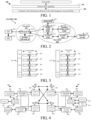
- Embodiment 1 illustrates a flowchart of first signaling and a first information block according to an embodiment of this application, as shown in FIG. 1 .
- each box represents a step.
- the first node in this application receives first signaling in step 101; and transmits a first information block in a first time-frequency RB in step 102; where the first signaling is used for indicating the first time-frequency RB, and the first information block includes an HARQ-ACK related to the first signaling; the first signaling is used for indicating a first reference signal resource; starting from a first moment, the first reference signal resource is used for determining only one of a spatial characteristic of a first-type physical channel in a first time-domain resource set and a spatial characteristic of the first-type physical channel in a second time-domain resource set; a time-domain resource occupied by the first time-frequency RB is used for determining the first moment; and the first time-domain resource set and the second time-domain resource set are orthogonal to each other, and a start moment of the first time-domain resource set and a start moment of the second time-domain resource set are no earlier than the first moment.
- the first signaling is physical-layer signaling.
- the first signaling is Downlink Control Information (DCI) signaling.
- DCI Downlink Control Information
- the first signaling is Sidelink Control Information (SCI) signaling.
- SCI Sidelink Control Information
- the first signaling is transmitted on a Physical Downlink Control Channel (PDCCH).
- PDCH Physical Downlink Control Channel
- the first signaling is transmitted on a Physical Sidelink Control CHannel (PSCCH).
- PSCCH Physical Sidelink Control CHannel
- the first signaling is higher-layer signaling.
- the first signaling is Radio Resource Control (RRC) signaling.
- RRC Radio Resource Control
- the first signaling is Medium Access Control Control Element (MAC CE) signaling.
- MAC CE Medium Access Control Control Element
- the first time-frequency resource block includes a Physical Uplink Control Channel (PUCCH) resource.
- PUCCH Physical Uplink Control Channel
- the first time-frequency resource block includes a Physical Uplink Shared CHannel (PUSCH) resource.
- PUSCH Physical Uplink Shared CHannel
- the first time-frequency resource block includes a Physical Sidelink Feedback CHannel (PSFCH) resource.
- PSFCH Physical Sidelink Feedback CHannel
- the first time-frequency resource block includes at least one Resource Element (RE).
- RE Resource Element
- the first time-frequency RB occupies at least one symbol in a time domain, and the first time-frequency RB occupies at least one RB in the time domain.
- the symbol in this application is an Orthogonal Frequency Division Multiplexing (OFDM) symbol.
- OFDM Orthogonal Frequency Division Multiplexing
- the symbol in this application is a Single Carrier-Frequency Division Multiple Access (SC-FDMA) symbol.
- SC-FDMA Single Carrier-Frequency Division Multiple Access
- the symbol in this application is a Discrete Fourier Transform Spreading Orthogonal Frequency Division Multiplexing (DFT-s-OFDM) symbol.
- DFT-s-OFDM Discrete Fourier Transform Spreading Orthogonal Frequency Division Multiplexing
- the occupied time-domain resource in this application is: one or more occupied symbols.
- the fourth field is a frequency domain resource assignment field.
- the DL physical channel includes a PDSCH.
- the DL physical channel includes a PDCCH and a PDSCH.
- the second signal includes PUSCH transmission.
- the second signal includes PUCCH transmission.
- the UL physical channel includes a PUSCH.
- the UL physical channel includes a PUCCH.
- the UL physical channel includes a PUSCH and a PUCCH.
- the UL physical channel includes at least one of a PUSCH and a PUCCH.
- the first time-domain resource set occupies at least one symbol in the time domain
- the second time-domain resource set occupies at least one symbol in the time domain
- the first time-domain resource set occupies at least one slot in the time domain
- the second time-domain resource set occupies at least one slot in the time domain
- the first time-domain resource set occupies at least one subframe in the time domain
- the second time-domain resource set occupies at least one subframe in the time domain
- the first-type physical channel includes a PDCCH, and at least one control channel candidate in the first time-domain resource set and at least one control channel candidate in the second time-domain resource set belong to a same Control Resource Set (CORESET).
- CORESET Control Resource Set
- the first-type physical channel includes a PDCCH, and at least one control channel candidate in the first time-domain resource set and at least one control channel candidate in the second time-domain resource set belong to a same CORESET pool.
- the first-type physical channel includes a PDCCH, and all control channel candidates in the first time-domain resource set and all control channel candidates in the second time-domain resource set belong to a same CORESET pool.
- the first-type physical channel includes a PDCCH, and at least one control channel candidate in the first time-domain resource set and at least one control channel candidate in the second time-domain resource set belong to a same search space.
- the first-type physical channel includes a PDCCH, and at least one control channel candidate in the first time-domain resource set and at least one control channel candidate in the second time-domain resource set belong to a same search space set.
- the first-type physical channel includes a PDCCH, and all control channel candidates in the first time-domain resource set and all control channel candidates in the second time-domain resource set belong to a same search space set.
- a sender of the first signaling simultaneously receives and transmits a wireless signal on at least one symbol in the first time-domain resource set, and the sender of the first signaling only receives a wireless signal or only transmits a wireless signal on at least one symbol in the second time-domain resource set.
- the first node simultaneously receives and transmits a wireless signal on at least one symbol in the first time-domain resource set, and the first node only receives a wireless signal or only transmits a wireless signal on at least one symbol in the second time-domain resource set.
- the first-type physical channel includes a PDSCH, and the first-type physical channel in the first time-domain resource set and the first-type physical channel in the second time-domain resource set respectively correspond to different TCI state sets.
- the first-type physical channel includes a PUSCH, and the first-type physical channel in the first time-domain resource set and the first-type physical channel in the second time-domain resource set respectively correspond to different Transmission Configuration Indication (TCI) state sets.
- TCI Transmission Configuration Indication
- the first-type physical channel includes a PUSCH, and the first-type physical channel in the first time-domain resource set and the first-type physical channel in the second time-domain resource set respectively correspond to different Sounding Reference Signal (SRS) resource sets.
- SRS Sounding Reference Signal
- FIG. 2 illustrates a network architecture 200 of Long-Term Evolution (LTE), Long-Term Evolution Advanced (LTE-A), and future 5G systems.
- the network architecture 200 of the LTE, LTE-A, and future 5G systems is referred to as an evolved packet system (EPS) 200.
- EPS evolved packet system
- a 5G NR or LTE network architecture 200 may be referred to as a 5G System (5GS)/EPS 200 or another suitable term.
- 5GS 5G System
- the 5GS/EPS 200 may include one or more UEs 201, a UE 241 performing Sidelink communication with the UE 201, a next generation radio access network (NG-RAN) 202, a 5G CoreNetwork (5GC)/an Evolved Packet Core (EPC) 210, a Home Subscriber Server (HSS)/Unified Data Management (UDM) 220, and an Internet service 230.
- the 5GS/EPS 200 may be interconnected to another access network, but for simplicity, these entities/interfaces are not shown. As shown in FIG. 2 , the 5GS/EPS 200 provides a packet switching service.
- NG-RAN next generation radio access network
- 5GC 5G CoreNetwork
- EPC Evolved Packet Core
- HSS Home Subscriber Server
- UDM Unified Data Management
- the 5GS/EPS 200 may be interconnected to another access network, but for simplicity, these entities/interfaces are not shown.
- the 5GS/EPS 200 provides a packet switching service.
- the NG-RAN 202 includes an NR node B (gNB) 203 and another gNB 204.
- the gNB 203 provides termination of user and control plane protocols towards the UE 201.
- the gNB 203 may be connected to another gNB 204 by using an Xn interface (e.g., backhaul).
- the gNB 203 may alternatively be referred to as a base station, a base transceiver station, a radio base station, a radio transceiver, a transceiver function, a basic service set (BSS), an extended service set (ESS), a transmit-receive point (TRP), or another suitable term.
- the gNB 203 provides the UE 201 with an access point to the 5GC/EPC 210.
- An example of the UE 201 includes a cellular phone, a smart phone, a session initiation protocol (SIP) phone, a laptop computer, a personal digital assistant (PDA), a satellite radio, a global positioning system, a multimedia apparatus, a video apparatus, a digital audio player (e.g., an MP3 player), a camera, a game console, an unmanned aerial vehicle, an aircraft, a narrowband physical network device, a machine type communication device, a land vehicle, an automobile, a wearable device, or any other apparatuses having similar functions.
- SIP session initiation protocol
- PDA personal digital assistant
- a person skilled in the art may alternatively refer to the UE 201 as a mobile station, a subscriber station, a mobile unit, a subscriber unit, a wireless unit, a remote unit, a mobile apparatus, a wireless apparatus, a wireless communication apparatus, a remote apparatus, a mobile subscriber station, an access terminal, a mobile terminal, a wireless terminal, a remote terminal, a handset, a user agent, a mobile client, a client, or another suitable term.
- the gNB 203 is connected to the 5GC/EPC 210 by using an S1/NG interface.
- the 5GC/EPC 210 includes a Mobility Management Entity (MM)/Authentication Management Field (AMF)/Session Management Function (SMF) 211, another MM/AMF/SMF 214, a Service Gateway (S-GW)/User Plane Function (UPF) 212, and a Packet Data Network Gateway (P-GW)/UPF 213.
- MM Mobility Management Entity
- AMF Authentication Management Field
- S-GW Service Gateway
- UPF User Plane Function
- P-GW Packet Data Network Gateway
- the MME/AMF/SMF 211 is a control node that processes signaling between the UE 201 and the 5GC/EPC 210.
- the MME/AMF/SMF 211 provides bearer and connection management.
- IP Internet Protocol
- S-GW/UPF 212 All user Internet Protocol (IP) packets are transmitted by using the S-GW/UPF 212, and the S-GW/UPF 212 is connected to the P-GW/UPF 213.
- the P-GW provides UE IP address allocation and other functions.
- the P-GW/UPF 213 is connected to the Internet service 230.
- the Internet service 230 includes IP services corresponding to operators, and may specifically include Internet, Intranet, an IP Multimedia Subsystem (IMS), and packet switching services.
- IMS IP Multimedia Subsystem
- the first node in this application includes the UE 201.
- the first node in this application includes the UE 241.
- An RRC sublayer 306 in the layer 3 (L3 layer) in the control plane 300 is responsible for obtaining a radio resource (that is, a radio bearer) and configuring a lower layer by using RRC signaling between the second communication node device and the first communication node device.
- a radio protocol architecture of the user plane 350 includes a layer 1 (L1 layer) and a layer 2 (L2 layer).
- the wireless protocol architecture in FIG. 3 is applicable to the first node in this application.
- the wireless protocol architecture in FIG. 3 is applicable to the second node in this application.
- the first signaling is generated in the RRC sublayer 306.
- the first signaling is generated in the MAC sublayer 302.
- the first signaling is generated in the MAC sublayer 352.
- the first signaling is generated in the PHY 301 or the PHY 351.
- the first information block is generated in the MAC sublayer 302.
- the second signaling is generated in the RRC sublayer 306.
- the second signaling is generated in the MAC sublayer 302.
- the second signaling is generated in the MAC sublayer 352.
- the second signaling is generated in the PHY 301 or the PHY 351.
- the third signaling is generated in the RRC sublayer 306.
- the third signaling is generated in the MAC sublayer 302.
- the third signaling is generated in the PHY 301 or the PHY 351.
- the third signal is generated in the PHY 301 or the PHY 351.
- Embodiment 4 illustrates a schematic diagram of a first communication device and a second communication device according to an embodiment of this application, as shown in FIG. 4.
- FIG. 4 is a block diagram of a first communication device 410 and a second communication device 450 communicating with each other in an access network.
- the second communication device 450 includes a controller/processor 459, a memory 460, a data source 467, a transmitting processor 468, a receiving processor 456, a multi-antenna transmitting processor 457, a multi-antenna receiving processor 458, a transmitter/receiver 454, and an antenna 452.
- an upper-layer data packet from the core network is provided to the controller/processor 475.
- the controller/processor 475 implements the functions of the L2 layer.
- the controller/processor 475 provides header compression, encryption, packet segmentation and reordering, multiplexing between a logical channel and a transport channel, and radio resource allocation of the second communication device 450 based on various priority metrics.
- the controller/processor 475 is further responsible for a HARQ operation, retransmission of a lost packet, and signaling to the second communication device 450.
- the transmitting processor 416 and the multi-antenna transmitting processor 471 implement various signal processing functions for the L1 layer (that is, the PHY).
- the transmitting processor 416 implements coding and interleaving to facilitate forward error correction (FEC) at the second communication device 450 and constellation mapping based on various modulation schemes (e.g., binary phase shift keying (BPSK), quadrature phase shift keying (QPSK), M-phase shift keying (M-PSK), and M-quadrature amplitude modulation (M-QAM)).
- FEC forward error correction
- BPSK binary phase shift keying
- QPSK quadrature phase shift keying
- M-PSK M-phase shift keying
- M-QAM M-quadrature amplitude modulation
- the multi-antenna transmitting processor 471 performs digital space precoding, including codebook-based precoding and non-codebook-based precoding, and beamforming processing on encoded and modulated symbols to generate one or more parallel streams.
- the transmitting processor 416 maps each parallel stream to a subcarrier, multiplexes a modulated symbol with a reference signal (i.e., pilot frequency) in a time domain and/or a frequency domain, and then uses inverse fast Fourier transform (IFFT) to generate a physical channel carrying a time-domain multi-carrier symbol stream.
- IFFT inverse fast Fourier transform
- the multi-antenna transmitting processor 471 performs a transmission analog precoding/beamforming operation on the time-domain multi-carrier symbol stream.
- Each transmitter 418 converts a baseband multi-carrier symbol stream provided by the multi-antenna transmitting processor 471 into a radio-frequency stream, which is later provided to different antennas 420.
- each receiver 454 receives a signal by using a corresponding antenna 452 thereof.
- Each receiver 454 recovers information modulated onto a radio-frequency carrier, and converts the radio-frequency stream into a baseband multi-carrier symbol stream which is provided to the receiving processor 456.
- the receiving processor 456 and the multi-antenna receiving processor 458 implement various signal processing functions of the L1 layer.
- the multi-antenna receiving processor 458 performs a reception analog precoding/beamforming operation on the baseband multi-carrier symbol stream provided by the receiver 454.
- the receiving processor 456 decodes and deinterleaves the soft decision to recover the upper-layer data and the control signal that are transmitted by the first communication device 410 on the physical channel. Then, the upper-layer data and the control signal are provided to the controller/processor 459.
- the controller/processor 459 implements the functions of the L2 layer.
- the controller/processor 459 may be associated with a memory 460 that stores program code and data.
- the memory 460 may be referred to as a computer-readable medium.
- the controller/processor 459 provides demultiplexing between a transport channel and a logical channel, packet reassembling, decryption, header decompression, and control signal processing to recover the upper-layer data packet from the core network.
- the upper-layer packet is later provided to all protocol layers above the L2 layer.
- Various control signals may alternatively be provided to L3 for processing by L3.
- the controller/processor 459 is further responsible for performing, by using an acknowledge (ACK) protocol and/or a negative acknowledge (NACK) protocol, error detection, to support the HARQ operation.
- ACK acknowledge
- NACK negative acknowledge
- the controller/processor 459 is further responsible for a HARQ operation, retransmission of a lost packet, and signaling to the first communication device 410.
- the transmitting processor 468 performs modulation mapping and channel coding.
- the multi-antenna transmitting processor 457 performs digital multi-antenna space precoding, including codebook-based precoding and non-codebook-based precoding, and beamforming.
- the transmitting processor 468 modulates generated parallel streams into a multi-carrier/single-carrier symbol stream which is subjected to an analog precoding/beamforming operation in the multi-antenna transmitting processor 457 and then provided to different antennas 452 by using the transmitter 454.
- Each transmitter 454 first converts a baseband symbol stream provided by the multi-antenna transmitting processor 457 into a radio-frequency symbol stream which is then provided to the antenna 452.
- the function at the first communication device 410 is similar to the receiving function at the second communication device 450 described during transmission from the first communication device 410 to the second communication device 450.
- Each receiver 418 receives a radio-frequency signal by using a corresponding antenna 420 thereof, converts the received radio-frequency signal into a baseband signal, and provides the baseband signal to the multi-antenna receiving processor 472 and the receiving processor 470.
- the receiving processor 470 and the multi-antenna receiving processor 472 jointly implement the functions of the L1 layer.
- the controller/processor 475 implements the functions of the L2 layer.
- the controller/processor 475 may be associated with a memory 476 that stores program code and data.
- the QCL parameter whose type is TypeB includes Dopler shift and Dopler spread.
- the QCL parameter whose type is TypeC includes Dopler shift and average delay.
- TypeA As an embodiment, for specific definitions of the TypeA, the TypeB, the TypeC, and the TypeD, refer to 3GPP TS38.214, chapter 5.1.5.
- the QCL parameter includes one or more of delay spread, Doppler spread, Doppler shift, average delay, and a Spatial Rx parameter.
- the QCL parameter includes Dopler shift and Dopler spread.
- the QCL parameter includes a Spatial Rx parameter.
- the QCL parameter includes at least one of a Spatial Tx parameter and a Spatial Rx parameter.
- the QCL parameter includes a spatial domain receive filter.
- the QCL parameter includes a spatial domain filter.
- the QCL parameter includes at least one of a spatial domain transmit filter and a spatial domain receive filter.
- the first reference signal resource is a UL reference signal resource.
- the first reference signal resource is a DL reference signal resource.
- the first reference signal resource includes at least one of an SRS resource, a CSI-RS resource, and an SS/PBCH block resource.
- the first reference signal resource includes at least one of a CSI-RS resource and an SS/PBCH block resource.
- the first signaling is used for indicating a first TCI state
- the first reference signal resource is a reference signal resource included in the first TCI state
- the first reference signal resource corresponds to the QCL parameter whose type is the TypeD.
- the first signaling is used for indicating a first TCI state
- the first reference signal resource is a reference signal resource included in the first TCI state
- the QCL parameter corresponding to the first reference signal resource includes a Spatial Rx parameter
- the first signaling explicitly indicates the first reference signal resource.
- the first signaling implicitly indicates the first reference signal resource.
- the first signaling is used for indicating a first TCI state group
- the first TCI state group includes at least one TCI state
- the first TCI state is a TCI state in the first TCI state group.
- At least one field in the first signaling is used for indicating the first TCI state group; and one field includes at least one bit.
- the at least one field in the first signaling includes a first field, and the first field in the first signaling is used for indicating the first TCI state; and the first field includes at least one bit.
- the first signaling includes a first field, and the first field in the first signaling is used for indicating the first TCI state group; and the first field includes at least one bit.
- the first signaling includes a plurality of fields, the plurality of fields in the first signaling are jointly used for indicating the first TCI state group, a first field is one of the plurality of fields, and the first field in the first signaling is used for indicating the first TCI state; and one field includes at least one bit.
- the first signaling includes a first field
- the first field in the first signaling is used for indicating a first TCI state
- the first reference signal resource is a reference signal resource included in the first TCI state
- the first field includes at least one bit
- a name of the first field includes Transmission Configuration Indication.
- the name of the first field includes TCI.
- the name of the first field includes SRS.
- the name of the first field includes beam.
- the first field is a Transmission Configuration Indication field.
- the first field includes N codepoints, N1 codepoints in the N codepoints respectively correspond to N1 TCI state groups, N is a positive integer greater than 1, and N1 is a positive integer no greater than N.
- quantities of TCI states respectively included in the N1 TCI state groups are all equal to 1.
- any TCI state group included in the N1 TCI state groups includes one or more TCI states.
- a quantity of bits included in the first field is a minimum integer no less than "logarithm base 2 of N1".
- a quantity of bits included in the first field is "logarithm base 2 of N".
- any codepoint of the first field is a sequence.
- any codepoint of the first field is a bit sequence.
- any codepoint of the first field corresponds to a value in a value range of the first field.
- information corresponding to a codepoint in the first field is configured by higher-layer signaling.
- one time unit is a slot.
- one time unit is a sub-slot.
- one time unit is a symbol.
- a unit of the first interval value is the time unit.
- the first interval value is a positive real number.
- the first interval value is BeamAppTime_r17.
- the first interval value is configured by a higher-layer parameter beamAppTime-r17.
- the spatial characteristic of the first-type physical channel in the first time-domain resource set is different from the spatial characteristic of the first-type physical channel in the second time-domain resource set.
- the first reference signal resource is used for determining the spatial characteristic of the first-type physical channel in the first time-domain resource set and the spatial characteristic of the first-type physical channel in the second time-domain resource set.
- the first condition includes: receiving a higher-layer parameter to configure a first time-domain resource pool and a second time-domain resource pool, the first time-domain resource set belonging to the first time-domain resource pool, and the second time-domain resource set belonging to the second time-domain resource pool.
- the first condition includes: at least one symbol in the first time-domain resource set being configured as a first type, and any symbol in the second time-domain resource set being configured as a second type.
- the first condition includes: at least one symbol in the first time-domain resource set is configured as a first type, and any symbol in the second time-domain resource set is configured as a type other than the first type.
- the first condition includes: at least one symbol in the first time-domain resource pool being configured as a first type, any symbol in the second time-domain resource pool being configured as a type other than the first type, the first time-domain resource set belonging to the first time-domain resource pool, and the second time-domain resource set belonging to the second time-domain resource pool.
- the first condition includes: the first time-domain resource set being configured as Full Duplex, and the second time-domain resource set being configured as Half Duplex.
- the first condition includes: the first time-domain resource set being configured as non-overlapping full duplex, and the second time-domain resource set being configured as half duplex.
- the first condition includes: the first time-domain resource set being configured as subband non-overlapping full duplex, and the second time-domain resource set being configured as half duplex.
- the first condition includes: a sender of the first signaling simultaneously receiving and transmitting a wireless signal on at least one symbol in the first time-domain resource set, and the sender of the first signaling only receiving a wireless signal or only transmitting a wireless signal on at least one symbol in the second time-domain resource set.
- the first condition includes: the first node simultaneously receiving and transmitting a wireless signal on at least one symbol in the first time-domain resource set, and the first node only receiving a wireless signal or only transmitting a wireless signal on at least one symbol in the second time-domain resource set.
- a range of the link direction includes at least one of UL, DL, Flexible, and SL.
- the range of the link direction includes UL and DL.
- the range of the link direction includes UL, DL, and Flexible.
- the given reference signal resource is the first reference signal resource
- the given channel is the first-type physical channel in the first time-domain resource set
- the given channel is the first-type physical channel in the second time-domain resource set.
- the spatial characteristic in this application includes beamforming.
- the spatial characteristic in this application includes one or more of a QCL parameter, a spatial filter, a transmit spatial filter, a receive spatial filter, a spatial domain filter, a spatial domain transmit filter, a spatial domain receive filter, a spatial relation, precoding, a beam, and beamforming.
- the UL reference signal resource includes an SRS resource.
- the UL reference signal resource includes at least one of an SRS resource and a UL DMRS.
- the DL reference signal resource includes at least one of a CSI-RS resource and an SS/PBCH block resource.
- the DL reference signal resource includes a CSI-RS resource.
- a control channel on a control channel candidate is a PSCCH.
- a control channel on a control channel candidate is a PDCCH.
- a control channel candidate is a PDCCH candidate
- a control channel on a control channel candidate is a PDCCH.
- a control channel candidate occupies a plurality of resource elements (REs).
- REs resource elements
- a control channel candidate occupies one or more control channel elements (CCEs).
- CCEs control channel elements
- a quantity of CCEs occupied by a control channel candidate is equal to one of 1, 2, 4, 8, and 16.
- one CCE includes 9 Resource Element Groups (REGs), and one REG includes 4 REs.
- REGs Resource Element Groups
- a CORESET includes a plurality of REs.
- a search space set associated with a CORESET includes: RB(s) occupied by a CORESET in the frequency domain includes/include RB(s) occupied by a search space set associated with the CORESET in the frequency domain.
- a search space set associated with a CORESET includes: a symbol(s) occupied by a CORESET includes a symbol(s) occupied by a search space set associated with the CORESET in a Monitoring Occasion.
- a search space set associated with a CORESET includes: configuration information of a search space set associated with a CORESET includes an index of the CORESET.
- a Monitoring Occasion includes a sub-slot.
- a Monitoring Occasion includes a subframe.
- some time-domain resources in the first time-domain resource pool are earlier than the first moment, and some time-domain resources in the second time-domain resource pool are earlier than the first moment.
- the first time-domain resource set belongs to a first time-domain resource pool
- the second time-domain resource set belongs to a second time-domain resource pool
- at least one symbol in the first time-domain resource pool is configured with more than one link direction
- any symbol in the second time-domain resource pool is configured with only one link direction.
- a sender of the first signaling simultaneously receives and transmits a wireless signal on at least one symbol in the first time-domain resource pool, and the sender of the first signaling only receives a wireless signal or only transmits a wireless signal on at least one symbol in the second time-domain resource pool.
- the first node simultaneously receives and transmits a wireless signal on at least one symbol in the first time-domain resource pool, and the first node only receives a wireless signal or only transmits a wireless signal on at least one symbol in the second time-domain resource pool.
- Embodiment 7 illustrates a schematic diagram of a first time-domain resource set and a second time-domain resource set according to another embodiment of this application, as shown in FIG. 7 .
- At least one symbol in the first time-domain resource set is configured as a first type, and any symbol in the second time-domain resource set is configured as a type other than the first type.
- At least one symbol in the first time-domain resource set is configured as a second type.
- the first time-domain resource set includes a symbol configured as a second type.
- the first type is different from UL, DL, and Flexible, and the type other than the first type is UL or DL.
- the first type is different from UL and DL, and the type other than the first type is UL or DL.
- the first type is different from UL and DL, and the type other than the first type is UL, DL, or Flexible.
- the first type includes a plurality of link directions, and the type other than the first type includes only one link direction.
- the type other than the first type is UL or DL.
- the type other than the first type is one of UL, DL, and Flexible.
- the first type is Flexible
- the second type is UL or DL.
- the first type is different from UL, DL, and Flexible
- the second type is UL, DL, or Flexible
- the first type is different from UL and DL
- the second type is UL or DL.
- the first type includes a plurality of link directions
- the second type includes only one link direction
- the first type is different from UL and DL.
- the first type is different from UL, DL, and Flexible.
- the second type is UL or DL.
- the second type is one of UL, DL, and Flexible.
- the sender of the first signaling simultaneously receives and transmits a wireless signal on the symbol; and if one symbol is configured as a type other than the first type, the sender of the first signaling only receives a wireless signal or only transmits a wireless signal on the symbol.
- the first node if one symbol is configured as the first type, the first node simultaneously receives and transmits a wireless signal on the symbol; and if one symbol is configured as a type other than the first type, the first node only receives a wireless signal or only transmits a wireless signal on the symbol.
- the sender of the first signaling simultaneously receives and transmits a wireless signal on the symbol; and if one symbol is not configured as the first type, the sender of the first signaling only receives a wireless signal or only transmits a wireless signal on the symbol.
- the first node if one symbol is configured as the first type, the first node simultaneously receives and transmits a wireless signal on the symbol; and if one symbol is not configured as the first type, the first node only receives a wireless signal or only transmits a wireless signal on the symbol.
- the type other than the first type is a type in the first type set.
- any two types in the first type set are different.
- the first type set further includes a type other than the first type, UL, and DL.
- Flexible is a type in the first type set.
- Flexible is not a type in the first type set.
- the first type is Flexible.
- the first type is different from UL, DL, and Flexible.
- the second type is a type in the first type set.
- Embodiment 8 illustrates a schematic diagram of a spatial characteristic of a first-type physical channel according to an embodiment of this application, as shown in FIG. 8 .
- a second reference signal resource is used for determining the spatial characteristic of the first-type physical channel in the second time-domain resource set, and the first reference signal resource is different from the second reference signal resource; and when the first reference signal resource is used for determining the spatial characteristic of the first-type physical channel in the second time-domain resource set, a third reference signal resource is used for determining the spatial characteristic of the first-type physical channel in the first time-domain resource set, and the first reference signal resource is different from the third reference signal resource.
- the second reference signal resource is different from the third reference signal resource.
- the second reference signal resource is a UL reference signal resource.
- the second reference signal resource is a DL reference signal resource.
- the second reference signal resource includes at least one of an SRS resource, a CSI-RS resource and an SS/PBCH block resource.
- the first signaling includes a first field, and the first field in the first signaling is used for indicating the first TCI state group; and the first field includes at least one bit.
- the first signaling includes a first field, and the first field in the first signaling is used for indicating the target reference signal resource group.
- At least one field in the first signaling is used for indicating the target reference signal resource group.
- the first signaling includes a plurality of fields, and the plurality of fields in the first signaling are jointly used for indicating the target reference signal resource group.
- a position of the first reference signal resource in the target reference signal resource group is an ordinal position of the first reference signal resource in the target reference signal resource group.
- a position of the first reference signal resource in the target reference signal resource group is a sequential position of the first reference signal resource in the target reference signal resource group.
- the first reference signal resource is a kth reference signal resource in the target reference signal resource group, and the position of the first reference signal resource in the target reference signal resource group is the k.
- the first reference signal resource when the first reference signal resource is a first reference signal resource in the target reference signal resource group, the first reference signal resource is used for determining the spatial characteristic of the first-type physical channel in the second time-domain resource set; and when the first reference signal resource is a second reference signal resource in the target reference signal resource group, the first reference signal resource is used for determining the spatial characteristic of the first-type physical channel in the first time-domain resource set.
- the first reference signal resource when the position of the first reference signal resource in the target reference signal resource group is a first position, the first reference signal resource is used for determining the spatial characteristic of the first-type physical channel in the first time-domain resource set; and when the position of the first reference signal resource in the target reference signal resource group is a second position, the first reference signal resource is used for determining the spatial characteristic of the first-type physical channel in the second time-domain resource set.
- the first position is ranked before the second position.
- the first position is ranked after the second position.
- the position of the first reference signal resource in the target reference signal resource group is the first position; and when the first reference signal resource is the second reference signal resource in the target reference signal resource group, the position of the first reference signal resource in the target reference signal resource group is the second position.
- the position of the first reference signal resource in the target reference signal resource group is the first position; and when the first reference signal resource is the first reference signal resource in the target reference signal resource group, the position of the first reference signal resource in the target reference signal resource group is the second position.
- Embodiment 13 illustrates a schematic diagram of a target channel group according to an embodiment of this application, as shown in FIG. 13 .
- the first-type physical channel is one of M types of physical channels, M being a positive integer greater than 1; and starting from the first moment, the first reference signal resource is used for determining a spatial characteristic of a target channel group, the target channel group including at least two types of physical channels in the M types of physical channels, and the first-type physical channel is one type of physical channel in the target channel group.
- the M types of physical channels include a PUCCH and a PUSCH
- the target channel group includes the PUCCH and the PUSCH.
- the UL physical channel includes a PDCCH, a PDSCH, a PUCCH, and a PUSCH.
- the target channel group includes the PDCCH and the PDSCH.
- the target channel group includes the PUCCH and the PUSCH.
- the target channel group includes the PDCCH, the PDSCH, the PUCCH, and the PUSCH.
- link directions of different types of physical channels in the target channel group are the same.
- link directions of two types of physical channels in the target channel group are different.
- the target channel group is related to whether the first reference signal resource is used for determining the spatial characteristic of the first-type physical channel in the first time-domain resource set or the spatial characteristic of the first-type physical channel in the second time-domain resource set.
- the first reference signal resource when the first reference signal resource is used for determining the spatial characteristic of the first-type physical channel in the first time-domain resource set, link directions of two types of physical channels in the target channel group are different; and when the first reference signal resource is used for determining the spatial characteristic of the first-type physical channel in the second time-domain resource set, link directions of different types of physical channels in the target channel group are the same.
- Embodiment 14 illustrates a structural block diagram of a processing apparatus used in a first node device according to an embodiment of this application, as shown in FIG. 14 .
- the processing apparatus 1200 in the first node device includes at least a first receiver 1201 of the first receiver 1201 and a first transmitter 1202, and the first transmitter 1202 is optional.
- the first node device is a relay node device.
- the first transmitter 1202 includes at least one of ⁇ the antenna 452, the transmitter 454, the transmitting processor 468, the multi-antenna transmitting processor 457, the controller/processor 459, the memory 460, and the data source 467 ⁇ in Embodiment 4.
- the first receiver 1201 receives first signaling; and the first transmitter 1202 transmits a first information block in a first time-frequency RB.
- At least one symbol in the first time-domain resource set is configured as a first type, and any symbol in the second time-domain resource set is configured as a type other than the first type.
- a second reference signal resource is used for determining the spatial characteristic of the first-type physical channel in the second time-domain resource set, and the first reference signal resource is different from the second reference signal resource; and when the first reference signal resource is used for determining the spatial characteristic of the first-type physical channel in the second time-domain resource set, a third reference signal resource is used for determining the spatial characteristic of the first-type physical channel in the first time-domain resource set, and the first reference signal resource is different from the third reference signal resource.
- the first time-domain resource set belongs to a first time-domain resource pool
- the second time-domain resource set belongs to a second time-domain resource pool
- a fourth reference signal resource is used for determining the spatial characteristic of the first-type physical channel in a time-domain resource earlier than the first moment in the first time-domain resource pool, and the first reference signal resource is different from the fourth reference signal resource
- a fifth reference signal resource is used for determining the spatial characteristic of the first-type physical channel in a time-domain resource earlier than the first moment in the second time-domain resource pool, and the first reference signal resource is different from the fifth reference signal resource.
- the first time-domain resource set belongs to a first time-domain resource pool
- the second time-domain resource set belongs to a second time-domain resource pool
- the first reference signal resource is used for determining the spatial characteristic of the first-type physical channel in the first time-domain resource set
- the first reference signal resource is used for determining the spatial characteristic of the first-type physical channel in the second time-domain resource set.
- the first signaling is used for indicating a target reference signal resource group
- the target reference signal resource group includes two reference signal resources
- the first reference signal resource is one of the two reference signal resources in the target reference signal resource group
- the two reference signal resources in the target reference signal resource group are respectively used for determining the spatial characteristic of the first-type physical channel in the first time-domain resource set and the spatial characteristic of the first-type physical channel in the second time-domain resource set
- whether the first reference signal resource is used for determining the spatial characteristic of the first-type physical channel in the first time-domain resource set or the spatial characteristic of the first-type physical channel in the second time-domain resource set is related to a position of the first reference signal resource in the target reference signal resource group.
- Embodiment 15 illustrates a structural block diagram of a processing apparatus used in a second node device according to an embodiment of this application, as shown in FIG. 15 .
- the processing apparatus 1300 in the second node device includes at least a second transmitter 1301 of the second transmitter 1301 and a second receiver 1302, and the second receiver 1302 is optional.
- the second node device is a base station device.
- the second node device is a UE.
- the second node device is a relay node device.
- the second transmitter 1301 includes at least one of ⁇ the antenna 420, the transmitter 418, the transmitting processor 416, the multi-antenna transmitting processor 471, the controller/processor 475, and the memory 476 ⁇ in Embodiment 4.
- the second receiver 1302 includes at least one of ⁇ the antenna 420, the receiver 418, the receiving processor 470, the multi-antenna receiving processor 472, the controller/processor 475, and the memory 476 ⁇ in Embodiment 4.
- the second transmitter 1301 transmits first signaling; and the second receiver 1302 receives a first information block in a first time-frequency RB.
- the first signaling is used for indicating the first time-frequency RB, and the first information block includes an HARQ-ACK related to the first signaling; the first signaling is used for indicating a first reference signal resource; starting from a first moment, the first reference signal resource is used for determining only one of a spatial characteristic of a first-type physical channel in a first time-domain resource set and a spatial characteristic of the first-type physical channel in a second time-domain resource set; a time-domain resource occupied by the first time-frequency RB is used for determining the first moment; and the first time-domain resource set and the second time-domain resource set are orthogonal to each other, and a start moment of the first time-domain resource set and a start moment of the second time-domain resource set are no earlier than the first moment.
- At least one symbol in the first time-domain resource set is configured as a first type, and any symbol in the second time-domain resource set is configured as a type other than the first type.
- a second reference signal resource is used for determining the spatial characteristic of the first-type physical channel in the second time-domain resource set, and the first reference signal resource is different from the second reference signal resource; and when the first reference signal resource is used for determining the spatial characteristic of the first-type physical channel in the second time-domain resource set, a third reference signal resource is used for determining the spatial characteristic of the first-type physical channel in the first time-domain resource set, and the first reference signal resource is different from the third reference signal resource.
- the first time-domain resource set belongs to a first time-domain resource pool
- the second time-domain resource set belongs to a second time-domain resource pool
- a fourth reference signal resource is used for determining the spatial characteristic of the first-type physical channel in a time-domain resource earlier than the first moment in the first time-domain resource pool, and the first reference signal resource is different from the fourth reference signal resource
- a fifth reference signal resource is used for determining the spatial characteristic of the first-type physical channel in a time-domain resource earlier than the first moment in the second time-domain resource pool, and the first reference signal resource is different from the fifth reference signal resource.
- the first time-domain resource set belongs to a first time-domain resource pool
- the second time-domain resource set belongs to a second time-domain resource pool
- the first reference signal resource is used for determining the spatial characteristic of the first-type physical channel in the first time-domain resource set
- the first reference signal resource is used for determining the spatial characteristic of the first-type physical channel in the second time-domain resource set.
- the first signaling is used for indicating a target reference signal resource group
- the target reference signal resource group includes two reference signal resources
- the first reference signal resource is one of the two reference signal resources in the target reference signal resource group
- the two reference signal resources in the target reference signal resource group are respectively used for determining the spatial characteristic of the first-type physical channel in the first time-domain resource set and the spatial characteristic of the first-type physical channel in the second time-domain resource set
- whether the first reference signal resource is used for determining the spatial characteristic of the first-type physical channel in the first time-domain resource set or the spatial characteristic of the first-type physical channel in the second time-domain resource set is related to a position of the first reference signal resource in the target reference signal resource group.
- the first-type physical channel is one of M types of physical channels, M being a positive integer greater than 1; and starting from the first moment, the first reference signal resource is used for determining a spatial characteristic of a target channel group, the target channel group including at least two types of physical channels in the M types of physical channels, and the first-type physical channel is one type of physical channel in the target channel group.
- a person of ordinary skill in the art may understand that all or some of the steps of the foregoing method may be implemented by a program instructing relevant hardware.
- the program may be stored in a computer-readable storage medium, such as a read-only memory, a hard disk, or an optical disc.
- all or some of the steps of the foregoing embodiments may alternatively be implemented by using one or more integrated circuits.
- the module units in the foregoing embodiments may be implemented in a form of hardware or may be implemented in a form of a software functional module. This application is not limited to a combination of software and hardware in any particular form.
- the terminal and the UE in this application include, but are not limited to, wireless communication devices such as unmanned aerial vehicles, communication modules on unmanned aerial vehicles, telecontrolled aircrafts, aircrafts, diminutive aeroplanes, mobile phones, tablet computers, notebook computers, vehicle-mounted communication devices, wireless sensors, network cards, Internet of things terminals, radio frequency identification (RFID) terminals, narrow band Internet of things (NB-IOT) terminals, Machine Type Communication (MTC) terminals, enhanced MTC (eMTC) terminals, data cards, network cards, vehicle-mounted communication devices, low-cost mobile phones, and low-cost tablet computers.
- wireless communication devices such as unmanned aerial vehicles, communication modules on unmanned aerial vehicles, telecontrolled aircrafts, aircrafts, diminutive aeroplanes, mobile phones, tablet computers, notebook computers, vehicle-mounted communication devices, wireless sensors, network cards, Internet of things terminals, radio frequency identification (RFID) terminals, narrow band Internet of things (NB-IOT) terminals, Machine Type Communication (MTC) terminals, enhanced MTC (eMTC) terminal
- the base station or system device in this application includes, but is not limited to, wireless communication devices such as a macrocellular base station, a microcellular base station, a home base station, a relay base station, a gNB (an NR node B), and a Transmitter Receiver Point (TRP).
- wireless communication devices such as a macrocellular base station, a microcellular base station, a home base station, a relay base station, a gNB (an NR node B), and a Transmitter Receiver Point (TRP).
Landscapes
- Engineering & Computer Science (AREA)
- Signal Processing (AREA)
- Computer Networks & Wireless Communication (AREA)
- Mobile Radio Communication Systems (AREA)
Applications Claiming Priority (2)
| Application Number | Priority Date | Filing Date | Title |
|---|---|---|---|
| CN202210894250.9A CN117527163A (zh) | 2022-07-27 | 2022-07-27 | 一种被用于无线通信的节点中的方法和装置 |
| PCT/CN2023/109132 WO2024022342A1 (zh) | 2022-07-27 | 2023-07-25 | 一种被用于无线通信的节点中的方法和装置 |
Publications (1)
| Publication Number | Publication Date |
|---|---|
| EP4580100A1 true EP4580100A1 (de) | 2025-07-02 |
Family
ID=89705530
Family Applications (1)
| Application Number | Title | Priority Date | Filing Date |
|---|---|---|---|
| EP23845551.3A Pending EP4580100A1 (de) | 2022-07-27 | 2023-07-25 | Verfahren und vorrichtung zur verwendung in drahtloskommunikationsknoten |
Country Status (3)
| Country | Link |
|---|---|
| EP (1) | EP4580100A1 (de) |
| CN (1) | CN117527163A (de) |
| WO (1) | WO2024022342A1 (de) |
Families Citing this family (1)
| Publication number | Priority date | Publication date | Assignee | Title |
|---|---|---|---|---|
| CN121218342A (zh) * | 2024-06-24 | 2025-12-26 | 上海推络通信科技合伙企业(有限合伙) | 被用于无线通信的方法和装置 |
Family Cites Families (6)
| Publication number | Priority date | Publication date | Assignee | Title |
|---|---|---|---|---|
| CN114938260B (zh) * | 2019-10-29 | 2024-03-26 | 上海朗帛通信技术有限公司 | 一种被用于无线通信的节点中的方法和装置 |
| CN113541898B (zh) * | 2020-04-21 | 2022-03-29 | 上海朗帛通信技术有限公司 | 一种被用于无线通信的节点中的方法和装置 |
| CN113677032B (zh) * | 2020-05-13 | 2024-05-24 | 上海朗帛通信技术有限公司 | 一种被用于无线通信的节点中的方法和装置 |
| CN114189884B (zh) * | 2020-09-15 | 2024-04-12 | 上海朗帛通信技术有限公司 | 一种被用于无线通信的节点中的方法和装置 |
| WO2022073492A1 (zh) * | 2020-10-10 | 2022-04-14 | 上海朗帛通信技术有限公司 | 一种被用于无线通信的节点中的方法和装置 |
| CN118574231A (zh) * | 2020-11-25 | 2024-08-30 | 上海朗帛通信技术有限公司 | 一种被用于无线通信的节点中的方法和装置 |
-
2022
- 2022-07-27 CN CN202210894250.9A patent/CN117527163A/zh active Pending
-
2023
- 2023-07-25 WO PCT/CN2023/109132 patent/WO2024022342A1/zh not_active Ceased
- 2023-07-25 EP EP23845551.3A patent/EP4580100A1/de active Pending
Also Published As
| Publication number | Publication date |
|---|---|
| CN117527163A (zh) | 2024-02-06 |
| WO2024022342A1 (zh) | 2024-02-01 |
Similar Documents
| Publication | Publication Date | Title |
|---|---|---|
| CN114448577B (zh) | 一种被用于无线通信的节点中的方法和装置 | |
| US20220330043A1 (en) | Method and device in nodes used for wireless communication | |
| WO2020088212A1 (zh) | 一种被用于无线通信的用户设备、基站中的方法和装置 | |
| CN112333776B (zh) | 一种被用于无线通信的节点中的方法和装置 | |
| US12170987B2 (en) | Method and device in a node used for wireless communication | |
| EP4611297A1 (de) | Verfahren und vorrichtung für drahtlose kommunikation | |
| EP4654653A1 (de) | Verfahren und vorrichtung zur verwendung in einem knoten für drahtlose kommunikation | |
| EP4590011A1 (de) | Verfahren und vorrichtung zur verwendung in einem knoten zur drahtlosen kommunikation | |
| EP4611459A1 (de) | Verfahren und vorrichtung zur verwendung in einem knoten für drahtlose kommunikation | |
| EP4583444A1 (de) | Verfahren und vorrichtung zur verwendung in einem drahtloskommunikationsknoten | |
| US20240008043A1 (en) | Method and device used in node for wireless communication | |
| WO2026081636A1 (zh) | 一种被用于无线通信的多小区调度的节点中的方法和装置 | |
| EP4580100A1 (de) | Verfahren und vorrichtung zur verwendung in drahtloskommunikationsknoten | |
| WO2025251887A1 (zh) | 用于无线通信的节点中的与pucch有关的方法和装置 | |
| CN112788770B (zh) | 一种被用于无线通信的节点中的方法和装置 | |
| CN112702153B (zh) | 一种被用于无线通信的节点中的方法和装置 | |
| CN113765636A (zh) | 一种被用于无线通信的节点中的方法和装置 | |
| EP4615098A1 (de) | Verfahren und vorrichtung zur verwendung in einem knoten für drahtlose kommunikation | |
| CN118804357B (zh) | 一种被用于无线通信的节点中的方法和装置 | |
| EP4618666A1 (de) | Verfahren und vorrichtung zur verwendung in einem drahtloskommunikationsknoten | |
| EP4615039A1 (de) | Verfahren und vorrichtung für knoten zur verwendung in der drahtlosen kommunikation | |
| EP4611453A1 (de) | Verfahren und vorrichtung für knoten zur verwendung in der drahtlosen kommunikation | |
| EP4593314A1 (de) | Verfahren zur verwendung in einem knoten zur drahtlosen kommunikation und vorrichtung | |
| EP4598179A1 (de) | Verfahren und vorrichtung zur verwendung in einem knoten für drahtlose kommunikation | |
| EP4708998A1 (de) | Verfahren und vorrichtung zur verwendung in einem knoten für drahtlose kommunikation |
Legal Events
| Date | Code | Title | Description |
|---|---|---|---|
| STAA | Information on the status of an ep patent application or granted ep patent |
Free format text: STATUS: THE INTERNATIONAL PUBLICATION HAS BEEN MADE |
|
| PUAI | Public reference made under article 153(3) epc to a published international application that has entered the european phase |
Free format text: ORIGINAL CODE: 0009012 |
|
| STAA | Information on the status of an ep patent application or granted ep patent |
Free format text: STATUS: REQUEST FOR EXAMINATION WAS MADE |
|
| 17P | Request for examination filed |
Effective date: 20250520 |
|
| AK | Designated contracting states |
Kind code of ref document: A1 Designated state(s): AL AT BE BG CH CY CZ DE DK EE ES FI FR GB GR HR HU IE IS IT LI LT LU LV MC ME MK MT NL NO PL PT RO RS SE SI SK SM TR |
|
| RAP1 | Party data changed (applicant data changed or rights of an application transferred) |
Owner name: APOGEE NETWORKS, LLC |
|
| DAV | Request for validation of the european patent (deleted) | ||
| DAX | Request for extension of the european patent (deleted) |