EP4579652A1 - Audioerzeugung mit autoregressiven generativen neuronalen netzwerken - Google Patents
Audioerzeugung mit autoregressiven generativen neuronalen netzwerken Download PDFInfo
- Publication number
- EP4579652A1 EP4579652A1 EP25165951.2A EP25165951A EP4579652A1 EP 4579652 A1 EP4579652 A1 EP 4579652A1 EP 25165951 A EP25165951 A EP 25165951A EP 4579652 A1 EP4579652 A1 EP 4579652A1
- Authority
- EP
- European Patent Office
- Prior art keywords
- acoustic
- tokens
- neural network
- embedding
- audio signal
- Prior art date
- Legal status (The legal status is an assumption and is not a legal conclusion. Google has not performed a legal analysis and makes no representation as to the accuracy of the status listed.)
- Pending
Links
Images




Classifications
-
- G—PHYSICS
- G10—MUSICAL INSTRUMENTS; ACOUSTICS
- G10L—SPEECH ANALYSIS TECHNIQUES OR SPEECH SYNTHESIS; SPEECH RECOGNITION; SPEECH OR VOICE PROCESSING TECHNIQUES; SPEECH OR AUDIO CODING OR DECODING
- G10L25/00—Speech or voice analysis techniques not restricted to a single one of groups G10L15/00 - G10L21/00
- G10L25/27—Speech or voice analysis techniques not restricted to a single one of groups G10L15/00 - G10L21/00 characterised by the analysis technique
- G10L25/30—Speech or voice analysis techniques not restricted to a single one of groups G10L15/00 - G10L21/00 characterised by the analysis technique using neural networks
-
- G—PHYSICS
- G10—MUSICAL INSTRUMENTS; ACOUSTICS
- G10L—SPEECH ANALYSIS TECHNIQUES OR SPEECH SYNTHESIS; SPEECH RECOGNITION; SPEECH OR VOICE PROCESSING TECHNIQUES; SPEECH OR AUDIO CODING OR DECODING
- G10L13/00—Speech synthesis; Text to speech systems
-
- G—PHYSICS
- G06—COMPUTING OR CALCULATING; COUNTING
- G06N—COMPUTING ARRANGEMENTS BASED ON SPECIFIC COMPUTATIONAL MODELS
- G06N3/00—Computing arrangements based on biological models
- G06N3/02—Neural networks
- G06N3/04—Architecture, e.g. interconnection topology
- G06N3/045—Combinations of networks
- G06N3/0455—Auto-encoder networks; Encoder-decoder networks
-
- G—PHYSICS
- G06—COMPUTING OR CALCULATING; COUNTING
- G06N—COMPUTING ARRANGEMENTS BASED ON SPECIFIC COMPUTATIONAL MODELS
- G06N3/00—Computing arrangements based on biological models
- G06N3/02—Neural networks
- G06N3/04—Architecture, e.g. interconnection topology
- G06N3/0475—Generative networks
-
- G—PHYSICS
- G06—COMPUTING OR CALCULATING; COUNTING
- G06N—COMPUTING ARRANGEMENTS BASED ON SPECIFIC COMPUTATIONAL MODELS
- G06N3/00—Computing arrangements based on biological models
- G06N3/02—Neural networks
- G06N3/08—Learning methods
- G06N3/09—Supervised learning
-
- G—PHYSICS
- G10—MUSICAL INSTRUMENTS; ACOUSTICS
- G10H—ELECTROPHONIC MUSICAL INSTRUMENTS; INSTRUMENTS IN WHICH THE TONES ARE GENERATED BY ELECTROMECHANICAL MEANS OR ELECTRONIC GENERATORS, OR IN WHICH THE TONES ARE SYNTHESISED FROM A DATA STORE
- G10H1/00—Details of electrophonic musical instruments
- G10H1/0008—Associated control or indicating means
-
- G—PHYSICS
- G10—MUSICAL INSTRUMENTS; ACOUSTICS
- G10L—SPEECH ANALYSIS TECHNIQUES OR SPEECH SYNTHESIS; SPEECH RECOGNITION; SPEECH OR VOICE PROCESSING TECHNIQUES; SPEECH OR AUDIO CODING OR DECODING
- G10L13/00—Speech synthesis; Text to speech systems
- G10L13/02—Methods for producing synthetic speech; Speech synthesisers
- G10L13/027—Concept to speech synthesisers; Generation of natural phrases from machine-based concepts
-
- G—PHYSICS
- G10—MUSICAL INSTRUMENTS; ACOUSTICS
- G10L—SPEECH ANALYSIS TECHNIQUES OR SPEECH SYNTHESIS; SPEECH RECOGNITION; SPEECH OR VOICE PROCESSING TECHNIQUES; SPEECH OR AUDIO CODING OR DECODING
- G10L13/00—Speech synthesis; Text to speech systems
- G10L13/06—Elementary speech units used in speech synthesisers; Concatenation rules
-
- G—PHYSICS
- G10—MUSICAL INSTRUMENTS; ACOUSTICS
- G10L—SPEECH ANALYSIS TECHNIQUES OR SPEECH SYNTHESIS; SPEECH RECOGNITION; SPEECH OR VOICE PROCESSING TECHNIQUES; SPEECH OR AUDIO CODING OR DECODING
- G10L15/00—Speech recognition
- G10L15/06—Creation of reference templates; Training of speech recognition systems, e.g. adaptation to the characteristics of the speaker's voice
- G10L15/063—Training
-
- G—PHYSICS
- G10—MUSICAL INSTRUMENTS; ACOUSTICS
- G10L—SPEECH ANALYSIS TECHNIQUES OR SPEECH SYNTHESIS; SPEECH RECOGNITION; SPEECH OR VOICE PROCESSING TECHNIQUES; SPEECH OR AUDIO CODING OR DECODING
- G10L15/00—Speech recognition
- G10L15/08—Speech classification or search
- G10L15/16—Speech classification or search using artificial neural networks
-
- G—PHYSICS
- G10—MUSICAL INSTRUMENTS; ACOUSTICS
- G10L—SPEECH ANALYSIS TECHNIQUES OR SPEECH SYNTHESIS; SPEECH RECOGNITION; SPEECH OR VOICE PROCESSING TECHNIQUES; SPEECH OR AUDIO CODING OR DECODING
- G10L15/00—Speech recognition
- G10L15/08—Speech classification or search
- G10L15/18—Speech classification or search using natural language modelling
- G10L15/1815—Semantic context, e.g. disambiguation of the recognition hypotheses based on word meaning
-
- G—PHYSICS
- G10—MUSICAL INSTRUMENTS; ACOUSTICS
- G10L—SPEECH ANALYSIS TECHNIQUES OR SPEECH SYNTHESIS; SPEECH RECOGNITION; SPEECH OR VOICE PROCESSING TECHNIQUES; SPEECH OR AUDIO CODING OR DECODING
- G10L19/00—Speech or audio signals analysis-synthesis techniques for redundancy reduction, e.g. in vocoders; Coding or decoding of speech or audio signals, using source filter models or psychoacoustic analysis
- G10L19/02—Speech or audio signals analysis-synthesis techniques for redundancy reduction, e.g. in vocoders; Coding or decoding of speech or audio signals, using source filter models or psychoacoustic analysis using spectral analysis, e.g. transform vocoders or subband vocoders
- G10L19/032—Quantisation or dequantisation of spectral components
- G10L19/038—Vector quantisation, e.g. TwinVQ audio
-
- G—PHYSICS
- G10—MUSICAL INSTRUMENTS; ACOUSTICS
- G10H—ELECTROPHONIC MUSICAL INSTRUMENTS; INSTRUMENTS IN WHICH THE TONES ARE GENERATED BY ELECTROMECHANICAL MEANS OR ELECTRONIC GENERATORS, OR IN WHICH THE TONES ARE SYNTHESISED FROM A DATA STORE
- G10H2210/00—Aspects or methods of musical processing having intrinsic musical character, i.e. involving musical theory or musical parameters or relying on musical knowledge, as applied in electrophonic musical tools or instruments
- G10H2210/031—Musical analysis, i.e. isolation, extraction or identification of musical elements or musical parameters from a raw acoustic signal or from an encoded audio signal
- G10H2210/056—Musical analysis, i.e. isolation, extraction or identification of musical elements or musical parameters from a raw acoustic signal or from an encoded audio signal for extraction or identification of individual instrumental parts, e.g. melody, chords, bass; Identification or separation of instrumental parts by their characteristic voices or timbres
-
- G—PHYSICS
- G10—MUSICAL INSTRUMENTS; ACOUSTICS
- G10H—ELECTROPHONIC MUSICAL INSTRUMENTS; INSTRUMENTS IN WHICH THE TONES ARE GENERATED BY ELECTROMECHANICAL MEANS OR ELECTRONIC GENERATORS, OR IN WHICH THE TONES ARE SYNTHESISED FROM A DATA STORE
- G10H2250/00—Aspects of algorithms or signal processing methods without intrinsic musical character, yet specifically adapted for or used in electrophonic musical processing
- G10H2250/311—Neural networks for electrophonic musical instruments or musical processing, e.g. for musical recognition or control, automatic composition or improvisation
-
- G—PHYSICS
- G10—MUSICAL INSTRUMENTS; ACOUSTICS
- G10L—SPEECH ANALYSIS TECHNIQUES OR SPEECH SYNTHESIS; SPEECH RECOGNITION; SPEECH OR VOICE PROCESSING TECHNIQUES; SPEECH OR AUDIO CODING OR DECODING
- G10L21/00—Speech or voice signal processing techniques to produce another audible or non-audible signal, e.g. visual or tactile, in order to modify its quality or its intelligibility
- G10L21/02—Speech enhancement, e.g. noise reduction or echo cancellation
- G10L21/0272—Voice signal separating
Definitions
- This specification relates to generating audio using neural networks.
- Neural networks are machine learning models that employ one or more layers of nonlinear units to predict an output for a received input.
- Some neural networks include one or more hidden layers in addition to an output layer. The output of each hidden layer is used as input to the next layer in the network, i.e., the next hidden layer or the output layer.
- Each layer of the network generates an output from a received input in accordance with current value inputs of a respective set of parameters.
- This specification describes a system implemented as computer programs on one or more computers in one or more locations that generates an audio signal using one or more generative neural networks.
- the request specifies a context for the audio signal and the audio signal is conditioned on the context.
- the context comprises visual data.
- the context comprises text data.
- a number of first time steps and a number of second time steps that span the time window is less than the number of output time steps that span the time window.
- the number of first time steps that span the time window is less than the number of second time steps that span the time window.
- a method for generating a prediction of an audio signal comprising: receiving a request to generate an audio signal having a respective audio sample at each of a plurality of output time steps spanning a time window conditioned on an input; processing the input using an embedding neural network to map the input to one or more embedding tokens; generating a semantic representation of the audio signal that specifies a respective semantic token at each of a plurality of first time steps spanning the time window, each semantic token being selected from a vocabulary of semantic tokens conditioned on the embedding tokens and representing semantic content of the audio signal at the corresponding first time step; generating, using one or more generative neural networks and conditioned on at least the semantic representation and the embedding tokens, an acoustic representation of the audio signal, the acoustic representation specifying a set of one or more respective acoustic tokens at each of a plurality of second time steps spanning the time window, the one or more respective acoustic token
- processing the input using an embedding neural network to map the input to one or more embedding tokens comprises: generating an embedding vector for the input in a joint embedding space using the embedding neural network; and quantizing the embedding vector to generate embedding tokens.
- the input comprises a sequence of text
- the embedding neural network has been trained to map text and audio to a joint embedding space.
- the input comprises a sequence of text
- the prediction of the audio signal is a prediction of music that is described by the sequence of text.
- the input further comprises an audio signal representing a melody
- the prediction of the audio signal is a prediction of music that is described by the sequence of text and follows the melody.
- the input comprises an audio signal representing a melody
- the prediction of the audio signal is a prediction of music that follows the melody
- the method further comprises: processing the audio signal using a melody embedding neural network to map the audio signal to one or more melody embedding tokens; and wherein each semantic token is selected from a vocabulary of semantic tokens conditioned on the melody embedding tokens.
- processing the audio signal using a melody embedding neural network to map the audio signal to one or more melody embedding tokens comprises: generating one or more melody embedding vectors for the audio signal in a joint embedding space using the melody embedding neural network; and quantizing the one or more melody embedding vectors to generate melody embedding tokens.
- the sequence of text comprises a plurality of subsequences of text
- the prediction of the audio signal is a prediction of music with sections of music that correspond to each of the subsequences and reflect each of the subsequences.
- the embedding neural network is trained on training data comprising audio signals.
- the embedding neural network has been trained on an objective so that text that describes audio signals, and the corresponding audio signals, have embeddings that are close to each other in the joint embedding space.
- the decoder neural network is a decoder neural network of a neural audio codec that has been trained jointly with an encoder neural network on an objective that measures reconstruction quality of predicted audio signals generated by the decoder neural network from acoustic representations generated using outputs generated by the encoder neural network.
- the acoustic representation is a prediction of a ground truth acoustic representation that would be generated from outputs of an encoder neural network by processing the audio signal.
- the encoder neural network outputs a respective embedding at each of the plurality of second time steps, and wherein the ground truth acoustic representation is generated by applying quantization to each of the respective embeddings.
- the quantization is residual vector quantization that encodes each embedding using a hierarchy of a plurality of vector quantizers that each generate a respective acoustic token from a corresponding vocabulary of acoustic tokens for the vector quantizer, wherein the hierarchy comprises one or more coarse vector quantizers at one or more first positions in the hierarchy and one or more fine vector quantizers at one or more last positions in the hierarchy, and the set of one or more respective acoustic tokens at each second time step comprise, for each vector quantizer, a respective acoustic token selected from the vocabulary for the vector quantizer and being a prediction of a ground truth acoustic token that would be generated by the vector quantizer from a ground truth embedding generated by the encoder neural network at the second time step.
- the set of one or more respective acoustic tokens at each of the plurality of second time steps comprises a plurality of acoustic tokens that collectively represent a prediction of an output of a residual vector quantization applied to an embedding that represents acoustic properties of the audio signal at the second time step
- the residual vector quantization encodes the embedding using a hierarchy of a plurality of vector quantizers that each generate a respective acoustic token from a corresponding vocabulary of acoustic tokens for the vector quantizer, wherein the hierarchy comprises one or more coarse vector quantizers at one or more first positions in the hierarchy and one or more fine vector quantizers at one or more last positions in the hierarchy
- the set of acoustic tokens at each second time step comprises, for each vector quantizer, a respective acoustic token selected from the vocabulary for the vector quantizer.
- generating, using one or more generative neural networks and conditioned on at least the semantic representation and the embedding tokens, an acoustic representation of the audio signal comprises: generating, using a first generative neural network and for each of the one or more coarse vector quantizers in the hierarchy, the respective acoustic tokens for the second time steps for the vector quantizer conditioned on at least the semantic representation and the embedding tokens.
- the first generative neural network is an auto-regressive neural network that is configured to generate the acoustic tokens auto-regressively according to a first generation order, and wherein each particular acoustic token for each particular coarse vector quantizer and at each particular second time step is conditioned on at least the semantic representation and the embedding tokens and any acoustic tokens that precede the particular acoustic token in the first generation order.
- each particular acoustic token for each particular coarse vector quantizer and at each particular second time step is preceded in the generation order by (i) any acoustic token for any of the coarse vector quantizers at any second time step that precedes the particular second time step and (ii) any acoustic tokens at the particular second time step for any coarse vector quantizers that precede the particular vector quantizer in the hierarchy.
- the first generative neural network has a decoder-only Transformer architecture or an encoder-decoder Transformer architecture.
- generating, using one or more generative neural networks and conditioned on at least the semantic representation and the embedding tokens, an acoustic representation of the audio signal comprises: generating, using a second generative neural network and for each of the one or more fine vector quantizers in the hierarchy, the respective acoustic tokens for the second time steps for the vector quantizer conditioned on the respective acoustic tokens for the second time steps for the one or more coarse vector quantizers in the hierarchy.
- the second generative neural network is not conditioned on the semantic representation and the embedding tokens.
- the second generative neural network is an auto-regressive neural network that is configured to generate the acoustic tokens auto-regressively according to a second generation order, and wherein each particular acoustic token for each particular fine vector quantizer and at each particular second time step is conditioned on (i) the respective acoustic tokens for at least a subset of the second time steps for the one or more coarse vector quantizers (ii) at least a subset of the acoustic tokens that precede the particular acoustic token in the second generation order.
- each particular acoustic token for each particular fine vector quantizer and at each particular second time step is preceded in the generation order by (i) any acoustic token for any of the fine vector quantizers at any second time step that precedes the particular second time step and (ii) any acoustic tokens at the particular second time step for any fine vector quantizers that precede the particular vector quantizer in the hierarchy.
- each particular acoustic token for each particular fine vector quantizer and at each particular second time step is conditioned on (i) the respective acoustic tokens for the one or more coarse vector quantizers that are at most a threshold number of second time steps before the second time step and (ii) any acoustic tokens that precede the particular second time step in the second generation order and that are at second time steps that are at most a threshold number of second time steps before the second time step.
- the second generative neural network has a decoder-only Transformer architecture or an encoder-decoder Transformer architecture.
- generating a semantic representation of the audio signal comprises: generating the semantic representation auto-regressively using a third generative neural network with embedding tokens as a conditioning signal.
- a number of first time steps and a number of second time steps that span the time window is less than the number of output time steps that span the time window.
- the number of first time steps that span the time window is less than the number of second time steps that span the time window.
- the input comprises a sequence of text
- embeddings are embeddings in a joint embedding space
- the one or more generative neural networks have been trained at least in part on audio-only training data, wherein during the training, the semantic representations and the acoustic representations are conditioned on embeddings of audio inputs in the joint embedding space.
- a system comprising: one or more computers; and one or more storage devices storing instructions that, when executed by the one or more computers, cause the one or more computers to perform the methods described herein.
- the system described in this specification provides for high-quality audio generation with long-term coherent structure.
- the system can obtain a semantic representation for the audio signal.
- the semantic representation can ensure long-term consistency by representing features such as linguistic content for speech, or melody and rhythm for music.
- the system can generate an acoustic representation of the audio signal based on the semantic representation using one or more generative neural networks.
- the acoustic representation can ensure high-quality audio synthesis by representing features such as acoustic details.
- the system can then process the acoustic representation using a decoder neural network to generate the prediction of the audio signal.
- the system can use information from both the semantic representation and the acoustic representation to generate audio of high-quality and coherent structure.
- Conventional systems that generate audio may not generate audio with coherent speech without conditioning or textual annotations.
- the system described in this specification can generate syntactically and semantically coherent speech without any textual annotations.
- the system can use semantic representations to capture local dependencies such as phonetics and long-term semantic information such as linguistic content and temporal structure.
- conventional systems that generate speech may generate speech that is limited in acoustic diversity or quality.
- conventional systems may be trained only on clean speech, and generate speech in the voice of a single speaker.
- Other conventional systems may generate audio of low quality.
- the system described in this specification can generate speech continuations that preserve the voice, intonation, and prosody of any unseen speaker.
- the system can use the acoustic representations to capture speaker identity and recording conditions of an audio input of a given context.
- the audio generated by the system is music.
- the system can generate a continuation of an audio input that includes music that is coherent with the input in terms of melody, harmony, tone, style of play, timbre, and rhythm.
- the system can use the semantic representation to capture information such as harmony, rhythm, and melody.
- the semantic representation can provide for consistent melody and temporal structure with the prompt.
- the system can then use the semantic representation to guide the generation of the acoustic representation.
- the system can save computational resources during training.
- the decoder neural network that generates the prediction of the audio signal from the acoustic representation can be pre-trained and frozen ahead of training the one or more generative neural networks.
- the audio representation neural network that can be used to obtain target semantic representations and the neural audio codec that can be used to obtain target acoustic representations can also be pre-trained and frozen ahead of training the one or more generative neural networks.
- conventional systems are trained on clean audio speech samples, the system described in this specification shows strong performance when trained on more diverse and noisy samples. The increased robustness to the quality of training data reduces the computational resources and time needed to prepare and clean the training data.
- the system can also save computational resources during inference. For example, the system obtains a semantic representation, and then uses the semantic representation as conditioning for generating the acoustic representation. The number of tokens that the system processes is thus reduced compared to alternatives such as processing an interleaved sequence of semantic and acoustic tokens, allowing for more efficient inference and training.
- autoregressively generating semantic and acoustic tokens, and then mapping the acoustic tokens to an audio sample saves computational resources compared to alternatives such as processing audio samples directly.
- the system can generate music given an input that includes text.
- the system can generate long, high-quality, and coherent music that adheres to given high-level text descriptions of greater complexity than conventional music generation systems. For example, because the system uses an embedding neural network with a joint embedding space of audio and text, and generative neural networks as described in this specification, the system can generate music conditioned on text more effectively than conventional systems that generate music from text.
- the melody can be an important property of a piece of music, but is difficult to describe using text.
- the system can generate music that follows the melody.
- the input audio clip can include a hummed melody.
- the system can generate music that follows a melody by providing conditioning to one or more generative neural networks using a melody embedding neural network.
- the system can generate music that follows the input melody and reflects an input sequence of text.
- the system can generate embedding tokens, also referred to as audio embedding tokens, using an embedding neural network and a melody embedding neural network.
- the audio generation system 100 generates a prediction of an audio signal 104 given a request 102 to generate an audio signal.
- the audio signal 104 includes a respective audio sample at each of multiple output time steps spanning a time window.
- the system 100 receives the request 102.
- the request 102 can specify a context for the audio signal 104.
- the audio signal 104 is conditioned on the context.
- the context can include an audio input as an input audio signal.
- the audio input can include words spoken by a particular speaker.
- the audio signal 104 can be a continuation of the words spoken by the particular speaker.
- the audio input can include music.
- the audio signal 104 can be a continuation of the music in the audio input.
- the system 100 can also include an embedding neural network 120.
- the system 100 can process the input to map the input to one or more embedding tokens 122, also referred to as audio embedding tokens.
- the embedding neural network 120 can be trained to map text and audio to a joint embedding space of text and audio, also referred to as a joint audio embedding space.
- the embedding neural network can include a neural network that maps text inputs to embeddings, and a neural network that maps audio inputs to embeddings.
- both text and audio are mapped to embeddings in the same embedding space. That is, the embedding vectors for text and audio have the same dimensionality.
- embeddings that are close together in the joint embedding space signify that the embeddings share semantics within and across modalities.
- two embeddings that are close to each other can represent two text sequences that are semantically similar, two audio samples that are semantically similar, or an audio sample and a text sequence with semantically similar features.
- the embedding neural network 120 is described in further detail below with reference to FIG. 8 .
- the system 100 can obtain a semantic representation 106 of the audio signal 104.
- the semantic representation 106 specifies a respective semantic token at each of multiple first time steps spanning the time window.
- Each semantic token is selected from a vocabulary of semantic tokens and represents semantic content of the audio signal 104 at the corresponding first time step.
- semantic content that can be represented by the semantic tokens include linguistic content, phonetics, language syntax, and prosodic features for speech.
- semantic content can also include genre, melody, harmony, and rhythmic properties for music.
- the system can generate the semantic representation 106 of the audio signal 104 in any of a variety of ways. Generating the semantic representation 106 is described in further detail below with reference to FIGS. 3 and 7 .
- the number of first time steps and the number of semantic tokens can depend on the sampling rate, i.e., number of embeddings per unit of time, of the audio representation neural network described in further detail below with reference to FIGS. 3 and 7 .
- the system 100 then generates, using one or more generative neural networks 108 and conditioned on at least the semantic representation 106, an acoustic representation 110 of the audio signal 104.
- the acoustic representation 110 specifies a set of one or more respective acoustic tokens at each of multiple second time steps spanning the time window.
- the one or more respective acoustic tokens at each second time step represent acoustic properties of the audio signal 104 at the corresponding second time step.
- Acoustic properties capture the details of an audio waveform and allow for high-quality synthesis.
- Acoustic properties can include, for example, speaker identity.
- Acoustic properties can also include recording conditions such as level of reverberation, distortion, and background noise. Generating the acoustic representation 110 is described in further detail below with reference to FIGS. 2 and 6 .
- the number of second time steps can depend on the sampling rate of the encoder neural network that is described in further detail below with reference to FIGS. 3 and 4 .
- the number of second time steps can be greater than the number of first time steps.
- the number of second time steps can be twice the number of first time steps.
- the acoustic representation can include one or more acoustic tokens at each of the two second time steps that correspond to the first time step.
- the system 100 then processes at least the acoustic representation 110 using a decoder neural network 112 to generate the prediction of the audio signal 104.
- the respective audio sample at each of multiple output time steps spanning the time window can be based on one or more acoustic tokens of the acoustic representation 110.
- the decoder neural network 112 can be a decoder neural network of a neural audio codec.
- the neural audio codec can be a SoundStream neural audio codec, for example.
- the decoder neural network 112 is described in further detail below with reference to FIGS. 3 and 4 .
- the system 100 can thus generate an audio signal 104 that satisfies the request from acoustic tokens, which requires less computing resources and power than generating audio samples directly without tokens. For example, autoregressively generating tokens that represent features of audio samples is more computationally efficient than autoregressively generating audio samples.
- the system 100 can generate tokens from embeddings at a lower sampling rate than the sampling rate of the audio signal.
- the audio signal can have a sampling rate of 16 kHz, so that the audio signal includes an audio sample for every 0.0625 ms.
- the embeddings for generating semantic tokens can be computed at a sampling rate of 25 Hz, so that each embedding can represent features for a 40 ms window of the audio signal.
- the embeddings for generating acoustic tokens can be computed at a sampling rate of 50 Hz, so that each embedding can represent features for a 20 ms window of the audio signal.
- the system 100 can leverage the decoder neural network 112 to decode the acoustic tokens to an audio signal at the higher sampling rate.
- the system 100 can be configured to perform any of a variety of tasks that require generating an audio signal 104 as output.
- the audio signal 104 can be a speech signal and the system 100 can generate the speech signal unconditionally, e.g., resulting in a speech signal being generated that is drawn from a distribution represented by the training data set(s) on which the generative neural network(s) were trained.
- the audio signal 104 can be a different type of audio signal, e.g., music, animal sounds and so on, and the system can generate the audio signal 104 unconditionally, e.g., resulting in an audio signal 104 being generated that is drawn from a distribution represented by the training data set(s) on which the generative neural network(s) were trained.
- the system can generate the audio signal 104 unconditionally, e.g., resulting in an audio signal 104 being generated that is drawn from a distribution represented by the training data set(s) on which the generative neural network(s) were trained.
- the audio signal 104 can be a speech or other audio signal, i.e., so that the system 100 generates the output audio signal 104 conditioned on a context that is an input audio signal.
- the output audio signal 104 that is generated can be a prediction of an audio signal that follows the input audio signal.
- the context can be an input speech signal that is a question that is asked by one speaker and the output audio signal can be an output speech signal that is an answer to the question spoken by the same speaker or another speaker.
- the context can be an input speech signal that is a first portion of an utterance spoken by one speaker and the output audio signal 104 can be an output speech signal that is a completion of the utterance spoken by the speaker or by another speaker or a response to the input utterance.
- the input audio signal can represent music
- the system 100 can generate an output audio signal 104 that is music that follows the input audio signal.
- the system 100 can perform sound separation on the input audio signal to generate the output audio signal 104.
- the input audio signal can include both speech and music or other background noise and the output audio signal 104 can represent only the speech.
- the input audio signal can include speech from multiple speakers (and optionally background noise) and the output audio signal 104 can include only the speech of one of the speakers.
- the system 100 can perform audio-conditional separation, i.e., when the input audio signal can include an extra audio input acoustically similar to one of the speakers, and the output audio signal 104 can include only the speech of the speaker in the input audio signal that is acoustically similar to the extra audio input.
- the system 100 can perform speech-to-speech translation, where the input speech and the output speech represent the same semantic content but spoken differently.
- the input audio signal can include speech in one natural language and the output audio signal can represent speech in a target, different natural language that is a translation of the input speech into the target language.
- the input audio signal can include speech spoken by a first speaker and the output audio signal 104 can represent the same semantic content as the input speech but spoken by a different speaker.
- the input audio signal can include speech spoken by a first speaker with a first accent of a natural language and the output audio signal can represent the same semantic content as the input speech but spoken by a different speaker with a different accent of the natural language.
- the input audio signal can include speech spoken by a first speaker that has a speech impediment and the output audio signal can represent the same semantic content as the input speech but without the speech impediment.
- the input audio signal can include a first speech segment and the output audio signal can include a second, shorter speech segment that summarizes the semantic content of the first speech.
- the system 100 can perform melody-conditional music generation, where the input audio signal represents a melody, and the system 100 can generate an output audio signal 104 that is music that follows the melody.
- the context can include both audio data and text data.
- the system 100 can perform transcript conditioned speech enhancement, where the context is a text transcript and noisy audio corresponding to the text transcript and the output audio signal 104 is clean audio corresponding to the text transcript.
- the clean audio can include less background noise than the noisy audio.
- the system 100 can perform transcript-based audio in-filling, where the context is a text transcript and audio corresponding to a portion of the text transcript, and the output audio signal 104 corresponds to a different portion of the text transcript.
- the system 100 can be trained to predict semantic tokens and acoustic tokens autoregressively with teacher-forcing, for example.
- the system 100 can perform speaker-conditioned text-to-speech, where the context is a text transcript and audio of a speaker and the output audio signal 104 is a verbalization of the text transcript being spoken by the speaker.
- the system 100 can perform text and melody-conditional music generation.
- the context can include a sequence of text and an input audio signal representing a melody.
- the system 100 can generate an output audio signal 104 that is music that is described by the sequence of text and follows the melody.
- the context can include both audio data and visual, e.g., image or video, data.
- the context input can include only visual data.
- the system 100 can perform image-conditioned audio generation, where the system receives an input image and generates an output audio signal 104 that describes the image.
- the context input can include only text data.
- the system 100 can perform sound synthesis based on text descriptions, e.g., where the input is text that describes an audio signal and the output is an audio signal 104 that is characterized by the text.
- the system 100 can perform text-conditional music generation, where the input can include a sequence of text and the system 100 can generate an output audio signal 104 that is music that can be described by the sequence of text. Generating music given text that describes the music is described in more detail below with reference to FIGS. 5-8 .
- FIG. 2 is a diagram of an example process for generating acoustic tokens.
- the process 200 will be described as being performed by a system of one or more computers located in one or more locations.
- an audio generation system e.g., the audio generation system 100 of FIG. 1 , appropriately programmed in accordance with this specification, can perform the process 200.
- the set of one or more respective acoustic tokens at each of the multiple second time steps includes multiple acoustic tokens that collectively represent a prediction of an output of a residual vector quantization applied to an embedding that represents acoustic properties of the audio signal at the second time step.
- the residual vector quantization encodes the embedding using a hierarchy of multiple vector quantizers that each generate a respective acoustic token from a corresponding vocabulary of acoustic tokens for the vector quantizer.
- the hierarchy includes one or more coarse vector quantizers at one or more first positions in the hierarchy and one or more fine vector quantizers at one or more last positions in the hierarchy.
- the set of acoustic tokens at each second time step includes, for each vector quantizer, a respective acoustic token selected from the vocabulary for the vector quantizer.
- the coarse generative neural network 210 can generate acoustic tokens for coarse vector quantizers 212 conditioned on at least the semantic representation 106.
- the coarse generative neural network 210 can generate, for each of the one or more coarse vector quantizers in the hierarchy, the respective acoustic tokens for the second time steps for the vector quantizer conditioned on at least the semantic representation.
- the acoustic tokens for coarse vector quantizers 212 represent acoustic properties such as speaker identity and recording conditions.
- the system can generate the acoustic representation of the audio signal conditioned on the semantic representation and the context.
- the coarse generative neural network 210 can generate, for each of the one or more coarse vector quantizers in the hierarchy, the respective acoustic tokens for the second time steps for the vector quantizer conditioned on the semantic representation 106 and acoustic tokens representing the context.
- Each particular acoustic token for each particular coarse vector quantizer and at each particular second time step is conditioned on at least the semantic representation and any acoustic tokens that precede the particular acoustic token in the first generation order. Furthermore, each particular acoustic token for each particular coarse vector quantizer and at each particular second time step is preceded in the generation order by (i) any acoustic token for any of the coarse vector quantizers at any second time step that precedes the particular second time step and (ii) any acoustic tokens at the particular second time step for any coarse vector quantizers that precede the particular vector quantizer in the hierarchy.
- the hierarchy can include Q vector quantizers, and the vector quantizers 1...Q' can be coarse vector quantizers, while the vector quantizers ( Q' + 1) ... Q can be fine vector quantizers.
- the acoustic token at a particular second time step t and a particular coarse vector quantizer q ⁇ Q' is conditioned on all of the semantic tokens of the semantic representation, any acoustic tokens at second time steps preceding the second time step t and coarse vector quantizers preceding Q', and any acoustic tokens at the second time step t at coarse vector quantizers preceding the particular coarse vector quantizer q.
- the coarse generative neural network 210 has a decoder-only Transformer architecture. In some implementations, the coarse generative neural network 210 has an encoder-decoder Transformer architecture.
- the fine generative neural network 220 can generate acoustic tokens for fine vector quantizers 222 conditioned on at least the acoustic tokens for coarse vector quantizers 212.
- the fine generative neural network 220 can generate, for each of the one or more fine vector quantizers in the hierarchy, the respective acoustic tokens for the second time steps for the vector quantizer conditioned on the respective acoustic tokens for the second time steps for the one or more coarse vector quantizers in the hierarchy.
- the fine generative neural network 220 can thus not be conditioned on the semantic representation 106.
- the acoustic tokens for fine vector quantizers 222 can be used to further improve audio quality, for example, by removing lossy compression artifacts.
- the fine generative neural network 220 can be an auto-regressive neural network that is configured to generate the acoustic tokens auto-regressively according to a second generation order.
- Each particular acoustic token for each particular fine vector quantizer and at each particular second time step is conditioned on (i) the respective acoustic tokens for at least a subset of the second time steps for the one or more coarse vector quantizers and (ii) at least a subset of the acoustic tokens that precede the particular acoustic token in the second generation order.
- the acoustic token at a particular second time step t and a particular fine vector quantizer q > Q' is conditioned on acoustic tokens for the coarse vector quantizers 312 preceding the particular second time step t that are within the same corresponding batch of second time steps as the particular second time step t, and any acoustic tokens at second time steps preceding the second time step t within the corresponding batch and at fine vector quantizers following Q', and any acoustic tokens at the second time step t at coarse vector quantizers and fine vector quantizers preceding the particular fine vector quantizer q.
- the fine generative neural network 220 has a decoder-only Transformer architecture. In some implementations, the fine generative neural network 220 has an encoder-decoder Transformer architecture.
- the system can generate acoustic tokens for coarse vector quantizers 212 and acoustic tokens for fine vector quantizers 222 at once.
- the acoustic token at a particular second time step t for a particular coarse vector quantizer or fine vector quantizer q is conditioned on all of the acoustic tokens at second time steps preceding the second time step t and at vector quantizers preceding q, and any acoustic tokens at the second time step t at vector quantizers preceding the particular vector quantizer q.
- the system can include the acoustic tokens for fine vector quantizers 222 in the acoustic representation.
- the system can use the acoustic representation to generate the prediction of the audio signal, as described below with reference to FIG. 3 .
- FIG. 3 is a flow diagram of an example process for generating a prediction of an audio signal.
- the process 300 will be described as being performed by a system of one or more computers located in one or more locations.
- an audio generation system e.g., the audio generation system 100 of FIG. 1 , appropriately programmed in accordance with this specification, can perform the process 300.
- the system receives a request to generate an audio signal (step 310).
- the audio signal has a respective audio sample at each of multiple output time steps spanning a time window.
- the request can specify a context for the audio signal.
- the audio signal can be conditioned on the context.
- the context can include an audio input, visual data, and/or text data as described above.
- the system obtains a semantic representation of the audio signal (step 320).
- the semantic representation specifies a respective semantic token at each of multiple first time steps spanning the time window.
- Each semantic token can be selected from a vocabulary of semantic tokens and can represent semantic content of the audio signal at the corresponding first time step.
- the system can generate the semantic representation.
- the system can generate the semantic representation auto-regressively using a semantic representation generative neural network.
- the semantic representation generative neural network can also be referred to as a third generative neural network.
- the semantic representation generative neural network can be trained to auto-regressively generate semantic tokens one after the other.
- the semantic representation generative neural network can be, e.g., a decoder only or an encoder-decoder Transformer-based neural network.
- the semantic representation generative neural network can have been trained to predict semantic representations generated based on outputs of one or more layers, e.g., of one of the intermediate layers, of an audio representation neural network.
- the audio representation neural network can generate outputs or embeddings at regular intervals of time. For example, the audio representation neural network can generate one embedding for every 40 ms of the input audio signal.
- the request specifies a context that specifies semantic properties of the audio signal.
- the context can include an audio input.
- the system can generate the semantic representation conditioned on the context. For example, when the generation is conditioned on a context that includes an audio input, the system can generate a semantic representation of the audio input as described above using the audio representation neural network.
- the audio signal spans the same time window as the audio input.
- the system can use the semantic representation of the audio input as the semantic representation of the audio signal.
- the semantic representation of the audio signal can include the semantic tokens of the semantic representation of the audio input.
- the audio signal spans a longer time window than the audio input.
- the audio signal can be a continuation of the audio input.
- the audio signal can be a continuation of speech or a continuation of music.
- the system can condition the semantic representation generative neural network on at least the semantic representation of the audio input while auto-regressively generating the semantic representation of the audio signal.
- the semantic representation generative neural network can auto-regressively generate the semantic tokens of the audio signal conditioned on the semantic tokens for the audio input.
- the semantic representation of the audio signal can include the semantic tokens of the semantic representation of the audio input, followed by auto-regressively generated semantic tokens.
- the request specifies a context that includes text or image data.
- the system can generate the semantic tokens by, for the non-audio portion of the audio input, mapping the context input to semantic tokens from the vocabulary using an appropriate encoder neural network and using the semantic tokens as (at least part of) the semantic representation of the audio signal or can condition the semantic representation generative neural network on at least the semantic tokens while auto-regressively generating the semantic representation of the audio signal.
- the system can map the image data to semantic tokens from the vocabulary using an encoder neural network that is configured to map image data to audio.
- the system can use the semantic tokens as the semantic representation of the audio signal.
- the system can condition the semantic representation generative neural network on at least the semantic tokens while auto-regressively generating the semantic representation of the audio signal.
- the system can map the text data to semantic tokens from the vocabulary using an encoder neural network that is configured to map text data to audio.
- the encoder neural network can be the embedding neural network described in further detail with reference to FIGS. 1 and 8 .
- the text data can include a sequence of text that describes music, and the embedding neural network can map descriptions of music to audio.
- the system can use semantic tokens corresponding to the audio as at least part of the semantic representation of the audio signal.
- the system can condition the semantic representation generative neural network on at least the semantic tokens while auto-regressively generating the semantic representation of the audio signal.
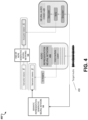
- FIG. 4 is a diagram of an example process 400 for training an example audio generation system.
- the process 400 will be described as being performed by a training system of one or more computers located in one or more locations.
- the process 600 is similar to the process 200 described above with reference to FIG. 2 in that the system can generate acoustic tokens for the acoustic representation using one or more generative neural networks such as a coarse generative neural network 610 and a fine generative neural network 620.
- the coarse generative neural network 610 is also referred to as the first generative neural network and is similar to the coarse generative neural network 210 described with reference to FIG. 2 .
- the fine generative neural network 620 is also referred to as the second generative neural network and is similar to the fine generative neural network 620 described with reference to FIG. 2 .
- the system can condition the generation of the acoustic representation on at least the semantic representation 106 and the embedding tokens 122, also referred to as the audio embedding tokens.
- the set of one or more respective acoustic tokens at each of the multiple second time steps includes multiple acoustic tokens that collectively represent a prediction of an output of a residual vector quantization applied to an embedding that represents acoustic properties of the audio signal at the second time step.
- the residual vector quantization encodes the embedding using a hierarchy of multiple vector quantizers that each generate a respective acoustic token from a corresponding vocabulary of acoustic tokens for the vector quantizer.
- the hierarchy includes one or more coarse vector quantizers at one or more first positions in the hierarchy and one or more fine vector quantizers at one or more last positions in the hierarchy.
- the set of acoustic tokens at each second time step includes, for each vector quantizer, a respective acoustic token selected from the vocabulary for the vector quantizer.
- the number of first time steps and the number of second time steps that span the time window is less than the number of output time steps that span the time window. That is, the sampling rate of the encoder neural network that outputs respective embeddings at each of the second time steps can be lower than the sampling rate of the audio signal. In addition, the sampling rate of the audio representation neural network described with reference to FIG. 7 can be lower than the sampling rate of the audio signal. Thus the number of embeddings from which semantic tokens can be generated, and the number of embeddings from which acoustic tokens can be generated, can be less than the number of output time steps.
- the number of first time steps that span the time window is less than the number of second time steps that span the time window.
- the system can generate two acoustic tokens for each coarse vector quantizer, and generate two acoustic tokens for each fine vector quantizer. That is, the sampling rate of the encoder neural network that outputs respective embeddings at each of the second time steps can be higher than that of the audio representation neural network described with reference to FIG. 7 .
- the coarse generative neural network 610 can generate acoustic tokens for coarse vector quantizers 612 conditioned on at least the semantic representation 106 and the embedding tokens 122.
- the embedding tokens 122 can include melody embedding tokens, also referred to as melody audio embedding tokens.
- the embedding tokens 122 can be concatenated with melody embedding tokens.
- the coarse generative neural network 610 can generate, for each of the one or more coarse vector quantizers in the hierarchy, the respective acoustic tokens for the second time steps for the vector quantizer conditioned on at least the semantic representation 106 and the embedding tokens 122.
- the acoustic tokens for coarse vector quantizers 612 represent acoustic properties such as recording conditions.
- the coarse generative neural network 610 can be an auto-regressive neural network that is configured to generate the acoustic tokens for coarse vector quantizers 612 auto-regressively according to a first generation order.
- Each particular acoustic token for each particular coarse vector quantizer and at each particular second time step is conditioned on at least the semantic representation 106 and the embedding tokens 122 and any acoustic tokens that precede the particular acoustic token in the first generation order. Furthermore, each particular acoustic token for each particular coarse vector quantizer and at each particular second time step is preceded in the generation order by (i) any acoustic token for any of the coarse vector quantizers at any second time step that precedes the particular second time step and (ii) any acoustic tokens at the particular second time step for any coarse vector quantizers that precede the particular vector quantizer in the hierarchy.
- the hierarchy can include Q vector quantizers, and the vector quantizers 1...Q' can be coarse vector quantizers, while the vector quantizers ( Q' + 1) ... Q can be fine vector quantizers.
- the acoustic token at a particular second time step t and a particular coarse vector quantizer q ⁇ Q' is conditioned on all of the semantic tokens of the semantic representation 106, all of the embedding tokens 122, any acoustic tokens at second time steps preceding the second time step t and coarse vector quantizers preceding Q', and any acoustic tokens at the second time step t at coarse vector quantizers preceding the particular coarse vector quantizer q.
- the coarse generative neural network 610 has a decoder-only Transformer architecture. In some implementations, the coarse generative neural network 610 has an encoder-decoder Transformer architecture.
- the fine generative neural network 620 can generate acoustic tokens for fine vector quantizers 622 conditioned on at least the acoustic tokens for coarse vector quantizers 612. For example, the fine generative neural network 620 can generate, for each of the one or more fine vector quantizers in the hierarchy, the respective acoustic tokens for the second time steps for the vector quantizer conditioned on the respective acoustic tokens for the second time steps for the one or more coarse vector quantizers in the hierarchy. The fine generative neural network 620 can thus not be conditioned on the semantic representation 106 and the embedding tokens 122.
- the acoustic tokens for fine vector quantizers 622 can be used to further improve audio quality, for example, by removing lossy compression artifacts.
- the fine generative neural network 620 can be an auto-regressive neural network that is configured to generate the acoustic tokens auto-regressively according to a second generation order.
- Each particular acoustic token for each particular fine vector quantizer and at each particular second time step is conditioned on (i) the respective acoustic tokens for at least a subset of the second time steps for the one or more coarse vector quantizers and (ii) at least a subset of the acoustic tokens that precede the particular acoustic token in the second generation order.
- Each particular acoustic token for each particular fine vector quantizer and at each particular second time step is preceded in the second generation order by (i) any acoustic token for any of the fine vector quantizers at any second time step that precedes the particular second time step and (ii) any acoustic tokens at the particular second time step for any fine vector quantizers that precede the particular vector quantizer in the hierarchy.
- each particular acoustic token for each particular fine vector quantizer and at each particular second time step is conditioned on (i) the respective acoustic tokens for the one or more coarse vector quantizers that are at most a threshold number of second time steps before the second time step and (ii) any acoustic tokens that precede the particular second time step in the second generation order and that are at second time steps that are at most a threshold number of second time steps before the second time step. That is, the second time steps can be split into non-overlapping batches of successive second time steps.
- the acoustic token at a particular second time step t and a particular fine vector quantizer q > Q' is conditioned on acoustic tokens for the coarse vector quantizers 612 preceding the particular second time step t that are within the same corresponding batch of second time steps as the particular second time step t, and any acoustic tokens at second time steps preceding the second time step t within the corresponding batch and at fine vector quantizers following Q', and any acoustic tokens at the second time step t at coarse vector quantizers and fine vector quantizers preceding the particular fine vector quantizer q.
- the fine generative neural network 620 has a decoder-only Transformer architecture. In some implementations, the fine generative neural network 620 has an encoder-decoder Transformer architecture.
- the system can generate acoustic tokens for coarse vector quantizers 612 and acoustic tokens for fine vector quantizers 622 at once.
- the acoustic token at a particular second time step t for a particular coarse vector quantizer or fine vector quantizer q is conditioned on all of the acoustic tokens at second time steps preceding the second time step t and at vector quantizers preceding q, and any acoustic tokens at the second time step t at vector quantizers preceding the particular vector quantizer q.
- the system can include the acoustic tokens for fine vector quantizers 622 in the acoustic representation.
- the system can use the acoustic representation to generate the prediction of the audio signal, as described below with reference to FIG. 7 .
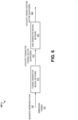
- FIG. 7 is a flow diagram of an example process 700 for generating a prediction of an audio signal.
- the process 700 will be described as being performed by a system of one or more computers located in one or more locations.
- an audio generation system e.g., the audio generation system 100 of FIG. 1 , appropriately programmed in accordance with this specification, can perform the process 700.
- the system receives a request to generate an audio signal conditioned on an input (step 710).
- the audio signal has a respective audio sample at each of multiple output time steps spanning a time window.
- the audio signal can be conditioned on the input.
- the input can be included in a context that is specified in the request, for example.
- the input can include an input audio signal, visual data, and/or text data.
- the prediction of the audio signal can be a prediction of music that is described by the sequence of text.
- the sequence of text can include multiple subsequences of text.
- the prediction of the audio signal can be a prediction of music with sections of music that correspond to each of the subsequences and reflect each of the subsequences.
- the prediction of the audio signal can be a prediction of music that is described by the sequence of text and follows the melody.
- the prediction of the audio signal can be a prediction of music that follows the melody.
- the input audio signal can represent whistling or humming.
- the prediction of the audio signal can be a continuation of the input audio signal.
- the system can obtain a text description of the visual data.
- the system can generate the text description of the visual data.
- the prediction of the audio signal can be a prediction of music that is described by the text description.
- the system processes the input to map the input to one or more embedding tokens (step 715).
- the embedding tokens are also referred to as audio embedding tokens.
- the system can process the input using an embedding neural network. For example, the system can generate an embedding vector for the input using the embedding neural network and quantize the embedding vector to generate embedding tokens.
- the input includes a sequence of text.
- the embedding neural network can have been trained to map text and audio to a joint embedding space, also referred to as a joint audio embedding space.
- the embedding tokens are generated from the text.
- the embedding neural network can have been trained on training data including audio signals.
- the training of the embedding neural network is described in further detail below with reference to FIG. 8 .
- the input can include multiple subsequences of text.
- the system can generate embedding tokens for each subsequence and thus change the conditioning signal for each subsequence when generating the semantic representation and acoustic representation.
- the input includes a sequence of text and an input audio signal representing a melody.
- the system can process the input audio signal using a melody embedding neural network to map the input audio signal to one or more melody embedding tokens, also referred to as melody audio embedding tokens.
- the system can then concatenate the melody embedding tokens with the embedding tokens.
- the input includes an input audio signal representing a melody.
- the system can process the input audio signal using a melody embedding neural network to map the audio signal to one or more melody embedding tokens.
- the system can use the melody embedding tokens as the embedding tokens to be used as conditioning for generating the semantic and acoustic representations.
- the system can generate one or more melody embedding vectors for the input audio signal in a joint embedding space, also referred to as a joint audio embedding space, using the melody embedding neural network.
- the melody embedding neural network can be a vision transformer (ViT) that receives temporal frames of the mel spectrogram of the input audio signal and generates the melody embedding vectors for the input audio signal.
- ViT vision transformer
- the system can quantize the melody embedding vectors to generate melody embedding tokens. For example, the system can use residual vector quantization to quantize the melody embedding vectors into melody embedding tokens.
- the training of the melody embedding neural network is described in further detail below with reference to FIG. 8 .
- the system generates a semantic representation of the audio signal (step 720).
- the semantic representation specifies a respective semantic token at each of multiple first time steps spanning the time window.
- Each semantic token is selected from a vocabulary of semantic tokens conditioned on the embedding tokens and represents semantic content of the audio signal at the corresponding first time step.
- the system can generate the semantic representation auto-regressively using a semantic representation generative neural network with embedding tokens as a conditioning signal.
- the semantic representation generative neural network can also be referred to as a third generative neural network and is similar to the semantic representation generative neural network described above with reference to FIG. 3 .
- the semantic representation generative neural network can be trained to auto-regressively generate semantic tokens one after the other.
- the semantic representation generative neural network can be, e.g., a decoder only or an encoder-decoder Transformer-based neural network.
- the semantic representation generative neural network can have been trained to predict semantic representations generated based on outputs of one or more layers, e.g., of one of the intermediate layers, of an audio representation neural network.
- the audio representation neural network can generate outputs or embeddings at regular intervals of time. For example, the audio representation neural network can generate one embedding for every 40 ms of the input audio signal.
- the input includes a sequence of text and the embedding tokens are generated from the text.
- the system can condition the semantic representation generative neural network on at least the embedding tokens while auto-regressively generating the semantic representation of the audio signal.
- the input can include multiple subsequences of text, and the embedding tokens include embedding tokens for each subsequence.
- the system can condition the semantic representation generative neural network on the embedding tokens for the first subsequence while auto-regressively generating the semantic representation of the audio signal.
- the system can condition the semantic representation generative neural network on the embedding tokens for the second subsequence and the semantic tokens generated for the first subsequence.
- the input includes a sequence of text and an input audio signal representing a melody
- the embedding tokens are generated from the text
- the melody embedding tokens are generated from the input audio signal.
- the system can concatenate the melody embedding tokens with the embedding tokens.
- the system can select each semantic token from a vocabulary of semantic tokens conditioned on the melody embedding tokens and embedding tokens.
- the system can condition the semantic representation generative neural network on the embedding tokens and the melody embedding tokens while auto-regressively generating the semantic representation of the audio signal.
- the input includes an input audio signal representing a melody and melody embedding tokens are generated from the input audio signal.
- the system can use the melody embedding tokens as the embedding tokens.
- the system can select each semantic token from a vocabulary of semantic tokens conditioned on the embedding tokens.
- the system can condition the semantic representation generative neural network on the embedding tokens while auto-regressively generating the semantic representation of the audio signal.
- the system can generate a prediction of an audio signal that is longer than the audio signals the system was trained on.
- the system can be trained on audio signals of 30 seconds.
- the semantic representation generative neural network can advance with a stride of 15 seconds, using 15 seconds as a prefix to generate an additional 15 seconds, while conditioned on the same embedding tokens from the input text.
- the system generates an acoustic representation of the audio signal (step 730).
- the system can generate the acoustic representation using one or more generative neural networks and conditioned on at least the semantic representation and the embedding tokens.
- the acoustic representation specifies a set of one or more respective acoustic tokens at each of multiple second time steps spanning the time window.
- the one or more respective acoustic tokens at each second time step represent acoustic properties of the audio signal at the corresponding second time step. Generating the acoustic representation is described in further detail above with reference to FIG. 6 .
- the input includes a sequence of text.
- the one or more generative neural networks can have been trained at least in part on audio-only training data. During training, the semantic representations and the acoustic representations are conditioned on embeddings of audio inputs in a joint embedding space for text and audio. Training is described in further detail below with reference to FIG. 8 .
- the system processes at least the acoustic representation to generate the prediction of the audio signal (step 740).
- the system can process the acoustic representation using the decoder neural network. For example, the respective audio sample at each of multiple output time steps spanning the time window can be based on one or more acoustic tokens for every vector quantizer in the hierarchy.
- a number of first time steps and a number of second time steps that span the time window is less than the number of output time steps that span the time window. In some implementations, the number of first time steps that span the time window is less than the number of second time steps that span the time window, as described in further detail above with reference to FIG. 6 .
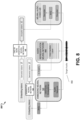
- FIG. 8 is a diagram of an example process 800 for training an example audio generation system.
- the process 800 will be described as being performed by a training system of one or more computers located in one or more locations.
- the process 800 is similar to the process 400 described with reference to FIG. 4 in that the training system can train an audio generation system such as the audio generation system 100 of FIG. 1 on training data.
- the components of the audio generation system such as the embedding neural network 120, semantic representation generative neural network 130 (shown in FIG. 4 as "generative neural network 130"), one or more generative neural networks 108, neural audio codec 420, and audio representation neural network 410 can be trained independently.
- the embedding neural network 120 can be a joint embedding model with two embedding towers, one for text, and one for music.
- the embedding neural network 120 can be a MuLan model, for example.
- the towers map text and music to a shared embedding space using contrastive learning.
- the text network can be a BERT pre-trained on a large corpus of text-only data.
- the music network can be a residual convolutional network, for example.
- the embedding neural network 120 can be trained on training data that includes audio signals.
- the training data can include pairs of music clips and corresponding text annotations.
- the embedding neural network 120 can be trained to link music to unconstrained natural language descriptions.
- the embedding neural network 120 can be trained on an objective so that text that describes audio signals, and the corresponding audio signals, have embeddings that are close to each other in the joint embedding space for audio and text.
- the embedding neural network 120 can be pre-trained and frozen prior to the training of the audio generation system.
- the audio generation system can be trained on training data that is audio-only, the training data can easily be scaled.
- the training data is not limited to audio data with text captions.
- the robustness to noisy text descriptions can be increased.
- the training system can provide a target audio signal 850 to the embedding neural network 120.
- the embedding neural network 120 can generate a representation of the target audio signal 850 in the joint embedding space.
- the training system can quantize the representation into discrete embedding tokens.
- the embedding tokens are based on embeddings of the target audio signal 850 in the joint embedding space.
- the training data can include longer audio signals than the audio signals the embedding neural network 120 was pre-trained to operate on.
- the target audio signal 850 can have a length of 30 seconds, and the embedding neural network 120 can have been pre-trained to operate on sequences of 10 seconds.
- the training system can use the embedding neural network 120 to calculate representations on 10-second windows of the target audio signal 850, with a 1-second stride, and average the resulting representations. The training system can then quantize the averaged representations into discrete embedding tokens for the target audio signal 850.
- the training system can train the neural audio codec 420 and the audio representation neural network 410 on training data that includes audio clips such as music clips.
- An example audio clip of the training data is shown in FIG. 8 as target audio 850.
- the neural audio codec 420 can include a decoder neural network and an encoder neural network.
- the encoder neural network can convert the target audio 850 into a coded signal which is quantized into an acoustic representation.
- the decoder neural network can convert the acoustic representation into a predicted audio signal.
- the neural audio codec 420 can be pre-trained and frozen prior to the training of the audio generation system.
- the neural audio codec 420 can be trained to minimize adversarial and reconstruction loss.
- the decoder neural network and the encoder neural network can be trained jointly on an objective that measures reconstruction quality of predicted audio signals generated by the decoder neural network from acoustic representations generated using outputs generated by the encoder neural network.
- the audio representation neural network 410 can have been trained to generate representations of input audio signals.
- the audio representation neural network 410 can be pre-trained and frozen prior to the training of the audio generation system.
- the audio representation neural network 410 can be trained to minimize masked language model (MLM) loss and contrastive loss.
- MLM masked language model
- the audio representation neural network 410 can be a w2v-BERT model, for example.
- the training system can train the semantic representation generative neural network 130 and the one or more generative neural networks 108 on training data that includes audio clips.
- the generative neural networks can be trained with teacher-forcing.
- the training system can train the semantic representation generative neural network 130 to predict semantic representations generated based on outputs of one or more layers, e.g., of one of the intermediate layers, of the audio representation neural network 410.
- the training system can train the semantic representation generative neural network 130 conditioned on the embedding tokens.
- the semantic representation generative neural network 130 can model the distribution p ( S t
- the outputs of the one or more layers of the audio representation neural network 410 can include embeddings of input audio.
- the self-attention based model can generate dense embeddings for some or all of the audio samples in the training data.
- the embeddings for an intermediate layer of the self-attention based model for some or all of the audio samples can be clustered by k -means into K clusters.
- the centroids of the clusters can be used as semantic tokens.
- the outputs can be normalized so that each dimension has zero mean and unit variance before clustering.
- An example target semantic representation for the training of the semantic representation generative neural network 130 can have been generated by providing the target audio 450 to the self-attention based model.
- the training system can generate the semantic tokens of the target semantic representation by assigning each output for the target audio 450 to the centroid of the nearest cluster.
- the training system can train the one or more generative neural networks 108 to generate an acoustic representation conditioned at least on a semantic representation and the embedding tokens.
- the acoustic representation is a prediction of a ground truth acoustic representation that would be generated from outputs of an encoder neural network by processing the audio signal.
- the encoder neural network can be a convolutional encoder that maps the audio signal to a sequence of embeddings. Each respective embedding at each of multiple second time steps can correspond to features of the audio signal at the second time step.
- the ground truth acoustic representation can be generated by applying quantization to each of the respective embeddings.
- the encoder neural network can be part of a neural audio codec such as the neural audio codec.
- the set of one or more respective acoustic tokens at each second time step can include, for each vector quantizer, a respective acoustic token selected from the vocabulary for the vector quantizer and being a prediction of a ground truth acoustic token that would be generated by the vector quantizer from a ground truth embedding generated by the encoder neural network at the second time step.
- the training system can train the one or more generative neural networks 108 to predict acoustic representations generated based on outputs of the residual vector quantizer of the neural audio codec 420.
- the training system can train the one or more generative neural networks 408 conditioned on the embedding tokens.
- the one or more generative neural networks 408 can model the distribution p ( A t
- the target acoustic representations for the training of the one or more generative neural networks 108 can have been generated by applying quantization to each of the respective embeddings outputted by the encoder neural network of the neural audio codec 420 at each of multiple second time steps.
- the quantization can be a residual vector quantization (RVQ) as described above with reference to FIG. 6 .
- the audio generation system also includes a melody embedding neural network.
- the melody embedding neural network can have been trained on audio pairs of matching melodies but different acoustics.
- the training data can include different versions of the same music clip, such as covers, instrumentals, vocals, humming, and singing.
- the melody embedding neural network can be trained so that when two audio clips contain the same melody, the corresponding embeddings in the joint embedding space, also referred to as the joint audio embedding space, are close to each other.
- the melody embedding neural network can be trained using semi-hard triplet loss to generate embeddings for audio that are representative of a melody in the input audio signal while being invariant to acoustic properties related to the instruments being played.
- Embodiments of the subject matter and the functional operations described in this specification can be implemented in digital electronic circuitry, in tangibly-embodied computer software or firmware, in computer hardware, including the structures disclosed in this specification and their structural equivalents, or in combinations of one or more of them.
- Embodiments of the subject matter described in this specification can be implemented as one or more computer programs, i.e., one or more modules of computer program instructions encoded on a tangible non-transitory storage medium for execution by, or to control the operation of, data processing apparatus.
- the computer storage medium can be a machine-readable storage device, a machine-readable storage substrate, a random or serial access memory device, or a combination of one or more of them.
- the program instructions can be encoded on an artificially-generated propagated signal, e.g., a machine-generated electrical, optical, or electromagnetic signal, that is generated to encode information for transmission to suitable receiver apparatus for execution by a data processing apparatus.
- data processing apparatus refers to data processing hardware and encompasses all kinds of apparatus, devices, and machines for processing data, including by way of example a programmable processor, a computer, or multiple processors or computers.
- the apparatus can also be, or further include, special purpose logic circuitry, e.g., an FPGA (field programmable gate array) or an ASIC (application-specific integrated circuit).
- the apparatus can optionally include, in addition to hardware, code that creates an execution environment for computer programs, e.g., code that constitutes processor firmware, a protocol stack, a database management system, an operating system, or a combination of one or more of them.
- a computer program which may also be referred to or described as a program, software, a software application, an app, a module, a software module, a script, or code, can be written in any form of programming language, including compiled or interpreted languages, or declarative or procedural languages; and it can be deployed in any form, including as a stand-alone program or as a module, component, subroutine, or other unit suitable for use in a computing environment.
- a program may, but need not, correspond to a file in a file system.
- a program can be stored in a portion of a file that holds other programs or data, e.g., one or more scripts stored in a markup language document, in a single file dedicated to the program in question, or in multiple coordinated files, e.g., files that store one or more modules, sub-programs, or portions of code.
- a computer program can be deployed to be executed on one computer or on multiple computers that are located at one site or distributed across multiple sites and interconnected by a data communication network.
- engine is used broadly to refer to a software-based system, subsystem, or process that is programmed to perform one or more specific functions.
- an engine will be implemented as one or more software modules or components, installed on one or more computers in one or more locations. In some cases, one or more computers will be dedicated to a particular engine; in other cases, multiple engines can be installed and running on the same computer or computers.
- the processes and logic flows described in this specification can be performed by one or more programmable computers executing one or more computer programs to perform functions by operating on input data and generating output.
- the processes and logic flows can also be performed by special purpose logic circuitry, e.g., an FPGA or an ASIC, or by a combination of special purpose logic circuitry and one or more programmed computers.
- Computers suitable for the execution of a computer program can be based on general or special purpose microprocessors or both, or any other kind of central processing unit.
- a central processing unit will receive instructions and data from a read-only memory or a random access memory or both.
- the essential elements of a computer are a central processing unit for performing or executing instructions and one or more memory devices for storing instructions and data.
- the central processing unit and the memory can be supplemented by, or incorporated in, special purpose logic circuitry.
- a computer will also include, or be operatively coupled to receive data from or transfer data to, or both, one or more mass storage devices for storing data, e.g., magnetic, magneto-optical disks, or optical disks.
- a computer need not have such devices.
- a computer can be embedded in another device, e.g., a mobile telephone, a personal digital assistant (PDA), a mobile audio or video player, a game console, a Global Positioning System (GPS) receiver, or a portable storage device, e.g., a universal serial bus (USB) flash drive, to name just a few.
- PDA personal digital assistant
- GPS Global Positioning System
- USB universal serial bus
- Computer-readable media suitable for storing computer program instructions and data include all forms of non-volatile memory, media and memory devices, including by way of example semiconductor memory devices, e.g., EPROM, EEPROM, and flash memory devices; magnetic disks, e.g., internal hard disks or removable disks; magneto-optical disks; and CD-ROM and DVD-ROM disks.
- semiconductor memory devices e.g., EPROM, EEPROM, and flash memory devices
- magnetic disks e.g., internal hard disks or removable disks
- magneto-optical disks e.g., CD-ROM and DVD-ROM disks.
- embodiments of the subject matter described in this specification can be implemented on a computer having a display device, e.g., a CRT (cathode ray tube) or LCD (liquid crystal display) monitor, for displaying information to the user and a keyboard and a pointing device, e.g., a mouse or a trackball, by which the user can provide input to the computer.
- a display device e.g., a CRT (cathode ray tube) or LCD (liquid crystal display) monitor
- keyboard and a pointing device e.g., a mouse or a trackball
- Other kinds of devices can be used to provide for interaction with a user as well; for example, feedback provided to the user can be any form of sensory feedback, e.g., visual feedback, auditory feedback, or tactile feedback; and input from the user can be received in any form, including acoustic, speech, or tactile input.
- a computer can interact with a user by sending documents to and receiving documents from a device that is used by the user; for example, by sending web pages to a web browser on a user's device in response to requests received from the web browser.
- a computer can interact with a user by sending text messages or other forms of message to a personal device, e.g., a smartphone that is running a messaging application, and receiving responsive messages from the user in return.
- Data processing apparatus for implementing machine learning models can also include, for example, special-purpose hardware accelerator units for processing common and compute-intensive parts of machine learning training or production, i.e., inference, workloads.
- Machine learning models can be implemented and deployed using a machine learning framework, e.g., a TensorFlow framework or a Jax framework.
- a machine learning framework e.g., a TensorFlow framework or a Jax framework.
- Embodiments of the subject matter described in this specification can be implemented in a computing system that includes a back-end component, e.g., as a data server, or that includes a middleware component, e.g., an application server, or that includes a front-end component, e.g., a client computer having a graphical user interface, a web browser, or an app through which a user can interact with an implementation of the subject matter described in this specification, or any combination of one or more such back-end, middleware, or front-end components.
- the components of the system can be interconnected by any form or medium of digital data communication, e.g., a communication network. Examples of communication networks include a local area network (LAN) and a wide area network (WAN), e.g., the Internet.
- LAN local area network
- WAN wide area network
- the computing system can include clients and servers.
- a client and server are generally remote from each other and typically interact through a communication network. The relationship of client and server arises by virtue of computer programs running on the respective computers and having a client-server relationship to each other.
- a server transmits data, e.g., an HTML page, to a user device, e.g., for purposes of displaying data to and receiving user input from a user interacting with the device, which acts as a client.
- Data generated at the user device e.g., a result of the user interaction, can be received at the server from the device.
Landscapes
- Engineering & Computer Science (AREA)
- Physics & Mathematics (AREA)
- Computational Linguistics (AREA)
- Health & Medical Sciences (AREA)
- Theoretical Computer Science (AREA)
- Artificial Intelligence (AREA)
- Multimedia (AREA)
- Acoustics & Sound (AREA)
- Evolutionary Computation (AREA)
- Audiology, Speech & Language Pathology (AREA)
- Human Computer Interaction (AREA)
- General Engineering & Computer Science (AREA)
- Software Systems (AREA)
- Biophysics (AREA)
- General Health & Medical Sciences (AREA)
- Molecular Biology (AREA)
- Computing Systems (AREA)
- Biomedical Technology (AREA)
- General Physics & Mathematics (AREA)
- Mathematical Physics (AREA)
- Data Mining & Analysis (AREA)
- Life Sciences & Earth Sciences (AREA)
- Signal Processing (AREA)
- Spectroscopy & Molecular Physics (AREA)
- Quality & Reliability (AREA)
- Compression, Expansion, Code Conversion, And Decoders (AREA)
- Auxiliary Devices For Music (AREA)
- Electrophonic Musical Instruments (AREA)
Applications Claiming Priority (4)
| Application Number | Priority Date | Filing Date | Title |
|---|---|---|---|
| US202263404528P | 2022-09-07 | 2022-09-07 | |
| US202363441412P | 2023-01-26 | 2023-01-26 | |
| EP23783151.6A EP4420117A2 (de) | 2022-09-07 | 2023-09-07 | Audioerzeugung mit autoregressiven generativen neuronalen netzwerken |
| PCT/US2023/032168 WO2024054556A2 (en) | 2022-09-07 | 2023-09-07 | Generating audio using auto-regressive generative neural networks |
Related Parent Applications (1)
| Application Number | Title | Priority Date | Filing Date |
|---|---|---|---|
| EP23783151.6A Division EP4420117A2 (de) | 2022-09-07 | 2023-09-07 | Audioerzeugung mit autoregressiven generativen neuronalen netzwerken |
Publications (1)
| Publication Number | Publication Date |
|---|---|
| EP4579652A1 true EP4579652A1 (de) | 2025-07-02 |
Family
ID=88237636
Family Applications (2)
| Application Number | Title | Priority Date | Filing Date |
|---|---|---|---|
| EP25165951.2A Pending EP4579652A1 (de) | 2022-09-07 | 2023-09-07 | Audioerzeugung mit autoregressiven generativen neuronalen netzwerken |
| EP23783151.6A Pending EP4420117A2 (de) | 2022-09-07 | 2023-09-07 | Audioerzeugung mit autoregressiven generativen neuronalen netzwerken |
Family Applications After (1)
| Application Number | Title | Priority Date | Filing Date |
|---|---|---|---|
| EP23783151.6A Pending EP4420117A2 (de) | 2022-09-07 | 2023-09-07 | Audioerzeugung mit autoregressiven generativen neuronalen netzwerken |
Country Status (8)
| Country | Link |
|---|---|
| US (5) | US12020138B2 (de) |
| EP (2) | EP4579652A1 (de) |
| JP (2) | JP7701566B2 (de) |
| KR (2) | KR20250107968A (de) |
| CN (3) | CN121811910A (de) |
| AU (2) | AU2023337867B2 (de) |
| CA (1) | CA3239059A1 (de) |
| WO (1) | WO2024054556A2 (de) |
Families Citing this family (19)
| Publication number | Priority date | Publication date | Assignee | Title |
|---|---|---|---|---|
| EP4305619A2 (de) * | 2021-03-09 | 2024-01-17 | DeepMind Technologies Limited | Erzeugung von ausgangssignalen unter verwendung diskreter darstellungen mit variabler rate |
| US12431154B2 (en) * | 2022-01-14 | 2025-09-30 | Descript, Inc. | Training machine learning frameworks to generate studio-quality recordings through manipulation of noisy audio signals |
| US12079587B1 (en) * | 2023-04-18 | 2024-09-03 | OpenAI Opco, LLC | Multi-task automatic speech recognition system |
| US20240362269A1 (en) * | 2023-04-28 | 2024-10-31 | Adobe Inc. | Systems and methods for cross-modal retrieval based on a sound modality and a non-sound modality |
| US12354576B2 (en) * | 2023-08-09 | 2025-07-08 | Futureverse Ip Limited | Artificial intelligence music generation model and method for configuring the same |
| CN119541511A (zh) * | 2023-08-30 | 2025-02-28 | 脸萌有限公司 | 多模态编码器的处理方法、装置、计算机设备及存储介质 |
| US20250124944A1 (en) * | 2023-10-12 | 2025-04-17 | Mitsubishi Electric Research Laboratories, Inc. | Comparing audio signals with external normalization |
| US20250131919A1 (en) * | 2023-10-18 | 2025-04-24 | Cisco Technology, Inc. | Generative speech model for compact data-driven speech vectors for versatile speech applications |
| WO2025188069A1 (ko) * | 2024-03-07 | 2025-09-12 | 주식회사 엘지경영개발원 | 언어모델을 이용한 심볼릭 음악 생성 방법 및 시스템 |
| US20250322816A1 (en) * | 2024-04-11 | 2025-10-16 | Stability AI Ltd | Audio generation using generative artificial intelligence model |
| US20250356121A1 (en) * | 2024-05-17 | 2025-11-20 | Robert Bosch Gmbh | System and method for multi-conditioned audio generation |
| US20250390682A1 (en) * | 2024-06-20 | 2025-12-25 | Mitsubishi Electric Research Laboratories, Inc. | Hierarchical Audio Generators and Codecs for Enhanced Audio Generation |
| US20260065032A1 (en) | 2024-09-04 | 2026-03-05 | Deepmind Technologies Limited | Incorporating alignment into sequence generation neural networks |
| US20260080862A1 (en) * | 2024-09-13 | 2026-03-19 | Deepmind Technologies Limited | Generating training data using an audio generation model |
| CN119049447B (zh) * | 2024-10-31 | 2025-01-10 | 香港中文大学(深圳) | 一种文本到语音生成方法 |
| US12456250B1 (en) | 2024-11-14 | 2025-10-28 | Futureverse Ip Limited | System and method for reconstructing 3D scene data from 2D image data |
| CN119811361B (zh) * | 2025-02-20 | 2025-10-10 | 平安科技(深圳)有限公司 | 语音合成方法、语音合成装置、电子设备及存储介质 |
| CN119832883B (zh) * | 2025-03-13 | 2025-07-01 | 厦门城市职业学院(厦门开放大学) | 基于自监督与混合注意力机制的音乐流派分类方法及装置 |
| US12548589B1 (en) | 2025-09-24 | 2026-02-10 | CNTXT FZCo | Systems and methods for generating audio descriptions |
Family Cites Families (54)
| Publication number | Priority date | Publication date | Assignee | Title |
|---|---|---|---|---|
| KR100718147B1 (ko) * | 2005-02-01 | 2007-05-14 | 삼성전자주식회사 | 음성인식용 문법망 생성장치 및 방법과 이를 이용한 대화체음성인식장치 및 방법 |
| JP4745036B2 (ja) | 2005-11-28 | 2011-08-10 | パナソニック株式会社 | 音声翻訳装置および音声翻訳方法 |
| WO2013149188A1 (en) | 2012-03-29 | 2013-10-03 | Smule, Inc. | Automatic conversion of speech into song, rap or other audible expression having target meter or rhythm |
| US10262644B2 (en) | 2012-03-29 | 2019-04-16 | Smule, Inc. | Computationally-assisted musical sequencing and/or composition techniques for social music challenge or competition |
| US9483459B1 (en) * | 2012-03-31 | 2016-11-01 | Google Inc. | Natural language correction for speech input |
| GB2508411B (en) * | 2012-11-30 | 2015-10-28 | Toshiba Res Europ Ltd | Speech synthesis |
| US10403269B2 (en) * | 2015-03-27 | 2019-09-03 | Google Llc | Processing audio waveforms |
| US9818409B2 (en) * | 2015-06-19 | 2017-11-14 | Google Inc. | Context-dependent modeling of phonemes |
| US10733979B2 (en) * | 2015-10-09 | 2020-08-04 | Google Llc | Latency constraints for acoustic modeling |
| WO2017091883A1 (en) * | 2015-12-01 | 2017-06-08 | Tandemlaunch Inc. | System and method for implementing a vocal user interface by combining a speech to text system and a speech to intent system |
| US9984683B2 (en) * | 2016-07-22 | 2018-05-29 | Google Llc | Automatic speech recognition using multi-dimensional models |
| KR102392094B1 (ko) * | 2016-09-06 | 2022-04-28 | 딥마인드 테크놀로지스 리미티드 | 컨볼루션 신경망을 이용한 시퀀스 프로세싱 |
| CN109937446B (zh) * | 2016-10-10 | 2023-08-04 | 谷歌有限责任公司 | 用于端到端语音识别的极深卷积神经网络 |
| US10140980B2 (en) * | 2016-12-21 | 2018-11-27 | Google LCC | Complex linear projection for acoustic modeling |
| US20180174576A1 (en) * | 2016-12-21 | 2018-06-21 | Google Llc | Acoustic-to-word neural network speech recognizer |
| JP6802958B2 (ja) | 2017-02-28 | 2020-12-23 | 国立研究開発法人情報通信研究機構 | 音声合成システム、音声合成プログラムおよび音声合成方法 |
| CA3206223A1 (en) * | 2017-03-29 | 2018-10-04 | Google Llc | End-to-end text-to-speech conversion |
| US10971170B2 (en) * | 2018-08-08 | 2021-04-06 | Google Llc | Synthesizing speech from text using neural networks |
| TWI767000B (zh) * | 2017-05-20 | 2022-06-11 | 英商淵慧科技有限公司 | 產生波形之方法及電腦儲存媒體 |
| US20200075019A1 (en) | 2017-08-02 | 2020-03-05 | Veritone, Inc. | System and method for neural network orchestration |
| US10706840B2 (en) * | 2017-08-18 | 2020-07-07 | Google Llc | Encoder-decoder models for sequence to sequence mapping |
| CN107680587A (zh) * | 2017-09-29 | 2018-02-09 | 百度在线网络技术(北京)有限公司 | 声学模型训练方法和装置 |
| US11024288B2 (en) | 2018-09-04 | 2021-06-01 | Gracenote, Inc. | Methods and apparatus to segment audio and determine audio segment similarities |
| US10909970B2 (en) * | 2018-09-19 | 2021-02-02 | Adobe Inc. | Utilizing a dynamic memory network to track digital dialog states and generate responses |
| US11580145B1 (en) * | 2018-09-25 | 2023-02-14 | Amazon Technologies, Inc. | Query rephrasing using encoder neural network and decoder neural network |
| US11055489B2 (en) | 2018-10-08 | 2021-07-06 | Tableau Software, Inc. | Determining levels of detail for data visualizations using natural language constructs |
| US11024321B2 (en) * | 2018-11-30 | 2021-06-01 | Google Llc | Speech coding using auto-regressive generative neural networks |
| US11410684B1 (en) | 2019-06-04 | 2022-08-09 | Amazon Technologies, Inc. | Text-to-speech (TTS) processing with transfer of vocal characteristics |
| US11270697B2 (en) * | 2019-06-27 | 2022-03-08 | Atlassian Pty Ltd. | Issue tracking system having a voice interface system for facilitating a live meeting directing status updates and modifying issue records |
| US20210065712A1 (en) * | 2019-08-31 | 2021-03-04 | Soundhound, Inc. | Automotive visual speech recognition |
| CN110473567B (zh) * | 2019-09-06 | 2021-09-14 | 上海又为智能科技有限公司 | 基于深度神经网络的音频处理方法、装置及存储介质 |
| US20210089909A1 (en) * | 2019-09-25 | 2021-03-25 | Deepmind Technologies Limited | High fidelity speech synthesis with adversarial networks |
| US11670408B2 (en) * | 2019-09-30 | 2023-06-06 | Nuance Communications, Inc. | System and method for review of automated clinical documentation |
| US11861674B1 (en) | 2019-10-18 | 2024-01-02 | Meta Platforms Technologies, Llc | Method, one or more computer-readable non-transitory storage media, and a system for generating comprehensive information for products of interest by assistant systems |
| US11257480B2 (en) * | 2020-03-03 | 2022-02-22 | Tencent America LLC | Unsupervised singing voice conversion with pitch adversarial network |
| US12288547B2 (en) * | 2020-06-05 | 2025-04-29 | Deepmind Technologies Limited | Generating audio data using unaligned text inputs with an adversarial network |
| US11645947B1 (en) * | 2020-06-29 | 2023-05-09 | Amazon Technologies, Inc. | Natural language configuration and operation for tangible games |
| US11322133B2 (en) | 2020-07-21 | 2022-05-03 | Adobe Inc. | Expressive text-to-speech utilizing contextual word-level style tokens |
| US11514888B2 (en) | 2020-08-13 | 2022-11-29 | Google Llc | Two-level speech prosody transfer |
| US11551663B1 (en) * | 2020-12-10 | 2023-01-10 | Amazon Technologies, Inc. | Dynamic system response configuration |
| CN112687259B (zh) * | 2021-03-11 | 2021-06-18 | 腾讯科技(深圳)有限公司 | 一种语音合成方法、装置以及可读存储介质 |
| JP7713025B2 (ja) * | 2021-03-30 | 2025-07-24 | タブロー ソフトウェア,エルエルシー | データ視覚化を生成するための視覚分析意図言語の適用 |
| US20220343903A1 (en) * | 2021-04-21 | 2022-10-27 | Verneek, Inc. | Data-Informed Decision Making Through a Domain-General Artificial Intelligence Platform |
| US11810552B2 (en) * | 2021-07-02 | 2023-11-07 | Mitsubishi Electric Research Laboratories, Inc. | Artificial intelligence system for sequence-to-sequence processing with attention adapted for streaming applications |
| US12190896B2 (en) * | 2021-07-02 | 2025-01-07 | Google Llc | Generating audio waveforms using encoder and decoder neural networks |
| GB2609605B (en) * | 2021-07-16 | 2024-04-17 | Sony Interactive Entertainment Europe Ltd | Audio generation methods and systems |
| CN113724683B (zh) * | 2021-07-23 | 2024-03-22 | 阿里巴巴达摩院(杭州)科技有限公司 | 音频生成方法、计算机设备及计算机可读存储介质 |
| US11823697B2 (en) * | 2021-08-20 | 2023-11-21 | Google Llc | Improving speech recognition with speech synthesis-based model adapation |
| JP7575641B1 (ja) * | 2021-09-30 | 2024-10-29 | グーグル エルエルシー | 半教師付き音声認識のための対照シャムネットワーク |
| CN114664282B (zh) * | 2022-02-18 | 2025-11-04 | 哈尔滨工业大学(深圳) | 中英文跨语言语音合成方法、装置、电子设备及存储介质 |
| US12003575B2 (en) * | 2022-02-22 | 2024-06-04 | Optum, Inc. | Routing of sensitive-information utterances through secure channels in interactive voice sessions |
| EP4266306B1 (de) * | 2022-04-22 | 2025-11-26 | SDL Limited | Verarbeitung eines sprachsignals |
| US12614107B2 (en) * | 2022-05-18 | 2026-04-28 | Capital One Services, Llc | Hybrid model and system for predicting quality and identifying features and entities of risk controls |
| CN114822492B (zh) * | 2022-06-28 | 2022-10-28 | 北京达佳互联信息技术有限公司 | 语音合成方法及装置、电子设备、计算机可读存储介质 |
-
2023
- 2023-09-07 CA CA3239059A patent/CA3239059A1/en active Pending
- 2023-09-07 AU AU2023337867A patent/AU2023337867B2/en active Active
- 2023-09-07 CN CN202511883660.3A patent/CN121811910A/zh active Pending
- 2023-09-07 CN CN202410903951.3A patent/CN118887971B/zh active Active
- 2023-09-07 JP JP2024531121A patent/JP7701566B2/ja active Active
- 2023-09-07 EP EP25165951.2A patent/EP4579652A1/de active Pending
- 2023-09-07 KR KR1020257022184A patent/KR20250107968A/ko active Pending
- 2023-09-07 US US18/463,092 patent/US12020138B2/en active Active
- 2023-09-07 US US18/463,196 patent/US11915689B1/en active Active
- 2023-09-07 EP EP23783151.6A patent/EP4420117A2/de active Pending
- 2023-09-07 CN CN202380015080.5A patent/CN118382891B/zh active Active
- 2023-09-07 KR KR1020247017365A patent/KR102831539B1/ko active Active
- 2023-09-07 WO PCT/US2023/032168 patent/WO2024054556A2/en not_active Ceased
-
2024
- 2024-01-12 US US18/412,394 patent/US12322380B2/en active Active
- 2024-05-14 US US18/663,899 patent/US20240371366A1/en active Pending
- 2024-09-23 AU AU2024219995A patent/AU2024219995B2/en active Active
-
2025
- 2025-05-02 US US19/197,551 patent/US20250266035A1/en active Pending
- 2025-06-18 JP JP2025102590A patent/JP2025131875A/ja active Pending
Non-Patent Citations (6)
| Title |
|---|
| CHEN LI-WEI ET AL: "Fine-Grained Style Control In Transformer-Based Text-To-Speech Synthesis", ICASSP 2022 - 2022 IEEE INTERNATIONAL CONFERENCE ON ACOUSTICS, SPEECH AND SIGNAL PROCESSING (ICASSP), IEEE, 23 May 2022 (2022-05-23), pages 7907 - 7911, XP034157003, DOI: 10.1109/ICASSP43922.2022.9747747 * |
| CHUNG YU-AN ET AL: "w2v-BERT: Combining Contrastive Learning and Masked Language Modeling for Self-Supervised Speech Pre-Training", 2021 IEEE AUTOMATIC SPEECH RECOGNITION AND UNDERSTANDING WORKSHOP (ASRU), IEEE, 13 December 2021 (2021-12-13), pages 244 - 250, XP034076922, DOI: 10.1109/ASRU51503.2021.9688253 * |
| PRAFULLA DHARIWAL ET AL: "Jukebox: A Generative Model for Music", ARXIV.ORG, CORNELL UNIVERSITY LIBRARY, 201 OLIN LIBRARY CORNELL UNIVERSITY ITHACA, NY 14853, 30 April 2020 (2020-04-30), XP081656139 * |
| YANQING LIU ET AL: "DelightfulTTS 2: End-to-End Speech Synthesis with Adversarial Vector-Quantized Auto-Encoders", ARXIV.ORG, CORNELL UNIVERSITY LIBRARY, 201 OLIN LIBRARY CORNELL UNIVERSITY ITHACA, NY 14853, 11 July 2022 (2022-07-11), XP091268327 * |
| YE ZHU ET AL: "Quantized GAN for Complex Music Generation from Dance Videos", ARXIV.ORG, CORNELL UNIVERSITY LIBRARY, 201 OLIN LIBRARY CORNELL UNIVERSITY ITHACA, NY 14853, 19 July 2022 (2022-07-19), XP091274269 * |
| ZAL\'AN BORSOS ET AL: "AudioLM: a Language Modeling Approach to Audio Generation", ARXIV.ORG, CORNELL UNIVERSITY LIBRARY, 201 OLIN LIBRARY CORNELL UNIVERSITY ITHACA, NY 14853, 7 September 2022 (2022-09-07), XP091312688 * |
Also Published As
| Publication number | Publication date |
|---|---|
| US20250266035A1 (en) | 2025-08-21 |
| AU2024219995B2 (en) | 2026-04-09 |
| CN118887971B (zh) | 2026-01-06 |
| CN118887971A (zh) | 2024-11-01 |
| KR20250107968A (ko) | 2025-07-14 |
| WO2024054556A2 (en) | 2024-03-14 |
| JP7701566B2 (ja) | 2025-07-01 |
| US12322380B2 (en) | 2025-06-03 |
| EP4420117A2 (de) | 2024-08-28 |
| CN118382891A (zh) | 2024-07-23 |
| WO2024054556A3 (en) | 2024-05-16 |
| JP2025504741A (ja) | 2025-02-19 |
| AU2023337867B2 (en) | 2024-07-04 |
| JP2025131875A (ja) | 2025-09-09 |
| CN121811910A (zh) | 2026-04-07 |
| KR102831539B1 (ko) | 2025-07-08 |
| US20240078412A1 (en) | 2024-03-07 |
| US12020138B2 (en) | 2024-06-25 |
| US20240233713A1 (en) | 2024-07-11 |
| CA3239059A1 (en) | 2024-03-14 |
| KR20240097874A (ko) | 2024-06-27 |
| US20240079001A1 (en) | 2024-03-07 |
| US20240371366A1 (en) | 2024-11-07 |
| AU2024219995A1 (en) | 2024-10-17 |
| US11915689B1 (en) | 2024-02-27 |
| AU2023337867A1 (en) | 2024-06-20 |
| CN118382891B (zh) | 2026-04-21 |
Similar Documents
| Publication | Publication Date | Title |
|---|---|---|
| EP4579652A1 (de) | Audioerzeugung mit autoregressiven generativen neuronalen netzwerken | |
| CN114203147B (zh) | 用于文本到语音的跨说话者样式传递以及用于训练数据生成的系统和方法 | |
| US12033611B2 (en) | Generating expressive speech audio from text data | |
| JP7395792B2 (ja) | 2レベル音声韻律転写 | |
| CN116364055B (zh) | 基于预训练语言模型的语音生成方法、装置、设备及介质 | |
| KR20230084229A (ko) | 병렬 타코트론: 비-자동회귀 및 제어 가능한 tts | |
| CN117711371A (zh) | 一种语音合成方法、装置、电子设备及存储介质 | |
| CN114783410A (zh) | 语音合成方法、系统、电子设备和存储介质 | |
| Guo et al. | MSMC-TTS: Multi-stage multi-codebook VQ-VAE based neural TTS | |
| Li et al. | Diverse and expressive speech prosody prediction with denoising diffusion probabilistic model | |
| CN115294959B (zh) | 韵律编码器的训练方法、语音转换方法及其相关产品 | |
| CN114267330B (zh) | 语音合成方法、装置、电子设备和存储介质 | |
| CN120126445A (zh) | 语音合成方案、装置、电子设备、存储介质及程序产品 | |
| CN119516999A (zh) | Tts系统、语音合成方法、装置、电子设备和存储介质 | |
| WO2024167660A1 (en) | Speech translation with performance characteristics | |
| CN119920229B (zh) | 一种语音合成方法、装置、设备和介质 | |
| Al-Radhi et al. | Advancing limited data text-to-speech synthesis: Non-autoregressive transformer for high-quality parallel synthesis | |
| CN118982977A (zh) | 语音生成方法、装置、电子设备及计算机可读存储介质 |
Legal Events
| Date | Code | Title | Description |
|---|---|---|---|
| PUAI | Public reference made under article 153(3) epc to a published international application that has entered the european phase |
Free format text: ORIGINAL CODE: 0009012 |
|
| STAA | Information on the status of an ep patent application or granted ep patent |
Free format text: STATUS: THE APPLICATION HAS BEEN PUBLISHED |
|
| AC | Divisional application: reference to earlier application |
Ref document number: 4420117 Country of ref document: EP Kind code of ref document: P |
|
| AK | Designated contracting states |
Kind code of ref document: A1 Designated state(s): AL AT BE BG CH CY CZ DE DK EE ES FI FR GB GR HR HU IE IS IT LI LT LU LV MC ME MK MT NL NO PL PT RO RS SE SI SK SM TR |
|
| STAA | Information on the status of an ep patent application or granted ep patent |
Free format text: STATUS: REQUEST FOR EXAMINATION WAS MADE |
|
| 17P | Request for examination filed |
Effective date: 20251223 |
|
| GRAP | Despatch of communication of intention to grant a patent |
Free format text: ORIGINAL CODE: EPIDOSNIGR1 |
|
| STAA | Information on the status of an ep patent application or granted ep patent |
Free format text: STATUS: GRANT OF PATENT IS INTENDED |
|
| RIC1 | Information provided on ipc code assigned before grant |
Ipc: G10L 13/00 20060101AFI20260306BHEP Ipc: G06N 3/0455 20230101ALI20260306BHEP Ipc: G06N 3/0475 20230101ALI20260306BHEP Ipc: G10L 25/30 20130101ALI20260306BHEP Ipc: G06N 3/09 20230101ALI20260306BHEP Ipc: G10H 1/00 20060101ALI20260306BHEP Ipc: G10L 21/0272 20130101ALN20260306BHEP |
|
| INTG | Intention to grant announced |
Effective date: 20260323 |