EP4579599A1 - Verarbeitungsverfahren und -vorrichtung für bewegungserfassungsdaten sowie vorrichtung und speichermedium - Google Patents
Verarbeitungsverfahren und -vorrichtung für bewegungserfassungsdaten sowie vorrichtung und speichermedium Download PDFInfo
- Publication number
- EP4579599A1 EP4579599A1 EP24777541.4A EP24777541A EP4579599A1 EP 4579599 A1 EP4579599 A1 EP 4579599A1 EP 24777541 A EP24777541 A EP 24777541A EP 4579599 A1 EP4579599 A1 EP 4579599A1
- Authority
- EP
- European Patent Office
- Prior art keywords
- foot
- data
- loss
- global displacement
- motion capture
- Prior art date
- Legal status (The legal status is an assumption and is not a legal conclusion. Google has not performed a legal analysis and makes no representation as to the accuracy of the status listed.)
- Pending
Links
Images


Classifications
-
- G—PHYSICS
- G06—COMPUTING OR CALCULATING; COUNTING
- G06T—IMAGE DATA PROCESSING OR GENERATION, IN GENERAL
- G06T13/00—Animation
- G06T13/20—Three-dimensional [3D] animation
- G06T13/40—Three-dimensional [3D] animation of characters, e.g. humans, animals or virtual beings
-
- G—PHYSICS
- G06—COMPUTING OR CALCULATING; COUNTING
- G06T—IMAGE DATA PROCESSING OR GENERATION, IN GENERAL
- G06T7/00—Image analysis
- G06T7/20—Analysis of motion
- G06T7/246—Analysis of motion using feature-based methods, e.g. the tracking of corners or segments
- G06T7/251—Analysis of motion using feature-based methods, e.g. the tracking of corners or segments involving models
-
- G—PHYSICS
- G06—COMPUTING OR CALCULATING; COUNTING
- G06T—IMAGE DATA PROCESSING OR GENERATION, IN GENERAL
- G06T7/00—Image analysis
- G06T7/0002—Inspection of images, e.g. flaw detection
-
- G—PHYSICS
- G06—COMPUTING OR CALCULATING; COUNTING
- G06T—IMAGE DATA PROCESSING OR GENERATION, IN GENERAL
- G06T7/00—Image analysis
- G06T7/70—Determining position or orientation of objects or cameras
-
- G—PHYSICS
- G06—COMPUTING OR CALCULATING; COUNTING
- G06T—IMAGE DATA PROCESSING OR GENERATION, IN GENERAL
- G06T2207/00—Indexing scheme for image analysis or image enhancement
- G06T2207/10—Image acquisition modality
- G06T2207/10016—Video; Image sequence
-
- G—PHYSICS
- G06—COMPUTING OR CALCULATING; COUNTING
- G06T—IMAGE DATA PROCESSING OR GENERATION, IN GENERAL
- G06T2207/00—Indexing scheme for image analysis or image enhancement
- G06T2207/20—Special algorithmic details
- G06T2207/20081—Training; Learning
-
- G—PHYSICS
- G06—COMPUTING OR CALCULATING; COUNTING
- G06T—IMAGE DATA PROCESSING OR GENERATION, IN GENERAL
- G06T2207/00—Indexing scheme for image analysis or image enhancement
- G06T2207/20—Special algorithmic details
- G06T2207/20084—Artificial neural networks [ANN]
-
- G—PHYSICS
- G06—COMPUTING OR CALCULATING; COUNTING
- G06T—IMAGE DATA PROCESSING OR GENERATION, IN GENERAL
- G06T2207/00—Indexing scheme for image analysis or image enhancement
- G06T2207/30—Subject of image; Context of image processing
- G06T2207/30196—Human being; Person
-
- G—PHYSICS
- G06—COMPUTING OR CALCULATING; COUNTING
- G06T—IMAGE DATA PROCESSING OR GENERATION, IN GENERAL
- G06T2207/00—Indexing scheme for image analysis or image enhancement
- G06T2207/30—Subject of image; Context of image processing
- G06T2207/30204—Marker
-
- Y—GENERAL TAGGING OF NEW TECHNOLOGICAL DEVELOPMENTS; GENERAL TAGGING OF CROSS-SECTIONAL TECHNOLOGIES SPANNING OVER SEVERAL SECTIONS OF THE IPC; TECHNICAL SUBJECTS COVERED BY FORMER USPC CROSS-REFERENCE ART COLLECTIONS [XRACs] AND DIGESTS
- Y02—TECHNOLOGIES OR APPLICATIONS FOR MITIGATION OR ADAPTATION AGAINST CLIMATE CHANGE
- Y02T—CLIMATE CHANGE MITIGATION TECHNOLOGIES RELATED TO TRANSPORTATION
- Y02T10/00—Road transport of goods or passengers
- Y02T10/10—Internal combustion engine [ICE] based vehicles
- Y02T10/40—Engine management systems
Definitions
- This application relates to the field of video motion capture technologies, and in particular, to motion capture data processing method and apparatus, a device, and a storage medium.
- Human body motion capture technology enables direct acquisition of human motion, and its representation in the digital format. This allows for applications to other fields.
- video motion capture technology is the most cost-effective and has wide application prospects.
- Embodiments of this disclosure provide a motion capture data processing method and apparatus, a device, and a storage medium.
- the embodiments of this disclosure provide a motion capture data processing method, which is performed by a computer device.
- the method includes:
- the embodiments of this disclosure provide a motion capture data processing apparatus, which includes:
- the embodiments of this disclosure provide a computer device, which includes a processor and a memory.
- the memory has at least one instruction stored therein, and the processor loads and executes the at least one instruction to implement the motion capture data processing method described in the foregoing aspect.
- the embodiments of this disclosure provide a computer-readable storage medium, which has at least one instruction stored therein.
- a processor loads and executes the at least one instruction to implement the motion capture data processing method described in the foregoing aspect.
- the embodiments of this disclosure provide a computer program product, which includes computer instructions.
- the computer instructions are stored in a computer-readable storage medium.
- a processor of a computer device reads the computer instructions from the computer-readable storage medium, and executes the computer instructions, to cause the computer device to perform the motion capture data processing method described in the foregoing aspects.
- AI Artificial intelligence
- AI is a theory, method, technology, and disclosure system that uses a digital computer or a machine controlled by the digital computer to simulate, extend, and expand human intelligence, perceive an environment, acquire knowledge, and use knowledge to obtain an optimal result.
- AI is a comprehensive technology in computer science and attempts to understand the essence of intelligence and produce a new intelligent machine that can react in a manner similar to human intelligence.
- AI is to study the design principles and implementation methods of various intelligent machines, to enable the machines to have the functions of perception, reasoning, and decision-making.
- the AI technology is a comprehensive discipline, and relates to a wide range of fields including both hardware-level technologies and software-level technologies.
- the basic AI technologies generally include technologies such as a sensor, a dedicated AI chip, cloud computing, distributed storage, a big data processing technology, an operating/interaction system, and electromechanical integration.
- AI software technologies mainly include several major directions such as a computer vision technology, a speech processing technology, a natural language processing technology, and machine learning (ML)/deep learning.
- ML is a multi-field inter-discipline, relates to a plurality of disciplines such as the probability theory, statistics, the approximation theory, convex analysis, and the algorithm complexity theory, specializes in studying how a computer simulates or implements a human learning behavior to acquire new knowledge or skills, and reorganize an existing knowledge structure, to keep improving its performance.
- ML is the core of AI, is a basic way to make the computer intelligent, and is applied to various fields of AI.
- ML and deep learning generally include technologies such as an artificial neural network, a belief network, reinforcement learning, transfer learning, inductive learning, and learning from demonstrations.
- the AI technology is being researched and applied to multiple fields, such as common smart homes, smart wearable devices, virtual assistants, smart speakers, smart marketing, driverless cars, autonomous driving, unmanned aerial vehicles, robots, smart healthcare, and smart customer services. It is believed that with development of the technology, the AI technology is applied to more fields, and plays an increasingly important role.
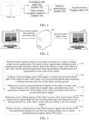
- foot-ground-relation data of an object in each video frame is determined according to the video. Then, a foot penetration-related loss and a foot sliding-related loss in the initial motion capture data are determined based on the initial motion capture data and the foot-ground-relation data, and iterative optimization is performed on the initial motion capture data according to the foot penetration-related loss and the foot sliding-related loss, to obtain corrected motion capture data. Data quality of the corrected motion capture data is higher than that of the initial motion capture data.
- a computer device acquires a video 101, determines first, or initial, motion capture data by using a video motion capture analysis module 103, determines foot-ground-relation data of an object in each video frame by using a grounding state analyzing module 102, and then performs iterative optimization on the first motion capture data based on a foot penetration-related loss and a foot sliding-related loss by using an iterative optimization module 104, to obtain second, or corrected, motion capture data 105.
- FIG. 2 is a schematic diagram of an implementation environment according to an exemplary embodiment of this disclosure.
- the implementation environment includes a terminal 220 and a server 240.
- the terminal 220 performs data communication with the server 240 through a communication network.
- the communication network is a wired network or a wireless network, and the communication network is at least one of a local area network, a metropolitan area network, and a wide area network.
- the server 240 may be an independent physical server, or may be a server cluster or a distributed system that is composed of a plurality of physical servers, or may be a cloud server that provides basic cloud computing services such as a cloud service, a cloud database, cloud computing, a cloud function, cloud storage, a network service, cloud communication, a middleware service, a domain name service, a security service, a content delivery network (CDN), and a big data and AI platform.
- the server 240 is a backend server of an application having a function of processing motion capture data.
- the server 240 exchanges data with the terminal 220. After determining first motion capture data and foot-ground-relation data according to a video, the terminal 220 transmits the first motion capture data and the foot-ground-relation data to the server 240. Then, the server 240 determines a foot penetration-related loss and a foot sliding-related loss based on the first motion capture data and the foot-ground-relation data, performs iterative optimization on the first motion capture data according to the foot penetration-related loss and the foot sliding-related loss, to obtain second motion capture data, and transmits the second motion capture data to the terminal 220. Finally, the terminal 220 may generate an animation video according to the second motion capture data.
- Each object is a movable object in the video.
- the object includes a torso and limb connected to the torso.
- the object has at least one foot.
- the limbs can rotate and bend relative to the torso. In this way, the object can perform a motion.
- Both the limbs and the torso have bones, and the bones of the limbs are connected to the bones of the torso via bone nodes.
- the limbs include lower limbs in contact with the ground, and may further include upper limbs.
- the lower limbs include legs connected to the torso and feet connected to the legs. The feet are in contact with the ground.
- the object may be a human body, a robot, or an animal.
- the first motion capture data is motion capture data that is obtained by performing motion capture analysis on the object.
- the first motion capture data includes the global displacement data and the bone rotation data of the object in each video frame.
- a set of global displacement data and a set of bone rotation data correspond to each video frame.
- the global displacement data and the bone rotation data of each video frame in the first motion capture data may represent a motion change of the object.
- the computer device performs video motion capture analysis on the object, to obtain the first motion capture data.
- a method for performing video motion capture analysis is performing real-time motion collection and data analysis on the object, or directly performing motion capture data analysis on an offline video, which is not defined in the embodiments of this disclosure.
- the first motion capture data includes the global displacement data and the bone rotation data of the object in each video frame of the video.
- the global displacement data represents the displacement of the representative bone node of the object, and the represented displacement may specifically include whether the displacement is performed, a displacement direction, or a displacement distance.
- the representative bone node is a point representing a location of the object, and in some embodiments, is a central bone node of the object.
- the representative bone node or the central bone node may be a center of gravity of a human pelvic, or may be another bone node of the human body.
- the bone rotation data represents a motion rotation degree of each bone node of the object.
- the computer device analyzes the foot grounding state of the object based on the video, to obtain the foot-ground-relation data of the object in each video frame.
- the foot-ground-relation data represents the foot grounding manner of the object, i.e., the relation between each foot of the object and the ground.
- the relation between each foot and the ground may include any possible relation, for example, a spatial relation (e.g., a relative position of a foot against the ground, a distance between a foot and the ground), a motional relation (e.g., a relative movement of a foot against the ground), an interaction relation (e.g., an action of the foot towards the ground), a contact state (e.g., whether a foot touches the ground or not), etc.
- a set of foot-ground-relation data corresponding to each video frame is obtained.
- the computer device selects four key points of the feet of the object, which are respectively a left tiptoe, a left heel, a right tiptoe, and a right heel, and then determines grounding manners of the four key points in each video frame, to obtain the foot-ground-relation data of the object.
- Foot penetration refers to a situation in which the foot intrudes into the ground.
- the foot penetration-related loss can represent whether the foot of the object intrudes into the ground in each video frame, and may further represent the degree to which the foot intrudes into the ground when the foot intrudes into the ground.
- Foot sliding refers to a displacement of the foot of the object relative to the ground due to an error in motion capture.
- the computer device determines, according to the first motion capture data and the foot-ground-relation data, the foot penetration-related loss and the foot sliding-related loss corresponding to the first motion capture data.
- Iterative optimization refers to performing fine adjustment on the first motion capture data, to reduce both the foot penetration-related loss and the foot sliding-related loss, which alleviates or removes conditions of foot penetration and foot sliding.
- the computer device after determining the foot penetration-related loss and the foot sliding-related loss, performs iterative optimization on the first motion capture data, to obtain the second motion capture data of the object.
- the quality of the second motion capture data is higher than that of the first motion capture data, and a foot penetration problem and a foot sliding problem in the second motion capture data are obviously less than that in the first motion capture data.
- the computer device first performs iterative optimization on the first motion capture data based on the foot penetration-related loss, to obtain optimized video motion capture data, and then performs iterative optimization on the optimized video motion capture data based on the foot sliding-related loss, to obtain the second motion capture data.
- motion capture analysis is performed on the object in the video, to obtain the first motion capture data
- the foot grounding state of the object is analyzed according to the video, to obtain the foot-ground-relation data of the object in each video frame.
- the computer device may determine the foot sliding-related loss and the foot penetration-related loss according to the first motion capture data and the foot-ground-relation data, and perform iterative optimization on the first motion capture data according to the foot sliding-related loss and the foot penetration-related loss, to obtain the second motion capture data.
- FIG. 4 is a flowchart of a motion capture data processing method according to another exemplary embodiment of this disclosure.
- a computer device including the terminal 220 and/or the server 240
- the method includes the following operations:
- Operation 402 Perform two-dimensional key point extraction on the object in each video frame, to obtain two-dimensional key point information of the object in each video frame.
- the computer device performs two-dimensional key point extraction on the object in each video frame based on the video.
- a quantity of two-dimensional key points may be the same as that of bone nodes, or may be greater than that of bone nodes, which is not defined in the embodiments of this disclosure.
- the computer device performs two-dimensional key point extraction on the object by using a vision transformer (ViT) model.
- ViT vision transformer
- the computer device inputs the video into the ViT model, and encodes and decodes each video frame of the video by using the ViT model, to output the two-dimensional key point information in each video frame.
- the computer device inputs each video frame of a video 501 to the ViT model.
- the ViT model divides each video frame into patch images of a fixed size, inputs the patch images into a patch embedding layer, performs feature point extraction on each patch image by using a transform encoder 502, and decodes, by using a decoder 503, the patch image subjected to feature point extraction, to obtain two-dimensional key point information 504 in each video frame.
- Operation 403 Determine foot-ground-relation data of the object in each video frame based on the two-dimensional key point information.
- the computer device determines a grounding state of a foot key point, also referred to as foot bone node, of the object based on the two-dimensional key point information of the object in each video frame, to obtain the foot-ground-relation data.
- the computer device determines a grounding state of a foot bone node of the object in each video frame according to the two-dimensional key point information, which includes grounding state of a left tiptoe, a left heel, a right tiptoe, and a right heel, and then marks each foot bone node according to the grounding state, to generate the foot-ground-relation data.
- the grounding state of a foot bone node indicates to a relation between the foot bone node and the ground. For example, the computer device marks a foot bone node that is in contact with the grounded as 1, and marks a foot bone node that is not in contact with the ground as 0.
- the computer device further inputs the two-dimensional key point information in each video frame into a temporal convolutional network
- TCN (TCN) model
- the computer device further needs to segment the video frame, that is, segments the video frame into a plurality of sub-video frames of the temporal sequence length, inputs two-dimensional key point information in each sub-video frame into the TCN model, and outputs the foot-ground-relation data in each video frame by using the TCN model.
- the computer device inputs sub-video frames of a temporal sequence length L and two-dimensional key point information 601 in each sub-video frame into a TCN model 602, and outputs foot-ground-relation data 603 of an object in each video frame by using the TCN model 602.
- Operation 404 Construct a parameterized model of the object based on the first motion capture data, the parameterized model being configured to indicate bone node coordinates of each bone node of the object in a three-dimensional coordinate space.
- the computer device needs to first determine spatial coordinates of a foot bone node of the object in each video frame in the three-dimensional coordinate space. Therefore, the computer device may first construct the parameterized model of the object based on the first motion capture data.
- the parameterized model is configured to indicate the bone node coordinates of each bone node of the object in the three-dimensional coordinate space.
- the computer device constructs a skinned multi-person linear (SMPL) model corresponding to the object based on the global displacement data and the bone rotation data in the first motion capture data.
- the SMPL model can represent a human posture change of the object. Then, the coordinates of each bone node and mesh coordinates that correspond to the object are obtained according to the SMPL model.
- Operation 405 Acquire foot bone node coordinates of the object in each video frame based on the parameterized model.
- the computer device acquires the foot bone node coordinates of the object in each video frame by using the parameterized model, which include coordinates of a left tiptoe, coordinates of a left heel, coordinates of a right tiptoe, and coordinates of a right heel.
- Operation 406 Determine a foot-to-ground penetration degree of the object in each video frame based on the foot bone node coordinates, and determine a foot penetration-related loss in each video frame according to the foot-to-ground penetration degree.
- the computer device determines the foot penetration-related loss in each video frame according to the foot bone node coordinates.
- the computer device first determines a first vertical axis component of the coordinates of the foot bone node in each video frame, and then determines the foot penetration-related loss in each video frame according to the first vertical axis component.
- the computer device respectively determines a first vertical axis component of the coordinates of the left tiptoe, a first vertical axis component of the coordinates of the left heel, a first vertical axis component of the coordinates of the right tiptoe, and a first vertical axis component of the coordinates of the right heel.
- the first vertical axis component may be represented as Q ( y,i,t ) that represents a value of an i th node in a t th frame on a vertical axis, namely, a y axis.
- Operation 407 Determine a foot sliding degree of the object in each video frame based on the foot bone node coordinates and the foot-ground-relation data, and determine a foot sliding-related loss of the object in the video according to the foot sliding degree.
- the computer device determines the foot sliding-related loss in each video frame based on the foot bone node coordinates and the foot-ground-relation data.
- the computer device determines the second vertical axis component of the global displacement data in the three-dimensional coordinate space according to the global displacement data and the constructed parameterized model.
- the global displacement data is represented as T
- the second vertical axis component is represented as T y .
- Operation 409 Perform iterative optimization on the second vertical axis component based on the foot penetration-related loss.
- the computer device after determining the foot penetration-related loss and the second vertical axis component of the global displacement data, performs iterative optimization on the second vertical axis component according to the foot penetration-related loss.
- the computer device performs iterative optimization on the second vertical axis component based on the foot penetration-related loss by using an Adam optimizer.
- a learning rate of the Adam optimizer is set to 0.001
- a quantity of iterations is set to 200.
- Operation 410 Perform iterative optimization on the global displacement data and the bone rotation data based on the foot penetration-related loss and the foot sliding-related loss, to obtain second motion capture data.
- the computer device after determining the foot penetration-related loss and the foot sliding-related loss, and performing iterative optimization on the second vertical axis component of the global displacement data, to reduce the foot penetration problem, the computer device further needs to optimize the foot sliding problem in the first motion capture data according to the foot sliding-related loss. Furthermore, to avoid the foot penetration problem during optimization of the foot sliding problem, the computer device continues to optimize the second vertical axis component based on the foot penetration-related loss while optimizing the foot sliding problem based on the foot sliding-related loss.
- the computer device performs iterative optimization on the global displacement data T and the bone rotation data Pose according to the foot penetration-related loss and the foot sliding-related loss, to obtain the second motion capture data.
- the computer device performs iterative optimization on the global displacement data and the bone rotation data based on the foot penetration-related loss and the foot sliding-related loss by using the Adam optimizer.
- a learning rate of the Adam optimizer is set to 0.001
- a quantity of iterations is set to 600.
- the computer device further adjusts optimization parameters of the global displacement data, that is, adjusts absolute variations, namely, the second lateral axis component T x and the second longitudinal axis component T z , of the global displacement data to relative variations, namely, a second lateral axis component difference ⁇ x i and a second longitudinal axis component difference ⁇ z i , between adjacent video frames, which accelerates an optimization speed, and improves an optimization effect.
- the computer device first determines the second lateral axis component and the second longitudinal axis component of the global displacement data in the three-dimensional coordinate space according to the global displacement data and the parameterized model, and performs temporal difference construction on the second lateral axis component and the second longitudinal axis component, to obtain the second lateral axis component difference and the second longitudinal axis component difference between adjacent video frames.
- the computer device constructs a temporal difference relationship for x, z dimensions in the global displacement data T, and adjusts the absolute variations, namely, the second lateral axis component T x and the second longitudinal axis component T z , of the global displacement data to the relative variations, namely, the second lateral axis component difference ⁇ x i and the second longitudinal axis component difference ⁇ z i , between adjacent video frames.
- the computer device performs iterative optimization on the second lateral axis component difference, the second longitudinal axis component difference, the second vertical axis component, and the bone rotation data based on the foot penetration-related loss and the foot sliding-related loss.
- An optimization parameter composed of the second lateral axis component difference, the second longitudinal axis component difference, and the second vertical axis component may be expressed as [ ⁇ x, ⁇ z , T y ].
- the computer device determines optimized global displacement data according to optimized second lateral axis component difference, optimized second longitudinal axis component difference, and optimized second vertical axis component, and obtains the second motion capture data according to the optimized global displacement data and optimized bone rotation data.
- the optimized global displacement data may be represented as T ⁇
- the optimized bone rotation data may be represented as Pose ⁇ .
- the foot bone node coordinates are determined based on the constructed parameterized model of the object, the foot penetration-related loss is determined according to the second vertical axis component of the foot bone node coordinates in each video frame, and the foot displacement difference is determined according to a change value of the foot bone node coordinates between adjacent video frames, to obtain the foot sliding-related loss.
- efficiency and accuracy of loss calculation in an iterative optimization process are improved.
- iterative optimization is first performed on the second vertical axis component for the foot penetration problem, and then iterative optimization is performed on the global displacement data and the bone rotation data for the foot sliding problem. Furthermore, iterative optimization of the second vertical axis component is continued while iterative optimization is performed for the foot sliding problem. In this way, efficiency of iterative optimization is improved, and optimization effects on the foot penetration problem and the foot sliding problem are enhanced.
- the computer device determines a global displacement loss according to the global displacement data before optimization and the optimized global displacement data, and performs iterative optimization on the global displacement data and the bone rotation data based on the global displacement loss.
- the computer device determines the global displacement loss according to the global displacement data before optimization and the optimized global displacement data.
- the computer device selects global displacement data in the spaced video frames, and calculate a global displacement difference between the global displacement data before optimization and optimized global displacement data in the spaced video frames, to determine the global displacement loss.
- the computer device first determines a video frame interval of the video, and the determines a sampled video frame and a quantity of sampled video frames according to the video frame interval and a quantity of video frames of the video. Further, the computer device determines a global displacement difference between global displacement data and optimized global displacement data in each sampled video frame according to the global displacement data before optimization and the optimized global displacement data, and then determines the global displacement loss according to the quantity of sampled video frames and the global displacement difference by using a mean square error calculation formula.
- the global displacement data before optimization is represented as T n
- the optimized global displacement data is represented as T n ⁇
- the quantity of sampled video frames is J
- the computer device performs iterative optimization on the global displacement data and the bone rotation data according to the foot penetration-related loss, the foot sliding-related loss, and the global displacement loss, to obtain the second motion capture data.
- the global displacement difference between the global displacement data before optimization and the optimized global displacement data in the spaced video frames is determined, the global displacement loss is obtained by using the mean square error formula, and iterative optimization is performed on the global displacement data and the bone rotation data based on the global displacement loss.
- the computer device further determines a global displacement speed loss between adjacent video frames according to the global displacement data, and then performs iterative optimization on the global displacement data and the bone rotation data according to the foot penetration-related loss, the foot sliding-related loss, and the global displacement speed loss, to obtain the second motion capture data.
- the first foot penetration-related loss weight is set to be greater than the first foot sliding-related loss weight, greater than the first global displacement loss weight, and greater than the first global displacement speed loss weight.
- the computer device weights the foot penetration-related loss, the foot sliding-related loss, the global displacement loss, and the global displacement speed loss based on a second foot penetration-related loss weight, a second foot sliding-related loss weight, a second global displacement loss weight, and a second global displacement speed loss weight, to obtain a second weighted loss, and then performs iterative optimization on the global displacement data and the bone rotation data based on the second weighted loss, to obtain the second motion capture data.
- the second foot penetration-related loss weight is set to be less than the second foot sliding-related loss weight, less than the second global displacement loss weight, and less than the second global displacement speed loss weight.
- the second foot penetration-related loss weight is set to 100, and the second foot sliding-related loss weight, the second global displacement loss weight, and the second global displacement speed loss weight are all set to 1000.
- iterative optimization is performed on the global displacement data and the bone rotation data in stages, that is, iterative optimization is performed on the global displacement data and the bone rotation data in different stages based on different loss weights. In this way, iterative optimization efficiency is improved, and data quality of the second motion capture data is improved.
- the entire process of performing iterative optimization on the global displacement data and the bone rotation data is considered as a process of performing iterative optimization on the global displacement data and the bone rotation data by using an iterative optimization model.
- the iterative optimization model is divided into two stages. Inputs of the iterative optimization model are the global displacement data, the bone rotation data, and the foot-ground-relation data, and outputs are the optimized global displacement data and the optimized bone rotation data.
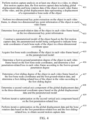
- FIG. 8 is a flowchart of staged iterative optimization according to an exemplary embodiment of this application.
- Operation 801 Determine global displacement data, bone rotation data, and foot-ground-relation data.
- Operation 802 Perform iterative optimization on a second vertical axis component of the global displacement data based on a first weighted loss.
- Operation 803 Perform iterative optimization on the global displacement data and the bone rotation data based on a second weighted loss.
- the computer device performs iterative optimization on the adjusted global displacement data [ ⁇ x, ⁇ z, T y ] and the bone rotation data Pose based on the foot penetration-related loss loss 1 , a foot sliding-related loss loss 2 , a global displacement loss loss 3 , and a global displacement speed loss loss 4 .
- Operation 804 Obtain optimized global displacement data and optimized bone rotation data.
- the computer device After completing the quantity of iterations, the computer device obtains the optimized global displacement data T ⁇ and the optimized bone rotation data Pose, and then obtains second motion capture data.
- FIG. 9 is a flowchart of a motion capture data processing method according to another exemplary embodiment of this application.
- a computer device performs video motion capture analysis on a video 901, to obtain first motion capture data 902.
- the first motion capture data 902 includes global displacement data 903 and bone rotation data 904 of an object in each video frame of the video.
- the computer device performs foot grounding state analysis on the video 901, to obtain foot-ground-relation data 905 of the object in each video frame.
- the computer device constructs a parameterized model of the object according to the first motion capture data 902, and obtains foot bone node coordinates 906 of the object in each video frame according to the parameterized model.
- the computer device determines a foot penetration-related loss 907 in the first motion capture data 902 in each video frame according to the foot bone node coordinates 906, and determines a foot sliding-related loss 908 in the first motion capture data 902 according to the foot bone node coordinates 906 and the foot-ground-relation data 905. Furthermore, to improve smoothness of an animation video and reduce a sudden change, the computer device may further determine a global displacement speed loss 910 in the first motion capture data 902 according to the global displacement data 903.
- the computer device performs first-stage iterative optimization for a foot penetration problem in the first motion capture data 902, that is, performs iterative optimization on a second vertical axis component 909 of the global displacement data 903 based on the foot penetration-related loss 907, to obtain an optimized second vertical axis component 913.
- the computer device After performing iterative optimization on the second vertical axis component 909, performs second-stage iterative optimization for a foot sliding problem in the first motion capture data 902.
- the computer device may continue optimization for the foot penetration problem during the second-stage iterative optimization, that is, perform iterative optimization on the global displacement data 903 and the bone rotation data 904 based on the foot penetration-related loss 907, the foot sliding-related loss 908, and the global displacement speed loss 910. Meanwhile, to avoid a large change in the global displacement data before and after optimization, in each optimization process, the computer device may further determine a global displacement loss 912 according to the global displacement data 903 before optimization and the optimized global displacement data 911.
- the computer device performs iterative optimization on the global displacement data 903 and the bone rotation data 904 based on the foot penetration-related loss 907, the foot sliding-related loss 908, the global displacement loss 912, and the global displacement speed loss 910, to finally obtain second motion capture data 914.
- FIG. 10 is a structural block diagram of a motion capture data processing apparatus according to an exemplary embodiment of this application.
- the apparatus includes:
- the loss determining module 1003 includes:
- the first loss determining unit is configured to:
- the second loss determining unit is configured to:
- the optimization module 1004 includes:
- the second optimization unit is further configured to:
- the second optimization unit is further configured to:
- the second optimization unit is further configured to:
- the second optimization unit is further configured to:
- the apparatus further includes:
- the second analysis module 1002 includes:
- the data determining module is configured to:
- motion capture analysis is performed on the object in the video, to obtain the first motion capture data
- the foot grounding state of the object is analyzed according to the video, to obtain the foot-ground-relation data of the object in each video frame.
- a computer device may determine the foot sliding-related loss and the foot penetration-related loss according to the first motion capture data and the foot-ground-relation data, and perform iterative optimization on the first motion capture data according to the foot sliding-related loss and the foot penetration-related loss, to obtain the second motion capture data.
- the apparatus provided in the foregoing embodiments is illustrated with an example of division of the foregoing functional modules.
- the functions may be allocated to and completed by different functional modules according to requirements, that is, the internal structure of the apparatus is divided into different functional modules, to implement all or some of the functions described above.
- the apparatus provided in the foregoing embodiments and the method embodiments belong to the same conception. For an implementation process of the apparatus, refer to the method embodiments, which is not repeated here.
- FIG. 11 is a schematic structural diagram of a computer device according to an exemplary embodiment of this disclosure.
- a computer device 1100 includes a central processing unit (CPU) 1101, a system memory 1104 including a random-access memory (RAM) 1102 and a read-only memory (ROM) 1103, and a system bus 1105 connecting the system memory 1104 and the central processing unit 1101.
- the computer device 1100 further includes a basic input/output (I/O) system 1106 assisting in information transmission between components in the computer, and a non-volatile storage device 1107 configured to store an operating system 1113, an application program 1114, and another program module 1115.
- I/O basic input/output
- the basic I/O system 1106 includes a display 1108 configured to display information and an input device 1109 configured to provide an information inputting function for a user, such as a mouse or a keyboard. Both the display 1108 and the input device 1109 are connected to the CPU 1101 through an input/output controller 1110 connected to the system bus 1105.
- the basic I/O system 1106 may further include the input/output controller 1110 configured to receive and process inputs from a plurality of other devices such as a keyboard, a mouse, and an electronic stylus. Similarly, the input/output controller 1110 further provides an output to a display screen, a printer, or another type of output device.
- the non-volatile storage device 1107 is connected to the CPU 1101 through a storage controller (not shown) connected to the system bus 1105.
- the non-volatile storage device 1107 and an associated computer-readable medium thereof provide non-volatile storage to the computer device 1100.
- the non-volatile storage device 1107 may include a computer-readable medium (not shown) such as a hard disk or a drive.
- the computer-readable medium may include a computer storage medium and a communication medium.
- the computer storage medium includes volatile and non-volatile, removable and non-removable media that store information such as computer-readable instructions, data structures, program modules, or other data and that are implemented by using any method or technology.
- the computer storage medium includes an RAM, an ROM, a flash memory or another solid-state storage technology, a compact disc ROM (CD-ROM), a digital versatile disc (DVD) or another optical memory, a magnetic cassette, a magnetic tape, a magnetic disk memory, or another magnetic storage device.
- CD-ROM compact disc ROM
- DVD digital versatile disc
- the computer storage medium is not limited to the foregoing several types.
- the system memory 1104 and the non-volatile storage device 1107 may be collectively referred to as a memory.
- the memory stores one or more programs.
- the one or more programs are executed by one or more CPUs 1101.
- the one or more programs include instructions for implementing the foregoing method.
- the CPU 1101 executes the one or more programs to implement the method provided in the foregoing method embodiments.
- the computer device 1100 may further be connected, through a network such as the Internet, to a remote computer on the network and run. That is, the computer device 1100 may be connected to a network 1111 through a network interface unit 1112 connected to the system bus 1105, or may be connected to another type of network or a remote computer system (not shown) through the network interface unit 1112.
- a network such as the Internet
- the embodiments of this disclosure further provide a computer-readable storage medium, which has at least one instruction stored therein.
- a processor loads and executes the at least one instruction to implement the motion capture data processing method described in the foregoing embodiments.
- the embodiments of this disclosure provide a computer program product, which includes computer instructions.
- the computer instructions are stored in a computer-readable storage medium.
- a processor of a computer device reads the computer instructions from the computer-readable storage medium, and executes the computer instructions, to cause the computer device to perform the motion capture data processing method described in the foregoing embodiments.
- the program may be stored in a computer-readable storage medium.
- the storage medium mentioned above may be an ROM, a magnetic disk, an optical disc, or the like.
Landscapes
- Engineering & Computer Science (AREA)
- Physics & Mathematics (AREA)
- General Physics & Mathematics (AREA)
- Theoretical Computer Science (AREA)
- Computer Vision & Pattern Recognition (AREA)
- Multimedia (AREA)
- Quality & Reliability (AREA)
- Processing Or Creating Images (AREA)
Applications Claiming Priority (2)
| Application Number | Priority Date | Filing Date | Title |
|---|---|---|---|
| CN202310318727.3A CN116051699B (zh) | 2023-03-29 | 2023-03-29 | 动捕数据的处理方法、装置、设备及存储介质 |
| PCT/CN2024/076583 WO2024198747A1 (zh) | 2023-03-29 | 2024-02-07 | 动作捕捉数据的处理方法、装置、设备及存储介质 |
Publications (2)
| Publication Number | Publication Date |
|---|---|
| EP4579599A1 true EP4579599A1 (de) | 2025-07-02 |
| EP4579599A4 EP4579599A4 (de) | 2025-12-17 |
Family
ID=86116660
Family Applications (1)
| Application Number | Title | Priority Date | Filing Date |
|---|---|---|---|
| EP24777541.4A Pending EP4579599A4 (de) | 2023-03-29 | 2024-02-07 | Verarbeitungsverfahren und -vorrichtung für bewegungserfassungsdaten sowie vorrichtung und speichermedium |
Country Status (3)
| Country | Link |
|---|---|
| EP (1) | EP4579599A4 (de) |
| CN (1) | CN116051699B (de) |
| WO (1) | WO2024198747A1 (de) |
Families Citing this family (3)
| Publication number | Priority date | Publication date | Assignee | Title |
|---|---|---|---|---|
| CN116051699B (zh) * | 2023-03-29 | 2023-06-02 | 腾讯科技(深圳)有限公司 | 动捕数据的处理方法、装置、设备及存储介质 |
| CN116700499A (zh) * | 2023-08-01 | 2023-09-05 | 海马云(天津)信息技术有限公司 | 虚拟数字人驱动方法和装置、电子设备及存储介质 |
| CN119992651A (zh) * | 2025-01-15 | 2025-05-13 | 北京邮电大学 | 基于单目视频的动作捕捉优化方法和模型训练方法 |
Family Cites Families (18)
| Publication number | Priority date | Publication date | Assignee | Title |
|---|---|---|---|---|
| US7916143B2 (en) * | 2006-12-07 | 2011-03-29 | Electronics And Telecommunications Research Institute | System and method for producing locomotion animation |
| CN102157009A (zh) * | 2011-05-24 | 2011-08-17 | 中国科学院自动化研究所 | 基于运动捕获数据的三维人体骨架运动编辑方法 |
| CN106447748B (zh) * | 2016-09-14 | 2019-09-24 | 厦门黑镜科技有限公司 | 一种用于生成动画数据的方法和装置 |
| CN107067451B (zh) * | 2017-04-07 | 2021-07-13 | 阿里巴巴(中国)有限公司 | 动画中动态骨骼的实现方法和装置 |
| CN107943289B (zh) * | 2017-11-16 | 2020-11-06 | 陈昭胜 | Vr行走机构以及在虚拟现实场景中行走的方法 |
| CN110738717B (zh) * | 2019-10-16 | 2021-05-11 | 网易(杭州)网络有限公司 | 动作数据的修正方法、装置及电子设备 |
| KR102254290B1 (ko) * | 2020-11-18 | 2021-05-21 | 한국과학기술원 | 모션 처리 방법 및 장치 |
| CN113592895B (zh) * | 2021-01-29 | 2025-12-30 | 腾讯科技(深圳)有限公司 | 一种运动信息确定方法、设备及计算机可读存储介质 |
| CN113033369B (zh) * | 2021-03-18 | 2024-03-12 | 北京达佳互联信息技术有限公司 | 动作捕捉方法、装置、电子设备及计算机可读存储介质 |
| CN113256684B (zh) * | 2021-06-11 | 2021-10-01 | 腾讯科技(深圳)有限公司 | 动捕数据的修复方法、装置、设备及存储介质 |
| CN113781615B (zh) * | 2021-09-28 | 2023-06-13 | 腾讯科技(深圳)有限公司 | 一种动画生成方法、装置、设备、存储介质 |
| CN114550292B (zh) * | 2022-02-21 | 2025-06-27 | 东南大学 | 一种基于神经运动控制的高物理真实感人体运动捕捉方法 |
| CN114519758B (zh) * | 2022-02-28 | 2025-10-17 | 广州虎牙科技有限公司 | 虚拟形象的驱动方法、装置及服务器 |
| CN114827567B (zh) * | 2022-03-23 | 2024-05-28 | 阿里巴巴(中国)有限公司 | 视频质量分析方法、设备和可读介质 |
| CN114742926B (zh) * | 2022-04-18 | 2026-03-03 | 网易(杭州)网络有限公司 | 一种动画重定向方法、装置、计算机设备及存储介质 |
| CN115601482A (zh) * | 2022-09-27 | 2023-01-13 | 广州华多网络科技有限公司(Cn) | 数字人动作控制方法及其装置、设备、介质、产品 |
| CN115797519A (zh) * | 2022-10-26 | 2023-03-14 | 长沙神漫文化科技有限公司 | 虚拟角色ik实时重定向方法及相关设备 |
| CN116051699B (zh) * | 2023-03-29 | 2023-06-02 | 腾讯科技(深圳)有限公司 | 动捕数据的处理方法、装置、设备及存储介质 |
-
2023
- 2023-03-29 CN CN202310318727.3A patent/CN116051699B/zh active Active
-
2024
- 2024-02-07 EP EP24777541.4A patent/EP4579599A4/de active Pending
- 2024-02-07 WO PCT/CN2024/076583 patent/WO2024198747A1/zh not_active Ceased
Also Published As
| Publication number | Publication date |
|---|---|
| CN116051699A (zh) | 2023-05-02 |
| EP4579599A4 (de) | 2025-12-17 |
| CN116051699B (zh) | 2023-06-02 |
| WO2024198747A1 (zh) | 2024-10-03 |
Similar Documents
| Publication | Publication Date | Title |
|---|---|---|
| EP4579599A1 (de) | Verarbeitungsverfahren und -vorrichtung für bewegungserfassungsdaten sowie vorrichtung und speichermedium | |
| CN111598998B (zh) | 三维虚拟模型重建方法、装置、计算机设备和存储介质 | |
| EP3847619B1 (de) | Unüberwachte neuronale netzwerke zur tiefenvorhersage | |
| CN110168560A (zh) | 使用神经网络的场景理解和生成 | |
| US20240169662A1 (en) | Latent Pose Queries for Machine-Learned Image View Synthesis | |
| EP4571653A1 (de) | Verfahren und vorrichtung zur animation eines virtuellen objekts, elektronische vorrichtung, computerlesbares speichermedium und computerprogrammprodukt | |
| WO2022026603A1 (en) | Object recognition neural network training using multiple data sources | |
| CN114998490B (zh) | 一种虚拟对象生成方法、装置、设备及存储介质 | |
| CN115346262A (zh) | 一种表情驱动参数的确定方法、装置、设备及存储介质 | |
| DE102023114767A1 (de) | Beheben von Kleidungsstückunstimmigkeiten unter Nutzung neuronaler Netzwerke | |
| CN116092120A (zh) | 基于图像的动作确定方法、装置、电子设备及存储介质 | |
| CN117593702B (zh) | 远程监控方法、装置、设备及存储介质 | |
| JPWO2019198233A1 (ja) | 動作認識装置、動作認識方法、及びプログラム | |
| CN111914595A (zh) | 一种基于彩色图像的人手三维姿态估计方法和装置 | |
| US20250166135A1 (en) | Fine-grained controllable video generation | |
| CN120635680A (zh) | 高斯编码模型训练方法、室内占用预测方法、设备和介质 | |
| CN116665274B (zh) | 人脸驱动方法和装置 | |
| CN117274447A (zh) | 数字人的生成方法、装置、电子设备及存储介质 | |
| CN116977577A (zh) | 地图生成方法、装置、设备、存储介质及程序产品 | |
| CN116309158A (zh) | 网络模型的训练方法、三维重建方法、装置、设备和介质 | |
| HK40086438B (en) | Method, apparatus, device and storage medium for processing motion capture data | |
| HK40086438A (en) | Method, apparatus, device and storage medium for processing motion capture data | |
| CN115393521B (zh) | 从柜体三视图重建三维模型的方法、装置和电子设备 | |
| CN117253010A (zh) | 一种图像处理方法、装置、设备、存储介质及产品 | |
| JP2026513435A (ja) | 仮想オブジェクトアニメーション生成方法、装置、電子機器、およびコンピュータプログラム |
Legal Events
| Date | Code | Title | Description |
|---|---|---|---|
| STAA | Information on the status of an ep patent application or granted ep patent |
Free format text: STATUS: THE INTERNATIONAL PUBLICATION HAS BEEN MADE |
|
| PUAI | Public reference made under article 153(3) epc to a published international application that has entered the european phase |
Free format text: ORIGINAL CODE: 0009012 |
|
| STAA | Information on the status of an ep patent application or granted ep patent |
Free format text: STATUS: REQUEST FOR EXAMINATION WAS MADE |
|
| 17P | Request for examination filed |
Effective date: 20250325 |
|
| AK | Designated contracting states |
Kind code of ref document: A1 Designated state(s): AL AT BE BG CH CY CZ DE DK EE ES FI FR GB GR HR HU IE IS IT LI LT LU LV MC ME MK MT NL NO PL PT RO RS SE SI SK SM TR |
|
| REG | Reference to a national code |
Ref country code: DE Ref legal event code: R079 Free format text: PREVIOUS MAIN CLASS: G06T0013400000 Ipc: G06T0007246000 |
|
| A4 | Supplementary search report drawn up and despatched |
Effective date: 20251113 |
|
| RIC1 | Information provided on ipc code assigned before grant |
Ipc: G06T 7/246 20170101AFI20251107BHEP |