EP4579570A2 - Rasenverwaltungssysteme und -verfahren - Google Patents
Rasenverwaltungssysteme und -verfahren Download PDFInfo
- Publication number
- EP4579570A2 EP4579570A2 EP25176362.9A EP25176362A EP4579570A2 EP 4579570 A2 EP4579570 A2 EP 4579570A2 EP 25176362 A EP25176362 A EP 25176362A EP 4579570 A2 EP4579570 A2 EP 4579570A2
- Authority
- EP
- European Patent Office
- Prior art keywords
- turf
- zone
- model
- condition
- recommended action
- Prior art date
- Legal status (The legal status is an assumption and is not a legal conclusion. Google has not performed a legal analysis and makes no representation as to the accuracy of the status listed.)
- Granted
Links
Images



Classifications
-
- G—PHYSICS
- G06—COMPUTING OR CALCULATING; COUNTING
- G06Q—INFORMATION AND COMMUNICATION TECHNOLOGY [ICT] SPECIALLY ADAPTED FOR ADMINISTRATIVE, COMMERCIAL, FINANCIAL, MANAGERIAL OR SUPERVISORY PURPOSES; SYSTEMS OR METHODS SPECIALLY ADAPTED FOR ADMINISTRATIVE, COMMERCIAL, FINANCIAL, MANAGERIAL OR SUPERVISORY PURPOSES, NOT OTHERWISE PROVIDED FOR
- G06Q10/00—Administration; Management
- G06Q10/06—Resources, workflows, human or project management; Enterprise or organisation planning; Enterprise or organisation modelling
- G06Q10/063—Operations research, analysis or management
-
- A—HUMAN NECESSITIES
- A01—AGRICULTURE; FORESTRY; ANIMAL HUSBANDRY; HUNTING; TRAPPING; FISHING
- A01G—HORTICULTURE; CULTIVATION OF VEGETABLES, FLOWERS, RICE, FRUIT, VINES, HOPS OR SEAWEED; FORESTRY; WATERING
- A01G20/00—Cultivation of turf, lawn or the like; Apparatus or methods therefor
-
- G—PHYSICS
- G05—CONTROLLING; REGULATING
- G05B—CONTROL OR REGULATING SYSTEMS IN GENERAL; FUNCTIONAL ELEMENTS OF SUCH SYSTEMS; MONITORING OR TESTING ARRANGEMENTS FOR SUCH SYSTEMS OR ELEMENTS
- G05B17/00—Systems involving the use of models or simulators of said systems
- G05B17/02—Systems involving the use of models or simulators of said systems electric
-
- G—PHYSICS
- G06—COMPUTING OR CALCULATING; COUNTING
- G06Q—INFORMATION AND COMMUNICATION TECHNOLOGY [ICT] SPECIALLY ADAPTED FOR ADMINISTRATIVE, COMMERCIAL, FINANCIAL, MANAGERIAL OR SUPERVISORY PURPOSES; SYSTEMS OR METHODS SPECIALLY ADAPTED FOR ADMINISTRATIVE, COMMERCIAL, FINANCIAL, MANAGERIAL OR SUPERVISORY PURPOSES, NOT OTHERWISE PROVIDED FOR
- G06Q50/00—Information and communication technology [ICT] specially adapted for implementation of business processes of specific business sectors, e.g. utilities or tourism
- G06Q50/02—Agriculture; Fishing; Forestry; Mining
Definitions
- the present disclosure generally relates to a system of turf management in a work region using modeling of environmental conditions (e.g., climate).
- the systems and methods may include external data streams (e.g., historical data, atmospheric measurements and predictions, etc.) and machine learning or feedback loops (e.g., recorded decisions and outcomes from those decisions) to model turf conditions within the work region and determine an estimated turf condition.
- the work region may be divided into a plurality of zones such that each zone may be managed independently or in combination with one or more different zones.
- An estimated turf condition may be determined for each zone of the work region by a predictive turf model and a recommended action may be generated for each zone based on the corresponding estimated turf condition input into a suggestion model.
- turf maintenance equipment may be provided a command to carry out the recommended action (e.g., automatically or at the direction of the user) to manage the turf in the associated zone.
- the system can be operable such that the user would then apply any recommended actions 714 and ultimately report the results back.
- Positive feedback will reinforce deductions thus raising the confidence levels of those outcomes based on similar input in the future.
- Negative feedback has the opposite effect, reducing confidence levels. Only results above a threshold confidence level (configurable by the user) are shown, so once the confidence of a deduction is below that threshold, the user isn't even notified about it since the system basically has confidence that it is wrong or won't produce the desired outcomes. How the user provides this feedback is another aspect of this system 700.
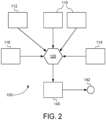
- One purpose of the location hierarchy as shown in FIG. 8 is to allow the user to filter or localize any recommendations made by the knowledge engine. For example, the user may ask "What areas of the sports complex shall I water today?" where the sports complex refers to a site and thus all the areas and zones within that site. In this case, the fact set would include all facts that fall within that location (e.g., with coordinates within the zones and areas included in the site definition). A more specific question could be whether to water the first green. This would narrow the set of facts to just that green.
- a model might need to understand data readings in zones contiguous to the target zone it is currently considering. Or it might want to understand the weather pattern in the county, state or region. The point is that location filters will usually be above a coordinate value and thus the fact store should be able to efficiently map facts given a coordinate to the appropriate location designator.
- Units of measure can be defined as enumerated values to ensure there is no confusion when comparing them between different facts. For example, there can be a single UoM for "degrees Fahrenheit". As many of these as possible can be predefined, users can add their own units and a UI that tries to prevent duplicates (while also helping find an appropriate, previously defined enumeration).
- the fact's type is a set of mappings
- the UoM field is a set of mappings of the same sub-fact-name used in the value mapped to the UoM enumerated value for that sub-fact. Thus, the UoM for each part of a mapping can be determined. If no mapping is provided, then no UoM is associated with that sub-fact.
- thermometer may take a reading every hour with a precision of tenths of degrees. For all many purposes, this may be more than sufficient, assuming the thermometer is of the requisite quality. Therefore, a confidence of 1.0 (the highest) could be associated with this reading.
- Wind speed readings may also be taken every hour from an anemometer, but it may not be of high quality and thus not very accurate. In this case, a confidence of 0.9 may be assigned to those readings. Note that this is not a strict measure of the error but can be loosely interpreted as being 90% confident that the reading is accurate.
- the system may assume that sensor readings have a 100% (1.0) confidence in terms of their readings.
- the complexity of the recommendations for users will "multiply” and the confidence will be reduced the more the accuracy of the raw facts is questioned. So, the non-1.0 confidences should be applied judiciously (e.g., by default, sensor facts start at 1.0 until a user makes a change).
- the system should understand the format of each part of a fact in order to efficiently and properly process it.
- facts e.g., instances
- the descriptor for those facts is tied to the fact declaration and thus it only needs to be declared one time to the system. Therefore, a fact declaration system allows users to declare the attributes of the fact in addition to tying them to the ingest process where the raw bytes are read and interpreted from sensors. It is also here where rules can be set up for facts that are missing attributes or whose attributes are not the default meaning. For example, if a location is missing, it may be computed in a different way.
- a model 706 may include a formula and/or algorithm.
- the model takes a set of facts, deductions and initial conditions as inputs and produces one or more new deductions as outputs.
- Models 706 are evaluated at two points during the process of resolving a user's question - before the engine begins to evaluate rules and as part of a consequent to a fired rule.
- a model will be declared before it can be used.
- a model's declaration has the following parts: the name of the model; the expected inputs to the model; the expected outputs from the model; and the formula that defines how the inputs are transformed to the outputs (the body).
- the name of the model should be globally unique. Since the models should be shareable across customers, a naming convention based on company names may be used. Models can be organized into hierarchies by separating names with the period (.) character. The "root" of the name is the name of the organization that defined and model, e.g., [ organization ].[ package. ] model-name where package is an optional package grouping name (e.g., watering) and model-name is the name of the model.
- package is an optional package grouping name (e.g., watering)
- model-name is the name of the model.
- the inputs to a model 706 will help drive the filtering of facts and working memory to ensure that the model is getting the data it needs. Thus, input declarations are little more involved than for a standard computer programming language function call.
- An input can be the name of a fact series and any variable in working memory (e.g., deductions and initial conditions).
- the model can also provide additional filters to limit the amount of data that it will receive. For example, facts in a series can be filtered by location (e.g., all facts within the area encompassing the initial zone), time (e.g., all facts within the past week), and value range (e.g., facts within a numeric range).
- location and time can be defined to be constrained by the initial condition values or can be absolute (e.g., without regard to the initial condition values). The latter is potentially dangerous as it could lead to millions of facts being considered by the model, perhaps unintentionally.
- Every model may automatically have access to everything in working memory via an implicit working memory object that is passed into the model (in a language appropriate way).
- the model could declare what deductions it will read as part of the model's input declarations, which may include a list of deduction names. Declaring these helps the system ensure that the deduction variables are available and prompts the user as needed. Only the facts that are to be operated on need be declared.
- a parameter is a specification of a set of values that will be passed into and thus can be used by the model. This set of values is bound to a name ( parameter-name ) that is used within the model to refer to this set of values.
- Gathering of facts from the store results in either a single value (if an aggregate function is specified) or a list of data.
- the data can be single values (one per matched fact) or it can be tuples that include - in addition to the value - other attributes of each matching fact (location, timestamp, confidence, UoM).
- a value can be a set of mappings, e.g., the sub-facts of a fact.
- a list of single values is returned when the only values clause is specified (e.g., (e.g., fact x only values), otherwise a list of tuples is returned.
- a fact name can be either the name of a fact series or, in the case a fact has sub-facts, it can be the parent fact followed by the sub-fact name (e.g., weather-station.air-temperature and weather-station.humidity are examples of sub-fact selectors).
- sub-fact selector When a sub-fact selector is used, the system treats these as single valued facts and thus much of this section can be applied as expected (e.g., a unit of measure conversion would be applied to just this sub-fact).
- the count aggregate function can be applied to such a fact; the fact cannot be filtered by a range specification.
- input parameters "degs is fact outside-temp in degrees-F above 32 inclusive from current to area during previous 2 months.” This input gets the set of facts named outside-temp from the locations enclosed by the current area that were recorded over the previous two months and have a value of at least 32 and return them in degree Fahrenheit units. Result is assigned to the name "degs" to be used inside of the model body.
- level is fact average(battery-level) in volts during previous 1 weeks for 1 days.” This computes a battery level (assigned to level) as the average recorded battery level from all devices at the current location on the day one week ago.
- the system can provide appropriate support within the body of the model definition for assignment of these one or more resulting deductions.
- the computed deductions are added to the working memory. If a deduction was already in working memory, the old value is replaced by the new value. It is also possible for a model to remove a deduction from working memory (useful for Boolean deductions).
- Well-designed models work independently in that they alter working memory in non-conflicting ways. This allows models to be executed in parallel when available.
- the body of a model is intended to be functional code with no side effects. That is, it takes its inputs, performs computations on these inputs and then assigns any results into the declared deduction variables.
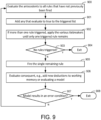
- Rules are meant to be understood and therefore represented in a simple manner, e.g., if antecedent then consequent.
- the antecedent is a Boolean expression. It is used to compare values in working memory, determine if deductions have been made (by their presence in working memory), or some combination of these.
- Antecedents are not meant to be complicated expressions although the syntax allows for an arbitrary number of phrases.
- the antecedent and consequent may be associated with confidence estimates, and the rule may be associated with a priority order (e.g., integer value).
- an antecedent phrase is just the name of a deduction (or, in this case, the name of an added action), it evaluates to true if the deduction appears in the working memory (regardless of whether it also has a value assigned). Otherwise, deductions - which can be thought of like programming variables - can be compared with both literal values and other deductions.
- the "in” comparator is specific to determining if a deduction containing a location is encompassed within a particular location. The "in” comparator uses the location hierarchy shown in FIG. 7 to determine truth.
- the antecedent evaluates to true it is said to be triggered.
- the first tie breaker is rule specificity - when one antecedent is narrower than another, then the narrower rule wins. This allows the user to create "default" rules which would only get fired when no other more specific rule is available.
- the second tie breaker is just priority ordering. That is, the remaining rule with the lowest numbered priority order is the one that will fire (so rule with priority order 1 is the highest priority rule).
- Each rule in a ruleset can have a unique priority order value (but they do not need to be consecutive).
- a deduction or an action can be assigned a confidence. This can be a constant value, or it can be an attenuation of the confidence of the antecedent (called the input here). If the with confidence clause is attached to a particular consequent, then it takes precedence over a with confidence clause that might have been included as part of the then clause.
- rulesets may be shared, a mechanism is provided to group rulesets into larger ruleset groups. This allows the user to create certain rules once in the system and then re-use them in various other contexts. Note that any models these shared rules refer to will also be available to the users of any rulesets in which these shared rules are encompassed. When composing rulesets, the system should check any access control rules on models to ensure accessibility.
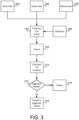
- the working memory is set up. This involves first getting the question from the user that will be resolved, looking up the associated ruleset appropriate for the question, finding any supporting facts, and then generating any new information from our models. Posing a "question” and asking for "recommendations” works in the same way: by choosing a ruleset to evaluate. If the user just wants to see what the system deduces based on the rules and current facts, the engine is run "forward". This means evaluating the rules against working memory, deriving new deductions, and iterating until no more deductions can be made. What was learned, e.g., the final contents of working memory, is then reported to the user.
- the user wants to determine whether a particular deduction would be derived, then the user would select the particular deduction of interest from the list of possible deductions that could be derived from this ruleset.
- the engine will then run "backwards" from the deduction to determine if all conditions that would lead to this deduction are present and true (above a confidence level).
- the system then reports whether the deduction is supported or not by the facts (and models) and how the result was substantiated.
- Models that only operate on facts independent of anything derived should be fine, but not others.
- One possible solution is to assume models generate deductions (which are declared) with full confidence and treat the model as a no-op. Then, when encountering the beginning of the trace, go forwards again with the assumed to be correct starting facts to see if the original deduction is obtained.
- the next step is for the user to enter any initial constraints or other facts that would be inserted into working memory.
- the two most common are location (recommended to be entered) and time span.
- the location would be one of the designators from FIG. 8 . This is meant to be the location about which the question is meant to be answered. For example, it could be answering the question: should we water the hole 2 fairway? This would be a named area designator.
- the designator would be given in absolute-location syntax. This would limit any facts applied to the rules and models.
- the time span is more optional and really depends on what the user wants to do. If the user wants to compare historical outcomes, then the time span can be used to set that window. If given, then only facts that are within the given timespan will be considered. Otherwise, the models are free to limit facts based on time as they see fit. For example, if the user wants to know about watering now, then the models would use "now" as the starting point and work from there. Within working memory, these initial conditions are specified as initial-location and initial-timespan.
- Any additional deduction variables can be set at this time as well. These may include asserted facts that should also be considered. However, these are treated differently from the model perspective. Models have access to all the working memory variables, but a factual deduction is not treated the same as a fact from the fact store in terms of input to the models. But once in a model, the model can certainly treat them the same.
- Running initial models is a matter of listing the model names to run in the order the user wants to run them.
- the system could be configured to analyze the inputs and outputs of the models to determine if some of the models can be run in parallel with each other to minimize startup time. Initially, the models can be run sequentially in the order given.
- the working memory is initialized with initial conditions and the outputs from any startup models that have been run. If the chosen ruleset is not empty, then the engine starts based on the type of question being asked. If the user is looking for deductions and recommendations, the engine is run forward, otherwise backwards. In either case, the engine will track what rules are triggered, what rules are fired and what models are run. This allows the user to understand how a deduction was arrived at.
- the working memory has all the newly learned knowledge in the form of deductions. These would then be presented to the user, e.g., as a recommended action based on all the currently available inputs.
- the layout will be the work of the user interface, and the initial inputs should be separated from the generated deductions. Only those deductions that are above the user's desired threshold should be shown to minimize clutter. Actions should be called out separately from just new knowledge. The entire resulting data package could be saved for the user for historical review and entering feedback in the event actions were recommended.
- One feature of the system is that it allows an expert user to provide feedback. That is, the system makes a recommended action, and can receive information as to whether this had a positive or a negative effect so that reinforce the learning can be reinforced in either direction.
- the user could provide feedback by referring back to a previous named output and then, for each action, telling the system the result. Initially, this will be a value from 0.0 to 1.0 rating the success of the action (and thus how confident the system should be in producing it in the future based on the same inputs).
- Embodiment 2 includes the method of embodiment 1, wherein the predictive turf model is calibrated based on historical outcome data and historical sensor data of the work region.
- Embodiment 3 includes the method as in any of embodiments 1-2, further comprising updating the predictive turf model in response to the zone sensor data and a measured turf condition.
- Embodiment 4 includes the model of embodiment 3, wherein updating the predictive turf model comprises: measuring the measured turf condition for at least one zone of the plurality of zones; and comparing the estimated turf condition and the measured turf condition for the at least one zone.
- Embodiment 5 includes the method of embodiment 4, wherein measuring the measured turf condition comprises inputting measured turf condition based on observed turf condition at the at least one zone of the plurality of zones.
- Embodiment 6 includes the method of embodiment 4, wherein the measured turf condition is measured by one or more turf condition sensors.
- Embodiment 7 includes the method of embodiment 6, wherein the one or more turf condition sensors comprise a light reflectance sensor.
- Embodiment 10 includes the method as in any preceding embodiment, wherein the sets of zone sensor data associated with a zone comprise information pertaining to previous action taken to manage conditions at the associated zone.
- Embodiment 11 includes the method as in any preceding embodiment, wherein the sets of zone sensor data associated with a zone comprise environmental conditions and trends.
- Embodiment 12 includes the method as in any preceding embodiment, further comprising displaying the recommended action for each zone to a user.
- Embodiment 13 includes the method as in any preceding embodiment, further comprising providing a command to equipment to carry out the recommended action for each zone.
- Embodiment 14 includes the method as in any preceding embodiment, further comprising recording and transmitting the recommended action for each zone to a network.
- Embodiment 15 includes the method as in any preceding embodiment, wherein the estimated turf condition for each zone comprises percentage, amount, probability, dimension, rate, etc.
- Embodiment 15D includes the method of embodiments 15A-15C, wherein the knowledge engine receives feedback, the feedback used evolve at least one of the set of rules and the one or more models.
- Embodiment 15E includes the method of embodiments 15A-15D, wherein the zone sensor data is associated with a confidence value, and wherein the confidence value is used to determine an associated confidence value for the deductions.
- Embodiment 16 is a method of managing turf in a work region, the method comprising: providing an estimated turf condition for each zone of a plurality of zones dividing the work region; generating a recommended action for each zone based on the associated estimated turf condition for each zone as an input to a suggestion model; providing a command to equipment to carry out the recommended action to manage the turf in the associated zone; measuring a turf condition in response to the action carried out to manage the turf in the associated zone; and updating the suggestion model in response to the measured turf condition and a desired turf condition based on the action carried out to manage the turf.
- phrases "at least one of,” “comprises at least one of,” and “one or more of” followed by a list refers to any one of the items in the list and any combination of two or more items in the list.
Landscapes
- Engineering & Computer Science (AREA)
- Business, Economics & Management (AREA)
- Human Resources & Organizations (AREA)
- General Physics & Mathematics (AREA)
- Physics & Mathematics (AREA)
- Entrepreneurship & Innovation (AREA)
- Strategic Management (AREA)
- Economics (AREA)
- Automation & Control Theory (AREA)
- Life Sciences & Earth Sciences (AREA)
- Environmental Sciences (AREA)
- Game Theory and Decision Science (AREA)
- Educational Administration (AREA)
- Development Economics (AREA)
- Marketing (AREA)
- Operations Research (AREA)
- Quality & Reliability (AREA)
- Tourism & Hospitality (AREA)
- General Business, Economics & Management (AREA)
- Theoretical Computer Science (AREA)
- Management, Administration, Business Operations System, And Electronic Commerce (AREA)
- Road Paving Structures (AREA)
- Cultivation Of Plants (AREA)
- Transplanting Machines (AREA)
Applications Claiming Priority (3)
| Application Number | Priority Date | Filing Date | Title |
|---|---|---|---|
| US202063044016P | 2020-06-25 | 2020-06-25 | |
| EP21748697.6A EP4172898B1 (de) | 2020-06-25 | 2021-06-16 | Rasenverwaltungssysteme und -verfahren |
| PCT/US2021/037586 WO2021262500A1 (en) | 2020-06-25 | 2021-06-16 | Turf management systems and methods |
Related Parent Applications (2)
| Application Number | Title | Priority Date | Filing Date |
|---|---|---|---|
| EP21748697.6A Division EP4172898B1 (de) | 2020-06-25 | 2021-06-16 | Rasenverwaltungssysteme und -verfahren |
| EP21748697.6A Division-Into EP4172898B1 (de) | 2020-06-25 | 2021-06-16 | Rasenverwaltungssysteme und -verfahren |
Publications (3)
| Publication Number | Publication Date |
|---|---|
| EP4579570A2 true EP4579570A2 (de) | 2025-07-02 |
| EP4579570A3 EP4579570A3 (de) | 2025-07-09 |
| EP4579570B1 EP4579570B1 (de) | 2026-03-25 |
Family
ID=77127053
Family Applications (2)
| Application Number | Title | Priority Date | Filing Date |
|---|---|---|---|
| EP25176362.9A Active EP4579570B1 (de) | 2020-06-25 | 2021-06-16 | Rasenverwaltungssysteme und -verfahren |
| EP21748697.6A Active EP4172898B1 (de) | 2020-06-25 | 2021-06-16 | Rasenverwaltungssysteme und -verfahren |
Family Applications After (1)
| Application Number | Title | Priority Date | Filing Date |
|---|---|---|---|
| EP21748697.6A Active EP4172898B1 (de) | 2020-06-25 | 2021-06-16 | Rasenverwaltungssysteme und -verfahren |
Country Status (4)
| Country | Link |
|---|---|
| US (1) | US20230263110A1 (de) |
| EP (2) | EP4579570B1 (de) |
| AU (1) | AU2021296123A1 (de) |
| WO (1) | WO2021262500A1 (de) |
Families Citing this family (44)
| Publication number | Priority date | Publication date | Assignee | Title |
|---|---|---|---|---|
| US11672203B2 (en) | 2018-10-26 | 2023-06-13 | Deere & Company | Predictive map generation and control |
| US12069978B2 (en) | 2018-10-26 | 2024-08-27 | Deere & Company | Predictive environmental characteristic map generation and control system |
| US11653588B2 (en) | 2018-10-26 | 2023-05-23 | Deere & Company | Yield map generation and control system |
| US12329148B2 (en) | 2020-02-06 | 2025-06-17 | Deere & Company | Predictive weed map and material application machine control |
| US11675354B2 (en) | 2020-10-09 | 2023-06-13 | Deere & Company | Machine control using a predictive map |
| US11849671B2 (en) | 2020-10-09 | 2023-12-26 | Deere & Company | Crop state map generation and control system |
| US11864483B2 (en) * | 2020-10-09 | 2024-01-09 | Deere & Company | Predictive map generation and control system |
| US11711995B2 (en) | 2020-10-09 | 2023-08-01 | Deere & Company | Machine control using a predictive map |
| US12419220B2 (en) | 2020-10-09 | 2025-09-23 | Deere & Company | Predictive map generation and control system |
| US12386354B2 (en) | 2020-10-09 | 2025-08-12 | Deere & Company | Predictive power map generation and control system |
| US11849672B2 (en) | 2020-10-09 | 2023-12-26 | Deere & Company | Machine control using a predictive map |
| US12013245B2 (en) | 2020-10-09 | 2024-06-18 | Deere & Company | Predictive map generation and control system |
| US11844311B2 (en) | 2020-10-09 | 2023-12-19 | Deere & Company | Machine control using a predictive map |
| US11592822B2 (en) | 2020-10-09 | 2023-02-28 | Deere & Company | Machine control using a predictive map |
| US11983009B2 (en) | 2020-10-09 | 2024-05-14 | Deere & Company | Map generation and control system |
| US11889788B2 (en) | 2020-10-09 | 2024-02-06 | Deere & Company | Predictive biomass map generation and control |
| US11845449B2 (en) | 2020-10-09 | 2023-12-19 | Deere & Company | Map generation and control system |
| US20220110238A1 (en) | 2020-10-09 | 2022-04-14 | Deere & Company | Machine control using a predictive map |
| US11874669B2 (en) | 2020-10-09 | 2024-01-16 | Deere & Company | Map generation and control system |
| US12550802B2 (en) | 2020-10-08 | 2026-02-17 | Deere & Company | Predictive machine characteristic map generation and control system |
| US12178158B2 (en) | 2020-10-09 | 2024-12-31 | Deere & Company | Predictive map generation and control system for an agricultural work machine |
| US11927459B2 (en) | 2020-10-09 | 2024-03-12 | Deere & Company | Machine control using a predictive map |
| US20220110258A1 (en) | 2020-10-09 | 2022-04-14 | Deere & Company | Map generation and control system |
| US11946747B2 (en) | 2020-10-09 | 2024-04-02 | Deere & Company | Crop constituent map generation and control system |
| US11727680B2 (en) | 2020-10-09 | 2023-08-15 | Deere & Company | Predictive map generation based on seeding characteristics and control |
| US11895948B2 (en) | 2020-10-09 | 2024-02-13 | Deere & Company | Predictive map generation and control based on soil properties |
| US12069986B2 (en) | 2020-10-09 | 2024-08-27 | Deere & Company | Map generation and control system |
| US11825768B2 (en) | 2020-10-09 | 2023-11-28 | Deere & Company | Machine control using a predictive map |
| US12422847B2 (en) | 2020-10-09 | 2025-09-23 | Deere & Company | Predictive agricultural model and map generation |
| US11871697B2 (en) | 2020-10-09 | 2024-01-16 | Deere & Company | Crop moisture map generation and control system |
| US11889787B2 (en) | 2020-10-09 | 2024-02-06 | Deere & Company | Predictive speed map generation and control system |
| US12250905B2 (en) | 2020-10-09 | 2025-03-18 | Deere & Company | Machine control using a predictive map |
| US12127500B2 (en) | 2021-01-27 | 2024-10-29 | Deere & Company | Machine control using a map with regime zones |
| US12302791B2 (en) | 2021-12-20 | 2025-05-20 | Deere & Company | Crop constituents, predictive mapping, and agricultural harvester control |
| US12245549B2 (en) | 2022-01-11 | 2025-03-11 | Deere & Company | Predictive response map generation and control system |
| US12082531B2 (en) | 2022-01-26 | 2024-09-10 | Deere & Company | Systems and methods for predicting material dynamics |
| US12520759B2 (en) | 2022-01-26 | 2026-01-13 | Deere & Company | Systems and methods for predicting material dynamics |
| US12295288B2 (en) | 2022-04-05 | 2025-05-13 | Deere &Company | Predictive machine setting map generation and control system |
| US12284934B2 (en) | 2022-04-08 | 2025-04-29 | Deere & Company | Systems and methods for predictive tractive characteristics and control |
| US12358493B2 (en) | 2022-04-08 | 2025-07-15 | Deere & Company | Systems and methods for predictive power requirements and control |
| US12298767B2 (en) | 2022-04-08 | 2025-05-13 | Deere & Company | Predictive material consumption map and control |
| US12058951B2 (en) | 2022-04-08 | 2024-08-13 | Deere & Company | Predictive nutrient map and control |
| US12582035B2 (en) | 2022-04-08 | 2026-03-24 | Deere & Company | Systems and methods for predictive power requirements and control |
| US12331644B2 (en) * | 2022-07-18 | 2025-06-17 | Caterpillar Inc. | Water dispensing management for autonomous machines |
Family Cites Families (9)
| Publication number | Priority date | Publication date | Assignee | Title |
|---|---|---|---|---|
| US9872445B2 (en) * | 2010-09-30 | 2018-01-23 | The Toro Company | Turf management |
| US20160157446A1 (en) * | 2012-11-06 | 2016-06-09 | CROPX Technologies LTD. | Multiple soil-topography zone field irrigation user interface system and method |
| US10349584B2 (en) * | 2014-11-24 | 2019-07-16 | Prospera Technologies, Ltd. | System and method for plant monitoring |
| EP3206179A1 (de) * | 2016-02-09 | 2017-08-16 | Tata Consultancy Services Limited | Verfahren und system für landwirtschaftliches feld-clustering und ökologische vorhersage |
| US11263707B2 (en) * | 2017-08-08 | 2022-03-01 | Indigo Ag, Inc. | Machine learning in agricultural planting, growing, and harvesting contexts |
| US11423492B2 (en) * | 2017-11-21 | 2022-08-23 | Climate Llc | Computing risk from a crop damaging factor for a crop on an agronomic field |
| US11704581B1 (en) * | 2020-01-29 | 2023-07-18 | Arva Intelligence Corp. | Determining crop-yield drivers with multi-dimensional response surfaces |
| US11935242B2 (en) * | 2020-03-09 | 2024-03-19 | International Business Machines Corporation | Crop yield estimation |
| IL295243B1 (en) * | 2020-03-11 | 2026-05-01 | Viewnetic Ltd | Systems and methods for monitoring plants in growing areas |
-
2021
- 2021-06-16 EP EP25176362.9A patent/EP4579570B1/de active Active
- 2021-06-16 US US18/010,419 patent/US20230263110A1/en active Pending
- 2021-06-16 EP EP21748697.6A patent/EP4172898B1/de active Active
- 2021-06-16 WO PCT/US2021/037586 patent/WO2021262500A1/en not_active Ceased
- 2021-06-16 AU AU2021296123A patent/AU2021296123A1/en active Pending
Also Published As
| Publication number | Publication date |
|---|---|
| EP4579570A3 (de) | 2025-07-09 |
| AU2021296123A1 (en) | 2023-01-19 |
| EP4172898A1 (de) | 2023-05-03 |
| US20230263110A1 (en) | 2023-08-24 |
| EP4579570B1 (de) | 2026-03-25 |
| WO2021262500A1 (en) | 2021-12-30 |
| EP4172898B1 (de) | 2025-07-30 |
| WO2021262500A8 (en) | 2022-03-10 |
Similar Documents
| Publication | Publication Date | Title |
|---|---|---|
| EP4579570B1 (de) | Rasenverwaltungssysteme und -verfahren | |
| US11625798B2 (en) | Environmental management zone modeling and analysis | |
| EP3482630B1 (de) | Verfahren, system und computerprogramm zur durchführung einer schädlingsprognose | |
| US8417534B2 (en) | Automated location-based information recall | |
| US9563852B1 (en) | Pest occurrence risk assessment and prediction in neighboring fields, crops and soils using crowd-sourced occurrence data | |
| US20200250593A1 (en) | Yield estimation in the cultivation of crop plants | |
| CN115205695B (zh) | 一种根据种植数据确定种植策略的方法和系统 | |
| US20120215729A1 (en) | Methods, Apparatus and Systems for Generating, Updating and Executing a Vegetation Control Plan | |
| US20200245525A1 (en) | Yield estimation in the cultivation of crop plants | |
| CN110998642A (zh) | 使用来自作物保护中田地试验的数据校准和优化预测模型 | |
| KR20210059561A (ko) | 상생형 병해충 관리 시스템 및 그 방법 | |
| US20190012749A1 (en) | Dynamic cost function calculation for agricultural users | |
| US20250021720A1 (en) | Agricultural system for protecting an animal species | |
| CN118172187A (zh) | 一种多功能植被的处理控制方法、系统、介质以及设备 | |
| CN116847732A (zh) | 收获物产品中的植物保护剂残留的预测 | |
| Zhai | Contributions to case-based reasoning enabled decision support system for smart agriculture | |
| KR102784249B1 (ko) | 식물생육 네비게이션 시스템 | |
| Adomat | Risk-aware HTN planning for agricultural tasks | |
| Roshandel et al. | Automation and smart irrigation | |
| Hull | An Integrated and Applied Approach to Understanding Mosquito Diversity in Residential Yards | |
| GR1010544B (el) | Συστημα και μεθοδος προβλεψης παρουσιας/απουσιας για τα τρια γενη προνυμφων (culex, aedes, anopheles) στις εστιες αναπαραγωγης | |
| CN121903396A (zh) | 草坪预测性维护方法、装置、设备、介质及管理系统 | |
| CN121256054A (zh) | 一种基于知识图谱的青贮玉米生长阶段管理方法、系统及存储介质 | |
| Susi et al. | Plant disease models. Critical issues in development and use | |
| Priya et al. | AI-BASED DECISION SUPPORT SYSTEMS FOR CROP MANAGEMENT IN AGRICULTURAL EXTENSION |
Legal Events
| Date | Code | Title | Description |
|---|---|---|---|
| PUAI | Public reference made under article 153(3) epc to a published international application that has entered the european phase |
Free format text: ORIGINAL CODE: 0009012 |
|
| STAA | Information on the status of an ep patent application or granted ep patent |
Free format text: STATUS: THE APPLICATION HAS BEEN PUBLISHED |
|
| REG | Reference to a national code |
Ref country code: DE Ref legal event code: R079 Free format text: PREVIOUS MAIN CLASS: G06Q0050020000 Ipc: G06Q0010063000 Ref country code: DE Ref legal event code: R079 Ref document number: 602021050941 Country of ref document: DE Free format text: PREVIOUS MAIN CLASS: G06Q0050020000 Ipc: G06Q0010063000 |
|
| PUAL | Search report despatched |
Free format text: ORIGINAL CODE: 0009013 |
|
| AC | Divisional application: reference to earlier application |
Ref document number: 4172898 Country of ref document: EP Kind code of ref document: P |
|
| AK | Designated contracting states |
Kind code of ref document: A2 Designated state(s): AL AT BE BG CH CY CZ DE DK EE ES FI FR GB GR HR HU IE IS IT LI LT LU LV MC MK MT NL NO PL PT RO RS SE SI SK SM TR |
|
| AK | Designated contracting states |
Kind code of ref document: A3 Designated state(s): AL AT BE BG CH CY CZ DE DK EE ES FI FR GB GR HR HU IE IS IT LI LT LU LV MC MK MT NL NO PL PT RO RS SE SI SK SM TR |
|
| RIC1 | Information provided on ipc code assigned before grant |
Ipc: G06Q 50/02 20240101ALI20250530BHEP Ipc: G06Q 10/063 20230101AFI20250530BHEP |
|
| STAA | Information on the status of an ep patent application or granted ep patent |
Free format text: STATUS: REQUEST FOR EXAMINATION WAS MADE |
|
| GRAP | Despatch of communication of intention to grant a patent |
Free format text: ORIGINAL CODE: EPIDOSNIGR1 |
|
| STAA | Information on the status of an ep patent application or granted ep patent |
Free format text: STATUS: GRANT OF PATENT IS INTENDED |
|
| 17P | Request for examination filed |
Effective date: 20251113 |
|
| INTG | Intention to grant announced |
Effective date: 20251127 |
|
| GRAS | Grant fee paid |
Free format text: ORIGINAL CODE: EPIDOSNIGR3 |
|
| GRAA | (expected) grant |
Free format text: ORIGINAL CODE: 0009210 |
|
| STAA | Information on the status of an ep patent application or granted ep patent |
Free format text: STATUS: THE PATENT HAS BEEN GRANTED |
|
| P01 | Opt-out of the competence of the unified patent court (upc) registered |
Free format text: CASE NUMBER: UPC_APP_0002772_4579570/2026 Effective date: 20260126 |
|
| AC | Divisional application: reference to earlier application |
Ref document number: 4172898 Country of ref document: EP Kind code of ref document: P |
|
| AK | Designated contracting states |
Kind code of ref document: B1 Designated state(s): AL AT BE BG CH CY CZ DE DK EE ES FI FR GB GR HR HU IE IS IT LI LT LU LV MC MK MT NL NO PL PT RO RS SE SI SK SM TR |
|
| REG | Reference to a national code |
Ref country code: CH Ref legal event code: F10 Free format text: ST27 STATUS EVENT CODE: U-0-0-F10-F00 (AS PROVIDED BY THE NATIONAL OFFICE) Effective date: 20260325 Ref country code: GB Ref legal event code: FG4D |
|
| REG | Reference to a national code |
Ref country code: DE Ref legal event code: R096 Ref document number: 602021050941 Country of ref document: DE |
|
| REG | Reference to a national code |
Ref country code: IE Ref legal event code: FG4D |