EP4579527A2 - Erkennung von homographen von domänennamen - Google Patents
Erkennung von homographen von domänennamen Download PDFInfo
- Publication number
- EP4579527A2 EP4579527A2 EP25177439.4A EP25177439A EP4579527A2 EP 4579527 A2 EP4579527 A2 EP 4579527A2 EP 25177439 A EP25177439 A EP 25177439A EP 4579527 A2 EP4579527 A2 EP 4579527A2
- Authority
- EP
- European Patent Office
- Prior art keywords
- homograph
- dns
- domain name
- data stream
- detector
- Prior art date
- Legal status (The legal status is an assumption and is not a legal conclusion. Google has not performed a legal analysis and makes no representation as to the accuracy of the status listed.)
- Pending
Links
Images




Classifications
-
- G—PHYSICS
- G06—COMPUTING OR CALCULATING; COUNTING
- G06F—ELECTRIC DIGITAL DATA PROCESSING
- G06F40/00—Handling natural language data
- G06F40/30—Semantic analysis
-
- G—PHYSICS
- G06—COMPUTING OR CALCULATING; COUNTING
- G06N—COMPUTING ARRANGEMENTS BASED ON SPECIFIC COMPUTATIONAL MODELS
- G06N3/00—Computing arrangements based on biological models
- G06N3/02—Neural networks
- G06N3/04—Architecture, e.g. interconnection topology
-
- G—PHYSICS
- G06—COMPUTING OR CALCULATING; COUNTING
- G06N—COMPUTING ARRANGEMENTS BASED ON SPECIFIC COMPUTATIONAL MODELS
- G06N3/00—Computing arrangements based on biological models
- G06N3/02—Neural networks
- G06N3/04—Architecture, e.g. interconnection topology
- G06N3/045—Combinations of networks
-
- G—PHYSICS
- G06—COMPUTING OR CALCULATING; COUNTING
- G06N—COMPUTING ARRANGEMENTS BASED ON SPECIFIC COMPUTATIONAL MODELS
- G06N3/00—Computing arrangements based on biological models
- G06N3/02—Neural networks
- G06N3/04—Architecture, e.g. interconnection topology
- G06N3/0464—Convolutional networks [CNN, ConvNet]
-
- G—PHYSICS
- G06—COMPUTING OR CALCULATING; COUNTING
- G06N—COMPUTING ARRANGEMENTS BASED ON SPECIFIC COMPUTATIONAL MODELS
- G06N3/00—Computing arrangements based on biological models
- G06N3/02—Neural networks
- G06N3/08—Learning methods
-
- G—PHYSICS
- G06—COMPUTING OR CALCULATING; COUNTING
- G06N—COMPUTING ARRANGEMENTS BASED ON SPECIFIC COMPUTATIONAL MODELS
- G06N3/00—Computing arrangements based on biological models
- G06N3/02—Neural networks
- G06N3/08—Learning methods
- G06N3/09—Supervised learning
-
- H—ELECTRICITY
- H04—ELECTRIC COMMUNICATION TECHNIQUE
- H04L—TRANSMISSION OF DIGITAL INFORMATION, e.g. TELEGRAPHIC COMMUNICATION
- H04L61/00—Network arrangements, protocols or services for addressing or naming
- H04L61/45—Network directories; Name-to-address mapping
- H04L61/4505—Network directories; Name-to-address mapping using standardised directories; using standardised directory access protocols
- H04L61/4511—Network directories; Name-to-address mapping using standardised directories; using standardised directory access protocols using domain name system [DNS]
-
- H—ELECTRICITY
- H04—ELECTRIC COMMUNICATION TECHNIQUE
- H04L—TRANSMISSION OF DIGITAL INFORMATION, e.g. TELEGRAPHIC COMMUNICATION
- H04L63/00—Network architectures or network communication protocols for network security
- H04L63/02—Network architectures or network communication protocols for network security for separating internal from external traffic, e.g. firewalls
- H04L63/0227—Filtering policies
- H04L63/0236—Filtering by address, protocol, port number or service, e.g. IP-address or URL
-
- H—ELECTRICITY
- H04—ELECTRIC COMMUNICATION TECHNIQUE
- H04L—TRANSMISSION OF DIGITAL INFORMATION, e.g. TELEGRAPHIC COMMUNICATION
- H04L63/00—Network architectures or network communication protocols for network security
- H04L63/02—Network architectures or network communication protocols for network security for separating internal from external traffic, e.g. firewalls
- H04L63/0227—Filtering policies
- H04L63/0263—Rule management
-
- H—ELECTRICITY
- H04—ELECTRIC COMMUNICATION TECHNIQUE
- H04L—TRANSMISSION OF DIGITAL INFORMATION, e.g. TELEGRAPHIC COMMUNICATION
- H04L63/00—Network architectures or network communication protocols for network security
- H04L63/14—Network architectures or network communication protocols for network security for detecting or protecting against malicious traffic
- H04L63/1441—Countermeasures against malicious traffic
- H04L63/1483—Countermeasures against malicious traffic service impersonation, e.g. phishing, pharming or web spoofing
-
- G—PHYSICS
- G06—COMPUTING OR CALCULATING; COUNTING
- G06N—COMPUTING ARRANGEMENTS BASED ON SPECIFIC COMPUTATIONAL MODELS
- G06N3/00—Computing arrangements based on biological models
- G06N3/02—Neural networks
- G06N3/08—Learning methods
- G06N3/084—Backpropagation, e.g. using gradient descent
-
- H—ELECTRICITY
- H04—ELECTRIC COMMUNICATION TECHNIQUE
- H04L—TRANSMISSION OF DIGITAL INFORMATION, e.g. TELEGRAPHIC COMMUNICATION
- H04L2101/00—Indexing scheme associated with group H04L61/00
- H04L2101/30—Types of network names
-
- H—ELECTRICITY
- H04—ELECTRIC COMMUNICATION TECHNIQUE
- H04L—TRANSMISSION OF DIGITAL INFORMATION, e.g. TELEGRAPHIC COMMUNICATION
- H04L2101/00—Indexing scheme associated with group H04L61/00
- H04L2101/30—Types of network names
- H04L2101/33—Types of network names containing protocol addresses or telephone numbers
Definitions
- Network security is an increasingly challenging technical problem to protect networks and users accessing resources via networks, such as the Internet.
- the use of fake or misleading domain names is a frequently employed mechanism by malware, phishing attacks, online brand attacks, and/or for other nefarious activities that often attempt to trick users into visiting/accessing a site/service associated with the fake or misleading domain name.
- the invention can be implemented in numerous ways, including as a process; an apparatus; a system; a composition of matter; a computer program product embodied on a computer readable storage medium; and/or a processor, such as a processor configured to execute instructions stored on and/or provided by a memory coupled to the processor.
- these implementations, or any other form that the invention may take, may be referred to as techniques.
- the order of the steps of disclosed processes may be altered within the scope of the invention.
- a component such as a processor or a memory described as being configured to perform a task may be implemented as a general component that is temporarily configured to perform the task at a given time or a specific component that is manufactured to perform the task.
- the term 'processor' refers to one or more devices, circuits, and/or processing cores configured to process data, such as computer program instructions.
- an Internationalized Domain Name uses at least one multi-byte Unicode character as a label.
- the internationalization of domain names enables most of the world's writing systems to form domain names using their native alphabets, which are available on scripts from the Unicode standard.
- IDN domains are encoded as ASCII using the Punycode system.
- Punycode refers to Unicode that can be used to convert words that cannot be written in ASCII for use as domain names.
- Punycode can also be misused to generate fake or misleading domain names (e.g., spoofed domain names) that attempt to impersonate target domain names using Punycode.
- Punycode is often utilized by such malware, phishing attacks, online brand attacks, or other nefarious activities to generate fake or misleading domain names in order to deceive users into visiting/accessing a site/service associated with the fake or misleading domain name (e.g., URLs).
- the disclosed techniques for detecting homographs of domain names include providing a model (e.g., implemented using a classifier(s)) that is generated using deep learning techniques (e.g., deep neural networks or also referred to as deep networks).
- a model e.g., implemented using a classifier(s)
- deep learning techniques e.g., deep neural networks or also referred to as deep networks.
- a system, a process, and/or a computer program product for detecting homographs using deep learning techniques is disclosed.
- Some existing approaches focus on distance and string matching methods, such as using Levenshtein distance to attempt to identify the similarity between a target domain and a homograph domain. These approaches typically flag a positive detection when the distance between the two strings is determined to be close based on a threshold distance comparison. As an example some of these existing approaches attempt to use string matching for an IDN domain. However, such approaches will often result in false positives and missed matches, because the visual shape of characters used to create homographs was not considered. These approaches focused on the integer code points of Unicode characters instead of their shape or glyphs. The distinction is relevant in this technical security field, because homographs are designed to fool humans, and humans (e.g., users) generally judge domains based on their visual appearance and not on their code points.
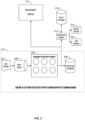
- a comprehensive and exhaustive map of the digits, letters, and hyphen characters of ASCII to Unicode characters that look alike is generated during a training phase and then efficiently and automatically applied during an online stage to detect homographs in real-time on live traffic during a DNS query and response data stream and/or later applied over DNS response log data.
- the disclosed techniques can be implemented in a homograph detector for a DNS security solution, such as further described below.
- the homograph detector for the DNS security solution is lightweight, because while the image generation and deep learning infrastructure is utilized for the offline/training stage, such infrastructure is not required for the online classification stage, which can be efficiently performed in real-time on live DNS traffic.
- the disclosed techniques can be similarly applied for detecting plagiarism evasion, phishing obfuscation, and/or executable filename impersonation by malware (e.g., the executable filename is not Word.exe but is actually malware.exe).
- Woodbridge et al. e.g., see Jonathan Woodbridge, Hyrum S. Anderson, Anjum Ahuja, Daniel Grant, EndGame Inc., Detecting Homoglyph Attacks with a Siamese Neural Network, 2018 IEEE Symposium on Security and Privacy Workshops. May 2018, which is available at https://arxiv.org/abs/1805.09738) used a Siamese neural network with the input being the wide pixels of the domain.
- Such an approach requires an expensive infrastructure that would convert domains to images and complete online prediction of homographs from the images.
- the disclosed techniques for detecting homographs of domain names perform homograph detection on a character by character basis, and then utilize that result at a latter online stage to identify homographs for a more efficient and a more accurate solution of homograph detection for domain names as further described below.
- a system, process, and/or computer program product for detecting homographs of domain names includes receiving a DNS data stream, wherein the DNS data stream (e.g., a live DNS data stream) includes a DNS query and a DNS response for resolution of the DNS query; applying a homograph detector for each domain in the DNS data stream; and detecting a homograph of a domain name in the DNS data stream using the homograph detector.
- the disclosed homograph detector e.g., homograph classifier
- the homograph detector automatically detects homographs of one or more target domain names using a character-based map (e.g., an ASCII character to Unicode character(s) mapping).
- a character-based map e.g., an ASCII character to Unicode character(s) mapping
- a system, process, and/or computer program product for detecting homographs of domain names further includes performing a mitigation action based on detecting the homograph of the domain name.
- a mitigation action based on detecting the homograph of the domain name.
- one or more of the following mitigation actions can be performed: generate a firewall rule based on an IP address associated with the homograph of the domain name; configure a network device to block network communications with an IP address associated with the homograph of the domain name; quarantine an infected host, wherein the infected host is determined to be infected based on an association with an IP address associated with the homograph of the domain name; and add the homograph of the domain name to a reputation feed.
- a system, process, and/or computer program product for detecting homographs of domain names includes generating training and test data sets for images of characters for domain names; training a homograph classifier using the training and test data sets to recognize Unicode characters that are visually similar to one or more ASCII characters; and executing the homograph classifier over a set of Unicode characters to generate an ASCII to Unicode map.
- the disclosed homograph detector e.g., homograph classifier
- the homograph detection model(s) is targeted at real-time DNS queries for inline detection to facilitate real-time enforcement against homographs using the disclosed techniques.
- the disclosed techniques can capture malware IP addresses for blacklisting.
- the homograph detector is deployed for detecting homographs on a DNS response log stream.
- the disclosed techniques for detecting homographs of domain names are implemented using an offline stage and an online stage.
- a training and testing data set is generated and used to train a Convolutional Neural Network (CNN) classifier.
- CNN Convolutional Neural Network
- the CNN classifier is then used to create a mapping of relevant ASCII characters to visually similar Unicode characters.
- a detector utilizes the mapping and a list of target domain names to identify homographs on real, live DNS traffic.
- CNNs The underlying operation of CNNs is element-wise multiplication, performed between each filter and sub-sections of the input. The resulting values indicate the degree to which these sub-sections match the filters.
- the filters are convolved over the input to form an activation map, which represents the locations of discovered features.
- Each subsequent convolutional layer achieves further abstraction, finding higher level features comprised of those detected in preceding layers.
- detected homographs from the processed input domains/DNS stream 318 are output as shown at 322 (e.g., which can be added to a blacklist for implementation/enforcement by a firewall/DNS firewall and/or added to a homograph domain blacklist feed).
- homographs of infoblox.com and homographs of apple.com are reported based on the techniques performed using the homograph detector during the online stage of operation.
- the input includes providing each input image for each character (e.g., using 28 x 28 pixels with a single-color channel (grayscale) or using another pixel density and/or another color channel).
- a batch of input images e.g., 100 or another number of input images
- convolution layer 1 computes 32 features through a linear combination of the pixels in each input image using a neighborhood defined by a kernel that is 6 x 4 pixels in dimension.
- pooling layer 1 integrates the value of neighboring pixels from convolution layer 1 using maximum pooling to reduce the dimension of extracted features.
- the pool size is 2 x 2
- the stride is 2.
- convolution layer 2 computes 64 features using a linear combination of the output of the pooling layer 1 in the neighborhood defined by a 7 x 7 kernel.
- pooling layer 2 integrates the value of neighboring pixels from the second convolution layer using max pooling with a 2 x 2 pool size and a stride of 2.
- flattening tensor generates a 7 x 7 x 64 vector of features for each character in this example implementation.
- dense layer 2 includes 64 neurons for final image classification into the input classes (e.g., 0...9, A...Z, a ... z, -, and the negative class).
- dense layer 2 includes a drop-out regularization at a rate of 0.55 to help improve model accuracy.
- the output of dense layer 2 is input into a softmax function or another similar function, which converts the vector of weights representing the classification of an input image into a vector of numbers between 0 and 1 that are the probabilities for each of the possible classes in the input.
- the classification result for a particular input image is the position of the probability value that is the largest.
- the artificial intelligence (AI) deep learning approach of CNN was created to operate like the visual cortex part of the human brain.
- the CNN architecture can be implemented to automatically learn feature during the training process by exploiting the spatial structure of an input image (e.g., the input image of each character of a domain name) using mathematical convolution.
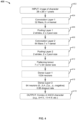
- Figure 5 is a flow diagram illustrating an online process for detecting homographs of domain names in accordance with some embodiments.
- process 500 is performed by the systems and processes described above with respect to Figures 2-4 .
- a DNS data stream is received.
- the DNS data stream can include a DNS query and a DNS response for resolution of the DNS query.
- a homograph detector for each domain in the DNS data stream is performed. For example, various techniques are disclosed for generating a homograph detection model, which identifies homographs using image-based character by character similarity techniques to detect homographs of target domain names as similarly described above.
- detecting a homograph of a domain name in the DNS data stream using the homograph detector is performed.
- the homograph classifier can perform a lookup on the target list, apply similarity score metrics, and/or implement a k-nearest neighbors (k-NN) algorithm or other distance/classification/ML algorithm to identify matches based on the lookup and/or nearby/close matches based on the threshold similarity scores or k-NN threshold distance results as similarly described above.
- k-NN k-nearest neighbors
- a mitigation action is performed based on detecting the homograph of the domain name.
- the mitigation action can include a configuration action and/or a filtering action (e.g., block or drop packets to/from the bad/malware network domain and/or bad/malware IP address associated with the potentially malicious network domain).
Landscapes
- Engineering & Computer Science (AREA)
- Theoretical Computer Science (AREA)
- Physics & Mathematics (AREA)
- General Engineering & Computer Science (AREA)
- Computing Systems (AREA)
- Computer Security & Cryptography (AREA)
- General Physics & Mathematics (AREA)
- Artificial Intelligence (AREA)
- Health & Medical Sciences (AREA)
- General Health & Medical Sciences (AREA)
- Computational Linguistics (AREA)
- Signal Processing (AREA)
- Computer Networks & Wireless Communication (AREA)
- Data Mining & Analysis (AREA)
- Computer Hardware Design (AREA)
- Evolutionary Computation (AREA)
- Life Sciences & Earth Sciences (AREA)
- Biophysics (AREA)
- Molecular Biology (AREA)
- Biomedical Technology (AREA)
- Mathematical Physics (AREA)
- Software Systems (AREA)
- Audiology, Speech & Language Pathology (AREA)
- General Business, Economics & Management (AREA)
- Business, Economics & Management (AREA)
- Information Retrieval, Db Structures And Fs Structures Therefor (AREA)
- Computer Vision & Pattern Recognition (AREA)
- Multimedia (AREA)
- Bioinformatics & Cheminformatics (AREA)
- Bioinformatics & Computational Biology (AREA)
- Evolutionary Biology (AREA)
- Management, Administration, Business Operations System, And Electronic Commerce (AREA)
Applications Claiming Priority (3)
| Application Number | Priority Date | Filing Date | Title |
|---|---|---|---|
| US16/248,357 US11388142B2 (en) | 2019-01-15 | 2019-01-15 | Detecting homographs of domain names |
| EP19910007.4A EP3912319B1 (de) | 2019-01-15 | 2019-11-06 | Detektion von homographen von domänennamen |
| PCT/US2019/060141 WO2020149920A1 (en) | 2019-01-15 | 2019-11-06 | Detecting homographs of domain names |
Related Parent Applications (2)
| Application Number | Title | Priority Date | Filing Date |
|---|---|---|---|
| EP19910007.4A Division EP3912319B1 (de) | 2019-01-15 | 2019-11-06 | Detektion von homographen von domänennamen |
| EP19910007.4A Division-Into EP3912319B1 (de) | 2019-01-15 | 2019-11-06 | Detektion von homographen von domänennamen |
Publications (2)
| Publication Number | Publication Date |
|---|---|
| EP4579527A2 true EP4579527A2 (de) | 2025-07-02 |
| EP4579527A3 EP4579527A3 (de) | 2025-10-08 |
Family
ID=71516936
Family Applications (2)
| Application Number | Title | Priority Date | Filing Date |
|---|---|---|---|
| EP19910007.4A Active EP3912319B1 (de) | 2019-01-15 | 2019-11-06 | Detektion von homographen von domänennamen |
| EP25177439.4A Pending EP4579527A3 (de) | 2019-01-15 | 2019-11-06 | Erkennung von homographen von domänennamen |
Family Applications Before (1)
| Application Number | Title | Priority Date | Filing Date |
|---|---|---|---|
| EP19910007.4A Active EP3912319B1 (de) | 2019-01-15 | 2019-11-06 | Detektion von homographen von domänennamen |
Country Status (6)
| Country | Link |
|---|---|
| US (4) | US11388142B2 (de) |
| EP (2) | EP3912319B1 (de) |
| JP (1) | JP7220795B2 (de) |
| KR (3) | KR20240101685A (de) |
| CN (1) | CN113439423B (de) |
| WO (1) | WO2020149920A1 (de) |
Families Citing this family (20)
| Publication number | Priority date | Publication date | Assignee | Title |
|---|---|---|---|---|
| US10785260B2 (en) | 2018-08-09 | 2020-09-22 | Morgan Stanley Services Group Inc. | Optically analyzing domain names |
| US11636220B2 (en) * | 2019-02-01 | 2023-04-25 | Intertrust Technologies Corporation | Data management systems and methods |
| US11729134B2 (en) | 2019-09-30 | 2023-08-15 | Palo Alto Networks, Inc. | In-line detection of algorithmically generated domains |
| US11595357B2 (en) * | 2019-10-23 | 2023-02-28 | Cisco Technology, Inc. | Identifying DNS tunneling domain names by aggregating features per subdomain |
| US20210266293A1 (en) * | 2020-02-24 | 2021-08-26 | Palo Alto Networks, Inc. | Real-time detection of dns tunneling traffic |
| FI3972192T3 (fi) * | 2020-09-21 | 2023-04-18 | Tata Consultancy Services Ltd | Menetelmä ja järjestelmä tietojenkalastelusivustojen kerroksittaiseksi havaitsemiseksi |
| US11632395B2 (en) * | 2021-04-07 | 2023-04-18 | ArmorBlox, Inc. | Method for detecting webpage spoofing attacks |
| AU2022202901B2 (en) * | 2021-05-07 | 2025-08-21 | Ensign Infosecurity Pte. Ltd. | A system and method for detecting phishing-domains in a set of domain name system (dns) records |
| US12095813B2 (en) * | 2021-07-20 | 2024-09-17 | At&T Intellectual Property I, L.P. | Homoglyph attack detection |
| US11973800B2 (en) * | 2021-08-20 | 2024-04-30 | Palo Alto Networks, Inc. | Domain squatting detection |
| US11757901B2 (en) | 2021-09-16 | 2023-09-12 | Centripetal Networks, Llc | Malicious homoglyphic domain name detection and associated cyber security applications |
| CN113746953B (zh) * | 2021-09-18 | 2024-03-22 | 恒安嘉新(北京)科技股份公司 | 域名服务器dns处理方法、装置、设备及存储介质 |
| US11689546B2 (en) * | 2021-09-28 | 2023-06-27 | Cyberark Software Ltd. | Improving network security through real-time analysis of character similarities |
| CN113806752A (zh) * | 2021-09-28 | 2021-12-17 | 中汽创智科技有限公司 | 一种漏洞测试方法、装置及存储介质 |
| US12041076B2 (en) | 2021-09-29 | 2024-07-16 | Infoblox Inc. | Detecting visual similarity between DNS fully qualified domain names |
| US12105837B2 (en) * | 2021-11-02 | 2024-10-01 | Microsoft Technology Licensing, Llc | Generating private synthetic training data for training machine-learning models |
| US12184691B2 (en) | 2021-12-09 | 2024-12-31 | Blackberry Limited | Identifying a phishing attempt |
| CN114826712B (zh) * | 2022-04-15 | 2024-06-14 | 中国农业银行股份有限公司 | 一种恶意域名检测方法、装置及电子设备 |
| US12375351B2 (en) * | 2023-11-30 | 2025-07-29 | Adriano Monteiro Marques | Unified programmable dynamic context-aware configuration |
| CN117875725B (zh) * | 2024-03-13 | 2024-08-02 | 湖南三湘银行股份有限公司 | 一种基于知识图谱的信息处理系统 |
Family Cites Families (10)
| Publication number | Priority date | Publication date | Assignee | Title |
|---|---|---|---|---|
| US8050500B1 (en) * | 2006-07-06 | 2011-11-01 | Senapps, LLC | Recognition method and system |
| US8631489B2 (en) | 2011-02-01 | 2014-01-14 | Damballa, Inc. | Method and system for detecting malicious domain names at an upper DNS hierarchy |
| US10185761B2 (en) * | 2015-08-07 | 2019-01-22 | Cisco Technology, Inc. | Domain classification based on domain name system (DNS) traffic |
| US10440053B2 (en) | 2016-05-31 | 2019-10-08 | Lookout, Inc. | Methods and systems for detecting and preventing network connection compromise |
| US10193923B2 (en) | 2016-07-20 | 2019-01-29 | Duo Security, Inc. | Methods for preventing cyber intrusions and phishing activity |
| US9762612B1 (en) | 2017-05-17 | 2017-09-12 | Farsight Security, Inc. | System and method for near real time detection of domain name impersonation |
| US9882933B1 (en) * | 2017-05-17 | 2018-01-30 | Farsight Security, Inc. | Tokenization of domain names for domain name impersonation detection using matching |
| US10599836B2 (en) * | 2017-08-11 | 2020-03-24 | Verisign, Inc. | Identification of visual international domain name collisions |
| US10719742B2 (en) | 2018-02-15 | 2020-07-21 | Adobe Inc. | Image composites using a generative adversarial neural network |
| US10423403B1 (en) | 2018-11-29 | 2019-09-24 | Capital One Services, Llc | Utilizing a machine learning model to predict metrics for an application development process |
-
2019
- 2019-01-15 US US16/248,357 patent/US11388142B2/en active Active
- 2019-11-06 KR KR1020247019786A patent/KR20240101685A/ko active Pending
- 2019-11-06 CN CN201980091834.9A patent/CN113439423B/zh active Active
- 2019-11-06 JP JP2021540481A patent/JP7220795B2/ja active Active
- 2019-11-06 EP EP19910007.4A patent/EP3912319B1/de active Active
- 2019-11-06 KR KR1020247005113A patent/KR102689306B1/ko active Active
- 2019-11-06 KR KR1020217021979A patent/KR102640443B1/ko active Active
- 2019-11-06 WO PCT/US2019/060141 patent/WO2020149920A1/en not_active Ceased
- 2019-11-06 EP EP25177439.4A patent/EP4579527A3/de active Pending
-
2022
- 2022-05-27 US US17/827,150 patent/US11909722B2/en active Active
-
2024
- 2024-01-11 US US18/410,733 patent/US12309120B2/en active Active
-
2025
- 2025-04-21 US US19/184,242 patent/US20250337711A1/en active Pending
Also Published As
| Publication number | Publication date |
|---|---|
| KR20240101685A (ko) | 2024-07-02 |
| US11909722B2 (en) | 2024-02-20 |
| JP2022517019A (ja) | 2022-03-03 |
| US12309120B2 (en) | 2025-05-20 |
| US20220286434A1 (en) | 2022-09-08 |
| WO2020149920A1 (en) | 2020-07-23 |
| US20240163256A1 (en) | 2024-05-16 |
| US20200228500A1 (en) | 2020-07-16 |
| CN113439423A (zh) | 2021-09-24 |
| EP3912319B1 (de) | 2025-07-09 |
| EP3912319A1 (de) | 2021-11-24 |
| KR102640443B1 (ko) | 2024-02-27 |
| US20250337711A1 (en) | 2025-10-30 |
| EP3912319A4 (de) | 2022-12-21 |
| JP7220795B2 (ja) | 2023-02-10 |
| KR20210108404A (ko) | 2021-09-02 |
| EP4579527A3 (de) | 2025-10-08 |
| KR102689306B1 (ko) | 2024-07-30 |
| US11388142B2 (en) | 2022-07-12 |
| KR20240026247A (ko) | 2024-02-27 |
| CN113439423B (zh) | 2024-11-05 |
Similar Documents
| Publication | Publication Date | Title |
|---|---|---|
| US12309120B2 (en) | Detecting homographs of domain names | |
| JP7559200B2 (ja) | ディープ・ラーニングによるネットワーク侵入検知 | |
| Zhao et al. | A review of computer vision methods in network security | |
| US9781139B2 (en) | Identifying malware communications with DGA generated domains by discriminative learning | |
| CN109391602B (zh) | 一种僵尸主机检测方法 | |
| US10033757B2 (en) | Identifying malicious identifiers | |
| US12445488B2 (en) | Webpage phishing auto-detection | |
| US12041076B2 (en) | Detecting visual similarity between DNS fully qualified domain names | |
| JP2023543015A (ja) | ビデオ検出方法、装置、電子機器及び記憶媒体 | |
| Ling-Zi et al. | A case study of text-based CAPTCHA attacks | |
| Benchama et al. | Novel approach to intrusion detection: Introducing gan-mscnn-bilstm with lime predictions | |
| Chen et al. | Using adversarial examples to bypass deep learning based url detection system | |
| CN117579335A (zh) | 一种恶意域名智能检测方法、系统、设备及存储介质 | |
| Fan et al. | An intrusion detection framework for IoT using partial domain adaptation | |
| Ismaeel et al. | Anomaly-based detection technique using deep learning for Internet of Things: A Survey | |
| Jiang et al. | Intelligent botnet detection in IoT networks using parallel CNN‐LSTM fusion | |
| Chen et al. | Detection of DGA domains based on support vector machine | |
| Sun et al. | CAPTCHA recognition based on Kohonen maps | |
| Nithya et al. | Combined Approach using Multiattention Graph Convolution Network towards prevention, detection and classification of Phishing attack | |
| Akuthota et al. | Advanced Machine Learning for CAPTCHA Recognition: Evaluating the Efficacy of FlowCap-Net | |
| Sharma et al. | CAPTCHA Robustness-AI Approach Using to Web Security. | |
| CN116800480B (zh) | 一种基于元学习的多层次特征融合恶意软件检测方法 | |
| KR102486124B1 (ko) | Dga 생성 도메인 탐지 및 분류하는 방법 | |
| Pham et al. | En-seqgan: an efficient sequence generation model for deceiving url classifiers | |
| Aarthi | Phishing Website Detection using Ensemble Machine Learning Approach |
Legal Events
| Date | Code | Title | Description |
|---|---|---|---|
| PUAI | Public reference made under article 153(3) epc to a published international application that has entered the european phase |
Free format text: ORIGINAL CODE: 0009012 |
|
| STAA | Information on the status of an ep patent application or granted ep patent |
Free format text: STATUS: THE APPLICATION HAS BEEN PUBLISHED |
|
| AC | Divisional application: reference to earlier application |
Ref document number: 3912319 Country of ref document: EP Kind code of ref document: P |
|
| AK | Designated contracting states |
Kind code of ref document: A2 Designated state(s): AL AT BE BG CH CY CZ DE DK EE ES FI FR GB GR HR HU IE IS IT LI LT LU LV MC MK MT NL NO PL PT RO RS SE SI SK SM TR |
|
| REG | Reference to a national code |
Ref country code: DE Ref legal event code: R079 Free format text: PREVIOUS MAIN CLASS: G06N0003045000 Ipc: H04L0009400000 |
|
| PUAL | Search report despatched |
Free format text: ORIGINAL CODE: 0009013 |
|
| AK | Designated contracting states |
Kind code of ref document: A3 Designated state(s): AL AT BE BG CH CY CZ DE DK EE ES FI FR GB GR HR HU IE IS IT LI LT LU LV MC MK MT NL NO PL PT RO RS SE SI SK SM TR |
|
| RIC1 | Information provided on ipc code assigned before grant |
Ipc: H04L 9/40 20220101AFI20250902BHEP Ipc: G06F 21/55 20130101ALI20250902BHEP Ipc: G06F 40/30 20200101ALI20250902BHEP Ipc: G06N 3/04 20230101ALI20250902BHEP Ipc: G06N 3/08 20230101ALI20250902BHEP Ipc: G06N 3/084 20230101ALI20250902BHEP Ipc: G06N 3/045 20230101ALI20250902BHEP |
|
| STAA | Information on the status of an ep patent application or granted ep patent |
Free format text: STATUS: REQUEST FOR EXAMINATION WAS MADE |
|
| 17P | Request for examination filed |
Effective date: 20260306 |