EP4576902A1 - Kommunikationsvorrichtung und kommunikationsverfahren - Google Patents
Kommunikationsvorrichtung und kommunikationsverfahren Download PDFInfo
- Publication number
- EP4576902A1 EP4576902A1 EP23854939.8A EP23854939A EP4576902A1 EP 4576902 A1 EP4576902 A1 EP 4576902A1 EP 23854939 A EP23854939 A EP 23854939A EP 4576902 A1 EP4576902 A1 EP 4576902A1
- Authority
- EP
- European Patent Office
- Prior art keywords
- signal
- transmission
- sta
- information
- txop
- Prior art date
- Legal status (The legal status is an assumption and is not a legal conclusion. Google has not performed a legal analysis and makes no representation as to the accuracy of the status listed.)
- Pending
Links
Images






Classifications
-
- H—ELECTRICITY
- H04—ELECTRIC COMMUNICATION TECHNIQUE
- H04W—WIRELESS COMMUNICATION NETWORKS
- H04W74/00—Wireless channel access
- H04W74/04—Scheduled access
-
- H—ELECTRICITY
- H04—ELECTRIC COMMUNICATION TECHNIQUE
- H04W—WIRELESS COMMUNICATION NETWORKS
- H04W16/00—Network planning, e.g. coverage or traffic planning tools; Network deployment, e.g. resource partitioning or cells structures
- H04W16/02—Resource partitioning among network components, e.g. reuse partitioning
-
- H—ELECTRICITY
- H04—ELECTRIC COMMUNICATION TECHNIQUE
- H04W—WIRELESS COMMUNICATION NETWORKS
- H04W72/00—Local resource management
- H04W72/04—Wireless resource allocation
- H04W72/044—Wireless resource allocation based on the type of the allocated resource
- H04W72/0446—Resources in time domain, e.g. slots or frames
-
- H—ELECTRICITY
- H04—ELECTRIC COMMUNICATION TECHNIQUE
- H04W—WIRELESS COMMUNICATION NETWORKS
- H04W84/00—Network topologies
- H04W84/02—Hierarchically pre-organised networks, e.g. paging networks, cellular networks, WLAN [Wireless Local Area Network] or WLL [Wireless Local Loop]
- H04W84/10—Small scale networks; Flat hierarchical networks
- H04W84/12—WLAN [Wireless Local Area Networks]
Definitions
- the present disclosure relates to a communication apparatus and a communication method.
- 11be IEEE 802.11be
- IEEE 802.11ax IEEE 802.11ax
- HE High Efficiency
- EHT Extreme High Throughput
- a non-limiting embodiment of the present disclosure facilitates providing a communication apparatus and a communication method each capable of enhancing transmission efficiency in radio communication.
- a Non-Access Point Station includes: a controller, which in operation, generates a signal indicating allocation of an acquired resource whose allocation period has been specified; and a radio transceiver, which in operation, transmits the generated signal.
- EDCA Enhanced Distributed Channel Access
- AC access category
- SIFS Short Inter Frame Space
- TXOP Transmission Opportunity
- the time limit of TXOP may be individually defined for AC, for example.
- TXOP acquired by a Non-AP Non-Access Point Station, also referred to as a terminal.
- Non-AP Non-Access Point Station
- AP STA Access Point Station
- NPLs 3 to 5 NPLs 3 to 5
- the RD protocol is controlled by a High Throughput (HT) Control field included in a Medium Access Control (MAC) header in a MAC frame illustrated in FIG. 1A .
- HT High Throughput
- MAC Medium Access Control
- the RD protocol is controlled by an A-Control subfield included in a HT Control field.
- the A-Control subfield includes a Control List.
- the Control List includes a Control ID subfield and a Control Information subfield.
- the format (transmission information, size, and number of subfields to be included in the A-Control subfield) of the Control Information subfield varies depending on the value of the Control ID subfield.
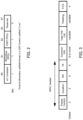
- the Control Information subfield becomes a CAS Control subfield defined in the format illustrated in FIG. 2 .
- the RD protocol is controlled by changing the value of the RDG/More PPDU subfield in the CAS Control subfield in FIG. 2 .
- Both the RD initiator and the RD responder use the RDG/More PPDU subfield, but the RD initiator controls the value of the subfield with the intention of RD Grant (RDG), while the RD responder controls the value of the subfield with the intention of More PPDU.
- the RD responder transmits a PPDU (also referred to as a Response Burst) including a PPDU for the RD initiator in the allocated TXOP period (remaining TXOP period).
- a PPDU also referred to as a Response Burst
- TXOP Sharing by a Multi-User Request-To-Send (MU-RTS) TXOP Sharing (TXS) Trigger frame introduced in the 11be, a part of the TXOP acquired by the AP can be subjected to TXOP sharing to Non-AP (see, for example, NPL 7).
- MU-RTS Multi-User Request-To-Send
- TXS TXOP Sharing
- AP indicates TXOP sharing to one STA using a Trigger frame in which MU-RTS is configured as a type of the Trigger frame (for example, referred to as "Trigger Type") (see, for example, NPL 7).
- Trigger Type a Trigger frame that indicates TXOP sharing will be referred to as an "MU-RTS TXS Trigger frame.”
- FIG. 3 illustrates an exemplary Trigger frame.
- the Trigger frame includes a field (for example, Common Info field) that includes information common to a plurality of Non-APs that are frequency division multiplexed (FDM), and a field referred to as a User Info List.
- the User Info List may include, for example, one or more fields (for example, User Info field) that include information specific (or unique) to Non-AP.
- a field for example, "Special User Info field" including information for a terminal supporting the 11be (EHT) may be included in the Trigger frame (not illustrated).
- FIG. 4 illustrates an exemplary configuration of a Common Info field discussed in the 11be (see, for example, NPL 7).
- FIG. 5 illustrates an exemplary configuration of a User Info field in a MU-RTS TXS Trigger frame discussed in the 11be (see, for example, NPL 7).
- FIG. 6 illustrates an exemplary configuration of a Special User Info field (see, for example, NPL 7).
- the Trigger Type subfield in the Common Info field illustrated in FIG. 4 is a subfield that indicates the type of the Trigger frame (for example, the type of signal that the AP causes the Non-AP to transmit).
- Non-AP When Non-AP receives, for example, an MU-RTS TXS Trigger frame and the Association Identifier (AID) of the Non-AP is specified in the User Info field included in the received MU-RTS TXS Trigger frame, the Non-AP transmits a Clear To Send (CTS) frame to AP to indicate the start of TXOP Sharing, and transmits a PPDU in the subsequent allocation period. Since only the AP can transmit the Trigger frame, TXOP Sharing cannot be performed from a Non-AP.
- CTS Clear To Send
- a Non-AP allocates a part of the acquired resource (TXOP) to an AP.
- TXOP acquired resource
- the radio communication system according to Embodiment 1 includes, for example, Non-AP 100 illustrated in FIG. 7 and AP 200 illustrated in FIG. 8 .
- FIG. 7 is a block diagram illustrating an exemplary configuration of Non-AP 100.
- Non-AP 100 illustrated in FIG. 7 may include, for example, scheduler 101, TXS control information generator 102, data generator 103, MAC information generator 104, error correction encoder 105, modulator 106, radio transceiver 107, demodulator 108, error correction decoder 109, and resource request information holder 110.
- scheduler 101, TXS control information generator 102, data generator 103, MAC information generator 104, and resource request information holder 110 may be included in an access controller (for example, MAC).
- access controller for example, MAC
- scheduler 101 may be a controller.
- TXS control information generator 102 may be a controller.
- data generator 103 may be a controller.
- MAC information generator 104 may be a controller.
- error correction encoder 105 may be a controller.
- modulator 106 may be a controller.
- demodulator 108 may be a controller.
- resource request information holder 110 may be a controller.
- Non-AP 100 may transmit a PPDU including a control signal (for example, MAC information defined in a format based on an RDG or an MU-RTS TXS Trigger frame) indicating TXOP Sharing to AP 200.
- AP 200 may receive a control signal indicating TXOP Sharing and transmit a signal to the Non-AP that has performed Sharing, another Non-AP, or an AP that performs another coordination, based on the allocation period.
- AP 200 may be an AP (also referred to as an Associated AP) to which Non-AP 100 is connected. Further, AP 200 may be any AP of a plurality of APs that perform coordinated transmission with Non-AP 100.
- Scheduler 101 performs scheduling for AP 200, for example.
- scheduler 101 may determine control information for TXOP Sharing to be applied to AP 200 (such as the allocation period, the communication destination in the allocation period, the type of traffic (TID: Traffic Identifier) communicable in the allocation period) based on the buffer information held by AP 200 and inputted from resource request information holder 110.
- control information for TXOP Sharing such as the allocation period, the communication destination in the allocation period, the type of traffic (TID: Traffic Identifier) communicable in the allocation period
- TID Traffic Identifier
- the allocation period for AP 200 may be a part of the period of the TXOP acquired by Non-AP 100.
- the communication destination in the allocation period may include, in addition to control limited to communication with Non-AP 100, control that does not include Non-AP 100.
- AP 200 may communicate with another Non-AP different from Non-AP 100 or another AP different from AP 200 (for example, any AP that performs coordinated transmission).
- traffic with a high priority may be indicated.
- TID type of traffic
- Scheduler 101 outputs, for example, the determined control information on TXOP sharing for AP 200 to TXS control information generator 102.
- TXS control information generator 102 may generate TXS control information in a predetermined MAC frame format.
- the TXS control information may generate, for example, MAC data (also referred to as a MAC Protocol Data Unit (MPDU)) including TXS control information in a format based on an RDG or an MU-RTS TXS Trigger frame. Details will be described later.
- MPDU MAC Protocol Data Unit
- TXS control information generator 102 may output the MAC data including TXS control information to MAC information generator 104.
- Data generator 103 may generate MAC data (for example, data in an MPDU format) to be transmitted to AP 200, and may output the generated data to MAC information generator 104. Note that, in a case where Non-AP 100 does not hold the data to be transmitted to AP 200, no data may be outputted to MAC information generator 104.
- MAC information generator 104 combines the MAC data including the TXS control information from TXS control information generator 102 and the MAC data including the data signal from data generator 103, and outputs the combined data to error correction encoder 105.
- MAC data in which a plurality of types of MAC data are combined is sometimes referred to as an Aggregated MPDU (A-MPDU).
- A-MPDU Aggregated MPDU
- Error correction encoder 105 may, for example, error correction encode the MAC data inputted from MAC information generator 104, and output the encoded signal to modulator 106.
- Modulator 106 may, for example, perform modulation processing on the signal inputted from error correction encoder 105, and output the modulated signal to radio transceiver 107.
- Non-AP 100 may form the OFDM signal by mapping the modulated signal to a defined frequency resource, performing inverse fast Fourier transform (IFFT) processing to convert the signal into a time waveform, and adding a cyclic prefix (CP).
- IFFT inverse fast Fourier transform
- CP cyclic prefix
- Radio transceiver 107 may perform radio transmission processing such as D/A conversion and up-conversion to a carrier frequency on the modulated signal inputted from modulator 106, and may transmit the signal after the radio transmission processing to AP 200 via an antenna. Further, radio transceiver 107 may, for example, receive a signal transmitted from AP 200 via an antenna, perform radio reception processing such as down-conversion to a baseband and A/D conversion on the received signal, and output the signal after the radio reception processing to demodulator 108.
- radio transmission processing such as D/A conversion and up-conversion to a carrier frequency on the modulated signal inputted from modulator 106
- radio transceiver 107 may, for example, receive a signal transmitted from AP 200 via an antenna, perform radio reception processing such as down-conversion to a baseband and A/D conversion on the received signal, and output the signal after the radio reception processing to demodulator 108.
- Demodulator 108 may, for example, perform demodulation processing on the signal inputted from radio transceiver 107, and may output the demodulated signal to error correction decoder 109. Note that, in a case where the signal inputted to demodulator 108 is an OFDM signal, Non-AP 100 may perform CP removal processing and fast Fourier transform (FFT) processing.
- FFT fast Fourier transform
- Error correction decoder 109 decodes the signal inputted from demodulator 108 to obtain the received data signal from AP 200.
- error correction decoder 109 may, for example, output the decoded data including the resource request information of AP to resource request information holder 110.
- Resource request information holder 110 may acquire (or hold) the resource request information of AP from the decoded data inputted from error correction decoder 109, and may output the acquired resource request information to scheduler 101.
- the resource request information of AP may be, for example, at least one of whether AP 200 requests resource allocation to Non-AP 100, the request time for resource allocation in a case of a predetermined bandwidth (for example, 20 MHz), and/or information on a buffer state held by AP 200 (for example, at least one of a destination of the held buffer, AC or TID of the held buffer, a queue size of each AC and TID, a delay budget (delay tolerance range), and/or the like). Further, as the resource request information, buffer status information held by AP 200 and addressed to a Non-AP other than Non-AP 100 may be included.
- AP 200 receives, for example, from Non-AP 100, a PPDU including a control signal indicating TXOP Sharing. Then, AP 200 performs communication of a permitted traffic type with a permitted transmission destination within the allocation period based on a control signal indicating TXOP Sharing. Further, AP 200 indicates resource request information of AP 200 to Non-AP 100 at a predetermined timing.
- FIG. 8 is a block diagram illustrating an exemplary configuration of AP 200.
- AP 200 illustrated in FIG. 8 may include, for example, radio transceiver 201, demodulator 202, error correction decoder 203, TXS control information acquirer 204, scheduler 205, data generator 206, error correction encoder 207, and modulator 208.
- TXS control information acquirer 204, scheduler 205, and data generator 206 may be included in an access controller (for example, MAC).
- access controller for example, MAC
- Radio transceiver 201 may, for example, receive a reception signal with an antenna, perform radio reception processing such as down-conversion and A/D conversion on the reception signal, and output the signal after the radio reception processing to demodulator 202. Further, radio transceiver 201 may perform radio transmission processing such as up-conversion and D/A conversion on a signal inputted from, for example, a modulator, and may transmit the signal after the radio transmission processing from an antenna.
- Demodulator 202 may perform demodulation processing on the reception data inputted from, for example, the radio transceiver, and may output the demodulated signal to error correction decoder 203. Note that, in a case where the signal inputted to demodulator 202 is an OFDM signal, AP 200 may perform, for example, CP removal processing and FFT processing.
- Error correction decoder 203 may, for example, decode the demodulated signal inputted from demodulator 202 and output the decoded signal as a received data signal. Further, error correction decoder 203 may, for example, output MAC data including TXS control information, which is part of the received data signal, to TXS control information acquirer 204.
- TXS control information acquirer 204 may extract TXS control information from, for example, MAC data inputted from error correction decoder 203, and may acquire control information related to TXOP sharing (at least one of an allocation period, a communication destination in the allocation period, a type of traffic (TID) communicable in the allocation period, and/or the like). TXS control information acquirer 204 may output the extracted control information related to TXOP sharing to scheduler 205.
- TXS control information acquirer 204 may output the extracted control information related to TXOP sharing to scheduler 205.
- Scheduler 205 may determine at least one of the signal length of data that can be transmitted in the allocation period, the transmission destination, and the type of traffic to be transmitted, based on the control information related to TXOP sharing inputted from TXS control information acquirer 204. Further, the radio parameter (at least one of signal length, modulation scheme, error correction coding rate, spatial multiplexing number, transmission power, and/or the like) to be applied to the transmission data may be determined and outputted to data generator 206, error correction encoder 207, and modulator 208.
- the radio parameter at least one of signal length, modulation scheme, error correction coding rate, spatial multiplexing number, transmission power, and/or the like
- Data generator 206 may generate a data signal based on the radio parameter inputted from the scheduler, and may output the data signal to error correction encoder 207.
- Error correction encoder 207 may perform error correction encoding on the data signal inputted from data generator 206 and output the encoded signal to modulator 208.
- Modulator 208 may modulate the signal inputted from error correction encoder 207 and output the modulated signal to radio transceiver 201. Further, in a case where the modulation signal is an OFDM signal, AP 200 may perform IFFT processing after mapping the modulation signal to the frequency resource and add a CP to form the OFDM signal.
- Non-AP 100 and AP 200 according to Embodiment 1 An operation example of Non-AP 100 and AP 200 according to Embodiment 1 will be described.
- Operation Example 1 in which a Non-AP includes TXS information including an allocation period in an HT Control field with RDG and transmits the TXS information to AP 200; and Operation Example 2, in which a Non-AP includes the TXS information in an MU-RTS TXS Trigger frame and transmits the TXS information to AP 200.
- a Non-AP controlling the allocation period enhances transmission efficiency.
- Non-AP 100 for example, TXS control information generator 102
- TXS control information generator 102 generates control information for TXOP Sharing and transmits the control information to AP 200
- Non-AP 100 allocates a part of the acquired TXOP to AP 200.
- the TXS control information generated by TXS control information generator 102 may include an allocation period from Non-AP 100 to AP 200.
- the allocation period may be a part of the period of the TXOP acquired by Non-AP 100.
- TXS control information including the allocation period may be indicated in association with control information (RDG) of the RD protocol.
- RDG control information
- the allocation period of the TXOP allocated to AP 200 may be indicated by configuring the Reserved bit in the Control Information subfield in FIG. 2 as the Allocation Duration subfield.
- an allocation period with a predetermined granularity for example, in units of 16 [us (microseconds)]
- the allocation period may be defined with a different granularity (for example, a unit larger than 16 [us] or a unit smaller than 16 [us]). The granularity may be determined in consideration of the amount of signaling.
- a ratio (for example, in units of X%) of the remaining period of the TXOP acquired by Non-AP 100 (the time indicated in the Duration field of the MAC header) may be indicated.
- the allocation period to be indicated may include an indication that the entire remaining period of the TXOP acquired by Non-AP 100 is allocated.
- the remaining period of the TXOP is indicated in the Duration field of the MAC header, and thus, indication of the Allocation Duration subfield in the Control Information subfield is not necessary.
- FIG. 10 illustrates an example of a sequence in which Non-AP 100 (Non-AP STA1 in FIG. 10 ), which is an RD initiator, notifies AP 200 (AP in FIG. 10 ), which is an RD responder, of RDG and the allocation period, and indicates TXOP sharing to AP 200.
- Non-AP 100 Non-AP STA1 in FIG. 10
- AP 200 AP in FIG. 10
- RD responder of RDG and the allocation period
- FIG. 10 illustrates an operation in which Non-AP 100 acquires the transmission right for data and TXOP sharing control information ("Data + HTC" in the figure), configures the TXOP, and allocates a part of or entire remaining TXOP to AP 200 (performs TXOP sharing).
- Data + HTC TXOP sharing control information
- the allocation period is configured based on the resource request information of AP 200 acquired from AP 200 in advance.
- Non-AP 100 considers the buffer state (size, etc.) of traffic with a high priority addressed to Non-AP 100 itself, calculates the period necessary for transmitting the traffic, and configures the allocation period.
- AP 200 communicates in the allocation period indicated by Non-AP 100.
- Non-AP 100 transmits a Block Ack (BA) to AP 200 as an acknowledgement (ACK) (S1003), and after the allocation period to AP 200 ends, Non-AP 100 which has acquired the TXOP acquires the remaining TXOP again.
- FIG. 10 illustrates an example in which Non-AP 100 transmits data to another Non-AP STA2 in the remaining period of the TXOP acquired again (S1004), and Non-AP STA2 transmits a BA to Non-AP 100 (S1005).
- TXS control information including an allocation period may be included in an MU-RTS TXS Trigger frame for Non-AP transmission and may be indicated.
- the allocation period of the TXOP allocated to AP 200 may be indicated in the Allocation Duration subfield of the User Info field illustrated in FIG. 5 .
- an allocation period with a predetermined granularity for example, in units of 16 [us]
- the allocation period may be defined with a different granularity (for example, a unit larger than 16 [us] or a unit smaller than 16 [us]). The granularity may be determined in consideration of the amount of signaling.
- the allocation period to be indicated may include an indication of allocating the entire remaining period of the TXOP acquired by Non-AP 100, instead of allocating only a part of the period of the TXOP acquired by Non-AP 100.
- the Trigger frame for Non-AP transmission may have a different format from the Trigger frame for AP transmission.
- FIG. 11 illustrates an exemplary Trigger frame format for Non-AP transmission.
- the connection destination is defined by a User Info List composed of multiple User Info fields.
- the connection destination of the User Info field may be limited to the AP to which the Non-AP is connected.
- the User Info List may be composed of one User Info field.
- the User Info List in the Trigger frame for Non-AP transmission may include a plurality of User Info fields.
- the frame defined in the Frame Control field of the MAC header is of a Trigger Subtype (Subtype subfield value is 0010) of Control Type (Type subfield value is 01).
- the Trigger frame format for Non-AP transmission for AP
- the same Type and Subtype as those for AP transmission may be used.
- a Type and/or Subtype different from those for AP transmission may be newly defined for Non-AP transmission.
- Control Type (value of Type subfield is 01) may be configured, and an "AP Trigger Subtype" for triggering an AP may be newly defined using the Reserved bit (0000-0001) of the Subtype.
- Non-AP that has received a Trigger frame for Non-AP transmission (addressed to AP) can identify that the Trigger frame is addressed to AP by the MAC header, and thus can stop the subsequent reception processing.
- the RA Receiveiver Address or Receiving station Address
- the RA field may be configured to the MAC address of AP 200 to which Non-AP 100 is connected, in the case of being addressed to a connected AP.
- a Broadcast address may be configured in the RA field.
- FIG. 12 illustrates an example of a Common Info field for Non-AP transmission.
- the Common Info field for Non-AP transmission information to be included and subfield names may be changed from those in the Common Info field for AP transmission (see FIG. 4 ), such as UL information is changed to DL information and STA information is changed to AP information.
- the UL Length subfield in FIG. 4 may be changed to a DL Length subfield that includes the value of the content of the L-SIG LENGTH field in the Preamble of the downlink signal (PPDU) to which the AP responds.
- PPDU downlink signal
- the AP TX Power subfield in FIG. 4 may be changed to a Non-AP STA TX Power subfield that includes the transmission power of Non-AP 100.
- some subfields may be deleted in contrast to the Common Info field for AP transmission (see FIG. 4 ).
- the Triggered TXOP Sharing Mode subfield in FIG. 4 may be deleted from the Common Info field in a case where the subfield is included in the User Info field.
- the Reserved bit may be deleted.
- the Special User Info field for AP transmission includes common information for a terminal, but in the Trigger frame for Non-AP transmission, the common information for a terminal may be included in the Common Info field. In that case, the Special User Info Field Flag may be deleted from the Common Info field for Non-AP transmission.
- FIG. 13 illustrates an example of a User Info field for MU-RTS TXS for Non-AP transmission.
- unnecessary information may be deleted.
- the AID12 subfield indicating the identification ID of the connection AP may be deleted.
- the Reserved bit may be deleted.
- a Subfield for indicating an ID for identifying an AP from among a plurality of APs may be added to the format in FIG. 13 .
- the MU-RTS TXS Trigger frame and the CTS frame for responding to the MU-RTS TXS Trigger frame may be transmitted by being included in a non-HT PPDU or a non-HT duplicate PPDU.
- FIGS. 14 and 15 illustrate two exemplary sequences in which Non-AP 100 (Non-AP STA1 in the figures) notifies AP 200 (AP in the figures) of an MU-RTS TXS Trigger frame including an allocation period and indicates TXOP sharing to AP 200.
- FIG. 14 illustrates a sequence example in which Non-AP 100 acquires the transmission right of TXOP sharing control information ("MU-RTS TXS TF" in the figure), configures TXOP, and allocates a part of or entire TXOP to AP 200 (TXOP sharing).
- TXOP sharing control information MU-RTS TXS TF
- Non-AP 100 transmits an MU-RTS TXS Trigger frame in which the allocation period (referred to as "Allocation Duration in MU-RTS TXS TF" in the figure) is included in AD (S1401), and indicates TXOP Sharing to AP 200.
- the allocation period is configured by Non-AP 100 based on the resource request information of AP 200 acquired in advance from AP 200, in the same manner as in the example of FIG. 10 .
- AP 200 communicates within the allocation period indicated by Non-AP 100.
- AP 200 first transmits a CTS frame to Non-AP 100 to indicates the start of communication in the allocation period (S1402), and then transmits data (S1403).
- Non-AP 100 transmits a BA to AP 200 (S1404), and after the allocation period to AP 200 ends, Non-AP 100 which has acquired the TXOP acquires the remaining TXOP again.
- Non-AP 100 transmits data to another Non-AP STA2 in the remaining period of the re-acquired TXOP (S1405), and Non-AP STA2 transmits a BA to Non-AP 100 (S1406).
- FIG. 15 illustrates a sequence example in which Non-AP 100 acquires the transmission right of data and TXOP sharing control information ("Data + MU-RTS TXS TF" in the figure), configure TXOP, and allocates a part of or entire TXOP to AP 200 (TXOP sharing).
- Data + MU-RTS TXS TF TXOP sharing control information
- the processing is the same as that of FIG. 14 except that AP 200 responds with a BA for the uplink data to Non-AP 100 along with the data (S1503) after the transmission of the CTS frame (S1502).
- Non-AP 100 appropriately controls the allocation period based on the resource request information of itself and AP 200, thereby enhancing the transmission efficiency.
- Non-AP 100 for example, TXS control information generator
- TXS control information generator generates control information for TXOP Sharing, transmits the control information to AP 200, and controls the transmission destination of AP 200 in the allocation period.
- the TXS control information generated by the TXS control information generator may include information on the transmission destination of AP 200 in the allocation period.
- Non-AP 100 may permit transmission that does not include Non-AP 100 itself in the allocation period to AP 200.
- Non-AP 100 may permit transmission for only traffic having a high priority (for example, Low Latency traffic).
- traffic having a high priority for example, Low Latency traffic.
- the AP is an RD Responder, communication that does not include an RD Initiator may be permitted.
- the transmission destination information of AP 200 in the allocation period may be indicated in connection with control information (RDG) of the RD protocol.
- RDG control information
- a part of the Reserved bit in the Control Information subfield in FIG. 5 may be used as information on the transmission destination of AP 200 in the allocation period (Destination mode subfield in FIG. 16 ), and the transmission destination of AP 200 may be indicated.
- the transmission destination of AP 200 in the allocation period may be, for example, any of the following information.
- Non-AP 100 may permit AP 200 to communicate with another Non-AP during the allocation period.
- a high priority for example, Low Latency traffic
- Non-AP 100 may permit an AP that performs coordinated transmission and is different from AP 200 to communicate in the allocation period.
- FIGS. 17 and 18 illustrate exemplary sequences in which Non-AP 100 (Non-AP STA1 in the figure), which is an RD initiator, notifies AP 200 (AP in the figure) of RDG and the transmission destination in the allocation period ("Allocation Duration in RDG (Remaining TXOP)" in the figure), and indicates TXOP sharing to AP 200, which is an RD responder.
- DM transmission destination
- FIGS. 17 and 18 illustrates operations in which Non-AP 100 allocates (TXOP sharing) a part of or entire remaining TXOP to AP 200.
- the transmission destination of AP 200 in the allocation period is configured by Non-AP 100 based on the resource request information acquired from AP in advance.
- FIG. 17 illustrates that Non-AP 100 permits, for AP 200, communication with another Non-AP different from Non-AP 100. That is, Non-AP 100 permits, by the RD protocol, transmission that does not include an RD initiator in a Response burst.
- AP 200 transmits a BA to Non-AP 100 (S1702), communicates with a permitted counterpart within the allocation period (S1703), and receives a BA (S1704).
- AP 200 transmits Low Latency traffic to Non-AP STA2.
- Non-AP 100 permits communication with a Non-AP different from Non-AP 100.
- AP 200 which is an RD responder, indicates the transmission of uplink data to Non-AP (Non-AP STA2) different from Non-AP 100, using a Trigger frame (for example, Basic Trigger frame) (S1803), and Non-AP STA2 transmits the uplink data (S1804).
- this uplink transmission may be limited to Low Latency traffic.
- the AP in a case where the RD responder is an AP, the AP can transmit only a Basic Trigger frame with a Trigger Type of Basic.
- the AP which is an RD responder, may be allowed to transmit an MU-RTS TXS Trigger frame.
- the AP can TXOP-share the resource in the allocation period with a Non-AP (a Non-AP other than Non-AP 100) that holds large-size Low Latency traffic.
- the PPDU transmission (Response Burst) in the allocation period may always include the transmission to the RD initiator as a specification.
- the PPDU transmission in the allocation period need not include the RD initiator as a specification.
- Non-AP 100 may indicate the transmission destination information of AP 200 in the allocation period by including the information in an MU-RTS TXS Trigger frame for Non-AP transmission.
- Non-AP 100 may indicate the transmission destination of AP 200 (Allocation Duration subfield in the figure) in the allocation period using the Reserved bit in the User Info field illustrated in FIG. 5 .
- the transmission destination of AP 200 in the allocation period is the same as that in the specific example of the RD protocol described above.
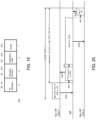
- FIG. 19 illustrates an example in which the AID12 subfield indicating the identification ID of the connection AP and the Reserved bit are deleted.
- FIG. 20 illustrates an exemplary sequence in which Non-AP 100 (Non-AP STA1 in the figure) notifies AP 200 (AP in the figure) of an MU-RTS TXS Trigger frame including a transmission destination of AP 200 in the allocation period ("Allocation Duration in MU-RTS TXS TF" in the figure) and indicates TXOP sharing to AP 200.
- Non-AP 100 acquires the transmission right of TXOP sharing control information ("MU-RTS TXS TF" in the figure) and configures the TXOP. Then, FIG. 20 illustrates the operation in which Non-AP 100 allocates a part of or entire remaining TXOP (performs TXOP sharing) to AP 200.
- TXOP sharing control information "MU-RTS TXS TF" in the figure
- Non-AP 100 transmits an MU-RTS TXS Trigger frame including the transmission destination of AP 200 in the allocation period (S2001), and indicates TXOP Sharing to AP 200.
- the transmission destination of AP 200 in the allocation period is configured to a communication destination that holds traffic with a high priority, based on the resource request information of AP 200 acquired in advance from AP 200 by Non-AP 100, as in the example described above.
- AP 200 is communicating with a Non-AP (Non-AP STA2) different from Non-AP 100. That is, an example is shown in which Non-AP 100 permits transmission that does not include Non-AP 100 in the allocation period.
- AP 200 transmits CTS to Non-AP 100 (S2002), communicates with a permitted counterpart within the allocation period (S2003), and receives a BA (S2004).
- S2002 CTS to Non-AP 100
- S2003 Non-AP 100
- BA S2004
- AP 200 transmits Low Latency traffic to Non-AP STA2.
- AP 200 can transmit traffic with a high priority (Low latency traffic) to another Non-AP 100 in the allocation period from Non-AP 100. Further, by Non-AP 100 permitting communication of AP that performs another coordinated transmission during the allocation period, the throughput can be improved through coordinated communication from multiple APs.
- a high priority Low latency traffic
- Non-AP 100 transmits control information for TXOP Sharing generated by Non-AP 100 (for example, TXS control information generator) to AP 200 and controls a type of traffic (TID or the like) communicable in the allocation period.
- TXS control information generator for example, TXS control information generator
- the TXS control information generated by the TXS control information generator includes information on the type of traffic communicable in the allocation period. For example, Non-AP 100 can limit communication to traffic with a high priority (for example, Low Latency traffic) in the allocation period allocated to AP 200.
- a high priority for example, Low Latency traffic
- information on the type of traffic communicable in the allocation period may be indicated in association with control information (RDG) of the RD protocol.
- RDG control information
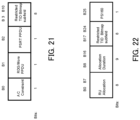
- the Reserved bit in the Control Information subfield may be used to indicate a type of traffic (Restricted TID Bitmap subfield in the figure) communicable in the allocation period.
- TID For the type of traffic communicable in the allocation period, for example, whether to transmit may be indicated for each TID by a bitmap format.
- the Restricted TID Bitmap subfield is 11000000, only traffic data with TID numbers 0 and 1 can be UL/DL transmitted in the allocation period. Since TID is related to the allowable delay amount, specifying TID makes it possible to transmit, in the allocation section, only traffic for which low latency is required.
- a type of communicable traffic may be indicated for UL and DL separately.
- the type of traffic need not be eight types (the bitmap need not be eight bits).
- a new format of the Control Information subfield may be defined as a new Control ID for Non-AP and AP that support Beyond 11be.
- information on a type of traffic communicable in the allocation period may be included in an MU-RTS TXS Trigger frame for Non-AP transmission, and may be indicated.
- a communicable traffic type (Restricted TID Bitmap subfield in FIG. 22 ) may be indicated using a part of the Reserved bit in the User Info field illustrated in FIG. 5 .
- FIGS. 23 and 24 illustrate exemplary sequences in which Non-AP 100 (Non-AP STA1 in the figures) notifies AP 200 (AP in the figures) of an MU-RTS TXS Trigger frame including a type of traffic communicable in the allocation period and indicates TXOP sharing to AP 200.
- Non-AP 100 acquires the transmission right of TXOP sharing control information ("MU-RTS TXS TF" in the figures) and configures the TXOP. Then, Non-AP 100 allocates a part of or entire remaining TXOP (performs TXOP sharing) to AP 200.
- TXOP sharing control information "MU-RTS TXS TF" in the figures
- Non-AP 100 transmits an MU-RTS TXS Trigger frame including a type of traffic communicable in the allocation period ("Allocation Duration in MU-RTS TXS TF" in the figure) (S2301), and indicates TXOP Sharing to AP 200.
- the type of traffic communicable in the allocation period the type of traffic (TID) with a high priority among the traffic for AP 200 or for another Non-AP from AP 200 is configured by Non-AP 100 based on the resource request information of AP 200 acquired in advance from AP 200.
- Non-AP 100 configures Low Latency traffic as a type of traffic communicable in the allocation period.
- AP 200 transmits the indicated traffic type within the allocation period (S2303).
- Non-AP 100 does not transmit a PPDU even though the allocation period remains.
- PIFS Point coordination function (PCF) Inter Frame Space
- Non-AP 100 can indicate, to AP 200, transmission of traffic with a higher priority (Low latency traffic) than the traffic held by Non-AP 100 itself.
- a higher priority Low latency traffic
- Non-AP 100 for example, resource request information holder
- An AP is allowed to report the transmission buffer state to a Non-AP.
- the resource request information indicated from AP 200 to Non-AP 100 and generated by the resource request information holder is, for example, any of a request flag, a request allocation time, and transmission buffer information of AP.
- the request flag is flag information on whether to request resource allocation to Non-AP 100.
- the request allocation time is the time required for resource allocation in a case of a predetermined bandwidth (for example, 20 MHz).
- the transmission buffer information of the AP is at least one of a destination of a buffer held by the AP, an AC or a TID of each buffer, a queue size of each AC and TID, and/or a delay budget.
- the resource request information may be individual information for each of a plurality of Non-APs 100 connected to AP 200.
- the resource request information may be a set of the terminal ID (Association identifier) of Non-AP 100 and a flag indicating whether to request resource allocation.
- the resource request information may be the bitmap of the terminal ID and may be information on whether to request resource allocation.
- a Null Data Packet (NDP) Feedback Report by which a Non-AP transmits resource request information to an AP may be reused. That is, by frequency-multiplexing flag information for a plurality of Non-APs into a predetermined Tone in the channel, AP 200 may transmit the flag information to the plurality of Non-APs 100 with one PPDU.
- NDP Null Data Packet
- the resource request information may be common information for a plurality of Non-APs 100 connected to AP 200. For example, based on the total buffer amount of a plurality of Non-APs 100 connected to AP 200, a common flag for the plurality of Non-APs 100 may be configured. In this case, for example, AP 200 may inform the plurality of Non-APs 100 to be connected of a resource allocation request as broadcast information using a beacon.
- the transmission buffer information of the AP may include transmission buffer information of another Non-AP connected to the AP.
- Non-AP 100 can grasp the buffer state of AP 200 and the request for resource allocation by grasping the resource request information of AP 200. Accordingly, Non-AP 100 can appropriately allocate the necessary resources in TXOP Sharing.
- Non-AP 100 can grasp the resource allocation request of AP 200 with a small overhead.
- the request allocation time or the transmission buffer information held by AP 200 as the resource request information, the signaling amount (overhead) increases compared to the case of the request flag.
- the allocation period for TXOP sharing to AP 200 can be calculated more accurately.
- the resource request information may be indicated to AP 200 after Non-AP 100 acquires the TXOP.
- AP 200 may indicate the resource request information by multiplexing (A-MPDU) the resource request information when transmitting an ACK to Non-AP 100.
- A-MPDU multiplexing
- Non-AP 100 may request AP 200 to include resource request information (RR (Resource Request) in the figure) when transmitting an ACK (BA in the figure).
- RR Resource Request
- AP 200 transmits, in addition to an ACK, resource request information to Non-AP 100 in accordance with an indication from Non-AP 100 (S2502, S2602).
- Non-AP 100 determines whether to implement TXOP sharing within the acquired TXOP based on the resource request information from AP 200.
- FIG. 25 illustrates a sequence in a case where the priority of data held by AP 200 is lower than the priority of data held by Non-AP 100.
- Non-AP 100 does not perform TXOP sharing, prioritizes the data held by Non-AP 100, and transmits the data held by Non-AP 100 to AP 200 in the remaining TXOP (S2503, S2505).
- FIG. 26 illustrates a sequence in a case where the priority of data held by AP 200 is higher than the priority of data held by Non-AP 100 (for example, in a case where AP 200 holds Low Latency traffic).
- Non-AP 100 performs TXOP sharing (S2603) and prioritizes the transmission of data held by AP 200 (S2604).
- Non-AP 100 can appropriately perform TXOP sharing when AP 200 holds traffic with a higher priority than that of Non-AP 100.
- Non-AP 100 can provide an allocation period for a predetermined traffic type for each transmission destination.
- Non-AP 100 can provide a predetermined allocation time for AP 200 and provide a further predetermined allocation time for another AP.
- Non-AP 100 can provide, to AP 200, a predetermined allocation time for Non-AP STA1 and another predetermined allocation time for Non-AP STA2.
- the resource request information may be configured as buffer information for each traffic type per STA.
- the communication apparatus may be configured to switch between a Non-AP STA and an AP STA.
- the names of frames, signals, and formats may vary.
- the resource request information may have another name.
- the name may be resource information or resource request.
- the names of fields and subfields may have different names.
- the User Info field in the Trigger frame transmitted by Non-AP 100 may have a different name.
- the name may be an AP Info field.
- there may be a plurality of AP Info fields.
- the Trigger frame transmitted by Non-AP 100 may have a different format (data type or size) from the Trigger frame transmitted by AP 200.
- the Trigger Type that can be configured by Non-AP 100 may be a part of the Trigger Type that can be configured by AP 200.
- the Trigger frame transmitted by Non-AP 100 may be limited to only Basic and MU-RTS. By limiting the function, the implementation of the Trigger frame by Non-AP becomes easier.
- An HT Control field including an RDG/More PPDU subfield may be newly defined.
- a Control ID may be newly added by utilizing the Reserved bit in the A-Control field, and a new Control Information subfield may be defined.
- a Control Information subfield including at least one of a communicable traffic ID (TID Constraint subfield in FIG. 27 ), an allocation period (Allocation Duration subfield in FIG. 27 ), and communication destination information in the allocation period (Destination mode subfield in FIG. 27 ) may be newly defined in addition to the RDG/More PPDU subfield indicating TXOP sharing.
- the RDG/More PPDU subfield indicating TXOP sharing need not include the RDG/More PPDU subfield included in the communication destination information (Destination mode subfield in FIG. 28 ) in the allocation period, and a Control Information subfield in which the RD protocol can be realized may be defined.
- format examples using the RD protocol and the MU-RTS TXS Trigger frame have been described, but the format is not limited thereto.
- the format may be based on an RTS frame.
- the MAC header of the RTS frame does not include an HT Control field (size is 0).
- size is 0
- a format in which the MAC header of the RTS frame includes an HT Control field may be defined.
- the HT Control field may be included by wrapping the RTS frame in the Control Wrapper frame.
- a new RTS frame in which a Control Information subfield as illustrated in FIG. 27 or FIG. 28 is defined in an A-Control subfield included in the HT Control field may be used to realize TXOP sharing.
- an RTS TXS frame in which a field as shown in FIG. 27 or FIG. 28 is added to the content of the RTS frame may be defined as a new Control frame.
- These frames based on the RTS frame may be used instead of the MU-RTS TXS Trigger frame in the specific example described above.
- the present disclosure can be realized by software, hardware, or software in cooperation with hardware.
- Each functional block used in the description of each embodiment described above can be partly or entirely realized by an LSI such as an integrated circuit, and each process described in the each embodiment may be controlled partly or entirely by the same LSI or a combination of LSIs.
- the LSI may be individually formed as chips, or one chip may be formed so as to include a part or all of the functional blocks.
- the LSI may include a data input and output coupled thereto.
- the LSI herein may be referred to as an IC, a system LSI, a super LSI, or an ultra LSI depending on a difference in the degree of integration.
- the technique of implementing an integrated circuit is not limited to the LSI and may be realized by using a dedicated circuit, a general-purpose processor, or a special-purpose processor.
- a Field Programmable Gate Array FPGA
- FPGA Field Programmable Gate Array
- the present disclosure can be realized as digital processing or analogue processing.
- the present disclosure can be realized by any kind of apparatus, device or system having a function of communication, which is referred to as a communication apparatus.
- the communication apparatus may comprise a transceiver and processing/control circuitry.
- the transceiver may comprise and/or function as a receiver and a transmitter.
- the transceiver, as the transmitter and receiver, may include a radio frequency (RF) module and one or more antennas.
- the RF module may include an amplifier, an RF modulator/demodulator, or the like.
- Such a communication apparatus include a phone (e.g., cellular (cell) phone, smart phone), a tablet, a personal computer (PC) (e.g., laptop, desktop, netbook), a camera (e.g., digital still/video camera), a digital player (digital audio/video player), a wearable device (e.g., wearable camera, smart watch, tracking device), a game console, a digital book reader, a telehealth/telemedicine (remote health and medicine) device, and a vehicle providing communication functionality (e.g., automotive, airplane, ship), and various combinations thereof.
- a phone e.g., cellular (cell) phone, smart phone
- a tablet e.g., a personal computer (PC) (e.g., laptop, desktop, netbook)
- a camera e.g., digital still/video camera
- a digital player digital audio/video player
- a wearable device e.g., wearable camera, smart watch, tracking device
- the communication apparatus is not limited to be portable or movable, and may also include any kind of apparatus, device or system being non-portable or stationary, such as a smart home device (e.g., appliance, lighting, smart meter, control panel), a vending machine, and any other "things” in a network of an "Internet of Things (IoT).”
- a smart home device e.g., appliance, lighting, smart meter, control panel
- a vending machine e.g., a vending machine, and any other "things” in a network of an "Internet of Things (IoT).”
- IoT Internet of Things
- the communication may include exchanging data through, for example, a cellular system, a wireless LAN system, a satellite system, etc., and various combinations thereof.
- the communication apparatus may include a device such as a controller or a sensor which is coupled to a communication device performing a function of communication described in the present disclosure.
- the communication apparatus may include a controller or a sensor that generates control signals or data signals which are used by a communication device performing a communication function of the communication apparatus.
- the communication apparatus also may include an infrastructure facility, such as a base station, an access point, and any other apparatus, device or system that communicates with or controls apparatuses such as those in the above non-limiting examples.
- an infrastructure facility such as a base station, an access point, and any other apparatus, device or system that communicates with or controls apparatuses such as those in the above non-limiting examples.
- a Non-Access Point Station includes: a controller, which in operation, generates a signal indicating allocation of an acquired resource whose allocation period has been specified; and a radio transceiver, which in operation, transmits the generated signal.
- the signal of the Non-AP STA according to the embodiment of the present disclosure is a signal permitting transmission to a transmission destination not including the Non-AP STA.
- the signal of the Non-AP STA is a signal permitting transmission of a predetermined traffic type in a case where the transmission destination does not include the Non-AP STA.
- the signal of the Non-AP STA is a signal permitting transmission to another Access Point Station (AP STA).
- AP STA Access Point Station
- the signal of the Non-AP STA according to the embodiment of the present disclosure is a signal for which the Non-AP STA indicates a transmission destination.
- the signal of the Non-AP STA is a signal indicating, to an AP STA, a communicable traffic identifier in the allocation period.
- the controller acquires resource request information from an AP STA.
- the resource request information of the Non-AP STA according to the embodiment of the present disclosure is a request flag indicating whether to request a resource or not.
- the resource request information of the Non-AP STA according to the embodiment of the present disclosure is an allocation time in a case of a predetermined bandwidth.
- the resource request information of the Non-AP STA is transmission buffer information of the AP STA.
- the resource request information of the Non-AP STA according to the embodiment of the present disclosure is included in an acknowledgement.
- a Non-AP STA In a communication method according to an embodiment of the present disclosure, a Non-AP STA generate a signal indicating allocation of an acquired resource whose allocation period has been specified, and transmits the generated signal.
- An embodiment of the present disclosure is useful for radio communication systems.
Landscapes
- Engineering & Computer Science (AREA)
- Computer Networks & Wireless Communication (AREA)
- Signal Processing (AREA)
- Mobile Radio Communication Systems (AREA)
- Time-Division Multiplex Systems (AREA)
Applications Claiming Priority (2)
| Application Number | Priority Date | Filing Date | Title |
|---|---|---|---|
| JP2022131164 | 2022-08-19 | ||
| PCT/JP2023/029821 WO2024038905A1 (ja) | 2022-08-19 | 2023-08-18 | 通信装置、及び通信方法 |
Publications (2)
| Publication Number | Publication Date |
|---|---|
| EP4576902A1 true EP4576902A1 (de) | 2025-06-25 |
| EP4576902A4 EP4576902A4 (de) | 2025-11-05 |
Family
ID=89941810
Family Applications (1)
| Application Number | Title | Priority Date | Filing Date |
|---|---|---|---|
| EP23854939.8A Pending EP4576902A4 (de) | 2022-08-19 | 2023-08-18 | Kommunikationsvorrichtung und kommunikationsverfahren |
Country Status (6)
| Country | Link |
|---|---|
| EP (1) | EP4576902A4 (de) |
| JP (1) | JPWO2024038905A1 (de) |
| KR (1) | KR20250051661A (de) |
| CN (1) | CN119654950A (de) |
| MX (1) | MX2025000972A (de) |
| WO (1) | WO2024038905A1 (de) |
Families Citing this family (2)
| Publication number | Priority date | Publication date | Assignee | Title |
|---|---|---|---|---|
| JP2025076947A (ja) * | 2023-11-02 | 2025-05-16 | キヤノン株式会社 | ステーション装置、アクセスポイント装置、制御方法、およびプログラム |
| WO2025247499A1 (en) * | 2024-05-31 | 2025-12-04 | Huawei Technologies Co., Ltd. | Dynamic triggered txop sharing |
Family Cites Families (3)
| Publication number | Priority date | Publication date | Assignee | Title |
|---|---|---|---|---|
| US11564257B2 (en) * | 2020-04-01 | 2023-01-24 | Sony Group Corporation | Coordinated WiFi stations with shared TXOP in time domain |
| US12414156B2 (en) * | 2020-08-17 | 2025-09-09 | Sony Group Corporation | Request trigger frame and TXOP sharing launched by non-AP STA |
| JP7561658B2 (ja) | 2021-02-26 | 2024-10-04 | 日本製紙クレシア株式会社 | 吸収性物品 |
-
2023
- 2023-08-18 JP JP2024541587A patent/JPWO2024038905A1/ja active Pending
- 2023-08-18 EP EP23854939.8A patent/EP4576902A4/de active Pending
- 2023-08-18 KR KR1020257004330A patent/KR20250051661A/ko active Pending
- 2023-08-18 WO PCT/JP2023/029821 patent/WO2024038905A1/ja not_active Ceased
- 2023-08-18 CN CN202380060169.3A patent/CN119654950A/zh active Pending
-
2025
- 2025-01-24 MX MX2025000972A patent/MX2025000972A/es unknown
Also Published As
| Publication number | Publication date |
|---|---|
| CN119654950A (zh) | 2025-03-18 |
| EP4576902A4 (de) | 2025-11-05 |
| KR20250051661A (ko) | 2025-04-17 |
| WO2024038905A1 (ja) | 2024-02-22 |
| JPWO2024038905A1 (de) | 2024-02-22 |
| MX2025000972A (es) | 2025-03-07 |
Similar Documents
| Publication | Publication Date | Title |
|---|---|---|
| US12500685B2 (en) | Wireless communication method and wireless communication terminal for receiving data from plurality of wireless communication terminals | |
| US12207132B2 (en) | Multi-user wireless communication method and wireless communication terminal using same | |
| US10548154B2 (en) | Uplink multi-user transmission method in wireless LAN system and apparatus therefor | |
| US20230269055A1 (en) | Wireless communication method using trigger information, and wireless communication terminal | |
| US10021722B2 (en) | Method and device for receiving frame in wireless LAN | |
| US20230247599A1 (en) | Wireless communication method and terminal for multi-user uplink transmission | |
| EP4351243A1 (de) | Endgerät, basisstation und kommunikationsverfahren | |
| US11523390B2 (en) | Wireless communication method and wireless communication terminal, which use network allocation vector | |
| EP4358616A1 (de) | Zugangspunkt, endgerät und kommunikationsverfahren | |
| EP4535910A1 (de) | Zugangspunkt, endgerät und kommunikationsverfahren | |
| EP4576902A1 (de) | Kommunikationsvorrichtung und kommunikationsverfahren | |
| KR20190112193A (ko) | 무선 통신 방법 및 무선 통신 단말 | |
| EP4543123A1 (de) | Zugangspunkt, endgerät und kommunikationsverfahren | |
| US11259322B2 (en) | Wireless network and efficient random access channel | |
| CN113711684A (zh) | 基站、终端、无线通信系统 | |
| EP4550917A1 (de) | Zugangspunkt, endgerät und kommunikationsverfahren | |
| CN121220170A (zh) | 终端、接入点及通信方法 | |
| WO2025009394A1 (ja) | アクセスポイント、端末、及び、通信方法 | |
| WO2023007792A1 (ja) | 無線通信端末、無線通信装置、および無線通信方法 | |
| CN121368917A (zh) | 接入点、终端及通信方法 | |
| KR20250165354A (ko) | 물리 계층 레이턴시 감소 |
Legal Events
| Date | Code | Title | Description |
|---|---|---|---|
| STAA | Information on the status of an ep patent application or granted ep patent |
Free format text: STATUS: THE INTERNATIONAL PUBLICATION HAS BEEN MADE |
|
| PUAI | Public reference made under article 153(3) epc to a published international application that has entered the european phase |
Free format text: ORIGINAL CODE: 0009012 |
|
| STAA | Information on the status of an ep patent application or granted ep patent |
Free format text: STATUS: REQUEST FOR EXAMINATION WAS MADE |
|
| 17P | Request for examination filed |
Effective date: 20250212 |
|
| AK | Designated contracting states |
Kind code of ref document: A1 Designated state(s): AL AT BE BG CH CY CZ DE DK EE ES FI FR GB GR HR HU IE IS IT LI LT LU LV MC ME MK MT NL NO PL PT RO RS SE SI SK SM TR |
|
| A4 | Supplementary search report drawn up and despatched |
Effective date: 20251007 |
|
| RIC1 | Information provided on ipc code assigned before grant |
Ipc: H04W 72/0446 20230101AFI20250930BHEP Ipc: H04W 16/02 20090101ALI20250930BHEP Ipc: H04W 16/14 20090101ALI20250930BHEP Ipc: H04W 84/12 20090101ALI20250930BHEP |
|
| DAV | Request for validation of the european patent (deleted) | ||
| DAX | Request for extension of the european patent (deleted) |