EP4576879A1 - Informationsanzeigeverfahren sowie elektronische vorrichtung und speichermedium - Google Patents
Informationsanzeigeverfahren sowie elektronische vorrichtung und speichermedium Download PDFInfo
- Publication number
- EP4576879A1 EP4576879A1 EP22955405.0A EP22955405A EP4576879A1 EP 4576879 A1 EP4576879 A1 EP 4576879A1 EP 22955405 A EP22955405 A EP 22955405A EP 4576879 A1 EP4576879 A1 EP 4576879A1
- Authority
- EP
- European Patent Office
- Prior art keywords
- radio frame
- indication information
- station
- sensing measurement
- sensing
- Prior art date
- Legal status (The legal status is an assumption and is not a legal conclusion. Google has not performed a legal analysis and makes no representation as to the accuracy of the status listed.)
- Pending
Links
Images


Classifications
-
- H—ELECTRICITY
- H04—ELECTRIC COMMUNICATION TECHNIQUE
- H04W—WIRELESS COMMUNICATION NETWORKS
- H04W24/00—Supervisory, monitoring or testing arrangements
- H04W24/10—Scheduling measurement reports ; Arrangements for measurement reports
-
- H—ELECTRICITY
- H04—ELECTRIC COMMUNICATION TECHNIQUE
- H04W—WIRELESS COMMUNICATION NETWORKS
- H04W48/00—Access restriction; Network selection; Access point selection
- H04W48/08—Access restriction or access information delivery, e.g. discovery data delivery
- H04W48/14—Access restriction or access information delivery, e.g. discovery data delivery using user query or user detection
-
- H—ELECTRICITY
- H04—ELECTRIC COMMUNICATION TECHNIQUE
- H04W—WIRELESS COMMUNICATION NETWORKS
- H04W84/00—Network topologies
- H04W84/02—Hierarchically pre-organised networks, e.g. paging networks, cellular networks, WLAN [Wireless Local Area Network] or WLL [Wireless Local Loop]
- H04W84/10—Small scale networks; Flat hierarchical networks
- H04W84/12—WLAN [Wireless Local Area Networks]
Definitions
- Embodiments of the present disclosure relate to the field of mobile communication technology, and in particular, to an information indicating method, an electronic device and a storage medium.
- Wi-Fi wireless fidelity
- 320 Mhz bandwidth transmission multi-band aggregation and collaboration or the like
- main application scenarios of the Wi-Fi technology are for example video transmission, augmented reality (AR), virtual reality (VR) or the like.
- the multi-band aggregation and collaboration refers to that the communication between devices is performed in 2.4GHz, 5.8GHz, 6GHz and other frequency bands at the same time.
- a new media access control (MAC) mechanism may be defined for management thereof.
- the multi-band aggregation and collaboration is expected to support low-latency transmission.
- the multi-band aggregation and collaboration technology supports a maximum bandwidth of 320MHz (160MHz+160MHz), and may also support a bandwidth of 240MHz (160MHz+80MHz) and other bandwidths supported by an existing standard.
- the Wi-Fi technology studied currently may support a wireless local area network (WLAN) sensing technology, which for example may be applied in scenarios such as position detection, proximity detection and presence detection in a dense environment (e.g., home and company environments).
- WLAN wireless local area network
- the WLAN sensing type usually includes a triggered based (TB) sounding sensing manner and a Non-TB based sensing manner.
- the TB sensing measurement process includes a poll stage, therefore, a manner supporting the poll mechanism is expected to achieve the TB sensing measurement.
- Embodiments of the present disclosure provide an information indicating method, an electronic device and a storage medium so as to provide a manner supporting the poll mechanism.
- an embodiment of the present disclosure provides an information indicating method applied to a station, including:
- an embodiment of the present disclosure provides an information indicating method applied to an access point, including:
- an electronic device being a station including:
- an electronic device being an access point including:
- An embodiment of the present disclosure further provides an electronic device, including a memory, a processor and a computer program stored in the memory and runnable on the processor, and the processor, when executing the program, implements the method according to one or more of the embodiments of the present disclosure.
- An embodiment of the present disclosure further provides a computer-readable storage medium having a computer program stored thereon, and the computer program, when being executed by a processor, implements the method according to one or more of the embodiments of the present disclosure.
- a first radio frame is determined, in which the first radio frame includes first indication information, and the first indication information indicates whether or not the station is to be polled during a sensing measurement process; and the first radio frame is sent to indicate to an AP whether or not the station is to be polled. It does not need to poll the station which does not need to be polled, which saves resources.
- a plurality of ising in the embodiments of the present disclosure refers to two or more, and other quantifiers have similar meanings.
- first, second, third or the like may be used in the present disclosure to describe various information, such information may not be limited by these terms. These terms are used only to distinguish the same type of information from one another.
- first information may also be referred to as second information, and similarly, second information may be referred to as first information.
- second information may be referred to as first information.
- the term “if” as used herein may be interpreted as "while ising" or "when «" or "in response to determining ......".
- Embodiments of the present disclosure provide an information indicating method, an electronic device and a storage medium to provide a manner supporting the poll mechanism
- the method and the device are based on the same application concept. Since the method and the device solve problems on similar principles, the implementations of the device and the method may be referred to each other, and the repetition thereof will not be described.
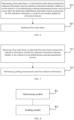
- an embodiment of the present disclosure provides an information indicating method, optionally the method may be applied to a station, and the method may include the following steps.
- a first radio frame is determined, in which the first radio frame includes first indication information, and the first indication information indicates whether or not the station is to be polled during a sensing measurement process.
- a WLAN sensing architecture applied by the information indicating method provided by the embodiment of the present disclosure and a WLAN sensing process thereof are described firstly.
- FIG. 2 illustrates a schematic architecture diagram of a WLAN sensing (process) in which a sensing initiator (or initiator) initiates a WLAN sensing (e.g., initiates a WLAN sensing session), and there may be a plurality of sensing responders (or sensing receivers) or responders responding thereto, for example, responder 1, responder 2, and responder 3 in FIG. 2 .
- a sensing initiator initiates the WLAN sensing
- a plurality of associated or unassociated sensing responders of the WLAN sensing may respond thereto.
- the sensing initiator and the sensing responder communicate with each other via a communication connection, such as a communication connection S1 shown, and the sensing responders communicate with each other via a communication connection S2.
- Each sensing initiator may be a client, and each sensing responder (in this example, i.e., the sensing responders 1 to 3) may be a station (STA) or an access point (AP).
- the STA and the AP may act as a plurality of roles in the WLAN sensing process.
- the STA may also act as a sensing initiator, which may be a sensing transmitter, a sensing receiver, or both, or neither.
- the sensing responder may also be a sensing transmitter, a sensing receiver, or both.
- the sensing initiator and sensing responder may also both be clients, and may communicate with each other by connecting to a same access point (AP).
- AP access point
- the client 1 is a sensing initiator
- the client2 is a sensing responder.
- the WLAN sensing process usually includes a triggered based sounding (TB) manner and a Non-TB based sensing manner.
- the TB sensing measurement manner is a manner in which the AP is the initiator or transmitter
- the Non-TB sensing measurement manner is a manner in which the STA is the initiator or transmitter.
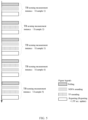
- the TB sensing measurement process is illustrated in FIG. 5.
- FIG. 5 illustrates a plurality of sensing measurement instances of the sensing measurement in the TB sensing measurement process.
- each sensing measurement process includes polling, sounding and reporting (reporting + LTF sec. update) processes.
- the sounding may include only NDPA sounding or only TF sounding or both thereof.
- the station determines a first radio frame, the first radio frame includes first indication information, and the first indication information indicates whether or not the station is to be polled during a sensing measurement process, so that the AP may obtain whether or not the station is to be polled.
- the AP may send a sensing trigger poll frame to the station in the poll stage, so that the AP may obtain that the station can participate in a subsequent sensing measurement, such as NDPA sounding and/or TF sounding.
- the AP may not allocate an uplink resource or downlink resource for the sensing measurement to the station in the sensing measurement stage. If the station is not to be polled and does not indicate this to the AP, the AP may still poll the station to allocate the uplink resource or downlink resource for the sensing measurement to the station, resulting in a waste of network resources.
- the first radio frame is determined during the sensing measurement setup or sensing session setup process, and the first radio frame indicates whether or not the AP is to be polled, in order to improve the TB sensing measurement mechanism.
- the first radio frame may be a probe request frame, a pre-associated security negotiation (PASN) request frame or a sensing by proxy (SBP) request frame.
- PASN pre-associated security negotiation
- SBP sensing by proxy
- the first indication information may be indicated by a bit, for example, setting "1" to identify that the station is to be polled, and setting "0" to identify that the station is not to be polled.
- the AP may carry the STA identification for polling in the sensing polling frame.
- step 102 the first radio frame is sent.
- the station sends the first radio frame to the access point, so that the access point AP may obtain that the station can participate in a subsequent sensing measurement and determine whether the station is to be polled based on the first indication information.
- the station determines a first radio frame, in which the first radio frame includes first indication information, and the first indication information indicates whether or not the station is to be polled during a sensing measurement process; and the station sends the first radio frame to indicate to an AP whether or not the station is to be polled. It does not need to poll the station which does not need to be polled, which saves resources.
- the embodiments of the present disclosure provide a manner supporting the poll mechanism.
- an embodiment of the present disclosure provides an information indicating method, optionally the method may be applied to a station, and the method may include the following steps.
- a first radio frame is determined, in which the first radio frame includes first indication information, and the first indication information indicates whether or not the station is to be polled during a sensing measurement process.
- the first indication information is carried in an extended capabilities information element.
- the WLAN sensing architecture applied by the information indicating method provided by the embodiment of the present disclosure and the WLAN sensing process thereof may refer to the above first example, and the TB sensing measurement process may refer to the above second example, which is not repeated herein.
- the station determines the first radio frame, the first radio frame includes first indication information, the first indication information is carried in the extended capabilities information element, and the first indication information indicates whether or not the station is to be polled during the sensing measurement process, so that the AP may obtain whether to poll the station or not.
- the AP may send a sensing trigger poll frame to the station in the poll stage, so that the AP may obtain that the station can participate in a subsequent sensing measurement, such as NDPA sounding and/or TF sounding.
- the AP may not allocate an uplink resource or downlink resource for the sensing measurement to the station in the sensing measurement stage. If the station is not to be polled and does not indicate this to the AP, the AP may still poll the station to allocate the uplink resource or downlink resource for the sensing measurement to the station, resulting in a waste of network resources.
- the first radio frame is determined during the sensing measurement setup or sensing session setup process, and the first radio frame indicates whether or not the AP is to be polled, in order to improve the TB sensing measurement mechanism.
- the AP may carry the STA identification for polling in the sensing polling frame.
- step 602 the first radio frame is sent.
- the station sends the first radio frame to the access point, so that the access point AP may obtain that the station can participate in a subsequent sensing measurement and determine whether the station is to be polled based on the first indication information.
- An embodiment of the present disclosure also provides an information indicating method, optionally the method may be applied to a station, and the method may include the steps of:
- the station determines the first radio frame, and sends the first radio frame during the pre-associated security negotiation process.
- the first radio frame includes the first indication information, and the first indication information indicates whether or not the station is to be polled during the sensing measurement process, so that the AP may obtain whether to poll the station or not.
- the AP may send a sensing trigger poll frame to the station in the poll stage, so that the AP may obtain that the station can participate in a subsequent sensing measurement, such as NDPA sounding and/or TF sounding.
- the AP may not allocate an uplink resource or downlink resource for the sensing measurement to the station in the sensing measurement stage. If the station is not to be polled and does not indicate this to the AP, the AP may still poll the station to allocate the uplink resource or downlink resource for the sensing measurement to the station, resulting in a waste of network resources.
- the first radio frame is determined during the sensing measurement setup or sensing session setup process, and the first radio frame indicates whether or not the AP is to be polled, in order to improve the TB sensing measurement mechanism.
- the first radio frame may be a pre-associated security negotiation request frame.
- the first indication information may be indicated by a bit, for example, setting "1" to identify that the station is to be polled, and setting "0" to identify that the station is not to be polled.
- the AP may carry the STA identification for polling in the sensing polling frame.
- An embodiment of the present disclosure also provides an information indicating method, optionally the method may be applied to a station and the method may include the steps of:
- the STA When acting as a sensing initiator or sensing transmitter, the STA does not have the capability to communicate with a plurality of receivers simultaneously, and thus a proxy end (e.g., an AP) may proxy the STA to perform triggered based sounding (TB) sensing measurement in order to improve the sensing measurement efficiency.
- a proxy end e.g., an AP
- the TB sensing measurement includes NDPA sounding and/or TF sounding, the specific process of which may refer to the aforementioned second example, which will not be repeated herein.
- the station may participate in a subsequent sensing measurement process initiated by the AP proxy.
- the station determines the first radio frame and sends the first radio frame, the first radio frame includes the first indication information, and the first indication information indicates whether or not the station is to be polled during a subsequent sensing measurement process, so that the AP may obtain whether to poll the station or not.
- the first radio frame includes an SBP request frame.
- An embodiment of the present disclosure also provides an information indicating method, optionally the method may be applied to a station, and may include the following steps:
- the AP may pre-indicate the station in the second radio frame to inform the AP regarding whether or not the station is to be polled, i.e., indicate, via the second indication information, the station to send the first indication information. For example, if the second indication information is 1, the station sends the first indication information; and if the second indication information is 0, the station does not send the first indication information.
- the station When the station receives the second indication information and the second indication information indicates the station to send the first indication information to the access point, the station determines the first radio frame and carries the first indication information in the first radio frame and sends the same to the AP.
- the first indication information is carried in a sensing measurement setup parameter information element of the first radio frame; and/or the second indication information is carried in a sensing measurement setup parameter information element of the second radio frame.
- the first radio frame includes a sensing measurement setup response frame; and/or the second radio frame includes a sensing measurement setup request frame.
- the first radio frame includes a sensing measurement setup query frame
- the first indication information may be indicated by a bit, for example, setting "1" to identify that the station is to be polled, and setting "0" to identify that the station is not to be polled.
- a first radio frame is determined, in which the first radio frame includes first indication information, and the first indication information indicates whether or not the station is to be polled during a sensing measurement process; and the first radio frame is sent to indicate to an AP whether or not the station is to be polled. It does not need to poll the station which does not need to be polled, which saves resources.
- an embodiment of the present disclosure provides an information indicating method, optionally the method may be applied to a network device, the network device may be an access point, and the method may include the following steps.
- a first radio frame is received, in which the first radio frame includes first indication information, and the first indication information indicates whether or not a station is to be polled during a sensing measurement process.
- the WLAN sensing architecture applied by the information indicating method provided by the embodiment of the present disclosure and the WLAN sensing process thereof may refer to the above first example, and the TB sensing measurement process may refer to the above second example, which is not repeated herein.
- the AP receives the first radio frame, the first radio frame includes the first indication information, and the first indication information indicates whether or not the station is to be polled during the sensing measurement process, so that the AP may obtain whether to poll the station or not.
- step 702 a polling process is performed based on the first indication information.
- the AP may send a sensing trigger poll frame to the station during the poll stage, so that the AP may obtain that the station can participate in a subsequent sensing measurement, such as NDPA sounding and/or TF sounding.
- the AP may not allocate an uplink resource or downlink resource for the sensing measurement to the station in the sensing measurement stage. If the station is not to be polled and does not indicate this to the AP, the AP may still poll the station to allocate the uplink resource or downlink resource for the sensing measurement to the station, resulting in a waste of network resources.
- the AP receives the first radio frame during the sensing measurement setup or sensing session setup process, and the first radio frame indicates whether or not the AP is to be polled, in order to improve the TB sensing measurement mechanism.
- the AP may carry the STA identification for polling in the sensing polling frame.
- the first indication information is carried in an extended capabilities information element, and the first radio frame may be a probe request frame.
- the first radio frame is a pre-associated security negotiation (PASN) request frame.
- PASN pre-associated security negotiation
- the first indication message indicates whether or not the station is to be polled during the SBP process.
- An embodiment of the present disclosure provides an information indicating method, optionally the method may be applied to a network device, the network device may be an access point, and the method may include steps of:
- the WLAN sensing architecture applied by the information indicating method provided by the embodiment of the present disclosure and the WLAN sensing process thereof may refer to the above first example, which is not repeated herein.
- a polling process is performed based on the first indication information.
- the AP may pre-indicate the station in the second radio frame to inform the AP regarding whether or not the station is to be polled, i.e., indicate, via the second indication information, the station to send the first indication information. For example, if the second indication information is 1, the station sends the first indication information; and if the second indication information is 0, the station does not send the first indication information.
- the station When the station receives the second indication information and the second indication information indicates the station to send the first indication information to the access point, the station determines the first radio frame and carries the first indication information in the first radio frame and sends the same to the AP, and the AP performs the polling process based on the first indication information.
- the first radio frame includes a sensing measurement setup response frame; and/or the second radio frame includes a sensing measurement setup request frame.
- the first radio frame includes a sensing measurement setup query frame
- the first indication information may be indicated by a bit, for example, setting "1" to identify that the station is to be polled, and setting "0" to identify that the station is not to be polled.
- the first radio frame is received; in which the first radio frame includes the first indication information, and the first indication information indicates whether or not the station is to be polled during the sensing measurement process. It does not need to poll the station which does not need to be polled, which saves network resources.
- an embodiment of the present disclosure also provides an electronic device which is a station, and the electronic device includes:
- the first radio frame includes a pre-associated security negotiation request frame.
- the first radio frame includes an SBP request frame.
- the access point further includes: an information receiving module, configured to receive a second radio frame during a sensing measurement setup process, wherein the second radio frame includes second indication information, and the second indication information indicates the station to send the first indication information to an access point.
- an information receiving module configured to receive a second radio frame during a sensing measurement setup process, wherein the second radio frame includes second indication information, and the second indication information indicates the station to send the first indication information to an access point.
- the determining module 801 determines a first radio frame, in which the first radio frame includes first indication information, and the first indication information indicates whether or not the station is to be polled during a sensing measurement process; and the sending module 802 sends the first radio frame to indicate to an AP whether or not the station is to be polled. It does not need to poll the station which does not need to be polled, which saves network resources.
- An embodiment of the present disclosure further provides an information indicating device applied to a station, and the device includes:
- the device further includes other modules of the electronic device in the above embodiments, which is not repeated herein.
- an embodiment of the present disclosure also provides an electronic device which is an access point, and the electronic device includes:
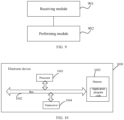
- the processor 1001 may be a CPU (Central Processing Unit), a general-purpose processor, a DSP (Digital Signal Processor), an ASIC (Application Specific Integrated Circuit), FPGA (Field Programmable Gate Array) or other programmable logic device, a transistor logic device, a hardware component, or any combination thereof. It may implement or execute various exemplary logic blocks, modules, and circuits described in conjunction with the present disclosure.
- the processor 1001 may also be a combination that implements computing functions, such as a combination including one or more microprocessor, a combination of a DSP and a microprocessor, and the like.
- the bus 1002 may include a path for transferring information between the components described above.
- the bus 1002 may be a PCI (Peripheral Component Interconnect) bus, an EISA (Extended Industry Standard Architecture) bus or the like.
- the bus 1002 may be divided into an address bus, a data bus, a control bus or the like. For ease of representation, only one thick line is shown in FIG. 10 , which however does not mean that there is only one bus or one type of bus.
- the memory 1003 may be a ROM (Read Only Memory) or other type of static memory device that can store static information and instructions, and a RAM (Random Access Memory) or other type of dynamic memory device that can store information and instructions, or may also be an EEPROM (Electrically Erasable Programmable Read Only Memory), CD-ROM (Compact Disc Read Only Memory) or other optical disk storage, optical disc storage (including compressed optical discs, laser discs, compact discs, digital general purpose discs, Blu-ray discs, etc.), magnetic disk storage media, other magnetic storage devices, or any other media capable of carrying or storing expected program codes having instruction or data structure form and capable of being accessed by a computer, which is not specifically limited herein.
- ROM Read Only Memory
- RAM Random Access Memory
- EEPROM Electrically Erasable Programmable Read Only Memory
- CD-ROM Compact Disc Read Only Memory
- optical disc storage including compressed optical discs, laser discs, compact discs, digital general purpose discs, Blu-ray discs, etc.
- the memory 1003 is used to store application program codes for executing the solution of the present disclosure and is controlled and executed by processor 1001.
- the processor 1001 is used to execute the application program codes stored in the memory 1003 to implement that shown in the above method embodiments.
- the electronic device includes, but is not limited to: a mobile terminal such as a mobile phone, a laptop computer, a digital broadcast receiver, a PDA (personal digital assistant), a PAD (portable Android device), a PMP (portable multimedia player), an in-vehicle terminal (such as in-vehicle navigation terminal), or the like; and a fixed terminal such as a digital TV, a desktop computer, or the like.
- a mobile terminal such as a mobile phone, a laptop computer, a digital broadcast receiver, a PDA (personal digital assistant), a PAD (portable Android device), a PMP (portable multimedia player), an in-vehicle terminal (such as in-vehicle navigation terminal), or the like
- a fixed terminal such as a digital TV, a desktop computer, or the like.
- the server provided in the present disclosure may be a standalone physical server, may be a server cluster or a distributed system formed by a plurality of physical servers, or may also be a cloud server providing basic cloud computing services such as cloud services, cloud databases, cloud computation, cloud functions, cloud storage, network services, cloud communications, middleware services, domain name services, security services, CDNs, and big data and artificial intelligence platforms.
- the terminals may be smartphones, tablets, laptops, desktop computers, smart speakers, smart watches, and the like, but are not limited thereto.
- the terminal and the server may be connected directly or indirectly via wired or wireless communication, which is not limited in the present disclosure.
- An embodiment of the present disclosure provides a computer-readable storage medium having a computer program stored thereon which, when runs on a computer, enables the computer to execute that in the above method embodiments.
- the computer-readable medium described above in the present disclosure may be a computer-readable signal medium or a computer-readable storage medium or any combination thereof.
- the computer-readable storage medium may be but is not limited to for example a system, device, or element of electricity, magnetism, light, electromagnetism, infrared ray, or semiconductor, or any combination thereof.
- the computer-readable storage media may include, but are not limited to: an electrical connection having one or more wires, a portable computer disk, a hard disk, a random access memory (RAM), a read-only memory (ROM), an erasable programmable read-only memory (EPROM or flash memory), an optical fiber, a portable compact disk read-only memory (CD-ROM), an optical storage device, a magnetic storage device, or any suitable combination thereof.
- the computer-readable storage medium may be any tangible medium containing or storing a program that may be used by or in combination with an instruction-executing system, device, or element.
- the computer-readable signal medium may include a data signal propagated in a baseband or as part of a carrier carrying computer-readable program code. Such propagated data signals may take a variety of forms, including, but not limited to, electromagnetic signals, optical signals, or any suitable combination thereof.
- the computer-readable signal medium may also be any computer-readable medium other than the computer-readable storage medium that may send, propagate, or transmit a program for use by or in conjunction with an instruction-executing system, device, or element.
- the program code contained on the computer-readable medium may be transmitted using any suitable medium, including, but not limited to: wire, optical cable, RF (Radio Frequency), or the like, or any suitable combination thereof.
- the above computer-readable medium may be contained in the above electronic device; or may exist separately and not be assembled into the electronic device.
- the above computer-readable medium carries one or more programs that, when being executed by the electronic device, cause the electronic device to perform the method in the above embodiments.
- a computer program product or computer program including computer instructions which are stored in a computer-readable storage medium.
- a processor of a computer device reads the computer instructions from the computer-readable storage medium, and the processor executes the computer instructions such that the computer device performs the method provided in the various optional implementations described above.
- the computer program code for performing the operations of the present disclosure may be written in one or more programming languages or combinations thereof, including object-oriented programming languages - such as Java, Smalltalk, C++ - and conventional procedural programming languages - such as the 'C' language or similar programming languages.
- the program code may be executed entirely on a user computer, executed partially on the user computer, executed as a stand-alone software package, executed partially on the user computer and partially on a remote computer, or executed entirely on a remote computer or server.
- the remote computer may be connected to the user computer via any kind of network, including a local area network (LAN) or a wide area network (WAN), or may be connected to an external computer (e.g., by using the Internet of an Internet service provider).
- LAN local area network
- WAN wide area network
- each block in the flowcharts or block diagrams may represent a module, program segment, or portion of code that contains one or more executable instructions for implementing a specified logical function.
- the functions indicated in the blocks may also occur in a different order than that indicated in the accompanying drawings. For example, two consecutively represented blocks may actually be executed substantially in parallel, and they may sometimes be executed in a reverse order, depending on the function involved.
- each block in the block diagrams and/or flowcharts, and a combination of the blocks in the block diagrams and/or flowcharts may be implemented with a dedicated hardware-based system that performs a specified function or operation, or may be implemented with a combination of dedicated hardware and computer instructions.
- modules involved in the description of the embodiments of the present disclosure may be implemented by way of software or may be implemented by way of hardware.
- the name of a module does not constitute a limitation on the module in some cases, for example, a module A may also be described as "a module A for performing an operation B".
Landscapes
- Engineering & Computer Science (AREA)
- Computer Networks & Wireless Communication (AREA)
- Signal Processing (AREA)
- Mobile Radio Communication Systems (AREA)
Applications Claiming Priority (1)
| Application Number | Priority Date | Filing Date | Title |
|---|---|---|---|
| PCT/CN2022/113712 WO2024036625A1 (zh) | 2022-08-19 | 2022-08-19 | 信息指示方法及电子设备、存储介质 |
Publications (2)
| Publication Number | Publication Date |
|---|---|
| EP4576879A1 true EP4576879A1 (de) | 2025-06-25 |
| EP4576879A4 EP4576879A4 (de) | 2025-10-01 |
Family
ID=89940365
Family Applications (1)
| Application Number | Title | Priority Date | Filing Date |
|---|---|---|---|
| EP22955405.0A Pending EP4576879A4 (de) | 2022-08-19 | 2022-08-19 | Informationsanzeigeverfahren sowie elektronische vorrichtung und speichermedium |
Country Status (3)
| Country | Link |
|---|---|
| EP (1) | EP4576879A4 (de) |
| CN (1) | CN117981397A (de) |
| WO (1) | WO2024036625A1 (de) |
Family Cites Families (9)
| Publication number | Priority date | Publication date | Assignee | Title |
|---|---|---|---|---|
| US9807691B2 (en) * | 2013-02-28 | 2017-10-31 | Qualcomm Incorporated | Polling beacon |
| WO2016111558A1 (ko) * | 2015-01-09 | 2016-07-14 | 엘지전자 주식회사 | 무선랜 시스템에서 멀티 유저 전송에 관련된 프레임 송수신 방법 및 장치 |
| CN112218328B (zh) * | 2019-07-11 | 2023-10-20 | 华为技术有限公司 | 一种感知测量方法及装置 |
| CN117939666A (zh) * | 2019-10-24 | 2024-04-26 | 华为技术有限公司 | 通信方法及装置 |
| CN115474152B (zh) * | 2019-11-20 | 2025-02-18 | 华为技术有限公司 | 对目标物进行定位的方法及装置 |
| CN113453355B (zh) * | 2020-03-27 | 2024-09-06 | 华为技术有限公司 | 无线局域网感知方法、网络设备及芯片 |
| CN114760653B (zh) * | 2021-08-13 | 2023-04-28 | 极米科技股份有限公司 | 无线感知方法、装置、设备及存储介质 |
| CN114667754B (zh) * | 2022-02-16 | 2023-10-03 | 北京小米移动软件有限公司 | 通信方法和通信装置 |
| WO2023201494A1 (zh) * | 2022-04-18 | 2023-10-26 | 北京小米移动软件有限公司 | Wlan感知测量方法及装置、电子设备及存储介质 |
-
2022
- 2022-08-19 CN CN202280003122.9A patent/CN117981397A/zh active Pending
- 2022-08-19 WO PCT/CN2022/113712 patent/WO2024036625A1/zh not_active Ceased
- 2022-08-19 EP EP22955405.0A patent/EP4576879A4/de active Pending
Also Published As
| Publication number | Publication date |
|---|---|
| WO2024036625A1 (zh) | 2024-02-22 |
| CN117981397A (zh) | 2024-05-03 |
| EP4576879A4 (de) | 2025-10-01 |
Similar Documents
| Publication | Publication Date | Title |
|---|---|---|
| US20250274977A1 (en) | Wlan sensing measurement method and apparatus, electronic device, and storage medium | |
| CN114667761A (zh) | 通信方法及装置、电子设备及存储介质 | |
| CN115023964A (zh) | Wlan感知测量建立终止方法及装置、电子设备及存储介质 | |
| US20250267490A1 (en) | Wlan sensing measurement method, electronic device and storage medium | |
| US20260067927A1 (en) | Wlan sensing measurement method and apparatus, electronic device and storage medium | |
| US20250159440A1 (en) | Method and device for wireless local area network sensing measurement | |
| US20250159521A1 (en) | Communication method and apparatus, and electronic device and storage medium | |
| US20250227530A1 (en) | Communication method and apparatus, and electronic device and storage medium | |
| US20250234378A1 (en) | Processing method for network allocation vector (nav) timer and related apparatus | |
| EP4557855A1 (de) | Sensing durch proxy-messverfahren und vorrichtung | |
| CN115023965A (zh) | Wlan感知测量建立终止方法及装置、电子设备及存储介质 | |
| US20250274796A1 (en) | Communication method and apparatus, and electronic device and storage medium | |
| EP4576879A1 (de) | Informationsanzeigeverfahren sowie elektronische vorrichtung und speichermedium | |
| EP4507360A1 (de) | Kommunikationsverfahren und -vorrichtung, elektronische vorrichtung und speichermedium | |
| EP4462859A1 (de) | Wlan-erfassungsmessverfahren und -vorrichtung sowie elektronische vorrichtung und speichermedium | |
| CN117769885A (zh) | 通信方法及装置、电子设备及存储介质 | |
| US20260059274A1 (en) | Sensing measurement setup method, electronic device and storage medium | |
| EP4510678A1 (de) | Wlan-erfassungsmessverfahren und -vorrichtung, elektronische vorrichtung und speichermedium | |
| US20260025692A1 (en) | Communication method, electronic device, and storage medium | |
| EP4611320A1 (de) | Kommunikationsverfahren, elektronische vorrichtung und speichermedium | |
| EP4590013A1 (de) | Sensing durch proxy-messverfahren, elektronische vorrichtung und speichermedium | |
| US20260032718A1 (en) | Communication method, electronic device, and storage medium | |
| US20260095783A1 (en) | Sensing setup method, electronic device, and storage medium | |
| US20260006470A1 (en) | Communication method, electronic device and storage medium | |
| EP4525553A1 (de) | Kommunikationsverfahren und -vorrichtung sowie elektronische vorrichtung und speichermedium |
Legal Events
| Date | Code | Title | Description |
|---|---|---|---|
| STAA | Information on the status of an ep patent application or granted ep patent |
Free format text: STATUS: THE INTERNATIONAL PUBLICATION HAS BEEN MADE |
|
| PUAI | Public reference made under article 153(3) epc to a published international application that has entered the european phase |
Free format text: ORIGINAL CODE: 0009012 |
|
| STAA | Information on the status of an ep patent application or granted ep patent |
Free format text: STATUS: REQUEST FOR EXAMINATION WAS MADE |
|
| 17P | Request for examination filed |
Effective date: 20250314 |
|
| AK | Designated contracting states |
Kind code of ref document: A1 Designated state(s): AL AT BE BG CH CY CZ DE DK EE ES FI FR GB GR HR HU IE IS IT LI LT LU LV MC MK MT NL NO PL PT RO RS SE SI SK SM TR |
|
| REG | Reference to a national code |
Ref country code: DE Ref legal event code: R079 Free format text: PREVIOUS MAIN CLASS: H04W0048080000 Ipc: H04W0024100000 |
|
| A4 | Supplementary search report drawn up and despatched |
Effective date: 20250829 |
|
| RIC1 | Information provided on ipc code assigned before grant |
Ipc: H04W 24/10 20090101AFI20250825BHEP Ipc: H04W 48/14 20090101ALN20250825BHEP Ipc: H04W 84/12 20090101ALN20250825BHEP |
|
| DAV | Request for validation of the european patent (deleted) | ||
| DAX | Request for extension of the european patent (deleted) |