EP4576850A2 - Verfahren zur herstellung eines bidirektionalen nas-signalisierungskanals zwischen einem sicheren element, das mit einem endgerät kooperiert, und einer entfernten plattform - Google Patents
Verfahren zur herstellung eines bidirektionalen nas-signalisierungskanals zwischen einem sicheren element, das mit einem endgerät kooperiert, und einer entfernten plattform Download PDFInfo
- Publication number
- EP4576850A2 EP4576850A2 EP25164403.5A EP25164403A EP4576850A2 EP 4576850 A2 EP4576850 A2 EP 4576850A2 EP 25164403 A EP25164403 A EP 25164403A EP 4576850 A2 EP4576850 A2 EP 4576850A2
- Authority
- EP
- European Patent Office
- Prior art keywords
- secure element
- nas
- platform
- containers
- distant
- Prior art date
- Legal status (The legal status is an assumption and is not a legal conclusion. Google has not performed a legal analysis and makes no representation as to the accuracy of the status listed.)
- Pending
Links
Images


Classifications
-
- H—ELECTRICITY
- H04—ELECTRIC COMMUNICATION TECHNIQUE
- H04W—WIRELESS COMMUNICATION NETWORKS
- H04W76/00—Connection management
- H04W76/10—Connection setup
-
- H—ELECTRICITY
- H04—ELECTRIC COMMUNICATION TECHNIQUE
- H04W—WIRELESS COMMUNICATION NETWORKS
- H04W12/00—Security arrangements; Authentication; Protecting privacy or anonymity
- H04W12/03—Protecting confidentiality, e.g. by encryption
- H04W12/037—Protecting confidentiality, e.g. by encryption of the control plane, e.g. signalling traffic
-
- H—ELECTRICITY
- H04—ELECTRIC COMMUNICATION TECHNIQUE
- H04W—WIRELESS COMMUNICATION NETWORKS
- H04W12/00—Security arrangements; Authentication; Protecting privacy or anonymity
- H04W12/30—Security of mobile devices; Security of mobile applications
- H04W12/35—Protecting application or service provisioning, e.g. securing SIM application provisioning
-
- H—ELECTRICITY
- H04—ELECTRIC COMMUNICATION TECHNIQUE
- H04W—WIRELESS COMMUNICATION NETWORKS
- H04W12/00—Security arrangements; Authentication; Protecting privacy or anonymity
- H04W12/40—Security arrangements using identity modules
-
- H—ELECTRICITY
- H04—ELECTRIC COMMUNICATION TECHNIQUE
- H04W—WIRELESS COMMUNICATION NETWORKS
- H04W4/00—Services specially adapted for wireless communication networks; Facilities therefor
- H04W4/50—Service provisioning or reconfiguring
-
- H—ELECTRICITY
- H04—ELECTRIC COMMUNICATION TECHNIQUE
- H04W—WIRELESS COMMUNICATION NETWORKS
- H04W8/00—Network data management
- H04W8/18—Processing of user or subscriber data, e.g. subscribed services, user preferences or user profiles; Transfer of user or subscriber data
- H04W8/183—Processing at user equipment or user record carrier
-
- H—ELECTRICITY
- H04—ELECTRIC COMMUNICATION TECHNIQUE
- H04W—WIRELESS COMMUNICATION NETWORKS
- H04W8/00—Network data management
- H04W8/18—Processing of user or subscriber data, e.g. subscribed services, user preferences or user profiles; Transfer of user or subscriber data
- H04W8/20—Transfer of user or subscriber data
-
- H—ELECTRICITY
- H04—ELECTRIC COMMUNICATION TECHNIQUE
- H04W—WIRELESS COMMUNICATION NETWORKS
- H04W12/00—Security arrangements; Authentication; Protecting privacy or anonymity
- H04W12/06—Authentication
Definitions
- the present invention relates to the field of telecommunications and more specifically that of the establishment of a bidirectional channel between a secure element cooperating with a terminal and a distant platform.
- a secure element is a hardware component designed to securely store sensitive data, execute cryptographic operations, and protect against unauthorized access or attacks. It provides a trusted execution environment for security-critical applications, such as authentication, encryption, and secure communication. Secure elements are commonly used in mobile devices, smart cards, and Internet of things (IoT) devices to enhance security in areas like mobile payments, identity verification, and secure network access.
- the secure element is for example a UICC (Universal Integrated Circuit Card) an iUICC (integrated UICC) or a eUICC (embedded UICC).
- the terminal cooperating the secure element is typically a portable terminal such as a mobile phone, a smartphone, or a PDA (Personal Digital Assistant).
- the secure element is not necessarily physically connected to the terminal, but can communicate with the latter through a short range connection, wherein the security element is offset and communicates with the terminal via a short range channel (e.g., Bluetooth or Wi-Fi).
- a short range channel e.g., Bluetooth or Wi-Fi
- the establishment of a bidirectional channel between the secure element and the distant platform is for example necessary for administrating this secure element over the air (when the platform is an over-the-air (OTA) platform) or download a full subscription in the secure element (in case when the platform is a Remote Provisioning System (RPS) platform as defined by the Global System for Mobile Communications Association (GSMA)).
- OTA over-the-air
- RPS Remote Provisioning System
- Secure elements can be administered in two ways: The first one allows transmitting, from an OTA platform, data, or programs to targeted secure elements, for example in the course of updating campaigns. This type of administration is called “push” and is based on the transmission in SMS mode. However, this method is not suitable for new generation networks such as LTE networks which do not support the SMS This method exclusively use Hypertext Transfer Protocol (HTTP).
- HTTP Hypertext Transfer Protocol
- the second one allows interrogating, for example regularly or upon the occurrence of an event, the OTA platform in order to know whether updates are available or not.
- Such interrogation is initiated by the secure element and is called “polling” or “pull” (the secure element checks out whether the platform has something to transmit to it).
- the interrogation is carried out over HTTP.
- Figure 1 represents two over the air channels that are today available for data exchange between a secure element and a remote server. Thus, Figure 1 shows two different communication methods used for remotely transmitting data, updates, or commands to a device: SMS and HTTP/S.
- the 5G core network 14 comprises:
- the 5G core network 14 communicates via Internet with the OTA platform 11. On this side we have an Internet Short Message Service Center (SMSC) 18.
- SMSC Short Message Service Center
- the first air channel today available for data exchange between the secure element 10 and the server 11 is referenced 20. It is a bidirectional SMS channel (push mode) that involves the AMF 15, the SMSF 16 and the SMSC 18. SMS is bidirectional but has a very low bandwidth.
- the second today available air channel is referenced 21. It is a http/s channel that involves Internet and (on the 5G core network 14 side) the UPF 17.
- a http/s channel has a good bandwidth but has a unidirectional client server: It is always the UE 12 that shall open the channel, driving the need to have push SMS or non-optimized polling mechanisms.
- the present disclosure proposes a solution to these problems.
- the proposed method provides a third bidirectional communication channel with sufficient bandwidth between the secure element 10 and the remote server 11.
- This channel can be used upon request of either the secure element 10 or the distant platform 11, for example for downloading a preferred PLMN list for roaming purposes (SoR - Stearing of Roaming).
- this channel can be used for all remote secure element's administration use cases.
- the present disclosure proposes a method for establishing a bidirectional NAS (Non-Access Stratum) signalization channel between a secure element cooperating with a terminal and a distant platform through a NEF (Network Exposure Function).
- the method comprises initializing the bidirectional Non-Access Stratum (NAS) signalization channel between the secure element and the distant platform upon request of either the secure element or the distant platform.
- the method further comprises exchanging containers of data between the distant platform and the secure element through the NEF.
- the containers are attached to downlink and uplink NAS signaling messages during a NAS procedure.
- the distant platform is an OTA platform.
- the distant platform is a RSP platform as defined by the GSMA.
- the containers are exchanged over bearer independent protocol (BIP) between the secure element and the terminal.
- BIP bearer independent protocol
- bidirectional communication channel refers to a transmission path that allows data to flow in both directions between two entities. This indicates that both sender and receiver can transmit and receive data, enabling interactive and dynamic communication.
- Figure 2 represents a third bidirectional communication channel between the secure element 10 and the remote server 11, according to the embodiments of the present disclosure.
- a bidirectional communication channel 50 is established between the secure element 10 and a remote server 11 through 5G network signaling.
- T8 is a communication interface/Reference point for exposing framework services as representational state transfer (RESTful) APIs for Machine-to-Machine (M2M) applications between a NEF 30 (Network Exposure Function) and the server 11.
- RESTful representational state transfer
- M2M Machine-to-Machine
- the signalization channel 50 is a NAS (Non-Access Stratum) channel that can be used upon request of either the secure element 10 or the distant platform 11.
- NAS Non-Access Stratum
- NAS refer to a functional layer in the Universal Mobile Telecommunications System (UMTS) and Long-Term Evolution (LTE) wireless telecom protocol stacks between the core network and user equipment. This layer is used to manage the establishment of communication sessions and for maintaining continuous communications with the user equipment as it moves.
- UMTS Universal Mobile Telecommunications System
- LTE Long-Term Evolution
- the NAS is defined in contrast to the Access Stratum which is responsible for carrying information over the wireless portion of the network.
- NAS is a protocol for messages passed between the User Equipment, also known as mobiles, and Core Nodes (e.g., Mobile Switching Center, Serving GPRS Support Node, or Mobility Management Entity) that is passed transparently through the radio network.
- NAS messages can comprise Update or Attach messages, Authentication Messages, Service Requests and so forth.
- UE User Equipment
- the UE uses the radio connection to communicate with the core nodes to coordinate service.
- the distinction between Access Stratum and NAS is that the Access Stratum facilitates communication explicitly between the mobile equipment and the radio network, whereas the NAS facilitates communication between the mobile equipment and core network nodes.
- the Technical Standard for NAS is 3GPP TS 24.301.
- the bidirectional Non-Access Stratum (NAS) signalization channel between the secure element 10 and the distant platform 11 (interchangeably referred to as “remote platform” or “remote server”) is initialized upon request of either the secure element 10 or the distant platform 11.
- remote platform or “remote server”
- containers 51 are exchanged between the distant platform 11 and the secure element 10 through the NEF 30 that constitutes an interface between the 5G Network 14 and the Internet 19. This means that the containers 51 can be sent by the remote server 11 or by the secure element 10.
- the distant platform 11 encapsulates data into containers for transmission between the secure element 10 and the distant platform 11.
- the distant platform 11 transmits the encapsulated containers via downlink NAS messages from the distant platform 11 to the secure element 10 through the bidirectional NAS signalization channel.
- the secure element 10 receives the encapsulated containers and extracts the data from the encapsulated containers.
- the secure element 10 generates response data at the secure element and encapsulates it into uplink NAS messages.
- the secure element transmits the uplink NAS messages back to the distant platform 11 through the NAS signalization channel.
- the present disclosure provides a mechanism for exchanging containers of data between the distant platform 11 and the secure element 10 over the bidirectional NAS signalization channel.
- the downlink containers (sent from the remote server 11 to the secure element 10) comprise a list of Public Land Mobile Networks (PLMNs) that should be used by the secure element 10. This allows the remote server 11 to control on the behavior of the secure element 10 while roaming.
- PLMNs Public Land Mobile Networks
- these containers are not limited to the list of PLMNs, can carry any type of messages, instructions, applets, etc. to be sent to the secure element 10.
- the different packets can be identified by an IARI (IMS Application Reference Identifier) that is defined by default to correspond to a message that is not an IMS message, between the UE 12 and the secure element 10. This IARI is only used between the secure element 10 and the UE 12.
- IARI IMS Application Reference Identifier
- the protocol ends with steps 105 and 106.
- the SE 10 sends a "CLOSE CHANNEL" request to the UE 12, specifying the channel ID to be closed.
- the UE 12 acknowledges the closure request with a "TERMINAL RESPONSE (OK) message, indicating that the channel has been successfully closed.
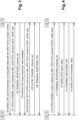
- Figure 4 illustrates a line diagram indicating a method for exchanging the containers between the secure element and the terminal through a file written in the secure element.
- This command specifies a channel to be opened for Communication.
- the command also indicates a buffer size, which determines how much data can be transmitted in one exchange.
- the UE responds with a "TERMINAL RESPONSE (channel_Id)" message, which indicates that the communication channel has been successfully established.
- the SE 10 sends an invitation message "SEND DATA (store, data)" to the UE 12, which indicates that the SE wants the UE to store specific data.
- the UE 12 answers with a "TERMINAL RESPONSE (OK)", confirming that the data is successfully stored.
- the SE 10 sends a final "SEND DATA (immediate, data)" message to the UE 12. The process finishes with the step 114.
- the invention has a particular beneficial for ODC (On Demand Connectivity, where an end-user can choose his Mobile Network Operator (MNO) with an embedded secure element (e.g., eUICC or iUICC) and for OTA platforms that administrate these embedded secure elements.
- MNO Mobile Network Operator
- SoR Steering of Roaming
- the "SOR transparent container” is attached to two downlink 5G signaling NAS (Non Access Stratum) message:
- the invention simply proposes to modify the Annex-R in order to enable transfer data between the UE and the secure element using DL NAS and UL NAS messages instead of IMS signaling.
- the present disclosure proposes replacing incoming or outgoing IMS signaling messages by any DL NAS or UL NAS message on Annex-R flowcharts. This ensures that all UICC-related communication is handled at the 5G NAS level rather than relying on IMS SIP-based transmission.
- Figure 5 illustrates a method for establishing a bidirectional Non-Access Stratum (NAS) signalization channel between a secure element cooperating with a terminal and a distant platform, in accordance with another embodiment of the present disclosure.
- the secure element is a UICC, an iUICC or a eUICC.
- the bidirectional Non-Access Stratum (NAS) signalization channel between the secure element 10 and the distant platform 11 is initialized upon request of either the secure element 10 or the distant platform 11.
- NAS Non-Access Stratum
- containers 51 of data are exchanged between the distant platform 11 and the secure element 10 through the Network Exposure Function 30.
- the containers are attached to downlink and uplink NAS signaling messages during a NAS procedure.
- the distant platform 11 is an over-the air (OTA) platform.
- OTA over-the air
- the distant platform 11 is a RSP platform as defined by the GSMA.
- the containers 51 are exchanged over bearer independent protocol (BIP) between the secure element 10 and the terminal 12.
- BIP bearer independent protocol
- the containers 51 are exchanged between the secure element 10 and the terminal 12 through a file written in the secure element 10.
- Various embodiments of the present disclosure may comprise one or more computer programs stored or otherwise embodied on a computer-readable medium, wherein the computer programs are configured to cause a processor or the computer to perform one or more operations.
- a computer-readable medium storing, embodying, or encoded with a computer program, or similar language may be embodied as a tangible data storage device storing one or more software programs that are configured to cause a processor or computer to perform one or more operations. Such operations may be, for example, any of the steps or operations described herein.
- the computer programs may be stored and provided to a computer using any type of non-transitory computer-readable media.
- the invention provides a robust and efficient method for exchanging secure element containers with the UE using a 5G NAS-based approach, bypassing traditional IMS SIP communication. This enhances remote eUICC management, improves roaming control (SoR), and ensures secure communication between UE and SE while remaining compliant with industry standards.
- SoR roaming control
Landscapes
- Engineering & Computer Science (AREA)
- Computer Security & Cryptography (AREA)
- Computer Networks & Wireless Communication (AREA)
- Signal Processing (AREA)
- Databases & Information Systems (AREA)
- Mobile Radio Communication Systems (AREA)
Applications Claiming Priority (3)
| Application Number | Priority Date | Filing Date | Title |
|---|---|---|---|
| EP18306726.3A EP3672352A1 (de) | 2018-12-18 | 2018-12-18 | Verfahren zum aufbau eines bidirektionalen nas-signalisierungskanals zwischen einem sicheren element, das mit einem endgerät zusammenarbeitet, und einer fernplattform |
| EP19813889.3A EP3900476B1 (de) | 2018-12-18 | 2019-12-10 | Verfahren zum aufbau eines bidirektionalen nas-signalisierungskanals zwischen einem sicheren element, das mit einem endgerät zusammenarbeitet, und einer fernplattform |
| PCT/EP2019/084506 WO2020126702A1 (en) | 2018-12-18 | 2019-12-10 | Method for establishing a bidirectional nas signalization channel between a secure element cooperating with a terminal and a distant platform |
Related Parent Applications (1)
| Application Number | Title | Priority Date | Filing Date |
|---|---|---|---|
| EP19813889.3A Division EP3900476B1 (de) | 2018-12-18 | 2019-12-10 | Verfahren zum aufbau eines bidirektionalen nas-signalisierungskanals zwischen einem sicheren element, das mit einem endgerät zusammenarbeitet, und einer fernplattform |
Publications (2)
| Publication Number | Publication Date |
|---|---|
| EP4576850A2 true EP4576850A2 (de) | 2025-06-25 |
| EP4576850A3 EP4576850A3 (de) | 2025-09-03 |
Family
ID=65628499
Family Applications (3)
| Application Number | Title | Priority Date | Filing Date |
|---|---|---|---|
| EP18306726.3A Withdrawn EP3672352A1 (de) | 2018-12-18 | 2018-12-18 | Verfahren zum aufbau eines bidirektionalen nas-signalisierungskanals zwischen einem sicheren element, das mit einem endgerät zusammenarbeitet, und einer fernplattform |
| EP19813889.3A Active EP3900476B1 (de) | 2018-12-18 | 2019-12-10 | Verfahren zum aufbau eines bidirektionalen nas-signalisierungskanals zwischen einem sicheren element, das mit einem endgerät zusammenarbeitet, und einer fernplattform |
| EP25164403.5A Pending EP4576850A3 (de) | 2018-12-18 | 2019-12-10 | Verfahren zur herstellung eines bidirektionalen nas-signalisierungskanals zwischen einem sicheren element, das mit einem endgerät kooperiert, und einer entfernten plattform |
Family Applications Before (2)
| Application Number | Title | Priority Date | Filing Date |
|---|---|---|---|
| EP18306726.3A Withdrawn EP3672352A1 (de) | 2018-12-18 | 2018-12-18 | Verfahren zum aufbau eines bidirektionalen nas-signalisierungskanals zwischen einem sicheren element, das mit einem endgerät zusammenarbeitet, und einer fernplattform |
| EP19813889.3A Active EP3900476B1 (de) | 2018-12-18 | 2019-12-10 | Verfahren zum aufbau eines bidirektionalen nas-signalisierungskanals zwischen einem sicheren element, das mit einem endgerät zusammenarbeitet, und einer fernplattform |
Country Status (6)
| Country | Link |
|---|---|
| US (1) | US12464347B2 (de) |
| EP (3) | EP3672352A1 (de) |
| JP (1) | JP7149425B2 (de) |
| CN (1) | CN113273228B (de) |
| ES (1) | ES3029651T3 (de) |
| WO (1) | WO2020126702A1 (de) |
Citations (3)
| Publication number | Priority date | Publication date | Assignee | Title |
|---|---|---|---|---|
| EP3024254A1 (de) | 2014-11-20 | 2016-05-25 | Georges Sankara | Automatische Rekonfiguration der SIM-Karte während des Roamings |
| WO2018035431A1 (en) | 2016-08-18 | 2018-02-22 | Convida Wireless, Llc | Network service exposure for service and session continuity |
| WO2018206095A1 (en) | 2017-05-10 | 2018-11-15 | Huawei Technologies Co., Ltd. | Apparatus and method for communicating sim data |
Family Cites Families (10)
| Publication number | Priority date | Publication date | Assignee | Title |
|---|---|---|---|---|
| US7792530B2 (en) * | 2006-07-11 | 2010-09-07 | Broadcom Corporation | Facilitating use of a restricted base tranceiver station |
| CN101820613B (zh) | 2009-02-27 | 2014-03-19 | 中兴通讯股份有限公司 | 一种应用下载的系统和方法 |
| US20110029618A1 (en) | 2009-08-02 | 2011-02-03 | Hanan Lavy | Methods and systems for managing virtual identities in the internet |
| WO2012054030A1 (en) * | 2010-10-20 | 2012-04-26 | Research In Motion Limited | Card application toolkit support for ip multimedia system |
| US20140143108A1 (en) * | 2012-11-21 | 2014-05-22 | Mastercard International Incorporated | Mobile device provisioning framework system |
| US9445443B2 (en) * | 2013-09-27 | 2016-09-13 | Qualcomm Incorporated | Network based provisioning of UE credentials for non-operator wireless deployments |
| EP3334116A1 (de) * | 2016-12-08 | 2018-06-13 | Gemalto Sa | Verfahren zur optimierung des abfrageereignisses eines sicheren elements und entsprechendes gateway, sicheres element, basisbandvorrichtung und ota-plattform |
| US10531420B2 (en) * | 2017-01-05 | 2020-01-07 | Huawei Technologies Co., Ltd. | Systems and methods for application-friendly protocol data unit (PDU) session management |
| CN110771251B (zh) * | 2017-06-16 | 2023-09-22 | 艾普拉控股有限公司 | 作为通信网络中的服务的小数据传送、数据缓冲及数据管理 |
| US11563536B2 (en) * | 2018-11-30 | 2023-01-24 | Nokia Technologies Oy | Method and apparatus for enabling concurrent transport via control plane |
-
2018
- 2018-12-18 EP EP18306726.3A patent/EP3672352A1/de not_active Withdrawn
-
2019
- 2019-12-10 ES ES19813889T patent/ES3029651T3/es active Active
- 2019-12-10 WO PCT/EP2019/084506 patent/WO2020126702A1/en not_active Ceased
- 2019-12-10 CN CN201980083662.0A patent/CN113273228B/zh active Active
- 2019-12-10 EP EP19813889.3A patent/EP3900476B1/de active Active
- 2019-12-10 US US17/312,623 patent/US12464347B2/en active Active
- 2019-12-10 JP JP2021535143A patent/JP7149425B2/ja active Active
- 2019-12-10 EP EP25164403.5A patent/EP4576850A3/de active Pending
Patent Citations (3)
| Publication number | Priority date | Publication date | Assignee | Title |
|---|---|---|---|---|
| EP3024254A1 (de) | 2014-11-20 | 2016-05-25 | Georges Sankara | Automatische Rekonfiguration der SIM-Karte während des Roamings |
| WO2018035431A1 (en) | 2016-08-18 | 2018-02-22 | Convida Wireless, Llc | Network service exposure for service and session continuity |
| WO2018206095A1 (en) | 2017-05-10 | 2018-11-15 | Huawei Technologies Co., Ltd. | Apparatus and method for communicating sim data |
Also Published As
| Publication number | Publication date |
|---|---|
| US20220022037A1 (en) | 2022-01-20 |
| EP3672352A1 (de) | 2020-06-24 |
| WO2020126702A1 (en) | 2020-06-25 |
| EP3900476B1 (de) | 2025-03-26 |
| EP3900476A1 (de) | 2021-10-27 |
| CN113273228B (zh) | 2025-01-14 |
| JP7149425B2 (ja) | 2022-10-06 |
| ES3029651T3 (en) | 2025-06-24 |
| JP2022514324A (ja) | 2022-02-10 |
| CN113273228A (zh) | 2021-08-17 |
| US12464347B2 (en) | 2025-11-04 |
| EP4576850A3 (de) | 2025-09-03 |
Similar Documents
| Publication | Publication Date | Title |
|---|---|---|
| US11974358B2 (en) | Method for transmitting an existing subscription profile from a MNO to a secure element, corresponding servers and secure element | |
| AU2023201180B2 (en) | Systems and method for secure updates of configuration parameters provisioned in user equipment | |
| KR20220018579A (ko) | 지정된 페이로드 컨테이너 유형을 사용하는 통신 시스템의 제어 평면을 통한 사용자 데이터 전송 | |
| US20190253461A1 (en) | Security management in communication systems with provisioning based mechanism to identify information elements | |
| KR20210076981A (ko) | 세션 관리를 위한 방법 및 장치 | |
| EP4576850A2 (de) | Verfahren zur herstellung eines bidirektionalen nas-signalisierungskanals zwischen einem sicheren element, das mit einem endgerät kooperiert, und einer entfernten plattform | |
| KR101780401B1 (ko) | 무선 통신 시스템에서의 인증 및 보안 설정을 위한 방법 및 이를 위한 장치 | |
| JP7822492B2 (ja) | セキュア要素と協働するユーザ機器にデータを送るための方法および対応するサーバ | |
| RU2783383C1 (ru) | Системы и способ для безопасных обновлений параметров конфигурации, обеспеченных в оборудовании пользователя |
Legal Events
| Date | Code | Title | Description |
|---|---|---|---|
| PUAI | Public reference made under article 153(3) epc to a published international application that has entered the european phase |
Free format text: ORIGINAL CODE: 0009012 |
|
| STAA | Information on the status of an ep patent application or granted ep patent |
Free format text: STATUS: THE APPLICATION HAS BEEN PUBLISHED |
|
| AC | Divisional application: reference to earlier application |
Ref document number: 3900476 Country of ref document: EP Kind code of ref document: P |
|
| AK | Designated contracting states |
Kind code of ref document: A2 Designated state(s): AL AT BE BG CH CY CZ DE DK EE ES FI FR GB GR HR HU IE IS IT LI LT LU LV MC MK MT NL NO PL PT RO RS SE SI SK SM TR |
|
| REG | Reference to a national code |
Ref country code: DE Ref legal event code: R079 Free format text: PREVIOUS MAIN CLASS: H04W0008200000 Ipc: H04W0076100000 |
|
| PUAL | Search report despatched |
Free format text: ORIGINAL CODE: 0009013 |
|
| AK | Designated contracting states |
Kind code of ref document: A3 Designated state(s): AL AT BE BG CH CY CZ DE DK EE ES FI FR GB GR HR HU IE IS IT LI LT LU LV MC MK MT NL NO PL PT RO RS SE SI SK SM TR |
|
| RIC1 | Information provided on ipc code assigned before grant |
Ipc: H04W 76/10 20180101AFI20250728BHEP Ipc: H04W 12/08 20210101ALI20250728BHEP Ipc: H04W 4/50 20180101ALI20250728BHEP Ipc: H04W 8/20 20090101ALI20250728BHEP Ipc: H04W 12/037 20210101ALI20250728BHEP Ipc: H04W 12/30 20210101ALI20250728BHEP Ipc: H04W 12/40 20210101ALI20250728BHEP Ipc: H04W 8/18 20090101ALN20250728BHEP Ipc: H04W 12/06 20210101ALN20250728BHEP |
|
| STAA | Information on the status of an ep patent application or granted ep patent |
Free format text: STATUS: REQUEST FOR EXAMINATION WAS MADE |
|
| 17P | Request for examination filed |
Effective date: 20260303 |