EP4576732A2 - Miniaturbild von aufgezeichnetem ton - Google Patents
Miniaturbild von aufgezeichnetem ton Download PDFInfo
- Publication number
- EP4576732A2 EP4576732A2 EP25175821.5A EP25175821A EP4576732A2 EP 4576732 A2 EP4576732 A2 EP 4576732A2 EP 25175821 A EP25175821 A EP 25175821A EP 4576732 A2 EP4576732 A2 EP 4576732A2
- Authority
- EP
- European Patent Office
- Prior art keywords
- sound
- user
- option
- images
- graphics
- Prior art date
- Legal status (The legal status is an assumption and is not a legal conclusion. Google has not performed a legal analysis and makes no representation as to the accuracy of the status listed.)
- Pending
Links
Images





Classifications
-
- H—ELECTRICITY
- H04—ELECTRIC COMMUNICATION TECHNIQUE
- H04N—PICTORIAL COMMUNICATION, e.g. TELEVISION
- H04N5/00—Details of television systems
- H04N5/222—Studio circuitry; Studio devices; Studio equipment
- H04N5/262—Studio circuits, e.g. for mixing, switching-over, change of character of image, other special effects ; Cameras specially adapted for the electronic generation of special effects
- H04N5/2621—Cameras specially adapted for the electronic generation of special effects during image pickup, e.g. digital cameras, camcorders, video cameras having integrated special effects capability
-
- G—PHYSICS
- G06—COMPUTING OR CALCULATING; COUNTING
- G06F—ELECTRIC DIGITAL DATA PROCESSING
- G06F16/00—Information retrieval; Database structures therefor; File system structures therefor
- G06F16/60—Information retrieval; Database structures therefor; File system structures therefor of audio data
- G06F16/68—Retrieval characterised by using metadata, e.g. metadata not derived from the content or metadata generated manually
- G06F16/683—Retrieval characterised by using metadata, e.g. metadata not derived from the content or metadata generated manually using metadata automatically derived from the content
-
- G—PHYSICS
- G06—COMPUTING OR CALCULATING; COUNTING
- G06F—ELECTRIC DIGITAL DATA PROCESSING
- G06F3/00—Input arrangements for transferring data to be processed into a form capable of being handled by the computer; Output arrangements for transferring data from processing unit to output unit, e.g. interface arrangements
- G06F3/01—Input arrangements or combined input and output arrangements for interaction between user and computer
- G06F3/048—Interaction techniques based on graphical user interfaces [GUI]
- G06F3/0481—Interaction techniques based on graphical user interfaces [GUI] based on specific properties of the displayed interaction object or a metaphor-based environment, e.g. interaction with desktop elements like windows or icons, or assisted by a cursor's changing behaviour or appearance
- G06F3/04817—Interaction techniques based on graphical user interfaces [GUI] based on specific properties of the displayed interaction object or a metaphor-based environment, e.g. interaction with desktop elements like windows or icons, or assisted by a cursor's changing behaviour or appearance using icons
-
- G—PHYSICS
- G06—COMPUTING OR CALCULATING; COUNTING
- G06F—ELECTRIC DIGITAL DATA PROCESSING
- G06F3/00—Input arrangements for transferring data to be processed into a form capable of being handled by the computer; Output arrangements for transferring data from processing unit to output unit, e.g. interface arrangements
- G06F3/01—Input arrangements or combined input and output arrangements for interaction between user and computer
- G06F3/048—Interaction techniques based on graphical user interfaces [GUI]
- G06F3/0481—Interaction techniques based on graphical user interfaces [GUI] based on specific properties of the displayed interaction object or a metaphor-based environment, e.g. interaction with desktop elements like windows or icons, or assisted by a cursor's changing behaviour or appearance
- G06F3/0482—Interaction with lists of selectable items, e.g. menus
-
- G—PHYSICS
- G06—COMPUTING OR CALCULATING; COUNTING
- G06F—ELECTRIC DIGITAL DATA PROCESSING
- G06F3/00—Input arrangements for transferring data to be processed into a form capable of being handled by the computer; Output arrangements for transferring data from processing unit to output unit, e.g. interface arrangements
- G06F3/16—Sound input; Sound output
-
- G—PHYSICS
- G06—COMPUTING OR CALCULATING; COUNTING
- G06T—IMAGE DATA PROCESSING OR GENERATION, IN GENERAL
- G06T5/00—Image enhancement or restoration
- G06T5/70—Denoising; Smoothing
-
- G—PHYSICS
- G06—COMPUTING OR CALCULATING; COUNTING
- G06T—IMAGE DATA PROCESSING OR GENERATION, IN GENERAL
- G06T5/00—Image enhancement or restoration
- G06T5/73—Deblurring; Sharpening
-
- H—ELECTRICITY
- H04—ELECTRIC COMMUNICATION TECHNIQUE
- H04L—TRANSMISSION OF DIGITAL INFORMATION, e.g. TELEGRAPHIC COMMUNICATION
- H04L51/00—User-to-user messaging in packet-switching networks, transmitted according to store-and-forward or real-time protocols, e.g. e-mail
- H04L51/07—User-to-user messaging in packet-switching networks, transmitted according to store-and-forward or real-time protocols, e.g. e-mail characterised by the inclusion of specific contents
- H04L51/10—Multimedia information
-
- H—ELECTRICITY
- H04—ELECTRIC COMMUNICATION TECHNIQUE
- H04L—TRANSMISSION OF DIGITAL INFORMATION, e.g. TELEGRAPHIC COMMUNICATION
- H04L51/00—User-to-user messaging in packet-switching networks, transmitted according to store-and-forward or real-time protocols, e.g. e-mail
- H04L51/52—User-to-user messaging in packet-switching networks, transmitted according to store-and-forward or real-time protocols, e.g. e-mail for supporting social networking services
Definitions
- the present disclosure relates generally to recording sounds with a messaging application.
- the disclosed embodiments improve the efficiency of using the electronic device by providing a system that allows a user to create a custom sound or audio clip and associate that sound or audio clip with an image that is shared with other users.
- the receiving users access the image or images with which the sound has been associated, the recipients are presented with the images while the associated sound is played back.
- the user who creates the custom sound can specify a privacy status for the sound to control whether the recipient users can share the sound they receive with other users and view additional information about the sound.
- One or more graphical elements representing the sound can be conditionally added, for example as stickers, to the image or images that are associated with the sound, based on the privacy status of the sound. If the sound is publicly available based on the privacy status, a recipient of the image that is associated with the sound is presented with the image or images that include the one or more graphical elements while the sound is played back.
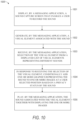
- a messaging application implemented by one or more processors of a user device displays a sound capture screen that enables a user to record the sound. After the sound is recorded using the sound capture screen, the messaging application generates a visual element associated with the sound and receives selection of the visual element from a displayed list of visual elements representing different sounds. In response to receiving the selection of the visual element, the messaging application conditionally adds one or more graphics representing the sound to one or more images at a user selected position based on a privacy status of the sound. The messaging application plays the sound associated with the visual element together with displaying the one or more images.
- FIG. 1 is a block diagram showing an example messaging system 100 for exchanging data (e.g., messages and associated content) over a network.
- the messaging system 100 includes multiple instances of a client device 102, each of which hosts a number of applications, including a messaging client 104 and other external applications 109 (e.g., third-party applications).
- Each messaging client 104 is communicatively coupled to other instances of the messaging client 104 (e.g., hosted on respective other client devices 102), a messaging server system 108 and external app(s) servers 110 via a network 112 (e.g., the Internet).
- a messaging client 104 can also communicate with locally-hosted third-party applications 109 using Applications Program Interfaces (APIs).
- APIs Application Program Interfaces
- a messaging client 104 is able to communicate and exchange data with other messaging clients 104 and with the messaging server system 108 via the network 112.
- the messaging server system 108 provides server-side functionality via the network 112 to a particular messaging client 104. While certain functions of the messaging system 100 are described herein as being performed by either a messaging client 104 or by the messaging server system 108, the location of certain functionality either within the messaging client 104 or the messaging server system 108 may be a design choice. For example, it may be technically preferable to initially deploy certain technology and functionality within the messaging server system 108 but to later migrate this technology and functionality to the messaging client 104 where a client device 102 has sufficient processing capacity.
- the messaging server system 108 supports various services and operations that are provided to the messaging client 104. Such operations include transmitting data to, receiving data from, and processing data generated by the messaging client 104. This data may include message content, client device information, geolocation information, media augmentation and overlays, message content persistence conditions, social network information, and live event information, as examples. Data exchanges within the messaging system 100 are invoked and controlled through functions available via user interfaces (UIs) of the messaging client 104.
- UIs user interfaces
- an Application Program Interface (API) server 116 is coupled to, and provides a programmatic interface to, application servers 114.
- the application servers 114 are communicatively coupled to a database server 120, which facilitates access to a database 126 that stores data associated with messages processed by the application servers 114.
- a web server 128 is coupled to the application servers 114, and provides web-based interfaces to the application servers 114. To this end, the web server 128 processes incoming network requests over the Hypertext Transfer Protocol (HTTP) and several other related protocols.
- HTTP Hypertext Transfer Protocol
- the Application Program Interface (API) server 116 receives and transmits message data (e.g., commands and message payloads) between the client device 102 and the application servers 114. Specifically, the Application Program Interface (API) server 116 provides a set of interfaces (e.g., routines and protocols) that can be called or queried by the messaging client 104 in order to invoke functionality of the application servers 114.
- message data e.g., commands and message payloads
- API Application Program Interface
- the Application Program Interface (API) server 116 exposes various functions supported by the application servers 114, including account registration, login functionality, the sending of messages, via the application servers 114, from a particular messaging client 104 to another messaging client 104, the sending of media files (e.g., images or video) from a messaging client 104 to a messaging server 118, and for possible access by another messaging client 104, the settings of a collection of media data (e.g., story), the retrieval of a list of friends of a user of a client device 102, the retrieval of such collections, the retrieval of messages and content, the addition and deletion of entities (e.g., friends) to an entity graph (e.g., a social graph), the location of friends within a social graph, and opening an application event (e.g., relating to the messaging client 104).
- entity graph e.g., a social graph
- an application event e.g., relating to the messaging client 104.
- the application servers 114 host a number of server applications and subsystems, including for example a messaging server 118, an image processing server 122, and a social network server 124.
- the messaging server 118 implements a number of message processing technologies and functions, particularly related to the aggregation and other processing of content (e.g., textual and multimedia content) included in messages received from multiple instances of the messaging client 104.
- content e.g., textual and multimedia content
- the text and media content from multiple sources may be aggregated into collections of content (e.g., called stories or galleries). These collections are then made available to the messaging client 104.
- Other processor- and memory-intensive processing of data may also be performed server-side by the messaging server 118, in view of the hardware requirements for such processing.
- the application servers 114 also include an image processing server 122 that is dedicated to performing various image processing operations, typically with respect to images or video within the payload of a message sent from or received at the messaging server 118.
- the social network server 124 supports various social networking functions and services and makes these functions and services available to the messaging server 118. To this end, the social network server 124 maintains and accesses an entity graph 308 (as shown in FIG. 3 ) within the database 126. Examples of functions and services supported by the social network server 124 include the identification of other users of the messaging system 100 with which a particular user has relationships or is "following," and also the identification of other entities and interests of a particular user.
- an external resource e.g., a third-party application 109 or applet
- the messaging client 104 receives a user selection of an option to launch or access features of an external resource (e.g., a third-party resource), such as external apps 109.
- the external resource may be a third-party application (external apps 109) installed on the client device 102 (e.g., a "native app"), or a small-scale version of the third-party application (e.g., an "applet”) that is hosted on the client device 102 or remote of the client device 102 (e.g., on third-party servers 110).
- the small-scale version of the third-party application includes a subset of features and functions of the third-party application (e.g., the full-scale, native version of the third-party standalone application) and is implemented using a markup-language document.
- the small-scale version of the third-party application e.g., an "applet”
- the small-scale version of the third-party application is a web-based, markup-language version of the third-party application and is embedded in the messaging client 104.
- an applet may incorporate a scripting language (e.g., a .*js file or a .json file) and a style sheet (e.g., a .*ss file).
- the messaging client 104 determines whether the selected external resource is a web-based external resource or a locally-installed external application.
- external applications 109 that are locally installed on the client device 102 can be launched independently of and separately from the messaging client 104, such as by selecting an icon, corresponding to the external application 109, on a home screen of the client device 102.
- Small-scale versions of such external applications can be launched or accessed via the messaging client 104 and, in some examples, no or limited portions of the small-scale external application can be accessed outside of the messaging client 104.
- the small-scale external application can be launched by the messaging client 104 receiving, from a external app(s) server 110, a markup-language document associated with the small-scale external application and processing such a document.
- the messaging client 104 In response to determining that the external resource is a locally-installed external application 109, the messaging client 104 instructs the client device 102 to launch the external application 109 by executing locally-stored code corresponding to the external application 109. In response to determining that the external resource is a web-based resource, the messaging client 104 communicates with the external app(s) servers 110 to obtain a markup-language document corresponding to the selected resource. The messaging client 104 then processes the obtained markup-language document to present the web-based external resource within a user interface of the messaging client 104.
- the messaging client 104 can notify a user of the client device 102, or other users related to such a user (e.g., "friends"), of activity taking place in one or more external resources
- the messaging client 104 can provide participants in a conversation (e.g., a chat session) in the messaging client 104 with notifications relating to the current or recent use of an external resource by one or more members of a group of users.
- One or more users can be invited to join in an active external resource or to launch a recently-used but currently inactive (in the group of friends) external resource.
- the external resource can provide participants in a conversation, each using a respective messaging client messaging clients 104, with the ability to share an item, status, state, or location in an external resource with one or more members of a group of users into a chat session.
- the shared item may be an interactive chat card with which members of the chat can interact, for example, to launch the corresponding external resource, view specific information within the external resource, or take the member of the chat to a specific location or state within the external resource.
- response messages can be sent to users on the messaging client 104.
- the external resource can selectively include different media items in the responses, based on a current context of the external resource.
- the messaging client 104 can present a list of the available external resources (e.g., third-party or external applications 109 or applets) to a user to launch or access a given external resource.
- This list can be presented in a context-sensitive menu.
- the icons representing different ones of the external application 109 (or applets) can vary based on how the menu is launched by the user (e.g., from a conversation interface or from a non-conversation interface).
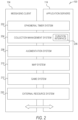
- FIG. 2 is a block diagram illustrating further details regarding the messaging system 100, according to some examples.
- the messaging system 100 is shown to comprise the messaging client 104 and the application servers 114.
- the messaging system 100 embodies a number of subsystems, which are supported on the client side by the messaging client 104 and on the sever side by the application servers 114. These subsystems include, for example, an ephemeral timer system 202, a collection management system 204, an augmentation system 208, a map system 210, a game system 212, and an external resource system 220.
- the ephemeral timer system 202 is responsible for enforcing the temporary or time-limited access to content by the messaging client 104 and the messaging server 118.
- the ephemeral timer system 202 incorporates a number of timers that, based on duration and display parameters associated with a message, or collection of messages (e.g., a story), selectively enable access (e.g., for presentation and display) to messages and associated content via the messaging client 104. Further details regarding the operation of the ephemeral timer system 202 are provided below.
- the collection management system 204 is responsible for managing sets or collections of media (e.g., collections of text, image video, and audio data).
- a collection of content e.g., messages, including images, video, text, and audio
- Such a collection may be made available for a specified time period, such as the duration of an event to which the content relates. For example, content relating to a music concert may be made available as a "story” for the duration of that music concert.
- the collection management system 204 may also be responsible for publishing an icon that provides notification of the existence of a particular collection to the user interface of the messaging client 104.
- the collection management system 204 furthermore includes a curation interface 206 that allows a collection manager to manage and curate a particular collection of content.
- the curation interface 206 enables an event organizer to curate a collection of content relating to a specific event (e.g., delete inappropriate content or redundant messages).
- the collection management system 204 employs machine vision (or image recognition technology) and content rules to automatically curate a content collection. In certain examples, compensation may be paid to a user for the inclusion of user-generated content into a collection. In such cases, the collection management system 204 operates to automatically make payments to such users for the use of their content.
- the augmentation system 208 provides various functions that enable a user to augment (e.g., annotate or otherwise modify or edit) media content associated with a message.
- the augmentation system 208 provides functions related to the generation and publishing of media overlays for messages processed by the messaging system 100.
- the augmentation system 208 operatively supplies a media overlay or augmentation (e.g., an image filter) to the messaging client 104 based on a geolocation of the client device 102.
- the augmentation system 208 operatively supplies a media overlay to the messaging client 104 based on other information, such as social network information of the user of the client device 102.
- a media overlay may include audio and visual content and visual effects.
- audio and visual content examples include pictures, texts, logos, animations, and sound effects.
- An example of a visual effect includes color overlaying.
- the audio and visual content or the visual effects can be applied to a media content item (e.g., a photo) at the client device 102.
- the media overlay may include text or image that can be overlaid on top of a photograph taken by the client device 102.
- the media overlay includes an identification of a location overlay (e.g., Venice beach), a name of a live event, or a name of a merchant overlay (e.g., Beach Coffee House).
- the augmentation system 208 uses the geolocation of the client device 102 to identify a media overlay that includes the name of a merchant at the geolocation of the client device 102.
- the media overlay may include other indicia associated with the merchant.
- the media overlays may be stored in the database 126 and accessed through the database server 120.
- the augmentation system 208 provides a user-based publication platform that enables users to select a geolocation on a map and upload content associated with the selected geolocation. The user may also specify circumstances under which a particular media overlay should be offered to other users. The augmentation system 208 generates a media overlay that includes the uploaded content and associates the uploaded content with the selected geolocation.
- the augmentation system 208 provides a merchant-based publication platform that enables merchants to select a particular media overlay associated with a geolocation via a bidding process. For example, the augmentation system 208 associates the media overlay of the highest bidding merchant with a corresponding geolocation for a predefined amount of time.
- the map system 210 provides various geographic location functions, and supports the presentation of map-based media content and messages by the messaging client 104.
- the map system 210 enables the display of user icons or avatars (e.g., stored in profile data 316) on a map to indicate a current or past location of "friends" of a user, as well as media content (e.g., collections of messages including photographs and videos) generated by such friends, within the context of a map.
- a message posted by a user to the messaging system 100 from a specific geographic location may be displayed within the context of a map at that particular location to "friends" of a specific user on a map interface of the messaging client 104.
- a user can furthermore share his or her location and status information (e.g., using an appropriate status avatar) with other users of the messaging system 100 via the messaging client 104, with this location and status information being similarly displayed within the context of a map interface of the messaging client 104 to selected users.
- location and status information e.g., using an appropriate status avatar
- the game system 212 provides various gaming functions within the context of the messaging client 104
- the messaging client 104 provides a game interface providing a list of available games (e.g., web-based games or web-based applications) that can be launched by a user within the context of the messaging client 104, and played with other users of the messaging system 100.
- the messaging system 100 further enables a particular user to invite other users to participate in the play of a specific game, by issuing invitations to such other users from the messaging client 104.
- the messaging client 104 also supports both voice and text messaging (e.g., chats) within the context of gameplay, provides a leaderboard for the games, and also supports the provision of in-game rewards (e.g., coins and items)
- the external resource system 220 provides an interface for the messaging client 104 to communicate with external app(s) servers 110 to launch or access external resources.
- Each external resource (apps) server 110 hosts, for example, a markup language (e.g., HTML5) based application or small-scale version of an external application (e.g., game, utility, payment, or ride-sharing application that is external to the messaging client 104).
- the messaging client 104 may launch a web-based resource (e.g., application) by accessing the HTML5 file from the external resource (apps) servers 110 associated with the web-based resource.
- applications hosted by external resource servers 110 are programmed in JavaScript leveraging a Software Development Kit (SDK) provided by the messaging server 118.
- SDK Software Development Kit
- the SDK includes Application Programming Interfaces (APIs) with functions that can be called or invoked by the web-based application.
- APIs Application Programming Interfaces
- the messaging server 118 includes a JavaScript library that provides a given third-party resource access to certain user data of the messaging client 104.
- HTML5 is used as an example technology for programming games, but applications and resources programmed based on other technologies can be used
- the SDK is downloaded by an external resource (apps) server 110 from the messaging server 118 or is otherwise received by the external resource (apps) server 110.
- the SDK is included as part of the application code of a web-based external resource.
- the code of the web-based resource can then call or invoke certain functions of the SDK to integrate features of the messaging client 104 into the web-based resource.
- the SDK stored on the messaging server 118 effectively provides the bridge between an external resource (e.g., third-party or external applications 109 or applets and the messaging client 104). This provides the user with a seamless experience of communicating with other users on the messaging client 104, while also preserving the look and feel of the messaging client 104.
- the SDK facilitates communication between external resource servers 110 and the messaging client 104.
- a WebViewJavaScriptBridge running on a client device 102 establishes two one-way communication channels between a external resource and the messaging client 104. Messages are sent between the external resource and the messaging client 104 via these communication channels asynchronously.
- Each SDK function invocation is sent as a message and callback.
- Each SDK function is implemented by constructing a unique callback identifier and sending a message with that callback identifier.
- each external resource server 110 provides an HTML5 file corresponding to the web-based external resource to the messaging server 118.
- the messaging server 118 can add a visual representation (such as a box art or other graphic) of the web-based external resource in the messaging client 104. Once the user selects the visual representation or instructs the messaging client 104 through a GUI of the messaging client 104 to access features of the web-based external resource, the messaging client 104 obtains the HTML5 file and instantiates the resources necessary to access the features of the web-based external resource.
- the messaging client 104 presents a graphical user interface (e.g., a landing page or title screen) for an external resource. During, before, or after presenting the landing page or title screen, the messaging client 104 determines whether the launched external resource has been previously authorized to access user data of the messaging client 104. In response to determining that the launched external resource has been previously authorized to access user data of the messaging client 104, the messaging client 104 presents another graphical user interface of the external resource that includes functions and features of the external resource.
- a graphical user interface e.g., a landing page or title screen
- the messaging client 104 slides up (e.g., animates a menu as surfacing from a bottom of the screen to a middle of or other portion of the screen) a menu for authorizing the external resource to access the user data.
- the menu identifies the type of user data that the external resource will be authorized to use.
- the messaging client 104 adds the external resource to a list of authorized external resources and allows the external resource to access user data from the messaging client 104.
- the external resource is authorized by the messaging client 104 to access the user data in accordance with an OAuth 2 framework.
- the messaging client 104 controls the type of user data that is shared with external resources based on the type of external resource being authorized.
- external resources that include full-scale external applications e.g., a third-party or external application 109 are provided with access to a first type of user data (e.g., only two-dimensional avatars of users with or without different avatar characteristics).
- external resources that include small-scale versions of external applications e.g., web-based versions of third-party applications
- are provided with access to a second type of user data e.g., payment information, two-dimensional avatars of users, three-dimensional avatars of users, and avatars with various avatar characteristics.
- Avatar characteristics include different ways to customize a look and feel of an avatar, such as different poses, facial features, clothing, and so forth.
- the messaging client 104 presents an interface that allows a user to create custom sound clips, such as by recording up to 60 seconds of sound.
- the messaging client 104 presents a graphical user interface 500 with a sound menu 530 in response to the user selecting the music icon 520.
- the music icon 520 is initially presented as an overlaid menu on top of a real-time video feed 510 or previously captured video or image content.
- the overlaid menu allows the user to select from various augmented reality items and customizations to modify the real-time video feed or previously captured video or image content.
- the menu 530 slides up the display to overlay at least half of the screen from the bottom.
- the menu 530 includes one or more sound clips provided by various artists or third-parties that the user can choose from. Selection of any given one of the sound clips that are displayed, causes the sound clip from the artist corresponding to the selected sound clip to be played back.
- the user can drag a thumbnail image representing the selected sound clip to the real-time video feed 510 or previously captured video or image content to incorporate the selected sound clip to the real-time video feed 510 or previously captured video or image content. In this way, when the user views the real-time video feed 510 or previously captured video or image content, the sound is automatically played back.
- the selected sound is automatically played back to the second user while the second user views the real-time video feed 510 or previously captured video or image content that has been shared.
- the menu 530 includes a create sound option 532.
- the create sound option 532 allows the user to record a custom sound.
- the messaging client 104 navigates the user to another user interface 600 ( FIG. 6 ). Specifically, the messaging client 104 activates an image capture device (e.g., camera) of the client device 102 and starts receiving a real-time video feed from the image capture device. The messaging client 104 blurs or dims the received real-time video feed and presents the blurred or dimmed video feed as image content 610. The messaging client 104 presents a sound recording option 640 as an overlaid icon on top of the image content 610.
- an image capture device e.g., camera
- the messaging client 104 receives a user selection (a first input) of the sound recording option 640.
- the messaging client 104 adjusts an attribute of the screen to indicate to the user that sound is being recorded based on audio content captured by the microphone of the client device 102. For example, the messaging client 104 displays a border 620 around all or a designated portion of the screen. As another example, the messaging client 104 starts slowly increasing and decreasing brightness of the screen to indicate that sound is being recorded.
- the messaging client 104 starts storing audio content captured by the microphone in response to receiving the first input that selects the sound recording option 640.
- a progress bar 642 is presented within or associated with the sound recording option 640.
- the progress bar 642 continuously progresses and increases in size to fill up the portion of the display that presents the sound recording option 640
- the sound recording option 640 may be a circle and the progress bar 642 may slowly fill the circle with a certain color or set of randomized colors.
- the progress bar 642 may be of any suitable shape and size to fill the sound recording option 640.
- the amount of time it takes for the progress bar 642 to completely fill the sound recording option 640 may depend on and vary based on the maximum allowable length or duration of the sound that is being recorded.
- the messaging client 104 may set a 60 second limit for recording individual sound clips.
- the progress bar 642 starts slowly filling in the sound recording option 640 in response to receiving the first input that selects the sound recording option 640 and may finish filling in the sound recording option 640 after 60 seconds.
- the progress bar 642 may be a circular line that starts at one position inside or outside of the sound recording option 640 and terminates at another position inside or outside of the sound recording option 640 after being advanced around the circular sound recording option 640.
- the terminating position may be the same as the starting position, in which case, the circular line forms a complete ring around the outside or inside the sound recording option 640 after the designated maximum time allowable for recording sounds (e.g., 60 seconds).
- the circular line may be of a different color or style than the sound recording option 640.
- the messaging client 104 presents a waveform 630 that represents visually the sound or audio content captured by the microphone.
- the messaging client 104 begins animating the waveform 630 after receiving the first input that selects the sound recording option 640. This visually informs the user that the audio content is currently being received and captured by the microphone of the client device 102.
- the color properties and attributes of the waveform 630 may be the same as or different from the color properties and attributes of the progress bar 642.
- the color properties and attributes of the waveform 630 and the progress bar 642 may be the same as or different from the color properties and attributes of the border 620.
- the messaging client 104 while recording the audio content captured by the microphone, may receive a second input that selects the sound recording option 640 again.
- the first input may be provided by a user's finger pressing and holding the sound recording option 640 and the second input may be a release of the finger from the sound recording option 640.
- the messaging client 104 terminates recording the audio content captured by the microphone.
- the second input may be received before the progress bar 642 advances to the ending position (e.g., before the progress bar 642 completely fills up the sound recording option 640).
- the messaging client 104 After the messaging client 104 completes capturing the sound clip (e.g., either automatically when the progress bar 642 reaches the ending position or when the second input that selects the sound recording option 640 is received), the messaging client 104 presents a screen 700 ( FIG. 7 ) that includes various options associated with the sound clip.
- the options include a sound name option 710, a sound privacy status selection option 720, an attribution information option 740, and a sound clip adjustment option 730.
- the sound clip continuously loops in the background while the screen 700 with the various options is presented.
- the sound clip that continuously loops in the background may change to be shorter in duration as the user interacts with the sound clip adjustment option 730 to trim the start and end position of the sound clip.
- the sound name option 710 may be a text box that allows the user to specify a name or title for the recorded sound. In some implementations, the sound name option 710 allows a user to upload or select a thumbnail image to represent the recorded sound. The messaging client 104 determines whether the name input by the user violates one or more restrictions (e.g., if the name includes abusive or offensive language). In such circumstances, the messaging client 104 prompts the user to specify an alternate name in the sound name option 710.
- the sound privacy status selection option 720 may be a toggle switch that allows the user to toggle ON/OFF whether the sound is private or public.
- the attribution information option 740 is presented.
- the attribution information option 740 may be a text box that allows the user to specify the name of the creator of the sound.
- the attribution information option 740 allows the user to select an avatar that represents the creator of the recorded sound.
- the attribution information option 740 may remain hidden if the sound privacy status selection option 720 is set to a private status. By default, the sound privacy status selection option 720 is set to the private setting.
- the messaging client 104 determines whether the user has previously created public sounds. Specifically, the messaging client 104 determines if the user has ever set the option 720 to the public setting for any previous sound the user recorded. If not and in response to determining that the user has set the option 720 to the public setting for the very first time, the messaging client 104 presents a dialog box. The dialog box informs the user that the public setting allows other users of the messaging client 104 to use the sound clip for image or video content that they capture with their own client devices 102. Once the user dismisses the dialog box, the attribution information option 740 is presented and the privacy setting is set to public for the sound clip.
- a private sound setting allows the user who created the sound to incorporate the sound into an image or video (e.g., by dragging a thumbnail (one or more graphics) representing the sound into the image or video).
- a set of illustrative thumbnails that represent sound clips are discussed in connection with FIG. 9 .
- the incorporated sound replaces an audio track of the image or video.
- the image or video is sent to one or more other users.
- the recipient users view the image or video, the associated sound clip is presented together with the image or video. The recipient users are not presented with the thumbnail image that has been dragged into the image or video to associate the sound clip with the image or video.
- the recipient users are prevented from sharing the sound clip or the image or video that includes the sound clip with other users (e.g., friends of friends).
- a recipient user can select an option to share an image or video that includes an associated private sound clip with another friend.
- the option to share the image or video with another friend only the image or video content is sent to the other friend without sending the private sound clip.
- no sound is presented or played back because the sound clip was originally set to the private status.
- a public setting for a sound clip allows recipient users to continue sharing the sound clip with other users.
- a first user drags a thumbnail image representing the sound clip onto an image or video.
- the first user can place the thumbnail image anywhere on the image or video or at one or more predetermined positions.
- the sound clip associated with the thumbnail image replaces the audio of the video or automatically plays for a duration of the sound clip while a single image that includes the thumbnail image is presented.
- the image or video that includes the thumbnail image is shared by the first user with a second user.
- the second user selects an option to view the image or video and, in response, the image or video is presented to the second user with the thumbnail image at the position selected by the first user and while the sound clip is played back.
- the second user can select an option to save the sound clip associated with the thumbnail image.
- the second user can then add the thumbnail image to another video or image captured by a client device 102 of the second user to cause the sound clip associated with the thumbnail image to be played back when the image or video is accessed or displayed.
- the second user can then share the image or video captured by the second user to which the thumbnail image was added with a third user.
- the third user may be a friend of the second user and may or may not also be a friend of the first user.
- the sound clip adjustment option 730 allows the user to trim the sound clip that was recorded.
- the sound clip may be 60 seconds in length.
- the user may move vertical bars 731 and 732 of sound clip adjustment option 730 to adjust the start time and end time of the sound clip to reduce the length of the sound clip.
- the user may move the left bar 731 towards the right by 10 seconds to cause the first ten seconds of the sound clip to be deleted and to have the sound clip start at the 10 second mark past the original start time.
- the user may move the right bar 732 towards the left by five seconds to cause the last five seconds of the sound clip to be deleted and to have the sound clip end five second earlier.
- a total of 15 seconds is trimmed from a 60 second sound clip.
- the trimmed sound clip is stored and associated with the options 710, 720 and 740.
- the messaging client 104 receives a user selection of a save option (not shown) from the screen 700.
- the messaging client 104 saves the sound clip with the various options that the user has selected and set.
- the messaging client 104 navigates the user to screen 800 ( FIG. 8 ) in which a menu of sounds is presented overlaid on a real-time video feed or previously captured image that is displayed.
- the menu of sounds 810 includes a new tab that is labeled "My Sounds" that lists one or more sounds that the user created or that the user has saved from other sounds that the user received in image or video content from another user.
- the tab labeled "My Sounds" may only be presented in the menu 530 ( FIG. 5 ) after at least one sound clip is created or saved by the user.
- the list of sounds displayed in the menu of sounds 810 includes visual elements (e.g., icons or thumbnails) that represent each sound.
- the visual elements include the assigned name or title of the sound, an avatar representing the creator of the sound, or one or more graphics that represent the sound.
- the visual elements include small waveforms that become animated when the user selects a play option to preview the sound clip associated with the respective visual element.
- the menu of sounds 810 includes a create sound option 820. Selection of the create sound option 820 navigates the user to screen 600 to allow the user to create a new custom sound clip.
- the menu of sounds 810 visually distinguishes private sounds from public sounds.
- a first visual element 830 may be in displayed with a first display format (e.g., a first visual property, such as in color with a globe icon) in response to the messaging client 104 determining that the sound clip associated with the first visual element 830 is a public sound.
- a second visual element 840 may be in displayed with a second display format (e.g., a second visual property, such as in a grayed out manner with a lock icon) in response to the messaging client 104 determining that the sound clip associated with the second visual element 840 is a private sound.
- the messaging client 104 determines that a given sound clip violates copyright protection (e.g., by running a background music scan on the sound clip to determine whether it matches music by other artists).
- the background music scan is performed by uploading the sound clip to a server from the client device 102.
- the server runs the sound clip through a process that generates a fingerprint for the sound clip.
- the fingerprint is provided to another server that determines whether the fingerprint matches a copyright track. If so, the other server returns an indication that the fingerprint of the sound clip violates copyright protection.
- the messaging client 104 presents a visual element 850 indicating that the sound clip has been removed and prevents selection of the visual element 850 to incorporate the sound clip with an image or video.
- the messaging client 104 may receive input from the user that taps or selects a given one of the visual elements from the menu of sounds 810. In response, the messaging client 104 retrieves a thumbnail or one or more graphics that represent the selected sound clip. The messaging client 104 determines whether the selected sound clip is public or private. In response to determining that the sound clip is a public sound clip, the messaging client 104 allows the user to selectively place the retrieved thumbnail or one or more graphics on the image or video 510 to associate the sound clip with the image or video 510. The user can then share the image or video 510 with the associated sound clip and the thumbnail or one or more graphics with other users of the messaging client 104.
- a first graphic 910 may be a sticker that includes an album cover representing the sound clip and a title of the sound clip.
- the first graphic 910 may be rectangular in shape and have a black or dark background.
- a second graphic 920 may be a sticker placed on a video 950 that includes an album cover representing the sound clip, an animated waveform, and a title of the sound clip.
- the second graphic 920 may be rectangular in shape and have a light or white background.
- the animated waveform continuously is animated after being placed on top of the video 950 to represent the sound as coming from the sound clip rather than the audio of the video 950.
- a third graphic 930 may be a sticker that includes an album cover representing the sound clip, an animated waveform, and a title of the sound clip.
- the third graphic 930 may be oval or circular in shape.
- a fourth graphic 940 may be a sticker that includes a name or title 944 of the sound clip, attribution information 946, such as an avatar of the creator of the sound clip or name of the creator, an animated waveform 942, and a title of the sound clip.
- the fourth graphic 940 may be oval or circular in shape.
- the messaging client 104 In response to determining that the sound clip is a private sound clip, the messaging client 104 associates the sound clip with the image or video 510 and does not present the thumbnail or one or more graphics on the image or video 510. This allows the user to share the image or video 510 with other users without allowing the other users to re-share or save the sound clip that is private. The other users also do not see the thumbnail or one or more graphics that are associated with the sound clip that is being played back while the other users view or access the image or video that they received.
- the messaging client 104 may receive input from the user that presses an holds a given visual element from the menu of sounds 810. In response, the messaging client 104 presents a menu of options associated with the sound clip of the given visual element.
- the menu of options may include an edit option that navigates the user back to the screen 700 to modify attributes associated with the sound clip.
- the screen 700 when navigated to by selection of the edit option, does not include the sound clip adjustment option 730 as the sound clip can no longer be trimmed after being saved.
- the menu of options may also include a delete option to remove the sound clip.
- the menu of options may include a share option.
- the share option allows the user to specify one or more recipients of the sound clip associated with the selected given visual element.
- the share option allows the user to share only the sound clip associated with the given visual element without adding the sound clip to an image or video that is shared.
- the recipient of the sound clip can then incorporate the received sound using a thumbnail or one or more graphics associated with the sound clip with image or video content captured by the client device 102 of the recipient.
- the share option is only presented for sound clips with privacy setting set to public.
- FIG. 3 is a schematic diagram illustrating data structures 300, which may be stored in the database 126 of the messaging server system 108, according to certain examples. While the content of the database 126 is shown to comprise a number of tables, it will be appreciated that the data could be stored in other types of data structures (e.g., as an object-oriented database).
- the database 126 includes message data stored within a message table 302.
- This message data includes, for any particular one message, at least message sender data, message recipient (or receiver) data, and a payload. Further details regarding information that may be included in a message, and included within the message data stored in the message table 302, is described below with reference to FIG. 4 .
- An entity table 306 stores entity data, and is linked (e.g., referentially) to an entity graph 308 and profile data 316. Entities for which records are maintained within the entity table 306 may include individuals, corporate entities, organizations, objects, places, events, and so forth. Regardless of entity type, any entity regarding which the messaging server system 108 stores data may be a recognized entity. Each entity is provided with a unique identifier, as well as an entity type identifier (not shown).
- the entity graph 308 stores information regarding relationships and associations between entities. Such relationships may be social, professional (e.g., work at a common corporation or organization) interested-based or activity-based, merely for example.
- the profile data 316 stores multiple types of profile data about a particular entity.
- the profile data 316 may be selectively used and presented to other users of the messaging system 100, based on privacy settings specified by a particular entity.
- the profile data 316 includes, for example, a user name, telephone number, address, settings (e.g., notification and privacy settings), as well as a user-selected avatar representation (or collection of such avatar representations).
- a particular user may then selectively include one or more of these avatar representations within the content of messages communicated via the messaging system 100, and on map interfaces displayed by messaging clients 104 to other users.
- the collection of avatar representations may include "status avatars," which present a graphical representation of a status or activity that the user may select to communicate at a particular time.
- the profile data 316 for the group may similarly include one or more avatar representations associated with the group, in addition to the group name, members, and various settings (e.g., notifications) for the relevant group.
- the database 126 also stores augmentation data, such as overlays or filters, in an augmentation table 310.
- augmentation data is associated with and applied to videos (for which data is stored in a video table 304) and images (for which data is stored in an image table 312).
- Filters are overlays that are displayed as overlaid on an image or video during presentation to a recipient user. Filters may be of various types, including user-selected filters from a set of filters presented to a sending user by the messaging client 104 when the sending user is composing a message. Other types of filters include geolocation filters (also known as geo-filters), which may be presented to a sending user based on geographic location. For example, geolocation filters specific to a neighborhood or special location may be presented within a user interface by the messaging client 104, based on geolocation information determined by a Global Positioning System (GPS) unit of the client device 102.
- GPS Global Positioning System
- Another type of filter is a data filter, which may be selectively presented to a sending user by the messaging client 104, based on other inputs or information gathered by the client device 102 during the message creation process.
- data filters include current temperature at a specific location, a current speed at which a sending user is traveling, battery life for a client device 102, or the current time.
- augmentation data that may be stored within the image table 312 includes augmented reality content items (e.g., corresponding to applying Lenses or augmented reality experiences).
- An augmented reality content item may be a real-time special effect and sound that may be added to an image or a video.
- augmentation data includes augmented reality content items, overlays, image transformations, AR images, and similar terms that refer to modifications that may be applied to image data (e.g., videos or images).
- multiple augmented reality content items that apply different pseudorandom movement models can be applied to the same content by selecting different augmented reality content items for the content.
- real-time video capture may be used with an illustrated modification to show how video images currently being captured by sensors of a client device 102 would modify the captured data. Such data may simply be displayed on the screen and not stored in memory, or the content captured by the device sensors may be recorded and stored in memory with or without the modifications (or both).
- a preview feature can show how different augmented reality content items will look within different windows in a display at the same time. This can, for example, enable multiple windows with different pseudorandom animations to be viewed on a display at the same time.
- Data and various systems using augmented reality content items or other such transform systems to modify content using this data can thus involve detection of objects (e.g., faces, hands, bodies, cats, dogs, surfaces, objects, etc.), tracking of such objects as they leave, enter, and move around the field of view in video frames, and the modification or transformation of such objects as they are tracked.
- objects e.g., faces, hands, bodies, cats, dogs, surfaces, objects, etc.
- tracking of points on an object may be used to place an image or texture (which may be two dimensional or three dimensional) at the tracked position.
- neural network analysis of video frames may be used to place images, models, or textures in content (e.g., images or frames of video).
- Augmented reality content items thus refer both to the images, models, and textures used to create transformations in content, as well as to additional modeling and analysis information needed to achieve such transformations with object detection, tracking, and placement.
- Real-time video processing can be performed with any kind of video data (e.g., video streams, video files, etc.) saved in a memory of a computerized system of any kind.
- video data e.g., video streams, video files, etc.
- a user can load video files and save them in a memory of a device, or can generate a video stream using sensors of the device.
- any objects can be processed using a computer animation model, such as a human's face and parts of a human body, animals, or non-living things such as chairs, cars, or other objects.
- elements to be transformed are identified by the computing device, and then detected and tracked if they are present in the frames of the video.
- the elements of the object are modified according to the request for modification, thus transforming the frames of the video stream. Transformation of frames of a video stream can be performed by different methods for different kinds of transformation. For example, for transformations of frames mostly referring to changing forms of object's elements, characteristic points for each element of an object are calculated (e.g., using an Active Shape Model (ASM) or other known methods). Then, a mesh based on the characteristic points is generated for each of the at least one element of the object. This mesh is used in the following stage of tracking the elements of the object in the video stream.
- ASM Active Shape Model
- the mentioned mesh for each element is aligned with a position of each element. Then, additional points are generated on the mesh.
- a first set of first points is generated for each element based on a request for modification, and a set of second points is generated for each element based on the set of first points and the request for modification.
- the frames of the video stream can be transformed by modifying the elements of the object on the basis of the sets of first and second points and the mesh.
- a background of the modified object can be changed or distorted as well by tracking and modifying the background.
- transformations changing some areas of an object using its elements can be performed by calculating characteristic points for each element of an object and generating a mesh based on the calculated characteristic points. Points are generated on the mesh, and then various areas based on the points are generated. The elements of the object are then tracked by aligning the area for each element with a position for each of the at least one element, and properties of the areas can be modified based on the request for modification, thus transforming the frames of the video stream. Depending on the specific request for modification, properties of the mentioned areas can be transformed in different ways.
- Such modifications may involve changing color of areas; removing at least some part of areas from the frames of the video stream; including one or more new objects into areas which are based on a request for modification; and modifying or distorting the elements of an area or object.
- any combination of such modifications or other similar modifications may be used.
- some characteristic points can be selected as control points to be used in determining the entire state-space of options for the model animation.
- a computer animation model to transform image data using face detection the face is detected on an image with use of a specific face detection algorithm (e.g., Viola-Jones). Then, an Active Shape Model (ASM) algorithm is applied to the face region of an image to detect facial feature reference points.
- ASM Active Shape Model
- features are located using a landmark, which represents a distinguishable point present in most of the images under consideration.
- a landmark which represents a distinguishable point present in most of the images under consideration.
- For facial landmarks for example, the location of the left eye pupil may be used. If an initial landmark is not identifiable (e.g., if a person has an eyepatch), secondary landmarks may be used. Such landmark identification procedures may be used for any such objects.
- a set of landmarks forms a shape. Shapes can be represented as vectors using the coordinates of the points in the shape. One shape is aligned to another with a similarity transform (allowing translation, scaling, and rotation) that minimizes the average Euclidean distance between shape points. The mean shape is the mean of the aligned training shapes.
- a search for landmarks from the mean shape aligned to the position and size of the face determined by a global face detector is started. Such a search then repeats the steps of suggesting a tentative shape by adjusting the locations of shape points by template matching of the image texture around each point and then conforming the tentative shape to a global shape model until convergence occurs.
- individual template matches are unreliable, and the shape model pools the results of the weak template matches to form a stronger overall classifier. The entire search is repeated at each level in an image pyramid, from coarse to fine resolution.
- a transformation system can capture an image or video stream on a client device (e.g., the client device 102) and perform complex image manipulations locally on the client device 102 while maintaining a suitable user experience, computation time, and power consumption.
- the complex image manipulations may include size and shape changes, emotion transfers (e.g., changing a face from a frown to a smile), state transfers (e.g., aging a subject, reducing apparent age, changing gender), style transfers, graphical element application, and any other suitable image or video manipulation implemented by a convolutional neural network that has been configured to execute efficiently on the client device 102.
- a computer animation model to transform image data can be used by a system where a user may capture an image or video stream of the user (e.g., a selfie) using a client device 102 having a neural network operating as part of a messaging client 104 operating on the client device 102.
- the transformation system operating within the messaging client 104 determines the presence of a face within the image or video stream and provides modification icons associated with a computer animation model to transform image data, or the computer animation model can be present as associated with an interface described herein.
- the modification icons include changes that may be the basis for modifying the user's face within the image or video stream as part of the modification operation.
- the transformation system initiates a process to convert the image of the user to reflect the selected modification icon (e.g., generate a smiling face on the user).
- a modified image or video stream may be presented in a graphical user interface displayed on the client device 102 as soon as the image or video stream is captured, and a specified modification is selected.
- the transformation system may implement a complex convolutional neural network on a portion of the image or video stream to generate and apply the selected modification. That is, the user may capture the image or video stream and be presented with a modified result in real-time or near real-time once a modification icon has been selected. Further, the modification may be persistent while the video stream is being captured, and the selected modification icon remains toggled. Machine-taught neural networks may be used to enable such modifications.
- the graphical user interface may supply the user with additional interaction options. Such options may be based on the interface used to initiate the content capture and selection of a particular computer animation model (e.g., initiation from a content creator user interface).
- a modification may be persistent after an initial selection of a modification icon.
- the user may toggle the modification on or off by tapping or otherwise selecting the face being modified by the transformation system and store it for later viewing or browse to other areas of the imaging application.
- the user may toggle the modification on or off globally by tapping or selecting a single face modified and displayed within a graphical user interface.
- individual faces, among a group of multiple faces may be individually modified, or such modifications may be individually toggled by tapping or selecting the individual face or a series of individual faces displayed within the graphical user interface.
- a story table 314 stores data regarding collections of messages and associated image, video, or audio data, which are compiled into a collection (e.g., a story or a gallery).
- the creation of a particular collection may be initiated by a particular user (e.g., each user for which a record is maintained in the entity table 306).
- a user may create a "personal story" in the form of a collection of content that has been created and sent/broadcast by that user.
- the user interface of the messaging client 104 may include an icon that is user-selectable to enable a sending user to add specific content to his or her personal story.
- a collection may also constitute a "live story,” which is a collection of content from multiple users that is created manually, automatically, or using a combination of manual and automatic techniques.
- a "live story” may constitute a curated stream of user-submitted content from various locations and events. Users whose client devices have location services enabled and are at a common location event at a particular time may, for example, be presented with an option, via a user interface of the messaging client 104, to contribute content to a particular live story. The live story may be identified to the user by the messaging client 104, based on his or her location. The end result is a "live story” told from a community perspective.
- a further type of content collection is known as a "location story," which enables a user whose client device 102 is located within a specific geographic location (e.g., on a college or university campus) to contribute to a particular collection.
- a contribution to a location story may require a second degree of authentication to verify that the end user belongs to a specific organization or other entity (e.g., is a student on the university campus).
- the video table 304 stores video data that, in one example, is associated with messages for which records are maintained within the message table 302.
- the image table 312 stores image data associated with messages for which message data is stored in the entity table 306.
- the entity table 306 may associate various augmentations from the augmentation table 310 with various images and videos stored in the image table 312 and the video table 304.
- An external resource authorization table stores a list of all third-party resources (e.g., external applications, small-scale versions of external applications, such as web-based external applications, and web-based gaming applications) that have been authorized to access user data of the messaging client 104.
- the external resource authorization table also stores a timer for each authorized external resource that is reset or refreshed each time the corresponding external resource is used. Namely, the timer represents frequency or recency of use for each external resource. Whenever a user of the messaging client 104 launches or accesses a feature of the external resource, the timer for the external resource is reset or refreshed.
- the corresponding external resource is automatically de-authorized (e.g., the authorization for the external resource to access the user data is revoked until the user re-authorizes the external resource to access the user data of the messaging client 104).
- the external resource authorization table may also store associations between user identifiers provided by the messaging client 104 and corresponding user account information generated using a standalone version of an external application. The user identifiers are used by the messaging client 104 to retrieve user account information generated with one version of an external application to incorporate or merge into another version of the external application.
- the client device 102 generates a visual element associated with the sound. For example, after the sound is recorded, the messaging client 104 presents a menu of sounds 810 ( FIG. 8 ) that includes a visual element, such as a thumbnail or icon, representing the sound.
- a visual element such as a thumbnail or icon
- FIG. 11 is a diagrammatic representation of the machine 1100 within which instructions 1108 (e.g., software, a program, an application, an applet, an app, or other executable code) for causing the machine 1100 to perform any one or more of the methodologies discussed herein may be executed.
- the instructions 1108 may cause the machine 1100 to execute any one or more of the methods described herein.
- the instructions 1108 transform the general, non-programmed machine 1100 into a particular machine 1100 programmed to carry out the described and illustrated functions in the manner described.
- the machine 1100 may operate as a standalone device or may be coupled (e.g., networked) to other machines.
- processor is intended to include multi-core processors that may comprise two or more independent processors (sometimes referred to as "cores") that may execute instructions contemporaneously.
- FIG. 11 shows multiple processors 1102, the machine 1100 may include a single processor with a single-core, a single processor with multiple cores (e.g., a multi-core processor), multiple processors with a single core, multiple processors with multiples cores, or any combination thereof.
- the memory 1104 includes a main memory 1112, a static memory 1114, and a storage unit 1116, all accessible to the processors 1102 via the bus 1140.
- the main memory 1104, the static memory 1114, and the storage unit 1116 store the instructions 1108 embodying any one or more of the methodologies or functions described herein.
- the instructions 1108 may also reside, completely or partially, within the main memory 1112, within the static memory 1114, within machine-readable medium 1118 within the storage unit 1116, within at least one of the processors 1102 (e.g., within the processor's cache memory), or any suitable combination thereof, during execution thereof by the machine 1100.
- the I/O components 1138 may include a wide variety of components to receive input, provide output, produce output, transmit information, exchange information, capture measurements, and so on.
- the specific I/O components 1138 that are included in a particular machine will depend on the type of machine. For example, portable machines such as mobile phones may include a touch input device or other such input mechanisms, while a headless server machine will likely not include such a touch input device. It will be appreciated that the I/O components 1138 may include many other components that are not shown in FIG. 11 .
- the I/O components 1138 may include user output components 1124 and user input components 1126.
- the user output components 1124 may include visual components (e.g., a display such as a plasma display panel (PDP), a light-emitting diode (LED) display, a liquid crystal display (LCD), a projector, or a cathode ray tube (CRT)), acoustic components (e.g., speakers), haptic components (e.g., a vibratory motor, resistance mechanisms), other signal generators, and so forth.
- visual components e.g., a display such as a plasma display panel (PDP), a light-emitting diode (LED) display, a liquid crystal display (LCD), a projector, or a cathode ray tube (CRT)
- acoustic components e.g., speakers
- haptic components e.g., a vibratory motor, resistance mechanisms
- the I/O components 1138 may include biometric components 1128, motion components 1130, environmental components 1132, or position components 1134, among a wide array of other components.
- the biometric components 1128 include components to detect expressions (e.g., hand expressions, facial expressions, vocal expressions, body gestures, or eye-tracking), measure biosignals (e.g., blood pressure, heart rate, body temperature, perspiration, or brain waves), identify a person (e.g., voice identification, retinal identification, facial identification, fingerprint identification, or electroencephalogram-based identification), and the like.
- the motion components 1130 include acceleration sensor components (e.g., accelerometer), gravitation sensor components, rotation sensor components (e.g., gyroscope).
- the environmental components 1132 include, for example, one or cameras (with still image/photograph and video capabilities), illumination sensor components (e.g., photometer), temperature sensor components (e.g., one or more thermometers that detect ambient temperature), humidity sensor components, pressure sensor components (e.g., barometer), acoustic sensor components (e.g., one or more microphones that detect background noise), proximity sensor components (e.g., infrared sensors that detect nearby objects), gas sensors (e.g., gas detection sensors to detection concentrations of hazardous gases for safety or to measure pollutants in the atmosphere), or other components that may provide indications, measurements, or signals corresponding to a surrounding physical environment.
- illumination sensor components e.g., photometer
- temperature sensor components e.g., one or more thermometers that detect ambient temperature
- humidity sensor components e.g., pressure sensor components (e.g., barometer)
- acoustic sensor components e.g., one or more microphones that detect background noise
- proximity sensor components e.
- the client device 102 may have a camera system comprising, for example, front cameras on a front surface of the client device 102 and rear cameras on a rear surface of the client device 102.
- the front cameras may, for example, be used to capture still images and video of a user of the client device 102 (e.g., "selties"), which may then be augmented with augmentation data (e.g., filters) described above.
- the rear cameras may, for example, be used to capture still images and videos in a more traditional camera mode, with these images similarly being augmented with augmentation data.
- the client device 102 may also include a 360° camera for capturing 360° photographs and videos.
- the camera system of a client device 102 may include dual rear cameras (e.g., a primary camera as well as a depth-sensing camera), or even triple, quad or penta rear camera configurations on the front and rear sides of the client device 102.
- These multiple cameras systems may include a wide camera, an ultra-wide camera, a telephoto camera, a macro camera, and a depth sensor, for example.
- the position components 1134 include location sensor components (e.g., a GPS receiver component), altitude sensor components (e.g., altimeters or barometers that detect air pressure from which altitude may be derived), orientation sensor components (e.g., magnetometers), and the like.
- location sensor components e.g., a GPS receiver component
- altitude sensor components e.g., altimeters or barometers that detect air pressure from which altitude may be derived
- orientation sensor components e.g., magnetometers
- the I/O components 1 138 further include communication components 1136 operable to couple the machine 1100 to a network 1120 or devices 1122 via respective coupling or connections.
- the communication components 1136 may include a network interface component or another suitable device to interface with the network 1120.
- the communication components 1136 may include wired communication components, wireless communication components, cellular communication components, Near Field Communication (NFC) components, Bluetooth ® components (e.g., Bluetooth ® Low Energy), Wi-Fi ® components, and other communication components to provide communication via other modalities.
- the devices 1122 may be another machine or any of a wide variety of peripheral devices (e.g., a peripheral device coupled via a USB).
- the communication components 1136 may detect identifiers or include components operable to detect identifiers.
- the communication components 1136 may include Radio Frequency Identification (RFID) tag reader components, NFC smart tag detection components, optical reader components (e.g., an optical sensor to detect one-dimensional bar codes such as Universal Product Code (UPC) bar code, multi-dimensional bar codes such as Quick Response (QR) code, Aztec code, Data Matrix, Dataglyph, MaxiCode, PDF417, Ultra Code, UCC RSS-2D bar code, and other optical codes), or acoustic detection components (e.g., microphones to identify tagged audio signals).
- RFID Radio Frequency Identification
- NFC smart tag detection components e.g., an optical sensor to detect one-dimensional bar codes such as Universal Product Code (UPC) bar code, multi-dimensional bar codes such as Quick Response (QR) code, Aztec code, Data Matrix, Dataglyph, MaxiCode, PDF417, Ultra Code, UCC RSS-2D bar code, and other optical codes
- RFID Radio Fre
- IP Internet Protocol
- Wi-Fi ® Wireless Fidelity
- NFC beacon a variety of information may be derived via the communication components 1136, such as location via Internet Protocol (IP) geolocation, location via Wi-Fi ® signal triangulation, location via detecting an NFC beacon signal that may indicate a particular location, and so forth.
- IP Internet Protocol
- a network or a portion of a network may include a wireless or cellular network and the coupling may be a Code Division Multiple Access (CDMA) connection, a Global System for Mobile communications (GSM) connection, or other types of cellular or wireless coupling.
- CDMA Code Division Multiple Access
- GSM Global System for Mobile communications
- Component refers to a device, physical entity, or logic having boundaries defined by function or subroutine calls, branch points, APIs, or other technologies that provide for the partitioning or modularization of particular processing or control functions. Components may be combined via their interfaces with other components to carry out a machine process.
- a component may be a packaged functional hardware unit designed for use with other components and a part of a program that usually performs a particular function of related functions.
- hardware component mechanically, in dedicated and permanently configured circuitry, or in temporarily configured circuitry (e.g., configured by software), may be driven by cost and time considerations.
- the phrase "hardware component"(or “hardware-implemented component”) should be understood to encompass a tangible entity, be that an entity that is physically constructed, permanently configured (e.g., hardwired), or temporarily configured (e.g., programmed) to operate in a certain manner or to perform certain operations described herein.
- each of the hardware components need not be configured or instantiated at any one instance in time.
- a hardware component comprises a general-purpose processor configured by software to become a special-purpose processor
- the general-purpose processor may be configured as respectively different special-purpose processors (e.g., comprising different hardware components) at different times.
- Software accordingly configures a particular processor or processors, for example, to constitute a particular hardware component at one instance of time and to constitute a different hardware component at a different instance of time.
- Hardware components can provide information to, and receive information from, other hardware components. Accordingly, the described hardware components may be regarded as being communicatively coupled. Where multiple hardware components exist contemporaneously, communications may be achieved through signal transmission (e.g., over appropriate circuits and buses) between or among two or more of the hardware components. In embodiments in which multiple hardware components are configured or instantiated at different times, communications between such hardware components may be achieved, for example, through the storage and retrieval of information in memory structures to which the multiple hardware components have access. For example, one hardware component may perform an operation and store the output of that operation in a memory device to which it is communicatively coupled A further hardware component may then, at a later time, access the memory device to retrieve and process the stored output. Hardware components may also initiate communications with input or output devices, and can operate on a resource (e.g., a collection of information).
- a resource e.g., a collection of information
- processors may be temporarily configured (e.g., by software) or permanently configured to perform the relevant operations. Whether temporarily or permanently configured, such processors may constitute processor-implemented components that operate to perform one or more operations or functions described herein.
- processor-implemented component refers to a hardware component implemented using one or more processors.
- the methods described herein may be at least partially processor-implemented, with a particular processor or processors being an example of hardware. For example, at least some of the operations of a method may be performed by one or more processors 1102 or processor-implemented components.
- Machine storage medium refers to a single or multiple storage devices and media (e.g., a centralized or distributed database, and associated caches and servers) that store executable instructions, routines and data.
- the term shall accordingly be taken to include, but not be limited to, solid-state memories, and optical and magnetic media, including memory internal or external to processors.
- Signal medium refers to any intangible medium that is capable of storing, encoding, or carrying the instructions for execution by a machine and includes digital or analog communications signals or other intangible media to facilitate communication of software or data.
- signal medium shall be taken to include any form of a modulated data signal, carrier wave, and so forth.
- modulated data signal means a signal that has one or more of its characteristics set or changed in such a matter as to encode information in the signal.
- transmission medium and “signal medium” mean the same thing and may be used interchangeably in this disclosure.
Landscapes
- Engineering & Computer Science (AREA)
- Theoretical Computer Science (AREA)
- General Engineering & Computer Science (AREA)
- Physics & Mathematics (AREA)
- General Physics & Mathematics (AREA)
- Signal Processing (AREA)
- Multimedia (AREA)
- Computer Networks & Wireless Communication (AREA)
- Human Computer Interaction (AREA)
- Library & Information Science (AREA)
- Computing Systems (AREA)
- Data Mining & Analysis (AREA)
- Databases & Information Systems (AREA)
- Health & Medical Sciences (AREA)
- Audiology, Speech & Language Pathology (AREA)
- General Health & Medical Sciences (AREA)
- Information Transfer Between Computers (AREA)
- User Interface Of Digital Computer (AREA)
Applications Claiming Priority (4)
| Application Number | Priority Date | Filing Date | Title |
|---|---|---|---|
| US202062706872P | 2020-09-15 | 2020-09-15 | |
| US16/948,451 US11595592B2 (en) | 2020-09-15 | 2020-09-18 | Recorded sound thumbnail |
| EP21787242.3A EP4214917B1 (de) | 2020-09-15 | 2021-09-15 | Miniaturbild von aufgezeichnetem ton |
| PCT/US2021/050399 WO2022060791A1 (en) | 2020-09-15 | 2021-09-15 | Recorded sound thumbnail |
Related Parent Applications (2)
| Application Number | Title | Priority Date | Filing Date |
|---|---|---|---|
| EP21787242.3A Division EP4214917B1 (de) | 2020-09-15 | 2021-09-15 | Miniaturbild von aufgezeichnetem ton |
| EP21787242.3A Division-Into EP4214917B1 (de) | 2020-09-15 | 2021-09-15 | Miniaturbild von aufgezeichnetem ton |
Publications (2)
| Publication Number | Publication Date |
|---|---|
| EP4576732A2 true EP4576732A2 (de) | 2025-06-25 |
| EP4576732A3 EP4576732A3 (de) | 2025-10-08 |
Family
ID=78080574
Family Applications (2)
| Application Number | Title | Priority Date | Filing Date |
|---|---|---|---|
| EP25175821.5A Pending EP4576732A3 (de) | 2020-09-15 | 2021-09-15 | Miniaturbild von aufgezeichnetem ton |
| EP21787242.3A Active EP4214917B1 (de) | 2020-09-15 | 2021-09-15 | Miniaturbild von aufgezeichnetem ton |
Family Applications After (1)
| Application Number | Title | Priority Date | Filing Date |
|---|---|---|---|
| EP21787242.3A Active EP4214917B1 (de) | 2020-09-15 | 2021-09-15 | Miniaturbild von aufgezeichnetem ton |
Country Status (5)
| Country | Link |
|---|---|
| US (3) | US11595592B2 (de) |
| EP (2) | EP4576732A3 (de) |
| KR (1) | KR102931525B1 (de) |
| CN (2) | CN116057917B (de) |
| WO (1) | WO2022060791A1 (de) |
Families Citing this family (8)
| Publication number | Priority date | Publication date | Assignee | Title |
|---|---|---|---|---|
| US11360733B2 (en) | 2020-09-10 | 2022-06-14 | Snap Inc. | Colocated shared augmented reality without shared backend |
| US11595592B2 (en) | 2020-09-15 | 2023-02-28 | Snap Inc. | Recorded sound thumbnail |
| US20230135858A1 (en) * | 2021-11-04 | 2023-05-04 | Meta Platforms, Inc. | Pre-constructing a collection of digital content |
| US11949527B2 (en) | 2022-04-25 | 2024-04-02 | Snap Inc. | Shared augmented reality experience in video chat |
| US12272007B2 (en) | 2022-04-25 | 2025-04-08 | Snap Inc. | Persisting augmented reality experiences |
| US12293433B2 (en) | 2022-04-25 | 2025-05-06 | Snap Inc. | Real-time modifications in augmented reality experiences |
| US12277632B2 (en) | 2022-04-26 | 2025-04-15 | Snap Inc. | Augmented reality experiences with dual cameras |
| US12482131B2 (en) | 2023-07-10 | 2025-11-25 | Snap Inc. | Extended reality tracking using shared pose data |
Family Cites Families (17)
| Publication number | Priority date | Publication date | Assignee | Title |
|---|---|---|---|---|
| JP4657944B2 (ja) * | 2006-02-20 | 2011-03-23 | ソニー・エリクソン・モバイルコミュニケーションズ株式会社 | 情報処理装置、情報処理方法、情報処理プログラム、及び携帯端末装置 |
| JP5322936B2 (ja) * | 2006-08-08 | 2013-10-23 | トムソン ライセンシング | オーディオレベルメーター |
| US8467402B2 (en) * | 2008-09-10 | 2013-06-18 | Miselu, Inc. | Digital audio communication system |
| US20110289067A1 (en) * | 2010-05-18 | 2011-11-24 | Rovi Technologies Corporation | User interface for content browsing and selection in a search portal of a content system |
| KR101701151B1 (ko) * | 2010-09-20 | 2017-02-02 | 삼성전자주식회사 | 휴대 단말기를 이용한 통합 메시지 송수신 방법 및 장치 |
| US20140108084A1 (en) * | 2012-10-12 | 2014-04-17 | Crestron Electronics, Inc. | Initiating Schedule Management Via Radio Frequency Beacons |
| US20130132843A1 (en) * | 2011-11-23 | 2013-05-23 | BenchFly Inc. | Methods of editing personal videograpghic media |
| US9706055B1 (en) * | 2013-10-07 | 2017-07-11 | Bleepmic LLC | Audio-based multimedia messaging platform |
| US10482163B2 (en) * | 2014-04-23 | 2019-11-19 | Klickafy, Llc | Clickable emoji |
| US20150350141A1 (en) * | 2014-05-31 | 2015-12-03 | Apple Inc. | Message user interfaces for capture and transmittal of media and location content |
| US10038657B2 (en) * | 2014-08-18 | 2018-07-31 | Nightlight Systems Llc | Unscripted digital media message generation |
| US20160105388A1 (en) | 2014-10-09 | 2016-04-14 | Footspot, Inc. | System and method for digital media capture and related social networking |
| US20180077096A1 (en) * | 2016-09-13 | 2018-03-15 | Mark A. DeMattei | Messaging environment for mobile device with multitask toolbar, search engine and keyboard control access to apps and centralized functionality |
| US10348658B2 (en) * | 2017-06-15 | 2019-07-09 | Google Llc | Suggested items for use with embedded applications in chat conversations |
| US10657695B2 (en) | 2017-10-30 | 2020-05-19 | Snap Inc. | Animated chat presence |
| US10666587B1 (en) | 2018-08-29 | 2020-05-26 | Snap Inc. | Media enhancement system |
| US11595592B2 (en) | 2020-09-15 | 2023-02-28 | Snap Inc. | Recorded sound thumbnail |
-
2020
- 2020-09-18 US US16/948,451 patent/US11595592B2/en active Active
-
2021
- 2021-09-15 CN CN202180062836.2A patent/CN116057917B/zh active Active
- 2021-09-15 EP EP25175821.5A patent/EP4576732A3/de active Pending
- 2021-09-15 WO PCT/US2021/050399 patent/WO2022060791A1/en not_active Ceased
- 2021-09-15 KR KR1020237012306A patent/KR102931525B1/ko active Active
- 2021-09-15 EP EP21787242.3A patent/EP4214917B1/de active Active
- 2021-09-15 CN CN202510101794.9A patent/CN119697147A/zh active Pending
-
2023
- 2023-01-20 US US18/099,683 patent/US12244956B2/en active Active
-
2025
- 2025-01-27 US US19/038,460 patent/US20250175573A1/en active Pending
Also Published As
| Publication number | Publication date |
|---|---|
| EP4576732A3 (de) | 2025-10-08 |
| CN116057917A (zh) | 2023-05-02 |
| CN119697147A (zh) | 2025-03-25 |
| US11595592B2 (en) | 2023-02-28 |
| US12244956B2 (en) | 2025-03-04 |
| EP4214917A1 (de) | 2023-07-26 |
| US20220086367A1 (en) | 2022-03-17 |
| US20230269345A1 (en) | 2023-08-24 |
| US20250175573A1 (en) | 2025-05-29 |
| CN116057917B (zh) | 2025-02-21 |
| KR20230066435A (ko) | 2023-05-15 |
| EP4214917B1 (de) | 2025-07-02 |
| KR102931525B1 (ko) | 2026-02-27 |
| WO2022060791A1 (en) | 2022-03-24 |
Similar Documents
| Publication | Publication Date | Title |
|---|---|---|
| EP4211577B1 (de) | Ressourcenkoordination dritter | |
| US12373161B2 (en) | Selecting an audio track in association with multi-video clip capture | |
| US12244956B2 (en) | Recorded sound thumbnail | |
| US11816304B2 (en) | Presenting content received from third-party resources | |
| US11888795B2 (en) | Chats with micro sound clips | |
| US20210389851A1 (en) | Contextual application menu | |
| US11768587B2 (en) | Electronic transaction activated augmented reality experiences | |
| EP4165497A1 (de) | Kontextuelle aktionsleiste | |
| US20240094983A1 (en) | Augmenting image content with sound | |
| US12236063B2 (en) | Electronic transaction activated augmented reality experiences | |
| WO2022146798A1 (en) | Selecting audio for multi-video clip capture | |
| EP4272209A1 (de) | Trimmen von video für multivideo-clip-erfassung | |
| US12271532B2 (en) | Controlling augmented reality effects through multi-modal human interaction | |
| US20240163489A1 (en) | Navigating previously captured images and ar experiences | |
| WO2024107705A1 (en) | Navigating previously captured images and ar experiences | |
| EP4423997B1 (de) | Verfahren und system zur erzeugung von sprachnachrichten mit sich ändernden effekten |
Legal Events
| Date | Code | Title | Description |
|---|---|---|---|
| PUAI | Public reference made under article 153(3) epc to a published international application that has entered the european phase |
Free format text: ORIGINAL CODE: 0009012 |
|
| STAA | Information on the status of an ep patent application or granted ep patent |
Free format text: STATUS: THE APPLICATION HAS BEEN PUBLISHED |
|
| AC | Divisional application: reference to earlier application |
Ref document number: 4214917 Country of ref document: EP Kind code of ref document: P |
|
| AK | Designated contracting states |
Kind code of ref document: A2 Designated state(s): AL AT BE BG CH CY CZ DE DK EE ES FI FR GB GR HR HU IE IS IT LI LT LU LV MC MK MT NL NO PL PT RO RS SE SI SK SM TR |
|
| REG | Reference to a national code |
Ref country code: DE Ref legal event code: R079 Free format text: PREVIOUS MAIN CLASS: H04L0051520000 Ipc: H04L0051100000 |
|
| PUAL | Search report despatched |
Free format text: ORIGINAL CODE: 0009013 |
|
| AK | Designated contracting states |
Kind code of ref document: A3 Designated state(s): AL AT BE BG CH CY CZ DE DK EE ES FI FR GB GR HR HU IE IS IT LI LT LU LV MC MK MT NL NO PL PT RO RS SE SI SK SM TR |
|
| RIC1 | Information provided on ipc code assigned before grant |
Ipc: H04L 51/10 20220101AFI20250902BHEP Ipc: H04L 51/52 20220101ALI20250902BHEP Ipc: G06F 3/04817 20220101ALN20250902BHEP Ipc: G06F 3/0482 20130101ALN20250902BHEP |
|
| STAA | Information on the status of an ep patent application or granted ep patent |
Free format text: STATUS: REQUEST FOR EXAMINATION WAS MADE |
|
| 17P | Request for examination filed |
Effective date: 20251202 |
|
| STAA | Information on the status of an ep patent application or granted ep patent |
Free format text: STATUS: EXAMINATION IS IN PROGRESS |