EP4575899A1 - Modelloptimierungsverfahren und -vorrichtung und rechenvorrichtung - Google Patents
Modelloptimierungsverfahren und -vorrichtung und rechenvorrichtung Download PDFInfo
- Publication number
- EP4575899A1 EP4575899A1 EP23862078.5A EP23862078A EP4575899A1 EP 4575899 A1 EP4575899 A1 EP 4575899A1 EP 23862078 A EP23862078 A EP 23862078A EP 4575899 A1 EP4575899 A1 EP 4575899A1
- Authority
- EP
- European Patent Office
- Prior art keywords
- matrix multiplication
- matrix
- fused
- model file
- hand side
- Prior art date
- Legal status (The legal status is an assumption and is not a legal conclusion. Google has not performed a legal analysis and makes no representation as to the accuracy of the status listed.)
- Pending
Links
Images







Classifications
-
- G—PHYSICS
- G06—COMPUTING OR CALCULATING; COUNTING
- G06F—ELECTRIC DIGITAL DATA PROCESSING
- G06F16/00—Information retrieval; Database structures therefor; File system structures therefor
- G06F16/10—File systems; File servers
- G06F16/17—Details of further file system functions
- G06F16/174—Redundancy elimination performed by the file system
-
- G—PHYSICS
- G06—COMPUTING OR CALCULATING; COUNTING
- G06N—COMPUTING ARRANGEMENTS BASED ON SPECIFIC COMPUTATIONAL MODELS
- G06N3/00—Computing arrangements based on biological models
- G06N3/02—Neural networks
- G06N3/08—Learning methods
-
- G—PHYSICS
- G06—COMPUTING OR CALCULATING; COUNTING
- G06F—ELECTRIC DIGITAL DATA PROCESSING
- G06F16/00—Information retrieval; Database structures therefor; File system structures therefor
- G06F16/10—File systems; File servers
- G06F16/18—File system types
- G06F16/182—Distributed file systems
-
- G—PHYSICS
- G06—COMPUTING OR CALCULATING; COUNTING
- G06F—ELECTRIC DIGITAL DATA PROCESSING
- G06F17/00—Digital computing or data processing equipment or methods, specially adapted for specific functions
- G06F17/10—Complex mathematical operations
- G06F17/16—Matrix or vector computation, e.g. matrix-matrix or matrix-vector multiplication, matrix factorization
-
- G—PHYSICS
- G06—COMPUTING OR CALCULATING; COUNTING
- G06F—ELECTRIC DIGITAL DATA PROCESSING
- G06F8/00—Arrangements for software engineering
- G06F8/40—Transformation of program code
- G06F8/41—Compilation
- G06F8/44—Encoding
- G06F8/443—Optimisation
-
- G—PHYSICS
- G06—COMPUTING OR CALCULATING; COUNTING
- G06N—COMPUTING ARRANGEMENTS BASED ON SPECIFIC COMPUTATIONAL MODELS
- G06N20/00—Machine learning
-
- G—PHYSICS
- G06—COMPUTING OR CALCULATING; COUNTING
- G06N—COMPUTING ARRANGEMENTS BASED ON SPECIFIC COMPUTATIONAL MODELS
- G06N3/00—Computing arrangements based on biological models
- G06N3/02—Neural networks
- G06N3/04—Architecture, e.g. interconnection topology
- G06N3/045—Combinations of networks
-
- G—PHYSICS
- G06—COMPUTING OR CALCULATING; COUNTING
- G06N—COMPUTING ARRANGEMENTS BASED ON SPECIFIC COMPUTATIONAL MODELS
- G06N3/00—Computing arrangements based on biological models
- G06N3/02—Neural networks
- G06N3/04—Architecture, e.g. interconnection topology
- G06N3/0464—Convolutional networks [CNN, ConvNet]
-
- G—PHYSICS
- G06—COMPUTING OR CALCULATING; COUNTING
- G06N—COMPUTING ARRANGEMENTS BASED ON SPECIFIC COMPUTATIONAL MODELS
- G06N3/00—Computing arrangements based on biological models
- G06N3/02—Neural networks
- G06N3/06—Physical realisation, i.e. hardware implementation of neural networks, neurons or parts of neurons
- G06N3/063—Physical realisation, i.e. hardware implementation of neural networks, neurons or parts of neurons using electronic means
Definitions
- This application relates to the field of model optimization, and more specifically, to a model optimization method and apparatus, and a computing device.
- Deep learning technologies are continuously applied to various industries, and application of a transformer (transformer) network model based on an attention mechanism in the natural language field is especially prominent.
- a biggest performance bottleneck of running this series of models on hardware is matrix multiplication (matrix multiply, MatMul) calculations of the models.
- matrix multiplication matrix multiply, MatMul
- BERT bidirectional encoder representation from transformers
- GEMM general matrix multiplication
- MatMul operator corresponds to one GEMM function.
- One BERT model has 96 MatMuls.
- a large quantity of MatMuls increase load of low-level kernel function calculation scheduling.
- SM stream multiprocessing
- Embodiments of this application provide a model optimization method and apparatus, and a computing device, so that a fused calculation can be performed on a plurality of matrix multiplications, to reduce a quantity of kernel function scheduling times to optimize model performance.
- a model optimization method includes: receiving optimization request information entered by a user or sent by an artificial intelligence AI application, where the optimization request information includes a first model file, the first model file includes M operators, each operator is used to perform one matrix multiplication calculation, each operator corresponds to one kernel function, and M is a positive integer; generating a second model file based on the first model file, where the second model file includes N fused operators, each fused operator is used to perform at least two matrix multiplication calculations, each fused operator corresponds to one kernel function, N is a positive integer, and N ⁇ M; and providing the second model file for the user or sending the second model file to the AI application.
- This embodiment of this application provides the model optimization method, so that a fused calculation can be performed on a plurality of matrix multiplications, to reduce a quantity of kernel function scheduling times to optimize model performance.
- the first model file may be a computational graph high-level description of a model, or may be an intermediate representation (intermediate representation, IR) of a model.
- IR intermediate representation
- a fused matrix multiplication calculation can open larger low-level scheduling space. For example, block (block) or grid (grid) division is performed, to achieve a more optimal model optimization result.
- the kernel function corresponding to each fused operator may be used to complete a fused calculation of a plurality of matrix multiplication calculations (for example, MatMul operators) by invoking an open-source third-party library, or may be used to complete a fused calculation of a plurality of matrix multiplication calculations (for example, MatMul operators) by using user-defined function code that is locally compiled by a user. This is not limited in this application.
- the first model file is a model file of a trained AI model.
- This embodiment of this application provides the model optimization method, so that a fused calculation can be performed on a plurality of matrix multiplications in a trained AI file, to reduce a quantity of kernel function scheduling times to optimize model performance.
- any matrix multiplication calculation performed by using each fused operator does not depend on a calculation result of another matrix multiplication calculation performed by using the same fused operator.
- a plurality of matrix multiplication calculations in the first model file may be traversed, and a plurality of matrix multiplication calculations unrelated in a time sequence may be grouped into one fused group; and then, the plurality of matrix multiplication calculations in the fused group may be performed in parallel, in other words, a plurality of MatMul operators may be fused into one operator for calculation.
- calculations can be completed by calling a kernel function only once, thereby reducing a quantity of kernel function scheduling times to optimize model performance. It should be understood that each fused operator is used to perform matrix multiplication calculations in one fused group, and one fused operator corresponds to one fused group.
- This embodiment of this application provides the model optimization method, so that a fused calculation can be performed on a plurality of matrix multiplications unrelated in a time sequence, to reduce a quantity of kernel function scheduling times to optimize model performance and improve calculation efficiency.
- each operator is used to perform one matrix multiplication calculation includes: each operator is used to perform a matrix multiplication calculation between a left hand side matrix and a right hand side matrix.
- the matrix multiplication calculation includes a multiplication operation between the left hand side matrix and the right hand side matrix.
- the generating a second model file based on the first model file includes: generating the second model file based on a dimension of a left hand side matrix or a dimension of a right hand side matrix in the first model file.
- the plurality of matrix multiplication calculations in the first model file may be traversed, and matrix multiplication calculations whose left hand side matrices have a same dimension or whose right hand side matrices have a same dimension may be grouped into one fused group; and then, a kernel function may be called to perform the plurality of matrix multiplication calculations in the fused group.
- matrix multiplication calculations unrelated in a time sequence and whose left hand side matrices have a same dimension or whose right hand side matrices have a same dimension may be grouped into one fused group, and then a kernel function may be called to perform the plurality of matrix multiplication calculations in the fused group.
- This embodiment of this application provides the model optimization method, so that a fused calculation can be performed on a plurality of matrix multiplications whose dimensions match, to reduce a quantity of kernel function scheduling times to optimize model performance and improve calculation efficiency.
- left hand side matrices of a plurality of matrix multiplication calculations performed by using a first fused operator have a same dimension
- right hand side matrices of the plurality of matrix multiplication calculations performed by using the first fused operator have a same dimension
- the first fused operator is any one of the N fused operators.
- This embodiment of this application provides the model optimization method, so that a fused calculation can be performed on a plurality of matrix multiplications whose dimensions match, to reduce a quantity of kernel function scheduling times to optimize model performance and improve calculation efficiency.
- the method further includes: if a dimension of a first matrix is less than a dimension of a second matrix, enabling, through padding, the dimension of the first matrix to reach a dimension that is the same as the dimension of the second matrix, where the first matrix and the second matrix are left hand side matrices in a first fused group, and the second matrix is a matrix having a largest dimension in left hand side matrices in the first fused group; or the first matrix and the second matrix are right hand side matrices in the first fused group, and the second matrix is a matrix having a largest dimension in right hand side matrices in the first fused group; and the first fused group includes the plurality of matrix multiplication calculations performed by using the first fused operator.
- both the first matrix and the second matrix may be left hand side matrices in the first fused group, and the second matrix is the matrix having the largest dimension in the left hand side matrices in the first fused group.
- both the first matrix and the second matrix may be right hand side matrices in the first fused group, and the second matrix is the matrix having the largest dimension in the right hand side matrices in the first fused group.
- the left hand side matrices in the first fused group include only the first matrix and the second matrix, the dimension of the first matrix is a 1 ⁇ b 1 ⁇ c 1 , the dimension of the second matrix is a 1 ⁇ b 1 ⁇ c 2 , and c 1 is less than c 2 .
- the first matrix may be padded, so that both the dimension of the first matrix and the dimension of the second matrix are a 1 ⁇ b 1 ⁇ c 2 , thereby facilitating a standard fused GEMM calculation, to improve calculation efficiency.
- a zero-padding (zero-padding) technology may be used to pad the first matrix with zeros to form a matrix whose dimension is a 1 ⁇ b 1 ⁇ c 2 .
- a standard fused GEMM calculation can be completed.
- this embodiment of this application also supports a fused GEMM calculation without padding of the first matrix.
- a tuning (tuning) technology may be used to compare calculation time of the technical solution of the standard fused matrix multiplication calculation with padding with calculation time of the technical solution of the fused matrix multiplication calculation without padding, to select a solution with shortest calculation time, in other words, tuning is used to choose whether to pad a hand side matrix.
- This embodiment of this application provides the model optimization method, so that padding can be performed for operand matrices, of a plurality of matrix multiplication calculations, whose dimensions do not match, to complete a standard fused GEMM calculation to improve calculation efficiency.
- the method further includes: determining a plurality of second matrix multiplication calculations based on a first matrix multiplication calculation, where the first matrix multiplication calculation is a matrix multiplication calculation performed by using any one of the M operators; performing the plurality of second matrix multiplication calculations based on at least one second fused operator; and adding calculation results of the plurality of second matrix multiplication calculations.
- the second fused operator is one of the N fused operators, and is used to perform at least one second matrix multiplication calculation.
- the plurality of second matrix multiplication calculations may be determined based on the first matrix multiplication calculation. For example, if a left hand side matrix of the first matrix multiplication calculation is A, a right hand side matrix of the first matrix multiplication calculation is B, and A is obtained by concatenating (concat) three matrices A 1 , A 2 , and A 3 , the first matrix multiplication calculation may be split into three second matrix multiplication calculations. Left hand side matrices of the three second matrix multiplication calculations are A 1 , A 2 , and A 3 respectively, and share a right hand side matrix B.
- the at least one second fused operator may be determined based on the plurality of matrix multiplication calculations in the first model file except the first matrix multiplication calculation and the plurality of second matrix multiplication calculations, and each second fused operator is used to perform at least one second matrix multiplication calculation.
- a kernel function is called to execute the at least one second fused operator, so that the calculation results of the plurality of second matrix multiplication calculations can be obtained.
- the calculation results of the plurality of second matrix multiplication calculations are added, so that equivalence between the first matrix multiplication calculation and the plurality of second matrix multiplication calculations can be ensured.
- the first matrix multiplication calculation may be split into the plurality of second matrix multiplication calculations based on a requirement for performing a standard fused GEMM calculation.
- a MatMul 1, a MatMul 2, and a MatMul 3 belong to a same fused group, in other words, the MatMul 1, the MatMul 2, and the MatMul 3 are performed by using one fused operator.
- the MatMul 1, the MatMul 2, and the MatMul 3 share a right hand side matrix W, and respectively have left hand side matrices E Q , E K , and E V .
- Dimensions of E Q , E K , and E V are 1 ⁇ 8 ⁇ 768, and a dimension of W is 1 ⁇ 2304 ⁇ 256.
- the right hand side matrix W may be split into W Q , W K , and W V based on the 2 nd dimension. Dimensions of W Q , W K , and W V are 1 ⁇ 768 ⁇ 256.
- a left hand side matrix of the MatMul 1 is E Q
- a right hand side matrix of the MatMul 1 is W Q
- a left hand side matrix of the MatMul 2 is E K
- a right hand side matrix of the MatMul 2 is W K
- a left hand side matrix of the MatMul 3 is E V
- a right hand side matrix of the MatMul 3 is W V .
- a fused calculation may be performed on the MatMul 1, the MatMul 2, and the MatMul 3.
- an add (add) operator with higher calculation efficiency may be introduced to ensure calculation equivalence.
- This embodiment of this application provides the model optimization method, so that splitting can be performed for operand matrices, of a plurality of matrix multiplication calculations, whose dimensions do not match, to complete a standard fused GEMM calculation to improve calculation efficiency.
- the determining a plurality of second matrix multiplication calculations based on a first matrix multiplication calculation includes: splitting the first matrix multiplication calculation into the plurality of second matrix multiplication calculations based on a dimension of the left hand side matrix or a dimension of the right hand side matrix in the first matrix multiplication calculation.
- the first matrix multiplication calculation may be split into the plurality of second matrix multiplication calculations based on a requirement for performing a standard fused GEMM calculation.
- a MatMul 1, a MatMul 2, and a MatMul 3 belong to a same fused group.
- the MatMul 1, the MatMul 2, and the MatMul 3 share a right hand side matrix W, and respectively have left hand side matrices E Q , E K , and E V .
- Dimensions of E Q , E K , and E V are 1 ⁇ 8 ⁇ 768, and a dimension of W is 1 ⁇ 2304 ⁇ 256.
- the right hand side matrix W may be split into W Q , W K , and W V based on the 2 nd dimension. Dimensions of W Q , W K , and W V are 1 ⁇ 768 ⁇ 256.
- a left hand side matrix of the MatMul 1 is E Q
- a right hand side matrix of the MatMul 1 is W Q
- a left hand side matrix of the MatMul 2 is E K
- a right hand side matrix of the MatMul 2 is W K
- a left hand side matrix of the MatMul 3 is E V
- a right hand side matrix of the MatMul 3 is W V .
- This embodiment of this application provides the model optimization method, so that splitting can be performed for operand matrices, of a plurality of matrix multiplication calculations, whose dimensions do not match, to complete a standard fused GEMM calculation to improve calculation efficiency.
- the first fused group includes at least two different left hand side matrices, or the first fused group includes at least two different right hand side matrices.
- left hand side matrices or right hand side matrices of a plurality of matrix multiplication calculations in a fused group may be the same or may be different, and dimensions of the hand side matrices are allowed to be inconsistent. This can adapt to a plurality of scenarios, so that models in more scenarios are optimized.
- the AI application deploys the second model file on a cloud server of the AI application after receiving the second model file.
- the optimized second model file may be deployed on a hardware device in an end scenario, an edge scenario, a cloud scenario, or the like.
- This embodiment of this application provides the model optimization method, so that a fused calculation can be performed on a plurality of matrix multiplications, to reduce a quantity of kernel function scheduling times to optimize model performance.
- a model optimization apparatus configured to include: a receiving module, configured to receive optimization request information entered by a user or sent by an artificial intelligence AI application, where the optimization request information includes a first model file, the first model file includes M operators, each operator is used to perform one matrix multiplication calculation, each operator corresponds to one kernel function, and M is a positive integer; a processing module, configured to generate a second model file based on the first model file, where the second model file includes N fused operators, each fused operator is used to perform at least two matrix multiplication calculations, each fused operator corresponds to one kernel function, N is a positive integer, and N ⁇ M; and a sending module, configured to provide the second model file for the user or send the second model file to the AI application.
- the first model file is a model file of a trained AI model.
- any matrix multiplication calculation performed by using each fused operator does not depend on a calculation result of another matrix multiplication calculation performed by using the same fused operator.
- each operator is used to perform one matrix multiplication calculation includes: each operator is used to perform a matrix multiplication calculation between a left hand side matrix and a right hand side matrix.
- the processing module is further configured to generate the second model file based on a dimension of a left hand side matrix or a dimension of a right hand side matrix in the first model file.
- left hand side matrices of a plurality of matrix multiplication calculations performed by using a first fused operator have a same dimension
- right hand side matrices of the plurality of matrix multiplication calculations performed by using the first fused operator have a same dimension
- the first fused operator is any one of the N fused operators.
- the processing module is further configured to: if a dimension of a first matrix is less than a dimension of a second matrix, enable, through padding, the dimension of the first matrix to reach a dimension that is the same as the dimension of the second matrix, where the first matrix and the second matrix are left hand side matrices in a first fused group, and the second matrix is a matrix having a largest dimension in left hand side matrices in the first fused group; or the first matrix and the second matrix are right hand side matrices in the first fused group, and the second matrix is a matrix having a largest dimension in right hand side matrices in the first fused group; and the first fused group includes the plurality of matrix multiplication calculations performed by using the first fused operator.
- the processing module is further configured to: determine a plurality of second matrix multiplication calculations based on a first matrix multiplication calculation, where the first matrix multiplication calculation is a matrix multiplication calculation performed by using any one of the M operators; perform the plurality of second matrix multiplication calculations based on at least one second fused operator; and add calculation results of the plurality of second matrix multiplication calculations.
- the processing module is specifically configured to split the first matrix multiplication calculation into the plurality of second matrix multiplication calculations based on a dimension of the left hand side matrix or a dimension of the right hand side matrix in the first matrix multiplication calculation.
- the first fused group includes at least two different left hand side matrices, or the first fused group includes at least two different right hand side matrices.
- the AI application deploys the second model file on a cloud server of the AI application after receiving the second model file.
- a beneficial effect of any one of the second aspect or the possible implementations of the second aspect corresponds to the beneficial effect of any one of the first aspect or the possible implementations of the first aspect. This is not described herein again.
- this application provides a computing device cluster, including at least one computing device.
- Each computing device includes a processor and a memory.
- a processor of the at least one computing device is configured to execute instructions stored in a memory of the at least one computing device, to enable the computing device cluster to perform the method in any one of the first aspect or the possible implementations of the first aspect.
- the processor may be a general purpose processor, and may be implemented by using hardware or software.
- the processor may be a logic circuit, an integrated circuit, or the like.
- the processor may be a general purpose processor, and is implemented by reading software code stored in the memory.
- the memory may be integrated into the processor, or may be located outside the processor and independently exist.
- the chip includes a processor and a data interface.
- the processor reads, through the data interface, instructions stored in a memory, to perform the method in any one of the first aspect or the implementations of the first aspect.
- the chip may further include the memory.
- the memory stores the instructions.
- the processor is configured to execute the instructions stored in the memory. When the instructions are executed, the processor is configured to perform the method in any one of the first aspect or the implementations of the first aspect.
- a computer program product including instructions is provided.
- the instructions are run by a computing device cluster, the computing device cluster is enabled to perform the method in any one of the first aspect or the implementations of the first aspect.
- the computer-readable storage medium includes but is not limited to one or more of the following: a read-only memory (read-only memory, ROM), a programmable ROM (programmable ROM, PROM), an erasable PROM (erasable PROM, EPROM), a flash memory, an electrically EPROM (electrically EPROM, EEPROM), and a hard drive (hard drive).
- the storage medium may be specifically a nonvolatile storage medium.
- Deep learning technologies are continuously applied to various industries, and application of a transformer (transformer) network model based on an attention mechanism in the natural language field is especially prominent.
- a biggest performance bottleneck of running this series of models on hardware is matrix multiplication (matrix multiply, MatMul) calculations of the models.
- matrix multiplication matrix multiply, MatMul
- BERT bidirectional encoder representation from transformers
- GEMM general matrix multiplication
- MatMul operator corresponds to one GEMM function.
- One BERT model has 96 MatMuls.
- a large quantity of MatMuls increase load of low-level kernel function calculation scheduling.
- SM stream multiprocessing
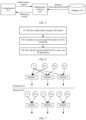
- FIG. 2 is a diagram of a running architecture of a compiler according to an embodiment of this application.
- the second model file is generated based on the first model file.
- the second model file includes N fused operators, each fused operator is used to perform at least two matrix multiplication calculations, each fused operator corresponds to one kernel function, N is a positive integer, and N ⁇ M.
- the kernel function corresponding to each fused operator may be used to complete a fused calculation of a plurality of MatMuls by invoking an open-source third-party library, or may be used to complete a fused calculation of a plurality of MatMuls by using user-defined function code that is locally compiled by a user. This is not limited in this application.
- a plurality of matrix multiplication calculations in the first model file may be traversed, and any plurality of matrix multiplication calculations may be fused, to be specific, the any plurality of matrix multiplication calculations may be performed by using one fused operator.
- a plurality of obtained matrix multiplication calculations may be traversed, a plurality of matrix multiplication calculations unrelated in a time sequence may be determined to be grouped into one fused group, and the matrix multiplication calculations in the fused group may be performed by using one fused operator.
- a plurality of obtained matrix multiplication calculations may be traversed, matrix multiplication calculations whose left hand side matrices have a same dimension or whose right hand side matrices have a same dimension may be grouped into one fused group, and the matrix multiplication calculations in the fused group may be performed by using one fused operator.
- matrix multiplication calculations unrelated in a time sequence and whose left hand side matrices have a same dimension or whose right hand side matrices have a same dimension may be grouped into one fused group, and then the matrix multiplication calculations in the fused group may be performed by using one fused operator.
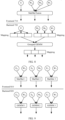
- the first model file includes operators 1 to 6, and the operators are used to respectively perform a MatMul 1 to a MatMul 6.
- the MatMul 1, the MatMul 2, the MatMul 5, and the MatMul 6 have no dependency relationship in a time sequence, to be specific, any MatMul calculation in the MatMul 1, the MatMul 2, the MatMul 5, and the MatMul 6 does not depend on a calculation result of another MatMul calculation.
- the MatMul 1, the MatMul 2, the MatMul 5, and the MatMul 6 may be grouped into one fused group, and the MatMul 1, the MatMul 2, the MatMul 5, and the MatMul 6 may be fused for calculation by one operator.
- An optimized AI model is returned to the user or the AI application.
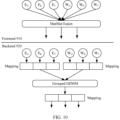
- FIG. 7 is a diagram of a 1:n matrix multiplication fusion scenario according to an embodiment of this application.
- a ratio of a quantity of left hand side (left hand side, LHS) matrices to a quantity of right hand side (right hand side, RHS) matrices in matrix multiplication fusion is 1:n, and n is a positive integer.
- n 3, to be specific, three MatMuls are to be fused.
- the three MatMuls include a MatMul 1, a MatMul 2, and a MatMul 3.
- the MatMul 1, the MatMul 2, and the MatMul 3 share a left hand side matrix E, and respectively have right hand side matrices W Q , W K , and W V .
- Output of the MatMul 1 is output 1, output of the MatMul 2 is output 2, and output of the MatMul 3 is output 3.
- output 1 MatMul(E, W Q )
- output 2 MatMul(E, W K )
- output 3 MatMul(E, W V ).
- the fusion condition may alternatively be that MatMul calculations in a same fused group are unrelated in a time sequence, and dimensions of left hand side matrices or dimensions of right hand side matrices of the MatMul calculations in the same fused group are the same.
- the user-defined grouped GEMM in this embodiment of this application may implement a general matrix multiplication of a plurality of matrices of a same size or different sizes.
- the MatMul 1, the MatMul 2, and the MatMul 3 are merely an example, and more MatMuls may alternatively be fused.
- the quantity should not be understood as a limitation on this application.
- the grouped GEMM function may be used to complete a fused calculation of a plurality of MatMuls by invoking an open-source third-party library, or may be used to complete a fused calculation of a plurality of MatMuls by using user-defined function code that is locally compiled by a user.
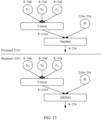
- a left hand side matrix of the MatMul 1 is E Q , and a right hand side matrix of the MatMul 1 is W Q ;
- a left hand side matrix of the MatMul 2 is E K , and a right hand side matrix of the MatMul 2 is W K ;
- a left hand side matrix of the MatMul 3 is E V , and a right hand side matrix of the MatMul 3 is W V .
- a fused MatMul calculation may be performed on E Q1 , E Q2 , W 11 , W 21 , W 31 , W 41 , W 51 , and W 61 , and a fused MatMul calculation may be performed on E K1 , E K2 , W 12 , W 22 , W 32 , W 42 , W 52 , and W 62 .
- an add operator with higher calculation efficiency may be introduced to ensure calculation equivalence.
- the processing module 1620 is configured to generate a second model file based on the first model file, where the second model file includes N fused operators, each fused operator is used to perform at least two matrix multiplication calculations, each fused operator corresponds to one kernel function, N is a positive integer, and N ⁇ M.
- the sending module 1630 is configured to provide the second model file for the user or send the second model file to the AI application.
- the first model file is a model file of a trained AI model.
- any matrix multiplication calculation performed by using each fused operator does not depend on a calculation result of another matrix multiplication calculation performed by using the same fused operator.
- each operator is used to perform one matrix multiplication calculation includes: each operator is used to perform a matrix multiplication calculation between a left hand side matrix and a right hand side matrix.
- the processing module 1620 is further configured to generate the second model file based on a dimension of a left hand side matrix or a dimension of a right hand side matrix in the first model file.
- the processing module 1620 is further configured to split the first matrix multiplication calculation into the plurality of second matrix multiplication calculations based on a dimension of the left hand side matrix or a dimension of the right hand side matrix in the first matrix multiplication calculation.
- the first fused group includes at least two different left hand side matrices, or the first fused group includes at least two different right hand side matrices.
- the AI application deploys the second model file on a cloud server of the AI application after receiving the second model file.
- model optimization apparatus 1600 may be embodied in a form of functional modules.
- module herein may be implemented in a form of software and/or hardware. This is not specifically limited.
- the module is used as an example of a software functional unit, and the receiving module 1610 may include code run on a computing instance.
- the computing instance may include at least one of a physical host (computing device), a virtual machine, and a container. Further, there may be one or more computing instances.
- the receiving module 1610 may include code run on a plurality of hosts/virtual machines/containers. It should be noted that, the plurality of hosts/virtual machines/containers configured to run the code may be distributed in a same region (region), or may be distributed in different regions.
- the computer system is a handheld device such as a smartphone, or a terminal device such as a personal computer.
- a handheld device such as a smartphone
- a terminal device such as a personal computer.
- the model optimization method provided in embodiments of this application may be performed by a computing device or a functional module that is in the computing device and that can invoke a program and execute the program.
- FIG. 18 is a diagram of an architecture of a computing device 1700 according to an embodiment of this application.
- the computing device 1700 may be a server, a computer, or another device with a computing capability.
- the computing device 1700 shown in FIG. 18 includes a processor 1720, a memory 1730, a communication interface 1740, and a bus 1710.
- the processor 1720, the memory 1730, and the communication interface 1740 communicate with each other through the bus 1710.
- the computing device 1700 may be a server or a terminal device. It should be understood that quantities of processors and memories in the computing device 1700 are not limited in this application.
- the bus 1710 may be a peripheral component interconnect (peripheral component interconnect, PCI) bus, an extended industry standard architecture (extended industry standard architecture, EISA) bus, or the like. Buses may be classified into an address bus, a data bus, a control bus, and the like. For ease of representation, only one line is used in FIG. 18 for representation, but it does not mean that there is only one bus or one type of bus.
- the bus 1710 may include a path for transferring information between components (for example, the memory 1730, the processor 1720, and the communication interface 1740) of the computing device 1700.
- the processor 1720 may include any one or more of processors such as a central processing unit (central processing unit, CPU), a graphics processing unit (graphics processing unit, GPU), a microprocessor (microprocessor, MP), or a digital signal processor (digital signal processor, DSP).
- processors such as a central processing unit (central processing unit, CPU), a graphics processing unit (graphics processing unit, GPU), a microprocessor (microprocessor, MP), or a digital signal processor (digital signal processor, DSP).
- the memory 1730 may include a volatile memory (volatile memory), for example, a random access memory (random access memory, RAM).
- the processor 1730 may alternatively include a nonvolatile memory (nonvolatile memory), for example, a read-only memory (read-only memory, ROM), a flash memory, a hard disk drive (hard disk drive, HDD), or a solid state drive (solid state drive, SSD).
- the memory 1730 stores executable program code, and the processor 1720 executes the executable program code to separately implement functions of the receiving module 1610, the processing module 1620, and the sending module 1630, to implement the model optimization method described in the foregoing embodiments.
- the memory 1730 stores instructions used to perform the model optimization method described in the foregoing embodiments.
- the communication interface 1740 uses a transceiver module, for example, but not limited to, a network interface card or a transceiver, to implement communication between the computing device 1700 and another device or a communication network.
- a transceiver module for example, but not limited to, a network interface card or a transceiver, to implement communication between the computing device 1700 and another device or a communication network.
- the listed structure of the computing device 1700 is merely an example for description, and this application is not limited thereto.
- the computing device 1700 in this embodiment of this application includes various types of hardware in a computer system in the conventional technology.
- the computing device 1700 further includes a memory other than the memory 1730, for example, a magnetic disk storage.
- the computing device 1700 may further include another component necessary for implementing normal running.
- the computing device 1700 may further include a hardware component for implementing another additional function.
- the computing device 1700 may alternatively include only a component necessary for implementing embodiments of this application, and not necessarily include all the components shown in FIG. 18 .
- FIG. 19 is a diagram of an architecture of a computing device cluster according to an embodiment of this application.
- the computing device cluster includes at least one computing device.
- the computing device may be a server, for example, a central server, an edge server, or a local server in a local data center.
- the computing device may alternatively be a terminal device, for example, a desktop computer, a notebook computer, or a smartphone.
- the computing device cluster includes at least one computing device 1700.
- Memories 1730 in one or more computing devices 1700 in the computing device cluster may store same instructions used to perform the model optimization method described in the foregoing embodiments.
- memories 1730 in one or more computing devices 1700 in the computing device cluster may separately store some instructions used to perform the model optimization method described in the foregoing embodiments.
- a combination of the one or more computing devices 1700 may jointly execute instructions used to perform the model optimization method described in the foregoing embodiments.
- memories 1730 in different computing devices 1700 in the computing device cluster may store different instructions, separately used to perform some functions of the computing device 1700.
- instructions stored in memories 1730 in different computing devices 1700 may be used to implement functions of one or more of the receiving module 1610, the processing module 1620, and the sending module 1630.
Landscapes
- Engineering & Computer Science (AREA)
- Physics & Mathematics (AREA)
- Theoretical Computer Science (AREA)
- General Physics & Mathematics (AREA)
- General Engineering & Computer Science (AREA)
- Data Mining & Analysis (AREA)
- Mathematical Physics (AREA)
- Software Systems (AREA)
- Computing Systems (AREA)
- Health & Medical Sciences (AREA)
- Biophysics (AREA)
- Biomedical Technology (AREA)
- Life Sciences & Earth Sciences (AREA)
- Artificial Intelligence (AREA)
- Evolutionary Computation (AREA)
- General Health & Medical Sciences (AREA)
- Molecular Biology (AREA)
- Computational Linguistics (AREA)
- Databases & Information Systems (AREA)
- Computational Mathematics (AREA)
- Mathematical Analysis (AREA)
- Mathematical Optimization (AREA)
- Pure & Applied Mathematics (AREA)
- Neurology (AREA)
- Algebra (AREA)
- Computer Vision & Pattern Recognition (AREA)
- Medical Informatics (AREA)
- Stored Programmes (AREA)
Applications Claiming Priority (2)
| Application Number | Priority Date | Filing Date | Title |
|---|---|---|---|
| CN202211098928.9A CN117709403A (zh) | 2022-09-07 | 2022-09-07 | 模型优化方法、装置以及计算设备 |
| PCT/CN2023/109454 WO2024051377A1 (zh) | 2022-09-07 | 2023-07-27 | 模型优化方法、装置以及计算设备 |
Publications (2)
| Publication Number | Publication Date |
|---|---|
| EP4575899A1 true EP4575899A1 (de) | 2025-06-25 |
| EP4575899A4 EP4575899A4 (de) | 2026-03-18 |
Family
ID=90150292
Family Applications (1)
| Application Number | Title | Priority Date | Filing Date |
|---|---|---|---|
| EP23862078.5A Pending EP4575899A4 (de) | 2022-09-07 | 2023-07-27 | Modelloptimierungsverfahren und -vorrichtung und rechenvorrichtung |
Country Status (4)
| Country | Link |
|---|---|
| US (1) | US20250200007A1 (de) |
| EP (1) | EP4575899A4 (de) |
| CN (1) | CN117709403A (de) |
| WO (1) | WO2024051377A1 (de) |
Families Citing this family (1)
| Publication number | Priority date | Publication date | Assignee | Title |
|---|---|---|---|---|
| CN121143860A (zh) * | 2024-06-13 | 2025-12-16 | 华为云计算技术有限公司 | 代码优化方法、诊断系统、设备以及存储介质 |
Family Cites Families (17)
| Publication number | Priority date | Publication date | Assignee | Title |
|---|---|---|---|---|
| US9972063B2 (en) * | 2015-07-30 | 2018-05-15 | International Business Machines Corporation | Pipelined approach to fused kernels for optimization of machine learning workloads on graphical processing units |
| US20210350234A1 (en) * | 2019-01-28 | 2021-11-11 | Intel Corporation | Techniques to detect fusible operators with machine learning |
| US11169798B1 (en) * | 2019-07-05 | 2021-11-09 | Dialpad, Inc. | Automated creation, testing, training, adaptation and deployment of new artificial intelligence (AI) models |
| CN112529207B (zh) * | 2019-09-17 | 2026-03-27 | 华为云计算技术有限公司 | 模型优化方法、装置、存储介质及设备 |
| CN111160551B (zh) * | 2019-12-04 | 2023-09-29 | 上海寒武纪信息科技有限公司 | 计算图执行方法、计算机设备及存储介质 |
| US20210182036A1 (en) * | 2019-12-12 | 2021-06-17 | Huawei Technologies Co., Ltd. | Hardware platform specific operator fusion in machine learning |
| CN111260019B (zh) * | 2020-02-18 | 2023-04-11 | 深圳鲲云信息科技有限公司 | 神经网络模型的数据处理方法、装置、设备及存储介质 |
| CN112270413B (zh) * | 2020-10-22 | 2024-02-27 | 北京百度网讯科技有限公司 | 算子合并方法、装置、电子设备及存储介质 |
| CN112465108B (zh) * | 2020-11-11 | 2022-07-22 | 上海交通大学 | 一种面向存算一体平台的神经网络编译方法 |
| CN112686378A (zh) * | 2020-12-23 | 2021-04-20 | 展讯通信(上海)有限公司 | 神经网络的计算部署方法及装置、存储介质、计算机设备 |
| CN112579063B (zh) * | 2021-03-01 | 2021-06-08 | 之江实验室 | 一种用于深度学习编译器中探索优化空间的加速方法 |
| CN113703741B (zh) * | 2021-10-29 | 2022-02-22 | 深圳思谋信息科技有限公司 | 神经网络编译器配置方法、装置、计算机设备和存储介质 |
| CN114253550B (zh) * | 2021-12-02 | 2025-04-04 | 上海壁仞科技股份有限公司 | 优化策略生成方法和算子构建方法 |
| CN114168154B (zh) * | 2022-02-11 | 2022-05-17 | 腾讯科技(深圳)有限公司 | 模型数据处理方法、装置、电子设备及存储介质 |
| US12585725B2 (en) * | 2022-03-21 | 2026-03-24 | Nvidia Corporation | Non-rectangular matrix computations and data pattern processing using tensor cores |
| CN114691108A (zh) * | 2022-05-05 | 2022-07-01 | 中山大学 | 一种神经网络加速器自动化代码生成方法 |
| CN115034402B (zh) * | 2022-06-20 | 2024-11-19 | 寒武纪行歌(南京)科技有限公司 | 模型推理性能的优化方法、装置及相关产品 |
-
2022
- 2022-09-07 CN CN202211098928.9A patent/CN117709403A/zh active Pending
-
2023
- 2023-07-27 EP EP23862078.5A patent/EP4575899A4/de active Pending
- 2023-07-27 WO PCT/CN2023/109454 patent/WO2024051377A1/zh not_active Ceased
-
2025
- 2025-03-06 US US19/072,146 patent/US20250200007A1/en active Pending
Also Published As
| Publication number | Publication date |
|---|---|
| EP4575899A4 (de) | 2026-03-18 |
| CN117709403A (zh) | 2024-03-15 |
| WO2024051377A1 (zh) | 2024-03-14 |
| US20250200007A1 (en) | 2025-06-19 |
Similar Documents
| Publication | Publication Date | Title |
|---|---|---|
| AU2019284002B2 (en) | Data processing method and related products | |
| US10361975B2 (en) | Messaging bot selection in multi-bot chat sessions | |
| US10572623B2 (en) | Back-pressure in virtual machine interface | |
| US20140280441A1 (en) | Data integration on retargetable engines in a networked environment | |
| US11294719B2 (en) | Generating metrics for quantifying computing resource usage based on cost and utilization of virtualized services and optimizing performance through virtualized service migration | |
| US10782995B2 (en) | Flexible physical function and virtual function mapping | |
| US20250200007A1 (en) | Model optimization method and apparatus, and computing device | |
| EP4625168A1 (de) | Ressourcenzuweisungsverfahren und -vorrichtung | |
| Koromilas et al. | Spark acceleration on FPGAs: A use case on machine learning in Pynq | |
| CN115221175A (zh) | 一种数据对比方法、装置、电子设备及存储介质 | |
| CN119312097A (zh) | 针对混合使用多种型号芯片的算力集群的训练策略确定方法及相关装置 | |
| US9471363B2 (en) | Preemptive guest merging for virtualization hypervisors | |
| Loring et al. | Improving performance of m-to-n processing and data redistribution in in transit analysis and visualization | |
| US20250265128A1 (en) | Computing Resource Management Method and Apparatus | |
| US7428486B1 (en) | System and method for generating process simulation parameters | |
| KR20190075508A (ko) | 가상화된 시스템 상에서 임베디드 소프트웨어를 자동으로 생성하는 방법 및 컴퓨팅 시스템 | |
| Stamelos et al. | A novel framework for the seamless integration of FPGA accelerators with Big Data analytics frameworks in heterogeneous data centers | |
| Sha et al. | Performance modeling of openstack cloud computing platform using performance evaluation process algebra | |
| CN117472944A (zh) | 一种基于fpga的数据库sql加速方法 | |
| WO2024060849A1 (zh) | 一种数据查询方法和云服务系统 | |
| JP2023161578A (ja) | 複雑な電子システムのハードウェア機能ブロックのための故障モード、影響、および診断分析(fmeda)自動化のためのモデル駆動手法 | |
| US11003488B2 (en) | Memory-fabric-based processor context switching system | |
| CN113626066A (zh) | 应用于工业仿真平台的方法及系统 | |
| EP4660818A1 (de) | Verteiltes datenspeicherungsverfahren und steuergerät | |
| US12561605B2 (en) | User interface management framework |
Legal Events
| Date | Code | Title | Description |
|---|---|---|---|
| STAA | Information on the status of an ep patent application or granted ep patent |
Free format text: STATUS: THE INTERNATIONAL PUBLICATION HAS BEEN MADE |
|
| PUAI | Public reference made under article 153(3) epc to a published international application that has entered the european phase |
Free format text: ORIGINAL CODE: 0009012 |
|
| STAA | Information on the status of an ep patent application or granted ep patent |
Free format text: STATUS: REQUEST FOR EXAMINATION WAS MADE |
|
| 17P | Request for examination filed |
Effective date: 20250317 |
|
| AK | Designated contracting states |
Kind code of ref document: A1 Designated state(s): AL AT BE BG CH CY CZ DE DK EE ES FI FR GB GR HR HU IE IS IT LI LT LU LV MC ME MK MT NL NO PL PT RO RS SE SI SK SM TR |
|
| DAV | Request for validation of the european patent (deleted) | ||
| DAX | Request for extension of the european patent (deleted) | ||
| REG | Reference to a national code |
Ref country code: DE Ref legal event code: R079 Free format text: PREVIOUS MAIN CLASS: G06N0003046400 Ipc: G06F0017160000 |
|
| A4 | Supplementary search report drawn up and despatched |
Effective date: 20260216 |
|
| RIC1 | Information provided on ipc code assigned before grant |
Ipc: G06F 17/16 20060101AFI20260210BHEP Ipc: G06N 3/0464 20230101ALI20260210BHEP Ipc: G06F 8/30 20180101ALI20260210BHEP Ipc: G06N 3/045 20230101ALI20260210BHEP Ipc: G06N 3/063 20230101ALI20260210BHEP Ipc: G06N 3/08 20230101ALI20260210BHEP Ipc: G06N 20/00 20190101ALI20260210BHEP |