EP4575859A2 - Automatische gruppierung von malware auf der basis von artefakten - Google Patents
Automatische gruppierung von malware auf der basis von artefakten Download PDFInfo
- Publication number
- EP4575859A2 EP4575859A2 EP25176046.8A EP25176046A EP4575859A2 EP 4575859 A2 EP4575859 A2 EP 4575859A2 EP 25176046 A EP25176046 A EP 25176046A EP 4575859 A2 EP4575859 A2 EP 4575859A2
- Authority
- EP
- European Patent Office
- Prior art keywords
- malware
- samples
- sample
- analysis
- artifacts
- Prior art date
- Legal status (The legal status is an assumption and is not a legal conclusion. Google has not performed a legal analysis and makes no representation as to the accuracy of the status listed.)
- Pending
Links
Images









Classifications
-
- H—ELECTRICITY
- H04—ELECTRIC COMMUNICATION TECHNIQUE
- H04L—TRANSMISSION OF DIGITAL INFORMATION, e.g. TELEGRAPHIC COMMUNICATION
- H04L63/00—Network architectures or network communication protocols for network security
- H04L63/02—Network architectures or network communication protocols for network security for separating internal from external traffic, e.g. firewalls
-
- G—PHYSICS
- G06—COMPUTING OR CALCULATING; COUNTING
- G06F—ELECTRIC DIGITAL DATA PROCESSING
- G06F21/00—Security arrangements for protecting computers, components thereof, programs or data against unauthorised activity
- G06F21/50—Monitoring users, programs or devices to maintain the integrity of platforms, e.g. of processors, firmware or operating systems
- G06F21/55—Detecting local intrusion or implementing counter-measures
-
- G—PHYSICS
- G06—COMPUTING OR CALCULATING; COUNTING
- G06F—ELECTRIC DIGITAL DATA PROCESSING
- G06F18/00—Pattern recognition
- G06F18/20—Analysing
- G06F18/24—Classification techniques
- G06F18/241—Classification techniques relating to the classification model, e.g. parametric or non-parametric approaches
-
- G—PHYSICS
- G06—COMPUTING OR CALCULATING; COUNTING
- G06F—ELECTRIC DIGITAL DATA PROCESSING
- G06F21/00—Security arrangements for protecting computers, components thereof, programs or data against unauthorised activity
- G06F21/50—Monitoring users, programs or devices to maintain the integrity of platforms, e.g. of processors, firmware or operating systems
- G06F21/55—Detecting local intrusion or implementing counter-measures
- G06F21/56—Computer malware detection or handling, e.g. anti-virus arrangements
-
- G—PHYSICS
- G06—COMPUTING OR CALCULATING; COUNTING
- G06F—ELECTRIC DIGITAL DATA PROCESSING
- G06F21/00—Security arrangements for protecting computers, components thereof, programs or data against unauthorised activity
- G06F21/50—Monitoring users, programs or devices to maintain the integrity of platforms, e.g. of processors, firmware or operating systems
- G06F21/55—Detecting local intrusion or implementing counter-measures
- G06F21/56—Computer malware detection or handling, e.g. anti-virus arrangements
- G06F21/566—Dynamic detection, i.e. detection performed at run-time, e.g. emulation, suspicious activities
-
- H—ELECTRICITY
- H04—ELECTRIC COMMUNICATION TECHNIQUE
- H04L—TRANSMISSION OF DIGITAL INFORMATION, e.g. TELEGRAPHIC COMMUNICATION
- H04L63/00—Network architectures or network communication protocols for network security
- H04L63/02—Network architectures or network communication protocols for network security for separating internal from external traffic, e.g. firewalls
- H04L63/0227—Filtering policies
-
- H—ELECTRICITY
- H04—ELECTRIC COMMUNICATION TECHNIQUE
- H04L—TRANSMISSION OF DIGITAL INFORMATION, e.g. TELEGRAPHIC COMMUNICATION
- H04L63/00—Network architectures or network communication protocols for network security
- H04L63/14—Network architectures or network communication protocols for network security for detecting or protecting against malicious traffic
- H04L63/1408—Network architectures or network communication protocols for network security for detecting or protecting against malicious traffic by monitoring network traffic
-
- H—ELECTRICITY
- H04—ELECTRIC COMMUNICATION TECHNIQUE
- H04L—TRANSMISSION OF DIGITAL INFORMATION, e.g. TELEGRAPHIC COMMUNICATION
- H04L63/00—Network architectures or network communication protocols for network security
- H04L63/14—Network architectures or network communication protocols for network security for detecting or protecting against malicious traffic
- H04L63/1408—Network architectures or network communication protocols for network security for detecting or protecting against malicious traffic by monitoring network traffic
- H04L63/1416—Event detection, e.g. attack signature detection
-
- H—ELECTRICITY
- H04—ELECTRIC COMMUNICATION TECHNIQUE
- H04L—TRANSMISSION OF DIGITAL INFORMATION, e.g. TELEGRAPHIC COMMUNICATION
- H04L63/00—Network architectures or network communication protocols for network security
- H04L63/14—Network architectures or network communication protocols for network security for detecting or protecting against malicious traffic
- H04L63/1433—Vulnerability analysis
-
- H—ELECTRICITY
- H04—ELECTRIC COMMUNICATION TECHNIQUE
- H04L—TRANSMISSION OF DIGITAL INFORMATION, e.g. TELEGRAPHIC COMMUNICATION
- H04L63/00—Network architectures or network communication protocols for network security
- H04L63/14—Network architectures or network communication protocols for network security for detecting or protecting against malicious traffic
- H04L63/1441—Countermeasures against malicious traffic
- H04L63/145—Countermeasures against malicious traffic the attack involving the propagation of malware through the network, e.g. viruses, trojans or worms
-
- H—ELECTRICITY
- H04—ELECTRIC COMMUNICATION TECHNIQUE
- H04L—TRANSMISSION OF DIGITAL INFORMATION, e.g. TELEGRAPHIC COMMUNICATION
- H04L63/00—Network architectures or network communication protocols for network security
- H04L63/14—Network architectures or network communication protocols for network security for detecting or protecting against malicious traffic
- H04L63/1408—Network architectures or network communication protocols for network security for detecting or protecting against malicious traffic by monitoring network traffic
- H04L63/1425—Traffic logging, e.g. anomaly detection
Definitions
- a firewall generally protects networks from unauthorized access while permitting authorized communications to pass through the firewall.
- a firewall is typically a device or a set of devices, or software executed on a device, such as a computer, that provides a firewall function for network access.
- firewalls can be integrated into operating systems of devices (e.g., computers, smart phones, or other types of network communication capable devices).
- Firewalls can also be integrated into or executed as software on computer servers, gateways, network/routing devices (e.g., network routers), or data appliances (e.g., security appliances or other types of special purpose devices).
- Firewalls typically deny or permit network transmission based on a set of rules. These sets of rules are often referred to as policies. For example, a firewall can filter inbound traffic by applying a set of rules or policies. A firewall can also filter outbound traffic by applying a set of rules or policies. Firewalls can also be capable of performing basic routing functions.
- the invention can be implemented in numerous ways, including as a process; an apparatus; a system; a composition of matter; a computer program product embodied on a computer readable storage medium; and/or a processor, such as a processor configured to execute instructions stored on and/or provided by a memory coupled to the processor.
- these implementations, or any other form that the invention may take, may be referred to as techniques.
- the order of the steps of disclosed processes may be altered within the scope of the invention.
- a component such as a processor or a memory described as being configured to perform a task may be implemented as a general component that is temporarily configured to perform the task at a given time or a specific component that is manufactured to perform the task.
- the term 'processor' refers to one or more devices, circuits, and/or processing cores configured to process data, such as computer program instructions.
- a firewall generally protects networks from unauthorized access while permitting authorized communications to pass through the firewall.
- a firewall is typically a device, a set of devices, or software executed on a device that provides a firewall function for network access.
- a firewall can be integrated into operating systems of devices (e.g., computers, smart phones, or other types of network communication capable devices).
- a firewall can also be integrated into or executed as software applications on various types of devices or security devices, such as computer servers, gateways, network/routing devices (e.g., network routers), or data appliances (e.g., security appliances or other types of special purpose devices).
- Firewalls typically deny or permit network transmission based on a set of rules. These sets of rules are often referred to as policies (e.g., network policies or network security policies). For example, a firewall can filter inbound traffic by applying a set of rules or policies to prevent unwanted outside traffic from reaching protected devices. A firewall can also filter outbound traffic by applying a set of rules or policies (e.g., allow, block, monitor, notify or log, and/or other actions can be specified in firewall rules or firewall policies, which can be triggered based on various criteria, such as described herein).
- policies e.g., network policies or network security policies.
- a firewall can filter inbound traffic by applying a set of rules or policies to prevent unwanted outside traffic from reaching protected devices.
- a firewall can also filter outbound traffic by applying a set of rules or policies (e.g., allow, block, monitor, notify or log, and/or other actions can be specified in firewall rules or firewall policies, which can be triggered based on various criteria, such as described herein).
- Network devices can include various security functions (e.g., firewall, anti-malware, intrusion prevention/detection, Data Loss Prevention (DLP), and/or other security functions), networking functions (e.g., routing, Quality of Service (QoS), workload balancing of network related resources, and/or other networking functions), and/or other functions.
- security functions e.g., firewall, anti-malware, intrusion prevention/detection, Data Loss Prevention (DLP), and/or other security functions
- networking functions e.g., routing, Quality of Service (QoS), workload balancing of network related resources, and/or other networking functions
- QoS Quality of Service
- routing functions can be based on source information (e.g., IP address and port), destination information (e.g., IP address and port), and protocol information.
- a basic packet filtering firewall filters network communication traffic by inspecting individual packets transmitted over a network (e.g., packet filtering firewalls or first generation firewalls, which are stateless packet filtering firewalls).
- packet filtering firewalls or first generation firewalls which are stateless packet filtering firewalls.
- Stateless packet filtering firewalls typically inspect the individual packets themselves and apply rules based on the inspected packets (e.g., using a combination of a packet's source and destination address information, protocol information, and a port number).
- Stateful firewalls can also perform stateful-based packet inspection in which each packet is examined within the context of a series of packets associated with that network transmission's flow of packets/packet flow (e.g., stateful firewalls or third generation firewalls).
- This firewall technique is generally referred to as a stateful packet inspection as it maintains records of all connections passing through the firewall and is able to determine whether a packet is the start of a new connection, a part of an existing connection, or is an invalid packet.
- the state of a connection can itself be one of the criteria that triggers a rule within a policy.
- Advanced or next generation firewalls can perform stateless and stateful packet filtering and application layer filtering as discussed above.
- Next generation firewalls can also perform additional firewall techniques. For example, certain newer firewalls sometimes referred to as advanced or next generation firewalls can also identify users and content (e.g., next generation firewalls). In particular, certain next generation firewalls are expanding the list of applications that these firewalls can automatically identify to thousands of applications. Examples of such next generation firewalls are commercially available from Palo Alto Networks, Inc. located in Santa Clara, CA (e.g., Palo Alto Networks' PA Series firewalls).
- Palo Alto Networks' next generation firewalls enable enterprises to identify and control applications, users, and content-not just ports, IP addresses, and packets-using various identification technologies, such as the following: APP-ID for accurate application identification, User-ID for user identification (e.g., by user or user group), and Content-ID for real-time content scanning (e.g., controls web surfing and limits data and file transfers).
- APP-ID for accurate application identification
- User-ID for user identification (e.g., by user or user group)
- Content-ID for real-time content scanning (e.g., controls web surfing and limits data and file transfers).
- These identification technologies allow enterprises to securely enable application usage using business-relevant concepts, instead of following the traditional approach offered by traditional port-blocking firewalls.
- a new zero-day threat and/or an advanced threat such as an Advanced Persistent Threat (APT)
- APT Advanced Persistent Threat
- C&C external command and control
- a device e.g., a client device, a server, an appliance, a networking device, a printer, and/or other types of computing devices.
- line/sub-line counts can be performed on the malware analysis sample results (e.g., log files) to provide a statistical view of the malware analysis results data (e.g., across different enterprise networks of subscribers/customers to the malware analysis platform service, categories of customers/industries, etc.), such as including one or more of the following: (1) common actions/attributes that have been observed at least a threshold number of times in both benign and malware samples; (2) (malicious/suspicious) actions/attributes (e.g., suspicious artifacts) that have been observed at least a threshold number of times in malware samples and only observed a relatively lower threshold number of times in benign samples; and (3) actions/attributes (e.g., highly-suspicious artifacts) that have been observed at least a threshold number of times in benign samples and only observed a relatively lower threshold number of times in malware samples.
- common actions/attributes that have been observed at least a threshold number of times in both benign and malware samples
- the disclosed techniques can be performed to identify risky/high-risk artifacts (e.g., suspicious and/or highly-suspicious artifacts), which can then be utilized to perform analysis and/or perform actions based on these artifacts as further described below.
- risky/high-risk artifacts e.g., suspicious and/or highly-suspicious artifacts
- the suspicious lines/sub-lines can then also be utilized to automatically generate a new signature for detecting malware for that malware sample to perform actions to block malware that includes the artifact(s) associated with these suspicious lines/sub-lines (e.g., by adding high-risk artifacts, such as high-risk artifacts for Domains, IP addresses, and/or URLs, to be used with a firewall block list or to support a security information and event management (SIEM) solution).
- the disclosed techniques can also be performed as a validation/proofing system to test and validate the new signature and examine the line count results.
- a system, process, and/or computer program product for a malware analysis platform for threat intelligence made actionable includes receiving a plurality of samples for performing automated malware analysis to generate log files based on the automated malware analysis (e.g., including results from a dynamic and/or static analysis); processing the log files to determine artifacts associated with malware; and performing an action based on an artifact. For example, if the artifact is determined to be associated with one or more malware samples based on the automated malware analysis, then the artifact can be deemed a high-risk artifact.
- a log file for a sample comprises one or more lines based on the automated malware analysis results for the sample, and a system, process, and/or computer program product for a malware analysis platform for threat intelligence made actionable further includes identifying distinct lines in the log file; and updating a line count for each of the distinct lines based on line counting performed for previously processed log files.
- a log file for a sample comprises one or more lines based on the automated malware analysis results for the sample, and a system, process, and/or computer program product for a malware analysis platform for threat intelligence made actionable further includes identifying distinct lines in the log file; and determining whether any of the distinct lines are suspicious.
- a system/process/computer program product for a malware analysis platform for threat intelligence made actionable includes generating a human readable format of malware analysis result log files (e.g., replacing numeric identifiers and removing not-interesting parameters, such as described herein); determining a first occurrence of each distinct line in each log file (e.g., and removing duplicate lines within the log file); and counting how many times each distinct line is observed in malware samples as compared with benign samples.
- the disclosed line counting techniques are similarly applied to generate the sub-line counts, such as further described herein.
- a system, process, and/or computer program product for tagging and alerting using the malware analysis platform for threat intelligence made actionable further includes configuring a tag based on a plurality of conditions associated with one or more artifacts; and determining whether the tag matches any of the plurality of samples based on the plurality of conditions associated with one or more artifacts.
- the disclosed techniques can be performed to allow users to learn more information about samples that were found/detected on their network (e.g., enterprise network).
- their network e.g., enterprise network
- ACME Bank is a customer/subscriber of the malware analysis platform for threat intelligence made actionable
- ACME Bank could then utilize the platform to determine that 40% of banking customers have found/detected that same malware on their networks.
- ACME Bank could utilize the platform to search analysis of malware samples results data that can include additional statistics based on automated analysis of the malware samples results data, which can facilitate identification of pervasive malware, high-risk artifacts associated with malware, and/or reveal connections/associations between malware (e.g., shared high-risk artifacts or other connections/associations).
- ACME Bank could utilize the platform to prioritize security events in their network environment by distinguishing between threats or campaigns with global impact (e.g., based on alerting tags) and less impactful threats that do not pose a direct or immediate security risk (e.g., based on informational tags).
- ACME Bank could utilize the platform to quickly identify threats on their network, and to contextualize such events within an industry, global, and historical context (e.g., utilizing a dashboard interface of the platform to view the top activity for their network, for their industry, and on a global scale) and can also perform actions based on the threat intelligence information, such as further described below.
- various techniques for providing a malware analysis platform for threat intelligence made actionable are disclosed.
- various technical solutions for providing a malware analysis platform for threat intelligence made actionable are disclosed.
- the various techniques described herein for providing a malware analysis platform for threat intelligence made actionable can similarly be performed using cloud-based security solutions, network device-based security solutions, host-based/agent-based security solutions, and/or virtualized/software-defined networking (SDN)-based security solutions, such as further described below with respect to various embodiments.
- SDN software-defined networking
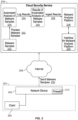
- FIG. 1 is a functional diagram of an architecture of a malware analysis platform for threat intelligence made actionable in accordance with some embodiments.
- client devices 104A, 104B, and 104C are in communication with the Internet 106 via a network device 102 (e.g., a data appliance).
- network device 102 includes a firewall 112 as shown (e.g., a firewall component that can be implemented in software executed on a hardware processor of the network device, or implemented in hardware at least in part, and/or a combination thereof; as an example, as a commercially available firewall solution from Palo Alto Networks, Inc. or another security vendor can be utilized), which can be used for security for an enterprise network 120.
- a firewall 112 e.g., a firewall component that can be implemented in software executed on a hardware processor of the network device, or implemented in hardware at least in part, and/or a combination thereof; as an example, as a commercially available firewall solution from Palo Alto Networks, Inc. or another security vendor can be utilized
- network device 102 and firewall 112 perform various security operations to protect enterprise network 120 and/or the client, server, and/or other devices within the perimeter of enterprise network 120 (e.g., including providing malware samples to a cloud security service 130 for further analysis, such as further described below).
- network device 102 includes a data appliance (e.g., a security appliance), a gateway (e.g., a security gateway), a server (e.g., a server that executes security software including firewall 112), and/or some other network/security device, which, for example, can be implemented using computing hardware, software, virtualized/software-defined networking (SDN)-based solutions, or various combinations thereof.
- SDN software-defined networking
- one or more of client devices 104A-104C include a host agent (HA) 114 as shown.
- HA 114 can be implemented as a host-based firewall and/or an agent, such as a network/security agent, executed on the client/host device (e.g., implemented in software that can be executed on a hardware processor of the client/host device) that can perform various functions in coordination with network device 102, firewall 112, and/or cloud security service 130 to facilitate endpoint protection (e.g., including providing malware samples to cloud security service 130 for further analysis, such as further described below).
- endpoint protection e.g., including providing malware samples to cloud security service 130 for further analysis, such as further described below.
- HA 114 can be provided by a lightweight agent (e.g., a commercially available endpoint agent, such as the Palo Alto Networks ® Traps TM agent available from Palo Alto Networks, Inc., which is a highly scalable, lightweight agent for endpoint security, or an endpoint agent from another security vendor can be utilized) that can be executed on, for example, a variety of different client/host device platforms (e.g., Microsoft ® Windows ® Operating System (OS) platforms and/or other platforms for clients and/or servers) to facilitate endpoint security in coordination with network device 102, firewall 112, and/or cloud security service 130, such as further described below.
- a lightweight agent e.g., a commercially available endpoint agent, such as the Palo Alto Networks ® Traps TM agent available from Palo Alto Networks, Inc., which is a highly scalable, lightweight agent for endpoint security, or an endpoint agent from another security vendor can be utilized
- client/host device platforms e.g., Microsoft
- client devices 104A-C can include various computing devices that can access the Internet via wired and/or wireless communications, such as computers, laptops, tablets, smart phones, and/or various other types of computing devices with network communication capabilities.
- servers 108A-C are in communication with the Internet 106.
- a client device can access a service provided by a server via the Internet, such as a web-related service (e.g., web site, cloud-based services, streaming services, or email services, such as web-posting applications, email applications, peer-to-peer related services, and/or any other applications or services that perform network communications via the Internet).
- a web-related service e.g., web site, cloud-based services, streaming services, or email services, such as web-posting applications, email applications, peer-to-peer related services, and/or any other applications or services that perform network communications via the Internet.
- cloud security service 130 includes a data store for storing malware samples 132 and a platform for automated analysis of malware samples 134 and a malware analysis platform 136.
- malware samples can be received from subscribers of cloud security service 130, such as from firewall 112 of network device 102, HA 114 of client 104B, and/or other devices/components associated with the subscribers of the cloud security service.
- the malware samples can be, in some cases, files, PCAPs, and/or other data/content that is deemed suspicious by, for example, the firewall and/or HA.
- the suspicious malware sample can then be automatically sent to the cloud security service for further automated analysis.
- automated analysis of the malware samples can include automated dynamic analysis and automated static analysis, such as further described herein (e.g., the automated analysis of malware samples can be provided by a commercially available malware analysis service, such as the WildFire TM cloud-based malware analysis environment that is a commercially available cloud security service provided by Palo Alto Networks, Inc., which includes automated security analysis of malware samples as well as security expert analysis, or a similar solution provided by another vendor can be utilized).
- a commercially available malware analysis service such as the WildFire TM cloud-based malware analysis environment that is a commercially available cloud security service provided by Palo Alto Networks, Inc., which includes automated security analysis of malware samples as well as security expert analysis, or a similar solution provided by another vendor can be utilized.
- the enterprise network is subscribed to the cloud security service, and the network device can securely communicate with the cloud security service (e.g., using a commercially available cloud-based security service, such as provided by Palo Alto Networks that provides API support via the WildFire API, such as for submission of malware samples (e.g., files and/or other data/content can be submitted/uploaded for malware analysis; and after a submitted malware sample is analyzed, other data can be provided as an available download for further analysis, such as PCAP data and/or other data/content for further malware analysis).
- a commercially available cloud-based security service such as provided by Palo Alto Networks that provides API support via the WildFire API, such as for submission of malware samples (e.g., files and/or other data/content can be submitted/uploaded for malware analysis; and after a submitted malware sample is analyzed, other data can be provided as an available download for further analysis, such as PCAP data and/or other data/content for further malware analysis).
- a URL filtering subscription service e.g., Palo Alto Networks PANdb URL filtering subscription service or another commercially available URL filtering subscription service
- submit one or more URLs e.g., the submission of a URL, full or part of a web page, statistics/transformed version of a web page, which can include a list of form field names, types, default values, parameters, etc.
- the results of the cloud-based, asynchronous analysis can then be provided back to the firewall and/or other network/filtering devices and/or agents for possible responsive actions.
- the results of the cloud-based, asynchronous analysis can also be accessed using malware analysis platform 136, such as further described below.
- a first type of producer for session data is driven by the ES consumer: once it ingests a sample, it stores a hash of the sample (e.g., using SHA or another hash algorithm) in a sample_ready table, and the session producer can query that table and publish all sessions for that hash value (e.g., if sessions are processed first, and then the sample is received, then the sessions can be reprocessed to generate alerts).
- a second type of producer uses dates and session IDs as checkpoints to process sessions as they come along in the automated analysis of malware samples system (e.g., if the sample has already been processed, then the sessions can be processed to generate alerts).
- the following fields can be collected for each session from the session table including one or more of the following: id, sha256, create time, source IP, source port, destination IP, destination port, file URL, file name, device ID, user name, app, vsys, malware, host name, URI, device host name, session ID, and sample table.
- malware scanner data can include dynamic analysis malware scanner results data and static analysis malware scanner results.
- malware scanner data can also include malware analysis results data from one or more third-party sources, such as commercially available or publicly available/open malware analysis data sources (e.g., third-party feeds including closed and/or open-source threat intelligence feeds).
- third party, commercially available or publicly available/open malware analysis data sources include Cyber Threat Alliance, Defense Industrial Base Cyber Security Information Assurance (DIB CS/IA), Financial Services Information Sharing and Analysis Center (FS-ISAC), and others.
- one or more producers are provided that produce malware analysis data from the automated analysis of malware samples (e.g., dynamic and/or static analysis results), which can be stored in a database, such as malware analysis result databases (primary) 304 and replica databases (secondary) 306 as shown in Figure 3 .
- a dedicated producer exists to process the various fields from the malware analysis result database, such as the following fields in a malware sample analysis table: virustotal_hit (sample_analysis), and multiscan_hit (sample_analysis). This information can be checkpointed by update_time and sample_analysis table ID to ensure that the latest information is processed.
- RabbitMQ 316 includes multiple queues for live ingestion, including a queue for each of the producers 308, including: ES, HBase, and HDFS.
- the queue limits can be defined by the producer configuration and the physical limit of the queues is bound by disk and memory of a given physical machine.
- rate limiting configuration and data production techniques can also be implemented to reduce/avoid starvation due to a high volume of session messages and rate limiting.
- HBase consumer 322 and HDFS consumer 328 can be implemented to ingest data published by their respective producers, including from RabbitMQ 316 and log files 326 as shown, and push it into their corresponding components, HBase 330 and log storage 336, respectively. Additional processing can be performed for ES consumer 324 to consume data from the ES producer. For example, log parsing can be performed to glean interesting data that can be utilized for presentation to a user and further analytics for threat intelligence as further described below, and alerting, tagging, and additional queries that take place on the consumer side for sample and session data due to an ability to parallelize the processing relative to the producer.
- running 128 ES consumers over several machines for Elastic Search can be utilized to perform the disclosed live ingestion techniques when live ingestion is processing older data and needs to catch up quickly, and 96 ES consumers can suffice when it is caught up and is just processing incoming data from the ES producer(s).
- 96 ES consumers can suffice when it is caught up and is just processing incoming data from the ES producer(s).
- five instances of the HBase consumers can suffice when live ingestion is caught up and is just processing incoming data from the HBase producer(s); otherwise, 16 instances of the HBase consumers can be executed to catch up when it is processing older data from the HBase producer(s).
- the consumer can interface with a MySQL database 334 to facilitate this functionality.
- read queries are relatively cheap and can be parallelized to improve overall ingestion performance.
- the ES consumer can loop through three sub consumers: sample/task, MultiScanner (MS), and session consumers. Multiple consumers can run on the same machine only bound by CPU and Memory. Each consumer can read messages from RMQ 316 and store them locally. The consumers can process messages in batches (e.g., ten messages at a time or some other number of messages).
- a bulk of the ingestion intelligence lies within the task data parsing.
- the fields produced by the producer can be ingested as is and embedded in a task document.
- Example fields embedded in ES can include one or more of the following: task ID, platform, malware, behavior, JAPI, HTTP, DNS, connection, process, file, registry, mutex, service, information, miscellaneous, user agent, APK defined activity, APK defined service, APK defined intent filter, APK defined receiver, APK requested permission, APK sensitive API call, APK defined sensor, APK embedded URL, APK suspicious string, APK suspicious API call, APK suspicious file, and summary.
- the consumed ES data is indexed to facilitate a searchable set of ES data.
- the consumed ES data can be indexed and searchable after being processed for each task.
- the malware sample analysis data can be generated as log files (e.g., the log files can include lines in the file with different meta data and/or results of the automated analysis related to the malware sample, or another data format can be utilized).
- log parsing is performed for each task for a sample.
- malware sample's SHA For example, it can be provided the following information: malware sample's SHA; task ID; sample's MD5 (e.g., used for validation); platform that the task ran on (e.g., OS/version of the platform of the sandbox environment, such as Windows XP or Windows 7, to determine how a log file should be parsed); a file type associated with the sample; a list of log files copied over for that sample; and/or a path of the log file location.
- platform that the task ran on e.g., OS/version of the platform of the sandbox environment, such as Windows XP or Windows 7, to determine how a log file should be parsed
- file type associated with the sample e.g., a list of log files copied over for that sample; and/or a path of the log file location.
- a task can have various log files for parsing (e.g., using a log parser process that is configured to parse each type of log file, which are raw log files from the automated malware analysis of a sample(s) that can be processed using a log parser to generate processed log files for each type of log file that can be consumed by the malware analysis system using the disclosed techniques), such as one or more of the following types of log files: Java API (JAPI) log, event log, API log, and XML report.
- JAPI Java API
- the log file parsing can be configured to maintain much of the original information (e.g., when a line, such as a mutex line, registry line, file line, connections line, process line, information line, miscellaneous line, and/or another type of line is broken down into fields, preserve as much of the original information, annotating obscure ones and removing distracting elements such as memory addresses that can vary from sample run to sample run); obfuscate elements that can assist a malware developer to attempt to reverse engineer and defeat the malware analysis system; improve user readability by removing non-essential fields and mapping obscure fields to well-known descriptors; preserve as much of the numbers that occur in a line as possible with the exception of process IDs (PIDs) and memory addresses to improve readability for researchers (e.g., PIDs can be mapped to process names such as using a dictionary mapping for such an operation, and memory addresses can be removed, but if a file or a mutex only consists of numbers as a name, it can be preserved); and
- Example excerpts from raw log files are provided below, including example excerpts from the following types of log files: a raw event log, a raw API log, and a raw XML report.
- the log file parsing operations can be performed to process each of these raw log files to generate processed log files that can be consumed by the malware analysis platform using the disclosed techniques.
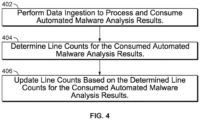
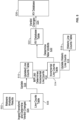
- line counts are updated in an updated line counts table 510.
- the processing of any new and/or updated malware sample analysis results from the automated malware analysis system can be implemented by performing a MapReduce (M/R) job(s) to update a table of verdict changes/updates in a Key Value (KV) database 526 (e.g., which can be implemented using HBase 330 as shown in Figure 3 ) using an incremental line counts table 514 for updated line counts.
- the incremental line counts table includes key values, such as a SHA value of the whole line (e.g., for compressed data storage for efficiency) and the incremental line count.
- the updated line counts are then stored in the updated historic table for line counts in the KV database based on the new line counts computed based on incremental data values from the incremental table to the historic table data for each line to update their respective line counts (e.g., the line counts can increase or decrease based on verdicts/verdict changes).
- the disclosed process can include detecting a newly executed malware analysis for a given malware sample and replacing one or more lines associated with the results for that sample in the KV database (e.g., remove existing lines and/or add new lines).
- new verdicts are determined to update a KV database table 522 for storing verdict changes 524 in KV database 526.
- the KV database table includes key values, such as a SHA value of the whole line (e.g., for compressed data storage for efficiency), an old verdict value (e.g., a line count value based on a last time the M/R job was executed), and a new verdict value (e.g., a new line count value based on the verdict changes (if any)) to facilitate incremental/update data based on malware sample processing since a last time the M/R job was executed.
- key values such as a SHA value of the whole line (e.g., for compressed data storage for efficiency)
- an old verdict value e.g., a line count value based on a last time the M/R job was executed
- a new verdict value e.g., a new line count value based on the verdict changes (if any)
- the above-described line counting techniques can similarly be applied to a subset of a line.
- the disclosed line counting techniques can similarly be applied to a subset of a whole line, such as for a given attribute and/or parameter in the line to facilitate attribute and/or parameter counting (e.g., counts can be determined and maintained/updated for calls to a specific URL, API, library, etc. based on the ingestion/transforming and processing of the automated malware analysis results).
- the above-described techniques and process for line counting can be similarly applied to sub-line/artifact counting, in which the input is different (e.g., input is a selected sub-line/artifact, such as for DNS data, the sub-line/artifact can be an FQDN, for file data, the sub-line/artifact can be a file name, and so forth).
- the above-described line counting techniques can be applied to both whole lines as well as to subsets of whole lines as similarly described above.
- the above-described line counting techniques can similarly be processed by customer or other categorizations of customers (e.g., subscribers of the cloud security service that submit malware samples for automated malware analysis and also subscribe to/utilize the malware analysis platform).
- line/sub-line counts can also be computed based on customer identifier (e.g., a unique customer ID/serial number(s) that can be associated with samples) or other categorizations of customers (e.g., a categorization by industry, such as government, defense contractors, banks, high tech, retail, etc.).
- performing line counts associated with analyzed malware samples per customer can be implemented using the above-described ingestion process as part of the in-take/consumer process and using a set of line/sub-line counting tables per customer, per industry, and/or other categorization(s) of customers (e.g., in which customers can be preclassified into a given category such that their malware samples can be associated with the given category, which can then be extracted and utilized during the ingestion process to implement the above-described line/sub-line counting techniques to be processed by customers or other categorizations of customers).
- a tag (e.g., based on the version of analyzer(s) used for the automated malware analysis for the sample results being processed) is associated with processed malware analysis results for a given line based on the analysis of a given malware sample. For example, a search based on the tag can be performed and/or lines/counts based on the tag can be subsequently removed if that analyzer/version is deemed to be no longer reliable/accurate and/or is replaced with a new version/analyzer.
- an interface is provided for users to interact with the malware analysis platform for threat intelligence.
- a portal/GUI interface can be provided for users to interact with the malware analysis platform for threat intelligence, such as further described below.
- a programmatic/API interface can be provided for users to interact with the malware analysis platform for threat intelligence, such as further described below.
- a sample refers to a file (e.g., a PDF or PE file) or a link included in an email.
- a firewall can send samples (e.g., unknown samples) to the automated malware analysis system for analysis. Different artifacts can then be determined to be associated with the sample as it is executed and observed in the sandbox environment performed by the automated malware analysis system as similarly described above.
- the malware analysis platform for threat intelligence made actionable allows a user to search for other samples (e.g., submitted by the same customer/subscriber or other customers/subscribers) based on the sample (e.g., based on a hash value of the sample or artifacts associated with the sample based on the processed results of the automated malware analysis for that sample). For example, when a user performs a search in the malware analysis platform for threat intelligence, the search conditions are compared against all historical and new samples as will be further described below.
- an artifact is an item, property, activity, or behavior shown to be associated with a sample through both the automated malware analysis of the sample and through the malware analysis platform statistics.
- types of artifacts can include file attributes, IP addresses, domains, URLs, applications, processes, hashes, and/or email addresses.
- search results spotlight significant artifacts that are identified according to risk; and the dashboard and search editor both can allow a user to add an artifact directly to an ongoing search or to an export list, such as further described below).
- a tag can be defined based on a collection of search criteria that together indicate a known or possible threat. Both historical and new samples that match to the conditions defined for a tag are associated with that tag. A user can perform searches and create alerts based on tags, such as will be further described below.
- a tag class can be defined to associate a tag with a known actor, targeted campaign, malware family, malicious behavior, or an exploit.
- users can search for tags based on the tag class and/or can also search for tags that do not have a specified tag class.
- public tags and samples in the malware analysis platform are tags and samples that are visible to all users of the malware analysis platform.
- tags created by a given user the user can set the status to be public, so that the tag is visible to users of the malware analysis platform (e.g., and the user can also revert the tag to be private).
- private tags and samples in the malware analysis platform are tags and samples that are visible only to users associated with the subscriber (e.g., with the same support account to the cloud security service and service for the malware analysis platform).
- Private tags and samples can be made public (e.g., with the option to revert the tag or sample back to a private status).
- suspicious artifacts are artifacts that are determined to have been widely detected across large numbers of samples and are most frequently detected with malware. Though the artifact is often also detected with grayware and benign samples, it is relatively less than the frequency with which it is found with malware.
- suspicious artifacts can be determined using line counting techniques based on a line count calculation that the artifact (e.g., line or sub-line) is associated with malware samples at least a threshold value more times than it is associated with benign samples (e.g., a threshold value of three times, such as malware line counts (m#) > 3 x benign line counts (b#), or some other threshold value or calculation can be applied). Techniques for determining whether artifacts are suspicious artifacts are further described below.
- highly suspicious artifacts are artifacts that are determined to have been detected in very few samples (e.g., a lack of distribution of these types of artifacts could indicate an attack crafted to target a specific organization) and are most frequently detected with malware. In some cases, these artifacts have been exclusively seen with malware, and not observed (or rarely observed) with grayware or benign samples.
- highly suspicious artifacts can also be determined using line counting techniques based on a line count calculation that the artifact (e.g., line or sub-line) is associated with malware samples at least a threshold value more times than it is associated with benign samples and is found in a threshold number of malware samples (e.g., a threshold value of three times, such as m# > 3 x b#, and the artifact (e.g., line or sub-line) is associated with fewer than a threshold number of malware samples (e.g., m# ⁇ 500 samples); or some other threshold values or calculations can be applied).
- a threshold number of malware samples e.g., a threshold value of three times, such as m# > 3 x b#
- the artifact e.g., line or sub-line
- Techniques for determining whether artifacts are highly suspicious artifacts are further described below.
- an actor is an individual or group that instigates malicious activity.
- a user can perform a search for malware that is indicative of a threat actor (e.g., using the interface to select search and searching on the condition Tag Class > is > Actor).
- a user can also create a tag to indicate that samples matched to that tag are related to an actor.
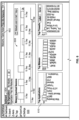
- FIG. 6 is a screen shot of a dashboard of an interface for the malware analysis platform for threat intelligence made actionable in accordance with some embodiments.
- a portal interface for the malware analysis platform for threat intelligence made actionable includes a dashboard as shown in Figure 6 .
- the dashboard can present a visual landscape of network, industry, and global threat artifacts.
- a threat artifact can be a sample hash (e.g., identifying a link included in an email or a file, such as a Portable Document Format (PDF) or Portable Executable (PE)), a statistic, a file property, or behavior that shows a correlation with malware.
- PDF Portable Document Format
- PE Portable Executable
- the list also displays the total number of samples that have been matched to the tag and the date and time that the most recent matching sample was detected.
- a Top Tags Widget is provided such that a user can choose Tag Types to display the Top 20 private tags, Unit 42 alerting tags, Unit 42 informational tags, and/or public tags, and the user can select a tag to view tag details, including a description of the condition or set of conditions that the tag identifies, or to add the tag to a search.
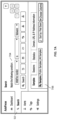
- the user can select an operator for the search condition, such as the operator shown as "is” in this example (e.g., operators can include is, is not, is in the list, is not in the list, has no value, has any value, and/or other operators).
- the operator determines the scope of search results; the user can use the operator to limit or expand potential results, or to return exact match results.
- the operators available can vary depending on the search category selected.
- the user can enter or select a value to define the search condition. Depending on the category and operator selected, predefined values may be available to choose from, or users may be requested to enter a unique value to perform the search. As shown at 706, the user can select whether the search is performed with respect to all samples, public samples, or the samples associated with the user's account/entity (e.g., shown as My Samples in this example).
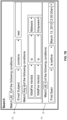
- the search editor can also include a child query to facilitate a search including a condition or a set of conditions nested with and used to qualify a parent query.
- a child query as shown at 712, is evaluated only against the parent query, as shown at 710, to which it is added.
- a user can add a child query to return more granular search results, where the results match to the parent query only when the child query is also true.
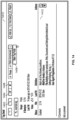
- the example search illustrated in Figure 7B shows a child query added to the Email Subject condition. Search results will be returned for samples where the following is true: (1) the sample was first seen before March 13, 2015; and (2) the email subject for the sample file contained the word test and received a WildFire verdict of either malware or grayware.
- searches can be saved.
- users can save searches that the users may be performing on a regular basis, or in order to quickly recreate useful search settings.
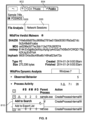
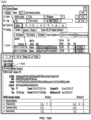
- FIG 8 is a screen shot of a samples search view of a search editor of an interface for the malware analysis platform for threat intelligence made actionable in accordance with some embodiments.
- a tag can be created based on search conditions.
- a sample can be tagged to tag the sample as a threat indicator.
- a Tag Results icon can be selected to generate a tag based on search conditions of a given set of search criteria entered or saved using the search editor.
- tags can be used to define a set of conditions that indicate an important network event or a possible or known threat. For instance, this feature can be utilized by users to tag a search so that any existing or future samples that match to the search are efficiently and accurately tagged and can be automatically identified and tracked using the malware analysis platform for threat intelligence.
- the tag can be saved with a name and a description.
- a sample can be shared as a public sample to share the sample with other security experts.
- a user can also revert a public tag created by the user's organization to private.
- a Network Sessions tab lists the sessions during which the sample was detected.
- the sessions displayed are all sessions submitted from firewalls to the malware analysis system as similarly described above.
- a user can select a single session for session details (e.g., users can also navigate back to the File Analysis tab for the sample, or click on, for example, a Related Sessions tab-related sessions are sessions where samples with the same hash value, such as the same SHA-256 hash value, were detected).
- a File Analysis tab lists properties, behaviors, and activities observed for the sample during the automated analysis performed by the malware analysis system, as similarly described above. For each activity artifact, the total number of times the artifact has been found with benign (#B), grayware (#G), and (#M) malware samples is listed. High risk artifacts are highlighted as Suspicious or Highly Suspicious, and users can add these artifacts directly to an existing search or add them to an export list as shown at 810, as similarly described herein.
- the search editor supports exporting a search.
- a search can be exported in order to share the search between support accounts or with another security expert.
- the search editor supports importing a search.
- a search can be imported in order to import a search shared by another security expert.
- Figure 9 is a screen shot of a sessions search view of a search editor of an interface for the malware analysis platform for threat intelligence made actionable in accordance with some embodiments.
- the search editor includes a Sessions tab.
- the Sessions tab can display all sessions for all samples matched to the search conditions.
- a user can select a single session to drill down for session details as shown in Figure 9 .
- session details include a Session Summary, from which users can add artifacts to a search using the search editor as similarly described above.
- a File Analysis tab displays details for the sample that was detected during the session.
- Sessions details also include a list of Related Sessions, which are sessions where the same sample was detected.
- Figure 10 is a screen shot of a statistics search view of a search editor of an interface for the malware analysis platform for threat intelligence made actionable in accordance with some embodiments.
- the search editor includes a Statistics tab.
- the Statistics tab can display all statistics for all samples matched to the search conditions. A user can examine the statistics for all samples matched to the search conditions as shown in Figure 10 .
- users can view statistics on artifacts associated with My Samples, Public Samples, or All Samples.
- Top Applications can click the Top Applications, Top Malware, Top Firewalls, or Target Industries widgets to add artifacts to their search; the Statistics tab widgets are filtered based on the added search condition. For example, users can click a web-browsing bar on the Top Applications widget. Web-browsing is added as a search condition and the widgets, including the Source countries malware map, are then updated to reflect the new web-browsing filter.
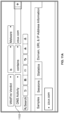
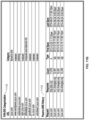
- Figures 11A-11B are screen shots of a domain, URL, and IP address information search view of a search editor of an interface for the malware analysis platform for threat intelligence made actionable in accordance with some embodiments.
- the search editor includes a Statistics tab.
- the search editor can be configured to view the domain, URL, and IP address information found with the samples matched to the search conditions.
- users can select the Domain, URL & IP Address Information tab to view passive DNS history and an existing categorization of the search results.
- users can set up a search (e.g., click/select a Target icon or the Domain, URL & IP Address Information tab) that includes at least one of the following conditions: URL, IP Address, or DNS Activity, such as by adding a search condition that DNS Activity contains zzux.com as shown in Figure 11A .
- PAN-DB is the Palo Alto Networks URL and IP database or another commercially available URL and IP classification/categorization that is commercially or publicly available can be utilized. Users can then review the web sites associated with URLs and the associated category(ies).
- users can review domain to IP address mappings found for samples that match their search condition(s).
- the interface for the malware analysis platform for threat intelligence made actionable includes a search feature (e.g., as similarly described above with respect to Figure 6 ) that allows for searches based on observed behavior. For example, users can utilize the search feature to find samples based on behaviors seen when the sample was executed in the sandbox environment.
- a search feature e.g., as similarly described above with respect to Figure 6
- users can utilize the search feature to find samples based on behaviors seen when the sample was executed in the sandbox environment.
- users can search for samples that created and modified files, started processes, spawned new processes, modified the registry, and/or installed browser help objects (BHOs).
- the user can utilize the interface to select to initiate a search using the platform, select the search category of observed behavior, and then browse a list of possible behaviors to select one or more behaviors to search for samples for which that behavior was seen when executed in the sandbox environment.
- the interface for the malware analysis platform for threat intelligence made actionable includes a search feature (e.g., as similarly described above with respect to Figure 6 ) that allows shared links to saved searches. For example, users can select the search feature to open their saved searches, click a link icon to generate a shared link, and then copy the link to share it with other users (e.g., other users of the malware analysis platform for threat intelligence).
- a search feature e.g., as similarly described above with respect to Figure 6
- users can select the search feature to open their saved searches, click a link icon to generate a shared link, and then copy the link to share it with other users (e.g., other users of the malware analysis platform for threat intelligence).
- network/security administrators are typically inundated with a significant number of, and often too many, alerts and messages from the security devices and security services for their enterprise network(s).
- security devices and security services typically fail to provide relevant context and prioritization for such alerts and messages to be effective and/or efficient to facilitate performing responsive action(s).
- tagging and alerting based on artifacts is provided using the malware analysis platform for threat intelligence.
- the above-described malware analysis platform can extract various static and behavioral artifacts, which can then be selected as artifacts to define tags based on a set of one or more attributes/behaviors (and/or conditions based on one or more attributes/behaviors) identified by the malware analysis platform during analysis of samples, as further described below.
- these tags when created apply to the existing set of samples and are smart such that if any new sample is received by the malware analysis platform for threat intelligence made actionable that exhibits the same set of one or more attributes/behaviors, then the new sample is automatically tagged and a notification can be communicated to the users that configures an alert based on the tag.
- this tagging and alerting capability allows network/security admins to define specific artifacts that they are interested in monitoring, such as domains, IP addresses, URLs, mutexes, and/or other attributes, so that when any event occurs in their network that targets (e.g., matches) such artifacts, they can then be notified to allow them to effectively and efficiently perform appropriate actions to mitigate the security threat.
- targets e.g., matches
- tags are applied as part of the intake processing for newly processed samples/sessions by the malware analysis platform for threat intelligence made actionable as similarly described above.
- a newly defined tag can be applied to (e.g., associated with) existing processed samples in a so-called lazy fashion as described herein.
- a network/security admin user for ACME Corporation can define a new tag and specify an alert based on the new tag using the disclosed techniques. The user can then receive an alert if a sample from their enterprise network matches the tag.
- the new tag can be a new tag that the user configured using the malware analysis platform for threat intelligence, or the tag can be an existing tag previously configured by the security vendor of the malware analysis platform for threat intelligence made actionable or by another user of the malware analysis platform for threat intelligence.
- clustering techniques described below can be applied to automatically generate tags (e.g., malware families can be associated with a smart tag).
- tags e.g., malware families can be associated with a smart tag.
- a tag can be automatically generated using the disclosed attribute and/or clustering based analysis techniques as further described below.
- a tag can be a high priority tag. For example, if a malware sample is detected/received that matches a tag that is a high priority tag (e.g., a tag that is associated with a serious threat can be identified as a high profile tag, such as by the security vendor for the malware analysis platform for threat intelligence), then an alert can be sent to a network/security admin for ACME Corporation that their network is being targeted based on an alert that a malware sample matching the high profile tag was identified as having penetrated their network.
- a high priority tag e.g., a tag that is associated with a serious threat can be identified as a high profile tag, such as by the security vendor for the malware analysis platform for threat intelligence
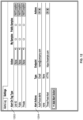
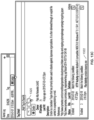
- Figures 13A-C are screen shots of an alerts log screen of an interface for the malware analysis platform for threat intelligence made actionable in accordance with some embodiments.
- the dashboard provides an Alerts Log screen. As shown, the Alerts Log on the dashboard lists alerts triggered within the selected dashboard date range, beginning with the most recent alerts. Also, the Alerts Log can display a complete set of alert logs (e.g., users can select Alerts on the navigation pane to view a complete set of alert logs).
- a dashboard for the platform displays threat intelligence information based on the tags, such as similarly described above with respect to Figure 6 (e.g., My Tags, Unit 42 Tags, and/or Public Tags as similarly described above).
- the dashboard for the malware analysis platform for threat intelligence made actionable can allow users to find the tags with the most sample hits during a set time range (e.g., top tags (My Tags, Unit 42 Tags, and/or Public Tags) detected during a date range).
- the dashboard for the platform allows users to view the tags with the highest total number of matching samples (e.g., top tags (My Tags, Unit 42 Tags, and/or Public Tags) found with search results).
- Various other dashboards/displays and/or search results can similarly be generated based on tags and/or alerts using the platform.
- a plurality of samples is received for performing automated malware analysis to generate log files based on the automated malware analysis.
- the automated malware analysis can include dynamic and/or static analysis as similarly described above.
- processing the log files is performed to determine artifacts associated with malware.
- a log file for a sample comprises one or more lines based on the automated malware analysis results for the sample as similarly described above.
- identifying distinct lines in the processed log files is performed. For example, duplicate lines in the log file can be de-duplicated to generate a processed log file that includes only distinct lines as similarly described above.
- line counts can be utilized to generate statistics and analysis for the malware sample results that can be presented in a dashboard and facilitate user access and analysis of the malware sample results and statistics overlay as similarly described above.
- line counts can be processed to determine whether any of the distinct lines can be correlated with malware (e.g., and not likely associated with benign samples), which can be utilized to identify high-risk artifacts as similarly described above.
- a line/sub-line can be updated as similarly described above.
- an action is performed based on a high-risk artifact.
- the artifact(s) can be imported to security information and event management (SIEM) tools or to support a firewall block list to perform security enforcement on an enterprise network as similarly described above.
- SIEM security information and event management
- Figure 18 is another flow diagram for a process performed using the malware analysis platform for threat intelligence made actionable in accordance with some embodiments.
- the process shown in Figure 18 is performed by the platform and techniques as similarly described above including the embodiments described above with respect to Figures 1-3 .
- a plurality of samples is received for performing automated malware analysis to generate log files based on the automated malware analysis.
- the automated malware analysis can include dynamic and/or static analysis as similarly described above.
- processing the log files is performed to determine artifacts associated with malware.
- a log file for a sample comprises one or more lines based on the automated malware analysis results for the sample.
- identifying distinct lines in the processed log files is performed. For example, duplicate lines in the log file can be de-duplicated to generate a log file that includes only distinct lines as similarly described above.
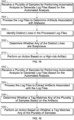
- Figure 19 is a flow diagram for a tagging and alerting process performed using the malware analysis platform for threat intelligence made actionable in accordance with some embodiments.
- the process shown in Figure 19 is performed by the platform and techniques as similarly described above including the embodiments described above with respect to Figures 1-3 .
- a plurality of samples is received for performing automated malware analysis to generate log files based on the automated malware analysis.
- the automated malware analysis can include dynamic and/or static analysis as similarly described above.
- an action is performed based on whether a tag matches any of the plurality of samples. For example, an alert can be triggered based on whether a tag matches any of the plurality of samples as similarly described above.
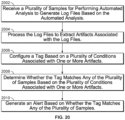
- Figure 20 is another flow diagram for a tagging and alerting process performed using the malware analysis platform for threat intelligence made actionable in accordance with some embodiments.
- the process shown in Figure 20 is performed by the platform and techniques as similarly described above including the embodiments described above with respect to Figures 1-3 .
- a plurality of samples is received for performing automated malware analysis to generate log files based on the automated malware analysis.
- the automated malware analysis can include dynamic and/or static analysis as similarly described above.
- a tag is configured based on a plurality of conditions associated with one or more artifacts. For example, a set of search conditions can be tagged as similarly described above.
- determining whether the tag matches any of the plurality of samples based on the plurality of conditions associated with one or more artifacts is performed.
- the platform can determine such tag matches for new and historical samples as similarly described above.
- a system, process, and/or computer program product for automatically determining whether malware samples are similar includes receiving a plurality of samples for performing automated malware analysis to generate log files based on the automated malware analysis; comparing the log files based on the automated malware analysis; determining whether any of the plurality of samples are similar based on the comparison of the log files based on the automated malware analysis; and performing an action based on determining that at least two samples are similar.
- a system, process, and/or computer program product for automatically determining whether malware samples are similar further includes processing the log files to extract artifacts associated with the log files; and determining whether a first malware sample is similar to any of the plurality of samples based on the artifacts.
- the disclosed techniques effectively and efficiently detect similar malware to more effectively detect and perform actions in response to the detected malware and thereby reduce the load and time spent to analyze and defend against the same family of malware (e.g., a set of malware that generally is associated with common attributes and/or common behaviors, such as further described below).
- Another benefit of the disclosed techniques for automatically determining whether malware samples are similar is that by correlating and comparing artifacts (e.g., attributes and/or behaviors) across a big data set of analyzed malware samples (e.g., millions of analyzed malware samples), degrees of "maliciousness" can be assigned to individual artifacts (e.g., suspicious or highly suspicious artifacts, such as similarly described above), thereby allowing the defenders to focus on more important artifacts to investigate further.
- artifacts e.g., attributes and/or behaviors
- Figure 21 is a component diagram of functional components for automatically determining whether malware samples are similar in accordance with some embodiments.
- the components shown in Figure 21 can be implemented by the platform and techniques as similarly described above including the embodiments described above with respect to Figures 1-3 and as further described below.
- a component architecture for automatically determining whether malware samples are similar includes an artifact extractor component 2108 that extracts artifacts from automated analysis results for samples, such as from document-1 for automated analysis results for a first sample as shown at 2104 and from document-2 for automated analysis results for a second sample as shown at 2106.
- these documents can be log files that include lines (e.g., de-duplicated lines) from the automated analysis results from the automated malware analysis system as similarly described above.
- the artifacts that can be extracted can include highly suspicious lines and suspicious lines.
- Other example artifacts can include grayware lines/sub-lines.
- a translator component (e.g., implemented as part of the extractor component or as a distinct component) is provided for translating document-1 2104 and document-2 2106 from a first format to a second format.
- document-1 2104 can be translated from an original log file format to a new format for performing a comparison with another document (e.g., the translated version of the original log file can be a subset of content from the original log file, such as a version that just includes the extracted lines/sub-lines from the original log file to facilitate an artifact-based comparison and/or to facilitate a similarity document comparison, such as further described below).
- the extracted artifacts can be provided to a comparer component 2110.
- the comparer component can perform a comparison to generate a comparison result based on the extracted artifacts using various techniques described herein.
- the comparison result can then be provided to a determiner component 2112.
- the determiner component can perform a similarity determination (e.g., a threshold-based determination) based on the comparison result using various techniques described herein.
- the similarity determination can then be applied by a responder component 2114 to perform a responsive action based on the similarity determination.
- a report can be generated to indicate that the samples are similar or are not similar based on the similarity determination (e.g., the samples can be grouped into a new or existing malware family as further described below).
- a response/action can be performed if the samples are determined to be similar (e.g., the common artifact(s) can be imported to security information and event management (SIEM) tools or to support a firewall block list to perform security enforcement on an enterprise network to automatically block such similar malware as similarly described above and further described below).
- SIEM security information and event management
- the components of the system as shown in Figure 21 illustrate an overall view of an architecture for implementing the disclosed techniques for determining whether malware samples are similar.
- the disclosed components for determining whether malware samples are similar can be implemented using various open source and/or commercially available components such as described above and coded in various programming languages, such as Python, Java, and/or other programming languages.
- the disclosed techniques can be implemented using the components of the system as shown in Figure 21 as further described below.
- malware families can be identified and samples grouped into the malware families using the disclosed techniques as further described below.
- the automated similarity determinations can be performed in a batch mode to identify malware families and reduce indexing of data performed by the above-described malware analysis platform for threat intelligence made actionable (e.g., using only one copy of similar malware samples).
- the automated similarity determinations can be performed in a manual mode to allow a user to search between two malware samples.
- the automated similarity determinations can be performed in a navigation mode to allow a user to view other samples that are related to a selected, given sample.
- Figure 22 is a flow diagram for automatically determining whether malware samples are similar in accordance with some embodiments.
- the process shown in Figure 22 is performed by the platform and techniques as similarly described above including the embodiments described above with respect to Figures 1-3 and 21 .
Landscapes
- Engineering & Computer Science (AREA)
- Computer Security & Cryptography (AREA)
- General Engineering & Computer Science (AREA)
- Computer Hardware Design (AREA)
- Theoretical Computer Science (AREA)
- Software Systems (AREA)
- Signal Processing (AREA)
- Computer Networks & Wireless Communication (AREA)
- Computing Systems (AREA)
- General Health & Medical Sciences (AREA)
- Physics & Mathematics (AREA)
- General Physics & Mathematics (AREA)
- Health & Medical Sciences (AREA)
- Virology (AREA)
- Data Mining & Analysis (AREA)
- Bioinformatics & Computational Biology (AREA)
- Life Sciences & Earth Sciences (AREA)
- Artificial Intelligence (AREA)
- Bioinformatics & Cheminformatics (AREA)
- Computer Vision & Pattern Recognition (AREA)
- Evolutionary Computation (AREA)
- Evolutionary Biology (AREA)
- Data Exchanges In Wide-Area Networks (AREA)
- Computer And Data Communications (AREA)
- Debugging And Monitoring (AREA)
Applications Claiming Priority (6)
| Application Number | Priority Date | Filing Date | Title |
|---|---|---|---|
| US15/056,976 US10230749B1 (en) | 2016-02-29 | 2016-02-29 | Automatically grouping malware based on artifacts |
| US15/056,981 US10333948B2 (en) | 2016-02-29 | 2016-02-29 | Alerting and tagging using a malware analysis platform for threat intelligence made actionable |
| US15/056,974 US10200389B2 (en) | 2016-02-29 | 2016-02-29 | Malware analysis platform for threat intelligence made actionable |
| US15/056,980 US10200390B2 (en) | 2016-02-29 | 2016-02-29 | Automatically determining whether malware samples are similar |
| PCT/US2017/019731 WO2017151515A1 (en) | 2016-02-29 | 2017-02-27 | Automatically grouping malware based on artifacts |
| EP17760554.0A EP3423980B1 (de) | 2016-02-29 | 2017-02-27 | Automatische gruppierung von schadsoftware auf der basis von artefakten |
Related Parent Applications (1)
| Application Number | Title | Priority Date | Filing Date |
|---|---|---|---|
| EP17760554.0A Division EP3423980B1 (de) | 2016-02-29 | 2017-02-27 | Automatische gruppierung von schadsoftware auf der basis von artefakten |
Publications (2)
| Publication Number | Publication Date |
|---|---|
| EP4575859A2 true EP4575859A2 (de) | 2025-06-25 |
| EP4575859A3 EP4575859A3 (de) | 2025-10-01 |
Family
ID=59743175
Family Applications (2)
| Application Number | Title | Priority Date | Filing Date |
|---|---|---|---|
| EP25176046.8A Pending EP4575859A3 (de) | 2016-02-29 | 2017-02-27 | Automatische gruppierung von malware auf der basis von artefakten |
| EP17760554.0A Active EP3423980B1 (de) | 2016-02-29 | 2017-02-27 | Automatische gruppierung von schadsoftware auf der basis von artefakten |
Family Applications After (1)
| Application Number | Title | Priority Date | Filing Date |
|---|---|---|---|
| EP17760554.0A Active EP3423980B1 (de) | 2016-02-29 | 2017-02-27 | Automatische gruppierung von schadsoftware auf der basis von artefakten |
Country Status (3)
| Country | Link |
|---|---|
| EP (2) | EP4575859A3 (de) |
| CN (2) | CN109074454B (de) |
| WO (1) | WO2017151515A1 (de) |
Families Citing this family (17)
| Publication number | Priority date | Publication date | Assignee | Title |
|---|---|---|---|---|
| CN108898505B (zh) * | 2018-05-28 | 2021-07-23 | 武汉斗鱼网络科技有限公司 | 作弊团伙的识别方法、相关存储介质和电子设备 |
| US20200259857A1 (en) * | 2019-02-11 | 2020-08-13 | Saudi Arabian Oil Company | System and method for forensic artifact analysis and visualization |
| CN112085039B (zh) * | 2019-06-12 | 2022-08-16 | 四川大学 | 一种基于随机森林的icmp隐蔽通道检测方法 |
| CN110602044A (zh) * | 2019-08-12 | 2019-12-20 | 贵州电网有限责任公司 | 一种网络威胁分析方法和系统 |
| TWI726449B (zh) * | 2019-10-18 | 2021-05-01 | 臺灣銀行股份有限公司 | 網路攻擊分析方法 |
| US11604871B2 (en) * | 2020-03-27 | 2023-03-14 | Cylance Inc. | Projected vector modification as mitigation for machine learning model string stuffing |
| CN112202759B (zh) * | 2020-09-28 | 2021-09-07 | 广州大学 | 基于同源性分析的apt攻击识别及归属方法、系统和存储介质 |
| US11973780B2 (en) | 2020-10-14 | 2024-04-30 | Palo Alto Networks, Inc. | Deobfuscating and decloaking web-based malware with abstract execution |
| US11574054B2 (en) | 2020-11-10 | 2023-02-07 | Huawei Technologies Co., Ltd. | System, method and apparatus for malicious software detection |
| US12462026B2 (en) * | 2021-01-20 | 2025-11-04 | Ntt, Inc. | Generation device, generation method, and generation program |
| US20220321587A1 (en) * | 2021-03-30 | 2022-10-06 | Traceable Inc. | Automatic anomaly detection based on api sessions |
| JP7551948B2 (ja) * | 2021-06-04 | 2024-09-17 | ブルーボヤント エルエルシー | 複数のテナントのためのセキュリティ情報およびイベント管理アーチファクトの導入の標準化および合理化のためのデバイス、システム、および方法 |
| US11681805B1 (en) * | 2022-05-26 | 2023-06-20 | Morgan Stanley Services Group Inc. | System for analytic data memorialization, data science, and validation |
| CN114707617B (zh) * | 2022-05-31 | 2022-08-26 | 每日互动股份有限公司 | 一种获取pkg簇的数据处理系统 |
| TWI795312B (zh) * | 2022-06-20 | 2023-03-01 | 英業達股份有限公司 | 適用於檢測系統的自動配置設定系統及其方法 |
| CN115659336B (zh) * | 2022-10-20 | 2025-11-04 | 杭州安恒信息技术股份有限公司 | 一种监听新建进程的方法、装置、计算机设备以及存储介质 |
| TWI862257B (zh) * | 2023-11-01 | 2024-11-11 | 智安數據科技股份有限公司 | 監控分析系統及其方法 |
Family Cites Families (8)
| Publication number | Priority date | Publication date | Assignee | Title |
|---|---|---|---|---|
| US7653633B2 (en) * | 2005-11-12 | 2010-01-26 | Logrhythm, Inc. | Log collection, structuring and processing |
| US8719925B1 (en) * | 2009-08-25 | 2014-05-06 | Sandia Corporation | Content-addressable memory based enforcement of configurable policies |
| US9245114B2 (en) * | 2010-08-26 | 2016-01-26 | Verisign, Inc. | Method and system for automatic detection and analysis of malware |
| US8555385B1 (en) * | 2011-03-14 | 2013-10-08 | Symantec Corporation | Techniques for behavior based malware analysis |
| ES2755780T3 (es) * | 2011-09-16 | 2020-04-23 | Veracode Inc | Análisis estático y de comportamiento automatizado mediante la utilización de un espacio aislado instrumentado y clasificación de aprendizaje automático para seguridad móvil |
| US9411955B2 (en) * | 2012-08-09 | 2016-08-09 | Qualcomm Incorporated | Server-side malware detection and classification |
| RU2580036C2 (ru) * | 2013-06-28 | 2016-04-10 | Закрытое акционерное общество "Лаборатория Касперского" | Система и способ создания гибкой свертки для обнаружения вредоносных программ |
| US9769189B2 (en) * | 2014-02-21 | 2017-09-19 | Verisign, Inc. | Systems and methods for behavior-based automated malware analysis and classification |
-
2017
- 2017-02-27 CN CN201780024945.9A patent/CN109074454B/zh active Active
- 2017-02-27 CN CN202210360204.0A patent/CN114679329B/zh active Active
- 2017-02-27 EP EP25176046.8A patent/EP4575859A3/de active Pending
- 2017-02-27 WO PCT/US2017/019731 patent/WO2017151515A1/en not_active Ceased
- 2017-02-27 EP EP17760554.0A patent/EP3423980B1/de active Active
Also Published As
| Publication number | Publication date |
|---|---|
| CN114679329B (zh) | 2023-06-30 |
| CN114679329A (zh) | 2022-06-28 |
| CN109074454B (zh) | 2022-04-19 |
| EP4575859A3 (de) | 2025-10-01 |
| WO2017151515A1 (en) | 2017-09-08 |
| CN109074454A (zh) | 2018-12-21 |
| EP3423980B1 (de) | 2025-06-11 |
| EP3423980A4 (de) | 2019-10-16 |
| EP3423980A1 (de) | 2019-01-09 |
Similar Documents
| Publication | Publication Date | Title |
|---|---|---|
| US10972493B2 (en) | Automatically grouping malware based on artifacts | |
| US10200390B2 (en) | Automatically determining whether malware samples are similar | |
| US10530789B2 (en) | Alerting and tagging using a malware analysis platform for threat intelligence made actionable | |
| EP3423980B1 (de) | Automatische gruppierung von schadsoftware auf der basis von artefakten | |
| US10200389B2 (en) | Malware analysis platform for threat intelligence made actionable | |
| US11783035B2 (en) | Multi-representational learning models for static analysis of source code | |
| US11277423B2 (en) | Anomaly-based malicious-behavior detection | |
| US11258805B2 (en) | Computer-security event clustering and violation detection | |
| US11392689B2 (en) | Computer-security violation detection using coordinate vectors | |
| US11615184B2 (en) | Building multi-representational learning models for static analysis of source code | |
| US10735442B1 (en) | Network security analysis and malware detection using multiple types of malware information | |
| US9998484B1 (en) | Classifying potentially malicious and benign software modules through similarity analysis | |
| EP2610776B1 (de) | Automatisierte verhaltens- und statische analyse unter verwendung eines instrumentierten sandkastens und maschinenlernklassifizierung für mobile sicherheit | |
| EP3531329B1 (de) | Detektion von auf anomalie basierendem schädlichem verhalten | |
| EP3407235A1 (de) | Computerimplementiertes verfahren, system und computerprogramm zur erkennung bösartiger uri-datenelemente | |
| US20240348639A1 (en) | Cyber threat information processing apparatus, cyber threat information processing method, and storage medium storing cyber threat information processing program | |
| Baychev et al. | Spearphishing malware: Do we really know the unknown? | |
| US12368731B2 (en) | Cyber threat information processing apparatus, cyber threat information processing method, and storage medium storing cyber threat information processing program | |
| JP2016525750A (ja) | 合法的オブジェクトの誤用の識別 | |
| Preetam | Behavioural analytics for threat detection | |
| US12381892B1 (en) | Security rule matching over structurally deduplicated network data | |
| US20240214406A1 (en) | Cyber threat information processing apparatus, cyber threat information processing method, and storage medium storing cyber threat information processing program | |
| Liu | Scalable processing methods for host-based intrusion detection systems | |
| Baychev et al. | Spearphishing Malware: Do We Really |
Legal Events
| Date | Code | Title | Description |
|---|---|---|---|
| PUAI | Public reference made under article 153(3) epc to a published international application that has entered the european phase |
Free format text: ORIGINAL CODE: 0009012 |
|
| STAA | Information on the status of an ep patent application or granted ep patent |
Free format text: STATUS: REQUEST FOR EXAMINATION WAS MADE |
|
| 17P | Request for examination filed |
Effective date: 20250513 |
|
| AC | Divisional application: reference to earlier application |
Ref document number: 3423980 Country of ref document: EP Kind code of ref document: P |
|
| AK | Designated contracting states |
Kind code of ref document: A2 Designated state(s): AL AT BE BG CH CY CZ DE DK EE ES FI FR GB GR HR HU IE IS IT LI LT LU LV MC MK MT NL NO PL PT RO RS SE SI SK SM TR |
|
| REG | Reference to a national code |
Ref country code: DE Ref legal event code: R079 Free format text: PREVIOUS MAIN CLASS: G06F0021560000 Ipc: G06F0021550000 |
|
| PUAL | Search report despatched |
Free format text: ORIGINAL CODE: 0009013 |
|
| AK | Designated contracting states |
Kind code of ref document: A3 Designated state(s): AL AT BE BG CH CY CZ DE DK EE ES FI FR GB GR HR HU IE IS IT LI LT LU LV MC MK MT NL NO PL PT RO RS SE SI SK SM TR |
|
| RIC1 | Information provided on ipc code assigned before grant |
Ipc: G06F 21/55 20130101AFI20250827BHEP Ipc: G06F 21/56 20130101ALI20250827BHEP Ipc: H04L 9/40 20220101ALI20250827BHEP |