EP4575615A1 - Verfahren zum berechnen einer daten eines brillenglases - Google Patents
Verfahren zum berechnen einer daten eines brillenglases Download PDFInfo
- Publication number
- EP4575615A1 EP4575615A1 EP23218718.7A EP23218718A EP4575615A1 EP 4575615 A1 EP4575615 A1 EP 4575615A1 EP 23218718 A EP23218718 A EP 23218718A EP 4575615 A1 EP4575615 A1 EP 4575615A1
- Authority
- EP
- European Patent Office
- Prior art keywords
- spectacle lens
- function
- predefined
- modulation function
- data
- Prior art date
- Legal status (The legal status is an assumption and is not a legal conclusion. Google has not performed a legal analysis and makes no representation as to the accuracy of the status listed.)
- Pending
Links
Images


Classifications
-
- G—PHYSICS
- G02—OPTICS
- G02C—SPECTACLES; SUNGLASSES OR GOGGLES INSOFAR AS THEY HAVE THE SAME FEATURES AS SPECTACLES; CONTACT LENSES
- G02C7/00—Optical parts
- G02C7/02—Lenses; Lens systems ; Methods of designing lenses
- G02C7/024—Methods of designing ophthalmic lenses
- G02C7/028—Special mathematical design techniques
-
- G—PHYSICS
- G02—OPTICS
- G02C—SPECTACLES; SUNGLASSES OR GOGGLES INSOFAR AS THEY HAVE THE SAME FEATURES AS SPECTACLES; CONTACT LENSES
- G02C2202/00—Generic optical aspects applicable to one or more of the subgroups of G02C7/00
- G02C2202/24—Myopia progression prevention
Definitions
- the present invention relates to a method being configured for calculating, by a computer, data of a spectacle lens according to the preamble of claim 1.
- WO 2021/260642 A1 discloses, for example in paragraph [0029], methods for forming one or more geometrically defined shapes and/or contour optical elements on a surface of an ophthalmic lens comprising: defining a modulation function to modify one or more parameters of the ophthalmic lens surface geometry in a predefined region of the ophthalmic lens and in a predefined direction; and forming one or more geometrically defined shapes and/or contour optical elements by applying the modulating function to the one or more parameters of the surface geometry of the ophthalmic lens to change the curvature of at least one of a front surface of the ophthalmic lens and/or a back surface of the ophthalmic lens.
- geometrically defined shape and/or contour optical elements refers to a region in or on the modulated lens surface wherein one or more parameter(s) of the surface geometry that defines the lens surface shape in this region is/are modified via the use of the modulation function to result in a different geometry compared to the base surface.
- the modulating function is a mathematical function to alter one or more parameters of the surface geometry that define the lens surface shape of the ophthalmic lens applied on a region of the lens and in a direction.
- the direction refers to a direction along which the modulating function is applied and may be angular, radial, vertical, horizontal, random, or quasi-random, inter alia, or a combination of one or more directions from any point on the ophthalmic lens.
- the problem to be solved by the present invention is to create a modified geometry that is different to the base lens while simultaneously preventing habituation of an eye to said modified geometry.
- the method is configured for calculating, by a computer, data of a spectacle lens for the purpose of a use of the data for a manufacture of the spectacle lens, the method comprising the step of
- Data of a spectacle lens is data configured for the purpose of a use of said data for a manufacture the spectacle lens.
- said data of said spectacle lens is computer-readable data or in form of computer-readable data.
- Said computer-readable data may additionally contain manufacturing instructions for manufacturing the spectacle lens.
- Said manufacturing instructions may be computer-readable instructions for controlling one or more manufacturing machine(s) to manufacture the spectacle lens.
- Said computer-readable data may be (i) stored on a computer-readable storage medium, (ii) stored in a memory of a computer, (iii) embodied in or in the form of a data signal, (iv) transferred via a data signal, (v) retrievable from a data network.
- the computer-readable storage medium may be a non-transitory tangible computer-readable storage medium.
- a "spectacle lens” is defined as in ISO 13666:2019(E), entry 3.5.2, as ophthalmic lens (3.5.1) worn in front of, but not in contact with, an eyeball.
- a front surface of the spectacle lens is as defined in ISO 13666:2019(E), entry 3.2.13, a surface of the spectacle lens (3.5.2) intended to be fitted away from an eye.
- a back surface of the spectacle lens is as defined in ISO 13666:2019(E), entry 3.2.14, a surface of the spectacle lens (3.5.2) intended to be fitted nearer to an eye.
- "Generating" data of a randomly modulated surface for the spectacle lens comprises using a mathematical function to modify a predefined surface of a digital twin of said spectacle lens.
- the predefined surface of the digital twin of the spectacle lens is data of a predefined surface for said spectacle lens, said data of said predefined surface for said spectacle lens being configured for the purpose of a manufacture of said spectacle lens.
- the predefined surface of the digital twin of the spectacle lens is at least one of a predefined front surface of the digital twin of the spectacle lens and a predefined back surface of the digital twin of the spectacle lens, i.e., the predefined surface of the digital twin is at least one of a mathematical description of a front surface for said spectacle lens and a mathematical description of a back surface for said spectacle lens.
- the mathematical description of the front surface and the mathematical description of the back surface each is a mathematical formula describing a respective surface height z as a function of coordinates x and y.
- the respective mathematical description determines a z position of the respective surface in each x,y position.
- the mathematical descriptions preferably are closed mathematical descriptions.
- the predefined front surface of the digital twin of the spectacle lens is defined analogously as in ISO 13666:2019(E), entry 3.2.13, as surface of the digital twin of the spectacle lens intended to be virtually positioned furthest to an eye model, for example a predefined eye model.
- the predefined back surface of the digital twin of the spectacle lens is defined analogously as in ISO 13666:2019(E), entry 3.2.14, as surface of the digital twin of the spectacle lens intended to be virtually positioned nearest to an eye model, for example a predefined eye model.
- the mathematical description of at least one of the front surface and the back surface preferably result from an optimization towards an optical target for said spectacle lens.
- the data of said randomly modulated surface for said spectacle lens is comprised in the data of the spectacle lens.
- a "randomly modulated surface" for a spectacle lens is a modified version of the predefined surface for said spectacle lens.
- a "continuous random surface modulation function" is a mathematical function of coordinates x and y that is defined by one parameter or more parameters.
- Said one parameter is determined by at least one of the group consisting of (i) one continuous probability distribution, (ii) more continuous probability distributions, (iii) one discrete probability distribution and (iv) more discrete probability distributions.
- Said more parameters are determined by at least one of the group consisting of (i) one continuous probability distribution, (ii) more continuous probability distributions, (iii) one discrete probability distribution, and (iv) more discrete probability distributions. Consequently, every realization of a defined continuous random surface modulation function differs, except when realizations do not differ coincidentally. The most common example of a continuous probability distribution is a normal distribution.
- the determination of said one parameter by at least one of the group consisting of (i) one continuous probability distribution, (ii) more continuous probability distributions, (iii) one discrete probability distribution and (iv) more discrete probability distributions preferably comprises at least one of the group consisting of a) one direct determination step, b) more direct determination steps, c) one indirect determination step, d) more indirect determination steps.
- the determination of said more parameters by at least one of the group consisting of (i) one continuous probability distribution, (ii) more continuous probability distributions, (iii) one discrete probability distribution, and (iv) more discrete probability distributions preferably comprises at least one of the group consisting of a) one direct determination step, b) more direct determination steps, c) one indirect determination step, d) more indirect determination steps.
- One parameter determined by one direct determination step or by more direct determination steps preferably means that said one parameter directly is a function or a function value of at least one of (i) one continuous probability distribution, (ii) more continuous probability distributions, (iii) one discrete probability distribution, and (iv) more discrete probability distributions.
- More parameters determined by one direct determination step or by more direct determination steps preferably means that each of said more parameters directly is a function or function value of at least one of (i) one continuous probability distribution, (ii) more continuous probability distributions, (iii) one discrete probability distribution, and (iv) more discrete probability distributions.
- One parameter determined by one indirect determination step or by more indirect determination steps preferably means that said one parameter results from a function or a function value of at least one of (i) one continuous probability distribution, (ii) more continuous probability distributions, (iii) one discrete probability distribution, and (iv) more discrete probability distributions.
- More parameters determined by one indirect determination step or by more indirect determination steps preferably means that each of said more parameters results from a function or a function value of at least one of (i) one continuous probability distribution, (ii) more continuous probability distributions, (iii) one discrete probability distribution, and (iv) more discrete probability distributions.
- the determination of said more parameters comprises more indirect determination steps, i.e., the determination can be done by, as one step, determining a random pattern of discrete x,y positions using one continuous probability distribution or more continuous probability distributions and, as another step, determining for each of said discrete x,y positions, a discrete surface modulation value using said one or another continuous probability distribution or said more or other more continuous probability distributions.
- the more parameters defining said random function of coordinates x and y are then determined by fitting a mathematical function, said mathematical function parametrized by said more parameters, to said discrete surface modulation values at said discrete x,y positions.
- a domain of said continuous random surface modulation function preferably is defined such that said domain is comprised in a domain of the predefined surface for the spectacle lens said continuous random surface modulation function is applied to.
- Said domain being comprised in said domain of the predefined surface for the spectacle lens said continuous random surface modulation function is applied to preferably is a simply connected domain.
- said domain is comprised in said domain of the predefined surface for the spectacle lens in that said domain coincides with at least one of 60%, 70%, 80%, 90% of the domain of the predefined surface for the spectacle lens.
- the domain of said random surface modulation function is equal to or smaller than said area.
- the optical centre of the digital twin of the spectacle lens is defined analogously as in ISO 13666:2019(E), entry 3.2.15, as intersection of an optical axis with a front surface of the digital twin of the spectacle lens.
- An optical centre of the spectacle lens is as defined in ISO 13666:2019(E), entry 3.2.15, an intersection of an optical axis (3.1.8) with a front surface (3.2.13) of the spectacle lens (3.5.2).
- the predefined surface for the spectacle lens preferably is a spherical surface, the spherical surface as defined in ISO 13666:2019(E), entry 3.4.1, or an aspherical surface, the aspherical surface as defined in ISO 13666:2019(E), entry 3.4.3.
- the aspherical surface preferably is rotationally symmetric.
- the domain of the continuous random surface modulation function is defined such that said domain is comprised in a domain of at least one of the predefined front surface and the predefined back surface, preferably the predefined front surface, said continuous random surface modulation function is applied to.
- the continuous random surface modulation function is a non-periodic mathematical function of coordinates x and y that is defined by the one parameter or the more parameters.
- the continuous random surface modulation function has a value greater than zero for each x,y position in the domain of said continuous random surface modulation function.
- WO 2021/260642 A1 defines in paragraph [00110] modulating functions as surface modulation functions that are not random. Further, in contrast to the continuous random surface modulation function being a mathematical function of coordinates x and y, the modulating functions described in WO 2021/260642 A1 are mathematical functions of one independent variable only.
- US 2022/0034179 A1 discloses a spectacle lens comprising scattering centres arranged in a pattern that includes a random variation in spacing between adjacent dots and/or a random variation in dot size.
- the scattering centres of US 2022/0034179 A1 can be positioned relative to a regular array of lattice sites, where each scattering centre is displaced in at least one dimension from a corresponding one of the lattice sites by an amount equal to or less than a jitter amplitude, the jitter amplitude being a fraction of a distance between adjacent lattice sites.
- Biorthogonal wavelets are denoted by the polynomial degree of their scaling functions.
- the numbers 3.3 represent the polynomial degree of the two scaling functions common for biorthogonal wavelets. 3.3 here means that the first scaling function is of polynomial degree 3 as well as the second scaling function.
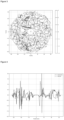
- Random wavelet functions are for example Haar, Daubechies, Mexican hat wavelet or biorthogonals of any type bior1.1, bior2.2, bior3.1, bior3.3, bior5.1 , bior5.3, and so on, using random coefficients.
- the method configured for calculating, by a computer, data of the spectacle lens for the purpose of the use of the data for the manufacture of the spectacle lens, the method comprising the step of generating data of a randomly modulated surface for said spectacle lens, the method being further configured to manufacture the spectacle lens according to said data.
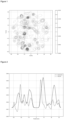
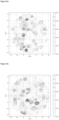
- Example 1 Proceeding to generate a scaled continuous random surface modulation function by using a random bicubic spline modulation function is as follows:
- z j h j ⁇ r j + sqrt r j 2 ⁇ x j 2 sc x + y j 2 sc y
- h_j are maximal heights picked from a uniform distribution within [1, 30] ⁇ m
- the scaling factors sc_x and sc_y are picked from a uniform distribution within [0.2, 2.0]
- the radii rJ from a uniform distribution within [1000.0/5.0, 1000.0/0.5].
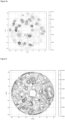
- Example 3 Proceeding to generate a scaled continuous random surface modulation function by using a specific example of a random wavelet modulation function is as follows:
Landscapes
- Physics & Mathematics (AREA)
- Health & Medical Sciences (AREA)
- Ophthalmology & Optometry (AREA)
- Mathematical Physics (AREA)
- General Health & Medical Sciences (AREA)
- General Physics & Mathematics (AREA)
- Optics & Photonics (AREA)
- Eyeglasses (AREA)
Priority Applications (2)
| Application Number | Priority Date | Filing Date | Title |
|---|---|---|---|
| EP23218718.7A EP4575615A1 (de) | 2023-12-20 | 2023-12-20 | Verfahren zum berechnen einer daten eines brillenglases |
| PCT/EP2024/086987 WO2025132495A1 (en) | 2023-12-20 | 2024-12-18 | Method for calculating data of a spectacle lens |
Applications Claiming Priority (1)
| Application Number | Priority Date | Filing Date | Title |
|---|---|---|---|
| EP23218718.7A EP4575615A1 (de) | 2023-12-20 | 2023-12-20 | Verfahren zum berechnen einer daten eines brillenglases |
Publications (1)
| Publication Number | Publication Date |
|---|---|
| EP4575615A1 true EP4575615A1 (de) | 2025-06-25 |
Family
ID=89224646
Family Applications (1)
| Application Number | Title | Priority Date | Filing Date |
|---|---|---|---|
| EP23218718.7A Pending EP4575615A1 (de) | 2023-12-20 | 2023-12-20 | Verfahren zum berechnen einer daten eines brillenglases |
Country Status (2)
| Country | Link |
|---|---|
| EP (1) | EP4575615A1 (de) |
| WO (1) | WO2025132495A1 (de) |
Citations (7)
| Publication number | Priority date | Publication date | Assignee | Title |
|---|---|---|---|---|
| US20130046381A1 (en) * | 2010-02-09 | 2013-02-21 | Zeev Zalevsky | Multi-focal lens |
| WO2021260642A1 (en) | 2020-06-26 | 2021-12-30 | Brien Holden Vision Institute Limited | Geometrically defined shapes and/or contour optical elements for ophthalmic lenses and methods for creating such geometrically defined shapes and/or contour optical elements |
| US20220034179A1 (en) | 2017-08-30 | 2022-02-03 | Schlumberger Technology Corporation | Downhole transducer assemblies and pressure range control therein |
| EP4089473A1 (de) | 2021-05-10 | 2022-11-16 | Carl Zeiss Vision International GmbH | Brillenglasdesign, brillenglas-kit, verfahren zur herstellung von brillenglas und verfahren zur bereitstellung eines brillenglasdesigns |
| US20230111585A1 (en) * | 2021-10-07 | 2023-04-13 | Indizen Optical Technologies of America, LLC | Ophthalmic lenses for myopia reduction |
| WO2023155984A1 (en) | 2022-02-16 | 2023-08-24 | Carl Zeiss Vision International Gmbh | Spectacle lens to reduce the progression of myopia |
| JP2023537034A (ja) * | 2020-08-07 | 2023-08-30 | ローデンストック.ゲゼルシャフト.ミット.ベシュレンクテル.ハフツング | 眼科用レンズの改善された計算 |
Family Cites Families (3)
| Publication number | Priority date | Publication date | Assignee | Title |
|---|---|---|---|---|
| US20210048690A1 (en) * | 2018-03-01 | 2021-02-18 | Essilor International | Lens element |
| WO2022136056A1 (en) * | 2020-12-23 | 2022-06-30 | Essilor International | An optical lens |
| CN116699872B (zh) * | 2023-06-06 | 2025-12-05 | 苏州科技大学 | 一种渐进多焦点眼用镜片区域性优化像散的方法 |
-
2023
- 2023-12-20 EP EP23218718.7A patent/EP4575615A1/de active Pending
-
2024
- 2024-12-18 WO PCT/EP2024/086987 patent/WO2025132495A1/en active Pending
Patent Citations (7)
| Publication number | Priority date | Publication date | Assignee | Title |
|---|---|---|---|---|
| US20130046381A1 (en) * | 2010-02-09 | 2013-02-21 | Zeev Zalevsky | Multi-focal lens |
| US20220034179A1 (en) | 2017-08-30 | 2022-02-03 | Schlumberger Technology Corporation | Downhole transducer assemblies and pressure range control therein |
| WO2021260642A1 (en) | 2020-06-26 | 2021-12-30 | Brien Holden Vision Institute Limited | Geometrically defined shapes and/or contour optical elements for ophthalmic lenses and methods for creating such geometrically defined shapes and/or contour optical elements |
| JP2023537034A (ja) * | 2020-08-07 | 2023-08-30 | ローデンストック.ゲゼルシャフト.ミット.ベシュレンクテル.ハフツング | 眼科用レンズの改善された計算 |
| EP4089473A1 (de) | 2021-05-10 | 2022-11-16 | Carl Zeiss Vision International GmbH | Brillenglasdesign, brillenglas-kit, verfahren zur herstellung von brillenglas und verfahren zur bereitstellung eines brillenglasdesigns |
| US20230111585A1 (en) * | 2021-10-07 | 2023-04-13 | Indizen Optical Technologies of America, LLC | Ophthalmic lenses for myopia reduction |
| WO2023155984A1 (en) | 2022-02-16 | 2023-08-24 | Carl Zeiss Vision International Gmbh | Spectacle lens to reduce the progression of myopia |
Also Published As
| Publication number | Publication date |
|---|---|
| WO2025132495A1 (en) | 2025-06-26 |
Similar Documents
| Publication | Publication Date | Title |
|---|---|---|
| CN115867851B (zh) | 用于眼科透镜的几何限定形状和/或轮廓光学元件及用于创建这种几何限定形状和/或轮廓光学元件的方法 | |
| US20250389974A1 (en) | Ophthalmic lenses for reducing myopic progression and methods of making the same | |
| US20240192522A1 (en) | Ophthalmic lenses with light scattering for treating myopia | |
| KR100767491B1 (ko) | 콘택트 렌즈 | |
| CN101437462B (zh) | 用于全面改善视力的方法和设备 | |
| EP2916149A1 (de) | Linsenanordnung, bildanzeigevorrichtung und beweglicher körper | |
| EP3132306B1 (de) | Verfahren zur berechnung eines optischen systems einer gleitsicht-augenlinse, die zur ausgabe eines zusätzlichen bildes angeordnet ist | |
| TW202212922A (zh) | 用於眼部症狀之管理及/或減少夜間視覺障礙的眼科裝置、系統及/或方法 | |
| PL184804B1 (pl) | Soczewka kontaktowa i sposób wytwarzania soczewki kontaktowej | |
| US20230314837A1 (en) | Method for determining the adaptation of a myopia control optical lens | |
| CA3225375A1 (en) | Ophthalmic lenses for myopia reduction | |
| KR20230093059A (ko) | 안경 렌즈 설계, 안경 렌즈 키트, 및 안경 렌즈 제조 방법 | |
| US20110022037A1 (en) | System and Method for Minimizing the Side Effects of Refractive Corrections Using Line or Dot Cuts for Incisions | |
| WO2025132495A1 (en) | Method for calculating data of a spectacle lens | |
| US7472992B2 (en) | Series of spectacle lenses and associated production method | |
| TWI883747B (zh) | 用於近視管理之具過渡光散射中心之眼用鏡片 | |
| US20230185111A1 (en) | Lens element and corresponding computer-implemented determining method | |
| TW202513286A (zh) | 用於治療近視之具有光散射的眼用鏡片及製造彼之方法 | |
| JP2004514946A (ja) | 遠方及び中間物体距離用のフ゜ログレッシブ眼鏡レンズ | |
| WO2025233551A1 (es) | Método de diseño de un elemento óptico para corrección de presbicia y elemento óptico diseñado según el mismo | |
| HK40129665A (zh) | 用於近视管理的具有过渡光散射中心的眼科镜片 | |
| Hild | An algorithmic approach to modelling the retinal receptor topography | |
| HK40085195B (zh) | 眼镜镜片、眼镜镜片的设计方法和眼镜镜片的设计系统 | |
| HK1127271B (en) | Method and apparatus for universal improvement of vision | |
| HK1164100B (en) | Method and apparatus for universal improvement of vision |
Legal Events
| Date | Code | Title | Description |
|---|---|---|---|
| PUAI | Public reference made under article 153(3) epc to a published international application that has entered the european phase |
Free format text: ORIGINAL CODE: 0009012 |
|
| STAA | Information on the status of an ep patent application or granted ep patent |
Free format text: STATUS: THE APPLICATION HAS BEEN PUBLISHED |
|
| AK | Designated contracting states |
Kind code of ref document: A1 Designated state(s): AL AT BE BG CH CY CZ DE DK EE ES FI FR GB GR HR HU IE IS IT LI LT LU LV MC ME MK MT NL NO PL PT RO RS SE SI SK SM TR |
|
| STAA | Information on the status of an ep patent application or granted ep patent |
Free format text: STATUS: THE APPLICATION IS DEEMED TO BE WITHDRAWN |