EP4575335A1 - Processing method and apparatus, and air conditioning device and storage medium - Google Patents
Processing method and apparatus, and air conditioning device and storage medium Download PDFInfo
- Publication number
- EP4575335A1 EP4575335A1 EP23869542.3A EP23869542A EP4575335A1 EP 4575335 A1 EP4575335 A1 EP 4575335A1 EP 23869542 A EP23869542 A EP 23869542A EP 4575335 A1 EP4575335 A1 EP 4575335A1
- Authority
- EP
- European Patent Office
- Prior art keywords
- frequency
- air conditioning
- conditioning device
- compressor
- threshold
- Prior art date
- Legal status (The legal status is an assumption and is not a legal conclusion. Google has not performed a legal analysis and makes no representation as to the accuracy of the status listed.)
- Pending
Links
Images

Classifications
-
- F—MECHANICAL ENGINEERING; LIGHTING; HEATING; WEAPONS; BLASTING
- F04—POSITIVE - DISPLACEMENT MACHINES FOR LIQUIDS; PUMPS FOR LIQUIDS OR ELASTIC FLUIDS
- F04B—POSITIVE-DISPLACEMENT MACHINES FOR LIQUIDS; PUMPS
- F04B49/00—Control, e.g. of pump delivery, or pump pressure of, or safety measures for, machines, pumps, or pumping installations, not otherwise provided for, or of interest apart from, groups F04B1/00 - F04B47/00
- F04B49/02—Stopping, starting, unloading or idling control
-
- F—MECHANICAL ENGINEERING; LIGHTING; HEATING; WEAPONS; BLASTING
- F04—POSITIVE - DISPLACEMENT MACHINES FOR LIQUIDS; PUMPS FOR LIQUIDS OR ELASTIC FLUIDS
- F04B—POSITIVE-DISPLACEMENT MACHINES FOR LIQUIDS; PUMPS
- F04B49/00—Control, e.g. of pump delivery, or pump pressure of, or safety measures for, machines, pumps, or pumping installations, not otherwise provided for, or of interest apart from, groups F04B1/00 - F04B47/00
- F04B49/06—Control using electricity
-
- F—MECHANICAL ENGINEERING; LIGHTING; HEATING; WEAPONS; BLASTING
- F24—HEATING; RANGES; VENTILATING
- F24F—AIR-CONDITIONING; AIR-HUMIDIFICATION; VENTILATION; USE OF AIR CURRENTS FOR SCREENING
- F24F11/00—Control or safety arrangements
- F24F11/62—Control or safety arrangements characterised by the type of control or by internal processing, e.g. using fuzzy logic, adaptive control or estimation of values
- F24F11/63—Electronic processing
- F24F11/64—Electronic processing using pre-stored data
-
- F—MECHANICAL ENGINEERING; LIGHTING; HEATING; WEAPONS; BLASTING
- F24—HEATING; RANGES; VENTILATING
- F24F—AIR-CONDITIONING; AIR-HUMIDIFICATION; VENTILATION; USE OF AIR CURRENTS FOR SCREENING
- F24F11/00—Control or safety arrangements
- F24F11/70—Control systems characterised by their outputs; Constructional details thereof
- F24F11/80—Control systems characterised by their outputs; Constructional details thereof for controlling the temperature of the supplied air
- F24F11/86—Control systems characterised by their outputs; Constructional details thereof for controlling the temperature of the supplied air by controlling compressors within refrigeration or heat pump circuits
-
- F—MECHANICAL ENGINEERING; LIGHTING; HEATING; WEAPONS; BLASTING
- F25—REFRIGERATION OR COOLING; COMBINED HEATING AND REFRIGERATION SYSTEMS; HEAT PUMP SYSTEMS; MANUFACTURE OR STORAGE OF ICE; LIQUEFACTION SOLIDIFICATION OF GASES
- F25B—REFRIGERATION MACHINES, PLANTS OR SYSTEMS; COMBINED HEATING AND REFRIGERATION SYSTEMS; HEAT PUMP SYSTEMS
- F25B49/00—Arrangement or mounting of control or safety devices
- F25B49/02—Arrangement or mounting of control or safety devices for compression type machines, plants or systems
- F25B49/022—Compressor control arrangements
-
- F—MECHANICAL ENGINEERING; LIGHTING; HEATING; WEAPONS; BLASTING
- F04—POSITIVE - DISPLACEMENT MACHINES FOR LIQUIDS; PUMPS FOR LIQUIDS OR ELASTIC FLUIDS
- F04B—POSITIVE-DISPLACEMENT MACHINES FOR LIQUIDS; PUMPS
- F04B2203/00—Motor parameters
- F04B2203/02—Motor parameters of rotating electric motors
- F04B2203/0204—Frequency of the electric current
-
- F—MECHANICAL ENGINEERING; LIGHTING; HEATING; WEAPONS; BLASTING
- F04—POSITIVE - DISPLACEMENT MACHINES FOR LIQUIDS; PUMPS FOR LIQUIDS OR ELASTIC FLUIDS
- F04B—POSITIVE-DISPLACEMENT MACHINES FOR LIQUIDS; PUMPS
- F04B2203/00—Motor parameters
- F04B2203/04—Motor parameters of linear electric motors
- F04B2203/0404—Frequency of the electric current
-
- F—MECHANICAL ENGINEERING; LIGHTING; HEATING; WEAPONS; BLASTING
- F24—HEATING; RANGES; VENTILATING
- F24F—AIR-CONDITIONING; AIR-HUMIDIFICATION; VENTILATION; USE OF AIR CURRENTS FOR SCREENING
- F24F2140/00—Control inputs relating to system states
- F24F2140/10—Pressure
- F24F2140/12—Heat-exchange fluid pressure
-
- F—MECHANICAL ENGINEERING; LIGHTING; HEATING; WEAPONS; BLASTING
- F25—REFRIGERATION OR COOLING; COMBINED HEATING AND REFRIGERATION SYSTEMS; HEAT PUMP SYSTEMS; MANUFACTURE OR STORAGE OF ICE; LIQUEFACTION SOLIDIFICATION OF GASES
- F25B—REFRIGERATION MACHINES, PLANTS OR SYSTEMS; COMBINED HEATING AND REFRIGERATION SYSTEMS; HEAT PUMP SYSTEMS
- F25B2500/00—Problems to be solved
- F25B2500/19—Calculation of parameters
-
- F—MECHANICAL ENGINEERING; LIGHTING; HEATING; WEAPONS; BLASTING
- F25—REFRIGERATION OR COOLING; COMBINED HEATING AND REFRIGERATION SYSTEMS; HEAT PUMP SYSTEMS; MANUFACTURE OR STORAGE OF ICE; LIQUEFACTION SOLIDIFICATION OF GASES
- F25B—REFRIGERATION MACHINES, PLANTS OR SYSTEMS; COMBINED HEATING AND REFRIGERATION SYSTEMS; HEAT PUMP SYSTEMS
- F25B2500/00—Problems to be solved
- F25B2500/27—Problems to be solved characterised by the stop of the refrigeration cycle
-
- F—MECHANICAL ENGINEERING; LIGHTING; HEATING; WEAPONS; BLASTING
- F25—REFRIGERATION OR COOLING; COMBINED HEATING AND REFRIGERATION SYSTEMS; HEAT PUMP SYSTEMS; MANUFACTURE OR STORAGE OF ICE; LIQUEFACTION SOLIDIFICATION OF GASES
- F25B—REFRIGERATION MACHINES, PLANTS OR SYSTEMS; COMBINED HEATING AND REFRIGERATION SYSTEMS; HEAT PUMP SYSTEMS
- F25B2600/00—Control issues
- F25B2600/02—Compressor control
- F25B2600/025—Compressor control by controlling speed
- F25B2600/0253—Compressor control by controlling speed with variable speed
-
- F—MECHANICAL ENGINEERING; LIGHTING; HEATING; WEAPONS; BLASTING
- F25—REFRIGERATION OR COOLING; COMBINED HEATING AND REFRIGERATION SYSTEMS; HEAT PUMP SYSTEMS; MANUFACTURE OR STORAGE OF ICE; LIQUEFACTION SOLIDIFICATION OF GASES
- F25B—REFRIGERATION MACHINES, PLANTS OR SYSTEMS; COMBINED HEATING AND REFRIGERATION SYSTEMS; HEAT PUMP SYSTEMS
- F25B2600/00—Control issues
- F25B2600/15—Control issues during shut down
-
- F—MECHANICAL ENGINEERING; LIGHTING; HEATING; WEAPONS; BLASTING
- F25—REFRIGERATION OR COOLING; COMBINED HEATING AND REFRIGERATION SYSTEMS; HEAT PUMP SYSTEMS; MANUFACTURE OR STORAGE OF ICE; LIQUEFACTION SOLIDIFICATION OF GASES
- F25B—REFRIGERATION MACHINES, PLANTS OR SYSTEMS; COMBINED HEATING AND REFRIGERATION SYSTEMS; HEAT PUMP SYSTEMS
- F25B2700/00—Sensing or detecting of parameters; Sensors therefor
- F25B2700/19—Pressures
Definitions
- the application relates to the technical field of air conditioners, and in particular to a processing method and apparatus, an air conditioning device and a storage medium.
- a controller for a pressure switch is mounted on an inverter air conditioner, to protect the pressure of an air conditioning system.
- the pressure switch When the pressure of the air conditioning system reaches an off value of the pressure switch, the pressure switch will be turned off, and then the air conditioner will stop operation.
- the application provides a processing method and apparatus, an air conditioning device and a storage medium.
- the operation efficiency and use efficiency of the air conditioning device as well as the use experience of the air conditioning device may be improved.
- the application provides a processing method, the method is applied to an air conditioning device, and includes the following operations.
- pressure of the air conditioning device is greater than a pressure threshold.
- the air conditioning device is controlled to shut down.
- frequency of the compressor during operation is reduced to a second frequency, and state of the air conditioning device is controlled based on the second frequency, here the state includes shutdown or operation.
- the application provides a processing apparatus, the processing apparatus is deployed in an air conditioning device, and includes a determination unit, an obtaining unit, a first control unit and a second control unit.
- the determination unit is configured to determine that pressure of the air conditioning device is greater than a pressure threshold.
- the obtaining unit is configured to when the pressure is greater than the pressure threshold, obtain a first frequency of a compressor of the air conditioning device during operation at a current state.
- the first control unit is configured to when the first frequency meets a first condition, control the air conditioning device to shut down.
- the second control unit is configured to when the first frequency does not meet the first condition, reduce frequency of the compressor during operation to a second frequency, and control state of the air conditioning device based on the second frequency, here the state includes shutdown or operation.
- the application provides an air conditioning device, the air conditioning device includes a controller, and the controller is configured to perform the above processing method of the first aspect.
- the application provides a storage medium, the storage medium has stored thereon a control program, and when the control program is executed, the above processing method of the first aspect is implemented.
- the processing method and apparatus, the air conditioning device and the storage medium provided in the application are applied to an air conditioning device, and includes the following operations. It is determined that pressure of the air conditioning device is greater than a pressure threshold. When the pressure is greater than the pressure threshold, a first frequency of a compressor of the air conditioning device during operation is obtained. When the first frequency meets a first condition, the air conditioning device is controlled to shut down. When the first frequency does not meet the first condition, frequency of the compressor during operation is reduced to a second frequency, and state of the air conditioning device is controlled based on the second frequency, here the state includes shutdown or operation.
- the air conditioning device when the pressure of the air conditioning device is greater than the pressure threshold, the air conditioning device does not shut down directly, instead, a specific analysis is performed, so that the air conditioning device shuts down when the first condition is met, the frequency is reduced when the first condition is not met, and the state of the air conditioning device is controlled based on the frequency after frequency reduction. Therefore, the air conditioning device may shut down or continuously operate when the pressure is greater than the pressure threshold.
- the air conditioning device is controlled to shut down, to protect pressure components in the air conditioning device and avoid damage to the pressure components;
- a frequency reduction process is performed to control operation of the air conditioning device as much as possible, thereby improving the operation efficiency.
- first ⁇ second ⁇ third involved in the following descriptions are only used as an example to distinguish different objects, do not represent a specific order of the objects, and do not have a limitation on a sequence thereof. It may be understood that “first ⁇ second ⁇ third” may be interchanged with a specific order or sequence if allowable, so that the embodiments of the application described here may be implemented in an order other than that shown or described here.
- an embodiment of the application provides a processing method, the method is applied to a processing apparatus, and the processing apparatus may be deployed in an air conditioning device.
- a processing process provided in the embodiment of the application will be described below.
- FIG. 1 exemplifies a schematic flowchart of a processing method.
- the processing method may include, but is not limited to the following operations S101 to S104 shown in FIG. 1 .
- an air conditioning device determines that pressure of the air conditioning device is greater than a pressure threshold.
- the pressure threshold is a standard for determining whether a system pressure of the air conditioning device is in a normal range.
- a specific value of the pressure threshold is not limited in the embodiment of the application, and may be determined according to an actual situation.
- the operation S101 may be implemented as follows.
- the air conditioning device detects the system pressure of the air conditioning device through a pressure detector, and determines a relationship between the pressure and the pressure threshold; if the pressure is greater than the pressure threshold, it is determined that the pressure of the air conditioning device is greater than the pressure threshold.
- a specific type of the pressure detector is not limited in the embodiment of the application, and may be determined according to an actual situation.
- a pressure switch When the pressure is greater than the pressure threshold, a pressure switch may be turned off.
- the air conditioning device obtains a first frequency of a compressor of the air conditioning device during operation.
- the first frequency is an initial operation frequency of the compressor when the pressure is greater than the pressure threshold.
- the operation S102 may be implemented as follows.
- the air conditioning device detects a frequency of the compressor of the air conditioning device during operation through a frequency detector, and takes the frequency as the first frequency.
- the first frequency may be detected by direct measurement, or may be calculated after detection and measurement. Manners of obtaining the first frequency are not specifically limited in the embodiment of the application. Exemplarily, the first frequency may be measured through a frequency table.
- the air conditioning device controls the air conditioning device to shut down.
- the first condition is intended to characterize a frequency condition where the air conditioning device needs to shut down. Specific contents of the first condition are not limited in the embodiment of the application, and may be configured according to an actual situation.
- the air conditioning device determines whether the first frequency meets the first condition, and if the first condition is met, the air conditioning device is controlled to shut down.
- the air conditioning device sends a shutdown control signal through a controller, and controls power supply of the air conditioning device through the shutdown control signal, thereby shutting down the air conditioning device.
- the air conditioning device reduces frequency of the compressor during operation to a second frequency, and controls state of the air conditioning device based on the second frequency.
- the state includes shutdown or operation.
- the second frequency is a frequency after the frequency of the compressor is reduced.
- the operation S104 may be implemented as follows.
- the air conditioning device determines that the first frequency does not meet the first condition, reduces the frequency of the compressor during operation, operates the compressor at the second frequency, and then controls the state of the air conditioning device based on the second frequency.
- Manners of reducing the operation frequency of the compressor are not limited in the embodiment of the application, and may be configured according to an actual situation.
- the frequency may be reduced based on a fixed value, that is, a frequency value by which the frequency is reduced each time is fixed.
- a fixed value that is, a frequency value by which the frequency is reduced each time is fixed.
- the first frequency is 100, and then it is sequentially reduced to 95, 90, etc.
- the frequency may be proportionally reduced based on a previous frequency value.
- the first frequency is 100, and then it is sequentially reduced to 90, 81, etc.
- the frequency may also be reduced based on other manners, which are not listed here one by one.
- Manners of controlling the state of the air conditioning device based on the second frequency are not limited and may be determined according to an actual situation.
- the manner of controlling the state of the air conditioning device based on the second frequency may be the same as the control manner corresponding to the first frequency, or may be different from the control manner corresponding to the first frequency.
- the system pressure of the air conditioning device may be reduced, to achieve a state of operation, thereby increasing the probability of operation and improving operation efficiency and use efficiency of the air conditioning device.
- the air conditioning device when the pressure of the air conditioning device is greater than the pressure threshold, the air conditioning device does not shut down directly, instead, a specific analysis is performed, so that the air conditioning device shuts down when the first condition is met, the frequency is reduced when the first condition is not met, and the state of the air conditioning device is controlled based on the frequency after frequency reduction. Therefore, the air conditioning device may shut down or continuously operate when the pressure is greater than the pressure threshold.
- the process may include, but is not limited to the following operations S1041 and S1042.
- the operation S1041 may be implemented as follows.
- the air conditioning device determines whether the second frequency meets the first condition, and when the second frequency meets the first condition, the air conditioning device is controlled to shut down. Determination of whether the second frequency meets the first condition and the process of controlling the air conditioning device to shut down may refer to detailed descriptions of the air conditioning device controlling the air conditioning device to shut down when the first frequency meets the first condition in operation S103, which are not elaborated here.
- the air conditioning device obtains a current difference of the air conditioning device, and controls the state of the air conditioning device based on the current difference.
- the current difference is intended to indicate a reduction value in current when the frequency is reduced. Based on the current difference, it may be determined whether the pressure of the air conditioning device after the frequency is reduced has returned to normal, so that the air conditioning device may continuously operate.
- the current difference is a difference obtained by subtracting a first current of the air conditioning device from a reference current of the air conditioning device.
- the reference current is a current of the air conditioning device during operation at the first frequency
- the first current is a current of the air conditioning device during operation at the second frequency
- the operation S1042 may be implemented as follows.
- the air conditioning device obtains the current of the air conditioning device during operation at the first frequency as the reference current, obtains the current of the air conditioning device during operation at the second frequency as the first current, takes the difference obtained by subtracting the first current from the reference current as the current difference, and controls the air conditioning device to shut down or continuously operate based on the current difference.
- the process may include, but is not limited to the following operations S10421 and S 10422.
- the first threshold is intended to indicate whether the current difference is sufficient to enable the air conditioning device to continuously operate.
- a specific value of the first threshold is not limited in the embodiment of the application, and may be determined according to an actual situation.
- the first threshold may be an empirical value, or a theoretical value calculated according to certain parameters.
- the operation S10421 may be implemented as follows.
- the air conditioning device determines a magnitude relationship between the current difference and the first threshold, and when the current difference is greater than the first threshold, controls the compressor of the air conditioning device to continuously operate at the second frequency.
- the air conditioning device continuously reduces the frequency of the compressor during operation to a third frequency, takes the third frequency as a new second frequency, and controls the state of the air conditioning device based on the new second frequency.
- the operation S10422 may be implemented as follows.
- the air conditioning device continuously reduces the frequency of the compressor during operation to a third frequency, takes the third frequency as a new second frequency, determines whether the third frequency meets the first condition, and when the third frequency meets the first condition, controls the air conditioning device to shut down; when the third frequency does not meet the first condition, obtains a new current difference of the air conditioning device, and controls the state of the air conditioning device based on the new current difference.
- the process of reducing the frequency of the compressor during operation to the third frequency may refer to detailed descriptions of the air conditioning device reducing the frequency of the compressor during operation to the second frequency in operation S104, which are not elaborated here.
- the air conditioning device may reduce the frequency of the compressor during operation to the second frequency based on a first formula.
- the first frequency is 100, and frequencies after sequential frequency reduction based on the first formula are 95, 90.
- the first condition will be described in detail below.
- the first condition may include: the frequency is less than or equal to a first frequency threshold.
- a specific value of the first frequency threshold is not limited in the embodiment of the application, and may be determined according to an actual situation.
- the first frequency threshold may be a lower limit of an operable frequency of the compressor at a current ambient temperature.
- the first frequency threshold may also be an actual empirical value.
- a specific value of the second frequency threshold is not limited in the embodiment of the application, and may be determined according to an actual situation.
- the value of the second frequency threshold may include, but is not limited to the following first or second situation.
- the second frequency threshold is an average value of an upper limit of the operable frequency of the compressor at the current ambient temperature and the lower limit of the operable frequency of the compressor at the current ambient temperature.
- Second situation the second frequency threshold meets a second formula.
- the process may include, but is not limited to the following operations S401 to S411.
- a user turns on operation of the air conditioning device.
- a pressure switch of the air conditioning device is turned off, a current operation frequency F of a compressor, a minimum operation frequency F min and a maximum target frequency F max of the compressor in a current mode are detected, and a current I is recorded.
- n ⁇ M ⁇ F - ( n - 1) ⁇ F is less than or equal to F max ⁇ F min F ⁇ F min ⁇ F min , the following operation S408 is performed; if n ⁇ M ⁇ F - ( n - 1) ⁇ F is greater than F max ⁇ F min F ⁇ F min ⁇ F min , the following operation S409 is performed.
- the compressor operates at the frequency after frequency reduction, and a current In after frequency reduction is recorded.
- a is greater than 0.
- a current operation frequency F of the compressor is detected, a maximum operation frequency of the compressor in a current load mode is recorded as F max , a minimum operation frequency of the compressor in the current load mode is F min , and a current whole machine current I of the air conditioning device is recorded.
- the frequency of the compressor is continuously reduced. For example, the frequency of the compressor after frequency reduction is 0.95 ⁇ 2 F - F. Then, a magnitude relationship between 0.95 ⁇ 2 F - F and F max ⁇ F min F ⁇ F min ⁇ F min is determined. If 0.95 ⁇ 2 F - F is less than or equal to F max ⁇ F min F ⁇ F min ⁇ F min , the compressor stops operation. If 0.95 ⁇ 2 F - F is greater than F max ⁇ F min F ⁇ F min ⁇ F min , a current I2 after frequency reduction is recorded, and a difference between I and I2 is determined. The same determination as above is performed for cyclic control.
- the processing process of the embodiment of the application may include the following operations.
- the air conditioning device determines that the system pressure is greater than the pressure threshold, the first frequency F of the compressor is obtained. F is greater than the minimum operation frequency F min , and a magnitude relationship between F and F max ⁇ F min F ⁇ F min ⁇ F min is determined. When F is less than or equal to F max ⁇ F min F ⁇ F min ⁇ F min , the compressor stops operation.
- the obtaining unit 502 is configured to when the pressure is greater than the pressure threshold, obtain a first frequency of a compressor of the air conditioning device during operation at a current state.
- the first control unit 503 is configured to when the first frequency meets a first condition, control the air conditioning device to shut down.
- the second control unit 504 is further configured to: reduce the frequency of the compressor during operation to the second frequency based on a first formula.
- the first condition includes: the frequency is less than or equal to a first frequency threshold.
- the first frequency threshold includes a lower limit of an operable frequency of the compressor at a current ambient temperature.
- the second frequency threshold meets a second formula.
- each unit included in the processing apparatus provided in the embodiment of the application may be implemented by a processor in an electronic device; of course, the unit may also be implemented by a specific logic circuit.
- the processor may be a Central Processing Unit (CPU), a Micro Processor Unit (MPU), a Digital Signal Processor (DSP) or a Field-Programmable Gate Array (FPGA), etc.
- the processing method may also be stored in a computer-readable storage medium.
- the technical solutions of the embodiments of the application substantially or parts making contributions to the related art may be embodied in form of a software product, and the computer software product is stored in a storage medium, and includes several instructions to enable a computer device (which may be a personal computer, a server, or a network device, etc.) to perform all or part of the method described in each embodiment of the application.
- the foregoing storage medium includes various media capable of storing program codes, such as a U disk, a mobile hard disk, a Read Only Memory (ROM), a magnetic disk, or an optical disk, etc.
- program codes such as a U disk, a mobile hard disk, a Read Only Memory (ROM), a magnetic disk, or an optical disk, etc.
- an embodiment of the application provides an air conditioning device, the air conditioning device includes a memory and a processor, the memory stores a computer program executable on the processor, and the processor performs operations of: determining that pressure of the air conditioning device is greater than a pressure threshold; when the pressure is greater than the pressure threshold, obtaining a first frequency of a compressor of the air conditioning device during operation; when the first frequency meets a first condition, controlling the air conditioning device to shut down; and when the first frequency does not meet the first condition, reducing frequency of the compressor during operation to a second frequency, and controlling state of the air conditioning device based on the second frequency, here the state includes shutdown or operation.
- the operation of controlling the state of the air conditioning device based on the current difference includes the following operations.
- the air conditioning device is controlled to continuously operate at the second frequency.
- the frequency of the compressor during operation is continuously reduced to a third frequency, the third frequency is taken as a new second frequency, and the state of the air conditioning device is controlled based on the new second frequency.
- the first condition includes: the frequency is less than or equal to a first frequency threshold.
- the first condition includes: the frequency is greater than the first frequency threshold and is less than or equal to a second frequency threshold.
- the second frequency threshold is greater than the first frequency threshold.
- the first frequency threshold includes a lower limit of an operable frequency of the compressor at a current ambient temperature.
- the second frequency threshold meets a second formula.
- each unit may be used as a separate unit, or two or more units may be integrated into a unit; the above integrated unit may be implemented in form of hardware, or in form of hardware plus software function units.
- the foregoing storage medium includes various media capable of storing program codes, such as a mobile storage device, a ROM, a magnetic disk, or an optical disk, etc.
- the integrated unit of the application may also be stored in a computer-readable storage medium.
- the technical solutions of the embodiments of the application substantially or parts making contributions to the related art may be embodied in form of a software product, and the computer software product is stored in a storage medium, and includes several instructions to enable a computer device (which may be a personal computer, a server, or a network device, etc.) to perform all or part of the method described in each embodiment of the application.
- the foregoing storage medium includes various media capable of storing program codes, such as a mobile storage device, a ROM, a magnetic disk, or an optical disk, etc.
Landscapes
- Engineering & Computer Science (AREA)
- Mechanical Engineering (AREA)
- General Engineering & Computer Science (AREA)
- Physics & Mathematics (AREA)
- Thermal Sciences (AREA)
- Signal Processing (AREA)
- Chemical & Material Sciences (AREA)
- Combustion & Propulsion (AREA)
- Fuzzy Systems (AREA)
- Mathematical Physics (AREA)
- Air Conditioning Control Device (AREA)
Abstract
Description
- This application is filed based on and claims priority to
Chinese patent application No. 202211190049.9 filed on September 28, 2022 - The application relates to the technical field of air conditioners, and in particular to a processing method and apparatus, an air conditioning device and a storage medium.
- With the rapid development of scientific and production technologies, the functions of an air conditioning device become more and more perfect, and applications of the air conditioning device become more and more common.
- In the related art, a controller for a pressure switch is mounted on an inverter air conditioner, to protect the pressure of an air conditioning system. When the pressure of the air conditioning system reaches an off value of the pressure switch, the pressure switch will be turned off, and then the air conditioner will stop operation.
- In this way, when the air conditioner shuts down after the pressure reaches the off value of the pressure switch, it will affect operation efficiency and use efficiency of the air conditioning device as well as use experience of the air conditioning device.
- In order to solve the above technical problem, the application provides a processing method and apparatus, an air conditioning device and a storage medium. With the solutions of the application, the operation efficiency and use efficiency of the air conditioning device as well as the use experience of the air conditioning device may be improved.
- The solutions of the application are implemented as follows.
- In a first aspect, the application provides a processing method, the method is applied to an air conditioning device, and includes the following operations.
- It is determined that pressure of the air conditioning device is greater than a pressure threshold.
- When the pressure is greater than the pressure threshold, a first frequency of a compressor of the air conditioning device during operation is obtained.
- When the first frequency meets a first condition, the air conditioning device is controlled to shut down.
- When the first frequency does not meet the first condition, frequency of the compressor during operation is reduced to a second frequency, and state of the air conditioning device is controlled based on the second frequency, here the state includes shutdown or operation.
- In a second aspect, the application provides a processing apparatus, the processing apparatus is deployed in an air conditioning device, and includes a determination unit, an obtaining unit, a first control unit and a second control unit.
- The determination unit is configured to determine that pressure of the air conditioning device is greater than a pressure threshold.
- The obtaining unit is configured to when the pressure is greater than the pressure threshold, obtain a first frequency of a compressor of the air conditioning device during operation at a current state.
- The first control unit is configured to when the first frequency meets a first condition, control the air conditioning device to shut down.
- The second control unit is configured to when the first frequency does not meet the first condition, reduce frequency of the compressor during operation to a second frequency, and control state of the air conditioning device based on the second frequency, here the state includes shutdown or operation.
- In a third aspect, the application provides an air conditioning device, the air conditioning device includes a controller, and the controller is configured to perform the above processing method of the first aspect.
- In a fourth aspect, the application provides a storage medium, the storage medium has stored thereon a control program, and when the control program is executed, the above processing method of the first aspect is implemented.
- The processing method and apparatus, the air conditioning device and the storage medium provided in the application are applied to an air conditioning device, and includes the following operations. It is determined that pressure of the air conditioning device is greater than a pressure threshold. When the pressure is greater than the pressure threshold, a first frequency of a compressor of the air conditioning device during operation is obtained. When the first frequency meets a first condition, the air conditioning device is controlled to shut down. When the first frequency does not meet the first condition, frequency of the compressor during operation is reduced to a second frequency, and state of the air conditioning device is controlled based on the second frequency, here the state includes shutdown or operation.
- It may be seen that with the solutions of the application, when the pressure of the air conditioning device is greater than the pressure threshold, the air conditioning device does not shut down directly, instead, a specific analysis is performed, so that the air conditioning device shuts down when the first condition is met, the frequency is reduced when the first condition is not met, and the state of the air conditioning device is controlled based on the frequency after frequency reduction. Therefore, the air conditioning device may shut down or continuously operate when the pressure is greater than the pressure threshold. In this way, on the first hand, when the first condition is met, the air conditioning device is controlled to shut down, to protect pressure components in the air conditioning device and avoid damage to the pressure components; on the second hand, when the first condition is not met, a frequency reduction process is performed to control operation of the air conditioning device as much as possible, thereby improving the operation efficiency.
-
-
FIG. 1 is a schematic flowchart of a processing method provided in an embodiment of the application. -
FIG. 2 is another schematic flowchart of a processing method provided in an embodiment of the application. -
FIG. 3 is yet another schematic flowchart of a processing method provided in an embodiment of the application. -
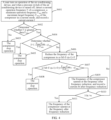
FIG. 4 is still another schematic flowchart of a processing method provided in an embodiment of the application. -
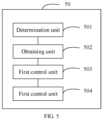
FIG. 5 is a schematic structural diagram of a processing apparatus provided in an embodiment of the application. - In order to make the purpose, technical solutions and advantages of embodiments of the application clearer, specific technical solutions of the application will be further described in detail below with reference to the drawings in the embodiments of the application. The following embodiments are intended to explain the application, but are not intended to limit the scope of the application.
- In the following descriptions, reference is made to "some embodiments" which describe a subset of all possible embodiments. However, it may be understood that "some embodiments" may be the same or different subsets of all possible embodiments, and may be combined with each other without conflict.
- Terms "first\second\third" involved in the following descriptions are only used as an example to distinguish different objects, do not represent a specific order of the objects, and do not have a limitation on a sequence thereof. It may be understood that "first\second\third" may be interchanged with a specific order or sequence if allowable, so that the embodiments of the application described here may be implemented in an order other than that shown or described here.
- Unless otherwise defined, all technical and scientific terms used here have the same meaning as those usually understood by technicians in the technical field to which the application belongs. The terms used here are only for the purpose of describing the embodiments of the application, and are not intended to limit the application.
- Various embodiments of a processing method and apparatus, an air conditioning device and a storage medium provided in the embodiments of the application will be described below.
- In a first aspect, an embodiment of the application provides a processing method, the method is applied to a processing apparatus, and the processing apparatus may be deployed in an air conditioning device. A processing process provided in the embodiment of the application will be described below.
-
FIG. 1 exemplifies a schematic flowchart of a processing method. With reference to contents shown inFIG. 1 , the processing method may include, but is not limited to the following operations S101 to S104 shown inFIG. 1 . - In operation S101, an air conditioning device determines that pressure of the air conditioning device is greater than a pressure threshold.
- The pressure threshold is a standard for determining whether a system pressure of the air conditioning device is in a normal range. A specific value of the pressure threshold is not limited in the embodiment of the application, and may be determined according to an actual situation.
- The operation S101 may be implemented as follows. The air conditioning device detects the system pressure of the air conditioning device through a pressure detector, and determines a relationship between the pressure and the pressure threshold; if the pressure is greater than the pressure threshold, it is determined that the pressure of the air conditioning device is greater than the pressure threshold.
- A specific type of the pressure detector is not limited in the embodiment of the application, and may be determined according to an actual situation.
- When the pressure is greater than the pressure threshold, a pressure switch may be turned off.
- In operation S102, when the pressure is greater than the pressure threshold, the air conditioning device obtains a first frequency of a compressor of the air conditioning device during operation.
- The first frequency is an initial operation frequency of the compressor when the pressure is greater than the pressure threshold.
- Exemplarily, the operation S102 may be implemented as follows. When the pressure is greater than the pressure threshold, the air conditioning device detects a frequency of the compressor of the air conditioning device during operation through a frequency detector, and takes the frequency as the first frequency.
- The first frequency may be detected by direct measurement, or may be calculated after detection and measurement. Manners of obtaining the first frequency are not specifically limited in the embodiment of the application. Exemplarily, the first frequency may be measured through a frequency table.
- In operation S103, when the first frequency meets a first condition, the air conditioning device controls the air conditioning device to shut down.
- The first condition is intended to characterize a frequency condition where the air conditioning device needs to shut down. Specific contents of the first condition are not limited in the embodiment of the application, and may be configured according to an actual situation.
- After obtaining the first frequency, the air conditioning device determines whether the first frequency meets the first condition, and if the first condition is met, the air conditioning device is controlled to shut down.
- Specific implementations of controlling the air conditioning device to shut down are not limited in the embodiment of the application, and may be determined according to an actual situation. Exemplarily, the air conditioning device sends a shutdown control signal through a controller, and controls power supply of the air conditioning device through the shutdown control signal, thereby shutting down the air conditioning device.
- In operation S104, when the first frequency does not meet the first condition, the air conditioning device reduces frequency of the compressor during operation to a second frequency, and controls state of the air conditioning device based on the second frequency.
- The state includes shutdown or operation.
- The second frequency is a frequency after the frequency of the compressor is reduced.
- Since failure to meet the first condition may characterize that the air conditioning device may not need to shut down, the operation S104 may be implemented as follows. The air conditioning device determines that the first frequency does not meet the first condition, reduces the frequency of the compressor during operation, operates the compressor at the second frequency, and then controls the state of the air conditioning device based on the second frequency.
- Manners of reducing the operation frequency of the compressor are not limited in the embodiment of the application, and may be configured according to an actual situation.
- In a possible implementation, the frequency may be reduced based on a fixed value, that is, a frequency value by which the frequency is reduced each time is fixed. For example, the first frequency is 100, and then it is sequentially reduced to 95, 90, etc.
- In another possible implementation, the frequency may be proportionally reduced based on a previous frequency value. For example, the first frequency is 100, and then it is sequentially reduced to 90, 81, etc.
- It may be understood that the frequency may also be reduced based on other manners, which are not listed here one by one.
- Manners of controlling the state of the air conditioning device based on the second frequency are not limited and may be determined according to an actual situation. For example, the manner of controlling the state of the air conditioning device based on the second frequency may be the same as the control manner corresponding to the first frequency, or may be different from the control manner corresponding to the first frequency.
- In this way, after the frequency is reduced, the system pressure of the air conditioning device may be reduced, to achieve a state of operation, thereby increasing the probability of operation and improving operation efficiency and use efficiency of the air conditioning device.
- The processing method provided in the embodiment of the application is applied to an air conditioning device, and includes the following operations. It is determined that pressure of the air conditioning device is greater than a pressure threshold. When the pressure is greater than the pressure threshold, a first frequency of a compressor of the air conditioning device during operation is obtained. When the first frequency meets a first condition, the air conditioning device is controlled to shut down. When the first frequency does not meet the first condition, frequency of the compressor during operation is reduced to a second frequency, and state of the air conditioning device is controlled based on the second frequency, here the state includes shutdown or operation.
- It may be seen that with the solutions of the application, when the pressure of the air conditioning device is greater than the pressure threshold, the air conditioning device does not shut down directly, instead, a specific analysis is performed, so that the air conditioning device shuts down when the first condition is met, the frequency is reduced when the first condition is not met, and the state of the air conditioning device is controlled based on the frequency after frequency reduction. Therefore, the air conditioning device may shut down or continuously operate when the pressure is greater than the pressure threshold. In this way, on the first hand, when the first condition is met, the air conditioning device is controlled to shut down, to protect pressure components in the air conditioning device and avoid damage to the pressure components; on the second hand, when the first condition is not met, a frequency reduction process is performed to control operation of the air conditioning device as much as possible, thereby improving the operation efficiency.
- A process of controlling the state of the air conditioning device based on the second frequency in operation S 104 will be described below.
- As shown in
FIG. 2 , the process may include, but is not limited to the following operations S1041 and S1042. - In operation S1041, when the second frequency meets the first condition, the air conditioning device controls the air conditioning device to shut down.
- The operation S1041 may be implemented as follows. The air conditioning device determines whether the second frequency meets the first condition, and when the second frequency meets the first condition, the air conditioning device is controlled to shut down. Determination of whether the second frequency meets the first condition and the process of controlling the air conditioning device to shut down may refer to detailed descriptions of the air conditioning device controlling the air conditioning device to shut down when the first frequency meets the first condition in operation S103, which are not elaborated here.
- In operation S1042, when the second frequency does not meet the first condition, the air conditioning device obtains a current difference of the air conditioning device, and controls the state of the air conditioning device based on the current difference.
- The current difference is intended to indicate a reduction value in current when the frequency is reduced. Based on the current difference, it may be determined whether the pressure of the air conditioning device after the frequency is reduced has returned to normal, so that the air conditioning device may continuously operate.
- The current difference is a difference obtained by subtracting a first current of the air conditioning device from a reference current of the air conditioning device.
- The reference current is a current of the air conditioning device during operation at the first frequency, and the first current is a current of the air conditioning device during operation at the second frequency.
- The operation S1042 may be implemented as follows. When it is determined that the second frequency does not meet the first condition, the air conditioning device obtains the current of the air conditioning device during operation at the first frequency as the reference current, obtains the current of the air conditioning device during operation at the second frequency as the first current, takes the difference obtained by subtracting the first current from the reference current as the current difference, and controls the air conditioning device to shut down or continuously operate based on the current difference.
- Specific manners of controlling the air conditioning device to shut down or continuously operate based on the current difference, are not limited and may be configured according to an actual situation.
- A process of controlling the state of the air conditioning device based on the current difference in operation S1042 will be described below.
- As shown in
FIG. 3 , in a possible implementation, the process may include, but is not limited to the following operations S10421 and S 10422. - In operation S10421, when the current difference is greater than a first threshold, the air conditioning device controls the air conditioning device to continuously operate at the second frequency.
- The first threshold is intended to indicate whether the current difference is sufficient to enable the air conditioning device to continuously operate. A specific value of the first threshold is not limited in the embodiment of the application, and may be determined according to an actual situation.
- Exemplarily, the first threshold may be an empirical value, or a theoretical value calculated according to certain parameters.
- The operation S10421 may be implemented as follows. The air conditioning device determines a magnitude relationship between the current difference and the first threshold, and when the current difference is greater than the first threshold, controls the compressor of the air conditioning device to continuously operate at the second frequency.
- In operation S10422, when the current difference is less than or equal to the first threshold, the air conditioning device continuously reduces the frequency of the compressor during operation to a third frequency, takes the third frequency as a new second frequency, and controls the state of the air conditioning device based on the new second frequency.
- The operation S10422 may be implemented as follows. When the current difference is less than or equal to the first threshold, the air conditioning device continuously reduces the frequency of the compressor during operation to a third frequency, takes the third frequency as a new second frequency, determines whether the third frequency meets the first condition, and when the third frequency meets the first condition, controls the air conditioning device to shut down; when the third frequency does not meet the first condition, obtains a new current difference of the air conditioning device, and controls the state of the air conditioning device based on the new current difference.
- For example, when the current difference is greater than the first threshold, the air conditioning device is controlled to continuously operate at the third frequency; when the current difference is less than or equal to the first threshold, the frequency of the compressor during operation is continuously reduced to a fourth frequency, the fourth frequency is taken as a new second frequency, and the state of the air conditioning device is controlled based on the new second frequency.
- The new current difference is a difference obtained by subtracting a second current of the air conditioning device from the reference current of the air conditioning device, and the second current is a current of the air conditioning device during operation at the third frequency.
- The process of reducing the frequency of the compressor during operation to the third frequency may refer to detailed descriptions of the air conditioning device reducing the frequency of the compressor during operation to the second frequency in operation S104, which are not elaborated here.
- A process of the air conditioning device reducing the frequency of the compressor during operation to the second frequency in operation S104 will be described below.
- In a possible implementation, the air conditioning device may reduce the frequency of the compressor during operation to the second frequency based on a first formula.
- The first formula includes F n+1 = n × M × F - (n - 1) × F, F n+1 represents the second frequency, F represents the first frequency, M is a reduction coefficient and M is greater than 0 and less than 1, n is a number of reductions and n is an integer equal to or greater than 0.
- A specific value of the reduction coefficient is not limited in the embodiment of the application, and may be determined according to an actual situation. M is greater than 0 and less than 1. Exemplarily, M is 0.95.
- For example, the first frequency is 100, and frequencies after sequential frequency reduction based on the first formula are 95, 90.
- The first condition will be described in detail below.
- In a possible implementation, the first condition may include: the frequency is less than or equal to a first frequency threshold.
- A specific value of the first frequency threshold is not limited in the embodiment of the application, and may be determined according to an actual situation.
- Exemplarily, the first frequency threshold may be a lower limit of an operable frequency of the compressor at a current ambient temperature.
- It may be understood that the first frequency threshold may also be an actual empirical value.
- In another possible implementation, the first condition may include: the frequency is greater than the first frequency threshold and is less than or equal to a second frequency threshold.
- The second frequency threshold is greater than the first frequency threshold.
- A specific value of the second frequency threshold is not limited in the embodiment of the application, and may be determined according to an actual situation.
- Exemplarily, when the first frequency threshold is the lower limit of the operable frequency of the compressor at the current ambient temperature, the value of the second frequency threshold may include, but is not limited to the following first or second situation.
- First situation: the second frequency threshold is an average value of an upper limit of the operable frequency of the compressor at the current ambient temperature and the lower limit of the operable frequency of the compressor at the current ambient temperature.
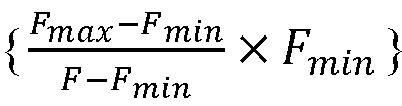
- Second situation: the second frequency threshold meets a second formula.
- The second formula includes

- A processing process provided in the embodiment of the application will be described below by taking an inverter air conditioning device as an example.
- As shown in
FIG. 4 , the process may include, but is not limited to the following operations S401 to S411. - In operation S401, a user turns on operation of the air conditioning device. When a pressure switch of the air conditioning device is turned off, a current operation frequency F of a compressor, a minimum operation frequency Fmin and a maximum target frequency Fmax of the compressor in a current mode are detected, and a current I is recorded.
- In operation S402, it is determined whether F is greater than Fmin.
- When F is less than or equal to Fmin, the following operation S403 is performed; when F is greater than Fmin, the following operation S404 is performed.
- In operation S403, the compressor stops operation.
- In operation S404, it is determined whether F is less than or equal to

- If F is less than or equal to


- In operation S405, the compressor stops operation.
- In operation S406, the frequency of the compressor is reduced to n × M × F - (n - 1) × F.
- In operation S407, it is determined whether n × M × F - (n - 1) × F is less than or equal to

- If n × M × F - (n - 1) × F is less than or equal to


- In operation S408, the compressor stops operation.
- In operation S409, the compressor operates at the frequency after frequency reduction, and a current In after frequency reduction is recorded.
- n = 1, 2, 3....
- In operation S410, it is determined whether I - In is greater than a.
- a is greater than 0.
- If I - In is greater than a, the following operation S411 is performed; if I - In is less than or equal to a, n is increased by 1, and then the process returns to perform operation S406.
- In operation S411, the frequency of the compressor operates at the frequency after frequency reduction.
- The processing process will be described in detail below.
- After the user turns on operation of the air conditioning device, when a system pressure of the air conditioning device exceeds an off value of the pressure switch, a current operation frequency F of the compressor is detected, a maximum operation frequency of the compressor in a current load mode is recorded as Fmax, a minimum operation frequency of the compressor in the current load mode is Fmin, and a current whole machine current I of the air conditioning device is recorded.
- If the current operation frequency F is equal to the minimum operation frequency Fmin, the compressor shuts down to protect the compressor.
- If the current operation frequency F is greater than the minimum operation frequency Fmin , a magnitude relationship between the current operation frequency F and


- When F is greater than


- When 0.95 F is greater than

- If I - I1 ≤ a, the frequency of the compressor is continuously reduced. For example, the frequency of the compressor after frequency reduction is 0.95×2F - F. Then, a magnitude relationship between 0.95×2F - F and


- The processing method of the application has the following technical effects.
- Comprehensive consideration on controlling the pressure switch to turn off due to excessive pressure of the compressor in various situations (the frequency of the compressor is too high, a heat exchanger is dirty or blocked, there are large indoor and outdoor loads, etc.) has been given, which fully protects the compressor, may best ensure normal use by the user, and avoid a risk of the user's complaints due to an extreme practice of stopping the compressor in unison after the pressure is too high, etc.
- The processing method provided in the embodiment of the application will be described below through three examples.
- First example: excessive pressure caused by a too high frequency of the compressor.
- Second example: excessive pressure caused by a dirty or blocked heat exchanger.
- Third example: excessive pressure caused by too large indoor and outdoor loads.
- First example: in case that the frequency of the compressor is too high, the processing process of the embodiment of the application may include the following operations. The air conditioning device determines that the system pressure is greater than the pressure threshold, an operation frequency (first frequency) F of the compressor is obtained. F is greater than the minimum operation frequency Fmin, and a magnitude relationship between F and


- Second example: in case that the heat exchanger is dirty or blocked, the processing process of the embodiment of the application may include the following operations. The air conditioning device determines that the system pressure is greater than the pressure threshold, an operation frequency (first frequency) F of the compressor is obtained. F is greater than the minimum operation frequency Fmin, and a magnitude relationship between F and


- Third example: in case that indoor and outdoor loads are too large, the processing process of the embodiment of the application may include the following operations. The air conditioning device determines that the system pressure is greater than the pressure threshold, an operation frequency (first frequency) F of the compressor is obtained. F = Fmin, and the compressor directly shuts down.
- Or, the processing process of the embodiment of the application may include the following operations. The air conditioning device determines that the system pressure is greater than the pressure threshold, the first frequency F of the compressor is obtained. F is greater than the minimum operation frequency Fmin , and a magnitude relationship between F and


- In a second aspect, in order to implement the above processing method, an embodiment of the application provides a processing apparatus, the processing apparatus is deployed in an air conditioning device. Descriptions will be made below with reference to a schematic structural diagram of a processing apparatus shown in
FIG. 5 . - As shown in
FIG. 5 , theprocessing apparatus 50 includes adetermination unit 501, an obtainingunit 502, afirst control unit 503 and asecond control unit 504. - The
determination unit 501 is configured to determine that pressure of the air conditioning device is greater than a pressure threshold. - The obtaining
unit 502 is configured to when the pressure is greater than the pressure threshold, obtain a first frequency of a compressor of the air conditioning device during operation at a current state. - The
first control unit 503 is configured to when the first frequency meets a first condition, control the air conditioning device to shut down. - The
second control unit 504 is configured to when the first frequency does not meet the first condition, reduce frequency of the compressor during operation to a second frequency, and control state of the air conditioning device based on the second frequency, here the state includes shutdown or operation. - In some embodiments, the
second control unit 504 is further configured to: - when the second frequency meets the first condition, control the air conditioning device to shut down; and
- when the second frequency does not meet the first condition, obtain a current difference of the air conditioning device, and control the state of the air conditioning device based on the current difference, here the current difference is a difference obtained by subtracting a first current of the air conditioning device from a reference current of the air conditioning device, the reference current is a current of the air conditioning device during operation at the first frequency, and the first current is a current of the air conditioning device during operation at the second frequency.
- In some embodiments, the
second control unit 504 is further configured to: - when the current difference is greater than a first threshold, control the air conditioning device to continuously operate at the second frequency; and
- when the current difference is less than or equal to the first threshold, continuously reduce the frequency of the compressor during operation to a third frequency, take the third frequency as a new second frequency, and control the state of the air conditioning device based on the new second frequency.
- In some embodiments, the
second control unit 504 is further configured to:
reduce the frequency of the compressor during operation to the second frequency based on a first formula. - The first formula includes F n+1 = n × M × F - (n - 1) × F, F n+1 represents the second frequency, F represents the first frequency, M is a reduction coefficient and M is greater than 0 and less than 1, n is a number of reductions and n is an integer equal to or greater than 0.
- In some embodiments, the first condition includes: the frequency is less than or equal to a first frequency threshold.
- Or, the first condition includes: the frequency is greater than the first frequency threshold and is less than or equal to a second frequency threshold. The second frequency threshold is greater than the first frequency threshold.
- In some embodiments, the first frequency threshold includes a lower limit of an operable frequency of the compressor at a current ambient temperature.
- In some embodiments, the second frequency threshold meets a second formula.
- The second formula includes

- It should be noted that each unit included in the processing apparatus provided in the embodiment of the application may be implemented by a processor in an electronic device; of course, the unit may also be implemented by a specific logic circuit. During implementation, the processor may be a Central Processing Unit (CPU), a Micro Processor Unit (MPU), a Digital Signal Processor (DSP) or a Field-Programmable Gate Array (FPGA), etc.
- Descriptions of the above apparatus embodiment are similar to descriptions of the above method embodiment, and the above apparatus embodiment has advantageous effects similar to those of the method embodiment. Technical details which are not disclosed in the apparatus embodiment of the application, may be understood by referring to descriptions of the method embodiment of the application.
- It should be noted that in the embodiments of the application, if the above processing method is implemented in form of software function modules and sold or used as an independent product, the processing method may also be stored in a computer-readable storage medium. Based on such understanding, the technical solutions of the embodiments of the application substantially or parts making contributions to the related art may be embodied in form of a software product, and the computer software product is stored in a storage medium, and includes several instructions to enable a computer device (which may be a personal computer, a server, or a network device, etc.) to perform all or part of the method described in each embodiment of the application. The foregoing storage medium includes various media capable of storing program codes, such as a U disk, a mobile hard disk, a Read Only Memory (ROM), a magnetic disk, or an optical disk, etc. In this way, the embodiments of the application are not limited to any specific combination of hardware and software.
- In a third aspect, in order to implement the above processing method, an embodiment of the application provides an air conditioning device, the air conditioning device includes a memory and a processor, the memory stores a computer program executable on the processor, and the processor performs operations of: determining that pressure of the air conditioning device is greater than a pressure threshold; when the pressure is greater than the pressure threshold, obtaining a first frequency of a compressor of the air conditioning device during operation; when the first frequency meets a first condition, controlling the air conditioning device to shut down; and when the first frequency does not meet the first condition, reducing frequency of the compressor during operation to a second frequency, and controlling state of the air conditioning device based on the second frequency, here the state includes shutdown or operation.
- In some embodiments, the operation of controlling the state of the air conditioning device based on the second frequency includes the following operations. When the second frequency meets the first condition, the air conditioning device is controlled to shut down. When the second frequency does not meet the first condition, a current difference of the air conditioning device is obtained, and the state of the air conditioning device is controlled based on the current difference. The current difference is a difference obtained by subtracting a first current of the air conditioning device from a reference current of the air conditioning device, the reference current is a current of the air conditioning device during operation at the first frequency, and the first current is a current of the air conditioning device during operation at the second frequency.
- In some embodiments, the operation of controlling the state of the air conditioning device based on the current difference includes the following operations. When the current difference is greater than a first threshold, the air conditioning device is controlled to continuously operate at the second frequency. When the current difference is less than or equal to the first threshold, the frequency of the compressor during operation is continuously reduced to a third frequency, the third frequency is taken as a new second frequency, and the state of the air conditioning device is controlled based on the new second frequency.
- In some embodiments, the operation of reducing the frequency of the compressor during operation to the second frequency includes the following operations. The frequency of the compressor during operation is reduced to the second frequency based on a first formula. The first formula includes F n+1 = n × M × F - (n - 1) × F, F n+1 represents the second frequency, F represents the first frequency, M is a reduction coefficient and M is greater than 0 and less than 1, n is a number of reductions and n is an integer equal to or greater than 0.
- In some embodiments, the first condition includes: the frequency is less than or equal to a first frequency threshold.
- Or, the first condition includes: the frequency is greater than the first frequency threshold and is less than or equal to a second frequency threshold. The second frequency threshold is greater than the first frequency threshold.
- In some embodiments, the first frequency threshold includes a lower limit of an operable frequency of the compressor at a current ambient temperature.
- In some embodiments, the second frequency threshold meets a second formula. The second formula includes

- In a fourth aspect, an embodiment of the application provides a storage medium, i.e., a computer-readable storage medium, the storage medium has stored thereon a computer program, and when the computer program is executed by a processor, operations of the processing method provided in the first aspect of the above embodiments are implemented.
- It should be noted here that descriptions of the above storage medium and device embodiments are similar to descriptions of the above method embodiment, and the above storage medium and device embodiments have advantageous effects similar to those of the method embodiment. Technical details which are not disclosed in the storage medium and device embodiments of the application, may be understood by referring to descriptions of the method embodiment of the application.
- It should be understood that "one embodiment" or "an embodiment" mentioned throughout the specification means that specific features, structures or characteristics related to the embodiment are included in at least one embodiment of the application. Therefore, "in an embodiment" or "in some embodiments" appearing throughout the specification may not necessarily refer to the same embodiment. Furthermore, these specific features, structures or characteristics may be combined in one or more embodiments in any suitable manner. It should be understood that in various embodiments of the application, sizes of serial numbers of the above processes does not mean an order of execution, and the order of execution of each process should be determined by its function and internal logic, and should not constitute any limitation on implementation of the embodiments of the application. The above serial numbers of the embodiments of the application are only for the purpose of descriptions, and do not represent advantages and disadvantages of the embodiments.
- It should be noted that in the application, terms "include", "including" or any other variants thereof are intended to cover non-exclusive inclusion, so that a process, method, article or device including a series of elements not only includes those elements, but also includes other elements which are not explicitly listed, or also includes elements inherent to such process, method, article or device. Without any further limitation, an element defined by a sentence "includes a..." does not exclude presence of other identical elements in the process, method, article or device including the element.
- In several embodiments provided in the application, it should be understood that the disclosed device and method may be implemented in other ways. The above device embodiment is only schematic. For example, division of the units is only a logical function division, and there may be other division manners in an actual implementation. For example, multiple units or components may be combined, or may be integrated into another system, or some features may be ignored or may not be performed. Furthermore, coupling, direct coupling or communication connection between components as shown or discussed may be achieved through some interfaces, and indirect coupling or communication connection between devices or units may be in electrical, mechanical or other forms.
- The units described above as separate components may be or may not be physically separated, and the components displayed as units may be or may not be physical units, they may be located in one place or distributed on multiple network units; part or all of the units may be selected according to actual requirements to achieve the purpose of the solution of the embodiment.
- Furthermore, all functional units in each embodiment of the application may be integrated into a processing unit, or each unit may be used as a separate unit, or two or more units may be integrated into a unit; the above integrated unit may be implemented in form of hardware, or in form of hardware plus software function units.
- It may be understood by those of ordinary skill in the art that all or part of operations of implementing the above method embodiment may be completed by a program instructing relevant hardware, and the foregoing program may be stored in a computer-readable storage medium. When the program is executed, operations including the above method embodiment are performed. The foregoing storage medium includes various media capable of storing program codes, such as a mobile storage device, a ROM, a magnetic disk, or an optical disk, etc.
- Or, if the above integrated unit of the application is implemented in form of software function modules and sold or used as an independent product, the integrated unit may also be stored in a computer-readable storage medium. Based on such understanding, the technical solutions of the embodiments of the application substantially or parts making contributions to the related art may be embodied in form of a software product, and the computer software product is stored in a storage medium, and includes several instructions to enable a computer device (which may be a personal computer, a server, or a network device, etc.) to perform all or part of the method described in each embodiment of the application. The foregoing storage medium includes various media capable of storing program codes, such as a mobile storage device, a ROM, a magnetic disk, or an optical disk, etc.
- The above descriptions are only implementations of the application, however, the scope of protection of the application is not limited thereto. Variation or replacement easily conceived by any technician familiar with this technical field within the technical scope disclosed in the application, shall fall within the scope of protection of the application. Therefore, the scope of protection of the application should be subject to the scope of protection of the claims.
Claims (10)
- A processing method, applied to an air conditioning device, comprising:determining that pressure of the air conditioning device is greater than a pressure threshold;when the pressure is greater than the pressure threshold, obtaining a first frequency of a compressor of the air conditioning device during operation;when the first frequency meets a first condition, controlling the air conditioning device to shut down; andwhen the first frequency does not meet the first condition, reducing frequency of the compressor during operation to a second frequency, and controlling state of the air conditioning device based on the second frequency, wherein the state comprises shutdown or operation.
- The method of claim 1, wherein said controlling the state of the air conditioning device based on the second frequency comprises:when the second frequency meets the first condition, controlling the air conditioning device to shut down; andwhen the second frequency does not meet the first condition, obtaining a current difference of the air conditioning device, and controlling the state of the air conditioning device based on the current difference, wherein the current difference is a difference obtained by subtracting a first current of the air conditioning device from a reference current of the air conditioning device, the reference current is a current of the air conditioning device during operation at the first frequency, and the first current is a current of the air conditioning device during operation at the second frequency.
- The method of claim 2, wherein said controlling the state of the air conditioning device based on the current difference comprises:when the current difference is greater than a first threshold, controlling the air conditioning device to continuously operate at the second frequency; andwhen the current difference is less than or equal to the first threshold, continuously reducing the frequency of the compressor during operation to a third frequency, taking the third frequency as a new second frequency, and controlling the state of the air conditioning device based on the new second frequency.
- The method of any one of claims 1 to 3, wherein said reducing the frequency of the compressor during operation to the second frequency comprises:reducing the frequency of the compressor during operation to the second frequency based on a first formula,wherein the first formula comprises F n+1 = n × M × F - (n - 1) × F, F n+1 represents the second frequency, F represents the first frequency, M is a reduction coefficient and M is greater than 0 and less than 1, and n is the number of reductions and n is an integer equal to or greater than 0.
- The method of any one of claims 1 to 4, wherein the first condition comprises: the frequency is less than or equal to a first frequency threshold;
or
the first condition comprises: the frequency is greater than the first frequency threshold and is less than or equal to a second frequency threshold, the second frequency threshold is greater than the first frequency threshold. - The method of claim 5, wherein the first frequency threshold comprises:
a lower limit of an operable frequency of the compressor at a current ambient temperature. - The method of claim 5, wherein the second frequency threshold meets a second formula, and
the second formula comprises
- A processing apparatus, deployed in an air conditioning device, comprising:a determination unit, configured to determine that pressure of the air conditioning device is greater than a pressure threshold;an obtaining unit, configured to when the pressure is greater than the pressure threshold, obtain a first frequency of a compressor of the air conditioning device during operation at a current state;a first control unit, configured to when the first frequency meets a first condition, control the air conditioning device to shut down; anda second control unit, configured to when the first frequency does not meet the first condition, reduce frequency of the compressor during operation to a second frequency, and control state of the air conditioning device based on the second frequency, wherein the state comprises shutdown or operation.
- An air conditioning device, comprising a controller, wherein the controller is configured to perform the processing method of any one of claims 1 to 7.
- A storage medium, having stored thereon a control program, wherein when the control program is executed, the processing method of any one of claims 1 to 7 is performed.
Applications Claiming Priority (2)
| Application Number | Priority Date | Filing Date | Title |
|---|---|---|---|
| CN202211190049.9A CN117781403B (en) | 2022-09-28 | 2022-09-28 | A processing method, apparatus, air conditioning equipment, and storage medium |
| PCT/CN2023/087237 WO2024066286A1 (en) | 2022-09-28 | 2023-04-10 | Processing method and apparatus, and air conditioning device and storage medium |
Publications (2)
| Publication Number | Publication Date |
|---|---|
| EP4575335A1 true EP4575335A1 (en) | 2025-06-25 |
| EP4575335A4 EP4575335A4 (en) | 2025-12-31 |
Family
ID=90387924
Family Applications (1)
| Application Number | Title | Priority Date | Filing Date |
|---|---|---|---|
| EP23869542.3A Pending EP4575335A4 (en) | 2022-09-28 | 2023-04-10 | PROCESSING METHOD AND DEVICE AS WELL AS AIR CONDITIONING DEVICE AND STORAGE MEDIUM |
Country Status (3)
| Country | Link |
|---|---|
| EP (1) | EP4575335A4 (en) |
| CN (1) | CN117781403B (en) |
| WO (1) | WO2024066286A1 (en) |
Family Cites Families (8)
| Publication number | Priority date | Publication date | Assignee | Title |
|---|---|---|---|---|
| CN105222281B (en) * | 2015-10-26 | 2018-02-27 | 珠海格力电器股份有限公司 | Air conditioner high pressure detection method and device |
| US10436226B2 (en) * | 2016-02-24 | 2019-10-08 | Emerson Climate Technologies, Inc. | Compressor having sound control system |
| CN107421055B (en) * | 2017-05-04 | 2020-08-04 | 广东美的制冷设备有限公司 | Variable frequency air conditioner, shutdown control method and computer readable storage medium |
| CN110905791B (en) * | 2019-11-20 | 2020-10-02 | 珠海格力电器股份有限公司 | Compressor frequency control method, device and equipment |
| CN111156748B (en) * | 2019-12-25 | 2020-12-22 | 珠海格力电器股份有限公司 | Variable frequency air conditioner limiting power control method, storage medium and air conditioner |
| CN111550394B (en) * | 2020-04-30 | 2022-05-06 | Tcl空调器(中山)有限公司 | Control method and device for compressor running frequency and swimming pool machine system |
| CN111609513B (en) * | 2020-05-13 | 2023-05-26 | 青岛海尔空调器有限总公司 | An air conditioner, its control method and computer-readable storage medium |
| CN114017898B (en) * | 2021-11-08 | 2023-04-28 | 青岛海信日立空调系统有限公司 | Multi-split system |
-
2022
- 2022-09-28 CN CN202211190049.9A patent/CN117781403B/en active Active
-
2023
- 2023-04-10 EP EP23869542.3A patent/EP4575335A4/en active Pending
- 2023-04-10 WO PCT/CN2023/087237 patent/WO2024066286A1/en not_active Ceased
Also Published As
| Publication number | Publication date |
|---|---|
| WO2024066286A1 (en) | 2024-04-04 |
| CN117781403B (en) | 2026-04-03 |
| CN117781403A (en) | 2024-03-29 |
| EP4575335A4 (en) | 2025-12-31 |
Similar Documents
| Publication | Publication Date | Title |
|---|---|---|
| CN107314519B (en) | Method and device for judging refrigerant leakage of air conditioner | |
| CN108702017B (en) | A method, device and system for controlling battery charging | |
| EP2908209B1 (en) | Charging control method and device | |
| JP6109243B2 (en) | Electrical device monitoring method and electrical device monitoring system | |
| US9823676B2 (en) | Method and electronic device for controlling current | |
| CN109441864A (en) | A kind of server fan control method, device, equipment and computer storage medium | |
| CN109442674B (en) | Air conditioner compressor protection method, equipment, device, storage medium and air conditioner | |
| CN106507445A (en) | A wireless fidelity Wi-Fi scanning method and mobile terminal | |
| CN115930410B (en) | Frequency control curve adjustment method, device, air conditioner and storage medium | |
| JP6626188B2 (en) | Grid connection equipment | |
| US20150089260A1 (en) | Electronic Apparatus, Method, and Storage Medium | |
| CN109441820B (en) | Variable-capacity compressor starting control method and device, variable-capacity compressor and storage medium | |
| EP4575335A1 (en) | Processing method and apparatus, and air conditioning device and storage medium | |
| CN118380686A (en) | Liquid cooling control method and system of battery control device | |
| CN114791155B (en) | Anti-freezing control method and device for air conditioner, electronic equipment and storage medium | |
| EP2793173A1 (en) | Mobile terminal apparatus and method for adjusting rfid antenna resonance frequency thereof | |
| CN112134373A (en) | Metal foreign matter detection method, wireless charging equipment and receiving system | |
| CN115211011A (en) | Power supply method and device, electronic equipment and readable storage medium | |
| CN113595661A (en) | No-load detection method, device and system of radio frequency port and electronic device | |
| CN114234398A (en) | Air conditioner piping power control method, control device and computer storage medium | |
| CN115406071A (en) | Air conditioner power control method and device, storage medium and air conditioner | |
| CN119650800A (en) | Battery core winding method, device, electronic equipment and winding machine | |
| CN109981188A (en) | Power of communication equipment calibration method, device and computer readable storage medium | |
| CN111765615A (en) | Air conditioner condensing fan control method and device and controller | |
| CN111146756A (en) | Protection setting value checking method and system |
Legal Events
| Date | Code | Title | Description |
|---|---|---|---|
| STAA | Information on the status of an ep patent application or granted ep patent |
Free format text: STATUS: THE INTERNATIONAL PUBLICATION HAS BEEN MADE |
|
| PUAI | Public reference made under article 153(3) epc to a published international application that has entered the european phase |
Free format text: ORIGINAL CODE: 0009012 |
|
| STAA | Information on the status of an ep patent application or granted ep patent |
Free format text: STATUS: REQUEST FOR EXAMINATION WAS MADE |
|
| 17P | Request for examination filed |
Effective date: 20250317 |
|
| AK | Designated contracting states |
Kind code of ref document: A1 Designated state(s): AL AT BE BG CH CY CZ DE DK EE ES FI FR GB GR HR HU IE IS IT LI LT LU LV MC ME MK MT NL NO PL PT RO RS SE SI SK SM TR |
|
| A4 | Supplementary search report drawn up and despatched |
Effective date: 20251127 |
|
| RIC1 | Information provided on ipc code assigned before grant |
Ipc: F24F 11/30 20180101AFI20251121BHEP Ipc: F04B 49/06 20060101ALI20251121BHEP Ipc: F04B 51/00 20060101ALI20251121BHEP Ipc: F04B 39/12 20060101ALI20251121BHEP Ipc: F04B 37/12 20060101ALI20251121BHEP Ipc: F04B 49/02 20060101ALI20251121BHEP Ipc: F24F 11/64 20180101ALI20251121BHEP Ipc: F24F 11/86 20180101ALI20251121BHEP Ipc: F24F 140/12 20180101ALI20251121BHEP Ipc: F25B 49/02 20060101ALI20251121BHEP |
|
| DAV | Request for validation of the european patent (deleted) | ||
| DAX | Request for extension of the european patent (deleted) |