EP4574807A1 - Verfahren zur ruthenium-katalysierten hydrierung von aldehydacetalen - Google Patents
Verfahren zur ruthenium-katalysierten hydrierung von aldehydacetalen Download PDFInfo
- Publication number
- EP4574807A1 EP4574807A1 EP23219604.8A EP23219604A EP4574807A1 EP 4574807 A1 EP4574807 A1 EP 4574807A1 EP 23219604 A EP23219604 A EP 23219604A EP 4574807 A1 EP4574807 A1 EP 4574807A1
- Authority
- EP
- European Patent Office
- Prior art keywords
- bis
- mmol
- mol
- ligand
- diphenylphosphino
- Prior art date
- Legal status (The legal status is an assumption and is not a legal conclusion. Google has not performed a legal analysis and makes no representation as to the accuracy of the status listed.)
- Pending
Links
Classifications
-
- C—CHEMISTRY; METALLURGY
- C07—ORGANIC CHEMISTRY
- C07C—ACYCLIC OR CARBOCYCLIC COMPOUNDS
- C07C29/00—Preparation of compounds having hydroxy or O-metal groups bound to a carbon atom not belonging to a six-membered aromatic ring
- C07C29/132—Preparation of compounds having hydroxy or O-metal groups bound to a carbon atom not belonging to a six-membered aromatic ring by reduction of an oxygen containing functional group
-
- C—CHEMISTRY; METALLURGY
- C07—ORGANIC CHEMISTRY
- C07C—ACYCLIC OR CARBOCYCLIC COMPOUNDS
- C07C29/00—Preparation of compounds having hydroxy or O-metal groups bound to a carbon atom not belonging to a six-membered aromatic ring
- C07C29/09—Preparation of compounds having hydroxy or O-metal groups bound to a carbon atom not belonging to a six-membered aromatic ring by hydrolysis
- C07C29/10—Preparation of compounds having hydroxy or O-metal groups bound to a carbon atom not belonging to a six-membered aromatic ring by hydrolysis of ethers, including cyclic ethers, e.g. oxiranes
-
- B—PERFORMING OPERATIONS; TRANSPORTING
- B01—PHYSICAL OR CHEMICAL PROCESSES OR APPARATUS IN GENERAL
- B01J—CHEMICAL OR PHYSICAL PROCESSES, e.g. CATALYSIS OR COLLOID CHEMISTRY; THEIR RELEVANT APPARATUS
- B01J23/00—Catalysts comprising metals or metal oxides or hydroxides, not provided for in group B01J21/00
- B01J23/38—Catalysts comprising metals or metal oxides or hydroxides, not provided for in group B01J21/00 of noble metals
- B01J23/40—Catalysts comprising metals or metal oxides or hydroxides, not provided for in group B01J21/00 of noble metals of the platinum group metals
- B01J23/46—Ruthenium, rhodium, osmium or iridium
- B01J23/462—Ruthenium
-
- B—PERFORMING OPERATIONS; TRANSPORTING
- B01—PHYSICAL OR CHEMICAL PROCESSES OR APPARATUS IN GENERAL
- B01J—CHEMICAL OR PHYSICAL PROCESSES, e.g. CATALYSIS OR COLLOID CHEMISTRY; THEIR RELEVANT APPARATUS
- B01J27/00—Catalysts comprising the elements or compounds of halogens, sulfur, selenium, tellurium, phosphorus or nitrogen; Catalysts comprising carbon compounds
- B01J27/06—Halogens; Compounds thereof
- B01J27/08—Halides
- B01J27/10—Chlorides
-
- B—PERFORMING OPERATIONS; TRANSPORTING
- B01—PHYSICAL OR CHEMICAL PROCESSES OR APPARATUS IN GENERAL
- B01J—CHEMICAL OR PHYSICAL PROCESSES, e.g. CATALYSIS OR COLLOID CHEMISTRY; THEIR RELEVANT APPARATUS
- B01J27/00—Catalysts comprising the elements or compounds of halogens, sulfur, selenium, tellurium, phosphorus or nitrogen; Catalysts comprising carbon compounds
- B01J27/06—Halogens; Compounds thereof
- B01J27/128—Halogens; Compounds thereof with iron group metals or platinum group metals
- B01J27/13—Platinum group metals
-
- B—PERFORMING OPERATIONS; TRANSPORTING
- B01—PHYSICAL OR CHEMICAL PROCESSES OR APPARATUS IN GENERAL
- B01J—CHEMICAL OR PHYSICAL PROCESSES, e.g. CATALYSIS OR COLLOID CHEMISTRY; THEIR RELEVANT APPARATUS
- B01J31/00—Catalysts comprising hydrides, coordination complexes or organic compounds
- B01J31/16—Catalysts comprising hydrides, coordination complexes or organic compounds containing coordination complexes
- B01J31/24—Phosphines, i.e. phosphorus bonded to only carbon atoms, or to both carbon and hydrogen atoms, including e.g. sp2-hybridised phosphorus compounds such as phosphabenzene, phosphole or anionic phospholide ligands
- B01J31/2404—Cyclic ligands, including e.g. non-condensed polycyclic ligands, the phosphine-P atom being a ring member or a substituent on the ring
- B01J31/2409—Cyclic ligands, including e.g. non-condensed polycyclic ligands, the phosphine-P atom being a ring member or a substituent on the ring with more than one complexing phosphine-P atom
-
- C—CHEMISTRY; METALLURGY
- C07—ORGANIC CHEMISTRY
- C07B—GENERAL METHODS OF ORGANIC CHEMISTRY; APPARATUS THEREFOR
- C07B41/00—Formation or introduction of functional groups containing oxygen
- C07B41/02—Formation or introduction of functional groups containing oxygen of hydroxy or O-metal groups
-
- C—CHEMISTRY; METALLURGY
- C07—ORGANIC CHEMISTRY
- C07C—ACYCLIC OR CARBOCYCLIC COMPOUNDS
- C07C29/00—Preparation of compounds having hydroxy or O-metal groups bound to a carbon atom not belonging to a six-membered aromatic ring
- C07C29/09—Preparation of compounds having hydroxy or O-metal groups bound to a carbon atom not belonging to a six-membered aromatic ring by hydrolysis
- C07C29/10—Preparation of compounds having hydroxy or O-metal groups bound to a carbon atom not belonging to a six-membered aromatic ring by hydrolysis of ethers, including cyclic ethers, e.g. oxiranes
- C07C29/103—Preparation of compounds having hydroxy or O-metal groups bound to a carbon atom not belonging to a six-membered aromatic ring by hydrolysis of ethers, including cyclic ethers, e.g. oxiranes of cyclic ethers
-
- C—CHEMISTRY; METALLURGY
- C07—ORGANIC CHEMISTRY
- C07C—ACYCLIC OR CARBOCYCLIC COMPOUNDS
- C07C31/00—Saturated compounds having hydroxy or O-metal groups bound to acyclic carbon atoms
- C07C31/02—Monohydroxylic acyclic alcohols
- C07C31/125—Monohydroxylic acyclic alcohols containing five to twenty-two carbon atoms
-
- C—CHEMISTRY; METALLURGY
- C07—ORGANIC CHEMISTRY
- C07C—ACYCLIC OR CARBOCYCLIC COMPOUNDS
- C07C31/00—Saturated compounds having hydroxy or O-metal groups bound to acyclic carbon atoms
- C07C31/18—Polyhydroxylic acyclic alcohols
- C07C31/20—Dihydroxylic alcohols
-
- C—CHEMISTRY; METALLURGY
- C07—ORGANIC CHEMISTRY
- C07C—ACYCLIC OR CARBOCYCLIC COMPOUNDS
- C07C31/00—Saturated compounds having hydroxy or O-metal groups bound to acyclic carbon atoms
- C07C31/18—Polyhydroxylic acyclic alcohols
- C07C31/20—Dihydroxylic alcohols
- C07C31/207—1,4-Butanediol; 1,3-Butanediol; 1,2-Butanediol; 2,3-Butanediol
-
- C—CHEMISTRY; METALLURGY
- C07—ORGANIC CHEMISTRY
- C07C—ACYCLIC OR CARBOCYCLIC COMPOUNDS
- C07C33/00—Unsaturated compounds having hydroxy or O-metal groups bound to acyclic carbon atoms
- C07C33/18—Monohydroxylic alcohols containing only six-membered aromatic rings as cyclic part
- C07C33/20—Monohydroxylic alcohols containing only six-membered aromatic rings as cyclic part monocyclic
-
- C—CHEMISTRY; METALLURGY
- C07—ORGANIC CHEMISTRY
- C07C—ACYCLIC OR CARBOCYCLIC COMPOUNDS
- C07C33/00—Unsaturated compounds having hydroxy or O-metal groups bound to acyclic carbon atoms
- C07C33/18—Monohydroxylic alcohols containing only six-membered aromatic rings as cyclic part
- C07C33/20—Monohydroxylic alcohols containing only six-membered aromatic rings as cyclic part monocyclic
- C07C33/22—Benzylalcohol; phenethyl alcohol
-
- C—CHEMISTRY; METALLURGY
- C07—ORGANIC CHEMISTRY
- C07C—ACYCLIC OR CARBOCYCLIC COMPOUNDS
- C07C41/00—Preparation of ethers; Preparation of compounds having groups, groups or groups
- C07C41/01—Preparation of ethers
- C07C41/18—Preparation of ethers by reactions not forming ether-oxygen bonds
- C07C41/26—Preparation of ethers by reactions not forming ether-oxygen bonds by introduction of hydroxy or O-metal groups
-
- C—CHEMISTRY; METALLURGY
- C07—ORGANIC CHEMISTRY
- C07C—ACYCLIC OR CARBOCYCLIC COMPOUNDS
- C07C41/00—Preparation of ethers; Preparation of compounds having groups, groups or groups
- C07C41/01—Preparation of ethers
- C07C41/18—Preparation of ethers by reactions not forming ether-oxygen bonds
- C07C41/28—Preparation of ethers by reactions not forming ether-oxygen bonds from acetals, e.g. by dealcoholysis
-
- C—CHEMISTRY; METALLURGY
- C07—ORGANIC CHEMISTRY
- C07C—ACYCLIC OR CARBOCYCLIC COMPOUNDS
- C07C43/00—Ethers; Compounds having groups, groups or groups
- C07C43/02—Ethers
- C07C43/03—Ethers having all ether-oxygen atoms bound to acyclic carbon atoms
- C07C43/04—Saturated ethers
- C07C43/13—Saturated ethers containing hydroxy or O-metal groups
-
- B—PERFORMING OPERATIONS; TRANSPORTING
- B01—PHYSICAL OR CHEMICAL PROCESSES OR APPARATUS IN GENERAL
- B01J—CHEMICAL OR PHYSICAL PROCESSES, e.g. CATALYSIS OR COLLOID CHEMISTRY; THEIR RELEVANT APPARATUS
- B01J2231/00—Catalytic reactions performed with catalysts classified in B01J31/00
- B01J2231/60—Reduction reactions, e.g. hydrogenation
- B01J2231/64—Reductions in general of organic substrates, e.g. hydride reductions or hydrogenations
Definitions
- the present invention relates to a process for the ruthenium-catalyzed hydrogenation of aldehyde acetals.
- the reaction takes place in a sulfuric acid medium and is catalyzed by a Ru/C catalyst, i.e. a Ru supported catalyst with carbon powder as a carrier.
- a Ru/C catalyst i.e. a Ru supported catalyst with carbon powder as a carrier.
- the object of the present invention was to provide a process for the ruthenium-catalyzed hydrogenation of aldehyde acetals with which a good yield can be achieved.
- (C 1 -C 12 )-alkyl encompasses straight-chain and branched alkyl groups having 1 to 12 carbon atoms. These are preferably (C 1 -C 8 )-alkyl groups, particularly preferably (C 1 -C 6 )-alkyl, most preferably (C 1 -C 4 )-alkyl.
- R 1 and R 2 represent the same radical.
- R 3 and R 4 represent the same radical.
- R 1 , R 2 , R 3 , R 4 represent the same radical.
- R 1 , R 2 , R 3 , R 4 are (C 1 -C 4 )-alkyl.
- the Ru compound is selected from: RuCl 3 ⁇ 3H 2 O, [Ru(Cymen)Cl 2 ] 2 , RuBr 3 ⁇ 3H 2 O, RuI 3 , Ru(PPh 3 ) 3 Cl 2 .
- the ligand is a phosphine ligand or phosphite ligand.
- the ligand is a phosphine ligand.
- the ligand is selected from: PPh 3 , 1,4-bis-(diphenylphosphino)-butane (dppb), 1,1'-ferrocenediyl-bis(diphenylphosphine) (dppf), bis-[2-(diphenylphosphino)-phenyl]-ether (dpephos), 1,3-bis-(diphenylphosphino)-propane (dppp), 4,5-bis-(diphenylphosphino)-9,9-dimethylxanthene (XantPhos).
- dppb 1,4-bis-(diphenylphosphino)-butane
- dppf 1,1'-ferrocenediyl-bis(diphenylphosphine)
- dpephos bis-[2-(diphenylphosphino)-phenyl]-ether
- dppp 1,3-bis-(diphenylphosphino)-propane
- H 2 is supplied at a pressure in the range of 0.5 MPa (5 bar) to 8 MPa (80 bar).
- H 2 is supplied at a pressure in the range of 1 MPa (10 bar) to 6 MPa (60 bar).
- heating takes place to a temperature in the range of 30 °C to 100 °C.
- the process comprises the additional process step c ⁇ ): c') addition of a solvent.
- the solvent is selected from: 1,4-dioxane, tetrahydrofuran (THF), water.
- 1,4-Dioxane (6 mL, absolute), 1.44 mL (80 mmol) of water, and 2.06 g (10 mmol) of 1,1,6,6-tetramethoxyhexane, 10.5 mg (0.4 mol%) of RuCl 3 ⁇ 3H 2 O, and 42 mg (1.6 mol%) of PPh 3 were placed in a vial.
- H 2 was injected at 40 bar, and the reaction was carried out for 18 h at 60 °C.
- the GC yield was 81%.
- 1,4-Dioxane (1.5 mL, absolute), 0.135 mL (7.5 mmol) of water, and 0.5 mL of 4-methyl-2-octyl-1,3-dioxolane (0.47 g, 2.3 mmol), 2.6 mg (0.4 mol%) of RuCl 3 ⁇ 3H 2 O, and 10.5 mg (1.6 mol%) of PPh 3 were placed in a vial. 40 bar of H 2 was applied, and the reaction was carried out for 18 h at 60 °C. The GC yield was 89%.
- the solid catalyst was weighed into 8 mL vials, and all liquids were added via syringe. The substrate was added last.
Landscapes
- Chemical & Material Sciences (AREA)
- Organic Chemistry (AREA)
- Chemical Kinetics & Catalysis (AREA)
- Engineering & Computer Science (AREA)
- Materials Engineering (AREA)
- Inorganic Chemistry (AREA)
- Organic Low-Molecular-Weight Compounds And Preparation Thereof (AREA)
- Catalysts (AREA)
- Low-Molecular Organic Synthesis Reactions Using Catalysts (AREA)
Abstract
Verfahren zur Ruthenium-katalysierten Hydrierung von Aldehydacetalen.
Description
- Die vorliegende Erfindung betrifft ein Verfahren zur Ruthenium-katalysierten Hydrierung von Aldehydacetalen.
- In
DE 42 20 939 A1 wird ein Verfahren zur Herstellung von 2-Aryl-ethanolen beschrieben:
- Die Reaktion erfolgt in einem schwefelsaurem Medium und wird durch einen Ru/C-Katalysator katalysiert, also einem Ru-Trägerkatalysator mit Kohlepulver als Träger.
- Der vorliegenden Erfindung lag die Aufgabe zugrunde ein Verfahren zur Ruthenium-katalysierten Hydrierung von Aldehydacetalen bereitzustellen, mit welchen eine gute Ausbeute erzielt werden kann.
- Diese Aufgabe wird gelöst durch ein Verfahren gemäß Anspruch 1.
- Verfahren umfassend die Verfahrensschritte:
- a) Vorlegen eines Aldehydacetals gemäß einer der Formeln (la) bis (VIa):


- wobei a, c, d, f für eine ganze Zahlen von 0 bis 12 stehen und b, e für eine ganze Zahlen von 1 bis 12 stehen,
- und R1, R2, R3, R4, jeweils unabhängig voneinander, für (C1-C12)-Alkyl stehen;
- b) Zugabe einer Ru-Verbindung, welche zur Ausbildung eines Komplexes befähigt ist und eines Liganden, welcher ein P-Atom aufweist, oder
eines Ru-Liganden-Komplexes, wobei der Ligand des Komplexes ein P-Atom aufweist; - c) Zuführen von H2;
- d) Erhitzen des Reaktionsgemisches aus a) bis c), wobei das Aldehydacetal zu einer Verbindung gemäß Formel (Ib) bis (Vlb) umgesetzt wird:


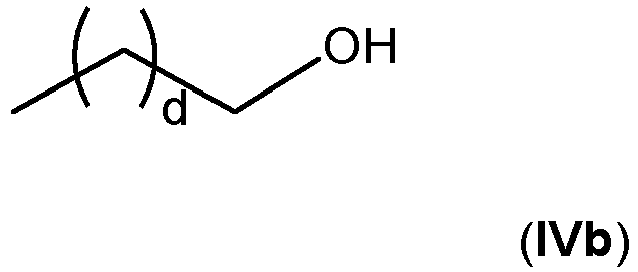


- Der Begriff (C1-C12)-Alkyl umfasst geradkettige und verzweigte Alkylgruppen mit 1 bis 12 Kohlenstoffatomen. Vorzugsweise handelt es sich dabei um (C1-C8)-Alkylgruppen, besonders bevorzugt (C1-C6)-Alkyl, am meisten bevorzugt (C1-C4)-Alkyl.
- In einer Variante des Verfahrens stehen R1, R2 für den gleichen Rest.
- In einer Variante des Verfahrens stehen R3, R4 für den gleichen Rest.
- In einer Variante des Verfahrens stehen R1, R2, R3, R4 für den gleichen Rest.
- In einer Variante des Verfahrens stehen R1, R2, R3, R4 für (C1-C4)-Alkyl.
- In einer Variante des Verfahrens ist die Ru-Verbindung ausgewählt aus: RuCl3 × 3H2O, [Ru(Cymen)Cl2]2, RuBr3 × 3H2O, RuI3, Ru(PPh3)3Cl2.
- In einer Variante des Verfahrens handelt es sich bei dem Liganden um eine Phosphinliganden oder Phosphitliganden.
- In einer Variante des Verfahrens handelt es sich bei dem Liganden um eine Phosphinliganden.
- In einer Variante des Verfahrens ist der Ligand ausgewählt aus: PPh3, 1,4-Bis-(diphenylphosphino)-butan (dppb), 1,1'-Ferrocenediyl-bis(diphenylphosphin) (dppf), Bis-[2-(diphenylphosphino)-phenyl]-ether (dpephos), 1,3-Bis-(diphenylphosphino)-propan (dppp), 4,5-Bis-(diphenylphosphino)-9,9-dimethylxanthen (XantPhos).
- In einer Variante des Verfahrens erfolgt das Zuführen von H2 mit einem Druck im Bereich von 0,5 MPa (5 bar) bis 8 MPa (80 bar).
- In einer Variante des Verfahrens erfolgt das Zuführen von H2 mit einem Druck im Bereich von 1 MPa (10 bar) bis 6 MPa (60 bar).
- In einer Variante des Verfahrens erfolgt das Erhitzen auf eine Temperatur im Bereich von 30 °C bis 100 °C.
- In einer Variante des Verfahrens erfolgt das Erhitzen auf eine Temperatur im Bereich von 40 °C bis 80 °C.
- In einer Variante des Verfahrens umfasst das Verfahren den zusätzlichen Verfahrensschritt c`): c') Zugabe eines Lösungsmittels.
- In einer Variante des Verfahrens ist das Lösungsmittel ausgewählt aus: 1,4-Dioxan, Tetrahydrofuran (THF), Wasser.
- Im Folgenden soll die Erfindung anhand von Ausführungsbeispielen näher erläutert werden.
- Ein 8-mL-Fläschchen wurde mit den entsprechenden Mengen an RuCl3 × 3H2O, PPh3 und einem Magnetrührer gefüllt. Das Fläschchen wurde dann mit einem Septum (PTFE-beschichteter Silikonkautschuk) und einem Phenolharzdeckel verschlossen. Das Fläschchen wurde über eine Nadel mit der Argon-Zuleitung verbunden. Das Fläschchen wurde evakuiert und dreimal mit Argon aufgefüllt. Ein Ether-Lösungsmittel (THF oder 1,4-Dioxan, unter Argon gelagert) und die entsprechenden Mengen an Wasser und Substrat wurden mit einer Spritze in das Fläschchen injiziert, so dass eine dunkle Lösung entstand.
- Das Fläschchen wurde in eine Edelstahlplatte gestellt, wobei die Nadel noch an Ort und Stelle verblieb, um den Gasaustausch im Autoklaven zu ermöglichen. Die Platte wurde in einen Autoklaven (300 mL) der Serie 4760 von Parr Instruments unter Argonatmosphäre überführt. Nach dreimaligem Spülen des Autoklaven mit Wasserstoff wurde der Wasserstoffdruck bei Raumtemperatur auf 20 bar / 40 bar erhöht. Die Reaktion wurde durch Erhitzen des Autoklaven in einem Aluminiumblock auf einem Heiz-/Rührgerät mit Magnetrühren für 18 h bei 60 °C (Temperatur des Aluminiumblocks) durchgeführt. Nach Ablauf der Reaktionszeit wurde der Autoklav auf Raumtemperatur abgekühlt und der Druck vorsichtig abgelassen. Dann wurde Tetradecan (0,100 mL) als interner Standard eingespritzt.
-

- THF (1.5 mL), 0.135 mL (7.5 mmol) Wasser und 0.55 mL (0.47 g, 2.5 mmol) 1,1-Dimethoxynonane wurden zu 1,3 mg (0.2 mol%) RuCl3 × 3H2O und 5,2 mg (0.8 mol%) PPh3 gegeben. Es werden 20 bar H2 aufgepresst und die Reaktion 18 h bei 60 °C durchgeführt. Ausbeute (GC) quantitativ.
- Dioxan (1.5 mL, absolut), 0.36 mL (15 mmol) Wasser und 0.55 mL (0.47 g, 2.5 mmol) 1,1-Dimethoxynonane werden zu 2,6 mg (0.4 mol%) RuCl3 × 3H2O und 8.5 mg (0.04 mmol, 0.8 mol%) 1,4-Bis-(diphenylphosphino)-butan gegeben. Es werden 20 bar H2 aufgepresst und die Reaktion 18 h bei 60 °C durchgeführt. Ausbeute (GC) quantitativ.
- Dioxan (1.5 mL, absolut), 0.36 mL (15 mmol) Wasser und 0.55 mL (0.47 g, 2.5 mmol) 1,1-Dimethoxynonane werden zu 2,6 mg (0.4 mol%) RuCl3 × 3H2O und 11.1 mg (0.04 mmol, 0.8 mol%) 1,1'-Ferrocenediyl-bis(diphenylphosphin) gegeben. Es werden 20 bar H2 aufgepresst und die Reaktion 18 h bei 60 °C durchgeführt. Ausbeute (GC) quantitativ.
- Dioxan (1.5 mL, absolut), 0.36 mL (15 mmol) Wasser und 0.55 mL (0.47 g, 2.5 mmol) 1,1-Dimethoxynonane werden zu 2,6 mg (0.4 mol%) RuCl3 × 3H2O und 10.8 mg (0.04 mmol, 0.8 mol% Bis-[2-(diphenylphosphino)-phenyl]-ether gegeben. Es werden 20 bar H2 aufgepresst und die Reaktion 18 h bei 60 °C durchgeführt. Ausbeute (GC) quantitativ.
- Dioxan (1.5 mL, absolut), 0.36 mL (15 mmol) Wasser und 0.55 mL (0.47 g, 2.5 mmol) 1,1-Dimethoxynonane werden zu 2,6 mg (0.4 mol%) RuCl3 × 3H2O und 8.2 mg (0.04 mmol, 0.8 mol% 1,3-Bis-(diphenylphosphino)-propan gegeben. Es werden 20 bar H2 aufgepresst und die Reaktion 18 h bei 60 °C durchgeführt. Ausbeute (GC) quantitativ.
- Dioxan (1.5 mL, absolut), 0.36 mL (15 mmol) Wasser und 0.55 mL (0.47 g, 2.5 mmol) 1,1-Dimethoxynonane werden zu 2,6 mg (0.4 mol%) RuCl3 × 3H2O und 11.6 mg (0.02 mmol, 0.8 mol% 4,5-Bis-(diphenylphosphino)-9,9-dimethylxanthen gegeben. Es werden 20 bar H2 aufgepresst und die Reaktion 18 h bei 60 °C durchgeführt. Ausbeute (GC) 59%.
- Dioxan (1.5 mL, absolut), 0.36 mL (15 mmol) Wasser und 0.55 mL (0.47 g, 2.5 mmol) 1,1-Dimethoxynonan werden zu 3.1 mg (0.4 mol% Ruthenium) [Ru(Cymen)Cl2]2 und 10.5 mg (0.04 mmol, 1.6 mol%) PPh3 gegeben. Es werden 20 bar H2 aufgepresst und die Reaktion 18 h bei 60 °C durchgeführt. Ausbeute (GC) quantitativ.
- Dioxan (1.5 mL, absolut), 0.36 mL (15 mmol) Wasser und 0.55 mL (0.47 g, 2.5 mmol) 1,1-Dimethoxynonan werden zu 3.9 mg (0.4 mol% Ruthenium) RuBr3 × 3H2O und 10.5 mg (0.04 mmol, 1.6 mol%) PPh3 gegeben. Es werden 20 bar H2 aufgepresst und die Reaktion 18 h bei 60 °C durchgeführt. Ausbeute (GC) 93%.
- Dioxan (1.5 mL, absolut), 0.36 mL (15 mmol) Wasser und 0.55 mL (0.47 g, 2.5 mmol) 1,1-Dimethoxynonan (0.47 g, 2.5 mmol) werden zu 4.8 mg (0.4 mol% Ruthenium) RuI3 und 10.5 mg (0.04 mmol, 1.6 mol%) PPh3 gegeben. Es werden 20 bar H2 aufgepresst und die Reaktion 18 h bei 60 °C durchgeführt. Ausbeute (GC) 75%.
- Dioxan (1.5 mL, absolut), 0.36 mL (15 mmol) Wasser und 0.55 mL (0.47 g, 2.5 mmol) 1,1-Dimethoxynonan werden zu 9.6 mg (0.4 mol% Ruthenium) RuBr3 × 3H2O und 2.6 mg (0.01 mmol, 0.4 mol%) PPh3 gegeben. Es werden 20 bar H2 aufgepresst und die Reaktion 18 h bei 60 °C durchgeführt. Ausbeute (GC) quantitativ.
-

- 1,4-Dioxan (6 mL, absolut), 1.44 mL (80 mmol) Wasser und 2,06 g (10 mmol) 1,1,6,6-Tetramethoxyhexan,10.5 mg (0.4 mol%) RuCl3 × 3H2O und 42 mg (1.6 mol%) PPh3 werden in ein Vial gegeben. Es werden 40 bar H2 aufgepresst und die Reaktion 18 h bei 60 °C durchgeführt. Die GC-Ausbeute beträgt 81%.
-

- 1.5 mL THF, 0.99 g (2,64 mmol) 1,1,6,6-Tetrabutoxyhexan und 0.72 mL H2O, 2.6 mg (0.38 mol%) RuCl3 × 3H2O und 10.5 mg (1.52 mol%) PPh3. in ein Vial gegeben. Es werden 20 bar H2 aufgepresst und die Reaktion 18 h bei 60 °C durchgeführt. Die GC-Ausbeute beträgt 90%.
-

- 1.5 mL Dioxan, 0.54 mL Wasser und 0,46 g (2.56 mmol) 1,1,4,4-Tetramethoxybutan, 2.6 mg (0.39 mol%) RuCl3 × 3H2O und 10.5 mg (1.56 mol%) PPh3 werden in ein Vial gegeben. Es werden 20 bar H2 aufgepresst und die Reaktion 18 h bei 60 °C durchgeführt. Die NMR-Ausbeute beträgt 66%.
-

- 1.5 mL THF, 0.135 g H2O und 0,42 g (2,72 mmol) Benzaldehyddimethylacetal 1.3 mg (0.18 mol%) RuCl3 × 3H2O und 5.2 mg (0.73 mol%) PPh3 werden in ein Vial gegeben. Es werden 20 bar H2 aufgepresst und die Reaktion 18 h bei 60 °C durchgeführt. Die GC-Ausbeute beträgt >99%
-

- 1.5 mL Dioxan, 0.36 g H2O und 0,42 g (2,5 mmol) Phenylacetaldehyddimethylacetal, 2.6 mg (0.4 mol%) RuCl3 × 3H2O und 10.5 mg (1.6 mol%) PPh3 in ein Vial gegeben. Es werden 20 bar H2 aufgepresst und die Reaktion 18 h bei 60 °C durchgeführt. Die GC-Ausbeute beträgt >99%.
-

- 1,4-Dioxan (1.5 mL, absolut), 0.135 mL (7.5 mmol) Wasser und 0.5 mL 4-Methyl-2-octyl-1,3-dioxolan (0.47 g, 2.3 mmol), 2,6 mg (0.4 mol%) RuCl3 × 3H2O und 10,5 mg (1.6 mol%) PPh3 werden in ein Vial gegeben. Es werden 40 bar H2 aufgepresst und die Reaktion 18 h bei 60 °C durchgeführt. Die GC Ausbeute beträgt 89%.
-

- 1.5 mL Dioxan, 0.18 mL Wasser und 0,33 g (2.5 mmol) 2,5-Dimethoxytetrahydrofuran (cis/trans-Gemisch), 2.6 mg RuCl3 × 3H2O und 10.5 mg (1.6 mol%) PPh3 werden in ein Vial gegeben. Es werden 20 bar H2 aufgepresst und die Reaktion 18 h bei 60 °C durchgeführt. Die GC-Ausbeute beträgt 84%.
-

- 1.5 mL Dioxan, 0.27 g H2O und 0,451 g (2,56 mmol) Ethoxypropionaldehyddiethylacetal, 2.6 mg (0.39 mol%) RuCl3 × 3H2O und 10.5 mg (1.56 mol%) PPh3 werden in ein Vial gegeben. Es werden 20 bar H2 aufgepresst und die Reaktion 18 h bei 60 °C durchgeführt. Die GC-Ausbeute beträgt >99%.
-

- Der feste Katalysator wurde in 8-mL-Vials eingewogen und alle Flüssigkeiten mit der Spritze zugegeben. Das Substrat wurde hierbei zuletzt zugegeben.
- Es wurden die folgenden Katalysatorsysteme getestet:
- Kat 1: 0,4 mol% RuCl3 × 3 H2O, 1,6 mol% PPh3, 0,36 mL Wasser, 1,5 mL Dioxan
- Kat 2: Ru/C 5%ig (Strem) 44-4065 LOT#:21539500, 50% Wassergehalt, berechnet für 0,67 mol% Metall, 0,17 mL 0,1 M H2SO4 (aq), 1,34 mL Wasser, 1,5 mL Methanol
- Kat 3: Ru/C 5%ig (Johnson-Matthey) Type 622, LOT KS0004, 0,17 mL 0,1 M H2SO4 (aq), 1,34 mL Wasser, 1,5 mL Methanol
- Als GC-Standard wurde Diglyme, nach der Reaktion zugesetzt.
- 2,5 mmol Substrat, H2 20 bar, 60 °C, 5 h.
- Die Versuchsergebnisse sind in der nachfolgenden Tabelle aufgelistet:
Katalysator Ausbeute Kat 1* > 98 % Kat 2 52 % Kat 3 56 % * erfindungsgemäßes Katalysatorsystem - Wie die Versuchsergebnisse zeigen, wird die Aufgabe durch das erfindungsgemäße Verfahren gelöst.
Claims (11)
- Verfahren umfassend die Verfahrensschritte:a) Vorlegen eines Aldehydacetals gemäß einer der Formeln (Ia) bis (VIa):


 wobei a, c, d, f für eine ganze Zahlen von 0 bis 12 stehen und b, e für eine ganze Zahlen von 1 bis 12 stehenund R1, R2, R3, R4, jeweils unabhängig voneinander, für (C1-C12)-Alkyl stehen;b) Zugabe einer Ru-Verbindung, welche zur Ausbildung eines Komplexes befähigt ist und eines Liganden, welcher ein P-Atom aufweist, oder
eines Ru-Liganden-Komplexes, wobei der Ligand des Komplexes ein P-Atom aufweist;c) Zuführen von H2;d) Erhitzen des Reaktionsgemisches aus a) bis c), wobei das Aldehydacetal zu einer Verbindung gemäß Formel (Ib) bis (VIb) umgesetzt wird:
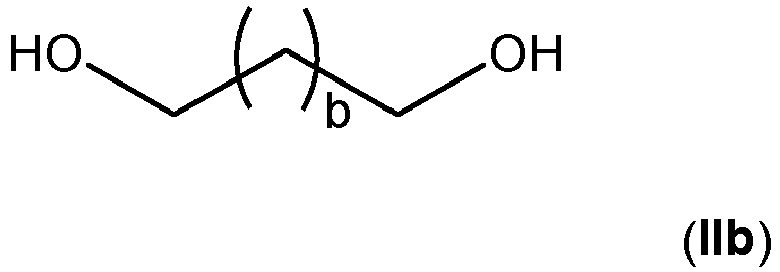


- Verfahren nach Anspruch 1,
wobei R1, R2 für den gleichen Rest stehen. - Verfahren nach einem der Ansprüche 1 oder 2,
wobei R3, R4 für den gleichen Rest stehen. - Verfahren nach einem der Ansprüche 1 bis 3,
wobei R1, R2, R3, R4 für (C1-C4)-Alkyl stehen. - Verfahren nach einem der Ansprüche 1 bis 4,
wobei die Ru-Verbindung ausgewählt ist aus: RuCl3 × 3H2O, [Ru(Cymen)Cl2]2, RuBr3 × 3H2O, RuI3, Ru(PPh3)3Cl2. - Verfahren nach einem der Ansprüche 1 bis 5,
wobei es sich bei dem Liganden um eine Phosphinliganden handelt. - Verfahren nach einem der Ansprüche 1 bis 6,
wobei der Ligand ausgewählt ist aus: PPh3, 1,4-Bis-(diphenylphosphino)-butan (dppb), 1,1'-Ferrocenediyl-bis(diphenylphosphin) (dppf), Bis-[2-(diphenylphosphino)-phenyl]-ether (dpephos), 1,3-Bis-(diphenylphosphino)-propan (dppp), 4,5-Bis-(diphenylphosphino)-9,9-dimethylxanthen (XantPhos). - Verfahren nach einem der Ansprüche 1 bis 7,
wobei das Zuführen von H2 mit einem Druck erfolgt im Bereich von 0,5 MPa (5 bar) bis 8 MPa (80 bar). - Verfahren nach einem der Ansprüche 1 bis 8,
wobei das Erhitzen auf eine Temperatur erfolgt im Bereich von 30 °C bis 100 °C. - Verfahren nach einem der Ansprüche 1 bis 9,
umfassend den zusätzlichen Verfahrensschritt c`):
c') Zugabe eines Lösungsmittels. - Verfahren nach Anspruch 10,
wobei das Lösungsmittel ausgewählt ist aus: 1,4-Dioxan, Tetrahydrofuran (THF), Wasser.
Priority Applications (6)
| Application Number | Priority Date | Filing Date | Title |
|---|---|---|---|
| EP23219604.8A EP4574807A1 (de) | 2023-12-22 | 2023-12-22 | Verfahren zur ruthenium-katalysierten hydrierung von aldehydacetalen |
| JP2024214121A JP2025100407A (ja) | 2023-12-22 | 2024-12-09 | アルデヒドアセタールのルテニウム触媒水素化方法 |
| US18/980,557 US20250206691A1 (en) | 2023-12-22 | 2024-12-13 | Process for the ruthenium-catalysed hydrogenation of aldehyde acetals |
| KR1020240189541A KR20250099644A (ko) | 2023-12-22 | 2024-12-18 | 알데히드 아세탈의 루테늄-촉매되는 수소화 방법 |
| TW113149274A TWI934375B (zh) | 2023-12-22 | 2024-12-18 | 縮醛之釕催化氫化法 |
| CN202411889259.6A CN120192213A (zh) | 2023-12-22 | 2024-12-20 | 使缩醛通过钌催化进行氢化的方法 |
Applications Claiming Priority (1)
| Application Number | Priority Date | Filing Date | Title |
|---|---|---|---|
| EP23219604.8A EP4574807A1 (de) | 2023-12-22 | 2023-12-22 | Verfahren zur ruthenium-katalysierten hydrierung von aldehydacetalen |
Publications (1)
| Publication Number | Publication Date |
|---|---|
| EP4574807A1 true EP4574807A1 (de) | 2025-06-25 |
Family
ID=89321587
Family Applications (1)
| Application Number | Title | Priority Date | Filing Date |
|---|---|---|---|
| EP23219604.8A Pending EP4574807A1 (de) | 2023-12-22 | 2023-12-22 | Verfahren zur ruthenium-katalysierten hydrierung von aldehydacetalen |
Country Status (5)
| Country | Link |
|---|---|
| US (1) | US20250206691A1 (de) |
| EP (1) | EP4574807A1 (de) |
| JP (1) | JP2025100407A (de) |
| KR (1) | KR20250099644A (de) |
| CN (1) | CN120192213A (de) |
Citations (1)
| Publication number | Priority date | Publication date | Assignee | Title |
|---|---|---|---|---|
| DE4220939A1 (de) | 1992-06-26 | 1994-01-05 | Huels Chemische Werke Ag | Verfahren zur Herstellung von 2-Aryl-ethanolen |
Family Cites Families (1)
| Publication number | Priority date | Publication date | Assignee | Title |
|---|---|---|---|---|
| DE19710994A1 (de) * | 1997-03-17 | 1998-09-24 | Basf Ag | Verfahren zur Herstellung von n-Butyraldehyd und/oder n-Butanol |
-
2023
- 2023-12-22 EP EP23219604.8A patent/EP4574807A1/de active Pending
-
2024
- 2024-12-09 JP JP2024214121A patent/JP2025100407A/ja active Pending
- 2024-12-13 US US18/980,557 patent/US20250206691A1/en active Pending
- 2024-12-18 KR KR1020240189541A patent/KR20250099644A/ko active Pending
- 2024-12-20 CN CN202411889259.6A patent/CN120192213A/zh active Pending
Patent Citations (1)
| Publication number | Priority date | Publication date | Assignee | Title |
|---|---|---|---|---|
| DE4220939A1 (de) | 1992-06-26 | 1994-01-05 | Huels Chemische Werke Ag | Verfahren zur Herstellung von 2-Aryl-ethanolen |
Non-Patent Citations (1)
| Title |
|---|
| PENG WANG: "Production of Alcohols from Olefins via One-Pot Tandem Hydroformylation-Acetalization-Hydrogenolysis over Bifunctional Catalyst Merging Ru III -P Complex and Ru III Lewis Acid", ORGANOMETALLICS, vol. 36, no. 13, 20 June 2017 (2017-06-20), pages 2404 - 2411, XP093166802, ISSN: 0276-7333, Retrieved from the Internet <URL:https://pubs.acs.org/doi/pdf/10.1021/acs.organomet.7b00354> DOI: 10.1021/acs.organomet.7b00266 * |
Also Published As
| Publication number | Publication date |
|---|---|
| TW202535832A (zh) | 2025-09-16 |
| US20250206691A1 (en) | 2025-06-26 |
| JP2025100407A (ja) | 2025-07-03 |
| CN120192213A (zh) | 2025-06-24 |
| KR20250099644A (ko) | 2025-07-02 |
Similar Documents
| Publication | Publication Date | Title |
|---|---|---|
| DE10208822A1 (de) | Halogenfreie ionische Flüssigkeiten | |
| EP2066443A1 (de) | Neue metathesekatalysatoren | |
| DE102009039437A1 (de) | Verfahren zum Synthetisieren von Polyoxymethylendimethylethern durch Katalyse mit einer ionischen Flüssigkeit | |
| EP3994117B1 (de) | Hydrierung von estern zu alkoholen in gegenwart eines ru-pnn-komplexes | |
| WO1998001438A9 (de) | Verfahren zur herstellung von phthaliden | |
| EP4459011A1 (de) | Elektrochemisches hochdurchsatz-oxidationsverfahren | |
| DE69111358T2 (de) | Optisch aktiver Iridiumphosphinkomplex und dessen Verwendung zur katalytischen Herstellung von optisch aktiven Alkoholen. | |
| EP0711267B1 (de) | Verfahren zur herstellung von 1,4-butandiol | |
| EP3613754B1 (de) | Verfahren zur herstellung eines gallensäurederivates mittels kontinuierlicher flussreaktion | |
| US8563784B2 (en) | Catalytic method of manufacture of compounds of the diol type | |
| EP0767769B1 (de) | Verfahren zur herstellung von 1,4-butandiol | |
| DE19647892A1 (de) | Verfahren zur katalytischen, enantioselektiven Reduktion von Ketonen | |
| Chen et al. | Highly active iridium catalysts for the hydrogenation of ketones and aldehydes | |
| CN105541589A (zh) | 提高龙涎香气质量的龙涎酮制备方法 | |
| DE69826915T2 (de) | Verfahren zur Herstellung von 3-Methyltetrahydrofuran | |
| JP2025100407A (ja) | アルデヒドアセタールのルテニウム触媒水素化方法 | |
| EP0749953A1 (de) | Herstellung von chiralen alpha-Halogencarbonsäuren | |
| EP1601635B1 (de) | Verfahren zur herstellung von optisch aktivem alkohol in gegenwart von rhodium, einem chiralen ferrocenyldiphosphin und einem optisch aktivem diamin | |
| DE69625562T2 (de) | Verfahren zur Herstellung von optisch aktiven Cyclohexanolderivaten | |
| DE69718878T2 (de) | Ruthenium-optisch-aktiver Phosphin-Komplex, Verfahren zur Herstellung und Verfahren zur Herstellung von optisch-aktiven 4-Methyl-2-Oxetanon unter Verwendung derselben | |
| JP3569280B1 (ja) | 光学活性アルコールの製造方法 | |
| DE3013565A1 (de) | Neue (beta) - a -ungesaettigte ketone und isoprenoide 2,6-dienone, verfahren zu deren herstellung und ihre verwendung als geruchs- und geschmacksstoffe | |
| EP4403563B1 (de) | Diphosphit mit einem me-flügelbaustein und einem tbu-flügelbaustein | |
| DE3121927A1 (de) | Verfahren zur herstellung von uebergangsmetall-komplexen | |
| EP0585828B1 (de) | Verfahren zur Herstellung eines Gemisches von 6-(2,6,6 Trimethyl-cyclohex-1-en-1-yl)-4-methyl-hex-3-en-1-ol und -4-en-1-ol |
Legal Events
| Date | Code | Title | Description |
|---|---|---|---|
| PUAI | Public reference made under article 153(3) epc to a published international application that has entered the european phase |
Free format text: ORIGINAL CODE: 0009012 |
|
| STAA | Information on the status of an ep patent application or granted ep patent |
Free format text: STATUS: THE APPLICATION HAS BEEN PUBLISHED |
|
| AK | Designated contracting states |
Kind code of ref document: A1 Designated state(s): AL AT BE BG CH CY CZ DE DK EE ES FI FR GB GR HR HU IE IS IT LI LT LU LV MC ME MK MT NL NO PL PT RO RS SE SI SK SM TR |
|
| STAA | Information on the status of an ep patent application or granted ep patent |
Free format text: STATUS: REQUEST FOR EXAMINATION WAS MADE |
|
| 17P | Request for examination filed |
Effective date: 20250701 |