EP4570939A1 - Fecrni-steel alloys as carbide binders - Google Patents
Fecrni-steel alloys as carbide binders Download PDFInfo
- Publication number
- EP4570939A1 EP4570939A1 EP23216805.4A EP23216805A EP4570939A1 EP 4570939 A1 EP4570939 A1 EP 4570939A1 EP 23216805 A EP23216805 A EP 23216805A EP 4570939 A1 EP4570939 A1 EP 4570939A1
- Authority
- EP
- European Patent Office
- Prior art keywords
- powder
- tungsten
- weight
- sieving
- cermet
- Prior art date
- Legal status (The legal status is an assumption and is not a legal conclusion. Google has not performed a legal analysis and makes no representation as to the accuracy of the status listed.)
- Pending
Links
Images





Classifications
-
- C—CHEMISTRY; METALLURGY
- C22—METALLURGY; FERROUS OR NON-FERROUS ALLOYS; TREATMENT OF ALLOYS OR NON-FERROUS METALS
- C22C—ALLOYS
- C22C33/00—Making ferrous alloys
- C22C33/02—Making ferrous alloys by powder metallurgy
- C22C33/0207—Using a mixture of pre-alloyed powders or a master alloy
-
- C—CHEMISTRY; METALLURGY
- C22—METALLURGY; FERROUS OR NON-FERROUS ALLOYS; TREATMENT OF ALLOYS OR NON-FERROUS METALS
- C22C—ALLOYS
- C22C29/00—Alloys based on carbides, oxides, nitrides, borides, or silicides, e.g. cermets, or other metal compounds, e.g. oxynitrides, sulfides
- C22C29/02—Alloys based on carbides, oxides, nitrides, borides, or silicides, e.g. cermets, or other metal compounds, e.g. oxynitrides, sulfides based on carbides or carbonitrides
- C22C29/06—Alloys based on carbides, oxides, nitrides, borides, or silicides, e.g. cermets, or other metal compounds, e.g. oxynitrides, sulfides based on carbides or carbonitrides based on carbides, but not containing other metal compounds
- C22C29/067—Alloys based on carbides, oxides, nitrides, borides, or silicides, e.g. cermets, or other metal compounds, e.g. oxynitrides, sulfides based on carbides or carbonitrides based on carbides, but not containing other metal compounds comprising a particular metallic binder
-
- C—CHEMISTRY; METALLURGY
- C22—METALLURGY; FERROUS OR NON-FERROUS ALLOYS; TREATMENT OF ALLOYS OR NON-FERROUS METALS
- C22C—ALLOYS
- C22C29/00—Alloys based on carbides, oxides, nitrides, borides, or silicides, e.g. cermets, or other metal compounds, e.g. oxynitrides, sulfides
- C22C29/02—Alloys based on carbides, oxides, nitrides, borides, or silicides, e.g. cermets, or other metal compounds, e.g. oxynitrides, sulfides based on carbides or carbonitrides
- C22C29/06—Alloys based on carbides, oxides, nitrides, borides, or silicides, e.g. cermets, or other metal compounds, e.g. oxynitrides, sulfides based on carbides or carbonitrides based on carbides, but not containing other metal compounds
- C22C29/08—Alloys based on carbides, oxides, nitrides, borides, or silicides, e.g. cermets, or other metal compounds, e.g. oxynitrides, sulfides based on carbides or carbonitrides based on carbides, but not containing other metal compounds based on tungsten carbide
-
- C—CHEMISTRY; METALLURGY
- C22—METALLURGY; FERROUS OR NON-FERROUS ALLOYS; TREATMENT OF ALLOYS OR NON-FERROUS METALS
- C22C—ALLOYS
- C22C33/00—Making ferrous alloys
- C22C33/02—Making ferrous alloys by powder metallurgy
- C22C33/0257—Making ferrous alloys by powder metallurgy characterised by the range of the alloying elements
- C22C33/0278—Making ferrous alloys by powder metallurgy characterised by the range of the alloying elements with at least one alloying element having a minimum content above 5%
- C22C33/0285—Making ferrous alloys by powder metallurgy characterised by the range of the alloying elements with at least one alloying element having a minimum content above 5% with Cr, Co, or Ni having a minimum content higher than 5%
-
- C—CHEMISTRY; METALLURGY
- C22—METALLURGY; FERROUS OR NON-FERROUS ALLOYS; TREATMENT OF ALLOYS OR NON-FERROUS METALS
- C22C—ALLOYS
- C22C38/00—Ferrous alloys, e.g. steel alloys
- C22C38/02—Ferrous alloys, e.g. steel alloys containing silicon
-
- C—CHEMISTRY; METALLURGY
- C22—METALLURGY; FERROUS OR NON-FERROUS ALLOYS; TREATMENT OF ALLOYS OR NON-FERROUS METALS
- C22C—ALLOYS
- C22C38/00—Ferrous alloys, e.g. steel alloys
- C22C38/04—Ferrous alloys, e.g. steel alloys containing manganese
-
- C—CHEMISTRY; METALLURGY
- C22—METALLURGY; FERROUS OR NON-FERROUS ALLOYS; TREATMENT OF ALLOYS OR NON-FERROUS METALS
- C22C—ALLOYS
- C22C38/00—Ferrous alloys, e.g. steel alloys
- C22C38/18—Ferrous alloys, e.g. steel alloys containing chromium
- C22C38/40—Ferrous alloys, e.g. steel alloys containing chromium with nickel
- C22C38/44—Ferrous alloys, e.g. steel alloys containing chromium with nickel with molybdenum or tungsten
Definitions
- Tungsten/chromium Carbide powders are hard materials (hardness ⁇ 1000 HV), used for dense coatings. They can be sprayed using High-Velocity Oxygen-Fuel (HVOF) and High-Velocity Air-Fuel (HVAF) spray methods onto various metallic parts and structures to improve the surface resistance of these parts and structures to severe wear and corrosion.
- HVOF High-Velocity Oxygen-Fuel
- HVAC High-Velocity Air-Fuel
- Conventional carbide powders consist of hard WC or Cr 3 C 2 particles in a binder matrix, for which the CoCr powders are used. Different alloying elements, e.g., Ni, Fe, Ti, etc., may be added to the matrix to improve mechanical, corrosion, and spray-ability properties, c.f. e.g., J. Garcia et al.
- alloys are excellent candidate for coating components e.g., in aerospace or power generating technologies such as e.g., sliding tubes, sliding pistons, axles, bolts, bushings, flanges, etc.
- the developed alloys can also be used to coat grinding rolls, crushers, and/or calender rolls.
- the alloys are Co-free materials, they can also find use in the food industry, for example for packaging rolls for plastic foils.
- an iron-chrome-nickel stainless-steel alloy consisting by total weight of the alloy of: Chromium (Cr) : 26 - 30 wt%, Nickel (Ni) : 15 - 18 wt%, Molybdenum (Mo): 4 - 5 wt%, Silicon (Si) : 1 - 1.5 wt%, Manganese (Mn) : 0.5 - 1.0 wt%, Carbon (C) : 0.15 - 0.25 wt%, the balance being iron (Fe) and unavoidable impurities not exceeding 0.3 wt%.
- the stainless-steel alloys of the present invention are useful as sustainable binders for carbides, such as tungsten carbide.
- chromium (Cr) is present from 26.5 wt%, from 27 wt%, from 27.5 wt% or from 28 wt%. In further embodiments thereof, chromium (Cr) is present to 29.5 wt%, to 28.5 wt% or to 28 wt%.
- nickel (Ni) is present from 15.5 wt%, from 16 wt%, or from 16.5 wt%. In further embodiments thereof, nickel (Ni) is present to 17.5 wt%, to 17 wt%, or to 16.5 wt%.
- molybdenum (Mo) is present from 4.1 wt%, from 4.25 wt%, from 4.4 wt%, or from 4.5 wt%. In further embodiments thereof, molybdenum (Mo) is present to 4.9 wt%, to 4.75 wt%, to 4.6 wt% or to 4.5 wt%.
- silicon (Si) is present from 1.1 wt%, from 1.2 wt%, or from 1.25 wt%. In further embodiments thereof, silicon (Si) is present to 1.4 wt%, to 1.3 wt%, or to 1.25 wt%.
- manganese (Mn) is present from 0.6 wt%, from 0.7 wt%, or from 0.75 wt%. In further embodiments thereof, manganese (Mn) is present to 0.9 wt%, to 0.8 wt% or to 0.75 wt%.
- carbon (C) is present from 0.16 wt%, from 0.17 wt%, from 0.18 wt%, from 0.19 wt%, or from 0.20 wt%. In embodiments thereof, carbon (C) is present to 0.24 wt%, to 0.23 wt%, to 0.22 wt%, to 0.21 wt%, or to 0.20 wt%.
- the alloys of the invention preferably are manufactured as powders for HVOF and/or HVAF spray coating by pre-alloying the elements of the alloy, atomizing, e.g., water-atomizing, the pre-alloyed elements, whereby a pre-alloyed stainless-steel powder containing the alloys of the invention is obtained.
- the pre-alloyed stainless-steel powder comprises at least 80% by weight of the pre-alloyed stainless-steel powder contained within a sieved fraction of the pre-alloyed stainless-steel powder having a size distribution from 1 ⁇ m to 100 ⁇ m, preferably from 2.5 ⁇ m to 75 ⁇ m, or even more preferably from 5 ⁇ m to 50 ⁇ m, as measured by sieving in accordance with ISO-14232-1-2017-E, Particle distribution by sieving, and/or preferably comprises at least 85% by weight, at least 90% by weight, or more preferably at least 95% by weight of the pre-alloyed stainless-steel powder having a size distribution from 2.5 ⁇ m to 100 ⁇ m as measured by sieving in accordance with ISO-14232-1-2017-E, Particle distribution by sieving.
- An advantage of the alloys of the present invention is that they can be mixed with carbides of a suitable powder size for HVOF and/or HVAF spray coating and spray coated together directly onto a suitable surface.
- agglomerated/sintered carbide product is, made from 85 wt% WC particles and 15 wt% binder.
- the binder and carbides are dry sprayed together and sintered at constant temperature of 1138°C for maximum two hours, thereby forming the desired tungsten carbide/stainless-steel alloy complex.
- Chemical composition element ranges for the forming of suitable tungsten carbide/stainless-steel alloy complexes are given in Table 1 below.
- Table 1 WC/alloy complexes, Tungsten (W) balance Element Fe Cr Ni Mo C (total) Si Mn wt% 6.6 - 7.9 3.9 - 4.5 2.2 - 3.0 0.6-0.75 5.2 - 5.7 0.1 - 0.22 0.07 - 0.1 optimal 5.3 - 5.7
- a tungsten-based powder consisting by total weight of powder of: Iron (Fe) : 6.6 - 7.9 wt%, Carbon (C) : 5.2 - 5.7 wt%, Chromium (Cr) : 3.9 - 4.5 wt%, Nickel (Ni) : 2.2 - 3.0 wt%, Molybdenum (Mo): 0.6 - 0.75 wt%, Silicon (Si) : 0.1 - 0.22 wt%, Manganese (Mn) : 0.07 - 0.1 wt%, the balance being tungsten (W) and unavoidable impurities not exceeding 0.3 wt%.
- the amount of carbon (C) is from 5.25 to 5.7 wt%, from 5.3 to 5.7 wt%, or from 5.5 to 5.7 wt%; preferably from 5.35 to 5.7 wt%, from 5.35 to 5.65 wt%, from 5.4 to 5.65 wt%, or from 5.45 to 5.65 wt%; more preferably from 5.5 to 5.6 wt%.
- the amount of nickel (Ni) is from 2.2 to 2.7 wt%.
- the tungsten-based powder can be obtained using methods otherwise known as such, e.g., by atomizing the constituting metals as a composite powder, or from a melt by partially or, preferably, fully alloying the constituting metals. In the event of the partial alloy powder or non-pre-alloyed metal powder is used, the alloying takes place during the application (e.g., spray application) of the cermet powders.
- the tungsten-based powder consists of from 13 to 17 wt% of a stainless-steel pre-alloyed powder according to the above first aspect and embodiments thereof, and from 83 to 87 wt% of a tungsten carbide (WC) powder.
- the tungsten-based powder comprises at least 80% by weight of the tungsten-based powder contained within a sieved fraction of the tungsten-based powder having a size distribution from 1 ⁇ m to 100 ⁇ m, preferably from 2.5 ⁇ m to 75 ⁇ m, or even more preferably from 5 ⁇ m to 50 ⁇ m, as measured by sieving in accordance with ISO-14232-1-2017-E, Particle distribution by sieving, and/or preferably comprises at least 85% by weight, at least 90% by weight, or more preferably at least 95% by weight of the tungsten-based powder having a size distribution from 2.5 ⁇ m to 100 ⁇ m as measured by sieving in accordance with ISO-14232-1-2017-E, Particle distribution by sieving.
- the tungsten-based powder comprises at least 90% by weight of the tungsten-based powder contained within a sieved fraction of the tungsten-based powder having a size distribution from 5 ⁇ m to 25 ⁇ m as measured by sieving in accordance with ISO-14232-1-2017-E, Particle distribution by sieving.
- the tungsten-based powder comprises at least 95% by weight, at least 97% by weight, or more preferably at least 99% by weight, or even more preferably at least 99.5% by weight contained within a sieved fraction of the tungsten-based powder having a size distribution from 5 ⁇ m to 25 ⁇ m as measured by sieving in accordance with ISO-14232-1-2017-E, Particle distribution by sieving.
- the tungsten-based powder comprises at least 90% by weight of the tungsten-based powder contained within a sieved fraction of the tungsten-based powder having a size distribution from 15 ⁇ m to 45 ⁇ m as measured by sieving in accordance with ISO-14232-1-2017-E, Particle distribution by sieving.
- the tungsten-based powder comprises at least 95% by weight, at least 97% by weight, or more preferably at least 99% by weight, or even more preferably at least 99.5% by weight contained within a sieved fraction of the tungsten-based powder having a size distribution from 5 ⁇ m to 25 ⁇ m as measured by sieving in accordance with ISO-14232-1-2017-E, Particle distribution by sieving.
- the tungsten-based powder is a cermet powder consisting of from 83 wt% to 87 wt% of the total mass of the powder provided as a pre-formed tungsten carbide (WC) powder and from 13 wt% to 17 wt% of the total mass of the powder provided as a stainless-steel pre-alloyed powder according to any aspect thereof detailed herein above.
- WC tungsten carbide
- the cermet powder comprises at least 80% by weight of the cermet powder contained within a sieved fraction of the cermet powder having a size distribution from 1 ⁇ m to 100 ⁇ m, preferably from 2.5 ⁇ m to 75 ⁇ m, or even more preferably from 5 ⁇ m to 50 ⁇ m, as measured by sieving in accordance with ISO-14232-1-2017-E, Particle distribution by sieving, and/or preferably comprises at least 85% by weight, at least 90% by weight, or more preferably at least 95% by weight of the cermet powder having a size distribution from 2.5 ⁇ m to 100 ⁇ m as measured by sieving in accordance with ISO-14232-1-2017-E, Particle distribution by sieving.
- a cermet formed from a tungsten-based or a cermet powder according to any one of embodiments detailed herein by means of a thermal spray method, preferably a cermet having a composition corresponding to any composition of the herein disclosed tungsten-based or cermet powders.
- HVOF thermal spray systems use different fuels to produce coating for industrial machines' parts.
- the resulting coatings in general are hard, thick, and dense.
- two different jet guns were used for thermal spraying of the samples: Diamond jet gun (DJ), and high-pressure jet gun (JP).
- the fuel for the DJ consisted of O 2 +H 2 +air and for the JP it was a mixture of oxygen and argon.
- the high-pressure jet gun (JP-5000) is designed for liquid-fuel (kerosene) and oxygen operation. Fuel and oxygen are fed into the gun, atomized by the coaxial stabilizer, and ignited in the combustion chamber, resulting in a supersonic flame. Spray powder from the powder feeder is fed radially into the supersonic flame through two powder ports positioned directly after the combustion chamber. The spray stream is accelerated through a converging/diverging nozzle several times the speed of sound. The spray particles are heated to a molten or semi-molten state and propelled at high velocity, impacting the coating surface in a plastic state. Table 2 provides an overview of the spray parameters used in the present experiments.
- the DiamondJet process uses oxygen, fuel gas and air to produce a high-pressure annular flame, which provides uniform heating of the axially introduced powder spray material.
- the gas stream is accelerated through a converging/diverging nozzle to supersonic speeds.
- the gas stream propels the powder particles towards the substrate. Individual particles deform plastically upon impact, tenaciously bonding the coating to the substrate.
- Table 3 details the spray parameters used for the present experiments.
- Powder sizes were determined in accordance with ISO-14232 - 1-2017-E Particle distribution by sieving and are stated as 95% of the powder mass falling inside the given size exclusion interval.
- Hardness, roughness, gas permeability, Young's modulus, and wear resistance were measured for each spray parameter.
- coated samples were analyzed with optical microscope to measure the coating thickness and porosity and additionally examined using electron microscopy.
- the carbon content of samples was measured after spraying. As will be further discussed below, the content of carbon is sensitive for the herein disclosed alloys and for their suitability for use as binders as discussed herein.
- coated samples were analyzed using SEM/EDX analysis to find a better understanding of the final product.
- Figure 1 shows the phase diagram for the presently developed alloys as calculated using Thermo-Calc software, steel database TCFE12.
- composition range marked with green lines in the figure shows composition range of carbon content for the final carbide in wt%, which will result in cubic carbides as hard phase in an FCC matrix as binder.
- the arrow in Figure 1 shows the optimal concentration range for carbon, wherein, even after burning out, the coating's chemical composition will be as desired, when the coating takes place at about 1200°C.
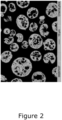
- Figure 2 shows (EM) a cross section of the agglomerated/sintered carbides, wherein the product examined was made of 85% WC particles and 15% binder. Dark cubic WC carbides can be seen in a sintered binder with light color in this figure.
- Sprayed coupons were cut and analyzed by a LEICA DM6 M light optical microscope, to measure the coating thickness and porosity.
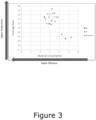
- Figure. 3 shows indexes correlated to deposition efficiency and coating's thickness for different spraying methods and parameters.
- Other products named Amperit ® 618 (WC 15FeCrAl) and 558 (WC 10Co4Cr) are compared with this product.
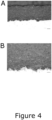
- Figures 4 and 5 show cross section of the coating using JP and DJ techniques respectively. Using both techniques a dense even coating can be achieved with 0.1-0.5 % porosity, which is on par or better than what can be achieved with to existing commercial products.
- Gas permeability test results (measured using a GPT-03 machine in accordance with standard ISO 4022) are shown in Figure 7 for the coated samples. Possibly, the gas permeability results corroborate the excellent corrosion resistance, as they show that these coatings are very dense, and that gas (and by comparison liquid salt solutions) cannot easily penetrate and attack the sample and base material even at high pressures.
- Hardness is generally an important factor when selecting between different classes of carbides.
- HV Hardness
- Hardnesses for tungsten carbides are generally expected to be above 1000 HV.
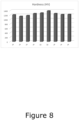
- the present product shows a general hardness of ⁇ 1200 HV, which makes it an excellent candidate for the intended applications.
- Young's modulus represents elastic properties of material and is correlated to hardness. The measurements were done using a LA-wave V2-1 Fraunhofer IWS apparatus. The average value of 240-290 GPa ( Figure 10 ) is expected for a hard material and makes it a good candidate for applications where heavy loading is applied.
- Wear resistance of the coated samples was measured according to ASTM G65 ( Figure 11 ) using a built-in machine. Volume loss is shown versus material consumption for spraying in this figure.
- Figure 11 shows that all coatings show excellent wear resistance, i.e., very low volume loss for medium powder consumption in comparison with Amperit ® 618 and 558. This makes the present product significantly beneficial from cost point of view and a strong candidate for application where wear properties play an important role.
- FIG. 12 shows the cross section together with EDX map for high-content elements, using voltage of 15kV. The results are aligned with thermodynamic calculation, i.e., different types of carbides in a Ni-rich FCC matrix.
Landscapes
- Chemical & Material Sciences (AREA)
- Engineering & Computer Science (AREA)
- Materials Engineering (AREA)
- Mechanical Engineering (AREA)
- Metallurgy (AREA)
- Organic Chemistry (AREA)
- Powder Metallurgy (AREA)
- Carbon And Carbon Compounds (AREA)
- Coating By Spraying Or Casting (AREA)
Abstract
In the present disclosure is detailed a powder consisting by total weight of: Iron (Fe) 6.6 - 7.9 wt%, Carbon (C) 5.2 - 5.7 wt%, Chromium (Cr) 3.9 - 4.5 wt%, Nickel (Ni) 2.2 - 3.0 wt%, Molybdenum (Mo) 0.6 - 0.75 wt%, Silicon (Si) 0.1 - 0.22 wt%, Manganese (Mn) 0.07 - 0.1 wt%, the balance being tungsten (W) and unavoidable impurities, which when used in a HVOF and/or a HVAF process provides tungsten carbide embedded in a high-alloyed stainless-steel binder. As the binder is free of cobalt it provides a sustainable yet cost beneficial replacement for conventional binders for carbide products.
Description
- In the field of powder technology for HVOF and HVAF applications there is suggested a range of stainless-steel alloys as carbide binders for, in particular, tungsten carbide.
- Tungsten/chromium Carbide powders are hard materials (hardness ≈1000 HV), used for dense coatings. They can be sprayed using High-Velocity Oxygen-Fuel (HVOF) and High-Velocity Air-Fuel (HVAF) spray methods onto various metallic parts and structures to improve the surface resistance of these parts and structures to severe wear and corrosion. Conventional carbide powders consist of hard WC or Cr3C2 particles in a binder matrix, for which the CoCr powders are used. Different alloying elements, e.g., Ni, Fe, Ti, etc., may be added to the matrix to improve mechanical, corrosion, and spray-ability properties, c.f. e.g., J. Garcia et al. (J. Garcia, V. Collado Ciprés, A. Blomqvist and B. Kaplan, "Cemented carbide microstructures: a review," International Journal of Refractory Metals and Hard Materials, vol. 80, pp. 40-68, 2019.)
- In the recent years, use of some elements, such as Co and Ni in particular, has become of concern due to their harmful characteristics to the environment and health and there have been attempts to replace these elements by less harmful elements in the binder, c.f., e.g., M. Walbrühl et al. (M Walbrühl, D. Linder, K. Ågren and A. Borgenstam, "Diffusion modeling in cemented carbides: Solubility assessment for Co, Fe and Ni binder systems," International Journal of Refractory Metals and Hard Materials, vol. 68, pp. 41-48, 2017) .
- It is known that conventional binders can be replaced by high-alloyed steels, or atomized powders, c.f., e.g., J. Garcia et al. Herein, the present inventors introduce new alloys that suitable for use as a binder matrix for in particular as a binder for carbides such as tungsten carbide or diverse chromium carbides, which alloys are sustainable yet cost beneficial replacements for conventional carbide products.
- These newly developed alloys are excellent candidate for coating components e.g., in aerospace or power generating technologies such as e.g., sliding tubes, sliding pistons, axles, bolts, bushings, flanges, etc. The developed alloys can also be used to coat grinding rolls, crushers, and/or calender rolls. In addition, since the alloys are Co-free materials, they can also find use in the food industry, for example for packaging rolls for plastic foils.
-
- Figure 1:
- Phase diagram of agglomerated/sintered carbide, made of 85% WC particles and 15% binder calculated using Thermo-Calc.
- Figure 2:
- Cross section of agglomerated/sintered carbides, made of 85% WC particles and 15% binder.
- Figure 3:
- Material consumption versus coverage rate for different spray techniques and parameters, as an index of efficiency and productivity.
- Figure 4:
- Cross section of the coating achieved by JP spraying, in different magnifications. A scalebar 50 µm, B scalebar 20 µm.
- Figure 5:
- Cross section of the coating achieved by DJ spraying, in different magnifications. A scalebar 50 µm, B scalebar 20 µm.
- Figure 6:
- NSS tested coupons after 1008 hours for A JP-sprayed and B DJ-sprayed samples.
- Figure 7:
- Gas permeability test results for coated samples.
- Figure 8:
- Hardness measurements for sprayed samples using different techniques and parameters.
- Figure 9:
- Roughness measurements for sprayed samples using different techniques and parameters.
- Figure 10:
- Young modulus measurements for sprayed samples using different techniques and parameters.
- Figure 11:
- Material consumption for spraying versus war resistance for sprayed samples.
- Figure 12:
- SEM image and EDX map of elements showing different types of carbides in a Ni-rich FCC matrix.
- Figure 13:
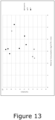
- Corrosion resistance measures as Cavitation index vs. material used in spraying.
- It is to be understood, that the embodiments shown in the figures are for illustration of the present invention and cannot be construed as being limiting on the present invention. Unless otherwise indicated, the drawings are intended to be read (e.g., cross-hatching, arrangement of parts, proportion, degree, etc.) together with the specification, and are to be considered a portion of the entire written description of this disclosure.
- In a first aspect and embodiment thereof, there is herein detailed an iron-chrome-nickel stainless-steel alloy consisting by total weight of the alloy of:
Chromium (Cr) : 26 - 30 wt%, Nickel (Ni) : 15 - 18 wt%, Molybdenum (Mo): 4 - 5 wt%, Silicon (Si) : 1 - 1.5 wt%, Manganese (Mn) : 0.5 - 1.0 wt%, Carbon (C) : 0.15 - 0.25 wt%, - As detailed in the below experimental section, the stainless-steel alloys of the present invention are useful as sustainable binders for carbides, such as tungsten carbide.
- In embodiments of the iron-chrome-nickel stainless-steel alloy, chromium (Cr) is present from 26.5 wt%, from 27 wt%, from 27.5 wt% or from 28 wt%. In further embodiments thereof, chromium (Cr) is present to 29.5 wt%, to 28.5 wt% or to 28 wt%.
- In embodiments the iron-chrome-nickel stainless-steel alloy, nickel (Ni) is present from 15.5 wt%, from 16 wt%, or from 16.5 wt%. In further embodiments thereof, nickel (Ni) is present to 17.5 wt%, to 17 wt%, or to 16.5 wt%.
- In embodiments the iron-chrome-nickel stainless-steel alloy, molybdenum (Mo) is present from 4.1 wt%, from 4.25 wt%, from 4.4 wt%, or from 4.5 wt%. In further embodiments thereof, molybdenum (Mo) is present to 4.9 wt%, to 4.75 wt%, to 4.6 wt% or to 4.5 wt%.
- In embodiments the iron-chrome-nickel stainless-steel alloy, silicon (Si) is present from 1.1 wt%, from 1.2 wt%, or from 1.25 wt%. In further embodiments thereof, silicon (Si) is present to 1.4 wt%, to 1.3 wt%, or to 1.25 wt%.
- In embodiments the iron-chrome-nickel stainless-steel alloy, manganese (Mn) is present from 0.6 wt%, from 0.7 wt%, or from 0.75 wt%. In further embodiments thereof, manganese (Mn) is present to 0.9 wt%, to 0.8 wt% or to 0.75 wt%.
- In embodiments the iron-chrome-nickel stainless-steel alloy, carbon (C) is present from 0.16 wt%, from 0.17 wt%, from 0.18 wt%, from 0.19 wt%, or from 0.20 wt%. In embodiments thereof, carbon (C) is present to 0.24 wt%, to 0.23 wt%, to 0.22 wt%, to 0.21 wt%, or to 0.20 wt%.
- The alloys of the invention preferably are manufactured as powders for HVOF and/or HVAF spray coating by pre-alloying the elements of the alloy, atomizing, e.g., water-atomizing, the pre-alloyed elements, whereby a pre-alloyed stainless-steel powder containing the alloys of the invention is obtained.
- In an embodiment of the pre-alloyed stainless-steel powder, the pre-alloyed stainless-steel powder comprises at least 80% by weight of the pre-alloyed stainless-steel powder contained within a sieved fraction of the pre-alloyed stainless-steel powder having a size distribution from 1 µm to 100 µm, preferably from 2.5 µm to 75 µm, or even more preferably from 5 µm to 50 µm, as measured by sieving in accordance with ISO-14232-1-2017-E, Particle distribution by sieving, and/or preferably comprises at least 85% by weight, at least 90% by weight, or more preferably at least 95% by weight of the pre-alloyed stainless-steel powder having a size distribution from 2.5 µm to 100 µm as measured by sieving in accordance with ISO-14232-1-2017-E, Particle distribution by sieving.
- An advantage of the alloys of the present invention is that they can be mixed with carbides of a suitable powder size for HVOF and/or HVAF spray coating and spray coated together directly onto a suitable surface.
- The benefits of the invention are exemplified herein below in the context of an agglomerated/sintered carbide product is, made from 85 wt% WC particles and 15 wt% binder. The binder and carbides are dry sprayed together and sintered at constant temperature of 1138°C for maximum two hours, thereby forming the desired tungsten carbide/stainless-steel alloy complex. Chemical composition element ranges for the forming of suitable tungsten carbide/stainless-steel alloy complexes are given in Table 1 below.
Table 1: WC/alloy complexes, Tungsten (W) balance Element Fe Cr Ni Mo C (total) Si Mn wt% 6.6 - 7.9 3.9 - 4.5 2.2 - 3.0 0.6-0.75 5.2 - 5.7 0.1 - 0.22 0.07 - 0.1 optimal 5.3 - 5.7 - Accordingly, in a second aspect of the present invention and embodiments thereof, there is herein detailed a tungsten-based powder consisting by total weight of powder of:
Iron (Fe) : 6.6 - 7.9 wt%, Carbon (C) : 5.2 - 5.7 wt%, Chromium (Cr) : 3.9 - 4.5 wt%, Nickel (Ni) : 2.2 - 3.0 wt%, Molybdenum (Mo): 0.6 - 0.75 wt%, Silicon (Si) : 0.1 - 0.22 wt%, Manganese (Mn) : 0.07 - 0.1 wt%, - In an embodiment of the tungsten-based powder, the amount of carbon (C) is from 5.25 to 5.7 wt%, from 5.3 to 5.7 wt%, or from 5.5 to 5.7 wt%; preferably from 5.35 to 5.7 wt%, from 5.35 to 5.65 wt%, from 5.4 to 5.65 wt%, or from 5.45 to 5.65 wt%; more preferably from 5.5 to 5.6 wt%.
- In an embodiment of the tungsten-based powder, the amount of nickel (Ni) is from 2.2 to 2.7 wt%.
- The tungsten-based powder can be obtained using methods otherwise known as such, e.g., by atomizing the constituting metals as a composite powder, or from a melt by partially or, preferably, fully alloying the constituting metals. In the event of the partial alloy powder or non-pre-alloyed metal powder is used, the alloying takes place during the application (e.g., spray application) of the cermet powders.
- In an embodiment of the tungsten-based powder, the tungsten-based powder consists of from 13 to 17 wt% of a stainless-steel pre-alloyed powder according to the above first aspect and embodiments thereof, and from 83 to 87 wt% of a tungsten carbide (WC) powder.
- In an embodiment of the tungsten-based powder, the tungsten-based powder comprises at least 80% by weight of the tungsten-based powder contained within a sieved fraction of the tungsten-based powder having a size distribution from 1 µm to 100 µm, preferably from 2.5 µm to 75 µm, or even more preferably from 5 µm to 50 µm, as measured by sieving in accordance with ISO-14232-1-2017-E, Particle distribution by sieving, and/or preferably comprises at least 85% by weight, at least 90% by weight, or more preferably at least 95% by weight of the tungsten-based powder having a size distribution from 2.5 µm to 100 µm as measured by sieving in accordance with ISO-14232-1-2017-E, Particle distribution by sieving.
- In an embodiment thereof, the tungsten-based powder comprises at least 90% by weight of the tungsten-based powder contained within a sieved fraction of the tungsten-based powder having a size distribution from 5 µm to 25 µm as measured by sieving in accordance with ISO-14232-1-2017-E, Particle distribution by sieving. In preferred embodiments thereof, the tungsten-based powder comprises at least 95% by weight, at least 97% by weight, or more preferably at least 99% by weight, or even more preferably at least 99.5% by weight contained within a sieved fraction of the tungsten-based powder having a size distribution from 5 µm to 25 µm as measured by sieving in accordance with ISO-14232-1-2017-E, Particle distribution by sieving.
- In an embodiment thereof, the tungsten-based powder comprises at least 90% by weight of the tungsten-based powder contained within a sieved fraction of the tungsten-based powder having a size distribution from 15 µm to 45 µm as measured by sieving in accordance with ISO-14232-1-2017-E, Particle distribution by sieving. In preferred embodiments thereof, the tungsten-based powder comprises at least 95% by weight, at least 97% by weight, or more preferably at least 99% by weight, or even more preferably at least 99.5% by weight contained within a sieved fraction of the tungsten-based powder having a size distribution from 5 µm to 25 µm as measured by sieving in accordance with ISO-14232-1-2017-E, Particle distribution by sieving.
- In an aspect of the present invention, the tungsten-based powder is a cermet powder consisting of from 83 wt% to 87 wt% of the total mass of the powder provided as a pre-formed tungsten carbide (WC) powder and from 13 wt% to 17 wt% of the total mass of the powder provided as a stainless-steel pre-alloyed powder according to any aspect thereof detailed herein above.
- In an embodiment thereof, the cermet powder comprises at least 80% by weight of the cermet powder contained within a sieved fraction of the cermet powder having a size distribution from 1 µm to 100 µm, preferably from 2.5 µm to 75 µm, or even more preferably from 5 µm to 50 µm, as measured by sieving in accordance with ISO-14232-1-2017-E, Particle distribution by sieving, and/or preferably comprises at least 85% by weight, at least 90% by weight, or more preferably at least 95% by weight of the cermet powder having a size distribution from 2.5 µm to 100 µm as measured by sieving in accordance with ISO-14232-1-2017-E, Particle distribution by sieving.
- In an aspect of the present invention, there is herein detailed the use of a tungsten-based or a cermet powder according to any one of embodiments detailed herein for the coating of a surface by means of a thermal spray method.
- Further detailed herein is a cermet formed from a tungsten-based or a cermet powder according to any one of embodiments detailed herein by means of a thermal spray method, preferably a cermet having a composition corresponding to any composition of the herein disclosed tungsten-based or cermet powders.
- Further detailed herein is a shaped object having a coating with a cermet according to any embodiment of the herein detailed cermets.
- Further detailed herein is a method for the production of a cermet according to any embodiment of the herein detailed cermet, or of a shaped object according to any of the herein detailed embodiments, the method having the steps:
- provision of a tungsten-based or cermet powder according to one or more of herein detailed embodiments in a form or formulation that is suitable for thermal spraying;
- carrying-out of a thermal spraying process using the powder;
- obtaining of the cermet, or of the object.
- Coating properties were tested for different HVOF spray parameters.
- HVOF thermal spray systems use different fuels to produce coating for industrial machines' parts. The resulting coatings in general are hard, thick, and dense. In this work, two different jet guns were used for thermal spraying of the samples: Diamond jet gun (DJ), and high-pressure jet gun (JP). The fuel for the DJ consisted of O2+H2+air and for the JP it was a mixture of oxygen and argon.
- The high-pressure jet gun (JP-5000) is designed for liquid-fuel (kerosene) and oxygen operation. Fuel and oxygen are fed into the gun, atomized by the coaxial stabilizer, and ignited in the combustion chamber, resulting in a supersonic flame. Spray powder from the powder feeder is fed radially into the supersonic flame through two powder ports positioned directly after the combustion chamber. The spray stream is accelerated through a converging/diverging nozzle several times the speed of sound. The spray particles are heated to a molten or semi-molten state and propelled at high velocity, impacting the coating surface in a plastic state. Table 2 provides an overview of the spray parameters used in the present experiments.

- The DiamondJet process uses oxygen, fuel gas and air to produce a high-pressure annular flame, which provides uniform heating of the axially introduced powder spray material. The gas stream is accelerated through a converging/diverging nozzle to supersonic speeds. The gas stream propels the powder particles towards the substrate. Individual particles deform plastically upon impact, tenaciously bonding the coating to the substrate. Table 3 details the spray parameters used for the present experiments.

- Different spray parameters were tested, e.g., power feeder, nozzle size, combustion pressure, etc., c.f., Tables 2 and 3. Parameters were adjusted in a way that a dense coating with optimal deposition efficiency is achieved. These parameters are general ones used and producible in any ordinary spray shop. Separate coupons were sprayed with the same parameters for different tests.
- Powder sizes were determined in accordance with ISO-14232 - 1-2017-E Particle distribution by sieving and are stated as 95% of the powder mass falling inside the given size exclusion interval.
- Hardness, roughness, gas permeability, Young's modulus, and wear resistance were measured for each spray parameter.
- After spraying, coated samples were analyzed with optical microscope to measure the coating thickness and porosity and additionally examined using electron microscopy.
- In further tests, the carbon content of samples was measured after spraying. As will be further discussed below, the content of carbon is sensitive for the herein disclosed alloys and for their suitability for use as binders as discussed herein.
- Another set of coupons were placed in the natural salt spray chamber and evaluated after specific periods of time to study the corrosion properties. Corrosion resistance of the material was also evaluated based on gas permeability and cavitation tests, c.f.
Figure 13 . - Finally, coated samples were analyzed using SEM/EDX analysis to find a better understanding of the final product.
-
Figure 1 shows the phase diagram for the presently developed alloys as calculated using Thermo-Calc software, steel database TCFE12. - Composition range marked with green lines in the figure shows composition range of carbon content for the final carbide in wt%, which will result in cubic carbides as hard phase in an FCC matrix as binder.
- Although this composition range is wider than the one suggested in table 1, carbon burn out during thermal spraying should be considered.
- If the lower limit of this range is taken for the composition (≈5.2 wt%), after carbon burns out, the composition will be shifted to the phase field containing M6C, known as η-carbide which is a brittle phase with low corrosion resistance. Optimal carbon content requires a narrower window for these alloys for avoiding formation of η-carbide after spraying.
- The arrow in
Figure 1 shows the optimal concentration range for carbon, wherein, even after burning out, the coating's chemical composition will be as desired, when the coating takes place at about 1200°C. -
Figure 2 shows (EM) a cross section of the agglomerated/sintered carbides, wherein the product examined was made of 85% WC particles and 15% binder. Dark cubic WC carbides can be seen in a sintered binder with light color in this figure. - Sprayed coupons were cut and analyzed by a LEICA DM6 M light optical microscope, to measure the coating thickness and porosity.
-
Figure. 3 shows indexes correlated to deposition efficiency and coating's thickness for different spraying methods and parameters. Other products (named Amperit® 618 (WC 15FeCrAl) and 558 (WC 10Co4Cr)) are compared with this product. - Most of the trails for this product fall in the high-productivity/high-efficiency area of the plot (compatible with, and in some cases better than the existing products) which shows that this product is cost-beneficial for spraying, through which a dense coating can be achieved.
-
Figures 4 and5 show cross section of the coating using JP and DJ techniques respectively. Using both techniques a dense even coating can be achieved with 0.1-0.5 % porosity, which is on par or better than what can be achieved with to existing commercial products. - The carbon content of all the samples was measured using a Leco; CS-200 / CS-600 apparatus based on non-dispersive infrared absorption after burning in an oxygen flow. Results confirm that all samples contain more than 5.3 wt% carbon and, consequently, did not suffer from carbon burnup during spraying.
- Corrosion properties of the coating were studied by natural salt spray (NSS) test using a SC1000 Weiss GmbH machines according to standard ASTM B117. Samples were placed in the chamber and inspected after specific times, i.e., after 168, 336, 504, 672, 840 and 1008 hours.
Figure 6 shows the tested coupons after 1008 hours for both techniques and barely any rust on the surface can be seen on them after completion of the study period. Slight corrosion has happened in the mounting area which is expected as salt can diffuse and accumulate there. - Gas permeability test results (measured using a GPT-03 machine in accordance with standard ISO 4022) are shown in
Figure 7 for the coated samples. Possibly, the gas permeability results corroborate the excellent corrosion resistance, as they show that these coatings are very dense, and that gas (and by comparison liquid salt solutions) cannot easily penetrate and attack the sample and base material even at high pressures. - Mechanical properties of the coatings were measured. Results for hardness, roughness and Young's modulus are shown in
Figures 8 to 10 . - Hardness is generally an important factor when selecting between different classes of carbides. In the present work, Hardness (HV) was measured using a Struers Dura Scan machine according to standard ISO 6507,1-4:2018.
- Hardnesses for tungsten carbides are generally expected to be above 1000 HV. The present product shows a general hardness of ≈1200 HV, which makes it an excellent candidate for the intended applications.
- Roughness of coated samples were measured based on standards DIN EN ISO 4287 and ASME B46.1, using a MarSurf PS10 machine. The results presented in
Figure 9 show an average value of 2-4 Ra for this product which is in the general accepted range for this property among different carbides (c.f., J. Garcia et al.). - Young's modulus represents elastic properties of material and is correlated to hardness. The measurements were done using a LA-wave V2-1 Fraunhofer IWS apparatus. The average value of 240-290 GPa (
Figure 10 ) is expected for a hard material and makes it a good candidate for applications where heavy loading is applied. - Wear resistance of the coated samples was measured according to ASTM G65 (
Figure 11 ) using a built-in machine. Volume loss is shown versus material consumption for spraying in this figure. -
Figure 11 shows that all coatings show excellent wear resistance, i.e., very low volume loss for medium powder consumption in comparison withAmperit - A Hitachi SU6600 Scanning Electron Microscope was used to analyze coated samples.
Figure 12 shows the cross section together with EDX map for high-content elements, using voltage of 15kV. The results are aligned with thermodynamic calculation, i.e., different types of carbides in a Ni-rich FCC matrix. - Although the present invention has been described in detail for purpose of illustration, it is understood that such detail is solely for that purpose, and variations can be made therein by those skilled in the art in practicing the claimed subject matter, from a study of the drawings, the disclosure, and the appended claims.
- The term "comprising" as used in the claims does not exclude other elements or steps. The indefinite article "a" or "an" as used in the claims does not exclude a plurality. A unit may fulfill the functions of several means recited in the claims. A reference sign used in a claim shall not be construed as limiting the scope.
Claims (14)
- An iron-chrome-nickel stainless-steel alloy consisting by total weight of alloy of:
Chromium (Cr) : 26 - 30 wt%, Nickel (Ni) : 15 - 18 wt%, Molybdenum (Mo): 4 - 5 wt%, Silicon (Si) : 1 - 1.5 wt%, Manganese (Mn) : 0.5 - 1.0 wt%, Carbon (C) : 0.15 - 0.25 wt%, - The iron-chrome-nickel stainless-steel alloy of claim 1 as a pre-alloyed powder.
- A pre-alloyed stainless-steel powder according to claim 2, wherein the pre-alloyed stainless-steel powder comprises at least 80% by weight of the pre-alloyed stainless-steel powder contained within a sieved fraction of the pre-alloyed stainless-steel powder having a size distribution from 1 µm to 100 µm, preferably from 2.5 µm to 75 µm, or even more preferably from 5 µm to 50 µm, as measured by sieving in accordance with ISO-14232-1-2017-E, Particle distribution by sieving, and/or preferably comprises at least 85% by weight, at least 90% by weight, or more preferably at least 95% by weight of the pre-alloyed stainless-steel powder having a size distribution from 2.5 µm to 100 µm as measured by sieving in accordance with ISO-14232-1-2017-E, Particle distribution by sieving.
- A tungsten-based powder consisting by total weight of powder of:
Iron (Fe) : 6.6 - 7.9 wt%, Carbon (C) : 5.2 - 5.7 wt%, Chromium (Cr) : 3.9 - 4.5 wt%, Nickel (Ni) : 2.2 - 3.0 wt%, Molybdenum (Mo): 0.6 - 0.75 wt%, Silicon (Si) : 0.1 - 0.22 wt%, Manganese (Mn) : 0.07 - 0.1 wt%, - A tungsten-based powder according to claim 4, wherein the amount of carbon (C) is from 5.3 to 5.7 wt%, preferably from 5.5 to 5.7 wt%.
- A tungsten-based powder according to claim 4 or claim 5, wherein from 83 wt% to 87 wt% of the total mass of the powder is provided as a pre-formed tungsten carbide (WC) powder.
- A tungsten-based powder according to any of the claims 4 to 6, consisting of from 13 wt% to 17 wt% of a stainless-steel pre-alloyed powder according to claim 2 or claim 3, and from 83 to 87 wt% of a tungsten carbide (WC) powder, preferably 15 wt% of a stainless-steel pre-alloyed powder according to claim 2 or claim 3, and 85 wt% of a tungsten carbide (WC) powder.
- A tungsten-based powder according to any of the claims 4 to 7, wherein the tungsten-based powder comprises at least 80% by weight of the tungsten-based powder contained within a sieved fraction of the tungsten-based powder having a size distribution from 1 µm to 100 µm, preferably from 2.5 µm to 75 µm, or even more preferably from 5 µm to 50 µm, as measured by sieving in accordance with ISO-14232-1-2017-E, Particle distribution by sieving, and/or preferably comprises at least 85% by weight, at least 90% by weight, or more preferably at least 95% by weight of the tungsten-based powder having a size distribution from 2.5 µm to 100 µm as measured by sieving in accordance with ISO-14232-1-2017-E, Particle distribution by sieving.
- A cermet powder consisting of from 83 wt% to 87 wt% of the total mass of the powder provided as a pre-formed tungsten carbide (WC) powder and from 13 wt% to 17 wt% of the total mass of the powder provided as a stainless-steel pre-alloyed powder according to claim 2 or claim 3.
- A cermet powder according to claim 9, wherein the cermet powder comprises at least 80% by weight of the cermet powder contained within a sieved fraction of the cermet powder having a size distribution from 1 µm to 100 µm, preferably from 2.5 µm to 75 µm, or even more preferably from 5 µm to 50 µm, as measured by sieving in accordance with ISO-14232-1-2017-E, Particle distribution by sieving, and/or preferably comprises at least 85% by weight, at least 90% by weight, or more preferably at least 95% by weight of the cermet powder having a size distribution from 2.5 µm to 100 µm as measured by sieving in accordance with ISO-14232-1-2017-E, Particle distribution by sieving.
- Use of the powders according to any one of claims 4 to 10 for the coating of a surface by means of a thermal spray method.
- A cermet having a composition according to any one of claims 4 to 10.
- A shaped object having a coating with a cermet according to claim 12.
- A method for the production of a cermet according to claim 12 or of an object according to claim 13, having the steps:- provision of a powder according to one or more of claims 4 to 10 in a form or formulation that is suitable for thermal spraying;- carrying-out of a thermal spraying process using said powder;- obtaining of said cermet or of said object.
Priority Applications (3)
| Application Number | Priority Date | Filing Date | Title |
|---|---|---|---|
| EP23216805.4A EP4570939A1 (en) | 2023-12-14 | 2023-12-14 | Fecrni-steel alloys as carbide binders |
| PCT/EP2024/085956 WO2025125453A1 (en) | 2023-12-14 | 2024-12-12 | Fecrni-steel alloys as carbide binders |
| TW113148663A TW202540454A (en) | 2023-12-14 | 2024-12-13 | Fecrni-steel alloys as carbide binders |
Applications Claiming Priority (1)
| Application Number | Priority Date | Filing Date | Title |
|---|---|---|---|
| EP23216805.4A EP4570939A1 (en) | 2023-12-14 | 2023-12-14 | Fecrni-steel alloys as carbide binders |
Publications (1)
| Publication Number | Publication Date |
|---|---|
| EP4570939A1 true EP4570939A1 (en) | 2025-06-18 |
Family
ID=89223205
Family Applications (1)
| Application Number | Title | Priority Date | Filing Date |
|---|---|---|---|
| EP23216805.4A Pending EP4570939A1 (en) | 2023-12-14 | 2023-12-14 | Fecrni-steel alloys as carbide binders |
Country Status (3)
| Country | Link |
|---|---|
| EP (1) | EP4570939A1 (en) |
| TW (1) | TW202540454A (en) |
| WO (1) | WO2025125453A1 (en) |
Citations (2)
| Publication number | Priority date | Publication date | Assignee | Title |
|---|---|---|---|---|
| US20140234548A1 (en) * | 2011-09-06 | 2014-08-21 | H.C. Starck Gmbh | Cermet powder |
| WO2017142430A1 (en) * | 2016-02-15 | 2017-08-24 | Общество с ограниченной ответственностью "Технологические системы защитных покрытий" | Composition of a corrosion resistant coating for protecting petrochemical equipment |
-
2023
- 2023-12-14 EP EP23216805.4A patent/EP4570939A1/en active Pending
-
2024
- 2024-12-12 WO PCT/EP2024/085956 patent/WO2025125453A1/en active Pending
- 2024-12-13 TW TW113148663A patent/TW202540454A/en unknown
Patent Citations (2)
| Publication number | Priority date | Publication date | Assignee | Title |
|---|---|---|---|---|
| US20140234548A1 (en) * | 2011-09-06 | 2014-08-21 | H.C. Starck Gmbh | Cermet powder |
| WO2017142430A1 (en) * | 2016-02-15 | 2017-08-24 | Общество с ограниченной ответственностью "Технологические системы защитных покрытий" | Composition of a corrosion resistant coating for protecting petrochemical equipment |
Non-Patent Citations (2)
| Title |
|---|
| J. GARCIAV. COLLADO CIPRESA. BLOMQVISTB. KAPLAN: "Cemented carbide microstructures: a review", INTERNATIONAL JOURNAL OF REFRACTORY METALS AND HARD MATERIALS, vol. 80, 2019, pages 40 - 68, XP085612963, DOI: 10.1016/j.ijrmhm.2018.12.004 |
| M WALBRUHLD. LINDERK. AGRENA. BORGENSTAM: "Diffusion modeling in cemented carbides: Solubility assessment for Co, Fe and Ni binder systems", INTERNATIONAL JOURNAL OF REFRACTORY METALS AND HARD MATERIALS, vol. 68, 2017, pages 41 - 48, XP085182290, DOI: 10.1016/j.ijrmhm.2017.06.006 |
Also Published As
| Publication number | Publication date |
|---|---|
| TW202540454A (en) | 2025-10-16 |
| WO2025125453A1 (en) | 2025-06-19 |
Similar Documents
| Publication | Publication Date | Title |
|---|---|---|
| Patel et al. | Enhanced wear resistance of AlCoCrFeMo high entropy coatings (HECs) through various thermal spray techniques | |
| EP0960954B9 (en) | Powder of chromium carbide and nickel chromium | |
| US3313633A (en) | High temperature flame spray powder | |
| US9919358B2 (en) | Sintered molybdenum carbide-based spray powder | |
| CN101298654B (en) | A kind of iron-based amorphous nanocrystalline composite coating containing ceramic phase and preparation method thereof | |
| EP3084026B1 (en) | Powder for surface coating | |
| US6482534B2 (en) | Spray powder, thermal spraying process using it, and sprayed coating | |
| CN100432277C (en) | Iron-based thermal spray coating material with high corrosion resistance and wear resistance and preparation method thereof | |
| US3378392A (en) | High temperature flame spray powder and process | |
| US5702769A (en) | Method for coating a substrate with a sliding abrasion-resistant layer utilizing graphite lubricant particles | |
| US9394598B2 (en) | Powder for thermal spraying and process for formation of sprayed coating | |
| Berger | Hardmetals as thermal spray coatings | |
| Li et al. | Effect of solid carbide particle size on deposition behaviour, microstructure and wear performance of HVOF cermet coatings | |
| JP2016509126A (en) | New products and their use | |
| US20130040065A1 (en) | Powder for thermal spraying | |
| US20060053967A1 (en) | Thermal spray powder | |
| Encalada et al. | Wear behavior of HVOF sprayed cobalt-based composite coatings reinforced with Cr3C2 | |
| CN105063499A (en) | Surface coating part for reproduction of ball mill liner plate and manufacturing method for surface coating part | |
| Reddy et al. | Solid particle erosion behaviour of plasma-sprayed (WC–Co)/(Cr3C2–NiCr) coatings | |
| EP4570939A1 (en) | Fecrni-steel alloys as carbide binders | |
| US4678511A (en) | Spray micropellets | |
| Sassatelli et al. | Manufacturing and properties of high-velocity oxygen fuel (HVOF)-sprayed FeVCrC coatings | |
| EP4588592A1 (en) | Solid solution held chromium carbides for thermal spraying and method of making the same | |
| CN105063539B (en) | A kind of preparation method of ball grinding machine lining board wear-resistant coating | |
| Sidhu et al. | Comparative characteristic and erosion behavior of NiCr coatings deposited by various high-velocity oxyfuel spray processes |
Legal Events
| Date | Code | Title | Description |
|---|---|---|---|
| PUAI | Public reference made under article 153(3) epc to a published international application that has entered the european phase |
Free format text: ORIGINAL CODE: 0009012 |
|
| STAA | Information on the status of an ep patent application or granted ep patent |
Free format text: STATUS: THE APPLICATION HAS BEEN PUBLISHED |
|
| AK | Designated contracting states |
Kind code of ref document: A1 Designated state(s): AL AT BE BG CH CY CZ DE DK EE ES FI FR GB GR HR HU IE IS IT LI LT LU LV MC ME MK MT NL NO PL PT RO RS SE SI SK SM TR |
|
| STAA | Information on the status of an ep patent application or granted ep patent |
Free format text: STATUS: REQUEST FOR EXAMINATION WAS MADE |
|
| 17P | Request for examination filed |
Effective date: 20251218 |