EP4570860A1 - Photo-initiateurs thioesters de coumarine - Google Patents
Photo-initiateurs thioesters de coumarine Download PDFInfo
- Publication number
- EP4570860A1 EP4570860A1 EP23307213.1A EP23307213A EP4570860A1 EP 4570860 A1 EP4570860 A1 EP 4570860A1 EP 23307213 A EP23307213 A EP 23307213A EP 4570860 A1 EP4570860 A1 EP 4570860A1
- Authority
- EP
- European Patent Office
- Prior art keywords
- alkyl
- branched
- linear
- aryl
- independently
- Prior art date
- Legal status (The legal status is an assumption and is not a legal conclusion. Google has not performed a legal analysis and makes no representation as to the accuracy of the status listed.)
- Pending
Links
Images


Classifications
-
- C—CHEMISTRY; METALLURGY
- C09—DYES; PAINTS; POLISHES; NATURAL RESINS; ADHESIVES; COMPOSITIONS NOT OTHERWISE PROVIDED FOR; APPLICATIONS OF MATERIALS NOT OTHERWISE PROVIDED FOR
- C09B—ORGANIC DYES OR CLOSELY-RELATED COMPOUNDS FOR PRODUCING DYES, e.g. PIGMENTS; MORDANTS; LAKES
- C09B57/00—Other synthetic dyes of known constitution
- C09B57/02—Coumarine dyes
-
- C—CHEMISTRY; METALLURGY
- C09—DYES; PAINTS; POLISHES; NATURAL RESINS; ADHESIVES; COMPOSITIONS NOT OTHERWISE PROVIDED FOR; APPLICATIONS OF MATERIALS NOT OTHERWISE PROVIDED FOR
- C09B—ORGANIC DYES OR CLOSELY-RELATED COMPOUNDS FOR PRODUCING DYES, e.g. PIGMENTS; MORDANTS; LAKES
- C09B69/00—Dyes not provided for by a single group of this subclass
-
- C—CHEMISTRY; METALLURGY
- C09—DYES; PAINTS; POLISHES; NATURAL RESINS; ADHESIVES; COMPOSITIONS NOT OTHERWISE PROVIDED FOR; APPLICATIONS OF MATERIALS NOT OTHERWISE PROVIDED FOR
- C09B—ORGANIC DYES OR CLOSELY-RELATED COMPOUNDS FOR PRODUCING DYES, e.g. PIGMENTS; MORDANTS; LAKES
- C09B69/00—Dyes not provided for by a single group of this subclass
- C09B69/10—Polymeric dyes; Reaction products of dyes with monomers or with macromolecular compounds
- C09B69/109—Polymeric dyes; Reaction products of dyes with monomers or with macromolecular compounds containing other specific dyes
-
- Y—GENERAL TAGGING OF NEW TECHNOLOGICAL DEVELOPMENTS; GENERAL TAGGING OF CROSS-SECTIONAL TECHNOLOGIES SPANNING OVER SEVERAL SECTIONS OF THE IPC; TECHNICAL SUBJECTS COVERED BY FORMER USPC CROSS-REFERENCE ART COLLECTIONS [XRACs] AND DIGESTS
- Y02—TECHNOLOGIES OR APPLICATIONS FOR MITIGATION OR ADAPTATION AGAINST CLIMATE CHANGE
- Y02E—REDUCTION OF GREENHOUSE GAS [GHG] EMISSIONS, RELATED TO ENERGY GENERATION, TRANSMISSION OR DISTRIBUTION
- Y02E10/00—Energy generation through renewable energy sources
- Y02E10/50—Photovoltaic [PV] energy
- Y02E10/549—Organic PV cells
Definitions
- the invention relates to coumarin thioester compounds, their preparation process and their use as photoinitiators, preferably as photoinitiators activable under 250 to 550 nm, in particular 250 to 460 nm, light irradiation, notably to cure formulations comprising one or more ethylenically unsaturated compounds.
- reactive photoinitiators are needed, that are thermally and chemically stable and that, after being activated by light or UV-radiation, can act as catalysts for a variety of anionic and/or free radical initiated polymerization reactions.
- photoinitiators are active under UV-B and UV-C light sources but there is a push to find photoinitiators active at longer wavelengths as the industry moves to using LED curing.
- Photoinitiators which can be effectively activated by low-energy light sources such as LEDs without the need for additional sensitizers, but show high thermal stability in formulations before light exposure, are required.
- Some common photoinitiators such as (2,4,6-trimethylbenzoyldiphenylphosphine oxide (SpeedCure TPO), 2-Benzyl-2-dimethylamino-1-(4-morpholinophenyl)-butan-1-one (SpeedCure BDMB), 2-(dimethylamino)-2-[(4-methylphenyl)methyl]-1-[4-(morpholin-4-yl)phenyl]butan-1-one (Omnirad 379) and 2-hydroxy-2-methyl-1-phenylpropanone (SpeedCure 97), used for curing at longer wavelengths under LED (365 nm upwards) are subject to reclassification.
- Esacure 3644 IGM is a ketocoumarin that is able to cure under LED wavelengths, but because it is a Type II photoinitiator it requires an amine for hydrogen abstraction to do so.
- a further serious disadvantage of common radical photoinitiators is their susceptibility to oxygen inhibition and subsequent inability to surface cure. This results in tacky coatings and excessive yellowing within the coating due to additional passes under the lamp.
- phosphine oxides such as 2,4,6-trimethylbenzoyl diphenylphosphine oxide (TPO)
- the photoinitiators and their photoproducts need to impart minimal coloration to the finished product and show low volatility and low toxicity.
- CN 116693487 discloses coumarin-based thioester photoinitiators having an aryl or heteroaryl side chain. Said photoinitiators are disclosed as suitable for LED photopolymerization; however the curing process disclosed in said reference is carried out under inert atmosphere.
- the invention also provides a curable composition comprising:
- the invention also provides the use of a compound of formula (I) as defined herein as photoinitiator, in particular as a photoinitiator having photobleaching properties.
- the invention provides a process for curing one or more ethylenically unsaturated compounds, said process comprising:
- % by weight in a compound or a composition are expressed based on the weight of the compound, respectively of the composition.
- halogen means an atom selected from C!, Br, F and I.
- alkyl means a monovalent saturated acyclic hydrocarbon group of formula -C n H 2n+1 wherein n is 1 to 200.
- An alkyl may be linear or branched.
- a « (C 1 -C 20 )alkyl » means an alkyl having 1 to 20 carbon atoms.
- alkyl groups include methyl, ethyl, propyl, isopropyl, butyl, isobutyl, tert-butyl, pentyl, hexyl, 2-methylbutyl, 2,2-dimethylpropyl, n-hexyl, 2-methylpentyl, 2,2-dimethylbutyl, n-heptyl, 2-ethylhexyl, and the like.
- haloalkyl means an alkyl as defined above wherein at least one hydrogen atom is replaced by a halogen atom (i.e. Cl, Br, I or F).
- perfluoroalkyl means an alkyl as defined above wherein all of the hydrogen atoms are replaced by a fluorine atom.
- alkylene means a linker derived from an alkyl by removing one hydrogen for each point of attachment of the linker.
- alkenyl means a monovalent acyclic hydrocarbon group comprising one or more carbon-carbon double bonds.
- An alkenyl may be linear or branched. Examples of alkenyl groups include ethenyl, propenyl, butenyl, pentenyl, hexenyl, octenyl, and the like.
- aryl means an optionally substituted polyunsaturated aromatic group.
- the aryl may contain a single ring (i.e. phenyl) or more than one ring wherein at least one ring is aromatic. When the aryl comprises more than one ring, the rings may be fused, linked via a covalent bond (for example biphenyl).
- the aromatic ring may optionally comprise one to two additional fused rings.
- aryl also encompasses aromatic groups comprising one or more heteroatoms independently selected from N, O and S as ring atoms.
- aryl also encompasses partially hydrogenated derivatives of the carbocyclic system is described above.
- aryl groups include phenyl, naphthyl, biphenyl, phenanthrenyl, pyrenyl, naphthacenyl, pyrimidinyl, pyrazinyl, pyridazinyl, pyridinyl (including 2-aminopyridine), triazinyl, furanyl, quinolyl, isoquinolyl, quinoxalinyl, quinazolinyl, thienyl, imidazolyl, thiazolyl, indolyl (such as indol-3-yl), pyrryl, oxazolyl, benzofuranyl, benzothienyl, benzopyranyl, benzopyranonyl, benzodioxolyl, pyrazolyl, benzothiazolyl, isoxazolyl, triazolyl (including 1,2,4-triazole, 1,2,3-triazole, and 5-amino-1,2,4-triazo
- arylene means a linker derived from an aryl by removing one hydrogen for each point of attachment of the linker.
- cycloalkyl means a monovalent non-aromatic alicyclic group comprising one or more cycles.
- cycloalkyl also encompasses non-aromatic cyclic groups comprising one or more heteroatoms independently selected from N, O and S as ring atoms.
- cycloalkyl groups include cyclopentyl, cyclohexyl, cycloheptyl, isobornyl, 1-decalin, norbornyl, adamantyl, oxiranyl, oxetanyl, tetrahydrofuranyl, tetrahydropyranyl, dioxanyl, pyrrolidinyl, piperidinyl, piperazinyl, morpholinyl, imidazolidinyl, oxazolidinyl, dioxolanyl, and the like.
- cycloalkylene means a linker derived from a cycloalkyl by removing one hydrogen for each point of attachment of the linker.
- alkoxy means a group of formula -O-alkyl, wherein the alkyl is as defined above.
- aryloxy means a group of formula -O-aryl, wherein the aryl is as defined above.
- linker means a plurivalent group.
- a linker may connect at least two moieties of a compound together, in particular 2 to 16 moieties of a compound together.
- a linker that connects two moieties of a compound together is referred to as a divalent linker
- a linker that connects three moieties of a compound together is referred to as a trivalent linker, etc.
- hydrocarbon linker means a linker having a carbon backbone chain which may optionally be interrupted by one or more heteroatoms selected from N, O, S, Si and mixtures thereof.
- a hydrocarbon linker may be aliphatic, cycloaliphatic or aromatic.
- a hydrocarbon linker may be saturated or unsaturated.
- a hydrocarbon linker may be optionally substituted.
- acyclic means a compound that does not comprise any rings.
- cycloaliphatic means a non-aromatic cyclic compound. It may be substituted by one or more groups as defined for the term “aliphatic”. It may comprise one or more bonds as defined for the term “aliphatic”.
- aromatic means a compound comprising an aromatic ring, which means that respects Hückel's aromaticity rule, in particular a compound comprising a phenyl group. It may be substituted by one or more groups as defined for the term “aliphatic”. It may comprise one or more bonds as defined for the term “aliphatic”.
- saturated means a compound that does not comprise any double or triple carbon-carbon bonds.
- unsaturated means a compound that comprises a double or triple carbon-carbon bond, in particular a double carbon-carbon bond.
- polyether linker means a linker comprising at least two ether bonds.
- polythioether linker means linker comprising at least two thioether bonds.
- polyester linker means a linker comprising at least two ester bonds.
- polyorganosiloxane linker means a linker comprising at least two organosiloxane bonds.
- the organosiloxane may, for example be a dimethylsiloxane bond.
- isocyanurate linker means a linker comprising an isocyanurate moiety, in particular a moiety of formula:
- optional substituents of aryl and cycloalkyl groups can be independently selected from the group consisting of: -OH, -SH, halogen, linear or branched -(C 1 -C 20 )alkyl, linear or branched -(C 1 -C 20 )haloalkyl, -(C 1 -C 20 )perfluoroalkyl, linear or branched -(C 2 -C 20 )alkenyl, linear or branched -O(C 1 -C 20 )alkyl, linear or branched -S(C 1 -C 20 )alkyl, -(C 3 -C 12 )cycloalkyl, -(C 5 -C 12 )aryl, -O(C 5 -C 12 )aryl, -S(C 5 -C 12 )aryl, -(C 1 -C 20 )-alkylene-(C 5 -C 12 )ary
- the invention relates to a compound of formula (I): wherein
- R 1 is H and R 2 , R 3 , R 4 and R 5 are independently chosen from the group consisting of H, linear or branched -O(C 1 -C 20 )alkyl and -NR d R e wherein R d and R e are independently a linear or branched -(C 1 -C 20 )alkyl.
- R 1 , R 3 and R 5 are H and R 2 and R 4 are independently chosen from the group consisting of H, linear or branched -O(C 1 -C 20 )alkyl and -NR d R e wherein R d and R e are independently a linear or branched -(C 1 -C 20 )alkyl.
- R 1 , R 2 , R 3 , R 4 and R 5 are H.
- R 1 , R 2 , R 3 and R 5 are H and R 4 is a linear or branched -O(C 1 -C 20 )alkyl, preferably methoxy.
- R 1 , R 2 , R 3 and R 5 are H and R 4 is -NR d R e wherein R d and R e are independently a linear or branched -(C 1 -C 20 )alkyl, preferably methyl or ethyl.
- R 2 , R 3 and R 5 are H and each of R 1 and R 4 is independently a linear or branched -O(C 1 -C 20 )alkyl, preferably methoxy.
- R 1 , R 3 and R 5 are H and each of R 2 and R 4 is independently a linear or branched -O(C 1 -C 20 )alkyl, preferably methoxy.
- R may be chosen from the group consisting of a linear or branched -(C 1 -C 20 )alkyl as defined above, a linear or branched -(C 2 -C 20 )alkenyl as defined above, and a -(C 3 -C 12 )cycloalkyl as defined above.
- R may be the residue of a monothiol (i.e the residue that is obtained by removing the SH group of a monothiol).
- suitable monothiols also referred to herein as M SH , include methyl mercaptan, ethyl mercaptan, n-propyl mercaptan, isopropyl mercaptan, n-butyl mercaptan, sec-butyl mercaptan, tert-butyl mercaptan, n-pentyl mercaptan, n-hexyl mercaptan, 2-ethylhexyl mercaptan, n-octyl mercaptan, n-nonyl mercaptan, tert-nonyl mercaptan, n-decyl mercaptan, n-dodecyl mercaptan, tert-dodecyl
- R is according to formula (II): wherein X, R 1 , R 2 , R 3 , R 4 , R 5 and n are as defined above;
- L may be a divalent, trivalent, tetravalent, pentavalent, hexavalent, heptavalent, octavalent, nonavalent or decavalent linker. More particularly, L may be a divalent, trivalent, tetravalent, pentavalent or hexavalent linker. Even more particularly, L may be a divalent, trivalent or tetravalent linker.
- L may be selected from an aromatic linker, an aliphatic linker, a cycloaliphatic linker, a polyether linker, a polythioether linker, a polyester linker, a polyorganosiloxane linker, a polybutadiene linker, and combinations thereof.
- L may be a linker comprising an aliphatic carbon atom, preferably a sp 3 hybridized carbon atom, directly connected to X.
- L may be selected from:
- L may be the residue of a polythiol (i.e. the residue that is obtained by removing the SH groups of a polythiol).
- suitable polythiols also referred to herein as P SH
- P SH include ethane-1,2-dithiol, propane-1,3-dithiol, butane-1,4-dithiol, hexane-1,6-dithiol, octane-1,8-dithiol, decane-1,10-dithiol, 1,8-dimercapto-3,6-dioxaoctane (DMDO), di-, tri- or polyethylene glycol di(ethanethiol), the reaction product of a polyol and a mercapto-functionalized carboxylic acid such as thioglycolic acid, 3-mercaptopropionic acid or 3-mercaptobutyric acid (available as Thiocure ® from Bruno Bock or as Karenz
- X may be S.
- X is not directly connected to aromatic carbon atom.
- the linker L may not have an aromatic carbon atom directly connected to X.
- the compound of formula (I) is according to one of the following structures: wherein each z is independently 0 to 20.
- one or more of the oxyethylene units may indifferently be replaced by an oxypropylene unit.
- the coumarin rings may be optionally substituted by one or more substituents R 1 , R 2 , R 3 , R 4 and R 5 as defined above.
- the compounds of formula (I) according to the present invention may be synthesized from readily available commercial reagents. They have been demonstrated to be stable when formulated and have excellent solubility in organic solvents and various monomers.
- the compounds of formula (I) according to the present invention may be capable of initiating cure of compositions containing (meth)acrylate-functionalized compounds (via free radical polymerization), cyanoacrylate-functionalized compounds (via anionic polymerization), and mixtures of both types of compounds.
- This ability enables a wide formulation latitude and is particularly advantageous when formulating for applications where specific physical properties of the cured material are desired.
- the invention also relates to a process for the preparation of a compound of formula (I) according to the invention, the process comprising reacting a compound of formula (III) with a compound of formula (IV) or (V): H-X-R (IV) wherein
- a compound of formula (III) is reacted with a compound of formula (IV) when R represents a linear or branched -(C 1 -C 20 )alkyl, a linear or branched -(C 2 -C 20 )alkenyl or a -(C 3 -C 12 )cycloalkyl in Formula (I).
- the compound of formula (IV) may in particular be a monothiol, such as a monothiol as listed above in M SH .
- reaction of a compound of formula (III) where G is halogen with a compound of formula (IV) may be carried out in an organic solvent, preferably a non-polar aprotic solvent such as THF, in the presence of a base, preferably a weak organic base such as triethylamine.
- organic solvent preferably a non-polar aprotic solvent such as THF
- base preferably a weak organic base such as triethylamine
- the reaction may be conducted in a wide range of temperature, from -20°C to the reflux temperature of the reactional mixture.
- a compound of formula (III) is reacted with a compound of formula (V) when R is a group of formula (II) in Formula (I).
- the compound of formula (V) may in particular be a polythiol, such as a polythiol as listed above in P SH .
- reaction of a compound of formula (III) where G is OH with a compound of formula (V) may be carried out in an organic solvent, preferably a non-polar aprotic solvent such as dichloromethane, in the presence of an activating agent of carboxylic acids, such as N,N'-Dicyclohexylcarbodiimide (DCC) in the presence of a nucleophilic catalyst, such as 4-Dimethylaminopyridine (DMAP).
- an organic solvent preferably a non-polar aprotic solvent such as dichloromethane
- an activating agent of carboxylic acids such as N,N'-Dicyclohexylcarbodiimide (DCC)
- DCC N,N'-Dicyclohexylcarbodiimide
- DMAP 4-Dimethylaminopyridine
- the reaction may be conducted in a wide range of temperature, from -20°C to the reflux temperature of the reactional mixture.
- the process of the invention may also comprise the step of preparing intermediates of formula (III).
- the compound of formula (III) where G is a halogen atom may typically be prepared by halogenation of the corresponding compound of formula (III) where G is OH.
- the compound (III) where G is CI may be obtained by reacting the compound (III) where G is OH with thionyl chloride.
- an oxidizing agent such as selenium oxide (SeO 2 ) in the presence of a base, such as pyridine.
- reagent (IV) may be a polythiol as defined above for P SH and reagent (V) may be a polythiol as defined above for P SH .
- the process can comprise a further step of purifying the compound of formula (I) obtained for example by column chromatography.
- the compound of formula (I) may be prepared by reacting a compound of formula (VI) with a compound of formula (IV) or (V): H-X-R (IV) wherein n, R 1 , R 2 , R 3 , R 4 , R 5 , R, X, L and m are as defined above.
- a compound of formula (VI) is reacted with a compound of formula (IV) when R represents a linear or branched -(C 1 -C 20 )alkyl, a linear or branched -(C 2 -C 20 )alkenyl or a -(C 3 -C 12 )cycloalkyl in Formula (I).
- the compound of formula (IV) may in particular be a monothiol, such as a monothiol listed above in M SH .
- a compound of formula (VI) is reacted with a compound of formula (V) when R is a group of formula (II) in Formula (I).
- the compound of formula (V) may in particular be a polythiol, such as a polythiol listed above in P SH .
- reaction of a compound of formula (VI) with a compound of formula (IV) or (V) may be carried out in an organic solvent, preferably a non-polar organic solvent such as benzene, toluene or a dialkylether, in the presence of an acid, preferably a strong acid such as HCl.
- organic solvent preferably a non-polar organic solvent such as benzene, toluene or a dialkylether
- the compound of formula (I) may be prepared by reacting a compound of formula (VI) with hydrogen sulfide (H 2 S) and a compound of formula (VII) or (VIII): Hal-R (VII) wherein
- a compound of formula (VI) is reacted with hydrogen sulfide and a compound of formula (VII) when R represents a linear or branched -(C 1 -C 20 )alkyl, a linear or branched -(C 2 -C 20 )alkenyl or a -(C 3 -C 12 )cycloalkyl in Formula (I).
- a compound of formula (VI) is reacted with hydrogen sulfide and a compound of formula (VIII) when R is a group of formula (II) in Formula (I).
- reaction of a compound of formula (VI) with hydrogen sulfide and a compound of formula (VII) or (VIII) may be carried out in water or an organic solvent, preferably a polar organic solvent such as dimethylformamide or acetone, in the presence of a base, preferably a weak organic base such as pyridine.
- organic solvent preferably a polar organic solvent such as dimethylformamide or acetone
- the reaction may be conducted in a wide range of temperature, from -20°C to the reflux temperature of the reactional mixture, preferably at 50-80 °C.
- the invention also relates to a curable (or polymerizable) composition
- a curable (or polymerizable) composition comprising one or more of compounds of formula (I) and one or more ethylenically unsaturated compounds.
- the curable composition may comprise 0.05% to 10%, in particular 0.1% to 5%, more particularly 0.15 to 2%, by weight of compound of formula (I) based on the total weight of the curable composition. If the curable composition comprises a mixture of compounds of formula (I), the above weight percentage may be calculated using the weight of the mixture of compounds of formula (I).
- the curable composition may include from 20% to 99.95%, preferably from 30% to 98%, more preferably from 40% to 97%, by weight of ethylenically unsaturated compounds based on the total weight of the curable composition. If the composition comprises a mixture of ethylenically unsaturated compounds, the above weight percentages may be calculated using the weight of the mixture of ethylenically unsaturated compounds.
- the curable composition of the invention may further comprise one or more compounds selected from:
- the curable composition comprises one or more ethylenically unsaturated compounds.
- ethylenically unsaturated compound means a compound that comprises a polymerizable carbon-carbon double bond.
- a polymerizable carbon-carbon double bond is a carbon-carbon double bond that can react with another carbon-carbon double bond in a polymerization reaction.
- a polymerizable carbon-carbon double bond is generally comprised in a group selected from acrylate, methacrylate, cyanoacrylate, acrylamide, methacrylamide, styrene, maleate, fumarate, itaconate, methylene malonate, methylene acetyl acetonate, methylene beta-diketone, allyl, propenyl, vinyl and combinations thereof, preferably selected from acrylate, methacrylate, cyanoacrylate, allyl and vinyl, more preferably selected from acrylate, methacrylate and cyanoacrylate.
- the carbon-carbon double bonds of a phenyl ring are not considered as polymerizable carbon-carbon double bonds.
- the one or more ethylenically unsaturated compounds comprise at least one of a cyanoacrylate-functionalized compound, a (meth)acrylate-functionalized compound and mixtures thereof.
- the curable composition may comprise a cyanoacrylate.
- the curable composition may comprise a mixture of cyanoacrylates.
- cyanoacrylate refers to an organic compound which contains a carbon-carbon double bond, wherein one carbon atom involved in the carbon-carbon double bond is substituted with a cyano (-CN) group and an ester group.
- Suitable cyanoacrylates include methyl cyanoacrylate, ethyl cyanoacrylate, n-propyl cyanoacrylate, iso-propyl cyanoacrylate, n-butyl cyanoacrylate, sec-butyl cyanoacrylate, iso-butyl cyanoacrylate, tert-butyl cyanoacrylate, n-pentyl cyanoacrylate, 1-methylbutyl cyanoacrylate, 1-ethylpropyl cyanoacrylate, neopentyl cyanoacrylate, n-hexyl cyanoacrylate, 1-methylpentyl cyanoacrylate, n-heptyl cyanoacrylate, n-octyl cyanoacrylate, 2-octyl cyanoacrylate, 2-ethylhexyl cyanoacrylate, n-nonyl cyanoacrylate, n-decyl cyanoacrylate
- the cyanoacrylate is a mono-functional cyanoacrylate, more preferably selected from 2-methoxyethyl cyanoacrylate, 2-ethoxyethyl cyanoacrylate, methyl cyanoacrylate, ethyl cyanoacrylate, n-propyl cyanoacrylate, n-heptyl cyanoacrylate, n-octyl cyanoacrylate, iso-propyl cyanoacrylate or mixtures thereof.
- the amount of cyanoacrylate may be from 70% to 99% by weight, preferably from 75% to 95% by weight, and more preferably from 70 to 90% by weight based on the total weight of the curable composition.
- the curable composition may comprise a (meth)acrylate-functionalized compound.
- the curable composition may comprise a mixture of (meth)acrylate-functionalized compounds.
- (meth)acrylate-functionalized compound means a compound comprising a (meth)acrylate group, in particular an acrylate group.
- the term "(meth)acrylate-functionalized compound” here encompasses containing more than one (meth)acrylate group, such as 2, 3, 4, 5 or 6 (meth)acrylate groups, commonly referred to as “oligomers” comprising a (meth)acrylate group.
- the curable composition may contain from 40% to 99%, from 45% to 90%, from 50% to 85%, or from 50% to 80% by weight of (meth)acrylate-functionalized compounds based on the total weight of the curable composition.
- the curable composition may contain from 5% to 50%, from 10% to 45%, from 15% to 40% or from 15% to 30%, by weight of (meth)acrylate-functionalized compounds based on the total weight of the curable composition.
- the (meth)acrylate-functionalized compound may be selected from a (meth)acrylate-functionalized monomer, a (meth)acrylate-functionalized oligomer and mixtures thereof.
- (meth)acrylate-functionalized monomer means a monomer comprising a (meth)acrylate group, in particular an acrylate group.
- (meth)acrylate-functionalized oligomer means an oligomer comprising a (meth)acrylate group, in particular an acrylate group.
- the ethylenically unsaturated compound comprises a (meth)acrylate-functionalized monomer.
- the ethylenically unsaturated compound may comprise a mixture of (meth)acrylate-functionalized monomers.
- the (meth)acrylate-functionalized monomer may have a molecular weight of less than 600 g/mol, in particular from 100 to 550 g/mol, more particularly 200 to 500 g/mol.
- the (meth)acrylate-functionalized monomer may have 1 to 6 (meth)acrylate groups, in particular 1 to 3 (meth)acrylate groups.
- the (meth)acrylate-functionalized monomer may comprise a mixture of (meth)acrylate-functionalized monomers having different functionalities.
- the (meth)acrylate-functionalized monomer may comprise a mixture of a (meth)acrylate-functionalized monomer containing a single acrylate or methacrylate group per molecule (referred to herein as "mono(meth)acrylate-functionalized compounds") and a (meth)acrylate-functionalized monomer containing 2 or more, preferably 2 or 3, acrylate and/or methacrylate groups per molecule.
- the (meth)acrylate functionalized monomer comprises a mono(meth)acrylate-functionalized monomer.
- the mono(meth)acrylate-functionalized monomer may advantageously function as a reactive diluent and reduce the viscosity of the composition of the invention.
- Suitable mono(meth)acrylate-functionalized monomers include, but are not limited to, mono-(meth)acrylate esters of aliphatic alcohols (wherein the aliphatic alcohol may be straight chain, branched or alicyclic and may be a mono-alcohol, a di-alcohol or a polyalcohol, provided only one hydroxyl group is esterified with (meth)acrylic acid); mono-(meth)acrylate esters of aromatic alcohols (such as phenols, including alkylated phenols); mono-(meth)acrylate esters of alkylaryl alcohols (such as benzyl alcohol); mono-(meth)acrylate esters of oligomeric and polymeric glycols such as diethylene glycol, triethylene glycol, dipropylene glycol, tripropylene glycol, polyethylene glycol, and polypropylene glycol); mono-(meth)acrylate esters of monoalkyl ethers of glycols and oligoglycols;
- the following compounds are specific examples of mono(meth)acrylate-functionalized monomers suitable for use in the curable compositions of the present invention: methyl (meth)acrylate; ethyl (meth)acrylate; n-propyl (meth)acrylate; n-butyl (meth)acrylate; isobutyl (meth)acrylate; n-hexyl (meth)acrylate; 2-ethylhexyl (meth)acrylate; n-octyl (meth)acrylate; isooctyl (meth)acrylate; n-decyl (meth)acrylate; n-dodecyl (meth)acrylate; tridecyl (meth)acrylate; tetradecyl (meth)acrylate; hexadecyl (meth)acrylate; 2-hydroxyethyl (meth)acrylate; 2- and 3-hydroxypropyl (meth)acrylate; 2-methoxye
- the (meth)acrylate functionalized monomer may comprise a (meth)acrylate-functionalized monomer containing two or more (meth)acrylate groups per molecule.
- suitable (meth)acrylate-functionalized monomers containing two or more (meth)acrylate groups per molecule include acrylate and methacrylate esters of polyhydric alcohols (organic compounds containing two or more, e.g., 2 to 6, hydroxyl groups per molecule).
- suitable polyhydric alcohols include C2-20 alkylene glycols (glycols having a C2-10 alkylene group may be preferred, in which the carbon chain may be branched; e.g., ethylene glycol, trimethylene glycol, 1,2-propylene glycol, 1,2-butanediol, 1,3-butanediol, 2,3-butanediol, tetramethylene glycol (1,4-butanediol), 1,5-pentanediol, 1,6-hexanediol, 1,8-octanediol, 1,9-nonanediol, 1,12-dodecanediol, cyclohexane-1,4-dimethanol, bisphenols, and hydrogenated bisphenols, as well as alkoxylated (e.g., ethoxylated and/or propoxylated) derivatives thereof), diethylene glycol, glycerin,
- Such polyhydric alcohols may be fully or partially esterified (with (meth)acrylic acid, (meth)acrylic anhydride, (meth)acryloyl chloride or the like), provided they contain at least two (meth)acrylate functional groups per molecule.
- Exemplary (meth)acrylate-functionalized monomers containing two or more (meth)acrylate groups per molecule may include bisphenol A di(meth)acrylate; hydrogenated bisphenol A di(meth)acrylate; ethylene glycol di(meth)acrylate; diethylene glycol di(meth)acrylate; triethylene glycol di(meth)acrylate; tetraethylene glycol di(meth)acrylate; polyethylene glycol di(meth)acrylate; propylene glycol di(meth)acrylate; dipropylene glycol di(meth)acrylate; tripropylene glycol di(meth)acrylate; tetrapropylene glycol di(meth)acrylate; polypropylene glycol di(meth)acrylate; polytetramethylene glycol di(meth)acrylate; 1,2-butanediol di(meth)acrylate; 2,3-butanediol di(meth)acrylate; 1,3-butanediol di(meth
- the curable composition of the invention may comprise 0 to 99.5%, in particular 5 to 90%, more particularly 10 to 80%, even more particularly 15 to 75%, more particularly still 20 to 70% by weight of (meth)acrylate-functionalized monomer based on the total weight of the curable composition.
- the curable composition of the invention may comprise 5 to 50% or 10 to 50% or 15 to 50% or 20 to 50% or 25 to 50% or 30 to 50%, by weight of (meth)acrylate-functionalized monomer based on the total weight of the curable composition.
- the curable composition of the invention may comprise 50 to 99.5% or 55 to 99.5% or 60 to 99.5% or 65 to 99.5% or 70 to 99.5%, by weight of (meth)acrylate-functionalized monomer based on the total weight of the curable composition.
- the ethylenically unsaturated compound comprises a (meth)acrylate-functionalized oligomer.
- the ethylenically unsaturated compound may comprise a mixture of (meth)acrylate-functionalized oligomers.
- the (meth)acrylate-functionalized oligomer may be selected in order to enhance the flexibility, strength and/or modulus, among other attributes, of a cured polymer prepared using the curable composition of the present invention.
- the (meth)acrylate functionalized oligomer may have 1 to 18 (meth)acrylate groups, in particular 2 to 6 (meth)acrylate groups, more particularly 2 to 6 acrylate groups.
- the (meth)acrylate functionalized oligomer may have a number average molecular weight equal or more than 600 g/mol, in particular 800 to 15,000 g/mol, more particularly 1,000 to 5,000 g/mol.
- the (meth)acrylate-functionalized oligomers may be selected from the group consisting of epoxy (meth)acrylates, polyester (meth)acrylates, polyether (meth)acrylates, urethane (meth)acrylates, (meth)acrylated poly(meth)acrylates and mixtures thereof.
- Non-limiting examples of epoxy (meth)acrylates are the reaction products of an epoxide (such as glycidyl ethers, glycidyl esters, cycloaliphatic epoxides or epoxides obtained by epoxidation of mono- and/or polyunsaturated compounds) with a (meth)acrylating agent (such as (meth)acrylic acid, (meth)acrylic anhydride, (meth)acryloyl chloride or combinations thereof).
- an epoxide such as glycidyl ethers, glycidyl esters, cycloaliphatic epoxides or epoxides obtained by epoxidation of mono- and/or polyunsaturated compounds
- a (meth)acrylating agent such as (meth)acrylic acid, (meth)acrylic anhydride, (meth)acryloyl chloride or combinations thereof.
- the epoxide may be selected from 1,2,3,4-diepoxybutane; 1,2,4,5-diepoxypentane; 1,2,5,6-diepoxyhexane; 1,2,7,8-diepoxyoctane; 1,2,9,10-diepoxydecane; bisphenol A diglycidyl ether, bisphenol F diglycidyl ether, bisphenol S diglycidyl ether, brominated bisphenol A diglycidyl ether, brominated bisphenol F diglycidyl ether, brominated bisphenol S diglycidyl ether, epoxy novolak resin, hydrogenated bisphenol A diglycidyl ether, hydrogenated bisphenol F diglycidyl ether, hydrogenated bisphenol S diglycidyl ether, 3,4-epoxycyclohexylmethyl-3',4'-epoxycyclohexanecarboxylate, 2-(3,4-epoxycyclohexyl-5,5-spiro-3,4-e
- Non-limiting examples of polyester (meth)acrylates are the reaction products of a hydroxyl group-terminated polyester polyol with a (meth)acrylating agent (such as (meth)acrylic acid, (meth)acrylic anhydride, (meth)acryloyl chloride or combinations thereof).
- a (meth)acrylating agent such as (meth)acrylic acid, (meth)acrylic anhydride, (meth)acryloyl chloride or combinations thereof.
- the reaction process may be conducted such that a significant concentration of residual hydroxyl groups remain in the polyester (meth)acrylate or may be conducted such that all or essentially all of the hydroxyl groups of the polyester polyol have been (meth)acrylated.
- the polyester polyols can be made by polycondensation reactions of a polyhydroxyl functional component (in particular a diol) and a polycarboxylic acid functional compound (in particular, a dicarboxylic acid or anhydride).
- a polyhydroxyl functional component in particular a diol
- a polycarboxylic acid functional compound in particular, a dicarboxylic acid or anhydride
- the hydroxyl groups of the polyester polyol are then partially or fully esterified by reacting with the (meth)acrylating agent.
- Polyester (meth)acrylates may also be synthesized by reacting a hydroxyl-containing (meth)acrylate such as a hydroxyalkyl (meth)acrylate (e.g., hydroxyethyl acrylate) with a polycarboxylic acid.
- the polyhydroxyl functional and polycarboxylic acid functional components can each have linear, branched, cycloaliphatic or aromatic structures and can be used individually or as mixtures.
- Non-limiting examples of polyether (meth)acrylates are the condensation reaction products of a polyether polyol with a (meth)acrylating agent (such as (meth)acrylic acid, (meth)acrylic anhydride, (meth)acryloyl chloride or combinations thereof).
- Suitable polyether polyols can be linear or branched substances containing ether bonds and terminal hydroxyl groups.
- Polyether polyols can be prepared by ring opening polymerization of epoxides and other oxygen-containing heterocyclic compounds (e.g., ethylene oxide, 1,2-propylene oxide, butene oxide, tetrahydrofuran and combinations thereof) with a starter molecule. Suitable starter molecules include water, hydroxyl functional materials, polyester polyols and amines.
- Polyetherols may also be obtained by the condensation of diols such as glycols.
- Non-limiting examples of urethane (meth)acrylates are the condensation reaction products of at least one polyisocyanate (e.g., diisocyanate, triisocyanate), at least one polyol (such as a polyether polyol or a polyester polyol) and a hydroxyl-functionalized (meth)acrylate (such as 2-hydroxyethyl (meth)acrylate or 3-hydroxypropyl (meth)acrylate) to provide terminal (meth)acrylate groups.
- the urethane (meth)acrylate may contain two, three, four or more (meth)acrylate groups per molecule. The order of addition of the components to prepare the urethane (meth)acrylate is well known in the art.
- the hydroxyl-functionalized (meth)acrylate may be first reacted with the polyisocyanate to obtain an isocyanate-functionalized (meth)acrylate, which is then reacted with the polyol.
- the polyisocyanate may be first reacted with the polyol to obtain an isocyanate-functionalized polyol, which is thereafter reacted with a hydroxyl-functionalized (meth)acrylate.
- all the components may be combined and reacted at the same time.
- Non-limiting examples of (meth)acrylated poly(meth)acrylates are substances having an oligomeric (meth)acrylic backbone which is functionalized with one or (meth)acrylate groups (which may be at a terminus of the oligomer or pendant to the acrylic backbone).
- the (meth)acrylic backbone may be a homopolymer, random copolymer or block copolymer comprised of repeating units of (meth)acrylic monomers.
- the (meth)acrylic monomers may be any monomeric (meth)acrylate such as C 1 -C 6 alkyl (meth)acrylates as well as functionalized (meth)acrylates such as (meth)acrylates bearing hydroxyl, carboxylic acid and/or epoxy groups.
- (Meth)acrylated poly(meth)acrylates may be prepared using any procedures known in the art, such as by oligomerizing (meth)acrylic monomers, at least a portion of which are functionalized with hydroxyl, carboxylic acid and/or epoxy groups (e.g., hydroxyalkyl(meth)acrylates, (meth)acrylic acid, glycidyl (meth)acrylate) to obtain a functionalized poly(meth)acrylate, which is then reacted with one or more (meth)acrylate-containing reactants to introduce the desired (meth)acrylate functional groups.
- oligomerizing (meth)acrylic monomers at least a portion of which are functionalized with hydroxyl, carboxylic acid and/or epoxy groups (e.g., hydroxyalkyl(meth)acrylates, (meth)acrylic acid, glycidyl (meth)acrylate) to obtain a functionalized poly(meth)acrylate, which is then reacted with one or more (
- the curable composition may further comprise an anionic synergist.
- Said anionic synergist may be present when the curable composition comprises a cyanoacrylate-functionalized compound, in particular to enhance the cure rate of said cyanoacrylate-functionalized compound.
- the anionic synergist may be a metallocene.
- Preferred metallocenes for use in the present invention include metallocenes in which each of the aromatic electron system ligands in the metallocene is a ⁇ -arene, indenyl, or ⁇ 5 -cyclopentadienyl ligand.
- the metallocene may be based on a transition metal selected from the group consisting of iron, osmium, and ruthenium. Iron-containing metallocenes, i.e., ferrocenes, are employed in certain aspects of the invention.
- the metallocene compound may be an osmocene or a ruthenocene. Combinations of two or more different metallocene compounds may be used.
- the anionic synergist may be a ferrocene.
- a ferrocene may be according to the following formula (VI): wherein each R is independently hydrogen or a linear or branched C 1 -C 4 alkyl.
- the amount of anionic synergist in the curable composition may be from 50 to 1000 ppm based on the weight of the curable composition.
- the curable composition may further comprise an acid stabilizer.
- Said acid stabilizer may be present when the curable composition comprises a cyanoacrylate-functionalized compound, in particular to enhance the storage stability of the curable composition and prevent premature curing.
- the acid stabilizer may be a Lewis acid.
- suitable Lewis acid include of boron trifluoride, boron trifluoride etherate complexes (e.g., boron trifluoride diethyl etherate complex), boron trifluoride dihydrate, trimethylsilyl triflate, sulphur dioxide, sulphur trioxide, nitrogen oxide and mixtures thereof, most preferably from boron trifluoride etherate complexes.
- Suitable acid stabilizers include protic acids such as hydrogen halides (e.g., hydrogen fluoride) and sulfonic acids (e.g., p-toluenesulfonic acid).
- protic acids such as hydrogen halides (e.g., hydrogen fluoride) and sulfonic acids (e.g., p-toluenesulfonic acid).
- the amount of acid stabilizer in the curable composition may be from 1 to 1000 ppm , e.g. from 10 to 100 ppm based on the total weight of the curable composition.
- the curable composition may further comprise a radical photoinitiator, in particular a radical photoinitiator having Norrish type I activity and/or Norrish type II activity, more particularly a radical photoinitiator having Norrish type I activity.
- a radical photoinitiator is distinct from the compound of formula (I).
- Non-limiting types of radical photoinitiators suitable for use in the curable compositions include, for example, benzoins, benzoin ethers, acetophenones, ⁇ -hydroxy acetophenones, benzil, benzil ketals, phosphine oxides, acylphosphine oxides, ⁇ -hydroxyketones, phenylglyoxylates, ⁇ -aminoketones, benzoyl formates, acylgermanyl compounds, polymeric derivatives thereof, and mixtures thereof., but are not limited to, benzoin, benzoin methyl ether, benzoin ethyl ether, benzoin isopropyl ether, alpha-methylbenzoin, alpha-phenylbenzoin, Michler's ketone, 1-hydroxyphenyl ketones, acetophenone, 2,2-diethyloxyacetophenone, benzil, ⁇ -hydroxyketone, 2,4,6-trimethylbenzoyldip
- Preferred radical photoinitiators are acetophenones, ⁇ -hydroxy acetophenones, phosphine oxides and acylphosphine oxides, more preferably acetophenones and acylphosphine oxides.
- the radical photoinitiator may be selected from an acetophenone such as SpeedCure ® BKL (2,2-dimethoxy-1,2-phenylacetophenone); an acylphosphine oxide such as SpeedCure ® XKM (ethyl phenyl(2,4,6-trimethylbenzoyl)phosphinate), SpeedCure ® BPO (phenyl bis(2,4,6-trimethylbenzoyl)-phosphine oxide), SpeedCure ® TPO (2,4,6-trimethylbenzoyldiphenylphosphine oxide) or SpeedCure ® TPO-L (ethyl (2,4,6-trimethylbenzoyl)phenyl phosphinate); and mixtures thereof.
- an acetophenone such as SpeedCure ® BKL (2,2-dimethoxy-1,2-phenylacetophenone
- an acylphosphine oxide such as SpeedCure ® XKM (ethyl phenyl(
- the amount of radical photoinitiator may be varied as may be appropriate depending on the radical photoinitiator(s) selected, the amounts and types of polymerizable species present in the curable composition, the radiation source and the radiation conditions used, among other factors.
- the amount of radical photoinitiator may be from 0% to 10%, for example 0.05% to 10%, in particular 0.1% to 5%, more particularly 0.5 to 2%, by weight of radical photoinitiator based on the total weight of the curable composition.
- the amount of radical photoinitiator may be from 0.01% to 5%, from 0.02% to 3%, from 0.05 to 2%, from 0.1 to 1.5% or from 0.2 to 1%, by weight based on the total weight of the curable composition.
- the amount of radical photoinitiator may be from 1% to 5%, from 1.5% to 5%, from 2 to 5%, from 2.5 to 5% or from 3 to 5%, by weight based on the total weight of the curable composition.
- the curable composition may further comprise a radical stabilizer.
- the radical stabilizer is a free radical polymerization inhibitor. It is preferably selected from the group consisting of hindered phenolic or polyphenolic compounds; preferably from hydroquinone, hydroquinone monomethyl ether, mono-tertiary-butyl hydroquinone, 2,5-ditertiary-butyl-hydroquinone, p-methoxyphenol, hydroxyanisole, butylated hydroxyanisole, hydroxyanisole butyl ether, 2,6-di-tert-butyl-p-cresol, 2,2'-methylene-bis-(6-tert-butyl-4-methylphenol), p-tert-butyl catechol, 1,3,5-trimethyl-2,4,6-tris(3,5-di-tert-butyl-4-hydroxybenzyl) benzene, hydroxytoluene butyl ether, and mixtures thereof; more preferably from hydroquinone monomethyl ether, 2,2'-methylene-bis-(6-
- the curable composition may comprise from 0.01 to 0.7 % by weight, preferably from 0.01 to 0.5% by weight, more preferably from 0.01 to 0.4 % by weight, of radical stabilizer based on total weight of the curable composition.
- the curable compositions may be formulated to be solvent-free, i.e., free of any non-reactive volatile substances.
- the curable composition may contain one or more solvents, in particular one or more organic solvents, which may be non-reactive organic solvents.
- the solvent(s) may be relatively volatile, e.g., solvents having a boiling point at atmospheric pressure of not more than 150° C. In other embodiments, the solvent(s) may have a boiling point at atmospheric pressure of at least 40°C.
- the solvent(s) may be selected so as to be capable of solubilizing one or more components of the curable composition and/or adjusting the viscosity or other rheological properties of the curable composition.
- the curable compositions may alternatively be formulated so as to contain little or no non-reactive solvent, e.g., less than 10% or less than 5% or even 0% non-reactive solvent, based on the total weight of the curable composition.
- solvent-less or low-solvent compositions may be formulated using various components, including for example low viscosity reactive diluents, which are selected so as to render the curable composition sufficiently low in viscosity, even without solvent being present, that the curable composition can be easily applied at a suitable application temperature to a substrate surface so as to form a relatively thin, uniform layer.
- Suitable solvents may include, for example, organic solvents such as: ketones; esters; carbonates; alcohols; aromatic solvents such as xylene, benzene, toluene, and ethylbenzene; alkanes; glycol ethers; ethers; amides; as well as combinations thereof.
- organic solvents such as: ketones; esters; carbonates; alcohols; aromatic solvents such as xylene, benzene, toluene, and ethylbenzene; alkanes; glycol ethers; ethers; amides; as well as combinations thereof.
- the curable compositions described herein are formulated to have a viscosity of less than 10,000 mPa.s (cP), or less than 5,000 mPa.s (cP), or less than 4,000 mPa.s (cP), or less than 3,000 mPa.s (cP), or less than 2,500 mPa.s (cP), or less than 2,000 mPa.s (cP), or less than 1,500 mPa.s (cP), or less than 1,000 mPa.s (cP) or even less than 500 mPa.s (cP) as measured at 25°C using a Brookfield viscometer, model DV-II, using a 27 spindle (with the spindle speed varying typically between 20 and 200 rpm, depending on viscosity).
- the viscosity of the curable composition is from 200 to 1000 cPs at 25°C.
- the curable compositions may optionally contain one or more additives instead of or in addition to the above-mentioned ingredients.
- additives include, but are not limited to, free radical chain transfer agents, antioxidants, ultraviolet absorbers, light blockers, photostabilizers, foam inhibitors, flow or leveling agents, fillers, colorants, fluorophores, pigments, dispersants (wetting agents), slip additives, plasticizers, thixotropic agents, matting agents, impact modifiers, adhesion promoters, thermoplastics such as acrylic resins that do not contain any free radical-polymerizable functional groups, waxes or other various additives, including any of the additives conventionally utilized in the coating, sealant, adhesive, molding, 3D printing or ink arts.
- the invention also relates to the use of a compound of formula (I) as described above as a photoinitiator.
- the compound of formula (I) may be used as a photoinitiator having photobleaching properties.
- the compound of formula (I) may be used as a photoinitiator that is activable by irradiation with a LED light source, preferably a LED light source having a maximum output wavelength in the range of 250 to 550 nm, in particular 250 to 460 nm, more particularly 340 to 430 nm.
- a LED light source preferably a LED light source having a maximum output wavelength in the range of 250 to 550 nm, in particular 250 to 460 nm, more particularly 340 to 430 nm.
- the photoinitiators of the present invention may have potential applications in photocurable inks, coatings, adhesives, advanced materials, electronics and in additive manufacturing (3D printing).
- the invention particularly relates the use of the compounds of formula (I) as photoinitiators for curing formulations comprising one or more ethylenically unsaturated compounds which may be polymerized by free radical, anionic and hybrid anionic/free radical polymerization.
- Said ethylenically unsaturated compounds may be as described above for the curable composition.
- the compounds of formula (I) do not suffer from oxygen inhibition. They advantageously show high cure speeds, low yellowing and/or photobleaching characteristics and high thermal stability in formulations.
- the yellowing characteristic can be measured by the Colour index 'b' value on cured films.
- the invention also relates to a process for curing one or more ethylenically unsaturated compounds, said process comprising:
- the light source is generally a LED (light-emitting diode) light source, or a broadband lamp with an optical filter that limits emission to wavelengths in the range of 250 to 550 nm, in particular 250 to 460 nm.
- the light source is a LED light source, more preferably a LED light source having a maximum output wavelength in the range of 250 to 550 nm, in particular 250 to 460 nm.
- the maximum output wavelength of the LED light source may be from 350 to 450 nm, notably from 340 to 430 nm, even more preferably of 250 nm, 365 nm, 385 nm or 405 nm.
- the irradiation may be carried out under air or under inert atmosphere, preferably under air.
- the invention also relates to a process for the preparation of a cured product, comprising curing the curable composition as defined above, preferably by irradiating the composition with at least one light source.
- the light source may be as defined above for the curing process.
- the curable composition may be stationary when exposed to the light source.
- the curable composition may be in motion when exposed to the light source (for example, on a conveyor belt).
- Curing may be accelerated or facilitated by supplying energy to the curable composition, such as by heating the curable composition.
- the cured product may be deemed as the reaction product of the curable composition, formed by curing.
- a curable composition may be partially cured by exposure to actinic radiation, with further curing being achieved by heating the partially cured article.
- a product formed from the curable composition may be heated at a temperature of from 40°C to 120°C for a period of time of from 5 minutes to 12 hours.
- the curable composition Prior to curing, the curable composition may be applied to a substrate surface in any known conventional manner, for example, by spraying, jetting, knife coating, roller coating, casting, drum coating, dipping, and the like and combinations thereof. Indirect application using a transfer process may also be used.
- a substrate may be any commercially relevant substrate, such as a high surface energy substrate or a low surface energy substrate, such as a metal substrate or plastic substrate, respectively.
- the substrates may comprise metal, paper, cardboard, glass, thermoplastics such as polyolefins, polycarbonate, acrylonitrile butadiene styrene (ABS), and blends thereof, composites, wood, leather and combinations thereof.
- the curable composition When used as an adhesive, the curable composition may be placed between two substrates and then cured, the cured composition thereby bonding the substrates together to provide an adhered article.
- Curable compositions in accordance with the present invention may also be formed or cured in a bulk manner (e.g., the curable composition may be cast into a suitable mold and then cured).
- the cured product obtained with the process of the invention may be an ink, a coating, a sealant, an adhesive, a molded article or a 3D-printed article.
- Example 1a S-cyclohexyl 5,7-dimethoxy-2-oxo-2H-chromene-3-carbothioate
- Triethylamine (0.33 mL, 2.39 mmol, 3 eq.), cyclohexane thiol (0.20 mL, 1.59 mmol, 2 eq.) and the acid chloride were added and the mixture was gradually warmed to room temperature and stirred overnight. The reaction was then slowly quenched into ice/water, the solid obtained was filtered and washed with water. The solid was then charged in a flask and suspended in dichloromethane (50 mL) with stirring. The organic phase was extracted with water (50 mL) / 1M HCl (10 mL) (pH 3) then with a solution of NaHCOs (50 mL) and finally with water (50 mL).
- Triethylamine (0.33 mL, 2.39 mmol, 3 eq.)
- 1-propanethiol (0.15 mL, 1.59 mmol, 2 eq.) and the acid chloride were added and the mixture was gradually warmed to room temperature and stirred overnight.
- the reaction was then slowly quenched into ice/water, the solid obtained was filtered and washed with water.
- the solid was then charged in a flask and suspended in dichloromethane (50 mL) with stirring.
- the organic phase was extracted with water (50 mL) / 1M HCl (10 mL) (pH 3) then with a solution of NaHCOs (50 mL) and finally with water (50 mL).
- Example 1c S,S'-(oxybis(ethane-2,1-diyl)) bis(2-oxo-2H-chromene-3-carbothioate)
- Triethylamine (0.17 mL, 1.23 mmol, 3 eq.)
- 4-isopropylbenzene thiol (0.13 mL, 0.82 mmol, 2 eq.) and the acid chloride were added and the mixture was gradually warmed to room temperature and stirred overnight.
- the reaction was then slowly quenched into ice/water, the solid obtained was filtered and washed with water.
- the solid was then charged in a flask and suspended in dichloromethane (50 mL) with stirring.
- the organic phase was extracted with water (50 mL) / 1M HCl (10 mL) (pH 3) then with a solution of NaHCOs (50 mL) and finally with water (50 mL).
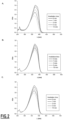
- Figure 1 shows that coumarin based photoinitiators with aliphatic substituents have good absorbance up to 425 nm. This makes them suitable and reactive enough to be used in formulations cured under LED conditions.
- Figure 2 shows that the coumarin based photoinitiators with aliphatic substituents are able to undergo substantial photocleavage after irradiation under LED wavelengths.
- Example 3 Curing performances of compounds of example 1
- the photoinitiators were dissolved at 1% in trimethylolpropane triacrylate (TMPTA) or ethoxylated trimethylolpropane triacrylate (SR454) at room temperature and were stirred overnight.
- TMPTA trimethylolpropane triacrylate
- SR454 ethoxylated trimethylolpropane triacrylate
- the photosensitive formulations were deposited on a polypropylene film and the sample thickness was controlled using a calibrated bar (24 ⁇ m, 12 ⁇ m or 6 ⁇ m).
- FTIR Fourier Transform Infrared
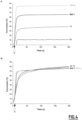
- Figure 3a shows the reactivity of Examples 1a and 1b compared with Reference Example 1 and Speedcure TPO-L in TMPTA under laminate at 385 nm.
- Figure 3b shows the reactivity of Examples 1a and 1b compared with Reference Example 1 and Speedcure TPO-L in TMPTA under air at 385 nm.
- TPO-L is the best performer with the highest acrylate conversion, followed by the aromatic coumarin.
- TPO-L decreases acrylate conversion when moving from laminate to under air (i.e it is inhibited by oxygen) whereas the aliphatic coumarins of the invention show the opposite effect.
- Figures 4a-4b show the same information as Figures 3a-3b using SR454 (ethoxylated TMPTA) instead of TMPTA as the ethylenically unsaturated compound.
- SR454 ethoxylated TMPTA
- the ethoxylation of the TMPTA does reveal some differences.
- TPO-L is the best performer with the highest acrylate conversion, followed by the aromatic coumarin. Again under air, TPO-L acrylate conversion is decreased, whereas the aliphatic coumarins have the highest acrylate conversion after 200 s of irradiation.
- the L*, a*, b* values of the photosensitive formulations were determined before and after photopolymerization using a spectrophotometer from Thorlabs in transmission experiments.
- the photobleaching ability of each of the coumarins vs TPO-L at 385 nm was also studied.
- the b* values are detailed in Table 1 below.
- the photoinitiators according to the invention are effective photoinitiators under LED lamp conditions which are not inhibited by oxygen, contrary to the state-of-the-art Speedcure TPO-L. Further, they exhibit photobleaching properties and they reach higher acrylate conversion compared to an aromatic coumarin thioester.
Landscapes
- Chemical & Material Sciences (AREA)
- Organic Chemistry (AREA)
- Organic Low-Molecular-Weight Compounds And Preparation Thereof (AREA)
Priority Applications (2)
| Application Number | Priority Date | Filing Date | Title |
|---|---|---|---|
| EP23307213.1A EP4570860A1 (fr) | 2023-12-14 | 2023-12-14 | Photo-initiateurs thioesters de coumarine |
| PCT/EP2024/086205 WO2025125563A1 (fr) | 2023-12-14 | 2024-12-13 | Photo-initiateurs de thioester de coumarine |
Applications Claiming Priority (1)
| Application Number | Priority Date | Filing Date | Title |
|---|---|---|---|
| EP23307213.1A EP4570860A1 (fr) | 2023-12-14 | 2023-12-14 | Photo-initiateurs thioesters de coumarine |
Publications (1)
| Publication Number | Publication Date |
|---|---|
| EP4570860A1 true EP4570860A1 (fr) | 2025-06-18 |
Family
ID=89541956
Family Applications (1)
| Application Number | Title | Priority Date | Filing Date |
|---|---|---|---|
| EP23307213.1A Pending EP4570860A1 (fr) | 2023-12-14 | 2023-12-14 | Photo-initiateurs thioesters de coumarine |
Country Status (2)
| Country | Link |
|---|---|
| EP (1) | EP4570860A1 (fr) |
| WO (1) | WO2025125563A1 (fr) |
Citations (2)
| Publication number | Priority date | Publication date | Assignee | Title |
|---|---|---|---|---|
| US6503959B1 (en) | 1995-10-19 | 2003-01-07 | Three Bond Co., Ltd. | Photocurable composition containing an α-cyanoacrylate and a metallocene compound |
| CN116693487A (zh) | 2023-06-09 | 2023-09-05 | 北京化工大学 | 一种适用于光聚合的香豆素基硫酯类光引发剂及其制备方法 |
-
2023
- 2023-12-14 EP EP23307213.1A patent/EP4570860A1/fr active Pending
-
2024
- 2024-12-13 WO PCT/EP2024/086205 patent/WO2025125563A1/fr active Pending
Patent Citations (2)
| Publication number | Priority date | Publication date | Assignee | Title |
|---|---|---|---|---|
| US6503959B1 (en) | 1995-10-19 | 2003-01-07 | Three Bond Co., Ltd. | Photocurable composition containing an α-cyanoacrylate and a metallocene compound |
| CN116693487A (zh) | 2023-06-09 | 2023-09-05 | 北京化工大学 | 一种适用于光聚合的香豆素基硫酯类光引发剂及其制备方法 |
Non-Patent Citations (8)
| Title |
|---|
| AKIRA TAKADATE: "3-(7-METHOXYCOUMARIN-3-CARBONYL)- AND 3-(7-DIMETHYLAMINOCOUMARIN-3-CARBONYL)-2-OXAZOLONES AS NEW FLUORESCENT LABELING REAGENTS FOR HIGH-PERFORMANCE LIQUID CHROMATOGRAPHY", CHEMICAL AND PHARMACEUTICAL BULLETIN, vol. 37, 1 January 1989 (1989-01-01), pages 373 - 376, XP093165707 * |
| ALAA S. ABD-EL-AZIZ: "Synthesis of novel coumarin and benzocoumarin derivatives and their biological and photophysical studies", JOURNAL OF HETEROCYCLIC CHEMISTRY, vol. 44, no. 6, 1 November 2007 (2007-11-01), US, pages 1287 - 1301, XP093165729, ISSN: 0022-152X, DOI: 10.1002/jhet.5570440610 * |
| ANTHONY RULLO ET AL: "Site-Selective Affinity Labelling of Maltose Binding Protein in Bacterial Cells", CHEMBIOCHEM, JOHN WILEY & SONS, INC, HOBOKEN, USA, vol. 13, no. 6, 29 February 2012 (2012-02-29), pages 783 - 787, XP072156448, ISSN: 1439-4227, DOI: 10.1002/CBIC.201200046 * |
| HE XU ET AL: "New coumarin derivatives: Design, synthesis and use as inhibitors of hMAO", BIOORGANIC & MEDICINAL CHEMISTRY, ELSEVIER, AMSTERDAM, NL, vol. 22, no. 14, 14 May 2014 (2014-05-14), pages 3732 - 3738, XP029033695, ISSN: 0968-0896, DOI: 10.1016/J.BMC.2014.05.002 * |
| HEMAKESH MOHAPATRA ET AL: "Using Smell To Triage Samples in Point-of-Care Assays", ANGEWANDTE CHEMIE INTERNATIONAL EDITION, VERLAG CHEMIE, HOBOKEN, USA, vol. 51, no. 44, 4 October 2012 (2012-10-04), pages 11145 - 11148, XP072076255, ISSN: 1433-7851, DOI: 10.1002/ANIE.201207008 * |
| KATRITZKY ALAN ET AL: "Synthesis of Coumarin Conjugates of Biological Thiols for Fluorescent Detection and Estimation", SYNTHESIS, vol. 2011, no. 09, 5 May 2011 (2011-05-05), STUTTGART, DE., pages 1494 - 1500, XP055969260, ISSN: 0039-7881, DOI: 10.1055/s-0030-1259991 * |
| LAVANYA L. PREMVARDHAN: "Impact of Photon Absorption on the Electronic Properties of p -Coumaric Acid Derivatives of the Photoactive Yellow Protein Chromophore", JOURNAL OF PHYSICAL CHEMISTRY PART B, vol. 108, no. 16, 26 March 2004 (2004-03-26), US, pages 5138 - 5148, XP093165717, ISSN: 1520-6106, DOI: 10.1021/jp037469b * |
| MANAS KUMAR TRIPATHY ET AL: "Apyrase inhibitors enhance the ability of diverse fungicides to inhibit the growth of different plant-pathogenic fungi : Apyrase inhibitors potentiate plant fungicides", MOLECULAR PLANT PATHOLOGY, vol. 18, no. 7, 15 September 2016 (2016-09-15), GB, pages 1012 - 1023, XP055474830, ISSN: 1464-6722, DOI: 10.1111/mpp.12458 * |
Also Published As
| Publication number | Publication date |
|---|---|
| WO2025125563A1 (fr) | 2025-06-19 |
Similar Documents
| Publication | Publication Date | Title |
|---|---|---|
| US4808638A (en) | Thiolene compositions on based bicyclic 'ene compounds | |
| JP7663319B2 (ja) | 硬化性組成物及びその使用 | |
| EP0859797B1 (fr) | Photoamorceur | |
| AU606102B2 (en) | Thiolene compositions based on bicyclic 'ene compounds | |
| JPS6342674B2 (fr) | ||
| EP4457220A1 (fr) | Époxydes cycloaliphatiques polymères | |
| CN114292212A (zh) | 含有环状结构基元、氨基甲酸酯/脲基连接单元和可自由基聚合的官能团的化合物 | |
| JP2022517034A (ja) | 3d印刷において使用するためのリモネンベースの(メタ)アクリレート | |
| CA1139779A (fr) | Esters d'acide acrylique et de polythiodialcanols et composes apparentes | |
| EP4570860A1 (fr) | Photo-initiateurs thioesters de coumarine | |
| CN107400144B (zh) | 酰基膦(氧)化合物及其制备方法和应用 | |
| JP6289039B2 (ja) | ビニルエーテル系樹脂組成物 | |
| EP4571417A1 (fr) | Procédé de durcissement de composés éthyléniquement insaturés avec des photo-initiateurs de thioester de coumarine | |
| EP4570791A1 (fr) | Photo-initiateurs thioester | |
| JP6525619B2 (ja) | 光硬化する組成物ならびにその組成物から得られる光硬化物および粘接着剤 | |
| Roth et al. | Silicon‐based mercaptans: High‐performance monomers for thiol‐ene photopolymerization | |
| EP4393720A1 (fr) | Photo-initiateurs à base d'oxyde de phosphine | |
| CN115368529B (zh) | 环氧改性的聚氨酯树脂及其制备方法、含有其的光固化组合物及其应用 | |
| WO2022184292A1 (fr) | Photo-initiateurs de type ii | |
| EP4570811A1 (fr) | Photo-initiateurs polymérisables à base d'oxyde de phosphine | |
| CN111377817A (zh) | 树脂与墨水 | |
| WO2024018039A1 (fr) | Copolymères acryliques conférant un faible jaunissement après photodurcissement | |
| JP4423539B2 (ja) | ヒドロシリル化ノルボルネン系重合性単量体およびその製造法 | |
| JPS62241925A (ja) | ポリエン−ポリチオ−ル系硬化性樹脂組成物 | |
| KR20250036895A (ko) | 중합된 고-tg 모노머를 포함하는 올리고머 |
Legal Events
| Date | Code | Title | Description |
|---|---|---|---|
| PUAI | Public reference made under article 153(3) epc to a published international application that has entered the european phase |
Free format text: ORIGINAL CODE: 0009012 |
|
| STAA | Information on the status of an ep patent application or granted ep patent |
Free format text: STATUS: THE APPLICATION HAS BEEN PUBLISHED |
|
| AK | Designated contracting states |
Kind code of ref document: A1 Designated state(s): AL AT BE BG CH CY CZ DE DK EE ES FI FR GB GR HR HU IE IS IT LI LT LU LV MC ME MK MT NL NO PL PT RO RS SE SI SK SM TR |
|
| STAA | Information on the status of an ep patent application or granted ep patent |
Free format text: STATUS: THE APPLICATION IS DEEMED TO BE WITHDRAWN |