EP4570272A1 - New drug complex - Google Patents

New drug complex Download PDF

Info

Publication number
EP4570272A1
EP4570272A1 EP23852646.1A EP23852646A EP4570272A1 EP 4570272 A1 EP4570272 A1 EP 4570272A1 EP 23852646 A EP23852646 A EP 23852646A EP 4570272 A1 EP4570272 A1 EP 4570272A1
Authority
EP
European Patent Office
Prior art keywords
copolymer
group
bond
drug
copolymer according
Prior art date
Legal status (The legal status is an assumption and is not a legal conclusion. Google has not performed a legal analysis and makes no representation as to the accuracy of the status listed.)
Pending
Application number
EP23852646.1A
Other languages
German (de)
French (fr)
Inventor
Kenichi Suzuki
Hideo Yoshida
Nobuhiro FUJIMAKI
Kahori HOSONO
Current Assignee (The listed assignees may be inaccurate. Google has not performed a legal analysis and makes no representation or warranty as to the accuracy of the list.)
Kowa Co Ltd
Original Assignee
Kowa Co Ltd
Priority date (The priority date is an assumption and is not a legal conclusion. Google has not performed a legal analysis and makes no representation as to the accuracy of the date listed.)
Filing date
Publication date
Application filed by Kowa Co Ltd filed Critical Kowa Co Ltd
Publication of EP4570272A1 publication Critical patent/EP4570272A1/en
Pending legal-status Critical Current

Links

Images

Classifications

    • CCHEMISTRY; METALLURGY
    • C07ORGANIC CHEMISTRY
    • C07KPEPTIDES
    • C07K16/00Immunoglobulins [IG], e.g. monoclonal or polyclonal antibodies
    • C07K16/18Immunoglobulins [IG], e.g. monoclonal or polyclonal antibodies against material from animals or humans
    • C07K16/28Immunoglobulins [IG], e.g. monoclonal or polyclonal antibodies against material from animals or humans against receptors, cell surface antigens or cell surface determinants
    • C07K16/2863Immunoglobulins [IG], e.g. monoclonal or polyclonal antibodies against material from animals or humans against receptors, cell surface antigens or cell surface determinants against receptors for growth factors, growth regulators
    • AHUMAN NECESSITIES
    • A61MEDICAL OR VETERINARY SCIENCE; HYGIENE
    • A61KPREPARATIONS FOR MEDICAL, DENTAL OR TOILETRY PURPOSES
    • A61K47/00Medicinal preparations characterised by the non-active ingredients used, e.g. carriers or inert additives; Targeting or modifying agents chemically bound to the active ingredient
    • A61K47/50Medicinal preparations characterised by the non-active ingredients used, e.g. carriers or inert additives; Targeting or modifying agents chemically bound to the active ingredient the non-active ingredient being chemically bound to the active ingredient, e.g. polymer-drug conjugates
    • A61K47/69Medicinal preparations characterised by the non-active ingredients used, e.g. carriers or inert additives; Targeting or modifying agents chemically bound to the active ingredient the non-active ingredient being chemically bound to the active ingredient, e.g. polymer-drug conjugates the conjugate being characterised by physical or galenical forms, e.g. emulsion, particle, inclusion complex, stent or kit
    • A61K47/6921Medicinal preparations characterised by the non-active ingredients used, e.g. carriers or inert additives; Targeting or modifying agents chemically bound to the active ingredient the non-active ingredient being chemically bound to the active ingredient, e.g. polymer-drug conjugates the conjugate being characterised by physical or galenical forms, e.g. emulsion, particle, inclusion complex, stent or kit the form being a particulate, a powder, an adsorbate, a bead or a sphere
    • A61K47/6927Medicinal preparations characterised by the non-active ingredients used, e.g. carriers or inert additives; Targeting or modifying agents chemically bound to the active ingredient the non-active ingredient being chemically bound to the active ingredient, e.g. polymer-drug conjugates the conjugate being characterised by physical or galenical forms, e.g. emulsion, particle, inclusion complex, stent or kit the form being a particulate, a powder, an adsorbate, a bead or a sphere the form being a solid microparticle having no hollow or gas-filled cores
    • A61K47/6929Medicinal preparations characterised by the non-active ingredients used, e.g. carriers or inert additives; Targeting or modifying agents chemically bound to the active ingredient the non-active ingredient being chemically bound to the active ingredient, e.g. polymer-drug conjugates the conjugate being characterised by physical or galenical forms, e.g. emulsion, particle, inclusion complex, stent or kit the form being a particulate, a powder, an adsorbate, a bead or a sphere the form being a solid microparticle having no hollow or gas-filled cores the form being a nanoparticle, e.g. an immuno-nanoparticle
    • A61K47/6931Medicinal preparations characterised by the non-active ingredients used, e.g. carriers or inert additives; Targeting or modifying agents chemically bound to the active ingredient the non-active ingredient being chemically bound to the active ingredient, e.g. polymer-drug conjugates the conjugate being characterised by physical or galenical forms, e.g. emulsion, particle, inclusion complex, stent or kit the form being a particulate, a powder, an adsorbate, a bead or a sphere the form being a solid microparticle having no hollow or gas-filled cores the form being a nanoparticle, e.g. an immuno-nanoparticle the material constituting the nanoparticle being a polymer
    • AHUMAN NECESSITIES
    • A61MEDICAL OR VETERINARY SCIENCE; HYGIENE
    • A61KPREPARATIONS FOR MEDICAL, DENTAL OR TOILETRY PURPOSES
    • A61K31/00Medicinal preparations containing organic active ingredients
    • A61K31/28Compounds containing heavy metals
    • A61K31/282Platinum compounds
    • AHUMAN NECESSITIES
    • A61MEDICAL OR VETERINARY SCIENCE; HYGIENE
    • A61KPREPARATIONS FOR MEDICAL, DENTAL OR TOILETRY PURPOSES
    • A61K39/00Medicinal preparations containing antigens or antibodies
    • A61K39/395Antibodies; Immunoglobulins; Immune serum, e.g. antilymphocytic serum
    • AHUMAN NECESSITIES
    • A61MEDICAL OR VETERINARY SCIENCE; HYGIENE
    • A61KPREPARATIONS FOR MEDICAL, DENTAL OR TOILETRY PURPOSES
    • A61K47/00Medicinal preparations characterised by the non-active ingredients used, e.g. carriers or inert additives; Targeting or modifying agents chemically bound to the active ingredient
    • A61K47/30Macromolecular organic or inorganic compounds, e.g. inorganic polyphosphates
    • A61K47/32Macromolecular compounds obtained by reactions only involving carbon-to-carbon unsaturated bonds, e.g. carbomers, poly(meth)acrylates, or polyvinyl pyrrolidone
    • AHUMAN NECESSITIES
    • A61MEDICAL OR VETERINARY SCIENCE; HYGIENE
    • A61KPREPARATIONS FOR MEDICAL, DENTAL OR TOILETRY PURPOSES
    • A61K47/00Medicinal preparations characterised by the non-active ingredients used, e.g. carriers or inert additives; Targeting or modifying agents chemically bound to the active ingredient
    • A61K47/50Medicinal preparations characterised by the non-active ingredients used, e.g. carriers or inert additives; Targeting or modifying agents chemically bound to the active ingredient the non-active ingredient being chemically bound to the active ingredient, e.g. polymer-drug conjugates
    • A61K47/51Medicinal preparations characterised by the non-active ingredients used, e.g. carriers or inert additives; Targeting or modifying agents chemically bound to the active ingredient the non-active ingredient being chemically bound to the active ingredient, e.g. polymer-drug conjugates the non-active ingredient being a modifying agent
    • A61K47/56Medicinal preparations characterised by the non-active ingredients used, e.g. carriers or inert additives; Targeting or modifying agents chemically bound to the active ingredient the non-active ingredient being chemically bound to the active ingredient, e.g. polymer-drug conjugates the non-active ingredient being a modifying agent the modifying agent being an organic macromolecular compound, e.g. an oligomeric, polymeric or dendrimeric molecule
    • A61K47/58Medicinal preparations characterised by the non-active ingredients used, e.g. carriers or inert additives; Targeting or modifying agents chemically bound to the active ingredient the non-active ingredient being chemically bound to the active ingredient, e.g. polymer-drug conjugates the non-active ingredient being a modifying agent the modifying agent being an organic macromolecular compound, e.g. an oligomeric, polymeric or dendrimeric molecule obtained by reactions only involving carbon-to-carbon unsaturated bonds, e.g. poly[meth]acrylate, polyacrylamide, polystyrene, polyvinylpyrrolidone, polyvinylalcohol or polystyrene sulfonic acid resin
    • AHUMAN NECESSITIES
    • A61MEDICAL OR VETERINARY SCIENCE; HYGIENE
    • A61KPREPARATIONS FOR MEDICAL, DENTAL OR TOILETRY PURPOSES
    • A61K47/00Medicinal preparations characterised by the non-active ingredients used, e.g. carriers or inert additives; Targeting or modifying agents chemically bound to the active ingredient
    • A61K47/50Medicinal preparations characterised by the non-active ingredients used, e.g. carriers or inert additives; Targeting or modifying agents chemically bound to the active ingredient the non-active ingredient being chemically bound to the active ingredient, e.g. polymer-drug conjugates
    • A61K47/51Medicinal preparations characterised by the non-active ingredients used, e.g. carriers or inert additives; Targeting or modifying agents chemically bound to the active ingredient the non-active ingredient being chemically bound to the active ingredient, e.g. polymer-drug conjugates the non-active ingredient being a modifying agent
    • A61K47/68Medicinal preparations characterised by the non-active ingredients used, e.g. carriers or inert additives; Targeting or modifying agents chemically bound to the active ingredient the non-active ingredient being chemically bound to the active ingredient, e.g. polymer-drug conjugates the non-active ingredient being a modifying agent the modifying agent being an antibody, an immunoglobulin or a fragment thereof, e.g. an Fc-fragment
    • AHUMAN NECESSITIES
    • A61MEDICAL OR VETERINARY SCIENCE; HYGIENE
    • A61KPREPARATIONS FOR MEDICAL, DENTAL OR TOILETRY PURPOSES
    • A61K47/00Medicinal preparations characterised by the non-active ingredients used, e.g. carriers or inert additives; Targeting or modifying agents chemically bound to the active ingredient
    • A61K47/50Medicinal preparations characterised by the non-active ingredients used, e.g. carriers or inert additives; Targeting or modifying agents chemically bound to the active ingredient the non-active ingredient being chemically bound to the active ingredient, e.g. polymer-drug conjugates
    • A61K47/51Medicinal preparations characterised by the non-active ingredients used, e.g. carriers or inert additives; Targeting or modifying agents chemically bound to the active ingredient the non-active ingredient being chemically bound to the active ingredient, e.g. polymer-drug conjugates the non-active ingredient being a modifying agent
    • A61K47/68Medicinal preparations characterised by the non-active ingredients used, e.g. carriers or inert additives; Targeting or modifying agents chemically bound to the active ingredient the non-active ingredient being chemically bound to the active ingredient, e.g. polymer-drug conjugates the non-active ingredient being a modifying agent the modifying agent being an antibody, an immunoglobulin or a fragment thereof, e.g. an Fc-fragment
    • A61K47/6801Drug-antibody or immunoglobulin conjugates defined by the pharmacologically or therapeutically active agent
    • A61K47/6803Drugs conjugated to an antibody or immunoglobulin, e.g. cisplatin-antibody conjugates
    • A61K47/68033Drugs conjugated to an antibody or immunoglobulin, e.g. cisplatin-antibody conjugates the drug being a maytansine
    • AHUMAN NECESSITIES
    • A61MEDICAL OR VETERINARY SCIENCE; HYGIENE
    • A61KPREPARATIONS FOR MEDICAL, DENTAL OR TOILETRY PURPOSES
    • A61K47/00Medicinal preparations characterised by the non-active ingredients used, e.g. carriers or inert additives; Targeting or modifying agents chemically bound to the active ingredient
    • A61K47/50Medicinal preparations characterised by the non-active ingredients used, e.g. carriers or inert additives; Targeting or modifying agents chemically bound to the active ingredient the non-active ingredient being chemically bound to the active ingredient, e.g. polymer-drug conjugates
    • A61K47/51Medicinal preparations characterised by the non-active ingredients used, e.g. carriers or inert additives; Targeting or modifying agents chemically bound to the active ingredient the non-active ingredient being chemically bound to the active ingredient, e.g. polymer-drug conjugates the non-active ingredient being a modifying agent
    • A61K47/68Medicinal preparations characterised by the non-active ingredients used, e.g. carriers or inert additives; Targeting or modifying agents chemically bound to the active ingredient the non-active ingredient being chemically bound to the active ingredient, e.g. polymer-drug conjugates the non-active ingredient being a modifying agent the modifying agent being an antibody, an immunoglobulin or a fragment thereof, e.g. an Fc-fragment
    • A61K47/6801Drug-antibody or immunoglobulin conjugates defined by the pharmacologically or therapeutically active agent
    • A61K47/6803Drugs conjugated to an antibody or immunoglobulin, e.g. cisplatin-antibody conjugates
    • A61K47/68037Drugs conjugated to an antibody or immunoglobulin, e.g. cisplatin-antibody conjugates the drug being a camptothecin [CPT] or derivatives
    • AHUMAN NECESSITIES
    • A61MEDICAL OR VETERINARY SCIENCE; HYGIENE
    • A61KPREPARATIONS FOR MEDICAL, DENTAL OR TOILETRY PURPOSES
    • A61K47/00Medicinal preparations characterised by the non-active ingredients used, e.g. carriers or inert additives; Targeting or modifying agents chemically bound to the active ingredient
    • A61K47/50Medicinal preparations characterised by the non-active ingredients used, e.g. carriers or inert additives; Targeting or modifying agents chemically bound to the active ingredient the non-active ingredient being chemically bound to the active ingredient, e.g. polymer-drug conjugates
    • A61K47/51Medicinal preparations characterised by the non-active ingredients used, e.g. carriers or inert additives; Targeting or modifying agents chemically bound to the active ingredient the non-active ingredient being chemically bound to the active ingredient, e.g. polymer-drug conjugates the non-active ingredient being a modifying agent
    • A61K47/68Medicinal preparations characterised by the non-active ingredients used, e.g. carriers or inert additives; Targeting or modifying agents chemically bound to the active ingredient the non-active ingredient being chemically bound to the active ingredient, e.g. polymer-drug conjugates the non-active ingredient being a modifying agent the modifying agent being an antibody, an immunoglobulin or a fragment thereof, e.g. an Fc-fragment
    • A61K47/6801Drug-antibody or immunoglobulin conjugates defined by the pharmacologically or therapeutically active agent
    • A61K47/6803Drugs conjugated to an antibody or immunoglobulin, e.g. cisplatin-antibody conjugates
    • A61K47/6807Drugs conjugated to an antibody or immunoglobulin, e.g. cisplatin-antibody conjugates the drug or compound being a sugar, nucleoside, nucleotide, nucleic acid, e.g. RNA antisense
    • A61K47/6809Antibiotics, e.g. antitumor antibiotics anthracyclins, adriamycin, doxorubicin or daunomycin
    • AHUMAN NECESSITIES
    • A61MEDICAL OR VETERINARY SCIENCE; HYGIENE
    • A61KPREPARATIONS FOR MEDICAL, DENTAL OR TOILETRY PURPOSES
    • A61K47/00Medicinal preparations characterised by the non-active ingredients used, e.g. carriers or inert additives; Targeting or modifying agents chemically bound to the active ingredient
    • A61K47/50Medicinal preparations characterised by the non-active ingredients used, e.g. carriers or inert additives; Targeting or modifying agents chemically bound to the active ingredient the non-active ingredient being chemically bound to the active ingredient, e.g. polymer-drug conjugates
    • A61K47/51Medicinal preparations characterised by the non-active ingredients used, e.g. carriers or inert additives; Targeting or modifying agents chemically bound to the active ingredient the non-active ingredient being chemically bound to the active ingredient, e.g. polymer-drug conjugates the non-active ingredient being a modifying agent
    • A61K47/68Medicinal preparations characterised by the non-active ingredients used, e.g. carriers or inert additives; Targeting or modifying agents chemically bound to the active ingredient the non-active ingredient being chemically bound to the active ingredient, e.g. polymer-drug conjugates the non-active ingredient being a modifying agent the modifying agent being an antibody, an immunoglobulin or a fragment thereof, e.g. an Fc-fragment
    • A61K47/6835Medicinal preparations characterised by the non-active ingredients used, e.g. carriers or inert additives; Targeting or modifying agents chemically bound to the active ingredient the non-active ingredient being chemically bound to the active ingredient, e.g. polymer-drug conjugates the non-active ingredient being a modifying agent the modifying agent being an antibody, an immunoglobulin or a fragment thereof, e.g. an Fc-fragment the modifying agent being an antibody or an immunoglobulin bearing at least one antigen-binding site
    • A61K47/6849Medicinal preparations characterised by the non-active ingredients used, e.g. carriers or inert additives; Targeting or modifying agents chemically bound to the active ingredient the non-active ingredient being chemically bound to the active ingredient, e.g. polymer-drug conjugates the non-active ingredient being a modifying agent the modifying agent being an antibody, an immunoglobulin or a fragment thereof, e.g. an Fc-fragment the modifying agent being an antibody or an immunoglobulin bearing at least one antigen-binding site the antibody targeting a receptor, a cell surface antigen or a cell surface determinant
    • AHUMAN NECESSITIES
    • A61MEDICAL OR VETERINARY SCIENCE; HYGIENE
    • A61KPREPARATIONS FOR MEDICAL, DENTAL OR TOILETRY PURPOSES
    • A61K47/00Medicinal preparations characterised by the non-active ingredients used, e.g. carriers or inert additives; Targeting or modifying agents chemically bound to the active ingredient
    • A61K47/50Medicinal preparations characterised by the non-active ingredients used, e.g. carriers or inert additives; Targeting or modifying agents chemically bound to the active ingredient the non-active ingredient being chemically bound to the active ingredient, e.g. polymer-drug conjugates
    • A61K47/51Medicinal preparations characterised by the non-active ingredients used, e.g. carriers or inert additives; Targeting or modifying agents chemically bound to the active ingredient the non-active ingredient being chemically bound to the active ingredient, e.g. polymer-drug conjugates the non-active ingredient being a modifying agent
    • A61K47/68Medicinal preparations characterised by the non-active ingredients used, e.g. carriers or inert additives; Targeting or modifying agents chemically bound to the active ingredient the non-active ingredient being chemically bound to the active ingredient, e.g. polymer-drug conjugates the non-active ingredient being a modifying agent the modifying agent being an antibody, an immunoglobulin or a fragment thereof, e.g. an Fc-fragment
    • A61K47/6835Medicinal preparations characterised by the non-active ingredients used, e.g. carriers or inert additives; Targeting or modifying agents chemically bound to the active ingredient the non-active ingredient being chemically bound to the active ingredient, e.g. polymer-drug conjugates the non-active ingredient being a modifying agent the modifying agent being an antibody, an immunoglobulin or a fragment thereof, e.g. an Fc-fragment the modifying agent being an antibody or an immunoglobulin bearing at least one antigen-binding site
    • A61K47/6851Medicinal preparations characterised by the non-active ingredients used, e.g. carriers or inert additives; Targeting or modifying agents chemically bound to the active ingredient the non-active ingredient being chemically bound to the active ingredient, e.g. polymer-drug conjugates the non-active ingredient being a modifying agent the modifying agent being an antibody, an immunoglobulin or a fragment thereof, e.g. an Fc-fragment the modifying agent being an antibody or an immunoglobulin bearing at least one antigen-binding site the antibody targeting a determinant of a tumour cell
    • A61K47/6855Medicinal preparations characterised by the non-active ingredients used, e.g. carriers or inert additives; Targeting or modifying agents chemically bound to the active ingredient the non-active ingredient being chemically bound to the active ingredient, e.g. polymer-drug conjugates the non-active ingredient being a modifying agent the modifying agent being an antibody, an immunoglobulin or a fragment thereof, e.g. an Fc-fragment the modifying agent being an antibody or an immunoglobulin bearing at least one antigen-binding site the antibody targeting a determinant of a tumour cell the tumour determinant being from breast cancer cell
    • AHUMAN NECESSITIES
    • A61MEDICAL OR VETERINARY SCIENCE; HYGIENE
    • A61KPREPARATIONS FOR MEDICAL, DENTAL OR TOILETRY PURPOSES
    • A61K47/00Medicinal preparations characterised by the non-active ingredients used, e.g. carriers or inert additives; Targeting or modifying agents chemically bound to the active ingredient
    • A61K47/50Medicinal preparations characterised by the non-active ingredients used, e.g. carriers or inert additives; Targeting or modifying agents chemically bound to the active ingredient the non-active ingredient being chemically bound to the active ingredient, e.g. polymer-drug conjugates
    • A61K47/51Medicinal preparations characterised by the non-active ingredients used, e.g. carriers or inert additives; Targeting or modifying agents chemically bound to the active ingredient the non-active ingredient being chemically bound to the active ingredient, e.g. polymer-drug conjugates the non-active ingredient being a modifying agent
    • A61K47/68Medicinal preparations characterised by the non-active ingredients used, e.g. carriers or inert additives; Targeting or modifying agents chemically bound to the active ingredient the non-active ingredient being chemically bound to the active ingredient, e.g. polymer-drug conjugates the non-active ingredient being a modifying agent the modifying agent being an antibody, an immunoglobulin or a fragment thereof, e.g. an Fc-fragment
    • A61K47/6835Medicinal preparations characterised by the non-active ingredients used, e.g. carriers or inert additives; Targeting or modifying agents chemically bound to the active ingredient the non-active ingredient being chemically bound to the active ingredient, e.g. polymer-drug conjugates the non-active ingredient being a modifying agent the modifying agent being an antibody, an immunoglobulin or a fragment thereof, e.g. an Fc-fragment the modifying agent being an antibody or an immunoglobulin bearing at least one antigen-binding site
    • A61K47/6851Medicinal preparations characterised by the non-active ingredients used, e.g. carriers or inert additives; Targeting or modifying agents chemically bound to the active ingredient the non-active ingredient being chemically bound to the active ingredient, e.g. polymer-drug conjugates the non-active ingredient being a modifying agent the modifying agent being an antibody, an immunoglobulin or a fragment thereof, e.g. an Fc-fragment the modifying agent being an antibody or an immunoglobulin bearing at least one antigen-binding site the antibody targeting a determinant of a tumour cell
    • A61K47/6863Medicinal preparations characterised by the non-active ingredients used, e.g. carriers or inert additives; Targeting or modifying agents chemically bound to the active ingredient the non-active ingredient being chemically bound to the active ingredient, e.g. polymer-drug conjugates the non-active ingredient being a modifying agent the modifying agent being an antibody, an immunoglobulin or a fragment thereof, e.g. an Fc-fragment the modifying agent being an antibody or an immunoglobulin bearing at least one antigen-binding site the antibody targeting a determinant of a tumour cell the tumour determinant being from stomach or intestines cancer cell
    • AHUMAN NECESSITIES
    • A61MEDICAL OR VETERINARY SCIENCE; HYGIENE
    • A61KPREPARATIONS FOR MEDICAL, DENTAL OR TOILETRY PURPOSES
    • A61K47/00Medicinal preparations characterised by the non-active ingredients used, e.g. carriers or inert additives; Targeting or modifying agents chemically bound to the active ingredient
    • A61K47/50Medicinal preparations characterised by the non-active ingredients used, e.g. carriers or inert additives; Targeting or modifying agents chemically bound to the active ingredient the non-active ingredient being chemically bound to the active ingredient, e.g. polymer-drug conjugates
    • A61K47/51Medicinal preparations characterised by the non-active ingredients used, e.g. carriers or inert additives; Targeting or modifying agents chemically bound to the active ingredient the non-active ingredient being chemically bound to the active ingredient, e.g. polymer-drug conjugates the non-active ingredient being a modifying agent
    • A61K47/68Medicinal preparations characterised by the non-active ingredients used, e.g. carriers or inert additives; Targeting or modifying agents chemically bound to the active ingredient the non-active ingredient being chemically bound to the active ingredient, e.g. polymer-drug conjugates the non-active ingredient being a modifying agent the modifying agent being an antibody, an immunoglobulin or a fragment thereof, e.g. an Fc-fragment
    • A61K47/6835Medicinal preparations characterised by the non-active ingredients used, e.g. carriers or inert additives; Targeting or modifying agents chemically bound to the active ingredient the non-active ingredient being chemically bound to the active ingredient, e.g. polymer-drug conjugates the non-active ingredient being a modifying agent the modifying agent being an antibody, an immunoglobulin or a fragment thereof, e.g. an Fc-fragment the modifying agent being an antibody or an immunoglobulin bearing at least one antigen-binding site
    • A61K47/6851Medicinal preparations characterised by the non-active ingredients used, e.g. carriers or inert additives; Targeting or modifying agents chemically bound to the active ingredient the non-active ingredient being chemically bound to the active ingredient, e.g. polymer-drug conjugates the non-active ingredient being a modifying agent the modifying agent being an antibody, an immunoglobulin or a fragment thereof, e.g. an Fc-fragment the modifying agent being an antibody or an immunoglobulin bearing at least one antigen-binding site the antibody targeting a determinant of a tumour cell
    • A61K47/6867Medicinal preparations characterised by the non-active ingredients used, e.g. carriers or inert additives; Targeting or modifying agents chemically bound to the active ingredient the non-active ingredient being chemically bound to the active ingredient, e.g. polymer-drug conjugates the non-active ingredient being a modifying agent the modifying agent being an antibody, an immunoglobulin or a fragment thereof, e.g. an Fc-fragment the modifying agent being an antibody or an immunoglobulin bearing at least one antigen-binding site the antibody targeting a determinant of a tumour cell the tumour determinant being from a cell of a blood cancer
    • AHUMAN NECESSITIES
    • A61MEDICAL OR VETERINARY SCIENCE; HYGIENE
    • A61KPREPARATIONS FOR MEDICAL, DENTAL OR TOILETRY PURPOSES
    • A61K47/00Medicinal preparations characterised by the non-active ingredients used, e.g. carriers or inert additives; Targeting or modifying agents chemically bound to the active ingredient
    • A61K47/50Medicinal preparations characterised by the non-active ingredients used, e.g. carriers or inert additives; Targeting or modifying agents chemically bound to the active ingredient the non-active ingredient being chemically bound to the active ingredient, e.g. polymer-drug conjugates
    • A61K47/51Medicinal preparations characterised by the non-active ingredients used, e.g. carriers or inert additives; Targeting or modifying agents chemically bound to the active ingredient the non-active ingredient being chemically bound to the active ingredient, e.g. polymer-drug conjugates the non-active ingredient being a modifying agent
    • A61K47/68Medicinal preparations characterised by the non-active ingredients used, e.g. carriers or inert additives; Targeting or modifying agents chemically bound to the active ingredient the non-active ingredient being chemically bound to the active ingredient, e.g. polymer-drug conjugates the non-active ingredient being a modifying agent the modifying agent being an antibody, an immunoglobulin or a fragment thereof, e.g. an Fc-fragment
    • A61K47/6835Medicinal preparations characterised by the non-active ingredients used, e.g. carriers or inert additives; Targeting or modifying agents chemically bound to the active ingredient the non-active ingredient being chemically bound to the active ingredient, e.g. polymer-drug conjugates the non-active ingredient being a modifying agent the modifying agent being an antibody, an immunoglobulin or a fragment thereof, e.g. an Fc-fragment the modifying agent being an antibody or an immunoglobulin bearing at least one antigen-binding site
    • A61K47/6883Polymer-drug antibody conjugates, e.g. mitomycin-dextran-Ab; DNA-polylysine-antibody complex or conjugate used for therapy
    • AHUMAN NECESSITIES
    • A61MEDICAL OR VETERINARY SCIENCE; HYGIENE
    • A61KPREPARATIONS FOR MEDICAL, DENTAL OR TOILETRY PURPOSES
    • A61K47/00Medicinal preparations characterised by the non-active ingredients used, e.g. carriers or inert additives; Targeting or modifying agents chemically bound to the active ingredient
    • A61K47/50Medicinal preparations characterised by the non-active ingredients used, e.g. carriers or inert additives; Targeting or modifying agents chemically bound to the active ingredient the non-active ingredient being chemically bound to the active ingredient, e.g. polymer-drug conjugates
    • A61K47/51Medicinal preparations characterised by the non-active ingredients used, e.g. carriers or inert additives; Targeting or modifying agents chemically bound to the active ingredient the non-active ingredient being chemically bound to the active ingredient, e.g. polymer-drug conjugates the non-active ingredient being a modifying agent
    • A61K47/68Medicinal preparations characterised by the non-active ingredients used, e.g. carriers or inert additives; Targeting or modifying agents chemically bound to the active ingredient the non-active ingredient being chemically bound to the active ingredient, e.g. polymer-drug conjugates the non-active ingredient being a modifying agent the modifying agent being an antibody, an immunoglobulin or a fragment thereof, e.g. an Fc-fragment
    • A61K47/6889Conjugates wherein the antibody being the modifying agent and wherein the linker, binder or spacer confers particular properties to the conjugates, e.g. peptidic enzyme-labile linkers or acid-labile linkers, providing for an acid-labile immuno conjugate wherein the drug may be released from its antibody conjugated part in an acidic, e.g. tumoural or environment
    • AHUMAN NECESSITIES
    • A61MEDICAL OR VETERINARY SCIENCE; HYGIENE
    • A61KPREPARATIONS FOR MEDICAL, DENTAL OR TOILETRY PURPOSES
    • A61K47/00Medicinal preparations characterised by the non-active ingredients used, e.g. carriers or inert additives; Targeting or modifying agents chemically bound to the active ingredient
    • A61K47/50Medicinal preparations characterised by the non-active ingredients used, e.g. carriers or inert additives; Targeting or modifying agents chemically bound to the active ingredient the non-active ingredient being chemically bound to the active ingredient, e.g. polymer-drug conjugates
    • A61K47/69Medicinal preparations characterised by the non-active ingredients used, e.g. carriers or inert additives; Targeting or modifying agents chemically bound to the active ingredient the non-active ingredient being chemically bound to the active ingredient, e.g. polymer-drug conjugates the conjugate being characterised by physical or galenical forms, e.g. emulsion, particle, inclusion complex, stent or kit
    • AHUMAN NECESSITIES
    • A61MEDICAL OR VETERINARY SCIENCE; HYGIENE
    • A61KPREPARATIONS FOR MEDICAL, DENTAL OR TOILETRY PURPOSES
    • A61K47/00Medicinal preparations characterised by the non-active ingredients used, e.g. carriers or inert additives; Targeting or modifying agents chemically bound to the active ingredient
    • A61K47/50Medicinal preparations characterised by the non-active ingredients used, e.g. carriers or inert additives; Targeting or modifying agents chemically bound to the active ingredient the non-active ingredient being chemically bound to the active ingredient, e.g. polymer-drug conjugates
    • A61K47/69Medicinal preparations characterised by the non-active ingredients used, e.g. carriers or inert additives; Targeting or modifying agents chemically bound to the active ingredient the non-active ingredient being chemically bound to the active ingredient, e.g. polymer-drug conjugates the conjugate being characterised by physical or galenical forms, e.g. emulsion, particle, inclusion complex, stent or kit
    • A61K47/6921Medicinal preparations characterised by the non-active ingredients used, e.g. carriers or inert additives; Targeting or modifying agents chemically bound to the active ingredient the non-active ingredient being chemically bound to the active ingredient, e.g. polymer-drug conjugates the conjugate being characterised by physical or galenical forms, e.g. emulsion, particle, inclusion complex, stent or kit the form being a particulate, a powder, an adsorbate, a bead or a sphere
    • A61K47/6927Medicinal preparations characterised by the non-active ingredients used, e.g. carriers or inert additives; Targeting or modifying agents chemically bound to the active ingredient the non-active ingredient being chemically bound to the active ingredient, e.g. polymer-drug conjugates the conjugate being characterised by physical or galenical forms, e.g. emulsion, particle, inclusion complex, stent or kit the form being a particulate, a powder, an adsorbate, a bead or a sphere the form being a solid microparticle having no hollow or gas-filled cores
    • A61K47/6929Medicinal preparations characterised by the non-active ingredients used, e.g. carriers or inert additives; Targeting or modifying agents chemically bound to the active ingredient the non-active ingredient being chemically bound to the active ingredient, e.g. polymer-drug conjugates the conjugate being characterised by physical or galenical forms, e.g. emulsion, particle, inclusion complex, stent or kit the form being a particulate, a powder, an adsorbate, a bead or a sphere the form being a solid microparticle having no hollow or gas-filled cores the form being a nanoparticle, e.g. an immuno-nanoparticle
    • A61K47/6931Medicinal preparations characterised by the non-active ingredients used, e.g. carriers or inert additives; Targeting or modifying agents chemically bound to the active ingredient the non-active ingredient being chemically bound to the active ingredient, e.g. polymer-drug conjugates the conjugate being characterised by physical or galenical forms, e.g. emulsion, particle, inclusion complex, stent or kit the form being a particulate, a powder, an adsorbate, a bead or a sphere the form being a solid microparticle having no hollow or gas-filled cores the form being a nanoparticle, e.g. an immuno-nanoparticle the material constituting the nanoparticle being a polymer
    • A61K47/6933Medicinal preparations characterised by the non-active ingredients used, e.g. carriers or inert additives; Targeting or modifying agents chemically bound to the active ingredient the non-active ingredient being chemically bound to the active ingredient, e.g. polymer-drug conjugates the conjugate being characterised by physical or galenical forms, e.g. emulsion, particle, inclusion complex, stent or kit the form being a particulate, a powder, an adsorbate, a bead or a sphere the form being a solid microparticle having no hollow or gas-filled cores the form being a nanoparticle, e.g. an immuno-nanoparticle the material constituting the nanoparticle being a polymer the polymer being obtained by reactions only involving carbon to carbon, e.g. poly(meth)acrylate, polystyrene, polyvinylpyrrolidone or polyvinylalcohol
    • AHUMAN NECESSITIES
    • A61MEDICAL OR VETERINARY SCIENCE; HYGIENE
    • A61KPREPARATIONS FOR MEDICAL, DENTAL OR TOILETRY PURPOSES
    • A61K47/00Medicinal preparations characterised by the non-active ingredients used, e.g. carriers or inert additives; Targeting or modifying agents chemically bound to the active ingredient
    • A61K47/50Medicinal preparations characterised by the non-active ingredients used, e.g. carriers or inert additives; Targeting or modifying agents chemically bound to the active ingredient the non-active ingredient being chemically bound to the active ingredient, e.g. polymer-drug conjugates
    • A61K47/69Medicinal preparations characterised by the non-active ingredients used, e.g. carriers or inert additives; Targeting or modifying agents chemically bound to the active ingredient the non-active ingredient being chemically bound to the active ingredient, e.g. polymer-drug conjugates the conjugate being characterised by physical or galenical forms, e.g. emulsion, particle, inclusion complex, stent or kit
    • A61K47/6921Medicinal preparations characterised by the non-active ingredients used, e.g. carriers or inert additives; Targeting or modifying agents chemically bound to the active ingredient the non-active ingredient being chemically bound to the active ingredient, e.g. polymer-drug conjugates the conjugate being characterised by physical or galenical forms, e.g. emulsion, particle, inclusion complex, stent or kit the form being a particulate, a powder, an adsorbate, a bead or a sphere
    • A61K47/6927Medicinal preparations characterised by the non-active ingredients used, e.g. carriers or inert additives; Targeting or modifying agents chemically bound to the active ingredient the non-active ingredient being chemically bound to the active ingredient, e.g. polymer-drug conjugates the conjugate being characterised by physical or galenical forms, e.g. emulsion, particle, inclusion complex, stent or kit the form being a particulate, a powder, an adsorbate, a bead or a sphere the form being a solid microparticle having no hollow or gas-filled cores
    • A61K47/6929Medicinal preparations characterised by the non-active ingredients used, e.g. carriers or inert additives; Targeting or modifying agents chemically bound to the active ingredient the non-active ingredient being chemically bound to the active ingredient, e.g. polymer-drug conjugates the conjugate being characterised by physical or galenical forms, e.g. emulsion, particle, inclusion complex, stent or kit the form being a particulate, a powder, an adsorbate, a bead or a sphere the form being a solid microparticle having no hollow or gas-filled cores the form being a nanoparticle, e.g. an immuno-nanoparticle
    • A61K47/6931Medicinal preparations characterised by the non-active ingredients used, e.g. carriers or inert additives; Targeting or modifying agents chemically bound to the active ingredient the non-active ingredient being chemically bound to the active ingredient, e.g. polymer-drug conjugates the conjugate being characterised by physical or galenical forms, e.g. emulsion, particle, inclusion complex, stent or kit the form being a particulate, a powder, an adsorbate, a bead or a sphere the form being a solid microparticle having no hollow or gas-filled cores the form being a nanoparticle, e.g. an immuno-nanoparticle the material constituting the nanoparticle being a polymer
    • A61K47/6935Medicinal preparations characterised by the non-active ingredients used, e.g. carriers or inert additives; Targeting or modifying agents chemically bound to the active ingredient the non-active ingredient being chemically bound to the active ingredient, e.g. polymer-drug conjugates the conjugate being characterised by physical or galenical forms, e.g. emulsion, particle, inclusion complex, stent or kit the form being a particulate, a powder, an adsorbate, a bead or a sphere the form being a solid microparticle having no hollow or gas-filled cores the form being a nanoparticle, e.g. an immuno-nanoparticle the material constituting the nanoparticle being a polymer the polymer being obtained otherwise than by reactions involving carbon to carbon unsaturated bonds, e.g. polyesters, polyamides or polyglycerol
    • AHUMAN NECESSITIES
    • A61MEDICAL OR VETERINARY SCIENCE; HYGIENE
    • A61KPREPARATIONS FOR MEDICAL, DENTAL OR TOILETRY PURPOSES
    • A61K9/00Medicinal preparations characterised by special physical form
    • A61K9/48Preparations in capsules, e.g. of gelatin, of chocolate
    • A61K9/50Microcapsules having a gas, liquid or semi-solid filling; Solid microparticles or pellets surrounded by a distinct coating layer, e.g. coated microspheres, coated drug crystals
    • A61K9/51Nanocapsules; Nanoparticles
    • AHUMAN NECESSITIES
    • A61MEDICAL OR VETERINARY SCIENCE; HYGIENE
    • A61KPREPARATIONS FOR MEDICAL, DENTAL OR TOILETRY PURPOSES
    • A61K9/00Medicinal preparations characterised by special physical form
    • A61K9/48Preparations in capsules, e.g. of gelatin, of chocolate
    • A61K9/50Microcapsules having a gas, liquid or semi-solid filling; Solid microparticles or pellets surrounded by a distinct coating layer, e.g. coated microspheres, coated drug crystals
    • A61K9/51Nanocapsules; Nanoparticles
    • A61K9/5107Excipients; Inactive ingredients
    • A61K9/513Organic macromolecular compounds; Dendrimers
    • A61K9/5138Organic macromolecular compounds; Dendrimers obtained by reactions only involving carbon-to-carbon unsaturated bonds, e.g. polyvinyl pyrrolidone, poly(meth)acrylates
    • AHUMAN NECESSITIES
    • A61MEDICAL OR VETERINARY SCIENCE; HYGIENE
    • A61PSPECIFIC THERAPEUTIC ACTIVITY OF CHEMICAL COMPOUNDS OR MEDICINAL PREPARATIONS
    • A61P35/00Antineoplastic agents
    • CCHEMISTRY; METALLURGY
    • C07ORGANIC CHEMISTRY
    • C07KPEPTIDES
    • C07K16/00Immunoglobulins [IG], e.g. monoclonal or polyclonal antibodies
    • C07K16/18Immunoglobulins [IG], e.g. monoclonal or polyclonal antibodies against material from animals or humans
    • C07K16/28Immunoglobulins [IG], e.g. monoclonal or polyclonal antibodies against material from animals or humans against receptors, cell surface antigens or cell surface determinants
    • C07K16/2887Immunoglobulins [IG], e.g. monoclonal or polyclonal antibodies against material from animals or humans against receptors, cell surface antigens or cell surface determinants against CD20
    • CCHEMISTRY; METALLURGY
    • C07ORGANIC CHEMISTRY
    • C07KPEPTIDES
    • C07K16/00Immunoglobulins [IG], e.g. monoclonal or polyclonal antibodies
    • C07K16/18Immunoglobulins [IG], e.g. monoclonal or polyclonal antibodies against material from animals or humans
    • C07K16/32Immunoglobulins [IG], e.g. monoclonal or polyclonal antibodies against material from animals or humans against translation products of oncogenes
    • CCHEMISTRY; METALLURGY
    • C08ORGANIC MACROMOLECULAR COMPOUNDS; THEIR PREPARATION OR CHEMICAL WORKING-UP; COMPOSITIONS BASED THEREON
    • C08FMACROMOLECULAR COMPOUNDS OBTAINED BY REACTIONS ONLY INVOLVING CARBON-TO-CARBON UNSATURATED BONDS
    • C08F220/00Copolymers of compounds having one or more unsaturated aliphatic radicals, each having only one carbon-to-carbon double bond, and only one being terminated by only one carboxyl radical or a salt, anhydride ester, amide, imide or nitrile thereof
    • C08F220/02Monocarboxylic acids having less than ten carbon atoms; Derivatives thereof
    • C08F220/10Esters
    • CCHEMISTRY; METALLURGY
    • C08ORGANIC MACROMOLECULAR COMPOUNDS; THEIR PREPARATION OR CHEMICAL WORKING-UP; COMPOSITIONS BASED THEREON
    • C08FMACROMOLECULAR COMPOUNDS OBTAINED BY REACTIONS ONLY INVOLVING CARBON-TO-CARBON UNSATURATED BONDS
    • C08F220/00Copolymers of compounds having one or more unsaturated aliphatic radicals, each having only one carbon-to-carbon double bond, and only one being terminated by only one carboxyl radical or a salt, anhydride ester, amide, imide or nitrile thereof
    • C08F220/02Monocarboxylic acids having less than ten carbon atoms; Derivatives thereof
    • C08F220/10Esters
    • C08F220/12Esters of monohydric alcohols or phenols
    • C08F220/16Esters of monohydric alcohols or phenols of phenols or of alcohols containing two or more carbon atoms
    • C08F220/18Esters of monohydric alcohols or phenols of phenols or of alcohols containing two or more carbon atoms with acrylic or methacrylic acids
    • C08F220/1807C7-(meth)acrylate, e.g. heptyl (meth)acrylate or benzyl (meth)acrylate
    • CCHEMISTRY; METALLURGY
    • C08ORGANIC MACROMOLECULAR COMPOUNDS; THEIR PREPARATION OR CHEMICAL WORKING-UP; COMPOSITIONS BASED THEREON
    • C08FMACROMOLECULAR COMPOUNDS OBTAINED BY REACTIONS ONLY INVOLVING CARBON-TO-CARBON UNSATURATED BONDS
    • C08F220/00Copolymers of compounds having one or more unsaturated aliphatic radicals, each having only one carbon-to-carbon double bond, and only one being terminated by only one carboxyl radical or a salt, anhydride ester, amide, imide or nitrile thereof
    • C08F220/02Monocarboxylic acids having less than ten carbon atoms; Derivatives thereof
    • C08F220/10Esters
    • C08F220/26Esters containing oxygen in addition to the carboxy oxygen
    • C08F220/28Esters containing oxygen in addition to the carboxy oxygen containing no aromatic rings in the alcohol moiety
    • C08F220/281Esters containing oxygen in addition to the carboxy oxygen containing no aromatic rings in the alcohol moiety and containing only one oxygen, e.g. furfuryl (meth)acrylate or 2-methoxyethyl (meth)acrylate
    • CCHEMISTRY; METALLURGY
    • C08ORGANIC MACROMOLECULAR COMPOUNDS; THEIR PREPARATION OR CHEMICAL WORKING-UP; COMPOSITIONS BASED THEREON
    • C08FMACROMOLECULAR COMPOUNDS OBTAINED BY REACTIONS ONLY INVOLVING CARBON-TO-CARBON UNSATURATED BONDS
    • C08F220/00Copolymers of compounds having one or more unsaturated aliphatic radicals, each having only one carbon-to-carbon double bond, and only one being terminated by only one carboxyl radical or a salt, anhydride ester, amide, imide or nitrile thereof
    • C08F220/02Monocarboxylic acids having less than ten carbon atoms; Derivatives thereof
    • C08F220/10Esters
    • C08F220/26Esters containing oxygen in addition to the carboxy oxygen
    • C08F220/28Esters containing oxygen in addition to the carboxy oxygen containing no aromatic rings in the alcohol moiety
    • C08F220/285Esters containing oxygen in addition to the carboxy oxygen containing no aromatic rings in the alcohol moiety and containing a polyether chain in the alcohol moiety
    • C08F220/286Esters containing oxygen in addition to the carboxy oxygen containing no aromatic rings in the alcohol moiety and containing a polyether chain in the alcohol moiety and containing polyethylene oxide in the alcohol moiety, e.g. methoxy polyethylene glycol (meth)acrylate
    • CCHEMISTRY; METALLURGY
    • C08ORGANIC MACROMOLECULAR COMPOUNDS; THEIR PREPARATION OR CHEMICAL WORKING-UP; COMPOSITIONS BASED THEREON
    • C08FMACROMOLECULAR COMPOUNDS OBTAINED BY REACTIONS ONLY INVOLVING CARBON-TO-CARBON UNSATURATED BONDS
    • C08F220/00Copolymers of compounds having one or more unsaturated aliphatic radicals, each having only one carbon-to-carbon double bond, and only one being terminated by only one carboxyl radical or a salt, anhydride ester, amide, imide or nitrile thereof
    • C08F220/02Monocarboxylic acids having less than ten carbon atoms; Derivatives thereof
    • C08F220/10Esters
    • C08F220/26Esters containing oxygen in addition to the carboxy oxygen
    • C08F220/30Esters containing oxygen in addition to the carboxy oxygen containing aromatic rings in the alcohol moiety
    • CCHEMISTRY; METALLURGY
    • C07ORGANIC CHEMISTRY
    • C07KPEPTIDES
    • C07K2317/00Immunoglobulins specific features
    • C07K2317/50Immunoglobulins specific features characterized by immunoglobulin fragments
    • C07K2317/55Fab or Fab'
    • CCHEMISTRY; METALLURGY
    • C08ORGANIC MACROMOLECULAR COMPOUNDS; THEIR PREPARATION OR CHEMICAL WORKING-UP; COMPOSITIONS BASED THEREON
    • C08FMACROMOLECULAR COMPOUNDS OBTAINED BY REACTIONS ONLY INVOLVING CARBON-TO-CARBON UNSATURATED BONDS
    • C08F2438/00Living radical polymerisation
    • C08F2438/03Use of a di- or tri-thiocarbonylthio compound, e.g. di- or tri-thioester, di- or tri-thiocarbamate, or a xanthate as chain transfer agent, e.g . Reversible Addition Fragmentation chain Transfer [RAFT] or Macromolecular Design via Interchange of Xanthates [MADIX]

Definitions

  • the present invention relates to a novel copolymer useful for drug delivery technology. More specifically, the present invention relates to a copolymer for a drug delivery carrier targeting tumors, a pharmaceutical composition in which a physiologically active substance such as an anticancer agent is carried on copolymer, and a medicine containing the composition.
  • DDS drug delivery systems
  • neovascular vessel tumor blood vessel
  • vascular endothelium vascular endothelium
  • EPR effect Enhanced permeability and retention effect
  • Drug delivery carriers are therefore required to have the ability to avoid barriers such as nonspecific interactions with blood components, foreign body recognition by the reticuloendothelial system (RES) in the liver, spleen, and lungs, and glomerular filtration in the kidneys.
  • RES reticuloendothelial system
  • these barriers can be overcome by optimizing particle properties such as particle diameter and surface modification with a biocompatible polymer.
  • the particle diameter of the drug delivery carrier be greater than about 6 nm, which is the threshold for renal clearance, and less than 200 nm, which may avoid recognition by the RES.
  • the particle diameter of the drug delivery carrier is also known to affect tissue permeation at a disease site.
  • the anticancer activity of drug-encapsulating nanoparticles with particle diameters measuring 30 nm, 50 nm, 70 nm, and 100 nm, which exhibit equivalent blood retention has been compared and studied, and it has been revealed that drug-encapsulating nanoparticles with a particle diameter of 30 nm reach the deep parts of a disease site and thus exhibit the highest therapeutic effect (Non-Patent Literature 1). Therefore, it would be desirable for the particle diameter of nanoparticles for a drug delivery carrier targeting solid cancer to be as small as possible within the range that avoids renal clearance.
  • nanoparticles for drug delivery carriers methods using colloidal dispersions such as liposomes, emulsions, or nanoparticles, methods using biologically derived raw materials such as albumin, methods using natural polymers such as natural polysaccharides, or methods using synthetic polymers, have been developed.
  • synthetic polymers are widely used as constituents of drug delivery carriers because it is possible to prepare nanoparticles whose particle diameter is precisely controlled by appropriately selecting monomers as constituent components and synthesis methods.
  • an amphiphilic block copolymer composed of a hydrophilic segment and a hydrophobic segment as a drug delivery carrier is disclosed.
  • the block copolymer spontaneously associates in an aqueous medium by, for example, hydrophobic interaction between molecules as a driving force to form core-shell type nanoparticles (polymeric micelles).
  • SCNPs single chain nanoparticles
  • ADC antibody-drug conjugate
  • cytotoxic agent drug
  • Non-Patent Literatures 3 to 5 The ADC has three components: an antibody (Ab), a linker, and a drug.
  • the drug is linked or conjugated to the antibody.
  • a general conjugation method involves chemical modification via an amino group of a lysine side chain of the antibody or a cysteine sulfhydryl group obtained by reducing an interchain disulfide bond.
  • the design of the ADC remains challenging and a plurality of elements (e.g., selection of antibodies, linker stability, drug/toxin (payload), and cleavage kinetics thereof) must be controlled.
  • an important parameter is the number of payloads to a single antibody (drug-antibody ratio (DAR)).
  • DAR drug-antibody ratio
  • An antibody to which many drugs/toxin molecules are bonded exhibits impaired binding to a target antigen or rapid in vivo clearance from the bloodstream, and generally only a limited number of the drugs/toxin molecules can be bonded to one antibody (typically, the DAR is 4 to 6).
  • Non-Patent Literatures 6 and 7 a highly toxic agent with an IC50 of less than 1 nM (e.g., calicheamicin or auristatin monomethyl ester (MMAE)) must be used to obtain efficacy sufficient to kill or damage the target cells (Non-Patent Literatures 6 and 7). Accordingly, if a small part of the conjugate acts on non-target cells, a serious off-target toxicity may appear. In this way, a new approach that combines high efficacy with improved tolerability has been desired.
  • a highly toxic agent with an IC50 of less than 1 nM e.g., calicheamicin or auristatin monomethyl ester (MMAE)
  • Patent Literature 1 JP 3270592 B2
  • the present inventors conducted extensive research and discovered that a terpolymer of an acrylic acid derivative has the property of forming SCNPs in water. Furthermore, the present inventors succeeded in creating a novel polymer for a drug delivery carrier, which is capable of precisely controlling the particle diameter of SCNPs at a minute scale of 20 nm or less and about 10 nm, and has high tumor accumulation.
  • a drug complex in which an anticancer agent was carried on or bonded to the polymer was administered to a mouse model with a subcutaneously implanted cancer, it exhibited an excellent antitumor effect.
  • the present invention relates to the following inventions:
  • an SCNP obtained by self-association of the copolymer of the present invention carrying or binding to an anticancer agent exhibited a tumor growth suppressing effect in a mouse tumor-bearing model, and therefore can be applied as a therapeutic agent for malignant tumor.
  • the SCNP obtained by self-association of the copolymer of the present invention carrying or binding to the anticancer agent has a high DAR as compared with an existing ADC, and has a high tumor growth suppressing effect at a low dose, it is possible to provide a therapeutic agent for malignant tumor capable of achieving both enhancement of a pharmacological action and suppression of side effects.
  • the copolymer to which the target recognition molecule of the present invention is bonded is useful as a drug delivery utilizing a target-specific target recognition molecule.
  • nanoparticle refers to a structure showing a particle diameter of 100 nm or less.
  • single chain nanoparticle refers to a nanoparticle formed by using, for example, chemical cross-linking, hydrophobic interaction, or ionic bonding in a single chain as a driving force.
  • the SCNP often indicates a nanoparticle having a relatively small particle diameter of 20 nm or less among nanoparticles.
  • initiator means an initiator for thermal radical polymerization such as an azo compound or a peroxide.
  • chain transfer agent refers to a compound that causes a chain transfer reaction in radical polymerization, and is preferably a compound having a thiocarbonyl group.
  • C 1-3 alkyl group means a linear or branched alkyl group having 1 to 3 carbon atoms, and examples thereof include a methyl group, an ethyl group, an n-propyl group, and an isopropyl group.
  • C 1-18 alkyl group means a linear or branched, alkyl group having 1 to 18 carbon atoms, and examples thereof include a methyl group, an ethyl group, an n-propyl group, an isopropyl group, an n-butyl group, an isobutyl group, a sec-butyl group, a tert-butyl group, a pentyl group, a hexyl group, a heptyl group, an octyl group, a nonyl group, a decyl group, an undecyl group, a dodecyl group, a tridecyl group, a tetradecyl group, a pentadecyl group, a hexadecyl group, a heptadecyl group, and an octadecyl group.
  • the term "3- to 8-membered cycloalkyl group optionally having a substituent” means a cyclic alkyl group having 3 to 8 carbon atoms, and examples thereof include a cyclopropyl group, a cyclobutyl group, a cyclopentyl group, a cyclohexyl group, a cycloheptyl group, and a cyclooctyl group.
  • the substituent is not particularly limited, and examples thereof include a halogen atom, an alkyl group having 1 to 6 carbon atoms, an alkenyl group having 2 to 6 carbon atoms, an alkynyl group having 2 to 6 carbon atoms, a hydroxyl group, an alkoxy group having 1 to 6 carbon atoms, an amino group, an alkylamino group having 1 to 6 carbon atoms, a di-alkylamino group having 1 to 6 carbon atoms in which alkyl groups are the same or different, a thiol group, an alkylthio group having 1 to 6 carbon atoms, a carboxyl group, an alkoxycarbonyl group having 1 to 6 carbon atoms, and a carbamoyl group.
  • a halogen atom an alkyl group having 1 to 6 carbon atoms, an alkenyl group having 2 to 6 carbon atoms, an alkynyl group having 2 to 6 carbon atoms, a hydroxyl group
  • C 6-18 aryl group optionally having a substituent means a monocyclic or polycyclic condensed aromatic hydrocarbon group, and examples thereof include a phenyl group, a naphthyl group, an anthracenyl group, a phenanthrenyl group, a triphenylenyl group, a pyrenyl group, a chrysenyl group, and a naphthacenyl group.
  • a "C 6-14 aryl group optionally having a substituent” means a monocyclic or polycyclic condensed aromatic hydrocarbon group, and examples thereof include a phenyl group, a naphthyl group, an anthracenyl group, and a phenanthrenyl group.
  • the substituent is not particularly limited, and examples thereof include a halogen atom, an alkyl group having 1 to 6 carbon atoms, an alkenyl group having 2 to 6 carbon atoms, an alkynyl group having 2 to 6 carbon atoms, a hydroxyl group, an alkoxy group having 1 to 6 carbon atoms, an amino group, an alkylamino group having 1 to 6 carbon atoms, a di-alkylamino group having 1 to 6 carbon atoms in which alkyl groups are the same or different, a thiol group, an alkylthio group having 1 to 6 carbon atoms, a carboxyl group, an alkoxycarbonyl group having 1 to 6 carbon atoms, and a carbamoyl group.
  • a halogen atom an alkyl group having 1 to 6 carbon atoms, an alkenyl group having 2 to 6 carbon atoms, an alkynyl group having 2 to 6 carbon atoms, a hydroxyl group
  • the term "5- to 10-membered heteroaryl group optionally having a substituent” means a 5- to 10-membered, monocyclic aromatic heterocyclic group or condensed aromatic heterocyclic group containing 1 to 4 heteroatoms selected from a nitrogen atom, an oxygen atom, and a sulfur atom, other than a carbon atom, as atoms constituting the ring.
  • Examples of the monocyclic aromatic heterocyclic group include a furyl group, a thienyl group, a pyrrolyl group, a pyridinyl group, a pyrazinyl group, a pyrimidinyl group, a pyridazinyl group, an imidazolyl group, a pyrazyl group, a thiallyl group, an oxazolyl group, an isoxazolyl group, a 1,3,4-thiadiazolyl group, a 1,2,3-triazolyl group, a 1,2,4-triazolyl group, and a tetrazolyl group.
  • Examples of the condensed aromatic heterocyclic group include a benzofuranyl group, a benzothiophenyl group, a quinoxalinyl group, an indolyl group, an isoindolyl group, an isobenzofuranyl group, a chromanyl group, a benzimidazolyl group, a benzothiazolyl group, a benzoxazolyl group, a quinolyl group, and an isoquinolinyl group.
  • 6- to 10-membered heteroaryl group optionally having a substituent means a 6- to 10-membered, monocyclic aromatic heterocyclic group or condensed aromatic heterocyclic group containing 1 to 4 heteroatoms selected from a nitrogen atom, an oxygen atom, and a sulfur atom, other than a carbon atom, as the atoms constituting the ring.
  • monocyclic aromatic heterocyclic group include a pyridinyl group, a pyrazinyl group, a pyrimidinyl group, and a pyridazinyl group.
  • Examples of the condensed aromatic heterocyclic group include a benzofuranyl group, a benzothiophenyl group, a quinoxalinyl group, an indolyl group, an isoindolyl group, an isobenzofuranyl group, a chromanyl group, a benzimidazolyl group, a benzothiazolyl group, a benzoxazolyl group, a quinolyl group, and an isoquinolinyl group.
  • the substituent is not particularly limited, and examples thereof include a halogen atom, an alkyl group having 1 to 6 carbon atoms, an alkenyl group having 2 to 6 carbon atoms, an alkynyl group having 2 to 6 carbon atoms, a hydroxyl group, an alkoxy group having 1 to 6 carbon atoms, an amino group, an alkylamino group having 1 to 6 carbon atoms, a di-alkylamino group having 1 to 6 carbon atoms in which alkyl groups are the same or different, a thiol group, an alkylthio group having 1 to 6 carbon atoms, a carboxyl group, an alkoxycarbonyl group having 1 to 6 carbon atoms, and a carbamoyl group.
  • a halogen atom an alkyl group having 1 to 6 carbon atoms, an alkenyl group having 2 to 6 carbon atoms, an alkynyl group having 2 to 6 carbon atoms, a hydroxyl group
  • halogen atom examples include a fluorine atom, a chlorine atom, a bromine atom, and an iodine atom.
  • C 1-7 alkylene bond means a linear or branched, alkylene group having 1 to 7 carbon atoms, which may be substituted, and examples thereof include a methylene group, an ethylene group, a propylene group, a butylene group, a pentylene group, a hexylene group, a heptylene group, -CH(CH 3 )-, -C(CH 3 ) 2 -, - CH(CH 2 CH 3 ) -, -CH(CH 3 )CH 2 -, -CH(CH 2 CH 2 CH 3 )-, -CH(CH 2 (CH 3 ) 2 )-, - C(CH 3 )(CH 2 CH 3 ) -, -C(CH 3 ) 2 CH 2 -, -CH(CH 2 CH 3 )CH 2 , - CH(CH 3 )CH(CH 3 )-, -CH(CH 3 )CH 2 CH 2 -, -CH(CH 2 CH 3
  • the substituent is not particularly limited, and can substitute any hydrogen atom, and examples thereof include a phenoxy group, a carboxylic acid, a sulfonic acid, a phosphoric acid, a hydroxyl group, and a thiol group.
  • target recognition molecule means a molecule that recognizes and specifically binds to a marker or a receptor (e.g., a transmembrane protein, a surface insolubilized protein, or a proteoglycan) expressed on a cell surface.
  • a marker or a receptor e.g., a transmembrane protein, a surface insolubilized protein, or a proteoglycan
  • the target recognition molecule is a molecule that specifically recognizes a target specific to or overexpressed in cancer cells necessary for cancer growth or metastasis, and examples thereof include antibodies, lipocalins (e.g., anticalins), proteins (e.g., interferons, lymphokines, growth factors, or colony stimulating factors), peptides (e.g., an LHRH receptor targeting peptide, or an EC-1 peptide), and peptidomimetics.
  • the target recognition molecule may also have certain therapeutic effects, such as an antiproliferative activity (cell proliferation inhibitory and/or cytotoxicity), on a target cell or pathway.
  • the target recognition molecule may be carried on the copolymer by an action such as electrostatic interaction, hydrogen bond, hydrophobic interaction, or covalent bond to the copolymer X of the present invention.
  • the target recognition molecule can be modified to an extent that the binding specificity is maintained, and can be bonded to the copolymer X via a chemically reactive group (e.g., carboxylic acid, primary amine, secondary amine, or thiol), a chemically reactive amino acid residue, or a side chain thereof (e.g., tyrosine, histidine, cysteine, lysine).
  • a chemically reactive group e.g., carboxylic acid, primary amine, secondary amine, or thiol
  • a chemically reactive amino acid residue e.g., tyrosine, histidine, cysteine, lysine
  • the copolymer X of the present invention bonded to or carried with the target recognition molecule may be referred to as a "target
  • the term "antibody” is a molecule having a characteristic of immunospecifically binding to a target antigen and having a sequence derived from an immunoglobulin such as IgG, IgM, IgA, IgD, or IgE, or functional fragments thereof.
  • Monoclonal antibodies, chimeric antibodies, recombinant antibodies, or humanized antibodies are included.
  • the antibody may have an idiotype, and examples of an antigen binding fragment include a Fab region, an F(ab') 2 fragment, a pFc' fragment, and a Fab' fragment.
  • the Fab region includes one constant domain and one variable domain derived from heavy and light chains of the antibody.
  • the Fc fragment and the Fab fragment are fragments derived from an immunoglobulin cleaved by an enzyme papain.
  • the F(ab') 2 fragment and the pFc' fragment are fragments derived from an immunoglobulin cleaved by an enzyme pepsin.
  • the Fab' fragment is obtained by reducing the F(ab') 2 fragment under mild conditions.
  • an Fc-fused protein in which a functional protein such as a receptor extracellular domain and an Fc domain of the immunoglobulin are fused. It is also possible to use a bispecific antibody capable of binding to two types of antigens or a multi-specific antibody having an additional antigen-binding site.
  • the amino acid sequence is an amino acid sequence having a homology of 80% or more, preferably 90% or more, and more preferably, an amino acid sequence having a homology of 95% or more.
  • the term "pharmaceutical composition” means one in which active ingredients (drug, physiologically active substance) that can be used for diagnosis, prevention, or treatment of a disease are carried on the copolymer X, the target-recognizable copolymer, or the drug complex of the present invention by an action such as electrostatic interaction, hydrogen bond, hydrophobic interaction, or covalent bond.
  • the carrying form include a form in which the drug is present on the particle surface, a form in which the drug is contained in the nanoparticle, and a combination form thereof where the copolymer X, the target-recognizable copolymer, or the drug complex forms the nanoparticle.
  • One embodiment of the present invention is a copolymer or a drug complex in which a target recognition molecule is bonded to a copolymer X comprising structural units represented by the following formulas (A), (B), and (C) .
  • R 1 , R 2 , and R 3 are the same or different and represent a hydrogen atom or a C 1-3 alkyl group
  • R 4 represents a C 1-3 alkyl group
  • R 5 represents a hydrogen atom, a C 1-18 alkyl group, a 3- to 8-membered cycloalkyl group optionally having a substituent, an adamantyl group, a C 6-18 aryl group optionally having a substituent, or a 5-to 10-membered heteroaryl group optionally having a substituent
  • X 1 , X 2 , and X 3 are the same or different and represent an oxygen atom, a sulfur atom, or N-R 7
  • R 6 represents a hydrogen atom, a leaving group
  • the structural unit (A) functions as a unit that imparts hydrophilicity
  • the structural unit (B) functions as a unit that imparts hydrophobicity
  • the structural unit (C) functions as a scaffold in which the active ingredient (drug, or physiologically active substance) is bonded to the copolymer X or the target-recognizable copolymer. Having these three structural units serves to imparting the copolymer X, the target-recognizable copolymer, or the drug complex of the present invention a property of forming SCNP in water, and to facilitating the formed SCNP to precisely control particle diameter at a minute scale of 20 nm or less, and to function as a drug delivery carrier having high tumor accumulation.
  • R 1 in the structural unit (A) represents a hydrogen atom or a C 1-3 alkyl group, and is preferably a hydrogen atom or a methyl group, preferably a hydrogen atom, an ethyl group, or a propyl group, and more preferably a hydrogen atom.
  • X 1 represents an oxygen atom, the sulfur atom, or N-R 7 , and is preferably an oxygen atom, a sulfur atom, or NH, and more preferably an oxygen atom.
  • m represents an integer of 1 to 100, is preferably an integer of 3 to 100, and from a viewpoint of imparting good hydrophilicity, preferably 3 to 80, more preferably 4 to 60, still more preferably 4 to 40, and even more preferably 4 to 22.
  • R 4 represents a C 1-3 alkyl group, specifically a methyl group, an ethyl group, an n-propyl group or an isopropyl group, preferably a methyl group or an ethyl group, and more preferably a methyl group.
  • R 2 in the structural unit (B) represents a hydrogen atom or a C 1-3 alkyl group, and is preferably a hydrogen atom or a methyl group, preferably a hydrogen atom, an ethyl group, or a propyl group, and more preferably a hydrogen atom.
  • X 2 represents an oxygen atom, a sulfur atom, or N-R 7 , and is preferably an oxygen atom, a sulfur atom, or NH, and more preferably an oxygen atom.
  • n represents an integer of 0 to 3, preferably an integer of 1 to 3, and more preferably 1.
  • R 5 represents a hydrogen atom, a C 1-18 alkyl group, a 3- to 8-membered cycloalkyl group optionally having a substituent, an adamantyl group, a C 6-18 aryl group optionally having a substituent, or a 5- to 10-membered heteroaryl group optionally having a substituent, and from a viewpoint of imparting the hydrophobicity to the structural unit (B), preferably a C 1-18 alkyl group, a 3- to 8-membered cycloalkyl group optionally having a substituent, an adamantyl group, a C 6-18 aryl group optionally having a substituent, or a 5- to 10-membered heteroaryl group optionally having a substituent, more preferably a C 1-18 alkyl group, a 3- to 8-membered cycloalkyl group optionally having a substituent, an adamantyl group, a C 6-18 aryl group optionally having a substitu
  • a 3- to 8-membered cycloalkyl group optionally having a substituent, an adamantyl group, a C 6-14 aryl group optionally having a substituent, or a 6- to 10-membered heteroaryl group optionally having a substituent is also preferable.
  • the substituent is preferably one or more types selected from a halogen atom, an alkyl group having 1 to 6 carbon atoms, an alkenyl group having 2 to 6 carbon atoms, and an alkynyl group having 2 to 6 carbon atoms.
  • R 3 in the structural unit (C) represents a hydrogen atom or a C 1-3 alkyl group, and is preferably a hydrogen atom or a methyl group, preferably a hydrogen atom, an ethyl group, or a propyl group, and more preferably a hydrogen atom.
  • X 3 represents an oxygen atom, a sulfur atom, or N-R 7 , and is preferably an oxygen atom, a sulfur atom, or NH, and more preferably an oxygen atom or NH.
  • R 6 represents a hydrogen atom, a leaving group, or a linker.
  • the leaving group is a group that can detach when the structural unit (C) binds to the drug (physiologically active substance)
  • the linker is a group that can be used for crosslinking when the structural unit (C) binds to the drug (physiologically active substance).
  • As the leaving group or linker a C 1-18 alkyl group optionally having a substituent, a 3- to 8-membered cycloalkyl group optionally having a substituent, or a C 7-19 aralkyl group optionally having a substituent is preferable.
  • examples of the substituent include a halogen atom, an alkyl group having 1 to 6 carbon atoms, an alkenyl group having 2 to 6 carbon atoms, an alkynyl group having 2 to 6 carbon atoms, a hydroxyl group, an alkoxy group having 1 to 6 carbon atoms, an amino group, an alkylamino group having 1 to 6 carbon atoms, a di-alkylamino group having 1 to 6 carbon atoms in which alkyl groups are the same or different, a thiol group, an alkylthio group having 1 to 6 carbon atoms, a carboxyl group, an alkoxycarbonyl group having 1 to 6 carbon atoms, and a carbamoyl group.
  • the linker is preferably a group having a functional group such as a hydroxyl group, an amino group, a thiol group, or a carboxyl group as a substituent.
  • Preferred specific examples of the leaving group of R 6 include a group represented by the following formula (4):
  • Preferred specific examples of the linker of R 6 include a group represented by the following formula (5): wherein, R 8 represents a hydrogen atom or a drug, Ak 1 represents a C 1-7 alkylene bond, and X 4 represents an oxygen atom, a sulfur atom, or -N(R 7 )- (R 7 represents a hydrogen atom or a C 1-3 alkyl group).
  • R 8 represents a hydrogen atom or a drug
  • Ak 1 represents a C 1-7 alkylene bond
  • X 4 represents an oxygen atom, a sulfur atom, or -N(R 7 )- (R 7 represents a hydrogen atom or a C 1-3 alkyl group).
  • a group represented by formula (5) in which X 4 represents an oxygen atom, a sulfur atom, or NH is more preferable.
  • the copolymer X of the present invention is the copolymer having the structural units represented by formulas (A), (B) and (C).
  • the copolymer X may be a random copolymer or a block copolymer, and is preferably a random copolymer.
  • a composition ratio of each structural unit in one molecule when (A) is 1 part by mass, preferably (B) is 0.01 to 100 parts by mass and (C) is 0.1 to 100 parts by mass; more preferably (B) is 0.05 to 18 parts by mass and (C) is 0.1 to 20 parts by mass, and particularly preferably (B) is 0.05 to 4 parts by mass and (C) is 0.1 to 16 parts by mass.
  • a polymerization degree of the copolymer X of the present invention is not particularly limited, and it is preferably 5 000 to 150 000, and more preferably 8 000 to 150 000 as a number average molecular weight.
  • the monomer represented by general formula (1) functions as a unit that imparts the hydrophilicity
  • the monomer represented by general formula (2) functions as a unit that imparts the hydrophobicity
  • the monomer represented by general formula (3) functions as a scaffold to which the drug and the copolymer are bonded.
  • Examples of the monomer functioning as the hydrophobic unit represented by general formula (2) include monomers represented by the following formulas.
  • R 1 represents a hydrogen atom or a C 1-3 alkyl group, and is preferably a hydrogen atom or a methyl group, preferably a hydrogen atom, an ethyl group, or a propyl group, and more preferably a hydrogen atom.
  • R 2 represents a hydrogen atom or a C 1-3 alkyl group, and is preferably a hydrogen atom or a methyl group, preferably a hydrogen atom, an ethyl group, or a propyl group, and more preferably a hydrogen atom.
  • R 3 represents a hydrogen atom or a C 1-3 alkyl group, and is preferably a hydrogen atom or a methyl group, preferably a hydrogen atom, an ethyl group, or a propyl group, and more preferably a hydrogen atom.
  • R 4 represents a C 1-3 alkyl group, specifically a methyl group, an ethyl group, an n-propyl group or an isopropyl group, preferably a methyl group or an ethyl group, and more preferably a methyl group.
  • X 1 represents an oxygen atom, a sulfur atom, or N-R 7 , and is preferably an oxygen atom, a sulfur atom, or NH, and more preferably an oxygen atom.
  • m represents an integer of 1 to 100, and is preferably an integer of 3 to 100, and preferably 3 to 80, more preferably 4 to 60, still more preferably 4 to 40, and still more preferably 4 to 22 from the viewpoint of imparting good hydrophilicity.
  • R 5 represents a hydrogen atom, a C 1-18 alkyl group, a 3- to 8-membered cycloalkyl group optionally having a substituent, an adamantyl group, a C 6-18 aryl group optionally having a substituent, or a 5-to 10-membered heteroaryl group optionally having a substituent, and from the viewpoint of imparting hydrophobicity to the structural unit (B), a C 1-18 alkyl group, a 3- to 8-membered cycloalkyl group optionally having a substituent, an adamantyl group, a C 6-18 aryl group optionally having a substituent, or a 5- to 10-membered heteroaryl group optionally having a substituent is preferable, a C 1-18 alkyl group, a 3- to 8-membered cycloalkyl group optionally having a substituent, an adamantyl group, a C 6-18 aryl group optionally having a substituent, or
  • a 3- to 8-membered cycloalkyl group optionally having a substituent, an adamantyl group, a C 6-14 aryl group optionally having a substituent, or a 6-to 10-membered heteroaryl group optionally having a substituent is also preferable.
  • the substituent is preferably one or two or more selected from a halogen atom, an alkyl group having 1 to 6 carbon atoms, an alkenyl group having 2 to 6 carbon atoms, and an alkynyl group having 2 to 6 carbon atoms.
  • X 2 represents an oxygen atom, a sulfur atom, or N-R 7 , and is preferably an oxygen atom, a sulfur atom, or NH, and more preferably an oxygen atom.
  • n represents an integer of 0 to 3, preferably an integer of 1 to 3, and more preferably 1.
  • R 6 represents a hydrogen atom, a leaving group, or a linker.
  • a leaving group or linker a C 1-18 alkyl group optionally having a substituent, a 3- to 8-membered cycloalkyl group optionally having a substituent, or a C 7-19 aralkyl group optionally having a substituent is preferable.
  • examples of the substituent include a halogen atom, an alkyl group having 1 to 6 carbon atoms, an alkenyl group having 2 to 6 carbon atoms, an alkynyl group having 2 to 6 carbon atoms, a hydroxyl group, an alkoxy group having 1 to 6 carbon atoms, an amino group, an alkylamino group having 1 to 6 carbon atoms, a di-alkylamino group having 1 to 6 carbon atoms in which alkyl groups are the same or different, a thiol group, an alkylthio group having 1 to 6 carbon atoms, a carboxyl group, an alkoxycarbonyl group having 1 to 6 carbon atoms, and a carbamoyl group.
  • a group having a functional group such as a hydroxyl group, an amino group, a thiol group, or a carboxyl group as a substituent is preferable.
  • Preferred specific examples of the leaving group of R 6 include a group represented by the following formula (4):
  • Preferred specific examples of the linker of R 6 include a group represented by the following formula (5): wherein, R 8 represents a hydrogen atom or a drug, Ak 1 represents a C 1-7 alkylene bond, and X 4 represents an oxygen atom, a sulfur atom, or -N(R 7 )- (R 7 represents a hydrogen atom or a C 1-3 alkyl group).
  • R 8 represents a hydrogen atom or a drug
  • Ak 1 represents a C 1-7 alkylene bond
  • X 4 represents an oxygen atom, a sulfur atom, or -N(R 7 )- (R 7 represents a hydrogen atom or a C 1-3 alkyl group).
  • a group represented by formula (5) in which X 4 represents an oxygen atom, a sulfur atom, or NH is preferable.
  • X 3 represents an oxygen atom, a sulfur atom, or N-R 7 , and is preferably an oxygen atom, a sulfur atom, or NH, and more preferably an oxygen atom or NH.
  • the copolymer X of the present invention is formed by copolymerizing three monomers represented by general formulas (1) to (3).
  • the copolymerization may be random copolymerization or block copolymerization, and those formed by random copolymerization are preferable.
  • a blending ratio of the three monomers it is preferable that 0.01 to 100 parts by mass of monomer (2) and 0.1 to 100 parts by mass of monomer (3) are polymerized, it is more preferable that 0.05 to 18 parts by mass of monomer (2) and 0.1 to 20 parts by mass of monomer (3) are polymerized, and it is particularly preferable that 0.05 to 4 parts by mass of monomer (2) and 0.1 to 16 parts by mass of monomer (3) are polymerized, with respect to 1 part by mass of monomer (1).
  • solvates in which various solvents are coordinated are also included in the copolymer X of the present invention.
  • examples of the "solvate” include a hydrate and an ethanolate.
  • the solvent may be coordinated to the copolymer X of the present invention in any number.
  • the copolymer X of the present invention can be produced by various known methods.
  • the production method is not particularly limited, and for example, the copolymer X can be produced according to a basic polymer synthesis method described below. wherein R' represents a hydrogen atom or a C 1-3 alkyl group, and R" represents the group represented by R 4 , R 5 , or R 6 .
  • This reaction shows a step of producing a polymer (III) by reacting a monomer (I) with a chain transfer agent (II) and an initiator.
  • This reaction can be performed in the absence of a solvent or in a solvent such as alcohols such as methanol, ethanol, 1-propanol, and 2-propanol; ethers such as diethyl ether, tetrahydrofuran, and 1,4-dioxane; aromatic hydrocarbons such as benzene, toluene, and xylene; halogenated hydrocarbons such as dichloromethane, chloroform, and 1,2-dichloroethane; N,N-dimethylformamide; N,N-dimethylacetamide; N-methylpyrrolidone; acetonitrile; and ethyl acetate, and it is preferable to use aromatic hydrocarbons such as toluene and xylene as a solvent.
  • chain transfer agent it is possible to use 2-(dodecylthiocarbonothioylthio)-2-methylpropionic acid (DDMAT), cyanomethyl dodecyltrithiocarbonate (CDTTC), 2-cyano-2-propyldodecyl trithiocarbonate (CPDTTC), 4-cyano-4-[(dodecylsulfanyl-thiocarbonyl)sulfanyl]pentanoic acid (CDSPA), 2-(dodecylthiocarbonothioylthio)-2-methylpropionic acid 3-azido-1-propanol ester (N 3 -CTA), N 3 -PEG m Ester-CTA (m is as defined above), for example, 2-(dodecylthiocarbonothioylthio)-2-methylpropionic acid 2-(2-(2-azidoethoxy)ethoxy)ethyl ester (N 3 -PEG2Ester-
  • the copolymer X of the present invention has a structure in which a part or all of a structure of the chain transfer agent is partially bonded. Where the copolymer X includes a structure of a chain transfer agent, the structure may be removed by an appropriate method.
  • an azo polymerization initiator such as 2,2'-azobis-isobutyronitrile (AIBN), 1,1'-azobis(cyclohexanecarbonitrile) (ACHN), 2,2'-azobis-2-methylbutyronitrile (AMBN), 2,2'-azobis-2,4-dimethylvaleronitrile (ADVN), or dimethyl 2,2'-azobis(2-methylpropionate) (MAIB) can be used, and AIBN is preferably used.
  • AIBN 2,2'-azobis-isobutyronitrile
  • ACBN 1,1'-azobis(cyclohexanecarbonitrile)
  • AMBN 2,2'-azobis-2-methylbutyronitrile
  • ADVN 2,2'-azobis-2,4-dimethylvaleronitrile
  • MAIB dimethyl 2,2'-azobis(2-methylpropionate)
  • the reaction temperature is 0 to 300°C, preferably 0 to 150°C, and more preferably 1 to 100°C, and the reaction time is 1 minute to 48 hours, and preferably 5 minutes to 24 hours.
  • a random copolymerized copolymer X can be produced by carrying out the reaction in the coexistence of monomers (I) having different structures.
  • the copolymer X having an end at which the azide group is present will be obtained, which is advantageous for production of the target-recognizable copolymer by a click reaction described later.
  • target recognition molecule that binds to the copolymer X
  • an antibody that recognizes a marker or a receptor expressed on the cell surface, a mutant (modified) form thereof, or a functional fragment (fragmented antibody) thereof is preferable, and specifically, examples of the target recognition molecule can include antibodies or mutant (modified) bodies or functional fragments thereof that target one or more of BCMA, BLyS, CA-125, CCR4, CD3, CD19, CD20, CD22, CD25, CD30, CD33, CD38, CD40L, CD52, CD74, CD79b, CEACAM5, CEACAM6, CSAp, CTLA-4, CXCR4, EGFR, EpCAM, ErbB2(HER2), GD2, gp100, HLA-DR, IGF-1R, IL-6R, cMET, MUC1, Nectin-4, PD-1, PD-L1, PDGFR, SLAMF7, PSMA, TAG-72, TF, TNF- ⁇ , TROP-2(EG
  • examples of preferable targets can include antibodies targeting one or more selected from the group consisting of CD20, CD276, MUC1, EGFR, HER2, PD-L1, and TROP-2, or mutant (modified) forms or functional fragments thereof.
  • Examples of preferable individual antibodies include alemtuzumab (anti-CD52), bevacizumab (anti-VEGF), ramucirumab (anti-VEGFR2), cetuximab (anti-EGFR), gemtuzumab (anti-CD33), panitumumab (anti-EGFR), necitumumab (anti-EGFR), amivantamab (anti-EGFR/cMET), rituximab (anti-CD20), ibritumomab (anti-CD20), tositumomab (anti-CD20), ofatumumab (anti-CD20), mosunetuzumab (anti-CD20/CD3), trastuzumab (anti-ErbB2), pertuzumab (anti-HER2), margetuximab (anti-HER2), patritumab (anti-HER3), lambrolizumab (anti-PD-1), nivolumab (anti-PD-1), pembr
  • clivatuzumab anti-MUC1
  • gatipotuzumab anti-MUC1
  • veltuzumab also known as hA20: anti-CD20, US 7,151,164
  • hA19 anti-CD19, US 7,109,304
  • hIMMU31 anti-AFP, US 7,300,655
  • milatuzumab also known as hLL1 (anti-CD74, US 7,312,318 )
  • epratuzumab also known as hLL2: anti-CD22, US 7,074,403
  • hMu-9 anti-CSAp, US 7,387,773
  • hL243 anti-HLA-DR, US 7,612,180
  • labetuzumab also known as hMN-14: anti-CEACAM5, US 6,676,924 ), hMN-3 and hMN-15 (anti-CEACAM6, US 7 541 440 ),
  • the linker which binds to the copolymer X may be any linker as long as it links (interacts with) the copolymer X with the drug or the target recognition molecule, and may be an amino acid residue, a bifunctional derivative, a bond using a bioorthogonal reaction, an alkylene bond, a polyethylene glycol (PEG) bond, a disulfide bond, or a thioether bond.
  • Examples of the linker having a cleavage site (e.g., a cathepsin B cleavage site, a cathepsin C cleavage site, or a cathepsin D cleavage site) by a protease include peptides in which amino acid residues are, for example, alanine, phenylalanine, glycine, valine, lysine, citrulline, serine, a glutamic acid, and an aspartic acid.
  • the linkers include dipeptide, tripeptide, tetrapeptide, or pentapeptide, and the amino acid residue may be a natural or non-natural amino acid residue.
  • valine-citrulline ve or val-cit
  • valine-alanine va or val-ala
  • valine-lysine val-lys
  • phenylalanine-alanine phe-ala
  • phenylalanine-lysine fk or phe-lys
  • phenylalanine-citrulline phe-cit
  • phenylalanine-phenylalanine-lysine phe-phe-lys
  • alanine-phenylalanine af or ala-phe
  • alanine-lysine ala-lys
  • glycine-glycine glycine-alanine-phenylalanine
  • gly-valine-citrulline gly-val-cit
  • glycine-glycine-glycine-glycine gly-gly
  • glycine-alanine-phenylalanine gly-
  • Examples of the linker that forms a carbamate group/carbonate group with the drug or the antibody via peptide-p-aminobenzyl alcohol include valine-citrulline-p-aminobenzyl carbamate, maleimidocaproyl-p-aminobenzyl carbamate, maleimidocaproyl-phenylalanine-lysine-p-aminobenzyl carbamate, or maleimidocaproyl-valine-citrulline-p-aminobenzyl carbamate.
  • bifunctional derivative examples include N-[ ⁇ -maleimidopropyloxy]succinimide ester (BMPS), [N- ⁇ -maleimidocaproyloxy]succinimide ester (EMCS), N-[ ⁇ -maleimidobutyryloxy]succinimide ester (GMBS), m-maleimidobenzoyl-N-hydroxysuccinimide ester (MBS), [N- ⁇ -maleimidocaproyloxy]sulfosuccinimide ester (sulfo-EMCS), N-[ ⁇ -maleimidobutyryloxy]sulfosuccinimide ester (sulfo-GMBS), m-maleimidobenzoyl-N-hydroxysulfosuccinimide ester (sulfo-MBS), N-succinimidyl-3-(2-pyridyldithio)propionate (SPDP), succinimidyl-4-(N-maleimido
  • Examples thereof include a triazole and oxime/hydrazone bond formed by the bioorthogonal reaction, for example, a Huisgen reaction between the azide and the alkyne.
  • an alkylene bond, a polyethylene glycol (PEG) bond, a disulfide bond, or a thioether bond can be singly used or in combination.
  • a preferable combination is represented by the following formula (a): wherein, J 1 is a bond to the target recognition molecule or the drug, J 2 is a bond to the copolymer X, Ak 2 and Ak 3 each independently represent a single bond or a C 1-7 alkylene bond, B 1 and B 2 each independently represent a single bond, an amide bond, or an ester bond, L 1 represents a single bond, -(CH 2 CH 2 O) o CH 2 CH 2 -, phenylene, cyclohexylene, -NH-peptide-CO-, or phenylene-NH-peptide-CO-, and o represents an integer of 0 to 100.
  • J 1 is a bond to the target recognition molecule or the drug, and examples thereof can include -CO-, -S-, -CO-O-, -CO-Ak 4 -O-, or the following formula (a'): wherein, * 1 represents a bond to the target recognition molecule or the drug, and * 2 represents a bond to Ak 2 .
  • Ak 2 , Ak 3 , and Ak 4 each independently represent a single bond or a C 1-7 alkylene bond.
  • B 1 and B 2 each independently represent a single bond, an amide bond, or an ester bond.
  • L 1 represents a single bond, -(CH 2 CH 2 O) o CH 2 CH 2 -, phenylene, cyclohexylene, -NH-peptide-CO-, or phenylene-NH-peptide-CO-, and o represents an integer of 0 to 100.
  • the peptide contains 2 to 5 amino acid residues.
  • J 2 is the bond to the copolymer X, and represents a single bond, a triazole-containing bond formed by, for example, the Huisgen reaction between an azide and a functional group containing an alkyne, or the following formula (a"): wherein, * 3 represents a bond to the copolymer X and * 4 represents a bond to Ak 3 .
  • the bond of the antibody to the copolymer X includes "the triazole-containing bond formed, for example, by the Huisgen reaction between the azide and the alkyne-containing functional group", and examples thereof can include the following formula (b): wherein, J 3 is a bond to the target recognition molecule, Ak 6 represents a single bond or a C 1-7 alkylene bond, B 3 represents a single bond, an amide bond or an ester bond, J 4 represents a triazole-containing bond formed by, for example, the Huisgen reaction between an azide and an alkyne-containing functional group, and p and q each independently represent an integer of 0 to 100.
  • J 3 is a bond to the target recognition molecule, and represents -CO-, or the following formula (b'): wherein, * 5 represents a bond to the target recognition molecule and * 6 represents a bond to Ak 6 .
  • Ak 6 represents a single bond or a C 1-7 alkylene bond.
  • B 3 and B 4 each independently represent a single bond, an amide bond, or an ester bond.
  • p and q each independently represent an integer of 0 to 100, preferably an integer of 1 to 50, and more preferably an integer of 2 to 25.
  • J 4 is the bond to the copolymer X, and represents the triazole-containing bond formed by, for example, the Huisgen reaction between the azide and the functional group containing alkyne, and examples thereof can include the following formula (b"): wherein, * 7 represents a bond to -CO- of general formula (b) and * 8 represents a bond to the copolymer X.
  • examples of more preferable bonds of the target recognition molecule to the copolymer X can include a linker represented by the following formulas (6) to (13): wherein, * 7 represents a bond to the target recognition molecule and * 8 represents a bond to the copolymer X.
  • examples of a preferable combination of the bond of the drug to the copolymer X can include the following formula (c): wherein, J 5 is a bond to the copolymer X, J 6 is a bond to the drug, Ak 7 and Ak 8 each independently represent a single bond or a C 1-7 alkylene bond, B 5 represents a single bond, an amide bond or an ester bond, and L 2 represents a single bond, phenylene, cyclohexylene, -CO-peptide-NH-, or -CO-peptide-NH-phenylene.
  • J 5 is the bond to the copolymer X, and represents a single bond or the following formula (c'): wherein, * 9 represents a bond to the copolymer X and * 10 represents a bond to Ak 7 .
  • Ak 7 , Ak 8 , Ak 9 and Ak 10 each independently represent a single bond or a C 1-7 alkylene bond.
  • B 5 represents a single bond, an amide bond, or an ester bond.
  • L 2 represents a single bond, phenylene, cyclohexylene, -CO-peptide-NH-, or -CO-peptide-NH-phenylene.
  • the peptide contains 2 to 5 amino acid residues.
  • J 6 is a bond to the drug, represents -CO-, -S-, -O-CO-, -*-Ak 10 -CO-, or the following formula (c"), and preferably includes a drug-derived sulfur atom and a "disulfide bond", wherein, * 11 represents a bond to the drug and * 12 represents a bond to Ak 8 .
  • examples of a more preferable bond between the drug and the copolymer X include a linker represented by the following formulas (14) to (22): wherein, * 13 represents a bond to the copolymer X and * 14 represents a bond to the drug.
  • the target-recognizable copolymer of the present invention can be produced by various known methods.
  • the production method is not particularly limited, and for example, the target-recognizable copolymer can be produced according to a synthesis method through the click reaction described below.
  • R' represents a hydrogen atom or a C 1-3 alkyl group
  • R" represents a group represented by R 4 , R 5 or R 6
  • Ab represents the target recognition molecule.
  • An SH group of the target recognition molecule is obtained by reducing a disulfide bond between cysteine residues connecting chains.
  • a reducing agent include tricarboxyethylphosphine (TCEP), 2-mercaptoethanol, 2-mercaptoethylamine, cysteine hydrochloride, dithiothreitol, and salts thereof (e.g., hydrochloride).
  • TCEP tricarboxyethylphosphine
  • 2-mercaptoethanol 2-mercaptoethylamine
  • cysteine hydrochloride dithiothreitol
  • salts thereof e.g., hydrochloride
  • a concentration of the target recognition molecule in this reaction is, for example, 1 mg/mL to 100 mg/mL.
  • a concentration of the reducing agent is, for example, 1 mM to 100 mM, and can be mixed in an excessive amount with respect to the target recognition molecule.
  • the reducing agent can be used in a range of 1 to 50 molar equivalents, for example, 2 to 30 molar equivalents, 5 to 20 molar equivalents, 7 to 13 molar equivalents, or 10 molar equivalents with respect to the target recognition molecule.
  • the reaction can be performed by heating to an extent that the protein is not denatured, for example, in a range of 1 to 37°C, and the reaction time can be adjusted according to an amount of the reducing agent.
  • the reaction time is about several seconds to 5 minutes, about several seconds to 2 minutes, preferably about 1 minute to 5 minutes, and more preferably about 1 minute to 2 minutes.
  • a functional group for a complexation reaction is introduced onto a surface of SCNP, and the complexation can be performed through a reaction with the SH group, the amino group, or the carboxyl group at ends or side chains of the target recognition molecules that can react with the functional group. It is also possible to introduce a spacer into the ends or the side chains of the target recognition molecule with an appropriate crosslinking reagent (crosslinker) to form a covalent bond to SCNP as a modified target recognition molecule. Examples of such bond formation include click chemistry between an azide group and an alkyne, a reaction between a sulfhydryl group and a maleimide group, and a reaction between an amino group and a succinimidyl group.
  • the "click chemistry” is classified to reactions similar to natural biochemical reactions, having the following attributes, and has the following characteristics.
  • the click chemistry is a very efficient reaction that proceeds rapidly to obtain high yields, and is a very selective reaction that produces no (or little) by-products and allows polyfunctional groups.
  • the click chemistry proceeds under mild reaction conditions such as a low temperature (or ambient temperature) or in an aqueous solution.
  • This reaction can be performed in water or in a solvent such as an alcohol such as methanol, ethanol, 1-propanol, or 2-propanol; an ether such as diethyl ether, tetrahydrofuran, or 1,4-dioxane; an aromatic hydrocarbon such as benzene, toluene, or xylene; a halogenated hydrocarbon such as dichloromethane, chloroform, or 1,2-dichloroethane; N,N-dimethylformamide; N,N-dimethylacetamide; N-methylpyrrolidone; acetonitrile; or ethyl acetate. It is preferable to use water or N,N-dimethylformamide as the solvent.
  • a solvent such as an alcohol such as methanol, ethanol, 1-propanol, or 2-propanol; an ether such as diethyl ether, tetrahydrofuran, or 1,4-dioxane
  • the cyclooctyne is dibenzocyclooctyne (DBCO), difluorobenzocyclooctyne (DIFBO), biarylazacyclooctynone (BARAC), dibenzocyclooctyne (DIBO), difluorinated cyclooctyne (DIFO), monofluorinated cyclooctyne (MOFO), dimethoxyazacyclooctyne (DIMAC), or aryl-less octyne (ALO), with dibenzocyclooctyne (DBCO) being preferably used.
  • DBCO dibenzocyclooctyne
  • DIBO difluorobenzocyclooctyne
  • BARAC biarylazacyclooctynone
  • DIBO dibenzocyclooctyne
  • DIFO difluorinated cyclooctyne
  • the alkyne is aliphatic alkyne and the reacting step is performed in the presence of a copper (I) catalyst.
  • the alkyne is cyclooctyne and the reacting step is performed under copper-free conditions.
  • the reaction temperature is 0 to 300°C, preferably 0 to 150°C, and more preferably 1 to 100°C, and the reaction time is 1 minute to 48 hours, and preferably 5 minutes to 24 hours.
  • Reaction of the reaction formula is Huisgen cycloaddition which is a kind of click reaction, and is a 1,3-dipolar cycloaddition reaction in which 1,2,3-triazole is formed from the azide and the alkyne.
  • the produced polymer X, target-recognizable copolymer, and target-recognizable micelle drug complex of the present invention can be purified by a polymer isolation and purification method generally known in the field of polymer chemistry. Specific examples thereof include treatment operations such as extraction, recrystallization, salting out using, for example, ammonium sulfate or sodium sulfate, centrifugation, dialysis, ultrafiltration, adsorption chromatography, ion exchange chromatography, hydrophobic chromatography, normal phase chromatography, reverse phase chromatography, desalting column chromatography, gel filtration, gel permeation chromatography, affinity chromatography, electrophoresis, countercurrent distribution, and combinations thereof.
  • treatment operations such as extraction, recrystallization, salting out using, for example, ammonium sulfate or sodium sulfate, centrifugation, dialysis, ultrafiltration, adsorption chromatography, ion exchange chromatography, hydrophobic chromatography, normal phase chromatography
  • the copolymer X and the target-recognizable copolymer of the present invention can be used as a carrier for transporting of various physiologically active substances (drugs).
  • a pharmaceutical composition in which a therapeutic agent for tumor is carried on (encapsulated in) the copolymer X, the target-recognizable copolymer, or the target-recognizable micelle drug complex of the present invention can be used as a prophylactic and/or therapeutic agent for various cancer diseases such as a colon cancer, a duodenal cancer, a gastric cancer, a pancreatic cancer, a liver cancer, a lung cancer, a uterine cancer, and an ovarian cancer, because the pharmaceutical composition suppresses growth of tumors, as confirmed in test examples described later.
  • the pharmaceutical composition can be used as a diagnostic agent or a contrast agent for tumor.
  • the dose and the number of doses may be appropriately selected in consideration of, for example, administration form, age and body weight of a patient, and nature or severity of a symptom to be treated, and the dose and the number of doses should not be limited.
  • a polymer encapsulating a drug or the target-recognizable micelle drug complex is intravenously injected by an injection, for example, for an adult (60 kg)
  • a single dose is preferably administered in an amount of 0.12 mg to 12 000 000 mg, more preferably 1.2 mg to 1 200 000 mg, and particularly preferably 12 to 120 000 mg.
  • the pharmaceutical composition of the present invention can be produced by mixing the drug with the copolymer X, the target-recognizable copolymer, or the target-recognizable micelle drug complex of the present invention.
  • the copolymer, the target-recognizable copolymer, or the target-recognizable micelle drug complex of the present invention may be mixed with the drug to produce the single chain nanoparticle, or the single chain nanoparticle of the copolymer X, the target-recognizable copolymer, or the target-recognizable micelle drug complex of the present invention may be produced and then mixed with the drug.
  • the single chain nanoparticle can be produced by a known method.
  • the drug may be carried on the copolymer X, the target-recognizable copolymer, or the target-recognizable micelle drug complex by the action such as electrostatic interaction, hydrogen bond, hydrophobic interaction, or covalent bond.
  • the drug is preferably an anticancer agent, more preferably an anticancer agent that acts on cancer cells to suppress proliferation of the cancer cells, and examples thereof include an antimetabolite, an alkylating agent, an anthracycline, an antibiotic, a mitotic inhibitor, a topoisomerase inhibitor, a proteasome inhibitor, and an anti-hormone agent.
  • antimetabolite examples include azathioprine, 6-mercaptopurine, 6-thioguanine, fludarabine, pentostatin, cladribine, 5-fluorouracil (5FU), floxuridine (FUDR), cytosine arabinoside (cytarabine), methotrexate, trimethoprim, pyrimethamine, and pemetrexed.
  • alkylating agent examples include cyclophosphamide, mechlorethamine, uramustine, melphalan, chlorambucil, thiotepa/chlorambucil, ifosfamide, carmustine, lomustine, streptozocin, busulfan, dibromomannitol, cisplatin, carboplatin, nedaplatin, oxaliplatin, miriplatin, satraplatin, triplatin tetranitrate, procarbazine, altretamine, dacarbazine, mitozolomide, trabectedin, and temozolomide.
  • anthracycline examples include daunorubicin, doxorubicin, epirubicin, idarubicin, valrubicin, aclarubicin, amrubicin, and pirarubicin.
  • antibiotic examples include dactinomycin, bleomycin, mithramycin, anthramycin, streptozotocin, gramicidin D, staurosporine, mitomycins (e.g., mitomycin C), duocarmycins (e.g., CC-1065), and calicheamicins.
  • mitotic inhibitor examples include maytansinoids (e.g., DM0, mertansine (also known as DM1), DM2, DM3, DM4, or emtansine), auristatins (e.g., auristatin E, auristatin phenylalanine phenylenediamine (AFP), monomethyl auristatin E, monomethyl auristatin D, or monomethyl auristatin F), dolastatins, cryptophycins, vinca alkaloid (e.g., vincristine, vinblastine, vindesine, or vinorelbine), taxanes (e.g., paclitaxel or docetaxel), and colchicines.
  • topoisomerase inhibitor examples include irinotecan, topotecan, nogitecan, amsacrine, etoposide, teniposide, mizantrone, mitoxantrone, SN-38, exatecan, and deruxtecan.
  • proteasome inhibitor can include a peptidyl boronic acid, carfilzomib, and bortezomib.
  • anti-hormone agent can include fulvestrant, tamoxifen, and toremifene.
  • a route of administration of the pharmaceutical composition of the present invention is desirably the most effective one for treatment, and the pharmaceutical composition can be administered by a parenteral administration preparation such as an oral administration preparation, an injection, or a transdermal administration preparation.
  • parenteral administration such as intraarterial injection, intravenous injection, subcutaneous injection, intramuscular injection, or intraperitoneal injection is preferable, and intraarterial injection and intravenous injection are more preferable.
  • the number of doses should not be limited, and examples thereof include one to several doses per week average.
  • preparations suitable for the route of administration can be produced by a conventional method by appropriately selecting preparation additives such as excipients, extenders, binders, wetting agents, disintegrants, lubricants, surfactants, dispersants, buffers, preservatives, solubilizing agents, antiseptics, flavoring agents, soothing agents, stabilizers, and isotonizing agents that are conventionally used in formulation.
  • preparation additives such as excipients, extenders, binders, wetting agents, disintegrants, lubricants, surfactants, dispersants, buffers, preservatives, solubilizing agents, antiseptics, flavoring agents, soothing agents, stabilizers, and isotonizing agents that are conventionally used in formulation.
  • preparation additives that can be contained in the various preparations described above are not particularly limited as long as the preparation additives are pharmaceutically acceptable.
  • preparation additives include purified water, water for injection, distilled water for injection, pharmaceutically acceptable organic solvents, collagen, polyvinyl alcohol, polyvinylpyrrolidone, carboxyvinyl polymer, sodium alginate, water-soluble dextran, sodium carboxymethyl starch, pectin, xanthan gum, gum arabic, casein, gelatin, agar, glycerin, propylene glycol, polyethylene glycol, petrolatum, paraffin, stearyl alcohol, stearic acid, human serum albumin, mannitol, sorbitol, and lactose.
  • Additives to be used are appropriately selected according to various preparations, and can be used alone or in combination.
  • the injection can also be prepared as a non-aqueous diluent (for example, polyethylene glycol, vegetable oils such as olive oil, and alcohols such as ethanol), a suspension, or an emulsion. Sterilization of the injection can be performed by filtration sterilization using a filter, and blending of, for example, a microbicide.
  • the injection can be produced in a form of preparation before use. That is, the injection can be formed into a sterile solid composition by, for example, lyophilization, and can be dissolved in water for injection, distilled water for injection, or another solvent before use.
  • Ethyl vinyl ether (28.725 mL) was weighed under an argon atmosphere, and thereto was added a phosphoric acid (50 mg) under ice cooling. Thereto was added acrylic acid (17.15 mL), and the mixture was stirred at room temperature for 48 hours. Further thereto was added hydrotalcite (3 g), and the mixture was stirred for 2 hours, and the reaction was stopped. After celite filtration, unreacted ethyl vinyl ether was removed by evaporation. Thereto was added phenothiazine (up to 500 ppm) as a polymerization inhibitor, and the mixture was purified by distillation under a reduced pressure together with calcium hydride (distillation temperature of 28 to 32°C). The obtained 1-ethoxyethyl acrylate was dispensed into a glass vial and stored at -30°C.
  • DDMAT 2-(dodecylthiocarbonothioylthio)-2-methylpropionic acid
  • DDMAT/toluene stock solution 5.78 mg/mL as a DDMAT concentration
  • AIBN 2,2'-azobis(2-methylpropionitrile)
  • mPEGA poly(ethylene glycol) methyl ether acrylate
  • BnA benzyl acrylate
  • 1-ethoxyethyl acrylate 1.73 mL of a DDMAT/toluene stock solution
  • AIBN/toluene stock solution 1.73 mL of an AIBN/toluene stock solution
  • the obtained copolymer was basically a viscous body
  • an operation of dropping the reaction solution into a centrifuge tube to which a poor solvent (hexane/ethyl acetate 7/3 [v/v]) was added and recovering the solution by centrifugation (2 000 ⁇ g, 5 min) was repeated 3 times, and finally vacuum drying was performed to obtain 1.223 g of poly[(benzyl acrylate)-co-(poly(ethylene glycol) methyl ether acrylate)-co-(1-ethoxyethyl acrylate)].
  • Polymers having different composition ratios and average molecular weights shown in the following table were produced by appropriately changing the type, charged amount, reaction temperature, and polymerization time of the monomers (mPEGA, BnA, and EEA) used in Example 1, and using the same method as in Example 1.
  • DACHPt a Cl(H 2 O) form of (1,2-diaminocyclohexane)platinum(II)
  • DACHPt DACHPt.Cl.H 2 O
  • the Pt content of the DACHPt-encapsulating SCNP obtained after purification was measured by inductively coupled plasma-atomic emission spectrometry (ICP-AES) and found to be 720 ⁇ g/mL (1.14 mg/mL as DACHPt).
  • ICP-AES inductively coupled plasma-atomic emission spectrometry
  • 200 ⁇ L of the DACHPt-encapsulating SCNP was lyophilized, and the solid content concentration was calculated, then the ratio to the Pt content was taken, and the Pt binding amount per polymer was calculated. As a result, the Pt binding amount was 3.4 mol/mol.
  • the Z-average particle diameter and the polydispersity index of the obtained DACHPt-encapsulating SCNP were measured by dynamic light scattering (DLS), and as a result, the Z-average particle diameter was found to be 8.7 nm (polydispersity index: 0.14).
  • the particle diameter of the SCNP before and after encapsulation of DACHPt is shown in Fig. 3 .
  • the particle diameter of the SCNP hardly varied before and after encapsulation of DACHPt. The results are summarized in the following table.
  • AIBN 2,2'-azobis(2-methylpropionitrile)
  • poly(ethylene glycol)methyl ether acrylate (mPEGA, average value (n) of the numbers of repetition times of ethylene glycol is 9) (2.592 g), benzyl acrylate (BnA) (0.684 g), 1-ethoxyethyl acrylate (0.172 g), the N 3 -CTA/toluene stock solution (4.15 mL), and the AIBN/toluene stock solution (3.46 mL) were added, and polymerization was performed in an oil bath at 70°C. After a lapse of 90 minutes, the polymerization was stopped, and then a copolymer was recovered by subjecting the reaction solution to reprecipitation or dialysis against methanol.
  • mPEGA poly(ethylene glycol)methyl ether acrylate
  • Polymers having different composition ratios and average molecular weights as shown in the following table were produced by appropriately changing charged amounts and polymerization times of the monomers (mPEGA, BnA, and EEA) used in Example 71, and using the same method as in Example 71.
  • Example 71 In toluene (32 mL), the copolymer obtained in Example 71 (2.40 g) was dissolved after being weighed. To this solution, the AIBN (170 mg) and lauroyl peroxide (62 mg) were added, and the mixture was stirred in an oil bath at 80°C for 20 hours. After the reaction was stopped by ice cooling, the copolymer was recovered by subjecting the reaction solution to reprecipitation or dialysis against methanol.
  • the obtained copolymer was basically a viscous form
  • a residual ratio of the end structure of the obtained copolymer was evaluated from a UV spectrum measured with an ultraviolet-visible spectrophotometer, and the result thereof was 0.0%.
  • Copolymers having different end structures as shown in the following table were synthesized by appropriately modifying a type and a charge amount of the azo compound for the copolymers obtained in Examples 84 and 85 and using the same method as in Example 92.
  • [Table 11] Example Copolymer used Azo compound used in reaction Residual ratio of end structure (%) 93
  • Example 92 To a solution of the copolymer obtained in Example 92 (200 mg) in DMF (2 mL), were added (1-cyano-2-ethoxy-2-oxoethylideneaminooxy)dimethylaminomorpholinocarbenium hexafluorophosphate (COMU) (59 mg) and 2,2,6,6-tetramethylpiperidine (TMP) (23.2 ⁇ L), and the mixture was stirred at 30°C for 2 hours.
  • COMPU 1-cyano-2-ethoxy-2-oxoethylideneaminooxy
  • TMP 2,2,6,6-tetramethylpiperidine
  • the reaction solution was dialyzed and purified (dialysis membrane: Spectra/Por Regenerated Cellulose Membrane 6, molecular cut off: 3.5 kDa, and external liquid: methanol), then the solvent was removed by distillation under reduced pressure and the vacuum drying, and the copolymer was recovered to obtain the DM1-cysteamine-bonded copolymer (222 mg). Further, a Z-average particle diameter and a polydispersity index of the obtained copolymer in water were measured by dynamic light scattering (DLS), and a result of the Z-average particle diameter was 11 nm (polydispersity index: 0.32).
  • DLS dynamic light scattering
  • the number of DM1 introduced to one molecule of the copolymer was analyzed from a 1 H-NMR spectrum measured by using NMR, and a result thereof was 13 mol/mol.
  • Example 72 To a solution of the copolymer obtained in Example 72 (509 mg) in DMF (10 mL), were added COMU (84 mg) and TMP (33 ⁇ L), and the mixture was stirred at room temperature for 3 hours. Thereto was added N-(4-aminophenyl)maleimide (N-4-APM) (55 mg), and the mixture was stirred at 30°C for 3 days.
  • the reaction solution was dialyzed and purified (dialysis membrane: Spectra/Por Regenerated Cellulose Membrane 6, molecular cut off: 3.5 kDa, and external liquid: methanol), and then the solvent was removed by the distillation under reduced pressure and the vacuum drying to obtain an N-4-APM-bonded copolymer (475 mg).
  • the number of DM1 introduced to one molecule of the copolymer was analyzed from a 1 H-NMR spectrum measured by using the NMR, and a result thereof was 7 mol/mol.
  • Example 74 To a solution of the copolymer obtained in Example 74 (810 mg) in DMF (16 mL), were added COMU (164.9 mg) and TMP (78 ⁇ L), and the mixture was stirred at room temperature for 3 hours. Thereto was added N-(tert-butoxycarbonyl)-1,4-diaminobutane (735 ⁇ L), and the mixture was stirred at 30°C for 3 days.
  • the reaction solution was dialyzed and purified (dialysis membrane: Spectra/Por Regenerated Cellulose Membrane 6, molecular cut off: 3.5 kDa, and external liquid: methanol), and then the solvent was removed by the distillation under reduced pressure and the vacuum drying to recover the copolymer.
  • the number of 1,4-diaminobutane introduced to one molecule of the copolymer was analyzed from a 1 H-NMR spectrum measured by using the NMR, and a result thereof was 12 mol/mol.
  • Example 109 In DMF (6 mL), the copolymer obtained in Example 109 (295 mg) was dissolved, and thereto were added COMU (59.3 mg) and TMP (28 ⁇ L), and the mixture was stirred at room temperature for 3 hours. Thereto was added 6-maleimidohexanoic acid (MHA) (293 mg), and the mixture was stirred at 30°C for 3 days.
  • MHA 6-maleimidohexanoic acid
  • the reaction solution was dialyzed and purified (dialysis membrane: Spectra/Por Regenerated Cellulose Membrane 6, molecular cut off: 3.5 kDa, and external liquid: methanol), then the solvent was removed by the distillation under reduced pressure and the vacuum drying to obtain an MHA-1,4-diaminobutane-bonded copolymer (313 mg).
  • the obtained MHA-1,4-diaminobutane-bonded copolymer was dissolved in DMF (10 mL), DM1 (80 mg) was added, and the mixture was stirred at 30°C for 24 hours.
  • the reaction solution was dialyzed and purified (dialysis membrane: Spectra/Por Regenerated Cellulose Membrane 6, molecular cut off: 3.5 kDa, and external liquid: methanol), then the solvent was removed by the distillation under reduced pressure and the vacuum drying to obtain the DM1-MHA-1,4-diaminobutane-bonded copolymer (321 mg).
  • a Z-average particle diameter and a polydispersity index of the obtained copolymer in water were measured by dynamic light scattering (DLS), and a result of the Z-average particle diameter was 10 nm (polydispersity index: 0.21).
  • the number of DM1 introduced to one molecule of the copolymer was analyzed from a 1 H-NMR spectrum measured by using the NMR, and a result thereof was 12 mol/mol.
  • the reaction solution was dialyzed and purified (dialysis membrane: Spectra/Por Regenerated Cellulose Membrane 6, molecular cut off: 3.5 kDa, and external liquid: methanol), then the solvent was removed by the distillation under reduced pressure and the vacuum drying, and the copolymer was recovered to obtain the DM1-SPDP-1,4-diaminobutane-bonded copolymer (189 mg).
  • a Z-average particle diameter and a polydispersity index of the obtained copolymer in water were measured by dynamic light scattering (DLS), and a result of the Z-average particle diameter was 13 nm (polydispersity index: 0.23).
  • the number of DM1 introduced to one molecule of the copolymer was analyzed from a 1 H-NMR spectrum measured by using the NMR, and a result thereof was 18 mol/mol.
  • the reaction solution was dialyzed and purified (dialysis membrane: Spectra/Por Regenerated Cellulose Membrane 6, molecular cut off: 3.5 kDa, and external liquid: methanol), then the solvent was removed by the distillation under reduced pressure and the vacuum drying, and the copolymer was recovered to obtain the DM1-SMCC-1,4-diaminobutane-bonded copolymer (122 mg).
  • a Z-average particle diameter and a polydispersity index of the obtained copolymer in water were measured by dynamic light scattering (DLS), and a result of the Z-average particle diameter was 12 nm (polydispersity index: 0.29).
  • the number of DM1 introduced to one molecule of the copolymer was analyzed from a 1 H-NMR spectrum measured by using the NMR, and a result thereof was 18 mol/mol.
  • Example 111 7 For the copolymer obtained in Example 111, copolymers having different numbers of DM1 introduced to one molecule of the copolymer as shown in the following table were synthesized by appropriately modifying the charge amount of DM1 and using the same method as in Example 122. [Table 21] Example Copolymer used Number of DM1 introduced to one molecule of copolymer (mol/mol) 123 Example 111 7
  • the reaction solution was dialyzed and purified (dialysis membrane: Spectra/Por Regenerated Cellulose Membrane 6, molecular cut off: 3.5 kDa, and external liquid: methanol), then the solvent was removed by the distillation under reduced pressure and the vacuum drying, and the copolymer was recovered to obtain the DM1-CL-031-1,4-diaminobutane-bonded copolymer (222 mg).
  • a Z-average particle diameter and a polydispersity index of the obtained copolymer in water were measured by dynamic light scattering (DLS), and a result of the Z-average particle diameter was 13 nm (polydispersity index: 0.34).
  • the number of DM1 introduced to one molecule of the copolymer was analyzed from a 1 H-NMR spectrum measured by using the NMR, and a result thereof was 17 mol/mol.
  • the reaction solution was dialyzed and purified (dialysis membrane: Spectra/Por Regenerated Cellulose Membrane 6, molecular cut off: 3.5 kDa, and external liquid: methanol), then the solvent was removed by the distillation under reduced pressure and the vacuum drying, and the copolymer was recovered to obtain the DM1-CL-018-1,4-diaminobutane-bonded copolymer (156 mg).
  • a Z-average particle diameter and a polydispersity index of the obtained copolymer in water were measured by dynamic light scattering (DLS), and a result of the Z-average particle diameter was 13 nm (polydispersity index: 0.23).
  • the number of DM1 introduced to one molecule of the copolymer was analyzed from a 1 H-NMR spectrum measured by using the NMR, and a result thereof was 16 mol/mol.
  • the reaction solution was dialyzed and purified (dialysis membrane: Spectra/Por Regenerated Cellulose Membrane 6, molecular cut off: 3.5 kDa, and external liquid: methanol), then the solvent was removed by the distillation under reduced pressure and the vacuum drying, and the copolymer was recovered to obtain the DM1-CL-038-1,4-diaminobutane-bonded copolymer (56 mg).
  • a Z-average particle diameter and a polydispersity index of the obtained copolymer in water were measured by dynamic light scattering (DLS), and a result of the Z-average particle diameter was 11 nm (polydispersity index: 0.32).
  • the number of DM1 introduced to one molecule of the copolymer was analyzed from a 1 H-NMR spectrum measured by using the NMR, and a result thereof was 8 mol/mol.
  • the reaction solution was dialyzed and purified (dialysis membrane: Spectra/Por Regenerated Cellulose Membrane 6, molecular cut off: 3.5 kDa, and external liquid: methanol), then the solvent was removed by the distillation under reduced pressure and the vacuum drying, and the copolymer was recovered to obtain the DM1-CL-047-1,4-diaminobutane-bonded copolymer (153 mg).
  • a Z-average particle diameter and a polydispersity index of the obtained copolymer in water were measured by dynamic light scattering (DLS), and a result of the Z-average particle diameter was 12 nm (polydispersity index: 0.18).
  • the number of DM1 introduced to one molecule of the copolymer was analyzed from a 1 H-NMR spectrum measured by using the NMR, and a result thereof was 20 mol/mol.
  • Example 115 the copolymer obtained in Example 115 (200 mg) was dissolved in benzene and lyophilized. Under an argon atmosphere, dissolution occurred in THF, the Boc-SN-38 (27.6 mg), 1,1'-carbonyldiimidazole (12 mg), and DMAP (15 mg) were added, and the mixture was stirred at room temperature for 3 hours.
  • reaction solution was dialyzed and purified (dialysis membrane: Spectra/Por Regenerated Cellulose Membrane 6, molecular cut off: 3.5 kDa, and external liquid: methanol), then the solvent was removed by the distillation under reduced pressure and the vacuum drying to recover a Boc-SN-38-CO-1,4-diaminobutane-bonded copolymer.
  • a Z-average particle diameter and a polydispersity index of the obtained copolymer in water were measured by dynamic light scattering (DLS), and a result of the Z-average particle diameter was 8 nm (polydispersity index: 0.23).
  • the number of the SN-38 introduced to one molecule of the copolymer was analyzed from a 1 H-NMR spectrum measured by using the NMR, and a result thereof was 13 mol/mol.
  • the reaction solution was dialyzed and purified (dialysis membrane: Spectra/Por Regenerated Cellulose Membrane 6, molecular cut off: 3.5 kDa, and external liquid: methanol), then the solvent was removed by the distillation under reduced pressure and the vacuum drying, and the copolymer was recovered to obtain the deruxtecan-SPDP-1,4-diaminobutane-bonded copolymer (thioether bond) (205 mg).
  • a Z-average particle diameter and a polydispersity index of the obtained copolymer in water were measured by dynamic light scattering (DLS), and a result of the Z-average particle diameter was 12 nm (polydispersity index: 0.23).
  • the number of the deruxtecan introduced to one molecule of the copolymer was analyzed from a 1 H-NMR spectrum measured by using the NMR, and a result thereof was 16 mol/mol.
  • Example 82 In DMF (4 mL), the copolymer obtained in Example 82 (200 mg) was dissolved after being weighed, COMU (64.4 mg) and TMP (31 ⁇ L) were added, and the mixture was stirred at room temperature for 3 hours. Then, 4-amino-1-butanol (73 ⁇ L) was added, and the mixture was stirred overnight at 30°C. The reaction solution was dialyzed and purified (dialysis membrane: Spectra/Por Regenerated Cellulose Membrane 6, molecular cut off: 3.5 kDa, and external liquid: methanol), then the solvent was removed by the distillation under reduced pressure and the vacuum drying to obtain the 4-hydroxybutylamine-bonded copolymer (205 mg).
  • the number of 4-amino-1-butanol introduced to one molecule of the copolymer was analyzed from a 1 H-NMR spectrum measured by using the NMR, and a result thereof was 15 mol/mol.
  • Example 130 In THF, the copolymer obtained in Example 130 (200 mg) was dissolved, triphosgene (7.2 mg) and DMAP (22.1 mg) were added, and the mixture was stirred at 10°C for 30 minutes. Then, staurosporine (28.2 mg) was added, and the mixture was stirred at room temperature for 3 hours.
  • the reaction solution was dialyzed and purified (dialysis membrane: Spectra/Por Regenerated Cellulose Membrane 6, molecular cut off: 3.5 kDa, and external liquid: methanol), and then the solvent was removed by the distillation under reduced pressure and the vacuum drying to obtain the staurosporine-bonded copolymer (233 mg).
  • a Z-average particle diameter and a polydispersity index of the obtained copolymer in water were measured by dynamic light scattering (DLS), and a result of the Z-average particle diameter was 10 nm (polydispersity index: 0.21).
  • the number of the STS introduced to one molecule of the copolymer was analyzed from a 1 H-NMR spectrum measured by using the NMR, and a result thereof was 13 mol/mol.
  • aqueous solution (10 mg/mL, 20 ⁇ L) obtained by dissolving L-cysteine (168149, Sigma-Aldrich) to PBS was added, and the mixture was stirred at 37°C for 1 minute to stop the reaction.
  • the reaction liquid was recovered, dialyzed against purified water overnight (Slide-A-Lyzer TM Dialysis Cassette, molecular cut off: 20 K, 7736, Thermo Fisher Scientific), and then subjected to ultrafiltration (Vivaspin Turbo 15, molecular cut off: 100 K) to remove an unreacted modifying reagent.
  • Example 99 Dilution was performed in a measuring flask to exactly 5 mL with PBS, and the solution (1 mL) was dispensed into glass vials. Next, the copolymer obtained in Example 99 (10 mg) was added and left to stand in BICELL TM at -20°C for 1 day. Then, the solution obtained by thawing at 4°C was recovered. After a copolymer-bonded antibody and an unbonded antibody were separated by hydrophobic chromatography due to the difference in retention time, target fractions were each recovered, and washed by the ultrafiltration (Vivaspin Turbo 15, molecular cut off: 100 K) with PBS to obtain the cetuximab-maleimide-PEG4-DBCO-bonded micelle drug complex as an object.
  • a Z-average particle diameter and a polydispersity index of the cetuximab-maleimide-PEG4-DBCO-bonded micelle drug complex were measured by dynamic light scattering (DLS). Further, the number average molecular weight (Mn, MALS) of the complex in water was measured by size exclusion chromatography (SEC) equipped with a multi angle light scattering (MALS) detector to calculate the absolute molecular weight, and the number of the copolymers bonded to one antibody and an antibody drug binding ratio (DAR) were calculated from a molecular weight of the copolymer in combination with the antibody molecular weight.
  • DLS dynamic light scattering
  • Example 134 Example Copolymer used Antibody Drug Fraction Number of drugs bonded to one molecule of copolymer (mol/mol) Number of copolymers bonded to one antibody (mol/mol) DAR Z-average particle diameter (nm) Polydispersity index 133
  • Example 99 Cetuximab DM1 - 20 1.9 38 19 0.20 134
  • Example Copolymer used Antibody Drug Fraction Number of drugs bonded to one molecule of copolymer (mol/mol) Number of copolymers bonded to one antibody (mol/mol)
  • DAR Z-average particle diameter (nm) Polydispersity index 135
  • Example 120 Cetuximab DM1 - 20 1.9 38 18 0.11 139
  • Example 118 The copolymer obtained in Example 118 and cetuximab were complexed.
  • a PBS solution of the cetuximab (2.07 mg/mL, 14.5 mL) was dispensed Sulfo DBCO-NHS Ester (0.5 mL) dissolved in PBS was added at 1.22 mg/mL. The mixture was stirred for 3 hours, with which a lysine residue of the antibody was reacted.
  • the unreacted modifying reagent was removed by the dialysis purification (dialysis membrane: Spectra/Por Regenerated Cellulose Membrane 6, molecular cut off: 3.5 kDa, and external liquid: purified water) and the ultrafiltration (Vivaspin Turbo 15, molecular cut off: 100 K). Dilution was performed in a measuring flask to exactly 5 mL with PBS. Into a glass vial, the solution (1 mL) was dispensed (antibody: 6 mg/vial) and recovered by lyophilization. Thereafter, the cetuximab-NHS-DBCO-bonded micelle drug complex, which is an object, was recovered by the same operation as in Example 132.
  • a Z-average particle diameter and a polydispersity index of the cetuximab-NHS-DBCO-bonded micelle drug complex were measured by dynamic light scattering (DLS), and a result of the Z-average particle diameter was 32 nm (polydispersity index: 0.47). Further, the absolute molecular weight was calculated by MALS measurement, and the number of the copolymers bonded to one antibody calculated from the molecular weight of the copolymer in combination with the antibody molecular weight was 1.9, and the antibody drug binding ratio (DAR) was 34.
  • DAR antibody drug binding ratio
  • Example 145 In place of the Sulfo DBCO-NHS ester used in Example 145, synthesis was performed by using the DBCO-NHS ester used in Example 146, the DBCO-PEG5-NHS ester used in Example 147, or the DBCO-PEG13-NHS ester used in Example 148 by the same preparation method as in Example 145.
  • Example Copolymer used Antibody Drug Fraction Number of drugs bonded to one molecule of copolymer (mol/mol) Number of copolymers bonded to one antibody (mol/mol)
  • DAR Z-average particle diameter (nm) Polydispersity index 146
  • Example 129 Deruxtecan - 16 1.6 26 19 0.26
  • Example 132 The same procedure set forth in Example 132 was carried out, where Rituximab (Rituxan, Zenyaku Kogyo Co., Ltd.) was used as an antibody.
  • Rituximab (Rituxan, Zenyaku Kogyo Co., Ltd.) was used as an antibody.
  • Example 119 Rituximab DM1 1 16 1.7 27 21 0.22 2 2.6 42 16 0.20
  • Example 146 The same procedure set forth in Example 146 was carried out, where Rituximab (Rituxan, Zenyaku Kogyo Co., Ltd.) was used as an antibody.
  • Rituximab (Rituxan, Zenyaku Kogyo Co., Ltd.) was used as an antibody.
  • Example 119 Rituximab DM1 1 16 1.5 24 20 0.20 2 2.5 40 18 0.24
  • Example 132 The same procedure set forth in Example 132 was carried out, where Panitumumab (Vectibix TM , Takeda Pharmaceutical Company Limited) was used as an antibody.
  • Panitumumab Vectibix TM , Takeda Pharmaceutical Company Limited
  • Example 132 The same procedure set forth in Example 132 was carried out, where IgG (normal human IgG, whole molecule, purified product, 143-09501, FUJIFILM Wako Pure Chemical Corporation) was used as an antibody.
  • IgG normal human IgG, whole molecule, purified product, 143-09501, FUJIFILM Wako Pure Chemical Corporation
  • Example Copolymer used Antibody Drug Fraction Number of drugs bonded to one molecule of copolymer (mol/mol) Number of copolymers bonded to one antibody (mol/mol)
  • Example Fab used Antibody Drug Fraction Number of drugs bonded to one molecule of copolymer (mol/mol) Number of copolymers bonded to one antibody (mol/mol) DAR Z-average particle diameter (nm) Polydispersity index 157
  • Example 121 Cetuximab-Fab DM1 1 26 1.0 26 15 0.13 2 1.4 35 14 0.12
  • Step 1 synthesis of Boc-Ahx-Val-Cit-PAB-PNP
  • Boc-Ahx-Val-Cit-PAB-OH compound HDP 30.1267 described in WO 2016/142049 A
  • DMF 1.5 mL
  • N, N-diisopropylethylamine 207 ⁇ L
  • Step 2 synthesis of Boc-Ahx-Val-Cit-PAB-exatecan
  • Boc-Ahx-Val-Cit-PAB-PNP 240 mg
  • exatecan mesylate 168 mg
  • DMSO DMSO
  • triethylamine 88.2 ⁇ L
  • Step 4 synthesis of an exatecan-PAB-Cit-Val-Ahx-bonded copolymer
  • Example 72 In DMF (1 mL), a copolymer obtained by the same preparation method as in Example 72 (100 mg) was dissolved, H-Ahx-Val-Cit-PAB-exatecan trifluoroacetate (25.4 mg), N,N-diisopropylethylamine (15.5 ⁇ L), and HATU (11.3 mg) were added, and the mixture was stirred overnight at room temperature.
  • the reaction liquid was dialyzed and purified (dialysis membrane: Spectra/Por Regenerated Cellulose Membrane 6, molecular cut off: 3.5 kDa, and external liquid: methanol), then the solvent was removed by the distillation under reduced pressure and the vacuum drying, and the copolymer was recovered to obtain the exatecan-PAB-Cit-Val-Ahx-bonded copolymer (106 mg).
  • a Z-average particle diameter and a polydispersity index of the obtained copolymer in water were measured by dynamic light scattering (DLS), and a result of the Z-average particle diameter was 8.5 nm (polydispersity index: 0.129).
  • the number of the exatecan introduced to one molecule of the copolymer was analyzed from a 1 H-NMR spectrum measured by using the NMR, and a result thereof was 9.4 mol/mol.
  • Example 158 For the copolymer obtained in Example 158, synthesis was performed by appropriately modifying the charge amount and using the same method as in Example 132. Further, for the copolymers obtained in a similar manner to Examples 72, 79, 82 and 84, synthesis was performed by sequentially performing the same preparation method as in Examples 94, 96 and 132 while appropriately modifying the charge amounts.
  • Example Copolymer used Antibody Drug Fraction Number of drugs bonded to one molecule of copolymer (mol/mol) Number of copolymers bonded to one antibody (mol/mol) DAR Z-average particle diameter (nm) Polydispersity index 159
  • Cetuximab Erbitux TM Injection 100 mg, Merck Biopharma Co., Ltd. was diluted with physiological saline (Otsuka physiological saline solution) to prepare a cetuximab solution at 2 mg/mL, which was used for intravenous administration (dose at 10 mg/kg body).
  • physiological saline Oleuka physiological saline solution
  • RPMI1640 (hereinafter, RPMI1640 medium) containing 10% fetal bovine serum (Merck KGaA)
  • cetuximab 66 nmol/L, 20 nmol/L, 6.6 nmol/L, 2.0 nmol/L, 0.66 nmol/L, 0.20 nmol/L, 0.066 nmol/L, or 0.020 nmol/L.
  • trastuzumab (Herceptin TM for Intravenous Infusion 60, Chugai Pharmaceutical CO., LTD.) (60 mg) was dissolved to prepare a solution at 20 mg/mL.
  • cytotoxic effects were evaluated at final concentrations of trastuzumab of 20 nmol/L, 6.8 nmol/L, 2.0 nmol/L, 0.68 nmol/L, 0.20 nmol/L, 0.068 nmol/L, 0.020 nmol/L, 0.0068 nmol/L, or 0.0020 nmol/L.
  • rituximab (Rituxan TM Intravenous Infusion 100 mg, Zenyaku Kogyo Co., Ltd.)
  • RPMI1640 medium By diluting rituximab (Rituxan TM Intravenous Infusion 100 mg, Zenyaku Kogyo Co., Ltd.) with the RPMI1640 medium, cytotoxic effects were evaluated at final concentration of rituximab of 69 nmol/L, 21 nmol/L, 6.9 nmol/L, 2.1 nmol/L, 0.69 nmol/L, 0.21 nmol/L, 0.069 nmol/L, or 0.021 nmol/L.
  • a mouse colon cancer cell line C26 subcultured in a CO 2 incubator was suspended in a liquid medium (Dulbecco's Modified Eagle's Medium-high glucose, Sigma-Aldrich Co. LLC), and injected subcutaneously in the back of nude mice so that the number of cells per mouse was 1 ⁇ 10 6 /100 ⁇ L. Thereafter, the nude mice were raised for about 1 week, and administration of a drug was started when the average value of the tumor volume had grown to about 30 mm 3 .
  • a liquid medium Dulbecco's Modified Eagle's Medium-high glucose, Sigma-Aldrich Co. LLC
  • a DACHPt-encapsulating SCNP (DACHPt-encapsulating SCNP prepared using the copolymer of Example 70) was administered into the tail vein (3 times every other day), and the antitumor effect was evaluated based on the tumor volume (4 to 5 mice per 1 group).
  • an oxaliplatin solution (Comparative Example 1) was used, and it was administered in the same manner.
  • the dose of each preparation was 8 mg/kg (3.9 mg/kg in terms of Pt) as the maximum administrable dose for the oxaliplatin solution, and 3 mg/kg in terms of Pt for the DACHPt-encapsulating SCNP.
  • T/C was 0.4 after 14 days from administration [T/C: ratio of the tumor volume of the drug administration group (T) to that of the control group (C)].
  • T/C was 1.1 after 14 days from administration.
  • An EGFR antigen-positive human breast cancer cell line MDA-MB-468 (American Type Culture Collection) and an EGFR antigen-negative human breast cancer cell line MDA-MB-453 (RIKEN BRC CELL BANK) were adjusted to a cell concentration of 2.0 ⁇ 10 4 cells/mL and 4.0 ⁇ 10 4 cells/mL with the RPMI1640 medium, respectively, and 100 ⁇ L each was added to a 96-well microplate for cell culture and cultured overnight. On the next day, 100 ⁇ L of the evaluation specimen diluted with the RPMI medium was separately added to the microplate, and the cells were cultured for 4 days at 37°C under 5% CO 2 .
  • a HER2 antigen-positive human gastric cancer cell line NCI-N87 (American Type Culture Collection) or a HER2 antigen-negative human breast cancer cell line MDA-MB-468 was adjusted to a cell concentration of 2.0 ⁇ 10 4 cells/mL with the RPMI1640 medium, and 100 ⁇ L each was added to the 96-well microplate for cell culture and cultured overnight. On the next day, 100 ⁇ L of the evaluation specimen diluted with the RPMI medium was separately added to the microplate, and the cells were cultured for 4 days at 37°C under 5% CO 2 .
  • CD20 antigen-positive human B-cell lymphoma-derived Raji cells or CD20 antigen-negative human T-lymphoblastic leukemia-derived MOLT-4 cells were adjusted to a cell concentration of 5.0 ⁇ 10 4 cells/mL with the RPMI1640 medium, and 50 ⁇ L each was added to the 96-well microplate for cell culture, then cultured overnight. On the next day, 50 ⁇ L of the evaluation specimen diluted with the RPMI medium was separately added to the microplate, and the cells were cultured for 4 days at 37°C under 5% CO 2 .
  • An EGFR-positive human colon cancer cell line HT-29 was suspended in PBS and adjusted to a concentration of 2.5 ⁇ 10 7 cells/mL. Then, 5 ⁇ 10 6 cells (0.2 mL) were transplanted subcutaneously to the right ventral portions of nude mice (female, 6 weeks old) after being quarantined, and the mice were randomly divided into groups (12 mice per group) 8 days after the cell subcutaneous transplantation.
  • a physiological saline administration group was set as a control group. Results are shown in Fig. 23 .
  • the evaluation specimen showed antitumor effects depending on the doses. Further, no weight loss of the mice by the administration was confirmed.
  • a HER2-positive human gastric cancer cell line NCI-N87 was suspended in PBS to prepare a concentration of 5 ⁇ 10 7 cells/mL, and 1 ⁇ 10 7 cells (0.2 mL) were transplanted subcutaneously to the right ventral portions of nude mice (female, 6 weeks old; Charles River Laboratories Japan, Inc.) .
  • mice 7 days after the cell subcutaneous transplantation, the mice were randomly divided into groups (12 mice per group).
  • a physiological saline administration group was set as a control group. Results are shown in Fig. 24 .
  • the evaluation specimen showed antitumor effects depending on the doses. Further, no weight loss of the mice by the administration was confirmed.
  • An EGFR-positive human breast cancer cell line MDA-MB-468 was suspended in PBS and adjusted to a concentration of 5 ⁇ 10 7 cells/mL, and 1 ⁇ 10 7 cells (0.2 mL) were subcutaneously transplanted to right ventral portions of nude mice (female, 6 weeks old; Jackson Laboratory Japan, Inc.).
  • mice 27 days after the cell subcutaneous transplantation, the mice were randomly divided into groups (10 mice per group).
  • a physiological saline administration group was set as a control group. Results are shown in Fig. 25 .
  • the evaluation specimen showed antitumor effects. Further, no weight loss of the mice by the administration was confirmed.
  • An EGFR-positive human colon cancer cell line HCT-116 having the KRAS mutation (G13D) was suspended in PBS to prepare a concentration of 5 ⁇ 10 7 cells/mL, and 1 ⁇ 10 7 cells (0.2 mL) were transplanted subcutaneously to the right ventral portions of nude mice (female, 6 weeks old; Jackson Laboratory Japan, Inc.).
  • mice 7 days after the cell subcutaneous transplantation, the mice were randomly divided into groups (10 mice per group).
  • a physiological saline administration group was set as a control group. Results are shown in Fig. 26 .
  • the evaluation specimen showed antitumor effects. Further, no weight loss of the mice by the administration was confirmed.
  • Tumor volume mm 3 a ⁇ b 2 / 2
  • a represents the long diameter (mm)
  • b represents the short diameter (mm).

Landscapes

  • Health & Medical Sciences (AREA)
  • Chemical & Material Sciences (AREA)
  • Life Sciences & Earth Sciences (AREA)
  • Engineering & Computer Science (AREA)
  • Bioinformatics & Cheminformatics (AREA)
  • Medicinal Chemistry (AREA)
  • General Health & Medical Sciences (AREA)
  • Veterinary Medicine (AREA)
  • Public Health (AREA)
  • Pharmacology & Pharmacy (AREA)
  • Animal Behavior & Ethology (AREA)
  • Immunology (AREA)
  • Epidemiology (AREA)
  • Organic Chemistry (AREA)
  • Chemical Kinetics & Catalysis (AREA)
  • Cell Biology (AREA)
  • Nanotechnology (AREA)
  • Biochemistry (AREA)
  • Molecular Biology (AREA)
  • Polymers & Plastics (AREA)
  • Proteomics, Peptides & Aminoacids (AREA)
  • Genetics & Genomics (AREA)
  • Biophysics (AREA)
  • Oncology (AREA)
  • General Chemical & Material Sciences (AREA)
  • Nuclear Medicine, Radiotherapy & Molecular Imaging (AREA)
  • Inorganic Chemistry (AREA)
  • Microbiology (AREA)
  • Mycology (AREA)
  • Biotechnology (AREA)
  • Optics & Photonics (AREA)
  • Physics & Mathematics (AREA)
  • Biomedical Technology (AREA)
  • Hematology (AREA)
  • Pharmaceuticals Containing Other Organic And Inorganic Compounds (AREA)
  • Medicinal Preparation (AREA)
  • Medicines That Contain Protein Lipid Enzymes And Other Medicines (AREA)
  • Peptides Or Proteins (AREA)

Abstract

A novel copolymer utilizable for drug delivery technology.
The present invention relates to a drug complex in which a target recognition molecule is bonded to a copolymer X comprising structural units of (A), (B), and (C) .
Figure imga0001
R1, R2, and R3 are the same or different and represent hydrogen or C1-3 alkyl, R4 represents C1-3 alkyl, R5 represents hydrogen, C1-18 alkyl, 3- to 8- membered cycloalkyl optionally having substituent, adamantyl, C6-18 aryl optionally having substituent, or 5- to 10- membered heteroaryl group optionally having substituent, X1, X2, and X3 are the same or different and represent oxygen, sulfur, or N-R7, R6 represents hydrogen, leaving group, or linker, R7 represents hydrogen or C1-3 alkyl group, m represents 1 to 100, and n represents 0 to 3.

Description

    Technical Field
  • The present invention relates to a novel copolymer useful for drug delivery technology. More specifically, the present invention relates to a copolymer for a drug delivery carrier targeting tumors, a pharmaceutical composition in which a physiologically active substance such as an anticancer agent is carried on copolymer, and a medicine containing the composition.
  • Background Art
  • In recent years, research on drug delivery systems (DDS) has been energetically conducted as a technique for efficiently and safely delivering drugs to disease sites. Among them, there is an increasing demand for DDS employing nanoparticles as drug delivery carriers as a technique for enhancing the selectivity of drug accumulation by utilizing the structural characteristics of the disease site.
  • For example, in solid cancer tissue, since the structure of a neovascular vessel (tumor blood vessel) is immature as compared with a normal blood vessel, a cell gap of about several hundred nm is generated in the vascular endothelium, which allows the permeation of a large amount of substance. Due to this structural feature, it is known that a polymeric compound containing nanoparticles selectively permeates a tumor blood vessel and accumulates in solid cancer tissue. Furthermore, in solid cancer tissue, a lymphatic system involved in excretion of polymers malfunctions, so that permeated nanoparticles are continuously retained in the tissue (Enhanced permeability and retention effect, EPR effect). Since a general low molecular drug leaks out of a blood vessel due to membrane permeation of vascular cells, it is non-selectively distributed in tissue and does not accumulate in solid cancer tissue. According to the methodology of the EPR effect, nanoparticle-based drug delivery results in improved tissue selectivity to solid cancer in the distribution of a drug, since distribution to tissue is governed by the permeability of vascular endothelial cell gaps. Therefore, the EPR effect is a promising academic support in the development of nanotechnology-applied medicines (nanomedicine) targeting solid cancer.
  • It is believed that a drug delivery process in the EPR effect occurs through blood flow and that the extravasation process of nanoparticles is passive. Therefore, to maximize the accumulation of nanoparticles in solid cancer, it is important to impart a molecular design that can withstand long-term blood retention to the constituent components of nanoparticles used as drug delivery carriers. Drug delivery carriers are therefore required to have the ability to avoid barriers such as nonspecific interactions with blood components, foreign body recognition by the reticuloendothelial system (RES) in the liver, spleen, and lungs, and glomerular filtration in the kidneys. In addition, it is known that these barriers can be overcome by optimizing particle properties such as particle diameter and surface modification with a biocompatible polymer. For example, it is desirable that the particle diameter of the drug delivery carrier be greater than about 6 nm, which is the threshold for renal clearance, and less than 200 nm, which may avoid recognition by the RES.
  • The particle diameter of the drug delivery carrier is also known to affect tissue permeation at a disease site. For example, the anticancer activity of drug-encapsulating nanoparticles with particle diameters measuring 30 nm, 50 nm, 70 nm, and 100 nm, which exhibit equivalent blood retention, has been compared and studied, and it has been revealed that drug-encapsulating nanoparticles with a particle diameter of 30 nm reach the deep parts of a disease site and thus exhibit the highest therapeutic effect (Non-Patent Literature 1). Therefore, it would be desirable for the particle diameter of nanoparticles for a drug delivery carrier targeting solid cancer to be as small as possible within the range that avoids renal clearance.
  • As nanoparticles for drug delivery carriers, methods using colloidal dispersions such as liposomes, emulsions, or nanoparticles, methods using biologically derived raw materials such as albumin, methods using natural polymers such as natural polysaccharides, or methods using synthetic polymers, have been developed. Among them, synthetic polymers are widely used as constituents of drug delivery carriers because it is possible to prepare nanoparticles whose particle diameter is precisely controlled by appropriately selecting monomers as constituent components and synthesis methods.
  • For example, a method for utilizing an amphiphilic block copolymer composed of a hydrophilic segment and a hydrophobic segment as a drug delivery carrier is disclosed. The block copolymer spontaneously associates in an aqueous medium by, for example, hydrophobic interaction between molecules as a driving force to form core-shell type nanoparticles (polymeric micelles). It is known that it is possible to encapsulate a low molecular drug in or bind it to the hydrophobic segment of the polymeric micelle, and the obtained drug-encapsulating polymeric micelle exhibits high blood stability, and due to selective accumulation in solid cancer through the EPR effect, high anticancer activity as compared with the administration of a solution of a low molecular drug (Patent Literature 1). However, since the polymeric micelle is an assembly of multiple molecules, a particle diameter of about 30 nm is the lower limit value that can be prepared, and it is difficult to finely control the size in the vicinity of a particle diameter of 10 nm that can avoid the influence of renal clearance.
  • Meanwhile, among nanoparticles formed of a synthetic polymer, those which form particles by, for example, chemical cross-linking, hydrophobic interaction, or ionic bonding within a single chain as a driving force (hereinafter abbreviated as single chain nanoparticles (SCNPs)) are known to form nanoparticles having a small particle diameter of 20 nm or less (Non-Patent Literature 2). Therefore, although SCNPs are expected to be useful as drug delivery carriers, a technique for precisely controlling their particle diameter has not been found so far.
  • Another drug delivery technology is an antibody-drug conjugate (ADC) that allows target delivery of a cytotoxic agent (drug) to antigen-expressing tumor cells (Non-Patent Literatures 3 to 5). The ADC has three components: an antibody (Ab), a linker, and a drug. In order to achieve topical delivery to the target, the drug is linked or conjugated to the antibody. A general conjugation method involves chemical modification via an amino group of a lysine side chain of the antibody or a cysteine sulfhydryl group obtained by reducing an interchain disulfide bond. The design of the ADC remains challenging and a plurality of elements (e.g., selection of antibodies, linker stability, drug/toxin (payload), and cleavage kinetics thereof) must be controlled. Here, an important parameter is the number of payloads to a single antibody (drug-antibody ratio (DAR)). An antibody to which many drugs/toxin molecules are bonded exhibits impaired binding to a target antigen or rapid in vivo clearance from the bloodstream, and generally only a limited number of the drugs/toxin molecules can be bonded to one antibody (typically, the DAR is 4 to 6). As a result, a highly toxic agent with an IC50 of less than 1 nM (e.g., calicheamicin or auristatin monomethyl ester (MMAE)) must be used to obtain efficacy sufficient to kill or damage the target cells (Non-Patent Literatures 6 and 7). Accordingly, if a small part of the conjugate acts on non-target cells, a serious off-target toxicity may appear. In this way, a new approach that combines high efficacy with improved tolerability has been desired.
  • Citation List Patent Literature
  • Patent Literature 1: JP 3270592 B2
  • Non-Patent Literature
    • Non-Patent Literature 1: H. Cabral et al., Nat. Nanotechnol. 6 815-823 (2011)
    • Non-Patent Literature 2: Jose A. Pomposo, Single-Chain Polymer Nanoparticles: Synthesis, Characterization, Simulations, and Applications (2017)
    • Non-Patent Literature 3: Chari, R.V. et al., Angew.Chem.Int.Ed. 53, 3796-3827 (2014)
    • Non-Patent Literature 4: Jagadeesh, D., Smith, M.R., Curr.Treat.Options Oncol. 17, 55 (2016)
    • Non-Patent Literature 5: Ducry, L., Stump, B., Bioconjugate Chem. 21, 5-13 (2010)
    • Non-Patent Literature 6: Casi, G., Neri, D., J.Controlled )
    • Non-Patent Literature 7: Wu, A. M., Senter, P.D., Nat.Biotechnol. 23, 1137-1146 (2005)
    Summary of Invention Technical Problem
  • It is an object of the present invention to provide a copolymer for a drug delivery carrier targeting tumor. More specifically, it is an object of the present invention to provide a copolymer for a drug delivery carrier that can improve blood retention and/or tumor accumulation of a drug.
  • Solution to Problem
  • To achieve the above-mentioned objects, the present inventors conducted extensive research and discovered that a terpolymer of an acrylic acid derivative has the property of forming SCNPs in water. Furthermore, the present inventors succeeded in creating a novel polymer for a drug delivery carrier, which is capable of precisely controlling the particle diameter of SCNPs at a minute scale of 20 nm or less and about 10 nm, and has high tumor accumulation. When a drug complex in which an anticancer agent was carried on or bonded to the polymer was administered to a mouse model with a subcutaneously implanted cancer, it exhibited an excellent antitumor effect.
  • The present invention relates to the following inventions:
    1. [1] A copolymer in which a target recognition molecule is bonded to a copolymer X comprising structural units represented by the following formulas (A), (B), and (C) :
      Figure imgb0001
      wherein, R1, R2, and R3 are the same or different and represent a hydrogen atom or a C1-3 alkyl group, R4 represents a C1-3 alkyl group, R5 represents a hydrogen atom, a C1-18 alkyl group, a 3- to 8-membered cycloalkyl group optionally having a substituent, an adamantyl group, a C6-18 aryl group optionally having a substituent, or a 5-to 10-membered heteroaryl group optionally having a substituent, X1, X2, and X3 are the same or different and represent an oxygen atom, a sulfur atom, or N-R7, R6 represents a hydrogen atom, a leaving group, or a linker; R7 represents a hydrogen atom or a C1-3 alkyl group, m represents an integer of 1 to 100, and n represents an integer of 0 to 3.
    2. [2] The copolymer according to [1], wherein the copolymer X is a copolymer formed by polymerization of three types of monomers represented by the following general formulas (1) to (3):
      Figure imgb0002
      wherein, R1, R2, and R3 are the same or different and represent a hydrogen atom or a C1-3 alkyl group, R4 represents a C1-3 alkyl group, R5 represents a hydrogen atom, a C1-18 alkyl group, a 3- to 8-membered cycloalkyl group optionally having a substituent, an adamantyl group, a C6-18 aryl group optionally having a substituent, or a 5-to 10-membered heteroaryl group optionally having a substituent, X1, X2, and X3 are the same or different and represent an oxygen atom, a sulfur atom, or N-R7, R6 represents a hydrogen atom, a leaving group, or a linker, R7 represents a hydrogen atom or a C1-3 alkyl group, m represents an integer of 1 to 100, and n represents an integer of 0 to 3.
    3. [3] The copolymer according to [1] or [2], wherein R1 is a hydrogen atom.
    4. [4] The copolymer according to any one of [1] to [3], wherein R2 is a hydrogen atom.
    5. [5] The copolymer according to any one of [1] to [4], wherein R3 is a hydrogen atom.
    6. [6] The copolymer according to any one of [1] to [5], wherein R4 is a methyl group.
    7. [7] The copolymer according to any one of [1] to [6], wherein R5 is a C6-18 aryl group optionally having a substituent.
    8. [8] The copolymer according to any one of [1] to [7], wherein R5 is a phenyl group.
    9. [9] The copolymer according to any one of [1] to [8], wherein R6 is a hydrogen atom.
    10. [10] The copolymer according to any one of [1] to [8], wherein the leaving group of R6 is a group represented by the following formula (4).
      Figure imgb0003
    11. [11] The copolymer according to any one of [1] to [8], wherein the linker of R6 is a group represented by the following formula (5):
      Figure imgb0004
      wherein, R8 represents a hydrogen atom or a drug, Ak1 represents a C1-7 alkylene bond, and X4 represents an oxygen atom, a sulfur atom, or -N(R7)- (R7 represents a hydrogen atom or a C1-3 alkyl group).
    12. [12] The copolymer according to any one of [1] to [11], wherein X1 is an oxygen atom.
    13. [13] The copolymer according to any one of [1] to [12], wherein X2 is an oxygen atom.
    14. [14] The copolymer according to any one of [1] to [13], wherein X3 is an oxygen atom or NH.
    15. [15] The copolymer according to any one of [1] to [14], wherein m is an integer of 4 to 22.
    16. [16] The copolymer according to any one of [1] to [15], wherein n is 1.
    17. [17] The copolymer according to any one of [1] to [16], wherein a ratio of structural units (A), (B), and (C) is composed of 0.01 to 100 parts by mass of (B) and 0.1 to 100 parts by mass of (C) with respect to 1 part by mass of (A).
    18. [18] The copolymer according to any one of [2] to [16], wherein 0.01 to 100 parts by mass of monomer (2) and 0.1 to 100 parts by mass of monomer (3) are polymerized with respect to 1 part by mass of monomer (1).
    19. [19] The copolymer according to any one of [1] to [18], wherein the copolymer has a number average molecular weight of 5 000 to 150 000.
    20. [20] The copolymer according to any one of [1] to [19], wherein the target recognition molecule is an antibody.
    21. [21] The copolymer according to [20], wherein the antibody is an anti-EGFR antibody, an anti-Her2 antibody, an anti-CD20 antibody, an anti-CD276 antibody, an anti-MUC1 antibody, an anti-PD-L1 antibody, or an anti-TROP-2 antibody.
    22. [22] The copolymer according to [20], wherein the antibody is cetuximab, panitumumab, necitumumab, amivantamab, panitumumab, trastuzumab, pertuzumab, margetuximab, rituximab, ibritumomab, tositumomab, ofatumumab, obinutuzumab, clivatuzumab, gatipotuzumab, ifinatamab, mirzotamab, vobramitamab, atezolizumab, avelumab, durvalumab, sacituzumab, or functional fragments thereof.
    23. [23] A drug complex including the copolymer according to any one of [1] to [22] and a drug.
    24. [24] The drug complex according to [23], wherein the drug is an antimetabolite, an alkylating agent, an anthracycline, an antibiotic, a mitotic inhibitor, a topoisomerase inhibitor, a proteasome inhibitor, or an anti-hormone agent.
    25. [25] The drug complex according to [23], wherein the drug is DM0, DM1, DM2, DM3, DM4, emtansine, auristatin E, auristatin phenylalanine phenylenediamine (AFP), monomethyl auristatin E, monomethyl auristatin D, monomethyl auristatin F, paclitaxel, docetaxel, irinotecan, topotecan, nogitecan, amsacrine, etoposide, teniposide, mizantrone, SN-38, exatecan, or deruxtecan.
    26. [26] The drug complex according to any one of [23] to [25], wherein a bond of the target recognition molecule or the drug to the copolymer X is a covalent bond or a noncovalent bond.
    27. [27] The drug complex according to any one of [23] to [26], wherein the bond of the target recognition molecule or the drug to the copolymer X is represented by the following formula (a):
      Figure imgb0005
      wherein, J1 is a bond to the target recognition molecule or the drug, J2 is a bond to the copolymer X, Ak2 and Ak3 each independently represent a single bond or a C1-7 alkylene bond, B1 and B2 each independently represent a single bond, an amide bond, or an ester bond, L1 represents a single bond, -(CH2CH2O)oCH2CH2-, phenylene, cyclohexylene, -NH-peptide-CO-, or phenylene-NH-peptide-CO-, and o represents an integer of 0 to 100.
    28. [28] A single chain nanoparticle including the copolymer or the drug complex according to any one of [1] to [27].
    29. [29] A pharmaceutical composition including the copolymer or the drug complex according to any one of [1] to [28].
    Advantageous Effects of Invention
  • As will be evident from Examples described below, an SCNP obtained by self-association of the copolymer of the present invention carrying or binding to an anticancer agent, exhibited a tumor growth suppressing effect in a mouse tumor-bearing model, and therefore can be applied as a therapeutic agent for malignant tumor. Since the SCNP obtained by self-association of the copolymer of the present invention carrying or binding to the anticancer agent has a high DAR as compared with an existing ADC, and has a high tumor growth suppressing effect at a low dose, it is possible to provide a therapeutic agent for malignant tumor capable of achieving both enhancement of a pharmacological action and suppression of side effects. Then, the copolymer to which the target recognition molecule of the present invention is bonded is useful as a drug delivery utilizing a target-specific target recognition molecule.
  • Brief Description of Drawings
    • Fig. 1 is a diagram showing a 1H-NMR spectrum of a copolymer obtained in Example 1 measured by using nuclear magnetic resonance (NMR).
    • Fig. 2 is a diagram showing a chromatogram of a copolymer obtained in Example 1 obtained by gel permeation chromatography (GPC).
    • Fig. 3 is a diagram showing a particle diameter measurement result (scattering intensity distribution) in dynamic light scattering (DLS) for a copolymer before encapsulating DACHPt (Example 69) and a DACHPt-encapsulating SCNP (Example 70).
    • Fig. 4 is a diagram showing a 1H-NMR spectrum of N3-poly[(benzyl acrylate)-co-(poly(ethylene glycol)methyl ether acrylate)-co-(acrylic acid)] obtained in Example 71, measured by using the nuclear magnetic resonance (NMR).
    • Fig. 5 is a diagram showing a chromatogram obtained by the gel permeation chromatography (GPC) for N3-poly[(benzyl acrylate)-co-(poly(ethylene glycol)methyl ether acrylate)-co-(acrylic acid)] obtained in Example 71.
    • Fig. 6 is a diagram showing a UV spectrum of N3-poly[(benzyl acrylate)-co-(poly(ethylene glycol)methyl ether acrylate)-co-(acrylic acid)]-isobutyronitrile obtained in Example 92, measured by using UV spectrum measurement (UV).
    • Fig. 7 is a diagram showing a 1H-NMR spectrum of a DM1-cysteamine-bonded copolymer obtained in Example 96, measured by using the nuclear magnetic resonance (NMR).
    • Fig. 8 is a diagram showing a 1H-NMR spectrum of a DM1-N-4-APM-bonded copolymer obtained in Example 108, measured by using the nuclear magnetic resonance (NMR).
    • Fig. 9 is a diagram showing a 1H-NMR spectrum of a 1,4-diaminobutane-bonded copolymer obtained in Example 109, measured by using the nuclear magnetic resonance (NMR).
    • Fig. 10 is a diagram showing a 1H-NMR spectrum of a DM1-MHA-1,4-diaminobutane-bonded copolymer obtained in Example 117, measured by using the nuclear magnetic resonance (NMR).
    • Fig. 11 is a diagram showing a 1H-NMR spectrum of a DM1-SPDP-1,4-diaminobutane-bonded copolymer obtained in Example 118, measured by using the nuclear magnetic resonance (NMR).
    • Fig. 12 is a diagram showing a 1H-NMR spectrum of a DM1-SMCC-1,4-diaminobutane-bonded copolymer obtained in Example 122, measured by using the nuclear magnetic resonance (NMR).
    • Fig. 13 is a diagram showing a 1H-NMR spectrum of a DM1-CL-031-1,4-diaminobutane-bonded copolymer obtained in Example 124, measured by using the nuclear magnetic resonance (NMR).
    • Fig. 14 is a diagram showing a 1H-NMR spectrum of a DM1-CL-018-1,4-diaminobutane-bonded copolymer obtained in Example 125, measured by using the nuclear magnetic resonance (NMR).
    • Fig. 15 is a diagram showing a 1H-NMR spectrum of a DM1-CL-038-1,4-diaminobutane-bonded copolymer obtained in Example 126, measured by using the nuclear magnetic resonance (NMR).
    • Fig. 16 is a diagram showing a 1H-NMR spectrum of a DM1-CL-047-1,4-diaminobutane-bonded copolymer obtained in Example 127, measured by using the nuclear magnetic resonance (NMR).
    • Fig. 17 is a diagram showing a 1H-NMR spectrum of a SN-38-CO-1,4-diaminobutane-bonded copolymer obtained in Example 128, measured by using the nuclear magnetic resonance (NMR).
    • Fig. 18 is a diagram showing a 1H-NMR spectrum of a deruxtecan-SPDP-1,4-diaminobutane-bonded copolymer obtained in Example 129, measured by using the nuclear magnetic resonance (NMR).
    • Fig. 19 is a diagram showing a 1H-NMR spectrum of a 4-hydroxybutylamine-bonded copolymer obtained in Example 130, measured by using the nuclear magnetic resonance (NMR) .
    • Fig. 20 is a diagram showing a 1H-NMR spectrum of a staurosporine (STS)-bonded copolymer obtained in Example 131, measured by using the nuclear magnetic resonance (NMR) .
    • Fig. 21 is a diagram showing a 1H-NMR spectrum of an exatecan-PAB-Cit-Val-Ahx-bonded copolymer obtained in Example 158, measured by using the nuclear magnetic resonance (NMR).
    • Fig. 22 is a diagram showing a change in relative tumor volume when an oxaliplatin solution or the DACHPt-encapsulating SCNP (Example 70) was administered 3 times every other day to a model mouse having a back subcutaneously transplanted with a mouse colon cancer cell line (C26).
    • Fig. 23 is a diagram showing a change in tumor volume when physiological saline or cetuximab-bonded micelle drug complex (Example 138) was administered to a model mouse having a right ventral portion subcutaneously transplanted with a mouse EGFR-positive human colon cancer cell line HT-29.
    • Fig. 24 is a diagram showing a change in tumor volume when the physiological saline or trastuzumab-bonded micelle drug complex (Example 151) was administered to a model mouse having a right ventral portion subcutaneously transplanted with a mouse HER2-positive human gastric cancer cell line NCI-N87.
    • Fig. 25 is a diagram showing a change in tumor volume when the physiological saline or cetuximab-bonded micelle drug complex (Example 160 or Example 161) was administered to a model mouse having a right ventral portion subcutaneously transplanted with a mouse EGFR-positive human breast cancer cell line MDA-MB-468.
    • Fig. 26 is a diagram showing a change in tumor volume when the physiological saline or cetuximab-bonded micelle drug complex (Example 162 or Example 163) was administered to a model mouse having a right ventral portion subcutaneously transplanted with an EGFR-positive human colon cancer cell line HCT-116 having KRAS mutation (G13D).
    Description of Embodiments
  • Terms in the present description are used in the meanings commonly used in the field unless otherwise specified. Hereinafter, the present invention will be described in more detail.
  • In the present description, the term "nanoparticle" refers to a structure showing a particle diameter of 100 nm or less.
  • In the present description, the term "single chain nanoparticle (SCNP)" refers to a nanoparticle formed by using, for example, chemical cross-linking, hydrophobic interaction, or ionic bonding in a single chain as a driving force. The SCNP often indicates a nanoparticle having a relatively small particle diameter of 20 nm or less among nanoparticles.
  • In the present description, the term "initiator" means an initiator for thermal radical polymerization such as an azo compound or a peroxide.
  • In the present description, the term "chain transfer agent" refers to a compound that causes a chain transfer reaction in radical polymerization, and is preferably a compound having a thiocarbonyl group.
  • In the present description, the term "C1-3 alkyl group" means a linear or branched alkyl group having 1 to 3 carbon atoms, and examples thereof include a methyl group, an ethyl group, an n-propyl group, and an isopropyl group.
  • In the present description, the term "C1-18 alkyl group" means a linear or branched, alkyl group having 1 to 18 carbon atoms, and examples thereof include a methyl group, an ethyl group, an n-propyl group, an isopropyl group, an n-butyl group, an isobutyl group, a sec-butyl group, a tert-butyl group, a pentyl group, a hexyl group, a heptyl group, an octyl group, a nonyl group, a decyl group, an undecyl group, a dodecyl group, a tridecyl group, a tetradecyl group, a pentadecyl group, a hexadecyl group, a heptadecyl group, and an octadecyl group.
  • In the present description, the term "3- to 8-membered cycloalkyl group optionally having a substituent" means a cyclic alkyl group having 3 to 8 carbon atoms, and examples thereof include a cyclopropyl group, a cyclobutyl group, a cyclopentyl group, a cyclohexyl group, a cycloheptyl group, and a cyclooctyl group. The substituent is not particularly limited, and examples thereof include a halogen atom, an alkyl group having 1 to 6 carbon atoms, an alkenyl group having 2 to 6 carbon atoms, an alkynyl group having 2 to 6 carbon atoms, a hydroxyl group, an alkoxy group having 1 to 6 carbon atoms, an amino group, an alkylamino group having 1 to 6 carbon atoms, a di-alkylamino group having 1 to 6 carbon atoms in which alkyl groups are the same or different, a thiol group, an alkylthio group having 1 to 6 carbon atoms, a carboxyl group, an alkoxycarbonyl group having 1 to 6 carbon atoms, and a carbamoyl group.
  • In the present description, the term "C6-18 aryl group optionally having a substituent" means a monocyclic or polycyclic condensed aromatic hydrocarbon group, and examples thereof include a phenyl group, a naphthyl group, an anthracenyl group, a phenanthrenyl group, a triphenylenyl group, a pyrenyl group, a chrysenyl group, and a naphthacenyl group. Further, a "C6-14 aryl group optionally having a substituent" means a monocyclic or polycyclic condensed aromatic hydrocarbon group, and examples thereof include a phenyl group, a naphthyl group, an anthracenyl group, and a phenanthrenyl group. The substituent is not particularly limited, and examples thereof include a halogen atom, an alkyl group having 1 to 6 carbon atoms, an alkenyl group having 2 to 6 carbon atoms, an alkynyl group having 2 to 6 carbon atoms, a hydroxyl group, an alkoxy group having 1 to 6 carbon atoms, an amino group, an alkylamino group having 1 to 6 carbon atoms, a di-alkylamino group having 1 to 6 carbon atoms in which alkyl groups are the same or different, a thiol group, an alkylthio group having 1 to 6 carbon atoms, a carboxyl group, an alkoxycarbonyl group having 1 to 6 carbon atoms, and a carbamoyl group.
  • In the present description, the term "5- to 10-membered heteroaryl group optionally having a substituent" means a 5- to 10-membered, monocyclic aromatic heterocyclic group or condensed aromatic heterocyclic group containing 1 to 4 heteroatoms selected from a nitrogen atom, an oxygen atom, and a sulfur atom, other than a carbon atom, as atoms constituting the ring. Examples of the monocyclic aromatic heterocyclic group include a furyl group, a thienyl group, a pyrrolyl group, a pyridinyl group, a pyrazinyl group, a pyrimidinyl group, a pyridazinyl group, an imidazolyl group, a pyrazyl group, a thiallyl group, an oxazolyl group, an isoxazolyl group, a 1,3,4-thiadiazolyl group, a 1,2,3-triazolyl group, a 1,2,4-triazolyl group, and a tetrazolyl group. Examples of the condensed aromatic heterocyclic group include a benzofuranyl group, a benzothiophenyl group, a quinoxalinyl group, an indolyl group, an isoindolyl group, an isobenzofuranyl group, a chromanyl group, a benzimidazolyl group, a benzothiazolyl group, a benzoxazolyl group, a quinolyl group, and an isoquinolinyl group. The term "6- to 10-membered heteroaryl group optionally having a substituent" means a 6- to 10-membered, monocyclic aromatic heterocyclic group or condensed aromatic heterocyclic group containing 1 to 4 heteroatoms selected from a nitrogen atom, an oxygen atom, and a sulfur atom, other than a carbon atom, as the atoms constituting the ring. Examples of the monocyclic aromatic heterocyclic group include a pyridinyl group, a pyrazinyl group, a pyrimidinyl group, and a pyridazinyl group. Examples of the condensed aromatic heterocyclic group include a benzofuranyl group, a benzothiophenyl group, a quinoxalinyl group, an indolyl group, an isoindolyl group, an isobenzofuranyl group, a chromanyl group, a benzimidazolyl group, a benzothiazolyl group, a benzoxazolyl group, a quinolyl group, and an isoquinolinyl group. The substituent is not particularly limited, and examples thereof include a halogen atom, an alkyl group having 1 to 6 carbon atoms, an alkenyl group having 2 to 6 carbon atoms, an alkynyl group having 2 to 6 carbon atoms, a hydroxyl group, an alkoxy group having 1 to 6 carbon atoms, an amino group, an alkylamino group having 1 to 6 carbon atoms, a di-alkylamino group having 1 to 6 carbon atoms in which alkyl groups are the same or different, a thiol group, an alkylthio group having 1 to 6 carbon atoms, a carboxyl group, an alkoxycarbonyl group having 1 to 6 carbon atoms, and a carbamoyl group.
  • In the present description, examples of the "halogen atom" include a fluorine atom, a chlorine atom, a bromine atom, and an iodine atom.
  • In the present description, the term "C1-7 alkylene bond" means a linear or branched, alkylene group having 1 to 7 carbon atoms, which may be substituted, and examples thereof include a methylene group, an ethylene group, a propylene group, a butylene group, a pentylene group, a hexylene group, a heptylene group, -CH(CH3)-, -C(CH3)2-, - CH(CH2CH3) -, -CH(CH3)CH2-, -CH(CH2CH2CH3)-, -CH(CH2(CH3)2)-, - C(CH3)(CH2CH3) -, -C(CH3)2CH2-, -CH(CH2CH3)CH2, - CH(CH3)CH(CH3)-, -CH(CH3)CH2CH2-, -CH2CH(CH3)CH2-, - CH(CH2CH2CH2CH3)-, -C(CH3)(CH2CH2CH3)-, -C(CH2CH3)2-, - CH(CH2CH2CH3)CH2-, -CH(CH2(CH3)2)CH2-, -C(CH3)(CH2CH3)CH2-, - C(CH3)2CH(CH3)-, -CH(CH2CH3)CH(CH3)-, -C(CH3)2CH2CH2-, - CH(CH2CH3) CH2CH2-, -CH2CH(CH2CH3)CH2-, -CH(CH3)CH(CH3)CH2-, - CH(CH3)CH2CH(CH3)-, -CH(CH2CH2CH2CH2CH3)-, - C(CH3)(CH2CH2CH2CH3)-, -C(CH2CH3)(CH2CH2CH3)-, - C(CH2CH3)(CH2(CH3)2)-, -CH(CH2CH2CH2CH3)CH2-, - CH(CH(CH3)CH2CH3)CH2-, -CH(CH2CH(CH3)CH3)CH2-, - CH(CH2CH2(CH3)2)CH2-, -C (CH3)(CH2CH2CH3)CH2-, -C(CH2CH3)2CH2-, - CH(CH2(CH3)2)CH2-, -C(CH3)(CH2CH3)CH(CH3)-, - CH(CH2CH3)C(CH3)2-, -CH(CH2CH3)CH(CH2CH3) -, -C(CH3)2C(CH3)2-, - CH(CH2CH2CH3)CH2CH2-, -CH(CH2(CH3)2)CH2CH2-, - CH2CH(CH2CH2CH3)CH2-, -CH2CH(CH2(CH3)2)CH2-, - C(CH3)(CH2CH3) CH2CH2-, -CH(CH2CH3) CH(CH3)CH2-, - CH(CH2CH3) CH2CH(CH3)-, -CH2CH(CH2CH3)CH(CH3)-, - CH(CH3)CH(CH3)CH(CH3)-, -C(CH3)2CH(CH3)CH2-, - C(CH3)2CH2CH(CH3)-, -CH(CH2CH3) CH2CH2CH2-, - CH2CH(CH2CH3) CH2CH2-, -C(CH3)2CH2CH2CH2-, - CH(CH3)CH(CH3)CH2CH2-, -CH (CH3)CH2CH(CH3)CH2-, - CH(CH3)CH2CH2CH(CH3)-, -CH(CH3)CH2CH2CH2CH2-, - CH2CH(CH3)CH2CH2CH2-, -CH2CH2CH(CH3)CH2CH2-, - C(CH2CH3) (CH2CH2CH2CH3)-, -C(CH2CH2CH3)2-, - C(CH3)(CH2CH2CH2CH3)CH2-, -C(CH3)(CH(CH3)CH2CH3)CH2-, - C(CH3)(CH2CH(CH3)CH3)CH2-, -C(CH3)(CH2CH2(CH3)2)CH2-, - CH(CH2CH2CH2CH3)CH(CH3)-, -CH (CH(CH3)CH2CH3)CH(CH3)-, - CH(CH2CH(CH3)CH3)CH(CH3)-, -CH(CH2CH2(CH3)2)CH(CH3)-, - C(CH3)(CH2CH2CH3)CH(CH3)-, -C(CH2CH3) 2CH(CH3)-, - CH(CH2(CH3)2)CH(CH3)-, -C(CH3)(CH2CH3)C(CH3)2-, - C(CH3)(CH2CH2CH3)CH2CH2-, -CH(CH2CH2CH3)CH(CH3)CH2-, - CH(CH2CH2CH3)CH2CH(CH3)-, -CH2CH(CH2CH2CH3)CH (CH3)-, - C(CH3)(CH2CH3) CH(CH3)CH2-, -C(CH3)(CH2CH3) CH2CH(CH3)-, - CH(CH2CH3)C(CH3)2CH2-, -CH(CH2CH3)CH(CH3)CH(CH3)-, - CH(CH2CH3)CHCH(CH3)2-, -C(CH3)2CH(CH2CH3) CH2-, - CH(CH3)C(CH3)(CH2CH3)CH2-, -CH(CH3)CH(CH2CH3)CH(CH3)-, - C(CH3)2CH(CH3)CH(CH3)-, -CH(CH3)C(CH3)2CH(CH3)-, - C(CH3)2CH(CH3)CH2CH2-, -C(CH3)2CH2CH(CH3)CH2-, - C(CH3)2CH2CH2CH(CH3)-, -CH(CH3)C(CH3)2CH2CH2-, - CH(CH3)CH(CH3)CH(CH3)CH2-, -CH(CH3)CH(CH3)CH2CH(CH3)-,
    -CH(CH3)CH(CH3)CH2CH2CH2-, -CH(CH3)CH2CH(CH3)CH2CH2-, - CH(CH3)CH2CH2CH(CH3)CH2-, -CH(CH3)CH2CH2CH2CH(CH3)-, - C(CH3)2CH2CH2CH2CH2-, and -CH(CH2CH3) CH2CH2CH2CH2. The substituent is not particularly limited, and can substitute any hydrogen atom, and examples thereof include a phenoxy group, a carboxylic acid, a sulfonic acid, a phosphoric acid, a hydroxyl group, and a thiol group.
  • In the present description, the term "target recognition molecule" means a molecule that recognizes and specifically binds to a marker or a receptor (e.g., a transmembrane protein, a surface insolubilized protein, or a proteoglycan) expressed on a cell surface. The target recognition molecule is a molecule that specifically recognizes a target specific to or overexpressed in cancer cells necessary for cancer growth or metastasis, and examples thereof include antibodies, lipocalins (e.g., anticalins), proteins (e.g., interferons, lymphokines, growth factors, or colony stimulating factors), peptides (e.g., an LHRH receptor targeting peptide, or an EC-1 peptide), and peptidomimetics. In addition to having a bond specificity, the target recognition molecule may also have certain therapeutic effects, such as an antiproliferative activity (cell proliferation inhibitory and/or cytotoxicity), on a target cell or pathway. The target recognition molecule may be carried on the copolymer by an action such as electrostatic interaction, hydrogen bond, hydrophobic interaction, or covalent bond to the copolymer X of the present invention. The target recognition molecule can be modified to an extent that the binding specificity is maintained, and can be bonded to the copolymer X via a chemically reactive group (e.g., carboxylic acid, primary amine, secondary amine, or thiol), a chemically reactive amino acid residue, or a side chain thereof (e.g., tyrosine, histidine, cysteine, lysine). Hereinafter, the copolymer X of the present invention bonded to or carried with the target recognition molecule may be referred to as a "target-recognizable copolymer".
  • In the present description, the term "antibody" is a molecule having a characteristic of immunospecifically binding to a target antigen and having a sequence derived from an immunoglobulin such as IgG, IgM, IgA, IgD, or IgE, or functional fragments thereof. Monoclonal antibodies, chimeric antibodies, recombinant antibodies, or humanized antibodies are included. The antibody may have an idiotype, and examples of an antigen binding fragment include a Fab region, an F(ab')2 fragment, a pFc' fragment, and a Fab' fragment. The Fab region includes one constant domain and one variable domain derived from heavy and light chains of the antibody. The Fc fragment and the Fab fragment are fragments derived from an immunoglobulin cleaved by an enzyme papain. The F(ab')2 fragment and the pFc' fragment are fragments derived from an immunoglobulin cleaved by an enzyme pepsin. The Fab' fragment is obtained by reducing the F(ab')2 fragment under mild conditions. As a further form, it is also possible to use an Fc-fused protein in which a functional protein such as a receptor extracellular domain and an Fc domain of the immunoglobulin are fused. It is also possible to use a bispecific antibody capable of binding to two types of antigens or a multi-specific antibody having an additional antigen-binding site. Moreover, chemical or biological modification can also be made. Where gene recombination technology is used, it is sufficient that characteristics of an original amino acid sequence are maintained, and deletion, substitution, insertion, or addition of one or more amino acids is allowed simultaneously or separately. For example, the amino acid sequence is an amino acid sequence having a homology of 80% or more, preferably 90% or more, and more preferably, an amino acid sequence having a homology of 95% or more.
  • In the present description, the term "pharmaceutical composition" means one in which active ingredients (drug, physiologically active substance) that can be used for diagnosis, prevention, or treatment of a disease are carried on the copolymer X, the target-recognizable copolymer, or the drug complex of the present invention by an action such as electrostatic interaction, hydrogen bond, hydrophobic interaction, or covalent bond. Examples of the carrying form include a form in which the drug is present on the particle surface, a form in which the drug is contained in the nanoparticle, and a combination form thereof where the copolymer X, the target-recognizable copolymer, or the drug complex forms the nanoparticle.
  • One embodiment of the present invention is a copolymer or a drug complex in which a target recognition molecule is bonded to a copolymer X comprising structural units represented by the following formulas (A), (B), and (C) .
    Figure imgb0006
    wherein, R1, R2, and R3 are the same or different and represent a hydrogen atom or a C1-3 alkyl group, R4 represents a C1-3 alkyl group, R5 represents a hydrogen atom, a C1-18 alkyl group, a 3- to 8-membered cycloalkyl group optionally having a substituent, an adamantyl group, a C6-18 aryl group optionally having a substituent, or a 5-to 10-membered heteroaryl group optionally having a substituent, X1, X2, and X3 are the same or different and represent an oxygen atom, a sulfur atom, or N-R7, R6 represents a hydrogen atom, a leaving group, or a linker, R7 represents a hydrogen atom or a C1-3 alkyl group, m represents an integer of 1 to 100, and n represents an integer of 0 to 3.
  • In the copolymer X of the present invention, the structural unit (A) functions as a unit that imparts hydrophilicity, and the structural unit (B) functions as a unit that imparts hydrophobicity. Further, the structural unit (C) functions as a scaffold in which the active ingredient (drug, or physiologically active substance) is bonded to the copolymer X or the target-recognizable copolymer. Having these three structural units serves to imparting the copolymer X, the target-recognizable copolymer, or the drug complex of the present invention a property of forming SCNP in water, and to facilitating the formed SCNP to precisely control particle diameter at a minute scale of 20 nm or less, and to function as a drug delivery carrier having high tumor accumulation.
  • R1 in the structural unit (A) represents a hydrogen atom or a C1-3 alkyl group, and is preferably a hydrogen atom or a methyl group, preferably a hydrogen atom, an ethyl group, or a propyl group, and more preferably a hydrogen atom.
  • X1 represents an oxygen atom, the sulfur atom, or N-R7, and is preferably an oxygen atom, a sulfur atom, or NH, and more preferably an oxygen atom.
  • m represents an integer of 1 to 100, is preferably an integer of 3 to 100, and from a viewpoint of imparting good hydrophilicity, preferably 3 to 80, more preferably 4 to 60, still more preferably 4 to 40, and even more preferably 4 to 22.
  • R4 represents a C1-3 alkyl group, specifically a methyl group, an ethyl group, an n-propyl group or an isopropyl group, preferably a methyl group or an ethyl group, and more preferably a methyl group.
  • R2 in the structural unit (B) represents a hydrogen atom or a C1-3 alkyl group, and is preferably a hydrogen atom or a methyl group, preferably a hydrogen atom, an ethyl group, or a propyl group, and more preferably a hydrogen atom.
  • X2 represents an oxygen atom, a sulfur atom, or N-R7, and is preferably an oxygen atom, a sulfur atom, or NH, and more preferably an oxygen atom.
  • n represents an integer of 0 to 3, preferably an integer of 1 to 3, and more preferably 1.
  • R5 represents a hydrogen atom, a C1-18 alkyl group, a 3- to 8-membered cycloalkyl group optionally having a substituent, an adamantyl group, a C6-18 aryl group optionally having a substituent, or a 5- to 10-membered heteroaryl group optionally having a substituent, and from a viewpoint of imparting the hydrophobicity to the structural unit (B), preferably a C1-18 alkyl group, a 3- to 8-membered cycloalkyl group optionally having a substituent, an adamantyl group, a C6-18 aryl group optionally having a substituent, or a 5- to 10-membered heteroaryl group optionally having a substituent, more preferably a C1-18 alkyl group, a 3- to 8-membered cycloalkyl group optionally having a substituent, an adamantyl group, a C6-18 aryl group optionally having a substituent, or a 5- to 10-membered heteroaryl group optionally having a substituent, and still more preferably a C1-18 alkyl group, a 3- to 8-membered cycloalkyl group, an adamantyl group, or a C6-18 aryl group. Meanwhile, a 3- to 8-membered cycloalkyl group optionally having a substituent, an adamantyl group, a C6-14 aryl group optionally having a substituent, or a 6- to 10-membered heteroaryl group optionally having a substituent is also preferable. Here, the substituent is preferably one or more types selected from a halogen atom, an alkyl group having 1 to 6 carbon atoms, an alkenyl group having 2 to 6 carbon atoms, and an alkynyl group having 2 to 6 carbon atoms.
  • R3 in the structural unit (C) represents a hydrogen atom or a C1-3 alkyl group, and is preferably a hydrogen atom or a methyl group, preferably a hydrogen atom, an ethyl group, or a propyl group, and more preferably a hydrogen atom.
  • X3 represents an oxygen atom, a sulfur atom, or N-R7, and is preferably an oxygen atom, a sulfur atom, or NH, and more preferably an oxygen atom or NH.
  • R6 represents a hydrogen atom, a leaving group, or a linker. The leaving group is a group that can detach when the structural unit (C) binds to the drug (physiologically active substance), and the linker is a group that can be used for crosslinking when the structural unit (C) binds to the drug (physiologically active substance). As the leaving group or linker, a C1-18 alkyl group optionally having a substituent, a 3- to 8-membered cycloalkyl group optionally having a substituent, or a C7-19 aralkyl group optionally having a substituent is preferable. Here, examples of the substituent include a halogen atom, an alkyl group having 1 to 6 carbon atoms, an alkenyl group having 2 to 6 carbon atoms, an alkynyl group having 2 to 6 carbon atoms, a hydroxyl group, an alkoxy group having 1 to 6 carbon atoms, an amino group, an alkylamino group having 1 to 6 carbon atoms, a di-alkylamino group having 1 to 6 carbon atoms in which alkyl groups are the same or different, a thiol group, an alkylthio group having 1 to 6 carbon atoms, a carboxyl group, an alkoxycarbonyl group having 1 to 6 carbon atoms, and a carbamoyl group. Among these groups, the linker is preferably a group having a functional group such as a hydroxyl group, an amino group, a thiol group, or a carboxyl group as a substituent.
  • Preferred specific examples of the leaving group of R6 include a group represented by the following formula (4):
    Figure imgb0007
  • Preferred specific examples of the linker of R6 include a group represented by the following formula (5):
    Figure imgb0008
    wherein, R8 represents a hydrogen atom or a drug, Ak1 represents a C1-7 alkylene bond, and X4 represents an oxygen atom, a sulfur atom, or -N(R7)- (R7 represents a hydrogen atom or a C1-3 alkyl group). A group represented by formula (5) in which X4 represents an oxygen atom, a sulfur atom, or NH is more preferable.
  • The copolymer X of the present invention is the copolymer having the structural units represented by formulas (A), (B) and (C). The copolymer X may be a random copolymer or a block copolymer, and is preferably a random copolymer. As for a composition ratio of each structural unit in one molecule, when (A) is 1 part by mass, preferably (B) is 0.01 to 100 parts by mass and (C) is 0.1 to 100 parts by mass; more preferably (B) is 0.05 to 18 parts by mass and (C) is 0.1 to 20 parts by mass, and particularly preferably (B) is 0.05 to 4 parts by mass and (C) is 0.1 to 16 parts by mass.
  • A polymerization degree of the copolymer X of the present invention is not particularly limited, and it is preferably 5 000 to 150 000, and more preferably 8 000 to 150 000 as a number average molecular weight.
  • In the copolymer of the present invention, as described above, the monomer represented by general formula (1) functions as a unit that imparts the hydrophilicity, and the monomer represented by general formula (2) functions as a unit that imparts the hydrophobicity. Further, the monomer represented by general formula (3) functions as a scaffold to which the drug and the copolymer are bonded. Examples of the monomer functioning as the hydrophobic unit represented by general formula (2) include monomers represented by the following formulas.
    Figure imgb0009
    Figure imgb0010
    Figure imgb0011
    Figure imgb0012
    Figure imgb0013
    Figure imgb0014
    Figure imgb0015
    Figure imgb0016
  • No text.
  • In general formula (1), R1 represents a hydrogen atom or a C1-3 alkyl group, and is preferably a hydrogen atom or a methyl group, preferably a hydrogen atom, an ethyl group, or a propyl group, and more preferably a hydrogen atom.
  • In general formula (2), R2 represents a hydrogen atom or a C1-3 alkyl group, and is preferably a hydrogen atom or a methyl group, preferably a hydrogen atom, an ethyl group, or a propyl group, and more preferably a hydrogen atom.
  • In general formula (3), R3 represents a hydrogen atom or a C1-3 alkyl group, and is preferably a hydrogen atom or a methyl group, preferably a hydrogen atom, an ethyl group, or a propyl group, and more preferably a hydrogen atom.
  • In general formula (1), R4 represents a C1-3 alkyl group, specifically a methyl group, an ethyl group, an n-propyl group or an isopropyl group, preferably a methyl group or an ethyl group, and more preferably a methyl group.
  • In general formula (1), X1 represents an oxygen atom, a sulfur atom, or N-R7, and is preferably an oxygen atom, a sulfur atom, or NH, and more preferably an oxygen atom.
  • In general formula (1), m represents an integer of 1 to 100, and is preferably an integer of 3 to 100, and preferably 3 to 80, more preferably 4 to 60, still more preferably 4 to 40, and still more preferably 4 to 22 from the viewpoint of imparting good hydrophilicity.
  • In general formula (2), R5 represents a hydrogen atom, a C1-18 alkyl group, a 3- to 8-membered cycloalkyl group optionally having a substituent, an adamantyl group, a C6-18 aryl group optionally having a substituent, or a 5-to 10-membered heteroaryl group optionally having a substituent, and from the viewpoint of imparting hydrophobicity to the structural unit (B), a C1-18 alkyl group, a 3- to 8-membered cycloalkyl group optionally having a substituent, an adamantyl group, a C6-18 aryl group optionally having a substituent, or a 5- to 10-membered heteroaryl group optionally having a substituent is preferable, a C1-18 alkyl group, a 3- to 8-membered cycloalkyl group optionally having a substituent, an adamantyl group, a C6-18 aryl group optionally having a substituent, or a 5- to 10-membered heteroaryl group optionally having a substituent is more preferable, and a C1-18 alkyl group, a 3- to 8-membered cycloalkyl group, an adamantyl group, or a C6-18 aryl group is still more preferable. In addition, a 3- to 8-membered cycloalkyl group optionally having a substituent, an adamantyl group, a C6-14 aryl group optionally having a substituent, or a 6-to 10-membered heteroaryl group optionally having a substituent is also preferable. Here, the substituent is preferably one or two or more selected from a halogen atom, an alkyl group having 1 to 6 carbon atoms, an alkenyl group having 2 to 6 carbon atoms, and an alkynyl group having 2 to 6 carbon atoms.
  • In general formula (2), X2 represents an oxygen atom, a sulfur atom, or N-R7, and is preferably an oxygen atom, a sulfur atom, or NH, and more preferably an oxygen atom.
  • In general formula (2), n represents an integer of 0 to 3, preferably an integer of 1 to 3, and more preferably 1.
  • In general formula (3), R6 represents a hydrogen atom, a leaving group, or a linker. As the leaving group or linker, a C1-18 alkyl group optionally having a substituent, a 3- to 8-membered cycloalkyl group optionally having a substituent, or a C7-19 aralkyl group optionally having a substituent is preferable. Here, examples of the substituent include a halogen atom, an alkyl group having 1 to 6 carbon atoms, an alkenyl group having 2 to 6 carbon atoms, an alkynyl group having 2 to 6 carbon atoms, a hydroxyl group, an alkoxy group having 1 to 6 carbon atoms, an amino group, an alkylamino group having 1 to 6 carbon atoms, a di-alkylamino group having 1 to 6 carbon atoms in which alkyl groups are the same or different, a thiol group, an alkylthio group having 1 to 6 carbon atoms, a carboxyl group, an alkoxycarbonyl group having 1 to 6 carbon atoms, and a carbamoyl group. Among these groups, as the linker, a group having a functional group such as a hydroxyl group, an amino group, a thiol group, or a carboxyl group as a substituent is preferable.
  • Preferred specific examples of the leaving group of R6 include a group represented by the following formula (4):
    Figure imgb0017
  • Preferred specific examples of the linker of R6 include a group represented by the following formula (5):
    Figure imgb0018
    wherein, R8 represents a hydrogen atom or a drug, Ak1 represents a C1-7 alkylene bond, and X4 represents an oxygen atom, a sulfur atom, or -N(R7)- (R7 represents a hydrogen atom or a C1-3 alkyl group). A group represented by formula (5) in which X4 represents an oxygen atom, a sulfur atom, or NH is preferable.
  • In general formula (3), X3 represents an oxygen atom, a sulfur atom, or N-R7, and is preferably an oxygen atom, a sulfur atom, or NH, and more preferably an oxygen atom or NH.
  • The copolymer X of the present invention is formed by copolymerizing three monomers represented by general formulas (1) to (3). The copolymerization may be random copolymerization or block copolymerization, and those formed by random copolymerization are preferable. As for a blending ratio of the three monomers, it is preferable that 0.01 to 100 parts by mass of monomer (2) and 0.1 to 100 parts by mass of monomer (3) are polymerized, it is more preferable that 0.05 to 18 parts by mass of monomer (2) and 0.1 to 20 parts by mass of monomer (3) are polymerized, and it is particularly preferable that 0.05 to 4 parts by mass of monomer (2) and 0.1 to 16 parts by mass of monomer (3) are polymerized, with respect to 1 part by mass of monomer (1).
  • In addition, "solvates" in which various solvents are coordinated are also included in the copolymer X of the present invention. In the present description, examples of the "solvate" include a hydrate and an ethanolate. The solvent may be coordinated to the copolymer X of the present invention in any number.
  • The copolymer X of the present invention can be produced by various known methods. The production method is not particularly limited, and for example, the copolymer X can be produced according to a basic polymer synthesis method described below.
    Figure imgb0019
    wherein R' represents a hydrogen atom or a C1-3 alkyl group, and R" represents the group represented by R4, R5, or R6.
  • This reaction shows a step of producing a polymer (III) by reacting a monomer (I) with a chain transfer agent (II) and an initiator. This reaction can be performed in the absence of a solvent or in a solvent such as alcohols such as methanol, ethanol, 1-propanol, and 2-propanol; ethers such as diethyl ether, tetrahydrofuran, and 1,4-dioxane; aromatic hydrocarbons such as benzene, toluene, and xylene; halogenated hydrocarbons such as dichloromethane, chloroform, and 1,2-dichloroethane; N,N-dimethylformamide; N,N-dimethylacetamide; N-methylpyrrolidone; acetonitrile; and ethyl acetate, and it is preferable to use aromatic hydrocarbons such as toluene and xylene as a solvent.
  • As the chain transfer agent, it is possible to use 2-(dodecylthiocarbonothioylthio)-2-methylpropionic acid (DDMAT), cyanomethyl dodecyltrithiocarbonate (CDTTC), 2-cyano-2-propyldodecyl trithiocarbonate (CPDTTC), 4-cyano-4-[(dodecylsulfanyl-thiocarbonyl)sulfanyl]pentanoic acid (CDSPA), 2-(dodecylthiocarbonothioylthio)-2-methylpropionic acid 3-azido-1-propanol ester (N3-CTA), N3-PEGmEster-CTA (m is as defined above), for example, 2-(dodecylthiocarbonothioylthio)-2-methylpropionic acid 2-(2-(2-azidoethoxy)ethoxy)ethyl ester (N3-PEG2Ester-CTA), 2-(dodecylthiocarbonothioylthio)-2-methylpropionic acid 17-azido-3,6,9,12,15-pentaoxaheptadecan-1-ol ester (N3-PEG5Ester-CTA), 2-(dodecylthiocarbonothioylthio)-2-methylpropionic acid 23-azido-3,6,9,12,15,18,21-heptaoxatricosan-1-ol ester (N3-PEG7Ester-CTA), N3-PEGmAmide-CTA (m is as described above), for example, N-(8-azido-3,6-dioxaoctan-1-yl)-2-(dodecylthiocarbonothioylthio)-2-methylpropanamide (N3-PEG2Amide-CTA), N-(17-azido-3,6,9,12,15-pentaoxaheptadecan-1-yl)-2-(dodecylthiocarbonothioylthio)-2-methylpropanamide (N3-PEG5Amide-CTA), or N-(23-azido-3,6,9,12,15,18,21-heptaoxatricosan-1-yl)-2-(dodecylthiocarbonothioylthio)-2-methylpropanamide (N3-PEG7Amide-CTA), and it is preferable to use DDMAT or N3-CTA, and more preferably N3-CTA. Where polymerization is carried out by using a chain transfer agent, the copolymer X of the present invention has a structure in which a part or all of a structure of the chain transfer agent is partially bonded. Where the copolymer X includes a structure of a chain transfer agent, the structure may be removed by an appropriate method.
  • As the initiator, an azo polymerization initiator such as 2,2'-azobis-isobutyronitrile (AIBN), 1,1'-azobis(cyclohexanecarbonitrile) (ACHN), 2,2'-azobis-2-methylbutyronitrile (AMBN), 2,2'-azobis-2,4-dimethylvaleronitrile (ADVN), or dimethyl 2,2'-azobis(2-methylpropionate) (MAIB) can be used, and AIBN is preferably used.
  • The reaction temperature is 0 to 300°C, preferably 0 to 150°C, and more preferably 1 to 100°C, and the reaction time is 1 minute to 48 hours, and preferably 5 minutes to 24 hours. In this reaction, a random copolymerized copolymer X can be produced by carrying out the reaction in the coexistence of monomers (I) having different structures.
  • For example, if the N3-CTA having an azide group is used as the chain transfer agent, the copolymer X having an end at which the azide group is present will be obtained, which is advantageous for production of the target-recognizable copolymer by a click reaction described later.
  • As the target recognition molecule that binds to the copolymer X, an antibody that recognizes a marker or a receptor expressed on the cell surface, a mutant (modified) form thereof, or a functional fragment (fragmented antibody) thereof is preferable, and specifically, examples of the target recognition molecule can include antibodies or mutant (modified) bodies or functional fragments thereof that target one or more of BCMA, BLyS, CA-125, CCR4, CD3, CD19, CD20, CD22, CD25, CD30, CD33, CD38, CD40L, CD52, CD74, CD79b, CEACAM5, CEACAM6, CSAp, CTLA-4, CXCR4, EGFR, EpCAM, ErbB2(HER2), GD2, gp100, HLA-DR, IGF-1R, IL-6R, cMET, MUC1, Nectin-4, PD-1, PD-L1, PDGFR, SLAMF7, PSMA, TAG-72, TF, TNF-α, TROP-2(EGP-1), VEGF, VEGFR1, VEGFR2, α4 integrin, α fetoprotein (AFP), fibrin, CAIX, A33, B7, CA125, CCL19, CD2, CD4, CD8, CD11A, CD14, CD15, CD16, CD18, CD23, CD32b, CD37, CD40, CD44, CD45, CD54, CD55, CD59, CD64, CD66, CD70, CD80, CD95, CD138, CD147, CD154, CD276, EGFRvIII, FGF, Flt-1, FRα, HMGB-1, IL-4R, IL-12, IL-15, IGF-1, IGF-2, MIF, TRAG-3, MCP-1, CD67, CD70L, CD79a, CD132, CD133, CDC27, CDK-4/m, CDKN2A, CXCR7, CXCL12, HIF-1α, EGP-2, ILGF-1R, SAGE, S100, Survivin, Survivin-2B, TAC, tenascin, TRAIL-R, Tn antigen, Thomsen-Friedenreich antigen, WT-1, bcl-2, bcl-6, or Kras.
  • Here, examples of preferable targets can include antibodies targeting one or more selected from the group consisting of CD20, CD276, MUC1, EGFR, HER2, PD-L1, and TROP-2, or mutant (modified) forms or functional fragments thereof.
  • Examples of preferable individual antibodies include alemtuzumab (anti-CD52), bevacizumab (anti-VEGF), ramucirumab (anti-VEGFR2), cetuximab (anti-EGFR), gemtuzumab (anti-CD33), panitumumab (anti-EGFR), necitumumab (anti-EGFR), amivantamab (anti-EGFR/cMET), rituximab (anti-CD20), ibritumomab (anti-CD20), tositumomab (anti-CD20), ofatumumab (anti-CD20), mosunetuzumab (anti-CD20/CD3), trastuzumab (anti-ErbB2), pertuzumab (anti-HER2), margetuximab (anti-HER2), patritumab (anti-HER3), lambrolizumab (anti-PD-1), nivolumab (anti-PD-1), pembrolizumab (anti-PD-1), cemiplimab (anti-PD-1), dostarlimab (anti-PD-1), toripalimab (anti-PD-1), atezolizumab (anti-PD-L1), avelumab (anti-PD-L1), durvalumab (anti-PD-L1), lpilimumab (anti-CTLA-4), abagovomab (anti-CA-125), adecatumumab (anti-EpCAM), belantamab (anti-BCMA), mogamulizumab (anti-CCR4), catumaxomab (anti-CD3/EpCAM), edrecolomab (anti-EpCAM), blinatumomab (anti-CD19/CD3), tafasitamab (anti-CD19), loncastuximab (anti-CD19), inotuzumab (anti-CD22), moxetumomab (anti-CD22), brentuximab (anti-CD30), polatuzumab (anti-CD79b), dinutuximab (anti-GD2), naxitamab (anti-GD2), tebentafusp (anti-gp100/CD3), enfortumab (anti-Nectin-4), olaratumab (anti-PDGFR), elotuzumab (anti-SLAMF7), tisotumab (anti-TF), sacituzumab (anti-TROP-2), tocilizumab (also known as atlizumab: anti-IL-6 receptor), obinutuzumab (also known as GA101: anti-CD20), CC49 (anti-TAG-72), AB-PG1-XG1-026 (anti-PSMA, US 8,114,965 , deposited as ATCC PTA-4405 and PTA-4406), D2/B (anti-PSMA, WO 2009/130575 A ), daclizumab (anti-CD25), muromonab-CD3 (anti-CD3), natalizumab (anti-α4 integrin), infliximab (anti-TNF-α), certolizumab pegol (anti-TNF-α), adalimumab (anti-TNF-α), dapirolizumab pegol (anti-CD40L), letolizumab (anti-CD40L), ruplizumab (anti-CD40L), belimumab (anti-BLyS), 59D8 (anti-fibrin), biciromab (also known as T2G1s: anti-fibrin), MH1 (anti-fibrin), felzartamab (anti-CD38), isatuximab (anti-CD38), daratumumab (anti-CD38), hR1 (anti-IGF-1R, US Publication No. 2010/226,884 ), clivatuzumab (anti-MUC1), gatipotuzumab (anti-MUC1), veltuzumab (also known as hA20: anti-CD20, US 7,151,164 ), hA19 (anti-CD19, US 7,109,304 ), hIMMU31 (anti-AFP, US 7,300,655 ), milatuzumab (also known as hLL1 (anti-CD74, US 7,312,318 ), epratuzumab (also known as hLL2: anti-CD22, US 7,074,403 ), hMu-9 (anti-CSAp, US 7,387,773 ), hL243 (anti-HLA-DR, US 7,612,180 ), labetuzumab (also known as hMN-14: anti-CEACAM5, US 6,676,924 ), hMN-3 and hMN-15 (anti-CEACAM6, US 7 541 440 ), Ab124 and Ab125 (anti-CXCR4, US 7,138,496 ), G250 (anti-CAIX), A33 (anti-A33), galiximab (anti-B7), OC125 (anti-CA125), abagovomab (anti-CA125), CAP-100 (anti-CCL19), TRX-3 (anti-CD2), IT-1208 (anti-CD4), zanolimumab (anti-CD4), crefmirlimab (anti-CD8), afelimomab (anti-CD11A), cytolin (anti-CD11A), efalizumab (anti-CD11A), odulimomab (anti-CD11A), atibuclimab (anti-CD14), fanolesomab (anti-CD15), GTB-4550 (anti-CD16), erenumab (anti-CD18), odulimomab (anti-CD18), rovelizumab (anti-CD18), lumiliximab (anti-CD23), obexelimab (anti-CD32b), BI-1206 (anti-CD32b), HuMax-CD32b (anti-CD32b), NVS-32b (anti-CD32b), NNV-003 (anti-CD37), lilotomab (anti-CD37), K7153A (anti-CD37), iscalimab (anti-CD40), ChiLob7/4 (anti-CD40), CDX-1140 (anti-CD40), TNX-1500 (anti-CD40L), TES-23 (anti-CD44), bivatuzumab (anti-CD44), actimab-B (anti-CD45), BI-505 (anti-CD54), enlimomab (anti-CD54), MOR-101 (anti-CD54), MOR-102 (anti-CD54), Onyvax-105 (anti-CD55), GB-262 (anti-CD55), PAT-SC1 (anti-CD55), VG-102 (anti-CD55), AR36A36.11.1 (anti-CD59), KNP-302 (anti-CD59), MDX-210 (anti-CD64), MDX-220 (anti-CD64), tinurilimab (anti-CD66c), cusatuzumab (anti-CD70), MDX-1411 (anti-CD70), cosibelimab (anti-PD-L1), galiximab (anti-CD80), novotarg (anti-CD95), DOM-1112 (anti-CD138), indatuximab (anti-CD138), gavilimomab (anti-CD147), letolizumab (anti-CD154), ABI-793 (anti-CD154), DOM-0800 (anti-CD154), ifinatamab (anti-CD276), mirzotamab (anti-CD276), vobramitamab (anti-CD276), AMG-596 (anti-EGFRvIII), bemarituzumab (anti-FGF), burosumab (anti-FGF), U3-1784 (anti-FGF), aprutumab (anti-FGF), icrucumab (anti-Flt-1/VEGFR), farletuzumab (anti-FRα), mirvetuximab (anti-FRα), girentuximab (anti-CAIX), MEDI-541 (anti-HMGB-1), dupilumab (anti-IL-4R), levilimab (anti-IL-6R), SANT-7 (anti-IL-6R), vobarilizumab (anti-IL-6R), sarilumab (anti-IL-6R), clazakizumab (anti-IL-6R), TZLS-501 (anti-IL-6R), ustekinumab (anti-IL-12), briakinumab (anti-IL-12), ordesekimab (anti-IL-15), cixutumumab (anti-IGF-1), figitumumab (anti-IGF-1), teprotumumab (anti-IGF-1), dalotuzumab (anti-IGF-1), ganitumab (anti-IGF-1), robatumumab (anti-IGF-1), AVE1642 (anti-IGF-1), dusigitumab (anti-IGF-1/2), istiratumab (anti-IGF-1), xentuzumab (anti-IGF-1), imalumab (anti-MIF), relatlimab (anti-TRAG-3), carlumab (anti-MCP-1), alacizumab pegol (anti-VEGFR-2), brolucizumab (anti-VEGFR), gentuximab (anti-VEGFR), and olinvacimab (anti-VEGFR-2).
  • The linker which binds to the copolymer X may be any linker as long as it links (interacts with) the copolymer X with the drug or the target recognition molecule, and may be an amino acid residue, a bifunctional derivative, a bond using a bioorthogonal reaction, an alkylene bond, a polyethylene glycol (PEG) bond, a disulfide bond, or a thioether bond.
  • Examples of the linker having a cleavage site (e.g., a cathepsin B cleavage site, a cathepsin C cleavage site, or a cathepsin D cleavage site) by a protease include peptides in which amino acid residues are, for example, alanine, phenylalanine, glycine, valine, lysine, citrulline, serine, a glutamic acid, and an aspartic acid. For example, the linkers include dipeptide, tripeptide, tetrapeptide, or pentapeptide, and the amino acid residue may be a natural or non-natural amino acid residue. Examples thereof include valine-citrulline (ve or val-cit), valine-alanine (va or val-ala), valine-lysine (val-lys), phenylalanine-alanine (phe-ala), phenylalanine-lysine (fk or phe-lys), phenylalanine-citrulline (phe-cit), phenylalanine-phenylalanine-lysine (phe-phe-lys), alanine-phenylalanine (af or ala-phe), alanine-lysine (ala-lys), glycine-glycine (gly-gly), glycine-alanine-phenylalanine (gly-ala-phe), glycine-valine-citrulline (gly-val-cit), glycine-glycine-glycine (gly-gly-gly), glycine-phenylalanine-lysine (gly-phe-lys), glycine-phenylalanine-leucine-glycine (gly-phe-leu-gly), glycine-glycine-phenylalanine-glycine (gly-gly-phe-gly), leucine-citrulline (leu-cit), isoleucine-citrulline (ile-cit), tryptophan-citrulline (trp-cit), or alanine-leucine-alanine-leucine (ala-leu-ala-leu) .
  • Examples of the linker that forms a carbamate group/carbonate group with the drug or the antibody via peptide-p-aminobenzyl alcohol ("peptide-PAB") include valine-citrulline-p-aminobenzyl carbamate, maleimidocaproyl-p-aminobenzyl carbamate, maleimidocaproyl-phenylalanine-lysine-p-aminobenzyl carbamate, or maleimidocaproyl-valine-citrulline-p-aminobenzyl carbamate.
  • Examples of the bifunctional derivative include N-[β-maleimidopropyloxy]succinimide ester (BMPS), [N-ε-maleimidocaproyloxy]succinimide ester (EMCS), N-[γ-maleimidobutyryloxy]succinimide ester (GMBS), m-maleimidobenzoyl-N-hydroxysuccinimide ester (MBS), [N-ε-maleimidocaproyloxy]sulfosuccinimide ester (sulfo-EMCS), N-[γ-maleimidobutyryloxy]sulfosuccinimide ester (sulfo-GMBS), m-maleimidobenzoyl-N-hydroxysulfosuccinimide ester (sulfo-MBS), N-succinimidyl-3-(2-pyridyldithio)propionate (SPDP), succinimidyl-4-(N-maleimidomethyl)cyclohexane-1-carboxylate (SMCC), N-succinimidyl-4-(2-pyridylthio)pentanoate (SPP), iminothiolane (IT), imidoesters (e.g., dimethyladipimidate HCl), active esters (e.g., disuccinimidyl sulfate), aldehydes (e.g., glutaraldehyde), bis-azide compounds (e.g., bis(p-azidobenzoyl)hexanediamine), bis-diazonium derivatives (for example, bis-(p-diazoniumbenzoyl)-ethylenediamine), diisocyanates (e.g., toluene 2,6-diisocyanate), his-active fluorine compounds (e.g., 1,5-difluoro-2,4-dinitrobenzene), DBCO-NHS Ester, DBCO-C6-NHS Ester, DBCO-Sulfo-NHS Ester, DBCO-PEG4-NHS Ester, DBCO-PEG5-NHS Ester, Sulfo DBCO-TFP Ester, Sulfo DBCO-PEG4-TFP Ester, DBCO-PEG5 -TFP Ester, DBCO-STP Ester, DBCO Acid, DBCO-C6-Acid, DBCO-PEG5-Acid, DBCO Amine, DBCO-PEG4-Amine, Sulfo DBCO-Amine, DBCO Maleimide, Sulfo DBCO-Maleimide, DBCO-PEG4- Maleimide, BCN-PEG3-Val-Cit, DBCO-PEG4-Val-Cit-PAB-PNP, or TCO-PEG4-Val-Cit-PAB-PNP.
  • Examples thereof include a triazole and oxime/hydrazone bond formed by the bioorthogonal reaction, for example, a Huisgen reaction between the azide and the alkyne.
  • Moreover, for example, an alkylene bond, a polyethylene glycol (PEG) bond, a disulfide bond, or a thioether bond can be singly used or in combination.
  • A preferable combination is represented by the following formula (a):
    Figure imgb0020
    wherein, J1 is a bond to the target recognition molecule or the drug, J2 is a bond to the copolymer X, Ak2 and Ak3 each independently represent a single bond or a C1-7 alkylene bond, B1 and B2 each independently represent a single bond, an amide bond, or an ester bond, L1 represents a single bond, -(CH2CH2O)oCH2CH2-, phenylene, cyclohexylene, -NH-peptide-CO-, or phenylene-NH-peptide-CO-, and o represents an integer of 0 to 100.
  • In general formula (a), J1 is a bond to the target recognition molecule or the drug, and examples thereof can include -CO-, -S-, -CO-O-, -CO-Ak4-O-, or the following formula (a'):
    Figure imgb0021
    wherein, *1 represents a bond to the target recognition molecule or the drug, and *2 represents a bond to Ak2.
  • In general formula (a), Ak2, Ak3, and Ak4 each independently represent a single bond or a C1-7 alkylene bond.
  • In general formula (a), B1 and B2 each independently represent a single bond, an amide bond, or an ester bond.
  • In general formula (a), L1 represents a single bond, -(CH2CH2O)oCH2CH2-, phenylene, cyclohexylene, -NH-peptide-CO-, or phenylene-NH-peptide-CO-, and o represents an integer of 0 to 100. The peptide contains 2 to 5 amino acid residues.
  • In general formula (a), J2 is the bond to the copolymer X, and represents a single bond, a triazole-containing bond formed by, for example, the Huisgen reaction between an azide and a functional group containing an alkyne, or the following formula (a"):
    Figure imgb0022
    wherein, *3 represents a bond to the copolymer X and *4 represents a bond to Ak3.
  • As a more preferable combination, the bond of the antibody to the copolymer X includes "the triazole-containing bond formed, for example, by the Huisgen reaction between the azide and the alkyne-containing functional group", and examples thereof can include the following formula (b):
    Figure imgb0023
    wherein, J3 is a bond to the target recognition molecule, Ak6 represents a single bond or a C1-7 alkylene bond, B3 represents a single bond, an amide bond or an ester bond, J4 represents a triazole-containing bond formed by, for example, the Huisgen reaction between an azide and an alkyne-containing functional group, and p and q each independently represent an integer of 0 to 100.
  • In general formula (b), J3 is a bond to the target recognition molecule, and represents -CO-, or the following formula (b'):
    Figure imgb0024
    wherein, *5 represents a bond to the target recognition molecule and *6 represents a bond to Ak6.
  • In general formula (b), Ak6 represents a single bond or a C1-7 alkylene bond.
  • In general formula (b), B3 and B4 each independently represent a single bond, an amide bond, or an ester bond.
  • In general formula (b), p and q each independently represent an integer of 0 to 100, preferably an integer of 1 to 50, and more preferably an integer of 2 to 25.
  • In general formula (b), J4 is the bond to the copolymer X, and represents the triazole-containing bond formed by, for example, the Huisgen reaction between the azide and the functional group containing alkyne, and examples thereof can include the following formula (b"):
    Figure imgb0025
    wherein, *7 represents a bond to -CO- of general formula (b) and *8 represents a bond to the copolymer X.
  • Moreover, examples of more preferable bonds of the target recognition molecule to the copolymer X can include a linker represented by the following formulas (6) to (13):
    Figure imgb0026
    Figure imgb0027
    Figure imgb0028
    Figure imgb0029
    wherein, *7 represents a bond to the target recognition molecule and *8 represents a bond to the copolymer X.
  • Further, examples of a preferable combination of the bond of the drug to the copolymer X can include the following formula (c):
    Figure imgb0030
    wherein, J5 is a bond to the copolymer X, J6 is a bond to the drug, Ak7 and Ak8 each independently represent a single bond or a C1-7 alkylene bond, B5 represents a single bond, an amide bond or an ester bond, and L2 represents a single bond, phenylene, cyclohexylene, -CO-peptide-NH-, or -CO-peptide-NH-phenylene.
  • In general formula (c), J5 is the bond to the copolymer X, and represents a single bond or the following formula (c'):
    Figure imgb0031
    wherein, *9 represents a bond to the copolymer X and *10 represents a bond to Ak7.
  • In general formula (c), Ak7, Ak8, Ak9 and Ak10 each independently represent a single bond or a C1-7 alkylene bond.
  • In general formula (c), B5 represents a single bond, an amide bond, or an ester bond.
  • In general formula (c), L2 represents a single bond, phenylene, cyclohexylene, -CO-peptide-NH-, or -CO-peptide-NH-phenylene. The peptide contains 2 to 5 amino acid residues.
  • In general formula (c), J6 is a bond to the drug, represents -CO-, -S-, -O-CO-, -*-Ak10-CO-, or the following formula (c"), and preferably includes a drug-derived sulfur atom and a "disulfide bond",
    Figure imgb0032
    wherein, *11 represents a bond to the drug and *12 represents a bond to Ak8.
  • Moreover, examples of a more preferable bond between the drug and the copolymer X include a linker represented by the following formulas (14) to (22):
    Figure imgb0033
    Figure imgb0034
    Figure imgb0035
    Figure imgb0036
    Figure imgb0037
    wherein, *13 represents a bond to the copolymer X and *14 represents a bond to the drug.
  • Where geometric isomers or optical isomers are present in the compounds of the present invention, mixtures or separations of those isomers are also included in the scope of the present invention. Separation of the isomers can be performed by a conventional method.
  • The target-recognizable copolymer of the present invention can be produced by various known methods. The production method is not particularly limited, and for example, the target-recognizable copolymer can be produced according to a synthesis method through the click reaction described below.
    Figure imgb0038
    wherein R' represents a hydrogen atom or a C1-3 alkyl group, R" represents a group represented by R4, R5 or R6, and Ab represents the target recognition molecule.
  • An SH group of the target recognition molecule is obtained by reducing a disulfide bond between cysteine residues connecting chains. Examples of a reducing agent include tricarboxyethylphosphine (TCEP), 2-mercaptoethanol, 2-mercaptoethylamine, cysteine hydrochloride, dithiothreitol, and salts thereof (e.g., hydrochloride). In this method, a solution containing the target recognition molecule and a solution containing the reducing agent may be mixed. In addition to generating a partially reduced antibody, it is possible to make a reaction with a linker having a functional group that reacts with the SH group of the target recognition molecule to generate a linker-bonded (modified) target recognition molecule. A concentration of the target recognition molecule in this reaction is, for example, 1 mg/mL to 100 mg/mL. A concentration of the reducing agent is, for example, 1 mM to 100 mM, and can be mixed in an excessive amount with respect to the target recognition molecule. The reducing agent can be used in a range of 1 to 50 molar equivalents, for example, 2 to 30 molar equivalents, 5 to 20 molar equivalents, 7 to 13 molar equivalents, or 10 molar equivalents with respect to the target recognition molecule. Further, the reaction can be performed by heating to an extent that the protein is not denatured, for example, in a range of 1 to 37°C, and the reaction time can be adjusted according to an amount of the reducing agent. For example, the reaction time is about several seconds to 5 minutes, about several seconds to 2 minutes, preferably about 1 minute to 5 minutes, and more preferably about 1 minute to 2 minutes.
  • For complexing the target recognition molecule with SCNP by the covalent bond, a functional group for a complexation reaction is introduced onto a surface of SCNP, and the complexation can be performed through a reaction with the SH group, the amino group, or the carboxyl group at ends or side chains of the target recognition molecules that can react with the functional group. It is also possible to introduce a spacer into the ends or the side chains of the target recognition molecule with an appropriate crosslinking reagent (crosslinker) to form a covalent bond to SCNP as a modified target recognition molecule. Examples of such bond formation include click chemistry between an azide group and an alkyne, a reaction between a sulfhydryl group and a maleimide group, and a reaction between an amino group and a succinimidyl group.
  • The "click chemistry" is classified to reactions similar to natural biochemical reactions, having the following attributes, and has the following characteristics. The click chemistry is a very efficient reaction that proceeds rapidly to obtain high yields, and is a very selective reaction that produces no (or little) by-products and allows polyfunctional groups. Moreover, the click chemistry proceeds under mild reaction conditions such as a low temperature (or ambient temperature) or in an aqueous solution. This reaction can be performed in water or in a solvent such as an alcohol such as methanol, ethanol, 1-propanol, or 2-propanol; an ether such as diethyl ether, tetrahydrofuran, or 1,4-dioxane; an aromatic hydrocarbon such as benzene, toluene, or xylene; a halogenated hydrocarbon such as dichloromethane, chloroform, or 1,2-dichloroethane; N,N-dimethylformamide; N,N-dimethylacetamide; N-methylpyrrolidone; acetonitrile; or ethyl acetate. It is preferable to use water or N,N-dimethylformamide as the solvent. In some aspects, the cyclooctyne is dibenzocyclooctyne (DBCO), difluorobenzocyclooctyne (DIFBO), biarylazacyclooctynone (BARAC), dibenzocyclooctyne (DIBO), difluorinated cyclooctyne (DIFO), monofluorinated cyclooctyne (MOFO), dimethoxyazacyclooctyne (DIMAC), or aryl-less octyne (ALO), with dibenzocyclooctyne (DBCO) being preferably used. In some aspects, the alkyne is aliphatic alkyne and the reacting step is performed in the presence of a copper (I) catalyst. In some aspects, the alkyne is cyclooctyne and the reacting step is performed under copper-free conditions. The reaction temperature is 0 to 300°C, preferably 0 to 150°C, and more preferably 1 to 100°C, and the reaction time is 1 minute to 48 hours, and preferably 5 minutes to 24 hours.
  • Reaction of the reaction formula is Huisgen cycloaddition which is a kind of click reaction, and is a 1,3-dipolar cycloaddition reaction in which 1,2,3-triazole is formed from the azide and the alkyne.
  • The produced polymer X, target-recognizable copolymer, and target-recognizable micelle drug complex of the present invention can be purified by a polymer isolation and purification method generally known in the field of polymer chemistry. Specific examples thereof include treatment operations such as extraction, recrystallization, salting out using, for example, ammonium sulfate or sodium sulfate, centrifugation, dialysis, ultrafiltration, adsorption chromatography, ion exchange chromatography, hydrophobic chromatography, normal phase chromatography, reverse phase chromatography, desalting column chromatography, gel filtration, gel permeation chromatography, affinity chromatography, electrophoresis, countercurrent distribution, and combinations thereof. In particular, in the hydrophobic chromatography, since retention time varies in accordance with the number of SCNP bonded to one target recognition molecule, it is possible to collect a fraction satisfying any DAR by fractionation.
  • The copolymer X and the target-recognizable copolymer of the present invention can be used as a carrier for transporting of various physiologically active substances (drugs). For example, a pharmaceutical composition in which a therapeutic agent for tumor is carried on (encapsulated in) the copolymer X, the target-recognizable copolymer, or the target-recognizable micelle drug complex of the present invention can be used as a prophylactic and/or therapeutic agent for various cancer diseases such as a colon cancer, a duodenal cancer, a gastric cancer, a pancreatic cancer, a liver cancer, a lung cancer, a uterine cancer, and an ovarian cancer, because the pharmaceutical composition suppresses growth of tumors, as confirmed in test examples described later. Further, with a high tumor accumulation ability, the pharmaceutical composition can be used as a diagnostic agent or a contrast agent for tumor.
  • When the copolymer and the target-recognizable copolymer of the present invention are used as a drug transport carrier, the dose and the number of doses may be appropriately selected in consideration of, for example, administration form, age and body weight of a patient, and nature or severity of a symptom to be treated, and the dose and the number of doses should not be limited. However, when a polymer encapsulating a drug or the target-recognizable micelle drug complex is intravenously injected by an injection, for example, for an adult (60 kg), a single dose is preferably administered in an amount of 0.12 mg to 12 000 000 mg, more preferably 1.2 mg to 1 200 000 mg, and particularly preferably 12 to 120 000 mg.
  • The pharmaceutical composition of the present invention can be produced by mixing the drug with the copolymer X, the target-recognizable copolymer, or the target-recognizable micelle drug complex of the present invention. Preferably, the copolymer, the target-recognizable copolymer, or the target-recognizable micelle drug complex of the present invention may be mixed with the drug to produce the single chain nanoparticle, or the single chain nanoparticle of the copolymer X, the target-recognizable copolymer, or the target-recognizable micelle drug complex of the present invention may be produced and then mixed with the drug. The single chain nanoparticle can be produced by a known method.
  • In the pharmaceutical composition of the present invention, the drug may be carried on the copolymer X, the target-recognizable copolymer, or the target-recognizable micelle drug complex by the action such as electrostatic interaction, hydrogen bond, hydrophobic interaction, or covalent bond.
  • The drug is preferably an anticancer agent, more preferably an anticancer agent that acts on cancer cells to suppress proliferation of the cancer cells, and examples thereof include an antimetabolite, an alkylating agent, an anthracycline, an antibiotic, a mitotic inhibitor, a topoisomerase inhibitor, a proteasome inhibitor, and an anti-hormone agent.
  • Examples of the antimetabolite include azathioprine, 6-mercaptopurine, 6-thioguanine, fludarabine, pentostatin, cladribine, 5-fluorouracil (5FU), floxuridine (FUDR), cytosine arabinoside (cytarabine), methotrexate, trimethoprim, pyrimethamine, and pemetrexed. Examples of the alkylating agent include cyclophosphamide, mechlorethamine, uramustine, melphalan, chlorambucil, thiotepa/chlorambucil, ifosfamide, carmustine, lomustine, streptozocin, busulfan, dibromomannitol, cisplatin, carboplatin, nedaplatin, oxaliplatin, miriplatin, satraplatin, triplatin tetranitrate, procarbazine, altretamine, dacarbazine, mitozolomide, trabectedin, and temozolomide. Examples of the anthracycline include daunorubicin, doxorubicin, epirubicin, idarubicin, valrubicin, aclarubicin, amrubicin, and pirarubicin. Examples of the antibiotic include dactinomycin, bleomycin, mithramycin, anthramycin, streptozotocin, gramicidin D, staurosporine, mitomycins (e.g., mitomycin C), duocarmycins (e.g., CC-1065), and calicheamicins. Examples of the mitotic inhibitor include maytansinoids (e.g., DM0, mertansine (also known as DM1), DM2, DM3, DM4, or emtansine), auristatins (e.g., auristatin E, auristatin phenylalanine phenylenediamine (AFP), monomethyl auristatin E, monomethyl auristatin D, or monomethyl auristatin F), dolastatins, cryptophycins, vinca alkaloid (e.g., vincristine, vinblastine, vindesine, or vinorelbine), taxanes (e.g., paclitaxel or docetaxel), and colchicines. Examples of the topoisomerase inhibitor include irinotecan, topotecan, nogitecan, amsacrine, etoposide, teniposide, mizantrone, mitoxantrone, SN-38, exatecan, and deruxtecan.
  • Examples of the proteasome inhibitor can include a peptidyl boronic acid, carfilzomib, and bortezomib. Examples of the anti-hormone agent can include fulvestrant, tamoxifen, and toremifene. Where these drugs are prepared into the pharmaceutical composition of the present invention, one or more of the drugs can also be used in combination, and the drugs may be carried on the copolymer as a free form.
  • A route of administration of the pharmaceutical composition of the present invention is desirably the most effective one for treatment, and the pharmaceutical composition can be administered by a parenteral administration preparation such as an oral administration preparation, an injection, or a transdermal administration preparation. For example, parenteral administration such as intraarterial injection, intravenous injection, subcutaneous injection, intramuscular injection, or intraperitoneal injection is preferable, and intraarterial injection and intravenous injection are more preferable. The number of doses should not be limited, and examples thereof include one to several doses per week average.
  • Various preparations suitable for the route of administration can be produced by a conventional method by appropriately selecting preparation additives such as excipients, extenders, binders, wetting agents, disintegrants, lubricants, surfactants, dispersants, buffers, preservatives, solubilizing agents, antiseptics, flavoring agents, soothing agents, stabilizers, and isotonizing agents that are conventionally used in formulation.
  • The preparation additives that can be contained in the various preparations described above are not particularly limited as long as the preparation additives are pharmaceutically acceptable. Examples of such preparation additives include purified water, water for injection, distilled water for injection, pharmaceutically acceptable organic solvents, collagen, polyvinyl alcohol, polyvinylpyrrolidone, carboxyvinyl polymer, sodium alginate, water-soluble dextran, sodium carboxymethyl starch, pectin, xanthan gum, gum arabic, casein, gelatin, agar, glycerin, propylene glycol, polyethylene glycol, petrolatum, paraffin, stearyl alcohol, stearic acid, human serum albumin, mannitol, sorbitol, and lactose. Additives to be used are appropriately selected according to various preparations, and can be used alone or in combination.
  • The injection can also be prepared as a non-aqueous diluent (for example, polyethylene glycol, vegetable oils such as olive oil, and alcohols such as ethanol), a suspension, or an emulsion. Sterilization of the injection can be performed by filtration sterilization using a filter, and blending of, for example, a microbicide. In addition, the injection can be produced in a form of preparation before use. That is, the injection can be formed into a sterile solid composition by, for example, lyophilization, and can be dissolved in water for injection, distilled water for injection, or another solvent before use.
  • Examples
  • Hereinafter, the present invention will be described more specifically with reference to examples. These examples are provided for purpose of exemplification and are not intended to limit embodiments of the invention.
  • [Example 1] Production of poly[(benzyl acrylate)-co-(poly(ethylene glycol)methyl ether acrylate)-co-(1-ethoxyethyl acrylate)] (1) Synthesis of 1-ethoxyethyl acrylate (EEA)
  • Ethyl vinyl ether (28.725 mL) was weighed under an argon atmosphere, and thereto was added a phosphoric acid (50 mg) under ice cooling. Thereto was added acrylic acid (17.15 mL), and the mixture was stirred at room temperature for 48 hours. Further thereto was added hydrotalcite (3 g), and the mixture was stirred for 2 hours, and the reaction was stopped. After celite filtration, unreacted ethyl vinyl ether was removed by evaporation. Thereto was added phenothiazine (up to 500 ppm) as a polymerization inhibitor, and the mixture was purified by distillation under a reduced pressure together with calcium hydride (distillation temperature of 28 to 32°C). The obtained 1-ethoxyethyl acrylate was dispensed into a glass vial and stored at -30°C.
  • 13C NMR (400MHz, CDCl3), δ, ppm: 15.29 (-OCH2CH3), 21.16 (-COOCH(CH3)), 64.98 (-OCH2-), 96.73 (-COOCH(CH3)), 128.84 (CH2CH-), 131.43 (CH2CH-), 166.00 (-COO).
  • (2) Synthesis of poly[(benzyl acrylate)-co-(poly(ethylene glycol) methyl ether acrylate)-co-(1-ethoxyethyl acrylate)]
  • 100 mg of 2-(dodecylthiocarbonothioylthio)-2-methylpropionic acid (DDMAT) was weighed and dissolved in 17.3 mL of toluene to prepare a DDMAT/toluene stock solution (5.78 mg/mL as a DDMAT concentration). Similarly, 22 mg of 2,2'-azobis(2-methylpropionitrile) (AIBN) was weighed and dissolved in 17.3 mL of toluene to prepare an AIBN/toluene stock solution (AIBN concentration: 1.27 mg/mL). Separately, 1.296 g of poly(ethylene glycol) methyl ether acrylate (mPEGA, the average value (n) of the numbers of repetitions of ethylene glycol is 9), 0.394 g of benzyl acrylate (BnA), 0.039 g of 1-ethoxyethyl acrylate, 1.73 mL of a DDMAT/toluene stock solution, and 1.73 mL of an AIBN/toluene stock solution were added, and polymerization was performed in an oil bath at 70°C. After a lapse of 90 minutes, the polymerization was stopped, and then the reaction solution was subjected to a reprecipitation method or dialyzed against methanol to recover the copolymer. Since the obtained copolymer was basically a viscous body, in the reprecipitation method, an operation of dropping the reaction solution into a centrifuge tube to which a poor solvent (hexane/ethyl acetate = 7/3 [v/v]) was added and recovering the solution by centrifugation (2 000 × g, 5 min) was repeated 3 times, and finally vacuum drying was performed to obtain 1.223 g of poly[(benzyl acrylate)-co-(poly(ethylene glycol) methyl ether acrylate)-co-(1-ethoxyethyl acrylate)].
  • As a result of analyzing the polymerization degree of each monomer and the number average molecular weight (Mn,NMR) from a 1H-NMR spectrum of the obtained copolymer measured using NMR, the polymerization degree of mPEGA (n = 9) was 102, the polymerization degree of BnA was 94, the polymerization degree of EEA was 9, and Mn,NMR was 65 900. The molecular weight dispersion (Mw/Mn) of the obtained copolymer was measured using GPC, and as a result, it was found to be 1.53.
    Figure imgb0039
  • [Measurement apparatus and conditions]
    1. (1) 1H-NMR measurement
      • Apparatus: JNM-ECX 400 (400 MHz)/JEOL Ltd.
      • Solvent: Dimethyl sulfoxide-d6 containing 0.03% tetramethylsilane/KANTO CHEMICAL CO., INC.
      • Sample concentration: 20 mg/mL
      • Measurement temperature: 25°C
      • Number of integration times: 256 times
      • Result: Fig. 1
    2. (2) GPC measurement
      • Apparatus: HPLC-Prominence system/SHIMADZU CORPORATION
      • Detector: RID-10A Refractive index detector/SHIMADZU CORPORATION
      • Column: TSKgel α-2500 column/Tosoh Corporation
      • (Column size: 7.8 mm × 300 mm, particle size: 7 µm, exclusion limit molecular weight: 5 × 10³)
      • TSKgel α-4000 column/Tosoh Corporation
      • (Column size: 7.8 mm × 300 mm, particle size: 10 µm, exclusion limit molecular weight: 4 × 10⁵)
      • TSKgel guardcolum/Tosoh Corporation
      • Mobile phase: N,N-dimethyformamide (DMF) containing 10 mmol/L lithium bromide
      • Temperature: 40°C
      • Flow rate: 0.5 mL/min
      • Sample concentration: 6 mg/mL
      • Standard substance: Poly(methyl methacrylate) standard ReadyCal set, Mp 800 - 2 200 000 Da/SIGMA
      • Result: Fig. 2
    Figure imgb0040
    [Examples 2 to 68]
  • Polymers having different composition ratios and average molecular weights shown in the following table were produced by appropriately changing the type, charged amount, reaction temperature, and polymerization time of the monomers (mPEGA, BnA, and EEA) used in Example 1, and using the same method as in Example 1.
    Figure imgb0041
    Figure imgb0042
    Figure imgb0043
    Figure imgb0044
    Figure imgb0045
    Figure imgb0046
  • [Example 69] Production of poly[(benzyl acrylate)-co-(poly(ethylene glycol)methyl ether acrylate)-co-(acrylic acid)]
  • By treating poly[(benzyl acrylate)-co-(poly(ethylene glycol)methyl ether acrylate)-co-(1-ethoxyethyl acrylate)] obtained in Example 1 with 0.5N HCl at room temperature, an ethoxyethyl group was eliminated to obtain a terpolymer having a carboxyl group (1.176 g). A Z-average particle diameter and a polydispersity index of the obtained terpolymer in water were measured by dynamic light scattering (DLS), and as a result, the Z-average particle diameter was 8.5 nm (polydispersity index: 0.14).
    Figure imgb0047
  • [Measurement apparatuses and conditions] (1) DLS measurement
    • Apparatus: Zetasizer NanoZS/Malvern Instruments Ltd.
    • Measurement temperature: 25°C
    • Sample concentration: 10 mg/mL
    • Results: Fig. 3
    [Example 70] Method for producing (1,2-diaminocyclohexane)platinum(II)-encapsulating SCNP
  • 65.28 mg of a Cl(H2O) form of (1,2-diaminocyclohexane)platinum(II) (hereinafter, abbreviated as DACHPt) (DACHPt.Cl.H2O) was dissolved in 20 mL of purified water and stirred at 70°C for 2 hours. To 5 mL of this solution, 287.4 mg of the terpolymer obtained in Example 69 was added, and the mixture was stirred at 50°C overnight. After completion of stirring, the reaction solution was dialyzed and purified using purified water as an external solution to obtain 5 mL of a DACHPt-encapsulating SCNP. The Pt content of the DACHPt-encapsulating SCNP obtained after purification was measured by inductively coupled plasma-atomic emission spectrometry (ICP-AES) and found to be 720 µg/mL (1.14 mg/mL as DACHPt). Separately, 200 µL of the DACHPt-encapsulating SCNP was lyophilized, and the solid content concentration was calculated, then the ratio to the Pt content was taken, and the Pt binding amount per polymer was calculated. As a result, the Pt binding amount was 3.4 mol/mol. In addition, the Z-average particle diameter and the polydispersity index of the obtained DACHPt-encapsulating SCNP were measured by dynamic light scattering (DLS), and as a result, the Z-average particle diameter was found to be 8.7 nm (polydispersity index: 0.14). The particle diameter of the SCNP before and after encapsulation of DACHPt is shown in Fig. 3. The particle diameter of the SCNP hardly varied before and after encapsulation of DACHPt. The results are summarized in the following table.
  • [Measurement apparatuses and conditions]
    • (1) ICP-AES measurement
      • Apparatus: Sequential high-frequency plasma light-emitting apparatus ICPE-9000/SHIMADZU CORPORATION
      • Pretreatment apparatus: microwave sample pretreatment apparatus ETHOS EASY/Milestone General
      • Measurement wavelength: 214 nm
      • Standard solution: Platinum standard solution (Pt1000) for ICP analysis/FUJIFILM Wako Pure Chemical Corporation
    • 2) DLS measurement
      • Apparatus: Zetasizer NanoZS/Malvern Instruments Ltd.
      • Measurement temperature: 25°C
      • Sample concentration: 10 mg/mL
      • Results: Fig. 3
    [Table 4]
    Example Yield (mL) Pt content (µg/mL) Pt binding amount per polymer (mol/mol) Z-average particle diameter (nm) Polydispersity index
    70 5 720 3.4 8.7 0.14
    [Example 71] Production of N 3 -poly[ (benzyl acrylate)-co-(poly(ethylene glycol)methyl ether acrylate)-co-(acrylic acid)]
  • Synthesis was performed in a similar manner to Example 1 and Example 69 by using N3-CTA in place of the chain transfer agent DDMAT used in Example 1. In toluene (17.3 mL), 2-(dodecylthiocarbonothioylthio)-2-methylpropionic acid 3-azido-1-propanol ester (N3-CTA) (100 mg) was dissolved after being weighed to obtain an N3-CTA/toluene stock solution (N3-CTA concentration: 5.78 mg/mL). Similarly, 2,2'-azobis(2-methylpropionitrile) (AIBN) (10 mg) was weighed and dissolved in toluene (7.87 mL) to obtain an AIBN/toluene stock solution (AIBN concentration: 1.27 mg/mL). Separately, poly(ethylene glycol)methyl ether acrylate (mPEGA, average value (n) of the numbers of repetition times of ethylene glycol is 9) (2.592 g), benzyl acrylate (BnA) (0.684 g), 1-ethoxyethyl acrylate (0.172 g), the N3-CTA/toluene stock solution (4.15 mL), and the AIBN/toluene stock solution (3.46 mL) were added, and polymerization was performed in an oil bath at 70°C. After a lapse of 90 minutes, the polymerization was stopped, and then a copolymer was recovered by subjecting the reaction solution to reprecipitation or dialysis against methanol. For the reprecipitation, an operation of dropping the reaction solution into a centrifuge tube to which the poor solvent (hexane/ethyl acetate = 7/3 [v/v]) was added and recovering the solution by centrifugation (2 000 × g, 5 min) was repeated three times, and finally the vacuum drying was performed. By treating obtained copolymer with 0.5N HCl at room temperature, an ethoxyethyl group was eliminated to obtain N 3 -poly[ (benzyl acrylate)-co-(poly(ethylene glycol)methyl ether acrylate)-co-(acrylic acid)] (2.455 g) .
  • As a result of analyzing a polymerization degree of each of monomers and a number average molecular weight (Mn,NMR) of the obtained copolymer from a 1H-NMR spectrum measured by using NMR, the polymerization degree of mPEGA (n = 9) was 70, the polymerization degree of BnA was 56, the polymerization degree of EEA was 15, and Mn,NMR was 44 000. Moreover, a molecular weight dispersion (Mw/Mn) of the obtained copolymer was measured by using the GPC and a result thereof was 1.32.
    Figure imgb0048
  • [Measurement apparatuses and conditions]
    1. (1) 1H-NMR measurement
      • Apparatus: JNM-ECX400 (400 MHz)/JEOL Ltd.
      • Solvent: dimethyl sulfoxide-d6 containing 0.03% tetramethylsilane/KANTO CHEMICAL CO., INC.
      • Sample concentration: 20 mg/mL
      • Measurement temperature: 25°C
      • Number of integration times: 256 times
      • Results: Fig. 4
    2. (2) GPC measurement
      • Apparatus: HPLC-Prominence system/SHIMADZU CORPORATION
      • Detector: RID-10A Refractive index detector/SHIMADZU CORPORATION
      • Column: TSKgel α-2500 column/Tosoh Corporation
      • (Column size: 7.8 mm × 300 mm, particle size: 7 µm, and exclusion limit molecular weight: 5 × 10³)
      • TSKgel α-4000 column/Tosoh Corporation
      • (Column size: 7.8 mm × 300 mm, particle size: 10 µm, and exclusion limit molecular weight: 4 × 10⁵)
      • TSKgel guardcolum/Tosoh Corporation
      • Mobile phase: N,N-dimethyformamide (DMF) containing 10 mmol/L of lithium bromide
      • Temperature: 40°C
      • Flow rate: 0.5 mL/min
      • Sample concentration: 6 mg/mL
      • Standard substance: poly(methyl methacrylate) standard ReadyCal set, Mp 800 - 2 200 000 Da/SIGMA
      • Results: Fig. 5
    Figure imgb0049
    [Examples 72 to 85]
  • Polymers having different composition ratios and average molecular weights as shown in the following table were produced by appropriately changing charged amounts and polymerization times of the monomers (mPEGA, BnA, and EEA) used in Example 71, and using the same method as in Example 71.
    Figure imgb0050
    [Table 7]
    Example Polymerization degree M n,NMR MwlMn
    Monomer
    mPEGA BnA EEA (Acrylic acid)
    (n=9)
    72 72 69 9 46 900 1.47
    73 79 65 18 49 800 1.38
    74 77 75 12 50 500 1.34
    75 73 68 12 47 200 1.34
    76 77 66 20 49 600 1.34
    77 74 55 26 46 700 1.34
    78 75 55 26 47 100 1.28
    79 85 61 26 52 900 1.33
    80 82 69 16 52 300 1.32
    81 82 67 16 51 600 1.32
    82 77 64 15 48 600 1.34
    83 65 52 16 41 300 1.31
    84 70 45 30 43 300 1.35
    85 75 31 50 45 100 1.29
  • [Examples 86 to 88] Production of N3(PEGm ester)-poly[ (benzyl acrylate)-co-(poly(ethylene glycol)methyl ether acrylate)-co-(acrylic acid)]
  • In place of the chain transfer agent N3-CTA used in Example 71, synthesis was performed by using 2-(dodecylthiocarbonothioylthio)-2-methylpropionic acid 2-(2-(2-azidoethoxy)ethoxy)ethyl ester (N3-PEG2-Ester CTA), 2-(dodecylthiocarbonothioylthio)-2-methylpropionic acid 17-azido-3,6,9,12,15-pentaoxaheptadecan-1-ol ester (N3-PEG5-Ester CTA), or 2-(dodecylthiocarbonothioylthio)-2-methylpropionic acid 23-azido-3,6,9,12,15,18,21-heptaoxatricosan-1-ol ester (N3-PEG7-Ester CTA) under similar (composition ratio) conditions as in Example 83.
    Figure imgb0051
    Figure imgb0052
  • [Examples 89 to 91] Production of N3(PEGm amide)-poly[ (benzyl acrylate)-co-(poly(ethylene glycol)methyl ether acrylate)-co-(acrylic acid) ]
  • In place of the chain transfer agent N3-CTA used in Example 71, synthesis was performed by using N-(8-azido-3,6-dioxaoctan-1-yl)-2-(dodecylthiocarbonothioylthio)-2-methylpropanamide (N3-PEG2-Amide CTA), N-(17-azido-3,6,9,12,15-pentaoxaheptadecan-1-yl)-2-(dodecylthiocarbonothioylthio)-2-methylpropanamide (N3-PEG5-Amide CTA), or N-(23-azido-3,6,9,12,15,18,21-heptaoxatricosan-1-yl)-2-(dodecylthiocarbonothioylthio)-2-methylpropanamide (N3-PEG7-Amide CTA) under the same conditions (composition ratio) as in Example 83.
    Figure imgb0053
    Figure imgb0054
    Figure imgb0055
  • [Example 92] Production of N3-poly[(benzyl acrylate)-co-(poly(ethylene glycol)methyl ether acrylate)-co-(acrylic acid)]-isobutyronitrile
  • In toluene (32 mL), the copolymer obtained in Example 71 (2.40 g) was dissolved after being weighed. To this solution, the AIBN (170 mg) and lauroyl peroxide (62 mg) were added, and the mixture was stirred in an oil bath at 80°C for 20 hours. After the reaction was stopped by ice cooling, the copolymer was recovered by subjecting the reaction solution to reprecipitation or dialysis against methanol. Since the obtained copolymer was basically a viscous form, in the reprecipitation, an operation of dropping the reaction solution into a centrifuge tube to which the poor solvent (hexane/ethyl acetate = 7/3 [v/v]) was added and recovering the solution by centrifugation (2 000 × g, 5 min) was repeated 3 times, and finally the vacuum drying was performed to obtain N 3 -poly[ (benzyl acrylate)-co-(poly(ethylene glycol) methyl ether acrylate)-co-(acrylic acid)]-isobutyronitrile (2.21 g) having a converted end structure. A residual ratio of the end structure of the obtained copolymer was evaluated from a UV spectrum measured with an ultraviolet-visible spectrophotometer, and the result thereof was 0.0%.
    Figure imgb0056
  • [Measurement apparatuses and conditions]
    1. (1) UV spectrum measurement
      • Apparatus: Hitachi spectrophotometer U-9300/Hitachi, Ltd.
      • Solvent: purified water
      • Sample concentration: 4 mg/mL
      • Measurement wavelength: 250 to 500 nm
      • Results: Fig. 6
    [Table 10]
    Example Copolymer used Azo compound used in reaction Residual ratio of end structure (%)
    92 Example 71 AIBN 0.0
    [Examples 93 to 95]
  • Copolymers having different end structures as shown in the following table were synthesized by appropriately modifying a type and a charge amount of the azo compound for the copolymers obtained in Examples 84 and 85 and using the same method as in Example 92. [Table 11]
    Example Copolymer used Azo compound used in reaction Residual ratio of end structure (%)
    93 Example 84 AIBN 0.0
    94 Example 84 MAIB 0.0
    95 Example 85 AIBN 0.0
  • [Example 96] Production of DM1-cysteamine-bonded copolymer
  • To a solution of the copolymer obtained in Example 92 (200 mg) in DMF (2 mL), were added (1-cyano-2-ethoxy-2-oxoethylideneaminooxy)dimethylaminomorpholinocarbenium hexafluorophosphate (COMU) (59 mg) and 2,2,6,6-tetramethylpiperidine (TMP) (23.2 µL), and the mixture was stirred at 30°C for 2 hours. Separately, to a solution of mertansine (DM1) (101 mg) and S-(2-pyridylthio)cysteamine hydrochloride (18 mg) in THF (3 mL) was added DIPEA (35.9 µL) and the mixture was stirred at 30°C for 2 hours. The respective reaction liquids were mixed, and the obtained reaction solution was stirred at 30°C for 24 hours. The reaction solution was dialyzed and purified (dialysis membrane: Spectra/Por Regenerated Cellulose Membrane 6, molecular cut off: 3.5 kDa, and external liquid: methanol), then the solvent was removed by distillation under reduced pressure and the vacuum drying, and the copolymer was recovered to obtain the DM1-cysteamine-bonded copolymer (222 mg). Further, a Z-average particle diameter and a polydispersity index of the obtained copolymer in water were measured by dynamic light scattering (DLS), and a result of the Z-average particle diameter was 11 nm (polydispersity index: 0.32).
    Figure imgb0057
  • For the DM1-cysteamine-bonded copolymer, the number of DM1 introduced to one molecule of the copolymer was analyzed from a 1H-NMR spectrum measured by using NMR, and a result thereof was 13 mol/mol.
  • [Measurement apparatuses and conditions] (1) 1H-NMR measurement
    • Apparatus: JNM-ECX400 (400 MHz)/JEOL Ltd.
    • Solvent: dimethyl sulfoxide-d6 containing 0.03% tetramethylsilane/KANTO CHEMICAL CO., INC.
    • Sample concentration: 20 mg/mL
    • Measurement temperature: 25°C
    • Number of integration times: 256 times
    • Results: Fig. 7
    [Table 12]
    Example Copolymer used Number of DM1 introduced to one molecule of copolymer (mol/mol)
    96 Example 92 13
    [Examples 97 to 107]
  • For the copolymers obtained in Examples 79, 85 to 91, and 93 to 95, copolymers having different numbers of DM1 introduced to one molecule of each of the copolymer as shown in the following table were synthesized by appropriately modifying charge amounts of the linker and DM1 and using the same method as in Example 96. [Table 13]
    Example Copolymer used Number of DM1 introduced to one molecule of copolymer (mol/mol)
    97 Example 93 20
    98 Example 94 26
    99 Example 95 20
    100 Example 85 26
    101 Example 79 19
    102 Example 86 13
    103 Example 87 13
    104 Example 88 12
    105 Example 89 13
    106 Example 90 12
    107 Example 91 15
  • [Example 108] Production of DM1-N-4-APM-bonded copolymer
  • To a solution of the copolymer obtained in Example 72 (509 mg) in DMF (10 mL), were added COMU (84 mg) and TMP (33 µL), and the mixture was stirred at room temperature for 3 hours. Thereto was added N-(4-aminophenyl)maleimide (N-4-APM) (55 mg), and the mixture was stirred at 30°C for 3 days. The reaction solution was dialyzed and purified (dialysis membrane: Spectra/Por Regenerated Cellulose Membrane 6, molecular cut off: 3.5 kDa, and external liquid: methanol), and then the solvent was removed by the distillation under reduced pressure and the vacuum drying to obtain an N-4-APM-bonded copolymer (475 mg). In DMF (10 mL), the obtained N-4-APM-bonded copolymer (475 mg) was dissolved, DM1 (102 mg) was added, and the mixture was stirred at room temperature for 24 hours. The reaction solution was dialyzed and purified (dialysis membrane: Spectra/Por Regenerated Cellulose Membrane 6, molecular cut off: 3.5 kDa, and external liquid: methanol), and then the solvent was removed by the distillation under reduced pressure and the vacuum drying to obtain the DM1-N-4-APM-bonded copolymer (458 mg). A Z-average particle diameter and a polydispersity index of the obtained copolymer in water were measured by dynamic light scattering (DLS), and a result of the Z-average particle diameter was 11 nm (polydispersity index: 0.19).
    Figure imgb0058
  • For the DM1-N-4-APM-bonded copolymer, the number of DM1 introduced to one molecule of the copolymer was analyzed from a 1H-NMR spectrum measured by using the NMR, and a result thereof was 7 mol/mol.
  • [Measurement apparatuses and conditions] (1) 1H-NMR measurement
    • Apparatus: JNM-ECX400 (400 MHz)/JEOL Ltd.
    • Solvent: dimethyl sulfoxide-d6 containing 0.03% tetramethylsilane/KANTO CHEMICAL CO., INC.
    • Sample concentration: 20 mg/mL
    • Measurement temperature: 25°C
    • Number of integration times: 256 times
    • Results: Fig. 8
    [Table 14]
    Example Copolymer used Number of DM1 introduced to one molecule of copolymer (mol/mol)
    108 Example 72 7
    [Example 109] Synthesis of a 1,4-diaminobutane-bonded copolymer
  • To a solution of the copolymer obtained in Example 74 (810 mg) in DMF (16 mL), were added COMU (164.9 mg) and TMP (78 µL), and the mixture was stirred at room temperature for 3 hours. Thereto was added N-(tert-butoxycarbonyl)-1,4-diaminobutane (735 µL), and the mixture was stirred at 30°C for 3 days. The reaction solution was dialyzed and purified (dialysis membrane: Spectra/Por Regenerated Cellulose Membrane 6, molecular cut off: 3.5 kDa, and external liquid: methanol), and then the solvent was removed by the distillation under reduced pressure and the vacuum drying to recover the copolymer. An obtained N-Boc-1,4-diaminobutane copolymer was dissolved in a solution mixture of DCM and TFA [DCM/TFA = 5/3 (v/v), 32 mL] and the mixture was stirred at room temperature overnight to perform deprotection, and then the solvent was removed by the distillation under reduced pressure and the vacuum drying to obtain the 1,4-diaminobutane-bonded copolymer (643 mg).
    Figure imgb0059
  • For the 1,4-diaminobutane-bonded copolymer, the number of 1,4-diaminobutane introduced to one molecule of the copolymer was analyzed from a 1H-NMR spectrum measured by using the NMR, and a result thereof was 12 mol/mol.
  • [Measurement apparatuses and conditions] (1) 1H-NMR measurement
    • Apparatus: JNM-ECX400 (400 MHz)/JEOL Ltd.
    • Solvent: dimethyl sulfoxide-d6 containing 0.03% tetramethylsilane/KANTO CHEMICAL CO., INC.
    • Sample concentration: 20 mg/mL
    • Measurement temperature: 25°C
    • Number of integration times: 256 times
    • Results: Fig. 9
    [Table 15]
    Example Copolymer used Number of 1,4-diaminobutane introduced to one molecule of copolymer (mol/mol)
    109 Example 74 12
    [Examples 110 to 116]
  • For the copolymers obtained in Examples 73, 75 to 78 and 80 to 81, copolymers having different numbers of 1,4-diaminobutane introduced to one molecule of each of the copolymer as shown in the following table were synthesized by appropriately modifying a charge amount of N-(tert-butoxycarbonyl)-1,4-diaminobutane, and using the same method as in Example 109. [Table 16]
    Example Copolymer used Number of 1,4-diaminobutane introduced to one molecule of copolymer (mol/mol)
    110 Example 73 18
    111 Example 75 12
    112 Example 76 20
    113 Example 77 26
    114 Example 78 26
    115 Example 80 16
    116 Example 81 16
  • [Example 117] Production of DM1-MHA-1,4-diaminobutane-bonded copolymer
  • In DMF (6 mL), the copolymer obtained in Example 109 (295 mg) was dissolved, and thereto were added COMU (59.3 mg) and TMP (28 µL), and the mixture was stirred at room temperature for 3 hours. Thereto was added 6-maleimidohexanoic acid (MHA) (293 mg), and the mixture was stirred at 30°C for 3 days. The reaction solution was dialyzed and purified (dialysis membrane: Spectra/Por Regenerated Cellulose Membrane 6, molecular cut off: 3.5 kDa, and external liquid: methanol), then the solvent was removed by the distillation under reduced pressure and the vacuum drying to obtain an MHA-1,4-diaminobutane-bonded copolymer (313 mg). The obtained MHA-1,4-diaminobutane-bonded copolymer was dissolved in DMF (10 mL), DM1 (80 mg) was added, and the mixture was stirred at 30°C for 24 hours. The reaction solution was dialyzed and purified (dialysis membrane: Spectra/Por Regenerated Cellulose Membrane 6, molecular cut off: 3.5 kDa, and external liquid: methanol), then the solvent was removed by the distillation under reduced pressure and the vacuum drying to obtain the DM1-MHA-1,4-diaminobutane-bonded copolymer (321 mg). A Z-average particle diameter and a polydispersity index of the obtained copolymer in water were measured by dynamic light scattering (DLS), and a result of the Z-average particle diameter was 10 nm (polydispersity index: 0.21).
    Figure imgb0060
  • For the DM1-MHA-1,4-diaminobutane-bonded copolymer, the number of DM1 introduced to one molecule of the copolymer was analyzed from a 1H-NMR spectrum measured by using the NMR, and a result thereof was 12 mol/mol.
  • [Measurement apparatuses and conditions] (1) 1H-NMR measurement
    • Apparatus: JNM-ECX400 (400 MHz)/JEOL Ltd.
    • Solvent: dimethyl sulfoxide-d6 containing 0.03% tetramethylsilane/KANTO CHEMICAL CO., INC.
    • Sample concentration: 20 mg/mL
    • Measurement temperature: 25°C
    • Number of integration times: 256 times
    • Results: Fig. 10
    [Table 17]
    Example Copolymer used Number of DM1 introduced to one molecule of copolymer (mol/mol)
    117 Example 109 12
    [Example 118] Production of DM1-SPDP-1,4-diaminobutane-bonded copolymer
  • To a solution of DM1 (81 mg) and 2,5-dioxopyrrolidin-1-yl 3-(pyridin-2-yldisulfanyl)propanoate (SPDP) (29 mg) in DCM (1 mL) was added N,N-diisopropylethylamine (DIPEA) (16 µL), and the mixture was stirred at 30°C for 3 hours. To the reaction solution was added a solution of the copolymer obtained in Example 110 (200 mg) in DCM (4 mL), and the obtained reaction liquid was stirred at 30°C for 24 hours. The reaction solution was dialyzed and purified (dialysis membrane: Spectra/Por Regenerated Cellulose Membrane 6, molecular cut off: 3.5 kDa, and external liquid: methanol), then the solvent was removed by the distillation under reduced pressure and the vacuum drying, and the copolymer was recovered to obtain the DM1-SPDP-1,4-diaminobutane-bonded copolymer (189 mg). A Z-average particle diameter and a polydispersity index of the obtained copolymer in water were measured by dynamic light scattering (DLS), and a result of the Z-average particle diameter was 13 nm (polydispersity index: 0.23).
    Figure imgb0061
  • For the DM1-SPDP-1,4-diaminobutane-bonded copolymer, the number of DM1 introduced to one molecule of the copolymer was analyzed from a 1H-NMR spectrum measured by using the NMR, and a result thereof was 18 mol/mol.
  • [Measurement apparatuses and conditions] (1) 1H-NMR measurement
    • Apparatus: JNM-ECX400 (400 MHz)/JEOL Ltd.
    • Solvent: dimethyl sulfoxide-d6 containing 0.03% tetramethylsilane/KANTO CHEMICAL CO., INC.
    • Sample concentration: 20 mg/mL
    • Measurement temperature: 25°C
    • Number of integration times: 256 times
    • Results: Fig. 11
    [Table 18]
    Example Copolymer used Number of DM1 introduced to one molecule of copolymer (mol/mol)
    118 Example 110 18
    [Examples 119 to 121]
  • For the copolymers obtained in Examples 112 to 114, copolymers having different numbers of DM1 introduced to one molecule of each of the copolymer as shown in the following table were synthesized by appropriately modifying the charge amount of DM1 and using the same method as in Example 118. [Table 19]
    Example Copolymer used Number of DM1 introduced to one molecule of copolymer (mol/mol)
    119 Example 112 16
    120 Example 113 20
    121 Example 114 26
  • [Example 122] Production of DM1-SMCC-1,4-diaminobutane-bonded copolymer
  • To a solution of DM1 (39 mg) and N-succinimidyl 4-(N-Maleimidomethyl)cyclohexanecarboxylate (SMCC) (15 mg) in DCM (1 mL), was added the DIPEA (7.8 µL), and the mixture was stirred at 30°C for 3 hours. A solution of the copolymer obtained in Example 110 (96 mg) in DCM (4 mL), was added to the reaction solution, and the obtained reaction liquid was stirred at 30°C for 48 hours. The reaction solution was dialyzed and purified (dialysis membrane: Spectra/Por Regenerated Cellulose Membrane 6, molecular cut off: 3.5 kDa, and external liquid: methanol), then the solvent was removed by the distillation under reduced pressure and the vacuum drying, and the copolymer was recovered to obtain the DM1-SMCC-1,4-diaminobutane-bonded copolymer (122 mg). A Z-average particle diameter and a polydispersity index of the obtained copolymer in water were measured by dynamic light scattering (DLS), and a result of the Z-average particle diameter was 12 nm (polydispersity index: 0.29).
    Figure imgb0062
  • For the DM1-SMCC-1,4-diaminobutane-bonded copolymer, the number of DM1 introduced to one molecule of the copolymer was analyzed from a 1H-NMR spectrum measured by using the NMR, and a result thereof was 18 mol/mol.
  • [Measurement apparatuses and conditions] (1) 1H-NMR measurement
    • Apparatus: JNM-ECX400 (400 MHz)/JEOL Ltd.
    • Solvent: dimethyl sulfoxide-d6 containing 0.03% tetramethylsilane/KANTO CHEMICAL CO., INC.
    • Sample concentration: 20 mg/mL
    • Measurement temperature: 25°C
    • Number of integration times: 256 times
    • Results: Fig. 12
    [Table 20]
    Example Copolymer used Number of DM1 introduced to one molecule of copolymer (mol/mol)
    122 Example 110 18
    [Example 123]
  • For the copolymer obtained in Example 111, copolymers having different numbers of DM1 introduced to one molecule of the copolymer as shown in the following table were synthesized by appropriately modifying the charge amount of DM1 and using the same method as in Example 122. [Table 21]
    Example Copolymer used Number of DM1 introduced to one molecule of copolymer (mol/mol)
    123 Example 111 7
  • [Example 124] Production of DM1-CL-031-1,4-diaminobutane-bonded copolymer
  • To a solution of DM1 (81 mg) and 2,5-dioxopyrrolidin-1-yl 4-(pyridin-2-yldisulfanyl)pentanoate (CL-031) (32 mg) in DCM (1 mL), were added the DIPEA (16 µL), and the mixture was stirred at 30°C for 3 hours. A solution of the copolymer obtained in Example 110 (200 mg) in DCM (4 mL), was added to the reaction solution, and the obtained reaction liquid was stirred at 30°C for 24 hours. The reaction solution was dialyzed and purified (dialysis membrane: Spectra/Por Regenerated Cellulose Membrane 6, molecular cut off: 3.5 kDa, and external liquid: methanol), then the solvent was removed by the distillation under reduced pressure and the vacuum drying, and the copolymer was recovered to obtain the DM1-CL-031-1,4-diaminobutane-bonded copolymer (222 mg). A Z-average particle diameter and a polydispersity index of the obtained copolymer in water were measured by dynamic light scattering (DLS), and a result of the Z-average particle diameter was 13 nm (polydispersity index: 0.34).
    Figure imgb0063
  • For the DM1-CL-031-1,4-diaminobutane-bonded copolymer, the number of DM1 introduced to one molecule of the copolymer was analyzed from a 1H-NMR spectrum measured by using the NMR, and a result thereof was 17 mol/mol.
  • [Measurement apparatuses and conditions] (1) 1H-NMR measurement
    • Apparatus: JNM-ECX400 (400 MHz)/JEOL Ltd.
    • Solvent: dimethyl sulfoxide-d6 containing 0.03% tetramethylsilane/KANTO CHEMICAL CO., INC.
    • Sample concentration: 20 mg/mL
    • Measurement temperature: 25°C
    • Number of integration times: 256 times
    • Results: Fig. 13
    [Table 22]
    Example Copolymer used Number of DM1 introduced to one molecule of copolymer (mol/mol)
    124 Example 110 17
    [Example 125] Production of DM1-CL-018-1,4-diaminobutane-bonded copolymer
  • To a solution of DM1 (114 mg) and 2,5-dioxopyrrolidin-1-yl 3-methyl-3-(pyridin-2-yldisulfanyl)butanoate (CL-018) (43 mg) in N,N-dimethylacetamide (DMAC) (1 mL), was added 4-dimethylaminopyridine (DMAP) (8.4 mg), and the mixture was stirred at 50°C for 2 hours. A solution of the copolymer obtained in Example 115 (150 mg) in DMAC (4 mL) was added to the reaction solution, and the obtained reaction liquid was stirred at 50°C for 24 hours. The reaction solution was dialyzed and purified (dialysis membrane: Spectra/Por Regenerated Cellulose Membrane 6, molecular cut off: 3.5 kDa, and external liquid: methanol), then the solvent was removed by the distillation under reduced pressure and the vacuum drying, and the copolymer was recovered to obtain the DM1-CL-018-1,4-diaminobutane-bonded copolymer (156 mg). A Z-average particle diameter and a polydispersity index of the obtained copolymer in water were measured by dynamic light scattering (DLS), and a result of the Z-average particle diameter was 13 nm (polydispersity index: 0.23).
    Figure imgb0064
  • For the DM1-CL-018-1,4-diaminobutane-bonded copolymer, the number of DM1 introduced to one molecule of the copolymer was analyzed from a 1H-NMR spectrum measured by using the NMR, and a result thereof was 16 mol/mol.
  • [Measurement apparatuses and conditions] (1) 1H-NMR measurement
    • Apparatus: JNM-ECX400 (400 MHz)/JEOL Ltd.
    • Solvent: dimethyl sulfoxide-d6 containing 0.03% tetramethylsilane/KANTO CHEMICAL CO., INC.
    • Sample concentration: 20 mg/mL
    • Measurement temperature: 25°C
    • Number of integration times: 256 times
    • Results: Fig. 14
    [Table 23]
    Example Copolymer used Number of DM1 introduced to one molecule of copolymer (mol/mol)
    125 Example 115 16
    [Example 126] Production of DM1-CL-038-1,4-diaminobutane-bonded copolymer
  • To a solution of DM1 (76 mg) and 2,5-dioxopyrrolidin-1-yl 4-methyl-4-(pyridin-2-yldisulfanyl)pentanoate (CL-038) (29 mg) in DMAC (1 mL), were added DMAP (6 mg), and the mixture was stirred at 50°C for 2 hours. To the reaction solution was added a solution of the copolymer obtained in Example 115 (100 mg) in DMAC (4 mL), and the mixture was stirred at 50°C for 24 hours. The reaction solution was dialyzed and purified (dialysis membrane: Spectra/Por Regenerated Cellulose Membrane 6, molecular cut off: 3.5 kDa, and external liquid: methanol), then the solvent was removed by the distillation under reduced pressure and the vacuum drying, and the copolymer was recovered to obtain the DM1-CL-038-1,4-diaminobutane-bonded copolymer (56 mg). A Z-average particle diameter and a polydispersity index of the obtained copolymer in water were measured by dynamic light scattering (DLS), and a result of the Z-average particle diameter was 11 nm (polydispersity index: 0.32).
    Figure imgb0065
  • For the DM1-CL-038-1,4-diaminobutane-bonded copolymer, the number of DM1 introduced to one molecule of the copolymer was analyzed from a 1H-NMR spectrum measured by using the NMR, and a result thereof was 8 mol/mol.
  • [Measurement apparatuses and conditions] (1) 1H-NMR measurement
    • Apparatus: JNM-ECX400 (400 MHz)/JEOL Ltd.
    • Solvent: dimethyl sulfoxide-d6 containing 0.03% tetramethylsilane/KANTO CHEMICAL CO., INC.
    • Sample concentration: 20 mg/mL
    • Measurement temperature: 25°C
    • Number of integration times: 256 times
    • Results: Fig. 15
    [Table 24]
    Example Copolymer used Number of DM1 introduced to one molecule of copolymer (mol/mol)
    126 Example 115 8
    [Example 127] Production of DM1-CL-047-1,4-diaminobutane-bonded copolymer
  • To a solution of 4-succinimidyloxycarbonyl-α-methyl-α-(2-pyridyldithio)toluene (CL-047) (21.2 mg) in DMF (3 mL), were added the copolymer obtained in Example 113 (100 mg) and DIPEA (10 µL), and the mixture was stirred at 30°C for 24 hours. To the reaction liquid, DM1 (40 mg) was added, and the mixture was stirred at 30°C for 24 hours. The reaction solution was dialyzed and purified (dialysis membrane: Spectra/Por Regenerated Cellulose Membrane 6, molecular cut off: 3.5 kDa, and external liquid: methanol), then the solvent was removed by the distillation under reduced pressure and the vacuum drying, and the copolymer was recovered to obtain the DM1-CL-047-1,4-diaminobutane-bonded copolymer (153 mg). A Z-average particle diameter and a polydispersity index of the obtained copolymer in water were measured by dynamic light scattering (DLS), and a result of the Z-average particle diameter was 12 nm (polydispersity index: 0.18).
    Figure imgb0066
  • For the DM1-CL-047-1,4-diaminobutane-bonded copolymer, the number of DM1 introduced to one molecule of the copolymer was analyzed from a 1H-NMR spectrum measured by using the NMR, and a result thereof was 20 mol/mol.
  • [Measurement apparatuses and conditions] (1) 1H-NMR measurement
    • Apparatus: JNM-ECX400 (400 MHz)/JEOL Ltd.
    • Solvent: dimethyl sulfoxide-d6 containing 0.03% tetramethylsilane/KANTO CHEMICAL CO., INC.
    • Sample concentration: 20 mg/mL
    • Measurement temperature: 25°C
    • Number of integration times: 256 times
    • Results: Fig. 16
    [Table 25]
    Example Copolymer used Number of DM1 introduced to one molecule of copolymer (mol/mol)
    127 Example 113 20
    [Example 128] Production of SN-38-CO-1,4-diaminobutane-bonded copolymer
  • In a solution of SN-38 (0.5 g) in DCM (50 mL), were added di-tert-butyl dicarbonate (353 mg) and pyridine (3 mL), and the mixture was stirred overnight at room temperature. The reaction liquid was transferred to a separatory funnel and washed 3 times with a 0.5N aqueous HCl solution (150 mL) followed by once with a saturated aqueous NaHCO3 solution. The organic layer was recovered, DCM was distilled under reduced pressure with an evaporator, and then vacuum-dried to obtain Boc-SN-38 (0.586 g).
  • Next, the copolymer obtained in Example 115 (200 mg) was dissolved in benzene and lyophilized. Under an argon atmosphere, dissolution occurred in THF, the Boc-SN-38 (27.6 mg), 1,1'-carbonyldiimidazole (12 mg), and DMAP (15 mg) were added, and the mixture was stirred at room temperature for 3 hours. The reaction solution was dialyzed and purified (dialysis membrane: Spectra/Por Regenerated Cellulose Membrane 6, molecular cut off: 3.5 kDa, and external liquid: methanol), then the solvent was removed by the distillation under reduced pressure and the vacuum drying to recover a Boc-SN-38-CO-1,4-diaminobutane-bonded copolymer. The obtained Boc-SN-38-CO-1,4-diaminobutane-bonded copolymer was dissolved in the solution mixture of DCM and TFA [DCM/TFA = 5/3 (v/v)] (32 mL) and the mixture was stirred at room temperature overnight to perform deprotection, and then the solvent was removed by the distillation under reduced pressure and the vacuum drying to obtain the SN-38-CO-1,4-diaminobutane-bonded copolymer (220 mg). A Z-average particle diameter and a polydispersity index of the obtained copolymer in water were measured by dynamic light scattering (DLS), and a result of the Z-average particle diameter was 8 nm (polydispersity index: 0.23).
    Figure imgb0067
  • For the SN-38-CO-1,4-diaminobutane-bonded copolymer, the number of the SN-38 introduced to one molecule of the copolymer was analyzed from a 1H-NMR spectrum measured by using the NMR, and a result thereof was 13 mol/mol.
  • [Measurement apparatuses and conditions] (1) 1H-NMR measurement
    • Apparatus: JNM-ECX400 (400 MHz)/JEOL Ltd.
    • Solvent: dimethyl sulfoxide-d6 containing 0.03% tetramethylsilane/KANTO CHEMICAL CO., INC.
    • Sample concentration: 20 mg/mL
    • Measurement temperature: 25°C
    • Number of integration times: 256 times
    • Results: Fig. 17
    [Table 26]
    Example Copolymer used Number of SN-38 introduced to one molecule of copolymer (mol/mol)
    128 Example 115 13
    [Example 129] Production of deruxtecan-SPDP-1,4-diaminobutane-bonded copolymer
  • In DMF (4 mL), the copolymer obtained in Example 116 (200 mg), 2,5-dioxopyrrolidin-1-yl 3-(pyridin-2-yldisulfanyl)propanoate (SPDP) (14.2 mg), and deruxtecan (51.4 mg) were dissolved, and the mixture was stirred at 30°C for 2 hours. Then, an aqueous tris(2-carboxyethyl)phosphine (TCEP) solution (1 mL) was added dropwise into the reaction liquid while being stirred, and the mixture was stirred overnight at 30°C. The obtained reaction liquid was stirred at 30°C for 24 hours. The reaction solution was dialyzed and purified (dialysis membrane: Spectra/Por Regenerated Cellulose Membrane 6, molecular cut off: 3.5 kDa, and external liquid: methanol), then the solvent was removed by the distillation under reduced pressure and the vacuum drying, and the copolymer was recovered to obtain the deruxtecan-SPDP-1,4-diaminobutane-bonded copolymer (thioether bond) (205 mg). A Z-average particle diameter and a polydispersity index of the obtained copolymer in water were measured by dynamic light scattering (DLS), and a result of the Z-average particle diameter was 12 nm (polydispersity index: 0.23).
    Figure imgb0068
  • For the deruxtecan-SPDP-1,4-diaminobutane-bonded copolymer, the number of the deruxtecan introduced to one molecule of the copolymer was analyzed from a 1H-NMR spectrum measured by using the NMR, and a result thereof was 16 mol/mol.
  • [Measurement apparatuses and conditions] (1) 1H-NMR measurement
    • Apparatus: JNM-ECX400 (400 MHz)/JEOL Ltd.
    • Solvent: dimethyl sulfoxide-d6 containing 0.03% tetramethylsilane/KANTO CHEMICAL CO., INC.
    • Sample concentration: 20 mg/mL
    • Measurement temperature: 25°C
    • Number of integration times: 256 times
    • Results: Fig. 18
    [Table 27]
    Example Copolymer used Number of deruxtecan introduced to one molecule of copolymer (mol/mol)
    129 Example 116 16
    [Example 130] Production of 4-hydroxybutylamine-bonded copolymer
  • In DMF (4 mL), the copolymer obtained in Example 82 (200 mg) was dissolved after being weighed, COMU (64.4 mg) and TMP (31 µL) were added, and the mixture was stirred at room temperature for 3 hours. Then, 4-amino-1-butanol (73 µL) was added, and the mixture was stirred overnight at 30°C. The reaction solution was dialyzed and purified (dialysis membrane: Spectra/Por Regenerated Cellulose Membrane 6, molecular cut off: 3.5 kDa, and external liquid: methanol), then the solvent was removed by the distillation under reduced pressure and the vacuum drying to obtain the 4-hydroxybutylamine-bonded copolymer (205 mg).
    Figure imgb0069
  • For the 4-hydroxybutylamine-bonded copolymer, the number of 4-amino-1-butanol introduced to one molecule of the copolymer was analyzed from a 1H-NMR spectrum measured by using the NMR, and a result thereof was 15 mol/mol.
  • [Measurement apparatuses and conditions] (1) 1H-NMR measurement
    • Apparatus: JNM-ECX400 (400 MHz)/JEOL Ltd.
    • Solvent: dimethyl sulfoxide-d6 containing 0.03% tetramethylsilane/KANTO CHEMICAL CO., INC.
    • Sample concentration: 20 mg/mL
    • Measurement temperature: 25°C
    • Number of integration times: 256 times
    • Results: Fig. 19
    [Table 28]
    Example Copolymer used Number of 4-amino-1-butanol introduced to one molecule of copolymer (mol/mol)
    130 Example 82 15
    [Example 131] Synthesis of a staurosporine (STS)-bonded copolymer
  • In THF, the copolymer obtained in Example 130 (200 mg) was dissolved, triphosgene (7.2 mg) and DMAP (22.1 mg) were added, and the mixture was stirred at 10°C for 30 minutes. Then, staurosporine (28.2 mg) was added, and the mixture was stirred at room temperature for 3 hours. The reaction solution was dialyzed and purified (dialysis membrane: Spectra/Por Regenerated Cellulose Membrane 6, molecular cut off: 3.5 kDa, and external liquid: methanol), and then the solvent was removed by the distillation under reduced pressure and the vacuum drying to obtain the staurosporine-bonded copolymer (233 mg). A Z-average particle diameter and a polydispersity index of the obtained copolymer in water were measured by dynamic light scattering (DLS), and a result of the Z-average particle diameter was 10 nm (polydispersity index: 0.21).
    Figure imgb0070
  • For the STS-bonded copolymer, the number of the STS introduced to one molecule of the copolymer was analyzed from a 1H-NMR spectrum measured by using the NMR, and a result thereof was 13 mol/mol.
  • [Measurement apparatuses and conditions] (1) 1H-NMR measurement
    • Apparatus: JNM-ECX400 (400 MHz)/JEOL Ltd.
    • Solvent: dimethyl sulfoxide-d6 containing 0.03% tetramethylsilane/KANTO CHEMICAL CO., INC.
    • Sample concentration: 20 mg/mL
    • Measurement temperature: 25°C
    • Number of integration times: 256 times
    • Results: Fig. 20
    [Table 29]
    Example Copolymer used Number of STS introduced to one molecule of copolymer (mol/mol)
    131 Example 130 13
    [Example 132] Production of cetuximab-maleimide-PEG4-DBCO-bonded micelle drug complex
  • To a glass vial into which a cetuximab (Erbitux, Merck Biopharma) antibody stock solution (10 mg/mL, 3 mL) and PBS (9 mL) were dispensed, 10 mM tris(2-carboxyethyl)phosphine (TCEP) (42 µL) dissolved in PBS was added, and the mixture was stirred at 37°C for 15 minutes. Then, 10 mM DBCO-PEG4-maleimide (99 µL) dissolved in DMSO was added, stirred at 37°C for 15 minutes, and reacted with a cysteine residue of the antibody. To that, an aqueous solution (10 mg/mL, 20 µL) obtained by dissolving L-cysteine (168149, Sigma-Aldrich) to PBS was added, and the mixture was stirred at 37°C for 1 minute to stop the reaction. The reaction liquid was recovered, dialyzed against purified water overnight (Slide-A-Lyzer Dialysis Cassette, molecular cut off: 20 K, 7736, Thermo Fisher Scientific), and then subjected to ultrafiltration (Vivaspin Turbo 15, molecular cut off: 100 K) to remove an unreacted modifying reagent. Dilution was performed in a measuring flask to exactly 5 mL with PBS, and the solution (1 mL) was dispensed into glass vials. Next, the copolymer obtained in Example 99 (10 mg) was added and left to stand in BICELL at -20°C for 1 day. Then, the solution obtained by thawing at 4°C was recovered. After a copolymer-bonded antibody and an unbonded antibody were separated by hydrophobic chromatography due to the difference in retention time, target fractions were each recovered, and washed by the ultrafiltration (Vivaspin Turbo 15, molecular cut off: 100 K) with PBS to obtain the cetuximab-maleimide-PEG4-DBCO-bonded micelle drug complex as an object.
  • A Z-average particle diameter and a polydispersity index of the cetuximab-maleimide-PEG4-DBCO-bonded micelle drug complex were measured by dynamic light scattering (DLS). Further, the number average molecular weight (Mn, MALS) of the complex in water was measured by size exclusion chromatography (SEC) equipped with a multi angle light scattering (MALS) detector to calculate the absolute molecular weight, and the number of the copolymers bonded to one antibody and an antibody drug binding ratio (DAR) were calculated from a molecular weight of the copolymer in combination with the antibody molecular weight.
    Figure imgb0071
  • [Measurement apparatuses and conditions] (1) SEC-MALS measurement
    • Apparatus: Waters Alliance/Waters
    • Detector: 2998 PDA detector/Waters 2414 Refractive index detector/Waters DAWN HELEOSII 8+/WYATT
    • Column: TSKgel G-3000PWXL/Tosoh Corporation
    • (Column size: 7.8 mm × 300 mm, particle size: 7 µm, and exclusion limit molecular weight: 2 × 10⁵)
    • TSKgel guardcolum/Tosoh Corporation
    • Mobile phase: 100 mmol/ L sodium chloride aqueous solution
    • Temperature: 25°C
    • Flow rate: 0.8 mL/min
    • Sample concentration: 10 mg/mL
    [Table 30]
    Example Copolymer used Antibody Drug Fraction Number of drugs bonded to one molecule of copolymer (mol/mol) Number of copolymers bonded to one antibody (mol/mol) DAR Z-average particle diameter (nm) Polydispersity index
    132 Example 99 Cetuximab DM1 1 20 1.2 24 14 0.13
    2 2.0 40 18 0.11
    [Examples 133 to 134]
  • In place of DBCO-PEG4-maleimide used in Example 132, synthesis was performed by using the DBCO-PEG12-maleimide in Example 133, or the DBCO-PEG24-maleimide in Example 134 by the same preparation method as in Example 132. [Table 31]
    Example Copolymer used Antibody Drug Fraction Number of drugs bonded to one molecule of copolymer (mol/mol) Number of copolymers bonded to one antibody (mol/mol) DAR Z-average particle diameter (nm) Polydispersity index
    133 Example 99 Cetuximab DM1 - 20 1.9 38 19 0.20
    134 Example 99 Cetuximab DM1 - 20 2.1 42 20 0.22
  • [Examples 135 to 144]
  • For the copolymers obtained in Examples 83, 96, 100, 101, 120, 121, 122, 124, 125 and 128, synthesis was performed by appropriately modifying the charge amounts and using the same method as in Example 132. [Table 32]
    Example Copolymer used Antibody Drug Fraction Number of drugs bonded to one molecule of copolymer (mol/mol) Number of copolymers bonded to one antibody (mol/mol) DAR Z-average particle diameter (nm) Polydispersity index
    135 Example 100 DM1 1 26 1.0 26 14 0.17
    2 1.6 42 15 0.19
    136 Example 125 DM1 1 16 1.2 18 17 0.08
    2 1.6 24 18 0.08
    137 Example 124 DM1 1 17 1.6 27 21 0.30
    2 1.8 31 17 0.15
    138 Example 120 Cetuximab DM1 - 20 1.9 38 18 0.11
    139 Example 121 DM1 1 26 1.2 31 17 0.32
    2 2.0 52 18 0.25
    3 3.3 85 25 0.25
    140 Example 101 DM1 - 19 1.9 36 16 0.10
    141 Example 128 SN-38 - 13 1.8 23 14 0.13
    142 Example 125 STS - 13 2.1 27 14 0.09
    143 Example 83 SCNP - 0 1.9 0 15 0.07
    144 Example 122 DM1 1 18 1.4 25 17 0.08
    2 2.1 38 17 0.07
  • [Example 145] Production of cetuximab-NHS-DBCO-bonded micelle drug complex
  • The copolymer obtained in Example 118 and cetuximab were complexed. To a glass vial into which a PBS solution of the cetuximab (2.07 mg/mL, 14.5 mL) was dispensed, Sulfo DBCO-NHS Ester (0.5 mL) dissolved in PBS was added at 1.22 mg/mL. The mixture was stirred for 3 hours, with which a lysine residue of the antibody was reacted. Then, the unreacted modifying reagent was removed by the dialysis purification (dialysis membrane: Spectra/Por Regenerated Cellulose Membrane 6, molecular cut off: 3.5 kDa, and external liquid: purified water) and the ultrafiltration (Vivaspin Turbo 15, molecular cut off: 100 K). Dilution was performed in a measuring flask to exactly 5 mL with PBS. Into a glass vial, the solution (1 mL) was dispensed (antibody: 6 mg/vial) and recovered by lyophilization. Thereafter, the cetuximab-NHS-DBCO-bonded micelle drug complex, which is an object, was recovered by the same operation as in Example 132.
  • A Z-average particle diameter and a polydispersity index of the cetuximab-NHS-DBCO-bonded micelle drug complex were measured by dynamic light scattering (DLS), and a result of the Z-average particle diameter was 32 nm (polydispersity index: 0.47). Further, the absolute molecular weight was calculated by MALS measurement, and the number of the copolymers bonded to one antibody calculated from the molecular weight of the copolymer in combination with the antibody molecular weight was 1.9, and the antibody drug binding ratio (DAR) was 34. [Table 33]
    Example Copolymer used Antibody Drug Fraction Number of drugs bonded to one molecule of copolymer (mol/mol) Number of copolymers bonded to one antibody (mol/mol) DAR Z-average particle diameter (nm) Polydispersity index
    145 Example 118 Cetuximab DM1 - 18 1.9 34 32 0.47
  • [Examples 146 to 148]
  • In place of the Sulfo DBCO-NHS ester used in Example 145, synthesis was performed by using the DBCO-NHS ester used in Example 146, the DBCO-PEG5-NHS ester used in Example 147, or the DBCO-PEG13-NHS ester used in Example 148 by the same preparation method as in Example 145. [Table 34]
    Example Copolymer used Antibody Drug Fraction Number of drugs bonded to one molecule of copolymer (mol/mol) Number of copolymers bonded to one antibody (mol/mol) DAR Z-average particle diameter (nm) Polydispersity index
    146 Example 118 Cetuximab DM1 - 18 1.5 27 26 0.34
    147 Example 118 Cetuximab DM1 - 18 1.8 32 27 0.21
    148 Example 118 Cetuximab DM1 - 18 1.9 34 27 0.22
  • [Examples 149 to 152] Production of Trastuzumab-bonded micelle drug complex
  • The same procedure set forth in Example 132 was carried out, where Trastuzumab (Herceptin, Chugai Pharmaceutical CO., LTD.) was used as an antibody. [Table 35]
    Example Copolymer used Antibody Drug Fraction Number of drugs bonded to one molecule of copolymer (mol/mol) Number of copolymers bonded to one antibody (mol/mol) DAR Z-average particle diameter (nm) Polydispersity index
    149 Example 119 Trastuzumab DM1 1 16 1.1 18 17 0.21
    2 1.6 26 26 0.23
    3 2.4 38 28 0.19
    150 Example 123 DM1 - 7 3.3 23 23 0.25
    151 Example 120 DM1 - 20 2.0 40 26 0.23
    152 Example 129 Deruxtecan - 16 1.6 26 19 0.26
  • [Example 153] Production of Rituximab-S-bonded micelle drug complex
  • The same procedure set forth in Example 132 was carried out, where Rituximab (Rituxan, Zenyaku Kogyo Co., Ltd.) was used as an antibody. [Table 36]
    Example Copolymer used Antibody Drug Fraction Number of drugs bonded to one molecule of copolymer (mol/mol) Number of copolymers bonded to one antibody (mol/mol) DAR Z-average particle diameter (nm) Polydispersit y index
    153 Example 119 Rituximab DM1 1 16 1.7 27 21 0.22
    2 2.6 42 16 0.20
  • [Example 154] Production of Rituximab-NH-bonded micelle drug complex
  • The same procedure set forth in Example 146 was carried out, where Rituximab (Rituxan, Zenyaku Kogyo Co., Ltd.) was used as an antibody. [Table 37]
    Example Copolymer used Antibody Drug Fraction Number of drugs bonded to one molecule of copolymer (mol/mol) Number of copolymers bonded to one antibody (mol/mol) DAR Z-average particle diameter (nm) Polydispersity index
    154 Example 119 Rituximab DM1 1 16 1.5 24 20 0.20
    2 2.5 40 18 0.24
  • [Example 155] Production of Panitumumab-bonded micelle drug complex
  • The same procedure set forth in Example 132 was carried out, where Panitumumab (Vectibix, Takeda Pharmaceutical Company Limited) was used as an antibody. [Table 38]
    Example Copolymer used Antibody Drug Fraction Number of drugs bonded to one molecule of copolymer (mol/mol) Number of copolymers bonded to one antibody (mol/mol) DAR Z-average particle diameter (nm) Polydispersity index
    155 Example 121 Panitumumab DM1 1 26 0.8 21 13 0.11
    2 1.5 39 18 0.22
    3 2.6 69 17 0.22
  • [Example 156] Production of IgG-bonded micelle drug complex
  • The same procedure set forth in Example 132 was carried out, where IgG (normal human IgG, whole molecule, purified product, 143-09501, FUJIFILM Wako Pure Chemical Corporation) was used as an antibody. [Table 39]
    Example Copolymer used Antibody Drug Fraction Number of drugs bonded to one molecule of copolymer (mol/mol) Number of copolymers bonded to one antibody (mol/mol) DAR Z-average particle diameter (nm) Polydispersity index
    156 Example 121 IgG DM1 - 26 1.8 47 17 0.20
  • [Example 157] Production of cetuximab-Fab-bonded micelle drug complex
  • A fragmented antibody (Fab) of cetuximab was prepared by using a commercially available purification kit (Fab Preparation Kit, Pierce, #44985), and the same procedure as Example 145 was performed. [Table 40]
    Example Copolymer used Antibody Drug Fraction Number of drugs bonded to one molecule of copolymer (mol/mol) Number of copolymers bonded to one antibody (mol/mol) DAR Z-average particle diameter (nm) Polydispersity index
    157 Example 121 Cetuximab-Fab DM1 1 26 1.0 26 15 0.13
    2 1.4 35 14 0.12
  • [Example 158] Production of exatecan-PAB-Cit-Val-Ahx-bonded copolymer Step 1: synthesis of Boc-Ahx-Val-Cit-PAB-PNP
  • To a solution of Boc-Ahx-Val-Cit-PAB-OH (compound HDP 30.1267 described in WO 2016/142049 A ) (239 mg) and bis(4-nitrophenyl)carbonate (362 mg) in DMF (1.5 mL), was added N, N-diisopropylethylamine (207 µL), and the mixture was stirred overnight at room temperature. The reaction liquid was distilled under reduced pressure with the evaporator, and then purified by silica gel column chromatography (CHCl3/MeOH = 100/0 to 85/15) to obtain the Boc-Ahx-Val-Cit-PAB-PNP (241 mg) .
    Figure imgb0072
    • 1H NMR(400 MHz,DMSO-d6)δ:10.06(s,1H),8.33-8.29(m,2H),8.11(d,J=7.6Hz,1H),7.80(d,J=8.5Hz,1H),7.65(d,J=9 .0
    • Hz,2H),7.57(dt,J=10.0,2.7Hz,2H),7.41(d,J=8.8Hz,2H),6.75(t,J =5.6Hz,1H),5.97(t,J=5.8Hz,1H),5.42(s,2H),5.24(s,2H),4.41-4.34(m,1H),4.20(dd,J=8.8,7.6Hz,1H),3.07-2.92(m,2H),2.90-2.85(m,2H),2.23-2.08(m,2H),2.01-1.91(m,1H),1.75-1.32(m,17H),1.25-1.17(m,2H),0.87(d,J=6.8Hz,3H),0.83(d,J=6.8Hz,3H).MS(ESI)m/z :758.2[M+H]+
    Step 2: synthesis of Boc-Ahx-Val-Cit-PAB-exatecan
  • To a solution of Boc-Ahx-Val-Cit-PAB-PNP (240 mg) and exatecan mesylate (168 mg) in DMSO (6.33 mL), was added triethylamine (88.2 µL), and the mixture was stirred overnight at room temperature. Water was added to the reaction liquid, and then a generated precipitate was collected by filtration with suction. The filtered product was purified by the silica gel column chromatography (CHCl3/MeOH = 100/0 to 85/15) to obtain the Boc-Ahx-Val-Cit-PAB-exatecan (202 mg).
    Figure imgb0073
    1H NMR(400 MHz,DMSO-d6)6:9.98(s,1H),8.09-8.04(m,2H),7.81-7.76(m,2H),7.61(d,J=8.5Hz,2H),7.36(d,J=8.5Hz,2H),7.31(s,1H) ,6.74(t,J=5.6Hz,1H),6.52(s,1H),5.97(t,J=5.8Hz,1H),5.45(s,2H ),5.41(s,2H),5.34-5.23 (m,3H),5.08 (s,2H),4.40-4.33 (m,1H),4.19 (dd,J = 8.5,6.7 Hz,1H),3.30-3.06 (m,2H),3.05-2.84 (m,4H),2.37 (s,3H),2.24-2.08 (m,4H),2.03-1.80 (m,3H),1.74-1.31 (m,17H),1.21-1.18 (m,2H),0.89-0.82 (m,9H).MS(ESI)m/z:1054.5[M+H]+
  • Step 3: synthesis of H-Ahx-Val-Cit-PAB-exatecan trifluoroacetate
  • To a solution of Boc-Ahx-Val-Cit-PAB-exatecan (100 mg) in DCM (3 mL), trifluoroacetic acid (0.3 mL) was added, and the mixture was stirred at room temperature for 4 hours. The reaction liquid was distilled under reduced pressure with the evaporator, and then purified by reverse phase chromatography (0.1% TFA aqueous solution/MeCN = 100/0 to 60/40) with an ODS column to obtain the H-Ahx-Val-Cit-PAB-exatecan trifluoroacetate (63.7 mg).
    Figure imgb0074
    MS(ESI)m/z: 954.5 [M+H]+
  • Step 4: synthesis of an exatecan-PAB-Cit-Val-Ahx-bonded copolymer
  • In DMF (1 mL), a copolymer obtained by the same preparation method as in Example 72 (100 mg) was dissolved, H-Ahx-Val-Cit-PAB-exatecan trifluoroacetate (25.4 mg), N,N-diisopropylethylamine (15.5 µL), and HATU (11.3 mg) were added, and the mixture was stirred overnight at room temperature. The reaction liquid was dialyzed and purified (dialysis membrane: Spectra/Por Regenerated Cellulose Membrane 6, molecular cut off: 3.5 kDa, and external liquid: methanol), then the solvent was removed by the distillation under reduced pressure and the vacuum drying, and the copolymer was recovered to obtain the exatecan-PAB-Cit-Val-Ahx-bonded copolymer (106 mg). A Z-average particle diameter and a polydispersity index of the obtained copolymer in water were measured by dynamic light scattering (DLS), and a result of the Z-average particle diameter was 8.5 nm (polydispersity index: 0.129).
    Figure imgb0075
  • For the exatecan-PAB-Cit-Val-Ahx-bonded copolymer, the number of the exatecan introduced to one molecule of the copolymer was analyzed from a 1H-NMR spectrum measured by using the NMR, and a result thereof was 9.4 mol/mol.
  • [Measurement apparatuses and conditions] (1) 1H-NMR measurement
    • Apparatus: JNM-ECX400 (400 MHz)/JEOL Ltd.
    • Solvent: dimethyl sulfoxide-d6 containing 0.03% tetramethylsilane/KANTO CHEMICAL CO., INC.
    • Sample concentration: 20 mg/mL
    • Measurement temperature: 25°C
    • Number of integration times: 399 times
    • Results: Fig. 21
    [Examples 159 to 163]
  • For the copolymer obtained in Example 158, synthesis was performed by appropriately modifying the charge amount and using the same method as in Example 132. Further, for the copolymers obtained in a similar manner to Examples 72, 79, 82 and 84, synthesis was performed by sequentially performing the same preparation method as in Examples 94, 96 and 132 while appropriately modifying the charge amounts. [Table 41]
    Example Copolymer used Antibody Drug Fraction Number of drugs bonded to one molecule of copolymer (mol/mol) Number of copolymers bonded to one antibody (mol/mol) DAR Z-average particle diameter (nm) Polydispersity index
    159 Example 158 Cetuximab Exatecan - 9.4 2.3 21 13 0.13
    160 Example 82 Cetuximab DM1 - 12 2.1 25 27 -
    161 Example 84 Cetuximab DM1 - 24 1.7 41 27 -
    162 Example 72 Cetuximab DM1 - 10 2.0 20 27 -
    163 Example 79 Cetuximab DM1 - 24 1.8 43 27 -
  • [Comparative Example 1] Preparation of oxaliplatin solution
  • To 5.58 mL of a 5.9 (w/v)% glucose solution was added 1 mL of ELPLAT I.V. infusion solution 50 mg (Yakult Honsha Co., Ltd.) to prepare a 5 (w/v)% glucose solution containing 760 µg of oxaliplatin.
  • [Comparative Example 2] Preparation of a cetuximab solution
  • Cetuximab (Erbitux Injection 100 mg, Merck Biopharma Co., Ltd.) was diluted with physiological saline (Otsuka physiological saline solution) to prepare a cetuximab solution at 2 mg/mL, which was used for intravenous administration (dose at 10 mg/kg body). Further, by similarly diluting with RPMI1640 (hereinafter, RPMI1640 medium) containing 10% fetal bovine serum (Merck KGaA), cytotoxic effects were evaluated at final concentrations of cetuximab of 66 nmol/L, 20 nmol/L, 6.6 nmol/L, 2.0 nmol/L, 0.66 nmol/L, 0.20 nmol/L, 0.066 nmol/L, or 0.020 nmol/L.
  • [Comparative Example 3] Preparation of a trastuzumab solution
  • In water for injection (3.0 mL) in accordance with the Japanese Pharmacopoeia, trastuzumab (Herceptin for Intravenous Infusion 60, Chugai Pharmaceutical CO., LTD.) (60 mg) was dissolved to prepare a solution at 20 mg/mL. Next, by diluting this solution with the RPMI1640 medium, cytotoxic effects were evaluated at final concentrations of trastuzumab of 20 nmol/L, 6.8 nmol/L, 2.0 nmol/L, 0.68 nmol/L, 0.20 nmol/L, 0.068 nmol/L, 0.020 nmol/L, 0.0068 nmol/L, or 0.0020 nmol/L.
  • [Comparative Example 4] Preparation of a rituximab solution
  • By diluting rituximab (Rituxan Intravenous Infusion 100 mg, Zenyaku Kogyo Co., Ltd.) with the RPMI1640 medium, cytotoxic effects were evaluated at final concentration of rituximab of 69 nmol/L, 21 nmol/L, 6.9 nmol/L, 2.1 nmol/L, 0.69 nmol/L, 0.21 nmol/L, 0.069 nmol/L, or 0.021 nmol/L.
  • [Test example 1] Drug efficacy test
  • A tumor-bearing model obtained by subcutaneously transplanting a mouse colon cancer cell line C26 (American Type Culture Collection) into a female nude mouse (BALB/c-nu/nu, 7 weeks old; Charles River Laboratories Japan, Inc.) was used for a drug efficacy test.
  • A mouse colon cancer cell line C26 subcultured in a CO2 incubator was suspended in a liquid medium (Dulbecco's Modified Eagle's Medium-high glucose, Sigma-Aldrich Co. LLC), and injected subcutaneously in the back of nude mice so that the number of cells per mouse was 1 × 10⁶/100 µL. Thereafter, the nude mice were raised for about 1 week, and administration of a drug was started when the average value of the tumor volume had grown to about 30 mm3. A DACHPt-encapsulating SCNP (DACHPt-encapsulating SCNP prepared using the copolymer of Example 70) was administered into the tail vein (3 times every other day), and the antitumor effect was evaluated based on the tumor volume (4 to 5 mice per 1 group). As a comparison, an oxaliplatin solution (Comparative Example 1) was used, and it was administered in the same manner. The dose of each preparation was 8 mg/kg (3.9 mg/kg in terms of Pt) as the maximum administrable dose for the oxaliplatin solution, and 3 mg/kg in terms of Pt for the DACHPt-encapsulating SCNP.
  • A change in the tumor volume over time is shown in Fig. 22. For the DACHPt-encapsulating SCNP, T/C was 0.4 after 14 days from administration [T/C: ratio of the tumor volume of the drug administration group (T) to that of the control group (C)]. For the oxaliplatin solution (Comparative Example 1), T/C was 1.1 after 14 days from administration. In addition, after 14 days from administration, it was confirmed that the DACHPt-encapsulating SCNP significantly suppressed the growth of a tumor as compared with the control (Student's t-test). The above results indicate that the DACHPt-encapsulating SCNP has an excellent antitumor effect as compared with the oxaliplatin solution.
  • [Test Example 2] Cytotoxic test
  • An EGFR antigen-positive human breast cancer cell line MDA-MB-468 (American Type Culture Collection) and an EGFR antigen-negative human breast cancer cell line MDA-MB-453 (RIKEN BRC CELL BANK) were adjusted to a cell concentration of 2.0 × 10⁴ cells/mL and 4.0 × 10⁴ cells/mL with the RPMI1640 medium, respectively, and 100 µL each was added to a 96-well microplate for cell culture and cultured overnight. On the next day, 100 µL of the evaluation specimen diluted with the RPMI medium was separately added to the microplate, and the cells were cultured for 4 days at 37°C under 5% CO2. After the culturing, CellTiter-Glo Luminescent Cell Viability Assay (Promega Corporation) was added to the microplate, and the mixture was stirred and left to stand at room temperature for 10 minutes. The light emission amount was then measured with a plate reader (Molecular Devices, LLC.). The cell viability was calculated by the following equation. Cell viability % = a / b × 100
    Figure imgb0076
  • In the equation, a represents an average value (n = 3) of light emission amounts of sample wells, and b represents an average value (n = 3) of light emission amounts of sample non-added wells.
  • An IC50 value, which is an agent concentration at which the cell viability is 50%, was calculated with SAS 9.4 Software (SAS Institute Japan Ltd.). [Table 42]
    Example Fraction High expression of EGFR EGFR negative
    IC50(nmol/L)
    MDA-MB-468 MDA-MB-453
    Comparative example 2 - >20 >66
    134 1 0.034 0.225
    2 0.028 0.081
    135 1 0.147 22.1
    2 0.112 2.38
    132 1 0.042 4.09
    133 1 0.047 6.52
    136 - 0.017 4.14
    137 1 0.014 6.56
    2 0.006 1.52
    3 0.005 0.48
    139 - 0.015 >20
    150 1 0.014 12.4
    2 0.010 4.06
    3 0.006 3.41
    152 1 0.070 7.16
    159 - 0.121 >20
  • [Test Example 3] Cytotoxic test
  • A HER2 antigen-positive human gastric cancer cell line NCI-N87 (American Type Culture Collection) or a HER2 antigen-negative human breast cancer cell line MDA-MB-468 was adjusted to a cell concentration of 2.0 × 10⁴ cells/mL with the RPMI1640 medium, and 100 µL each was added to the 96-well microplate for cell culture and cultured overnight. On the next day, 100 µL of the evaluation specimen diluted with the RPMI medium was separately added to the microplate, and the cells were cultured for 4 days at 37°C under 5% CO2. After the culturing, CellTiter-Glo Luminescent Cell Viability Assay (Promega Corporation) was added to the microplate and the mixture was stirred and left to stand at room temperature for 10 minutes. The light emission amount was then measured with a plate reader (Molecular Devices, LLC.). The cell viability and IC50 value were calculated. [Table 43]
    Example Fraction High expression of HER2 HER2 negative
    IC50(nmol/L)
    NCI-N87 MDA-MB-468
    Comparative example 3 - >20 >20
    144 3 0.10 3.8
    145 - 4.60 -
    146 - 0.38 2.3
    147 - 2.30 >20
  • [Test Example 4] Cytotoxic test
  • CD20 antigen-positive human B-cell lymphoma-derived Raji cells or CD20 antigen-negative human T-lymphoblastic leukemia-derived MOLT-4 cells were adjusted to a cell concentration of 5.0 × 10⁴ cells/mL with the RPMI1640 medium, and 50 µL each was added to the 96-well microplate for cell culture, then cultured overnight. On the next day, 50 µL of the evaluation specimen diluted with the RPMI medium was separately added to the microplate, and the cells were cultured for 4 days at 37°C under 5% CO2. After the culturing, CellTiter-Glo Luminescent Cell Viability Assay (Promega Corporation) was added to the microplate, and the mixture was stirred and left to stand at room temperature for 10 minutes. The light emission amount was then measured with a plate reader (Molecular Devices, LLC.). The cell viability and IC50 value were calculated. [Table 44]
    Example Fraction High expression of CD20 CD20 negative
    IC50(nmol/L)
    Raji MOLT-4
    Comparative example 4 - >69 >69
    148 1 1.0 13
    2 0.50 6.9
    149 1 0.60 20
    2 0.41 9.9
  • [Test Example 5] Test for confirming antitumor effects
  • An EGFR-positive human colon cancer cell line HT-29 was suspended in PBS and adjusted to a concentration of 2.5 × 10⁷ cells/mL. Then, 5 × 10⁶ cells (0.2 mL) were transplanted subcutaneously to the right ventral portions of nude mice (female, 6 weeks old) after being quarantined, and the mice were randomly divided into groups (12 mice per group) 8 days after the cell subcutaneous transplantation. The cetuximab-bonded micelle drug complex (Example 138, DAR = 38) was administered through the tail veins of the mice at doses of 1.8 and 5.5 mg/kg (dose to the antibody moiety: 1.0 and 3.0 mg Antibody/kg, and the dose to the DM1 moiety: 0.18 and 0.55 mg DM1/kg) or the DM1-bonded micelle (Example 120, unbonded antibody) was administered through the tail veins of the mice at a dose of 2.5 mg/kg (amount of the DM1 moiety: 0.55 mg DM1/kg), respectively. A physiological saline administration group was set as a control group. Results are shown in Fig. 23. The evaluation specimen showed antitumor effects depending on the doses. Further, no weight loss of the mice by the administration was confirmed.
  • [Test Example 6] Test for confirming antitumor effects
  • A HER2-positive human gastric cancer cell line NCI-N87 was suspended in PBS to prepare a concentration of 5 × 10⁷ cells/mL, and 1 × 10⁷ cells (0.2 mL) were transplanted subcutaneously to the right ventral portions of nude mice (female, 6 weeks old; Charles River Laboratories Japan, Inc.) .
  • 7 days after the cell subcutaneous transplantation, the mice were randomly divided into groups (12 mice per group). The trastuzumab-bonded micelle drug complex (Example 151, DAR = 40) was administered through the tail veins of the mice at doses of 1.9 and 5.7 mg/kg (dose to the antibody moiety: 1.0 and 3.0 mg Antibody/kg, and the dose to the DM1 moiety: 0.20 and 0.60 mg DM1/kg) or the DM1-bonded micelle (Example 120, unbonded antibody) was administered through the tail veins of the mice at a dose of 0.70 mg/kg (dose to the DM1 moiety: 0.20 mg DM1/kg), respectively. A physiological saline administration group was set as a control group. Results are shown in Fig. 24. The evaluation specimen showed antitumor effects depending on the doses. Further, no weight loss of the mice by the administration was confirmed.
  • [Test Example 7] Test for confirming antitumor effects
  • An EGFR-positive human breast cancer cell line MDA-MB-468 was suspended in PBS and adjusted to a concentration of 5 × 10⁷ cells/mL, and 1 × 10⁷ cells (0.2 mL) were subcutaneously transplanted to right ventral portions of nude mice (female, 6 weeks old; Jackson Laboratory Japan, Inc.).
  • 27 days after the cell subcutaneous transplantation, the mice were randomly divided into groups (10 mice per group). The cetuximab-bonded micelle drug complex (Example 160, DAR = 25) was administered through the tail veins of the mice at a dose of 3.0 mg/kg (dose to the antibody moiety: 1.6 mg Antibody/kg, and the dose to the DM1 moiety: 0.20 mg DM1/kg) or the cetuximab-bonded micelle drug complex (Example 161, DAR = 41) was administered through the tail veins of the mice at a dose of 1.8 mg/kg (dose to the antibody moiety: 1.0 mg Antibody/kg, and the dose to the DM1 moiety: 0.20 mg DM1/kg), respectively. A physiological saline administration group was set as a control group. Results are shown in Fig. 25. The evaluation specimen showed antitumor effects. Further, no weight loss of the mice by the administration was confirmed.
  • [Test Example 8] Test for confirming antitumor effects
  • An EGFR-positive human colon cancer cell line HCT-116 having the KRAS mutation (G13D) was suspended in PBS to prepare a concentration of 5 × 10⁷ cells/mL, and 1 × 10⁷ cells (0.2 mL) were transplanted subcutaneously to the right ventral portions of nude mice (female, 6 weeks old; Jackson Laboratory Japan, Inc.).
  • 7 days after the cell subcutaneous transplantation, the mice were randomly divided into groups (10 mice per group). The cetuximab-bonded micelle drug complex (Example 162, DAR = 20) was administered through the tail veins the mice at a dose of 5.5 mg/kg (dose to the antibody moiety: 3.1 mg Antibody/kg, and the dose to the DM1 moiety: 0.30 mg DM1/kg) or the cetuximab-bonded micelle drug complex (Example 163, DAR = 43) was administered through the tail veins of the mice at a dose of 2.6 mg/kg (dose to the antibody moiety: 1.4 mg Antibody/kg, and the dose to the DM1 moiety: 0.30 mg DM1/kg), respectively. A physiological saline administration group was set as a control group. Results are shown in Fig. 26. The evaluation specimen showed antitumor effects. Further, no weight loss of the mice by the administration was confirmed.
  • Long diameters and short diameters of the tumors were measured twice a week with a digital caliper (product number: 19975, Shinwa Rules Co., Ltd.), and the tumor volumes were calculated by the following equation. Tumor volume mm 3 = a × b 2 / 2
    Figure imgb0077
  • In the equation, a represents the long diameter (mm), and b represents the short diameter (mm).
Claims (31)

  1. A copolymer in which a target recognition molecule is bonded to a copolymer X comprising structural units represented by the following formulas (A), (B), and (C),
    Figure imgb0078
    wherein, R1, R2, and R3 are the same or different and represent a hydrogen atom or a C1-3 alkyl group, R4 represents a C1-3 alkyl group, R5 represents a hydrogen atom, a C1-18 alkyl group, a 3- to 8- membered cycloalkyl group optionally having a substituent, an adamantyl group, a C6-18 aryl group optionally having a substituent, or a 5-to 10- membered heteroaryl group optionally having a substituent, X1, X2, and X3 are the same or different and represent an oxygen atom, a sulfur atom, or N-R7, R6 represents a hydrogen atom, a leaving group, or a linker, R7 represents a hydrogen atom or a C1-3 alkyl group, m represents an integer of 1 to 100, and n represents an integer of 0 to 3.
  2. The copolymer according to claim 1, wherein the polymer X is a copolymer formed by polymerization of three types of monomers represented by the following general formulas (1) to (3),
    Figure imgb0079
    wherein, R1, R2, and R3 are the same or different and represent a hydrogen atom or a C1-3 alkyl group, R4 represents a C1-3 alkyl group, R5 represents a hydrogen atom, a C1-18 alkyl group, a 3- to 8-membered cycloalkyl group optionally having a substituent, an adamantyl group, a C6-18 aryl group optionally having a substituent, or a 5-to 10-membered heteroaryl group optionally having a substituent, X1, X2, and X3 are the same or different and represent an oxygen atom, a sulfur atom, or N-R7, R6 represents a hydrogen atom, a leaving group, or a linker, R7 represents a hydrogen atom or a C1-3 alkyl group, m represents an integer of 1 to 100, and n represents an integer of 0 to 3.
  3. The copolymer according to claim 1 or 2, wherein R1 is a hydrogen atom.
  4. The copolymer according to claim 1 or 2, wherein R2 is a hydrogen atom.
  5. The copolymer according to claim 1 or 2, wherein R3 is a hydrogen atom.
  6. The copolymer according to claim 1 or 2, wherein R4 is a methyl group.
  7. The copolymer according to claim 1 or 2, wherein R5 is a C6-18 aryl group optionally having a substituent.
  8. The copolymer according to claim 1 or 2, wherein R5 is a phenyl group.
  9. The copolymer according to claim 1 or 2, wherein R6 is a hydrogen atom.
  10. The copolymer according to claim 1 or 2, wherein the leaving group of R6 is a group represented by the following formula (4).
    Figure imgb0080
  11. The copolymer according to claim 1 or 2, wherein the linker of R6 is a group represented by the following formula (5):
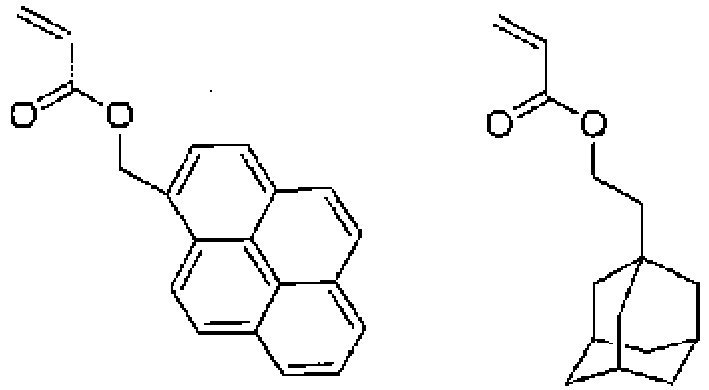
    Figure imgb0081
    wherein, R8 represents a hydrogen atom or a drug, Ak1 represents a C1-7 alkylene bond, and X4 represents an oxygen atom, a sulfur atom, or -N(R7)-, in which R7 represents a hydrogen atom or a C1-3 alkyl group.
  12. The copolymer according to claim 1 or 2, wherein X1 is an oxygen atom.
  13. The copolymer according to claim 1 or 2, wherein X2 is an oxygen atom.
  14. The copolymer according to claim 1 or 2, wherein X3 is an oxygen atom or NH.
  15. The copolymer according to claim 1 or 2, wherein m is an integer of 4 to 22.
  16. The copolymer according to claim 1 or 2, wherein n is 1.
  17. The copolymer according to claim 1 or 2, wherein a ratio of structural units (A), (B), and (C) is composed of 0.01 to 100 parts by mass of (B) and 0.1 to 100 parts by mass of (C) with respect to 1 part by mass of (A).
  18. The copolymer according to claim 2, wherein 0.01 to 100 parts by mass of monomer (2) and 0.1 to 100 parts by mass of monomer (3) are polymerized with respect to 1 part by mass of monomer (1).
  19. The copolymer according to claim 1 or 2, wherein the copolymer has a number average molecular weight of 5 000 to 150 000.
  20. The copolymer according to claim 1 or 2, wherein the target recognition molecule is an antibody.
  21. The copolymer according to claim 20, wherein the antibody is an anti-EGFR antibody, an anti-Her2 antibody, an anti-CD20 antibody, an anti-CD276 antibody, an anti-MUC1 antibody, an anti-PD-L1 antibody, or an anti-TROP-2 antibody.
  22. The copolymer according to claim 20, wherein the antibody is cetuximab, panitumumab, necitumumab, amivantamab, panitumumab, trastuzumab, pertuzumab, margetuximab, rituximab, ibritumomab, tositumomab, ofatumumab, obinutuzumab, clivatuzumab, gatipotuzumab, ifinatamab, mirzotamab, vobramitamab, atezolizumab, avelumab, durvalumab, sacituzumab, or functional fragments thereof.
  23. A drug complex comprising the copolymer according to claim 1 or 2, and a drug.
  24. The drug complex according to claim 23, wherein the drug is an antimetabolite, an alkylating agent, an anthracycline, an antibiotic, a mitotic inhibitor, a topoisomerase inhibitor, a proteasome inhibitor, or an anti-hormone agent.
  25. The drug complex according to claim 23, wherein the drug is DM0, DM1, DM2, DM3, DM4, emtansine, auristatin E, auristatin phenylalanine phenylenediamine (AFP), monomethyl auristatin E, monomethyl auristatin D, monomethyl auristatin F, paclitaxel, docetaxel, irinotecan, topotecan, nogitecan, amsacrine, etoposide, teniposide, mizantrone, SN-38, exatecan, or deruxtecan.
  26. The drug complex according to any one of claims 23 to 25, wherein the bond of the target recognition molecule or the drug to the copolymer X is a covalent bond or a noncovalent bond.
  27. The drug complex according to any one of claims 23 to 26, wherein the bond of the target recognition molecule or the drug to the copolymer X is represented by the following formula (a):
    Figure imgb0082
    wherein, J1 is a bond to the target recognition molecule or the drug, J2 is a bond to the copolymer X, Ak2 and Ak3 each independently represent a single bond or a C1-7 alkylene bond, B1 and B2 each independently represent a single bond, an amide bond, or an ester bond, L1 represents a single bond, -(CH2CH2O)oCH2CH2-, phenylene, cyclohexylene, -NH-peptide-CO-, or phenylene-NH-peptide-CO-, and o represents an integer of 0 to 100.
  28. A single chain nanoparticle comprising the copolymer according to claim 1 or 2.
  29. A single chain nanoparticle comprising the drug complex according to claim 23 or 24.
  30. A pharmaceutical composition comprising the copolymer according to claim 1 or 2.
  31. A pharmaceutical composition comprising the drug complex according to claim 23 or 24.
EP23852646.1A 2022-08-10 2023-08-10 New drug complex Pending EP4570272A1 (en)

Applications Claiming Priority (2)

Application Number Priority Date Filing Date Title
JP2022128536 2022-08-10
PCT/JP2023/029356 WO2024034684A1 (en) 2022-08-10 2023-08-10 New drug complex

Publications (1)

Publication Number Publication Date
EP4570272A1 true EP4570272A1 (en) 2025-06-18

Family

ID=89851692

Family Applications (1)

Application Number Title Priority Date Filing Date
EP23852646.1A Pending EP4570272A1 (en) 2022-08-10 2023-08-10 New drug complex

Country Status (14)

Country Link
US (1) US20260034236A1 (en)
EP (1) EP4570272A1 (en)
JP (1) JPWO2024034684A1 (en)
KR (1) KR20250049329A (en)
CN (1) CN119698305A (en)
AU (1) AU2023321758A1 (en)
CL (1) CL2025000374A1 (en)
CO (1) CO2025002954A2 (en)
CR (1) CR20250080A (en)
DO (1) DOP2025000027A (en)
IL (1) IL318865A (en)
MX (1) MX2025001434A (en)
TW (1) TW202412843A (en)
WO (1) WO2024034684A1 (en)

Family Cites Families (17)

* Cited by examiner, † Cited by third party
Publication number Priority date Publication date Assignee Title
JP3270592B2 (en) 1992-10-26 2002-04-02 日本化薬株式会社 Block copolymer-anticancer drug complex pharmaceutical preparation
US5874540A (en) 1994-10-05 1999-02-23 Immunomedics, Inc. CDR-grafted type III anti-CEA humanized mouse monoclonal antibodies
US7312318B2 (en) 2002-03-01 2007-12-25 Immunomedics, Inc. Internalizing anti-CD74 antibodies and methods of use
DE60042785D1 (en) 1999-06-09 2009-10-01 Immunomedics Inc IMMUNOTHERAPY OF AUTOIMMUNE DISEASES THROUGH THE USE OF B-CELL SPECIFIC ANTIBODIES
NZ513418A (en) 2001-08-07 2004-04-30 Univ Massey Vaccine comprising proteins from mycobacterium paratuberculosis
JP5355839B2 (en) 2001-10-23 2013-11-27 ピーエスエムエー デベロプメント カンパニー, エル.エル.シー. PSMA antibodies and protein multimers
JP4210828B2 (en) * 2001-12-07 2009-01-21 Jsr株式会社 POLYMER PARTICLE FOR BIOLOGICALLY ACTIVE SUBSTANCE AND METHOD FOR PRODUCING THE SAME
WO2003068821A2 (en) 2002-02-14 2003-08-21 Immunomedics, Inc. Anti-cd20 antibodies and fusion proteins thereof and methods of use
JP5138867B2 (en) 2002-08-01 2013-02-06 イミューノメディクス、インコーポレイテッド α-fetoprotein Immu31 antibody and fusion protein and method of use thereof
US7541440B2 (en) 2002-09-30 2009-06-02 Immunomedics, Inc. Chimeric, human and humanized anti-granulocyte antibodies and methods of use
CA2534639C (en) 2003-07-31 2013-07-30 Immunomedics, Inc. Anti-cd19 antibodies
ES2665422T3 (en) 2005-03-03 2018-04-25 Immunomedics Inc. Humanized L243 antibodies
US20100226884A1 (en) 2009-01-20 2010-09-09 Immunomedics, Inc. Novel Class of Monospecific and Bispecific Humanized Antibodies that Target the Insulin-like Growth Factor Type I Receptor (IGF-1R)
ITTO20080313A1 (en) 2008-04-22 2009-10-23 Marco Colombatti ISOLATED MONOCLONAL ANTIBODY OR ITS FRAGMENT BINDING THE PROSTATE'S SPECIFIC MEMBRANE ANTIGEN, ITS CONJUGATES AND ITS USES
EP3268047B9 (en) 2015-03-09 2024-01-10 Heidelberg Pharma Research GmbH Amatoxin-antibody conjugates
JP7655493B2 (en) * 2018-10-02 2025-04-02 ノース カロライナ ステート ユニバーシティ Polymeric chromophores, compositions containing same, and methods of preparing and using same - Patents.com
KR20230141766A (en) * 2021-02-05 2023-10-10 교와 가부시키가이샤 Novel copolymer

Also Published As

Publication number Publication date
WO2024034684A1 (en) 2024-02-15
CL2025000374A1 (en) 2025-04-04
CR20250080A (en) 2025-04-10
CN119698305A (en) 2025-03-25
DOP2025000027A (en) 2025-03-31
MX2025001434A (en) 2025-03-07
CO2025002954A2 (en) 2025-03-27
AU2023321758A1 (en) 2025-02-27
IL318865A (en) 2025-04-01
TW202412843A (en) 2024-04-01
US20260034236A1 (en) 2026-02-05
JPWO2024034684A1 (en) 2024-02-15
KR20250049329A (en) 2025-04-11

Similar Documents

Publication Publication Date Title
EP4331611A1 (en) Preparation method and application of antibody drug conjugate
KR20200062161A (en) ROR1 antibody immunoconjugate
CA3075087A1 (en) Anti- folate receptor alpha antibody conjugates and their uses
CN107735090A (en) The immunoconjugates of antibody SN 38 with CL2A joints
US20230277679A1 (en) Method for producing antibody-drug conjugate
CN113365664A (en) Cysteine engineered antibody-drug conjugates with peptide-containing linkers
WO2022179572A1 (en) Targeting conjugates with therapeutic agents and oligonucleotides and uses thereof
WO2022178753A1 (en) Targeting conjugates comprising targeting moiety binding fragments and uses thereof
EP4297798A1 (en) Targeting conjugates comprising effector molecules and uses thereof
WO2022178751A1 (en) Targeting conjugates comprising effector molecules and uses thereof
EP4570272A1 (en) New drug complex
WO2025207828A1 (en) Nanocomposition comprising modified exatecan and use thereof
JP2022500454A (en) Combination therapy with antifolate receptor antibody conjugate
JP2025123209A (en) Novel drug complex
WO2023135398A1 (en) Antibody-drug conjugates for therapeutic use
EP4570834A1 (en) Affibody micelle drug conjugate
WO2017194568A1 (en) Treatment regimen using anti-muc1 maytansinoid immunoconjugate antibody for the treatment of tumors
EP4466023A1 (en) Process for the preparation of antibody-drug conjugates
HK40089223A (en) Combination of abcg2 inhibitors with sacituzumab govitecan
HK40005822A (en) Antibody-sn-38 immunoconjugates with a cl2a linker
HK40060223A (en) Cysteine engineered antibody-drug conjugates with peptide-containing linkers

Legal Events

Date Code Title Description
STAA Information on the status of an ep patent application or granted ep patent

Free format text: STATUS: THE INTERNATIONAL PUBLICATION HAS BEEN MADE

PUAI Public reference made under article 153(3) epc to a published international application that has entered the european phase

Free format text: ORIGINAL CODE: 0009012

STAA Information on the status of an ep patent application or granted ep patent

Free format text: STATUS: REQUEST FOR EXAMINATION WAS MADE

17P Request for examination filed

Effective date: 20250310

AK Designated contracting states

Kind code of ref document: A1

Designated state(s): AL AT BE BG CH CY CZ DE DK EE ES FI FR GB GR HR HU IE IS IT LI LT LU LV MC ME MK MT NL NO PL PT RO RS SE SI SK SM TR

DAV Request for validation of the european patent (deleted)
DAX Request for extension of the european patent (deleted)