EP4570261A2 - Therapeutisches potential von cellulose-cyclodextrin-curcumin-nanokristallen bei der behandlung von peripheren neuropathien - Google Patents
Therapeutisches potential von cellulose-cyclodextrin-curcumin-nanokristallen bei der behandlung von peripheren neuropathien Download PDFInfo
- Publication number
- EP4570261A2 EP4570261A2 EP25159479.2A EP25159479A EP4570261A2 EP 4570261 A2 EP4570261 A2 EP 4570261A2 EP 25159479 A EP25159479 A EP 25159479A EP 4570261 A2 EP4570261 A2 EP 4570261A2
- Authority
- EP
- European Patent Office
- Prior art keywords
- cmt1a
- nano
- rats
- curcumin
- cur
- Prior art date
- Legal status (The legal status is an assumption and is not a legal conclusion. Google has not performed a legal analysis and makes no representation as to the accuracy of the status listed.)
- Pending
Links
Images








Classifications
-
- A—HUMAN NECESSITIES
- A61—MEDICAL OR VETERINARY SCIENCE; HYGIENE
- A61K—PREPARATIONS FOR MEDICAL, DENTAL OR TOILETRY PURPOSES
- A61K9/00—Medicinal preparations characterised by special physical form
- A61K9/48—Preparations in capsules, e.g. of gelatin, of chocolate
- A61K9/50—Microcapsules having a gas, liquid or semi-solid filling; Solid microparticles or pellets surrounded by a distinct coating layer, e.g. coated microspheres, coated drug crystals
- A61K9/51—Nanocapsules; Nanoparticles
- A61K9/5107—Excipients; Inactive ingredients
- A61K9/513—Organic macromolecular compounds; Dendrimers
- A61K9/5161—Polysaccharides, e.g. alginate, chitosan, cellulose derivatives; Cyclodextrin
-
- A—HUMAN NECESSITIES
- A61—MEDICAL OR VETERINARY SCIENCE; HYGIENE
- A61K—PREPARATIONS FOR MEDICAL, DENTAL OR TOILETRY PURPOSES
- A61K31/00—Medicinal preparations containing organic active ingredients
- A61K31/12—Ketones
-
- A—HUMAN NECESSITIES
- A61—MEDICAL OR VETERINARY SCIENCE; HYGIENE
- A61K—PREPARATIONS FOR MEDICAL, DENTAL OR TOILETRY PURPOSES
- A61K31/00—Medicinal preparations containing organic active ingredients
- A61K31/70—Carbohydrates; Sugars; Derivatives thereof
- A61K31/715—Polysaccharides, i.e. having more than five saccharide radicals attached to each other by glycosidic linkages; Derivatives thereof, e.g. ethers, esters
- A61K31/716—Glucans
- A61K31/717—Celluloses
-
- A—HUMAN NECESSITIES
- A61—MEDICAL OR VETERINARY SCIENCE; HYGIENE
- A61K—PREPARATIONS FOR MEDICAL, DENTAL OR TOILETRY PURPOSES
- A61K31/00—Medicinal preparations containing organic active ingredients
- A61K31/70—Carbohydrates; Sugars; Derivatives thereof
- A61K31/715—Polysaccharides, i.e. having more than five saccharide radicals attached to each other by glycosidic linkages; Derivatives thereof, e.g. ethers, esters
- A61K31/716—Glucans
- A61K31/724—Cyclodextrins
-
- A—HUMAN NECESSITIES
- A61—MEDICAL OR VETERINARY SCIENCE; HYGIENE
- A61K—PREPARATIONS FOR MEDICAL, DENTAL OR TOILETRY PURPOSES
- A61K36/00—Medicinal preparations of undetermined constitution containing material from algae, lichens, fungi or plants, or derivatives thereof, e.g. traditional herbal medicines
- A61K36/18—Magnoliophyta (angiosperms)
- A61K36/88—Liliopsida (monocotyledons)
- A61K36/906—Zingiberaceae (Ginger family)
- A61K36/9066—Curcuma, e.g. common turmeric, East Indian arrowroot or mango ginger
-
- A—HUMAN NECESSITIES
- A61—MEDICAL OR VETERINARY SCIENCE; HYGIENE
- A61K—PREPARATIONS FOR MEDICAL, DENTAL OR TOILETRY PURPOSES
- A61K47/00—Medicinal preparations characterised by the non-active ingredients used, e.g. carriers or inert additives; Targeting or modifying agents chemically bound to the active ingredient
- A61K47/50—Medicinal preparations characterised by the non-active ingredients used, e.g. carriers or inert additives; Targeting or modifying agents chemically bound to the active ingredient the non-active ingredient being chemically bound to the active ingredient, e.g. polymer-drug conjugates
- A61K47/69—Medicinal preparations characterised by the non-active ingredients used, e.g. carriers or inert additives; Targeting or modifying agents chemically bound to the active ingredient the non-active ingredient being chemically bound to the active ingredient, e.g. polymer-drug conjugates the conjugate being characterised by physical or galenical forms, e.g. emulsion, particle, inclusion complex, stent or kit
- A61K47/6949—Medicinal preparations characterised by the non-active ingredients used, e.g. carriers or inert additives; Targeting or modifying agents chemically bound to the active ingredient the non-active ingredient being chemically bound to the active ingredient, e.g. polymer-drug conjugates the conjugate being characterised by physical or galenical forms, e.g. emulsion, particle, inclusion complex, stent or kit inclusion complexes, e.g. clathrates, cavitates or fullerenes
- A61K47/6951—Medicinal preparations characterised by the non-active ingredients used, e.g. carriers or inert additives; Targeting or modifying agents chemically bound to the active ingredient the non-active ingredient being chemically bound to the active ingredient, e.g. polymer-drug conjugates the conjugate being characterised by physical or galenical forms, e.g. emulsion, particle, inclusion complex, stent or kit inclusion complexes, e.g. clathrates, cavitates or fullerenes using cyclodextrin
-
- A—HUMAN NECESSITIES
- A61—MEDICAL OR VETERINARY SCIENCE; HYGIENE
- A61K—PREPARATIONS FOR MEDICAL, DENTAL OR TOILETRY PURPOSES
- A61K9/00—Medicinal preparations characterised by special physical form
- A61K9/0012—Galenical forms characterised by the site of application
- A61K9/0085—Brain, e.g. brain implants; Spinal cord
-
- A—HUMAN NECESSITIES
- A61—MEDICAL OR VETERINARY SCIENCE; HYGIENE
- A61K—PREPARATIONS FOR MEDICAL, DENTAL OR TOILETRY PURPOSES
- A61K9/00—Medicinal preparations characterised by special physical form
- A61K9/14—Particulate form, e.g. powders, Processes for size reducing of pure drugs or the resulting products, Pure drug nanoparticles
- A61K9/141—Intimate drug-carrier mixtures characterised by the carrier, e.g. ordered mixtures, adsorbates, solid solutions, eutectica, co-dried, co-solubilised, co-kneaded, co-milled, co-ground products, co-precipitates, co-evaporates, co-extrudates, co-melts; Drug nanoparticles with adsorbed surface modifiers
- A61K9/145—Intimate drug-carrier mixtures characterised by the carrier, e.g. ordered mixtures, adsorbates, solid solutions, eutectica, co-dried, co-solubilised, co-kneaded, co-milled, co-ground products, co-precipitates, co-evaporates, co-extrudates, co-melts; Drug nanoparticles with adsorbed surface modifiers with organic compounds
-
- A—HUMAN NECESSITIES
- A61—MEDICAL OR VETERINARY SCIENCE; HYGIENE
- A61K—PREPARATIONS FOR MEDICAL, DENTAL OR TOILETRY PURPOSES
- A61K9/00—Medicinal preparations characterised by special physical form
- A61K9/14—Particulate form, e.g. powders, Processes for size reducing of pure drugs or the resulting products, Pure drug nanoparticles
- A61K9/141—Intimate drug-carrier mixtures characterised by the carrier, e.g. ordered mixtures, adsorbates, solid solutions, eutectica, co-dried, co-solubilised, co-kneaded, co-milled, co-ground products, co-precipitates, co-evaporates, co-extrudates, co-melts; Drug nanoparticles with adsorbed surface modifiers
- A61K9/146—Intimate drug-carrier mixtures characterised by the carrier, e.g. ordered mixtures, adsorbates, solid solutions, eutectica, co-dried, co-solubilised, co-kneaded, co-milled, co-ground products, co-precipitates, co-evaporates, co-extrudates, co-melts; Drug nanoparticles with adsorbed surface modifiers with organic macromolecular compounds
-
- A—HUMAN NECESSITIES
- A61—MEDICAL OR VETERINARY SCIENCE; HYGIENE
- A61P—SPECIFIC THERAPEUTIC ACTIVITY OF CHEMICAL COMPOUNDS OR MEDICINAL PREPARATIONS
- A61P25/00—Drugs for disorders of the nervous system
- A61P25/02—Drugs for disorders of the nervous system for peripheral neuropathies
-
- A—HUMAN NECESSITIES
- A61—MEDICAL OR VETERINARY SCIENCE; HYGIENE
- A61K—PREPARATIONS FOR MEDICAL, DENTAL OR TOILETRY PURPOSES
- A61K2300/00—Mixtures or combinations of active ingredients, wherein at least one active ingredient is fully defined in groups A61K31/00 - A61K41/00
-
- A—HUMAN NECESSITIES
- A61—MEDICAL OR VETERINARY SCIENCE; HYGIENE
- A61K—PREPARATIONS FOR MEDICAL, DENTAL OR TOILETRY PURPOSES
- A61K9/00—Medicinal preparations characterised by special physical form
- A61K9/0012—Galenical forms characterised by the site of application
- A61K9/0019—Injectable compositions; Intramuscular, intravenous, arterial, subcutaneous administration; Compositions to be administered through the skin in an invasive manner
- A61K9/0024—Solid, semi-solid or solidifying implants, which are implanted or injected in body tissue
-
- A—HUMAN NECESSITIES
- A61—MEDICAL OR VETERINARY SCIENCE; HYGIENE
- A61K—PREPARATIONS FOR MEDICAL, DENTAL OR TOILETRY PURPOSES
- A61K9/00—Medicinal preparations characterised by special physical form
- A61K9/06—Ointments; Bases therefor; Other semi-solid forms, e.g. creams, sticks, gels
-
- B—PERFORMING OPERATIONS; TRANSPORTING
- B82—NANOTECHNOLOGY
- B82Y—SPECIFIC USES OR APPLICATIONS OF NANOSTRUCTURES; MEASUREMENT OR ANALYSIS OF NANOSTRUCTURES; MANUFACTURE OR TREATMENT OF NANOSTRUCTURES
- B82Y5/00—Nanobiotechnology or nanomedicine, e.g. protein engineering or drug delivery
-
- Y—GENERAL TAGGING OF NEW TECHNOLOGICAL DEVELOPMENTS; GENERAL TAGGING OF CROSS-SECTIONAL TECHNOLOGIES SPANNING OVER SEVERAL SECTIONS OF THE IPC; TECHNICAL SUBJECTS COVERED BY FORMER USPC CROSS-REFERENCE ART COLLECTIONS [XRACs] AND DIGESTS
- Y02—TECHNOLOGIES OR APPLICATIONS FOR MITIGATION OR ADAPTATION AGAINST CLIMATE CHANGE
- Y02A—TECHNOLOGIES FOR ADAPTATION TO CLIMATE CHANGE
- Y02A50/00—TECHNOLOGIES FOR ADAPTATION TO CLIMATE CHANGE in human health protection, e.g. against extreme weather
- Y02A50/30—Against vector-borne diseases, e.g. mosquito-borne, fly-borne, tick-borne or waterborne diseases whose impact is exacerbated by climate change
Definitions
- the present invention relates to the field of treatment of all types of peripheral neuropathies, in particular Charcot-Marie-Tooth 1A disease.
- Peripheral nerves are susceptible to many pathologies, and the etiology of peripheral neuropathies (PN) is broad: metabolic disorders, infections, toxins, physical injuries, and genetic mutations, etc.
- Charcot-Marie-Tooth disease 1A (CMT1A) is the most common inherited genetic peripheral neuropathy. It is characterized by overexpression of the PMP22 protein involved in the maintenance of the myelin sheath.
- curcumin dietary antioxidants
- This molecule has long been used in Asian medicine for its therapeutic properties. However, it is not easily absorbed in the intestine and is quickly degraded due to its very rapid metabolism. As a result, very high doses of curcumin are required for achieve therapeutic effects without having the certainty that curcumin reaches the target organ.
- Curcumin is a polyphenol extracted from the root of Curcuma longa. This molecule has long been used in Asian medicine for its anti-inflammatory and antibacterial properties.
- curcumin is rapidly metabolized via conjugation mechanisms (into glucuronide and sulfate). These modifications are intended to make curcumin less lipophilic so that it can be eliminated more quickly by the body.
- the liver is the main organ in which these conjugation reactions take place.
- curcumin undergoes reactions by microsomal hepatic enzymes, reductases. This results in the formation of metabolites that are mainly reduced derivatives of curcumin: dihydrocurcumin, tetrahydrocurcumin, hexahydrocurcumin and hexahydrocurcuminol. These main metabolites then undergo conjugation reactions in order to be rapidly eliminated or excreted.
- the present inventors have developed an innovative compound based on cellulose-cyclodextrin-curcumin nanocrystals (CNCs-CD-Cur or Nano-Cur) in order to overcome this obstacle.
- CNCs-CD-Cur or Nano-Cur cellulose-cyclodextrin-curcumin nanocrystals
- the cellulose-cyclodextrin-curcumin nanocrystals developed by the present inventors constitute a new therapeutic approach to overcome the low bioavailability of curcumin and the absence of effective pharmacological treatment for peripheral neuropathies.
- CMT Charcot-Marie-Tooth
- CMT diseases are the most common forms of hereditary motor and sensory peripheral neuropathies. From an epidemiological point of view, the overall prevalence of CMT is usually 1/2500. These neuropathies result from the mutation of genes encoding proteins responsible for maintaining the myelin sheath and/or the axons themselves. CMT diseases are a condition characterized by a Extreme weakness and atrophy of the leg and foot muscles, gait abnormalities, loss of tendon reflexes, and numbness of the lower limbs. The CMT1A form affects approximately 30–40% of patients with CMT disease.
- Curcumin has been shown in numerous studies to improve functional recovery in animal models of hereditary (Khajavi et al., 2005, Khajavi et al., 2007, Okamoto et al., 2013), autoimmune (Han et al., 2014), alcoholic (Kandhare et al., 2012, Kaur et al., 2017), diabetic (Lv et al., 2018, Daugherty et al., 2018), chemotherapy-induced (Agthong et al., 2015, Al Moundhri et al., 2013), and traumatic neuropathies, including crush, chronic constriction, and complete nerve transection (Liu et al., 2016; Mohammadi and Mahmoodi, 2013).
- curcumin As a result, in humans, very high doses of curcumin (3.6 to 12 g) must be administered, without, however, obtaining very high plasma curcumin concentrations (Sharma et al., 2004). It should be noted that no toxic effects have been reported in humans at these doses (Sharma et al., 2004).
- the beneficial properties of curcumin are hampered by its low solubility (due to its hydrophobicity) and low bioavailability, combined with instability in solution which leads to rapid elimination from the blood (Sharma et al., 2004).
- Nanotechnological approaches have been developed, including the incorporation or encapsulation of curcumin into liposomes, polymeric micelles, polymeric nanoparticles, nanogels, nanoemulsions, inclusion complexes, solid lipid nanoparticles, dendrimers, phytosomes, mesoporous silica nanoparticles, or metal nanoparticles (Prasad et al., 2014). All of these nanovectors have been shown to increase the bioavailability and beneficial effects of curcumin. However, none of these nanovectors associated with curcumin has been tested on peripheral neuropathies.
- CNCs cellulose nanocrystals
- This new delivery system consists of cellulose nanocrystals (CNCs) which benefit from good mechanical resistance, a liquid crystalline character, a surface specifically high, with good biocompatibility, biodegradability and durability. Obtained by acid hydrolysis of cotton fibers, these nanofibers are defined as elongated nanoparticles of 100-200 nm long, 10-20 nm wide and 5-10 nm thick.
- the negative charges present on the surface of CNCs are used to form ionic complexes with cationic ⁇ -cyclodextrins (CDs), well known to form inclusion complexes with guest molecules.
- CDs cationic ⁇ -cyclodextrins
- ⁇ -CD is the most commonly used, due to its relatively easy synthesis, low cost and also the large number of polar molecules that can fit into its internal cavity.
- CNCs were loaded with ⁇ -CD and then curcumin was incorporated into ⁇ -CD to form curcumin- ⁇ -CD-CNCs nanocrystals (Ndong Ntoutoume et al., 2016).
- these curcumin- ⁇ -CD-CNCs nanocrystals were able to improve the intracellular penetration of curcumin.
- the effects of these nanocrystals had not, until now, been tested in vivo.
- cellulose nanocrystals were obtained from acid hydrolysis of cotton fiber cellulose.
- Curcumin was extracted from curcuminoid powder and ⁇ -cyclodextrins were attached to cellulose nanocrystals by reaction with glycidyltrimethyl ammonium chloride.
- curcumin was incorporated into ⁇ -cyclodextrins to obtain the complex of the invention.
- the peripheral neuropathy may be Charcot-Marie-Tooth disease.
- Charcot-Marie-Tooth (CMT) diseases are the most common forms of inherited motor and sensory peripheral neuropathies. These neuropathies result from mutations in genes encoding proteins responsible for maintaining the myelin sheath and/or the axons themselves.
- the peripheral neuropathy may be Charcot-Marie-Tooth disease type 1A.
- Charcot-Marie-Tooth disease 1A (CMT1A) is the most common inherited genetic peripheral neuropathy. It is characterized by overexpression of the PMP22 protein involved in maintaining the myelin sheath.
- the peripheral neuropathy may be related to a traumatic injury.
- the complex is intended to be administered to a subject in a therapeutically effective amount.
- therapeutically effective amount means the level or amount of compound necessary and sufficient to slow or stop the progression, aggravation or deterioration of one or more symptoms of peripheral neuropathy, in particular Charcot-Marie-Tooth disease or traumatically induced peripheral neuropathy and to relieve the symptoms of the disease.
- the "therapeutically effective amount” depends on the individual, the stage of the disease to be treated, and the method of administration, and can be determined by routine procedures by a person skilled in the art. This amount may vary with the age and sex of the individual.
- the specific therapeutically effective amount for any subject will depend on a variety of factors including the disorder being treated and the severity of the disorder; the activity of the specific compound being used; the specific composition being used, the age, body mass, general health, sex, and diet of the subject; the duration of administration, the route of administration of the specific compound being used; the duration of treatment; the drugs being used in combination or concurrently with the specific compound being used; and similar factors well known in the medical art. For example, it is well within the skill of the art to start doses of the compound at levels lower than those required to achieve the desired therapeutic effect and to gradually increase the dosage until the desired effect is achieved.
- the therapeutically effective amount may be between 0.02 and 200 mg/kg/day of curcumin, in particular between 0.1 and 1 mg/kg/day, more particularly between 0.1 and 0.3 mg/kg/day.
- the therapeutically effective amount may be 0.2 mg/kg/day of curcumin.
- the complex is intended to be administered to a subject by injection, preferably subcutaneously, intramuscularly, intravenously or perineurally, orally, transdermally or into an implanted biofunctionalized nerve conduit.
- forms suitable for injection include, but are not limited to, solutions, such as, for example, sterile aqueous solutions, dispersions, emulsions, suspensions, solid forms suitable for use in preparing solutions or suspensions by the addition of a liquid prior to use, for example, powder, liposomal forms or the like.
- the method of administration may therefore also be by injection or by gradual infusion.
- the injection may be intravenous, intraperitoneal, intramuscular, subcutaneous, or transdermal.
- Preparations for parenteral administration may include sterile aqueous or non-aqueous solutions, suspensions, or emulsions.
- non-aqueous solvents are benzyl alcohol, ethanol, propylene glycol, polyethylene glycol, vegetable oils, or injectable organic esters such as ethyl oleate.
- Aqueous vehicles include water, alcohol/water solutions, emulsions, or suspensions.
- examples of forms suitable for oral administration include, but are not limited to, tablets, orally disintegrating tablets, effervescent tablets, powders, granules, pills (including sweetened pills), dragees, capsules (including soft gelatin capsules), syrups, liquids, gels or other solutions, suspensions, slurries, liposomal forms and the like.
- implanted biofunctionalized nerve conduit means an artificial nerve prosthesis for the repair and regeneration of peripheral nerves in the form of guide tubes. These tubes can be used for the administration of the complex of the present invention.
- a pharmaceutically acceptable excipient refers to a non-toxic solid, semi-solid or liquid filler, diluent, encapsulating material or ancillary formulation of any type.
- preparations shall meet the requirements of sterility, pyrogenicity, general safety and purity as required by Good Manufacturing Practice for active substances for human and veterinary use.
- the pharmaceutical composition is intended to be administered to a subject in a therapeutically effective amount.
- the complex in the pharmaceutical composition of the present invention, may be administered in a form unit administration, in the form of a mixture with conventional pharmaceutical carriers, to animals and humans.
- suitable unit administration forms include oral forms such as tablets, capsules, powders, granules and oral suspensions or solutions, sublingual and buccal administration forms, aerosols, implants, subcutaneous, transdermal, topical, intraperitoneal, intramuscular, intravenous, subdermal, transdermal, intrathecal and intranasal administration forms and rectal administration forms.
- the invention relates to the use of the complex or pharmaceutical composition, in particular in the form of a hydrogel, subcutaneous implant, implantable pump, implanted biofunctionalized nerve conduit, to improve treatment compliance, allow prolonged release of the complex and obtain better pharmacokinetics.
- the use of the complex of the present invention through the considerable improvement in the bioavailability of curcumin in its complexed form, allows for a prolonged duration of release of the complex comprising curcumin. This contributes to facilitating compliance with the treatment by the subject, treatment which becomes less restrictive, with administrations spaced further apart in time compared to treatment with curcumin alone.
- CNCs-CD-Cur or Nano-Cur Synthesis of cellulose-cyclodextrin-curcumin nanocrystals
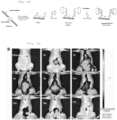
- Cationic cyclodextrin (CD) was prepared by reacting ⁇ -cyclodextrin ( ⁇ -CD) with glycidyltrimethylammonium chloride and then was fixed by ionic interaction on the CNCs to form the CNCs-CD complex (Nano).
- curcumin was extracted from a curcuminoid powder (turmeric) and then was encapsulated in the CDs to obtain the curcumin-CD-CNCs complexes (CNCs-CD-Cur or Nano-Cur).
- CMT1A transgenic rats (one-month-old males) were treated with cellulose-cyclodextrin-curcumin nanocrystals (Nano-Cur) daily by intraperitoneal injection at 0.2 mg/kg/day of curcumin for 8 weeks.
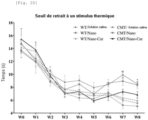
- Withdrawal latencies following a thermal stimulus were measured using a 52°C hot plate (Bioseb, France) weekly for 8 weeks. After 10 minutes of acclimatization, the animals were placed on the heating plate until the expression of nociceptive behaviors such as hind leg shaking or jumping. The maximum duration of the test was set at 30 seconds to avoid tissue damage. Three separate tests of 10 minutes each were performed and the average value was used to represent the thermal nociception threshold for each animal.
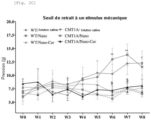
- the hindlimb withdrawal threshold in response to a mechanical stimulus was measured weekly for 8 weeks using a series of von Frey filaments (Bio-VF-M, Bioseb, France).
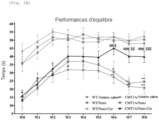
- the raised bar stand test assessed the animals' four-legged muscle strength and balance performance. This test was performed weekly for 8 weeks. The rat was placed on all fours in the middle of the wooden bar (diameter: 2.5 cm, length: 50 cm, height 30 cm). The time spent on the bar (latency to fall) in each trial was recorded. Three separate 10-minute tests were performed, and the mean value of these tests was calculated to represent balance performance.
- M-wave and H-reflex were measured with the PowerLab/26T (ADInstruments, France) after supramaximal stimulation of the distal and proximal regions of the sciatic nerve.
- Motor nerve conduction velocity (MNCV) and sensitive nerve conduction velocity (SNCV) were calculated from the M-wave and H-reflex latencies, respectively.
- Sciatic nerve samples were fixed in 2.5% glutaraldehyde and embedded in epoxy resin (Euromedex, France).
- Semi-thin cross-sections (1.5 ⁇ m) were labeled with toluidine blue and used for morphometric assessments, which were performed in a single-blind manner.
- Tissue damage was estimated by the total number of myelinated axons per nerve section and the average nerve fiber diameter.
- Myelin sheath thickness was calculated by the formula: (fiber diameter - axon diameter)/2.
- the degree of myelination (G-ratio) was estimated by the ratio of axon to fiber diameter and the ratio of myelin thickness to axon diameter.
- Sciatic nerve samples were embedded in OCT glue and frozen in liquid nitrogen. Cryostat sections (5 ⁇ m) were dried for 4 hours on Superfrost/+ slides, followed by fixation with 4% paraformaldehyde for 10 minutes at room temperature. was performed. Permeabilization of sections was achieved by incubation in 0.1% Tween20 in PBS for 15 minutes. Nonspecific binding was blocked using 10% BSA in PBS for 1 hour. The primary antibody anti-PMP22 (SAB4502217-100UG, Sigma Aldrich, 1:200) was added in 4% BSA in PBS, overnight at 4°C.
- the samples were then rinsed for 15 minutes in PBS at room temperature, followed by incubation with the secondary antibody (donkey anti-rabbit Alexa-fluor 594, Dako, 1:200) in 4% BSA in PBS for 2 hours at room temperature.
- the coverslips were mounted using Dako fluorescence mounting medium (Dako France SAS, France). Red fluorescence was visualized and intensity measured by fluorescence microscopy (Nikon H600L optical microscope) and images were captured using a Nikon digital camera (Nikon, France).
- Proteins were separated by SDS-PAGE electrophoresis and then transferred to a cellulose membrane. Blots were incubated with mouse monoclonal primary antibodies recognizing either ⁇ -cytoplasmic actin, myelin protein zero (MPZ), myelin basic protein (MBP) or with rabbit polyclonal antibodies recognizing peripheral myelin protein 22 (PMP22) or nuclear factor (erythroid-derived) type 2 (Nrf2).
- MPZ myelin protein zero
- MBP myelin basic protein
- PMP22 peripheral myelin protein 22
- Nrf2 nuclear factor (erythroid-derived) type 2
- Gastrocnemius muscle fragments were embedded in OCT glue, frozen in liquid nitrogen, and stored at -80°C. Muscle transverse sections (5 ⁇ m) were performed using a Leica CM 1850 UV cryotome at 25°C and collected on glass slides. Sections were then stained using either the m-ATPase reaction with alkaline and acid pre-incubation, as per the method of Padykula and Herman (1955); the NADH-TR reaction as per the method of Pearse (1968) modified by Dobowitz and Brooke (1973); or the succinate dehydrogenase (COX-SDH) reaction described by Nachalas et al. (1957) and modified by Wegman and Tordet-Coidroit (1960). For each sample, images were acquired using a Nikon H600L optical microscope (Nikon, Japan) and were taken from 3 randomly selected fields.
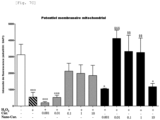
- Cryostat-cut sciatic nerve cross-sections (5 ⁇ m) were washed with PBS and incubated with 5 ⁇ M CellROX-Green reagent (Life Technologies GmbH, Germany) for 30 minutes at 37°C. Nuclei were stained using DAPI. Reactive oxygen species (ROS) were assessed by fluorescence intensity using a fluorescence microscope.
- ROS Reactive oxygen species
- SCs Schwann cells
- WT male wild-type rats
- CMT1A rats CMT1A rats
- SCs were cultured in SC culture medium (described in Caillaud et al., 2018): DMEM D-valine + 2mM glutamine (Gibco) + 10% fetal bovine serum (Gibco) + 1% N2 supplement (Gibco) + 20 ⁇ g/mL bovine pituitary extract + 5 ⁇ M forskolin (Gibco) + 100 U/mL penicillin/streptomycin (Gibco) + 250 ⁇ g/mL fungizone (Gibco). SCs were identified using immunofluorescent staining for S-100 protein.
- Wild-type SCs were pretreated with curcumin (0.001, 0.01, 0.1, 1 or 10 ⁇ M) (Sigma) or Nano-Cur (0.001, 0.01, 0.1, 1 or 10 ⁇ M) for 8 hours.
- curcumin 0.001, 0.01, 0.1, 1 or 10 ⁇ M
- Nano-Cur 0.001, 0.01, 0.1, 1 or 10 ⁇ M
- SCs were subjected to H2O2 (0.1 mM) treatment for 8 hours.
- Total ROS and mitochondrial superoxide ions were assessed using CellROX-Green reagent (Life Technologies GmbH) and MitoSOX Red mitochondrial superoxide indicator (Life Technologies GmbH), respectively, according to the manufacturer's recommendations.
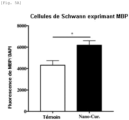
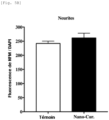
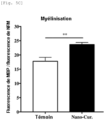
- Co-cultures of sensory neurons (WT) and Schwann cells (CMT1A) were established according to previously published methods (Nobbio et al., 2004). Briefly, co-cultures were maintained for 30 days in neurobasal medium (Invitrogen, Srl) supplemented with 15% fetal calf serum (NCS, Invitrogen, Srl) and 5 ng/mL NGF (Invitrogen, Srl). Co-cultures were treated for 1 week with 0.01 ⁇ M Nano-Cur. To assess cell morphology changes and myelination, Immunofluorescent labeling of MBP (myelin basic protein) and NFM (neurofilament M protein) was performed.
- MBP myelin basic protein
- NFM neuroofilament M protein
- Example 1 CNCs-CD-Curcumin nanocrystals (Nano-Cur) improve the bioavailability of curcumin in vivo
- CNCs cellulose nanocrystals
- CDs cationic cyclodextrins
- curcumin nanocrystals CNCs-CD-Curcumin or Nano-Cur
- CNCs-CD-Curcumin or Nano-Cur increased the bioavailability of curcumin by 250 times compared to the administration of curcumin alone, and maintained a prolonged release of curcumin in the plasma (at least 12 hours after administration).
- Example 2 Treatment with CNCs-CD-Curcumin nanocrystals (Nano-Cur) improves the phenotype of CMT1A rats
- FIG. 2A shows the grip performance of the animals' hindlimbs measured using the grip strength test.
- a significant decrease in grip strength was revealed in CMT1A/saline rats compared to WT/saline rats at weeks W1 (p ⁇ 0.05), W2, W3 (p ⁇ 0.01), W4, W5, W6, W7, and W8 (p ⁇ 0.001).
- a loss in grip strength performance was observed in CMT1A/Nano rats compared to WT/saline rats at weeks W4 (p ⁇ 0.01), W5, W6, W7, and W8 (p ⁇ 0.001).
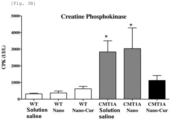
- Electromyographic analysis was performed at week 8 (Table 2).
- Statistical analyses were performed using motor nerve conduction velocity (NMCV) and M-wave amplitude data: they indicated no significant differences between all WT groups. In contrast, a decrease in NMCV and M-wave amplitude was observed in all CMT1A groups. Nevertheless, an increase in NMCV and M-wave amplitude was observed in CMT1A/Nano-Cur rats compared to CMT1A/saline rats (p ⁇ 0.001) or CMT1A/Nano rats (p ⁇ 0.001). Analyses of sensory nerve conduction velocity (SNCV) and H-reflex amplitude data did not indicate significant differences between all WT groups.
- SNCV sensory nerve conduction velocity
- H-reflex amplitude data did not indicate significant differences between all WT groups.
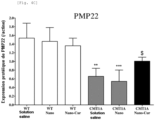
- Results are compared using one-way ANOVA and Dunnett's post-hoc test (*: p ⁇ 0.05, **: p ⁇ 0.01 and ***: p ⁇ 0.001 vs. group). WT/saline) and using a one-way ANOVA followed by a Tukey post-hoc test (#: p ⁇ 0.05, ##: p ⁇ 0.01 and ###: p ⁇ 0.001 vs. CMT1A/saline group; $: p ⁇ 0.05, $$: p ⁇ 0.01 and $$$: p ⁇ 0.001 vs. CMT1A/Nano group).
- ATPase staining was used to assess skeletal muscle fiber distribution.
- Combined cytochrome oxidase and succinic acid dehydrogenase (COX-SDH) staining was used to show muscle fiber type, fibers with abnormal mitochondria, and fibers lacking cytochrome oxidase.
- NADH staining was used to assess muscle fiber type, mitochondrial distribution, and myofibril disruption. Microscopic analysis of these different histochemical stains showed no difference in gastrocnemius muscle fiber dimension or mitochondrial distribution in all groups of rats at W8.
- Clustering of type I and/or type II muscle fibers is an early sign of muscle damage. Referring to the Figure 3A , a tendency for muscle fiber clustering was observed in CMT1A/saline and CMT1A/Nano rats compared to WT/saline rats. However, this muscle fiber clustering was not observed in CMT1A/Nano-Cur rats.
- Example 4 Nano-Cur treatment limits demyelination in vivo and improves myelination in vitro
- Morphometric analyses were performed using microscopic images obtained from semi-thin sections (W8). No significant differences were identified in morphometric parameters between all WT groups. In addition, no significant differences were observed in the number of myelinated axons between all groups (Table 3). Compared to WT/saline rats, the mean axon diameter and the mean fiber diameter (axon + myelin) were significantly reduced in all CMT1A groups (p ⁇ 0.001). However, a significant increase in myelinated fiber diameter was observed in the CMT1A/NanoCur group compared to the CMT1A/Nano group (p ⁇ 0.05).
- Table 3 Characteristics of myelinated axons: total number, average axon diameter and average fiber diameter (axon + myelin), G-ratio and myelin thickness [Table 3] WT/saline solution WT/Nano WT/ Nano-Cur CMT1A/ saline solution CMT1A/ Nano CMT1A/ Nano-Cur Number of axons 1796 ( ⁇ 62.1) 1766 ( ⁇ 71.5) 1741 ( ⁇ 58.1) 1636 ( ⁇ 44.2) 1616 ( ⁇ 58.6) 1679 ( ⁇ 64.1) Axon diameter 5.7 ( ⁇ 0.2) 5.6 ( ⁇ 0.2) 5.6 ( ⁇ 0.2) 4.3 ( ⁇ 0.1)*** 4.1 ( ⁇ 0.2)*** 4.4 ( ⁇ 0.1)* ** Fiber diameter 9.8 ( ⁇ 0.3) 9.6 ( ⁇ 0.2) 9.9 ( ⁇ 0.3) 5.9 ( ⁇ 0.2)*** 5.8 ( ⁇ 0.2)*** 6.7 ( ⁇ 0.3)* **$ G-ratio 0.57 ( ⁇ 0.01) 0.57 ( ⁇ 0.01) 0.56 ( ⁇
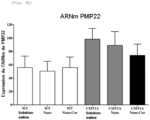
- PMP22 mRNA expression was assessed in sciatic nerve homogenates at W8 ( Figure 4E ). No significant difference was observed in PMP22 mRNA expression between all WT groups. However, a significant increase in mRNA expression of PMP22 was identified in CMT1A/saline rats (p ⁇ 0.01) compared to WT/saline animals. Similarly, an increase in PMP22 mRNA expression was observed in CMT1A/Nano rats compared to WT/Nano rats. In contrast, no significant difference was observed between the WT/saline and CMT1A/Nano-Cur groups. These results suggest that Nano-Cur treatment promotes myelination in CMT1A rats.
- Example 5 Nano-Cur treatment decreases oxidative stress and induces the expression of antioxidant enzymes in CMT1A rats
- Oxidative stress was assessed by quantification of reactive oxygen species (ROS) from sciatic nerve sections at W8 ( Figure 6A ). If we refer to the Figure 6A , a significant increase in total ROS content was observed in CMT1A/saline rats (p ⁇ 0.05) and CMT1A/Nano rats (p ⁇ 0.01) compared to WT/saline rats. Interestingly, in the sciatic nerves of CMT1A rats treated with Nano-Cur, no significant difference was observed compared to the WT/saline group. In addition, a significant decrease in ROS content was observed in CMT1A/Nano-Cur compared to CMT1A/saline rats (p ⁇ 0.05) and CMT1A/Nano rats (p ⁇ 0.01). These results indicate a beneficial effect of Nano-Cur treatment on oxidative stress in the sciatic nerves of CMT1A rats.
- ROS reactive oxygen species
- Nrf2 protein a transcription factor involved in the production of antioxidant enzymes
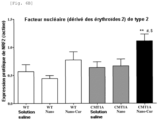
- Figure 6B The expression of Nrf2 protein, a transcription factor involved in the production of antioxidant enzymes, was also assessed from rat sciatic nerves ( Figure 6B ). If we refer to the Figure 6B , no significant difference in Nrf2 expression was observed between the CMT1A/saline and CMT1A/Nano groups compared with the WT/saline group. The results showed increased Nrf2 expression in CMT1A/Nano-Cur rats compared with WT/saline (p ⁇ 0.01), CMT1A/saline (p ⁇ 0.05) and CMT1A/Nano (p ⁇ 0.05) rats, suggesting an antioxidant effect of Nano-Cur.
- Nano-Cur treatment leads to an improvement of the lesion that develops in transgenic rat models of CMT1A.
- Nano-Cur treatment improves balance and grip strength and limits the loss of tactile and thermal sensitivity in CMT1A rats.
- the Nano-Cur treatment used in the study increased MNCV but not the amplitude of muscle action potentials.
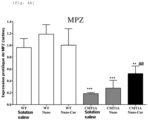
- Nano-Cur treatment allowed the detection of H-reflexes and thus the calculation of SNCV in CMT1A rats, although this signal remains weak. It is commonly accepted that MNCV is linked to the integrity and thickness of the myelin sheath. Nano-Cur treatment limited demyelination/dysmyelination of nerves in CMT1A animals, these results being supported by a higher expression of compact myelin proteins in the treated animals.
Landscapes
- Health & Medical Sciences (AREA)
- Life Sciences & Earth Sciences (AREA)
- Chemical & Material Sciences (AREA)
- Animal Behavior & Ethology (AREA)
- Pharmacology & Pharmacy (AREA)
- General Health & Medical Sciences (AREA)
- Public Health (AREA)
- Veterinary Medicine (AREA)
- Medicinal Chemistry (AREA)
- Epidemiology (AREA)
- Engineering & Computer Science (AREA)
- Bioinformatics & Cheminformatics (AREA)
- Biomedical Technology (AREA)
- Neurosurgery (AREA)
- Natural Medicines & Medicinal Plants (AREA)
- Molecular Biology (AREA)
- Neurology (AREA)
- Orthopedic Medicine & Surgery (AREA)
- Dermatology (AREA)
- Psychology (AREA)
- Chemical Kinetics & Catalysis (AREA)
- General Chemical & Material Sciences (AREA)
- Nuclear Medicine, Radiotherapy & Molecular Imaging (AREA)
- Organic Chemistry (AREA)
- Physics & Mathematics (AREA)
- Nanotechnology (AREA)
- Optics & Photonics (AREA)
- Alternative & Traditional Medicine (AREA)
- Biotechnology (AREA)
- Botany (AREA)
- Medical Informatics (AREA)
- Microbiology (AREA)
- Mycology (AREA)
- Acyclic And Carbocyclic Compounds In Medicinal Compositions (AREA)
- Medicinal Preparation (AREA)
- Pharmaceuticals Containing Other Organic And Inorganic Compounds (AREA)
- Medicines That Contain Protein Lipid Enzymes And Other Medicines (AREA)
Applications Claiming Priority (3)
| Application Number | Priority Date | Filing Date | Title |
|---|---|---|---|
| FR1907897A FR3098395B1 (fr) | 2019-07-12 | 2019-07-12 | Potentiel thérapeutique des nanocristaux de cellulose-cyclodextrine-curcumine dans le traitement des neuropathies périphériques |
| EP20751666.7A EP3996676B1 (de) | 2019-07-12 | 2020-07-10 | Therapeutisches potential von curcumin/cyclodextrin/zellulosenanokristallen bei der behandlung peripherer neuropathien |
| PCT/IB2020/056505 WO2021009640A1 (fr) | 2019-07-12 | 2020-07-10 | Potentiel thérapeutique des nanocristaux de cellulose-cyclodextrine-curcumine dans le traitement des neuropathies périphériques |
Related Parent Applications (1)
| Application Number | Title | Priority Date | Filing Date |
|---|---|---|---|
| EP20751666.7A Division EP3996676B1 (de) | 2019-07-12 | 2020-07-10 | Therapeutisches potential von curcumin/cyclodextrin/zellulosenanokristallen bei der behandlung peripherer neuropathien |
Publications (2)
| Publication Number | Publication Date |
|---|---|
| EP4570261A2 true EP4570261A2 (de) | 2025-06-18 |
| EP4570261A3 EP4570261A3 (de) | 2025-08-20 |
Family
ID=68654656
Family Applications (2)
| Application Number | Title | Priority Date | Filing Date |
|---|---|---|---|
| EP25159479.2A Pending EP4570261A3 (de) | 2019-07-12 | 2020-07-10 | Therapeutisches potential von cellulose-cyclodextrin-curcumin-nanokristallen bei der behandlung von peripheren neuropathien |
| EP20751666.7A Active EP3996676B1 (de) | 2019-07-12 | 2020-07-10 | Therapeutisches potential von curcumin/cyclodextrin/zellulosenanokristallen bei der behandlung peripherer neuropathien |
Family Applications After (1)
| Application Number | Title | Priority Date | Filing Date |
|---|---|---|---|
| EP20751666.7A Active EP3996676B1 (de) | 2019-07-12 | 2020-07-10 | Therapeutisches potential von curcumin/cyclodextrin/zellulosenanokristallen bei der behandlung peripherer neuropathien |
Country Status (7)
| Country | Link |
|---|---|
| US (1) | US20220249391A1 (de) |
| EP (2) | EP4570261A3 (de) |
| CN (1) | CN114173770A (de) |
| CA (1) | CA3147240A1 (de) |
| ES (1) | ES3021190T3 (de) |
| FR (1) | FR3098395B1 (de) |
| WO (1) | WO2021009640A1 (de) |
Families Citing this family (1)
| Publication number | Priority date | Publication date | Assignee | Title |
|---|---|---|---|---|
| EP4686477A1 (de) * | 2024-07-29 | 2026-02-04 | AdRegeneer | Verbindungen und zusammensetzungen zur behandlung von pns-verletzungen und degenerativen erkrankungen |
Family Cites Families (3)
| Publication number | Priority date | Publication date | Assignee | Title |
|---|---|---|---|---|
| US20180256509A1 (en) * | 2014-12-10 | 2018-09-13 | Albert Einstein College Of Medicine, Inc. | Nanoparticle Compositions and Methods Thereof to Restore Vascular Integrity |
| WO2016145219A1 (en) * | 2015-03-10 | 2016-09-15 | University Of Florida Research Foundation, Inc. | Treatment of peripheral neuropathies |
| CN109745291A (zh) * | 2019-03-07 | 2019-05-14 | 康赋葆(深圳)生物医药科技有限公司 | 一种增加姜黄素或其类似物生物利用度的纳米晶肠溶组合物及其制备方法 |
-
2019
- 2019-07-12 FR FR1907897A patent/FR3098395B1/fr active Active
-
2020
- 2020-07-10 EP EP25159479.2A patent/EP4570261A3/de active Pending
- 2020-07-10 CA CA3147240A patent/CA3147240A1/fr active Pending
- 2020-07-10 CN CN202080050900.0A patent/CN114173770A/zh active Pending
- 2020-07-10 WO PCT/IB2020/056505 patent/WO2021009640A1/fr not_active Ceased
- 2020-07-10 US US17/626,247 patent/US20220249391A1/en active Pending
- 2020-07-10 ES ES20751666T patent/ES3021190T3/es active Active
- 2020-07-10 EP EP20751666.7A patent/EP3996676B1/de active Active
Non-Patent Citations (23)
| Title |
|---|
| AGTHONG, S., KAEWSEMA, A., CHAROENSUB, T.: "Curcumin Ameliorates Functional and Structural Abnormalities in Cisplatin-induced Neuropathy", EXP. NEUROBIOL., vol. 24, 2015, pages 139 - 145 |
| AL MOUNDHRI, M.S., AL-SALAM, S., AL MAHROUQEE, A., BEEGAM, S., ALI, B.H.: "The effect of curcumin on oxaliplatin and cisplatin neurotoxicity in rats: some behavioral,biochemical, and histopathological studies", J. MED. TOXICOL. OFF. J. AM. COLL. MED. TOXICOL., vol. 9, 2013, pages 25 - 33 |
| CAILLAUD MCHANTEMARGUE BRICHARD LVIGNAUD LFAVREAU FFAYE P-A ET AL.: "Local low dose curcumin treatment improves functional recovery and remyelination in a rat model of sciatic nerve crush through inhibition of oxidative stress", NEUROPHARMACOLOGY, vol. 139, 2018, pages 98 - 116, XP085430148, DOI: 10.1016/j.neuropharm.2018.07.001 |
| CHAHBOUNI MLÔPEZ MDSMOLINA-CARBALLO ADE HARO TMUNOZ-HOYOS AFERNÂNDEZ-ORTIZ M ET AL.: "Melatonin Treatment Reduces Oxidative Damage and Normalizes Plasma Pro-Inflammatory Cytokines in Patients Suffering from Charcot-Marie-Tooth Neuropathy: A Pilot Study in Three Children", MOL. BASEL SWITZ., vol. 22, no. 10, 2017, pages 1728 |
| DAUGHERTY, D.J.MARQUEZ, A.CALCUTT, N.A.SCHUBERT, D.: "A novel curcumin derivative for the treatment of diabetic neuropathy", NEUROPHARMACOLOGY, vol. 129, 2018, pages 26 - 35, XP093148788, DOI: 10.1016/j.neuropharm.2017.11.007 |
| HAN, F.LUO, B.SHI, R.HAN, C.ZHANG, Z.XIONG, J.JIANG, M.ZHANG, Z.: "Curcumin ameliorates rat experimental autoimmune neuritis", J. NEUROSCI. RES., vol. 92, 2014, pages 743 - 750 |
| KANDHARE, A.D.RAYGUDE, K.S.GHOSH, P.GHULE, A.E.BODHANKAR, S.L.: "Therapeutic role of curcumin in prevention of biochemical and behavioral aberration induced by alcoholic neuropathy in laboratory animals", NEUROSCI. LETT., vol. 511, 2012, pages 18 - 22, XP028457056, DOI: 10.1016/j.neulet.2012.01.019 |
| KAUR, M.SINGH, A.KUMAR, B.SINGH, S.K.BHATIA, A.GULATI, M.PRAKASH, T.BAWA, P.MALIK, A.H.: "Protective effect of co-administration of curcumin and sildenafil in alcohol induced neuropathy in rats", EUR. J. PHARMACOL., vol. 805, 2017, pages 58 - 66, XP029989537, DOI: 10.1016/j.ejphar.2017.03.012 |
| KHAJAVI M, INOUE K, WISZNIEWSKI W, OHYAMA T, SNIPES GJ, LUPSKI JR.: "Curcumin treatment abrogates endoplasmic reticulum retention and aggregation-induced apoptosis associated with neuropathy-causing myelin protein zero-truncating mutants", AM. J. HUM., vol. 77, 2005, pages 841 - 850 |
| KHAJAVI MSHIGA KWISZNIEWSKI WHE FSHAW CAYAN J ET AL.: "Oral curcumin mitigates the clinical and neuropathologic phenotype of the Trembler-J mouse: a potential therapy for inherited neuropathy", AM. J., vol. 81, 2007, pages 438 - 453 |
| LIU, G.-M., XU, K., LI, J., LUO, Y.-G.: "Curcumin upregulates S100 expression and improves regeneration of the sciatic nerve following its complete amputation in mice", NEURAL REGEN. RES., vol. 11, 2016, pages 1304 - 1311 |
| LV, J., CAO, L., ZHANG, R., BAI, F., WEI, P.: "A curcumin derivative J147 ameliorates diabetic peripheral neuropathy in streptozotocin (STZ)-induced DPN rat models through negative regulation AMPK on TRPA1", ACTA CIR. BRAS., vol. 33, 2018, pages 533 - 541 |
| MOHAMMADI, R.MAHMOODI, H.: "Improvement of peripheral nerve regeneration following nerve repair by silicone tube filled with curcumin: a preliminary study in the rat model", INT. J. SURG. LOND. ENGL., vol. 11, 2013, pages 819 - 825, XP028766299, DOI: 10.1016/j.ijsu.2013.08.011 |
| NDONG NTOUTOUME GMA, GRANET R, MBAKIDI JP, BRÉGIER F, LÉGER DY, FIDANZI-DUGAS C: "Development of curcumin-cyclodextrin/cellulose nanocrystals complexes: New anticancer drug delivery systems", BIOORG. MED. CHEM. LETT., vol. 26, 2016, pages 941 - 945, XP029391914, DOI: 10.1016/j.bmcl.2015.12.060 |
| NDONG NTOUTOUME GMA, GRASSOT V, BRÉGIER F, CHABANAIS J, PETIT J-M, GRANET R: "PEI-cellulose nanocrystal hybrids as efficient siRNA delivery agents-Synthesis, physicochemical characterization and in vitro evaluation", CARBOHYDR. POLYM., vol. 164, 2017, pages 258 - 267 |
| NOBBIO LVIGO TABBRUZZESE MLEVI GBRANCOLINI CMANTERO S ET AL.: "Impairment of PMP22 transgenic Schwann cells differentiation in culture: implications for Charcot-Marie-Tooth type 1A disease", NEUROBIOL, vol. 16, 2004, pages 263 - 273 |
| OKAMOTO Y, PEHLIVAN D, WISZNIEWSKI W, BECK CR, SNIPES GJ, LUPSKI JR: "Curcumin facilitates a transitory cellular stress response in Trembler-J mice", HUM. MOL. GENET., vol. 22, 2013, pages 4698 - 4705, XP055676564, DOI: 10.1093/hmg/ddt318 |
| PRASAD, S.TYAGI, A.K.AGGARWAL, B.B.: "Recent developments in delivery, bioavailability, absorption and metabolism of curcumin: the golden pigment from golden spice", CANCER RES. TREAT. OFF. J. KOREAN CANCER ASSOC., vol. 46, 2014, pages 2 - 18, XP055427457, DOI: 10.4143/crt.2014.46.1.2 |
| SEREDA M, GRIFFITHS I, PÜHLHOFER A, STEWART H, ROSSNER MJ, ZIMMERMAN F: "A transgenic rat model of Charcot-Marie-Tooth disease", NEURON, vol. 16, 1996, pages 1049 - 1060 |
| SHARMA, R.A.EUDEN, S.A.PLATTON, S.L.COOKE, D.N.SHAFAYAT, A.HEWITT, H.R.MARCZYLO, T.H.MORGAN, B.HEMINGWAY, D.PLUMMER, S.M.: "Phase I clinical trial of oral curcumin: biomarkers of systemic activity and compliance", CLIN. CANCER RES. OFF. J. AM., vol. 10, 2004, pages 6847 - 6854 |
| SHOBA, G., JOY, D., JOSEPH, T., MAJEED, M., RAJENDRAN, R., SRINIVAS, P.S.: "Influence of piperine on the pharmacokinetics of curcumin in animals and human volunteers", PLANTA MED., vol. 64, 1998, pages 353 - 356, XP055218622, DOI: 10.1055/s-2006-957450 |
| WAHLSTRÔM, B.BLENNOW, G.: "A study on the fate of Curcumin in the rat", ACTA PHARMACOLOGICA ET, vol. 43, 1978, pages 86 - 92 |
| YANG, K.-Y.LIN, L.-C.TSENG, T.-Y.WANG, S.-C.TSAI, T.-H.: "Oral bioavailability of curcumin in rat and the herbal analysis from Curcuma longa by LC-MS/MS", J. CHROMATOGR. B ANALYT. TECHNOL. BIOMED. LIFE. SCI., vol. 853, 2007, pages 183 - 189, XP022113188, DOI: 10.1016/j.jchromb.2007.03.010 |
Also Published As
| Publication number | Publication date |
|---|---|
| EP3996676C0 (de) | 2025-03-26 |
| EP3996676A1 (de) | 2022-05-18 |
| FR3098395A1 (fr) | 2021-01-15 |
| US20220249391A1 (en) | 2022-08-11 |
| CN114173770A (zh) | 2022-03-11 |
| EP4570261A3 (de) | 2025-08-20 |
| CA3147240A1 (fr) | 2021-01-21 |
| EP3996676B1 (de) | 2025-03-26 |
| FR3098395B1 (fr) | 2022-01-14 |
| ES3021190T3 (en) | 2025-05-26 |
| WO2021009640A1 (fr) | 2021-01-21 |
Similar Documents
| Publication | Publication Date | Title |
|---|---|---|
| Raj et al. | Pramipexole dihydrochloride loaded chitosan nanoparticles for nose to brain delivery: Development, characterization and in vivo anti-Parkinson activity | |
| Xu et al. | Genipin-crosslinked catechol-chitosan mucoadhesive hydrogels for buccal drug delivery | |
| Du et al. | A long-term high-fat diet increases oxidative stress, mitochondrial damage and apoptosis in the inner ear of D-galactose-induced aging rats | |
| Sonaje et al. | Development of biodegradable nanoparticles for oral delivery of ellagic acid and evaluation of their antioxidant efficacy against cyclosporine A-induced nephrotoxicity in rats | |
| KC et al. | Neuroprotective efficacy of co-encapsulated rosiglitazone and vorinostat nanoparticle on streptozotocin induced mice model of Alzheimer disease | |
| Wardani et al. | Antioxidative stress and antiapoptosis effect of chitosan nanoparticles to protect cardiac cell damage on streptozotocin‐induced diabetic rat | |
| KC et al. | Exploring the neuroprotective potential of rosiglitazone embedded nanocarrier system on streptozotocin induced mice model of Alzheimer’s disease | |
| Tulsawani et al. | Neuroprotective effect of peroxiredoxin 6 against hypoxia-induced retinal ganglion cell damage | |
| US10406243B2 (en) | Methods of treatment comprising a polyrotaxane and medicinal composition | |
| Zhang et al. | Facile fabrication of an amentoflavone-loaded micelle system for oral delivery to improve bioavailability and hypoglycemic effects in KKAy mice | |
| EP3996676B1 (de) | Therapeutisches potential von curcumin/cyclodextrin/zellulosenanokristallen bei der behandlung peripherer neuropathien | |
| Yan et al. | Subchronic acrylamide exposure activates PERK-eIF2α signaling pathway and induces synaptic impairment in rat hippocampus | |
| Du et al. | Engineered fenofibrate as oxidation-sensitive nanoparticles with ros scavenging and pparα-activating bioactivity to ameliorate nonalcoholic fatty liver disease | |
| Hanumanthappa et al. | A Levodopa-Encapsulated Poly-ε-Caprolactone Nanocomposite Improves the Motor Symptoms and Neurochemical Changes in a Rotenone-Induced Mouse Model of Parkinson’s Disease | |
| CA2971019C (fr) | Utilisation de pll pour ameliorer la stabilite de molecules en solution | |
| CA2507450C (fr) | Utilisation d'un inhibiteur d'histone deacetylase pour le traitement des dystrophies musculaires | |
| Li et al. | Erythrocyte Membrane-Camouflaged Xanthohumol Nanoparticles Mitigate Doxorubicin-Induced Cardiotoxicity by Inhibiting Ferroptosis | |
| CA2716764C (fr) | Nouvelle utilisation de n-acetyl-taurinate de zinc | |
| Abbas et al. | The Tragedy of Alzheimer’s Disease: Towards Better Management via Resveratrol-Loaded Oral Bilosomes. Pharmaceutics 2021, 13, 1635 | |
| Pouladian et al. | The anti-diabetic effect of naonoliposmal encapsulated hybrid extract on RIN-5F diabetic cell line. | |
| EP3897633A1 (de) | Verwendung eines par-1-antagonisten zur behandlung einer chronischen entzündlichen darmerkrankung | |
| Xia et al. | A reactive oxygen species-and acidic pH-responsive hydrogel loaded with Tempol and poly-lysine enhances spinal cord injury repair in rat models | |
| Wungsintaweekul et al. | Development of biocompatible polymer film patches for the delivery of kratom (Mitragyna speciosa) extract as a natural analgesic | |
| Ceylan et al. | Research on Endoplasmic Reticulum Stress-mediated Protective Effect of Melatonin against Cardiotoxicity Following Cisplatin Treatment | |
| WO2025261838A1 (fr) | Composition comprenant un polymère biocompatible et au moins une vésicule extracellulaire et procédé de préparation |
Legal Events
| Date | Code | Title | Description |
|---|---|---|---|
| PUAI | Public reference made under article 153(3) epc to a published international application that has entered the european phase |
Free format text: ORIGINAL CODE: 0009012 |
|
| STAA | Information on the status of an ep patent application or granted ep patent |
Free format text: STATUS: REQUEST FOR EXAMINATION WAS MADE |
|
| 17P | Request for examination filed |
Effective date: 20250221 |
|
| AC | Divisional application: reference to earlier application |
Ref document number: 3996676 Country of ref document: EP Kind code of ref document: P |
|
| AK | Designated contracting states |
Kind code of ref document: A2 Designated state(s): AL AT BE BG CH CY CZ DE DK EE ES FI FR GB GR HR HU IE IS IT LI LT LU LV MC MK MT NL NO PL PT RO RS SE SI SK SM TR |
|
| REG | Reference to a national code |
Ref country code: DE Ref legal event code: R079 Free format text: PREVIOUS MAIN CLASS: A61K0036906600 Ipc: A61K0031120000 |
|
| PUAL | Search report despatched |
Free format text: ORIGINAL CODE: 0009013 |
|
| P01 | Opt-out of the competence of the unified patent court (upc) registered |
Free format text: CASE NUMBER: APP_32148/2025 Effective date: 20250702 |
|
| AK | Designated contracting states |
Kind code of ref document: A3 Designated state(s): AL AT BE BG CH CY CZ DE DK EE ES FI FR GB GR HR HU IE IS IT LI LT LU LV MC MK MT NL NO PL PT RO RS SE SI SK SM TR |
|
| P01 | Opt-out of the competence of the unified patent court (upc) registered |
Free format text: CASE NUMBER: APP_32148/2025 Effective date: 20250702 |
|
| RIC1 | Information provided on ipc code assigned before grant |
Ipc: A61K 31/12 20060101AFI20250714BHEP Ipc: A61K 9/00 20060101ALI20250714BHEP Ipc: A61K 9/06 20060101ALI20250714BHEP Ipc: A61K 9/14 20060101ALI20250714BHEP Ipc: A61K 31/717 20060101ALI20250714BHEP Ipc: A61K 31/724 20060101ALI20250714BHEP Ipc: A61P 25/02 20060101ALI20250714BHEP Ipc: A61K 36/9066 20060101ALI20250714BHEP |