EP4567660A2 - Verfahren, vorrichtung, elektronische vorrichtung und speichermedium zur modellbefehlsverarbeitung - Google Patents
Verfahren, vorrichtung, elektronische vorrichtung und speichermedium zur modellbefehlsverarbeitung Download PDFInfo
- Publication number
- EP4567660A2 EP4567660A2 EP25154791.5A EP25154791A EP4567660A2 EP 4567660 A2 EP4567660 A2 EP 4567660A2 EP 25154791 A EP25154791 A EP 25154791A EP 4567660 A2 EP4567660 A2 EP 4567660A2
- Authority
- EP
- European Patent Office
- Prior art keywords
- field
- instruction
- initial
- display interface
- content corresponding
- Prior art date
- Legal status (The legal status is an assumption and is not a legal conclusion. Google has not performed a legal analysis and makes no representation as to the accuracy of the status listed.)
- Pending
Links
Images


Classifications
-
- G—PHYSICS
- G06—COMPUTING OR CALCULATING; COUNTING
- G06F—ELECTRIC DIGITAL DATA PROCESSING
- G06F9/00—Arrangements for program control, e.g. control units
- G06F9/06—Arrangements for program control, e.g. control units using stored programs, i.e. using an internal store of processing equipment to receive or retain programs
- G06F9/44—Arrangements for executing specific programs
- G06F9/451—Execution arrangements for user interfaces
-
- G—PHYSICS
- G06—COMPUTING OR CALCULATING; COUNTING
- G06F—ELECTRIC DIGITAL DATA PROCESSING
- G06F40/00—Handling natural language data
- G06F40/20—Natural language analysis
- G06F40/205—Parsing
- G06F40/216—Parsing using statistical methods
-
- G—PHYSICS
- G06—COMPUTING OR CALCULATING; COUNTING
- G06F—ELECTRIC DIGITAL DATA PROCESSING
- G06F3/00—Input arrangements for transferring data to be processed into a form capable of being handled by the computer; Output arrangements for transferring data from processing unit to output unit, e.g. interface arrangements
- G06F3/01—Input arrangements or combined input and output arrangements for interaction between user and computer
- G06F3/048—Interaction techniques based on graphical user interfaces [GUI]
- G06F3/0481—Interaction techniques based on graphical user interfaces [GUI] based on specific properties of the displayed interaction object or a metaphor-based environment, e.g. interaction with desktop elements like windows or icons, or assisted by a cursor's changing behaviour or appearance
-
- G—PHYSICS
- G06—COMPUTING OR CALCULATING; COUNTING
- G06F—ELECTRIC DIGITAL DATA PROCESSING
- G06F3/00—Input arrangements for transferring data to be processed into a form capable of being handled by the computer; Output arrangements for transferring data from processing unit to output unit, e.g. interface arrangements
- G06F3/01—Input arrangements or combined input and output arrangements for interaction between user and computer
- G06F3/048—Interaction techniques based on graphical user interfaces [GUI]
- G06F3/0484—Interaction techniques based on graphical user interfaces [GUI] for the control of specific functions or operations, e.g. selecting or manipulating an object, an image or a displayed text element, setting a parameter value or selecting a range
- G06F3/04842—Selection of displayed objects or displayed text elements
-
- G—PHYSICS
- G06—COMPUTING OR CALCULATING; COUNTING
- G06F—ELECTRIC DIGITAL DATA PROCESSING
- G06F40/00—Handling natural language data
- G06F40/10—Text processing
- G06F40/166—Editing, e.g. inserting or deleting
-
- G—PHYSICS
- G06—COMPUTING OR CALCULATING; COUNTING
- G06F—ELECTRIC DIGITAL DATA PROCESSING
- G06F40/00—Handling natural language data
- G06F40/10—Text processing
- G06F40/166—Editing, e.g. inserting or deleting
- G06F40/174—Form filling; Merging
-
- G—PHYSICS
- G06—COMPUTING OR CALCULATING; COUNTING
- G06F—ELECTRIC DIGITAL DATA PROCESSING
- G06F40/00—Handling natural language data
- G06F40/30—Semantic analysis
-
- G—PHYSICS
- G06—COMPUTING OR CALCULATING; COUNTING
- G06F—ELECTRIC DIGITAL DATA PROCESSING
- G06F40/00—Handling natural language data
- G06F40/30—Semantic analysis
- G06F40/35—Discourse or dialogue representation
-
- G—PHYSICS
- G06—COMPUTING OR CALCULATING; COUNTING
- G06F—ELECTRIC DIGITAL DATA PROCESSING
- G06F40/00—Handling natural language data
- G06F40/40—Processing or translation of natural language
- G06F40/42—Data-driven translation
- G06F40/44—Statistical methods, e.g. probability models
-
- G—PHYSICS
- G06—COMPUTING OR CALCULATING; COUNTING
- G06F—ELECTRIC DIGITAL DATA PROCESSING
- G06F40/00—Handling natural language data
- G06F40/40—Processing or translation of natural language
- G06F40/55—Rule-based translation
- G06F40/56—Natural language generation
-
- G—PHYSICS
- G06—COMPUTING OR CALCULATING; COUNTING
- G06T—IMAGE DATA PROCESSING OR GENERATION, IN GENERAL
- G06T11/00—Two-dimensional [2D] image generation
-
- G—PHYSICS
- G06—COMPUTING OR CALCULATING; COUNTING
- G06T—IMAGE DATA PROCESSING OR GENERATION, IN GENERAL
- G06T11/00—Two-dimensional [2D] image generation
- G06T11/60—Creating or editing images; Combining images with text
Definitions
- the present disclosure relates to the field of computer technology and, in particular, to a method, an apparatus, an electronic device, and a storage medium for model instruction processing.
- Generative artificial intelligence can generate relevant content (such as a text or an image) based on an instruction (such as a prompt) input by a user.
- the quality of the relevant content is related to the perfection degree of the instruction input into the model.
- a method for model instruction processing including:
- an apparatus for model instruction processing including:
- an electronic device including: at least one memory and at least one processor; where the memory is configured to store program code, and the processor is configured to perform the program code stored in the memory to cause the electronic device to perform the method provided according to one or more embodiments of the present disclosure.
- a non-transitory computer storage medium stores program code, the program code, when executed by a computer device, causes the computer device to perform the method provided according to one or more embodiments of the present disclosure.
- the initial instruction input by the user is acquired, the first display interface is generated based on the initial instruction, the initial content corresponding to the at least one field in the first display interface is determined based on the initial instruction, and the first instruction for inputting into the first target model is determined based on the field currently displayed in the first display interface and the content corresponding to the field.
- the term “include/include” and its variants are open-ended inclusions, that is, “include/include but not limited to”.
- the term “based on” is “at least partially based on”.
- the term “an embodiment” means “at least one embodiment”; the term “another embodiment” means “at least one other embodiment”; and the term “some embodiments” means “at least some embodiments”.
- the term “in response to” and related terms mean that a signal or an event is affected by another signal or event to a certain extent, but is not necessarily completely or directly affected. If event x occurs "in response to" event y, then x may be directly or indirectly responsive to y.
- the occurrence of y may ultimately lead to the occurrence of x, but there may be other intermediate events and/or conditions. In other cases, y may not necessarily lead to the occurrence of x, and x may occur even if y has not occurred. Furthermore, the term "in response to” may also mean “at least partially in response to”.
- the term "determine” widely encompasses a variety of actions, which may include acquiring, calculating, computing, processing, deriving, researching, searching (for example, searching in a table, a database, or other data structures), finding, and similar actions, and may also include receiving (for example, receiving information), accessing (for example, accessing data in a memory), and similar actions, as well as parsing, selecting, choosing, establishing, and similar actions, and so on.
- Related definitions of other terms will be given in the description below.
- Related definitions of other terms will be given in the description below.
- Related definitions of other terms will be given in the description below.
- the user should be informed of the type, scope of use, use scenarios, and the like of the personal information involved in the present disclosure in an appropriate manner in accordance with relevant laws and regulations, and the user's authorization should be obtained.
- prompt information is sent to the user, so as to explicitly inform the user that the operation requested to be performed will require the acquisition and use of the user's personal information, so that the user may independently choose whether to provide personal information to software or hardware such as an electronic device, an application, a server, or a storage medium that performs the operations of the technical solution of the present disclosure.
- the manner of sending the prompt information to the user in response to receiving the user's active request may be in the form of a pop-up window, and the prompt information may be presented in the pop-up window in text.
- the pop-up window may also carry a selection control for the user to choose whether to "agree” or "disagree” to provide personal information to the electronic device.
- an image generated according to the method provided in the embodiments of the present disclosure should be processed in accordance with relevant laws and regulations. For example, technical measures are taken to add an identifier that does not affect the user's use according to the provisions, or a conspicuous identification is provided in a reasonable position or area according to the provisions, to prompt the public of the situation of deep synthesis.
- phrase "A and/or B” means (A), (B), or (A and B).
- FIG. 1 it shows a flowchart of a model instruction processing method 100 according to an embodiment of the present disclosure.
- the method 100 includes step S110 to step S130.
- Step S110 acquiring an initial instruction input by a user.
- the initial instruction includes an instruction for instructing the first target model to generate a text.
- the first target model may include a language model, such as a Transformer-based model, an auto encoder-based model, a sequence-to-sequence model, a recurrent neural network model, or a hierarchical model, but the present disclosure is not limited in this respect.
- the first target model may be a large model for natural language processing.
- the initial instruction may be "write an article/composition/report about xx".
- the initial instruction includes an instruction for instructing the first target model to generate an image.
- the first target model may include a diffusion model, a generative adversarial network, a diffusion model, and an autoregressive model, but the present disclosure is not limited in this respect.
- the initial instruction may be "generate a photo/painting about xx".
- the initial instruction input by the user may be received via an edit box control in a client, and the edit box control may be associated with the first target model.
- the edit box control is used to receive an instruction input by the user to the first target model.
- Step S120 generating a first display interface based on the initial instruction, and initial content corresponding to at least one field in the first display interface is determined based on the initial instruction.
- the field is used to describe the feature or attribute of the object.
- the field may include but not limited to a literary form (for example, argumentative, prose, diary, novel, news) of the to-be-generated text, an audience (for example, consumers, young people, work partners), a style (popular, critical, academic, humorous), a rhythm (fierce, gentle), or content points, etc.; and in the application scenario of image generation (for example, the initial instruction is used to instruct the model to generate a picture), the field may include but not limited to a theme (for example, people, animals, places, objects, etc.) of the to-be-generated text image, a form (for example, photo, painting, graffiti, sculpture, etc.), a painting type (for example, cartoon, ink painting, oil painting, sketch, stick figure, print, sand painting, etc.), an environment (for example, indoor, outdoor, grassland, forest, etc.),
- a literary form for example, argumentative, prose, diary, novel, news
- an audience for example
- a second instruction for inputting into a second target model may be determined based on the initial instruction, the second instruction may be input into the second target model to obtain a second output, and the initial content corresponding to the at least one field (such as an initial value of the field) may be determined based on the second output.
- the second instruction is used to instruct the second target model to generate a generation suggestion of a generation object corresponding to the initial instruction, such as a writing suggestion, a chat suggestion, or the like.
- the initial instruction is "write an article about xx”
- the second instruction for inputting into the second target model may be "how to write an article about xx", "please give suggestions/writing points for writing an article about xx", or "if an article about xx is to be written, what literary form/style/rhythm should be used, and what materials should be cited", etc., but the present disclosure is not limited thereto.
- the second instruction may be constructed based on a preset sentence and the initial instruction.
- the second target model may include a language model, such as a Transformer-based model, an auto encoder-based model, a sequence-to-sequence model, a recurrent neural network model, or a hierarchical model, but the present disclosure is not limited thereto.
- the second target model may be a large model for natural language processing, which may generate a natural language text, and may also understand the meaning of the text in depth, and handle various natural language tasks, such as text summarization, question answering, translation, etc.
- the initial value of the field in the first display interface may be determined based on the output of the second target model (for example, the writing suggestion), so as to assist in expanding the initial instruction input by the user.
- the second target model and the first target model may be the same model or the same type of model, or the second target model may be a different model from the first target model.
- the second target model may be an additionally provided model dedicated to instruction expansion, and the present disclosure is not limited in this respect.
- Step S130 determining a first instruction for inputting into a first target model based on a field currently displayed in the first display interface and content corresponding to the field.
- the first instruction is generated based on the initial instruction and the field currently displayed in the first display interface and the content corresponding to the field.
- the first instruction includes not only a part that reflects the initial instruction, but also a part that reflects the field (and its content).
- the initial instruction may be expanded in a preset format based on the field currently displayed in the first display interface and the content corresponding to the field to obtain the first instruction.
- the first instruction may be "write an article about xx, including the following points: a literary form of argumentative, an audience of consumers, a style of critical, a rhythm of fierce, and... should be cited in the article".
- the initial instruction input by the user is acquired, the first display interface is generated based on the initial instruction, the initial content corresponding to the at least one field in the first display interface is determined based on the initial instruction, and the first instruction for inputting into the first target model is determined based on the field currently displayed in the first display interface and the content corresponding to the field, so that the initial instruction input by the user may be automatically rewritten, to make the final first instruction for inputting into the first target model more complete.
- the user may edit the content of the field displayed in the first display interface, for example, modify the content corresponding to the field, delete the field and the content corresponding to the field, or add a field and content corresponding to the field.
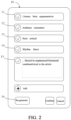
- the first display interface 10 displays a "literary form” field 11, an "audience” field 12, a “style” field 13, a “rhythm” field 14, and a "writing point” field 15. These fields and their corresponding content constitute writing suggestions provided to the user. These writing suggestions are subsequently used to further expand the initial instruction previously input by the user, so that the final instruction (that is, the first instruction) input to the first target model to generate the article is more complete. In some embodiments, the user may further modify the writing suggestions displayed in the first display interface to better meet his/her own expectations.
- the initial content corresponding to each field may be modified (for example, "critical” under the “style” field 13 is changed to "humorous"), one or more of the fields 11-15 may be deleted (for example, a certain field is unchecked), a new field may be independently added, and the like.
- the user may also instruct to regenerate some or all of the fields and their content (for example, the trigger control 16).
- the first instruction is input into the first target model to obtain a first target output.
- relevant content for example, a text or an image
- a suggestion of an improving instruction is given through the first display interface based on the initial instruction, and the improved instruction (that is, the first instruction) is input into the first target model for formal content generation (that is, the first target output).
- an apparatus 300 for model instruction processing including:
- the generation unit includes:
- the initial instruction includes an instruction for instructing the first target model to generate a text; and the at least one field includes one or more of the following: a theme, a literary form, an audience, a style, a rhythm, and content points.
- the initial instruction includes an instruction for instructing the first target model to generate an image; and the at least one field includes one or more of the following: a theme, a form, a painting type, an environment, light, a style, a color, an emotion, and a composition.
- the first target model includes a language model
- the apparatus for model instruction processing further includes:
- a second model input unit configured to input the first instruction into the first target model to obtain a first target output.
- the apparatus for model instruction processing further includes: an update unit, configured to: in response to an edit operation of the user on the field in the first display interface, update the field displayed in the first display interface or content corresponding to the field; the edit operation including at least one of: modifying the content corresponding to the field, deleting the field and the content corresponding to the field, or adding a field and content corresponding to the field.
- an update unit configured to: in response to an edit operation of the user on the field in the first display interface, update the field displayed in the first display interface or content corresponding to the field; the edit operation including at least one of: modifying the content corresponding to the field, deleting the field and the content corresponding to the field, or adding a field and content corresponding to the field.
- the second target model includes a language model.
- an electronic device including:
- a non-transitory computer storage medium stores program code, and the program code may be executed by a computer device to cause the computer device to perform the model instruction processing method provided according to one or more embodiments of the present disclosure.
- FIG. 4 illustrates a structural diagram of an electronic device 800 (such as a terminal device or a server) suitable for implementing the embodiments of the present disclosure.
- the terminal device in the embodiments of the present disclosure may include, but is not limited to, a mobile terminal such as a mobile phone, a notebook computer, a digital broadcast receiver, a PDA (personal digital assistant), a PAD (tablet computer), a PMP (portable multimedia player), and a vehicle-mounted terminal (such as a vehicle-mounted navigation terminal), and a fixed terminal such as a digital TV and a desktop computer.
- the electronic device shown in FIG. 4 is only an example, and should not bring any limitation to the function and scope of use of the embodiments of the present disclosure.
- the electronic device 800 may include a processing apparatus (such as a central processing unit, a graphics processing unit, etc.) 801 that may perform various appropriate actions and processing according to a program stored in a read-only memory (ROM) 802 or a program loaded from a storage apparatus 808 into a random access memory (RAM) 803.
- the RAM 803 also stores various programs and data required for the operation of the electronic device 800.
- the processing apparatus 801, the ROM 802, and the RAM 803 are connected to each other through a bus 804.
- An input/output (I/O) interface 805 is also connected to the bus 804.
- the following apparatuses may be connected to the I/O interface 805: an input apparatus 806 including, for example, a touch screen, a touchpad, a keyboard, a mouse, a camera, a microphone, an accelerometer, a gyroscope, etc.; an output apparatus 807 including, for example, a liquid crystal display (LCD), a speaker, a vibrator, etc.; a storage apparatus 808 including, for example, a magnetic tape, a hard disk, etc.; and a communication apparatus 809.
- the communication apparatus 809 may allow the electronic device 800 to perform wireless or wired communication with other devices to exchange data.
- FIG. 4 shows the electronic device 800 having various apparatuses, it should be understood that it is not required to implement or have all the illustrated apparatuses. More or fewer apparatuses may alternatively be implemented or provided.
- an embodiment of the present disclosure includes a computer program product, which includes a computer program carried on a computer-readable medium.
- the computer program includes program code for executing the method shown in the flowchart.
- the computer program may be downloaded and installed from a network through the communication apparatus 809, or installed from the storage apparatus 808, or installed from the ROM 802.
- the processing apparatus 801 the above functions defined in the method of the embodiment of the present disclosure are performed.
- the above computer-readable medium of the present disclosure may be a computer-readable signal medium, a computer-readable storage medium, or any combination thereof.
- the computer-readable storage medium may be, for example, but not limited to, an electrical, magnetic, optical, electromagnetic, infrared, or semiconductor system, apparatus, or device, or any combination thereof.
- the computer-readable storage medium may include, but are not limited to, an electrical connection with one or more wires, a portable computer disk, a hard disk, a random access memory (RAM), a read-only memory (ROM), an erasable programmable read-only memory (EPROM or flash memory), an optical fiber, a portable compact disk read-only memory (CD-ROM), an optical storage device,, a magnetic magnetic storage device, or any suitable combination thereof.
- the computer-readable storage medium may be any tangible medium that contains or stores a program, and the program may be used by or in combination with an instruction execution system, apparatus, or device.
- the computer-readable signal medium may include a data signal propagated in a baseband or as a part of a carrier, in which a computer-readable program code is carried.
- This propagated data signal may take many forms, including but not limited to an electromagnetic signal, an optical signal, or any suitable combination thereof.
- the computer-readable signal medium may also be any computer-readable medium other than the computer-readable storage medium.
- the computer-readable signal medium may send, propagate, or transmit a program for use by or in combination with an instruction execution system, apparatus, or device.
- the program code contained on the computer-readable medium may be transmitted by any suitable medium, including but not limited to: wire, optical cable, RF (Radio Frequency), etc., or any suitable combination thereof.
- the client and the server may communicate using any currently known or future developed network protocol such as HTTP (HyperText Transfer Protocol), and may interconnect with digital data communication (for example, communication network) in any form or medium.
- HTTP HyperText Transfer Protocol
- the communication network include a local area network ("LAN”), a wide area network ("WAN”), an internetwork (for example, the Internet), and a peer-to-peer network (for example, an ad hoc peer-to-peer network), as well as any currently known or future developed network.
- LAN local area network
- WAN wide area network
- Internet for example, the Internet
- peer-to-peer network for example, an ad hoc peer-to-peer network
- the above computer-readable medium may be included in the above electronic device, or may exist alone without being assembled into the electronic device.
- the above computer-readable medium carries one or more programs, and when the one or more programs are executed by the electronic device, the electronic device is caused to perform the above method of the present disclosure.
- the computer program code for performing the operations of the present disclosure may be written in one or more programming languages or a combination thereof.
- the above programming languages include object-oriented programming languages such as Java, Smalltalk, C++, and also include conventional procedural programming languages such as "C" language or similar programming languages.
- the program code may be executed entirely on the user's computer, partly on the user's computer, as a stand-alone software package, partly on the user's computer and partly on a remote computer, or entirely on the remote computer or server.
- the remote computer may be connected to the user's computer through any kind of network, including a local area network (LAN) or a wide area network (WAN), or may be connected to an external computer (for example, through the Internet using an Internet service provider).
- LAN local area network
- WAN wide area network
- Internet service provider for example, AT&T, MCI, Sprint, EarthLink, MSN, GTE, etc.
- each block in the flowchart or block diagram may represent a module, a program segment, or a part of code, and the module, the program segment, or the part of code contains one or more executable instructions for implementing a specified logical function.
- the functions marked in the blocks may also occur in a different order than the order marked in the drawings. For example, two blocks shown in succession may actually be executed substantially in parallel, and they may sometimes be executed in a reverse order, depending on the functions involved.
- each block in the block diagram and/or flowchart, and a combination of blocks in the block diagram and/or flowchart may be implemented with a dedicated hardware-based system that performs specified functions or operations, or may be implemented with a combination of dedicated hardware and computer instructions.
- the units involved in the embodiments of the present disclosure may be implemented in software or hardware.
- the name of a unit does not constitute a limitation on the unit itself in some cases.
- exemplary types of hardware logic components include: a field programmable gate array (FPGA), an application specific integrated circuit (ASIC), an application specific standard product (ASSP), a system on chip (SOC), a complex programmable logical device (CPLD), etc.
- FPGA field programmable gate array
- ASIC application specific integrated circuit
- ASSP application specific standard product
- SOC system on chip
- CPLD complex programmable logical device
- a machine-readable medium may be a tangible medium that may contain or store a program for use by or in combination with an instruction execution system, apparatus, or device.
- the machine-readable medium may be a machine-readable signal medium or a machine-readable storage medium.
- the machine-readable medium may include, but is not limited to, an electronic, magnetic, optical, electromagnetic, infrared, or semiconductor system, apparatus, or device, or any suitable combination thereof.
- machine-readable storage medium may include an electrical connection based on one or more wires, a portable computer disk, a hard disk, a random access memory (RAM), a read-only memory (ROM), an erasable programmable read-only memory (EPROM or flash memory), an optical fiber, a portable compact disk read-only memory (CD-ROM), an optical storage device, a magnetic storage device, or any suitable combination thereof.
- RAM random access memory
- ROM read-only memory
- EPROM or flash memory erasable programmable read-only memory
- CD-ROM compact disk read-only memory
- magnetic storage device or any suitable combination thereof.
- a method for model instruction processing including: acquiring an initial instruction input by a user; generating a first display interface based on the initial instruction, initial content corresponding to at least one field in the first display interface being determined based on the initial instruction; and determining a first instruction for inputting into a first target model based on a field currently displayed in the first display interface and content corresponding to the field.
- generating the first display interface based on the initial instruction includes: determining a second instruction for inputting into a second target model based on the initial instruction; inputting the second instruction into the second target model to obtain a second output; and determining the initial content corresponding to the least one field based on the second output.
- the initial instruction includes an instruction for instructing the first target model to generate a text; and the at least one field includes one or more of the following: a theme, a literary form, an audience, a style, a rhythm, and content points.
- the initial instruction includes an instruction for instructing the first target model to generate an image; and the at least one field includes one or more of the following: a theme, a form, a painting type, an environment, light, a style, a color, an emotion, and a composition.
- the first target model includes a language model; and the method further includes: inputting the first instruction into the first target model to obtain a first target output.
- the method for model instruction processing further includes: in response to an edit operation of the user on the field in the first display interface, updating the field displayed in the first display interface or content corresponding to the field; the edit operation including at least one of: modifying the content corresponding to the field, deleting the field and the content corresponding to the field, or adding a field and content corresponding to the field.
- the second target model includes a language model.
- an apparatus for model instruction processing including: an obtaining unit, configured to acquire an initial instruction input by a user; a generation unit, configured to generate a first display interface based on the initial instruction, initial content corresponding to at least one field in the first display interface being determined based on the initial instruction; and a determination unit, configured to determine a first instruction for inputting into a first target model based on a field currently displayed in the first display interface and content corresponding to the field.
- an electronic device including: at least one memory and at least one processor; where the memory is configured to store program code, and the processor is configured to perform the program code stored in the memory to cause the electronic device to perform the model instruction processing method provided according to one or more embodiments of the present disclosure.
- a non-transitory computer storage medium stores program code, and the program code, when executed by a computer device, causes the computer device to perform the model instruction processing method provided according to one or more embodiments of the present disclosure.
Landscapes
- Engineering & Computer Science (AREA)
- Theoretical Computer Science (AREA)
- Physics & Mathematics (AREA)
- General Physics & Mathematics (AREA)
- General Engineering & Computer Science (AREA)
- Audiology, Speech & Language Pathology (AREA)
- Computational Linguistics (AREA)
- General Health & Medical Sciences (AREA)
- Health & Medical Sciences (AREA)
- Artificial Intelligence (AREA)
- Human Computer Interaction (AREA)
- Software Systems (AREA)
- Probability & Statistics with Applications (AREA)
- User Interface Of Digital Computer (AREA)
Applications Claiming Priority (1)
| Application Number | Priority Date | Filing Date | Title |
|---|---|---|---|
| CN202410239278.8A CN118051293A (zh) | 2024-03-01 | 2024-03-01 | 模型指令处理方法、装置、电子设备和存储介质 |
Publications (2)
| Publication Number | Publication Date |
|---|---|
| EP4567660A2 true EP4567660A2 (de) | 2025-06-11 |
| EP4567660A3 EP4567660A3 (de) | 2025-08-13 |
Family
ID=91053388
Family Applications (1)
| Application Number | Title | Priority Date | Filing Date |
|---|---|---|---|
| EP25154791.5A Pending EP4567660A3 (de) | 2024-03-01 | 2025-01-29 | Verfahren, vorrichtung, elektronische vorrichtung und speichermedium zur modellbefehlsverarbeitung |
Country Status (3)
| Country | Link |
|---|---|
| US (1) | US20250173920A1 (de) |
| EP (1) | EP4567660A3 (de) |
| CN (1) | CN118051293A (de) |
Families Citing this family (1)
| Publication number | Priority date | Publication date | Assignee | Title |
|---|---|---|---|---|
| USD1107752S1 (en) * | 2023-09-08 | 2025-12-30 | Beijing Zitiao Network Technology Co., Ltd. | Display screen or portion thereof with a graphical user interface |
Family Cites Families (1)
| Publication number | Priority date | Publication date | Assignee | Title |
|---|---|---|---|---|
| US11494396B2 (en) * | 2021-01-19 | 2022-11-08 | Microsoft Technology Licensing, Llc | Automated intelligent content generation |
-
2024
- 2024-03-01 CN CN202410239278.8A patent/CN118051293A/zh active Pending
-
2025
- 2025-01-29 US US19/040,339 patent/US20250173920A1/en active Pending
- 2025-01-29 EP EP25154791.5A patent/EP4567660A3/de active Pending
Also Published As
| Publication number | Publication date |
|---|---|
| EP4567660A3 (de) | 2025-08-13 |
| CN118051293A (zh) | 2024-05-17 |
| US20250173920A1 (en) | 2025-05-29 |
Similar Documents
| Publication | Publication Date | Title |
|---|---|---|
| CN112258622B (zh) | 图像处理方法、装置、可读介质及电子设备 | |
| CN111225232B (zh) | 基于视频的贴纸动画引擎、实现方法、服务器和介质 | |
| CN112099705A (zh) | 投屏方法、装置及电子设备 | |
| US20250131348A1 (en) | Task participant adding method and apparatus, electronic device, and storage medium | |
| EP4567660A2 (de) | Verfahren, vorrichtung, elektronische vorrichtung und speichermedium zur modellbefehlsverarbeitung | |
| US20240320627A1 (en) | Information processing method, apparatus, electronic device, and storage medium | |
| CN118153529A (zh) | 交互内容生成和显示方法、装置及电子设备 | |
| CN118657125A (zh) | 信息显示方法、装置、电子设备及存储介质 | |
| US20250363293A1 (en) | Method for generating table field content, storage medium, and electronic device | |
| EP4664897A1 (de) | Verfahren und vorrichtung zur verarbeitung von spezialeffekt-prop sowie elektronische vorrichtung und speichermedium | |
| EP3416070A1 (de) | Verfahren und vorrichtung zur seitenanzeige und speichermedium | |
| CN118657856A (zh) | 一种演示文稿的生成方法、装置、设备及介质 | |
| CN110134905B (zh) | 一种页面更新显示方法、装置、设备及存储介质 | |
| EP4134904A1 (de) | Bild-spezialeffekt-konfigurationsverfahren, bilderkennungsverfahren, vorrichtungen und elektronische vorrichtung | |
| WO2025011491A1 (zh) | 视频处理方法、装置、设备、存储介质和程序产品 | |
| WO2025001726A1 (zh) | 封面的设置方法、装置、电子设备和存储介质 | |
| EP4671965A1 (de) | Verwaltungsverfahren und -vorrichtung für navigationsbaumansicht, vorrichtung und speichermedium | |
| CN113920220B (zh) | 图像编辑回退方法及装置 | |
| CN111382556B (zh) | 数据转换方法、装置、设备及存储介质 | |
| CN114691618A (zh) | 课件配置方法、装置、介质及电子设备 | |
| CN113177174B (zh) | 特征构建方法、内容显示方法及相关装置 | |
| US12148451B2 (en) | Method, apparatus, device, storage medium and program product for video generating | |
| US20260051086A1 (en) | Interaction method, non-transitory computer-readable storage medium and electronic device | |
| US20260057585A1 (en) | Image generating method, apparatus, electronic device and storage medium | |
| CN109918357A (zh) | 信息回放方法、装置、电子设备、和计算机可读存储介质 |
Legal Events
| Date | Code | Title | Description |
|---|---|---|---|
| PUAI | Public reference made under article 153(3) epc to a published international application that has entered the european phase |
Free format text: ORIGINAL CODE: 0009012 |
|
| STAA | Information on the status of an ep patent application or granted ep patent |
Free format text: STATUS: REQUEST FOR EXAMINATION WAS MADE |
|
| 17P | Request for examination filed |
Effective date: 20250129 |
|
| AK | Designated contracting states |
Kind code of ref document: A2 Designated state(s): AL AT BE BG CH CY CZ DE DK EE ES FI FR GB GR HR HU IE IS IT LI LT LU LV MC ME MK MT NL NO PL PT RO RS SE SI SK SM TR |
|
| RAP3 | Party data changed (applicant data changed or rights of an application transferred) |
Owner name: BEIJING ZITIAO NETWORK TECHNOLOGY CO., LTD. |
|
| PUAL | Search report despatched |
Free format text: ORIGINAL CODE: 0009013 |
|
| AK | Designated contracting states |
Kind code of ref document: A3 Designated state(s): AL AT BE BG CH CY CZ DE DK EE ES FI FR GB GR HR HU IE IS IT LI LT LU LV MC ME MK MT NL NO PL PT RO RS SE SI SK SM TR |
|
| RIC1 | Information provided on ipc code assigned before grant |
Ipc: G06F 40/174 20200101AFI20250704BHEP Ipc: G06F 40/216 20200101ALI20250704BHEP Ipc: G06F 40/30 20200101ALI20250704BHEP Ipc: G06F 40/35 20200101ALI20250704BHEP Ipc: G06F 40/44 20200101ALI20250704BHEP Ipc: G06F 40/56 20200101ALI20250704BHEP Ipc: G06T 11/60 20060101ALI20250704BHEP Ipc: G06F 40/166 20200101ALI20250704BHEP |