EP4566868A1 - Battery replacement apparatus, information providing device, battery replacement system, and battery replacement method - Google Patents
Battery replacement apparatus, information providing device, battery replacement system, and battery replacement method Download PDFInfo
- Publication number
- EP4566868A1 EP4566868A1 EP24214446.7A EP24214446A EP4566868A1 EP 4566868 A1 EP4566868 A1 EP 4566868A1 EP 24214446 A EP24214446 A EP 24214446A EP 4566868 A1 EP4566868 A1 EP 4566868A1
- Authority
- EP
- European Patent Office
- Prior art keywords
- battery
- vehicle
- information
- battery replacement
- replacement
- Prior art date
- Legal status (The legal status is an assumption and is not a legal conclusion. Google has not performed a legal analysis and makes no representation as to the accuracy of the status listed.)
- Pending
Links
Images




Classifications
-
- B—PERFORMING OPERATIONS; TRANSPORTING
- B60—VEHICLES IN GENERAL
- B60S—SERVICING, CLEANING, REPAIRING, SUPPORTING, LIFTING, OR MANOEUVRING OF VEHICLES, NOT OTHERWISE PROVIDED FOR
- B60S5/00—Servicing, maintaining, repairing, or refitting of vehicles
- B60S5/06—Supplying batteries to, or removing batteries from, vehicles
-
- B—PERFORMING OPERATIONS; TRANSPORTING
- B60—VEHICLES IN GENERAL
- B60L—PROPULSION OF ELECTRICALLY-PROPELLED VEHICLES; SUPPLYING ELECTRIC POWER FOR AUXILIARY EQUIPMENT OF ELECTRICALLY-PROPELLED VEHICLES; ELECTRODYNAMIC BRAKE SYSTEMS FOR VEHICLES IN GENERAL; MAGNETIC SUSPENSION OR LEVITATION FOR VEHICLES; MONITORING OPERATING VARIABLES OF ELECTRICALLY-PROPELLED VEHICLES; ELECTRIC SAFETY DEVICES FOR ELECTRICALLY-PROPELLED VEHICLES
- B60L3/00—Electric devices on electrically-propelled vehicles for safety purposes; Monitoring operating variables, e.g. speed, deceleration or energy consumption
- B60L3/12—Recording operating variables ; Monitoring of operating variables
-
- B—PERFORMING OPERATIONS; TRANSPORTING
- B60—VEHICLES IN GENERAL
- B60L—PROPULSION OF ELECTRICALLY-PROPELLED VEHICLES; SUPPLYING ELECTRIC POWER FOR AUXILIARY EQUIPMENT OF ELECTRICALLY-PROPELLED VEHICLES; ELECTRODYNAMIC BRAKE SYSTEMS FOR VEHICLES IN GENERAL; MAGNETIC SUSPENSION OR LEVITATION FOR VEHICLES; MONITORING OPERATING VARIABLES OF ELECTRICALLY-PROPELLED VEHICLES; ELECTRIC SAFETY DEVICES FOR ELECTRICALLY-PROPELLED VEHICLES
- B60L53/00—Methods of charging batteries, specially adapted for electric vehicles; Charging stations or on-board charging equipment therefor; Exchange of energy storage elements in electric vehicles
- B60L53/30—Constructional details of charging stations
- B60L53/305—Communication interfaces
-
- B—PERFORMING OPERATIONS; TRANSPORTING
- B60—VEHICLES IN GENERAL
- B60L—PROPULSION OF ELECTRICALLY-PROPELLED VEHICLES; SUPPLYING ELECTRIC POWER FOR AUXILIARY EQUIPMENT OF ELECTRICALLY-PROPELLED VEHICLES; ELECTRODYNAMIC BRAKE SYSTEMS FOR VEHICLES IN GENERAL; MAGNETIC SUSPENSION OR LEVITATION FOR VEHICLES; MONITORING OPERATING VARIABLES OF ELECTRICALLY-PROPELLED VEHICLES; ELECTRIC SAFETY DEVICES FOR ELECTRICALLY-PROPELLED VEHICLES
- B60L53/00—Methods of charging batteries, specially adapted for electric vehicles; Charging stations or on-board charging equipment therefor; Exchange of energy storage elements in electric vehicles
- B60L53/50—Charging stations characterised by energy-storage or power-generation means
- B60L53/53—Batteries
-
- B—PERFORMING OPERATIONS; TRANSPORTING
- B60—VEHICLES IN GENERAL
- B60L—PROPULSION OF ELECTRICALLY-PROPELLED VEHICLES; SUPPLYING ELECTRIC POWER FOR AUXILIARY EQUIPMENT OF ELECTRICALLY-PROPELLED VEHICLES; ELECTRODYNAMIC BRAKE SYSTEMS FOR VEHICLES IN GENERAL; MAGNETIC SUSPENSION OR LEVITATION FOR VEHICLES; MONITORING OPERATING VARIABLES OF ELECTRICALLY-PROPELLED VEHICLES; ELECTRIC SAFETY DEVICES FOR ELECTRICALLY-PROPELLED VEHICLES
- B60L53/00—Methods of charging batteries, specially adapted for electric vehicles; Charging stations or on-board charging equipment therefor; Exchange of energy storage elements in electric vehicles
- B60L53/60—Monitoring or controlling charging stations
- B60L53/65—Monitoring or controlling charging stations involving identification of vehicles or their battery types
-
- B—PERFORMING OPERATIONS; TRANSPORTING
- B60—VEHICLES IN GENERAL
- B60L—PROPULSION OF ELECTRICALLY-PROPELLED VEHICLES; SUPPLYING ELECTRIC POWER FOR AUXILIARY EQUIPMENT OF ELECTRICALLY-PROPELLED VEHICLES; ELECTRODYNAMIC BRAKE SYSTEMS FOR VEHICLES IN GENERAL; MAGNETIC SUSPENSION OR LEVITATION FOR VEHICLES; MONITORING OPERATING VARIABLES OF ELECTRICALLY-PROPELLED VEHICLES; ELECTRIC SAFETY DEVICES FOR ELECTRICALLY-PROPELLED VEHICLES
- B60L53/00—Methods of charging batteries, specially adapted for electric vehicles; Charging stations or on-board charging equipment therefor; Exchange of energy storage elements in electric vehicles
- B60L53/60—Monitoring or controlling charging stations
- B60L53/66—Data transfer between charging stations and vehicles
-
- B—PERFORMING OPERATIONS; TRANSPORTING
- B60—VEHICLES IN GENERAL
- B60L—PROPULSION OF ELECTRICALLY-PROPELLED VEHICLES; SUPPLYING ELECTRIC POWER FOR AUXILIARY EQUIPMENT OF ELECTRICALLY-PROPELLED VEHICLES; ELECTRODYNAMIC BRAKE SYSTEMS FOR VEHICLES IN GENERAL; MAGNETIC SUSPENSION OR LEVITATION FOR VEHICLES; MONITORING OPERATING VARIABLES OF ELECTRICALLY-PROPELLED VEHICLES; ELECTRIC SAFETY DEVICES FOR ELECTRICALLY-PROPELLED VEHICLES
- B60L53/00—Methods of charging batteries, specially adapted for electric vehicles; Charging stations or on-board charging equipment therefor; Exchange of energy storage elements in electric vehicles
- B60L53/60—Monitoring or controlling charging stations
- B60L53/68—Off-site monitoring or control, e.g. remote control
-
- B—PERFORMING OPERATIONS; TRANSPORTING
- B60—VEHICLES IN GENERAL
- B60L—PROPULSION OF ELECTRICALLY-PROPELLED VEHICLES; SUPPLYING ELECTRIC POWER FOR AUXILIARY EQUIPMENT OF ELECTRICALLY-PROPELLED VEHICLES; ELECTRODYNAMIC BRAKE SYSTEMS FOR VEHICLES IN GENERAL; MAGNETIC SUSPENSION OR LEVITATION FOR VEHICLES; MONITORING OPERATING VARIABLES OF ELECTRICALLY-PROPELLED VEHICLES; ELECTRIC SAFETY DEVICES FOR ELECTRICALLY-PROPELLED VEHICLES
- B60L53/00—Methods of charging batteries, specially adapted for electric vehicles; Charging stations or on-board charging equipment therefor; Exchange of energy storage elements in electric vehicles
- B60L53/80—Exchanging energy storage elements, e.g. removable batteries
-
- B—PERFORMING OPERATIONS; TRANSPORTING
- B60—VEHICLES IN GENERAL
- B60L—PROPULSION OF ELECTRICALLY-PROPELLED VEHICLES; SUPPLYING ELECTRIC POWER FOR AUXILIARY EQUIPMENT OF ELECTRICALLY-PROPELLED VEHICLES; ELECTRODYNAMIC BRAKE SYSTEMS FOR VEHICLES IN GENERAL; MAGNETIC SUSPENSION OR LEVITATION FOR VEHICLES; MONITORING OPERATING VARIABLES OF ELECTRICALLY-PROPELLED VEHICLES; ELECTRIC SAFETY DEVICES FOR ELECTRICALLY-PROPELLED VEHICLES
- B60L58/00—Methods or circuit arrangements for monitoring or controlling batteries or fuel cells, specially adapted for electric vehicles
- B60L58/10—Methods or circuit arrangements for monitoring or controlling batteries or fuel cells, specially adapted for electric vehicles for monitoring or controlling batteries
- B60L58/12—Methods or circuit arrangements for monitoring or controlling batteries or fuel cells, specially adapted for electric vehicles for monitoring or controlling batteries responding to state of charge [SoC]
-
- B—PERFORMING OPERATIONS; TRANSPORTING
- B60—VEHICLES IN GENERAL
- B60L—PROPULSION OF ELECTRICALLY-PROPELLED VEHICLES; SUPPLYING ELECTRIC POWER FOR AUXILIARY EQUIPMENT OF ELECTRICALLY-PROPELLED VEHICLES; ELECTRODYNAMIC BRAKE SYSTEMS FOR VEHICLES IN GENERAL; MAGNETIC SUSPENSION OR LEVITATION FOR VEHICLES; MONITORING OPERATING VARIABLES OF ELECTRICALLY-PROPELLED VEHICLES; ELECTRIC SAFETY DEVICES FOR ELECTRICALLY-PROPELLED VEHICLES
- B60L58/00—Methods or circuit arrangements for monitoring or controlling batteries or fuel cells, specially adapted for electric vehicles
- B60L58/10—Methods or circuit arrangements for monitoring or controlling batteries or fuel cells, specially adapted for electric vehicles for monitoring or controlling batteries
- B60L58/18—Methods or circuit arrangements for monitoring or controlling batteries or fuel cells, specially adapted for electric vehicles for monitoring or controlling batteries of two or more battery modules
- B60L58/21—Methods or circuit arrangements for monitoring or controlling batteries or fuel cells, specially adapted for electric vehicles for monitoring or controlling batteries of two or more battery modules having the same nominal voltage
-
- G—PHYSICS
- G06—COMPUTING OR CALCULATING; COUNTING
- G06Q—INFORMATION AND COMMUNICATION TECHNOLOGY [ICT] SPECIALLY ADAPTED FOR ADMINISTRATIVE, COMMERCIAL, FINANCIAL, MANAGERIAL OR SUPERVISORY PURPOSES; SYSTEMS OR METHODS SPECIALLY ADAPTED FOR ADMINISTRATIVE, COMMERCIAL, FINANCIAL, MANAGERIAL OR SUPERVISORY PURPOSES, NOT OTHERWISE PROVIDED FOR
- G06Q50/00—Information and communication technology [ICT] specially adapted for implementation of business processes of specific business sectors, e.g. utilities or tourism
- G06Q50/40—Business processes related to the transportation industry
-
- G—PHYSICS
- G06—COMPUTING OR CALCULATING; COUNTING
- G06V—IMAGE OR VIDEO RECOGNITION OR UNDERSTANDING
- G06V20/00—Scenes; Scene-specific elements
- G06V20/60—Type of objects
- G06V20/62—Text, e.g. of license plates, overlay texts or captions on TV images
- G06V20/625—License plates
-
- H—ELECTRICITY
- H04—ELECTRIC COMMUNICATION TECHNIQUE
- H04W—WIRELESS COMMUNICATION NETWORKS
- H04W4/00—Services specially adapted for wireless communication networks; Facilities therefor
- H04W4/80—Services using short range communication, e.g. near-field communication [NFC], radio-frequency identification [RFID] or low energy communication
-
- B—PERFORMING OPERATIONS; TRANSPORTING
- B60—VEHICLES IN GENERAL
- B60L—PROPULSION OF ELECTRICALLY-PROPELLED VEHICLES; SUPPLYING ELECTRIC POWER FOR AUXILIARY EQUIPMENT OF ELECTRICALLY-PROPELLED VEHICLES; ELECTRODYNAMIC BRAKE SYSTEMS FOR VEHICLES IN GENERAL; MAGNETIC SUSPENSION OR LEVITATION FOR VEHICLES; MONITORING OPERATING VARIABLES OF ELECTRICALLY-PROPELLED VEHICLES; ELECTRIC SAFETY DEVICES FOR ELECTRICALLY-PROPELLED VEHICLES
- B60L2240/00—Control parameters of input or output; Target parameters
- B60L2240/70—Interactions with external data bases, e.g. traffic centres
-
- B—PERFORMING OPERATIONS; TRANSPORTING
- B60—VEHICLES IN GENERAL
- B60L—PROPULSION OF ELECTRICALLY-PROPELLED VEHICLES; SUPPLYING ELECTRIC POWER FOR AUXILIARY EQUIPMENT OF ELECTRICALLY-PROPELLED VEHICLES; ELECTRODYNAMIC BRAKE SYSTEMS FOR VEHICLES IN GENERAL; MAGNETIC SUSPENSION OR LEVITATION FOR VEHICLES; MONITORING OPERATING VARIABLES OF ELECTRICALLY-PROPELLED VEHICLES; ELECTRIC SAFETY DEVICES FOR ELECTRICALLY-PROPELLED VEHICLES
- B60L2250/00—Driver interactions
- B60L2250/10—Driver interactions by alarm
-
- B—PERFORMING OPERATIONS; TRANSPORTING
- B60—VEHICLES IN GENERAL
- B60L—PROPULSION OF ELECTRICALLY-PROPELLED VEHICLES; SUPPLYING ELECTRIC POWER FOR AUXILIARY EQUIPMENT OF ELECTRICALLY-PROPELLED VEHICLES; ELECTRODYNAMIC BRAKE SYSTEMS FOR VEHICLES IN GENERAL; MAGNETIC SUSPENSION OR LEVITATION FOR VEHICLES; MONITORING OPERATING VARIABLES OF ELECTRICALLY-PROPELLED VEHICLES; ELECTRIC SAFETY DEVICES FOR ELECTRICALLY-PROPELLED VEHICLES
- B60L2250/00—Driver interactions
- B60L2250/12—Driver interactions by confirmation, e.g. of the input
-
- B—PERFORMING OPERATIONS; TRANSPORTING
- B60—VEHICLES IN GENERAL
- B60L—PROPULSION OF ELECTRICALLY-PROPELLED VEHICLES; SUPPLYING ELECTRIC POWER FOR AUXILIARY EQUIPMENT OF ELECTRICALLY-PROPELLED VEHICLES; ELECTRODYNAMIC BRAKE SYSTEMS FOR VEHICLES IN GENERAL; MAGNETIC SUSPENSION OR LEVITATION FOR VEHICLES; MONITORING OPERATING VARIABLES OF ELECTRICALLY-PROPELLED VEHICLES; ELECTRIC SAFETY DEVICES FOR ELECTRICALLY-PROPELLED VEHICLES
- B60L2250/00—Driver interactions
- B60L2250/16—Driver interactions by display
-
- B—PERFORMING OPERATIONS; TRANSPORTING
- B60—VEHICLES IN GENERAL
- B60L—PROPULSION OF ELECTRICALLY-PROPELLED VEHICLES; SUPPLYING ELECTRIC POWER FOR AUXILIARY EQUIPMENT OF ELECTRICALLY-PROPELLED VEHICLES; ELECTRODYNAMIC BRAKE SYSTEMS FOR VEHICLES IN GENERAL; MAGNETIC SUSPENSION OR LEVITATION FOR VEHICLES; MONITORING OPERATING VARIABLES OF ELECTRICALLY-PROPELLED VEHICLES; ELECTRIC SAFETY DEVICES FOR ELECTRICALLY-PROPELLED VEHICLES
- B60L2250/00—Driver interactions
- B60L2250/20—Driver interactions by driver identification
-
- Y—GENERAL TAGGING OF NEW TECHNOLOGICAL DEVELOPMENTS; GENERAL TAGGING OF CROSS-SECTIONAL TECHNOLOGIES SPANNING OVER SEVERAL SECTIONS OF THE IPC; TECHNICAL SUBJECTS COVERED BY FORMER USPC CROSS-REFERENCE ART COLLECTIONS [XRACs] AND DIGESTS
- Y02—TECHNOLOGIES OR APPLICATIONS FOR MITIGATION OR ADAPTATION AGAINST CLIMATE CHANGE
- Y02T—CLIMATE CHANGE MITIGATION TECHNOLOGIES RELATED TO TRANSPORTATION
- Y02T10/00—Road transport of goods or passengers
- Y02T10/60—Other road transportation technologies with climate change mitigation effect
- Y02T10/70—Energy storage systems for electromobility, e.g. batteries
-
- Y—GENERAL TAGGING OF NEW TECHNOLOGICAL DEVELOPMENTS; GENERAL TAGGING OF CROSS-SECTIONAL TECHNOLOGIES SPANNING OVER SEVERAL SECTIONS OF THE IPC; TECHNICAL SUBJECTS COVERED BY FORMER USPC CROSS-REFERENCE ART COLLECTIONS [XRACs] AND DIGESTS
- Y02—TECHNOLOGIES OR APPLICATIONS FOR MITIGATION OR ADAPTATION AGAINST CLIMATE CHANGE
- Y02T—CLIMATE CHANGE MITIGATION TECHNOLOGIES RELATED TO TRANSPORTATION
- Y02T10/00—Road transport of goods or passengers
- Y02T10/60—Other road transportation technologies with climate change mitigation effect
- Y02T10/7072—Electromobility specific charging systems or methods for batteries, ultracapacitors, supercapacitors or double-layer capacitors
-
- Y—GENERAL TAGGING OF NEW TECHNOLOGICAL DEVELOPMENTS; GENERAL TAGGING OF CROSS-SECTIONAL TECHNOLOGIES SPANNING OVER SEVERAL SECTIONS OF THE IPC; TECHNICAL SUBJECTS COVERED BY FORMER USPC CROSS-REFERENCE ART COLLECTIONS [XRACs] AND DIGESTS
- Y02—TECHNOLOGIES OR APPLICATIONS FOR MITIGATION OR ADAPTATION AGAINST CLIMATE CHANGE
- Y02T—CLIMATE CHANGE MITIGATION TECHNOLOGIES RELATED TO TRANSPORTATION
- Y02T90/00—Enabling technologies or technologies with a potential or indirect contribution to GHG emissions mitigation
- Y02T90/10—Technologies relating to charging of electric vehicles
- Y02T90/12—Electric charging stations
-
- Y—GENERAL TAGGING OF NEW TECHNOLOGICAL DEVELOPMENTS; GENERAL TAGGING OF CROSS-SECTIONAL TECHNOLOGIES SPANNING OVER SEVERAL SECTIONS OF THE IPC; TECHNICAL SUBJECTS COVERED BY FORMER USPC CROSS-REFERENCE ART COLLECTIONS [XRACs] AND DIGESTS
- Y02—TECHNOLOGIES OR APPLICATIONS FOR MITIGATION OR ADAPTATION AGAINST CLIMATE CHANGE
- Y02T—CLIMATE CHANGE MITIGATION TECHNOLOGIES RELATED TO TRANSPORTATION
- Y02T90/00—Enabling technologies or technologies with a potential or indirect contribution to GHG emissions mitigation
- Y02T90/10—Technologies relating to charging of electric vehicles
- Y02T90/16—Information or communication technologies improving the operation of electric vehicles
Definitions
- the present disclosure relates to a battery replacement apparatus, an information providing device, a battery replacement system, and a battery replacement method.
- WO2019/181585 discloses a station management device for determining whether batteries stocked at a station can be rented out, based on at least one of vehicle-related information and user-related information recorded in the batteries.
- the present disclosure provides a battery replacement apparatus, an information providing device, a battery replacement system, and a battery replacement method that are capable of performing battery replacement regardless of information recorded in a battery mounted in a vehicle.
- a battery replacement apparatus is configured to perform battery replacement for replacing a first battery mounted in a vehicle with a second battery.
- the battery replacement apparatus comprises a drive device configured to perform the battery replacement, and a processor configured to control the drive device.
- the processor is configured to acquire first vehicle information that identifies the vehicle and replacement battery information that identifies the second battery from the vehicle or a user of the vehicle, and control the drive device using the replacement battery information and the first vehicle information to replace the first battery with the second battery.
- the battery replacement apparatus controls the drive device using the replacement battery information and the first vehicle information acquired from the vehicle or the user of the vehicle such that the second battery is mounted in the vehicle. This enables the battery replacement apparatus to acquire the first vehicle information from the vehicle or the user of the vehicle even when the first vehicle information is not recorded on the first battery. As a result, the first battery on which the first vehicle information is not recorded can also be replaced with the second battery in the battery replacement apparatus. In other words, battery replacement can be performed regardless of the information recorded on the first battery mounted in the vehicle.
- the processor may be configured to control the drive device using the replacement battery information and the first vehicle information acquired after the replacement battery information such that the second battery is mounted in the vehicle.
- the battery replacement apparatus can mount a second battery corresponding to the replacement battery information in a vehicle corresponding to the first vehicle information by using the replacement battery information and the first vehicle information obtained after the replacement battery information.
- the battery replacement apparatus may further comprise an acquisition unit configured to acquire second vehicle information of the vehicle.
- the processor may be configured to control the drive device to replace the first battery with the second battery when the second vehicle information coincides with the first vehicle information.
- the acquisition unit may include a camera configured to image the vehicle.
- the second vehicle information may include information on a license plate of the vehicle imaged by the camera. Such a configuration enables the battery replacement apparatus to easily acquire the second vehicle information by using an image captured by the camera.
- the acquisition unit may include a communication unit configured to perform near-field radio communication with the vehicle, and may be configured to receive the second vehicle information from the vehicle through the communication unit. Such a configuration enables the battery replacement apparatus to easily acquire the second vehicle information using near-field radio communication by the communication unit.
- an information providing device is configured to provide information to a battery replacement apparatus that replaces a first battery mounted in a vehicle with a second battery.
- the information providing device is configured to provide the battery replacement apparatus with replacement battery information that identifies the second battery, and provide the battery replacement apparatus with vehicle information that identifies the vehicle.
- the information providing device provides the battery replacement apparatus with the replacement battery information, and provides the battery replacement apparatus with the vehicle information of the vehicle. This makes it possible to provide the battery replacement apparatus with the vehicle information of the vehicle even when the first vehicle information is not recorded on the first battery. As a result, it is possible to provide an information providing device that is capable of performing battery replacement regardless of information recorded on the first battery mounted in the vehicle.
- the information providing device may be configured to provide the battery replacement apparatus with the vehicle information after the replacement battery information is provided to the battery replacement apparatus.
- Such a configuration makes it possible to restrain the vehicle information of the vehicle from being provided to the battery replacement apparatus before the replacement battery information is provided to the battery replacement apparatus.
- a battery replacement system comprises the battery replacement apparatus described above, and the information providing device described above. As a result, it is possible to provide a battery replacement system that is capable of performing battery replacement regardless of information recorded on the first battery mounted in the vehicle.
- the process of mounting the second battery in the vehicle is executed by using the replacement battery information and the vehicle information acquired from the vehicle or the user of the vehicle.
- a battery replacement method that can perform battery replacement regardless of the information recorded on the first battery mounted in the vehicle.
- battery replacement can be performed regardless of information recorded on a battery mounted in a vehicle.
- FIG. 1 is a diagram showing a battery replacement system 1 including a battery replacement apparatus 100 according to a first embodiment and an electrified vehicle 200.
- the electrified vehicle 200 is an example of a "vehicle" in the present disclosure.
- the electrified vehicle 200 includes a battery 201, a communication device 202, and an electronic control unit (ECU) 203.
- the electrified vehicles 200 is, for example, a plug-in hybrid electric vehicle (PHEV), a battery electric vehicle (BEV), or a fuel cell electric vehicle (FCEV).
- PHEV plug-in hybrid electric vehicle
- BEV battery electric vehicle
- FCEV fuel cell electric vehicle
- the battery 201 stores electric power to be used to drive the electrified vehicle 200.
- the communication device 202 is configured to be capable of communicating with a communication apparatus outside the vehicle.
- the communication device 202 includes, for example, a data communication module (DCM).
- the ECU 203 controls various systems in the electrified vehicle 200. Note that the communication device 202 is an example of an "information providing device" in the present disclosure.
- the communication device 202 includes a battery information providing unit 202a, and a vehicle information providing unit 202b.
- the battery information providing unit 202a provides (transmits) replacement battery information capable of identifying a battery 101 to be used for battery replacement to the battery replacement apparatus 100.
- the vehicle information providing unit 202b provides (transmits) vehicle information (vehicle identification number (VIN) and personal information such as a vehicle number) capable of identifying the electrified vehicle 200 to the battery replacement apparatus 100.
- VIN vehicle identification number
- each of the battery information providing unit 202a and the vehicle information providing unit 202b represents software in which functional features of the communication device 202 are blocked. Details of each function will be described later.
- the vehicle information is an example of "first vehicle information" and "vehicle information" of the present disclosure.
- the battery replacement apparatus 100 includes a battery replacement apparatus main body 100a in which battery replacement is performed, and a storehouse 100b in which batteries 101 are stored.
- the battery replacement apparatus main body 100a is an apparatus that performs battery replacement for replacing a battery 201 mounted in an electrified vehicle 200 with a battery 101.
- the storehouse 100b is established with the battery replacement apparatus main body 100a.
- the battery replacement apparatus 100 (battery replacement apparatus main body 100a) is provided with an entrance/exit 102 through which the electrified vehicle 200 enters and exits.
- the battery 101 is an example of "second battery” in the present disclosure.
- the battery 201 is an example of "first battery” in the present disclosure.
- a battery 101 stored in the storehouse 100b is moved to a temporary storage space 40 provided in an underfloor area S, and then transported to the electrified vehicle 200.
- the underfloor area S is provided with a battery placement stand 31, a lifting unit 32, and a transport unit 33 which will be described later.
- the battery replacement apparatus 100 (battery replacement apparatus main body 100a) includes a control device 10, an acquisition unit 20, and a drive device 30.
- the drive device 30 performs a battery replacement treatment.
- the control device 10 controls the drive device 30.
- the control device 10 includes a processor 11, a memory 12, and a communication unit 13. Not only programs to be executed by the processor 11, but also information to be used by the programs (for example, maps, formulas, and various parameters) are stored in the memory 12.
- the processor 11 controls the drive device 30.
- the communication unit 13 includes various communication I/Fs.
- the processor 11 controls the communication unit 13.
- the communication unit 13 communicates with the communication device 202, etc. of the electrified vehicle 200.
- the communication unit 13 and the electrified vehicle 200 (communication device 202) can communicate bidirectionally with each other.
- the communication unit 13 can also communicate with a mobile terminal 300 owned by a user of the electrified vehicle 200.
- the first embodiment shows an example in which various information is exchanged between the communication device 202 of the electrified vehicle 200 and the communication unit 13 of the battery replacement apparatus 100.
- the battery replacement apparatus 100 is provided with a vehicle stopping area 103.
- the battery replacement treatment is performed by the drive device 30 in a state where the electrified vehicle 200 is stopped in the vehicle stopping area 103.
- the battery 201 is replaced with the battery 101.
- the acquisition unit 20 includes a camera 21.
- the camera 21 is installed in the battery replacement apparatus 100 (battery replacement apparatus main body 100a).
- the camera 21 captures an image of an electrified vehicle 200 that have entered the battery replacement apparatus main body 100a.
- a license plate 204 of the electrified vehicle 200 is imaged by the camera 21.
- the acquisition unit 20 acquires information (vehicle number) of the license plate 204 imaged by the camera 21.
- the information on the license plate 204 is an example of the "second vehicle information" of the present disclosure.
- the drive device 30 includes the battery placement stand 31, the lifting unit 32, and the transport unit 33.
- the lifting unit 32 moves the electrified vehicle 200 up and down by moving the electrified vehicle 200 up and down while holding them from below.
- the lifting unit 32 includes a pair of lifting bars 32a.
- the electrified vehicle 200 is supported from below by the pair of lifting bars 32a.
- Battery replacement attachment and detachment of batteries is performed in a state where the electrified vehicle 200 is held horizontally by the pair of lifting bars 32a.
- the battery placement stand 31 is configured to be movable up and down in a Z direction.
- the battery placement stand 31 moves up to a height position of a bottom portion of the electrified vehicle 200, whereby the battery 201 removed from the electrified vehicle 200 is placed on the battery placement stand 31.
- the battery placement stand 31 on which the battery 101 is placed moves up to a height position of the bottom portion of the electrified vehicle 200, whereby the battery 101 is attached to the electrified vehicle 200.
- the transport unit 33 is configured to be capable of transporting the batteries (201, 101). Specifically, the transport unit 33 transports, to the temporary storage space 40, the battery 201 that has been removed from the electrified vehicle 200 and placed on the battery placement stand 31. Furthermore, the transport unit 33 also transports, to the battery placement stand 31, the battery 101 that has been transported from the storehouse 100b to the temporary storage space 40.
- the control device 10 of the battery replacement apparatus 100 uses replacement battery information and vehicle information acquired from the electrified vehicle 200 to control the drive device 30 such that the battery 201 is replaced with the battery 101. Specifically, the control device 10 controls the drive device 30 by using the replacement battery information and vehicle information transmitted from the electrified vehicle 200 to the communication unit 13. Details will be described later with reference to FIGS. 2 and 3 .
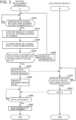
- a battery replacement method by the battery replacement system 1 will be described with reference to the sequence diagrams of FIGS. 2 and 3 . Note that in the sequences shown in FIGS. 2 and 3 , the control of the electrified vehicle 200 is executed by the ECU 203, and the control of the battery replacement apparatus 100 is executed by the processor 11.
- step S10 the electrified vehicle 200 transmits a trigger signal for starting battery replacement through the communication device 202 to the battery replacement apparatus 100.
- step S20 the battery replacement apparatus 100 determines whether the trigger signal in step S10 has been received. If the trigger signal has been received (Yes in S10), the process proceeds to step S30. If no trigger signal has been received (No in S10), the process of step S20 is repeated.
- step S30 the battery replacement apparatus 100 transmits a reply to the trigger signal from the electrified vehicle 200 (a signal indicating that the trigger signal has been received) through the communication unit 13 to the electrified vehicle 200.
- step S40 the electrified vehicle 200 determines whether a reply in step S30 has been received. If the reply in step S30 has been received (Yes in S40), the process proceeds to step S50. If the reply in step S30 has not been received (No in S40), the process of step S40 is repeated.
- the electrified vehicle 200 transmits a vehicle request through the communication device 202 to the battery replacement apparatus 100.
- the vehicle request includes information on the sizes and types of batteries that can be installed in the electrified vehicle 200, information on the electrical characteristics (voltage, output electric power, and remaining capacity) of batteries suitable for the electrified vehicle 200, and the like.
- step S60 the battery replacement apparatus 100 determines whether the vehicle request in step S50 has been received. If the vehicle request has been received (Yes in S60), the process proceeds to step S70. If no vehicle request has been received (No in S60), the process of step S60 is repeated.
- step S70 the battery replacement apparatus 100 transmits information on all batteries 101 corresponding to the vehicle request in step S60 (satisfying the vehicle request) through the communication unit 13 to the electrified vehicle 200. Specifically, information on batteries 101 satisfying at least one of various requests in the vehicle request is transmitted to the electrified vehicle 200.
- step S80 the electrified vehicle 200 determines whether the battery information in step S70 has been received. If the battery information has been received (Yes in S80), the process proceeds to step S90. If no battery information has been received (No in S80), the process of step S80 is repeated.
- step S90 the electrified vehicle 200 determines whether the battery information in step S70 includes information on at least one battery 101. If information on at least one battery 101 exists in the battery information (Yes in S90), the process proceeds to step S100. If no information on any battery 101 exists in the battery information (No in S90), the process proceeds to step S95.
- step S95 the electrified vehicle 200 terminates communication with the battery replacement apparatus 100. Thereafter, the process of the electrified vehicle 200 ends.
- the electrified vehicle 200 selects a battery 101 to be used for battery replacement from among the batteries 101 included in the battery information in step S70.
- the battery 101 to be used for battery replacement may be selected by the ECU 203 based on a predetermined selection criterion, or may be arbitrarily selected by a user.
- step S 110 the electrified vehicle 200 transmits a selection result of step S100 through the communication device 202 (the battery information providing unit 202a, see FIG. 1 ) to the battery replacement apparatus 100.
- the selection result is an example of "replacement battery information capable of identifying a second battery" of the present disclosure.
- step S120 the battery replacement apparatus 100 determines whether communication with the electrified vehicle 200 is continuing. If the communication with the electrified vehicle 200 is continuing (Yes in S120), the process proceeds to step S130. If the communication with the electrified vehicle 200 has ended (No in S120), the process of the battery replacement apparatus 100 ends.
- step S130 the battery replacement apparatus 100 determines whether the selection result of step S 110 has been received. If the selection result has been received (Yes in S130), the process proceeds to step S140. If no selection result has been received (No in S130), the process returns to step S120.
- step S140 the battery replacement apparatus 100 transmits a reply to the selection result of step S 110 (a signal indicating that the selection result has been accepted) through the communication unit 13 to the electrified vehicle 200.
- step S150 the electrified vehicle 200 determines whether the reply in step S140 has been received. If the reply has been received (Yes in S150), the process proceeds to step S160. If the reply has not been received (No in S150), the process of step S150 is repeated.
- step S160 the electrified vehicle 200 transmits the vehicle information of the electrified vehicle 200 through the communication device 202 (vehicle information providing unit 202b, see FIG. 1 ) to the battery replacement apparatus 100.
- vehicle information is transmitted to the battery replacement apparatus 100 after the above selection result is transmitted to the battery replacement apparatus 100.
- step S170 the battery replacement apparatus 100 determines whether the vehicle information in step S160 has been received. If the vehicle information has been received (Yes in S170), the process proceeds to step S180. If the vehicle information has not been received (No in S170), the process of step S170 is repeated.
- step S 180 the battery replacement apparatus 100 transmits a reply to the vehicle information of step S 160 (a signal indicating that the vehicle information has been received) through the communication unit 13 to the electrified vehicle 200. Thereafter, the battery replacement apparatus 100 proceeds to the process of step S200 (see FIG. 3 ).
- step S 190 the electrified vehicle 200 determines whether the reply in step S180 has been received. If the reply has been received (Yes in S190), the electrified vehicle 200 proceeds to the process of step S270 (see FIG. 3 ). If the reply has not been received (No in S190), the process of step S190 is repeated.
- step S200 the battery replacement apparatus 100 determines whether the electrified vehicle 200 has entered the battery replacement apparatus main body 100a.
- the battery replacement apparatus 100 may determine, based on an image captured by the camera 21 (see FIG. 1 ) whether the electrified vehicle 200 has entered the battery replacement apparatus main body 100a.
- the process proceeds to step S210. Note that, at the time point of step S200, it is not identified whether a vehicle that has entered the battery replacement apparatus main body 100a is the electrified vehicle 200, but the description will be given on the assumption that the electrified vehicle 200 has entered.
- step S210 the battery replacement apparatus 100 acquires, through the camera 21, an image of the license plate 204 of the electrified vehicle 200 that has entered the battery replacement apparatus main body 100a in step S200.
- step S220 the battery replacement apparatus 100 uses the image captured by the camera 21 in step S210 to acquire vehicle information (information on the vehicle number) written on the license plate 204.
- step S230 the battery replacement apparatus 100 determines whether the vehicle information transmitted from the electrified vehicle 200 in step S 160 coincides with the information on the license plate 204. If the vehicle information in S160 and the information on the license plate 204 coincide with each other (Yes in S230), the process proceeds to step S240. If the vehicle information in S 160 and the information on the license plate 204 do not coincide with each other (No in S230), the process proceeds to step S250. Note that the vehicle information in S160 and the information on the license plate 204 coinciding with each other includes, for example, a case where the vehicle information in step S160 includes the information on the license plate 204.
- step S240 the battery replacement apparatus 100 notifies the electrified vehicle 200 through the communication unit 13 that battery replacement will be performed (started). Next, the process proceeds to step S260.
- step S250 the battery replacement apparatus 100 determines that the vehicle which has entered the battery replacement apparatus main body 100a is not the electrified vehicle 200 that transmitted the vehicle information in step S160 (is an unreserved vehicle). Thereafter, the process returns to step S200.
- step S260 the battery replacement apparatus 100 prepares a replacement-scheduled battery 101 (a battery 101 selected in step S100). Specifically, the battery replacement apparatus 100 controls the drive device 30 (the battery placement stand 31, the transport unit 33, etc.) such that the replacement-scheduled battery 101 is placed on the battery placement stand 31 (see FIG. 1 ).
- step S270 the electrified vehicle 200 determines whether a notification of executing battery replacement (the notification in step S240) has been received. If the notification has been received (Yes in S270), the process proceeds to step S280. If the notification has not been received (No in S270), the process of step S270 is repeated.
- step S280 the electrified vehicle 200 transmits a reply to the notification in step S240 (a signal indicating that the notification has been received) to the battery replacement apparatus 100. Thereafter, the process of the electrified vehicle 200 is terminated.
- step S290 the battery replacement apparatus 100 determines whether the reply in step S280 has been received. If the reply has been received (Yes in S290), the process proceeds to step S300. If the reply has not been received (No in S290), the process of step S290 is repeated.
- step S300 the battery replacement apparatus 100 executes the battery replacement process. Specifically, the battery replacement apparatus 100 controls the drive device 30 (the lifting unit 32, the battery placement stand 31, the transport unit 33, and the like) to replace the battery 201 of the electrified vehicle 200 with the battery 101 placed on the battery placement stand 31. Thereafter, the process of the battery replacement apparatus 100 is terminated.
- the drive device 30 the lifting unit 32, the battery placement stand 31, the transport unit 33, and the like
- the control device 10 of the battery replacement apparatus 100 uses the replacement battery information (selection result) and vehicle information acquired from the electrified vehicle 200 to control the drive device 30 such that the selected battery 101 is mounted in the electrified vehicle 200.
- This makes it possible to directly acquire the vehicle information from the electrified vehicle 200, so that it is unnecessary to perform a step of recording the vehicle information in the battery 201 or the like in advance.
- the above recording step is unnecessary, which makes it possible to simplify the steps required for battery replacement.
- the vehicle information is provided to the battery replacement apparatus 100.
- vehicle information personal information
- FIG. 4 is a diagram showing the battery replacement system 2 including a battery replacement apparatus 400 and an electrified vehicle 200 according to the second embodiment.
- the battery replacement apparatus 400 differs from the battery replacement apparatus 100 of the first embodiment in that it includes a control device 110 instead of the control device 10, and includes an acquisition unit 120 instead of the acquisition unit 20.
- the control device 110 includes a processor 111, a memory 112, and a communication unit 13.
- the memory 112 stores not only programs to be executed by the processor 111, but also information to be used by the programs (for example, maps, formulas, and various parameters).
- the acquisition unit 120 includes a near-field radio communication unit 121.
- the near-field radio communication unit 121 is configured to be capable of communicating with the electrified vehicle 200 with wi-fi (registered trademark), Bluetooth (registered trademark), or the like. Note that the near-field radio communication unit 121 is an example of "communication unit" in the present disclosure.
- FIG. 5 is a sequence diagram showing a battery replacement method of the battery replacement system 2 according to the second embodiment.
- the control of the electrified vehicle 200 is performed by ECU 203
- the control of the battery replacement apparatus 400 is performed by the processor 111 of the control device 110. Note that the same processing steps as those in the sequence of the first embodiment are given the same reference signs, and repetitive description thereon will not be made.
- step S211 the electrified vehicle 200 transmits vehicle information (VIN, a vehicle number, etc.) to the battery replacement apparatus 400 (the near-field radio communication unit 121) by near-field radio communication.
- vehicle information is an example of "second vehicle information" in the present disclosure.
- step S212 the battery replacement apparatus 400 determines whether the vehicle information in step S211 has been received. If the vehicle information has been received (Yes in S212), the process proceeds to step S231. If the vehicle information has not been received (No in S212), the process of step S212 is repeated.
- step S231 it is determined whether the vehicle information in step S160 (see FIG. 2 ) and the vehicle information in step S211 coincide with each other. If these pieces of vehicle information coincide with each other (Yes in S231), the process proceeds to step S240. If these pieces of vehicle information do not coincide with each other (No in S230), the process proceeds to step S250. Note that the pieces of vehicle information coinciding with each other also includes, for example, a case where the vehicle information in step S160 includes the vehicle information in step S211.
- sequence control shown in FIG. 6 may be executed.
- An example shown in FIG. 6 differs from the example shown in FIG. 2 in that the process of step S71 is executed instead of step S70 (see FIG. 2 ), the process of step S91 is executed instead of step S90 (see FIG. 2 ), and the processes of steps S30 to S60 (see FIG. 2 ) are not executed.
- step S71 the battery replacement apparatus 100 (110) transmits battery information on all batteries 101 stored in the battery replacement apparatus 100 (110) (possessed by the battery replacement apparatus 100 (110)) through the communication unit 13 to the electrified vehicle 200. Thereafter, the process proceeds to step S120.
- step S91 it is determined whether the battery information transmitted in step S71 includes information on at least one battery 101. If information on at least one battery 101 is included (Yes in S91), the process proceeds to step S100. If the battery information does not include any information on batteries 101 (No in S91), the process proceeds to step S95.
- the above first and second embodiments show the example in which the vehicle information and the replacement battery information (selection result) are transmitted from the electrified vehicle 200 to the battery replacement apparatus 100 (110), but the present disclosure is not limited to this manner.
- at least one of the vehicle information and the replacement battery information may be transmitted from the mobile terminal 300 to the battery replacement apparatus 100 (110).
- the above first and second embodiments show the example in which the electrified vehicle 200 transmits the replacement battery information (selection result) to the battery replacement apparatus 100 (110), and then transmits the vehicle information (first vehicle information) to the battery replacement apparatus 100 (110), but the present disclosure is not limited to this manner.
- the electrified vehicle 200 may transmit the replacement battery information and the vehicle information to the battery replacement apparatus 100 (110) at the same time.
- the first embodiment shows the example in which it is determined based on the vehicle number whether the electrified vehicle is a reserved vehicle, but the present disclosure is not limited to this manner.
- the above determination may be made based on a code issued at the reception of the battery replacement apparatus 100, a registration ID or the like.
- the above first and second embodiments shows the example in which the electrified vehicle 200 and the battery replacement apparatus 100 (110) communicate directly with each other, but the present disclosure is not limited to this manner.
- the electrified vehicle 200 and the battery replacement apparatus 100 (110) may communicate indirectly with each other via an external server.
- the above first and second embodiments show the example in which batteries 101 are stored in the battery replacement apparatus 100 (110), but the present disclosure is not limited to this manner.
- the batteries 101 to be used for battery replacement may be stored outside the battery replacement apparatus 100 (110).
- the above first and second embodiments show the example in which the vehicle information (second vehicle information) is acquired by the battery replacement apparatus 100 (110) when the electrified vehicle 200 enters the battery replacement apparatus main body 100a, but the present disclosure is not limited to this manner.
- the vehicle information may be acquired before the electrified vehicle 200 enters the battery replacement apparatus main body 100a.
Landscapes
- Engineering & Computer Science (AREA)
- Mechanical Engineering (AREA)
- Power Engineering (AREA)
- Transportation (AREA)
- Sustainable Energy (AREA)
- Sustainable Development (AREA)
- Life Sciences & Earth Sciences (AREA)
- Business, Economics & Management (AREA)
- Theoretical Computer Science (AREA)
- General Physics & Mathematics (AREA)
- Physics & Mathematics (AREA)
- Tourism & Hospitality (AREA)
- Signal Processing (AREA)
- Primary Health Care (AREA)
- General Business, Economics & Management (AREA)
- Marketing (AREA)
- Human Resources & Organizations (AREA)
- Computer Networks & Wireless Communication (AREA)
- Strategic Management (AREA)
- Multimedia (AREA)
- General Health & Medical Sciences (AREA)
- Economics (AREA)
- Health & Medical Sciences (AREA)
- Electric Propulsion And Braking For Vehicles (AREA)
- Secondary Cells (AREA)
- Charge And Discharge Circuits For Batteries Or The Like (AREA)
- Vehicle Cleaning, Maintenance, Repair, Refitting, And Outriggers (AREA)
Abstract
A battery replacement apparatus (100) performs battery replacement for replacing a first battery (201) mounted in a vehicle (200) with a second battery (101). The battery replacement apparatus (100) includes a drive device (30) that performs battery replacement, and a processor (11) that controls the drive device (30). The processor (11) acquires first vehicle information for identifying the vehicle (200) and replacement battery information for identifying the second battery (101) from the vehicle (200) or a user of the vehicle (200). The processor (11) controls the drive device (30) using the replacement battery information and the first vehicle information to replace the first battery (201) with the second battery (101).
Description
- The present disclosure relates to a battery replacement apparatus, an information providing device, a battery replacement system, and a battery replacement method.
- International Publication No.
WO2019/181585 discloses a station management device for determining whether batteries stocked at a station can be rented out, based on at least one of vehicle-related information and user-related information recorded in the batteries. - In the system described in the foregoing International Publication NO.
WO 2019/181585 , it is required to record at least one of vehicle-related information and user-related information in a battery. In other words, rental of a battery (battery replacement) is not allowed for a vehicle equipped with a battery in which the above information is not recorded. - The present disclosure provides a battery replacement apparatus, an information providing device, a battery replacement system, and a battery replacement method that are capable of performing battery replacement regardless of information recorded in a battery mounted in a vehicle.
- According to an aspect of the present disclosure, a battery replacement apparatus is configured to perform battery replacement for replacing a first battery mounted in a vehicle with a second battery. The battery replacement apparatus comprises a drive device configured to perform the battery replacement, and a processor configured to control the drive device. The processor is configured to acquire first vehicle information that identifies the vehicle and replacement battery information that identifies the second battery from the vehicle or a user of the vehicle, and control the drive device using the replacement battery information and the first vehicle information to replace the first battery with the second battery.
- As described above, the battery replacement apparatus controls the drive device using the replacement battery information and the first vehicle information acquired from the vehicle or the user of the vehicle such that the second battery is mounted in the vehicle. This enables the battery replacement apparatus to acquire the first vehicle information from the vehicle or the user of the vehicle even when the first vehicle information is not recorded on the first battery. As a result, the first battery on which the first vehicle information is not recorded can also be replaced with the second battery in the battery replacement apparatus. In other words, battery replacement can be performed regardless of the information recorded on the first battery mounted in the vehicle.
- The processor may be configured to control the drive device using the replacement battery information and the first vehicle information acquired after the replacement battery information such that the second battery is mounted in the vehicle. With this configuration, the battery replacement apparatus can mount a second battery corresponding to the replacement battery information in a vehicle corresponding to the first vehicle information by using the replacement battery information and the first vehicle information obtained after the replacement battery information.
- The battery replacement apparatus may further comprise an acquisition unit configured to acquire second vehicle information of the vehicle. The processor may be configured to control the drive device to replace the first battery with the second battery when the second vehicle information coincides with the first vehicle information. Such a configuration makes it possible to restrain battery replacement from being performed when the first vehicle information and the second vehicle information do not coincide with each other. As a result, it is possible to restrain a battery other than the second battery scheduled to be used for the battery replacement from being erroneously mounted in the vehicle. Note that the second vehicle information and the first vehicle information coinciding with each other includes not only a case where the first vehicle information and the second vehicle information are completely identical to each other, but also a case where the second vehicle information is included in the first vehicle information.
- The acquisition unit may include a camera configured to image the vehicle. The second vehicle information may include information on a license plate of the vehicle imaged by the camera. Such a configuration enables the battery replacement apparatus to easily acquire the second vehicle information by using an image captured by the camera.
- The acquisition unit may include a communication unit configured to perform near-field radio communication with the vehicle, and may be configured to receive the second vehicle information from the vehicle through the communication unit. Such a configuration enables the battery replacement apparatus to easily acquire the second vehicle information using near-field radio communication by the communication unit.
- According to another aspect of the present disclosure, an information providing device is configured to provide information to a battery replacement apparatus that replaces a first battery mounted in a vehicle with a second battery. The information providing device is configured to provide the battery replacement apparatus with replacement battery information that identifies the second battery, and provide the battery replacement apparatus with vehicle information that identifies the vehicle.
- As described above, the information providing device provides the battery replacement apparatus with the replacement battery information, and provides the battery replacement apparatus with the vehicle information of the vehicle. This makes it possible to provide the battery replacement apparatus with the vehicle information of the vehicle even when the first vehicle information is not recorded on the first battery. As a result, it is possible to provide an information providing device that is capable of performing battery replacement regardless of information recorded on the first battery mounted in the vehicle.
- The information providing device may be configured to provide the battery replacement apparatus with the vehicle information after the replacement battery information is provided to the battery replacement apparatus. Such a configuration makes it possible to restrain the vehicle information of the vehicle from being provided to the battery replacement apparatus before the replacement battery information is provided to the battery replacement apparatus. As a result, it is possible to restrain the vehicle information from being provided to the battery replacement apparatus when battery replacement is not performed (for example, when a battery replacement contract is not established). As a result, it is possible to restrain leakage of vehicle information.
- According to yet another aspect of the present disclosure, a battery replacement system comprises the battery replacement apparatus described above, and the information providing device described above. As a result, it is possible to provide a battery replacement system that is capable of performing battery replacement regardless of information recorded on the first battery mounted in the vehicle.
- According to yet another aspect of the present disclosure, a battery replacement method for a battery replacement apparatus that replaces a first battery mounted in a vehicle with a second battery, comprises acquiring vehicle information that identifies the vehicle from the vehicle or a user of the vehicle, acquiring replacement battery information that identifies the second battery from the vehicle or the user, and replacing the first battery with the second battery using the replacement battery information and the vehicle information.
- As described above, the process of mounting the second battery in the vehicle is executed by using the replacement battery information and the vehicle information acquired from the vehicle or the user of the vehicle. As a result, it is possible to provide a battery replacement method that can perform battery replacement regardless of the information recorded on the first battery mounted in the vehicle.
- According to the present disclosure, battery replacement can be performed regardless of information recorded on a battery mounted in a vehicle.
- Features, advantages, and technical and industrial significance of exemplary embodiments of the invention will be described below with reference to the accompanying drawings, in which like signs denote like elements, and wherein:
-
FIG. 1 is a diagram showing a configuration of a system according to a first embodiment; -
FIG. 2 is a diagram showing sequence control of a battery replacement system according to the first embodiment:-
FIG. 3 is a diagram showing a sequence followingFIG. 2 ; -
FIG. 4 is a diagram showing a configuration of a system according to a second embodiment; -
FIG. 5 is a diagram showing sequence control of a battery replacement system according to the second embodiment; and -
FIG. 6 is a diagram showing sequence control of a battery replacement system according to modifications of the first and second embodiments.
-
- Embodiments of the present disclosure will be described below in detail with reference to the drawings. In the drawings, the same or corresponding portions are designated by the same reference signs, and the description thereof will not be repeated.
-
FIG. 1 is a diagram showing abattery replacement system 1 including abattery replacement apparatus 100 according to a first embodiment and anelectrified vehicle 200. Note that theelectrified vehicle 200 is an example of a "vehicle" in the present disclosure. - The
electrified vehicle 200 includes abattery 201, acommunication device 202, and an electronic control unit (ECU) 203. Theelectrified vehicles 200 is, for example, a plug-in hybrid electric vehicle (PHEV), a battery electric vehicle (BEV), or a fuel cell electric vehicle (FCEV). - The
battery 201 stores electric power to be used to drive theelectrified vehicle 200. Thecommunication device 202 is configured to be capable of communicating with a communication apparatus outside the vehicle. Thecommunication device 202 includes, for example, a data communication module (DCM). TheECU 203 controls various systems in the electrifiedvehicle 200. Note that thecommunication device 202 is an example of an "information providing device" in the present disclosure. - The
communication device 202 includes a batteryinformation providing unit 202a, and a vehicleinformation providing unit 202b. The batteryinformation providing unit 202a provides (transmits) replacement battery information capable of identifying abattery 101 to be used for battery replacement to thebattery replacement apparatus 100. The vehicleinformation providing unit 202b provides (transmits) vehicle information (vehicle identification number (VIN) and personal information such as a vehicle number) capable of identifying the electrifiedvehicle 200 to thebattery replacement apparatus 100. Note that each of the batteryinformation providing unit 202a and the vehicleinformation providing unit 202b represents software in which functional features of thecommunication device 202 are blocked. Details of each function will be described later. The vehicle information is an example of "first vehicle information" and "vehicle information" of the present disclosure. - The
battery replacement apparatus 100 includes a battery replacement apparatusmain body 100a in which battery replacement is performed, and astorehouse 100b in whichbatteries 101 are stored. The battery replacement apparatusmain body 100a is an apparatus that performs battery replacement for replacing abattery 201 mounted in an electrifiedvehicle 200 with abattery 101. Thestorehouse 100b is established with the battery replacement apparatusmain body 100a. The battery replacement apparatus 100 (battery replacement apparatusmain body 100a) is provided with an entrance/exit 102 through which the electrifiedvehicle 200 enters and exits. Note that thebattery 101 is an example of "second battery" in the present disclosure. Thebattery 201 is an example of "first battery" in the present disclosure. - A
battery 101 stored in thestorehouse 100b is moved to atemporary storage space 40 provided in an underfloor area S, and then transported to the electrifiedvehicle 200. Note that the underfloor area S is provided with a battery placement stand 31, a liftingunit 32, and atransport unit 33 which will be described later. - The battery replacement apparatus 100 (battery replacement apparatus
main body 100a) includes acontrol device 10, anacquisition unit 20, and adrive device 30. Thedrive device 30 performs a battery replacement treatment. Thecontrol device 10 controls thedrive device 30. - The
control device 10 includes aprocessor 11, amemory 12, and acommunication unit 13. Not only programs to be executed by theprocessor 11, but also information to be used by the programs (for example, maps, formulas, and various parameters) are stored in thememory 12. Theprocessor 11 controls thedrive device 30. - The
communication unit 13 includes various communication I/Fs. Theprocessor 11 controls thecommunication unit 13. Thecommunication unit 13 communicates with thecommunication device 202, etc. of the electrifiedvehicle 200. Thecommunication unit 13 and the electrified vehicle 200 (communication device 202) can communicate bidirectionally with each other. Note that thecommunication unit 13 can also communicate with amobile terminal 300 owned by a user of the electrifiedvehicle 200. The first embodiment shows an example in which various information is exchanged between thecommunication device 202 of the electrifiedvehicle 200 and thecommunication unit 13 of thebattery replacement apparatus 100. - The
battery replacement apparatus 100 is provided with avehicle stopping area 103. The battery replacement treatment is performed by thedrive device 30 in a state where the electrifiedvehicle 200 is stopped in thevehicle stopping area 103. As a result, thebattery 201 is replaced with thebattery 101. - The
acquisition unit 20 includes acamera 21. Thecamera 21 is installed in the battery replacement apparatus 100 (battery replacement apparatusmain body 100a). Thecamera 21 captures an image of an electrifiedvehicle 200 that have entered the battery replacement apparatusmain body 100a. As a result, alicense plate 204 of the electrifiedvehicle 200 is imaged by thecamera 21. Theacquisition unit 20 acquires information (vehicle number) of thelicense plate 204 imaged by thecamera 21. Note that the information on thelicense plate 204 is an example of the "second vehicle information" of the present disclosure. - The
drive device 30 includes the battery placement stand 31, the liftingunit 32, and thetransport unit 33. The liftingunit 32 moves the electrifiedvehicle 200 up and down by moving the electrifiedvehicle 200 up and down while holding them from below. The liftingunit 32 includes a pair of liftingbars 32a. The electrifiedvehicle 200 is supported from below by the pair of liftingbars 32a. Battery replacement (attachment and detachment of batteries) is performed in a state where the electrifiedvehicle 200 is held horizontally by the pair of liftingbars 32a. - The battery placement stand 31 is configured to be movable up and down in a Z direction. The battery placement stand 31 moves up to a height position of a bottom portion of the electrified
vehicle 200, whereby thebattery 201 removed from the electrifiedvehicle 200 is placed on thebattery placement stand 31. Furthermore, the battery placement stand 31 on which thebattery 101 is placed moves up to a height position of the bottom portion of the electrifiedvehicle 200, whereby thebattery 101 is attached to the electrifiedvehicle 200. - The
transport unit 33 is configured to be capable of transporting the batteries (201, 101). Specifically, thetransport unit 33 transports, to thetemporary storage space 40, thebattery 201 that has been removed from the electrifiedvehicle 200 and placed on thebattery placement stand 31. Furthermore, thetransport unit 33 also transports, to the battery placement stand 31, thebattery 101 that has been transported from thestorehouse 100b to thetemporary storage space 40. - Here, in a conventional battery replacement system, there is a case where whether rental of a battery stocked in a battery replacement apparatus is allowed or not is determined based on vehicle information recorded in the battery of the vehicle. However, this system requires that vehicle information be recorded in the battery in advance. In other words, when no vehicle information is recorded in the battery of the vehicle, rental of a battery (battery replacement) is not allowed for the vehicle.
- Therefore, in the first embodiment, the
control device 10 of thebattery replacement apparatus 100 uses replacement battery information and vehicle information acquired from the electrifiedvehicle 200 to control thedrive device 30 such that thebattery 201 is replaced with thebattery 101. Specifically, thecontrol device 10 controls thedrive device 30 by using the replacement battery information and vehicle information transmitted from the electrifiedvehicle 200 to thecommunication unit 13. Details will be described later with reference toFIGS. 2 and3 . - A battery replacement method by the
battery replacement system 1 will be described with reference to the sequence diagrams ofFIGS. 2 and3 . Note that in the sequences shown inFIGS. 2 and3 , the control of the electrifiedvehicle 200 is executed by theECU 203, and the control of thebattery replacement apparatus 100 is executed by theprocessor 11. - In step S10, the electrified
vehicle 200 transmits a trigger signal for starting battery replacement through thecommunication device 202 to thebattery replacement apparatus 100. - In step S20, the
battery replacement apparatus 100 determines whether the trigger signal in step S10 has been received. If the trigger signal has been received (Yes in S10), the process proceeds to step S30. If no trigger signal has been received (No in S10), the process of step S20 is repeated. - In step S30, the
battery replacement apparatus 100 transmits a reply to the trigger signal from the electrified vehicle 200 (a signal indicating that the trigger signal has been received) through thecommunication unit 13 to the electrifiedvehicle 200. - In step S40, the electrified
vehicle 200 determines whether a reply in step S30 has been received. If the reply in step S30 has been received (Yes in S40), the process proceeds to step S50. If the reply in step S30 has not been received (No in S40), the process of step S40 is repeated. - In step S50, the electrified
vehicle 200 transmits a vehicle request through thecommunication device 202 to thebattery replacement apparatus 100. The vehicle request includes information on the sizes and types of batteries that can be installed in the electrifiedvehicle 200, information on the electrical characteristics (voltage, output electric power, and remaining capacity) of batteries suitable for the electrifiedvehicle 200, and the like. - In step S60, the
battery replacement apparatus 100 determines whether the vehicle request in step S50 has been received. If the vehicle request has been received (Yes in S60), the process proceeds to step S70. If no vehicle request has been received (No in S60), the process of step S60 is repeated. - In step S70, the
battery replacement apparatus 100 transmits information on allbatteries 101 corresponding to the vehicle request in step S60 (satisfying the vehicle request) through thecommunication unit 13 to the electrifiedvehicle 200. Specifically, information onbatteries 101 satisfying at least one of various requests in the vehicle request is transmitted to the electrifiedvehicle 200. - In step S80, the electrified
vehicle 200 determines whether the battery information in step S70 has been received. If the battery information has been received (Yes in S80), the process proceeds to step S90. If no battery information has been received (No in S80), the process of step S80 is repeated. - In step S90, the electrified
vehicle 200 determines whether the battery information in step S70 includes information on at least onebattery 101. If information on at least onebattery 101 exists in the battery information (Yes in S90), the process proceeds to step S100. If no information on anybattery 101 exists in the battery information (No in S90), the process proceeds to step S95. - In step S95, the electrified
vehicle 200 terminates communication with thebattery replacement apparatus 100. Thereafter, the process of the electrifiedvehicle 200 ends. - In step S100, the electrified
vehicle 200 selects abattery 101 to be used for battery replacement from among thebatteries 101 included in the battery information in step S70. For example, thebattery 101 to be used for battery replacement may be selected by theECU 203 based on a predetermined selection criterion, or may be arbitrarily selected by a user. - In
step S 110, the electrifiedvehicle 200 transmits a selection result of step S100 through the communication device 202 (the batteryinformation providing unit 202a, seeFIG. 1 ) to thebattery replacement apparatus 100. Note that the selection result is an example of "replacement battery information capable of identifying a second battery" of the present disclosure. - In step S120, the
battery replacement apparatus 100 determines whether communication with the electrifiedvehicle 200 is continuing. If the communication with the electrifiedvehicle 200 is continuing (Yes in S120), the process proceeds to step S130. If the communication with the electrifiedvehicle 200 has ended (No in S120), the process of thebattery replacement apparatus 100 ends. - In step S130, the
battery replacement apparatus 100 determines whether the selection result ofstep S 110 has been received. If the selection result has been received (Yes in S130), the process proceeds to step S140. If no selection result has been received (No in S130), the process returns to step S120. - In step S140, the
battery replacement apparatus 100 transmits a reply to the selection result of step S 110 (a signal indicating that the selection result has been accepted) through thecommunication unit 13 to the electrifiedvehicle 200. - In step S150, the electrified
vehicle 200 determines whether the reply in step S140 has been received. If the reply has been received (Yes in S150), the process proceeds to step S160. If the reply has not been received (No in S150), the process of step S150 is repeated. - In step S160, the electrified
vehicle 200 transmits the vehicle information of the electrifiedvehicle 200 through the communication device 202 (vehicleinformation providing unit 202b, seeFIG. 1 ) to thebattery replacement apparatus 100. In other words, the vehicle information is transmitted to thebattery replacement apparatus 100 after the above selection result is transmitted to thebattery replacement apparatus 100. - In step S170, the
battery replacement apparatus 100 determines whether the vehicle information in step S160 has been received. If the vehicle information has been received (Yes in S170), the process proceeds to step S180. If the vehicle information has not been received (No in S170), the process of step S170 is repeated. - In
step S 180, thebattery replacement apparatus 100 transmits a reply to the vehicle information of step S 160 (a signal indicating that the vehicle information has been received) through thecommunication unit 13 to the electrifiedvehicle 200. Thereafter, thebattery replacement apparatus 100 proceeds to the process of step S200 (seeFIG. 3 ). - In
step S 190, the electrifiedvehicle 200 determines whether the reply in step S180 has been received. If the reply has been received (Yes in S190), the electrifiedvehicle 200 proceeds to the process of step S270 (seeFIG. 3 ). If the reply has not been received (No in S190), the process of step S190 is repeated. - As shown in
FIG. 3 , in step S200, thebattery replacement apparatus 100 determines whether the electrifiedvehicle 200 has entered the battery replacement apparatusmain body 100a. Thebattery replacement apparatus 100 may determine, based on an image captured by the camera 21 (seeFIG. 1 ) whether the electrifiedvehicle 200 has entered the battery replacement apparatusmain body 100a. When the electrifiedvehicle 200 has entered the battery replacement apparatusmain body 100a (Yes in S200), the process proceeds to step S210. Note that, at the time point of step S200, it is not identified whether a vehicle that has entered the battery replacement apparatusmain body 100a is the electrifiedvehicle 200, but the description will be given on the assumption that the electrifiedvehicle 200 has entered. - In step S210, the
battery replacement apparatus 100 acquires, through thecamera 21, an image of thelicense plate 204 of the electrifiedvehicle 200 that has entered the battery replacement apparatusmain body 100a in step S200. - In step S220, the
battery replacement apparatus 100 uses the image captured by thecamera 21 in step S210 to acquire vehicle information (information on the vehicle number) written on thelicense plate 204. - In step S230, the
battery replacement apparatus 100 determines whether the vehicle information transmitted from the electrifiedvehicle 200 instep S 160 coincides with the information on thelicense plate 204. If the vehicle information in S160 and the information on thelicense plate 204 coincide with each other (Yes in S230), the process proceeds to step S240. If the vehicle information inS 160 and the information on thelicense plate 204 do not coincide with each other (No in S230), the process proceeds to step S250. Note that the vehicle information in S160 and the information on thelicense plate 204 coinciding with each other includes, for example, a case where the vehicle information in step S160 includes the information on thelicense plate 204. - In step S240, the
battery replacement apparatus 100 notifies the electrifiedvehicle 200 through thecommunication unit 13 that battery replacement will be performed (started). Next, the process proceeds to step S260. - On the other hand, in step S250, the
battery replacement apparatus 100 determines that the vehicle which has entered the battery replacement apparatusmain body 100a is not the electrifiedvehicle 200 that transmitted the vehicle information in step S160 (is an unreserved vehicle). Thereafter, the process returns to step S200. - In step S260, the
battery replacement apparatus 100 prepares a replacement-scheduled battery 101 (abattery 101 selected in step S100). Specifically, thebattery replacement apparatus 100 controls the drive device 30 (the battery placement stand 31, thetransport unit 33, etc.) such that the replacement-scheduledbattery 101 is placed on the battery placement stand 31 (seeFIG. 1 ). - In step S270, the electrified
vehicle 200 determines whether a notification of executing battery replacement (the notification in step S240) has been received. If the notification has been received (Yes in S270), the process proceeds to step S280. If the notification has not been received (No in S270), the process of step S270 is repeated. - In step S280, the electrified
vehicle 200 transmits a reply to the notification in step S240 (a signal indicating that the notification has been received) to thebattery replacement apparatus 100. Thereafter, the process of the electrifiedvehicle 200 is terminated. - In step S290, the
battery replacement apparatus 100 determines whether the reply in step S280 has been received. If the reply has been received (Yes in S290), the process proceeds to step S300. If the reply has not been received (No in S290), the process of step S290 is repeated. - In step S300, the
battery replacement apparatus 100 executes the battery replacement process. Specifically, thebattery replacement apparatus 100 controls the drive device 30 (the liftingunit 32, the battery placement stand 31, thetransport unit 33, and the like) to replace thebattery 201 of the electrifiedvehicle 200 with thebattery 101 placed on thebattery placement stand 31. Thereafter, the process of thebattery replacement apparatus 100 is terminated. - As described above, in the first embodiment, the
control device 10 of thebattery replacement apparatus 100 uses the replacement battery information (selection result) and vehicle information acquired from the electrifiedvehicle 200 to control thedrive device 30 such that the selectedbattery 101 is mounted in the electrifiedvehicle 200. This makes it possible to directly acquire the vehicle information from the electrifiedvehicle 200, so that it is unnecessary to perform a step of recording the vehicle information in thebattery 201 or the like in advance. As a result, it is possible to perform battery replacement regardless of the information recorded in thebattery 201 mounted in the electrifiedvehicle 200. Furthermore, the above recording step is unnecessary, which makes it possible to simplify the steps required for battery replacement. - Furthermore, in the first embodiment, after replacement battery information (selection result) is provided to the
battery replacement apparatus 100, the vehicle information is provided to thebattery replacement apparatus 100. This makes it possible to restrain vehicle information from being provided to thebattery replacement apparatus 100 in a situation where thebattery 101 to be used for replacement has not been decided (a contract has not been established). As a result, it is possible to restrain vehicle information (personal information) from being leaked unnecessarily. - Next, a
battery replacement system 2 according to a second embodiment will be described with reference toFIG. 4 andFIG. 5 . The same components as those in the first embodiment are denoted by the same reference signs, and repetitive description thereon will not be made. -
FIG. 4 is a diagram showing thebattery replacement system 2 including abattery replacement apparatus 400 and an electrifiedvehicle 200 according to the second embodiment. - The
battery replacement apparatus 400 differs from thebattery replacement apparatus 100 of the first embodiment in that it includes acontrol device 110 instead of thecontrol device 10, and includes anacquisition unit 120 instead of theacquisition unit 20. - The
control device 110 includes aprocessor 111, amemory 112, and acommunication unit 13. Thememory 112 stores not only programs to be executed by theprocessor 111, but also information to be used by the programs (for example, maps, formulas, and various parameters). - The
acquisition unit 120 includes a near-fieldradio communication unit 121. The near-fieldradio communication unit 121 is configured to be capable of communicating with the electrifiedvehicle 200 with wi-fi (registered trademark), Bluetooth (registered trademark), or the like. Note that the near-fieldradio communication unit 121 is an example of "communication unit" in the present disclosure. -
FIG. 5 is a sequence diagram showing a battery replacement method of thebattery replacement system 2 according to the second embodiment. In the sequence shown inFIG. 5 , the control of the electrifiedvehicle 200 is performed byECU 203, and the control of thebattery replacement apparatus 400 is performed by theprocessor 111 of thecontrol device 110. Note that the same processing steps as those in the sequence of the first embodiment are given the same reference signs, and repetitive description thereon will not be made. - In step S211, the electrified
vehicle 200 transmits vehicle information (VIN, a vehicle number, etc.) to the battery replacement apparatus 400 (the near-field radio communication unit 121) by near-field radio communication. Note that the vehicle information is an example of "second vehicle information" in the present disclosure. - In the case of Yes in step S200, the
battery replacement apparatus 400 executes the process of step S212. In step S212, thebattery replacement apparatus 400 determines whether the vehicle information in step S211 has been received. If the vehicle information has been received (Yes in S212), the process proceeds to step S231. If the vehicle information has not been received (No in S212), the process of step S212 is repeated. - In step S231, it is determined whether the vehicle information in step S160 (see
FIG. 2 ) and the vehicle information in step S211 coincide with each other. If these pieces of vehicle information coincide with each other (Yes in S231), the process proceeds to step S240. If these pieces of vehicle information do not coincide with each other (No in S230), the process proceeds to step S250. Note that the pieces of vehicle information coinciding with each other also includes, for example, a case where the vehicle information in step S160 includes the vehicle information in step S211. - The other configurations and controls are the same as those in the first embodiment, and therefore repetitive description thereon will not be made.
- In the above first and second embodiments, an example has been shown in which information on the
battery 101 meeting at least one of vehicle requests is transmitted to the electrifiedvehicle 200, but the present disclosure is not limited to this manner. Information on abattery 101 that does not meet the vehicle requests may be transmitted to the electrifiedvehicle 200. - For example, sequence control shown in
FIG. 6 may be executed. An example shown inFIG. 6 differs from the example shown inFIG. 2 in that the process of step S71 is executed instead of step S70 (seeFIG. 2 ), the process of step S91 is executed instead of step S90 (seeFIG. 2 ), and the processes of steps S30 to S60 (seeFIG. 2 ) are not executed. - In step S71, the battery replacement apparatus 100 (110) transmits battery information on all
batteries 101 stored in the battery replacement apparatus 100 (110) (possessed by the battery replacement apparatus 100 (110)) through thecommunication unit 13 to the electrifiedvehicle 200. Thereafter, the process proceeds to step S120. In step S91, it is determined whether the battery information transmitted in step S71 includes information on at least onebattery 101. If information on at least onebattery 101 is included (Yes in S91), the process proceeds to step S100. If the battery information does not include any information on batteries 101 (No in S91), the process proceeds to step S95. - The above first and second embodiments show the example in which the vehicle information and the replacement battery information (selection result) are transmitted from the electrified
vehicle 200 to the battery replacement apparatus 100 (110), but the present disclosure is not limited to this manner. For example, at least one of the vehicle information and the replacement battery information may be transmitted from themobile terminal 300 to the battery replacement apparatus 100 (110). - The above first and second embodiments show the example in which the electrified
vehicle 200 transmits the replacement battery information (selection result) to the battery replacement apparatus 100 (110), and then transmits the vehicle information (first vehicle information) to the battery replacement apparatus 100 (110), but the present disclosure is not limited to this manner. For example, the electrifiedvehicle 200 may transmit the replacement battery information and the vehicle information to the battery replacement apparatus 100 (110) at the same time. - The first embodiment shows the example in which it is determined based on the vehicle number whether the electrified vehicle is a reserved vehicle, but the present disclosure is not limited to this manner. For example, the above determination may be made based on a code issued at the reception of the
battery replacement apparatus 100, a registration ID or the like. - The above first and second embodiments shows the example in which the electrified
vehicle 200 and the battery replacement apparatus 100 (110) communicate directly with each other, but the present disclosure is not limited to this manner. For example, the electrifiedvehicle 200 and the battery replacement apparatus 100 (110) may communicate indirectly with each other via an external server. - The above first and second embodiments show the example in which
batteries 101 are stored in the battery replacement apparatus 100 (110), but the present disclosure is not limited to this manner. Thebatteries 101 to be used for battery replacement may be stored outside the battery replacement apparatus 100 (110). - The above first and second embodiments show the example in which the vehicle information (second vehicle information) is acquired by the battery replacement apparatus 100 (110) when the electrified
vehicle 200 enters the battery replacement apparatusmain body 100a, but the present disclosure is not limited to this manner. For example, the vehicle information may be acquired before the electrifiedvehicle 200 enters the battery replacement apparatusmain body 100a. - The embodiments disclosed herein are illustrative and not restrictive in all respects. The scope of the present disclosure is indicated by the claims, not by the description of the above embodiments, and includes all changes within a range equivalent to the scope of the claims.
Claims (11)
- A battery replacement apparatus (100; 400) configured to perform battery replacement of replacing a first battery (201) mounted in a vehicle (200) with a second battery (101), comprising:a drive device (30) configured to perform the battery replacement; anda processor (11; 111) configured to control the drive device (30),wherein the processor (11; 111) is configured toacquire first vehicle information that identifies the vehicle (200) and replacement battery information that identifies the second battery (101) from the vehicle (200) or a user of the vehicle (200), andcontrol the drive device (30) using the replacement battery information and the first vehicle information to replace the first battery (201) with the second battery (101).
- The battery replacement apparatus (100; 400) according to claim 1, wherein the processor (11; 111) is configured to control the drive device (30) using the replacement battery information and the first vehicle information acquired after the replacement battery information to replace the first battery (201) with the second battery (101).
- The battery replacement apparatus (100; 400) according to claim 1 or 2, further comprising an acquisition unit (20; 120) configured to acquire second vehicle information of the vehicle (200),
wherein the processor (11; 111) is configured to control the drive device (30) to replace the first battery (201) with the second battery (101) when the second vehicle information coincides with the first vehicle information. - The battery replacement apparatus (100) according to claim 3, whereinthe acquisition unit (20) includes a camera (21) configured to image the vehicle (200), andthe second vehicle information includes information on a license plate (204) of the vehicle (200) imaged by the camera (21).
- The battery replacement apparatus (400) according to claim 3, wherein the acquisition unit (120) includes a communication unit (121) configured to perform near-field radio communication with the vehicle (200), and is configured to receive the second vehicle information from the vehicle (200) through the communication unit (121).
- An information providing device (202) configured to provide information to a battery replacement apparatus (100; 400) that replaces a first battery (201) mounted in a vehicle (200) with a second battery (101),
wherein the information providing device (202) is configured toprovide the battery replacement apparatus (100; 400) with replacement battery information that identifies the second battery (101), andprovide the battery replacement apparatus (100; 400) with vehicle information that identifies the vehicle (200). - The information providing device (202) according to claim 6, wherein the information providing device (202) is configured to provide the vehicle information to the battery replacement apparatus (100; 400) after the replacement battery information is provided to the battery replacement apparatus (100; 400).
- A battery replacement system (1) comprising:a battery replacement apparatus (100; 400) configured to perform battery replacement of replacing a first battery (201) mounted in a vehicle (200) with a second battery (101); andan information providing device (202) configured to provide information to the battery replacement apparatus (100; 400), whereinthe battery replacement apparatus (100; 400) includes:a drive device (30) configured to perform the battery replacement; anda processor (11; 111) configured to control the drive device (30),the processor (11; 111) is configured toacquire vehicle information that identifies the vehicle (200) and replacement battery information that identifies the second battery (101) from the vehicle (200) or a user of the vehicle (200), andcontrol the drive device (30) using the replacement battery information and the vehicle information to replace the first battery (201) with the second battery (101), andthe information providing device (202) is configured to provide the battery replacement apparatus (100; 400) with the replacement battery information and the vehicle information.
- The battery replacement system (1) according to claim 8, wherein the processor (11; 111) is configured to control the drive device (30) using the replacement battery information and the vehicle information acquired after the replacement battery information to replace the first battery (201) with the second battery (101).
- The battery replacement system (1) according to claim 8, wherein the information providing device (202) is configured to provide the vehicle information to the battery replacement apparatus (100; 400) after the replacement battery information is provided to the battery replacement apparatus (100; 400).
- A battery replacement method for a battery replacement apparatus (100; 400) that replaces a first battery (201) mounted in a vehicle (200) with a second battery (101), comprising:acquiring vehicle information that identifies the vehicle (200) from the vehicle (200) or a user of the vehicle (200);acquiring replacement battery information that identifies the second battery (101) from the vehicle (200) or the user; andreplacing the first battery (201) with the second battery (101) using the replacement battery information and the vehicle information.
Applications Claiming Priority (1)
| Application Number | Priority Date | Filing Date | Title |
|---|---|---|---|
| JP2023207660A JP2025092033A (en) | 2023-12-08 | 2023-12-08 | Battery exchange device, information providing device, battery exchange system, and battery exchange method |
Publications (1)
| Publication Number | Publication Date |
|---|---|
| EP4566868A1 true EP4566868A1 (en) | 2025-06-11 |
Family
ID=93648260
Family Applications (1)
| Application Number | Title | Priority Date | Filing Date |
|---|---|---|---|
| EP24214446.7A Pending EP4566868A1 (en) | 2023-12-08 | 2024-11-21 | Battery replacement apparatus, information providing device, battery replacement system, and battery replacement method |
Country Status (5)
| Country | Link |
|---|---|
| US (1) | US20250187485A1 (en) |
| EP (1) | EP4566868A1 (en) |
| JP (1) | JP2025092033A (en) |
| KR (1) | KR20250088380A (en) |
| CN (1) | CN120116892A (en) |
Citations (4)
| Publication number | Priority date | Publication date | Assignee | Title |
|---|---|---|---|---|
| US20130342310A1 (en) * | 2012-06-25 | 2013-12-26 | Kookmin Universty Industry Academy Cooperation Foundation | Electric vehicle, battery charging station, battery exchanging reservation system comprising the same and method thereof |
| WO2019181585A1 (en) | 2018-03-20 | 2019-09-26 | 本田技研工業株式会社 | Management device and management system |
| CN111806290B (en) * | 2020-07-02 | 2022-05-17 | 博众精工科技股份有限公司 | Automatic battery replacement method and device for vehicle, electronic equipment and storage medium |
| US20230278458A1 (en) * | 2020-11-10 | 2023-09-07 | Zhejiang Geely Holding Group Co., Ltd. | Quick battery replacement system and battery replacement operation method for vehicle in long-distance transport path |
Family Cites Families (1)
| Publication number | Priority date | Publication date | Assignee | Title |
|---|---|---|---|---|
| KR102667059B1 (en) * | 2021-08-31 | 2024-05-20 | 컨템포러리 엠퍼렉스 테크놀로지 씨오., 리미티드 | How to replace a vehicle battery, battery replacement stations, vehicles and systems |
-
2023
- 2023-12-08 JP JP2023207660A patent/JP2025092033A/en active Pending
-
2024
- 2024-11-18 US US18/950,735 patent/US20250187485A1/en active Pending
- 2024-11-20 CN CN202411658688.2A patent/CN120116892A/en active Pending
- 2024-11-21 EP EP24214446.7A patent/EP4566868A1/en active Pending
- 2024-12-04 KR KR1020240178579A patent/KR20250088380A/en active Pending
Patent Citations (4)
| Publication number | Priority date | Publication date | Assignee | Title |
|---|---|---|---|---|
| US20130342310A1 (en) * | 2012-06-25 | 2013-12-26 | Kookmin Universty Industry Academy Cooperation Foundation | Electric vehicle, battery charging station, battery exchanging reservation system comprising the same and method thereof |
| WO2019181585A1 (en) | 2018-03-20 | 2019-09-26 | 本田技研工業株式会社 | Management device and management system |
| CN111806290B (en) * | 2020-07-02 | 2022-05-17 | 博众精工科技股份有限公司 | Automatic battery replacement method and device for vehicle, electronic equipment and storage medium |
| US20230278458A1 (en) * | 2020-11-10 | 2023-09-07 | Zhejiang Geely Holding Group Co., Ltd. | Quick battery replacement system and battery replacement operation method for vehicle in long-distance transport path |
Also Published As
| Publication number | Publication date |
|---|---|
| KR20250088380A (en) | 2025-06-17 |
| JP2025092033A (en) | 2025-06-19 |
| US20250187485A1 (en) | 2025-06-12 |
| CN120116892A (en) | 2025-06-10 |
Similar Documents
| Publication | Publication Date | Title |
|---|---|---|
| CN114103716A (en) | Vehicle battery replacement control method, system and device and computer readable storage medium | |
| US9989971B2 (en) | Vehicle management system and vehicle management method | |
| CN106467034B (en) | Charge control system | |
| CN104917232B (en) | Electric automobile mobile charging control method and system | |
| CN111231731A (en) | Battery replacing method and device, computer equipment and storage medium | |
| CN110517409B (en) | Management server, information processing method, and information processing system | |
| US20240326633A1 (en) | Vehicle charging system | |
| CN111247024B (en) | Modular charging system and method for automatically charging electric vehicles | |
| EP4566868A1 (en) | Battery replacement apparatus, information providing device, battery replacement system, and battery replacement method | |
| US20230166610A1 (en) | Charging system, safety management program for charging system and safety management method for charging system | |
| US12503002B2 (en) | Electrified vehicle and electrified vehicle system with communication standard compatibility control | |
| US20230186355A1 (en) | Methods and systems for operating a motor vehicle having a traction battery chargeable from a supply network, computer program product for a motor vehicle of this type, computer program product for a cloud, and motor vehicle and cloud for a system of this type | |
| US20250187487A1 (en) | Battery swap system, vehicle-side control device, and battery selection method | |
| US20260008183A1 (en) | Robot-based electric vehicle parking and charging management apparatus and method | |
| US12585456B2 (en) | Parking position determination device | |
| US20260112209A1 (en) | Notification control method, notification controller, and vehicle | |
| EP4578723A1 (en) | Battery swap system, battery swap apparatus, and battery selection method | |
| US10843583B2 (en) | Method for carrying out a charging operation at a charging station | |
| CN110582080B (en) | Method and device for traffic transfer of vehicle-mounted system, computer equipment and storage medium | |
| JP2024074015A (en) | Server, system, and method for acquiring battery information | |
| JP2025114888A (en) | Vehicle part replacement prediction device and vehicle part replacement prediction method | |
| CN118695208A (en) | Battery replacement system and method | |
| CN118056709A (en) | Power storage device management method, vehicle control device, and vehicle | |
| CN120151840A (en) | How to obtain an electronic certificate and how to set fees | |
| CN118297298A (en) | Battery data management method and battery energy station for battery exchange, and computer program product |
Legal Events
| Date | Code | Title | Description |
|---|---|---|---|
| PUAI | Public reference made under article 153(3) epc to a published international application that has entered the european phase |
Free format text: ORIGINAL CODE: 0009012 |
|
| STAA | Information on the status of an ep patent application or granted ep patent |
Free format text: STATUS: REQUEST FOR EXAMINATION WAS MADE |
|
| 17P | Request for examination filed |
Effective date: 20241121 |
|
| AK | Designated contracting states |
Kind code of ref document: A1 Designated state(s): AL AT BE BG CH CY CZ DE DK EE ES FI FR GB GR HR HU IE IS IT LI LT LU LV MC ME MK MT NL NO PL PT RO RS SE SI SK SM TR |