EP4564703A2 - Gesteuerte endgeräteinitiierte strahlverwaltungsimplementierung - Google Patents
Gesteuerte endgeräteinitiierte strahlverwaltungsimplementierung Download PDFInfo
- Publication number
- EP4564703A2 EP4564703A2 EP24216779.9A EP24216779A EP4564703A2 EP 4564703 A2 EP4564703 A2 EP 4564703A2 EP 24216779 A EP24216779 A EP 24216779A EP 4564703 A2 EP4564703 A2 EP 4564703A2
- Authority
- EP
- European Patent Office
- Prior art keywords
- beams
- terminal
- information
- selecting candidate
- selecting
- Prior art date
- Legal status (The legal status is an assumption and is not a legal conclusion. Google has not performed a legal analysis and makes no representation as to the accuracy of the status listed.)
- Pending
Links
Images







Classifications
-
- H—ELECTRICITY
- H04—ELECTRIC COMMUNICATION TECHNIQUE
- H04B—TRANSMISSION
- H04B7/00—Radio transmission systems, i.e. using radiation field
- H04B7/02—Diversity systems; Multi-antenna system, i.e. transmission or reception using multiple antennas
- H04B7/04—Diversity systems; Multi-antenna system, i.e. transmission or reception using multiple antennas using two or more spaced independent antennas
- H04B7/06—Diversity systems; Multi-antenna system, i.e. transmission or reception using multiple antennas using two or more spaced independent antennas at the transmitting station
-
- H—ELECTRICITY
- H04—ELECTRIC COMMUNICATION TECHNIQUE
- H04B—TRANSMISSION
- H04B7/00—Radio transmission systems, i.e. using radiation field
- H04B7/02—Diversity systems; Multi-antenna system, i.e. transmission or reception using multiple antennas
- H04B7/04—Diversity systems; Multi-antenna system, i.e. transmission or reception using multiple antennas using two or more spaced independent antennas
- H04B7/06—Diversity systems; Multi-antenna system, i.e. transmission or reception using multiple antennas using two or more spaced independent antennas at the transmitting station
- H04B7/0686—Hybrid systems, i.e. switching and simultaneous transmission
- H04B7/0695—Hybrid systems, i.e. switching and simultaneous transmission using beam selection
- H04B7/06952—Selecting one or more beams from a plurality of beams, e.g. beam training, management or sweeping
-
- H—ELECTRICITY
- H04—ELECTRIC COMMUNICATION TECHNIQUE
- H04B—TRANSMISSION
- H04B7/00—Radio transmission systems, i.e. using radiation field
- H04B7/02—Diversity systems; Multi-antenna system, i.e. transmission or reception using multiple antennas
- H04B7/04—Diversity systems; Multi-antenna system, i.e. transmission or reception using multiple antennas using two or more spaced independent antennas
- H04B7/06—Diversity systems; Multi-antenna system, i.e. transmission or reception using multiple antennas using two or more spaced independent antennas at the transmitting station
- H04B7/0686—Hybrid systems, i.e. switching and simultaneous transmission
- H04B7/0695—Hybrid systems, i.e. switching and simultaneous transmission using beam selection
- H04B7/06952—Selecting one or more beams from a plurality of beams, e.g. beam training, management or sweeping
- H04B7/06956—Selecting one or more beams from a plurality of beams, e.g. beam training, management or sweeping using a selection of antenna panels
-
- H—ELECTRICITY
- H04—ELECTRIC COMMUNICATION TECHNIQUE
- H04B—TRANSMISSION
- H04B7/00—Radio transmission systems, i.e. using radiation field
- H04B7/02—Diversity systems; Multi-antenna system, i.e. transmission or reception using multiple antennas
- H04B7/04—Diversity systems; Multi-antenna system, i.e. transmission or reception using multiple antennas using two or more spaced independent antennas
- H04B7/06—Diversity systems; Multi-antenna system, i.e. transmission or reception using multiple antennas using two or more spaced independent antennas at the transmitting station
- H04B7/0686—Hybrid systems, i.e. switching and simultaneous transmission
- H04B7/0695—Hybrid systems, i.e. switching and simultaneous transmission using beam selection
- H04B7/06952—Selecting one or more beams from a plurality of beams, e.g. beam training, management or sweeping
- H04B7/06958—Multistage beam selection, e.g. beam refinement
-
- H—ELECTRICITY
- H04—ELECTRIC COMMUNICATION TECHNIQUE
- H04B—TRANSMISSION
- H04B7/00—Radio transmission systems, i.e. using radiation field
- H04B7/02—Diversity systems; Multi-antenna system, i.e. transmission or reception using multiple antennas
- H04B7/04—Diversity systems; Multi-antenna system, i.e. transmission or reception using multiple antennas using two or more spaced independent antennas
- H04B7/06—Diversity systems; Multi-antenna system, i.e. transmission or reception using multiple antennas using two or more spaced independent antennas at the transmitting station
- H04B7/0686—Hybrid systems, i.e. switching and simultaneous transmission
- H04B7/0695—Hybrid systems, i.e. switching and simultaneous transmission using beam selection
- H04B7/06952—Selecting one or more beams from a plurality of beams, e.g. beam training, management or sweeping
- H04B7/06964—Re-selection of one or more beams after beam failure
-
- H—ELECTRICITY
- H04—ELECTRIC COMMUNICATION TECHNIQUE
- H04L—TRANSMISSION OF DIGITAL INFORMATION, e.g. TELEGRAPHIC COMMUNICATION
- H04L5/00—Arrangements affording multiple use of the transmission path
- H04L5/003—Arrangements for allocating sub-channels of the transmission path
- H04L5/0048—Allocation of pilot signals, i.e. of signals known to the receiver
- H04L5/0051—Allocation of pilot signals, i.e. of signals known to the receiver of dedicated pilots, i.e. pilots destined for a single user or terminal
-
- H—ELECTRICITY
- H04—ELECTRIC COMMUNICATION TECHNIQUE
- H04W—WIRELESS COMMUNICATION NETWORKS
- H04W76/00—Connection management
- H04W76/10—Connection setup
- H04W76/19—Connection re-establishment
Definitions
- Various example embodiments relate to controlled terminal-initiated beam management. More specifically, various example embodiments exemplarily relate to measures (including methods, apparatuses and computer program products) for realizing controlled terminal-initiated beam management.
- the present specification generally relates to beam management.
- FIG. 10 shows a schematic diagram of an example of a system environment with signaling and beam variants, and in particular illustrates beam management procedures according to P1 to P3.
- TRP transmission reception points
- FIG. 11 is a table specifying parameters for CSI reporting, and in particular reflects a table from Third Generation Partnership Project (3GPP) technical specification (TS) 38.214 on CSI reporting.
- 3GPP Third Generation Partnership Project
- TS technical specification
- CSI-ResourceConfig specifies what type of reference signal (nzp-CSI-RS-SSB, csi-IM-Resource) is to be transmitted. It also configures the types of the transmission (periodic, aperiodic, semi-persistent).
- the parameter "reportConfigType” indicates the scheduling method of the report. It can be periodic, aperiodic and semi-persistent as shown in the table of FIG. 11 .
- Rel-16 enables multi-TRP (mTRP) operation with simultaneous scheduling of physical downlink shared channel (PDSCH) on two beams from two TRPs.
- mTRP multi-TRP
- PDSCH physical downlink shared channel
- Rel-18 is addressing the indication of two transmission configuration indicator (TCI) states simultaneously in the unified TCI framework.
- the UE-initiated TCI-state/beam reporting/switch feature refers to the case where the UE may be configured with at least one event/condition, and then the UE may start TCI-state/beam reporting/switch if this at least one event/condition occurs or is satisfied.
- the benefits are regarding the delays of CSI L1-RSRP/L1-SINR reporting and the overhead of the reporting.
- Implementation e.g. signalling/mechanism to facilitate UE-initiated beam management procedure including UE-initiated beam reporting/switch are to be provided to achieve reduction in overhead/latency through UE-initiated/event-driven beam management as part of beam management enhancements.
- one aspect to be addressed is that not all the beams have the same weight/importance.
- FIG. 13 shows a schematic diagram of an example of a system environment with beam variants, and in particular illustrates a single downlink control information (sDCI) mTRP scenario.
- sDCI single downlink control information
- the sDCI mTRP scenario i.e., a scenario illustrated in FIG. 13
- another beam/TCI associated to a second TRP that does not transmit the control information / DCI, but only data information.
- the beam/TCI state associated to a first TRP that transmits the control information / DCI carries PDCCH associated with both common and user specific search space sets. This beam/TCI state further sends beam switching commands. This beam/TCI state further schedules PDSCHs, physical uplink shared channels (PUSCH), channel state indicator reference signals (CSI-RS), and sounding reference signals (SRS) for both TRPs.
- PUSCH physical uplink shared channels
- CSI-RS channel state indicator reference signals
- SRS sounding reference signals
- the beam/TCI associated to a second TRP that does not transmit the control information / DCI carries PDSCH only.
- This beam/TCI state further is useful to improve the achieved throughput.
- This beam/TCI state further can be used for beam failure declaration.
- the UE (as an example of a terminal) does UE-initiated beam reporting/switch in order to, in certain situations, either reduce overhead or to avoid beam failure.
- an apparatus comprising at least one processor, and at least one memory storing instructions that, when executed by the at least one processor, cause the apparatus at least to perform receiving, from an access network entity, information for selecting candidate beams from a plurality of beams, receiving, from said access network entity, at least one beam reporting triggering condition, selecting preferred beams from said plurality of beams based on a terminal-side optimization parameter, evaluating whether at least one preferred beam of said preferred beams was to be selected based on said information for selecting candidate beams, determining that at least one preferred beam which was to be selected based on said information for selecting candidate beams fulfills one of said at least one beam reporting triggering condition, and transmitting, towards said access network entity, an indication that said at least one preferred beam which was to be selected based on said information for selecting candidate beams fulfills said one of said at least one beam reporting triggering condition.
- a method comprising receiving, from an access network entity, information for selecting candidate beams from a plurality of beams, receiving, from said access network entity, at least one beam reporting triggering condition, selecting preferred beams from said plurality of beams based on a terminal-side optimization parameter, evaluating whether at least one preferred beam of said preferred beams was to be selected based on said information for selecting candidate beams, determining that at least one preferred beam which was to be selected based on said information for selecting candidate beams fulfills one of said at least one beam reporting triggering condition, and transmitting, towards said access network entity, an indication that said at least one preferred beam which was to be selected based on said information for selecting candidate beams fulfills said one of said at least one beam reporting triggering condition.
- an apparatus comprising at least one antenna, wherein the apparatus is configured to perform the method according to any one of the aforementioned method-related exemplary aspects of the present disclosure, wherein optionally the apparatus is a terminal.
- an apparatus comprising receiving circuitry configured to receive, from an access network entity, information for selecting candidate beams from a plurality of beams, and to receive, from said access network entity, at least one beam reporting triggering condition, selecting circuitry configured to select preferred beams from said plurality of beams based on a terminal-side optimization parameter, evaluating circuitry configured to evaluate whether at least one preferred beam of said preferred beams was to be selected based on said information for selecting candidate beams, determining circuitry configured to determine that at least one preferred beam which was to be selected based on said information for selecting candidate beams fulfills one of said at least one beam reporting triggering condition, and transmitting circuitry configured to transmit, towards said access network entity, an indication that said at least one preferred beam which was to be selected based on said information for selecting candidate beams fulfills said one of said at least one beam reporting triggering condition.
- a computer program product comprising computer-executable computer program code which, when the program is run on a computer (e.g. a computer of an apparatus according to any one of the aforementioned apparatus-related exemplary aspects of the present disclosure), is configured to cause the computer to carry out the method according to any one of the aforementioned method-related exemplary aspects of the present disclosure.
- Such computer program product may comprise (or be embodied) a (tangible) computer-readable (storage) medium or the like on which the computer-executable computer program code is stored, and/or the program may be directly loadable into an internal memory of the computer or a processor thereof.
- controlled terminal-initiated beam management More specifically, by way of example embodiments, there are provided measures and mechanisms for realizing controlled terminal-initiated beam management.
- a general framework may be assumed, where the network configures a UE with a condition that needs to be monitored for beams / TCI-states / RSs, such that UE-initiated beam reporting/switch is triggered if such condition is satisfied.
- the condition may comprise a change in the best TCI (that could be DL only, UL only, both, or joint) or beam or beam pair/group based on RSRP (or other similar metrics) for certain TRPs.
- the UE (as an example of a terminal) does UE-initiated beam reporting/switch in order to, in certain situations, either reduce overhead or to avoid beam failure, while, on the other side, it might be intended/desired/wanted that the network still has control of the whole beam management procedure.
- Example embodiments start out from that it could be useful/helpful for both the network (to have more control on beam switching/reporting) and the UE (to limit the UE space of possibilities and therefore simplify its implementation) to configure some limitations for the UE, such that UE-initiated beam reporting/switch is applicable only for certain beams/TCI states that have particular weight/importance.
- a network configuration is provided to indicate to the UE which reference signals (that represent beams/TCI states) can be candidates for UE-initiated beam reporting/switch and/or which reference signals (beams/TCI states) cannot be candidates for UE-initiated beam reporting/switch.
- the restricted candidate reference signals (beams/TCI states) for which UE-initiated beam reporting/switch is allowed depends on the weight/importance of such RSs (beams/TCI states).
- only RSs of the TCI states addressing either control channels or shared channels are (or are to be considered as) candidates.
- TAG timing advance group
- RSs of the TCI states for which the UE reaches a fraction/percentage of the threshold (in not received samples) that triggers BFR are (or are to be considered as) candidates.
- implementing example embodiments leads to that the network controls the candidate beams for UE-initiated beam reporting/switch by limiting the UE possibilities, i.e., the UE search.
- implementing example embodiments leads to reduced complexity and power consumption at the UE because of a limited amount of UE reporting and triggers.
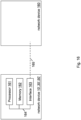
- FIG. 1 is a block diagram illustrating an apparatus according to example embodiments.
- the apparatus may be a terminal 10 such as a user equipment comprising a receiving circuitry 11, a determining circuitry 12, and a transmitting circuitry 13.
- the receiving circuitry 11 receives, from an access network entity, information for selecting candidate beams out of a plurality of beams.
- the receiving circuitry 11 (or an additional receiving circuitry) receives, from said access network entity, at least one beam reporting triggering condition.
- the determining circuitry 12 determines, based on said information for selecting candidate beams out of said plurality of beams, that at least one candidate beam fulfils one of said at least one beam reporting triggering condition.
- FIG. 7 is a schematic diagram of a procedure according to example embodiments.
- the apparatus according to FIG. 1 may perform the method of FIG. 7 but is not limited to this method.
- the method of FIG. 7 may be performed by the apparatus of FIG. 1 but is not limited to being performed by this apparatus.
- a procedure comprises an operation of receiving (S71), from an access network entity, information for selecting candidate beams out of a plurality of beams, an operation of receiving (S72), from said access network entity, at least one beam reporting triggering condition, an operation of determining (S73), based on said information for selecting candidate beams out of said plurality of beams, that at least one candidate beam fulfils one of said at least one beam reporting triggering condition, and an operation of transmitting (S74), to the access network entity, an indication that said at least one candidate beam fulfils said one of said at least one beam reporting triggering condition.
- FIG. 2 is a block diagram illustrating an apparatus according to example embodiments.
- FIG. 2 illustrates a variation of the apparatus shown in FIG. 1 .
- the apparatus according to FIG. 2 may thus further comprise a monitoring circuitry 21 and/or a counting circuitry 22.
- At least some of the functionalities of the apparatus shown in FIG. 1 (or 2 ) may be shared between two physically separate devices forming one operational entity. Therefore, the apparatus may be seen to depict the operational entity comprising one or more physically separate devices for executing at least some of the described processes.
- the apparatus 10 may be a terminal such as a user equipment.
- the terminal may, although not illustrated in FIG. 1 or 2 , comprise at least one memory, at least one processor, at least one display, at least one battery, at least one antenna, at least one baseband circuitry, or at least one transceiver, or any combination thereof.
- the terminal may in particular comprise at least one antenna.
- circuitries mentioned and illustrated in FIG. 1 and 2 may be provided in hardware components alone, these may also be provided as software components, or as a combination of hardware components and software components.
- each respective beam of said plurality of beams is associated with a respective reference signal.
- said information for selecting candidate beams out of said plurality of beams comprises at least one of the following: beams with a transmission configuration indication state associated with at least one control channel, or beams with a transmission configuration indication state not associated with at least one control channel, or beams with a transmission configuration indication state associated with a timing advance group identifier.
- said at least one beam reporting triggering condition comprises at least one of the following: a number of beam failure events is lower than a beam failure event threshold, or a number of beam failure events is higher than a beam failure event threshold.
- said beam failure event threshold is defined as a percentage of a beam failure recovery threshold.
- exemplary details of the determining operation (S73) are given, which are inherently independent from each other as such.
- Such exemplary determining operation (S73) may comprise an operation of monitoring said plurality of beams with respect to said beam failure events, and an operation of counting said number of beam failure events for each of said plurality of beams.
- said at least one beam reporting triggering condition comprises at least one of the following: a power value of a received reference signal is higher than a reference signal received power threshold, or said power value of said received reference signal is lower than said reference signal received power threshold, or a signal to interference and noise ratio value is higher than a signal to interference and noise ratio threshold, or said signal to interference and noise ratio value is lower than said signal to interference and noise ratio threshold, or a channel quality indicator value is higher than a channel quality indicator threshold, or said channel quality indicator is lower than said channel quality indicator threshold.
- an exemplary method may comprise an operation of transmitting, towards said access network entity, an indication of an expected frequent terminal triggered beam reporting.
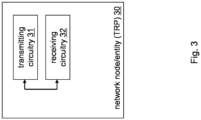
- FIG. 3 is a block diagram illustrating an apparatus according to example embodiments.
- the apparatus may be an access node or entity 30 such as a base station or TRP comprising a transmitting circuitry 31 and a receiving circuitry 32.
- the transmitting circuitry 31 transmits, towards a terminal, information for selecting candidate beams out of a plurality of beams.
- the transmitting circuitry 31 (or an additional transmitting circuitry) transmits, towards said terminal, at least one beam reporting triggering condition.
- the receiving circuitry 32 receives, from said terminal, an indication that at least one candidate beam fulfils one of said at least one beam reporting triggering condition.
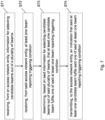
- FIG. 8 is a schematic diagram of a procedure according to example embodiments.
- the apparatus according to FIG. 3 may perform the method of FIG. 8 but is not limited to this method.
- the method of FIG. 8 may be performed by the apparatus of FIG. 3 but is not limited to being performed by this apparatus.
- a procedure comprises an operation of transmitting (S81), towards a terminal, information for selecting candidate beams out of a plurality of beams, an operation of transmitting (S82), towards said terminal, at least one beam reporting triggering condition, and an operation of receiving (S83), from said terminal, an indication that at least one candidate beam fulfils one of said at least one beam reporting triggering condition.
- FIG. 4 is a block diagram illustrating an apparatus according to example embodiments. In particular, FIG. 4 illustrates a variation of the apparatus shown in FIG. 3 . The apparatus according to FIG. 4 may thus further comprise a considering circuitry 41.
- At least some of the functionalities of the apparatus shown in FIG. 3 (or 4 ) may be shared between two physically separate devices forming one operational entity. Therefore, the apparatus may be seen to depict the operational entity comprising one or more physically separate devices for executing at least some of the described processes.
- circuitries mentioned and illustrated in FIG. 3 and 4 may be provided in hardware components alone, these may also be provided as software components, or as a combination of hardware components and software components.
- each respective beam of said plurality of beams is associated with a respective reference signal.
- said information for selecting candidate beams out of said plurality of beams comprises at least one of the following: beams with a transmission configuration indication state associated with at least one control channel, or beams with a transmission configuration indication state not associated with at least one control channel, or beams with a transmission configuration indication state associated with a timing advance group identifier.
- said at least one beam reporting triggering condition comprises at least one of the following: a number of beam failure events is lower than a beam failure event threshold, or a number of beam failure events is higher than a beam failure event threshold.
- said beam failure event threshold is defined as a percentage of a beam failure recovery threshold.
- said at least one beam reporting triggering condition comprises at least one of the following: a power value of a received reference signal is higher than a reference signal received power threshold, or said power value of said received reference signal is lower than said reference signal received power threshold, or a signal to interference and noise ratio value is higher than a signal to interference and noise ratio threshold, or said signal to interference and noise ratio value is lower than said signal to interference and noise ratio threshold, or a channel quality indicator value is higher than a channel quality indicator threshold, or said channel quality indicator is lower than said channel quality indicator threshold.
- an exemplary method may comprise an operation of receiving, from said terminal, an indication of an expected frequent terminal triggered beam reporting, and an operation of considering said indication of said expected frequent terminal triggered beam reporting for a beam reporting type configuration.
- FIG. 5 is a block diagram illustrating an apparatus according to example embodiments.
- the apparatus may be a terminal 50 such as a user equipment comprising a receiving circuitry 51, a selecting circuitry 52, an evaluating circuitry 53, a determining circuitry 54, and a transmitting circuitry 55.
- the receiving circuitry 51 receives, from an access network entity, information for selecting candidate beams from a plurality of beams.
- the receiving circuitry 51 (or an additional receiving circuitry) receives, from said access network entity, at least one beam reporting triggering condition.
- the selecting circuitry 52 selects preferred beams from said plurality of beams based on a terminal-side optimization parameter.
- the evaluating circuitry 53 evaluates whether at least one preferred beam of said preferred beams was to be selected based on said information for selecting candidate beams.
- the determining circuitry 54 determines that at least one preferred beam which was to be selected based on said information for selecting candidate beams fulfills one of said at least one beam reporting triggering condition.
- the transmitting circuitry 55 transmits, towards said access network entity, an indication that said at least one preferred beam which was to be selected based on said information for selecting candidate beams fulfills said one of said at least one beam reporting triggering condition.
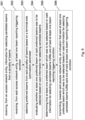
- FIG. 9 is a schematic diagram of a procedure according to example embodiments.
- the apparatus according to FIG. 5 may perform the method of FIG. 9 but is not limited to this method.
- the method of FIG. 9 may be performed by the apparatus of FIG. 5 but is not limited to being performed by this apparatus.
- a procedure comprises an operation of receiving (S91), from an access network entity, information for selecting candidate beams from a plurality of beams, an operation of receiving (S92), from said access network entity, at least one beam reporting triggering condition, an operation of selecting (S93) preferred beams from said plurality of beams based on a terminal-side optimization parameter, an operation of evaluating (S94) whether at least one preferred beam of said preferred beams was to be selected based on said information for selecting candidate beams, an operation of determining (S95) that at least one preferred beam which was to be selected based on said information for selecting candidate beams fulfills one of said at least one beam reporting triggering condition, and an operation of transmitting (S96), towards said access network entity, an indication that said at least one preferred beam which was to be selected based on said information for selecting candidate beams fulfills said one of said at least one beam reporting triggering condition.
- FIG. 6 is a block diagram illustrating an apparatus according to example embodiments.
- FIG. 6 illustrates a variation of the apparatus shown in FIG. 5 .
- the apparatus according to FIG. 6 may thus further comprise a considering circuitry 61, a checking circuitry 62, a modifying circuitry 63, a deciding circuitry 64, a monitoring circuitry 65, and/or a counting circuitry 66.
- At least some of the functionalities of the apparatus shown in FIG. 5 (or 6 ) may be shared between two physically separate devices forming one operational entity. Therefore, the apparatus may be seen to depict the operational entity comprising one or more physically separate devices for executing at least some of the described processes.
- the apparatus 50 may be a terminal such as a user equipment.
- the terminal may, although not illustrated in FIG. 5 or 6 , comprise at least one memory, at least one processor, at least one display, at least one battery, at least one antenna, at least one baseband circuitry, or at least one transceiver, or any combination thereof.
- the terminal may in particular comprise at least one antenna.
- circuitry 51 may be provided in hardware components alone, these may also be provided as software components, or as a combination of hardware components and software components.
- an exemplary method may comprise an operation of deciding on said terminal-side optimization parameter.
- said terminal-side optimization parameter includes at least one of the following: link budget, or reliability, or terminal power consumption.
- exemplary additional operations and exemplary details of the evaluating operation (S94) are given, which are inherently independent from each other as such.
- said terminal-side optimization parameter is terminal power consumption
- an exemplary method according to example embodiments may comprise an operation of selecting a power mode based on said terminal-side optimization parameter, said power mode defining a number of activated antenna panels.
- such exemplary evaluating operation (S94) may comprise an operation of considering only beams for which said number of activated antenna panels is not to be increased.
- exemplary additional operations and exemplary details of the evaluating operation (S94) are given, which are inherently independent from each other as such.
- said terminal-side optimization parameter is terminal power consumption
- an exemplary method according to example embodiments may comprise an operation of selecting a power mode based on said terminal-side optimization parameter, said power mode defining a number of activated antenna panels.
- such exemplary evaluating operation (S94) may comprise an operation of considering only beams for which said number of activated antenna panels is equal to or smaller than an activated antenna panels threshold.
- exemplary details of the evaluating operation (S94) are given, which are inherently independent from each other as such.
- Such exemplary evaluating operation (S94) may comprise an operation of checking whether a preferred beam not to be selected based on said information for selecting candidate beams would have to be selected based on said information for selecting candidate beams with a modified beam reporting setting, an operation of modifying said beam reporting setting for said preferred beam, and an operation of deciding that said preferred beam was to be selected based on said information for selecting candidate beams.
- each respective beam of said plurality of beams is associated with a respective reference signal.
- said information for selecting candidate beams from said plurality of beams specifies beams with a transmission configuration indication state associated with at least one control channel.
- said information for selecting candidate beams from said plurality of beams specifies beams with a transmission configuration indication state not associated with at least one control channel.
- said information for selecting candidate beams from a plurality of beams specifies beams with a transmission configuration indication state associated with a timing advance group identifier.
- said information for selecting candidate beams from a plurality of beams specifies beams where a number of beam failure events satisfies a beam failure event threshold condition.
- said beam failure event threshold condition is satisfied, if said number of beam failure events is higher than a beam failure event threshold.
- said beam failure event threshold condition is satisfied, if said number of beam failure events is lower than said beam failure event threshold.
- said beam failure event threshold is defined as a percentage of a beam failure recovery threshold.
- exemplary details of the selecting operation (S93, selecting said preferred beams from said plurality of beams based on said terminal-side optimization parameter) are given, which are inherently independent from each other as such.
- Such exemplary selecting operation (S93, selecting said preferred beams from said plurality of beams based on said terminal-side optimization parameter) according to example embodiments may comprise an operation of monitoring said plurality of beams with respect to said beam failure events, and an operation of counting said number of beam failure events for each of said plurality of beams.
- the network configures the UE via RRC such that there is no UE-initiated beam switching for the TCI that is carrying the PDCCH.
- the network configures the UE e.g. via RRC such that there can be a UE-initiated beam switching only for the TCI that is carrying the PDCCH.
- FIG. 13 is a schematic diagram of a procedure according to example embodiments, and in particular illustrates a method applied to sDCI mTRP where the network configures the UE to do UE-initiated beam reporting/switch for the TCI state carrying PDDCH.
- the UE is initially configured in an sDCI mTRP scenario to receive DL from two TRPs.
- the UE receives, e.g., via RRC, a configuration setting as "condition" to do UE-initiated beam reporting the fact that a beam has L1-RSRP below a certain threshold.
- the value to which the threshold is set is a network implementation.
- the network can set the threshold to a rather low value such that, if the L1-RSRP falls below that value, then the reliability of that beam has become too low for carrying PDCCH.
- example embodiments are explained with reference to the L1-RSRP and in particular to the condition to do UE-initiated beam reporting the fact that a beam has L1-RSRP below a certain threshold, there is no limitation to this condition.
- L1-SINR can also be used as a metric.
- the UE can be configured to do UE-initiated beam reporting either in case the metric is "above” a threshold or "below” a threshold.
- the UE receives, e.g., via RRC, a configuration such that UE-initiated beam reporting is allowed only for beams carrying PDCCH.
- the UE monitors L1-RSRP for the beam carrying PDCCH.
- the UE informs the network about that in a fifth step of FIG. 13 .
- the UE returns to the third step of FIG. 13 to further monitors L1-RSRP for the beam carrying PDCCH.
- Example embodiments which are basically in line with the first alternative may optionally be concretely implemented as follows.
- the UE at the UE, it may be decided which parameter is to optimize, e.g., link budget, reliability, or UE power consumption, it may be compared whether preferred gNB beams from UE viewpoint are included in network configuration for UE-initiated reporting, i.e., restrictions/limitations on e.g. pool of beams, and it may be decided if to send a report to gNB or not based on the comparison.
- UE-initiated reporting i.e., restrictions/limitations on e.g. pool of beams
- the UE aims at maximizing the UE Tx power for improved UL performance (link budget and reliability).
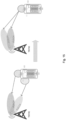
- FIG. 14 shows a schematic diagram of an example of a system environment with beam variants according to example embodiments, and in particular illustrates the use case for UE implementation for link budget and reliability.
- the UE may find the preferred beam ("TCI state candidate 1" in FIG. 14 ) to report to network, for example to have PUSCH and PUCCH TCI states on different panels, such that higher power can be used.
- the UE checks if the gNB (i.e., the network) has sent a special configuration to restrict UE-initiated beam reporting, for example restricting UE-initiated beam reporting/switch on TCI states carrying only PUSCH.
- the gNB i.e., the network
- the UE checks whether the UE preferred beam is within the allowed ones.
- the UE sends the report.
- the UE checks whether the UE preferred beam is still a candidate within the restricted framework for example for PUSCH as well.
- the UE panel for such preferred beam would be the same for both PUSCH and PUCCH, then it is still a candidate also for PUSCH, and the UE sends the report.
- the UE panel for such preferred beam would not be the same, then it is not a candidate, and the UE does not trigger the report.
- the gNB i.e., the network
- the special configuration to restrict UE-initiated beam reporting i.e., if no restricted configuration regarding the beams that can be reported by UE for UE-initiated beam reporting is present, then the UE sends the report.
- the UE aims at UE power consumption optimization.
- FIG. 15 shows a schematic diagram of an example of a system environment with beam variants according to example embodiments, and in particular illustrates the use case for UE implementation on second embodiment for optimizing UE power consumption.
- power mode 2 (up to) two panels “on”
- power mode 3 one panel “on”
- the UE only measures preferred beams from a single UE panel.
- UE can always trigger the report (considering the above illustrated condition processing).
- the UE measures preferred beams from at least two panels.
- the UE only triggers the report if the preferred beam induces to keep the same number of active UE panels or reduce the number of active UE panels.
- the network configures e.g. via RRC or MAC-CE that UE-initiated beam reporting/switch is allowed / not allowed only for TCI states associated to a specific TAG ID.
- TA timing advances
- UL uplink
- MTTD maximum transmission timing difference
- the network would have knowledge about which UL transmission associated to a specific TAG (among two in Rel-18 scenario or >2 in for example 6G) is the major cause of potential maximum reception timing difference (MRTD)/MTTD violation, and configures the UE for UE-initiated beam reporting/switch for only for TCI states associated to that specific TAG ID.
- RTD receive timing difference
- MRTD maximum reception timing difference
- the network configures the UE e.g. via RRC to do UE-initiated beam switching when the UE reaches a fraction/percentage of the threshold (in not received samples) that triggers BFR.
- the network could configure a UE for UE-initiated beam switching when the UE reaches 50% (other percentages are possible) of a parameter representing the threshold that triggers BFR.
- the parameter may be e.g. the "beamFailureInstanceMaxCount" as specified in TS38.321.
- the restricted set of reference signals that can be reported in the UE initiated reporting is a subset of the reference signals configured for the normal L1-RSRP reporting.
- the subset may be according to one or more of the foregoing example embodiments.
- the UE adds into the report discussed above in relation to foregoing example embodiments additional information indicating whether the UE expects more frequent UE-initiated reporting or not. This could indicate to the network to setup periodic or semi-persistent reporting if the UE observes that the measurements of the beams are changing in fast manner.
- the network entity may comprise further units that are necessary for its respective operation. However, a description of these units is omitted in this specification.
- the arrangement of the functional blocks of the devices is not construed to limit the disclosure, and the functions may be performed by one block or further split into sub-blocks.
- the apparatus i.e. network device (or some other means) is configured to perform some function
- this is to be construed to be equivalent to a description stating that a (i.e. at least one) processor or corresponding circuitry, potentially in cooperation with computer program code stored in the memory of the respective apparatus, is configured to cause the apparatus to perform at least the thus mentioned function.
- a (i.e. at least one) processor or corresponding circuitry potentially in cooperation with computer program code stored in the memory of the respective apparatus, is configured to cause the apparatus to perform at least the thus mentioned function.
- function is to be construed to be equivalently implementable by specifically configured circuitry or means for performing the respective function (i.e. the expression "unit configured to” is construed to be equivalent to an expression such as "means for").
- the apparatus (network device) 10' (corresponding to the terminal 10) comprises a processor 161, a memory 162 and an interface 163, which are connected by a bus 164 or the like.
- the apparatus (network device) 30' (corresponding to the network node/entity 30) comprises a processor 161, a memory 162 and an interface 163, which are connected by a bus 164 or the like.
- the apparatus (network device) 50' (corresponding to the terminal 50) comprises a processor 161, a memory 162 and an interface 163, which are connected by a bus 164 or the like.
- the apparatuses 10', 30', 50' may be connected via link 165 to another network device 160, e.g., any other of the apparatuses 10', 30', 50'.
- the processor 161 and/or the interface 163 may also include a modem or the like to facilitate communication over a (hardwire or wireless) link, respectively.
- the interface 163 may include a suitable transceiver coupled to one or more antennas or communication means for (hardwire or wireless) communications with the linked or connected device(s), respectively.
- the interface 163 is generally configured to communicate with at least one other apparatus, i.e. the interface thereof.
- the memory 162 may store respective programs assumed to include program instructions or computer program code that, when executed by the respective processor, enables the respective electronic device or apparatus to operate in accordance with the example embodiments.
- the respective devices/apparatuses may represent means for performing respective operations and/or exhibiting respective functionalities, and/or the respective devices (and/or parts thereof) may have functions for performing respective operations and/or exhibiting respective functionalities.
- processor or some other means
- the processor is configured to perform some function
- this is to be construed to be equivalent to a description stating that at least one processor, potentially in cooperation with computer program code stored in the memory of the respective apparatus, is configured to cause the apparatus to perform at least the thus mentioned function.
- function is to be construed to be equivalently implementable by specifically configured means for performing the respective function (i.e. the expression "processor configured to [cause the apparatus to] perform xxx-ing” is construed to be equivalent to an expression such as "means for xxx-ing").
- an apparatus representing the terminal 10 comprises at least one processor 161, at least one memory 162 including computer program code, and at least one interface 163 configured for communication with at least another apparatus.
- the processor i.e. the at least one processor 161, with the at least one memory 162 and the computer program code
- the processor is configured to perform receiving, from an access network entity, information for selecting candidate beams out of a plurality of beams (thus the apparatus comprising corresponding means for receiving), to perform receiving, from said access network entity, at least one beam reporting triggering condition, to perform determining, based on said information for selecting candidate beams out of said plurality of beams, that at least one candidate beam fulfils one of said at least one beam reporting triggering condition (thus the apparatus comprising corresponding means for determining), and to perform transmitting, to the access network entity, an indication that said at least one candidate beam fulfils said one of said at least one beam reporting triggering condition (thus the apparatus comprising corresponding means for transmitting).
- an apparatus representing the network node/entity 30 comprises at least one processor 161, at least one memory 162 including computer program code, and at least one interface 163 configured for communication with at least another apparatus.
- the processor i.e. the at least one processor 161, with the at least one memory 162 and the computer program code
- the processor is configured to perform transmitting, towards a terminal, information for selecting candidate beams out of a plurality of beams (thus the apparatus comprising corresponding means for transmitting), to perform transmitting, towards said terminal, at least one beam reporting triggering condition, and to perform receiving, from said terminal, an indication that at least one candidate beam fulfils one of said at least one beam reporting triggering condition (thus the apparatus comprising corresponding means for receiving).
- an apparatus representing the terminal 50 comprises at least one processor 161, at least one memory 162 including computer program code, and at least one interface 163 configured for communication with at least another apparatus.
- the processor i.e. the at least one processor 161, with the at least one memory 162 and the computer program code
- the processor is configured to perform receiving, from an access network entity, information for selecting candidate beams from a plurality of beams (thus the apparatus comprising corresponding means for receiving), to perform receiving, from said access network entity, at least one beam reporting triggering condition, to perform selecting preferred beams from said plurality of beams based on a terminal-side optimization parameter (thus the apparatus comprising corresponding means for selecting), to perform evaluating whether at least one preferred beam of said preferred beams was to be selected based on said information for selecting candidate beams (thus the apparatus comprising corresponding means for evaluating), to perform determining that at least one preferred beam which was to be selected based on said information for selecting candidate beams fulfills one of said at least one beam reporting triggering condition (thus the apparatus compris
- respective functional blocks or elements according to above-described aspects can be implemented by any known means, either in hardware and/or software, respectively, if it is only adapted to perform the described functions of the respective parts.
- the mentioned method steps can be realized in individual functional blocks or by individual devices, or one or more of the method steps can be realized in a single functional block or by a single device.
- any method step is suitable to be implemented as software or by hardware without changing the idea of the present disclosure.
- Devices and means can be implemented as individual devices, but this does not exclude that they are implemented in a distributed fashion throughout the system, as long as the functionality of the device is preserved. Such and similar principles are to be considered as known to a skilled person.
- Software in the sense of the present description comprises software code as such comprising code means or portions or a computer program or a computer program product for performing the respective functions, as well as software (or a computer program or a computer program product) embodied on a tangible medium such as a computer-readable (storage) medium having stored thereon a respective data structure or code means/portions or embodied in a signal or in a chip, potentially during processing thereof.
- the present disclosure also covers any conceivable combination of method steps and operations described above, and any conceivable combination of nodes, apparatuses, modules or elements described above, as long as the above-described concepts of methodology and structural arrangement are applicable.
- Such measures exemplarily comprise receiving, from an access network entity, information for selecting candidate beams from a plurality of beams, receiving, from said access network entity, at least one beam reporting triggering condition, selecting preferred beams from said plurality of beams based on a terminal-side optimization parameter, evaluating whether at least one preferred beam of said preferred beams was to be selected based on said information for selecting candidate beams, determining that at least one preferred beam which was to be selected based on said information for selecting candidate beams fulfills one of said at least one beam reporting triggering condition, and transmitting, towards said access network entity, an indication that said at least one preferred beam which was to be selected based on said information for selecting candidate beams fulfills said one of said at least one beam reporting triggering condition.
Landscapes
- Engineering & Computer Science (AREA)
- Signal Processing (AREA)
- Computer Networks & Wireless Communication (AREA)
- Mobile Radio Communication Systems (AREA)
Applications Claiming Priority (1)
| Application Number | Priority Date | Filing Date | Title |
|---|---|---|---|
| GB2318405.4A GB2636162A (en) | 2023-12-01 | 2023-12-01 | Controlled terminal-initiated beam management implementation |
Publications (2)
| Publication Number | Publication Date |
|---|---|
| EP4564703A2 true EP4564703A2 (de) | 2025-06-04 |
| EP4564703A3 EP4564703A3 (de) | 2025-07-23 |
Family
ID=89507786
Family Applications (1)
| Application Number | Title | Priority Date | Filing Date |
|---|---|---|---|
| EP24216779.9A Pending EP4564703A3 (de) | 2023-12-01 | 2024-12-02 | Gesteuerte endgeräteinitiierte strahlverwaltungsimplementierung |
Country Status (3)
| Country | Link |
|---|---|
| US (1) | US20250183982A1 (de) |
| EP (1) | EP4564703A3 (de) |
| GB (1) | GB2636162A (de) |
Family Cites Families (1)
| Publication number | Priority date | Publication date | Assignee | Title |
|---|---|---|---|---|
| US11330457B2 (en) * | 2017-07-25 | 2022-05-10 | Mediatek Inc. | Method for beam management with beam indication in wireless communication systems with beamforming |
-
2023
- 2023-12-01 GB GB2318405.4A patent/GB2636162A/en active Pending
-
2024
- 2024-12-02 EP EP24216779.9A patent/EP4564703A3/de active Pending
- 2024-12-02 US US18/964,876 patent/US20250183982A1/en active Pending
Also Published As
| Publication number | Publication date |
|---|---|
| EP4564703A3 (de) | 2025-07-23 |
| US20250183982A1 (en) | 2025-06-05 |
| GB202318405D0 (en) | 2024-01-17 |
| GB2636162A (en) | 2025-06-11 |
Similar Documents
| Publication | Publication Date | Title |
|---|---|---|
| EP4178251B1 (de) | Messberichtsverfahren | |
| US12490286B2 (en) | Method and apparatus for selecting resource | |
| CN111247752B (zh) | 层一参考信号接收功率测量方法及其用户设备 | |
| CN112425253B (zh) | 用于波束故障侦测的方法及ue | |
| JP2022501964A (ja) | 信号送信方法および通信装置 | |
| CN113875164A (zh) | 管理无线网络内的用户设备的多个天线面板 | |
| KR102851907B1 (ko) | 빔 실패 복구를 위한 방법, 장치 및 기기 | |
| JP7717799B2 (ja) | チャネル状態情報決定方法、報告設定決定方法、装置及び関連機器 | |
| US12484027B2 (en) | Random access resource selection method and related apparatus | |
| EP3909140A1 (de) | Kommunikationsvorrichtung mit antennenfeldern und verfahren dafür | |
| CN112291849B (zh) | 无线网络通信方法和通信装置 | |
| EP4661540A1 (de) | Strahlverwaltungsverfahren und -vorrichtung, endgerät, relaisknoten und basisstation | |
| US12262237B2 (en) | Wireless communication system | |
| WO2024007316A1 (en) | Methods and apparatuses for multi-trp operation | |
| CN111357210B (zh) | 一种处理设备及其方法 | |
| EP4564703A2 (de) | Gesteuerte endgeräteinitiierte strahlverwaltungsimplementierung | |
| US20230188195A1 (en) | Efficient enhanced sr failure handling for sr sweeping | |
| US20250183981A1 (en) | Controlled terminal-initiated beam management | |
| US12149312B2 (en) | Signal transmission method and communication apparatus | |
| EP4207905A1 (de) | Kanalstatusmessverfahren und zugehörige vorrichtung | |
| US20250317783A1 (en) | Coordination of terminal-initiated reporting | |
| WO2025091477A1 (en) | Life cycle management on machine learning for channel state information feedback enhancement | |
| US20260012311A1 (en) | Method and apparatus of supporting spatial element adaption | |
| US20240314614A1 (en) | Communication method and communication apparatus | |
| WO2025214632A1 (en) | Terminal capability consideration for terminal-initiated reporting |
Legal Events
| Date | Code | Title | Description |
|---|---|---|---|
| PUAI | Public reference made under article 153(3) epc to a published international application that has entered the european phase |
Free format text: ORIGINAL CODE: 0009012 |
|
| STAA | Information on the status of an ep patent application or granted ep patent |
Free format text: STATUS: THE APPLICATION HAS BEEN PUBLISHED |
|
| AK | Designated contracting states |
Kind code of ref document: A2 Designated state(s): AL AT BE BG CH CY CZ DE DK EE ES FI FR GB GR HR HU IE IS IT LI LT LU LV MC ME MK MT NL NO PL PT RO RS SE SI SK SM TR |
|
| PUAL | Search report despatched |
Free format text: ORIGINAL CODE: 0009013 |
|
| AK | Designated contracting states |
Kind code of ref document: A3 Designated state(s): AL AT BE BG CH CY CZ DE DK EE ES FI FR GB GR HR HU IE IS IT LI LT LU LV MC ME MK MT NL NO PL PT RO RS SE SI SK SM TR |
|
| RIC1 | Information provided on ipc code assigned before grant |
Ipc: H04B 7/06 20060101AFI20250617BHEP |
|
| STAA | Information on the status of an ep patent application or granted ep patent |
Free format text: STATUS: REQUEST FOR EXAMINATION WAS MADE |
|
| 17P | Request for examination filed |
Effective date: 20260119 |