EP4563713A1 - Alloy steel - Google Patents
Alloy steel Download PDFInfo
- Publication number
- EP4563713A1 EP4563713A1 EP23846140.4A EP23846140A EP4563713A1 EP 4563713 A1 EP4563713 A1 EP 4563713A1 EP 23846140 A EP23846140 A EP 23846140A EP 4563713 A1 EP4563713 A1 EP 4563713A1
- Authority
- EP
- European Patent Office
- Prior art keywords
- crystal grain
- grain size
- condition
- mass
- alloy steel
- Prior art date
- Legal status (The legal status is an assumption and is not a legal conclusion. Google has not performed a legal analysis and makes no representation as to the accuracy of the status listed.)
- Pending
Links
Images
Classifications
-
- C—CHEMISTRY; METALLURGY
- C22—METALLURGY; FERROUS OR NON-FERROUS ALLOYS; TREATMENT OF ALLOYS OR NON-FERROUS METALS
- C22C—ALLOYS
- C22C38/00—Ferrous alloys, e.g. steel alloys
- C22C38/18—Ferrous alloys, e.g. steel alloys containing chromium
- C22C38/24—Ferrous alloys, e.g. steel alloys containing chromium with vanadium
-
- C—CHEMISTRY; METALLURGY
- C21—METALLURGY OF IRON
- C21D—MODIFYING THE PHYSICAL STRUCTURE OF FERROUS METALS; GENERAL DEVICES FOR HEAT TREATMENT OF FERROUS OR NON-FERROUS METALS OR ALLOYS; MAKING METAL MALLEABLE, e.g. BY DECARBURISATION OR TEMPERING
- C21D1/00—General methods or devices for heat treatment, e.g. annealing, hardening, quenching or tempering
- C21D1/18—Hardening; Quenching with or without subsequent tempering
-
- C—CHEMISTRY; METALLURGY
- C21—METALLURGY OF IRON
- C21D—MODIFYING THE PHYSICAL STRUCTURE OF FERROUS METALS; GENERAL DEVICES FOR HEAT TREATMENT OF FERROUS OR NON-FERROUS METALS OR ALLOYS; MAKING METAL MALLEABLE, e.g. BY DECARBURISATION OR TEMPERING
- C21D6/00—Heat treatment of ferrous alloys
- C21D6/002—Heat treatment of ferrous alloys containing Cr
-
- C—CHEMISTRY; METALLURGY
- C21—METALLURGY OF IRON
- C21D—MODIFYING THE PHYSICAL STRUCTURE OF FERROUS METALS; GENERAL DEVICES FOR HEAT TREATMENT OF FERROUS OR NON-FERROUS METALS OR ALLOYS; MAKING METAL MALLEABLE, e.g. BY DECARBURISATION OR TEMPERING
- C21D6/00—Heat treatment of ferrous alloys
- C21D6/02—Hardening by precipitation
-
- C—CHEMISTRY; METALLURGY
- C22—METALLURGY; FERROUS OR NON-FERROUS ALLOYS; TREATMENT OF ALLOYS OR NON-FERROUS METALS
- C22C—ALLOYS
- C22C38/00—Ferrous alloys, e.g. steel alloys
- C22C38/001—Ferrous alloys, e.g. steel alloys containing N
-
- C—CHEMISTRY; METALLURGY
- C22—METALLURGY; FERROUS OR NON-FERROUS ALLOYS; TREATMENT OF ALLOYS OR NON-FERROUS METALS
- C22C—ALLOYS
- C22C38/00—Ferrous alloys, e.g. steel alloys
- C22C38/02—Ferrous alloys, e.g. steel alloys containing silicon
-
- C—CHEMISTRY; METALLURGY
- C22—METALLURGY; FERROUS OR NON-FERROUS ALLOYS; TREATMENT OF ALLOYS OR NON-FERROUS METALS
- C22C—ALLOYS
- C22C38/00—Ferrous alloys, e.g. steel alloys
- C22C38/04—Ferrous alloys, e.g. steel alloys containing manganese
-
- C—CHEMISTRY; METALLURGY
- C22—METALLURGY; FERROUS OR NON-FERROUS ALLOYS; TREATMENT OF ALLOYS OR NON-FERROUS METALS
- C22C—ALLOYS
- C22C38/00—Ferrous alloys, e.g. steel alloys
- C22C38/06—Ferrous alloys, e.g. steel alloys containing aluminium
-
- C—CHEMISTRY; METALLURGY
- C22—METALLURGY; FERROUS OR NON-FERROUS ALLOYS; TREATMENT OF ALLOYS OR NON-FERROUS METALS
- C22C—ALLOYS
- C22C38/00—Ferrous alloys, e.g. steel alloys
- C22C38/18—Ferrous alloys, e.g. steel alloys containing chromium
- C22C38/22—Ferrous alloys, e.g. steel alloys containing chromium with molybdenum or tungsten
Definitions
- the present invention relates to an alloy steel.
- the alloy specified in AMS6491 is called M50, and the composition thereof is a steel containing, in mass%, C (carbon): 0.80 to 0.85%, Mn (manganese): 0.15 to 0.35%, Cr (chromium): 4.00 to 4.25%, Mo (molybdenum): 4.00 to 4.50%, V (vanadium): 0.90 to 1.10%, with the remaining portion being Fe (iron) and impurities.
- the M50 is quenched and tempered, and is used as a bearing steel, for example, as engine parts for aircraft.
- Patent Literature 1 describes a manufacturing method for bearing steel characterized by nitriding a steel composed of, in weight ratio, C: 0.60 to 1.50%, Si: 0.15 to 1.00%, Mn: 0.15 to 0.50%, Cr: 3.0 to 19.0%, Mo: 0.50 to 6.50%, V: 0.05 to 1.50%, Al: 0.020 to 1.50%, with the remaining portion being Fe and unavoidable impurities, at a temperature of 500 to 600°C.
- the Patent Literature 1 also discloses that the addition of V is effective for crystal grain refinement and that it is effective to set the quenching temperature to 1200°C or lower.
- Patent Literature 1 Japanese Patent Application Laid-Open No. 5-179401
- the objective of the present invention is to provide an alloy steel capable of reducing the maximum crystal grain size after quenching of an M50 equivalent alloy and suppressing variation in the crystal grain size.
- the present invention has been made in consideration of the above-mentioned issues.
- the present invention is an alloy steel consisting of, in mass%, C: 0.70 to 0.95%, Si: 0.05 to 0.35%, Mn: 0.05 to 0.45%, Cr: 3.90 to 4.35%, one or both of Mo and W according to a relational formula (Mo+W/2): 3.90 to 4.60%, V: 0.80 to 1.20%, with the remaining portion being Fe and unavoidable impurities, and further including Al and N to satisfy the following condition (1) and condition (2).
- condition (1) is Al: 0.02% or more, or N: 0.005% or more in mass%
- condition (2) is 7.5 ⁇ -ln([Al]% ⁇ [N]%) ⁇ 11.5.
- the maximum crystal grain size number according to ASTM-E930 is 6.0 or more.
- the average crystal grain size number according to ASTM-E112 is 8.0 or more.
- the maximum crystal grain size after quenching of an M50 equivalent alloy may be reduced and variation in the crystal grain size may be suppressed.
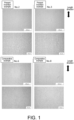
- FIG. 1 shows cross-sectional photographs of samples after quenching of present invention examples and comparative examples.
- Si is used as a deoxidizing agent during steelmaking and is an effective element for improving machinability.
- Si is less than 0.05%, the ductility of the material becomes too high, hindering cold machinability.
- addition of Si exceeding 0.35% reduces toughness, so Si is set to 0.05% to 0.35%, preferably 0.10% or more, and also preferably 0.25% or less.
- Mn is used as a deoxidizing agent and desulfurizing agent during steelmaking and is an effective element for improving hardenability, requiring a minimum of 0.05%.
- Mn is set to 0.05% to 0.45%, preferably 0.15% or more, and also preferably 0.35% or less.
- Cr like Mo described later, has the effect of improving hardenability and tempering softening resistance at high temperatures, so a minimum addition of 3.90% is needed.
- Cr exceeds 4.35%, carbide precipitation is promoted, making it difficult to control hardness during manufacturing. Therefore, Cr is set to 3.90% to 4.35%, preferably 4.00% or more, and also preferably 4.25% or less.
- Mo and W According to the relational formula (Mo+W/2), one or both of Mo and W: 3.90 to 4.60%, Mo and W have similar effects, and are specified by (Mo+W/2) due to the atomic weight relationship thereof.
- a minimum addition of 3.90% is needed because Mo and W have the effect of improving hardenability and tempering softening resistance at high temperatures.
- (Mo+W/2) is set to 3.90% to 4.60%, preferably 4.00% or more, and also preferably 4.50% or less.
- W can be included as an impurity, and for example, following the component composition of the M50 equivalent alloy, 0.25% or less of W can be included.
- V has the effect of improving tempering softening resistance and refining crystal grains.
- V is set to 0.80% to 1.20%, preferably 0.90% or more, and also preferably 1.10% or less.
- the alloy steel of the present invention is further characterized in that Al and N are included to satisfy the following condition (1) and condition (2).
- condition (1) is Al: 0.02% or more, or N: 0.005% or more in mass%
- condition (2) is 7.5 ⁇ -ln([Al]% ⁇ [N]%) ⁇ 11.5.
- Al is used as a deoxidizing agent
- N is an element that can remain as an impurity.
- -ln([Al]% ⁇ [N]%) exceeds 11.5, although the formation of AlN can be suppressed, the effect of Al or N in solid solution does not become apparent due to the small amount of Al and N in solid solution. Therefore, 7.5 ⁇ -ln([Al]% ⁇ [N]%) ⁇ 11.5 is set.
- the preferable lower limit of -ln([Al]% ⁇ [N]%) is 8.0, more preferably 8.5, and even more preferably 9.0.
- the preferable upper limit of - ln([Al]% ⁇ [N]%) is 11.0, more preferably 10.5, and even more preferably 10.0.
- Unavoidable impurities include P, S, Ni, Co, Cu, and O, and for example, following the component composition of the M50 equivalent alloy, the upper limits can be set as follows in mass%: P ⁇ 0.015%, S ⁇ 0.008%, Ni ⁇ 0.15%, Co ⁇ 0.25%, Cu ⁇ 0.10%, and O ⁇ 0.0030%.
- the alloy steel of the present invention having the above-mentioned alloy component range is expected to consistently obtain good mechanical properties because the alloy steel has a small maximum crystal grain size (large maximum crystal grain size number) and small variation in the crystal grain size.
- the preferable maximum crystal grain size number (in accordance with ASTM-E930) of the present invention is 6.0 or more.
- the preferable average crystal grain size number (in accordance with ASTM-E112) of the present invention is 8.0 or more.
- the more preferable lower limit of the average crystal grain size number is 8.5, and the even more preferable lower limit of the average crystal grain size number is 9.0.
- the crystal grain size numbers can be measured in the state after quenching or after quenching and tempering. This is because the crystal grain size does not substantially change between after quenching and after quenching and tempering.
- FIG. 1 also shows optical microscope photographs for No. 2, No. 3, No. 6, and No. 8.
- the observation position was set as the longitudinal cross section (T-L cross section parallel to the length direction and halved) of the test piece after quenching.
- the observation magnification in the upper row of FIG. 1 is 200 times, and the observation magnification in the lower row is 500 times.
- the crystal grain size is generally fine with small variation, while in the comparative examples (No. 6 and No. 8), coarse grains exceeding 50 ⁇ m can be observed among fine grains, and large variation in the crystal grain size can be confirmed from FIG. 1 .
Landscapes
- Chemical & Material Sciences (AREA)
- Engineering & Computer Science (AREA)
- Mechanical Engineering (AREA)
- Materials Engineering (AREA)
- Metallurgy (AREA)
- Organic Chemistry (AREA)
- Physics & Mathematics (AREA)
- Thermal Sciences (AREA)
- Crystallography & Structural Chemistry (AREA)
- Heat Treatment Of Steel (AREA)
Abstract
Description
- The present invention relates to an alloy steel.
- The alloy specified in AMS6491 is called M50, and the composition thereof is a steel containing, in mass%, C (carbon): 0.80 to 0.85%, Mn (manganese): 0.15 to 0.35%, Cr (chromium): 4.00 to 4.25%, Mo (molybdenum): 4.00 to 4.50%, V (vanadium): 0.90 to 1.10%, with the remaining portion being Fe (iron) and impurities. The M50 is quenched and tempered, and is used as a bearing steel, for example, as engine parts for aircraft.
- For example,
Patent Literature 1 describes a manufacturing method for bearing steel characterized by nitriding a steel composed of, in weight ratio, C: 0.60 to 1.50%, Si: 0.15 to 1.00%, Mn: 0.15 to 0.50%, Cr: 3.0 to 19.0%, Mo: 0.50 to 6.50%, V: 0.05 to 1.50%, Al: 0.020 to 1.50%, with the remaining portion being Fe and unavoidable impurities, at a temperature of 500 to 600°C. ThePatent Literature 1 also discloses that the addition of V is effective for crystal grain refinement and that it is effective to set the quenching temperature to 1200°C or lower. -
Patent Literature 1Japanese Patent Application Laid-Open No. 5-179401 - One of the factors that reduce the mechanical properties of the M50 products mentioned above is the coarsening of crystal grains. In particular, even if the average crystal grain size is small, in cases where crystal grains are partially coarsened, resulting in a mixed grain structure in which coarse grains and fine grains coexist, there is concern about crack initiation originating from the coarse grain portion. Therefore, it is important to also reduce the maximum crystal grain size. The aforementioned patent literature does not consider reducing such maximum crystal grain size.
- Therefore, the objective of the present invention is to provide an alloy steel capable of reducing the maximum crystal grain size after quenching of an M50 equivalent alloy and suppressing variation in the crystal grain size.
- The present invention has been made in consideration of the above-mentioned issues.
- In other words, the present invention is an alloy steel consisting of, in mass%, C: 0.70 to 0.95%, Si: 0.05 to 0.35%, Mn: 0.05 to 0.45%, Cr: 3.90 to 4.35%, one or both of Mo and W according to a relational formula (Mo+W/2): 3.90 to 4.60%, V: 0.80 to 1.20%, with the remaining portion being Fe and unavoidable impurities, and further including Al and N to satisfy the following condition (1) and condition (2). Here, condition (1) is Al: 0.02% or more, or N: 0.005% or more in mass%, and condition (2) is 7.5<-ln([Al]%×[N]%)<11.5.
- Preferably, the maximum crystal grain size number according to ASTM-E930 is 6.0 or more.
- Preferably, the average crystal grain size number according to ASTM-E112 is 8.0 or more. Effects
- According to the present invention, the maximum crystal grain size after quenching of an M50 equivalent alloy may be reduced and variation in the crystal grain size may be suppressed.
-
FIG. 1 shows cross-sectional photographs of samples after quenching of present invention examples and comparative examples. - First, the reasons for limiting the component composition of an alloy steel (M50 equivalent alloy) specified in the present invention are described.
- C: 0.70 to 0.95 mass% (hereinafter also simply referred to as "%"),
- C is an element effective for improving hardness, and a minimum of 0.70% is required. However, addition of C exceeding 0.95% reduces toughness, so C is set to 0.70% to 0.95%, preferably 0.80% or more, and also preferably 0.85% or less.
- Si is used as a deoxidizing agent during steelmaking and is an effective element for improving machinability. When Si is less than 0.05%, the ductility of the material becomes too high, hindering cold machinability. On the other hand, addition of Si exceeding 0.35% reduces toughness, so Si is set to 0.05% to 0.35%, preferably 0.10% or more, and also preferably 0.25% or less.
- Mn is used as a deoxidizing agent and desulfurizing agent during steelmaking and is an effective element for improving hardenability, requiring a minimum of 0.05%. On the other hand, when Mn exceeds 0.45%, issues occur such as excessive increase in hardness, which deteriorates machinability. Therefore, Mn is set to 0.05% to 0.45%, preferably 0.15% or more, and also preferably 0.35% or less.
- Cr, like Mo described later, has the effect of improving hardenability and tempering softening resistance at high temperatures, so a minimum addition of 3.90% is needed. On the other hand, when Cr exceeds 4.35%, carbide precipitation is promoted, making it difficult to control hardness during manufacturing. Therefore, Cr is set to 3.90% to 4.35%, preferably 4.00% or more, and also preferably 4.25% or less.
- According to the relational formula (Mo+W/2), one or both of Mo and W: 3.90 to 4.60%, Mo and W have similar effects, and are specified by (Mo+W/2) due to the atomic weight relationship thereof. A minimum addition of 3.90% is needed because Mo and W have the effect of improving hardenability and tempering softening resistance at high temperatures. On the other hand, when exceeding 4.60%, carbide precipitation is promoted, making it difficult to control hardness during manufacturing. Therefore, (Mo+W/2) is set to 3.90% to 4.60%, preferably 4.00% or more, and also preferably 4.50% or less.
- In addition, following the component composition of the M50 equivalent alloy, all of the content of W can be replaced with the content of Mo. In this case, Mo becomes 3.90 to 4.60%, and is preferably 4.00% or more, and also preferably 4.50% or less. W can be included as an impurity, and for example, following the component composition of the M50 equivalent alloy, 0.25% or less of W can be included.
- V has the effect of improving tempering softening resistance and refining crystal grains. When V is less than 0.80%, MC carbide precipitation is low, and crystal grains become coarse. On the other hand, when V exceeds 1.20%, carbide precipitation is promoted, making it difficult to control hardness during manufacturing. Therefore, V is set to 0.80% to 1.20%, preferably 0.90% or more, and also preferably 1.10% or less.
- The alloy steel of the present invention is further characterized in that Al and N are included to satisfy the following condition (1) and condition (2). Here, condition (1) is Al: 0.02% or more, or N: 0.005% or more in mass%, and condition (2) is 7.5<-ln([Al]%×[N]%)<11.5. Al is used as a deoxidizing agent, and N is an element that can remain as an impurity. By allowing Al and N to exist in a solid solution state in the matrix, Al acts as a nucleus during MC carbide precipitation, which is effective for crystal grain refinement, and N has the effect of finely and uniformly dispersing MC carbides by dissolving into carbides and increasing the amount of MC carbides. Therefore, the alloy steel of the present invention contains 0.02% or more of Al, or 0.005% or more of N. Here, in the steel of the present invention, Al may be 0.02% or more and N may be 0.005% or more.
- In the present invention, to obtain the effect of Al or N in solid solution as described above, it is effective to adjust the "solubility product" indicated by the product of the content (mass%) of Al and the content (mass%) of N. In other words, when -ln([Al]%×[N]%) becomes less than 7.5, a large amount of AlN is formed, partially filling the precipitation sites of MC carbides. And because the amount of Al or N in solid solution also decreases at the AlN formation sites, the distribution of MC carbides remaining during quenching becomes nonuniform, causing coarsening of crystal grains. On the other hand, when -ln([Al]%×[N]%) exceeds 11.5, although the formation of AlN can be suppressed, the effect of Al or N in solid solution does not become apparent due to the small amount of Al and N in solid solution. Therefore, 7.5<-ln([Al]%×[N]%)<11.5 is set. The preferable lower limit of -ln([Al]%×[N]%) is 8.0, more preferably 8.5, and even more preferably 9.0. Also, the preferable upper limit of - ln([Al]%×[N]%) is 11.0, more preferably 10.5, and even more preferably 10.0.
- Other than the elements described above, the rest consists of Fe and unavoidable impurities. Unavoidable impurities include P, S, Ni, Co, Cu, and O, and for example, following the component composition of the M50 equivalent alloy, the upper limits can be set as follows in mass%: P≤0.015%, S≤0.008%, Ni≤0.15%, Co≤0.25%, Cu≤0.10%, and O≤0.0030%.
- The alloy steel of the present invention having the above-mentioned alloy component range is expected to consistently obtain good mechanical properties because the alloy steel has a small maximum crystal grain size (large maximum crystal grain size number) and small variation in the crystal grain size. The preferable maximum crystal grain size number (in accordance with ASTM-E930) of the present invention is 6.0 or more. Also, the preferable average crystal grain size number (in accordance with ASTM-E112) of the present invention is 8.0 or more. The more preferable lower limit of the average crystal grain size number is 8.5, and the even more preferable lower limit of the average crystal grain size number is 9.0. The crystal grain size numbers can be measured in the state after quenching or after quenching and tempering. This is because the crystal grain size does not substantially change between after quenching and after quenching and tempering.
- Steel ingots of 10 kg of the M50 equivalent alloy having the component composition shown in Table 1 were melted to obtain steels No. 1 to No. 5 as present invention examples and steel ingots No. 6 to No. 8 as comparative examples. Subsequently, hot working was performed to obtain 30 mm square bar experimental materials.
[Table 1] Sample No. Chemical composition (mass %) -ln ([Al]%×[N]%) Remark C Si Mn Cr Mo V Al N Fe No.1 0.81 0.17 0.26 4.17 4.36 0.94 0.260 0.0007 Bal. 8.61 Present invention example No.2 0.76 0.19 0.26 4.22 4.37 0.95 0.014 0.0082 Bal. 9.07 No.3 0.77 0.19 0.26 4.17 4.33 0.94 0.080 0.0009 Bal. 9.54 No.4 0.85 0.22 0.25 4.22 4.49 1.01 0.042 0.0014 Bal. 9.74 No.5 0.84 0.22 0.24 4.16 4.41 1.02 0.021 0.0015 Bal. 10.37 No.6 0.80 0.17 0.26 4.21 4.41 0.95 0.220 0.0067 Bal. 6.52 Comparative example No.7 0.77 0.19 0.26 4.17 4.24 0.93 0.012 0.0026 Bal. 10.38 No.8 0.84 0.22 0.25 4.22 4.52 1.02 0.003 0.0015 Bal. 12.31 - To confirm the crystal grain size after quenching, test pieces were taken from the experimental materials of the present invention examples and the comparative examples obtained above after annealing treatment. Regarding the sampling location of the test pieces, the position was set at W/4-T/4 (W: length in the width direction, T: length in the thickness direction) of the 30 mm square cross section, and L/2 (L: length in the length direction) in the length direction. Subsequently, each of the materials was subjected to quenching treatment at 1115°C, and the crystal grain size was measured using an optical microscope according to ASTM standards (average crystal grain size according to ASTM-E112-13(2021), maximum crystal grain size according to ASTM-E930-18). The results are shown in Table 2. For No. 6, which had a mixed grain structure and the average crystal grain size could not be measured, the distribution ratio of crystal grain sizes is shown. From Table 1, it can be confirmed that the present invention examples satisfying Al: 0.020% or more, or N: 0.005% or more in mass%, and 7.5<-ln([Al]%×[N]%)<11.5, have an average crystal grain size at the same level as the comparative examples No. 7 and No. 8, but the maximum crystal grain size is refined to 6.0 or more in the crystal grain size number compared to the comparative examples, and the variation in the crystal grain size is small.
-
FIG. 1 also shows optical microscope photographs for No. 2, No. 3, No. 6, and No. 8. The observation position was set as the longitudinal cross section (T-L cross section parallel to the length direction and halved) of the test piece after quenching. The observation magnification in the upper row ofFIG. 1 is 200 times, and the observation magnification in the lower row is 500 times. In the present invention examples (No. 2 and No. 3) satisfying condition (1) and condition (2) of the present invention, the crystal grain size is generally fine with small variation, while in the comparative examples (No. 6 and No. 8), coarse grains exceeding 50 µm can be observed among fine grains, and large variation in the crystal grain size can be confirmed fromFIG. 1 . From the above results, the variation in the crystal grain size after quenching of the M50 equivalent alloy may be suppressed by controlling the Al and N content as specified in the present invention. By tempering the M50 equivalent alloy after quenching, M50 equivalent alloy products with suppressed deterioration of mechanical properties can be provided.[Table 2] Sample No. Average crystal grain size No. Maximum crystal grain size No. Al content (mass%) N content (mass%) -ln ([Al]%×[N]%) Remark No.1 9.5 6.5 0.260 0.0007 8.61 Present invention example No.2 9.5 7.0 0.014 0.0082 9.07 No.3 9.5 7.0 0.080 0.0009 9.54 No.4 9.0 6.5 0.042 0.0014 9.74 No.5 9.5 6.0 0.021 0.0015 10.37 No.6 3.0 (40%) 9.0 (60%) 1.0 0.220 0.0067 6.52 Comparative example No.7 9.5 5.5 0.012 0.0026 10.38 No.8 8.5 3.5 0.003 0.0015 12.31
Claims (3)
- An alloy steel, comprising:in mass%, C: 0.70 to 0.95%,Si: 0.05 to 0.35%,Mn: 0.05 to 0.45%,Cr: 3.90 to 4.35%,according to a relational formula (Mo+W/2), one or both of Mo and W: 3.90 to 4.60%,V: 0.80 to 1.20%, anda remaining portion: Fe and unavoidable impurities, andfurther comprising Al and N to satisfy the following condition (1) and condition (2),condition (1): Al: 0.02 mass% or more, or N: 0.005 mass% or more, andcondition (2): 7.5 < -ln([Al]% × [N]%) < 11.5.
- The alloy steel according to claim 1, wherein a maximum crystal grain size number in accordance with ASTM-E930 is 6.0 or more.
- The alloy steel according to claim 2, wherein an average crystal grain size number in accordance with ASTM-E112 is 8.0 or more.
Applications Claiming Priority (2)
| Application Number | Priority Date | Filing Date | Title |
|---|---|---|---|
| JP2022118915 | 2022-07-26 | ||
| PCT/JP2023/024603 WO2024024407A1 (en) | 2022-07-26 | 2023-07-03 | Alloy steel |
Publications (2)
| Publication Number | Publication Date |
|---|---|
| EP4563713A1 true EP4563713A1 (en) | 2025-06-04 |
| EP4563713A4 EP4563713A4 (en) | 2026-03-18 |
Family
ID=89706086
Family Applications (1)
| Application Number | Title | Priority Date | Filing Date |
|---|---|---|---|
| EP23846140.4A Pending EP4563713A4 (en) | 2022-07-26 | 2023-07-03 | ALLOY STEEL |
Country Status (5)
| Country | Link |
|---|---|
| EP (1) | EP4563713A4 (en) |
| JP (1) | JPWO2024024407A1 (en) |
| CN (1) | CN119546794A (en) |
| TW (1) | TW202405192A (en) |
| WO (1) | WO2024024407A1 (en) |
Family Cites Families (7)
| Publication number | Priority date | Publication date | Assignee | Title |
|---|---|---|---|---|
| JPS55145158A (en) * | 1979-04-28 | 1980-11-12 | Daido Steel Co Ltd | Free cutting bearing steel and its manufacture |
| JPS61217559A (en) * | 1986-03-20 | 1986-09-27 | Daido Steel Co Ltd | Free-cutting ball-bearing steel |
| JPH05179401A (en) | 1991-12-26 | 1993-07-20 | Aichi Steel Works Ltd | Bearing steel |
| JP3257649B2 (en) * | 1993-05-13 | 2002-02-18 | 日立金属株式会社 | High toughness high speed steel member and method of manufacturing the same |
| US7387692B2 (en) * | 2006-01-09 | 2008-06-17 | Ati Properties, Inc. | Tool and bearing steels |
| SE540110C2 (en) * | 2016-06-01 | 2018-04-03 | Ovako Sweden Ab | High strength steel, method of manufacturing a part made of steel and use of the steel |
| CN113201698B (en) * | 2021-04-30 | 2022-05-13 | 钢铁研究总院 | High-temperature bearing steel and clean and uniform preparation method thereof |
-
2023
- 2023-07-03 JP JP2024536889A patent/JPWO2024024407A1/ja active Pending
- 2023-07-03 CN CN202380055744.0A patent/CN119546794A/en active Pending
- 2023-07-03 WO PCT/JP2023/024603 patent/WO2024024407A1/en not_active Ceased
- 2023-07-03 EP EP23846140.4A patent/EP4563713A4/en active Pending
- 2023-07-21 TW TW112127233A patent/TW202405192A/en unknown
Also Published As
| Publication number | Publication date |
|---|---|
| WO2024024407A1 (en) | 2024-02-01 |
| TW202405192A (en) | 2024-02-01 |
| CN119546794A (en) | 2025-02-28 |
| JPWO2024024407A1 (en) | 2024-02-01 |
| EP4563713A4 (en) | 2026-03-18 |
Similar Documents
| Publication | Publication Date | Title |
|---|---|---|
| TWI404808B (en) | Boron steel sheet with high quenching property and manufacturing method thereof | |
| EP3395991B1 (en) | High strength seamless stainless steel pipe for oil wells and manufacturing method therefor | |
| EP1111080B1 (en) | Maraging steel having high fatigue strength and maraging steel strip made of same | |
| JP7305483B2 (en) | Hot work tool steel with excellent toughness | |
| KR20050077008A (en) | Alloy tool steel | |
| JP7592032B2 (en) | Martensitic stainless steel alloy | |
| US5415711A (en) | High-strength spring steels and method of producing the same | |
| EP3901303A1 (en) | High-carbon hot-rolled steel sheet and method for manufacturing same | |
| WO2020203570A1 (en) | Composite roll for rolling use made by centrifugal casting, and method for manufacturing same | |
| EP4112754A1 (en) | Precipitation-hardening martensitic stainless steel | |
| EP3722448A1 (en) | High-mn steel and method for manufacturing same | |
| EP2247761B1 (en) | Method of making a high strength, high toughness, fatigue resistant, precipitation hardenable stainless steel | |
| EP2890825B1 (en) | Ferritic stainless steel with excellent oxidation resistance, good high temperature strength, and good formability | |
| CN109790602B (en) | Steel | |
| JP3485805B2 (en) | Hot forged non-heat treated steel having high fatigue limit ratio and method for producing the same | |
| JP2000034538A (en) | Machine structural steel with excellent turning workability | |
| EP3279360B1 (en) | Case-hardened steel component | |
| JP7741395B2 (en) | Martensitic stainless steel hot-rolled wire rod, its manufacturing method, and martensitic stainless steel annealed wire rod | |
| JP4031607B2 (en) | Machine structural steel with reduced grain coarsening | |
| JPH1161351A (en) | High hardness martensitic stainless steel with excellent workability and corrosion resistance | |
| KR102463015B1 (en) | High-strength austenitic stainless steel with excellent hot workability | |
| EP4530367A2 (en) | Austenitic stainless steel and hydrogen resistant member | |
| EP4019657A1 (en) | Steel, and method for producing same | |
| EP4640904A1 (en) | Non-quenched and tempered steel wire with excellent cold forging property and manufacturing method therefor | |
| EP3901302A1 (en) | High carbon hot-rolled steel sheet and method for production thereof |
Legal Events
| Date | Code | Title | Description |
|---|---|---|---|
| STAA | Information on the status of an ep patent application or granted ep patent |
Free format text: STATUS: THE INTERNATIONAL PUBLICATION HAS BEEN MADE |
|
| PUAI | Public reference made under article 153(3) epc to a published international application that has entered the european phase |
Free format text: ORIGINAL CODE: 0009012 |
|
| STAA | Information on the status of an ep patent application or granted ep patent |
Free format text: STATUS: REQUEST FOR EXAMINATION WAS MADE |
|
| 17P | Request for examination filed |
Effective date: 20250117 |
|
| AK | Designated contracting states |
Kind code of ref document: A1 Designated state(s): AL AT BE BG CH CY CZ DE DK EE ES FI FR GB GR HR HU IE IS IT LI LT LU LV MC ME MK MT NL NO PL PT RO RS SE SI SK SM TR |
|
| DAV | Request for validation of the european patent (deleted) | ||
| DAX | Request for extension of the european patent (deleted) | ||
| REG | Reference to a national code |
Ref country code: DE Ref legal event code: R079 Free format text: PREVIOUS MAIN CLASS: C22C0038000000 Ipc: C22C0038220000 |
|
| A4 | Supplementary search report drawn up and despatched |
Effective date: 20260217 |
|
| RIC1 | Information provided on ipc code assigned before grant |
Ipc: C22C 38/22 20060101AFI20260211BHEP Ipc: C22C 38/24 20060101ALI20260211BHEP Ipc: C22C 38/02 20060101ALI20260211BHEP Ipc: C22C 38/04 20060101ALI20260211BHEP Ipc: C22C 38/06 20060101ALI20260211BHEP Ipc: C22C 38/00 20060101ALI20260211BHEP Ipc: C21D 1/18 20060101ALI20260211BHEP Ipc: C21D 6/00 20060101ALI20260211BHEP Ipc: C21D 6/02 20060101ALI20260211BHEP |