EP4563529A1 - Method of preparing prussian blue positive electrode material for sodium battery using taylor reactor - Google Patents
Method of preparing prussian blue positive electrode material for sodium battery using taylor reactor Download PDFInfo
- Publication number
- EP4563529A1 EP4563529A1 EP24209176.7A EP24209176A EP4563529A1 EP 4563529 A1 EP4563529 A1 EP 4563529A1 EP 24209176 A EP24209176 A EP 24209176A EP 4563529 A1 EP4563529 A1 EP 4563529A1
- Authority
- EP
- European Patent Office
- Prior art keywords
- prussian blue
- mixture
- positive electrode
- preparing
- electrode material
- Prior art date
- Legal status (The legal status is an assumption and is not a legal conclusion. Google has not performed a legal analysis and makes no representation as to the accuracy of the status listed.)
- Pending
Links
Images



Classifications
-
- C—CHEMISTRY; METALLURGY
- C01—INORGANIC CHEMISTRY
- C01C—AMMONIA; CYANOGEN; COMPOUNDS THEREOF
- C01C3/00—Cyanogen; Compounds thereof
- C01C3/08—Simple or complex cyanides of metals
- C01C3/12—Simple or complex iron cyanides
-
- H—ELECTRICITY
- H01—ELECTRIC ELEMENTS
- H01M—PROCESSES OR MEANS, e.g. BATTERIES, FOR THE DIRECT CONVERSION OF CHEMICAL ENERGY INTO ELECTRICAL ENERGY
- H01M10/00—Secondary cells; Manufacture thereof
- H01M10/05—Accumulators with non-aqueous electrolyte
- H01M10/054—Accumulators with insertion or intercalation of metals other than lithium, e.g. with magnesium or aluminium
-
- H—ELECTRICITY
- H01—ELECTRIC ELEMENTS
- H01M—PROCESSES OR MEANS, e.g. BATTERIES, FOR THE DIRECT CONVERSION OF CHEMICAL ENERGY INTO ELECTRICAL ENERGY
- H01M4/00—Electrodes
- H01M4/02—Electrodes composed of, or comprising, active material
- H01M4/36—Selection of substances as active materials, active masses, active liquids
- H01M4/58—Selection of substances as active materials, active masses, active liquids of inorganic compounds other than oxides or hydroxides, e.g. sulfides, selenides, tellurides, halogenides or LiCoFy; of polyanionic structures, e.g. phosphates, silicates or borates
-
- H—ELECTRICITY
- H01—ELECTRIC ELEMENTS
- H01M—PROCESSES OR MEANS, e.g. BATTERIES, FOR THE DIRECT CONVERSION OF CHEMICAL ENERGY INTO ELECTRICAL ENERGY
- H01M4/00—Electrodes
- H01M4/02—Electrodes composed of, or comprising, active material
- H01M2004/026—Electrodes composed of, or comprising, active material characterised by the polarity
- H01M2004/028—Positive electrodes
-
- Y—GENERAL TAGGING OF NEW TECHNOLOGICAL DEVELOPMENTS; GENERAL TAGGING OF CROSS-SECTIONAL TECHNOLOGIES SPANNING OVER SEVERAL SECTIONS OF THE IPC; TECHNICAL SUBJECTS COVERED BY FORMER USPC CROSS-REFERENCE ART COLLECTIONS [XRACs] AND DIGESTS
- Y02—TECHNOLOGIES OR APPLICATIONS FOR MITIGATION OR ADAPTATION AGAINST CLIMATE CHANGE
- Y02E—REDUCTION OF GREENHOUSE GAS [GHG] EMISSIONS, RELATED TO ENERGY GENERATION, TRANSMISSION OR DISTRIBUTION
- Y02E60/00—Enabling technologies; Technologies with a potential or indirect contribution to GHG emissions mitigation
- Y02E60/10—Energy storage using batteries
Definitions
- the present invention relates to a method of preparing a Prussian blue positive electrode material for a sodium battery using a Taylor reactor, and a method of preparing a Prussian blue positive electrode material for a sodium battery using a Taylor reactor which exhibits excellent Prussian blue positive electrode material production efficiency and provides a Prussian blue positive electrode material that can provide a sodium battery with improved charge/discharge efficiency and an improved capacity retention rate.
- lithium secondary batteries were most commonly used as power supply devices for machines such as personal mobile terminals or electric vehicles, since lithium secondary cells use a lot of rare metals such as cobalt (Co), nickel (Ni), manganese (Mn), and lithium (Li), there was a problem of inadequate supply of rare metals due to the increased demand for large-scale secondary batteries.
- rare metals such as cobalt (Co), nickel (Ni), manganese (Mn), and lithium (Li)
- sodium secondary batteries which are about one-sixth the cost of a lithium secondary battery
- sodium secondary batteries may be composed of materials that are abundant and inexpensive, and the commercialization of these materials is expected to enable a massive supply of secondary batteries.
- a sodium secondary battery is a secondary battery consisting of a positive electrode and a negative electrode, which include a positive electrode active material and a negative electrode active material capable of charging and discharging sodium (Na) ions, respectively, and an electrolyte containing sodium ions.
- the sodium secondary battery is charged and discharged as sodium ions move back and forth between the negative electrode and the positive electrode via an electrolyte.
- the doping of sodium ions into the negative electrode active material corresponds to charging, and the release of sodium ions from the negative electrode active material corresponds to discharging.
- the present invention is directed to providing a method of preparing a Prussian blue positive electrode material for a sodium battery using a Taylor reactor which can exhibit excellent Prussian blue positive electrode material production efficiency and can provide a Prussian blue positive electrode material that provides a sodium battery with improved charge/discharge efficiency and an improved capacity retention rate.
- One aspect of the present invention provides a method of preparing a Prussian blue positive electrode material for a sodium battery using a Taylor reactor, which includes a first mixture preparation step for preparing a first mixture in which an aqueous solution of iron chloride is mixed, a second mixture preparation step for preparing a second mixture in which an aqueous solution of sodium ferrocyanide is mixed, a synthesis step for synthesizing a Prussian blue analog by reacting the mixture prepared in the second mixture preparation step with the mixture prepared in the first mixture preparation step in a Taylor reactor under a nitrogen injection condition, a maturation step for maturing the Prussian blue analog synthesized in the synthesis step, a washing and filtering step for washing and filtering the Prussian blue analog matured through the maturation step using a washing agent, and a drying step for drying the Prussian blue analog washed and filtered through the washing and filtering step.
- the first mixture preparation step is performed by mixing a 0.001 to 6M aqueous solution of iron chloride containing distilled water purged with nitrogen with 0.001 to 4M trisodium citrate.
- the second mixture preparation step is performed by mixing a 0.001 to 1M aqueous solution of sodium ferrocyanide containing distilled water purged with nitrogen with 0.001 to 4M trisodium citrate.
- the synthesis step is performed by inputting 100 parts by weight of the mixture prepared in the first mixture preparation step and 80 to 120 parts by weight of the mixture prepared in the second mixture preparation step in to a Taylor reactor and stirring the resulting mixture at 10 to 100 °C and a speed of 50 to 1500 rpm for 1 to 1440 minutes.
- the drying step is performed at 40 to 130 °C for 10 to 30 hours.
- a method of preparing a Prussian blue positive electrode material for a sodium battery using a Taylor reactor according to the present invention exhibits excellent Prussian blue positive electrode material production efficiency and exhibits an excellent effect of providing a Prussian blue positive electrode material which can be used to produce a sodium battery with improved charge/discharge efficiency and an improved capacity retention rate.
- a method of preparing a Prussian blue positive electrode material for a sodium battery using a Taylor reactor includes a first mixture preparation step (S101) for preparing a first mixture in which an aqueous solution of iron chloride is mixed, a second mixture preparation step (S101-1) for preparing a second mixture in which an aqueous solution of sodium ferrocyanide is mixed, a synthesis step (S103) for synthesizing a Prussian blue analog by reacting the mixture prepared in the second mixture preparation step (S101-1) with the mixture prepared in the first mixture preparation step (S101) in a Taylor reactor under a nitrogen injection condition, a maturation step (S105) for maturing the Prussian blue analog synthesized in the synthesis step (S103), a washing and filtering step (S107) for washing and filtering the Prussian blue analog matured through the maturation step (S105) using a washing agent, and a drying step (S109) for drying the Prussian blue analog washed and filtered through the
- the first mixture preparation step (S101) is a step for preparing a first mixture in which an aqueous solution of iron chloride (FeCl 2 .4H 2 O) is mixed, preferably, a step for preparing a first mixture by mixing trisodium citrate and an aqueous solution of iron chloride, and more preferably, a step for preparing a first mixture by mixing a 0.001 to 6M aqueous solution of iron chloride containing distilled water purged with nitrogen with 0.001 to 4M trisodium citrate and stirring the resulting mixture at a speed of 800 to 900 rpm.
- an aqueous solution of iron chloride FeCl 2 .4H 2 O
- the distilled water purged with nitrogen is more preferably prepared by injecting nitrogen into distilled water at a rate of 18 to 22 cc/min.
- the second mixture preparation step (S101-1) is a step for preparing a second mixture in which an aqueous solution of sodium ferrocyanide (Na 4 Fe(CN) 6 .10H 2 O) is mixed, preferably, a step for preparing a second mixture by mixing trisodium citrate and an aqueous solution of sodium ferrocyanide containing distilled water purged with nitrogen, and more preferably, a step for preparing a second mixture by mixing a 0.001 to 1M aqueous solution of sodium ferrocyanide containing distilled water purged with nitrogen with 0.001 to 4M trisodium citrate and stirring the resulting mixture at a speed of 800 to 900 rpm.
- an aqueous solution of sodium ferrocyanide Na 4 Fe(CN) 6 .10H 2 O
- the distilled water purged with nitrogen is more preferably prepared by injecting nitrogen into distilled water at a rate of 18 to 22 cc/min.
- the synthesis step (S103) is a step of synthesizing a Prussian blue analog by inputting the mixture prepared in the first mixture preparation step (S101) and the mixture prepared in the second mixture preparation step (S101-1) into a Taylor reactor and reacting the resulting mixture under a nitrogen injection condition, and more preferably, performed by inputting 100 parts by weight of the mixture prepared in the first mixture preparation step (S101) and 80 to 120 parts by weight of the mixture prepared in the second mixture preparation step (S101-1) into a Taylor reactor and stirring the resulting mixture at 10 to 100 °C and a speed of 50 to 1500 rpm for 10 to 1200 minutes.
- a Prussian blue analog is synthesized through the synthesis step (S103), and here, the nitrogen injection is more preferably performed under the condition of 18 to 22cc/min.
- Reaction Scheme 1 The reaction of the Prussian blue analog performed in the synthesis step (S101) is performed by co-precipitation, and the reaction of the Prussian blue analog performed by co-precipitation is shown in Reaction Scheme 1 below and FIG. 2 .
- Reaction Scheme 1 ⁇ [Fe(CN) 6 4- ] ⁇ [Fe(CN) 6 4- ]+Fe 2+ +[CN]-xNA+Fe(CN) 6 4- +Fe 2+/3+ ⁇ NaxFe[Fe(CN) 6 ]
- the final product As shown in Reaction Scheme 1 in the synthesis step of the present invention, the final product, the Prussian blue analog (NaxFe 2 (CN) 6 ), is synthesized as the final product by reacting the first mixture containing iron ions and the second mixture containing ferrocyanide.
- the Prussian blue analog NaxFe 2 (CN) 6
- Co-precipitation refers to a phenomenon of precipitating a material along with another material when precipitating, and a method in which other various ions in an aqueous or nonaqueous solution are precipitated together, and it also refers to the most commonly used method for preparing precursors.
- the maturation step (S105) is a step of maturing the Prussian blue analog synthesized through the synthesis step (S103), which is preferably carried out by wrapping the Prussian blue analog synthesized in the synthesis step (S103) with parafilm at room temperature without stirring or heating and maturing the resulting product in a desiccator for 22 to 26 hours.
- the performance of the synthesized Prussian blue positive electrode material may be improved.
- the washing and filtration step (S107) is a step of washing and filtering the Prussian blue analog matured through the maturation step (S105) using a washing agent, and is preferably performed by washing 100 parts by weight of the Prussian blue analog matured through the maturation step (S105) with 650 to 700 parts by weight of a washing agent two or three times.
- the washing agent is preferably prepared by mixing 1 to 1.5 parts by weight of trisodium citrate with 100 parts by weight of distilled water, and after washing is completed, it is preferable to carry out a filtering process using a centrifuge or continuous centrifuge and an SS filtering device.
- the drying step (S109) is a step of drying the Prussian blue analog washed and filtered through the washing and filtering step (S107), and is preferably performed by drying the Prussian blue analog washed and filtered through the washing and filtering step (S107) at 40 to 130 °C for 10 to 30 hours.
- the device used in drying is not particularly limited, and may be a vacuum oven or continuous dryer.
- a vacuum oven For small-quantity drying, it is efficient to use a vacuum oven, and for large-quantity drying, it is desirable to use a continuous dryer.
- a first mixture was prepared by mixing 2M trisodium citrate with a 3M aqueous solution of iron chloride containing distilled water purged with nitrogen (20 cc/min), and stirring the resulting mixture at a speed of 850 rpm.
- a second mixture was prepared by mixing 2M trisodium citrate with a 0.5M aqueous solution of sodium ferrocyanide containing distilled water purged with nitrogen (20 cc/min), and stirring the resulting mixture at a speed of 850 rpm.
- a second mixture was prepared by mixing 2M trisodium citrate with a 0.5M aqueous solution of sodium ferrocyanide and stirring the resulting mixture at 850 rpm.
- a Prussian blue positive electrode material for a sodium battery was prepared by synthesizing a Prussian blue analog by inputting 100 parts by weight of the second mixture prepared in Preparation Example 2 and 100 parts by weight of the first mixture prepared in Preparation Example 1 in a Taylor reactor and stirring them under a nitrogen purging condition (20 cc/min) at 80 °C and 600 rpm for a residence time of 1 ⁇ maturing the synthesized Prussian blue analog in a desiccator for 24 hours while the analog is wrapped with parafilm, washing the mature Prussian blue analog with a washing agent twice, filtering the washed Prussian blue analog through centrifugation in a centrifuge at 8500 rpm for 5 minutes, and drying the filtered Prussian blue analog in a vacuum oven at 120 °C for 24 hours.
- a Prussian blue positive electrode material for a sodium battery was prepared in the same manner as in Example 1, except that a residence time was 4 ⁇ .
- a Prussian blue positive electrode material for a sodium battery was prepared in the same manner as in Example 1, except that a residence time was 5 ⁇ .
- a Prussian blue positive electrode material for a sodium battery was prepared in the same manner as in Example 1, except that a residence time was 6 ⁇ .
- a Prussian blue positive electrode material for a sodium battery was prepared by synthesizing a Prussian blue analog by inputting 100 parts by weight of the second mixture prepared in Comparative Preparation Example 1 and 100 parts by weight of the first mixture prepared in Preparation Example 1 in a reaction tank and reacting the resulting mixture under a nitrogen purging condition (20 cc/min) at 80 °C and 850 rpm for 1 hour, maturing the synthesized Prussian blue analog in a desiccator for 24 hours while the analog is wrapped with parafilm, washing the mature Prussian blue analog with a washing agent twice, filtering the washed Prussian blue analog through centrifugation in a centrifuge at 8500 rpm for 5 minutes, and drying the filtered Prussian blue analog in a vacuum oven at 120 °C for 24 hours.
- a Prussian blue positive electrode material for a sodium battery was prepared in the same manner as in Comparative Example 1, except that the reaction was carried out in a reaction tank for 4 hours.
- a Prussian blue positive electrode material for a sodium battery was prepared in the same manner as in Comparative Example 1, except that the reaction was carried out in a reaction tank for 8 hours.
- a Prussian blue positive electrode material for a sodium battery was prepared in the same manner as in Comparative Example 1, except that the reaction was carried out in a reaction tank for 15 hours.
- the XRD patterns of the Prussian blue positive electrode materials prepared in Examples 1 to 4 are shown in FIG. 5
- the XRD patterns of the Prussian blue positive electrode materials prepared in Comparative Examples 1 to 4 were measured and are shown in FIG. 6
- the comparison between the XRD patterns of the Prussian blue positive electrode materials prepared in Examples 1 to 4 and Comparative Examples 1 to 4 is shown in FIG. 7 .
- Example 1 (1 ⁇ ) and Example 2 (4 ⁇ ), it can be seen that the XRD peaks shift to the right, and then shift to the left when reaching a stable state.
- the method of preparing a Prussian blue positive electrode material for a sodium battery using a Taylor reactor according to the present invention exhibits excellent Prussian blue positive electrode material production efficiency and provides a Prussian blue positive electrode material which can be used to produce a sodium battery with improved charge/discharge efficiency and an improved capacity retention rate.
Landscapes
- Chemical & Material Sciences (AREA)
- Organic Chemistry (AREA)
- Toxicology (AREA)
- General Health & Medical Sciences (AREA)
- Health & Medical Sciences (AREA)
- Inorganic Chemistry (AREA)
- General Chemical & Material Sciences (AREA)
- Electrochemistry (AREA)
- Chemical Kinetics & Catalysis (AREA)
- Engineering & Computer Science (AREA)
- Manufacturing & Machinery (AREA)
- Materials Engineering (AREA)
- Battery Electrode And Active Subsutance (AREA)
- Secondary Cells (AREA)
Abstract
The present invention relates to a method of preparing a Prussian blue positive electrode material for a sodium battery using a Taylor reactor, and more specifically, the method includes a first mixture preparation step for preparing a first mixture in which an aqueous solution of iron chloride is mixed, a second mixture preparation step for preparing a second mixture in which an aqueous solution of sodium ferrocyanide is mixed, a synthesis step for synthesizing a Prussian blue analog by reacting the mixture prepared in the second mixture preparation step with the mixture prepared in the first mixture preparation step in a Taylor reactor under a nitrogen injection condition, a maturation step for maturing the Prussian blue analog synthesized in the synthesis step, a washing and filtering step for washing and filtering the Prussian blue analog matured through the maturation step using a washing agent, and a drying step for drying the Prussian blue analog washed and filtered through the washing and filtering step.
The method of preparing a Prussian blue positive electrode material for a sodium battery including the above-described steps exhibits excellent Prussian blue positive electrode material production efficiency and provides a Prussian blue positive electrode material which provides a sodium battery with improved charge/discharge efficiency and an improved capacity retention rate.
Description
- The present invention relates to a method of preparing a Prussian blue positive electrode material for a sodium battery using a Taylor reactor, and a method of preparing a Prussian blue positive electrode material for a sodium battery using a Taylor reactor which exhibits excellent Prussian blue positive electrode material production efficiency and provides a Prussian blue positive electrode material that can provide a sodium battery with improved charge/discharge efficiency and an improved capacity retention rate.
- Recently, the demand for secondary cells as a power source for personal mobile devices such as mobile phones and tablet PCs, or machines such as hybrid electric vehicles and plug-in electric vehicles is increasing significantly.
- In the past, although lithium secondary batteries were most commonly used as power supply devices for machines such as personal mobile terminals or electric vehicles, since lithium secondary cells use a lot of rare metals such as cobalt (Co), nickel (Ni), manganese (Mn), and lithium (Li), there was a problem of inadequate supply of rare metals due to the increased demand for large-scale secondary batteries.
- In order to solve the above problems and lower the production costs of secondary batteries, development is underway on sodium secondary batteries, which are about one-sixth the cost of a lithium secondary battery, and sodium secondary batteries may be composed of materials that are abundant and inexpensive, and the commercialization of these materials is expected to enable a massive supply of secondary batteries.
- A sodium secondary battery is a secondary battery consisting of a positive electrode and a negative electrode, which include a positive electrode active material and a negative electrode active material capable of charging and discharging sodium (Na) ions, respectively, and an electrolyte containing sodium ions. Like lithium ions in a lithium secondary battery, the sodium secondary battery is charged and discharged as sodium ions move back and forth between the negative electrode and the positive electrode via an electrolyte. The doping of sodium ions into the negative electrode active material corresponds to charging, and the release of sodium ions from the negative electrode active material corresponds to discharging.
- Recently, an attempt has been made to apply Prussian blue, which exhibits an excellent cycle life, low cost, and high rate, as a positive electrode active material of the sodium secondary battery, and a method using a stirring tank is utilized in the conventional process of preparing Prussian blue.
- However, the conventional preparation method using a stirring tank had problems that the productivity of Prussian blue was low, and the charge/discharge effect and capacity retention rate of the prepared Prussian blue were low.
-
- (Patent Document 1)
Korean Patent No. 10-2266574 (June 14, 2021 - (Patent Document 2)
Korean Patent No. 10-2406480 (June 02, 2022 - The present invention is directed to providing a method of preparing a Prussian blue positive electrode material for a sodium battery using a Taylor reactor which can exhibit excellent Prussian blue positive electrode material production efficiency and can provide a Prussian blue positive electrode material that provides a sodium battery with improved charge/discharge efficiency and an improved capacity retention rate.
- One aspect of the present invention provides a method of preparing a Prussian blue positive electrode material for a sodium battery using a Taylor reactor, which includes a first mixture preparation step for preparing a first mixture in which an aqueous solution of iron chloride is mixed, a second mixture preparation step for preparing a second mixture in which an aqueous solution of sodium ferrocyanide is mixed, a synthesis step for synthesizing a Prussian blue analog by reacting the mixture prepared in the second mixture preparation step with the mixture prepared in the first mixture preparation step in a Taylor reactor under a nitrogen injection condition, a maturation step for maturing the Prussian blue analog synthesized in the synthesis step, a washing and filtering step for washing and filtering the Prussian blue analog matured through the maturation step using a washing agent, and a drying step for drying the Prussian blue analog washed and filtered through the washing and filtering step.
- According to an exemplary embodiment of the present invention, the first mixture preparation step is performed by mixing a 0.001 to 6M aqueous solution of iron chloride containing distilled water purged with nitrogen with 0.001 to 4M trisodium citrate.
- According to another exemplary embodiment of the present invention, the second mixture preparation step is performed by mixing a 0.001 to 1M aqueous solution of sodium ferrocyanide containing distilled water purged with nitrogen with 0.001 to 4M trisodium citrate.
- According to still another exemplary embodiment of the present invention, the synthesis step is performed by inputting 100 parts by weight of the mixture prepared in the first mixture preparation step and 80 to 120 parts by weight of the mixture prepared in the second mixture preparation step in to a Taylor reactor and stirring the resulting mixture at 10 to 100 °C and a speed of 50 to 1500 rpm for 1 to 1440 minutes.
- According to yet another exemplary embodiment of the present invention, the drying step is performed at 40 to 130 °C for 10 to 30 hours.
- A method of preparing a Prussian blue positive electrode material for a sodium battery using a Taylor reactor according to the present invention exhibits excellent Prussian blue positive electrode material production efficiency and exhibits an excellent effect of providing a Prussian blue positive electrode material which can be used to produce a sodium battery with improved charge/discharge efficiency and an improved capacity retention rate.
-
-
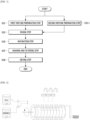
FIG. 1 is a flow chart illustrating a method of preparing a Prussian blue positive electrode material for a sodium battery using a Taylor reactor according to the present invention. -
FIG. 2 is a schematic diagram showing the reaction process of a Prussian blue analog in the synthesis step of the present invention. -
FIG. 3 is a set of photographs of the Prussian blue positive electrode materials prepared in Examples 1 to 4 of the present invention, photographed by SEM. -
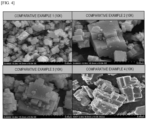
FIG. 4 is a set of photographs of the Prussian blue positive electrode materials prepared in Comparative Examples 1 to 4 of the present invention, photographed by SEM. -
FIGS. 5 to 8 are graphs showing the XRD patterns of the Prussian blue positive electrode materials prepared in Examples 1 to 4 and Comparative Examples 1 to 4 of the present invention. -
FIG. 9 is a set of graphs showing the charge/discharge capacities of the Prussian blue positive electrode materials prepared in Examples 1, 3 and 4 and Comparative Examples 1 to 3 of the present invention. -
FIG. 10 is a set of graphs showing the results of a charge/discharge capacity test of the Prussian blue positive electrode materials prepared in Examples 1, 3 and 4 and Comparative Examples 1 to 3 of the present invention. -
FIG. 11 is a set of graphs showing the capacity retention rates of the Prussian blue positive electrode materials prepared in Examples 1, 3 and 4 and Comparative Examples 1 to 3 of the present invention. - Hereinafter, although exemplary embodiments of the present invention and the properties of each component are described in detail, they are merely provided to describe the present invention in such detail that it can be carried out by one of ordinary skill in the art to which the present invention belongs.
- A method of preparing a Prussian blue positive electrode material for a sodium battery using a Taylor reactor according to the present invention includes a first mixture preparation step (S101) for preparing a first mixture in which an aqueous solution of iron chloride is mixed, a second mixture preparation step (S101-1) for preparing a second mixture in which an aqueous solution of sodium ferrocyanide is mixed, a synthesis step (S103) for synthesizing a Prussian blue analog by reacting the mixture prepared in the second mixture preparation step (S101-1) with the mixture prepared in the first mixture preparation step (S101) in a Taylor reactor under a nitrogen injection condition, a maturation step (S105) for maturing the Prussian blue analog synthesized in the synthesis step (S103), a washing and filtering step (S107) for washing and filtering the Prussian blue analog matured through the maturation step (S105) using a washing agent, and a drying step (S109) for drying the Prussian blue analog washed and filtered through the washing and filtering step (S107).
- The first mixture preparation step (S101) is a step for preparing a first mixture in which an aqueous solution of iron chloride (FeCl2.4H2O) is mixed, preferably, a step for preparing a first mixture by mixing trisodium citrate and an aqueous solution of iron chloride, and more preferably, a step for preparing a first mixture by mixing a 0.001 to 6M aqueous solution of iron chloride containing distilled water purged with nitrogen with 0.001 to 4M trisodium citrate and stirring the resulting mixture at a speed of 800 to 900 rpm.
- Here, the distilled water purged with nitrogen is more preferably prepared by injecting nitrogen into distilled water at a rate of 18 to 22 cc/min.
- The second mixture preparation step (S101-1) is a step for preparing a second mixture in which an aqueous solution of sodium ferrocyanide (Na4Fe(CN)6.10H2O) is mixed, preferably, a step for preparing a second mixture by mixing trisodium citrate and an aqueous solution of sodium ferrocyanide containing distilled water purged with nitrogen, and more preferably, a step for preparing a second mixture by mixing a 0.001 to 1M aqueous solution of sodium ferrocyanide containing distilled water purged with nitrogen with 0.001 to 4M trisodium citrate and stirring the resulting mixture at a speed of 800 to 900 rpm.
- Here, the distilled water purged with nitrogen is more preferably prepared by injecting nitrogen into distilled water at a rate of 18 to 22 cc/min.
- The synthesis step (S103) is a step of synthesizing a Prussian blue analog by inputting the mixture prepared in the first mixture preparation step (S101) and the mixture prepared in the second mixture preparation step (S101-1) into a Taylor reactor and reacting the resulting mixture under a nitrogen injection condition, and more preferably, performed by inputting 100 parts by weight of the mixture prepared in the first mixture preparation step (S101) and 80 to 120 parts by weight of the mixture prepared in the second mixture preparation step (S101-1) into a Taylor reactor and stirring the resulting mixture at 10 to 100 °C and a speed of 50 to 1500 rpm for 10 to 1200 minutes.
- A Prussian blue analog is synthesized through the synthesis step (S103), and here, the nitrogen injection is more preferably performed under the condition of 18 to 22cc/min.
- The reaction of the Prussian blue analog performed in the synthesis step (S101) is performed by co-precipitation, and the reaction of the Prussian blue analog performed by co-precipitation is shown in
Reaction Scheme 1 below andFIG. 2 .
<Reaction Scheme 1> →[Fe(CN)6 4-]→[Fe(CN)6 4-]+Fe2++[CN]-xNA+Fe(CN)6 4-+Fe2+/3+→NaxFe[Fe(CN)6]
- As shown in
Reaction Scheme 1 in the synthesis step of the present invention, the final product, the Prussian blue analog (NaxFe2(CN)6), is synthesized as the final product by reacting the first mixture containing iron ions and the second mixture containing ferrocyanide. - Co-precipitation refers to a phenomenon of precipitating a material along with another material when precipitating, and a method in which other various ions in an aqueous or nonaqueous solution are precipitated together, and it also refers to the most commonly used method for preparing precursors.
- The maturation step (S105) is a step of maturing the Prussian blue analog synthesized through the synthesis step (S103), which is preferably carried out by wrapping the Prussian blue analog synthesized in the synthesis step (S103) with parafilm at room temperature without stirring or heating and maturing the resulting product in a desiccator for 22 to 26 hours.
- When the maturation step (S105) performed through the above-described process, the performance of the synthesized Prussian blue positive electrode material may be improved.
- The washing and filtration step (S107) is a step of washing and filtering the Prussian blue analog matured through the maturation step (S105) using a washing agent, and is preferably performed by washing 100 parts by weight of the Prussian blue analog matured through the maturation step (S105) with 650 to 700 parts by weight of a washing agent two or three times.
- Here, the washing agent is preferably prepared by mixing 1 to 1.5 parts by weight of trisodium citrate with 100 parts by weight of distilled water, and after washing is completed, it is preferable to carry out a filtering process using a centrifuge or continuous centrifuge and an SS filtering device.
- The drying step (S109) is a step of drying the Prussian blue analog washed and filtered through the washing and filtering step (S107), and is preferably performed by drying the Prussian blue analog washed and filtered through the washing and filtering step (S107) at 40 to 130 °C for 10 to 30 hours.
- Here, the device used in drying is not particularly limited, and may be a vacuum oven or continuous dryer. For small-quantity drying, it is efficient to use a vacuum oven, and for large-quantity drying, it is desirable to use a continuous dryer.
- Hereinafter, a method of preparing a Prussian blue positive electrode material for a sodium battery using a Taylor reactor according to the present invention and the properties of a Prussian blue positive electrode material for a sodium battery, prepared by the preparation method, will be described with reference to examples.
- A first mixture was prepared by mixing 2M trisodium citrate with a 3M aqueous solution of iron chloride containing distilled water purged with nitrogen (20 cc/min), and stirring the resulting mixture at a speed of 850 rpm.
- A second mixture was prepared by mixing 2M trisodium citrate with a 0.5M aqueous solution of sodium ferrocyanide containing distilled water purged with nitrogen (20 cc/min), and stirring the resulting mixture at a speed of 850 rpm.
- A second mixture was prepared by mixing 2M trisodium citrate with a 0.5M aqueous solution of sodium ferrocyanide and stirring the resulting mixture at 850 rpm.
- A Prussian blue positive electrode material for a sodium battery was prepared by synthesizing a Prussian blue analog by inputting 100 parts by weight of the second mixture prepared in Preparation Example 2 and 100 parts by weight of the first mixture prepared in Preparation Example 1 in a Taylor reactor and stirring them under a nitrogen purging condition (20 cc/min) at 80 °C and 600 rpm for a residence time of 1τ maturing the synthesized Prussian blue analog in a desiccator for 24 hours while the analog is wrapped with parafilm, washing the mature Prussian blue analog with a washing agent twice, filtering the washed Prussian blue analog through centrifugation in a centrifuge at 8500 rpm for 5 minutes, and drying the filtered Prussian blue analog in a vacuum oven at 120 °C for 24 hours.
- A Prussian blue positive electrode material for a sodium battery was prepared in the same manner as in Example 1, except that a residence time was 4τ.
- A Prussian blue positive electrode material for a sodium battery was prepared in the same manner as in Example 1, except that a residence time was 5τ.
- A Prussian blue positive electrode material for a sodium battery was prepared in the same manner as in Example 1, except that a residence time was 6τ.
- A Prussian blue positive electrode material for a sodium battery was prepared by synthesizing a Prussian blue analog by inputting 100 parts by weight of the second mixture prepared in Comparative Preparation Example 1 and 100 parts by weight of the first mixture prepared in Preparation Example 1 in a reaction tank and reacting the resulting mixture under a nitrogen purging condition (20 cc/min) at 80 °C and 850 rpm for 1 hour, maturing the synthesized Prussian blue analog in a desiccator for 24 hours while the analog is wrapped with parafilm, washing the mature Prussian blue analog with a washing agent twice, filtering the washed Prussian blue analog through centrifugation in a centrifuge at 8500 rpm for 5 minutes, and drying the filtered Prussian blue analog in a vacuum oven at 120 °C for 24 hours.
- A Prussian blue positive electrode material for a sodium battery was prepared in the same manner as in Comparative Example 1, except that the reaction was carried out in a reaction tank for 4 hours.
- A Prussian blue positive electrode material for a sodium battery was prepared in the same manner as in Comparative Example 1, except that the reaction was carried out in a reaction tank for 8 hours.
- A Prussian blue positive electrode material for a sodium battery was prepared in the same manner as in Comparative Example 1, except that the reaction was carried out in a reaction tank for 15 hours.
- The amounts of the Prussian blue positive electrode materials prepared in Examples 2 to 4 were measured and are shown in Table 1 below, and the amounts of the Prussian blue positive electrode materials prepared in Comparative Examples 1 to 4 were measured and are shown in Table 2 below.
- (However, in the case of the Taylor reactor experiment, sampling was conducted because it was judged that samples had stabilized after 4τ due to their characteristics.)
[Table 1] Classification When 1L was dried (g) Example 2 7.07 Example 3 7.5 Example 4 6.33 [Table 2] Classification When 1L was dried (g) Comparative Example 1 5.125 Comparative Example 2 4.425 Comparative Example 3 3.85 Comparative Example 4 4.9 - As shown in Tables 1 and 2, it can be seen that the Prussian blue positive electrode materials prepared in Examples 2 to 4 of the present invention showed a yield that is 1.2 to 1.95 times that of the Prussian blue positive electrode materials prepared in Comparative Examples 1 to 4.
- In addition, the Prussian blue positive electrode materials prepared in Examples 1 to 4 were photographed by SEM, which is shown in
FIG. 3 , and the Prussian blue positive electrode materials prepared in Comparative Examples 1 to 4 were photographed by SEM, which is shown inFIG. 4 . - As shown in
FIGS. 3 and4 , since the Prussian blue positive electrode materials prepared in Examples 1 to 4 of the present invention enter a steady state, it can be seen that the surface of particles become cleaner compared to the Prussian blue positive electrode materials prepared in Comparative Examples 1 to 4. - On the other hand, it can be seen that the surface of particles of the Prussian blue positive electrode materials prepared in Comparative Examples 1 to 4 becomes smoother as the reaction time increases.
- In addition, the average particle sizes of the Prussian blue positive electrode materials prepared in Examples 1 to 4 and Comparative Examples 1 to 4 were measured and are shown in Table 3 below.
[Table 3] Classificati on Example 1 Example 2 Example 3 Example 4 Comparati ve Example 1 Comparati ve Example 2 Comparati ve Example 3 Comparati ve Example 4 Average particle size (µm) 1~2 2~5 3.5∼6 5.5∼8.5 1∼1.7 2~4 3~5 2~6 - As shown in Table 3, in all of Examples 1 to 4 and Comparative Examples 1 to 4 of the present invention, it can be seen that, as the reaction time or residence time (τ) increases, the particle size also increases, and the particle sizes of the Prussian blue positive electrode materials prepared in Examples 1 to 4 are larger.
- In addition, the XRD patterns of the Prussian blue positive electrode materials prepared in Examples 1 to 4 are shown in
FIG. 5 , the XRD patterns of the Prussian blue positive electrode materials prepared in Comparative Examples 1 to 4 were measured and are shown inFIG. 6 , and the comparison between the XRD patterns of the Prussian blue positive electrode materials prepared in Examples 1 to 4 and Comparative Examples 1 to 4 is shown inFIG. 7 . - As shown in
FIGS. 5 and6 , looking at the XRD results around 25, 40, 50, and 55 degrees, it can be seen that there are double peaks, indicating high sodium content. According to research results that a higher sodium content results in a favorable effect on the performance and capacity of a battery, it can be seen that a powder containing a higher sodium content has better quality. - In addition, as shown in
FIG. 7 below, according to research results that the XRD peak around 17 degrees shifts to the left because the lattice spacing in the structure increases with an increasing sodium content, when comparing Comparative Example 1 (1h) and Comparative Example 2 (4h), it can be seen that the XRD peaks shift to the right, and then shift to the left as the reaction time gradually increases. - On the other hand, comparing Example 1 (1τ) and Example 2 (4τ), it can be seen that the XRD peaks shift to the right, and then shift to the left when reaching a stable state.
- In addition, the XRD patterns of the Prussian blue positive electrode materials prepared in Example 4 and Comparative Example 4 were measured and are shown in
FIG. 8 . - As shown in
FIG. 8 , it can be seen that the XRD results of the Prussian blue positive electrode material prepared in Example 4 shift slightly more to the left, indicating better quality. - In addition, the charge/discharge capacities of the Prussian blue positive electrode materials prepared in Examples 1, 3 and 4 and Comparative Examples 1 to 3 were measured and are shown in Table 4 below and
FIG. 9 .[Table 4] Classification Discharge capacity Charge capacity Classification Discharge capacity Charge capacity Examp le 1 111 104.5 Comparative Example 1 109.3 103.6 Examp le 3126.1 125.2 Comparative Example 2 123.49 119.13 Examp le 4126.3 123.3 Comparative Example 3 125 120 - As shown in Table 4 and
FIG. 9 , it can be seen that, in the case of Comparative Examples, the charge/discharge capacity increases as the reaction time (h) increases, and in the case of Examples, as the residence time (τ) increases, the charge/discharge capacity increases, is stabilized and then is maintained. - In addition, the results of the charge/discharge capacity test of the Prussian blue positive electrode materials prepared in Examples 3 and 4 and Comparative Examples 1 to 3 are shown in
FIG. 10 . - As shown in
FIG. 10 , the results of Comparative Example 3 and Example 4 appear to be almost the same, indicating that the time of Example 4 of the present invention using a Taylor reactor is further reduced. - In addition, the capacity retention rates of the Prussian blue positive electrode materials prepared in Examples 3 and 4 and Comparative Examples 1 to 3 were measured and are shown in Table 5 below and
FIG. 11 . - (However, the capacity retention rates were determined by comparing the trends of Coulombic efficiency (200 cycles).)
[Table 5] Classification Coulombic efficiency Classification Coulombic efficiency Example 1 65% Comparative Example 1 54% Example 3 69% Comparative Example 2 67% Example 4 73% Comparative Example 3 68% - As shown in Table 5 and
FIG. 11 , in all of Examples and Comparative Examples, it can be seen that the capacity retention rates are improved with an increased reaction time (h) and residence time (τ), and compared to Comparative Examples 1 to 3, Examples 1, 3 and 4 have a shorter reaction time and a capacity retention rate. - Therefore, the method of preparing a Prussian blue positive electrode material for a sodium battery using a Taylor reactor according to the present invention exhibits excellent Prussian blue positive electrode material production efficiency and provides a Prussian blue positive electrode material which can be used to produce a sodium battery with improved charge/discharge efficiency and an improved capacity retention rate.
-
- S101 : First mixture preparation step, S101-1 : Second mixture preparation step
- S103 : Synthesis step
- S105 : Maturation step
- S107 : Washing and filtering step
- S109 : Drying step
Claims (5)
- A method of preparing a Prussian blue positive electrode material for a sodium battery using a Taylor reactor, comprising:a first mixture preparation step for preparing a first mixture in which an aqueous solution of iron chloride is mixed;a second mixture preparation step for preparing a second mixture in which an aqueous solution of sodium ferrocyanide is mixed;a synthesis step for synthesizing a Prussian blue analog by reacting the mixture prepared in the second mixture preparation step with the mixture prepared in the first mixture preparation step in a Taylor reactor under a nitrogen injection condition;a maturation step for maturing the Prussian blue analog synthesized in the synthesis stepa washing and filtering step for washing and filtering the Prussian blue analog matured through the maturation step using a washing agent; anda drying step for drying the Prussian blue analog washed and filtered through the washing and filtering step.
- The method of claim 1, wherein the first mixture preparation step is performed by mixing a 0.001 to 6M aqueous solution of iron chloride containing distilled water purged with nitrogen with 0.001 to 4M trisodium citrate.
- The method of claim 1, wherein the second mixture preparation step is performed by mixing a 0.001 to 1M aqueous solution of sodium ferrocyanide containing distilled water purged with nitrogen with 0.001 to 4M trisodium citrate.
- The method of claim 1, wherein the synthesis step is performed by inputting 100 parts by weight of the mixture prepared in the first mixture preparation step and 80 to 120 parts by weight of the mixture prepared in the second mixture preparation step into a Taylor reactor and stirring the resulting mixture at 10 to 100 °C and a speed of 50 to 1500 rpm for 1 to 1440 minutes.
- The method of claim 1, wherein the drying step is performed at 40 to 130 °C for 10 to 30 hours.
Applications Claiming Priority (1)
| Application Number | Priority Date | Filing Date | Title |
|---|---|---|---|
| KR1020230168570A KR102887823B1 (en) | 2023-11-28 | 2023-11-28 | Manufacturing method of prussian blue anode material for sodium battery using taylor reactor |
Publications (1)
| Publication Number | Publication Date |
|---|---|
| EP4563529A1 true EP4563529A1 (en) | 2025-06-04 |
Family
ID=93292038
Family Applications (1)
| Application Number | Title | Priority Date | Filing Date |
|---|---|---|---|
| EP24209176.7A Pending EP4563529A1 (en) | 2023-11-28 | 2024-10-28 | Method of preparing prussian blue positive electrode material for sodium battery using taylor reactor |
Country Status (4)
| Country | Link |
|---|---|
| EP (1) | EP4563529A1 (en) |
| JP (1) | JP2026503894A (en) |
| KR (1) | KR102887823B1 (en) |
| WO (1) | WO2025116194A1 (en) |
Citations (3)
| Publication number | Priority date | Publication date | Assignee | Title |
|---|---|---|---|---|
| GB1438064A (en) * | 1973-02-19 | 1976-06-03 | Degussa | Process for the production of berlin blue |
| US20060062702A1 (en) * | 2002-10-30 | 2006-03-23 | Basf Coatings Aktiengesellschaft | Taylor reactor for substance tranformation |
| CN116470042A (en) * | 2023-04-17 | 2023-07-21 | 多氟多新能源科技有限公司 | A kind of Prussian blue sodium-like cathode material and preparation method thereof |
Family Cites Families (7)
| Publication number | Priority date | Publication date | Assignee | Title |
|---|---|---|---|---|
| KR20170098529A (en) * | 2016-02-22 | 2017-08-30 | 한국전기연구원 | Prussian white positive electrode active material and a manufacturing method thereof using Taylor vortex |
| KR102266574B1 (en) | 2018-11-08 | 2021-06-18 | 순천향대학교 산학협력단 | Secondary battery and manufacturing method using Prussian blue powder as cathode active material |
| CN110451525B (en) * | 2019-08-07 | 2021-05-11 | 清华大学 | Method for rapidly preparing Prussian blue analogue with monoclinic crystal structure |
| KR102406480B1 (en) | 2019-11-19 | 2022-06-08 | 순천향대학교 산학협력단 | Zinc-ion secondary battery comprising Prussian Blue Analogous(PBAs) cathode |
| CN112259730B (en) * | 2020-12-08 | 2021-05-04 | 江苏时代新能源科技有限公司 | Prussian blue transition metal cyanide and preparation method and application thereof |
| KR102754817B1 (en) * | 2022-04-05 | 2025-01-21 | 순천향대학교 산학협력단 | Secondary battery comprising prussian blue analogous cathode |
| CN116154153A (en) * | 2023-02-14 | 2023-05-23 | 深圳先进技术研究院 | A kind of Prussian blue nano cathode material and its preparation method and sodium ion battery |
-
2023
- 2023-11-28 KR KR1020230168570A patent/KR102887823B1/en active Active
-
2024
- 2024-07-29 WO PCT/KR2024/011039 patent/WO2025116194A1/en active Pending
- 2024-07-29 JP JP2025543717A patent/JP2026503894A/en active Pending
- 2024-10-28 EP EP24209176.7A patent/EP4563529A1/en active Pending
Patent Citations (3)
| Publication number | Priority date | Publication date | Assignee | Title |
|---|---|---|---|---|
| GB1438064A (en) * | 1973-02-19 | 1976-06-03 | Degussa | Process for the production of berlin blue |
| US20060062702A1 (en) * | 2002-10-30 | 2006-03-23 | Basf Coatings Aktiengesellschaft | Taylor reactor for substance tranformation |
| CN116470042A (en) * | 2023-04-17 | 2023-07-21 | 多氟多新能源科技有限公司 | A kind of Prussian blue sodium-like cathode material and preparation method thereof |
Also Published As
| Publication number | Publication date |
|---|---|
| JP2026503894A (en) | 2026-02-02 |
| KR102887823B1 (en) | 2025-11-18 |
| WO2025116194A1 (en) | 2025-06-05 |
| KR20250080622A (en) | 2025-06-05 |
Similar Documents
| Publication | Publication Date | Title |
|---|---|---|
| CN112054166B (en) | Core-shell structure electrochemical active material, preparation method and battery | |
| CN109686938B (en) | Magnesium ion doped gradient nickel cobalt lithium manganate positive electrode material and preparation method thereof | |
| CN107324405B (en) | A precursor of nickel-cobalt lithium manganese oxide material and its preparation method, and a lithium-ion battery prepared from the precursor | |
| TWI448420B (en) | Ferrous phosphate powders, lithium iron phosphate powders for li-ion battery, and methods for manufacturing the same | |
| CN102916177B (en) | Nickel cobalt manganese hydroxide precursor and preparation method thereof | |
| US20180226639A1 (en) | Carbon-coated ternary positive electrode material, preparation method therefor, and lithium ion battery | |
| CN105514409B (en) | A kind of preparation method of power NCM positive electrodes | |
| CN104752718B (en) | A kind of LiMnxFe1‑xPO4Positive electrode active materials and preparation method thereof | |
| EP2744023A1 (en) | Lithium-rich anode material, lithium battery anode, and lithium battery | |
| CN108767216B (en) | Lithium ion battery anode material with variable slope and full concentration gradient and synthesis method thereof | |
| CN115536078B (en) | Lithium metal oxide precursor and preparation method and application thereof | |
| CN114314541B (en) | Ferric phosphate for high-pressure compaction and preparation method thereof | |
| CN112885995B (en) | Manufacturing method of lithium ferric manganese phosphate coated high-voltage lithium nickel manganese oxide positive electrode material | |
| KR100595362B1 (en) | Lithium-nickel composite oxide for non-aqueous electrolyte secondary battery positive electrode active material, method for preparing same, and positive electrode active material comprising same | |
| CN103000903B (en) | Precursor doped with carbon nanomaterial and preparation method thereof as well as spherical lithium metal oxide anode material and preparation method thereof | |
| JP7775466B2 (en) | Positive electrode material for sodium ion batteries, its manufacturing method, and applications | |
| CN102832388B (en) | Lithium-ion battery positive material coated with metal phosphate on surface and preparation method of lithium-ion battery positive material | |
| EP4725900A1 (en) | Manganese iron phosphate precursor and lithium manganese iron phosphate, and preparation methods therefor and use thereof | |
| CN107658432A (en) | The preparation method and its positive electrode of modified metal-oxide positive electrode | |
| CN106486657A (en) | A kind of rich lithium material of surface in situ cladding and preparation method thereof | |
| EP4563529A1 (en) | Method of preparing prussian blue positive electrode material for sodium battery using taylor reactor | |
| CN113353991B (en) | Lithium removal material and preparation method thereof | |
| CN116072858A (en) | A niobium-doped nickel-cobalt-manganese-aluminate lithium quaternary material, its preparation method, and a lithium-ion battery containing it | |
| CN119725439A (en) | Lithium manganese iron phosphate positive electrode material and preparation method and application thereof | |
| CN116387508B (en) | Aluminum-boron co-doped ternary positive electrode material and its preparation method and application |
Legal Events
| Date | Code | Title | Description |
|---|---|---|---|
| PUAI | Public reference made under article 153(3) epc to a published international application that has entered the european phase |
Free format text: ORIGINAL CODE: 0009012 |
|
| STAA | Information on the status of an ep patent application or granted ep patent |
Free format text: STATUS: REQUEST FOR EXAMINATION WAS MADE |
|
| 17P | Request for examination filed |
Effective date: 20241028 |
|
| AK | Designated contracting states |
Kind code of ref document: A1 Designated state(s): AL AT BE BG CH CY CZ DE DK EE ES FI FR GB GR HR HU IE IS IT LI LT LU LV MC ME MK MT NL NO PL PT RO RS SE SI SK SM TR |
|
| GRAP | Despatch of communication of intention to grant a patent |
Free format text: ORIGINAL CODE: EPIDOSNIGR1 |
|
| STAA | Information on the status of an ep patent application or granted ep patent |
Free format text: STATUS: GRANT OF PATENT IS INTENDED |