EP4561004A1 - Nachrichtenroutingverfahren und -vorrichtung - Google Patents
Nachrichtenroutingverfahren und -vorrichtung Download PDFInfo
- Publication number
- EP4561004A1 EP4561004A1 EP23849009.8A EP23849009A EP4561004A1 EP 4561004 A1 EP4561004 A1 EP 4561004A1 EP 23849009 A EP23849009 A EP 23849009A EP 4561004 A1 EP4561004 A1 EP 4561004A1
- Authority
- EP
- European Patent Office
- Prior art keywords
- message
- network element
- function network
- seid
- session
- Prior art date
- Legal status (The legal status is an assumption and is not a legal conclusion. Google has not performed a legal analysis and makes no representation as to the accuracy of the status listed.)
- Pending
Links
Images


Classifications
-
- H—ELECTRICITY
- H04—ELECTRIC COMMUNICATION TECHNIQUE
- H04W—WIRELESS COMMUNICATION NETWORKS
- H04W40/00—Communication routing or communication path finding
- H04W40/24—Connectivity information management, e.g. connectivity discovery or connectivity update
- H04W40/246—Connectivity information discovery
-
- H—ELECTRICITY
- H04—ELECTRIC COMMUNICATION TECHNIQUE
- H04W—WIRELESS COMMUNICATION NETWORKS
- H04W40/00—Communication routing or communication path finding
- H04W40/24—Connectivity information management, e.g. connectivity discovery or connectivity update
-
- H—ELECTRICITY
- H04—ELECTRIC COMMUNICATION TECHNIQUE
- H04W—WIRELESS COMMUNICATION NETWORKS
- H04W4/00—Services specially adapted for wireless communication networks; Facilities therefor
- H04W4/50—Service provisioning or reconfiguring
-
- H—ELECTRICITY
- H04—ELECTRIC COMMUNICATION TECHNIQUE
- H04W—WIRELESS COMMUNICATION NETWORKS
- H04W40/00—Communication routing or communication path finding
- H04W40/24—Connectivity information management, e.g. connectivity discovery or connectivity update
- H04W40/248—Connectivity information update
-
- H—ELECTRICITY
- H04—ELECTRIC COMMUNICATION TECHNIQUE
- H04W—WIRELESS COMMUNICATION NETWORKS
- H04W76/00—Connection management
- H04W76/10—Connection setup
- H04W76/11—Allocation or use of connection identifiers
-
- H—ELECTRICITY
- H04—ELECTRIC COMMUNICATION TECHNIQUE
- H04W—WIRELESS COMMUNICATION NETWORKS
- H04W76/00—Connection management
- H04W76/10—Connection setup
- H04W76/12—Setup of transport tunnels
-
- H—ELECTRICITY
- H04—ELECTRIC COMMUNICATION TECHNIQUE
- H04L—TRANSMISSION OF DIGITAL INFORMATION, e.g. TELEGRAPHIC COMMUNICATION
- H04L41/00—Arrangements for maintenance, administration or management of data switching networks, e.g. of packet switching networks
- H04L41/08—Configuration management of networks or network elements
- H04L41/0894—Policy-based network configuration management
-
- H—ELECTRICITY
- H04—ELECTRIC COMMUNICATION TECHNIQUE
- H04L—TRANSMISSION OF DIGITAL INFORMATION, e.g. TELEGRAPHIC COMMUNICATION
- H04L41/00—Arrangements for maintenance, administration or management of data switching networks, e.g. of packet switching networks
- H04L41/12—Discovery or management of network topologies
-
- H—ELECTRICITY
- H04—ELECTRIC COMMUNICATION TECHNIQUE
- H04L—TRANSMISSION OF DIGITAL INFORMATION, e.g. TELEGRAPHIC COMMUNICATION
- H04L41/00—Arrangements for maintenance, administration or management of data switching networks, e.g. of packet switching networks
- H04L41/50—Network service management, e.g. ensuring proper service fulfilment according to agreements
- H04L41/5058—Service discovery by the service manager
Definitions
- Embodiments of this application relate to the communication field, and more specifically, to a message routing method and apparatus.
- a session management function (session management function, SMF) network element not only needs to support a service-oriented interface (where for example, an interface between the SMF and an access and mobility management function (access and mobility management function, AMF) network element, a policy control management function (policy control function, PCF) network element, or the like is a service-oriented interface), but also needs to support a non-service-oriented interface (where for example, an N4 interface between the SMF and a user plane function (user plane function, UPF) network element is a non-service-oriented interface).
- SMF session management function
- AMF access and mobility management function
- PCF policy control management function
- the SMF needs to retain context information of a user or context information associated with a transport layer.
- performance of the UPF is also affected.
- the UPF may need to re-establish a session with a new SMF, transmit the context information, and so on.
- a service-oriented function of the SMF is incomplete.
- Embodiments of this application provide a message routing method, and provide a new network service-oriented architecture including an LLOF.
- a message may be transmitted between the LLOF and an SMF through a service-oriented interface, and a non-service-oriented interface may be used between the LLOF and a UPF, so that the SMF is completely service-oriented, and the SMF can further communicate with the UPF via the LLOF.
- a communication method is provided.
- the method may be performed by a link load orchestration function network element, or may be performed by a component (for example, a chip or a circuit) of the link load orchestration function network element. This is not limited herein.
- the method includes: The link load orchestration function network element receives a first message from a session management function network element, where the first message carries information about a user plane function network element and a session message, the first message is for requesting to forward the session message, and the first message is transmitted through a service-oriented interface of the link load orchestration function network element; the link load orchestration function network element determines a target user plane function network element based on the information about the user plane function network element; and the link load orchestration function network element sends the session message to the target user plane function network element through a non-service-oriented interface.
- the session message may be a packet forwarding control protocol PFCP session message.
- the session message includes an information element IE
- the IE includes a control plane fully qualified session endpoint identifier CP F-SEID corresponding to the session management function network element.
- the method before the link load orchestration function network element receives the first message from the session management function network element, the method further includes: The link load orchestration function network element receives a second message from the session management function network element, where the second message is for requesting to obtain the CP F-SEID corresponding to the session management function; the link load orchestration function network element allocates the corresponding CP F-SEID to the session management function network element based on the second message; and the link load orchestration function network element sends the CP F-SEID to the session management function network element.
- the SMF may first obtain the corresponding session endpoint identifier CP F-SEID from the LLOF in advance, encapsulate the CP F-SEID into the IE of the session message, and send the IE of the session message to the LLOF, so that the LLOF can forward the session message to the target UPF.
- the CP F-SEID may be allocated by the session management function network element.
- the SMF may alternatively allocate the CP F-SEID by itself, to be compatible with a conventional technology.
- an existing protocol is slightly modified, thereby facilitating an implementation and reducing costs.
- the SMF does not need to request, from the LLOF, to obtain the CP F-SEID, so that complexity of a procedure can be reduced.
- the link load orchestration function network element allocates a corresponding control plane fully qualified session endpoint identifier CP F-SEID to the session management function network element based on the first message, and the link load orchestration function network element encapsulates the CP F-SEID into an information element IE of the session message.
- the LLOF provides a service of allocating the CP F-SEID, and a binding relationship between the CP F-SEID and the SMF may be dynamically updated.
- the LLOF may reselect a new SMF, does not need to reallocate the CP F-SEID, and only needs to bind the CP F-SEID to the new SMF, to reduce a communication delay, and ensure user service experience.
- the method further includes:
- the link load orchestration function network element stores a mapping relationship between the session management function network element and the CP F-SEID.
- the LLOF may store the mapping relationship, so that the LLOF can subsequently route a message from the UPF based on the mapping relationship, to implement communication between the SMF and the UPF.
- the method further includes: The link load orchestration function network element encapsulates the session message. That the link load orchestration function network element sends the session message to the target user plane function network element includes: The link load orchestration function network element sends an encapsulated session message to the target user plane function network element.
- the link load orchestration function network element may encapsulate the session message in a format of a protocol stack of an N4 interface.
- the LLOF may encapsulate the session message, so that the LLOF and the UPF comply with an N4 interface protocol, and the UPF does not need to be modified. This facilitates an implementation and reduces costs.
- the method further includes:
- the link load orchestration function network element receives a third message from the target user plane function network element, where the third message carries a session endpoint identifier SEID and a user plane fully qualified session endpoint identifier UP F-SEID.
- the third message further carries indication information, and the indication information is for responding to the session message.
- the link load orchestration function network element determines the CP F-SEID based on the SEID, and the link load orchestration function network element sends a fourth message to the session management function network element based on the mapping relationship between the CP F-SEID and the session management function network element, where the fourth message carries the UP F-SEID and the indication information.
- a header of the third message includes the SEID, and an IE of the third message includes the UP F-SEID.
- the link load orchestration function network element receives a third message from the target user plane function network element, where an IE of the third message includes a UP F-SEID and the CP F-SEID.
- the third message further carries indication information, and the indication information is for responding to the session message.
- the link load orchestration function network element sends a fourth message to the session management function network element based on the mapping relationship between the CP F-SEID and the session management function network element, where the fourth message carries the UP F-SEID and the indication information.
- the link load orchestration function network element receives a third message from the target user plane function network element, where a header of the third message includes the CP F-SEID.
- the third message carries indication information, and the indication information is for responding to the session message.
- the link load orchestration function network element sends a fourth message to the session management function network element based on the mapping relationship between the CP F-SEID and the session management function network element, where the fourth message carries the UP F-SEID and the indication information.
- the LLOF may route a message from the UPF based on the mapping relationship, that is, determine a target SMF, to implement communication between the SMF and the UPF, and avoid signaling consumption caused when the LLOF sends the message to an incorrect SMF.
- a message routing apparatus configured to perform the method according to any one of the possible implementations in the first aspect.
- the apparatus may include a unit and/or a module, for example, a transceiver unit and/or a processing unit, configured to perform the method according to any one of the possible implementations in the first aspect.
- the apparatus is a link load orchestration function network element.
- a communication unit may be a transceiver or an input/output interface
- the processing unit may be at least one processor.
- the transceiver may be a transceiver circuit.
- the input/output interface may be an input/output circuit.
- the apparatus is a chip, a chip system, or a circuit used in a link load orchestration function network element.
- a communication unit may be an input/output interface, an interface circuit, an output circuit, an input circuit, a pin, a related circuit, or the like of the chip, the chip system, or the circuit, and the processing unit may be at least one processor, a processing circuit, a logic circuit, or the like.
- a message routing apparatus includes at least one processor, configured to execute a computer program or instructions stored in a memory, to perform the method according to any one of the possible implementations in the first aspect.
- the apparatus further includes the memory, configured to store the computer program or the instructions.
- the apparatus further includes a communication interface, and the processor reads, through the communication interface, the computer program or the instructions stored in the memory.
- the apparatus is a link load orchestration function network element.
- the apparatus is a chip, a chip system, or a circuit used in a link load orchestration function network element.
- this application provides a processor, including an input circuit, an output circuit, and a processing circuit.
- the processing circuit is configured to: receive a signal by using the input circuit, and transmit the signal by using the output circuit, so that the processor performs the method according to any one of the possible implementations in the first aspect.
- the processor may be one or more chips
- the input circuit may be an input pin
- the output circuit may be an output pin
- the processing circuit may be a transistor, a gate circuit, a trigger, any logic circuit, or the like.
- An input signal received by the input circuit may be received and input by, for example, but not limited to, a transceiver
- a signal output by the output circuit may be output to, for example, but not limited to, a transmitter and transmitted by the transmitter
- the input circuit and the output circuit may be a same circuit, where the circuit is used as the input circuit and the output circuit at different moments.
- Specific implementations of the processor and the various circuits are not limited in embodiments of this application.
- Operations such as sending and obtaining/receiving related to the processor may be understood as operations such as output and receiving or input of the processor, or operations such as sending and receiving performed by a radio frequency circuit and an antenna, unless otherwise specified, or provided that the operations do not contradict actual functions or internal logic of the operations in related descriptions. This is not limited in this application.
- a processing device includes a processor and a memory.
- the processor is configured to read instructions stored in the memory, and may receive a signal via a transceiver, and transmit the signal via a transmitter, to perform the method according to any one of the possible implementations in the first aspect.
- processors there are one or more processors, and there are one or more memories.
- the memory may be a non-transitory (non-transitory) memory, for example, a read-only memory (read-only memory, ROM).
- the memory and the processor may be integrated into one chip, or may be separately disposed on different chips.
- a type of the memory and a manner of disposing the memory and the processor are not limited in embodiments of this application.
- a related data exchange process such as sending indication information may be a process of outputting the indication information from the processor, and receiving capability information may be a process of receiving input capability information by the processor.
- data output by the processor may be output to the transmitter, and input data received by the processor may be from the transceiver.
- the transmitter and the transceiver may be collectively referred to as a transceiver.
- the processing device in the fifth aspect may be one or more chips.
- the processor in the processing device may be implemented by using hardware, or may be implemented by using software.
- the processor may be a logic circuit, an integrated circuit, or the like.
- the processor may be a general-purpose processor, and is implemented by reading software code stored in the memory.
- the memory may be integrated into the processor, or may be located outside the processor and exist independently.
- a computer-readable storage medium stores program code to be executed by a device, and the program code is for performing the method according to any one of possible implementations in the first aspect.
- a computer program product including instructions is provided.
- the computer program product runs on a computer, the computer is enabled to perform the method according to any one of the possible implementations in the first aspect.
- a chip system includes a processor, configured to: invoke a computer program from a memory and run the computer program, so that a device on which the chip system is installed performs the method according to any one of the implementations in the first aspect.
- a communication system includes a link load orchestration function network element.
- the link load orchestration function network element is configured to perform the method according to any one of the possible implementations in the first aspect.
- the communication system further includes a session management function network element and a user plane function network element.
- a wireless communication system in this application includes but is not limited to a global system for mobile communications (global system for mobile communications, GSM), a long term evolution (long term evolution, LTE) frequency division duplex (frequency division duplex, FDD) system, an LTE time division duplex (time division duplex, TDD) system, an LTE system, a long term evolution-advanced (LTE-Advanced, LTE-A) system, a next generation communication system (for example, a 6G communication system), a system integrating a plurality of access systems, or an evolved system.
- GSM global system for mobile communications
- LTE long term evolution
- FDD frequency division duplex
- TDD time division duplex
- LTE-A long term evolution-advanced
- LTE-A long term evolution-advanced
- next generation communication system for example, a 6G communication system
- a system integrating a plurality of access systems or an evolved system.
- the technical solutions provided in this application may be further applied to machine type communication (machine type communication, MTC), a long term evolution for machines (long term evolution for machines, LTE-M) technology, a device-to-device (device-to-device, D2D) network, a machine-to-machine (machine-to-machine, M2M) network, an internet of things (internet of things, IoT) network, or another network.
- the IoT network may include, for example, an internet of vehicles. Communication modes in an internet of vehicles system are collectively referred to as vehicle to X (vehicle to X, V2X, where X can stand for everything).
- the V2X may include vehicle-to-vehicle (vehicle-to-vehicle, V2V) communication, vehicle-to-infrastructure (vehicle-to-infrastructure, V2I) communication, vehicle-to-pedestrian (vehicle-to-pedestrian, V2P) communication, or vehicle-to-network (vehicle-to-network, V2N) communication.
- V2V vehicle-to-vehicle
- V2V vehicle-to-vehicle
- V2I vehicle-to-infrastructure
- V2P vehicle-to-pedestrian
- V2N vehicle-to-network
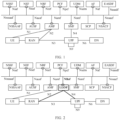
- FIG. 1 is a diagram of a 5G system (5th generation system, 5GS) network service-oriented architecture.
- the network architecture may specifically include the following network elements.
- the terminal device may be a device that provides a user with voice/data.
- the terminal device may be a handheld device or a vehicle-mounted device having a wireless connection function.
- some examples of the terminal device are: a mobile phone (mobile phone), a tablet computer, a notebook computer, a palmtop computer, a mobile internet device (mobile internet device, MID), a virtual reality (virtual reality, VR) device, an augmented reality (augmented reality, AR) device, a wireless terminal in industrial control (industrial control), a wireless terminal in self-driving (self-driving), a wireless terminal in remote medical surgery (remote medical surgery), a wireless terminal in a smart grid (smart grid), a wireless terminal in transportation safety (transportation safety), a wireless terminal in a smart city (smart city), a wireless terminal in a smart home (smart home), a cellular phone, a cordless phone, a session initiation protocol (session initiation protocol, SIP) phone, a wireless local loop (wireless
- the terminal device may alternatively be a wearable device.
- the wearable device may also be referred to as a wearable intelligent device, and is a general term of a wearable device that is intelligently designed and developed for daily wear by using a wearable technology, for example, glasses, gloves, a watch, clothes, and shoes.
- the wearable device is a portable device that can be directly worn on a body or integrated into clothes or an accessory of a user.
- the wearable device is not only a hardware device, but also implements a powerful function through software support, data exchange, and cloud interaction.
- wearable intelligent devices include full-featured and large-sized devices that can implement all or some of functions without depending on smartphones, for example, smart watches or smart glasses, and include devices that are dedicated to only one type of application function and need to collaboratively work with other devices such as smartphones, for example, various smart bands or smart jewelry for monitoring physical signs.
- the terminal device in embodiments of this application may alternatively be a terminal device in an IoT system.
- An IoT is an important part of future development of information technologies.
- a main technical feature of the IoT is connecting a thing to a network by using a communication technology, to implement an intelligent network for interconnection between a person and a machine or between things.
- terminal device and an access network device may communicate with each other by using an air interface technology (for example, an NR technology or an LTE technology).
- Terminal devices may also communicate with each other by using an air interface technology (for example, the NR technology or the LTE technology).
- an apparatus configured to implement a function of the terminal device may be a terminal device, or may be an apparatus, for example, a chip system or a chip, that can support the terminal device in implementing the function.
- the apparatus may be installed in the terminal device.
- the chip system may include a chip, or may include a chip and another discrete component.
- a (radio) access network ((radio) access network, (R)AN) device may provide a function of accessing a communication network for an authorized user in a specific area, and may specifically include a wireless network device in a 3rd generation partnership project (3rd generation partnership project, 3GPP) network, or may include an access point in a non-3GPP (non-3GPP) network.
- 3rd generation partnership project 3rd generation partnership project, 3GPP
- 3GPP 3rd generation partnership project
- the RAN device may use different radio access technologies.
- a 3GPP access technology for example, a radio access technology used in a 3rd generation (3rd generation, 3G) system, a 4th generation (4th generation, 4G) system, or a 5G system
- a non-3GPP (non-3GPP) access technology is an access technology that complies with a 3GPP standard specification.
- an access network device in the 5G system is referred to as a next generation node base station (next generation Node Base station, gNB) or a RAN device.
- next generation Node Base station gNB
- the non-3GPP access technology may include an air interface technology represented by an access point (access point, AP) in wireless fidelity (wireless fidelity, Wi-Fi), a worldwide interoperability for microwave access (worldwide interoperability for microwave access, WiMAX) technology, or a code division multiple access (code division multiple access, CDMA) technology.
- the AN device may allow interconnection and interworking performed between the terminal device and a 3GPP core network by using the non-3GPP technology.
- the RAN device can be responsible for functions such as radio resource management, quality of service (quality of service, QoS) management, and data compression and encryption on an air interface side.
- the AN device provides an access service for the terminal device, to complete forwarding a control signal and user data between the terminal device and the core network.
- the RAN device may include but is not limited to a macro base station, a micro base station (also referred to as a small cell), a radio network controller (radio network controller, RNC), a NodeB (NodeB, NB), a base station controller (base station controller, BSC), a base transceiver station (base transceiver station, BTS), a home base station (for example, a home evolved NodeB, or a home NodeB, HNB), a baseband unit (baseband unit, BBU), an AP in a Wi-Fi system, a wireless relay node, a wireless backhaul node, a transmission point (transmission point, TP), a transmission reception point (transmission reception point, TRP), or the like; may be a gNB or a transmission point (TRP or TP) in the 5G (for example, NR) system, or one antenna panel or a group (including a plurality of antenna panels) of antenna panels of a base station in the 5G system;
- a user plane function (user plane function, UPF) network element may be used for packet routing and forwarding, quality of service (quality of service, QoS) processing on user plane (user plane, UP) data, or the like.
- User data may be transmitted to a data network (data network, DN) via the network element.
- the user plane function network element may be configured to implement a function of a user plane network element.
- the data network (data network, DN) is for providing a network for data transmission, for example, an operator service network, the internet (Internet), or a third-party service network.
- a network slice-specific authentication and authorization function network slice-specific authentication and authorization function, NSSAAF
- NSSAAF network slice-specific authentication and authorization function
- AAA authentication, authorization and accounting
- the network slice-specific authentication and authorization function network element supports accessing an SNPN by using a credential of the AAA server. If a credential holder belongs to a third party, the NSSAAF may contact the AAA server via the AAA proxy.
- An authentication server function (authentication server function, AUSF) network element supports authenticating the UE for a requester network element, providing a key material for the requester network element, and protecting a "guide information list" of the requester network element.
- An access and mobility management function (access and mobility management function, AMF) network element is mainly used for mobility management, access management, and the like, and may be configured to implement a function other than a session management function in mobility management entity (mobility management entity, MME) functions, for example, a function such as terminal mobility management, terminal registration and deregistration, terminal session access, allowed slice access selection of the terminal, lawful interception, or access authorization (or authentication).
- MME mobility management entity
- the access and mobility management function network element may be configured to implement a function of an access and mobility management network element.
- a session management function (session management function, SMF) network element is mainly used for session management, IP address allocation and management of the terminal device, user plane function selection and management, policy control, termination of a charging function interface, downlink data notification, or the like.
- the session management function network element may be configured to implement a function of a session management network element.
- a service communication proxy (service communication proxy, SCP) is responsible for message routing of a service-oriented interface between control plane (control plane, CP) network elements.
- control plane control plane
- the control plane network elements include network elements such as the AMF, the SMF, the AUSF, and the PCF.
- a network slice admission control function network slice admission control function, NSACF
- protocol data unit protocol data unit
- a network slice selection function (network slice selection function, NSSF) is used for network slice selection.
- a network capability exposure function (network exposure function, NEF) network element is configured to securely expose, to the outside, service and capability information (for example, a terminal location and a network congestion status) provided by a 3GPP network function network element.
- a network repository function network repository function, NRF network element is configured to provide new functions of registration and discovery, so that network elements can discover each other and communicate with each other through an application programming interface (application programming interface, API).
- application programming interface application programming interface
- a policy control (policy control function, PCF) network element is a unified policy framework for guiding a network behavior, and provides a service policy, charging policy information, and the like for a control plane function network element (for example, the AMF network element or the SMF network element).
- a unified data management (unified data management, UDM) is used for user identifier processing, authentication access, registration, mobility management, or the like.
- An application function (application function, AF) network element is configured to provide a service, perform application-affected data routing, access the network exposure function network element, exchange service data with the PCF network element to perform policy control, or the like.
- An edge application server discovery (edge application server discovery function, EASDF) network element is a new network element EASDF that assists in edge application server (edge application server, EAS) discovery, and a main function of the edge application server discovery function network element is to process a domain name system (domain name system, DNS) message based on an indication of the SMF. For example, the function is reporting the DNS message to the SMF, adding an extended mechanisms for DNS (extended mechanisms for DNS, EDNS) client subnet option (client subnet option) (extended mechanisms for DNS client subnet option, which may also be referred to as "ECS option" for short) to a DNS query (query), forwarding the DNS query to a DNS server, and forwarding a DNS response (response) to the UE.
- extended mechanisms for DNS extended mechanisms for DNS
- client subnet option client subnet option
- ECS option extended mechanisms for DNS client subnet option
- the AMF and the SMF support both a service-oriented interface and a non-service-oriented interface.
- the "service-oriented interface” may be understood as an interface externally exposed by a functional entity through service registration and service discovery of a service-oriented architecture. The interface is only for a single functional entity. A related functional entity interacts with another functional entity externally through the service-oriented interface, and the another functional entity interacts with the functional entity through the interface exposed by the functional entity. In other words, this mechanism provides a "many-to-one" access mechanism. In addition, because service registration and service discovery are used, each other can access each other without knowing each other's address. This mechanism enables communication between network elements to function like a service alignment function rather than a serial link.
- non-service-oriented interface may be understood as a conventional interface based on a reference point, to be specific, an interface that is mutually agreed on between two different function network elements for mutual access.
- non-service-oriented interface there is a binding relationship between user context and a physical interface.
- the SMF needs to send an SMF set (set) identifier (ID) and/or information about a backup SMF corresponding to the UE to another peripheral network element (for example, a UPF) that has a relationship with the UE.
- the another network element detects that the SMF is faulty, the network element may reselect an SMF from an SMF set based on the SMF set ID, to continue to provide a service for the UE, or the network element may reselect the backup SMF based on the information about the backup SMF, to continue to provide a service for the UE.
- the SMF has provided a backup mechanism
- when an SMF serving a UE is faulty even if a new SMF may be reselected to provide a service for the UE, because the old SMF is faulty, context information may fail to be transmitted to the newly selected SMF.
- the UPF may need to re-establish a session with the new SMF, and transmit the context information. This increases a communication delay, affects user service experience, and so on.
- an N26 interface is an interface between a 4G core network (that is, a mobility management entity (mobility management entity, MME)) and a 5G core network (that is, the AMF), and is used for a handover or redirection operation between 4G and 5G. If the AMF in the 5G core network supports the N26 interface, a RAN may fall back through handover or redirection, to use a voice service.
- a 4G core network that is, a mobility management entity (mobility management entity, MME)
- MME mobility management entity
- 5G core network that is, the AMF
- the 5G network service-oriented architecture in FIG. 1 is improved, to obtain a new service-oriented architecture shown in FIG. 2 .
- a function network element is newly added in FIG. 2 .
- the newly added function network element may be referred to as a link load orchestration function (link load orchestration function, LLOF) network element.
- LLOF link load orchestration function
- an interface between the LLOF and a UPF is an N4 interface
- an interface between an SMF and the LLOF is a service-oriented interface. Therefore, in this application, a non-service-oriented N4 interface between the SMF and the UPF may be shielded, so that a service-oriented function of the SMF can be completely implemented.
- an interface between the LLOF and a RAN is an N2 interface, so that a non-service-oriented N2 interface between an AMF and the RAN can be shielded.
- an interface between the LLOF and an MME is an N26 interface, so that a non-service-oriented N26 interface between the AMF and the MME can be shielded.
- the "shielding" in this application may also be understood as follows: For example, there may still be an N4 interface between the SMF and the UPF, but the SMF may not use the N4 interface to communicate with the UPF. Alternatively, it may be understood as that there is still an N2 interface between the AMF and the RAN, but the AMF may not use the N2 interface to communicate with the RAN. Alternatively, it may be understood as that there is still an N26 interface between the AMF and the MME, but the AMF may not use the N26 interface to communicate with the MME.
- this application provides a new service-oriented architecture.
- the LLOF is added to the architecture, and the LLOF may terminate a non-service-oriented interface, for example, may terminate the N2 interface, the N4 interface, and the N26 interface.
- the interface between the UPF and the LLOF, the interface between the RAN and the LLOF, and the interface between the MME and the LLOF are still based on the existing non-service-oriented interfaces.
- the service-oriented interface may be used between the LLOF and a control plane network element (for example, the AMF or the SMF).
- the AMF or the SMF no longer needs to support the non-service-oriented interface. This facilitates decoupling between the AMF or the SMF and another network element, facilitates scale-in/scale-out of the AMF or the SMF, and simplifies an implementation of the AMF or the SMF.
- the LLOF may provide one or more of the following services:
- the newly added function network element can provide one or more of the foregoing services, but a specific name of the newly added function network element may not be limited.
- the name of the network element is the LLOF is used for description.
- a new service-oriented architecture in which the LLOF communicates with the SMF through the service-oriented interface, and the LLOF communicates with the UPF through the N4 interface is provided, and the N4 interface between the SMF and the UPF may be shielded.
- how the SMF communicates with the UPF becomes a technical problem that needs to be resolved.
- FIG. 2 is merely an example of a network architecture that can be applied to embodiments of this application, and the network architecture applicable to embodiments of this application is not limited thereto. Any network architecture that can implement functions of the foregoing network elements is applicable to embodiments of this application.
- an N1 interface is a reference point between the terminal device and the AMF.
- An N2 interface is an interface between the RAN and the AMF network element, and is configured to send a radio parameter, non-access stratum (non-access stratum, NAS) signaling, and the like.
- An N3 interface is an interface between the RAN and the UPF network element, and is configured to transmit user plane data, and the like.
- An N4 interface is an interface between the SMF network element and the UPF network element, and is configured to transmit information such as a service policy, tunnel identification information about an N3 connection, data buffer indication information, and a downlink data notification message.
- the N4 interface is a reference point between the SMF and the UPF, and is configured to transmit information such as the tunnel identification information of the N3 connection, the data buffer indication information, and the downlink data notification message.
- An N6 interface is a reference point between the UPF and the DN, and is configured to transmit user plane data, and the like.
- An N9 interface is a reference point of the UPF.
- names of the interfaces between the network elements in FIG. 1 and FIG. 2 are merely examples, and the interfaces may have other names in a specific implementation. This is not specifically limited in this application.
- names of messages (or signaling) transmitted between the foregoing network elements are merely examples, and do not constitute any limitation on functions of the messages.
- functions or network elements such as the AMF, the SMF, and the LLOF shown in FIG. 1 and FIG. 2 may be understood as network elements configured to implement different functions.
- the network elements may be combined into a network slice as required.
- These network elements may be independent devices, or may be integrated into a same device to implement different functions, or may be network elements in a hardware device, or may be software functions running on dedicated hardware, or may be instantiated virtualization functions on a platform (for example, a cloud platform).
- Specific forms of the network elements are not limited in this application.
- non-service-oriented interfaces are still used for some interfaces in the 5G network.
- the N4 interface that is between the SMF and the UPF and that needs to transmit a large quantity of services and a large amount of policy information has relatively complex logic, and a non-service-oriented interface of a PFCP protocol is usually used for the interface.
- the N4 interface is an interface between the SMF and UPF.
- a control plane uses the PFCP protocol to transmit a node-level message and a session-level message.
- a user plane uses a GPRS tunneling protocol for the user plane (GPRS tunneling protocol for the user plane, GTP-U) to transmit a packet that the SMF needs to receive or send via the UPF.
- GPRS tunneling protocol for the user plane GPRS tunneling protocol for the user plane, GTP-U
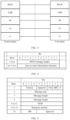
- FIG. 3 shows a protocol stack of an N4 interface.
- the protocol stack includes a PFCP layer, a UDP layer, an IP layer, an L2 layer (namely, a data link layer), and an L1 layer (physical layer) from top to bottom.
- FIG. 4 shows a format of a PFCP session message.
- the PFCP session message may have n (which is an integer greater than 0) bytes, and each byte has 8 bits (bits).
- a byte #1 to a byte #m are a PFCP session message header (PFCP message header) (where in this application, the "PFCP session message header" is also referred to as a "PFCP session message header"), and a byte #(m+1) to a byte #n are zero or more information elements (information elements, IEs).
- PFCP message header PFCP message header
- a byte #(m+1) to a byte #n are zero or more information elements (information elements, IEs).
- IEs information elements
- FIG. 5 specifically shows a format of a PFCP session message header.
- the PFCP session message header may have 16 bytes (where n is an integer greater than 0), and each byte also has 8 bits.
- a bit #1 in a first byte is an "S" flag, and the flag indicates whether a session endpoint identifier (session endpoint identifier, SEID) field exists in the PFCP session message header. If the "S" flag is set to "0", the SEID field cannot be present in the PFCP header. If the "S” flag is set to "1", the SEID field should follow a length field in a unit of a byte #5 to a byte #12 (eight bytes in total).
- SEID session endpoint identifier
- a value of the "S” flag should be set to "1" in all PFCP session messages except for a node-related message.
- a bit #2 represents a "message priority (message priority, MP)" flag. If the "MP" flag is set to 1, a 5th bit to an 8th bit of a byte #16 may indicate a message priority.
- a bit #3 indicates a “follow open (follow open, FO)” flag. If the "FO” flag is set to "1", another PFCP session message is followed in a UDP packet or an IP packet (for details, refer to sections 6.5 and 7.2.1A in TS 26.244).
- a bit #4 and a bit #5 are spare (spare) bits. If a sending entity sets the bit #4 and the bit #5 to 0, a receiving entity should ignore the bit #4 and the bit #5.
- a bit 6 to a bit 8 represent a PFCP version (version). A current version is 1. The version should be set to 1 in a decimal format ("001").
- a byte #2 represents a message type (message type).
- a byte #3 and a byte #4 are a two-byte message length.
- the byte #5 to the byte #12 are optional SEID fields, and may occupy 8 bytes.
- a byte #13 to a byte #15 are a sequence number.
- the last byte #16 is a spare byte (for example, the 5th bit to the 8th bit may indicate a message priority).
- PFCP session message header refer to chapter 7.2.2 in TS 29.244.
- FIG. 6 shows a format of an IE of a PFCP session message.
- first two bytes indicate a message type.
- a value range of an IE type defined in 3GPP is 0 to 32767, but a range of the IE specified by a vendor is 32768 to 65535.
- a byte #3 and a byte #4 indicate a message length.
- An enterprise (enterprise) ID field is optional.
- a field of specific data in an IE group or IE content is further included.
- the IE includes a control plane fully qualified session endpoint identifier (fully qualified session endpoint identifier, F-SEID).
- F-SEID fully qualified session endpoint identifier
- the F-SEID included in the IE is not completely the same as an SEID in a header.
- the F-SEID includes the SEID and an IP address.
- the "IP address" may be understood as an IP address of a network element that allocates the SEID.
- the IP address may be understood as an IP address of an SMF.
- the IP address herein may be understood as an IP address of an LLOF.
- the LLOF may also obtain the F-SEID based on the SEID and the IP address of the LLOF.
- the F-SEID may alternatively be consistent with the SEID. This is not limited in this application.
- the IE further includes creating a packet detection rule (packet detection rule, PDR), updating a data detection rule, creating a forwarding action rule (forwarding action rule, FAR), creating a usage reporting rule (usage reporting rule, URR), creating a QoS enforcement rule (QoS enforcement rule, QER), forwarding a parameter (forwarding parameter), and duplicating a parameter (duplicating parameter).
- packet detection rule packet detection rule
- FAR forwarding action rule
- URR usage reporting rule
- QoS enforcement rule QoS enforcement rule
- forwarding a parameter forwarding parameter
- duplicating parameter duplicating parameter
- FIG. 7 is a schematic flowchart of a message routing method 700 according to this application. The following describes steps shown in FIG. 7 . It should be noted that steps represented by dashed lines in FIG. 7 are optional, and are not repeated in subsequent descriptions. The method includes the following steps.
- Step 701 An LLOF receives a first message from an SMF, where the first message carries information about a UPF and a session message, the first message is for requesting to forward the session message, and the first message is transmitted through a service-oriented interface of the LLOF.
- the session message may be a PFCP session message.
- the information about the UPF may be address information of the UPF, for example, an IP address or a fully qualified domain name (fully qualified domain name, FQDN).
- the information about the UPF may be parameter information of the UPF, for example, a data network name (data network name, DNN) and/or slice information.
- the information about the UPF may be, for example, a UP F-SEID.
- the session message includes an information element IE, and the IE includes a CP F-SEID corresponding to the SMF.
- the CP F-SEID may be allocated by the SMF.
- the CP F-SEID may be obtained by the SMF from the LLOF.
- the SMF may send a second message to the LLOF, where the second message is for requesting to obtain the CP F-SEID corresponding to the SMF.
- the LLOF allocates the CP F-SEID to the SMF, and sends the CP F-SEID to the SMF.
- the session message does not include the CP F-SEID corresponding to the SMF.
- the LLOF may allocate the corresponding CP F-SEID to the SMF, and encapsulate the CP F-SEID into the information element IE of the session message.
- the LLOF may further store a mapping relationship between the SMF and the CP F-SEID.
- mapping relationship in this specification may also be expressed as an “association relationship” or a “correspondence”.
- B corresponding to A may be understood as that “there is an association relationship between A and B", “there is a correspondence between A and B”, or “there is a mapping relationship between A and B”.
- “B corresponding to A” indicates that A may be determined based on B.
- determining A based on B does not mean that A is determined based only on B, and A may be further determined based on B and/or other information.
- Step 702 The LLOF determines a target UPF based on the information about the UPF.
- the LLOF may determine the target UPF based on the address information of the UPF. In an implementation, the LLOF queries a corresponding UPF based on FQDN information of the UPF. For another example, the LLOF may select the target UPF based on the parameter information of the UPF. In an implementation, the LLOF selects a corresponding UPF based on the DNN and slice selection assistance information, to determine the IP address of the UPF.
- Step 703 The LLOF sends the session message to the target UPF through a non-service-oriented interface.
- the UPF receives the session message from the LLOF.
- the LLOF may encapsulate the session message, and send an encapsulated session message to the target UPF.
- the method further includes: step 704: The LLOF receives a third message from the UPF.
- a header of the third message includes an SEID
- an IE of the third message includes the UP F-SEID
- the third message further carries indication information.
- the third message may be the session message, for example, the PFCP session message.
- the UP F-SEID may be allocated by the UPF based on the received session message. For example, the UPF may allocate the corresponding UP F-SEID based on a name of the session message.
- the indication information is for responding to the session message. For example, if the UPF accepts the IE of the session message, the UPF may store the CP F-SEID and N4 rules that are included in the session message, and send the third message to the LLOF, where the third message includes "success" indication information. If the UPF accepts only some of the N4 rules, or if the UPF accepts no N4 rule, the third message sent by the UPF to the LLOF includes "error cause" (which may also be understood as "cause value”) indication information.
- the LLOF may obtain a CP F-SEID based on the SEID and an IP address of the LLOF (where the CP F-SEID is the CP F-SEID corresponding to the SMF in step 701), or the SEID is equal to the F-SEID. This is not limited in this application.
- an IE of the third message includes the UP F-SEID and the CP F-SEID, and the third message further carries indication information.
- a header of the third message includes the CP F-SEID, and the third message further carries indication information.
- the third message may be transmitted through the non-service-oriented interface.
- the method further includes: step 705: The LLOF sends a fourth message to the SMF based on the mapping relationship between the SMF and the CP F-SEID, where the fourth message carries the UP F-SEID and the indication information.
- the LLOF may determine the CP F-SEID. As described above, the CP F-SEID may be included in the IE or the header, and the LLOF obtains the CP F-SEID by parsing the IE or the header. Alternatively, the LLOF determines the CP F-SEID based on the SEID. This is not limited in this application.
- the LLOF may determine the target SMF based on the mapping relationship, and forward the indication information and the UP F-SEID to the target SMF.
- the fourth message may be transmitted through the service-oriented interface.
- this application provides a new network service-oriented architecture including an LLOF.
- a message may be transmitted between the LLOF and an SMF through a service-oriented interface, and a non-service-oriented interface may be used between the LLOF and a UPF, so that the SMF is completely service-oriented, and the SMF can further communicate with the UPF via the LLOF.
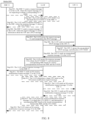
- FIG. 8 is a schematic flowchart of another message routing method 800 according to this application.
- a session message is a PFCP message
- an SMF is an SMF #1
- a UPF is a UPF #1 is used for description.
- an LLOF supports parsing and encapsulating a PFCP session message header, but does not support parsing or encapsulating an IE of the PFCP session message.
- an LLOF not only supports parsing and encapsulating a PFCP session message header, but also supports parsing and encapsulating an IE of the PFCP session message. The following describes the technical solutions of this application for these cases.
- step 801 to step 803 may be performed.
- the SMF #1 sends a request message #1 to the LLOF, where the request message #1 is for requesting to obtain a corresponding CP F-SEID.
- the LLOF receives the request message #1 from the SMF.
- the request message #1 may be transmitted through a service-oriented interface of the LLOF.
- the request message #1 may be a request message encapsulated in an HTTP format.
- the LLOF provides a service of allocating the CP F-SEID to the SMF.
- the service may be defined as Nllof_Fseid_allocation. It may also be understood as that in this application, the LLOF has a capability of allocating the CP F-SEID to the SMF, or the LLOF supports allocating the CP F-SEID to the SMF.
- the SMF #1 may invoke the service of allocating the CP F-SEID by the LLOF, to request the LLOF to allocate the corresponding CP F-SEID to the SMF #1.
- the SMF #1 may send the request message #1 to the LLOF, where the request message #1 is for requesting, from the LLOF, to obtain the CP F-SEID corresponding to the SMF #1.
- the SMF #1 may first determine a target LLOF.
- the SMF may determine an LLOF to which the request message #1 is sent.
- the SMF may determine the target LLOF based on configuration information or a domain name system (domain name system, DNS) query, or in another manner.
- the SMF may first select a UPF, and the SMF determines the target LLOF based on the selected UPF.
- the SMF determines the UPF based on information such as a data network name (data network name, DNN) and/or a network slice (for example, single network slice selection assistance information (single network slice selection assistance information, S-NSSAI)).
- a data network name data network name, DNN
- a network slice for example, single network slice selection assistance information (single network slice selection assistance information, S-NSSAI)
- IPv4 version 4
- the SMF may determine the target LLOF based on an IP version supported by the selected UPF, so that the selected LLOF can be compatible with the IP version supported by the UPF.
- the LLOF allocates a CP F-SEID #1, and binds the CP F-SEID #1 to the SMF #1.
- the service of allocating the corresponding CP F-SEID by the LLOF may be triggered.
- the LLOF may store a correspondence between the SMF and the CP F-SEID.
- the LLOF may pre-store a correspondence between the SMF and the CP F-SEID.
- the correspondence may be configured on the LLOF before delivery.
- the correspondence may be obtained by the LLOF from another network element. This is not limited.
- the LLOF may store a correspondence between one or more SMFs and the CP F-SEID.
- the correspondence may be expressed in a form of a table, as shown in Table 1 below.
- Table 1 SMF index CP F-SEID index SMF #1 CP F-SEID #1 SMF #2 CP F-SEID #2 SMF #3 CP F-SEID #3 ... ...
- the LLOF not only provides the service of allocating the CP F-SEID, but also supports a function of modifying the correspondence between the SMF and the CP F-SEID. For example, assuming that the SMF #1 is faulty, the LLOF may modify a correspondence between the SMF #1 and the CP F-SEID #1. For example, the LLOF may bind the CP F-SEID #1 to the SMF #2.
- the LLOF may further store SMF session context information. Therefore, if an SMF is faulty, the LLOF may select another SMF, and send the session context information to the newly selected SMF, so that the SMF can continue to perform a session-related operation. For example, it is assumed that the SMF #2 is bound to the CP F-SEID #2. If the SMF #2 is faulty, the LLOF may select the SMF #3 to continue to perform the session-related operation. In this case, the LLOF may modify a correspondence between the SMF #2 and the CP F-SEID #2 in Table 1, to be specific, modify the correspondence to a correspondence between the SMF #3 and the CP F-SEID #2.
- an SMF may allocate a CP F-SEID. If an SMF is faulty, a new SMF needs to re-allocate the CP F-SEID to a session, and the faulty SMF cannot transmit session context information to the newly selected SMF. Therefore, the newly selected SMF restarts an operation related to session establishment. As a result, communication delay is long, and user service experience is severely affected.
- the LLOF may select a new SMF to provide a service for a session, thereby reducing a communication delay and ensuring user service experience.
- the LLOF sends a response message #1 to the SMF #1, where the response message #1 carries the CP F-SEID #1.
- the response message #1 may be transmitted through a service-oriented interface between the SMF #1 and the LLOF.
- the response message #1 may be encapsulated in an HTTP format for transmission.
- step 801 to step 803 are technical solutions in which the SMF #1 requests the LLOF to allocate the CP F-SEID.
- the SMF may alternatively allocate the CP F-SEID by itself. In this case, step 801 to step 803 may not be performed.
- step 801 to step 803 may not be performed, and step 804 may be directly performed.
- Step 804 The SMF #1 sends a request message #2 to the LLOF, where the request message #2 carries information about the UPF and the PFCP session message, and the request message #2 is for requesting to forward the PFCP session message.
- the LLOF receives the request message #2 from the SMF #1.
- the PFCP session message carries the IE, and the IE includes the CP F-SEID #1 corresponding to the session management function network element.
- the LLOF parses the IE, and finds that the IE does not include the CP F-SEID corresponding to the SMF #1. In this case, the LLOF may allocate a corresponding CP F-SEID #1 to the SMF #1, and encapsulate the CP F-SEID #1 into the IE.
- different PFCP request messages may be for defining different service names.
- Nllof_PFCP message_transfer is defined to transmit the PFCP session message (to be specific, transmit an N4 message between the SMF and the UPF).
- Nllof_NGAP message_transfer service is defined by the LLOF to transmit an NGAP message (to be specific, an N2 message between an NG-RAN and an AMF).
- Nllof_GTP-C message_transfer is defined to transmit a GTP-C message (to be specific, an N26 message between an AMF and an MME).
- the LLOF has a capability of forwarding a message for the SMF, or the LLOF supports forwarding a message for the SMF.
- the LLOF may forward a request message #4 for the SMF by using Nllof_PFCP message_transfer.
- the LLOF may still define a same service name to unify various PFCP request messages.
- the LLOF provides a message forwarding service by using a same service name Nllof_message_transfer.
- the LLOF needs to further define service parameters in the message, so that different interface message types can be distinguished based on the service parameters.
- a parameter #1 to a service parameter #10 may indicate that the service is for transmitting the N4 message between the SMF and the UPF.
- a parameter #11 to a service parameter #20 may indicate that the service is for transmitting the N2 message between the NG-RAN and the AMF.
- a parameter #21 to a service parameter #30 may indicate that the service is for transmitting the N26 message between the AMF and the MME.
- the request message #2 may be transmitted through the service-oriented interface of the LLOF.
- the request message #2 may be a message encapsulated in an HHTP format.
- the information about the UPF may be for selecting a target UPF.
- the information about the UPF may be address information of the UPF and/or parameter information of the UPF.
- the address information of the UPF may be, for example, information such as IP address information of the UPF or a fully qualified domain name (fully qualified domain name, FQDN).
- the parameter information of the UPF may be, for example, a data network name (data network name, DNN) or network slice selection assistance information (network slice selection assistance information, NSSAI).
- the LLOF may select the target UPF based on the parameter information of the UPF, and determine an IP address of the UPF.
- the information about the UPF may be understood as a UP F-SEID allocated by the UPF to a session. It should be understood that, in this application, the CP F-SEID and the UP F-SEID may identify one session, or it may be understood as that a pair of the user plane F-SEID and the control plane F-SEID may identify one session.
- the PFCP session message includes a PFCP header and one or more IEs.
- the IE may include the CP F-SEID #1.
- the IE may alternatively be one or more of creating a data packet detection rule, creating a QoS enforcement rule, and creating a QoS enforcement rule.
- the PFCP session message may be a PFCP session establishment message (namely, PFCP session establishment message).
- the PFCP session message may be a PFCP session modification message (namely, PFCP session modification).
- the PFCP session message may be a PFCP session deletion request message (namely, PFCP session deletion request message).
- a specific name of the PFCP session message is not limited. For details, refer to chapter 7.3 in TS 29.244.
- the LLOF may provide the message forwarding service.
- the service may be defined as Nllof_message_transfer.
- the LLOF may further provide different message forwarding services for different types of non-service-oriented messages.
- Nllof_PFCP message_transfer is defined to transmit the PFCP session message (to be specific, transmit the N4 message between the SMF and the UPF).
- Nllof_NGAP message_transfer service is defined by the LLOF to transmit the NGAP message (to be specific, the N2 message between the NG-RAN and the AMF).
- Nllof_GTP-C message_transfer is defined to transmit the GTP-C message (to be specific, the N26 message between the AMF and the MME). It may also be understood as that the LLOF has the capability of forwarding a message for the SMF, or the LLOF supports forwarding a message for the SMF. For example, the LLOF may forward the request message #2 for the SMF by using Nllof_PFCP message_transfer.
- the LLOF may define different services for different types of non-service-oriented messages (for example, the LLOF defines an Nllof_PFCP message_transfer service, the Nllof_NGAP message_transfer service, and an Nllof_GTP-C message_transfer service)
- the LLOF may determine a type of the non-service-oriented message based on a name of the request message #2. For example, if the message name of the request message #2 is Nllof_PFCP message_transfer, the LLOF may determine that the message is of an N4 interface message type.
- the LLOF may determine that the message is of an N2 interface message type. For still another example, if the message name of the request message #2 is Nllof_GTP-C message_transfer, the LLOF may determine that the message is of an N26 interface message type.
- the LLOF uses an Nllof_message_transfer service to forward the request message #2 for the SMF.
- the request message #2 may carry indication information #1, and the indication information #1 indicates a type of the non-service-oriented message.
- the indication information #1 is a message type field.
- the indication information #1 may indicate that the non-service-oriented message is of an N2 interface message type.
- the indication information #1 may indicate that the non-service-oriented message is of an N4 interface message type.
- the indication information #1 may indicate that the non-service-oriented message is of an N26 interface message type.
- Step 805 The LLOF parses the request message #2, and encapsulates the PFCP session message.
- sequential encapsulation may be performed on the PFCP session message based on the protocol stack shown in FIG. 3 .
- UDP header encapsulation and IP header encapsulation are performed on the PFCP session message in sequence.
- the LLOF encapsulates the PFCP header into the IE, to obtain the PFCP session message.
- the UDP layer may continue to encapsulate the PFCP session message by using a UDP header.
- a source port of the UDP may be a UDP port number allocated by the LLOF, for example, a UDP port number #1.
- a destination port of the UDP is a port number #8805.
- the IP layer may encapsulate a message of the UDP layer by using an IP header.
- a source IP address of the IP header is an IP address of the LLOF
- a destination IP address of the IP header is an IP address of the UPF #1.
- Step 806 The LLOF sends an encapsulated PFCP session message to the UPF #1.
- the UPF #1 receives the encapsulated PFCP session message.
- the LLOF may determine, based on the information about the UPF (for example, the address information of the UPF and/or the parameter information of the UPF), that the target UPF is the UPF #1, and send the encapsulated PFCP session message to the UPF #1.
- a destination address in the encapsulated PFCP session message is the IP address of the UPF #1.
- Step 807 The UPF #1 parses the encapsulated PFCP session message, and allocates the UP F-SEID.
- the UPF #1 may first parse the IP header, then parse the UDP header, and finally parse the PFCP header and the IE.
- the UPF #1 may allocate a UP F-SEID #8 based on a name of the PFCP session message.
- the UPF #1 accepts the IE (to be specific, various N4 rules (N4 rules) in the PFCP session message) in the PFCP session message.
- the UPF #1 may store the CP F-SEID #1 and the N4 rules that are included in the PFCP session message, and send a response message to the LLOF, where the response message includes "success” indication information. If the UPF #1 accepts only some of the N4 rules, or if the UPF #1 accepts no N4 rule, the response message sent by the UPF #1 to the LLOF includes "error cause" (which may also be understood as "cause value”) indication information.
- the response message sent by the UPF #1 to the LLOF includes indication information #2, and the indication information is a response to the PFCP session message.
- the indication information may be rejection "cause value” indication information or the "success” indication information.
- the response message may alternatively be first encapsulated into the PFCP session message, and the PFCP session message includes a PFCP session message header and one or more IEs.
- the PFCP message header may include the SEID #1.
- the PFCP session message header may include the CP F-SEID #1, and the IE of the PFCP session message includes the UP F-SEID.
- the UPF #1 may encapsulate the UP F-SEID #8 and the CP F-SEID #2 into the IE.
- the PFCP message header may include the SEID #2, and the IE of the PFCP session message may include the UP F-SEID #8.
- the PFCP session message header may include the CP F-SEID #2, and the IE of the PFCP session message may include the UP F-SEID #8.
- the PFCP session message is encapsulated by using the UDP header.
- a port number of a source port of the UDP header is a port number #8805
- a port number of a destination port of the UDP is a port number #1.
- the IP header is used for encapsulation.
- a source IP address of the IP header is an IP address of the UPF
- a destination IP address of the IP header is an IP address of the LLOF.
- Step 808 The UPF #1 sends an encapsulated response message #2 to the LLOF.
- the LLOF receives the response message #2.
- Step 809 The LLOF parses the response message #2 to obtain the CP F-SEID #1, and determines a corresponding SMF based on the stored correspondence between the SMF and the CP F-SEID.
- the LLOF may parse the IP header, the UDP header, and the PFCP header in sequence.
- the SEID #1 is obtained after the PFCP session message header is successfully parsed.
- the LLOF may obtain the CP F-SEID #1 based on the SEID #1 and the IP address of the LLOF.
- the LLOF may determine, based on the correspondence, that a target SMF is the SMF #1.
- Step 810 The LLOF sends a response message #3 to the SMF #1.
- the LLOF may provide the message forwarding service.
- the LLOF may send the response message #3 to the SMF #1 based on an Nllof_ Message_Notify service.
- the response message #3 carries the indication information #2 and the UP F-SEID #8.
- the response message #3 may be a message in an HTTP format.
- the response message #3 may be transmitted by using a service-oriented interface protocol.
- step 801 to step 810 are understood as an N4 session establishment process, in other words, the PFCP session message is a PFCP session establishment message.
- the following step 811 to step 815 may be understood as an N4 session modification process or an N4 session release process.
- step 811 the SMF sends an N4 session modification request message #1 to the LLOF.
- the LLOF receives the session modification request message #1 from the SMF.
- the N4 session modification request message #1 may be a PFCP session modification message.
- a PFCP session modification message header includes the UP F-SEID #8.
- an IE of the PFCP session modification message may be some update rules of an N4 session message.
- the N4 session modification request message #1 may be transmitted through the service-oriented interface.
- the N4 session modification request message #1 may be encapsulated into a message in an HHTP format.
- the LLOF determines the target UPF based on the N4 session modification request message #1.
- the LLOF may determine, based on the UP F-SEID #8 included in the PFCP session modification message header, that the target UPF is the UPF #1.
- the LLOF sends an N4 session modification request message #2 to the UPF #1.
- the UPF #1 receives the session modification request message #2 from the LLOF.
- the session modification request message #2 is a PFCP session modification message.
- an IE of the PFCP session modification message may be some update rules of an N4 session message.
- a PFCP session modification message header may include the CP F-SEID #1.
- the LLOF may send the N4 session modification request message to the UPF #1 through an N4 interface.
- the UPF #1 sends a session modification response message #1 to the LLOF.
- the LLOF receives the session modification response message #1.
- the UPF #1 accepts an IE (to be specific, various N4 rules (N4 rules) in the PFCP session modification message) in the session modification request message, and the UPF #1 may send a response message to the LLOF.
- the response message includes indication information #3.
- the indication information #3 may be "success” indication information.
- the UPF #1 accepts only some of the N4 rules, or if the UPF #1 accepts no N4 rule, the response message sent by the UPF #1 to the LLOF includes "error cause” (which may also be understood as "cause value”) indication information.
- the session modification response message includes the PFCP session modification message header and one or more IEs.
- the PFCP message header may include the SEID #1 allocated by the LLOF to the SMF.
- the PFCP message header may include the CP F-SEID #1 allocated by the LLOF to the SMF.
- Information carried in the response message herein is consistent with that carried in a session establishment response message, and processing after the LLOF receives the response messages is also consistent.
- the LLOF parses the session modification response message #1 to obtain the CP F-SEID #1, and determines a corresponding SMF based on the stored correspondence between the SMF and the CP F-SEID.
- the LLOF may parse the IP header, the UDP header, and the PFCP header in sequence.
- the SEID #1 is obtained after the PFCP session modification message header is successfully parsed.
- the LLOF may obtain the CP F-SEID #1 based on the SEID #1 and the IP address of the LLOF.
- the LLOF may determine, based on the correspondence, that the target SMF is the SMF #1.
- step 816 the LLOF sends a session modification response message to the SMF #1.
- the LLOF may provide the message forwarding service.
- the LLOF may send the session modification response message to the SMF #1 based on the Nllof_Message_Notify service.
- messages such as Nllof_message_transfer and Nllof_Fseid_allocation are examples of message names. This is not limited.
- this application provides a new network service-oriented architecture including the LLOF.
- a message may be transmitted between the LLOF and the SMF through the service-oriented interface, so that the SMF is completely service-oriented.
- the LLOF may provide services such as CP F-SEID allocation and message forwarding, to ensure communication between the SMF and the UPF.
- the LLOF may further quickly select a new SMF, transmit session context to the newly selected SMF, and provide a service for a session, thereby reducing a communication delay and ensuring user service experience.
- pre-define in this application may be understood as “define”, “pre-define”, “store”, “pre-store”, “pre-negotiate”, “pre-configure”, “build into”, or “pre-burn”.
- each node for example, the link load orchestration function network element, the session management function network element, and the user plane function network element, includes a corresponding hardware structure and/or software module for performing each function.
- each node for example, the link load orchestration function network element, the session management function network element, and the user plane function network element, includes a corresponding hardware structure and/or software module for performing each function.
- a person skilled in the art should be able to be aware that, in this application, units and algorithm steps of the examples described with reference to embodiments disclosed in this specification can be implemented by hardware or a combination of hardware and computer software. Whether a function is performed by the hardware or hardware driven by computer software depends on particular applications and design constraints of the technical solutions. A person skilled in the art may use different methods to implement the described functions for each particular application, but it should not be considered that the implementation goes beyond the scope of this application.
- the link load orchestration function network element includes a corresponding hardware structure and/or software module for performing each function.
- the units and method steps in the examples described with reference to embodiments disclosed in this application can be implemented by hardware or a combination of hardware and computer software. Whether a function is performed by the hardware or hardware driven by computer software depends on particular application scenarios and design constraints of the technical solutions.
- FIG. 9 and FIG. 10 are diagrams of structures of possible message routing apparatuses according to embodiments of this application. These message routing apparatuses may be configured to implement functions of the link load orchestration function network element in the foregoing method embodiments, and therefore can also implement beneficial effects of the foregoing method embodiments.
- the message routing apparatus 100 includes a processing unit 110 and a transceiver unit 120.
- the message routing apparatus 100 is configured to implement functions of the link load orchestration function network element in the method embodiment shown in FIG. 8 .
- the transceiver unit 120 is configured to receive a first message from a session management function network element, where the first message carries information about a user plane function network element and a session message, the first message is for requesting to forward the session message, and the first message is transmitted through a service-oriented interface of the apparatus.
- the processing unit 110 is configured to determine a target user plane function network element based on the information about the user plane function network element.
- the transceiver unit 120 is further configured to send the session message to the target user plane function network element through a non-service-oriented interface.
- the transceiver unit 120 is configured to receive a second message from the session management function network element, where the second message is for requesting to obtain a CP F-SEID corresponding to the session management function network element.
- the processing unit 110 is configured to allocate the corresponding CP F-SEID to the session management function network element based on the second message.
- the transceiver unit 120 is configured to send the CP F-SEID to the session management function network element.
- the processing unit 110 is configured to allocate a corresponding control plane fully qualified session endpoint identifier CP F-SEID to the session management function network element based on the first message, and the processing unit 110 is configured to encapsulate the CP F-SEID into an information element IE of the session message.
- the processing unit 110 is configured to store a mapping relationship between the session management function network element and the CP F-SEID.
- the processing unit 110 is configured to encapsulate the session message. That the transceiver unit 120 sends the session message to the target user plane function network element includes: The transceiver unit 120 is configured to send an encapsulated session message to the target user plane function network element.
- the transceiver unit 120 is configured to receive a third message from the target user plane function network element, where the third message carries a session endpoint identifier SEID, a user plane fully qualified session endpoint identifier UP F-SEID, and indication information, and the indication information is for responding to the session message.
- the processing unit 110 is configured to determine the CP F-SEID based on the SEID.
- the processing unit 110 controls, based on the mapping relationship between the CP F-SEID and the session management function network element, the transceiver unit 120 to send a fourth message to the session management function network element, where the fourth message carries the UP F-SEID and the indication information.
- processing unit 110 and the transceiver unit 120 directly refer to related descriptions in the method embodiment shown in FIG. 8 . Details are not described herein again.
- the message routing apparatus 200 includes a processor 210 and an interface circuit 220.
- the processor 210 is coupled to the interface circuit 220.
- the interface circuit 220 may be a transceiver or an input/output interface.
- the message routing apparatus 200 may further include a memory 230, configured to: store instructions executed by the processor 210, store input data required by the processor 210 to run the instructions, or store data generated after the processor 210 runs the instructions.
- the processor 210 is configured to implement a function of the processing unit 110
- the interface circuit 220 is configured to implement a function of the transceiver unit 120.
- the processor shown in FIG. 10 may include at least one processor, and the interface circuit may also include a plurality of interface circuits.
- the processor in embodiments of this application may be a central processing unit (Central Processing Unit, CPU), or may be another general-purpose processor, a digital signal processor (Digital Signal Processor, DSP), an application-specific integrated circuit (Application-Specific Integrated Circuit, ASIC), a field programmable gate array (Field Programmable Gate Array, FPGA) or another programmable logic device, a transistor logic device, a hardware component, or any combination thereof.
- the general-purpose processor may be a microprocessor, or may be any conventional processor.
- this application further provides a computer program product.
- the computer program product stores computer program code.
- the computer program code When the computer program code is run on a computer, the computer is enabled to perform the methods performed by the link load orchestration function network element in embodiments of the method 700 and the method 800.
- this application further provides a computer-readable storage medium.
- the computer-readable medium stores program code.
- the program code When the program code is run on a computer, the computer is enabled to perform the methods performed by the link load orchestration function network element in the method 700 and the method 800 in the foregoing embodiments.
- this application further provides a communication system.
- the communication system includes a terminal and a network device.
- the terminal is configured to perform the steps corresponding to the link load orchestration function network element in the method 700 and the method 800.
- the communication system may further include a user plane function network element and a session management function network element.
- the steps of the methods in embodiments of this application may be implemented in hardware, or may be implemented in software instructions that can be executed by the processor.
- the software instructions may include a corresponding software module.
- the software module may be stored in a random access memory, a flash memory, a read-only memory, a programmable read-only memory, an erasable programmable read-only memory, an electrically erasable programmable read-only memory, a register, a hard disk drive, a removable hard disk, a CD-ROM, or any other form of storage medium well-known in the art.
- the storage medium is coupled to a processor, so that the processor can read information from the storage medium and write information into the storage medium.
- the storage medium may alternatively be a component of the processor.
- the processor and the storage medium may be disposed in an ASIC.
- the ASIC may be located in the link load orchestration function network element.
- the processor and the storage medium may also exist in the link load orchestration function network element as discrete components.
- All or some of the foregoing embodiments may be implemented by using software, hardware, firmware, or any combination thereof.
- the computer program product includes one or more computer programs or instructions.
- the computer may be a general-purpose computer, a dedicated computer, a computer network, a network device, user equipment, or another programmable apparatus.
- the computer program or instructions may be stored in a computer-readable storage medium, or may be transmitted from a computer-readable storage medium to another computer-readable storage medium.
- the computer program or instructions may be transmitted from a website, computer, server, or data center to another website, computer, server, or data center in a wired or wireless manner.
- the computer-readable storage medium may be any usable medium that can be accessed by the computer, or a data storage device, for example, a server or a data center, integrating one or more usable media.
- the usable medium may be a magnetic medium, for example, a floppy disk, a hard disk drive, or a magnetic tape; or may be an optical medium, for example, a digital video disc; or may be a semiconductor medium, for example, a solid-state drive.
- the computer-readable storage medium may be a volatile or non-volatile storage medium, or may include both a volatile storage medium and a non-volatile storage medium.
Landscapes
- Engineering & Computer Science (AREA)
- Computer Networks & Wireless Communication (AREA)
- Signal Processing (AREA)
- Mobile Radio Communication Systems (AREA)
Applications Claiming Priority (2)
| Application Number | Priority Date | Filing Date | Title |
|---|---|---|---|
| CN202210912571.7A CN117528706A (zh) | 2022-07-30 | 2022-07-30 | 消息路由方法和装置 |
| PCT/CN2023/096497 WO2024027299A1 (zh) | 2022-07-30 | 2023-05-26 | 消息路由方法和装置 |
Publications (2)
| Publication Number | Publication Date |
|---|---|
| EP4561004A1 true EP4561004A1 (de) | 2025-05-28 |
| EP4561004A4 EP4561004A4 (de) | 2025-11-12 |
Family
ID=89748297
Family Applications (1)
| Application Number | Title | Priority Date | Filing Date |
|---|---|---|---|
| EP23849009.8A Pending EP4561004A4 (de) | 2022-07-30 | 2023-05-26 | Nachrichtenroutingverfahren und -vorrichtung |
Country Status (4)
| Country | Link |
|---|---|
| US (1) | US20250184863A1 (de) |
| EP (1) | EP4561004A4 (de) |
| CN (1) | CN117528706A (de) |
| WO (1) | WO2024027299A1 (de) |
Families Citing this family (1)
| Publication number | Priority date | Publication date | Assignee | Title |
|---|---|---|---|---|
| CN120730271A (zh) * | 2024-03-28 | 2025-09-30 | 华为技术有限公司 | 通信方法及装置 |
Family Cites Families (5)
| Publication number | Priority date | Publication date | Assignee | Title |
|---|---|---|---|---|
| CN111629450B (zh) * | 2019-02-28 | 2022-06-24 | 华为技术有限公司 | 一种数据传输方法、相关设备以及存储介质 |
| EP3994850B1 (de) * | 2019-07-03 | 2024-11-06 | Telefonaktiebolaget LM Ericsson (publ) | Herstellung einer steuerprotokollsitzung zur paketweiterleitung |
| WO2021248275A1 (en) * | 2020-06-08 | 2021-12-16 | Telefonaktiebolaget Lm Ericsson (Publ) | Method and apparatus for network interworking |
| CN112671567B (zh) * | 2020-12-16 | 2023-02-21 | 中盈优创资讯科技有限公司 | 一种基于服务化接口的5g核心网拓扑发现方法及装置 |
| EP4118925B1 (de) * | 2020-12-29 | 2024-03-27 | Ofinno, LLC | Träger für tunnelung |
-
2022
- 2022-07-30 CN CN202210912571.7A patent/CN117528706A/zh active Pending
-
2023
- 2023-05-26 WO PCT/CN2023/096497 patent/WO2024027299A1/zh not_active Ceased
- 2023-05-26 EP EP23849009.8A patent/EP4561004A4/de active Pending
-
2025
- 2025-01-30 US US19/041,797 patent/US20250184863A1/en active Pending
Also Published As
| Publication number | Publication date |
|---|---|
| CN117528706A (zh) | 2024-02-06 |
| WO2024027299A1 (zh) | 2024-02-08 |
| EP4561004A4 (de) | 2025-11-12 |
| US20250184863A1 (en) | 2025-06-05 |
Similar Documents
| Publication | Publication Date | Title |
|---|---|---|
| US20250311044A1 (en) | Session Management Method, Apparatus, and System | |
| US10973082B2 (en) | Registration method, session establishment method, terminal, and AMF entity | |
| CN111698755B (zh) | 基于ursp规则的应用数据路由方法及用户设备 | |
| CN113132334B (zh) | 授权结果的确定方法及装置 | |
| US20230156833A1 (en) | Packet Forwarding Method, Apparatus, and System | |
| US20240244032A1 (en) | Communication method and apparatus | |
| US20240236840A1 (en) | Information transmission method and apparatus | |
| US12101838B2 (en) | Communications method, apparatus, and system | |
| US20240244031A1 (en) | Communication method and apparatus | |
| WO2022199451A1 (zh) | 会话切换的方法和装置 | |
| US20240244497A1 (en) | Communication method and apparatus | |
| US20240340709A1 (en) | Communication method and apparatus | |
| US20240155325A1 (en) | Information obtaining method and apparatus, and system | |
| JP7513746B2 (ja) | 時刻同期パケット処理方法および装置 | |
| US20250184863A1 (en) | Message routing method and apparatus | |
| WO2022170798A1 (zh) | 确定策略的方法和通信装置 | |
| CN116567768A (zh) | 一种确定用户设备路由选择策略的方法和装置 | |
| WO2023116556A1 (zh) | 会话切换的方法和装置 | |
| AU2023206483A1 (en) | Broadcast communication method and apparatus | |
| US20250240700A1 (en) | Communication method, apparatus, and system | |
| US20240267963A1 (en) | Communication method and apparatus | |
| US20260052595A1 (en) | Communication method and corresponding apparatus | |
| CN113329392A (zh) | 家庭网关接入网络的方法和通信装置 | |
| CN117528460A (zh) | 消息可靠传输方法和装置 | |
| EP4694253A1 (de) | Kommunikationsverfahren und entsprechende vorrichtung |
Legal Events
| Date | Code | Title | Description |
|---|---|---|---|
| STAA | Information on the status of an ep patent application or granted ep patent |
Free format text: STATUS: THE INTERNATIONAL PUBLICATION HAS BEEN MADE |
|
| PUAI | Public reference made under article 153(3) epc to a published international application that has entered the european phase |
Free format text: ORIGINAL CODE: 0009012 |
|
| STAA | Information on the status of an ep patent application or granted ep patent |
Free format text: STATUS: REQUEST FOR EXAMINATION WAS MADE |
|
| 17P | Request for examination filed |
Effective date: 20250224 |
|
| AK | Designated contracting states |
Kind code of ref document: A1 Designated state(s): AL AT BE BG CH CY CZ DE DK EE ES FI FR GB GR HR HU IE IS IT LI LT LU LV MC ME MK MT NL NO PL PT RO RS SE SI SK SM TR |
|
| DAV | Request for validation of the european patent (deleted) | ||
| DAX | Request for extension of the european patent (deleted) | ||
| A4 | Supplementary search report drawn up and despatched |
Effective date: 20251015 |
|
| RIC1 | Information provided on ipc code assigned before grant |
Ipc: H04L 41/12 20220101AFI20251009BHEP Ipc: H04W 40/24 20090101ALI20251009BHEP Ipc: H04W 76/11 20180101ALN20251009BHEP |
|
| GRAP | Despatch of communication of intention to grant a patent |
Free format text: ORIGINAL CODE: EPIDOSNIGR1 |
|
| STAA | Information on the status of an ep patent application or granted ep patent |
Free format text: STATUS: GRANT OF PATENT IS INTENDED |