EP4559703A1 - Human-computer interaction method and system for vehicle front passenger seat sun visor screen, and vehicle - Google Patents
Human-computer interaction method and system for vehicle front passenger seat sun visor screen, and vehicle Download PDFInfo
- Publication number
- EP4559703A1 EP4559703A1 EP23929848.2A EP23929848A EP4559703A1 EP 4559703 A1 EP4559703 A1 EP 4559703A1 EP 23929848 A EP23929848 A EP 23929848A EP 4559703 A1 EP4559703 A1 EP 4559703A1
- Authority
- EP
- European Patent Office
- Prior art keywords
- passenger
- sunshade screen
- seat
- seat sunshade
- vehicle
- Prior art date
- Legal status (The legal status is an assumption and is not a legal conclusion. Google has not performed a legal analysis and makes no representation as to the accuracy of the status listed.)
- Pending
Links
Images



Classifications
-
- B—PERFORMING OPERATIONS; TRANSPORTING
- B60—VEHICLES IN GENERAL
- B60J—WINDOWS, WINDSCREENS, NON-FIXED ROOFS, DOORS, OR SIMILAR DEVICES FOR VEHICLES; REMOVABLE EXTERNAL PROTECTIVE COVERINGS SPECIALLY ADAPTED FOR VEHICLES
- B60J3/00—Antiglare equipment associated with windows or windscreens; Sun visors for vehicles
- B60J3/02—Antiglare equipment associated with windows or windscreens; Sun visors for vehicles adjustable in position
- B60J3/0204—Sun visors
- B60J3/0213—Sun visors characterised by the mounting means
- B60J3/0217—Brackets for mounting the sun visor support arm to the vehicle
-
- B—PERFORMING OPERATIONS; TRANSPORTING
- B60—VEHICLES IN GENERAL
- B60K—ARRANGEMENT OR MOUNTING OF PROPULSION UNITS OR OF TRANSMISSIONS IN VEHICLES; ARRANGEMENT OR MOUNTING OF PLURAL DIVERSE PRIME-MOVERS IN VEHICLES; AUXILIARY DRIVES FOR VEHICLES; INSTRUMENTATION OR DASHBOARDS FOR VEHICLES; ARRANGEMENTS IN CONNECTION WITH COOLING, AIR INTAKE, GAS EXHAUST OR FUEL SUPPLY OF PROPULSION UNITS IN VEHICLES
- B60K35/00—Instruments specially adapted for vehicles; Arrangement of instruments in or on vehicles
- B60K35/20—Output arrangements, i.e. from vehicle to user, associated with vehicle functions or specially adapted therefor
- B60K35/21—Output arrangements, i.e. from vehicle to user, associated with vehicle functions or specially adapted therefor using visual output, e.g. blinking lights or matrix displays
- B60K35/22—Display screens
-
- B—PERFORMING OPERATIONS; TRANSPORTING
- B60—VEHICLES IN GENERAL
- B60K—ARRANGEMENT OR MOUNTING OF PROPULSION UNITS OR OF TRANSMISSIONS IN VEHICLES; ARRANGEMENT OR MOUNTING OF PLURAL DIVERSE PRIME-MOVERS IN VEHICLES; AUXILIARY DRIVES FOR VEHICLES; INSTRUMENTATION OR DASHBOARDS FOR VEHICLES; ARRANGEMENTS IN CONNECTION WITH COOLING, AIR INTAKE, GAS EXHAUST OR FUEL SUPPLY OF PROPULSION UNITS IN VEHICLES
- B60K35/00—Instruments specially adapted for vehicles; Arrangement of instruments in or on vehicles
- B60K35/65—Instruments specially adapted for specific vehicle types or users, e.g. for left- or right-hand drive
- B60K35/656—Instruments specially adapted for specific vehicle types or users, e.g. for left- or right-hand drive the user being a passenger
-
- B—PERFORMING OPERATIONS; TRANSPORTING
- B60—VEHICLES IN GENERAL
- B60K—ARRANGEMENT OR MOUNTING OF PROPULSION UNITS OR OF TRANSMISSIONS IN VEHICLES; ARRANGEMENT OR MOUNTING OF PLURAL DIVERSE PRIME-MOVERS IN VEHICLES; AUXILIARY DRIVES FOR VEHICLES; INSTRUMENTATION OR DASHBOARDS FOR VEHICLES; ARRANGEMENTS IN CONNECTION WITH COOLING, AIR INTAKE, GAS EXHAUST OR FUEL SUPPLY OF PROPULSION UNITS IN VEHICLES
- B60K2360/00—Indexing scheme associated with groups B60K35/00 or B60K37/00 relating to details of instruments or dashboards
- B60K2360/20—Optical features of instruments
- B60K2360/21—Optical features of instruments using cameras
-
- B—PERFORMING OPERATIONS; TRANSPORTING
- B60—VEHICLES IN GENERAL
- B60K—ARRANGEMENT OR MOUNTING OF PROPULSION UNITS OR OF TRANSMISSIONS IN VEHICLES; ARRANGEMENT OR MOUNTING OF PLURAL DIVERSE PRIME-MOVERS IN VEHICLES; AUXILIARY DRIVES FOR VEHICLES; INSTRUMENTATION OR DASHBOARDS FOR VEHICLES; ARRANGEMENTS IN CONNECTION WITH COOLING, AIR INTAKE, GAS EXHAUST OR FUEL SUPPLY OF PROPULSION UNITS IN VEHICLES
- B60K2360/00—Indexing scheme associated with groups B60K35/00 or B60K37/00 relating to details of instruments or dashboards
- B60K2360/77—Instrument locations other than the dashboard
- B60K2360/777—Instrument locations other than the dashboard on or in sun visors
-
- B—PERFORMING OPERATIONS; TRANSPORTING
- B60—VEHICLES IN GENERAL
- B60W—CONJOINT CONTROL OF VEHICLE SUB-UNITS OF DIFFERENT TYPE OR DIFFERENT FUNCTION; CONTROL SYSTEMS SPECIALLY ADAPTED FOR HYBRID VEHICLES; ROAD VEHICLE DRIVE CONTROL SYSTEMS FOR PURPOSES NOT RELATED TO THE CONTROL OF A PARTICULAR SUB-UNIT
- B60W2540/00—Input parameters relating to occupants
- B60W2540/223—Posture, e.g. hand, foot, or seat position, turned or inclined
-
- Y—GENERAL TAGGING OF NEW TECHNOLOGICAL DEVELOPMENTS; GENERAL TAGGING OF CROSS-SECTIONAL TECHNOLOGIES SPANNING OVER SEVERAL SECTIONS OF THE IPC; TECHNICAL SUBJECTS COVERED BY FORMER USPC CROSS-REFERENCE ART COLLECTIONS [XRACs] AND DIGESTS
- Y02—TECHNOLOGIES OR APPLICATIONS FOR MITIGATION OR ADAPTATION AGAINST CLIMATE CHANGE
- Y02B—CLIMATE CHANGE MITIGATION TECHNOLOGIES RELATED TO BUILDINGS, e.g. HOUSING, HOUSE APPLIANCES OR RELATED END-USER APPLICATIONS
- Y02B80/00—Architectural or constructional elements improving the thermal performance of buildings
Definitions
- the present invention relates to the field of vehicle intelligent control technologies, and in particular, to a human-computer interaction method and system for a vehicle front passenger seat sun visor screen, and a vehicle.
- in-vehicle display With continuous increase in an intelligence degree of automobiles, market requirements for automotive intelligence are becoming more diversified.
- requirements of users for in-vehicle display are not limited to that of a driver, but extend to that of a passenger.
- An in-vehicle display gradually evolves from an original driving assistance tool to a consumer electronic product to meet entertainment requirements of different users.
- a front-passenger-seat sun visor in the automotive industry has an undiversified function, and poor playability in human-computer interaction. Therefore, how to meet entertainment for a front passenger becomes a goal of the front-passenger-seat sun visor, and it is necessary for manufacturers to focus on an ecological experience issue of the front-passenger-seat sun visor.
- the patent document CN112572110A discloses a sun visor control method and apparatus, and a vehicle.
- a solution in which a driver can automatically adjust a sun visor during driving is mentioned in the method.
- the solution focuses on an automatic sunshade control solution for the sun visor, in which intensity of ambient light and a vehicle head direction are captured by using an external camera for automatically controlling an angle of the sun visor.
- the control solution mentioned in the patent is limited only to resolving a sunshade issue and cannot meet entertainment requirements of a passenger such as viewing comfort.
- the patent document CN112977015A discloses a sunshade structure, a vehicle, and a display control method.
- the method proposes a design of using a display module to replace an original sun visor, to replace a sunshade function.
- the display module can display reserved data information, and is mainly used for telephone number reservation, so that contact information of a vehicle owner can be found quickly during parking.
- the sunshade display apparatus has only a sunshade function and a function of displaying reservation information such as numbers, and the function of displaying the reservation information faces a person outside a vehicle.
- the entire sunshade display apparatus has problems of an undiversified function and insufficient automation.
- An objective of the present invention is to provide a human-computer interaction method and system for a vehicle front-passenger-seat sunshade screen, and a vehicle, to implement adaptive angle adjustment of a screen, to ensure comfort of watching by a user.
- a human-computer interaction system for a vehicle front-passenger-seat sunshade screen includes:
- the camera is disposed at a central position of a visual region of the front-passenger-seat sunshade screen;
- the controller is further configured to: calculate a deviation between a normal direction of a screen of the front-passenger-seat sunshade screen and a virtual connection line between an eyeball of the front passenger and the camera; when it is determined that the deviation is greater than a preset deviation value, calculate a target angle position of the front-passenger-seat sunshade screen based on an eyeball position of the front passenger and rotation angle information of the front-passenger-seat sunshade screen; and control the front-passenger-seat sunshade screen to rotate to the target angle position, so that when the front-passenger-seat sunshade screen is in the TV mode, it can be ensured that the front-passenger-seat sunshade screen is at a relatively good watching angle in real time.
- a human-computer interaction method for a vehicle front-passenger-seat sunshade screen uses the human-computer interaction system for a vehicle front-passenger-seat sunshade screen described in the present invention, and includes the following steps:
- a human-computer interaction method for a vehicle front-passenger-seat sunshade screen uses the human-computer interaction system for a vehicle front-passenger-seat sunshade screen described in the present invention, and includes the following steps:
- a vehicle according to the present invention uses the human-computer interaction system for a vehicle front-passenger-seat sunshade screen described in the present invention.
- 1 -module base 11-mounting structure, 2-rotating mechanism, 21-master pin boss, 22-slave pin boss, 221-rotation limiting groove, 222-slave mounting hole, 23-motor, 24-gear box, 25-main shaft, 26-damper, 27-mechanism housing, 271-left sleeve, 272-middle sleeve, 273-right sleeve, 2731-right-side rotating shaft, 2732-rotation limiting member, 2733-harness via, 274-mounting lug, 28-circuit board, 3-display, 31-specular reflection film, 4-module housing, 41-avoidance groove, 5-decorative panel, 6-vehicle front roof crossmember, 7-front windshield.
- a human-computer interaction system for a vehicle front-passenger-seat sunshade screen includes a front-passenger-seat sunshade screen, a camera, an angle detection module, and a controller.
- the front-passenger-seat sunshade screen is configured to shade light and play video information, where the front-passenger-seat sunshade screen is capable of being rotatably disposed on a roof of a vehicle front-passenger-seat compartment.
- the camera is configured to track position information of a front passenger in real time, and transmit the position information of the front passenger to the controller.
- the angle detection module is configured to collect a rotation angle of the front-passenger-seat sunshade screen.
- the controller is configured to control the rotation angle and audio/video playback of the front-passenger-seat sunshade screen, and dynamically adjust a position of the front-passenger-seat sunshade screen based on the position information of the front passenger and the rotation angle of the front-passenger-seat sunshade screen, where the controller is separately connected to the front-passenger-seat sunshade screen, the angle detection module, and the camera.
- the camera is disposed at a central position of a visual region of the front-passenger-seat sunshade screen.
- the front-passenger-seat sunshade screen is further configured with a TV mode.
- the controller is further configured to: when it is detected that the front-passenger-seat sunshade screen is opened and enters the TV mode, control the camera to track eyeball position information of the front passenger in real time, to ensure accuracy of tracking the eyeball position information of the passenger.
- a selfie mode of the camera may be further enabled to replace a makeup mirror function.
- the controller is further configured to: calculate a deviation between a normal direction of a screen of the front-passenger-seat sunshade screen and a virtual connection line between an eyeball of the front passenger and the camera, and compare the deviation with a preset deviation value (for example, 5°); and if the deviation is less than or equal to the preset deviation value, maintain a current flipping angle of the front-passenger-seat sunshade screen; or if the deviation is greater than the preset deviation value, calculate a target angle position of the front-passenger-seat sunshade screen based on an eyeball position of the front passenger and rotation angle information of the front-passenger-seat sunshade screen, and control the front-passenger-seat sunshade screen to rotate to the target angle position, that is, enable a deviation between the normal direction of the screen and a virtual connection line between an eyeball of a user and the camera to be less than or equal to 5°.
- a preset deviation value for example, 5
- the human-computer interaction system for a vehicle front-passenger-seat sunshade screen further includes a light sensing sensor, configured to monitor intensity of external ambient light, where the light sensing sensor is connected to the controller.
- the controller is further configured to: when the front-passenger-seat sunshade screen is not in the TV mode, automatically control opening/closing of the front-passenger-seat sunshade screen based on a magnitude of the intensity of the external ambient light.
- the front-passenger-seat sunshade screen is in a closed state, the front-passenger-seat sunshade screen is almost parallel to a roof of a vehicle, reducing occupation of internal space of the vehicle.
- the front-passenger-seat sunshade screen and the roof of the vehicle form a specific included angle, implementing sun shading.
- a sunshade function and an audio/video display function are completed by using only one front-passenger-seat sunshade screen, implementing structural integration and function maximization. This can effectively avoid a glare problem of mirror display and reduce direct radiation of strong external light, improving user experience; and can automatically implement a sunshade function in a strong light environment, which is more user-friendly and intelligent.
- the human-computer interaction system for a vehicle front-passenger-seat sunshade screen further includes a vehicle door assembly, configured to feed back a vehicle door status to the controller, where the vehicle door assembly is connected to the controller.
- the front-passenger-seat sunshade screen is further configured with a courtesy mode.
- the controller is further configured to: when it is detected that the front-passenger-seat sunshade screen is in an unfolded state, control the courtesy mode of the front-passenger-seat sunshade screen to be in an enabled standby state; when it is detected that a vehicle door is opened and it is identified that the front passenger has an intention to get off the vehicle or that a passenger has an intention to take a front passenger seat, activate the courtesy mode of the front-passenger-seat sunshade screen, and control the front-passenger-seat sunshade screen to move toward a front windshield side to a courtesy position; and when the front-passenger-seat sunshade screen is in the courtesy mode, in response to detecting that a front-passenger's side vehicle door is in a closed state, control the front-passenger-seat sunshade screen to move to a position before the courtesy mode is activated, exit the courtesy mode, and enter the enabled standby state of the courtesy mode
- the human-computer interaction system for a vehicle front-passenger-seat sunshade screen further includes a TV mode activation module, configured to send a TV mode activation instruction, where the TV mode activation module establishes a communication connection to the controller.
- the controller is further configured to: when it is detected that the TV mode of the front-passenger-seat sunshade screen is not activated, in response to receiving the TV mode activation instruction, control the front passenger seat to move to a seat position Ps1 memorized in the TV mode, control the front-passenger-seat sunshade screen to rotate to a front-passenger-seat sunshade screen position Pr1 memorized in the TV mode, and control the front-passenger-seat sunshade screen to enter the TV mode, where the seat position Ps1 includes a backrest angle and a position of the seat in a front-to-back direction.
- the vehicle automatically controls both the front passenger seat and the front-passenger-seat sunshade screen simultaneously to move, to enable the position of the front passenger seat to match an unfolding angle of the front-passenger-seat sunshade screen, so that the front passenger can rest at a comfortable position and watch the front-passenger-seat sunshade screen.
- Adaptation positions of the front-passenger-seat sunshade screen and the front passenger seat may be specifically set and memorized according to a user requirement. In this manner, comfort is improved for a front-passenger-seat user.
- the TV mode activation module is a TV mode switch of the front-passenger-seat sunshade screen, and the TV mode switch of the front-passenger-seat sunshade screen establishes a communication connection to the controller.
- the controller is further configured to: when the TV mode of the front-passenger-seat sunshade screen is not activated, send the TV mode activation instruction in response to detecting that an activation button of the TV mode is triggered.
- the TV mode of the front-passenger-seat sunshade screen can be activated by triggering the TV mode switch of the front-passenger-seat sunshade screen.
- the TV mode activation module may alternatively be a voice recognition module, and the voice recognition module establishes a communication connection to the controller.
- the controller is further configured to: when the TV mode of the front-passenger-seat sunshade screen is not activated, send the TV mode activation instruction in response to receiving a voice instruction that the front-passenger-seat sunshade screen enters the TV mode.
- the TV mode of the front-passenger-seat sunshade screen can be activated in a voice manner. For example, after the user says that "enable the TV mode", an in-vehicle infotainment system actively asks the user, through voice, "whether to enable the TV mode". If an answer of "yes" is detected, the system controls the front-passenger-seat sunshade screen to rotate to a TV mode position, to facilitate the user to watch a video. If another answer is detected, the vehicle does not perform any operation.
- the front passenger seat includes a seat and a first control unit controlling the backrest angle and position adjustment in a front-to-back direction.
- the user may adjust the seat according to a preferences of the user after getting on the vehicle.
- the first control unit establishes a communication connection to the controller.
- the controller is further configured to: when the TV mode of the front-passenger-seat sunshade screen is not activated, send, in response to detecting that the front passenger seat moves to a preset angle value, information about determining whether to enable the TV mode of the front-passenger-seat sunshade screen, and send the TV mode activation instruction when information about determining to enable the TV mode of the front-passenger-seat sunshade screen is received.
- the TV mode of the front-passenger-seat sunshade screen can be activated by adjusting the seat.
- the front-passenger-seat sunshade screen includes a sunshade display module and a second control unit connected to the sunshade display module.
- the sunshade display module includes a module base 1, a rotating mechanism 2, a display 3, and a module housing 4.
- a mounting structure 11 configured to be connected to a vehicle front roof crossmember 6 is disposed on an upper part of the module base 1.
- a lower part of the module base 1 is connected to the module housing 4, and a cavity is formed between the two.
- the rotating mechanism 2 includes a fastening assembly, an electrically driving assembly, and a mechanism housing 27, the fastening assembly is fastened in the cavity, the electrically driving assembly is connected to the fastening assembly, and the electrically driving assembly can drive the mechanism housing 27 to rotate.
- An avoidance groove 41 is provided on the module housing 4 at a position corresponding to the mechanism housing 27, the mechanism housing 27 stretches out of the avoidance groove 41, and one end of the display 3 is connected to the mechanism housing 27.
- the mounting structure 11 includes two positioning pins and four bolt connection holes.
- the module base 1 is connected to the vehicle front roof crossmember 6 by using the mounting structure 11, so that this automotive sunshade apparatus can be mounted above and in front of the front passenger seat.
- the display 3 faces the module housing 4 in a horizontal posture.
- the electrically driving assembly can drive the mechanism housing 27 to rotate, and the mechanism housing 27 drives the display 3 to rotate, so that the display 3 rotates in a direction close to a front windshield 7 and hovers until rotating to an angle that can shade sunlight.
- sunlight radiation can be reduced and strong light can be prevented from directly shining on the front passenger, improving riding comfort for the front passenger.
- the electrically driving assembly can drive the mechanism housing 27 to rotate, and the mechanism housing 27 drives the display 3 to rotate, so that the display 3 rotates in the direction close to the front windshield 7 and hovers until rotating to an angle suitable for watching.
- the audio/video entertainment requirement of the front passenger can be met, increasing a function diversity and improving practicality of the automotive sunshade apparatus.
- the fastening assembly includes a master pin boss 21 and a slave pin boss 22 that are respectively disposed on two sides of left and right sides of the mechanism housing 27.
- the master pin boss 21 and the slave pin boss 22 are separately connected to the mechanism housing 27 in a screw connection manner.
- the electrically driving assembly includes a motor 23, a gear box 24, and a main shaft 25 that are sequentially drivingly connected to each other.
- An end of the main shaft 25 away from the gear box 24 is in a fastened connection with the master pin boss 21, and both the motor 23 and the gear box 24 are in fastened connections with an inner wall of the mechanism housing 27.
- An inner hollow of the mechanism housing 27 can be configured to accommodate the motor 23, the gear box 24, and a damper 26.
- the gear box 24 can convert a high rotational speed and low torque output by the motor 23 into a low rotational speed and high torque.
- the main shaft 25 cannot rotate. Therefore, when the motor 23 operates, the motor 23 and the gear box 24 are enabled to rotate relative to the main shaft 25 and the master pin boss 21. Both the motor 23 and the gear box 24 are in fastened connections with the mechanism housing 27. Therefore, when the motor 23 operates, the mechanism housing 27 can be driven to rotate relative to the master pin boss 21, so that the display 3 moves relative to the master pin boss 21 and the module housing 4.
- the electrically driving assembly further includes the damper 26, and the damper 26 is configured to increase a friction force when the mechanism housing 27 and the main shaft 25 rotate relative to each other. Increasing the friction force when the mechanism housing 27 and the main shaft 25 rotate relative to each other can enable the mechanism housing 27 to stably rotate.
- the mechanism housing 27 includes a left sleeve 271, a middle sleeve 272, and a right sleeve 273 that are sequentially connected.
- a left-side rotating shaft is disposed on a left end of the left sleeve 271, a master mounting hole is provided on the master pin boss 21, and the left-side rotating shaft can be connected to the master mounting hole in a rotatable manner.
- a right-side rotating shaft 2731 is disposed on a right end of the right sleeve 273, a slave mounting hole 222 is provided on the slave pin boss 22, and the right-side rotating shaft 2731 can be connected to the slave mounting hole 222 in a rotatable manner. This structure arrangement can ensure that the mechanism housing 27 can rotate relative to the fastening assembly.
- a rotation limiting member 2732 is disposed on the right-side rotating shaft 2731, and a rotation limiting groove 221 configured to cooperate with the rotation limiting member 2732 is disposed in the slave pin boss 22.
- the rotation limiting member 2732 is inserted into the rotation limiting groove 221, so that a rotation angle of right-side rotating can be limited.
- the right-side rotating shaft 2731 rotates by 170°.
- mounting lugs 274 configured to be connected to the display 3 are disposed on both the left sleeve 271 and the right sleeve 273. After being connected to the two mounting lugs 274, the display 3 can rotate synchronously with the left sleeve 271 and the right sleeve 273.
- the electrically driving assembly further includes a circuit board 28 disposed in the cavity, and the circuit board 28 is connected to the module housing 4.
- a harness via 2733 is provided inside the right-side rotating shaft 2731, and a harness of the circuit board 28 passes through the slave mounting hole 222 and the harness via 2733, and is connected to the motor 23.
- a decorative panel 5 disposed in the cavity is further included, and the decorative panel 5 is connected to the module base 1.
- the decorative panel 5 may be configured to block a bolt used at a joint between the module base 1 and the vehicle front roof crossmember 6.
- a specular reflection film 31 is disposed on the display 3.
- the specular reflection film 31 can normally transmit light, which does not affect watching by the front passenger.
- the electrically driving assembly can drive the mechanism housing 27 to rotate, and the mechanism housing 27 drives the display 3 to rotate, so that the display 3 rotates in the direction close to the front windshield 7 and hovers until rotating to an angle facing the front passenger, and the display 3 is in a screen-off state.
- the display 3 with the specular reflection film 31 can serve as a makeup mirror to meet the makeup mirror requirement of the front passenger.
- the angle detection module uses an angle sensor, and the angle sensor is disposed at a rotating shaft position of a rotating mechanism of the front-passenger-seat sunshade screen, to precisely record a real-time rotation angle of the front-passenger-seat sunshade screen, and send angle information back to the controller in real time.
- a human-computer interaction method for a vehicle front-passenger-seat sunshade screen uses the human-computer interaction system for a vehicle front-passenger-seat sunshade screen described in this embodiment. The method includes the following steps:
- a vehicle uses the human-computer interaction system for a vehicle front-passenger-seat sunshade screen described in this embodiment.
- the foregoing embodiments are preferred implementations of the present invention. However, the implementations of the present invention are not limited to the foregoing embodiments. Any other change, modification, substitution, combination, and simplification without departing from the principle of the present invention shall be equivalent replacement manners, and shall fall within the protection scope of the present invention.
Landscapes
- Engineering & Computer Science (AREA)
- Mechanical Engineering (AREA)
- Chemical & Material Sciences (AREA)
- Combustion & Propulsion (AREA)
- Transportation (AREA)
- Fittings On The Vehicle Exterior For Carrying Loads, And Devices For Holding Or Mounting Articles (AREA)
Abstract
Description
- The present invention relates to the field of vehicle intelligent control technologies, and in particular, to a human-computer interaction method and system for a vehicle front passenger seat sun visor screen, and a vehicle.
- With continuous increase in an intelligence degree of automobiles, market requirements for automotive intelligence are becoming more diversified. In this background, requirements of users for in-vehicle display are not limited to that of a driver, but extend to that of a passenger. An in-vehicle display gradually evolves from an original driving assistance tool to a consumer electronic product to meet entertainment requirements of different users.
- Currently, a front-passenger-seat sun visor in the automotive industry has an undiversified function, and poor playability in human-computer interaction. Therefore, how to meet entertainment for a front passenger becomes a goal of the front-passenger-seat sun visor, and it is necessary for manufacturers to focus on an ecological experience issue of the front-passenger-seat sun visor.
- For example, the patent document
CN112572110A discloses a sun visor control method and apparatus, and a vehicle. A solution in which a driver can automatically adjust a sun visor during driving is mentioned in the method. The solution focuses on an automatic sunshade control solution for the sun visor, in which intensity of ambient light and a vehicle head direction are captured by using an external camera for automatically controlling an angle of the sun visor. However, the control solution mentioned in the patent is limited only to resolving a sunshade issue and cannot meet entertainment requirements of a passenger such as viewing comfort. - For another example, the patent document
CN112977015A discloses a sunshade structure, a vehicle, and a display control method. The method proposes a design of using a display module to replace an original sun visor, to replace a sunshade function. In addition, the display module can display reserved data information, and is mainly used for telephone number reservation, so that contact information of a vehicle owner can be found quickly during parking. The sunshade display apparatus has only a sunshade function and a function of displaying reservation information such as numbers, and the function of displaying the reservation information faces a person outside a vehicle. The entire sunshade display apparatus has problems of an undiversified function and insufficient automation. - Therefore, it is necessary to develop a human-computer interaction method and system for a vehicle front-passenger-seat sunshade screen, and a vehicle.
- An objective of the present invention is to provide a human-computer interaction method and system for a vehicle front-passenger-seat sunshade screen, and a vehicle, to implement adaptive angle adjustment of a screen, to ensure comfort of watching by a user.
- According to a first aspect, a human-computer interaction system for a vehicle front-passenger-seat sunshade screen according to the present invention includes:
- a front-passenger-seat sunshade screen, configured to shade light and play video information, where the front-passenger-seat sunshade screen is capable of being rotatably disposed on a roof of a vehicle front-passenger-seat compartment;
- a camera, configured to track position information of a front passenger in real time;
- an angle detection module, configured to collect a rotation angle of the front-passenger-seat sunshade screen; and
- a controller, configured to control the rotation angle and audio/video playback of the front-passenger-seat sunshade screen, and dynamically adjust a position of the front-passenger-seat sunshade screen based on the position information of the front passenger and rotation angle information of the front-passenger-seat sunshade screen when the front-passenger-seat sunshade screen is in a TV mode, where the controller is separately connected to the front-passenger-seat sunshade screen, the angle detection module, and the camera.
- Optionally, the camera is disposed at a central position of a visual region of the front-passenger-seat sunshade screen;
- the front-passenger-seat sunshade screen is further configured with the TV mode; and
- the controller is further configured to: when it is detected that the front-passenger-seat sunshade screen is opened and enters the TV mode, control the camera to track eyeball position information of the front passenger in real time, to ensure accuracy of tracking the eyeball position information of the passenger. When necessary, a selfie mode of the camera may be further enabled to replace a makeup mirror function.
- Optionally, the controller is further configured to:
calculate a deviation between a normal direction of a screen of the front-passenger-seat sunshade screen and a virtual connection line between an eyeball of the front passenger and the camera; when it is determined that the deviation is greater than a preset deviation value, calculate a target angle position of the front-passenger-seat sunshade screen based on an eyeball position of the front passenger and rotation angle information of the front-passenger-seat sunshade screen; and control the front-passenger-seat sunshade screen to rotate to the target angle position, so that when the front-passenger-seat sunshade screen is in the TV mode, it can be ensured that the front-passenger-seat sunshade screen is at a relatively good watching angle in real time. - According to a second aspect, a human-computer interaction method for a vehicle front-passenger-seat sunshade screen according to the present invention uses the human-computer interaction system for a vehicle front-passenger-seat sunshade screen described in the present invention, and includes the following steps:
- obtaining position information of a front passenger and a rotation angle of a front-passenger-seat sunshade screen; and
- dynamically adjusting a position of the front-passenger-seat sunshade screen based on the position information of the front passenger and rotation angle information of the front-passenger-seat sunshade screen.
- According to a third aspect, a human-computer interaction method for a vehicle front-passenger-seat sunshade screen according to the present invention uses the human-computer interaction system for a vehicle front-passenger-seat sunshade screen described in the present invention, and includes the following steps:
- when the front-passenger-seat sunshade screen is in a TV mode, obtaining eyeball position information of a front passenger and a rotation angle of the front-passenger-seat sunshade screen; and
- dynamically adjusting a position of the front-passenger-seat sunshade screen based on the eyeball position information of the front passenger and rotation angle information of the front-passenger-seat sunshade screen.
- According to a fourth aspect, a vehicle according to the present invention uses the human-computer interaction system for a vehicle front-passenger-seat sunshade screen described in the present invention.
- Beneficial effects of the present invention:
- (1) The front-passenger-seat sunshade screen, a front passenger seat, and the controller perfectly match with each other, greatly increasing playability of a cabin system. In the present invention, based on eyeball position data captured by the camera and the rotation angle of the front-passenger-seat sunshade screen captured by the angle detection module, the virtual connection line between the eyeball and the camera is always within a preset deviation range from the normal direction of the screen, thereby implementing adaptive angle adjustment of the screen, and ensuring comfort of watching by the user.
- (2) The front-passenger-seat sunshade screen replaces a conventional sun visor structure, and a display direction faces a person inside a vehicle, which meets man-machine engineering, has both a sunshade function and a passenger-oriented audio/video entertainment function, and is a new human-computer interaction manner.
-
-
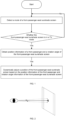
FIG. 1 is a flowchart of adjusting a position of a front-passenger-seat sunshade screen based on an eyeball position and angle information of the front-passenger-seat sunshade screen according to an embodiment; -
FIG. 2 is a diagram of a principle of adjusting a position of a front-passenger-seat sunshade screen based on an eyeball position and angle information of the front-passenger-seat sunshade screen according to an embodiment; -
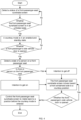
FIG. 3 is a flowchart of a TV mode of a front-passenger-seat sunshade screen according to an embodiment; -
FIG. 4 is a flowchart of a courtesy mode of a front-passenger-seat sunshade screen according to an embodiment; -
FIG. 5 is a flowchart of a sunshade mode of a front-passenger-seat sunshade screen according to an embodiment; -
FIG. 6 is a block diagram of a principle according to an embodiment; -
FIG. 7 is a schematic structural diagram of a connection between the front-passenger-seat sunshade screen and a vehicle front roof crossmember according to an embodiment; -
FIG. 8 is a schematic structural diagram of cooperation among the front-passenger-seat sunshade screen, a vehicle front roof crossmember, and a front windshield according to an embodiment; -
FIG. 9 is a schematic exploded view of the front-passenger-seat sunshade screen according to an embodiment; -
FIG. 10 is a schematic structural diagram of the rotating mechanism according to an embodiment; -
FIG. 11 is a schematic diagram of a partial cross-section of the rotating mechanism according to an embodiment; -
FIG. 12 is a schematic structural diagram of the right sleeve and a slave pin boss according to an embodiment; and -
FIG. 13 is a schematic structural diagram of the slave pin boss according to an embodiment. - In the
figures: 1 -module base, 11-mounting structure, 2-rotating mechanism, 21-master pin boss, 22-slave pin boss, 221-rotation limiting groove, 222-slave mounting hole, 23-motor, 24-gear box, 25-main shaft, 26-damper, 27-mechanism housing, 271-left sleeve, 272-middle sleeve, 273-right sleeve, 2731-right-side rotating shaft, 2732-rotation limiting member, 2733-harness via, 274-mounting lug, 28-circuit board, 3-display, 31-specular reflection film, 4-module housing, 41-avoidance groove, 5-decorative panel, 6-vehicle front roof crossmember, 7-front windshield. - The following describes implementations of the technical solutions for the present invention with reference to accompanying drawings and preferred embodiments. A person skilled in the art can easily understand other advantages and effects of the present invention based on content disclosed in this specification. The present invention may be further implemented or applied by using other different specific implementations. Various details in this specification may also be modified or changed based on different viewpoints and applications without departing from the present invention. It should be understood that the preferred embodiments are merely intended to describe the present invention, and are not intended to limit the protection scope of the present invention.
- As shown in
FIG. 1 and FIG. 2 , in this embodiment, a human-computer interaction system for a vehicle front-passenger-seat sunshade screen includes a front-passenger-seat sunshade screen, a camera, an angle detection module, and a controller. The front-passenger-seat sunshade screen is configured to shade light and play video information, where the front-passenger-seat sunshade screen is capable of being rotatably disposed on a roof of a vehicle front-passenger-seat compartment. The camera is configured to track position information of a front passenger in real time, and transmit the position information of the front passenger to the controller. The angle detection module is configured to collect a rotation angle of the front-passenger-seat sunshade screen. The controller is configured to control the rotation angle and audio/video playback of the front-passenger-seat sunshade screen, and dynamically adjust a position of the front-passenger-seat sunshade screen based on the position information of the front passenger and the rotation angle of the front-passenger-seat sunshade screen, where the controller is separately connected to the front-passenger-seat sunshade screen, the angle detection module, and the camera. - In this embodiment, the camera is disposed at a central position of a visual region of the front-passenger-seat sunshade screen. The front-passenger-seat sunshade screen is further configured with a TV mode. The controller is further configured to: when it is detected that the front-passenger-seat sunshade screen is opened and enters the TV mode, control the camera to track eyeball position information of the front passenger in real time, to ensure accuracy of tracking the eyeball position information of the passenger. When necessary, a selfie mode of the camera may be further enabled to replace a makeup mirror function.
- As shown in
FIG. 2 , in this embodiment, the controller is further configured to: calculate a deviation between a normal direction of a screen of the front-passenger-seat sunshade screen and a virtual connection line between an eyeball of the front passenger and the camera, and compare the deviation with a preset deviation value (for example, 5°); and if the deviation is less than or equal to the preset deviation value, maintain a current flipping angle of the front-passenger-seat sunshade screen; or if the deviation is greater than the preset deviation value, calculate a target angle position of the front-passenger-seat sunshade screen based on an eyeball position of the front passenger and rotation angle information of the front-passenger-seat sunshade screen, and control the front-passenger-seat sunshade screen to rotate to the target angle position, that is, enable a deviation between the normal direction of the screen and a virtual connection line between an eyeball of a user and the camera to be less than or equal to 5°. - As shown in
FIG. 6 , in this embodiment, the human-computer interaction system for a vehicle front-passenger-seat sunshade screen further includes a light sensing sensor, configured to monitor intensity of external ambient light, where the light sensing sensor is connected to the controller. The controller is further configured to: when the front-passenger-seat sunshade screen is not in the TV mode, automatically control opening/closing of the front-passenger-seat sunshade screen based on a magnitude of the intensity of the external ambient light. When the front-passenger-seat sunshade screen is in a closed state, the front-passenger-seat sunshade screen is almost parallel to a roof of a vehicle, reducing occupation of internal space of the vehicle. When the front-passenger-seat sunshade screen is in an opened state, the front-passenger-seat sunshade screen and the roof of the vehicle form a specific included angle, implementing sun shading. A sunshade function and an audio/video display function are completed by using only one front-passenger-seat sunshade screen, implementing structural integration and function maximization. This can effectively avoid a glare problem of mirror display and reduce direct radiation of strong external light, improving user experience; and can automatically implement a sunshade function in a strong light environment, which is more user-friendly and intelligent. - As shown in
FIG. 6 , in this embodiment, the human-computer interaction system for a vehicle front-passenger-seat sunshade screen further includes a vehicle door assembly, configured to feed back a vehicle door status to the controller, where the vehicle door assembly is connected to the controller. The front-passenger-seat sunshade screen is further configured with a courtesy mode. The controller is further configured to: when it is detected that the front-passenger-seat sunshade screen is in an unfolded state, control the courtesy mode of the front-passenger-seat sunshade screen to be in an enabled standby state; when it is detected that a vehicle door is opened and it is identified that the front passenger has an intention to get off the vehicle or that a passenger has an intention to take a front passenger seat, activate the courtesy mode of the front-passenger-seat sunshade screen, and control the front-passenger-seat sunshade screen to move toward a front windshield side to a courtesy position; and when the front-passenger-seat sunshade screen is in the courtesy mode, in response to detecting that a front-passenger's side vehicle door is in a closed state, control the front-passenger-seat sunshade screen to move to a position before the courtesy mode is activated, exit the courtesy mode, and enter the enabled standby state of the courtesy mode, to enable the front-passenger-seat sunshade screen to have a courtesy function to prevent the front passenger from bumping into the front-passenger-seat sunshade screen when getting in or out of the vehicle. - As shown in
FIG. 6 , in this embodiment, the human-computer interaction system for a vehicle front-passenger-seat sunshade screen further includes a TV mode activation module, configured to send a TV mode activation instruction, where the TV mode activation module establishes a communication connection to the controller. The controller is further configured to: when it is detected that the TV mode of the front-passenger-seat sunshade screen is not activated, in response to receiving the TV mode activation instruction, control the front passenger seat to move to a seat position Ps1 memorized in the TV mode, control the front-passenger-seat sunshade screen to rotate to a front-passenger-seat sunshade screen position Pr1 memorized in the TV mode, and control the front-passenger-seat sunshade screen to enter the TV mode, where the seat position Ps1 includes a backrest angle and a position of the seat in a front-to-back direction. In other words, after the user enables a TV mode function, the vehicle automatically controls both the front passenger seat and the front-passenger-seat sunshade screen simultaneously to move, to enable the position of the front passenger seat to match an unfolding angle of the front-passenger-seat sunshade screen, so that the front passenger can rest at a comfortable position and watch the front-passenger-seat sunshade screen. Adaptation positions of the front-passenger-seat sunshade screen and the front passenger seat may be specifically set and memorized according to a user requirement. In this manner, comfort is improved for a front-passenger-seat user. - As shown in
FIG. 6 , in this embodiment, the TV mode activation module is a TV mode switch of the front-passenger-seat sunshade screen, and the TV mode switch of the front-passenger-seat sunshade screen establishes a communication connection to the controller. The controller is further configured to: when the TV mode of the front-passenger-seat sunshade screen is not activated, send the TV mode activation instruction in response to detecting that an activation button of the TV mode is triggered. In other words, the TV mode of the front-passenger-seat sunshade screen can be activated by triggering the TV mode switch of the front-passenger-seat sunshade screen. - As shown in
FIG. 6 , in this embodiment, the TV mode activation module may alternatively be a voice recognition module, and the voice recognition module establishes a communication connection to the controller. The controller is further configured to: when the TV mode of the front-passenger-seat sunshade screen is not activated, send the TV mode activation instruction in response to receiving a voice instruction that the front-passenger-seat sunshade screen enters the TV mode. In other words, the TV mode of the front-passenger-seat sunshade screen can be activated in a voice manner. For example, after the user says that "enable the TV mode", an in-vehicle infotainment system actively asks the user, through voice, "whether to enable the TV mode". If an answer of "yes" is detected, the system controls the front-passenger-seat sunshade screen to rotate to a TV mode position, to facilitate the user to watch a video. If another answer is detected, the vehicle does not perform any operation. - As shown in
FIG. 6 , in this embodiment, the front passenger seat includes a seat and a first control unit controlling the backrest angle and position adjustment in a front-to-back direction. The user may adjust the seat according to a preferences of the user after getting on the vehicle. The first control unit establishes a communication connection to the controller. The controller is further configured to: when the TV mode of the front-passenger-seat sunshade screen is not activated, send, in response to detecting that the front passenger seat moves to a preset angle value, information about determining whether to enable the TV mode of the front-passenger-seat sunshade screen, and send the TV mode activation instruction when information about determining to enable the TV mode of the front-passenger-seat sunshade screen is received. The TV mode of the front-passenger-seat sunshade screen can be activated by adjusting the seat. - In this embodiment, as shown in
FIG. 7 to FIG. 13 , the front-passenger-seat sunshade screen includes a sunshade display module and a second control unit connected to the sunshade display module. The sunshade display module includes amodule base 1, arotating mechanism 2, adisplay 3, and amodule housing 4. A mountingstructure 11 configured to be connected to a vehiclefront roof crossmember 6 is disposed on an upper part of themodule base 1. A lower part of themodule base 1 is connected to themodule housing 4, and a cavity is formed between the two. Therotating mechanism 2 includes a fastening assembly, an electrically driving assembly, and amechanism housing 27, the fastening assembly is fastened in the cavity, the electrically driving assembly is connected to the fastening assembly, and the electrically driving assembly can drive themechanism housing 27 to rotate. Anavoidance groove 41 is provided on themodule housing 4 at a position corresponding to themechanism housing 27, themechanism housing 27 stretches out of theavoidance groove 41, and one end of thedisplay 3 is connected to themechanism housing 27. The mountingstructure 11 includes two positioning pins and four bolt connection holes. - The
module base 1 is connected to the vehiclefront roof crossmember 6 by using the mountingstructure 11, so that this automotive sunshade apparatus can be mounted above and in front of the front passenger seat. When the automotive sunshade apparatus is not used, thedisplay 3 faces themodule housing 4 in a horizontal posture. When the front passenger has a sunshade requirement, for example, an automobile is driving in strong sunlight, the electrically driving assembly can drive themechanism housing 27 to rotate, and themechanism housing 27 drives thedisplay 3 to rotate, so that thedisplay 3 rotates in a direction close to afront windshield 7 and hovers until rotating to an angle that can shade sunlight. In this case, sunlight radiation can be reduced and strong light can be prevented from directly shining on the front passenger, improving riding comfort for the front passenger. When the front passenger has an audio/video entertainment requirement, the electrically driving assembly can drive themechanism housing 27 to rotate, and themechanism housing 27 drives thedisplay 3 to rotate, so that thedisplay 3 rotates in the direction close to thefront windshield 7 and hovers until rotating to an angle suitable for watching. In this case, the audio/video entertainment requirement of the front passenger can be met, increasing a function diversity and improving practicality of the automotive sunshade apparatus. - In this embodiment, the fastening assembly includes a
master pin boss 21 and aslave pin boss 22 that are respectively disposed on two sides of left and right sides of themechanism housing 27. Themaster pin boss 21 and theslave pin boss 22 are separately connected to themechanism housing 27 in a screw connection manner. - In this embodiment, the electrically driving assembly includes a
motor 23, agear box 24, and amain shaft 25 that are sequentially drivingly connected to each other. An end of themain shaft 25 away from thegear box 24 is in a fastened connection with themaster pin boss 21, and both themotor 23 and thegear box 24 are in fastened connections with an inner wall of themechanism housing 27. An inner hollow of themechanism housing 27 can be configured to accommodate themotor 23, thegear box 24, and adamper 26. Thegear box 24 can convert a high rotational speed and low torque output by themotor 23 into a low rotational speed and high torque. When themotor 23 operates, power of themotor 23 is sequentially transmitted to thegear box 24 and themain shaft 25, so that themain shaft 25 rotates relative to themotor 23 and thegear box 24. However, after themain shaft 25 is in a fastened connection with themaster pin boss 21, themain shaft 25 cannot rotate. Therefore, when themotor 23 operates, themotor 23 and thegear box 24 are enabled to rotate relative to themain shaft 25 and themaster pin boss 21. Both themotor 23 and thegear box 24 are in fastened connections with themechanism housing 27. Therefore, when themotor 23 operates, themechanism housing 27 can be driven to rotate relative to themaster pin boss 21, so that thedisplay 3 moves relative to themaster pin boss 21 and themodule housing 4. - In this embodiment, the electrically driving assembly further includes the
damper 26, and thedamper 26 is configured to increase a friction force when themechanism housing 27 and themain shaft 25 rotate relative to each other. Increasing the friction force when themechanism housing 27 and themain shaft 25 rotate relative to each other can enable themechanism housing 27 to stably rotate. - In this embodiment, the
mechanism housing 27 includes aleft sleeve 271, amiddle sleeve 272, and aright sleeve 273 that are sequentially connected. A left-side rotating shaft is disposed on a left end of theleft sleeve 271, a master mounting hole is provided on themaster pin boss 21, and the left-side rotating shaft can be connected to the master mounting hole in a rotatable manner. A right-siderotating shaft 2731 is disposed on a right end of theright sleeve 273, aslave mounting hole 222 is provided on theslave pin boss 22, and the right-siderotating shaft 2731 can be connected to theslave mounting hole 222 in a rotatable manner. This structure arrangement can ensure that themechanism housing 27 can rotate relative to the fastening assembly. - In this embodiment, a
rotation limiting member 2732 is disposed on the right-siderotating shaft 2731, and arotation limiting groove 221 configured to cooperate with therotation limiting member 2732 is disposed in theslave pin boss 22. Therotation limiting member 2732 is inserted into therotation limiting groove 221, so that a rotation angle of right-side rotating can be limited. In a process in which therotation limiting member 2732 rotates from a position abutting against a head end of therotation limiting groove 221 to a position abutting against a tail end of therotation limiting groove 221, the right-siderotating shaft 2731 rotates by 170°. - In this embodiment, mounting
lugs 274 configured to be connected to thedisplay 3 are disposed on both theleft sleeve 271 and theright sleeve 273. After being connected to the two mountinglugs 274, thedisplay 3 can rotate synchronously with theleft sleeve 271 and theright sleeve 273. - In this embodiment, the electrically driving assembly further includes a
circuit board 28 disposed in the cavity, and thecircuit board 28 is connected to themodule housing 4. A harness via 2733 is provided inside the right-siderotating shaft 2731, and a harness of thecircuit board 28 passes through theslave mounting hole 222 and the harness via 2733, and is connected to themotor 23. - In this embodiment, a
decorative panel 5 disposed in the cavity is further included, and thedecorative panel 5 is connected to themodule base 1. Thedecorative panel 5 may be configured to block a bolt used at a joint between themodule base 1 and the vehiclefront roof crossmember 6. - In this embodiment, a
specular reflection film 31 is disposed on thedisplay 3. When thedisplay 3 is in a screen-on state, thespecular reflection film 31 can normally transmit light, which does not affect watching by the front passenger. When the front passenger has a makeup mirror requirement, the electrically driving assembly can drive themechanism housing 27 to rotate, and themechanism housing 27 drives thedisplay 3 to rotate, so that thedisplay 3 rotates in the direction close to thefront windshield 7 and hovers until rotating to an angle facing the front passenger, and thedisplay 3 is in a screen-off state. In this case, thedisplay 3 with thespecular reflection film 31 can serve as a makeup mirror to meet the makeup mirror requirement of the front passenger. - As shown in
FIG. 6 , in this embodiment, the angle detection module uses an angle sensor, and the angle sensor is disposed at a rotating shaft position of a rotating mechanism of the front-passenger-seat sunshade screen, to precisely record a real-time rotation angle of the front-passenger-seat sunshade screen, and send angle information back to the controller in real time. - As shown in
FIG. 1 ,FIG. 3 ,FIG. 4 , andFIG. 5 , in this embodiment, a human-computer interaction method for a vehicle front-passenger-seat sunshade screen uses the human-computer interaction system for a vehicle front-passenger-seat sunshade screen described in this embodiment. The method includes the following steps: - (1) When it is detected that a TV mode of a front-passenger-seat sunshade screen is not activated, in response to receiving a TV mode activation instruction, a front passenger seat is controlled to move to a seat position Ps1 memorized in the TV mode, the front-passenger-seat sunshade screen is controlled to rotate to a front-passenger-seat sunshade screen position Pr1 memorized in the TV mode, and the front-passenger-seat sunshade screen is controlled to enter the TV mode, where the seat position Ps1 includes a backrest angle and a position of the seat in a front-to-back direction. Before the front-passenger-seat sunshade screen rotates to the front-passenger-seat sunshade screen position Pr1 memorized in the TV mode, if it is detected that the front-passenger-seat sunshade screen stops moving (for example, an adjustment switch of the front-passenger-seat sunshade screen is depressed and the front-passenger-seat sunshade screen stops moving), it indicates that entering the TV mode is abnormal. In this case, the TV mode of the front-passenger-seat sunshade screen is exited. Before the front passenger seat moves to the seat position Ps1 memorized in the TV mode, if it is detected that the front passenger seat stops moving (for example, it is detected that an adjustment switch of the front passenger seat is depressed and the front passenger seat stops moving), it indicates that entering the TV mode is abnormal. In this case, the TV mode of the front-passenger-seat sunshade screen is exited.
- (2) When the front-passenger-seat sunshade screen is in the TV mode, position information of a front passenger (for example, eyeball information of the front passenger) and a rotation angle of the front-passenger-seat sunshade screen are obtained; and a position of the front-passenger-seat sunshade screen is dynamically adjusted based on eyeball position information and rotation angle information of the front-passenger-seat sunshade screen.
- (3) When the front-passenger-seat sunshade screen is not in the TV mode, intensity of external ambient light is monitored, and opening/closing of the front-passenger-seat sunshade screen is automatically controlled based on a magnitude of the intensity of the external ambient light.
- (4) When it is detected that the front-passenger-seat sunshade screen is in an unfolded state (for example, in the TV mode or in a sunshade mode), a courtesy mode of the front-passenger-seat sunshade screen is controlled to be in an enabled standby state; when it is detected that a vehicle door is opened and it is identified that the front passenger has an intention to get off a vehicle or that a passenger has an intention to take the front passenger seat, the courtesy mode of the front-passenger-seat sunshade screen is activated, and the front-passenger-seat sunshade screen is controlled to move toward a front windshield side to a courtesy position; and when the front-passenger-seat sunshade screen is in the courtesy mode, in response to detecting that a front-passenger's side vehicle door is in a closed state, the front-passenger-seat sunshade screen is controlled to move to a position before the courtesy mode is activated, the courtesy mode is exited, and the enabled standby state of the courtesy mode is entered.
- In this embodiment, a vehicle uses the human-computer interaction system for a vehicle front-passenger-seat sunshade screen described in this embodiment. The foregoing embodiments are preferred implementations of the present invention. However, the implementations of the present invention are not limited to the foregoing embodiments. Any other change, modification, substitution, combination, and simplification without departing from the principle of the present invention shall be equivalent replacement manners, and shall fall within the protection scope of the present invention.
Claims (6)
- A human-computer interaction system for a vehicle front-passenger-seat sunshade screen, comprising:a front-passenger-seat sunshade screen, configured to shade light and play video information, wherein the front-passenger-seat sunshade screen is capable of being rotatably disposed on a roof of a vehicle front-passenger-seat compartment;a camera, configured to track position information of a front passenger in real time;an angle detection module, configured to collect a rotation angle of the front-passenger-seat sunshade screen; anda controller, configured to control the rotation angle and audio/video playback of the front-passenger-seat sunshade screen, and dynamically adjust a position of the front-passenger-seat sunshade screen based on the position information of the front passenger and the rotation angle of the front-passenger-seat sunshade screen, wherein the controller is separately connected to the front-passenger-seat sunshade screen, the angle detection module, and the camera.
- The human-computer interaction system for a vehicle front-passenger-seat sunshade screen according to claim 1, wherein the camera is disposed at a central position of a visual region of the front-passenger-seat sunshade screen;the front-passenger-seat sunshade screen is further configured with a TV mode; andthe controller is further configured to: control the camera to track eyeball position information of the front passenger in real time when it is detected that the front-passenger-seat sunshade screen is opened and enters the TV mode.
- The human-computer interaction system for a vehicle front-passenger-seat sunshade screen according to claim 2, wherein the controller is further configured to:
calculate a deviation between a normal direction of a screen of the front-passenger-seat sunshade screen and a virtual connection line between an eyeball of the front passenger and the camera; calculate a target angle position of the front-passenger-seat sunshade screen based on an eyeball position of the front passenger and rotation angle information of the front-passenger-seat sunshade screen when it is determined that the deviation is greater than a preset deviation value; and control the front-passenger-seat sunshade screen to rotate to the target angle position. - A human-computer interaction method for a vehicle front-passenger-seat sunshade screen, wherein the method uses the human-computer interaction system for a vehicle front-passenger-seat sunshade screen according to claim 1, and comprises the following steps:obtaining position information of a front passenger and a rotation angle of a front-passenger-seat sunshade screen; anddynamically adjusting a position of the front-passenger-seat sunshade screen based on the position information of the front passenger and rotation angle information of the front-passenger-seat sunshade screen.
- A human-computer interaction method for a vehicle front-passenger-seat sunshade screen, wherein the method uses the human-computer interaction system for a vehicle front-passenger-seat sunshade screen according to claim 2 or 3, and comprises the following steps:when a front-passenger-seat sunshade screen is in a TV mode, obtaining eyeball position information of a front passenger and a rotation angle of the front-passenger-seat sunshade screen; anddynamically adjusting a position of the front-passenger-seat sunshade screen based on the eyeball position information of the front passenger and rotation angle information of the front-passenger-seat sunshade screen.
- A vehicle, using the human-computer interaction system for a vehicle front-passenger-seat sunshade screen according to any one of claims 1 to 3.
Applications Claiming Priority (2)
| Application Number | Priority Date | Filing Date | Title |
|---|---|---|---|
| CN202310317154.2A CN116021967B (en) | 2023-03-29 | 2023-03-29 | Human-computer interaction method, system and vehicle of sunshade screen for vehicle co-pilot |
| PCT/CN2023/120998 WO2024198274A1 (en) | 2023-03-29 | 2023-09-25 | Human-computer interaction method and system for vehicle front passenger seat sun visor screen, and vehicle |
Publications (2)
| Publication Number | Publication Date |
|---|---|
| EP4559703A1 true EP4559703A1 (en) | 2025-05-28 |
| EP4559703A4 EP4559703A4 (en) | 2025-12-31 |
Family
ID=86079812
Family Applications (1)
| Application Number | Title | Priority Date | Filing Date |
|---|---|---|---|
| EP23929848.2A Pending EP4559703A4 (en) | 2023-03-29 | 2023-09-25 | Human-computer interaction method and system for a front vehicle seat sun visor and vehicle |
Country Status (3)
| Country | Link |
|---|---|
| EP (1) | EP4559703A4 (en) |
| CN (1) | CN116021967B (en) |
| WO (1) | WO2024198274A1 (en) |
Families Citing this family (4)
| Publication number | Priority date | Publication date | Assignee | Title |
|---|---|---|---|---|
| CN116021967B (en) * | 2023-03-29 | 2023-06-13 | 长安新能源南京研究院有限公司 | Human-computer interaction method, system and vehicle of sunshade screen for vehicle co-pilot |
| CN116039528B (en) * | 2023-03-29 | 2023-07-04 | 长安新能源南京研究院有限公司 | Control method and system for secondary driving screen gifts mode of vehicle, vehicle and storage medium |
| CN120096468B (en) * | 2023-12-06 | 2025-11-07 | 长城汽车股份有限公司 | A sun visor control method, device and vehicle |
| CN120396639A (en) * | 2024-01-31 | 2025-08-01 | 比亚迪股份有限公司 | Sun visor system, control method, electronic device, vehicle, and storage medium |
Family Cites Families (30)
| Publication number | Priority date | Publication date | Assignee | Title |
|---|---|---|---|---|
| KR970057830U (en) * | 1996-04-29 | 1997-11-10 | Car LCD TV Mounting Structure | |
| DE19739352A1 (en) * | 1997-09-08 | 1999-03-11 | Brabus Gmbh | Sun blind with integrated display for e.g. motor vehicle |
| DE20010906U1 (en) * | 2000-06-20 | 2000-10-05 | Bansagi-Amend, Laszlo, Dipl.-Ing., 82275 Emmering | Foldable sun visor screen for displaying information in motor vehicles |
| JP4872332B2 (en) * | 2005-12-05 | 2012-02-08 | 株式会社デンソー | Anti-glare device for moving objects |
| KR100928307B1 (en) * | 2007-12-14 | 2009-11-25 | 대성전기공업 주식회사 | Sun visors for visibility and how they work |
| CN102681654B (en) * | 2011-03-18 | 2016-06-29 | 深圳富泰宏精密工业有限公司 | 3D visual perspective automatic adjustment system and method |
| CN102358147A (en) * | 2011-07-31 | 2012-02-22 | 重庆长安汽车股份有限公司 | Supporting seat for automobile sun-shading board |
| CN203372125U (en) * | 2013-08-05 | 2014-01-01 | 张忠榜 | Taxi sharing indicating system of taxi |
| DE102014206202A1 (en) * | 2014-04-01 | 2015-10-01 | Conti Temic Microelectronic Gmbh | Sun visor with an electronic image display device and method for its operation |
| US9712741B2 (en) * | 2014-09-19 | 2017-07-18 | Be Topnotch, Llc | Smart vehicle sun visor |
| CN104506836B (en) * | 2014-11-28 | 2017-04-05 | 深圳市魔眼科技有限公司 | Personal holographic 3 D displaying method and equipment based on eyeball tracking |
| CN204472508U (en) * | 2015-03-03 | 2015-07-15 | 西南大学 | A kind of solar car Windshield sun screen control system |
| CN106843821A (en) * | 2015-12-07 | 2017-06-13 | 百度在线网络技术(北京)有限公司 | The method and apparatus of adjust automatically screen |
| CN105711385A (en) * | 2016-01-28 | 2016-06-29 | 戴姆勒股份公司 | Sun shield assembly |
| CN110494311A (en) * | 2017-04-14 | 2019-11-22 | 堺显示器制品株式会社 | Sunshade device and image display module |
| JP6546621B2 (en) * | 2017-06-20 | 2019-07-17 | 矢崎総業株式会社 | Vehicle sun visor |
| US10583738B2 (en) * | 2017-09-26 | 2020-03-10 | Inteva Products, Llc | Multi-position electronic smart sunshade |
| US11048105B1 (en) * | 2017-09-30 | 2021-06-29 | Matthew Roy | Visor-like tablet and tablet holder for automotive vehicle |
| US10308098B2 (en) * | 2017-11-07 | 2019-06-04 | Stephen Sophorn Lim | Electric assist vehicle visor |
| JP6548762B2 (en) * | 2018-03-02 | 2019-07-24 | 堺ディスプレイプロダクト株式会社 | Sunshade device |
| JP6564898B2 (en) * | 2018-03-15 | 2019-08-21 | 堺ディスプレイプロダクト株式会社 | Vehicle sunshade |
| DE102018204567B4 (en) * | 2018-03-26 | 2022-05-05 | Audi Ag | Monitor device for a motor vehicle |
| FR3085888B1 (en) * | 2018-09-17 | 2020-08-28 | Psa Automobiles Sa | MOTORIZED SUN VISOR AND CONTEXTUAL DISPLAY SCREEN, FOR A VEHICLE |
| CN112572110A (en) * | 2019-09-30 | 2021-03-30 | 北京车和家信息技术有限公司 | Sun shield control method and device and vehicle |
| CN213442020U (en) * | 2020-09-10 | 2021-06-15 | 北京罗克维尔斯科技有限公司 | Vehicle sun visor and vehicle |
| CN112298059A (en) * | 2020-10-26 | 2021-02-02 | 武汉华星光电技术有限公司 | Vehicle-mounted display screen adjusting device and vehicle |
| CN112977015A (en) | 2021-03-12 | 2021-06-18 | 北京汽车集团越野车有限公司 | Sunshade structure, vehicle and display control method |
| US11752951B2 (en) * | 2021-07-06 | 2023-09-12 | Robert Bosch Gmbh | Vehicle mounted virtual visor system that localizes a resting head pose |
| CN115257564A (en) * | 2022-08-29 | 2022-11-01 | 奇瑞新能源汽车股份有限公司 | System and method for self-adjusting angle of vehicle display screen |
| CN116021967B (en) * | 2023-03-29 | 2023-06-13 | 长安新能源南京研究院有限公司 | Human-computer interaction method, system and vehicle of sunshade screen for vehicle co-pilot |
-
2023
- 2023-03-29 CN CN202310317154.2A patent/CN116021967B/en active Active
- 2023-09-25 WO PCT/CN2023/120998 patent/WO2024198274A1/en not_active Ceased
- 2023-09-25 EP EP23929848.2A patent/EP4559703A4/en active Pending
Also Published As
| Publication number | Publication date |
|---|---|
| WO2024198274A1 (en) | 2024-10-03 |
| CN116021967A (en) | 2023-04-28 |
| CN116021967B (en) | 2023-06-13 |
| EP4559703A4 (en) | 2025-12-31 |
| WO2024198274A9 (en) | 2025-01-02 |
Similar Documents
| Publication | Publication Date | Title |
|---|---|---|
| CN116021967B (en) | Human-computer interaction method, system and vehicle of sunshade screen for vehicle co-pilot | |
| EP3737579B1 (en) | Autonomous vehicles and methods of using same | |
| DE60316346T2 (en) | AID SYSTEM FOR VEHICLES | |
| CN103556901B (en) | Automotive window intelligent regulating system and control method thereof | |
| US12608078B2 (en) | Vehicle and method of controlling the same | |
| CN110239441A (en) | A kind of visual field automatic adjusting method and device of rearview mirror | |
| CN105522970B (en) | How to choose the adjustment mirror | |
| US12375789B2 (en) | Vehicle-mounted electronic device and vehicle | |
| CN116001535B (en) | Control method and system of auxiliary driving sunshade screen, vehicle and storage medium | |
| CN113669572A (en) | Adjusting device of vehicle-mounted screen, vehicle-mounted display device and vehicle | |
| EP3799609B1 (en) | Power window sync switch | |
| CN116022039B (en) | Control method and system for secondary driving screen TV mode of vehicle, vehicle and storage medium | |
| JP3728553B2 (en) | Automotive input device | |
| CN116039528B (en) | Control method and system for secondary driving screen gifts mode of vehicle, vehicle and storage medium | |
| US11919463B1 (en) | Comprehensive user control system for vehicle | |
| CN110316078B (en) | Vehicle, and control system and control method based on vehicle-mounted display terminal | |
| CN114523886B (en) | A method and system for in-vehicle interactive control | |
| CN113534579A (en) | Vehicle-mounted rolling curtain type projection device | |
| US11858319B2 (en) | Automatic sunvisor assembly | |
| US20210291845A1 (en) | Central control unit for a vehicle interior | |
| CN118173025A (en) | Control method of vehicle-mounted projection system, vehicle-mounted terminal, vehicle and storage medium | |
| WO2017182841A1 (en) | Facial movement and gesture sensing side-view mirror | |
| CN120096468B (en) | A sun visor control method, device and vehicle | |
| KR102228001B1 (en) | The Window Glass Control System And, A Vehicle Which The Window Control System Installed In And Control Method Thereof | |
| US20250390167A1 (en) | Systems and methods for contextually controlling vehicle components based on an occupant's gaze |
Legal Events
| Date | Code | Title | Description |
|---|---|---|---|
| STAA | Information on the status of an ep patent application or granted ep patent |
Free format text: STATUS: THE INTERNATIONAL PUBLICATION HAS BEEN MADE |
|
| PUAI | Public reference made under article 153(3) epc to a published international application that has entered the european phase |
Free format text: ORIGINAL CODE: 0009012 |
|
| STAA | Information on the status of an ep patent application or granted ep patent |
Free format text: STATUS: REQUEST FOR EXAMINATION WAS MADE |
|
| 17P | Request for examination filed |
Effective date: 20250219 |
|
| AK | Designated contracting states |
Kind code of ref document: A1 Designated state(s): AL AT BE BG CH CY CZ DE DK EE ES FI FR GB GR HR HU IE IS IT LI LT LU LV MC ME MK MT NL NO PL PT RO RS SE SI SK SM TR |
|
| A4 | Supplementary search report drawn up and despatched |
Effective date: 20251202 |
|
| RIC1 | Information provided on ipc code assigned before grant |
Ipc: B60J 3/02 20060101AFI20251126BHEP Ipc: B60J 3/00 20060101ALI20251126BHEP Ipc: B60R 11/02 20060101ALI20251126BHEP Ipc: B60K 35/22 20240101ALI20251126BHEP Ipc: B60K 35/65 20240101ALI20251126BHEP |