EP4557197A2 - Computerimplementiertes system und verfahren zum austausch von transaktionen ausserhalb der kette, die zu einem verteilten ledger gehören - Google Patents
Computerimplementiertes system und verfahren zum austausch von transaktionen ausserhalb der kette, die zu einem verteilten ledger gehören Download PDFInfo
- Publication number
- EP4557197A2 EP4557197A2 EP24198019.2A EP24198019A EP4557197A2 EP 4557197 A2 EP4557197 A2 EP 4557197A2 EP 24198019 A EP24198019 A EP 24198019A EP 4557197 A2 EP4557197 A2 EP 4557197A2
- Authority
- EP
- European Patent Office
- Prior art keywords
- participant
- blockchain
- transactions
- transaction
- participants
- Prior art date
- Legal status (The legal status is an assumption and is not a legal conclusion. Google has not performed a legal analysis and makes no representation as to the accuracy of the status listed.)
- Pending
Links
Images





Classifications
-
- H—ELECTRICITY
- H04—ELECTRIC COMMUNICATION TECHNIQUE
- H04L—TRANSMISSION OF DIGITAL INFORMATION, e.g. TELEGRAPHIC COMMUNICATION
- H04L63/00—Network architectures or network communication protocols for network security
- H04L63/06—Network architectures or network communication protocols for network security for supporting key management in a packet data network
- H04L63/061—Network architectures or network communication protocols for network security for supporting key management in a packet data network for key exchange, e.g. in peer-to-peer networks
-
- G—PHYSICS
- G06—COMPUTING OR CALCULATING; COUNTING
- G06F—ELECTRIC DIGITAL DATA PROCESSING
- G06F16/00—Information retrieval; Database structures therefor; File system structures therefor
- G06F16/20—Information retrieval; Database structures therefor; File system structures therefor of structured data, e.g. relational data
- G06F16/23—Updating
- G06F16/2365—Ensuring data consistency and integrity
-
- G—PHYSICS
- G06—COMPUTING OR CALCULATING; COUNTING
- G06Q—INFORMATION AND COMMUNICATION TECHNOLOGY [ICT] SPECIALLY ADAPTED FOR ADMINISTRATIVE, COMMERCIAL, FINANCIAL, MANAGERIAL OR SUPERVISORY PURPOSES; SYSTEMS OR METHODS SPECIALLY ADAPTED FOR ADMINISTRATIVE, COMMERCIAL, FINANCIAL, MANAGERIAL OR SUPERVISORY PURPOSES, NOT OTHERWISE PROVIDED FOR
- G06Q20/00—Payment architectures, schemes or protocols
- G06Q20/02—Payment architectures, schemes or protocols involving a neutral party, e.g. certification authority, notary or trusted third party [TTP]
-
- G—PHYSICS
- G06—COMPUTING OR CALCULATING; COUNTING
- G06Q—INFORMATION AND COMMUNICATION TECHNOLOGY [ICT] SPECIALLY ADAPTED FOR ADMINISTRATIVE, COMMERCIAL, FINANCIAL, MANAGERIAL OR SUPERVISORY PURPOSES; SYSTEMS OR METHODS SPECIALLY ADAPTED FOR ADMINISTRATIVE, COMMERCIAL, FINANCIAL, MANAGERIAL OR SUPERVISORY PURPOSES, NOT OTHERWISE PROVIDED FOR
- G06Q20/00—Payment architectures, schemes or protocols
- G06Q20/08—Payment architectures
- G06Q20/10—Payment architectures specially adapted for electronic funds transfer [EFT] systems; specially adapted for home banking systems
- G06Q20/108—Remote banking, e.g. home banking
-
- G—PHYSICS
- G06—COMPUTING OR CALCULATING; COUNTING
- G06Q—INFORMATION AND COMMUNICATION TECHNOLOGY [ICT] SPECIALLY ADAPTED FOR ADMINISTRATIVE, COMMERCIAL, FINANCIAL, MANAGERIAL OR SUPERVISORY PURPOSES; SYSTEMS OR METHODS SPECIALLY ADAPTED FOR ADMINISTRATIVE, COMMERCIAL, FINANCIAL, MANAGERIAL OR SUPERVISORY PURPOSES, NOT OTHERWISE PROVIDED FOR
- G06Q20/00—Payment architectures, schemes or protocols
- G06Q20/22—Payment schemes or models
- G06Q20/223—Payment schemes or models based on the use of peer-to-peer networks
-
- G—PHYSICS
- G06—COMPUTING OR CALCULATING; COUNTING
- G06Q—INFORMATION AND COMMUNICATION TECHNOLOGY [ICT] SPECIALLY ADAPTED FOR ADMINISTRATIVE, COMMERCIAL, FINANCIAL, MANAGERIAL OR SUPERVISORY PURPOSES; SYSTEMS OR METHODS SPECIALLY ADAPTED FOR ADMINISTRATIVE, COMMERCIAL, FINANCIAL, MANAGERIAL OR SUPERVISORY PURPOSES, NOT OTHERWISE PROVIDED FOR
- G06Q20/00—Payment architectures, schemes or protocols
- G06Q20/38—Payment protocols; Details thereof
- G06Q20/382—Payment protocols; Details thereof insuring higher security of transaction
- G06Q20/3825—Use of electronic signatures
-
- G—PHYSICS
- G06—COMPUTING OR CALCULATING; COUNTING
- G06Q—INFORMATION AND COMMUNICATION TECHNOLOGY [ICT] SPECIALLY ADAPTED FOR ADMINISTRATIVE, COMMERCIAL, FINANCIAL, MANAGERIAL OR SUPERVISORY PURPOSES; SYSTEMS OR METHODS SPECIALLY ADAPTED FOR ADMINISTRATIVE, COMMERCIAL, FINANCIAL, MANAGERIAL OR SUPERVISORY PURPOSES, NOT OTHERWISE PROVIDED FOR
- G06Q20/00—Payment architectures, schemes or protocols
- G06Q20/38—Payment protocols; Details thereof
- G06Q20/382—Payment protocols; Details thereof insuring higher security of transaction
- G06Q20/3829—Payment protocols; Details thereof insuring higher security of transaction involving key management
-
- G—PHYSICS
- G06—COMPUTING OR CALCULATING; COUNTING
- G06Q—INFORMATION AND COMMUNICATION TECHNOLOGY [ICT] SPECIALLY ADAPTED FOR ADMINISTRATIVE, COMMERCIAL, FINANCIAL, MANAGERIAL OR SUPERVISORY PURPOSES; SYSTEMS OR METHODS SPECIALLY ADAPTED FOR ADMINISTRATIVE, COMMERCIAL, FINANCIAL, MANAGERIAL OR SUPERVISORY PURPOSES, NOT OTHERWISE PROVIDED FOR
- G06Q20/00—Payment architectures, schemes or protocols
- G06Q20/38—Payment protocols; Details thereof
- G06Q20/40—Authorisation, e.g. identification of payer or payee, verification of customer or shop credentials; Review and approval of payers, e.g. check credit lines or negative lists
- G06Q20/401—Transaction verification
-
- G—PHYSICS
- G06—COMPUTING OR CALCULATING; COUNTING
- G06Q—INFORMATION AND COMMUNICATION TECHNOLOGY [ICT] SPECIALLY ADAPTED FOR ADMINISTRATIVE, COMMERCIAL, FINANCIAL, MANAGERIAL OR SUPERVISORY PURPOSES; SYSTEMS OR METHODS SPECIALLY ADAPTED FOR ADMINISTRATIVE, COMMERCIAL, FINANCIAL, MANAGERIAL OR SUPERVISORY PURPOSES, NOT OTHERWISE PROVIDED FOR
- G06Q40/00—Finance; Insurance; Tax strategies; Processing of corporate or income taxes
- G06Q40/04—Trading; Exchange, e.g. stocks, commodities, derivatives or currency exchange
-
- H—ELECTRICITY
- H04—ELECTRIC COMMUNICATION TECHNIQUE
- H04L—TRANSMISSION OF DIGITAL INFORMATION, e.g. TELEGRAPHIC COMMUNICATION
- H04L9/00—Cryptographic mechanisms or cryptographic arrangements for secret or secure communications; Network security protocols
- H04L9/14—Cryptographic mechanisms or cryptographic arrangements for secret or secure communications; Network security protocols using a plurality of keys or algorithms
-
- H—ELECTRICITY
- H04—ELECTRIC COMMUNICATION TECHNIQUE
- H04L—TRANSMISSION OF DIGITAL INFORMATION, e.g. TELEGRAPHIC COMMUNICATION
- H04L9/00—Cryptographic mechanisms or cryptographic arrangements for secret or secure communications; Network security protocols
- H04L9/40—Network security protocols
-
- H—ELECTRICITY
- H04—ELECTRIC COMMUNICATION TECHNIQUE
- H04L—TRANSMISSION OF DIGITAL INFORMATION, e.g. TELEGRAPHIC COMMUNICATION
- H04L9/00—Cryptographic mechanisms or cryptographic arrangements for secret or secure communications; Network security protocols
- H04L9/50—Cryptographic mechanisms or cryptographic arrangements for secret or secure communications; Network security protocols using hash chains, e.g. blockchains or hash trees
-
- G—PHYSICS
- G06—COMPUTING OR CALCULATING; COUNTING
- G06Q—INFORMATION AND COMMUNICATION TECHNOLOGY [ICT] SPECIALLY ADAPTED FOR ADMINISTRATIVE, COMMERCIAL, FINANCIAL, MANAGERIAL OR SUPERVISORY PURPOSES; SYSTEMS OR METHODS SPECIALLY ADAPTED FOR ADMINISTRATIVE, COMMERCIAL, FINANCIAL, MANAGERIAL OR SUPERVISORY PURPOSES, NOT OTHERWISE PROVIDED FOR
- G06Q2220/00—Business processing using cryptography
-
- H—ELECTRICITY
- H04—ELECTRIC COMMUNICATION TECHNIQUE
- H04L—TRANSMISSION OF DIGITAL INFORMATION, e.g. TELEGRAPHIC COMMUNICATION
- H04L2209/00—Additional information or applications relating to cryptographic mechanisms or cryptographic arrangements for secret or secure communication H04L9/00
- H04L2209/16—Obfuscation or hiding, e.g. involving white box
-
- H—ELECTRICITY
- H04—ELECTRIC COMMUNICATION TECHNIQUE
- H04L—TRANSMISSION OF DIGITAL INFORMATION, e.g. TELEGRAPHIC COMMUNICATION
- H04L2209/00—Additional information or applications relating to cryptographic mechanisms or cryptographic arrangements for secret or secure communication H04L9/00
- H04L2209/42—Anonymization, e.g. involving pseudonyms
Definitions
- This specification and disclosure relates generally to computer-implemented methods and systems suitable for exchanging transactions off-chain before submission of the transactions and their diffusion over a blockchain network.
- the disclosure is particularly suited, but not limited, to use with the Bitcoin blockchain.
- blockchain to include all forms of electronic, computer-based, distributed ledgers. These include consensus-based blockchain and transaction-chain technologies, permissioned and un-permissioned ledgers, shared ledgers and variations thereof.
- the most widely known application of blockchain technology is the Bitcoin ledger, although other blockchain implementations have been proposed and developed. While Bitcoin may be referred to herein for the purpose of convenience and illustration, it should be noted that the disclosure is not limited to use with the Bitcoin blockchain and alternative blockchain implementations and protocols fall within the scope of the present disclosure.
- a blockchain is a consensus-based, electronic ledger which is implemented as a computer-based, decentralised, distributed system made up of blocks which in turn are made up of transactions and other information.
- each transaction is a data structure that encodes the transfer of control of a digital asset between participants in the blockchain system, and includes at least one input and at least one output.
- Each block contains a hash of the previous block to that blocks become chained together to create a permanent unalterable record of all transactions which have been written to the blockchain since its inception.
- Transactions contain small programs known as scripts embedded into their inputs and outputs, which specify how and by whom the outputs of the transactions can be accessed. On the Bitcoin platform, these scripts are written using a stack-based scripting language.
- Validation In order for a transaction to be written to the blockchain, it must be "validated". Some network nodes act as miners and perform work to ensure that each transaction is valid, with invalid transactions rejected from the network. For example, software clients installed on the nodes perform this validation work on transactions that reference unspent transaction outputs (UTXO). Validation may be performed by executing its locking and unlocking scripts. If execution of the locking and unlocking scripts evaluate to TRUE and, if certain other conditions are met, the transaction is valid and the transaction may be written to the blockchain.
- a transaction in order for a transaction to be written to the blockchain, it must be i) validated by a node that receives the transaction - if the transaction is validated, the node relays it to the other nodes in the network; and ii) added to a new block built by a miner; and iii) mined, i.e. added to the public ledger of past transactions.
- the transaction is considered to be confirmed when a sufficient number of blocks are added to the blockchain to make the transaction practically irreversible.
- Smart contracts are computer programs designed to automate the execution of the terms of a machine-readable contract or agreement.
- a smart contract is a machine executable program which comprises rules that can process inputs in order to produce results, which can then cause actions to be performed dependent upon those results.
- Blockchains which provide an open, public ledger make available to any interested parties the ability to trace the movement of specific digital coins, digital assets, or control of digital resources across a sequence of addresses. While the ledger being open and distributed is useful in acting as a means to trust the system, the ability it gives for tracking transactions across addresses allows for digital assets related to specific historical transactions to be analysed and correlated. To address this issue, security and anonymization solutions have been developed. This can be useful as many real-world commercial transactions are confidential in nature, either for legal reasons, commercial reasons, or both. Accordingly, blockchain systems must be capable of ensuring both security and confidentiality for such commercial transactions despite the public nature of the blockchain.
- the use of pseudonyms in the Bitcoin cryptocurrency protocol is often thought of as being an enabler of anonymous payments, the success of a variety of research in uncovering user identities has shown that anonymity within the Bitcoin network is not so easily achieved.
- the present disclosure proposes a variety of technical solutions based on implementing a plurality of or a combination of type of transactions for effecting one or more digital asset payments transfers off chain in a secure manner, thereby improving the levels of security as well as anonymity available for cryptocurrency protocols or protocols for transfer of digital assets between one or more computing resources, at both application and network layers.
- a computer-implemented method for exchanging blockchain transactions between n > 2 participants and subsequently broadcasting the blockchain transactions over a blockchain network for storage on a blockchain comprising:
- the method of the first aspect presents a way for multiple blockchain users to exchange their transaction before diffusion over the blockchain network in order to blur the link between the IP address of the transaction generated by a user and the user's blockchain address in the transaction.
- the method provides a technical solution to exchange transactions directly off-chain. Participants in the method agree to make deposits and alter their transaction in such a way that a refund and compensation scheme put in place automatically relies on the confirmations in the blockchain of the transactions exchanged among participants thus providing increased security as well as anonymity.
- the method scales for an arbitrary number (n>2) of participants.
- the technical advantages are provided by defining the above-mentioned plurality of distinct types of transactions to be set up, i.e. deposit, refund, compensation, main transaction etc., and the manner in which they interact with each other.
- the present disclosure herein also discusses the structure for each of these types of transaction, and the key exchange mechanism between the participants.
- a sequence of such types of transactions that provide intermediate results enables the off-chain exchange to take place accurately and securely, while preserving anonymity in relation to the IP or network end points associated with the participants.
- specific mechanism for computing one or more cryptographic keys for encrypted channels and/or signatures and/or blockchain addresses are proposed for ensuring these advantages.
- the present disclosure propose a secure, accurate and scalable technique for implementing one or more transactions that may be associated with digital assets, i.e. cryptocurrency or tokens, off-chain before it is provided to a distributed ledger.
- digital assets i.e. cryptocurrency or tokens
- the generating and exchanging of cryptographic keys and associated blockchain addresses between participants may comprise the following:
- one of the blockchain addresses ( ⁇ i ) created by each participant may require a signature from both the participant ( U i ) and another participant ( U i +1 ). Furthermore, one of the blockchain addresses ( ⁇ i ) created by each participant ( U i ) may require only a signature from another participant ( U i -1 ).
- the aforementioned options provides an example of how suitable cryptographic keys and associated blockchain addresses can be generated and exchanged for subsequent use in the transaction exchange, refund and compensation scheme.
- Each participant U i may also generate a private-public key pair ( y i , Q i ) and publish the public key. This enables the participants to communicate with each other via an encrypted channel using the key pair ( y i , Q i ) when implementing the transaction exchange, refund and compensation scheme.
- the one or more deposit transactions can be constructed such that outputs of the one or more deposit transactions are shuffled or randomized relative to inputs of the one or more deposit transactions.
- the participants make their deposit in a common deposit transaction or alternatively each participant can create an individual deposit transaction.
- the deposit transactions can be Pay To Script Hash (P2SH) deposit transactions.
- P2SH Pay To Script Hash
- each deposit can be constructed such that it is sent to one of the blockchain addresses generated and exchanged by the participants or, after a time ⁇ T E , to a blockchain address of the participant who made the deposit if their blockchain transaction is not confirmed on the blockchain. Further still, the deposit transaction for the participants is constructed by one of the participants.
- the aforementioned options provides an example of how one or more suitable deposit transactions can be generated to implement the transaction exchange, refund and compensation scheme.
- Modifying each of the blockchain transactions to be exchanged can comprise locking the refund output under the public key provided by another participant and the modified transaction is signed and sent to the other participant.
- Each participant U i can construct their refund transaction R x i using for inputs the output in the one or more deposit transactions (i.e. the output O i locked by participant U i in the deposit transaction) and the refund output sent to the public address ⁇ i -1 in the blockchain transaction T x i ⁇ 1 generated by participant U i -1 such that participant U i 's refund will inherently depend on them submitting participant U i -1 's blockchain transaction T x i ⁇ 1 for inclusion into the blockchain.
- the two inputs in the newly created transaction R x i can thus require the signature of U i and U i -1 as follows:
- participant U i can send their refund transaction R x i to participant U i -1 who signs it and sends it back to participant U i who also then signs the transaction R x i .
- Each participant U i can construct their compensation transactions C x i using the output sent to O i +1 in the one or more deposit transactions and participant U i sends the newly created transaction C x i to participant U i +1 who signs it and return it to participant U i where input x ( O i +1 ) in C x i requires the signature of both U i and U i +1 .
- the compensation transactions can have outputs which are locked for a time ⁇ T S that defines the maximum time allowed for the participants to broadcast the exchanged blockchain transactions and see these confirmed on the blockchain network.
- the aforementioned options provides an example of how suitable compensation transactions can be generated to implement the transaction exchange, refund and compensation scheme.
- Broadcasting the compensation transactions and the blockchain transactions can comprise each participant U i broadcast two transactions C x i and T x i ⁇ 1 in that order. This ensures the compensation transaction is in place prior to broadcast of the main blockchain transaction.
- Broadcasting the refund transactions upon confirmation of the blockchain transactions on the blockchain can comprise each participant U i broadcasting refund transaction R x i thereby claiming their deposit. Furthermore, a participant may only claim the unspent output in the compensation transaction when their blockchain transaction is not confirmed on the blockchain after a time ⁇ T S .
- This methodology is consistent with providing compensation transactions having outputs which are locked for a time ⁇ T S that defines the maximum time allowed for the participants to broadcast the exchanged blockchain transactions and see these confirmed on the blockchain network.
- a computer readable storage medium can be provided which comprises computer-executable instructions which, when executed, configure one or more processors to perform the method as described herein.
- An electronic device can also be provided which comprises: an interface device; one or more processor(s) coupled to the interface device; and a memory coupled to the one or more processor(s), the memory having stored thereon computer executable instructions which, when executed, configure the one or more processor(s) to perform the method as described herein.
- a node of a blockchain network can also be provided, the node configured to perform the method as described herein.
- DTE Direct Transaction Exchange
- IP Internet Protocol
- IP information may be used to retrieve the real user's identity by combining this information with other sources, e.g. internet forums and social media.
- generating multiple public-private key pairs for different sets of transactions or participating in mixing services as expedients to increase the anonymity of the operations may not be successful [1].
- De-anonymization attacks are typically carried out using a "super node", which connects to active Bitcoin nodes and monitors the transactions transmitted. Symmetric diffusion over the network allows for a 30% success rate in IP-public key linking [2].
- the algorithms used mainly exploit peer-to-peer (P2P) graph structure and information about the diffusion.
- Anonymous relay tools such as Tor [3] offer identity protection, but still exhibit weaknesses and possible downsides. Indeed, relay systems may be vulnerable to traffic analysis, whereby the user's "first-hop" link to Tor and the "last-hop” link from Tor to the user's communication partner may be traced and used to correlate packets. Moreover, attack may cause denial of service as well as put the users' anonymity at risk.
- Biryukov et al. [2] present a method to de-anonymise P2P networks, by linking the users' pseudonyms with their IP addresses. This solution relies on the set of nodes a client connects to, which uniquely determine the client identity and the origin of the transaction.
- n-DTE relies on a deposit of coins made by the participants, and the alteration of their main transaction in such a way that the refund and compensation scheme put in place relies on the confirmation in the blockchain of the transactions exchanged among participants.
- the funds sent to the address derived from ⁇ i will require a signature from both U i and U i +1 using their first private keys, respectively k i 1 and k i + 1 1 .
- the participant U i creates 2 addresses and knows of 2 addresses shared with his left-hand neighbour U i -1 , and 2 addresses shared with his right-hand neighbour U i +1 as illustrated in Figure 2 .
- the participant U i does not know the private key associated to the public key ⁇ i he or she created. On the other hand, only U i knows the private key associated to the public key ⁇ i +1 created by his right-hand neighbour U i +1 .
- each participant deposit an arbitrary amount of Bitcoin whose refund is conditioned on the successful completion of the required tasks by the participant.
- Such deposit can be made in various ways. For instance, the participants can all make their deposit in a common Bitcoin transaction or each participant can create his/her individual deposit transaction (although this would imply more fees paid to the miners overall).
- a common transaction to collect the participants' deposit. This choice implies the use of a shuffling technique to blur the link between the inputs and the outputs in the said transaction.
- D x n -input/ n -output P2SH Deposit Transaction
- the UTXOs from D x will be used later in the protocol to create two sets of transactions:
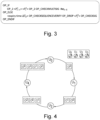
- Participant U i constructs the script L i locking his/her deposit in D x .
- This script will offer two options to spend the associated output amount x Bitcoin:
- O i the output (parameter set) generated by the participant U i : O i : ⁇ L i , x ⁇ .
- An example of the locking script for the deposit of x Bitcoin made by U i is shown in Figure 3 .
- One participant is responsible for gathering all the outputs and crafting the Deposit Transaction D x .
- U 0 the participant collecting the set of outputs and the first participant to add his/her input and sign it in D x .
- the set of outputs is encrypted using the participants' public key Q i before being transferred from one participant to another.
- Q i the participants' public key
- each participant will shuffle the set of outputs before passing on to his/her right-hand neighbour. This way the inputs order will not match that of the outputs in D x .
- the outputs shuffling process begins when the first participant, U 0 , encrypts his/her output O 0 with the next participant public key Q 1 .
- the encrypted output address then comprises the 'set of shuffled outputs' (SSO).
- U 0 passes the SSO to U 1 .
- U 1 decrypts the SSO, using her private key y 1 adds her output, shuffles the outputs and encrypts the SSO using Q 2 , and forwards it to U 2 .
- U n -1 After U n -1 's output address is added to the SSO, U n -1 performs a final shuffle, encrypts the SSO with Q 0 , and sends the SSO back to the first user, U 0 .
- This permutation of the output addresses in the SSO represents the final order in which the outputs are included in the Deposit Transaction D x .
- U 0 decrypts the SSO, using her private key y 0 and creates the Deposit Transaction D x .
- U 0 adds his/her input, signs the transaction and forwards D x to the next participant.
- the participants Upon seeing the Deposit Transaction D x confirmed on the blockchain, the participants can now enter the next phase of the protocol that is the exchange their Main Transaction as detailed below. If they have not completed the exchange and broadcast of the Main Transactions before ⁇ T E they will collect their deposit of x Bitcoin in D x and the protocol will finish.
- n -DTE protocol relies on a Refund and Compensation mechanism destined to incentivise the participants to complete the Main Transactions exchange and broadcast on the Bitcoin Network.
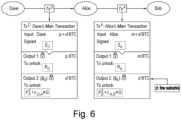
- Such mechanism can be achieved by constraining the refund of the coins locked in the Deposit Transaction committed by the participants in such way that the refund for a participant is only available after he or she broadcasts the Main Transaction issued by another participant. To do so, we propose to alter a Main Transaction by adding an extra output used in the Refund Transaction of the participant in charge of broadcasting the said Main Transaction.
- Alice signs her transaction T x A and forwards it to Bob.
- the participant U i signs his/her transaction T x i and sends it to her neighbour U i +1 .
- Figure 6 illustrates the alteration and exchange of the two transactions, T x D and T x A , between the last (Dave), the first (Alice) and the second (Bob) participants.
- the participant U i is now in possession of the Main Transaction T x i ⁇ 1 generated by his/her left-hand neighbour U i -1 .
- Alice is for instance in possession of Dave's Main Transaction T x D .
- the participant U i creates his/her Refund Transaction, namely R x i , using for inputs the UTXO sent to O i in the Deposit Transaction D x and the dust sent to ⁇ i -1 in the Main Transaction T x i ⁇ 1 generated by U i -1 .
- U i sends his/her newly created Refund Transaction R x i to U i -1 who partially signs it (using k i ⁇ 1 1 ) and return it to U i .
- the two inputs in this newly created transaction R x i require the signature of U i and U i -1 as follows:
- Figure 7 illustrates the construction of the Refund Transaction R x B created by Bob, using the Deposit Transaction D x output O B and Alice's Main Transaction T x A output ⁇ A .
- Bob sends his Refund Transaction R x B to Alice who signs it and sends it back to Bob.
- Bob signs the transaction R x B but does not broadcast it. If he did, the transaction would be rejected since the Bitcoins sent to ⁇ A are not available at this point in time. These will be spendable when the transaction T x A is broadcast and confirmed on the blockchain.
- a Compensation Transaction is created to account for the case where one participant does not broadcast another participant's Main Transaction.
- Alice should be compensated for Bob's misconduct.
- Alice therefore creates a Compensation Transaction C x A that takes as input the x Bitcoin spent by Bob ( O B ) in the Deposit Transaction D x .
- the output in the transaction C x A contains a LockTime value ⁇ T S agreed upon by all the participants in the n-DTE protocol, that should reflex the maximum time allowed for the participants in the protocol to broadcast the Main Transactions and see these confirmed on the network.
- Alice sends C x A to Bob who verifies it, signs it and sends it back to Alice.
- a participant U i creates his/her own Compensation Transaction using the UTXO sent to O i +1 in the Deposit Transaction D x .
- U i sends the newly created transaction C x i to U i +1 who signs it and return it to U i .
- the input x ( Oi +1 ) in C x i requires the signature of both U i and U i +1 using their first private keys, respectively k i 1 and k i + 1 1 .
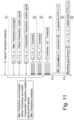
- Figure 10 presents an illustration of the aforementioned transactions in the n-DTE protocol, their structure and internal dependency. Note that not all the transactions created for this protocol are shown in Figure 10 . Only the Main Transaction of the first (Alice) and last (Dave) participants are shown, as well as the Refund and Compensation Transactions for the first two participants, Alice and Bob.
- each participant U i can now broadcast the following two transactions on the network: C x i and T x i ⁇ 1 , in that order.
- the participant U i Upon confirmation of T x i ⁇ 1 on the blockchain the participant U i broadcasts R x i , effectively claiming his/her deposit. If U i does not see his/her Main Transaction T x i confirmed on the network after an elapsed time ⁇ T S he/she can spend the UTXO in the Compensation Transaction C x i , effectively claiming the deposit made by U i +1 .
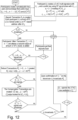
- Figure 12 shows a general overview of the n-DTE protocol as described herein.
- the n-DTE protocol relies on a secure way to exchange public information between n participants.
- the participants in the protocol exchange their public keys and create 2-of-2 multi-signature addresses and new public keys using the Diffie-Hellman secret share scheme. They also exchange their Main Transactions for broadcast, as well as the other transactions ( Refund and Compensation Transactions ) generated in the protocol for signature.
- Each participant U i will send up to three transactions on the network:
- n-DTE n-Direct transaction Exchange protocol
- the transactions exchange is achieved by adding a dust amount of Bitcoin into the Main Transactions output and constructing Refund Transactions that include this dust as well as a deposit made by the participants. This allows the participants to claim their deposit after they broadcast another participant's Main Transaction.
- a Compensation scheme is also put in place to compensate a participant whose Main Transaction would not have been submitted for inclusion into the blockchain during the allocated time in this protocol.
- computing device 2600 may be used to implement any of the devices or systems illustrated and described above, such as one of more nodes or servers or other electronic devices for implementing one or more transactions.
- computing device 2600 may be a portable computing device, a personal computer, or any electronic computing device.
- the computing device 2600 may include one or more processors with one or more levels of cache memory and a memory controller (collectively labelled 2602) that can be configured to communicate with a storage subsystem 2606 that includes main memory 2608 and persistent storage 2610.
- the main memory 2608 can include dynamic random-access memory (DRAM) 2618 and read-only memory (ROM) 2620 as shown.
- DRAM dynamic random-access memory
- ROM read-only memory
- the storage subsystem 2606 and the cache memory 2602 may be used for storage of information, such as details associated with transactions and blocks as described in the present disclosure.
- the processor(s) 2602 may be utilized to provide the steps or functionality of any embodiment as described in the present disclosure.
- the processor(s) 2602 can also communicate with one or more user interface input devices 2612, one or more user interface output devices 2614, and a network interface subsystem 2616.
- a bus subsystem 2604 may provide a mechanism for enabling the various components and subsystems of computing device 2600 to communicate with each other as intended. Although the bus subsystem 2604 is shown schematically as a single bus, alternative embodiments of the bus subsystem may utilize multiple busses.
- the network interface subsystem 2616 may provide an interface to other computing devices and networks.
- the network interface subsystem 2616 may serve as an interface for receiving data from, and transmitting data to, other systems from the computing device 2600.
- the network interface subsystem 2616 may enable a data technician to connect the device to a network such that the data technician may be able to transmit data to the device and receive data from the device while in a remote location, such as a data centre.
- the user interface input devices 2612 may include one or more user input devices such as a keyboard; pointing devices such as an integrated mouse, trackball, touchpad, or graphics tablet; a scanner; a barcode scanner; a touch screen incorporated into the display; audio input devices such as voice recognition systems, microphones; and other types of input devices.
- user input devices such as a keyboard; pointing devices such as an integrated mouse, trackball, touchpad, or graphics tablet; a scanner; a barcode scanner; a touch screen incorporated into the display; audio input devices such as voice recognition systems, microphones; and other types of input devices.
- input device is intended to include all possible types of devices and mechanisms for inputting information to the computing device 2600.
- the one or more user interface output devices 2614 may include a display subsystem, a printer, or non-visual displays such as audio output devices, etc.
- the display subsystem may be a cathode ray tube (CRT), a flat-panel device such as a liquid crystal display (LCD), light emitting diode (LED) display, or a projection or other display device.
- CTR cathode ray tube
- LCD liquid crystal display
- LED light emitting diode
- output device is intended to include all possible types of devices and mechanisms for outputting information from the computing device 2600.
- the one or more user interface output devices 2614 may be used, for example, to present user interfaces to facilitate user interaction with applications performing processes described and variations therein, when such interaction may be appropriate.
- the storage subsystem 2606 may provide a computer-readable storage medium for storing the basic programming and data constructs that may provide the functionality of at least one embodiment of the present disclosure.
- the applications programs, code modules, instructions
- the storage subsystem 2606 may additionally provide a repository for storing data used in accordance with the present disclosure.
- the main memory 2608 and cache memory 2602 can provide volatile storage for program and data.
- the persistent storage 2610 can provide persistent (non-volatile) storage for program and data and may include flash memory, one or more solid state drives, one or more magnetic hard disk drives, one or more floppy disk drives with associated removable media, one or more optical drives (e.g. CD-ROM or DVD or Blue-Ray) drive with associated removable media, and other like storage media.
- Such program and data can include programs for carrying out the steps of one or more embodiments as described in the present disclosure as well as data associated with transactions and blocks as described in the present disclosure.
- the computing device 2600 may be of various types, including a portable computer device, tablet computer, a workstation, or any other device described below. Additionally, the computing device 2600 may include another device that may be connected to the computing device 2600 through one or more ports (e.g., USB, a headphone jack, Lightning connector, etc.). The device that may be connected to the computing device 2600 may include a plurality of ports configured to accept fibre-optic connectors. Accordingly, this device may be configured to convert optical signals to electrical signals that may be transmitted through the port connecting the device to the computing device 2600 for processing. Due to the ever-changing nature of computers and networks, the description of the computing device 2600 depicted in Figure 13 is intended only as a specific example for purposes of illustrating the preferred embodiment of the device. Many other configurations having more or fewer components than the system depicted in Figure 13 are possible.
- any reference signs placed in parentheses shall not be construed as limiting the claims.
- the word “comprising” and “comprises”, and the like, does not exclude the presence of elements or steps other than those listed in any claim or the specification as a whole.
- “comprises” means “includes or consists of” and “comprising” means “including or consisting of”.
- the singular reference of an element does not exclude the plural reference of such elements and vice-versa.
- the disclosure may be implemented by means of hardware comprising several distinct elements, and by means of a suitably programmed computer. In a device claim enumerating several means, several of these means may be embodied by one and the same item of hardware.
- the mere fact that certain features are recited in mutually different dependent claims does not indicate that a combination of these measures cannot be used to advantage.
Landscapes
- Engineering & Computer Science (AREA)
- Business, Economics & Management (AREA)
- Accounting & Taxation (AREA)
- Computer Security & Cryptography (AREA)
- Theoretical Computer Science (AREA)
- Finance (AREA)
- Physics & Mathematics (AREA)
- General Physics & Mathematics (AREA)
- Strategic Management (AREA)
- General Business, Economics & Management (AREA)
- Computer Networks & Wireless Communication (AREA)
- Signal Processing (AREA)
- General Engineering & Computer Science (AREA)
- Development Economics (AREA)
- Economics (AREA)
- Data Mining & Analysis (AREA)
- Databases & Information Systems (AREA)
- Computer Hardware Design (AREA)
- Computing Systems (AREA)
- Marketing (AREA)
- Technology Law (AREA)
- Financial Or Insurance-Related Operations Such As Payment And Settlement (AREA)
Applications Claiming Priority (3)
| Application Number | Priority Date | Filing Date | Title |
|---|---|---|---|
| GBGB1810981.9A GB201810981D0 (en) | 2018-07-04 | 2018-07-04 | Computer-implemented system and method |
| EP19739719.3A EP3818487A1 (de) | 2018-07-04 | 2019-07-03 | Computerimplementiertes system und verfahren zum austausch von transaktionen ausserhalb der kette, die zu einem verteilten ledger gehören |
| PCT/IB2019/055680 WO2020008388A1 (en) | 2018-07-04 | 2019-07-03 | Computer-implemented system and methods for off-chain exchange of transactions pertaining to a distributed ledger |
Related Parent Applications (1)
| Application Number | Title | Priority Date | Filing Date |
|---|---|---|---|
| EP19739719.3A Division EP3818487A1 (de) | 2018-07-04 | 2019-07-03 | Computerimplementiertes system und verfahren zum austausch von transaktionen ausserhalb der kette, die zu einem verteilten ledger gehören |
Publications (2)
| Publication Number | Publication Date |
|---|---|
| EP4557197A2 true EP4557197A2 (de) | 2025-05-21 |
| EP4557197A3 EP4557197A3 (de) | 2025-06-18 |
Family
ID=63143683
Family Applications (2)
| Application Number | Title | Priority Date | Filing Date |
|---|---|---|---|
| EP19739719.3A Withdrawn EP3818487A1 (de) | 2018-07-04 | 2019-07-03 | Computerimplementiertes system und verfahren zum austausch von transaktionen ausserhalb der kette, die zu einem verteilten ledger gehören |
| EP24198019.2A Pending EP4557197A3 (de) | 2018-07-04 | 2019-07-03 | Computerimplementiertes system und verfahren zum austausch von transaktionen ausserhalb der kette, die zu einem verteilten ledger gehören |
Family Applications Before (1)
| Application Number | Title | Priority Date | Filing Date |
|---|---|---|---|
| EP19739719.3A Withdrawn EP3818487A1 (de) | 2018-07-04 | 2019-07-03 | Computerimplementiertes system und verfahren zum austausch von transaktionen ausserhalb der kette, die zu einem verteilten ledger gehören |
Country Status (6)
| Country | Link |
|---|---|
| US (2) | US12028322B2 (de) |
| EP (2) | EP3818487A1 (de) |
| JP (2) | JP7337861B2 (de) |
| CN (2) | CN118521312A (de) |
| GB (1) | GB201810981D0 (de) |
| WO (1) | WO2020008388A1 (de) |
Families Citing this family (7)
| Publication number | Priority date | Publication date | Assignee | Title |
|---|---|---|---|---|
| US10419225B2 (en) | 2017-01-30 | 2019-09-17 | Factom, Inc. | Validating documents via blockchain |
| US11134120B2 (en) | 2018-05-18 | 2021-09-28 | Inveniam Capital Partners, Inc. | Load balancing in blockchain environments |
| US11989208B2 (en) * | 2018-08-06 | 2024-05-21 | Inveniam Capital Partners, Inc. | Transactional sharding of blockchain transactions |
| US11444749B2 (en) | 2020-01-17 | 2022-09-13 | Inveniam Capital Partners, Inc. | Separating hashing from proof-of-work in blockchain environments |
| US12137179B2 (en) | 2021-06-19 | 2024-11-05 | Inveniam Capital Partners, Inc. | Systems and methods for processing blockchain transactions |
| GB202319786D0 (en) * | 2023-12-21 | 2024-02-07 | Nchain Licensing Ag | Blockchain transaction |
| WO2025146833A1 (ko) * | 2024-01-02 | 2025-07-10 | 엘지전자 주식회사 | 중재자 기반 양자 서명 기법에서 양자 정보 전송량 및 자원 사용량 최소화하기 위한 장치 및 방법 |
Family Cites Families (9)
| Publication number | Priority date | Publication date | Assignee | Title |
|---|---|---|---|---|
| US7096494B1 (en) * | 1998-05-05 | 2006-08-22 | Chen Jay C | Cryptographic system and method for electronic transactions |
| AU7705300A (en) * | 1999-09-20 | 2001-04-24 | Ethentica, Inc. | Trust arbitrage in cryptographic authentication |
| CN101855860B (zh) * | 2007-09-14 | 2013-01-09 | 安全第一公司 | 用于管理加密密钥的系统和方法 |
| EP2651100A1 (de) * | 2008-02-22 | 2013-10-16 | Security First Corporation | Systeme und Verfahren für sichere Arbeitsgruppenverwaltung und Kommunikation |
| JP5757536B2 (ja) * | 2009-05-19 | 2015-07-29 | セキュリティー ファースト コープ. | クラウド内にデータを確保するシステムおよび方法 |
| EP2504973B1 (de) * | 2009-11-25 | 2016-11-16 | Security First Corp. | Systeme und verfahren zur sicherung von daten in bewegung |
| WO2016081942A2 (en) * | 2014-11-21 | 2016-05-26 | Security First Corp. | Gateway for cloud-based secure storage |
| US10402792B2 (en) * | 2015-08-13 | 2019-09-03 | The Toronto-Dominion Bank | Systems and method for tracking enterprise events using hybrid public-private blockchain ledgers |
| SG10202007907PA (en) | 2016-02-23 | 2020-09-29 | Nchain Holdings Ltd | Blockchain-implemented method for control and distribution of digital content |
-
2018
- 2018-07-04 GB GBGB1810981.9A patent/GB201810981D0/en not_active Ceased
-
2019
- 2019-07-03 WO PCT/IB2019/055680 patent/WO2020008388A1/en not_active Ceased
- 2019-07-03 EP EP19739719.3A patent/EP3818487A1/de not_active Withdrawn
- 2019-07-03 CN CN202410327983.3A patent/CN118521312A/zh active Pending
- 2019-07-03 CN CN201980045094.5A patent/CN112384939B/zh active Active
- 2019-07-03 JP JP2020573360A patent/JP7337861B2/ja active Active
- 2019-07-03 EP EP24198019.2A patent/EP4557197A3/de active Pending
- 2019-07-03 US US17/257,805 patent/US12028322B2/en active Active
-
2023
- 2023-08-23 JP JP2023135302A patent/JP2023159328A/ja active Pending
-
2024
- 2024-05-16 US US18/666,634 patent/US20240388575A1/en not_active Abandoned
Non-Patent Citations (7)
| Title |
|---|
| BIRYUKOV, A.KHOVRATOVICH, D.PUSTOGAROV, I.: "Deanonymisation of clients in Bitcoin P2P network. In Proceedings of the 2014 ACM SIGSAC Conference on Computer and Communications Security", ACM, November 2014 (2014-11-01), pages 15 - 29, Retrieved from the Internet <URL:https://arxiv.org/pdf/1405.7418.pdf> |
| CHAKRAVARTY, S.STAVROU, A.KEROMYTIS, A. D.: "Signal Image Technology and Internet Based Systems", November 2008, IEEE., article "Identifying proxy nodes in a Tor anonymization circuit", pages: 633 - 639 |
| DINGLEDINE, R.MATHEWSON, N.SYVERSON, P.: "Tor: The second-generation onion router", 2004, NAVAL RESEARCH LAB WASHINGTON DC |
| RON, D.SHAMIR, A.: "International Conference on Financial Cryptography and Data Security", April 2013, SPRINGER, article "Quantitative analysis of the full bitcoin transaction graph", pages: 6 - 24 |
| SHAH, D.ZAMAN, T.: "Rumor centrality: a universal source detector", ACM SIGMETRICS PERFORMANCE EVALUATION REVIEW, vol. 40, no. 1, June 2012 (2012-06-01), pages 199 - 210 |
| SHAH, D.ZAMAN, T.: "Transactions on information theory", vol. 57, 2011, IEEE, article "Rumors in a network: Who's the culprit?", pages: 5163 - 5181 |
| VENKATAKRISHNAN, S.B.FANTI, G.VISWANATH, P.: "Dandelion: Redesigning the Bitcoin Network for Anonymity", ARXIV PREPRINT ARXIV:1701.04439, 2017, Retrieved from the Internet <URL:https://arxiv.org/pdf/1701.04439.pdf> |
Also Published As
| Publication number | Publication date |
|---|---|
| US20240388575A1 (en) | 2024-11-21 |
| JP2021530163A (ja) | 2021-11-04 |
| CN112384939B (zh) | 2024-04-09 |
| JP2023159328A (ja) | 2023-10-31 |
| EP4557197A3 (de) | 2025-06-18 |
| CN112384939A (zh) | 2021-02-19 |
| WO2020008388A1 (en) | 2020-01-09 |
| JP7337861B2 (ja) | 2023-09-04 |
| US20210297397A1 (en) | 2021-09-23 |
| US12028322B2 (en) | 2024-07-02 |
| GB201810981D0 (en) | 2018-08-15 |
| EP3818487A1 (de) | 2021-05-12 |
| CN118521312A (zh) | 2024-08-20 |
Similar Documents
| Publication | Publication Date | Title |
|---|---|---|
| US20240388575A1 (en) | Computer-implemented system and mehtods for off-chain exchange of transactions pertaining to a distributed ledger | |
| Zhao et al. | Secure pub-sub: Blockchain-based fair payment with reputation for reliable cyber physical systems | |
| EP3643000B1 (de) | Computerimplementiertes system und verfahren zur zeitfreigabeverschlüsselung über ein blockchain-netzwerk | |
| US12531743B2 (en) | Computer-implemented system and method for transferring access to digital resource | |
| KR101433978B1 (ko) | 보안된 분산형 애플리케이션 정보 전달을 위한 프로세서 액세스가능한 메모리, 디바이스 및 컴퓨터-구현된 방법 | |
| US20250292243A1 (en) | Blockchain-implemented systems and methods for secure access control | |
| Bansod et al. | Challenges in making blockchain privacy compliant for the digital world: some measures | |
| Arapinis et al. | Privacy supporting cloud computing: Confichair, a case study | |
| CN111819815A (zh) | 用于转移对数字资产的控制的计算机实现的方法和系统 | |
| US12278804B2 (en) | Systems and methods for generating secure, encrypted communications using multi-party computations in order to perform blockchain operations in decentralized applications | |
| JP7414795B2 (ja) | アセット混合のための、コンピュータにより実施されるシステム及び方法 | |
| Arapinis et al. | Privacy-supporting cloud computing by in-browser key translation | |
| Rahmadika et al. | The Dilemma of Parameterizing Propagation Time in Blockchain P2P Network. | |
| US12244743B2 (en) | Systems and methods for performing blockchain operations using multi-party computation cohort management groupings | |
| Lou et al. | Blockchain-based privacy-preserving data-sharing framework using proxy re-encryption scheme and interplanetary file system | |
| Liao | Design of the secure smart home system based on the blockchain and cloud service | |
| Gagneja | Traceability of cryptocurrency transactions using blockchain analytics | |
| WO2025096181A1 (en) | Systems and methods for facilitating a double-layer restriction subnet architecture using subnet specific restrictions within data streamed using hierarchical subnet restrictions | |
| Wu et al. | Bpf-payment: Fair payment for cloud computing with privacy based on blockchain and homomorphic encryption | |
| Konkin et al. | Systematization of knowledge: privacy methods and zero knowledge proofs in corporate blockchains | |
| US12256027B2 (en) | Systems and methods for performing two-tiered multi-party computation signing procedures to perform blockchain operations | |
| Jin et al. | An efficient blockchain-based authentication scheme with transferability | |
| Sun et al. | An Ownership Verification Mechanism Against Encrypted Forwarding Attacks in Data-Driven Social Computing | |
| Ye et al. | An anonymous broadcasting system with accountability based on group signatures | |
| Magadum | Secure Messaging using Blockchain Technology. |
Legal Events
| Date | Code | Title | Description |
|---|---|---|---|
| PUAI | Public reference made under article 153(3) epc to a published international application that has entered the european phase |
Free format text: ORIGINAL CODE: 0009012 |
|
| STAA | Information on the status of an ep patent application or granted ep patent |
Free format text: STATUS: THE APPLICATION HAS BEEN PUBLISHED |
|
| REG | Reference to a national code |
Ref country code: DE Ref legal event code: R079 Free format text: PREVIOUS MAIN CLASS: G06Q0020020000 Ipc: G06Q0020400000 |
|
| PUAL | Search report despatched |
Free format text: ORIGINAL CODE: 0009013 |
|
| AC | Divisional application: reference to earlier application |
Ref document number: 3818487 Country of ref document: EP Kind code of ref document: P |
|
| AK | Designated contracting states |
Kind code of ref document: A2 Designated state(s): AL AT BE BG CH CY CZ DE DK EE ES FI FR GB GR HR HU IE IS IT LI LT LU LV MC MK MT NL NO PL PT RO RS SE SI SK SM TR |
|
| AK | Designated contracting states |
Kind code of ref document: A3 Designated state(s): AL AT BE BG CH CY CZ DE DK EE ES FI FR GB GR HR HU IE IS IT LI LT LU LV MC MK MT NL NO PL PT RO RS SE SI SK SM TR |
|
| RIC1 | Information provided on ipc code assigned before grant |
Ipc: H04L 9/00 20220101ALI20250515BHEP Ipc: G06Q 20/22 20120101ALI20250515BHEP Ipc: G06Q 20/02 20120101ALI20250515BHEP Ipc: G06Q 20/40 20120101AFI20250515BHEP |
|
| STAA | Information on the status of an ep patent application or granted ep patent |
Free format text: STATUS: THE APPLICATION IS DEEMED TO BE WITHDRAWN |