EP4557166A1 - Verfahren und vorrichtung zur bestimmung der zugehörigkeit zu trainingsdaten zum trainieren eines datenklassifizierungsmodells durch maschinelles lernen - Google Patents
Verfahren und vorrichtung zur bestimmung der zugehörigkeit zu trainingsdaten zum trainieren eines datenklassifizierungsmodells durch maschinelles lernen Download PDFInfo
- Publication number
- EP4557166A1 EP4557166A1 EP24213329.6A EP24213329A EP4557166A1 EP 4557166 A1 EP4557166 A1 EP 4557166A1 EP 24213329 A EP24213329 A EP 24213329A EP 4557166 A1 EP4557166 A1 EP 4557166A1
- Authority
- EP
- European Patent Office
- Prior art keywords
- membership
- data
- model
- models
- processed
- Prior art date
- Legal status (The legal status is an assumption and is not a legal conclusion. Google has not performed a legal analysis and makes no representation as to the accuracy of the status listed.)
- Pending
Links
Images

Classifications
-
- G—PHYSICS
- G06—COMPUTING OR CALCULATING; COUNTING
- G06N—COMPUTING ARRANGEMENTS BASED ON SPECIFIC COMPUTATIONAL MODELS
- G06N3/00—Computing arrangements based on biological models
- G06N3/02—Neural networks
- G06N3/04—Architecture, e.g. interconnection topology
- G06N3/045—Combinations of networks
-
- G—PHYSICS
- G06—COMPUTING OR CALCULATING; COUNTING
- G06N—COMPUTING ARRANGEMENTS BASED ON SPECIFIC COMPUTATIONAL MODELS
- G06N20/00—Machine learning
-
- G—PHYSICS
- G06—COMPUTING OR CALCULATING; COUNTING
- G06N—COMPUTING ARRANGEMENTS BASED ON SPECIFIC COMPUTATIONAL MODELS
- G06N20/00—Machine learning
- G06N20/20—Ensemble learning
Definitions
- the present invention relates to a method for determining membership in the training data used for training a machine learning data classification model, called the target model.
- the invention also relates to an associated device and an associated computer program.
- the invention also relates to a method and device for generating a data classification model by machine learning that is secure against membership inference attacks.
- the invention lies in the field of security for applications using artificial intelligence.
- This type of classification model has a very large number of parameters, whose values are calculated and updated dynamically. It is necessary to learn the values of the parameters defining a classification model, the learning (also called training) of the parameters being carried out in a training phase on very large quantities of data.
- learning also called training
- classification models take input data, for example in vector or matrix form, of a known type, and provide as output a classification label (or classification label) of the data.
- the input data are images, of predetermined dimensions
- the classification labels represent predetermined classes, for example representative of types of object present in the scene represented by the image, according to the intended application.
- training data comes from either public or private databases.
- training data comes from either public or private databases.
- a membership inference attack model makes it possible to predict, from a target classification model, whether a data item to be processed belongs or does not belong to the training data used to train the target model.
- This type of attack can then be implemented by a legitimate owner of data that has, for example, been hacked by a malicious third party on a server, to subsequently determine whether the hacked data has been used to train a classification model.
- knowledge of this type of attack subsequently makes it possible to strengthen the security of the data actually used in a machine learning phase of the parameters of a classification model by a legitimate actor.
- membership inference models are known that require knowledge of the structure of the target model.
- the structure includes the number of layers, the number of neurons per layer, the connections between layers, the activation functions, and the weight values.
- all the parameters defining the target model are known.
- These membership inference models are part of so-called "white box" attacks, where the target model is considered transparent.
- each known inference attack method has advantages and disadvantages, and their performance varies depending on the dataset to be processed.
- the aim of the invention is then to propose a method for determining membership in the training data of a classification model making it possible to obtain improved performance, in particular in determining effective membership or detecting true positives.
- the proposed method for determining membership in the learning data combines at least two distinct membership inference models, and implements a decision model.
- the decision model also takes into account confidence scores of each membership inference model.
- the method for determining membership in the learning data according to the invention may also have one or more of the characteristics below, taken independently or in all technically conceivable combinations.
- At least one of the membership inference models provides, for each data to be processed, a confidence score associated with the prediction of membership or non-membership in the training data of the target model, and the machine learning of said at least one decision model takes said confidence scores as input.
- Each distinct membership inference model provides for each data to be processed, a confidence score associated with the prediction of membership or non-membership to the training data of the target model, and the machine learning, on a second subset of witness models, of the parameters of at least one decision model takes as input said predictions of membership or non-membership and the associated confidence scores provided by each distinct membership inference model.
- the method further comprises a step of determining membership or non-membership to obtain a final prediction of membership or non-membership by combining the results of the decision models.
- this device is configured to implement a method for determining membership in the learning data as briefly described above.
- the invention relates to an information recording medium, on which are stored software instructions for executing a method for determining membership in the learning data as briefly described above, when these instructions are executed by a programmable electronic device.
- the invention relates to a computer program comprising software instructions which, when implemented by a programmable electronic device, implement a method of determining membership in the training data as briefly described above.
- steps D1), D2), D3) are repeated until the security condition is validated for all sensitive data or until a stop condition is verified.
- the verification of the security condition indicates whether the consolidated membership prediction for at least one sensitive data is part of a predetermined percentage of the highest membership predictions.
- the invention relates to a device for generating a data classification model by machine learning secure against membership inference attacks, configured to implement a method for generating a data classification model by machine learning secure against membership inference attacks as described above.
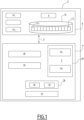
- FIG. 1 schematically represents the main modules of a device 2 for determining membership in the learning data previously used for training a target classification model MC.
- the device 2 is a programmable electronic device, e.g. a computer. In a variant not shown, the device 2 is formed from a plurality of programmable electronic devices connected to each other.
- the device 2 comprises at least one calculation processor 4, an electronic memory unit 6, adapted to communicate via a communication bus 5.
- the device 2 also comprises a communication interface with remote devices, by a chosen communication protocol, for example a wired protocol and/or a radio communication protocol, as well as a man-machine interface; these interfaces are produced in a conventional manner and are not represented in the Figure 1 .
- a chosen communication protocol for example a wired protocol and/or a radio communication protocol, as well as a man-machine interface; these interfaces are produced in a conventional manner and are not represented in the Figure 1 .
- the electronic memory unit stores the target model (TM) 8, which is an input data classification model previously trained by machine learning on a training data set.
- TM target model
- the previously used training dataset is not known.
- the target model is trained to classify input data represented in vector or matrix form of predetermined dimension(s).
- the target model is implemented as a neural network.
- a neural network comprises an ordered succession of layers of neurons, each of which takes its inputs from the outputs of the previous layer.
- the parameters of the target model and in particular of the neural network forming the target model, are known, the parameters including the structures and values of the weights learned by machine learning.
- the memory unit 6 also stores a set 10 of data 12 i to be processed.
- Each data to be processed 12 i is a digital data, represented in the same vector or matrix form as the input data of the target model 8, and of the same predetermined dimension(s).
- the data to be processed is data that may have been used during the training of the target model 8.
- Each data to be processed is an instance (or an example) of one of the output classes of the target model.
- the dataset to be processed has a cardinality L, L being a positive integer, preferably greater than 2.
- the set 8 of data to be processed can be increased by applying a data augmentation method, for example by image processing when the data to be processed are digital images (e.g. rotation, translation, vertical or horizontal flipping).
- a data augmentation method for example by image processing when the data to be processed are digital images (e.g. rotation, translation, vertical or horizontal flipping). This allows in particular to ensure that a sufficient number of instances of the classes are available for the calculation of witness models, described below.
- the processor 4 is configured to implement a module 20 for generating a number N greater than 2 of distinct partitions of the data set to be processed into a first and a second subset of data.
- MT machine learning N witness models
- Each 16- day witness model is a classification model with the same structure as the target model 8, and the parameters of the witness model are learned by machine learning on the first subset of data of one of the generated partitions, with the objective of obtaining a classification substantially identical to that of the target model, and in particular with the objective of obtaining an output statistical distribution similar to the output statistical distribution of the target model.
- each witness model “mimics” the target model, the witness model being trained on a known training database (e.g. the first subset of a chosen partition).
- the processor 4 further comprises a machine learning module 24 on a first subset of witness models of at least two distinct membership inference models 26 1 ,..., 26 P each providing, for each data to be processed, a prediction of membership or non-membership to the training data of the target classification model and preferably an associated confidence score.
- two distinct and complementary membership inference models are developed, a first "white box” type model, the target model being considered known, and a second "black box” type model, the target model being considered unknown.
- the number P of membership inference models is arbitrary, greater than or equal to 2.
- the processor 4 comprises a machine learning module 28, on a second subset of witness models, parameters of one or more decision models 30 taking as input said membership or non-membership predictions and the associated confidence scores provided by the P distinct membership inference models.
- the decision module provides as output a consolidated membership or non-membership prediction.
- the decision models 30 comprise one or more classifiers selected from models of: logistic regression, random forest, adaptive boosting, gradient boosting, naive Bayesian model.
- logistic regression random forest
- adaptive boosting gradient boosting
- naive Bayesian model naive Bayesian model
- a determination module 32 by combining the results of the decision models 30 is also implemented. For example, the combination is carried out by majority vote to obtain a final prediction, also called a final decision. Thus, a final decision is obtained for each data to be processed as to whether or not the data to be processed belongs to the training data of the target model.
- each of these models becomes a machine-learning trained model executable to implement the task for which it was trained.
- the target model 8 the membership inference models 26 1 ..26 P , the decision model(s) 30 and the determination module 32 are executed on data to be processed to determine the membership or non-membership of this data to the learning data of the target model 6.
- the modules 20, 22, 26, 24, 28, 30, 32 are produced in the form of software instructions forming a computer program, which, when executed by a programmable electronic device, implements a method for determining membership in the learning data according to the invention.
- the modules 22, 24, 26, 28, 30, 32 are each produced in the form of programmable logic components, such as FPGAs ( Field Programmable Gate Array ), microprocessors, GPGPU components ( General-purpose processing on graphics processing ) , or even dedicated integrated circuits, such as ASICs ( Application Specific Integrated Circuit).
- programmable logic components such as FPGAs ( Field Programmable Gate Array ), microprocessors, GPGPU components ( General-purpose processing on graphics processing ) , or even dedicated integrated circuits, such as ASICs ( Application Specific Integrated Circuit).
- the computer program comprising software instructions is further capable of being recorded on a non-transitory, computer-readable information recording medium.
- This computer-readable medium is, for example, a medium capable of storing electronic instructions and of being coupled to a bus of a computer system.
- this medium is an optical disk, a magneto-optical disk, a ROM memory, a RAM memory, any type of non-volatile memory (for example EPROM, EEPROM, FLASH, NVRAM), a magnetic card or an optical card.
- Validation data are used to choose hyperparameters of the control model and check the convergence of this model.
- N/2 partitions are generated randomly, and the other N/2 are generated by complementarity, by reversing the assignment of each data, so as to ensure that each data is assigned N/2 times to the first subset of data S1 (i.e. for training) and N/2 times to the second subset of data S2.
- N/2 partitions are randomly chosen in which the input data item is assigned to the first data subset S1 (i.e. for learning), and by complementarity, the data item is assigned to the second data subset S2 in the remaining N/2 partitions.
- the assignment to one or other of the subsets in each partition is done per data item.
- a set of N partitions such that each data item is assigned N/2 times to the first subset S1 and N/2 times to the second subset S2 is said to be a balanced set.
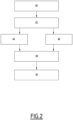
- the method then comprises a step 42 of calculating by machine learning N control models of the target model, i.e. which provide results substantially identical to those provided by the target model on a subset of training data.
- Each witness model is trained on a distinct partition of the dataset to be processed, and more specifically on the first subset of data in the partition.
- N distinct witness models are obtained and stored.
- the method then comprises, in one embodiment, machine learning 44 of a first membership inference model, with knowledge of the parameters of the target model, and machine learning 46 of a second membership inference model, without knowledge of the target model.
- Each of the learning steps 44 and 46 implements a first subset of witness models.
- the first subset of witness models is used for training membership inference models.
- the second subset of witness models is later used for training a decision model.
- step 44 implements the learning of a first membership inference model, which implements a calculation of characteristic values of influence of each data to be processed, using the previously calculated control models.
- the calculated characteristic values include, for each instance and each control model, one or more of the following characteristic values: the self-influence value, the average of the influence of the instance on the data of its class, the average of the influence of the data of its class on the instance considered, the opposite of the output value of the control model for the class of the instance, the classification loss (in English "hinge loss").
- logit designates an output vector of a classification model trained by machine learning, this vector having a size equal to the number of classes, each component of this vector corresponding to one of the classes and having a value, called output value above, for said class.
- the classification loss or "hinge loss" for an instance of a class, is equal to the output value for its class minus the largest value among the other output values.
- the first membership inference model thus trained provides as output, for each data to be processed Ei, a prediction Pred1 (Ei) of membership or non-membership of the data Ei to the training data of the target classification model and an associated confidence score Score 1i .
- This second membership inference model thus trained provides as output, for each data to be processed Ei, a prediction Pred2(Ei) of membership or non-membership of the data Ei to the training data of the target classification model, an associated confidence score Score 2i .
- the method then comprises a step 48 of learning a decision model.
- This learning takes as input, for each data to be processed, and for each witness model of the second subset of witness models, the membership prediction obtained by the witness model.
- the witness models of the second subset of witness models are preferably witness models that have not been used for the training of the membership inference models.
- the learning also takes as input the membership score provided by each of the membership inference models.
- the membership or non-membership of the data to be processed in the first set of data (i.e. training data) used for training the witness model is known, by construction of the witness model.
- a decision model for example a binary classifier, which provides as output a prediction of membership or non-membership which is called consolidated prediction, and optionally, an associated confidence score.
- the decision thus obtained is more faithful than the respective predictions of each of the membership inference models, a fortiori when the predictions are combined taking into account their respective confidence scores.
- the consolidated membership or non-membership prediction provided by this classifier constitutes a final decision.
- the method also comprises a step 50 of determining membership or non-membership (i.e. final decision) by combining the consolidated predictions of the binary classifiers.
- step 50 implements a majority vote: the majority consolidated prediction is retained as the final decision of belonging or not belonging to the training data of the target model.
- step 50 implements a learning of weights to be attributed to the classifiers used.
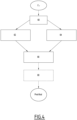
- FIG. 4 is a synopsis of the main stages of a membership determination process in the operational phase, after implementation of the learning described above with reference to the Figure 2 , according to one embodiment.
- the method comprises the application 60 of the target model, the application 62, 64 of the first and second membership inference models, then the application 66 of the previously trained decision models and the application, where appropriate, of the determination step 68 to obtain a consolidated prediction, and a final decision of whether or not the data to be processed E T belongs to the training data of the target model.
- the method described can be easily generalized to any number of distinct membership inference models, for example three, four or more, each membership inference model being learned on witness models and providing a prediction of membership or non-membership to the training data and optionally, one or more associated confidence scores.
- Machine learning on a second subset of witness models, parameters of at least one decision model taking as input the membership or non-membership predictions is then performed on the predictions obtained by the plurality of membership inference models, and where appropriate, the associated confidence scores.
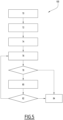
- the method 100 for generating a data classification model by secure machine learning is implemented by a computing processor of a programmable electronic device.
- the method 100 comprises a step 70 of training an MC classification model on a training data set, according to any known machine learning method chosen.
- Any known unlearning process is applicable.
- the process used is one described in " Towards Unbounded Machine Unlearning” by M. Kurmanji et al, published in 2023, https://arxiv.org/abs/2302.09880 .
- step 82 It is also checked in step 82 whether a stopping condition applies.
- the stopping condition relates to the performance of the MC* classification model. If the performance of the MC* classification model is not considered satisfactory, step 82 is followed by stop 84.
- steps 76 to 84 are iterated.
- step 82 of verifying a stopping condition is not implemented at each iteration, but only after a predetermined number of iterations.
- step 82 of verifying a stopping condition implements a stopping condition on a time or calculation criterion.
- the obtained classification model is secure against the risk of membership inference attacks on DS data considered sensitive and part of the initial training data set.
Landscapes
- Engineering & Computer Science (AREA)
- Theoretical Computer Science (AREA)
- Software Systems (AREA)
- Physics & Mathematics (AREA)
- Mathematical Physics (AREA)
- Artificial Intelligence (AREA)
- Data Mining & Analysis (AREA)
- Evolutionary Computation (AREA)
- Computing Systems (AREA)
- General Engineering & Computer Science (AREA)
- General Physics & Mathematics (AREA)
- Medical Informatics (AREA)
- Computer Vision & Pattern Recognition (AREA)
- Health & Medical Sciences (AREA)
- Life Sciences & Earth Sciences (AREA)
- Biomedical Technology (AREA)
- Biophysics (AREA)
- Computational Linguistics (AREA)
- General Health & Medical Sciences (AREA)
- Molecular Biology (AREA)
- Feedback Control In General (AREA)
- Management, Administration, Business Operations System, And Electronic Commerce (AREA)
Applications Claiming Priority (1)
| Application Number | Priority Date | Filing Date | Title |
|---|---|---|---|
| FR2312499A FR3155338A1 (fr) | 2023-11-15 | 2023-11-15 | Procédé et dispositif de détermination d’appartenance aux données d’apprentissage utilisées pour l’entraînement d’un modèle de classification de données par apprentissage machine |
Publications (1)
| Publication Number | Publication Date |
|---|---|
| EP4557166A1 true EP4557166A1 (de) | 2025-05-21 |
Family
ID=90811185
Family Applications (1)
| Application Number | Title | Priority Date | Filing Date |
|---|---|---|---|
| EP24213329.6A Pending EP4557166A1 (de) | 2023-11-15 | 2024-11-15 | Verfahren und vorrichtung zur bestimmung der zugehörigkeit zu trainingsdaten zum trainieren eines datenklassifizierungsmodells durch maschinelles lernen |
Country Status (2)
| Country | Link |
|---|---|
| EP (1) | EP4557166A1 (de) |
| FR (1) | FR3155338A1 (de) |
-
2023
- 2023-11-15 FR FR2312499A patent/FR3155338A1/fr active Pending
-
2024
- 2024-11-15 EP EP24213329.6A patent/EP4557166A1/de active Pending
Non-Patent Citations (2)
| Title |
|---|
| N. CARLINI ET AL.: "Membership inference attacks from first principles", IEEE SYMPOSIUM ON SECURITY AND PRIVACY, 2022 |
| SHOKRI REZA ET AL: "Membership Inference Attacks Against Machine Learning Models", 2017 IEEE SYMPOSIUM ON SECURITY AND PRIVACY (SP), IEEE, 22 May 2017 (2017-05-22), pages 3 - 18, XP033108084, DOI: 10.1109/SP.2017.41 * |
Also Published As
| Publication number | Publication date |
|---|---|
| FR3155338A1 (fr) | 2025-05-16 |
Similar Documents
| Publication | Publication Date | Title |
|---|---|---|
| EP2795831B1 (de) | Biometrische identifikation durch filterung und sichere mehrparteien-berechnung | |
| FR3088467A1 (fr) | Procede de classification d'une image d'entree representative d'un trait biometrique au moyen d'un reseau de neurones a convolution | |
| EP4099228A1 (de) | Verbessertes maschinelles lernen ohne anmerkungen durch adaptive gruppierungen in offenen klassensätzen | |
| FR3095880A1 (fr) | Procédé de classification sécurisée d’une donnée d’entrée au moyen d’un réseau de neurones à convolution | |
| EP3633548B1 (de) | Gesichertes klassifizierungsverfahren von eingangsdaten mittels eines neuronalen netzwerkes mit konvolution | |
| EP4006786A1 (de) | Methode zum trainieren eines neuronalen netzes, um es durch widersprüchliche beispiele robust gegen angriffe zu machen | |
| EP0454535B1 (de) | Neuronales Klassifikationssystem and -verfahren | |
| EP4179469A1 (de) | Elektronische vorrichtung und verfahren zur datenverarbeitung auf basis reversibler generativer netzwerke, zugehöriges elektronisches detektionssystem und zugehöriges computerprogramm | |
| FR3082645A1 (fr) | Procede d'apprentissage de parametres d'un reseau de neurones a convolution | |
| EP4632689A1 (de) | Verfahren zum trainieren eines maschinenlernmodells zur entdeckung von objekten in einer bildsequenz | |
| EP3966739B1 (de) | Automatisches bildanalyseverfahren zur automatischen erkennung von mindestens einer seltenen eigenschaft | |
| FR3155338A1 (fr) | Procédé et dispositif de détermination d’appartenance aux données d’apprentissage utilisées pour l’entraînement d’un modèle de classification de données par apprentissage machine | |
| EP3511870B1 (de) | Lernverfahren von parametern eines neuronalen netzes mit konvolution, und klassifizierung einer eingangsinformation | |
| EP4557185A1 (de) | Verfahren und vorrichtung zur automatischen analyse des lernens mindestens einer klasse durch ein datenklassifizierungsmodell | |
| EP3712775A1 (de) | Verfahren und vorrichtung zur bestimmung der globalen speichergrösse einer globalen speicherzone, die den daten eines neuronalen netzes unter berücksichtigung seiner topologie zugeordnet ist | |
| EP4012619A1 (de) | Verfahren zur kompression eines künstlichen neuronalen netzes | |
| EP4557131A1 (de) | Verfahren und vorrichtung zur geomarkierung eines semantischen segmentierungsmodells von durch maschinelles lernen gezielten bildern | |
| EP4012620A1 (de) | Verfahren zum automatisches lernen durch übertragung | |
| FR3160495A1 (fr) | Procédé de classification de signaux, dispositif et programme d’ordinateur associés | |
| EP4322061A1 (de) | Elektronische vorrichtung und datenverarbeitungsverfahren mit mindestens einem selbstadaptiven künstlichen intelligenzmodell mit lokalem lernen, elektronisches system und computerprogramm dafür | |
| EP4579531A1 (de) | Computersystem, implementierungsverfahren und computerprogrammproduktsatz dafür | |
| CA3104759A1 (fr) | Procede de modelisation pour le controle des resultats fournis par un reseau de neurones artificiels et autres procedes associes | |
| EP4254270A1 (de) | Verfahren und elektronische vorrichtung zur verarbeitung von daten über ein neuronales netzwerk mit verbesserter resistenz gegen angriffe durch gradientannäherung, computerprogramm und elektronisches system dafür | |
| EP3920101A1 (de) | Methode zur reduzierung der grösse eines künstlichen neuronalen netzes | |
| EP4607479A1 (de) | Verfahren und system zur kodierung einer liste von minutien eines fingerabdruckgramms |
Legal Events
| Date | Code | Title | Description |
|---|---|---|---|
| PUAI | Public reference made under article 153(3) epc to a published international application that has entered the european phase |
Free format text: ORIGINAL CODE: 0009012 |
|
| STAA | Information on the status of an ep patent application or granted ep patent |
Free format text: STATUS: THE APPLICATION HAS BEEN PUBLISHED |
|
| AK | Designated contracting states |
Kind code of ref document: A1 Designated state(s): AL AT BE BG CH CY CZ DE DK EE ES FI FR GB GR HR HU IE IS IT LI LT LU LV MC ME MK MT NL NO PL PT RO RS SE SI SK SM TR |
|
| STAA | Information on the status of an ep patent application or granted ep patent |
Free format text: STATUS: REQUEST FOR EXAMINATION WAS MADE |
|
| 17P | Request for examination filed |
Effective date: 20251023 |