EP4556803A1 - Air conditioning system - Google Patents
Air conditioning system Download PDFInfo
- Publication number
- EP4556803A1 EP4556803A1 EP23857081.6A EP23857081A EP4556803A1 EP 4556803 A1 EP4556803 A1 EP 4556803A1 EP 23857081 A EP23857081 A EP 23857081A EP 4556803 A1 EP4556803 A1 EP 4556803A1
- Authority
- EP
- European Patent Office
- Prior art keywords
- biological rhythm
- target person
- air
- rhythm
- conditioning system
- Prior art date
- Legal status (The legal status is an assumption and is not a legal conclusion. Google has not performed a legal analysis and makes no representation as to the accuracy of the status listed.)
- Pending
Links
Images








Classifications
-
- F—MECHANICAL ENGINEERING; LIGHTING; HEATING; WEAPONS; BLASTING
- F24—HEATING; RANGES; VENTILATING
- F24F—AIR-CONDITIONING; AIR-HUMIDIFICATION; VENTILATION; USE OF AIR CURRENTS FOR SCREENING
- F24F11/00—Control or safety arrangements
- F24F11/62—Control or safety arrangements characterised by the type of control or by internal processing, e.g. using fuzzy logic, adaptive control or estimation of values
- F24F11/63—Electronic processing
-
- F—MECHANICAL ENGINEERING; LIGHTING; HEATING; WEAPONS; BLASTING
- F24—HEATING; RANGES; VENTILATING
- F24F—AIR-CONDITIONING; AIR-HUMIDIFICATION; VENTILATION; USE OF AIR CURRENTS FOR SCREENING
- F24F11/00—Control or safety arrangements
- F24F11/62—Control or safety arrangements characterised by the type of control or by internal processing, e.g. using fuzzy logic, adaptive control or estimation of values
- F24F11/63—Electronic processing
- F24F11/64—Electronic processing using pre-stored data
-
- F—MECHANICAL ENGINEERING; LIGHTING; HEATING; WEAPONS; BLASTING
- F24—HEATING; RANGES; VENTILATING
- F24F—AIR-CONDITIONING; AIR-HUMIDIFICATION; VENTILATION; USE OF AIR CURRENTS FOR SCREENING
- F24F11/00—Control or safety arrangements
- F24F11/70—Control systems characterised by their outputs; Constructional details thereof
- F24F11/80—Control systems characterised by their outputs; Constructional details thereof for controlling the temperature of the supplied air
-
- F—MECHANICAL ENGINEERING; LIGHTING; HEATING; WEAPONS; BLASTING
- F24—HEATING; RANGES; VENTILATING
- F24F—AIR-CONDITIONING; AIR-HUMIDIFICATION; VENTILATION; USE OF AIR CURRENTS FOR SCREENING
- F24F2110/00—Control inputs relating to air properties
- F24F2110/10—Temperature
-
- F—MECHANICAL ENGINEERING; LIGHTING; HEATING; WEAPONS; BLASTING
- F24—HEATING; RANGES; VENTILATING
- F24F—AIR-CONDITIONING; AIR-HUMIDIFICATION; VENTILATION; USE OF AIR CURRENTS FOR SCREENING
- F24F2120/00—Control inputs relating to users or occupants
-
- F—MECHANICAL ENGINEERING; LIGHTING; HEATING; WEAPONS; BLASTING
- F24—HEATING; RANGES; VENTILATING
- F24F—AIR-CONDITIONING; AIR-HUMIDIFICATION; VENTILATION; USE OF AIR CURRENTS FOR SCREENING
- F24F2120/00—Control inputs relating to users or occupants
- F24F2120/10—Occupancy
- F24F2120/14—Activity of occupants
Definitions
- the present disclosure relates to an air-conditioning system.
- a human has a biological rhythm, such as a circadian rhythm.
- a biological rhythm such as a circadian rhythm.
- physiological phenomena such as body temperatures and hormone balance changes in cycle of about 24 hours.
- Children and adults recognize that a disturbance of the biological rhythm leads to a disturbance of the life rhythm (i.e., sleep or activity).
- Patent Document 1 discloses an air-conditioning control system configured to create a thermal environment on the basis of a daily biological rhythm.
- Patent Document 1 Japanese Unexamined Patent Publication No. H10-148371
- the air-conditioning control system controls a temperature for air conditioning on the basis of a change in the amount of heat dissipation, not on the biological rhythm of a person in the indoor space to be air-conditioned.
- a first aspect is directed to an air-conditioning system for conditioning air in a target space (S).
- the air-conditioning system includes: a detector (54) configured to detect a physiological quantity of a target person (E) in the target space (S); an estimator (62) configured to estimate a biological rhythm of the target person (E) on the basis of the physiological quantity; and a control unit (C2) configured to control a thermal environment of the target space (S) in synchronization with the biological rhythm estimated by the estimator (62).
- the thermal environment of the target space (S) can be controlled on the basis of the biological rhythm of the target person (E). For example, if the target person (E) is an infant, the thermal environment of the target space (S) can be controlled to synchronize with the biological rhythm of the infant. The thermal control in this manner can provide the infant with pleasant sleep.
- a second aspect is an embodiment of the first aspect.
- the air-conditioning system further includes an input unit (64) configured to receive year age information or month age information on the target person (E).
- the year age information or the month age information on the target person (E) can be utilized for controlling the thermal environment.
- a third aspect of the present disclosure is an embodiment of the second aspect.
- the control unit (C2) determines an anomaly in the biological rhythm estimated by the estimator (62) on the basis of the year age information or the month age information on the target person (E).
- the biological rhythm of the target person (E) can be compared with a standard biological rhythm of the age or the age in month of the target person (E) to determine an anomaly in the biological rhythm of the target person (E).
- a fourth aspect is an embodiment of any one of the first to third aspects.
- the estimator (62) estimates a depth of sleep of the target person (E) on the basis of the physiological quantity.
- the control unit (C2) regulates a temperature range in the target space (S) on the basis of the depth of sleep of the target person (E).
- infants who sleep day and night have different depths of sleep in the daytime and nighttime. Regulation of the temperature range in the target space (S) in accordance with such depths of sleep can provide the target person (E) with pleasant sleep.
- a fifth aspect is an embodiment of any one of the first to fourth aspects.
- the estimator (62) estimates the biological rhythm of the target person (E) on the basis of a change in a body temperature of the target person (E) in a predetermined period of time.
- the biological rhythm indicates a cyclic fluctuation of a cyclic physiological quantity.
- the biological rhythm can be estimated highly accurately on the basis of the biological rhythm for a plurality of cycles in the predetermined period of time.
- a sixth aspect of the present disclosure is an embodiment of any one of the first to fifth aspects.
- the target person (E) is an infant of three years old or younger.
- an infant has a biological rhythm that is not 24 hours.
- the thermal control based on the biological rhythm enables estimation of the biological rhythm unique to the infant and provides pleasant sleep for the infant.
- a seventh aspect is directed to infant bedding including the air-conditioning system of any one of the first to sixth aspects.
- the seventh aspect can provide an incubator or a baby bed including the air-conditioning system of the present disclosure, for example.
- An eighth aspect is directed to an air-conditioning system for conditioning air in a target space (S).
- the air-conditioning system includes: a detector (54) configured to detect a physiological quantity of a target person (E) in the target space (S); an estimator (62) configured to estimate a biological rhythm of the target person (E) on the basis of the physiological quantity; and a control unit (C2) configured to control a thermal environment of the target space (S) so as to correct the biological rhythm of the target person (E) estimated by the estimator (62), if the biological rhythm is anomalous.
- a ninth aspect is an embodiment of the eighth aspect.
- the control unit (C2) determines an anomaly in an amplitude of the biological rhythm estimated by the estimator (62).
- the anomaly of the biological rhythm is determined on the basis of the amplitude of the biological rhythm of the target person (E).
- a tenth aspect is an embodiment of the ninth aspect.
- the control unit (C2) controls the thermal environment of the target space (S) so that the amplitude of the biological rhythm estimated by the estimator (62) synchronizes with a predetermined reference rhythm when determining that the amplitude of the biological rhythm is anomalous.
- the amplitude of the biological rhythm of the target person (E) can be corrected to synchronize with the predetermined reference rhythm.
- control unit (C2) determines an anomaly in a cycle of the biological rhythm estimated by the estimator (62).
- the anomaly of the biological rhythm is determined on the basis of the cycle of the biological rhythm of the target person (E).
- a twelfth aspect is an embodiment of the eleventh aspect.
- the control unit (C2) controls the thermal environment of the target space (S) so that the cycle of the biological rhythm estimated by the estimator (62) synchronizes with a predetermined reference rhythm of the biological rhythm when determining that the cycle of the biological rhythm is anomalous.
- the cycle of the biological rhythm of the target person (E) can be corrected to synchronize with the predetermined reference rhythm.
- a thirteenth aspect of the present disclosure is an embodiment of the eighth aspect.
- the control unit (C2) determines an anomaly in a phase of the biological rhythm estimated by the estimator (62).
- the anomaly of the biological rhythm is determined on the basis of the phase of the biological rhythm of the target person (E).
- a fourteenth aspect is an embodiment of the thirteenth aspect.
- the target person (E) includes a first target person (E1), a second target person (E2), and a third target person (E3) who live together in the target space (S), and the control unit (C2) determines an anomaly in the phase of the biological rhythm of the first target person (E1) estimated by the estimator (62), on the basis of the phase of the biological rhythm of each of the second target person (E2) or the third target person (E3) estimated by the estimator (62).
- the phase of the biological rhythm of the family living together is compared with the phase of the biological rhythm of the target person (E).
- the anomaly of the biological rhythm of the target person (E) can be determined.
- a fifteenth aspect of the present disclosure is an embodiment of the thirteenth or fourteenth aspect.
- the control unit (C2) regulates and lowers the temperature of the target space (S) when determining that the phase of the biological rhythm of the target person (E) determined to be anomalous is temporally ahead.
- the peripheral blood vessels contract and wakefulness is maintained by lowering the temperature of the target space (S). This can correct the phase shift of the biological rhythm of the target person (E).
- a sixteenth aspect of the present disclosure is an embodiment of the thirteenth or fourteenth aspect.
- the control unit (C2) regulates to increase the temperature of the target space (S) when determining that the phase of the biological rhythm of the target person (E) determined to be anomalous is temporally behind.
- a rise in the temperature of the target space (S) improves the metabolism and dilate the peripheral vessels, resulting in promotion of onset of sleep. This can correct the phase shift of the biological rhythm of the target person (E).
- a seventeenth aspect is directed to an air-conditioning system for conditioning air in a target space (S).
- the air-conditioning system includes: a storage (61) configured to store biological rhythms according to ages, sexes, or metabolic rates of people; a receiver (65) configured to receive information indicating an age, a sex, or a metabolic rate of a target person (E) in a target space (S); and a control unit (C2) configured to select one of the biological rhythms stored in the storage (61) on the basis of the information on the target person (E) received by the receiver (65), and control a thermal environment to synchronize with the selected one of the biological rhythms.
- a storage (61) configured to store biological rhythms according to ages, sexes, or metabolic rates of people
- a receiver (65) configured to receive information indicating an age, a sex, or a metabolic rate of a target person (E) in a target space (S)
- a control unit (C2) configured to select one of the biological rhythms
- the seventeenth aspect can provide a thermal environment suitable for the biological rhythm of the target person (E) on the basis of the information on the target person (E) in the target space (S).
- an air-conditioning system (1) is applied to a target person (E) in an indoor space (S).
- the target person (E) is, for example, a child of three years old or younger.
- the target person (E) is an infant under 12 months old. Infants under 12 months old do not yet have the biological rhythm of 24 hours. The details of the biological rhythm will be described later.
- the air-conditioning system (1) controls the thermal environment of the indoor space (S) on the basis of the biological rhythm of the target person (E).
- the indoor space (S) is an example of the target space (S).
- the air-conditioning system (1) of this embodiment will be described in detail below.
- the air-conditioning system (1) of this embodiment includes an air conditioner (10) configured to condition the air in an indoor space (S).
- the air conditioner (10) performs air conditioning of the indoor space (S).
- the air conditioner (10) includes an outdoor unit (20) and an indoor unit (30).
- the outdoor unit (20) and the indoor unit (30) are connected to each other via two communication pipes (i.e., a liquid communication pipe (11) and a gas communication pipe (12)).
- a refrigerant circuit (R) is formed in the air conditioner (10).
- the refrigerant circuit (R) is filled with refrigerant.
- the refrigerant circulates in the refrigerant circuit (R) to perform a refrigeration cycle.
- the outdoor unit (20) is placed outdoors.
- the outdoor unit (20) includes an outdoor fan (21).
- the outdoor unit (20) includes, as elements to be connected to the refrigerant circuit (R), a compressor (22), an outdoor heat exchanger (23), a switching mechanism (24), and an expansion valve (25).
- the compressor (22) compresses sucked refrigerant.
- the compressor (22) discharges the compressed refrigerant.
- the compressor (22) is of an inverter type whose number of rotations (i.e., the operation frequency) is regulated.
- the outdoor heat exchanger (23) is a fin-and-tube heat exchanger.
- the outdoor heat exchanger (23) exchanges heat between the refrigerant flowing therethrough and the outdoor air transferred from the outdoor fan (21).
- the switching mechanism (24) is a four-way switching valve for changing the flow path of the refrigerant circuit (R) so as to switch a cooling operation and a heating operation of the air conditioner (10).
- the switching mechanism (24) has a first port (P1), a second port (P2), a third port (P3), and a fourth port (P4).
- the first port (P1) and the fourth port (P4) communicate with each other, and the second port (P2) and the third port (P3) communicate with each other (indicated by the solid lines in FIG. 2 ).
- the first port (P1) and the third port (P3) communicate with each other, and the second port (P2) and the fourth port (P4) communicate with each other (indicated by the broken lines in FIG. 2 ).
- the expansion valve (25) is disposed between the liquid-side end of the outdoor heat exchanger (23) and the liquid-side end of an indoor heat exchanger (33).
- the expansion valve (25) is an electronic expansion valve having an adjustable opening degree.
- the indoor unit (30) is installed in the indoor space (S).
- the indoor unit (30) is, for example, a wall-mounted indoor air conditioner.
- the indoor unit (30) includes an indoor heat exchanger (33) and an indoor fan (32).
- the indoor heat exchanger (33) is connected to the refrigerant circuit (R).
- the indoor heat exchanger (33) is a fin-and-tube heat exchanger.
- the indoor heat exchanger (33) exchanges heat between the air transferred by the indoor fan (32) and the refrigerant.
- the indoor fan (32) is a cross-flow fan.
- the number of rotations of the indoor fan (32) is variable. In other words, the volume of air from the indoor fan (32) is variable.
- the indoor unit (30) has a suction port (30a) and a blowout port (30b).
- the air sucked in through the suction port (30a) (indicated by the arrows in FIG. 1 ) is conditioned by the indoor heat exchanger (33) and is blown out through the blowout port (30b) (indicated by the arrows in FIG. 1 ).
- the air conditioner (10) includes an indoor temperature sensor (41).
- the indoor temperature sensor (41) detects the temperature of the indoor space (S) (i.e., the room temperature).
- the indoor temperature sensor (41) is disposed at the suction port (30a) of the indoor unit (30).
- the air-conditioning system (1) of this embodiment includes a biosensor (54).
- the biosensor (54) detects the skin temperature of the target person (E) in the indoor space (S).
- the skin temperature is an example of the physiological quantity.
- the biosensor (54) is, for example, a wearable sensor integrated with a watch.
- the biosensor (54) is worn on an arm of the target person (E).
- the biosensor (54) outputs a signal indicating the detected skin temperature of the target person (E) to the control device (C) which will be described later.
- the biosensor (54) is an example of the detector (54).
- the air conditioner (10) includes a remote controller (35).
- the remote controller (35) receives the predetermined information on the basis of an operation of the person (H).
- the predetermined information includes the start of a heating operation, the start of a cooling operation, the stop of an operation, and other suitable operations.
- the predetermined information input to the remote controller (35) is output to the indoor unit (30).
- the remote controller (35) constitutes a control device (C) which will be described later.
- the air-conditioning system (1) of this embodiment includes a control device (C).
- the control device (C) includes a first control device (C1), a second control device (C2), and a third control device (C3).
- the first control device (C1) is provided in the outdoor unit (20).
- the second control device (C2) is provided in the indoor unit (30).
- the third control device (C3) is provided in the remote controller (35).
- Each control device (C) includes a microcomputer and a memory device for storing software for operating the microcomputer.
- the control device (C) controls the operations of various devices of the air conditioner (10).
- the control device (C) is connected to various devices of the air conditioner (10) in a wired or wireless manner.
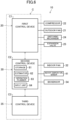
- the control device (C) includes a storage (61), an estimator (62), and an operation planner (63).
- the storage (61), the estimator (62), and the operation planner (63) are provided in the second control device (C2).
- the second control device (C2) is an example of the control unit (C2).
- the storage (61) stores the body temperature of the target person (E) detected by the biosensor (54) and the date and time in association with each other.
- the estimator (62) estimates the biological rhythm of the target person (E) on the basis of the skin temperature detected by the biosensor (54).
- the biological rhythm of this embodiment corresponds to a cyclic fluctuation or change in the core temperature of the target person (E).
- the estimator (62) according to this embodiment estimates the core temperature using the predetermined information indicating the correlation between the core temperature and the skin temperature.
- the predetermined information may be an arithmetic expression.
- the biological rhythm is as follows.
- the horizontal axis represents time and the vertical axis represents the body temperature (i.e., the core temperature).
- the body temperature i.e., the core temperature
- the body temperature gradually rises to reach the highest temperature (i.e., the first peak), then gradually decreases to reach the lowest temperature (i.e., the second peak), and then rises again.
- the biological rhythm changes in a cyclic manner.
- the first peak and the second peak may be referred to as an amplitude.
- a relatively large amplitude means that the first peak is relatively high and the second peak is relatively low.
- the core temperature may be simply referred to as a body temperature.
- the estimator (62) estimates the biological rhythm of the target person (E) on the basis of a change in the body temperature of the target person (E) in a predetermined period of time. Specifically, the estimator (62) assumes, as the biological rhythm of the target person (E), the average of the biological rhythms for a plurality of cycles in a predetermined period of time which are stored in the storage (61). For example, if the predetermined period is ten days and there are ten cycles of the biological rhythm in the past ten days, the estimator (62) estimates the average of the ten cycles of the biological rhythm as the biological rhythm of the target person (E).
- the operation planner (63) creates an operation plan of the air conditioner (10) on the basis of the biological rhythm estimated by the estimator (62). Specifically, the operation planner (63) of this embodiment creates an operation plan for changing the temperature of the indoor space (S) to synchronize with the biological rhythm of the target person (E). For example, the operation plan is created to raise the room temperature in a period in which the body temperature rises toward the first peak in the estimated biological rhythm, and to lower the room temperature in a period in which the body temperature decreases toward the second peak.
- the operation planner (63) creates the operation plan on the basis of the biological rhythm estimated every time. In other words, the operation planner (63) creates an operation plan for the next one cycle on the basis of the biological rhythm updated each time. In this manner, the second control device (C2) controls the room temperature, which is the thermal environment of the indoor space (S), in synchronization with the biological rhythm estimated by the estimator (62).
- step S11 the second control device (C2) estimates the biological rhythm of the target person (E) on the basis of the information on changes in the temperature of the target person (E) for a plurality of days.
- step S12 the second control device (C2) creates an operation plan on the basis of the biological rhythm estimated in step S11.
- the operations of various devices of the air conditioner (10) are planned so that the temperature of the indoor space (S) changes in accordance with this biological rhythm.
- the operation plan is created so that the room temperature changes to synchronize with the cycle, amplitude, and phase of the biological rhythm of the target person (E).
- the second control device (C2) executes an operation of the air conditioner (10) in accordance with the operation plan created in step S12.
- the air conditioner (10) lowers the room temperature from the time of the first peak to the time of the second peak (while the body temperature is decreasing). This easily releases the surface temperature of the target person (E), which results in the promotion of the release of the temperature from the core to the surface of the body and easier decreasing of the core temperature.
- the decreasing of the core temperature provides the target person (E) with more pleasant sleep.
- the air conditioner (10) keeps increasing the room temperature.
- the room temperature is controlled so that the cycle, amplitude, and phase of the biological rhythm of the target person (E) do not shift.
- the air-conditioning system (1) includes: an air conditioner (10); a detector (54) configured to detect a body temperature (i.e., a physiological quantity) of a target person (E) in an indoor space (S); an estimator (62) configured to estimate a biological rhythm of the target person (E) on the basis of the body temperature (i.e., the physiological quantity); and a second control device (i.e., a control unit) (C2) configured to control a room temperature of the indoor space (S) to synchronize with the biological rhythm estimated by the estimator (62).
- the target person (E) in this embodiment is an infant with a circadian rhythm less than 24 hours.
- the body temperature is controlled on the basis of the circadian rhythm in which the body temperature is relatively low in the early morning and is higher in the evening.
- the brain temperature and metabolic rate decrease, the amount of heat production decreases, the amount of perspiration rises, and the skin temperature rises due to skin vasodilation.
- Each of these is a thermoregulatory response to lower the body temperature. In this manner, the person starts sleeping in the body temperature falling phase and becomes awake when the body temperature reaches the lowest point of the body temperature and enters the body temperature rising phase.
- the circadian rhythm has such a substantially constant cycle.
- the circadian rhythm of the body temperature is hardly observed in the neonatal period and starts fluctuating from about one month after birth.
- anomalous sleep of infants has been problematic.
- There is a fear of chronic sleep deprivation if the sleep-wake rhythm does not develop normally in the infancy, which corresponds to the brain development period and the biological clock is off.
- the air-conditioning system (1) controls the room temperature (i.e., the thermal environment) to synchronize with the biological rhythm of the target person (E). For example, the room temperature is lowered from evening to early morning and increased from early morning to evening.
- the room temperature i.e., the thermal environment
- the infant can be provided with sleep suitable for growth. Accordingly, the infant can acquire a normal circadian rhythm and reduce the chronic sleep deprivation, for example.
- the air-conditioning system (1) estimates the biological rhythm (i.e., the cycle) of each target person (E) and controls the air conditioning in accordance with the biological rhythm, which reduce a change in the room temperature off the actual biological rhythm of the infant as described above. As a result, pleasant sleep can be provided for an infant and the normal developmental disorders of the infant can be reduced.
- the estimator (62) of the air-conditioning system (1) estimates the biological rhythm of the target person (E) on the basis of a change in the body temperature of the target person (E) in a predetermined period of time.
- the biological rhythm can be estimated highly accurately by averaging the cycles of a plurality of biological rhythms in the predetermined period of time.
- An air-conditioning system (1) determines whether the estimated biological rhythm is anomalous on the basis of the age in year or the age in month of the target person (E). Configurations different from those of the first embodiment will be described below.
- the storage (61) of the air-conditioning system (1) stores standard biological rhythms according to ages in year and ages in month.
- this biological rhythm is referred to as the standard rhythm.
- the standard rhythm is, for example, an average biological rhythm at each age in year and each age in month. This biological rhythm may be an average of the whole country or an average of a certain region.
- the air-conditioning system (1) includes an input unit (64) configured to receive year age information or month age information on the target person (E).
- the input unit (64) is provided in the second control device (C2).
- the input unit (64) receives information on the age in year or the age in month of the target person (E) output from the remote controller (35) on the basis of an operation by the user.
- the second control device (C2) determines an anomaly in the biological rhythm of the target person (E). Specifically, the second control device (C2) compares the estimated biological rhythm of the target person (E) with the standard rhythm at the age in year or the age in month of the target person (E) to determine an anomaly. For example, if the deviation of the amplitude of the biological rhythm of the target person (E) from the amplitude of the standard rhythm is not within a predetermined threshold, the biological rhythm is determined to be anomalous. The cycle and phase of the biological rhythm are also determined in the same manner.
- the control of the air-conditioning system (1) according to this variation will be described below with reference to FIG. 7 .
- step S21 the second control device (C2) estimates the biological rhythm of the target person (E).
- step S22 the second control device (C2) reads the standard rhythm from the storage (61) on the basis of the year age information or the month age information input to the input unit (64).
- step S23 the second control device (C2) compares the biological rhythm estimated in step S21 with the standard rhythm read in step S22 to determine an anomaly. If the biological rhythm is determined to be anomalous (YES in step S23), step S24 is executed. If the biological rhythm is not determined to be anomalous (NO in step S23), step S25 is executed.
- step S24 the second control device (C2) creates a first operation plan.
- the first operation plan is for regulating the room temperature so that the estimated biological rhythm becomes the standard rhythm.
- step S25 the second control device (C2) operates the air conditioner (10) on the basis of the first operation plan. Accordingly, the biological rhythm of the target person (E) is corrected to the standard rhythm.
- step S26 the second control device (C2) creates a second operation plan.
- the second operation plan is for controlling the thermal environment to synchronize with the estimated biological rhythm.
- step S27 the second control device (C2) operates the air conditioner (10), on the basis of the second operation plan. This can provide more pleasant sleep to the target person (E).
- the air-conditioning system (1) controls a thermal environment of the indoor space (S) so as to correct the biological rhythm of the target person (E) estimated by the estimator (62), if the biological rhythm is anomalous.
- the thermal environment means the room temperature.
- the second control device (C2) compares the biological rhythm estimated by the estimator (62) with a biological rhythm serving as a predetermined reference to determine an anomaly in the biological rhythm of the target person (E). Specifically, an anomaly is determined for each of the amplitude, the cycle, and the phase of the biological rhythm of the target person (E).
- an anomaly is determined by comparing the target person (E) in the indoor space (S) with a family living together with the target person (E). That is, in this embodiment, the biological rhythm of the family living together serves as the predetermined reference.
- the target person (E) in the indoor space (S) includes a first target person (E1), a second target person (E2), and a third target person (E3).
- the first target person (E1) is the target of the determination
- the second target person (E2) and the third target person (E3) are included in the family living together with the first target person (E1).
- the second control device (C2) determines an anomaly in the biological rhythm of the first target person (E1) estimated by the estimator (62) on the basis of the biological rhythms of the second target person (E2) and the third target person (E3) estimated by the estimator (62).
- the biological rhythm of the family living together is referred to as the reference rhythm.
- each of the first to third target people (E1 to E3) is wearing a biosensor (54).
- the storage (61) stores information on the body temperature of each target person (E) over time. Accordingly, the estimator (62) estimates the biological rhythm of each target person (E).
- the estimated biological rhythm of the first target person (E1) is referred to as a "first biological rhythm", the estimated biological rhythm of the second target person (E2) as a "second biological rhythm”, and the estimated biological rhythm of the third target person (E3) as a "third biological rhythm”.
- each biological rhythm may be estimated on the basis of a change in the body temperature of the target person (E) in a predetermined period of time.
- the control of the air-conditioning system (1) according to this variation will be described below.
- step S31 the second control device (C2) acquires the biological rhythms (i.e., the first to third biological rhythms) of the first to third target people (E) estimated by the estimator (62).
- step S32 the second control device (C2) determines a reference rhythm, on the basis of the second biological rhythm and the third biological rhythm.
- the average of the second biological rhythm and the third biological rhythm is regarded as the reference rhythm.
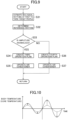
- step S33 the second control device (C2) determines whether the amplitude of the biological rhythm estimated by the estimator (62) is anomalous. Specifically, when the amplitude of the first biological rhythm is over a predetermined threshold from the first peak of the reference rhythm or under a predetermined threshold from the second peak, the amplitude of the first biological rhythm is determined to be anomalous. On the other hand, when the amplitude of the first biological rhythm is within the predetermined threshold from the amplitude of the reference rhythm, the amplitude of the first biological rhythm is determined to be normal. If the amplitude of the first biological rhythm is determined to be anomalous (YES in step S33), step S34 is executed. If the amplitude of the first biological rhythm is not determined to be anomalous (NO in step S33), step S36 is executed.
- step S34 the second control device (C2) creates a third operation plan.
- the third operation plan is for regulating the room temperature so that the amplitude of the first biological rhythm synchronizes with the amplitude of the reference rhythm.
- the biological rhythm shown in FIG. 4 will be described below in detail as a reference rhythm.
- the third operation plan of the air conditioner (10) is created to lower the room temperature from a midpoint between the first peak and the second peak until reaching the second peak and to increase the room temperature from the midpoint between the second peak and the first peak until reaching the first peak.
- the third operation plan promotes heat dissipation from the body surface of the first target person (E1) and promotes heat dissipation from the body core to the body surface during the shift from the first peak to the second peak.
- the body temperature (i.e., the core temperature) of the first target person (E1) easily decreases and the temperature at the second peak becomes lower than before (indicated by the solid line in FIG. 10 ).
- the third operation plan warms the body core of the first target person (E1) during the shift from the second peak to the first peak, resulting in a rise in the body temperature (i.e., the core temperature), easier awakening of the first target person (E1), and continuous awakening.
- step S35 the second control device (C2) operates the air conditioner (10), on the basis of the third operation plan.
- the first target person (E1) is considered to sleep shallowly in nighttime and doze off in daytime.
- the operation plan can deepen the sleep in nighttime and maintain the wakefulness in daytime. In this manner, the biological rhythm can be normalized.
- step S36 the second control device (C2) creates a fourth operation plan.
- the fourth operation plan is for regulating the room temperature to synchronize with the estimated first biological rhythm.
- step S37 the second control device (C2) operates the air conditioner (10) on the basis of the fourth operation plan.
- Steps S41 to S42 are the same as steps S31 to S32 described above, and description thereof will thus be omitted.
- step S43 the second control device (C2) determines whether the cycle of the biological rhythm estimated by the estimator (62) is anomalous. Specifically, if the cycle of the first biological rhythm is longer or shorter than the cycle of the reference rhythm by a predetermined threshold, the cycle of the first biological rhythm is determined to be anomalous. On the other hand, if the cycle of the first biological rhythm is within the predetermined threshold from the cycle of the reference rhythm, the cycle of the first biological rhythm is determined to be normal. If the cycle of the first biological rhythm is determined to be anomalous (YES in step S43), step S44 is executed. If the cycle of the first biological rhythm is not determined to be anomalous (NO in step S43), step S46 is executed.
- step S44 the second control device (C2) creates a fifth operation plan.
- the air conditioner (10) regulates the room temperature so that the cycle of the first biological rhythm synchronizes with the cycle of the reference rhythm.
- the biological rhythm shown in FIG. 4 will be described below in detail as a reference rhythm.
- the room temperature is controlled as follows. First, the room temperature is temporarily lowered immediately before the first peak of the first biological rhythm, is increased at the first peak of the reference rhythm, and is lowered after the elapse of a certain period of time. After that, a lower room temperature is kept at the second peak of the first biological rhythm, and the temperature is increased at the second peak of the reference rhythm.
- the fifth operation plan delays the time when the body temperature of the first target person (E1) decreases at the first peak of the first biological rhythm, which delays the time of reaching the second peak. With the delay of increasing the body temperature of the first target person (E1) at the second peak, the time of reaching the first peak delays. As a result, the cycle of the first biological rhythm can be gradually matched with the reference rhythm (indicated by the solid line in (A) of FIG. 12 ).
- the room temperature is controlled as follows. First, the room temperature is temporarily increased before the first peak of the reference rhythm and then lowered after a predetermined time. After that, the room temperature is increased at the second peak of the reference rhythm.
- the fifth operation plan advances the time when the body temperature (i.e., the core temperature) of the first target person (E1) decreases at the first peak, which advances the time of reaching the second peak.
- the body temperature i.e., the core temperature
- the time of reaching the first peak advances.
- the cycle of the first biological rhythm can be gradually matched with the reference rhythm (indicated by the solid line in (B) of FIG. 12 ).
- the second control device (C2) operates the air conditioner (10), on the basis of the fifth operation plan.
- the "case where the first biological rhythm has a shorter cycle than a reference rhythm" may be, for example, a case where the onset of sleep of the first target person (E1) becomes earlier day by day. In such a case, by operating the air conditioner (10) in accordance with the fifth operation plan, the body temperature is less likely to decrease from the first peak to the second peak and the onset of sleep can be delayed.
- the "case where the first biological rhythm has a longer cycle than the reference rhythm” may be, for example, a case where the onset of sleep of the first target person (E1) becomes later day by day. In such a case, by operating the air conditioner (10) in accordance with the fifth operation plan, the body temperature is less likely to decrease from the first peak to the second peak and the onset of sleep can be advanced.
- Steps S46 to S47 are the same as steps S36 to S37 described above, and description thereof will thus be omitted.
- Steps S51 to S52 are the same as steps S31 to S32 described above, and description thereof will thus be omitted.
- step S53 the second control device (C2) determines whether the phase of the biological rhythm (i.e., the first biological rhythm) estimated by the estimator (62) is anomalous. Specifically, the second control device (C2) determines whether there is a time lag between the phase of the first biological rhythm and the phase of the reference rhythm. If the phase of the first biological rhythm is determined to be anomalous (YES in step S53), step S54 is executed. If the phase of the first biological rhythm is determined not to be anomalous (NO in step S53), step S59 is executed. Like in the determination on an anomaly in the amplitude or cycle, the first biological rhythm may be determined not to be anomalous, if the phase shift of the first biological rhythm from the reference rhythm is within a predetermined threshold.
- step S54 the second control device (C2) determines whether the phase of the first biological rhythm is temporally ahead of the phase of the reference rhythm. If the phase of the first biological rhythm is determined to be temporally ahead of the phase of the reference rhythm (YES in step S54), step S55 is executed. If the phase of the first biological rhythm is not determined to be temporally ahead of the phase of the reference rhythm (No in step S54), the phase of the first biological rhythm is determined to be temporally behind the phase of the reference rhythm and step S57 is executed.
- step S55 the second control device (C2) creates a sixth operation plan.
- the air conditioner (10) regulates the room temperature so that the phase of the first biological rhythm synchronizes with the phase of the reference rhythm.
- the biological rhythm shown in FIG. 4 will be described below in detail as a reference rhythm.
- the phase of the first biological rhythm is temporally ahead of the phase of the reference rhythm (indicated by the broken line in (A) of FIG. 14 ).
- the sixth operation plan is created to temporarily lower the room temperature immediately before reaching the first peak. If the sixth operation plan temporarily lowers the room temperature from a time immediately before reaching the first peak, the blood vessels contract and the blood flow is hindered. The body temperature is then less likely to be lowered and the time of reaching the second peak becomes later than before. Accordingly, the time of reaching the first peak also becomes later than before (indicated by the solid line in (A) of FIG. 14 ).
- step S56 the second control device (C2) operates the air conditioner (10) on the basis of the sixth operation plan. This operation is performed until the first biological rhythm synchronizes with the reference rhythm.
- phase of the biological rhythm is temporally ahead of the phase of a reference rhythm may be earlier onset of sleep.
- the delay of the first peak and the second peak delays the phase of the first biological rhythm, which can result in later onset of sleep. That is, the phase of the first biological rhythm can match the phase of the reference rhythm.
- step S57 the second control device (C2) creates a seventh operation plan.
- the air conditioner (10) regulates the room temperature so that the phase of the first biological rhythm is in synchronization with the phase of the reference rhythm.
- the biological rhythm shown in FIG. 4 will be described below in detail as a reference rhythm.
- the phase of the first biological rhythm is temporally behind the phase of the reference rhythm (indicated by the broken line in (B) of FIG. 14 ).
- the seventh operation plan is created to temporarily increase the room temperature immediately before reaching the first peak. If the seventh operation plan temporarily raises the room temperature from a time immediately before reaching the first peak, the blood vessels dilate and the blood flow is promoted. The body temperature (i.e., the core temperature) is then likely to be lowered and the time of reaching the second peak becomes earlier than before. Accordingly, the time of reaching the first peak also becomes earlier than before (indicated by the solid line in (A) of FIG. 14 ).
- step S58 the second control device (C2) operates the air conditioner (10), on the basis of the seventh operation plan. This operation is performed until the first biological rhythm synchronizes with the reference rhythm.
- phase of the biological rhythm is temporally behind the phase of a reference rhythm may be later onset of sleep.
- the advance of the first peak and the second peak temporally advances the phase of the first biological rhythm, which can result in earlier onset of sleep. That is, the phase of the first biological rhythm can match the phase of the reference rhythm.
- Steps S59 to S60 are the same as steps S36 to S37 described above, and description thereof will thus be omitted.
- the air-conditioning system (1) includes an annunciator (55) which prompts the target person (E) to take a predetermined action.
- the annunciator (55) is a speaker (not shown) or a display screen (not shown).
- the annunciator (55) is provided in the indoor unit (30).
- the annunciator (55) gives the target person (E) a sign to prompt the target person (E) to take an action to compensate for the correction of the phase shift.
- the annunciator (55) notifies the target person (E) of a prompt to take a nap, by means of sound or display. The nap lowers the body temperature of the target person (E) and delays the phase of the biological rhythm.
- the annunciator (55) notifies the target person (E) of a prompt to take a sauna, by means of sound or display.
- the sauna raises the body temperature of the target person (E) and advances the phase of the biological rhythm.
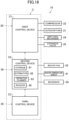
- the control device (C) includes a receiver (65).
- the receiver (65) receives information indicating an age, a sex, or a metabolic rate of a target person (E) in a target space (S).
- the second control device (C2) selects a biological rhythm stored in the storage (61) on the basis of the information on the target person (E) received by the receiver (65), and controls a thermal environment of the indoor space (S) to synchronize with the biological rhythm selected.
- the details will be described below.
- the air-conditioning system (1) regulates the room temperature of the indoor space (S) in accordance with the target person (E) in the indoor space (S) so that the target person (E) has an ideal biological rhythm.
- the ideal biological rhythm is a standard biological rhythm set on the basis of the information on the age, the sex, and the metabolic rate.
- the user operates to input the information (e.g., the age, sex, and metabolic rate) of the target person (E) to the receiver (65).
- the information e.g., the age, sex, and metabolic rate
- the age either a child or an adult is input.
- the child may be a school child.
- the metabolic rate "high” or “low” is selected on the basis of the BMI , the amount of activity, or the body weight, for example.
- the storage (61) stores the biological rhythm set on the basis of information on the age, sex, and metabolic rate of the target person (E).
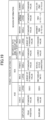
- This biological rhythm is set on the basis of a table showing the relationship between the information (e.g., the age, sex, and metabolic rate) on the target person (E) and various parameters (e.g., the amplitude, peak positions, and baseline) of the biological rhythm as shown in FIG. 17 .
- the amplitude, the peak positions, and the baseline are adjusted on the basis of the standard biological rhythm.
- the baseline according to this embodiment means the average body temperature for one cycle.
- the biological rhythm has a "large” amplitude, “advanced” peak positions, and a “low” baseline, as compared to the standard biological rhythm.
- a “small” amplitude means that the first peak is set lower than the reference biological rhythm by 1°C and the second peak is set higher than the reference biological rhythm by 1°C.
- a “large” amplitude means that the first peak is set higher than the reference biological rhythm by 2°C and the second peak is set lower than the reference biological rhythm by 2°C.
- “Advanced” peak positions mean that the peaks are set 1.5 hours ahead of the reference biological rhythm.
- a “low” baseline means that the biological rhythm is set lower than the reference biological rhythm by 1°C.
- the peak positions mean the times or clock times of the peaks (i.e., the first peak and the second peak) of the biological rhythm (e.g., the circadian rhythm) for one cycle.
- step S61 the second control device (C2) receives various pieces of information on the target person (E).
- step S62 the second control device (C2) determines the biological rhythm on the basis of the received information. For example, assume that "adult”, “male”, and “low metabolic rate” are input to the input unit (64). In this case, the biological rhythm set to have a “large” amplitude, “advanced” peak positions, and a “low” baseline as compared to the standard biological rhythm is read from the storage (61).
- step S63 the second control device (C2) controls the air conditioner (10) on the basis of the biological rhythm selected in step S61.
- the air conditioner (10) regulates the room temperature to match the selected biological rhythm. In other words, the air conditioner (10) regulates the room temperature to synchronize with the selected biological rhythm.
- an ideal thermal environment can be provided to a person who spends time in an indoor space with little thermal fluctuation, for example.
- an input unit (64) receives not only the information on the target person (E) but also season information. Winter, summer, or an intermediate period thereof (i.e., spring or autumn) is selected by a user operation.
- the baseline is set on the basis of a thermal environment evaluation index (e.g., predicted mean vote (PMV)). Specifically, the baseline is set to a PMV of 0.0 to 1.0 (warmer) in winter, a PMV of -1.0 to 1.0 in intermediate seasons, and a PMV of -1.0 to 0.0 in summer.
- PMV predicted mean vote
- the air in the indoor space (S) is conditioned on the basis of the biological rhythm taking not only the information on the target person (E) but also the season information into consideration. Accordingly, a thermal environment according to the biological rhythm suitable for each season can be provided throughout the year.
- the biological rhythm may be a cyclic fluctuation or change including at least one of the autonomic nerve rhythm (e.g., the blood pressure or heart rate fluctuation), the endocrine rhythm (e.g., the amount of hormone), the immune rhythm (e.g., the amount of antibodies, the amount of chemical mediators, the localization of immunocompetent cells), or the sleep rhythm (e.g., the brain waves, the electromyography, the eye movements, or the respiration rate), in addition to the body temperature rhythm (e.g., the core temperature, the peripheral skin temperature, or the central temperature).
- the biological rhythm is the autonomic nerve rhythm
- the physiological quantity may be the blood pressure or the heart rate.
- the physiological quantity may be a predetermined amount of hormone. If the biological rhythm is the immune rhythm, the physiological quantity may be a predetermined amount of antibodies, a predetermined amount of chemical mediators, the localization of predetermined immunocompetent cells). If the biological rhythm is the sleep rhythm, the physiological quantity may be the brain waves, the electromyography, the eye movements, or the respiration rate.
- the estimator (62) may estimate a depth of sleep of the target person (E), on the basis of the physiological quantity.
- the second control device (C2) regulates a temperature range of the indoor space (S) on the basis of the depth of sleep of the target person (E).
- the physiological quantity is the body temperature, the brain waves, the electromyography, the eye movements, or the respiration rate.
- infants who sleep day and night have different depths of sleep in the daytime and nighttime. Regulation of the temperature range in the indoor space (S) in accordance with such depths of sleep can provide the infants with pleasant sleep.
- the air-conditioning system (1) may be applied to infant bedding.
- an incubator (not shown) or a baby bed (not shown) includes the air-conditioning system (1).
- the incubator regulates the temperature in the incubator in synchronization with the biological rhythm of an infant as a target person (E).
- the incubator regulates the temperature in the incubator so as to correct the biological rhythm of the infant in the incubator.
- the air-conditioning system (1) may regulate the room temperature of the indoor space (S) taking the cycle and amplitude of the biological rhythm into consideration. For example, if an infant as a target person (E) has a biological rhythm of a 12-hour cycle, there may be a difference between the amplitude of the biological rhythm in daytime and the amplitude of the biological rhythm in nighttime. In this case, assume that the sleep is more unstable (more unexpected wake-ups from sleep occur) in daytime than in nighttime.
- the second control device (C2) determines that the body temperature of the target person (E) has not been sufficiently lowered, and increases the room temperature. This temporarily increases the body temperature of the target person (E). Accordingly, the vessels dilate and the blood flow is promoted, which releases the core temperature to the body surface.
- the second control device (C2) controls the air conditioner (10) to lower the room temperature. Accordingly, the core temperature decreases, and stable sleep can be provided to the target person (E).
- At least one of sex, height, weight, or the weight of clothing may be input to the input unit (64) in addition to the age in year or the age in month.
- the operation plan may be created as follows.
- the second control device (C2) creates an operation plan to increase the room temperature immediately after the first "first peak” and to lower the room temperature immediately before the next (i.e., the second) "first peak".
- the room temperature rises immediately after the first "first peak", which reduces a drop in the body temperature and causes the first "second peak” to be higher than before (indicated by the solid line in FIG. 20 ).
- the room temperature decreases immediately before the second "first peak", which reduces a rise in the body temperature and causes the second "first peak” to be lower than before (indicated by the solid line in FIG. 20 ).
- the first second peak and the second first peak are gradually lowered and thus the cycle of the first target person (E1) can be closer to the cycle of the reference rhythm.
- the reference rhythm is not necessarily based on the biological rhythm of the family living together.
- the reference rhythm may be a standard biological rhythm according to the age, sex, or other suitable attribute as in the third embodiment.
- a plurality of target people (E) may be in the indoor space (S).
- the storage (61) stores the biological rhythms suitable for all the target people (E) in the indoor space (S).
- the biological rhythm suitable for all the target people (E) is, for example, the rhythm obtained by averaging the amplitudes, the peak positions, and the baselines of the biological rhythm suitable for the target people (E).
- the indoor space (S) may be a classroom of a school, an office, or a patient room of a hospital, for example. Accordingly, a thermal environment causing ideal biological rhythms can be provided for students, office workers, and hospitalized patients.
- the information on the target person (E) may be at least one of muscle mass, pregnancy, lactation, body surface area, race, climate (living thermal environment), or metabolic diseases (e.g., diseases such as hyperfunction of thyroid, pituitary, adrenal gland, essential hypertension, heart failure, renal failure, leukemia, polycythemia, febrile illness, etc. as examples of metabolic increase, and hypofunction of thyroid, pituitary, adrenal gland, etc., hyponutrition due to diabetes, severe anemia, autonomic imbalance, schizophrenia, etc. as examples of metabolic decrease).
- metabolic diseases e.g., diseases such as hyperfunction of thyroid, pituitary, adrenal gland, essential hypertension, heart failure, renal failure, leukemia, polycythemia, febrile illness, etc. as examples of metabolic increase, and hypofunction of thyroid, pituitary, adrenal gland, etc., hyponutrition due to diabetes, severe anemia, autonomic imbalance, schizophrenia, etc. as examples of metabolic decrease).
- the sexual cycle may be taken into consideration in terms of the baseline.
- the air-conditioning system (1) may regulate the temperature and humidity of the indoor space (S) on the basis of the biological rhythm.
- the air conditioner (10) includes a humidity sensor (not shown).
- the air-conditioning system (1) may include an illumination device (not shown), an acoustic device (not shown), or an aroma generator (not shown) as a device for controlling the thermal environment.
- the air-conditioning system (1) may generate illuminance, sound, and aroma, on the basis of the biological rhythm of the target person (E).
- the predetermined threshold is not necessarily provided for the determination on an anomaly in the amplitude, cycle, or phase of the biological rhythm.
- the present disclosure is useful for an air-conditioning system.
Landscapes
- Engineering & Computer Science (AREA)
- Signal Processing (AREA)
- Chemical & Material Sciences (AREA)
- Combustion & Propulsion (AREA)
- Mechanical Engineering (AREA)
- General Engineering & Computer Science (AREA)
- Physics & Mathematics (AREA)
- Fuzzy Systems (AREA)
- Mathematical Physics (AREA)
- Air Conditioning Control Device (AREA)
Abstract
Description
- The present disclosure relates to an air-conditioning system.
- A human has a biological rhythm, such as a circadian rhythm. For example, in a circadian rhythm, physiological phenomena such as body temperatures and hormone balance changes in cycle of about 24 hours. Children and adults recognize that a disturbance of the biological rhythm leads to a disturbance of the life rhythm (i.e., sleep or activity).
- As three factors for regulating the disturbance of the biological rhythm; light, meals, and melatonin are focused on. In recent years, the importance of warm thermal energy has been pointed out.
Patent Document 1 discloses an air-conditioning control system configured to create a thermal environment on the basis of a daily biological rhythm. - Patent Document 1:
Japanese Unexamined Patent Publication No. H10-148371 - The air-conditioning control system according to
Patent Document 1 controls a temperature for air conditioning on the basis of a change in the amount of heat dissipation, not on the biological rhythm of a person in the indoor space to be air-conditioned. - It is an object of the present disclosure to provide an air-conditioning system configured to control a thermal environment on the basis of a biological rhythm of a target person in a target space.
- A first aspect is directed to an air-conditioning system for conditioning air in a target space (S). The air-conditioning system includes: a detector (54) configured to detect a physiological quantity of a target person (E) in the target space (S); an estimator (62) configured to estimate a biological rhythm of the target person (E) on the basis of the physiological quantity; and a control unit (C2) configured to control a thermal environment of the target space (S) in synchronization with the biological rhythm estimated by the estimator (62).
- In the first aspect, the thermal environment of the target space (S) can be controlled on the basis of the biological rhythm of the target person (E). For example, if the target person (E) is an infant, the thermal environment of the target space (S) can be controlled to synchronize with the biological rhythm of the infant. The thermal control in this manner can provide the infant with pleasant sleep.
- A second aspect is an embodiment of the first aspect. In the second aspect, the air-conditioning system further includes an input unit (64) configured to receive year age information or month age information on the target person (E).
- In the second aspect, the year age information or the month age information on the target person (E) can be utilized for controlling the thermal environment.
- A third aspect of the present disclosure is an embodiment of the second aspect. In the third aspect, the control unit (C2) determines an anomaly in the biological rhythm estimated by the estimator (62) on the basis of the year age information or the month age information on the target person (E).
- In the third aspect, the biological rhythm of the target person (E) can be compared with a standard biological rhythm of the age or the age in month of the target person (E) to determine an anomaly in the biological rhythm of the target person (E).
- A fourth aspect is an embodiment of any one of the first to third aspects. In the fourth aspect, the estimator (62) estimates a depth of sleep of the target person (E) on the basis of the physiological quantity. The control unit (C2) regulates a temperature range in the target space (S) on the basis of the depth of sleep of the target person (E).
- In the fourth aspect, for example, infants who sleep day and night have different depths of sleep in the daytime and nighttime. Regulation of the temperature range in the target space (S) in accordance with such depths of sleep can provide the target person (E) with pleasant sleep.
- A fifth aspect is an embodiment of any one of the first to fourth aspects. In the fifth aspect, the estimator (62) estimates the biological rhythm of the target person (E) on the basis of a change in a body temperature of the target person (E) in a predetermined period of time.
- The biological rhythm indicates a cyclic fluctuation of a cyclic physiological quantity. In the fifth aspect, the biological rhythm can be estimated highly accurately on the basis of the biological rhythm for a plurality of cycles in the predetermined period of time.
- A sixth aspect of the present disclosure is an embodiment of any one of the first to fifth aspects. In the sixth aspect, the target person (E) is an infant of three years old or younger.
- For example, an infant has a biological rhythm that is not 24 hours. In the sixth aspect, the thermal control based on the biological rhythm enables estimation of the biological rhythm unique to the infant and provides pleasant sleep for the infant.
- A seventh aspect is directed to infant bedding including the air-conditioning system of any one of the first to sixth aspects.
- The seventh aspect can provide an incubator or a baby bed including the air-conditioning system of the present disclosure, for example.
- An eighth aspect is directed to an air-conditioning system for conditioning air in a target space (S). The air-conditioning system includes: a detector (54) configured to detect a physiological quantity of a target person (E) in the target space (S); an estimator (62) configured to estimate a biological rhythm of the target person (E) on the basis of the physiological quantity; and a control unit (C2) configured to control a thermal environment of the target space (S) so as to correct the biological rhythm of the target person (E) estimated by the estimator (62), if the biological rhythm is anomalous.
- In the eighth aspect, even a disturbed biological rhythm of the target person (E) can be normalized.
- A ninth aspect is an embodiment of the eighth aspect. In the ninth aspect, the control unit (C2) determines an anomaly in an amplitude of the biological rhythm estimated by the estimator (62).
- In the ninth aspect, the anomaly of the biological rhythm is determined on the basis of the amplitude of the biological rhythm of the target person (E).
- A tenth aspect is an embodiment of the ninth aspect. In the tenth aspect, the control unit (C2) controls the thermal environment of the target space (S) so that the amplitude of the biological rhythm estimated by the estimator (62) synchronizes with a predetermined reference rhythm when determining that the amplitude of the biological rhythm is anomalous.
- In the tenth aspect, the amplitude of the biological rhythm of the target person (E) can be corrected to synchronize with the predetermined reference rhythm.
- An eleventh aspect of the present disclosure is an embodiment of the eighth aspect. In the eleventh aspect, the control unit (C2) determines an anomaly in a cycle of the biological rhythm estimated by the estimator (62).
- In the eleventh aspect, the anomaly of the biological rhythm is determined on the basis of the cycle of the biological rhythm of the target person (E).
- A twelfth aspect is an embodiment of the eleventh aspect. In the twelfth aspect, the control unit (C2) controls the thermal environment of the target space (S) so that the cycle of the biological rhythm estimated by the estimator (62) synchronizes with a predetermined reference rhythm of the biological rhythm when determining that the cycle of the biological rhythm is anomalous.
- In the twelfth aspect, the cycle of the biological rhythm of the target person (E) can be corrected to synchronize with the predetermined reference rhythm.
- A thirteenth aspect of the present disclosure is an embodiment of the eighth aspect. In the thirteenth aspect, the control unit (C2) determines an anomaly in a phase of the biological rhythm estimated by the estimator (62).
- In the thirteenth aspect, the anomaly of the biological rhythm is determined on the basis of the phase of the biological rhythm of the target person (E).
- A fourteenth aspect is an embodiment of the thirteenth aspect. In the fourteenth aspect, the target person (E) includes a first target person (E1), a second target person (E2), and a third target person (E3) who live together in the target space (S), and the control unit (C2) determines an anomaly in the phase of the biological rhythm of the first target person (E1) estimated by the estimator (62), on the basis of the phase of the biological rhythm of each of the second target person (E2) or the third target person (E3) estimated by the estimator (62).
- In the fourteenth aspect, for example, the phase of the biological rhythm of the family living together is compared with the phase of the biological rhythm of the target person (E). On the basis of the phase shift, the anomaly of the biological rhythm of the target person (E) can be determined.
- A fifteenth aspect of the present disclosure is an embodiment of the thirteenth or fourteenth aspect. In the fifteenth aspect, the control unit (C2) regulates and lowers the temperature of the target space (S) when determining that the phase of the biological rhythm of the target person (E) determined to be anomalous is temporally ahead.
- In the fifteenth aspect, the peripheral blood vessels contract and wakefulness is maintained by lowering the temperature of the target space (S). This can correct the phase shift of the biological rhythm of the target person (E).
- A sixteenth aspect of the present disclosure is an embodiment of the thirteenth or fourteenth aspect. In the sixteenth aspect, the control unit (C2) regulates to increase the temperature of the target space (S) when determining that the phase of the biological rhythm of the target person (E) determined to be anomalous is temporally behind.
- In the sixteenth aspect, a rise in the temperature of the target space (S) improves the metabolism and dilate the peripheral vessels, resulting in promotion of onset of sleep. This can correct the phase shift of the biological rhythm of the target person (E).
- A seventeenth aspect is directed to an air-conditioning system for conditioning air in a target space (S). The air-conditioning system includes: a storage (61) configured to store biological rhythms according to ages, sexes, or metabolic rates of people; a receiver (65) configured to receive information indicating an age, a sex, or a metabolic rate of a target person (E) in a target space (S); and a control unit (C2) configured to select one of the biological rhythms stored in the storage (61) on the basis of the information on the target person (E) received by the receiver (65), and control a thermal environment to synchronize with the selected one of the biological rhythms.
- The seventeenth aspect can provide a thermal environment suitable for the biological rhythm of the target person (E) on the basis of the information on the target person (E) in the target space (S).
-
-
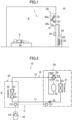
FIG. 1 is a schematic view of an inside of a target space to which an air-conditioning system according to a first embodiment is applied. -
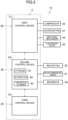
FIG. 2 is a system piping diagram of an air conditioner of the air-conditioning system. -
FIG. 3 is a block diagram showing the relationship between a control device of the air-conditioning system and various devices. -
FIG. 4 illustrates a biological rhythm. -
FIG. 5 is a flowchart showing control of the air conditioner. -
FIG. 6 is a block diagram showing the relationship between a control device of an air-conditioning system according to a variation of the first embodiment and various devices. -
FIG. 7 is a flowchart showing control of the air conditioner. -
FIG. 8 is a schematic view of an inside of a target space to which an air-conditioning system according to a second embodiment is applied. -
FIG. 9 is a flowchart showing control of the air conditioner when the amplitude of a biological rhythm is determined to be anomalous. -
FIG. 10 shows the relationship between a biological rhythm with an anomaly in the amplitude and a corrected biological rhythm. -
FIG. 11 is a flowchart showing control of the air conditioner, if the cycle of a biological rhythm is determined to be anomalous. -
FIG. 12 shows the relationship between a biological rhythm with an anomaly in the cycle and a corrected biological rhythm. (A) shows a case where the biological rhythm has a shorter cycle than a reference rhythm. (B) shows a case where the biological rhythm has a longer cycle than the reference rhythm. -
FIG. 13 is a flowchart showing control of the air conditioner, if the phase of a biological rhythm is determined to be anomalous. -
FIG. 14 shows the relationship between a biological rhythm with an anomaly in the phase and a corrected biological rhythm. (A) shows a case where the biological rhythm has a phase temporally ahead of a reference rhythm. (B) shows a case where the biological rhythm has a phase temporally behind the reference rhythm. -
FIG. 15 is a block diagram showing the relationship between a control device according to a variation of the second embodiment and various devices. -
FIG. 16 is a block diagram showing the relationship between a control device according to a third embodiment and various devices. -
FIG. 17 is a table showing the relationship between information on a target person and parameters of a biological rhythm which are stored in a storage of an air-conditioning system. -
FIG. 18 is a flowchart showing control of the air conditioner. -
FIG. 19 is a table showing a biological rhythm stored in a storage according to a variation of the third embodiment. -
FIG. 20 shows the relationship between a biological rhythm with an anomaly in the cycle and a corrected biological rhythm according to other embodiments. - Embodiments of the present invention will be described in detail below with reference to the drawings. The following embodiments are merely exemplary ones in nature, and are not intended to limit the scope, application, or uses of the invention. Features of the embodiments, variations, and other examples described below can be combined or partially substituted within the range where the present invention can be embodied.
- As shown in
FIG. 1 , an air-conditioning system (1) according to this embodiment is applied to a target person (E) in an indoor space (S). The target person (E) is, for example, a child of three years old or younger. In this embodiment, the target person (E) is an infant under 12 months old. Infants under 12 months old do not yet have the biological rhythm of 24 hours. The details of the biological rhythm will be described later. - The air-conditioning system (1) controls the thermal environment of the indoor space (S) on the basis of the biological rhythm of the target person (E). The indoor space (S) is an example of the target space (S). The air-conditioning system (1) of this embodiment will be described in detail below.
- As shown in
FIGS. 1 and 2 , the air-conditioning system (1) of this embodiment includes an air conditioner (10) configured to condition the air in an indoor space (S). The air conditioner (10) performs air conditioning of the indoor space (S). - The air conditioner (10) includes an outdoor unit (20) and an indoor unit (30). The outdoor unit (20) and the indoor unit (30) are connected to each other via two communication pipes (i.e., a liquid communication pipe (11) and a gas communication pipe (12)). Thus, a refrigerant circuit (R) is formed in the air conditioner (10). The refrigerant circuit (R) is filled with refrigerant. The refrigerant circulates in the refrigerant circuit (R) to perform a refrigeration cycle.
- The outdoor unit (20) is placed outdoors. The outdoor unit (20) includes an outdoor fan (21). The outdoor unit (20) includes, as elements to be connected to the refrigerant circuit (R), a compressor (22), an outdoor heat exchanger (23), a switching mechanism (24), and an expansion valve (25).
- The compressor (22) compresses sucked refrigerant. The compressor (22) discharges the compressed refrigerant. The compressor (22) is of an inverter type whose number of rotations (i.e., the operation frequency) is regulated.
- The outdoor heat exchanger (23) is a fin-and-tube heat exchanger. The outdoor heat exchanger (23) exchanges heat between the refrigerant flowing therethrough and the outdoor air transferred from the outdoor fan (21).
- The switching mechanism (24) is a four-way switching valve for changing the flow path of the refrigerant circuit (R) so as to switch a cooling operation and a heating operation of the air conditioner (10). The switching mechanism (24) has a first port (P1), a second port (P2), a third port (P3), and a fourth port (P4). In the cooling operation, the first port (P1) and the fourth port (P4) communicate with each other, and the second port (P2) and the third port (P3) communicate with each other (indicated by the solid lines in
FIG. 2 ). In the heating operation, the first port (P1) and the third port (P3) communicate with each other, and the second port (P2) and the fourth port (P4) communicate with each other (indicated by the broken lines inFIG. 2 ). - The expansion valve (25) is disposed between the liquid-side end of the outdoor heat exchanger (23) and the liquid-side end of an indoor heat exchanger (33). The expansion valve (25) is an electronic expansion valve having an adjustable opening degree.
- The indoor unit (30) is installed in the indoor space (S). The indoor unit (30) is, for example, a wall-mounted indoor air conditioner. The indoor unit (30) includes an indoor heat exchanger (33) and an indoor fan (32). The indoor heat exchanger (33) is connected to the refrigerant circuit (R).
- The indoor heat exchanger (33) is a fin-and-tube heat exchanger. The indoor heat exchanger (33) exchanges heat between the air transferred by the indoor fan (32) and the refrigerant.
- The indoor fan (32) is a cross-flow fan. The number of rotations of the indoor fan (32) is variable. In other words, the volume of air from the indoor fan (32) is variable.
- The indoor unit (30) has a suction port (30a) and a blowout port (30b). The air sucked in through the suction port (30a) (indicated by the arrows in
FIG. 1 ) is conditioned by the indoor heat exchanger (33) and is blown out through the blowout port (30b) (indicated by the arrows inFIG. 1 ). - The air conditioner (10) includes an indoor temperature sensor (41). The indoor temperature sensor (41) detects the temperature of the indoor space (S) (i.e., the room temperature). The indoor temperature sensor (41) is disposed at the suction port (30a) of the indoor unit (30).
- The air-conditioning system (1) of this embodiment includes a biosensor (54). The biosensor (54) detects the skin temperature of the target person (E) in the indoor space (S). The skin temperature is an example of the physiological quantity. The biosensor (54) is, for example, a wearable sensor integrated with a watch. The biosensor (54) is worn on an arm of the target person (E). The biosensor (54) outputs a signal indicating the detected skin temperature of the target person (E) to the control device (C) which will be described later. The biosensor (54) is an example of the detector (54).
- The air conditioner (10) includes a remote controller (35). The remote controller (35) receives the predetermined information on the basis of an operation of the person (H). The predetermined information includes the start of a heating operation, the start of a cooling operation, the stop of an operation, and other suitable operations. The predetermined information input to the remote controller (35) is output to the indoor unit (30). The remote controller (35) constitutes a control device (C) which will be described later.
- As shown in
FIGS. 2 and3 , the air-conditioning system (1) of this embodiment includes a control device (C). The control device (C) includes a first control device (C1), a second control device (C2), and a third control device (C3). The first control device (C1) is provided in the outdoor unit (20). The second control device (C2) is provided in the indoor unit (30). The third control device (C3) is provided in the remote controller (35). Each control device (C) includes a microcomputer and a memory device for storing software for operating the microcomputer. - The control device (C) controls the operations of various devices of the air conditioner (10). The control device (C) is connected to various devices of the air conditioner (10) in a wired or wireless manner. The control device (C) includes a storage (61), an estimator (62), and an operation planner (63). In this embodiment, the storage (61), the estimator (62), and the operation planner (63) are provided in the second control device (C2). The second control device (C2) is an example of the control unit (C2).
- The storage (61) stores the body temperature of the target person (E) detected by the biosensor (54) and the date and time in association with each other.
- The estimator (62) estimates the biological rhythm of the target person (E) on the basis of the skin temperature detected by the biosensor (54). The biological rhythm of this embodiment corresponds to a cyclic fluctuation or change in the core temperature of the target person (E). The estimator (62) according to this embodiment estimates the core temperature using the predetermined information indicating the correlation between the core temperature and the skin temperature. The predetermined information may be an arithmetic expression.
- As shown in
FIG. 4 , the biological rhythm is as follows. The horizontal axis represents time and the vertical axis represents the body temperature (i.e., the core temperature). The body temperature (i.e., the core temperature) gradually rises to reach the highest temperature (i.e., the first peak), then gradually decreases to reach the lowest temperature (i.e., the second peak), and then rises again. In this manner, the biological rhythm changes in a cyclic manner. In the following description, the first peak and the second peak may be referred to as an amplitude. For example, a relatively large amplitude means that the first peak is relatively high and the second peak is relatively low. In the following description, the core temperature may be simply referred to as a body temperature. - The estimator (62) estimates the biological rhythm of the target person (E) on the basis of a change in the body temperature of the target person (E) in a predetermined period of time. Specifically, the estimator (62) assumes, as the biological rhythm of the target person (E), the average of the biological rhythms for a plurality of cycles in a predetermined period of time which are stored in the storage (61). For example, if the predetermined period is ten days and there are ten cycles of the biological rhythm in the past ten days, the estimator (62) estimates the average of the ten cycles of the biological rhythm as the biological rhythm of the target person (E).
- The operation planner (63) creates an operation plan of the air conditioner (10) on the basis of the biological rhythm estimated by the estimator (62). Specifically, the operation planner (63) of this embodiment creates an operation plan for changing the temperature of the indoor space (S) to synchronize with the biological rhythm of the target person (E). For example, the operation plan is created to raise the room temperature in a period in which the body temperature rises toward the first peak in the estimated biological rhythm, and to lower the room temperature in a period in which the body temperature decreases toward the second peak. The operation planner (63) creates the operation plan on the basis of the biological rhythm estimated every time. In other words, the operation planner (63) creates an operation plan for the next one cycle on the basis of the biological rhythm updated each time. In this manner, the second control device (C2) controls the room temperature, which is the thermal environment of the indoor space (S), in synchronization with the biological rhythm estimated by the estimator (62).
- Next, the control of the room temperature of the indoor space (S) performed by the air conditioner (10) in synchronization with the biological rhythm of the target person (E) will be described with reference to
FIG. 5 . - In step S11, the second control device (C2) estimates the biological rhythm of the target person (E) on the basis of the information on changes in the temperature of the target person (E) for a plurality of days.
- In step S12, the second control device (C2) creates an operation plan on the basis of the biological rhythm estimated in step S11. The operations of various devices of the air conditioner (10) are planned so that the temperature of the indoor space (S) changes in accordance with this biological rhythm. Specifically, the operation plan is created so that the room temperature changes to synchronize with the cycle, amplitude, and phase of the biological rhythm of the target person (E).
- In step S13, the second control device (C2) executes an operation of the air conditioner (10) in accordance with the operation plan created in step S12. For example, the air conditioner (10) lowers the room temperature from the time of the first peak to the time of the second peak (while the body temperature is decreasing). This easily releases the surface temperature of the target person (E), which results in the promotion of the release of the temperature from the core to the surface of the body and easier decreasing of the core temperature. The decreasing of the core temperature provides the target person (E) with more pleasant sleep. On the other hand, from the time of the second peak to the time of the first peak (while the body temperature is rising), the air conditioner (10) keeps increasing the room temperature. This increases the body temperature (i.e., the core temperature) of the target person (E) and thus easily wakens the target person (E). In this manner, the room temperature is controlled so that the cycle, amplitude, and phase of the biological rhythm of the target person (E) do not shift.
- The air-conditioning system (1) according to this embodiment includes: an air conditioner (10); a detector (54) configured to detect a body temperature (i.e., a physiological quantity) of a target person (E) in an indoor space (S); an estimator (62) configured to estimate a biological rhythm of the target person (E) on the basis of the body temperature (i.e., the physiological quantity); and a second control device (i.e., a control unit) (C2) configured to control a room temperature of the indoor space (S) to synchronize with the biological rhythm estimated by the estimator (62).
- The target person (E) in this embodiment is an infant with a circadian rhythm less than 24 hours. Here, the body temperature is controlled on the basis of the circadian rhythm in which the body temperature is relatively low in the early morning and is higher in the evening. When a person falls asleep from awakening, the brain temperature and metabolic rate decrease, the amount of heat production decreases, the amount of perspiration rises, and the skin temperature rises due to skin vasodilation. Each of these is a thermoregulatory response to lower the body temperature. In this manner, the person starts sleeping in the body temperature falling phase and becomes awake when the body temperature reaches the lowest point of the body temperature and enters the body temperature rising phase. The circadian rhythm has such a substantially constant cycle.
- The circadian rhythm of the body temperature is hardly observed in the neonatal period and starts fluctuating from about one month after birth. In recent years, anomalous sleep of infants has been problematic. There is a fear of chronic sleep deprivation, if the sleep-wake rhythm does not develop normally in the infancy, which corresponds to the brain development period and the biological clock is off. There is a fear that the chronic sleep deprivation leads to developmental disorders.
- It is thus important to provide a thermal environment that matches the biological rhythm of an infant in an infant period until a certain circadian rhythm is formed.
- The air-conditioning system (1) according to this embodiment controls the room temperature (i.e., the thermal environment) to synchronize with the biological rhythm of the target person (E). For example, the room temperature is lowered from evening to early morning and increased from early morning to evening. By providing the room temperature (i.e., the thermal environment) according to the biological rhythm of the infant (i.e., the target person (E)) in this manner, the infant can be provided with sleep suitable for growth. Accordingly, the infant can acquire a normal circadian rhythm and reduce the chronic sleep deprivation, for example.
- In particular, if the air conditioning is controlled in a cycle of 24 hours or 12 hours, the room temperature changes off the biological rhythm of the infant that is not 24 hours. In contract, the air-conditioning system (1) according to this embodiment estimates the biological rhythm (i.e., the cycle) of each target person (E) and controls the air conditioning in accordance with the biological rhythm, which reduce a change in the room temperature off the actual biological rhythm of the infant as described above. As a result, pleasant sleep can be provided for an infant and the normal developmental disorders of the infant can be reduced.
- The estimator (62) of the air-conditioning system (1) according to this embodiment estimates the biological rhythm of the target person (E) on the basis of a change in the body temperature of the target person (E) in a predetermined period of time. The biological rhythm can be estimated highly accurately by averaging the cycles of a plurality of biological rhythms in the predetermined period of time.
- An air-conditioning system (1) according to this variation determines whether the estimated biological rhythm is anomalous on the basis of the age in year or the age in month of the target person (E). Configurations different from those of the first embodiment will be described below.
- The storage (61) of the air-conditioning system (1) according to this variation stores standard biological rhythms according to ages in year and ages in month. In this variation, this biological rhythm is referred to as the standard rhythm. The standard rhythm is, for example, an average biological rhythm at each age in year and each age in month. This biological rhythm may be an average of the whole country or an average of a certain region.
- As shown in
FIG. 6 , the air-conditioning system (1) according to this variation includes an input unit (64) configured to receive year age information or month age information on the target person (E). The input unit (64) is provided in the second control device (C2). The input unit (64) receives information on the age in year or the age in month of the target person (E) output from the remote controller (35) on the basis of an operation by the user. - The second control device (C2) determines an anomaly in the biological rhythm of the target person (E). Specifically, the second control device (C2) compares the estimated biological rhythm of the target person (E) with the standard rhythm at the age in year or the age in month of the target person (E) to determine an anomaly. For example, if the deviation of the amplitude of the biological rhythm of the target person (E) from the amplitude of the standard rhythm is not within a predetermined threshold, the biological rhythm is determined to be anomalous. The cycle and phase of the biological rhythm are also determined in the same manner. The control of the air-conditioning system (1) according to this variation will be described below with reference to
FIG. 7 . - In step S21, the second control device (C2) estimates the biological rhythm of the target person (E).
- In step S22, the second control device (C2) reads the standard rhythm from the storage (61) on the basis of the year age information or the month age information input to the input unit (64).
- In step S23, the second control device (C2) compares the biological rhythm estimated in step S21 with the standard rhythm read in step S22 to determine an anomaly. If the biological rhythm is determined to be anomalous (YES in step S23), step S24 is executed. If the biological rhythm is not determined to be anomalous (NO in step S23), step S25 is executed.
- In step S24, the second control device (C2) creates a first operation plan. The first operation plan is for regulating the room temperature so that the estimated biological rhythm becomes the standard rhythm.
- In step S25, the second control device (C2) operates the air conditioner (10) on the basis of the first operation plan. Accordingly, the biological rhythm of the target person (E) is corrected to the standard rhythm.
- In step S26, the second control device (C2) creates a second operation plan. The second operation plan is for controlling the thermal environment to synchronize with the estimated biological rhythm.
- In step S27, the second control device (C2) operates the air conditioner (10), on the basis of the second operation plan. This can provide more pleasant sleep to the target person (E).
- With respect to an air-conditioning system (1) according to a second embodiment, differences from the first embodiment and the variation thereof will be described below.
- The air-conditioning system (1) according to this embodiment controls a thermal environment of the indoor space (S) so as to correct the biological rhythm of the target person (E) estimated by the estimator (62), if the biological rhythm is anomalous. In this embodiment, the thermal environment means the room temperature.
- The second control device (C2) according to this example compares the biological rhythm estimated by the estimator (62) with a biological rhythm serving as a predetermined reference to determine an anomaly in the biological rhythm of the target person (E). Specifically, an anomaly is determined for each of the amplitude, the cycle, and the phase of the biological rhythm of the target person (E).
- As shown in
FIG. 8 , an anomaly is determined by comparing the target person (E) in the indoor space (S) with a family living together with the target person (E). That is, in this embodiment, the biological rhythm of the family living together serves as the predetermined reference. For example, the target person (E) in the indoor space (S) includes a first target person (E1), a second target person (E2), and a third target person (E3). The first target person (E1) is the target of the determination, and the second target person (E2) and the third target person (E3) are included in the family living together with the first target person (E1). The second control device (C2) determines an anomaly in the biological rhythm of the first target person (E1) estimated by the estimator (62) on the basis of the biological rhythms of the second target person (E2) and the third target person (E3) estimated by the estimator (62). In this embodiment, the biological rhythm of the family living together is referred to as the reference rhythm. - Specifically, assume that each of the first to third target people (E1 to E3) is wearing a biosensor (54). The storage (61) according to this example stores information on the body temperature of each target person (E) over time. Accordingly, the estimator (62) estimates the biological rhythm of each target person (E). The estimated biological rhythm of the first target person (E1) is referred to as a "first biological rhythm", the estimated biological rhythm of the second target person (E2) as a "second biological rhythm", and the estimated biological rhythm of the third target person (E3) as a "third biological rhythm". In this embodiment, each biological rhythm may be estimated on the basis of a change in the body temperature of the target person (E) in a predetermined period of time. The control of the air-conditioning system (1) according to this variation will be described below.
- A case of determining an anomaly in the amplitude and correcting the biological rhythm will be described with reference to
FIG. 9 . - In step S31, the second control device (C2) acquires the biological rhythms (i.e., the first to third biological rhythms) of the first to third target people (E) estimated by the estimator (62).
- In step S32, the second control device (C2) determines a reference rhythm, on the basis of the second biological rhythm and the third biological rhythm. In this example, the average of the second biological rhythm and the third biological rhythm is regarded as the reference rhythm.
- In step S33, the second control device (C2) determines whether the amplitude of the biological rhythm estimated by the estimator (62) is anomalous. Specifically, when the amplitude of the first biological rhythm is over a predetermined threshold from the first peak of the reference rhythm or under a predetermined threshold from the second peak, the amplitude of the first biological rhythm is determined to be anomalous. On the other hand, when the amplitude of the first biological rhythm is within the predetermined threshold from the amplitude of the reference rhythm, the amplitude of the first biological rhythm is determined to be normal. If the amplitude of the first biological rhythm is determined to be anomalous (YES in step S33), step S34 is executed. If the amplitude of the first biological rhythm is not determined to be anomalous (NO in step S33), step S36 is executed.
- In step S34, the second control device (C2) creates a third operation plan. The third operation plan is for regulating the room temperature so that the amplitude of the first biological rhythm synchronizes with the amplitude of the reference rhythm. The biological rhythm shown in
FIG. 4 will be described below in detail as a reference rhythm. - As shown in
FIG. 10 , if the amplitude of the first biological rhythm (indicated by the broken line inFIG. 10 ) is smaller than the amplitude of the reference rhythm (i.e., if the biological rhythm is flattened), the third operation plan of the air conditioner (10) is created to lower the room temperature from a midpoint between the first peak and the second peak until reaching the second peak and to increase the room temperature from the midpoint between the second peak and the first peak until reaching the first peak. The third operation plan promotes heat dissipation from the body surface of the first target person (E1) and promotes heat dissipation from the body core to the body surface during the shift from the first peak to the second peak. Accordingly, the body temperature (i.e., the core temperature) of the first target person (E1) easily decreases and the temperature at the second peak becomes lower than before (indicated by the solid line inFIG. 10 ). The third operation plan warms the body core of the first target person (E1) during the shift from the second peak to the first peak, resulting in a rise in the body temperature (i.e., the core temperature), easier awakening of the first target person (E1), and continuous awakening. - In step S35, the second control device (C2) operates the air conditioner (10), on the basis of the third operation plan. With the biological rhythm flattened, the first target person (E1) is considered to sleep shallowly in nighttime and doze off in daytime. To address the problem, the operation plan can deepen the sleep in nighttime and maintain the wakefulness in daytime. In this manner, the biological rhythm can be normalized.
- In step S36, the second control device (C2) creates a fourth operation plan. The fourth operation plan is for regulating the room temperature to synchronize with the estimated first biological rhythm.
- In step S37, the second control device (C2) operates the air conditioner (10) on the basis of the fourth operation plan.
- Next, a case of determining an anomaly in the cycle and correcting the biological rhythm will be described with reference to
FIG. 11 . - Steps S41 to S42 are the same as steps S31 to S32 described above, and description thereof will thus be omitted.
- In step S43, the second control device (C2) determines whether the cycle of the biological rhythm estimated by the estimator (62) is anomalous. Specifically, if the cycle of the first biological rhythm is longer or shorter than the cycle of the reference rhythm by a predetermined threshold, the cycle of the first biological rhythm is determined to be anomalous. On the other hand, if the cycle of the first biological rhythm is within the predetermined threshold from the cycle of the reference rhythm, the cycle of the first biological rhythm is determined to be normal. If the cycle of the first biological rhythm is determined to be anomalous (YES in step S43), step S44 is executed. If the cycle of the first biological rhythm is not determined to be anomalous (NO in step S43), step S46 is executed.
- In step S44, the second control device (C2) creates a fifth operation plan. In the fifth operation plan, the air conditioner (10) regulates the room temperature so that the cycle of the first biological rhythm synchronizes with the cycle of the reference rhythm. The biological rhythm shown in
FIG. 4 will be described below in detail as a reference rhythm. - As shown in
FIG. 12 , in the fifth operation plan in which the cycle of the first biological rhythm is shorter than the reference rhythm (indicated by the broken line in (A) ofFIG. 12 ), the room temperature is controlled as follows. First, the room temperature is temporarily lowered immediately before the first peak of the first biological rhythm, is increased at the first peak of the reference rhythm, and is lowered after the elapse of a certain period of time. After that, a lower room temperature is kept at the second peak of the first biological rhythm, and the temperature is increased at the second peak of the reference rhythm. - The fifth operation plan delays the time when the body temperature of the first target person (E1) decreases at the first peak of the first biological rhythm, which delays the time of reaching the second peak. With the delay of increasing the body temperature of the first target person (E1) at the second peak, the time of reaching the first peak delays. As a result, the cycle of the first biological rhythm can be gradually matched with the reference rhythm (indicated by the solid line in (A) of
FIG. 12 ). - On the other hand, in the fifth operation plan in which the cycle of the first biological rhythm is longer than the reference rhythm (indicated by the broken line in (B) of
FIG. 12 ), the room temperature is controlled as follows. First, the room temperature is temporarily increased before the first peak of the reference rhythm and then lowered after a predetermined time. After that, the room temperature is increased at the second peak of the reference rhythm. - The fifth operation plan advances the time when the body temperature (i.e., the core temperature) of the first target person (E1) decreases at the first peak, which advances the time of reaching the second peak. With the advance of increasing the body temperature of the first target person (E1) at the second peak, the time of reaching the first peak advances. As a result, the cycle of the first biological rhythm can be gradually matched with the reference rhythm (indicated by the solid line in (B) of
FIG. 12 ). - In step S45, the second control device (C2) operates the air conditioner (10), on the basis of the fifth operation plan. The "case where the first biological rhythm has a shorter cycle than a reference rhythm" may be, for example, a case where the onset of sleep of the first target person (E1) becomes earlier day by day. In such a case, by operating the air conditioner (10) in accordance with the fifth operation plan, the body temperature is less likely to decrease from the first peak to the second peak and the onset of sleep can be delayed. On the other hand, the "case where the first biological rhythm has a longer cycle than the reference rhythm" may be, for example, a case where the onset of sleep of the first target person (E1) becomes later day by day. In such a case, by operating the air conditioner (10) in accordance with the fifth operation plan, the body temperature is less likely to decrease from the first peak to the second peak and the onset of sleep can be advanced.
- Steps S46 to S47 are the same as steps S36 to S37 described above, and description thereof will thus be omitted.
- Next, a case of determining an anomaly in the phase and correcting the biological rhythm will be described with reference to
FIG. 13 . - Steps S51 to S52 are the same as steps S31 to S32 described above, and description thereof will thus be omitted.
- In step S53, the second control device (C2) determines whether the phase of the biological rhythm (i.e., the first biological rhythm) estimated by the estimator (62) is anomalous. Specifically, the second control device (C2) determines whether there is a time lag between the phase of the first biological rhythm and the phase of the reference rhythm. If the phase of the first biological rhythm is determined to be anomalous (YES in step S53), step S54 is executed. If the phase of the first biological rhythm is determined not to be anomalous (NO in step S53), step S59 is executed. Like in the determination on an anomaly in the amplitude or cycle, the first biological rhythm may be determined not to be anomalous, if the phase shift of the first biological rhythm from the reference rhythm is within a predetermined threshold.
- In step S54, the second control device (C2) determines whether the phase of the first biological rhythm is temporally ahead of the phase of the reference rhythm. If the phase of the first biological rhythm is determined to be temporally ahead of the phase of the reference rhythm (YES in step S54), step S55 is executed. If the phase of the first biological rhythm is not determined to be temporally ahead of the phase of the reference rhythm (No in step S54), the phase of the first biological rhythm is determined to be temporally behind the phase of the reference rhythm and step S57 is executed.
- In step S55, the second control device (C2) creates a sixth operation plan. In the sixth operation plan, the air conditioner (10) regulates the room temperature so that the phase of the first biological rhythm synchronizes with the phase of the reference rhythm. The biological rhythm shown in
FIG. 4 will be described below in detail as a reference rhythm. - As shown in
FIG. 14 , the phase of the first biological rhythm is temporally ahead of the phase of the reference rhythm (indicated by the broken line in (A) ofFIG. 14 ). To address this, the sixth operation plan is created to temporarily lower the room temperature immediately before reaching the first peak. If the sixth operation plan temporarily lowers the room temperature from a time immediately before reaching the first peak, the blood vessels contract and the blood flow is hindered. The body temperature is then less likely to be lowered and the time of reaching the second peak becomes later than before. Accordingly, the time of reaching the first peak also becomes later than before (indicated by the solid line in (A) ofFIG. 14 ). - In step S56, the second control device (C2) operates the air conditioner (10) on the basis of the sixth operation plan. This operation is performed until the first biological rhythm synchronizes with the reference rhythm.
- The case where the phase of the biological rhythm is temporally ahead of the phase of a reference rhythm may be earlier onset of sleep. In this manner, the delay of the first peak and the second peak delays the phase of the first biological rhythm, which can result in later onset of sleep. That is, the phase of the first biological rhythm can match the phase of the reference rhythm.
- In step S57, the second control device (C2) creates a seventh operation plan. In the seventh operation plan, the air conditioner (10) regulates the room temperature so that the phase of the first biological rhythm is in synchronization with the phase of the reference rhythm. The biological rhythm shown in
FIG. 4 will be described below in detail as a reference rhythm. - Specifically, as shown in
FIG. 14 , the phase of the first biological rhythm is temporally behind the phase of the reference rhythm (indicated by the broken line in (B) ofFIG. 14 ). To address this, the seventh operation plan is created to temporarily increase the room temperature immediately before reaching the first peak. If the seventh operation plan temporarily raises the room temperature from a time immediately before reaching the first peak, the blood vessels dilate and the blood flow is promoted. The body temperature (i.e., the core temperature) is then likely to be lowered and the time of reaching the second peak becomes earlier than before. Accordingly, the time of reaching the first peak also becomes earlier than before (indicated by the solid line in (A) ofFIG. 14 ). - In step S58, the second control device (C2) operates the air conditioner (10), on the basis of the seventh operation plan. This operation is performed until the first biological rhythm synchronizes with the reference rhythm.
- The case where the phase of the biological rhythm is temporally behind the phase of a reference rhythm may be later onset of sleep. In this manner, the advance of the first peak and the second peak temporally advances the phase of the first biological rhythm, which can result in earlier onset of sleep. That is, the phase of the first biological rhythm can match the phase of the reference rhythm.
- Steps S59 to S60 are the same as steps S36 to S37 described above, and description thereof will thus be omitted.
- As shown in
FIG. 15 , the air-conditioning system (1) according to the second embodiment includes an annunciator (55) which prompts the target person (E) to take a predetermined action. The annunciator (55) is a speaker (not shown) or a display screen (not shown). The annunciator (55) is provided in the indoor unit (30). - If the second control device (C2) determines that the air conditioner (10) has not corrected the phase shift of the target person (E) sufficiently, the annunciator (55) gives the target person (E) a sign to prompt the target person (E) to take an action to compensate for the correction of the phase shift.
- For example, if the second control device (C2) determines that the air conditioner (10) cannot correct the biological rhythm of the target person (E) to be the reference rhythm, where the phase of the biological rhythm of the target person (E) is temporally ahead of the phase of the reference rhythm, the annunciator (55) notifies the target person (E) of a prompt to take a nap, by means of sound or display. The nap lowers the body temperature of the target person (E) and delays the phase of the biological rhythm.
- If the second control device (C2) determines that the air conditioner (10) cannot correct the biological rhythm of the target person (E) to be the reference rhythm, where the phase of the biological rhythm of the target person (E) is temporally behind the phase of the reference rhythm, the annunciator (55) notifies the target person (E) of a prompt to take a sauna, by means of sound or display. The sauna raises the body temperature of the target person (E) and advances the phase of the biological rhythm.
- As shown in
FIG. 16 , the control device (C) according to this embodiment includes a receiver (65). The receiver (65) receives information indicating an age, a sex, or a metabolic rate of a target person (E) in a target space (S). The second control device (C2) selects a biological rhythm stored in the storage (61) on the basis of the information on the target person (E) received by the receiver (65), and controls a thermal environment of the indoor space (S) to synchronize with the biological rhythm selected. The details will be described below. - The air-conditioning system (1) according to this embodiment regulates the room temperature of the indoor space (S) in accordance with the target person (E) in the indoor space (S) so that the target person (E) has an ideal biological rhythm. The ideal biological rhythm is a standard biological rhythm set on the basis of the information on the age, the sex, and the metabolic rate.
- The user operates to input the information (e.g., the age, sex, and metabolic rate) of the target person (E) to the receiver (65). As the age, either a child or an adult is input. The child may be a school child. As the metabolic rate, "high" or "low" is selected on the basis of the BMI, the amount of activity, or the body weight, for example.
- The storage (61) stores the biological rhythm set on the basis of information on the age, sex, and metabolic rate of the target person (E). This biological rhythm is set on the basis of a table showing the relationship between the information (e.g., the age, sex, and metabolic rate) on the target person (E) and various parameters (e.g., the amplitude, peak positions, and baseline) of the biological rhythm as shown in
FIG. 17 . Specifically, the amplitude, the peak positions, and the baseline are adjusted on the basis of the standard biological rhythm. The baseline according to this embodiment means the average body temperature for one cycle. - For example, assume that the information on the target person (E) indicates "adult", "male", and "low" metabolic rate. In this case, the biological rhythm has a "large" amplitude, "advanced" peak positions, and a "low" baseline, as compared to the standard biological rhythm.
- Here, a "small" amplitude means that the first peak is set lower than the reference biological rhythm by 1°C and the second peak is set higher than the reference biological rhythm by 1°C. A "large" amplitude means that the first peak is set higher than the reference biological rhythm by 2°C and the second peak is set lower than the reference biological rhythm by 2°C. "Advanced" peak positions mean that the peaks are set 1.5 hours ahead of the reference biological rhythm. A "low" baseline means that the biological rhythm is set lower than the reference biological rhythm by 1°C. Here, the peak positions mean the times or clock times of the peaks (i.e., the first peak and the second peak) of the biological rhythm (e.g., the circadian rhythm) for one cycle.
- The control of the second control device (C2) according to this embodiment will be described below with reference to
FIG. 18 . - In step S61, the second control device (C2) receives various pieces of information on the target person (E).
- In step S62, the second control device (C2) determines the biological rhythm on the basis of the received information. For example, assume that "adult", "male", and "low metabolic rate" are input to the input unit (64). In this case, the biological rhythm set to have a "large" amplitude, "advanced" peak positions, and a "low" baseline as compared to the standard biological rhythm is read from the storage (61).
- In step S63, the second control device (C2) controls the air conditioner (10) on the basis of the biological rhythm selected in step S61. The air conditioner (10) regulates the room temperature to match the selected biological rhythm. In other words, the air conditioner (10) regulates the room temperature to synchronize with the selected biological rhythm.
- Accordingly, an ideal thermal environment can be provided to a person who spends time in an indoor space with little thermal fluctuation, for example.
- As shown in
FIG. 19 , an input unit (64) according to this variation receives not only the information on the target person (E) but also season information. Winter, summer, or an intermediate period thereof (i.e., spring or autumn) is selected by a user operation. The baseline is set on the basis of a thermal environment evaluation index (e.g., predicted mean vote (PMV)). Specifically, the baseline is set to a PMV of 0.0 to 1.0 (warmer) in winter, a PMV of -1.0 to 1.0 in intermediate seasons, and a PMV of -1.0 to 0.0 in summer. - In this manner, the air in the indoor space (S) is conditioned on the basis of the biological rhythm taking not only the information on the target person (E) but also the season information into consideration. Accordingly, a thermal environment according to the biological rhythm suitable for each season can be provided throughout the year.
- In the embodiments and variations described above, the biological rhythm may be a cyclic fluctuation or change including at least one of the autonomic nerve rhythm (e.g., the blood pressure or heart rate fluctuation), the endocrine rhythm (e.g., the amount of hormone), the immune rhythm (e.g., the amount of antibodies, the amount of chemical mediators, the localization of immunocompetent cells), or the sleep rhythm (e.g., the brain waves, the electromyography, the eye movements, or the respiration rate), in addition to the body temperature rhythm (e.g., the core temperature, the peripheral skin temperature, or the central temperature). If the biological rhythm is the autonomic nerve rhythm, the physiological quantity may be the blood pressure or the heart rate. If the biological rhythm is the endocrine rhythm, the physiological quantity may be a predetermined amount of hormone. If the biological rhythm is the immune rhythm, the physiological quantity may be a predetermined amount of antibodies, a predetermined amount of chemical mediators, the localization of predetermined immunocompetent cells). If the biological rhythm is the sleep rhythm, the physiological quantity may be the brain waves, the electromyography, the eye movements, or the respiration rate.
- In the air-conditioning system (1) according to the first embodiment, the second embodiment, and the variations thereof, the estimator (62) may estimate a depth of sleep of the target person (E), on the basis of the physiological quantity. The second control device (C2) regulates a temperature range of the indoor space (S) on the basis of the depth of sleep of the target person (E). The physiological quantity is the body temperature, the brain waves, the electromyography, the eye movements, or the respiration rate. For example, infants who sleep day and night have different depths of sleep in the daytime and nighttime. Regulation of the temperature range in the indoor space (S) in accordance with such depths of sleep can provide the infants with pleasant sleep.
- The air-conditioning system (1) according to the first embodiment and the variation thereof may be applied to infant bedding. For example, an incubator (not shown) or a baby bed (not shown) includes the air-conditioning system (1). The incubator regulates the temperature in the incubator in synchronization with the biological rhythm of an infant as a target person (E). The incubator regulates the temperature in the incubator so as to correct the biological rhythm of the infant in the incubator.
- In the first embodiment and the variation thereof, the air-conditioning system (1) may regulate the room temperature of the indoor space (S) taking the cycle and amplitude of the biological rhythm into consideration. For example, if an infant as a target person (E) has a biological rhythm of a 12-hour cycle, there may be a difference between the amplitude of the biological rhythm in daytime and the amplitude of the biological rhythm in nighttime. In this case, assume that the sleep is more unstable (more unexpected wake-ups from sleep occur) in daytime than in nighttime. If the body temperature of the target person (E) received from the biosensor (54) is higher than the body temperature in the estimated biological rhythm (i.e., if the actually measured second peak is higher than the second peak of the estimated biological rhythm), the second control device (C2) determines that the body temperature of the target person (E) has not been sufficiently lowered, and increases the room temperature. This temporarily increases the body temperature of the target person (E). Accordingly, the vessels dilate and the blood flow is promoted, which releases the core temperature to the body surface. When determining that a body temperature of the target person (E) is higher than a certain temperature, the second control device (C2) controls the air conditioner (10) to lower the room temperature. Accordingly, the core temperature decreases, and stable sleep can be provided to the target person (E).
- In the variation of the first embodiment, at least one of sex, height, weight, or the weight of clothing may be input to the input unit (64) in addition to the age in year or the age in month. By setting the standard rhythm on the basis of these parameters, many types of standard rhythms can be obtained. As a result, an anomaly in the biological rhythm of the target person (E) can be determined highly accurately.
- As shown in
FIG. 20 , if the cycle of the first target person (E1) estimated in the second embodiment is a half cycle of the reference rhythm (indicated by the broken line inFIG. 20 ), the operation plan may be created as follows. The second control device (C2) creates an operation plan to increase the room temperature immediately after the first "first peak" and to lower the room temperature immediately before the next (i.e., the second) "first peak". The room temperature rises immediately after the first "first peak", which reduces a drop in the body temperature and causes the first "second peak" to be higher than before (indicated by the solid line inFIG. 20 ). In addition, the room temperature decreases immediately before the second "first peak", which reduces a rise in the body temperature and causes the second "first peak" to be lower than before (indicated by the solid line inFIG. 20 ). By repeating this, the first second peak and the second first peak are gradually lowered and thus the cycle of the first target person (E1) can be closer to the cycle of the reference rhythm. - In the second embodiment and the variation thereof, the reference rhythm is not necessarily based on the biological rhythm of the family living together. The reference rhythm may be a standard biological rhythm according to the age, sex, or other suitable attribute as in the third embodiment.
- In the third embodiment, a plurality of target people (E) may be in the indoor space (S). In this case, the storage (61) stores the biological rhythms suitable for all the target people (E) in the indoor space (S). The biological rhythm suitable for all the target people (E) is, for example, the rhythm obtained by averaging the amplitudes, the peak positions, and the baselines of the biological rhythm suitable for the target people (E). The indoor space (S) may be a classroom of a school, an office, or a patient room of a hospital, for example. Accordingly, a thermal environment causing ideal biological rhythms can be provided for students, office workers, and hospitalized patients.
- In the third embodiment, the information on the target person (E) may be at least one of muscle mass, pregnancy, lactation, body surface area, race, climate (living thermal environment), or metabolic diseases (e.g., diseases such as hyperfunction of thyroid, pituitary, adrenal gland, essential hypertension, heart failure, renal failure, leukemia, polycythemia, febrile illness, etc. as examples of metabolic increase, and hypofunction of thyroid, pituitary, adrenal gland, etc., hyponutrition due to diabetes, severe anemia, autonomic imbalance, schizophrenia, etc. as examples of metabolic decrease).
- In the third embodiment, if the target person is "female", the sexual cycle may be taken into consideration in terms of the baseline.
- In the embodiments described above and variations thereof, the air-conditioning system (1) may regulate the temperature and humidity of the indoor space (S) on the basis of the biological rhythm. In this case, the air conditioner (10) includes a humidity sensor (not shown).
- In the embodiments described above and variations thereof, the air-conditioning system (1) may include an illumination device (not shown), an acoustic device (not shown), or an aroma generator (not shown) as a device for controlling the thermal environment. The air-conditioning system (1) may generate illuminance, sound, and aroma, on the basis of the biological rhythm of the target person (E).
- In the variation of the first embodiment, the second embodiment, and the variation thereof, the predetermined threshold is not necessarily provided for the determination on an anomaly in the amplitude, cycle, or phase of the biological rhythm.
- While the embodiments and the variation thereof have been described above, it will be understood that various changes in form and details may be made without departing from the spirit and scope of the claims. The embodiments and the variations thereof may be combined and replaced with each other without deteriorating intended functions of the present disclosure. The expressions of "first," "second," . . . described above are used to distinguish the terms to which these expressions are given, and do not limit the number and order of the terms.
- As can be seen from the foregoing description, the present disclosure is useful for an air-conditioning system.
-
- 1
- Air-Conditioning System
- 10
- Air Conditioner
- 54
- Biosensor (Detector)
- 61
- Storage
- 62
- Estimator
- 64
- Input Unit
- 65
- Receiver
- C2
- Second Control Device (Control Unit)
- E
- Target Person
- E1
- First Target Person
- E2
- Second Target Person
- E3
- Third Target Person
- S
- Indoor Space (Target Space)
Claims (17)
- An air-conditioning system for conditioning air in a target space (S), the air-conditioning system comprising:a detector (54) configured to detect a physiological quantity of a target person in the target space (S);an estimator (62) configured to estimate a biological rhythm of the target person on the basis of the physiological quantity; anda control unit (C2) configured to control a thermal environment of the target space (S) in synchronization with the biological rhythm estimated by the estimator (62).
- The air-conditioning system of claim 1, further comprising:
an input unit (64) configured to receive year age information or month age information on the target person. - The air-conditioning system of claim 2, wherein
the control unit (C2) determines an anomaly in the biological rhythm estimated by the estimator (62) on the basis of the year age information on the target person. - The air-conditioning system of claim 1 or 2, whereinthe estimator (62) estimates a depth of sleep of the target person on the basis of the physiological quantity, andthe control unit (C2) regulates a temperature range in the target space (S) on the basis of the depth of sleep of the target person.
- The air-conditioning system of claim 1 or 2, wherein
the estimator (62) estimates the biological rhythm of the target person on the basis of a change in a body temperature of the target person in a predetermined period of time. - The air-conditioning system of claim 1 or 2, wherein
the target person is an infant of three years old or younger. - Infant bedding comprising:
the air-conditioning system of claim 1 or 2. - An air-conditioning system for conditioning air in a target space (S), the air-conditioning system comprising:a detector (54) configured to detect a physiological quantity of a target person in the target space (S);an estimator (62) configured to estimate a biological rhythm of the target person on the basis of the physiological quantity; anda control unit (C2) configured to control a thermal environment of the target space (S) so as to correct the biological rhythm of the target person estimated by the estimator (62), if the biological rhythm is anomalous.
- The air-conditioning system of claim 8, wherein
the control unit (C2) determines an anomaly in an amplitude of the biological rhythm estimated by the estimator (62). - The air-conditioning system of claim 9, wherein
the control unit (C2) controls the thermal environment of the target space (S) so that the amplitude of the biological rhythm estimated by the estimator (62) synchronizes with a predetermined reference rhythm when determining that the amplitude of the biological rhythm is anomalous. - The air-conditioning system of claim 8, wherein
the control unit (C2) determines an anomaly in a cycle of the biological rhythm estimated by the estimator (62). - The air-conditioning system of claim 11, wherein
the control unit (C2) controls the thermal environment of the target space (S) so that the cycle of the biological rhythm estimated by the estimator (62) synchronizes with a predetermined reference rhythm of the biological rhythm when determining that the cycle of the biological rhythm is anomalous. - The air-conditioning system of claim 8, wherein
the control unit (C2) determines an anomaly in a phase of the biological rhythm estimated by the estimator (62). - The air-conditioning system of claim 13, whereinthe target person includes a first target person, a second target person, and a third target person who live together in the target space (S), andthe control unit (C2) determines an anomaly in the phase of the biological rhythm of the first target person estimated by the estimator (62) on the basis of the phase of the biological rhythm of each of the first target person and the second target person estimated by the estimator (62).
- The air-conditioning system of claim 13 or 14, wherein
the control unit (C2) regulates and lowers the temperature of the target space (S) when determining that the phase of the biological rhythm of the target person determined to be anomalous is temporally ahead. - The air-conditioning system of claim 13 or 14, wherein
the control unit (C2) regulates and increases the temperature of the target space (S) when determining that the phase of the biological rhythm of the target person determined to be anomalous is temporally behind. - An air-conditioning system for conditioning air in a target space (S), the air-conditioning system comprising:a storage (61) configured to store biological rhythms according to ages, sexes, or metabolic rates of people;a receiver (65) configured to receive information indicating an age, a sex, or a metabolic rate of a target person in a target space (S); anda control unit (C2) configured to select a biological rhythm stored in the storage (61) on the basis of the information on the target person received by the receiver (65), and control a thermal environment to synchronize with the biological rhythm selected.
Applications Claiming Priority (2)
| Application Number | Priority Date | Filing Date | Title |
|---|---|---|---|
| JP2022132618A JP7564454B2 (en) | 2022-08-23 | 2022-08-23 | Air Conditioning System |
| PCT/JP2023/027228 WO2024042965A1 (en) | 2022-08-23 | 2023-07-25 | Air conditioning system |
Publications (2)
| Publication Number | Publication Date |
|---|---|
| EP4556803A1 true EP4556803A1 (en) | 2025-05-21 |
| EP4556803A4 EP4556803A4 (en) | 2025-11-05 |
Family
ID=90013232
Family Applications (1)
| Application Number | Title | Priority Date | Filing Date |
|---|---|---|---|
| EP23857081.6A Pending EP4556803A4 (en) | 2022-08-23 | 2023-07-25 | AIR CONDITIONING |
Country Status (5)
| Country | Link |
|---|---|
| US (1) | US20250189159A1 (en) |
| EP (1) | EP4556803A4 (en) |
| JP (3) | JP7564454B2 (en) |
| CN (1) | CN119731485A (en) |
| WO (1) | WO2024042965A1 (en) |
Family Cites Families (14)
| Publication number | Priority date | Publication date | Assignee | Title |
|---|---|---|---|---|
| JP3313095B2 (en) | 1995-12-18 | 2002-08-12 | セイコーエプソン株式会社 | Dial input device |
| JPH09303842A (en) * | 1996-05-15 | 1997-11-28 | Toshiba Corp | Air conditioner |
| JPH10148371A (en) * | 1996-11-18 | 1998-06-02 | Shimizu Corp | Health air conditioning control system |
| JP3164051B2 (en) * | 1998-02-10 | 2001-05-08 | ダイキン工業株式会社 | Air conditioning system and air conditioning method |
| JP2001074292A (en) | 1999-07-06 | 2001-03-23 | Daikin Ind Ltd | Air conditioner and physiological information device |
| JP4725143B2 (en) | 2005-03-15 | 2011-07-13 | ダイキン工業株式会社 | Sleep environment control system |
| JP2009264704A (en) | 2008-04-28 | 2009-11-12 | Daikin Ind Ltd | Air conditioning control system |
| JP4980410B2 (en) * | 2009-10-29 | 2012-07-18 | 三菱電機株式会社 | Air conditioner and air conditioning system |
| JP5785349B2 (en) * | 2013-05-17 | 2015-09-30 | パナソニック インテレクチュアル プロパティ コーポレーション オブアメリカPanasonic Intellectual Property Corporation of America | Sensor-equipped device |
| EP3279751A4 (en) * | 2015-04-03 | 2018-05-02 | Lucis Technologies Holdings Limited | Environmental control system |
| JP6067065B2 (en) | 2015-06-22 | 2017-01-25 | 三菱電機株式会社 | Sleeping environment control system and sleeping environment control method |
| JP2019169894A (en) * | 2018-03-26 | 2019-10-03 | カシオ計算機株式会社 | Electronic apparatus, terminal, setting system, setting method, and setting program |
| JP7390594B2 (en) * | 2018-12-19 | 2023-12-04 | パナソニックIpマネジメント株式会社 | Information processing method and information processing device |
| WO2021172073A1 (en) * | 2020-02-27 | 2021-09-02 | パナソニックIpマネジメント株式会社 | Control method, program, and control apparatus |
-
2022
- 2022-08-23 JP JP2022132618A patent/JP7564454B2/en active Active
-
2023
- 2023-07-25 CN CN202380059654.9A patent/CN119731485A/en active Pending
- 2023-07-25 EP EP23857081.6A patent/EP4556803A4/en active Pending
- 2023-07-25 WO PCT/JP2023/027228 patent/WO2024042965A1/en not_active Ceased
-
2024
- 2024-07-30 JP JP2024123242A patent/JP2024149561A/en active Pending
-
2025
- 2025-02-20 US US19/059,122 patent/US20250189159A1/en active Pending
-
2026
- 2026-04-22 JP JP2026070953A patent/JP2026105087A/en active Pending
Also Published As
| Publication number | Publication date |
|---|---|
| JP2024030062A (en) | 2024-03-07 |
| JP7564454B2 (en) | 2024-10-09 |
| WO2024042965A1 (en) | 2024-02-29 |
| JP2024149561A (en) | 2024-10-18 |
| US20250189159A1 (en) | 2025-06-12 |
| CN119731485A (en) | 2025-03-28 |
| JP2026105087A (en) | 2026-06-25 |
| EP4556803A4 (en) | 2025-11-05 |
Similar Documents
| Publication | Publication Date | Title |
|---|---|---|
| US20240074741A1 (en) | Activation of home appliance in response to homeowner sleep state | |
| CN109814398B (en) | Intelligent bed sleep adjusting method and system and intelligent bed | |
| CN106123206B (en) | A kind of method and system adjusting ambient heat | |
| WO2022236105A1 (en) | Bed having features for estimating core body tempuratures from sensing of cardiac parameters and external temperature | |
| CN106440249B (en) | Air-conditioner control method, device and air conditioner based on wearable device | |
| JP2024519295A (en) | Mattress adjustment based on user's sleep condition | |
| US20170123442A1 (en) | System and Method of Smart and Energy-Saving Environmental Control | |
| CN106524407B (en) | Air-conditioner control method, device and air conditioner based on wearable device | |
| WO2019034126A1 (en) | Air conditioner control method based on human body sleep state and air conditioner | |
| JP2020101355A (en) | Information processing method and information processing apparatus | |
| CN106019964A (en) | System for adjusting environmental comfort and method for adjusting environmental comfort | |
| JPH09303842A (en) | Air conditioner | |
| JP6906290B2 (en) | Air conditioner | |
| JP4538941B2 (en) | Air conditioner | |
| JP2019100621A (en) | Air-conditioning control method and air-conditioning control system | |
| CN106524406B (en) | Air conditioner control method, device and air conditioner based on wearable device | |
| CN106322692B (en) | Air conditioner control method, device and air conditioner | |
| JP2021135000A (en) | Pleasant sleep dwelling environment support system | |
| US20250189159A1 (en) | Air conditioning system | |
| JP2009243724A (en) | Indoor air conditioning system | |
| US20250194809A1 (en) | Features for determining humidity properties of a bed microclimate | |
| CN205536370U (en) | Control system of air conditioner | |
| CN108361217A (en) | Fan wind speed control method, system and fan | |
| WO2018076764A1 (en) | Air conditioner control method and apparatus based on wearable device, and air conditioner | |
| JPS63284611A (en) | Environmental temperature controller |
Legal Events
| Date | Code | Title | Description |
|---|---|---|---|
| STAA | Information on the status of an ep patent application or granted ep patent |
Free format text: STATUS: THE INTERNATIONAL PUBLICATION HAS BEEN MADE |
|
| PUAI | Public reference made under article 153(3) epc to a published international application that has entered the european phase |
Free format text: ORIGINAL CODE: 0009012 |
|
| STAA | Information on the status of an ep patent application or granted ep patent |
Free format text: STATUS: REQUEST FOR EXAMINATION WAS MADE |
|
| 17P | Request for examination filed |
Effective date: 20250212 |
|
| AK | Designated contracting states |
Kind code of ref document: A1 Designated state(s): AL AT BE BG CH CY CZ DE DK EE ES FI FR GB GR HR HU IE IS IT LI LT LU LV MC ME MK MT NL NO PL PT RO RS SE SI SK SM TR |
|
| P01 | Opt-out of the competence of the unified patent court (upc) registered |
Free format text: CASE NUMBER: UPC_APP_3796_4556803/2025 Effective date: 20250820 |
|
| A4 | Supplementary search report drawn up and despatched |
Effective date: 20251009 |
|
| RIC1 | Information provided on ipc code assigned before grant |
Ipc: F24F 11/32 20180101AFI20251002BHEP Ipc: A47C 21/04 20060101ALI20251002BHEP Ipc: F24F 11/63 20180101ALI20251002BHEP Ipc: F24F 11/70 20180101ALI20251002BHEP Ipc: F24F 11/80 20180101ALI20251002BHEP Ipc: F24F 110/10 20180101ALI20251002BHEP Ipc: F24F 120/00 20180101ALI20251002BHEP |
|
| DAV | Request for validation of the european patent (deleted) | ||
| DAX | Request for extension of the european patent (deleted) | ||
| STAA | Information on the status of an ep patent application or granted ep patent |
Free format text: STATUS: EXAMINATION IS IN PROGRESS |
|
| 17Q | First examination report despatched |
Effective date: 20260707 |