EP4556277A1 - A fluid-storage tank - Google Patents
A fluid-storage tank Download PDFInfo
- Publication number
- EP4556277A1 EP4556277A1 EP23275161.0A EP23275161A EP4556277A1 EP 4556277 A1 EP4556277 A1 EP 4556277A1 EP 23275161 A EP23275161 A EP 23275161A EP 4556277 A1 EP4556277 A1 EP 4556277A1
- Authority
- EP
- European Patent Office
- Prior art keywords
- fluid
- storage tank
- volume
- inflatable bladder
- storage
- Prior art date
- Legal status (The legal status is an assumption and is not a legal conclusion. Google has not performed a legal analysis and makes no representation as to the accuracy of the status listed.)
- Pending
Links
Images

Classifications
-
- B—PERFORMING OPERATIONS; TRANSPORTING
- B60—VEHICLES IN GENERAL
- B60K—ARRANGEMENT OR MOUNTING OF PROPULSION UNITS OR OF TRANSMISSIONS IN VEHICLES; ARRANGEMENT OR MOUNTING OF PLURAL DIVERSE PRIME-MOVERS IN VEHICLES; AUXILIARY DRIVES FOR VEHICLES; INSTRUMENTATION OR DASHBOARDS FOR VEHICLES; ARRANGEMENTS IN CONNECTION WITH COOLING, AIR INTAKE, GAS EXHAUST OR FUEL SUPPLY OF PROPULSION UNITS IN VEHICLES
- B60K15/00—Arrangement in connection with fuel supply of combustion engines or other fuel consuming energy converters, e.g. fuel cells; Mounting or construction of fuel tanks
- B60K15/03—Fuel tanks
- B60K15/077—Fuel tanks with means modifying or controlling distribution or motion of fuel, e.g. to prevent noise, surge, splash or fuel starvation
-
- B—PERFORMING OPERATIONS; TRANSPORTING
- B60—VEHICLES IN GENERAL
- B60K—ARRANGEMENT OR MOUNTING OF PROPULSION UNITS OR OF TRANSMISSIONS IN VEHICLES; ARRANGEMENT OR MOUNTING OF PLURAL DIVERSE PRIME-MOVERS IN VEHICLES; AUXILIARY DRIVES FOR VEHICLES; INSTRUMENTATION OR DASHBOARDS FOR VEHICLES; ARRANGEMENTS IN CONNECTION WITH COOLING, AIR INTAKE, GAS EXHAUST OR FUEL SUPPLY OF PROPULSION UNITS IN VEHICLES
- B60K15/00—Arrangement in connection with fuel supply of combustion engines or other fuel consuming energy converters, e.g. fuel cells; Mounting or construction of fuel tanks
- B60K15/03—Fuel tanks
-
- B—PERFORMING OPERATIONS; TRANSPORTING
- B60—VEHICLES IN GENERAL
- B60K—ARRANGEMENT OR MOUNTING OF PROPULSION UNITS OR OF TRANSMISSIONS IN VEHICLES; ARRANGEMENT OR MOUNTING OF PLURAL DIVERSE PRIME-MOVERS IN VEHICLES; AUXILIARY DRIVES FOR VEHICLES; INSTRUMENTATION OR DASHBOARDS FOR VEHICLES; ARRANGEMENTS IN CONNECTION WITH COOLING, AIR INTAKE, GAS EXHAUST OR FUEL SUPPLY OF PROPULSION UNITS IN VEHICLES
- B60K15/00—Arrangement in connection with fuel supply of combustion engines or other fuel consuming energy converters, e.g. fuel cells; Mounting or construction of fuel tanks
- B60K15/03—Fuel tanks
- B60K2015/03328—Arrangements or special measures related to fuel tanks or fuel handling
- B60K2015/0344—Arrangements or special measures related to fuel tanks or fuel handling comprising baffles
-
- B—PERFORMING OPERATIONS; TRANSPORTING
- B60—VEHICLES IN GENERAL
- B60K—ARRANGEMENT OR MOUNTING OF PROPULSION UNITS OR OF TRANSMISSIONS IN VEHICLES; ARRANGEMENT OR MOUNTING OF PLURAL DIVERSE PRIME-MOVERS IN VEHICLES; AUXILIARY DRIVES FOR VEHICLES; INSTRUMENTATION OR DASHBOARDS FOR VEHICLES; ARRANGEMENTS IN CONNECTION WITH COOLING, AIR INTAKE, GAS EXHAUST OR FUEL SUPPLY OF PROPULSION UNITS IN VEHICLES
- B60K15/00—Arrangement in connection with fuel supply of combustion engines or other fuel consuming energy converters, e.g. fuel cells; Mounting or construction of fuel tanks
- B60K15/03—Fuel tanks
- B60K15/077—Fuel tanks with means modifying or controlling distribution or motion of fuel, e.g. to prevent noise, surge, splash or fuel starvation
- B60K2015/0775—Fuel tanks with means modifying or controlling distribution or motion of fuel, e.g. to prevent noise, surge, splash or fuel starvation for reducing movement or slash noise of fuel
Definitions
- the present invention relates to a fluid-storage tank.
- Slosh is a problem for fluid-storage tanks, particularly those in vehicles where fluid, such as fuel, sloshing within the tank can affect vehicle performance. Slosh can be mitigated, at least to some degree, by providing baffles within the fluid tank. In some arrangements, the fluid first flows past the baffles, or flows through one or more restrictive orifices provided in each baffle, when sloshing from one part of the tank to another. Baffles therefore tend to provide a damping effect on the fluid flow but baffles are unable to eliminate the sloshing effect entirely.
- the sloshing effect can change the vehicle's centre of gravity significantly enough to alter the performance of the vehicle, for example during deceleration or acceleration events, such as turns.
- slosh can significantly increase braking distance in part because, when braking, fluid sloshing within the vehicle's fuel tank can cause a significant longitudinal weight transfer across the tank resulting in an increase in the weight over the front axle and a corresponding decrease in the weight over the rear axle.
- this asymmetric loading reduces the total frictional force available for braking due to the way in which the tyre-road friction coefficient non-linearly varies with reaction force.
- a similar weight transfer across the roll axis occurs during turns which, in the same way, reduces the total frictional force available to the vehicle for turning which can result in an oversteer or understeer condition of the vehicle.
- Roll axis instability can also occur during braking.
- Slosh also increases braking distance because of the momentum of the fluid moving to the front of the vehicle during braking and this causes an additional force to be applied in the opposite direction to the braking force, causing a reduction in the rate of deceleration of the vehicle.
- Slosh is also a problem for aircraft as acceleration forces (e.g. resulting from manoeuvres), may cause the fuel to slosh within the fuel tank and this sloshing can cause a significant change to the centre of gravity of the aircraft. This change in the centre of gravity can change the attitude and handling characteristics of the aircraft and may in certain circumstances cause the aircraft to stall if not accounted for by trimming the control surfaces.
- Slosh is also a problem for vessels, including cruise ships and oil tankers.
- vessels may also employ fluid ballast tanks which can also be susceptible to slosh.
- slosh can cause a change in the attitude of a vessel during acceleration or deceleration events. For example, slosh can cause the vessel to roll excessively during a turn which can increase the risk of the vessel capsizing.
- a fluid-storage tank comprising:
- the operating condition is one or more of the volume of fluid within the fluid-storage volume, the flow rate of fluid entering or exiting the fluid-storage tank, and/or a pressure or temperature for example within the fluid-storage tank, for example a temperature and/or pressure of the fluid within the fluid-storage tank.
- the fluid storage volume adjuster is configured to dynamically vary the fluid storage volume, for example according to an operating condition of the fluid-storage tank.
- the fluid-storage tank is a gas-storage tank or a liquid-storage tank, such as a fuel-storage tank or a water storage tank.
- the fluid storage volume adjuster defines a surface of the fluid storage volume.
- fluid storage volume adjuster may be configured to adjustably vary the fluid storage volume of the fluid-storage tank according to (e.g. to compensate for) a change in volume of fluid within the fluid-storage tank.
- the fluid storage volume adjuster comprises an adjustable volume-occupier, optionally arranged within the fluid storage volume (or fluid-storage tank), and optionally having an adjustable (e.g. dynamically adjustable) volume so as to (e.g. dynamically) adjustably vary the fluid storage volume within the fluid-storage tank.
- an adjustable volume-occupier optionally arranged within the fluid storage volume (or fluid-storage tank)
- an adjustable volume-occupier optionally arranged within the fluid storage volume (or fluid-storage tank)
- an adjustable (e.g. dynamically adjustable) volume so as to (e.g. dynamically) adjustably vary the fluid storage volume within the fluid-storage tank.
- the adjustable volume-occupier comprises an inflatable bladder.
- the inflatable bladder is elastically expandable or inflatable, or the inflatable bladder is resiliently (i.e. substantially non-elastically) inflatable.
- the inflatable bladder is configured to correspond to, or conform to, at least one internal wall of the fluid-storage tank when the inflatable bladder is in an inflated configuration thereof.
- the at least one wall of the fluid-storage tank defines the fluid storage volume.
- the inflatable bladder comprises nitrile rubber, a fluroelastomer, ethylene propylene diene monomer, polyurethane, or butyl rubber.
- the fluid-storage tank comprises at least one baffle arranged within the fluid storage volume for reducing fluid slosh within the fluid-storage tank.
- the inflatable bladder is configured such that, in an inflated configuration thereof, the inflatable bladder at least partially occupies a space defined at least in part by the at least one baffle.
- the inflatable bladder is configured such that, in an inflated configuration thereof, the inflatable bladder at least partially occupies a space defined at least in part by the at least one baffle and an internal wall of the fluid-storage tank defining the fluid storage volume.
- the adjustable volume-occupier comprises a plurality of inflatable bladders wherein each of the plurality of inflatable bladders is configured such that, in an inflated configuration thereof, each inflatable bladder at least partially occupies a space defined at least in part by at least one baffle of the plurality of baffles.
- the fluid-storage tank comprises a plurality of baffles arranged within the fluid storage volume for reducing fluid slosh within the fluid-storage tank, the plurality of baffles defining at least one pair of opposed baffles, each pair of opposed baffles defining a respective inter-baffle space.
- the inflatable bladder is configured such that, in an inflated configuration thereof, the inflatable bladder at least partially occupies at least one inter-baffle space.
- the inflatable bladder is configured to at least partially occupy a plurality of inter-baffle spaces.
- the plurality of inflatable bladders is configured such that, in an inflated configuration thereof, each inflatable bladder of the plurality of inflatable bladders at least partially occupies at least one respective inter-baffle space.
- the inflatable bladder comprises a fluid inlet for inflating the inflatable bladder, wherein the fluid inlet is in fluid communication with a pump configured to supply the fluid inlet with fluid.
- each inflatable bladder of the plurality of inflatable bladders comprises a respective fluid inlet, or a common fluid inlet, for inflating the plurality of inflatable bladders.
- the fluid inlet is in fluid communication with a pump configured to supply the fluid inlet with fluid for inflating the inflatable bladder.
- the fluid could be a liquid or a gas such as air.
- the fluid-storage tank comprises a fluid outlet pipe for removing fluid within the fluid storage volume from the fluid-storage tank and wherein the inflatable bladder comprises an aperture passing entirely through the inflatable bladder, the aperture configured to receive the fluid outlet pipe therein.
- the fluid-storage tank comprises a controller configured to adjustably vary the fluid storage volume adjuster according to an operating condition of the fluid-storage tank.
- the operating condition of the fluid-storage tank is one or more of the volume of fluid within the fluid-storage tank (for example within the fluid storage volume), the flow rate of fluid entering or exiting the fluid-storage tank, and/or a pressure or temperature for example within the fluid-storage tank, for example a temperature and/or pressure of the fluid within the fluid-storage tank.
- the controller is configured to (e.g. dynamically) adjustably vary the adjustable volume of the adjustable volume-occupier according to an operating condition of the fluid-storage tank.
- the operating condition of the fluid-storage tank is one or more of the volume of fluid within the fluid-storage tank (for example within the fluid storage volume), the flow rate of fluid entering or exiting the fluid-storage tank, and/or a pressure or temperature for example within the fluid-storage tank, for example a temperature and/or pressure of the fluid within the fluid-storage tank.
- a vehicle comprising the fluid-storage tank according to the first aspect.
- the adjustable volume-occupier may comprise an inflatable bladder, which may comprise a fluid inlet for inflating the inflatable bladder, wherein the fluid inlet is configured to be in fluid communication with a bleed air source, e.g. of an engine of the vehicle, or with a ram-air intake of the vehicle.
- a method of (e.g. dynamically) adjustably varying the fluid storage volume of a fluid-storage tank comprising: adjustably varying the fluid storage volume of the fluid-storage tank according to an operating condition of the fluid-storage tank.
- the operating condition is one or more of the volume of fluid within the fluid-storage tank (for example, within the fluid-storage volume), the flow rate of fluid entering or exiting the fluid-storage tank, and/or a pressure or temperature for example within the fluid-storage tank, for example a temperature and/or pressure of the fluid within the fluid-storage tank.
- Fig. 1 shows a fluid-storage tank 1.
- the fluid-storage tank may be a fuel-storage tank.
- the fluid-storage tank may be a liquid storage tank.
- the fluid-storage tank 1 comprises a fluid storage volume 2 for storing fluid 3, for example fuel.
- the fluid 3 is shown as substantially filling the fluid storage volume 2, but this is not essential.
- the fluid-storage tank 1 comprises a fluid outlet 4 fluidly coupled to the fluid storage volume 2 for removing fluid 3 from the tank 1.
- Baffles 5 may be provided within the tank 1. These are also not essential but may be desirable as an additional measure to reduce slosh in addition to the measures described below and may also be used as a back-up slosh reduction system.
- the fluid-storage tank 1 includes a fluid storage volume adjuster 10 for adjustably varying the fluid storage volume 2.
- the fluid storage volume adjuster 10 comprises a piston 6.
- the piston 6 partially defines the fluid storage volume 2, the remainder of the fluid storage volume 2 being defined by the internal walls 7 of the tank 1.
- the piston 6 is moveable so as to adjust (e.g. increase or decrease) the fluid-storage volume 2.
- the piston 6 may be configured to move so as to compensate for the removed volume of fluid 3 by correspondingly reducing the fluid storage volume 2 (for example, such that the fluid occupies substantially the entirety of the fluid storage volume such there is no void space within the fluid storage volume available for the fluid to slosh within).
- the fluid storage volume adjuster 10 is configured to vary or adjust the fluid storage volume 2 according to the volume of fluid within the tank 1, e.g. according to a change in the volume of the fluid 3.
- the piston 6 may be coupled to any suitable means for driving the piston 6, for example a pneumatic or hydraulic pump or to a motor as will be readily understood by a person skilled in the art.
- the piston may move automatically by suction when fluid within the tank 1 is pumped out.
- the fluid storage volume adjuster 10 may dynamically vary the fluid storage volume 2.
- a controller (not shown) may be provided to actively control the fluid storage volume adjuster 10.
- the fluid storage volume adjuster 10 may passively but dynamically vary the fluid storage volume 2.
- the piston 6 may be driven by a pressure or by a bias, such as a spring, which causes the piston 6 to move so as to reduce the available fluid storage volume 2 in response to a reduction of the volume of fluid 3 within the tank 1 caused by fluid 3 flowing out of the fluid outlet 4.
- the fluid storage volume adjuster 10 may be configured to adjustably vary the fluid storage volume 2 according to a pressure or temperature, for example an internal pressure or temperature of the tank 1 (for example, of fluid 3 within the tank 1), according to the volume or mass of fluid 3 within the tank 1, or according to the volume or flow-rate of fluid 3 flowing through fluid outlet 4.
- a pressure or temperature for example an internal pressure or temperature of the tank 1 (for example, of fluid 3 within the tank 1), according to the volume or mass of fluid 3 within the tank 1, or according to the volume or flow-rate of fluid 3 flowing through fluid outlet 4.
- FIG. 2 a second embodiment of the present invention is shown.
- Features of this second embodiment which correspond to features of the first embodiment are provided with a corresponding reference number but increased by 100.
- the second embodiment also comprises a fluid-storage tank 101.
- the fluid-storage tank 101 comprises a fluid storage volume 102 for storing fluid 103 therein, for example fuel.
- the fluid 103 is shown as substantially filling the fluid storage volume 102, but this is not essential to the invention.
- the fluid-storage tank 101 comprises a fluid outlet 104 fluidly coupled to the fluid storage volume 102 for removing fluid 103 from the tank 101.
- Baffles 5 may be provided within the tank 101. These are also not essential but may be desirable as an additional measure to reduce slosh in addition to the measures described below.
- a fluid storage volume adjuster 110 for adjustably varying the fluid storage volume 102 is provided.
- the fluid storage volume adjuster comprises an adjustable volume-occupier 111 having an adjustable volume.
- the volume-occupier 111 is arranged within the tank 101 so as to occupy a variable portion of the internal fluid storage volume 102.
- the adjustable volume-occupier 111 comprises a piston 106 which partially defines the fluid storage volume 102.
- the fluid storage volume adjuster 110 is arranged within the tank 101, i.e. within a volume defined by the internal walls 107 of the tank 101.
- the fluid storage volume adjuster 110 defines a surface of the fluid storage volume 102.
- the piston 106 is moveable within a cylinder 108 also arranged within the tank 101.
- the cylinder 108 is fluidly coupled to a hydraulic supply 109 such that the piston 106 is drivable so as to adjustably vary the fluid storage volume 102, for example as fluid 103 exits the fluid outlet 104.
- the fluid storage volume adjuster 110 may not be configured to adjustably vary the fluid storage volume 102 according to only the volume of fluid leaving the tank 101 but it may additionally or alternatively also may be configured to adjustably vary the fluid storage volume 102 according to any other suitable operating condition of the tank, for example according to a temperature, for example according to a temperature within the tank 101, such as according to the temperature of the fluid 102 within the fluid storage volume 102.
- the volume of the adjustable volume-occupier 111 itself is adjustable such that the available fluid storage volume 102 within the tank 101 may be adjustably varied.
- FIG. 3 a third embodiment of the present invention is shown.
- Features of this third embodiment which correspond to features of the first embodiment are provided with a corresponding reference number but increased by 200.
- the third embodiment comprises a fluid-storage tank 201.
- the fluid-storage tank 201 comprises, or defines, a fluid storage volume 202 for storing fluid 203 therein, for example a fluid such as fuel.
- the fluid 203 is shown as substantially filling the fluid storage volume 202, but this is not essential to the invention.
- the fluid-storage tank 201 comprises a fluid outlet 204 fluidly coupled to the fluid storage volume 202 for removing fluid 203 from the tank 201.
- Baffles 205 may be provided within the tank 201. These are also not essential but may be desirable as an additional measure to reduce slosh in addition to the measures described below
- baffles 205 any suitable number of baffles 205 may be provided, including a single baffle. Where two or more baffles 205 are provided, a pair of baffles 205 may together define an inter-baffle space 212 therebetween, for example wherein the baffles 205 of the pair of baffles are spaced apart and opposed to each other, as shown in the Figures.
- a fluid storage volume adjuster 210 for adjustably varying the fluid storage volume 202 is provided.
- the fluid storage volume adjuster 210 comprises an adjustable volume-occupier 211 having an adjustable volume.
- the volume-occupier 211 is arranged within the tank 201 so as to occupy a variable portion of the fluid storage volume 202.
- the volume-occupier 211 comprises an inflatable bladder 213.
- the inflatable bladder 203 has a bladder fluid inlet 214 in fluid communication with the inflatable bladder 213 for inflating and/or deflating the inflatable bladder 213 with fluid.
- the inflatable bladder may be inflated with a liquid or a gas such as air.
- the inflatable bladder 213 may in some embodiments be elastically inflatable or it may in other embodiments inflate substantially without elastic deformation of its surface.
- the inflatable bladder 213 may for example comprise nitrile rubber, a fluroelastomer, ethylene propylene diene monomer, polyurethane, or butyl rubber.
- the inflatable bladder 213 may be toroidal in shape in that it may comprise an aperture passing entirely through the inflatable bladder 213, for example through opposing surfaces of the inflatable bladder 213.
- the tank fluid outlet 204 may comprise a pipe which may be received within, and may in some embodiments pass through, the aperture.
- the inflatable bladder 213 is configured to correspond to at least a portion of the internal shape of the tank 201 defined by the internal walls 207 of the tank 201.
- the inflatable bladder 213 itself may be shaped so as to correspond to the shape of at least one internal wall 207 of the tank 201 when inflated, or the inflatable bladder 213 may for example be elastically deformable such that, when inflated, it conforms to the shape of at least one internal wall 207 of the tank 201.
- the inflatable bladder 213 is configured such that, in an inflated configuration thereof, the inflatable bladder 213 at least partially occupies a space defined at least in part by a baffle 205. Specifically, the inflatable bladder 213 at least partially occupies the inter-baffle space 212 of each pair of baffles 205. Embodiments wherein not all of the inter-baffle spaces 211 are at least partially occupied by the inflatable bladder 213 but wherein the inflatable bladder 213 at least partially occupies only a subset of the total number of inter-baffles spaces 211 are also envisaged.
- the inflatable bladder 213 also at least partially occupies a space defined between one of the outer baffles 205 and an internal wall 207 of the tank 201. As the inflatable bladder 213 inflates, it conforms to a surface of the baffles 205 and may expand along them such that a portion or length of the baffles 205 are encompassed by the inflatable bladder 213 as it inflates.
- the adjustable volume-occupier 211 comprises a single inflatable bladder 213, other embodiments are envisaged in which the adjustable volume-occupier 211 comprises a plurality of inflatable bladders 213 wherein the plurality of inflatable bladders 213 is configured such that, in an inflated configuration thereof, each inflatable bladder 213 at least partially occupies a space defined at least in part by at least one baffle 205 of the plurality of baffles 205.
- each inflatable bladder 213 may be provided within, or may be configured to extend within, a respective inter-baffle space 212.
- the bladder fluid inlet 214 may be in fluid communication with any suitable fluid source and, in the embodiment of Fig. 3 , a pump (not shown) supplies fluid to the bladder fluid inlet 214 for inflating the inflatable bladder 213.
- the bladder fluid inlet 214 may instead be in fluid communication with a source of bleed air for example engine bleed air, for example from an engine of a vehicle comprising the tank 201.
- FIG. 4 an alternative or additional means for supplying the inflatable bladder 313 with fluid is shown in a fourth embodiment of the present invention.
- This fourth embodiment which correspond to features of the first embodiment are provided with a corresponding reference number but increased by 300.
- the fourth embodiment of Fig. 4 is the same as the third embodiment of Fig. 3 except that the inflatable bladder 313 comprises an additional or alternative bladder fluid inlet 315 (but of course a separate inlet is not essential and inlet 314 may be combined with inlet 315 to form a common inlet).
- the bladder fluid inlet 315 is in fluid communication with a ram air intake 316, for example a ram air intake 316 of a vehicle (such as an aircraft) comprising the tank 301.
- the ram air intake 316 is configured to receive ram air flow 317.
- the ram air intake 316 may comprise a valve assembly for controlling the flow of ram air to the inflatable bladder 313 for inflating the inflatable bladder 313.
- the valve assembly in some embodiments may comprise a uni-directional valve or bi-directional valve, although in the embodiment shown the valve assembly comprises a pivotable flap 318 arranged along a ram air flow path 319 passing through the ram air intake 316.
- the tank 201, 301 may also comprise means for deflating the inflatable bladder 213, 313, which is particularly advantageous for when the tank is refilled or when certain operating conditions, for example the temperature within the tank, cause the fluid 3, 103, 203, 301 within the tank to expand.
- a means may comprise for example a vent or a pump fluidly coupled to the bladder fluid inlet 214, 314 so as to deflate the inflatable bladder 213, 313.
- a controller may be provided which may be configured to adjustably vary the fluid storage volume adjuster 10, 110, 210, 310 for adjustably varying the fluid storage volume 3, 103, 203, 303, according to any suitable parameter, for example according to an operating condition of the tank 1, 101, 201, 301 such as any such operating condition referred to herein.
- the controller may be configured to adjustably vary an adjustable volume of the adjustable volume occupier 111, 211, 311, for example according to an operating condition of the tank 1, 101, 201, 301.
- This specification also provides a vehicle comprising the fluid storage tank described herein.
- the vehicle may for example be an aircraft, a ground vehicle such as a lorry, or a ship or other vessel (such as a submarine).
- the fluid storage tank comprises the fuel tank of the vehicle.
- the vehicle is a tanker and the fluid storage tank is a tank of the tanker.
Landscapes
- Engineering & Computer Science (AREA)
- Life Sciences & Earth Sciences (AREA)
- Sustainable Development (AREA)
- Sustainable Energy (AREA)
- Chemical & Material Sciences (AREA)
- Combustion & Propulsion (AREA)
- Transportation (AREA)
- Mechanical Engineering (AREA)
- Supply Devices, Intensifiers, Converters, And Telemotors (AREA)
Abstract
A fluid-storage tank comprising a fluid storage volume for storing fluid therein and a fluid storage volume adjuster configured to adjustably vary the fluid storage volume of the fluid-storage tank according to an operating condition of the fluid-storage tank.
Description
- The present invention relates to a fluid-storage tank.
- Slosh is a problem for fluid-storage tanks, particularly those in vehicles where fluid, such as fuel, sloshing within the tank can affect vehicle performance. Slosh can be mitigated, at least to some degree, by providing baffles within the fluid tank. In some arrangements, the fluid first flows past the baffles, or flows through one or more restrictive orifices provided in each baffle, when sloshing from one part of the tank to another. Baffles therefore tend to provide a damping effect on the fluid flow but baffles are unable to eliminate the sloshing effect entirely.
- In some vehicles, the sloshing effect can change the vehicle's centre of gravity significantly enough to alter the performance of the vehicle, for example during deceleration or acceleration events, such as turns.
- With regard to ground vehicles, slosh can significantly increase braking distance in part because, when braking, fluid sloshing within the vehicle's fuel tank can cause a significant longitudinal weight transfer across the tank resulting in an increase in the weight over the front axle and a corresponding decrease in the weight over the rear axle. As will be appreciated by a person skilled in the art, while the total weight of the vehicle remains constant, this asymmetric loading reduces the total frictional force available for braking due to the way in which the tyre-road friction coefficient non-linearly varies with reaction force. A similar weight transfer across the roll axis occurs during turns which, in the same way, reduces the total frictional force available to the vehicle for turning which can result in an oversteer or understeer condition of the vehicle. Roll axis instability can also occur during braking.
- Slosh also increases braking distance because of the momentum of the fluid moving to the front of the vehicle during braking and this causes an additional force to be applied in the opposite direction to the braking force, causing a reduction in the rate of deceleration of the vehicle.
- Slosh is also a problem for aircraft as acceleration forces (e.g. resulting from manoeuvres), may cause the fuel to slosh within the fuel tank and this sloshing can cause a significant change to the centre of gravity of the aircraft. This change in the centre of gravity can change the attitude and handling characteristics of the aircraft and may in certain circumstances cause the aircraft to stall if not accounted for by trimming the control surfaces.
- Slosh is also a problem for vessels, including cruise ships and oil tankers. In addition to employing fuel tanks, in some cases vessels may also employ fluid ballast tanks which can also be susceptible to slosh. Furthermore, in the same way as for other vehicles, slosh can cause a change in the attitude of a vessel during acceleration or deceleration events. For example, slosh can cause the vessel to roll excessively during a turn which can increase the risk of the vessel capsizing.
- There therefore exists a need for a fluid-storage tank having an improved ability to reduce weight transfer across the tank resulting from slosh.
- According to a first aspect of the present invention, there is provided a fluid-storage tank comprising:
- a fluid storage volume for storing fluid therein; and
- a fluid storage volume adjuster configured to adjustably vary the fluid storage volume of the fluid-storage tank according to an operating condition of the fluid-storage tank.
- Optionally, the operating condition is one or more of the volume of fluid within the fluid-storage volume, the flow rate of fluid entering or exiting the fluid-storage tank, and/or a pressure or temperature for example within the fluid-storage tank, for example a temperature and/or pressure of the fluid within the fluid-storage tank. Optionally, the fluid storage volume adjuster is configured to dynamically vary the fluid storage volume, for example according to an operating condition of the fluid-storage tank. Optionally the fluid-storage tank is a gas-storage tank or a liquid-storage tank, such as a fuel-storage tank or a water storage tank. Optionally, the fluid storage volume adjuster defines a surface of the fluid storage volume. Optionally, fluid storage volume adjuster may be configured to adjustably vary the fluid storage volume of the fluid-storage tank according to (e.g. to compensate for) a change in volume of fluid within the fluid-storage tank.
- Optionally, the fluid storage volume adjuster comprises an adjustable volume-occupier, optionally arranged within the fluid storage volume (or fluid-storage tank), and optionally having an adjustable (e.g. dynamically adjustable) volume so as to (e.g. dynamically) adjustably vary the fluid storage volume within the fluid-storage tank.
- Optionally, the adjustable volume-occupier comprises an inflatable bladder. Optionally, the inflatable bladder is elastically expandable or inflatable, or the inflatable bladder is resiliently (i.e. substantially non-elastically) inflatable.
- Optionally, the inflatable bladder is configured to correspond to, or conform to, at least one internal wall of the fluid-storage tank when the inflatable bladder is in an inflated configuration thereof. Optionally, the at least one wall of the fluid-storage tank defines the fluid storage volume. Optionally, the inflatable bladder comprises nitrile rubber, a fluroelastomer, ethylene propylene diene monomer, polyurethane, or butyl rubber.
- Optionally, the fluid-storage tank comprises at least one baffle arranged within the fluid storage volume for reducing fluid slosh within the fluid-storage tank.
- Optionally, the inflatable bladder is configured such that, in an inflated configuration thereof, the inflatable bladder at least partially occupies a space defined at least in part by the at least one baffle.
- Optionally, the inflatable bladder is configured such that, in an inflated configuration thereof, the inflatable bladder at least partially occupies a space defined at least in part by the at least one baffle and an internal wall of the fluid-storage tank defining the fluid storage volume.
- Optionally, the adjustable volume-occupier comprises a plurality of inflatable bladders wherein each of the plurality of inflatable bladders is configured such that, in an inflated configuration thereof, each inflatable bladder at least partially occupies a space defined at least in part by at least one baffle of the plurality of baffles.
- Optionally, the fluid-storage tank comprises a plurality of baffles arranged within the fluid storage volume for reducing fluid slosh within the fluid-storage tank, the plurality of baffles defining at least one pair of opposed baffles, each pair of opposed baffles defining a respective inter-baffle space.
- Optionally, the inflatable bladder is configured such that, in an inflated configuration thereof, the inflatable bladder at least partially occupies at least one inter-baffle space. Optionally, the inflatable bladder is configured to at least partially occupy a plurality of inter-baffle spaces.
- Optionally, the plurality of inflatable bladders is configured such that, in an inflated configuration thereof, each inflatable bladder of the plurality of inflatable bladders at least partially occupies at least one respective inter-baffle space.
- Optionally, the inflatable bladder comprises a fluid inlet for inflating the inflatable bladder, wherein the fluid inlet is in fluid communication with a pump configured to supply the fluid inlet with fluid. Optionally, each inflatable bladder of the plurality of inflatable bladders comprises a respective fluid inlet, or a common fluid inlet, for inflating the plurality of inflatable bladders. Optionally, the fluid inlet is in fluid communication with a pump configured to supply the fluid inlet with fluid for inflating the inflatable bladder. The fluid could be a liquid or a gas such as air.
- Optionally, the fluid-storage tank comprises a fluid outlet pipe for removing fluid within the fluid storage volume from the fluid-storage tank and wherein the inflatable bladder comprises an aperture passing entirely through the inflatable bladder, the aperture configured to receive the fluid outlet pipe therein.
- Optionally, the fluid-storage tank comprises a controller configured to adjustably vary the fluid storage volume adjuster according to an operating condition of the fluid-storage tank. Optionally, the operating condition of the fluid-storage tank is one or more of the volume of fluid within the fluid-storage tank (for example within the fluid storage volume), the flow rate of fluid entering or exiting the fluid-storage tank, and/or a pressure or temperature for example within the fluid-storage tank, for example a temperature and/or pressure of the fluid within the fluid-storage tank.
- Optionally, the controller is configured to (e.g. dynamically) adjustably vary the adjustable volume of the adjustable volume-occupier according to an operating condition of the fluid-storage tank. Optionally, the operating condition of the fluid-storage tank is one or more of the volume of fluid within the fluid-storage tank (for example within the fluid storage volume), the flow rate of fluid entering or exiting the fluid-storage tank, and/or a pressure or temperature for example within the fluid-storage tank, for example a temperature and/or pressure of the fluid within the fluid-storage tank.
- According to a second aspect of the present invention, there is provided a vehicle comprising the fluid-storage tank according to the first aspect. The adjustable volume-occupier may comprise an inflatable bladder, which may comprise a fluid inlet for inflating the inflatable bladder, wherein the fluid inlet is configured to be in fluid communication with a bleed air source, e.g. of an engine of the vehicle, or with a ram-air intake of the vehicle.
- According to a third aspect of the present invention, there is provided a method of (e.g. dynamically) adjustably varying the fluid storage volume of a fluid-storage tank, the method comprising:
adjustably varying the fluid storage volume of the fluid-storage tank according to an operating condition of the fluid-storage tank. - Optionally, the operating condition is one or more of the volume of fluid within the fluid-storage tank (for example, within the fluid-storage volume), the flow rate of fluid entering or exiting the fluid-storage tank, and/or a pressure or temperature for example within the fluid-storage tank, for example a temperature and/or pressure of the fluid within the fluid-storage tank.
- Embodiments of the invention will now be described by way of example only with reference to the Figures, in which:
-
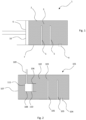
Fig. 1 shows a schematic cross-sectional view of a fluid-storage tank according to a first embodiment the present invention; -
Fig. 2 shows a schematic cross-sectional view of a fluid-storage tank according to a second embodiment of the present invention; -
Fig. 3 shows a schematic cross-sectional view of a fluid-storage tank according to a third embodiment of the present invention; and -
Fig. 4 shows a schematic cross-sectional view of a fluid-storage tank according to a fourth embodiment of the present invention. -
Fig. 1 shows a fluid-storage tank 1. In this embodiment and in the other embodiments of this disclosure, the fluid-storage tank may be a fuel-storage tank. The fluid-storage tank may be a liquid storage tank. - As shown, the fluid-
storage tank 1 comprises afluid storage volume 2 for storingfluid 3, for example fuel. In the Figures, thefluid 3 is shown as substantially filling thefluid storage volume 2, but this is not essential. The fluid-storage tank 1 comprises a fluid outlet 4 fluidly coupled to thefluid storage volume 2 for removing fluid 3 from thetank 1. -
Baffles 5 may be provided within thetank 1. These are also not essential but may be desirable as an additional measure to reduce slosh in addition to the measures described below and may also be used as a back-up slosh reduction system. - As shown, the fluid-
storage tank 1 includes a fluidstorage volume adjuster 10 for adjustably varying thefluid storage volume 2. In the embodiment ofFig. 1 , the fluidstorage volume adjuster 10 comprises apiston 6. Thepiston 6 partially defines thefluid storage volume 2, the remainder of thefluid storage volume 2 being defined by theinternal walls 7 of thetank 1. Thepiston 6 is moveable so as to adjust (e.g. increase or decrease) the fluid-storage volume 2. Asfluid 3 flows out of the fluid outlet 4, thepiston 6 may be configured to move so as to compensate for the removed volume offluid 3 by correspondingly reducing the fluid storage volume 2 (for example, such that the fluid occupies substantially the entirety of the fluid storage volume such there is no void space within the fluid storage volume available for the fluid to slosh within). Thus, the fluidstorage volume adjuster 10 is configured to vary or adjust thefluid storage volume 2 according to the volume of fluid within thetank 1, e.g. according to a change in the volume of thefluid 3. Thepiston 6 may be coupled to any suitable means for driving thepiston 6, for example a pneumatic or hydraulic pump or to a motor as will be readily understood by a person skilled in the art. Alternatively, in some embodiments the piston may move automatically by suction when fluid within thetank 1 is pumped out. - In this embodiment, and in the other embodiments of the invention disclosed herein, the fluid
storage volume adjuster 10 may dynamically vary thefluid storage volume 2. For example, a controller (not shown) may be provided to actively control the fluidstorage volume adjuster 10. Alternatively, the fluidstorage volume adjuster 10 may passively but dynamically vary thefluid storage volume 2. For example, thepiston 6 may be driven by a pressure or by a bias, such as a spring, which causes thepiston 6 to move so as to reduce the availablefluid storage volume 2 in response to a reduction of the volume offluid 3 within thetank 1 caused byfluid 3 flowing out of the fluid outlet 4. - In some embodiments, the fluid
storage volume adjuster 10 may be configured to adjustably vary thefluid storage volume 2 according to a pressure or temperature, for example an internal pressure or temperature of the tank 1 (for example, offluid 3 within the tank 1), according to the volume or mass offluid 3 within thetank 1, or according to the volume or flow-rate offluid 3 flowing through fluid outlet 4. By compensating for the changing volume of thefluid 3, the slosh performance is improved as the available space for thefluid 3 to slosh within thetank 1 is reduced and so the centre of gravity (for example an instantaneous centre of gravity) oftank 1 is more consistent, or at least more readily determined. - Turning now to
Fig. 2 , a second embodiment of the present invention is shown. Features of this second embodiment which correspond to features of the first embodiment are provided with a corresponding reference number but increased by 100. - Like the first embodiment, the second embodiment also comprises a fluid-
storage tank 101. The fluid-storage tank 101 comprises afluid storage volume 102 for storingfluid 103 therein, for example fuel. In the Figures, the fluid 103 is shown as substantially filling thefluid storage volume 102, but this is not essential to the invention. The fluid-storage tank 101 comprises afluid outlet 104 fluidly coupled to thefluid storage volume 102 for removing fluid 103 from thetank 101. -
Baffles 5 may be provided within thetank 101. These are also not essential but may be desirable as an additional measure to reduce slosh in addition to the measures described below. - A fluid
storage volume adjuster 110 for adjustably varying thefluid storage volume 102 is provided. In the embodiment ofFig. 2 , the fluid storage volume adjuster comprises an adjustable volume-occupier 111 having an adjustable volume. The volume-occupier 111 is arranged within thetank 101 so as to occupy a variable portion of the internalfluid storage volume 102. In the second embodiment, the adjustable volume-occupier 111 comprises apiston 106 which partially defines thefluid storage volume 102. The fluidstorage volume adjuster 110 is arranged within thetank 101, i.e. within a volume defined by theinternal walls 107 of thetank 101. The fluidstorage volume adjuster 110 defines a surface of thefluid storage volume 102. Thepiston 106 is moveable within acylinder 108 also arranged within thetank 101. Thecylinder 108 is fluidly coupled to ahydraulic supply 109 such that thepiston 106 is drivable so as to adjustably vary thefluid storage volume 102, for example asfluid 103 exits thefluid outlet 104. In this embodiment, and in the other embodiments of the invention disclosed herein, the fluidstorage volume adjuster 110 may not be configured to adjustably vary thefluid storage volume 102 according to only the volume of fluid leaving thetank 101 but it may additionally or alternatively also may be configured to adjustably vary thefluid storage volume 102 according to any other suitable operating condition of the tank, for example according to a temperature, for example according to a temperature within thetank 101, such as according to the temperature of the fluid 102 within thefluid storage volume 102. - As will be appreciated, by moving the
piston 106, the volume of the adjustable volume-occupier 111 itself is adjustable such that the availablefluid storage volume 102 within thetank 101 may be adjustably varied. - Turning now to
Fig. 3 , a third embodiment of the present invention is shown. Features of this third embodiment which correspond to features of the first embodiment are provided with a corresponding reference number but increased by 200. - Like the first and second embodiments, the third embodiment comprises a fluid-
storage tank 201. The fluid-storage tank 201 comprises, or defines, afluid storage volume 202 for storingfluid 203 therein, for example a fluid such as fuel. In the Figures, the fluid 203 is shown as substantially filling thefluid storage volume 202, but this is not essential to the invention. The fluid-storage tank 201 comprises afluid outlet 204 fluidly coupled to thefluid storage volume 202 for removing fluid 203 from thetank 201. -
Baffles 205 may be provided within thetank 201. These are also not essential but may be desirable as an additional measure to reduce slosh in addition to the measures described below - Although
several baffles 205 are shown, any suitable number ofbaffles 205 may be provided, including a single baffle. Where two ormore baffles 205 are provided, a pair ofbaffles 205 may together define aninter-baffle space 212 therebetween, for example wherein thebaffles 205 of the pair of baffles are spaced apart and opposed to each other, as shown in the Figures. - A fluid
storage volume adjuster 210 for adjustably varying thefluid storage volume 202 is provided. In the embodiment ofFig. 3 , the fluidstorage volume adjuster 210 comprises an adjustable volume-occupier 211 having an adjustable volume. The volume-occupier 211 is arranged within thetank 201 so as to occupy a variable portion of thefluid storage volume 202. In the third embodiment, the volume-occupier 211 comprises aninflatable bladder 213. Theinflatable bladder 203 has abladder fluid inlet 214 in fluid communication with theinflatable bladder 213 for inflating and/or deflating theinflatable bladder 213 with fluid. The inflatable bladder may be inflated with a liquid or a gas such as air. Theinflatable bladder 213 may in some embodiments be elastically inflatable or it may in other embodiments inflate substantially without elastic deformation of its surface. Theinflatable bladder 213 may for example comprise nitrile rubber, a fluroelastomer, ethylene propylene diene monomer, polyurethane, or butyl rubber. - In the third embodiment, the
inflatable bladder 213 may be toroidal in shape in that it may comprise an aperture passing entirely through theinflatable bladder 213, for example through opposing surfaces of theinflatable bladder 213. Thetank fluid outlet 204 may comprise a pipe which may be received within, and may in some embodiments pass through, the aperture. - The
inflatable bladder 213 is configured to correspond to at least a portion of the internal shape of thetank 201 defined by theinternal walls 207 of thetank 201. Theinflatable bladder 213 itself may be shaped so as to correspond to the shape of at least oneinternal wall 207 of thetank 201 when inflated, or theinflatable bladder 213 may for example be elastically deformable such that, when inflated, it conforms to the shape of at least oneinternal wall 207 of thetank 201. - In this embodiment, the
inflatable bladder 213 is configured such that, in an inflated configuration thereof, theinflatable bladder 213 at least partially occupies a space defined at least in part by abaffle 205. Specifically, theinflatable bladder 213 at least partially occupies theinter-baffle space 212 of each pair ofbaffles 205. Embodiments wherein not all of the inter-baffle spaces 211 are at least partially occupied by theinflatable bladder 213 but wherein theinflatable bladder 213 at least partially occupies only a subset of the total number of inter-baffles spaces 211 are also envisaged. Theinflatable bladder 213 also at least partially occupies a space defined between one of theouter baffles 205 and aninternal wall 207 of thetank 201. As theinflatable bladder 213 inflates, it conforms to a surface of thebaffles 205 and may expand along them such that a portion or length of thebaffles 205 are encompassed by theinflatable bladder 213 as it inflates. - While in the embodiment shown, the adjustable volume-occupier 211 comprises a single
inflatable bladder 213, other embodiments are envisaged in which the adjustable volume-occupier 211 comprises a plurality ofinflatable bladders 213 wherein the plurality ofinflatable bladders 213 is configured such that, in an inflated configuration thereof, eachinflatable bladder 213 at least partially occupies a space defined at least in part by at least onebaffle 205 of the plurality ofbaffles 205. In some embodiments, eachinflatable bladder 213 may be provided within, or may be configured to extend within, a respectiveinter-baffle space 212. - The
bladder fluid inlet 214 may be in fluid communication with any suitable fluid source and, in the embodiment ofFig. 3 , a pump (not shown) supplies fluid to thebladder fluid inlet 214 for inflating theinflatable bladder 213. In other embodiments, thebladder fluid inlet 214 may instead be in fluid communication with a source of bleed air for example engine bleed air, for example from an engine of a vehicle comprising thetank 201. - Turning now to
Fig. 4 , an alternative or additional means for supplying theinflatable bladder 313 with fluid is shown in a fourth embodiment of the present invention. Features of this fourth embodiment which correspond to features of the first embodiment are provided with a corresponding reference number but increased by 300. - The fourth embodiment of
Fig. 4 is the same as the third embodiment ofFig. 3 except that theinflatable bladder 313 comprises an additional or alternative bladder fluid inlet 315 (but of course a separate inlet is not essential andinlet 314 may be combined withinlet 315 to form a common inlet). Thebladder fluid inlet 315 is in fluid communication with aram air intake 316, for example aram air intake 316 of a vehicle (such as an aircraft) comprising thetank 301. As such, theram air intake 316 is configured to receiveram air flow 317. Theram air intake 316 may comprise a valve assembly for controlling the flow of ram air to theinflatable bladder 313 for inflating theinflatable bladder 313. The valve assembly in some embodiments may comprise a uni-directional valve or bi-directional valve, although in the embodiment shown the valve assembly comprises apivotable flap 318 arranged along a ramair flow path 319 passing through theram air intake 316. - It should also be noted that in each of the embodiments of
Fig. 3 and 4 discussed above, thetank inflatable bladder fluid bladder fluid inlet inflatable bladder - In various embodiments, a controller may be provided which may be configured to adjustably vary the fluid
storage volume adjuster fluid storage volume tank adjustable volume occupier 111, 211, 311, for example according to an operating condition of thetank - This specification also provides a vehicle comprising the fluid storage tank described herein. The vehicle may for example be an aircraft, a ground vehicle such as a lorry, or a ship or other vessel (such as a submarine). In some embodiments the fluid storage tank comprises the fuel tank of the vehicle. In some embodiments, the vehicle is a tanker and the fluid storage tank is a tank of the tanker.
- It is envisaged that the person skilled in the art may make various changes to the embodiments specifically described above without departing from the scope of the invention.
Claims (15)
- A fluid-storage tank comprising:a fluid storage volume for storing fluid therein; anda fluid storage volume adjuster configured to adjustably vary the fluid storage volume of the fluid-storage tank according to an operating condition of the fluid-storage tank.
- The fluid-storage tank according to claim 1, wherein the fluid storage volume adjuster comprises an adjustable volume-occupier, wherein the adjustable volume-occupier has an adjustable volume so as to adjustably vary the fluid storage volume within the fluid-storage tank.
- The fluid-storage tank according to claim 2, wherein the adjustable volume-occupier comprises an inflatable bladder.
- The fluid-storage tank according to claim 3, wherein the inflatable bladder is configured to correspond to, or conform to, at least one internal wall of the fluid-storage tank when the inflatable bladder is in an inflated configuration thereof.
- The fluid-storage tank according to any one of the preceding claims, wherein the fluid-storage tank comprises at least one baffle arranged within the fluid storage volume for reducing fluid slosh within the fluid-storage tank.
- The fluid-storage tank according to claim 5 when dependent on claim 3 or 4, wherein the inflatable bladder is configured such that, in an inflated configuration thereof, the inflatable bladder at least partially occupies a space defined at least in part by the at least one baffle.
- The fluid-storage tank according to claim 6, wherein the inflatable bladder is configured such that, in an inflated configuration thereof, the inflatable bladder at least partially occupies a space defined at least in part by the at least one baffle and an internal wall of the fluid-storage tank defining the fluid storage volume.
- The fluid-storage tank according to any preceding claim, wherein the adjustable volume-occupier comprises a plurality of inflatable bladders wherein each of the plurality of inflatable bladders is configured such that, in an inflated configuration thereof, each inflatable bladder at least partially occupies a space defined at least in part by at least one baffle of the plurality of baffles.
- The fluid-storage tank according to any preceding claim, wherein the fluid-storage tank comprises a plurality of baffles arranged within the fluid storage volume for reducing fluid slosh within the fluid-storage tank, the plurality of baffles defining at least one pair of opposed baffles, each pair of opposed baffles defining a respective inter-baffle space.
- The fluid-storage tank according to claim 9 when dependent on claim 3, wherein the inflatable bladder is configured such that, in an inflated configuration thereof, the inflatable bladder at least partially occupies at least one inter-baffle space.
- The fluid-storage tank according to claim 9 when dependent on claim 8, wherein the plurality of inflatable bladders is configured such that, in an inflated configuration thereof, each bladder of the plurality of inflatable bladders at least partially occupies at least one respective inter-baffle space.
- The fluid-storage tank according to any preceding claim, comprising a controller configured to adjustably vary the fluid storage volume adjuster according to an operating condition of the tank.
- A vehicle comprising the fluid-storage tank of any preceding claim.
- A vehicle comprising the fluid-storage tank according to any one of Claims 3 to 13, wherein the inflatable bladder comprises a fluid inlet for inflating the inflatable bladder and wherein the fluid inlet is configured to be in fluid communication with a bleed-air source or with a ram-air intake of the vehicle.
- A method of adjustably varying the fluid storage volume of a fluid-storage tank, the method comprising:
adjustably varying the fluid storage volume of the fluid-storage tank according to an operating condition of the fluid-storage tank.
Priority Applications (1)
| Application Number | Priority Date | Filing Date | Title |
|---|---|---|---|
| EP23275161.0A EP4556277A1 (en) | 2023-11-14 | 2023-11-14 | A fluid-storage tank |
Applications Claiming Priority (1)
| Application Number | Priority Date | Filing Date | Title |
|---|---|---|---|
| EP23275161.0A EP4556277A1 (en) | 2023-11-14 | 2023-11-14 | A fluid-storage tank |
Publications (1)
| Publication Number | Publication Date |
|---|---|
| EP4556277A1 true EP4556277A1 (en) | 2025-05-21 |
Family
ID=88833914
Family Applications (1)
| Application Number | Title | Priority Date | Filing Date |
|---|---|---|---|
| EP23275161.0A Pending EP4556277A1 (en) | 2023-11-14 | 2023-11-14 | A fluid-storage tank |
Country Status (1)
| Country | Link |
|---|---|
| EP (1) | EP4556277A1 (en) |
Citations (3)
| Publication number | Priority date | Publication date | Assignee | Title |
|---|---|---|---|---|
| KR20020051782A (en) * | 2000-12-23 | 2002-06-29 | 이계안 | A fuel supply system for a car |
| US20200354143A1 (en) * | 2019-05-07 | 2020-11-12 | Scott Houle | Inflatable bladder system for bulk liquid transport |
| US11370297B2 (en) * | 2017-11-27 | 2022-06-28 | Floteks Plastik Sanayi Ve Ticaret Anonim Sirketi | One-piece combined plastic urea and fuel tank with baffles, rotomoulded with a special mold heating system |
-
2023
- 2023-11-14 EP EP23275161.0A patent/EP4556277A1/en active Pending
Patent Citations (3)
| Publication number | Priority date | Publication date | Assignee | Title |
|---|---|---|---|---|
| KR20020051782A (en) * | 2000-12-23 | 2002-06-29 | 이계안 | A fuel supply system for a car |
| US11370297B2 (en) * | 2017-11-27 | 2022-06-28 | Floteks Plastik Sanayi Ve Ticaret Anonim Sirketi | One-piece combined plastic urea and fuel tank with baffles, rotomoulded with a special mold heating system |
| US20200354143A1 (en) * | 2019-05-07 | 2020-11-12 | Scott Houle | Inflatable bladder system for bulk liquid transport |
Similar Documents
| Publication | Publication Date | Title |
|---|---|---|
| EP2135805B1 (en) | Ambient pressure-responsive variable volume fuel tank | |
| CN102985316B (en) | The control of multihull boats and ships | |
| CN101835651B (en) | Crash attenuation system for aircraft | |
| CN102267540B (en) | Automatic inflatable boat | |
| US8075002B1 (en) | Semi-active suspension system | |
| EP2902224B2 (en) | Suspension system and method of control | |
| CN113382921A (en) | Suspension system with pitch and roll adjustment | |
| JPH089288B2 (en) | Hydraulic-pneumatic suspension | |
| US2711868A (en) | Flotation device for aircraft | |
| US4029036A (en) | Stabilization and motion alleviation of air cushion borne vehicles | |
| EP4556277A1 (en) | A fluid-storage tank | |
| WO2010104379A2 (en) | Inflatable element for use interiorly in a fuel tank of a vehicle, vessel or aeroplane | |
| US1974171A (en) | Pneumatic suspension means | |
| US20200354143A1 (en) | Inflatable bladder system for bulk liquid transport | |
| GB2635663A (en) | A fluid-storage tank | |
| US20240253415A1 (en) | Bellows accumulator | |
| US8864068B1 (en) | Multi-chamber landing system for an air vehicle | |
| EP4691812A1 (en) | Integrated adjustment system and vehicle | |
| EP4691813A1 (en) | Integrated adjustment system and vehicle | |
| CN115320734B (en) | Flow guiding device and vehicle with same | |
| EP4691811A1 (en) | Integrated adjusting system and vehicle | |
| US3428012A (en) | Trim attachment for power boats | |
| NO347054B1 (en) | A flap damper device for damping of motions of a vessel flap relative to a hull of an air supported vessel, and a vessel with such a flap damper device | |
| JPH02120111A (en) | Pressure supplying device for vehicle | |
| JPS5811356B2 (en) | Drainage buoyancy generator for semi-submerged ships |
Legal Events
| Date | Code | Title | Description |
|---|---|---|---|
| PUAI | Public reference made under article 153(3) epc to a published international application that has entered the european phase |
Free format text: ORIGINAL CODE: 0009012 |
|
| STAA | Information on the status of an ep patent application or granted ep patent |
Free format text: STATUS: THE APPLICATION HAS BEEN PUBLISHED |
|
| AK | Designated contracting states |
Kind code of ref document: A1 Designated state(s): AL AT BE BG CH CY CZ DE DK EE ES FI FR GB GR HR HU IE IS IT LI LT LU LV MC ME MK MT NL NO PL PT RO RS SE SI SK SM TR |