EP4556083A1 - Fire-extinguishing material and fire-extinguishing material package - Google Patents
Fire-extinguishing material and fire-extinguishing material package Download PDFInfo
- Publication number
- EP4556083A1 EP4556083A1 EP23839341.7A EP23839341A EP4556083A1 EP 4556083 A1 EP4556083 A1 EP 4556083A1 EP 23839341 A EP23839341 A EP 23839341A EP 4556083 A1 EP4556083 A1 EP 4556083A1
- Authority
- EP
- European Patent Office
- Prior art keywords
- fire
- extinguishing
- extinguishing agent
- agent layer
- extinguishing material
- Prior art date
- Legal status (The legal status is an assumption and is not a legal conclusion. Google has not performed a legal analysis and makes no representation as to the accuracy of the status listed.)
- Pending
Links
Images
Classifications
-
- A—HUMAN NECESSITIES
- A62—LIFE-SAVING; FIRE-FIGHTING
- A62D—CHEMICAL MEANS FOR EXTINGUISHING FIRES OR FOR COMBATING OR PROTECTING AGAINST HARMFUL CHEMICAL AGENTS; CHEMICAL MATERIALS FOR USE IN BREATHING APPARATUS
- A62D1/00—Fire-extinguishing compositions; Use of chemical substances in extinguishing fires
- A62D1/0007—Solid extinguishing substances
-
- C—CHEMISTRY; METALLURGY
- C09—DYES; PAINTS; POLISHES; NATURAL RESINS; ADHESIVES; COMPOSITIONS NOT OTHERWISE PROVIDED FOR; APPLICATIONS OF MATERIALS NOT OTHERWISE PROVIDED FOR
- C09D—COATING COMPOSITIONS, e.g. PAINTS, VARNISHES OR LACQUERS; FILLING PASTES; CHEMICAL PAINT OR INK REMOVERS; INKS; CORRECTING FLUIDS; WOODSTAINS; PASTES OR SOLIDS FOR COLOURING OR PRINTING; USE OF MATERIALS THEREFOR
- C09D5/00—Coating compositions, e.g. paints, varnishes or lacquers, characterised by their physical nature or the effects produced; Filling pastes
-
- A—HUMAN NECESSITIES
- A62—LIFE-SAVING; FIRE-FIGHTING
- A62C—FIRE-FIGHTING
- A62C3/00—Fire prevention, containment or extinguishing specially adapted for particular objects or places
- A62C3/16—Fire prevention, containment or extinguishing specially adapted for particular objects or places in electrical installations, e.g. cableways
-
- A—HUMAN NECESSITIES
- A62—LIFE-SAVING; FIRE-FIGHTING
- A62C—FIRE-FIGHTING
- A62C35/00—Permanently-installed equipment
-
- A—HUMAN NECESSITIES
- A62—LIFE-SAVING; FIRE-FIGHTING
- A62D—CHEMICAL MEANS FOR EXTINGUISHING FIRES OR FOR COMBATING OR PROTECTING AGAINST HARMFUL CHEMICAL AGENTS; CHEMICAL MATERIALS FOR USE IN BREATHING APPARATUS
- A62D1/00—Fire-extinguishing compositions; Use of chemical substances in extinguishing fires
- A62D1/0064—Gels; Film-forming compositions
-
- C—CHEMISTRY; METALLURGY
- C09—DYES; PAINTS; POLISHES; NATURAL RESINS; ADHESIVES; COMPOSITIONS NOT OTHERWISE PROVIDED FOR; APPLICATIONS OF MATERIALS NOT OTHERWISE PROVIDED FOR
- C09D—COATING COMPOSITIONS, e.g. PAINTS, VARNISHES OR LACQUERS; FILLING PASTES; CHEMICAL PAINT OR INK REMOVERS; INKS; CORRECTING FLUIDS; WOODSTAINS; PASTES OR SOLIDS FOR COLOURING OR PRINTING; USE OF MATERIALS THEREFOR
- C09D129/00—Coating compositions based on homopolymers or copolymers of compounds having one or more unsaturated aliphatic radicals, each having only one carbon-to-carbon double bond, and at least one being terminated by an alcohol, ether, aldehydo, ketonic, acetal, or ketal radical; Coating compositions based on hydrolysed polymers of esters of unsaturated alcohols with saturated carboxylic acids; Coating compositions based on derivatives of such polymers
- C09D129/14—Homopolymers or copolymers of acetals or ketals obtained by polymerisation of unsaturated acetals or ketals or by after-treatment of polymers of unsaturated alcohols
-
- C—CHEMISTRY; METALLURGY
- C09—DYES; PAINTS; POLISHES; NATURAL RESINS; ADHESIVES; COMPOSITIONS NOT OTHERWISE PROVIDED FOR; APPLICATIONS OF MATERIALS NOT OTHERWISE PROVIDED FOR
- C09D—COATING COMPOSITIONS, e.g. PAINTS, VARNISHES OR LACQUERS; FILLING PASTES; CHEMICAL PAINT OR INK REMOVERS; INKS; CORRECTING FLUIDS; WOODSTAINS; PASTES OR SOLIDS FOR COLOURING OR PRINTING; USE OF MATERIALS THEREFOR
- C09D7/00—Features of coating compositions, not provided for in group C09D5/00; Processes for incorporating ingredients in coating compositions
- C09D7/40—Additives
- C09D7/60—Additives non-macromolecular
- C09D7/61—Additives non-macromolecular inorganic
-
- C—CHEMISTRY; METALLURGY
- C09—DYES; PAINTS; POLISHES; NATURAL RESINS; ADHESIVES; COMPOSITIONS NOT OTHERWISE PROVIDED FOR; APPLICATIONS OF MATERIALS NOT OTHERWISE PROVIDED FOR
- C09D—COATING COMPOSITIONS, e.g. PAINTS, VARNISHES OR LACQUERS; FILLING PASTES; CHEMICAL PAINT OR INK REMOVERS; INKS; CORRECTING FLUIDS; WOODSTAINS; PASTES OR SOLIDS FOR COLOURING OR PRINTING; USE OF MATERIALS THEREFOR
- C09D7/00—Features of coating compositions, not provided for in group C09D5/00; Processes for incorporating ingredients in coating compositions
- C09D7/40—Additives
- C09D7/60—Additives non-macromolecular
- C09D7/63—Additives non-macromolecular organic
-
- C—CHEMISTRY; METALLURGY
- C09—DYES; PAINTS; POLISHES; NATURAL RESINS; ADHESIVES; COMPOSITIONS NOT OTHERWISE PROVIDED FOR; APPLICATIONS OF MATERIALS NOT OTHERWISE PROVIDED FOR
- C09D—COATING COMPOSITIONS, e.g. PAINTS, VARNISHES OR LACQUERS; FILLING PASTES; CHEMICAL PAINT OR INK REMOVERS; INKS; CORRECTING FLUIDS; WOODSTAINS; PASTES OR SOLIDS FOR COLOURING OR PRINTING; USE OF MATERIALS THEREFOR
- C09D7/00—Features of coating compositions, not provided for in group C09D5/00; Processes for incorporating ingredients in coating compositions
- C09D7/40—Additives
- C09D7/66—Additives characterised by particle size
- C09D7/69—Particle size larger than 1000 nm
-
- C—CHEMISTRY; METALLURGY
- C09—DYES; PAINTS; POLISHES; NATURAL RESINS; ADHESIVES; COMPOSITIONS NOT OTHERWISE PROVIDED FOR; APPLICATIONS OF MATERIALS NOT OTHERWISE PROVIDED FOR
- C09K—MATERIALS FOR MISCELLANEOUS APPLICATIONS, NOT PROVIDED FOR ELSEWHERE
- C09K21/00—Fireproofing materials
- C09K21/02—Inorganic materials
Definitions
- the present invention relates to a fire-extinguishing material and a fire-extinguishing material package.
- PTL 1 proposes using a fire-extinguishing liquid and a fire-extinguishing apparatus.
- PTL 2 proposes an automatic fire-extinguishing device to be dropped from a helicopter.
- PTL 3 proposes an aerosol fire-extinguishing device.
- PTLs 1 to 3 all propose a method of dealing with fire after a certain time has elapsed.
- a fire-extinguishing material containing the fire-extinguishing agent component (an organic salt and an inorganic salt) disclosed in the prior art is previously placed in the vicinity of an object at risk of firing ignition. It is expected that this allows the fire-extinguishing material to be used for completing fire-extinguishing before a human being senses ignition of the object.
- a fire-extinguishing agent component can be mixed with a binder and the like to be processed into a suitable shape so that a solid fire-extinguishing material meeting the above-described purpose can be obtained.
- a fire-extinguishing material has a room for further improvement from the viewpoint of stability of properties of the fire-extinguishing agent component.
- the present invention has been made in view of the above-described circumstances, and has as its purpose to provide a fire-extinguishing material in which a fire-extinguishing agent has excellent stability of properties.
- the present invention has as its purpose to provide a fire-extinguishing material package in which the fire-extinguishing material is enclosed.
- An aspect of the present invention provides a fire-extinguishing material including a fire-extinguishing agent layer containing a fire-extinguishing agent and a binder resin, in which the fire-extinguishing agent contains at least one of a deliquescent organic salt and a deliquescent inorganic salt, and a surface of the fire-extinguishing agent layer has an arithmetic mean roughness Ra of 1.3 ⁇ m or less.
- the fire-extinguishing agent has excellent stability of properties, so that initial fire-extinguishing can be adequately performed even after a time has elapsed.
- the inventors estimate that this is because deterioration of the fire-extinguishing agent is suppressed by suppressing roughness of the surface of the fire-extinguishing agent layer to reduce the contact area between the fire-extinguishing agent and air.
- a fire-extinguishing material including a fire-extinguishing agent layer containing a fire-extinguishing agent and a binder resin, in which the fire-extinguishing agent contains at least one of a deliquescent organic salt and a deliquescent inorganic salt, and a surface of the fire-extinguishing agent layer has a 60-degree glossiness of 2.7 or more.
- the fire-extinguishing agent has excellent stability of properties, so that initial fire-extinguishing can be adequately performed even after a time has elapsed.
- the inventors estimate that this is because deterioration of the fire-extinguishing agent is suppressed by increasing glossiness of the surface of the fire-extinguishing agent layer (i.e., suppressing roughness) to reduce the contact area between the fire-extinguishing agent and the air.
- the fire-extinguishing agent layer may contain 70 to 97 mass% of the fire-extinguishing agent with respect to the total amount of the fire-extinguishing agent and the binder resin.
- the binder resin may contain a polyvinyl acetal-based resin.
- the fire-extinguishing agent may contain other components except for the above-described salt.
- An example of other components is an oxidant for improving the reactivity of the salt.
- Specific examples include potassium chlorate, sodium chlorate, strontium chlorate, ammonium chlorate, magnesium chlorate, potassium nitrate, sodium nitrate, strontium nitrate, ammonium perchlorate, potassium perchlorate, basic copper nitrate, copper oxide (I), copper oxide (II), iron oxide (II), iron oxide (III), and molybdenum trioxide.
- potassium chlorate is preferably used.
- thermoplastic resin examples include polyolefin-based resins such as a polypropylene-based resin, a polyethylene-based resin, a poly(1-)butene-based resin, and a polypentene-based resin, a polystyrene-based resin, an acrylonitrile-butadiene-styrene-based resin, a methyl methacrylate-butadiene-styrene resin, an ethylene-vinyl acetate resin, an ethylene-propylene resin, a polycarbonate-based resin, a polyphenylene ether-based resin, an acrylic-based resin, a polyamide-based resin, a polyvinyl chloride-based resin, polyvinyl alcohol (PVA), and a polyvinyl acetal-based resin.
- polyolefin-based resins such as a polypropylene-based resin, a polyethylene-based resin, a poly(1-)butene-based resin, and a polypen
- the thickness of the fire-extinguishing agent layer can be 80 to 600 ⁇ m and may be 150 to 300 ⁇ m.
- the thickness is the above-described lower limit value or more, fire-extinguishing performance can be easily exerted.
- the thickness is the above-described upper limit value or less, a coating film is easily formed, and bending resistance is good.
- the area of the main surface of the fire-extinguishing agent layer is not particularly limited because it is adjusted depending on its use, but is set so as to be sufficiently wide relative to the area of the side surface.
- the area of the main surface can be, for example, 10 to 624 cm 2 .
- the lower limit of Ra is not particularly limited, but can be 0.1 ⁇ m or more from the viewpoint of easiness of film transportation.
- the arithmetic mean roughness Ra is a value measured in accordance with JIS B 0601 and JIS B 0031.
- Ra is measured for the surface of the fire-extinguishing agent layer (i.e., the main surface of the fire-extinguishing agent layer or a surface perpendicular to the lamination direction of the fire-extinguishing agent layer), using a device such as a contact-type surface roughness meter (manufactured by Mitutoyo, Model No.: SJ-210).
- the Ra of the surface of the fire-extinguishing agent layer is measured at five different points, and an average thereof is determined as the Ra of the fire-extinguishing agent layer.
- the 60-degree glossiness in the surface of the fire-extinguishing agent layer may be 2.7 or more, may be 2.8 or more, may be 2.9 or more, may be 2.95 or more, and may be 3.0 or more.
- the 60-degree glossiness being 2.7 or more means that the roughness of the surface of the fire-extinguishing agent layer is suppressed so that the contact area between the fire-extinguishing agent and the air is reduced. Accordingly, deterioration of the fire-extinguishing agent layer mainly attributable to deliquescence of the fire-extinguishing agent can be suppressed, i.e., initial fire-extinguishing can be adequately performed even after time has elapsed.
- the upper limit of the 60-degree glossiness is not particularly limited, but can be 30 or less from the viewpoint of easiness of film transportation.
- the 60-degree glossiness is a value measured in accordance with JIS Z 8741.
- the glossiness is measured for the surface of the fire-extinguishing agent layer, using a glossiness meter (product name: RHOPOINT IQ, manufactured by RHOPOINTS Co.).
- the glossiness is measured at three different points on the surface of the fire-extinguishing agent layer, and an average thereof is determined as the glossiness of the fire-extinguishing agent layer.
- the surface of the fire-extinguishing agent layer refers to the main surface of the fire-extinguishing agent layer (or a surface perpendicular to the lamination direction of the fire-extinguishing agent layer).
- the deliquescence of the fire-extinguishing agent gradually proceeds from a surface exposed to the air of the fire-extinguishing agent layer. This deliquescence proceeds more easily from the main surface of the fire-extinguishing agent layer, which has a large contact surface with the air, than the side surface of the fire-extinguishing agent layer, which has a small contact surface with the air.
- the deliquescence of the fire-extinguishing agent can be suppressed to obtain a fire-extinguishing material having excellent stability of properties.
- the fire-extinguishing material includes only a fire-extinguishing agent layer, and the fire-extinguishing agent layer has a first surface (front surface) and a second surface (back surface), the first surface and the second surface have an Ra of 1.3 ⁇ m or less or a 60-degree glossiness of 2.7 or more.
- the fire-extinguishing material includes a resin substrate and a fire-extinguishing agent layer disposed on the resin substrate
- at least a surface opposite the resin substrate of the fire-extinguishing agent layer has an Ra of 1.3 ⁇ m or less or a 60-degree glossiness of 2.7 or more.
- a surface on the resin substrate side of the fire-extinguishing agent layer is protected by the resin substrate (is not a surface exposed to the air), it is preferable that the surface on the resin substrate side of the fire-extinguishing agent layer also has an Ra of 1.3 ⁇ m or less or a 60-degree glossiness of 2.7 or more.
- the resin constituting the resin substrate examples include polyolefin (such as LLDPE, PP, COP, or CPP), polyester (such as PET), fluororesins (such as PTFE, ETFE, EFEP, PFA, FEP, and PCTFE), PVC, PVA, acrylic resins, epoxy resins, polyamide, and polyimide.
- polyolefin such as LLDPE, PP, COP, or CPP
- polyester such as PET
- fluororesins such as PTFE, ETFE, EFEP, PFA, FEP, and PCTFE
- PVC polyvinylene
- acrylic resins epoxy resins
- polyamide polyamide
- polyimide polyimide
- a vapor deposition layer (an alumina vapor deposition layer or a silica vapor deposition layer) having water vapor barrier properties may be disposed to the resin substrate.
- the vapor deposition layer may be disposed to either one surface or both surfaces of the resin substrate.
- the thickness of the resin substrate can be appropriately adjusted depending on the amount of heat at possible ignition, impact, an available installation space, and the like. For example, when the substrate is thick, the strength and stiffness as a fire-extinguishing material are easily obtained, and handling is facilitated. When the substrate is thin, the fire-extinguishing material can be disposed in a narrow space, and initial fire-extinguishing properties improve because the substrate melts in a short time when heated by flame.
- the thickness of the resin substrate can be, for example, 4.5 to 100 ⁇ m and may be 12 to 50 ⁇ m.
- the resin substrate may be a laminate including a plurality of resin layers.
- the fire-extinguishing material can be formed using a composition for forming a fire-extinguishing agent layer.
- the composition for forming a fire-extinguishing agent layer contains a fire-extinguishing agent, a binder resin, and a liquid medium. An example of the method for producing a fire-extinguishing material will be described.
- the amounts of the fire-extinguishing agent and the binder resin are adjusted such that the amounts in the fire-extinguishing agent layer are the above-described desired amounts.
- the amount of the liquid medium is appropriately adjusted depending on the use method of the composition for forming a fire-extinguishing agent layer, but can be 30 to 70 mass% with respect to the total amount of the composition for forming a fire-extinguishing agent layer. It can be said that the composition for forming a fire-extinguishing agent layer that contains the liquid medium is a coating liquid for forming a fire-extinguishing agent layer.
- the fire-extinguishing agent layer may be peeled from the resin substrate to be used as the fire-extinguishing material.
- the resin substrate is preferably subjected to a release treatment.
- the coating can be performed by a wet coating method.
- the wet coating method include a gravure coating method, a comma coating method, a dip coating method, a curtain coat method, a spin coat method, a sponge roll method, and a die coat method.
- the method for producing a fire-extinguishing material may further include applying pressure on the fire-extinguishing agent layer. This further facilitates the reduction of Ra or the improvement of glossiness.
- the pressure application condition can be 0.2 MPa or more and may be 2.0 MPa or more.
- the upper limit of the pressure application condition can be 2.5 MPa or less from the viewpoint of flexibility of the coating film.
- the packaging bag can be formed by, for example, heat-sealing two resin films at four edges.
- the resin constituting the resin films include polyolefin (such as LLDPE, PP, COP, or CPP), polyester (such as PET), fluororesins (such as PTFE, ETFE, EFEP, PFA, FEP, and PCTFE), PVC, PVA, acrylic resins, epoxy resins, polyamide, and polyimide. These resins easily melt due to the heat of flame (generally, at about 700 to 900°C) to expose the enclosed fire-extinguishing material. Further, when these transparent materials are selected, an appearance test visual inspection and checking whether replacement is required are facilitated.
- the resin films may contain the above-described fire-extinguishing agent.
- the water vapor permeability (in accordance with JIS K 7129, under conditions of 40°C/90%RH) of the resin film is not particularly limited because it can be designed depending on the type of fire-extinguishing agent, but can be 10.0 g/(m 2 ⁇ day) or less and may be 1.0 g/ (m 2 ⁇ day) or less.
- a vapor deposition layer (an alumina vapor deposition layer or a silica vapor deposition layer) having water vapor barrier properties may be disposed to the resin film.
- the vapor deposition layer may be disposed to either one surface or both surfaces of the resin film.
- the fire-extinguishing material and the fire-extinguishing material package can be installed to or in the vicinity of an object at risk of ignition.
- the installation method include pasting, mounting, and packaging.
- the object at risk of ignition include building materials such as an electric wire, an electric switchboard, a distribution board, a control board, a rechargeable battery (such as a lithium ion battery), a wallpaper for building materials, and a ceiling material, and members such as a box for recovery of lithium ion batteries, a trash can, an automobile-related member, a wall outlet, and an outlet cover.
- a device having installed therein the fire-extinguishing material or the fire-extinguishing material package initial fire-extinguishing is automatically performed for ignition in the device. Therefore, it can be said that such a device is a device having an automatic fire-extinguishing function.
- Potassium chlorate (KClO 3 ) and tripotassium citrate were pulverized in an agate mortar to have an average particle size D50 of 12 ⁇ m or less.
- the tripotassium citrate is a deliquescent salt. This was prepared in an amount of 87 parts by mass, and added and mixed, together with 9 parts by mass of a polyvinyl butyral resin (manufactured by Dainichiseika Color & Chemicals Mfg.
- a metal flat plate was pressed against the fire-extinguishing agent layer of the fire-extinguishing material obtained in Example 1 under the condition of 0.4 MPa to prepare a fire-extinguishing material.
- a nylon mesh (aperture: 250 ⁇ m) was pressed against the fire-extinguishing agent layer of the fire-extinguishing material obtained in Example 1 under the condition of 2.0 MPa to prepare a fire-extinguishing material.
- a fire-extinguishing material was formed by applying the composition for forming a fire-extinguishing agent layer prepared in Example 1 on one surface of a polyethylene terephthalate (PET) substrate (product name: S10, manufactured by Toray Industries, Inc.) using a spray such that a fire-extinguishing agent layer after drying had a thickness of 150 ⁇ m, and drying the coat at 75°C for 7 minutes.
- PET polyethylene terephthalate
- the arithmetic mean roughness Ra of the surface (a surface opposite the PET substrate) of the fire-extinguishing agent layer of the fire-extinguishing material obtained in each Example was measured in accordance with JIS B 0601 and JIS B 0031 using a contact-type surface roughness meter (manufactured by Mitutoyo, Model No.: SJ-210).
- the Ra of the surface of the fire-extinguishing agent layer was measured at five different points, and an average thereof was determined as the Ra of the fire-extinguishing agent layer.
- the 60-degree glossiness of the surface (a surface opposite the PET substrate) of the fire-extinguishing agent layer of the fire-extinguishing material obtained in each Example was measured in accordance with JIS Z 8741 using a glossiness meter (product name: RHOPOINT IQ, manufactured by RHOPOINTS Co.). The glossiness was measured at three different points on the surface of the fire-extinguishing agent layer, and an average thereof is determined as the glossiness of the fire-extinguishing agent layer.
- Two barrier films (water vapor transmittance: 0.2 to 0.6 g/ (m 2 ⁇ day), in accordance with JIS K 7129, under conditions of 40°C/90%RH) each including a sealant layer (L-LDPE (linear low-density polyethylene) resin, thickness: 30 ⁇ m) and a substrate layer (PET (polyethylene terephthalate) resin having a silica vapor deposition layer, thickness: 12 ⁇ m) were prepared.
- L-LDPE linear low-density polyethylene
- PET polyethylene terephthalate
- the evaluation sample was left to stand and stored for 10 hours under the condition of 85°C/85%RH, and the total light transmittance change rate was calculated from the total light transmittances of the fire-extinguishing material before and after storing.
- the total light transmittance was measured using a BYK-Gardner Haze-Guard Plus haze meter (manufactured by BYK Co.).
- Total light transmittance change rate (%) (total light transmittance after storing - total light transmittance before storing)/total light transmittance before storing ⁇ 100
Landscapes
- Chemical & Material Sciences (AREA)
- Engineering & Computer Science (AREA)
- Organic Chemistry (AREA)
- Materials Engineering (AREA)
- Wood Science & Technology (AREA)
- Life Sciences & Earth Sciences (AREA)
- Business, Economics & Management (AREA)
- Emergency Management (AREA)
- General Chemical & Material Sciences (AREA)
- Chemical Kinetics & Catalysis (AREA)
- Inorganic Chemistry (AREA)
- Health & Medical Sciences (AREA)
- Public Health (AREA)
- Nanotechnology (AREA)
- Laminated Bodies (AREA)
Abstract
Description
- The present invention relates to a fire-extinguishing material and a fire-extinguishing material package.
- Regarding the problem of ignition and fire,
PTL 1 proposes using a fire-extinguishing liquid and a fire-extinguishing apparatus. PTL 2 proposes an automatic fire-extinguishing device to be dropped from a helicopter. PTL 3 proposes an aerosol fire-extinguishing device. -
- PTL 1:
JP H9-276440 A - PTL 2:
JP 2015-6302 A - PTL 3:
JP 2017-080023 A -
PTLs 1 to 3 all propose a method of dealing with fire after a certain time has elapsed. On the other hand, from the viewpoint of minimizing damage from fire, it is desirable to perform some sort of fire-extinguishing work at a stage soon after ignition, i.e., to perform initial fire-extinguishing. Therefore, for example, a method is conceivable in which a fire-extinguishing material containing the fire-extinguishing agent component (an organic salt and an inorganic salt) disclosed in the prior art is previously placed in the vicinity of an object at risk of firing ignition. It is expected that this allows the fire-extinguishing material to be used for completing fire-extinguishing before a human being senses ignition of the object. - Note that a fire-extinguishing agent component can be mixed with a binder and the like to be processed into a suitable shape so that a solid fire-extinguishing material meeting the above-described purpose can be obtained. However, such a fire-extinguishing material has a room for further improvement from the viewpoint of stability of properties of the fire-extinguishing agent component.
- The present invention has been made in view of the above-described circumstances, and has as its purpose to provide a fire-extinguishing material in which a fire-extinguishing agent has excellent stability of properties. In addition, the present invention has as its purpose to provide a fire-extinguishing material package in which the fire-extinguishing material is enclosed.
- An aspect of the present invention provides a fire-extinguishing material including a fire-extinguishing agent layer containing a fire-extinguishing agent and a binder resin, in which the fire-extinguishing agent contains at least one of a deliquescent organic salt and a deliquescent inorganic salt, and a surface of the fire-extinguishing agent layer has an arithmetic mean roughness Ra of 1.3 µm or less.
- In such a fire-extinguishing material, the fire-extinguishing agent has excellent stability of properties, so that initial fire-extinguishing can be adequately performed even after a time has elapsed. The inventors estimate that this is because deterioration of the fire-extinguishing agent is suppressed by suppressing roughness of the surface of the fire-extinguishing agent layer to reduce the contact area between the fire-extinguishing agent and air.
- Another aspect of the present invention provides a fire-extinguishing material including a fire-extinguishing agent layer containing a fire-extinguishing agent and a binder resin, in which the fire-extinguishing agent contains at least one of a deliquescent organic salt and a deliquescent inorganic salt, and a surface of the fire-extinguishing agent layer has a 60-degree glossiness of 2.7 or more.
- In such a fire-extinguishing material, the fire-extinguishing agent has excellent stability of properties, so that initial fire-extinguishing can be adequately performed even after a time has elapsed. The inventors estimate that this is because deterioration of the fire-extinguishing agent is suppressed by increasing glossiness of the surface of the fire-extinguishing agent layer (i.e., suppressing roughness) to reduce the contact area between the fire-extinguishing agent and the air.
- In a mode, the fire-extinguishing agent layer may contain 70 to 97 mass% of the fire-extinguishing agent with respect to the total amount of the fire-extinguishing agent and the binder resin.
- In a mode, the salt may contain a potassium salt.
- According to one mode, the salt may have an average particle size D50 of 1 to 100 µm.
- According to one mode, the binder resin may contain a polyvinyl acetal-based resin.
- According to one mode, the fire-extinguishing agent layer may have a thickness of 80 to 600 µm.
- According to one mode, the fire-extinguishing material may further include a resin substrate disposed with the fire-extinguishing agent layer.
- An aspect of the present invention provides a fire-extinguishing material package including the fire-extinguishing material and a packaging bag in which the fire-extinguishing material is to be enclosed.
- According to the present invention, there can be provided a fire-extinguishing material in which a fire-extinguishing agent has excellent stability of properties. Further, according to the present invention, there can be provided a fire-extinguishing material package in which the fire-extinguishing material is enclosed.
-
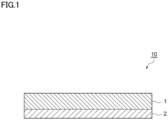
Fig. 1 is a schematic cross-sectional view of a fire-extinguishing material according to an embodiment. - Hereinafter, suitable embodiments of the present disclosure will be described in detail. However, the present disclosure is not limited to the following embodiments.
-
Fig. 1 is a schematic cross-sectional view of a fire-extinguishing material according to an embodiment. A fire-extinguishingmaterial 10 includes a fire-extinguishingagent layer 1 and aresin substrate 2 disposed with the fire-extinguishingagent layer 1. It can be said that the fire-extinguishingmaterial 10 includes theresin substrate 2 and the fire-extinguishing agent layer 1 disposed on theresin substrate 2. - From the viewpoint of disposing the fire-extinguishing material in a desired position, the fire-extinguishing material may further include an adhesive layer or a tackiness layer. The adhesive layer or the tackiness layer may be disposed either on the fire-extinguishing agent layer side or on the resin substrate side.
- The fire-extinguishing agent layer contains a fire-extinguishing agent and a binder resin.
- As the fire-extinguishing agent, one having so-called four elements (removal effect, cooling effect, suffocation effect, and negative catalytic effect) of fire-extinguishing can be appropriately used depending on a fire-extinguishing object. The fire-extinguishing agent contains at least one of a deliquescent organic salt and a deliquescent inorganic salt both generally having fire-extinguishing performance.
- Examples of the organic salt to function as a fire-extinguishing agent include a potassium salt, a sodium salt, and an ammonium salt. From the viewpoint of usability for the negative catalytic effect, a potassium salt can be suitably used as the organic salt. Examples of the organic potassium salt include carboxylic acid potassium salts such as potassium acetate, potassium citrate (tripotassium citrate), potassium tartrate, potassium lactate, potassium oxalate, and potassium maleate. Among these, potassium citrate can be used particularly from the viewpoint of reaction efficiency of the negative catalytic effect on combustion.
- Examples of the inorganic salt to function as a fire-extinguishing agent include a potassium salt and a sodium salt. From the viewpoint of usability for the negative catalytic effect, a potassium salt can be suitably used as the inorganic salt. Examples of the inorganic potassium salt include potassium tetraborate, potassium carbonate, potassium hydrogen carbonate, potassium dihydrogen phosphate, and dipotassium hydrogen phosphate. Among these, potassium hydrogen carbonate can be used particularly from the viewpoint of reaction efficiency of the negative catalytic effect of burning.
- The organic salts or the inorganic salts may be used individually or in combination of two or more.
- The salt may be granular. The average particle size D50 of the salt can be 1 to 100 µm and may be 3 to 40 µm. When the average particle size D50 is the above-described lower limit or more, the salt is easily dispersed in a coating liquid. When the average particle size D50 is the above-described upper limit or less, stability in a coating liquid tends to improve so that the smoothness of the coating film improves, and desired arithmetic mean roughness or glossiness in the surface of the fire-extinguishing agent layer is easily achieved. The average particle size D50 can be calculated by wet measurement using a laser diffractometry particle size distribution measuring device.
- The amount of the fire-extinguishing agent, with respect to the total amount of the fire-extinguishing agent and the binder resin (or the total amount of the fire-extinguishing agent layer), can be 70 to 97 mass% and may be 85 to 92 mass%. When the amount of the fire-extinguishing agent is the above-described upper limit or less, the deliquescence of the salt is easily suppressed, and a uniform fire-extinguishing material is easily formed. When the amount of the fire-extinguishing agent is the above-described lower limit or more, sufficient fire-extinguishing properties are easily maintained.
- The fire-extinguishing agent may contain other components except for the above-described salt. An example of other components is an oxidant for improving the reactivity of the salt. Specific examples include potassium chlorate, sodium chlorate, strontium chlorate, ammonium chlorate, magnesium chlorate, potassium nitrate, sodium nitrate, strontium nitrate, ammonium perchlorate, potassium perchlorate, basic copper nitrate, copper oxide (I), copper oxide (II), iron oxide (II), iron oxide (III), and molybdenum trioxide. Among these, potassium chlorate is preferably used.
- Other examples of other components include a colorant, an antioxidant, a flame retardant, an inorganic filler, a fluidity-imparting agent, a desiccant, a dispersant, a UV absorber, a flexibility-imparting agent, and a catalyst.
- These other components can be appropriately selected depending on the type of the salt and the type of binder resin. The amount of other components contained in the fire-extinguishing agent, with respect to the total amount of the fire-extinguishing agent, can be 40 mass% or less, may be 10 mass% or less, and may be 0 mass%.
- The binder resin contains, as the resin, at least one of a thermoplastic resin and a thermosetting resin.
- Examples of the thermoplastic resin include polyolefin-based resins such as a polypropylene-based resin, a polyethylene-based resin, a poly(1-)butene-based resin, and a polypentene-based resin, a polystyrene-based resin, an acrylonitrile-butadiene-styrene-based resin, a methyl methacrylate-butadiene-styrene resin, an ethylene-vinyl acetate resin, an ethylene-propylene resin, a polycarbonate-based resin, a polyphenylene ether-based resin, an acrylic-based resin, a polyamide-based resin, a polyvinyl chloride-based resin, polyvinyl alcohol (PVA), and a polyvinyl acetal-based resin.
- Examples of the thermosetting resin include rubbers such as natural rubber (NR), isoprene rubber (IR), butadiene rubber (BR), 1,2-polybutadiene rubber (1,2-BR), styrene-butadiene rubber (SBR), chloroprene rubber (CR), nitrile rubber (NBR), butyl rubber (IIR), ethylene-propylene rubber (EPR, EPDM), chlorosulfonated polyethylene (CSM), acrylic rubber (ACM, ANM), epichlorohydrin rubber (CO, ECO), polyvulcanized rubber (T), silicone rubber (Q), fluororubber (FKM, FZ), and urethane rubber (U), a polyurethane resin, a polyisocyanate resin, a polyisocyanurate resin, a phenol resin, an epoxy resin, and a polyvinyl ether (PMVE)-maleic anhydride resin.
- Among the above-described resins, a polyvinyl acetal-based resin can be suitably used, from the viewpoint of film-forming properties of the coating film. An example of the polyvinyl acetal-based resin is polyvinyl butyral (PVB).
- The binder resin may contain other components except for the above-described resins (thermoplastic resins and thermosetting resins).
- An example of other components is a curing agent. From the viewpoint of stability of properties, other examples include a surfactant, a silane coupling agent, and an antiblocking agent.
- These other components can be appropriately selected depending on the type of resin. The amount of other components contained in the binder resin, with respect to the total amount of the binder resin, can be 70 mass% or less, may be 30 mass% or less, and may be 0 mass%.
- The thickness of the fire-extinguishing agent layer can be 80 to 600 µm and may be 150 to 300 µm. When the thickness is the above-described lower limit value or more, fire-extinguishing performance can be easily exerted. When the thickness is the above-described upper limit value or less, a coating film is easily formed, and bending resistance is good.
- The area of the main surface of the fire-extinguishing agent layer is not particularly limited because it is adjusted depending on its use, but is set so as to be sufficiently wide relative to the area of the side surface. The area of the main surface can be, for example, 10 to 624 cm2.
- The arithmetic mean roughness Ra in the surface of the fire-extinguishing agent layer is 1.3 µm or less, may be 1.1 µm or less, may be 1.0 µm or less, may be 0.9 µm or less, and may be 0.7 µm or less. When Ra is 1.3 µm or less, the roughness of the surface of the fire-extinguishing agent layer can be suppressed to reduce the contact area between the fire-extinguishing agent and the air. Accordingly, deterioration of the fire-extinguishing agent layer mainly attributable to deliquescence of the fire-extinguishing agent can be suppressed, i.e., initial fire-extinguishing can be adequately performed even after time has elapsed. The lower limit of Ra is not particularly limited, but can be 0.1 µm or more from the viewpoint of easiness of film transportation.
- The arithmetic mean roughness Ra is a value measured in accordance with JIS B 0601 and JIS B 0031. Ra is measured for the surface of the fire-extinguishing agent layer (i.e., the main surface of the fire-extinguishing agent layer or a surface perpendicular to the lamination direction of the fire-extinguishing agent layer), using a device such as a contact-type surface roughness meter (manufactured by Mitutoyo, Model No.: SJ-210). The Ra of the surface of the fire-extinguishing agent layer is measured at five different points, and an average thereof is determined as the Ra of the fire-extinguishing agent layer.
- The 60-degree glossiness in the surface of the fire-extinguishing agent layer may be 2.7 or more, may be 2.8 or more, may be 2.9 or more, may be 2.95 or more, and may be 3.0 or more. The 60-degree glossiness being 2.7 or more means that the roughness of the surface of the fire-extinguishing agent layer is suppressed so that the contact area between the fire-extinguishing agent and the air is reduced. Accordingly, deterioration of the fire-extinguishing agent layer mainly attributable to deliquescence of the fire-extinguishing agent can be suppressed, i.e., initial fire-extinguishing can be adequately performed even after time has elapsed. The upper limit of the 60-degree glossiness is not particularly limited, but can be 30 or less from the viewpoint of easiness of film transportation.
- The 60-degree glossiness is a value measured in accordance with JIS Z 8741. The glossiness is measured for the surface of the fire-extinguishing agent layer, using a glossiness meter (product name: RHOPOINT IQ, manufactured by RHOPOINTS Co.). The glossiness is measured at three different points on the surface of the fire-extinguishing agent layer, and an average thereof is determined as the glossiness of the fire-extinguishing agent layer.
- The surface of the fire-extinguishing agent layer refers to the main surface of the fire-extinguishing agent layer (or a surface perpendicular to the lamination direction of the fire-extinguishing agent layer). The deliquescence of the fire-extinguishing agent gradually proceeds from a surface exposed to the air of the fire-extinguishing agent layer. This deliquescence proceeds more easily from the main surface of the fire-extinguishing agent layer, which has a large contact surface with the air, than the side surface of the fire-extinguishing agent layer, which has a small contact surface with the air. Therefore, when the Ra or glossiness in the main surface of the fire-extinguishing agent layer is adequately controlled, the deliquescence of the fire-extinguishing agent can be suppressed to obtain a fire-extinguishing material having excellent stability of properties.
- When the fire-extinguishing material includes only a fire-extinguishing agent layer, and the fire-extinguishing agent layer has a first surface (front surface) and a second surface (back surface), the first surface and the second surface have an Ra of 1.3 µm or less or a 60-degree glossiness of 2.7 or more.
- When the fire-extinguishing material includes a resin substrate and a fire-extinguishing agent layer disposed on the resin substrate, at least a surface opposite the resin substrate of the fire-extinguishing agent layer has an Ra of 1.3 µm or less or a 60-degree glossiness of 2.7 or more. Although a surface on the resin substrate side of the fire-extinguishing agent layer is protected by the resin substrate (is not a surface exposed to the air), it is preferable that the surface on the resin substrate side of the fire-extinguishing agent layer also has an Ra of 1.3 µm or less or a 60-degree glossiness of 2.7 or more.
- Examples of the resin constituting the resin substrate include polyolefin (such as LLDPE, PP, COP, or CPP), polyester (such as PET), fluororesins (such as PTFE, ETFE, EFEP, PFA, FEP, and PCTFE), PVC, PVA, acrylic resins, epoxy resins, polyamide, and polyimide. Even when the fire-extinguishing material is disposed such that the resin substrate side faces flame, these resins melt due to the heat of flame (generally, at about 700 to 900°C), and the fire-extinguishing agent layer is easily exposed. Further, when these transparent materials are selected, visual inspection of the fire-extinguishing agent layer and checking whether the fire-extinguishing agent layer needs to be replaced are facilitated. The resin substrate may contain the above-described fire-extinguishing agent.
- From the viewpoint of adjusting the water vapor permeability, a vapor deposition layer (an alumina vapor deposition layer or a silica vapor deposition layer) having water vapor barrier properties may be disposed to the resin substrate. The vapor deposition layer may be disposed to either one surface or both surfaces of the resin substrate.
- The thickness of the resin substrate can be appropriately adjusted depending on the amount of heat at possible ignition, impact, an available installation space, and the like. For example, when the substrate is thick, the strength and stiffness as a fire-extinguishing material are easily obtained, and handling is facilitated. When the substrate is thin, the fire-extinguishing material can be disposed in a narrow space, and initial fire-extinguishing properties improve because the substrate melts in a short time when heated by flame. The thickness of the resin substrate can be, for example, 4.5 to 100 µm and may be 12 to 50 µm.The resin substrate may be a laminate including a plurality of resin layers.
- The fire-extinguishing material can be formed using a composition for forming a fire-extinguishing agent layer. The composition for forming a fire-extinguishing agent layer contains a fire-extinguishing agent, a binder resin, and a liquid medium. An example of the method for producing a fire-extinguishing material will be described.
- A fire-extinguishing agent and a binder resin are mixed with a liquid medium to prepare a composition for forming a fire-extinguishing agent layer. An example of the liquid medium is an organic solvent. An example of the organic solvent is a water-soluble solvent. Examples thereof include alcohols such as methanol, ethanol, isopropyl alcohol, and n-propylalcohol; ketones such as acetone and methyl ethyl ketone; glycols such as ethylene glycol and diethylene glycol; and glycol ethers such as N-methylpyrrolidone (NMP), tetrahydrofuran, and butylcellosolve. From the viewpoint that an organic salt and an inorganic salt have deliquescency, the liquid medium may be an alcohol-based solvent and specifically may be ethanol.
- The amounts of the fire-extinguishing agent and the binder resin are adjusted such that the amounts in the fire-extinguishing agent layer are the above-described desired amounts. The amount of the liquid medium is appropriately adjusted depending on the use method of the composition for forming a fire-extinguishing agent layer, but can be 30 to 70 mass% with respect to the total amount of the composition for forming a fire-extinguishing agent layer. It can be said that the composition for forming a fire-extinguishing agent layer that contains the liquid medium is a coating liquid for forming a fire-extinguishing agent layer.
- A fire-extinguishing material can be produced by applying the coating liquid for forming a fire-extinguishing agent layer on a resin substrate and drying the coat. As described above, the Ra or glossiness of a surface exposed to the air of the fire-extinguishing agent layer needs to be adequately controlled, and adequate Ra or glossiness is easily achieved on both the front surface and the back surface of the fire-extinguishing agent layer by forming a fire-extinguishing agent layer by a coating method. It is inferred that this is a distinctive advantage of a coating method in which strong external pressure is not applied when forming a layer, and is hardly obtained by, for example, a molding method such as press molding.
- The coating thickness is appropriately adjusted such that a fire-extinguishing agent layer having a desired thickness is obtained, also in consideration of applying pressure on the fire-extinguishing agent layer.
- Only the fire-extinguishing agent layer may be peeled from the resin substrate to be used as the fire-extinguishing material. In such a case, the resin substrate is preferably subjected to a release treatment.
- The coating can be performed by a wet coating method. Examples of the wet coating method include a gravure coating method, a comma coating method, a dip coating method, a curtain coat method, a spin coat method, a sponge roll method, and a die coat method.
- The method for producing a fire-extinguishing material may further include applying pressure on the fire-extinguishing agent layer. This further facilitates the reduction of Ra or the improvement of glossiness. From the viewpoint of easily obtaining desired Ra or glossiness, the pressure application condition can be 0.2 MPa or more and may be 2.0 MPa or more. The upper limit of the pressure application condition can be 2.5 MPa or less from the viewpoint of flexibility of the coating film.
- The fire-extinguishing material package includes the fire-extinguishing material and a packaging bag in which the fire-extinguishing material is to be enclosed. When the fire-extinguishing material is enclosed in the packaging bag, the stability of properties of the fire-extinguishing agent layer can be further improved, and excellent fire-extinguishing performance of the fire-extinguishing material is easily maintained. The fire-extinguishing material may be enclosed in a depressed state in the packaging bag.
- The packaging bag can be formed by, for example, heat-sealing two resin films at four edges. Examples of the resin constituting the resin films include polyolefin (such as LLDPE, PP, COP, or CPP), polyester (such as PET), fluororesins (such as PTFE, ETFE, EFEP, PFA, FEP, and PCTFE), PVC, PVA, acrylic resins, epoxy resins, polyamide, and polyimide. These resins easily melt due to the heat of flame (generally, at about 700 to 900°C) to expose the enclosed fire-extinguishing material. Further, when these transparent materials are selected, an appearance test visual inspection and checking whether replacement is required are facilitated. The resin films may contain the above-described fire-extinguishing agent.
- The water vapor permeability (in accordance with JIS K 7129, under conditions of 40°C/90%RH) of the resin film is not particularly limited because it can be designed depending on the type of fire-extinguishing agent, but can be 10.0 g/(m2·day) or less and may be 1.0 g/ (m2·day) or less.
- From the viewpoint of adjusting the water vapor permeability, a vapor deposition layer (an alumina vapor deposition layer or a silica vapor deposition layer) having water vapor barrier properties may be disposed to the resin film. The vapor deposition layer may be disposed to either one surface or both surfaces of the resin film.
- The fire-extinguishing material and the fire-extinguishing material package can be installed to or in the vicinity of an object at risk of ignition. Examples of the installation method include pasting, mounting, and packaging. Examples of the object at risk of ignition include building materials such as an electric wire, an electric switchboard, a distribution board, a control board, a rechargeable battery (such as a lithium ion battery), a wallpaper for building materials, and a ceiling material, and members such as a box for recovery of lithium ion batteries, a trash can, an automobile-related member, a wall outlet, and an outlet cover.
- For example, in a device having installed therein the fire-extinguishing material or the fire-extinguishing material package, initial fire-extinguishing is automatically performed for ignition in the device. Therefore, it can be said that such a device is a device having an automatic fire-extinguishing function.
- The present invention will be described in more detail by the following examples, but the present invention is not limited to the examples.
- Potassium chlorate (KClO3) and tripotassium citrate were pulverized in an agate mortar to have an average particle size D50 of 12 µm or less. The tripotassium citrate is a deliquescent salt. This was prepared in an amount of 87 parts by mass, and added and mixed, together with 9 parts by mass of a polyvinyl butyral resin (manufactured by Dainichiseika Color & Chemicals Mfg. Co., Ltd.) and 4 parts by mass of a silane coupling agent (X-12-1287A, manufactured by Shin-Etsu Chemical Co., Ltd.), to a liquid medium containing 148 parts by mass of ethanol and 7 parts by mass of isopropyl alcohol, to thereby prepare a composition for forming a fire-extinguishing agent layer.
- A fire-extinguishing material was formed by applying the composition for forming a fire-extinguishing agent layer on one surface of a polyethylene terephthalate (PET) substrate (product name: E7002, manufactured by Toyobo Co., Ltd., thickness: 50 µm) using an applicator such that a fire-extinguishing agent layer after drying had a thickness of 150 µm, and drying the coat at 75°C for 7 minutes.
- A metal flat plate was pressed against the fire-extinguishing agent layer of the fire-extinguishing material obtained in Example 1 under the condition of 0.4 MPa to prepare a fire-extinguishing material.
- A nylon mesh (aperture: 85 µm) was pressed against the fire-extinguishing agent layer of the fire-extinguishing material obtained in Example 1 under the condition of 0.4 MPa to prepare a fire-extinguishing material.
- A fire-extinguishing material was obtained in the same manner as in Example 1 except that an acrylic resin was used instead of a polyvinyl butyral resin. A nylon mesh (aperture: 250 µm) was pressed against the fire-extinguishing agent layer of this fire-extinguishing material under the condition of 0.4 MPa to prepare a fire-extinguishing material.
- A nylon mesh (aperture: 250 µm) was pressed against the fire-extinguishing agent layer of the fire-extinguishing material obtained in Example 1 under the condition of 0.4 MPa to prepare a fire-extinguishing material.
- A nylon mesh (aperture: 250 µm) was pressed against the fire-extinguishing agent layer of the fire-extinguishing material obtained in Example 1 under the condition of 2.0 MPa to prepare a fire-extinguishing material.
- A fire-extinguishing material was formed by applying the composition for forming a fire-extinguishing agent layer prepared in Example 1 on one surface of a polyethylene terephthalate (PET) substrate (product name: S10, manufactured by Toray Industries, Inc.) using a spray such that a fire-extinguishing agent layer after drying had a thickness of 150 µm, and drying the coat at 75°C for 7 minutes.
- The fire-extinguishing material obtained in each Example was evaluated as follows. The results are shown in Tables 1 and 2.
- The arithmetic mean roughness Ra of the surface (a surface opposite the PET substrate) of the fire-extinguishing agent layer of the fire-extinguishing material obtained in each Example was measured in accordance with JIS B 0601 and JIS B 0031 using a contact-type surface roughness meter (manufactured by Mitutoyo, Model No.: SJ-210). The Ra of the surface of the fire-extinguishing agent layer was measured at five different points, and an average thereof was determined as the Ra of the fire-extinguishing agent layer.
- The 60-degree glossiness of the surface (a surface opposite the PET substrate) of the fire-extinguishing agent layer of the fire-extinguishing material obtained in each Example was measured in accordance with JIS Z 8741 using a glossiness meter (product name: RHOPOINT IQ, manufactured by RHOPOINTS Co.). The glossiness was measured at three different points on the surface of the fire-extinguishing agent layer, and an average thereof is determined as the glossiness of the fire-extinguishing agent layer.
- Two barrier films (water vapor transmittance: 0.2 to 0.6 g/ (m2·day), in accordance with JIS K 7129, under conditions of 40°C/90%RH) each including a sealant layer (L-LDPE (linear low-density polyethylene) resin, thickness: 30 µm) and a substrate layer (PET (polyethylene terephthalate) resin having a silica vapor deposition layer, thickness: 12 µm) were prepared. With these two barrier films, the fire-extinguishing material (50 mm × 50 mm) obtained in each Example was covered, and the barrier films were heat-sealed at four edges to enclose the fire-extinguishing material. The heat seal condition was 140°C and 2 seconds. This was used as an evaluation sample.
- The evaluation sample was left to stand and stored for 10 hours under the condition of 85°C/85%RH, and the total light transmittance change rate was calculated from the total light transmittances of the fire-extinguishing material before and after storing. The total light transmittance was measured using a BYK-Gardner Haze-Guard Plus haze meter (manufactured by BYK Co.).
- The measurement was performed with the fire-extinguishing material fixed such that light travelling from a light source into an integrating sphere passes through the fire-extinguishing material.
Total light transmittance change rate (%) = (total light transmittance after storing - total light transmittance before storing)/total light transmittance before storing × 100 -
- A: The total light transmittance change rate was less than 30%.
- B: The total light transmittance change rate was 30 to 50%.
- C: The total light transmittance change rate exceeded 50%.
-
- 1
- Fire-extinguishing agent layer
- 2
- Resin substrate
- 10
- Fire-extinguishing material
| Ra (µm) | Change rate of total light transmittance (%) | Stability of Properties | |
| Example 1 | 0.88 | 31.7% | B |
| Example 2 | 0.67 | 28.0% | A |
| Comparative Example 1 | 5.84 | 58.5% | C |
| Comparative Example 2 | 6.61 | 94.7% | C |
| Comparative Example 3 | 6.61 | 98.6% | C |
| Comparative Example 4 | 13.57 | 92.9% | C |
| Comparative Example 5 | 12.15 | 52.8% | C |
| 60-degree glossiness | Change rate of total light transmittance (%) | Stability of Properties | |
| Example 1 | 2.9 | 31.7% | B |
| Example 2 | 3.0 | 28.0% | A |
| Comparative Example 1 | 2.6 | 58.5% | C |
| Comparative Example 2 | 1.8 | 94.7% | C |
| Comparative Example 3 | 1.8 | 98.6% | C |
| Comparative Example 4 | 1.7 | 92.9% | C |
| Comparative Example 5 | 2.1 | 52.8% | C |
Claims (9)
- A fire-extinguishing material comprising a fire-extinguishing agent layer containing a fire-extinguishing agent and a binder resin, whereinthe fire-extinguishing agent contains at least one of a deliquescent organic salt and a deliquescent inorganic salt, anda surface of the fire-extinguishing agent layer has an arithmetic mean roughness Ra of 1.3 µm or less.
- A fire-extinguishing material comprising a fire-extinguishing agent layer containing a fire-extinguishing agent and a binder resin, whereinthe fire-extinguishing agent contains at least one of a deliquescent organic salt and a deliquescent inorganic salt, anda surface of the fire-extinguishing agent layer has a 60-degree glossiness of 2.7 or more.
- The fire-extinguishing material according to claim 1 or 2, wherein the fire-extinguishing agent layer contains 70 to 97 mass% of the fire-extinguishing agent with respect to a total amount of the fire-extinguishing agent and the binder resin.
- The fire-extinguishing material according to any one of claims 1 to 3, wherein the salt contains a potassium salt.
- The fire-extinguishing material according to any one of claims 1 to 4, wherein the salt has an average particle size D50 of 1 to 100 µm.
- The fire-extinguishing material according to any one of claims 1 to 5, wherein the binder resin contains a polyvinyl acetal-based resin.
- The fire-extinguishing material according to any one of claims 1 to 6, wherein the fire-extinguishing agent layer has a thickness of 80 to 600 µm.
- The fire-extinguishing material according to any one of claims 1 to 7, further comprising a resin substrate disposed with the fire-extinguishing agent layer.
- A fire-extinguishing material package comprising the fire-extinguishing material according to any one of claims 1 to 8 and a packaging bag in which the fire-extinguishing material is to be enclosed.
Applications Claiming Priority (3)
| Application Number | Priority Date | Filing Date | Title |
|---|---|---|---|
| JP2022113815A JP7444200B2 (en) | 2022-07-15 | 2022-07-15 | Fire extinguishing materials and fire extinguishing materials packages |
| JP2022113810A JP7447940B2 (en) | 2022-07-15 | 2022-07-15 | Fire extinguishing materials and fire extinguishing materials packages |
| PCT/JP2023/020471 WO2024014164A1 (en) | 2022-07-15 | 2023-06-01 | Fire-extinguishing material and fire-extinguishing material package |
Publications (2)
| Publication Number | Publication Date |
|---|---|
| EP4556083A1 true EP4556083A1 (en) | 2025-05-21 |
| EP4556083A4 EP4556083A4 (en) | 2025-10-29 |
Family
ID=89536610
Family Applications (1)
| Application Number | Title | Priority Date | Filing Date |
|---|---|---|---|
| EP23839341.7A Pending EP4556083A4 (en) | 2022-07-15 | 2023-06-01 | Firefighting equipment and firefighting equipment packaging |
Country Status (5)
| Country | Link |
|---|---|
| US (1) | US20250205530A1 (en) |
| EP (1) | EP4556083A4 (en) |
| KR (1) | KR20250038202A (en) |
| CN (1) | CN119421735A (en) |
| WO (1) | WO2024014164A1 (en) |
Family Cites Families (14)
| Publication number | Priority date | Publication date | Assignee | Title |
|---|---|---|---|---|
| JPH09276440A (en) | 1996-04-15 | 1997-10-28 | Kyoei Kogyosho:Kk | Fire extinguishing liquid and fire extinguisher using the same |
| JP2004321272A (en) * | 2003-04-22 | 2004-11-18 | Kohjin Co Ltd | Aqueous fire-extinguishing agent and small-size fire extinguisher using aqueous fire-extinguishing agent |
| US20120034482A1 (en) * | 2010-08-06 | 2012-02-09 | Atoz Design Labs Co., Limited | Fire extinguishing material and fabrication method thereof |
| JP2015006302A (en) | 2013-05-31 | 2015-01-15 | 鈴木 義雄 | Automatic fire extinguishing device |
| JP6509709B2 (en) | 2015-10-27 | 2019-05-08 | 能美防災株式会社 | Aerosol fire extinguisher |
| JP2018069602A (en) * | 2016-10-31 | 2018-05-10 | 共同印刷株式会社 | Writing sheet |
| CN108992831A (en) * | 2018-08-20 | 2018-12-14 | 常州扬鹏科技有限公司 | It is pasted from the preparation method of temperature sensitive type fire extinguishing patch and its putting out a fire from temperature sensitive type for preparation |
| EP3951906A4 (en) * | 2019-03-29 | 2023-08-16 | Mitsui Chemicals, Inc. | Lithium ion battery stack |
| CN120393332A (en) * | 2020-01-22 | 2025-08-01 | 雅托普罗德克株式会社 | Fire extinguishing sheet |
| JP7720580B2 (en) * | 2020-03-05 | 2025-08-08 | Toppanホールディングス株式会社 | Fire-extinguishing film and its manufacturing method, fire-extinguishing composition, fire-extinguishing sheet, and fire-extinguishing molded product |
| JP7787508B2 (en) * | 2020-03-09 | 2025-12-17 | Toppanホールディングス株式会社 | Fire-fighting laminate |
| JP7473123B2 (en) * | 2020-03-23 | 2024-04-23 | Toppanホールディングス株式会社 | Fire-retardant laminate and method for producing the same |
| JP2022171355A (en) * | 2021-04-30 | 2022-11-11 | 凸版印刷株式会社 | Fire-extinguishing member and method for producing fire-extinguishing member |
| EP4378545A4 (en) * | 2021-07-29 | 2024-11-27 | Toppan Inc. | COMPOSITION FORMING FIRE EXTINGUISHING MATERIAL, FIRE EXTINGUISHING MATERIAL, FIRE EXTINGUISHING ELEMENT AND PRODUCTION METHODS THEREOF |
-
2023
- 2023-06-01 CN CN202380049004.6A patent/CN119421735A/en active Pending
- 2023-06-01 EP EP23839341.7A patent/EP4556083A4/en active Pending
- 2023-06-01 KR KR1020247039378A patent/KR20250038202A/en active Pending
- 2023-06-01 WO PCT/JP2023/020471 patent/WO2024014164A1/en not_active Ceased
-
2025
- 2025-01-09 US US19/015,013 patent/US20250205530A1/en active Pending
Also Published As
| Publication number | Publication date |
|---|---|
| KR20250038202A (en) | 2025-03-19 |
| CN119421735A (en) | 2025-02-11 |
| EP4556083A4 (en) | 2025-10-29 |
| US20250205530A1 (en) | 2025-06-26 |
| WO2024014164A1 (en) | 2024-01-18 |
Similar Documents
| Publication | Publication Date | Title |
|---|---|---|
| EP4364820A1 (en) | Fire extinguishing body | |
| EP4257207A1 (en) | Fire extinguishing body | |
| TW201434657A (en) | Battery outer covering laminate | |
| EP4309745A1 (en) | Layered product for extinguishing fire, production method for layered product for extinguishing fire, and electronic member | |
| EP4378545A1 (en) | Fire extinguishing material-forming composition, fire extinguishing material, fire extinguishing member, and production methods therefor | |
| US20250144459A1 (en) | Fire-extinguishing material and fire-extinguishing material package | |
| US20250205530A1 (en) | Fire-extinguishing material and fire-extinguishing material package | |
| CN117222451A (en) | Fire-extinguishing laminated body, manufacturing method of fire-extinguishing laminated body, and electronic component | |
| JP7444200B2 (en) | Fire extinguishing materials and fire extinguishing materials packages | |
| JP7447940B2 (en) | Fire extinguishing materials and fire extinguishing materials packages | |
| JP2024153533A (en) | Fire extinguishing sheet and device equipped with same and having automatic fire extinguishing function | |
| JP7694602B2 (en) | Fire extinguishing body | |
| EP4691572A1 (en) | Fire extinguishing material and fire extinguishing material package | |
| EP4699668A1 (en) | Fire extinguishing sheet, and device including same and having automatic fire extinguishing function | |
| JP2025065126A (en) | Fire extinguishing sheet and device equipped with same and having automatic fire extinguishing function | |
| JP2025088203A (en) | Composition for fire extinguishing material, fire extinguishing material and method for producing same | |
| JP2025018359A (en) | Fire extinguishing sheet | |
| JP2024153532A (en) | Fire extinguishing sheet and device equipped with same and having automatic fire extinguishing function | |
| WO2025229920A1 (en) | Fire extinguishing material package and electric equipment |
Legal Events
| Date | Code | Title | Description |
|---|---|---|---|
| STAA | Information on the status of an ep patent application or granted ep patent |
Free format text: STATUS: THE INTERNATIONAL PUBLICATION HAS BEEN MADE |
|
| PUAI | Public reference made under article 153(3) epc to a published international application that has entered the european phase |
Free format text: ORIGINAL CODE: 0009012 |
|
| STAA | Information on the status of an ep patent application or granted ep patent |
Free format text: STATUS: REQUEST FOR EXAMINATION WAS MADE |
|
| 17P | Request for examination filed |
Effective date: 20250114 |
|
| AK | Designated contracting states |
Kind code of ref document: A1 Designated state(s): AL AT BE BG CH CY CZ DE DK EE ES FI FR GB GR HR HU IE IS IT LI LT LU LV MC ME MK MT NL NO PL PT RO RS SE SI SK SM TR |
|
| DAV | Request for validation of the european patent (deleted) | ||
| DAX | Request for extension of the european patent (deleted) | ||
| A4 | Supplementary search report drawn up and despatched |
Effective date: 20251001 |
|
| RIC1 | Information provided on ipc code assigned before grant |
Ipc: A62D 1/00 20060101AFI20250925BHEP Ipc: C09D 5/00 20060101ALI20250925BHEP Ipc: C09D 7/61 20180101ALI20250925BHEP Ipc: C09D 7/40 20180101ALI20250925BHEP Ipc: C09D 129/14 20060101ALI20250925BHEP Ipc: C09K 21/02 20060101ALI20250925BHEP |