EP4554166A1 - Verfahren und vorrichtung zur verarbeitung von ue-richtlinienzuordnungen und kommunikationsvorrichtung - Google Patents
Verfahren und vorrichtung zur verarbeitung von ue-richtlinienzuordnungen und kommunikationsvorrichtung Download PDFInfo
- Publication number
- EP4554166A1 EP4554166A1 EP23834849.4A EP23834849A EP4554166A1 EP 4554166 A1 EP4554166 A1 EP 4554166A1 EP 23834849 A EP23834849 A EP 23834849A EP 4554166 A1 EP4554166 A1 EP 4554166A1
- Authority
- EP
- European Patent Office
- Prior art keywords
- communication device
- terminal
- network
- terminal policy
- policy association
- Prior art date
- Legal status (The legal status is an assumption and is not a legal conclusion. Google has not performed a legal analysis and makes no representation as to the accuracy of the status listed.)
- Pending
Links
Images








Classifications
-
- H—ELECTRICITY
- H04—ELECTRIC COMMUNICATION TECHNIQUE
- H04W—WIRELESS COMMUNICATION NETWORKS
- H04W60/00—Affiliation to network, e.g. registration; Terminating affiliation with the network, e.g. de-registration
- H04W60/06—De-registration or detaching
-
- H—ELECTRICITY
- H04—ELECTRIC COMMUNICATION TECHNIQUE
- H04L—TRANSMISSION OF DIGITAL INFORMATION, e.g. TELEGRAPHIC COMMUNICATION
- H04L41/00—Arrangements for maintenance, administration or management of data switching networks, e.g. of packet switching networks
- H04L41/08—Configuration management of networks or network elements
- H04L41/0893—Assignment of logical groups to network elements
-
- H—ELECTRICITY
- H04—ELECTRIC COMMUNICATION TECHNIQUE
- H04L—TRANSMISSION OF DIGITAL INFORMATION, e.g. TELEGRAPHIC COMMUNICATION
- H04L41/00—Arrangements for maintenance, administration or management of data switching networks, e.g. of packet switching networks
- H04L41/08—Configuration management of networks or network elements
- H04L41/0894—Policy-based network configuration management
-
- H—ELECTRICITY
- H04—ELECTRIC COMMUNICATION TECHNIQUE
- H04W—WIRELESS COMMUNICATION NETWORKS
- H04W24/00—Supervisory, monitoring or testing arrangements
- H04W24/04—Arrangements for maintaining operational condition
-
- H—ELECTRICITY
- H04—ELECTRIC COMMUNICATION TECHNIQUE
- H04W—WIRELESS COMMUNICATION NETWORKS
- H04W8/00—Network data management
- H04W8/02—Processing of mobility data, e.g. registration information at HLR [Home Location Register] or VLR [Visitor Location Register]; Transfer of mobility data, e.g. between HLR, VLR or external networks
- H04W8/08—Mobility data transfer
Definitions
- This application pertains to the field of wireless communications technologies, and specifically relates to a method and an apparatus for processing a terminal policy association, and a communication device.
- a terminal policy association is an association triggered by an access and mobility management function (Access and Mobility Management Function, AMF), so as to provide terminal policy information (UE policy, such as UE route selection policy (UE Route Selection Policy, URSP) rules) to a terminal.
- AMF Access and Mobility Management Function
- Each terminal policy association has an association ID (UE policy association ID).
- UE policy association ID For each user equipment (User Equipment, UE, also referred to as terminal), an access and mobility management policy control function (Access and Mobility Management Policy Control Function, AM-PCF) provides terminal policy information, and the AM-PCF is responsible for generating the association identifier and terminal policy.
- AMF Access and Mobility Management Function
- the terminal If the terminal returns from the 4th generation mobile communication technology (4th Generation Mobile Communication Technology, 4G) to the 5th generation mobile communication technology (5th Generation Mobile Communication Technology, 5G), the terminal needs to perform terminal registration again under 5G.
- the registration process also involves terminal policy association establishment (establishment), and the process of terminal policy association establishment is accompanied by AMF and AM-PCF selection. If the UE chooses a different AM-PCF and establishes a new terminal policy association after returning to 5G, and an old terminal policy association under 4G has not been released, there may be a problem that the terminal has two terminal policy associations. In addition, one terminal having two terminal policy associations to provide terminal policy information is not supported at present.
- Embodiments of this application provide a method and an apparatus for processing a terminal policy association, and a communication device, which can resolve the problem of how to process terminal policy associations for a terminal handing over between two networks.
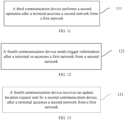
- a method for processing a terminal policy association including: triggering, by a first communication device, a first operation after a terminal re-accesses a first network from a second network, where the first operation includes one of the following:
- a method for processing a terminal policy association including: triggering, by a first communication device, a second operation after a terminal accesses a second network from a first network, where the second operation includes one of the following:
- a method for processing a terminal policy association including: triggering, by a second communication device, a third operation after a terminal re-accesses a first network from a second network, where the third operation includes one of the following:
- a method for processing a terminal policy association including: sending, by a second communication device, an update location request to a fourth communication device after a terminal accesses a second network from a first network, where the update location request carries first indication information, and the first indication information is used to indicate one of the following:
- a method for processing a terminal policy association including: performing, by a third communication device, a first operation after a terminal re-accesses a first network from a second network, where the first operation includes one of the following:
- a method for processing a terminal policy association including: performing, by a third communication device, a second operation after a terminal accesses a second network from a first network, where the second operation includes one of the following:
- a method for processing a terminal policy association including:
- a method for processing a terminal policy association including: receiving, by a fourth communication device, an update location request sent by a second communication device after a terminal accesses a second network from a first network, where the update location request carries first indication information, and the first indication information is used to indicate one of the following:
- an apparatus for processing a terminal policy association including: a triggering module, configured to trigger a first operation after a terminal re-accesses a first network from a second network, where the first operation includes one of the following:
- an apparatus for processing a terminal policy association including: a triggering module, configured to trigger a second operation after a terminal re-accesses a second network from a first network, where the second operation includes one of the following:
- an apparatus for processing a terminal policy association including: a notification module, configured to trigger a third operation after a terminal re-accesses a first network from a second network, where the third operation includes at least one of the following:
- an apparatus for processing a terminal policy association including: a first sending module, configured to send an update location request to a fourth communication device after a terminal accesses a second network from a first network, where the update location request carries first indication information, and the first indication information is used to indicate one of the following:
- an apparatus for processing a terminal policy association including: an execution module, configured to perform a first operation after a terminal re-accesses a first network from a second network, where the first operation includes one of the following:
- an apparatus for processing a terminal policy association including: an execution module, configured to perform a second operation after a terminal re-accesses a second network from a first network, where the second operation includes one of the following:
- an apparatus for processing a terminal policy association including: a first sending module, configured to send trigger information after a terminal re-accesses a first network from a second network, where the trigger information is used to trigger an old first communication device to trigger at least one of the following: releasing a first terminal policy association; and releasing or deactivating a second terminal policy association; where
- an apparatus for processing a terminal policy association including: a receiving module, configured to receive an update location request sent by a second communication device, after a terminal accesses a second network from a first network, where the update location request carries first indication information, and the first indication information is used to indicate one of the following:
- a communication device including a processor and a memory, where the memory stores a program or instructions capable of running on the processor, and when the program or the instructions are executed by the processor, the steps of the method according to the first aspect, the second aspect, the third aspect, the fourth aspect, the fifth aspect, the sixth aspect, the seventh aspect, or the eighth aspect are implemented.
- a communication device including a processor and a communication interface, where the processor is configured to trigger a first operation after a terminal re-accesses a first network from a second network, where the first operation includes one of the following:
- a communication device including a processor and a communication interface, where the processor is configured to trigger a second operation after a terminal re-accesses a second network from a first network, where the second operation includes one of the following:
- a communication device including a processor and a communication interface, where the communication interface is configured to trigger a third operation after a terminal re-accesses a first network from a second network, where the third operation includes one of the following:
- a communication device including a processor and a communication interface, where the communication interface is configured to send an update location request to a fourth communication device after a terminal accesses a second network from a first network, where the update location request carries first indication information, and the first indication information is used to indicate one of the following:
- a communication device including a processor and a communication interface, where the processor is configured to perform a first operation after a terminal re-accesses a first network from a second network, where the first operation includes one of the following:
- a communication device including a processor and a communication interface, where the processor is configured to perform a second operation after a terminal accesses a second network from a first network, where the second operation includes at least one of the following:
- a communication device including a processor and a communication interface, where the communication interface is configured to send trigger information after a terminal re-accesses a first network from a second network, where the trigger information is used to trigger an old first communication device to trigger at least one of the following: releasing a first terminal policy association; and releasing or deactivating a second terminal policy association; where
- a communication device including a processor and a communication interface, where the communication interface is configured to receive an update location request sent by a second communication device after a terminal accesses a second network from a first network, where the update location request carries first indication information, and the first indication information is used to indicate one of the following:
- a communication system including a first communication device, a second communication device, a third communication device, and a fourth communication device, where the first communication device may be configured to perform the steps of the method for processing a terminal policy association according to the first or second aspect, the second communication device may be configured to perform the steps of the method for processing a terminal policy association according to the third or fourth aspect, the third communication device may be configured to perform the steps of the method for processing a terminal policy association according to the fifth or sixth aspect; and the fourth communication device may be configured to perform the steps of the method for processing a terminal policy association according to the seventh or eighth aspect.
- a readable storage medium where a program or instructions are stored in the readable storage medium, and when the program or the instructions are executed by a processor, the steps of the method for processing a terminal policy association according to the first aspect, the second aspect, the third aspect, the fourth aspect, the fifth aspect, the sixth aspect, the seventh aspect or the eighth aspect are implemented.
- a chip is provided, where the chip includes a processor and a communication interface, the communication interface is coupled to the processor, and the processor is configured to run a program or instructions to implement the method for processing a terminal policy association according to the first aspect, the second aspect, the third aspect, the fourth aspect, the fifth aspect, the sixth aspect, the seventh aspect, or the eighth aspect.
- a computer program/program product is provided, where the computer program/program product is stored in a storage medium, and the computer program/program product is executed by at least one processor to implement the method for processing a terminal policy association according to the first aspect, the second aspect, the third aspect, the fourth aspect, the fifth aspect, the sixth aspect, the seventh aspect, or the eighth aspect.
- the embodiments of this application provide the method for processing a terminal policy association for the terminal accessing the second network from the first network, or for the terminal re-accessing the first network from the second network, so that the terminal can still obtain terminal policy information based on the terminal policy association provided by the network side after accessing the second network from the first network or re-accessing the first network from the second network.
- first, second, and the like in this specification and claims of this application are used to distinguish between similar objects rather than to describe a specific order or sequence. It should be understood that terms used in this way are interchangeable in appropriate circumstances so that the embodiments of this application may be implemented in other orders than the order illustrated or described herein.
- first and second are usually used to distinguish objects of a same type, and do not restrict a quantity of objects. For example, there may be one or a plurality of first objects.
- “and/or” in the specification and claims represents at least one of connected objects, and the character “/" generally indicates that the associated objects have an "or” relationship.
- technologies described in the embodiments of this application are not limited to a long term evolution (Long Term Evolution, LTE)/LTE-advanced (LTE-Advanced, LTE-A) system, and may alternatively be used in various wireless communication systems, such as code division multiple access (Code Division Multiple Access, CDMA), time division multiple access (Time Division Multiple Access, TDMA), frequency division multiple access (Frequency Division Multiple Access, FDMA), orthogonal frequency division multiple access (Orthogonal Frequency Division Multiple Access, OFDMA), single-carrier frequency-division multiple access (Single-carrier Frequency Division Multiple Access, SC-FDMA), and other systems.
- code division multiple access Code Division Multiple Access
- TDMA time division multiple access
- FDMA frequency division multiple access
- OFDMA Orthogonal frequency division multiple access
- SC-FDMA single-carrier Frequency Division Multiple Access
- system and “network” in the embodiments of this application are often used interchangeably, and the technology described herein may be used in the above-mentioned systems and radio technologies as well as other systems and radio technologies.
- NR New Radio
- NR terms are used in most of the following descriptions, although these technologies may alternatively be applied to other applications than an NR system application, such as the 6th generation (6 th Generation, 6G) communication system.
- FIG. 1 is a block diagram of a wireless communication system applicable to an embodiment of this application.
- the wireless communication system includes a terminal 11 and a network-side device 12.
- the terminal 11 may be a mobile phone, a tablet computer (Tablet Personal Computer), a laptop computer (Laptop Computer), a personal digital assistant (personal digital assistant, PDA), a palmtop computer, a netbook, an ultra-mobile personal computer (ultra-mobile personal computer, UMPC), a mobile Internet device (Mobile Internet Device, MID), an augmented reality (augmented reality, AR)/virtual reality (virtual reality, VR) device, a robot, a wearable device (Wearable Device), vehicle user equipment (Vehicle User Equipment, VUE), pedestrian user equipment (Pedestrian User Equipment, PUE), a smart home device (a home device with wireless communication function, such as a refrigerator, a television, a washing machine, or a furniture), a game console, a personal computer (personal computer, PC), a teller machine, a self
- the wearable device includes: a smart watch, a wrist band, smart earphones, smart glasses, smart jewelry (smart bracelet, smart wristband, smart ring, smart necklace, smart anklet, smart ankle bracelet, or the like), smart wristband, smart clothing, and the like. It should be noted that a specific type of the terminal 11 is not limited in the embodiments of this application.
- the network-side device 12 may include a network-side device or a core network device, where the network-side device may also be referred to as a radio network-side device, a radio access network (Radio Access Network, RAN), a radio access network function, or a radio access network unit.
- RAN Radio Access Network
- the access network device may include a base station, a wireless local area network (Wireless Local Area Network, WLAN) access point, a wireless fidelity Wi-Fi node, or the like.
- the base station may be referred to as a NodeB, an evolved NodeB (eNB), an access point, a base transceiver station (Base Transceiver Station, BTS), a radio base station, a radio transceiver, a basic service set (Basic Service Set, BSS), an extended service set (Extended Service Set, ESS), a home NodeB, a home evolved NodeB, a transmission and reception point (Transmitting Receiving Point, TRP), or another appropriate term in the art.
- the base station is not limited to a specific technical term. It should be noted that in the embodiments of this application, the base station in the NR system is merely used as an example, and a specific type of the base station is not limited.
- the core network device may include but is not limited to at least one of the following: a core network node, a core network function, a mobility management entity (Mobility Management Entity, MME), an access mobility management function (Access and Mobility Management Function, AMF), a session management function (Session Management Function, SMF), a user plane function (User Plane Function, UPF), a policy control function (Policy Control Function, PCF), a policy and charging rules function (Policy and Charging Rules Function, PCRF), an edge application server discovery function (Edge Application Server Discovery Function, EASDF), a unified data management (Unified Data Management, UDM), a unified data repository (Unified Data Repository, UDR), a home subscriber server (Home Subscriber Server, HSS), a centralized network configuration (Centralized network configuration, CNC), a network repository function (Network Repository Function, NRF), a network exposure function (Network Exposure Function, NEF), a local NEF (Local NEF, or L-NEF
- URSP rules are a terminal policy defined by the 3rd generation partnership project (3GPP, 3rd Generation Partnership Project). According to the URSP rules, UE may match traffic of an application (Application, APP) to a specific protocol data unit (Protocol Data Unit, PDU) session (session).
- 3GPP 3rd generation partnership project
- APP Application, APP
- PDU Protocol Data Unit
- the APP may send traffic characteristics of the APP to the UE, where the traffic characteristics, for example, include a destination Internet Protocol (Internet Protocol, IP) address, a fully qualified domain name (Fully Qualified Domain Name, FQDN), and so on.
- IP Internet Protocol
- FQDN Fully Qualified Domain Name
- the UE performs matching on the URSP rules in the UE one by one based on the traffic characteristics of the APP.
- Traffic descriptor Traffic descriptor
- APP descriptors Application descriptors
- OSID OSID
- OSAPPID OSID
- IP descriptors Destination Internet protocol (Internet Protocol, IP) triplet Domain descriptors (Domain descriptors) Mainly based on FQDN fully qualified domain name.
- IP descriptors Non-IP descriptors
- DNN Data network name Used to describe which data network traffic of the APP accesses or connects to.
- Connection capabilities This matches information provided in the application of the UE when requesting to connect to a network connection with a specific function. Similar to “ims”, “mms”, and “Internet” (IP Multimedia Subsystem, IP multimedia subsystem; Multimedia Messaging Service, multimedia messaging service, which is actually MMS).
- IP Multimedia Subsystem IP multimedia subsystem
- Multimedia Messaging Service multimedia messaging service, which is actually MMS.
- the APP may send one IP descriptor (such as a destination IP triplet) to describe the traffic of the APP.
- the traffic of the APP is a traffic to be sent to the destination IP of 10.1.1.1 and the port number of 80. Then, if such traffic descriptor (Traffic descriptor) is present in the URSP rules, it means that such traffic of the APP may be matched to a specific URSP rule.
- the next step is to choose which PDU session to send the traffic (traffic) of the APP.
- RSD Route Selection Descriptor
- each RSD represents a set of attributes or PDU session parameters.
- the traffic of APP matches a set of traffic descriptors with a destination IP of 10.1.1.1 and a port number of 80, and there are the following RSDs under this set of traffic descriptors:
- Terminal policy information is a concept introduced in 5G, and is mainly used for establishing a PDU session to a specific data network name (Data Network Name, DNN) by the terminal.
- DNN Data Network Name
- the concept of terminal policy information is absent in 4G.
- the terminal can map some parameters into PDU sessions established by the terminal to a specific access point name (Access point name, APN) in 4G.
- APN Access point name
- the terminal can map or convert a DNN in the terminal policy information into an APN according to some mapping rules, and then establish a packet data network (Packet Data Networks, PDN) connection to the APN.
- PDN Packet Data Networks
- the terminal also needs to obtain terminal policy information in 4G.
- no such method is available to provide terminal policy information for terminals under 4G.
- An embodiment of this application provides a method for processing a terminal policy association, which includes the following steps.
- Step 21 A first communication device triggers a first operation after a terminal re-accesses a first network from a second network, where the first operation includes one of the following:
- the third terminal policy association is a terminal policy association established by the first communication device (such as an AMF) after re-selection of an AM-PCF or UE-PCF for the terminal after the terminal accesses or hands over from the second network (such as 4G) to the first network (such as 5G network).
- the first communication device such as an AMF
- the second network such as 4G
- the first network such as 5G network
- the first terminal policy association is a terminal policy association still retained by the terminal in the original first network (such as 5G) after the terminal accesses or hands over from the first network (such as 5G) to the second network (such as 4G network), and the policy association may be still retained and not released after the terminal accesses the second network (such as 4G network).
- the releasing the second terminal policy association may alternatively be: terminating the second terminal policy association.
- the releasing a terminal policy association may alternatively be written as terminating the terminal policy association.
- the triggering a first operation may alternatively be performing the first operation.
- "trigger” can be understood as “perform”.
- the triggering the first operation by the first communication device occurs after the terminal re-accesses the first network from the second network, or it may alternatively be considered that the triggering the first operation by the first communication device occurs when the terminal re-accesses the first network from the second network.
- the second terminal policy association is used for obtaining terminal policy information by the terminal in the second network
- the terminal in the processing method in which the first communication device provides a terminal policy association for the terminal re-accessing the first network from the second network, the terminal can still obtain terminal policy information based on the terminal policy association provided by the network side after re-accessing the first network from the second network.
- the first communication device may be, for example, an AMF.
- the first communication device may alternatively be other communication devices.
- the first network may be, for example, a 5G network
- the second network may be a 4G network.
- it may alternatively be other networks.
- modifying the second terminal policy association means modifying the second terminal policy association into a terminal policy association capable of providing terminal policy information for the terminal in the first network. For example, when the terminal is in the second network (4G), the second terminal policy association being established to an SM-PCF is modified to one established to an AM-PCF. When the terminal re-accesses the first network (5G network), if the AM-PCF is still serving the terminal and providing UE policies, in this case, the AMF may trigger a terminal policy association modification request (such as Npcf_UEPolicyControl_Update) to the AM-PCF for changing an associated user from the SM-PCF to the AMF.
- a terminal policy association modification request such as Npcf_UEPolicyControl_Update
- the terminal still uses the second terminal policy association after accessing the first network from the second network, with the associated user being changed from the SM-PCF to the AMF.
- the terminal policy information needs to be updated for the terminal in the first network, it is sent to the UE through the AMF, instead of the SM-PCF, by using a manner supported in the 4G network.
- an execution order of the three actions of "creating a third terminal policy association, releasing the first terminal policy association, and releasing or deactivating the second terminal policy association" is not limited.
- the third terminal policy association may be created first, then the first terminal policy association may be released, and the second terminal policy association may be released or deactivated.
- the first terminal policy association may alternatively be released, the second terminal policy association is released or deactivated, and then the third terminal policy association is created.
- the terminal can have only one UE policy association
- the second terminal policy association may only be released or deactivated first, and then the third terminal policy association may be newly established to the new AM-PCF.
- the third terminal policy association may be established first, and then the second terminal policy association may be released or deactivated.
- an execution order of the two actions of "creating a third terminal policy association and releasing or deactivating the second terminal policy association" is not limited.
- the third terminal policy association may be created first and then the second terminal policy association may be released or deactivated, or certainly, the second terminal policy association may be released or deactivated first and then the third terminal policy association may be created.
- the triggering the first operation includes: obtaining, by the first communication device, first information; and triggering, by the first communication device, the first operation based on the first information; where the first information includes at least one of the following:
- the old first communication device and the old third communication device are communication devices that maintain a terminal policy association for the terminal in the first network before the terminal accesses the second network.
- the index information of the old first communication device includes at least one of the following: a first communication device ID and a first communication device address; and/or, the index information of the old third communication device includes at least one of the following: a third communication device ID and a third communication device address.
- the address is, for example, an IP address, an FQDN, or a URL.
- the first operation is mainly used for creating a terminal policy association to the AM-PCF; or releasing and deactivating a policy association to the old AM-PCF.
- the first communication device does not know an address of the AM-PCF that maintains a policy association in the network, and therefore requires the first information.
- the obtaining the first information includes receiving first information sent by a second communication device; where the second communication device is located in the second network.
- the second communication device may be, for example, an MME.
- a communication interface is present between the first communication device and the second communication device.
- the first communication device is an AMF and the second communication device is an MME
- the communication interface between them is N26 interface, and the N26 interface supports signaling exchange between the MME and the AMF. If the N26 interface is not supported, there is no interworking between the MME and the AMF.
- the second communication device (for example, the MME) may send the first information to the first communication device (the AMF) through the following signaling: a forward relocation request (forward relocation request), a context response (context response), and a context request (context request).
- the obtaining the first information includes receiving first information sent by a fourth communication device, and the fourth communication device provides unified data management services for both the first network and the second network.
- the fourth communication device may be, for example, a UDM, or an HSS, or a communication device integrating the UDM and the HSS. Certainly, it may alternatively be other communication devices. In this embodiment, it should be noted that a communication interface may be or may not be present between the first communication device and the second communication device.
- the first information may be stored as a UE context as shown in Table 2 below:
- the UDM+HSS may send the first information to the AMF through the following signaling: Nudm_SubscriberDataManagement (SDM) Get response (that is, the AMF sends a Nudm_SDM_Get request to the UDM+HSS, and then the UDM+HSS sends it to the AMF.
- SDM Nudm_SubscriberDataManagement
- the obtaining the first information includes receiving first information sent by an old first communication device, that is, transmitting the first information between two AMFs, for example, transmitting the first information through Namf_Communication_UEContextTransfer.
- the old first communication device retains a terminal context (context) and does not de-attach (de-attach) the terminal.
- the first information is included in the terminal context (for example, the first information is stored in the UE context in the UDM+HSS as described in Table 2 above).
- a new first communication device obtains the first information from the old first communication device, and the new first communication device can find the old first communication device based on a globally unique temporary identifier (Globally Unique Temporary Identifier, GUTI) of the terminal. If the first communication device remains unchanged, the first information may be directly learned.
- GUTI Globally Unique Temporary Identifier
- the first information may be used for finding the old third communication device. It may be seen from the above embodiment that after the terminal re-accesses the first network from the second network, the old third communication device may be found in the following manners:
- the triggering the first operation includes at least one of the following:
- the third communication device maintains one or two terminal policy associations.
- the third communication device maintains one or two terminal policy associations.
- the third communication device maintains one or two terminal policy associations.
- the first terminal policy may possibly have been released when the terminal accesses the 4G network from the 5G network.
- the in a case of determining based on the first information that the first communication device remains unchanged and the third communication device remains unchanged after the terminal re-accesses the first network from the second network, that the first communication device triggers the first operation includes: triggering the third communication device to perform one of the following:
- the third communication device may be, for example, an AM-PCF. Certainly, it may alternatively be other communication devices.
- FIG. 3 is a schematic diagram of a method for processing a terminal policy association when the AMF and the AM-PCF remain unchanged after the terminal re-accesses the 5G network from the 4G network.
- an AMF1 deactivates or releases the first terminal policy association and creates a second terminal policy association
- the AMF1 may trigger the AM-PCF1 to reactivate the first terminal policy association and deactivate or release the second terminal policy association.
- deactivating an association means that the terminal policy association is retained for future use after re-access to the network, but the terminal policy association does not work and is not used to provide terminal policy information to the terminal.
- the AM-PCF needs to update the terminal policy information for the UE, it does not send the terminal policy information through the deactivated terminal policy association.
- the AM-PCF may set an association corresponding to a UE policy association ID as "disabled", that is, deactivated and not to be used.
- the first communication device triggers a first operation, where the first operation includes one of the following:
- a new terminal policy association may definitely be created.
- the old association such as the first or second terminal policy association, may be released.
- the releasing a policy association may use the following signaling: Npcf_UEPolicyControl_Delete.
- the first communication device triggers the first operation includes one of the following:
- FIG. 4 is a schematic diagram of a method for processing a terminal policy association when the AMF remains unchanged and the AM-PCF is changed after the terminal re-accesses the 5G network from the 4G network according to the embodiments of this application.
- the AMF 1 may trigger the AM-PCF 1 to release the first terminal policy association and release or deactivate the second terminal policy association, and trigger the AM-PCF2 to create a new third terminal policy association; or, trigger the AM-PCF 1 to release or deactivate the second terminal policy association (in this case, the first terminal policy may have been released when the terminal accesses the 4G network from the 5G network), and trigger the AM-PCF2 to create a new third terminal policy association.
- the first communication device triggers a first operation, where the first operation includes one of the following:
- the first communication device triggers the first operation includes one of the following:
- the indicating the seventh communication device to release or deactivate the second terminal policy association includes one of the following: the first communication device directly indicates the seventh communication device to release or deactivate the second terminal policy association; and the first communication device indicates the seventh communication device through the second communication device to release or deactivate the second terminal policy association.
- the seventh communication device may be an SM-PCF.
- a path for indicating the seventh communication device by the first communication device through the second communication device to release or deactivate the second terminal policy association may be as follows: the AMF sends a context request (context request) to the MME, where the context request contains an indication, indicating to deactivate or release the second terminal policy association, and the context request further includes index information of the AM-PCF (such as an AM-PCF ID or an AM-PCF IP address) and a second terminal policy association ID (that is, a UE policy association ID) and/or UE SUPI.
- the AM-PCF such as an AM-PCF ID or an AM-PCF IP address
- a second terminal policy association ID that is, a UE policy association ID
- the MME After receiving the context request, the MME triggers a create session request (create session request) to the S-GW, and the above information (the indication, the index information of the AM-PCF, or the like) is also included in the create session request.
- the S-GW triggers a modify bearer request (modify bearer request) to the SMF+PGW-C, where the modify bearer request further includes the above information (the indication, the index information of the AM-PCF, or the like).
- the SMF+PGW-C triggers a session policy association modification request SM policy association modification (Npcf_SMPolicyControl_Update) to the SM-PCF, and the session policy association modification request also contains the indication information and the index information of AM-PCF, that is, indicating the SM-PCF to deactivate or release the second terminal policy association.
- the SM-PCF triggers association deactivation or release: for example, releasing the second terminal policy association through a terminal policy association termination request UE policy association termination (Npcf_UEPolicyControl_Delete), or triggering a terminal policy modification request UE policy association modification (Npcf_UEPolicyControl _Update) to modify the second terminal policy association.
- the embodiments of the application provide another method for processing a terminal policy association, which includes the following steps:
- the sixth communication device sends second information to the seventh communication device, where the second information includes second indication information.
- the second indication information is used to indicate the seventh communication device to perform a fourth operation, and the fourth operation is an operation related to releasing or terminating a policy association of the terminal under the second network (for example, the 4G network).
- the sixth communication device may be, for example, a network element with a session management function (such as an SMF), or a network element with a packet data gateway control function (such as a PDN network element-C (PDN GateWay-C, PGW-C)), or a communication device with session management function, SMF, and packet data gateway control functions (such as a communication device integrating the SMF and the PGW-C).
- a network element with a session management function such as an SMF
- a packet data gateway control function such as a PDN network element-C (PDN GateWay-C, PGW-C)
- PDN network element-C PDN GateWay-C, PGW-C
- a communication device with session management function, SMF, and packet data gateway control functions such as a communication device integrating the SMF and the PGW-C.
- the seventh communication device may be a network element (such as an SM-PCF) that delivers session policies.
- a network element such as an SM-PCF
- the sixth communication device sending the second information to the seventh communication device includes that the sixth communication device sends the second indication information to the seventh communication device in a case of determining that the terminal has accessed the first network (for example, the 5G network).
- the sixth communication device determining that the terminal has accessed the first network includes the sixth communication device determining that the terminal has accessed the first network from the second network.
- the sixth communication device determines that the terminal has accessed the first network.
- the fifth information is used to indicate the terminal to access the first network.
- the sixth communication device determines that the terminal has accessed the first network.
- the context establishment request includes: Nsmf_PDUSession_CreateSMContext Request (that is, PDU session create session management context operation). It should be noted that the Nsmf_PDUSession_CreateSMContext Request includes identification information of the UE (for example, a UE SUPI).
- the sixth communication device triggers to obtain third information from a binding support function (Binding Support Function, BSF), where the third information includes at least one of the following: index information of the AM-PCF or UE-PCF serving the terminal (such as an AM-PCF ID, an AM-PCF IP address, a UE-PCF ID, or a UE-PCF IP address); and a terminal identifier (for example, a UE SUPI or a UE GPSI).
- BSF Binding Support Function
- the sixth communication sending the second information to the seventh communication device includes that the sixth communication device sends the second information to the seventh communication device in a case of receiving fourth information, where the fourth information includes third indication information, and the third indication information is used to indicate the sixth communication device to trigger execution of a fourth operation.
- the third indication information indicates the sixth communication device to trigger release or termination of a policy association of the terminal under the second network (for example, the 4G network).
- the third indication information indicates the sixth communication device to find the seventh communication device, so as to send the second indication information to the seventh communication device.
- the third indication information is used to indicate the sixth communication device to send the second indication information to the seventh communication device.
- the fourth information further includes at least one of the following: index information of the AM-PCF or UE-PCF serving the terminal (such as an AM-PCF ID, an IP address of the AM-PCF, a UE-PCF ID, and an IP address of the UE-PCF); and a terminal identifier (such as a UE SUPI or UE GPSI).
- index information of the AM-PCF or UE-PCF serving the terminal such as an AM-PCF ID, an IP address of the AM-PCF, a UE-PCF ID, and an IP address of the UE-PCF
- a terminal identifier such as a UE SUPI or UE GPSI
- the sixth communication device obtains the fourth information from the BSF through Nbsf_Management discovery signaling.
- the sixth communication device receiving the fourth indication information includes that the sixth communication device receives fourth indication information sent by the first communication device (for example, an AMF).
- the fourth indication information may be carried in at least one of the following signaling:
- the seventh communication device determines a third communication device or a policy association ID (UE policy association ID). It can be understood that after receiving the second information, the seventh communication device determines the policy association ID or determines the AM-PCF or UE-PCF serving the terminal.
- UE policy association ID UE policy association ID
- the second information may include a terminal identifier (such as a UE SUPI or UE GPSI), and the seventh communication device may determine the third communication device or the policy association ID (such as a UE policy association ID) based on the terminal identifier and a first correspondence.
- the first correspondence is a correspondence between terminal identifiers and index information of AM-PCFs or UE-PCFs serving such terminals, or a correspondence between terminal identifiers and policy association IDs.
- the seventh communication device stores a first correspondence.
- the second information further includes at least one of the following: a terminal identifier (such as a UE SUPI or UE GPSI), index information of the AM-PCF or UE-PCF serving the terminal, and a policy association ID.
- the seventh communication device may directly determine the third communication device or policy association ID based on the second information.
- the second information may be sent in at least one of the following signaling:
- At least one of the following signaling may alternatively be sent to serve as the second indication information (it can be understood that the seventh communication device receives the second indication information when receiving at least one of the following signaling):
- the seventh communication device performs a fourth operation.
- the fourth operation includes: the seventh communication device sends fourth indication information to a third communication device, where the fourth indication information is used to indicate the third communication device to release or terminate a policy association of a terminal under a second network; or, the fourth operation may be that the seventh communication device sends terminal policy control deletion signaling to the third communication device, or sends terminal policy association termination signaling, or triggers a terminal policy association termination or release request.
- the seventh communication device sends the fourth indication information to the third communication device includes: the seventh communication device sends Npcf_UEPolicyControl_Delete signaling to the third communication device to indicate the third communication device to release or terminate a policy association of the terminal under the second network.
- the signaling carries a terminal policy association ID and a UE identifier (a SUPI or GPSI).
- the seventh communication device sends terminal policy control deletion signaling to the third communication device, or sends terminal policy association termination signaling, or triggers a terminal policy association termination or release request, including: the seventh communication device sends the Npcf_UEPolicyControl_Delete signaling to the third communication device.
- the signaling carries a terminal policy association ID and a UE identifier (a SUPI or GPSI).
- the third communication device releases or terminates a policy association of the terminal under the second network.
- the seventh communication device sends a terminal policy association termination or release response (a success response) to the sixth communication device, and the sixth communication device sends the response to the first communication device (such as the AMF).
- the first communication device performs at least one of the following:
- FIG. 5 is a schematic diagram of a method for processing a terminal policy association when AMF is changed and AM-PCF remains unchanged the terminal re-accesses the 5G network from the 4G network according to the embodiments of this application.
- the AMF2 (a new first communication device) may trigger a first operation, where the first operation may be modifying the second terminal policy association. That is, the SM-PCF in the second terminal policy is modified to AMF2, for example, using Npcf_UEPolicyControl_Update signaling, and the signaling carries a UE policy association ID (indicating to the AM-PCF which policy association needs to be modified), so as to provide terminal policy information for the terminal in the first network.
- the first communication device triggers a first operation, where the first operation includes one of the following:
- the first communication device triggers the first operation includes one of the following:
- the indicating the seventh communication device to release or deactivate the second terminal policy association includes one of the following: the first communication device directly indicates the seventh communication device to release or deactivate the second terminal policy association; and the first communication device indicates the seventh communication device through the second communication device to release or deactivate the second terminal policy association.
- the seventh communication device is located in the second network, and the seventh communication device is used to provide session policy services for a terminal in the second network.
- a path for indicating the seventh communication device by the first communication device through the second communication device to release or deactivate the second terminal policy association may be as follows: the AMF sends a context request (context request) to the MME, where the context request contains an indication, indicating to deactivate or release the second terminal policy association, and the context request further includes index information of the AM-PCF (such as an AM-PCF ID or an AM-PCF IP address) and a second terminal policy association ID (that is, a UE policy association ID) and/or UE SUPI.
- the AM-PCF such as an AM-PCF ID or an AM-PCF IP address
- a second terminal policy association ID that is, a UE policy association ID
- the MME After receiving the context request, the MME triggers a create session request (create session request) to the S-GW, and the above information (the indication, the index information of the AM-PCF, or the like) is also included in the create session request.
- the S-GW triggers a modify bearer request (modify bearer request) to the SMF+PGW-C, where the modify bearer request further includes the above information (the indication, the index information of the AM-PCF, or the like).
- the SMF+PGW-C triggers a session policy association modification request SM policy association modification (Npcf_SMPolicyControl_Update) to the SM-PCF, and the session policy association modification request also contains the indication information and the index information of AM-PCF, that is, indicating the SM-PCF to deactivate or release the second terminal policy association.
- the SM-PCF triggers association deactivation or release: for example, releasing the second terminal policy association through a terminal policy association termination request UE policy association termination (Npcf_UEPolicyControl_Delete), or triggering a terminal policy modification request UE policy association modification (Npcf_UEPolicyControl _Update) to modify the second terminal policy association.
- FIG. 6 is a schematic diagram of a method for processing a terminal policy association when the AMF is changed and the AM-PCF is changed after the terminal re-accesses the 5G network from the 4G network according to the embodiments of this application.
- the AMF2 (a new first communication device) may trigger a first operation, where the first operation includes creating a new third terminal policy association and releasing or deactivating the second terminal policy association (in this case, the first terminal policy may have been released when the terminal accesses the 4G network from the 5G network).
- An embodiment of the application further provides a method for processing a terminal policy association, including the following steps:
- Step 71 A first communication device triggers a second operation after a terminal re-accesses a second network from a first network, where the second operation includes one of the following:
- the terminal in the processing method in which the first communication device provides a terminal policy association for the terminal accessing the second network from the first network, the terminal can still obtain terminal policy information based on the terminal policy association provided by the network side after accessing the second network from the first network.
- the first communication device may be, for example, an AMF.
- the first communication device may alternatively be other communication devices.
- the first network may be, for example, a 5G network
- the second network may be a 4G network.
- it may alternatively be other networks.
- the terminal policy association may be released and the terminal policy information may also be deleted.
- the terminal policy information may be retained, so as to provide the terminal policy information for the terminal under the 4G network.
- modifying the first terminal policy association is modifying the first terminal policy association into a terminal policy association that may provide terminal policy information for the terminal in the second network.
- the method in this embodiment of this application further includes:
- the second communication device may be, for example, an MME. Certainly, it may alternatively be other communication devices.
- the third communication device may be, for example, an AM-PCF.
- the third communication device may alternatively be other communication devices.
- the terminal policy information may alternatively be obtained from the third communication device, so as to provide a terminal policy service.
- the method in this embodiment of this application further includes: the first communication device sends first information to a second communication device or a fourth communication device, where the first information includes at least one of the following:
- the fourth communication device may be, for example, a UDM, or an HSS, or a communication device integrating the UDM and the HSS. Certainly, it may alternatively be other communication devices.
- the first communication device may send the first information to the second communication device. If no communication interface is present between the first communication device and the second communication device, the first communication device may send the first information to the fourth communication device. Certainly, when a communication interface is present between the first communication device and the second communication device, the first communication device may alternatively send the first information to the fourth communication device.
- the index information of the first communication device includes at least one of the following: a first communication device ID and a first communication device address; and/or, the index information of the third communication device includes at least one of the following: a third communication device ID and a third communication device address.
- the address is, for example, an IP address, an FQDN, or a URL.
- the method further includes: receiving a deregistration notification (such as Nudm_UECM_DeregistrationNotification) sent by the fourth communication device, where the deregistration notification is used to indicate the first communication device to trigger the second operation, and the fourth communication device provides unified data management services for both the first network and the second network.
- a deregistration notification such as Nudm_UECM_DeregistrationNotification
- the method further includes: receiving a first request sent by a sixth communication device, where the first request is used for at least one of the following: triggering the second operation; and obtaining terminal policy information; where the SMF+PGW-C requests the AMF to perform a second operation to establish a terminal policy association and obtain terminal policy information.
- the method further includes receiving the terminal policy information sent by the third communication terminal and sending it to the sixth communication device; where the sixth communication device provides session management services for both the first network and the second network.
- the sixth communication device may be, for example, an SMF, or a PGW-C (packet gateway control plane function), or a communication device integrating the SMF and the PGW-C.
- SMF packet gateway control plane function
- PGW-C packet gateway control plane function
- the method further includes: receiving a first request sent by a seventh communication device, where the first request is used for at least one of the following: triggering the second operation; and obtaining terminal policy information; where the SM-PCF requests the AMF to perform a second operation to establish a terminal policy association (for example, establish through Npcf_ UEPolicyControl Create Request) and obtain terminal policy information.
- a terminal policy association for example, establish through Npcf_ UEPolicyControl Create Request
- the method further includes receiving terminal policy information sent by the third communication terminal and sending it to the seventh communication device; where the seventh communication device is located in the second network, and the seventh communication device is used to provide session policy services for a terminal in the second network.
- the seventh communication device may be, for example, an SM-PCF. Certainly, it may alternatively be other communication devices.
- the method further includes: obtaining a trigger condition for triggering the second operation, where the trigger condition includes at least one of the following:
- An embodiment of the present invention further provides a method for processing a terminal policy association, including the following steps.
- Step 81 After a terminal re-accesses a first network from a second network, a second communication device triggers a third operation, where the third operation includes at least one of the following:
- the terminal in the processing method in which the second communication device provides a terminal policy association for the terminal re-accessing the first network from the second network, the terminal can still obtain terminal policy information based on the terminal policy association provided by the network side after re-accessing the first network from the second network.
- the second communication device may be, for example, an MME.
- MME Mobility Management Entity
- the first network may be, for example, a 5G network
- the second network may be a 4G network.
- it may alternatively be other networks.
- the triggering the third operation includes: the second communication device triggers the third operation according to an indication of the new first communication device; where the new first communication device is a communication device that maintains the terminal policy association for the terminal in the first network after the terminal re-accesses the first network from the second network.
- the second communication device triggers the third operation after the terminal re-accesses the first network from the second network includes: after the terminal re-accesses the first network from the second network, the second communication device indicates the old first communication device to trigger a third operation, where the third operation includes at least one of the following:
- the first communication device may be, for example, an AMF.
- a path for indicating the first communication device to trigger the third operation according to the indication of the new first communication device may be as follows: the AMF sends a context request (context request) to the MME, where the context request contains an indication, indicating to deactivate or release the second terminal policy association, and the context request further includes index information of the AM-PCF (such as an AM-PCF ID or an AM-PCF IP address) and a second terminal policy association ID (that is, a UE policy association ID) and/or UE SUPI.
- the AMF sends a context request (context request) to the MME, where the context request contains an indication, indicating to deactivate or release the second terminal policy association, and the context request further includes index information of the AM-PCF (such as an AM-PCF ID or an AM-PCF IP address) and a second terminal policy association ID (that is, a UE policy association ID) and/or UE SUPI.
- the MME After receiving the context request, the MME triggers a create session request (create session request) to the S-GW, and the above information (the indication, the index information of the AM-PCF, or the like) is also included in the create session request.
- the S-GW triggers a modify bearer request (modify bearer request) to the SMF+PGW-C, where the modify bearer request further includes the above information (the indication, the index information of the AM-PCF, or the like).
- the SMF+PGW-C triggers a session policy association modification request SM policy association modification (Npcf_SMPolicyControl _Update) to the SM-PCF, and the session policy association modification request also contains the indication information and the index information of AM-PCF, that is, indicating the SM-PCF to deactivate or release the second terminal policy association.
- the SM-PCF triggers association deactivation or release: for example, releasing the second terminal policy association through a terminal policy association termination request UE policy association termination (Npcf_UEPolicyControl_Delete), or triggering a terminal policy modification request UE policy association modification (Npcf_UEPolicyControl _Update) to modify the second terminal policy association.
- the method in this embodiment of this application further includes: the second communication device sends first information to a new first communication device, where the first information includes at least one of the following:
- the third communication device may be, for example, an AM-PCF. Certainly, it may alternatively be other communication devices.
- the index information of the old first communication device includes at least one of the following: a first communication device ID and a first communication device address; and/or, the index information of the old third communication device includes at least one of the following: a third communication device ID and a third communication device address.
- the address is, for example, an IP address, an FQDN, or a URL.
- the sending the first information to the new first communication device includes:
- the second communication device sends a forward relocation request (forward relocation request), where the forward relocation request carries the first information.
- An embodiment of the application further provides a method for processing a terminal policy association, including the following steps: Step 91: A second communication device sends an update location request (location update request) to a fourth communication device after a terminal accesses a second network from a first network, where the update location request carries first indication information, and the first indication information is used to indicate one of the following:
- the second communication device may be, for example, an MME.
- MME Mobility Management Entity
- the first communication device may be, for example, an AMF.
- the first communication device may alternatively be other communication devices.
- the fourth communication device may be, for example, a UDM, or an HSS, or a communication device integrating the UDM and the HSS. Certainly, it may alternatively be other communication devices.
- the first network may be, for example, a 5G network
- the second network may be a 4G network.
- it may alternatively be other networks.
- the method in this embodiment of this application further includes:
- the second communication device receives the terminal policy information sent by the sixth communication device and sends it to the terminal; where the sixth communication device provides session management services for both the first network and the second network.
- the sixth communication device may be, for example, an SMF, or a PGW-C, or a communication device integrating the SMF and the PGW-C. Certainly, it may alternatively be other communication devices.
- the terminal policy information may alternatively be obtained, so as to provide a terminal policy service.
- the sending, by the second communication device, a terminal policy acquisition request to the old first communication device includes:
- the sending, by the second communication device, a terminal policy acquisition request to the old first communication device includes: sending, by the second communication device, a terminal policy acquisition request to the old first communication device after receiving a session creation response.
- the method in this embodiment of this application further includes: the second communication device receives first information sent by the old first communication device, where the first information includes at least one of the following:
- the index information of the old first communication device includes at least one of the following: a first communication device ID and a first communication device address; and/or, the index information of the old third communication device includes at least one of the following: a third communication device ID and a third communication device address.
- the address is, for example, an IP address, an FQDN, or a URL.
- An embodiment of the application further provides a method for processing a terminal policy association, including the following steps:
- Step 101 A third communication device performs a first operation after a terminal re-accesses a first network from a second network, where the first operation includes one of the following:
- the terminal in the processing method in which the third communication device provides a terminal policy association for the terminal re-accessing the first network from the second network, the terminal can still obtain terminal policy information based on the terminal policy association provided by the network side after re-accessing the first network from the second network.
- the third communication device may be, for example, an AM-PCF.
- the third communication device may alternatively be other communication devices.
- the first network may be, for example, a 5G network
- the second network may be a 4G network.
- it may alternatively be other networks.
- modifying the second terminal policy association means modifying the second terminal policy association into a terminal policy association capable of providing terminal policy information for the terminal in the first network.
- the second terminal policy association is modified through Npcf_UEPolicyControl Update.
- the performing a first operation includes: performing, by the third communication device, the first operation based on trigger information sent by a first communication device; where the first communication device is a communication device that maintains a terminal policy association for the terminal in the first network.
- the first communication device may be, for example, an AMF.
- the first communication device may alternatively be other communication devices.
- the trigger information includes at least one of the following:
- An embodiment of the application further provides a method for processing a terminal policy association, including the following steps:
- Step 111 A third communication device performs a second operation after a terminal accesses a second network from a first network, where the second operation includes one of the following:
- the terminal in the processing method in which the third communication device provides a terminal policy association for the terminal accessing the second network from the first network, the terminal can still obtain terminal policy information based on the terminal policy association provided by the network side after accessing the second network from the first network.
- the first network may be, for example, a 5G network
- the second network may be a 4G network.
- it may alternatively be other networks.
- the performing a second operation includes: performing, by the third communication device, the second operation based on trigger information sent by a first communication device; where the first communication device is located in the first network, and is a communication device that maintains a terminal policy association for the terminal in the first network before the terminal accesses the second network.
- the first communication device may be, for example, an AMF.
- the first communication device may alternatively be other communication devices.
- the trigger information includes at least one of the following:
- An embodiment of the application further provides a method for processing a terminal policy association, including the following steps:
- Step 121 A fourth communication device sends trigger information after a terminal re-accesses a first network from a second network, where the trigger information is used to trigger an old first communication device to trigger at least one of the following:
- the terminal in the processing method in which the fourth communication device provides a terminal policy association for the terminal re-accessing the first network from the second network, the terminal can still obtain terminal policy information based on the terminal policy association provided by the network side after re-accessing the first network from the second network.
- the first network may be, for example, a 5G network
- the second network may be a 4G network.
- it may alternatively be other networks.
- the fourth communication device may be, for example, a UDM, or an HSS, or a communication device integrating the UDM and the HSS. Certainly, it may alternatively be other communication devices.
- the first communication device may be, for example, an AMF.
- the first communication device may alternatively be other communication devices.
- the sending trigger information includes: sending, by the fourth communication device, the trigger information to a second communication device, a new first communication device, or an old first communication device;
- the second communication device may be, for example, an MME.
- MME Mobility Management Entity
- the method in this embodiment of this application further includes: the fourth communication device sends the first information to a new first communication device, where the first information includes at least one of the following:
- the third communication device may be, for example, an AM-PCF.
- the third communication device may alternatively be other communication devices.
- the index information of the old first communication device includes at least one of the following: a first communication device ID and a first communication device address; and/or, the index information of the old third communication device includes at least one of the following: a third communication device ID and a third communication device address.
- the address is, for example, an IP address, an FQDN, or a URL.
- An embodiment of the application further provides a method for processing a terminal policy association, including the following steps:
- Step 131 A fourth communication device receives an update location request sent by a second communication device after a terminal accesses a second network from a first network, where the update location request carries first indication information, and the first indication information is used to indicate one of the following:
- the terminal in the processing method in which the fourth communication device provides a terminal policy association for the terminal accessing the second network from the first network, the terminal can still obtain terminal policy information based on the terminal policy association provided by the network side after accessing the second network from the first network.
- the first network may be, for example, a 5G network
- the second network may be a 4G network.
- it may alternatively be other networks.
- the fourth communication device may be, for example, a UDM, or an HSS, or a communication device integrating the UDM and the HSS. Certainly, it may alternatively be other communication devices.
- the first communication device may be, for example, an AMF.
- the first communication device may alternatively be other communication devices.
- the second communication device may be, for example, an MME.
- MME Mobility Management Entity
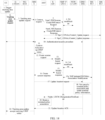
- the terminal is in an idle state (idle state), and the terminal accesses the 4G network from the 5G network, and the N26 interface is supported between the AMF in the 5G network and the MME in the 4G network, so that signaling can be exchanged.
- tracking area update may be first triggered.
- TAU Tracking Area Update
- the method for processing a terminal policy association in this embodiment of this application includes:
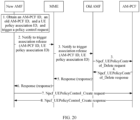
- the MME may indicate the AMF (for example, through the context request) to obtain URSP rules. After receiving the indication from the MME, the AMF sends an Npcf_UEPolicyControl_Update request to the AM-PCF to obtain URSP rules.
- the SM-PCF may establish a terminal policy association in 4G with the AM-PCF.
- the SM-PCF triggers an Npcf_UEPolicyControl_Create request to the AM-PCF, and the index information of AM-PCF such as an AM-PCF ID or AM-PCF IP address is sent to the MME (context response) through the AMF, and then sent to SM-PCF by the MME.
- Step 17 The MME triggers one update location request (update location request, originally used to trigger the AMF in the 5G network to release all UE contexts) to the UDM+HSS, where the update location request has a newly added first indication information used for indicating at least one of the following:
- Deactivation means that when the AM-PCF receives new terminal policy information, such as URSP rules, the terminal policy information cannot be sent to the UE because a terminal policy association of the AM-PCF, the AMF, and the UE has been deactivated.
- new terminal policy information such as URSP rules
- the terminal after accessing the 4G network from the 5G network, the terminal triggers release or deactivation of the first terminal policy association (the terminal policy association in the 5G network) and creates a new second terminal policy association (the terminal policy association in the 4G network).
- the MME may alternatively send the first information to the UDM+HSS through an update location request for storage for subsequent extraction.
- the UDM can store the first information.
- Step 18 and step 19 After the UDM+HSS receives the update location request, if the first indication information is present, one of the following may be performed:
- Step 20 After the AMF receives the deregistration notification, the AMF triggers the AM-PCF to deactivate the first terminal policy association in the 5G network. In this way, the AM-PCF learns that the first terminal policy association in the 5G network has been deactivated; or the first terminal policy association is released.
- Step 21 The UDM+HSS sends an update location ACK (update location ACK) to the MME.
- Step 22 The MME sends URSP rules to the UE through a TAU Accept (TAU Accept).
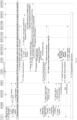
- the terminal is in an idle state (idle state), and the terminal re-accesses the 5G network from the 4G network, and the N26 interface is supported between the AMF in the 5G network and the MME in the 4G network, so that signaling can be exchanged.
- the terminal after re-accessing the 5G network from the 4G network, the terminal needs to perform registration and re-select an AMF and an AM-PCF, which may involve a problem of establishing a new terminal policy association. In this way, there is a conflict with the terminal policy association in the original 4G to some extent.
- This embodiment of the application can resolve the above problem.
- the method for processing a terminal policy association in this embodiment of this application includes:
- step 11 to step 14 the initial AMF performs different operations, depending on the old AMF (the original AMF of the UE in 5G), the new AM-PCF (the newly selected AMF), and the old AM-PCF (the original AM-PCF of the UE in 5G), which is described by using examples below.
- Method 1 Refer to FIG. 17 (the AMF is changed and the AM-PCF remains unchanged). If the new AMF after the UE re-accesses the 5G network is different from the old AMF in the 5G network, and the newly selected AM-PCF is the same as the old AM-PCF in the 5G network, then the new AMF may trigger the AM-PCF based on the obtained first information to modify the terminal policy association (through Npcf_UEPolicyControl_Update request) to change the old AMP to the new AMF; and also triggers the AM-PCF to release or deactivate the terminal policy association with the SM-PCF.
- Method 2 Refer to FIG. 18 (the AMF is changed and the AM-PCF remains unchanged).
- the new AMF triggers a terminal policy association termination request (UE policy association termination) (through Npcf_UEPolicyControl_Delete request) to the AM-PCF.
- the terminal policy association termination request carries information such as an association ID and a UE SUPI, that is, the new AMF requests the AM-PCF to release the original terminal policy association in the 5G network first.
- the new AMF triggers a terminal policy association establishment request (UE policy association establishment) to the AM-PCF (through Npcf_UEPolicyControl_Create request) to establish a new terminal policy association.
- the AM-PCF is triggered to release or deactivate the terminal policy association with the SM-PCF in the 4G network.
- Method 3 Refer to FIG. 19 (the AMF is changed and the AM-PCF remains unchanged).
- the new AMF informs the old AMF serving the UE in 4G to trigger a terminal policy association termination request (UE policy association termination), so as to release the original terminal policy association of the terminal in 5G.
- UE policy association termination UE policy association termination
- the new AMF triggers the AM-PCF to establish a new terminal policy association (through Npcf_UEPolicyControl_Create request).
- the AM-PCF is triggered to release or deactivate the terminal policy association with the SM-PCF in the 4G network.
- Method 4 Refer to FIG. 20 (the AMF is changed and the AM-PCF remains unchanged).
- the new AMF triggers a request to the MME to indicate the MME, and then the MME indicates the old AMF to trigger release of the original terminal policy association of the terminal in 5G.
- the new AMF triggers the AM-PCF to establish a new terminal policy association (through Npcf_UEPolicyControl_Create request).
- the AM-PCF is triggered to release or deactivate the terminal policy association with the SM-PCF in the 4G network.
- Method 5 The new AMF triggers the AM-PCF to establish a new terminal policy association, so that the UE simultaneously maintains three terminal policy associations in the same AM-PCF:
- Method 5-1 In an embodiment, refer to FIG. 21 (the AMF is changed and the AM-PCF remains unchanged). After the AM-PCF establishes a third terminal policy association in the 5G network for the UE, there are three associations, and an association with the SM-PCF (second terminal policy association) is released or deactivated.
- the new AMF triggers a registration request to the UDM+HSS (such as Nudm_UECM_Registration update) (step 4).
- the UDM+HSS triggers a deregistration notification (such as Nudm_UECM_DeregistrationNotification) to the old AMF (step 6)
- the old AMF triggers UE policy association termination (Npcf_UEPolicyControl_Delete) to the AM-PCF according to the deregistration notification to release the first terminal policy association (steps 7 and 8).
- Method 5-2 In an embodiment, refer to FIG. 22 (the AMF is changed and the AM-PCF remains unchanged).
- the UDM+HSS triggers the old AMF to release the first terminal policy association (step 3).
- the UDM+HSS informs the new AMF to establish a third terminal policy association for the UE.
- the new AMF triggers the AM-PCF to release or deactivate the terminal policy association with the SM-PCF in the 4G network (steps 8 and 9).
- Method 5-3 Refer to FIG. 28B (the AMF is changed and the AM-PCF remains unchanged).
- the AMF informs the SM-PCF to release or deactivate the second terminal policy association with the AM-PCF for the terminal, and then the AMF triggers to establish a new third terminal policy association to the AM-PCF. That is, the AMF triggers the SM-PCF to execute the method, where a signaling relationship is shown in FIG. 28B .
- the AMF can directly indicate the SM-PCF to perform terminal policy association termination, and the information such as the ID and IP address of the SM-PCF is provided by the MME.
- the AMF may indicate the SM-PCF to perform terminal policy association termination through a path of the MME, the S-GW, the SMF+PGW-C, and the SM-PCF.
- the AMF sends a context request (context request) to the MME, where the context request contains an indication, indicating to deactivate or release the second terminal policy association, and the context request further includes index information of the AM-PCF (such as an AM-PCF ID or an AM-PCF IP address) and a second terminal policy association ID (that is, a UE policy association ID) and/or UE SUPI.
- the MME triggers a create session request (create session request) to the S-GW, and the above information (the indication, the index information of the AM-PCF, or the like) is also included in the create session request.
- the S-GW triggers a modify bearer request (modify bearer request) to the SMF+PGW-C, where the modify bearer request further includes the above information (the indication, the index information of the AM-PCF, or the like). Then, the SMF+PGW-C triggers a session policy association modification request SM policy association modification (Npcf_SMPolicyControl_Update) to the SM-PCF, and the session policy association modification request also contains the indication information and the index information of AM-PCF, that is, indicating the SM-PCF to deactivate or release the second terminal policy association.
- modify bearer request further includes the above information (the indication, the index information of the AM-PCF, or the like).
- the SMF+PGW-C triggers a session policy association modification request SM policy association modification (Npcf_SMPolicyControl_Update) to the SM-PCF, and the session policy association modification request also contains the indication information and the index information of AM-PCF, that is, indicating the SM-
- the SM-PCF triggers association deactivation or release: for example, releasing the second terminal policy association through a terminal policy association termination request UE policy association termination (Npcf_UEPolicyControl_Delete), or triggering a terminal policy modification request UE policy association modification (Npcf_UEPolicyControl _Update) to modify the second terminal policy association.
- Npcf_UEPolicyControl_Delete a terminal policy association termination request UE policy association termination
- Npcf_UEPolicyControl_Update a terminal policy modification request UE policy association modification
- the AM-PCF remains unchanged after the terminal re-accesses the 5G network.
- the following describes the method for processing a terminal policy association in a case that the AM-PCF is changed after the terminal re-accesses the 5G network.
- the AMF may obtain a terminal policy association ID (the terminal policy association ID is sent by the SM-PCF to the SMF+PGW-C, the SMF+PGW-C sends it to the S-GW, the S-GW sends it to the MME, and finally the MME sends it to the new AMF) of the terminal under the 4G network. That is, the AMF triggers the old AM-PCF to release the terminal policy association of the terminal under the 4G network in the following process, which is indicated based on a policy association ID sent by the SM-PCF.
- Method 1 Refer to FIG. 23 (the AMF is changed and the AM-PCF is changed).
- the new AMF triggers a terminal policy association termination request (UE policy association termination) (through Npcf_UEPolicyControl_Delete request) to the old AM-PC (steps 2 and 3) to release the first terminal policy association and the second terminal policy association.
- the new AMF triggers a UE policy association create to the new AM-PCF (through Npcf_UEPolicyControl_Update request) to establish a third terminal policy association (steps 4 and 5).
- Method 2 Refer to FIG. 24 (the AMF is changed and the AM-PCF is changed).
- the new AMF first indicates the old AMF to trigger a terminal policy association termination (UE policy association termination) (through Npcf_UEPolicyControl_Delete request) to the old AM-PCF (Step 2).
- the terminal policy association termination carries information such as an association ID and a UE SUPI, that is, the new AMF requests the old AMF, and then the old AMF requests the old AM-PCF to release the first terminal policy association; and after the old AM-PCF releases the first terminal policy association, the old AM-PCF releases the second terminal policy association or deactivates the second terminal policy association.
- the new AMF triggers UE policy association establishment to the new AM-PCF (through Npcf_ UEPolicyControl_Create request) to establish a third terminal policy association (steps 6 and 7).
- Method 3 Refer to FIG. 25 (the AMF is changed and the AM-PCF is changed).
- the new AMF triggers a request to the MME, indicating that the MME supports the old AMF to trigger release of the first terminal policy association.
- the new AMF triggers the new AM-PCF to establish a UE policy association to the new AM-PCF to establish a third terminal policy association, and then triggers the old AM-PCF to deactivate or release the second terminal policy association (after step 8, not shown).
- Method 4 The new AMF triggers to establish a new UE policy association (Third Terminal Policy Association) to the new AM-PCF, so that the UE maintains three terminal policy associations in two AM-PCFs, namely:
- Method 4-1 Refer to FIG. 26 (the AMF is changed and the AM-PCF is changed).
- the first terminal policy association is released; the second terminal policy association is designed to be inactive (inactive), and the third terminal policy association is designed to be active (active).
- Method 4-2 Refer to FIG. 27 (the AMF is changed and the AM-PCF is changed).
- the new AMF triggers the new AM-PCF to establish the third terminal policy association for the UE (steps 2 and 3)
- the new AMF triggers a registration request (such as Nudm_UECM_Registration) to the UDM+HSS (steps 4 and 5).
- the UDM+HSS triggers a deregistration notification (such as Nudm_UECM_DeregistrationNotification) to the old AMF, and the old AMF triggers a UE policy association termination (Npcf_UEPolicyControl_Delete) to the old AM-PCF according to the deregistration notification, so as to release the first terminal policy association and the second terminal policy association.
- a deregistration notification such as Nudm_UECM_DeregistrationNotification
- Npcf_UEPolicyControl_Delete UE policy association termination
- Method 4-3 Refer to FIG. 28 (the AMF is changed and the AM-PCF is changed).
- the UDM+HSS triggers the old AMF to release the first terminal policy association; and after the first terminal policy association is released, the new AMF triggers the new AMF to establish a third terminal policy association for the UE.
- Method 4-4 Refer to FIG. 28B (the AMF is changed and the AM-PCF is changed).
- the AMF informs the SM-PCF to release or deactivate the second terminal policy association of the old AM-PCF for the terminal, and then the AMF triggers to establish a new third terminal policy association to the new AM-PCF. That is, the AMF triggers the SM-PCF to execute the method, where a signaling relationship is shown in FIG. 28B .
- the AMF directly indicates the SM-PCF to perform terminal policy association termination, and the information such as the ID and IP address of the SM-PCF is provided by the MME.
- the AMF may indicate the SM-PCF to perform terminal policy association termination through a path of the MME, the S-GW, the SMF+PGW-C, and the SM-PCF.
- the AMF sends a context request (context request) to the MME, where the context request contains an indication, indicating to deactivate or release the second terminal policy association, and the context request further includes index information of the AM-PCF (such as an AM-PCF ID or an AM-PCF IP address) and a second terminal policy association ID (that is, a UE policy association ID) and/or UE SUPI.
- the MME triggers a create session request (create session request) to the S-GW, and the above information (the indication, the index information of the AM-PCF, or the like) is also included in the create session request.
- the S-GW triggers a modify bearer request (modify bearer request) to the SMF+PGW-C, where the modify bearer request further includes the above information (the indication, the index information of the AM-PCF, or the like). Then, the SMF+PGW-C triggers a session policy association modification request SM policy association modification (Npcf_SMPolicyControl _Update) to the SM-PCF, and the session policy association modification request also contains the indication information and the index information of AM-PCF, that is, indicating the SM-PCF to deactivate or release the second terminal policy association.
- SM policy association modification SM policy association modification
- the SM-PCF triggers association deactivation or release: for example, releasing the second terminal policy association through a terminal policy association termination request UE policy association termination (Npcf_UEPolicyControl_Delete), or triggering a terminal policy modification request UE policy association modification (Npcf_UEPolicyControl _Update) to modify the second terminal policy association.
- Npcf_UEPolicyControl_Delete a terminal policy association termination request UE policy association termination
- Npcf_UEPolicyControl_Update a terminal policy modification request UE policy association modification
- Step 15 The UDM+HSS may send a cancel location (cancel location) to the MME or the initial AMF, and the MME or the initial AMF may trigger the old AMF to release the first terminal policy association (which is sent to the initial AMF in FIG. 16 ).
- the UDM+HSS sends a cancel location (cancel location) to the MME, and the MME triggers the old AMF to release the first terminal policy association.
- Step 16 The initial AMF sends a cancel location ack to the UDM+HSS.
- Step 17 The initial AMF sends a registration accept (registration Accept) to the UE.
- Step 18 The UE sends a registration complete (registration complete) to the initial AMF.
- the terminal accesses the 4G network from the 5G network, and the N26 interface is not supported between the AMF in the 5G network and the MME in the 4G network, so that signaling cannot be exchanged.
- the terminal performs single registration, and the so-called single registration means that the terminal is allowed to be registered with either the 4G network or the 5G network.
- the so-called single registration means that the terminal is allowed to be registered with either the 4G network or the 5G network.
- information related to the registration of the 5G network may be released, and the AMF cannot update URSP rules to the UE through a 5G NAS message.
- the method for processing a terminal policy association in this embodiment of this application includes:
- the AMF receives a deregistration notification from the UDM. If the deregistration notification contains the first indication information, the AMF does not perform UE policy association termination, so that the terminal policy association is retained. In this way, the AM-PCF always provides URSP rules for the UE.
- the terminal accesses the 4G network from the 5G network, and the N26 interface is not supported between the AMF in the 5G network and the MME in the 4G network, so that signaling cannot be exchanged.
- the terminal performs single registration, and the so-called single registration means that the terminal is allowed to be registered with either the 4G network or the 5G network.
- the so-called single registration means that the terminal is allowed to be registered with either the 4G network or the 5G network.
- information related to the registration of the 5G network may be released, and the AMF cannot update URSP rules to the UE through a 5G NAS message.
- Step 12 and step 12a After the SMF+PGW-C triggers SM policy association modification to the SM-PCF, the SM-PCF is responsible for finding one AMF, and then triggers the AMF to obtain URSP rules.
- Embodiment 6 of the present invention trigger conditions for updating URSP rules
- the triggering conditions for updating URSP rules may include at least one of the following:
- Policy control request triggers related to the AMF/MME and 3GPP access types Policy control request trigger Policy Control Request Trigger
- Description Description
- Condition for reporting Condition for reporting
- Location change Location change (Location change) (tracking area)
- Location change (Location change) (tracking area)
- PCF AM Policy, UE Policy
- Change of UE presence in presence reporting area (Change of UE presence in Presence Reporting Area)
- the UE is entering/leaving a presence reporting area.
- PCF (AM Policy, UE Policy)
- PLMN change PLMN change
- the UE has moved to another operators' domain.
- PCF UE Policy
- Connectivity state changes The connectivity state of UE is changed.
- PCF UE Policy
- Evolved packet system interworking EPS interworking
- Interworking between the UE and the EPS requires URSP rules; and a context request is received from the MME.
- PCF UE Policy
- the UE performs TAU or attach in the 4G network After accessing the 4G coverage, the terminal performs TAU or attach, and then triggers pushing or updating URSP rules.
- PCF UE Policy
- the execution subject may be an apparatus for processing a terminal policy association.
- the apparatus for processing a terminal policy association provided in the embodiments of this application is described by using the method for processing a terminal policy association being executed by the apparatus for processing a terminal policy association as an example.
- An embodiment of this application further provides an apparatus 350 for processing a terminal policy association, which includes: a triggering module 351, configured to trigger a first operation after a terminal re-accesses a first network from a second network, where the first operation includes one of the following:
- the terminal in the processing method in which a terminal policy association is provided for the terminal re-accessing the first network from the second network, the terminal can still obtain terminal policy information based on the terminal policy association provided by the network side after re-accessing the first network from the second network.
- the triggering module 351 is configured to obtain first information; and trigger the first operation based on the first information; the first information includes at least one of the following:
- the index information of the old first communication device includes at least one of the following: a first communication device ID and a first communication device address; and/or, the index information of the old third communication device includes at least one of the following: a third communication device ID and a third communication device address.
- the triggering module 351 is configured to receive the first information sent by a second communication device or a fourth communication device or the old first communication device;
- the triggering a first operation includes at least one of the following:
- the triggering the first operation includes: triggering the third communication device to perform one of the following:
- the indicating the seventh communication device to release or deactivate the second terminal policy association includes one of the following: the first communication device directly indicates the seventh communication device to release or deactivate the second terminal policy association; and the first communication device indicates the seventh communication device through the second communication device to release or deactivate the second terminal policy association.
- the seventh communication device is located in the second network, and the seventh communication device is used to provide session policy services for a terminal in the second network.
- the apparatus for processing a terminal policy association in this embodiment of the application may be an electronic device, such as an electronic device with an operating system, or a component in the electronic device, such as an integrated circuit or a chip.
- the apparatus for processing a terminal policy association provided in this embodiment of this application can implement the processes implemented in the method embodiment in FIG. 2 , with the same technical effects achieved. To avoid repetition, details are not described herein again.
- An embodiment of this application further provides an apparatus 360 for processing a terminal policy association, including: a triggering module 361, configured to trigger a second operation after a terminal re-accesses a second network from a first network, where the second operation includes one of the following:
- the terminal in the processing method in which a terminal policy association is provided for the terminal accessing the second network from the first network, the terminal can still obtain terminal policy information based on the terminal policy association provided by the network side after accessing the second network from the first network.
- the apparatus 360 for processing a terminal policy association further includes:
- the apparatus 360 for processing a terminal policy association further includes: a second sending module, configured to send first information to a second communication device or a fourth communication device, where the first information includes at least one of the following:
- the index information of the first communication device includes at least one of the following: a first communication device ID and a first communication device address; and/or, the index information of the third communication device includes at least one of the following: a third communication device ID and a third communication device address.
- the apparatus 360 for processing a terminal policy association further includes:
- the apparatus 360 for processing a terminal policy association further includes:
- the apparatus 360 for processing a terminal policy association further includes: an obtaining module, configured to obtain a trigger condition for triggering the second operation, where the trigger condition includes at least one of the following:
- An embodiment of this application further provides an apparatus 370 for processing a terminal policy association, including: a notification module 371, configured to trigger a third operation after a terminal re-accesses a first network from a second network, where the third operation includes at least one of the following:
- the terminal in the processing method in which a terminal policy association is provided for the terminal re-accessing the first network from the second network, the terminal can still obtain terminal policy information based on the terminal policy association provided by the network side after re-accessing the first network from the second network.
- the notification module 371 is configured to trigger the third operation according to an indication of the new first communication device; where the new first communication device is a communication device that maintains the terminal policy association for the terminal in the first network after the terminal re-accesses the first network from the second network.
- the notification module 371 is configured to: after the terminal re-accesses the first network from the second network, indicate the old first communication device to trigger a third operation, where the third operation includes at least one of the following:
- the index information of the old first communication device includes at least one of the following: a first communication device ID and a first communication device address; and/or, the index information of the old third communication device includes at least one of the following: a third communication device ID and a third communication device address.
- the apparatus 370 for processing a terminal policy association further includes:
- An embodiment of this application further provides an apparatus 380 for processing a terminal policy association, including: a first sending module 381, configured to send an update location request to a fourth communication device after a terminal accesses a second network from a first network, where the update location request carries first indication information, and the first indication information is used to indicate one of the following:
- the terminal in the processing method in which a terminal policy association is provided for the terminal accessing the second network from the first network, the terminal can still obtain terminal policy information based on the terminal policy association provided by the network side after accessing the second network from the first network.
- the apparatus 380 for processing a terminal policy association further includes:
- the apparatus 380 for processing a terminal policy association further includes:
- the apparatus 380 for processing a terminal policy association further includes: a fourth receiving module, configured to receive first information sent by the old first communication device, where the first information includes at least one of the following:
- the index information of the old first communication device includes at least one of the following: a first communication device ID and a first communication device address; and/or, the index information of the old third communication device includes at least one of the following: a third communication device ID and a third communication device address.
- An embodiment of this application further provides an apparatus 390 for processing a terminal policy association, including: an execution module 391, configured to perform a first operation after a terminal re-accesses a first network from a second network, where the first operation includes one of the following:
- the terminal in the processing method in which a terminal policy association is provided for the terminal re-accessing the first network from the second network, the terminal can still obtain terminal policy information based on the terminal policy association provided by the network side after re-accessing the first network from the second network.
- the execution module 391 is configured to perform the first operation based on trigger information sent by a first communication device; where the first communication device is a communication device that maintains a terminal policy association for the terminal in the first network.
- the trigger information includes at least one of the following:
- An embodiment of this application further provides an apparatus 400 for processing a terminal policy association, including: an execution module 401, configured to perform a second operation after a terminal re-accesses a second network from a first network, where the second operation includes one of the following:
- the terminal in the processing method in which a terminal policy association is provided for the terminal accessing the second network from the first network, the terminal can still obtain terminal policy information based on the terminal policy association provided by the network side after accessing the second network from the first network.
- the execution module 401 is configured to perform the second operation based on the trigger information sent by the first communication device; where the first communication device is located in the first network, and is a communication device that maintains a terminal policy association for the terminal in the first network before the terminal accesses the second network.
- the trigger information includes at least one of the following:
- An embodiment of this application further provides an apparatus 410 for processing a terminal policy association, including:
- the terminal in the processing method in which a terminal policy association is provided for the terminal re-accessing the first network from the second network, the terminal can still obtain terminal policy information based on the terminal policy association provided by the network side after re-accessing the first network from the second network.
- the sending module 411 is configured to send the trigger information to a second communication device, a new first communication device, or an old first communication device;
- the apparatus 410 for processing a terminal policy association further includes: a second sending module, configured to send the first information to a new first communication device, where the first information includes at least one of the following:
- the index information of the old first communication device includes at least one of the following: a first communication device ID and a first communication device address; and/or, the index information of the old third communication device includes at least one of the following: a third communication device ID and a third communication device address.
- An embodiment of this application further provides an apparatus 420 for processing a terminal policy association, including: a receiving module 421, configured to receive an update location request sent by a second communication device, after a terminal accesses a second network from a first network, where the update location request carries first indication information, and the first indication information is used to indicate one of the following:
- the terminal in the processing method in which a terminal policy association is provided for the terminal accessing the second network from the first network, the terminal can still obtain terminal policy information based on the terminal policy association provided by the network side after accessing the second network from the first network.
- an embodiment of this application further provides a communication device 430, including a processor 431 and a memory 432, and the memory 432 stores a program or instructions capable of running on the processor 431.
- the steps of the foregoing embodiments of the method for processing a terminal policy association may be implemented, with the same technical effects achieved. To avoid repetition, details are not described herein again.
- an embodiment of this application further provides a communication device.
- the communication device 440 includes a processor 441, a network interface 442, and a memory 443.
- the network interface 442 is, for example, a common public radio interface (common public radio interface, CPRI).
- the communication device 440 further includes instructions or programs stored in the memory 443 and capable of running on the processor 441, and the processor 441 calls the instructions or programs in the memory 443 to execute the methods performed by the modules shown in FIG. 35, FIG. 36, FIG. 37 , FIG. 38, FIG. 39, FIG. 40 , FIG. 41, or FIG. 42 , with the same technical effects achieved. To avoid repetition, details are not described herein again.
- An embodiment of this application further provides a readable storage medium, where the readable storage medium stores a program or instructions, and when the program or the instructions are executed by a processor, the processes of the foregoing embodiments of the method for processing a terminal policy association may be implemented, with the same technical effects achieved. To avoid repetition, details are not described herein again.
- the processor is a processor in the terminal described in the above embodiments.
- the readable storage medium includes a computer-readable storage medium, for example, a computer read only memory ROM, a random access memory RAM, a magnetic disk, or an optical disc.
- An embodiment of this application further provides a chip, where the chip includes a processor and a communication interface.
- the communication interface is coupled to the processor, and the processor is configured to run a program or instructions to implement the processes of the foregoing embodiments of the method for processing a terminal policy association, with the same technical effects achieved. To avoid repetition, details are not described herein again.
- the chip mentioned in the embodiments of this application may also be referred to as a system-level chip, a system chip, a chip system, a system-on-chip, or the like.
- An embodiment of this application further provides a computer program/program product, where the computer program/program product is stored in a storage medium, and when being executed by at least one processor, the computer program/program product is configured to implement the processes of the foregoing embodiments of the method for processing a terminal policy association, with the same technical effects achieved. To avoid repetition, details are not repeated herein.
- An embodiment of this application further provides a communication system, including: a first communication device, a second communication device, a third communication device, and a fourth communication device, where the first communication device may be configured to perform the steps of the method for processing a terminal policy association as performed by the first communication device; the second communication device may be configured to perform the steps of the method for processing a terminal policy association as performed by the second communication device; the third communication device may be configured to perform the steps of the method for processing a terminal policy association as performed by the third communication device, and the fourth communication device may be configured to perform the steps of the method for processing a terminal policy association as performed by the fourth communication device.
- the computer software product is stored in a storage medium (such as a ROM/RAM, a magnetic disk, or an optical disc), and includes several instructions for indicating a terminal (which may be a mobile phone, a computer, a server, an air conditioner, a network device, or the like) to perform the methods described in the embodiments of this application.
- a storage medium such as a ROM/RAM, a magnetic disk, or an optical disc
Landscapes
- Engineering & Computer Science (AREA)
- Computer Networks & Wireless Communication (AREA)
- Signal Processing (AREA)
- Databases & Information Systems (AREA)
- Mobile Radio Communication Systems (AREA)
Applications Claiming Priority (3)
| Application Number | Priority Date | Filing Date | Title |
|---|---|---|---|
| CN202210806893 | 2022-07-08 | ||
| CN202310029023.4A CN117376139A (zh) | 2022-07-08 | 2023-01-09 | 终端策略关联的处理方法、装置及通信设备 |
| PCT/CN2023/105732 WO2024008082A1 (zh) | 2022-07-08 | 2023-07-04 | 终端策略关联的处理方法、装置及通信设备 |
Publications (2)
| Publication Number | Publication Date |
|---|---|
| EP4554166A1 true EP4554166A1 (de) | 2025-05-14 |
| EP4554166A4 EP4554166A4 (de) | 2025-12-17 |
Family
ID=89404732
Family Applications (1)
| Application Number | Title | Priority Date | Filing Date |
|---|---|---|---|
| EP23834849.4A Pending EP4554166A4 (de) | 2022-07-08 | 2023-07-04 | Verfahren und vorrichtung zur verarbeitung von ue-richtlinienzuordnungen und kommunikationsvorrichtung |
Country Status (4)
| Country | Link |
|---|---|
| US (1) | US20250151005A1 (de) |
| EP (1) | EP4554166A4 (de) |
| CN (1) | CN117376139A (de) |
| WO (1) | WO2024008082A1 (de) |
Family Cites Families (6)
| Publication number | Priority date | Publication date | Assignee | Title |
|---|---|---|---|---|
| CN118338424A (zh) * | 2018-04-05 | 2024-07-12 | 三星电子株式会社 | 用于无线通信系统中用户设备的策略管理的设备和方法 |
| WO2021046803A1 (en) * | 2019-09-12 | 2021-03-18 | Telefonaktiebolaget Lm Ericsson (Publ) | Method, device, computer-readable storage and carrier for policy control |
| CN111132123B (zh) * | 2019-12-31 | 2023-04-07 | 中国联合网络通信集团有限公司 | 策略控制的路由方法、装置及系统 |
| GB202000125D0 (en) * | 2020-01-06 | 2020-02-19 | Samsung Electronics Co Ltd | Improvements in and relating to dynaminc path selection |
| CN114071697B (zh) * | 2020-08-04 | 2025-10-14 | 华为技术有限公司 | 终端接入公私网的方法及通信装置 |
| CN114513799A (zh) * | 2020-11-17 | 2022-05-17 | 中国移动通信有限公司研究院 | 一种策略通知方法、设备及存储介质 |
-
2023
- 2023-01-09 CN CN202310029023.4A patent/CN117376139A/zh active Pending
- 2023-07-04 EP EP23834849.4A patent/EP4554166A4/de active Pending
- 2023-07-04 WO PCT/CN2023/105732 patent/WO2024008082A1/zh not_active Ceased
-
2025
- 2025-01-08 US US19/013,230 patent/US20250151005A1/en active Pending
Also Published As
| Publication number | Publication date |
|---|---|
| CN117376139A (zh) | 2024-01-09 |
| US20250151005A1 (en) | 2025-05-08 |
| EP4554166A4 (de) | 2025-12-17 |
| WO2024008082A1 (zh) | 2024-01-11 |
Similar Documents
| Publication | Publication Date | Title |
|---|---|---|
| EP3697022B1 (de) | Gewinnung von informationen über eine für ein benutzergerät (ue) erlaubte netzwerkschicht durch eine mobilitätsverwaltungseinheit | |
| US20250142455A1 (en) | Information processing method and apparatus, communication device, and readable storage medium | |
| US12520206B2 (en) | User equipment (UE) policy for selection of radio access technology (RAT) type for mobility from non-3GPP to 3GPP accesses | |
| CN116567604A (zh) | 灾难漫游的控制方法、装置、终端及网络侧设备 | |
| CN118175529A (zh) | 通信方法、终端及核心网功能 | |
| CN117560790A (zh) | 会话建立方法、装置、通信设备及网元 | |
| CN118175530A (zh) | 通信方法、终端及核心网功能 | |
| US20250175878A1 (en) | Traffic routing method and apparatus, and device | |
| EP4554166A1 (de) | Verfahren und vorrichtung zur verarbeitung von ue-richtlinienzuordnungen und kommunikationsvorrichtung | |
| EP4429279A1 (de) | Adressierungsverfahren und -vorrichtung sowie vorrichtung | |
| WO2023208044A1 (zh) | 小区切换方法、装置及网络侧设备 | |
| WO2023213236A1 (zh) | 策略配置方法及装置 | |
| WO2023143508A1 (zh) | Ip地址确定方法及装置、标识确定方法及装置、及网元 | |
| CN116828546A (zh) | 非3gpp设备的会话通道建立方法、装置及设备 | |
| CN117633851A (zh) | 设备关联方法及装置 | |
| US20250365351A1 (en) | Method for obtaining information, communication device, and storage medium | |
| US20250220738A1 (en) | Parameter obtaining method and apparatus, first network function, and second network function | |
| US20250211974A1 (en) | Target information obtaining method and apparatus, information obtaining method and apparatus, and device | |
| CN115776713B (zh) | 网络接入方法、终端及网络侧设备 | |
| CN116567777B (zh) | 接入参数使用方法、终端及网络侧 | |
| US20260101166A1 (en) | Method and apparatus for processing emergency call, and network-side device | |
| CN115883511B (zh) | Dns配置的处理方法、装置、通信设备及可读存储介质 | |
| CN117692978A (zh) | 终端策略的处理方法、装置及通信设备 | |
| CN118945741A (zh) | 用户设备策略关联方法、装置、终端及网络设备 | |
| CN117015002A (zh) | 策略获取方法及装置 |
Legal Events
| Date | Code | Title | Description |
|---|---|---|---|
| STAA | Information on the status of an ep patent application or granted ep patent |
Free format text: STATUS: THE INTERNATIONAL PUBLICATION HAS BEEN MADE |
|
| PUAI | Public reference made under article 153(3) epc to a published international application that has entered the european phase |
Free format text: ORIGINAL CODE: 0009012 |
|
| STAA | Information on the status of an ep patent application or granted ep patent |
Free format text: STATUS: REQUEST FOR EXAMINATION WAS MADE |
|
| 17P | Request for examination filed |
Effective date: 20250207 |
|
| AK | Designated contracting states |
Kind code of ref document: A1 Designated state(s): AL AT BE BG CH CY CZ DE DK EE ES FI FR GB GR HR HU IE IS IT LI LT LU LV MC ME MK MT NL NO PL PT RO RS SE SI SK SM TR |
|
| RIC1 | Information provided on ipc code assigned before grant |
Ipc: H04L 41/0894 20220101AFI20250819BHEP Ipc: H04W 8/08 20090101ALI20250819BHEP Ipc: H04W 60/06 20090101ALI20250819BHEP |
|
| DAV | Request for validation of the european patent (deleted) | ||
| DAX | Request for extension of the european patent (deleted) | ||
| A4 | Supplementary search report drawn up and despatched |
Effective date: 20251119 |
|
| RIC1 | Information provided on ipc code assigned before grant |
Ipc: H04L 41/0894 20220101AFI20251113BHEP Ipc: H04W 8/08 20090101ALI20251113BHEP Ipc: H04W 60/06 20090101ALI20251113BHEP |