EP4553721A1 - Model generation apparatus, model generation method, and program - Google Patents
Model generation apparatus, model generation method, and program Download PDFInfo
- Publication number
- EP4553721A1 EP4553721A1 EP23835168.8A EP23835168A EP4553721A1 EP 4553721 A1 EP4553721 A1 EP 4553721A1 EP 23835168 A EP23835168 A EP 23835168A EP 4553721 A1 EP4553721 A1 EP 4553721A1
- Authority
- EP
- European Patent Office
- Prior art keywords
- model
- individual
- base
- type
- generation apparatus
- Prior art date
- Legal status (The legal status is an assumption and is not a legal conclusion. Google has not performed a legal analysis and makes no representation as to the accuracy of the status listed.)
- Pending
Links
Images










Classifications
-
- G—PHYSICS
- G06—COMPUTING OR CALCULATING; COUNTING
- G06N—COMPUTING ARRANGEMENTS BASED ON SPECIFIC COMPUTATIONAL MODELS
- G06N20/00—Machine learning
Definitions
- the present disclosure relates to a model generation apparatus, a model generation method, and a program.
- machine learning models have come to be used for various purposes.
- a machine learning model is used on different computing resources depending on the usage environment or the like.
- one machine learning model may be executed by a Graphics Processing Unit (GPU) or the like having a high computing capacity
- another machine learning model may be executed by an edge computer or the like having only a limited computing capacity.
- GPU Graphics Processing Unit
- a machine learning model may be built depending on the available computing resources. That is, a GPU, a Central Processing Unit (CPU), a field-programmable gate array (FPGA), or the like is used as a device type that causes a machine learning model to operate, and the specifications, the operation speed, the memory capacity, and the like of each device type may be different. Therefore, it is necessary to design a machine learning model corresponding to each device type. For example, different machine learning models needs to be separately built for the same task according to device types, and a machine learning model needs to be separately trained and generated for each device type that executes the same task.
- a GPU Central Processing Unit
- FPGA field-programmable gate array
- one object of the present disclosure is to provide a technique for efficiently generating a machine learning model for each device type.
- An aspect of the present disclosure relates to a model generation apparatus including: a model information acquirer that acquires base model information indicating a base model; and a model processor that generates an individual type model corresponding to each of a plurality of device types based on the base model information.
- a machine learning model for each device type can be efficiently generated.
- a model generation apparatus that generates an individual machine learning model for each device type (hereinafter referred to as an "individual type model”) from a machine learning model (hereinafter referred to as a "base model”) common to target device types (e.g., a GPU, a CPU, and an FPGA).
- an individual type model for each device type
- a base model common to target device types (e.g., a GPU, a CPU, and an FPGA).
- a model generation apparatus upon acquisition of base model information indicating a base model (e.g., architecture information and parameter information on the base model), a model generation apparatus according to an embodiment described later executes model compression (e.g., pruning and quantization) on the base model on the basis of the acquired base model information to generate an individual type model adapted to a device type.
- model compression e.g., pruning and quantization
- Fig. 1 is a schematic diagram illustrating the model generation system 10 according to an embodiment of the present disclosure.
- the model generation system 10 includes a model database (DB) 20, a terminal 30, and a model generation apparatus 100.
- DB model database
- the terminal 30 when a user instructs the terminal 30 to generate an individual type model corresponding to a particular device type (e.g., GPU, CPU, FPGA, etc) from a base model for a particular task, the terminal 30 sends the instruction to the model generation apparatus 100.
- the model generation apparatus 100 acquires, from the model DB 20, base model information indicating architecture information, parameter information, and the like of a base model for the task. Then, the model generation apparatus 100 generates an individual type model corresponding to the specification, the calculation capability, and the like of the device type on the basis of the acquired base model information.
- the generated individual type model may be stored in the model DB 20 and notified to the terminal 30 as an operation result.
- a machine learning model corresponding to a device type is generated by individually training a machine learning model prepared for each device type.
- a machine learning model prepared for each device type.
- different individual-type models such as a GPU-oriented model, a 1-oriented model, an FPGA-oriented model, an ARMCPU-oriented model, etc.
- each individual-type model is separately trained by the training data through a normal training process.
- the individual type model for each device type may be designed to have a model architecture corresponding to a specification, a calculation capability, and the like of the device type, and may be trained by the training data.
- an individual type model for each device type may be designed to have a specific model architecture, trained by training data, and then compressed by means of weight reduction and/or quantization correspondingly to a specification, a computing capability, and the like of the device type.
- a machine learning model common to device types is designed and trained as a base model for a particular task. Then, an individual type model for each device type is generated by weight reduction and/or quantizing the base model correspondingly to the specification, computational capability, and the like of the device type.
- a common base model needs to be trained, thus allowing a reduction in the cost required for the training process.
- the base model is trained in advance by a training apparatus (not illustrated) different from the model generation apparatus 100, but the model generation system 10 according to the present disclosure is not limited thereto.
- the model generation apparatus 100 may train and hold a base model.
- the model generation apparatus 100 acquires the base model information indicating the base model from the model DB 20 in the illustrated example, the present disclosure is not limited thereto.
- the model generation apparatus 100 may acquire and hold the base model itself.
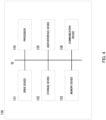
- the model generation apparatus 100 may be implemented by a computing device such as a server, a personal computer (PC), a smartphone, or a tablet and may have, for example, a hardware configuration as illustrated in Fig. 4 . That is, each of the model generation apparatuses 100 includes a drive device 101, a storage device 102, a memory device 103, a processor 104, a user interface (UI) device 105, and a communication device 106 that are connected to each other via a bus B.
- a computing device such as a server, a personal computer (PC), a smartphone, or a tablet and may have, for example, a hardware configuration as illustrated in Fig. 4 . That is, each of the model generation apparatuses 100 includes a drive device 101, a storage device 102, a memory device 103, a processor 104, a user interface (UI) device 105, and a communication device 106 that are connected to each other via a bus B.
- UI user interface
- a program or an instruction for realizing various functions and processes to be described later in the model generation apparatus 100 may be stored in a detachable storage medium such as a Compact Disk -Read Only Memory (CD-ROM) or a flash memory.
- a detachable storage medium such as a Compact Disk -Read Only Memory (CD-ROM) or a flash memory.
- CD-ROM Compact Disk -Read Only Memory
- the program or the instruction is installed in the storage device 102 or the memory device 103 from the storage medium via the drive device 101.
- the program or the instructions do not necessarily have to be installed from the storage medium, but may be downloaded from any external apparatus via a network or the like.
- the storage device 102 is implemented by a hard disk drive or the like, and stores, together with an installed program or instruction, a file, data, or the like used for execution of the program or instruction.
- the memory device 103 is realized by a random access memory, a static memory, or the like, and when a program or an instruction is activated, reads the program, the instruction, data, or the like from the storage device 102 and stores the read program, instruction, data, or the like.
- the storage device 102, the memory device 103, and removable storage media may be collectively referred to as non-transitory storage media (non-transitory storage medium).
- the processor 104 may be implemented by one or more central processing units (CPUs), graphics processing units (GPUs), processing circuits (processing circuitry), or the like, which may include one or more processor cores, and may perform various functions and processes of the model generation apparatus 100, which will be described below, according to programs and instructions stored in the memory device 103 and parameters required to execute the programs and instructions.
- CPUs central processing units
- GPUs graphics processing units
- processing circuits processing circuitry
- the user interface (UI) device 105 may include an input device such as a keyboard, a mouse, a camera, or a microphone, an output device such as a display, a speaker, a headset, or a printer, and an input/output device such as a touch panel, and implements an interface between a user and the model generation apparatus 100.
- the user operates the model generation apparatus 100 by operating a Graphical User Interface (GUI) displayed on a display or a touch panel with a keyboard, a mouse, or the like.
- GUI Graphical User Interface
- the communication device 106 is realized by various communication circuits that execute wired and/or wireless communication processing with an external apparatus or a communication network such as the Internet, a Local Area Network (LAN), or a cellular network.
- a communication network such as the Internet, a Local Area Network (LAN), or a cellular network.
- model generation apparatus 100 may be implemented by any other appropriate hardware configuration.
- Fig. 5 is a block diagram illustrating a functional configuration of the model generation apparatus 100 according to an embodiment of the present disclosure.
- the model generation apparatus 100 includes a model information acquirer 110 and a model processor 120.
- one or more functional units of the model information acquirer 110 and the model processor 120 may be realized by one or more processors 104 executing one or more programs or instructions.
- the model information acquirer 110 acquires base model information indicating a base model. More specifically, the model information acquirer 110 acquires, from the model DB 20, base model information such as architecture information and parameter information indicating a base model commonly used to generate the individual type models for the respective device types.
- the base model is a machine learning model trained for a particular task (e.g., object detection, abnormality detection, etc) and may be typically built for a device type (e.g., GPU, etc) with the highest computing capability, specification, etc.
- the model information acquirer 110 may acquire the base model itself instead of or in addition to the base model information such as the architecture information and the parameter information of the base model.
- the model information acquirer 110 may extract base model information such as architecture information and parameter information from the acquired base model itself.
- the model processor 120 generates an individual type model corresponding to the device type on the basis of the base model information. Specifically, the model processor 120 performs one or both of pruning and quantization on the base model on the basis of the base model information, and generates an individual type model adapted to the calculation capability, specification, and the like of a specific device type. Being able to generate an individual type model corresponding to each of a plurality of device types on the basis of the base model information may be, for example, being able to generate four individual type models of an individual type model for a GPU, an individual type model for an FPGA, an individual type model for an FPGA, and an individual type model for an ARMCPU, or being able to generate any one of the individual type models.
- the model processor 120 may perform pruning of the base model by deleting a connection and/or a node at a position where a weight between nodes in the base model is small. For example, the model processor 120 may perform pruning of the base model according to the amount of deletion of nodes and/or connections between nodes that corresponds to the computing capability, specification, and the like of a particular device type. Accordingly, it is possible to acquire the individual type model generated through weight reduction of the base model in accordance with the device type. Note that specific pruning may be executed in accordance with any known method.
- the model processor 120 may express the parameters of the base model (for example, the weights between the nodes, the parameters of the activation function, and the like) with a smaller number of bits. For example, when the weight between the nodes of the base model is expressed by 32 bits, the weight may be quantized to 8 bits or the like. Specifically, the model processor 120 may quantize the parameters of the base model according to a quantization level corresponding to the calculation capability, specification, or the like of a specific device type. Thus, it is possible to acquire an individual type model generated by quantizing the base model correspondingly to the device type. Note that specific quantization processes may be executed in accordance with any known method.
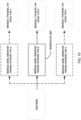
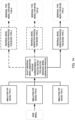
- Fig. 6 is a schematic diagram illustrating the individual model generation process according to an embodiment of the present disclosure.
- the model processor 120 executes the individual model generation process based on the base model information and generates the individual type model corresponding to the specific device type from the base model.
- the model processor 120 executes an individual model generation process corresponding to any device type and generates an individual type model corresponding to the device type from a common base model.
- Fig. 7 is a flowchart illustrating the individual model generation process according to an embodiment of the present disclosure.
- the individual model generation process may be performed by the model generation apparatus 100, and more specifically, may be implemented by executing one or more programs or instructions stored in one or more memory devices 103 by one or more processors 104 of the model generation apparatus 100.
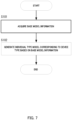
- the model generation apparatus 100 acquires base model information. More specifically, the model information acquirer 110 acquires base model information (for example, architecture information, parameter information, and the like) indicating a base model commonly used for a specific task (for example, object detection, abnormality detection, and the like) from the model DB 20. Note that the model information acquirer 110 may acquire the base model itself instead of or in addition to the base model information. Typically, the base model may be a machine learning model built for a device type (e.g., a GPU or the like) with the highest computing capability, specification, or the like.
- base model information for example, architecture information, parameter information, and the like
- the model information acquirer 110 may acquire the base model itself instead of or in addition to the base model information.
- the base model may be a machine learning model built for a device type (e.g., a GPU or the like) with the highest computing capability, specification, or the like.
- the model generation apparatus 100 generates an individual type model corresponding to the device type, based on the base model information.
- the model generation apparatus 100 may be able to generate, based on the base model information, an individual type model corresponding to each of a plurality of device types, a plurality of individual type models, or any one of the individual type models.
- the model processor 120 may perform one or both of pruning and quantization on the base model based on the base model information, and generate a machine learning model adapted to the calculation capability, specification, and the like of the specific device type as the individual type model.
- the model processor 120 may perform pruning of the base model by deleting a connection and/or a node at a position where a weight between nodes in the base model is small, according to a deletion amount of nodes and/or connections between nodes corresponding to the calculation capability, the specification, and the like of a specific device type.
- the model processor 120 may quantize the weight of the base model, the parameter of the activation function, and the like according to the quantization level corresponding to the calculation capability, the specifications, and the like of the specific device type. Note that specific pruning and quantization processes may be executed in accordance with any known method.
- an individual type model for a specific device type having more limited computing capability, specifications, and the like can be efficiently acquired from trained base models commonly available for specific tasks.
- the model generator 120 executes an individual model generation process of generating an individual type model for each device type corresponding to each of a plurality of device types based on the base model information.
- Fig. 8 is a schematic diagram illustrating the individual model generation process according to an embodiment of the present disclosure.
- the model processor 120 executes the individual model generation process for each device type corresponding to each of a plurality of device types on the basis of the base model information, and generates an individual type model corresponding to each device type from the base model.
- the model processor 120 executes three individual model generation processes corresponding to three device types A, B, and C, and generates individual type models for the device types A, B, and C from a common base model.
- the model processor 120 may set the deletion amounts RA, RB, and RC of nodes and/or connections between nodes to RC > RB > RA in pruning the individual type models MA, MB, and MC corresponding to the device types A, B, and C, and prune the base model.
- the model processor 120 quantizes the individual type models MA, MB, and MC corresponding to the device types A, B, and C by Parameters of a common base model may be quantized generate individual type models for device types A, B, and C, respectively, correspondingly to the quantization levels QA, QB, and QC of the specifications SA, SB, and SC.
- Fig. 9 is a flowchart illustrating the individual model generation process according to an embodiment of the present disclosure.
- the individual model generation process may be performed by the model generation apparatus 100, and more specifically, may be implemented by executing one or more programs or instructions stored in one or more memory devices 103 by one or more processors 104 of the model generation apparatus 100.
- the model generation apparatus 100 acquires base model information. More specifically, the model information acquirer 110 acquires base model information indicating a base model commonly used for a specific task from the model DB 20.
- the model generation apparatus 100 generates an individual type model for each of the plurality of device types, based on the base model information. For example, when three individual type models corresponding to three device types A, B, and C are generated, the model processor 120 may perform one or both of pruning and quantization on the base model on the basis of the base model information to generate the individual type models MA, MB, and MC adapted to the calculation capability, the specification, and the like of each of the device types A, B, and C.
- the present embodiment it is possible to efficiently acquire an individual type model for each device type of a plurality of device types having more limited calculation capability, specifications, and the like from a trained base model which can be commonly used for a specific task.
- the model generator 120 executes the selected individual model generation process.
- Fig. 10 is a schematic diagram illustrating the individual model generation process according to an embodiment of the present disclosure.
- the model processor 120 executes the individual model generation process for the selected device type, and acquires the individual type model corresponding to the individual model generation process for the device type.
- the individual model generation process for the device type B is selected from among the three device types A, B, and C by the user, and the model processor 120 executes the selected individual model generation process for the device type B and generates an individual type model for the device type B from a common base model.
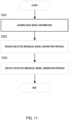
- Fig. 11 is a flowchart illustrating the individual model generation process according to an embodiment of the present disclosure.
- the individual model generation process may be performed by the model generation apparatus 100, and more specifically, may be implemented by executing one or more programs or instructions stored in one or more memory devices 103 by one or more processors 104 of the model generation apparatus 100.
- the model generation apparatus 100 acquires base model information. More specifically, the model information acquirer 110 acquires base model information indicating a base model commonly used for a specific task from the model DB 20.
- the model generation apparatus 100 receives the selected individual model generation process.
- the model processor 120 receives identification information (e.g., a process ID) identifying one or more individual model generation processes from the user or the like and identifies an individual model generation process for a device type corresponding to the received identification information.
- identification information e.g., a process ID
- the model generation apparatus 100 executes the selected individual model generation process.
- the present embodiment it is possible to efficiently acquire the corresponding individual type model by executing the individual model generation process for the device type selected by the user or the like on the base model which can be commonly used for the specific task.
- the model processor 120 executes an individual model generation process corresponding to the selected device type.
- Fig. 12 is a schematic diagram illustrating the individual model generation process according to an embodiment of the present disclosure.
- the model processor 120 executes the individual model generation process corresponding to the selected device type, and acquires the individual type model corresponding to the selected device type.
- the device type C is selected from among the three device types A, B, and C by the user, and the model processor 120 executes the individual model generation process for the selected device type C to generate an individual type model for the device type C from a common base model.
- Fig. 13 is a flowchart illustrating the individual model generation process according to an embodiment of the present disclosure.
- the individual model generation process may be performed by the model generation apparatus 100, and more specifically, may be implemented by executing one or more programs or instructions stored in one or more memory apparatuses 103 by one or more processors 104 of the model generation apparatus 100.
- the model generation apparatus 100 acquires base model information. More specifically, the model information acquirer 110 acquires base model information indicating a base model commonly used for a specific task from the model DB 20.
- the model generation apparatus 100 receives the selected device type. Specifically, the model processor 120 receives identification information (e.g., device ID) identifying one or more device types from the user or the like, and determines the device type individual model generation process corresponding to the received identification information.
- identification information e.g., device ID
- the model generation apparatus 100 executes the individual model generation process corresponding to the selected device type.
- the present embodiment it is possible to execute the individual model generation process corresponding to the device type selected by the user or the like from the base model commonly available for the specific task, and efficiently acquire the corresponding individual type model.
- the model processor 120 presents the simulation result regarding the individual type model to the user.
- Fig. 14 is a schematic diagram illustrating the individual model generation process according to an embodiment of the present disclosure.
- the model processor 120 may hold in advance a simulation result indicating the performance, such as prediction accuracy and calculation speed, of an individual type model for each device type, and present the simulation result of the individual type model for each device type as reference information when the user selects individual model generation process or a device type.
- the model processor 120 presents simulation results for three device types A, B, and C to the user.
- the model processor 120 executes the selected individual model generation process for the device type C and acquires the individual type model for the device type C.
- Fig. 15 is a flowchart illustrating the individual model generation process according to an embodiment of the present disclosure.
- the individual model generation process may be performed by the model generation apparatus 100, and more specifically, may be implemented by executing one or more programs or instructions stored in one or more memory devices 103 by one or more processors 104 of the model generation apparatus 100.
- the model generation apparatus 100 acquires base model information. More specifically, the model information acquirer 110 acquires base model information indicating a base model commonly used for a specific task from the model DB 20.
- the model generation apparatus 100 presents simulation results for each of the device types.
- the model processor 120 may present, to the user, a simulation result indicating the performance, such as prediction accuracy and calculation speed, of the individual type model for each device type as reference information when the user selects the individual model generation process or the device type.
- the model generation apparatus 100 receives the selected individual model generation process or and the selected device type.
- the model processor 120 receives, from a user or the like, identification information (e.g., a process ID) for identifying one or more individual model generation processes or identification information (e.g., a device ID) for identifying a device type, and specifies an individual model generation process for a device type corresponding to the received identification information.
- identification information e.g., a process ID
- identification information e.g., a device ID
- the model generation apparatus 100 executes the selected individual model generation process or the individual model generation process corresponding to the selected device type.
- the model processor 120 executes the individual model generation process for device type C and generates an individual type model for device type C on the basis of the base model information.
- the present embodiment it is possible to efficiently acquire the corresponding individual type model by presenting the simulation result related to the individual type model of each device model to the user and executing the individual model generation process selected by the user or the individual model generation process corresponding to the selected device type from the base model which can be commonly used for the specific task.
- the model processor 120 may update the individual type model based on the updated base model information.
- the update of the base model according to the present embodiment may be executed by the model generation apparatus 100, or may be executed by a training apparatus (not illustrated) different from the model generation apparatus 100.
- Fig. 16 is a schematic diagram illustrating the individual model update process according to an embodiment of the present disclosure.
- the model processor 120 executes the individual model update process based on the updated base model information and updates the individual type model corresponding to the specific device type from the updated base model.
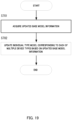
- the model processor 120 executes the individual model update process corresponding to any device type and generates an individual type model corresponding to the device type from the updated common base model.
- Fig. 17 is a flowchart illustrating the individual model update process according to an embodiment of the present disclosure.
- the individual model update process may be performed by the model generation apparatus 100, and more specifically, may be implemented by one or more processors 104 of the model generation apparatus 100 executing one or more programs or instructions stored in one or more memory devices 103.
- the model generation apparatus 100 acquires updated base model information. More specifically, the model information acquirer 110 acquires base model information (for example, architecture information, parameter information, and the like) indicating the updated base model from the model DB 20. Note that the model information acquirer 110 may acquire the updated base model itself instead of or in addition to the updated base model information.
- base model information for example, architecture information, parameter information, and the like
- step S602 the model generation apparatus 100 updates the individual type model corresponding to the device type based on the updated base model information.
- the model processor 120 may perform one or both of pruning and quantization on the updated base model based on the updated base model information, and may update the individual type model for the specific device type based on the updated base model.
- the individual type model in response to the update of the base model, can also be updated.
- the model processor 120 may execute an individual model update process of updating the individual type model for each device type corresponding to each of the plurality of device types based on the updated base model information.
- Fig. 18 is a schematic diagram illustrating the individual model update process according to an embodiment of the present disclosure.
- the model processor 120 executes the individual model update process for each device type corresponding to each of the plurality of device types based on the updated base model information, and updates the individual type model corresponding to each device type from the updated base model.
- the model processor 120 executes three individual model update processes corresponding to the three device types A, B, and C, and updates three individual type models from the updated base model.
- Fig. 19 is a flowchart illustrating the individual model update process according to an embodiment of the present disclosure.
- the individual model update process may be performed by the model generation apparatus 100, and more specifically, may be implemented by one or more processors 104 of the model generation apparatus 100 executing one or more programs or instructions stored in one or more memory devices 103.
- step S701 the model generation apparatus 100 acquires the updated base model information. More specifically, the model information acquirer 110 acquires base model information indicating the updated base model from the model DB 20.
- the model generation apparatus 100 updates the individual type model corresponding to each of the plurality of apparatuses based on the updated base model information. For example, in a case of updating three individual type models corresponding to three device types A, B, and C, the model processor 120 may update the individual type models of the device types A, B, and C by performing one or both of pruning and quantization on the base model based on the updated base model information.
- an individual type model for each of the plurality of device types can also be updated.
- a model generation apparatus including: a model information acquirer that acquires base model information indicating a base model; and a model processor that generates an individual type model corresponding to each of a plurality of device types based on the base model information.
- the model generation apparatus according to Supplementary Note 1, in which the model processor performs one or both of pruning and quantization on the base model.
- the model generation apparatus according to Supplementary Note 1 or 2, in which the model processor executes a generation process of generating an individual type model corresponding to each of a plurality of device types based on the base model information.
- the model generation apparatus according to Supplementary Note 3 or 4, in which the model processor executes the generation process corresponding to a selected device type.
- the model generation apparatus according to any one of Supplementary Notes 3 to 5, in which the model processor presents a simulation result related to the individual type model to a user.
- the model generation apparatus according to any one of Supplementary Notes 1 to 6, in which when the base model is updated by training data, the model processor updates the individual type model by the base model updated.
- the model generation apparatus according to Supplementary Note 7, in which the model processor executes an update process of updating the individual type model for each device type corresponding to each of the plurality of device types based on the base model information updated.
- a model generation method including: acquiring base model information indicating a base model; and generating an individual type model corresponding to each of a plurality of device types based on the base model information.
- a computer-readable storage medium storing a program for causing a computer to execute: acquiring base model information indicating a base model; and generating an individual type model corresponding to each of a plurality of device types based on the base model information.
Landscapes
- Engineering & Computer Science (AREA)
- Theoretical Computer Science (AREA)
- Software Systems (AREA)
- Data Mining & Analysis (AREA)
- Evolutionary Computation (AREA)
- Medical Informatics (AREA)
- Computer Vision & Pattern Recognition (AREA)
- Physics & Mathematics (AREA)
- Computing Systems (AREA)
- General Engineering & Computer Science (AREA)
- General Physics & Mathematics (AREA)
- Mathematical Physics (AREA)
- Artificial Intelligence (AREA)
- Stored Programmes (AREA)
- Numerical Control (AREA)
Abstract
Description
- The present disclosure relates to a model generation apparatus, a model generation method, and a program.
- With the recent development of deep learning technology, machine learning models have come to be used for various purposes. Typically, a machine learning model is used on different computing resources depending on the usage environment or the like. For example, one machine learning model may be executed by a Graphics Processing Unit (GPU) or the like having a high computing capacity, whereas another machine learning model may be executed by an edge computer or the like having only a limited computing capacity.
- PTL 1
Japanese Unexamined Patent Publication No. 2021-103441 -
- Non- PTL 1
https://pjreddie.com/darknet/yolo/ - Non- PTL 2
https://arxiv.org/pdf/1804.02767.pdf - In general, a machine learning model may be built depending on the available computing resources. That is, a GPU, a Central Processing Unit (CPU), a field-programmable gate array (FPGA), or the like is used as a device type that causes a machine learning model to operate, and the specifications, the operation speed, the memory capacity, and the like of each device type may be different. Therefore, it is necessary to design a machine learning model corresponding to each device type. For example, different machine learning models needs to be separately built for the same task according to device types, and a machine learning model needs to be separately trained and generated for each device type that executes the same task.
- In consideration of the above-described problem, one object of the present disclosure is to provide a technique for efficiently generating a machine learning model for each device type.
- An aspect of the present disclosure relates to a model generation apparatus including: a model information acquirer that acquires base model information indicating a base model; and a model processor that generates an individual type model corresponding to each of a plurality of device types based on the base model information.
- According to the present disclosure, a machine learning model for each device type can be efficiently generated.
-
-
Fig. 1 is a schematic diagram illustrating a model generation system according to an embodiment of the present disclosure; -
Fig. 2 is a schematic diagram illustrating an example of a procedure for generating a machine learning model for each device type; -
Fig. 3 is a schematic diagram illustrating a procedure for generating a machine learning model for each device type according to an embodiment of the present disclosure; -
Fig. 4 is a block diagram illustrating a hardware configuration of a model generation apparatus according to an embodiment of the present disclosure; -
Fig. 5 is a block diagram illustrating a functional configuration of a model generation apparatus according to an embodiment of the present disclosure; -
Fig. 6 is a diagram illustrating an individual model generation process according to an embodiment of the present disclosure; -
Fig. 7 is a flowchart illustrating the individual model generation process according to an embodiment of the present disclosure; -
Fig. 8 is a diagram illustrating the individual model generation process according to an embodiment of the present disclosure; -
Fig. 9 is a flowchart illustrating the individual model generation process according to an embodiment of the present disclosure; -
Fig. 10 is a diagram illustrating the individual model generation process according to an embodiment of the present disclosure; -
Fig. 11 is a flowchart illustrating the individual model generation process according to an embodiment of the present disclosure; -
Fig. 12 is a diagram illustrating the individual model generation process according to an embodiment of the present disclosure; -
Fig. 13 is a flowchart illustrating the individual model generation process according to an embodiment of the present disclosure; -
Fig. 14 is a diagram illustrating the individual model generation process according to an embodiment of the present disclosure; -
Fig. 15 is a flowchart illustrating the individual model generation process according to an embodiment of the present disclosure; -
Fig. 16 is a diagram illustrating an individual model update process according to an embodiment of the present disclosure; -
Fig. 17 is a flowchart illustrating the individual model update process according to an embodiment of the present disclosure; -
Fig. 18 is a diagram illustrating the individual model update process according to an embodiment of the present disclosure; and -
Fig. 19 is a flowchart illustrating the individual model update process according to an embodiment of the present disclosure. - The following explains an embodiment of the present disclosure with reference to the drawings.
- In the following embodiments, a model generation apparatus is disclosed that generates an individual machine learning model for each device type (hereinafter referred to as an "individual type model") from a machine learning model (hereinafter referred to as a "base model") common to target device types (e.g., a GPU, a CPU, and an FPGA).
- More specifically, upon acquisition of base model information indicating a base model (e.g., architecture information and parameter information on the base model), a model generation apparatus according to an embodiment described later executes model compression (e.g., pruning and quantization) on the base model on the basis of the acquired base model information to generate an individual type model adapted to a device type.
- First, a
model generation system 10 according to an embodiment of the present disclosure will be described with reference toFig. 1. Fig. 1 is a schematic diagram illustrating themodel generation system 10 according to an embodiment of the present disclosure. As illustrated inFig. 1 , themodel generation system 10 includes a model database (DB) 20, aterminal 30, and amodel generation apparatus 100. - As illustrated in
Fig. 1 , when a user instructs theterminal 30 to generate an individual type model corresponding to a particular device type (e.g., GPU, CPU, FPGA, etc) from a base model for a particular task, theterminal 30 sends the instruction to themodel generation apparatus 100. Upon receiving the instruction, themodel generation apparatus 100 acquires, from themodel DB 20, base model information indicating architecture information, parameter information, and the like of a base model for the task. Then, themodel generation apparatus 100 generates an individual type model corresponding to the specification, the calculation capability, and the like of the device type on the basis of the acquired base model information. The generated individual type model may be stored in the model DB 20 and notified to theterminal 30 as an operation result. - Conventionally, as illustrated in
Fig. 2 , for example, a machine learning model corresponding to a device type is generated by individually training a machine learning model prepared for each device type. For example, for a specific task such as an object detection model, an anomaly detection model, etc., different individual-type models such as a GPU-oriented model, a 1-oriented model, an FPGA-oriented model, an ARMCPU-oriented model, etc., are prepared, and each individual-type model is separately trained by the training data through a normal training process. In this case, the individual type model for each device type may be designed to have a model architecture corresponding to a specification, a calculation capability, and the like of the device type, and may be trained by the training data. Alternatively, an individual type model for each device type may be designed to have a specific model architecture, trained by training data, and then compressed by means of weight reduction and/or quantization correspondingly to a specification, a computing capability, and the like of the device type. - On the other hand, in the individual model generation process according to the present disclosure, as illustrated in
Fig. 3 , a machine learning model common to device types is designed and trained as a base model for a particular task. Then, an individual type model for each device type is generated by weight reduction and/or quantizing the base model correspondingly to the specification, computational capability, and the like of the device type. Thus, compared with the conventional approach of separately training and generating an individual type model for each device type, only a common base model needs to be trained, thus allowing a reduction in the cost required for the training process. - In the embodiment illustrated in
Fig. 1 , the base model is trained in advance by a training apparatus (not illustrated) different from themodel generation apparatus 100, but themodel generation system 10 according to the present disclosure is not limited thereto. For example, themodel generation apparatus 100 may train and hold a base model. Further, although themodel generation apparatus 100 acquires the base model information indicating the base model from themodel DB 20 in the illustrated example, the present disclosure is not limited thereto. For example, themodel generation apparatus 100 may acquire and hold the base model itself. - Here, the
model generation apparatus 100 may be implemented by a computing device such as a server, a personal computer (PC), a smartphone, or a tablet and may have, for example, a hardware configuration as illustrated inFig. 4 . That is, each of themodel generation apparatuses 100 includes adrive device 101, astorage device 102, amemory device 103, aprocessor 104, a user interface (UI)device 105, and acommunication device 106 that are connected to each other via a bus B. - A program or an instruction for realizing various functions and processes to be described later in the
model generation apparatus 100 may be stored in a detachable storage medium such as a Compact Disk -Read Only Memory (CD-ROM) or a flash memory. When the storage medium is set in thedrive device 101, the program or the instruction is installed in thestorage device 102 or thememory device 103 from the storage medium via thedrive device 101. Note that the program or the instructions do not necessarily have to be installed from the storage medium, but may be downloaded from any external apparatus via a network or the like. - The
storage device 102 is implemented by a hard disk drive or the like, and stores, together with an installed program or instruction, a file, data, or the like used for execution of the program or instruction. - The
memory device 103 is realized by a random access memory, a static memory, or the like, and when a program or an instruction is activated, reads the program, the instruction, data, or the like from thestorage device 102 and stores the read program, instruction, data, or the like. Thestorage device 102, thememory device 103, and removable storage media may be collectively referred to as non-transitory storage media (non-transitory storage medium). - The
processor 104 may be implemented by one or more central processing units (CPUs), graphics processing units (GPUs), processing circuits (processing circuitry), or the like, which may include one or more processor cores, and may perform various functions and processes of themodel generation apparatus 100, which will be described below, according to programs and instructions stored in thememory device 103 and parameters required to execute the programs and instructions. - The user interface (UI)
device 105 may include an input device such as a keyboard, a mouse, a camera, or a microphone, an output device such as a display, a speaker, a headset, or a printer, and an input/output device such as a touch panel, and implements an interface between a user and themodel generation apparatus 100. For example, the user operates themodel generation apparatus 100 by operating a Graphical User Interface (GUI) displayed on a display or a touch panel with a keyboard, a mouse, or the like. - The
communication device 106 is realized by various communication circuits that execute wired and/or wireless communication processing with an external apparatus or a communication network such as the Internet, a Local Area Network (LAN), or a cellular network. - However, the above-described hardware configuration is merely an example, and the
model generation apparatus 100 according to the present disclosure may be implemented by any other appropriate hardware configuration. - Next, the
model generation apparatus 100 according to an embodiment of the present disclosure will be described with reference toFigs. 5 to 7 .Fig. 5 is a block diagram illustrating a functional configuration of themodel generation apparatus 100 according to an embodiment of the present disclosure. As illustrated inFig. 5 , themodel generation apparatus 100 according to the present example includes amodel information acquirer 110 and amodel processor 120. For example, one or more functional units of themodel information acquirer 110 and themodel processor 120 may be realized by one ormore processors 104 executing one or more programs or instructions. - The
model information acquirer 110 acquires base model information indicating a base model. More specifically, themodel information acquirer 110 acquires, from themodel DB 20, base model information such as architecture information and parameter information indicating a base model commonly used to generate the individual type models for the respective device types. The base model is a machine learning model trained for a particular task (e.g., object detection, abnormality detection, etc) and may be typically built for a device type (e.g., GPU, etc) with the highest computing capability, specification, etc. On the other hand, an individual type model for each device type is a machine learning model for a device type (e.g., x86CPU, FPGA, ARMCPU, etc) with more limited computing power, specifications, etc, and may be adapted to the specifications, computing power, etc., of the device type by weight reduction and/or quantizing the base model. - The
model information acquirer 110 may acquire the base model itself instead of or in addition to the base model information such as the architecture information and the parameter information of the base model. Themodel information acquirer 110 may extract base model information such as architecture information and parameter information from the acquired base model itself. - The
model processor 120 generates an individual type model corresponding to the device type on the basis of the base model information. Specifically, themodel processor 120 performs one or both of pruning and quantization on the base model on the basis of the base model information, and generates an individual type model adapted to the calculation capability, specification, and the like of a specific device type. Being able to generate an individual type model corresponding to each of a plurality of device types on the basis of the base model information may be, for example, being able to generate four individual type models of an individual type model for a GPU, an individual type model for an FPGA, an individual type model for an FPGA, and an individual type model for an ARMCPU, or being able to generate any one of the individual type models. - Specifically, the
model processor 120 may perform pruning of the base model by deleting a connection and/or a node at a position where a weight between nodes in the base model is small. For example, themodel processor 120 may perform pruning of the base model according to the amount of deletion of nodes and/or connections between nodes that corresponds to the computing capability, specification, and the like of a particular device type. Accordingly, it is possible to acquire the individual type model generated through weight reduction of the base model in accordance with the device type. Note that specific pruning may be executed in accordance with any known method. - Further, the
model processor 120 may express the parameters of the base model (for example, the weights between the nodes, the parameters of the activation function, and the like) with a smaller number of bits. For example, when the weight between the nodes of the base model is expressed by 32 bits, the weight may be quantized to 8 bits or the like. Specifically, themodel processor 120 may quantize the parameters of the base model according to a quantization level corresponding to the calculation capability, specification, or the like of a specific device type. Thus, it is possible to acquire an individual type model generated by quantizing the base model correspondingly to the device type. Note that specific quantization processes may be executed in accordance with any known method. -
Fig. 6 is a schematic diagram illustrating the individual model generation process according to an embodiment of the present disclosure. As illustrated inFig. 6 , when themodel information acquirer 110 acquires the base model information indicating the base model, themodel processor 120 executes the individual model generation process based on the base model information and generates the individual type model corresponding to the specific device type from the base model. In the illustrated example, themodel processor 120 executes an individual model generation process corresponding to any device type and generates an individual type model corresponding to the device type from a common base model. -
Fig. 7 is a flowchart illustrating the individual model generation process according to an embodiment of the present disclosure. The individual model generation process may be performed by themodel generation apparatus 100, and more specifically, may be implemented by executing one or more programs or instructions stored in one ormore memory devices 103 by one ormore processors 104 of themodel generation apparatus 100. - As illustrated in
Fig. 7 , in step S101, themodel generation apparatus 100 acquires base model information. More specifically, themodel information acquirer 110 acquires base model information (for example, architecture information, parameter information, and the like) indicating a base model commonly used for a specific task (for example, object detection, abnormality detection, and the like) from themodel DB 20. Note that themodel information acquirer 110 may acquire the base model itself instead of or in addition to the base model information. Typically, the base model may be a machine learning model built for a device type (e.g., a GPU or the like) with the highest computing capability, specification, or the like. - In step S102, the
model generation apparatus 100 generates an individual type model corresponding to the device type, based on the base model information. For example, themodel generation apparatus 100 may be able to generate, based on the base model information, an individual type model corresponding to each of a plurality of device types, a plurality of individual type models, or any one of the individual type models. Specifically, themodel processor 120 may perform one or both of pruning and quantization on the base model based on the base model information, and generate a machine learning model adapted to the calculation capability, specification, and the like of the specific device type as the individual type model. For example, themodel processor 120 may perform pruning of the base model by deleting a connection and/or a node at a position where a weight between nodes in the base model is small, according to a deletion amount of nodes and/or connections between nodes corresponding to the calculation capability, the specification, and the like of a specific device type. In addition, themodel processor 120 may quantize the weight of the base model, the parameter of the activation function, and the like according to the quantization level corresponding to the calculation capability, the specifications, and the like of the specific device type. Note that specific pruning and quantization processes may be executed in accordance with any known method. - According to this example, an individual type model for a specific device type having more limited computing capability, specifications, and the like can be efficiently acquired from trained base models commonly available for specific tasks.
- Next, an individual type generation process according to another embodiment of the present disclosure will be described with reference to
Figs. 8 and9 . In the present embodiment, themodel generator 120 executes an individual model generation process of generating an individual type model for each device type corresponding to each of a plurality of device types based on the base model information. -
Fig. 8 is a schematic diagram illustrating the individual model generation process according to an embodiment of the present disclosure. As illustrated inFig. 8 , when themodel information acquirer 110 acquires base model information indicating a base model, themodel processor 120 executes the individual model generation process for each device type corresponding to each of a plurality of device types on the basis of the base model information, and generates an individual type model corresponding to each device type from the base model. In the illustrated embodiment, themodel processor 120 executes three individual model generation processes corresponding to three device types A, B, and C, and generates individual type models for the device types A, B, and C from a common base model. - For example, if the calculation capabilities CA, CB, and CC of the three device types A, B, and C are CA> CB > CC, the
model processor 120 may set the deletion amounts RA, RB, and RC of nodes and/or connections between nodes to RC > RB > RA in pruning the individual type models MA, MB, and MC corresponding to the device types A, B, and C, and prune the base model. Similarly, in a case where the three device types A, B, and C have the specifications SA, SB, and SC, respectively, themodel processor 120 quantizes the individual type models MA, MB, and MC corresponding to the device types A, B, and C by Parameters of a common base model may be quantized generate individual type models for device types A, B, and C, respectively, correspondingly to the quantization levels QA, QB, and QC of the specifications SA, SB, and SC. -
Fig. 9 is a flowchart illustrating the individual model generation process according to an embodiment of the present disclosure. The individual model generation process may be performed by themodel generation apparatus 100, and more specifically, may be implemented by executing one or more programs or instructions stored in one ormore memory devices 103 by one ormore processors 104 of themodel generation apparatus 100. - As illustrated in
Fig. 9 , in step S201, themodel generation apparatus 100 acquires base model information. More specifically, themodel information acquirer 110 acquires base model information indicating a base model commonly used for a specific task from themodel DB 20. - In step S202, the
model generation apparatus 100 generates an individual type model for each of the plurality of device types, based on the base model information. For example, when three individual type models corresponding to three device types A, B, and C are generated, themodel processor 120 may perform one or both of pruning and quantization on the base model on the basis of the base model information to generate the individual type models MA, MB, and MC adapted to the calculation capability, the specification, and the like of each of the device types A, B, and C. - According to the present embodiment, it is possible to efficiently acquire an individual type model for each device type of a plurality of device types having more limited calculation capability, specifications, and the like from a trained base model which can be commonly used for a specific task.
- Next, an individual type generation process according to another embodiment of the present disclosure will be described with reference to
Figs. 10 and11 . In the present embodiment, themodel generator 120 executes the selected individual model generation process. -
Fig. 10 is a schematic diagram illustrating the individual model generation process according to an embodiment of the present disclosure. As illustrated inFig. 10 , themodel processor 120 executes the individual model generation process for the selected device type, and acquires the individual type model corresponding to the individual model generation process for the device type. In the illustrated example, the individual model generation process for the device type B is selected from among the three device types A, B, and C by the user, and themodel processor 120 executes the selected individual model generation process for the device type B and generates an individual type model for the device type B from a common base model. -
Fig. 11 is a flowchart illustrating the individual model generation process according to an embodiment of the present disclosure. The individual model generation process may be performed by themodel generation apparatus 100, and more specifically, may be implemented by executing one or more programs or instructions stored in one ormore memory devices 103 by one ormore processors 104 of themodel generation apparatus 100. - As illustrated in
Fig. 11 , in step S301, themodel generation apparatus 100 acquires base model information. More specifically, themodel information acquirer 110 acquires base model information indicating a base model commonly used for a specific task from themodel DB 20. - In step S302, the
model generation apparatus 100 receives the selected individual model generation process. Specifically, themodel processor 120 receives identification information (e.g., a process ID) identifying one or more individual model generation processes from the user or the like and identifies an individual model generation process for a device type corresponding to the received identification information. - In step S303, the
model generation apparatus 100 executes the selected individual model generation process. Specifically, themodel processor 120 executes the individual model generation process for the device type corresponding to the received identification information based on the base model information, and acquires the corresponding individual type model. For example, upon receiving identification information (e.g., process ID = B) indicating the individual model generation process for device type B from the user, themodel processor 120 executes the individual model generation process for device type B and generates an individual type model for device type B on the basis of the base model information. - According to the present embodiment, it is possible to efficiently acquire the corresponding individual type model by executing the individual model generation process for the device type selected by the user or the like on the base model which can be commonly used for the specific task.
- Next, individual type generation process according to another example of the present disclosure will be described with reference to
Fig. 12 andFig. 13 . In the present embodiment, themodel processor 120 executes an individual model generation process corresponding to the selected device type. -
Fig. 12 is a schematic diagram illustrating the individual model generation process according to an embodiment of the present disclosure. As illustrated inFig. 12 , themodel processor 120 executes the individual model generation process corresponding to the selected device type, and acquires the individual type model corresponding to the selected device type. In the illustrated example, the device type C is selected from among the three device types A, B, and C by the user, and themodel processor 120 executes the individual model generation process for the selected device type C to generate an individual type model for the device type C from a common base model. -
Fig. 13 is a flowchart illustrating the individual model generation process according to an embodiment of the present disclosure. The individual model generation process may be performed by themodel generation apparatus 100, and more specifically, may be implemented by executing one or more programs or instructions stored in one ormore memory apparatuses 103 by one ormore processors 104 of themodel generation apparatus 100. - As illustrated in
Fig. 13 , in step S401, themodel generation apparatus 100 acquires base model information. More specifically, themodel information acquirer 110 acquires base model information indicating a base model commonly used for a specific task from themodel DB 20. - In step S402, the
model generation apparatus 100 receives the selected device type. Specifically, themodel processor 120 receives identification information (e.g., device ID) identifying one or more device types from the user or the like, and determines the device type individual model generation process corresponding to the received identification information. - In step S403, the
model generation apparatus 100 executes the individual model generation process corresponding to the selected device type. Specifically, themodel processor 120 executes the individual model generation process for the device type of the device type corresponding to the received identification information based on the base model information, and acquires the corresponding individual type model. For example, upon receiving identifying information indicating the device type C (e.g., device ID = C) from the user, themodel processor 120 executes an individual model generation process for the device type C to generate an individual type model for the device type C on the basis of the base model information. - According to the present embodiment, it is possible to execute the individual model generation process corresponding to the device type selected by the user or the like from the base model commonly available for the specific task, and efficiently acquire the corresponding individual type model.
- Next, the individual type generation process according to another example of the present disclosure will be described with reference to
Fig. 14 andFig. 15 . In the present embodiment, themodel processor 120 presents the simulation result regarding the individual type model to the user. -
Fig. 14 is a schematic diagram illustrating the individual model generation process according to an embodiment of the present disclosure. As illustrated inFig. 14 , themodel processor 120 may hold in advance a simulation result indicating the performance, such as prediction accuracy and calculation speed, of an individual type model for each device type, and present the simulation result of the individual type model for each device type as reference information when the user selects individual model generation process or a device type. In the illustrated example, themodel processor 120 presents simulation results for three device types A, B, and C to the user. When the user selects the individual model generation process for the device type C or the device model C with reference to the presented simulation result, themodel processor 120 executes the selected individual model generation process for the device type C and acquires the individual type model for the device type C. -
Fig. 15 is a flowchart illustrating the individual model generation process according to an embodiment of the present disclosure. The individual model generation process may be performed by themodel generation apparatus 100, and more specifically, may be implemented by executing one or more programs or instructions stored in one ormore memory devices 103 by one ormore processors 104 of themodel generation apparatus 100. - As illustrated in
Fig. 15 , in step S501, themodel generation apparatus 100 acquires base model information. More specifically, themodel information acquirer 110 acquires base model information indicating a base model commonly used for a specific task from themodel DB 20. - In step S502, the
model generation apparatus 100 presents simulation results for each of the device types. Specifically, themodel processor 120 may present, to the user, a simulation result indicating the performance, such as prediction accuracy and calculation speed, of the individual type model for each device type as reference information when the user selects the individual model generation process or the device type. - In step S503, the
model generation apparatus 100 receives the selected individual model generation process or and the selected device type. Specifically, themodel processor 120 receives, from a user or the like, identification information (e.g., a process ID) for identifying one or more individual model generation processes or identification information (e.g., a device ID) for identifying a device type, and specifies an individual model generation process for a device type corresponding to the received identification information. - In step S504, the
model generation apparatus 100 executes the selected individual model generation process or the individual model generation process corresponding to the selected device type. Specifically, themodel processor 120 executes the individual model generation process for the device type corresponding to the received identification information based on the base model information, and acquires the corresponding individual type model. For example, upon receiving identifying information indicating the individual model generation process for device time C (e.g., process ID = C) or identifying information indicating the device type C (e.g., device ID = C) from the user, themodel processor 120 executes the individual model generation process for device type C and generates an individual type model for device type C on the basis of the base model information. - According to the present embodiment, it is possible to efficiently acquire the corresponding individual type model by presenting the simulation result related to the individual type model of each device model to the user and executing the individual model generation process selected by the user or the individual model generation process corresponding to the selected device type from the base model which can be commonly used for the specific task.
- Next, with reference to
Figs. 16 and17 , an individual type update process according to an embodiment of the present disclosure will be described. In this embodiment, when the base model is updated by the training data, themodel processor 120 may update the individual type model based on the updated base model information. Note that the update of the base model according to the present embodiment may be executed by themodel generation apparatus 100, or may be executed by a training apparatus (not illustrated) different from themodel generation apparatus 100. -
Fig. 16 is a schematic diagram illustrating the individual model update process according to an embodiment of the present disclosure. As illustrated inFig. 16 , when the base model update process is executed on the base model by the update training data and the base model information indicating the updated base model is acquired, themodel processor 120 executes the individual model update process based on the updated base model information and updates the individual type model corresponding to the specific device type from the updated base model. In the illustrated example, themodel processor 120 executes the individual model update process corresponding to any device type and generates an individual type model corresponding to the device type from the updated common base model. -
Fig. 17 is a flowchart illustrating the individual model update process according to an embodiment of the present disclosure. The individual model update process may be performed by themodel generation apparatus 100, and more specifically, may be implemented by one ormore processors 104 of themodel generation apparatus 100 executing one or more programs or instructions stored in one ormore memory devices 103. - As illustrated in
Fig. 17 , in step S601, themodel generation apparatus 100 acquires updated base model information. More specifically, themodel information acquirer 110 acquires base model information (for example, architecture information, parameter information, and the like) indicating the updated base model from themodel DB 20. Note that themodel information acquirer 110 may acquire the updated base model itself instead of or in addition to the updated base model information. - In step S602, the
model generation apparatus 100 updates the individual type model corresponding to the device type based on the updated base model information. Specifically, themodel processor 120 may perform one or both of pruning and quantization on the updated base model based on the updated base model information, and may update the individual type model for the specific device type based on the updated base model. - According to this embodiment, in response to the update of the base model, the individual type model can also be updated.
- Next, an individual type update process according to another example of the present disclosure will be described with reference to
Fig. 18 andFig. 19 . In the present embodiment, themodel processor 120 may execute an individual model update process of updating the individual type model for each device type corresponding to each of the plurality of device types based on the updated base model information. -
Fig. 18 is a schematic diagram illustrating the individual model update process according to an embodiment of the present disclosure. As illustrated inFig. 18 , when the base model update process is executed on the base model by the update training data and the base model information indicating the updated base model is acquired, themodel processor 120 executes the individual model update process for each device type corresponding to each of the plurality of device types based on the updated base model information, and updates the individual type model corresponding to each device type from the updated base model. In the illustrated example, themodel processor 120 executes three individual model update processes corresponding to the three device types A, B, and C, and updates three individual type models from the updated base model. -
Fig. 19 is a flowchart illustrating the individual model update process according to an embodiment of the present disclosure. The individual model update process may be performed by themodel generation apparatus 100, and more specifically, may be implemented by one ormore processors 104 of themodel generation apparatus 100 executing one or more programs or instructions stored in one ormore memory devices 103. - As illustrated in
Fig. 19 , in step S701, themodel generation apparatus 100 acquires the updated base model information. More specifically, themodel information acquirer 110 acquires base model information indicating the updated base model from themodel DB 20. - In step S702, the
model generation apparatus 100 updates the individual type model corresponding to each of the plurality of apparatuses based on the updated base model information. For example, in a case of updating three individual type models corresponding to three device types A, B, and C, themodel processor 120 may update the individual type models of the device types A, B, and C by performing one or both of pruning and quantization on the base model based on the updated base model information. - Note that the above-described individual model update process may be implemented by executing the above-described pruning and/or quantization on the updated base model. In addition, which individual model update process is executed among the plurality of individual model update processes may be determined based on identification information (for example, a process ID or the like) indicating the individual model update process or a device type (for example, a device type ID or the like). In addition, when the user selects the individual model update process or the device type, the simulation result of the individual type model to be updated may be presented.
- According to this example, in response to an update of the base model, an individual type model for each of the plurality of device types can also be updated.
- For the above description, the following supplementary notes are further disclosed.
- A model generation apparatus including: a model information acquirer that acquires base model information indicating a base model; and a model processor that generates an individual type model corresponding to each of a plurality of device types based on the base model information.
- The model generation apparatus according to Supplementary Note 1, in which the model processor performs one or both of pruning and quantization on the base model.
- The model generation apparatus according to Supplementary Note 1 or 2, in which the model processor executes a generation process of generating an individual type model corresponding to each of a plurality of device types based on the base model information.
- The model generation apparatus according to Supplementary Note 3, in which the model processor executes the generation process selected.
- The model generation apparatus according to Supplementary Note 3 or 4, in which the model processor executes the generation process corresponding to a selected device type.
- The model generation apparatus according to any one of Supplementary Notes 3 to 5, in which the model processor presents a simulation result related to the individual type model to a user.
- The model generation apparatus according to any one of Supplementary Notes 1 to 6, in which when the base model is updated by training data, the model processor updates the individual type model by the base model updated.
- The model generation apparatus according to Supplementary Note 7, in which the model processor executes an update process of updating the individual type model for each device type corresponding to each of the plurality of device types based on the base model information updated.
- A model generation method including: acquiring base model information indicating a base model; and generating an individual type model corresponding to each of a plurality of device types based on the base model information.
- A computer-readable storage medium storing a program for causing a computer to execute: acquiring base model information indicating a base model; and generating an individual type model corresponding to each of a plurality of device types based on the base model information.
- Although the examples of the present disclosure have been described in detail above, the present disclosure is not limited to the above-described specific embodiments, and various modifications and changes can be made within the scope of the gist of the present disclosure described in the claims.
- The disclosures of the specification, drawings and abstract contained in the
Japanese Patent Application No. 2022-109751 Japanese application filed on Jul. 7, 2022 -
- 10 Model generation system
- 20 Model database (db)
- 30 Terminal
- 100 Model generation apparatus
- 110 Model information acquirer
- 120 Model processor
Claims (10)
- A model generation apparatus comprising:a model information acquirer that acquires base model information indicating a base model; anda model processor that generates an individual type model corresponding to each of a plurality of device types based on the base model information.
- The model generation apparatus according to claim 1, wherein the model processor performs one or both of pruning and quantization on the base model.
- The model generation apparatus according to claim 1, wherein the model processor executes a generation process of generating an individual type model corresponding to each of a plurality of device types based on the base model information.
- The model generation apparatus according to claim 3, wherein the model processor executes the generation process selected.
- The model generation apparatus according to claim 3, wherein the model processor executes the generation process corresponding to a selected device type.
- The model generation apparatus according to claim 3, wherein the model processor presents a simulation result related to the individual type model to a user.
- The model generation apparatus according to claim 1, wherein when the base model is updated by training data, the model processor updates the individual type model by the base model updated.
- The model generation apparatus according to claim 7, wherein the model processor executes an update process of updating the individual type model for each device type corresponding to each of the plurality of device types based on the base model information updated.
- A model generation method comprising:acquiring base model information indicating a base model; andgenerating an individual type model corresponding to each of a plurality of device types based on the base model information.
- A program for causing a computer to execute:acquiring base model information indicating a base model; andgenerating an individual type model corresponding to each of a plurality of device types based on the base model information.
Applications Claiming Priority (2)
| Application Number | Priority Date | Filing Date | Title |
|---|---|---|---|
| JP2022109751 | 2022-07-07 | ||
| PCT/JP2023/019002 WO2024009632A1 (en) | 2022-07-07 | 2023-05-22 | Model generation apparatus, model generation method, and program |
Publications (2)
| Publication Number | Publication Date |
|---|---|
| EP4553721A1 true EP4553721A1 (en) | 2025-05-14 |
| EP4553721A4 EP4553721A4 (en) | 2025-10-01 |
Family
ID=89453115
Family Applications (1)
| Application Number | Title | Priority Date | Filing Date |
|---|---|---|---|
| EP23835168.8A Pending EP4553721A4 (en) | 2022-07-07 | 2023-05-22 | MODEL GENERATING DEVICE, MODEL GENERATING METHOD AND PROGRAM |
Country Status (4)
| Country | Link |
|---|---|
| US (1) | US20260010825A1 (en) |
| EP (1) | EP4553721A4 (en) |
| JP (1) | JPWO2024009632A1 (en) |
| WO (1) | WO2024009632A1 (en) |
Family Cites Families (9)
| Publication number | Priority date | Publication date | Assignee | Title |
|---|---|---|---|---|
| WO2020231049A1 (en) * | 2019-05-16 | 2020-11-19 | Samsung Electronics Co., Ltd. | Neural network model apparatus and compressing method of neural network model |
| JP7346267B2 (en) * | 2019-12-04 | 2023-09-19 | キヤノン株式会社 | Information processing device, relay device, system, information processing device control method, relay device control method and program |
| JP6856112B1 (en) | 2019-12-25 | 2021-04-07 | 沖電気工業株式会社 | Neural network weight reduction device, neural network weight reduction method and program |
| JP7357551B2 (en) * | 2020-01-17 | 2023-10-06 | 株式会社日立ソリューションズ・クリエイト | Image judgment system |
| JP7495713B2 (en) * | 2020-03-31 | 2024-06-05 | 株式会社アラヤ | Information processing device and information processing method |
| CN111612132A (en) * | 2020-05-20 | 2020-09-01 | 广东电网有限责任公司 | An artificial intelligence algorithm development system, training method, equipment and medium |
| JP2022109751A (en) | 2021-01-15 | 2022-07-28 | 積水成型工業株式会社 | Method for producing antiviral deformed molding |
| CN112819252A (en) * | 2021-03-01 | 2021-05-18 | 云南电网有限责任公司电力科学研究院 | Convolutional neural network model construction method |
| CN112906889A (en) * | 2021-03-03 | 2021-06-04 | 中国科学院计算技术研究所 | Method and system for compressing deep neural network model |
-
2023
- 2023-05-22 JP JP2024531942A patent/JPWO2024009632A1/ja active Pending
- 2023-05-22 EP EP23835168.8A patent/EP4553721A4/en active Pending
- 2023-05-22 WO PCT/JP2023/019002 patent/WO2024009632A1/en not_active Ceased
- 2023-05-22 US US18/881,385 patent/US20260010825A1/en active Pending
Also Published As
| Publication number | Publication date |
|---|---|
| EP4553721A4 (en) | 2025-10-01 |
| WO2024009632A1 (en) | 2024-01-11 |
| JPWO2024009632A1 (en) | 2024-01-11 |
| US20260010825A1 (en) | 2026-01-08 |
Similar Documents
| Publication | Publication Date | Title |
|---|---|---|
| US11249811B2 (en) | Method, apparatus, and computer program product for processing computing task | |
| US11665064B2 (en) | Utilizing machine learning to reduce cloud instances in a cloud computing environment | |
| KR20210090123A (en) | Distributed model training methods, related devices and computer program | |
| US12573477B2 (en) | Molecular structure acquisition method and apparatus, electronic device and storage medium | |
| KR20210090122A (en) | Distributed model training apparatus, methods and computer program | |
| CN111488211A (en) | Task processing method, device, equipment and medium based on deep learning framework | |
| CN114157701B (en) | Task testing method, device, equipment and storage medium | |
| WO2023113849A1 (en) | Method, apparatus, and computer readable medium | |
| WO2020098414A1 (en) | Data processing method for terminal, device, and terminal | |
| KR20160114195A (en) | Managing the operation of a computing system | |
| US11221940B2 (en) | Performance engineering | |
| CN111966361A (en) | Method, device and equipment for determining model to be deployed and storage medium thereof | |
| US11861492B1 (en) | Quantizing trained neural networks with removal of normalization | |
| JP2019144656A (en) | Application dividing device, method, and program | |
| US20260010825A1 (en) | Model generation apparatus, model generation method, and program | |
| CN109901919B (en) | Information output method and device | |
| CN116306396A (en) | Chip verification method and device, equipment and medium | |
| KR102072288B1 (en) | Method of detecting abnormality of security log data using generative adversarial networks and apparatuses performing the same | |
| WO2022197320A1 (en) | Method and apparatus for adaptive image compression with flexible hyperprior model by meta learning | |
| US20250085967A1 (en) | Updating a documentation set based on a code change impact | |
| KR20240102632A (en) | Apparatus and method for quantizing neural network model | |
| US20240232646A1 (en) | Learning apparatus, prediction apparatus, learning method, prediction method and program | |
| KR20200081502A (en) | Design support devices, design support methods, and programs stored on recording media | |
| EP4167151A1 (en) | Method, data structure, and program | |
| US20250201357A1 (en) | Information processing apparatus, information processing system, and method |
Legal Events
| Date | Code | Title | Description |
|---|---|---|---|
| STAA | Information on the status of an ep patent application or granted ep patent |
Free format text: STATUS: THE INTERNATIONAL PUBLICATION HAS BEEN MADE |
|
| PUAI | Public reference made under article 153(3) epc to a published international application that has entered the european phase |
Free format text: ORIGINAL CODE: 0009012 |
|
| STAA | Information on the status of an ep patent application or granted ep patent |
Free format text: STATUS: REQUEST FOR EXAMINATION WAS MADE |
|
| 17P | Request for examination filed |
Effective date: 20241113 |
|
| AK | Designated contracting states |
Kind code of ref document: A1 Designated state(s): AL AT BE BG CH CY CZ DE DK EE ES FI FR GB GR HR HU IE IS IT LI LT LU LV MC ME MK MT NL NO PL PT RO RS SE SI SK SM TR |
|
| P01 | Opt-out of the competence of the unified patent court (upc) registered |
Free format text: CASE NUMBER: APP_26907/2025 Effective date: 20250605 |
|
| A4 | Supplementary search report drawn up and despatched |
Effective date: 20250902 |
|
| RIC1 | Information provided on ipc code assigned before grant |
Ipc: G06N 20/00 20190101AFI20250827BHEP |
|
| DAV | Request for validation of the european patent (deleted) | ||
| DAX | Request for extension of the european patent (deleted) |