EP4553069A1 - ALPHA,ß-UNSATURATED AMIDE COMPOUND, AND PREPARATION METHOD THEREFOR, AND PHARMACEUTICAL COMPOSITION AND USE THEREOF - Google Patents
ALPHA,ß-UNSATURATED AMIDE COMPOUND, AND PREPARATION METHOD THEREFOR, AND PHARMACEUTICAL COMPOSITION AND USE THEREOF Download PDFInfo
- Publication number
- EP4553069A1 EP4553069A1 EP23834932.8A EP23834932A EP4553069A1 EP 4553069 A1 EP4553069 A1 EP 4553069A1 EP 23834932 A EP23834932 A EP 23834932A EP 4553069 A1 EP4553069 A1 EP 4553069A1
- Authority
- EP
- European Patent Office
- Prior art keywords
- acryloyl
- oxazolidin
- phenyl
- substituted
- unsubstituted
- Prior art date
- Legal status (The legal status is an assumption and is not a legal conclusion. Google has not performed a legal analysis and makes no representation as to the accuracy of the status listed.)
- Pending
Links
Images

Classifications
-
- C—CHEMISTRY; METALLURGY
- C07—ORGANIC CHEMISTRY
- C07D—HETEROCYCLIC COMPOUNDS
- C07D263/00—Heterocyclic compounds containing 1,3-oxazole or hydrogenated 1,3-oxazole rings
- C07D263/02—Heterocyclic compounds containing 1,3-oxazole or hydrogenated 1,3-oxazole rings not condensed with other rings
- C07D263/08—Heterocyclic compounds containing 1,3-oxazole or hydrogenated 1,3-oxazole rings not condensed with other rings having one double bond between ring members or between a ring member and a non-ring member
- C07D263/16—Heterocyclic compounds containing 1,3-oxazole or hydrogenated 1,3-oxazole rings not condensed with other rings having one double bond between ring members or between a ring member and a non-ring member with hetero atoms or with carbon atoms having three bonds to hetero atoms with at the most one bond to halogen, e.g. ester or nitrile radicals, directly attached to ring carbon atoms
- C07D263/18—Oxygen atoms
- C07D263/20—Oxygen atoms attached in position 2
- C07D263/26—Oxygen atoms attached in position 2 with hetero atoms or acyl radicals directly attached to the ring nitrogen atom
-
- A—HUMAN NECESSITIES
- A61—MEDICAL OR VETERINARY SCIENCE; HYGIENE
- A61P—SPECIFIC THERAPEUTIC ACTIVITY OF CHEMICAL COMPOUNDS OR MEDICINAL PREPARATIONS
- A61P9/00—Drugs for disorders of the cardiovascular system
- A61P9/10—Drugs for disorders of the cardiovascular system for treating ischaemic or atherosclerotic diseases, e.g. antianginal drugs, coronary vasodilators, drugs for myocardial infarction, retinopathy, cerebrovascula insufficiency, renal arteriosclerosis
-
- A—HUMAN NECESSITIES
- A61—MEDICAL OR VETERINARY SCIENCE; HYGIENE
- A61K—PREPARATIONS FOR MEDICAL, DENTAL OR TOILETRY PURPOSES
- A61K31/00—Medicinal preparations containing organic active ingredients
- A61K31/33—Heterocyclic compounds
- A61K31/395—Heterocyclic compounds having nitrogen as a ring hetero atom, e.g. guanethidine or rifamycins
- A61K31/41—Heterocyclic compounds having nitrogen as a ring hetero atom, e.g. guanethidine or rifamycins having five-membered rings with two or more ring hetero atoms, at least one of which being nitrogen, e.g. tetrazole
- A61K31/4164—1,3-Diazoles
- A61K31/4174—Arylalkylimidazoles, e.g. oxymetazolin, naphazoline, miconazole
-
- A—HUMAN NECESSITIES
- A61—MEDICAL OR VETERINARY SCIENCE; HYGIENE
- A61K—PREPARATIONS FOR MEDICAL, DENTAL OR TOILETRY PURPOSES
- A61K31/00—Medicinal preparations containing organic active ingredients
- A61K31/33—Heterocyclic compounds
- A61K31/395—Heterocyclic compounds having nitrogen as a ring hetero atom, e.g. guanethidine or rifamycins
- A61K31/41—Heterocyclic compounds having nitrogen as a ring hetero atom, e.g. guanethidine or rifamycins having five-membered rings with two or more ring hetero atoms, at least one of which being nitrogen, e.g. tetrazole
- A61K31/42—Oxazoles
- A61K31/421—1,3-Oxazoles, e.g. pemoline, trimethadione
-
- A—HUMAN NECESSITIES
- A61—MEDICAL OR VETERINARY SCIENCE; HYGIENE
- A61K—PREPARATIONS FOR MEDICAL, DENTAL OR TOILETRY PURPOSES
- A61K31/00—Medicinal preparations containing organic active ingredients
- A61K31/33—Heterocyclic compounds
- A61K31/395—Heterocyclic compounds having nitrogen as a ring hetero atom, e.g. guanethidine or rifamycins
- A61K31/41—Heterocyclic compounds having nitrogen as a ring hetero atom, e.g. guanethidine or rifamycins having five-membered rings with two or more ring hetero atoms, at least one of which being nitrogen, e.g. tetrazole
- A61K31/42—Oxazoles
- A61K31/422—Oxazoles not condensed and containing further heterocyclic rings
-
- A—HUMAN NECESSITIES
- A61—MEDICAL OR VETERINARY SCIENCE; HYGIENE
- A61K—PREPARATIONS FOR MEDICAL, DENTAL OR TOILETRY PURPOSES
- A61K31/00—Medicinal preparations containing organic active ingredients
- A61K31/33—Heterocyclic compounds
- A61K31/395—Heterocyclic compounds having nitrogen as a ring hetero atom, e.g. guanethidine or rifamycins
- A61K31/41—Heterocyclic compounds having nitrogen as a ring hetero atom, e.g. guanethidine or rifamycins having five-membered rings with two or more ring hetero atoms, at least one of which being nitrogen, e.g. tetrazole
- A61K31/42—Oxazoles
- A61K31/423—Oxazoles condensed with carbocyclic rings
-
- A—HUMAN NECESSITIES
- A61—MEDICAL OR VETERINARY SCIENCE; HYGIENE
- A61K—PREPARATIONS FOR MEDICAL, DENTAL OR TOILETRY PURPOSES
- A61K31/00—Medicinal preparations containing organic active ingredients
- A61K31/33—Heterocyclic compounds
- A61K31/395—Heterocyclic compounds having nitrogen as a ring hetero atom, e.g. guanethidine or rifamycins
- A61K31/41—Heterocyclic compounds having nitrogen as a ring hetero atom, e.g. guanethidine or rifamycins having five-membered rings with two or more ring hetero atoms, at least one of which being nitrogen, e.g. tetrazole
- A61K31/425—Thiazoles
- A61K31/426—1,3-Thiazoles
-
- A—HUMAN NECESSITIES
- A61—MEDICAL OR VETERINARY SCIENCE; HYGIENE
- A61K—PREPARATIONS FOR MEDICAL, DENTAL OR TOILETRY PURPOSES
- A61K31/00—Medicinal preparations containing organic active ingredients
- A61K31/33—Heterocyclic compounds
- A61K31/395—Heterocyclic compounds having nitrogen as a ring hetero atom, e.g. guanethidine or rifamycins
- A61K31/41—Heterocyclic compounds having nitrogen as a ring hetero atom, e.g. guanethidine or rifamycins having five-membered rings with two or more ring hetero atoms, at least one of which being nitrogen, e.g. tetrazole
- A61K31/425—Thiazoles
- A61K31/427—Thiazoles not condensed and containing further heterocyclic rings
-
- A—HUMAN NECESSITIES
- A61—MEDICAL OR VETERINARY SCIENCE; HYGIENE
- A61K—PREPARATIONS FOR MEDICAL, DENTAL OR TOILETRY PURPOSES
- A61K31/00—Medicinal preparations containing organic active ingredients
- A61K31/33—Heterocyclic compounds
- A61K31/395—Heterocyclic compounds having nitrogen as a ring hetero atom, e.g. guanethidine or rifamycins
- A61K31/435—Heterocyclic compounds having nitrogen as a ring hetero atom, e.g. guanethidine or rifamycins having six-membered rings with one nitrogen as the only ring hetero atom
- A61K31/44—Non condensed pyridines; Hydrogenated derivatives thereof
- A61K31/4427—Non condensed pyridines; Hydrogenated derivatives thereof containing further heterocyclic ring systems
- A61K31/4439—Non condensed pyridines; Hydrogenated derivatives thereof containing further heterocyclic ring systems containing a five-membered ring with nitrogen as a ring hetero atom, e.g. omeprazole
-
- A—HUMAN NECESSITIES
- A61—MEDICAL OR VETERINARY SCIENCE; HYGIENE
- A61K—PREPARATIONS FOR MEDICAL, DENTAL OR TOILETRY PURPOSES
- A61K31/00—Medicinal preparations containing organic active ingredients
- A61K31/33—Heterocyclic compounds
- A61K31/395—Heterocyclic compounds having nitrogen as a ring hetero atom, e.g. guanethidine or rifamycins
- A61K31/435—Heterocyclic compounds having nitrogen as a ring hetero atom, e.g. guanethidine or rifamycins having six-membered rings with one nitrogen as the only ring hetero atom
- A61K31/47—Quinolines; Isoquinolines
- A61K31/4709—Non-condensed quinolines and containing further heterocyclic rings
-
- A—HUMAN NECESSITIES
- A61—MEDICAL OR VETERINARY SCIENCE; HYGIENE
- A61P—SPECIFIC THERAPEUTIC ACTIVITY OF CHEMICAL COMPOUNDS OR MEDICINAL PREPARATIONS
- A61P25/00—Drugs for disorders of the nervous system
- A61P25/28—Drugs for disorders of the nervous system for treating neurodegenerative disorders of the central nervous system, e.g. nootropic agents, cognition enhancers, drugs for treating Alzheimer's disease or other forms of dementia
-
- C—CHEMISTRY; METALLURGY
- C07—ORGANIC CHEMISTRY
- C07B—GENERAL METHODS OF ORGANIC CHEMISTRY; APPARATUS THEREFOR
- C07B59/00—Introduction of isotopes of elements into organic compounds ; Labelled organic compounds per se
- C07B59/002—Heterocyclic compounds
-
- C—CHEMISTRY; METALLURGY
- C07—ORGANIC CHEMISTRY
- C07D—HETEROCYCLIC COMPOUNDS
- C07D233/00—Heterocyclic compounds containing 1,3-diazole or hydrogenated 1,3-diazole rings, not condensed with other rings
- C07D233/54—Heterocyclic compounds containing 1,3-diazole or hydrogenated 1,3-diazole rings, not condensed with other rings having two double bonds between ring members or between ring members and non-ring members
- C07D233/66—Heterocyclic compounds containing 1,3-diazole or hydrogenated 1,3-diazole rings, not condensed with other rings having two double bonds between ring members or between ring members and non-ring members with hetero atoms or with carbon atoms having three bonds to hetero atoms with at the most one bond to halogen, e.g. ester or nitrile radicals, directly attached to ring carbon atoms
- C07D233/72—Two oxygen atoms, e.g. hydantoin
- C07D233/74—Two oxygen atoms, e.g. hydantoin with only hydrogen atoms or radicals containing only hydrogen and carbon atoms, attached to other ring members
-
- C—CHEMISTRY; METALLURGY
- C07—ORGANIC CHEMISTRY
- C07D—HETEROCYCLIC COMPOUNDS
- C07D233/00—Heterocyclic compounds containing 1,3-diazole or hydrogenated 1,3-diazole rings, not condensed with other rings
- C07D233/54—Heterocyclic compounds containing 1,3-diazole or hydrogenated 1,3-diazole rings, not condensed with other rings having two double bonds between ring members or between ring members and non-ring members
- C07D233/66—Heterocyclic compounds containing 1,3-diazole or hydrogenated 1,3-diazole rings, not condensed with other rings having two double bonds between ring members or between ring members and non-ring members with hetero atoms or with carbon atoms having three bonds to hetero atoms with at the most one bond to halogen, e.g. ester or nitrile radicals, directly attached to ring carbon atoms
- C07D233/72—Two oxygen atoms, e.g. hydantoin
- C07D233/80—Two oxygen atoms, e.g. hydantoin with hetero atoms or acyl radicals directly attached to ring nitrogen atoms
-
- C—CHEMISTRY; METALLURGY
- C07—ORGANIC CHEMISTRY
- C07D—HETEROCYCLIC COMPOUNDS
- C07D263/00—Heterocyclic compounds containing 1,3-oxazole or hydrogenated 1,3-oxazole rings
- C07D263/02—Heterocyclic compounds containing 1,3-oxazole or hydrogenated 1,3-oxazole rings not condensed with other rings
- C07D263/08—Heterocyclic compounds containing 1,3-oxazole or hydrogenated 1,3-oxazole rings not condensed with other rings having one double bond between ring members or between a ring member and a non-ring member
- C07D263/16—Heterocyclic compounds containing 1,3-oxazole or hydrogenated 1,3-oxazole rings not condensed with other rings having one double bond between ring members or between a ring member and a non-ring member with hetero atoms or with carbon atoms having three bonds to hetero atoms with at the most one bond to halogen, e.g. ester or nitrile radicals, directly attached to ring carbon atoms
- C07D263/18—Oxygen atoms
- C07D263/20—Oxygen atoms attached in position 2
-
- C—CHEMISTRY; METALLURGY
- C07—ORGANIC CHEMISTRY
- C07D—HETEROCYCLIC COMPOUNDS
- C07D263/00—Heterocyclic compounds containing 1,3-oxazole or hydrogenated 1,3-oxazole rings
- C07D263/02—Heterocyclic compounds containing 1,3-oxazole or hydrogenated 1,3-oxazole rings not condensed with other rings
- C07D263/08—Heterocyclic compounds containing 1,3-oxazole or hydrogenated 1,3-oxazole rings not condensed with other rings having one double bond between ring members or between a ring member and a non-ring member
- C07D263/16—Heterocyclic compounds containing 1,3-oxazole or hydrogenated 1,3-oxazole rings not condensed with other rings having one double bond between ring members or between a ring member and a non-ring member with hetero atoms or with carbon atoms having three bonds to hetero atoms with at the most one bond to halogen, e.g. ester or nitrile radicals, directly attached to ring carbon atoms
- C07D263/18—Oxygen atoms
- C07D263/20—Oxygen atoms attached in position 2
- C07D263/22—Oxygen atoms attached in position 2 with only hydrogen atoms or radicals containing only hydrogen and carbon atoms, directly attached to other ring carbon atoms
-
- C—CHEMISTRY; METALLURGY
- C07—ORGANIC CHEMISTRY
- C07D—HETEROCYCLIC COMPOUNDS
- C07D263/00—Heterocyclic compounds containing 1,3-oxazole or hydrogenated 1,3-oxazole rings
- C07D263/52—Heterocyclic compounds containing 1,3-oxazole or hydrogenated 1,3-oxazole rings condensed with carbocyclic rings or ring systems
-
- C—CHEMISTRY; METALLURGY
- C07—ORGANIC CHEMISTRY
- C07D—HETEROCYCLIC COMPOUNDS
- C07D277/00—Heterocyclic compounds containing 1,3-thiazole or hydrogenated 1,3-thiazole rings
- C07D277/02—Heterocyclic compounds containing 1,3-thiazole or hydrogenated 1,3-thiazole rings not condensed with other rings
- C07D277/08—Heterocyclic compounds containing 1,3-thiazole or hydrogenated 1,3-thiazole rings not condensed with other rings having one double bond between ring members or between a ring member and a non-ring member
- C07D277/12—Heterocyclic compounds containing 1,3-thiazole or hydrogenated 1,3-thiazole rings not condensed with other rings having one double bond between ring members or between a ring member and a non-ring member with hetero atoms or with carbon atoms having three bonds to hetero atoms with at the most one bond to halogen, e.g. ester or nitrile radicals, directly attached to ring carbon atoms
- C07D277/14—Oxygen atoms
-
- C—CHEMISTRY; METALLURGY
- C07—ORGANIC CHEMISTRY
- C07D—HETEROCYCLIC COMPOUNDS
- C07D413/00—Heterocyclic compounds containing two or more hetero rings, at least one ring having nitrogen and oxygen atoms as the only ring hetero atoms
- C07D413/02—Heterocyclic compounds containing two or more hetero rings, at least one ring having nitrogen and oxygen atoms as the only ring hetero atoms containing two hetero rings
- C07D413/06—Heterocyclic compounds containing two or more hetero rings, at least one ring having nitrogen and oxygen atoms as the only ring hetero atoms containing two hetero rings linked by a carbon chain containing only aliphatic carbon atoms
-
- C—CHEMISTRY; METALLURGY
- C07—ORGANIC CHEMISTRY
- C07D—HETEROCYCLIC COMPOUNDS
- C07D413/00—Heterocyclic compounds containing two or more hetero rings, at least one ring having nitrogen and oxygen atoms as the only ring hetero atoms
- C07D413/02—Heterocyclic compounds containing two or more hetero rings, at least one ring having nitrogen and oxygen atoms as the only ring hetero atoms containing two hetero rings
- C07D413/10—Heterocyclic compounds containing two or more hetero rings, at least one ring having nitrogen and oxygen atoms as the only ring hetero atoms containing two hetero rings linked by a carbon chain containing aromatic rings
-
- C—CHEMISTRY; METALLURGY
- C07—ORGANIC CHEMISTRY
- C07D—HETEROCYCLIC COMPOUNDS
- C07D417/00—Heterocyclic compounds containing two or more hetero rings, at least one ring having nitrogen and sulfur atoms as the only ring hetero atoms, not provided for by group C07D415/00
- C07D417/02—Heterocyclic compounds containing two or more hetero rings, at least one ring having nitrogen and sulfur atoms as the only ring hetero atoms, not provided for by group C07D415/00 containing two hetero rings
- C07D417/06—Heterocyclic compounds containing two or more hetero rings, at least one ring having nitrogen and sulfur atoms as the only ring hetero atoms, not provided for by group C07D415/00 containing two hetero rings linked by a carbon chain containing only aliphatic carbon atoms
Definitions
- the present invention relates to the field of medicinal chemistry and medicine, specifically to a class of an ⁇ , ⁇ -unsaturated amide compound, preparation method therefor, pharmaceutical composition containing the same, and their use as drugs for treating neurodegenerative diseases such as Alzheimer's disease, vascular dementia, and stroke.
- AD Alzheimer's disease
- a ⁇ ⁇ - amyloid deposition
- NFT neurofibrillary tangles
- Cardiovascular and cerebrovascular diseases were also major risk factors for AD, and vascular changes may contribute to the pathological development of AD, not just vascular dementia caused by known vascular lesions.
- CBF cerebral blood flow
- BBB blood-brain barrier
- mice targeting human APOE4 gene 125-127 instead of mouse apolipoprotein E4 APOE
- APOE4 mouse apolipoprotein E4
- a 50% reduction in chronic blood flow will lead to significant cognitive changes, a sustained decrease of more than 20% in cerebral blood flow will result in loss of attention, and a decrease of more than 30% in rat cerebral blood flow will impair spatial memory.
- a decrease in cerebral blood flow reduces the activity of Na+/K+pumps and all processes dependent on them, including maintaining resting potential and glutamate uptake.
- ischemia leads to the accumulation and formation of highly phosphorylated Tau in neurons, similar to the filaments in human neurodegenerative diseases and Alzheimer's disease. Insufficient perfusion affects the structural and functional changes of the brain and provides promising potential biomarkers for identifying and diagnosing preclinical Alzheimer's disease.
- Capillaries were the smallest blood vessels in the brain, branching off from small arteries to form a rich network of microvessels.
- the maximum surface werea of capillaries per gram of brain is approximately 120 cm2.
- the capillary network is mainly composed of endothelial cells, basement membrane, pericytes, and astrocytes.
- Capillary dysfunction has been observed in animal models as a precursor to neurodegenerative changes associated with dementia.
- the constriction of capillaries in AD leads to hypoxia in nerve tissue, which may also be the reason for the decrease in glucose metabolism in AD.
- ischemia and hypoxia have been shown to upregulate the enzyme ⁇ - secretase (BACE1) responsible for generating A ⁇ .
- Capillary blood flow is mainly regulated by pericytes, and extensive research has found that pericyte damage is closely related to AD.
- the level of pericytes can even decrease by as much as 50%.
- transgenic mice with defects in pericytes blood flow decreases, microvessels decrease, A ⁇ expression increases, and blood-brain barrier permeability increases.
- Many neuropathological studies have described morphological changes in cerebral capillaries and periventricular white matter lesions similar to ischemic infarction in AD. Autopsy studies of late stage Alzheimer's patients have shown that a large number of capillary endothelial cells in the brain have shed, the blood vessel walls have collapsed, and the density has decreased.
- capillaries The fine and unique structure of capillaries increases their susceptibility to damage, and capillary degeneration is more frequent and common than vascular amyloidosis, potentially indicating that the long-term degradation process of the AD brain microvascular system may be partially independent of amyloid toxicity. More and more studies have shown that vascular factors were the main risk factors for AD, and damage to neurovascular units is associated with AD. Therefore, seeking interventions to increase cerebral blood flow through capillaries may be of great significance for the prevention and treatment of AD.
- the present invention provides a target compound that targets capillaries to increase cerebral blood flow and improve AD symptoms, which is used for the treatment of neurodegenerative diseases such as Alzheimer's disease, vascular dementia, and stroke in clinical practice.
- One purpose of the present invention is to provide an ⁇ , ⁇ unsaturated amide compound represented by formula I, or a pharmaceutically acceptable salt, a racemate, a R-isomer, a S-isomer, or a mixture thereof.
- Another purpose of the present invention is to provide a method for preparing the ⁇ , ⁇ unsaturated amide compound represented by the above formula I.
- Another purpose of the present invention is to provide a method for treating neurodegenerative diseases such as Alzheimer's disease, vascular dementia, and stroke related to cerebral blood flow, comprising administering to a patient in need of such treatment one or more of the ⁇ , ⁇ unsaturated amide compounds selected from the above formula I, a pharmaceutically acceptable salt, a racemate, a R-isomers, a S-isomers, or a mixture thereof.
- neurodegenerative diseases such as Alzheimer's disease, vascular dementia, and stroke related to cerebral blood flow
- a first aspect of the present invention provides an ⁇ , ⁇ -unsaturated amide compound of formula I, or a racemic, a R-isomer, a S-isomer, a pharmaceutically acceptable salt, or a mixture thereof: wherein,
- a ring is selected from the group consisting of C6 ⁇ C10 aryl and C5 ⁇ C12 heteroaryl.
- R 1 , R 2 , R 3 and R 4 are each independently selected from the group consisting of hydrogen, deuterium, substituted or unsubstituted C1-C6 alkyl, or (CHR 6 ) n R; wherein R is selected from the group consisting of: substituted or unsubstituted C6-C10 aryl and substituted or unsubstituted 5-7 membered heteroaryl; n is 0, 1 or 2; R 6 is hydrogen, halogen, or substituted or unsubstituted C1-C6 alkyl.
- R 1 , R 2 , R 3 , and R 4 are each independently selected from the group consisting of hydrogen, deuterium, substituted or unsubstituted C1-C6 alkyl and (CHR 6 ) n R; wherein R is selected from the group consisting of: substituted or unsubstituted C6-C10 aryl and substituted or unsubstituted 5-7 membered heteroaryl.
- R 3 and R 4 are each independently selected from the group consisting of hydrogen, deuterium, and substituted or unsubstituted C1-C6 alkyl.
- R 1 is H or D
- R 2 is selected from the group consisting of hydrogen, deuterium, substituted or unsubstituted C1-C6 alkyl and (CHR 6 )nR; wherein R is selected from the group consisting of: substituted or unsubstituted C6-C10 aryl, substituted or unsubstituted 5-7 membered heteroaryl; the "substituted” refers to being substituted by one or more substituents selected from the group consisting of halogen, cyano, nitro, amino, hydroxyl, hydroxymethyl, carboxyl, thiol, C1-C6 alkyl, halogen substituted C1-C6 alkyl, C1-C6 alkoxy, halogen substituted C1-C6 alkoxy, and C1-C6 alkoxycarbonyl.
- R 3 and R 4 are each independently deuterium.
- R 1 and R 2 are each independently deuterium.
- the compound of formula I is the compound described in each Example.
- a second aspect of the present invention provides a method for preparing the compound of formula I as described in the first aspect of the present invention, comprising steps of:
- reaction is carried out in the presence of an organic amine and pivaloyl chloride.
- the organic amine is triethylamine.
- a third aspect of the present invention provides a pharmaceutical composition
- a pharmaceutical composition comprising (1) a compound as described in the first aspect of the present invention, or a stereoisomer or tautomer , a pharmaceutically acceptable salt, a hydrate or a solvate thereof; and (2) a pharmaceutically acceptable carrier.
- a fourth aspect of the present invention provides a use of the compound as described in the first aspect of the present invention, a stereoisomer, a tautomer, a pharmaceutically acceptable salt, a hydrate or solvate thereof, or a pharmaceutical composition of claim 9 in the preparation of a pharmaceutical composition for the prevention and/or treatment of neurodegenerative diseases or stroke.
- the neurodegenerative disease is selected from the group consisting of Alzheimer's disease and vascular dementia.
- the inventor After long-term and in-depth research, the inventor has provided an ⁇ , ⁇ unsaturated amide compound that can be used for neurodegenerative diseases such as Alzheimer's disease.
- the compound can effectively improve capillary cerebral blood flow. Based on the above findings, the inventor has completed the present invention.
- the halogen is F, Cl, Br, or I.
- C1-C6 alkyl refers to straight or branched alkyl having 1 to 6 carbon atoms, including but not limited to methyl, ethyl, propyl, isopropyl, butyl, isobutyl, sec butyl, tert butyl, pentyl, and hexyl, etc; Preferred is ethyl, propyl, isopropyl, butyl, isobutyl, sec butyl, and tert butyl.
- C1-C6 alkoxy refers to straight or branched chain alkoxy having 1 to 6 carbon atoms, including but not limited to methoxy, ethoxy, propoxy, isopropoxy, and butoxy.
- C2-C6 alkenyl refers to a straight or branched chain alkenyl containing one double bond with 2 to 6 carbon atoms, including but not limited to vinyl, propenyl, butenyl, isobutenyl, pentenyl, and hexenyl.
- C2-C6 alkynyl refers to a straight or branched chain alkynyl containing a triple bond with 2 to 6 carbon atoms, including but not limited to ethynyl, propynyl, butynyl, isobutyl, pentynyl, and hexynyl.
- C3-C10 cycloalkyl refers to a cycloalkyl having 3 to 10 carbon atoms on the ring, including but not limited to cyclopropyl, cyclobutyl, cyclopentyl, cyclohexyl, cycloheptyl, cyclooctyl, and cyclodecyl.
- the terms" C3-C8 cycloalkyl ", " C3-C7 cycloalkyl ", and” C3-C6 cycloalkyl have similar meanings.
- C3-C10 cycloalkenyl refers to a cycloalkenyl having 3 to 10 carbon atoms on the ring, including but not limited to cyclopropenyl, cyclobutenyl, cyclopentenyl, cyclohexenyl, cycloheptenyl, cyclooctenyl, and cyclodecyl.
- C3-C7 cycloalkenyl has a similar meaning.
- aromatic ring or “aryl” have the same meaning, and preferably "aryl” is “C6-C12 aryl” or “C6-C10 aryl”.
- aryl is “C6-C12 aryl” or “C6-C10 aryl”.
- 'C6-C12 aryl' refers to aromatic ring groups with 6 to 12 carbon atoms that do not contain heteroatoms on the ring, such as phenyl, naphthyl, etc.
- 'C6-C10 aryl' has a similar meaning.
- the terms "aromatic heterocycle” or “heteroaryl” have the same meaning, referring to a heteroaromatic group containing one or more heteroatoms.
- the heteroatoms referred to here include oxygen, sulfur, and nitrogen.
- the heteroaromatic ring can be fused onto an aryl, heterocyclyl, or cycloalkyl ring, wherein the ring connected to the parent structure is a heteroaromatic ring.
- Heteroaryl can be optionally substituted or unsubstituted.
- 3-12 membered heterocyclyl refers to a saturated or unsaturated 3-12 membered ring group containing 1-3 heteroatoms selected from oxygen, sulfur, and nitrogen on the ring, such as dioxolane.
- 3-7 membered heterocyclyl has a similar meaning.
- the term 'substituted' refers to one or more hydrogen atoms on a specific functional group are substituted by a specific substituent.
- the specific substituents were those described in the preceding text or those that appear in various Examples.
- a substituted group may have a substituent selected from a specific group at any substitutable site of the group, which may be the same or different at each position.
- a cyclic substituent, such as a heterocycloalkyl can be attached to another ring, such as a cycloalkyl, to form a spirobicyclic system, for example, where two rings share a common carbon atom.
- substituents in the present invention were those that were stable or chemically achievable.
- the substituents include (but are not limited to): C1-8 alkyl, C2-8 alkenyl, C2-8 alkynyl, C3-8 cycloalkyl, 3- to 12 membered heterocyclyl, aryl, heteroaryl, halogen, hydroxyl, carboxyl (- COOH), C1-8 aldehyde, C2-10 acyl, C2-10 ester group, amino, alkoxy, C1-10 sulfonyl, etc.
- the present invention provides an ⁇ , ⁇ -unsaturated amide compound of Formula I, or a racemic, a R-isomer, a S-isomer, a pharmaceutically acceptable salt, or a mixture thereof: wherein,
- R 1 , R 2 , R 3 , R 4 , R 5 , R 6 , A ring, X, A, S, or n are each independently the corresponding group in the compound in each example.
- the present invention also provides a method for preparing a compound represented by formula I, which is carried out according to the following scheme (example):
- the compound of formula (I) can be prepared by the method shown in Scheme 1 below
- Another aspect of the present invention provides a pharmaceutical composition
- a pharmaceutical composition comprising a therapeutic effective amount selected from one or more of a compound of Formula I, a pharmaceutically acceptable salt, a enantiomer, a diastereomer, and a racemate, and optionally, one or more pharmaceutically acceptable carriers, excipients, adjuvants, accessories and/or diluents.
- the accessories can be, such as odorants, fragrances, sweeteners, etc.
- the pharmaceutical composition provided by the present invention preferably contains active ingredients in a weight ratio of 1-99%.
- the preferred ratio is that the compound of formula I as the active ingredient accounts for 65wt% to 99wt% of the total weight, and the remaining part is a pharmaceutically acceptable carrier, diluent, solution or salt solution.
- the compound and pharmaceutical composition provided by the present invention can be various forms, such as tablets, capsules, powders, syrups, solutions, suspensions, and aerosols, and can be present in suitable solid or liquid carriers or diluents and in suitable disinfectants for injection or drip.
- a unit measurement of its formulation includes 1 mg-700 mg of compound of formula I, and preferably, the unit measurement of the formulation includes 25 mg-300 mg of compound of formula I.
- the compounds and pharmaceutical compositions of the present invention can be used clinically in mammals, including humans and animals, and can be administered through oral, nasal, dermal, pulmonary, or gastrointestinal routes.
- the most preferred option is oral administration.
- the most preferred daily dose is 50-1400 mg/kg body weight, taken in one dose, or 25-700 mg/kg body weight in divided doses.
- the optimal dosage for an individual should be determined based on the specific treatment. Usually, it starts from a small dose and gradually increases until the most suitable dose is found.
- Another aspect of the present invention provides a method for increasing cerebral blood flow, comprising selected from one or more of a compound of Formula I, a pharmaceutically acceptable salt, a enantiomer, a diastereomer and a racemate, and optionally, one or more pharmaceutically acceptable carriers, excipients, adjuvants, accessories and/or diluents.
- the compounds and compositions of the present invention were used for the treatment and prevention of neurodegenerative diseases and stroke related to cerebral blood flow, including but not limited to Alzheimer's disease, vascular dementia, and stroke.
- Example 1 Activity determination of the compound of the present invention for improving blood flow
- the principle is to measure the intensity changes of flowing blood through laser speckle technology, reflecting real-time cerebral blood flow; By comparing the changes in blood flow before and after administration in mice, the effect of compounds on improving blood flow can be detected.
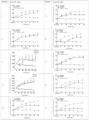
- the experimental process is shown in Figure 1 .
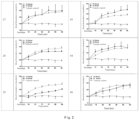
- the experimental mice were anesthetized for 30 seconds and fixed on a rack. After waiting for 2 minutes for the baseline light intensity data to stabilize, the brain blood flow light intensity data of the mice were recorded for 10 minutes without administration. Subsequently, the test compound was injected intraperitoneally and the cerebral blood flow and light intensity data of mice were recorded within 60 minutes after administration. Comparing the changes in light intensity before and after administration can reveal the degree of changes in cerebral blood flow in mice.
- compounds 30 and 59 increased mouse cerebral blood flow by about 10%
- compounds 5, 6, 26, 28, 29, 35, 43, and 58 all increased mouse cerebral blood flow by about 20%
- compounds 16, 57, and 86 increased mouse cerebral blood flow by about 30%
- compounds 27, 84, and 104 increased it by about 40%
- compound 83 increased mouse cerebral blood flow by 50% to 60%.
- the patented compound has good development prospects.
- mice Male ICR (CD-1) mice were divided into two groups, with three mice in each group. Each group was orally administered 20mg/kg of the test substance or intravenously injected with 5mg/kg of the test substance, blood was collected before administration, and 0.25 h, 0.5 h, 1 h, 2 h, 4h, 8h, and 24 hours after administration, respectively, and centrifuged immediately to obtain plasma, and the drug concentration in the plasma was determined using liquid chromatography tandem mass spectrometry.
- mice The pharmacokinetic parameters in mice were shown in the following table. In mice, the oral bioavailability of compounds 27 and 83 was 14.7% and 17.4%, respectively, indicating good pharmacokinetic properties. Table 2. Pharmacokinetic parameters of compounds 27 and 83 in mice No.
- Compound 27 has good brain tissue drug distribution after oral administration in mice, with a B/P of approximately 0.7. Table 3. Determination of drug concentration in brain tissue Dose Animal No. Time (h) Heart Plasma (ng/mL) Portal Vein Plasma (ng/mL) Brain (ng/g) CSF (ng/mL) Brain/H.
Landscapes
- Chemical & Material Sciences (AREA)
- Organic Chemistry (AREA)
- Health & Medical Sciences (AREA)
- General Health & Medical Sciences (AREA)
- Veterinary Medicine (AREA)
- Medicinal Chemistry (AREA)
- Life Sciences & Earth Sciences (AREA)
- Animal Behavior & Ethology (AREA)
- Pharmacology & Pharmacy (AREA)
- Public Health (AREA)
- Engineering & Computer Science (AREA)
- Bioinformatics & Cheminformatics (AREA)
- Epidemiology (AREA)
- General Chemical & Material Sciences (AREA)
- Biomedical Technology (AREA)
- Neurology (AREA)
- Neurosurgery (AREA)
- Nuclear Medicine, Radiotherapy & Molecular Imaging (AREA)
- Chemical Kinetics & Catalysis (AREA)
- Hospice & Palliative Care (AREA)
- Psychiatry (AREA)
- Urology & Nephrology (AREA)
- Vascular Medicine (AREA)
- Cardiology (AREA)
- Heart & Thoracic Surgery (AREA)
- Heterocyclic Carbon Compounds Containing A Hetero Ring Having Nitrogen And Oxygen As The Only Ring Hetero Atoms (AREA)
- Organic Low-Molecular-Weight Compounds And Preparation Thereof (AREA)
- Pharmaceuticals Containing Other Organic And Inorganic Compounds (AREA)
- Acyclic And Carbocyclic Compounds In Medicinal Compositions (AREA)
Abstract
Description
- The present invention relates to the field of medicinal chemistry and medicine, specifically to a class of an α,β-unsaturated amide compound, preparation method therefor, pharmaceutical composition containing the same, and their use as drugs for treating neurodegenerative diseases such as Alzheimer's disease, vascular dementia, and stroke.
- Alzheimer's disease (AD) is a degenerative brain disease that accounts for about twothirds of dementia in the elderly. Its main symptoms include progressive memory loss, β - amyloid deposition (A β), and neurofibrillary tangles (NFT). The pathological mechanism of AD is very complex, and existing marketed drugs can only temporarily alleviate or control AD symptoms. Effective pathways for targeted disease mechanism therapy have not yet been discovered. Aging is the main risk factor for Alzheimer's disease, with over 95% of AD patients having late-onset onset, occurring at the age of 65 or older. Less than 5% of AD is early-onset, and the main cause of the disease is genetic factors. Cardiovascular and cerebrovascular diseases were also major risk factors for AD, and vascular changes may contribute to the pathological development of AD, not just vascular dementia caused by known vascular lesions. As the most abundant and smallest vascular unit in the brain, capillaries induce damage to cerebral blood flow (CBF) or blood-brain barrier (BBB), which is associated with memory decline in AD.
- More and more studies have found that in the early stages of AD and normal aging mild cognitive impairment (MCI), there is a decrease in cerebral blood flow, reactive damage to cerebral blood vessels, and impaired hemodynamic responses. Early research has found that transcranial Doppler measurements of the middle cerebral artery indicate that individuals with higher cerebral blood flow velocity were less likely to develop dementia or atrophy of the hippocampus and amygdala. Arterial spinlabeling MRI shows reduced cerebral blood flow in the posterior dentate gyrus and anterior process in patients with early MCI or AD. In elderly people at high risk of AD, decreased or disrupted cerebral blood flow occurs before cognitive decline, brain atrophy, and accumulation of beta amyloid protein. APOE is the main genetic risk factor for AD and also a susceptibility gene for vascular disease. In animal models, reduced cerebral blood flow and vascular dysfunction were also observed in transgenic mice targeting human APOE4 gene 125-127 instead of mouse apolipoprotein E4 (APOE). It was also found that the vascular phenotype of mice expressing APOE4 preceded neuronal and synaptic dysfunction. Insufficient perfusion can induce or exacerbate Alzheimer's disease like neuronal dysfunction and neuropathological changes. A 50% reduction in chronic blood flow will lead to significant cognitive changes, a sustained decrease of more than 20% in cerebral blood flow will result in loss of attention, and a decrease of more than 30% in rat cerebral blood flow will impair spatial memory. A decrease in cerebral blood flow reduces the activity of Na+/K+pumps and all processes dependent on them, including maintaining resting potential and glutamate uptake. It also leads to the production of adenosine, which inhibits glutamate release and affects neuronal function. Bilateral carotid artery occlusion in rats can lead to memory impairment, neuronal dysfunction, synaptic changes, and accumulation of neurotoxic beta amyloid oligomers. Cerebral ischemia, hypoxia, and A β deposition were interdependent. Insufficient perfusion can trigger accelerated deposition of A β. On the contrary, A β can damage cerebral vascular function, increase arterial constriction, and reduce cerebral blood flow. In rodents, ischemia leads to the accumulation and formation of highly phosphorylated Tau in neurons, similar to the filaments in human neurodegenerative diseases and Alzheimer's disease. Insufficient perfusion affects the structural and functional changes of the brain and provides promising potential biomarkers for identifying and diagnosing preclinical Alzheimer's disease.
- Capillaries were the smallest blood vessels in the brain, branching off from small arteries to form a rich network of microvessels. The maximum surface werea of capillaries per gram of brain is approximately 120 cm2. The capillary network is mainly composed of endothelial cells, basement membrane, pericytes, and astrocytes. Capillary dysfunction has been observed in animal models as a precursor to neurodegenerative changes associated with dementia. The constriction of capillaries in AD leads to hypoxia in nerve tissue, which may also be the reason for the decrease in glucose metabolism in AD. Moreover, ischemia and hypoxia have been shown to upregulate the enzyme β - secretase (BACE1) responsible for generating A β. Capillary blood flow is mainly regulated by pericytes, and extensive research has found that pericyte damage is closely related to AD. In some brain anatomical samples of AD patients, the level of pericytes can even decrease by as much as 50%. In transgenic mice with defects in pericytes, blood flow decreases, microvessels decrease, A β expression increases, and blood-brain barrier permeability increases. Many neuropathological studies have described morphological changes in cerebral capillaries and periventricular white matter lesions similar to ischemic infarction in AD. Autopsy studies of late stage Alzheimer's patients have shown that a large number of capillary endothelial cells in the brain have shed, the blood vessel walls have collapsed, and the density has decreased. The fine and unique structure of capillaries increases their susceptibility to damage, and capillary degeneration is more frequent and common than vascular amyloidosis, potentially indicating that the long-term degradation process of the AD brain microvascular system may be partially independent of amyloid toxicity. More and more studies have shown that vascular factors were the main risk factors for AD, and damage to neurovascular units is associated with AD. Therefore, seeking interventions to increase cerebral blood flow through capillaries may be of great significance for the prevention and treatment of AD.
- The present invention provides a target compound that targets capillaries to increase cerebral blood flow and improve AD symptoms, which is used for the treatment of neurodegenerative diseases such as Alzheimer's disease, vascular dementia, and stroke in clinical practice.
- One purpose of the present invention is to provide an α,β unsaturated amide compound represented by formula I, or a pharmaceutically acceptable salt, a racemate, a R-isomer, a S-isomer, or a mixture thereof.
- Another purpose of the present invention is to provide a method for preparing the α,β unsaturated amide compound represented by the above formula I.
- Another purpose of the present invention is to provide a method for treating neurodegenerative diseases such as Alzheimer's disease, vascular dementia, and stroke related to cerebral blood flow, comprising administering to a patient in need of such treatment one or more of the α,β unsaturated amide compounds selected from the above formula I, a pharmaceutically acceptable salt, a racemate, a R-isomers, a S-isomers, or a mixture thereof.
- A first aspect of the present invention provides an α,β-unsaturated amide compound of formula I, or a racemic, a R-isomer, a S-isomer, a pharmaceutically acceptable salt, or a mixture thereof:

- R1, R2, R3, and R4 can each be independently selected from the group consisting of hydrogen, deuterium, tritium, halogen, cyano, amino, hydroxyl, nitro, substituted or unsubstituted C1~C6 alkyl, substituted or unsubstituted C1~C6 alkoxy, or (CHR6)nR;wherein, R is selected from the group consisting of: substituted or unsubstituted C6-C10 aryl, substituted or unsubstituted 5-7 membered heteroaryl, substituted or unsubstituted 5-7 membered heterocyclyl, substituted or unsubstituted C3-C12cycloalkyl or fused heterocycle; or R3 and R4 together with the attached carbon atom form a group selected from the group consisting of carbonyl, substituted or unsubstituted 3-8-membered cycloalkyl, or substituted or unsubstituted 4-8 membered heterocyclyl;
- Ⓐring is selected from the group consisting of: C6-C10 aryl, 5-12 membered heteroaryl, 5-12 membered heterocyclyl, C3-C12cycloalkyl, or fused heterocycle;
- R5 is 1, 2, 3, 4 or 5 substituents located on Ⓐ ring selected from the group consisting of hydrogen, deuterium, tritium, halogen, cyano, amino, hydroxyl, nitro, substituted or unsubstituted C1-C6 alkyl, substituted or unsubstituted C1-C6 alkoxy, substituted or unsubstituted C6-C10 aryl, substituted or unsubstituted C6-C10 aryloxy, substituted or unsubstituted 5-7 membered heteroaryl, substituted or unsubstituted 5-7 membered heteroaryloxy, substituted or unsubstituted 5-7 membered heterocycle, substituted or unsubstituted C3-C12 cycloalkyl;
- or two adjacent R5 are connected end-to-end with the atoms on Ⓐ ring to form a substituted or unsubstituted 4-8 membered ring (i.e., forming a fused ring structure with the A ring);
- or two R5 on the same atom of Ⓐ ring are connected end-to-end together withⒶ ring form a substituted or unsubstituted 3-8-membered ring (i.e., forming a spiro ring structure with ring A);
- X is N (CH2) nR6, O, or S;
- n is 0, 1, 2, or 3;
- R6 is independently selected from the group consisting of: hydrogen, halogen, cyano, amino, hydroxyl, nitro, substituted or unsubstituted C1-C6 alkyl, substituted or unsubstituted C1-C6 alkoxy, substituted or unsubstituted C6-C10 aryl, substituted or unsubstituted 5-12 membered heterocyclyl containing 1 to 3 heteroatoms selected from oxygen, sulfur, and nitrogen, substituted or unsubstituted C2-C10 acyl, substituted or unsubstituted C2-C10 ester group, substituted or unsubstituted C1-C6 amide group, -SO2R5, and -COR5;
- wherein, unless otherwise specified, the heteroaromatic ring, heterocycle, or heterocyclyl are each independently contains 1 to 4 heteroatoms selected from oxygen, sulfur, and nitrogen; the aromatic or heteroaromatic ring includes a monocyclic, fused-ring, or fused ring, and the carbocycle or heterocycle includes a monocyclic, fused, spiro, or bridged ring;
- the "substituted" refers to being substituted by one or more (preferably 1-3) substituents selected from the group consisting of halogen, cyano, nitro, amino, hydroxyl, hydroxymethyl, carboxyl, thiol, C1-C6 alkyl, halogen substituted C1-C6 alkyl, C1-C6 alkoxy, halogen substituted C1-C6 alkoxy, C1-C6 alkoxycarbonyl, C2-C6 alkenyl, C2-C6 alkynyl, C3-C8 cycloalkyl, C1-C6 alkylsulfonyl, substituted or unsubstituted C6-C10 aryl, substituted or unsubstituted 5-7 membered heteroaryl, and 3-12 membered heterocyclyl;
- the halogen is F, Cl, Br or I.
- In another preferred embodiment, Ⓐ ring is selected from the group consisting of C6~C10 aryl and C5~C12 heteroaryl.
- In another preferred embodiment, R1, R2, R3 and R4 are each independently selected from the group consisting of hydrogen, deuterium, substituted or unsubstituted C1-C6 alkyl, or (CHR6)nR; wherein R is selected from the group consisting of: substituted or unsubstituted C6-C10 aryl and substituted or unsubstituted 5-7 membered heteroaryl; n is 0, 1 or 2; R6 is hydrogen, halogen, or substituted or unsubstituted C1-C6 alkyl.
- In another preferred embodiment, R1, R2, R3, and R4 are each independently selected from the group consisting of hydrogen, deuterium, substituted or unsubstituted C1-C6 alkyl and (CHR6)nR; wherein R is selected from the group consisting of: substituted or unsubstituted C6-C10 aryl and substituted or unsubstituted 5-7 membered heteroaryl.
- In another preferred embodiment, R3 and R4 are each independently selected from the group consisting of hydrogen, deuterium, and substituted or unsubstituted C1-C6 alkyl.
- In another preferred embodiment, R1 is H or D, and R2 is selected from the group consisting of hydrogen, deuterium, substituted or unsubstituted C1-C6 alkyl and (CHR6)nR; wherein R is selected from the group consisting of: substituted or unsubstituted C6-C10 aryl, substituted or unsubstituted 5-7 membered heteroaryl; the "substituted" refers to being substituted by one or more substituents selected from the group consisting of halogen, cyano, nitro, amino, hydroxyl, hydroxymethyl, carboxyl, thiol, C1-C6 alkyl, halogen substituted C1-C6 alkyl, C1-C6 alkoxy, halogen substituted C1-C6 alkoxy, and C1-C6 alkoxycarbonyl.
- In another preferred embodiment, R3 and R4 are each independently deuterium.
- In another preferred embodiment, R1 and R2 are each independently deuterium.
- In another preferred embodiment, the compound of formula I is the compound described in each Example.
- A second aspect of the present invention provides a method for preparing the compound of formula I as described in the first aspect of the present invention, comprising steps of:

- In an inert solvent, reacting a compound of formula II and a compound of formula III to obtain the compound of formula I.
- In another preferred embodiment, the reaction is carried out in the presence of an organic amine and pivaloyl chloride.
- In another preferred embodiment, the organic amine is triethylamine.
- A third aspect of the present invention provides a pharmaceutical composition comprising (1) a compound as described in the first aspect of the present invention, or a stereoisomer or tautomer , a pharmaceutically acceptable salt, a hydrate or a solvate thereof; and (2) a pharmaceutically acceptable carrier.
- A fourth aspect of the present invention provides a use of the compound as described in the first aspect of the present invention, a stereoisomer, a tautomer, a pharmaceutically acceptable salt, a hydrate or solvate thereof, or a pharmaceutical composition of
claim 9 in the preparation of a pharmaceutical composition for the prevention and/or treatment of neurodegenerative diseases or stroke. - In another preferred embodiment, the neurodegenerative disease is selected from the group consisting of Alzheimer's disease and vascular dementia.
- It should be understood that within the scope of the present invention, the above-mentioned technical features of the present invention and the specific technical features described in the following examples can be combined with each other to form new or preferred technical solutions. Due to space limitations, it will not repeat here.
-
-
Figure 1 . The flowchart of the laser speckle test blood flow model in pharmacological activity experiment Example 1; -
Figure 2 . The blood flow improvement effect of the compound of the present invention. - After long-term and in-depth research, the inventor has provided an α,β unsaturated amide compound that can be used for neurodegenerative diseases such as Alzheimer's disease. The compound can effectively improve capillary cerebral blood flow. Based on the above findings, the inventor has completed the present invention.
- In the present invention, the halogen is F, Cl, Br, or I.
- In the present invention, unless otherwise specified, the terms used herein have general meanings known to those skilled in the art.
- In the present invention, the term "C1-C6 alkyl" refers to straight or branched alkyl having 1 to 6 carbon atoms, including but not limited to methyl, ethyl, propyl, isopropyl, butyl, isobutyl, sec butyl, tert butyl, pentyl, and hexyl, etc; Preferred is ethyl, propyl, isopropyl, butyl, isobutyl, sec butyl, and tert butyl.
- In the present invention, the term "C1-C6 alkoxy" refers to straight or branched chain alkoxy having 1 to 6 carbon atoms, including but not limited to methoxy, ethoxy, propoxy, isopropoxy, and butoxy.
- In the present invention, the term "C2-C6 alkenyl" refers to a straight or branched chain alkenyl containing one double bond with 2 to 6 carbon atoms, including but not limited to vinyl, propenyl, butenyl, isobutenyl, pentenyl, and hexenyl.
- In the present invention, the term "C2-C6 alkynyl" refers to a straight or branched chain alkynyl containing a triple bond with 2 to 6 carbon atoms, including but not limited to ethynyl, propynyl, butynyl, isobutyl, pentynyl, and hexynyl.
- In the present invention, the term "C3-C10 cycloalkyl" refers to a cycloalkyl having 3 to 10 carbon atoms on the ring, including but not limited to cyclopropyl, cyclobutyl, cyclopentyl, cyclohexyl, cycloheptyl, cyclooctyl, and cyclodecyl. The terms" C3-C8 cycloalkyl ", " C3-C7 cycloalkyl ", and" C3-C6 cycloalkyl "have similar meanings.
- In the present invention, the term "C3-C10 cycloalkenyl" refers to a cycloalkenyl having 3 to 10 carbon atoms on the ring, including but not limited to cyclopropenyl, cyclobutenyl, cyclopentenyl, cyclohexenyl, cycloheptenyl, cyclooctenyl, and cyclodecyl. The term "C3-C7 cycloalkenyl" has a similar meaning.
- In the present invention, the terms "aromatic ring" or "aryl" have the same meaning, and preferably "aryl" is "C6-C12 aryl" or "C6-C10 aryl". The term 'C6-C12 aryl' refers to aromatic ring groups with 6 to 12 carbon atoms that do not contain heteroatoms on the ring, such as phenyl, naphthyl, etc. The term 'C6-C10 aryl' has a similar meaning.
- In the present invention, the terms "aromatic heterocycle" or "heteroaryl" have the same meaning, referring to a heteroaromatic group containing one or more heteroatoms. The heteroatoms referred to here include oxygen, sulfur, and nitrogen. For example, furyl, thienyl, pyridyl, pyrazolyl pyrazole, pyrrolyl, N-alkylpyrrolyl, pyrimidinyl, pyrazinyl, imidazolyl, tetrazolyl, etc. The heteroaromatic ring can be fused onto an aryl, heterocyclyl, or cycloalkyl ring, wherein the ring connected to the parent structure is a heteroaromatic ring. Heteroaryl can be optionally substituted or unsubstituted.
- In the present invention, the term "3-12 membered heterocyclyl" refers to a saturated or unsaturated 3-12 membered ring group containing 1-3 heteroatoms selected from oxygen, sulfur, and nitrogen on the ring, such as dioxolane. The term "3-7 membered heterocyclyl" has a similar meaning.
- In the present invention, the term 'substituted' refers to one or more hydrogen atoms on a specific functional group are substituted by a specific substituent. The specific substituents were those described in the preceding text or those that appear in various Examples. Unless otherwise specified, a substituted group may have a substituent selected from a specific group at any substitutable site of the group, which may be the same or different at each position. A cyclic substituent, such as a heterocycloalkyl, can be attached to another ring, such as a cycloalkyl, to form a spirobicyclic system, for example, where two rings share a common carbon atom. Those skilled in this field should understand that the expected combinations of substituents in the present invention were those that were stable or chemically achievable. The substituents include (but are not limited to): C1-8 alkyl, C2-8 alkenyl, C2-8 alkynyl, C3-8 cycloalkyl, 3- to 12 membered heterocyclyl, aryl, heteroaryl, halogen, hydroxyl, carboxyl (- COOH), C1-8 aldehyde, C2-10 acyl, C2-10 ester group, amino, alkoxy, C1-10 sulfonyl, etc.
- The present invention provides an α,β-unsaturated amide compound of Formula I, or a racemic, a R-isomer, a S-isomer, a pharmaceutically acceptable salt, or a mixture thereof:

- R1, R2, R3, and R4 can each be independently selected from the group consisting of hydrogen, deuterium, tritium, halogen, cyano, amino, hydroxyl, nitro, substituted or unsubstituted C1~C6 alkyl, substituted or unsubstituted C1~C6 alkoxy, and (CHR6)nR; wherein R is selected from the group consisting of: substituted or unsubstituted C6-C10 aryl, substituted or unsubstituted 5-7 membered heteroaryl, substituted or unsubstituted 5-7 membered heterocyclyl, substituted or unsubstituted C3-C12cycloalkyl or fuesd heterocycle;
- Ⓐring is selected from the group consisting of: C6-C10 aryl, 5-12 membered heteroaryl, 5-12 membered heterocyclyl, C3-C12cycloalkyl or heterocycle;
- R5 is 1, 2, 3, 4 or 5 substituents located on Ⓐ ring selected from the group consisting of hydrogen, deuterium, tritium, halogen, cyano, amino, hydroxyl, nitro, substituted or unsubstituted C1-C6 alkyl, substituted or unsubstituted C1-C6 alkoxy, substituted or unsubstituted C6-C10 aryl, substituted or unsubstituted C6-C10 aryloxy, substituted or unsubstituted 5-7 membered heteroaryl, substituted or unsubstituted 5-7 membered heteroaryloxy, substituted or unsubstituted 5-7 membered heterocycle, substituted or unsubstituted C3-C12 cycloalkyl;
- or two adjacent R5 are connected end-to-end with the atoms on ringform a substituted or unsubstituted 4-8 membered ring (i.e., forming a fused ring structure with the A ring);

- or two R5 on the same atom on ring are connected end-to-end together with
 form a substituted or unsubstituted 3-8-membered ring (i.e., forming a spiro ring structure with ring A);
- X is N(CH2)nR6, O, or S;
- n is 0, 1, 2, or 3;
- R6 is independently selected from the group consisting of: hydrogen, halogen, cyano, amino, hydroxyl, nitro, substituted or unsubstituted C1-C6 alkyl, substituted or unsubstituted C1-C6 alkoxy, substituted or unsubstituted C6-C10 aryl, substituted or unsubstituted 5-12 membered heterocycle containing 1 to 3 heteroatoms selected from oxygen, sulfur, and nitrogen, substituted or unsubstituted C2-C10 acyl, substituted or unsubstituted C2-C10 ester group, substituted or unsubstituted C1-C6 amide group, SO2R5 and -COR5;
- wherein, unless otherwise specified, the heteroaromatic ring, heterocycle ring, or heterocyclyl are each independently contains 1 to 4 heteroatoms selected from oxygen, sulfur, and nitrogen; the aromatic or heteroaromatic ring includes a monocyclic, fused-ring, or fused ring, and the carbocycle or heterocycle includes a monocyclic, fused, spiro, or bridged ring;
- the "substituted" refers to being substituted by one or more (preferably 1-3) substituents selected from the group consisting of halogen, cyano, nitro, amino, hydroxyl, hydroxymethyl, carboxyl, thiol, C1-C6 alkyl, halogen substituted C1-C6 alkyl, C1-C6 alkoxy, halogen substituted C1-C6 alkoxy, C1-C6 alkoxycarbonyl, C2-C6 alkenyl, C2-C6 alkynyl, C3-C8 cycloalkyl, C1-C6 alkylsulfonyl, substituted or unsubstituted C6-C10 aryl, substituted or unsubstituted 5-7 membered heteroaryl, and 3-12 membered heterocyclyl;
- the halogen is F, Cl, Br or I.
- In a preferred embodiment, R1, R2, R3, R4, R5, R6, Ⓐ ring, X, Ⓐ, S, or n are each independently the corresponding group in the compound in each example.
- The present invention also provides a method for preparing a compound represented by formula I, which is carried out according to the following scheme (example):
The compound of formula (I) can be prepared by the method shown in Scheme 1 below - The structural formulas and R group labels used in the following schemes were only used in this section. The compounds of formula (II) and formula (III) can be obtained on the market or synthesized using conventional techniques in this field.

- Another aspect of the present invention provides a pharmaceutical composition comprising a therapeutic effective amount selected from one or more of a compound of Formula I, a pharmaceutically acceptable salt, a enantiomer, a diastereomer, and a racemate, and optionally, one or more pharmaceutically acceptable carriers, excipients, adjuvants, accessories and/or diluents. The accessories can be, such as odorants, fragrances, sweeteners, etc.
- The pharmaceutical composition provided by the present invention preferably contains active ingredients in a weight ratio of 1-99%. The preferred ratio is that the compound of formula I as the active ingredient accounts for 65wt% to 99wt% of the total weight, and the remaining part is a pharmaceutically acceptable carrier, diluent, solution or salt solution.
- The compound and pharmaceutical composition provided by the present invention can be various forms, such as tablets, capsules, powders, syrups, solutions, suspensions, and aerosols, and can be present in suitable solid or liquid carriers or diluents and in suitable disinfectants for injection or drip.
- The various dosage forms of the pharmaceutical composition of the present invention can be prepared according to conventional preparation methods in the pharmaceutical field. A unit measurement of its formulation includes 1 mg-700 mg of compound of formula I, and preferably, the unit measurement of the formulation includes 25 mg-300 mg of compound of formula I.
- The compounds and pharmaceutical compositions of the present invention can be used clinically in mammals, including humans and animals, and can be administered through oral, nasal, dermal, pulmonary, or gastrointestinal routes. The most preferred option is oral administration. The most preferred daily dose is 50-1400 mg/kg body weight, taken in one dose, or 25-700 mg/kg body weight in divided doses. Regardless of the method of administration, the optimal dosage for an individual should be determined based on the specific treatment. Usually, it starts from a small dose and gradually increases until the most suitable dose is found.
- Another aspect of the present invention provides a method for increasing cerebral blood flow, comprising selected from one or more of a compound of Formula I, a pharmaceutically acceptable salt, a enantiomer, a diastereomer and a racemate, and optionally, one or more pharmaceutically acceptable carriers, excipients, adjuvants, accessories and/or diluents.
- The compounds and compositions of the present invention were used for the treatment and prevention of neurodegenerative diseases and stroke related to cerebral blood flow, including but not limited to Alzheimer's disease, vascular dementia, and stroke.
- The present invention will be further explained in conjunction with specific examples. It should be understood that these examples were only used to illustrate the present invention and not to limit the scope of the present invention. The experimental methods without specific conditions specified in the following examples were usually carried out under conventional conditions or conditions recommended by the manufacturer. Unless otherwise specified, percentages and portions are calculated by weight.
-

- To a solution of compound (E) -3- (o-methylphenyl) acrylic acid 1a (400.0 mg, 2.47 mmol) and triethylamine (685.6 µ L, 4.93 mmol) in ultra dry dichloromethanewas added pivaloyl chloride (364.5 µ L, 2.96 mmol) at -78 °C and stirred at room temperature for 1 hour under argon protection. Then oxazolidin-2-one (214.8 mg, 2.47 mmol) and lithium chloride (104.5 mg, 2.47 mmol) was added at -78 °C and stirred at room temperature for 12 hours. After TLC monitored the completion of the reaction, it was quenched with water and extracted with dichloromethane. The organic layers were combined and washed with saturated sodium chloride solution. Then the organic layer was dried with anhydrous sodium sulfate and concentrated, the crude product was subjected to column chromatography to obtainthe target product (E) -3- (3- (o-methylphenyl) acryloyl) oxazolidin-2-one (490 mg, white solid), yield 85.9%. 1H NMR (400 MHz, DMSO-d6) δ 7.96 (d, J = 15.7 Hz, 1H), 7.73 (d, J = 15.7 Hz, 1H), 7.61 (d, J = 8.7 Hz, 1H), 7.38 - 7.31 (m, 1H), 7.30 (d, J = 3.9 Hz, 2H), 4.47 - 4.37 (m, 2H), 4.06 - 3.97 (m, 2H), 2.41 (s, 3H). LRMS (ESI): 232.09 [M+H]+.
- Replace (E) -3- (o-methylphenyl) acrylic acid with (E) -3- (m-methylphenyl) acrylic acid. The remaining required raw materials, reagents, and preparation methods were the same as in Example 1 to obtain (E) -3- (3- (m-methylphenyl) acryloyl) oxazolidin-2-one (yield 82.1%). 1H NMR (400 MHz, DMSO-d6) δ 7.81 (d, J = 16.0 Hz, 1H), 7.72 (d, J = 16.0 Hz, 1H), 7.51-7.44 (m, 2H), 7.36 (dt, J = 10.2, 5.1 Hz, 1H), 7.28 (d, J = 7.8 Hz, 1H), 4.42 (td, J = 8.1, 2.4 Hz, 2H), 4.00 (td, J = 8.1, 2.6 Hz, 2H), 2.34 (s, 3H). LRMS (ESI): 232.09 [M+H]+.
- Replace (E) -3- (o-methylphenyl) acrylic acid with (E) -3- (p-methylphenyl) acrylic acid. The remaining required raw materials, reagents, and preparation methods were the same as in Example 1 to obtain (E) -3- (3- (p-methylphenyl) acryloyl) oxazolidin-2-one (yield 85.2%). 1H NMR (400 MHz, DMSO-d6) δ 7.77 (d, J = 15.8 Hz, 1H), 7.70 (d, J = 15.9 Hz, 1H), 7.55 (d, J = 8.2 Hz, 2H), 7.26 (d, J = 7.9 Hz, 2H), 4.39 (dd, J = 8.6, 7.4 Hz, 2H), 3.97 (dd, J = 8.6, 7.4 Hz, 2H), 2.32 (s, 3H). LRMS (ESI): 232.09 [M+H]+.
- Replace (E) -3- (2-methoxyphenyl) acrylic acid with (E) -3- (2-methoxyphenyl) acrylic acid. The remaining required raw materials, reagents, and preparation methods were the same as in Example 1 to obtain (E) -3- (3- (2-methoxyphenyl) acryloyl) oxazolidin-2-one (yield 87.2%). 1H NMR (400 MHz, DMSO-d6) δ 7.97 (d, J=16.0 Hz, 1H), 7.88 (d, J=15.9 Hz, 1H), 7.61 (dd, J=7.7, 1.6 Hz, 1H), 7.45 (ddd, J=8.5, 7.3, 1.6 Hz, 1H), 7.12 (d, J=8.4 Hz, 1H), 7.03 (t, J=7.5 Hz, 1H), 4.41 (t, J=8.0 Hz, 2H), 3.99 (dd, J=8.5, 7.4 Hz, 2H), 3.88 (s, 3H). LRMS (ESI): 248.08 [M+H]+.
- Replace (E) -3- (o-methoxyphenyl) acrylic acid with (E) -3- (3-methoxyphenyl) acrylic acid. The remaining required raw materials, reagents, and preparation methods were the same as in Example 1 to obtain (E) -3- (3- (3-methoxyphenyl) acryloyl) oxazolidin-2-one (yield 87.6%). 1H NMR (400 MHz, DMSO-d6) δ 7.81 (d, J = 15.8 Hz, 1H), 7.73 (d, J = 15.8 Hz, 1H), 7.39 (t, J = 7.9 Hz, 1H), 7.31 - 7.24 (m, 1H), 7.21 (t, J = 2.0 Hz, 1H), 7.08 - 7.02 (m, 1H), 4.42 (dd, J = 8.5, 7.4 Hz, 2H), 4.00 (dd, J = 8.6, 7.3 Hz, 2H), 3.80 (s, 3H). LRMS (ESI): 248.08 [M+H]+.
- Replace (E) -3- (o-methoxyphenyl) acrylic acid with (E) -3- (4-methoxyphenyl) acrylic acid. The remaining required raw materials, reagents, and preparation methods were the same as in Example 1 to obtain (E) -3- (3- (4-methoxyphenyl) acryloyl) oxazolidin-2-one (yield 82.7%). 1H NMR (400 MHz, DMSO-d6) δ 7.77 - 7.66 (m, 2H), 7.64 (d, J = 8.7 Hz, 2H), 7.03 (d, J = 8.8 Hz, 2H), 4.41 (dd, J = 8.5, 7.4 Hz, 2H), 3.99 (dd, J = 8.5, 7.4 Hz, 2H), 3.81 (s, 3H). LRMS (ESI): 248.08 [M+H]+.
- Replace (E) -3- (o-methylphenyl) acrylic acid with (E) -3- (2-trifluoromethylphenyl) acrylic acid. The remaining required raw materials, reagents, and preparation methods were the same as in Example 1 to obtain (E) -3- (3- (2- (trifluoromethylphenyl) acryloyl) oxazolidin-2-one (yield 81.5%). 1H NMR (400 MHz, DMSO-d6) δ 7.98 - 7.78 (m, 5H), 7.68 (t, J = 7.6 Hz, 1H), 4.43 (dd, J = 8.5, 7.4 Hz, 2H), 4.02 (dd, J = 8.5, 7.4 Hz, 2H). LRMS (ESI): 286.06 [M+H]+.
- Replace (E) -3- (o-methylphenyl) acrylic acid with (E) -3- (3-trifluoromethylphenyl) acrylic acid. The remaining required raw materials, reagents, and preparation methods were the same as in Example 1 to obtain (E) -3- (3- (3- (trifluoromethylphenyl) acryloyl) oxazolidin-2-one (yield 80.3%). 1H NMR (400 MHz, DMSO-d6) δ 8.05 - 7.97 (m, 2H), 7.94 - 7.83 (m, 2H), 7.82 (d, J = 7.1 Hz, 1H), 7.71 (t, J = 7.8 Hz, 1H), 4.43 (dd, J = 8.5, 7.4 Hz, 2H), 4.02 (dd, J = 8.5, 7.4 Hz, 2H). LRMS (ESI): 286.06 [M+H]+.
- Replace (E) -3- (o-methylphenyl) acrylic acid with (E) -3- (4-trifluoromethylphenyl) acrylic acid. The remaining required raw materials, reagents, and preparation methods were the same as in Example 1 to obtain (E) -3- (3- (4- (trifluoromethylphenyl) acryloyl) oxazolidin-2-one (yield 85.6%). 1H NMR (400 MHz, DMSO-d6) δ 7.95 - 7.87 (m, 3H), 7.85 - 7.79 (m, 3H), 4.43 (dd, J = 8.5, 7.4 Hz, 2H), 4.01 (dd, J = 8.6, 7.4 Hz, 2H). LRMS (ESI): 286.06 [M+H]+.
- Replace (E) -3- (ortho methylphenyl) acrylic acid with (E) -3- (2-fluorophenyl) acrylic acid. The remaining required raw materials, reagents, and preparation methods were the same as in Example 1 to obtain (E) -3- (3- (2-fluorophenyl) acryloyl) oxazolidin-2-one (yield 92.1%). 1H NMR (400 MHz, DMSO-d6) δ 7.93 (d, J = 16.0 Hz, 1H), 7.77 (d, J = 16.0 Hz, 1H), 7.79 - 7.72 (m, 1H), 7.58 - 7.47 (m, 1H), 7.42 - 7.26 (m, 2H), 4.50 - 4.37 (m, 2H), 4.01 (m, 2H). LRMS (ESI): 236.06 [M+H]+.
- Replace (E) -3- (o-methylphenyl) acrylic acid with (E) -3- (4-fluorophenyl) acrylic acid. The remaining required raw materials, reagents, and preparation methods were the same as in Example 1 to obtain (E) -3- (3- (4-fluorophenyl) acryloyl) oxazolidin-2-one (yield 89.0%). 1H NMR (400 MHz, DMSO-d6) δ 7.77 (s, 2H), 7.77 - 7.73 (m, 2H), 7.37 - 7.25 (m, 2H), 4.42 (dd, J = 8.6, 7.3 Hz, 2H), 4.00 (dd, J = 8.5, 7.4 Hz, 2H). LRMS (ESI): 236.06 [M+H]+.
- Replace (E) -3- (4-chlorophenyl) acrylic acid with (E) -3- (4-chlorophenyl) acrylic acid. The remaining required raw materials, reagents, and preparation methods were the same as in Example 1 to obtain (E) -3- (3- (4-chlorophenyl) acryloyl) oxazolidin-2-one (yield 91.1%).1H NMR (400 MHz, DMSO-d6) δ 7.82 (d, J = 15.9 Hz, 1H), 7.75 (d, J = 15.9 Hz, 1H), 7.73 - 7.68 (m, 2H), 7.53 (dd, J = 8.4, 1.2 Hz, 2H), 4.42 (t, J = 8.0 Hz, 2H), 4.00 (t, J = 8.0 Hz, 2H). LRMS (ESI): 252.03 [M+H]+.
- Replace (E) -3- (ortho methylphenyl) acrylic acid with (E) -3- (2-bromophenyl) acrylic acid. The remaining required raw materials, reagents, and preparation methods were the same as in Example 1 to obtain (E) -3- (3- (2-bromophenyl) acryloyl) oxazolidin-2-one (yield 93.4%). 1H NMR (400 MHz, DMSO-d6) δ 7.96 (dd, J = 15.9, 1.7 Hz, 1H), 7.84 - 7.73 (m, 3H), 7.50 (td, J = 7.5, 1.4 Hz, 1H), 7.39 (td, J = 7.7, 1.8 Hz, 1H), 4.43 (td, J = 7.9, 1.7 Hz, 2H), 4.01 (ddd, J = 8.7, 7.2, 1.7 Hz, 2H). LRMS (ESI): 295.98, 297.98 [M+H]+.
- Replace (E) -3- (o-methylphenyl) acrylic acid with (E) -3- (4-bromophenyl) acrylic acid. The remaining required raw materials, reagents, and preparation methods were the same as in Example 1 to obtain (E) -3- (3- (4-bromophenyl) acryloyl) oxazolidin-2-one (yield 91.1%).1H NMR (400 MHz, DMSO-d6) δ 7.83 (d, J = 15.9 Hz, 1H), 7.73 (d, J = 15.9 Hz, 1H), 7.67 (d, J = 8.7 Hz, 2H), 7.63 (d, J = 8.7 Hz, 2H), 4.42 (dd, J = 8.6, 7.4 Hz, 2H), 4.00 (dd, J = 8.5, 7.4 Hz, 2H). LRMS (ESI): 295.98, 297.98 [M+H]+.
- Replace (E) -3- (o-methylphenyl) acrylic acid with (E) -3- (2-phenoxyphenyl) acrylic acid. The remaining required raw materials, reagents, and preparation methods were the same as in Example 1 to obtain (E) -3- (3- (2-phenoxyphenyl) acryloyl) oxazolidin-2-one (yield 89.3%). 1H NMR (400 MHz, DMSO-d6) δ 7.99 - 7.88 (m, 2H), 7.83 - 7.76 (m, 1H), 7.50 - 7.44 (m, 1H), 7.41 (tq, J = 7.4, 1.2 Hz, 2H), 7.27 (td, J = 7.6, 1.5 Hz, 1H), 7.17 (tt, J = 7.4, 1.2 Hz, 1H), 7.05 - 6.98 (m, 2H), 6.96 (dt, J = 8.2, 1.3 Hz, 1H), 4.40 (td, J = 8.0, 1.4 Hz, 2H), 4.01 - 3.91 (m, 2H). LRMS (ESI): 310.10 [M+H]+.
- Replace (E) -3- (o-methylphenyl) acrylic acid with (E) -3- (3-phenoxyphenyl) acrylic acid. The remaining required raw materials, reagents, and preparation methods were the same as in Example 1 to obtain (E) -3- (3- (3-phenoxyphenyl) acryloyl) oxazolidin-2-one (yield 82.7%). 1H NMR (400 MHz, DMSO-d6) δ 7.80 - 7.70 (m, 2H), 7.49 - 7.39 (m, 4H), 7.31 (dd, J = 2.9, 1.4 Hz, 1H), 7.22 - 7.15 (m, 1H), 7.10 - 7.00 (m, 3H), 4.45 - 4.36 (m, 2H), 4.03 - 3.94 (m, 2H). LRMS (ESI): 310.10 [M+H]+.
- Replace (E) -3- (o-methylphenyl) acrylic acid with (E) -3- (4-phenoxyphenyl) acrylic acid. The remaining required raw materials, reagents, and preparation methods were the same as in Example 1 to obtain (E) -3- (3- (4-phenoxyphenyl) acryloyl) oxazolidin-2-one (yield 88.1%). 1H NMR (400 MHz, DMSO-d6) δ 7.81 (d, J = 15.1 Hz, 1H), 7.61 - 7.52 (m, 1H), 7.54 - 7.45 (m, 2H), 7.39 (t, J = 7.5 Hz, 2H), 7.19 - 7.10 (m, 1H), 7.06 (ddd, J = 7.8, 5.7, 1.9 Hz, 4H), 4.40 (t, J = 6.3 Hz, 2H), 4.05 (t, J = 6.4 Hz, 2H). LRMS (ESI): 310.10 [M+H]+.
- Replace (E) -3- (o-methylphenyl) acrylic acid with (E) -3- ([1,1 '- biphenyl] -2-yl) acrylic acid. The remaining required raw materials, reagents, and preparation methods were the same as in Example 1 to obtain (E) -3- (3- ([1,1' - biphenyl] -2-yl) acryloyl) oxazolidin-2-one (yield 86.7%). 1H NMR (400 MHz, DMSO-d6) δ 7.90 - 7.78 (m, 2H), 7.64 (dd, J = 15.8, 1.4 Hz, 1H), 7.60 - 7.39 (m, 6H), 7.33 (dt, J = 7.8, 1.5 Hz, 2H), 4.47 - 4.36 (m, 2H), 3.95 (m, 2H). LRMS (ESI): 294.11 [M+H]+.
- Replace (E) -3- (o-methylphenyl) acrylic acid with (E) -3- ([1,1 '- biphenyl] -3-yl) acrylic acid. The remaining required raw materials, reagents, and preparation methods were the same as in Example 1 to obtain (E) -3- (3- ([1,1' - biphenyl] -3-yl) acryloyl) oxazolidin-2-one (yield 88.3%). 1H NMR (400 MHz, DMSO-d6) δ 7.94 (s, 1H), 7.88 (d, J = 5.9 Hz, 2H), 7.78 - 7.68 (m, 4H), 7.57 (t, J = 7.7 Hz, 1H), 7.51 (t, J = 7.6 Hz, 2H), 7.42 (t, J = 7.3 Hz, 1H), 4.43 (t, J = 8.0 Hz, 2H), 4.02 (t, J = 7.9 Hz, 2H). LRMS (ESI): 294.11 [M+H]+.
- Replace (E) -3- (o-methylphenyl) acrylic acid with (E) -3- (4-fluoro-2-trifluoromethylphenyl) acrylic acid. The remaining required raw materials, reagents, and preparation methods were the same as in Example 1 to obtain (E) -3- (3- (4-fluoro-2-trifluoromethylphenyl) acryloyl) oxazolidin-2-one (yield 81.0%). 1H NMR (400 MHz, Chloroform-d) δ 8.15 (dq, J = 15.6, 2.3 Hz, 1H), 7.91 - 7.78 (m, 2H), 7.42 (dd, J = 8.8, 2.7 Hz, 1H), 7.35 - 7.22 (m, 1H), 4.49 (t, J = 8.0 Hz, 2H), 4.16 (t, J = 8.0 Hz, 2H). LRMS (ESI): 304.05 [M+H]+.
- Replace (E) -3- (ortho methylphenyl) acrylic acid with (E) -3- (naphthalen-1-yl) acrylic acid. The remaining required raw materials, reagents, and preparation methods were the same as in Example 1 to obtain (E) -3- (3- (naphthalen-1-yl) acryloyl) oxazolidin-2-one (yield 87.1%). 1H NMR (400 MHz, DMSO-d6) δ 8.52 (d, J = 15.6 Hz, 1H), 8.25 (d, J = 8.3 Hz, 1H), 8.09 - 8.00 (m, 2H), 7.95 - 7.86 (m, 2H), 7.69 - 7.58 (m, 3H), 4.45 (dd, J = 8.6, 7.3 Hz, 2H), 4.05 (dd, J = 8.6, 7.3 Hz, 2H). LRMS (ESI): 268.09 [M+H]+.
- Replace (E) -3- (o-methylphenyl) acrylic acid with (E) -3- (benzo [d] [1,3] dioxolane-5-yl) acrylic acid. The remaining required raw materials, reagents, and preparation methods were the same as in Example 1 to obtain (E) -3- (3- (benzo [d] [1,3] dioxolane-5-yl) acryloyl) oxazolin-2-one (yield 89.2%). 1H NMR (400 MHz, Chloroform-d) δ 7.79 (d, J = 15.7 Hz, 1H), 7.73 (d, J = 15.6 Hz, 1H), 7.15 (d, J = 1.7 Hz, 1H), 7.10 (dd, J = 8.0, 1.8 Hz, 1H), 6.82 (d, J = 8.0 Hz, 1H), 6.02 (s, 2H), 4.45 (dd, J = 8.6, 7.5 Hz, 2H), 4.13 (dd, J = 8.5, 7.4 Hz, 2H); LRMS (ESI): 262.06 [M + H]+.
- Replace (E) -3- (o-methylphenyl) acrylic acid with (E) -3- (thiphen-2-yl) acrylic acid. The remaining required raw materials, reagents, and preparation methods were the same as in Example 1 to obtain (E) -3- (3- (thiphen-2-yl) acryloyl) oxazolidin-2-one (yield 87.4%). 1H NMR (400 MHz, DMSO-d6) δ 8.03 (dd, J = 2.8, 1.2 Hz, 1H), 7.77 (d, J = 15.8 Hz, 1H), 7.66 (ddd, J = 5.0, 2.9, 0.7 Hz, 1H), 7.61 (d, J = 15.7 Hz, 1H), 7.42 (dd, J = 5.1, 1.2 Hz, 1H), 4.41 (dd, J = 8.5, 7.4 Hz, 2H), 3.99 (dd, J = 8.5, 7.4 Hz, 2H). LRMS (ESI): 224.03 [M+H]+.
- Replace (E) -3- (o-methylphenyl) acrylic acid with (E) -3-cyclohexanoic acid. The remaining required raw materials, reagents, and preparation methods were the same as in Example 1 to obtain (E) -3- (3-cyclohexanoyl) oxazolidin-2-one (yield 85.1%). 1H NMR (400 MHz, DMSO-d6) δ 7.12 (dd, J = 15.6, 1.3 Hz, 1H), 6.95 (dd, J = 15.6, 6.6 Hz, 1H), 4.37 (dd, J = 8.5, 7.5 Hz, 2H), 3.92 (dd, J = 8.6, 7.4 Hz, 2H), 2.21 (qd, J = 8.0, 7.3, 4.5 Hz, 1H), 1.77 - 1.68 (m, 4H), 1.63 (d, J = 12.5 Hz, 1H), 1.36 - 1.23 (m, 2H), 1.14 (pd, J = 13.3, 12.7, 3.7 Hz, 3H). LRMS (ESI): 224.12 [M+H]+.
- Replace (E) -3- (o-methylphenyl) acrylic acid with (E) -3- (2-trifluoromethylphenyl) acrylic acid, and replace oxazolidin-2-one with 4-phenyloxazolidin-2-one. The remaining required raw materials, reagents, and preparation methods were the same as in Example 1 to obtain (E) -3- (3- (2-trifluoromethylphenyl) acryloyl) -4-phenyloxazolidin-2-one (yield 89.9%). 1H NMR (400 MHz, DMSO-d6) δ 7.95 (d, J = 7.8 Hz, 1H), 7.91 - 7.77 (m, 4H), 7.68 (t, J = 7.7 Hz, 1H), 7.46 - 7.33 (m, 5H), 5.59 (dd, J = 8.6, 4.1 Hz, 1H), 4.82 (t, J = 8.7 Hz, 1H), 4.24 (dd, J = 8.7, 4.1 Hz, 1H). LRMS (ESI): 362.09 [M+H]+.
- Replace (E) -3- (o-methylphenyl) acrylic acid with (E) -3- (2-trifluoromethylphenyl) acrylic acid, and replace oxazolidin-2-one with (S) -4-phenyloxazolidin-2-one. The remaining required raw materials, reagents, and preparation methods were the same as in Example 1 to obtain (S, E) -3- (3- (2-trifluoromethylphenyl) acryloyl) -4-phenyloxazolidin-2-one (yield 90.9%). 1H NMR (400 MHz, DMSO-d6) δ 7.95 (d, J = 7.8 Hz, 1H), 7.91 - 7.77 (m, 4H), 7.68 (t, J = 7.7 Hz, 1H), 7.46 - 7.33 (m, 5H), 5.59 (dd, J = 8.6, 4.1 Hz, 1H), 4.82 (t, J = 8.7 Hz, 1H), 4.24 (dd, J = 8.7, 4.1 Hz, 1H). LRMS (ESI): 362.09 [M+H]+.
- Replace (E) -3- (o-methylphenyl) acrylic acid with (E) -3- (2-trifluoromethylphenyl) acrylic acid, and replace oxazolidin-2-one with (R) -4-phenyloxazolidin-2-one. The remaining required raw materials, reagents, and preparation methods were the same as in Example 1 to obtain (R, E) -3- (3- (2-trifluoromethylphenyl) acryloyl) -4-phenyloxazolidin-2-one (yield 90.4%). 1H NMR (400 MHz, DMSO-d6) δ 7.95 (d, J = 7.8 Hz, 1H), 7.91 - 7.77 (m, 4H), 7.68 (t, J = 7.7 Hz, 1H), 7.46 - 7.33 (m, 5H), 5.59 (dd, J = 8.6, 4.1 Hz, 1H), 4.82 (t, J = 8.7 Hz, 1H), 4.24 (dd, J = 8.7, 4.1 Hz, 1H). LRMS (ESI): 362.09 [M+H]+.
- Replace (E) -3- (o-methylphenyl) acrylic acid with (E) - (3- (trifluoromethoxy) phenyl) acrylic acid, and replace oxazolidin-2-one with (S) -4-phenyloxazolidin-2-one. The remaining required raw materials, reagents, and preparation methods were the same as in Example 1 to obtain (S, E) -4-phenyl-3- (3- (trifluoromethoxy) phenyl) acryloyl) oxazolidin-2-one. 1H NMR (400 MHz, Chloroform-d) δ 7.94 (d, J = 15.7 Hz, 1H), 7.72 (d, J = 15.7 Hz, 1H), 7.52 (dt, J = 7.8, 1.3 Hz, 1H), 7.45 - 7.32 (m, 7H), 7.25 (ddd, J = 8.2, 2.7, 1.5 Hz, 1H), 5.56 (dd, J = 8.7, 3.9 Hz, 1H), 4.75 (t, J = 8.8 Hz, 1H), 4.33 (dd, J = 8.9, 3.9 Hz, 1H) ; LRMS (ESI): 378.09 [M + H]+.
- Replace (E) -3- (o-methylphenyl) acrylic acid with (E) - (2- (trifluoromethoxy) phenyl) acrylic acid, and replace oxazolidin-2-one with (S) -4-phenyloxazolidin-2-one. The remaining required raw materials, reagents, and preparation methods were the same as in Example 1 to obtain (S, E) -4-phenyl-3- (3- (2- (trifluoromethoxy) phenyl) acryloyl) oxazolidin-2-one. 1H NMR (400 MHz, Chloroform-d) δ 8.05 (d, J = 15.8 Hz, 1H), 7.97 (d, J = 15.9 Hz, 1H), 7.84 - 7.75 (m, 1H), 7.47 - 7.25 (m, 8H), 5.56 (dd, J = 8.8, 3.9 Hz, 1H), 4.76 (t, J = 8.8 Hz, 1H), 4.34 (dd, J = 8.9, 3.9 Hz, 1H); LRMS (ESI): 378.09 [M + H]+.
- Replace (E) -3- (o-methylphenyl) acrylic acid with (E) - (4- (trifluoromethoxy) phenyl) acrylic acid, and replace oxazolidin-2-one with (S) -4-phenyloxazolidin-2-one. The remaining required raw materials, reagents, and preparation methods were the same as in Example 1 to obtain (S, E) -4-phenyl-3- (3- (4- (trifluoromethoxy) phenyl) acryloyl) oxazolidin-2-one. 1H NMR (400 MHz, Methylene Chloride-d2) δ 7.90 (d, J = 15.8 Hz, 1H), 7.73 (d, J = 15.7 Hz, 1H), 7.68 - 7.63 (m, 2H), 7.44 - 7.32 (m, 5H), 7.28 - 7.22 (m, 2H), 5.53 (dd, J = 8.7, 4.1 Hz, 1H), 4.74 (t, J = 8.8 Hz, 1H), 4.29 (dd, J = 8.9, 4.1 Hz, 1H); LRMS (ESI): 378.09 [M + H]+.
- Replace (E) -3- (o-methylphenyl) acrylic acid with (E) -3- (2-phenoxyphenyl) acrylic acid, and replace oxazolidin-2-one with (S) -4-phenyloxazolidin-2-one. The remaining required raw materials, reagents, and preparation methods were the same as in Example 1 to obtain (S, E) -3- (3- (2-phenoxyphenyl) acryloyl) -4-phenyloxazolidin-2-one (yield 90.1%). 1H NMR (400 MHz, DMSO-d6) δ 7.98 (d, J = 15.9 Hz, 1H), 7.84 (d, J = 16.0 Hz, 1H), 7.80 (dd, J = 7.9, 1.7 Hz, 1H), 7.47 (ddd, J = 8.3, 7.3, 1.7 Hz, 1H), 7.43 - 7.36 (m, 4H), 7.35 - 7.25 (m, 4H), 7.18 - 7.13 (m, 1H), 7.03 - 6.97 (m, 2H), 6.94 (dd, J = 8.2, 1.1 Hz, 1H), 5.55 (dd, J = 8.6, 3.9 Hz, 1H), 4.79 (t, J = 8.7 Hz, 1H), 4.20 (dd, J = 8.7, 3.9 Hz, 1H). LRMS (ESI): 386.13 [M+H]+.
- Replace (E) -3- (o-methylphenyl) acrylic acid with (E) -3- (2-phenoxyphenyl) acrylic acid, and replace oxazolidin-2-one with (R) -4-phenyloxazolidin-2-one. The remaining required raw materials, reagents, and preparation methods were the same as in Example 1 to obtain (R, E) -3- (3- (2-phenoxyphenyl) acryloyl) -4-phenyloxazolidin-2-one (yield 90.5%). 1H NMR (400 MHz, DMSO-d6) δ 7.98 (d, J = 15.9 Hz, 1H), 7.84 (d, J = 16.0 Hz, 1H), 7.80 (dd, J = 7.9, 1.7 Hz, 1H), 7.47 (ddd, J = 8.3, 7.3, 1.7 Hz, 1H), 7.43 - 7.36 (m, 4H), 7.35 - 7.25 (m, 4H), 7.18 - 7.13 (m, 1H), 7.03 - 6.97 (m, 2H), 6.94 (dd, J = 8.2, 1.1 Hz, 1H), 5.55 (dd, J = 8.6, 3.9 Hz, 1H), 4.79 (t, J = 8.7 Hz, 1H), 4.20 (dd, J = 8.7, 3.9 Hz, 1H). LRMS (ESI): 386.13 [M+H]+.
- Replace (E) -3- (o-methylphenyl) acrylic acid with (E) -3- ([1,1 '- biphenyl] -3-yl) acrylic acid, replace oxazolidin-2-one with 4-phenyloxazolidin-2-one. The remaining required raw materials, reagents, and preparation methods were the same as in Example 1 to obtain (E) -3- (3- ([1,1' - biphenyl] -3-yl) acryloyl) -4-phenyloxazolidin-2-one (yield 86.9%). 1H NMR (400 MHz, DMSO-d6) δ 7.96 - 7.89 (m, 2H), 7.81 - 7.67 (m, 5H), 7.56 (t, J = 7.7 Hz, 1H), 7.50 (dd, J = 8.2, 6.9 Hz, 2H), 7.44 - 7.32 (m, 6H), 5.61 (dd, J = 8.6, 3.9 Hz, 1H), 4.82 (t, J = 8.7 Hz, 1H), 4.23 (dd, J = 8.6, 3.9 Hz, 1H). LRMS (ESI, m/z): 370.14 [M+H]+
- Replace (E) -3- (o-methylphenyl) acrylic acid with (E) -3- ([1,1 '- biphenyl] -3-yl) acrylic acid, and replace oxazolidin-2-one with (S) -4-phenyloxazolidin-2-one. The remaining required raw materials, reagents, and preparation methods were the same as in Example 1 to obtain (S, E) -3- (3- ([1,1' - biphenyl] -3-yl) acryloyl) -4-phenyloxazolidin-2-one (yield 89.6%). 1H NMR (400 MHz, DMSO-d6) δ 8.00 - 7.88 (m, 2H), 7.81 - 7.66 (m, 5H), 7.56 (t, J = 7.7 Hz, 1H), 7.53 - 7.47 (m, 2H), 7.45 - 7.33 (m, 6H), 5.61 (dd, J = 8.6, 3.9 Hz, 1H), 4.87 - 4.78 (m, 1H), 4.27 - 4.20 (m, 1H). LRMS (ESI): 370.14 [M+H]+.
- Replace (E) -3- (o-methylphenyl) acrylic acid with (E) -3- ([1,1 '- biphenyl] -3-yl) acrylic acid, and replace oxazolidin-2-one with (R) -4-phenyloxazolidin-2-one. The remaining required raw materials, reagents, and preparation methods were the same as in Example 1 to obtain (R, E) -3- (3- ([1,1' - biphenyl] -3-yl) acryloyl) -4-phenyloxazolidin-2-one (yield 88.9%). 1H NMR (400 MHz, DMSO-d6) δ 8.00 - 7.88 (m, 2H), 7.81 - 7.66 (m, 5H), 7.56 (t, J = 7.7 Hz, 1H), 7.53 - 7.47 (m, 2H), 7.45 - 7.33 (m, 6H), 5.61 (dd, J = 8.6, 3.9 Hz, 1H), 4.87 - 4.78 (m, 1H), 4.27 - 4.20 (m, 1H). LRMS (ESI): 370.14 [M+H]+.
- Replace (E) -3- (o-methylphenyl) acrylic acid with (E) -3- (4 '- fluorine - [1,1' - biphenyl] -3-yl) acrylic acid, and replace oxazolidin-2-one with (S) -4-phenyloxazolidin-2-one. The remaining required raw materials, reagents, and preparation methods were the same as in Example 1 to obtain (S, E) -3- (3- (4 '- fluorine - [1,1' - biphenyl] -3-yl) acryloyl) -4-phenyloxazolidin-2-one (yield 78.1%).1H NMR (400 MHz, DMSO-d6) δ 7.94 - 7.87 (m, 2H), 7.80 - 7.70 (m, 4H), 7.68 (dt, J = 7.9, 1.3 Hz, 1H), 7.55 (t, J = 7.7 Hz, 1H), 7.43 - 7.39 (m, 1H), 7.39 - 7.36 (m, 2H), 7.36 - 7.28 (m, 4H), 5.61 (dd, J = 8.6, 3.9 Hz, 1H), 4.82 (t, J = 8.7 Hz, 1H), 4.23 (dd, J = 8.6, 3.9 Hz, 1H). LRMS (ESI): 409.9 [M+Na]+.
- Replace (E) -3- (o-methylphenyl) acrylic acid with (E) -3- (3- (pyridin-3-yl) phenyl) acrylic acid, and replace oxazolidin-2-one with (S) -4-phenyloxazolidin-2-one. The remaining required raw materials, reagents, and preparation methods were the same as in Example 1 to obtain (S, E) -4-phenyl-3- (3- (pyridin-3-yl) phenyl) acryloyl) oxazolidin-2-one (yield 67.1%).1H NMR (400 MHz, DMSO-d6) δ 8.95 (d, J = 2.4 Hz, 1H), 8.61 (dd, J = 4.8, 1.6 Hz, 1H), 8.13 (dt, J = 8.0, 2.0 Hz, 1H), 8.01 (t, J = 1.7 Hz, 1H), 7.93 (d, J = 15.9 Hz, 1H), 7.85 - 7.72 (m, 3H), 7.61 (t, J = 7.8 Hz, 1H), 7.52 (dd, J = 8.0, 4.8 Hz, 1H), 7.45 - 7.31 (m, 5H), 5.61 (dd, J = 8.6, 3.9 Hz, 1H), 4.82 (t, J = 8.6 Hz, 1H), 4.23 (dd, J = 8.6, 3.9 Hz, 1H). LRMS (ESI): 393.01 [M+Na]+.
- Replace (E) -3- (o-methylphenyl) acrylic acid with (E) -3- (3- (pyridin-4-yl) phenyl) acrylic acid, and replace oxazolidin-2-one with (S) -4-phenyloxazolidin-2-one. The remaining required raw materials, reagents, and preparation methods were the same as in Example 1 to obtain (S, E) -4-phenyl-3- (3- (pyridin-4-yl) phenyl) acryloyl) oxazolidin-2-one (yield 65.5%).1H NMR (400 MHz, DMSO-d6) δ 8.70 - 8.65 (m, 2H), 8.07 (s, 1H), 7.97 - 7.90 (m, 1H), 7.89 (d, J = 7.4 Hz, 1H), 7.82 - 7.73 (m, 4H), 7.62 (t, J = 7.6 Hz, 1H), 7.45 - 7.31 (m, 5H), 5.61 (dd, J = 8.6, 3.9 Hz, 1H), 4.82 (t, J = 8.6 Hz, 1H), 4.23 (dd, J = 8.6, 3.9 Hz, 1H). LRMS (ESI): 392.92 [M+Na]+.
- Replace (E) -3- (o-methylphenyl) acrylic acid with (E) -3- (3- (thiphen-2-yl) phenyl) acrylic acid, and replace oxazolidin-2-one with (S) -4-phenyloxazolidin-2-one. The remaining required raw materials, reagents, and preparation methods were the same as in Example 1 to obtain (S, E) -4-phenyl-3- (3- (thiphen-2-yl) phenyl) acryloyl) oxazolidin-2-one (yield 87.8%). 1H NMR (400 MHz, DMSO-d6) δ 7.81 (d, J = 15.0 Hz, 1H), 7.78 - 7.66 (m, 2H), 7.62 (q, J = 1.7 Hz, 1H), 7.55 (d, J = 15.2 Hz, 1H), 7.55 - 7.43 (m, 2H), 7.45 - 7.35 (m, 3H), 7.36 - 7.26 (m, 2H), 7.29 - 7.19 (m, 1H), 7.13 (t, J = 7.5 Hz, 1H), 5.29 (t, J = 7.0 Hz, 1H), 5.08 (dd, J = 11.5, 7.0 Hz, 1H), 4.80 (dd, J = 11.5, 7.0 Hz, 1H). LRMS (ESI): 376.09 [M+H]+.
- Replace (E) -3- (o-methylphenyl) acrylic acid with (E) -3- (5-phenylthiphen-2-yl) acrylic acid, and replace oxazolidin-2-one with (S) -4-phenyloxazolidin-2-one. The remaining required raw materials, reagents, and preparation methods were the same as in Example 1 to obtain (S, E) -4-phenyl-3- (3- (5-phenylthiphen-2-yl) acryloyl) oxazolidin-2-one (yield 91.3%). 1H NMR (400 MHz, DMSO-d6) δ 7.89 (d, J = 7.6 Hz, 1H), 7.87 - 7.77 (m, 3H), 7.71 (d, J = 7.4 Hz, 1H), 7.55 (d, J = 15.1 Hz, 1H), 7.52 - 7.44 (m, 3H), 7.47 - 7.38 (m, 2H), 7.31 (t, J = 7.3 Hz, 2H), 7.29 - 7.19 (m, 1H), 5.29 (t, J = 7.0 Hz, 1H), 5.07 (dd, J = 11.5, 7.0 Hz, 1H), 4.81 (dd, J = 11.4, 6.9 Hz, 1H). LRMS (ESI): 376.09 [M+H]+.
- Replace (E) -3- (o-methylphenyl) acrylic acid with (E) -3- (4-phenylthiphen-2-yl) acrylic acid, and replace oxazolidin-2-one with (S) -4-phenyloxazolidin-2-one. The remaining required raw materials, reagents, and preparation methods were the same as in Example 1 to obtain (S, E) -4-phenyl-3- (3- (4-phenylthiphen-2-yl) acryloyl) oxazolidin-2-one (yield 92.1%). 1H NMR (400 MHz, DMSO-d6) δ 7.86 - 7.77 (m, 3H), 7.63 - 7.53 (m, 3H), 7.42 (dtdd, J = 9.3, 7.1, 4.5, 3.0 Hz, 5H), 7.31 (t, J = 7.3 Hz, 2H), 7.29 - 7.19 (m, 1H), 5.31 (t, J = 6.9 Hz, 1H), 5.08 (dd, J = 11.4, 6.9 Hz, 1H), 4.81 (dd, J = 11.5, 7.0 Hz, 1H). LRMS (ESI): 376.09 [M+H]+.
- Replace (E) -3- (o-methylphenyl) acrylic acid with (E) -4-fluoro-2- (trifluoromethyl) phenyl) acrylic acid, and replace oxazolidin-2-one with (S) -4-phenyloxazolidin-2-one. The remaining required raw materials, reagents, and preparation methods were the same as in Example 1 to obtain (S, E) -3- (3- (4-fluoro-2- (trifluoromethyl) phenyl) acryloyl) -4-phenyloxazolidin-2-one. 1H NMR (400 MHz, Chloroform-d) δ 8.08 (d, J = 15.4 Hz, 1H), 7.95 - 7.80 (m, 2H), 7.39 (dt, J = 15.8, 7.4 Hz, 6H), 7.32 - 7.22 (m, 1H), 5.55 (dd, J = 8.7, 3.9 Hz, 1H), 4.76 (t, J = 8.8 Hz, 1H), 4.35 (dd, J = 8.9, 3.9 Hz, 1H); LRMS (ESI): 380.24 [M + H]+.
- Replace (E) -3- (o-methylphenyl) acrylic acid with (E) -3- (benzo [d] [1,3] dioxolan-5-yl) acrylic acid, and replace oxazolidin-2-one with (S) -4-phenyloxazolidin-2-one. The remaining required raw materials, reagents, and preparation methods were the same as in Example 1 to obtain (S, E) -3- (3- (benzo [d] [1,3] dioxolan-5-yl) acryloyl) -4-phenyloxazolidin-2-one. 1H NMR (400 MHz, Chloroform-d) δ 7.84 - 7.64 (m, 2H), 7.44 - 7.29 (m, 5H), 7.13 (d, J = 1.7 Hz, 1H), 7.05 (dd, J = 8.1, 1.7 Hz, 1H), 6.80 (d, J = 8.0 Hz, 1H), 6.01 (s, 2H), 5.55 (dd, J = 8.7, 3.9 Hz, 1H), 4.73 (t, J = 8.8 Hz, 1H), 4.31 (dd, J = 8.8, 3.8 Hz, 1H); LRMS (ESI): 338.10 [M + H]+.
- Replace (E) -3- (o-methylphenyl) acrylic acid with (E) -3- (2-chloroquinolin-4-yl) acrylic acid, and replace oxazolidin-2-one with (S) -4-phenyloxazolidin-2-one. The remaining required raw materials, reagents, and preparation methods were the same as in Example 1 to obtain (S, E) -3- (3- (2-chloroquinolin-4-yl) acryloyl) -4-phenyloxazolidin-2-one. 1H NMR (400 MHz, Chloroform-d) δ 8.38 (dd, J = 15.6, 0.8 Hz, 1H), 8.13 - 8.05 (m, 3H), 7.77 (ddd, J = 8.4, 6.9, 1.4 Hz, 1H), 7.64 (s, 1H), 7.63 - 7.58 (m, 1H), 7.40 (m, 5H), 5.59 (dd, J = 8.8, 4.0 Hz, 1H), 4.81 (t, J = 8.8 Hz, 1H), 4.43 - 4.35 (m, 1H); LRMS (ESI): 379.08 [M + H]+.
- Replace (E) -3- (o-methylphenyl) acrylic acid with (E) -3- (benzofuran-2-yl) acrylic acid, and replace oxazolidin-2-one with (S) -4-phenyloxazolidin-2-one. The remaining required raw materials, reagents, and preparation methods were the same as in Example 1 to obtain (S, E) -3- (3- (benzofuran-2-yl) acryloyl) -4-phenyloxazolidin-2-one. 1H NMR (400 MHz, Methylene Chloride-d2) δ 7.95 (d, J = 15.4 Hz, 1H), 7.67 - 7.58 (m, 2H), 7.55 (dt, J = 8.4, 1.0 Hz, 1H), 7.45 - 7.32 (m, 6H), 7.30 - 7.22 (m, 1H), 7.03 (d, J = 4.6 Hz, 1H), 5.54 (dd, J = 8.8, 4.1 Hz, 1H), 4.75 (t, J = 8.8 Hz, 1H), 4.29 (dd, J = 8.9, 4.1 Hz, 1H); LRMS (ESI): 334.10 [M + H]+.
- Replace (E) -3- (o-methylphenyl) acrylic acid with (E) -3- (benzofuran-7-yl) acrylic acid, and replace oxazolidin-2-one with (S) -4-phenyloxazolidin-2-one. The remaining required raw materials, reagents, and preparation methods were the same as in Example 1 to obtain (S, E) -3- (3- (benzofuran-7-yl) acryloyl) -4-phenyloxazolidin-2-one. 1H NMR (400 MHz, Chloroform-d) δ 7.97 (d, J = 15.7 Hz, 1H), 7.92 (d, J = 15.7 Hz, 1H), 7.86 (d, J = 1.7 Hz, 1H), 7.67 (d, J = 2.2 Hz, 1H), 7.60 (dd, J = 8.6, 1.8 Hz, 1H), 7.52 (d, J = 8.6 Hz, 1H), 7.46 - 7.35 (m, 5H), 6.82 (dd, J = 2.3, 0.9 Hz, 1H), 5.60 (dd, J = 8.7, 3.9 Hz, 1H), 4.78 (t, J = 8.8 Hz, 1H), 4.35 (dd, J = 8.8, 3.9 Hz, 1H) ; LRMS (ESI): 334.10 [M + H]+.
- Replace (E) -3- (ortho methylphenyl) acrylic acid with (E) -3- (naphthalen-1-yl) acrylic acid, and replace oxazolidin-2-one with (S) -4-phenyloxazolidin-2-one. The remaining required raw materials, reagents, and preparation methods were the same as in Example 1 to obtain (S, E) -3- (3- (naphthalen-1-yl) acryloyl) -4-phenyloxazolidin-2-one. 1H NMR (400 MHz, Chloroform-d) δ 8.68 (d, J = 15.5 Hz, 1H), 8.20 (d, J = 8.1 Hz, 1H), 8.05 (dt, J = 15.5, 0.9 Hz, 1H), 7.97 - 7.91 (m, 2H), 7.91 - 7.86 (m, 1H), 7.60 - 7.50 (m, 3H), 7.48 - 7.35 (m, 5H), 5.63 (dd, J = 8.7, 3.9 Hz, 1H), 4.80 (ddt, J = 9.7, 8.8, 1.0 Hz, 1H), 4.41 - 4.34 (m, 1H); LRMS (ESI): 344.12 [M + H]+.
- Replace (E) -3- (o-methylphenyl) acrylic acid with (E) -3- (benzo [b] thiophen-2-yl) acrylic acid, and replace oxazolidin-2-one with (S) -4-phenyloxazolidin-2-one. The remaining required raw materials, reagents, and preparation methods were the same as in Example 1 to obtain (S, E) -3- (3- (benzo [b] thiophen-2-yl) acryloyl) -4-phenyloxazolidin-2-one. 1H NMR (400 MHz, DMSO-d6) δ 8.05 - 7.95 (m, 2H), 7.93 - 7.82 (m, 2H), 7.69 (d, J = 15.5 Hz, 1H), 7.39 (dp, J = 21.3, 8.2, 7.0 Hz, 7H), 5.59 (dd, J = 8.7, 3.9 Hz, 1H), 4.81 (t, J = 8.7 Hz, 1H), 4.22 (dd, J = 8.7, 3.9 Hz, 1H); LRMS (ESI): 350.08 [M + H]+.
- Replace (E) -3- (o-methylphenyl) acrylic acid with (E) -3- (2-trifluoromethylphenyl) acrylic acid, and replace oxazolin-2-one with 4- (4 '- fluorophenyl) oxazolin-2-one. The remaining required raw materials, reagents, and preparation methods were the same as in Example 1 to obtain (E) -4- (4' - fluorophenyl) -3- (3- (2- (trifluoromethylphenyl) acryloyl) oxazolin-2-one. LRMS (ESI): 380.08 [M + H]+.
- Replace (E) -3- (o-methylphenyl) acrylic acid with (E) -3- (2-trifluoromethylphenyl) acrylic acid, and replace oxazolidin-2-one with (S) -4- (4 '- fluorophenyl) oxazolidin-2-one. The remaining required raw materials, reagents, and preparation methods were the same as in Example 1 to obtain (S, E) -4- (4' - fluorophenyl) -3- (3- (2- (trifluoromethylphenyl) acryloyl) oxazolidin-2-one. LRMS (ESI): 380.08 [M + H]+.
- Replace (E) -3- (o-methylphenyl) acrylic acid with (E) -3- (2-trifluoromethoxyphenyl) acrylic acid, and replace oxazolidin-2-one with 4- (4 '- fluorophenyl) oxazolidin-2-one. The remaining required raw materials, reagents, and preparation methods were the same as in Example 1 to obtain (E) -4- (4' - fluorophenyl) -3- (3- (2- (trifluoromethoxyphenyl) acryloyl) oxazolidin-2-one. LRMS (ESI): 396.08 [M + H]+.
- Replace (E) -3- (o-methylphenyl) acrylic acid with (E) -3- (2-trifluoromethoxyphenyl) acrylic acid, and replace oxazolidin-2-one with (S) -4- (4 '- fluorophenyl) oxazolidin-2-one. The remaining required raw materials, reagents, and preparation methods were the same as in Example 1 to obtain (S, E) -4- (4' - fluorophenyl) -3- (3- (2- (trifluoromethoxyphenyl) acryloyl) oxazolidin-2-one. LRMS (ESI): 396.08 [M + H]+.
- Replace (E) -3- (o-methylphenyl) acrylic acid with (E) -3- (2-phenoxyphenyl) acrylic acid, and replace oxazolin-2-one with 4- (4 '- fluorophenyl) oxazolin-2-one. The remaining required raw materials, reagents, and preparation methods were the same as in Example 1 to obtain (E) -4- (4' - fluorophenyl) -3- (3- (2-phenoxyphenyl) acryloyl) oxazolin-2-one. LRMS (ESI): 404.12 [M + H]+.
- Replace (E) -3- (o-methylphenyl) acrylic acid with (E) -3- (2-phenoxyphenyl) acrylic acid, and replace oxazolidin-2-one with (S) -4- (4 '- fluorophenyl) oxazolidin-2-one. The remaining required raw materials, reagents, and preparation methods were the same as in Example 1 to obtain (S, E) -4- (4' - fluorophenyl) -3- (3- (2-phenoxyphenyl) acryloyl) oxazolidin-2-one. LRMS (ESI): 404.12 [M + H]+.
- Replace (E) -3- (o-methylphenyl) acrylic acid with (E) -3- ([1,1 '- biphenyl] -3-yl) acrylic acid, and replace oxazolidin-2-one with 4- (4' - fluorophenyl) oxazolidin-2-one. The remaining required raw materials, reagents, and preparation methods were the same as in Example 1 to obtain (E) -3- (3- ([1,1 '- biphenyl] -3-yl) acryloyl) -4- (4' - fluorophenyl) oxazolidin-2-one. LRMS (ESI): 388.13 [M + H]+.
- Replace (E) -3- (o-methylphenyl) acrylic acid with (E) -3- (2-trifluoromethylphenyl) acrylic acid, and replace oxazolin-2-one with 4-benzyloxazolin-2-one. The remaining required raw materials, reagents, and preparation methods were the same as in Example 1 to obtain (E) -4-benzyl-3- (3- (2-trifluoromethylphenyl) acryloyl) oxazolin-2-one (yield 86.9%).1H NMR (400 MHz, DMSO-d6) δ 7.91 - 7.82 (m, 2H), 7.76 (td, J = 7.4, 2.0 Hz, 1H), 7.64 (d, J = 15.0 Hz, 1H), 7.49 (td, J = 7.5, 2.1 Hz, 1H), 7.33 - 7.23 (m, 3H), 7.24 - 7.14 (m, 3H), 4.64 (p, J = 7.0 Hz, 1H), 4.56 (dd, J = 11.3, 7.0 Hz, 1H), 4.33 (dd, J = 11.3, 6.8 Hz, 1H), 3.17 (dd, J = 12.4, 6.9 Hz, 1H), 2.91 (dd, J = 12.4, 6.9 Hz, 1H). LRMS (ESI): 376.11 [M+H]+.
- Replace (E) -3- (o-methylphenyl) acrylic acid with (E) -3- (2-trifluoromethylphenyl) acrylic acid, and replace oxazolin-2-one with (S) -4-benzyloxazolin-2-one. The remaining required raw materials, reagents, and preparation methods were the same as in Example 1 to obtain (S, E) -4-benzyl-3- (3- (2-trifluoromethylphenyl) acryloyl) oxazolin-2-one (yield 86.9%). 1H NMR (400 MHz, DMSO-d6) δ 7.91 - 7.82 (m, 2H), 7.76 (td, J = 7.4, 2.0 Hz, 1H), 7.64 (d, J = 15.0 Hz, 1H), 7.49 (td, J = 7.5, 2.1 Hz, 1H), 7.33 - 7.23 (m, 3H), 7.24 - 7.14 (m, 3H), 4.64 (p, J = 7.0 Hz, 1H), 4.56 (dd, J = 11.3, 7.0 Hz, 1H), 4.33 (dd, J = 11.3, 6.8 Hz, 1H), 3.17 (dd, J = 12.4, 6.9 Hz, 1H), 2.91 (dd, J = 12.4, 6.9 Hz, 1H). LRMS (ESI): 376.11 [M+H]+.
- Replace (E) -3- (o-methylphenyl) acrylic acid with (E) -3- (2-trifluoromethylphenyl) acrylic acid, and replace oxazolin-2-one with (R) -4-benzyloxazolin-2-one. The remaining required raw materials, reagents, and preparation methods were the same as in Example 1 to obtain (R, E) -4-benzyl-3- (3- (2-trifluoromethylphenyl) acryloyl) oxazolin-2-one (yield 86.4%).1H NMR (400 MHz, DMSO-d6) δ 7.91 - 7.82 (m, 2H), 7.76 (td, J = 7.4, 2.0 Hz, 1H), 7.64 (d, J = 15.0 Hz, 1H), 7.49 (td, J = 7.5, 2.1 Hz, 1H), 7.33 - 7.23 (m, 3H), 7.24 - 7.14 (m, 3H), 4.64 (p, J = 7.0 Hz, 1H), 4.56 (dd, J = 11.3, 7.0 Hz, 1H), 4.33 (dd, J = 11.3, 6.8 Hz, 1H), 3.17 (dd, J = 12.4, 6.9 Hz, 1H), 2.91 (dd, J = 12.4, 6.9 Hz, 1H). LRMS (ESI): 376.11 [M+H]+.
- Replace (E) -3- (o-methylphenyl) acrylic acid with (E) -3- ([1,1 '- biphenyl] -3-yl) acrylic acid, and replace oxazolidin-2-one with 4-benzyloxazolidin-2-one. The remaining required raw materials, reagents, and preparation methods were the same as in Example 1 to obtain (E) -3- (3- ([1,1' - biphenyl] -3-yl) acryloyl) -4-benzyloxazolidin-2-one (yield 79.0%). 1H NMR (400 MHz, DMSO-d6) δ 7.95 (s, 1H), 7.93 (d, J = 15.8 Hz, 1H), 7.87 (d, J = 15.8 Hz, 1H), 7.78 - 7.74 (m, 1H), 7.74 - 7.68 (m, 3H), 7.57 (t, J = 7.7 Hz, 1H), 7.50 (dd, J = 8.2, 7.0 Hz, 2H), 7.44 - 7.38 (m, 1H), 7.36 - 7.30 (m, 2H), 7.29 - 7.21 (m, 3H), 4.79 (td, J = 7.7, 3.8 Hz, 1H), 4.40 (t, J = 8.5 Hz, 1H), 4.24 (dd, J = 8.7, 2.9 Hz, 1H), 3.11 (dd, J = 13.6, 3.4 Hz, 1H), 3.02 (dd, J = 13.6, 7.5 Hz, 1H). LRMS (ESI): 384.0 [M+H]+.
- Replace (E) -3- (o-methylphenyl) acrylic acid with (E) -3- (2-trifluoromethylphenyl) acrylic acid, and replace oxazolidin-2-one with (S) -4-isopropyloxazolidin-2-one. The remaining required raw materials, reagents, and preparation methods were the same as in Example 1 to obtain (S, E) -4-isopropyl-3- (3- (2- (trifluoromethylphenyl) acryloyl) oxazolidin-2-one. 1H NMR (400 MHz, Chloroform-d) δ 8.22 (dq, J = 15.5, 2.3 Hz, 1H), 7.92 (d, J = 15.5 Hz, 1H), 7.86 (d, J = 7.8 Hz, 1H), 7.71 (dd, J = 7.8, 1.3 Hz, 1H), 7.58 (td, J = 7.8, 1.5 Hz, 1H), 7.49 (tt, J = 7.6, 1.0 Hz, 1H), 4.60 - 4.54 (m, 1H), 4.34 (dd, J = 9.2, 8.3 Hz, 1H), 4.27 (dd, J = 9.1, 3.2 Hz, 1H), 2.49 (pd, J = 7.0, 3.9 Hz, 1H), 0.95 (dd, J = 15.0, 7.0 Hz, 6H); LRMS (ESI): 328.11 [M + H]+.
- Replace (E) -3- (o-methylphenyl) acrylic acid with (E) -3- (4-trifluoromethylphenyl) acrylic acid, and replace oxazolidin-2-one with (S) -4-isopropyloxazolidin-2-one. The remaining required raw materials, reagents, and preparation methods were the same as in Example 1 to obtain (S, E) -4-isopropyl-3- (3- (4- (trifluoromethylphenyl) acryloyl) oxazolidin-2-one. LRMS (ESI): 328.11 [M + H]+.
- Replace (E) -3- (o-methylphenyl) acrylic acid with (E) -3- (3-trifluoromethylphenyl) acrylic acid, and replace oxazolidin-2-one with (S) -4-isopropyloxazolidin-2-one. The remaining required raw materials, reagents, and preparation methods were the same as in Example 1 to obtain (S, E) -4-isopropyl-3- (3- (trifluoromethylphenyl) acryloyl) oxazolidin-2-one. LRMS (ESI): 328.11 [M + H]+.
- Replace (E) -3- (o-methylphenyl) acrylic acid with (E) -3- (3-trifluoromethoxyphenyl) acrylic acid, and replace oxazolidin-2-one with (S) -4-isopropyloxazolidin-2-one. The remaining required raw materials, reagents, and preparation methods were the same as in Example 1 to obtain (S, E) -4-isopropyl-3- (3- (3-trifluoromethoxyphenyl) acryloyl) oxazolidin-2-one. 1H NMR (400 MHz, Chloroform-d) δ 7.96 (d, J = 15.7 Hz, 1H), 7.80 (d, J = 15.7 Hz, 1H), 7.56 (dt, J = 7.8, 1.2 Hz, 1H), 7.47 - 7.40 (m, 2H), 7.29 - 7.21 (m, 1H), 4.57 (ddd, J = 8.3, 4.0, 3.2 Hz, 1H), 4.34 (dd, J = 9.1, 8.3 Hz, 1H), 4.27 (dd, J = 9.1, 3.2 Hz, 1H), 2.46 (pt, J = 7.0, 3.5 Hz, 1H), 0.94 (dd, J = 17.4, 7.0 Hz, 6H); LRMS (ESI): 344.10 [M + H]+.
- Replace (E) -3- (o-methylphenyl) acrylic acid with (E) -3- (2-trifluoromethoxyphenyl) acrylic acid, and replace oxazolidin-2-one with (S) -4-isopropyloxazolidin-2-one. The remaining required raw materials, reagents, and preparation methods were the same as in Example 1 to obtain (S, E) -4-isopropyl-3- (3- (2-trifluoromethoxyphenyl) acryloyl) oxazolidin-2-one. 1H NMR (400 MHz, Chloroform-d) δ 8.11 (d, J = 15.9 Hz, 1H), 7.99 (d, J = 15.8 Hz, 1H), 7.81 (dd, J = 7.8, 1.7 Hz, 1H), 7.44 (ddd, J = 8.2, 7.4, 1.7 Hz, 1H), 7.36 - 7.28 (m, 2H), 4.57 (ddd, J = 8.2, 3.9, 3.1 Hz, 1H), 4.34 (dd, J = 9.1, 8.3 Hz, 1H), 4.27 (dd, J = 9.1, 3.1 Hz, 1H), 2.48 (heptd, J = 7.0, 3.9 Hz, 1H), 0.97 (d, J = 7.0 Hz, 3H), 0.93 (d, J = 7.0 Hz, 3H); LRMS (ESI): 344.10 [M + H]+.
- Replace (E) -3- (o-methylphenyl) acrylic acid with (E) -3- (4-trifluoromethoxyphenyl) acrylic acid, and replace oxazolidin-2-one with (S) -4-isopropyloxazolidin-2-one. The remaining required raw materials, reagents, and preparation methods were the same as in Example 1 to obtain (S, E) -4-isopropyl-3- (3- (4-trifluoromethoxyphenyl) acryloyl) oxazolidin-2-one. LRMS (ESI): 344.10 [M + H]+.
- Replace (E) -3- (o-methylphenyl) acrylic acid with (E) -3- ([1,1 '- biphenyl] -3-yl) acrylic acid, and replace oxazolidin-2-one with (S) -4-isopropyloxazolidin-2-one. The remaining required raw materials, reagents, and preparation methods were the same as in Example 1 to obtain (S, E) -3- (3- ([1,1' - biphenyl] -3-yl) acryloyl) -4-isopropyloxazolidin-2-one. LRMS (ESI): 336.15 [M + H]+.
- Replace (E) -3- (o-methylphenyl) acrylic acid with (E) -3- (4-fluoro-2-(trifluoromethyl) phenyl) acrylic acid, and replace oxazolidin-2-one with (S) -4-isopropyloxazolidin-2-one. The remaining required raw materials, reagents, and preparation methods were the same as in Example 1 to obtain (S, E) -3- (3- (4-fluoro-2- (trifluoromethyl) phenyl) acryloyl) -4-isopropyloxazolidin-2-one. 1H NMR (400 MHz, Chloroform-d) δ 8.14 (d, J = 15.5 Hz, 1H), 7.88 (d, J = 14.7 Hz, 2H), 7.60 - 7.36 (m, 1H), 7.30 (d, J = 8.5 Hz, 1H), 4.57 (dd, J = 8.0, 3.9 Hz, 1H), 4.40 - 4.18 (m, 2H), 2.64 - 2.34 (m, 1H), 0.95 (dd, J = 16.0, 7.0 Hz, 8H); LRMS (ESI): 346.10 [M + H]+.
- Replace (E) -3- (o-methylphenyl) acrylic acid with (E) -3- (benzofuran-2-yl) acrylic acid, and replace oxazolin-2-one with (S) -4-isopropyloxazolin-2-one. The remaining required raw materials, reagents, and preparation methods were the same as in Example 1 to obtain (S, E) -3- (3- (benzofuran-2-yl) acryloyl) -4-isopropyloxazolin-2-one. 1H NMR (400 MHz, Methylene Chloride-d2) δ 7.96 (dd, J = 15.4, 0.6 Hz, 1H), 7.70 (d, J = 15.4 Hz, 1H), 7.62 (ddd, J = 7.8, 1.3, 0.7 Hz, 1H), 7.54 (dq, J = 8.4, 0.9 Hz, 1H), 7.42 - 7.36 (m, 1H), 7.26 (ddd, J = 8.1, 7.2, 1.0 Hz, 1H), 7.05 (s, 1H), 4.55 (ddd, J = 8.2, 4.0, 3.2 Hz, 1H), 4.33 (dd, J = 9.1, 8.2 Hz, 1H), 4.26 (dd, J = 9.1, 3.2 Hz, 1H), 2.00 (s, 1H), 0.95 (d, J = 7.0 Hz, 3H), 0.91 (d, J = 6.9 Hz, 3H); LRMS (ESI): 300.12 [M + H]+.
- Replace (E) -3- (o-methylphenyl) acrylic acid with (E) -3- (benzo [b] thiophen-2-yl) acrylic acid, and replace oxazolidin-2-one with (S) -4-isopropyloxazolidin-2-one. The remaining required raw materials, reagents, and preparation methods were the same as in Example 1 to obtain (S, E) -3- (3- (benzo [b] thiophen-2-yl) acryloyl) -4-isopropyloxazolidin-2-one. 1H NMR (400 MHz, DMSO-d6) δ 8.09 - 8.03 (m, 1H), 8.02 - 7.98 (m, 1H), 7.92 - 7.87 (m, 2H), 7.69 (d, J = 15.4 Hz, 1H), 7.44 (pd, J = 7.1, 1.4 Hz, 2H), 4.49 (dt, J = 7.4, 3.7 Hz, 1H), 4.41 - 4.33 (m, 2H), 1.32 - 1.19 (m, 1H), 0.86 (dd, J = 26.2, 6.9 Hz, 6H); LRMS (ESI): 316.09 [M + H]+.
- Replace (E) -3- (o-methylphenyl) acrylic acid with (E) -3- (naphthalen-1-yl) acrylic acid, and replace oxazolidin-2-one with (S) -4-isopropyloxazolidin-2-one. The remaining required raw materials, reagents, and preparation methods were the same as in Example 1 to obtain (S, E) -4-isopropyl-3- (3- (naphthalen-1-yl) acryloyl) oxazolidin-2-one. 1H NMR (400 MHz, Chloroform-d) δ 8.74 (d, J = 15.5 Hz, 1H), 8.28 (d, J = 8.4 Hz, 1H), 8.06 (d, J = 15.5 Hz, 1H), 7.95 (dd, J = 7.7, 3.5 Hz, 2H), 7.91 (dd, J = 7.7, 1.3 Hz, 1H), 7.61 (ddd, J = 8.5, 6.8, 1.5 Hz, 1H), 7.58 - 7.51 (m, 2H), 4.63 (dt, J = 8.3, 3.5 Hz, 1H), 4.37 (t, J = 8.7 Hz, 1H), 4.30 (dd, J = 9.1, 3.1 Hz, 1H), 2.54 (pd, J = 7.0, 4.0 Hz, 1H), 1.01 (d, J = 7.0 Hz, 3H), 0.98 (d, J = 6.9 Hz, 3H); LRMS (ESI): 310.10 [M + H]+.
- Replace (E) -3- (o-methylphenyl) acrylic acid with (E) -3- (benzo [d] [1,3] dioxolan-5-yl) acrylic acid, and replace oxazolidin-2-one with (S) -4-isopropyloxazolidin-2-one. The remaining required raw materials, reagents, and preparation methods were the same as in Example 1 to obtain (S, E) -3- (3- (benzo [d] [1,3] dioxolan-5-yl) acryloyl) -4-isopropyloxazolidin-2-one. 1H NMR (400 MHz, Chloroform-d) δ 7.77 (d, J = 0.9 Hz, 2H), 7.15 (d, J = 1.7 Hz, 1H), 7.10 (dd, J = 8.0, 1.7 Hz, 1H), 6.82 (d, J = 8.0 Hz, 1H), 6.02 (s, 2H), 4.56 (ddd, J = 8.2, 4.0, 3.1 Hz, 1H), 4.31 (dd, J = 9.1, 8.3 Hz, 1H), 4.25 (dd, J = 9.0, 3.2 Hz, 1H), 2.46 (pd, J = 7.0, 3.9 Hz, 1H), 0.96 (d, J = 7.0 Hz, 3H), 0.91 (d, J = 6.9 Hz, 3H); LRMS (ESI): 304.11 [M + H]+.
- Replace (E) -3- (o-methylphenyl) acrylic acid with (E) -3- (benzo [d] [1,3] dioxolan-5-yl) acrylic acid, and replace oxazolidin-2-one with 4,4-dimethyloxazolidin-2-one. The remaining required raw materials, reagents, and preparation methods were the same as in Example 1 to obtain (E) -3- (3- (benzo [d] [1,3] dioxolan-5-yl) acryloyl) -4,4-dimethyloxazolidin-2-one. 1H NMR (400 MHz, Chloroform-d) δ 7.71 (d, J = 15.6 Hz, 1H), 7.56 (d, J = 15.5 Hz, 1H), 7.12 (d, J = 1.7 Hz, 1H), 7.07 (dd, J = 8.0, 1.7 Hz, 1H), 6.81 (d, J = 8.0 Hz, 1H), 6.01 (s, 2H), 4.05 (s, 2H), 1.64 (s, 6H); LRMS (ESI): 290.10 [M + H]+.
- Replace (E) -3- (o-methylphenyl) acrylic acid with (E) -3- (2-trifluoromethylphenyl) acrylic acid, and replace oxazolidin-2-one with 4,4-dimethyloxazolidin-2-one. The remaining required raw materials, reagents, and preparation methods were the same as in Example 1 to obtain (E) -4,4-dimethyl-3- (3- (2- (trifluoromethylphenyl) acryloyl) oxazolidin-2-one. 1H NMR (400 MHz, Chloroform-d) δ 8.15 (d, J = 15.4 Hz, 1H), 7.83 (d, J = 7.8 Hz, 1H), 7.79 - 7.65 (m, 2H), 7.53 (dt, J = 37.3, 7.7 Hz, 2H), 4.08 (s, 2H), 1.66 (s, 6H); LRMS (ESI): 314.09 [M + H]+.
- Replace (E) -3- (o-methylphenyl) acrylic acid with (E) -3- (3-trifluoromethoxyphenyl) acrylic acid, and replace oxazolidin-2-one with 4,4-dimethyloxazolidin-2-one. The remaining required raw materials, reagents, and preparation methods were the same as in Example 1 to obtain (E) -4,4-dimethyl-3- (3- (trifluoromethoxyphenyl) acryloyl) oxazolidin-2-one. 1H NMR (400 MHz, Chloroform-d) δ 7.73 (s, 2H), 7.53 (dt, J = 7.7, 1.2 Hz, 1H), 7.45 - 7.38 (m, 2H), 7.25 - 7.22 (m, 1H), 4.08 (s, 2H), 1.65 (s, 6H); LRMS (ESI): 330.09 [M + H]+.
- Replace (E) -3- (o-methylphenyl) acrylic acid with (E) -3- (2-trifluoromethoxyphenyl) acrylic acid, and replace oxazolidin-2-one with 4,4-dimethyloxazolidin-2-one. The remaining required raw materials, reagents, and preparation methods were the same as in Example 1 to obtain (E) -4,4-dimethyl-3- (3- (2- (trifluoromethoxyphenyl) acryloyl) oxazolidin-2-one. 1H NMR (400 MHz, Chloroform-d) δ 8.04 (d, J = 15.8 Hz, 1H), 7.88 - 7.66 (m, 2H), 7.47 - 7.38 (m, 1H), 7.38 - 7.20 (m, 2H), 4.08 (s, 2H), 1.66 (s, 6H); LRMS (ESI): 330.09 [M + H]+.
- Replace (E) -3- (o-methylphenyl) acrylic acid with (E) -3- (4-fluoro-2-trifluoromethylphenyl) acrylic acid, and replace oxazolidin-2-one with 4,4-dimethyloxazolidin-2-one. The remaining required raw materials, reagents, and preparation methods were the same as in Example 1 to obtain (E) -3- (3- (4-fluoro-2-(trifluoromethylphenyl) acryloyl) -4,4-dimethyloxazolidin-2-one. 1H NMR (400 MHz, Chloroform-d) δ 8.07 (d, J = 15.6 Hz, 1H), 7.84 (dd, J = 8.8, 5.4 Hz, 1H), 7.67 (d, J = 15.5 Hz, 1H), 7.45 - 7.38 (m, 1H), 7.27 (d, J = 6.5 Hz, 1H), 4.08 (s, 2H), 1.66 (s, 6H); LRMS (ESI): 332.12 [M + H]+.
- Replace (E) -3- (o-methylphenyl) acrylic acid with (E) -3- ([1,1 '- biphenyl] -3-yl) acrylic acid, and replace oxazolidin-2-one with thiazolidin-2-one. The remaining required raw materials, reagents, and preparation methods were the same as in Example 1 to obtain (E) -3- (3- ([1,1' - biphenyl] -3-yl) acryloyl) thiazolidin-2-one (yield 89.0%). 1H NMR (400 MHz, DMSO-d6) δ 7.81 (d, J = 15.0 Hz, 1H), 7.73 (dd, J = 7.5, 2.0 Hz, 2H), 7.66 - 7.44 (m, 7H), 7.44 - 7.34 (m, 1H), 3.70 (t, J = 6.1 Hz, 2H), 3.55 (t, J = 6.0 Hz, 2H). LRMS (ESI): 310.08 [M+H]+.
- Replace (E) -3- (2-phenoxyphenyl) acrylic acid with (E) -3- (2-phenoxyphenyl) acrylic acid, and replace oxazolidin-2-one with thiazolidin-2-one. The remaining required raw materials, reagents, and preparation methods were the same as in Example 1 to obtain (E) - 3- (3- (2-phenoxyphenyl) acryloyl) thiazolidin-2-one (yield 89.6%). 1H NMR (400 MHz, DMSO-d6) δ 7.94 (dd, J = 15.0, 0.9 Hz, 1H), 7.68 - 7.60 (m, 2H), 7.46 (td, J = 7.5, 2.0 Hz, 1H), 7.44 - 7.34 (m, 2H), 7.23 - 7.09 (m, 2H), 7.12 - 7.01 (m, 3H), 3.70 (t, J = 6.1 Hz, 2H), 3.55 (t, J = 6.0 Hz, 2H). LRMS (ESI): 326.08 [M+H]+.
- Replace (E) -3- (o-methylphenyl) acrylic acid with (E) -3- (2-trifluoromethylphenyl) acrylic acid, replace oxazolidin-2-one with thiazolidin-2-one. The remaining required raw materials, reagents, and preparation methods were the same as in Example 1 to obtain (E) - 3- (3- (2-trifluoromethylphenyl) acryloyl) thiazolidin-2-one (yield 90.6%). 1H NMR (400 MHz, DMSO-d6) δ 7.86 - 7.79 (m, 1H), 7.76 (td, J = 7.5, 2.0 Hz, 1H), 7.69 - 7.55 (m, 2H), 7.47 (td, J = 7.4, 2.1 Hz, 1H), 7.30 - 7.23 (m, 1H), 3.70 (t, J = 6.2 Hz, 2H), 3.55 (t, J = 6.2 Hz, 2H). LRMS (ESI): 302.04 [M+H]+.
- Replace (E) -3- (o-methylphenyl) acrylic acid with (E) -3- (thiphen-2-yl) acrylic acid, replace oxazolidin-2-one with thiazolidin-2-one. The remaining required raw materials, reagents, and preparation methods were the same as in Example 1 to obtain (E) -3- (3-(thiphen-2-yl) acryloyl) thiazolidin-2-one (yield 85.1%). 1H NMR (400 MHz, DMSO-d6) δ 7.86 - 7.75 (m, 2H), 7.70 (dd, J = 7.4, 1.6 Hz, 1H), 7.60 (d, J = 15.0 Hz, 1H), 7.20 (t, J = 7.4 Hz, 1H), 3.70 (t, J = 6.1 Hz, 2H), 3.55 (t, J = 6.0 Hz, 2H). LRMS (ESI): 240.01 [M+H]+.
- Replace (E) -3- (o-methylphenyl) acrylic acid with (E) -3- (2-trifluoromethylphenyl) acrylic acid, and replace oxazolin-2-one with (S) -4-phenyloxazolin-2-one-5,5-d2. The remaining required raw materials, reagents, and preparation methods were the same as in Example 1 to obtain (S, E) -4-phenyl-3- (3- (2-trifluoromethylphenyl) acryloyl) oxazolin-2-one-5,5-d2. 1H NMR (400 MHz, DMSO-d6) δ 7.94 (d, J = 7.8 Hz, 1H), 7.89 - 7.77 (m, 4H), 7.67 (t, J = 7.6 Hz, 1H), 7.44 - 7.30 (m, 5H), 5.57 (s, 1H). LRMS (ESI): 364.11 [M+H]+.
- Replace (E) -3- (o-methylphenyl) acrylic acid with (E) -3- (2-trifluoromethoxyphenyl) acrylic acid, and replace oxazolin-2-one with (S) -4-phenyloxazolin-2-one-5,5-d2. The remaining required raw materials, reagents, and preparation methods were the same as in Example 1 to obtain (S, E) -4-phenyl-3- (3- (2-trifluoromethoxyphenyl) acryloyl) oxazolin-2-one-5,5-d2. 1H NMR (400 MHz, DMSO-d6) δ 7.95 (d, J = 15.0 Hz, 1H), 7.70 - 7.60 (m, 2H), 7.39 - 7.28 (m, 4H), 7.28 - 7.18 (m, 2H), 7.02 (t, J = 7.1 Hz, 2H), 5.50 (s, 1H). LRMS (ESI): 380.11 [M+H]+.
- Replace (E) -3- (o-methylphenyl) acrylic acid with (E) -3- (2-phenoxyphenyl) acrylic acid, and replace oxazolin-2-one with (S) -4-phenyloxazolin-2-one-5,5-d2. The remaining required raw materials, reagents, and preparation methods were the same as in Example 1 to obtain (S, E) -4-phenyl-3- (3- (2-phenoxyphenyl) acryloyl) oxazolin-2-one-5,5-d2. 1H NMR (400 MHz, DMSO-d6) δ 7.95 (d, J = 15.0 Hz, 1H), 7.68 - 7.58 (m, 2H), 7.46 (td, J = 7.4, 2.0 Hz, 1H), 7.42 - 7.19 (m, 7H), 7.19 - 7.09 (m, 1H), 7.09 - 7.01 (m, 2H), 5.50 (s, 1H). LRMS (ESI): 388.14 [M+H]+.
- Replace (E) -3- (o-methylphenyl) acrylic acid with (E) -3- ([1,1 '- biphenyl] -3-yl) acrylic acid, and replace oxazolidin-2-one with (S) -4-isopropyloxazolidin-2-one. The remaining required raw materials, reagents, and preparation methods were the same as in Example 1 to obtain (S, E) -3- (3- ([1,1' - biphenyl] -3-yl) acryloyl) -4-phenyloxazolidin-2-one-5,5-d2. 1H NMR (400 MHz, DMSO-d6) δ 7.81 (d, J = 15.0 Hz, 1H), 7.73 (dd, J = 7.6, 2.0 Hz, 3H), 7.62 (dt, J = 7.6, 2.1 Hz, 1H), 7.54 - 7.47 (m, 3H), 7.47 - 7.32 (m, 7H), 7.32 - 7.25 (m, 1H), 7.24 (ddt, J = 5.3, 3.9, 1.6 Hz, 1H), 5.50 (s, 1H). LRMS (ESI): 372.15 [M + H]+
- Replace (E) -3- (o-methylphenyl) acrylic acid with (E) -3- (3-phenoxyphenyl) acrylic acid, and replace oxazolin-2-one with (S) -4-phenyloxazolin-2-one-5,5-d2. The remaining required raw materials, reagents, and preparation methods were the same as in Example 1 to obtain (S, E) -4-phenyl-3- (3- (3-phenoxyphenyl) acryloyl) oxazolin-2-one-5,5-d2. 1H NMR (400 MHz, DMSO-d6) δ 7.81 (d, J = 15.1 Hz, 1H), 7.44 - 7.29 (m, 9H), 7.29 - 7.20 (m, 2H), 7.14 (tt, J = 7.4, 2.0 Hz, 1H), 7.05 (dd, J = 7.5, 2.0 Hz, 2H), 6.88 (dp, J = 4.1, 2.1 Hz, 2H), 5.50 (s, 1H). LRMS (ESI): 388.14 [M+H]+.
- Replace (E) -3- (o-methylphenyl) acrylic acid with (E) -3- (2-trifluoromethylphenyl) acrylic acid, and replace oxazolin-2-one with 4-phenyloxazolin-2-one-5,5-d2. The remaining required raw materials, reagents, and preparation methods were the same as in Example 1 to obtain (E) -4-phenyl-3- (3- (2-trifluoromethylphenyl) acryloyl) oxazolin-2-one-5,5-d2. 1H NMR (400 MHz, DMSO-d6) δ 7.94 (d, J = 7.8 Hz, 1H), 7.89 - 7.77 (m, 4H), 7.67 (t, J = 7.6 Hz, 1H), 7.44 - 7.30 (m, 5H), 5.57 (s, 1H). LRMS (ESI): 364.11 [M+H]+.
- Replace (E) -3- (o-methylphenyl) acrylic acid with (E) -3- (2-trifluoromethylphenyl) acrylic acid, and replace oxazolidin-2-one with oxazolidin-2-one-4,4,5-d4. The remaining required raw materials, reagents, and preparation methods were the same as in Example 1 to obtain (E) -3- (3- (2-trifluoromethylphenyl) acryloyl) oxazolidin-2-one-4,4,5-d4. 1H NMR (400 MHz, DMSO-d6) δ 8.00 - 7.89 (m, 2H), 7.76 (td, J = 7.5, 2.1 Hz, 1H), 7.64 (d, J = 15.0 Hz, 1H), 7.35 (td, J = 7.5, 2.0 Hz, 1H), 7.27 - 7.19 (m, 1H). LRMS (ESI): 290.09 [M+H]+.
- Replace (E) -3- (o-methoxyphenyl) acrylic acid with (E) -3- (2-methoxyphenyl) acrylic acid, and replace oxazolidin-2-one with oxazolidin-2-one-4,4,5-d4. The remaining required raw materials, reagents, and preparation methods were the same as in Example 1 to obtain (E) -3- (3- (2-methoxyphenyl) acryloyl) oxazolidin-2-one-4,4,5-d4. 1H NMR (400 MHz, DMSO-d6) δ 7.95 (dd, J = 15.0, 1.0 Hz, 1H), 7.70 - 7.60 (m, 2H), 7.49 (td, J = 7.5, 2.0 Hz, 1H), 7.11 - 6.97 (m, 2H), 3.91 (s, 3H). LRMS (ESI): 252.11 [M+H]+.
- Replace (E) -3- (o-methoxyphenyl) acrylic acid with (E) -3- (3-methoxyphenyl) acrylic acid, and replace oxazolidin-2-one with oxazolidin-2-one-4,4,5-d4. The remaining required raw materials, reagents, and preparation methods were the same as in Example 1 to obtain (E) -3- (3- (3-methoxyphenyl) acryloyl) oxazolidin-2-one-4,4,5-d4. 1H NMR (400 MHz, DMSO-d6) δ 7.81 (d, J = 15.0 Hz, 1H), 7.41 - 7.27 (m, 3H), 7.04 (t, J = 1.6 Hz, 1H), 6.86 - 6.77 (m, 1H), 3.73 (s, 3H). LRMS (ESI): 252.11 [M+H]+.
- Replace (E) -3- (o-methoxyphenyl) acrylic acid with (E) -3- (4-methoxyphenyl) acrylic acid, and replace oxazolidin-2-one with oxazolidin-2-one-4,4,5-d4. The remaining required raw materials, reagents, and preparation methods were the same as in Example 1 to obtain (E) -3- (3- (4-methoxyphenyl) acryloyl) oxazolidin-2-one-4,4,5-d4. 1H NMR (400 MHz, DMSO-d6) δ 7.81 (d, J = 15.0 Hz, 1H), 7.72 - 7.64 (m, 2H), 7.37 (dt, J = 15.2, 1.0 Hz, 1H), 7.10 - 7.02 (m, 2H), 3.79 (s, 3H). LRMS (ESI): 252.11 [M+H]+.
- Replace (E) -3- (o-methylphenyl) acrylic acid with (E) -3- ([1,1 '- biphenyl] -3-yl) acrylic acid, and replace oxazolidin-2-one with oxazolidin-2-one-4,4,5-d4. The remaining required raw materials, reagents, and preparation methods were the same as in Example 1 to obtain (E) -3- (3- ([1,1' - biphenyl] -3-yl) acryloyl) oxazolidin-2-one-4,4,5-d4. 1H NMR (400 MHz, DMSO-d6) δ 7.81 (d, J = 15.0 Hz, 1H), 7.73 (dd, J = 7.6, 2.0 Hz, 3H), 7.62 (dt, J = 7.6, 2.1 Hz, 1H), 7.54 - 7.43 (m, 4H), 7.43 - 7.32 (m, 2H). LRMS (ESI): 298.13 [M+H]+.
- Replace (E) -3- (o-methylphenyl) acrylic acid with (E) -3- (3-phenoxyphenyl) acrylic acid, and replace oxazolidin-2-one with oxazolidin-2-one-4,4,5-d4. The remaining required raw materials, reagents, and preparation methods were the same as in Example 1 to obtain (E) -3- (3- (3-phenoxyphenyl) acryloyl) oxazolidin-2-one-4,4,5-d4. 1H NMR (400 MHz, DMSO-d6) δ 7.81 (d, J = 15.1 Hz, 1H), 7.44 - 7.31 (m, 4H), 7.29 (t, J = 7.7 Hz, 1H), 7.14 (tt, J = 7.5, 2.0 Hz, 1H), 7.09 - 7.01 (m, 2H), 6.88 (dp, J = 4.1, 2.1 Hz, 2H). LRMS (ESI): 314.13 [M+H]+.
- Replace (E) -3- (o-methylphenyl) acrylic acid with (E) -3- (4-methoxyphenyl) acrylic acid, and replace oxazolidin-2-one with oxazolidin-2-one-4,4-d2. The remaining required raw materials, reagents, and preparation methods were the same as in Example 1 to obtain (E) -3- (3- (4-methoxyphenyl) acryloyl) oxazolidin-2-one-4,4-d2. 1H NMR (400 MHz, DMSO-d6) δ 7.81 (d, J = 15.0 Hz, 1H), 7.72 - 7.64 (m, 2H), 7.37 (dt, J = 15.2, 1.0 Hz, 1H), 7.10 - 7.02 (m, 2H), 4.30 (s, 2H), 3.79 (s, 3H). LRMS (ESI): 250.10 [M+H]+.
- Replace (E) -3- (o-methylphenyl) acrylic acid with (E) -3- (4-methoxyphenyl) acrylic acid, and replace oxazolidin-2-one with oxazolidin-2-one-5,5-d2. The remaining required raw materials, reagents, and preparation methods were the same as in Example 1 to obtain (E) -3- (3- (4-methoxyphenyl) acryloyl) oxazolidin-2-one-5,5-d2. 1H NMR (400 MHz, DMSO-d6) δ 7.81 (d, J = 15.0 Hz, 1H), 7.72 - 7.64 (m, 2H), 7.37 (dt, J = 15.1, 1.0 Hz, 1H), 7.10 - 7.02 (m, 2H), 3.80 (s, 2H), 3.79 (s, 3H). LRMS (ESI): 250.10 [M+H]+.
- Replace (E) -3- (o-methylphenyl) acrylic acid with (E) -3- (3-phenoxyphenyl) acrylic acid, and replace oxazolidin-2-one with oxazolidin-2-one-4,4-d2. The remaining required raw materials, reagents, and preparation methods were the same as in Example 1 to obtain (E) -3- (3- (3-phenoxyphenyl) acryloyl) oxazolidin-2-one-4,4-d2. 1H NMR (400 MHz, DMSO-d6) δ 7.81 (d, J = 15.1 Hz, 1H), 7.44 - 7.31 (m, 4H), 7.29 (t, J = 7.7 Hz, 1H), 7.14 (tt, J = 7.5, 2.0 Hz, 1H), 7.09 - 7.01 (m, 2H), 6.88 (dp, J = 5.7, 2.1 Hz, 2H), 4.30 (s, 2H). LRMS (ESI): 312.12 [M+H]+.
- Replace (E) -3- (o-methylphenyl) acrylic acid with (E) -3- (3-phenoxyphenyl) acrylic acid, and replace oxazolidin-2-one with oxazolidin-2-one-5,5-d2. The remaining required raw materials, reagents, and preparation methods were the same as in Example 1 to obtain (E) -3- (3- (3-phenoxyphenyl) acryloyl) oxazolidin-2-one-5,5-d2. 1H NMR (400 MHz, DMSO-d6) δ 7.81 (d, J = 15.1 Hz, 1H), 7.44 - 7.31 (m, 4H), 7.29 (t, J = 7.7 Hz, 1H), 7.14 (tt, J = 7.5, 2.0 Hz, 1H), 7.09 - 7.01 (m, 2H), 6.88 (dp, J = 5.7, 2.1 Hz, 2H), 3.80 (s, 2H). LRMS (ESI): 312.12 [M+H]+.
- Replace (E) -3- (o-methylphenyl) acrylic acid with (E) -3- (2-trifluoromethylphenyl) acrylic acid, and replace oxazolidin-2-one with oxazolidin-2-one-5,5-d2. The remaining required raw materials, reagents, and preparation methods were the same as in Example 1 to obtain (E) -3- (3- (2-trifluoromethylphenyl) acryloyl) oxazolidin-2-one-5,5-d2. 1H NMR (400 MHz, DMSO-d6) δ 8.00 - 7.89 (m, 2H), 7.76 (td, J = 7.5, 2.1 Hz, 1H), 7.64 (d, J = 15.0 Hz, 1H), 7.35 (td, J = 7.5, 2.0 Hz, 1H), 7.23 (ddd, J = 7.6, 2.1, 1.0 Hz, 1H), 3.80 (s, 2H). LRMS (ESI): 288.07 [M+H]+.
- Replace (E) -3- (o-methylphenyl) acrylic acid with (E) -3- ([1,1 '- biphenyl] -3-yl) acrylic acid, and replace oxazolidin-2-one with oxazolidin-2-one-5,5-di. The remaining required raw materials, reagents, and preparation methods were the same as in Example 1 to obtain (E) -3- (3- ([1,1' - biphenyl] -3-yl) acryloyl) oxazolidin-2-one-5,5-di. 1H NMR (400 MHz, DMSO-d6) δ 7.81 (d, J = 15.0 Hz, 1H), 7.73 (dq, J = 8.3, 2.1 Hz, 3H), 7.62 (dt, J = 7.6, 2.1 Hz, 1H), 7.54 - 7.43 (m, 4H), 7.39 (s, 1H), 7.44 - 7.32 (m, 1H), 3.80 (s, 2H). LRMS (ESI): 296.12 [M+H]+.
- Replace (E) -3- (o-methylphenyl) acrylic acid with (E) -3- (2-trifluoromethylphenyl) acrylic acid, and replace oxazolidin-2-one with 4,4-dimethyloxazolidin-2-one-5,5- d2 . The remaining required raw materials, reagents, and preparation methods were the same as in Example 1 to obtain (E) -4,4-dimethyl-3- (3- (2- (trifluoromethylphenyl) acryloyl) oxazolidin-2-one-5,5-d2. 1H NMR (400 MHz, DMSO-d6) δ 8.00 - 7.89 (m, 2H), 7.76 (td, J = 7.5, 2.0 Hz, 1H), 7.64 (d, J = 15.0 Hz, 1H), 7.35 (td, J = 7.5, 2.1 Hz, 1H), 7.23 (ddd, J = 7.5, 2.1, 1.0 Hz, 1H), 1.29 (s, 6H). LRMS (ESI): 316.12 [M+H]+.
- Replace (E) -3- (o-methylphenyl) acrylic acid with (E) -3- (2-trifluoromethylphenyl) acrylic acid, and replace oxazolin-2-one with 4- (4 '- fluorophenyl) oxazolin-2-one-5,5-d2. The remaining required raw materials, reagents, and preparation methods were the same as in Example 1 to obtain (E) -4- (4' - fluorophenyl) -3- (3- (2- (trifluoromethylphenyl) acryloyl) oxazolin-2-one-5,5-d2. 1H NMR (400 MHz, DMSO-d6) δ 8.00 - 7.89 (m, 2H), 7.76 (td, J = 7.5, 2.1 Hz, 1H), 7.64 (d, J = 15.0 Hz, 1H), 7.35 (td, J = 7.5, 2.1 Hz, 1H), 7.27 - 7.12 (m, 5H), 5.50 (s, 1H). LRMS (ESI): 382.10 [M + H]+.
- Replace (E) -3- (o-methylphenyl) acrylic acid with (E) -3- (2-trifluoromethylphenyl) acrylic acid, and replace oxazolin-2-one with (S) -4- (4 '- fluorophenyl) oxazolin-2-one-5,5-d2. The remaining required raw materials, reagents, and preparation methods were the same as in Example 1 to obtain (S, E) -4- (4' - fluorophenyl) -3- (3- (2-(trifluoromethylphenyl) acryloyl) oxazolin-2-one-5,5-d2. 1H NMR (400 MHz, DMSO-d6) δ 8.00 - 7.89 (m, 2H), 7.76 (td, J = 7.5, 2.1 Hz, 1H), 7.64 (d, J = 15.0 Hz, 1H), 7.35 (td, J = 7.5, 2.1 Hz, 1H), 7.27 - 7.12 (m, 5H), 5.50 (s, 1H). LRMS (ESI): 382.10 [M + H]+.
- Replace (E) -3- (o-methylphenyl) acrylic acid with (E) -3- (2-trifluoromethylphenyl) acrylic acid, and replace oxazolin-2-one with 4-benzyloxazolin-2-one-5,5-d2. The remaining required raw materials, reagents, and preparation methods were the same as in Example 1 to obtain (E) -4-benzyl-3- (3- (2-trifluoromethylphenyl) acryloyl) oxazolin-2-one-5,5-d2. 1H NMR (400 MHz, DMSO-d6) δ 8.00 - 7.89 (m, 2H), 7.76 (td, J = 7.5, 2.1 Hz, 1H), 7.64 (d, J = 15.0 Hz, 1H), 7.35 (td, J = 7.5, 2.1 Hz, 1H), 7.33 - 7.14 (m, 6H), 4.60 (t, J = 5.3 Hz, 1H), 3.04 (dd, J = 12.4, 5.3 Hz, 1H), 2.78 (dd, J = 12.4, 5.3 Hz, 1H). LRMS (ESI): 378.12 [M + H]+.
- Replace (E) -3- (o-methylphenyl) acrylic acid with (E) -3- (2-trifluoromethylphenyl) acrylic acid, and replace oxazolin-2-one with (S) -4-benzyloxazolin-2-one-5,5-d2. The remaining required raw materials, reagents, and preparation methods were the same as in Example 1 to obtain (S, E) -4-benzyl-3- (3- (2-trifluoromethylphenyl) acryloyl) oxazolin-2-one-5,5-d2. 1H NMR (400 MHz, DMSO-d6) δ 8.00 - 7.89 (m, 2H), 7.76 (td, J = 7.5, 2.1 Hz, 1H), 7.64 (d, J = 15.0 Hz, 1H), 7.35 (td, J = 7.5, 2.1 Hz, 1H), 7.33 - 7.14 (m, 6H), 4.60 (t, J = 5.3 Hz, 1H), 3.04 (dd, J = 12.4, 5.3 Hz, 1H), 2.78 (dd, J = 12.4, 5.3 Hz, 1H). LRMS (ESI): 378.12 [M + H]+.
- Replace (E) -3- (o-methylphenyl) acrylic acid with (E) -3- (2-trifluoromethoxyphenyl) acrylic acid, and replace oxazolin-2-one with (S) -4- (4 '- fluorophenyl) oxazolin-2-one-5,5-d2. The remaining required raw materials, reagents, and preparation methods were the same as in Example 1 to obtain (S, E) -4- (4' - fluorophenyl) -3- (3- (2-(trifluoromethoxyphenyl) acryloyl) oxazolin-2-one-5,5-d2. 1H NMR (400 MHz, DMSO-d6) δ 7.95 (dd, J = 15.0, 0.9 Hz, 1H), 7.70 - 7.60 (m, 2H), 7.28 - 7.12 (m, 5H), 7.02 (t, J = 7.1 Hz, 2H), 5.50 (s, 1H). LRMS (ESI): 398.09 [M + H]+.
- Replace (E) -3- (o-methylphenyl) acrylic acid with (E) -3- (2-phenoxyphenyl) acrylic acid, replace oxazolidin-2-one with (S) -4- (4 '- fluorophenyl) oxazolidin-2-one-5,5-d2. The remaining required raw materials, reagents, and preparation methods were the same as in Example 1 to obtain (S, E) -4- (4' - fluorophenyl) -3- (3- (2- (phenoxyphenyl) acryloyl) oxazolidin-2-one-5,5-d2. 1H NMR (400 MHz, DMSO-d6) δ 7.95 (dd, J = 15.0, 0.9 Hz, 1H), 7.68 - 7.58 (m, 2H), 7.46 (td, J = 7.4, 2.0 Hz, 1H), 7.44 - 7.34 (m, 2H), 7.31 - 7.18 (m, 3H), 7.21 - 7.10 (m, 3H), 7.14 - 7.01 (m, 3H), 5.50 (s, 1H). LRMS (ESI): 406.13 [M + H]+.
- Replace (E) -3- (o-methylphenyl) acrylic acid with (E) -3- ([1,1 '- biphenyl] -3-yl) acrylic acid, and replace oxazolidin-2-one with (S) -4- (4' - fluorophenyl) oxazolidin-2-one-5,5-d2. The remaining required raw materials, reagents, and preparation methods were the same as in Example 1 to obtain (S, E) -3- (3- ([1,1 '- biphenyl] -3-yl) acryloyl) -4- (4' - fluorophenyl) oxazolidin-2-one-5,5-d2. 1H NMR (400 MHz, DMSO-d6) δ 7.81 (d, J = 15.0 Hz, 1H), 7.73 (dd, J = 7.5, 2.0 Hz, 3H), 7.62 (dt, J = 7.6, 2.1 Hz, 1H), 7.54 - 7.43 (m, 4H), 7.44 - 7.33 (m, 2H), 7.26 - 7.12 (m, 4H), 5.50 (s, 1H). LRMS (ESI): 390.13 [M + H]+.
- Replace (E) -3- (o-methylphenyl) acrylic acid with (E) -3- (3-phenoxyphenyl) acrylic acid, replace oxazolidin-2-one with (S) -4- (4 '- fluorophenyl) oxazolidin-2-one-5,5-d2. The remaining required raw materials, reagents, and preparation methods were the same as in Example 1 to obtain (S, E) -4- (4' - fluorophenyl) -3- (3- (3- (phenoxyphenyl) acryloyl) oxazolidin-2-one-5,5-d2. 1H NMR (400 MHz, DMSO-d6) δ 7.81 (d, J = 15.1 Hz, 1H), 7.44 - 7.09 (m, 11H), 7.09 - 7.01 (m, 2H), 6.88 (dp, J = 4.1, 2.1 Hz, 2H), 5.50 (s, 1H). LRMS (ESI): 406.13 [M + H]+.
- Replace (E) -3- (o-methylphenyl) acrylic acid with (E) -3- (o-trifluoromethylphenyl) acrylic acid, and replace oxazolin-2-one with (R) -5,5-dimethyl-4-phenyloxazolin-2-one. The remaining required raw materials, reagents, and preparation methods were the same as in Example 1 to obtain (R, E) -5,5-dimethyl-4-phenyl-3- (3- (2- (trifluoromethylphenyl) phenyl) acryloyl) oxazolin-2-one (yield 64.2%). 1H NMR (500 MHz, Chloroform-d) δ 8.16 (dq, J = 15.5, 2.3 Hz, 1H), 8.00 (d, J = 15.6 Hz, 1H), 7.89 (d, J = 7.8 Hz, 1H), 7.69 (d, J = 7.8 Hz, 1H), 7.59 (t, J = 7.6 Hz, 1H), 7.51 - 7.47 (m, 1H), 7.42 - 7.33 (m, 3H), 7.22 - 7.19 (m, 2H), 5.20 (s, 1H), 1.65 (s, 3H), 1.04 (s, 3H). HRMS (ESI): 390.1315 [M+H]+.
- Replace (E) -3- (o-methylphenyl) acrylic acid with (E) -3- (o-trifluoromethylphenyl) acrylic acid, and replace oxazolin-2-one with (S) -5,5-dimethyl-4-phenyloxazolin-2-one. The remaining required raw materials, reagents, and preparation methods were the same as in Example 1 to obtain (S, E) -5,5-dimethyl-4-phenyl-3- (3- (2- (trifluoromethylphenyl) phenyl) acryloyl) oxazolin-2-one (yield 71.5%). 1H NMR (500 MHz, Chloroform-d) δ 8.19 (ddd, J = 7.4, 1.5, 0.6 Hz, 1H), 8.02 (td, J = 7.4, 1.6 Hz, 1H), 7.96 (dd, J = 7.5, 1.6 Hz, 1H), 7.90 (td, J = 7.5, 1.6 Hz, 1H), 7.88 - 7.82 (m, 1H), 7.62 (d, J = 15.0 Hz, 1H), 7.36 - 7.24 (m, 5H), 5.25 - 5.21 (m, 1H), 1.46 (d, J = 1.6 Hz, 3H), 1.41 (d, J = 1.5 Hz, 3H). LRMS (ESI): 390.20 [M+H]+.
- Replace (E) -3- (o-methylphenyl) acrylic acid with (E) -3- (o-trifluoromethylphenyl) acrylic acid, and replace oxazolin-2-one with (R) -7-phenyl-4-oxa-6-azaspiro [2.4] heptan-5-one. The remaining required raw materials, reagents, and preparation methods were the same as in Example 1 to obtain (R, E) -7-phenyl-6- (3- (2- (trifluoromethylphenyl) phenyl) acryloyl) -4-oxa-6-azaspiro [2.4] heptan-5-one (yield 49.2%). 1H NMR (500 MHz, Chloroform-d) δ 8.18 - 8.13 (m, 1H), 7.94 (d, J = 15.4 Hz, 1H), 7.86 (d, J = 7.8 Hz, 1H), 7.68 (dd, J = 7.9, 1.3 Hz, 1H), 7.58 (t, J = 7.7 Hz, 1H), 7.48 (t, J = 7.6 Hz, 1H), 7.43 - 7.32 (m, 5H), 5.32 (s, 1H), 1.40 - 1.33 (m, 1H), 1.21 - 1.13 (m, 1H), 0.98 - 0.89 (m, 1H), 0.48 (d, J = 345.4 Hz, 1H). HRMS (ESI): 388.1156 [M+H]+.
- Replace (E) -3- (o-methylphenyl) acrylic acid with (E) -3- (o-trifluoromethylphenyl) acrylic acid, and replace oxazolin-2-one with (S) -7-phenyl-4-oxa-6-azaspiro [2.4] heptan-5-one. The remaining required raw materials, reagents, and preparation methods were the same as in Example 1 to obtain (S, E) -7-phenyl-6- (3- (2- (trifluoromethylphenyl) phenyl) acryloyl) -4-oxa-6-azaspiro [2.4] heptan-5-one (yield 47.2%). 1H NMR (500 MHz, Chloroform-d) δ 8.19 (ddd, J = 7.4, 1.6, 0.6 Hz, 1H), 8.02 (td, J = 7.4, 1.6 Hz, 1H), 7.96 (dd, J = 7.5, 1.6 Hz, 1H), 7.90 (td, J = 7.5, 1.6 Hz, 1H), 7.88 - 7.82 (m, 1H), 7.62 (d, J = 15.0 Hz, 1H), 7.37 - 7.24 (m, 5H), 5.20 (d, J = 0.7 Hz, 1H), 1.66 - 1.55 (m, 2H), 1.55 - 1.44 (m, 2H). LRMS (ESI): 388.12 [M+H]+.
- Replace (E) -3- (o-methylphenyl) acrylic acid with (E) -3- (m-methoxyphenyl), and replace oxazolin-2-one with 5-phenylimidazolidine-2,4-dione. The remaining required raw materials, reagents, and preparation methods were the same as in Example 1 to obtain (E) -5-phenyl-1- (3-(2- (trifluoromethyl) phenyl) acryloyl) imidazolidine-2,4-dione (yield 62.8%). 1H NMR (400 MHz, DMSO-d6) δ 11.95 (s, 1H), 7.99 - 7.92 (m, 2H), 7.91 - 7.84 (m, 1H), 7.82 - 7.76 (m, 2H), 7.67 - 7.62 (m, 1H), 7.41 (d, J = 4.3 Hz, 4H), 7.39 - 7.34 (m, 1H), 5.67 (s, 1H). HRMS (ESI): 375.0952 [M+H]+.
- Replace (E) -3- (o-methoxyphenyl) acrylic acid with (E) -3- (methoxyphenyl) acrylic acid, and replace oxazolin-2-one with (R) -7-phenyl-4-oxa-6-azaspiro [2.4] heptan-5-one. The remaining required raw materials, reagents, and preparation methods were the same as in Example 1 to obtain (R, E) -6- (3- (3-methoxyphenyl) acryloyl) -7-phenyl-4-oxa-6-azaspiro [2.4] heptan-5-one (yield 43.2%). 1H NMR (500 MHz, Chloroform-d) δ 7.93 (d, J = 15.7 Hz, 1H), 7.75 (d, J = 15.8 Hz, 2H), 7.40 - 7.25 (m, 8H), 7.19 (dt, J = 7.8, 1.4 Hz, 1H), 7.09 (dd, J = 2.6, 1.6 Hz, 1H), 6.97 - 6.91 (m, 2H), 5.32 (s, 1H), 1.41 - 1.32 (m, 1H), 1.20 - 1.10 (m, 1H), 0.96 - 0.87 (m, 1H), 0.51 - 0.42 (m, 1H). HRMS (ESI): 350.1384 [M+H]+.
- Replace (E) -3- (o-methoxyphenyl) acrylic acid with (E) -3- (methoxyphenyl) acrylic acid, and replace oxazolin-2-one with (S) -7-phenyl-4-oxa-6-azaspiro [2.4] heptan-5-one. The remaining required raw materials, reagents, and preparation methods were the same as in Example 1 to obtain (S, E) -6- (3- (3-methoxyphenyl) acryloyl) -7-phenyl-4-oxa-6-azaspiro [2.4] heptan-5-one (yield 48.2%).1H NMR (500 MHz, Chloroform-d) δ 7.77 (d, J = 15.0 Hz, 1H), 7.72 - 7.65 (m, 1H), 7.37 - 7.23 (m, 7H), 7.15 (t, J = 1.5 Hz, 1H), 7.06 (ddt, J = 7.5, 3.1, 1.6 Hz, 2H), 5.20 (d, J = 0.7 Hz, 1H), 3.80 (s, 2H), 1.66 - 1.55 (m, 2H), 1.55 - 1.44 (m, 2H).LRMS (ESI): 350.15 [M+H]+.
- Replace (E) -3- (o-methoxyphenyl) acrylic acid with (E) -3- (phenoxyphenyl) acrylic acid, and replace oxazolin-2-one with (R) -7-phenyl-4-oxa-6-azaspiro [2.4] heptan-5-one. The remaining required raw materials, reagents, and preparation methods were the same as in Example 1 to obtain (R, E) -6- (3- (3-phenoxyphenyl) acryloyl) -7-phenyl-4-oxa-6-azaspiro [2.4] heptan-5-one (yield 51.1%). 1H NMR (500 MHz, Chloroform-d) δ 7.91 (d, J = 15.7 Hz, 1H), 7.72 (d, J = 15.7 Hz, 1H), 7.42 - 7.30 (m, 9H), 7.24 - 7.21 (m, 1H), 7.13 (t, J = 7.4 Hz, 1H), 7.04 - 6.99 (m, 3H), 5.31 (s, 1H), 1.39 - 1.32 (m, 1H), 1.19 - 1.11 (m, 1H), 0.96 - 0.88 (m, 1H), 0.52 - 0.42 (m, 1H). HRMS (ESI): 421.1542 [M+H]+.
- Replace (E) -3- (o-methoxyphenyl) acrylic acid with (E) -3- (phenoxyphenyl) acrylic acid, and replace oxazolin-2-one with (S) -7-phenyl-4-oxa-6-azaspiro [2.4] heptan-5-one. The remaining required raw materials, reagents, and preparation methods were the same as in Example 1 to obtain (S, E) -6- (3- (3-phenoxyphenyl) acryloyl) -7-phenyl-4-oxa-6-azaspiro [2.4] heptan-5-one (yield 48.1%). 1H NMR (500 MHz, Chloroform-d) δ 7.77 (d, J = 15.0 Hz, 1H), 7.72 - 7.65 (m, 1H), 7.40 - 7.24 (m, 10H), 7.20 - 7.15 (m, 1H), 7.18 - 7.00 (m, 6H), 5.19 (s, 1H), 1.66 - 1.44 (m, 5H). LRMS (ESI): 421.10 [M+H]+.
- Replace (E) -3- (o-methylphenyl) acrylic acid with (E) -3- (trifluoromethoxyphenyl) acrylic acid, and replace oxazolin-2-one with (R) -7-phenyl-4-oxa-6-azaspiro [2.4] heptan-5-one. The remaining required raw materials, reagents, and preparation methods were the same as in Example 1 to obtain (R, E) -7-phenyl-6- (3- (2- (trifluoromethoxy) phenyl) acryloyl) -4-oxa-6-azaspiro [2.4] heptan-5-one (yield 34.2%).1H NMR (500 MHz, Chloroform-d) δ 8.08 - 7.96 (m, 2H), 7.80 (dd, J = 7.8, 1.7 Hz, 1H), 7.45 - 7.24 (m, 8H), 5.32 (s, 1H), 1.41 - 1.32 (m, 1H), 1.19 - 1.12 (m, 1H), 0.97 = 0.90 (m, 1H), 0.51 - 0.43 (m, 1H). HRMS (ESI): 404.1105 [M+H]+.
- Replace (E) -3- (o-methylphenyl) acrylic acid with (E) -3- (trifluoromethoxyphenyl) acrylic acid, and replace oxazolin-2-one with (S) -7-phenyl-4-oxa-6-azaspiro [2.4] heptan-5-one. The remaining required raw materials, reagents, and preparation methods were the same as in Example 1 to obtain (S, E) -7-phenyl-6- (3- (2- (trifluoromethoxy) phenyl) acryloyl) -4-oxa-6-azaspiro [2.4] heptan-5-one (yield 36.5%). 1H NMR (500 MHz, Chloroform-d) δ 7.81 - 7.75 (m, 1H), 7.63 (d, J = 15.2 Hz, 1H), 7.56 (ddd, J = 7.5, 1.5, 0.6 Hz, 1H), 7.38 - 7.26 (m, 6H), 7.23 (dd, J = 7.5, 1.6 Hz, 1H), 6.99 (td, J = 7.5, 1.6 Hz, 1H), 5.19 (s, 1H), 1.66 - 1.55 (m, 2H), 1.55 - 1.44 (m, 2H). LRMS (ESI): 404.13 [M+H]+.
- Replace (E) -3- (o-methoxyphenyl) acrylic acid with (E) -4- (methoxyphenyl) acrylic acid, and replace oxazolin-2-one with (R) -7-phenyl-4-oxa-6-azaspiro [2.4] heptan-5-one. The remaining required raw materials, reagents, and preparation methods were the same as in Example 1 to obtain (R, E) -6- (3- (4-methoxyphenyl) acryloyl) -7-phenyl-4-oxa-6-azaspiro [2.4] heptan-5-one (yield 41.9%). 1H NMR (600 MHz, Chloroform-d) δ 7.85 - 7.73 (m, 2H), 7.54 (d, J = 8.5 Hz, 2H), 7.40 - 7.30 (m, 5H), 6.89 (d, J = 8.6 Hz, 2H), 5.31 (s, 1H), 3.83 (s, 3H), 1.39 - 1.31 (m, 1H), 1.17 - 1.09 (m, 1H), 0.95 - 0.86 (m, 1H), 0.50 - 0.43 (m, 1H). LRMS (ESI): 350.40 [M+H]+.
- Replace (E) -3- (o-methoxyphenyl) acrylic acid with (E) -4- (methoxyphenyl) acrylic acid, and replace oxazolin-2-one with (S) -7-phenyl-4-oxa-6-azaspiro [2.4] heptan-5-one. The remaining required raw materials, reagents, and preparation methods were the same as in Example 1 to obtain (S, E) -6- (3- (4-methoxyphenyl) acryloyl) -7-phenyl-4-oxa-6-azaspiro [2.4] heptan-5-one (yield 41.9%). 1H NMR (600 MHz, Chloroform-d) δ 7.85 - 7.73 (m, 2H), 7.54 (d, J = 8.5 Hz, 2H), 7.40 - 7.30 (m, 5H), 6.89 (d, J = 8.6 Hz, 2H), 5.31 (s, 1H), 3.83 (s, 3H), 1.39 - 1.31 (m, 1H), 1.17 - 1.09 (m, 1H), 0.95 - 0.86 (m, 1H), 0.50 - 0.43 (m, 1H). LRMS (ESI): 350.40 [M+H]+.
- Replace (E) -3- (o-methylphenyl) acrylic acid with (E) -3- ([1,1 '- biphenyl] -4-yl) acrylic acid, and replace oxazolin-2-one with (R) -7-phenyl-4-oxa-6-azaspiro [2.4] heptan-5-one. The remaining required raw materials, reagents, and preparation methods were the same as in Example 1 to obtain (R, E) -6- (3- ([1,1' - biphenyl] -4-yl) acryloyl) -7-phenyl-4-oxa-6-azaspiro [2.4] heptan-5-one (yield 33.2%). 1H NMR (500 MHz, Chloroform-d) δ 7.97 (d, J = 15.7 Hz, 1H), 7.80 (d, J = 15.7 Hz, 1H), 7.68 - 7.56 (m, 6H), 7.47 - 7.28 (m, 8H), 5.30 (s, 1H), 1.39 - 1.31 (m, 1H), 1.18 - 1.09 (m, 1H), 0.96 - 0.87 (m, 1H), 0.50 - 0.42 (m, 1H). HRMS (ESI): 396.1599 [M+H]+.
- Replace (E) -3- (o-methylphenyl) acrylic acid with (E) -3- ([1,1 '- biphenyl] -4-yl) acrylic acid, and replace oxazolin-2-one with (S) -7-phenyl-4-oxa-6-azaspiro [2.4] heptan-5-one. The remaining required raw materials, reagents, and preparation methods were the same as in Example 1 to obtain (S, E) -6- (3- ([1,1' - biphenyl] -4-yl) acryloyl) -7-phenyl-4-oxa-6-azaspiro [2.4] heptan-5-one (yield 33.2%). 1H NMR (500 MHz, Chloroform-d) δ 7.97 (d, J = 15.7 Hz, 1H), 7.80 (d, J = 15.7 Hz, 1H), 7.68 - 7.56 (m, 6H), 7.47 - 7.28 (m, 8H), 5.30 (s, 1H), 1.39 - 1.31 (m, 1H), 1.18 - 1.09 (m, 1H), 0.96 - 0.87 (m, 1H), 0.50 - 0.42 (m, 1H).LRMS (ESI): 396.16 [M+H]+.
- Replace (E) -3- (o-methylphenyl) acrylic acid with (E) -4- (methoxyphenyl) acrylic acid, and replace oxazolidin-2-one with (R) -4-phenyloxazolidin-2-one. The remaining required raw materials, reagents, and preparation methods were the same as in Example 1 to obtain (S, E) -3-(3- (4-methoxyphenyl) acryloyl) -4-phenyloxazolidin-2-one (yield 48.2%). 1H NMR (600 MHz, Chloroform-d) δ 7.86 - 7.76 (m, 2H), 7.59 - 7.56 (m, 2H), 7.43 - 7.40 (m, 2H), 7.39 - 7.34 (m, 3H), 6.94 - 6.90 (m, 2H), 5.58 (dd, J = 8.7, 3.9 Hz, 1H), 4.75 (t, J = 8.8 Hz, 1H), 4.32 (dd, J = 8.8, 3.9 Hz, 1H), 3.86 (s, 3H). HRMS (ESI): 324.1232 [M+H]+.
- Replace (E) -3- (o-methylphenyl) acrylic acid with (E) -3- (methoxyphenyl) acrylic acid, and replace oxazolidin-2-one with (R) -4-phenyloxazolidin-2-one. The remaining required raw materials, reagents, and preparation methods were the same as in Example 1 to obtain (S, E) -3-(3- (3-methoxyphenyl) acryloyl) -4-phenyloxazolidin-2-one (yield 46.2%). 1H NMR (600 MHz, Chloroform-d) δ 7.95 (d, J = 15.7 Hz, 1H), 7.77 (d, J = 15.7 Hz, 1H), 7.46 - 7.29 (m, 6H), 7.21 (d, J = 7.6 Hz, 1H), 7.12 (s, 1H), 6.96 (d, J = 8.2 Hz, 1H), 5.56 (d, J = 8.5 Hz, 1H), 4.73 (t, J = 8.8 Hz, 1H), 4.31 (d, J = 8.8 Hz, 1H), 3.84 (s, 3H). HRMS (ESI): 324.1233 [M+H]+.
- We used a laser speckle test blood flow model to test the activity of compounds in improving cerebral blood flow in mice. The principle is to measure the intensity changes of flowing blood through laser speckle technology, reflecting real-time cerebral blood flow; By comparing the changes in blood flow before and after administration in mice, the effect of compounds on improving blood flow can be detected.
- The experimental process is shown in
Figure 1 . The experimental mice were anesthetized for 30 seconds and fixed on a rack. After waiting for 2 minutes for the baseline light intensity data to stabilize, the brain blood flow light intensity data of the mice were recorded for 10 minutes without administration. Subsequently, the test compound was injected intraperitoneally and the cerebral blood flow and light intensity data of mice were recorded within 60 minutes after administration. Comparing the changes in light intensity before and after administration can reveal the degree of changes in cerebral blood flow in mice. - Through the laser speckle model mentioned above, we conducted preliminary tests on the activity of the compound in improving cerebral blood flow in mice. In this experiment, ferulic acid (FA) was used as a positive control. The blood flow improvement effect of the compound is shown in
Figure 2 . Multiple compounds have shown significant improvement effects on cerebral blood flow in this model. At a dose of 5 mg/kg,compound 9 can increase cerebral blood flow in mice by about 10%, andcompound 16 can increase it by about 20%. At a dose of 20 mg/kg, compounds 30 and 59 increased mouse cerebral blood flow by about 10%, compounds 5, 6, 26, 28, 29, 35, 43, and 58 all increased mouse cerebral blood flow by about 20%, compounds 16, 57, and 86 increased mouse cerebral blood flow by about 30%, compounds 27, 84, and 104 increased it by about 40%, andcompound 83 increased mouse cerebral blood flow by 50% to 60%. Overall, the patented compound has good development prospects. - Male ICR (CD-1) mice were divided into two groups, with three mice in each group. Each group was orally administered 20mg/kg of the test substance or intravenously injected with 5mg/kg of the test substance, blood was collected before administration, and 0.25 h, 0.5 h, 1 h, 2 h, 4h, 8h, and 24 hours after administration, respectively, and centrifuged immediately to obtain plasma, and the drug concentration in the plasma was determined using liquid chromatography tandem mass spectrometry.
- The pharmacokinetic parameters in mice were shown in the following table. In mice, the oral bioavailability of
compounds Table 2. Pharmacokinetic parameters of compounds No. Drug administration Tmax (h) Cmax (ng/mL) AUC0-t (ng·h/mL) AUC0-∞ (ng·h/mL) MRT0-∞ (h) t1/2 (h) CL (mL/min/kg) F (%) 27 po-20mg/kg 1 104 465 650 6.12 4.01 / 14.7 iv-5mg/kg / / 790 805 1.04 2.08 104 / 83 po-10mg/kg 1 116 757 767 5.61 4.08 / 17.4 iv-5mg/kg / / 2170 2200 1.21 1.56 37.8 / - In addition, by measuring the drug of the compound in brain tissue, it was found that the compound has good blood-brain barrier permeability, as shown in Table 3.
Compound 27 has good brain tissue drug distribution after oral administration in mice, with a B/P of approximately 0.7.Table 3. Determination of drug concentration in brain tissue Dose Animal No. Time (h) Heart Plasma (ng/mL) Portal Vein Plasma (ng/mL) Brain (ng/g) CSF (ng/mL) Brain/H. Plasma 13 15 min 41.9 320 29.4 1.63 0.7 14 117 375 75.4 8.37 0.65 15 52.7 418 47.9 1.40 0.91 PO 20mg/kg mean 70.4 371.1 50.9 3.8 0.7 16 30 min 34.2 252 19.4 0.670 0.56 17 28.2 171 38.8 0.770 1.37 18 89.5 704 44.3 5.94 0.49 mean 61.9 373.1 43.7 3.2 0.7 - All references mentioned in the present invention are cited as references in this application, as if each reference were cited separately. In addition, it should be understood that after reading the above teaching content of the present invention, those skilled in the art can make various changes or modifications to the present invention, and these equivalent forms also fall within the scope of the claims attached to this application.
Claims (10)
- An α,β-unsaturated amide compound of formula I, or a racemic, a R-isomer, a S-isomer, a pharmaceutically acceptable salt, or a mixture thereof:
 R1, R2, R3, and R4 can each be independently selected from the group consisting of hydrogen, deuterium, tritium, halogen, cyano, amino, hydroxyl, nitro, substituted or unsubstituted C1~C6 alkyl, substituted or unsubstituted C1~C6 alkoxy and (CHR6)nR; wherein R is selected from the group consisting of: substituted or unsubstituted C6-C10 aryl, substituted or unsubstituted 5-7 membered heteroaryl, substituted or unsubstituted 5-7 membered heterocyclyl, substituted or unsubstituted C3-C12 cycloalkyl or fused heterocycle; or R3 and R4 together with the attached carbon atom form a group selected from the group consisting of carbonyl, substituted or unsubstituted 3-8-membered cycloalkyl, or substituted or unsubstituted 4-8 membered heterocyclyl;Ⓐring is selected from the group consisting of: C6-C10 aryl, 5-12 membered heteroaryl, 5-12 membered heterocyclyl, C3-C12cycloalkyl or fused heterocycle;R5 is 1, 2, 3, 4 or 5 substituents located on Ⓐ ring selected from the group consisting of hydrogen, deuterium, tritium, halogen, cyano, amino, hydroxyl, nitro, substituted or unsubstituted C1-C6 alkyl, substituted or unsubstituted C1-C6 alkoxy, substituted or unsubstituted C6-C10 aryl, substituted or unsubstituted C6-C10 aryloxy, substituted or unsubstituted 5-7 membered heteroaryl, substituted or unsubstituted 5-7 membered heteroaryloxy, substituted or unsubstituted 5-7 membered heterocycle, and substituted or unsubstituted C3-C12 cycloalkyl;or two adjacent R5 are connected end-to-end with the atoms on Ⓐ ring to form a substituted or unsubstituted 4-8 membered ring (i.e., forming a fused ring structure with the A ring);or two R5 on the same atom of Ⓐ ring are connected end-to-end together with Ⓐ ring form a substituted or unsubstituted 3-8-membered ring (i.e., forming a spiro ring structure with ring A);X is N(CH2)nR6, O, or S;n is 0, 1, 2, or 3;R6 is independently selected from the group consisting of: hydrogen, halogen, cyano, amino, hydroxyl, nitro, substituted or unsubstituted C1-C6 alkyl, substituted or unsubstituted C1-C6 alkoxy, substituted or unsubstituted C6-C10 aryl, substituted or unsubstituted 5-12 membered heterocyclyl containing 1 to 3 heteroatoms selected from oxygen, sulfur, and nitrogen, substituted or unsubstituted C2-C10 acyl, substituted or unsubstituted C2-C10 ester group, substituted or unsubstituted C1-C6 amide group, SO2R5 and -COR5;wherein, unless otherwise specified, the heteroaromatic ring, heterocycle, or heterocyclyl are each independently contains 1 to 4 heteroatoms selected from oxygen, sulfur, and nitrogen; the aromatic or heteroaromatic ring includes a monocyclic, fused-ring, or fused ring, and the carbocycle or heterocycle includes a monocyclic, fused, spiro, or bridged ring;the "substituted" refers to being substituted by one or more (preferably 1-3) substituents selected from the group consisting of halogen, cyano, nitro, amino, hydroxyl, hydroxymethyl, carboxyl, thiol, C1-C6 alkyl, halogen substituted C1-C6 alkyl, C1-C6 alkoxy, halogen substituted C1-C6 alkoxy, C1-C6 alkoxycarbonyl, C2-C6 alkenyl, C2-C6 alkynyl, C3-C8 cycloalkyl, C1-C6 alkylsulfonyl, substituted or unsubstituted C6-C10 aryl, substituted or unsubstituted 5-7 membered heteroaryl, and 3-12 membered heterocyclyl;the halogen is F, Cl, Br or I.
 - The α,β-unsaturated amide compound according to claim 1, wherein Ⓐ ring is selected from the group consisting of C6~C10 aryl and C5~C12 heteroaryl.
- The α,β-unsaturated amide compound according to claim 1, wherein R1, R2, R3 and R4 are each independently selected from the group consisting of hydrogen, deuterium, substituted or unsubstituted C1-C6 alkyl and (CHR6)nR; wherein R is selected from the group consisting of: substituted or unsubstituted C6-C10 aryl, and substituted or unsubstituted 5-7 membered heteroaryl; n is 0, 1, or 2; R6 is hydrogen, halogen, or substituted or unsubstituted C1-C6 alkyl.
- The α,β-unsaturated amide compound according to claim 1 or 2,wherein R1, R2, R3, and R4 are each independently selected from the group consisting of hydrogen, deuterium, substituted or unsubstituted C1-C6 alkyl and (CHR6)nR; wherein, R is selected from the group consisting of: substituted or unsubstituted C6-C10 aryl and substituted or unsubstituted 5-7 membered heteroaryl.
- The α,β-unsaturated amide compound according to claim 1 or 2, wherein R1 is H or D, and R2 is selected from the group consisting of hydrogen, deuterium, substituted or unsubstituted C1-C6 alkyl and (CHR6)nR; wherein R is selected from the group consisting of: substituted or unsubstituted C6-C10 aryl, substituted or unsubstituted 5-7 membered heteroaryl; the "substituted" refers to being substituted by one or more substituents selected from the group consisting of halogen, cyano, nitro, amino, hydroxyl, hydroxymethyl, carboxyl, thiol, C1-C6 alkyl, halogen substituted C1-C6 alkyl, C1-C6 alkoxy, halogen substituted C1-C6 alkoxy, and C1-C6 alkoxycarbonyl.
- The α,β-unsaturated amide compound according to claim 1 or 2, wherein R3 and R4 are each independently deuterium.
- The α,β-unsaturated amide compound according to claim 1 or 2, wherein the compound of formula I is selected from the following table:
number structure name 1 
(E) 3- (3- (o-methylphenyl) acryloyl) oxazolidin-2-one 2 
(E) 3- (3- (m-methylphenyl) acryloyl) oxazolidin-2-one 3 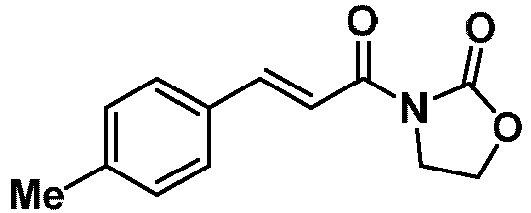
(E) 3- (3- (p-methylphenyl) acryloyl) oxazolidin-2-one 4 
(E) 3- (3- (2-methoxyphenyl) acryloyl) oxazolidin-2-one 5 
(E) 3- (3- (3-methoxyphenyl) acryloyl) oxazolidin-2-one 6 
(E) 3- (3- (4-methoxyphenyl) acryloyl) oxazolidin-2-one 7 
(E) 3- (3- (2- (trifluoromethylphenyl) acryloyl) oxazolidin-2-one 8 
(E) 3- (3- (3- (trifluoromethylphenyl) acryloyl) oxazolidin-2-one 9 
(E) 3- (3- (4- (trifluoromethylphenyl) acryloyl) oxazolidin-2-one 10 
(E) 3- (3- (2-fluorophenyl) acryloyl) oxazolidin-2-one 11 
(E) 3- (3- (4-fluorophenyl) acryloyl) oxazolidin-2-one 12 
(E) 3- (3- (4-chlorophenyl) acryloyl) oxazolidin-2-one 13 
(E) 3- (3- (2-bromophenyl) acryloyl) oxazolidin-2-one 14 
(E) 3- (3- (4-bromophenyl) acryloyl) oxazolidin-2-one 15 
(E) 3- (3- (2-phenoxyphenyl) acryloyl) oxazolidin-2-one 16 
(E) 3- (3- (3-phenoxyphenyl) acryloyl) oxazolidin-2-one 17 
(E) 3- (3- (4-phenoxyphenyl) acryloyl) oxazolidin-2-one 18 
(E) 3- (3- ([1,1'- biphenyl] -2-yl) acryloyl) oxazolidin-2-one 19 
(E) 3- (3- ([1,1'- biphenyl] -3-yl) acryloyl) oxazolidin-2-one 20 
(E) 3- (3- (4-fluoro-2-trifluoromethylphenyl) acryloyl) oxazolidin-2-one 21 
(E) 3- (3- (naphthalen-1-yl) acryloyl) oxazolidin-2-one 22 
(E) 3- (3- (benzo [d] [1,3] dioxolan-5-yl) acryloyl) oxazolidin-2-one 23 
(E) 3- (3- (thiphen-2-yl) acryloyl) oxazolidin-2-one 24 
(E) 3- (3-cyclohexylcacryloyl) oxazolidin-2-one 26 
(E) 3- (3- (2-trifluoromethylphenyl) acryloyl) -4-phenyloxazolidin-2-one 27 
(S, E) -3- (3- (2-trifluoromethylphenyl) acryloyl) -4-phenyloxazolidin-2-one 28 
(R, E) -3- (3- (2-trifluoromethylphenyl) acryloyl) -4-phenyloxazolidin-2-one 29 
(S, E) -4-phenyl-3- (3- (3-(trifluoromethoxy) phenyl) acryloyl) oxazolidin-2-one 30 
(S, E) -4-phenyl-3- (3- (2-(trifluoromethoxy) phenyl) acryloyl) oxazolidin-2-one 31 
(S, E) -4-phenyl-3- (3- (4-(trifluoromethoxy) phenyl) acryloyl) oxazolidin-2-one 32 
(S, E) -3- (3- (2-phenoxyphenyl) acryloyl) -4-phenyloxazolidin-2-one 33 
(R, E) -3- (3- (2-phenoxyphenyl) acryloyl) -4-phenyloxazolidin-2-one 34 
(E) 3- (3- ([1,1 '- biphenyl] -3-yl) acryloyl) -4-phenyloxazolidin-2-one 35 
(S, E) -3- (3- ([1,1 '- biphenyl] -3-yl) acryloyl) -4-phenyloxazolidin-2-one 36 
(R, E) -3- (3- ([1,1 '- biphenyl] -3-yl) acryloyl) -4-phenyloxazolidin-2-one 37 
(S, E) -3- (3- (4 '- fluorine - [1,1' - biphenyl] -3-yl) acryloyl) -4-phenyloxazolidin-2-one 38 
(S, E) -4-phenyl-3- (3- (pyridin-3-yl) phenyl) acryloyl) oxazolidin-2-one 39 
(S, E) -4-phenyl-3- (3- (pyridin-4-yl) phenyl) acryloyl) oxazolidin-2-one 40 
(S, E) -4-phenyl-3- (3- (3- (thiphen-2-yl) phenyl) acryloyl) oxazolidin-2-one 41 
(S, E) -4-phenyl-3- (3- (5-phenylthiophen-2-yl) acryloyl) oxazolidin-2-one 42 
(S, E) -4-phenyl-3- (3- (4-phenylthiophen-2-yl) acryloyl) oxazolidin-2-one 43 
(S, E) -3- (3- (4-fluoro-2-(trifluoromethyl) phenyl) acryloyl) -4-phenyloxazolidin-2-one 44 
(S, E) -3- (3- (benzo [d] [1,3] dioxolan-5-yl) acryloyl) -4-phenyloxazolidin-2-one 45 
(S, E) -3- (3- (2-chloroquinolin-4-yl) acryloyl) -4-phenyloxazolidin-2-one 46 
(S, E) -3- (3- (benzofuran-2-yl) acryloyl) -4-phenyloxazolidin-2-one 47 
(S, E) -3- (3- (benzofuran-7-yl) acryloyl) -4-phenyloxazolidin-2-one 48 
(S, E) -3- (3- (naphthalen-1-yl) acryloyl) -4-phenyloxazolidin-2-one 49 
(S, E) -3- (3- (benzo [b] thiophen-2-yl) acryloyl) -4-phenyloxazolidin-2-one 50 
(E) 4- (4 '- fluorophenyl) -3- (3- (2-(trifluoromethylphenyl) acryloyl) oxazolidin-2-one 51 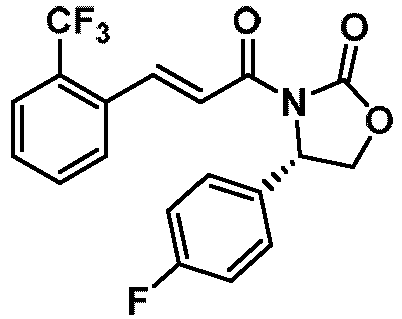
(S, E) -4- (4 '- fluorophenyl) -3- (3- (2-(trifluoromethylphenyl) acryloyl) oxazolidin-2-one 52 
(E) 4- (4 '- fluorophenyl) -3- (3- (2-(trifluoromethoxyphenyl) acryloyl) oxazolidin-2-one 53 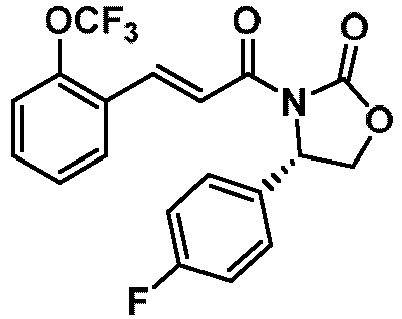
(S, E) -4- (4 '- fluorophenyl) -3- (3- (2-(trifluoromethoxyphenyl) acryloyl) oxazolidin-2-one 54 
(E) 4- (4 '- fluorophenyl) -3- (3- (2-phenoxyphenyl) acryloyl) oxazolidin-2-one 55 
(S, E) -4- (4 '- fluorophenyl) -3- (3- (2-phenoxyphenyl) acryloyl) oxazolidin-2-one 56 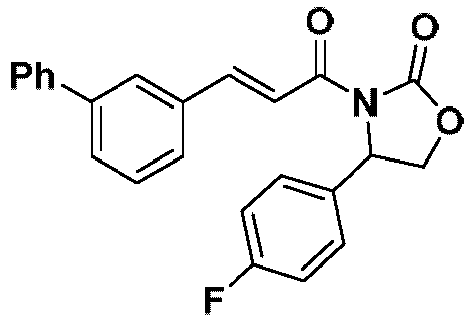
(E) 3- (3- ([1,1 '- biphenyl] -3-yl) acryloyl) -4- (4-fluorophenyl) oxazolidin-2-one 57 
(E) 4-benzyl-3- (3- (2-trifluoromethylphenyl) acryloyl) oxazolidin-2-one 58 
(S, E) -4-benzyl-3- (3- (2-trifluoromethylphenyl) acryloyl) oxazolidin-2-one 59 
(R, E) -4-benzyl-3- (3- (2-trifluoromethylphenyl) acryloyl) oxazolidin-2-one 60 
(E) 3- (3- ([1,1 '- biphenyl] -3-yl) acryloyl) -4-benzyloxazolidin-2-one 61 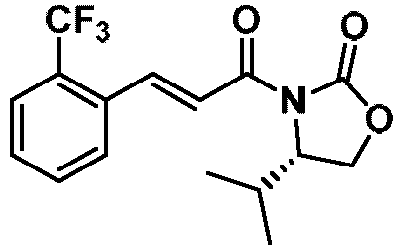
(S, E) -4-isopropyl-3- (3- (2-(trifluoromethyl) phenyl) acryloyl) oxazolidin-2-one 62 
(S, E) -4-isopropyl-3- (3- (4-(trifluoromethyl) phenyl) acryloyl) oxazolidin-2-one 63 
(S, E) -4-isopropyl-3- (3- (3-(trifluoromethyl) phenyl) acryloyl) oxazolidin-2-one 64 
(S, E) -4-isopropyl-3- (3- (3-trifluoromethoxyphenyl) acryloyl) oxazolidin-2-one 65 
(S, E) -4-isopropyl-3- (3- (2-trifluoromethoxyphenyl) acryloyl) oxazolidin-2-one 66 
(S, E) -4-isopropyl-3- (3- (4-trifluoromethoxyphenyl) acryloyl) oxazolidin-2-one 67 
(S, E) -3- (3- ([1,1 '- biphenyl] -3-yl) acryloyl) -4-isopropyloxazolidin-2-one 68 
(S, E) -3- (3- (4-fluoro-2-(trifluoromethyl) phenyl) acryloyl) -4-isopropyloxazolidin-2-one 69 
(S, E) -3- (3- (benzofuran-2-yl) acryloyl) -4-isopropyloxazolidin-2-one 70 
(S, E) -3- (3- (benzo [b] thiophen-2-yl) acryloyl) -4-isopropyloxazolidin-2-one 71 
(S, E) -4-isopropyl-3- (3- (naphthalen-1-yl) acryloyl) oxazolidin-2-one 72 
(S, E) -3- (3- (benzo [d] [1,3] dioxolan-5-yl) acryloyl) -4-isopropyloxazolidin-2-one 73 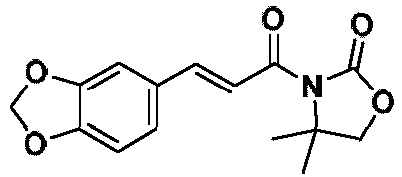
(E) 3- (3- (benzo [d] [1,3] dioxolan-5-yl) acryloyl) -4,4-dimethyloxazolidin-2-one 74 
(E)-4, 4-dimethyl-3- (3- (2-(trifluoromethyl) phenyl) acryloyl) oxazolidin-2-one 75 
(E)-4, 4-dimethyl-3- (3- (3-(trifluoromethoxy) phenyl) acryloyl) oxazolidin-2-one 76 
(E)-4, 4-dimethyl-3- (3- (2-(trifluoromethoxy) phenyl) acryloyl) oxazolidin-2-one 77 
(E) 3- (3- (4-fluoro-2- (trifluoromethyl) phenyl) acryloyl) -4,4-dimethyloxazolidin-2-one 78 
(E) 3- (3- ([1,1 '- biphenyl] -3-yl) acryloyl) thiazolidin-2-one 79 
(E) 3- (3- (2-phenoxyphenyl) acryloyl) thiazolidin-2-one 80 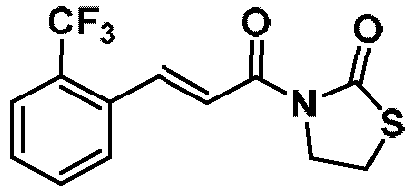
(E) 3- (3- (2-trifluoromethylphenyl) acryloyl) thiazolidin-2-one 81 
(E) 3- (3- (thiophen-2-yl) acryloyl) thiazolidin-2-one 83 
(S, E) -4-phenyl-3- (3- (2-trifluoromethylphenyl) acryloyl) oxazolidin-2-one-5,5-d2 84 
(S, E) -4-phenyl-3- (3- (2-trifluoromethoxyphenyl) acryloyl) oxazolidin-2-one-5,5-d2 85 
(S, E) -4-phenyl-3- (3- (2-phenoxyphenyl) acryloyl) oxazolidin-2-one-5,5-d2 86 
(S, E) -3- (3- ([1,1 '- biphenyl] -3-yl) acryloyl) -4-phenyloxazolidin-2-one-5,5-d2 87 
(S, E) -4-phenyl-3- (3- (3-phenoxyphenyl) acryloyl) oxazolidin-2-one-5,5-d2 88 
(E) 4-phenyl-3- (3- (2-trifluoromethylphenyl) acryloyl) oxazolidin-2-one-5,5-d2 89 
(E) 3- (3- (2-trifluoromethylphenyl) acryloyl) oxazolidin-2-one-4,4,5-d4 90 
(E) 3- (3- (2-methoxyphenyl) acryloyl) oxazolidin-2-one-4,4,5-d4 91 
(E) 3- (3- (3-methoxyphenyl) acryloyl) oxazolidin-2-one-4,4,5-d4 92 
(E) 3- (3- (4-methoxyphenyl) acryloyl) oxazolidin-2-one-4,4,5-d4 93 
(E) 3- (3- ([1,1 '- biphenyl] -3-yl) acryloyl) oxazolidin-2-one-4,4,5-d4 94 
(E) 3- (3- (3-phenoxyphenyl) acryloyl) oxazolidin-2-one-4,4,5-d4 95 
(E) 3- (3- (4-methoxyphenyl) acryloyl) oxazolidin-2-one-4,4-d2 96 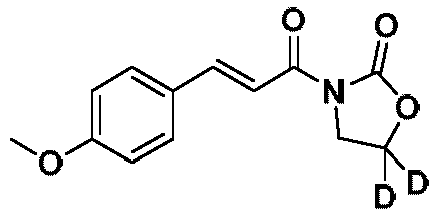
(E) 3- (3- (4-methoxyphenyl) acryloyl) oxazolidin-2-one-5,5-d2 97 
(E) 3- (3- (3-phenoxyphenyl) acryloyl) oxazolidin-2-one-4,4-d2 98 
(E) 3- (3- (3-phenoxyphenyl) acryloyl) oxazolidin-2-one-5,5-d2 99 
(E) 3- (3- (2-trifluoromethylphenyl) acryloyl)oxazolidin-2-one-5,5-d2 100 
(E) 3- (3- ([1,1 '- biphenyl] -3-yl) acryloyl) oxazolidin-2-one-5,5-d2 101 
(E)-4, 4-dimethyl-3- (3- (2-(trifluoromethyl) phenyl) acryloyl) oxazolidin-2-one-5,5-d2 102 
(E) 4- (4 '- fluorophenyl) -3- (3- (2-(trifluoromethylphenyl) acryloyl) oxazolidin-2-one-5,5-d2 103 
(S, E) -4- (4 '- fluorophenyl) -3- (3- (2-(trifluoromethylphenyl) acryloyl) oxazolidin-2-one-5,5-d2 104 
(E) 4-Benzyl-3- (3- (2-trifluoromethylphenyl) acryloyl) oxazolidin-2-one-5,5-d2 105 
(S, E) -4-benzyl-3- (3- (2-trifluoromethylphenyl) acryloyl) oxazolidin-2-one-5,5-d2 106 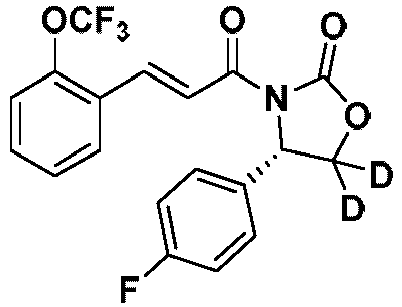
(S, E) -4- (4 '- fluorophenyl) -3- (3- (2-(trifluoromethoxyphenyl) acryloyl) oxazolidin-2-one-5,5-d2 107 
(S, E) -4- (4 '- fluorophenyl) -3- (3- (2-(phenoxyphenyl) acryloyl) oxazolidin-2-one-5,5-d2 108 
(S, E) -3- (3- ([1,1 '- biphenyl] -3-yl) acryloyl) -4- (4' - fluorophenyl) oxazolidin-2-one-5,5-d2 109 
(S, E) -4- (4 '- fluorophenyl) -3- (3- (3-(phenoxyphenyl) acryloyl) oxazolidin-2-one-5,5-d2 110 
(R,E)-5, 5-dimethyl-4-phenyl-3- (3- (2-(trifluoromethyl) phenyl) acryloyl) oxazolidin-2-one 111 
(S,E)-5, 5-dimethyl-4-phenyl-3- (3- (2-(trifluoromethyl) phenyl) acryloyl) oxazolidin-2-one 112 
(R, E) -7-phenyl-6- (3- (2-(trifluoromethyl) phenyl) acryloyl) -4-oxa-6-azaspiro [2.4] heptan-5-one 113 
(S, E) -7-phenyl-6- (3- (2-(trifluoromethyl) phenyl) acryloyl) -4-oxa-6-azaspiro [2.4] heptan-5-one 114 
(E) 5-phenyl-1- (3- (2- (trifluoromethyl) phenyl) acryloyl) imidazolidine-2,4-diketone 115 
(R, E) -6- (3- (3-methoxyphenyl) acryloyl) -7-phenyl-4-oxa-6-azaspiro [2.4] heptan-5-one 116 
(S, E) -6- (3- (3-methoxyphenyl) acryloyl) -7-phenyl-4-oxa-6-azaspiro [2.4] heptan-5-one 117 
(R, E) -6- (3- (3-phenoxyphenyl) acryloyl) -7-phenyl-4-oxa-6-azaspiro [2.4] heptan-5-one 118 
(S, E) -6- (3- (3-phenoxyphenyl) acryloyl) -7-phenyl-4-oxa-6-azaspiro [2.4] heptan-5-one 119 
(R, E) -7-phenyl-6- (3- (2-(trifluoromethoxy) phenyl) acryloyl) -4-oxa-6-azaspiro [2.4] heptan-5-one 120 
(S, E) -7-phenyl-6- (3- (2-(trifluoromethoxy) phenyl) acryloyl) -4-oxa-6-azaspiro [2.4] heptan-5-one 121 
(R, E) -6- (3- (4-methoxyphenyl) acryloyl) -7-phenyl-4-oxa-6-azaspiro [2.4] heptan-5-one 122 
(S, E) -6- (3- (4-methoxyphenyl) acryloyl) -7-phenyl-4-oxa-6-azaspiro [2.4] heptan-5-one 123 
(R, E) -6- (3- ([1,1 '- biphenyl] -4-yl) acryloyl) -7-phenyl-4-oxa-6-azaspiro [2.4] heptan-5-one 124 
(S, E) -6- (3- ([1,1 '- biphenyl] -4-yl) acryloyl) -7-phenyl-4-oxa-6-azaspiro [2.4] heptan-5-one 125 
(S, E) -3- (3- (4-methoxyphenyl) acryloyl) -4-phenyloxazolidin-2-one 126 
(S, E) -3- (3- (3-methoxyphenyl) acryloyl) -4-phenyloxazolidin-2-one - The preparation method of compound of formula I according to claim 1, wherein the method comprises steps of:

- A pharmaceutical composition, comprising (1) a compound according to claim 1, or a stereoisomer, a tautomer, , a pharmaceutically acceptable salt, a hydrate or a solvate thereof; and (2) a pharmaceutically acceptable carrier.
- A use of the compound according to claim 1, or a stereoisomer, a tautomer, a pharmaceutically acceptable salt, a hydrate or a solvate thereof, or the pharmaceutical composition as claimed in claim 9in the preparation of a pharmaceutical composition for the prevention and/or treatment of neurodegenerative diseases or stroke; preferably, the neurodegenerative disease is selected from the group consisting of Alzheimer's disease and vascular dementia.
Applications Claiming Priority (2)
| Application Number | Priority Date | Filing Date | Title |
|---|---|---|---|
| CN202210800410.9A CN117402123A (en) | 2022-07-06 | 2022-07-06 | A class of α,β-unsaturated amide compounds and their preparation methods, pharmaceutical compositions and uses |
| PCT/CN2023/106181 WO2024008166A1 (en) | 2022-07-06 | 2023-07-06 | α,β-UNSATURATED AMIDE COMPOUND, AND PREPARATION METHOD THEREFOR, AND PHARMACEUTICAL COMPOSITION AND USE THEREOF |
Publications (1)
| Publication Number | Publication Date |
|---|---|
| EP4553069A1 true EP4553069A1 (en) | 2025-05-14 |
Family
ID=89454280
Family Applications (1)
| Application Number | Title | Priority Date | Filing Date |
|---|---|---|---|
| EP23834932.8A Pending EP4553069A1 (en) | 2022-07-06 | 2023-07-06 | ALPHA,ß-UNSATURATED AMIDE COMPOUND, AND PREPARATION METHOD THEREFOR, AND PHARMACEUTICAL COMPOSITION AND USE THEREOF |
Country Status (8)
| Country | Link |
|---|---|
| US (1) | US20250313539A1 (en) |
| EP (1) | EP4553069A1 (en) |
| JP (1) | JP2025521917A (en) |
| KR (1) | KR20250029241A (en) |
| CN (2) | CN117402123A (en) |
| AU (1) | AU2023301953A1 (en) |
| CA (1) | CA3261236A1 (en) |
| WO (1) | WO2024008166A1 (en) |
Family Cites Families (3)
| Publication number | Priority date | Publication date | Assignee | Title |
|---|---|---|---|---|
| WO2018109647A1 (en) * | 2016-12-14 | 2018-06-21 | Glaxosmithkline Intellectual Property Development Limited | Bisaryl amides as nrf2 regulators |
| CN110483432A (en) * | 2018-05-14 | 2019-11-22 | 中国科学院上海药物研究所 | A class of acrylic compound and its preparation method, pharmaceutical composition and application |
| CN110240572B (en) * | 2019-07-09 | 2023-04-28 | 亳州学院 | Synthesis method of trans-1, 1-cyclopropane dicarboxylic acid ester |
-
2022
- 2022-07-06 CN CN202210800410.9A patent/CN117402123A/en active Pending
-
2023
- 2023-07-06 KR KR1020257003453A patent/KR20250029241A/en active Pending
- 2023-07-06 CN CN202380051957.6A patent/CN119790041A/en active Pending
- 2023-07-06 AU AU2023301953A patent/AU2023301953A1/en active Pending
- 2023-07-06 EP EP23834932.8A patent/EP4553069A1/en active Pending
- 2023-07-06 US US18/881,653 patent/US20250313539A1/en active Pending
- 2023-07-06 JP JP2025500213A patent/JP2025521917A/en active Pending
- 2023-07-06 CA CA3261236A patent/CA3261236A1/en active Pending
- 2023-07-06 WO PCT/CN2023/106181 patent/WO2024008166A1/en not_active Ceased
Also Published As
| Publication number | Publication date |
|---|---|
| WO2024008166A8 (en) | 2025-03-06 |
| CN117402123A (en) | 2024-01-16 |
| JP2025521917A (en) | 2025-07-10 |
| CA3261236A1 (en) | 2025-04-29 |
| WO2024008166A1 (en) | 2024-01-11 |
| CN119790041A8 (en) | 2025-05-06 |
| AU2023301953A1 (en) | 2025-02-20 |
| US20250313539A1 (en) | 2025-10-09 |
| KR20250029241A (en) | 2025-03-04 |
| CN119790041A (en) | 2025-04-08 |
Similar Documents
| Publication | Publication Date | Title |
|---|---|---|
| JP6622205B2 (en) | Thienopiperidine derivatives and uses thereof | |
| EP3214079B1 (en) | Six-membered ring benzo derivatives as dpp-4 inhibitor and use thereof | |
| WO2022228544A1 (en) | Isoquinolone compound and use thereof | |
| CA2924141A1 (en) | 5-amino 4-cyano substituted oxazole and thiazole derivatives as inhibitors of human 12/15-lipoxygenase | |
| HK64397A (en) | 1,2,3,4-tetrahydronaphthalene, chroman and thiochroman derivatives as antithrombotic agents | |
| EP3374354B1 (en) | Benzofuran derivatives for the treatment of cns and other disorders | |
| BG107857A (en) | Lactam compounds and medicinal use thereof | |
| EP1998775B1 (en) | Bis1,2,3,4-tetrahydroisoquinoline derivatives and their uses as pharmaceuticals | |
| WO1994027604A1 (en) | Medicinal use of pyridine derivative | |
| US20250313539A1 (en) | Alpha, Beta-UNSATURATED AMIDE COMPOUND, AND PREPARATION METHOD THEREFOR, AND PHARMACEUTICAL COMPOSITION AND USE THEREOF | |
| JP5230897B2 (en) | (-) Enantiomer of tenatoprazole and its therapeutic application | |
| KR20200082248A (en) | Novel pyruvate dehydrogenase kinase 4 inhibitors | |
| KR102953140B1 (en) | 5-Aminolevulinic Acid Derivative and Pharmaceutical Composition Comprising the Same | |
| CN107118250A (en) | A kind of NO donator types oleanolic acid derivate and its production and use | |
| CA2557942C (en) | 2h or 3h-benzo[e]indazol-1-yle carbamate derivatives, the preparation and therapeutic use thereof | |
| KR102760018B1 (en) | Ferrotosis inhibitors and uses thereof | |
| CN103044227B (en) | (2E, 6E)-2,6-bis(benzylidene)cyclohexanone analogue and preparation method and application thereof | |
| CN114315689B (en) | Disulfanylphthalimide compound, preparation method and application thereof | |
| EP4582412A1 (en) | Chiral gamma lactam derivative or pharmaceutically acceptable salt thereof, and preparation method therefor | |
| CN103044322B (en) | (3E, 5E)-3,5-bipiperidyl-4-ketone analogue and preparation method and application thereof | |
| HUE025879T2 (en) | Indanyl-substituted 4,5,6,7-tetrahydro-1h-pyrazolo[4,3-c]pyridines, their use as medicament, and pharmaceutical preparations comprising them | |
| JP2756941B2 (en) | Use of 2-chloro-3-arylamino-1,4-naphthoquinone derivatives as platelet aggregation inhibitors | |
| CN121378212A (en) | 2- (Piperidyl alkyl) pyridazinone compound as well as preparation method and application thereof | |
| US6821993B1 (en) | Triazepine derivatives as neurotrophic agents | |
| CN103044224A (en) | Penta-1,4-diene-3-ketone analogue and preparation method and application thereof |
Legal Events
| Date | Code | Title | Description |
|---|---|---|---|
| STAA | Information on the status of an ep patent application or granted ep patent |
Free format text: STATUS: THE INTERNATIONAL PUBLICATION HAS BEEN MADE |
|
| PUAI | Public reference made under article 153(3) epc to a published international application that has entered the european phase |
Free format text: ORIGINAL CODE: 0009012 |
|
| STAA | Information on the status of an ep patent application or granted ep patent |
Free format text: STATUS: REQUEST FOR EXAMINATION WAS MADE |
|
| 17P | Request for examination filed |
Effective date: 20250206 |
|
| AK | Designated contracting states |
Kind code of ref document: A1 Designated state(s): AL AT BE BG CH CY CZ DE DK EE ES FI FR GB GR HR HU IE IS IT LI LT LU LV MC ME MK MT NL NO PL PT RO RS SE SI SK SM TR |
|
| DAV | Request for validation of the european patent (deleted) | ||
| DAX | Request for extension of the european patent (deleted) | ||
| RIN1 | Information on inventor provided before grant (corrected) |
Inventor name: LIU, HONG Inventor name: XU, LIN Inventor name: ZHOU, YU Inventor name: TAN, YAHONG Inventor name: WANG, YIBING Inventor name: LI, JINNAN Inventor name: HUANG, HE Inventor name: ZHOU, QIXIN Inventor name: CHENG, YILANG Inventor name: JIANG, HUALIANG |