EP4552496A1 - Herbicidal composition containing difluorobutene acid amide compound - Google Patents
Herbicidal composition containing difluorobutene acid amide compound Download PDFInfo
- Publication number
- EP4552496A1 EP4552496A1 EP23819699.2A EP23819699A EP4552496A1 EP 4552496 A1 EP4552496 A1 EP 4552496A1 EP 23819699 A EP23819699 A EP 23819699A EP 4552496 A1 EP4552496 A1 EP 4552496A1
- Authority
- EP
- European Patent Office
- Prior art keywords
- compound
- mhz
- substituted
- formula
- halogen
- Prior art date
- Legal status (The legal status is an assumption and is not a legal conclusion. Google has not performed a legal analysis and makes no representation as to the accuracy of the status listed.)
- Pending
Links
Classifications
-
- C—CHEMISTRY; METALLURGY
- C07—ORGANIC CHEMISTRY
- C07C—ACYCLIC OR CARBOCYCLIC COMPOUNDS
- C07C233/00—Carboxylic acid amides
- C07C233/01—Carboxylic acid amides having carbon atoms of carboxamide groups bound to hydrogen atoms or to acyclic carbon atoms
- C07C233/45—Carboxylic acid amides having carbon atoms of carboxamide groups bound to hydrogen atoms or to acyclic carbon atoms having the nitrogen atom of at least one of the carboxamide groups bound to a carbon atom of a hydrocarbon radical substituted by carboxyl groups
- C07C233/52—Carboxylic acid amides having carbon atoms of carboxamide groups bound to hydrogen atoms or to acyclic carbon atoms having the nitrogen atom of at least one of the carboxamide groups bound to a carbon atom of a hydrocarbon radical substituted by carboxyl groups with the substituted hydrocarbon radical bound to the nitrogen atom of the carboxamide group by a carbon atom of a ring other than a six-membered aromatic ring
-
- A—HUMAN NECESSITIES
- A01—AGRICULTURE; FORESTRY; ANIMAL HUSBANDRY; HUNTING; TRAPPING; FISHING
- A01N—PRESERVATION OF BODIES OF HUMANS OR ANIMALS OR PLANTS OR PARTS THEREOF; BIOCIDES, e.g. AS DISINFECTANTS, AS PESTICIDES OR AS HERBICIDES; PEST REPELLANTS OR ATTRACTANTS; PLANT GROWTH REGULATORS
- A01N37/00—Biocides, pest repellants or attractants, or plant growth regulators containing organic compounds containing a carbon atom having three bonds to hetero atoms with at the most two bonds to halogen, e.g. carboxylic acids
- A01N37/18—Biocides, pest repellants or attractants, or plant growth regulators containing organic compounds containing a carbon atom having three bonds to hetero atoms with at the most two bonds to halogen, e.g. carboxylic acids containing the group —CO—N<, e.g. carboxylic acid amides or imides; Thio analogues thereof
-
- A—HUMAN NECESSITIES
- A01—AGRICULTURE; FORESTRY; ANIMAL HUSBANDRY; HUNTING; TRAPPING; FISHING
- A01G—HORTICULTURE; CULTIVATION OF VEGETABLES, FLOWERS, RICE, FRUIT, VINES, HOPS OR SEAWEED; FORESTRY; WATERING
- A01G7/00—Botany in general
- A01G7/06—Treatment of growing trees or plants, e.g. for preventing decay of wood, for tingeing flowers or wood, for prolonging the life of plants
-
- A—HUMAN NECESSITIES
- A01—AGRICULTURE; FORESTRY; ANIMAL HUSBANDRY; HUNTING; TRAPPING; FISHING
- A01N—PRESERVATION OF BODIES OF HUMANS OR ANIMALS OR PLANTS OR PARTS THEREOF; BIOCIDES, e.g. AS DISINFECTANTS, AS PESTICIDES OR AS HERBICIDES; PEST REPELLANTS OR ATTRACTANTS; PLANT GROWTH REGULATORS
- A01N37/00—Biocides, pest repellants or attractants, or plant growth regulators containing organic compounds containing a carbon atom having three bonds to hetero atoms with at the most two bonds to halogen, e.g. carboxylic acids
- A01N37/44—Biocides, pest repellants or attractants, or plant growth regulators containing organic compounds containing a carbon atom having three bonds to hetero atoms with at the most two bonds to halogen, e.g. carboxylic acids containing at least one carboxylic group or a thio analogue, or a derivative thereof, and a nitrogen atom attached to the same carbon skeleton by a single or double bond, this nitrogen atom not being a member of a derivative or of a thio analogue of a carboxylic group, e.g. amino-carboxylic acids
- A01N37/46—N-acyl derivatives
-
- A—HUMAN NECESSITIES
- A01—AGRICULTURE; FORESTRY; ANIMAL HUSBANDRY; HUNTING; TRAPPING; FISHING
- A01N—PRESERVATION OF BODIES OF HUMANS OR ANIMALS OR PLANTS OR PARTS THEREOF; BIOCIDES, e.g. AS DISINFECTANTS, AS PESTICIDES OR AS HERBICIDES; PEST REPELLANTS OR ATTRACTANTS; PLANT GROWTH REGULATORS
- A01N41/00—Biocides, pest repellants or attractants, or plant growth regulators containing organic compounds containing a sulfur atom bound to a hetero atom
- A01N41/02—Biocides, pest repellants or attractants, or plant growth regulators containing organic compounds containing a sulfur atom bound to a hetero atom containing a sulfur-to-oxygen double bond
- A01N41/04—Sulfonic acids; Derivatives thereof
- A01N41/06—Sulfonic acid amides
-
- A—HUMAN NECESSITIES
- A01—AGRICULTURE; FORESTRY; ANIMAL HUSBANDRY; HUNTING; TRAPPING; FISHING
- A01N—PRESERVATION OF BODIES OF HUMANS OR ANIMALS OR PLANTS OR PARTS THEREOF; BIOCIDES, e.g. AS DISINFECTANTS, AS PESTICIDES OR AS HERBICIDES; PEST REPELLANTS OR ATTRACTANTS; PLANT GROWTH REGULATORS
- A01N41/00—Biocides, pest repellants or attractants, or plant growth regulators containing organic compounds containing a sulfur atom bound to a hetero atom
- A01N41/02—Biocides, pest repellants or attractants, or plant growth regulators containing organic compounds containing a sulfur atom bound to a hetero atom containing a sulfur-to-oxygen double bond
- A01N41/10—Sulfones; Sulfoxides
-
- A—HUMAN NECESSITIES
- A01—AGRICULTURE; FORESTRY; ANIMAL HUSBANDRY; HUNTING; TRAPPING; FISHING
- A01N—PRESERVATION OF BODIES OF HUMANS OR ANIMALS OR PLANTS OR PARTS THEREOF; BIOCIDES, e.g. AS DISINFECTANTS, AS PESTICIDES OR AS HERBICIDES; PEST REPELLANTS OR ATTRACTANTS; PLANT GROWTH REGULATORS
- A01N43/00—Biocides, pest repellants or attractants, or plant growth regulators containing heterocyclic compounds
- A01N43/02—Biocides, pest repellants or attractants, or plant growth regulators containing heterocyclic compounds having rings with one or more oxygen or sulfur atoms as the only ring hetero atoms
- A01N43/04—Biocides, pest repellants or attractants, or plant growth regulators containing heterocyclic compounds having rings with one or more oxygen or sulfur atoms as the only ring hetero atoms with one hetero atom
- A01N43/06—Biocides, pest repellants or attractants, or plant growth regulators containing heterocyclic compounds having rings with one or more oxygen or sulfur atoms as the only ring hetero atoms with one hetero atom five-membered rings
- A01N43/08—Biocides, pest repellants or attractants, or plant growth regulators containing heterocyclic compounds having rings with one or more oxygen or sulfur atoms as the only ring hetero atoms with one hetero atom five-membered rings with oxygen as the ring hetero atom
-
- A—HUMAN NECESSITIES
- A01—AGRICULTURE; FORESTRY; ANIMAL HUSBANDRY; HUNTING; TRAPPING; FISHING
- A01N—PRESERVATION OF BODIES OF HUMANS OR ANIMALS OR PLANTS OR PARTS THEREOF; BIOCIDES, e.g. AS DISINFECTANTS, AS PESTICIDES OR AS HERBICIDES; PEST REPELLANTS OR ATTRACTANTS; PLANT GROWTH REGULATORS
- A01N43/00—Biocides, pest repellants or attractants, or plant growth regulators containing heterocyclic compounds
- A01N43/02—Biocides, pest repellants or attractants, or plant growth regulators containing heterocyclic compounds having rings with one or more oxygen or sulfur atoms as the only ring hetero atoms
- A01N43/04—Biocides, pest repellants or attractants, or plant growth regulators containing heterocyclic compounds having rings with one or more oxygen or sulfur atoms as the only ring hetero atoms with one hetero atom
- A01N43/14—Biocides, pest repellants or attractants, or plant growth regulators containing heterocyclic compounds having rings with one or more oxygen or sulfur atoms as the only ring hetero atoms with one hetero atom six-membered rings
- A01N43/16—Biocides, pest repellants or attractants, or plant growth regulators containing heterocyclic compounds having rings with one or more oxygen or sulfur atoms as the only ring hetero atoms with one hetero atom six-membered rings with oxygen as the ring hetero atom
-
- A—HUMAN NECESSITIES
- A01—AGRICULTURE; FORESTRY; ANIMAL HUSBANDRY; HUNTING; TRAPPING; FISHING
- A01N—PRESERVATION OF BODIES OF HUMANS OR ANIMALS OR PLANTS OR PARTS THEREOF; BIOCIDES, e.g. AS DISINFECTANTS, AS PESTICIDES OR AS HERBICIDES; PEST REPELLANTS OR ATTRACTANTS; PLANT GROWTH REGULATORS
- A01N43/00—Biocides, pest repellants or attractants, or plant growth regulators containing heterocyclic compounds
- A01N43/02—Biocides, pest repellants or attractants, or plant growth regulators containing heterocyclic compounds having rings with one or more oxygen or sulfur atoms as the only ring hetero atoms
- A01N43/24—Biocides, pest repellants or attractants, or plant growth regulators containing heterocyclic compounds having rings with one or more oxygen or sulfur atoms as the only ring hetero atoms with two or more hetero atoms
- A01N43/26—Biocides, pest repellants or attractants, or plant growth regulators containing heterocyclic compounds having rings with one or more oxygen or sulfur atoms as the only ring hetero atoms with two or more hetero atoms five-membered rings
- A01N43/28—Biocides, pest repellants or attractants, or plant growth regulators containing heterocyclic compounds having rings with one or more oxygen or sulfur atoms as the only ring hetero atoms with two or more hetero atoms five-membered rings with two hetero atoms in positions 1,3
-
- A—HUMAN NECESSITIES
- A01—AGRICULTURE; FORESTRY; ANIMAL HUSBANDRY; HUNTING; TRAPPING; FISHING
- A01N—PRESERVATION OF BODIES OF HUMANS OR ANIMALS OR PLANTS OR PARTS THEREOF; BIOCIDES, e.g. AS DISINFECTANTS, AS PESTICIDES OR AS HERBICIDES; PEST REPELLANTS OR ATTRACTANTS; PLANT GROWTH REGULATORS
- A01N43/00—Biocides, pest repellants or attractants, or plant growth regulators containing heterocyclic compounds
- A01N43/02—Biocides, pest repellants or attractants, or plant growth regulators containing heterocyclic compounds having rings with one or more oxygen or sulfur atoms as the only ring hetero atoms
- A01N43/24—Biocides, pest repellants or attractants, or plant growth regulators containing heterocyclic compounds having rings with one or more oxygen or sulfur atoms as the only ring hetero atoms with two or more hetero atoms
- A01N43/32—Biocides, pest repellants or attractants, or plant growth regulators containing heterocyclic compounds having rings with one or more oxygen or sulfur atoms as the only ring hetero atoms with two or more hetero atoms six-membered rings
-
- A—HUMAN NECESSITIES
- A01—AGRICULTURE; FORESTRY; ANIMAL HUSBANDRY; HUNTING; TRAPPING; FISHING
- A01N—PRESERVATION OF BODIES OF HUMANS OR ANIMALS OR PLANTS OR PARTS THEREOF; BIOCIDES, e.g. AS DISINFECTANTS, AS PESTICIDES OR AS HERBICIDES; PEST REPELLANTS OR ATTRACTANTS; PLANT GROWTH REGULATORS
- A01N43/00—Biocides, pest repellants or attractants, or plant growth regulators containing heterocyclic compounds
- A01N43/34—Biocides, pest repellants or attractants, or plant growth regulators containing heterocyclic compounds having rings with one nitrogen atom as the only ring hetero atom
- A01N43/40—Biocides, pest repellants or attractants, or plant growth regulators containing heterocyclic compounds having rings with one nitrogen atom as the only ring hetero atom six-membered rings
-
- A—HUMAN NECESSITIES
- A01—AGRICULTURE; FORESTRY; ANIMAL HUSBANDRY; HUNTING; TRAPPING; FISHING
- A01P—BIOCIDAL, PEST REPELLANT, PEST ATTRACTANT OR PLANT GROWTH REGULATORY ACTIVITY OF CHEMICAL COMPOUNDS OR PREPARATIONS
- A01P13/00—Herbicides; Algicides
-
- C—CHEMISTRY; METALLURGY
- C07—ORGANIC CHEMISTRY
- C07C—ACYCLIC OR CARBOCYCLIC COMPOUNDS
- C07C235/00—Carboxylic acid amides, the carbon skeleton of the acid part being further substituted by oxygen atoms
- C07C235/02—Carboxylic acid amides, the carbon skeleton of the acid part being further substituted by oxygen atoms having carbon atoms of carboxamide groups bound to acyclic carbon atoms and singly-bound oxygen atoms bound to the same carbon skeleton
- C07C235/32—Carboxylic acid amides, the carbon skeleton of the acid part being further substituted by oxygen atoms having carbon atoms of carboxamide groups bound to acyclic carbon atoms and singly-bound oxygen atoms bound to the same carbon skeleton the carbon skeleton containing six-membered aromatic rings
- C07C235/36—Carboxylic acid amides, the carbon skeleton of the acid part being further substituted by oxygen atoms having carbon atoms of carboxamide groups bound to acyclic carbon atoms and singly-bound oxygen atoms bound to the same carbon skeleton the carbon skeleton containing six-membered aromatic rings having the nitrogen atom of at least one of the carboxamide groups bound to a carbon atom of a ring other than a six-membered aromatic ring
-
- C—CHEMISTRY; METALLURGY
- C07—ORGANIC CHEMISTRY
- C07C—ACYCLIC OR CARBOCYCLIC COMPOUNDS
- C07C237/00—Carboxylic acid amides, the carbon skeleton of the acid part being further substituted by amino groups
- C07C237/24—Carboxylic acid amides, the carbon skeleton of the acid part being further substituted by amino groups having the carbon atom of at least one of the carboxamide groups bound to a carbon atom of a ring other than a six-membered aromatic ring of the carbon skeleton
-
- C—CHEMISTRY; METALLURGY
- C07—ORGANIC CHEMISTRY
- C07C—ACYCLIC OR CARBOCYCLIC COMPOUNDS
- C07C255/00—Carboxylic acid nitriles
- C07C255/01—Carboxylic acid nitriles having cyano groups bound to acyclic carbon atoms
- C07C255/11—Carboxylic acid nitriles having cyano groups bound to acyclic carbon atoms containing cyano groups and singly-bound oxygen atoms bound to the same saturated acyclic carbon skeleton
- C07C255/14—Carboxylic acid nitriles having cyano groups bound to acyclic carbon atoms containing cyano groups and singly-bound oxygen atoms bound to the same saturated acyclic carbon skeleton containing cyano groups and esterified hydroxy groups bound to the carbon skeleton
-
- C—CHEMISTRY; METALLURGY
- C07—ORGANIC CHEMISTRY
- C07C—ACYCLIC OR CARBOCYCLIC COMPOUNDS
- C07C255/00—Carboxylic acid nitriles
- C07C255/45—Carboxylic acid nitriles having cyano groups bound to carbon atoms of rings other than six-membered aromatic rings
- C07C255/46—Carboxylic acid nitriles having cyano groups bound to carbon atoms of rings other than six-membered aromatic rings to carbon atoms of non-condensed rings
-
- C—CHEMISTRY; METALLURGY
- C07—ORGANIC CHEMISTRY
- C07C—ACYCLIC OR CARBOCYCLIC COMPOUNDS
- C07C259/00—Compounds containing carboxyl groups, an oxygen atom of a carboxyl group being replaced by a nitrogen atom, this nitrogen atom being further bound to an oxygen atom and not being part of nitro or nitroso groups
- C07C259/04—Compounds containing carboxyl groups, an oxygen atom of a carboxyl group being replaced by a nitrogen atom, this nitrogen atom being further bound to an oxygen atom and not being part of nitro or nitroso groups without replacement of the other oxygen atom of the carboxyl group, e.g. hydroxamic acids
- C07C259/08—Compounds containing carboxyl groups, an oxygen atom of a carboxyl group being replaced by a nitrogen atom, this nitrogen atom being further bound to an oxygen atom and not being part of nitro or nitroso groups without replacement of the other oxygen atom of the carboxyl group, e.g. hydroxamic acids having carbon atoms of hydroxamic groups bound to carbon atoms of rings other than six-membered aromatic rings
-
- C—CHEMISTRY; METALLURGY
- C07—ORGANIC CHEMISTRY
- C07C—ACYCLIC OR CARBOCYCLIC COMPOUNDS
- C07C309/00—Sulfonic acids; Halides, esters, or anhydrides thereof
- C07C309/63—Esters of sulfonic acids
- C07C309/64—Esters of sulfonic acids having sulfur atoms of esterified sulfo groups bound to acyclic carbon atoms
- C07C309/65—Esters of sulfonic acids having sulfur atoms of esterified sulfo groups bound to acyclic carbon atoms of a saturated carbon skeleton
- C07C309/66—Methanesulfonates
-
- C—CHEMISTRY; METALLURGY
- C07—ORGANIC CHEMISTRY
- C07C—ACYCLIC OR CARBOCYCLIC COMPOUNDS
- C07C317/00—Sulfones; Sulfoxides
- C07C317/26—Sulfones; Sulfoxides having sulfone or sulfoxide groups and nitrogen atoms, not being part of nitro or nitroso groups, bound to the same carbon skeleton
- C07C317/30—Sulfones; Sulfoxides having sulfone or sulfoxide groups and nitrogen atoms, not being part of nitro or nitroso groups, bound to the same carbon skeleton with sulfone or sulfoxide groups bound to carbon atoms of rings other than six-membered aromatic rings of the carbon skeleton
-
- C—CHEMISTRY; METALLURGY
- C07—ORGANIC CHEMISTRY
- C07C—ACYCLIC OR CARBOCYCLIC COMPOUNDS
- C07C323/00—Thiols, sulfides, hydropolysulfides or polysulfides substituted by halogen, oxygen or nitrogen atoms, or by sulfur atoms not being part of thio groups
- C07C323/23—Thiols, sulfides, hydropolysulfides or polysulfides substituted by halogen, oxygen or nitrogen atoms, or by sulfur atoms not being part of thio groups containing thio groups and nitrogen atoms, not being part of nitro or nitroso groups, bound to the same carbon skeleton
- C07C323/39—Thiols, sulfides, hydropolysulfides or polysulfides substituted by halogen, oxygen or nitrogen atoms, or by sulfur atoms not being part of thio groups containing thio groups and nitrogen atoms, not being part of nitro or nitroso groups, bound to the same carbon skeleton at least one of the nitrogen atoms being part of any of the groups, X being a hetero atom, Y being any atom
- C07C323/40—Y being a hydrogen or a carbon atom
- C07C323/41—Y being a hydrogen or an acyclic carbon atom
-
- C—CHEMISTRY; METALLURGY
- C07—ORGANIC CHEMISTRY
- C07C—ACYCLIC OR CARBOCYCLIC COMPOUNDS
- C07C327/00—Thiocarboxylic acids
- C07C327/20—Esters of monothiocarboxylic acids
- C07C327/24—Esters of monothiocarboxylic acids having carbon atoms of esterified thiocarboxyl groups bound to carbon atoms of rings other than six-membered aromatic rings
-
- C—CHEMISTRY; METALLURGY
- C07—ORGANIC CHEMISTRY
- C07D—HETEROCYCLIC COMPOUNDS
- C07D213/00—Heterocyclic compounds containing six-membered rings, not condensed with other rings, with one nitrogen atom as the only ring hetero atom and three or more double bonds between ring members or between ring members and non-ring members
- C07D213/02—Heterocyclic compounds containing six-membered rings, not condensed with other rings, with one nitrogen atom as the only ring hetero atom and three or more double bonds between ring members or between ring members and non-ring members having three double bonds between ring members or between ring members and non-ring members
- C07D213/04—Heterocyclic compounds containing six-membered rings, not condensed with other rings, with one nitrogen atom as the only ring hetero atom and three or more double bonds between ring members or between ring members and non-ring members having three double bonds between ring members or between ring members and non-ring members having no bond between the ring nitrogen atom and a non-ring member or having only hydrogen or carbon atoms directly attached to the ring nitrogen atom
- C07D213/24—Heterocyclic compounds containing six-membered rings, not condensed with other rings, with one nitrogen atom as the only ring hetero atom and three or more double bonds between ring members or between ring members and non-ring members having three double bonds between ring members or between ring members and non-ring members having no bond between the ring nitrogen atom and a non-ring member or having only hydrogen or carbon atoms directly attached to the ring nitrogen atom with substituted hydrocarbon radicals attached to ring carbon atoms
- C07D213/28—Radicals substituted by singly-bound oxygen or sulphur atoms
- C07D213/30—Oxygen atoms
-
- C—CHEMISTRY; METALLURGY
- C07—ORGANIC CHEMISTRY
- C07D—HETEROCYCLIC COMPOUNDS
- C07D233/00—Heterocyclic compounds containing 1,3-diazole or hydrogenated 1,3-diazole rings, not condensed with other rings
- C07D233/54—Heterocyclic compounds containing 1,3-diazole or hydrogenated 1,3-diazole rings, not condensed with other rings having two double bonds between ring members or between ring members and non-ring members
- C07D233/56—Heterocyclic compounds containing 1,3-diazole or hydrogenated 1,3-diazole rings, not condensed with other rings having two double bonds between ring members or between ring members and non-ring members with only hydrogen atoms or radicals containing only hydrogen and carbon atoms, attached to ring carbon atoms
- C07D233/58—Heterocyclic compounds containing 1,3-diazole or hydrogenated 1,3-diazole rings, not condensed with other rings having two double bonds between ring members or between ring members and non-ring members with only hydrogen atoms or radicals containing only hydrogen and carbon atoms, attached to ring carbon atoms with only hydrogen atoms or radicals containing only hydrogen and carbon atoms, attached to ring nitrogen atoms
-
- C—CHEMISTRY; METALLURGY
- C07—ORGANIC CHEMISTRY
- C07D—HETEROCYCLIC COMPOUNDS
- C07D233/00—Heterocyclic compounds containing 1,3-diazole or hydrogenated 1,3-diazole rings, not condensed with other rings
- C07D233/54—Heterocyclic compounds containing 1,3-diazole or hydrogenated 1,3-diazole rings, not condensed with other rings having two double bonds between ring members or between ring members and non-ring members
- C07D233/56—Heterocyclic compounds containing 1,3-diazole or hydrogenated 1,3-diazole rings, not condensed with other rings having two double bonds between ring members or between ring members and non-ring members with only hydrogen atoms or radicals containing only hydrogen and carbon atoms, attached to ring carbon atoms
- C07D233/61—Heterocyclic compounds containing 1,3-diazole or hydrogenated 1,3-diazole rings, not condensed with other rings having two double bonds between ring members or between ring members and non-ring members with only hydrogen atoms or radicals containing only hydrogen and carbon atoms, attached to ring carbon atoms with hydrocarbon radicals, substituted by nitrogen atoms not forming part of a nitro radical, attached to ring nitrogen atoms
-
- C—CHEMISTRY; METALLURGY
- C07—ORGANIC CHEMISTRY
- C07D—HETEROCYCLIC COMPOUNDS
- C07D233/00—Heterocyclic compounds containing 1,3-diazole or hydrogenated 1,3-diazole rings, not condensed with other rings
- C07D233/54—Heterocyclic compounds containing 1,3-diazole or hydrogenated 1,3-diazole rings, not condensed with other rings having two double bonds between ring members or between ring members and non-ring members
- C07D233/64—Heterocyclic compounds containing 1,3-diazole or hydrogenated 1,3-diazole rings, not condensed with other rings having two double bonds between ring members or between ring members and non-ring members with substituted hydrocarbon radicals attached to ring carbon atoms, e.g. histidine
-
- C—CHEMISTRY; METALLURGY
- C07—ORGANIC CHEMISTRY
- C07D—HETEROCYCLIC COMPOUNDS
- C07D237/00—Heterocyclic compounds containing 1,2-diazine or hydrogenated 1,2-diazine rings
- C07D237/02—Heterocyclic compounds containing 1,2-diazine or hydrogenated 1,2-diazine rings not condensed with other rings
- C07D237/06—Heterocyclic compounds containing 1,2-diazine or hydrogenated 1,2-diazine rings not condensed with other rings having three double bonds between ring members or between ring members and non-ring members
- C07D237/10—Heterocyclic compounds containing 1,2-diazine or hydrogenated 1,2-diazine rings not condensed with other rings having three double bonds between ring members or between ring members and non-ring members with hetero atoms or with carbon atoms having three bonds to hetero atoms with at the most one bond to halogen, e.g. ester or nitrile radicals, directly attached to ring carbon atoms
- C07D237/20—Nitrogen atoms
-
- C—CHEMISTRY; METALLURGY
- C07—ORGANIC CHEMISTRY
- C07D—HETEROCYCLIC COMPOUNDS
- C07D261/00—Heterocyclic compounds containing 1,2-oxazole or hydrogenated 1,2-oxazole rings
- C07D261/02—Heterocyclic compounds containing 1,2-oxazole or hydrogenated 1,2-oxazole rings not condensed with other rings
-
- C—CHEMISTRY; METALLURGY
- C07—ORGANIC CHEMISTRY
- C07D—HETEROCYCLIC COMPOUNDS
- C07D265/00—Heterocyclic compounds containing six-membered rings having one nitrogen atom and one oxygen atom as the only ring hetero atoms
- C07D265/02—1,2-Oxazines; Hydrogenated 1,2-oxazines
-
- C—CHEMISTRY; METALLURGY
- C07—ORGANIC CHEMISTRY
- C07D—HETEROCYCLIC COMPOUNDS
- C07D277/00—Heterocyclic compounds containing 1,3-thiazole or hydrogenated 1,3-thiazole rings
- C07D277/02—Heterocyclic compounds containing 1,3-thiazole or hydrogenated 1,3-thiazole rings not condensed with other rings
- C07D277/20—Heterocyclic compounds containing 1,3-thiazole or hydrogenated 1,3-thiazole rings not condensed with other rings having two or three double bonds between ring members or between ring members and non-ring members
- C07D277/22—Heterocyclic compounds containing 1,3-thiazole or hydrogenated 1,3-thiazole rings not condensed with other rings having two or three double bonds between ring members or between ring members and non-ring members with only hydrogen atoms, hydrocarbon or substituted hydrocarbon radicals, directly attached to ring carbon atoms
- C07D277/28—Radicals substituted by nitrogen atoms
-
- C—CHEMISTRY; METALLURGY
- C07—ORGANIC CHEMISTRY
- C07D—HETEROCYCLIC COMPOUNDS
- C07D295/00—Heterocyclic compounds containing polymethylene-imine rings with at least five ring members, 3-azabicyclo [3.2.2] nonane, piperazine, morpholine or thiomorpholine rings, having only hydrogen atoms directly attached to the ring carbon atoms
- C07D295/16—Heterocyclic compounds containing polymethylene-imine rings with at least five ring members, 3-azabicyclo [3.2.2] nonane, piperazine, morpholine or thiomorpholine rings, having only hydrogen atoms directly attached to the ring carbon atoms acylated on ring nitrogen atoms
- C07D295/18—Heterocyclic compounds containing polymethylene-imine rings with at least five ring members, 3-azabicyclo [3.2.2] nonane, piperazine, morpholine or thiomorpholine rings, having only hydrogen atoms directly attached to the ring carbon atoms acylated on ring nitrogen atoms by radicals derived from carboxylic acids, or sulfur or nitrogen analogues thereof
- C07D295/182—Radicals derived from carboxylic acids
- C07D295/185—Radicals derived from carboxylic acids from aliphatic carboxylic acids
-
- C—CHEMISTRY; METALLURGY
- C07—ORGANIC CHEMISTRY
- C07D—HETEROCYCLIC COMPOUNDS
- C07D305/00—Heterocyclic compounds containing four-membered rings having one oxygen atom as the only ring hetero atoms
- C07D305/02—Heterocyclic compounds containing four-membered rings having one oxygen atom as the only ring hetero atoms not condensed with other rings
- C07D305/04—Heterocyclic compounds containing four-membered rings having one oxygen atom as the only ring hetero atoms not condensed with other rings having no double bonds between ring members or between ring members and non-ring members
- C07D305/08—Heterocyclic compounds containing four-membered rings having one oxygen atom as the only ring hetero atoms not condensed with other rings having no double bonds between ring members or between ring members and non-ring members with hetero atoms or with carbon atoms having three bonds to hetero atoms with at the most one bond to halogen, e.g. ester or nitrile radicals, directly attached to ring atoms
-
- C—CHEMISTRY; METALLURGY
- C07—ORGANIC CHEMISTRY
- C07D—HETEROCYCLIC COMPOUNDS
- C07D307/00—Heterocyclic compounds containing five-membered rings having one oxygen atom as the only ring hetero atom
- C07D307/02—Heterocyclic compounds containing five-membered rings having one oxygen atom as the only ring hetero atom not condensed with other rings
- C07D307/04—Heterocyclic compounds containing five-membered rings having one oxygen atom as the only ring hetero atom not condensed with other rings having no double bonds between ring members or between ring members and non-ring members
- C07D307/18—Heterocyclic compounds containing five-membered rings having one oxygen atom as the only ring hetero atom not condensed with other rings having no double bonds between ring members or between ring members and non-ring members with hetero atoms or with carbon atoms having three bonds to hetero atoms with at the most one bond to halogen, e.g. ester or nitrile radicals, directly attached to ring carbon atoms
- C07D307/20—Oxygen atoms
-
- C—CHEMISTRY; METALLURGY
- C07—ORGANIC CHEMISTRY
- C07D—HETEROCYCLIC COMPOUNDS
- C07D309/00—Heterocyclic compounds containing six-membered rings having one oxygen atom as the only ring hetero atom, not condensed with other rings
- C07D309/02—Heterocyclic compounds containing six-membered rings having one oxygen atom as the only ring hetero atom, not condensed with other rings having no double bonds between ring members or between ring members and non-ring members
- C07D309/08—Heterocyclic compounds containing six-membered rings having one oxygen atom as the only ring hetero atom, not condensed with other rings having no double bonds between ring members or between ring members and non-ring members with hetero atoms or with carbon atoms having three bonds to hetero atoms with at the most one bond to halogen, e.g. ester or nitrile radicals, directly attached to ring carbon atoms
- C07D309/10—Oxygen atoms
- C07D309/12—Oxygen atoms only hydrogen atoms and one oxygen atom directly attached to ring carbon atoms, e.g. tetrahydropyranyl ethers
-
- C—CHEMISTRY; METALLURGY
- C07—ORGANIC CHEMISTRY
- C07D—HETEROCYCLIC COMPOUNDS
- C07D317/00—Heterocyclic compounds containing five-membered rings having two oxygen atoms as the only ring hetero atoms
- C07D317/08—Heterocyclic compounds containing five-membered rings having two oxygen atoms as the only ring hetero atoms having the hetero atoms in positions 1 and 3
- C07D317/10—Heterocyclic compounds containing five-membered rings having two oxygen atoms as the only ring hetero atoms having the hetero atoms in positions 1 and 3 not condensed with other rings
- C07D317/14—Heterocyclic compounds containing five-membered rings having two oxygen atoms as the only ring hetero atoms having the hetero atoms in positions 1 and 3 not condensed with other rings with substituted hydrocarbon radicals attached to ring carbon atoms
- C07D317/18—Radicals substituted by singly bound oxygen or sulfur atoms
- C07D317/24—Radicals substituted by singly bound oxygen or sulfur atoms esterified
-
- C—CHEMISTRY; METALLURGY
- C07—ORGANIC CHEMISTRY
- C07D—HETEROCYCLIC COMPOUNDS
- C07D317/00—Heterocyclic compounds containing five-membered rings having two oxygen atoms as the only ring hetero atoms
- C07D317/08—Heterocyclic compounds containing five-membered rings having two oxygen atoms as the only ring hetero atoms having the hetero atoms in positions 1 and 3
- C07D317/10—Heterocyclic compounds containing five-membered rings having two oxygen atoms as the only ring hetero atoms having the hetero atoms in positions 1 and 3 not condensed with other rings
- C07D317/14—Heterocyclic compounds containing five-membered rings having two oxygen atoms as the only ring hetero atoms having the hetero atoms in positions 1 and 3 not condensed with other rings with substituted hydrocarbon radicals attached to ring carbon atoms
- C07D317/28—Radicals substituted by nitrogen atoms
-
- C—CHEMISTRY; METALLURGY
- C07—ORGANIC CHEMISTRY
- C07D—HETEROCYCLIC COMPOUNDS
- C07D319/00—Heterocyclic compounds containing six-membered rings having two oxygen atoms as the only ring hetero atoms
- C07D319/04—1,3-Dioxanes; Hydrogenated 1,3-dioxanes
- C07D319/06—1,3-Dioxanes; Hydrogenated 1,3-dioxanes not condensed with other rings
-
- C—CHEMISTRY; METALLURGY
- C07—ORGANIC CHEMISTRY
- C07C—ACYCLIC OR CARBOCYCLIC COMPOUNDS
- C07C2601/00—Systems containing only non-condensed rings
- C07C2601/04—Systems containing only non-condensed rings with a four-membered ring
-
- C—CHEMISTRY; METALLURGY
- C07—ORGANIC CHEMISTRY
- C07C—ACYCLIC OR CARBOCYCLIC COMPOUNDS
- C07C2601/00—Systems containing only non-condensed rings
- C07C2601/06—Systems containing only non-condensed rings with a five-membered ring
- C07C2601/08—Systems containing only non-condensed rings with a five-membered ring the ring being saturated
Definitions
- the present invention relates to a novel difluorobutenoic acid amide compound or a salt thereof, a herbicidal composition containing it as an active ingredient.
- Patent Document 1 discloses cinnamamide derivatives having herbicidal activity. However, Patent Document 1 does not disclose difluorobutenoic acid amide compounds represented by the following formula (I), having substituents on phenyl and C 4 -C 5 alicyclic hydrocarbon (hereinafter sometimes referred to as specific difluorobutenoic acid amide compounds).
- difluorobutenoic acid amide compounds represented by the following formula (I), having substituents on phenyl and C 4 -C 5 alicyclic hydrocarbon (hereinafter sometimes referred to as specific difluorobutenoic acid amide compounds).
- Patent Document 2 discloses aromatic-aliphatic carboxylic acid derivatives as a safener. However, Patent Document 2 does not disclose specific difluorobutenoic acid amide compounds represented by the following formula (I).
- Patent Document 3 and Non-Patent Document 1 disclose a method for producing N-cyclohexyl-4-phenyl-2,2-difluoro-3-butenamide compound.
- Non-Patent Document 2 discloses a method for preparing bicyclic amidines.
- Non-Patent Document 2 describes, in Supporting Information, physical property data of N-cyclohexyl-4-phenyl-2,2-difluoro-3-butenamide analogues as by-product of cyclization reaction of Entry 9 in Table 1.
- Patent Document 3 Non-Patent Document 1 and Non-Patent Document 2 do not disclose controlling effects of the described compounds on undesired plants or inhibitory effects on their growth. Further, they do not disclose at all the specific difluorobutenoic acid amide compounds represented by the following formula (I).
- the object of the present invention is to provide a difluorobutenoic acid amide compound and a herbicidal composition containing it, having excellent controlling effects on harmful weeds and having excellent safety for useful plants.
- the present inventors have synthesized specific difluorobutenoic acid amide compounds represented by the following formula (I), the herbicidal activity of which has not been known, and conducted extensive studies on their herbicidal activity and usefulness. As a result, they have found that a composition comprising as an active ingredient the specific difluorobutenoic acid amide compound represented by the following formula (I) or a salt thereof has excellent controlling effects on weeds. They have further found that the compounds of the present invention have high safety for useful plants. The present invention has been accomplished based on these discoveries.
- the present invention is as follows.
- a herbicidal composition (hereinafter also referred to as the present composition) comprising as an active ingredient a difluorobutenoic acid amide compound represented by the formula (I) or a salt thereof (hereinafter also referred to as compound (I) or the Invention Compound):
- the present invention further relates to difluorobutenoic acid amide compounds represented by the formula (I) or a salt thereof, which are a group of compounds which have not been known specifically and which have particularly excellent controlling effects on undesired plants.
- the present composition has excellent controlling effects on undesired plants and is useful as a herbicide.
- the respective R 4 in a case where the number of R 4 as a substituent is two or more, the respective R 4 may be identical or different from each other, and in a case where the number of R 11 as a substituent is two or more, the respective R 11 may be identical or different from each other.
- the halogen or halogen as a substituent may be each atom of fluorine, chlorine, bromine or iodine.
- the number of the halogen as a substituent may be one or more, and in the case of two or more, the respective halogen atoms may be identical or different from each other. Further, the substitution position of the halogen as a substituent may be any position.
- C P -C T means that the number of carbon atoms is from P to T.
- C 1 -C 3 means that the number of carbon atoms is from 1 to 3.
- the expression "which may be substituted” means having a substituent or being unsubstituted.
- an alicyclic hydrocarbon having 4 carbon atoms (C 4 ) is formed, and in a case where t is 2, an alicyclic hydrocarbon having 5 carbon atoms (Cs) is formed.
- the C 4 or C 5 alicyclic hydrocarbon means cyclobutyl, cyclopentyl, 2-cyclobutenyl, 3-cyclopentenyl or 4-cyclopentenyl.
- the (C 1 -C 6 )-chain hydrocarbon means a (C 1 -C 6 )-alkyl, a (C 2 -C 6 )-alkenyl or a (C 2 -C 6 )-alkynyl.
- the (C 1 -C 6 )-alkyl or the (C 1 -C 6 )-alkyl moiety may be a linear or branched alkyl group having 1 to 6 carbon atoms such as methyl, ethyl, n-propyl, isopropyl, n-butyl, isobutyl, sec-butyl, tert-butyl, n-pentyl, neopentyl or n-hexyl.
- the (C 2 -C 6 )-alkenyl or (C 2 -C 6 )-alkenyl moiety may, for example, be a linear or branched alkenyl group having 2 to 6 carbon atoms, having at least one double bond at an optional position, such as vinyl, 1-propenyl, 2-propenyl, isopropenyl, 2-methyl-1-propenyl, 1-methyl-1-propenyl, 2-methyl-2-propenyl, 1-methyl-2-propenyl, 1-butenyl, 2-butenyl, 3-butenyl, 1-pentenyl, 2-pentenyl, 2-methyl-2-butenyl, 3-methyl-2-butenyl, 1-hexenyl or 2,3-dimethyl-2-butenyl.
- the group may be one of E-isomer and Z-isomer or may be a mixture of E-isomer and Z-isomer in an optional ratio and is not particularly limited so long as it has carbon atoms within a specified range.
- the (C 2 -C 6 )-alkynyl or the (C 2 -C 6 )-alkynyl moiety may, for example, be a linear or branched alkynyl group having 2 to 6 carbon atoms, having at least one triple bond at an optional position, such as ethynyl, 1-propynyl, 2-propynyl, 1-butynyl, 2-butynyl, 3-butynyl, 1-methyl-2-propynyl, 2-methyl-3-butynyl, 1-hexynyl, 2-hexynyl, 3-hexynyl, 4-hexynyl or 5-hexynyl.
- substitution position of Y 1 as a substituent on the (C 1 -C 6 )-chain hydrocarbon which may be substituted by at least one Y 1 may be any position of the (C 1 -C 6 )-chain hydrocarbon substituted by Y 1 .
- the respective Y 1 may be identical or different from each other.
- the (C 1 -C 6 )-chain hydrocarbon which may be substituted by at least one Y 1 , when substituted by at least one Y 1 , means a linear or branched C 1 -C 6 hydrocarbon of which one or more hydrogen atoms are replaced with Y 1 .
- it may, for example, be a linear or branched alkyl group having 1 to 6 carbon atoms, partially or completely substituted by one or more identical or different Y 1 , such as fluoromethyl, chloromethyl, bromomethyl, iodomethyl, difluoromethyl, dichloromethyl, trifluoromethyl, chlorodifluoromethyl, trichloromethyl, bromodifluoromethyl, 1-fluoroethyl, 1-chloroethyl, 1-bromoethyl, 1,1-difluoroethyl, 1,1-dichloroethyl, 2-fluoroethyl, 2-chloroethyl, 2-bromoethyl, 2,2-difluoroethyl, 2,2,2-trifluoroethyl, 2-chloro-2,2-difluoroethyl, 2,2,2-trichloroethyl, 1,1,2,2-tetrafluoroeth
- a linear or branched alkenyl group having 2 to 6 carbon atoms, partially or completely substituted by one or more identical or different Y 1 may, for example, be mentioned, such as 1-chloroethenyl, 2-chloroethenyl, 2-fluoroethenyl, 2,2-dichloroethenyl, 2,2-difluoroethenyl, 3-chloro-2-propenyl, 3-fluoro-2-propenyl, 2-chloro-2-propenyl or 4-chloro-3-butenyl.
- a linear or branched alkynyl group having 2 to 6 carbon atoms, partially or completely substituted by one or more identical or different Y 1 may, for example, be mentioned such as 2-chloroethynyl, 2-bromoethynyl, 2-iodoethynyl, 3-chloro-2-propynyl or 4-chloro-2-butynyl.
- the substitution position of Z 3 as a substituent on the (C 1 -C 6 )-chain hydrocarbon which may be substituted by at least one Z 3 may be any position on the (C 1 -C 6 )-chain hydrocarbon substituted by Z 3 .
- the respective Z 3 may be identical or different from each other.
- the substitution position of Z 1 as a substituent on the (C 1 -C 6 )-alkyl which may be substituted by at least one Z 1 may be any position on the (C 1 -C 6 )-alkyl substituted by Z 1 .
- the respective Z 1 may be identical or different from each other.
- the substitution position of Z 2 as a substituent on the (C 1 -C 6 )-alkyl which may be substituted by at least one Z 2 may be any position on the (C 1 -C 6 )-alkyl substituted by Z 2 .
- the respective Z 2 may be identical or different from each other.
- the (C 1 -C 6 )-alkyl which may be substituted by at least one halogen, when substituted, means a linear or branched C 1 -C 6 hydrocarbon of which one or more hydrogen atoms are replaced with a halogen atom.
- it may, for example, be a linear or branched alkyl group having 1 to 6 carbon atoms, partially or completely substituted by one or more identical or different halogen, such as fluoromethyl, chloromethyl, bromomethyl, iodomethyl, difluoromethyl, dichloromethyl, trifluoromethyl, chlorodifluoromethyl, trichloromethyl, bromodifluoromethyl, 1-fluoroethyl, 1-chloroethyl, 1-bromoethyl, 1,1-difluoroethyl, 1,1-dichloroethyl, 2-fluoroethyl, 2-chloroethyl, 2-bromoethyl, 2,2-difluoroethyl, 2,2,2-trifluoroethyl, 2-chloro-2,2-difluoroethyl, 2,2,2-trichloroethyl, 1,1,2,2-tetrafluoroethyl,
- substitution position of Y 2 as a substituent on the (C 1 -C 6 )-alkyl which may be substituted by at least one Y 2 may be any position on the (C 1 -C 6 )-alkyl substituted by Y 2 .
- the respective Y 2 may be identical or different from each other.
- the (C 1 -C 6 )-alkoxy or (C 1 -C 6 )-alkoxy moiety may, for example, be a linear or branched alkoxy group having 1 to 6 carbon atoms, such as methoxy, ethoxy, n-propyloxy, isopropyloxy, n-butyloxy, sec-butyloxy, tert-butyloxy, n-pentyloxy, isopentyloxy or n-hexyloxy.
- the (C 1 -C 6 )-alkoxy which may be substituted by at least one halogen, which is substituted means a linear or branched C 1 -C 6 alkoxy of which one or more hydrogen atoms are replaced with a halogen atom.
- It may, for example, be a linear or branched alkoxy group having 1 to 6 carbon atoms, partially or completely substituted by one or more identical or different halogen atoms, such as fluoromethoxy, difluoromethoxy, trifluoromethoxy, chlorodifluoromethoxy, bromodifluoromethoxy, dichlorofluoromethoxy, chloromethoxy, dichloromethoxy, trichloromethoxy, bromomethoxy, 1-fluoroethoxy, 2-fluoroethoxy, 2-chloroethoxy, 2-bromoethoxy, 2,2-difluoroethoxy, 2,2,2-trifluoroethoxy, 1,1,2,2-tetrafluoroethoxy, pentafluoroethoxy, 2,2,2-trichloroethoxy, 1-fluoropropyloxy, 2-fluoropropyloxy, 3-fluoropropyloxy, 3-chloropropyloxy, 3-bromopropyloxy
- the (C 2 -C 6 )-alkenyloxy moiety may, for example, be a linear or branched alkenyloxy group having 2 to 6 carbon atoms, such as vinyloxy, 1-propenyloxy, 2-propenyloxy, isopropenyloxy, 2-methyl-1-propenyloxy, 1-methyl-1-propenyloxy, 2-methyl-2-propenyloxy, 1-methyl-2-propenyloxy, 1-butenyloxy, 2-butenyloxy, 3-butenyloxy, 1-pentenyloxy, 2-pentenyloxy, 2-methyl-2-butenyloxy, 3-methyl-2-butenyloxy, 1-hexenyloxy or 2,3-dimethyl-2-butenyloxy.
- the group may be one of E-isomer and Z-isomer or may be a mixture of E-isomer and Z-isomer in an optional ratio and is not particularly limited so long as it has carbon atoms within a specified range.
- the (C 1 -C 6 )-alkylthio moiety may, for example, be a linear or branched alkylthio group having 1 to 6 carbon atoms, such as methylthio, ethylthio, n-propylthio, isopropylthio, n-butylthio, sec-butylthio, tert-butylthio, n-pentylthio, isopentylthio or n-hexylthio.
- the (C 1 -C 6 )-alkylsulfonyl moiety may, for example, be a linear or branched alkylsulfonyl group having 1 to 6 carbon atoms, such as methylsulfonyl, ethylsulfonyl, n-propylsulfonyl, isopropylsulfonyl, n-butylsulfonyl, sec-butylsulfonyl, n-pentylsulfonyl, isopentylsulfonyl or n-hexylsulfonyl.
- the (C 1 -C 6 )-alkylsulfonyloxy moiety may, for example, be a linear or branched (C 1 -C 6 )-alkylsulfonyloxy group having 1 to 6 carbon atoms, such as methylsulfonyloxy, ethylsulfonyloxy, n-propylsulfonyloxy, isopropylsulfonyloxy, n-butylsulfonyloxy, sec-butylsulfonyloxy, n-pentylsulfonyloxy, isopentylsulfonyloxy or n-hexylsulfonyloxy.
- the (C 1 -C 6 )-alkoxycarbonyl moiety may, for example, be a linear or branched alkoxycarbonyl group having 1 to 6 carbon atoms, such as methoxycarbonyl, ethoxycarbonyl, n-propyloxycarbonyl, isopropyloxycarbonyl, n-butyloxycarbonyl, sec-butyloxycarbonyl, n-pentyloxycarbonyl, isopentyloxycarbonyl or n-hexyloxycarbonyl.
- the (C 1 -C 6 )-alkylcarbonyloxy moiety may, for example, be a linear or branched alkylcarbonyloxy group having 1 to 6 carbon atoms, such as methylcarbonyloxy, ethylcarbonyloxy, n-propylcarbonyloxy, isopropylcarbonyloxy, n-butylcarbonyloxy, sec-butylcarbonyloxy, tert-butylcarbonyloxy, n-pentylcarbonyloxy, isopentylcarbonyloxy or n-hexylcarbonyloxy.
- the (C 3 -C 6 )-cycloalkyl moiety may, for example, be a cycloalkyl group having 3 to 6 carbon atoms, such as cyclopropyl, cyclobutyl, cyclopentyl or cyclohexyl.
- 2-imidazolyl which may be substituted by at least one Z 4 , means 2-imidazolyl substituted by one, two or three Z 4 or unsubstituted 2-imidazolyl.
- the substitution position of Z 4 as a substituent may be any position on 2-imidazolyl substituted by Z 4 . In a case where the number of Z 4 is 2 or 3, the respective Z 4 may be identical or different from each other.
- the 4- to 6-membered oxygen-containing saturated heterocyclic ring means a 4-to 6-membered saturated heterocyclic ring containing one or two oxygen atoms as hetero atoms. Specifically, it may, for example, be 3-oxetanyl, 2-tetrahydrofuranyl, 3-tetrahydrofuranyl, 1,3-dioxolan-4-yl, 2-tetrahydropyranyl, 3-tetrahydropyranyl, 4-tetrahydropyranyl, 1,3-dioxan-4-yl, 1,3-dioxan-5-yl.
- the pyridyl means 2-pyridyl, 3-pyridyl or 4-pyridyl.
- R 7 and R 8 together may form a completely saturated 4- to 6-membered ring with N to which they are bonded, the ring may be substituted by at least one halogen, and the carbon atom constituting the ring may be replaced with a hetero atom.
- ma is 0, 1, 2 or 3
- Hal is a halogen
- broken line moiety of carbon-carbon bond (hereinafter also referred to simply as broken line moiety) described below is a single bond or a double bond. However, the two broken line moieties are not simultaneously double bonds.
- the respective R 4 may be identical or different from each other.
- the formula (I) in which t is 1, and one of the two broken line moieties is a double bond and the other is a single bond represents a compound represented by the formula (IAb) or a salt thereof (hereinafter also referred to as compound (IAb)): wherein R 1 , R 2 , R 3 , R 4 and m are as defined for the formula (I).
- the respective R 4 in a case where the number of R 4 as a substituent is 2 or more, the respective R 4 may be identical or different from each other.
- the formula (I) in which t is 2, and the two broken line moieties are both single bonds represents a compound represented by the formula (IBa) or a salt thereof (hereinafter also referred to as compound (IBa)): wherein R 1 , R 2 , R 3 , R 4 and m are as defined for the formula (I).
- the respective R 4 may be identical or different from each other.
- the formula (I) in which t is 2, and one of the two broken line moieties is a double bond and the other is a single bond represents a compound represented by the formula (IBb) or formula (IBc) or a salt thereof (hereinafter, a compound represented by the formula (IBb) will also be referred to as compound (IBb), and a compound represented by the formula (IBc) will also be referred to as compound (IBc)): wherein R 1 , R 2 , R 3 , R 4 and m are as defined for the formula (I).
- the respective R 4 may be identical or different from each other.
- the compound (I) includes the above compounds (IAa), (IAb), (IBa), (IBb) and (IBc). Further, the description regarding the compound (I) in this specification includes the descriptions for the compounds (IAa), (IAb), (IBa), (IBb) and (IBc). The respective symbols in the compounds (IAa), (IAb), (IBa), (IBb) and (IBc) have the same meanings in the respective symbols in the compound (I).
- preferred is a compound of the formula (I) wherein t is 1 or 2, and the two broken line moieties are both single bonds, and preferred is a compound of the formula (I) wherein t is 2, and one of the two broken line moieties is a single bond and the other is a double bond. That is, in the present invention, the compounds (IAa), (IBa), (IBb) and (IBc) are preferred.
- the salts of the compound (I) include all kinds of salts so long as they are agriculturally acceptable, and, for example, alkali metal salts (such as a sodium salt and a potassium salt), alkaline earth metal salts (such as a calcium salt and a magnesium salt), amine salts (such as a dimethylamine salt and a triethylamine salt), inorganic acid salts (such as a hydrochloride, a perchlorate, a sulfate and a nitrate), and organic acid salts (such as an acetate and a methanesulfonate) may be mentioned.
- alkali metal salts such as a sodium salt and a potassium salt
- alkaline earth metal salts such as a calcium salt and a magnesium salt
- amine salts such as a dimethylamine salt and a triethylamine salt
- inorganic acid salts such as a hydrochloride, a perchlorate, a sulfate and
- isomers such as optical isomers and geometrical isomers may sometimes be present, and the present invention includes the respective isomers and isomer mixtures.
- various isomers other than the above-mentioned isomers are included within a range of common knowledge in this technical field. Further, an individual isomer may be synthesized by common knowledge and general experimental means in this technical field.
- an isomer may have a chemical structure different from the described structural formula, but for those skilled in the art, it is sufficiently recognizable that such a chemical structure is in a relation of an isomer, and such an isomer is evidently within the scope of the present invention.
- the compound (I) may be produced in accordance with the following Production Process A (Reactions A to Z and AA to AC) and a conventional method for producing a salt, however, the method to obtain the compound is not limited to such a method.
- the compound (I) of the present invention may be produced by applying a substituent transformation (such as alkylation, haloalkylation, cross coupling reaction such as Suzuki coupling, Sandmeyer reaction, halogenation, oxidation or reduction) known in this technical field, on the substituent on phenyl.
- a substituent transformation such as alkylation, haloalkylation, cross coupling reaction such as Suzuki coupling, Sandmeyer reaction, halogenation, oxidation or reduction
- protection and deprotection reaction commonly employed in this technical field may be applied as the case requires.
- the reaction may be carried out in an atmosphere of an inert gas such as nitrogen or argon as the case requires, and a salt reagent may be used.
- Reaction A is a method of reacting a compound of the formula (II) with a compound of the formula (X-1) to obtain a compound of the formula (I).
- V 1 is OH, a chlorine atom or a bromine atom, and the other symbols are as define above.
- Reaction A may be carried out usually in the presence of a base and a solvent, and optionally with the addition of a dehydration condensation agent.
- a dehydration condensation agent such as a carbodiimide condensation agent, an imidazole condensation agent or a triazine condensation agent
- the reaction will proceed even in the absence of a base.
- the compound of the formula (X-1) may be used in an amount of 0.5 to 10 equivalents, preferably 1 to 5 equivalents to 1 equivalent of the compound of the formula (II) (equivalents means molar equivalents, the same applies hereinafter).
- one or more may properly be selected and mixed from carbonates such as sodium carbonate and potassium carbonate; hydrogencarbonates such as sodium hydrogencarbonate and potassium hydrogencarbonate; metal hydroxides such as sodium hydroxide and potassium hydroxide; metal hydrides such as sodium hydride and potassium hydride; amines such as triethylamine and N,N-diisopropylethylamine; pyridines such as pyridine, 4-dimethylaminopyridine and 2,6-lutidine; alkali metal carboxylates such as sodium acetate and potassium acetate; and the like.
- the base may be used in an amount of 0.5 to 10 equivalents, preferably 1 to 5 equivalents to 1 equivalent of the compound of the formula (II).
- the solvent may be any solvent so long as it is inert to the reaction, and one or more may properly be selected from aromatic hydrocarbons such as benzene, toluene, xylene and chlorobenzene; aliphatic hydrocarbons such as carbon tetrachloride, chloroform, dichloromethane, dichloroethane, trichloroethane, hexane and cyclohexane; ethers such as dioxane, tetrahydrofuran, diethyl ether and dimethoxyethane; esters such as methyl acetate and ethyl acetate; aprotic polar solvents such as dimethyl sulfoxide, sulfolane, N,N-dimethylacetamide, N,N-dimethylformamide, N- methylpyrrolidone, pyridine, acetonitrile and propionitrile; ketones such as acetone and methyl ethyl
- one or more may properly be selected and mixed from carbodiimide condensation agents such as N,N'-dicyclohexylcarbodiimide (DCC), 1-[3-(dimethylamino)propyl]-3-ethylcarbodiimide (EDC) or its hydrochloride; imidazole condensation agents such as 1,1'-carbonyldiimidazole (CDI); triazine condensation agents such as 4-(4,6-dimethoxy-1,3,5-triazin-2-yl)-4-methylmorpholinium chloride (DMT-MM); phosphonium condensation agents such as 1H-benzotriazol-1-yloxy tripyrrolidinophosphonium hexafluorophosphate (PyBOP); uronium condensation agents such as 1-[bis(dimethylamino)methylene]-1H-1,2,3-triazolo[4,5-b]pyridinium 3-oxide hexafluorophosphate
- a conventional additive used in combination with a dehydration condensation agent such as 1-hydroxybenzotriazole (HOBt) or 4-N,N-dimethylaminopyridine (DMAP)
- a dehydration condensation agent such as 1-hydroxybenzotriazole (HOBt) or 4-N,N-dimethylaminopyridine (DMAP)
- the additive may be used alone or as a mixture of two or more.
- the dehydration condensation agent may be used in an amount of 0.5 to 10 equivalents, preferably 1 to 5 equivalents to 1 equivalent of the compound of the formula (II)
- the additive may be used in an amount of 0.1 to 10 equivalents, preferably 1 to 5 equivalents to 1 equivalent of the compound of the formula (II).
- the reaction temperature is about -30°C to 80°C, preferably about - 10°C to 50°C, and the reaction time is usually about 10 minutes to 30 hours, preferably about 30 minutes to 15 hours.
- the reaction temperature is about -30°C to 120°C, preferably about 0°C to 80°C, and the reaction time is usually about 10 minutes to 100 hours, preferably about 30 minutes to 30 hours.
- the compound of the formula (II) used in Reaction A may be produced in accordance with the following Reaction 1-5, Reaction 1-6 or a known method.
- the compound of the formula (X-1) may be commercially available.
- Reaction B is a method of hydrolyzing a compound of the formula (I-1) to obtain a compound of the formula (I-2).
- Reaction C is a method of reacting the compound of the formula (I-2) with a compound of the formula (X-2) to obtain a compound of the formula (I-3).
- A is -O-, -S- or -NR 8 -
- L 1 is a (C 1 -C 6 )-chain hydrocarbon
- B is a (C 1 -C 6 )-alkyl which may be substituted by at least one Z 1 , H, a (C 3 -C 6 )-cycloalkyl, a (C 2 -C 6 )-alkenyl, a (C 2 -C 6 )-alkynyl, or a 4- to 6-membered oxygen-containing saturated heterocyclic ring.
- B is a (C 1 -C 6 )-alkyl which may be substituted by at least one halogen, a (C 3 -C 6 )-cycloalkyl, or benzyl.
- B and R B together may form a completely saturated 4- to 6-membered ring with N to which they are bonded, the ring may be substituted by at least one halogen, and the carbon atom constituting the ring may be replaced with a hetero atom.
- the other symbols are as defined above.
- Reaction B may be carried out usually by mixing the compound of the formula (I-1) with a base or an acid in the presence of a solvent.
- the base may, for example, be an alkali metal hydroxide such as lithium hydroxide, sodium hydroxide or potassium hydroxide; an alkali metal carbonate such as sodium carbonate, potassium carbonate or cesium carbonate; an alkali metal hydrogencarbonate such as sodium hydrogencarbonate or potassium hydrogencarbonate; an alkaline earth metal carbonate such as calcium carbonate or barium carbonate; or an alkaline earth metal hydroxide such as calcium hydroxide or barium hydroxide, but is not limited thereto.
- the base one or more may properly be selected and mixed from them.
- the base may be used in an amount of 1 to 10 equivalents, preferably 1 to 5 equivalents to 1 equivalent of the compound of the formula (I-1).
- the acid may, for example, be an organic acid such as formic acid, acetic acid, methanesulfonic acid, p-toluenesulfonic acid, trifluoroacetic acid or trifluoromethanesulfonic acid; or an inorganic acid such as hydrochloric acid, sulfuric acid or hydrogen bromide, but is not limited thereto.
- an organic acid such as formic acid, acetic acid, methanesulfonic acid, p-toluenesulfonic acid, trifluoroacetic acid or trifluoromethanesulfonic acid
- an inorganic acid such as hydrochloric acid, sulfuric acid or hydrogen bromide, but is not limited thereto.
- the acid may be used in an amount of 0.1 to 30 equivalents, preferably 1 to 10 equivalents to 1 equivalent of the compound of the formula (I-1).
- the solvent may be any solvent so long as it is inert to the reaction, and one or more may properly be selected from aromatic hydrocarbons such as benzene, toluene, xylene and chlorobenzene; aliphatic hydrocarbons such as hexane and cyclohexane; ethers such as dioxane, tetrahydrofuran, diethyl ether and dimethoxyethane; aprotic polar solvents such as acetonitrile, N,N-dimethylformamide, dimethyl sulfoxide, N,N-dimethylacetamide, hexamethylphosphoric triamide and sulfolane; protic polar solvents such as methanol, ethanol and isopropanol; water; and the like.
- aromatic hydrocarbons such as benzene, toluene, xylene and chlorobenzene
- aliphatic hydrocarbons such as hexane and cyclohe
- the reaction temperature is about -30°C to 120°C, preferably about -10°C to 80°C, and the reaction time is usually about 10 minutes to 30 hours, preferably about 30 minutes to 15 hours.
- the reaction temperature is about -30°C to 200°C, preferably about 0°C to 100°C, and the reaction time is usually about 10 minutes to 30 hours, preferably about 30 minutes to 15 hours.
- the compound of the formula (I-1) used in Reaction B may be produced in accordance with the above Reaction A or a known method.
- Reaction C may be carried out in accordance with the above Reaction A.
- the compound of the formula (X-2) may be used in an amount of 0.5 to 10 equivalents, preferably 1 to 5 equivalents to 1 equivalent of the compound of the formula (I-2).
- the base may be used in an amount of 0.5 to 10 equivalents, preferably 1 to 5 equivalents to 1 equivalent of the compound of the formula (I-2).
- the dehydration condensation agent may be used in an amount of 0.5 to 10 equivalents, preferably 1 to 5 equivalents to 1 equivalent of the compound of the formula (I-2), and the additive may be used in an amount of 0.1 to 10 equivalents, preferably 1 to 5 equivalents to 1 equivalent of the compound of the formula (I-2).
- the compound of the formula (X-2) used in Reaction C may be commercially available.
- Reaction D is a method of reacting the compound of the formula (I-1) with a compound of the formula (X-3) to obtain a compound of the formula (I-4).
- L 2 is (C 1 -C 6 )-alkyl.
- the other symbols are as defined above.
- Reaction D may be carried out by mixing the compound of the formula (I-1) with the compound of the formula (X-3) usually in the presence of a solvent and a base.
- the compound of the formula (X-3) may be used in an amount of 0.5 to 10 equivalents, preferably 1 to 5 equivalents to 1 equivalent of the compound of the formula (I-1).
- the base one or more may properly be selected and mixed from metal amine salts such as lithium diisopropylamide and lithium bis(trimethylsilyl)amide; metal hydrides such as sodium hydride and potassium hydride; metal alkoxides such as potassium tert-butoxide and lithium tert-butoxide; and the like.
- the base may be used in an amount of 1 to 10 equivalents, preferably 1 to 5 equivalents to 1 equivalent of the compound of the formula (I-1).
- the solvent may be any solvent so long as it is inert to the reaction, and one or more may properly be selected from aromatic hydrocarbons such as benzene, toluene, xylene and chlorobenzene; aliphatic hydrocarbons such as hexane and cyclohexane; ethers such as dioxane, tetrahydrofuran, diethyl ether and dimethoxyethane; and the like.
- aromatic hydrocarbons such as benzene, toluene, xylene and chlorobenzene
- aliphatic hydrocarbons such as hexane and cyclohexane
- ethers such as dioxane, tetrahydrofuran, diethyl ether and dimethoxyethane; and the like.
- the compound of the formula (I-1) used in Reaction D may be produced in accordance with the above Reaction A or a known method.
- the compound of the formula (X-3) may be commercially available.
- Reaction E is a method of reacting a compound of the formula (I-3-1) with an alkylating agent to obtain a compound of the formula (I-5).
- Reaction E may be carried out by mixing the compound of the formula (I-3-I) with an alkylating agent usually in the presence of a solvent.
- the alkylating agent may, for example, be a metal alkyl salt such as methyl lithium or n-butyl lithium, but is not limited thereto.
- the alkylating agent may be used in an amount of 0.5 to 10 equivalents, preferably 1 to 5 equivalents to 1 equivalent of the compound of the formula (I-3-1).
- the solvent may be any solvent so long as it is inert to the reaction, and one or more may properly be selected from aromatic hydrocarbons such as benzene, toluene, xylene and chlorobenzene; aliphatic hydrocarbons such as hexane and cyclohexane; ethers such as dioxane, tetrahydrofuran, diethyl ether and dimethoxyethane; and the like.
- aromatic hydrocarbons such as benzene, toluene, xylene and chlorobenzene
- aliphatic hydrocarbons such as hexane and cyclohexane
- ethers such as dioxane, tetrahydrofuran, diethyl ether and dimethoxyethane; and the like.
- reaction temperature is about -100°C to 100°C, preferably about -80°C to 50°C, and the reaction time is usually about 10 minutes to 30 hours, preferably about 1 hour to 15 hours.
- the compound of the formula (I-3-1) used in Reaction E may be produced in accordance with the above Reaction C or a known method.
- Reaction F is a method of reacting the compound of the formula (I-2), diphenylphosphoryl azide (DPPA) and a compound of the formula (X-4) to obtain a compound of the formula (I-6).
- Reaction F may be carried out by mixing the compound of the formula (I-2), DPPA and the compound of the formula (X-4) usually in the presence of a solvent and a base.
- DPPA may be used in an amount of 0.5 to 10 equivalents, preferably 1 to 5 equivalents to 1 equivalent of the compound of the formula (I-2).
- the compound of the formula (X-4) may be used in an amount of 1 to 100 equivalents, preferably 1 to 30 equivalents to 1 equivalent of the compound of the formula (I-2).
- one or more may properly be selected and mixed from carbonates such as sodium carbonate and potassium carbonate; hydrogencarbonates such as sodium hydrogencarbonate and potassium hydrogencarbonate; metal hydroxides such as sodium hydroxide and potassium hydroxide; metal hydrides such as sodium hydride and potassium hydride; amines such as triethylamine and N,N-diisopropylethylamine; pyridines such as pyridine, 4-dimethylaminopyridine and 2,6-lutidine; alkali metal carboxylates such as sodium acetate and potassium acetate; and the like.
- the base may be used in an amount of 1 to 30 equivalents, preferably 1 to 10 equivalents to 1 equivalent of the compound of the formula (I-2).
- the solvent may be any solvent so long as it is inert to the reaction, and one or more may properly be selected from aromatic hydrocarbons such as benzene, toluene, xylene and chlorobenzene; aliphatic hydrocarbons such as hexane and cyclohexane; ethers such as dioxane, tetrahydrofuran, diethyl ether and dimethoxyethane; esters such as methyl acetate and ethyl acetate; aprotic polar solvents such as dimethyl sulfoxide, sulfolane, N,N-dimethylacetamide, N,N-dimethylformamide, N-methylpyrolidone, pyridine, acetonitrile and propionitrile; and the like.
- aromatic hydrocarbons such as benzene, toluene, xylene and chlorobenzene
- aliphatic hydrocarbons such as hexane and cycl
- reaction temperature is about -30°C to 180°C, preferably about 30°C to 130°C
- reaction time is usually about 10 minutes to 30 hours, preferably about 30 minutes to 15 hours.
- the compound of the formula (I-2) used in Reaction F may be produced in accordance with the above Reaction B or a known method.
- the compound of the formula (X-4) may be commercially available.
- Reaction G is a method of reacting the compound of the formula (1-1) with a reducing agent to obtain a compound of the formula (I-7).
- Reaction G may be carried out by mixing the compound of the formula (I-1) with a reducing agent usually in the presence of a solvent.
- the reducing agent may, for example, be a metal hydride such as lithium borohydride, sodium borohydride, lithium aluminum hydride or diisobutyl aluminum hydride but is not limited thereto.
- the reducing agent may be used in an amount of 0.5 to 10 equivalents, preferably 1 to 5 equivalents to 1 equivalent of the compound of the formula (I-1).
- the solvent may be any solvent so long as it is inert to the reaction, and one or more may properly be selected from aromatic hydrocarbons such as benzene, toluene, xylene and chlorobenzene; aliphatic hydrocarbons such as hexane and cyclohexane; ethers such as dioxane, tetrahydrofuran, diethyl ether and dimethoxyethane; protic polar solvents such as methanol and ethanol; water; and the like.
- aromatic hydrocarbons such as benzene, toluene, xylene and chlorobenzene
- aliphatic hydrocarbons such as hexane and cyclohexane
- ethers such as dioxane, tetrahydrofuran, diethyl ether and dimethoxyethane
- protic polar solvents such as methanol and ethanol; water; and the like.
- reaction temperature is about -100°C to 100°C, preferably about -80°C to 50°C, and the reaction time is usually about 10 minutes to 30 hours, preferably about 1 hour to 15 hours.
- the compound of the formula (I-1) used in Reaction G may be produced in accordance with the above Reaction A or a known method.
- Reaction H is a method of reacting the compound of the formula (I-7) with a compound of the formula (X-5) to obtain a compound of the formula (I-8).
- Reaction I is a method of reacting the compound of the formula (I-7) with a halogenating agent to obtain a compound of the formula (I-9).
- Reaction J is a method of reacting the compound of the formula (I-9) with a cyanating agent to obtain a compound of the formula (I-10).
- U is a (C 1 -C 6 )-alkylcarbonyl or a (C 1 -C 6 )-alkylsulfonyl
- X is each atom of fluorine, chlorine, bromine or iodine. The other symbols are as defined above.
- Reaction H may be carried out by reacting the compound of the formula (I-7) with the compound of the formula (X-5) usually in the presence of a solvent and a base.
- the compound of the formula (X-5) may be used in an amount of 0.5 to 10 equivalents, preferably 1 to 5 equivalents to 1 equivalent of formula (I-7).
- one or more may properly be selected and mixed from carbonates such as sodium carbonate and potassium carbonate; hydrogencarbonates such as sodium hydrogencarbonate and potassium hydrogen carbonate; metal hydroxides such as sodium hydroxide and potassium hydroxide; metal hydrides such as sodium hydride and potassium hydride; amines such as triethylamine and N,N-diisopropylethylamine; pyridines such as pyridine, 4-dimethylaminopyridine and 2,6-lutidine; alkali metal carboxylates such as sodium acetate and potassium acetate; and the like.
- the base may be used in an amount of 0.5 to 10 equivalents, preferably 1 to 5 equivalents to 1 equivalent of the compound of the formula (I-7).
- the solvent may be any solvent so long as it is inert to the reaction, and one or more may properly be selected from aromatic hydrocarbons such as benzene, toluene, xylene and chlorobenzene; aliphatic hydrocarbons such as carbon tetrachloride, chloroform, dichloromethane, dichloroethane, trichloroethane, hexane and cyclohexane; ethers such as dioxane, tetrahydrofuran, diethyl ether and dimethoxyethane; esters such as methyl acetate and ethyl acetate; aprotic polar solvents such as dimethyl sulfoxide, sulfolane, N,N-dimethylacetamide, N,N-dimethylformamide, N-methylpyrolidone, pyridine, acetonitrile and propionitrile; ketones such as acetone and methyl ethyl ket
- reaction temperature is about -30°C to 120°C, preferably about 0°C to 80°C, and the reaction time is usually about 10 minutes to 30 hours, preferably about 30 minutes to 15 hours.
- Reaction I may be carried out by mixing the compound of the formula (I-7) with a halogenating agent usually in the base of a solvent and optionally a base.
- halogenating agent one or more may properly be selected and mixed from metal fluorides such as potassium fluoride and cesium fluoride; phosphorus halides such as phosphorus trichloride and phosphorus tribromide; halogen molecules such as bromine and iodine; carbon tetrahalides such as carbon tetrachloride and carbon tetrabromide; and the like.
- the halogenating agent may be used in an amount of 0.5 to 10 equivalents, preferably 1 to 5 equivalents to 1 equivalent of the compound of the formula (I-7).
- triphenylphosphine is used as the additive (Appel Reaction).
- triphenylphosphine triphenylphosphine may be used in an amount of 0.5 to 10 equivalents, preferably 1 to 5 equivalents to 1 equivalent of the compound of the formula (I-7).
- one or more may properly be selected and mixed from carbonates such as sodium carbonate and potassium carbonate; hydrogencarbonates such as sodium hydrogencarbonate and potassium hydrogencarbonate; metal hydroxides such as sodium hydroxide and potassium hydroxide; metal hydrides such as sodium hydride and potassium hydride; amines such as triethylamine and N,N-diisopropylethylamine; pyridines such as pyridine, 4-dimethylaminopyridine and 2,6-lutidine; alkali metal carboxylates such as sodium acetate and potassium acetate; and the like.
- the base may be used in an amount of 0.1 to 10 equivalents, preferably 1 to 5 equivalents to 1 equivalent of the compound of the formula (I-7).
- the solvent may be any solvent so long as it is inert to the reaction, and one or more may properly be selected from aromatic hydrocarbons such as benzene, toluene, xylene and chlorobenzene; aliphatic hydrocarbons such as carbon tetrachloride, chloroform, dichloromethane, dichloroethane, trichloroethane, hexane and cyclohexane; ethers such as dioxane, tetrahydrofuran, diethyl ether and dimethoxyethane; esters such as methyl acetate and ethyl acetate; aprotic polar solvents such as dimethyl sulfoxide, sulfolane, N,N-dimethylacetamide, N,N-dimethylformamide, N-methylpyrolidone, pyridine, acetonitrile and propionitrile; ketones such as acetone and methyl ethyl ket
- the reaction temperature is about -30°C to 150°C, preferably about 0°C to 100°C, and the reaction time is usually about 10 minutes to 30 hours, preferably about 30 minutes to 15 hours.
- the compound of the formula (I-7) used in Reaction H and Reaction I may be produced in accordance with the above Reaction G or a known method.
- the compound of the formula (X-5) used in Reaction H may be commercially available.
- Reaction J may be carried out by mixing the compound of the formula (I-9) and a cyanating agent usually in the presence of a solvent.
- cyanating agent one or more may properly be selected and mixed from metal cyanides such as sodium cyanide and potassium cyanide; and the like.
- the cyanating agent may be used in an amount of 0.5 to 10 equivalents, preferably 1 to 5 equivalents to 1 equivalent of the compound of the formula (I-9).
- the solvent may be any solvent so long as it is inert to the reaction, and one or more may properly be selected from aromatic hydrocarbons such as benzene, toluene, xylene and chlorobenzene; aliphatic hydrocarbons such as carbon tetrachloride, chloroform, dichloromethane, dichloroethane, trichloroethane, hexane and cyclohexane; ethers such as dioxane, tetrahydrofuran, diethyl ether and dimethoxyethane; aprotic polar solvents such as dimethyl sulfoxide, sulfolane, N,N-dimethylacetamide, N,N-dimethylformamide, N-methylpyrolidone, pyridine, acetonitrile and propionitrile; and the like.
- aromatic hydrocarbons such as benzene, toluene, xylene and chlorobenzene
- reaction temperature is about -30°C to 120°C, preferably about 0°C to 80°C
- reaction time is usually about 10 minutes to 30 hours, preferably about 30 minutes to 15 hours.
- Reaction K is a method of reacting the compound of the formula (I-7) with an oxidizing agent to obtain a compound of the formula (I-11).
- Reaction L is Horner-Wadsworth-Emmons Reaction, and is a method of reacting the compound of the formula (I-11) with a compound of the formula (X-6) to obtain a compound of the formula (I-12).
- Alk is a (C 1 -C 6 )-alkyl.
- the other symbols are as defined above.
- Reaction K may be carried out by mixing the compound of the formula (I-7) with an oxidizing agent usually in the presence of a solvent.
- the solvent may be any solvent so long as it is inert to the reaction, and one or more may properly be selected from aromatic hydrocarbons such as benzene, toluene, xylene and chlorobenzene; aliphatic hydrocarbons such as hexane and cyclohexane; ethers such as dioxane, tetrahydrofuran, diethyl ether and dimethoxyethane; and the like.
- aromatic hydrocarbons such as benzene, toluene, xylene and chlorobenzene
- aliphatic hydrocarbons such as hexane and cyclohexane
- ethers such as dioxane, tetrahydrofuran, diethyl ether and dimethoxyethane; and the like.
- the reaction temperature is about -80°C to 100°C, preferably about 0°C to 50°C, and the reaction time is usually about 10 minutes to 30 hours, preferably about 1 hour to 15 hours.
- the reaction temperature is preferably about -80°C to -60°C.
- the compound of the formula (I-7) used in Reaction K may be produced in accordance with the above Reaction G or a known method.
- Reaction L is Horner-Wadsworth-Emmons Reaction. That is, Reaction L may be carried out by mixing the compound of the formula (I-11) with the compound of the formula (X-6) usually in the presence of a solvent and a base.
- the compound of the formula (X-6) may be used in an amount of 0.5 to 10 equivalents, preferably 1 to 5 equivalents to 1 equivalent of the compound of the formula (I-11).
- the base one or more may properly be selected and mixed from metal amine salts such as lithium diisopropylamide and lithium bis(trimethylsilyl)amide; metal hydrides such as sodium hydride and potassium hydride; metal alkoxides such as potassium tert-butoxide and lithium tert-butoxide; and the like.
- the base may be used in an amount of 1 to 10 equivalents, preferably 1 to 5 equivalents to 1 equivalent of the compound of the formula (I-11).
- the solvent may be any solvent so long as it is inert to the reaction, and one or more may properly be selected from aromatic hydrocarbons such as benzene, toluene, xylene and chlorobenzene; aliphatic hydrocarbons such as carbon tetrachloride, hexane and cyclohexane; ethers such as dioxane, tetrahydrofuran, diethyl ether and dimethoxyethane; and the like.
- aromatic hydrocarbons such as benzene, toluene, xylene and chlorobenzene
- aliphatic hydrocarbons such as carbon tetrachloride, hexane and cyclohexane
- ethers such as dioxane, tetrahydrofuran, diethyl ether and dimethoxyethane; and the like.
- reaction temperature is about -100°C to 100°C, preferably about -80°C to 50°C, and the reaction time is usually about 10 minutes to 30 hours, preferably about 1 hour to 15 hours.
- the compound of the formula (X-6) used in Reaction L may be commercially available.
- Reaction M may be carried out in accordance with the above Reaction A.
- the compound of the formula (X-7) may be used in an amount of 0.5 to 10 equivalents, preferably 1 to 5 equivalents to 1 equivalent of the compound of the formula (II-1).
- the base may be used in an amount of 0.5 to 10 equivalents, preferably 1 to 5 equivalents to 1 equivalent of the compound of the formula (II-1).
- the dehydration condensation agent may be used in an amount of 0.5 to 10 equivalents, preferably 1 to 5 equivalents to 1 equivalent of the compound of the formula (II-1), and the additive may be used in an amount of 0.1 to 10 equivalents, preferably 1 to 5 equivalents to 1 equivalent of the compound of the formula (II-1).
- the compound of the formula (II-1) used in Reaction M may be produced in accordance with the following Reaction 1-5 or a known method.
- the compound of the formula (X-7) used in Reaction M may be commercially available.
- Reaction N is a method of reducing a compound of the formula (III-1), a compound of the formula (III-2), a compound of the formula (III-3) or a compound of the formula (III-4) to obtain a compound of the formula (I-13).
- E is H, a C 1 -C 6 alkyl or a halogen, and the other symbols are as defined above.
- Reaction N may be carried out in accordance with the above Reaction G.
- the reducing agent may be used in an amount of 0.5 to 10 equivalents, preferably 1 to 5 equivalents to 1 equivalent of each of the compounds of the formula (III-1) to the compound of the formula (III-4).
- the compound of the formula (III-1) to the compound of the formula (III-4) used in Reaction N may be produced in accordance with the above Reaction M or a known method.
- Reaction O is Horner-Wadsworth-Emmons Reaction, and is a method of reacting the compound of the formula (III-1) with the compound of the formula (X-6) to obtain a compound of the formula (I-14). It is also a method of reacting the compound of the formula (III-2) with the compound of the formula (X-6) to obtain a compound of the formula (I-15). It is also a method of reacting the compound of the formula (III-3) with the compound of the formula (X-6) to obtain a compound of the formula (I-16). It is also a method of reacting the compound of the formula (III-4) with the compound of the formula (X-6) to obtain a compound of the formula (I-17).
- Reaction O may be carried out in accordance with the above Reaction L.
- the compound of the formula (X-6) may be used in an amount of 0.5 to 10 equivalents, preferably 1 to 5 equivalents to 1 equivalent of the compound of the formula (III-1) as the raw material.
- the base may be used in an amount of 1 to 10 equivalents, preferably 1 to 5 equivalents to 1 equivalent of the compound of the formula (III-1).
- the compound of the formula (X-6) and the base may be used in the same amount as above.
- the compound of the formula (III-1) to the compound of the formula (III-4) used in Reaction O may be produced in accordance with the above Reaction M or a known method.
- the compound of the formula (X-6) used in Reaction O may be commercially available.
- Reaction P is a method of hydrolyzing the compound of the formula (I-12) to obtain a compound of the formula (I-18).
- Reaction P may be carried out in accordance with the above Reaction B.
- the base may be used in an amount of 1 to 10 equivalents, preferably 1 to 5 equivalents to 1 equivalent of the compound of the formula (I-12).
- the acid may be used in an amount of 0.1 to 30 equivalents, preferably 1 to 10 equivalents to 1 equivalent of the compound of the formula (I-12).
- Reaction Q is a method of hydrogenating the compound of the formula (I-12) to obtain a compound of the formula (I-19).
- Reaction R is a method of hydrolyzing the compound of the formula (I-19) to obtain a compound of the formula (I-20).
- Reaction Q may be carried out by hydrogenating the compound of the formula (I-12) using palladium on carbon as a catalyst in a hydrogen atmosphere usually in the presence of a solvent.
- the palladium on carbon may be used in an amount of 0.001 to 1 equivalents, preferably 0.01 to 0.5 equivalents to 1 equivalent of the compound of the formula (I-12).
- the solvent may be any solvent so long as it is inert to the reaction, and one or more may properly be selected from ethers such as dioxane, tetrahydrofuran, diethyl ether and dimethoxyethane; esters such as methyl acetate and ethyl acetate; alcohols such as methanol, ethanol and isopropanol; water; and the like.
- ethers such as dioxane, tetrahydrofuran, diethyl ether and dimethoxyethane
- esters such as methyl acetate and ethyl acetate
- alcohols such as methanol, ethanol and isopropanol
- water and the like.
- reaction temperature is about -20°C to 150°C, preferably about 0°C to 100°C, and the reaction time is usually about 0.5 to 48 hours. Further, Reaction Q may be carried out under elevated pressure as the case requires.
- Reaction R may be carried out in accordance with the above Reaction B.
- the base may be used in an amount of 1 to 10 equivalents, preferably 1 to 5 equivalents to 1 equivalent of the compound of the formula (I-19).
- the acid may be used in an amount of 0.1 to 30 equivalents, preferably 1 to 10 equivalents to 1 equivalent of the compound of the formula (I-19).
- Reaction S is a method of reacting the compound of the formula (I-11) with Ohira-Bestmann reagent to obtain a compound of the formula (I-21).
- Reaction T is a method of reacting the compound of the formula (I-21) with a compound of the formula (X-9) to obtain a compound of the formula (I-22).
- Reaction S may be carried out by mixing the compound of the formula (I-11) with Ohira-Bestmann reagent usually in the presence of a solvent and a base.
- Ohira-Bestmann reagent in Reaction S means dimethyl (1-diazo-2-oxopropyl)phosphonate.
- the Ohira-Bestmann reagent may be used in an amount of 0.5 to 10 equivalents, preferably 1 to 5 equivalents to 1 equivalent of the compound of the formula (I-11).
- one or more may properly be selected and mixed from carbonates such as sodium carbonate and potassium carbonate; hydrogencarbonates such as sodium hydrogencarbonate and potassium hydrogencarbonate; metal hydrides such as sodium hydride and potassium hydride; amines such as triethylamine and N,N-diisopropylethylamine; pyridines such as pyridine, 4-dimethylaminopyridine and 2,6-lutidine; alkali metal carboxylates such as sodium acetate and potassium acetate; and the like.
- the base may be used in an amount of 0.5 to 10 equivalents, preferably 1 to 5 equivalents to 1 equivalent of the compound of the formula (I-11).
- the solvent may be any solvent so long as it is inert to the reaction, and one or more may properly be selected from aromatic hydrocarbons such as benzene, toluene, xylene and chlorobenzene; aliphatic hydrocarbons such as carbon tetrachloride, chloroform, dichloromethane, dichloroethane, trichloroethane, hexane and cyclohexane; ethers such as dioxane, tetrahydrofuran, diethyl ether and dimethoxyethane; esters such as methyl acetate and ethyl acetate; aprotic polar solvents such as dimethyl sulfoxide, sulfolane, N,N-dimethylacetamide, N,N-dimethylformamide, N-methylpyrolidone, pyridine, acetonitrile and propionitrile; ketones such as acetone and methyl ethyl ket
- reaction temperature is about -30°C to 120°C, preferably about 0°C to 80°C, and the reaction time is usually about 10 minutes to 30 hours, preferably about 30 minutes to 15 hours.
- the Ohira-Bestmann reagent used in Reaction S may be commercially available.
- Reaction T may be carried out by mixing the compound of the formula (I-21) with the compound of the formula (X-9) usually in the presence of a solvent and a base.
- the compound of the formula (X-9) may be used in an amount of 0.5 to 10 equivalents, preferably 1 to 5 equivalents to 1 equivalent of the compound of the formula (I-21).
- the base one or more may properly be selected and mixed from metal amine salts such as lithium diisopropylamide and lithium bis(trimethylsilyl)amide; metal hydrides such as sodium hydride and potassium hydride; metal alkoxides such as potassium tert-butoxide and lithium tert-butoxide; and the like.
- the base may be used in an amount of 1 to 10 equivalents, preferably 1 to 5 equivalents to 1 equivalent of the compound of the formula (I-21).
- the solvent may be any solvent so long as it is inert to the reaction, and one or more may properly be selected from aromatic hydrocarbons such as benzene, toluene, xylene and chlorobenzene; aliphatic hydrocarbons such as hexane and cyclohexane; ethers such as dioxane, tetrahydrofuran, diethyl ether and dimethoxyethane; and the like.
- aromatic hydrocarbons such as benzene, toluene, xylene and chlorobenzene
- aliphatic hydrocarbons such as hexane and cyclohexane
- ethers such as dioxane, tetrahydrofuran, diethyl ether and dimethoxyethane; and the like.
- reaction temperature is about -100°C to 100°C, preferably about -80°C to 50°C, and the reaction time is usually about 10 minutes to 30 hours, preferably about 1 hour to 15 hours.
- the compound of the formula (X-9) used in Reaction T may be commercially available.
- Reaction U is a method of reacting the compound of the formula (I-2) with a compound of the formula (X-10) to obtain a compound of the formula (I-23).
- Reaction V is a method of reacting the compound of the formula (I-23) with an oxidizing agent to obtain a compound of the formula (I-24).
- Reaction W is a method of reacting the compound of the formula (I-24) with a compound of the formula (X-11) to obtain a compound of the formula (I-25).
- Reaction X is a method of reacting the compound of the formula (I-24) with a reducing agent to obtain a compound of the formula (I-26).
- Reaction U may be carried out by mixing the compound of the formula (I-2) with the compound of the formula (X-10) usually in the presence of a solvent, a dehydration condensation agent and a base.
- the compound of the formula (X-10) may be used in an amount of 0.5 to 10 equivalents, preferably 1 to 5 equivalents to 1 equivalent of the compound of the formula (I-2).
- one or more may properly be selected and mixed from carbonates such as sodium carbonate and potassium carbonate; hydrogencarbonates such as sodium hydrogencarbonate and potassium hydrogencarbonate; metal hydroxides such as sodium hydroxide and potassium hydroxide; metal hydrides such as sodium hydride and potassium hydride; amines such as triethylamine and N,N-diisopropylethylamine; pyridines such as pyridine, 4-dimethylaminopyridine and 2,6-lutidine; alkali metal carboxylates such as sodium acetate and potassium acetate; and the like.
- the base may be used in an amount of 0.5 to 10 equivalents, preferably 1 to 5 equivalents to 1 equivalent of the compound of the formula (I-2).
- the solvent may be any solvent so long as it is inert to the reaction, and one or more may properly be selected from aromatic hydrocarbons such as benzene, toluene, xylene and chlorobenzene; aliphatic hydrocarbons such as carbon tetrachloride, chloroform, dichloromethane, dichloroethane, trichloroethane, hexane and cyclohexane; ethers such as dioxane, tetrahydrofuran, diethyl ether and dimethoxyethane; esters such as methyl acetate and ethyl acetate; aprotic polar solvents such as dimethyl sulfoxide, sulfolane, N,N-dimethylacetamide, N,N-dimethylformamide, N-methylpyrolidone, pyridine, acetonitrile and propionitrile; and the like.
- aromatic hydrocarbons such as benzene,
- one or more may properly be selected and mixed from carbodiimide condensation agents such as N,N'-dicyclohexylcarbodiimide (DCC), 1-[3-(dimethylamino)propyl]-3-ethylcarbodiimide (EDC) or its hydrochloride; imidazole condensation agents such as 1,1'-carbonyldiimidazole (CDI); triazine condensation agents such as 4-(4,6-dimethoxy-1,3,5-triazin-2-yl)-4-methylmorpholinium chloride (DMT-MM); phosphonium condensation agents such as 1H-benzotriazol-1-yloxy tripyrrolidinophosphonium hexafluorophosphate (PyBOP); uronium condensation agents such as 1-[bis(dimethylamino)methylene]-1H-1,2,3-triazolo[4,5-b]pyridinium 3-oxide hexafluorophosphate
- a conventional additive used in combination with a dehydration condensation agent such as 1-hydroxybenzotriazole (HOBt) or 4-N,N-dimethylaminopyridine (DMAP)
- a dehydration condensation agent such as 1-hydroxybenzotriazole (HOBt) or 4-N,N-dimethylaminopyridine (DMAP)
- the additive may be used alone or as a mixture of two or more.
- the dehydration condensation agent may be used in an amount of 0.5 to 10 equivalents, preferably 1 to 5 equivalents to 1 equivalent of the compound of the formula (I-2).
- the additive may be used in an amount of 0.1 to 10 equivalents, preferably 1 to 5 equivalents to 1 equivalent of the compound of the formula (I-2).
- reaction temperature is about -30°C to 120°C, preferably about 0°C to 80°C
- reaction time is usually about 10 minutes to 30 hours, preferably about 30 minutes to 15 hours.
- the compound of the formula (X-10) used in Reaction U may be produced by the method described in Journal of The American Chemical Society 2008, 130, 4253-4255 , Supporting Information, or a method in accordance therewith.
- Reaction V may be carried out by mixing the compound of the formula (I-23) with an oxidizing agent usually in the presence of a solvent.
- the oxidizing agent is not particularly limited so long as the reaction proceeds, and may, for example, be a potassium persulfate such as potassium peroxymonosulfate (OXONE).
- the oxidizing agent may be used in an amount of 0.5 to 30 equivalents, preferably 1 to 10 equivalents to 1 equivalent of the compound of the formula (I-23).
- the solvent may be any solvent so long as it is inert to the reaction, and one or more may properly be selected from aromatic hydrocarbons such as benzene, toluene, xylene and chlorobenzene; aliphatic hydrocarbons such as carbon tetrachloride, chloroform, dichloromethane, dichloroethane, trichloroethane, hexane and cyclohexane; ethers such as dioxane, tetrahydrofuran, diethyl ether and dimethoxyethane; esters such as methyl acetate and ethyl acetate; aprotic polar solvents such as dimethyl sulfoxide, sulfolane, N,N-dimethylacetamide, N,N-dimethylformamide, N-methylpyrolidone, pyridine, acetonitrile and propionitrile; ketones such as acetone and methyl ethyl ket
- the reaction temperature is about -80°C to 100°C, preferably about 0°C to 50°C, and the reaction time is usually about 10 minutes to 30 hours, preferably about 1 hour to 15 hours.
- Reaction W may be carried out by mixing the compound of the formula (I-24) with the compound of the formula (X-11) usually in the presence of a solvent and a base.
- the compound of the formula (X-11) may be used in an amount of 0.5 to 10 equivalents, preferably 1 to 5 equivalents to 1 equivalent of the compound of the formula (I-24).
- one or more may properly be selected and mixed from carbonates such as sodium carbonate and potassium carbonate; hydrogencarbonates such as sodium hydrogencarbonate and potassium hydrogencarbonate; metal hydrides such as sodium hydride and potassium hydride; amines such as triethylamine and N,N-diisopropylethylamine; pyridines such as pyridine, 4-dimethylaminopyridine and 2,6-lutidine; alkali metal carboxylates such as sodium acetate and potassium acetate; and the like.
- the base may be used in an amount of 0.5 to 10 equivalents, preferably 1 to 5 equivalents to 1 equivalent of the compound of the formula (I-24).
- the solvent may be any solvent so long as it is inert to the reaction, and one or more may properly be selected from aromatic hydrocarbons such as benzene, toluene, xylene and chlorobenzene; aliphatic hydrocarbons such as carbon tetrachloride, chloroform, dichloromethane, dichloroethane, trichloroethane, hexane and cyclohexane; ethers such as dioxane, tetrahydrofuran, diethyl ether and dimethoxyethane; esters such as methyl acetate and ethyl acetate; aprotic polar solvents such as dimethyl sulfoxide, sulfolane, N,N-dimethylacetamide, N,N-dimethylformamide, N-methylpyrolidone, pyridine, acetonitrile and propionitrile; ketones such as acetone and methyl ethyl ket
- reaction temperature is about -30°C to 120°C, preferably about 0°C to 80°C
- reaction time is usually about 10 minutes to 30 hours, preferably about 30 minutes to 15 hours.
- Reaction X may be carried out in accordance with the above Reaction G.
- the reducing agent may be used in an amount of 0.5 to 10 equivalents, preferably 1 to 5 equivalents to 1 equivalent of the compound of the formula (I-24).
- Reaction Y may be carried out by mixing the compound of the formula (I-11) with an alcohol and an acid, usually in the presence of a solvent.
- R Y is 1,3-dioxolan-2-yl or -CH(OL 2 ) 2 (L 2 is as defined above), and the other symbols are as defined above.
- the alcohol may, for example, be methanol, ethanol or ethylene glycol.
- the alcohol may be used in an amount of 1 equivalent or more or in large excess to 1 equivalent of the compound of the formula (I-11).
- the acid may, for example, be an organic acid such as formic acid, acetic acid, methanesulfonic acid, p-toluenesulfonic acid, trifluoroacetic acid or trifluoromethanesulfonic acid; or an inorganic acid such as hydrochloric acid, sulfuric acid or hydrogen bromide, but is not limited thereto.
- an organic acid such as formic acid, acetic acid, methanesulfonic acid, p-toluenesulfonic acid, trifluoroacetic acid or trifluoromethanesulfonic acid
- an inorganic acid such as hydrochloric acid, sulfuric acid or hydrogen bromide, but is not limited thereto.
- the acid may be used in an amount of 0.01 to 30 equivalents, preferably 0.1 to 10 equivalents to 1 equivalent of the compound of the formula (I-11).
- the solvent may be any solvent so long as it is inert to the reaction, and one or more may properly be selected from aromatic hydrocarbons such as benzene and toluene; and the like.
- the reaction temperature is about -30°C to 150°C, preferably about 30°C to 100°C, and the reaction time is usually about 10 minutes to 30 hours, preferably about 30 minutes to 15 hours.
- Reaction Z is Horner-Wadsworth-Emmons Reaction and is a method of reacting the compound of the formula (III) with a compound of the formula (X-12) to obtain a compound of the formula (I-29).
- Reaction AA is a method of hydrogenating the compound of the formula (I-29) to obtain a compound of the formula (I-30).
- Reaction Z may be carried out in accordance with the above Reaction L.
- the compound of the formula (X-12) may be used in an amount of 0.5 to 10 equivalents, preferably 1 to 5 equivalents to 1 equivalent of the compound of the formula (III).
- the base may be used in an amount of 1 to 10 equivalents, preferably 1 to 5 equivalents to 1 equivalent of the compound of the formula (III).
- Reaction AA may be carried out in accordance with the above Reaction Q.
- the palladium on carbon may be used in an amount of 0.001 to 1 equivalents, preferably 0.01 to 0.5 equivalents to 1 equivalent of the compound of the formula (I-29).
- Reaction AB is a method of reacting the compound of the formula (I-13) with a halogenating agent to obtain a compound of the formula (1-31).
- Reaction AC is a method of coupling a compound of the formula (I-31) with a compound of the formula (X-13) to obtain a compound of the formula (I-32).
- G A is 2-thiazolyl or 2-imidazolyl which may be substituted by at least one Z 4 , and the other symbols are as defined above.
- Reaction AB may be carried out in accordance with the above Reaction I.
- the halogenating agent may be used in an amount of 0.5 to 10 equivalents, preferably 1 to 5 equivalents to 1 equivalent of the compound of the formula (I-13).
- triphenylphosphine may be used in an amount of 0.5 to 10 equivalents, preferably 1 to 5 equivalents to 1 equivalent of the compound of the formula (I-13).
- the base may be used in an amount of 0.1 to 10 equivalents, preferably 1 to 5 equivalents to 1 equivalent of the compound of the formula (I-13).
- Reaction AC may be carried out by mixing the compound of the formula (I-31) with the compound of the formula (X-13) usually in the presence of a solvent, a reducing agent and a catalyst. Reaction AC may be carried out optionally with the addition of a ligand.
- the compound of the formula (X-13) may be used in an amount of 0.5 to 10 equivalents, preferably 1 to 3 equivalents to 1 equivalent of the compound of the formula (I-31).
- the reducing agent may, for example, be a metal such as zinc or manganese, and one or more may properly be selected and mixed.
- the reducing agent may be used in an amount of 1 to 10 equivalents, preferably 1 to 5 equivalents to 1 equivalent of the compound of the formula (I-31).
- the catalyst one or more may properly be selected and mixed from nickel(II) chloride ethylene glycol dimethyl ether complex, nickel iodide and the like.
- the catalyst may be used in an amount of 0.002 to 1 equivalents, preferably 0.02 to 0.4 equivalents to 1 equivalent of the compound of the formula (I-31).
- the ligand one or more may properly be selected and mixed from 2,2'-bipyridine, 4,4'-dimethyl-2,2'-dipyridyl, 4,4'-di-tert-butyl-2,2'-dipyridyl, 1,10-phenanthroline, and the like.
- the ligand may be used in an amount of 0.002 to 1 equivalents, preferably 0.02 to 0.4 equivalents to 1 equivalent of the compound of the formula (I-31).
- the solvent may be any solvent so long as it is inert to the reaction, and one or more may properly be selected from aromatic hydrocarbons such as benzene, toluene, xylene and chlorobenzene; aliphatic hydrocarbons such as carbon tetrachloride, chloroform, dichloromethane, dichloroethane, trichloroethane, hexane and cyclohexane; ethers such as dioxane, tetrahydrofuran, diethyl ether and dimethoxyethane; esters such as methyl acetate and ethyl acetate; aprotic polar solvents such as dimethyl sulfoxide, sulfolane, N,N-dimethylacetamide, N,N-dimethylformamide, N-methylpyrolidone, pyridine, acetonitrile and propionitrile; ketones such as acetone and methyl ethyl ket
- reaction temperature is about -30°C to 150°C, preferably about 0°C to 100°C
- reaction time is usually about 2 hours to 80 hours, preferably about 10 hours to 50 hours.
- the compound of the formula (X-13) used in Reaction AC may be commercially available.
- the compound of the formula (I-32) may be produced by the method described in The Journal of Organic Chemistry 2014, 79, 4793 or a method in accordance therewith, or may be produced in accordance with a known method.
- the compounds used in Production Process A may be produced in accordance with the following Production Process B (Reactions 1-1 to 1-16), however, their production is not limited thereto, and such compounds may be produced in accordance with a known method of may be commercially available.
- Reaction 1-1 is Horner-Wadsworth-Emmons Reaction and is a method of reacting a compound of the formula (VI) with the compound of the formula (X-6) to obtain a compound of the formula (V).
- Reaction 1-2 is a method of hydrolyzing the compound of the formula (V) to obtain a compound of the formula (IV).
- Reaction 1-3 is a method of reacting the compound of the formula (VI) with malonic acid to obtain the compound of the formula (IV).
- Reaction 1-1 may be carried out in accordance with the above Reaction L.
- the compound of the formula (X-6) may be used in an amount of 0.5 to 5 equivalents, preferably 1 to 3 equivalents to 1 equivalent of the compound of the formula (VI).
- the base may be used in an amount of 1 to 10 equivalents, preferably 1 to 5 equivalents to 1 equivalent of the compound of the formula (VI).
- Reaction 1-2 may be carried out in accordance with the above Reaction B.
- the base may be used in an amount of 1 to 10 equivalents, preferably 1 to 5 equivalents to 1 equivalent of the compound of the formula (V).
- the acid may be used in an amount of 0.1 to 30 equivalents, preferably 1 to 10 equivalents to 1 equivalent of the compound of the formula (V).
- Reaction 1-3 may be carried out by mixing the compound of the formula (VI) with malonic acid usually in the presence of a solvent, and optionally with the addition of a base.
- Malonic acid may be used in an amount of 0.5 to 10 equivalents, preferably 1 to 5 equivalents to 1 equivalent of the compound of the formula (VI).
- one or more may properly be selected and mixed from carbonates such as sodium carbonate and potassium carbonate; hydrogencarbonates such as sodium hydrogencarbonate and potassium hydrogencarbonate; metal hydroxides such as sodium hydroxide and potassium hydroxide; metal hydrides such as sodium hydride and potassium hydride; amines such as triethylamine and N,N-diisopropylethylamine; pyridines such as pyridine, 4-dimethylaminopyridine and 2,6-lutidine; alkali metal carboxylates such as sodium acetate and potassium acetate; and the like.
- the base may be used in an amount of 0.01 to 10 equivalents, preferably 0.1 to 5 equivalents to 1 equivalent of the compound of the formula (VI).
- the solvent may be any solvent so long as it is inert to the reaction, and one or more may properly be selected from aromatic hydrocarbons such as benzene, toluene, xylene and chlorobenzene; aliphatic hydrocarbons such as hexane and cyclohexane; ethers such as dioxane, tetrahydrofuran, diethyl ether and dimethoxyethane; aprotic polar solvents such as dimethyl sulfoxide, sulfolane, N,N-dimethylacetamide, N,N-dimethylformamide, N-methylpyrolidone, pyridine, acetonitrile and propionitrile; protic polar solvents such as methanol and ethanol; and the like.
- aromatic hydrocarbons such as benzene, toluene, xylene and chlorobenzene
- aliphatic hydrocarbons such as hexane and cyclohexan
- the reaction temperature is about 0°C to 180°C, preferably about 30°C to 130°C, and the reaction time is usually about 10 minutes to 30 hours, preferably about 1 hour to 15 hours.
- the compound of the formula (VI) used in the above Reaction 1-1 and Reaction 1-3 may be produced by the method described in The Journal of Organic Chemistry 2000, 65, 9120-9124 or a method in accordance therewith, or may be commercially available.
- the compound of the formula (X-6) used in Reaction 1-1 may be commercially available.
- Reaction 1-4 is a method of reacting the compound of the formula (IV) with a compound of the formula (X-8) to obtain a compound of the formula (VII).
- Reaction 1-4 may be carried out by mixing the compound of the formula (IV) with the compound of the formula (X-8) usually in the presence of a solvent, an additive and a catalyst. Reaction 1-4 may be carried out optionally by the addition of a ligand.
- the compound of the formula (X-8) may be used in an amount of 0.5 to 10 equivalents, preferably 1 to 3 equivalents to 1 equivalent of the compound of the formula (IV).
- the additive one or more may properly be selected and mixed from dimethyl phosphite, diethyl phosphite, triethylsilane, sodium dithionite, bis(pinacolato)diboron, and the like.
- the additive may be used in an amount of 1 to 10 equivalents, preferably 1 to 5 equivalents to 1 equivalent of the compound of the formula (IV).
- the catalyst one or more may properly be selected and mixed from copper oxide, copper iodide, copper thiocyanate, copper trifluoromethanesulfonate, and the like.
- the catalyst may be used in an amount of 0.002 to 1 equivalents, preferably 0.02 to 0.4 equivalents to 1 equivalent of the compound of the formula (IV).
- the ligand one or more may properly be selected and mixed from 2,2'-bipyridine, 4,4'-dimethyl-2,2'-dipyridyl, 4,4'-di-tert-butyl-2,2'-dipyridyl, 1,10-phenanthroline, and the like.
- the ligand may be used in an amount of 0.002 to 1 equivalents, preferably 0.02 to 0.4 equivalents to 1 equivalent of the compound of the formula (IV).
- the solvent may be any solvent so long as it is inert to the reaction, and one or more may properly be selected from aromatic hydrocarbons such as benzene, toluene, xylene and chlorobenzene; aliphatic hydrocarbons such as carbon tetrachloride, chloroform, dichloromethane, dichloroethane, trichloroethane, hexane and cyclohexane; ethers such as dioxane, tetrahydrofuran, diethyl ether and dimethoxyethane; esters such as methyl acetate and ethyl acetate; aprotic polar solvents such as dimethyl sulfoxide, sulfolane, N,N-dimethylacetamide, N,N-dimethylformamide, N-methylpyrolidone, pyridine, acetonitrile and propionitrile; ketones such as acetone and methyl ethyl ket
- the reaction temperature is about -30°C to 150°C, preferably about 0°C to 100°C, and the reaction time is usually about 2 hours to 80 hours, preferably about 10 hours to 50 hours.
- the compound of the formula (IV) used in Reaction 1-4 may be produce in accordance with the above Reaction 1-2 or a known method.
- the compound of the formula (X-8) may be commercially available.
- Reaction 1-5 is a method of hydrolyzing the compound of the formula (VII) to obtain the compound of the formula (II-1).
- Reaction 1-6 is a method of reacting the compound of the formula (II-1) with a halogenating agent to obtain a compound of the formula (II-2).
- V 2 is a chlorine atom or a bromine atom.
- the other symbols are as defined above.
- Reaction 1-5 may be carried out in accordance with the above Reaction B.
- the base may be used in an amount of 1 to 10 equivalents, preferably 1 to 5 equivalents to 1 equivalent of the compound of the formula (VII).
- the acid may be used in an amount of 0.1 to 30 equivalents, preferably 1 to 10 equivalents to 1 equivalent of the compound of the formula (VII).
- the compound of the formula (VII) used in Reaction 1-5 may be produced in accordance with the above Reaction 1-4 or a known method.
- Reaction 1-6 may be carried out by mixing the compound of the formula (II-1) with a halogenating agent usually in the presence of a solvent.
- halogenating agent one or more may properly be selected and mixed from sulfur halides such as thionyl chloride; phosphorus halides such as phosphorus trichloride and phosphorus pentachloride; a reactant having carbon tetrachloride, carbon tetrabromide and triphenylphosphine combined (Appel Reaction); acid halides such as oxalyl chloride and benzoyl chloride; and the like.
- sulfur halides such as thionyl chloride
- phosphorus halides such as phosphorus trichloride and phosphorus pentachloride
- acid halides such as oxalyl chloride and benzoyl chloride
- a conventional additive used together with a halogenating agent such as N,N-dimethylformamide may be added.
- the halogenating agent may be used in an amount of 0.5 to 100 equivalents, preferably 1 to 10 equivalents to 1 equivalent of the compound of the formula (II-1), and the additive may be used in an amount of 0.001 to 50 equivalents, preferably 0.01 to 15 equivalents to 1 equivalent of the compound of the formula (II-1).
- the solvent may be any solvent so long as it is inert to the reaction, and one or more may properly be selected from aromatic hydrocarbons such as benzene, toluene, xylene and chlorobenzene; aliphatic hydrocarbons such as carbon tetrachloride, chloroform, dichloromethane, dichloroethane, trichloroethane, hexane and cyclohexane; ethers such as dioxane, tetrahydrofuran, diethyl ether and dimethoxyethane; esters such as methyl acetate and ethyl acetate; and the like.
- aromatic hydrocarbons such as benzene, toluene, xylene and chlorobenzene
- aliphatic hydrocarbons such as carbon tetrachloride, chloroform, dichloromethane, dichloroethane, trichloroethane, hexane and cycl
- the reaction temperature is about -30°C to 150°C, preferably about -10°C to 80°C, and the reaction time is usually about 10 minutes to 30 hours, preferably about 30 minutes to 15 hours.
- the compound of the formula (II-1) used in Reaction 1-6 may be produced in accordance with the above Reaction 1-5 or a known method.
- Reaction 1-7 is a method of reacting a compound of the formula (VIII) with the compound of the formula (X-8) to obtain the compound of the formula (VII).
- Reaction 1-7 may be carried out by mixing the compound of the formula (VIII) with the compound of the formula (X-8) usually in the presence of a base, a catalyst and a solvent.
- the compound of the formula (X-8) may be used in an amount of 0.5 to 10 equivalents, preferably 1 to 3 equivalents to 1 equivalent of the compound of the formula (VIII).
- one or more may properly be selected and mixed from carbonates such as sodium carbonate and potassium carbonate; hydrogencarbonates such as sodium hydrogencarbonate and potassium hydrogen carbonate; metal hydroxides such as sodium hydroxide and potassium hydroxide; metal hydrides such as sodium hydride and potassium hydride; amines such as triethylamine, N,N-diisopropylethylamine, N,N,N',N'-tetramethylethylenediamine, N,N,N',N'-tetramethyl-1,3-propanediamine and pentamethyldiethylenetriamine; pyridines such as pyridine, 4-dimethylaminopyridine and 2,6-lutidine; alkali metal carboxylates such as sodium acetate and potassium acetate; and the like.
- the base may be used in an amount of 0.5 to 10 equivalents, preferably 1 to 5 equivalents to 1 equivalent of the compound of the formula (VIII).
- one or more may properly be selected and mixed from copper(I) chloride, copper(I) bromide, copper(II) bromide, copper iodide, copper(II) trifluoromethanesulfonate and the like.
- the catalyst may be used in an amount of 0.002 to 1 equivalents, preferably 0.02 to 0.2 equivalents to 1 equivalent of the compound of the formula (VIII).
- the solvent may be any solvent so long as it is inert to the reaction, and one or more may properly be selected from aromatic hydrocarbons such as benzene, toluene, xylene and chlorobenzene; aliphatic hydrocarbons such as carbon tetrachloride, chloroform, dichloromethane, dichloroethane, trichloroethane, hexane and cyclohexane; ethers such as dioxane, tetrahydrofuran, diethyl ether and dimethoxyethane; esters such as methyl acetate and ethyl acetate; aprotic polar solvents such as dimethyl sulfoxide, sulfolane, N,N-dimethylacetamide, N,N-dimethylformamide, N-methylpyrolidone, pyridine, acetonitrile and propionitrile; ketones such as acetone and methyl ethyl ket
- the reaction temperature is about -30°C to 150°C, preferably about 0°C to 100°C, and the reaction time is usually about 10 minutes to 30 hours, preferably about 2 hours to 24 hours.
- the compound of the formula (X-8) used in Reaction 1-7 may be commercially available.
- the compound of the formula (VIII) may be produced by the method described in Chemical Science 2019,10,8331-8337 or a method in accordance therewith, may be commercially available, or may be produced in accordance with a known method.
- Reaction 1-8 is a method of reacting a compound of the formula (VII-2) with a formylating agent to obtain a compound of the formula (IX).
- Reaction 1-9 is a method of reacting the compound of the formula (IX) with a Wittig reagent or Ohira-Bestmann reagent to obtain a compound (IV-3).
- G is a (C 2 -C 6 )-alkenyl or a (C 2 -C 6 )-alkynyl.
- the other symbols are as defined above.
- Reaction 1-8 may be carried out by mixing the compound of the formula (VII-2) with a formylating agent usually in the presence of a solvent and a base.
- the formylating agent one on more may properly be selected and mixed from N,N-di-substituted formamides such as N,N-dimethylformamide and N-formylmorpholine; orthoformate esters such as ethyl orthoformate; N-ethoxymethyleneaniline; and the like.
- the formylating agent may be used in an amount of 0.5 to 5 equivalents, preferably 1 to 3 equivalents to 1 equivalent of the compound of the formula (VII-2).
- one or more may properly be selected and mixed from metal amine salts such as lithium diisopropylamide and lithium bis(trimethylsilyl)amide; metal hydrides such as sodium hydride and potassium hydride; metal alkoxides such as potassium tert-butoxide and lithium tert-butoxide; metal alkyl salts such as methyl lithium and n-butyl lithium; and the like.
- the base may be used in an amount of 0.5 to 5 equivalents, preferably 1 to 3 equivalents to 1 equivalent of the compound of the formula (VII-2).
- the solvent may be any solvent so long as it is inert to the reaction, and one or more may properly be selected from aromatic hydrocarbons such as benzene, toluene, xylene and chlorobenzene; aliphatic hydrocarbons such as carbon tetrachloride, hexane and cyclohexane; ethers such as dioxane, tetrahydrofuran, diethyl ether and dimethoxyethane; and the like.
- aromatic hydrocarbons such as benzene, toluene, xylene and chlorobenzene
- aliphatic hydrocarbons such as carbon tetrachloride, hexane and cyclohexane
- ethers such as dioxane, tetrahydrofuran, diethyl ether and dimethoxyethane; and the like.
- reaction temperature is about -100°C to 50°C, preferably about -80°C to 30°C, and the reaction time is usually about 10 minutes to 30 hours, preferably about 1 hour to 15 hours.
- the compound of the formula (VII-2) used in Reaction 1-8 may be produced in accordance with the above Reaction 1-4 or a known method.
- Reaction 1-9 may be carried out by mixing the compound of the formula (IX) with a Wittig reagent or Ohira-Bestmann reagent usually in the presence of a solvent and a base.
- the Wittig reagent may, for example, be methyltriphenylphosphine bromide or ethyltriphenylphosphine bromide, but is not limited thereto.
- the Wittig reagent may be used in an amount of 0.5 to 10 equivalents, preferably 1 to 5 equivalents to 1 equivalent of the compound of the formula (IX).
- the Ohira-Bestmann reagent in Reaction 1-9 means dimethyl (1-diazo-2-oxopropyl)phosphonate. In a case where the Ohira-Bestmann reagent is used, it may be used in an amount of 0.5 to 10 equivalents, preferably 1 to 5 equivalents to 1 equivalent of the compound of the formula (IX).
- one or more may properly be selected and mixed from carbonates such as sodium carbonate and potassium carbonate; hydrogencarbonates such as sodium hydrogencarbonate and potassium hydrogencarbonate; metal hydrides such as sodium hydride and potassium hydride; amines such as triethylamine and N,N-diisopropylethylamine; pyridines such as pyridine, 4-dimethylaminopyridine and 2,6-lutidine; alkali metal carboxylates such as sodium acetate and potassium acetate; and the like.
- the base may be used in an amount of 0.5 to 10 equivalents, preferably 1 to 5 equivalents to 1 equivalent of the compound of the formula (IX).
- the solvent may be any solvent so long as it is inert to the reaction, and one or more may properly be selected from aromatic hydrocarbons such as benzene, toluene, xylene and chlorobenzene; aliphatic hydrocarbons such as carbon tetrachloride, chloroform, dichloromethane, dichloroethane, trichloroethane, hexane and cyclohexane; ethers such as dioxane, tetrahydrofuran, diethyl ether and dimethoxyethane; esters such as methyl acetate and ethyl acetate; aprotic polar solvents such as dimethyl sulfoxide, sulfolane, N,N-dimethylacetamide, N,N-dimethylformamide, N-methylpyrolidone, pyridine, acetonitrile and propionitrile; ketones such as acetone and methyl ethyl ket
- the reaction temperature is about -30°C to 120°C, preferably about 0°C to 80°C, and the reaction time is usually about 10 minutes to 30 hours, preferably about 30 minutes to 15 hours.
- the Wittig reagent and the Ohira-Bestmann reagent used in Reaction 1-9 may be commercially available.
- Reaction 1-10 is a method of reacting the compound of the formula (IX) with a Wittig reagent to obtain a compound of the formula (XI-1).
- Reaction 1-11 is a method of reacting the compound of the formula (XI-1) with an acid to obtain a compound of the formula (XI-2).
- Reaction 1-12 is a method of reacting the compound of the formula (XI-2) with a fluorinating agent to obtain a compound of the formula (XI-3).
- Reaction 1-10 may be carried out in accordance with the above Reaction 1-9.
- the Wittig reagent may, for example, be (methoxymethyl)triphenylphosphonium chloride, but is not limited thereto.
- the Wittig reagent may be used in an amount of 0.5 to 10 equivalents, preferably 1 to 5 equivalents to 1 equivalent of the compound of the formula (IX).
- the base may be used in an amount of 0.5 to 5 equivalents, preferably 1 to 3 equivalents to 1 equivalent of the compound of the formula (IX).
- the compound of the formula (IX) used in Reaction 1-10 may be produced in accordance with the above Reaction 1-8 or a known method.
- Reaction 1-11 may be carried out by mixing the compound of the formula (XI-1) with an acid usually in the presence of a solvent.
- the acid may, for example, be an organic acid such as formic acid, acetic acid, methanesulfonic acid, p-toluenesulfonic acid, trifluoroacetic acid or trifluoromethanesulfonic acid; or an inorganic acid such as hydrochloric acid, sulfuric acid or hydrogen bromide, but is not limited thereto.
- an organic acid such as formic acid, acetic acid, methanesulfonic acid, p-toluenesulfonic acid, trifluoroacetic acid or trifluoromethanesulfonic acid
- an inorganic acid such as hydrochloric acid, sulfuric acid or hydrogen bromide, but is not limited thereto.
- the acid may be used in an amount of 0.1 to 30 equivalents, preferably 1 to 10 equivalents to 1 equivalent of the compound of the formula (XI-1).
- the solvent may be any solvent so long as it is inert to the reaction and one ore more may properly be selected from aromatic hydrocarbons such as benzene, toluene, xylene and chlorobenzene; aliphatic hydrocarbons such as hexane and cyclohexane; ethers such as dioxane, tetrahydrofuran, diethyl ether and dimethoxyethane; aprotic polar solvents such as acetonitrile, N,N-dimethylformamide, dimethyl sulfoxide, N,N-dimethylacetamide, hexamethylphosphoric triamide and sulfolane; protic polar solvents such as methanol, ethanol and isopropanol; water; and the like.
- aromatic hydrocarbons such as benzene, toluene, xylene and chlorobenzene
- aliphatic hydrocarbons such as hexane and cyclohe
- the reaction temperature is about -30°C to 150°C, preferably about 30°C to 100°C, and the reaction time is usually about 10 minutes to 30 hours, preferably about 30 minutes to 15 hours.
- Reaction 1-12 may be carried out by mixing the compound of the formula (XI-2) with a fluorinating agent usually in the presence of a solvent.
- the fluorinating agent may, for exmaple, be N,N-dimethylaminosulfur trifluoride (DAST), bis(2-methoxyethyl)aminosulfur trifluoride, 1,1,2,2-tetrafluoro-N,N-dimethylethylamine (TFEDMA), (diethylamino)difluorosulfonium tetrafluoroborate (XtalFluor), 4-tert-butyl-2,6-dimethylphenylsulfur trifluoride (FluoLead), 2-chloro-1,3-bis(2,6-diisopropylphenyl)-1H-imidazolium chloride (PhenoFluor), but is not limited thereto.
- DAST N,N-dimethylaminosulfur trifluoride
- TFEDMA 1,1,2,2-tetrafluoro-N,N-dimethylethylamine
- XtalFluor
- the solvent may be any solvent so long as it is inert to the reaction, and one or more may properly be selected from aromatic hydrocarbons such as benzene, toluene, xylene and chlorobenzene; aliphatic hydrocarbons such as carbon tetrachloride, chloroform, dichloromethane, dichloroethane, trichloroethane, hexane and cyclohexane; ethers such as dioxane, tetrahydrofuran, diethyl ether and dimethoxyethane; and the like.
- aromatic hydrocarbons such as benzene, toluene, xylene and chlorobenzene
- aliphatic hydrocarbons such as carbon tetrachloride, chloroform, dichloromethane, dichloroethane, trichloroethane, hexane and cyclohexane
- ethers such as dioxane,
- the reaction temperature is about -30°C to 150°C, preferably about 0°C to 80°C, and the reaction time is usually about 10 minutes to 30 hours, preferably about 30 minutes to 15 hours.
- Reaction 1-13 is a method of reacting the compound of the formula (IX) with a reducing agent to obtain a compound of the formula (XI-4).
- Reaction 1-14 is a method of reacting the compound of the formula (XI-4) with a halogenating agent to obtain a compound of the formula (XI-5).
- Reaction 1-15 is a method of reacting the compound of the formula (XI-5) with a nucleophile to obtain a compound of the formula (XI-6).
- Reaction 1-16 is a method of reacting the compound of the formula (XI-5) with a cyanizing agent to obtain a compound of the formula (XI-7).
- Reaction 1-13 may be carried out in accordance with the above Reaction G.
- the reducing agent may be used in an amount of 0.5 to 10 equivalents, preferably 1 to 5 equivalents to 1 equivalent of the compound of the formula (IX).
- Reaction 1-14 may be carried out in accordance with the above Reaction I.
- the halogenating agent may be used in an amount of 0.5 to 10 equivalents, preferably 1 to 5 equivalents to 1 equivalent of the compound of the formula (XI-4).
- triphenylphosphine may be used in an amount of 0.5 to 10 equivalents, preferably 1 to 5 equivalents to 1 equivalent of the compound of the formula (XI-4).
- the base may be used in an amount of 0.1 to 10 equivalents, preferably 1 to 5 equivalents to 1 equivalent of the compound of the formula (XI-4).
- Reaction 1-15 may be carried out by mixing the compound of the formula (XI-5) with a nucleophile usually in the presence of a solvent.
- nucleophile one or more may properly be selected and mixed from alkali metal alkoxides such as sodium methoxide and sodium ethoxide; and the like.
- the nucleophile may be used in an amount of 0.1 to 30 equivalents, preferably 1 to 10 equivalents to 1 equivalent of the compound of the formula (XI-5).
- the solvent may be any solvent so long as it is inert to the reaction, and one or more may properly be selected from aromatic hydrocarbons such as benzene, toluene, xylene and chlorobenzene; aliphatic hydrocarbons such as carbon tetrachloride, chloroform, dichloromethane, dichloroethane, trichloroethane, hexane and cyclohexane; ethers such as dioxane, tetrahydrofuran, diethyl ether and dimethoxyethane; and the like.
- aromatic hydrocarbons such as benzene, toluene, xylene and chlorobenzene
- aliphatic hydrocarbons such as carbon tetrachloride, chloroform, dichloromethane, dichloroethane, trichloroethane, hexane and cyclohexane
- ethers such as dioxane,
- the reaction temperature is about -30°C to 150°C, preferably about 0°C to 80°C, and the reaction time is usually about 10 minutes to 30 hours, preferably about 30 minutes to 15 hours.
- Reaction 1-16 may be carried out in accordance with the above Reaction J.
- the cyanating agent may be used in an amount of 0.5 to 10 equivalents, preferably 1 to 5 equivalents to 1 equivalent of the compound of the formula (XI-5).
- the compound (I) as the active ingredient of the present composition is useful as an active ingredient of a herbicide which can control wide ranges of undesired plants such as annua weeds and perennial weeds. Further, the compound (I) can be used as a herbicide in a wide period from before budding to after budding of the undesired plants. And, the present composition is applicable to treatment methods assuming practical use of herbicides, such as soil treatment, foliar treatment and water treatment, and thus the present composition has excellent effectiveness as a herbicide in practical use.
- the present composition can control various harmful weeds including Gramineae weeds such as barnyardgrass (Echinochloa crus-galli), Rice barnyardgrass (Echinochloa oryzicola), crabgrass (Digitaria sanguinalis, D. ischaemum, D. adscendens, D. microbachne, D.
- Gramineae weeds such as barnyardgrass (Echinochloa crus-galli), Rice barnyardgrass (Echinochloa oryzicola), crabgrass (Digitaria sanguinalis, D. ischaemum, D. adscendens, D. microbachne, D.
- the present composition is effective in cultivation of useful plants when the harmful weeds are controlled selectively or non-selectively.
- Cropa mays soybean (Glycine max), cotton (Gossypium spp.), wheat (Triticum aestivum), rice (Oryza sativa), barley (Hordeum vulgare), rye (Secale cereale), oat (Avena sativa), sorgo (Sorghum bicolor), rape (Brassica napus), sunflower (Helianthus annuus), power beet (Beta Vulgaris), power cane (Saccharum officinarum), Japanese Lawngrass (Zoysia japonica steud.), peanut (Arachis hypogaea), flax (Linum usitatissimum), tobacco (Nicotiana tabacum), coffee(Coffea spp.), apple (Malus pumila), Japanese pear (Pyrus pyrifolia), pear (Pyrus communis), Japanese medlar (Eriobotry
- nectarina Japanese apricot (Prunus mume), cherry (Prunus avium), apricot (Prunus armeniaca), plum (Prunus domestica), Satsuma mandarin (Citrus unshiu), orange (Citrus sinensis), lemon (Citrus limon), lime (Citrus aurantiifolia), grapefruit (Citrus paradisi), blueberry (Vaccinium spp.), blackberrie (Rubus fruticosus), raspberrie (Rubus idaeus), grape (Vitis vinifera), Japanese chestnut (Castanea crenata), walnut (Juglans spp.), almond (Amygdalus dulcis), pistachio (Pistacia vera), cashew (Anacardium occidentale), macadamia nut (Macadamia integrifolia), persimmon (Diospyros kaki Thunb.), olive (Olea europa
- the present composition can be applied to harmful weeds, useful plants or soil, to control various undesired plants.
- Soil include soil where plants grow and soil where plants can grow.
- the present composition can be used to control harmful weeds in e.g. agricultural fields such as paddy fields and crop plant fields and non-agricultural fields such as lawn and roadsides.
- the useful plants include plants having, imparted by classical breeding methods, resistance to a herbicide, for example, a HPPD inhibitor such as isoxaflutole; an ALS inhibitor such as imazethapyr or thifensulfuron-methyl; an EPSP synthase inhibitor such as glyphosate; a glutamine synthase inhibitor such as glufosinate; an acetyl CoA carboxylase inhibitor such as sethoxydim; a PPO inhibitor such as flumioxazin, bromoxynil; dicamba; or 2,4-D.
- a HPPD inhibitor such as isoxaflutole
- an ALS inhibitor such as imazethapyr or thifensulfuron-methyl
- an EPSP synthase inhibitor such as glyphosate
- glutamine synthase inhibitor such as glufosinate
- an acetyl CoA carboxylase inhibitor such as sethoxydim
- a PPO inhibitor such as
- the useful crops may, for example, be specifically imidazolinone herbicide resistant corn, rapeseed, wheat, sunflower and rice (tradename: Clearfield TM ); STS soybean resistant to sulfonylurea ALS inhibitor type herbicide; SR corn resistant to acetyl CoA carboxylase inhibitors such as trione oxime and aryl oxyphenoxypropionic acid herbicides.
- the useful plants include transgenic plants generated by gene recombination or gene editing. For example, plants having imparted resistance to environmental stress, resistance to herbicides, resistance to pests and resistance to phytopathogen, and plants having growth, fertility, quality or yield of crops modified, are included. Further, the useful plants also include stacked cultivars in which these multiple useful traits are combined.
- the herbicide-resistant transgenic plants include glyphosate-resistant corn, soybean, cotton, rapeseed and sugar beet (tradename: RoundupReady TM , Agrisure TM , Gly-Tol TM ); glufosinate-resistant corn, soybean, cotton and rapeseed (tradename: LibertyLink TM ); and bromoxynil-resistant cotton (tradename: BXN).
- the noxious insect-resistant transgenic plants include, for example, plants which have acquired the ability to synthesize e.g. toxins known to be synthesized by the genus Bacillus. Toxins synthesized by the plants generated by gene recombination or gene editing impart to the plants resistance particularly to Coleoptera insects, Hemiptera insects, Diptera insects, Lepidoptera insects and nematodes.
- the above toxins include insecticidal proteins derived from Bacillus cereus and Bacillus popilliae; ⁇ -endotoxins derived from Bacillus thuringiensis, such as Cry1Ab, Cry1Ac, Cry1F, Cry1Fa2, Cry2Ab, Cry3A, Cry3Bb1 and Cry9C; insecticidal proteins such as VIP1, VIP2, VIP3 and VIP3A; insecticidal proteins derived from nematodes; toxins produced by animals, such as scorpion toxin, spider toxin, bee toxin and insect-specific neurotoxin; filamentous fungi toxin; plant lectin; agglutinin; protease inhibitors such as trypsin inhibitor, serine protease inhibitor, patatin, cystatin and papain inhibitor; ribosome-inactivating proteins (RIP) such as ricin, abrin, luffin, saporin and bryodin; steroid metabolizing
- toxins include hybrid toxins of ⁇ -endotoxin proteins such as Cry1Ab, Cry1Ac, Cry1F, Cry1Fa2, Cry2Ab, Cry3A, Cry3Bb1, Cry9C, Cry34Ab and Cry35Ab, and insecticidal proteins such as VIP1, VIP2, VIP3 and VIP3A, toxins lacking part thereof, and modified toxins.
- ⁇ -endotoxin proteins such as Cry1Ab, Cry1Ac, Cry1F, Cry1Fa2, Cry2Ab, Cry3A, Cry3Bb1, Cry9C, Cry34Ab and Cry35Ab
- insecticidal proteins such as VIP1, VIP2, VIP3 and VIP3A, toxins lacking part thereof, and modified toxins.
- the transgenic plants relating to plant components include plants having imparted oil component modified character or amino acid content increased character.
- low-linolenic soybean (tradename: VISTIVE TM ) having a linolenic content decreased; corn having a lysine or oil content increased, may, for example, be mentioned.
- the phytopathogen-resistant transgenic plants include plants having imparted the ability to produce anti-pathogen substances with selective action.
- the present composition may be obtained by mixing the compound (I) with a solid carrier or a liquid carrier and as the case requires, a surfactant and other additives for formulation, and applied in the form of various formulations such as dusts, granules, micro granules, water dispersible granules, wettable powders, water-based suspensions, oil-based suspensions, water soluble powders, emulsifiable concentrates, liquid, pastes, aerosols, ultra low-volume formulations and microcapsules. It may be formed into any usual formulation used in this field, so long as the object of the present invention is thereby met.
- the solid carrier may, for example, be specifically diatomaceous earth, slaked lime, a carbonate, talc, white carbon, kaoline, bentonite, kaolinite, sericite, clay, sodium bicarbonate, salt cake, zeolite, starch, a polycarboxylate, an anhydrous sulfate or dodecylbenzenesulfonate.
- the liquid carrier may, for example, be specifically water, toluene, xylene, solvent naphtha, dioxane, acetone, isophorone, methyl isobutyl ketone, chlorobenzene, cyclohexane, dimethyl sulfoxide, dimethylformamide, dimethylacetamide, N-methyl-2-pyrrolidone, N,N-dimethylacetamide, diethylene glycol monoethyl ether or alcohols (such as ethylene glycol).
- the surfactant may, for example, be specifically an anionic surfactant or spreader such as a salt of fatty acid, a benzoate, an alkylsulfosuccinate, a dialkylsulfosuccinate, a polycarboxylate, a salt of alkylsulfuric acid ester, an alkyl sulfate, an alkylaryl sulfate, an alkyl diglycol ether sulfate, a salt of alcohol sulfuric acid ester, an alkyl sulfonate, an alkylaryl sulfonate, an aryl sulfonate, an alkyldiphenyl ether disulfonate, a polystyrene sulfonate, a salt of alkylphosphoric acid ester, an alkylaryl phosphate, a styrylaryl phosphate, a salt of polyoxyethylene alkyl ether sulfuric acid ester, a polyoxyethylene
- additives for formulation may, for example, be a vegetable oil or mineral oil such as olive oil, kapok oil, castor oil, palm oil, camellia oil, coconut oil, sesame oil, corn oil, rice bran oil, peanut oil, cottonseed oil, soybean oil, rapeseed oil, linseed oil, tung oil, liquid paraffins, silicone oil or xanthan gum.
- vegetable oil or mineral oil such as olive oil, kapok oil, castor oil, palm oil, camellia oil, coconut oil, sesame oil, corn oil, rice bran oil, peanut oil, cottonseed oil, soybean oil, rapeseed oil, linseed oil, tung oil, liquid paraffins, silicone oil or xanthan gum.
- additive components may suitably be selected for use alone or in combination as a mixture of two or more of them, so long as the object of the present invention is met.
- various additives known in this technical field such as a filler, a thickener, an anti-settling agent, an anti-freezing agent, a dispersion stabilizer, a safener and an anti-mold agent, may be used.
- the mixing ratio of the compound (I) to such various additives is usually 0.1:99.9 to 95:5, preferably 0.2:99.8 to 85:15, by weight ratio.
- such a formulation may be used as it is, or may be diluted to a predetermined concentration with a diluent such as water, and may be mixed with various spreaders (e.g. surfactants, vegetable oils or mineral oils), as the case requires.
- a diluent such as water
- various spreaders e.g. surfactants, vegetable oils or mineral oils
- the application of the present composition cannot generally be defined, as it varies depending upon the weather conditions, the type of the formulation, the plants to be treated, the application season, the application site, the type or degree of outbreak of harmful weeds, etc.
- the present composition or a diluted product thereof may be applied by a conventional application method, that is soil treatment, foliar treatment, water treatment, etc.
- the amount of the present composition applied is about 0.1 g to 5,000 g per hectare, and the amount of the compound (I) as the active ingredient of the present composition is about 0.001 to 4,500 g per hectare.
- the amount of the present composition applied is about 0.1 g to 5,000 g per hectare, and the amount of the compound (I) as the active ingredient of the present composition is about 0.001 to 4,500 g per hectare.
- the amount of the present composition applied is about 0.1 g to 5,000 g per hectare, and the amount of the compound (I) as the active ingredient of the present composition is about 0.001 to 4,500 g per hectare.
- the soil treatment is a method of controlling undesired plants by applying the compound (I) to soil where the useful plants grow or where they can grow.
- it may, for example, be a treatment method of applying a liquid concentrate such as an emulsifiable concentrate, a liquid or a wettable powder, or a water-diluted solution thereof, granules, dust, micro granules or the like to the soil surface, or a treatment method of applying a liquid concentrate such as an emulsifiable concentrate, a liquid or a wettable powder, or a water-diluted solution thereof, granules, dust, particles, or the like to the soil surface, and mixing the soil by e.g. a machine.
- the foliar treatment may, for example, be a method of controlling harmful weeds by applying the compound (I) to the whole or a part of the useful plants or the harmful weeds.
- a part of the useful plants or the harmful weeds means all portions and a combination thereof constituting the useful plants or the harmful weeds, such as leaves, stems, branches, buds and flowers of the useful plants or the harmful weeds.
- the water treatment is a method of controlling harmful weeds growing or harmful weeds before budding, in a flooded paddy field where the useful plants grow or where the useful plants are to be grown, and specifically, a method of spraying wettable powder, granules, dust or micro granules to peripheries or ridges of a paddy field, into a paddy field, a water inlet, etc.
- the present composition may be mixed with or may be used in combination with other components selected from other agricultural and horticultural chemicals, fertilizers and safeners, whereby more excellent effects or activities may sometimes be obtained.
- the mixing with or use in combination with other components means that the present composition and other components are used simultaneously, separately or with an interval.
- Such other agricultural and horticultural chemicals include, for example, a herbicide, an insecticide, a miticide, a nematicide, a soil pesticide, a herbicide, an antivirus agent, an attractant, an antibiotic, a plant hormone, a plant growth regulator, and so on.
- a mixed herbicidal composition having the present composition mixed with or used in combination with one or more active ingredient compounds of other herbicide may improve the application range, the application time, the controlling activities, etc. to preferred directions.
- the present composition and the active ingredient compounds of other herbicide may separately be formulated so that they are mixed for use at the time of application, or they may be formulated together.
- the present invention includes such a mixed herbicidal composition.
- the mixing ratio of the compound (I) to the active ingredient compounds of other herbicide can not generally be defined as it varies depending upon the weather conditions, the types of formulations, the crop plants to be treated, the application time, the application site, the types or degree of outbreak of harmful weeds, etc., but it is usually within a range of 1:0.001 to 1:10,000, preferably 1:0.01 to 1:1,000, by weight ratio. Further, the dose for the application is such that the total amount of the active ingredient compounds is 0.1 to 10,000 g, preferably 0.2 to 5,000 g, per hectare.
- the present invention includes a method for controlling harmful weeds by application of such a mixed herbicidal composition.
- the herbicidal composition containing the compound (I) When the herbicidal composition containing the compound (I) is applied, it may be used in combination with other agricultural and horticultural chemicals, such as a herbicide, an insecticide, a miticide, a nematicide, a soil pesticide, an antivirus agent, an attractant, a herbicide and a plant growth regulator.
- a herbicide an insecticide, a miticide, a nematicide, a soil pesticide, an antivirus agent, an attractant, a herbicide and a plant growth regulator.
- the active ingredient compounds of a herbicide in the above-mentioned other agricultural and horticultural chemicals may properly be selected, for example, from the following group of compounds (by common names).
- these compounds have their salts, alkyl esters, various structural isomers such as optical isomers, etc., all of them are included, even if no specific disclosure thereof is made.
- the room temperature indicates about 10 to 35°C.
- a mixed solution of methyl cis-3-[(E)-2,2-difluoro-4-(3,5-difluorophenyl)but-3-enamide]cyclobutane-1-carboxylate (0.40 g) and tetrahydrofuran (5 mL) was cooled with ice. Under cooling with ice bath, an aqueous solution (5 mL) of lithium hydroxide (0.07 g) was added to the mixed solution, and reacted under cooling with ice bath for 1 hour to obtain a reaction mixture.
- the reaction mixture was acidified with 1M hydrochloric acid, water was added, and tetrahydrofuran in the reaction mixture was distilled off under reduced pressure.
- reaction liquid B To a mixed solution of (E)-2,2-difluoro-4-(3,5-difluorophenyl)but-3-enoic acid (0.4 g), N,N-dimethylformamide (3 drops added by a Pasteur Pipette) and tetrahydrofuran (4 mL), oxalyl chloride (0.26 g) was added and reacted at room temperature for 30 minutes to obtain reaction liquid A. To a mixed solution of 3-aminocyclobutan-1-one hydrochloride (0.23 g) and tetrahydrofuran (6 mL) in another reactor, triethylamine (0.52 g) was added and cooled with ice bath to obtain reaction liquid B.
- reaction liquid A was added to the reaction liquid B under cooling with ice bath, and reacted at room temperature for 1 hour to obtain a mixed solution.
- Water was added to the mixed solution, and the mixture was extracted with ethyl acetate.
- the resulting organic layer was washed with brine, the solvent was distilled off under reduced pressure.
- the obtained residue was purified by column chromatography (eluent: heptane/ethyl acetate) to obtain a white solid (E)-[2,2-difluoro-4-(3,5-difluorophenyl)]-N-(3-oxocyclobutyl)but-3-enamide (0.46 g, yield: 90%).
- the position of the substituent indicated in the column (R 4 ) m in Table 1 represents the position of the substituent of the chemical structure as shown in Table 1.
- the Invention Compounds Aa-1 to Aa-287 are compounds of the formula (IAa): wherein the combinations of R 1 , R 2 , R 3 and (R 4 ) m are combinations (No.1 to 287) as identified in Table 1.
- the Invention Compounds Ab-1 to Ab-36, Ab-38 to Ab-58, Ab-60 to Ab-77, Ab-79 to Ab-155, Ab-158 to Ab-230 and Ab-232 to Ab-287 are compounds of the formula (IAb):
- R 1 , R 2 , R 3 and (R 4 ) m are combinations (No. 1 to 36, No. 38 to 58, No. 60 to 77, No. 79 to 155, No. 158 to 230 and No. 232 to No. 287) as identified in Table 1.
- the Invention Compounds Ba-1 to Ba-287 are compounds of the formula (IBa): wherein the combinations of R 1 , R 2 , R 3 and (R 4 ) m are combinations (No. 1 to 287) as identified in Table 1.
- the Invention Compounds Bb-1 to Ba-287 are compounds of the formula (IBb): wherein the combinations of R 1 , R 2 , R 3 and (R 4 ) m are combinations (No. 1 to 287) as identified in Table 1.
- the Invention Compounds Bc-1 to Bc-36, Bc-38 to Bc-58, Bc-60 to Bc-77, Bc-79 to Bc-155, Bc-158 to Bc-230 and Bc-232 to Bc-287 are compounds of the formula (IBc): wherein the combinations of R 1 , R 2 , R 3 and (R 4 ) m are combinations (No. 1 to 36, No. 38 to 58, No. 60 to 77, No. 79 to 155, No. 158 to 230 and No. 232 to No. 287) as identified in Table 1.
- cis in the column Remarks in Table 2 means that the difluorobutenoic acid amide group and R 4 are in cis-configuration.
- trans means that the difluorobutenoic acid amide group and R 4 are in trans-configuration.
- cis-trans means a mixture of a compound in which the difluorobutenoic acid amide group and R 4 are in cis-configuration and a compound in which the difluorobutenoic acid amide group and R 4 are in trans-configuration.
- Optically active (1R,4S) means an optically active substance in which the difluorobutenoic acid amide group is in R-configuration and R 4 is in S-configuration.
- Optically active (1S,4R) means an optically active substance in which the difluorobutenoic acid amide group is in S-configuration and R 4 is in R-configuration.
- the compound (IAb) which has R 4 at the 2-position or at the 3-position or at both on cyclobutenyl, is represented by "-" in the column Remarks.
- the compound (IAb) in which the difluorobutenoic acid amide group is in R-configuration is represented as R-form in the column Remarks
- the compound in which the difluorobutenoic acid amide group is in S-configuration is represented as S-form in the column Remarks.
- the compound (IBb) in which the difluorobutenoic acid amide group is in R-configuration is represented as R-form in the column Remarks
- the compound in which the difluorobutenoic acid amide group is in S-configuration is represented as S-form in the column Remarks.
- the compound (IBc) which has R 4 at the 3-position, at the 4-position or at both on cyclopentenyl, is represented by "-" in the column Remarks.
- the compound (IBc) in which the difluorobutenoic acid amide group is in R-configuration is represented as R-form in the column Remarks, and the compound in which the difluorobutenoic acid amide group is in S-configuration is represented as S-form in the column Remarks.
- Comp No. is represented by the above No. of the Invention Compound (for example Aa-1) with branch numbers 1 to 5 to indicate the above steric configuration.
- the compound with Comp No. and a branch number 1, for example "Aa-1-1”, is the Invention Compound Aa-1 in which the difluorobutenoic acid amide group and R 4 are in cis-configuration.
- the compound with Comp No. and a branch number 2, for example "Aa-1-2" is the Invention Compound Aa-1 in which the difluorobutenoic acid amide group and R 4 are in trans-configuration.
- the compound with Comp No. and a branch number 3, for example "Aa-58-3” is the Invention Compound Aa-58 as a mixture of a compound in which the difluorobutenoic acid amide group and R 4 are in cis-configuration and a compound in which the difluorobutenoic acid amide group and R 4 are in trans-configuration.
- the compound with Comp No. and a branch number 4, for example, "Bb-1-4” is the Invention Compound Bb-1 which is optically active in which the difluorobutenoic acid amide group is in S-configuration and R 4 is in R-configuration.
- the compound with Comp No. and a branch number 5, for example, "Bb-1-5”, is the Invention Compound Bb-1 which is optically active in which the difluorobutenoic acid amide group is in R-configuration and R 4 is in S-configuration.
- the compound (IAb), the compound (IBb) and the compound (IBc), in which the difluorobutenoic acid amide group is in R-configuration are represented by (R) following Comp No.
- Bc-1(R) means the Invention Compound Bc-1, in which the difluorobutenoic acid amide group is in R-configuration.
- the compound (IAb), the compound (IBb) and the compound (IBc), in which the difluorobutenoic acid amide group is in S-configuration, are represented by (S) following Comp No.
- Bc-5(S) means the Invention Compound Bc-5 in which the difluorobutenoic acid amide group is in S-configuration.
- Aa-48-1 (Na salt) represents a sodium salt of the Invention Compound Aa-48 in which the difluorobutenoic acid amide group and R 4 are in cis-configuration.
- trans Aa-10-1 (300 MHz, CDCl 3 ) 7.12-7.09 (m, 2H), 7.01 (dt, 1H), 6.94 (d, 1H), 6.83 (d, 1H), 6.40 (dt, 1H), 4.45 (sext, 1H), 3.71 (s, 3H), 2.91 (quin, 1H), 2.75-2.65 (m, 2H), 2.30-2.20 (m, 2H).
- trans Aa-13-1 (300 MHz, CDCl 3 ) 7.03 (t, 1H), 6.96 (dt, 1H), 6.87 (t, 1H), 6.84 (t, 1H), 6.76 (d, 1H), 6.34 (dt, 1H), 4.44 (sext, 1H), 3.81 (s, 3H), 3.71 (s, 3H), 2.90 (quin, 1H), 2.75-2.65 (m, 2H), 2.29-2.17 (m, 2H).
- trans Aa-23-1 (300 MHz, CDCl 3 ) 7.27 (t, 1H), 7.08-6.98 (m, 2H), 6.98-6.94 (m, 1H), 6.89 (dd, 1H), 6.89-6.78 (m, 1H), 6.34 (dt, 1H), 4.45 (sext, 1H), 3.81 (s, 3H), 3.70 (s, 3H), 2.89 (quin, 1H), 2.77-2.61 (m, 2H), 2.32-2.18 (m, 2H).
- trans Aa-24-1 300 MHz, CDCl 3 ) 6.97 (dt, 1H), 6.82-6.64 (m, 3H), 6.59 (dt, 1H), 6.32 (dt, 1H), 4.44 (sext, 1H), 4.02 (q, 2H), 3.71 (s, 3H), 2.90 (quin, 1H), 2.77-2.64 (m, 2H), 2.31-2.16 (m, 2H), 1.41 (t, 3H).
- cis Aa-45-1 300 MHz, CDCl 3 ) 7.06-6.89 (m, 3H), 6.82 (tt, 1H), 6.54 (br, 1H), 6.38 (dt, 1H), 4.38 (sext, 1H), 4.24 (d, 2H), 3.06 (s, 3H), 2.67-2.40 (m, 3H), 1.93 (ddd, 2H).
- cis Aa-47-1 300 MHz, CDCl 3 ) 7.06-6.90 (m, 3H), 6.81 (tt, 1H), 6.68 (br, 1H), 6.35 (dt, 1H), 4.58-4.36 (m, 1H), 2.97-2.79 (m, 3H), 2.53-2.34 (m, 2H).
- trans Aa-104-1 300 MHz, CDCl 3 ) 7.03-6.92 (m, 3H), 6.86 (d, 1H), 6.79 (d, 1H), 6.33 (dt, 1H), 4.44 (sext, 1H), 4.10 (q, 2H), 2.88 (quin, 1H), 2.74-2.65 (m, 2H), 2.35 (s, 3H), 2.28-2.17 (m, 2H), 1.62 (quin, 2H), 1.37 (sext, 2H), 0.93 (t, 3H).
- trans Aa-220-2 (300 MHz, CDCl 3 ) 7.14 (dd, 1H), 7.04-6.93 (m, 3H), 6.87 (d, 1H), 6.57 (br, 1H), 6.34 (dt, 1H), 5.86 (dd, 1H), 4.52 (sext, 1H), 3.77 (s, 3H), 3.18-3.05 (m, 1H), 2.47-2.28 (m, 4H), 2.38 (s, 3H).
- trans Aa-226-1 300 MHz, CDCl 3 ) 7.01-6.94 (m, 3H), 6.79 (tt, 1H), 6.46 (d, 1H), 6.35 (dt, 1H), 4.25 (sext, 1H), 3.67 (s, 3H), 2.58-2.52 (m, 2H), 2.25 (t, 2H), 2.08-1.95 (m, 1H), 1.75 (dd, 2H), 1.56 (ddd, 2H).
- trans Aa-229-2 300 MHz, CDCl 3 ) 7.03-6.91 (m, 2H), 6.86 (d, 1H), 7.01 (tt, 1H), 6.53 (d, 1H), 6.33 (dt, 1H), 4.48 (sext, 1H), 2.35 (s, 3H), 2.35-2.24 (m, 3H), 2.21-2.09 (m, 4H), 1.86 (q, 2H). No proton peak of carboxy group detected.
- trans Aa-246-1 (500 MHz, CDCl 3 ) 7.57 (s, 1H), 7.50-7.46 (m, 2H), 7.42 (t, 1H), 7.12-7.06 (m, 1H), 6.68 (brd, 1H), 6.44-6.35 (m, 1H), 4.49-4.40 (m, 1H), 3.70 (s, 3H), 2.93-2.85 (m, 1H), 2.73-2.67 (m, 2H), 2.26-2.19 (m, 2H), 1.91 (t, 3H).
- trans Aa-258-1 500 MHz, CDCl 3 ) 7.68 (d, 1H), 7.63-7.61 (m, 1H), 7.21 (t, 1H), 7.05 (dt, 1H), 6.73 (d, 1H), 6.35 (dt, 1H), 4.44 (sext, 1H), 3.71 (s, 3H), 2.90 (quin, 1H), 2.74-2.68 (m, 2H), 2.26-2.20 (m, 2H).
- trans Aa-260-1 500 MHz, CDCl 3 ) 7.01-6.94 (m, 3H), 6.80 (tt, 1H), 6.66 (d, 1H), 6.36 (dt, 1H), 5.45 (quin, 1H), 4.90 (t, 2H), 4.63 (dd, 2H), 4.46 (sext, 1H), 2.95 (quin, 1H), 2.77-2.71 (m, 2H), 2.26-2.21 (m, 2H).
- trans Aa-262-1 (500 MHz, CDCl 3 ) 7.66 (s, 1H), 7.60 (s, 1H), 7.60 (s, 1H), 7.01 (dt, 1H), 6.73 (d, 1H), 6.44 (dt, 1H), 4.44 (sext, 1H), 3.71 (s, 3H), 2.91 (quin, 1H), 2.74-2.68 (m, 2H), 2.26-2.20 (m, 2H).
- trans Aa-263-1 (300 MHz, CDCl 3 ) 7.38 (s, 1H), 7.37 (s, 1H), 7.29 (s, 1H), 7.06 (dt, 1H), 6.70 (d, 1H), 6.60 (t, 1H), 6.39 (dt, 1H), 4.44 (sext, 1H), 3.71 (s, 3H), 2.90 (quin, 1H), 2.75-2.66 (m, 2H), 2.40 (s, 3H), 2.28-2.18 (m, 2H).
- trans Aa-264-1 (300 MHz, CDCl 3 ) 7.11 (s, 1H), 7.00 (dt, 1H), 6.99 (s, 1H), 6.92 (s, 1H), 6.68 (d, 1H), 6.49 (t, 1H), 6.34 (dt, 1H), 4.44 (sext, 1H), 3.71 (s, 3H), 2.90 (quin, 1H), 2.75-2.66 (m, 2H), 2.36 (s, 3H), 2.27-2.18 (m, 2H).
- trans Aa-267-1 500 MHz, CDCl 3 ) 7.82 (s, 1H), 7.80 (s, 1H), 7.76 (s, 1H), 7.10 (dt, 1H), 6.76 (d, 1H), 6.68 (t, 1H), 6.49 (dt, 1H), 4.44 (sext, 1H), 3.71 (s, 3H), 2.91 (quin, 1H), 2.74-2.69 (m, 2H), 2.27-2.21 (m, 2H).
- trans Aa-268-1 500 MHz, CDCl 3 ) 7.13 (s, 1H), 7.06-6.99 (m, 3H), 6.70 (d, 1H), 6.34 (dt, 1H), 5.26 (dd, 1H), 4.44 (sext, 1H), 3.70 (s, 3H), 2.89 (quin, 1H), 2.73-2.67 (m, 2H), 2.25-2.19 (m, 2H).
- trans Aa-271-1 (500 MHz, CDCl 3 ) 7.39-7.33 (m, 3H), 7.24 (d, 1H), 7.05 (dt, 1H), 6.68 (d, 1H), 6.36 (dt, 1H), 5.93 (tt, 1H), 4.44 (sext, 1H), 3.70 (s, 3H), 3.15 (td, 2H), 2.90 (quin, 1H), 2.73-2.68 (m, 2H), 2.26-2.20 (m, 2H).
- trans Aa-273-2 (500 MHz, CDCl 3 ) 7.38 (s, 1H), 7.23 (s, 1H), 7.20 (s, 1H), 6.99 (dt, 1H), 6.53 (d, 1H), 6.37 (dt, 1H), 5.93 (tt, 1H), 4.62 (sext, 1H), 3.73 (s, 3H), 3.16-3.08 (m, 3H), 2.75-2.70 (m, 2H), 2.36-2.29 (m, 2H).
- trans Aa-274-1 (500 MHz, CDCl 3 ) 7.20 (s, 1H), 7.06-7.00 (m, 3H), 6.68 (d, 1H), 6.36 (dt, 1H), 4.48-4.40 (m, 3H), 3.71 (s, 3H), 3.40 (s, 3H), 2.90 (quin, 1H), 2.73-2.68 (m, 2H), 2.26-2.20 (m, 2H).
- trans Aa-275-2 (500 MHz, CDCl 3 ) 7.44 (s, 1H), 7.37-7.30 (m, 3H), 7.06 (dt, 1H), 6.31 (d, 1H), 6.37 (dt, 1H), 4.62 (sext, 1H), 4.46 (s, 2H), 3.73 (s, 3H), 3.40 (s, 3H), 3.13-3.08 (m, 1H), 2.75-2.70 (m, 2H), 2.35-2.29 (m, 2H).
- trans Aa-275-1 500 MHz, CDCl 3 ) 7.44 (s, 1H), 7.37-7.30 (m, 3H), 7.06 (dt, 1H), 6.66 (d, 1H), 6.37 (dt, 1H), 4.49-4.40 (m, 3H), 3.70 (s, 3H), 3.40 (s, 3H), 2.89 (quin, 1H), 2.73-2.67 (m, 2H), 2.25-2.19 (m, 2H).
- trans Aa-277-1 500 MHz, CDCl 3 ) 7.40-7.35 (m, 2H), 7.08 (t, 1H), 7.01 (dt, 1H), 6.68 (d, 1H), 6.28 (dt, 1H), 5.98 (tt, 1H), 4.44 (sext, 1H), 3.70 (s, 3H), 3.19 (td, 2H), 2.90 (quin, 1H), 2.73-2.68 (m, 2H), 2.26-2.20 (m, 2H).
- trans Aa-278-2 (500 MHz, CDCl 2 ) 7.00-6.94 (m, 3H), 6.80 (tt, 1H), 6.53 (d, 1H), 6.36 (dt, 3H), 5.35-5.33 (m, 1H), 4.60 (sext, 1H), 3.94-3.89 (m, 2H), 3.88-3.81 (m, 2H), 3.13-3.07 (m, 1H), 2.36-2.30 (m, 2H), 2.24-2.17 (m, 1H), 2.03-1.98 (m, 1H).
- trans Aa-279-2 (500 MHz, CDCl 2 ) 7.00-6.94 (m, 3H), 6.80 (tt, 1H), 6.58 (d, 1H), 6.36 (dt, 1H), 4.98 (sep, 1H), 4.62 (quin, 1H), 3.91 (dt, 2H), 3.57-3.52 (m, 2H), 3.12-3.07 (m, 1H), 2.74-2.69 (m, 2H), 2.37-2.30 (m, 2H), 1.95-1.91 (m, 2H), 1.72-1.65 (m, 2H).
- trans Aa-280-2 (500 MHz, CDCl 3 ) 7.00-6.94 (m, 3H), 6.80 (tt, 1H), 6.54 (d, 1H), 6.36 (dt, 1H), 4.88 (dd, 2H), 4.76 (quin, 1H), 4.64 (sext, 1H), 3.99 (ddd, 4H), 3.25-3.19 (m, 1H), 2.77-2.72 (m, 2H), 2.40-2.34 (m, 2H).
- trans Aa-281-2 500 MHz, CDCl 3 ) 7.00-6.94 (m, 3H), 6.80 (tt, 1H), 6.53 (d, 1H), 6.36 (dt, 1H), 5.05 (s, 1H), 4.90 (s, 1H), 4.63 (sext, 1H), 4.32-4.27 (m, 1H), 4.25-4.16 (m, 2H), 3.99 (dd, 1H), 3.70 (dd, 1H), 3.18-3.13 (m, 1H), 2.77-2.71 (m, 2H), 2.38-2.32 (m, 2H).
- trans Aa-282-2 (500 MHz, CDCl 3 ) 7.39-7.33 (m, 3H), 7.24 (d, 1H), 7.05 (dt, 1H), 6.54 (d, 1H), 6.36 (dt, 1H), 5.93 (tt, 1H), 5.35-5.32 (m, 1H), 4.61 (sext, 1H), 3.94-3.90 (m, 2H), 3.87-3.80 (m, 2H), 3.18-3.07 (m, 3H), 2.74-2.68 (m, 2H), 2.36-2.30 (m, 2H), 2.24-2.17 (m, 1H), 2.03-1.98 (m, 1H).
- trans Table 2 (continued) Comp No.
- trans Aa-284-2 (500 MHz, CDCl 3 ) 7.39-7.33 (m, 3H), 7.24 (d, 1H), 7.05 (dt, 1H), 6.35 (d, 1H), 6.37 (dt, 1H), 5.93 (tt, 1H), 4.98 (sep, 1H), 4.62 (quin, 1H), 3.92 (dt, 2H), 3.55 (ddd, 2H), 3.15 (td, 2H), 3.12-3.07 (m, 1H), 2.74-2.69 (m, 2H), 2.36-2.30 (m, 2H), 1.96-1.91 (m, 2H), 1.72-1.65 (m, 2H).
- trans Aa-285-2 500 MHz, CDCl 3 ) 7.39-7.33 (m, 3H), 7.24 (d, 1H), 7.05 (dt, 1H), 6.52 (d, 1H), 6.36 (dt, 1H), 5.93 (tt, 1H), 4.96 (d, 1H), 4.80 (d, 1H), 4.76 (quin, 1H), 4.64 (sext, 1H), 3.99 (ddd, 4H), 3.24-3.11 (m, 3H), 2.77-2.72 (m, 2H), 2.40-2.34 (m, 2H).
- trans Aa-286-2 500 MHz, CDCl 3 ) 7.40-7.33 (m, 3H), 7.24 (d, 1H), 7.05 (dt, 1H), 6.52 (d, 1H), 6.37 (dt, 1H), 5.93 (tt, 1H), 4.98 (d, 2H), 4.63 (quin, 1H), 4.32-4.27 (m, 1H), 4.24-4.16 (m, 2H), 3.99 (dd, 1H), 3.70 (dd, 1H), 3.18-3.11 (m, 3H), 2.76-2.71 (m, 2H), 2.38-2.32 (m, 2H).
- trans Aa-287-1 500 MHz, CDCl 3 ) 7.30 (t, 1H), 7.10 (d, 1H), 7.04 (dt, 1H), 6.99 (s, 1H), 6.91 (dd, 1H), 6.68 (d, 1H), 6.35 (dt, 1H), 5.09 (tt, 1H), 4.44 (sext, 1H), 4.20 (td, 2H), 3.70 (s, 3H), 2.90 (quin, 1H), 2.73-2.68 (m, 2H), 2.25-2.20 (m, 2H).
- trans Ba-3-1 (500 MHz, CDCl 3 ) 7.46 (br, 1H), 7.32 (dt, 1H), 7.21 (d, 1H), 7.15 (dt, 1H), 7.06-7.04 (m, 1H), 7.03-7.01 (m, 1H), 6.38 (dt, 1H), 4.48-4.39 (m, 1H), 3.71 (s, 3H), 3.00-2.94 (m, 1H), 2.18-2.13 (m, 1H), 2.10-2.03 (m, 1H), 1.99-1.87 (m, 3H), 1.88-1.73 (m, 1H).
- cis Ba-58-1 (300 MHz, CDCl 3 ) 7.28 (br, 1H), 7.05-6.90 (m, 3H), 6.79 (tt, 1H), 6.38 (dt, 1H), 4.57-4.52 (m, 2H), 2.18-2.06 (m, 1H), 2.04-1.72 (m, 6H).
- cis Ba-63-1 (300 MHz, CDCl 3 ) 9.00 (d, 1H), 7.05-6.89 (m, 3H), 6.74 (tt, 1H), 6.39 (dt, 1H), 4.44-4.33 (m, 1H), 3.56-3.38 (m, 4H), 3.18-3.06 (m, 1H), 2.19-1.68 (m, 10H).
- trans Bb-61-1 (300 MHz, CDCl 3 ) 7.96 (d, 1H), 7.04-6.92 (m, 3H), 6.78 (tt, 1H), 6.40 (dt, 1H), 5.96-5.91 (m, 2H), 5.05 (t, 1H), 4.10-3.99 (m, 3H), 3.98-3.89 (m, 1H), 3.71-3.63 (m, 1H), 2.33 (dt, 1H), 2.02 (d, 1H), 1.90-1.71 (m, 4H).
- trans Bb-80-1 (300 MHz, CDCl 3 ) 8.14 (d, 1H), 7.04-6.93 (m, 3H), 6.78 (tt, 1H), 6.39 (dt, 1H), 5.99-5.96 (m, 1H), 5.90 (dd, 1H), 5.78 (br, 1H), 5.07 (t, 1H), 3.31-3.21 (m, 3H), 2.32 (dt, 1H), 1.95 (d, 1H), 1.55 (sext, 2H), 0.94 (m, 3H).
- cis Bb-128-1 300 MHz, CDCl 3 ) 7.02-6.92 (m, 3H), 6.79 (tt, 1H), 6.62 (brd, 1H), 6.39 (dt, 1H), 5.89 (dt, 1H), 5.82 (dt, 1H), 5.10-5.03 (m, 1H), 3.66 (dd, 1H), 3.59 (dd, 1H), 3.23-3.13 (m, 1H), 2.67 (dt, 1H), 1.48 (dt, 1H).
- cis Bb-130-1 500 MHz, CDCl 3 ) 7.47(s, 1H), 7.46(s, 1H), 7.36(s, 1H), 7.13(br, 1H), 6.96(dt.
- trans Bb-138-1 (300 MHz, CDCl 3 ) 9.52 (s, 1H), 8.08 (d, 1H), 7.02-6.93 (m, 3H), 6.78 (tt, 1H), 6.37 (dt, 1H), 5.99-5.81 (m, 2H), 5.07 (m, 1H), 4.15 (quin, 1H), 3.35 (d, 1H), 2.35 (m, 1H), 1.93 (d, 1H), 1.24 (m, 6H).
- cis Bb-152-1 (300 MHz, CDCl 3 ) 7.10-6.92 (m, 3H), 6.81 (tt, 1H), 6.72 (d, 1H), 6.41 (dt, 1H), 5.93 (dt, 1H), 5.88 (dt, 1H), 5.15-5.02 (m, 1H), 4.28 (ddd, 2H), 3.17 (q, 2H), 3.10 (br, 1H), 2.67 (dt, 1H), 1.57 (dt, 1H), 1.45 (t, 3H).
- cis Bb-153-1 Diastereomeric mixture.
- cis Bb-156-1 Compound in which difluorobutenoic acid amide group and R 4 (3-CO 2 Me) are in cis-configuration. (300 MHz, CDCl 3 ) 7.24 (d, 1H), 7.07-6.90 (m, 3H), 6.79 (tt, 1H), 6.39 (dt, 1H), 5.90-5.80 (m, 2H), 5.12 (t, 1H), 3.74 (s, 3H), 2.27 (dd, 1H), 2.11 (dd, 1H), 1.39 (s, 3H).
- c i s Bb-157-1 Compound in which difluorobutenoic acid amide group and R 4 (3-CH 2 OSO 2 Me) are in cis-configuration.
- the Invention Compound was weighed to achieve a predetermined active ingredient amount, dissolved in acetone (containing 0.5 vol% of surfactant (TritonX-100: manufactured by Kishida Chemical Co., Ltd.)) or dimethyl sulfoxide and diluted with water (containing 0.1 vol% of agricultural spreader (Surfactant WK: manufactured by MARUWA Biochemical Co., Ltd.)) in an amount corresponding to 1,000 liter per hectare, to prepare a spray solution.
- the spray solution was sprayed over the grown barnyardgrass with a small sprayer for foliar treatment. On the 14th day after the foliar treatment, the state of growth of each plant was visually observed.
- compositions containing the following compounds showed a growth inhibition rate of 70% or higher on barnyardgrass.
- Upland soil was put into a 1/300,000 hectare (ha) pot, seeds of barnyardgrass (Echinochloa crus-galli) were sown, and about 1.5 cm of cover soil was put.
- the Invention Compound was weighed to achieve a predetermined active ingredient amount, dissolved in acetone (containing 0.5 vol% of surfactant (TritonX-100: manufactured by Kishida Chemical Co., Ltd.)) or dimethyl sulfoxide and diluted with water (containing 0.1 vol% of agricultural spreader (Surfactant WK: manufactured by MARUWA Biochemical Co., Ltd.)) in an amount corresponding to 1,000 liter per hectare, to prepare a spray solution. On the next day after sowing, the spray solution was sprayed with a small sprayer for soil treatment.
- surfactant TritonX-100: manufactured by Kishida Chemical Co., Ltd.
- water containing 0.1 vol% of agricultural spreader (Surfactant WK: manufactured by MARUWA Biochemical
- compositions containing the following compounds showed a growth inhibition rate of 70% or higher on barnyardgrass.
- compositions containing the following compounds showed a growth inhibition rate of 70% or higher on crabgrass.
- compositions containing the following compounds showed a growth inhibition rate of 70% or higher on green foxtail.
- compositions containing the following compounds showed a growth inhibition rate of 70% or higher on Italian ryegrass.
- compositions containing the following compounds showed a growth inhibition rate of 70% or higher on redroot pigweed.
- compositions containing the following compounds showed a growth inhibition rate of 70% or higher on mexican burningbush.
- compositions containing the following compounds showed a growth inhibition rate of 70% or higher on velvetleaf.
- Test Example 3 (3-1) Safety for rice (foliar treatment)
- compositions containing the following compounds showed a growth inhibition rate of less than 30% on rice, and thus safety for rice was confirmed.
- compositions containing the following compounds showed a growth inhibition rate of less than 30% on corn, and thus safety for corn was confirmed.
- compositions containing the following compounds showed a growth inhibition rate of less than 30% on wheat, and thus safety for wheat was confirmed.
- compositions containing the following compounds showed a growth inhibition rate of less than 30% on soybean, and thus safety for soybean was confirmed.
- compositions containing the following compounds showed a growth inhibition rate of less than 30% on rape, and thus safety for rape was confirmed.
- Test Example 4 (4-1) Safety for rice (soil treatment)
- compositions containing the following compounds showed a growth inhibition rate of less than 30% on rice, and thus safety for rice was confirmed.
- compositions containing the following compounds showed a growth inhibition rate of less than 30% on corn, and thus safety for corn was confirmed.
- compositions containing the following compounds showed a growth inhibition rate of less than 30% on wheat, and thus safety for wheat was confirmed.
- compositions containing the following compounds showed a growth inhibition rate of less than 30% on soybean, and thus safety for soybean was confirmed.
- Upland soil was put into a 1/300,000 hectare (ha) pot, seeds of barnyardgrass (Echinochloa crus-galli), crabgrass (Digitaria sanguinalis), green foxtail (Setaria viridis), wild oat (Avena fatua), Italian ryegrass (Lolium multiflorum), foxtail shortawn (Alopecurus aequalis), annual bluegrass (Poa annua), redroot pigweed (Amaranthus retroflexus), common chickweed (Stellaria media) common lambsquarters (Chenopodium album) and black nightshade (Solanum nigrum) were sown, and about 1.5 cm of cover soil was put.
- barnyardgrass Echinochloa crus-galli
- crabgrass Digitaria sanguinalis
- green foxtail Setaria viridis
- wild oat Avena fatua
- Italian ryegrass Lium multiflorum
- foxtail shortawn
- the plants were grown for 10 days in a greenhouse until they reached a predetermined leaf stage.
- the Invention Compound (Aa-1-1, Aa-9-2) or the compound 4b described in Patent Document 1 was weighed to achieve a predetermined active ingredient dose, dissolved in acetone (containing 0.5 vol% of surfactant (TritonX-100: manufactured by Kishida Chemical Co., Ltd.)) or dimethyl sulfoxide and diluted with water (containing 0.1 vol% of agricultural spreader (Surfactant WK: manufactured by MARUWA Biochemical Co., Ltd.) in an amount corresponding to 1,000 liter per hectare, to prepare each spray solution. Each spray solution was sprayed over the grown plants with a small sprayer for foliar treatment.
- surfactant TritonX-100: manufactured by Kishida Chemical Co., Ltd.
- water containing 0.1 vol% of agricultural spreader (Surfactant WK: manufactured by MARUWA Biochemical Co., Ltd.) in an amount corresponding to 1,000 liter per
- Aa-9-2 Compound 4b Active ingredient amount (g/ha) 1000 500 1000 500 1000 500 Growth inhibition rate barnyardgrass A A A A E E crabgrass A A A A E E green foxtail A A A A E E wild oat A A A A E E Italian ryegrass A A A A E E foxtail shortawn A A A A E E annual bluegrass A A A A E E redroot pigweed B B B B D E common chickweed A A A A D E common lambsquarters B B B B E E black nightshade A B B C A E
- Upland soil was put into a 1/300,000 hectare (ha) pot, seeds of barnyardgrass (Echinochloa crus-galli), crabgrass (Digitaria sanguinalis), green foxtail (Setaria viridis), Italian ryegrass (Lolium multiflorum), redroot pigweed (Amaranthus retroflexus) and common chickweed (Stellaria media) were sown, and about 1.5 cm of cover soil was put.
- barnyardgrass Echinochloa crus-galli
- crabgrass Digitaria sanguinalis
- green foxtail Setaria viridis
- Italian ryegrass Lium multiflorum
- redroot pigweed Amaranthus retroflexus
- common chickweed Stellaria media
- the Invention Compound (Aa-1-1, Aa-9-2) or the compound 4b described in Patent Document 1 was weighed to achieve a predetermined active ingredient dose, dissolved in acetone (containing 0.5 vol% of surfactant (TritonX-100: manufactured by Kishida Chemical Co., Ltd.)) or dimethyl sulfoxide and diluted with water (containing 0.1 vol% of agricultural spreader (Surfactant WK: manufactured by MARUWA Biochemical Co., Ltd.) in an amount corresponding to 1,000 liter per hectare, to prepare each spray solution. On the next day after sowing, each spray solution was sprayed with a small sprayer for soil treatment.
- surfactant TritonX-100: manufactured by Kishida Chemical Co., Ltd.
- water containing 0.1 vol% of agricultural spreader (Surfactant WK: manufactured by MARUWA Biochemical Co., Ltd.) in an amount corresponding to 1,000 liter per hectare
- Clay 68 parts by weight (2) Sodium lignin sulfonate 2 parts by weight (3) Polyoxyethylene styrylphenyl ether sulfate ammonium salt 5 parts by weight (4) White carbon 25 parts by weight
- the mixture of the above components is mixed with the Invention Compound in a weight ratio of 4:1 to obtain a wettable powder.
- the above components (1) to (3) are preliminarily uniformly mixed and diluted with a proper amount of acetone, and then the mixture is sprayed onto the component (4), and acetone is removed to obtain a granule.
- the above components are uniformly mixed to obtain a liquid.
- the above components are uniformly mixed and pulverized to obtain a water-based suspension.
Landscapes
- Chemical & Material Sciences (AREA)
- Organic Chemistry (AREA)
- Life Sciences & Earth Sciences (AREA)
- Environmental Sciences (AREA)
- Engineering & Computer Science (AREA)
- Wood Science & Technology (AREA)
- Pest Control & Pesticides (AREA)
- Plant Pathology (AREA)
- Zoology (AREA)
- Agronomy & Crop Science (AREA)
- Health & Medical Sciences (AREA)
- Dentistry (AREA)
- General Health & Medical Sciences (AREA)
- General Chemical & Material Sciences (AREA)
- Chemical Kinetics & Catalysis (AREA)
- Biodiversity & Conservation Biology (AREA)
- Ecology (AREA)
- Forests & Forestry (AREA)
- Botany (AREA)
- Agricultural Chemicals And Associated Chemicals (AREA)
- Organic Low-Molecular-Weight Compounds And Preparation Thereof (AREA)
Abstract
Description
- The present invention relates to a novel difluorobutenoic acid amide compound or a salt thereof, a herbicidal composition containing it as an active ingredient.
- Patent Document 1 discloses cinnamamide derivatives having herbicidal activity. However, Patent Document 1 does not disclose difluorobutenoic acid amide compounds represented by the following formula (I), having substituents on phenyl and C4-C5 alicyclic hydrocarbon (hereinafter sometimes referred to as specific difluorobutenoic acid amide compounds).
- Patent Document 2 discloses aromatic-aliphatic carboxylic acid derivatives as a safener. However, Patent Document 2 does not disclose specific difluorobutenoic acid amide compounds represented by the following formula (I).
- On the other hand, 1-[{4-(3-fluorophenyl)-1-oxo-3-buten-1-yl}amino]cyclopropanecarboxylic acid (CAS Registry Number: 1608641-02-6), cis-3-[{(3E)-4-(4-fluorophenyl)-1-oxo-3-buten-1-yl}amino]cyclobutanecarboxylic acid (CAS Registry Number: 2026935-61-3), 3-[{4-(4-fluorophenyl)-1-oxo-3-buten-1-yl}amino]cyclopentanecarboxylic acid (CAS Registry Number: 1608649-05-3) and N-[(1S,4R)-4-(hydroxymethyl)-2-cyclopenten-1-yl]-4-(4-methylphenyl)-3-butenamide (CAS Registry Number: 1808292-36-5) are known, however, their application is unknown. Needless to say, herbicidal activity of these compounds has not been known.
- Further, Patent Document 3 and Non-Patent Document 1 disclose a method for producing N-cyclohexyl-4-phenyl-2,2-difluoro-3-butenamide compound.
- Non-Patent Document 2 discloses a method for preparing bicyclic amidines. Non-Patent Document 2 describes, in Supporting Information, physical property data of N-cyclohexyl-4-phenyl-2,2-difluoro-3-butenamide analogues as by-product of cyclization reaction of Entry 9 in Table 1.
- However, Patent Document 3, Non-Patent Document 1 and Non-Patent Document 2 do not disclose controlling effects of the described compounds on undesired plants or inhibitory effects on their growth. Further, they do not disclose at all the specific difluorobutenoic acid amide compounds represented by the following formula (I).
-
- Patent Document 1:
Chinese Patent Publication No. 109896973 - Patent Document 2:
WO2005/016001 - Patent Document 3:
Chinese Patent Publication No. 113511972 -
- Non-Patent Document 1: European Journal Organic Chemistry 2021, 48, 6700-6704
- Non-Patent Document 2: European Journal Organic Chemistry 2011, 36, 7317-7323
- For labor-saving in operation to control undesired plants (hereinafter sometimes referred to simply as harmful weeds) and improvement in productivity of agricultural and horticultural crop plants, herbicides are desired to have excellent herbicidal effects on harmful weeds at a low dose when applied to soil, stems and leaves, etc. Further, herbicides which have less environmental burden (influence over surrounding plants and ecosystem) and are thereby highly safe for useful plants, are desired. The object of the present invention is to provide a difluorobutenoic acid amide compound and a herbicidal composition containing it, having excellent controlling effects on harmful weeds and having excellent safety for useful plants.
- The present inventors have synthesized specific difluorobutenoic acid amide compounds represented by the following formula (I), the herbicidal activity of which has not been known, and conducted extensive studies on their herbicidal activity and usefulness. As a result, they have found that a composition comprising as an active ingredient the specific difluorobutenoic acid amide compound represented by the following formula (I) or a salt thereof has excellent controlling effects on weeds. They have further found that the compounds of the present invention have high safety for useful plants. The present invention has been accomplished based on these discoveries.
- That is, the present invention is as follows.
- A herbicidal composition (hereinafter also referred to as the present composition) comprising as an active ingredient a difluorobutenoic acid amide compound represented by the formula (I) or a salt thereof (hereinafter also referred to as compound (I) or the Invention Compound):

- wherein R1 and R2 are each a halogen, a (C1-C6)-chain hydrocarbon which may be substituted by at least one Y1, a (C1-C6)-alkoxy which may be substituted by at least one halogen, cyano or H,
- R3 is H or a fluorine atom (excluding a case where all of R1, R2 and R3 are H),
- Y1 is a halogen, a (C1-C6)-alkoxy or cyano,
- t is 1 or 2,
- R4 is -C(=O)OR5, -C(=O)SR6, -C(=O)NR7R8, -C(=O)R9, a (C1-C6)-chain hydrocarbon which may be substituted by at least one Z3, -C(=O)H, -N(R10)C(=O)R11, - SR6, -S(=O)R6, -S(=O)2R6, =CHC(=O)R11, cyano, OH, 1,3-dioxolan-2-yl, 2-thiazolyl, 2-imidazolyl which may be substituted by at least one Z4, =CHCH=CHC(=O)R11, - (C=O)2R11, -C(=NR11)-C(=O)R11 or -CH(OH)-C(=O)R11,
- R5 is a (C1-C6)-alkyl which may be substituted by at least one Z1, H, a (C3-C6)-cycloalkyl, a (C2-C6)-alkenyl, a (C2-C6)-alkynyl or a 4- to 6-membered oxygen-containing saturated heterocyclic ring,
- Z1 is cyano, a halogen, a (C1-C6)-alkylthio, a (C1-C6)-alkylsulfonyl, a (C1-C6)-alkoxy, phenyl, pyridyl, a (C1-C6)-alkoxycarbonyl, a (C3-C6)-cycloalkyl, tert-butyldimethylsilyloxy, OH, amino or 1,3-dioxolan-4-yl,
- R6 is a (C1-C6)-alkyl which may be substituted by at least one halogen, a (C3-C6)-cycloalkyl or benzyl,
- R7 is a (C1-C6)-alkyl which may be substituted by at least one Y2, H, a (C1-C6)-alkoxy, a (C2-C6)-alkenyl, a (C2-C6)-alkynyl, -C(=O)R6, 3-pyridazinyl, a (C2-C6)-alkenyloxy, phenoxy, benzyl, a (C1-C6)-alkylsulfonyl or OH,
- R8 is H, a (C1-C6)-alkyl or a (C1-C6)-alkoxy,
- R 7 and R8 together may form a completely saturated 4- to 6-membered ring with N to which they are bonded, the ring may be substituted by at least one halogen, and the carbon atom constituting the ring may be replaced with a hetero atom,
- Y2 is a (C1-C6)-alkoxy, a (C1-C6)-alkylthio, a (C1-C6)-alkoxycarbonyl, -(C=O)NH-(CH2)-C(=O)R11, a halogen or cyano,
- R9 is a (C1-C6)-alkyl which may be substituted by at least one Z2, or 1-imidazolyl,
- Z2 is a (C1-C6)-alkoxycarbonyl,
- Z3 is a halogen, a (C1-C6)-alkoxy, cyano, OH, a (C1-C6)-alkoxycarbonyl, a (C1-C6)-alkylcarbonyloxy, a (C1-C6)-alkylsulfonyloxy or -C(=O)OH,
- Z4 is a (C1-C6)-alkyl, a (C1-C6)-alkoxymethyl or a (C1-C6)-alkoxycarbonyl,
- R10 is H,
- R11 is a (C1-C6)-alkoxy,
- m is 1, 2, 3 or 4, and
- the broken line moiety of carbon-carbon bond is a single bond or a double bond (provided that two broken line moieties of carbon-carbon bond are not simultaneously double bonds); a method for controlling undesired plants or inhibiting their growth, which comprises applying an effective amount of the compound (I) to harmful weeds, useful plants or soil.
- The present invention further relates to difluorobutenoic acid amide compounds represented by the formula (I) or a salt thereof, which are a group of compounds which have not been known specifically and which have particularly excellent controlling effects on undesired plants.
- The present composition has excellent controlling effects on undesired plants and is useful as a herbicide.
- In the compound (I), in a case where the number of R4 as a substituent is two or more, the respective R4 may be identical or different from each other, and in a case where the number of R11 as a substituent is two or more, the respective R11 may be identical or different from each other.
- In the compound (I), the halogen or halogen as a substituent may be each atom of fluorine, chlorine, bromine or iodine. The number of the halogen as a substituent may be one or more, and in the case of two or more, the respective halogen atoms may be identical or different from each other. Further, the substitution position of the halogen as a substituent may be any position.
- The expression "CP-CT" means that the number of carbon atoms is from P to T. For example, the expression "C1-C3" means that the number of carbon atoms is from 1 to 3. Further, the expression "which may be substituted" means having a substituent or being unsubstituted.
- In the compound (I), in a case where t is 1, an alicyclic hydrocarbon having 4 carbon atoms (C4) is formed, and in a case where t is 2, an alicyclic hydrocarbon having 5 carbon atoms (Cs) is formed. The C4 or C5 alicyclic hydrocarbon means cyclobutyl, cyclopentyl, 2-cyclobutenyl, 3-cyclopentenyl or 4-cyclopentenyl.
- The (C1-C6)-chain hydrocarbon means a (C1-C6)-alkyl, a (C2-C6)-alkenyl or a (C2-C6)-alkynyl.
- The (C1-C6)-alkyl or the (C1-C6)-alkyl moiety may be a linear or branched alkyl group having 1 to 6 carbon atoms such as methyl, ethyl, n-propyl, isopropyl, n-butyl, isobutyl, sec-butyl, tert-butyl, n-pentyl, neopentyl or n-hexyl.
- The (C2-C6)-alkenyl or (C2-C6)-alkenyl moiety may, for example, be a linear or branched alkenyl group having 2 to 6 carbon atoms, having at least one double bond at an optional position, such as vinyl, 1-propenyl, 2-propenyl, isopropenyl, 2-methyl-1-propenyl, 1-methyl-1-propenyl, 2-methyl-2-propenyl, 1-methyl-2-propenyl, 1-butenyl, 2-butenyl, 3-butenyl, 1-pentenyl, 2-pentenyl, 2-methyl-2-butenyl, 3-methyl-2-butenyl, 1-hexenyl or 2,3-dimethyl-2-butenyl. Further, in a case where such a group has geometrical isomers, the group may be one of E-isomer and Z-isomer or may be a mixture of E-isomer and Z-isomer in an optional ratio and is not particularly limited so long as it has carbon atoms within a specified range.
- The (C2-C6)-alkynyl or the (C2-C6)-alkynyl moiety may, for example, be a linear or branched alkynyl group having 2 to 6 carbon atoms, having at least one triple bond at an optional position, such as ethynyl, 1-propynyl, 2-propynyl, 1-butynyl, 2-butynyl, 3-butynyl, 1-methyl-2-propynyl, 2-methyl-3-butynyl, 1-hexynyl, 2-hexynyl, 3-hexynyl, 4-hexynyl or 5-hexynyl.
- The substitution position of Y1 as a substituent on the (C1-C6)-chain hydrocarbon which may be substituted by at least one Y1, may be any position of the (C1-C6)-chain hydrocarbon substituted by Y1. In a case where the number of Y1 is two or more, the respective Y1 may be identical or different from each other.
- The (C1-C6)-chain hydrocarbon which may be substituted by at least one Y1, when substituted by at least one Y1, means a linear or branched C1-C6 hydrocarbon of which one or more hydrogen atoms are replaced with Y1. Specifically, it may, for example, be a linear or branched alkyl group having 1 to 6 carbon atoms, partially or completely substituted by one or more identical or different Y1, such as fluoromethyl, chloromethyl, bromomethyl, iodomethyl, difluoromethyl, dichloromethyl, trifluoromethyl, chlorodifluoromethyl, trichloromethyl, bromodifluoromethyl, 1-fluoroethyl, 1-chloroethyl, 1-bromoethyl, 1,1-difluoroethyl, 1,1-dichloroethyl, 2-fluoroethyl, 2-chloroethyl, 2-bromoethyl, 2,2-difluoroethyl, 2,2,2-trifluoroethyl, 2-chloro-2,2-difluoroethyl, 2,2,2-trichloroethyl, 1,1,2,2-tetrafluoroethyl, 2-chloro-1,1,2-trifluoroethyl, pentafluoroethyl, 3,3,3-trifluoropropyl, 2,2,3,3,3-pentafluoropropyl, 1,1,2,3,3,3-hexafluoropropyl, heptafluoropropyl, 2,2,2-trifluoro-1-(trifluoromethyl)ethyl, 1,2,2,2-tetrafluoro-1-(trifluoromethyl)ethyl, 2,2,3,3,4,4,4-heptafluorobutyl, nonafluorobutyl, methoxymethyl, 1-methoxyethyl, 2-methoxyethyl, 1-methoxypropyl, 2-methoxypropyl, 3-methoxypropyl, 1-methoxybutyl, 2-methoxybutyl, 3-methoxybutyl, 4-methoxybutyl, 3-methoxy-1-methylpropyl, 3-methoxy-2-methylpropyl, 2-methoxy-1,1-dimethylethyl, 5-methoxypentyl, 4-methoxy-1-methylbutyl, 6-methoxyhexyl, ethoxymethyl, 2-ethoxyethyl, 3-ethoxypropyl, 4-ethoxybutyl, 5-ethoxypentyl, 6-ethoxyhexyl, n-propyloxymethyl, 2-n-propyloxyethyl, 3-n-propyloxypropyl, 4-n-propyloxybutyl, 5-n-propyloxypentyl, 6-n-propyloxyhexyl, n-butyloxymethyl, 2-n-butyloxyethyl, 3-n-butyloxypropyl, 4-n-butyloxybutyl, 5-n-butyloxypentyl, 6-n-butyloxyhexyl, n-pentyloxymethyl, 2-n-pentyloxyethyl, 3-n-pentyloxypropyl, 4-n-pentyloxybutyl, 5-n-pentyloxypentyl, 6-n-pentyloxyhexyl, n-hexyloxymethyl, 2-n-hexyloxyethyl, 3-n-hexyloxypropyl, 4-n-hexyloxybutyl, 5-n-hexyloxypentyl, 6-n-hexyloxyhexyl, cyanomethyl, dicyanomethyl, 1-cyanoethyl, 2-cyanoethyl, 3-cyanopropyl, 4-cyanobutyl, 5-cyanopentyl or 6-cyanohexyl.
- In addition, a linear or branched alkenyl group having 2 to 6 carbon atoms, partially or completely substituted by one or more identical or different Y1 may, for example, be mentioned, such as 1-chloroethenyl, 2-chloroethenyl, 2-fluoroethenyl, 2,2-dichloroethenyl, 2,2-difluoroethenyl, 3-chloro-2-propenyl, 3-fluoro-2-propenyl, 2-chloro-2-propenyl or 4-chloro-3-butenyl. Further, a linear or branched alkynyl group having 2 to 6 carbon atoms, partially or completely substituted by one or more identical or different Y1 may, for example, be mentioned such as 2-chloroethynyl, 2-bromoethynyl, 2-iodoethynyl, 3-chloro-2-propynyl or 4-chloro-2-butynyl.
- The substitution position of Z3 as a substituent on the (C1-C6)-chain hydrocarbon which may be substituted by at least one Z3, may be any position on the (C1-C6)-chain hydrocarbon substituted by Z3. In a case where the number of Z3 is two or more, the respective Z3 may be identical or different from each other.
- The substitution position of Z1 as a substituent on the (C1-C6)-alkyl which may be substituted by at least one Z1, may be any position on the (C1-C6)-alkyl substituted by Z1. In a case where the number of Z1 is two or more, the respective Z1 may be identical or different from each other.
- The substitution position of Z2 as a substituent on the (C1-C6)-alkyl which may be substituted by at least one Z2, may be any position on the (C1-C6)-alkyl substituted by Z2. In a case where the number of Z2 is two or more, the respective Z2 may be identical or different from each other.
- The (C1-C6)-alkyl which may be substituted by at least one halogen, when substituted, means a linear or branched C1-C6 hydrocarbon of which one or more hydrogen atoms are replaced with a halogen atom. Specifically, it may, for example, be a linear or branched alkyl group having 1 to 6 carbon atoms, partially or completely substituted by one or more identical or different halogen, such as fluoromethyl, chloromethyl, bromomethyl, iodomethyl, difluoromethyl, dichloromethyl, trifluoromethyl, chlorodifluoromethyl, trichloromethyl, bromodifluoromethyl, 1-fluoroethyl, 1-chloroethyl, 1-bromoethyl, 1,1-difluoroethyl, 1,1-dichloroethyl, 2-fluoroethyl, 2-chloroethyl, 2-bromoethyl, 2,2-difluoroethyl, 2,2,2-trifluoroethyl, 2-chloro-2,2-difluoroethyl, 2,2,2-trichloroethyl, 1,1,2,2-tetrafluoroethyl, 2-chloro-1,1,2-trifluoroethyl, pentafluoroethyl, 3,3,3-trifluoropropyl, 2,2,3,3,3-pentafluoropropyl, 1,1,2,3,3,3-hexafluoropropyl, heptafluoropropyl, 2,2,2-trifluoro-1-(trifluoromethyl)ethyl, 1,2,2,2-tetrafluoro-1-(trifluoromethyl)ethyl, 2,2,3,3,4,4,4-heptafluorobutyl or nonafluorobutyl.
- The substitution position of Y2 as a substituent on the (C1-C6)-alkyl which may be substituted by at least one Y2, may be any position on the (C1-C6)-alkyl substituted by Y2. In a case where the number of Y2 is two or more, the respective Y2 may be identical or different from each other.
- The (C1-C6)-alkoxy or (C1-C6)-alkoxy moiety may, for example, be a linear or branched alkoxy group having 1 to 6 carbon atoms, such as methoxy, ethoxy, n-propyloxy, isopropyloxy, n-butyloxy, sec-butyloxy, tert-butyloxy, n-pentyloxy, isopentyloxy or n-hexyloxy.
- The (C1-C6)-alkoxy which may be substituted by at least one halogen, which is substituted, means a linear or branched C1-C6 alkoxy of which one or more hydrogen atoms are replaced with a halogen atom. It may, for example, be a linear or branched alkoxy group having 1 to 6 carbon atoms, partially or completely substituted by one or more identical or different halogen atoms, such as fluoromethoxy, difluoromethoxy, trifluoromethoxy, chlorodifluoromethoxy, bromodifluoromethoxy, dichlorofluoromethoxy, chloromethoxy, dichloromethoxy, trichloromethoxy, bromomethoxy, 1-fluoroethoxy, 2-fluoroethoxy, 2-chloroethoxy, 2-bromoethoxy, 2,2-difluoroethoxy, 2,2,2-trifluoroethoxy, 1,1,2,2-tetrafluoroethoxy, pentafluoroethoxy, 2,2,2-trichloroethoxy, 1-fluoropropyloxy, 2-fluoropropyloxy, 3-fluoropropyloxy, 3-chloropropyloxy, 3-bromopropyloxy, 1-fluorobutyloxy, 2-fluorobutyloxy, 3-fluorobutyloxy, 4-fluorobutyloxy or 4-chlorobutyloxy.
- The (C2-C6)-alkenyloxy moiety may, for example, be a linear or branched alkenyloxy group having 2 to 6 carbon atoms, such as vinyloxy, 1-propenyloxy, 2-propenyloxy, isopropenyloxy, 2-methyl-1-propenyloxy, 1-methyl-1-propenyloxy, 2-methyl-2-propenyloxy, 1-methyl-2-propenyloxy, 1-butenyloxy, 2-butenyloxy, 3-butenyloxy, 1-pentenyloxy, 2-pentenyloxy, 2-methyl-2-butenyloxy, 3-methyl-2-butenyloxy, 1-hexenyloxy or 2,3-dimethyl-2-butenyloxy. Further, in a case where such a group has geometrical isomers, the group may be one of E-isomer and Z-isomer or may be a mixture of E-isomer and Z-isomer in an optional ratio and is not particularly limited so long as it has carbon atoms within a specified range.
- The (C1-C6)-alkylthio moiety may, for example, be a linear or branched alkylthio group having 1 to 6 carbon atoms, such as methylthio, ethylthio, n-propylthio, isopropylthio, n-butylthio, sec-butylthio, tert-butylthio, n-pentylthio, isopentylthio or n-hexylthio.
- The (C1-C6)-alkylsulfonyl moiety may, for example, be a linear or branched alkylsulfonyl group having 1 to 6 carbon atoms, such as methylsulfonyl, ethylsulfonyl, n-propylsulfonyl, isopropylsulfonyl, n-butylsulfonyl, sec-butylsulfonyl, n-pentylsulfonyl, isopentylsulfonyl or n-hexylsulfonyl.
- The (C1-C6)-alkylsulfonyloxy moiety may, for example, be a linear or branched (C1-C6)-alkylsulfonyloxy group having 1 to 6 carbon atoms, such as methylsulfonyloxy, ethylsulfonyloxy, n-propylsulfonyloxy, isopropylsulfonyloxy, n-butylsulfonyloxy, sec-butylsulfonyloxy, n-pentylsulfonyloxy, isopentylsulfonyloxy or n-hexylsulfonyloxy.
- The (C1-C6)-alkoxycarbonyl moiety may, for example, be a linear or branched alkoxycarbonyl group having 1 to 6 carbon atoms, such as methoxycarbonyl, ethoxycarbonyl, n-propyloxycarbonyl, isopropyloxycarbonyl, n-butyloxycarbonyl, sec-butyloxycarbonyl, n-pentyloxycarbonyl, isopentyloxycarbonyl or n-hexyloxycarbonyl.
- The (C1-C6)-alkylcarbonyloxy moiety may, for example, be a linear or branched alkylcarbonyloxy group having 1 to 6 carbon atoms, such as methylcarbonyloxy, ethylcarbonyloxy, n-propylcarbonyloxy, isopropylcarbonyloxy, n-butylcarbonyloxy, sec-butylcarbonyloxy, tert-butylcarbonyloxy, n-pentylcarbonyloxy, isopentylcarbonyloxy or n-hexylcarbonyloxy.
- The (C3-C6)-cycloalkyl moiety may, for example, be a cycloalkyl group having 3 to 6 carbon atoms, such as cyclopropyl, cyclobutyl, cyclopentyl or cyclohexyl.
- 2-imidazolyl which may be substituted by at least one Z4, means 2-imidazolyl substituted by one, two or three Z4 or unsubstituted 2-imidazolyl. The substitution position of Z4 as a substituent may be any position on 2-imidazolyl substituted by Z4. In a case where the number of Z4 is 2 or 3, the respective Z4 may be identical or different from each other.
- The 4- to 6-membered oxygen-containing saturated heterocyclic ring means a 4-to 6-membered saturated heterocyclic ring containing one or two oxygen atoms as hetero atoms. Specifically, it may, for example, be 3-oxetanyl, 2-tetrahydrofuranyl, 3-tetrahydrofuranyl, 1,3-dioxolan-4-yl, 2-tetrahydropyranyl, 3-tetrahydropyranyl, 4-tetrahydropyranyl, 1,3-dioxan-4-yl, 1,3-dioxan-5-yl.
- The pyridyl means 2-pyridyl, 3-pyridyl or 4-pyridyl.
- In the compound (I), in a case where R4 is -C(=O)NR7R8, R7 and R8 together may form a completely saturated 4- to 6-membered ring with N to which they are bonded, the ring may be substituted by at least one halogen, and the carbon atom constituting the ring may be replaced with a hetero atom. The hetero atom may be O, S, S(=O), S(=O)2 or N, and the number of the hetero atom in the ring if formed is usually 1. Specific examples of the ring formed by -C(=O)NR7R8 include the formulae (a-1) to (a-14). # represents the bonding position.


- In the formulae, ma is 0, 1, 2 or 3, and Hal is a halogen.
- In the formula (I), the broken line moiety of carbon-carbon bond (hereinafter also referred to simply as broken line moiety) described below is a single bond or a double bond. However, the two broken line moieties are not simultaneously double bonds.
- The formula (I) in which t is 1, and the two broken line moieties are both single bonds, represents a compound represented by the formula (IAa) or a salt thereof (hereinafter also referred to as compound (IAa)):

- The formula (I) in which t is 1, and one of the two broken line moieties is a double bond and the other is a single bond, represents a compound represented by the formula (IAb) or a salt thereof (hereinafter also referred to as compound (IAb)):

- The formula (I) in which t is 2, and the two broken line moieties are both single bonds, represents a compound represented by the formula (IBa) or a salt thereof (hereinafter also referred to as compound (IBa)):

- The formula (I) in which t is 2, and one of the two broken line moieties is a double bond and the other is a single bond, represents a compound represented by the formula (IBb) or formula (IBc) or a salt thereof (hereinafter, a compound represented by the formula (IBb) will also be referred to as compound (IBb), and a compound represented by the formula (IBc) will also be referred to as compound (IBc)):


- Accordingly, the compound (I) includes the above compounds (IAa), (IAb), (IBa), (IBb) and (IBc). Further, the description regarding the compound (I) in this specification includes the descriptions for the compounds (IAa), (IAb), (IBa), (IBb) and (IBc). The respective symbols in the compounds (IAa), (IAb), (IBa), (IBb) and (IBc) have the same meanings in the respective symbols in the compound (I).
- In the present invention, preferred is a compound of the formula (I) wherein t is 1 or 2, and the two broken line moieties are both single bonds, and preferred is a compound of the formula (I) wherein t is 2, and one of the two broken line moieties is a single bond and the other is a double bond. That is, in the present invention, the compounds (IAa), (IBa), (IBb) and (IBc) are preferred.
- The salts of the compound (I) include all kinds of salts so long as they are agriculturally acceptable, and, for example, alkali metal salts (such as a sodium salt and a potassium salt), alkaline earth metal salts (such as a calcium salt and a magnesium salt), amine salts (such as a dimethylamine salt and a triethylamine salt), inorganic acid salts (such as a hydrochloride, a perchlorate, a sulfate and a nitrate), and organic acid salts (such as an acetate and a methanesulfonate) may be mentioned.
- As the compound (I), isomers such as optical isomers and geometrical isomers may sometimes be present, and the present invention includes the respective isomers and isomer mixtures. In the compound (I), various isomers other than the above-mentioned isomers are included within a range of common knowledge in this technical field. Further, an individual isomer may be synthesized by common knowledge and general experimental means in this technical field.
- Further, depending upon the type of an isomer, it may have a chemical structure different from the described structural formula, but for those skilled in the art, it is sufficiently recognizable that such a chemical structure is in a relation of an isomer, and such an isomer is evidently within the scope of the present invention.
- Now, the method for producing the compound (I) will be described.
- The compound (I) may be produced in accordance with the following Production Process A (Reactions A to Z and AA to AC) and a conventional method for producing a salt, however, the method to obtain the compound is not limited to such a method. For example, the compound (I) of the present invention may be produced by applying a substituent transformation (such as alkylation, haloalkylation, cross coupling reaction such as Suzuki coupling, Sandmeyer reaction, halogenation, oxidation or reduction) known in this technical field, on the substituent on phenyl. Further, in the production of the Invention Compounds, protection and deprotection reaction commonly employed in this technical field may be applied as the case requires. The reaction may be carried out in an atmosphere of an inert gas such as nitrogen or argon as the case requires, and a salt reagent may be used.
- Reaction A is a method of reacting a compound of the formula (II) with a compound of the formula (X-1) to obtain a compound of the formula (I).

- In the formulae, V1 is OH, a chlorine atom or a bromine atom, and the other symbols are as define above.
- Reaction A may be carried out usually in the presence of a base and a solvent, and optionally with the addition of a dehydration condensation agent. In a case where a specific dehydration condensation agent such as a carbodiimide condensation agent, an imidazole condensation agent or a triazine condensation agent is used, the reaction will proceed even in the absence of a base. The compound of the formula (X-1) may be used in an amount of 0.5 to 10 equivalents, preferably 1 to 5 equivalents to 1 equivalent of the compound of the formula (II) (equivalents means molar equivalents, the same applies hereinafter).
- As the base, one or more may properly be selected and mixed from carbonates such as sodium carbonate and potassium carbonate; hydrogencarbonates such as sodium hydrogencarbonate and potassium hydrogencarbonate; metal hydroxides such as sodium hydroxide and potassium hydroxide; metal hydrides such as sodium hydride and potassium hydride; amines such as triethylamine and N,N-diisopropylethylamine; pyridines such as pyridine, 4-dimethylaminopyridine and 2,6-lutidine; alkali metal carboxylates such as sodium acetate and potassium acetate; and the like. The base may be used in an amount of 0.5 to 10 equivalents, preferably 1 to 5 equivalents to 1 equivalent of the compound of the formula (II).
- The solvent may be any solvent so long as it is inert to the reaction, and one or more may properly be selected from aromatic hydrocarbons such as benzene, toluene, xylene and chlorobenzene; aliphatic hydrocarbons such as carbon tetrachloride, chloroform, dichloromethane, dichloroethane, trichloroethane, hexane and cyclohexane; ethers such as dioxane, tetrahydrofuran, diethyl ether and dimethoxyethane; esters such as methyl acetate and ethyl acetate; aprotic polar solvents such as dimethyl sulfoxide, sulfolane, N,N-dimethylacetamide, N,N-dimethylformamide, N-methylpyrrolidone, pyridine, acetonitrile and propionitrile; ketones such as acetone and methyl ethyl ketone; protic polar solvents such as methanol and ethanol; water, and the like.
- As the dehydration condensation agent, one or more may properly be selected and mixed from carbodiimide condensation agents such as N,N'-dicyclohexylcarbodiimide (DCC), 1-[3-(dimethylamino)propyl]-3-ethylcarbodiimide (EDC) or its hydrochloride; imidazole condensation agents such as 1,1'-carbonyldiimidazole (CDI); triazine condensation agents such as 4-(4,6-dimethoxy-1,3,5-triazin-2-yl)-4-methylmorpholinium chloride (DMT-MM); phosphonium condensation agents such as 1H-benzotriazol-1-yloxy tripyrrolidinophosphonium hexafluorophosphate (PyBOP); uronium condensation agents such as 1-[bis(dimethylamino)methylene]-1H-1,2,3-triazolo[4,5-b]pyridinium 3-oxide hexafluorophosphate (HATU); acid anhydrides such as 2-methyl-6-nitrobenzoic anhydride (MNBA); 2-halopyridinium salts such as 2-chloro-1-methylpyridinium p-toluenesulfonate; propylphosphonic acid anhydride (cyclic trimer) (T3P); diphenylphosphoryl azide (DPPA); and the like. Optionally, a conventional additive used in combination with a dehydration condensation agent, such as 1-hydroxybenzotriazole (HOBt) or 4-N,N-dimethylaminopyridine (DMAP), may be added. In a case where an additive is used in Reaction A, the additive may be used alone or as a mixture of two or more. The dehydration condensation agent may be used in an amount of 0.5 to 10 equivalents, preferably 1 to 5 equivalents to 1 equivalent of the compound of the formula (II), and the additive may be used in an amount of 0.1 to 10 equivalents, preferably 1 to 5 equivalents to 1 equivalent of the compound of the formula (II).
- In Reaction A, the reaction temperature is about -30°C to 80°C, preferably about - 10°C to 50°C, and the reaction time is usually about 10 minutes to 30 hours, preferably about 30 minutes to 15 hours. In a case where the dehydration condensation agent is used in Reaction A, the reaction temperature is about -30°C to 120°C, preferably about 0°C to 80°C, and the reaction time is usually about 10 minutes to 100 hours, preferably about 30 minutes to 30 hours.
- The compound of the formula (II) used in Reaction A may be produced in accordance with the following Reaction 1-5, Reaction 1-6 or a known method. The compound of the formula (X-1) may be commercially available.
- Reaction B is a method of hydrolyzing a compound of the formula (I-1) to obtain a compound of the formula (I-2). Reaction C is a method of reacting the compound of the formula (I-2) with a compound of the formula (X-2) to obtain a compound of the formula (I-3).

- In the formulae, A is -O-, -S- or -NR8-, L1 is a (C1-C6)-chain hydrocarbon, and n is 0, 1, 2 or 3 (n=0 means there is no R4 as a substituent). In a case where A is -O-, B is a (C1-C6)-alkyl which may be substituted by at least one Z1, H, a (C3-C6)-cycloalkyl, a (C2-C6)-alkenyl, a (C2-C6)-alkynyl, or a 4- to 6-membered oxygen-containing saturated heterocyclic ring. In a case where A is -S-, B is a (C1-C6)-alkyl which may be substituted by at least one halogen, a (C3-C6)-cycloalkyl, or benzyl. In a case where A is -NR8-, B is a (C1-C6)-alkyl which may be substituted by at least one Y2, H, a (C1-C6)-alkoxy, a (C2-C6)-alkenyl, a (C2-C6)-alkynyl, -C(=O)R6, 3-pyridazinyl, a (C2-C6)-alkenyloxy, phenoxy, benzyl, a (C1-C6)-alkylsulfonyl or OH. Further, in a case where A is -NR8-, B and RB together may form a completely saturated 4- to 6-membered ring with N to which they are bonded, the ring may be substituted by at least one halogen, and the carbon atom constituting the ring may be replaced with a hetero atom. The other symbols are as defined above.
- Reaction B may be carried out usually by mixing the compound of the formula (I-1) with a base or an acid in the presence of a solvent.
- The base may, for example, be an alkali metal hydroxide such as lithium hydroxide, sodium hydroxide or potassium hydroxide; an alkali metal carbonate such as sodium carbonate, potassium carbonate or cesium carbonate; an alkali metal hydrogencarbonate such as sodium hydrogencarbonate or potassium hydrogencarbonate; an alkaline earth metal carbonate such as calcium carbonate or barium carbonate; or an alkaline earth metal hydroxide such as calcium hydroxide or barium hydroxide, but is not limited thereto. As the base, one or more may properly be selected and mixed from them. The base may be used in an amount of 1 to 10 equivalents, preferably 1 to 5 equivalents to 1 equivalent of the compound of the formula (I-1).
- The acid may, for example, be an organic acid such as formic acid, acetic acid, methanesulfonic acid, p-toluenesulfonic acid, trifluoroacetic acid or trifluoromethanesulfonic acid; or an inorganic acid such as hydrochloric acid, sulfuric acid or hydrogen bromide, but is not limited thereto. As the acid, one or more may properly be selected and mixed from them. The acid may be used in an amount of 0.1 to 30 equivalents, preferably 1 to 10 equivalents to 1 equivalent of the compound of the formula (I-1).
- The solvent may be any solvent so long as it is inert to the reaction, and one or more may properly be selected from aromatic hydrocarbons such as benzene, toluene, xylene and chlorobenzene; aliphatic hydrocarbons such as hexane and cyclohexane; ethers such as dioxane, tetrahydrofuran, diethyl ether and dimethoxyethane; aprotic polar solvents such as acetonitrile, N,N-dimethylformamide, dimethyl sulfoxide, N,N-dimethylacetamide, hexamethylphosphoric triamide and sulfolane; protic polar solvents such as methanol, ethanol and isopropanol; water; and the like.
- In a case where the base is used in Reaction B, the reaction temperature is about -30°C to 120°C, preferably about -10°C to 80°C, and the reaction time is usually about 10 minutes to 30 hours, preferably about 30 minutes to 15 hours. In a case where the acid is used in Reaction B, the reaction temperature is about -30°C to 200°C, preferably about 0°C to 100°C, and the reaction time is usually about 10 minutes to 30 hours, preferably about 30 minutes to 15 hours.
- The compound of the formula (I-1) used in Reaction B may be produced in accordance with the above Reaction A or a known method.
- Reaction C may be carried out in accordance with the above Reaction A. The compound of the formula (X-2) may be used in an amount of 0.5 to 10 equivalents, preferably 1 to 5 equivalents to 1 equivalent of the compound of the formula (I-2). The base may be used in an amount of 0.5 to 10 equivalents, preferably 1 to 5 equivalents to 1 equivalent of the compound of the formula (I-2). The dehydration condensation agent may be used in an amount of 0.5 to 10 equivalents, preferably 1 to 5 equivalents to 1 equivalent of the compound of the formula (I-2), and the additive may be used in an amount of 0.1 to 10 equivalents, preferably 1 to 5 equivalents to 1 equivalent of the compound of the formula (I-2).
- The compound of the formula (X-2) used in Reaction C may be commercially available.
- Reaction D is a method of reacting the compound of the formula (I-1) with a compound of the formula (X-3) to obtain a compound of the formula (I-4).

- In the formulae, L2 is (C1-C6)-alkyl. The other symbols are as defined above.
- Reaction D may be carried out by mixing the compound of the formula (I-1) with the compound of the formula (X-3) usually in the presence of a solvent and a base. The compound of the formula (X-3) may be used in an amount of 0.5 to 10 equivalents, preferably 1 to 5 equivalents to 1 equivalent of the compound of the formula (I-1).
- As the base, one or more may properly be selected and mixed from metal amine salts such as lithium diisopropylamide and lithium bis(trimethylsilyl)amide; metal hydrides such as sodium hydride and potassium hydride; metal alkoxides such as potassium tert-butoxide and lithium tert-butoxide; and the like. The base may be used in an amount of 1 to 10 equivalents, preferably 1 to 5 equivalents to 1 equivalent of the compound of the formula (I-1).
- The solvent may be any solvent so long as it is inert to the reaction, and one or more may properly be selected from aromatic hydrocarbons such as benzene, toluene, xylene and chlorobenzene; aliphatic hydrocarbons such as hexane and cyclohexane; ethers such as dioxane, tetrahydrofuran, diethyl ether and dimethoxyethane; and the like.
- In Reaction D, the reaction temperature is about -100°C to 100°C, preferably about -80°C to 50°C, and the reaction time is usually about 10 minutes to 30 hours, preferably about 1 hour to 15 hours.
- The compound of the formula (I-1) used in Reaction D may be produced in accordance with the above Reaction A or a known method. The compound of the formula (X-3) may be commercially available.
- Reaction E is a method of reacting a compound of the formula (I-3-1) with an alkylating agent to obtain a compound of the formula (I-5).

- In the formulae, the symbols are as defined above.
- Reaction E may be carried out by mixing the compound of the formula (I-3-I) with an alkylating agent usually in the presence of a solvent.
- The alkylating agent may, for example, be a metal alkyl salt such as methyl lithium or n-butyl lithium, but is not limited thereto. The alkylating agent may be used in an amount of 0.5 to 10 equivalents, preferably 1 to 5 equivalents to 1 equivalent of the compound of the formula (I-3-1).
- The solvent may be any solvent so long as it is inert to the reaction, and one or more may properly be selected from aromatic hydrocarbons such as benzene, toluene, xylene and chlorobenzene; aliphatic hydrocarbons such as hexane and cyclohexane; ethers such as dioxane, tetrahydrofuran, diethyl ether and dimethoxyethane; and the like.
- In Reaction E, the reaction temperature is about -100°C to 100°C, preferably about -80°C to 50°C, and the reaction time is usually about 10 minutes to 30 hours, preferably about 1 hour to 15 hours.
- The compound of the formula (I-3-1) used in Reaction E may be produced in accordance with the above Reaction C or a known method.
- Reaction F is a method of reacting the compound of the formula (I-2), diphenylphosphoryl azide (DPPA) and a compound of the formula (X-4) to obtain a compound of the formula (I-6).

- The symbols in the formula are as defined above.
- Reaction F may be carried out by mixing the compound of the formula (I-2), DPPA and the compound of the formula (X-4) usually in the presence of a solvent and a base. DPPA may be used in an amount of 0.5 to 10 equivalents, preferably 1 to 5 equivalents to 1 equivalent of the compound of the formula (I-2). The compound of the formula (X-4) may be used in an amount of 1 to 100 equivalents, preferably 1 to 30 equivalents to 1 equivalent of the compound of the formula (I-2).
- As the base, one or more may properly be selected and mixed from carbonates such as sodium carbonate and potassium carbonate; hydrogencarbonates such as sodium hydrogencarbonate and potassium hydrogencarbonate; metal hydroxides such as sodium hydroxide and potassium hydroxide; metal hydrides such as sodium hydride and potassium hydride; amines such as triethylamine and N,N-diisopropylethylamine; pyridines such as pyridine, 4-dimethylaminopyridine and 2,6-lutidine; alkali metal carboxylates such as sodium acetate and potassium acetate; and the like. The base may be used in an amount of 1 to 30 equivalents, preferably 1 to 10 equivalents to 1 equivalent of the compound of the formula (I-2).
- The solvent may be any solvent so long as it is inert to the reaction, and one or more may properly be selected from aromatic hydrocarbons such as benzene, toluene, xylene and chlorobenzene; aliphatic hydrocarbons such as hexane and cyclohexane; ethers such as dioxane, tetrahydrofuran, diethyl ether and dimethoxyethane; esters such as methyl acetate and ethyl acetate; aprotic polar solvents such as dimethyl sulfoxide, sulfolane, N,N-dimethylacetamide, N,N-dimethylformamide, N-methylpyrolidone, pyridine, acetonitrile and propionitrile; and the like.
- In Reaction F, the reaction temperature is about -30°C to 180°C, preferably about 30°C to 130°C, and the reaction time is usually about 10 minutes to 30 hours, preferably about 30 minutes to 15 hours.
- The compound of the formula (I-2) used in Reaction F may be produced in accordance with the above Reaction B or a known method. The compound of the formula (X-4) may be commercially available.
- Reaction G is a method of reacting the compound of the formula (1-1) with a reducing agent to obtain a compound of the formula (I-7).

- The symbols in the formulae are as defined above.
- Reaction G may be carried out by mixing the compound of the formula (I-1) with a reducing agent usually in the presence of a solvent.
- The reducing agent may, for example, be a metal hydride such as lithium borohydride, sodium borohydride, lithium aluminum hydride or diisobutyl aluminum hydride but is not limited thereto. The reducing agent may be used in an amount of 0.5 to 10 equivalents, preferably 1 to 5 equivalents to 1 equivalent of the compound of the formula (I-1).
- The solvent may be any solvent so long as it is inert to the reaction, and one or more may properly be selected from aromatic hydrocarbons such as benzene, toluene, xylene and chlorobenzene; aliphatic hydrocarbons such as hexane and cyclohexane; ethers such as dioxane, tetrahydrofuran, diethyl ether and dimethoxyethane; protic polar solvents such as methanol and ethanol; water; and the like.
- In Reaction G, the reaction temperature is about -100°C to 100°C, preferably about -80°C to 50°C, and the reaction time is usually about 10 minutes to 30 hours, preferably about 1 hour to 15 hours.
- The compound of the formula (I-1) used in Reaction G may be produced in accordance with the above Reaction A or a known method.
- Reaction H is a method of reacting the compound of the formula (I-7) with a compound of the formula (X-5) to obtain a compound of the formula (I-8). Reaction I is a method of reacting the compound of the formula (I-7) with a halogenating agent to obtain a compound of the formula (I-9). Reaction J is a method of reacting the compound of the formula (I-9) with a cyanating agent to obtain a compound of the formula (I-10).

- In the formulae, U is a (C1-C6)-alkylcarbonyl or a (C1-C6)-alkylsulfonyl, X is each atom of fluorine, chlorine, bromine or iodine. The other symbols are as defined above.
- Reaction H may be carried out by reacting the compound of the formula (I-7) with the compound of the formula (X-5) usually in the presence of a solvent and a base. The compound of the formula (X-5) may be used in an amount of 0.5 to 10 equivalents, preferably 1 to 5 equivalents to 1 equivalent of formula (I-7).
- As the base, one or more may properly be selected and mixed from carbonates such as sodium carbonate and potassium carbonate; hydrogencarbonates such as sodium hydrogencarbonate and potassium hydrogen carbonate; metal hydroxides such as sodium hydroxide and potassium hydroxide; metal hydrides such as sodium hydride and potassium hydride; amines such as triethylamine and N,N-diisopropylethylamine; pyridines such as pyridine, 4-dimethylaminopyridine and 2,6-lutidine; alkali metal carboxylates such as sodium acetate and potassium acetate; and the like. The base may be used in an amount of 0.5 to 10 equivalents, preferably 1 to 5 equivalents to 1 equivalent of the compound of the formula (I-7).
- The solvent may be any solvent so long as it is inert to the reaction, and one or more may properly be selected from aromatic hydrocarbons such as benzene, toluene, xylene and chlorobenzene; aliphatic hydrocarbons such as carbon tetrachloride, chloroform, dichloromethane, dichloroethane, trichloroethane, hexane and cyclohexane; ethers such as dioxane, tetrahydrofuran, diethyl ether and dimethoxyethane; esters such as methyl acetate and ethyl acetate; aprotic polar solvents such as dimethyl sulfoxide, sulfolane, N,N-dimethylacetamide, N,N-dimethylformamide, N-methylpyrolidone, pyridine, acetonitrile and propionitrile; ketones such as acetone and methyl ethyl ketone; protic polar solvents such as methanol and ethanol; water; and the like.
- In Reaction H, the reaction temperature is about -30°C to 120°C, preferably about 0°C to 80°C, and the reaction time is usually about 10 minutes to 30 hours, preferably about 30 minutes to 15 hours.
- Reaction I may be carried out by mixing the compound of the formula (I-7) with a halogenating agent usually in the base of a solvent and optionally a base.
- As the halogenating agent, one or more may properly be selected and mixed from metal fluorides such as potassium fluoride and cesium fluoride; phosphorus halides such as phosphorus trichloride and phosphorus tribromide; halogen molecules such as bromine and iodine; carbon tetrahalides such as carbon tetrachloride and carbon tetrabromide; and the like. The halogenating agent may be used in an amount of 0.5 to 10 equivalents, preferably 1 to 5 equivalents to 1 equivalent of the compound of the formula (I-7). Further, in a case where a carbon tetrahalide is used as the halogenating agent, triphenylphosphine is used as the additive (Appel Reaction). In a case where triphenylphosphine is used, triphenylphosphine may be used in an amount of 0.5 to 10 equivalents, preferably 1 to 5 equivalents to 1 equivalent of the compound of the formula (I-7).
- As the base, one or more may properly be selected and mixed from carbonates such as sodium carbonate and potassium carbonate; hydrogencarbonates such as sodium hydrogencarbonate and potassium hydrogencarbonate; metal hydroxides such as sodium hydroxide and potassium hydroxide; metal hydrides such as sodium hydride and potassium hydride; amines such as triethylamine and N,N-diisopropylethylamine; pyridines such as pyridine, 4-dimethylaminopyridine and 2,6-lutidine; alkali metal carboxylates such as sodium acetate and potassium acetate; and the like. The base may be used in an amount of 0.1 to 10 equivalents, preferably 1 to 5 equivalents to 1 equivalent of the compound of the formula (I-7).
- The solvent may be any solvent so long as it is inert to the reaction, and one or more may properly be selected from aromatic hydrocarbons such as benzene, toluene, xylene and chlorobenzene; aliphatic hydrocarbons such as carbon tetrachloride, chloroform, dichloromethane, dichloroethane, trichloroethane, hexane and cyclohexane; ethers such as dioxane, tetrahydrofuran, diethyl ether and dimethoxyethane; esters such as methyl acetate and ethyl acetate; aprotic polar solvents such as dimethyl sulfoxide, sulfolane, N,N-dimethylacetamide, N,N-dimethylformamide, N-methylpyrolidone, pyridine, acetonitrile and propionitrile; ketones such as acetone and methyl ethyl ketone; and the like.
- In Reaction I, the reaction temperature is about -30°C to 150°C, preferably about 0°C to 100°C, and the reaction time is usually about 10 minutes to 30 hours, preferably about 30 minutes to 15 hours.
- The compound of the formula (I-7) used in Reaction H and Reaction I may be produced in accordance with the above Reaction G or a known method. The compound of the formula (X-5) used in Reaction H may be commercially available.
- Reaction J may be carried out by mixing the compound of the formula (I-9) and a cyanating agent usually in the presence of a solvent.
- As the cyanating agent, one or more may properly be selected and mixed from metal cyanides such as sodium cyanide and potassium cyanide; and the like. The cyanating agent may be used in an amount of 0.5 to 10 equivalents, preferably 1 to 5 equivalents to 1 equivalent of the compound of the formula (I-9).
- The solvent may be any solvent so long as it is inert to the reaction, and one or more may properly be selected from aromatic hydrocarbons such as benzene, toluene, xylene and chlorobenzene; aliphatic hydrocarbons such as carbon tetrachloride, chloroform, dichloromethane, dichloroethane, trichloroethane, hexane and cyclohexane; ethers such as dioxane, tetrahydrofuran, diethyl ether and dimethoxyethane; aprotic polar solvents such as dimethyl sulfoxide, sulfolane, N,N-dimethylacetamide, N,N-dimethylformamide, N-methylpyrolidone, pyridine, acetonitrile and propionitrile; and the like.
- In Reaction J, the reaction temperature is about -30°C to 120°C, preferably about 0°C to 80°C, and the reaction time is usually about 10 minutes to 30 hours, preferably about 30 minutes to 15 hours.
- Reaction K is a method of reacting the compound of the formula (I-7) with an oxidizing agent to obtain a compound of the formula (I-11). Reaction L is Horner-Wadsworth-Emmons Reaction, and is a method of reacting the compound of the formula (I-11) with a compound of the formula (X-6) to obtain a compound of the formula (I-12).
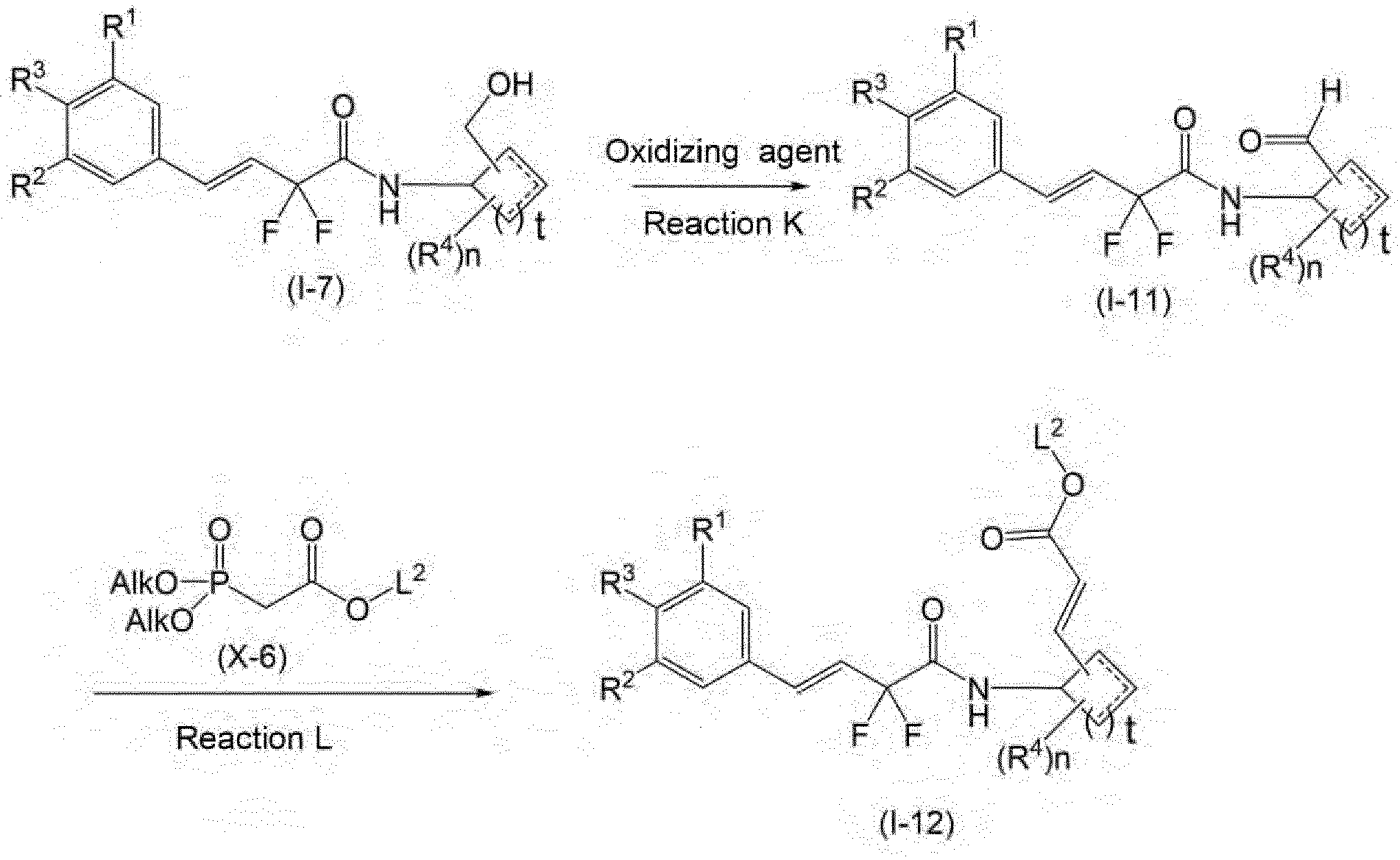
- In the formulae, Alk is a (C1-C6)-alkyl. The other symbols are as defined above.
- Reaction K may be carried out by mixing the compound of the formula (I-7) with an oxidizing agent usually in the presence of a solvent.
- The oxidizing agent is not particularly limited so long as the reaction proceeds, and may, for example, be a hypervalent iodine compound such as Dess-Martin Periodinane used in Dess-Martin oxidation; a metal oxide such as manganese dioxide; a sulfur oxide such as sulfur trioxide pyridine complex; or dimethyl sulfoxide (DMSO) used in Swern oxidation reaction. The oxidizing agent may be used in an amount of 0.5 to 30 equivalents, preferably 1 to 10 equivalents to 1 equivalent of the compound of the formula (I-7). In a case where Swern oxidation reaction is employed, oxalyl chloride or acetic anhydride as an activating agent is added. Each of such activating agents may be used in an amount of 0.5 to 10 equivalents, preferably 1 to 5 equivalents to 1 equivalent of the compound of the formula (I-7).
- The solvent may be any solvent so long as it is inert to the reaction, and one or more may properly be selected from aromatic hydrocarbons such as benzene, toluene, xylene and chlorobenzene; aliphatic hydrocarbons such as hexane and cyclohexane; ethers such as dioxane, tetrahydrofuran, diethyl ether and dimethoxyethane; and the like.
- In Reaction K, the reaction temperature is about -80°C to 100°C, preferably about 0°C to 50°C, and the reaction time is usually about 10 minutes to 30 hours, preferably about 1 hour to 15 hours. In a case where Swern oxidation reaction is employed in Reaction K, the reaction temperature is preferably about -80°C to -60°C.
- The compound of the formula (I-7) used in Reaction K may be produced in accordance with the above Reaction G or a known method.
- Reaction L is Horner-Wadsworth-Emmons Reaction. That is, Reaction L may be carried out by mixing the compound of the formula (I-11) with the compound of the formula (X-6) usually in the presence of a solvent and a base. The compound of the formula (X-6) may be used in an amount of 0.5 to 10 equivalents, preferably 1 to 5 equivalents to 1 equivalent of the compound of the formula (I-11).
- As the base, one or more may properly be selected and mixed from metal amine salts such as lithium diisopropylamide and lithium bis(trimethylsilyl)amide; metal hydrides such as sodium hydride and potassium hydride; metal alkoxides such as potassium tert-butoxide and lithium tert-butoxide; and the like. The base may be used in an amount of 1 to 10 equivalents, preferably 1 to 5 equivalents to 1 equivalent of the compound of the formula (I-11).
- The solvent may be any solvent so long as it is inert to the reaction, and one or more may properly be selected from aromatic hydrocarbons such as benzene, toluene, xylene and chlorobenzene; aliphatic hydrocarbons such as carbon tetrachloride, hexane and cyclohexane; ethers such as dioxane, tetrahydrofuran, diethyl ether and dimethoxyethane; and the like.
- In Reaction L, the reaction temperature is about -100°C to 100°C, preferably about -80°C to 50°C, and the reaction time is usually about 10 minutes to 30 hours, preferably about 1 hour to 15 hours.
- The compound of the formula (X-6) used in Reaction L may be commercially available.
- Reaction M is a method of reacting a compound of the formula (II-1) with a compound of the formula (X-7) to obtain a compound of the formula (III).

- The symbols in the formulae are as defined above.
- Reaction M may be carried out in accordance with the above Reaction A. The compound of the formula (X-7) may be used in an amount of 0.5 to 10 equivalents, preferably 1 to 5 equivalents to 1 equivalent of the compound of the formula (II-1). The base may be used in an amount of 0.5 to 10 equivalents, preferably 1 to 5 equivalents to 1 equivalent of the compound of the formula (II-1). The dehydration condensation agent may be used in an amount of 0.5 to 10 equivalents, preferably 1 to 5 equivalents to 1 equivalent of the compound of the formula (II-1), and the additive may be used in an amount of 0.1 to 10 equivalents, preferably 1 to 5 equivalents to 1 equivalent of the compound of the formula (II-1).
- The compound of the formula (II-1) used in Reaction M may be produced in accordance with the following Reaction 1-5 or a known method. The compound of the formula (X-7) used in Reaction M may be commercially available.
- Reaction N is a method of reducing a compound of the formula (III-1), a compound of the formula (III-2), a compound of the formula (III-3) or a compound of the formula (III-4) to obtain a compound of the formula (I-13).

- In the formulae, E is H, a C1-C6 alkyl or a halogen, and the other symbols are as defined above.
- Reaction N may be carried out in accordance with the above Reaction G. The reducing agent may be used in an amount of 0.5 to 10 equivalents, preferably 1 to 5 equivalents to 1 equivalent of each of the compounds of the formula (III-1) to the compound of the formula (III-4).
- The compound of the formula (III-1) to the compound of the formula (III-4) used in Reaction N may be produced in accordance with the above Reaction M or a known method.
- Reaction O is Horner-Wadsworth-Emmons Reaction, and is a method of reacting the compound of the formula (III-1) with the compound of the formula (X-6) to obtain a compound of the formula (I-14). It is also a method of reacting the compound of the formula (III-2) with the compound of the formula (X-6) to obtain a compound of the formula (I-15). It is also a method of reacting the compound of the formula (III-3) with the compound of the formula (X-6) to obtain a compound of the formula (I-16). It is also a method of reacting the compound of the formula (III-4) with the compound of the formula (X-6) to obtain a compound of the formula (I-17).


- The symbols in the formulae are as defined above.
- Reaction O may be carried out in accordance with the above Reaction L. The compound of the formula (X-6) may be used in an amount of 0.5 to 10 equivalents, preferably 1 to 5 equivalents to 1 equivalent of the compound of the formula (III-1) as the raw material. The base may be used in an amount of 1 to 10 equivalents, preferably 1 to 5 equivalents to 1 equivalent of the compound of the formula (III-1). Also in a case where each of the compound of the formula (III-2) to the compound of the formula (III-4) is used as the raw material, the compound of the formula (X-6) and the base may be used in the same amount as above.
- The compound of the formula (III-1) to the compound of the formula (III-4) used in Reaction O may be produced in accordance with the above Reaction M or a known method. The compound of the formula (X-6) used in Reaction O may be commercially available.
- Reaction P is a method of hydrolyzing the compound of the formula (I-12) to obtain a compound of the formula (I-18).

- The symbols in the formulae are as defined above.
- Reaction P may be carried out in accordance with the above Reaction B. In a case where a base is used in Reaction P, the base may be used in an amount of 1 to 10 equivalents, preferably 1 to 5 equivalents to 1 equivalent of the compound of the formula (I-12). In a case where an acid is used in Reaction P, the acid may be used in an amount of 0.1 to 30 equivalents, preferably 1 to 10 equivalents to 1 equivalent of the compound of the formula (I-12).
- Reaction Q is a method of hydrogenating the compound of the formula (I-12) to obtain a compound of the formula (I-19). Reaction R is a method of hydrolyzing the compound of the formula (I-19) to obtain a compound of the formula (I-20).

- The symbols in the formulae are as defined above.
- Reaction Q may be carried out by hydrogenating the compound of the formula (I-12) using palladium on carbon as a catalyst in a hydrogen atmosphere usually in the presence of a solvent. The palladium on carbon may be used in an amount of 0.001 to 1 equivalents, preferably 0.01 to 0.5 equivalents to 1 equivalent of the compound of the formula (I-12).
- The solvent may be any solvent so long as it is inert to the reaction, and one or more may properly be selected from ethers such as dioxane, tetrahydrofuran, diethyl ether and dimethoxyethane; esters such as methyl acetate and ethyl acetate; alcohols such as methanol, ethanol and isopropanol; water; and the like.
- In Reaction Q, the reaction temperature is about -20°C to 150°C, preferably about 0°C to 100°C, and the reaction time is usually about 0.5 to 48 hours. Further, Reaction Q may be carried out under elevated pressure as the case requires.
- Reaction R may be carried out in accordance with the above Reaction B. In a case where a base is used in Reaction R, the base may be used in an amount of 1 to 10 equivalents, preferably 1 to 5 equivalents to 1 equivalent of the compound of the formula (I-19). In a case where an acid is used in Reaction R, the acid may be used in an amount of 0.1 to 30 equivalents, preferably 1 to 10 equivalents to 1 equivalent of the compound of the formula (I-19).
- Reaction S is a method of reacting the compound of the formula (I-11) with Ohira-Bestmann reagent to obtain a compound of the formula (I-21). Reaction T is a method of reacting the compound of the formula (I-21) with a compound of the formula (X-9) to obtain a compound of the formula (I-22).

- The symbols in the formulae are as defined above.
- Reaction S may be carried out by mixing the compound of the formula (I-11) with Ohira-Bestmann reagent usually in the presence of a solvent and a base.
- Ohira-Bestmann reagent in Reaction S means dimethyl (1-diazo-2-oxopropyl)phosphonate. The Ohira-Bestmann reagent may be used in an amount of 0.5 to 10 equivalents, preferably 1 to 5 equivalents to 1 equivalent of the compound of the formula (I-11).
- As the base, one or more may properly be selected and mixed from carbonates such as sodium carbonate and potassium carbonate; hydrogencarbonates such as sodium hydrogencarbonate and potassium hydrogencarbonate; metal hydrides such as sodium hydride and potassium hydride; amines such as triethylamine and N,N-diisopropylethylamine; pyridines such as pyridine, 4-dimethylaminopyridine and 2,6-lutidine; alkali metal carboxylates such as sodium acetate and potassium acetate; and the like. The base may be used in an amount of 0.5 to 10 equivalents, preferably 1 to 5 equivalents to 1 equivalent of the compound of the formula (I-11).
- The solvent may be any solvent so long as it is inert to the reaction, and one or more may properly be selected from aromatic hydrocarbons such as benzene, toluene, xylene and chlorobenzene; aliphatic hydrocarbons such as carbon tetrachloride, chloroform, dichloromethane, dichloroethane, trichloroethane, hexane and cyclohexane; ethers such as dioxane, tetrahydrofuran, diethyl ether and dimethoxyethane; esters such as methyl acetate and ethyl acetate; aprotic polar solvents such as dimethyl sulfoxide, sulfolane, N,N-dimethylacetamide, N,N-dimethylformamide, N-methylpyrolidone, pyridine, acetonitrile and propionitrile; ketones such as acetone and methyl ethyl ketone; protic polar solvents such as methanol and ethanol; and the like.
- In Reaction S, the reaction temperature is about -30°C to 120°C, preferably about 0°C to 80°C, and the reaction time is usually about 10 minutes to 30 hours, preferably about 30 minutes to 15 hours.
- The Ohira-Bestmann reagent used in Reaction S may be commercially available.
- Reaction T may be carried out by mixing the compound of the formula (I-21) with the compound of the formula (X-9) usually in the presence of a solvent and a base. The compound of the formula (X-9) may be used in an amount of 0.5 to 10 equivalents, preferably 1 to 5 equivalents to 1 equivalent of the compound of the formula (I-21).
- As the base, one or more may properly be selected and mixed from metal amine salts such as lithium diisopropylamide and lithium bis(trimethylsilyl)amide; metal hydrides such as sodium hydride and potassium hydride; metal alkoxides such as potassium tert-butoxide and lithium tert-butoxide; and the like. The base may be used in an amount of 1 to 10 equivalents, preferably 1 to 5 equivalents to 1 equivalent of the compound of the formula (I-21).
- The solvent may be any solvent so long as it is inert to the reaction, and one or more may properly be selected from aromatic hydrocarbons such as benzene, toluene, xylene and chlorobenzene; aliphatic hydrocarbons such as hexane and cyclohexane; ethers such as dioxane, tetrahydrofuran, diethyl ether and dimethoxyethane; and the like.
- In Reaction T, the reaction temperature is about -100°C to 100°C, preferably about -80°C to 50°C, and the reaction time is usually about 10 minutes to 30 hours, preferably about 1 hour to 15 hours.
- The compound of the formula (X-9) used in Reaction T may be commercially available.
- Reaction U is a method of reacting the compound of the formula (I-2) with a compound of the formula (X-10) to obtain a compound of the formula (I-23). Reaction V is a method of reacting the compound of the formula (I-23) with an oxidizing agent to obtain a compound of the formula (I-24). Reaction W is a method of reacting the compound of the formula (I-24) with a compound of the formula (X-11) to obtain a compound of the formula (I-25). Reaction X is a method of reacting the compound of the formula (I-24) with a reducing agent to obtain a compound of the formula (I-26).

- The symbols in the formulae are as defined above.
- Reaction U may be carried out by mixing the compound of the formula (I-2) with the compound of the formula (X-10) usually in the presence of a solvent, a dehydration condensation agent and a base. The compound of the formula (X-10) may be used in an amount of 0.5 to 10 equivalents, preferably 1 to 5 equivalents to 1 equivalent of the compound of the formula (I-2).
- As the base, one or more may properly be selected and mixed from carbonates such as sodium carbonate and potassium carbonate; hydrogencarbonates such as sodium hydrogencarbonate and potassium hydrogencarbonate; metal hydroxides such as sodium hydroxide and potassium hydroxide; metal hydrides such as sodium hydride and potassium hydride; amines such as triethylamine and N,N-diisopropylethylamine; pyridines such as pyridine, 4-dimethylaminopyridine and 2,6-lutidine; alkali metal carboxylates such as sodium acetate and potassium acetate; and the like. The base may be used in an amount of 0.5 to 10 equivalents, preferably 1 to 5 equivalents to 1 equivalent of the compound of the formula (I-2).
- The solvent may be any solvent so long as it is inert to the reaction, and one or more may properly be selected from aromatic hydrocarbons such as benzene, toluene, xylene and chlorobenzene; aliphatic hydrocarbons such as carbon tetrachloride, chloroform, dichloromethane, dichloroethane, trichloroethane, hexane and cyclohexane; ethers such as dioxane, tetrahydrofuran, diethyl ether and dimethoxyethane; esters such as methyl acetate and ethyl acetate; aprotic polar solvents such as dimethyl sulfoxide, sulfolane, N,N-dimethylacetamide, N,N-dimethylformamide, N-methylpyrolidone, pyridine, acetonitrile and propionitrile; and the like.
- As the dehydration condensation agent, one or more may properly be selected and mixed from carbodiimide condensation agents such as N,N'-dicyclohexylcarbodiimide (DCC), 1-[3-(dimethylamino)propyl]-3-ethylcarbodiimide (EDC) or its hydrochloride; imidazole condensation agents such as 1,1'-carbonyldiimidazole (CDI); triazine condensation agents such as 4-(4,6-dimethoxy-1,3,5-triazin-2-yl)-4-methylmorpholinium chloride (DMT-MM); phosphonium condensation agents such as 1H-benzotriazol-1-yloxy tripyrrolidinophosphonium hexafluorophosphate (PyBOP); uronium condensation agents such as 1-[bis(dimethylamino)methylene]-1H-1,2,3-triazolo[4,5-b]pyridinium 3-oxide hexafluorophosphate (HATU); acid anhydrides such as 2-methyl-6-nitrobenzoic anhydride (MNBA); 2-halopyridinium salts such as 2-chloro-1-methylpyridinium p-toluenesulfonate; propylphosphonic acid anhydride (cyclic trimer) (T3P); diphenylphosphoryl azide (DPPA); and the like. Optionally, a conventional additive used in combination with a dehydration condensation agent, such as 1-hydroxybenzotriazole (HOBt) or 4-N,N-dimethylaminopyridine (DMAP), may be added. In a case where an additive is used in Reaction U, the additive may be used alone or as a mixture of two or more. The dehydration condensation agent may be used in an amount of 0.5 to 10 equivalents, preferably 1 to 5 equivalents to 1 equivalent of the compound of the formula (I-2). The additive may be used in an amount of 0.1 to 10 equivalents, preferably 1 to 5 equivalents to 1 equivalent of the compound of the formula (I-2).
- In Reaction U, the reaction temperature is about -30°C to 120°C, preferably about 0°C to 80°C, and the reaction time is usually about 10 minutes to 30 hours, preferably about 30 minutes to 15 hours.
- The compound of the formula (X-10) used in Reaction U may be produced by the method described in Journal of The American Chemical Society 2008, 130, 4253-4255, Supporting Information, or a method in accordance therewith.
- Reaction V may be carried out by mixing the compound of the formula (I-23) with an oxidizing agent usually in the presence of a solvent.
- The oxidizing agent is not particularly limited so long as the reaction proceeds, and may, for example, be a potassium persulfate such as potassium peroxymonosulfate (OXONE). The oxidizing agent may be used in an amount of 0.5 to 30 equivalents, preferably 1 to 10 equivalents to 1 equivalent of the compound of the formula (I-23).
- The solvent may be any solvent so long as it is inert to the reaction, and one or more may properly be selected from aromatic hydrocarbons such as benzene, toluene, xylene and chlorobenzene; aliphatic hydrocarbons such as carbon tetrachloride, chloroform, dichloromethane, dichloroethane, trichloroethane, hexane and cyclohexane; ethers such as dioxane, tetrahydrofuran, diethyl ether and dimethoxyethane; esters such as methyl acetate and ethyl acetate; aprotic polar solvents such as dimethyl sulfoxide, sulfolane, N,N-dimethylacetamide, N,N-dimethylformamide, N-methylpyrolidone, pyridine, acetonitrile and propionitrile; ketones such as acetone and methyl ethyl ketone; protic polar solvents such as methanol and ethanol; water; and the like.
- In Reaction V, the reaction temperature is about -80°C to 100°C, preferably about 0°C to 50°C, and the reaction time is usually about 10 minutes to 30 hours, preferably about 1 hour to 15 hours.
- Reaction W may be carried out by mixing the compound of the formula (I-24) with the compound of the formula (X-11) usually in the presence of a solvent and a base. The compound of the formula (X-11) may be used in an amount of 0.5 to 10 equivalents, preferably 1 to 5 equivalents to 1 equivalent of the compound of the formula (I-24).
- As the base, one or more may properly be selected and mixed from carbonates such as sodium carbonate and potassium carbonate; hydrogencarbonates such as sodium hydrogencarbonate and potassium hydrogencarbonate; metal hydrides such as sodium hydride and potassium hydride; amines such as triethylamine and N,N-diisopropylethylamine; pyridines such as pyridine, 4-dimethylaminopyridine and 2,6-lutidine; alkali metal carboxylates such as sodium acetate and potassium acetate; and the like. The base may be used in an amount of 0.5 to 10 equivalents, preferably 1 to 5 equivalents to 1 equivalent of the compound of the formula (I-24).
- The solvent may be any solvent so long as it is inert to the reaction, and one or more may properly be selected from aromatic hydrocarbons such as benzene, toluene, xylene and chlorobenzene; aliphatic hydrocarbons such as carbon tetrachloride, chloroform, dichloromethane, dichloroethane, trichloroethane, hexane and cyclohexane; ethers such as dioxane, tetrahydrofuran, diethyl ether and dimethoxyethane; esters such as methyl acetate and ethyl acetate; aprotic polar solvents such as dimethyl sulfoxide, sulfolane, N,N-dimethylacetamide, N,N-dimethylformamide, N-methylpyrolidone, pyridine, acetonitrile and propionitrile; ketones such as acetone and methyl ethyl ketone; protic polar solvents such as methanol and ethanol; and the like.
- In Reaction W, the reaction temperature is about -30°C to 120°C, preferably about 0°C to 80°C, and the reaction time is usually about 10 minutes to 30 hours, preferably about 30 minutes to 15 hours.
- Reaction X may be carried out in accordance with the above Reaction G. The reducing agent may be used in an amount of 0.5 to 10 equivalents, preferably 1 to 5 equivalents to 1 equivalent of the compound of the formula (I-24).
- Reaction Y may be carried out by mixing the compound of the formula (I-11) with an alcohol and an acid, usually in the presence of a solvent.

- In the formulae, RY is 1,3-dioxolan-2-yl or -CH(OL2)2 (L2 is as defined above), and the other symbols are as defined above.
- The alcohol may, for example, be methanol, ethanol or ethylene glycol. The alcohol may be used in an amount of 1 equivalent or more or in large excess to 1 equivalent of the compound of the formula (I-11).
- The acid may, for example, be an organic acid such as formic acid, acetic acid, methanesulfonic acid, p-toluenesulfonic acid, trifluoroacetic acid or trifluoromethanesulfonic acid; or an inorganic acid such as hydrochloric acid, sulfuric acid or hydrogen bromide, but is not limited thereto. As the acid, one or more may properly be selected and mixed from them. The acid may be used in an amount of 0.01 to 30 equivalents, preferably 0.1 to 10 equivalents to 1 equivalent of the compound of the formula (I-11).
- The solvent may be any solvent so long as it is inert to the reaction, and one or more may properly be selected from aromatic hydrocarbons such as benzene and toluene; and the like.
- In Reaction Y, the reaction temperature is about -30°C to 150°C, preferably about 30°C to 100°C, and the reaction time is usually about 10 minutes to 30 hours, preferably about 30 minutes to 15 hours.
- Reaction Z is Horner-Wadsworth-Emmons Reaction and is a method of reacting the compound of the formula (III) with a compound of the formula (X-12) to obtain a compound of the formula (I-29). Reaction AA is a method of hydrogenating the compound of the formula (I-29) to obtain a compound of the formula (I-30).

- The symbols in the formulae are as defined above.
- Reaction Z may be carried out in accordance with the above Reaction L. The compound of the formula (X-12) may be used in an amount of 0.5 to 10 equivalents, preferably 1 to 5 equivalents to 1 equivalent of the compound of the formula (III). The base may be used in an amount of 1 to 10 equivalents, preferably 1 to 5 equivalents to 1 equivalent of the compound of the formula (III).
- Reaction AA may be carried out in accordance with the above Reaction Q. The palladium on carbon may be used in an amount of 0.001 to 1 equivalents, preferably 0.01 to 0.5 equivalents to 1 equivalent of the compound of the formula (I-29).
- Reaction AB is a method of reacting the compound of the formula (I-13) with a halogenating agent to obtain a compound of the formula (1-31). Reaction AC is a method of coupling a compound of the formula (I-31) with a compound of the formula (X-13) to obtain a compound of the formula (I-32).

- In the formulae, GA is 2-thiazolyl or 2-imidazolyl which may be substituted by at least one Z4, and the other symbols are as defined above.
- Reaction AB may be carried out in accordance with the above Reaction I. The halogenating agent may be used in an amount of 0.5 to 10 equivalents, preferably 1 to 5 equivalents to 1 equivalent of the compound of the formula (I-13). Further, in a case where triphenylphosphine is used in Reaction AB, triphenylphosphine may be used in an amount of 0.5 to 10 equivalents, preferably 1 to 5 equivalents to 1 equivalent of the compound of the formula (I-13). Further, the base may be used in an amount of 0.1 to 10 equivalents, preferably 1 to 5 equivalents to 1 equivalent of the compound of the formula (I-13).
- Reaction AC may be carried out by mixing the compound of the formula (I-31) with the compound of the formula (X-13) usually in the presence of a solvent, a reducing agent and a catalyst. Reaction AC may be carried out optionally with the addition of a ligand. The compound of the formula (X-13) may be used in an amount of 0.5 to 10 equivalents, preferably 1 to 3 equivalents to 1 equivalent of the compound of the formula (I-31).
- The reducing agent may, for example, be a metal such as zinc or manganese, and one or more may properly be selected and mixed. The reducing agent may be used in an amount of 1 to 10 equivalents, preferably 1 to 5 equivalents to 1 equivalent of the compound of the formula (I-31).
- As the catalyst, one or more may properly be selected and mixed from nickel(II) chloride ethylene glycol dimethyl ether complex, nickel iodide and the like. The catalyst may be used in an amount of 0.002 to 1 equivalents, preferably 0.02 to 0.4 equivalents to 1 equivalent of the compound of the formula (I-31).
- As the ligand, one or more may properly be selected and mixed from 2,2'-bipyridine, 4,4'-dimethyl-2,2'-dipyridyl, 4,4'-di-tert-butyl-2,2'-dipyridyl, 1,10-phenanthroline, and the like. The ligand may be used in an amount of 0.002 to 1 equivalents, preferably 0.02 to 0.4 equivalents to 1 equivalent of the compound of the formula (I-31).
- The solvent may be any solvent so long as it is inert to the reaction, and one or more may properly be selected from aromatic hydrocarbons such as benzene, toluene, xylene and chlorobenzene; aliphatic hydrocarbons such as carbon tetrachloride, chloroform, dichloromethane, dichloroethane, trichloroethane, hexane and cyclohexane; ethers such as dioxane, tetrahydrofuran, diethyl ether and dimethoxyethane; esters such as methyl acetate and ethyl acetate; aprotic polar solvents such as dimethyl sulfoxide, sulfolane, N,N-dimethylacetamide, N,N-dimethylformamide, N-methylpyrolidone, pyridine, acetonitrile and propionitrile; ketones such as acetone and methyl ethyl ketone; and the like.
- In Reaction AC, the reaction temperature is about -30°C to 150°C, preferably about 0°C to 100°C, and the reaction time is usually about 2 hours to 80 hours, preferably about 10 hours to 50 hours.
- The compound of the formula (X-13) used in Reaction AC may be commercially available. The compound of the formula (I-32) may be produced by the method described in The Journal of Organic Chemistry 2014, 79, 4793 or a method in accordance therewith, or may be produced in accordance with a known method.
- The compounds used in Production Process A (Reactions A to Z and AA to AC) may be produced in accordance with the following Production Process B (Reactions 1-1 to 1-16), however, their production is not limited thereto, and such compounds may be produced in accordance with a known method of may be commercially available.
- Reaction 1-1 is Horner-Wadsworth-Emmons Reaction and is a method of reacting a compound of the formula (VI) with the compound of the formula (X-6) to obtain a compound of the formula (V). Reaction 1-2 is a method of hydrolyzing the compound of the formula (V) to obtain a compound of the formula (IV). Reaction 1-3 is a method of reacting the compound of the formula (VI) with malonic acid to obtain the compound of the formula (IV).
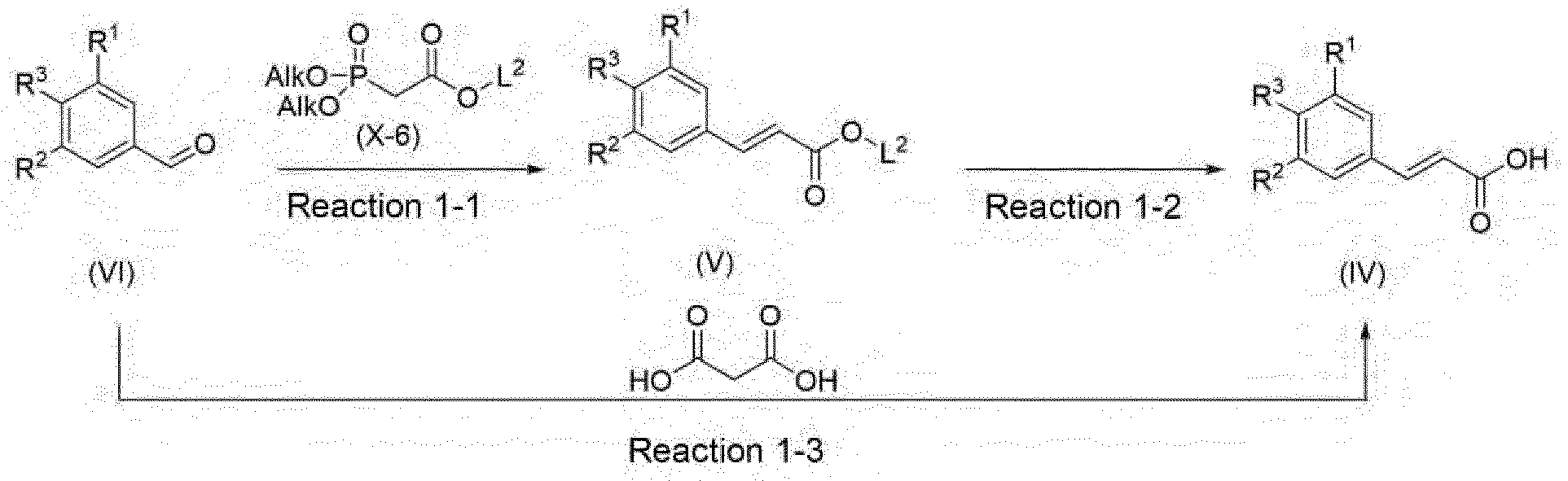
- The symbols in the formulae are as defined above.
- Reaction 1-1 may be carried out in accordance with the above Reaction L. The compound of the formula (X-6) may be used in an amount of 0.5 to 5 equivalents, preferably 1 to 3 equivalents to 1 equivalent of the compound of the formula (VI). The base may be used in an amount of 1 to 10 equivalents, preferably 1 to 5 equivalents to 1 equivalent of the compound of the formula (VI).
- Reaction 1-2 may be carried out in accordance with the above Reaction B. In a case where a base is used in Reaction 1-2, the base may be used in an amount of 1 to 10 equivalents, preferably 1 to 5 equivalents to 1 equivalent of the compound of the formula (V). In a case where an acid is used in Reaction 1-2, the acid may be used in an amount of 0.1 to 30 equivalents, preferably 1 to 10 equivalents to 1 equivalent of the compound of the formula (V).
- Reaction 1-3 may be carried out by mixing the compound of the formula (VI) with malonic acid usually in the presence of a solvent, and optionally with the addition of a base. Malonic acid may be used in an amount of 0.5 to 10 equivalents, preferably 1 to 5 equivalents to 1 equivalent of the compound of the formula (VI).
- As the base, one or more may properly be selected and mixed from carbonates such as sodium carbonate and potassium carbonate; hydrogencarbonates such as sodium hydrogencarbonate and potassium hydrogencarbonate; metal hydroxides such as sodium hydroxide and potassium hydroxide; metal hydrides such as sodium hydride and potassium hydride; amines such as triethylamine and N,N-diisopropylethylamine; pyridines such as pyridine, 4-dimethylaminopyridine and 2,6-lutidine; alkali metal carboxylates such as sodium acetate and potassium acetate; and the like. The base may be used in an amount of 0.01 to 10 equivalents, preferably 0.1 to 5 equivalents to 1 equivalent of the compound of the formula (VI).
- The solvent may be any solvent so long as it is inert to the reaction, and one or more may properly be selected from aromatic hydrocarbons such as benzene, toluene, xylene and chlorobenzene; aliphatic hydrocarbons such as hexane and cyclohexane; ethers such as dioxane, tetrahydrofuran, diethyl ether and dimethoxyethane; aprotic polar solvents such as dimethyl sulfoxide, sulfolane, N,N-dimethylacetamide, N,N-dimethylformamide, N-methylpyrolidone, pyridine, acetonitrile and propionitrile; protic polar solvents such as methanol and ethanol; and the like.
- In Reaction 1-3, the reaction temperature is about 0°C to 180°C, preferably about 30°C to 130°C, and the reaction time is usually about 10 minutes to 30 hours, preferably about 1 hour to 15 hours.
- The compound of the formula (VI) used in the above Reaction 1-1 and Reaction 1-3 may be produced by the method described in The Journal of Organic Chemistry 2000, 65, 9120-9124 or a method in accordance therewith, or may be commercially available. The compound of the formula (X-6) used in Reaction 1-1 may be commercially available.
- Reaction 1-4 is a method of reacting the compound of the formula (IV) with a compound of the formula (X-8) to obtain a compound of the formula (VII).

- The symbols in the formulae are as defined above.
- Reaction 1-4 may be carried out by mixing the compound of the formula (IV) with the compound of the formula (X-8) usually in the presence of a solvent, an additive and a catalyst. Reaction 1-4 may be carried out optionally by the addition of a ligand. The compound of the formula (X-8) may be used in an amount of 0.5 to 10 equivalents, preferably 1 to 3 equivalents to 1 equivalent of the compound of the formula (IV).
- As the additive, one or more may properly be selected and mixed from dimethyl phosphite, diethyl phosphite, triethylsilane, sodium dithionite, bis(pinacolato)diboron, and the like. The additive may be used in an amount of 1 to 10 equivalents, preferably 1 to 5 equivalents to 1 equivalent of the compound of the formula (IV).
- As the catalyst, one or more may properly be selected and mixed from copper oxide, copper iodide, copper thiocyanate, copper trifluoromethanesulfonate, and the like. The catalyst may be used in an amount of 0.002 to 1 equivalents, preferably 0.02 to 0.4 equivalents to 1 equivalent of the compound of the formula (IV).
- As the ligand, one or more may properly be selected and mixed from 2,2'-bipyridine, 4,4'-dimethyl-2,2'-dipyridyl, 4,4'-di-tert-butyl-2,2'-dipyridyl, 1,10-phenanthroline, and the like. The ligand may be used in an amount of 0.002 to 1 equivalents, preferably 0.02 to 0.4 equivalents to 1 equivalent of the compound of the formula (IV).
- The solvent may be any solvent so long as it is inert to the reaction, and one or more may properly be selected from aromatic hydrocarbons such as benzene, toluene, xylene and chlorobenzene; aliphatic hydrocarbons such as carbon tetrachloride, chloroform, dichloromethane, dichloroethane, trichloroethane, hexane and cyclohexane; ethers such as dioxane, tetrahydrofuran, diethyl ether and dimethoxyethane; esters such as methyl acetate and ethyl acetate; aprotic polar solvents such as dimethyl sulfoxide, sulfolane, N,N-dimethylacetamide, N,N-dimethylformamide, N-methylpyrolidone, pyridine, acetonitrile and propionitrile; ketones such as acetone and methyl ethyl ketone; and the like.
- In Reaction 1-4, the reaction temperature is about -30°C to 150°C, preferably about 0°C to 100°C, and the reaction time is usually about 2 hours to 80 hours, preferably about 10 hours to 50 hours.
- The compound of the formula (IV) used in Reaction 1-4 may be produce in accordance with the above Reaction 1-2 or a known method. The compound of the formula (X-8) may be commercially available.
- Reaction 1-5 is a method of hydrolyzing the compound of the formula (VII) to obtain the compound of the formula (II-1). Reaction 1-6 is a method of reacting the compound of the formula (II-1) with a halogenating agent to obtain a compound of the formula (II-2).

- In the formulae, V2 is a chlorine atom or a bromine atom. The other symbols are as defined above.
- Reaction 1-5 may be carried out in accordance with the above Reaction B. In a case where a base is used in Reaction 1-5, the base may be used in an amount of 1 to 10 equivalents, preferably 1 to 5 equivalents to 1 equivalent of the compound of the formula (VII). In a case where an acid is used in Reaction 1-5, the acid may be used in an amount of 0.1 to 30 equivalents, preferably 1 to 10 equivalents to 1 equivalent of the compound of the formula (VII).
- The compound of the formula (VII) used in Reaction 1-5 may be produced in accordance with the above Reaction 1-4 or a known method.
- Reaction 1-6 may be carried out by mixing the compound of the formula (II-1) with a halogenating agent usually in the presence of a solvent.
- As the halogenating agent, one or more may properly be selected and mixed from sulfur halides such as thionyl chloride; phosphorus halides such as phosphorus trichloride and phosphorus pentachloride; a reactant having carbon tetrachloride, carbon tetrabromide and triphenylphosphine combined (Appel Reaction); acid halides such as oxalyl chloride and benzoyl chloride; and the like. Optionally, a conventional additive used together with a halogenating agent such as N,N-dimethylformamide may be added.
- The halogenating agent may be used in an amount of 0.5 to 100 equivalents, preferably 1 to 10 equivalents to 1 equivalent of the compound of the formula (II-1), and the additive may be used in an amount of 0.001 to 50 equivalents, preferably 0.01 to 15 equivalents to 1 equivalent of the compound of the formula (II-1).
- The solvent may be any solvent so long as it is inert to the reaction, and one or more may properly be selected from aromatic hydrocarbons such as benzene, toluene, xylene and chlorobenzene; aliphatic hydrocarbons such as carbon tetrachloride, chloroform, dichloromethane, dichloroethane, trichloroethane, hexane and cyclohexane; ethers such as dioxane, tetrahydrofuran, diethyl ether and dimethoxyethane; esters such as methyl acetate and ethyl acetate; and the like.
- In Reaction 1-6, the reaction temperature is about -30°C to 150°C, preferably about -10°C to 80°C, and the reaction time is usually about 10 minutes to 30 hours, preferably about 30 minutes to 15 hours.
- The compound of the formula (II-1) used in Reaction 1-6 may be produced in accordance with the above Reaction 1-5 or a known method.
- Reaction 1-7 is a method of reacting a compound of the formula (VIII) with the compound of the formula (X-8) to obtain the compound of the formula (VII).

- The symbols in the formulae are as defined above.
- Reaction 1-7 may be carried out by mixing the compound of the formula (VIII) with the compound of the formula (X-8) usually in the presence of a base, a catalyst and a solvent. The compound of the formula (X-8) may be used in an amount of 0.5 to 10 equivalents, preferably 1 to 3 equivalents to 1 equivalent of the compound of the formula (VIII).
- As the base, one or more may properly be selected and mixed from carbonates such as sodium carbonate and potassium carbonate; hydrogencarbonates such as sodium hydrogencarbonate and potassium hydrogen carbonate; metal hydroxides such as sodium hydroxide and potassium hydroxide; metal hydrides such as sodium hydride and potassium hydride; amines such as triethylamine, N,N-diisopropylethylamine, N,N,N',N'-tetramethylethylenediamine, N,N,N',N'-tetramethyl-1,3-propanediamine and pentamethyldiethylenetriamine; pyridines such as pyridine, 4-dimethylaminopyridine and 2,6-lutidine; alkali metal carboxylates such as sodium acetate and potassium acetate; and the like. The base may be used in an amount of 0.5 to 10 equivalents, preferably 1 to 5 equivalents to 1 equivalent of the compound of the formula (VIII).
- As the catalyst, one or more may properly be selected and mixed from copper(I) chloride, copper(I) bromide, copper(II) bromide, copper iodide, copper(II) trifluoromethanesulfonate and the like. The catalyst may be used in an amount of 0.002 to 1 equivalents, preferably 0.02 to 0.2 equivalents to 1 equivalent of the compound of the formula (VIII).
- The solvent may be any solvent so long as it is inert to the reaction, and one or more may properly be selected from aromatic hydrocarbons such as benzene, toluene, xylene and chlorobenzene; aliphatic hydrocarbons such as carbon tetrachloride, chloroform, dichloromethane, dichloroethane, trichloroethane, hexane and cyclohexane; ethers such as dioxane, tetrahydrofuran, diethyl ether and dimethoxyethane; esters such as methyl acetate and ethyl acetate; aprotic polar solvents such as dimethyl sulfoxide, sulfolane, N,N-dimethylacetamide, N,N-dimethylformamide, N-methylpyrolidone, pyridine, acetonitrile and propionitrile; ketones such as acetone and methyl ethyl ketone; and the like.
- In Reaction 1-7, the reaction temperature is about -30°C to 150°C, preferably about 0°C to 100°C, and the reaction time is usually about 10 minutes to 30 hours, preferably about 2 hours to 24 hours.
- The compound of the formula (X-8) used in Reaction 1-7 may be commercially available. The compound of the formula (VIII) may be produced by the method described in Chemical Science 2019,10,8331-8337 or a method in accordance therewith, may be commercially available, or may be produced in accordance with a known method.
- Reaction 1-8 is a method of reacting a compound of the formula (VII-2) with a formylating agent to obtain a compound of the formula (IX). Reaction 1-9 is a method of reacting the compound of the formula (IX) with a Wittig reagent or Ohira-Bestmann reagent to obtain a compound (IV-3).

- In the formulae, G is a (C2-C6)-alkenyl or a (C2-C6)-alkynyl. The other symbols are as defined above.
- Reaction 1-8 may be carried out by mixing the compound of the formula (VII-2) with a formylating agent usually in the presence of a solvent and a base.
- As the formylating agent, one on more may properly be selected and mixed from N,N-di-substituted formamides such as N,N-dimethylformamide and N-formylmorpholine; orthoformate esters such as ethyl orthoformate; N-ethoxymethyleneaniline; and the like. The formylating agent may be used in an amount of 0.5 to 5 equivalents, preferably 1 to 3 equivalents to 1 equivalent of the compound of the formula (VII-2).
- As the base, one or more may properly be selected and mixed from metal amine salts such as lithium diisopropylamide and lithium bis(trimethylsilyl)amide; metal hydrides such as sodium hydride and potassium hydride; metal alkoxides such as potassium tert-butoxide and lithium tert-butoxide; metal alkyl salts such as methyl lithium and n-butyl lithium; and the like. The base may be used in an amount of 0.5 to 5 equivalents, preferably 1 to 3 equivalents to 1 equivalent of the compound of the formula (VII-2).
- The solvent may be any solvent so long as it is inert to the reaction, and one or more may properly be selected from aromatic hydrocarbons such as benzene, toluene, xylene and chlorobenzene; aliphatic hydrocarbons such as carbon tetrachloride, hexane and cyclohexane; ethers such as dioxane, tetrahydrofuran, diethyl ether and dimethoxyethane; and the like.
- In Reaction 1-8, the reaction temperature is about -100°C to 50°C, preferably about -80°C to 30°C, and the reaction time is usually about 10 minutes to 30 hours, preferably about 1 hour to 15 hours.
- The compound of the formula (VII-2) used in Reaction 1-8 may be produced in accordance with the above Reaction 1-4 or a known method.
- Reaction 1-9 may be carried out by mixing the compound of the formula (IX) with a Wittig reagent or Ohira-Bestmann reagent usually in the presence of a solvent and a base.
- In a case where a Wittig reagent is used in Reaction 1-9, the Wittig reagent may, for example, be methyltriphenylphosphine bromide or ethyltriphenylphosphine bromide, but is not limited thereto. The Wittig reagent may be used in an amount of 0.5 to 10 equivalents, preferably 1 to 5 equivalents to 1 equivalent of the compound of the formula (IX).
- The Ohira-Bestmann reagent in Reaction 1-9 means dimethyl (1-diazo-2-oxopropyl)phosphonate. In a case where the Ohira-Bestmann reagent is used, it may be used in an amount of 0.5 to 10 equivalents, preferably 1 to 5 equivalents to 1 equivalent of the compound of the formula (IX).
- As the base, one or more may properly be selected and mixed from carbonates such as sodium carbonate and potassium carbonate; hydrogencarbonates such as sodium hydrogencarbonate and potassium hydrogencarbonate; metal hydrides such as sodium hydride and potassium hydride; amines such as triethylamine and N,N-diisopropylethylamine; pyridines such as pyridine, 4-dimethylaminopyridine and 2,6-lutidine; alkali metal carboxylates such as sodium acetate and potassium acetate; and the like. The base may be used in an amount of 0.5 to 10 equivalents, preferably 1 to 5 equivalents to 1 equivalent of the compound of the formula (IX).
- The solvent may be any solvent so long as it is inert to the reaction, and one or more may properly be selected from aromatic hydrocarbons such as benzene, toluene, xylene and chlorobenzene; aliphatic hydrocarbons such as carbon tetrachloride, chloroform, dichloromethane, dichloroethane, trichloroethane, hexane and cyclohexane; ethers such as dioxane, tetrahydrofuran, diethyl ether and dimethoxyethane; esters such as methyl acetate and ethyl acetate; aprotic polar solvents such as dimethyl sulfoxide, sulfolane, N,N-dimethylacetamide, N,N-dimethylformamide, N-methylpyrolidone, pyridine, acetonitrile and propionitrile; ketones such as acetone and methyl ethyl ketone; protic polar solvents such as methanol and ethanol; and the like.
- In Reaction 1-9, the reaction temperature is about -30°C to 120°C, preferably about 0°C to 80°C, and the reaction time is usually about 10 minutes to 30 hours, preferably about 30 minutes to 15 hours.
- The Wittig reagent and the Ohira-Bestmann reagent used in Reaction 1-9 may be commercially available.
- Reaction 1-10 is a method of reacting the compound of the formula (IX) with a Wittig reagent to obtain a compound of the formula (XI-1). Reaction 1-11 is a method of reacting the compound of the formula (XI-1) with an acid to obtain a compound of the formula (XI-2). Reaction 1-12 is a method of reacting the compound of the formula (XI-2) with a fluorinating agent to obtain a compound of the formula (XI-3).

- The symbols in the formulae are as defined above.
- Reaction 1-10 may be carried out in accordance with the above Reaction 1-9.
- The Wittig reagent may, for example, be (methoxymethyl)triphenylphosphonium chloride, but is not limited thereto. The Wittig reagent may be used in an amount of 0.5 to 10 equivalents, preferably 1 to 5 equivalents to 1 equivalent of the compound of the formula (IX). The base may be used in an amount of 0.5 to 5 equivalents, preferably 1 to 3 equivalents to 1 equivalent of the compound of the formula (IX).
- The compound of the formula (IX) used in Reaction 1-10 may be produced in accordance with the above Reaction 1-8 or a known method.
- Reaction 1-11 may be carried out by mixing the compound of the formula (XI-1) with an acid usually in the presence of a solvent.
- The acid may, for example, be an organic acid such as formic acid, acetic acid, methanesulfonic acid, p-toluenesulfonic acid, trifluoroacetic acid or trifluoromethanesulfonic acid; or an inorganic acid such as hydrochloric acid, sulfuric acid or hydrogen bromide, but is not limited thereto. As the acid, one or more may properly be selected and mixed from them. The acid may be used in an amount of 0.1 to 30 equivalents, preferably 1 to 10 equivalents to 1 equivalent of the compound of the formula (XI-1).
- The solvent may be any solvent so long as it is inert to the reaction and one ore more may properly be selected from aromatic hydrocarbons such as benzene, toluene, xylene and chlorobenzene; aliphatic hydrocarbons such as hexane and cyclohexane; ethers such as dioxane, tetrahydrofuran, diethyl ether and dimethoxyethane; aprotic polar solvents such as acetonitrile, N,N-dimethylformamide, dimethyl sulfoxide, N,N-dimethylacetamide, hexamethylphosphoric triamide and sulfolane; protic polar solvents such as methanol, ethanol and isopropanol; water; and the like.
- In Reaction 1-11, the reaction temperature is about -30°C to 150°C, preferably about 30°C to 100°C, and the reaction time is usually about 10 minutes to 30 hours, preferably about 30 minutes to 15 hours.
- Reaction 1-12 may be carried out by mixing the compound of the formula (XI-2) with a fluorinating agent usually in the presence of a solvent.
- The fluorinating agent may, for exmaple, be N,N-dimethylaminosulfur trifluoride (DAST), bis(2-methoxyethyl)aminosulfur trifluoride, 1,1,2,2-tetrafluoro-N,N-dimethylethylamine (TFEDMA), (diethylamino)difluorosulfonium tetrafluoroborate (XtalFluor), 4-tert-butyl-2,6-dimethylphenylsulfur trifluoride (FluoLead), 2-chloro-1,3-bis(2,6-diisopropylphenyl)-1H-imidazolium chloride (PhenoFluor), but is not limited thereto. As the fluorinating agent, one or more may properly be selected and mixed from them. The fluorinating agent may be used in an amount of 0.1 to 30 equivalents, preferably 1 to 10 equivalents to 1 equivalent of the compound of the formula (XI-2).
- The solvent may be any solvent so long as it is inert to the reaction, and one or more may properly be selected from aromatic hydrocarbons such as benzene, toluene, xylene and chlorobenzene; aliphatic hydrocarbons such as carbon tetrachloride, chloroform, dichloromethane, dichloroethane, trichloroethane, hexane and cyclohexane; ethers such as dioxane, tetrahydrofuran, diethyl ether and dimethoxyethane; and the like.
- In Reaction 1-12, the reaction temperature is about -30°C to 150°C, preferably about 0°C to 80°C, and the reaction time is usually about 10 minutes to 30 hours, preferably about 30 minutes to 15 hours.
- Reaction 1-13 is a method of reacting the compound of the formula (IX) with a reducing agent to obtain a compound of the formula (XI-4). Reaction 1-14 is a method of reacting the compound of the formula (XI-4) with a halogenating agent to obtain a compound of the formula (XI-5). Reaction 1-15 is a method of reacting the compound of the formula (XI-5) with a nucleophile to obtain a compound of the formula (XI-6). Reaction 1-16 is a method of reacting the compound of the formula (XI-5) with a cyanizing agent to obtain a compound of the formula (XI-7).

- The symbols in the formulae are as defined above.
- Reaction 1-13 may be carried out in accordance with the above Reaction G. The reducing agent may be used in an amount of 0.5 to 10 equivalents, preferably 1 to 5 equivalents to 1 equivalent of the compound of the formula (IX).
- Reaction 1-14 may be carried out in accordance with the above Reaction I. The halogenating agent may be used in an amount of 0.5 to 10 equivalents, preferably 1 to 5 equivalents to 1 equivalent of the compound of the formula (XI-4). Further, in a case where triphenylphosphine is used in Reaction 1-14, triphenylphosphine may be used in an amount of 0.5 to 10 equivalents, preferably 1 to 5 equivalents to 1 equivalent of the compound of the formula (XI-4). The base may be used in an amount of 0.1 to 10 equivalents, preferably 1 to 5 equivalents to 1 equivalent of the compound of the formula (XI-4).
- Reaction 1-15 may be carried out by mixing the compound of the formula (XI-5) with a nucleophile usually in the presence of a solvent.
- As the nucleophile, one or more may properly be selected and mixed from alkali metal alkoxides such as sodium methoxide and sodium ethoxide; and the like. The nucleophile may be used in an amount of 0.1 to 30 equivalents, preferably 1 to 10 equivalents to 1 equivalent of the compound of the formula (XI-5).
- The solvent may be any solvent so long as it is inert to the reaction, and one or more may properly be selected from aromatic hydrocarbons such as benzene, toluene, xylene and chlorobenzene; aliphatic hydrocarbons such as carbon tetrachloride, chloroform, dichloromethane, dichloroethane, trichloroethane, hexane and cyclohexane; ethers such as dioxane, tetrahydrofuran, diethyl ether and dimethoxyethane; and the like.
- In Reaction 1-15, the reaction temperature is about -30°C to 150°C, preferably about 0°C to 80°C, and the reaction time is usually about 10 minutes to 30 hours, preferably about 30 minutes to 15 hours.
- Reaction 1-16 may be carried out in accordance with the above Reaction J. The cyanating agent may be used in an amount of 0.5 to 10 equivalents, preferably 1 to 5 equivalents to 1 equivalent of the compound of the formula (XI-5).
- The compound (I) as the active ingredient of the present composition is useful as an active ingredient of a herbicide which can control wide ranges of undesired plants such as annua weeds and perennial weeds. Further, the compound (I) can be used as a herbicide in a wide period from before budding to after budding of the undesired plants. And, the present composition is applicable to treatment methods assuming practical use of herbicides, such as soil treatment, foliar treatment and water treatment, and thus the present composition has excellent effectiveness as a herbicide in practical use.
- Specific examples of the undesired plants may be as follows. That is, the present composition can control various harmful weeds including Gramineae weeds such as barnyardgrass (Echinochloa crus-galli), Rice barnyardgrass (Echinochloa oryzicola), crabgrass (Digitaria sanguinalis, D. ischaemum, D. adscendens, D. microbachne, D. horizontalis), green foxtail (Setaria viridis), giant foxtail (Setaria faberi), yellow foxtail (Setaria lutescens), goosegrass (Eleusine indica), johnsongrass (Sorghum halepense), quackgrass (Agropyron repens), alexandergrass (Brachiaria plantaginea), guineagrass (Panicum maximum), paragrass (Brachiaria mutica), smooth witchgrass (Panicum dichotomiflorum), sprangletop (Leptochloa chinensis), red sprangletop (Leptochloa panicea), annual bluegrass (Poa annua), roughstalk bluegrass (Poa trivialis), blackgrass (Alopecurus myosuroides), shortawn foxtail (Alopecurus aequalis), cholorado bluestem (Agroqyron tsukushiense), broadleaf signalgrass (Brachiaria platyphylla), southern sandbur (Cenchrus echinatus), Italian ryegrass (Lolium multiflorum), rigid ryegrass (Lolium rigidum), perennial ryegrass (Lolium perenne), wild oat (Avena fatua), black oat (Avena strigosa), field brome (Bromus arvensis), rescuegrass (Bromus catharticus Vahl), hairy chess (Bromus commutatus), smooth brome (Bromus inermis), japanese brome (Bromus japonicus), compact brome (Bromus madritensis), soft chess (Bromus mollis), ripgut brome (Bromus rigidus), red brome (Bromus rubens), cheat (Bromus secalinus), poverty brome (Bromus sterilis), downy brome (Bromus tectorum), windgrass (Apera spica-venti), littleseed canarygrass (Phalaris minor), rattail fescue (Festuca myuros), cheat grass (Bromus tectorum) and bermuda grass (Cynodon dactylon); Cyperaceae weeds such as rice flatsedge (Cyperus iria), purple nutsedge (Cyperus rotundus), yellow nutsedge (Cyperus esculentus), rock bulrush (Schoenoplectus juncoides), tidalmarsh flatsedge (Cyperus serotinus), small-flower umbrellaplant (Cyperus difformis), needle spikerush (Eleocharis acicularis) and water chestnut (Eleocharis kuroguwai); Alismataceae weeds such as dwarf arrowhead (Sagittaria pygmaea), threeleaf arrowhead (Sagittaria trifolia) and channelled water plantain (Alisma canaliculatum); Pontederiaceae weeds such as monochoria (Monochoria vaginalis) and heartshape false pickerelweed (Monochoria korsakowii); Linderniaceae weeds such as false pimpernel (Lindernia pyxidaria); Plantaginaceae weeds such as dopatrium (Dopatrium junceum) and common field speedwell (Veronica persica); Lythraceae weeds such as indian toothcup (Rotala India) and manyflower ammannia (Ammannia multiflora); Elatinaceae weeds such as Long stem waterwort (Elatine triandra); Malvaceae weeds such as velvetleaf (Abutilon theophrasti) and prickly sida (Sida spinosa); Compositae weeds such as common cocklebur (Xanthium strumarium), common ragweed (Ambrosia elatior), Canada thistle (Cirsium arvense), hairy galinsoga (Galinsoga ciliata), wild chamomile (Matricaria chamomilla), henbit (Lamium amplexicaule), common dandelion (Taraxacum officinale) and horseweed (Conyza canadensis); Solanaceae weeds such as black nightshade (Solanum nigrum) and jimsonweed (Datura stramonium); Amaranthaceae weeds such as slender amaranth (Amaranthus viridis), redroot pigweed (Amaranthus retroflexus), common lambsquarters (Chenopodium album) and mexican burningbush (Kochia scoparia); Polygonaceeae weeds such as pale smartweed (Polygonum lapathifolium), ladysthumb (Polygonum persicaria), wild buckwheat (Polygonum convolvulus) and knotweed (Polygonum aviculare); Cruciferae weeds such as flexuous bittercress (Cardamine flexuosa), shepherd's-purse (Capsella bursa-pastoris), wild mustard (Sinapis arvensis) and indian mustard(Brassica juncea); Convolvulaceae weeds such as tall morningglory (Ipomoea purpurea), field bindweed (Convolvulus arvensis) and ivyleaf morningglory (Ipomoea hederacea); Portulacaceae weeds such as common purslane (Portulaca oleracea); Fabaceae weeds such as sicklepod (Cassia obtusifolia); Caryophyllaceae weeds such as common chickweed (Stellaria media); Rubiaceae weeds such as catchweed (Galium spurium); Euphorbiaceae weeds such as threeseeded copperleaf (Acalypha australis); Commelinaceae weeds such as common dayflower (Commelina communis); and Lamiaceae weeds such as red deadnettle (Lamium purpureum).
- Since the compound (I) can control the above various harmful weeds, the present composition is effective in cultivation of useful plants when the harmful weeds are controlled selectively or non-selectively.
- Specific examples of the useful plants include the following. Corn (Zea mays), soybean (Glycine max), cotton (Gossypium spp.), wheat (Triticum aestivum), rice (Oryza sativa), barley (Hordeum vulgare), rye (Secale cereale), oat (Avena sativa), sorgo (Sorghum bicolor), rape (Brassica napus), sunflower (Helianthus annuus), suger beet (Beta Vulgaris), suger cane (Saccharum officinarum), Japanese Lawngrass (Zoysia japonica steud.), peanut (Arachis hypogaea), flax (Linum usitatissimum), tobacco (Nicotiana tabacum), coffee(Coffea spp.), apple (Malus pumila), Japanese pear (Pyrus pyrifolia), pear (Pyrus communis), Japanese medlar (Eriobotrya japonica), peach (Prunus persica), nectarine (Prunus persica, var. nectarina), Japanese apricot (Prunus mume), cherry (Prunus avium), apricot (Prunus armeniaca), plum (Prunus domestica), Satsuma mandarin (Citrus unshiu), orange (Citrus sinensis), lemon (Citrus limon), lime (Citrus aurantiifolia), grapefruit (Citrus paradisi), blueberry (Vaccinium spp.), blackberrie (Rubus fruticosus), raspberrie (Rubus idaeus), grape (Vitis vinifera), Japanese chestnut (Castanea crenata), walnut (Juglans spp.), almond (Amygdalus dulcis), pistachio (Pistacia vera), cashew (Anacardium occidentale), macadamia nut (Macadamia integrifolia), persimmon (Diospyros kaki Thunb.), olive (Olea europaea), banana (Musa spp.), date palm (Phoenix dactylifera) and oil palm (Elaeis spp.).
- The present composition can be applied to harmful weeds, useful plants or soil, to control various undesired plants. Soil include soil where plants grow and soil where plants can grow. For example, the present composition can be used to control harmful weeds in e.g. agricultural fields such as paddy fields and crop plant fields and non-agricultural fields such as lawn and roadsides.
- The useful plants include plants having, imparted by classical breeding methods, resistance to a herbicide, for example, a HPPD inhibitor such as isoxaflutole; an ALS inhibitor such as imazethapyr or thifensulfuron-methyl; an EPSP synthase inhibitor such as glyphosate; a glutamine synthase inhibitor such as glufosinate; an acetyl CoA carboxylase inhibitor such as sethoxydim; a PPO inhibitor such as flumioxazin, bromoxynil; dicamba; or 2,4-D. The useful crops may, for example, be specifically imidazolinone herbicide resistant corn, rapeseed, wheat, sunflower and rice (tradename: Clearfield™); STS soybean resistant to sulfonylurea ALS inhibitor type herbicide; SR corn resistant to acetyl CoA carboxylase inhibitors such as trione oxime and aryl oxyphenoxypropionic acid herbicides.
- The useful plants include transgenic plants generated by gene recombination or gene editing. For example, plants having imparted resistance to environmental stress, resistance to herbicides, resistance to pests and resistance to phytopathogen, and plants having growth, fertility, quality or yield of crops modified, are included. Further, the useful plants also include stacked cultivars in which these multiple useful traits are combined.
- The herbicide-resistant transgenic plants include glyphosate-resistant corn, soybean, cotton, rapeseed and sugar beet (tradename: RoundupReady™, Agrisure™, Gly-Tol™); glufosinate-resistant corn, soybean, cotton and rapeseed (tradename: LibertyLink™); and bromoxynil-resistant cotton (tradename: BXN).
- The noxious insect-resistant transgenic plants include, for example, plants which have acquired the ability to synthesize e.g. toxins known to be synthesized by the genus Bacillus. Toxins synthesized by the plants generated by gene recombination or gene editing impart to the plants resistance particularly to Coleoptera insects, Hemiptera insects, Diptera insects, Lepidoptera insects and nematodes.
- The above toxins include insecticidal proteins derived from Bacillus cereus and Bacillus popilliae; δ-endotoxins derived from Bacillus thuringiensis, such as Cry1Ab, Cry1Ac, Cry1F, Cry1Fa2, Cry2Ab, Cry3A, Cry3Bb1 and Cry9C; insecticidal proteins such as VIP1, VIP2, VIP3 and VIP3A; insecticidal proteins derived from nematodes; toxins produced by animals, such as scorpion toxin, spider toxin, bee toxin and insect-specific neurotoxin; filamentous fungi toxin; plant lectin; agglutinin; protease inhibitors such as trypsin inhibitor, serine protease inhibitor, patatin, cystatin and papain inhibitor; ribosome-inactivating proteins (RIP) such as ricin, abrin, luffin, saporin and bryodin; steroid metabolizing enzymes such as 3-hydroxysteroid oxidase, ecdysteroid-UDP-glucosyltransferase and cholesterol oxidase; ecdysone inhibitor; HMG-CoA reductase; ion channel blockers such as sodium channel blocker and calcium channel blocker; juvenile hormone esterase; diuretic hormone receptor; stilbene synthase; bibenzyl synthase; chitinase; and glucanase. Further, such toxins include hybrid toxins of δ-endotoxin proteins such as Cry1Ab, Cry1Ac, Cry1F, Cry1Fa2, Cry2Ab, Cry3A, Cry3Bb1, Cry9C, Cry34Ab and Cry35Ab, and insecticidal proteins such as VIP1, VIP2, VIP3 and VIP3A, toxins lacking part thereof, and modified toxins.
- The transgenic plants relating to plant components include plants having imparted oil component modified character or amino acid content increased character. Specifically, low-linolenic soybean (tradename: VISTIVE™) having a linolenic content decreased; corn having a lysine or oil content increased, may, for example, be mentioned.
- The phytopathogen-resistant transgenic plants include plants having imparted the ability to produce anti-pathogen substances with selective action.
- The present composition may be obtained by mixing the compound (I) with a solid carrier or a liquid carrier and as the case requires, a surfactant and other additives for formulation, and applied in the form of various formulations such as dusts, granules, micro granules, water dispersible granules, wettable powders, water-based suspensions, oil-based suspensions, water soluble powders, emulsifiable concentrates, liquid, pastes, aerosols, ultra low-volume formulations and microcapsules. It may be formed into any usual formulation used in this field, so long as the object of the present invention is thereby met.
- The solid carrier may, for example, be specifically diatomaceous earth, slaked lime, a carbonate, talc, white carbon, kaoline, bentonite, kaolinite, sericite, clay, sodium bicarbonate, salt cake, zeolite, starch, a polycarboxylate, an anhydrous sulfate or dodecylbenzenesulfonate.
- The liquid carrier may, for example, be specifically water, toluene, xylene, solvent naphtha, dioxane, acetone, isophorone, methyl isobutyl ketone, chlorobenzene, cyclohexane, dimethyl sulfoxide, dimethylformamide, dimethylacetamide, N-methyl-2-pyrrolidone, N,N-dimethylacetamide, diethylene glycol monoethyl ether or alcohols (such as ethylene glycol).
- The surfactant may, for example, be specifically an anionic surfactant or spreader such as a salt of fatty acid, a benzoate, an alkylsulfosuccinate, a dialkylsulfosuccinate, a polycarboxylate, a salt of alkylsulfuric acid ester, an alkyl sulfate, an alkylaryl sulfate, an alkyl diglycol ether sulfate, a salt of alcohol sulfuric acid ester, an alkyl sulfonate, an alkylaryl sulfonate, an aryl sulfonate, an alkyldiphenyl ether disulfonate, a polystyrene sulfonate, a salt of alkylphosphoric acid ester, an alkylaryl phosphate, a styrylaryl phosphate, a salt of polyoxyethylene alkyl ether sulfuric acid ester, a polyoxyethylene alkyl ether phosphate ester, a polyoxyethylene alkylaryl ether sulfate, a salt of polyoxyethylene alkylaryl ether sulfuric acid ester, a polyoxyethylene alkyl ether phosphate, a salt of polyoxyethylene alkylaryl phosphoric acid ester, a salt of polyoxyethylene arylether phosphoric acid ester, a polyoxyethylene styryl phenyl ether phosphate, a salt of naphthalene sulfonate condensed with formaldehyde, a salt of alkylnaphthalene sulfonate condensed with formaldehyde, an alkylnaphthalene sulfonate, a lignin sulfonate or a polyoxyethylene styrylphenyl ether sulfate; or a nonionic surfactant or spreader such as a sorbitan fatty acid ester, a glycerin fatty acid ester, a fatty acid polyglyceride, a fatty acid alcohol polyglycol ether, acetylene glycol, acetylene alcohol, an oxyalkylene block polymer, a polyoxyethylene alkyl ether, a polyoxyethylene alkylaryl ether, a polyoxyethylene styrylaryl ether, a polyoxyethylene glycol alkyl ether, polyethylene glycol, a polyoxyethylene fatty acid ester, a polyoxyethylene sorbitan fatty acid ester, a polyoxyethylene glycerin fatty acid ester, a polyoxyethylene hydrogenated castor oil, a polyoxypropylene fatty acid ester or polyoxyethylene styrylphenyl ether.
- Other additives for formulation may, for example, be a vegetable oil or mineral oil such as olive oil, kapok oil, castor oil, palm oil, camellia oil, coconut oil, sesame oil, corn oil, rice bran oil, peanut oil, cottonseed oil, soybean oil, rapeseed oil, linseed oil, tung oil, liquid paraffins, silicone oil or xanthan gum.
- These additive components may suitably be selected for use alone or in combination as a mixture of two or more of them, so long as the object of the present invention is met. Further, in addition to the above, various additives known in this technical field, such as a filler, a thickener, an anti-settling agent, an anti-freezing agent, a dispersion stabilizer, a safener and an anti-mold agent, may be used. The mixing ratio of the compound (I) to such various additives is usually 0.1:99.9 to 95:5, preferably 0.2:99.8 to 85:15, by weight ratio. In the actual application of such a formulation, it may be used as it is, or may be diluted to a predetermined concentration with a diluent such as water, and may be mixed with various spreaders (e.g. surfactants, vegetable oils or mineral oils), as the case requires.
- The application of the present composition cannot generally be defined, as it varies depending upon the weather conditions, the type of the formulation, the plants to be treated, the application season, the application site, the type or degree of outbreak of harmful weeds, etc. However, the present composition or a diluted product thereof may be applied by a conventional application method, that is soil treatment, foliar treatment, water treatment, etc. Usually, in the case of soil treatment, the amount of the present composition applied is about 0.1 g to 5,000 g per hectare, and the amount of the compound (I) as the active ingredient of the present composition is about 0.001 to 4,500 g per hectare. Usually, in the case of foliar treatment, the amount of the present composition applied is about 0.1 g to 5,000 g per hectare, and the amount of the compound (I) as the active ingredient of the present composition is about 0.001 to 4,500 g per hectare. Usually, in the case of water treatment, the amount of the present composition applied is about 0.1 g to 5,000 g per hectare, and the amount of the compound (I) as the active ingredient of the present composition is about 0.001 to 4,500 g per hectare.
- The soil treatment is a method of controlling undesired plants by applying the compound (I) to soil where the useful plants grow or where they can grow. Specifically, it may, for example, be a treatment method of applying a liquid concentrate such as an emulsifiable concentrate, a liquid or a wettable powder, or a water-diluted solution thereof, granules, dust, micro granules or the like to the soil surface, or a treatment method of applying a liquid concentrate such as an emulsifiable concentrate, a liquid or a wettable powder, or a water-diluted solution thereof, granules, dust, particles, or the like to the soil surface, and mixing the soil by e.g. a machine.
- The foliar treatment may, for example, be a method of controlling harmful weeds by applying the compound (I) to the whole or a part of the useful plants or the harmful weeds. A part of the useful plants or the harmful weeds means all portions and a combination thereof constituting the useful plants or the harmful weeds, such as leaves, stems, branches, buds and flowers of the useful plants or the harmful weeds.
- The water treatment is a method of controlling harmful weeds growing or harmful weeds before budding, in a flooded paddy field where the useful plants grow or where the useful plants are to be grown, and specifically, a method of spraying wettable powder, granules, dust or micro granules to peripheries or ridges of a paddy field, into a paddy field, a water inlet, etc.
- The present composition may be mixed with or may be used in combination with other components selected from other agricultural and horticultural chemicals, fertilizers and safeners, whereby more excellent effects or activities may sometimes be obtained.
- The mixing with or use in combination with other components means that the present composition and other components are used simultaneously, separately or with an interval.
- Such other agricultural and horticultural chemicals include, for example, a herbicide, an insecticide, a miticide, a nematicide, a soil pesticide, a herbicide, an antivirus agent, an attractant, an antibiotic, a plant hormone, a plant growth regulator, and so on. Especially, a mixed herbicidal composition having the present composition mixed with or used in combination with one or more active ingredient compounds of other herbicide, may improve the application range, the application time, the controlling activities, etc. to preferred directions. The present composition and the active ingredient compounds of other herbicide may separately be formulated so that they are mixed for use at the time of application, or they may be formulated together. The present invention includes such a mixed herbicidal composition.
- The mixing ratio of the compound (I) to the active ingredient compounds of other herbicide can not generally be defined as it varies depending upon the weather conditions, the types of formulations, the crop plants to be treated, the application time, the application site, the types or degree of outbreak of harmful weeds, etc., but it is usually within a range of 1:0.001 to 1:10,000, preferably 1:0.01 to 1:1,000, by weight ratio. Further, the dose for the application is such that the total amount of the active ingredient compounds is 0.1 to 10,000 g, preferably 0.2 to 5,000 g, per hectare. The present invention includes a method for controlling harmful weeds by application of such a mixed herbicidal composition.
- When the herbicidal composition containing the compound (I) is applied, it may be used in combination with other agricultural and horticultural chemicals, such as a herbicide, an insecticide, a miticide, a nematicide, a soil pesticide, an antivirus agent, an attractant, a herbicide and a plant growth regulator.
- The active ingredient compounds of a herbicide in the above-mentioned other agricultural and horticultural chemicals may properly be selected, for example, from the following group of compounds (by common names). In a case where these compounds have their salts, alkyl esters, various structural isomers such as optical isomers, etc., all of them are included, even if no specific disclosure thereof is made.
-
- (1) Compounds which are believed to exhibit herbicidal effects by disturbing hormone activities of plants, including phenoxy compounds such as mecoprop, mecoprop-butotyl, mecoprop-sodium, mecoprop-P, mecoprop-P-butotyl, mecoprop-P-dimethylammonium, mecoprop-P-2-ethylhexyl, mecoprop-P-potassium, dichlorprop, naproanilide, clomeprop, erbon, disul, disul-sodium, fenoprop and HIA-1; aromatic carboxylic acid compounds such as 2,3,6-TBA, dicamba, dicamba-butotyl, dicamba-diglycolamine, dicamba-dimethylammonium, dicamba-diolamine, dicamba-isopropylammonium, dicamba-potassium, dicamba-sodium, chloramben, picloram, picloram-dimethylammonium, picloram-isoctyl, picloram-potassium, picloram-triisopropanolammonium, picloram-triisopropylammonium, picloram-trolamine, triclopyr, triclopyr-butotyl, triclopyr-triethylammonium, clopyralid, clopyralid-olamine, clopyralid-potassium, clopyralid-triisopropanolammonium, aminopyralid, aminocyclopyrachlor, halauxifen, halauxifen-methyl, florpyrauxifen, florpyrauxifen-benzyl, tricamba and DAS-534; and others such as cliodinate, naptalam, naptalam-sodium, benazolin, benazolin-ethyl, quinclorac, quinmerac, diflufenzopyr, diflufenzopyr-sodium, fluroxypyr, fluroxypyr-2-butoxy-1-methylethyl, fluroxypyr-meptyl, chlorflurenol, chlorflurenol-methyl, clacyfos, aminocyclopyrachlor-methyl, aminocyclopyrachlor-potassium, fluchloraminopyr and indolauxipyr.
- (2) Compounds which are believed to exhibit herbicidal effects by inhibiting photosynthesis of plants, including urea compounds such as chlorotoluron, diuron, fluometuron, linuron, metobromuron, monuron, isoproturon, metobenzuron, tebuthiuron, dimefuron, isouron, karbutilate, methabenzthiazuron, metoxuron, buthiuron, monolinuron, neburon, buturon, chlorbromuron, chloreturon, chloroxuron, difenoxuron, ethidimuron, fenuron, fluothiuron, isonoruron, monuron-TCA and siduron; triazine compounds such as terbumeton, trietazine, simazine, aziprotryne, chlorazine, cyprazine, desmetryn, dipropetryn, methoprotryne, proglinazine, proglinazine-ethyl, sebuthylazine, secbumeton, atrazine, atraton, simetryn, prometryn, dimethametryn, terbuthylazine, cyanazine, ametryn, cybutryne, terbutryn, propazine, cyanatryn and prometon; triazinone compounds such as hexazinone, ametridione, amibuzin, ethiozin, isomethiozin, metribuzin and metamitron; uracil compounds such as bromacil, bromacyl-lithium, lenacil, isocil and terbacil; anilide compounds such as propanil, chloranocryl, cypromid and pentanochlor; carbamate compounds such as desmedipham, chlorprocarb, phenisopham and phenmedipham; hydroxybenzonitrile compounds such as bromoxynil, bromoxynil-octanoate, bromoxynil-heptanoate, chloroxynil, ioxynil, ioxynil-octanoate, ioxynil-potassium and ioxynil-sodium; and others such as pyridate, bentazone, bentazone-sodium, amicarbazone, methazole, iodobonil, methiuron, pyridafol, tioclorim and chloridazon.
- (3) Quaternary ammonium salt compounds such as paraquat or diquat, which are believed to be converted to free radicals by themselves to form active oxygen in the plant and show rapid herbicidal efficacy.
- (4) Compounds which are believed to exhibit herbicidal effects by inhibiting chlorophyll biosynthesis of plants and abnormally accumulating a photosensitizing peroxide substance in the plant, including diphenyl ether compounds such as chlornitrofen, fluorodifen, fluoronitrofen, furyloxyfen, halosafen, nitrofen, chlomethoxyfen, bifenox, acifluorfen, acifluorfen-sodium, fomesafen, fomesafen-sodium, oxyfluorfen, lactofen, aclonifen, ethoxyfen-ethyl, fluoroglycofen-ethyl and fluoroglycofen; cyclic imide compounds such as chlorphthalim, flumioxazin, flumiclorac, flumiclorac-pentyl, flumipropyn, cinidon-ethyl, fluthiacet-methyl and EK-5385; and others such as flupropacil, oxadiargyl, oxadiazon, sulfentrazone, carfentrazone-ethyl, thidiazimin, pentoxazone, azafenidin, pyraflufen-ethyl, benzfendizone, butafenacil, saflufenacil, fluazolate, profluazol, flufenpyr-ethyl, bencarbazone, tiafenacil, trifludimoxazin, epyrifenacil, pyraclonil, cyclopyranil, flufenoximacil, compound I described in
WO2007/101587 , compound 1 described inWO2000/050407 , and compound 11 described inWO2002/019825 . - (5) Compounds which are believed to exhibit herbicidal effects characterized by bleaching activities by inhibiting chromogenesis of plants such as carotenoids, including pyridazinone compounds such as norflurazon and metflurazon; pyrazole compounds such as pyrazolynate, pyrazoxyfen, benzofenap, topramezone, tripyrasulfone, fenpyrazone, cypyrafluone, pyrasulfotole, tolpyralate and pyraquinate; and others such as bicyclopyrone, amitrole, flurochloridone, fluridone, flurtamone, diflufenican, methoxyphenone, clomazone, bixlozone, broclozone, mesotrione, tefuryltrione, fenquinotrione, cyclopyrimorate, difenzoquat, difenzoquat-metilsulfate, isoxachlortole, benzobicyclon, picolinafen, beflubutamid, beflubutamid-M, benquitrione, rimisoxafen, dioxopyritrione, quintrione, isoxaflutole, lancotrione, lancotrione-sodium, sulcotrione, tembotrione, ketospiradox, ketospiradox-potassium, iptriazopyrid and flusulfinam.
- (6) Compounds which are believed to exhibit herbicidal effects by inhibiting a fatty acid biosynthesis of plants, including aryloxyphenoxypropionic acid compounds such as diclofop-methyl, diclofop, pyriphenop-sodium, fluazifop-butyl, fluazifop, fluazifop-P, fluazifop-P-butyl, fenthiaprop, fenthiaprop-ethyl, haloxyfop-methyl, haloxyfop, haloxyfop-etotyl, haloxyfop-P, haloxyfop-P-methyl, quizalofop-ethyl, quizalofop-P, quizalofop-P-ethyl, quizalofop-P-tefuryl, cyhalofop-butyl, fenoxaprop-ethyl, fenoxaprop-P, fenoxaprop-P-ethyl, metamifop-propyl, metamifop, clodinafop-propargyl, clodinafop, propaquizafop, isoxapyrifop, trifop, trifop-methyl, trifopsime, HNPC-A8169 and SYP-1924; cyclohexanedione compounds such as alloxydim-sodium, alloxydim, clethodim, sethoxydim, tralkoxydim, butroxydim, tepraloxydim, profoxydim, cycloxydim and cloproxydiml; and phenylpyrazoline compounds such as pinoxaden.
- (7) Compounds which are believed to exhibit herbicidal effects by inhibiting an amino acid biosynthesis of plants, including sulfonylurea compounds such as chlorimuron-ethyl, chlorimuron, sulfometuron-methyl, sulfometuron, primisulfuron-methyl, primisulfuron, bensulfuron-methyl, bensulfuron, chlorsulfuron, metsulfuron-methyl, metsulfuron, cinosulfuron, pyrazosulfuron-ethyl, pyrazosulfuron, flazasulfuron, rimsulfuron, nicosulfuron, imazosulfuron, flucetosulfuron, cyclosulfamuron, prosulfuron, flupyrsulfuron-methyl-sodium, flupyrsulfuron, triflusulfuron-methyl, triflusulfuron, halosulfuron-methyl, halosulfuron, thifensulfuron-methyl, thifensulfuron, ethoxysulfuron, oxasulfuron, ethametsulfuron, ethametsulfuron-methyl, iodosulfuron, iodosulfuron-methyl-sodium, sulfosulfuron, triasulfuron, tribenuron-methyl, tribenuron, tritosulfuron, foramsulfuron, trifloxysulfuron, trifloxysulfuron-sodium, mesosulfuron-methyl, mesosulfuron, orthosulfamuron, amidosulfuron, azimsulfuron, propyrisulfuron, metazosulfuron, methiopyrsulfuron, monosulfuron-methyl, iofensulfuron and iofensulfuron-sodium; triazolopyrimidinesulfonamide compounds such as flumetsulam, metosulam, diclosulam, cloransulam-methyl, florasulam, penoxsulam and pyroxsulam; imidazolinone compounds such as imazapyr, imazapyr-isopropylammonium, imazethapyr, imazethapyr-ammonium, imazaquin, imazaquin-ammonium, imazamox, imazamox-ammonium, imazamethabenz, imazamethabenz-methyl and imazapic; pyrimidinylsalicylic acid compounds such as pyrithiobac-sodium, bispyribac-sodium, pyriminobac-methyl, pyribenzoxim and pyriftalid; sulfonylaminocarbonyltriazolinone compounds such as flucarbazone, flucarbazone-sodium, propoxycarbazone-sodium, propoxycarbazone and thiencarbazone-methyl; sulfonanilide compounds such as pyrimisulfan and triafamone; and others such as glyphosate, glyphosate-sodium, glyphosate-potassium, glyphosate-ammonium, glyphosate-diammonium, glyphosate-isopropylammonium, glyphosate-trimesium, glyphosate-sesquisodium, glufosinate, glufosinate-ammonium, glufosinate-P, glufosinate-P-ammonium, glufosinate-P-sodium, bilanafos, bilanafos-sodium, cinmethylin and pyriflubenzoxim.
- (8) Compounds which are believed to exhibit herbicidal effects by inhibiting cell mitoses of plants, including dinitroaniline compounds such as trifluralin, oryzalin, nitralin, pendimethalin, ethalfluralin, benfluralin, prodiamine, profluralin, butralin, dinitramine, isopropalin and fluchloralin; amide compounds such as bensulide, napropamide, napropamide-M, propyzamide and pronamide; organic phosphorus compounds such as amiprofos-methyl, butamifos, DMPA, anilofos and piperophos; phenylcarbamate compounds such as propham, chlorpropham, barban, carbetamide and swep; cumylamine compounds such as daimuron, cumyluron, bromobutide and methyldymron; and others such as chlorbufam, dithiopyr, thiazopyr, chlorthal-dimethyl, chlorthal, diphenamid, flamprop-M-methyl, flamprop-M and flamprop-M-isopropyl.
- (9) Compounds which are believed to exhibit herbicidal effects by inhibiting protein biosynthesis or lipid biosynthesis of plants, including chloroacetamide compounds such as alachlor, metazachlor, butachlor, pretilachlor, metolachlor, S-metolachlor, thenylchlor, pethoxamid, acetochlor, propachlor, dimethenamid, dimethenamid-P, propisochlor, dimethachlor, delachlor, diethatyl, diethatyl-ethyl, prynachlor and terbuchlor; thiocarbamate compounds such as molinate, dimepiperate, pyributicarb, EPTC, butylate, pebulate, cycloate, prosulfocarb, esprocarb, thiobencarb, diallate, triallate, vernolate, tiocarbazil and orbencarb; and others such as etobenzanid, mefenacet, flufenacet, tridiphane, indanofan, fentrazamide, cafenstrole, ipfencarbazone, benfuresate, pyroxasulfone, fenoxasulfone, methiozolin, dalapon, dalapon-sodium, TCA-sodium, ethofumesate and trichloroacetic acid.
- (10) Compounds which are believed to exhibit herbicidal effects by inhibiting a cellulose biosynthesis of plants, such as dichlobenil, triaziflam, indaziflam, flupoxam, isoxaben and chlorthiamide.
- (11) MSMA, DSMA, CMA, endothall, endothall-dipotassium, endothall-sodium, endothall-mono(N,N-dimethylalkylammonium), asulam, asulam-sodium oxaziclomefone, tetflupyrolimet, sodium chlorate, pelargonic acid, nonanoic acid, fosamine, fosamine-ammonium, aclolein, ammonium sulfamate, borax, chloroacetic acid, sodium chloroacete, cyanamide, methylarsonic acid, dimethylarsinic acid, sodium dimethylarsinate, dinoterb, dinoterb-ammonium, dinoterb-diolamine, dinoterb-acetate, DNOC, dinoseb, ferrous sulfate, flupropanate, flupropanate-sodium, mefluidide, mefluidide-diolamine, metam, metam-ammonium, metam-potassium, metam-sodium, methyl isothiocyanate, pentachlorophenol, sodium pentachlorophenoxide, pentachlorophenol laurate, quinoclamine, sulfuric acid, urea sulfate, xanthinosin, herbimycin, unguinol, metatyrosine, sarmentine, thaxtominA, mevalocidin, alpha-limonene, pyribambenz-propyl, pyribambenz-isopropyl, allidochlor, alorac, amidochlor, anisuron, benzadox, benzadoxammonium, benzipram, benzofluor, benzoylprop, benzoylprop-ethyl, bromobonil, bromofenoxim, butenachlor, buthidazole, cambendichlor, carbasulam, carboxazole, chlorazifop, chlorazifop-propargyl, chlorfenac, chlorfenac-salts, chlorfenprop, chlorfenprop-methyl, cisanilide, clofop, clofop-isobutyl, cloprop, credazine, cycluron, cyperquat, cyperquat-chloride, dazomet, dazomet-sodium, dichlormate, o-dichlorobenzene, diethamquat, difenopenten, difenopenten-ethyl, dimesulfazet, dimexano, dimidazon, dimethyl disulfide, dinofenate, dinosam, dipropalin, eglinazine, eglinazine-ethyl, ethachlor, etinofen, fenasulam, flumezin, fluoromidine, halosafen, haloxydine, hexachloroacetone, isocarbamid, isopolinate, medinoterb, medinoterb actate, monalide, morfamquat, morfamquat dichloride, noruron, oleic acid, oxapyrazon, perfluidone, pydanon, pyriclor, quinonamid, sulfallate, tebutam, tetrafluron, thiazafluron, thidiazuron, xylachlor, bipyrazone, Aspterric acid, icafolin, compound A1 described in
JP-A-2022/42267 WO2016/095768 , and compound I-1-1 described inWO2012/065573 . - (12) Those which are believed to exhibit herbicidal effects by being parasitic on plants, such as Xanthomonas campestris, Epicoccosirus nematosorus, Epicoccosirus nematosperus, Exserohilum monoseras, or Drechsrela monoceras.
- One or more compounds may properly be selected from among the above compounds as the active ingredient of other herbicides. The active ingredients of other herbicides are not limited to the above-exemplified compounds.
- Preferred embodiments of the present invention will be described below. However, it should be understood that the present invention is by no means restricted thereto.
- [1] A herbicidal composition comprising as an active ingredient a difluorobutenoic acid amide compound represented by the formula (I) or a salt thereof.
- [2] A method for controlling undesired plants or inhibiting their growth, which comprises applying an effective amount of a difluorobutenoic acid amide compound represented by the formula (I) or a salt thereof to harmful weeds, useful plants or soil.
- [3] A difluorobutenoic acid amide compound represented by the formula (I) or a salt thereof.
- [4] A difluorobutenoic acid amide compound represented by the formula (IAa), (IAb), (IBa), (IBb) or (IBc), or a salt thereof.
- [5] A difluorobutenoic acid amide compound represented by the formula (IAa), (IBa), (IBb) or (IBc), or a salt thereof.
- [6] A difluorobutenoic acid amide compound represented by the formula (IAa), (IBa) or (IBb), or a salt thereof.
- [7] A difluorobutenoic acid amide compound represented by the formula (IAa), (IBa) or (IBc), or a salt thereof.
- [8] A difluorobutenoic acid amide compound represented by the formula (IAa), (IBb) or (IBc), or a salt thereof.
- [9] A difluorobutenoic acid amide compound represented by the formula (IBa), (IBb) or (IBc), or a salt thereof.
- [10] A difluorobutenoic acid amide compound represented by the formula (IAa) or (IBa), or a salt thereof.
- [11] A difluorobutenoic acid amide compound represented by the formula (IAa) or (IBb), or a salt thereof.
- [12] A difluorobutenoic acid amide compound represented by the formula (IAa) or (IBc), or a salt thereof.
- [13] A difluorobutenoic acid amide compound represented by the formula (IBa) or (IBb), or a salt thereof.
- [14] A difluorobutenoic acid amide compound represented by the formula (IBa) or (IBc), or a salt thereof.
- [15] A difluorobutenoic acid amide compound represented by the formula (IBb) or (IBc), or a salt thereof.
- [16] A difluorobutenoic acid amide compound represented by the formula (IAa), or a salt thereof.
- [17] A difluorobutenoic acid amide compound represented by the formula (IBa), or a salt thereof.
- [18] A difluorobutenoic acid amide compound represented by the formula (IBb), or a salt thereof.
- [19] A difluorobutenoic acid amide compound represented by the formula (IBc), or a salt thereof.
- [20] The difluorobutenoic acid amide compound or a salt thereof according to [3], wherein the compound represented by the formula (I) is a compound represented by the formula (IAa) or (IBa).
- [21] The difluorobutenoic acid amide compound or a salt thereof according to [3], wherein the compound represented by the formula (I) is a compound represented by the formula (IAa) or (IBb).
- [22] The difluorobutenoic acid amide compound or a salt thereof according to [3], wherein the compound represented by the formula (I) is a compound represented by the formula (IAa) or (IBc).
- [23] The difluorobutenoic acid amide compound or a salt thereof according to [3], wherein the compound represented by the formula (I) is a compound represented by the formula (IBa) or (IBb).
- [24] The difluorobutenoic acid amide compound or a salt thereof according to [3], wherein the compound represented by the formula (I) is a compound represented by the formula (IBa) or (IBc).
- [25] The difluorobutenoic acid amide compound or a salt thereof according to [3], wherein the compound represented by the formula (I) is a compound represented by the formula (IBb)or (IBc).
- [26] The difluorobutenoic acid amide compound or a salt thereof according to [3], wherein the compound represented by the formula (I) is a compound represented by the formula (IAa).
- [27] The difluorobutenoic acid amide compound or a salt thereof according to [3], wherein the compound represented by the formula (I) is a compound represented by the formula (IBa).
- [28] The difluorobutenoic acid amide compound or a salt thereof according to [3], wherein the compound represented by the formula (I) is a compound represented by the formula (IBb).
- [29] The difluorobutenoic acid amide compound or a salt thereof according to [3], wherein the compound represented by the formula (I) is a compound represented by the formula (IBc).
- [30] The difluorobutenoic acid amide compound or a salt thereof according to [3], wherein in a case where t is 1, the broken line moiety of carbon-carbon bond is a single bond.
- [31] The difluorobutenoic acid amide compound or a salt thereof according to [3], wherein t is 1, and the broken line moiety of carbon-carbon bond is a single bond.
- [32] The difluorobutenoic acid amide compound or a salt thereof according to [3], wherein t is 2, and the broken line moiety of carbon-carbon bond is a single bond.
- [33] The difluorobutenoic acid amide compound or a salt thereof according to [3], wherein t is 2, and one of the two broken line moieties of carbon-carbon bond is a single bond and the other is a double bond.
- [34] The difluorobutenoic acid amide compound or a salt thereof according to [3], wherein t is 1, the broken line moiety of carbon-carbon bond is a single bond, and R4 substitutes at the 3-position on cyclobutyl.
- [35] The difluorobutenoic acid amide compound or a salt thereof according to [3], wherein t is 2, the broken line moiety of carbon-carbon bond is a single bond, and R4 substitutes at the 3-position on cyclopentyl.
- [36] The difluorobutenoic acid amide compound or a salt thereof according to [10], wherein in the compound (IAa), R4 substitutes at the 3-position on cyclobutyl, or in the compound (IBa), R4 substitutes at the 3-position on cyclopentyl.
- [37] The difluorobutenoic acid amide compound or a salt thereof according to [11], wherein in the compound (IAa), R4 substitutes at the 3-position on cyclobutyl, or in the compound (IBb), R4 substitutes at the 3-position on 4-cyclopentenyl.
- [38] The difluorobutenoic acid amide compound or a salt thereof according to [12], wherein in the compound (IAa), R4 substitutes at the 3-position on cyclobutyl, or in the compound (IBc), R4 substitutes at the 3-position on 3-cyclopentenyl.
- [39] The difluorobutenoic acid amide compound or a salt thereof according to [13], wherein in the compound (IBa), R4 substitutes at the 3-position on cyclopentyl, or in the compound (IBb), R4 substitutes at the 3-position on 4-cyclopentenyl.
- [40] The difluorobutenoic acid amide compound or a salt thereof according to [14], wherein in the compound (IBa), R4 substitutes at the 3-position on cyclopentyl, or in the compound (IBc), R4 substitutes at the 3-position on 3-cyclopentenyl.
- [41] The difluorobutenoic acid amide compound or a salt thereof according to [15], wherein in the compound (IBb), R4 substitutes at the 3-position on 4-cyclopentenyl, or in the compound (IBc), R4 substitutes at the 3-position on 3-cyclopentenyl.
- [42] The difluorobutenoic acid amide compound or a salt thereof according to [16], wherein in the compound (IAa), R4 substitutes at the 3-position on cyclobutyl.
- [43] The difluorobutenoic acid amide compound or a salt thereof according to [17], wherein in the compound (IBa), R4 substitutes at the 3-position on cyclopentyl.
- [44] The difluorobutenoic acid amide compound or a salt thereof according to [18], wherein in the compound (IBb), R4 substitutes at the 3-position on 4-cyclopentenyl.
- [45] The difluorobutenoic acid amide compound or a salt thereof according to [19], wherein in the compound (IBc), R4 substitutes at the 3-position on 3-cyclopentenyl.
- [46] The difluorobutenoic acid amide compound or a salt thereof according to any one of [3] to [45], wherein R1 and R2 are each a halogen, a (C1-C6)-chain hydrocarbon which may be substituted by at least one Y1, a (C1-C6)-alkoxy which may be substituted by at least one halogen, cyano, or H, and Y1 is a halogen.
- [47] The difluorobutenoic acid amide compound or a salt thereof according to any one of [3] to [45], wherein R1 and R2 are each a halogen, a (C1-C6)-alkyl which may be substituted by at least one Y1, a (C1-C6)-alkoxy which may be substituted by at least one halogen, cyano, or H, and Y1 is a halogen.
- [48] The difluorobutenoic acid amide compound or a salt thereof according to any one of [3] to [45], wherein R1 and R2 are each a halogen, a (C1-C6)-alkyl which may be substituted by at least one Y1, a (C1-C6)-alkoxy which may be substituted by at least one halogen, cyano, or H and Y' is a fluorine atom.
- [49] The difluorobutenoic acid amide compound or a salt thereof according to any one of [3] to [45], wherein R1 and R2 are each a fluorine atom, a (C1-C6)-alkyl which may be substituted by at least one Y1, a (C1-C6)-alkoxy which may be substituted by at least one halogen, cyano, or H, and Y1 is a fluorine atom.
- [50] The difluorobutenoic acid amide compound or a salt thereof according to any one of [3] to [45], wherein R1 and R2 are each a fluorine atom, a chlorine atom, a (C1-C6)-alkyl which may be substituted by at least one Y1, cyano or H, and Y1 is a fluorine atom.
- [51] The difluorobutenoic acid amide compound or a salt thereof according to any one of [3] to [45], wherein R1 and R2 are each a halogen, methyl, ethyl, n-propyl, isopropyl, monofluoromethyl, difluoromethyl, trifluoromethyl, 2,2,2-trifluoroethyl, 2,2-difluoroethyl, 1,1-difluoroethyl, methoxy, ethoxy, isopropyloxy, difluoromethoxy, trifluoromethoxy, 2,2-difluoroethoxy, cyano or H.
- [52] The difluorobutenoic acid amide compound or a salt thereof according to any one of [3] to [45], wherein R1 and R2 are each a halogen, methyl, difluoromethyl, trifluoromethyl, methoxy, trifluoromethoxy, cyano or H.
- [53] The difluorobutenoic acid amide compound or a salt thereof according to any one of [3] to [45], wherein R1 and R2 are each a fluorine atom, methyl, 2,2-difluoroethyl, methoxy, trifluoromethoxy, cyano or H.
- [54] The difluorobutenoic acid amide compound or a salt thereof according to any one of [3] to [45], wherein R1 and R2 are each a fluorine atom, methyl, 2,2-difluoroethyl, methoxy or H.
- [55] The difluorobutenoic acid amide compound or a salt thereof according to any one of [3] to [45], wherein R1 and R2 are each a fluorine atom, a chlorine atom, difluoromethyl, trifluoromethyl, cyano or H.
- [56] The difluorobutenoic acid amide compound or a salt thereof according to any one of [3] to [45], wherein R1 and R2 are each a fluorine atom, a chlorine atom, methyl or H.
- [57] The difluorobutenoic acid amide compound or a salt thereof according to any one of [3] to [56], wherein R3 is H.
- [58] The difluorobutenoic acid amide compound or a salt thereof according to any one of [3] to [56], wherein R3 is a fluorine atom.
- [59] The difluorobutenoic acid amide compound or a salt thereof according to any one of [3] to [58], wherein R4 is -C(=O)OR5, -C(=O)SR6, -C(=O)NR7R8, -C(=O)R9, -SR6, - S(=O)R6, a (C1-C6)-chain hydrocarbon which may be substituted by at least one Z3, or OH.
- [60] The difluorobutenoic acid amide compound or a salt thereof according to any one of [3] to [58], wherein R4 is -C(=O)OR5, -C(=O)SR6, -C(=O)NR7R8, -C(=O)R9, a (C1-C6)-chain hydrocarbon which may be substituted by at least one Z3, or -CH(OH)-C(=O)R11.
- [61] The difluorobutenoic acid amide compound or a salt thereof according to any one of [3] to [58], wherein R4 is -C(=O)OR5, -C(=O)NR7R8, -C(=O)R9 or a (C1-C6)-chain hydrocarbon which may be substituted by at least one Z3.
- [62] The difluorobutenoic acid amide compound or a salt thereof according to any one of [3] to [58], wherein R4 is -C(=O)OR5, -C(=O)SR6, -C(=O)NR7R8, a (C1-C6)-alkyl which may be substituted by at least one Z3, or -CH(OH)-C(=O)R11, and Z3 is a halogen or a (C1-C6)-alkylsulfonyloxy.
- [63] The difluorobutenoic acid amide compound or a salt thereof according to any one of [3] to [58], wherein R4 is -C(=O)OR5, a (C1-C6)-alkyl which may be substituted by at least one Z3, or -CH(OH)-C(=O)R11, and Z3 is a halogen or a (C1-C6)-alkylsulfonyloxy.
- [64] The difluorobutenoic acid amide compound or a salt thereof according to any one of [3] to [63], wherein R5 is a (C1-C6)-alkyl, H, a (C3-C6)-cycloalkyl, a (C2-C6)-alkenyl, a (C2-C6)-alkynyl or a 4- to 6-membered oxygen-containing saturated heterocyclic ring.
- [65] The difluorobutenoic acid amide compound or a salt thereof according to any one of [3] to [63], wherein R3 is a (C1-C6)-alkyl.
- [66] The difluorobutenoic acid amide compound or a salt thereof according to any one of [3] to [63], wherein R5 is methyl, ethyl, n-propyl, isopropyl, n-butyl, tert-butyl, 3,3-dimethylbutyl, n-pentyl, cyclopropyl, cyclopentyl, 2-propenyl, 2-butenyl, 3-butenyl, 2-propynyl, 2-butynyl, 3-butynyl, 3-oxetanyl, 3-tetrahydrofuranyl or 4-tetrahydropyranyl.
- [67] The difluorobutenoic acid amide compound or a salt thereof according to any one of [3] to [63], wherein R5 is methyl.
- [68] The difluorobutenoic acid amide compound or a salt thereof according to any one of [3] to [63], wherein Z1 is cyano, a halogen, a (C1-C6)-alkylthio, a (C1-C6)-alkylsulfonyl, a (C1-C6)-alkoxy, phenyl, pyridyl, a (C1-C6)-alkoxycarbonyl or 1,3-dioxolan-4-yl.
- [69] The difluorobutenoic acid amide compound or a salt thereof according to any one of [3] to [63], wherein Z1 is cyano, a halogen, a (C1-C6)-alkylthio, a (C1-C6)-alkylsulfonyl, a (C1-C6)-alkoxy or 1,3-dioxolan-4-yl.
- [70] The difluorobutenoic acid amide compound or a salt thereof according to any one of [3] to [63], wherein Z1 is cyano, a fluorine atom, a chlorine atom, a bromine atom, methylthio, methylsulfonyl, methoxy, phenyl, 2-pyridyl, 3-pyridyl, 4-pyridyl, methoxycarbonyl or 1,3-dioxan-4-yl.
- [71] The difluorobutenoic acid amide compound or a salt thereof according to any one of [3] to [60], [62] and [63] to [69], wherein R6 is a (C1-C6)-alkyl which may be substituted by at least one halogen.
- [72] The difluorobutenoic acid amide compound or a salt thereof according to any one of [3] to [60], [62] and [63] to [69], wherein R6 is methyl, ethyl, trifluoromethyl, cyclopentyl or benzyl.
- [73] The difluorobutenoic acid amide compound or a salt thereof according to any one of [3] to [62] and [64] to [72], wherein R7 is a (C1-C6)-alkyl which may be substituted by at least one Y2, H or a (C1-C6)-alkoxy.
- [74] The difluorobutenoic acid amide compound or a salt thereof according to any one of [3] to [62] and [64] to [72], wherein R7 is a (C1-C6)-alkyl which may be substituted by at least one Y2, H or a (C1-C6)-alkoxy, and Y2 is a (C1-C6)-alkoxy, a halogen or cyano.
- [75] The difluorobutenoic acid amide compound or a salt thereof according to any one of [3] to [62] and [64] to [72], wherein R7 is a (C1-C6)-alkyl, H or a (C1-C6)-alkoxy.
- [76] The difluorobutenoic acid amide compound or a salt thereof according to any one of [3] to [62] and [64] to [72], wherein R7 is H, methyl, ethyl, n-propyl, n-pentyl, 2-propenyl, 2-propynyl, 2-chloroethyl, methylsulfonyl, OH, 2-methoxyethyl, 2-methylthioethyl, cyanomethyl, methoxycarbonylmethyl, ethoxycarbonylmethyl, tert-butyloxycarbonylmethyl, 1-(methoxycarbonyl)ethyl, benzyl, methoxy, ethoxy, n-propyloxy, isopropyloxy, 2-propenyloxy, phenoxy, 3-pyridazinyl or -(CH2)-(C=O)NH-(CH2)-C(=O)OCH3, and in a case where R7 and R8 together form a completely saturated 4- to 6-membered ring with N to which they are bonded, the 4- to 6-membered ring is 2-oxazolidinyl, 1,2- oxazinan-1-yl, 4-morpholino, 1-piperidinyl, 4-chloropiperidin-1-yl, 1-pyrrolidinyl or 1- azetidinyl.
- [77] The difluorobutenoic acid amide compound or a salt thereof according to any one of [3] to [62] and [64] to [76], wherein R8 is H or a (C1-C6)-alkyl.
- [78] The difluorobutenoic acid amide compound or a salt thereof according to any one of [3] to [62] and [64] to [76], wherein R8 is H, methyl, ethyl, n-propyl, isopropyl, n-butyl or methoxy.
- [79] The difluorobutenoic acid amide compound or a salt thereof according to any one of [3] to [61] and [64] to [78], wherein R9 is methyl, ethoxycarbonylmethyl or 1-imidazolyl.
- [80] The difluorobutenoic acid amide compound or a salt thereof according to any one of [3] to [61] and [64] to [79], wherein Z3 is a (C1-C6)-alkoxycarbonyl or -C(=O)OH.
- [81] The difluorobutenoic acid amide compound or a salt thereof according to any one of [3] to [61] and [64] to [79], wherein Z3 is OH, a fluorine atom, a chlorine atom, a bromine atom, an iodine atom, cyano, methoxy, methylsulfonyloxy, ethylsulfonyloxy, n-propylsulfonyloxy, isopropylsulfonyloxy, n-butylsulfonyloxy, acetoxy, ethylcarbonyloxy, isopropylcarbonyloxy, methoxycarbonyl, ethoxycarbonyl, tert-butyloxycarbonyl or - C(=O)OH.
- [82] The difluorobutenoic acid amide compound or a salt thereof according to any one of [3] to [58], [60] and [62] to [81], wherein R11 is methyl or ethyl.
- [83] The difluorobutenoic acid amide compound or a salt thereof according to any one of [3] to [82], wherein m is 1 or 2.
- [84] The difluorobutenoic acid amide compound or a salt thereof according to any one of [3] to [82], wherein m is 1.
- [85] The difluorobutenoic acid amide compound or a salt thereof according to [3], wherein R4 is -C(=O)OR5, -C(=O)SR6, -C(=O)NR7R8, -C(=O)R9, a (C1-C6)-chain hydrocarbon which may be substituted by at least one Z3, or -CH(OH)-C(=O)R11, R7 is a (C1-C6)-alkyl which may be substituted by at least one Y2, H, or a (C1-C6)-alkoxy, and Z3 is a (C1-C6)-alkoxycarbonyl or -C(=O)OH.
- [86] The difluorobutenoic acid amide compound or a salt thereof according to [3], wherein R1 and R2 are each a halogen, a (C1-C6)-alkyl which may be substituted by at least one Y1, a (C1-C6)-alkoxy which may be substituted by at least one halogen, cyano, or H, Y1 is a halogen, R4 is -C(=O)OR5, -C(=O)SR6, -C(=O)NR7R8, -C(=O)R9, a (C1-C6)-chain hydrocarbon which may be substituted by at least one Z3, or -CH(OH)-C(=O)R11, R7 is a (C1-C6)-alkyl which may be substituted by at least one Y2, H or a (C1-C6)-alkoxy, and Z3 is a (C1-C6)-alkoxycarbonyl or -C(=O)OH.
- [87] The difluorobutenoic acid amide compound or a salt thereof according to [3], wherein R1 and R2 are each a halogen, a (C1-C6)-alkyl which may be substituted by at least one Y1, a (C1-C6)-alkoxy which may be substituted by at least one halogen, cyano or H, Y1 is a halogen, R4 is -C(=O)OR5, -C(=O)SR6, -C(=O)NR7R8 or -CH(OH)-C(=O)R11, R7 is a (C1-C6)-alkyl which may be substituted by at least one Y2, H or a (C1-C6)-alkoxy, Z1 is cyano, a halogen, a (C1-C6)-alkylthio, a (C1-C6)-alkylsulfonyl, a (C1-C6)-alkoxy or 1,3-dioxolan-4-yl, R6 is a (C1-C6)-alkyl which may be substituted by at least one halogen, R7 is a (C1-C6)-alkyl which may be substituted by at least one Y2, H or a (C1-C6)-alkoxy, R3 is H or a (C1-C6)-alkyl, and Y2 is a (C1-C6)-alkoxy, a halogen or cyano.
- [88] The difluorobutenoic acid amide compound or a salt thereof according to any one of [85] to [87], wherein m is 1 or 2.
- [89] The difluorobutenoic acid amide compound or a salt thereof according to any one of [85] to [88], wherein t is 1, and the broken line moiety of carbon-carbon bond is a single bond.
- [90] The difluorobutenoic acid amide compound or a salt thereof according to any one of [85] to [88], wherein t is 2, and the broken line moiety of carbon-carbon bond is a single bond.
- [91] The difluorobutenoic acid amide compound or a salt thereof according to any one of [85] to [88], wherein t is 2, and one of the broken line moieties of carbon-carbon bond is a single bond, and the other is a double bond.
- [92] A herbicidal composition comprising as an active ingredient the difluorobutenoic acid amide compound or a salt thereof as defined in any one of [4] to [91].
- [93] A method for controlling undesired plants or inhibiting their growth, which comprises applying an effective amount of the difluorobutenoic acid amide compound or a salt thereof as defined in any one of [4] to [92] to harmful weeds, useful plants or soil.
- Now, examples of the present invention will be described, however, the present invention is by no means restricted thereto. First, Synthesis Examples of the Invention Compounds will be described. 1H-NMR spectrum data of the Invention Compounds were obtained in a measurement solvent by means of JEOL JNM-ECX (500 MHz) or Bruker AVANCE III HD (300 MHz) (1H-nuclear magnetic resonance spectroscopy). The measurement solvent may sometimes contain tetramethylsilane (TMS) as an internal standard.
- In this specification, the room temperature indicates about 10 to 35°C.
- Synthesis of methyl (1RS,4SR)-4-[(E)-2,2-difluoro-4-(3-fluorophenyl)but-3-enamide]cyclopent-2-ene-1-carboxylate (the after-described Compound No. Bb-3-1)
- In a nitrogen atmosphere, to a mixed solution of 1-fluoro-3-vinylbenzene (5.12 g), ethyl 2-bromo-2,2-difluoroacetate (12.76 g), copper(I) iodide (0.08 g) and acetonitrile (90 mL), N1-[2-(dimethylamino)ethyl]-N1,N2,N2-trimethylethane-1,2-diamine (10.9 g) was added and reacted at 80°C for 14 hours to obtain a reaction mixture. The reaction mixture was cooled, water was added, and the mixture was extracted with ethyl acetate. The resulting organic layer was washed with brine and dried over anhydrous sodium sulfate, the solvent was distilled off under reduced pressure, and the obtained residue was purified by column chromatography (eluent: heptane/ethyl acetate) to obtain a yellow transparent liquid ethyl (E)-2,2-difluoro-4-(3-fluorophenyl)but-3-enoate (7.02 g, yield: 69%).
- 1H NMR (500 MHz, CDCl3): δ ppm = 7.34 (td, 1H), 7.21 (d, 1H), 7.15 (dt, 1H), 7.08-7.00 (m, 2H), 6.30 (dt, 1H), 4.35 (q, 2H), 1.36 (t, 3H).
- A mixed solution of ethyl (E)-2,2-difluoro-4-(3-fluorophenyl)but-3-enoate (7.02 g), tetrahydrofuran (40 mL) and water (40 mL) was cooled with water, and lithium hydroxide (4.13 g) was added. The mixed solution was reacted at room temperature for 16.5 hours to obtain a reaction mixture. Tetrahydrofuran was distilled off under reduced pressure from the reaction mixture to obtain a mixture. The obtained mixture was acidified with water and 1M hydrochloric acid in this order and extracted with ethyl acetate. The resulting organic layer was washed with brine and dried over anhydrous sodium sulfate, and the solvent was distilled off under reduced pressure. The obtained residue was left to stand at room temperature for 20 hours, whereby crystals formed, which were collected by filtration and washed with washed with n-heptane. Further, the solvent was distilled off under reduced pressure from the filtrate, and the obtained crystals were washed with n-heptane. The obtained crystals and the crystals obtained above were put together to obtain a white solid (E)-2,2-difluoro-4-(3-fluorophenyl)but-3-enoic acid (4.85 g, yield: 78%).
- 1H NMR (500 MHz, CDCl3): δ ppm =7.46 (br, 1H), 7.35 (td, 1H), 7.22 (d, 1H), 7.15 (dt, 1H), 7.12-7.00 (m, 2H), 6.31 (dt, 1H).
- To a mixed solution of (E)-2,2-difluoro-4-(3-fluorophenyl)but-3-enoic acid (1.5 g), methyl (1RS,4SR)-4-aminocyclopent-2-ene-1-carboxylate hydrochloride (1.36 g), 1-[bis(dimethylamino)methylene]-1H-1,2,3-triazolo[4,5-b]pyridinium 3-oxide hexafluorophosphate (3.17 g) and N,N-dimethylformamide (15 mL), N,N-diisopropylethylamine (2.69 g) was added and reacted at room temperature for 15 hours to obtain a mixed solution. Water was added to the mixed solution, and the mixture was extracted with ethyl acetate. The resulting organic layer was washed with brine, and the solvent was distilled off under reduced pressure. The obtained residue was purified by column chromatography (eluent: heptane/ethyl acetate) to obtain a pale yellow solid desired product (2.16 g, yield: 92%).
- 1H NMR (300 MHz, CDCl3): 7.32 (dt, 1H), 7.22 (d, 1H), 7.16-7.14 (m, 2H), 7.06-7.01 (m, 2H), 6.37 (dt, 1H), 5.99-5.97 (m, 1H), 5.95-5.93 (m, 1H), 5.09 (t, 1H), 3.73 (s, 3H), 3.55 (d, 1H), 2.45 (dt, 1H), 1.98 (dt, 1H).
- To a mixed solution of (E)-2,2-difluoro-4-(3-fluorophenyl)but-3-enoic acid (0.1 g), methyl cis-3-aminocyclobutane-1-carboxylate hydrochloride (0.1 g), 1-[bis(dimethylamino)methylene]-1H-1,2,3-triazolo[4,5-b]pyridinium 3-oxide hexafluorophosphate (0.21 g) and N,N-dimethylformamide (2 mL), N,N-diisopropylethylamine (0.24 g) was added and reacted at room temperature for 62.5 hours to obtain a mixed solution. Ethyl acetate was added to the mixed solution, the resulting organic layer was washed with brine, and the solvent was distilled off under reduced pressure. The obtained residue was purified by column chromatography (eluent: heptane/ethyl acetate) to obtain a white solid desired product (0.04 g, yield: 26%).
- 1H NMR (300 MHz, CDCl3): 7.37-7.30 (m, 1H), 7.22 (d, 1H), 7.15 (d, 1H), 7.08-6.99 (m, 2H), 6.68 (br, 1H), 6.35 (dt, 1H), 4.45 (sext, 1H), 3.71 (s, 3H), 2.90 (quin, 1H), 2.77-2.65 (m, 2H), 2.29-2.17 (m, 2H).
- A mixed solution of methyl cis-3-[(E)-2,2-difluoro-4-(3,5-difluorophenyl)but-3-enamide]cyclobutane-1-carboxylate (0.40 g) and tetrahydrofuran (5 mL) was cooled with ice. Under cooling with ice bath, an aqueous solution (5 mL) of lithium hydroxide (0.07 g) was added to the mixed solution, and reacted under cooling with ice bath for 1 hour to obtain a reaction mixture. The reaction mixture was acidified with 1M hydrochloric acid, water was added, and tetrahydrofuran in the reaction mixture was distilled off under reduced pressure. The obtained residue was filtrated to obtain crystals, which were dissolved in ethyl acetate, sodium sulfate was added, and the mixture was left at rest. Sodium sulfate was removed by filtration, and the filtrate was distilled under reduced pressure to obtain a white solid cis-3-[(E)-2,2-difluoro-4-(3,5-difluorophenyl)but-3-enamide]cyclobutane-1-carboxylic acid (0.35 g, yield: 91%).
- 1H NMR (300 MHz, acetone-d6): 10.64 (br, 0.44H), 8.30 (br, 1H), 7.42-7.28 (m, 2H), 7.18-7.00 (m, 2H), 6.69 (dt, 1H), 4.40 (sext, 1H), 2.99-2.85 (m, 1H), 2.65-2.52 (m, 2H), 2.42-2.25 (m, 2H). The proton peak of the carboxy group was detected at 10.64 ppm.
- To a mixed solution of cis-3-[(E)-2,2-difluoro-4-(3,5-difluorophenyl)but-3-enamide]cyclobutane-1-carboxylic acid (0.15 g), N,O-dimethylhydroxyamine hydrochloride (0.05 g), triethylamine (0.11 g) and dichloromethane (5 mL), a 1.7M ethyl acetate solution (0.36 mL) of propylphosphonic anhydride was added and reacted at room temperature for 1.5 hours to obtain a mixed solution. Water was added to the mixed solution and the mixture was extracted with ethyl acetate. The resulting organic layer was washed with brine, and the solvent was distilled off under reduced pressure. The obtained residue was purified by column chromatography (eluent: heptane/ethyl acetate) to obtain a white solid desired product (0.16 g, yield: 92%).
- 1H NMR (300 MHz, CDCl3): 7.16-6.88 (m, 4H), 6.78 (tt, 1H), 6.36 (dt, 1H), 4.47 (sext, 1H), 3.66 (s, 3H), 3.31 (t, 1H), 3.20 (s, 3H), 2.72-2.58 (m, 2H), 2.32-2.17 (m, 2H).
- To a mixed solution of (E)-2,2-difluoro-4-(3,5-difluorophenyl)but-3-enoic acid (0.4 g), N,N-dimethylformamide (3 drops added by a Pasteur Pipette) and tetrahydrofuran (4 mL), oxalyl chloride (0.26 g) was added and reacted at room temperature for 30 minutes to obtain reaction liquid A. To a mixed solution of 3-aminocyclobutan-1-one hydrochloride (0.23 g) and tetrahydrofuran (6 mL) in another reactor, triethylamine (0.52 g) was added and cooled with ice bath to obtain reaction liquid B. The reaction liquid A was added to the reaction liquid B under cooling with ice bath, and reacted at room temperature for 1 hour to obtain a mixed solution. Water was added to the mixed solution, and the mixture was extracted with ethyl acetate. The resulting organic layer was washed with brine, the solvent was distilled off under reduced pressure. The obtained residue was purified by column chromatography (eluent: heptane/ethyl acetate) to obtain a white solid (E)-[2,2-difluoro-4-(3,5-difluorophenyl)]-N-(3-oxocyclobutyl)but-3-enamide (0.46 g, yield: 90%).
- 1H NMR (300 MHz, CDCl3): δ ppm = 7.05-6.93 (m, 3H), 6.81 (tt, 1H), 6.77 (br, 1H), 6.38 (dt, 1H), 4.61-4.49 (m, 1H), 3.61-3.48 (m, 2H), 3.25-3.13 (m, 2H).
- A mixed solution of ethyl 2-diethoxyphosphinoyl acetate (0.16 g) and tetrahydrofuran (5 mL) was cooled with ice bath. Sodium hydride (0.03 g, purity: 60%) was added to the mixed solution under cooing with ice bath, followed by stirring under cooling with ice bath for 30 minutes. Under cooling with ice bath, (E)-[2,2-difluoro-4-(3,5-difluorophenyl)]-N-(3-oxocyclobutyl)but-3-enamide (0.20 g) was added, and reacted at room temperature 1 hour to obtain a mixed solution. Ice water was added to the mixed solution, and the mixture was extracted with ethyl acetate. The resulting organic layer was washed with brine, and the solvent was distilled off under reduced pressure. The obtained residue was purified by column chromatography (eluent: heptane/ethyl acetate) to obtain a white solid desired product (0.21 g, yield: 85%).
- 1H NMR (300 MHz, CDCl3): 7.07-6.91 (m, 3H), 6.80 (tt, 1H), 6.63 (br, 1H), 6.37 (dt, 1H), 5.74 (quin, 1H), 4.54 (sext, 1H), 4.16 (q, 2H), 3.75-3.61 (m, 1H), 3.38-3.25 (m, 1H), 3.13-3.01 (m, 1H), 2.92-2.80 (m, 1H), 1.28 (s, 3H).
- Compounds listed below can be synthesized in accordance with the above Production Method, the above Synthesis Example, and a method known in this technical field.
- In Table 1, No. represents No. of combination of substituents. In Table 1, abbreviations used in the columns R1, R2, R3 and (R4)m represent the following substituents and number of substituents. Me is a methyl group, Et is an ethyl group, CN is a cyano group, n-Pr is a n-propyl group, i-Pr is an isopropyl group, c-Pr is a cyclopropyl group, n-Bu is a n-butyl group, i-Bu is an isobutyl group, t-Bu is a tert-butyl group, n-Pent is a n-pentyl group, c-Pent is a cyclopentyl group, Ph is a phenyl group, 2-Py is 2-pyridyl, 3-Py is 3-pyridyl, 4-Py is 4-pyridyl, di is two, tri is three, and tetra is four. In columns in Table 1, "-" is a single bond, "=" is a double bond, and "≡" is a triple bond. Further, the number attached to the chemical structure in the column (R4)m in Table 1 represents the position to which R4 is bonded, and # represents the bonding position.
- The position of the substituent indicated in the column (R4)m in Table 1 represents the position of the substituent of the chemical structure as shown in Table 1. For example, in the case of the compound of the formula (IAa), the compound indicated with "3-CO2Me" in the column (R4)m, is a compound in which the cyclobutane is substituted by one R4 group at the substitution position given in the following chemical structure, that is a compound of "m=1" in which only the 3-position on cyclobutane is substituted with CO2Me.
- The Invention Compounds Aa-1 to Aa-287 are compounds of the formula (IAa):

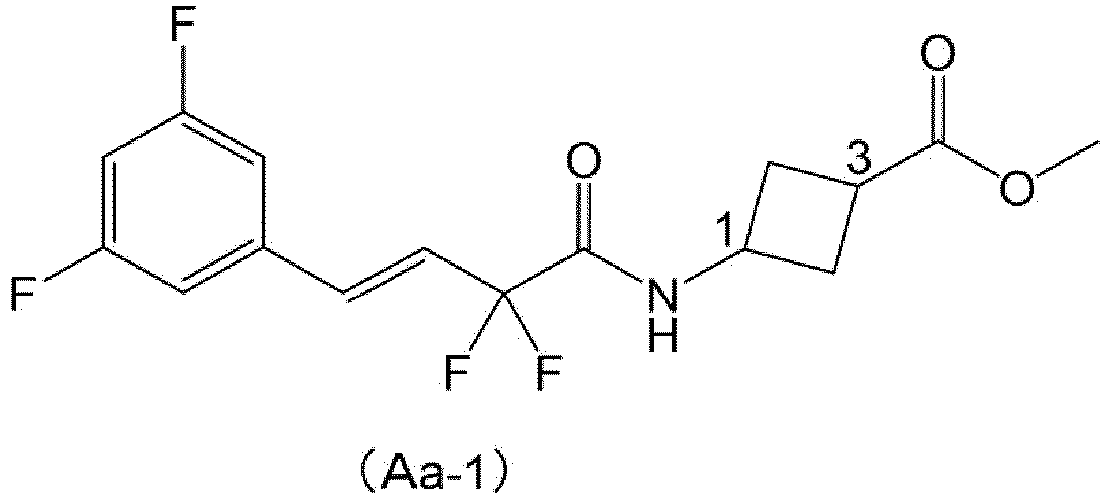
Table 1 No. R1 R2 R3 (R4)m 1 F F H 3-CO2Me 2 F F F 3-CO2Me 3 F H H 3-CO2Me 4 F CF3 H 3-CO2Me 5 F CN H 3-CO2Me 6 F I H 3-CO2Me 7 F Cl H 3-CO2Me 8 F Br H 3-CO2Me 9 F Me H 3-CO2Me 10 F OCF3 H 3-CO2Me 11 Cl Cl H 3-CO2Me 12 F OMe H 3-CO2Me 13 Cl OMe H 3-CO2Me 14 Cl Me H 3-CO2Me 15 H H F 3-CO2Me 16 F Me F 3-CO2Me 17 F i-Pr H 3-CO2Me 18 F Et H 3-CO2Me 19 Cl H H 3-CO2Me 20 Br H H 3-CO2Me 21 CF3 H H 3-CO2Me 22 Me H H 3-CO2Me 23 OMe H H 3-CO2Me 24 F OEt H 3-CO2Me 25 Me H F 3-CO2Me 26 OMe OMe H 3-CO2Me 27 Me Me H 3-CO2Me 28 Me Me F 3-CO2Me 29 F OCHF2 H 3-CO2Me 30 CF3 Me H 3-CO2Me 31 OCF3 Me H 3-CO2Me 32 CN Me H 3-CO2Me 33 OMe Me H 3-CO2Me 34 F CHF2 H 3-CO2Me 35 F CH=CH2 H 3-CO2Me 36 F C≡CH H 3-CO2Me 37 F Me H 3,3-di(CO2Me) 38 F CH2F H 3-CO2Me 39 Et H H 3-CO2Me 40 i-Pr H H 3-CO2Me 41 OEt H H 3-CO2Me 42 Oi-Pr H H 3-CO2Me 43 F n-Pr H 3-CO2Me 44 F F H 3-CH2OH 45 F F H 3-CH2OSO2Me 46 F H H 3-CO2CH2C≡CH 47 F F H 3-CN 48 F F H 3-CO2H 49 F F H 3-CONHOMe 50 F F H 3-CON(Me)OMe 51 F F H 3-CO2t-Bu 52 F F H 3-CHF2 53 F F H 3-CH2OCOMe 54 F F H 3-C(=O)H 55 F F H 3-C(=O)Me 56 F F H 3-COCH2CO2Et 57 F F H 
58 F F H 3-OH 59 F F H 
60 F F H 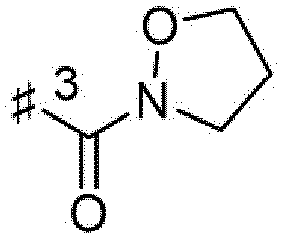
61 F F H 
62 F F H 
63 F F H 
64 F F H 
65 F F H 3-C(=O)N(Et)2 66 F F H 3-C(=O)NH(CH2CH2Cl) 67 F F H 3-C(=O)N(Et)OMe 68 F F H 3-C(=O)N(n-Pr)OMe 69 F F H 3-C(=O)N(i-Pr)OMe 70 F F H 3-C(=O)N(n-Bu)OMe 71 F F H 3-C(=O)SEt 72 F F H 3-CO2CH2C≡CH 73 F F H 3-CO2CH2CH2CN 74 F F H 3-CO2CH2CHF2 75 F F H 3-CO2CH2CF3 76 F F H 3-C(=O)N(Me)2 77 F F H 3-CO2CH2CH2SMe 78 F F H 
79 F H H 3-CO2CH2CF3 80 F F H 3-C(=O)NH(n-Pr) 81 F F H 
82 F Me H 
83 F Me H 3-CO2CH2C≡CH 84 F Me H 3-CO2CH2CH2CN 85 F Me H 3-CO2H 86 F Me H 3-CONHMe 87 F Me H 3-COSEt 88 F Me H 3-CONHCH2CH2Cl 89 F Me H 3-CO2Et 90 F Me H 3-CO2n-Pr 91 F Me H 3-CO2CH2CH=CH2 92 F Me H 3-CO2c-Pent 93 F Me H 3-CO2n-Pent 94 F Me H 3-C(=O)NH(Et) 95 F Me H 3-C(=O)NH(n-Pr) 96 F Me H 3-C(=O)NH(i-Pr) 97 F Me H 3-C(=O)NH(CH2CH=CH2) 98 F Me H 3-C(=O)NH(n-Pent) 99 F Me H 3-C(=O)NH(OMe) 100 F Me H 3-C(=O)NMe(C(=O)Me) 101 F Me H 3-CO2c-Pr 102 F F H 3-CH2CO2Me 103 F Me H 3-COSMe 104 F Me H 3-CO2n-Bu 105 F Me H 3-CO2CH2CH=CHMe 106 F Me H 3-CO2CH2CH2t-Bu 107 F Me H 3-CO2CH2CH2CH=CH2 108 F Me H 3-CO2CH2CH2C≡CH 109 F Me H 3-CO2CH2CF2CF2CF3 110 F Me H 3-CO2CH2C≡CMe 111 F Me H 3-CO2CH2CH2SMe 112 F Me H 3-CO2CH2CH2SO2Me 113 F OMe H 3-CO2H 114 F H H 3-CO2H 115 F C≡CH H 3-CO2Et 116 F F H 3-SMe 117 F F H 3-SOMe 118 F F H 3-SO2Me 119 F F H 3-CH2CN 120 F F H 3-CH2O(C=O)Et 121 F F H 3-CH2O(C=O)i-Pr 122 F F H 3-CH2O(C=O)c-Pr 123 F H H 3-CO2c-Pent 124 F F H 3-C(=O)N(Et)Me 125 F F H 3-C(=O)N(CH2CH=CH2)Me 126 F H H 3-C(=O)NH2 127 F F H 3-CO2CH2CN 128 F F H 3-CH2Cl 129 F F H 3-C(=O)NMe2 130 Br Cl H 3-CO2Me 131 H F F 3-CO2Me 132 Cl Me H 3-CO2Me 133 F F H 3-CO2Et 134 F F H 3-CO2n-Pr 135 F F H 3-CO2i-Pr 136 F F H 3-CO2c-Pent 137 F F H 3-C(=O)NHOEt 138 F F H 3-C(=O)NHOi-Pr 139 F F H 3-C(=O)NHOn-Pr 140 F F H 3-C(=O)NHCH2CN 141 F F H 3-NHCO2Me 142 F F H 3-CH2OMe 143 F F H 3-CO2CH2CH2SO2Me 144 F F H 3-CH2OSO2n-Pr 145 F F H 3-CH2OSO2i-Bu 146 F F H 3-CH2OSO2i-Pr 147 F F H 3-CH2CH2O(C=O)Me 148 F F H 3-CH2CH2OSO2Me 149 F F H 3-CH2CH2OH 150 F F H 3-CH2Br 151 F F H 3-CH2I 152 F F H 3-CH2OSO2Et 153 F F H 3-CH(OH)Me 154 F F H 3-CH(OSO2Me)Me 155 F F H 3-C(Me)2OH 156 F F H 3-Me, 3-CO2Me 157 F F H 3-Me, 3-CH2OSO2Me 158 F F H 3-CH2F 159 F F H 4-CO2Me 160 F F H 4-CH2O(C=O)Me 161 F F H 4-CH2OH 162 F F H 3-C(=O)N(Me)CH2CH=CH2 163 F H H 3-CO2Et 164 F H H 3-CO2n-Pr 165 F H H 3-CO2i-Pr 166 F F H 3-CO2CH2CH=CH2 167 F F H 3-CO2CH2CH2Cl 168 F F H 3-CO2CH2CH2Br 169 F F H 3-CO2CH2CO2Me 170 F F H 3-CO2CH(Me)CO2Me 171 F F H 3-CO2CH2Ph 172 F F H 3-CO2CH2-(2-Py) 173 F F H 3-CO2CH2-(3-Py) 174 F F H 3-CO2CH2-(4-Py) 175 F F H 3-CO2c-Pr 176 F F H 3-C(=O)NH(CH2CH=CH2) 177 F F H 3-C(=O)NH(CH2C≡CH) 178 F F H 3-C(=O)NH(CH2CH2OMe) 179 F F H 3-C(=O)NH(CH2CH2SMe) 180 F F H 3-C(=O)NH(CH2CN) 181 F F H 3-C(=O)NH(CH2CO2Me) 182 F F H 3-C(=O)NH(CH(Me)CO2Me) 183 F F H 3-C(=O)NH(CH2Ph) 184 F F H 3-C(=O)NH(OCH2CH=CH2) 185 F F H 3-C(=O)NH(OPh) 186 F OMe H 3-C(=O)NH(OMe) 187 F OMe H 3-C(=O)NH(CH2CH=CH2) 188 F OMe H 3-C(=O)NH(n-Pr) 189 F OMe H 3-C(=O)NMe(OMe) 190 F OMe H 3-CO2Et 191 F OMe H 3-CO2n-Pr 192 F OMe H 3-CO2i-Pr 193 F OMe H 3-CO2c-Pr 194 F OMe H 3-CO2CH2CH=CH2 195 F OMe H 3-CO2CH2C≡CH 196 F OMe H 3-CO2CH2CF3 197 F OMe H 3-CO2CH2CHF2 198 F OMe H 3-CO2CH2CH2OMe 199 F OMe H 3-CO2CH2CH2SMe 200 F OMe H 3-CO2CH2CH2CN 201 F OMe H 3-CO2CH2Ph 202 F OMe H 3-CO2CH2-(2-Py) 203 F OMe H 3-CO2CH2-(3-Py) 204 F OMe H 3-CO2CH2-(4-Py) 205 F OMe H 3-CO2CH2CH2Cl 206 F OMe H 3-CO2CH2CH2Br 207 F OMe H 3-CO2CH2CO2Me 208 F OMe H 3-CO2CH(Me)CO2Me 209 F Me H 3-CO2CH2c-Pr 210 F Me H 3-C(=O)NH(SO2Me) 211 F Me H 3-C(=O)NMe(SO2Me) 212 F Me H 3-CO2CH2-(4-Py) 213 F Me H 3-C(=O)NH(OH) 214 F Me H 3-CO2CH2CH2OSi(Me)2t-Bu 215 F Me H 3-CO2CH2CH2OH 216 F Me H 3-CO2CH2CH2NH2 217 F F H 3-C(=O)SCF3 218 F F H 3-C(=O)NHCH2CO2t-Bu 219 F Me H 
220 F Me H 
221 F Me H 3-C(=O)H 222 F Me H 3-CH(OMe)2 223 F F H 
224 F F H 
225 F F H 
226 F F H 3-CH2CH2CO2Me 227 F F H 
228 F Me H 3-CH2CH2CO2Me 229 F Me H 3-CH2CH2CO2H 230 F F H 3-C≡CCO2Me 231 F F H 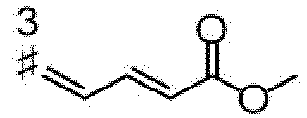
232 F F H 3-CH2CH2CH2CO2Me 233 F F H 3-C(=O)CO2Me 234 F F H 3-C(=N-OMe)CO2Me 235 F F H 3-CH(OH)CO2Me 236 F OCF3 H 3-C(=O)CO2Me 237 F F H 3-CH2CH(Me)CO2Et 238 F Me H 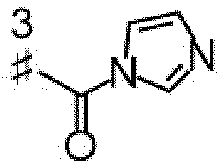
239 F Me H 
240 F F H 
241 F F H 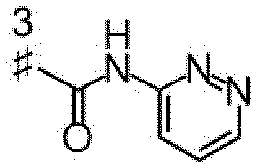
242 F Me H 3-C(=O)SCH2Ph 243 F Me H 3-C(=O)S(c-Pent) 244 F F H 
245 CH2CF3 H H 3-CO2Me 246 CF2CH3 H H 3-CO2Me 247 F F H 
248 F F H 
249 F F H 
250 F F H 
251 F F H 3-C(=O)NMe(CH2CO2Et) 252 F F H 3-C(=O)NOMe(CH2CO2Et) 253 F F H 3-C(=O)NH(CH2C(=O)NH(CH2CO2Me)) 254 F F H 3-C(=O)NOMe(CH2C=CH) 255 OMe H F 3-CO2Me 256 CN H F 3-CO2Me 257 F OMe F 3-CO2Me 258 CF3 H F 3-CO2Me 259 CN CN H 3-CO2Me 260 F F H 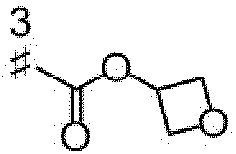
261 F Me H 
262 Cl CN H 3-CO2Me 263 CHF2 Me H 3-CO2Me 264 OCHF2 Me H 3-CO2Me 265 CF3 CN H 3-CO2Me 266 CH2CF3 F H 3-CO2Me 267 CHF2 CN H 3-CO2Me 268 F CH=CF2 H 3-CO2Me 269 CH=CF2 H H 3-CO2Me 270 CH2CF3 H H 3-CO2H 271 CH2CHF2 H H 3-CO2Me 272 CH2CHF2 F H 3-CO2Me 273 CH2CHF2 Cl H 3-CO2Me 274 F CH2OMe H 3-CO2Me 275 CH2OMe H H 3-CO2Me 276 CH2CN H H 3-CO2Me 277 CH2CHF2 H F 3-CO2Me 278 F F H 
279 F F H 
Table 1 (continued) No. R1 R2 R3 (R4)m 280 F F H 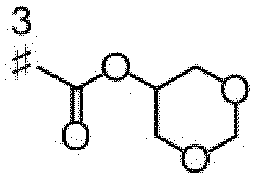
281 F F H 
282 CH2CHF2 H H 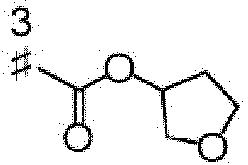
283 CH2CHF2 H H 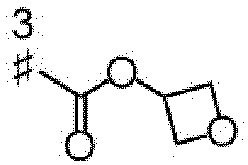
284 CH2CHF2 H H 
285 CH2CHF2 H H 
286 CH2CHF2 H H 
287 OCH2CHF2 H H 3-CO2Me - The Invention Compounds Ab-1 to Ab-36, Ab-38 to Ab-58, Ab-60 to Ab-77, Ab-79 to Ab-155, Ab-158 to Ab-230 and Ab-232 to Ab-287 are compounds of the formula (IAb):

- wherein the combinations of R1, R2, R3 and (R4)m are combinations (No. 1 to 36, No. 38 to 58, No. 60 to 77, No. 79 to 155, No. 158 to 230 and No. 232 to No. 287) as identified in Table 1.
- The Invention Compounds Ba-1 to Ba-287 are compounds of the formula (IBa):

- The Invention Compounds Bb-1 to Ba-287 are compounds of the formula (IBb):

- The Invention Compounds Bc-1 to Bc-36, Bc-38 to Bc-58, Bc-60 to Bc-77, Bc-79 to Bc-155, Bc-158 to Bc-230 and Bc-232 to Bc-287 are compounds of the formula (IBc):
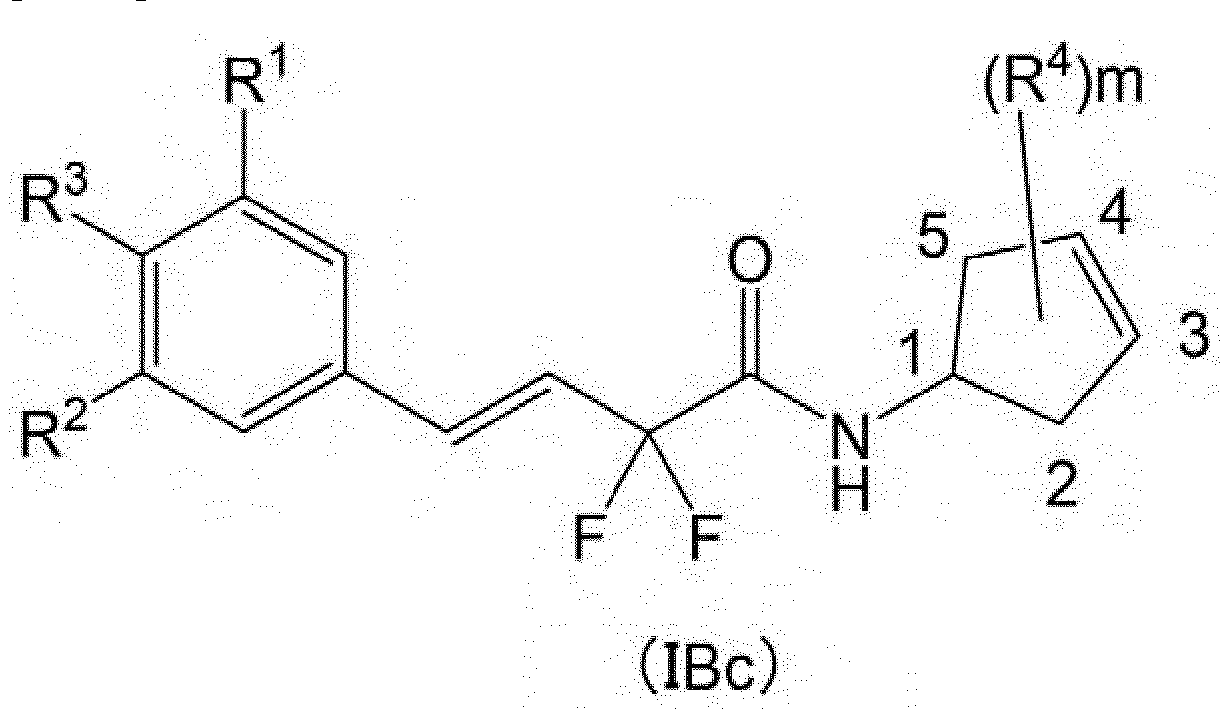
- 1H-NMR spectrum data of the above-described Invention Compounds are shown in Table 2.
- In Table 2, Comp No. represents the numbers of the compounds. In the column Remarks, the steric configuration of the difluorobutenoic acid amide group and R4 substituting the C4-C5 alicyclic hydrocarbon in the Invention Compound is described. The difluorobutenoic acid amide group means a moiety represented by the following chemical structure in the Invention Compound (the symbols in the chemical structure are as defined above).

- For example, "cis" in the column Remarks in Table 2 means that the difluorobutenoic acid amide group and R4 are in cis-configuration. "trans" means that the difluorobutenoic acid amide group and R4 are in trans-configuration. "cis-trans" means a mixture of a compound in which the difluorobutenoic acid amide group and R4 are in cis-configuration and a compound in which the difluorobutenoic acid amide group and R4 are in trans-configuration. "Optically active (1R,4S)" means an optically active substance in which the difluorobutenoic acid amide group is in R-configuration and R4 is in S-configuration. "Optically active (1S,4R)" means an optically active substance in which the difluorobutenoic acid amide group is in S-configuration and R4 is in R-configuration. A case where the Invention Compound has two identical R4 at the same substitution position of the C4-C5 alicyclic hydrocarbon, and a case where R4 is =CHC(=O)R11 or =CHCH=CHC(=O)R11, are represented by "-" in the column Remarks.
- The compound (IAb) which has R4 at the 2-position or at the 3-position or at both on cyclobutenyl, is represented by "-" in the column Remarks. However, the compound (IAb) in which the difluorobutenoic acid amide group is in R-configuration, is represented as R-form in the column Remarks, and the compound in which the difluorobutenoic acid amide group is in S-configuration is represented as S-form in the column Remarks.
- The compound (IBb) in which the difluorobutenoic acid amide group is in R-configuration is represented as R-form in the column Remarks, and the compound in which the difluorobutenoic acid amide group is in S-configuration is represented as S-form in the column Remarks.
- The compound (IBc) which has R4 at the 3-position, at the 4-position or at both on cyclopentenyl, is represented by "-" in the column Remarks. The compound (IBc) in which the difluorobutenoic acid amide group is in R-configuration is represented as R-form in the column Remarks, and the compound in which the difluorobutenoic acid amide group is in S-configuration is represented as S-form in the column Remarks.
- In Table 2, Comp No. is represented by the above No. of the Invention Compound (for example Aa-1) with branch numbers 1 to 5 to indicate the above steric configuration. The compound with Comp No. and a branch number 1, for example "Aa-1-1", is the Invention Compound Aa-1 in which the difluorobutenoic acid amide group and R4 are in cis-configuration.
- The compound with Comp No. and a branch number 2, for example "Aa-1-2", is the Invention Compound Aa-1 in which the difluorobutenoic acid amide group and R4 are in trans-configuration.
- The compound with Comp No. and a branch number 3, for example "Aa-58-3", is the Invention Compound Aa-58 as a mixture of a compound in which the difluorobutenoic acid amide group and R4 are in cis-configuration and a compound in which the difluorobutenoic acid amide group and R4 are in trans-configuration.
- The compound with Comp No. and a branch number 4, for example, "Bb-1-4", is the Invention Compound Bb-1 which is optically active in which the difluorobutenoic acid amide group is in S-configuration and R4 is in R-configuration.
- The compound with Comp No. and a branch number 5, for example, "Bb-1-5", is the Invention Compound Bb-1 which is optically active in which the difluorobutenoic acid amide group is in R-configuration and R4 is in S-configuration.
- Further, the compound (IAb), the compound (IBb) and the compound (IBc), in which the difluorobutenoic acid amide group is in R-configuration, are represented by (R) following Comp No. For example, Bc-1(R) means the Invention Compound Bc-1, in which the difluorobutenoic acid amide group is in R-configuration.
- The compound (IAb), the compound (IBb) and the compound (IBc), in which the difluorobutenoic acid amide group is in S-configuration, are represented by (S) following Comp No. For example, Bc-5(S) means the Invention Compound Bc-5 in which the difluorobutenoic acid amide group is in S-configuration.
- In a case where the Invention Compound is a salt, the type of the salt is described in the column Remarks in Table 2. In a case where the Invention Compound is a salt, the type of the salt is described following Comp No. For example, Aa-48-1 (Na salt) represents a sodium salt of the Invention Compound Aa-48 in which the difluorobutenoic acid amide group and R4 are in cis-configuration.
- In 1H-NMR spectrum data in Table 2, s is singlet, brs is broad singlet, br is broad, d is doublet, brd is broad doublet, t is triplet, q is quartet, quin is quintet, sext is sextet, sep is septet and m is multiplet.
Table 2 Comp No. 1H-NMR (300 MHz or 500 MHz, measurement solvent) δ Remarks Aa-1-1 (300 MHz, CDCl3) 7.04-6.91 (m, 3H), 6.80 (tt, 1H), 6.71 (br, 1H), 6.36 (dt, 1H), 4.44 (sext, 1H), 3.71 (s, 3H), 2.91 (quin, 1H), 2.77-2.65 (m, 2H), 2.30-2.17 (m, 2H). cis Aa-1-2 (300 MHz, CDCl3) 7.05-6.89 (m, 3H), 6.80 (tt, 1H), 6.55 (br, 1H), 6.36 (dt, 1H), 4.62 (sext, 1H), 3.73 (s, 3H), 3.17-3.05 (m, 1H), 2.79-2.66 (m, 2H), 2.40-2.25 (m, 2H). trans Aa-2-1 (300 MHz, CDCl3) 7.07 (t, 2H), 6.93 (dt, 1H), 6.71 (br, 1H), 6.29 (dt, 1H), 4.44 (sext, 1H), 3.71 (s, 3H), 2.91 (quin, 1H), 2.76-2.66 (m, 2H), 2.28-2.18 (m, 2H). cis Aa-2-2 (300 MHz, CDCl3) 7.12-7.02 (m, 2H), 6.93 (dt, 1H), 6.53 (br, 1H), 6.29 (dt, 1H), 4.62 (sext, 1H), 3.73 (s, 3H), 3.16-3.06 (m, 1H), 2.78-2.68 (m, 2H), 2.38-2.27(m, 2H). trans Aa-3-1 (300 MHz, CDCl3) 7.37-7.30 (m, 1H), 7.22 (d, 1H), 7.15 (d, 1H), 7.08-6.99 (m, 2H), 6.68 (br, 1H), 6.35 (dt, 1H), 4.45 (sext, 1H), 3.71 (s, 3H), 2.90 (quin, 1H), 2.77-2.65 (m, 2H), 2.29-2.17 (m, 2H). cis Aa-4-1 (300 MHz, CDCl3) 7.51 (s, 1H), 7.34 (t, 2H), 7.09 (dt, 1H), 6.77 (d, 1H), 6.47 (dt, 1H), 4.47 (sext, 1H), 3.73 (s, 3H), 2.93 (quin, 1H), 2.82-2.65 (m, 2H), 2.35-2.16 (m, 2H). cis Aa-4-2 (300 MHz, CDCl3) 7.49 (s, 1H), 7.32 (dd, 2H), 7.07 (dt, 1H), 6.55 (br, 1H), 6.44 (dt, 1H), 4.63 (sext, 1H), 3.73 (s, 3H), 3.18-3.06 (m, 1H), 2.80-2.66 (m, 2H), 2.40-2.26 (m, 2H). trans Aa-5-1 (300 MHz, CDCl3) 7.55 (s, 1H), 7.42 (d, 1H), 7.36 (d, 1H), 7.05 (dt, 1H), 6.78 (d, 1H), 6.46 (dt, 1H), 4.46 (sext, 1H), 3.73 (s, 3H), 2.93 (quin, 1H), 2.84-2.64 (m, 2H), 2.37-2.16 (m, 2H). cis Table 2 (continued) Comp No. 1H-NMR (300 MHz or 500 MHz, measurement solvent) δ Remarks Aa-6-1 (300 MHz, CDCl3) 7.60 (s, 1H), 7.43 (dt, 1H), 7.13 (dt, 1H), 6.96 (dt, 1H), 6.74 (br, 1H), 6.37 (dt, 1H), 4.46 (sext, 1H), 3.73 (s, 3H), 2.93 (quin, 1H), 2.81-2.65 (m, 2H), 2.35-2.17 (m, 2H). cis Aa-7-1 (300 MHz, CDCl3) 7.23 (s, 1H), 7.09-7.03 (m, 2H), 6.97 (dt, 1H), 6.78 (d, 1H), 6.37 (dt, 1H), 4.44 (sext, 1H), 3.71 (s, 3H), 2.90 (quin, 1H), 2.75-2.65 (m, 2H), 2.29-2.17 (m, 2H). cis Aa-8-1 (300 MHz, CDCl3) 7.38 (s, 1H), 7.22 (d, 1H), 7.09 (dt, 1H), 6.96 (dt, 1H), 6.82 (br, 1H), 6.37 (dt, 1H), 4.44 (sext, 1H), 3.71 (s, 3H), 2.90 (quin, 1H), 2.75-2.65 (m, 2H), 2.28-2.19 (m, 2H). cis Aa-9-1 (300 MHz, CDCl3) 7.03-6.92 (m, 3H), 6.86 (d, 1H), 6.79 (d, 1H), 6.33 (dt, 1H), 4.44 (sext, 1H), 3.70 (s, 3H), 2.90 (quin, 1H), 2.74-2.64 (m, 2H), 2.35 (s, 3H), 2.29-2.19 (m, 2H). cis Aa-9-2 (300 MHz, CDCl3) 7.10-6.90 (m, 3H), 6.86 (d, 1H), 6.56 (br, 1H), 6.33 (dt, 1H), 4.62 (sext, 1H), 3.73 (s, 3H), 3.19-3.05 (m, 1H), 2.80-2.66 (m, 2H), 2.42-2.26 (m, 2H), 2.35 (s, 3H). trans Aa-10-1 (300 MHz, CDCl3) 7.12-7.09 (m, 2H), 7.01 (dt, 1H), 6.94 (d, 1H), 6.83 (d, 1H), 6.40 (dt, 1H), 4.45 (sext, 1H), 3.71 (s, 3H), 2.91 (quin, 1H), 2.75-2.65 (m, 2H), 2.30-2.20 (m, 2H). cis Aa-10-2 (300 MHz, CDCl3) 7.13-7.09 (m, 2H), 7.01 (tt, 1H), 6.95 (d, 1H), 6.56 (d, 1H), 6.39 (dt, 1H), 4.63 (sext, 1H), 3.73 (s, 3H), 3.16-3.06 (m, 1H), 2.77-2.69 (m, 2H), 2.38-2.28 (m, 2H). trans Aa-11-1 (300 MHz, CDCl3) 7.32 (s, 3H), 6.95 (dt, 1H), 6.85 (d, 1H), 6.38 (dt, 1H), 4.44 (sext, 1H), 3.71 (s, 3H), 2.90 (quin, 1H), 2.75-2.65 (m, 2H), 2.30-2.20 (m, 2H). cis Table 2 (continued) Comp No. 1H-NMR (300 MHz or 500 MHz, measurement solvent) δ Remarks Aa-12-1 (300 MHz, CDCl3) 6.97 (dt, 1H), 6.82 (brd, 1H), 6.77-6.73 (m, 2H), 6.60 (dt, 1H), 6.34 (dt, 1H), 4.44 (sext, 1H), 3.81 (s, 3H), 3.70 (s, 3H), 2.95-2.84 (m, 1H), 2.74-2.64 (m, 2H), 2.30-2.19 (m, 2H). cis Aa-12-2 (300 MHz, CDCl3) 6.98 (dt, 1H), 6.83-6.70 (m, 2H), 6.61 (dt, 1H), 6.58 (br, 1H), 6.34 (dt, 1H), 4.62 (sext, 1H), 3.81 (s, 3H), 3.73 (s, 3H), 3.18-3.04 (m, 1H), 2.79-2.67 (m, 2H), 2.41-2.26 (m, 2H). trans Aa-13-1 (300 MHz, CDCl3) 7.03 (t, 1H), 6.96 (dt, 1H), 6.87 (t, 1H), 6.84 (t, 1H), 6.76 (d, 1H), 6.34 (dt, 1H), 4.44 (sext, 1H), 3.81 (s, 3H), 3.71 (s, 3H), 2.90 (quin, 1H), 2.75-2.65 (m, 2H), 2.29-2.17 (m, 2H). cis Aa-14-1 (300 MHz, CDCl3) 7.23 (s, 1H), 7.18-7.09 (m, 2H), 6.96 (dt, 1H), 6.75 (d, 1H), 6.34 (dt, 1H), 4.44 (sext, 1H), 3.71 (s, 3H), 2.90 (quin, 1H), 2.77-2.62 (m, 2H), 2.33 (s, 3H), 2.30-2.16 (m, 2H). cis Aa-15-1 (300 MHz, CDCl3) 7.46-7.39 (m, 2H), 7.09-6.99 (m, 3H), 6.74 (d, 1H), 6.27 (dt, 1H), 4.44 (sext, 1H), 3.70 (s, 3H), 2.90 (quin, 1H), 2.75-2.65 (m, 2H), 2.29-2.18 (m, 2H). cis Aa-16-1 (300 MHz, CDCl3) 7.14-7.00 (m, 2H), 6.93 (dt, 1H), 6.69 (br, 1H), 6.25 (dt, 1H), 4.44 (sext, 1H), 3.71 (s, 3H), 2.90 (quin, 1H), 2.77-2.64 (m, 2H), 2.31 (d, 3H), 2.29-2.16 (m, 2H). cis Aa-17-1 Mixture of Aa-17-1 and Aa-43-1, obtained as Aa-17-1. (Mixture ratio of Aa-17-1/Aa-43-1=4/1). (300 MHz, CDCl3) 7.11-6.83 (m, 4H), 6.71 (d, 1H), 6.34 (dt, 1H), 4.45 (sext, 1H), 3.71 (s, 3H), 2.99-2.82 (m, 1.8H), 2.78-2.64 (m, 2H), 2.58 (t, 0.4H), 2.32-2.14 (m, 2H), 1.63 (sext, 0.4H), 1.24 (d, 4.8H), 0.93 (t, 0.6H). cis Aa-18-1 (300 MHz, CDCl3) 7.09-6.84 (m, 4H), 6.70 (d, 1H), 6.34 (dt, 1H), 4.44 (sext, 1H), 3.71 (s, 3H), 2.90 (quin, 1H), 2.77-2.58 (m, 4H), 2.31-2.16 (m ,2H), 1.23 (t, 3H). cis Aa-19-1 (300 MHz, CDCl3) 7.43 (s, 1H), 7.35-7.28 (m, 3H), 7.01 (dt, 1H), 6.80 (d, 1H), 6.36 (dt, 1H), 4.44 (sext, 1H), 3.70 (s, 3H), 2.90 (quin, 1H), 2.78-2.62 (m, 2H), 2.33-2.15 (m, 2H). cis Table 2 (continued) Comp No. 1H-NMR (300 MHz or 500 MHz, measurement solvent) δ Remarks Aa-20-1 (300 MHz, CDCl3) 7.60 (t, 1H), 7.47 (d, 1H), 7.36 (d, 1H), 7.23 (t, 1H), 7.00 (dt, 1H), 6.77 (d, 1H), 6.35 (dt, 1H), 4.44 (sext, 1H), 3.71 (s, 3H), 2.90 (quin, 1H), 2.78-2.64 (m, 2H), 2.31-2.16 (m, 2H). cis Aa-21-1 (300 MHz, CDCl3) 7.69 (s, 1H), 7.61 (t, 2H), 7.59 (t, 1H), 7.10 (dt, 1H), 6.91 (d, 1H), 6.44 (dt, 1H), 4.45 (sext, 1H), 3.70 (s, 3H), 2.90 (quin, 1H), 2.77-2.62 (m, 2H), 2.33-2.19 (m, 2H). cis Aa-22-1 (300 MHz, CDCl3) 7.30-7.20 (m, 3H), 7.19-7.10 (m, 1H), 7.02 (dt, 1H), 6.85 (d, 1H), 6.33 (dt, 1H), 4.44 (sext, 1H), 3.70 (s, 3H), 2.89 (quin, 1H), 2.77-2.60 (m, 2H), 2.35 (s, 3H), 2.32-2.18 (m, 2H). cis Aa-22-2 (300 MHz, CDCl3) 7.34-7.20 (m, 3H), 7.20-7.10 (m, 1H), 7.02 (dt, 1H), 6.59 (d, 1H), 6.34 (dt, 1H), 4.62 (sext, 1H), 3.72 (s, 3H), 3.16-3.04 (m, 1H), 2.78-2.65 (m, 2H), 2.43-2.25 (m, 2H), 2.35 (s, 3H). trans Aa-23-1 (300 MHz, CDCl3) 7.27 (t, 1H), 7.08-6.98 (m, 2H), 6.98-6.94 (m, 1H), 6.89 (dd, 1H), 6.89-6.78 (m, 1H), 6.34 (dt, 1H), 4.45 (sext, 1H), 3.81 (s, 3H), 3.70 (s, 3H), 2.89 (quin, 1H), 2.77-2.61 (m, 2H), 2.32-2.18 (m, 2H). cis Aa-23-2 (300 MHz, CDCl3) 7.34-7.20 (m, 3H), 7.20-7.10 (m, 1H), 7.02 (dt, 1H), 6.59 (d, 1H), 6.34 (dt, 1H), 4.62 (sext, 1H), 3.72 (s, 3H), 3.16-3.04 (m, 1H), 2.78-2.65 (m, 2H), 2.43-2.25 (m, 2H), 2.35 (s, 3H). trans Aa-24-1 (300 MHz, CDCl3) 6.97 (dt, 1H), 6.82-6.64 (m, 3H), 6.59 (dt, 1H), 6.32 (dt, 1H), 4.44 (sext, 1H), 4.02 (q, 2H), 3.71 (s, 3H), 2.90 (quin, 1H), 2.77-2.64 (m, 2H), 2.31-2.16 (m, 2H), 1.41 (t, 3H). cis Aa-25-1 (300 MHz, CDCl3) 7.35-7.16 (m, 2H), 7.05-6.92 (m, 2H), 6.85 (d, 1H), 6.25 (dt, 1H), 4.44 (sext, 1H), 3.70 (s, 3H), 2.89 (quin, 1H), 2.77-2.61 (m, 2H), 2.33-2.16 (m, 5H). cis Aa-26-1 (300 MHz, CDCl3) 6.98 (dt, 1H), 6.87 (d, 1H), 6.58 (d, 2H), 6.45 (t, 1H), 6.33 (dt, 1H), 4.44 (sext, 1H), 3.79 (s, 6H), 3.70 (s, 3H), 2.89 (quin, 1H), 2.76-2.61 (m, 2H), 2.33-2.15 (m, 2H). cis Aa-26-2 (300 MHz, CDCl3) 6.98 (dt, 1H), 6.59 (brs, 1H), 6.58 (d, 2H), 6.45 (t, 1H), 6.33 (dt, 1H), 4.63 (sext, 1H), 3.80 (s, 6H), 3.72 (s, 3H), 3.15-3.06 (m, 1H), 2.76-2.68 (m, 2H), 2.38-2.28 (m, 2H). trans Table 2 (continued) Comp No. 1H-NMR (300 MHz or 500 MHz, measurement solvent) δ Remarks Aa-27-1 (300 MHz, CDCl3) 7.05-6.95 (m, 4H), 6.89 (brd, 1H), 6.32 (dt, 1H), 4.44 (sext, 1H), 3.69 (s, 3H), 2.94-2.82 (m, 1H), 2.72-2.62 (m, 2H), 2.30 (m, 6H), 2.27-2.20 (m, 2H). cis Aa-28-1 (300 MHz, CDCl3) 7.09 (d, 2H), 6.94 (dt, 1H), 6.65 (d, 1H), 6.23 (dt, 1H), 4.44 (sext, 1H), 3.70 (s, 3H), 2.89 (quin, 1H), 2.76-2.64 (m, 2H), 2.31-2.16 (m, 2H), 2.25 (d, 6H). cis Aa-29-1 (300 MHz, CDCl3) 7.07-6.94 (m, 3H), 6.86 (dt, 1H), 6.73 (d, 1H), 6.52 (t, 1H), 6.37 (dt, 1H), 4.44 (sext, 1H), 3.71 (s, 3H), 2.90 (quin, 1H), 2.77-2.65 (m, 2H), 2.30-2.17 (m, 2H). cis Aa-29-2 (300 MHz, CDCl3) 7.08-6.93 (m, 3H), 6.86 (dt, 1H), 6.60 (d, 1H), 6.52 (t, 1H), 6.37 (dt, 1H), 4.62 (sext, 1H), 3.73 (s, 3H), 3.16-3.06 (m, 1H), 2.79-2.65 (m, 2H), 2.41-2.25 (m, 2H). trans Aa-30-1 (300 MHz, CDCl3) 7.48 (s, 1H), 7.43 (s, 1H), 7.40 (s, 1H), 7.06 (dt, 1H), 6.72 (d, 1H), 6.41 (dt, 1H), 4.45 (sext, 1H), 3.71 (s, 3H), 2.90 (quin, 1H), 2.79-2.64 (m, 2H), 2.42 (s, 3H), 2.32-2.15 (m, 2H). cis Aa-31-1 (300 MHz, CDCl3) 7.19 (s, 1H), 7.09 (s, 1H), 7.01 (s, 1H), 7.01 (dt, 1H), 6.71 (d, 1H), 6.36 (dt, 1H), 4.44 (sext, 1H), 3.71 (s, 3H), 2.90 (quin, 1H), 2.79-2.63 (m, 2H), 2.38 (s, 3H), 2.31-2.15 (m, 2H). cis Aa-32-1 (300 MHz, CDCl3) 7.52 (s, 1H), 7.48 (s, 1H), 7.43 (s, 1H), 7.02 (dt, 1H), 6.72 (d, 1H), 6.40 (dt, 1H), 4.44 (sext, 1H), 3.71 (s, 3H), 2.90 (quin, 1H), 2.80-2.63 (m, 2H), 2.41 (s, 3H), 2.32-2.15 (m, 2H). cis Aa-32-2 (300 MHz, CDCl3) 7.51 (s, 1H), 7.48 (s, 1H), 7.43 (s, 1H), 7.02 (dt, 1H), 6.55 (d, 1H), 6.40 (dt, 1H), 4.62 (sext, 1H), 3.73 (s, 3H), 3.18-3.04 (m, 1H), 2.79-2.67 (m, 2H), 2.41 (s, 3H), 2.40-2.26 (m, 2H). trans Aa-33-1 (300 MHz, CDCl3) 6.99 (dt, 1H), 6.86-6.71 (m, 4H), 6.32 (dt, 1H), 4.44 (sext, 1H), 3.80 (s, 3H), 3.70 (s, 3H), 2.95-2.83 (m, 1H), 2.74-2.66 (m, 2H), 2.32 (s, 3H), 2.28-2.18 (m, 2H). cis Table 2 (continued) Comp No. 1H-NMR (300 MHz or 500 MHz, measurement solvent) δ Remarks Aa-34-1 (300 MHz, CDCl3) 7.37 (s, 1H), 7.25 (d, 1H), 7.21 (d, 1H), 7.06 (dt, 1H), 6.72 (d, 1H), 6.63 (t, 1H), 6.42 (dt, 1H), 4.45 (sext, 1H), 3.71 (s, 3H), 2.91 (quin, 1H), 2.78-2.65 (m, 2H), 2.31-2.16 (m, 2H). cis Aa-35-1 (300 MHz, CDCl3) 7.23 (s, 1H), 7.15-6.95 (m, 3H), 6.68 (br, 1H), 6.66 (dd, 1H), 6.37 (dt, 1H), 5.78 (d, 1H), 5.35 (d, 1H), 4.45 (sext, 1H), 3.71 (s, 3H), 2.90 (quin, 1H), 2.79-2.63 (m, 2H), 2.31-2.16 (m, 2H). cis Aa-36-1 (300 MHz, CDCl3) 7.35 (s, 1H), 7.22-7.10 (m, 2H), 6.99 (dt, 1H), 6.89 (d, 1H), 6.37 (dt, 1H), 4.44 (sext, 1H), 3.71 (s, 3H), 3.13 (s, 1H), 2.90 (quin, 1H), 2.78-2.65 (m, 2H), 2.30-2.16 (m, 2H). cis Aa-37 (300 MHz, CDCl3) 7.03-6.93 (m, 3H), 6.86 (d, 1H), 6.81 (d, 1H), 6.33 (dt, 1H), 4.56 (sext, 1H), 3.79 (s, 3H), 3.78 (s, 3H), 3.07-3.00 (m, 2H), 2.57-2.51 (m, 2H), 2.35 (s, 3H). - Aa-38-1 (300 MHz, CDCl3) 7.22 (s, 1H), 7.18-6.97 (m, 3H), 6.71 (d, 1H), 6.38 (dt, 1H), 5.38 (d, 2H), 4.44 (sext, 1H), 3.71 (s, 3H), 2.90 (quin, 1H), 2.81-2.62 (m, 2H), 2.32-2.15 (m, 2H). cis Aa-39-1 (500 MHz, CDCl3) 7.29-7.24 (m, 3H), 7.17 (d, 1H), 7.04 (d, 1H), 6,65 (d, 1H), 6.38-6.29 (m, 1H), 4.48-4.39 (m, 1H), 3.70 (s, 3H), 2.92-2.84 (m, 1H), 2.71-2.62 (m, 4H), 2.25-2.18 (m, 2H), 1.23 (t, 3H). cis Aa-40-1 (500 MHz, CDCl3) 7.30-7.24 (m, 3H), 7.20 (d, 1H), 7.05 (d, 1H), 6,65 (d, 1H), 6.38-6.29 (m, 1H), 4.48-4.39 (m, 1H), 3.70 (s, 3H), 2.93-2.85 (m, 2H), 2.73-2.66 (m, 2H), 2.25-2.18 (m, 2H), 1.24 (d, 6H). cis Aa-41-1 (500 MHz, CDCl3) 7.27-7.23(m, 1H), 7.03-6.95 (m, 3H), 6.87 (d, 1H), 6,65 (d, 1H), 6.36-6.28 (m, 1H), 4.47-4.41 (m, 1H), 4.03 (dd, 2H), 3.70 (s, 3H), 2.92-2.84 (m, 1H), 2.73-2.66 (m, 2H), 2.25-2.18 (m, 2H), 1.41 (t, 3H). cis Table 2 (continued) Comp No. 1H-NMR (300 MHz or 500 MHz, measurement solvent) δ Remarks Aa-42-1 (500 MHz, CDCl3) 7.26-7.22 (m, 1H), 7.03-6.94 (m, 3H), 6.86 (d, 1H), 6,65 (br, 1H), 6.35-6.27 (m, 1H), 4.58-4.52 (m, 1H), 4.46-4.39 (m, 1H), 3.70 (s, 3H), 2.92-2.84 (m, 1H), 2.73-2.66 (m, 2H), 2.25-2.18 (m, 2H), 1.33 (d, 6H). cis Aa-43-1 (300 MHz, CDCl3) 7.08-6.91 (m, 3H), 6.86 (d, 1H), 6.71 (d, 1H), 6.33 (dt, 1H), 4.44 (sext, 1H), 3.71 (s, 3H), 2.90 (quin, 1H), 2.77-2.64 (m, 2H), 2.58 (t, 2H), 2.30-2.16 (m, 2H), 1.64 (sext, 2H), 0.93 (t, 3H). cis Aa-44-1 (300 MHz, CDCl3) 7.06-6.88 (m, 3H), 6.81 (tt, 1H), 6.72 (br, 1H), 6.39 (dt, 1H), 4.37 (sext, 1H), 3.66 (d, 2H), 2.61-2.48 (m, 2H), 2.41-2.23 (m, 1H), 1.85 (ddd, 2H)). One proton peak detected as overlapped with proton peak of water in measurement solvent. cis Aa-45-1 (300 MHz, CDCl3) 7.06-6.89 (m, 3H), 6.82 (tt, 1H), 6.54 (br, 1H), 6.38 (dt, 1H), 4.38 (sext, 1H), 4.24 (d, 2H), 3.06 (s, 3H), 2.67-2.40 (m, 3H), 1.93 (ddd, 2H). cis Aa-47-1 (300 MHz, CDCl3) 7.06-6.90 (m, 3H), 6.81 (tt, 1H), 6.68 (br, 1H), 6.35 (dt, 1H), 4.58-4.36 (m, 1H), 2.97-2.79 (m, 3H), 2.53-2.34 (m, 2H). cis Aa-48-1 (300 MHz, acetone-ds) 10.64 (br, 0.44H), 8.30 (br, 1H), 7.42-7.28 (m, 2H), 7.18-7.00 (m, 2H), 6.69 (dt, 1H), 4.40 (sext, 1H), 2.99-2.85 (m, 1H), 2.65-2.52 (m, 2H), 2.42-2.25 (m, 2H). Proton peak of carboxy group detected at 10.64 ppm. cis Aa-48-1 (Na salt) (300 MHz, D2O) 7.11-6.99 (m, 2H), 6.95 (dt, 1H), 6.86 (tt, 1H), 6.37 (dt, 1H), 4.11 (quin, 1H), 2.68 (quin, 1H), 2.54-2.39 (m, 2H), 2.12-1.95 (m, 2H). Proton peak of amide underwent H-D exchange reaction in measurement solvent and not detected. cis, Na salt of Aa-48-1 Table 2 (continued) Comp No. 1H-NMR (300 MHz or 500 MHz, measurement solvent) δ Remarks Aa-49-1 300 MHz, CDCl3) 8.10 (br, 1H), 7.21 (br, 0.77H), 7.10-6.89 (m, 3.23H), 6.81 (tt, 1H), 6.39 (dt, 1H), 4.67-4.39 (m, 1H), 3.81 (s, 3H), 3.32 (br, 0.27H), 2.85-2.49 (m, 2.73H), 2.45-2.17 (m, 2H). cis Aa-49-2 (500 MHz, DMSO-ds) 10.97 (s, 1H), 9.08 (d, 1H), 7.48-7.45 (m, 2H), 7.26 (tt, 1H), 7.04 (dt, 1H), 6.79 (dt, 1H), 4.45 (sext, 1H), 3.57 (s, 3H), 2.74-2.69 (m, 1H), 2.37-2.26 (m, 4H). trans Aa-50-1 300 MHz, CDCl3) 7.16-6.88 (m, 4H), 6.78 (tt, 1H), 6.36 (dt, 1H), 4.47 (sext, 1H), 3.66 (s, 3H), 3.31 (t, 1H), 3.20 (s, 3H), 2.72-2.58 (m, 2H), 2.32-2.17 (m, 2H). cis Aa-51-1 (300 MHz, CDCl3) 7.07-6.88 (m, 3H), 6.79 (tt, 1H), 6.71 (d, 1H), 6.36 (dt, 1H), 4.41 (sext, 1H), 2.80 (quin, 1H), 2.73-2.59 (m, 2H), 2.23-2.08 (m, 2H), 1.45 (s, 9H). cis Aa-52-1 (300 MHz, CDCl3) 7.06-6.90 (m, 3H), 6.80 (tt, 1H), 6.51 (br, 1H), 6.36 (dt, 1H), 5.78 (td, 1H), 4.42 (sext, 1H), 2.64-2.41 (m, 3H), 2.13-1.95 (m, 2H). cis Aa-53-1 (300 MHz, CDCl3) 7.08-6.91 (m, 3H), 6.82 (tt, 1H), 6.53 (br, 1H), 6.39 (dt, 1H), 4.36 (sext, 1H), 4.08 (d, 2H), 2.66-2.50 (m, 2H), 2.49-2.34 (m, 1H), 2.10 (s, 3H), 1.79 (ddd, 2H). cis Aa-54-1 (300 MHz, CDCl3) 9.78 (d, 1H), 7.08-6.92 (m, 3H), 6.81 (tt, 1H), 6.64 (br, 1H), 6.38 (dt, 1H), 4.51 (sext, 1H), 3.16-3.00 (m, 1H), 2.74-2.59 (m, 2H), 2.32-2.17 (m, 2H). cis Aa-55-1 (300 MHz, CDCl3) 7.04-6.89 (m, 3H), 6.79 (tt, 1H), 6.68 (d, 1H), 6.35 (dt, 1H), 4.43 (sext, 1H), 3.05 (quin, 1H), 2.71-2.57 (m, 2H), 2.22-2.07 (m, 2H), 2.14 (s, 3H). cis Aa-56-1 (300 MHz, CDCl3) 7.07-6.90 (m, 3H), 6.80 (tt, 1H), 6.60 (d, 1H), 6.35 (dt, 1H), 4.44 (sext, 1H), 4.20 (q, 2H), 3.44 (s, 2H), 3.19 (quin, 1H), 2.74-2.58 (m, 2H), 2.30-2.12 (m, 2H), 1.28 (t, 3H). cis Aa-57-1 (300 MHz, CDCl3) 7.18-6.89 (m, 4H), 6.80 (tt, 1H), 6.47 (d, 1H), 6.36 (dt, 1H), 5.78 (dd, 1H), 4.38 (sext, 1H), 4.19 (q, 2H), 2.92-2.76 (m, 1H), 2.76-2.61 (m, 2H), 2.00-1.83 (m, 2H), 1.29 (s, 3H). cis Aa-58-3 (300 MHz, CDCl3) 7.07-6.89 (m, 3H), 6.80 (tt, 1H), 6.55 (br, 1H), 6.37 (dt, 0.5H), 6.37 (dt, 0.5H), 4.65-4.46 (m, 1H), 4.13 (t, 0.5H), 3.99 (sext, 0.5H), 2.95-2.79 (m, 1H), 2.52-2.27 (m, 2H), 2.11 (br, 0.5H), 2.04-1.82 (m, 1.5H). cis-trans isomer Table 2 (continued) Comp No. 1H-NMR (300 MHz or 500 MHz, measurement solvent) δ Remarks Aa-59 (300 MHz, CDCl3) 7.07-6.91 (m, 3H), 6.80 (tt, 1H), 6.63 (br, 1H), 6.37 (dt, 1H), 5.74 (quin, 1H), 4.54 (sext, 1H), 4.16 (q, 2H), 3.75-3.61 (m, 1H), 3.38-3.25 (m, 1H), 3.13-3.01 (m, 1H), 2.92-2.80 (m, 1H), 1.28 (s, 3H). - Aa-60-1 (300 MHz, CDCl3) 7.02-6.92 (m, 4H), 6.79 (tt, 1H), 6.37 (dt, 1H), 4.47 (sext, 1H), 3.94 (t, 2H), 3.72 (t, 2H), 3.31 (t, 1H), 2.72-2.62 (m, 2H), 2.32 (quin, 2H), 2.28-2.17 (m, 2H). cis Aa-61-1 (300 MHz, CDCl3) 7.07 (d, 1H), 7.01-6.92 (m, 3H), 6.79 (tt, 1H), 6.37 (dt, 1H), 4.46 (sext, 1H), 3.93 (t, 2H), 3.78 (t, 2H), 3.30 (quin, 1H), 2.69-2.60 (m, 2H), 2.30-2.17 (m, 2H), 1.86-1.68 (m, 4H). cis Aa-62-1 (300 MHz, CDCl3) 7.07 (d, 1H), 7.01-6.92 (m, 3H), 6.79 (tt, 1H), 6.37 (dt, 1H), 4.45 (sext, 1H), 3.69-3.60 (m, 6H), 3.40 (t, 2H), 3.04 (quin, 1H), 2.70-2.61 (m, 2H), 2.37-2.27 (m, 2H). cis Aa-63-1 (300 MHz, CDCl3) 7.48 (d, 1H), 7.02-6.92 (m, 3H), 6.78 (tt, 1H), 6.38 (dt, 1H), 4.47 (sext, 1H), 3.47 (t, 2H), 3.38 (t, 2H), 2.98 (quin, 1H), 2.70-2.61 (m, 2H), 2.35-2.26 (m, 2H), 2.00-1.81 (m, 4H). cis Aa-64-1 (300 MHz, CDCl3) 7.45 (d, 1H), 7.02-6.93 (m, 3H), 6.78 (tt, 1H), 6.37 (dt, 1H), 4.48 (sext, 1H), 4.12 (t, 2H), 4.04 (t, 2H), 2.79 (quin, 1H), 2.66-2.57 (m, 2H), 2.34-2.17 (m, 4H) cis Aa-65-1 (300 MHz, CDCl3) 7.13 (d, 1H), 7.02-6.91 (m, 3H), 6.79 (tt, 1H), 6.36 (dt, 1H), 4.46 (sext, 1H), 3.38 (q, 2H), 3.25 (q, 2H), 3.05 (quin, 1H), 2.70-2.61 (m, 2H), 2.32-2.23 (m, 2H), 1.14 (dt, 6H). cis Aa-66-1 (300 MHz, CDCl3) 7.21 (d, 1H), 7.03-6.91 (m, 3H), 6.79 (tt, 1H), 6.37 (dt, 1H), 5.91 (br, 1H), 4.46 (sext, 1H), 3.65-3.60 (m, 4H), 2.80-2.63 (m, 3H), 2.34-2.22 (m, 2H). cis Table 2 (continued) Comp No. 1H-NMR (300 MHz or 500 MHz, measurement solvent) δ Remarks Aa-67-1 (300 MHz, CDCl3) 7.31-7.21 (m, 1H), 7.02-6.89 (m, 3H), 6.79 (tt, 1H), 6.38 (dt, 1H), 4.49 (sext, 1H), 3.69-3.62 (m, 5H), 3.35-3.24 (m, 1H), 2.69-2.60 (m, 2H), 2.34-2.23 (m, 2H), 1.17 (t, 3H). cis Aa-68-1 (300 MHz, CDCl3) 7.08 (d, 1H), 7.02-6.92 (m, 3H), 6.79 (tt, 1H), 6.37 (dt, 1H), 4.48 (sext, 1H), 3.65 (s, 3H), 3.58 (t, 2H), 3.35-3.25 (m, 1H), 2.71-2.62 (m, 2H), 2.30-2.20 (m, 2H), 1.63 (sext, 2H), 0.90 (t, 3H). cis Aa-69-1 (300 MHz, CDCl3) 7.08 (d, 1H), 7.02-6.93 (m, 3H), 6.79 (tt, 1H), 6.37 (dt, 1H), 4.56 (br, 1H), 4.48 (sext, 1H), 3.75 (s, 3H), 3.26-3.21 (m, 1H), 2.70-2.61 (m, 2H), 2.30-2.17 (m, 2H), 1.22 (d, 6H). cis Aa-70-1 (300 MHz, CDCl3) 7.15 (d, 1H), 7.02-6.92 (m, 3H), 6.79 (tt, 1H), 6.37 (dt, 1H), 4.48 (sext, 1H), 3.69-3.54 (m, 5H), 3.34-3.23 (m, 1H), 2.70-2.61 (m, 2H), 2.31-2.21 (m, 2H), 1.58 (quin, 2H), 1.37-1.24 (m, 2H), 0.92 (t, 3H). cis Aa-71-1 (300 MHz, CDCl3) 7.02-6.92 (m, 3H), 6.80 (dt, 1H), 6.69 (d, 1H), 6.36 (dt, 1H), 4.43 (sext, 1H), 3.11 (quin, 1H), 2.91 (q, 2H), 2.75-2.65 (m, 2H), 2.30-2.20 (m, 2H), 1.26 (t, 3H). cis Aa-72-1 (300 MHz, CDCl3) 7.02-6.92 (m, 3H), 6.80 (dt, 1H), 6.73 (d, 1H), 6.36 (dt, 1H), 4.71 (d, 2H), 4.46 (sext, 1H), 3.00-2.89 (m, 1H), 2.78-2.68 (m, 2H), 2.49 (t, 1H), 2.32-2.21 (m, 2H). cis Aa-73-1 (300 MHz, CDCl3) 7.02-6.92 (m, 3H), 6.80 (tt, 1H), 6.74 (brs, 1H), 6.36 (dt, 1H), 4.46 (sext, 1H), 4.32 (t, 2H), 2.96 (quin, 1H), 2.79-2.69 (m, 4H), 2.33-2.22 (m, 2H). cis Aa-74-1 (300 MHz, CDCl3) 7.02-6.93 (m, 3H), 6.80 (tt, 1H), 6.36 (dt, 1H), 6.70 (brs, 1H), 5.95 (tt, 1H), 4.46 (sext, 1H), 4.31 (dt, 2H), 3.03-2.91 (m, 1H), 2.79-2.69 (m, 2H), 2.32-2.21 (m, 2H). cis Aa-75-1 (300 MHz, CDCl3) 7.02-6.93 (m, 3H), 6.80 (tt, 1H), 6.65 (d, 1H), 6.36 (dt, 1H), 4.50 (q, 2H), 4.45 (sext, 1H), 3.01 (quin, 1H), 2.82-2.71 (m, 2H), 2.33-2.22 (m, 2H). cis Table 2 (continued) Comp No. 1H-NMR (300 MHz or 500 MHz, measurement solvent) δ Remarks Aa-76-1 (300 MHz, CDCl3) 7.28 (d, 1H), 7.01-6.92 (m, 3H), 6.78 (tt, 1H), 6.37 (dt, 1H), 4.45 (sext, 1H), 3.07 (quin, 1H), 2.97 (s, 3H), 2.96 (s, 3H), 2.70-2.61 (m, 2H), 2.35-2.25 (m, 2H). cis Aa-77-1 (300 MHz, CDCl3) 7.00-6.92 (m, 3H), 6.79 (tt, 1H), 6.73 (brs, 1H), 6.36 (dt, 1H), 4.44 (sext, 1H), 4.28 (t, 2H), 2.92 (quin, 1H), 2.77-2.67 (m, 4H), 2.30-2.20 (m, 2H), 2.15 (s, 3H). cis Aa-78 (300 MHz, CDCl3) 7.03-6.92 (m, 3H), 6.80 (tt, 1H), 6.78 (brs, 1H), 6.37 (dt, 1H), 5.75 (quin, 1H), 4.54 (sext, 1H), 3.73-3.61 (m, 1H), 3.70 (s, 3H), 3.37-3.26 (m, 1H), 3.09 (dquin, 1H), 2.88 (dquin, 1H). - Aa-81-1 (300 MHz, CDCl3) 7.16 (d, 1H), 7.01-6.92 (m, 3H), 6.79 (tt, 1H), 6.37 (dt, 1H), 4.45 (sext, 1H), 4.28 (sep, 1H), 3.81 (ddd, 1H), 3.68-3.56 (m, 2H), 3.32 (ddd, 1H), 3.06 (quin, 1H), 2.71-2.59 (m, 2H), 2.37-2.27 (m, 2H), 2.08-1.98 (m, 2H), 1.88-1.77 (m, 2H). cis Aa-82-1 (300 MHz, CDCl3) 7.12 (d, 1H), 7.01-6.93 (m, 3H), 6.85 (d, 1H) 6.33 (dt , 1H), 4.48 (sext, 1H), 3.94 (t, 2H), 3.71 (t, 2H), 3.30 (t, 1H), 2.70-2.60 (m, 2H), 2.37-2.23 (m, 4H), 2.34 (s, 3H). cis Aa-83-1 (300 MHz, CDCl3) 7.03-6.93 (m, 3H), 6.86 (d, 1H), 6.75 (d, 1H), 6.33 (dt, 1H), 4.70 (d, 2H), 4.46 (sext, 1H), 3.00-2.89 (m, 1H), 2.77-2.68 (m , 2H), 2.49 (t, 1H), 2.35 (s, 3H), 2.32-2.21 (m, 2H). cis Aa-84-1 (300 MHz, CDCl3) 7.03-6.92 (m, 3H), 6.87-6.81 (m, 2H), 6.33 (dt, 1H), 4.46 (sext, 1H), 4.31 (t, 2H), 3.00-2.90 (s, 1H), 2.77-2.67 (m, 4H), 2.34 (s, 3H), 2.33-2.23 (m, 2H). cis Aa-85-1 (500 MHz, DMSO-ds) 12.13 (br, 1H), 9.04 (d, 1H), 7.29 (d, 1H), 7.26 (s, 1H), 7.01 (d, 1H), 6.94 (d, 1H), 6.61 (dt, 1H), 4.15 (sext, 1H), 2.72 (quin, 1H), 2.38-2.33 (m, 2H), 2.29 (s, 3H), 2.23-2.17 (m, 2H). cis Table 2 (continued) Comp No. 1H-NMR(300 MHz or 500 MHz, measurement solvent) δ Remarks Aa-85-2 (500 MHz, DMSO-ds) 12.22 (s, 1H), 9.09 (d, 1H), 7.31-7.26 (m, 2H), 7.02 (d, 1H), 6.95 (d, 1H), 6.67-6.58 (m, 1H), 4.41-4.32 (m, 1H), 2.92-2.88 (m, 1H), 2.38-2.27 (m, 7H). trans Aa-86-1 (300 MHz, CDCl3) 7.46 (brd, 1H), 7.02-6.93 (m, 3H), 6.85 (d, 1H), 6.35 (dt, 1H), 5.75 (brd, 1H), 4.44 (sext, 1H), 2.82 (d, 3H), 2.75-2.55 (m, 3H), 2.34 (s, 3H), 2.32-2.25 (m, 2H). cis Aa-87-1 (300 MHz, CDCl3) 7.03-6.92 (m, 3H), 6.85 (d, 1H), 6.74 (d, 1H), 6.33 (dt, 1H), 4.43 (sext, 1H), 3.10 (quin, 1H), 2.90 (q, 2H), 2.74-2.64 (m, 2H), 2.34 (s, 3H), 2.31-2.20 (m, 2H), 1.26 (t, 3H). cis Aa-88-1 (300 MHz, CDCl3) 7.50 (brd, 1H), 7.01-6.91 (m, 3H), 6.85 (d, 1H), 6.33 (dt, 1H), 6.27 (brs, 1H), 4.44 (sext, 1H), 3.64-3.56 (m, 1H), 3.61 (s, 3H), 2.75 (dd, 1H), 2.68-2.59 (m, 2H), 2.36-2.27 (m, 2H), 2.33 (s, 3H). cis Aa-89-1 (300 MHz, CDCl3) 7.03-6.92 (m, 3H), 6.86 (d, 1H), 6.74 (d, 1H), 6.33 (dt, 1H), 4.44 (sext, 1H), 4.15 (q, 2H), 2.88 (quin, 1H), 2.74-2.64 (m, 2H), 2.35 (s, 3H), 2.27-2.17 (m, 2H), 1.27 (t, 3H). cis Aa-90-1 (300 MHz, CDCl3) 7.03-6.92 (m, 3H), 6.86 (d, 1H), 6.72 (d, 1H), 6.33 (dt, 1H), 4.44 (sext, 1H), 4.06 (t, 2H), 2.89 (quin, 1H), 2.75-2.65 (m, 2H), 2.35 (s, 3H), 2.27-2.17 (m, 2H), 1.66 (sext, 2H), 0.94 (t, 3H). cis Aa-91-1 (300 MHz, CDCl3) 7.03-6.92 (m, 3H), 6.86 (d, 1H), 6.70 (d, 1H), 6.33 (dt, 1H), 5.92 (ddt, 1H), 5.32 (ddd, 1H), 5.25 (ddd, 1H), 4.60 (dt, 2H), 4.45 (sext, 1H), 2.92 (quin, 1H), 2.76-2.66 (m, 2H), 2.35 (s, 3H), 2.29-2.19 (m, 2H). cis Aa-92-1 (300 MHz, CDCl3) 7.03-6.93 (m, 3H), 6.86 (d, 1H), 6.72 (d, 1H), 6.33 (dt, 1H), 5.17 (sep, 1H), 4.43 (sext, 1H), 2.84 (quin, 1H), 2.73-2.63 (m, 2H), 2.35 (s, 3H), 2.24-2.14 (m, 2H), 1.92-1.82 (m, 2H), 1.75-1.55 (m, 6H). cis Table 2 (continued) Comp No. 1H-NMR (300 MHz or 500 MHz, measurement solvent) δ Remarks Aa-93-1 (300 MHz, CDCl3) 7.03-6.92 (m, 3H), 6.86 (d, 1H), 6.75 (d, 1H), 6.33 (dt, 1H), 4.44 (sext, 1H), 4.09 (q, 2H), 2.88 (quin, 1H), 2.74-2.65 (m, 2H), 2.35 (s, 3H), 2.27-2.17 (m, 2H), 1.68-1.59 (m, 2H), 1.37-1.26 (m, 4H), 0.91 (t, 3H). cis Aa-94-1 (300 MHz, CDCl3) 7.26 (br, 1H), 7.03-6.92 (m, 3H), 6.85 (d, 1H), 6.33 (dt, 1H), 5.48 (br, 1H), 4.45 (sext, 1H), 3.31 (quin, 1H), 3.31 (q, 1H), 2.69-2.58 (m, 3H), 2.34 (s, 3H), 2.31-2.21 (m, 2H), 1.14 (t, 3H). cis Aa-95-1 (300 MHz, CDCl3) 7.37 (d, 1H), 7.02-6.92 (m, 3H), 6.85 (d, 1H), 6.33 (dt, 1H), 5.60 (br, 1H), 4.44 (sext, 1H), 3.26-3.19 (m, 2H), 2.73-2.58 (m, 3H), 2.34 (s, 3H), 2.31-2.23 (m, 2H), 1.52 (sext, 2H), 0.92 (t, 3H). cis Aa-96-1 (300 MHz, CDCl3) 7.30 (d, 1H), 7.03-6.92 (m, 3H), 6.85 (d, 1H), 6.33 (dt, 1H), 5.34 (d, 1H), 4.44 (sext, 1H), 4.16-4.00 (m, 1H), 2.68-2.55 (m, 3H), 2.34 (s, 3H), 2.30-2.17 (m, 2H), 1.15 (d, 6H). cis Aa-97-1 (300 MHz, CDCl3) 7.28 (d, 1H), 7.02-6.92 (m, 3H), 6.85 (d, 1H), 6.33 (dt, 1H), 5.83 (ddt, 1H), 5.65 (br, 1H), 5.21-5.12 (m, 2H), 4.45 (sext, 1H), 3.89 (tt, 2H), 2.74-2.60 (m, 3H), 2.34 (s, 3H), 2.33-2.24 (m, 2H). cis Aa-98-1 (300 MHz, CDCl3) 7.32 (d, 1H), 7.02-6.92 (m, 3H), 6.85 (d, 1H), 6.33 (dt, 1H), 5.54 (br, 1H), 4.44 (sext, 1H), 3.25 (td, 2H), 2.70-2.58 (m, 3H), 2.34 (s, 3H), 2.32-2.22 (m, 2H), 1.50 (quin, 2H), 1.39-1.23 (m, 4H), 0.89 (t, 3H). cis Aa-99-1 (300 MHz, CDCl3) 8.24 (brs, 1H), 7.10 (brs, 1H), 7.03-6.84 (m, 4H), 6.33 (dt, 1H), 4.54-4.41 (m, 1H), 3.78 (s, 3H), 2.70-2.56 (m, 3H), 2.35 (s, 3H), 2.32-2.29 (m, 2H). cis Aa-100-1 (300 MHz, CDCl3) 7.03-6.92 (m, 3H), 6.86 (d, 1H), 6.77 (d, 1H), 6.33 (dt, 1H), 4.45 (sext, 1H), 3.45 (quin, 1H), 3.19 (s, 3H), 2.78-2.68 (m, 2H), 2.40 (s, 3H), 2.34 (s, 3H), 2.33-2.23 (m, 2H). cis Table 2 (continued) Comp No. 1H-NMR (300 MHz or 500 MHz, measurement solvent) δ Remarks Aa-101-1 (300 MHz, CDCl3) 7.09-6.81 (m, 4H), 6.67 (d, 1H), 6.33 (dt, 1H), 4.43 (sext, 1H), 4.15 (m, 1H), 2.84 (quin, 1H), 2.76-2.61 (m, 2H), 2.35 (s, 3H), 2.28-2.14 (m, 2H), 0.80-0.64 (m, 4H). cis Aa-102-3 Comp No. Aa-102-3 was obtained at 80% purity. (300 MHz, CDCl3) 7.00-6.94 (m, 3H), 6.79 (tt, 0.6H), 6.78 (tt, 0.4H), 6.58 (br, 0.4H), 6.53 (br, 0.6H), 6.39 (dt, 0.6H), 6.33 (dt, 0.4H), 4.50 (sext, 0.4H), 4.30 (sext, 0.6H), 3.67 (s, 1.2H), 3.66 (s, 1.8H), 2.76-2.60 (m, 2.4H), 2.47-2.38 (m, 1.8H), 2.25-2.20 (m, 1.6H), 1.77-1.67 (m, 1.2H). cis-trans isomer Aa-103-1 (300 MHz, CDCl3) 7.10-6.82 (m, 4H), 6.66 (d, 1H), 6.33 (dt, 1H), 4.43 (sext, 1H), 3.14 (quin, 1H), 2.78-2.64 (m, 2H), 2.35 (s, 3H), 2.33 (s, 3H), 2.31-2.19 (m, 2H). cis Aa-103-2 (500 MHz, CDCl3) 7.03 (s, 1H), 7.00-6.92 (m, 2H), 6.86 (d, 1H), 6.50 (brs, 1H), 6.37-6.28 (m, 1H), 4.60-4.52 (m, 1H), 3.37-3.31 (m, 1H), 2.78-2.72 (m, 2H), 2.37-2.30 (m, 8H). trans Aa-104-1 (300 MHz, CDCl3) 7.03-6.92 (m, 3H), 6.86 (d, 1H), 6.79 (d, 1H), 6.33 (dt, 1H), 4.44 (sext, 1H), 4.10 (q, 2H), 2.88 (quin, 1H), 2.74-2.65 (m, 2H), 2.35 (s, 3H), 2.28-2.17 (m, 2H), 1.62 (quin, 2H), 1.37 (sext, 2H), 0.93 (t, 3H). cis Aa-105-1 (300 MHz, CDCl3) 7.03-6.92 (m, 3H), 6.86 (d, 1H), 6.76 (d, 1H), 6.33 (dt, 1H), 5.86-5.75 (m, 1H), 5.63-5.52 (m, 1H), 4.52 (dt, 2H), 4.44 (sext, 1H), 2.89 (quin, 1H), 2.74-2.65 (m, 2H), 2.35 (s, 3H), 2.29-2.18 (m, 2H), 1.73 (dd, 3H). cis Aa-106-1 (300 MHz, CDCl3) 7.02-6.92 (m, 3H), 6.91 (br, 1H), 6.85 (d, 1H), 6.34 (dt, 1H), 4.44 (sext, 1H), 4.15 (t, 2H), 2.87 (quin, 1H), 2.73-2.63 (m, 2H), 2.34 (s, 3H), 2.30-2.19 (m, 2H), 1.56 (t, 2H), 0.93 (s, 9H). cis Aa-107-1 (300 MHz, CDCl3) 7.03-6.92 (m, 3H), 6.86 (d, 1H), 6.80 (d, 1H), 6.33 (dt, 1H), 5.84-5.70 (m, 1H), 5.14-5.05 (m, 2H), 4.44 (sext, 1H), 4.16 (t, 2H), 2.89 (quin, 1H), 2.74-2.64 (m, 2H), 2.39 (qt, 2H), 2.34 (s, 3H), 2.28-2.18 (m, 2H). cis Aa-108-1 (300 MHz, CDCl3) 7.03-6.93 (m, 3H), 6.86 (d, 1H), 6.81 (d, 1H), 6.33 (dt, 1H), 4.45 (sext, 1H), 4.21 (t, 2H), 2.92 (quin, 1H), 2.75-2.66 (m, 2H), 2.54 (td, 2H), 2.34 (s, 3H), 2.31-2.20 (m, 2H), 2.01 (t, 1H). cis Table 2 (continued) Comp No. 1H-NMR (300 MHz or 500 MHz, measurement solvent) δ Remarks Aa-109-1 (300 MHz, CDCl3) 7.03-6.92 (m, 3H), 6.86 (d, 1H), 6.73 (d, 1H), 6.33 (dt, 1H), 4.61 (t, 2H), 4.47 (sext, 1H), 3.00 (quin, 1H), 2.79-2.70 (m, 2H), 2.34 (s, 3H), 2.33-2.23 (m, 2H). cis Aa-110-1 (300 MHz, CDCl3) 7.03-6.93 (m, 3H), 6.86 (d, 1H), 6.76 (d, 1H), 6.33 (dt, 1H), 4.67 (q, 2H), 4.45 (sext, 1H), 2.93 (quin, 1H), 2.76-2.66 (m, 2H), 2.35 (s, 3H), 2.31-2.20 (m, 2H), 1.86 (t, 3H). cis Aa-111-1 (300 MHz, CDCl3) 7.03-6.93 (m, 3H), 6.86 (d, 1H), 6.76 (d, 1H), 6.33 (dt, 1H), 4.45 (sext, 1H), 4.28 (t, 2H), 2.91 (quin, 1H), 2.75-2.66 (m, 2H), 2.73 (t, 2H), 2.35 (s, 3H), 2.30-2.20 (m, 2H), 2.15 (s, 3H). cis Aa-112-1 (300 MHz, CDCl3) 7.02-6.92 (m, 3H), 6.87 (br, 1H), 6.85 (d, 1H), 6.32 (dt, 1H), 4.56 (t, 2H), 4.44 (sext, 1H), 3.35 (t, 2H), 2.98 (s, 3H), 2.90 (quin, 1H), 2.75-2.65 (m, 2H), 2.34 (s, 3H), 2.34-2.24 (m, 2H). cis Aa-113-1 (500 MHz, DMSO-d6) 12.14 (s, 1H) ,9.04 (d, 1H), 7.08 (d, 1H), 7.03 (d, 1H), 6.95 (d, 1H), 6,80 (d, 1H), 6.71-6.62 (m, 1H), 4.20-4.11 (m, 1H), 3.76 (s, 3H), 2.76-2.68 (m, 1H), 2.39-2.33 (m, 2H), 2.23-2.16 (m, 2H). cis Aa-115-1 (300 MHz, CDCl3) 7.35 (s, 1H), 7.22-7.10 (m, 2H), 6.99 (dt, 1H), 6.72 (d, 1H), 6.37 (dt, 1H), 4.44 (sext, 1H), 4.16 (q, 2H), 3.13 (s, 1H), 2.88 (quin, 1H), 2.78-2.63 (m, 2H), 2.31-2.14 (m, 2H), 1.27 (t, 3H). cis Aa-131-1 (500 MHz, CDCl3) 7.30-7.24 (m, 1H), 7.21-7.10 (m, 2H), 6.98 (dt, 1H), 6.82 (d, 1H), 6.28 (dt, 1H), 4.44 (sext, 1H), 3.71 (s, 3H), 2.90 (quin, 1H), 2.75-2.65 (m, 2H), 2.30-2.17 (m, 2H). cis Table 2 (continued) Comp No. 1H-NMR (300 MHz or 500 MHz, measurement solvent) δ Remarks Aa-133-1 (300 MHz, CDCl3) 7.02-6.92 (m, 3H), 6.79 (tt, 1H), 6.73 (d, 1H), 6.37 (dt, 1H), 4.44 (sext, 1H), 4.16 (q, 2H), 2.88 (quin, 1H), 2.76-2.67 (m, 2H), 2.27-2.17 (m, 2H), 1.27 (t, 3H). cis Aa-134-1 (300 MHz, CDCl3) 7.02-6.91 (m, 3H), 6.79 (tt, 1H), 6.83-6.76 (br, 1H), 6.36 (dt, 1H), 4.44 (sext, 1H), 4.06 (t, 2H), 2.90 (quin, 1H), 2.75-2.65 (m, 2H), 2.28-2.17 (m, 2H), 1.66 (sext, 2H), 0.94 (t, 3H). cis Aa-135-1 (300 MHz, CDCl3) 7.02-6.92 (m, 3H), 6.79 (tt, 1H), 6.83-6.73 (br, 1H), 6.36 (dt, 1H), 5.01 (sep, 1H), 4.43 (sext, 1H), 2.85 (quin, 1H), 2.74-2.65 (m, 2H), 2.25-2.14 (m, 2H), 1.24 (d, 6H). cis Aa-137-1 (300 MHz, CDCl3) 8.27 (br, 1H), 7.38-7.22 (br, 1H), 7.05-6.93 (m, 3H), 6.81 (tt, 1H), 6.39 (dt, 1H), 4.61-4.42 (m, 1H), 4.07-3.81 (m, 2H), 2.76-2.56 (m, 3H), 2.37-2.25 (m, 2H), 1.30 (t, 3H). cis Aa-138-1 (300 MHz, CDCl3) 8.20-7.75 (br, 1H), 7.35-7.19 (br, 1H), 7.01-6.91 (m, 3H), 6.79 (tt, 1H), 6.36 (dt, 1H), 4.58-4.39 (m, 1H), 4.22-4.05 (m, 0.7H), 3.92 (br, 0.3H), 3.30 (br, 0.3H), 2.71-2.56 (m, 2.7H), 2.36-2.20 (m, 2H), 1.25 (d, 6H). cis Aa-156-3 (300 MHz, CDCl3) 7.04-6.90 (m, 3H), 6.80 (tt, 1H), 6.65 (d, 1H), 6.35 (dt, 1H), 4.62-4.44 (m, 1H), 3.74 (s, 1.8H), 3.72 (S, 1.2H), 2.96-2.89 (m, 1H), 2.43-2.38 (m, 2H), 2.03-1.95 (m, 1H), 1.45 (s, 1.2H), 1.43 (s, 1.8H). cis-trans isomer Aa-166-1 (300 MHz, CDCl3) 6.95-6.85 (m, 3H), 6.76-6.68 (br, 1H), 6.72 (tt, 1H), 6.29 (dt, 1H), 5.84 (ddt, 1H), 5.25 (ddt, 1H), 5.18 (ddd, 1H), 4.53 (dt, 2H), 4.38 (sext, 1H), 2.86 (quin, 1H), 2.69-2.59 (m, 2H), 2.23-2.13 (m, 2H). cis Aa-167-1 (300 MHz, CDCl3) 6.95-6.85 (m, 3H), 6.73 (tt, 1H), 6.63 (d, 1H), 6.29 (dt, 1H), 4.38 (sext, 1H), 4.30 (t, 2H), 3.63 (t, 2H), 2.88 (quin, 1H), 2.72-2.61 (m, 2H), 2.24-2.13 (m, 2H). cis Table 2 (continued) Comp No. 1H-NMR (300 MHz or 500 MHz, measurement solvent) δ Remarks Aa-168-1 (300 MHz, CDCl3) 6.95-6.85 (m, 3H), 6.72 (tt, 1H), 6.66 (d, 1H), 6.29 (dt, 1H), 4.38 (sext, 1H), 4.35 (t, 2H), 3.45 (t, 2H), 2.88 (quin, 1H), 2.71-2.61 (m, 2H), 2.24-2.14 (m, 2H). cis Aa-169-1 (300 MHz, CDCl3) 7.03-6.94 (m, 3H), 6.86 (br, 1H), 6.81 (tt, 1H), 6.38 (dt, 1H), 4.66 (s, 2H), 4.49 (sext, 1H), 3.79 (s, 3H), 3.04 (quin, 1H), 2.82-2.72 (m, 2H), 2.39-2.28 (m, 2H). cis Aa-170-1 (300 MHz, CDCl3) 7.01-6.91 (m, 3H), 6.79 (tt, 1H), 6.72 (d, 1H), 6.36 (dt, 1H), 5.11 (q, 1H), 4.46 (sext, 1H), 3.74 (s, 3H), 2.98 (quin, 1H), 2.81-2.66 (m, 2H), 2.33-2.23 (m, 2H), 1.49 (d, 3H). cis Aa-171-1 (300 MHz, CDCl3) 7.41-7.30 (m, 5H), 7.01-6.91 (m, 3H), 6.72 (tt, 1H), 6.66 (d, 1H), 6.35 (dt, 1H), 5.14 (s, 2H), 4.44 (sext, 1H), 2.95 (quin, 1H), 2.76-2.67 (m, 2H), 2.29-2.17 (m, 2H). cis Aa-172-1 (300 MHz, CDCl3) 8.62 (d, 1H), 7.73 (td, 1H), 7.35 (d, 1H), 7.27 (dd, 1H), 7.04-6.94 (m, 3H), 6.90-6.80 (br, 1H), 6.81 (tt, 1H), 6.38 (dt, 1H), 5.27 (s, 2H), 4.49 (sext, 1H), 3.04 (quin, 1H), 2.81-2.72 (m, 2H), 2.37-2.26 (m, 2H). cis Aa-173-1 (300 MHz, CDCl3) 8.87-8.42 (br, 2H), 7.70 (d, 1H), 7.32 (dd, 1H), 7.03-6.93 (m, 3H), 6.89 (d, 1H), 6.80 (tt, 1H), 6.37 (dt, 1H), 5.17 (s, 2H), 4.46 (sext, 1H), 2.96 (quin, 1H), 2.77-2.65 (m, 2H), 2.32-2.18 (m, 2H). cis Aa-174-1 (300 MHz, CDCl3) 8.63 (d, 2H), 7.26 (d, 2H), 7.04-6.94 (m, 3H), 6.85-6.78 (br, 1H), 6.82 (tt, 1H), 6.38 (dt, 1H), 5.17 (s, 2H), 4.49 (sext, 1H), 3.02 (quin, 1H), 2.82-2.72 (m, 2H), 2.35-2.25 (m, 2H). cis Aa-175-1 (300 MHz, CDCl3) 7.02-6.91 (m, 3H), 6.79 (tt, 1H), 6.72 (d, 1H), 6.36 (dt, 1H), 4.43 (sext, 1H), 4.15 (sep, 1H), 2.84 (quin, 1H), 2.73-2.64 (m, 2H), 2.27-2.16 (m, 2H), 0.75-0.68 (m, 4H). cis Aa-176-1 (300 MHz, CDCl3) 7.32 (d, 1H), 7.04-6.93 (m, 3H), 6.81 (tt, 1H), 6.39 (dt, 1H), 5.85 (ddt, 1H), 5.59 (br, 1H), 5.21 (ddd, 1H), 5.16 (ddd, 1H), 4.48 (sext, 1H), 3.93 (tt, 2H), 2.79-2.63 (m, 3H), 2.37-2.25 (m, 2H). cis Table 2 (continued) Comp No. 1H-NMR (300 MHz or 500 MHz, measurement solvent) δ Remarks Aa-177-1 (300 MHz, CDCl3) 7.21 (d, 1H), 7.02-6.92 (m, 3H), 6.78 (tt, 1H), 6.36 (dt, 1H), 5.74 (br, 1H), 4.45 (sext, 1H), 4.07 (dd, 2H), 2.76-2.61 (m, 3H), 2.35-2.23 (m, 3H). cis Aa-178-1 (300 MHz, CDCl3) 7.33 (d, 1H), 7.05-6.93 (m, 3H), 6.81 (tt, 1H), 6.39 (dt, 1H), 5.88 (br, 1H), 4.48 (sext, 1H), 3.48 (d, 4H), 3.38 (s, 3H), 2.78-2.63 (m, 3H), 2.33-2.22 (m, 2H). cis Aa-179-1 (300 MHz, CDCl3) 7.34-7.22 (br, 1H), 7.05-6.95 (m, 3H), 6.81 (tt, 1H), 6.39 (dt, 1H), 5.92 (br, 1H), 4.48 (sext, 1H), 3.51 (q, 2H), 2.79-2.64 (m, 5H), 2.36-2.23 (m, 2H), 2.13 (s, 3H). cis Aa-180-1 (300 MHz, CDCl3) 7.11 (d, 1H), 7.05-6.95 (m, 3H), 6.81 (tt, 1H), 6.38 (dt, 1H), 6.32 (t, 1H), 4.46 (sext, 1H), 4.23 (d, 2H), 2.80 (quin, 1H), 2.77-2.65 (m, 2H), 2.42-2.32 (m, 2H). cis Aa-181-1 (300 MHz, CDCl3) 7.25 (d, 1H), 7.04-6.94 (m, 3H), 6.81 (tt, 1H), 6.39 (dt, 1H), 6.09 (br, 1H), 4.49 (sext, 1H), 4.08 (d, 2H), 3.79 (s, 3H), 2.82 (quin, 1H), 2.74-2.65 (m, 2H), 2.34-2.25 (m, 2H). cis Aa-182-1 (300 MHz, CDCl3) 7.30 (d, 1H), 7.01-6.92 (m, 3H), 6.78 (tt, 1H), 6.36 (dt, 1H), 6.18 (d, 1H), 4.59 (quin, 1H), 4.45 (sext, 1H), 3.75 (s, 3H), 2.75 (quin, 1H), 2.69-2.60 (m, 2H), 2.30-2.21 (m, 2H), 1.40 (d, 3H). cis Aa-183-1 (300 MHz, CDCl3) 7.40-7.27 (m, 6H), 7.04-6.95 (m, 3H), 6.81 (tt, 1H), 6.39 (dt, 1H), 5.82 (br, 1H), 4.55-4.40 (m, 1H), 4.47 (d, 2H), 2.79-2.63 (m, 3H), 2.39-2.28 (m, 2H). cis Aa-184-1 (300 MHz, CDCl3) 8.21-7.90 (br, 1H), 7.33-7.11 (br, 1H), 7.02-6.91 (m, 3H), 6.79 (tt, 1H), 6.36 (dt, 1H), 6.06-5.84 (m, 1H), 5.38-5.32 (m, 2H), 4.57-4.22 (m, 3H), 2.80-2.47 (m, 3H), 2.37-2.20 (m, 2H). cis Aa-185-1 (300 MHz, DMSO-ds) 11.79 (br, 1H), 9.20 (d, 1H), 7.49 (d, 2H), 7.39-7.26 (m, 3H), 7.11-6.90 (m, 4H), 6.83 (dt, 1H), 4.30 (sext, 1H), 2.82 (quin, 1H), 2.48-2.30 (m, 4H). cis Aa-186-1 (300 MHz, acetone-ds) 10.14 (br, 1H), 8.35 (br, 1H), 7.08-6.98 (m, 3H), 6.73 (tt, 1H), 6.60 (dt, 1H), 4.36 (sext, 1H), 3.86 (s, 3H), 3.65 (s, 3H), 2.68 (quin, 1H), 2.48-2.40 (m, 2H), 2.33-2.23 (m, 2H). cis Table 2 (continued) Comp No. 1H-NMR (300 MHz or 500 MHz, measurement solvent) δ Remarks Aa-187-1 (300 MHz, CDCl3) 7.29 (br, 1H), 6.97 (dt, 1H), 6.76-6.73 (m, 2H), 6.59 (dt, 1H), 6.33 (dt, 1H), 5.82 (ddt, 1H), 5.61 (br, 1H), 5.18 (ddd, 1H), 5.13 (ddd, 1H), 4.45 (sext, 1H), 3.89 (tt, 2H), 3.80 (s, 3H), 2.76-2.59 (m, 3H), 2.35-2.24 (m, 2H). cis Aa-188-1 (300 MHz, CDCl3) 7.29 (d, 1H), 6.97 (dt, 1H), 6.76-6.73 (m, 2H), 6.59 (dt, 1H), 6.33 (dt, 1H), 5.52 (br, 1H), 4.44 (sext, 1H), 3.80 (s, 3H), 3.23 (dt, 2H), 2.72-2.59 (m, 3H), 2.31-2.21 (m, 2H), 1.52 (sext, 2H), 0.92 (t, 3H). cis Aa-189-1 (300 MHz, CDCl3) 7.02 (br, 1H), 6.97 (dt, 1H), 6.76-6.73 (m, 2H), 6.59 (dt, 1H), 6.33 (dt, 1H), 4.47 (sext, 1H), 3.80 (s, 3H), 3.66 (s, 3H), 3.30 (quin, 1H), 3.19 (s, 3H), 2.69-2.60 (m, 2H), 2.30-2.20 (m, 2H). cis Aa-190-1 (300 MHz, CDCl3) 6.97 (dt, 1H), 6.76-6.73 (m, 3H), 6.59 (dt, 1H), 6.33 (dt, 1H), 4.44 (sext, 1H), 4.15 (q, 2H), 3.81 (s, 3H), 2.88 (quin, 1H), 2.74-2.65 (m, 2H), 2.27-2.17 (m, 2H), 1.27 (t, 3H). cis Aa-191-1 (300 MHz, CDCl3) 6.97 (dt, 1H), 6.76-6.73 (m, 3H), 6.59 (dt, 1H), 6.33 (dt, 1H), 4.44 (sext, 1H), 4.05 (t, 2H), 3.80 (s, 3H), 2.89 (quin, 1H), 2.74-2.65 (m, 2H), 2.27-2.17 (m, 2H), 1.65 (sext, 2H), 0.94 (t, 3H). cis Aa-192-1 (300 MHz, CDCl3) 6.97 (dt, 1H), 6.76-6.73 (m, 3H), 6.59 (dt, 1H), 6.33 (dt, 1H), 5.01 (sep, 1H), 4.43 (sext, 1H), 3.81 (s, 3H), 2.84 (quin, 1H), 2.73-2.64 (m, 2H), 2.25-2.14 (m, 2H), 1.24 (d, 6H). cis Aa-193-1 (300 MHz, CDCl3) 6.98 (dt, 1H), 6.77-6.74 (m, 2H), 6.70 (d, 1H), 6.60 (dt, 1H), 6.33 (dt, 1H), 4.43 (sext, 1H), 4.15 (sep, 1H), 3.81 (s, 3H), 2.84 (quin, 1H), 2.73-2.64 (m, 2H), 2.26-2.15 (m, 2H), 0.75-0.67 (m, 4H). cis Aa-194-1 (300 MHz, CDCl3) 6.97 (dt, 1H), 6.77-6.73 (m, 3H), 6.59 (dt, 1H), 6.33 (dt, 1H), 5.91 (ddt, 1H), 5.31 (ddd, 1H), 5.25 (ddd, 1H), 4.59 (dt, 2H), 4.44 (sext, 1H), 3.80 (s, 3H), 2.92 (quin, 1H), 2.75-2.65 (m, 2H), 2.30-2.19 (m, 2H). cis Aa-195-1 (300 MHz, CDCl3) 6.97 (dt, 1H), 6.76-6.73 (m, 3H), 6.60 (dt, 1H), 6.33 (dt, 1H), 4.70 (d, 2H), 4.45 (sext, 1H), 3.80 (s, 3H), 2.94 (quin, 1H), 2.77-2.67 (m, 2H), 2.49 (t, 1H), 2.31-2.20 (m, 2H). cis Table 2 (continued) Comp No. 1H-NMR(300 MHz or 500 MHz, measurement solvent) δ Remarks Aa-196-1 (300 MHz, CDCl3) 6.98 (dt, 1H), 6.77-6.73 (m, 2H), 6.66 (d, 1H), 6.60 (dt, 1H), 6.33 (dt, 1H), 4.49 (q, 2H), 4.48 (sext, 1H), 3.81 (s, 3H), 3.00 (quin, 1H), 2.81-2.71 (m, 2H), 2.33-2.22 (m, 2H). cis Aa-197-1 (300 MHz, CDCl3) 6.97 (dt, 1H), 6.76-6.73 (m, 2H), 6.70 (br, 1H), 6.60 (dt, 1H), 6.33 (dt, 1H), 5.94 (tt, 1H), 4.46 (sext, 1H), 4.30 (td, 2H), 3.80 (s, 3H), 2.97 (quin, 1H), 2.78-2.68 (m, 2H), 2.32-2.21 (m, 2H). cis Aa-198-1 (300 MHz, CDCl3) 6.97 (dt, 1H), 6.76-6.73 (m, 3H), 6.60 (dt, 1H), 6.33 (dt, 1H), 4.43 (sext, 1H), 4.27-4.24 (m, 2H), 3.80 (s, 3H), 3.61-3.58 (m, 2H), 3.38 (s, 3H), 2.94 (quin, 1H), 2.75-2.66 (m, 2H), 2.28-2.18 (m, 2H). cis Aa-199-1 (300 MHz, CDCl3) 6.97 (dt, 1H), 6.79 (br, 1H), 6.76-6.73 (m, 2H), 6.59 (dt, 1H), 6.33 (dt, 1H), 4.44 (sext, 1H), 4.27 (t, 2H), 3.80 (s, 3H), 2.90 (quin, 1H), 2.75-2.66 (m, 2H), 2.72 (t, 2H), 2.30-2.19 (m, 2H), 2.14 (s, 3H). cis Aa-200-1 (300 MHz, CDCl3) 6.97 (dt, 1H), 6.77-6.73 (m, 2H), 6.70 (br, 1H), 6.60 (dt, 1H), 6.33 (dt, 1H), 4.45 (sext, 1H), 4.31 (t, 2H), 3.81 (s, 3H), 2.95 (quin, 1H), 2.78-2.68 (m, 2H), 2.72 (t, 2H), 2.32-2.21 (m, 2H). cis Aa-201-1 (300 MHz, CDCl3) 7.40-7.31 (m, 5H), 6.97 (dt, 1H), 6.77-6.73 (m, 2H), 6.67 (d, 1H), 6.60 (dt, 1H), 6.32 (dt, 1H), 5.14 (s, 2H), 4.44 (sext, 1H), 3.81 (s, 3H), 2.94 (quin, 1H), 2.76-2.66 (m, 2H), 2.28-2.18 (m, 2H). cis Aa-202-1 (300 MHz, CDCl3) 8.60 (d, 1H), 7.71 (td, 1H), 7.32 (d, 1H), 7.24 (dd, 1H), 6.97 (dt, 1H), 6.80-6.73 (m, 3H), 6.60 (dt, 1H), 6.33 (dt, 1H), 5.25 (s, 2H), 4.46 (sext, 1H), 3.80 (s, 3H), 3.01 (quin, 1H), 2.79-2.69 (m, 2H), 2.34-2.24 (m, 2H). cis Aa-203-1 (300 MHz, CDCl3) 8.61 (d, 1H), 8.58 (dd, 1H), 7.67 (dt, 1H), 7.29 (dd, 1H), 6.95 (dt, 1H), 6.89 (d, 1H), 6.75-6.71 (m, 2H), 6.58 (dt, 1H), 6.32 (dt, 1H), 5.14 (s, 2H), 4.43 (sext, 1H), 3.79 (s, 3H), 2.92 (quin, 1H), 2.74-2.64 (m, 2H), 2.30-2.19 (m, 2H). cis Aa-204-1 (300 MHz, CDCl3) 8.58 (d, 2H), 7.21 (d, 2H), 7.01 (d, 1H), 6.94 (dt, 1H), 6.74-6.71 (m, 2H), 6.58 (dt, 1H), 6.32 (dt, 1H), 5.12 (s, 2H), 4.45 (sext, 1H), 3.78 (s, 3H), 2.98 (quin, 1H), 2.76-2.67 (m, 2H), 2.34-2.23 (m, 2H). cis Table 2 (continued) Comp No. 1H-NMR (300 MHz or 500 MHz, measurement solvent) δ Remarks Aa-205-1 (300 MHz, CDCl3) 6.97 (dt, 1H), 6.77-6.73 (m, 2H), 6.70 (br, 1H), 6.60 (dt, 1H), 6.33 (dt, 1H), 4.45 (sext, 1H), 4.36 (t, 2H), 3.81 (s, 3H), 3.69 (t, 2H), 2.95 (quin, 1H), 2.77-2.68 (m, 2H), 2.31-2.20 (m, 2H). cis Aa-206-1 (300 MHz, CDCl3) 6.97 (dt, 1H), 6.76-6.73 (m, 3H), 6.59 (dt, 1H), 6.33 (dt, 1H), 4.45 (sext, 1H), 4.41 (t, 1H), 4.36 (t, 1H), 3.80 (s, 3H), 3.69 (t, 1H), 3.52 (t, 1H), 3.00-2.88 (m, 1H), 2.78-2.68 (m, 2H), 2.31-2.21 (m, 2H). cis Aa-207-1 (300 MHz, CDCl3) 6.96 (dt, 1H), 6.85 (br, 1H), 6.76-6.72 (m, 2H), 6.58 (dt, 1H), 6.32 (dt, 1H), 4.63 (s, 2H), 4.46 (sext, 1H), 3.79 (s, 3H), 3.76 (s, 3H), 3.00 (quin, 1H), 2.78-2.69 (m, 2H), 2.36-2.26 (m, 2H). cis Aa-208-1 (300 MHz, CDCl3) 6.98-6.93 (br, 1H), 6.94 (dt, 1H), 6.74-6.71 (m, 2H), 6.57 (dt, 1H), 6.31 (dt, 1H), 5.08 (q, 1H), 4.44 (sext, 1H), 3.77 (s, 3H), 3.72 (s, 3H), 2.95 (quin, 1H), 2.78-2.61 (m, 2H), 2.33-2.22 (m, 2H), 1.47 (d, 3H). cis Aa-209-1 (300 MHz, CDCl3) 7.03-6.93 (m, 3H), 6.86 (d, 1H), 6.70 (d, 1H), 6.33 (dt, 1H), 4.45 (sext, 1H), 3.93 (d, 2H), 2.91 (quin, 1H), 2.76-2.67 (m, 2H), 2.35 (s, 3H), 2.28-2.17 (m, 2H), 1.19-1.06 (m, 1H), 0.61-0.55 (m, 2H), 0.30-0.25 (m, 2H). cis Aa-210-1 (300 MHz, DMSO-ds) 11.69 (s, 1H), 9.11 (d, 1H), 7.34-7.29 (m, 2H), 7.04 (d, 1H), 6.98 (d, 1H), 6.65 (dt, 1H), 4.19 (sext, 1H), 3.23 (s, 3H), 2.84 (quin, 1H), 2.43-2.20 (m, 4H), 2.32 (s, 3H). cis Aa-211-1 (300 MHz, CDCl3) 7.03-6.93 (m, 3H), 6.86 (d, 1H), 6.64 (d, 1H), 6.32 (dt, 1H), 4.48 (sext, 1H), 3.35 (quin, 1H), 3.26 (s, 3H), 3.24 (s, 3H), 2.79-2.70 (m, 2H), 2.40-2.29 (m, 2H), 2.35 (s, 3H). cis Aa-212-1 (300 MHz, CDCl3) 8.61 (dd, 2H), 7.23 (dd, 2H), 7.03-6.92 (m, 3H), 6.86 (d, 1H), 6.69 (d, 1H), 6.32 (dt, 1H), 5.15 (s, 2H), 4.47 (sext, 1H), 3.00 (quin, 1H), 2.80-2.70 (m, 2H), 2.35 (s, 3H), 2.33-2.22 (m, 2H). cis Aa-213-1 (300 MHz, DMSO-ds) 10.42 (s, 1H), 9.12 (d, 1H), 8.74 (s, 1H), 7.34-7.29 (m, 2H), 7.12-.6.95 (m, 2H), 6.65 (dt, 1H), 4.16 (sext, 1H), 2.59-2.48 (m, 1H), 2.33 (s, 3H), 2.29-2.20 (m, 4H). cis Table 2 (continued) Comp No. 1H-NMR (300 MHz or 500 MHz, measurement solvent) δ Remarks Aa-214-1 (300 MHz, CDCl3) 7.03-6.93 (m, 3H), 6.86 (d, 1H), 6.66 (d, 1H), 6.33 (dt, 1H), 4.44 (sext, 1H), 4.17 (t, 2H), 3.81 (t, 2H), 2.91 (quin, 1H), 2.75-2.66 (m, 2H), 2.35 (s, 3H), 2.28-2.18 (m, 2H), 0.89 (s, 9H), 0.06 (s, 6H). cis Aa-215-1 (300 MHz, CDCl3) 7.03-6.93 (m, 3H), 6.86 (d, 1H), 6.73 (d, 1H), 6.33 (dt, 1H), 4.45 (sext, 1H), 4.26-4.23 (m, 2H), 3.88-3.83 (m, 2H), 2.94 (quin, 1H), 2.77-2.67 (m, 2H), 2.35 (s, 3H), 2.31-2.21 (m, 2H), 1.91 (t, 1H). cis Aa-216-1 (HCl salt) (300 MHz, DMSO-d6) 9.14 (d, 1H), 8.06 (br, 3H), 7.34-7.29 (m, 2H), 7.07-.6.96 (m, 2H), 6.66 (dt, 1H), 4.24 (sext, 1H), 4.21 (t, 2H), 3.08 (t, 2H), 2.91 (quin, 1H), 2.45-2.27 (m, 4H), 2.33 (s, 3H). cis, hydrochloride of Aa-216-1 Aa-217-1 (300 MHz, CDCl3) 7.02-6.93 (m, 3H), 6.80 (tt, 1H), 6.58 (br, 1H), 6.35 (dt, 1H), 4.46 (sext, 1H), 3.12 (quin, 1H), 2.81-2.71 (m, 2H), 2.41-2.30 (m, 2H). cis Aa-218-1 (300 MHz, CDCl3) 7.23 (br, 1H), 7.02-6.93 (m, 3H), 6.79 (tt, 1H), 6.37 (dt, 1H), 6.03 (br, 1H), 4.47 (sext, 1H), 3.95 (d, 2H), 2.80-2.62 (m, 3H), 2.33-2.23 (m, 2H), 1.48 (s, 9H). cis Aa-219-3 (300 MHz, CDCl3) 7.03-6.84 (m, 5H), 6.34 (dt, 1H), 4.97 (d, 0.1H), 4.86 (d, 0.9H), 4.54 (sext, 0.1H), 4.42 (sext, 0.9H), 4.04-3.89 (m, 4H), 2.56-2.41 (m, 3H), 2.35 (s, 3H), 2.13-2.09 (m, 0.2H), 1.95-1.85 (m, 1.8H). cis-trans isomer Aa-220-3 (300 MHz, CDCl3) 7.13 (dd, 0.1H), 7.03-6.93 (m, 3.9H), 6.86 (d, 1H), 6.46 (d, 1H), 6.33 (dt, 1H), 5.86 (dd, 0.1H), 5.78 (dd, 0.9H), 4.51 (sext, 0.1H), 4.39 (sext, 0.9H), 3.75 (s, 0.3H), 3.74 (s, 2.7H), 2.90-2.76 (m, 1H), 2.73-2.63 (m, 2H), 2.35 (s, 3H), 1.96-1.85 (m, 2H). cis-trans isomer Aa-221-3 (300 MHz, CDCl3) 9.85 (d, 0.1H), 9.75 (d, 0.9H), 7.03-6.93 (m, 3H), 6.86 (d, 1H), 6.58 (br, 1H), 6.32 (dt, 1H), 4.49 (sext, 0.9H), 4.48-4.39 (m, 0.1H), 3.21-3.10 (m, 0.1H), 3.10-2.99 (m, 0.9H), 2.82-2.73 (m, 0.2H), 2.69-2.59 (m, 1.8H), 2.35 (s, 3H), 2.28-2.17 (m, 2H). cis-trans isomer Table 2 (continued) Comp No. 1H-NMR (300 MHz or 500 MHz, measurement solvent) δ Remarks Aa-222-3 (300 MHz, CDCl3) 7.03-6.92 (m, 3H), 6.86 (d, 1H), 6.71 (d, 1H), 6.33 (dt, 1H), 4.51-4.40 (m, 0.1H), 4.35 (sext, 0.9H), 4.27 (d, 1H), 3.37 (s, 5.4H), 3.36 (s, 0.6H), 2.54-2.37 (m, 3H), 2.35 (s, 3H), 1.93-1.83 (m, 2H). cis-trans isomer Aa-223-3 (300 MHz, CDCl3) 7.13 (dd, 0.2H), 7.01-6.94 (m, 3.8H), 6.79 (tt, 1H), 6.61-6.53 (br, 0.2H), 6.52-6.41 (br, 0.8H), 6.36 (dt, 1H), 5.86 (dd, 0.2H), 5.78 (dd, 0.8H), 4.52 (sext, 0.2H), 4.39 (sext, 0.8H), 3.73 (s, 3H), 3.19-3.04 (m, 0.2H), 2.91-2.77 (m, 0.8H), 2.73-2.63 (m, 1.5H), 2.47-2.28 (m, 1H), 1.90 (qd, 1.5H). cis-trans isomer Aa-224-3 (300 MHz, CDCl3) 7.02-6.94 (m, 3H), 6.85 (dd, 1H), 6.79 (tt, 1H), 6.57 (br, 0.3H), 6.47 (d, 0.7H), 6.37 (dt, 1H), 5.78 (dd, 0.3H), 5.70 (dd, 0.7H), 4.51 (sext, 0.3H), 4.37 (sext, 0.7H), 3.15-3.00 (m, 0.3H), 2.88-2.74 (m, 0.7H), 2.71-2.62 (m, 1.5H), 2.47-2.26 (m, 1H), 1.89 (qd, 1.5H), 1.49 (s, 2.7H), 1.48 (s, 6.3H). cis-trans isomer Aa-225-3 (300 MHz, CDCl3) 7.07 (dd, 1H), 7.02-6.91 (m, 3H), 6.80 (tt, 1H), 6.58 (d, 0.2H), 6.49 (d, 0.8H), 6.36 (dt, 1H), 5.87 (dd, 0.2H), 5.79 (dd, 0.8H), 4.53 (sext, 0.2H), 4.53 (sext, 0.8H), 3.21-3.08 (m, 0.2H), 2.91-2.81 (m, 0.8H), 2.75-2.66 (m, 2H), 2.50-2.31 (m, 1H), 1.93 (qd, 2H). cis-trans isomer Aa-223-2 (300 MHz, CDCl3) 7.14 (dd, 1H), 7.02-6.93 (m, 3H), 6.80 (tt, 1H), 6.58 (d, 1H), 6.37 (dt, 1H), 5.86 (dd, 1H), 4.52 (sext, 1H), 3.75 (s, 3H), 3.19-3.08 (m, 1H), 2.47-2.28 (m, 4H). trans Aa-220-2 (300 MHz, CDCl3) 7.14 (dd, 1H), 7.04-6.93 (m, 3H), 6.87 (d, 1H), 6.57 (br, 1H), 6.34 (dt, 1H), 5.86 (dd, 1H), 4.52 (sext, 1H), 3.77 (s, 3H), 3.18-3.05 (m, 1H), 2.47-2.28 (m, 4H), 2.38 (s, 3H). trans Aa-226-1 (300 MHz, CDCl3) 7.01-6.94 (m, 3H), 6.79 (tt, 1H), 6.46 (d, 1H), 6.35 (dt, 1H), 4.25 (sext, 1H), 3.67 (s, 3H), 2.58-2.52 (m, 2H), 2.25 (t, 2H), 2.08-1.95 (m, 1H), 1.75 (dd, 2H), 1.56 (ddd, 2H). cis Aa-226-2 (300 MHz, CDCl3) 7.01-6.91 (m, 3H), 6.79 (tt, 1H), 6.54 (d, 1H), 6.37 (dt, 1H), 4.47 (sext, 1H), 3.67 (s, 3H), 2.33-2.23 (m, 3H), 2.20-2.06 (m, 4H), 1.84 (q, 2H). trans Table 2 (continued) Comp No. 1H-NMR (300 MHz or 500 MHz, measurement solvent) δ Remarks Aa-227-1 (300 MHz, CDCl3) 7.06 (d, 1H), 7.02-6.91 (m, 3H), 6.80 (tt, 1H), 6.49 (d, 1H), 6.36 (dt, 1H), 4.39 (sext, 1H), 3.83 (s, 3H), 3.26-3.12 (m, 1H), 2.84-2.75 (m, 2H), 2.03-1.93 (m, 2H). cis Aa-228-2 (300 MHz, CDCl3) 7.03-6.92 (m, 2H), 6.86 (d, 1H), 7.01 (tt, 1H), 6.54 (d, 1H), 6.33 (dt, 1H), 4.47 (sext, 1H), 3.67 (s, 3H), 2.35 (s, 3H), 2.27 (t, 3H), 2.16-2.08 (m, 4H), 1.84 (q, 2H). trans Aa-229-2 (300 MHz, CDCl3) 7.03-6.91 (m, 2H), 6.86 (d, 1H), 7.01 (tt, 1H), 6.53 (d, 1H), 6.33 (dt, 1H), 4.48 (sext, 1H), 2.35 (s, 3H), 2.35-2.24 (m, 3H), 2.21-2.09 (m, 4H), 1.86 (q, 2H). No proton peak of carboxy group detected. trans Aa-230-3 (300 MHz, CDCl3) 7.01-6.91 (m, 3H), 6.80 (tt, 1H), 6.58 (br, 1H), 6.35 (dt, 1H), 4.69 (sext, 0.1H), 4.40 (sext, 0.9H), 3.78 (s, 0.3H), 3.78 (s, 2.7H), 3.25-3.15 (m, 0.1H), 2.97-2.78 (m, 2.6H), 2.70-2.60 (m, 0.3H), 2.50-2.35 (m, 0.2H), 2.29-2.17 (m, 1.8H). cis-trans isomer Aa-231 (300 MHz, CDCl3) 7.20 (dd, 1H), 7.03-6.91 (m, 3H), 6.81 (tt, 1H), 6.65 (d, 1H), 6.38 (dt, 1H), 6.08 (dt, 1H), 5.79 (d, 1H), 4.52 (sext, 1H), 3.75 (s, 3H), 3.47-3.37 (m, 1H), 3.31-3.22 (m, 1H), 2.90-2.81 (m, 2H). - Aa-232-3 (300 MHz, CDCl3) 7.02-6.92 (m, 3H), 6.79 (tt, 1H), 6.56 (br, 0.5H), 6.45 (br, 0.5H), 6.37 (dt, 0.5H), 6.36 (dt, 0.5H), 4.46 (sext, 0.5H), 4.26 (sext, 0.5H), 3.65 (s, 3H), 2.60-2.51 (m, 1H), 2.34-2.05 (m, 4.5H), 2.02-1.91 (m, 0.5H), 1.64-1.40 (m, 5H). cis-trans isomer Aa-233-1 (300 MHz, CDCl3) 7.00-6.92 (m, 3H), 6.79 (tt, 1H), 6.55 (br, 1H), 6.35 (dt, 1H), 4.53 (sext, 1H), 3.88 (s, 3H), 3.66 (quin, 1H), 2.80-2.70 (m, 2H), 2.29-2.19 (m, 2H). cis Aa-234-1 (300 MHz, CDCl3) 7.02-6.93 (m, 3H), 6.84 (br, 1H), 6.80 (tt, 1H), 6.37 (dt, 1H), 4.45 (sext, 1H), 4.04 (s, 3H), 3.87 (s, 3H), 3.54 (quin, 1H), 2.82-2.72 (m, 2H), 2.40-2.30 (m, 2H). cis Table 2 (continued) Comp No. 1H-NMR (300 MHz or 500 MHz, measurement solvent) δ Remarks Aa-235-1 (300 MHz, CDCl3) 7.02-6.94 (m, 3H), 6.80-6.70 (br, 1H), 6.79 (tt, 1H), 6.36 (dt, 1H), 4.36 (sext, 1H), 4.15 (t, 1H), 3.79 (s, 3H), 3.00 (d, 1H), 2.60-2.47 (m, 2H), 2.41-2.30 (m, 1H), 2.13-2.02 (m, 1H), 1.90 (dt, 1H). cis Aa-236-1 (300 MHz, CDCl3) 7.12-7.09 (m, 2H), 7.01 (tt, 1H), 6.95 (d, 1H), 6.57 (d, 1H), 6.38 (dt, 1H), 4.53 (sext, 1H), 3.89 (s, 3H), 3.66 (quin, 1H), 2.79-2.70 (m, 2H), 2.30-2.19 (m, 2H). cis Aa-237-3 (300 MHz, CDCl3) 7.04-6.94 (m, 3H), 6.79 (tt, 1H), 6.48 (d, 1H), 6.39-6.33 (m, 1H), 4.32-4.20 (m, 1H), 4.14 (q, 2H), 2.62-2.49 (m, 2H), 2.40-2.32 (m, 1H), 2.18-1.95 (m, 1H), 1.85-1.73 (m, 1H), 1.60-1.49 (m, 3H), 1.27 (t, 3H), 1.14 (d, 3H). cis-trans isomer Aa-238-1 (300 MHz, CDCl3) 8.11 (s, 1H), 7.44 (dd 1H), 7.13 (dd, 1H), 7.03 (s, 1H), 6.98-6.85 (m, 3H), 6.65 (d, 1H), 6.35 (dt, 1H), 4.58 (sext, 1H), 3.51 (quin, 1H), 2.89-2.82 (m, 2H), 2.54-2.44 (m, 2H), 2.35 (s, 3H). cis Aa-239-1 (300 MHz, CDCl3) 10.03 (s, 1H), 8.96 (dd, 1H), 8.58 (dd, 1H), 7.55 (dd, 1H), 7.04 (s, 1H), 6.98-6.85 (m, 4H), 6.35 (dt, 1H), 4.55 (sext, 1H), 3.37 (quin, 1H), 2.85-2.75 (m, 2H), 2.41-2.35 (m, 2H), 2.38 (s, 3H). cis Aa-240-1 (300 MHz, CDCl3) 8.12 (s, 1H), 7.44 (dd, 1H), 7.13 (dd, 1H), 7.02-6.95 (m, 3H), 6.79 (tt, 1H), 6.78 (d, 1H), 6.38 (dt, 1H), 4.66 (sext, 1H), 3.50 (quin, 1H), 2.89-2.84 (m, 2H), 2.54-2.47 (m, 2H). cis Aa-241-1 (300 MHz, CDCl3) 10.03 (s, 1H), 8.96 (dd, 1H), 8.55 (dd, 1H), 7.55 (dd, 1H), 7.04-6.91 (m, 4H), 6.80 (tt, 1H), 6.35 (dt, 1H), 4.55 (sext, 1H), 3.37 (quin, 1H), 2.82-2.72 (m, 2H), 2.42-2.32 (m, 2H). cis Aa-242-1 (500 MHz, CDCl3) 7.32-7.22 (m, 5H), 7.03 (s, 1H), 7.00-6.93 (m, 2H), 6.86 (d, 1H), 6.62 (brd, 1H), 6.36-6.27 (m, 1H), 4.47-4.38 (m, 1H), 4.14 (s, 2H), 3.16-3.08 (m, 1H), 2.73-2.66 (m, 2H), 2.34 (s, 3H), 2.29-2.22 (m, 2H). cis Aa-243-1 (500 MHz, CDCl3) 7.03 (s, 1H), 7.00-6.92 (m, 2H), 6.85 (d, 1H), 6.65 (brd, 1H), 6.36-6.27 (m, 1H), 4.46-4.37 (m, 1H), 3.76-3.69 (m, 1H), 3.11-3.03 (m, 1H), 2.71-2.64 (m, 2H), 2.34 (s, 3H), 2.26-2.19 (m, 2H), 2.13-2.06 (m, 2H), 1.71-1.48 (m, 6H). cis Table 2 (continued) Comp No. 1H-NMR (300 MHz or 500 MHz, measurement solvent) δ Remarks Aa-244-1 (500 MHz, DMSO-ds) 11.65 (s, 1H), 9.10 (d, 1H), 7.46-7.42 (m, 2H), 7.26-7.21 (m, 1H), 7.02 (d, 1H), 6.94 (brs 1H), 6.82-6.73 (m, 2H), 4.26-4.17 (m, 1H), 3.18-3.10 (m, 1H), 2.55-2.49 (m, 2H), 2.34-2.27 (m, 2H). cis Aa-245-1 (500 MHz, CDCl3) 7.42 (d, 1H), 7.38-7.34 (m, 2H), 7.28-7.26 (m, 1H), 7.08-7.03 (m, 1H), 6.87 (brd, 1H), 6.41-6.32 (m, 1H), 4.49-4.40 (m, 1H), 3.70 (s, 3H), 3.37 (q, 2H), 2.93-2.85 (m, 1H), 2.73-2.67 (m, 2H), 2.26-2.19 (m, 2H). cis Aa-245-2 (500 MHz, CDCl3) 7.44-7.35 (m, 3H), 7.28 (d, 1H), 7.06 (dt, 1H), 6.52 (d, 1H), 6.38 (dt, 1H), 4.63 (sext, 1H), 3.73 (s, 3H), 3.37 (q, 2H), 3.14-3.08 (m, 1H), 2.73-2.70 (m, 2H), 2.36-2.30 (m, 2H). trans Aa-246-1 (500 MHz, CDCl3) 7.57 (s, 1H), 7.50-7.46 (m, 2H), 7.42 (t, 1H), 7.12-7.06 (m, 1H), 6.68 (brd, 1H), 6.44-6.35 (m, 1H), 4.49-4.40 (m, 1H), 3.70 (s, 3H), 2.93-2.85 (m, 1H), 2.73-2.67 (m, 2H), 2.26-2.19 (m, 2H), 1.91 (t, 3H). cis Aa-247-1 (500 MHz, DMSO-ds) 9.14 (d, 1H), 7.42 (d, 2H), 7.25-7.20 (m, 1H), 7.02 (d, 1H), 6.96 (s, 1H), 6.80-6.71 (m, 2H), 4.27-4.21 (m, 1H), 3.46 (s, 3H), 3.26-3.18 (m, 1H), 2.61-2.50 (m, 2H), 2.36-2.29 (m, 2H). cis Aa-248-1 (500 MHz, DMSO-ds) 9.13 (d, 1H), 7.45-7.41 (m, 2H), 7.25-7.20 (m, 1H), 7.14 (d, 1H), 7.02 (d, 1H), 6.81-6.72 (m, 2H), 5.15 (s, 2H), 4.27-4.18 (m, 1H), 3.31-3.23 (m, 1H), 3.11 (s, 3H), 2.55-2.46 (m, 2H), 2.40-2.33 (m, 2H). cis Aa-249-1 (500 MHz, DMSO-ds) 9.09 (d, 1H), 7.45 (d, 1H), 7.43-7.41 (m, 2H), 7.25-7.20 (m, 1H), 7.01 (d, 1H), 6.89 (d, 1H), 6.80-6.71 (m, 1H), 4.29-4.20 (m, 1H), 3.89 (s, 3H), 3.61-3.53 (m, 1H), 2.61-2.51 (m, 2H), 2.41-2.32 (m, 2H). cis Aa-250-3 (500 MHz, CDCl3) 7.73 (d, 0.5H), 7.72 (d, 0.5H), 7.24 (d, 0.5H), 7.22 (d, 0.5H), 7.18-7.13 (m, 0.5H), 7.01-6.95 (m, 3H), 6.81-6.76 (m, 1H), 6.64-6.59 (m, 0.5H), 6.42-6.33 (m, 1H), 4.74-4.68 (m, 0.5H), 4.57-4.49 (m, 0.5H), 3.93-3.86 (m, 0.5H), 3.66-3.58 (m, 0.5H), 3.01-2.95 (m, 1H), 2.88-2.82 (m, 1H), 2.63-2.56 (m, 1H), 2.41-2.24 (m, 1H). cis-trans isomer Table 2 (continued) Comp No. 1H-NMR (300 MHz or 500 MHz, measurement solvent) δ Remarks Aa-251-1 (500 MHz, CDCl3) 6.99-6.94 (m, 3H), 6.84-6.76 (m, 2H), 6.39-6.30 (m, 1H), 4.51-4.39 (m, 1H), 4.34-4.16 (m, 2H), 4.10 (s, 1.6H), 3.97 (s, 0.4H), 3.18-3.10 (m, 0.8H), 3.01 (s, 2.4H), 2.99 (s, 0.6H), 2.94-2.87 (m, 0.2H), 2.74-2.69 (m, 1.6H), 2.64-2.57 (m, 0.4H), 2.32-2.24 (m, 2H), 1.30-1.25 (m, 3H). cis Aa-252-1 (500 MHz, CDCl3) 6.99-6.94 (m, 3H), 6.80-6.76 (m, 2H), 6.39-6.31 (m, 1H), 4.51-4.46 (m, 1H), 4.31 (s, 2H), 4.20 (q, 2H), 3.69 (s, 3H), 3.34-3.30 (m, 1H), 2.75-2.68 (m, 2H), 2.35-2.28 (m, 2H), 1.27 (t, 3H). cis Aa-253-1 (500 MHz, CDCl3) 7.12 (brd, 1H), 7.00-6.93 (m, 3H), 6.80-6.76 (m, 1H), 6.43 (brd, 1H), 6.40-6.31 (m, 1H), 6.23 (brs 1H), 4.49-4.43 (m, 1H), 4.07 (d, 2H), 4.01 (d, 2H), 3.77 (s, 3H), 2.84-2.76 (m, 1H), 2.71-2.65 (m, 2H), 2.31-2.24 (m, 2H). cis Aa-254-1 (500 MHz, CDCl3) 7.00-6.93 (m, 3H), 6.81-6.76 (m, 2H), 6.40-6.31 (m, 1H), 4.52-4.43 (m, 1H), 4.37 (d, 2H), 3.79 (s, 3H), 3.32-3.26 (m, 1H), 2.71-2.65 (m, 2H), 2.29-2.22 (m, 3H). cis Aa-255-1 (500 MHz, CDCl3) 7.07-6.96 (m, 4H), 6.71 (d, 1H), 6.27 (dt, 1H), 4.45 (sext, 1H), 3.91 (s, 3H), 3.70 (s, 3H), 2.90 (quin, 1H), 2.73-2.68 (m, 2H), 2.26-2.20 (m, 2H). cis Aa-256-1 (500 MHz, CDCl3) 7.70-7.67 (m, 2H), 7.23 (d, 1H), 7.02 (dt, 1H), 6.74 (d, 1H), 6.35 (dt, 1H), 4.44 (sext, 1H), 3.71 (s, 3H), 2.91 (quin, 1H), 2.74-2.68 (m, 2H), 2.26-2.20 (m, 2H). cis Aa-257-1 (500 MHz, CDCl3) 6.94 (dt, 1H), 6.88-6.85 (m, 1H), 6.81 (d, 1H), 6.76 (d, 1H), 6.27 (dt, 1H), 4.44 (sext, 1H), 3.92 (s, 3H), 3.70 (s, 3H), 2.90 (quin, 1H), 2.73-2.67 (m, 2H), 2.26-2.20 (m, 2H). cis Aa-257-2 (500 MHz, CDCl3) 6.94 (dt, 1H), 6.88-6.84 (m, 1H), 6.81 (d, 1H), 6.55 (d, 1H), 6.28 (dt, 1H), 4.62 (sext, 1H), 3.92 (s, 3H), 3.73 (s, 3H), 3.13-3.08 (m, 1H), 2.36-2.29 (m, 2H), 2.75-2.70 (m, 2H). trans Aa-258-1 (500 MHz, CDCl3) 7.68 (d, 1H), 7.63-7.61 (m, 1H), 7.21 (t, 1H), 7.05 (dt, 1H), 6.73 (d, 1H), 6.35 (dt, 1H), 4.44 (sext, 1H), 3.71 (s, 3H), 2.90 (quin, 1H), 2.74-2.68 (m, 2H), 2.26-2.20 (m, 2H). cis Aa-259-1 (500 MHz, CDCl3) 7.94 (s, 2H), 7.90 (s, 1H), 7.07 (dt, 1H), 6.83 (d, 1H), 6.52 (dt, 1H), 4.44 (sext, 1H), 3.71 (s, 3H), 2.91 (quin, 1H), 2.74-2.68 (m, 2H), 2.27-2.21 (m, 2H). cis Table 2 (continued) Comp No. 1H-NMR (300 MHz or 500 MHz, measurement solvent) δ Remarks Aa-259-2 (500 MHz, CDCl3) 7.93 (s, 2H), 7.90 (s, 1H), 7.07 (dt, 1H), 6.55-6.48 (m, 2H), 4.62 (sext, 1H), 3.73 (s, 3H), 3.15-3.09 (m, 1H), 2.76-2.71 (m, 2H), 2.37-2.30 (m, 2H). trans Aa-260-1 (500 MHz, CDCl3) 7.01-6.94 (m, 3H), 6.80 (tt, 1H), 6.66 (d, 1H), 6.36 (dt, 1H), 5.45 (quin, 1H), 4.90 (t, 2H), 4.63 (dd, 2H), 4.46 (sext, 1H), 2.95 (quin, 1H), 2.77-2.71 (m, 2H), 2.26-2.21 (m, 2H). cis Aa-261-2 (500 MHz, CDCl3) 7.03 (s, 1H), 6.99 (dt, 1H), 6.94 (d, 1H), 6.87 (d, 1H), 6.53 (d, 1H), 6.33 (dt, 1H), 5.47 (quin, 1H), 4.91 (t, 2H), 4.65-4.58 (m, 3H), 3.19-3.13 (m, 1H), 2.76-2.71 (m, 2H), 2.40-2.34 (m, 2H), 2.35 (s, 3H). trans Aa-262-1 (500 MHz, CDCl3) 7.66 (s, 1H), 7.60 (s, 1H), 7.60 (s, 1H), 7.01 (dt, 1H), 6.73 (d, 1H), 6.44 (dt, 1H), 4.44 (sext, 1H), 3.71 (s, 3H), 2.91 (quin, 1H), 2.74-2.68 (m, 2H), 2.26-2.20 (m, 2H). cis Aa-262-2 (500 MHz, CDCl3) 7.66 (s, 1H), 7.61 (s, 1H), 7.60 (s, 1H), 7.01 (dt, 1H), 6.54 (d, 1H), 6.44 (dt, 1H), 4.62 (sext, 1H), 3.73 (s, 3H), 3.14-3.09 (m, 1H), 2.76-2.70 (m, 2H), 2.36-2.30 (m, 2H). trans Aa-263-1 (300 MHz, CDCl3) 7.38 (s, 1H), 7.37 (s, 1H), 7.29 (s, 1H), 7.06 (dt, 1H), 6.70 (d, 1H), 6.60 (t, 1H), 6.39 (dt, 1H), 4.44 (sext, 1H), 3.71 (s, 3H), 2.90 (quin, 1H), 2.75-2.66 (m, 2H), 2.40 (s, 3H), 2.28-2.18 (m, 2H). cis Aa-263-2 (500 MHz, CDCl3) 7.37 (s, 1H), 7.36 (s, 1H), 7.29 (s, 1H), 7.05 (dt, 1H), 6.60 (t, 1H), 6.52 (d, 1H), 6.39 (dt, 1H), 4.62 (sext, 1H), 3.72 (s, 3H), 3.13-3.08 (m, 1H), 2.75-2.70 (m, 2H), 2.40 (s, 3H), 2.35-2.29 (m, 2H). trans Aa-264-1 (300 MHz, CDCl3) 7.11 (s, 1H), 7.00 (dt, 1H), 6.99 (s, 1H), 6.92 (s, 1H), 6.68 (d, 1H), 6.49 (t, 1H), 6.34 (dt, 1H), 4.44 (sext, 1H), 3.71 (s, 3H), 2.90 (quin, 1H), 2.75-2.66 (m, 2H), 2.36 (s, 3H), 2.27-2.18 (m, 2H). cis Aa-265-1 (500 MHz, CDCl3) 7.91 (s, 1H), 7.90 (s, 1H), 7.88 (s, 1H), 7.11 (dt, 1H), 6.81 (d, 1H), 6.52 (dt, 1H), 4.45 (sext, 1H), 3.71 (s, 3H), 2.91 (quin, 1H), 2.74-2.69 (m, 2H), 2.27-2.21 (m, 2H). cis Aa-265-2 (500 MHz, CDCl3) 7.91 (s, 1H), 7.89 (s, 1H), 7.88 (s, 1H), 7.11 (dt, 1H), 6.58 (d, 1H), 6.52 (dt, 1H), 4.63 (sext, 1H), 3.73 (s, 3H), 3.14-3.09 (m, 1H), 2.76-2.70 (m, 2H), 2.37-2.30 (m, 2H). trans Table 2 (continued) Comp No. 1H-NMR (300 MHz or 500 MHz, measurement solvent) δ Remarks Aa-266-1 (500 MHz, CDCl3) 7.15-7.13 (m, 2H), 7.05-7.00 (m, 2H), 6.70 (d, 1H), 6.37 (dt, 1H), 4.44 (sext, 1H), 3.71 (s, 3H), 3.37 (q, 2H), 2.90 (quin, 1H), 2.74-2.68 (m, 2H), 2.26-2.20 (m, 2H). cis Aa-266-2 (500 MHz, CDCl3) 7.14-7.13 (m, 2H), 7.05-7.00 (m, 2H), 6.54 (d, 1H), 6.38 (dt, 1H), 4.62 (sext, 1H), 3.73 (s, 3H), 3.37 (q, 2H), 3.14-3.08 (m, 1H), 2.75-2.70 (m, 2H), 2.36-2.30 (m, 2H). trans Aa-267-1 (500 MHz, CDCl3) 7.82 (s, 1H), 7.80 (s, 1H), 7.76 (s, 1H), 7.10 (dt, 1H), 6.76 (d, 1H), 6.68 (t, 1H), 6.49 (dt, 1H), 4.44 (sext, 1H), 3.71 (s, 3H), 2.91 (quin, 1H), 2.74-2.69 (m, 2H), 2.27-2.21 (m, 2H). cis Aa-267-2 (500 MHz, CDCl3) 7.82 (s, 1H), 7.81 (s, 1H), 7.77 (s, 1H), 7.09 (dt, 1H), 6.68 (t, 1H), 6.58-6.48 (m, 2H), 4.63 (sext, 1H), 3.73 (s, 3H), 3.14-3.09 (m, 1H), 2.76-2.71 (m, 2H), 2.36-2.30 (m, 2H). trans Aa-268-1 (500 MHz, CDCl3) 7.13 (s, 1H), 7.06-6.99 (m, 3H), 6.70 (d, 1H), 6.34 (dt, 1H), 5.26 (dd, 1H), 4.44 (sext, 1H), 3.70 (s, 3H), 2.89 (quin, 1H), 2.73-2.67 (m, 2H), 2.25-2.19 (m, 2H). cis Aa-269-1 (500 MHz, CDCl3) 7.38 (s, 1H), 7.34-7.30 (m, 3H), 7.05 (dt, 1H), 6.69 (d, 1H), 6.35 (dt, 1H), 5.27 (dd, 1H), 4.46 (sext, 1H), 3.70 (s, 3H), 2.90 (quin, 1H), 2.73-2.68 (m, 2H), 2.26-2.20 (m, 2H). cis Aa-270-2 (500 MHz, DMSO-ds) 12.21 (s, 1H), 9.11 (d, 1H), 7.62-7.60 (m, 2H), 7.44-7.36 (m, 2H), 7.03 (dt, 1H), 6.59 (dt, 1H), 4.40 (sext, 1H), 3.66 (q, 2H), 2.96-2.91 (m, 1H), 2.43-2.31 (m, 4H). trans Aa-271-1 (500 MHz, CDCl3) 7.39-7.33 (m, 3H), 7.24 (d, 1H), 7.05 (dt, 1H), 6.68 (d, 1H), 6.36 (dt, 1H), 5.93 (tt, 1H), 4.44 (sext, 1H), 3.70 (s, 3H), 3.15 (td, 2H), 2.90 (quin, 1H), 2.73-2.68 (m, 2H), 2.26-2.20 (m, 2H). cis Aa-271-2 (500 MHz, CDCl3) 7.39-7.33 (m, 3H), 7.24 (d, 1H), 7.05 (dt, 1H), 6.53 (d, 1H), 6.37 (dt, 1H), 5.93 (tt, 1H), 4.62 (sext, 1H), 3.73 (s, 3H), 3.18-3.08 (m, 3H), 2.75-2.70 (m, 2H), 2.36-2.29 (m, 2H). trans Table 2 (continued) Comp No. 1H-NMR (300 MHz or 500 MHz, measurement solvent) δ Remarks Aa-272-1 (500 MHz, CDCl3) 7.11-7.08 (m, 2H), 7.02 (dt, 1H), 6.96 (d, 1H), 6.68 (d, 1H), 6.36 (dt, 1H), 5.93 (tt, 1H), 4.62 (sext, 1H), 3.71 (s, 3H), 3.14 (td, 2H), 2.90 (quin, 1H), 2.74-2.68 (m, 2H), 2.26-2.20 (m, 2H). cis Aa-272-2 (500 MHz, CDCl3) 7.11-7.08 (m, 2H), 7.01 (dt, 1H), 6.97 (d, 1H), 6.53 (d, 1H), 6.37 (dt, 1H), 5.93 (tt, 1H), 4.62 (sext, 1H), 3.73 (s, 3H), 3.16-3.08 (m, 3H), 2.75-2.70 (m, 2H), 2.36-2.30 (m, 2H). trans Aa-273-2 (500 MHz, CDCl3) 7.38 (s, 1H), 7.23 (s, 1H), 7.20 (s, 1H), 6.99 (dt, 1H), 6.53 (d, 1H), 6.37 (dt, 1H), 5.93 (tt, 1H), 4.62 (sext, 1H), 3.73 (s, 3H), 3.16-3.08 (m, 3H), 2.75-2.70 (m, 2H), 2.36-2.29 (m, 2H). trans Aa-274-1 (500 MHz, CDCl3) 7.20 (s, 1H), 7.06-7.00 (m, 3H), 6.68 (d, 1H), 6.36 (dt, 1H), 4.48-4.40 (m, 3H), 3.71 (s, 3H), 3.40 (s, 3H), 2.90 (quin, 1H), 2.73-2.68 (m, 2H), 2.26-2.20 (m, 2H). cis Aa-274-2 (500 MHz, CDCl3) 7.20 (s, 1H), 7.06-7.00 (m, 3H), 6.53 (d, 1H), 6.37 (dt, 1H), 4.62 (quin, 1H), 4.44 (s, 2H), 3.73 (s, 3H), 3.40 (s, 3H), 3.13-3.08 (m, 1H), 2.75-2.70 (m, 2H), 2.36-2.29 (m, 2H). trans Aa-275-2 (500 MHz, CDCl3) 7.44 (s, 1H), 7.37-7.30 (m, 3H), 7.06 (dt, 1H), 6.31 (d, 1H), 6.37 (dt, 1H), 4.62 (sext, 1H), 4.46 (s, 2H), 3.73 (s, 3H), 3.40 (s, 3H), 3.13-3.08 (m, 1H), 2.75-2.70 (m, 2H), 2.35-2.29 (m, 2H). trans Aa-275-1 (500 MHz, CDCl3) 7.44 (s, 1H), 7.37-7.30 (m, 3H), 7.06 (dt, 1H), 6.66 (d, 1H), 6.37 (dt, 1H), 4.49-4.40 (m, 3H), 3.70 (s, 3H), 3.40 (s, 3H), 2.89 (quin, 1H), 2.73-2.67 (m, 2H), 2.25-2.19 (m, 2H). cis Aa-276-1 (500 MHz, CDCl3) 7.43-7.37 (m, 3H), 7.31 (d, 1H), 7.06 (dt, 1H), 6.69 (d, 1H), 6.38 (dt, 1H), 4.45 (sext, 1H), 3.77 (s, 2H), 3.71 (s, 3H), 2.90 (quin, 1H), 2.74-2.68 (m, 2H), 2.26-2.20 (m, 2H). cis Table 2 (continued) Comp No. 1H-NMR (300 MHz or 500 MHz, measurement solvent) δ Remarks Aa-276-2 (500 MHz, CDCl3) 7.43-7.38 (m, 3H), 7.31 (d, 1H), 7.06 (dt, 1H), 6.54 (d, 1H), 6.39 (dt, 1H), 4.63 (sext, 1H), 3.77 (s, 2H), 3.73 (s, 3H), 3.14-3.08 (m, 1H), 2.75-2.70 (m, 2H), 2.36-2.30 (m, 2H). trans Aa-277-1 (500 MHz, CDCl3) 7.40-7.35 (m, 2H), 7.08 (t, 1H), 7.01 (dt, 1H), 6.68 (d, 1H), 6.28 (dt, 1H), 5.98 (tt, 1H), 4.44 (sext, 1H), 3.70 (s, 3H), 3.19 (td, 2H), 2.90 (quin, 1H), 2.73-2.68 (m, 2H), 2.26-2.20 (m, 2H). cis Aa-277-2 (500 MHz, CDCl3) 7.40-7.35 (m, 2H), 7.08 (t, 1H), 7.01 (dt, 1H), 6.52 (d, 1H), 6.29 (dt, 1H), 5.99 (tt, 1H), 4.62 (sext, 1H), 3.73 (s, 3H), 3.19 (td, 2H), 3.14-3.08 (m, 1H), 2.75-2.70 (m, 2H), 2.36-2.29 (m, 2H). trans Aa-278-2 (500 MHz, CDCl2) 7.00-6.94 (m, 3H), 6.80 (tt, 1H), 6.53 (d, 1H), 6.36 (dt, 3H), 5.35-5.33 (m, 1H), 4.60 (sext, 1H), 3.94-3.89 (m, 2H), 3.88-3.81 (m, 2H), 3.13-3.07 (m, 1H), 2.36-2.30 (m, 2H), 2.24-2.17 (m, 1H), 2.03-1.98 (m, 1H). trans Aa-279-2 (500 MHz, CDCl2) 7.00-6.94 (m, 3H), 6.80 (tt, 1H), 6.58 (d, 1H), 6.36 (dt, 1H), 4.98 (sep, 1H), 4.62 (quin, 1H), 3.91 (dt, 2H), 3.57-3.52 (m, 2H), 3.12-3.07 (m, 1H), 2.74-2.69 (m, 2H), 2.37-2.30 (m, 2H), 1.95-1.91 (m, 2H), 1.72-1.65 (m, 2H). trans Aa-280-2 (500 MHz, CDCl3) 7.00-6.94 (m, 3H), 6.80 (tt, 1H), 6.54 (d, 1H), 6.36 (dt, 1H), 4.88 (dd, 2H), 4.76 (quin, 1H), 4.64 (sext, 1H), 3.99 (ddd, 4H), 3.25-3.19 (m, 1H), 2.77-2.72 (m, 2H), 2.40-2.34 (m, 2H). trans Aa-281-2 (500 MHz, CDCl3) 7.00-6.94 (m, 3H), 6.80 (tt, 1H), 6.53 (d, 1H), 6.36 (dt, 1H), 5.05 (s, 1H), 4.90 (s, 1H), 4.63 (sext, 1H), 4.32-4.27 (m, 1H), 4.25-4.16 (m, 2H), 3.99 (dd, 1H), 3.70 (dd, 1H), 3.18-3.13 (m, 1H), 2.77-2.71 (m, 2H), 2.38-2.32 (m, 2H). trans Aa-282-2 (500 MHz, CDCl3) 7.39-7.33 (m, 3H), 7.24 (d, 1H), 7.05 (dt, 1H), 6.54 (d, 1H), 6.36 (dt, 1H), 5.93 (tt, 1H), 5.35-5.32 (m, 1H), 4.61 (sext, 1H), 3.94-3.90 (m, 2H), 3.87-3.80 (m, 2H), 3.18-3.07 (m, 3H), 2.74-2.68 (m, 2H), 2.36-2.30 (m, 2H), 2.24-2.17 (m, 1H), 2.03-1.98 (m, 1H). trans Table 2 (continued) Comp No. 1H-NMR (300 MHz or 500 MHz, measurement solvent) δ Remarks Aa-283-2 (500 MHz, CDCl3) 7.39-7.33 (m, 3H), 7.24 (d, 1H), 7.05 (dt, 1H), 6.36 (d, 1H), 6.37 (dt, 1H), 5.93 (tt, 1H), 5.50-5.45 (m, 1H), 4.91 (t, 2H), 4.65-4.59 (m, 3H), 3.18-3.11 (m, 3H), 2.76-2.70 (m, 2H), 2.40-2.34 (m, 2H). trans Aa-284-2 (500 MHz, CDCl3) 7.39-7.33 (m, 3H), 7.24 (d, 1H), 7.05 (dt, 1H), 6.35 (d, 1H), 6.37 (dt, 1H), 5.93 (tt, 1H), 4.98 (sep, 1H), 4.62 (quin, 1H), 3.92 (dt, 2H), 3.55 (ddd, 2H), 3.15 (td, 2H), 3.12-3.07 (m, 1H), 2.74-2.69 (m, 2H), 2.36-2.30 (m, 2H), 1.96-1.91 (m, 2H), 1.72-1.65 (m, 2H). trans Aa-285-2 (500 MHz, CDCl3) 7.39-7.33 (m, 3H), 7.24 (d, 1H), 7.05 (dt, 1H), 6.52 (d, 1H), 6.36 (dt, 1H), 5.93 (tt, 1H), 4.96 (d, 1H), 4.80 (d, 1H), 4.76 (quin, 1H), 4.64 (sext, 1H), 3.99 (ddd, 4H), 3.24-3.11 (m, 3H), 2.77-2.72 (m, 2H), 2.40-2.34 (m, 2H). trans Aa-286-2 (500 MHz, CDCl3) 7.40-7.33 (m, 3H), 7.24 (d, 1H), 7.05 (dt, 1H), 6.52 (d, 1H), 6.37 (dt, 1H), 5.93 (tt, 1H), 4.98 (d, 2H), 4.63 (quin, 1H), 4.32-4.27 (m, 1H), 4.24-4.16 (m, 2H), 3.99 (dd, 1H), 3.70 (dd, 1H), 3.18-3.11 (m, 3H), 2.76-2.71 (m, 2H), 2.38-2.32 (m, 2H). trans Aa-287-1 (500 MHz, CDCl3) 7.30 (t, 1H), 7.10 (d, 1H), 7.04 (dt, 1H), 6.99 (s, 1H), 6.91 (dd, 1H), 6.68 (d, 1H), 6.35 (dt, 1H), 5.09 (tt, 1H), 4.44 (sext, 1H), 4.20 (td, 2H), 3.70 (s, 3H), 2.90 (quin, 1H), 2.73-2.68 (m, 2H), 2.25-2.20 (m, 2H). cis Aa-287-2 (500 MHz, CDCl3) 7.30 (t, 1H), 7.10 (d, 1H), 7.02 (dt, 1H), 6.99 (s, 1H), 6.91 (dd, 1H), 6.52 (d, 1H), 6.35 (dt, 1H), 6.09 (tt, 1H), 4.62 (sext, 1H), 4.20 (td, 2H), 3.73 (s, 3H), 3.14-3.08 (m, 1H), 2.75-2.70 (m, 2H), 2.36-2.29 (m, 2H). trans Table 2 (continued) Comp No. 1H-NMR (300 MHz or 500 MHz, measurement solvent) δ Remarks Ba-1-1 (500 MHz, CDCl3) 7.48 (br, 1H), 7.01-6.96 (m, 3H), 6.78 (tt, 1H), 6.38 (dt, 1H), 4.42 (s, 1H), 4.11 (dd, 1H), 3.72 (s, 3H), 3.00-2.96 (m, 1H), 2.18-2.12 (m, 1H), 2.11-2.00 (m, 1H), 1.98-1.87 (m, 2H), 1.83-1.77 (m, 1H). cis Ba-1-2 (300 MHz, CDCl3) 7.07-6.89 (m, 3H), 6.80 (tt, 1H), 6.37 (dt, 1H), 6.36-6.22 (m, 1H), 4.37 (sext, 1H), 3.69 (s, 3H), 2.96 (quin, 1H), 2.43-2.30 (m, 1H), 2.29-2.17 (m, 1H), 2.16-2.01 (m, 1H), 1.99-1.76 (m, 2H), 1.64-1.48 (m, 1H). trans Ba-3-1 (500 MHz, CDCl3) 7.46 (br, 1H), 7.32 (dt, 1H), 7.21 (d, 1H), 7.15 (dt, 1H), 7.06-7.04 (m, 1H), 7.03-7.01 (m, 1H), 6.38 (dt, 1H), 4.48-4.39 (m, 1H), 3.71 (s, 3H), 3.00-2.94 (m, 1H), 2.18-2.13 (m, 1H), 2.10-2.03 (m, 1H), 1.99-1.87 (m, 3H), 1.88-1.73 (m, 1H). cis Ba-9-1 (300 MHz, CDCl3) 7.45 (brd, 1H), 7.03-6.94 (m, 3H), 6.85 (d, 1H), 6.36 (dt, 1H), 4.47-4.38 (m, 1H), 3.72 (s, 3H), 3.01-2.92 (m, 1H), 2.35 (s, 3H), 2.22-1.77 (m, 6H). cis Ba-11-1 (500 MHz, CDCl3) 7.48 (d, 1H), 7.32 (s, 2H), 7.25 (s, 1H), 6.96 (tt, 1H), 6.40 (dt, 1H), 4.43 (s, 1H), 3.72 (s, 3H), 3.00-2.96 (m, 1H), 2.18-2.07 (m, 2H), 1.99-1.87 (m, 3H), 1.83-1.77 (m, 1H). cis Table 2 (continued) Comp No. 1H-NMR (300 MHz or 500 MHz, measurement solvent) δ Remarks Ba-19-1 (500 MHz, CDCl3) 7.46-7.44 (m, 2H), 7.33-7.29 (m, 3H), 7.02 (dt, 1H), 6.37 (dt, 1H), 4.47-4.40 (m 1H), 3.72 (s, 3H), 3.01-2.95 (m, 1H), 2.19-2.13 (m, 1H), 2.09-2.03 (m, 1H), 1.99-1.87 (m, 3H), 1.83-1.77 (m, 1H). cis Ba-44-1 (300 MHz, CDCl3) 7.75 (d, 1H), 6.99-6.92 (m, 3H), 6.78 (tt, 1H), 6.38 (dt, 1H), 4.35-4.26 (m, 1H), 3.69 (dd, 1H), 3.65 (dd, 1H), 2.40-2.27 (m, 2H), 2.17 (ddd, 1H), 1.88-1.78 (m, 2H), 1.75-1.60 (m, 2H), 1.46 (dt, 1H). cis Ba-45-1 (300 MHz, CDCl3) 7.03-6.94 (m, 3H), 6.79 (tt, 1H), 6.61 (d, 1H), 6.38 (dt, 1H), 4.28 (sext, 1H), 4.20 (dd, 2H), 3.04 (s, 3H), 2.48-2.29 (m, 2H), 2.13-2.04 (m, 1H), 1.93-1.84 (m, 1H), 1.69-1.53 (m, 2H), 1.39-1.23 (m, 1H). cis Ba-53-1 (300 MHz, CDCl3) 7.02-6.93 (m, 3H), 6.80 (tt, 1H), 6.54 (br, 1H), 6.39 (dt, 1H), 4.35-4.22 (m, 1H), 4.13-3.97 (m, 2H), 2.39-2.25 (m, 2H), 2.10-2.03 (m, 1H), 2.08 (s, 3H), 1.91-1.79 (m, 1H), 1.66-1.48 (m, 2H), 1.31-1.21 (m, 1H). cis Ba-58-1 (300 MHz, CDCl3) 7.28 (br, 1H), 7.05-6.90 (m, 3H), 6.79 (tt, 1H), 6.38 (dt, 1H), 4.57-4.52 (m, 2H), 2.18-2.06 (m, 1H), 2.04-1.72 (m, 6H). cis Ba-63-1 (300 MHz, CDCl3) 9.00 (d, 1H), 7.05-6.89 (m, 3H), 6.74 (tt, 1H), 6.39 (dt, 1H), 4.44-4.33 (m, 1H), 3.56-3.38 (m, 4H), 3.18-3.06 (m, 1H), 2.19-1.68 (m, 10H). cis Ba-64-1 (300 MHz, CDCl3) 8.96 (d, 1H), 7.06-6.88 (m, 3H), 6.75 (tt, 1H), 6.39 (dt, 1H), 4.48-4.37 (m, 1H), 4.28-4.13 (m, 2H) 4.04 (t, 2H), 2.96-2.81 (m, 1H), 2.29 (quin, 2H), 2.12-1.69 (m, 6H). cis Ba-65-1 (300 MHz, CDCl3) 8.98 (d, 1H), 7.05-6.93 (m, 3H), 6.77 (tt, 1H), 6.42 (dt, 1H), 4.47-4.38 (m, 1H), 3.51-3.30 (m, 4H), 3.28-3.19 (m, 1H), 2.18-2.05 (m, 1H), 2.01-1.88 (m, 3H), 1.86-1.73 (m, 2H), 1.21 (t, 3H), 1.12 (t, 3H). cis Ba-76-1 (300 MHz, CDCl3) 8.82 (d, 1H), 7.05-6.93 (m, 3H), 6.77 (tt, 1H), 6.41 (dt, 1H), 4.45-4.39 (m, 1H), 3.33-3.25 (m, 1H), 3.10 (s, 3H), 2.99 (s, 3H), 2.19-2.07 (m, 1H), 2.05-1.88 (m, 3H), 1.87-1.69 (m, 2H). cis Table 2 (continued) Comp No. 1H-NMR (300 MHz or 500 MHz, measurement solvent) δ Remarks Ba-116-3 (300 MHz, CDCl3) 7.04-6.84 (m, 5H), 6.38 (dt, 1H), 4.50-4.35 (m, 1H), 3.29-3.15 (m, 1H), 2.46-2.04 (m, 3H), 2.13 (s, 2H), 2.11 (s, 1H), 1.84-1.59 (m, 3H). cis-trans isomer Ba-117-3 (300 MHz, CDCl3) 8.20 (br, 1H), 7.06-6.90 (m, 3H), 6.77 (tt, 1H), 6.39 (dt, 1H), 4.59-4.38 (m, 1H), 3.21-3.07 (m, 1H), 2.56-2.23 (m, 2H), 2.52 (s, 1.5H), 2.51 (s, 1.5H), 2.15-1.76 (m, 4H). cis-trans isomer Ba-118-3 (300 MHz, CDCl3) 8.50 (d, 1H), 7.07-6.92 (m, 3H), 6.81 (tt, 1H), 6.39 (dt, 1H), 4.61-4.49 (m, 0.85H), 4.42 (q, 0.15H), 3.70-3.52 (m, 1H), 2.97 (s, 2.55H), 2.90 (s, 0.45H), 2.59 (quin, 0.15H), 2.43 (ddd, 0.85H), 2.34-2.14 (s, 3H), 2.08-1.93 (m, 2H). cis-trans isomer Ba-119-1 (300 MHz, CDCl3) 7.02-6.93 (m, 3H), 6.79 (tt, 1H), 6.63 (d, 1H), 6.38 (dt, 1H), 4.30 (sext, 1H), 4.04 (dd, 2H), 2.47-2.24 (m, 2H), 2.18-1.92 (m, 2H), 1.70-1.52 (m, 2H), 1.38-1.23 (m, 1H). cis Ba-120-1 (300 MHz, CDCl3) 7.02-6.94 (m, 3H), 6.80 (tt, 1H), 6.51 (br, 1H), 6.39 (dt, 1H), 4.85-4.84 (m, 1H), 4.28 (sext, 1H), 4.05 (ddd, 2H), 2.41-2.25 (m, 2H), 2.35 (q, 2H), 2.13-2.03 (m, 1H), 1.89-1.79 (m, 1H), 1.65-1.45 (m, 1H), 1.29-1.20 (m, 1H), 1.15 (t, 3H). cis Ba-121-1 (300 MHz, CDCl3) 7.02-6.93 (m, 3H), 6.80 (tt, 1H), 6.48 (d, 1H), 6.39 (dt, 1H), 4.28 (sext, 1H), 4.04 (ddd, 2H), 2.57 (sep, 1H), 2.41-2.26 (m, 2H), 2.15-2.06 (m, 1H), 1.88-1.79 (m, 1H), 1.64-1.47 (m, 2H), 1.25-1.15 (m, 1H), 1.18 (d, 6H). cis Ba-122-1 (300 MHz, CDCl3) 7.02-6.93 (m, 3H), 6.80 (tt, 1H), 6.53 (d, 1H), 6.38 (dt, 1H), 4.29 (sext, 1H), 4.10-4.00 (m, 2H), 2.44-2.26 (m, 2H), 2.13-2.03 (m, 1H), 1.90-1.80 (m, 1H), 1.74-1.47 (m, 2H), 1.30-1.21 (m, 1H), 1.20-1.15 (m, 1H), 1.07-0.98 (m, 2H), 0.91-0.85 (m, 2H). cis Ba-124-1 (300 MHz, CDCl3) 8.94 (d, 0.5H), 8.80 (d, 0.5H), 7.07-6.88 (m, 3H), 6.75 (tt, 1H), 6.49-6.30 (m, 1H), 4.48-4.34 (br, 1H), 3.55-3.31 (m, 2H), 3.31-3.17 (m, 1H), 3.04 (s, 1.5H), 2.94 (s, 1.5H), 2.19-2.05 (m, 1H), 2.02-1.63 (m, 5H), 1.20 (t, 1.5H), 1.09 (t, 1.5H). cis Ba-125-1 (300 MHz, CDCl3) 8.87 (d, 0.5H), 8.70 (d, 0.5H), 7.06-6.88 (m, 3H), 6.74 (tt, 1H), 6.48-6.29 (m, 1H), 5.86-5.61 (m, 1H), 5.27-5.05 (m, 2H), 4.39 (br, 1H), 4.09-3.83 (m, 2H), 3.33-3.11 (m, 1H), 3.00 (s, 1.5H), 2.94 (s, 1.5H), 2.19-1.65 (m, 6H). cis Table 2 (continued) Comp No. 1H-NMR (300 MHz or 500 MHz, measurement solvent) δ Remarks Ba-223-1 (300 MHz, CDCl3) 7.02-6.95 (m, 3H), 6.91 (d, 1H), 6.80 (tt, 1H), 6.38 (dt, 1H), 6.40-6.31 (br, 1H), 5.83 (dd, 1H), 4.32 (sext, 1H), 3.73 (s, 3H), 2.74 (sext, 1H), 2.39 (dt, 1H), 2.21-2.11 (m, 1H), 2.01-1.92 (m, 1H), 1.70-1.60 (m, 2H), 1.41-1.31 (m, 1H). cis Ba-226-1 (300 MHz, CDCl3) 7.01-6.92 (m, 3H), 6.79 (tt, 1H), 6.38 (dt, 1H), 6.39-6.31 (br, 1H), 4.23 (sext, 1H), 3.67 (s, 3H), 2.37-2.28 (m, 3H), 2.15-2.03 (m, 1H), 1.96-1.81 (m, 2H), 1.75-1.68 (m, 2H), 1.59-1.47 (m, 1H), 1.41-1.30 (m, 1H), 1.05 (dt, 1H). cis Table 2 (continued) Comp No. 1H-NMR (300 MHz or 500 MHz, measurement solvent) δ Remarks Bb-1-1 (500 MHz, CDCl3) 7.17 (d, 1H), 7.02-6.96 (m, 3H), 6.78 (tt, 1H), 6.38 (dt, 1H), 5.99-5.98 (m, 1H), 5.95-5.94 (m, 1H), 5.08 (t, 1H), 3.72 (s, 3H), 3.57-3.53 (m, 1H), 2.45 (dt, 1H), 2.00 (dt, 1H). cis Bb-1-2 (500 MHz, CDCl3) 7.01-6.94 (m, 3H), 6.80 (tt, 1H), 6.42-6.33 (m, 2H), 6.04 (dt, 1H), 5.87 (dt, 1H), 5.19-515 (m, 1H), 3.80-3.75 (m, 1H), 3.71 (s, 3H), 2.76-2.71 (m, 1H), 1.96-1.91 (m, 1H). trans Bb-1-4 (300 MHz, CDCl3) 7.17 (br, 1H), 7.06-6.90 (m, 3H), 6.79 (tt, 1H), 6.39 (dt, 1H), 6.04-5.91 (m, 2H), 5.09 (t, 1H), 3.75 (s, 3H), 3.62-3.53 (m, 1H), 2.46 (dt, 1H), 2.00 (dt, 1H). Optically active (1S, 4R) Bb-1-5 (300 MHz, CDCl3) 7.18 (br, 1H), 7.06-6.90 (m, 3H), 6.79 (tt, 1H), 6.39 (dt, 1H), 6.04-5.91 (m, 2H), 5.09 (t, 1H), 3.75 (s, 3H), 3.62-3.53 (m, 1H), 2.46 (dt, 1H), 2.00 (dt, 1H). Optically active (1R, 4S) Bb-2-1 (300 MHz, CDCl3) 7.18 (d, 1H), 7.13-7.03 (m, 2H), 6.95 (dt, 1H), 6.32 (dt, 1H), 6.00 (dd, 1H), 5.95 (dt, 1H), 5.09 (t, 1H), 3.75 (s, 3H), 3.57 (dq, 1H), 2.46 (dt, 1H), 2.00 (dt, 1H). cis Bb-3-1 (300 MHz, CDCl3) 7.32 (dt, 1H), 7.22 (d, 1H), 7.16-7.14 (m, 2H), 7.06-7.01 (m, 2H), 6.37 (dt, 1H), 5.99-5.97 (m, 1H), 5.95-5.93 (m, 1H), 5.09 (t, 1H), 3.73 (s, 3H), 3.55 (d, 1H), 2.45 (dt, 1H), 1.98 (dt, 1H). cis Bb-5-1 (500 MHz, CDCl3) 7.53 (s, 1H), 7.40 (dt, 1H), 7.33 (dt, 1H), 7.20 (d, 1H), 7.05 (dt, 1H), 6.46 (dt, 1H), 6.01-5.95 (m, 2H), 5.09 (t, 1H), 3.75 (s, 3H), 3.58-3.56 (m, 1H), 2.46 (dt, 1H), 2.01 (dt, 1H). cis Bb-5-5 (500 MHz, CDCl3) 7.53 (s, 1H), 7.41 (dt, 1H), 7.33 (dt, 1H), 7.20 (d, 1H), 7.05 (dt, 1H), 6.46 (dt, 1H), 6.01-5.94 (m, 2H), 5.09 (t, 1H), 3.75 (s, 3H), 3.59-3.56 (m, 1H), 2.46 (dt, 1H), 2.01 (dt, 1H). Optically active (1R, 4S) Bb-7-1 (500 MHz, CDCl3) 7.23 (s, 1H), 7.17 (br, 1H), 7.05-6.97 (m, 3H), 6.39 (dt, 1H), 5.97-5.93 (m, 2H), 5.08 (t, 1H), 3.73 (s, 3H), 3.57-3.54 (m, 1H), 2.48-2.42 (m, 1H), 2.00-1.97 (m, 1H). cis Bb-8-1 (300 MHz, CDCl3) 7.40 (s, 1H), 7.22 (dt, 1H), 7.18 (br, 1H), 7.10 (dt, 1H), 6.98 (dt, 1H), 6.39 (dt, 1H), 6.03-5.92 (m, 2H), 5.09 (t, 1H), 3.75 (s, 3H), 3.61-3.63 (m, 1H), 2.46 (dt, 1H), 2.00 (dt, 1H). cis Table 2 (continued) Comp No. 1H-NMR (300 MHz or 500 MHz, measurement solvent) δ Remarks Bb-9-1 (500 MHz, CDCl3) 7.11 (br, 1H), 7.03-6.92 (m, 4H), 6.86 (d, 1H), 5.97-5.94 (m, 2H), 5.08 (t, 1H), 3.73 (s, 3H), 3.56-3.54 (m, 1H), 2.49-2.43 (m, 1H), 2.34 (s, 3H), 1.99 (dt, 1H). cis Bb-10-1 (300 MHz, CDCl3) 7.24-7.08 (m, 3H), 7.03 (dt, 1H), 6.94 (d, 1H), 6.41 (dt, 1H), 6.05-5.91 (m, 2H), 5.09 (t, 1H), 3.75 (s, 3H), 3.62-3.52 (m, 1H), 2.46 (dt, 1H), 2.00 (dt, 1H). cis Bb-11-1 (500 MHz, CDCl3) 7.32 (s, 1H), 7.25 (s, 2H), 7.15 (d, 1H), 6.96 (dt, 1H), 6.39 (dt, 1H), 5.99-5.97 (m, 1H), 5.96-5.94 (m, 1H), 5.08 (t, 1H), 3.74 (s, 3H), 3.57-3.55 (m, 1H), 2.45 (dt, 1H), 1.99 (dt, 1H). cis Bb-12-1 (300 MHz, CDCl3) 7.15 (d, 1H), 7.00 (dt, 1H), 6.78-6.74 (m, 2H), 6.60 (dt, 1H), 6.36 (dt, 1H), 6.00-5.98 (m, 1H), 5.96-5.93 (m, 1H), 5.10 (t, 1H), 3.81 (s, 3H), 3.74 (s, 3H), 3.56 (ddd, 1H), 2.47 (dt, 1H), 2.00 (dt, 1H). cis Bb-13-1 (300 MHz, CDCl3) 7.15 (d, 1H), 7.04 (t, 1H), 6.98 (dt, 1H), 6.88-6.83 (m, 2H), 6.37 (dt, 1H), 6.00-5.92 (m, 2H), 5.09 (t, 1H), 3.81 (s, 3H), 3.74 (s, 3H), 3.59-3.54 (m, 1H), 2.47 (dt, 1H), 1.99 (dt, 1H). cis Bb-15-1 (300 MHz, CDCl3) 7.47-7.40 (m, 2H), 7.16 (d, 1H), 7.09-7.01 (m, 3H), 6.30 (dt, 1H), 6.00-5.92 (m, 2H), 5.10 (t, 1H), 3.74 (s, 3H), 3.59-3.54 (m, 1H), 2.47 (dt, 1H), 2.00 (dt, 1H). cis Bb-19-1 (300 MHz, CDCl3) 7.44 (s, 1H), 7.33-7.27 (m, 3H), 7.15 (d, 1H), 7.02 (dt, 1H), 6.37 (dt, 1H), 5.98-5.97 (m, 1H), 5.96-5.93 (m, 1H), 5.09 (t, 1H), 3.74 (s, 3H), 3.59-3.55 (m, 1H), 2.45 (dt, 1H), 1.98 (dt, 1H). cis Bb-20-1 (500 MHz, CDCl3) 7.60 (s, 1H), 7.46 (d, 1H), 7.36 (d, 1H), 7.23 (t, 1H), 7.13 (d, 1H), 7.01 (dt, 1H), 6.37 (dt, 1H), 5.99-5.97 (m, 1H), 5.95-5.93 (m, 1H), 5.09 (t, 1H), 3.74 (s, 3H), 3.57-3.55 (m, 1H), 2.46 (dt, 1H), 1.99 (dt, 1H). cis Bb-26-1 (300 MHz, CDCl3) 7.14 (d, 1H), 7.00 (dt, 1H), 6.59 (d, 2H), 6.45 (t, 1H), 6.36 (dt, 1H), 6.00-5.93 (m, 2H), 5.10 (t, 1H), 3.80 (s, 6H), 3.74 (s, 3H), 3.58-3.53 (m, 1H), 2.47 (dt, 1H), 1.99 (dt, 1H). cis Table 2 (continued) Comp No. 1H-NMR (300 MHz or 500 MHz, measurement solvent) δ Remarks Bb-27-1 (300 MHz, CDCl3) 7.10 (br, 1H), 7.07 (s, 2H), 7.01 (dt, 1H), 6.98 (s, 1H), 6.34 (dt, 1H), 5.99-5.92 (m, 2H), 5.10 (t, 1H), 3.74 (s, 3H), 3.58-3.53 (m, 1H), 2.48 (dt, 1H), 2.31 (s, 6H), 1.99 (dt, 1H). cis Bb-44-1 (300 MHz, CDCl3) 7.26 (br, 1H), 7.03-6.90 (m, 3H), 6.79 (tt, 1H), 6.38 (dt, 1H), 5.90-5.82 (m, 2H), 5.02 (t, 1H), 3.80-3.61 (m, 2H), 2.93-2.85 (m, 1H), 2.51 (dt, 1H), 1.67-1.52 (m, 2H). cis Bb-45-1 (300 MHz, CDCl3) 7.06-6.90 (m, 3H), 6.79 (tt, 1H), 6.64 (d, 1H), 6.39 (dt, 1H), 5.93-5.83 (m, 2H), 5.06 (br, 1H), 4.26 (ddd, 2H), 3.16-3.04 (m, 1H), 3.03 (s, 3H), 2.66 (dt, 1H), 1.54 (dt, 1H). cis Bb-46-3 (300 MHz, CDCl3) 7.34 (td, 1H), 7.22 (d, 1H), 7.15 (dt, 1H), 7.08-7.00 (m, 2.75H), 6.49-6.41 (br, 0.25H), 6.38 (dt, 1H), 6.05 (ddd, 0.25H), 6.03-5.95 (m, 1.5H), 5.90 (dt, 0.25H), 5.24-5.16 (m, 0.25H), 5.11 (t, 0.75H), 4.73 (dd, 1.5H), 4.70 (d, 0.5H), 3.86-3.79 (m, 0.25H), 3.64-3.59 (m, 0.75H), 2.75 (ddd, 0.25H), 2.57-2.46 (m, 1.75H), 2.02 (dt, 0.75H), 2.02-1.93 (m, 0.25H). cis-trans isomer Bb-48-1 (300 MHz, CDCl3) 7.02-6.94 (m, 4H), 6.79 (tt, 1H), 6.38 (dt, 1H), 6.05 (ddd, 1H), 5.99 (dt, 1H), 5.11 (t, 1H), 3.65-3.61 (m, 1H), 2.53 (dt, 1H), 2.04 (dt, 1H). No proton peak of carboxy group detected. cis Bb-49-1 (300 MHz, CDCl3) 8.56 (br, 0.75H), 8.12 (br, 0.25H), 7.91-7.67 (m, 1H), 7.06-6.90 (m, 3H), 6.78 (tt, 1H), 6.38 (dt, 1H), 6.06-5.80 (m, 2H), 5.10 (t, 1H), 3.97 (br, 0.25H), 3.81 (s, 3H), 3.21 (d, 0.75H), 2.39 (quin, 1H), 2.10-1.90 (m, 1H). cis Bb-49-2 (300 MHz, CDCl3) 8.40-7.48 (m, 1H), 7.05-6.89 (m, 3H), 6.80 (tt, 1H), 6.46-6.29 (m, 2H), 5.97 (br, 2H), 5.24-5.12 (m, 1H), 3.83-3.42 (m, 1H), 3.78 (s, 3H), 2.79-2.60 (m, 1H), 2.07-1.90 (m, 1H). trans Table 2 (continued) Comp No. 1H-NMR (300 MHz or 500 MHz, measurement solvent) δ Remarks Bb-50-1 (300 MHz, CDCl3) 7.91 (d, 1H), 7.06-6.90 (m, 3H), 6.78 (tt, 1H), 6.39 (dt, 1H), 6.00-5.89 (m, 2H), 5.07 (t, 1H), 4.02 (d, 1H), 3.77 (s, 3H), 3.23 (s, 3H), 2.35 (dt, 1H), 2.00 (d, 1H). cis Bb-50-2 (300 MHz, CDCl3) 7.06-6.88 (m, 3H), 6.80 (tt, 1H), 6.39 (dt, 1H), 6.37 (br, 1H), 6.01 (ddd, 1H), 5.88 (dt, 1H), 5.24-5.11 (m, 1H), 4.19-4.02 (m, 1H), 3.73 (d, 3H), 3.21 (s, 3H), 2.72 (ddd, 1H), 1.93 (ddd, 1H). trans Bb-53-1 (300 MHz, CDCl3) 7.07-6.92 (m, 3H), 6.80 (tt, 1H), 6.54 (d, 1H), 6.39 (dt, 1H), 5.90 (dt, 1H), 5.81 (dt, 1H), 5.04 (br, 1H), 4.19 (dd, 1H), 4.00 (dd, 1H), 3.13-2.95 (m, 1H), 2.63 (dt, 1H), 2.09 (s, 3H) 1.44 (dt, 1H). cis Bb-55-1 (300 MHz, CDCl3) 7.13 (d, 1H), 7.08-6.92 (m, 3H), 6.81 (tt, 1H), 6.41 (dt, 1H), 6.03 (ddd, 1H), 5.97-5.92 (m, 1H), 5.06 (t, 1H), 3.84-3.76 (m, 1H), 2.44-2.28 (m, 1H), 2.32 (s, 3H), 2.01 (dt, 1H). cis Bb-60-1 (300 MHz, CDCl3) 7.94 (d, 1H), 7.04-6.93 (m, 3H), 6.78 (tt, 1H), 6.39 (dt, 1H), 5.97-5.91 (m, 2H), 5.05 (t, 1H), 4.11-3.95 (m, 1H), 4.06 (t, 2H), 3.83-3.68 (m, 2H), 2.43-2.28 (m, 3H), 2.03 (d, 1H). cis Bb-60-2 (300 MHz, CDCl3) 7.02-6.93 (m, 3H), 6.80 (tt, 1H), 6.44 (br, 1H), 6.39 (dt, 1H), 6.03 (ddd, 1H), 5.87 (dt, 1H), 5.21-5.11 (m, 1H), 4.14-4.09 (m, 1H), 4.06-3.94 (m, 2H), 3.82-3.63 (m, 2H), 2.72 (ddd, 1H), 2.34 (quin, 2H), 1.93 (ddd, 1H). trans Bb-61-1 (300 MHz, CDCl3) 7.96 (d, 1H), 7.04-6.92 (m, 3H), 6.78 (tt, 1H), 6.40 (dt, 1H), 5.96-5.91 (m, 2H), 5.05 (t, 1H), 4.10-3.99 (m, 3H), 3.98-3.89 (m, 1H), 3.71-3.63 (m, 1H), 2.33 (dt, 1H), 2.02 (d, 1H), 1.90-1.71 (m, 4H). cis Bb-61-2 (300 MHz, CDCl3) 7.03-6.92 (m, 3H), 6.80 (tt, 1H), 6.39 (dt, 1H), 6.38 (br, 1H), 6.02 (ddd, 1H), 5.86 (dt, 1H), 5.22-5.11 (m, 1H), 4.16-4.09 (m, 1H), 4.07-3.85 (m, 3H), 3.70-3.62 (m, 1H), 2.72 (ddd, 1H), 1.92 (ddd, 1H), 1.87-1.70 (m, 4H). trans Table 2 (continued) Comp No. 1H-NMR (300 MHz or 500 MHz, measurement solvent) δ Remarks Bb-63-1 (300 MHz, CDCl3) 8.38 (d, 1H), 7.09-6.92 (m, 3H), 6.79 (tt, 1H), 6.42 (dt, 1H), 6.03-5.97 (m, 1H), 5.93 (dd, 1H), 5.08 (t, 1H), 3.76-3.68 (m, 1H), 3.67-3.56 (m, 2H), 3.56-3.45 (m, 2H), 2.30 (dt, 1H), 2.12-1.98 (m, 3H), 1.98-1.86 (m, 2H). cis Bb-64-1 (300 MHz, CDCl3) 8.30 (d, 1H), 7.07-6.89 (m, 3H), 6.78 (tt, 1H), 6.40 (dt, 1H), 6.04-5.94 (m, 1H), 5.87 (dd, 1H), 5.07 (t, 1H), 4.40-4.21 (m, 2H), 4.08 (t, 2H), 3.51-3.41 (m, 1H), 2.43-2.18 (m, 3H), 1.94 (d, 1H). cis Bb-65-1 (300 MHz, CDCl3) 8.33 (d, 1H), 7.05-6.93 (m, 3H), 6.78 (tt, 1H), 6.40 (dt, 1H), 5.97 (dt, 1H), 5.88 (dd, 1H), 5.06 (t, 1H), 3.78 (dquin, 1H), 3.59-3.28 (m, 4H), 2.31 (dt, 1H), 2.00 (d, 1H), 1.26 (t, 3H), 1.12 (t, 3H). cis Bb-71-3 (300 MHz, CDCl3) 7.16 (d, 1H), 7.07-6.90 (m, 3H), 6.79 (tt, 1H), 6.39 (dt, 1H), 6.07-6.01 (m, 0.16H), 6.00-5.90 (m, 1.84H), 5.25-5.14 (m, 0.16H), 5.09 (t, 0.84H), 4.00-3.90 (m, 0.16H), 3.82-3.70 (m, 0.84H), 2.92 (q, 2H), 2.71 (ddd, 0.16H), 2.44 (dt, 0.84H), 2.02-1.90 (m, 0.16H), 1.94 (dt, 0.84H), 1.27 (t, 2.52H), 1.25 (t, 0.48H). cis-trans isomer Bb-72-3 (300 MHz, CDCl3)7.03-6.94 (m, 4H), 6.80 (tt, 1H), 6.38 (dt, 1H), 6.05 (ddd, 0.2H), 6.03-6.00 (m, 0.8H), 5.97 (dt, 0.8H), 5.90 (dt, 0.2H), 5.10 (t, 1H), 4.73 (dd, 1.6H), 4.71 (d, 0.4H), 3.882 (dsext, 0.2H), 3.662 (ddd, 0.8H), 2.76 (ddd, 0.2H), 2.56-2.44 (m, 1.8H), 2.02 (dt, 1H). cis-trans isomer Bb-73-1 (300 MHz, CDCl3) 7.03-6.94 (m, 3H), 6.80 (dq, 1H), 6.41 (br, 1H), 6.38 (dt, 1H), 6.04-5.90 (m, 2H), 5.21-5.08 (m, 1H), 4.33 (dt, 2H), 3.87-3.81 (m, 0.6H), 3.63 (ddd, 0.4H), 2.74 (dt, 2H), 2.54 (dt, 0.6H), 2.06-1.93 (m, 1.4H). cis Bb-75-3 (300 MHz, CDCl3) 7.03-6.91 (m, 4H), 6.80 (tt, 1H), 6.38 (dt, 1H), 6.06-5.97 (m, 1.6H), 5.93 (dt, 0.4H), 5.12 (t, 1H), 4.51 (quin, 2H), 3.89 (dsext, 0.2H), 3.67 (dd, 0.8H), 2.76 (ddd, 0.2H), 2.57 (dt, 0.8H), 2.06-1.96(m, 1H). cis-trans isomer Bb-76-1 (300 MHz, CDCl3) 8.22 (d, 1H), 7.09-6.89 (m, 3H), 6.77 (tt, 1H), 6.40 (dt, 1H), 6.00-5.86 (m, 2H), 5.05 (t, 1H), 3.94-3.80 (m, 1H), 3.18 (s, 3H), 2.99 (s, 3H), 2.31 (dt, 1H), 2.06 (d, 1H). cis Table 2 (continued) Comp No. 1H-NMR (300 MHz or 500 MHz, measurement solvent) δ Remarks Bb-77-3 (300 MHz, CDCl3) 7.13 (d, 1H), 7.06-6.90 (m, 3H), 6.79 (tt, 1H), 6.39 (dt, 1H), 6.09-5.85 (m, 2H), 5.17 (br, 0.2H), 5.10 (t, 0.8H), 4.31 (t, 1.6H), 4.28 (t, 0.4H), 3.85-3.76 (m, 0.2H), 3.65-3.53 (m, 0.8H), 2.81-2.69 (m, 0.2H), 2.76 (t, 1.6H), 2.73 (t, 0.4H), 2.49 (dt, 0.8H), 2.16 (s, 2.4H), 2.15 (s, 0.6H), 2.02 (dt, 0.8H), 1.99-1.90 (m, 0.2H). cis-trans isomer Bb-79-3 (300 MHz, CDCl3) 7.40-7.29 (m, 1H), 7.22 (d, 1H), 7.15 (d, 1H), 7.11-6.97 (m, 2H), 6.90 (d, 0.7H), 6.37 (dt, 1H), 6.49-6.32 (m, 0.3H), 6.11-5.87 (m, 2H), 5.25-5.07 (m, 0.3H), 5.13 (t, 0.7H), 5.59-5.43 (m, 2H), 3.94-3.83 (m, 0.3H), 3.74-3.60 (m, 0.7H), 2.76 (ddd, 0.3H), 2.58 (dt, 0.7H), 2.03 (dt, 0.7H), 2.07-1.95 (m, 0.3H). cis-trans isomer Bb-80-2 (300 MHz, CDCl3) 7.08-6.89 (m, 3H), 6.80 (tt, 1H), 6.49-6.28 (m, 2H), 6.06-5.93 (m, 2H), 5.51 (br, 1H), 5.17 (br, 1H), 3.67-3.57 (m, 1H), 3.33-3.16 (m, 2H), 2.63 (ddd, 1H), 2.00 (ddd, 1H), 1.52 (sext, 2H), 0.92 (t, 3H). trans Bb-80-1 (300 MHz, CDCl3) 8.14 (d, 1H), 7.04-6.93 (m, 3H), 6.78 (tt, 1H), 6.39 (dt, 1H), 5.99-5.96 (m, 1H), 5.90 (dd, 1H), 5.78 (br, 1H), 5.07 (t, 1H), 3.31-3.21 (m, 3H), 2.32 (dt, 1H), 1.95 (d, 1H), 1.55 (sext, 2H), 0.94 (m, 3H). cis Bb-102-1 (300 MHz, CDCl3) 7.02-6.93 (m, 3H), 6.84 (brd, 1H), 6.79 (tt, 1H), 6.39 (dt, 1H), 5.90 (dt, 1H), 5.72 (dt, 1H), 5.04 (dd, 1H), 3.68 (s, 3H), 2.73 (dt, 1H), 2.78-2.68 (m, 1H), 2.53 (dd, 1H), 2.45 (dd, 1H), 1.41 (dt, 1H). cis Bb-114-3 (300 MHz, CDCl3) 7.33 (td, 1H), 7.21 (d, 1H), 7.14 (dt, 1H), 7.07-7.00 (m, 2H), 6.97 (br, 1H), 6.37 (dt, 1H), 6.06-5.97 (m, 2H), 5.12 (t, 1H), 3.64-3.59 (m, 1H), 2.53 (dt, 1H), 2.03 (dt, 1H). No proton peak of carboxy group detected. cis-trans isomer Bb-119-1 (300 MHz, CDCl3) 7.04-6.93 (m, 3H), 6.80 (tt, 1H), 6.78 (br, 1H), 6.38 (dt, 1H), 5.92-5.87 (m, 2H), 5.12 (sext, 1H), 3.14-3.06 (m, 1H), 2.78 (dt, 1H), 2.61 (dd, 1H), 2.53 (dd, 1H), 1.44 (dt, 1H). cis Bb-123-3 (300 MHz, CDCl3) 7.33 (td, 1H), 7.22 (d, 1.75H), 7.15 (dt, 1H), 7.08-7.00 (m, 2H), 6.49 (d, 0.25H), 6.38 (dt, 0.75H), 6.38 (dt, 0.25H), 6.02 (ddd, 0.25H), 5.99-5.92 (m, 1.5H), 5.86 (dt, 0.25H), 5.21-5.14 (m, 1H), 5.09 (t, 1H), 3.75-3.68 (m, 0.25H), 3.53-3.48 (m, 0.75H), 2.70 (ddd, 0.25H), 2.43 (dt, 0.75H), 1.98 (dt, 1H), 1.93-1.79 (m, 2H), 1.78-1.53 (m, 6H). cis-trans isomer Table 2 (continued) Comp No. 1H-NMR (300 MHz or 500 MHz, measurement solvent) δ Remarks Bb-124-1 (300 MHz, CDCl3) 8.32 (d, 0.5H), 8.23 (d, 0.5H), 7.11-6.90 (m, 3H), 6.79 (tt, 1H), 6.41 (dt, 1H), 6.07-5.81 (m, 2H), 5.06 (dd, 1H), 3.84 (d, 1H), 3.68-3.30 (m, 2H), 3.14 (s, 1.5H), 2.97 (s, 1.5H), 2.41-2.22 (m, 1H), 2.08 (d, 0.5H), 2.03 (d, 0.5H), 1.27 (t, 1.5H), 1.13 (t, 1.5H). cis Bb-126-2 (300 MHz, CDCl3) 7.85 (br, 1H), 7.33 (dt, 1H), 7.21 (d, 1H), 7.14 (d, 1H), 7.09-6.98 (m, 2H), 6.38 (dt, 1H), 6.04-5.91 (m, 2H), 5.71 (br, 1H), 5.51 (br, 1H), 5.08 (t, 1H), 3.44-3.36 (m, 1H), 2.38 (dt, 1H), 1.99 (d, 1H). trans Bb-127-1 (300 MHz, CDCl3) 7.04-6.93 (m, 3H), 6.90 (d, 1H), 6.80 (tt, 1H), 6.38 (dt, 1H), 6.03-5.98 (m, 2H), 5.12 (dt, 1H), 4.79 (s, 2H), 3.70-3.62 (m, 1H), 2.59 (dt, 1H), 2.03 (dt, 1H). cis Bb-128-1 (300 MHz, CDCl3) 7.02-6.92 (m, 3H), 6.79 (tt, 1H), 6.62 (brd, 1H), 6.39 (dt, 1H), 5.89 (dt, 1H), 5.82 (dt, 1H), 5.10-5.03 (m, 1H), 3.66 (dd, 1H), 3.59 (dd, 1H), 3.23-3.13 (m, 1H), 2.67 (dt, 1H), 1.48 (dt, 1H). cis Bb-130-1 (500 MHz, CDCl3) 7.47(s, 1H), 7.46(s, 1H), 7.36(s, 1H), 7.13(br, 1H), 6.96(dt. 1H), 6.38 (dt, 1H), 5.98-5.93 (m, 2H), 5.07 (t, 1H), 3.73 (s, 3H), 3.56-3.54 (m, 1H), 2.45 (dt, 1H), 1.99 (dt, 1H). cis Bb-131-1 (300 MHz, CDCl3) 7.31-7.25 (m, 1H), 7.21-7.09 (m, 3H), 7.00 (dt, 1H), 6.31 (dt, 1H), 6.01-5.93 (m, 2H), 5.09 (t, 1H), 3.74 (s, 3H), 3.60-3.55 (m, 1H), 2.47 (dt, 1H), 2.00 (dt, 1H). cis Bb-132-1 (500 MHz, CDCl3) 7.24 (s, 1H), 7.13-7.11 (m, 3H), 6.98 (dt, 1H), 6.36 (dt, 1H), 6.00-5.93 (m, 2H), 5.09 (t, 1H), 3.72 (s, 3H), 3.58-3.55 (m, 1H), 2.49-2.44 (m, 1H), 2.41 (s, 3H), 2.02-1.96 (m, 1H). cis Bb-133-3 (300 MHz, CDCl3) 7.22 (d, 1H), 7.04-6.94 (m, 3H), 6.79 (dt, 1H), 6.39 (dt, 1H), 6.05 (ddd, 0.2H), 6.01-5.93 (m, 1.6H), 5.87 (dt, 0.2H), 5.21-5.15 (m, 0.2H), 5.09 (t, 0.8H), 4.19 (q, 1.6H), 4.16 (q, 0.4H), 3.76 (dsext, 0.2H), 3.55 (ddd, 0.8H), 2.73 (ddd, 0.2H), 2.45 (dt, 0.8H), 2.00 (dt, 1H), 1.30 (t, 3H). cis-trans isomer Bb-134-3 (300 MHz, CDCl3) 7.23 (d, 1H), 7.03 (t, 1H), 7.00-6.94 (m, 2H), 6.79 (dt, 1H), 6.39 (dt, 1H), 6.07-5.86 (m, 2H), 5.20-5.13 (m, 0.2H), 5.09 (t, 0.8H), 4.09 (t, 1.6H), 4.06 (t, 0.4H), 3.77 (dsext, 0.2H), 3.57 (ddd, 0.8H), 2.74 (ddd, 0.2H), 2.45 (dt, 0.8H), 2.02-1.90 (m, 1H), 1.69 (q, 2H), 0.96 (t, 3H). cis-trans isomer Table 2 (continued) Comp No. 1H-NMR (300 MHz or 500 MHz, measurement solvent) δ Remarks Bb-135-3 (300 MHz, CDCl3) 7.24 (d, 1H), 7.03-6.93 (m, 3H), 6.79 (tt, 1H), 6.39 (dt, 1H), 6.04 (ddd, 0.2H), 6.02-5.93 (m, 1.6H), 5.87 (dt, 0.2H), 5.09 (t, 1H), 5.03 (sep, 1H), 3.72 (dsext, 0.2H), 3.51 (ddd, 0.8H), 2.71 (ddd, 0.2H), 2.43 (dt, 0.8H), 1.99 (dt, 1H), 1.27 (d, 3H), 1.26 (d, 3H). cis-trans isomer Bb-136-3 (300 MHz, CDCl3) 7.22 (d, 1H), 7.04-6.94 (m, 3H), 6.79 (dt, 1H), 6.39 (dt, 1H), 6.04-6.01 (m, 0.2H), 5.99-5.92 (m, 1.6H), 5.88-5.84 (m, 0.2H), 5.21-5.15 (m, 1H), 5.08 (t, 1H), 3.72 (dsext, 0.2H), 3.51 (ddd, 0.8H), 2.75 (ddd, 0.2H), 2.43 (dt, 0.8H), 1.98 (dt, 1H), 1.93-1.82 (m, 2H), 1,76-1.59 (m, 6H). cis-trans isomer Bb-137-1 (300 MHz, CDCl3) 9.64 (s, 1H), 8.07 (d, 1H), 7.03-6.96 (m, 3H), 6.78 (tt, 1H), 6.38 (dt, 1H), 5.97-5.85 (m, 2H), 5.07 (t, 1H), 4.98 (q, 2H), 3.31 (d, 1H), 2.436 (dt, 1H), 1.93 (d, 1H), 1.26 (t, 3H). cis Bb-137-2 (300 MHz, CDCl3) 8.16 (br, 1H), 7.02-6.91 (m, 3H), 6.80 (tt, 1H), 6.44-6.31 (m, 1H), 6.38 (dt, 1H), 5.97 (br, 2H), 5.23-5.04 (m, 1H), 3.97 (q, 2H), 3.56 (br, 1H), 2.68 (br, 1H), 1.99 (br, 1H), 1.33-1.25 (m, 3H). trans Bb-138-1 (300 MHz, CDCl3) 9.52 (s, 1H), 8.08 (d, 1H), 7.02-6.93 (m, 3H), 6.78 (tt, 1H), 6.37 (dt, 1H), 5.99-5.81 (m, 2H), 5.07 (m, 1H), 4.15 (quin, 1H), 3.35 (d, 1H), 2.35 (m, 1H), 1.93 (d, 1H), 1.24 (m, 6H). cis Bb-138-2 (300 MHz, CDCl3) 7.99 (br, 1H), 7.03-6.91 (m, 3H), 6.80 (tt, 1H), 6.44-6.31 (m, 1H), 6.38 (dt, 1H), 5.97 (br, 2H), 5.18 (br, 1H), 4.13 (br, 1H), 3.56 (br, 1H), 2.68 (br, 1H), 2.00 (br, 1H), 1.28-1.22 (m, 6H). trans Bb-139-1 (300 MHz, CDCl3) 9.36 (s, 0.8H), 8.76 (s, 0.2H), 8.02 (d, 0.8H), 7.90 (d, 0.2H), 7.03-6.95 (m, 3H), 6.78 (tt, 1H), 6.38 (dt, 1H), 6.02-5.82 (m, 2H), 5.07 (t, 1H), 3.99 (d, 0.2H), 3.88 (t, 2H), 3.29 (d, 0.8H), 2.35 (dt, 1H), 1.93 (d, 1H), 1.68 (sext, 2H), 1.02-0.92 (m, 0.6H), 0.95 (t, 2.4H). cis Table 2 (continued) Comp No. 1H-NMR (300 MHz or 500 MHz, measurement solvent) δ Remarks Bb-139-2 (300 MHz, CDCl3) 8.16 (br, 1H), 7.01-6.91 (m, 3H), 6.80 (tt, 1H), 6.44-6.31 (m, 1H), 6.38 (dt, 1H), 5.96 (br, 2H), 5.23-5.10 (m, 1H), 3.86 (t, 2H), 3.54 (br, 1H), 2.68 (br, 1H), 1.98 (br, 1H), 1.68 (sext, 2H), 0.97 (t, 3H). trans Bb-141-1 (300 MHz, CDCl3) 7.46 (br, 1H), 7.06-6.90 (m, 3H), 6.79 (tt, 1H), 6.39 (dt, 1H), 6.07-5.82 (m, 2H), 5.22-5.04 (m, 1H), 5.02-4.88 (m, 1H), 4.60-4.38 (m, 1H), 3.66 (s, 3H), 2.88 (dt, 1H), 1.65 (d, 1H). cis Bb-142-1 (300 MHz, CDCl3) 7.43 (br, 1H), 7.04-6.89 (m, 3H), 6.79 (tt, 1H), 6.38 (dt, 1H), 5.90-5.76 (m, 2H), 4.98 (t, 1H), 3.42 (ddd, 2H), 3.40 (s, 3H), 2.95-2.85 (m, 1H), 2.45 (dt, 1H), 1.55 (dt, 1H). cis Bb-143-3 (300 MHz, CDCl3) 7.10 (d, 1H), 7.07-6.94 (m, 3H), 6.89-6.76 (m, 1H), 6.47-6.32 (m, 0.25H), 6.41 (dt, 0.75H), 6.09-5.90 (m, 2H), 5.18 (br, 0.25H), 5.12 (t, 0.75H), 4.63 (t, 1.5H), 4.60 (t, 0.5H), 3.88-3.79 (m, 0.25H), 3.66-3.55 (m, 0.75H), 3.39 (t, 1H), 3.37 (t, 1H), 3.03 (s, 2.25H), 3.01 (s, 0.75H), 2.76 (ddd, 0.25H), 2.55 (dt, 0.75H), 2.07 (dt, 0.75H), 2.00 (ddd, 0.25H). cis-trans isomer Bb-144-1 (300 MHz, CDCl3) 7.04-6.93 (m, 3H), 6.79 (tt, 1H), 6.71 (d, 1H), 6.39 (dt, 1H), 5.90 (dt, 1H), 5.86 (dt, 1H), 5.06 (t, 1H), 4.25 (qd, 2H), 3.12-3.06 (m, 3H), 2.65 (dt, 1H), 1.96-1.83 (m, 2H), 1.55 (dt, 1H), 1.08 (t, 3H). cis Bb-145-1 (300 MHz, CDCl3) 7.04-6.93 (m, 3H), 6.79 (tt, 1H), 6.71 (d, 1H), 6.39 (dt, 1H), 5.90 (dt, 1H), 5.86 (dt, 1H), 5.06 (t, 1H), 4.25 (qd, 2H), 3.14-3.08 (m, 2H), 3.06 (br, 1H), 2.65 (dt, 1H), 1.85-1.80 (m, 1H), 1.83 (quin, 1H), 1.55 (dt, 1H), 1.47 (sep, 2H), 0.96 (t, 3H). cis Bb-146-1 (300 MHz, CDCl3) 7.03-6.93 (m, 3H), 6.81 (br, 1H), 6.79 (tt, 1H), 6.39 (dt, 1H), 5.91 (dt, 1H), 5.86 (dt, 1H), 5.06 (t, 1H), 4.27 (qd, 2H), 3.31 (sep, 1H), 3.08 (br, 1H), 2.65 (dt, 1H), 1.56 (dt, 1H), 1.43 (d, 6H). cis Table 2 (continued) Comp No. 1H-NMR (300 MHz or 500 MHz, measurement solvent) δ Remarks Bb-147-1 (300 MHz, CDCl3) 7.04-6.93 (m, 3H), 6.80 (tt, 1H), 6.43 (br, 1H), 6.39 (dt, 1H), 5.94 (dt, 1H), 5.69 (dt, 1H), 5.05-4.97 (m, 1H), 4.25-4.17 (m, 1H), 4.12-4.04 (m, 1H), 2.84-2.73 (m, 1H), 2.70 (dt, 1H), 2.06 (s, 3H), 1.89-1.78 (m, 1H), 1.77-1.65 (m, 1H), 1.29-1.21 (m, 1H). cis Bb-148-1 (300 MHz, CDCl3) 7.03-6.93 (m, 3H), 6.80 (tt, 1H), 6.48 (d, 1H), 6.39 (dt, 1H), 5.94 (dt, 1H), 5.73 (dt, 1H), 5.06-4.98 (m, 1H), 4.36-4.24 (m, 2H), 3.02 (s, 3H), 2.91-2.81 (m, 1H), 2.73 (dt, 1H), 2.04-1.92 (m, 1H), 1.88-1.77 (m, 1H), 1.33-1.24 (m, 1H). cis Bb-149-1 (300 MHz, CDCl3) 7.00-6.91 (m, 4H), 6.78 (dt, 1H), 6.38 (dt, 1H), 5.93 (dt, 1H), 5.70 (dt, 1H), 5.00-4.94 (m, 1H), 3.76-3.65 (m, 2H), 2.89-2.77 (m, 1H), 2.64 (dt, 1H), 2.41 (br, 1H), 1.85-1.74 (m, 1H), 1.67-1.56 (m, 1H), 1.36 (dt, 1H). cis Bb-150-1 (300 MHz, CDCl3) 7.26-6.92 (m, 3H), 6.80 (tt, 1H), 6.60 (d, 1H), 6.39 (dt, 1H), 5.87 (dt, 1H), 5.82 (dt, 1H), 5.10-5.03 (m, 1H), 3.54 (dd, 1H), 3.47 (dd, 1H), 3.26-3.16 (m, 1H), 2.69 (dt, 1H), 1.44 (dt, 1H). cis Bb-151-1 (300 MHz, CDCl3) 7.04-6.94 (m, 3H), 6.80 (tt, 1H), 6.60 (d, 1H), 6.39 (dt, 1H), 5.87-5.82 (m, 2H), 5.09-5.02 (m, 1H), 3.36 (dd, 1H), 3.28 (dd, 1H), 3.01-2.92 (m, 1H), 2.69 (dt, 1H), 1.30 (dt, 1H). cis Bb-152-1 (300 MHz, CDCl3) 7.10-6.92 (m, 3H), 6.81 (tt, 1H), 6.72 (d, 1H), 6.41 (dt, 1H), 5.93 (dt, 1H), 5.88 (dt, 1H), 5.15-5.02 (m, 1H), 4.28 (ddd, 2H), 3.17 (q, 2H), 3.10 (br, 1H), 2.67 (dt, 1H), 1.57 (dt, 1H), 1.45 (t, 3H). cis Bb-153-1 Diastereomeric mixture. (300 MHz, CDCl3) 7.40 (d, 0.66H), 7.24 (d, 0.34H), 7.08-6.90 (m, 3H), 6.81 (tt, 1H), 6.40 (dt, 1H), 6.06-5.80 (m, 2H), 5.09-4.84 (m, 1H), 4.03-3.93 (m, 0.34H), 3.93-3.81 (m, 0.66H), 2.84-2.67 (m, 1H), 2.50 (dt, 0.66H), 2.44-2.31 (m, 0.34H), 1.69 (dt, 0.34H), 1.65-1.49 (m, 1.66H), 1.31 (d, 1.98H), 1.27 (d, 1.02H). cis Bb-154-1 Diastereomeric mixture. (300 MHz, CDCl3) 7.09-6.92 (m, 3H), 6.81 (tt, 1H), 6.74 (br, 1H), 6.41 (dt, 1H), 6.01 (dt, 0.66H), 5.95-5.85 (m, 1.34H), 5.16-4.98 (m, 1H), 4.97-4.75 (m, 1H), 3.07 (s, 1.98H), 3.03 (s, 1.02H), 3.01-2.86 (m, 1H), 2.67 (dt, 0.66H), 2.55 (dt, 0.34H), 1.69 (dt, 0.34H), 1.54 (dt, 0.66H), 1.49 (d, 1.98H), 1.48 (d, 1.02H). cis Table 2 (continued) Comp No. 1H-NMR (300 MHz or 500 MHz, measurement solvent) δ Remarks Bb-155-1 (300 MHz, CDCl3) 7.25 (br, 1H), 7.00-6.92 (m, 3H), 6.79 (tt, 1H), 6.38 (dt, 1H), 6.01 (ddd, 1H), 5.87 (ddd, 1H), 4.97 (t, 1H), 2.71-2.66 (m, 1H), 2.44-2.30 (m, 1H), 1.69 (dt, 1H), 1.68 (br, 1H), 1.30 (d, 6H). cis Bb-156-1 Compound in which difluorobutenoic acid amide group and R4 (3-CO2Me) are in cis-configuration. (300 MHz, CDCl3) 7.24 (d, 1H), 7.07-6.90 (m, 3H), 6.79 (tt, 1H), 6.39 (dt, 1H), 5.90-5.80 (m, 2H), 5.12 (t, 1H), 3.74 (s, 3H), 2.27 (dd, 1H), 2.11 (dd, 1H), 1.39 (s, 3H). cis Bb-157-1 Compound in which difluorobutenoic acid amide group and R4 (3-CH2OSO2Me) are in cis-configuration. (300 MHz, CDCl3) 7.27-6.95 (m, 3H), 6.79 (tt, 1H), 6.76 (br, 1H), 6.39 (dt, 1H), 5.77 (dd, 1H), 5.72 (dd, 1H), 5.15-5.09 (m, 1H), 4.13-4.02 (m, 2H), 3.03 (s, 3H), 2.21 (dd, 1H), 1.77 (dd, 1H), 1.16-1.15 (m, 3H). cis Bb-158-1 (300 MHz, CDCl3) 7.02-6.93 (m, 3H), 6.76 (tt, 1H), 6.53 (br, 1H), 6.37 (dt, 1H), 5.93 (dt, 1H), 5.83 (dt, 1H), 5.09-5.03 (m, 1H), 4.53 (ddd, 1H), 4.37 (ddd, 1H), 3.07-2.91 (m, 1H), 2.61 (dt, 1H), 1.55 (dt, 1H). cis Bb-159-1 (300 MHz, CDCl3) 7.03-6.93 (m, 3H), 6.80 (tt, 1H), 6.61 (q, 1H), 6.49 (br, 1H), 6.37 (dt, 1H), 5.21-5.13 (m, 1H), 3.77 (s, 3H), 2.81-2.69 (m, 1H), 2.66-2.56 (m, 2H), 1.84-1.71 (m, 1H). cis Bb-160-1 (300 MHz, CDCl3) 7.05-6.93 (m, 3H), 6.80 (tt, 1H), 6.46 (brd, 1H), 6.38 (dt, 1H), 5.63-5.61 (m, 1H), 5.04 (brs, 1H), 4.66 (s, 2H), 2.58-2.46 (m, 2H), 2.40-2.29 (m, 1H), 2.11 (s, 3H), 1.79-1.68 (m, 1H). cis Bb-161-1 (300 MHz, CDCl3) 7.02-6.92 (m, 3H), 6.80 (tt, 1H), 6.42 (brs, 1H), 6.38 (dt, 1H), 5.65-5.62 (m, 1H), 5.03 (brs, 0.7H), 4.70-4.59 (m, 0.3H), 4.24-4.21 (m, 2H), 2.92-2.79 (m, 0.5H), 2.57-2.45 (m, 1.5H), 2.39-2.25 (m, 1H), 1.79-1.69 (m, 2H). cis Table 2 (continued) Comp No. 1H-NMR (300 MHz or 500 MHz, measurement solvent) δ Remarks Bb-162-1 (300 MHz, CDCl3) 8.27 (d, 0.5H), 8.15 (d, 0.5H), 7.10-6.91 (m, 3H), 6.79 (tt, 1H), 6.51-6.32 (m, 1H), 6.04-5.66 (m, 3H), 5.36-5.13 (m, 2H), 5.08 (t, 1H), 4.22-3.92 (m, 2H), 3.92-3.73 (m, 1H), 3.12 (s, 1.5H), 2.99 (s, 1.5H), 2.42-2.23 (m, 1H), 2.09 (d, 0.5H), 2.04 (d, 0.5H). cis Bb-163-3 (300 MHz, CDCl3) 7.37-7.29 (m, 1H), 7.22-7.13 (m, 2.75H), 7.06-7.01 (m, 2H), 6.45-6.31 (m, 1.25H), 6.06-6.02 (m, 0.25H), 6.01-5.93 (m, 1.5H), 5.89-5.86 (m, 0.25H), 5.17 (br, 0.25H), 5.09 (t, 0.75H), 4.22-4.12 (m, 2H), 3.79-3.70 (m, 0.25H), 3.57-3.49 (m, 0.75H), 2.77-2.67 (m, 0.25H), 2.51-2.39 (m, 0.75H), 2.03-1.90 (m, 1H), 1.32-1.23 (m, 3H). cis-trans isomer Bb-164-3 (300 MHz, CDCl3) 7.33 (td, 1H), 7.22 (d, 1.75H), 7.15 (d, 1H), 7.08-7.01 (m, 2H), 6.45-6.39 (m, 0.25H), 6.38 (dt, 0.75H), 6.38 (dt, 0.25H), 6.04 (ddd, 0.25H), 6.01-5.93 (m, 1.5H), 5.87 (dt, 0.25H), 5.23-5.13 (m, 0.25H), 5.10 (t, 0.75H), 4.09 (t, 1.5H), 4.06 (t, 0.5H), 3.80-3.73 (m, 0.25H), 3.58-3.53 (m, 0.75H), 2.73 (ddd, 0.25H), 2.46 (dt, 0.75H), 2.00 (dt, 0.75H), 1.99-1.90 (m, 0.25H), 1.68 (sext, 2H), 0.96 (t, 2.25H), 0.94 (t, 0.75H). cis-trans isomer Bb-165-3 (300 MHz, CDCl3) 7.37-7.30 (m, 1H), 7.22 (d, 1.75H), 7.15 (d, 1H), 7.08-7.01 (m, 2H), 6.45-6.39 (m, 0.25H), 6.38 (dt, 0.75H), 6.38 (dt, 0.25H), 6.03 (ddd, 0.25H), 6.00-5.93 (m, 1.5H), 5.87 (dt, 0.25H), 5.22-5.12 (m, 0.25H), 5.09 (t, 0.75H), 5.03 (sep, 1H), 3.75-3.69 (m, 0.25H), 3.53-3.48 (m, 0.75H), 2.71 (ddd, 0.25H), 2.44 (dt, 0.75H), 1.98 (dt, 0.75H), 1.98-1.89 (m, 0.25H), 1.26 (dd, 4.5H), 1.24 (dd, 1.5H). cis-trans isomer Bb-262-1 (500 MHz, CDCl3) 7.67 (s, 1H), 7.61 (s, 1H), 7.60 (s, 1H), 7.20 (d, 1H), 7.03 (dt, 1H), 6.46 (dt, 1H), 6.01-5.95 (m, 2H), 5.08 (t, 1H), 3.75 (s, 3H), 3.58-3.56 (m, 1H), 2.45 (dt, 1H), 2.02 (dt, 1H). cis Bb-265-1 (500 MHz, CDCl3) 7.92 (s, 1H), 7.91 (s, 1H), 7.87 (s, 1H), 7.23 (d, 1H), 7.13 (dt, 1H), 6.54 (dt, 1H), 6.01-5.95 (m, 2H), 5.09 (t, 1H), 3.75 (s, 3H), 3.59-3.56 (m, 1H), 2.46 (dt, 1H), 2.01 (dt, 1H). cis Bb-267-1 (500 MHz, CDCl3) 7.83 (s, 1H), 7.81 (s, 1H), 7.76 (s, 1H), 7.22 (d, 1H), 7.11 (dt, 1H), 6.68 (t, 1H), 6.52 (dt, 1H), 6.01-5.94 (m, 2H), 5.09 (t, 1H), 3.75 (s, 3H), 3.59-3.56 (m, 1H), 2.46 (dt, 1H), 2.01 (dt, 1H). cis Table 2 (continued) Comp No. 1H-NMR (300 MHz or 500 MHz, measurement solvent) δ Remarks Bc-1 (300 MHz, CDCl3) 7.02-6.93 (m, 3H), 6.80 (tt, 1H), 6.78-6.74 (m, 1H), 6.65 (d, 1H), 6.37 (dt, 1H), 4.73-4.62 (m, 1H), 3.76 (s, 3H), 3.12-2.97 (m, 2H), 2.59-2.43 (m, 2H). - Bc-1 (R) (500 MHz, CDCl3) 7.00-6.96 (m, 3H), 7.80 (tt, 1H), 6.76 (t, 1H), 6.56 (d, 1H), 6.37 (dt, 1H), 4.70-4.64 (m, 1H), 3.76 (s, 3H), 3.10-2.99 (m, 2H), 2.57-2.46 (m, 2H). R-form Bc-1(S) (500 MHz, CDCl3) 7.00-6.94 (m, 3H), 7.80 (tt, 1H), 6.75 (t, 1H), 6.57 (d, 1H), 6.37 (dt, 1H), 4.70-4.64 (m, 1H), 3.79 (s, 3H), 3.10-2.99 (m, 2H), 2.57-2.44 (m, 2H). S-form Bc-3 (300 MHz, CDCl3) 7.34 (dt, 1H), 7.22 (d, 1H), 7.15 (d, 1H), 7.10-6.98 (m, 2H), 6.80-6.71 (m, 1H). 6.55 (br, 1H), 6.36 (dt, 1H), 4.76-4.61 (m, 1H), 3.76 (s, 3H), 3.15-2.94 (m, 2H), 2.61-2.40 (m, 2H). - Bc-5 (300 MHz, CDCl3) 7.53 (s, 1H), 7.41-7.34 (m, 2H), 7.03 (dt, 1H), 6.76 (t, 1H), 6.56 (d, 1H), 6.44 (dt, 1H), 4.70-4.62 (m, 1H), 3.76 (s, 3H), 3.10-3.00 (m, 2H), 2.57-2.46 (m, 2H). - Bc-5(S) (300 MHz, CDCl3) 7.53 (s, 1H), 7.42-7.32 (m, 2H), 7.03 (dt, 1H), 6.76 (t, 1H), 6.56 (d, 1H), 6.45 (dt, 1H), 4.73-4.62 (m, 1H), 3.77 (s, 3H), 3.13-2.98 (m, 2H), 2.59-2.44 (m, 2H). S-form Bc-44 (300 MHz, CDCl3) 7.07-6.89 (m, 3H), 6.80 (tt, 1H), 6.63 (d, 1H), 6.38 (dt, 1H), 5.68-5.60 (m, 1H), 4.72-4.56 (m, 1H), 4.22 (s, 2H), 2.96-2.75 (m, 2H), 2.37-2.21 (m, 2H), 1.69-1.54 (m, 1H). - Table 2 (continued) Comp No. 1H-NMR (300 MHz or 500 MHz, measurement solvent) δ Remarks Bc-48 (300 MHz, acetone-ds) 8.18 (br, 1H), 7.26-6.88 (m, 5H), 6.63-6.50 (m, 2H), 4.56-4.45 (m, 1H), 2.89-2.77 (m, 2H), 2.50-2.39 (m, 2H). - Bc-49 (300 MHz, acetone-ds) 10.08 (br, 1H), 8.14 (br,1H), 7.22-7.17 (m, 2H), 6.99-6.88 (m, 2H), 6.56 (dt, 1H), 6.35-6.31 (m, 1H), 4.53-4.42 (m, 1H), 3.55 (s, 3H), 2.86-2.71 (m, 2H), 2.49-2.34 (m, 2H). - Bc-53 (300 MHz, CDCl3) 7.02-6.93 (m, 3H), 6.80 (tt, 1H), 6.56 (d, 1H), 6.38 (dt, 1H), 5.68 (t, 1H), 4.70-4.61 (m, 3H), 2.93-2.81 (m, 2H), 2.33-2.22 (m, 2H), 2.09 (s, 3H). - Bc-72 (300 MHz, CDCl3) 7.02-6.93 (m, 3H), 6.85-6.76 (m, 2H), 6.58 (d, 1H), 6.37 (dt, 1H), 4.77 (d, 2H), 4.74-4.63 (m, 1H), 3.15-2.99 (m, 2H), 2.60-2.46 (m, 3H). - Bc-73 (300 MHz, CDCl3) 7.03-6.94 (m, 3H), 6.88-6.86 (m, 1H), 6.80 (tt, 1H), 6.61 (d, 1H), 6.38 (dt, 1H), 4.74-4.64 (m, 1H), 4.38 (t, 2H), 3.14-3.01 (m, 2H), 2.77 (t, 2H), 2.61-2.46 (m, 2H). - Bc-60 (300 MHz, CDCl3) 7.05-6.90 (m, 3H), 6.79 (tt, 1H), 6.73 (d, 1H), 6.69-6.62 (m, 1H), 6.38 (dt, 1H), 4.72-4.54 (m, 1H), 4.00 (t, 2H), 3.81 (dd, 2H), 3.23-3.09 (m, 1H), 3.08-2.92 (m, 1H), 2.73-2.61 (m, 1H), 2.54-2.42 (m, 1H), 2.33 (quin, 2H). - Bc-126 (300 MHz, CDCl3) 7.34 (dt, 1H), 7.22 (d, 1H),7.15 (d, 1H), 7.10-6.98 (m, 2H), 6.65 (br, 1H), 6.52 (t, 1H), 6.36 (dt, 1H), 5.54 (br, 2H), 4.76-4.63 (m, 1H), 3.15-2.96 (m, 2H), 2.53 (t, 2H). - Bc-127 (300 MHz, CDCl3) 7.03-6.91 (m, 4H), 6.80 (tt, 1H), 6.67 (d, 1H), 6.37 (dt, 1H), 4.81 (s, 2H), 4.75-4.65 (m, 1H), 3.12-3.02 (m, 2H), 2.64-2.50 (m, 2H). - Bc-128 (300 MHz, CDCl3) 7.05-6.90 (m, 3H), 6.80 (tt, 1H), 6.57 (d, 1H), 6.38 (dt, 1H), 5.79-5.72 (m, 1H), 4.74-4.60 (m, 1H), 4.22-4.07 (m, 2H), 2.98-2.81 (m, 2H), 2.43-2.25 (m, 2H). - Bc-129 (300 MHz, CDCl3) 7.08-6.90 (m, 4H), 6.79 (tt, 1H), 6.38 (dt, 1H), 5.95-5.85 (m, 1H), 4.73-4.58 (m, 1H), 3.13-2.91 (m, 8H), 2.71-2.59 (m, 1H), 2.52-2.39 (m, 1H). - Table 2 (continued) Comp No. 1H-NMR (300 MHz or 500 MHz, measurement solvent) δ Remarks Bc-223 (300 MHz, CDCl3) 7.46 (d, 1H), 7.02-6.93 (m, 3H), 6.80 (tt, 1H), 6.54 (d, 1H), 6.38 (dt, 1H), 6.14 (s, 1H), 5.77 (d, 1H), 4.75-4.65 (m, 1H), 3.77 (s, 3H), 3.00 (td, 2H), 2.43 (t, 2H). - Bc-262 (500 MHz, CDCl3) 7.66 (s, 1H), 7.60 (s, 2H), 7.01 (d, 1H), 6.75 (d, 1H), 6.57 (d, 1H), 6.45 (dt, 1H), 4.69-4.65 (m, 1H), 3.76 (s, 3H), 3.10-3.00 (m, 2H), 2.57-2.46 (m, 2H). - Bc-265 (500 MHz, CDCl3) 7.91 (s, 1H), 7.90 (s, 1H), 7.88 (s, 1H), 7.11 (dt, 1H), 6.76 (t, 1H), 6.59 (d, 1H), 6.53 (dt, 1H), 4.71-4.64 (m, 1H), 3.77 (s, 3H), 3.11-3.00 (m, 2H), 2.58-2.45 (m, 2H). - Bc-267 (500 MHz, CDCl3) 7.82 (s, 1H), 7.81 (s, 1H), 7.77 (s, 1H), 7.10 (dt, 1H), 6.76 (t, 1H), 6.68 (t, 1H), 6.56 (d, 1H), 6.50 (dt, 1H), 4.71-4.65 (m, 1H), 3.77 (s, 3H), 3.10-3.01 (m, 2H), 2.58-2.45 (m, 2H). - - Upland soil was put into a 1/300,000 hectare (ha) pot, seeds of barnyardgrass (Echinochloa crus-galli) were sown, and about 1.5 cm of cover soil was put. The barnyardgrass was grown for 10 days in a greenhouse until it reached a predetermined leaf stage. The Invention Compound was weighed to achieve a predetermined active ingredient amount, dissolved in acetone (containing 0.5 vol% of surfactant (TritonX-100: manufactured by Kishida Chemical Co., Ltd.)) or dimethyl sulfoxide and diluted with water (containing 0.1 vol% of agricultural spreader (Surfactant WK: manufactured by MARUWA Biochemical Co., Ltd.)) in an amount corresponding to 1,000 liter per hectare, to prepare a spray solution. The spray solution was sprayed over the grown barnyardgrass with a small sprayer for foliar treatment. On the 14th day after the foliar treatment, the state of growth of each plant was visually observed. As a result, compositions containing the following compounds (active ingredient dose: 125, 250, 500 or 1,000 g/ha) showed a growth inhibition rate of 70% or higher on barnyardgrass.
- Compounds (active ingredient dose: 1,000 g/ha): Comp No. Ba-3-1, Ba-19-1, Bb-3-1, Bb-8-1, Bb-19-1, Bb-20-1
- Compounds (active ingredient dose: 500 g/ha): Comp No. Aa-62-1, Aa-63-1, Aa-81-1, Ba-11-1, Ba-44-1, Ba-45-1, Ba-53-1, Ba-58-1, Bb-1-4, Bb-9-1, Bb-11-1, Bb-12-1, Bb-13-1, Bb-15-1, Bb-26-1, Bb-27-1, Bb-44-1, Bb-50-1, Bb-50-2, Bb-55-1, Bb-61-2, Bb-80-2, Bb-126-2, Bb-142-1, Bb-144-1, Bb-146-1, Bb-149-1, Bb-150-1, Bb-151-1, Bb-153-1, Bb-154-1, Bb-158-1, Bc-126
- Compounds (active ingredient dose: 250 g/ha): Comp No. Aa-1-1, Aa-3-1, Ba-1-1, Bb-1-1, Bb-46-3, Bb-48-1, Bb-79-3, Bb-114-3, Bb-123-3, Bb-133-3, Bb-134-3, Bb-135-3, Bb-75-3, Bb-136-3, Bb-72-3, Bb-163-3, Bb-164-3, Bb-165-3
- Compounds (active ingredient dose: 125 g/ha): Comp No. Aa-2-1, Aa-4-1, Aa-5-1, Aa-6-1, Aa-7-1, Aa-8-1, Aa-9-1, Aa-9-2, Aa-10-1, Aa-10-2, Aa-11-1, Aa-12-1, Aa-13-1, Aa-14-1, Aa-15-1, Aa-16-1, Aa-18-1, Aa-19-1, Aa-20-1, Aa-21-1, Aa-23-1, Aa-25-1, Aa-26-1, Aa-26-2, Aa-27-1, Aa-28-1, Aa-29-1, Aa-30-1, Aa-31-1, Aa-32-1, Aa-33-1, Aa-34-1, Aa-35-1, Aa-36-1, Aa-38-1, Aa-1-2, Aa-2-2, Aa-4-2, Aa-29-2, Aa-32-2, Aa-44-1, Aa-48-1, Aa-48-1 (Na salt), Aa-49-1, Aa-49-2, Aa-50-1, Aa-54-1, Aa-57-1, Aa-58-3, Aa-60-1, Aa-61-1, Aa-64-1, Aa-66-1, Aa-67-1, Aa-68-1, Aa-70-1, Aa-71-1, Aa-72-1, Aa-73-1, Aa-74-1, Aa-75-1, Aa-76-1, Aa-77-1, Aa-82-1, Aa-83-1, Aa-84-1, Aa-85-1, Aa-85-2, Aa-86-1, Aa-87-1, Aa-88-1, Aa-89-1, Aa-90-1, Aa-91-1, Aa-92-1, Aa-93-1, Aa-94-1, Aa-97-1, Aa-99-1, Aa-101-1, Aa-102-3, Aa-103-1, Aa-104-1, Aa-105-1, Aa-106-1, Aa-107-1, Aa-108-1, Aa-109-1, Aa-110-1, Aa-111-1, Aa-112-1, Aa-113-1, Aa-115-1, Aa-131-1, Aa-133-1, Aa-134-1, Aa-135-1, Aa-137-1, Aa-138-1, Aa-156-3, Aa-166-1, Aa-167-1, Aa-168-1, Aa-169-1, Aa-170-1, Aa-171-1, Aa-172-1, Aa-173-1, Aa-174-1, Aa-175-1, Aa-176-1, Aa-177-1, Aa-178-1, Aa-180-1, Aa-181-1, Aa-182-1, Aa-184-1, Aa-185-1, Aa-191-1, Aa-194-1, Aa-195-1, Aa-196-1, Aa-197-1, Aa-198-1, Aa-199-1, Aa-201-1, Aa-202-1, Aa-203-1, Aa-204-1, Aa-205-1, Aa-206-1, Aa-207-1, Aa-208-1, Aa-209-1, Aa-210-1, Aa-212-1, Aa-213-1, Aa-214-1, Aa-215-1, Aa-216-1 (HCl salt), Aa-217-1, Aa-218-1, Aa-219-3, Aa-220-2, Aa-220-3, Aa-221-3, Aa-222-3, Aa-223-2, Aa-223-3, Aa-224-3, Aa-225-3, Aa-226-1, Aa-226-2, Aa-227-1, Aa-228-2, Aa-229-2, Aa-230-3, Aa-232-3, Aa-233-1, Aa-234-1, Aa-235-1, Aa-236-1, Aa-238-1, Aa-240-1, Aa-241-1, Aa-242-1, Aa-243-1, Aa-244-1, Aa-246-1, Aa-247-1, Aa-248-1, Aa-249-1, Aa-250-3, Aa-253-1, Aa-254-1, Aa-255-1, Aa-256-1, Aa-257-1, Aa-257-2, Aa-258-1, Aa-259-1, Aa-259-2, Aa-260-1, Aa-261-2, Aa-262-1, Aa-262-2, Aa-263-1, Aa-264-1, Aa-265-1, Aa-265-2, Aa-263-2, Aa-267-1, Aa-272-1, Aa-272-2, Aa-273-2, Aa-277-2, Aa-278-2, Aa-279-2, Aa-280-2, Aa-281-2, Ba-1-2, Ba-64-1, Ba-76-1, Ba-119-1, Ba-223-1, Ba-226-1, Bb-1-2, Bb-1-5, Bb-2-1, Bb-5-1, Bb-5-5, Bb-7-1, Bb-45-1, Bb-49-1, Bb-49-2, Bb-60-1, Bb-60-2, Bb-64-1, Bb-71-3, Bb-73-1, Bb-76-1, Bb-77-3, Bb-102-1, Bb-119-1, Bb-124-1, Bb-127-1, Bb-128-1, Bb-130-1, Bb-131-1, Bb-132-1, Bb-137-2, Bb-139-1, Bb-139-2, Bb-141-1, Bb-143-3, Bb-147-1, Bb-152-1, Bb-156-1, Bb-157-1, Bb-159-1, Bb-262-1, Bb-265-1, Bb-267-1, Bc-1, Bc-1(R), Bc-1(S), Bc-3, Bc-5(R), Bc-44, Bc-48, Bc-49, Bc-53, Bc-60, Bc-72, Bc-73, Bc-127, Bc-129, Bc-223-1, Bc-262, Bc-265
- To confirm herbicidal effect on crabgrass (Digitaria sanguinalis), the same test as in Test Example 1 (1-1) (foliar treatment) was conducted using the following compounds. As a result, compositions containing the following compounds (active ingredient dose: 125, 250, 500 or 1,000 g/ha) showed a growth inhibition rate of 70% or higher on crabgrass.
- Compounds (active ingredient dose: 1,000 g/ha): Comp No. Ba-3-1, Ba-19-1, Bb-3-1, Bb-8-1, Bb-19-1, Bb-20-1
- Compounds (active ingredient dose: 500 g/ha): Comp No. Aa-62-1, Ba-11-1, Ba-44-1, Ba-45-1, Ba-53-1, Ba-58-1, Bb-10-1, Bb-11-1, Bb-13-1, Bb-27-1, Bb-50-1, Bb-55-1, Bb-142-1, Bb-144-1, Bb-145-1, Bb-146-1, Bb-148-1, Bb-149-1, Bb-150-1, Bb-151-1, Bb-153-1, Bb-154-1, Bb-158-1, Bb-50-2
- Compounds (active ingredient dose: 250 g/ha): Comp No. Aa-1-1, Aa-3-1, Ba-1-1, Bb-1-1, Bb-46-3, Bb-48-1, Bb-79-3, Bb-114-3, Bb-123-3, Bb-133-3, Bb-134-3, Bb-135-3, Bb-75-3, Bb-136-3, Bb-72-3, Bb-163-3, Bb-164-3, Bb-165-3
- Compounds (active ingredient dose: 125 g/ha): Comp No. Aa-2-1, Aa-4-1, Aa-5-1, Aa-6-1, Aa-7-1, Aa-8-1, Aa-9-1, Aa-9-2, Aa-10-1, Aa-10-2, Aa-11-1, Aa-14-1, Aa-15-1, Aa-16-1, Aa-18-1, Aa-19-1, Aa-20-1, Aa-21-1, Aa-25-1, Aa-26-2, Aa-27-1, Aa-28-1, Aa-29-1, Aa-30-1, Aa-31-1, Aa-32-1, Aa-33-1, Aa-34-1, Aa-36-1, Aa-38-1, Aa-1-2, Aa-2-2, Aa-4-2, Aa-29-2, Aa-32-2, Aa-22-2, Aa-23-2, Aa-44-1, Aa-45-1, Aa-47-1, Aa-48-1, Aa-49-1, Aa-49-2, Aa-50-1, Aa-53-1, Aa-54-1, Aa-57-1, Aa-66-1, Aa-67-1, Aa-71-1, Aa-72-1, Aa-73-1, Aa-75-1, Aa-76-1, Aa-82-1, Aa-83-1, Aa-84-1, Aa-85-1, Aa-85-2, Aa-86-1, Aa-87-1, Aa-88-1, Aa-89-1, Aa-90-1, Aa-91-1, Aa-92-1, Aa-93-1, Aa-94-1, Aa-95-1, Aa-96-1, Aa-97-1, Aa-99-1, Aa-100-1, Aa-102-3, Aa-103-1, Aa-104-1, Aa-105-1, Aa-106-1, Aa-107-1, Aa-108-1, Aa-109-1, Aa-110-1, Aa-111-1, Aa-112-1, Aa-113-1, Aa-115-1, Aa-131-1, Aa-48-1 (Na salt), Aa-133-1, Aa-134-1, Aa-135-1, Aa-137-1, Aa-138-1, Aa-156-3, Aa-166-1, Aa-167-1, Aa-168-1, Aa-169-1, Aa-170-1, Aa-172-1, Aa-173-1, Aa-174-1, Aa-175-1, Aa-177-1, Aa-178-1, Aa-179-1, Aa-180-1, Aa-181-1, Aa-182-1, Aa-184-1, Aa-185-1, Aa-209-1, Aa-210-1, Aa-211-1, Aa-212-1, Aa-213-1, Aa-214-1, Aa-215-1, Aa-216-1 (HCl salt), Aa-217-1, Aa-218-1, Aa-219-3, Aa-220-3, Aa-221-3, Aa-223-3, Aa-224-3, Aa-225-3, Aa-223-2, Aa-226-1, Aa-226-2, Aa-227-1, Aa-228-2, Aa-229-2, Aa-230-3, Aa-231, Aa-232-3, Aa-233-1, Aa-234-1, Aa-235-1, Aa-236-1, Aa-238-1, Aa-240-1, Aa-241-1, Aa-244-1, Aa-247-1, Aa-248-1, Aa-249-1, Aa-250-3, Aa-252-1, Aa-253-1, Aa-254-1, Aa-255-1, Aa-256-1, Aa-257-1, Aa-257-2, Aa-258-1, Aa-259-1, Aa-259-2, Aa-260-1, Aa-261-2, Aa-262-1, Aa-262-2, Aa-263-1, Aa-263-2, Aa-264-1, Aa-265-1, Aa-272-1, Aa-272-2, Aa-273-2, Aa-274-2, Aa-277-2, Aa-278-2, Aa-279-2, Aa-280-2, Aa-281-2, Ba-1-2, Ba-48-1, Ba-63-1, Ba-64-1, Ba-65-1, Ba-76-1, Ba-119-1, Ba-120-1, Ba-121-1, Ba-122-1, Ba-124-1, Ba-125-1, Ba-223-1, Ba-226-1, Bb-1-2, Bb-2-1, Bb-5-1, Bb-5-5, Bb-7-1, Bb-45-1, Bb-49-1, Bb-60-1, Bb-60-2, Bb-63-1, Bb-64-1, Bb-65-1, Bb-71-3, Bb-73-1, Bb-76-1, Bb-77-3, Bb-102-1, Bb-119-1, Bb-124-1, Bb-127-1, Bb-128-1, Bb-130-1, Bb-1-5, Bb-137-1, Bb-138-1, Bb-139-1, Bb-143-3, Bb-147-1, Bb-152-1, Bb-155-1, Bb-156-1, Bb-157-1, Bb-159-1, Bb-160-1, Bb-161-1, Bb-162-1, Bb-49-2, Bb-137-2, Bb-138-2, Bb-262-1, Bb-265-1, Bb-267-1, Bc-1, Bc-1(S), Bc-44, Bc-5(R), Bc-5, Bc-48, Bc-49, Bc-53, Bc-72, Bc-73, Bc-60, Bc-127, Bc-128, Bc-129, Bc-262, Bc-265
- To confirm herbicidal effect on green foxtail (Setaria viridis), the same test as in Test Example 1 (1-1) (foliar treatment) was conducted using the following compounds. As a result, compositions containing the following compounds (active ingredient dose: 125, 250, 500 or 1,000 g/ha) showed a growth inhibition rate of 70% or higher on green foxtail.
- Compounds (active ingredient dose: 1,000 g/ha): Comp No. Ba-3-1, Ba-19-1, Bb-3-1, Bb-8-1, Bb-19-1, Bb-20-1
- Compounds (active ingredient dose: 500 g/ha): Comp No. Aa-52-1, Aa-63-1, Ba-11-1, Ba-44-1, Ba-45-1, Ba-53-1, Ba-58-1, Bb-10-1, Bb-13-1, Bb-44-1, Bb-50-1, Bb-55-1, Bb-80-2, Bb-142-1, Bb-144-1, Bb-145-1, Bb-146-1, Bb-148-1, Bb-149-1, Bb-150-1, Bb-151-1, Bb-153-1, Bb-154-1, Bb-158-1, Bb-61-2, Bb-50-2, Bc-126
- Compounds (active ingredient dose: 250 g/ha): Comp No. Aa-1-1, Aa-3-1, Ba-1-1, Bb-1-1, Bb-46-3, Bb-48-1, Bb-79-3, Bb-114-3, Bb-123-3, Bb-133-3, Bb-134-3, Bb-135-3, Bb-75-3, Bb-136-3, Bb-72-3, Bb-163-3, Bb-164-3, Bb-165-3
- Compounds (active ingredient dose: 125 g/ha): Comp No. Aa-2-1, Aa-4-1, Aa-5-1, Aa-6-1, Aa-7-1, Aa-8-1, Aa-9-1, Aa-9-2, Aa-10-1, Aa-10-2, Aa-11-1, Aa-12-1, Aa-13-1, Aa-14-1, Aa-15-1, Aa-17-1, Aa-18-1, Aa-19-1, Aa-20-1, Aa-21-1, Aa-22-1, Aa-23-1, Aa-25-1, Aa-26-1, Aa-26-2, Aa-27-1, Aa-28-1, Aa-29-1, Aa-30-1, Aa-31-1, Aa-32-1, Aa-33-1, Aa-34-1, Aa-36-1, Aa-1-2, Aa-12-2, Aa-2-2, Aa-4-2, Aa-29-2, Aa-32-2, Aa-22-2, Aa-23-2, Aa-44-1, Aa-45-1, Aa-48-1, Aa-49-1, Aa-49-2, Aa-50-1, Aa-53-1, Aa-54-1, Aa-57-1, Aa-60-1, Aa-61-1, Aa-64-1, Aa-67-1, Aa-68-1, Aa-70-1, Aa-71-1, Aa-72-1, Aa-73-1, Aa-74-1, Aa-75-1, Aa-76-1, Aa-77-1, Aa-78, Aa-82-1, Aa-83-1, Aa-84-1, Aa-85-1, Aa-85-2, Aa-86-1, Aa-87-1, Aa-88-1, Aa-89-1, Aa-90-1, Aa-91-1, Aa-92-1, Aa-93-1, Aa-94-1, Aa-95-1, Aa-96-1, Aa-97-1, Aa-98-1, Aa-99-1, Aa-100-1, Aa-101-1, Aa-103-1, Aa-104-1, Aa-105-1, Aa-106-1, Aa-107-1, Aa-108-1, Aa-109-1, Aa-110-1, Aa-111-1, Aa-112-1, Aa-113-1, Aa-115-1, Aa-131-1, Aa-48-1 (Na salt), Aa-133-1, Aa-134-1, Aa-135-1, Aa-137-1, Aa-138-1, Aa-156-3, Aa-166-1, Aa-167-1, Aa-168-1, Aa-169-1, Aa-170-1, Aa-172-1, Aa-173-1, Aa-174-1, Aa-175-1, Aa-176-1, Aa-177-1, Aa-178-1, Aa-180-1, Aa-181-1, Aa-182-1, Aa-184-1, Aa-191-1, Aa-194-1, Aa-195-1, Aa-196-1, Aa-197-1, Aa-198-1, Aa-199-1, Aa-201-1, Aa-203-1, Aa-204-1, Aa-205-1, Aa-206-1, Aa-207-1, Aa-208-1, Aa-209-1, Aa-210-1, Aa-212-1, Aa-213-1, Aa-214-1, Aa-215-1, Aa-216-1 (HCl salt), Aa-217-1, Aa-220-3, Aa-221-3, Aa-223-3, Aa-224-3, Aa-225-3, Aa-223-2, Aa-220-2, Aa-226-1, Aa-226-2, Aa-227-1, Aa-228-2, Aa-229-2, Aa-230-3, Aa-231, Aa-232-3, Aa-233-1, Aa-234-1, Aa-235-1, Aa-236-1, Aa-238-1, Aa-240-1, Aa-241-1, Aa-242-1, Aa-243-1, Aa-244-1, Aa-247-1, Aa-248-1, Aa-249-1, Aa-250-3, Aa-253-1, Aa-254-1, Aa-255-1, Aa-257-1, Aa-257-2, Aa-258-1, Aa-259-1, Aa-259-2, Aa-260-1, Aa-261-2, Aa-262-1, Aa-262-2, Aa-263-1, Aa-263-2, Aa-264-1, Aa-265-1, Aa-265-2, Aa-267-1, Aa-267-2, Aa-272-1, Aa-272-2, Aa-273-2, Aa-277-2, Aa-278-2, Aa-279-2, Aa-280-2, Aa-281-2, Ba-1-2, Ba-63-1, Ba-64-1, Ba-76-1, Ba-119-1, Ba-120-1, Ba-121-1, Ba-122-1, Ba-223-1, Ba-226-1, Bb-1-2, Bb-2-1, Bb-5-5, Bb-7-1, Bb-45-1, Bb-49-1, Bb-60-1, Bb-60-2, Bb-63-1, Bb-64-1, Bb-71-3, Bb-73-1, Bb-76-1, Bb-77-3, Bb-102-1, Bb-119-1, Bb-124-1, Bb-127-1, Bb-128-1, Bb-1-5, Bb-137-1, Bb-143-3, Bb-147-1, Bb-152-1, Bb-156-1, Bb-157-1, Bb-159-1, Bb-160-1, Bb-161-1, Bb-162-1, Bb-49-2, Bb-137-2, Bb-139-2, Bb-262-1, Bb-265-1, Bc-1, Bc-1(R), Bc-1(S), Bc-5(R), Bc-44, Bc-48, Bc-49, Bc-53, Bc-72, Bc-73, Bc-60, Bc-127, Bc-128, Bc-129, Bc-223-1, Bc-265
- To confirm herbicidal effect on wild oat (Avena fatua), the same test as in Test Example 1 (1-1) (foliar treatment) was conducted using the following compounds. As a result, compositions containing the following compounds (active ingredient dose: 125, 250, 500 or 1,000 g/ha) showed a growth inhibition rate of 70% or higher on wild oat.
- Compounds (active ingredient dose: 1,000 g/ha): Comp No. Ba-3-1, Ba-19-1, Bb-3-1, Bb-8-1, Bb-19-1, Bb-20-1
- Compounds (active ingredient dose: 500 g/ha): Comp No. Aa-42-1, Aa-43-1, Aa-52-1, Aa-55-1, Aa-62-1, Aa-63-1, Aa-81-1, Ba-11-1, Ba-44-1, Ba-53-1, Ba-58-1, Ba-116-3, Ba-117-3, Ba-118-3, Bb-9-1, Bb-10-1, Bb-11-1, Bb-12-1, Bb-13-1, Bb-15-1, Bb-26-1, Bb-27-1, Bb-44-1, Bb-50-1, Bb-55-1, Bb-61-1, Bb-80-1, Bb-80-2, Bb-126-2, Bb-1-4, Bb-142-1, Bb-144-1, Bb-145-1, Bb-146-1, Bb-149-1, Bb-150-1, Bb-151-1, Bb-153-1, Bb-154-1, Bb-158-1, Bb-61-2, Bb-50-2, Bc-126
- Compounds (active ingredient dose: 250 g/ha): Comp No. Aa-1-1, Aa-3-1, Ba-1-1, Bb-1-1, Bb-46-3, Bb-48-1, Bb-79-3, Bb-114-3, Bb-123-3, Bb-133-3, Bb-134-3, Bb-135-3, Bb-75-3, Bb-136-3, Bb-72-3, Bb-163-3, Bb-164-3, Bb-165-3
- Compounds (active ingredient dose: 125 g/ha): Comp No. Aa-2-1, Aa-4-1, Aa-5-1, Aa-6-1, Aa-7-1, Aa-8-1, Aa-9-1, Aa-9-2, Aa-10-1, Aa-10-2, Aa-11-1, Aa-12-1, Aa-13-1, Aa-14-1, Aa-15-1, Aa-16-1, Aa-17-1, Aa-18-1, Aa-19-1, Aa-20-1, Aa-21-1, Aa-22-1, Aa-23-1, Aa-24-1, Aa-25-1, Aa-26-1, Aa-26-2, Aa-27-1, Aa-28-1, Aa-29-1, Aa-30-1, Aa-31-1, Aa-32-1, Aa-33-1, Aa-34-1, Aa-35-1, Aa-36-1, Aa-37, Aa-38-1, Aa-39-1, Aa-40-1, Aa-41-1, Aa-1-2, Aa-12-2, Aa-2-2, Aa-4-2, Aa-29-2, Aa-32-2, Aa-22-2, Aa-23-2, Aa-44-1, Aa-45-1, Aa-47-1, Aa-48-1, Aa-49-1, Aa-49-2, Aa-50-1, Aa-53-1, Aa-54-1, Aa-56-1, Aa-57-1, Aa-58-3, Aa-59, Aa-60-1, Aa-61-1, Aa-64-1, Aa-65-1, Aa-66-1, Aa-67-1, Aa-68-1, Aa-69-1, Aa-70-1, Aa-71-1, Aa-72-1, Aa-73-1, Aa-74-1, Aa-75-1, Aa-76-1, Aa-77-1, Aa-78, Aa-82-1, Aa-83-1, Aa-84-1, Aa-85-1, Aa-85-2, Aa-86-1, Aa-87-1, Aa-88-1, Aa-89-1, Aa-90-1, Aa-91-1, Aa-92-1, Aa-93-1, Aa-94-1, Aa-95-1, Aa-96-1, Aa-97-1, Aa-99-1, Aa-100-1, Aa-101-1, Aa-102-3, Aa-103-1, Aa-103-2, Aa-104-1, Aa-105-1, Aa-106-1, Aa-107-1, Aa-108-1, Aa-109-1, Aa-110-1, Aa-111-1, Aa-112-1, Aa-113-1, Aa-115-1, Aa-131-1, Aa-48-1 (Na salt), Aa-133-1, Aa-134-1, Aa-135-1, Aa-137-1, Aa-138-1, Aa-156-3, Aa-166-1, Aa-167-1, Aa-168-1, Aa-169-1, Aa-170-1, Aa-171-1, Aa-172-1, Aa-173-1, Aa-174-1, Aa-175-1, Aa-176-1, Aa-177-1, Aa-178-1, Aa-179-1, Aa-180-1, Aa-181-1, Aa-182-1, Aa-183-1, Aa-184-1, Aa-185-1, Aa-186-1, Aa-187-1, Aa-188-1, Aa-189-1, Aa-190-1, Aa-191-1, Aa-192-1, Aa-193-1, Aa-194-1, Aa-195-1, Aa-196-1, Aa-197-1, Aa-198-1, Aa-199-1, Aa-200-1, Aa-201-1, Aa-202-1, Aa-203-1, Aa-204-1, Aa-205-1, Aa-206-1, Aa-207-1, Aa-208-1, Aa-209-1, Aa-210-1, Aa-211-1, Aa-212-1, Aa-213-1, Aa-214-1, Aa-215-1, Aa-216-1 (HCl salt), Aa-217-1, Aa-218-1, Aa-219-3, Aa-220-3, Aa-221-3, Aa-222-3, Aa-223-3, Aa-224-3, Aa-225-3, Aa-223-2, Aa-220-2, Aa-226-1, Aa-226-2, Aa-227-1, Aa-228-2, Aa-229-2, Aa-230-3, Aa-231, Aa-232-3, Aa-233-1, Aa-234-1, Aa-235-1, Aa-236-1, Aa-237-3, Aa-238-1, Aa-239-1, Aa-240-1, Aa-241-1, Aa-242-1, Aa-243-1, Aa-244-1, Aa-245-1, Aa-245-2, Aa-246-1, Aa-247-1, Aa-248-1, Aa-249-1, Aa-250-3, Aa-251-1, Aa-252-1, Aa-253-1, Aa-254-1, Aa-255-1, Aa-256-1, Aa-257-1, Aa-257-2, Aa-258-1, Aa-259-1, Aa-259-2, Aa-260-1, Aa-261-2, Aa-262-1, Aa-262-2, Aa-263-1, Aa-263-2, Aa-264-1, Aa-265-1, Aa-265-2, Aa-266-1, Aa-267-1, Aa-267-2, Aa-268-1, Aa-269-1, Aa-270-2, Aa-271-1, Aa-271-2, Aa-272-1, Aa-272-2, Aa-273-2, Aa-274-1, Aa-274-2, Aa-275-2, Aa-275-1, Aa-276-1, Aa-277-1, Aa-277-2, Aa-278-2, Aa-279-2, Aa-280-2, Aa-281-2, Aa-282-2, Aa-283-2, Aa-284-2, Aa-285-2, Aa-286-2, Aa-287-1, Aa-287-2, Ba-9-1, Ba-1-2, Ba-63-1, Ba-64-1, Ba-65-1, Ba-76-1, Ba-119-1, Ba-120-1, Ba-121-1, Ba-122-1, Ba-125-1, Ba-223-1, Ba-226-1, Bb-1-2, Bb-2-1, Bb-5-1, Bb-5-5, Bb-7-1, Bb-45-1, Bb-49-1, Bb-53-1, Bb-60-1, Bb-60-2, Bb-71-3, Bb-73-1, Bb-76-1, Bb-77-3, Bb-102-1, Bb-119-1, Bb-127-1, Bb-128-1, Bb-130-1, Bb-131-1, Bb-132-1, Bb-1-5, Bb-137-1, Bb-138-1, Bb-139-1, Bb-141-1, Bb-143-3, Bb-147-1, Bb-155-1, Bb-156-1, Bb-157-1, Bb-159-1, Bb-160-1, Bb-161-1, Bb-49-2, Bb-137-2, Bb-138-2, Bb-139-2, Bb-262-1, Bb-265-1, Bb-267-1, Bc-1, Bc-1(R), Bc-1(S), Bc-3, Bc-5(R), Bc-5, Bc-44, Bc-48, Bc-49, Bc-53, Bc-72, Bc-73, Bc-60, Bc-127, Bc-128, Bc-129, Bc-223-1, Bc-262, Bc-265, Bc-267
- To confirm herbicidal effect on Italian ryegrass (Lolium multiflorum), the same test as in Test Example 1 (1-1) (foliar treatment) was conducted using the following compounds. As a result, compositions containing the following compounds (active ingredient dose: 125, 250, 500 or 1,000 g/ha) showed a growth inhibition rate of 70% or higher on Italian ryegrass.
- Compounds (active ingredient dose: 1,000 g/ha): Comp No. Ba-3-1, Ba-19-1, Bb-3-1, Bb-8-1, Bb-19-1, Bb-20-1
- Compounds (active ingredient dose: 500 g/ha): Comp No. Aa-42-1, Aa-55-1, Aa-62-1, Aa-63-1, Ba-11-1, Ba-44-1, Ba-45-1, Ba-53-1, Ba-58-1, Ba-116-3, Ba-117-3, Ba-118-3, Bb-9-1, Bb-10-1, Bb-11-1, Bb-12-1, Bb-13-1, Bb-15-1, Bb-26-1, Bb-27-1, Bb-44-1, Bb-50-1, Bb-55-1, Bb-61-1, Bb-80-1, Bb-80-2, Bb-126-2, Bb-1-4, Bb-142-1, Bb-144-1, Bb-145-1, Bb-146-1, Bb-149-1, Bb-150-1, Bb-151-1, Bb-153-1, Bb-154-1, Bb-158-1, Bb-61-2, Bb-50-2, Bc-126
- Compounds (active ingredient dose: 250 g/ha): Comp No. Aa-1-1, Aa-3-1, Ba-1-1, Bb-1-1, Bb-46-3, Bb-48-1, Bb-79-3, Bb-114-3, Bb-123-3, Bb-133-3, Bb-134-3, Bb-135-3, Bb-75-3, Bb-136-3, Bb-72-3, Bb-163-3, Bb-164-3, Bb-165-3
- Compounds (active ingredient dose: 125 g/ha): Comp No. Aa-2-1, Aa-4-1, Aa-5-1, Aa-6-1, Aa-7-1, Aa-8-1, Aa-9-1, Aa-9-2, Aa-10-1, Aa-10-2, Aa-11-1, Aa-12-1, Aa-13-1, Aa-14-1, Aa-15-1, Aa-16-1, Aa-17-1, Aa-18-1, Aa-19-1, Aa-20-1, Aa-21-1, Aa-22-1, Aa-23-1, Aa-25-1, Aa-26-1, Aa-26-2, Aa-27-1, Aa-28-1, Aa-29-1, Aa-30-1, Aa-31-1, Aa-32-1, Aa-33-1, Aa-34-1, Aa-35-1, Aa-36-1, Aa-38-1, Aa-39-1, Aa-40-1, Aa-41-1, Aa-1-2, Aa-12-2, Aa-2-2, Aa-4-2, Aa-29-2, Aa-32-2, Aa-22-2, Aa-23-2, Aa-44-1, Aa-45-1, Aa-48-1, Aa-49-1, Aa-49-2, Aa-50-1, Aa-51-1, Aa-53-1, Aa-54-1, Aa-56-1, Aa-57-1, Aa-58-3, Aa-59, Aa-60-1, Aa-61-1, Aa-64-1, Aa-65-1, Aa-66-1, Aa-67-1, Aa-68-1, Aa-70-1, Aa-71-1, Aa-72-1, Aa-73-1, Aa-74-1, Aa-75-1, Aa-76-1, Aa-77-1, Aa-78, Aa-82-1, Aa-83-1, Aa-84-1, Aa-85-1, Aa-85-2, Aa-86-1, Aa-87-1, Aa-88-1, Aa-89-1, Aa-90-1, Aa-91-1, Aa-92-1, Aa-93-1, Aa-94-1, Aa-95-1, Aa-96-1, Aa-97-1, Aa-99-1, Aa-100-1, Aa-101-1, Aa-102-3, Aa-103-1, Aa-103-2, Aa-104-1, Aa-105-1, Aa-106-1, Aa-107-1, Aa-108-1, Aa-109-1, Aa-110-1, Aa-111-1, Aa-112-1, Aa-113-1, Aa-115-1, Aa-131-1, Aa-48-1 (Na salt), Aa-133-1, Aa-134-1, Aa-135-1, Aa-137-1, Aa-138-1, Aa-156-3, Aa-166-1, Aa-167-1, Aa-168-1, Aa-169-1, Aa-170-1, Aa-172-1, Aa-173-1, Aa-174-1, Aa-175-1, Aa-176-1, Aa-177-1, Aa-178-1, Aa-179-1, Aa-180-1, Aa-181-1, Aa-182-1, Aa-184-1, Aa-185-1, Aa-186-1, Aa-190-1, Aa-191-1, Aa-192-1, Aa-193-1, Aa-194-1, Aa-195-1, Aa-196-1, Aa-197-1, Aa-198-1, Aa-199-1, Aa-200-1, Aa-201-1, Aa-202-1, Aa-203-1, Aa-204-1, Aa-205-1, Aa-206-1, Aa-207-1, Aa-208-1, Aa-209-1, Aa-210-1, Aa-211-1, Aa-212-1, Aa-213-1, Aa-214-1, Aa-215-1, Aa-216-1 (HCl salt), Aa-217-1, Aa-218-1, Aa-219-3, Aa-220-3, Aa-221-3, Aa-223-3, Aa-224-3, Aa-225-3, Aa-223-2, Aa-220-2, Aa-226-1, Aa-226-2, Aa-227-1, Aa-228-2, Aa-229-2, Aa-230-3, Aa-231, Aa-232-3, Aa-233-1, Aa-234-1, Aa-235-1, Aa-236-1, Aa-237-3, Aa-238-1, Aa-240-1, Aa-241-1, Aa-242-1, Aa-243-1, Aa-244-1, Aa-245-1, Aa-245-2, Aa-246-1, Aa-247-1, Aa-248-1, Aa-249-1, Aa-250-3, Aa-252-1, Aa-253-1, Aa-254-1, Aa-255-1, Aa-256-1, Aa-257-1, Aa-257-2, Aa-258-1, Aa-259-1, Aa-259-2, Aa-260-1, Aa-261-2, Aa-262-1, Aa-262-2, Aa-263-1, Aa-263-2, Aa-264-1, Aa-265-1, Aa-265-2, Aa-267-1, Aa-267-2, Aa-269-1, Aa-270-2, Aa-271-1, Aa-271-2, Aa-272-1, Aa-272-2, Aa-273-2, Aa-274-1, Aa-274-2, Aa-275-2, Aa-275-1, Aa-276-1, Aa-276-2, Aa-277-1, Aa-277-2, Aa-278-2, Aa-279-2, Aa-280-2, Aa-281-2, Aa-282-2, Aa-283-2, Aa-284-2, Aa-285-2, Aa-286-2, Ba-1-2, Ba-119-1, Ba-120-1, Ba-122-1, Ba-223-1, Ba-226-1, Bb-1-2, Bb-2-1, Bb-5-1, Bb-5-5, Bb-7-1, Bb-45-1, Bb-49-1, Bb-53-1, Bb-60-1, Bb-60-2, Bb-71-3, Bb-73-1, Bb-76-1, Bb-77-3, Bb-102-1, Bb-119-1, Bb-127-1, Bb-128-1, Bb-130-1, Bb-131-1, Bb-132-1, Bb-1-5, Bb-137-1, Bb-138-1, Bb-139-1, Bb-141-1, Bb-143-3, Bb-147-1, Bb-152-1, Bb-156-1, Bb-157-1, Bb-159-1, Bb-160-1, Bb-161-1, Bb-49-2, Bb-137-2, Bb-138-2, Bb-139-2, Bb-262-1, Bb-265-1, Bb-267-1, Bc-1, Bc-1(R), Bc-1(S), Bc-3, Bc-5(R), Bc-5, Bc-44, Bc-48, Bc-49, Bc-53, Bc-72, Bc-73, Bc-60, Bc-127, Bc-128, Bc-129, Bc-223-1, Bc-262, Bc-265, Bc-267
- To confirm herbicidal effect on foxtail shortawn (Alopecurus aequalis), the same test as in Test Example 1 (1-1) (foliar treatment) was conducted using the following compounds. As a result, compositions containing the following compounds (active ingredient dose: 125, 250, 500 or 1,000 g/ha) showed a growth inhibition rate of 70% or higher on foxtail shortawn.
- Compounds (active ingredient dose: 1,000 g/ha): Comp No. Ba-3-1, Ba-19-1, Bb-3-1, Bb-8-1, Bb-19-1, Bb-20-1
- Compounds (active ingredient dose: 500 g/ha): Comp No. Aa-42-1, Aa-52-1, Aa-55-1, Aa-62-1, Aa-63-1, Aa-81-1, Ba-11-1, Ba-44-1, Ba-45-1, Ba-53-1, Ba-58-1, Ba-116-3, Ba-117-3, Ba-118-3, Bb-9-1, Bb-10-1, Bb-11-1, Bb-12-1, Bb-13-1, Bb-15-1, Bb-26-1, Bb-27-1, Bb-44-1, Bb-50-1, Bb-55-1, Bb-61-1, Bb-80-1, Bb-80-2, Bb-126-2, Bb-1-4, Bb-142-1, Bb-144-1, Bb-145-1, Bb-146-1, Bb-148-1, Bb-149-1, Bb-150-1, Bb-151-1, Bb-153-1, Bb-154-1, Bb-158-1, Bb-61-2, Bb-50-2, Bc-126
- Compounds (active ingredient dose: 250 g/ha): Comp No. Aa-1-1, Aa-3-1, Ba-1-1, Bb-1-1, Bb-46-3, Bb-48-1, Bb-79-3, Bb-114-3, Bb-123-3, Bb-133-3, Bb-134-3, Bb-135-3, Bb-75-3, Bb-136-3, Bb-72-3, Bb-163-3, Bb-164-3, Bb-165-3
- Compounds (active ingredient dose: 125 g/ha): Comp No. Aa-2-1, Aa-4-1, Aa-5-1, Aa-6-1, Aa-7-1, Aa-8-1, Aa-9-1, Aa-9-2, Aa-10-1, Aa-10-2, Aa-11-1, Aa-12-1, Aa-13-1, Aa-14-1, Aa-15-1, Aa-16-1, Aa-17-1, Aa-18-1, Aa-19-1, Aa-20-1, Aa-21-1, Aa-22-1, Aa-23-1, Aa-24-1, Aa-25-1, Aa-26-1, Aa-26-2, Aa-27-1, Aa-28-1, Aa-29-1, Aa-30-1, Aa-31-1, Aa-32-1, Aa-33-1, Aa-34-1, Aa-35-1, Aa-36-1, Aa-38-1, Aa-39-1, Aa-40-1, Aa-41-1, Aa-1-2, Aa-12-2, Aa-2-2, Aa-4-2, Aa-29-2, Aa-32-2, Aa-22-2, Aa-23-2, Aa-44-1, Aa-45-1, Aa-47-1, Aa-48-1, Aa-49-1, Aa-49-2, Aa-50-1, Aa-51-1, Aa-53-1, Aa-54-1, Aa-56-1, Aa-57-1, Aa-58-3, Aa-59, Aa-60-1, Aa-61-1, Aa-64-1, Aa-65-1, Aa-66-1, Aa-67-1, Aa-68-1, Aa-69-1, Aa-70-1, Aa-71-1, Aa-72-1, Aa-73-1, Aa-74-1, Aa-75-1, Aa-77-1, Aa-78, Aa-82-1, Aa-83-1, Aa-84-1, Aa-85-1, Aa-85-2, Aa-86-1, Aa-87-1, Aa-88-1, Aa-100-1, Aa-101-1, Aa-102-3, Aa-103-1, Aa-103-2, Aa-104-1, Aa-105-1, Aa-106-1, Aa-107-1, Aa-108-1, Aa-109-1, Aa-110-1, Aa-111-1, Aa-112-1, Aa-113-1, Aa-115-1, Aa-131-1, Aa-48-1 (Na salt), Aa-133-1, Aa-134-1, Aa-135-1, Aa-137-1, Aa-138-1, Aa-156-3, Aa-166-1, Aa-167-1, Aa-168-1, Aa-169-1, Aa-170-1, Aa-171-1, Aa-172-1, Aa-173-1, Aa-174-1, Aa-175-1, Aa-176-1, Aa-177-1, Aa-178-1, Aa-179-1, Aa-180-1, Aa-181-1, Aa-182-1, Aa-183-1, Aa-184-1, Aa-185-1, Aa-186-1, Aa-187-1, Aa-188-1, Aa-189-1, Aa-190-1, Aa-191-1, Aa-192-1, Aa-193-1, Aa-194-1, Aa-195-1, Aa-196-1, Aa-197-1, Aa-198-1, Aa-199-1, Aa-200-1, Aa-201-1, Aa-202-1, Aa-203-1, Aa-204-1, Aa-205-1, Aa-206-1, Aa-207-1, Aa-208-1, Aa-209-1, Aa-210-1, Aa-211-1, Aa-212-1, Aa-213-1, Aa-214-1, Aa-215-1, Aa-216-1 (HCl salt), Aa-217-1, Aa-218-1, Aa-219-3, Aa-220-3, Aa-221-3, Aa-222-3, Aa-223-3, Aa-224-3, Aa-225-3, Aa-223-2, Aa-220-2, Aa-226-1, Aa-226-2, Aa-227-1, Aa-228-2, Aa-229-2, Aa-230-3, Aa-231, Aa-232-3, Aa-233-1, Aa-234-1, Aa-235-1, Aa-236-1, Aa-237-3, Aa-238-1, Aa-239-1, Aa-240-1, Aa-241-1, Aa-242-1, Aa-243-1, Aa-244-1, Aa-245-1, Aa-245-2, Aa-246-1, Aa-247-1, Aa-248-1, Aa-249-1, Aa-250-3, Aa-251-1, Aa-252-1, Aa-253-1, Aa-254-1, Aa-255-1, Aa-256-1, Aa-257-1, Aa-257-2, Aa-258-1, Aa-259-1, Aa-259-2, Aa-260-1, Aa-261-2, Aa-262-1, Aa-262-2, Aa-263-1, Aa-263-2, Aa-264-1, Aa-265-1, Aa-265-2, Aa-266-1, Aa-266-2, Aa-267-1, Aa-267-2, Aa-269-1, Aa-270-2, Aa-271-1, Aa-271-2, Aa-272-1, Aa-272-2, Aa-273-2, Aa-274-1, Aa-274-2, Aa-275-2, Aa-275-1, Aa-276-1, Aa-276-2, Aa-277-1, Aa-277-2, Aa-278-2, Aa-279-2, Aa-280-2, Aa-281-2, Aa-282-2, Aa-283-2, Aa-284-2, Aa-285-2, Aa-286-2, Aa-287-1, Aa-287-2, Ba-9-1, Ba-1-2, Ba-63-1, Ba-64-1, Ba-65-1, Ba-76-1, Ba-119-1, Ba-120-1, Ba-121-1, Ba-122-1, Ba-223-1, Ba-226-1, Bb-1-2, Bb-2-1, Bb-5-1, Bb-5-5, Bb-7-1, Bb-45-1, Bb-49-1, Bb-53-1, Bb-60-1, Bb-60-2, Bb-63-1, Bb-64-1, Bb-65-1, Bb-71-3, Bb-73-1, Bb-76-1, Bb-77-3, Bb-102-1, Bb-119-1, Bb-124-1, Bb-127-1, Bb-128-1, Bb-130-1, Bb-131-1, Bb-132-1, Bb-1-5, Bb-137-1, Bb-138-1, Bb-139-1, Bb-141-1, Bb-143-3, Bb-147-1, Bb-152-1, Bb-155-1, Bb-156-1, Bb-157-1, Bb-159-1, Bb-160-1, Bb-161-1, Bb-162-1, Bb-49-2, Bb-137-2, Bb-138-2, Bb-139-2, Bb-262-1, Bb-265-1, Bb-267-1, Bc-1, Bc-1(R), Bc-1(S), Bc-3, Bc-5(R), Bc-5, Bc-44, Bc-48, Bc-49, Bc-53, Bc-72, Bc-73, Bc-60, Bc-127, Bc-128, Bc-223-1, Bc-262, Bc-265, Bc-267
- To confirm herbicidal effect on annual bluegrass (Poa annua), the same test as in Test Example 1 (1-1) (foliar treatment) was conducted using the following compounds. As a result, compositions containing the following compounds (active ingredient dose: 125, 250, 500 or 1,000 g/ha) showed a growth inhibition rate of 70% or higher on annual bluegrass.
- Compounds (active ingredient dose: 1,000 g/ha): Comp No. Bb-3-1, Bb-20-1
- Compounds (active ingredient dose: 500 g/ha): Comp No. Aa-55-1, Aa-62-1, Aa-63-1, Ba-44-1, Ba-53-1, Ba-58-1, Ba-116-3, Ba-117-3, Bb-10-1, Bb-15-1, Bb-44-1, Bb-50-1, Bb-55-1, Bb-61-1, Bb-80-2, Bb-126-2, Bb-1-4, Bb-142-1, Bb-145-1, Bb-146-1, Bb-149-1, Bb-150-1, Bb-151-1, Bb-153-1, Bb-154-1, Bb-158-1, Bb-61-2, Bb-50-2, Bc-126
- Compounds (active ingredient dose: 250 g/ha): Comp No. Aa-1-1, Aa-3-1, Bb-1-1, Bb-46-3, Bb-48-1, Bb-79-3, Bb-114-3, Bb-123-3, Bb-133-3, Bb-134-3, Bb-135-3, Bb-75-3, Bb-136-3, Bb-72-3, Bb-163-3, Bb-164-3, Bb-165-3
- Compounds (active ingredient dose: 125 g/ha): Comp No. Aa-2-1, Aa-4-1, Aa-5-1, Aa-6-1, Aa-7-1, Aa-8-1, Aa-9-1, Aa-9-2, Aa-10-1, Aa-10-2, Aa-11-1, Aa-12-1, Aa-13-1, Aa-14-1, Aa-15-1, Aa-16-1, Aa-19-1, Aa-20-1, Aa-21-1, Aa-23-1, Aa-25-1, Aa-26-1, Aa-26-2, Aa-27-1, Aa-28-1, Aa-29-1, Aa-30-1, Aa-31-1, Aa-32-1, Aa-33-1, Aa-34-1, Aa-36-1, Aa-38-1, Aa-1-2, Aa-12-2, Aa-2-2, Aa-4-2, Aa-29-2, Aa-32-2, Aa-22-2, Aa-23-2, Aa-44-1, Aa-48-1, Aa-49-1, Aa-49-2, Aa-50-1, Aa-53-1, Aa-54-1, Aa-56-1, Aa-57-1, Aa-59, Aa-60-1, Aa-61-1, Aa-64-1, Aa-65-1, Aa-66-1, Aa-67-1, Aa-68-1, Aa-69-1, Aa-71-1, Aa-72-1, Aa-73-1, Aa-74-1, Aa-75-1, Aa-76-1, Aa-77-1, Aa-78, Aa-82-1, Aa-83-1, Aa-85-1, Aa-85-2, Aa-86-1, Aa-88-1, Aa-90-1, Aa-91-1, Aa-93-1, Aa-94-1, Aa-97-1, Aa-99-1, Aa-102-3, Aa-103-2, Aa-104-1, Aa-105-1, Aa-106-1, Aa-107-1, Aa-108-1, Aa-109-1, Aa-110-1, Aa-111-1, Aa-112-1, Aa-113-1, Aa-115-1, Aa-131-1, Aa-48-1 Na(salt), Aa-133-1, Aa-134-1, Aa-135-1, Aa-137-1, Aa-138-1, Aa-156-3, Aa-166-1, Aa-167-1, Aa-168-1, Aa-169-1, Aa-170-1, Aa-171-1, Aa-172-1, Aa-173-1, Aa-174-1, Aa-175-1, Aa-176-1, Aa-177-1, Aa-178-1, Aa-179-1, Aa-180-1, Aa-181-1, Aa-182-1, Aa-183-1, Aa-184-1, Aa-185-1, Aa-186-1, Aa-187-1, Aa-188-1, Aa-189-1, Aa-190-1, Aa-191-1, Aa-192-1, Aa-193-1, Aa-194-1, Aa-195-1, Aa-196-1, Aa-197-1, Aa-198-1, Aa-199-1, Aa-200-1, Aa-201-1, Aa-202-1, Aa-203-1, Aa-204-1, Aa-205-1, Aa-206-1, Aa-207-1, Aa-208-1, Aa-215-1, Aa-217-1, Aa-218-1, Aa-219-3, Aa-220-3, Aa-221-3, Aa-222-3, Aa-223-3, Aa-224-3, Aa-225-3, Aa-223-2, Aa-220-2, Aa-226-1, Aa-226-2, Aa-227-1, Aa-228-2, Aa-229-2, Aa-230-3, Aa-231, Aa-232-3, Aa-233-1, Aa-234-1, Aa-235-1, Aa-236-1, Aa-237-3, Aa-238-1, Aa-239-1, Aa-240-1, Aa-241-1, Aa-242-1, Aa-243-1, Aa-244-1, Aa-245-1, Aa-245-2, Aa-246-1, Aa-247-1, Aa-248-1, Aa-249-1, Aa-250-3, Aa-251-1, Aa-252-1, Aa-253-1, Aa-254-1, Aa-255-1, Aa-256-1, Aa-257-1, Aa-257-2, Aa-258-1, Aa-259-1, Aa-259-2, Aa-260-1, Aa-261-2, Aa-262-1, Aa-262-2, Aa-263-1, Aa-263-2, Aa-264-1, Aa-265-1, Aa-265-2, Aa-266-1, Aa-266-2, Aa-267-1, Aa-267-2, Aa-269-1, Aa-270-2, Aa-271-1, Aa-271-2, Aa-272-1, Aa-272-2, Aa-273-2, Aa-274-1, Aa-274-2, Aa-275-2, Aa-275-1, Aa-276-1, Aa-276-2, Aa-277-1, Aa-277-2, Aa-278-2, Aa-279-2, Aa-280-2, Aa-281-2, Aa-282-2, Aa-283-2, Aa-284-2, Aa-285-2, Aa-286-2, Ba-1-2, Ba-64-1, Ba-119-1, Ba-120-1, Ba-121-1, Ba-122-1, Ba-223-1, Ba-226-1, Bb-1-2, Bb-2-1, Bb-5-1, Bb-5-5, Bb-7-1, Bb-45-1, Bb-49-1, Bb-53-1, Bb-60-1, Bb-60-2, Bb-71-3, Bb-73-1, Bb-76-1, Bb-77-3, Bb-102-1, Bb-119-1, Bb-127-1, Bb-130-1, Bb-131-1, Bb-1-5, Bb-137-1, Bb-138-1, Bb-139-1, Bb-143-3, Bb-152-1, Bb-156-1, Bb-159-1, Bb-161-1, Bb-49-2, Bb-137-2, Bb-138-2, Bb-139-2, Bb-262-1, Bb-265-1, Bb-267-1, Bc-1, Bc-1(R), Bc-1(S), Bc-3, Bc-5(R), Bc-5, Bc-48, Bc-72, Bc-73, Bc-60, Bc-127, Bc-129, Bc-223-1, Bc-262, Bc-265, Bc-267
- To confirm herbicidal effect on redroot pigweed (Amaranthus retroflexus), the same test as in Test Example 1 (1-1) (foliar treatment) was conducted using the following compounds. As a result, compositions containing the following compounds (active ingredient dose: 125, 250, 500 or 1,000 g/ha) showed a growth inhibition rate of 70% or higher on redroot pigweed.
- Compounds (active ingredient dose: 1,000 g/ha): Comp No. Ba-3-1, Ba-19-1, Bb-3-1, Bb-8-1, Bb-19-1, Bb-20-1
- Compounds (active ingredient dose: 500 g/ha): Comp No. Aa-62-1, Aa-63-1, Ba-11-1, Bb-10-1, Bb-11-1, Bb-13-1, Bb-44-1, Bb-50-1, Bb-80-2, Bb-142-1, Bb-144-1, Bb-145-1, Bb-146-1, Bb-149-1, Bb-150-1, Bb-151-1, Bb-158-1, Bb-61-2, Bc-126
- Compounds (active ingredient dose: 250 g/ha): Comp No. Aa-1-1, Aa-3-1, Ba-1-1, Bb-1-1, Bb-46-3, Bb-48-1, Bb-79-3, Bb-114-3, Bb-123-3, Bb-133-3, Bb-134-3, Bb-135-3, Bb-75-3, Bb-136-3, Bb-72-3, Bb-163-3, Bb-164-3, Bb-165-3
- Compounds (active ingredient dose: 125 g/ha): Comp No. Aa-2-1, Aa-4-1, Aa-5-1, Aa-7-1, Aa-10-1, Aa-10-2, Aa-19-1, Aa-21-1, Aa-26-1, Aa-28-1, Aa-29-1, Aa-34-1, Aa-29-2, Aa-44-1, Aa-49-2, Aa-50-1, Aa-57-1, Aa-61-1, Aa-72-1, Aa-78, Aa-102-3, Aa-131-1, Aa-48-1 (Na salt), Aa-133-1, Aa-134-1, Aa-135-1, Aa-137-1, Aa-138-1, Aa-166-1, Aa-167-1, Aa-168-1, Aa-172-1, Aa-173-1, Aa-174-1, Aa-176-1, Aa-177-1, Aa-178-1, Aa-181-1, Aa-182-1, Aa-207-1, Aa-217-1, Aa-220-3, Aa-223-3, Aa-225-3, Aa-223-2, Aa-226-1, Aa-226-2, Aa-230-3, Aa-233-1, Aa-234-1, Aa-235-1, Aa-236-1, Aa-240-1, Aa-246-1, Aa-247-1, Aa-254-1, Aa-263-1, Aa-264-1, Aa-271-2, Ba-1-2, Ba-223-1, Bb-1-2, Bb-2-1, Bb-5-1, Bb-5-5, Bb-7-1, Bb-49-1, Bb-60-1, Bb-60-2, Bb-71-3, Bb-73-1, Bb-77-3, Bb-102-1, Bb-127-1, Bb-128-1, Bb-131-1, Bb-1-5, Bb-137-1, Bb-139-1, Bb-143-3, Bb-152-1, Bb-156-1, Bb-157-1, Bb-161-1, Bb-49-2, Bb-137-2, Bb-138-2, Bb-139-2, Bb-262-1, Bb-265-1, Bc-1(S), Bc-5(R), Bc-49, Bc-53, Bc-72, Bc-60, Bc-127, Bc-128, Bc-262, Bc-265
- To confirm herbicidal effect on common chickweed (Stellaria media), the same test as in Test Example 1 (1-1) (foliar treatment) was conducted using the following compounds. As a result, compositions containing the following compounds (active ingredient dose: 125, 250, 500 or 1,000 g/ha) showed a growth inhibition rate of 70% or higher on common chickweed.
- Compounds (active ingredient dose: 1,000 g/ha): Comp No. Ba-3-1, Ba-19-1, Bb-3-1, Bb-8-1, Bb-19-1, Bb-20-1
- Compounds (active ingredient dose: 500 g/ha): Comp No. Aa-52-1, Aa-55-1, Aa-62-1, Aa-63-1, Aa-81-1, Ba-11-1, Ba-44-1, Ba-45-1, Ba-53-1, Ba-58-1, Ba-116-3, Ba-117-3, Ba-118-3, Bb-9-1, Bb-10-1, Bb-11-1, Bb-12-1, Bb-13-1, Bb-15-1, Bb-26-1, Bb-27-1, Bb-44-1, Bb-50-1, Bb-55-1, Bb-61-1, Bb-80-1, Bb-80-2, Bb-126-2, Bb-1-4, Bb-142-1, Bb-144-1, Bb-145-1, Bb-146-1, Bb-148-1, Bb-149-1, Bb-150-1, Bb-151-1, Bb-153-1, Bb-154-1, Bb-158-1, Bb-61-2, Bb-50-2, Bc-126
- Compounds (active ingredient dose: 250 g/ha): Comp No. Aa-1-1, Aa-3-1, Ba-1-1, Bb-1-1, Bb-46-3, Bb-48-1, Bb-79-3, Bb-114-3, Bb-123-3, Bb-133-3, Bb-134-3, Bb-135-3, Bb-75-3, Bb-136-3, Bb-72-3, Bb-163-3, Bb-164-3, Bb-165-3
- Compounds (active ingredient dose: 125 g/ha): Comp No. Aa-2-1, Aa-4-1, Aa-5-1, Aa-6-1, Aa-7-1, Aa-8-1, Aa-9-1, Aa-9-2, Aa-10-1, Aa-10-2, Aa-11-1, Aa-12-1, Aa-13-1, Aa-14-1, Aa-15-1, Aa-16-1, Aa-18-1, Aa-19-1, Aa-20-1, Aa-21-1, Aa-22-1, Aa-23-1, Aa-25-1, Aa-26-1, Aa-27-1, Aa-28-1, Aa-29-1, Aa-30-1, Aa-31-1, Aa-32-1, Aa-33-1, Aa-34-1, Aa-35-1, Aa-36-1, Aa-38-1, Aa-39-1, Aa-1-2, Aa-2-2, Aa-32-2, Aa-22-2, Aa-23-2, Aa-44-1, Aa-45-1, Aa-48-1, Aa-49-1, Aa-49-2, Aa-50-1, Aa-51-1, Aa-53-1, Aa-54-1, Aa-56-1, Aa-57-1, Aa-58-3, Aa-59, Aa-60-1, Aa-61-1, Aa-64-1, Aa-65-1, Aa-66-1, Aa-67-1, Aa-68-1, Aa-70-1, Aa-71-1, Aa-72-1, Aa-73-1, Aa-74-1, Aa-75-1, Aa-76-1, Aa-77-1, Aa-78, Aa-82-1, Aa-83-1, Aa-84-1, Aa-85-1, Aa-85-2, Aa-86-1, Aa-87-1, Aa-88-1, Aa-89-1, Aa-90-1, Aa-91-1, Aa-92-1, Aa-93-1, Aa-94-1, Aa-95-1, Aa-96-1, Aa-97-1, Aa-98-1, Aa-99-1, Aa-101-1, Aa-102-3, Aa-103-1, Aa-104-1, Aa-105-1, Aa-106-1, Aa-107-1, Aa-108-1, Aa-109-1, Aa-110-1, Aa-111-1, Aa-112-1, Aa-113-1, Aa-115-1, Aa-131-1, Aa-48-1 (Na salt), Aa-133-1, Aa-134-1, Aa-135-1, Aa-137-1, Aa-138-1, Aa-156-3, Aa-166-1, Aa-167-1, Aa-168-1, Aa-169-1, Aa-170-1, Aa-172-1, Aa-173-1, Aa-174-1, Aa-175-1, Aa-176-1, Aa-177-1, Aa-178-1, Aa-180-1, Aa-181-1, Aa-182-1, Aa-183-1, Aa-184-1, Aa-185-1, Aa-187-1, Aa-188-1, Aa-190-1, Aa-191-1, Aa-192-1, Aa-193-1, Aa-194-1, Aa-195-1, Aa-196-1, Aa-197-1, Aa-198-1, Aa-199-1, Aa-200-1, Aa-201-1, Aa-202-1, Aa-203-1, Aa-204-1, Aa-205-1, Aa-206-1, Aa-207-1, Aa-208-1, Aa-209-1, Aa-210-1, Aa-212-1, Aa-213-1, Aa-214-1, Aa-215-1, Aa-216-1 (HCl salt), Aa-217-1, Aa-219-3, Aa-220-3, Aa-221-3, Aa-222-3, Aa-223-3, Aa-224-3, Aa-225-3, Aa-223-2, Aa-220-2, Aa-226-1, Aa-226-2, Aa-227-1, Aa-228-2, Aa-229-2, Aa-231, Aa-232-3, Aa-233-1, Aa-234-1, Aa-235-1, Aa-236-1, Aa-238-1, Aa-239-1, Aa-240-1, Aa-241-1, Aa-242-1, Aa-243-1, Aa-244-1, Aa-247-1, Aa-248-1, Aa-249-1, Aa-250-3, Aa-254-1, Aa-255-1, Aa-257-1, Aa-257-2, Aa-258-1, Aa-259-1, Aa-260-1, Aa-261-2, Aa-262-1, Aa-263-1, Aa-263-2, Aa-264-1, Aa-267-1, Aa-272-1, Aa-272-2, Aa-273-2, Aa-278-2, Aa-279-2, Aa-281-2, Ba-9-1, Ba-1-2, Ba-64-1, Ba-65-1, Ba-76-1, Ba-119-1, Ba-120-1, Ba-121-1, Ba-122-1, Ba-124-1, Ba-125-1, Ba-223-1, Ba-226-1, Bb-1-2, Bb-2-1, Bb-5-1, Bb-5-5, Bb-7-1, Bb-45-1, Bb-49-1, Bb-53-1, Bb-60-1, Bb-60-2, Bb-63-1, Bb-64-1, Bb-65-1, Bb-73-1, Bb-76-1, Bb-77-3, Bb-102-1, Bb-119-1, Bb-124-1, Bb-127-1, Bb-128-1, Bb-130-1, Bb-131-1, Bb-132-1, Bb-1-5, Bb-137-1, Bb-138-1, Bb-139-1, Bb-141-1, Bb-143-3, Bb-147-1, Bb-152-1, Bb-155-1, Bb-156-1, Bb-157-1, Bb-159-1, Bb-160-1, Bb-161-1, Bb-162-1, Bb-49-2, Bb-137-2, Bb-138-2, Bb-139-2, Bb-262-1, Bb-265-1, Bb-267-1, Bc-1, Bc-1(R), Bc-1(S), Bc-3, Bc-5(R), Bc-5, Bc-44, Bc-48, Bc-49, Bc-53, Bc-72, Bc-73, Bc-60, Bc-127, Bc-128, Bc-129, Bc-262, Bc-265, Bc-267
- To confirm herbicidal effect on velvetleaf (Abutilon theophrasti), the same test as in Test Example 1 (1-1) (foliar treatment) was conducted using the following compounds. As a result, compositions containing the following compounds (active ingredient dose: 125, 250, 500 or 1,000 g/ha) showed a growth inhibition rate of 70% or higher on velvetleaf.
- Compounds (active ingredient dose: 1,000 g/ha): Comp No. Ba-19-1, Bb-3-1, Bb-8-1, Bb-19-1, Bb-20-1
- Compounds (active ingredient dose: 500 g/ha): Comp No. Aa-62-1, Aa-63-1, Aa-81-1, Ba-11-1, Ba-45-1, Bb-9-1, Bb-10-1, Bb-11-1, Bb-12-1, Bb-13-1, Bb-15-1, Bb-27-1, Bb-44-1, Bb-50-1, Bb-55-1, Bb-142-1, Bb-144-1, Bb-145-1, Bb-146-1, Bb-150-1, Bb-151-1, Bb-153-1, Bb-154-1, Bb-158-1
- Compounds (active ingredient dose: 250 g/ha): Comp No. Bb-1-1, Bb-46-3, Bb-48-1, Bb-79-3, Bb-123-3, Bb-133-3, Bb-134-3, Bb-135-3, Bb-75-3, Bb-136-3, Bb-72-3, Bb-163-3, Bb-164-3, Bb-165-3
- Compounds (active ingredient dose: 125 g/ha): Comp No. Aa-4-1, Aa-8-1, Aa-9-1, Aa-10-1, Aa-14-1, Aa-27-1, Aa-28-1, Aa-34-1, Aa-67-1, Aa-86-1, Aa-88-1, Aa-91-1, Aa-93-1, Aa-94-1, Aa-96-1, Aa-97-1, Aa-99-1, Aa-178-1, Aa-180-1, Aa-219-3, Aa-254-1, Ba-64-1, Ba-65-1, Ba-119-1, Ba-124-1, Bb-2-1, Bb-5-1, Bb-7-1, Bb-45-1, Bb-49-1, Bb-60-1, Bb-63-1, Bb-64-1, Bb-65-1, Bb-71-3, Bb-73-1, Bb-76-1, Bb-77-3, Bb-119-1, Bb-124-1, Bb-127-1, Bb-128-1, Bb-130-1, Bb-131-1, Bb-132-1, Bb-1-5, Bb-138-1, Bb-143-3, Bb-152-1, Bb-156-1, Bb-157-1, Bb-162-1, Bb-262-1, Bb-265-1, Bb-267-1, Bc-1(S), Bc-129, Bc-265
- To confirm herbicidal effect on common lambsquarters (Chenopodium album), the same test as in Test Example 1 (1-1) (foliar treatment) was conducted using the following compounds. As a result, compositions containing the following compounds (active ingredient dose: 125, 250, 500 or 1,000 g/ha) showed a growth inhibition rate of 70% or higher on common lambsquarters.
- Compounds (active ingredient dose: 1,000 g/ha): Comp No. Ba-19-1, Bb-3-1, Bb-8-1, Bb-19-1, Bb-20-1
- Compounds (active ingredient dose: 500 g/ha): Comp No. Aa-52-1, Aa-62-1, Aa-63-1, Aa-81-1, Ba-11-1, Ba-58-1, Ba-116-3, Ba-117-3, Bb-9-1, Bb-10-1, Bb-11-1, Bb-12-1, Bb-13-1, Bb-15-1, Bb-26-1, Bb-27-1, Bb-44-1, Bb-50-1, Bb-61-1, Bb-80-1, Bb-80-2, Bb-1-4, Bb-142-1, Bb-144-1, Bb-145-1, Bb-146-1, Bb-148-1, Bb-149-1, Bb-150-1, Bb-151-1, Bb-153-1, Bb-154-1, Bb-158-1, Bb-61-2, Bb-50-2, Bc-126
- Compounds (active ingredient dose: 250 g/ha): Comp No. Aa-1-1, Aa-3-1, Ba-1-1, Bb-1-1, Bb-46-3, Bb-48-1, Bb-79-3, Bb-114-3, Bb-123-3, Bb-133-3, Bb-134-3, Bb-135-3, Bb-75-3, Bb-136-3, Bb-72-3, Bb-163-3, Bb-164-3, Bb-165-3
- Compounds (active ingredient dose: 125 g/ha): Comp No. Aa-4-1, Aa-5-1, Aa-6-1, Aa-7-1, Aa-8-1, Aa-9-1, Aa-9-2, Aa-10-1, Aa-10-2, Aa-11-1, Aa-12-1, Aa-13-1, Aa-14-1, Aa-15-1, Aa-16-1, Aa-18-1, Aa-19-1, Aa-20-1, Aa-21-1, Aa-25-1, Aa-27-1, Aa-28-1, Aa-29-1, Aa-32-1, Aa-33-1, Aa-34-1, Aa-35-1, Aa-12-2, Aa-22-2, Aa-44-1, Aa-48-1, Aa-49-1, Aa-49-2, Aa-50-1, Aa-56-1, Aa-57-1, Aa-59, Aa-60-1, Aa-61-1, Aa-64-1, Aa-65-1, Aa-66-1, Aa-67-1, Aa-68-1, Aa-71-1, Aa-72-1, Aa-73-1, Aa-76-1, Aa-78, Aa-82-1, Aa-85-2, Aa-88-1, Aa-89-1, Aa-102-3, Aa-103-1, Aa-104-1, Aa-107-1, Aa-108-1, Aa-109-1, Aa-110-1, Aa-115-1, Aa-131-1, Aa-48-1 (Na salt), Aa-134-1, Aa-135-1, Aa-137-1, Aa-138-1, Aa-166-1, Aa-170-1, Aa-172-1, Aa-174-1, Aa-176-1, Aa-177-1, Aa-178-1, Aa-180-1, Aa-182-1, Aa-183-1, Aa-184-1, Aa-185-1, Aa-191-1, Aa-192-1, Aa-194-1, Aa-195-1, Aa-196-1, Aa-197-1, Aa-198-1, Aa-199-1, Aa-201-1, Aa-203-1, Aa-205-1, Aa-206-1, Aa-207-1, Aa-208-1, Aa-210-1, Aa-212-1, Aa-214-1, Aa-215-1, Aa-219-3, Aa-220-3, Aa-221-3, Aa-222-3, Aa-223-3, Aa-225-3, Aa-223-2, Aa-220-2, Aa-226-1, Aa-226-2, Aa-227-1, Aa-228-2, Aa-229-2, Aa-231, Aa-232-3, Aa-233-1, Aa-234-1, Aa-240-1, Aa-242-1, Aa-243-1, Aa-244-1, Aa-249-1, Aa-250-3, Aa-254-1, Aa-255-1, Aa-257-1, Aa-257-2, Aa-258-1, Aa-260-1, Aa-261-2, Aa-263-2, Aa-264-1, Aa-265-1, Aa-272-2, Aa-273-2, Aa-277-2, Aa-281-2, Ba-9-1, Ba-1-2, Ba-64-1, Ba-76-1, Ba-124-1, Ba-125-1, Bb-1-2, Bb-2-1, Bb-5-1, Bb-5-5, Bb-7-1, Bb-45-1, Bb-49-1, Bb-60-1, Bb-60-2, Bb-71-3, Bb-73-1, Bb-76-1, Bb-77-3, Bb-102-1, Bb-124-1, Bb-127-1, Bb-128-1, Bb-130-1, Bb-131-1, Bb-132-1, Bb-1-5, Bb-137-1, Bb-138-1, Bb-139-1, Bb-143-3, Bb-147-1, Bb-152-1, Bb-156-1, Bb-157-1, Bb-159-1, Bb-162-1, Bb-49-2, Bb-137-2, Bb-138-2, Bb-139-2, Bb-262-1, Bb-265-1, Bc-1(R), Bc-1(S), Bc-48, Bc-49, Bc-72, Bc-73, Bc-60
- To confirm herbicidal effect on black nightshade (Solanum nigrum), the same test as in Test Example 1 (1-1) (foliar treatment) was conducted using the following compounds. As a result, compositions containing the following compounds (active ingredient dose: 125, 250, 500 or 1,000 g/ha) showed a growth inhibition rate of 70% or higher on black nightshade.
- Compounds (active ingredient dose: 1,000 g/ha): Comp No. Ba-3-1, Ba-19-1, Bb-3-1, Bb-8-1, Bb-19-1, Bb-20-1
- Compounds (active ingredient dose: 500 g/ha): Comp No. Aa-52-1, Aa-55-1, Aa-62-1, Aa-63-1, Aa-81-1, Ba-11-1, Ba-44-1, Ba-45-1, Ba-53-1, Ba-58-1, Ba-116-3, Ba-117-3, Ba-118-3, Bb-10-1, Bb-11-1, Bb-12-1, Bb-13-1, Bb-15-1, Bb-26-1, Bb-27-1, Bb-44-1, Bb-50-1, Bb-55-1, Bb-61-1, Bb-80-1, Bb-80-2, Bb-126-2, Bb-1-4, Bb-142-1, Bb-144-1, Bb-145-1, Bb-146-1, Bb-148-1, Bb-149-1, Bb-150-1, Bb-151-1, Bb-153-1, Bb-154-1, Bb-158-1, Bb-50-2, Bc-126
- Compounds (active ingredient dose: 250 g/ha): Comp No. Aa-1-1, Bb-1-1, Bb-46-3, Bb-48-1, Bb-79-3, Bb-114-3, Bb-123-3, Bb-135-3, Bb-163-3, Bb-164-3, Bb-165-3
- Compounds (active ingredient dose: 125 g/ha): Comp No. Aa-5-1, Aa-7-1, Aa-8-1, Aa-10-1, Aa-10-2, Aa-11-1, Aa-13-1, Aa-14-1, Aa-26-1, Aa-27-1, Aa-28-1, Aa-29-1, Aa-30-1, Aa-31-1, Aa-32-1, Aa-33-1, Aa-34-1, Aa-1-2, Aa-44-1, Aa-45-1, Aa-48-1, Aa-49-1, Aa-50-1, Aa-51-1, Aa-53-1, Aa-58-3, Aa-60-1, Aa-61-1, Aa-64-1, Aa-66-1, Aa-67-1, Aa-76-1, Aa-78, Aa-82-1, Aa-86-1, Aa-88-1, Aa-94-1, Aa-95-1, Aa-96-1, Aa-131-1, Aa-170-1, Aa-176-1, Aa-177-1, Aa-178-1, Aa-180-1, Aa-182-1, Aa-183-1, Aa-211-1, Aa-216-1 (HCl salt), Aa-219-3, Aa-227-1, Aa-230-3, Aa-232-3, Aa-233-1, Aa-234-1, Aa-236-1, Aa-239-1, Aa-240-1, Aa-244-1, Aa-247-1, Aa-248-1, Aa-249-1, Aa-250-3, Aa-254-1, Aa-259-1, Aa-263-1, Aa-263-2, Aa-264-1, Aa-265-1, Aa-269-1, Aa-273-2, Ba-1-2, Ba-63-1, Ba-64-1, Ba-65-1, Ba-76-1, Ba-119-1, Ba-120-1, Ba-121-1, Ba-122-1, Ba-124-1, Ba-125-1, Bb-1-2, Bb-2-1, Bb-5-1, Bb-5-5, Bb-7-1, Bb-45-1, Bb-49-1, Bb-63-1, Bb-64-1, Bb-65-1, Bb-71-3, Bb-73-1, Bb-76-1, Bb-77-3, Bb-102-1, Bb-119-1, Bb-124-1, Bb-127-1, Bb-128-1, Bb-130-1, Bb-131-1, Bb-132-1, Bb-1-5, Bb-137-1, Bb-141-1, Bb-143-3, Bb-147-1, Bb-152-1, Bb-155-1, Bb-156-1, Bb-157-1, Bb-159-1, Bb-160-1, Bb-161-1, Bb-162-1, Bb-49-2, Bb-262-1, Bb-265-1, Bb-267-1, Bc-1, Bc-5(R), Bc-5, Bc-44, Bc-48, Bc-49, Bc-53, Bc-72, Bc-73, Bc-60, Bc-127, Bc-128, Bc-129, Bc-265, Bc-267
- Upland soil was put into a 1/300,000 hectare (ha) pot, seeds of barnyardgrass (Echinochloa crus-galli) were sown, and about 1.5 cm of cover soil was put. The Invention Compound was weighed to achieve a predetermined active ingredient amount, dissolved in acetone (containing 0.5 vol% of surfactant (TritonX-100: manufactured by Kishida Chemical Co., Ltd.)) or dimethyl sulfoxide and diluted with water (containing 0.1 vol% of agricultural spreader (Surfactant WK: manufactured by MARUWA Biochemical Co., Ltd.)) in an amount corresponding to 1,000 liter per hectare, to prepare a spray solution. On the next day after sowing, the spray solution was sprayed with a small sprayer for soil treatment.
- On the 14th day after the soil treatment, the state of growth of each plant was visually observed. As a result, compositions containing the following compounds (active ingredient dose: 125, 250, 500 or 1,000 g/ha) showed a growth inhibition rate of 70% or higher on barnyardgrass.
- Compounds (active ingredient dose: 1,000 g/ha): Comp No. Ba-3-1, Ba-19-1, Bb-3-1, Bb-8-1, Bb-19-1, Bb-20-1
- Compounds (active ingredient dose: 500 g/ha): Comp No. Aa-52-1, Aa-55-1, Aa-62-1, Aa-63-1, Aa-81-1, Ba-11-1, Ba-44-1, Ba-45-1, Ba-53-1, Ba-58-1, Bb-2-1, Bb-9-1, Bb-10-1, Bb-11-1, Bb-15-1, Bb-44-1, Bb-50-1, Bb-55-1, Bb-60-1, Bb-61-1, Bb-80-1, Bb-80-2, Bb-102-1, Bb-126-2, Bb-128-1, Bb-130-1, Bb-131-1, Bb-132-1, Bb-138-1, Bb-139-1, Bb-142-1, Bb-144-1, Bb-146-1, Bb-147-1, Bb-148-1, Bb-149-1, Bb-150-1, Bb-153-1, Bb-154-1, Bb-158-1, Bb-49-2, Bb-61-2, Bb-50-2, Bc-3, Bc-126
- Compounds (active ingredient dose: 250 g/ha): Comp No. Aa-1-1, Aa-3-1, Ba-1-1, Bb-1-1, Bb-46-3, Bb-48-1, Bb-79-3, Bb-114-3, Bb-123-3, Bb-133-3, Bb-134-3, Bb-135-3, Bb-75-3, Bb-136-3, Bb-72-3, Bb-163-3, Bb-164-3, Bb-165-3
- Compounds (active ingredient dose: 125 g/ha): Comp No. Aa-2-1, Aa-4-1, Aa-7-1, Aa-8-1, Aa-10-1, Aa-10-2, Aa-11-1, Aa-16-1, Aa-21-1, Aa-28-1, Aa-29-1, Aa-1-2, Aa-2-2, Aa-4-2, Aa-29-2, Aa-32-2, Aa-44-1, Aa-45-1, Aa-48-1, Aa-49-2, Aa-50-1, Aa-51-1, Aa-53-1, Aa-54-1, Aa-56-1, Aa-57-1, Aa-60-1, Aa-61-1, Aa-67-1, Aa-68-1, Aa-70-1, Aa-71-1, Aa-72-1, Aa-73-1, Aa-74-1, Aa-75-1, Aa-76-1, Aa-77-1, Aa-92-1, Aa-96-1, Aa-131-1, Aa-48-1 (Na salt), Aa-133-1, Aa-134-1, Aa-135-1, Aa-137-1, Aa-138-1, Aa-166-1, Aa-167-1, Aa-168-1, Aa-169-1, Aa-170-1, Aa-172-1, Aa-173-1, Aa-174-1, Aa-175-1, Aa-177-1, Aa-178-1, Aa-181-1, Aa-182-1, Aa-184-1, Aa-185-1, Aa-217-1, Aa-223-2, Aa-230-3, Aa-233-1, Aa-240-1, Aa-250-3, Aa-253-1, Aa-260-1, Aa-278-2, Aa-279-2, Aa-280-2, Aa-281-2, Ba-1-2, Ba-64-1, Ba-76-1, Ba-121-1, Ba-122-1, Bb-64-1, Bb-65-1, Bb-71-3, Bb-76-1, Bb-119-1, Bb-124-1, Bb-127-1, Bb-1-5, Bb-137-1, Bb-141-1, Bb-143-3, Bb-152-1, Bb-156-1, Bb-157-1, Bb-159-1, Bb-162-1, Bb-137-2, Bb-138-2, Bc-1, Bc-44, Bc-53, Bc-73, Bc-127, Bc-129
- To confirm herbicidal effect on crabgrass (Digitaria sanguinalis), the same test as in Test Example 2 (2-1) (soil treatment) was conducted using the following compounds. As a result, compositions containing the following compounds (active ingredient dose: 125, 250, 500 or 1,000 g/ha) showed a growth inhibition rate of 70% or higher on crabgrass.
- Compounds (active ingredient dose: 1,000 g/ha): Comp No. Ba-3-1, Ba-19-1, Bb-3-1, Bb-8-1, Bb-19-1, Bb-20-1
- Compounds (active ingredient dose: 500 g/ha): Comp No. Aa-9-2, Aa-52-1, Aa-55-1, Aa-62-1, Aa-63-1, Ba-11-1, Ba-44-1, Ba-45-1, Ba-53-1, Ba-58-1, Ba-116-3, Bb-2-1, Bb-10-1, Bb-11-1, Bb-12-1, Bb-13-1, Bb-15-1, Bb-44-1, Bb-50-1, Bb-55-1, Bb-60-1, Bb-60-2, Bb-61-1, Bb-80-1, Bb-80-2, Bb-102-1, Bb-126-2, Bb-128-1, Bb-130-1, Bb-131-1, Bb-1-4, Bb-138-1, Bb-139-1, Bb-142-1, Bb-144-1, Bb-145-1, Bb-146-1, Bb-147-1, Bb-148-1, Bb-149-1, Bb-150-1, Bb-153-1, Bb-154-1, Bb-158-1, Bb-49-2, Bb-61-2, Bb-50-2, Bc-3, Bc-126
- Compounds (active ingredient dose: 250 g/ha): Comp No. Aa-1-1, Aa-3-1, Ba-1-1, Bb-1-1, Bb-46-3, Bb-48-1, Bb-79-3, Bb-114-3, Bb-123-3, Bb-133-3, Bb-134-3, Bb-135-3, Bb-75-3, Bb-136-3, Bb-72-3, Bb-163-3, Bb-164-3, Bb-165-3
- Compounds (active ingredient dose: 125 g/ha): Comp No. Aa-2-1, Aa-4-1, Aa-6-1, Aa-7-1, Aa-8-1, Aa-10-1, Aa-10-2, Aa-11-1, Aa-14-1, Aa-15-1, Aa-16-1, Aa-19-1, Aa-25-1, Aa-32-1, Aa-36-1, Aa-1-2, Aa-2-2, Aa-4-2, Aa-32-2, Aa-44-1, Aa-45-1, Aa-47-1, Aa-48-1, Aa-49-1, Aa-49-2, Aa-50-1, Aa-51-1, Aa-53-1, Aa-54-1, Aa-56-1, Aa-57-1, Aa-60-1, Aa-61-1, Aa-66-1, Aa-67-1, Aa-68-1, Aa-69-1, Aa-70-1, Aa-71-1, Aa-72-1, Aa-73-1, Aa-74-1, Aa-75-1, Aa-76-1, Aa-77-1, Aa-83-1, Aa-84-1, Aa-86-1, Aa-96-1, Aa-131-1, Aa-133-1, Aa-134-1, Aa-135-1, Aa-137-1, Aa-138-1, Aa-166-1, Aa-167-1, Aa-168-1, Aa-169-1, Aa-170-1, Aa-171-1, Aa-172-1, Aa-173-1, Aa-174-1, Aa-175-1, Aa-176-1, Aa-177-1, Aa-178-1, Aa-181-1, Aa-182-1, Aa-184-1, Aa-217-1, Aa-223-2, Aa-226-2, Aa-230-3, Aa-240-1, Aa-250-3, Aa-253-1, Aa-260-1, Aa-261-2, Aa-262-1, Aa-262-2, Aa-278-2, Aa-279-2, Aa-280-2, Aa-281-2, Ba-1-2, Ba-64-1, Ba-76-1, Ba-120-1, Ba-121-1, Ba-122-1, Bb-1-2, Bb-7-1, Bb-45-1, Bb-49-1, Bb-53-1, Bb-63-1, Bb-64-1, Bb-65-1, Bb-71-3, Bb-73-1, Bb-76-1, Bb-77-3, Bb-119-1, Bb-124-1, Bb-127-1, Bb-1-5, Bb-137-1, Bb-141-1, Bb-143-3, Bb-152-1, Bb-156-1, Bb-157-1, Bb-159-1, Bb-160-1, Bb-161-1, Bb-162-1, Bb-137-2, Bb-138-2, Bb-139-2, Bc-1, Bc-48, Bc-73, Bc-127, Bc-129, Bc-262
- To confirm herbicidal effect on green foxtail (Setaria viridis), the same test as in Test Example 2 (2-1) (soil treatment) was conducted using the following compounds. As a result, compositions containing the following compounds (active ingredient dose: 125, 250, 500 or 1,000 g/ha) showed a growth inhibition rate of 70% or higher on green foxtail.
- Compounds (active ingredient dose: 1,000 g/ha): Comp No. Ba-3-1, Ba-19-1, Bb-3-1, Bb-8-1, Bb-19-1, Bb-20-1
- Compounds (active ingredient dose: 500 g/ha): Comp No. Aa-52-1, Aa-55-1, Aa-63-1, Aa-81-1, Ba-11-1, Ba-44-1, Ba-45-1, Ba-53-1, Ba-58-1, Bb-2-1, Bb-10-1, Bb-11-1, Bb-12-1, Bb-15-1, Bb-44-1, Bb-50-1, Bb-55-1, Bb-60-1, Bb-60-2, Bb-61-1, Bb-80-1, Bb-80-2, Bb-102-1, Bb-126-2, Bb-128-1, Bb-131-1, Bb-138-1, Bb-139-1, Bb-142-1, Bb-144-1, Bb-145-1, Bb-146-1, Bb-147-1, Bb-148-1, Bb-149-1, Bb-150-1, Bb-151-1, Bb-153-1, Bb-154-1, Bb-158-1, Bb-49-2, Bb-61-2, Bb-50-2, Bc-3, Bc-126
- Compounds (active ingredient dose: 250 g/ha): Comp No. Aa-1-1, Aa-3-1, Ba-1-1, Bb-1-1, Bb-46-3, Bb-48-1, Bb-79-3, Bb-114-3, Bb-123-3, Bb-133-3, Bb-134-3, Bb-135-3, Bb-75-3, Bb-136-3, Bb-72-3, Bb-163-3, Bb-164-3, Bb-165-3
- Compounds (active ingredient dose: 125 g/ha): Comp No. Aa-2-1, Aa-4-1, Aa-7-1, Aa-8-1, Aa-9-1, Aa-10-1, Aa-10-2, Aa-11-1, Aa-16-1, Aa-19-1, Aa-28-1, Aa-1-2, Aa-2-2, Aa-4-2, Aa-29-2, Aa-32-2, Aa-44-1, Aa-45-1, Aa-47-1, Aa-48-1, Aa-49-1, Aa-49-2, Aa-50-1, Aa-51-1, Aa-53-1, Aa-54-1, Aa-56-1, Aa-57-1, Aa-60-1, Aa-67-1, Aa-68-1, Aa-69-1, Aa-71-1, Aa-72-1, Aa-73-1, Aa-74-1, Aa-75-1, Aa-77-1, Aa-87-1, Aa-90-1, Aa-92-1, Aa-131-1, Aa-48-1 (Na salt), Aa-133-1, Aa-134-1, Aa-135-1, Aa-166-1, Aa-167-1, Aa-168-1, Aa-169-1, Aa-170-1, Aa-172-1, Aa-173-1, Aa-174-1, Aa-175-1, Aa-176-1, Aa-177-1, Aa-178-1, Aa-181-1, Aa-182-1, Aa-184-1, Aa-203-1, Aa-217-1, Aa-224-3, Aa-225-3, Aa-226-2, Aa-230-3, Aa-233-1, Aa-237-3, Aa-240-1, Aa-253-1, Aa-257-2, Aa-258-1, Aa-260-1, Aa-262-1, Aa-262-2, Aa-278-2, Aa-279-2, Aa-280-2, Aa-281-2, Ba-1-2, Ba-121-1, Ba-122-1, Bb-1-2, Bb-45-1, Bb-53-1, Bb-64-1, Bb-65-1, Bb-71-3, Bb-76-1, Bb-77-3, Bb-119-1, Bb-124-1, Bb-127-1, Bb-1-5, Bb-137-1, Bb-141-1, Bb-143-3, Bb-152-1, Bb-156-1, Bb-157-1, Bb-159-1, Bb-160-1, Bb-161-1, Bb-162-1, Bb-137-2, Bb-138-2, Bb-139-2, Bb-262-1, Bb-265-1, Bc-1, Bc-1(S), Bc-73, Bc-127, Bc-128, Bc-129, Bc-265
- To confirm herbicidal effect on Italian ryegrass (Lolium multiflorum), the same test as in Test Example 2 (2-1) (soil treatment) was conducted using the following compounds. As a result, compositions containing the following compounds (active ingredient dose: 125 or 500 g/ha) showed a growth inhibition rate of 70% or higher on Italian ryegrass.
- Compounds (active ingredient dose: 500 g/ha): Comp No. Aa-9-2, Aa-52-1, Aa-55-1, Aa-62-1, Aa-63-1, Ba-44-1, Ba-45-1, Ba-53-1, Bb-2-1, Bb-60-1, Bb-80-1, Bb-80-2, Bb-102-1, Bb-158-1
- Compounds (active ingredient dose: 125 g/ha): Comp No. Aa-2-1, Aa-4-1, Aa-6-1, Aa-7-1, Aa-8-1, Aa-9-1, Aa-10-1, Aa-10-2, Aa-11-1, Aa-12-1, Aa-13-1, Aa-14-1, Aa-15-1, Aa-16-1, Aa-17-1, Aa-19-1, Aa-20-1, Aa-21-1, Aa-25-1, Aa-27-1, Aa-28-1, Aa-29-1, Aa-33-1, Aa-34-1, Aa-36-1, Aa-1-2, Aa-12-2, Aa-2-2, Aa-4-2, Aa-29-2, Aa-44-1, Aa-45-1, Aa-47-1, Aa-48-1, Aa-49-1, Aa-49-2, Aa-50-1, Aa-51-1, Aa-53-1, Aa-54-1, Aa-56-1, Aa-57-1, Aa-58-3, Aa-60-1, Aa-61-1, Aa-64-1, Aa-66-1, Aa-67-1, Aa-68-1, Aa-71-1, Aa-72-1, Aa-73-1, Aa-74-1, Aa-75-1, Aa-76-1, Aa-77-1, Aa-85-2, Aa-86-1, Aa-87-1, Aa-89-1, Aa-90-1, Aa-92-1, Aa-101-1, Aa-102-3, Aa-103-2, Aa-113-1, Aa-115-1, Aa-131-1, Aa-48-1 (Na salt), Aa-133-1, Aa-134-1, Aa-135-1, Aa-137-1, Aa-138-1, Aa-156-3, Aa-166-1, Aa-167-1, Aa-168-1, Aa-169-1, Aa-170-1, Aa-171-1, Aa-172-1, Aa-173-1, Aa-174-1, Aa-175-1, Aa-176-1, Aa-177-1, Aa-178-1, Aa-180-1, Aa-181-1, Aa-182-1, Aa-184-1, Aa-185-1, Aa-203-1, Aa-210-1, Aa-217-1, Aa-218-1, Aa-223-3, Aa-224-3, Aa-225-3, Aa-223-2, Aa-226-1, Aa-226-2, Aa-230-3, Aa-233-1, Aa-235-1, Aa-237-3, Aa-240-1, Aa-244-1, Aa-250-3, Aa-253-1, Aa-255-1, Aa-257-1, Aa-257-2, Aa-258-1, Aa-260-1, Aa-261-2, Aa-262-1, Aa-262-2, Aa-263-1, Aa-277-2, Aa-278-2, Aa-279-2, Aa-280-2, Aa-281-2, Ba-1-2, Ba-76-1, Ba-119-1, Ba-121-1, Ba-122-1, Ba-124-1, Bb-1-2, Bb-64-1, Bb-71-3, Bb-76-1, Bb-77-3, Bb-124-1, Bb-127-1, Bb-156-1, Bb-159-1, Bb-160-1, Bb-161-1, Bb-262-1, Bb-265-1, Bc-1, Bc-1(S), Bc-44, Bc-53, Bc-73, Bc-127, Bc-129, Bc-262
- To confirm herbicidal effect on redroot pigweed (Amaranthus retroflexus), the same test as in Test Example 2 (2-1) (soil treatment) was conducted using the following compounds. As a result, compositions containing the following compounds (active ingredient dose: 125, 250, 500 or 1,000 g/ha) showed a growth inhibition rate of 70% or higher on redroot pigweed.
- Compounds (active ingredient dose: 1,000 g/ha): Comp No. Ba-3-1, Ba-19-1, Bb-3-1, Bb-8-1, Bb-19-1, Bb-20-1
- Compounds (active ingredient dose: 500 g/ha): Comp No. Aa-9-2, Aa-52-1, Aa-62-1, Aa-63-1, Ba-11-1, Ba-44-1, Ba-45-1, Ba-53-1, Ba-58-1, Ba-118-3, Bb-2-1, Bb-9-1, Bb-10-1, Bb-11-1, Bb-12-1, Bb-15-1, Bb-44-1, Bb-50-1, Bb-55-1, Bb-60-1, Bb-61-1, Bb-80-1, Bb-80-2, Bb-102-1, Bb-126-2, Bb-128-1, Bb-130-1, Bb-131-1, Bb-132-1, Bb-138-1, Bb-139-1, Bb-142-1, Bb-144-1, Bb-146-1, Bb-147-1, Bb-149-1, Bb-150-1, Bb-153-1, Bb-154-1, Bb-158-1, Bb-49-2, Bb-61-2, Bb-50-2, Bc-3, Bc-126
- Compounds (active ingredient dose: 250 g/ha): Comp No. Aa-1-1, Aa-3-1, Ba-1-1, Bb-1-1, Bb-46-3, Bb-48-1, Bb-79-3, Bb-114-3, Bb-123-3, Bb-133-3, Bb-134-3, Bb-135-3, Bb-75-3, Bb-136-3, Bb-72-3, Bb-163-3, Bb-164-3, Bb-165-3
- Compounds (active ingredient dose: 125 g/ha): Comp No. Aa-2-1, Aa-4-1, Aa-7-1, Aa-8-1, Aa-10-1, Aa-10-2, Aa-11-1, Aa-16-1, Aa-19-1, Aa-27-1, Aa-29-1, Aa-30-1, Aa-31-1, Aa-32-1, Aa-33-1, Aa-1-2, Aa-12-2, Aa-2-2, Aa-4-2, Aa-32-2, Aa-44-1, Aa-45-1, Aa-48-1, Aa-49-2, Aa-51-1, Aa-53-1, Aa-54-1, Aa-56-1, Aa-57-1, Aa-60-1, Aa-67-1, Aa-68-1, Aa-71-1, Aa-72-1, Aa-73-1, Aa-74-1, Aa-75-1, Aa-77-1, Aa-83-1, Aa-84-1, Aa-92-1, Aa-133-1, Aa-134-1, Aa-135-1, Aa-166-1, Aa-167-1, Aa-168-1, Aa-169-1, Aa-170-1, Aa-172-1, Aa-173-1, Aa-174-1, Aa-175-1, Aa-217-1, Aa-224-3, Aa-230-3, Aa-240-1, Aa-253-1, Aa-254-1, Aa-260-1, Aa-262-2, Aa-278-2, Aa-280-2, Aa-281-2, Ba-1-2, Ba-120-1, Ba-121-1, Ba-122-1, Bb-1-2, Bb-7-1, Bb-45-1, Bb-49-1, Bb-53-1, Bb-64-1, Bb-73-1, Bb-76-1, Bb-77-3, Bb-119-1, Bb-124-1, Bb-127-1, Bb-1-5, Bb-137-1, Bb-141-1, Bb-143-3, Bb-152-1, Bb-156-1, Bb-157-1, Bb-159-1, Bb-160-1, Bb-161-1, Bb-162-1, Bb-137-2, Bb-138-2, Bb-139-2, Bb-262-1, Bc-1, Bc-48, Bc-49, Bc-53, Bc-60, Bc-72, Bc-73, Bc-127, Bc-129, Bc-262
- To confirm herbicidal effect on mexican burningbush (Kochia scoparia), the same test as in Test Example 2 (2-1) (soil treatment) was conducted using the following compounds. As a result, compositions containing the following compounds (active ingredient dose: 125, 250, 500 or 1,000 g/ha) showed a growth inhibition rate of 70% or higher on mexican burningbush.
- Compounds (active ingredient dose: 1,000 g/ha): Comp No. Ba-19-1, Bb-3-1, Bb-8-1, Bb-20-1
- Compounds (active ingredient dose: 500 g/ha): Comp No. Ba-11-1, Ba-58-1, Ba-117-3, Ba-118-3, Bb-9-1, Bb-10-1, Bb-11-1, Bb-12-1, Bb-13-1, Bb-15-1, Bb-27-1, Bb-44-1, Bb-50-1, Bb-55-1, Bb-61-1, Bb-126-2, Bb-128-1, Bb-131-1, Bb-132-1, Bb-138-1, Bb-139-1, Bb-142-1, Bb-144-1, Bb-146-1, Bb-147-1, Bb-148-1, Bb-149-1, Bb-150-1, Bb-153-1, Bb-154-1, Bb-49-2, Bb-50-2, Bc-3, Bc-126
- Compounds (active ingredient dose: 250 g/ha): Comp No. Aa-1-1, Aa-3-1, Ba-1-1, Bb-1-1, Bb-46-3, Bb-48-1, Bb-79-3, Bb-114-3, Bb-123-3, Bb-133-3, Bb-134-3, Bb-135-3, Bb-75-3, Bb-136-3, Bb-72-3, Bb-163-3, Bb-164-3, Bb-165-3
- Compounds (active ingredient dose: 125 g/ha): Comp No. Aa-50-1, Bb-7-1, Bb-45-1, Bb-49-1, Bb-119-1, Bb-1-5, Bb-137-1, Bb-141-1, Bb-143-3, Bb-152-1, Bb-137-2, Bb-139-2
- To confirm herbicidal effect on velvetleaf (Abutilon theophrasti), the same test as in Test Example 2 (2-1) (soil treatment) was conducted using the following compounds. As a result, compositions containing the following compounds (active ingredient dose: 125, 500 or 1,000 g/ha) showed a growth inhibition rate of 70% or higher on velvetleaf.
- Compounds (active ingredient dose: 1,000 g/ha): Comp No. Bb-3-1, Bb-8-1, Bb-19-1
- Compounds (active ingredient dose: 500 g/ha): Comp No. Ba-45-1, Bb-2-1, Bb-10-1, Bb-12-1, Bb-50-1, Bb-131-1, Bb-132-1, Bb-138-1, Bb-146-1, Bb-153-1, Bb-154-1, Bb-158-1
- Compounds (active ingredient dose: 125 g/ha): Comp No. Aa-45-1, Aa-224-3, Bb-76-1, Bb-119-1, Bb-157-1, Bc-129
- To confirm safety for rice (Oryza sativa), the same test as in Test Example 1 (foliar treatment) was conducted using the following compounds. As a result, compositions containing the following compounds (active ingredient dose: 125 or 500 g/ha) showed a growth inhibition rate of less than 30% on rice, and thus safety for rice was confirmed.
- Compounds (active ingredient dose: 500 g/ha): Comp No. Aa-43-1, Aa-52-1, Aa-55-1, Aa-62-1, Aa-63-1, Aa-81-1, Ba-45-1, Ba-58-1, Ba-116-3, Ba-117-3, Ba-118-3, Bb-26-1, Bb-55-1, Bb-61-1, Bb-80-1, Bb-144-1, Bb-145-1, Bb-146-1, Bb-148-1, Bb-150-1, Bb-151-1, Bb-153-1, Bb-154-1, Bb-61-2
- Compounds (active ingredient dose: 125 g/ha): Comp No. Aa-12-1, Aa-13-1, Aa-17-1, Aa-23-1, Aa-24-1, Aa-26-1, Aa-26-2, Aa-35-1, Aa-37, Aa-39-1, Aa-40-1, Aa-41-1, Aa-12-2, Aa-4-2, Aa-29-2, Aa-32-2, Aa-42-1, Aa-45-1, Aa-47-1, Aa-58-3, Aa-59, Aa-65-1, Aa-68-1, Aa-69-1, Aa-70-1, Aa-78, Aa-84-1, Aa-87-1, Aa-88-1, Aa-95-1, Aa-96-1, Aa-98-1, Aa-100-1, Aa-101-1, Aa-102-3, Aa-103-2, Aa-106-1, Aa-113-1, Aa-115-1, Aa-171-1, Aa-179-1, Aa-183-1, Aa-186-1, Aa-187-1, Aa-188-1, Aa-189-1, Aa-190-1, Aa-191-1, Aa-192-1, Aa-193-1, Aa-194-1, Aa-195-1, Aa-196-1, Aa-197-1, Aa-198-1, Aa-199-1, Aa-200-1, Aa-201-1, Aa-202-1, Aa-203-1, Aa-204-1, Aa-205-1, Aa-206-1, Aa-207-1, Aa-208-1, Aa-209-1, Aa-210-1, Aa-211-1, Aa-213-1, Aa-214-1, Aa-216-1 (HCl salt), Aa-222-3, Aa-234-1, Aa-237-3, Aa-239-1, Aa-245-1, Aa-245-2, Aa-246-1, Aa-251-1, Aa-252-1, Aa-255-1, Aa-256-1, Aa-257-2, Aa-259-1, Aa-259-2, Aa-262-2, Aa-264-1, Aa-265-1, Aa-265-2, Aa-266-1, Aa-266-2, Aa-267-1, Aa-267-2, Aa-268-1, Aa-269-1, Aa-270-2, Aa-271-1, Aa-271-2, Aa-272-1, Aa-272-2, Aa-273-2, Aa-274-1, Aa-274-2, Aa-275-2, Aa-275-1, Aa-276-1, Aa-276-2, Aa-277-1, Aa-282-2, Aa-283-2, Aa-284-2, Aa-286-2, Aa-287-1, Ba-9-1, Ba-63-1, Ba-64-1, Ba-65-1, Ba-76-1, Ba-119-1, Ba-124-1, Ba-125-1, Ba-226-1, Bb-45-1, Bb-60-1, Bb-63-1, Bb-64-1, Bb-65-1, Bb-76-1, Bb-119-1, Bb-124-1, Bb-128-1, Bb-130-1, Bb-141-1, Bb-152-1, Bb-155-1, Bb-157-1, Bb-162-1, Bb-265-1, Bb-267-1, Bc-1(R), Bc-3, Bc-5, Bc-129, Bc-223-1, Bc-262, Bc-265, Bc-267
- To confirm safety for corn (Zea mays), the same test as in Test Example 1 (foliar treatment) was conducted using the following compounds. As a result, compositions containing the following compounds (active ingredient dose: 125 or 500 g/ha) showed a growth inhibition rate of less than 30% on corn, and thus safety for corn was confirmed.
- Compounds (active ingredient dose: 500 g/ha): Comp No. Aa-42-1, Aa-43-1, Aa-52-1, Ba-116-3, Ba-118-3, Bb-61-1, Bb-148-1
- Compounds (active ingredient dose: 125 g/ha): Comp No. Aa-24-1, Aa-37, Aa-40-1, Aa-47-1, Aa-58-3, Aa-59, Ba-9-1, Ba-63-1, Ba-65-1, Ba-76-1, Ba-124-1, Ba-125-1, Bb-63-1, Bb-65-1, Bb-119-1, Bb-124-1, Bb-155-1, Bb-162-1Aa-183-1, Aa-187-1, Aa-188-1, Aa-216-1 (HCl salt), Aa-231, Aa-239-1, Aa-251-1, Aa-266-2, Aa-275-2, Aa-275-1, Aa-276-2, Aa-287-1, Aa-287-2
- To confirm safety for wheat (Triticum aestivum), the same test as in Test Example 1 (foliar treatment) was conducted using the following compounds. As a result, compositions containing the following compounds (active ingredient dose: 125, 250 or 500 g/ha) showed a growth inhibition rate of less than 30% on wheat, and thus safety for wheat was confirmed.
- Compounds (active ingredient dose: 500 g/ha): Comp No. Aa-43-1, Aa-52-1, Aa-55-1, Ba-58-1, Ba-116-3, Ba-117-3, Ba-118-3, Bb-144-1, Bb-146-1, Bb-148-1, Bb-150-1, Bb-151-1, Bb-154-1, Bb-158-1
- Compounds (active ingredient dose: 125 g/ha): Comp No. Aa-24-1, Aa-35-1, Aa-37, Aa-40-1, Aa-45-1, Aa-51-1, Aa-58-3, Aa-95-1, Aa-96-1, Aa-98-1, Aa-100-1, Ba-9-1, Ba-63-1, Ba-65-1, Ba-76-1, Ba-121-1, Ba-122-1, Ba-124-1, Bb-45-1, Bb-63-1, Bb-65-1, Bb-124-1, Bb-128-1, Bb-152-1, Bb-155-1, Bb-157-1, Bb-162-1, Bc-129, Aa-187-1, Aa-188-1, Aa-189-1, Aa-200-1, Aa-210-1, Aa-211-1, Aa-216-1 (HCl salt), Aa-239-1, Aa-245-1, Aa-245-2, Aa-251-1, Aa-266-1, Aa-266-2, Aa-268-1, Aa-270-2, Aa-272-1, Aa-274-2, Aa-275-2, Aa-276-2, Aa-285-2, Aa-286-2, Aa-287-1, Aa-287-2, Bc-262, Bc-267
- To confirm safety for soybean (Glycine max), the same test as in Test Example 1 (foliar treatment) was conducted using the following compounds. As a result, compositions containing the following compounds (active ingredient dose: 125 or 500 g/ha) showed a growth inhibition rate of less than 30% on soybean, and thus safety for soybean was confirmed.
- Compounds (active ingredient dose: 500 g/ha): Comp No. Aa-42-1, Aa-43-1, Aa-52-1, Aa-55-1, Ba-53-1, Ba-117-3, Ba-118-3, Bb-12-1, Bb-26-1, Bb-27-1, Bb-44-1, Bb-55-1, Bb-80-1, Bb-80-2, Bb-149-1, Bb-150-1, Bb-61-2, Bb-50-2
- Compounds (active ingredient dose: 125 g/ha): Comp No. Aa-9-2, Aa-10-2, Aa-13-1, Aa-17-1, Aa-18-1, Aa-22-1, Aa-23-1, Aa-24-1, Aa-26-1, Aa-26-2, Aa-30-1, Aa-31-1, Aa-33-1, Aa-35-1, Aa-37, Aa-39-1, Aa-40-1, Aa-41-1, Aa-12-2, Aa-2-2, Aa-4-2, Aa-29-2, Aa-32-2, Aa-23-2, Aa-45-1, Aa-47-1, Aa-51-1, Aa-59, Aa-68-1, Aa-69-1, Aa-84-1, Aa-85-1, Aa-85-2, Aa-87-1, Aa-88-1, Aa-89-1, Aa-95-1, Aa-96-1, Aa-98-1, Aa-100-1, Aa-101-1, Aa-103-1, Aa-103-2, Aa-171-1, Aa-177-1, Aa-179-1, Aa-183-1, Aa-185-1, Aa-186-1, Aa-187-1, Aa-188-1, Aa-189-1, Aa-190-1, Aa-191-1, Aa-192-1, Aa-193-1, Aa-197-1, Aa-198-1, Aa-200-1, Aa-202-1, Aa-203-1, Aa-207-1, Aa-209-1, Aa-211-1, Aa-213-1, Aa-214-1, Aa-216-1 (HCl salt), Aa-218-1, Aa-219-3, Aa-220-3, Aa-224-3, Aa-223-2, Aa-220-2, Aa-226-2, Aa-229-2, Aa-231, Aa-237-3, Aa-239-1, Aa-241-1, Aa-242-1, Aa-245-1, Aa-245-2, Aa-246-1, Aa-251-1, Aa-252-1, Aa-253-1, Aa-255-1, Aa-256-1, Aa-257-2, Aa-258-1, Aa-259-2, Aa-261-2, Aa-265-1, Aa-265-2, Aa-266-1, Aa-266-2, Aa-267-2, Aa-269-1, Aa-270-2, Aa-271-1, Aa-271-2, Aa-272-1, Aa-272-2, Aa-273-2, Aa-274-1, Aa-274-2, Aa-275-2, Aa-275-1, Aa-276-1, Aa-276-2, Aa-277-1, Aa-277-2, Aa-278-2, Aa-281-2, Aa-282-2, Aa-283-2, Aa-284-2, Aa-285-2, Aa-286-2, Aa-287-1, Aa-287-2, Ba-9-1, Ba-63-1, Ba-119-1, Ba-120-1, Ba-121-1, Ba-124-1, Ba-125-1, Ba-223-1, Bb-53-1, Bb-132-1, Bb-147-1, Bb-155-1, Bb-138-2, Bb-139-2, Bc-1, Bc-1(R), Bc-1(S), Bc-3, Bc-44, Bc-49, Bc-53, Bc-128, Bc-223-1, Bc-262, Bc-267
- To confirm safety for rape (Brassica napus), the same test as in Test Example 1 (foliar treatment) was conducted using the following compounds. As a result, compositions containing the following compounds (active ingredient dose: 125 or 500 g/ha) showed a growth inhibition rate of less than 30% on rape, and thus safety for rape was confirmed.
- Compounds (active ingredient dose: 500 g/ha): Comp Aa-42-1, Aa-43-1, Aa-52-1, Aa-55-1, Ba-44-1, Ba-53-1, Bb-12-1, Bb-27-1
- Compounds (active ingredient dose: 125 g/ha): Comp No. Aa-9-2, Aa-16-1, Aa-18-1, Aa-22-1, Aa-25-1, Aa-35-1, Aa-37, Aa-39-1, Aa-40-1, Aa-41-1, Aa-12-2, Aa-2-2, Aa-4-2, Aa-29-2, Aa-32-2, Aa-22-2, Aa-23-2, Aa-50-1, Aa-51-1, Aa-53-1, Aa-69-1, Aa-70-1, Aa-84-1, Aa-85-1, Aa-85-2, Aa-87-1, Aa-101-1, Aa-103-1, Aa-103-2, Aa-104-1, Aa-106-1, Aa-108-1, Aa-109-1, Aa-110-1, Aa-111-1, Aa-112-1, Aa-156-3, Aa-186-1, Aa-187-1, Aa-189-1, Aa-190-1, Aa-191-1, Aa-192-1, Aa-195-1, Aa-200-1, Aa-201-1, Aa-202-1, Aa-203-1, Aa-205-1, Aa-206-1, Aa-209-1, Aa-211-1, Aa-212-1, Aa-213-1, Aa-214-1, Aa-215-1, Aa-216-1 (HCl salt), Aa-218-1, Aa-220-3, Aa-221-3, Aa-222-3, Aa-220-2, Aa-228-2, Aa-229-2, Aa-231, Aa-237-3, Aa-238-1, Aa-239-1, Aa-242-1, Aa-243-1, Aa-245-1, Aa-245-2, Aa-251-1, Aa-252-1, Aa-253-1, Aa-255-1, Aa-256-1, Aa-257-2, Aa-259-1, Aa-259-2, Aa-261-2, Aa-262-2, Aa-263-1, Aa-265-2, Aa-266-1, Aa-266-2, Aa-267-1, Aa-267-2, Aa-268-1, Aa-269-1, Aa-270-2, Aa-271-1, Aa-271-2, Aa-272-1, Aa-272-2, Aa-273-2, Aa-274-1, Aa-274-2, Aa-275-2, Aa-275-1, Aa-276-1, Aa-276-2, Aa-277-1, Aa-277-2, Aa-282-2, Aa-283-2, Aa-284-2, Aa-285-2, Aa-286-2, Aa-287-1, Aa-287-2, Ba-9-1, Ba-119-1, Ba-120-1, Ba-121-1, Bb-155-1, Bc-267
- To confirm safety for rice (Oryza sativa), the same test as in Test Example 2 (soil treatment) was conducted using the following compounds. As a result, compositions containing the following compounds (active ingredient dose: 125, 250 or 500 g/ha) showed a growth inhibition rate of less than 30% on rice, and thus safety for rice was confirmed.
- Compounds (active ingredient dose: 500 g/ha): Comp No. Aa-52-1, Aa-55-1, Aa-62-1, Aa-63-1, Aa-81-1, Ba-116-3, Ba-117-3, Ba-118-3, Bb-12-1, Bb-27-1, Bb-61-1, Bb-128-1, Bb-130-1, Bb-132-1, Bb-144-1, Bb-145-1, Bb-146-1, Bb-148-1, Bb-150-1, Bb-151-1, Bb-154-1
- Compounds (active ingredient dose: 250 g/ha): Comp No. Ba-1-1, Bb-1-1
- Compounds (active ingredient dose: 125 g/ha): Comp No. Aa-6-1, Aa-9-1, Aa-11-1, Aa-12-1, Aa-13-1, Aa-14-1, Aa-16-1, Aa-17-1, Aa-19-1, Aa-20-1, Aa-21-1, Aa-25-1, Aa-27-1, Aa-28-1, Aa-29-1, Aa-30-1, Aa-31-1, Aa-32-1, Aa-33-1, Aa-34-1, Aa-36-1, Aa-12-2, Aa-29-2, Aa-32-2, Aa-45-1, Aa-47-1, Aa-58-3, Aa-64-1, Aa-68-1, Aa-69-1, Aa-70-1, Aa-76-1, Aa-83-1, Aa-84-1, Aa-85-2, Aa-86-1, Aa-87-1, Aa-89-1, Aa-90-1, Aa-96-1, Aa-101-1, Aa-102-3, Aa-103-2, Aa-113-1, Aa-115-1, Aa-156-3, Aa-171-1, Aa-180-1, Aa-182-1, Aa-185-1, Aa-203-1, Aa-210-1, Aa-218-1, Aa-223-3, Aa-224-3, Aa-225-3, Aa-226-1, Aa-226-2, Aa-235-1, Aa-237-3, Aa-244-1, Aa-250-3, Aa-254-1, Aa-255-1, Aa-257-1, Aa-257-2, Aa-258-1, Aa-261-2, Aa-262-1, Aa-262-2, Aa-263-1, Aa-277-2, Ba-64-1, Ba-76-1, Ba-119-1, Ba-124-1, Bb-7-1, Bb-45-1, Bb-63-1, Bb-64-1, Bb-65-1, Bb-73-1, Bb-76-1, Bb-119-1, Bb-124-1, Bb-141-1, Bb-152-1, Bb-156-1, Bb-157-1, Bb-162-1, Bb-262-1, Bb-265-1, Bc-44, Bc-48, Bc-49, Bc-53, Bc-60, Bc-72, Bc-128, Bc-262, Bc-265
- To confirm safety for corn (Zea mays), the same test as in Test Example 2 (soil treatment) was conducted using the following compounds. As a result, compositions containing the following compounds (active ingredient dose: 125, 250 or 500 g/ha) showed a growth inhibition rate of less than 30% on corn, and thus safety for corn was confirmed.
- Compounds (active ingredient dose: 500 g/ha): Comp No. Aa-81-1, Ba-11-1, Ba-117-3, Bb-10-1, Bb-11-1, Bb-12-1, Bb-13-1, Bb-27-1, Bb-60-1, Bb-60-2, Bb-61-1, Bb-80-1, Bb-128-1, Bb-130-1, Bb-1-4, Bb-142-1, Bb-144-1, Bb-145-1, Bb-148-1, Bb-150-1, Bb-151-1, Bb-61-2
- Compounds (active ingredient dose: 250 g/ha): Comp No. Ba-1-1, Bb-114-3
- Compounds (active ingredient dose: 125 g/ha): Comp No. Aa-12-1, Aa-13-1, Aa-14-1, Aa-17-1, Aa-20-1, Aa-28-1, Aa-29-1, Aa-30-1, Aa-31-1, Aa-32-1, Aa-33-1, Aa-12-2, Aa-45-1, Aa-47-1, Aa-70-1, Aa-76-1, Aa-83-1, Aa-85-2, Aa-89-1, Aa-96-1, Aa-101-1, Aa-102-3, Aa-103-2, Aa-156-3, Aa-180-1, Aa-185-1, Aa-203-1, Aa-210-1, Aa-218-1, Aa-235-1, Aa-244-1, Aa-250-3, Aa-254-1, Aa-255-1, Aa-260-1, Aa-261-2, Aa-262-1, Aa-262-2, Aa-263-1, Ba-64-1, Ba-124-1, Bb-7-1, Bb-45-1, Bb-63-1, Bb-65-1, Bb-119-1, Bb-1-5, Bb-137-1, Bb-141-1, Bb-152-1, Bb-157-1, Bb-162-1, Bb-137-2, Bb-139-2, Bb-262-1, Bc-53, Bc-60, Bc-72, Bc-262, Bc-265
- To confirm safety for wheat (Triticum aestivum), the same test as in Test Example 2 (soil treatment) was conducted using the following compounds. As a result, compositions containing the following compounds (active ingredient dose: 125 or 500 g/ha) showed a growth inhibition rate of less than 30% on wheat, and thus safety for wheat was confirmed.
- Compounds (active ingredient dose: 500 g/ha): Comp No. Aa-52-1, Aa-81-1, Ba-45-1, Ba-116-3, Ba-117-3, Bb-12-1, Bb-13-1, Bb-27-1, Bb-61-1, Bb-128-1, Bb-130-1, Bb-144-1, Bb-145-1, Bb-146-1, Bb-148-1, Bb-150-1, Bb-151-1, Bb-154-1
- Compounds (active ingredient dose: 125 g/ha): Comp No. Aa-12-1, Aa-13-1, Aa-14-1, Aa-28-1, Aa-29-1, Aa-30-1, Aa-31-1, Aa-32-1, Aa-33-1, Aa-45-1, Aa-69-1, Aa-70-1, Aa-76-1, Aa-84-1, Aa-86-1, Aa-96-1, Aa-101-1, Aa-102-3, Aa-103-2, Aa-156-3, Aa-203-1, Aa-235-1, Aa-250-3, Aa-254-1, Aa-261-2, Aa-262-1, Aa-262-2, Ba-64-1, Ba-76-1, Ba-119-1, Ba-124-1, Bb-7-1, Bb-45-1, Bb-63-1, Bb-64-1, Bb-65-1, Bb-76-1, Bb-119-1, Bb-124-1, Bb-152-1, Bb-157-1, Bb-162-1, Bc-1, Bc-1(S), Bc-44, Bc-53, Bc-60
- To confirm safety for soybean (Glycine max), the same test as in Test Example 2 (soil treatment) was conducted using the following compounds. As a result, compositions containing the following compounds (active ingredient dose: 125, 250, 500 or 1,000 g/ha) showed a growth inhibition rate of less than 30% on soybean, and thus safety for soybean was confirmed.
- Compounds (active ingredient dose: 1,000 g/ha): Comp No. Ba-3-1, Bb-19-1, Bb-20-1
- Compounds (active ingredient dose: 500 g/ha): Comp No. Aa-9-2, Aa-52-1, Aa-55-1, Aa-62-1, Aa-63-1, Aa-81-1, Ba-11-1, Ba-53-1, Ba-58-1, Ba-116-3, Ba-117-3, Ba-118-3, Bb-9-1, Bb-10-1, Bb-11-1, Bb-12-1, Bb-13-1, Bb-27-1, Bb-55-1, Bb-60-1, Bb-60-2, Bb-61-1, Bb-80-1, Bb-102-1, Bb-128-1, Bb-130-1, Bb-132-1, Bb-1-4, Bb-142-1, Bb-144-1, Bb-145-1, Bb-146-1, Bb-148-1, Bb-149-1, Bb-150-1, Bb-151-1, Bb-153-1, Bb-154-1, Bb-158-1, Bb-61-2, Bb-50-2, Bc-3, Bc-126
- Compounds (active ingredient dose: 250 g/ha): Comp No. Aa-3-1, Ba-1-1, Bb-133-3, Bb-134-3, Bb-135-3, Bb-136-3
- Compounds (active ingredient dose: 125 g/ha): Comp No. Aa-2-1, Aa-4-1, Aa-6-1, Aa-7-1, Aa-8-1, Aa-9-1, Aa-10-1, Aa-11-1, Aa-12-1, Aa-13-1, Aa-14-1, Aa-15-1, Aa-16-1, Aa-17-1, Aa-19-1, Aa-20-1, Aa-21-1, Aa-25-1, Aa-27-1, Aa-28-1, Aa-29-1, Aa-30-1, Aa-31-1, Aa-32-1, Aa-33-1, Aa-34-1, Aa-36-1, Aa-1-2, Aa-12-2, Aa-2-2, Aa-4-2, Aa-29-2, Aa-32-2, Aa-44-1, Aa-45-1, Aa-47-1, Aa-49-2, Aa-50-1, Aa-51-1, Aa-54-1, Aa-56-1, Aa-58-3, Aa-60-1, Aa-61-1, Aa-64-1, Aa-66-1, Aa-67-1, Aa-68-1, Aa-69-1, Aa-70-1, Aa-71-1, Aa-72-1, Aa-73-1, Aa-75-1, Aa-76-1, Aa-83-1, Aa-84-1, Aa-85-2, Aa-86-1, Aa-87-1, Aa-89-1, Aa-90-1, Aa-92-1, Aa-96-1, Aa-101-1, Aa-102-3, Aa-103-2, Aa-113-1, Aa-115-1, Aa-131-1, Aa-48-1 (Na salt), Aa-137-1, Aa-138-1, Aa-156-3, Aa-166-1, Aa-167-1, Aa-168-1, Aa-169-1, Aa-171-1, Aa-172-1, Aa-173-1, Aa-174-1, Aa-175-1, Aa-176-1, Aa-177-1, Aa-178-1, Aa-180-1, Aa-181-1, Aa-182-1, Aa-184-1, Aa-185-1, Aa-203-1, Aa-210-1, Aa-217-1, Aa-218-1, Aa-223-3, Aa-223-2, Aa-226-1, Aa-226-2, Aa-230-3, Aa-233-1, Aa-235-1, Aa-237-3, Aa-244-1, Aa-250-3, Aa-254-1, Aa-255-1, Aa-257-1, Aa-257-2, Aa-258-1, Aa-261-2, Aa-262-1, Aa-262-2, Aa-277-2, Aa-278-2, Aa-280-2, Aa-281-2, Ba-1-2, Ba-64-1, Ba-76-1, Ba-119-1, Ba-120-1, Ba-121-1, Ba-122-1, Ba-124-1, Bb-1-2, Bb-7-1, Bb-45-1, Bb-63-1, Bb-64-1, Bb-65-1, Bb-73-1, Bb-76-1, Bb-119-1, Bb-124-1, Bb-127-1, Bb-1-5, Bb-141-1, Bb-156-1, Bb-157-1, Bb-159-1, Bb-160-1, Bb-161-1, Bb-162-1, Bb-138-2, Bb-139-2, Bb-262-1, Bb-265-1, Bc-1, Bc-1(S), Bc-44, Bc-48, Bc-53, Bc-60, Bc-72, Bc-127, Bc-128, Bc-265
- Now, the herbicidal effect of a composition containing compound 4b described in Patent Document 1 (
Chinese Patent Publication No. 109896973 ) and the herbicidal effect of the present composition, on undesired plants, are shown in the following Comparative Test. The structures of the compounds used in the Comparative Test are shown in Table 3.[Table 3] Compound No. Test Compound Comp No. Aa-1-1 
Comp No. Aa-9-2 
Compound 4b ( Chinese Patent Publication No. 109896973 )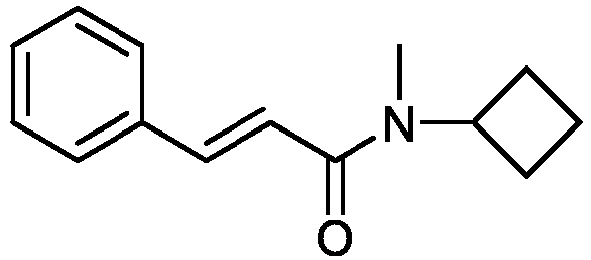
- Upland soil was put into a 1/300,000 hectare (ha) pot, seeds of barnyardgrass (Echinochloa crus-galli), crabgrass (Digitaria sanguinalis), green foxtail (Setaria viridis), wild oat (Avena fatua), Italian ryegrass (Lolium multiflorum), foxtail shortawn (Alopecurus aequalis), annual bluegrass (Poa annua), redroot pigweed (Amaranthus retroflexus), common chickweed (Stellaria media) common lambsquarters (Chenopodium album) and black nightshade (Solanum nigrum) were sown, and about 1.5 cm of cover soil was put. The plants were grown for 10 days in a greenhouse until they reached a predetermined leaf stage. The Invention Compound (Aa-1-1, Aa-9-2) or the compound 4b described in Patent Document 1 was weighed to achieve a predetermined active ingredient dose, dissolved in acetone (containing 0.5 vol% of surfactant (TritonX-100: manufactured by Kishida Chemical Co., Ltd.)) or dimethyl sulfoxide and diluted with water (containing 0.1 vol% of agricultural spreader (Surfactant WK: manufactured by MARUWA Biochemical Co., Ltd.) in an amount corresponding to 1,000 liter per hectare, to prepare each spray solution. Each spray solution was sprayed over the grown plants with a small sprayer for foliar treatment. On the 14th day after the foliar treatment, the state of growth of each plant was visually observed, and the herbicidal effect was evaluated in accordance with the growth inhibition rate (%) of from 0 (equivalent to the non-treated area) to 100 (complete kill). The results are shown in Table 4. A: growth inhibition rate of 90% or more, B: growth inhibition rate of 70% or more and less than 90%, C: growth inhibition rate of 50% or more and less than 70%, D: growth inhibition rate of 30% or more and less than 50%, E: growth inhibition rate of less than 30%
[Table 4] Compound No. Comp No. Aa-1-1 Comp No. Aa-9-2 Compound 4b Active ingredient amount (g/ha) 1000 500 1000 500 1000 500 Growth inhibition rate barnyardgrass A A A A E E crabgrass A A A A E E green foxtail A A A A E E wild oat A A A A E E Italian ryegrass A A A A E E foxtail shortawn A A A A E E annual bluegrass A A A A E E redroot pigweed B B B B D E common chickweed A A A A D E common lambsquarters B B B B E E black nightshade A B B C A E - Upland soil was put into a 1/300,000 hectare (ha) pot, seeds of barnyardgrass (Echinochloa crus-galli), crabgrass (Digitaria sanguinalis), green foxtail (Setaria viridis), Italian ryegrass (Lolium multiflorum), redroot pigweed (Amaranthus retroflexus) and common chickweed (Stellaria media) were sown, and about 1.5 cm of cover soil was put. The Invention Compound (Aa-1-1, Aa-9-2) or the compound 4b described in Patent Document 1 was weighed to achieve a predetermined active ingredient dose, dissolved in acetone (containing 0.5 vol% of surfactant (TritonX-100: manufactured by Kishida Chemical Co., Ltd.)) or dimethyl sulfoxide and diluted with water (containing 0.1 vol% of agricultural spreader (Surfactant WK: manufactured by MARUWA Biochemical Co., Ltd.) in an amount corresponding to 1,000 liter per hectare, to prepare each spray solution. On the next day after sowing, each spray solution was sprayed with a small sprayer for soil treatment. On the 14th day after the soil treatment, the state of growth of each plant was visually observed, and the herbicidal effect was evaluated in accordance with the growth inhibition rate (%) of from 0 (equivalent to the non-treated area) to 100 (complete kill). The results are shown in Table 5. A: growth inhibition rate of 90% or more, B: growth inhibition rate of 70% or more and less than 90%, C: growth inhibition rate of 50% or more and less than 70%, D: growth inhibition rate of 30% or more and less than 50%, E: growth inhibition rate of less than 30%
[Table 5] Compound No. Comp No. Aa-1-1 Comp No. Aa-9-2 Compound 4b Active ingredient amount (g/ha) 1000 500 1000 500 1000 500 Growth inhibition rate barnyardgrass A A A A E E crabgrass A A A A E E green foxtail A A A A E E Italian ryegrass A A A A E E redroot pigweed A A A A E E common chickweed A A A A E E - Now, formulation of the present composition will be specifically described. However, the mix ratio, the dosage form, etc. are not limited to the following Formulation Examples.
-
(1) The Invention Compound 50 parts by weight (2) Salt of alkylnaphthalene sulfonate condensed with formaldehyde 2 parts by weight (3) Silicone oil 0.2 parts by weight (4) Water 47.8 parts by weight - The above components are uniformly mixed and pulverized to obtain a base liquid, and
(5) Sodium polycarboxylate 5 parts by weight (6) Anhydrous sodium sulfate 42.8 parts by weight -
(1) Clay 68 parts by weight (2) Sodium lignin sulfonate 2 parts by weight (3) Polyoxyethylene styrylphenyl ether sulfate ammonium salt 5 parts by weight (4) White carbon 25 parts by weight - The mixture of the above components is mixed with the Invention Compound in a weight ratio of 4:1 to obtain a wettable powder.
-
(1) The Invention Compound 20 parts by weight (2) Clay 70 parts by weight (3) White carbon 5 parts by weight (4) Polycarboxylate 3 parts by weight (5) Sodium alkylnaphthalene sulfonate 2 parts by weight - The above components are uniformly mixed to obtain a wettable powder.
-
(1) The Invention Compound 5 parts by weight (2) Polyoxyethylene styrylphenyl ether 1 part by weight (3) Polyoxyethylene alkyl ether phosphate ester 0.1 parts by weight (4) Granular calcium carbonate 93.9 parts by weight - The above components (1) to (3) are preliminarily uniformly mixed and diluted with a proper amount of acetone, and then the mixture is sprayed onto the component (4), and acetone is removed to obtain a granule.
-
(1) The Invention Compound 20 parts by weight (2) N,N'-dimethylacetamide 20 parts by weight (3) Polyoxyethylene styrylphenyl ether 10 parts by weight (4) Calcium dodecylbenzene sulfonate 2 parts by weight (5) Xylene 48 parts by weight - The above components are uniformly mixed and dissolved to obtain an emulsifiable concentrate.
-
(1) The Invention Compound 10 parts by weight (2) Diethylene glycol monoethyl ether 80 parts by weight (3) Polyoxythylene alkyl ether 10 parts by weight - The above components are uniformly mixed to obtain a liquid.
-
(1) The Invention Compound 20 parts by weight (2) Polyoxyethylene styrylphenyl ether phosphate calcium salt 2 parts by weight (3) Silicone oil 0.2 parts by weight (4) Xanthan gum 0.1 parts by weight (5) Ethylene glycol 5 parts by weight (6) Water 72.7 parts by weight - The above components are uniformly mixed and pulverized to obtain a water-based suspension.
- The entire disclosure of
Japanese Patent Application No. 2022-094501 filed on June 10, 2022
Claims (9)
- A herbicidal composition comprising as an active ingredient a difluorobutenoic acid amide compound represented by the formula (I) or a salt thereof:
 wherein R1 and R2 are each a halogen, a (C1-C6)-chain hydrocarbon which may be substituted by at least one Y1, a (C1-C6)-alkoxy which may be substituted by at least one halogen, cyano or H,R3 is H or a fluorine atom (excluding a case where all of R1, R2 and R3 are H),Y' is a halogen, a (C1-C6)-alkoxy or cyano,t is 1 or 2,R4 is -C(=O)OR5, -C(=O)SR6, -C(=O)NR7R8, -C(=O)R9, a (C1-C6)-chain hydrocarbon which may be substituted by at least one Z3, -C(=O)H, -N(R10)C(=O)R11, - SR6, -S(=O)R6, -S(=O)2R6, =CHC(=O)R11, cyano, OH, 1,3-dioxolan-2-yl, 2-thiazolyl, 2-imidazolyl which may be substituted by at least one Z4, =CHCH=CHC(=O)R11, - (C=O)2R11, -C(=NR11)-C(=O)R11 or -CH(OH)-C(=O)R11,R5 is a (C1-C6)-alkyl which may be substituted by at least one Z1, H, a (C3-C6)-cycloalkyl, a (C2-C6)-alkenyl, a (C2-C6)-alkynyl or a 4- to 6-membered oxygen-containing saturated heterocyclic ring,Z1 is cyano, a halogen, a (C1-C6)-alkylthio, a (C1-C6)-alkylsulfonyl, a (C1-C6)-alkoxy, phenyl, pyridyl, a (C1-C6)-alkoxycarbonyl, a (C3-C6)-cycloalkyl, tert-butyldimethylsilyloxy, OH, amino or 1,3-dioxolan-4-yl,R6 is a (C1-C6)-alkyl which may be substituted by at least one halogen, a (C3-C6)-cycloalkyl or benzyl,R7 is a (C1-C6)-alkyl which may be substituted by at least one Y2, H, a (C1-C6)-alkoxy, a (C2-C6)-alkenyl, a (C2-C6)-alkynyl, -C(=O)R6, 3-pyridazinyl, a (C2-C6)-alkenyloxy, phenoxy, benzyl, a (C1-C6)-alkylsulfonyl or OH,R8 is H, a (C1-C6)-alkyl or a (C1-C6)-alkoxy,R7 and R8 together may form a completely saturated 4- to 6-membered ring with N to which they are bonded, the ring may be substituted by at least one halogen, and the carbon atom constituting the ring may be replaced with a hetero atom,Y2 is a (C1-C6)-alkoxy, a (C1-C6)-alkylthio, a (C1-C6)-alkoxycarbonyl, -(C=O)NH-(CH2)-C(=O)R11, a halogen or cyano,R9 is a (C1-C6)-alkyl which may be substituted by at least one Z2, or 1-imidazolyl, Z2 is a (C1-C6)-alkoxycarbonyl,Z3 is a halogen, a (C1-C6)-alkoxy, cyano, OH, a (C1-C6)-alkoxycarbonyl, a (C1-C6)-alkylcarbonyloxy, a (C1-C6)-alkylsulfonyloxy or -C(=O)OH,Z4 is a (C1-C6)-alkyl, a (C1-C6)-alkoxymethyl or a (C1-C6)-alkoxycarbonyl,R10 is H,R11 is a (C1-C6)-alkoxy,m is 1, 2, 3 or 4, andthe broken line moiety of carbon-carbon bond is a single bond or a double bond (provided that two broken line moieties of carbon-carbon bond are not simultaneously double bonds).
 - A method for controlling undesired plants or inhibiting their growth, which comprises applying an effective amount of a difluorobutenoic acid amide compound represented by the formula (I) or a salt thereof to harmful weeds, useful plants or soil:
 wherein R1 and R2 are each a halogen, a (C1-C6)-chain hydrocarbon which may be substituted by at least one Y1, a (C1-C6)-alkoxy which may be substituted by at least one halogen, cyano or H,R3 is H or a fluorine atom (excluding a case where all of R1, R2 and R3 are H),Y1 is a halogen, a (C1-C6)-alkoxy or cyano,t is 1 or 2,R4 is -C(=O)OR5, -C(=O)SR6, -C(=O)NR7R6, -C(=O)R9, a (C1-C6)-chain hydrocarbon which may be substituted by at least one Z3, -C(=O)H, -N(R10)C(=O)R11, - SR6, -S(=O)R6, -S(=O)2R6, =CHC(=O)R11, cyano, OH, 1,3-dioxolan-2-yl, 2-thiazolyl, 2-imidazolyl which may be substituted by at least one Z4, =CHCH=CHC(=O)R11, - (C=O)2R11, -C(=NR11)-C(=O)R11 or -CH(OH)-C(=O)R11,R5 is a (C1-C6)-alkyl which may be substituted by at least one Z1, H, a (C3-C6)-cycloalkyl, a (C2-C6)-alkenyl, a (C2-C6)-alkynyl or a 4- to 6-membered oxygen-containing saturated heterocyclic ring,Z1 is cyano, a halogen, a (C1-C6)-alkylthio, a (C1-C6)-alkylsulfonyl, a (C1-C6)-alkoxy, phenyl, pyridyl, a (C1-C6)-alkoxycarbonyl, a (C3-C6)-cycloalkyl, tert-butyldimethylsilyloxy, OH, amino or 1,3-dioxolan-4-yl,R6 is a (C1-C6)-alkyl which may be substituted by at least one halogen, a (C3-C6)-cycloalkyl or benzyl,R7 is a (C1-C6)-alkyl which may be substituted by at least one Y2, H, a (C1-C6)-alkoxy, a (C2-C6)-alkenyl, a (C2-C6)-alkynyl, -C(=O)R6, 3-pyridazinyl, a (C2-C6)-alkenyloxy, phenoxy, benzyl, a (C1-C6)-alkylsulfonyl or OH,R8 is H, a (C1-C6)-alkyl or a (C1-C6)-alkoxy,R7 and R8 together may form a completely saturated 4- to 6-membered ring with N to which they are bonded, the ring may be substituted by at least one halogen, and the carbon atom constituting the ring may be replaced with a hetero atom,Y2 is a (C1-C6)-alkoxy, a (C1-C6)-alkylthio, a (C1-C6)-alkoxycarbonyl, -(C=O)NH-(CH2)-C(=O)R11, a halogen or cyano,R9 is a (C1-C6)-alkyl which may be substituted by at least one Z2, or 1-imidazolyl,Z2 is a (C1-C6)-alkoxycarbonyl,Z3 is a halogen, a (C1-C6)-alkoxy, cyano, OH, a (C1-C6)-alkoxycarbonyl, a (C1-C6)-alkylcarbonyloxy, a (C1-C6)-alkylsulfonyloxy or -C(=O)OH,Z4 is a (C1-C6)-alkyl, a (C1-C6)-alkoxymethyl or a (C1-C6)-alkoxycarbonyl,R10 is H,R11 is a (C1-C6)-alkoxy,m is 1, 2, 3 or 4, andthe broken line moiety of carbon-carbon bond is a single bond or a double bond (provided that two broken line moieties of carbon-carbon bond are not simultaneously double bonds).
 - A difluorobutenoic acid amide compound represented by the formula (I) or a salt thereof:
 wherein R1 and R2 are each a halogen, a (C1-C6)-chain hydrocarbon which may be substituted by at least one Y1, a (C1-C6)-alkoxy which may be substituted by at least one halogen, cyano or H,R3 is H or a fluorine atom (excluding a case where all of R1, R2 and R3 are H),Y1 is a halogen, a (C1-C6)-alkoxy or cyano,t is 1 or 2,R4 is -C(=O)OR5, -C(=O)SR6, -C(=O)NR7R8, -C(=O)R9, a (C1-C6)-chain hydrocarbon which may be substituted by at least one Z3, -C(=O)H, -N(R10)C(=O)R11, - SR6, -S(=O)R6, -S(=O)2R6, =CHC(=O)R11, cyano, OH, 1,3-dioxolan-2-yl, 2-thiazolyl, 2-imidazolyl which may be substituted by at least one Z4, =CHCH=CHC(=O)R11, - (C=O)2R11, -C(=NR11)-C(=O)R11 or -CH(OH)-C(=O)R11,R5 is a (C1-C6)-alkyl which may be substituted by at least one Z1, H, a (C3-C6)-cycloalkyl, a (C2-C6)-alkenyl, a (C2-C6)-alkynyl or a 4- to 6-membered oxygen-containing saturated heterocyclic ring,Z1 is cyano, a halogen, a (C1-C6)-alkylthio, a (C1-C6)-alkylsulfonyl, a (C1-C6)-alkoxy, phenyl, pyridyl, a (C1-C6)-alkoxycarbonyl, a (C3-C6)-cycloalkyl, tert-butyldimethylsilyloxy, OH, amino or 1,3-dioxolan-4-yl,R6 is a (C1-C6)-alkyl which may be substituted by at least one halogen, a (C3-C6)-cycloalkyl or benzyl,R7 is a (C1-C6)-alkyl which may be substituted by at least one Y2, H, a (C1-C6)-alkoxy, a (C2-C6)-alkenyl, a (C2-C6)-alkynyl, -C(=O)R6, 3-pyridazinyl, a (C2-C6)-alkenyloxy, phenoxy, benzyl, a (C1-C6)-alkylsulfonyl or OH,R8 is H, a (C1-C6)-alkyl or a (C1-C6)-alkoxy,R7 and R8 together may form a completely saturated 4- to 6-membered ring with N to which they are bonded, the ring may be substituted by at least one halogen, and the carbon atom constituting the ring may be replaced with a hetero atom,Y2 is a (C1-C6)-alkoxy, a (C1-C6)-alkylthio, a (C1-C6)-alkoxycarbonyl, -(C=O)NH-(CH2)-C(=O)R11, a halogen or cyano,R9 is a (C1-C6)-alkyl which may be substituted by at least one Z2, or 1-imidazolyl,Z2 is a (C1-C6)-alkoxycarbonyl,Z3 is a halogen, a (C1-C6)-alkoxy, cyano, OH, a (C1-C6)-alkoxycarbonyl, a (C1-C6)-alkylcarbonyloxy, a (C1-C6)-alkylsulfonyloxy or -C(=O)OH,Z4 is a (C1-C6)-alkyl, a (C1-C6)-alkoxymethyl or a (C1-C6)-alkoxycarbonyl,R10 is H,R11 is a (C1-C6)-alkoxy,m is 1, 2, 3 or 4, andthe broken line moiety of carbon-carbon bond is a single bond or a double bond (provided that two broken line moieties of carbon-carbon bond are not simultaneously double bonds).
 - The difluorobutenoic acid amide compound or a salt thereof according to Claim 3, wherein R4 is -C(=O)OR5, -C(=O)SR6, -C(=O)NR7R8, -C(=O)R9, a (C1-C6)-chain hydrocarbon which may be substituted by at least one Z3, or -CH(OH)-C(=O)R11, R7 is a (C1-C6)-alkyl which may be substituted by at least one Y2, H or a (C1-C6)-alkoxy, and Z3 is a (C1-C6)-alkoxycarbonyl or -C(=O)OH.
- The difluorobutenoic acid amide compound or a salt thereof according to Claim 3, wherein R1 and R2 are each a halogen, a (C1-C6)-alkyl which may be substituted by at least one Y1, a (C1-C6)-alkoxy which may be substituted by at least one halogen, cyano or H, Y1 is a halogen, R4 is -C(=O)OR5, -C(=O)SR6, -C(=O)NR7R8, -C(=O)R9, a (C1-C6)-chain hydrocarbon which may be substituted by at least one Z3, or -CH(OH)-C(=O)R11, R7 is a (C1-C6)-alkyl which may be substituted by at least one Y2, H or a (C1-C6)-alkoxy, and Z3 is a (C1-C6)-alkoxycarbonyl or -C(=O)OH.
- The difluorobutenoic acid amide compound or a salt thereof according to Claim 3, wherein R1 and R2 are each a halogen, a (C1-C6)-alkyl which may be substituted by at least one Y1, a (C1-C6)-alkoxy which may be substituted by at least one halogen, cyano or H, Y1 is a halogen, R4 is -C(=O)OR5, -C(=O)SR6, -C(=O)NR7R8 or -CH(OH)-C(=O)R11, R7 is a (C1-C6)-alkyl which may be substituted by at least one Y2, H or a (C1-C6)-alkoxy, Z1 is cyano, a halogen, a (C1-C6)-alkylthio, a (C1-C6)-alkylsulfonyl, a (C1-C6)-alkoxy or 1,3-dioxolan-4-yl, R6 is a (C1-C6)-alkyl which may be substituted by at least one halogen, R7 is a (C1-C6)-alkyl which may be substituted by at least one Y2, H or a (C1-C6)-alkoxy, R8 is H or a (C1-C6)-alkyl, and Y2 is a (C1-C6)-alkoxy, a halogen or cyano.
- The difluorobutenoic acid amide compound or a salt thereof according to any one of Claims 3 to 6, wherein m is 1 or 2.
- A herbicidal composition comprising as an active ingredient the difluorobutenoic acid amide compound or a salt thereof as defined in any one of Claims 4 to 6.
- A method for controlling undesired plants or inhibiting their growth, which comprises applying an effective amount of the difluorobutenoic acid amide compound or a salt thereof as defined in any one of Claims 4 to 6, to harmful weeds, useful plants or soil.
Priority Applications (1)
| Application Number | Priority Date | Filing Date | Title |
|---|---|---|---|
| MA71400A MA71400A (en) | 2022-06-10 | 2023-05-29 | HERBICIDAL COMPOSITION CONTAINING A DIFLUOROBUTENE ACID AMIDE COMPOUND |
Applications Claiming Priority (2)
| Application Number | Priority Date | Filing Date | Title |
|---|---|---|---|
| JP2022094501 | 2022-06-10 | ||
| PCT/JP2023/019879 WO2023238718A1 (en) | 2022-06-10 | 2023-05-29 | Herbicidal composition containing difluorobutene acid amide compound |
Publications (1)
| Publication Number | Publication Date |
|---|---|
| EP4552496A1 true EP4552496A1 (en) | 2025-05-14 |
Family
ID=89118250
Family Applications (1)
| Application Number | Title | Priority Date | Filing Date |
|---|---|---|---|
| EP23819699.2A Pending EP4552496A1 (en) | 2022-06-10 | 2023-05-29 | Herbicidal composition containing difluorobutene acid amide compound |
Country Status (14)
| Country | Link |
|---|---|
| US (1) | US20260007131A1 (en) |
| EP (1) | EP4552496A1 (en) |
| JP (1) | JPWO2023238718A1 (en) |
| KR (1) | KR20250020510A (en) |
| CN (1) | CN119325339A (en) |
| AR (1) | AR129577A1 (en) |
| AU (1) | AU2023284213A1 (en) |
| CA (1) | CA3256577A1 (en) |
| CL (1) | CL2024003718A1 (en) |
| MA (1) | MA71400A (en) |
| MX (1) | MX2024015091A (en) |
| TW (1) | TW202413323A (en) |
| WO (1) | WO2023238718A1 (en) |
| ZA (1) | ZA202408448B (en) |
Families Citing this family (1)
| Publication number | Priority date | Publication date | Assignee | Title |
|---|---|---|---|---|
| WO2026064271A1 (en) * | 2024-09-23 | 2026-03-26 | Fmc Corporation | Substituted bicyclic amide derivatives as herbicides |
Family Cites Families (12)
| Publication number | Priority date | Publication date | Assignee | Title |
|---|---|---|---|---|
| CA1331463C (en) * | 1988-08-31 | 1994-08-16 | Kathleen Megan Poss | Herbicidal triazolinones |
| DE4037003A1 (en) * | 1990-05-30 | 1991-12-05 | Bayer Ag | SUBSTITUTED AZINE |
| KR100289470B1 (en) | 1999-02-25 | 2001-05-02 | 김충섭 | 2-(5-isoxazolinemethyloxyphenyl)-4,5,6,7-tetrahydro-2H-indazole derivatives with herbicidal activity |
| KR100392072B1 (en) | 2000-09-07 | 2003-07-22 | 한국화학연구원 | 5-Benzyloxymethyl-1,2-isoxazoline Derivatives Which Possess Weeding Activity |
| DE10335725A1 (en) * | 2003-08-05 | 2005-03-03 | Bayer Cropscience Gmbh | Safener based on aromatic-aliphatic carboxylic acid derivatives |
| ITMI20060394A1 (en) | 2006-03-06 | 2007-09-07 | Isagro Ricerca Srl | NEW SYNERGIC HERBICIDE COMPOSITIONS |
| CN102464630B (en) | 2010-11-19 | 2015-05-13 | 中国中化股份有限公司 | Nitrogen heterocyclic substituent-containing benzoyl compound and application thereof |
| CN105753853B (en) | 2014-12-16 | 2020-08-04 | 沈阳中化农药化工研发有限公司 | Isoxazoline-containing uracil compound and application thereof |
| CN109896973B (en) | 2019-02-22 | 2021-12-24 | 中国热带农业科学院热带生物技术研究所 | Cinnamide derivative and application thereof |
| JP2022042267A (en) | 2020-09-02 | 2022-03-14 | 日産化学株式会社 | Herbicidal composition and weeding method |
| JP7623133B2 (en) | 2020-12-15 | 2025-01-28 | 株式会社パイロットコーポレーション | Clipping device for writing implement |
| CN113511972B (en) | 2021-07-27 | 2025-01-21 | 昆明理工大学 | Preparation method of (E)-4-aryl-2,2-difluoro-3-butenoic acid derivatives |
-
2023
- 2023-05-29 KR KR1020247043160A patent/KR20250020510A/en active Pending
- 2023-05-29 MA MA71400A patent/MA71400A/en unknown
- 2023-05-29 EP EP23819699.2A patent/EP4552496A1/en active Pending
- 2023-05-29 US US18/870,893 patent/US20260007131A1/en active Pending
- 2023-05-29 CA CA3256577A patent/CA3256577A1/en active Pending
- 2023-05-29 WO PCT/JP2023/019879 patent/WO2023238718A1/en not_active Ceased
- 2023-05-29 CN CN202380044978.5A patent/CN119325339A/en active Pending
- 2023-05-29 AU AU2023284213A patent/AU2023284213A1/en active Pending
- 2023-05-29 JP JP2024526378A patent/JPWO2023238718A1/ja active Pending
- 2023-06-08 TW TW112121376A patent/TW202413323A/en unknown
- 2023-06-09 AR ARP230101479A patent/AR129577A1/en unknown
-
2024
- 2024-11-07 ZA ZA2024/08448A patent/ZA202408448B/en unknown
- 2024-12-04 CL CL2024003718A patent/CL2024003718A1/en unknown
- 2024-12-05 MX MX2024015091A patent/MX2024015091A/en unknown
Also Published As
| Publication number | Publication date |
|---|---|
| MA71400A (en) | 2025-04-30 |
| US20260007131A1 (en) | 2026-01-08 |
| KR20250020510A (en) | 2025-02-11 |
| CA3256577A1 (en) | 2025-06-17 |
| CL2024003718A1 (en) | 2025-02-07 |
| CN119325339A (en) | 2025-01-17 |
| TW202413323A (en) | 2024-04-01 |
| AU2023284213A1 (en) | 2024-10-31 |
| ZA202408448B (en) | 2026-01-28 |
| JPWO2023238718A1 (en) | 2023-12-14 |
| WO2023238718A1 (en) | 2023-12-14 |
| AR129577A1 (en) | 2024-09-11 |
| MX2024015091A (en) | 2025-04-02 |
Similar Documents
| Publication | Publication Date | Title |
|---|---|---|
| EP3287445B1 (en) | Pyrazolone compound or salt thereof, preparation method therefor, herbicide composition and use thereof | |
| JP6695967B2 (en) | Pyrazole compound or salt thereof, process for producing them, herbicidal composition and use thereof | |
| KR102942253B1 (en) | Conjugated-ring substituted aromatic compounds, methods for preparing the same, herbicidal compositions, and uses thereof | |
| KR20220125795A (en) | Carboxylic acid derivative-substituted iminoaryl compound, preparation method, herbicidal composition and use thereof | |
| US12509452B2 (en) | Substituted-isoxazoline-containing aromatic compound, preparation method therefor, herbicidal composition and use thereof | |
| KR102354068B1 (en) | Pyridazinone compounds or salts thereof, and herbicides containing them | |
| CA2724355C (en) | Pyrazole compounds, process for their production and herbicides containing them | |
| JP6728348B2 (en) | Pyrazole compound or salt thereof, production method thereof, herbicidal composition and use thereof | |
| WO2015007711A1 (en) | Herbicidal azines | |
| EP4050003A1 (en) | Chiral sulfur oxide-containing aryl formamide compound and salt thereof, preparation method therefor, herbicidal composition, and application | |
| US20260007131A1 (en) | Herbicidal composition containing difluorobutenoic acid amide compound | |
| JP2017075131A (en) | Pyridazinone compound or salt thereof, and herbicide comprising them | |
| EP3235799B1 (en) | Oxime compound and herbicide | |
| AU2023267071B2 (en) | Heterocycle-substituted aromatic compound, method for preparing same, herbicidal composition, and use thereof | |
| US12441695B2 (en) | Substituted thiadiazinone dioxide and preparation method therefor, herbicidal composition, and application therefor | |
| US12408666B2 (en) | Pyridyloxy carboxylate derivative, preparation method therefor, herbicidal composition and use thereof | |
| US12391648B2 (en) | Pyridyloxy thioester derivative and preparation method therefor, herbicidal composition, and application | |
| EP4667459A1 (en) | Benzene ring-substituted pyrimidine carboxylic acid compound, and preparation method therefor, herbicidal composition comprising same, and use thereof |
Legal Events
| Date | Code | Title | Description |
|---|---|---|---|
| STAA | Information on the status of an ep patent application or granted ep patent |
Free format text: STATUS: THE INTERNATIONAL PUBLICATION HAS BEEN MADE |
|
| PUAI | Public reference made under article 153(3) epc to a published international application that has entered the european phase |
Free format text: ORIGINAL CODE: 0009012 |
|
| STAA | Information on the status of an ep patent application or granted ep patent |
Free format text: STATUS: REQUEST FOR EXAMINATION WAS MADE |
|
| 17P | Request for examination filed |
Effective date: 20241204 |
|
| AK | Designated contracting states |
Kind code of ref document: A1 Designated state(s): AL AT BE BG CH CY CZ DE DK EE ES FI FR GB GR HR HU IE IS IT LI LT LU LV MC ME MK MT NL NO PL PT RO RS SE SI SK SM TR |
|
| DAX | Request for extension of the european patent (deleted) | ||
| RAV | Requested validation state of the european patent: fee paid |
Extension state: MA Effective date: 20241204 Extension state: TN Effective date: 20241204 |