EP4550167A1 - Datenerfassungsverfahren und -vorrichtung sowie vorrichtung - Google Patents
Datenerfassungsverfahren und -vorrichtung sowie vorrichtung Download PDFInfo
- Publication number
- EP4550167A1 EP4550167A1 EP23856595.6A EP23856595A EP4550167A1 EP 4550167 A1 EP4550167 A1 EP 4550167A1 EP 23856595 A EP23856595 A EP 23856595A EP 4550167 A1 EP4550167 A1 EP 4550167A1
- Authority
- EP
- European Patent Office
- Prior art keywords
- transaction
- block
- data
- target
- event
- Prior art date
- Legal status (The legal status is an assumption and is not a legal conclusion. Google has not performed a legal analysis and makes no representation as to the accuracy of the status listed.)
- Pending
Links
Images




Classifications
-
- G—PHYSICS
- G06—COMPUTING OR CALCULATING; COUNTING
- G06Q—INFORMATION AND COMMUNICATION TECHNOLOGY [ICT] SPECIALLY ADAPTED FOR ADMINISTRATIVE, COMMERCIAL, FINANCIAL, MANAGERIAL OR SUPERVISORY PURPOSES; SYSTEMS OR METHODS SPECIALLY ADAPTED FOR ADMINISTRATIVE, COMMERCIAL, FINANCIAL, MANAGERIAL OR SUPERVISORY PURPOSES, NOT OTHERWISE PROVIDED FOR
- G06Q40/00—Finance; Insurance; Tax strategies; Processing of corporate or income taxes
- G06Q40/04—Trading; Exchange, e.g. stocks, commodities, derivatives or currency exchange
-
- G—PHYSICS
- G06—COMPUTING OR CALCULATING; COUNTING
- G06F—ELECTRIC DIGITAL DATA PROCESSING
- G06F16/00—Information retrieval; Database structures therefor; File system structures therefor
- G06F16/20—Information retrieval; Database structures therefor; File system structures therefor of structured data, e.g. relational data
- G06F16/22—Indexing; Data structures therefor; Storage structures
- G06F16/2228—Indexing structures
-
- G—PHYSICS
- G06—COMPUTING OR CALCULATING; COUNTING
- G06F—ELECTRIC DIGITAL DATA PROCESSING
- G06F16/00—Information retrieval; Database structures therefor; File system structures therefor
- G06F16/20—Information retrieval; Database structures therefor; File system structures therefor of structured data, e.g. relational data
- G06F16/24—Querying
- G06F16/245—Query processing
- G06F16/2455—Query execution
-
- G—PHYSICS
- G06—COMPUTING OR CALCULATING; COUNTING
- G06F—ELECTRIC DIGITAL DATA PROCESSING
- G06F16/00—Information retrieval; Database structures therefor; File system structures therefor
- G06F16/20—Information retrieval; Database structures therefor; File system structures therefor of structured data, e.g. relational data
- G06F16/22—Indexing; Data structures therefor; Storage structures
-
- G—PHYSICS
- G06—COMPUTING OR CALCULATING; COUNTING
- G06F—ELECTRIC DIGITAL DATA PROCESSING
- G06F16/00—Information retrieval; Database structures therefor; File system structures therefor
- G06F16/20—Information retrieval; Database structures therefor; File system structures therefor of structured data, e.g. relational data
- G06F16/25—Integrating or interfacing systems involving database management systems
- G06F16/252—Integrating or interfacing systems involving database management systems between a Database Management System and a front-end application
-
- G—PHYSICS
- G06—COMPUTING OR CALCULATING; COUNTING
- G06F—ELECTRIC DIGITAL DATA PROCESSING
- G06F16/00—Information retrieval; Database structures therefor; File system structures therefor
- G06F16/20—Information retrieval; Database structures therefor; File system structures therefor of structured data, e.g. relational data
- G06F16/27—Replication, distribution or synchronisation of data between databases or within a distributed database system; Distributed database system architectures therefor
-
- G—PHYSICS
- G06—COMPUTING OR CALCULATING; COUNTING
- G06F—ELECTRIC DIGITAL DATA PROCESSING
- G06F9/00—Arrangements for program control, e.g. control units
- G06F9/06—Arrangements for program control, e.g. control units using stored programs, i.e. using an internal store of processing equipment to receive or retain programs
- G06F9/46—Multiprogramming arrangements
- G06F9/54—Interprogram communication
- G06F9/547—Remote procedure calls [RPC]; Web services
-
- G—PHYSICS
- G06—COMPUTING OR CALCULATING; COUNTING
- G06Q—INFORMATION AND COMMUNICATION TECHNOLOGY [ICT] SPECIALLY ADAPTED FOR ADMINISTRATIVE, COMMERCIAL, FINANCIAL, MANAGERIAL OR SUPERVISORY PURPOSES; SYSTEMS OR METHODS SPECIALLY ADAPTED FOR ADMINISTRATIVE, COMMERCIAL, FINANCIAL, MANAGERIAL OR SUPERVISORY PURPOSES, NOT OTHERWISE PROVIDED FOR
- G06Q20/00—Payment architectures, schemes or protocols
- G06Q20/04—Payment circuits
- G06Q20/06—Private payment circuits, e.g. involving electronic currency used among participants of a common payment scheme
- G06Q20/065—Private payment circuits, e.g. involving electronic currency used among participants of a common payment scheme using e-cash
-
- G—PHYSICS
- G06—COMPUTING OR CALCULATING; COUNTING
- G06Q—INFORMATION AND COMMUNICATION TECHNOLOGY [ICT] SPECIALLY ADAPTED FOR ADMINISTRATIVE, COMMERCIAL, FINANCIAL, MANAGERIAL OR SUPERVISORY PURPOSES; SYSTEMS OR METHODS SPECIALLY ADAPTED FOR ADMINISTRATIVE, COMMERCIAL, FINANCIAL, MANAGERIAL OR SUPERVISORY PURPOSES, NOT OTHERWISE PROVIDED FOR
- G06Q20/00—Payment architectures, schemes or protocols
- G06Q20/22—Payment schemes or models
- G06Q20/223—Payment schemes or models based on the use of peer-to-peer networks
-
- G—PHYSICS
- G06—COMPUTING OR CALCULATING; COUNTING
- G06Q—INFORMATION AND COMMUNICATION TECHNOLOGY [ICT] SPECIALLY ADAPTED FOR ADMINISTRATIVE, COMMERCIAL, FINANCIAL, MANAGERIAL OR SUPERVISORY PURPOSES; SYSTEMS OR METHODS SPECIALLY ADAPTED FOR ADMINISTRATIVE, COMMERCIAL, FINANCIAL, MANAGERIAL OR SUPERVISORY PURPOSES, NOT OTHERWISE PROVIDED FOR
- G06Q20/00—Payment architectures, schemes or protocols
- G06Q20/30—Payment architectures, schemes or protocols characterised by the use of specific devices or networks
- G06Q20/36—Payment architectures, schemes or protocols characterised by the use of specific devices or networks using electronic wallets or electronic money safes
- G06Q20/367—Payment architectures, schemes or protocols characterised by the use of specific devices or networks using electronic wallets or electronic money safes involving electronic purses or money safes
- G06Q20/3678—Payment architectures, schemes or protocols characterised by the use of specific devices or networks using electronic wallets or electronic money safes involving electronic purses or money safes e-cash details, e.g. blinded, divisible or detecting double spending
-
- G—PHYSICS
- G06—COMPUTING OR CALCULATING; COUNTING
- G06Q—INFORMATION AND COMMUNICATION TECHNOLOGY [ICT] SPECIALLY ADAPTED FOR ADMINISTRATIVE, COMMERCIAL, FINANCIAL, MANAGERIAL OR SUPERVISORY PURPOSES; SYSTEMS OR METHODS SPECIALLY ADAPTED FOR ADMINISTRATIVE, COMMERCIAL, FINANCIAL, MANAGERIAL OR SUPERVISORY PURPOSES, NOT OTHERWISE PROVIDED FOR
- G06Q20/00—Payment architectures, schemes or protocols
- G06Q20/38—Payment protocols; Details thereof
- G06Q20/382—Payment protocols; Details thereof insuring higher security of transaction
-
- G—PHYSICS
- G06—COMPUTING OR CALCULATING; COUNTING
- G06Q—INFORMATION AND COMMUNICATION TECHNOLOGY [ICT] SPECIALLY ADAPTED FOR ADMINISTRATIVE, COMMERCIAL, FINANCIAL, MANAGERIAL OR SUPERVISORY PURPOSES; SYSTEMS OR METHODS SPECIALLY ADAPTED FOR ADMINISTRATIVE, COMMERCIAL, FINANCIAL, MANAGERIAL OR SUPERVISORY PURPOSES, NOT OTHERWISE PROVIDED FOR
- G06Q20/00—Payment architectures, schemes or protocols
- G06Q20/38—Payment protocols; Details thereof
- G06Q20/382—Payment protocols; Details thereof insuring higher security of transaction
- G06Q20/3827—Use of message hashing
-
- G—PHYSICS
- G06—COMPUTING OR CALCULATING; COUNTING
- G06Q—INFORMATION AND COMMUNICATION TECHNOLOGY [ICT] SPECIALLY ADAPTED FOR ADMINISTRATIVE, COMMERCIAL, FINANCIAL, MANAGERIAL OR SUPERVISORY PURPOSES; SYSTEMS OR METHODS SPECIALLY ADAPTED FOR ADMINISTRATIVE, COMMERCIAL, FINANCIAL, MANAGERIAL OR SUPERVISORY PURPOSES, NOT OTHERWISE PROVIDED FOR
- G06Q20/00—Payment architectures, schemes or protocols
- G06Q20/38—Payment protocols; Details thereof
- G06Q20/382—Payment protocols; Details thereof insuring higher security of transaction
- G06Q20/3829—Payment protocols; Details thereof insuring higher security of transaction involving key management
-
- G—PHYSICS
- G06—COMPUTING OR CALCULATING; COUNTING
- G06Q—INFORMATION AND COMMUNICATION TECHNOLOGY [ICT] SPECIALLY ADAPTED FOR ADMINISTRATIVE, COMMERCIAL, FINANCIAL, MANAGERIAL OR SUPERVISORY PURPOSES; SYSTEMS OR METHODS SPECIALLY ADAPTED FOR ADMINISTRATIVE, COMMERCIAL, FINANCIAL, MANAGERIAL OR SUPERVISORY PURPOSES, NOT OTHERWISE PROVIDED FOR
- G06Q20/00—Payment architectures, schemes or protocols
- G06Q20/38—Payment protocols; Details thereof
- G06Q20/389—Keeping log of transactions for guaranteeing non-repudiation of a transaction
-
- G—PHYSICS
- G06—COMPUTING OR CALCULATING; COUNTING
- G06Q—INFORMATION AND COMMUNICATION TECHNOLOGY [ICT] SPECIALLY ADAPTED FOR ADMINISTRATIVE, COMMERCIAL, FINANCIAL, MANAGERIAL OR SUPERVISORY PURPOSES; SYSTEMS OR METHODS SPECIALLY ADAPTED FOR ADMINISTRATIVE, COMMERCIAL, FINANCIAL, MANAGERIAL OR SUPERVISORY PURPOSES, NOT OTHERWISE PROVIDED FOR
- G06Q20/00—Payment architectures, schemes or protocols
- G06Q20/38—Payment protocols; Details thereof
- G06Q20/40—Authorisation, e.g. identification of payer or payee, verification of customer or shop credentials; Review and approval of payers, e.g. check credit lines or negative lists
- G06Q20/401—Transaction verification
Definitions
- the present disclosure relates to the technical field of the Internet, and in particular to a data acquisition method and apparatus, and a device.
- a block chain provides a way for everyone to participate in bookkeeping and is characterized by decentralization and distrust.
- a client may perform a transaction via any one block chain node, and transaction data is stored in a block of the block chain in the form of an electronic record.
- the transaction mode in the block chain is an Unspent Transaction Output (UTXO) mode, that is, output data in the transaction data of one transaction event is stored in a block to serve as input data in the transaction data of the next transaction event.
- UXO Unspent Transaction Output
- an embodiment of the present disclosure provides a data acquisition method, including: creating a target database, wherein the target database is a database for storing transaction data corresponding to transaction identifiers of a plurality of transaction events in a block chain, and the transaction data includes input data and output data; receiving a first request message, wherein the first request message is configured to request to acquire target transaction data of a target transaction event, and the first request message includes a target transaction identifier of the target transaction event; in response to the first request message, acquiring the target transaction data from the target database by taking the target transaction identifier as an index; and sending the target transaction data.
- the target database includes a first correspondence for one-to-one correspondence between the transaction identifiers of the plurality of transaction events and the transaction data of the plurality of transaction events; and the data acquisition method further includes: acquiring in a first block a transaction identifier of a first transaction event, output data of the first transaction event, and a transaction identifier of a previous transaction event corresponding to the first transaction event, wherein the first transaction event is any one event among the plurality of transaction events, and the first block is a block for storing the output data of the first transaction event in the block chain; determining a second block for storing input data of the first transaction event according to the transaction identifier of the previous transaction event corresponding to the first transaction event; determining output data of a second transaction event stored in the second block as the input data of the first transaction event, wherein the second transaction event is the previous transaction event of the first transaction event; determining the input data of the first transaction event and the output data of the first transaction event as the transaction data of the first transaction event; and determining
- acquiring in the first block the transaction identifier of the first transaction event, the output data of the first transaction event, and the transaction identifier of the previous transaction event corresponding to the first transaction event includes: calling a target interface to acquire block data of the first block, wherein the block data of the first block includes the transaction identifier of the first transaction event, the output data of the first transaction event, and the transaction identifier of the previous transaction event corresponding to the first transaction event, and the target interface includes a Remote Procedure Call (RPC) interface.
- RPC Remote Procedure Call
- the target database further includes a second correspondence for one-to-one correspondence between block identifiers of a plurality of blocks and block data of the plurality of blocks, the plurality of blocks include the first block, and the block data of the first block further includes a block identifier of the first block; and the data acquisition method further includes: creating a second correspondence between the block identifier of the first block and the block data of the first block.
- calling the target interface to acquire the block data of the first block includes: calling the target interface to acquire the block identifier of the first block; and reading the second correspondence to acquire the block data of the first block corresponding to the block identifier of the first block.
- calling the target interface to acquire the block identifier of the first block includes: calling the target interface to traverse the plurality of blocks in the block chain, so as to acquire a block identifier of each block among the plurality of blocks.
- the data acquisition method further includes: receiving a second request message, wherein the second request message is configured to request to acquire target block data of a target block, and the second request message includes a target block identifier of the target block; in response to the second request message, acquiring the target block data from the target database by taking the target block identifier as an index; and sending the target block data.
- the target database includes a transaction database and a block database
- the transaction database is configured to store the first correspondence
- the block database is configured to store the second correspondence
- the transaction database and the block database are key-value databases.
- the target database stores correspondences in a target format
- the target format includes a Common Separated Values (CSV) format.
- CSV Common Separated Values
- the transaction identifier includes at least one of: a transaction hash value, a transaction number, and a transaction index value.
- a transaction mode in the block chain is an Unspent Transaction Output (UTXO) mode.
- UXO Unspent Transaction Output
- some embodiments of the present disclosure provide a data acquisition apparatus, including a communication unit and a processing unit, wherein the processing unit is configured to create a target database, wherein the target database is a database for storing transaction data corresponding to transaction identifiers of a plurality of transaction events in a block chain, and the transaction data includes input data and output data; the communication unit is configured to receive a first request message, wherein the first request message is configured to request to acquire target transaction data of a target transaction event, and the first request message includes a target transaction identifier of the target transaction event; the processing unit is further configured to, in response to the first request message, acquire the target transaction data from the target database by taking the target transaction identifier as an index; and the communication unit is further configured to send the target transaction data.
- some embodiments of the present disclosure provide an electronic device, including a memory, a processor, and a computer program stored on the memory and executable on the processor, wherein the computer program, when executed by the processor, implements the data acquisition method in the first aspect.
- some embodiments of the present disclosure provide a computer-readable storage medium, wherein a computer program is stored on the computer-readable storage medium, and the computer program, when executed by a processor, implements the data acquisition method in the first aspect.
- a block chain system may include a plurality of block chain nodes.
- the block chain node is a device having a communication function and a storage function, for example, a device storing a block chain.
- a node is used for representing the block chain node in the embodiments of the present disclosure, that is, all nodes involved in the embodiments of the present disclosure may be used for representing the block chain nodes.
- Each node may receive information and may also generate information. Different nodes maintain communication by maintaining a common block chain.
- any node may generate a new block according to transaction-related data sent by a client, and notify other nodes in the form of a broadcast, and the other nodes may verify this block. After all nodes in the block chain system reach a consensus, the new block may be added into the block chain.
- the node in the embodiments of the present disclosure may be understood as a processing unit.
- the node may be a physical device, for example, a server or a terminal device.
- the node may be a virtual computer, the virtual computer is a general term of operating environments virtualized by software in all types of virtualization devices, and this concept includes a virtual machine and a container.
- the node may be a process or a thread; the thread is a minimum unit in which an operating system may perform operation scheduling, and the thread is included in the process and is an actual operation unit in the process; and the process is an operation activity of a program in a computer with regard to a data set and is a basic unit in which the system performs resource allocation and scheduling.
- the transaction data is permanently stored in the form of electronic records, and files for storing these electronic records are referred to as "blocks".
- the blocks are successively generated in a chronological order, each block records all transactions occurring during the creation thereof, and all blocks are summarized to form a chained collection of records. Since the throughput rates of the nodes are different in different block chain systems, the sizes of the blocks may also be different in different block chain systems.
- each block chain may not be exactly the same, but the block usually includes two parts, that is, a block header and a block body.
- the block header is mainly used for recording a feature value of the current block
- the feature value may include at least one of: an identifier of the current block (e.g., a serial number of the block), a hash value of the block body in the current block, a timestamp (used for indicating a generation time of the block), a transaction count, a nonce and other information; and in addition, the block header may further include a hash value of a previous block (specifically, a hash value of the block header in the previous block).
- the block header includes a plurality of feature values
- numerical values of the feature values included in the block headers of different blocks are usually different, each block uniquely corresponds to one hash value.
- a plurality of blocks may form a block chain.
- the block body may include a plurality of pieces of transaction data. For each piece of transaction data, the block body further includes information such as a certificate of a client (used for describing an initiating end of a transaction), a certificate of an endorsement node, and a signature of the endorsement node for the transaction. In some embodiments, for each transaction, the block body may further include a signature of a sorting node (or referred to as a consensus node) for the transaction.
- the signatures herein are all used for indicating authentication of the transaction by a device corresponding to the signature, and the certificates are all used for indicating identity.
- the data such as the signature and the certificate are all used for verifying the transaction data, and these pieces of data usually occupy 70% of a storage space in the block body.
- Table 1 shows a structural form of a block.
- the structure of the block is not merely limited to that shown in Table 1, and the value of each structure is not merely limited to that shown in Table 1.
- the transaction involved in the embodiments of the present disclosure refers to a procedure in which a user creates and publishes data to a distributed database of a block chain by using any node.
- the transaction includes a narrowly-defined transaction and a broadly-defined transaction.
- the narrowly-defined transaction refers to a value transfer issued by the user to the block chain, for example, in a traditional bitcoin block chain network, the transaction may be a transfer initiated by the user in the block chain.
- the broadly-defined transaction refers to that the user publishes arbitrary data to the blockchain, for example, an operator may build an alliance chain based on actual service requirements, and deploy some online services (e.g., house renting services, vehicle scheduling services, insurance claim settlement services, credit services, medical services, and the like) based on the alliance chain, and in this type of alliance chain, the transaction may be a service message or a service request that is published by the user in the alliance chain and has a service intent; and as another example, the transaction may also be that the user sends data (e.g., an account balance or the like) to the block chain, so that an account state of the user is changed.
- data e.g., an account balance or the like
- the user may implement functions such as creating a chain code and initiating a transaction via the client in the block chain system.
- the client may be deployed on any electronic device and is implemented by a corresponding software development kit (SDK) corresponding to the block chain system.
- SDK software development kit
- the electronic device communicates with a node in the block chain network to implement corresponding functions of the client.
- the data involved in the embodiments of the present disclosure may be data authorized by the user or fully authorized by each party.
- the block chain node needs to call a plurality of interfaces to respectively acquire the transaction data in the plurality of blocks, and the interfaces need to be called for multiple times in the entire procedure, which consumes a long time, resulting in relatively low data acquisition efficiency of the block chain.
- an embodiment of the present disclosure provides a data acquisition method. After receiving a first request message, in response to the first request message, the block chain node may acquire target transaction data from a pre-created target database by taking a target transaction identifier as an index. Subsequently, the block chain node may send the target transaction data. In this way, since the transaction data stored in the database includes input data and output data, the block chain node only needs to access the target database, so that the data acquisition efficiency can be improved.
- Fig. 1 is a composition diagram of a data acquisition system according to one or more embodiments, and as shown in Fig. 1 , the data acquisition system may include a client 110 and a plurality of block chain nodes (including a block chain node 121) in a block chain 120.
- the client 110 may access the block chain 120 via the block chain node 121.
- the block chain node 121 may be any block chain node among the plurality of block chain nodes.
- the block chain 120 includes a plurality of blocks, and block data stored in each block includes transaction data of a transaction event occurring within a time period.
- the transaction mode in the block chain 120 may be a UTXO mode, that is, only an unspent output is recorded.
- the block data includes a transaction identifier of a transaction event, output data in transaction data of the transaction event, and a transaction identifier of a corresponding previous transaction event.
- Table 2 shows a storage format of the block data.
- the storage format of the block data is not merely limited to that shown in Table 2, and the value of each structure is not merely limited to that shown in Table 2.
- the client 110 may implement functions such as creating a chain code and initiating a transaction.
- the client 110 may be deployed on any electronic device and is implemented by a corresponding software development kit of the block chain system.
- the electronic device communicates with the block chain node 121 to implement corresponding functions of the client 110.
- the implementation of the client 110 is not limited in the embodiments of the present disclosure.
- the plurality of block chain nodes in the block chain 120 are devices having a communication function and a storage function, may be one separate server, or may also be a server cluster composed of a plurality of servers. In some implementations, the server cluster may also be a distributed cluster. The implementations of the plurality of block chain nodes in the block chain 120 are not limited in the embodiments of the present disclosure.
- the client 110 and the plurality of block chain nodes in the block chain 120 may be referred to as electronic devices.
- Fig. 2 is a structural diagram of a block chain node according to one or more embodiments, and as shown in Fig. 2 , the block chain node 121 may include a block database 210 and a transaction database 220.
- the block database 210 is used for storing transaction data of each block among the plurality of blocks in the block chain 120.
- the block database 210 may be a key-value (KV) database. At this time, a correspondence between block identifiers and block data is stored in the block database 210.
- KV key-value
- the transaction database 220 is used for storing transaction data of a plurality of transactions in the block chain 120.
- the transaction database 220 may be a KV database. At this time, a correspondence between transaction identifiers and transaction data is stored in the transaction database 220.
- the key is the transaction identifier of a transaction event
- the value is the transaction data of the transaction event.
- the transaction identifier may include a unique identifier of a transaction event, such as a transaction hash value of the transaction event, a transaction number of the transaction event, and a transaction index value of the transaction event.
- the transaction data may include input data of a target transaction event, for example, an input address and an input amount, and may further include output data of the target transaction event, for example, an output address and an output amount.
- Table 3 shows a storage format of the transaction database.
- Table 3 Transaction hash: x Input 0: Input address 0, input amount 0, & Output 0: Output address 0, output amount 0, ....
- Input 1 Input address 1, input amount 1, ?? Output 1: Output address 1, output amount 1, ....
- Input 2 Input address 2, input amount 2, whil Output 2: Output address 2, output amount 2, ising
- the data acquisition method provided in the embodiments of the present disclosure may be applied to the block chain node 121 in the application scenario shown in Fig. 1 .
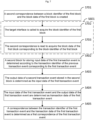
- the data acquisition method may include: step 301 to step 304.
- Step 301 the block chain node creates a target database.
- the target database is used for storing transaction data corresponding to transaction identifiers of a plurality of transaction events in a block chain.
- the target database stores data in a target format.
- the target format may be a CSV format.
- the target database may include: a first correspondence for one-to-one correspondence between the transaction identifiers of the plurality of transaction events and the transaction data of the plurality of transaction events, and a second correspondence for one-to-one correspondence between block identifiers of a plurality of blocks and block data of the plurality of blocks.
- the block data of the plurality of blocks may include the transaction data of the plurality of transaction events.
- the target database may include at least one of the block database 210 or the transaction database 220.
- the transaction data may include input data of a transaction event, for example, an input address and an input amount, and may further include output data of the transaction event, for example, an output address and an output amount.
- the transaction identifier may include a unique identifier of a transaction event, such as a transaction hash value (Tx hash) of the transaction event, a transaction number of the transaction event, and a transaction index value (Tx index) of the transaction event.
- Tx hash transaction hash value
- Tx index transaction index value
- Step 302 the block chain node receives a first request message.
- the first request message is used for requesting to acquire target transaction data of a target transaction event.
- the first request message includes a target transaction identifier of the target transaction event.
- the method for the block chain node to receive the first request message may include: a client sends the first request message to the block chain node.
- the client may receive a receipt message sent by the block chain node, wherein the receipt message includes the transaction identifier of the current transaction event. Subsequently, when a user holding the client needs to query the target transaction data of the target transaction event in the block chain, data synchronization may be implemented based on the block chain, and the client may send the first request message to any block chain node.
- Step 303 in response to the first request message, the block chain node acquires the target transaction data from the target database by taking the target transaction identifier as an index.
- the block chain node Since the transaction data corresponding to the transaction identifiers of the plurality of transaction events is stored in the target database, after receiving the request message, the block chain node acquires the target transaction data from the target database by taking the target transaction identifier as the index.
- Step 304 the block chain node sends the target transaction data.
- step 304 it can be seen from step 301 to step 304 that, after receiving the first request message, in response to the first request message, the block chain node may acquire the target transaction data from the pre-created target database by taking the target transaction identifier as the index, and subsequently, the block chain node may send the target transaction data.
- the block chain node since the transaction data stored in the database includes the input data and the output data, the block chain node merely needs to access the target database, so that the data acquisition efficiency can be improved.
- the data acquisition method further includes: step 401 to step 405.
- Step 401 the block chain node acquires in a first block the transaction identifier of a first transaction event, the output data of the first transaction event, and the transaction identifier of a previous transaction event corresponding to the first transaction event.
- the first transaction event is any one event among the plurality of transaction events
- the first block is a block for storing the output data of the first transaction event in the block chain.
- the first transaction event may also be the latest transaction event in the block chain.
- the input data of the current transaction event is the output data of the previous transaction event, therefore the transaction identifier of the current transaction event, the output data of the current transaction event and the transaction identifier of the previous transaction event may be stored in the block.
- the block chain node may traverse the data stored in the plurality of blocks on the block chain, so as to acquire the transaction identifier of the first transaction event, the output data of the first transaction event, and the transaction identifier of the previous transaction event corresponding to the first transaction event.
- the transaction identifier of the previous transaction event may include a spent hash value and a spent index.
- Step 402 the block chain node determines a second block for storing the input data of the first transaction event according to the transaction identifier of the previous transaction event corresponding to the first transaction event.
- the block chain node may traverse the data stored in the plurality of blocks, when the transaction identifier of the current transaction event stored in a block is the same as the transaction identifier of the previous transaction event corresponding to the first transaction event, it indicates that the current transaction event stored in the block is the previous transaction event corresponding to the first transaction event, and at this time, the block may be determined as the second block for storing the input data of the first transaction event.
- Step 403 the block chain node determines the output data of a second transaction event stored in the second block as the input data of the first transaction event.
- the second transaction event is the previous transaction event of the first transaction event.
- the input data of the current transaction event is the output data of the previous transaction event, therefore when the second transaction event is the previous transaction event of the first transaction event, the block chain node may determine the output data of the second transaction event stored in the second block as the input data of the first transaction event.
- Step 404 the block chain node determines the input data of the first transaction event and the output data of the first transaction event as the transaction data of the first transaction event.
- Step 405 the block chain node determines a correspondence between the transaction identifier of the first transaction event and the transaction data of the first transaction event as the first correspondence of the first transaction event.
- the block chain node may acquire from the data stored in the block that the transaction hash value of a transaction event B is "y", wherein the transaction event B includes an input of which the transaction sequence number is "0", an input of which the transaction sequence number is "1", an input of which the transaction sequence number is "2", an output of which the transaction sequence number is "0", an output of which the transaction sequence number is "1", and an output of which the transaction sequence number is "2".
- the input of which the transaction sequence number is "1” includes a transaction identifier of a previous transaction event A (of which the spent hash value is "x" and the spent index value is "0") corresponding to the transaction event B.
- the block chain node traverses the data stored in the plurality of blocks to acquire that the transaction event A with the transaction hash value "x" includes: the input of which the transaction sequence number is "0", the input of which the transaction sequence number is "1", the input of which the transaction sequence number is “2”, the output of which the transaction sequence number is "0", the output of which the transaction sequence number is "1", and the output of which the transaction sequence number is "2".
- the output data in the output corresponding to the transaction sequence number "0" that is the same as the spent index "0” includes: an address and an amount.
- the block chain node may determine the address, the amount and the input data in the input of which the transaction sequence number is "1" in the transaction event B as the transaction data of the transaction event B, and store a correspondence between the transaction hash value "y" and the transaction data of the transaction event B.
- the block chain node may determine the first correspondence between the transaction identifier and the transaction data of each transaction event according to the data of each transaction event stored in each block. Subsequently, when the client queries the transaction data stored in different blocks, the block chain node may directly read the first correspondence to acquire the transaction data without accessing the data stored in the plurality of blocks.
- the present embodiment provides a possible implementation.
- the method for the block chain node to acquire the transaction identifier of the first transaction event, the output data of the first transaction event, and the transaction identifier of the previous transaction event corresponding to the first transaction event, stored in the first block includes: step 601.
- Step 601 the block chain node calls a target interface to acquire block data of the first block.
- the block data (block info) of the first block includes the transaction identifier of the first transaction event, the output data of the first transaction event, and the transaction identifier of the previous transaction event corresponding to the first transaction event.
- the target interface may include a Remote Procedure Call (RPC) interface.
- RPC Remote Procedure Call
- the block data of the first block further includes a block identifier (block id) corresponding to the first block.
- the block data of the first block may include block header data and block body data; the block header data includes the block identifier; and the block body data includes the transaction identifier of the first transaction event, the output data of the first transaction event, and the transaction identifier of the previous transaction event corresponding to the first transaction event.
- the method for the block chain node to call the target interface to acquire the block data of the first block may include: the block chain node calls the target interface to traverse the plurality of blocks in the block chain, so as to acquire the block data of each block among the plurality of blocks.
- the block chain node can call the target interface to acquire the block data of the first block, so that the transaction data and the transaction identifier of the first transaction event can be subsequently determined according to the block data of the first block.
- the present embodiment provides a possible implementation.
- the data acquisition method further includes: step 701.
- Step 701 the block chain node creates a second correspondence between the block identifier of the first block and the block data of the first block.
- the target database includes a second correspondence for one-to-one correspondence between transaction identifiers of a plurality of blocks and block data of the plurality of blocks, and the plurality of blocks include the first block.
- the target database includes the block database 210, when the block database 210 is a KV database, the key is the block identifier of one block, and the value is the block data of the block.
- the block identifier may include a unique identifier of a block, such as a hash value of the block and a block number of the block.
- the block chain node may create the second correspondence between the block identifier of the first block and the block data of the first block. Subsequently, when needing to query the block data, the block chain node may directly read the target database to acquire the block data, and no interface is required to acquire the block data stored on the block.
- step 601 the method for the block chain node to call the target interface to acquire the block data of the first block includes: step 702 to step 703.
- Step 702 the block chain node calls the target interface to acquire the block identifier of the first block.
- the method for the block chain node to call the target interface to acquire the block identifier of the first block may include: the block chain node calls the target interface to traverse the plurality of blocks in the block chain, so as to acquire the block identifier of each block among the plurality of blocks.
- Step 703 the block chain node reads the second correspondence to acquire the block data of the first block corresponding to the block identifier of the first block.
- the block chain node may access the second correspondence from the block database 210.
- the second correspondence stored in the target database may include block data 0 stored in a block corresponding to a block identifier 0, block data 1 stored in a block corresponding to a block identifier 1, whil and block data n stored in a block corresponding to a block identifier n.
- the block chain node may call the target interface to acquire the block identifier of the first block, and then read the second correspondence to acquire the block data of the first block corresponding to the block identifier of the first block. In this way, the block chain node does not need to request the block data from the block, thereby reducing the amount of data acquired by calling the interface and effectively improving the data acquisition efficiency.
- the data acquisition method further includes: step 901 to step 903.
- Step 901 the block chain node receives a second request message.
- the second request message is used for requesting to acquire target block data of a target block, and the second request message includes a target block identifier of the target block.
- the method for the block chain node to receive the second request message may include: the client sends the second request message to the block chain node, or when any block chain node on the block chain needs to acquire the block data to perform a business service, the block chain node may generate the second request message.
- Step 902 in response to the second request message, the block chain node acquire the target block data from the target database by taking the target block identifier as an index.
- the block chain node Since the block data corresponding to the block identifiers of the plurality of blocks is stored in the target database, after receiving the request message, the block chain node acquires the target block data from the target database by taking the target block identifier as the index.
- Step 903 the block chain node sends the target block data.
- step 903 it can be seen from step 901 to step 903 that, after receiving the second request message, in response to the second request message, the block chain node may acquire the target block data from the pre-created target database by taking the target block identifier as the index, and the block chain node may send the target block data subsequently.
- the block chain node merely needs to access the target database to acquire the block data, so that the data acquisition efficiency can be improved.
- the data acquisition method includes step 1001 to step 1008.
- Step 1001 a block chain node synchronizes block data in a block chain.
- the block chain node on the block chain may synchronize the block data after running.
- Step 1002 the block chain node acquires block data and a block identifier.
- Step 1003 the block chain node creates a second correspondence between the block data and the block identifier, and stores the second correspondence in a target database.
- Step 1004 the block chain node acquires, from a block database, a transaction identifier of a first transaction event, output data of the first transaction event, and a transaction identifier of a previous transaction event corresponding to the first transaction event.
- Step 1005 the block chain node determines output data of the previous transaction event from the target database as input data of the first transaction event by using the transaction identifier of the previous transaction event corresponding to the first transaction event as an index, and determines the input data of the first transaction event and the output data of the first transaction event as transaction data of the first transaction event.
- Step 1006 the block chain node creates a first correspondence between the transaction identifier of the first transaction event and the transaction data of the first transaction event.
- Step 1007 the block chain node determines whether the target database includes the transaction data of all transaction events in the block chain.
- step 1002 to step 1007 are repeatedly executed.
- Step 1008 the block chain node stores the transaction data in the target database in a target format.
- the target database created by the block chain node further includes: transaction data 0 of a transaction event corresponding to a transaction identifier 0, transaction data 1 of a transaction event corresponding to a transaction identifier 1, « and transaction data m of a transaction event corresponding to a transaction identifier m.
- the data acquisition apparatus may include one or more hardware structures and/or software modules for implementing the foregoing corresponding data acquisition method, and these execution hardware structures and/or software modules may constitute an electronic device.
- the embodiments of the present disclosure may be implemented based on hardware or a combination manner of hardware and computer software. Whether a certain function is executed by hardware or computer software driving hardware depends on particular applications and design constraint conditions of the technical solutions. Those skilled in the art may use different methods to implement the described functions for each particular application, but it should not be considered that this implementation goes beyond the scope of the embodiments of the present disclosure.
- Fig. 12 is a structural diagram of a data acquisition apparatus according to one or more embodiments.
- the data acquisition apparatus includes a communication unit 1201 and a processing unit 1202, wherein the communication unit 1202 is configured to receive a first request message; the processing unit 1202 is configured to, in response to the request message, acquire target transaction data from a target database by taking a target transaction identifier as an index; and the communication unit 1201 is further configured to send the target transaction data.
- the processing unit 1202 is further configured to acquire the transaction identifier of a first transaction event stored in a first block, the output data of the first transaction event, and the transaction identifier of a previous transaction event corresponding to the first transaction event; determine a second block for storing input data of the first transaction event according to the transaction identifier of the previous transaction event corresponding to the first transaction event; determine output data of a second transaction event stored in the second block as the input data of the first transaction event; and determine the input data of the first transaction event and the output data of the first transaction event as the transaction data of the first transaction event; and determine a correspondence between the transaction identifier of the first transaction event and the transaction data of the first transaction event as a first correspondence of the first transaction event.
- the processing unit 1202 is configured to call a target interface to acquire block data of the first block.
- the processing unit 1202 is further configured to create a second correspondence between a block identifier of the first block and the block data of the first block.
- the processing unit 1202 is configured to call the target interface to acquire the block identifier of the first block, and read the second correspondence to acquire the block data of the first block corresponding to the block identifier of the first block.
- the processing unit 1202 is configured to call the target interface to traverse a plurality of blocks in the block chain, so as to acquire the block identifier of each block among the plurality of blocks.
- the communication unit 1201 is further configured to receive a second request message, in response to the second request message, acquire target block data from the target database by taking a target block identifier as an index, and send the target block data.
- the embodiments of the present disclosure may divide the functional modules of the block chain node according to the above method examples.
- the integrated module may be implemented in the form of hardware and may also be implemented in the form of a software functional module.
- the division of the modules in the embodiments of the present disclosure is schematic and is merely a logical function division, and there may be other division manners during actual implementation.
- the functional modules may be divided corresponding to the functions, or two or more functions may be also integrated into one processing module.
- FIG. 13 is a structural diagram of another data acquisition apparatus according to one or more embodiments.
- the data acquisition apparatus may include at least one processor 221, a communication bus 222, a memory 223, and at least one communication interface 224.
- the processor 221 may be a central processing unit (CPU), a micro processing unit, an ASIC, or one or more integrated circuits for controlling the program execution of the solutions in the present disclosure. In combination with Fig. 13 , the processor 221 is configured to execute operations executed by the processing unit 1202.
- CPU central processing unit
- ASIC application specific integrated circuit
- the communication bus 222 may include a path for transmitting information between the above components.
- the communications interface 224 an apparatus using a transceiver of any type, is configured to communicate with another device or communications network, such as an electronic device, an Ethernet, a radio access network (RAN), and a wireless local area network, etc.
- another device or communications network such as an electronic device, an Ethernet, a radio access network (RAN), and a wireless local area network, etc.
- the communications interface 224 is configured to operations executed by the communications unit 1201.
- the memory 223 may be a read-only memory (ROM) or other types of static storage devices capable of storing static information and instructions, a random access memory (RAM) or other types of dynamic storage devices capable of storing information and instructions, an electrically erasable programmable read-only memory (EEPROM), a compact disc read-only memory (CD-ROM) or other compact disc storages, optical disc storages (including compressed optical disks, laser disks, optical disks, digital versatile disks, Blu-ray disks, etc.), a magnetic disk storage medium or other magnetic storage devices, or any other media that may be used for carrying or storing desired program codes in the form of instructions or data structures and may be accessed by a computer, but is not limited thereto.
- the memory may be present independently and is connected with the processing unit via a bus, and the memory may also be integrated with the processing unit.
- the memory 223 is configured to store application program codes for executing the solutions of the present disclosure, and the processor 221 controls the execution.
- the processor 221 is configured to execute the application program codes stored in the memory 223, so as to implement functions in the method of the present disclosure.
- the processor 221 may include one or more CPUs, for example, a processor 0 and a processor 1 in Fig. 13 .
- the data acquisition apparatus may include a plurality of processors, for example, a processor 221 and a processor 225 in Fig. 13 .
- processors may be a single-CPU processor and may also be a multi-CPU processor.
- the processor herein may refer to one or more devices, circuits, and/or processing cores for processing data (e.g., computer program instructions).
- the data acquisition apparatus may further include an input device 226 and an output device 227, wherein the input device 226 communicates with the output device 227, and may accept the input of the user in a plurality of manners, for example, the input device 226 may be a mouse, a keyboard, a touch screen device, a sensing device, or the like; and the output device 227 communicates with the processor 221, and may display information in a variety of manners, for example, the output device 227 may be a liquid crystal display (LCD), a light emitting diode (LED) display device, etc.
- LCD liquid crystal display
- LED light emitting diode
- Fig. 13 does not constitute a limitation on the data acquisition apparatus, and the data acquisition apparatus may include more or fewer components than those illustrated, or combine some components or use different component arrangements.
- An embodiment of the present disclosure further provides a computer-readable storage medium including an instruction, wherein the instruction is stored on the computer-readable storage medium, and when the instruction in the computer-readable storage medium is executed by a processor of a data acquisition apparatus, the data acquisition apparatus may execute the data acquisition method provided in the above embodiments.
- the computer-readable storage medium may be the memory 223 including an instruction, and the instruction may be executed by the processor 221 of the data acquisition apparatus to complete the above method.
- the computer-readable storage medium may be a non-transitory computer-readable storage medium, for example, without limitation, the non-transitory computer-readable storage medium may include a hard disk drive (HDD), a floppy disk drive, a flash memory, an optical disk, a magneto-optical disk, a magnetic tape or a universal serial bus (USB) drive, or combinations of two or more of the above.
- the computer-readable storage medium may include a removable or non-removable (or fixed) medium, or the computer-readable storage medium is a non-volatile solid-state memory.
- the computer-readable storage medium may be inside or outside the data acquisition apparatus.
Landscapes
- Engineering & Computer Science (AREA)
- Business, Economics & Management (AREA)
- Theoretical Computer Science (AREA)
- Accounting & Taxation (AREA)
- General Physics & Mathematics (AREA)
- Physics & Mathematics (AREA)
- Finance (AREA)
- Databases & Information Systems (AREA)
- General Business, Economics & Management (AREA)
- Strategic Management (AREA)
- General Engineering & Computer Science (AREA)
- Data Mining & Analysis (AREA)
- Software Systems (AREA)
- Computer Security & Cryptography (AREA)
- Computing Systems (AREA)
- Development Economics (AREA)
- Economics (AREA)
- Marketing (AREA)
- Technology Law (AREA)
- Computational Linguistics (AREA)
- Computer Networks & Wireless Communication (AREA)
- Information Retrieval, Db Structures And Fs Structures Therefor (AREA)
Applications Claiming Priority (2)
| Application Number | Priority Date | Filing Date | Title |
|---|---|---|---|
| CN202211007893.3A CN115422184A (zh) | 2022-08-22 | 2022-08-22 | 一种数据获取方法、装置、设备及存储介质 |
| PCT/CN2023/114179 WO2024041505A1 (zh) | 2022-08-22 | 2023-08-22 | 数据获取方法、装置和设备 |
Publications (2)
| Publication Number | Publication Date |
|---|---|
| EP4550167A1 true EP4550167A1 (de) | 2025-05-07 |
| EP4550167A4 EP4550167A4 (de) | 2025-10-22 |
Family
ID=84197897
Family Applications (1)
| Application Number | Title | Priority Date | Filing Date |
|---|---|---|---|
| EP23856595.6A Pending EP4550167A4 (de) | 2022-08-22 | 2023-08-22 | Datenerfassungsverfahren und -vorrichtung sowie vorrichtung |
Country Status (4)
| Country | Link |
|---|---|
| US (1) | US20260044509A1 (de) |
| EP (1) | EP4550167A4 (de) |
| CN (1) | CN115422184A (de) |
| WO (1) | WO2024041505A1 (de) |
Families Citing this family (1)
| Publication number | Priority date | Publication date | Assignee | Title |
|---|---|---|---|---|
| CN115422184A (zh) * | 2022-08-22 | 2022-12-02 | 中国人民银行数字货币研究所 | 一种数据获取方法、装置、设备及存储介质 |
Family Cites Families (12)
| Publication number | Priority date | Publication date | Assignee | Title |
|---|---|---|---|---|
| WO2009143084A1 (en) * | 2008-05-18 | 2009-11-26 | Zetawire, Inc. | Secured electronic transaction system |
| CN106503053B (zh) * | 2016-09-26 | 2019-07-16 | 江苏通付盾科技有限公司 | Utxo查询方法及装置 |
| US10929473B2 (en) * | 2018-09-27 | 2021-02-23 | Palo Alto Research Center Incorporated | Integrated index blocks and searching in blockchain systems |
| CN110175913B (zh) * | 2019-04-12 | 2021-03-02 | 创新先进技术有限公司 | 基于区块链的数据处理系统、方法、计算设备及存储介质 |
| US10795874B2 (en) * | 2019-07-29 | 2020-10-06 | Alibaba Group Holding Limited | Creating index in blockchain-type ledger |
| CN112529647B (zh) * | 2019-09-19 | 2023-05-26 | 上海哔哩哔哩科技有限公司 | 基于区块链的商品交易方法、装置、计算机设备 |
| CN111339106B (zh) * | 2020-05-18 | 2020-08-28 | 杭州趣链科技有限公司 | 一种区块链数据索引的方法 |
| CN113268345A (zh) * | 2021-04-07 | 2021-08-17 | 北京邮电大学 | 基于区块链系统的交易方法、装置以及存储介质 |
| CN113450223A (zh) * | 2021-07-13 | 2021-09-28 | 成都质数斯达克科技有限公司 | 基于utxo模型的交易处理方法、装置、设备及存储介质 |
| CN113641649B (zh) * | 2021-10-18 | 2022-02-18 | 杭州趣链科技有限公司 | 数据获取方法、装置、设备和存储介质 |
| CN114860806B (zh) * | 2022-05-11 | 2024-11-29 | 金蝶软件(中国)有限公司 | 区块链的数据查询方法、装置、计算机设备和存储介质 |
| CN115422184A (zh) * | 2022-08-22 | 2022-12-02 | 中国人民银行数字货币研究所 | 一种数据获取方法、装置、设备及存储介质 |
-
2022
- 2022-08-22 CN CN202211007893.3A patent/CN115422184A/zh active Pending
-
2023
- 2023-08-22 WO PCT/CN2023/114179 patent/WO2024041505A1/zh not_active Ceased
- 2023-08-22 US US19/100,357 patent/US20260044509A1/en active Pending
- 2023-08-22 EP EP23856595.6A patent/EP4550167A4/de active Pending
Also Published As
| Publication number | Publication date |
|---|---|
| CN115422184A (zh) | 2022-12-02 |
| WO2024041505A1 (zh) | 2024-02-29 |
| EP4550167A4 (de) | 2025-10-22 |
| US20260044509A1 (en) | 2026-02-12 |
Similar Documents
| Publication | Publication Date | Title |
|---|---|---|
| JP5798248B2 (ja) | 規模変更可能なデータ記憶サービスを実装するためのシステムおよび方法 | |
| US10712950B2 (en) | System and method for performing live partitioning in a data store | |
| WO2020259352A1 (zh) | 一种数据处理方法、节点及区块链系统 | |
| US9372911B2 (en) | System and method for performing replica copying using a physical copy mechanism | |
| CN110727727B (zh) | 一种数据库的统计方法及装置 | |
| EP3618352A1 (de) | Verwaltung einer virtuellen maschine | |
| CN113204598A (zh) | 一种数据同步方法、系统及存储介质 | |
| US11693686B2 (en) | Enhanced management of storage repository availability in a virtual environment | |
| CN114443908A (zh) | 图数据库构建方法、系统、终端及存储介质 | |
| WO2022048359A1 (zh) | 一种数据归档方法、装置、电子设备和存储介质 | |
| US12452331B1 (en) | File-sharing method, apparatus and system, electronic device, and storage medium | |
| CN116244381A (zh) | 一种数据转移方法、装置、设备及存储介质 | |
| CN118193479A (zh) | 一种存储空间的分配方法及服务器 | |
| EP4550167A1 (de) | Datenerfassungsverfahren und -vorrichtung sowie vorrichtung | |
| US12367296B2 (en) | Native multi-tenant row table encryption | |
| CN113282389A (zh) | 会话连接请求的处理方法、装置及服务器 | |
| CN115098738B (zh) | 业务数据的提取方法、装置、存储介质及电子设备 | |
| CN116723246A (zh) | 多云资源数据的处理方法、装置、设备及存储介质 | |
| CN113656411B (zh) | 用于图数据入库的方法及其装置 | |
| US10110670B2 (en) | Allocation of service endpoints to servers | |
| CN114979143B (zh) | 一种分布式服务的实现方法和分布式服务系统 | |
| CN115860953A (zh) | 一种信息获取方法、装置、设备及存储介质 | |
| CN114629806A (zh) | 数据处理方法、装置、电子设备、存储介质及程序产品 | |
| CN116107801A (zh) | 交易处理方法及相关产品 | |
| CN117235084B (zh) | 数据更新方法、装置、设备及存储介质 |
Legal Events
| Date | Code | Title | Description |
|---|---|---|---|
| STAA | Information on the status of an ep patent application or granted ep patent |
Free format text: STATUS: THE INTERNATIONAL PUBLICATION HAS BEEN MADE |
|
| PUAI | Public reference made under article 153(3) epc to a published international application that has entered the european phase |
Free format text: ORIGINAL CODE: 0009012 |
|
| STAA | Information on the status of an ep patent application or granted ep patent |
Free format text: STATUS: REQUEST FOR EXAMINATION WAS MADE |
|
| 17P | Request for examination filed |
Effective date: 20250203 |
|
| AK | Designated contracting states |
Kind code of ref document: A1 Designated state(s): AL AT BE BG CH CY CZ DE DK EE ES FI FR GB GR HR HU IE IS IT LI LT LU LV MC ME MK MT NL NO PL PT RO RS SE SI SK SM TR |
|
| A4 | Supplementary search report drawn up and despatched |
Effective date: 20250924 |
|
| RIC1 | Information provided on ipc code assigned before grant |
Ipc: G06F 16/22 20190101AFI20250918BHEP Ipc: G06Q 20/06 20120101ALI20250918BHEP Ipc: G06Q 20/22 20120101ALI20250918BHEP Ipc: G06Q 20/36 20120101ALI20250918BHEP Ipc: G06Q 20/38 20120101ALI20250918BHEP Ipc: G06Q 20/40 20120101ALI20250918BHEP |
|
| DAV | Request for validation of the european patent (deleted) | ||
| DAX | Request for extension of the european patent (deleted) |