EP4550164A1 - Verfahren und vorrichtung zur modellkonstruktion und zum abonnieren von modelldaten, elektronische vorrichtung und medium - Google Patents
Verfahren und vorrichtung zur modellkonstruktion und zum abonnieren von modelldaten, elektronische vorrichtung und medium Download PDFInfo
- Publication number
- EP4550164A1 EP4550164A1 EP23830456.2A EP23830456A EP4550164A1 EP 4550164 A1 EP4550164 A1 EP 4550164A1 EP 23830456 A EP23830456 A EP 23830456A EP 4550164 A1 EP4550164 A1 EP 4550164A1
- Authority
- EP
- European Patent Office
- Prior art keywords
- model
- data
- data model
- sub
- attribute
- Prior art date
- Legal status (The legal status is an assumption and is not a legal conclusion. Google has not performed a legal analysis and makes no representation as to the accuracy of the status listed.)
- Pending
Links
Images






Classifications
-
- G—PHYSICS
- G06—COMPUTING OR CALCULATING; COUNTING
- G06F—ELECTRIC DIGITAL DATA PROCESSING
- G06F16/00—Information retrieval; Database structures therefor; File system structures therefor
- G06F16/20—Information retrieval; Database structures therefor; File system structures therefor of structured data, e.g. relational data
- G06F16/21—Design, administration or maintenance of databases
-
- G—PHYSICS
- G06—COMPUTING OR CALCULATING; COUNTING
- G06F—ELECTRIC DIGITAL DATA PROCESSING
- G06F30/00—Computer-aided design [CAD]
- G06F30/20—Design optimisation, verification or simulation
-
- G—PHYSICS
- G06—COMPUTING OR CALCULATING; COUNTING
- G06F—ELECTRIC DIGITAL DATA PROCESSING
- G06F16/00—Information retrieval; Database structures therefor; File system structures therefor
- G06F16/20—Information retrieval; Database structures therefor; File system structures therefor of structured data, e.g. relational data
- G06F16/21—Design, administration or maintenance of databases
- G06F16/211—Schema design and management
- G06F16/213—Schema design and management with details for schema evolution support
-
- G—PHYSICS
- G06—COMPUTING OR CALCULATING; COUNTING
- G06F—ELECTRIC DIGITAL DATA PROCESSING
- G06F16/00—Information retrieval; Database structures therefor; File system structures therefor
- G06F16/20—Information retrieval; Database structures therefor; File system structures therefor of structured data, e.g. relational data
- G06F16/21—Design, administration or maintenance of databases
- G06F16/219—Managing data history or versioning
-
- G—PHYSICS
- G06—COMPUTING OR CALCULATING; COUNTING
- G06F—ELECTRIC DIGITAL DATA PROCESSING
- G06F16/00—Information retrieval; Database structures therefor; File system structures therefor
- G06F16/20—Information retrieval; Database structures therefor; File system structures therefor of structured data, e.g. relational data
- G06F16/23—Updating
- G06F16/2358—Change logging, detection, and notification
-
- G—PHYSICS
- G06—COMPUTING OR CALCULATING; COUNTING
- G06Q—INFORMATION AND COMMUNICATION TECHNOLOGY [ICT] SPECIALLY ADAPTED FOR ADMINISTRATIVE, COMMERCIAL, FINANCIAL, MANAGERIAL OR SUPERVISORY PURPOSES; SYSTEMS OR METHODS SPECIALLY ADAPTED FOR ADMINISTRATIVE, COMMERCIAL, FINANCIAL, MANAGERIAL OR SUPERVISORY PURPOSES, NOT OTHERWISE PROVIDED FOR
- G06Q10/00—Administration; Management
- G06Q10/06—Resources, workflows, human or project management; Enterprise or organisation planning; Enterprise or organisation modelling
- G06Q10/063—Operations research, analysis or management
-
- G—PHYSICS
- G06—COMPUTING OR CALCULATING; COUNTING
- G06F—ELECTRIC DIGITAL DATA PROCESSING
- G06F2111/00—Details relating to CAD techniques
- G06F2111/02—CAD in a network environment, e.g. collaborative CAD or distributed simulation
-
- G—PHYSICS
- G06—COMPUTING OR CALCULATING; COUNTING
- G06F—ELECTRIC DIGITAL DATA PROCESSING
- G06F2111/00—Details relating to CAD techniques
- G06F2111/10—Numerical modelling
-
- G—PHYSICS
- G06—COMPUTING OR CALCULATING; COUNTING
- G06F—ELECTRIC DIGITAL DATA PROCESSING
- G06F30/00—Computer-aided design [CAD]
- G06F30/10—Geometric CAD
- G06F30/15—Vehicle, aircraft or watercraft design
Definitions
- the present disclosure relates to the field of information processing technology, and in particular to a model building and model data subscription method, apparatus, electronic device and medium.
- Embodiments of the present disclosure provide a model building and model data subscription method, apparatus, electronic device, and medium for improving the universality, reusability, and compatibility of a model, and, meanwhile, propose a twin event modeling method to efficiently implement the modeling of various types of events.
- the present disclosure provides a model building method, including: building a first data model of a target object and a second data model of at least one sub-object respectively for the target object and the at least one sub-object contained in the target object, where a data model is at least provided with an inherent attribute, the inherent attribute represents a common feature of different types of objects, and the different types of objects includes the target object or the sub-object; and establishing an association relationship between the second data model of the at least one sub-object and the first data model of the target object.
- the target object is a target physical entity and the sub-object is a part entity; or the target object is a target event and the sub-object is a sub-event.
- the data model is further provided with a model identification, and the model identification is used to uniquely identify the data model.
- the association relationship includes that the second data model of the sub-object is a child model of the first data model of the target object; and the first data model of the target object is a unique parent model of the second data model of the sub-object.
- the data model further includes model version information; and the establishing an association relationship between the second data model of the at least one sub-object and the first data model of the target object further includes: establishing an association relationship between at least one version of the first data model of the target object and at least one version of the second data model of the sub-object.
- the data model further includes model version information; and the association relationship includes that one of versions of the second data model of the sub-object is a child model of one of versions of the first data model of the target object, and one of the versions of the data model of the target object is a unique parent model of one of the versions of the second data model of the sub-object.
- the data model includes a structural data model and a predefined data model, and one structural data model corresponds to at least one predefined data model; where the structural data model at least includes a description, including an attribute name and a data type, of an attribute; and the predefined data model is used to record a set of specific values of an attribute of the structural data model corresponding to the predefined data model.
- the data model further includes model version information; and the establishing an association relationship between the second data model of the at least one sub-object and the first data model of the target object further includes: establishing an association relationship between at least one version of a structural data model of the target object, and at least one version of a predefined data model of the sub-object; where the predefined data model is a child model of the structural data model, and the structural data model is a unique parent model of the predefined data model.
- the data model further includes model version information; and the establishing an association relationship between the second data model of the at least one sub-object and the first data model of the target object further includes: establishing an association relationship between at least one version of a predefined data model of the target object and at least one version of a predefined data model of the sub-object; where the predefined data model of the sub-object is a child model of the predefined data model of the target object; and the predefined data model of the target object is a unique parent model of the predefined data model of the sub-object.
- the inherent attribute includes a part or all of the following: a temporal attribute, and a spatial attribute; where the temporal attribute is used to characterize a frequency of change in state of an entity, the spatial attribute is used to characterize a space in which the entity is located, the spatial attribute at least includes a location and a shape, and the entity is the target physical entity or a part entity.
- the inherent attribute includes a part or all of the following: a temporal attribute, and a spatial attribute; where the spatial attribute is used to characterize a space in which an event occurs, the temporal attribute at least includes a start time and further includes at least one of a time duration or an end time, and the event is the target event or a sub-event.
- the data model further includes a unique attribute; the unique attribute represents a unique feature of an object, and the object is the target object or the sub-object; where the unique attribute includes: a member collection including at least one custom member, and each custom member is used to map to one unique feature of the object.
- the present disclosure provides a model data query method, including: building a first data model of a target object and a second data model of at least one sub-object respectively for the target object and the at least one sub-object contained in the target object, where a data model is at least provided with an inherent attribute, the inherent attribute represents a common feature of different types of objects, and the different types of objects includes the target object or the sub-object; establishing an association relationship between the second data model of the at least one sub-object and the first data model of the target object; receiving a subscription request for the first data model, where the subscription request includes subscription item information; identifying a model change feature of a change in model data of the first data model and/or the second data model, where the model change feature includes a model attribute and a model change event; and determining a subscription client based on the model change feature and at least one subscription request, publishing the model change event to the subscription client.
- the target object is a target physical entity and the sub-object is a part entity; or the target object is a target event and the sub-object is a sub-event.
- the model attribute includes a model identification, a name, a version, a temporal attribute, a spatial attribute, and a description.
- the model change event includes: a creation event, a deletion event, a version upgrade event, a structure change event, and an attribute change event.
- the subscription request includes an arbitrary combination in the model change event; or, the subscription request includes an arbitrary combination in the model attribute.
- the method further includes: obtaining a first model identification and an association relationship of a to-be-queried model, where the to-be-queried model is at least one of the first data model of the target object or the second data model of the sub-object; and querying model data of the to-be-queried model and model data of a model associated with the to-be-queried model based on the first model identification and the association relationship.
- the data model further includes model version information; where the obtaining a first model identification and an association relationship of a to-be-queried model further includes: obtaining model version information of the to-be-queried model; and the querying model data of the to-be-queried model based on the first model identification and the association relationship includes: building a query index based on the model version information and the first model identification, and querying model data of the to-be-queried model based on the query index.
- the querying model data of a model associated with the to-be-queried model based on the first model identification and the association relationship includes: obtaining a collection of sub-identifications corresponding to the to-be-queried model based on the association relationship, where the collection of sub-identifications includes a second model identification of at least one child model, a parent model of which is the to-be-queried model; and querying model data of child models respectively based on respective second model identifications in the collection of sub-identifications as the model data of the model associated with the to-be-queried model.
- the present disclosure provides a model building apparatus including: a model building unit, configured for building a first data model of a target object and a second data model of at least one sub-object respectively for the target object and the at least one sub-object contained in the target object, where a data model is at least provided with an inherent attribute, the inherent attribute represents a common feature of different types of objects, and the different types of objects includes the target object or the sub-object; and a model association unit, configured for establishing an association relationship between the second data model of the at least one sub-object and the first data model of the target object.
- the present disclosure provides a model data subscription apparatus including: a model building unit, configured for building a first data model of a target object and a second data model of at least one sub-object respectively for the target object and the at least one sub-object contained in the target object, where a data model is at least provided with an inherent attribute, the inherent attribute represents a common feature of different types of objects, and the different types of objects includes the target object or the sub-object; a model association unit, configured for establishing an association relationship between the second data model of the at least one sub-object and the first data model of the target object; and a data subscription unit, configured for receiving a subscription request for the first data model, where the subscription request includes subscription item information; identifying a model change feature of a change in model data of the first data model and/or the second data model, where the model change feature includes a model attribute and a model change event; and determining a subscription client based on the model change feature and at least one subscription request, publishing the model change event to the subscription client.
- a model building unit
- embodiments of the present disclosure provide an electronic device including a processor and a memory, where the memory stores a computer program, the computer program is executed by the processor to cause the processor to perform the above model building method or model data subscription method.
- embodiments of the present disclosure provide a computer-readable storage medium including a computer program, where the computer program, when the computer program is run on an electronic device, is used to cause the electronic device to perform the above model building method or model data subscription method.
- embodiments of the present disclosure provide a computer program product, including a computer program stored in a computer-readable storage medium; when a processor of an electronic device reads the computer program from the computer-readable storage medium, the processor executes the computer program to cause the electronic device to perform the above model building method or model data subscription method.
- Embodiments of the present disclosure provide a model building and model data subscription method, apparatus, electronic device, and medium.
- the present disclosure uses a model structure with consistency to abstract various types of objects in the objective world, including physical entities and events, which allows the user to build a digital twin model (i.e., a data model) of an arbitrary object (e.g., a thing, a scenario, a system, an event, etc.) in a unified platform.
- the built data model at least characterizes the common feature of different types of objects, and the data mode of the object with the associated relationship and the data mode of the sub-object contained therein are also associated.
- the present disclosure proposes an efficient and unified event modeling method, which not only meets the requirements of universality, reusability, and compatibility of the modeling method, but also allows the user to carry out full life cycle management of events occurring in the objective world on a unified platform.
- the present disclosure not only realizes a unified modeling method with universality, but also realizes a model data subscription method.
- the subscription request for the data model is received, and the model change feature of the model data which has changed is identified by combining subscription item information in the subscription request, then the subscription client can be determined on the basis of the model change feature and the subscription request, and the model change event is published to the subscription client.
- the subscription client can subscribe to the model data of the first data model and the model data of the second data model only through the subscription request for the first data model, so as to ensure that the subscription client can obtain the model change event in real time when the model data change occurs, and update the changed data in a timely manner.
- Digital twin refers to a product digital management method built using advanced modeling and simulation tools, covering a product life cycle and an entire value chain, and integrating and driving a unified model as a core of a product from all aspects of product design, manufacturing, and use and maintenance.
- Entity refers to a stuff, e.g., a thing, a product, a systems, etc., existing independently as the basis of all attributes and the origin of everything. According to the inclusion relationship, the entities herein are divided into two parts: physical entities and part entities contained in object entities.
- the physical entity can be a system, a thing, a product, a scenario, etc.
- the part entity refers to sub-portions contained in the physical entity, e.g., various module units contained in a system, parts contained in a thing, various sub-portions contained in a product, etc.
- Event and sub-event means a matter or item.
- anything may be accompanied by the generation of at least one event activity, i.e., event.
- event activity i.e., event.
- a thing of migratory bird may be accompanied by a migration event activity
- a peach tree may be accompanied by event activities such as blossoming, fruiting, etc.
- a conference room may be accompanied by a meeting event activity
- a teaching building may be accompanied by event activities such as lectures and studies, etc.
- an event occurring may also contain multiple sub-events, for example, the learning event can be divided into Chinese class learning sub-event, math class learning sub-event, English class learning sub-event and so on.
- Inherent attributes means some attributes that are common and naturally exist between different objects, which can also be called natural attributes.
- the object is a physical entity, in the objective world, a certain moment and a certain spatial location can be used to uniquely determine an entity and its state, and the entity state changes with time at a certain frequency, i.e., an arbitrary entity can naturally be described by using time and space; and when the object is an event, in the objective world, an arbitrary event activity occurring is composed of the space in which the event activity occurs as well as a start time and an end time of the event activity. That is, the arbitrary event can naturally be described using time and space. Therefore, spatial and temporal attributes are inherent attributes.
- Unique attribute means an attribute that distinguishes an object from other objects, also known as a particular attribute. For example, when the object is a physical entity, the number of tires and composition structure of a car is different from that of an electric bike, and the shape and size of a car is different from that of a tree, which are all unique attributes.
- the object is an event, for example, the learning event has a unique knowledge attribute, and the migration event has a unique route attribute, etc., all of these are unique attributes.
- Data model in which data are symbolic records that describe things.
- a model is an abstraction of the real world.
- a data model is an abstraction of data features, and in embodiments of the present disclosure, the data model is used to record data features of an object and of related sub-objects.
- the data model is used to record data features of the physical entity and of related part entities, at least including inherent attribute data features, such as the space in which the entity is located; and may further include unique attribute data features of the entity.
- the data model is used to record data features of the event and of related sub-events, at least including inherent attribute data features, such as the space in which the event occurs; and may further include unique attribute data features of the event.
- the data model in the present disclosure may be stored in a database.
- the data model in embodiments of the present disclosure includes a first data model and a second data model. Where “first” and “second” are used to differentiate the objects corresponding to the data models, the first data model is a model of a target object, and the second data model is a model of sub-objects included in the target object.
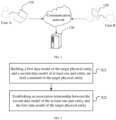
- FIG. 1 is a schematic diagram of an application scenario in embodiments of the present disclosure.
- the diagram of the application scenario includes two terminal devices, which are a first terminal device 110 and a second terminal device 120, and a server 130.
- the terminal device includes, but is not limited to, a cell phone, a tablet computer, a laptop computer, a desktop computer, an e-book reader, an intelligent voice interaction device, an intelligent home appliance, an in-vehicle terminal, and other device.
- the terminal device may be installed with a client related to model building and model subscription, and the client may be a software (e.g., a browser), a web page, a small program, and the like.
- a model development client may be installed on the first terminal device 110, and the subscription client may be installed on the second terminal device 120.
- the model database is used to store a built data model and may be deployed in the terminal device (e.g., the first terminal device 110) or in the server 130.
- the server 130 may be an Independent physical server, or a server cluster or a distributed system composed of multiple physical servers, or may be a cloud server providing basic cloud computing services such as a cloud service, a cloud database, cloud computing, a cloud function, a cloud storage, a network service, a cloud communication, a middleware service, a domain name service, a security service, a content delivery network (CDN), and a big data and artificial intelligence platform, etc.
- the following is mainly based on the model database deployed in the server 130 as an example, and other situations are equally applicable to the present disclosure without specific limitation herein.
- the user A may, through the model development client on the first terminal device 110, create a data model and edit a inherent attribute, a unique attribute, and the like contained in the data model through an editing interface, and then send a corresponding request to a server in which a model database is deployed (hereinafter referred to as sending a request to the model database).
- the model database receives the request sent by the model development client and stores the relevant model data.
- the user B may, through the subscription client on the second terminal device 120, send a subscription request for the data model to the model development client (forwarded by the model development client) or the model database to obtain relevant subscription information and to query the model data of the data model, and the like.
- the communication network is a wired network or a wireless network.
- FIG. 1 is only an example, and in fact the number of terminal devices (model development client, subscription client) and the number of model databases are not limited, and are not specifically limited in the embodiments of the present disclosure.
- the present disclosure proposes a model building and model data subscription method, apparatus, electronic device, and medium, where a target object is a target physical entity and a sub-object is a part entity; or, the object is a target event and the sub-object is a sub-event.
- the physical entity when the above object is determined to be the physical entity, in order to distinguish between the physical entity and the event, the physical entity is used in all the following descriptions.
- FIG. 2 is an implementation flowchart of a model building method for a physical entity provided by an embodiment of the present disclosure
- a specific implementation flow of the method includes the following steps S21-S22.
- S21 a first data model of the target physical entity and a second data model of at least one part entity are built, respectively, for the target physical entity and the at least one part entity contained in the target physical entity.
- the data model in the embodiments of the present disclosure includes the first data model and the second data model, and the data model is at least provided with an inherent attribute and the inherent attribute denotes a common feature(s) among different types of entities.
- the different types of entities include different types of target physical entities or different types of part entities.
- a target physical entity For a target physical entity, its inherent attribute is a common feature of different types of target physical entities.
- a part entity its inherent attribute is a common feature of different types of part entities. Because in the objective world, a certain moment and a certain spatial location can uniquely determine a thing and its state, and the state of the thing changes with time at a certain frequency, i.e., the arbitrary physical entity can naturally be described using time and space, where the time refers to the frequency of change of the thing, and the space refers to the location and shape of the physical entity.
- a physical entity can be abstracted as a natural attribute, i.e., an inherent attribute. Based on the above description, the inherent attribute can be further at least divided into a temporal attribute and a spatial attribute.
- the inherent attribute includes, but is not limited to, a part or all of the following: a temporal attribute, and a spatial attribute.
- the temporal attribute is used to characterize a frequency of change in state of an entity;
- the spatial attribute is used to characterize a space in which an entity is located; and
- the spatial attribute at least includes a location and a shape.
- the entity is a target physical entity or a part entity. That is, a spatial attribute of the first data model represents a space in which the target physical entity is located, and a temporal attribute of the first data model is used to characterize a frequency of change in state of the target physical entity.
- a spatial attribute of the second data model represents a space in which the part entity is located, and the temporal attribute of the second data model is used to characterize a frequency of change in state of the part entity.
- the part entity is part of the target physical entity, and thus, the inherent attribute of the first data model and the inherent attribute of the second data model may be the same or different.
- a space of the target physical entity is an X building
- a space of one of the part entities contained therein is also the X1 building
- the target physical entity a car
- the spatial attribute and the temporal attribute corresponding to one (wheel) of the part entities contained therein, and that corresponding to the car are the same.
- the different refers to that the inherent attribute of the second data model are more detailed than those of the first data model.
- the space of the target physical entity a shopping mall
- the space of one (a store in that mall) of the part entities contained therein is an X2 room in the X1 building, and so on.
- the data model may also include a unique attribute; the unique attribute represents a unique feature of the entity, which is the target physical entity or a part entity.
- the unique attribute includes, but is not limited to: a member collection including at least one custom member.
- Each custom member is used to map to one unique feature of the target physical entity.
- the custom member(s) may be represented as: a member list or collection, and the member list is used to map to an attribute unique to an arbitrary type of physical entities in the objective world, and each custom member at least includes a name attribute, a value attribute, and a value type attribute.
- the name attribute is used to characterize a feature name of a unique feature, and for example, if one unique attribute of the target physical entity is temperature, the name can be recorded as "temperature”.
- the value attribute is used to characterize a specific value of a feature value of the unique feature, and for example, if the temperature is 19°C, the value can be recorded as "19”.
- the value type attribute is used to characterize a data type of the feature value, for example, the value type of temperature 19 is the integer, which can be calculated as "int”, and if the number of bits is required to be limited to be up to 64, it can be expressed as "int64".
- the above-listed inherent attribute including the temporal attribute
- the spatial attribute is only an example, an arbitrary inherent attribute determined based on the common feature is applicable to the embodiments of the present disclosure, which is not limited herein.
- the unique attribute is also similar, and the repetitions will not be repeated.
- the data model is also provided with a model identification, and the model identification is used to uniquely identify the data model.
- the model identification may be denoted as GUID, for example, a model identification GUID of the target physical entity A is: guid1, and a model identification GUID of a part entity B contained therein is: guid1.1; and for example, a model identification GUID of the target physical entity C is: guid2, and a model identification GUID of a part entity D contained therein is: guid3, etc.
- GUID GUID
- a model identification GUID of the target physical entity A is: guid1
- a model identification GUID of a part entity B contained therein is: guid1.1
- a model identification GUID of the target physical entity C is: guid2
- a model identification GUID of a part entity D contained therein is: guid3, etc.
- the uniqueness of a physical entity can be characterized by the model identification.
- the model includes the following portions: (1) a unique identification, which maps to the uniqueness of an arbitrary physical entity in the objective world; (2) a temporal attribute, which maps to a temporal attribute naturally possessed by an arbitrary physical entity in the objective world and characterizes that the state of the physical entity changes over time; (3) a spatial attribute, which maps to a spatial attribute naturally possessed by an arbitrary physical entity in the objective world, the spatial attribute at least including a location and a shape; and (4) a custom member(s), which is a member list, where the member list is used to map to an attribute unique to an arbitrary type of physical entities in the objective world, and each custom member at least contains a name attribute, a value attribute, and a value type attribute.
- each member may characterize one of the parameters of the unique attribute of the physical entity, e.g., a member 1 corresponds to a parameter 1, a member 2 corresponds to a parameter 2, etc.
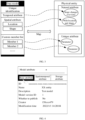
- both the first data model and the second data model in the embodiments of the present disclosure may be represented in the manner shown in FIG. 3 .
- the following is a detailed description of the model building method in the embodiments of the present disclosure, mainly by taking the data model shown in FIG. 3 as an example.
- the process of model building may be implemented by a system at least including a model database and a model development client.
- the user creates data models respectively for a certain type of physical entities and a certain type of corresponding part entities, and the process of creating the data model is as follows.
- S1 the user, through the model development client, clicks to create a data model for the physical entity, and enters a model name and a description, etc.
- the model name can be used to indicate the physical entity (e.g., the target physical entity, or the part entity contained in the target physical entity) characterized by the data model.
- the target physical entity is "warehouse”, a model name of which can be recorded as “warehouse”, and for example, the target physical entity is "car”, a model name of which can be recorded as "car”.
- other naming methods can also be used to name the data model, which is not specifically limited herein. The description is a detailed introduction to the data model and the physical entity.
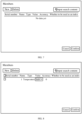
- FIG. 4 is a schematic diagram of a first editing interface in embodiments of the present disclosure.
- the model attribute may further include, in addition to the temporal attribute and spatial attribute (referred to as spatiotemporal attribute) enumerated above, a basic attribute and a storage attribute.
- the basic attribute at least includes, but is not limited to, a part or all of the following: a model identification (i.e., a unique identification GUID, which may also be referred to as an ID), a name, a version, and a description. In addition, it may further include whether to publish, a creator, a modification time, and the like.
- the basic attribute of the model is: a model ID (unique identification) as "xxxxxxxxxx-xxxx-xxxx-xxxxxx-xxxxxxxxxxxxx", where each x is a value in the range of 0-9 or a-f, the name is XX entity, the description is test model, the model version ID is 1, whether to publish is no, the creator is 158xxx479, and the modification time is 2022/1/1 14:20:04.
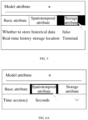
- FIG. 5 is a schematic diagram of a second editing interface in embodiments of the present disclosure.
- the storage attribute of the model is: whether to store historical data: false (no), and a real-time history storage location: terminal.
- the model development client generates an initial data model structure based on a user input, and the data model inherently has the following attributes: a model name, a description, a unique identification, time accuracy, a geometry type, a coordinate system type, coordinates, a relative offset, a rotation angle, and a shape.
- the unique identification is a GUID to ensure that the model can still be ensured to be unique when being passed across multiple systems.
- the spatiotemporal attribute including time accuracy, a geometry type, a coordinate system type, coordinates, a relative offset, a rotation angle, and a shape, etc., are illustrated as an example, which is not specifically limited herein.
- S3 the user enters the model editing interface, and the editing interface displays the inherent attribute of the data model.
- FIG. 6A is a schematic diagram of a third editing interface in embodiments of the present disclosure.
- the spatiotemporal attribute i.e., time accuracy in seconds is displayed on the interface, and the user may click on a symbol to the right of "Time accuracy Second" to display more spatiotemporal attributes.
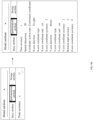
- FIG. 6B is a schematic diagram of a fourth editing interface in the embodiments of the present disclosure, where the user clicks on to display more temporal attributes, e.g., time accuracy in seconds (specific value is not set), a spatial dimension; time accuracy in seconds; and spatial dimension.
- a spatial dimension of 2D i.e., two-dimension
- a coordinate system type that is customized coordinates
- an X-axis direction that is to the right
- an X-axis coordinate type (not set), an X-axis coordinate unit that is centimeter, an X-axis coordinate accuracy that is 2, a Y-axis direction that is down, a Y-axis coordinate type (not set), a Y-axis coordinate unit that is centimeter, a Y-axis coordinate accuracy that is 2, a rotation angle accuracy that is 2, and a Z-axis coordinate accuracy that is 0, etc.
- FIG. 7 is a schematic diagram of a fifth editing interface in the embodiments of the present disclosure.
- This interface is an initial unique attribute editing interface, where the user can add the member by clicking "new" to characterize the unique attributes of the thing, and information related to the member includes a serial number (a serial number of the member, for example, the serial number of the member 1 is 1), a name, a type, a value, accuracy, and whether to be used as an index, etc.
- FIG. 8 is a schematic diagram of a sixth editing interface in the embodiments of the present disclosure.
- This interface indicates that the user has added a member a serial number of which is 1, a name of which is temperature, a type of which is Int64 (i.e., 64-bit integer data), and a value of which is 0, i.e., which indicates that the entity is provided with a unique attribute of temperature, and the specific value is 0.
- Int64 i.e., 64-bit integer data
- the user sends a creation request to the model database, the request contains a session ID, a request ID, and user's editing information, and the editing information refers to member information added by the user, where the member information is a list of a set of user-defined parameters, and each parameter contains a name of the parameter and a data type of the parameter, which is manifested in the form of a string and an enumeration type.
- S6 the model database, after receiving the request, parses the session ID and the request ID in the request for legitimacy verification, and then parses out the editing information in the request, and the database assigns a unique identification to the data model of the created physical entity, i.e., generates a GUID, generates a version number, and serializes the member list in the editing information into a binary stream, which is stored in the form of key-value.
- the key is the generated GUID, which is used as a unique index for querying.
- the database is internally partitioned to have a data model storage area of the physical entity, and all the data models of the physical entity are stored in this area. Since the inherent attribute of the data model of the physical entity is the attribute defined internally in the system, there is no need to additionally store the fixed attribute.
- the first data model of the target physical entity, and the second data model of the part entity contained in the target physical entity may be created. It may also refer to the creation of a structural data model in the data model, which, in combination with the process of creating a predefined data model as enumerated below, can be composed into a model corresponding to the physical entity (or the part entity) including the structural data model and the predefined data model.
- the model is naturally provided with a unique identification, a temporal attribute, and a spatial attribute, and the spatial attribute at least contains a location and a shape, which do not need to be defined by the user.
- a custom member list is used to map to particular attributes of the different types of physical entities.
- a unified structure is used for storing and processing of the different models that are built.
- an association relationship may be established only between the model B of the version Vb0 and the model A of the version Va1, or an association relationship may be established only between the model B of the version Vb0 and the model A of the version Va2, or an association relationship may be established between the model B of the version Vb0 and the model A of both the versions Va1 and Va2.
- the association relationship means that: the second data model of one of the versions of the part entity is a child model of the first data model of one of the versions of the target physical entity; and the first data model of one of the versions of the target physical entity is a unique parent model of the second data model of one of the versions of the part entity.
- association relationships listed above are only examples, and any of the association relationships established between the data model of the target physical entity and the data model of the part entity contained therein are applicable to the embodiments of the present disclosure, and are not specifically limited herein.
- the data model may be divided into two main types, i.e., the data model includes a structural data model and a predefined data model, and one structural data model corresponds to at least one predefined data model.
- a first data model A corresponding thereto may include a structural data model A1 and a predefined data model A2; for a part entity (a wheel) on the car, a second data model B corresponding thereto may include a structural data model B1 and a predefined data model B2.
- the structural data model at least includes a description, i.e., an attribute name, and a data type, of an attribute; and the predefined data model is used to record a set of specific values of the attributes of the structural data model corresponding to the predefined data model, i.e., the predefined data model refers to a data model carrying a set of specification parameter initial values.
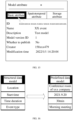
- FIG. 9 is a schematic diagram of a structural data model and a predefined data model in embodiments of the present disclosure.
- the structural data model A1 defines that the structure of a certain type of things contains 4 attributes, namely, a location, a shape, a temperature, and a color
- the predefined data model A2 is the model data that carries a set of initial values of these 4 attributes.
- the location is BJ city
- the shape is triangle
- the temperature is 30°C
- the color is red.
- the data type corresponding to each attribute is not shown in FIG. 9 .
- the data types corresponding to different attributes may be the same (e.g., the data types corresponding to the shape attribute and the color attribute are the same), or different (e.g., the data types corresponding to the temperature attribute and the color attribute are different), which is required to be determined based on the actual situation, and will not be specifically limited herein.
- the difference between the predefinition and the object is that: 1. the predefined data model belongs to the product at the engineering development stage, not at the operation stage, while the object should be generated at the operation stage; and 2. the attribute values of the object are the values at the actual operation stage, while the predefined data model carries only a preset set of specification initial values.
- a set of initial values is configured for the data model of the part entity to generate a predefined data model, and the creation process is as follows.
- S1 the user selects a data model (i.e., a structural data model contained in the data model) through the model development client, and creates a predefined data model (i.e., a predefined data model corresponding to the structural data model) of the data model.
- a data model i.e., a structural data model contained in the data model
- a predefined data model i.e., a predefined data model corresponding to the structural data model
- S2 the user enters the editing interface of the predefined data model, where the predefined data model contains all the attributes of the data model, and the user assigns initial values to these attributes on the editing interface.
- S3 after the user finishes editing, the user sends a creation request to the model database, where the request contains a session ID, a request ID, and data of the predefined data model created by the user.
- S4 the model database, after receiving the request, parses the session ID and the request ID in the request for legitimacy verification, and then parses out the predefined data model data in the request, the database assigns a unique identification for the created predefined data model, i.e., generates a GUID, and serializes the predefined data model into a binary stream, which is stored in the form of key-value.
- the key is the generated GUID, which is used as a unique index for querying.
- the database is internally partitioned to have a predefined data model storage area in which all predefined data models are stored.
- the step S22 may mean: establishing an association relationship between at least one version of the structural data model of the target physical entity and at least one version of the predefined data model of the part entity.
- association relationship is a parent-child structure as enumerated above, it may be an association relationship I: the predefined data model of the part entity is a child model of the structural data model of the target physical entity; and the structural data model of the target physical entity is a unique parent model of the predefined data model of the part entity.
- a first data model A corresponding thereto may include a structural data model A1 (including versions Va1 and Va2) and a predefined data model A2 (including versions Va1 and Va2); and for a part entity (a wheel) of the car, a second data model B corresponding thereto may include a structural data model B1 (including version Vb0) and a predefined data model B2 (including version Vb0).
- an association relationship may be established only between the predefined data model B2 of the version Vb0 and the structural data model A1 of the version Va1, an association relationship may be established only between the predefined data model B2 of the version Vb0 and the structural data model A1 of the version Va2, or an association relationship may be established between the predefined data model B2 of the version Vb0 and the structural data model A1 of the versions Va1 and Va2.
- step S22 may also refer to: establishing an association relationship between at least one version of the predefined data model of the target physical entity and at least one version of the predefined data model of the part entity.
- association relationship II the predefined data model of the part entity is a child model of the predefined data model of the target physical entity; and the predefined data model of the target physical entity is a unique parent model of the predefined data model of the part entity.
- an association relationship may be established only between the predefined data model B2 of the version Vb0 and the predefined data model A2 of the version Va1
- an association relationship may be established only between the predefined data model B2 of the version Vb0 and the predefined data model A2 of the version Va2
- an association relationship may be established only between the predefined data model B2 of the version Vb0 and the predefined data model A2 of the versions Va1 and Va2.
- association relationships enumerated above are merely illustrative, and any of the manners of establishing an association relationship between a target physical entity and the data model of the part entity contained therein is applicable to the embodiments of the present disclosure, and is not specifically limited herein.
- the user selects a predefined data model of the part entity to be associated to a certain version of the data model of the created physical entity as a child model of the data model to form a parent-child structure, and the specific process is as follows.
- S1 the user selects a certain data model for editing on the model development client interface.
- S3 after the user finishes editing, the user sends an editing request to the model database, and the model database, after receiving the request, parses the session ID and the request ID in the request for legitimacy verification, and then parses out the editing information which is the GUID and the version number of the data model selected by the user and the GUID and the name renamed by the user of the child predefined data model added, in the request.
- the database retrieves the predefined data model in the predefined data model storage area of the based on the GUID of the predefinition, then copies the data and generates a new GUID, replaces the GUID and the name in the copied data with the new GUID and the name in the editing information, and serializes the newly generated predefined data, the GUID and the version number of the parent model to which the predefinition is associated, into a binary stream, which is stored in the form of key-value.
- the key is the GUID of the newly generated predefinition, which is used as a unique index for querying.
- the database is internally partitioned to have a child predefined data model storage area, in which all the child predefined data models are stored.
- this composite model of the parent-child structure contains at least the following three aspects: 1. at least two different data models, i.e. a first data model and at least a second data model, existing; 2. at least 2 attributes, spatial and temporal attributes, of the model existing, i.e., at least inherent attribute of the data model existing; and 3. a predefined data model generated by at least one of the data models existing.
- a structural data model of the target physical entity 1 is a model 1
- a structural data model of the part entity 1 is a model 2.
- a predefined model b of the model 2 is first built, and then the predefined model b is copied as a child predefined model b1, and an association relationship is established between the child predefined model b1 and the model 1 to form a parent-child model structure.
- FIG. 11 which an implementation flowchart of a model building method for a target physical entity provided by embodiments of the present disclosure, a specific implementation flow of the method includes the following steps S111-S115.
- S111 a first data model of the target physical entity and a second data model of at least one part entity are built, respectively, for the target physical entity and the at least one part entity contained in the target physical entity.
- the data model is at least provided with a model attribute
- the model attribute represents model features of different types of entities, and the different types of entities include the target physical entity or the part entity.
- the model attribute includes a model identification, a name, a version, a temporal attribute, a spatial attribute, and a description.
- the name is the model name herein
- the version is the model version information herein
- the description may include a description of the model, and may further include a description of the attribute.
- the model attribute can be specifically described in the above embodiments, and the repetition will not be repeated.
- S112 an association relationship is established between the second data model of the at least one part entity and the first data model of the target physical entity.
- S113 a subscription request for the first data model is received, and the subscription request includes subscription item information.
- the subscription client may send to the system a subscription request for the first data model, and the subscription request includes detailed subscription item information.
- the subscription item information specifically refers to the details of the model data that the subscription client needs to subscribe to, such as a model change event that the subscription client needs to subscribe to, and such as the model attribute that the subscription client needs to subscribe to.
- the model change event includes, but is not limited to, a part or all of the following: a creation event, a deletion event, a version upgrade event, a structure change event, and an attribute change event.
- a creation event a creation event
- a deletion event a version upgrade event
- a structure change event a structure change event
- an attribute change event a model change event generated with respect to the model creation, the deletion, the version upgrade, the structure change, and the like, which are not repeated herein.
- the model data may also be queried, and an optional implementation is to: obtain a first model identification and an association relationship of a to-be-queried model; and then, query model data of the to-be-queried model and model data of a model associated with the to-be-queried model based on the first model identification and the association relationship.
- the to-be-queried model is at least one of the first data model of the target physical entity or the second data model of the part entity.
- the data model also includes model version information.
- the model version information of the to-be-queried model should also be obtained.
- a query index is built based on the model version information and the first model identification, and the model data of the to-be-queried model is queried based on the query index.
- a string corresponding to the model version information and a string corresponding to the first model identification may be spliced to obtain the query index.
- the model identification and the model version information are: GUID and Version, respectively
- the query index may be represented as GUID_Version, or may also be represented as Version_GUID, etc., without any specific limitation herein.
- a collection of sub-identifications corresponding to the to-be-queried model may be obtained based on the association relationship, and the collection of sub-identifications includes a second model identification of at least one child model, a parent model of which is the to-be-queried model; and then, the model data of the child models queried respectively based on the second model identifications in the collection of sub-identifications may be queried as the model data of the model associated with the to-be-queried model.
- a parent-child relationship may be formed between the child model and the parent model, and thus, based on the relationship, the second model identification of each child model with the to-be-queried model as the parent model may be obtained, and then, based on the second model identification, the model data of the child model may be queried.
- the query manner in the present disclosure can also query the model data of at least one parent model with the to-be-queried model as a child model, and the specific query process is similar to that described above, so the repetitions will not be repeated.
- the above-listed manners can also be used, i.e., the string corresponding to the model version information and the string corresponding to the second model identification of the child model are spliced to obtain a query index, and the relevant data is queried based on the query index, which can be referred to the above embodiments for details, and the repetitions will not be repeated.
- the data model listed above may also include a structural data model and a predefined data model, and a parent-child relationship may be established between the data models, based on which several manners of querying model data are listed below.
- Manner 1 a method of querying the predefinition based on the model is as follows.
- the model data of the predefined data model of the model can be queried.
- Manner 2 a method of querying a child predefinition based on a predefinition is as follows.
- S1 the user, based on a predefinition a, queries its child predefinitions, and the system, using the model GUID and Version of the model A recorded in the predefinition a as a unique identification, retrieves the model A in the database.
- S2 a list of child predefinitions, in which the GUIDs of all child predefinitions are recorded, is stored in the data of the model A, i.e., a list of unique identifications (i.e., the collection of sub-identifications as described above) of all child predefinitions of predefinition a is obtained.
- S3 the system, based on the list of unique identifications, retrieves all child predefinitions in the database and returns the data.
- the model data of all child predefined data models having the predefined data model of that model as the parent model can be queried.
- Manner 3 a process of querying, based on a predefinition, all models using the predefinition as a child predefinition is as follows.
- S2 the system, when adding the predefinition a1 to the model B as the child predefinition, adds the unique identification GUID of a1 to the list of child predefinitions of model B, splices the GUID and Version of the model B into a string, records the string in the predefinition a1, and uses the string as an index.
- S4 the system obtains the GUID and Version of the parent model B recorded in data based on the data of the predefinition a1, and queries, using the GUID and Version of the parent model B as a unique identification, the data of the model B that is the model that uses the predefinition a as a child.
- the model data of all parent predefined data models having the predefined data model of that model as a child model can be queried.
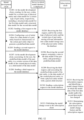
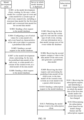
- FIG. 12 is a timing diagram of an interaction between a model development client, a model database (a server in which the model database is deployed) and a subscription client in embodiments of the present disclosure.
- the specific implementation process of the method is as follows.
- step S1201 at the model development client, the user creates a data model for a certain type of physical entity and a data model for a certain type of part entity, respectively, including a structural data model for the first data model and a structural data model for the second data model.
- step S1202 the model development client sends a first request to the model database.
- the model database receives the first request, and for the certain type of physical entity and the certain type of part entity, stores relevant information into a data model storage area of the physical entity within the database.
- the model development client configures a set of initial values for a data model of a part entity based on characteristics of the certain part entity object to generate a predefined data model.
- step S1205 the model development client sends a second request to the model database.
- the model database receives the second request, assigns a value to the data model of the part entity, and generates a predefined data model.
- step S1207 at the model development client, the user associates the predefined data model of the part entity, to a certain version of the data model of the created physical entity, as a child model of the data model.
- the subscription client sends a subscription request to the model database.
- the model database receives the subscription request, and identifies a model change feature in which the model data of the first data model and/or the second data model has changed.
- the model database determines the subscription client based on the model change feature and the subscription request.
- the model database publishes the model change event to the subscription client.
- a unified structure is used to store the data model of the physical entity in the twin objective world, so that the user can build a digital twin model of an arbitrary thing, scenario, or system in a unified platform, thereby satisfying the need for the modeling method to have universality, reusability, and compatibility.
- the addition, deletion, modification, checking and data synchronization update of the model data can be realized in a timely manner by means of subscription.
- S131 a first data model of the target event and a second data model of at least one sub-event are built, respectively, for the target event and the at least one sub-event contained in the target event.
- the data model in the embodiments of the present disclosure includes the first data model and the second data model, and the data model is at least provided with an inherent attribute and the inherent attribute denotes a common feature(s) among different types of events.
- the different types of events include different types of target events or different types of sub-events.
- the inherent attribute includes, but is not limited to, a part or all of the following: a temporal attribute, and a spatial attribute.
- the spatial attribute is used to characterize a space in which the event occurs; the temporal attribute at least includes a start time and further includes at least one of a time duration or an end time; and the event is the target event or a sub-event.
- the event is the target event or the sub-event. That is, the spatial attribute of the first data model represents the space in which the target event occurs, and the temporal attribute is used to characterize a start time, an end time, and a time duration of the target event.
- the spatial attribute of the second data model indicates the space where the sub-event occurs, and the temporal attribute is used to characterize a start time, an end time, and a time duration of the sub-event.
- the value type attribute is used to characterize a data type of the feature value, for example, the value type of temperature 19 is the integer, which can be calculated as "int", and if the number of bits is required to be limited to be up to 64, it can be expressed as "int64".
- the above-listed inherent attribute including the temporal attribute, the spatial attribute is only an example, an arbitrary inherent attribute determined based on the common feature is applicable to the embodiments of the present disclosure, which is not limited herein.
- the unique attribute is also similar, and the repetitions will not be repeated.
- the data model is also provided with a model identification, and the model identification is used to uniquely identify the data model.
- the model identification may be denoted as GUID, for example, a model identification GUID of a target event A is: guid1, and a model identification GUID of a sub-event B contained therein is: guid1.1; and for example, a model identification GUID of a target event C is: guid2, and a model identification GUID of a sub-event D contained therein is: guid3, etc.
- GUID GUID
- a model identification GUID of a target event A is: guid1
- a model identification GUID of a sub-event B contained therein is: guid1.1
- a model identification GUID of a target event C is: guid2
- a model identification GUID of a sub-event D contained therein is: guid3, etc.
- the uniqueness of an event can be characterized by the model identification.
- the model includes the following portions: (1) a unique identification, which maps to the uniqueness of an arbitrary event in the objective world; (2) a temporal attribute, which maps to a start time and an end time, naturally possessed by an arbitrary event in the objective world, of an activity of the event, the temporal attribute at least containing attributes of a start time and a time duration (or an end time); (3) a spatial attribute, which maps to a space, in which an activity of an arbitrary in the objective world occurs, naturally possessed by the event, the spatial attribute being associated with a physical entity model to express the space where the event activity is located; (4) a custom member(s), which is a member list, where the member collection is used to map to an attribute particular to an arbitrary event in the objective world that distinguish it from other events, and each custom member at least contains a name attribute, a value attribute, and a value type attribute.
- each member may characterize one of the parameters of the unique attribute of the event, e.g., a member 1 corresponds to a parameter 1, a member 2 corresponds to a parameter 2, etc.
- Both the first data model for the event and the second data model for the sub-event in the embodiments of the present disclosure may be represented in the manner shown in FIG. 14 .
- the process of model building may be implemented by a system at least including a model database and a model development client.
- the user creates data models respectively for a certain type of events and a certain type of sub-events, and the process of creating the data model is as follows.
- S1 the user, through the model development client, clicks to create a data model for the event, and enters a model name and a description, etc.
- the model name can be used to indicate the event (e.g., the target event, or the sub-events contained in the target event) characterized by the data model.
- the target event is "learning event”, a model name of which can be recorded as “learning”, and for example, the target event is "meeting event", a model name of which can be recorded as “meeting”.
- other naming methods can also be used to name the data model, which is not specifically limited herein. The description is a detailed introduction to the data model and the event.
- FIG. 15 is a schematic diagram of a seventh editing interface in embodiments of the present disclosure.
- the model attribute may further include, in addition to the temporal attribute and spatial attribute (referred to as spatiotemporal attribute) enumerated above, a basic attribute and a storage attribute.
- the basic attribute at least includes, but is not limited to, a part or all of the following: a model identification (i.e., a unique identification GUID, which may also be referred to as an ID), a name, a version, and a description.
- the basic attribute may further include whether to publish, a creator, a modification time, and the like.
- the basic attribute of the model is: a model ID (unique identification) as "xxxxxxxxxx-xxxx-xxxx-xxxxxx-xxxxxxxxxxxxx", where each x is a value in the range of 0-9 or a-f, the name is XX event, the description is test model, the model version ID is 1, whether to publish is no, the creator is 158xxx479, and the modification time is 2022/1/1 14:20:04.
- the storage attribute of the model is: whether to store historical data: false (no), and a real-time history storage location: terminal.
- the model development client generates an initial data model structure based on a user input, and the event model inherently has the following attributes: a model name, a description, a unique identification, an associated space, a start time, a relative offset of time, and a time duration.
- the unique identification is a GUID, which ensures that the model can still be ensured to be unique when being passed across multiple systems.
- the spatiotemporal attribute including time accuracy, a geometry type, a coordinate system type, coordinates, a relative offset, a rotation angle, and a shape, etc., are illustrated as an example, which is not specifically limited herein.
- the data model of the (sub)event can be associated with the data model of the thing entity by this step.
- this interface is an initial unique attribute editing interface, where the user can add the member by clicking "new" to characterize the unique attributes of the thing, and information related to the member includes a serial number (a serial number of the member, for example, the serial number of the member 1 is 1), a name, a type, a value, accuracy, and whether to be used as an index, etc.
- this interface indicates that the user has added a member a serial number of which is 1, a name of which is temperature, a type of which is Int64 (i.e., 64-bit integer data), and a value of which is 0, i.e., which indicates that the event is provided with a unique attribute of temperature, and the specific value is 0.
- the user sends a creation request to the model database, the request contains a session ID, a request ID, and user's editing information, and the editing information refers to thing model information associated with the event model and the member information added by the user, in which the thing model information is expressed as the unique identification GUID of the thing model, the member information is a list of a set of user-defined parameters, and each parameter contains a name of the parameter and a data type of the parameter, which is manifested in the form of a string and an enumeration type.
- S7 the model database, after receiving the request, parses the session ID and the request ID in the request for legitimacy verification, and then parses out the editing information in the request, and the database assigns a unique identification to the created event model, i.e., generates a GUID, and serializes the thing model information and the member list in the editing information into a binary stream, which is stored in the form of key-value.
- the key is the generated GUID, which is used as a unique index for querying.
- the database is internally partitioned to have a data model storage area of the event, and all the data models about the event are stored in this area. Since the inherent attribute of the data model of the event is the attribute defined internally in the system, there is no need to additionally store the fixed attribute.
- the first data model of the target event and the second data model of the sub-event contained in the target event may be created. It may also refer to the creation of a structural data model in the data model, which, in combination with the process of creating a predefined data model as enumerated below, can be composed into a model corresponding to the (sub)event containing the structural data model and the predefined data model.
- the model is naturally provided with a unique identification, a temporal attribute, and a spatial attribute, and the temporal attribute at least contains a start time, a time duration (or an end time), which do not need to be defined by the user.
- a custom member list is used to map to attributes specific to different types of event activities.
- a unified structure is used to allow for the storing and processing of the different models that are built.
- S132 an association relationship is established between the second data model of the at least one sub-event and the first data model of the target event.
- an association relationship may be established between the second data model and the first data model accordingly, facilitating the addition, deletion, modification, checking, subscription, and the like of the data.
- the association relationship means that: the second data model of the sub-event is a child model of the first data model of the target event; and the first data model of the target event is a unique parent model of the second data model of the sub-event.
- the present disclosure proposes a parent-child model structure that can form a composite model including the first data model and at least one second data model.
- the target object event is a learning event
- the first data model corresponding to it is a model A
- one of the sub-events of the target event is a Chinese class learning sub-event
- the second data model corresponding to it is a model B
- the model B belongs to a child model of the model A.
- the data model in the embodiments of the present disclosure further includes model version information (referred to as version).
- version model version information
- an optional implementation of step S132 is to establish an association relationship between at least one version of the first data model of the target event and at least one version of the second data model of the sub-event.
- the model A has two versions, Va1 and Va2
- the model B has one version, Vb0
- an association relationship may be established only between the model B of the version Vb0 and the model A of the version Va1
- an association relationship may be established only between the model B of the version Vb0 and the model A of the version Va2
- an association relationship may be established between the model B of the version Vb0 and the model A of both the versions Va1 and Va2.
- the association relationship means that: the second data model of one of the versions of the sub-event is a child model of the first data model of one of the versions of the target event; and the first data model of one of the versions of the target event is a unique parent model of the second data model of one of the versions of the sub-event.
- the model B of the version Vb0 may be used as a child model of the model A of the version Va1
- the model A of the version Va1 may be used as a parent model of the model B of the version Vb0
- the model B of the version Vb0 may be used as a child model of the model A of the version Va2
- the model A of the version Va2 may be used as a parent model of the model B of the version Vb0 as well.
- the data model may be divided into two main types, i.e., the data model includes a structural data model and a predefined data model, and one structural data model corresponds to at least one predefined data model.
- a first data model A corresponding thereto may include a structural data model A1 and a predefined data model A2; for a sub-event on the learning event, the second data model B corresponding thereto may include a structural data model B1 and a predefined data model B2.
- the structural data model at least includes a description, i.e., an attribute name, and a data type, of an attribute; and the predefined data model is used to record a set of specific values of the attributes of the structural data model corresponding to the predefined data model, i.e., the predefined data model refers to a data model carrying a set of specification parameter initial values.
- FIG. 16 is a schematic diagram of another structural data model and predefined data model in embodiments of the present disclosure.
- the structural data model A1 defines that the structure of a certain type of events contains 4 attributes, namely, a location, a start time, a time duration, and an event type
- the predefined data model A2 is the model data that carries a set of initial values for 4 four attributes.
- the location is the conference room of xxx company
- the start time is 2021.9.20
- the time duration is 30min (minutes)
- the event type is morning meeting. It should be noted that the data type corresponding to each attribute is not shown in FIG. 16 .
- the data types corresponding to different attributes may be the same (e.g., the data types corresponding to the location attribute and the event type attribute are the same), or different (e.g., the data types corresponding to the location attribute and the time duration attribute are different), which is required to be determined based on the actual situation, and will not be specifically limited herein.
- the difference between the predefinition and the object is that: 1. the predefined data model belongs to the product at the engineering development stage, not at the operation stage, while the object should be generated at the operation stage; and 2. the attribute values of the object are the values at the actual operation stage, while the predefined data model carries only a preset set of specification initial values.
- a set of initial values is configured for the data model of the sub-event to generate a predefined data model, and the creation process is as follows.
- S1 the user selects a data model (i.e., a structural data model contained in the data model) through the model development client, and creates a predefined data model (i.e., a predefined data model corresponding to the structural data model) of the data model.
- a data model i.e., a structural data model contained in the data model
- a predefined data model i.e., a predefined data model corresponding to the structural data model
- S2 the user enters the editing interface of the predefined data model, where the predefined data model contains all the attributes of the data model, and the user assigns initial values to these attributes on the editing interface.
- S3 after the user finishes editing, the user sends a creation request to the model database, where the request contains a session ID, a request ID, and data of the predefined data model created by the user.
- S4 the model database, after receiving the request, parses the session ID and the request ID in the request for legitimacy verification, and then parses out the predefined data model data in the request, the database assigns a unique identification for the created predefined data model, i.e., generates a GUID, and serializes the predefined data model into a binary stream, which is stored in the form of key-value.
- the key is the generated GUID, which is used as a unique index for querying.
- the database is internally partitioned to have a predefined data model storage area in which all predefined data models are stored.
- the step S132 may mean: establishing an association relationship between at least one version of the structural data model of the target event, and at least one version of the predefined data model of the sub-event.
- association relationship is a parent-child structure as enumerated above, it may be an association relationship I: the predefined data model of the sub-event is a child model of the structural data model of the target event; and the structural data model of the target event is the only parent model of the predefined data model of the sub-event.
- a first data model A corresponding thereto may include a structural data model A1 (including versions Va1 and Va2) and a predefined data model A2 (including versions Va1 and Va2); and for a sub-event on the learning event, the second data model B corresponding thereto may include a structural data model B1 (including version Vb0) and a predefined data model B2 (including version Vb0).
- an association relationship may be established only between the predefined data model B2 of the version Vb0 and the structural data model A1 of the version Va1, an association relationship may be established only between the predefined data model B2 of the version Vb0 and the structural data model A1 of the version Va2, or an association relationship may be established between the predefined data model B2 of the version Vb0 and the structural data model A1 of the versions Va1 and Va2.
- step S132 may also refer to: establishing an association relationship between at least one version of the predefined data model of the target event and at least one version of the predefined data model of the sub-event.
- association relationship II the predefined data model of the sub-event is a child model of the predefined data model of the target event; and the predefined data model of the target event is a unique parent model of the predefined data model of the sub-event.
- an association relationship may be established only between the predefined data model B2 of the version Vb0 and the predefined data model A2 of the version Va1
- an association relationship may be established only between the predefined data model B2 of the version Vb0 and the predefined data model A2 of the version Va2
- an association relationship may be established only between the predefined data model B2 of the version Vb0 and the predefined data model A2 of the versions Va1 and Va2.
- the user selects a predefined data model of the sub-event to be associated to a certain version of the data model of the created event as a child model of the data model, forming a parent-child structure, and the specific process is as follows.
- S1 the user selects a certain data model for editing on the model development client interface.
- S3 after the user finishes editing, the user sends an editing request to the model database, and the model database, after receiving the request, parses the session ID and the request ID in the request for legitimacy verification, and then parses out the editing information which is the GUID and the version number of the data model selected by the user and the GUID and the name renamed by the user of the child predefined data model added, in the request.
- the database retrieves the predefined data model in the predefined data model storage area of the based on the GUID of the predefinition, then copies the data and generates a new GUID, replaces the GUID and the name in the copied data with the new GUID and the name in the editing information, and serializes the newly generated predefined data, the GUID and the version number of the parent model to which the predefinition is associated, into a binary stream, which is stored in the form of key-value.
- the key is the GUID of the newly generated predefinition, which is used as a unique index for querying.
- the database is internally partitioned to have a child predefined data model storage area, in which all the child predefined data models are stored.
- this composite model of parent-child structure contains at least the three aspects enumerated above, and the repetitions will not be repeated.
- a structural data model of the target event 1 is a model 1
- a structural data model of the sub-event 1 is a model 2.
- a predefined model b of the model 2 is first built, and then the predefined model b is copied as a child predefined model b1, and an association relationship is established between the child predefined model b1 and the model 1 to form the parent-child model structure.
- FIG. 17 is an implementation flowchart of a model building method for an event provided by embodiments of the present disclosure
- a specific implementation flow of the method includes the following steps S171-S175.
- S171 a first data model of the target event, and a second data model of the at least one sub-event are built, respectively, for the target event and the at least one sub-event contained in the target event.
- the data model is at least provided with a model attribute
- the model attribute represents model features of different types of event, and the different types of events include the target event or the sub-event.
- the model attribute includes a model identification, a name, a version, a temporal attribute, a spatial attribute, and a description.
- the name is the model name herein
- the version is the model version information herein
- the description may include a description of the model, and may further include a description of the attribute.
- the model attribute can be specifically described in the above embodiments, and the repetition will not be repeated.
- S172 an association relationship is established between the second data model of the at least one sub-event and the first data model of the target event.
- the subscription client may send to the system a subscription request for the first data model, and the subscription request includes detailed subscription item information.
- the subscription item information specifically refers to the details of the model data that the subscription client needs to subscribe to, such as a model change event that the subscription client needs to subscribe to, and such as the model attribute that the subscription client needs to subscribe to.
- the model change feature is used to characterize what information of the model data has changed, and may include the model attribute and the model change event.
- the model attribute in the model change feature represents an attribute that has changed
- the model change event is an event that is generated in the event that the model data (e.g., the model attribute) changes. If the temporal attribute and the spatial attribute both change respectively, a model change event a may be generated for the change of the temporal attribute, a model change event b may be generated for the change of the spatial attribute respectively, or all the attributes that have changed may be represented by a single model change event, and so on.
- the event may at least characterize the model data corresponding to before and after the change, and may further include information such as the time of the change.
- the model change event includes, but is not limited to, a part or all of the following: a creation event, a deletion event, a version upgrade event, a structure change event, and an attribute change event.
- a creation event a creation event
- a deletion event a version upgrade event
- a structure change event a structure change event
- an attribute change event a model change event generated with respect to the model creation, the deletion, the version upgrade, the structure change, and the like, which are not repeated herein.
- a subscription client is determined based on the model change feature and at least one subscription request, and the model change event is published to the subscription client.
- the subscription request includes an arbitrary combination in the model change event; or, the subscription request includes an arbitrary combination in the model attribute.
- the subscription request may include: a model identification, a name, a version; and, for example, the subscription request may include: a creation event, a deletion event, a version upgrade event.
- the subscription request may include: a structure change event, an attribute change event, a temporal attribute, a spatial attribute, and so on.
- the model data may also be queried, and an optional implementation is to: obtain a first model identification and an association relationship of a to-be-queried model; and then, query model data of the to-be-queried model and model data of a model associated with the to-be-queried model based on the first model identification and the association relationship.
- the to-be-queried model is at least one of the first data model of the target event and the second data model of the sub-event.
- the model data of the to-be-queried model and its associated model can be queried by combining the model identification and the association relationship. For example, if the to-be-queried model is a first data model, the model data of the first data model and its associated second data model can be obtained based on the model identification of the first data model and its association relationship, and vice versa, and the repetition will not be repeated.
- the data model also includes model version information.
- the model version information of the to-be-queried model should also be obtained.
- a query index is built based on the model version information and the first model identification, and the model data of the to-be-queried model is queried based on the query index.
- a string corresponding to the model version information and a string corresponding to the first model identification may be spliced to obtain the query index.
- the model identification and the model version information are: GUID and Version, respectively
- the query index may be represented as GUID_Version, or may also be represented as Version_GUID, etc., without any specific limitation herein.
- a collection of sub-identifications corresponding to the to-be-queried model may be obtained based on the association relationship, and the collection of sub-identifications includes a second model identification of at least one child model, a parent model of which is the to-be-queried model; and then, the model data of the child models queried respectively based on the second model identifications in the collection of sub-identifications may be queried as the model data of the model associated with the to-be-queried model.
- a parent-child relationship may be formed between the child model and the parent model, and thus, based on the relationship, the second model identification of each child model with the to-be-queried model as the parent model may be obtained, and then, based on the second model identification, the model data of the child model may be queried.
- the query manner in the present disclosure can also query the model data of at least one parent model with the to-be-queried model as a child model, and the specific query process is similar to that described above, so the repetitions will not be repeated.
- the above-listed manners can also be used, i.e., the string corresponding to the model version information and the string corresponding to the second model identification of the child model are spliced to obtain a query index, and the relevant data is queried based on the query index, which can be referred to the above embodiments for details, and the repetitions will not be repeated.
- the data model listed above may also include a structural data model and a predefined data model, and a parent-child relationship may be established between the data models, based on which several manners of querying model data are listed below.
- Manner 1 a method of querying the predefinition based on the model is as follows.
- the model data of the predefined data model of the model can be queried.
- Manner 2 a method of querying a child predefinition based on a predefinition is as follows.
- S1 the user, based on a predefinition a, queries its child predefinitions, and the system, using the model GUID and Version of the model A recorded in the predefinition a as a unique identification, retrieves the model A in the database.
- S2 a list of child predefinitions, in which the GUIDs of all child predefinitions are recorded, is stored in the data of the model A, i.e., a list of unique identifications (i.e., the collection of sub-identifications as described above) of all child predefinitions of predefinition a is obtained.
- S3 the system, based on the list of unique identifications, retrieves all child predefinitions in the database and returns the data.
- the model data of all child predefined data models having the predefined data model of that model as the parent model can be queried.
- Manner 3 a process of querying, based on a predefinition, all models using the predefinition as a child predefinition is as follows.
- S2 the system, when adding the predefinition a1 to the model B as the child predefinition, adds the unique identification GUID of a1 to the list of child predefinitions of model B, splices the GUID and Version of the model B into a string, records the string in the predefinition a1, and uses the string as an index.
- S4 the system obtains the GUID and Version of the parent model B recorded in data based on the data of the predefinition a1, and queries, using the GUID and Version of the parent model B as a unique identification, the data of the model B that is the model that uses the predefinition a as a child.
- the model data of all parent predefined data models having the predefined data model of that model as a child model can be queried.
- FIG. 18 is a timing diagram of an interaction between another model development client, a model database (a server in which the model database is deployed) and a subscription client in embodiments of the present disclosure.
- the specific implementation process of the method is as follows.
- step S1801 at the model development client, the user creates a data model for a certain type of event and a data model for a certain type of sub-event, respectively, including a structural data model for the first data model and a structural data model for the second data model.
- step S1802 the model development client sends a first request to the model database.
- the model database receives the first request, and for the certain type of event and the certain type of sub-event, stores relevant information into a data model storage area of the event within the database.
- the model development client configures a set of initial values for a data model of a sub-event based on characteristics of the sub-event object to generate a predefined data model.
- step S1805 the model development client sends a second request to the model database.
- the model database receives the second request, assigns a value to the data model of the sub-event, and generates a predefined data model.
- step S1807 at the model development client, the user associates the predefined data model of the sub-event, to a data model of a version of the created event, as a child model of the data model.
- step S1808 the model development client sends a third request to the model database.
- the model database receives the third request, and associates the predefined data model of the child event, to the data model of the created event, to form an event model with a parent-child structure.
- the subscription client sends a subscription request to the model database.
- the model database receives the subscription request, and identifies a model change feature in which the model data of the first data model and/or the second data model has changed.
- the model database determines the subscription client based on the model change feature and the subscription request.
- the model database publishes the model change event to the subscription client.
- a model structure for events occurring in the objective world and a method for building the same are proposed, which are universal and compatible, solving the problem of the lack of a twin event modeling means in the market at present, and allowing users to manage the full life cycle of events occurring in the objective world in a unified platform.
- FIG. 19 is a schematic diagram of a structure of the model building apparatus 1900, it may include: a model building unit 1901, configured for building a first data model of a target object and a second data model of at least one sub-object respectively for the target object and the at least one sub-object contained in the target object, where a data model is at least provided with an inherent attribute, the inherent attribute represents a common feature of different types of objects, and the different types of objects includes the target object or the sub-object; and a model association unit 1902, configured for establishing an association relationship between the second data model of the at least one sub-object and the first data model of the target object.
- a model building unit 1901 configured for building a first data model of a target object and a second data model of at least one sub-object respectively for the target object and the at least one sub-object contained in the target object, where a data model is at least provided with an inherent attribute, the inherent attribute represents a common feature of different types of objects, and the different types of objects includes the target object or the sub-object
- the target object is a target physical entity and the sub-object is a part entity; or the target object is a target event and the sub-object is a sub-event.
- the data model is further provided with a model identification, and the model identification is used to uniquely identify the data model.
- the association relationship includes that the second data model of the sub-object is a child model of the first data model of the target object; and the first data model of the target object is a unique parent model of the second data model of the sub-object.
- the data model further includes model version information; where the model association unit 1902 is further configured to: establish an association relationship between at least one version of the first data model of the target object and at least one version of the second data model of the sub-object.
- the model association unit 1902 is further configured to: an association relationship between at least one version of a structural data model of the target object, and at least one version of a predefined data model of the sub-object; where the predefined data model is a child model of the structural data model, and the structural data model is a unique parent model of the predefined data model.
- FIG. 20 which is a schematic diagram of a structure of the model data subscription apparatus 2000, it may include: a model building unit 2001, configured for building a first data model of a target object and a second data model of at least one sub-object respectively for the target object and the at least one sub-object contained in the target object, where a data model is at least provided with an inherent attribute, the inherent attribute represents a common feature of different types of objects, and the different types of objects includes the target object or the sub-object; a model association unit 2002, configured for establishing an association relationship between the second data model of the at least one sub-object and the first data model of the target object; and a data subscription unit 2003, configured for receiving a subscription request for the first data model, where the subscription request includes subscription item information; identifying a model change feature of a change in model data of the first data model and/or the second data model, where the model change feature includes a model attribute and a
- the target object is a target physical entity and the sub-object is a part entity; or the target object is a target event and the sub-object is a sub-event.
- the model attribute includes a model identification, a name, a version, a temporal attribute, a spatial attribute, and a description.
- the model change event includes: a creation event, a deletion event, a version upgrade event, a structure change event, and an attribute change event.
- the subscription request includes an arbitrary combination in the model change event; or, the subscription request includes an arbitrary combination in the model attribute.
- the apparatus further includes: a data query unit 2004, configured for obtaining a first model identification and an association relationship of a to-be-queried model, where the to-be-queried model is at least one of the first data model of the target object or the second data model of the sub-object; and querying model data of the to-be-queried model and model data of a model associated with the to-be-queried model based on the first model identification and the association relationship.
- a data query unit 2004, configured for obtaining a first model identification and an association relationship of a to-be-queried model, where the to-be-queried model is at least one of the first data model of the target object or the second data model of the sub-object.
- the data model further includes model version information; where the data query unit 2004 is further configured for obtaining model version information of the to-be-queried model.
- the data query unit 2004 is further configured for obtaining a collection of sub-identifications corresponding to the to-be-queried model based on the association relationship, where the collection of sub-identifications includes a second model identification of at least one child model, a parent model of which is the to-be-queried model; and querying model data of child models respectively based on respective second model identifications in the collection of sub-identifications as the model data of the model associated with the to-be-queried model.
Landscapes
- Engineering & Computer Science (AREA)
- Theoretical Computer Science (AREA)
- Physics & Mathematics (AREA)
- General Physics & Mathematics (AREA)
- Databases & Information Systems (AREA)
- General Engineering & Computer Science (AREA)
- Data Mining & Analysis (AREA)
- Business, Economics & Management (AREA)
- Human Resources & Organizations (AREA)
- Geometry (AREA)
- Evolutionary Computation (AREA)
- Computer Hardware Design (AREA)
- Entrepreneurship & Innovation (AREA)
- Strategic Management (AREA)
- Economics (AREA)
- Game Theory and Decision Science (AREA)
- Marketing (AREA)
- Operations Research (AREA)
- Quality & Reliability (AREA)
- Tourism & Hospitality (AREA)
- General Business, Economics & Management (AREA)
- Educational Administration (AREA)
- Development Economics (AREA)
- Management, Administration, Business Operations System, And Electronic Commerce (AREA)
- Stored Programmes (AREA)
Applications Claiming Priority (3)
| Application Number | Priority Date | Filing Date | Title |
|---|---|---|---|
| CN202210767971.3A CN115017140A (zh) | 2022-06-30 | 2022-06-30 | 模型构建及模型数据订阅方法、装置、电子设备和介质 |
| CN202210768997.XA CN115203172B (zh) | 2022-06-30 | 2022-06-30 | 模型构建及模型数据订阅方法、装置、电子设备和介质 |
| PCT/CN2023/104168 WO2024002292A1 (zh) | 2022-06-30 | 2023-06-29 | 模型构建及模型数据订阅方法、装置、电子设备和介质 |
Publications (2)
| Publication Number | Publication Date |
|---|---|
| EP4550164A1 true EP4550164A1 (de) | 2025-05-07 |
| EP4550164A4 EP4550164A4 (de) | 2025-05-07 |
Family
ID=89383305
Family Applications (1)
| Application Number | Title | Priority Date | Filing Date |
|---|---|---|---|
| EP23830456.2A Pending EP4550164A4 (de) | 2022-06-30 | 2023-06-29 | Verfahren und vorrichtung zur modellkonstruktion und zum abonnieren von modelldaten, elektronische vorrichtung und medium |
Country Status (3)
| Country | Link |
|---|---|
| US (1) | US20250384182A1 (de) |
| EP (1) | EP4550164A4 (de) |
| WO (1) | WO2024002292A1 (de) |
Families Citing this family (3)
| Publication number | Priority date | Publication date | Assignee | Title |
|---|---|---|---|---|
| CN117640700B (zh) * | 2024-01-18 | 2024-04-30 | 深圳市宏大联合实业有限公司 | 一种数字孪生方法、系统以及第一节点 |
| CN119276727B (zh) * | 2024-09-25 | 2025-04-29 | 上海玖道信息科技股份有限公司 | 一种物联网本体管理方法、装置、设备、介质及产品 |
| CN119521037A (zh) * | 2024-11-26 | 2025-02-25 | 浪潮通信信息系统有限公司 | 一种基于可视化管理的配线架连接关系优化系统及方法 |
Family Cites Families (6)
| Publication number | Priority date | Publication date | Assignee | Title |
|---|---|---|---|---|
| US8122012B2 (en) * | 2005-01-14 | 2012-02-21 | International Business Machines Corporation | Abstract record timeline rendering/display |
| CN108885634B (zh) * | 2016-10-24 | 2022-09-09 | 北京亚控科技发展有限公司 | 一种基于时空数据库的对数据对象的检索方法 |
| CN106294887B (zh) * | 2016-10-24 | 2018-10-26 | 北京亚控科技发展有限公司 | 基于四维空间的对客观世界存在的物体和事件的描述方法 |
| CN106294888B (zh) * | 2016-10-24 | 2018-10-26 | 北京亚控科技发展有限公司 | 一种基于时空数据库的对象数据的订阅方法 |
| CN115017140A (zh) * | 2022-06-30 | 2022-09-06 | 北京亚控科技发展有限公司 | 模型构建及模型数据订阅方法、装置、电子设备和介质 |
| CN115203172B (zh) * | 2022-06-30 | 2023-11-07 | 北京亚控科技发展有限公司 | 模型构建及模型数据订阅方法、装置、电子设备和介质 |
-
2023
- 2023-06-29 EP EP23830456.2A patent/EP4550164A4/de active Pending
- 2023-06-29 WO PCT/CN2023/104168 patent/WO2024002292A1/zh not_active Ceased
- 2023-06-29 US US18/880,079 patent/US20250384182A1/en active Pending
Also Published As
| Publication number | Publication date |
|---|---|
| WO2024002292A1 (zh) | 2024-01-04 |
| US20250384182A1 (en) | 2025-12-18 |
| EP4550164A4 (de) | 2025-05-07 |
Similar Documents
| Publication | Publication Date | Title |
|---|---|---|
| EP4550164A1 (de) | Verfahren und vorrichtung zur modellkonstruktion und zum abonnieren von modelldaten, elektronische vorrichtung und medium | |
| CN113986873B (zh) | 一种海量物联网数据模型化的处理、存储与共享方法 | |
| US10503840B2 (en) | System and methods for multi-user CAx editing data consistency | |
| CN110597943A (zh) | 基于人工智能的兴趣点处理方法、装置及电子设备 | |
| US10986020B2 (en) | Reconstructing message flows based on hash values | |
| CN104392037B (zh) | 一种城市场景参数化建模系统 | |
| CN111026874A (zh) | 知识图谱的数据处理方法及服务器 | |
| CN110414259B (zh) | 一种构建数据类目、实现数据共享的方法及设备 | |
| CN111726403B (zh) | 一种跨云平台的大数据管理的方法与系统 | |
| CN103092906A (zh) | 用于扩展节点的多客户通用保持 | |
| CN103473332A (zh) | 一种虚拟试验体系结构的数据档案库 | |
| CN103473247B (zh) | 地质资料信息集群机理与接口聚合系统 | |
| CN115017140A (zh) | 模型构建及模型数据订阅方法、装置、电子设备和介质 | |
| LU503249B1 (en) | Digital-Twinning-Based Three-Dimensional Pipe Gallery System for Chemical Industry Park | |
| CN111126961B (zh) | 一种复杂产品全生命周期数字主线服务系统 | |
| CN106599241A (zh) | 一种gis软件中针对大数据的可视化管理方法 | |
| Groth | The origin of data: Enabling the determination of provenance in multi-institutional scientific systems through the documentation of processes | |
| CN116778124A (zh) | 三维场景编辑方法、系统、设备及存储介质 | |
| CN118484498B (zh) | 一种基于开放式多维数据库的bim模型信息同步方法 | |
| CN113919030A (zh) | 一种基于BIM和Web3D的变电站三维模型设计交底的方法 | |
| CN103699746A (zh) | 基于数据库的cadds5管系三维设计方法及系统 | |
| CN112860725A (zh) | Sql自动生成方法和装置、存储介质及电子设备 | |
| CN115168474B (zh) | 一种基于大数据模型的物联中台系统搭建方法 | |
| CN111831744A (zh) | Dapp的链上数据检索系统、方法及介质 | |
| CN115203172B (zh) | 模型构建及模型数据订阅方法、装置、电子设备和介质 |
Legal Events
| Date | Code | Title | Description |
|---|---|---|---|
| STAA | Information on the status of an ep patent application or granted ep patent |
Free format text: STATUS: THE INTERNATIONAL PUBLICATION HAS BEEN MADE |
|
| PUAI | Public reference made under article 153(3) epc to a published international application that has entered the european phase |
Free format text: ORIGINAL CODE: 0009012 |
|
| STAA | Information on the status of an ep patent application or granted ep patent |
Free format text: STATUS: REQUEST FOR EXAMINATION WAS MADE |
|
| 17P | Request for examination filed |
Effective date: 20250117 |
|
| A4 | Supplementary search report drawn up and despatched |
Effective date: 20250227 |
|
| AK | Designated contracting states |
Kind code of ref document: A1 Designated state(s): AL AT BE BG CH CY CZ DE DK EE ES FI FR GB GR HR HU IE IS IT LI LT LU LV MC ME MK MT NL NO PL PT RO RS SE SI SK SM TR |
|
| DAV | Request for validation of the european patent (deleted) | ||
| DAX | Request for extension of the european patent (deleted) |