EP4550111A2 - Proaktive modifikation oder vorschlag von assistenzroutinen auf der basis des erwarteten energieverbrauchs - Google Patents
Proaktive modifikation oder vorschlag von assistenzroutinen auf der basis des erwarteten energieverbrauchs Download PDFInfo
- Publication number
- EP4550111A2 EP4550111A2 EP25164954.7A EP25164954A EP4550111A2 EP 4550111 A2 EP4550111 A2 EP 4550111A2 EP 25164954 A EP25164954 A EP 25164954A EP 4550111 A2 EP4550111 A2 EP 4550111A2
- Authority
- EP
- European Patent Office
- Prior art keywords
- routine
- automated assistant
- user
- operations
- energy consumption
- Prior art date
- Legal status (The legal status is an assumption and is not a legal conclusion. Google has not performed a legal analysis and makes no representation as to the accuracy of the status listed.)
- Pending
Links
Images


Classifications
-
- G—PHYSICS
- G06—COMPUTING OR CALCULATING; COUNTING
- G06F—ELECTRIC DIGITAL DATA PROCESSING
- G06F9/00—Arrangements for program control, e.g. control units
- G06F9/06—Arrangements for program control, e.g. control units using stored programs, i.e. using an internal store of processing equipment to receive or retain programs
- G06F9/46—Multiprogramming arrangements
- G06F9/48—Program initiating; Program switching, e.g. by interrupt
- G06F9/4806—Task transfer initiation or dispatching
- G06F9/4843—Task transfer initiation or dispatching by program, e.g. task dispatcher, supervisor, operating system
- G06F9/4881—Scheduling strategies for dispatcher, e.g. round robin, multi-level priority queues
- G06F9/4893—Scheduling strategies for dispatcher, e.g. round robin, multi-level priority queues taking into account power or heat criteria
-
- G—PHYSICS
- G06—COMPUTING OR CALCULATING; COUNTING
- G06F—ELECTRIC DIGITAL DATA PROCESSING
- G06F3/00—Input arrangements for transferring data to be processed into a form capable of being handled by the computer; Output arrangements for transferring data from processing unit to output unit, e.g. interface arrangements
- G06F3/01—Input arrangements or combined input and output arrangements for interaction between user and computer
- G06F3/048—Interaction techniques based on graphical user interfaces [GUI]
- G06F3/0484—Interaction techniques based on graphical user interfaces [GUI] for the control of specific functions or operations, e.g. selecting or manipulating an object, an image or a displayed text element, setting a parameter value or selecting a range
- G06F3/04847—Interaction techniques to control parameter settings, e.g. interaction with sliders or dials
-
- G—PHYSICS
- G05—CONTROLLING; REGULATING
- G05B—CONTROL OR REGULATING SYSTEMS IN GENERAL; FUNCTIONAL ELEMENTS OF SUCH SYSTEMS; MONITORING OR TESTING ARRANGEMENTS FOR SUCH SYSTEMS OR ELEMENTS
- G05B19/00—Programme-control systems
- G05B19/02—Programme-control systems electric
- G05B19/04—Programme control other than numerical control, i.e. in sequence controllers or logic controllers
- G05B19/10—Programme control other than numerical control, i.e. in sequence controllers or logic controllers using selector switches
- G05B19/106—Programme control other than numerical control, i.e. in sequence controllers or logic controllers using selector switches for selecting a programme, variable or parameter
-
- G—PHYSICS
- G06—COMPUTING OR CALCULATING; COUNTING
- G06F—ELECTRIC DIGITAL DATA PROCESSING
- G06F1/00—Details not covered by groups G06F3/00 - G06F13/00 and G06F21/00
- G06F1/26—Power supply means, e.g. regulation thereof
-
- G—PHYSICS
- G06—COMPUTING OR CALCULATING; COUNTING
- G06F—ELECTRIC DIGITAL DATA PROCESSING
- G06F1/00—Details not covered by groups G06F3/00 - G06F13/00 and G06F21/00
- G06F1/26—Power supply means, e.g. regulation thereof
- G06F1/32—Means for saving power
- G06F1/3203—Power management, i.e. event-based initiation of a power-saving mode
-
- G—PHYSICS
- G06—COMPUTING OR CALCULATING; COUNTING
- G06F—ELECTRIC DIGITAL DATA PROCESSING
- G06F11/00—Error detection; Error correction; Monitoring
- G06F11/30—Monitoring
- G06F11/3058—Monitoring arrangements for monitoring environmental properties or parameters of the computing system or of the computing system component, e.g. monitoring of power, currents, temperature, humidity, position, vibrations
- G06F11/3062—Monitoring arrangements for monitoring environmental properties or parameters of the computing system or of the computing system component, e.g. monitoring of power, currents, temperature, humidity, position, vibrations where the monitored property is the power consumption
-
- G—PHYSICS
- G06—COMPUTING OR CALCULATING; COUNTING
- G06F—ELECTRIC DIGITAL DATA PROCESSING
- G06F3/00—Input arrangements for transferring data to be processed into a form capable of being handled by the computer; Output arrangements for transferring data from processing unit to output unit, e.g. interface arrangements
- G06F3/01—Input arrangements or combined input and output arrangements for interaction between user and computer
- G06F3/048—Interaction techniques based on graphical user interfaces [GUI]
- G06F3/0484—Interaction techniques based on graphical user interfaces [GUI] for the control of specific functions or operations, e.g. selecting or manipulating an object, an image or a displayed text element, setting a parameter value or selecting a range
- G06F3/04842—Selection of displayed objects or displayed text elements
-
- G—PHYSICS
- G06—COMPUTING OR CALCULATING; COUNTING
- G06F—ELECTRIC DIGITAL DATA PROCESSING
- G06F3/00—Input arrangements for transferring data to be processed into a form capable of being handled by the computer; Output arrangements for transferring data from processing unit to output unit, e.g. interface arrangements
- G06F3/16—Sound input; Sound output
- G06F3/167—Audio in a user interface, e.g. using voice commands for navigating, audio feedback
Definitions
- Humans may engage in human-to-computer dialogs with interactive software applications referred to herein as “automated assistants” (also referred to as “digital agents,” “chatbots,” “interactive personal assistants,” “intelligent personal assistants,” “assistant applications,” “conversational agents,” etc.).
- automated assistants also referred to as “digital agents,” “chatbots,” “interactive personal assistants,” “intelligent personal assistants,” “assistant applications,” “conversational agents,” etc.
- humans (which when they interact with automated assistants may be referred to as “users”) may provide commands and/or requests to an automated assistant using spoken natural language input (i.e., utterances), which may in some cases be converted into text and then processed, and/or by providing textual (e.g., typed) natural language input.
- spoken natural language input i.e., utterances
- an automated assistant may control performance of routines, which can involve executing a sequence of operations.
- routines which can involve executing a sequence of operations.
- the automated assistant may not be able to modify the routine once the routine has been adopted.
- This can prove inefficient in circumstances in which a routine involves controlling devices that may be relatively costly to operate, at least from an energy perspective. For example, charging a vehicle and preheating an oven can be energy expensive tasks and, when they are part of an assistant routine, they may cause energy expenses to be relatively increased depending on when these operations are executed.
- merely performing certain operations concurrently can result in reduced power availability for other devices (e.g., a coffee maker), thereby extending the time in which other devices take to perform certain tasks. Therefore, strictly defaulting to a predetermined arrangement of operations for a routine can prove inefficient given how variable energy consumption and energy rates are from home to home.
- Implementations set forth herein relate to an automated assistant that can coordinate and/or suggest operations and/or routines to be orchestrated in a manner that reduces anticipated power consumption, such as during times when utility rates are increased relative to other times.
- the automated assistant can, in response to receiving a command to perform a routine, suggest a modification of operations of the routine that causes an energy-consuming operation of the routine to be performed according to a modified sequence that differs from an unmodified sequence in which the routine may have been initially configured.
- This modified sequence can be determined based on power data available to the automated assistant, and can reduce energy consumption for the user relative to executing the routine according to the unmodified sequence and/or reduce strain on a power grid to which devices to be controlled, as part of the routine, are connected.
- the user can interact with the automated assistant to cause the automated assistant to perform a "Prepare to Bake” routine in which the automated assistant will (1) turn on smart kitchen lights, (2) preheat a smart networked oven oven to 375F, and (3) play French dinner music.
- the automated assistant can perform the routine in a modified sequence depending on when the user provides the command (e.g ., "Assistant, prepare to bake.”), and the power data available to the automated assistant, the automated assistant can perform the routine in a modified sequence.
- the automated assistant can cause the routine to be performed in a modified sequence such as: (1) playing French dinner music, (2) turning on the smart kitchen lights, and then (3) preheating the smart networked oven to 375F after a 15 minute delay from when the usually initially provided the command to initiate the routine.
- the automated assistant can expressly notify the user of the change to the sequence of the routine (e.g., "With your permission, I'll delay preheating the smart networked oven for 15 minutes to take advantage of an anticipated reduction in energy expense rate. Please confirm.”).
- the user can control a setting of the automated assistant that permits the automated assistant to proactively modify routines and without the user having to explicitly authorize the modification of the routine each time.
- the automated assistant can suggest routines and/or commands for a user to provide to the automated assistant in furtherance of saving energy expenses.
- the user can have an electric car charger and an electric washing machine that each have corresponding applications and/or can otherwise interact with an automated assistant.
- the automated assistant can determine, based on power data that characterizes prior usage of these smart networked devices (e.g., the electric car charger and the electric washing machine in this example), that not charging an electric car using the electric car charger while running the electric washing machine can reduce energy expenses.
- the automated assistant can render a suggestion for the user in response to the user plugging the electric car charger into their car, starting the electric washing machine, and/or otherwise being available to interact with the automated assistant (and optionally with prior permission from the user). For example, as the electric car charger is charging the electric car, the user may start their electric washing machine and, in response, a nearby standalone speaker device can provide an assistant output such as, "When you say, 'Plan my vehicle charging,' I will throttle charging your vehicle until any other energy consuming devices, such as your washing machine, complete their operations.” Alternatively, the automated assistant can cause the standalone speaker device to provide an output such as, "I can reduce your energy expenses by throttling your car charging until the washing machine completes the cycle.
- the user is provided with additional commands that can be utilized to save energy expenses when the user is controlling, or considering controlling, a particular device such as their electric car and/or washing machine. Moreover, this can allow the automated assistant to orchestrate the energy consumption of various devices associated with a user based on prior usage history and other power data.
- power settings associated with the automated assistant can be controlled via a graphical user interface (GUI) and/or voice interactions with the automated assistant.
- GUI graphical user interface
- an assistant GUI can include options for modifying settings of an existing assistant operation and/or routine in furtherance of reducing energy expenses for the user.
- the assistant GUI can include options for creating an assistant routine in furtherance of reducing energy expenses for the user.
- the assistant GUI can include a setting for a threshold energy expense rate and/or threshold energy consumption, thereby allowing the routine and/or operation to be controlled according to available power data that indicates expense rate and/or energy consumption.
- the assistant GUI can allow a user to select to initialize a routine and/or operation when an energy expense rate is at or near a particular value, which can dynamically change over a period of time (e.g ., dynamically change throughout the course of a day or several days).
- the assistant GUI can allow a user to select to initialize a routine and/or operation according to whether a triggering condition (e.g., a temporal triggering condition) has been satisfied.
- a triggering condition e.g., a temporal triggering condition
- the assistant GUI can allow a user to select to schedule, make dependent upon a condition(s), and/or otherwise modify a sequence of an operation according to other factors such as weather, an operation of another device, an operation of another application, a change in energy consumption, a change in energy rates, an amount of light detected, and/or any other factors that can be used to select when to control an operation and/or routine of an application(s) and/or a device(s).
- factors such as weather, an operation of another device, an operation of another application, a change in energy consumption, a change in energy rates, an amount of light detected, and/or any other factors that can be used to select when to control an operation and/or routine of an application(s) and/or a device(s).
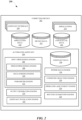
- FIG. 1A and FIG. 1B illustrate a view 100 and a view 120 of a user 102 causing an automated assistant to determine a sequence for a routine that results in less energy expense and/or consumption.
- the user 102 can provide a spoken utterance 106 such as, "Assistant, start my afternoon routine," which can refer to a routine involving multiple different operations being controlled by the automated assistant.
- the routine can include causing a furnace to increase in heat output and an oven to preheat for the user 102 to be able to start making their dinner.
- the automated assistant can perform an operation 108 of accessing power data associated with devices affected by the routine.
- the power data can be available from one or more smart devices in the home 112 of the user 102, and/or via one or more other sources such as the internet, a publication by a local or regional power company, a publication for a government organization that regulates power, etc.
- the automated assistant can utilize the power data to perform an operation 110 of determining whether to modify a sequence of the routine requested by the user 102.
- the automated assistant can determine to modify a sequence of the routine and/or suggest an alternative routine based on whether the power data indicates a non-renewable or renewable source of energy will be supplying an increased amount of energy to a corresponding power grid. Alternatively, or additionally, the automated assistant can determine to modify a sequence of the routine and/or suggest an alternative routine based on whether a change in energy expense rate and/or energy consumption rate is anticipated to affect the routine and/or an overall energy expense of the user 102.
- the power data can include trend data 126 that can indicate changes to sources of energy over time and/or energy expense rates over time, as illustrated in view 120 of FIG. 1B .
- This temporal data can be utilized by the automated assistant to plan performance of certain operations such that the operation will consume energy at a time when an energy expense rate is relatively low and/or at a threshold expense rate. For example, the operation of increasing a heat output of a furnace of the "afternoon routine" can be delayed until a time in which a price of natural gas is anticipated to be relatively low compared to other times in the day.
- the automated assistant can then execute the routine according to the modified sequence.
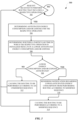
- the operation 304 can include determining an anticipated energy consumption and/or expense for the respective operations.
- power data can be available to the automated assistant for indicating an energy expense rate for any energy consumed by the smart networked devices controlled during execution of the routine.
- the power data can indicate historical usage data from which the automated assistant can determine how much energy is typically consumed by each smart networked device during performance of the routine.
- the automated assistant can determine estimated energy expenses and/or consumption based on the power data and in response to receiving the request.
- the method 300 can proceed from the operation 304 to an operation 306.
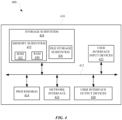
- FIG. 4 is a block diagram 400 of an example computer system 410.
- Computer system 410 typically includes at least one processor 414 which communicates with a number of peripheral devices via bus subsystem 412. These peripheral devices may include a storage subsystem 424, including, for example, a memory 425 and a file storage subsystem 426, user interface output devices 420, user interface input devices 422, and a network interface subsystem 416. The input and output devices allow user interaction with computer system 410.
- Network interface subsystem 416 provides an interface to outside networks and is coupled to corresponding interface devices in other computer systems.
- User interface output devices 420 may include a display subsystem, a printer, a fax machine, or non-visual displays such as audio output devices.
- the display subsystem may include a cathode ray tube (CRT), a flat-panel device such as a liquid crystal display (LCD), a projection device, or some other mechanism for creating a visible image.
- the display subsystem may also provide non-visual display such as via audio output devices.
- output device is intended to include all possible types of devices and ways to output information from computer system 410 to the user or to another machine or computer system.
- Storage subsystem 424 stores programming and data constructs that provide the functionality of some or all of the modules described herein.
- the storage subsystem 424 may include the logic to perform selected aspects of method 300, and/or to implement one or more of system 200, automated assistant, computing device 104, and/or any other application, device, apparatus, and/or module discussed herein.
- Memory 425 used in the storage subsystem 424 can include a number of memories including a main random access memory (RAM) 430 for storage of instructions and data during program execution and a read only memory (ROM) 432 in which fixed instructions are stored.
- a file storage subsystem 426 can provide persistent storage for program and data files, and may include a hard disk drive, a floppy disk drive along with associated removable media, a CD-ROM drive, an optical drive, or removable media cartridges.
- the modules implementing the functionality of certain implementations may be stored by file storage subsystem 426 in the storage subsystem 424, or in other machines accessible by the processor(s) 414.
- Bus subsystem 412 provides a mechanism for letting the various components and subsystems of computer system 410 communicate with each other as intended. Although bus subsystem 412 is shown schematically as a single bus, alternative implementations of the bus subsystem may use multiple busses.
- Computer system 410 can be of varying types including a workstation, server, computing cluster, blade server, server farm, or any other data processing system or computing device. Due to the ever-changing nature of computers and networks, the description of computer system 410 depicted in FIG. 4 is intended only as a specific example for purposes of illustrating some implementations. Many other configurations of computer system 410 are possible having more or fewer components than the computer system depicted in FIG. 4 .
- the systems described herein collect personal information about users (or as often referred to herein, "participants"), or may make use of personal information
- the users may be provided with an opportunity to control whether programs or features collect user information (e.g ., information about a user's social network, social actions or activities, profession, a user's preferences, or a user's current geographic location), or to control whether and/or how to receive content from the content server that may be more relevant to the user.
- certain data may be treated in one or more ways before it is stored or used, so that personal identifiable information is removed.
- a user's identity may be treated so that no personal identifiable information can be determined for the user, or a user's geographic location may be generalized where geographic location information is obtained (such as to a city, ZIP code, or state level), so that a particular geographic location of a user cannot be determined.
- geographic location information such as to a city, ZIP code, or state level
- the user may have control over how information is collected about the user and/or used.
- a method implemented by one or more processors includes determining, by an automated assistant, to perform a routine that involves controlling multiple different operations performed by the automated assistant and/or one or more other applications.
- the automated assistant is executed at least in part at a computing device of a user.
- the method can further include: in response to determining that modifying performance of the one or more operations according to the modified sequence results in the lower anticipated energy consumption: causing an interface of the computing device to render an output that characterizes natural language content for indicating the modified sequence for the one or more operations of the routine to the user, and receiving, by the automated assistant, a user input that indicates permission from the user for the automated assistant to initialize performance of the routine in accordance with the modified sequence for the one or more operations of the routine.
- causing the automated assistant to initialize performance of the routine is performed in response to the user input.
- the power data can indicate an anticipated energy consumption rate of operating the smart networked device during the one or more operations.
- determining whether modifying performance of the one or more operations according to the modified sequence for the routine results in the lower anticipated energy consumption can include determining whether the anticipated energy consumption rate satisfies an energy consumption threshold.
- the method can further include: determining, prior to causing the automated assistant to initialize performance of the routine, that the user or another user of the computing device has selected a setting of an assistant graphical user interface (GUI) for permitting the automated assistant to modify sequences of routines based on an anticipated energy consumption rate.
- GUI assistant graphical user interface
- causing the automated assistant to initialize performance of the routine in accordance with the modified sequence can include controlling a first smart networked device before controlling a second smart networked device.
- the unmodified sequence can include controlling the second smart networked device before controlling the first smart networked device.
- the method can further include: in response to determining that performing the one or more operations according to the modified sequence results in the lower anticipated energy consumption: causing the automated assistant to render an output via an interface of the computing device.
- the output can include natural language content that characterizes an estimated difference in energy consumption of the modified sequence relative to the unmodified sequence.
- determining to perform the routine can include: receiving, by the automated assistant, a user request from the user to perform the routine that involves controlling the multiple different operations performed by the automated assistant and/or one or more of the other applications.
- accessing the power data that provides the information for determining the anticipated energy consumption of operating the smart networked device can be in response to receiving the user request.
- determining whether modifying performance of the one or more operations according to the modified sequence results in the lower anticipated energy consumption relative to performing the one or more operations according to the unmodified sequence for the routine can be further based on the user request.
- determining to perform the routine that involves controlling the multiple different operations performed by the automated assistant and/or one or more of the other applications can be based on determining that one or more routine triggering conditions are satisfied.
- the one or more routine triggering conditions can include at least a temporal triggering condition for the routine.
- modifying performance of the one or more operations according to the modified sequence can include modifying the temporal triggering condition for the routine.
- modifying the temporal triggering condition for the routine can include delaying immediate performance of the routine.
- a method implemented by one or more processors includes receiving, by an automated assistant, a user request to create a routine that involves controlling multiple different operations performed by the automated assistant and/or one or more other applications.
- the automated assistant is executed at least in part at a computing device of a user.
- the method further includes accessing, in response to receiving the user request to create the routine, corresponding power data that indicates anticipated energy consumption of operating each of a plurality of smart networked devices over different durations of time, each of the plurality of smart networked devices being controllable by the automated assistant as part of the routine; causing an interface of the computing device to render an output that characterizes the power data for each of the corresponding smart networked devices that are controllable by the automated assistant as part of the routine; receiving, by the automated assistant, a user selection of a subset of smart networked devices, from among the plurality of smart networked devices, for inclusion in the routine; and generating, based on the user selection of the subset of smart networked devices, the routine that, when executed, causes the automated assistant to perform one or more operations in furtherance of controlling the smart networked devices of the subset of the smart networked devices.
- the method can further include receiving, by the automated assistant, one or more routine triggering conditions for the routine that, when satisfied, cause the automated assistant to execute the routine.
- the one or more routine triggering conditions can include an anticipated energy consumption triggering condition for the routine that, when satisfied, causes the automated assistant to perform the one or more operations in furtherance of controlling the smart networked devices of the subset and over a given duration of time, of the different durations of time, when the anticipated energy consumption of the smart networked devices of the subset is lowest.
- the one or more routine triggering conditions can further include a temporal triggering condition for the routine that, when satisfied, causes the automated assistant to perform the one or more operations in furtherance of controlling the smart networked devices of the subset and over a first duration of time, of the different durations of time, or a second duration of time, of the different durations of time, wherein the given duration of time is one of the first duration of time or the second duration of time.
- a method implemented by one or more processors includes receiving, by an automated assistant, a user request for the automated assistant to control a smart networked device.
- the automated assistant is executed at least in part at a computing device of a user.
- the method further includes accessing, in response to receiving the user request for the automated assistant to control the smart networked device, power data that indicates anticipated energy consumption of operating the smart networked device over different durations of time; determining, based on the user request and based on the power data, a given duration of time, from among the different durations of time, to operate the smart networked device; and causing the smart networked device to operate during the given duration of time.
- the given duration of time can be associated with a lowest anticipated energy consumption relative to other durations of time, of the different durations of time, that are temporally distinct from the given duration of time.
- the method can further include: determining, based on the smart networked device specified by the user request, whether to infer an additional user request for the automated assistant to control an additional smart networked device that is in addition to the smart networked device and that is not specified by the user request; and in response to determining to infer the additional user request: inferring the additional user request for the automated assistant to control the additional smart networked device that is in addition to the smart networked device and that is not specified by the user request.
- the power data can further indicate additional anticipated energy consumption of operating the additional smart networked device over different durations of time.
- the method can further include: determining, based on the additional user request and based on the power data, a given additional duration of time, from among the different durations of time and that is in addition to the given duration of time, to operate the additional smart networked device; and causing the additional smart networked device to operate during the given additional duration of time.
- inferring the additional user request for the automated assistant to control the additional smart networked device that is in addition to the smart networked device and that is not specified by the user request can include determining, based on historical smart networked device data, that the additional smart networked device is operated during temporally adjacent durations of time.
- a method implemented by one or more processors includes determining, by an automated assistant, one or more operations to control a smart networked device that can be initialized by the user via one or more applications and/or one or more devices.
- the one or more operations can be initialized by the user via the automated assistant and/or direct interaction with the one or more applications and/or the one or more devices.
- the method further includes determining, by the automated assistant, an anticipated energy consumption for a respective operation of the one or more operation. The anticipated energy consumption is determined based on power data that is available to the automated assistant.
- the method further includes determining, based on the anticipated energy consumption, whether a particular time in which the respective operation is initialized results in a lower anticipated energy consumption; in response to determining that the particular time in which the respective operation is initialized results in the lower anticipated energy consumption: generating natural language content that characterizes a suggestion for a command, that a user can provide to the automated assistant, to cause the automated assistant to initialize the one or more operations to control the smart networked device; and causing the automated assistant to render, for the user, an output that characterizes the natural language content in furtherance of notifying the user of the lower anticipated energy consumption that can be realized by providing the command at the particular time.
- causing the automated assistant to render the output can include: determining that the user is engaged in an ongoing interaction with the automated assistant; and causing the automated assistant to render the output as part of the ongoing interaction.
- implementations may include a non-transitory computer readable storage medium storing instructions executable by one or more processors (e.g ., central processing unit(s) (CPU(s)), graphics processing unit(s) (GPU(s)), and/or tensor processing unit(s) (TPU(s)) to perform a method such as one or more of the methods described above and/or elsewhere herein.
- processors e.g ., central processing unit(s) (CPU(s)), graphics processing unit(s) (GPU(s)), and/or tensor processing unit(s) (TPU(s)
- CPU central processing unit
- GPU graphics processing unit
- TPU(s) tensor processing unit
- implementations may include a system of one or more computers that include one or more processors operable to execute stored instructions to perform a method such as one or more of the methods described above and/or elsewhere herein.
Landscapes
- Engineering & Computer Science (AREA)
- Theoretical Computer Science (AREA)
- General Engineering & Computer Science (AREA)
- Physics & Mathematics (AREA)
- General Physics & Mathematics (AREA)
- Human Computer Interaction (AREA)
- Health & Medical Sciences (AREA)
- Multimedia (AREA)
- Audiology, Speech & Language Pathology (AREA)
- General Health & Medical Sciences (AREA)
- Computing Systems (AREA)
- Software Systems (AREA)
- Automation & Control Theory (AREA)
- Quality & Reliability (AREA)
- Management, Administration, Business Operations System, And Electronic Commerce (AREA)
- User Interface Of Digital Computer (AREA)
- Power Sources (AREA)
Applications Claiming Priority (3)
| Application Number | Priority Date | Filing Date | Title |
|---|---|---|---|
| US18/124,914 US12547308B2 (en) | 2023-03-22 | Proactive modification or suggestion of assistant routines based on anticipated energy consumption | |
| PCT/US2023/027388 WO2024196393A1 (en) | 2023-03-22 | 2023-07-11 | Proactive modification or suggestion of assistant routines based on anticipated energy consumption |
| EP23751164.7A EP4457578B1 (de) | 2023-03-22 | 2023-07-11 | Proaktive modifikation oder vorschlag von assistenzroutinen auf der basis des erwarteten energieverbrauchs |
Related Parent Applications (1)
| Application Number | Title | Priority Date | Filing Date |
|---|---|---|---|
| EP23751164.7A Division EP4457578B1 (de) | 2023-03-22 | 2023-07-11 | Proaktive modifikation oder vorschlag von assistenzroutinen auf der basis des erwarteten energieverbrauchs |
Publications (2)
| Publication Number | Publication Date |
|---|---|
| EP4550111A2 true EP4550111A2 (de) | 2025-05-07 |
| EP4550111A3 EP4550111A3 (de) | 2025-08-27 |
Family
ID=87556397
Family Applications (2)
| Application Number | Title | Priority Date | Filing Date |
|---|---|---|---|
| EP23751164.7A Active EP4457578B1 (de) | 2023-03-22 | 2023-07-11 | Proaktive modifikation oder vorschlag von assistenzroutinen auf der basis des erwarteten energieverbrauchs |
| EP25164954.7A Pending EP4550111A3 (de) | 2023-03-22 | 2023-07-11 | Proaktive modifikation oder vorschlag von assistenzroutinen auf der basis des erwarteten energieverbrauchs |
Family Applications Before (1)
| Application Number | Title | Priority Date | Filing Date |
|---|---|---|---|
| EP23751164.7A Active EP4457578B1 (de) | 2023-03-22 | 2023-07-11 | Proaktive modifikation oder vorschlag von assistenzroutinen auf der basis des erwarteten energieverbrauchs |
Country Status (2)
| Country | Link |
|---|---|
| EP (2) | EP4457578B1 (de) |
| WO (1) | WO2024196393A1 (de) |
Family Cites Families (4)
| Publication number | Priority date | Publication date | Assignee | Title |
|---|---|---|---|---|
| US20110202293A1 (en) * | 2010-02-15 | 2011-08-18 | General Electric Company | Diagnostics using sub-metering device |
| US11005678B2 (en) * | 2018-05-18 | 2021-05-11 | Alarm.Com Incorporated | Machine learning for home understanding and notification |
| US20200082289A1 (en) * | 2018-09-11 | 2020-03-12 | Microsoft Technology Licensing, Llc | Task scheduling recommendations for reduced carbon footprint |
| US12027164B2 (en) * | 2021-06-16 | 2024-07-02 | Google Llc | Passive disambiguation of assistant commands |
-
2023
- 2023-07-11 EP EP23751164.7A patent/EP4457578B1/de active Active
- 2023-07-11 WO PCT/US2023/027388 patent/WO2024196393A1/en not_active Ceased
- 2023-07-11 EP EP25164954.7A patent/EP4550111A3/de active Pending
Also Published As
| Publication number | Publication date |
|---|---|
| US20240319859A1 (en) | 2024-09-26 |
| EP4457578B1 (de) | 2025-04-02 |
| EP4457578A1 (de) | 2024-11-06 |
| WO2024196393A1 (en) | 2024-09-26 |
| EP4550111A3 (de) | 2025-08-27 |
Similar Documents
| Publication | Publication Date | Title |
|---|---|---|
| US20240153502A1 (en) | Dynamically adapting assistant responses | |
| EP4250287B1 (de) | Ergänzung von spracheingabe an einen automatischen assistenten gemäss ausgewählter vorschläge | |
| US11996102B2 (en) | Performing subtask(s) for a predicted action in response to a separate user interaction with an automated assistant prior to performance of the predicted action | |
| US12386493B2 (en) | Undoing application operation(s) via user interaction(s) with an automated assistant | |
| US12223266B2 (en) | Fulfillment of actionable requests ahead of a user selecting a particular autocomplete suggestion for completing a current user input | |
| US12223960B2 (en) | Adapting automated assistant functionality based on generated proficiency measure(s) | |
| US11651196B2 (en) | Reinforcement learning techniques for selecting a software policy network and autonomously controlling a corresponding software client based on selected policy network | |
| EP4160363A1 (de) | Erweiterung des lexikons der physischen bewegungsgesten für einen automatisierten assistenten | |
| US12547308B2 (en) | Proactive modification or suggestion of assistant routines based on anticipated energy consumption | |
| EP4550111A2 (de) | Proaktive modifikation oder vorschlag von assistenzroutinen auf der basis des erwarteten energieverbrauchs | |
| US12211507B2 (en) | Selectively implementing role change requests for auxiliary devices that facilitate assistant interactions | |
| WO2020226667A1 (en) | Performing subtask(s) for a predicted action in response to a separate user interaction with an automated assistant prior to performance of the predicted action |
Legal Events
| Date | Code | Title | Description |
|---|---|---|---|
| PUAI | Public reference made under article 153(3) epc to a published international application that has entered the european phase |
Free format text: ORIGINAL CODE: 0009012 |
|
| STAA | Information on the status of an ep patent application or granted ep patent |
Free format text: STATUS: THE APPLICATION HAS BEEN PUBLISHED |
|
| AC | Divisional application: reference to earlier application |
Ref document number: 4457578 Country of ref document: EP Kind code of ref document: P |
|
| AK | Designated contracting states |
Kind code of ref document: A2 Designated state(s): AL AT BE BG CH CY CZ DE DK EE ES FI FR GB GR HR HU IE IS IT LI LT LU LV MC ME MK MT NL NO PL PT RO RS SE SI SK SM TR |
|
| REG | Reference to a national code |
Ref country code: DE Ref legal event code: R079 Free format text: PREVIOUS MAIN CLASS: G06F0003160000 Ipc: G06F0009480000 |
|
| PUAL | Search report despatched |
Free format text: ORIGINAL CODE: 0009013 |
|
| AK | Designated contracting states |
Kind code of ref document: A3 Designated state(s): AL AT BE BG CH CY CZ DE DK EE ES FI FR GB GR HR HU IE IS IT LI LT LU LV MC ME MK MT NL NO PL PT RO RS SE SI SK SM TR |
|
| RIC1 | Information provided on ipc code assigned before grant |
Ipc: G06F 9/48 20060101AFI20250718BHEP Ipc: G06F 3/16 20060101ALI20250718BHEP Ipc: G06F 11/34 20060101ALI20250718BHEP |
|
| STAA | Information on the status of an ep patent application or granted ep patent |
Free format text: STATUS: REQUEST FOR EXAMINATION WAS MADE |
|
| 17P | Request for examination filed |
Effective date: 20251203 |