EP4549605A1 - Non-oriented electrical steel sheet and manufacturing method therefor - Google Patents
Non-oriented electrical steel sheet and manufacturing method therefor Download PDFInfo
- Publication number
- EP4549605A1 EP4549605A1 EP23842409.7A EP23842409A EP4549605A1 EP 4549605 A1 EP4549605 A1 EP 4549605A1 EP 23842409 A EP23842409 A EP 23842409A EP 4549605 A1 EP4549605 A1 EP 4549605A1
- Authority
- EP
- European Patent Office
- Prior art keywords
- steel plate
- oriented electrical
- electrical steel
- inclusions
- present
- Prior art date
- Legal status (The legal status is an assumption and is not a legal conclusion. Google has not performed a legal analysis and makes no representation as to the accuracy of the status listed.)
- Pending
Links
Images

Classifications
-
- C—CHEMISTRY; METALLURGY
- C22—METALLURGY; FERROUS OR NON-FERROUS ALLOYS; TREATMENT OF ALLOYS OR NON-FERROUS METALS
- C22C—ALLOYS
- C22C38/00—Ferrous alloys, e.g. steel alloys
- C22C38/02—Ferrous alloys, e.g. steel alloys containing silicon
-
- B—PERFORMING OPERATIONS; TRANSPORTING
- B21—MECHANICAL METAL-WORKING WITHOUT ESSENTIALLY REMOVING MATERIAL; PUNCHING METAL
- B21B—ROLLING OF METAL
- B21B1/00—Metal-rolling methods or mills for making semi-finished products of solid or profiled cross-section; Sequence of operations in milling trains; Layout of rolling-mill plant, e.g. grouping of stands; Succession of passes or of sectional pass alternations
- B21B1/46—Metal-rolling methods or mills for making semi-finished products of solid or profiled cross-section; Sequence of operations in milling trains; Layout of rolling-mill plant, e.g. grouping of stands; Succession of passes or of sectional pass alternations for rolling metal immediately subsequent to continuous casting
- B21B1/463—Metal-rolling methods or mills for making semi-finished products of solid or profiled cross-section; Sequence of operations in milling trains; Layout of rolling-mill plant, e.g. grouping of stands; Succession of passes or of sectional pass alternations for rolling metal immediately subsequent to continuous casting in a continuous process, i.e. the cast not being cut before rolling
-
- B—PERFORMING OPERATIONS; TRANSPORTING
- B21—MECHANICAL METAL-WORKING WITHOUT ESSENTIALLY REMOVING MATERIAL; PUNCHING METAL
- B21C—MANUFACTURE OF METAL SHEETS, WIRE, RODS, TUBES, PROFILES OR LIKE SEMI-MANUFACTURED PRODUCTS OTHERWISE THAN BY ROLLING; AUXILIARY OPERATIONS USED IN CONNECTION WITH METAL-WORKING WITHOUT ESSENTIALLY REMOVING MATERIAL
- B21C37/00—Manufacture of metal sheets, rods, wire, tubes, profiles or like semi-manufactured products, not otherwise provided for; Manufacture of tubes of special shape
- B21C37/02—Manufacture of metal sheets, rods, wire, tubes, profiles or like semi-manufactured products, not otherwise provided for; Manufacture of tubes of special shape of sheets
-
- C—CHEMISTRY; METALLURGY
- C21—METALLURGY OF IRON
- C21D—MODIFYING THE PHYSICAL STRUCTURE OF FERROUS METALS; GENERAL DEVICES FOR HEAT TREATMENT OF FERROUS OR NON-FERROUS METALS OR ALLOYS; MAKING METAL MALLEABLE, e.g. BY DECARBURISATION OR TEMPERING
- C21D1/00—General methods or devices for heat treatment, e.g. annealing, hardening, quenching or tempering
- C21D1/26—Methods of annealing
-
- C—CHEMISTRY; METALLURGY
- C21—METALLURGY OF IRON
- C21D—MODIFYING THE PHYSICAL STRUCTURE OF FERROUS METALS; GENERAL DEVICES FOR HEAT TREATMENT OF FERROUS OR NON-FERROUS METALS OR ALLOYS; MAKING METAL MALLEABLE, e.g. BY DECARBURISATION OR TEMPERING
- C21D6/00—Heat treatment of ferrous alloys
- C21D6/008—Heat treatment of ferrous alloys containing Si
-
- C—CHEMISTRY; METALLURGY
- C21—METALLURGY OF IRON
- C21D—MODIFYING THE PHYSICAL STRUCTURE OF FERROUS METALS; GENERAL DEVICES FOR HEAT TREATMENT OF FERROUS OR NON-FERROUS METALS OR ALLOYS; MAKING METAL MALLEABLE, e.g. BY DECARBURISATION OR TEMPERING
- C21D8/00—Modifying the physical properties of ferrous metals or ferrous alloys by deformation combined with, or followed by, heat treatment
- C21D8/02—Modifying the physical properties of ferrous metals or ferrous alloys by deformation combined with, or followed by, heat treatment during manufacturing of plates or strips
-
- C—CHEMISTRY; METALLURGY
- C21—METALLURGY OF IRON
- C21D—MODIFYING THE PHYSICAL STRUCTURE OF FERROUS METALS; GENERAL DEVICES FOR HEAT TREATMENT OF FERROUS OR NON-FERROUS METALS OR ALLOYS; MAKING METAL MALLEABLE, e.g. BY DECARBURISATION OR TEMPERING
- C21D8/00—Modifying the physical properties of ferrous metals or ferrous alloys by deformation combined with, or followed by, heat treatment
- C21D8/02—Modifying the physical properties of ferrous metals or ferrous alloys by deformation combined with, or followed by, heat treatment during manufacturing of plates or strips
- C21D8/0221—Modifying the physical properties of ferrous metals or ferrous alloys by deformation combined with, or followed by, heat treatment during manufacturing of plates or strips characterised by the working steps
- C21D8/0226—Hot rolling
-
- C—CHEMISTRY; METALLURGY
- C21—METALLURGY OF IRON
- C21D—MODIFYING THE PHYSICAL STRUCTURE OF FERROUS METALS; GENERAL DEVICES FOR HEAT TREATMENT OF FERROUS OR NON-FERROUS METALS OR ALLOYS; MAKING METAL MALLEABLE, e.g. BY DECARBURISATION OR TEMPERING
- C21D8/00—Modifying the physical properties of ferrous metals or ferrous alloys by deformation combined with, or followed by, heat treatment
- C21D8/02—Modifying the physical properties of ferrous metals or ferrous alloys by deformation combined with, or followed by, heat treatment during manufacturing of plates or strips
- C21D8/0221—Modifying the physical properties of ferrous metals or ferrous alloys by deformation combined with, or followed by, heat treatment during manufacturing of plates or strips characterised by the working steps
- C21D8/0236—Cold rolling
-
- C—CHEMISTRY; METALLURGY
- C21—METALLURGY OF IRON
- C21D—MODIFYING THE PHYSICAL STRUCTURE OF FERROUS METALS; GENERAL DEVICES FOR HEAT TREATMENT OF FERROUS OR NON-FERROUS METALS OR ALLOYS; MAKING METAL MALLEABLE, e.g. BY DECARBURISATION OR TEMPERING
- C21D8/00—Modifying the physical properties of ferrous metals or ferrous alloys by deformation combined with, or followed by, heat treatment
- C21D8/02—Modifying the physical properties of ferrous metals or ferrous alloys by deformation combined with, or followed by, heat treatment during manufacturing of plates or strips
- C21D8/0247—Modifying the physical properties of ferrous metals or ferrous alloys by deformation combined with, or followed by, heat treatment during manufacturing of plates or strips characterised by the heat treatment
-
- C—CHEMISTRY; METALLURGY
- C21—METALLURGY OF IRON
- C21D—MODIFYING THE PHYSICAL STRUCTURE OF FERROUS METALS; GENERAL DEVICES FOR HEAT TREATMENT OF FERROUS OR NON-FERROUS METALS OR ALLOYS; MAKING METAL MALLEABLE, e.g. BY DECARBURISATION OR TEMPERING
- C21D8/00—Modifying the physical properties of ferrous metals or ferrous alloys by deformation combined with, or followed by, heat treatment
- C21D8/02—Modifying the physical properties of ferrous metals or ferrous alloys by deformation combined with, or followed by, heat treatment during manufacturing of plates or strips
- C21D8/0247—Modifying the physical properties of ferrous metals or ferrous alloys by deformation combined with, or followed by, heat treatment during manufacturing of plates or strips characterised by the heat treatment
- C21D8/0273—Final recrystallisation annealing
-
- C—CHEMISTRY; METALLURGY
- C21—METALLURGY OF IRON
- C21D—MODIFYING THE PHYSICAL STRUCTURE OF FERROUS METALS; GENERAL DEVICES FOR HEAT TREATMENT OF FERROUS OR NON-FERROUS METALS OR ALLOYS; MAKING METAL MALLEABLE, e.g. BY DECARBURISATION OR TEMPERING
- C21D8/00—Modifying the physical properties of ferrous metals or ferrous alloys by deformation combined with, or followed by, heat treatment
- C21D8/02—Modifying the physical properties of ferrous metals or ferrous alloys by deformation combined with, or followed by, heat treatment during manufacturing of plates or strips
- C21D8/0278—Modifying the physical properties of ferrous metals or ferrous alloys by deformation combined with, or followed by, heat treatment during manufacturing of plates or strips involving a particular surface treatment
-
- C—CHEMISTRY; METALLURGY
- C21—METALLURGY OF IRON
- C21D—MODIFYING THE PHYSICAL STRUCTURE OF FERROUS METALS; GENERAL DEVICES FOR HEAT TREATMENT OF FERROUS OR NON-FERROUS METALS OR ALLOYS; MAKING METAL MALLEABLE, e.g. BY DECARBURISATION OR TEMPERING
- C21D8/00—Modifying the physical properties of ferrous metals or ferrous alloys by deformation combined with, or followed by, heat treatment
- C21D8/12—Modifying the physical properties of ferrous metals or ferrous alloys by deformation combined with, or followed by, heat treatment during manufacturing of articles with special electromagnetic properties
- C21D8/1205—Modifying the physical properties of ferrous metals or ferrous alloys by deformation combined with, or followed by, heat treatment during manufacturing of articles with special electromagnetic properties involving particular fabrication steps or treatments of ingots or slabs
-
- C—CHEMISTRY; METALLURGY
- C21—METALLURGY OF IRON
- C21D—MODIFYING THE PHYSICAL STRUCTURE OF FERROUS METALS; GENERAL DEVICES FOR HEAT TREATMENT OF FERROUS OR NON-FERROUS METALS OR ALLOYS; MAKING METAL MALLEABLE, e.g. BY DECARBURISATION OR TEMPERING
- C21D8/00—Modifying the physical properties of ferrous metals or ferrous alloys by deformation combined with, or followed by, heat treatment
- C21D8/12—Modifying the physical properties of ferrous metals or ferrous alloys by deformation combined with, or followed by, heat treatment during manufacturing of articles with special electromagnetic properties
- C21D8/1205—Modifying the physical properties of ferrous metals or ferrous alloys by deformation combined with, or followed by, heat treatment during manufacturing of articles with special electromagnetic properties involving particular fabrication steps or treatments of ingots or slabs
- C21D8/1211—Rapid solidification; Thin strip casting
-
- C—CHEMISTRY; METALLURGY
- C21—METALLURGY OF IRON
- C21D—MODIFYING THE PHYSICAL STRUCTURE OF FERROUS METALS; GENERAL DEVICES FOR HEAT TREATMENT OF FERROUS OR NON-FERROUS METALS OR ALLOYS; MAKING METAL MALLEABLE, e.g. BY DECARBURISATION OR TEMPERING
- C21D8/00—Modifying the physical properties of ferrous metals or ferrous alloys by deformation combined with, or followed by, heat treatment
- C21D8/12—Modifying the physical properties of ferrous metals or ferrous alloys by deformation combined with, or followed by, heat treatment during manufacturing of articles with special electromagnetic properties
- C21D8/1216—Modifying the physical properties of ferrous metals or ferrous alloys by deformation combined with, or followed by, heat treatment during manufacturing of articles with special electromagnetic properties characterised by the working steps
- C21D8/1222—Hot rolling
-
- C—CHEMISTRY; METALLURGY
- C21—METALLURGY OF IRON
- C21D—MODIFYING THE PHYSICAL STRUCTURE OF FERROUS METALS; GENERAL DEVICES FOR HEAT TREATMENT OF FERROUS OR NON-FERROUS METALS OR ALLOYS; MAKING METAL MALLEABLE, e.g. BY DECARBURISATION OR TEMPERING
- C21D8/00—Modifying the physical properties of ferrous metals or ferrous alloys by deformation combined with, or followed by, heat treatment
- C21D8/12—Modifying the physical properties of ferrous metals or ferrous alloys by deformation combined with, or followed by, heat treatment during manufacturing of articles with special electromagnetic properties
- C21D8/1216—Modifying the physical properties of ferrous metals or ferrous alloys by deformation combined with, or followed by, heat treatment during manufacturing of articles with special electromagnetic properties characterised by the working steps
- C21D8/1233—Cold rolling
-
- C—CHEMISTRY; METALLURGY
- C21—METALLURGY OF IRON
- C21D—MODIFYING THE PHYSICAL STRUCTURE OF FERROUS METALS; GENERAL DEVICES FOR HEAT TREATMENT OF FERROUS OR NON-FERROUS METALS OR ALLOYS; MAKING METAL MALLEABLE, e.g. BY DECARBURISATION OR TEMPERING
- C21D9/00—Heat treatment, e.g. annealing, hardening, quenching or tempering, adapted for particular articles; Furnaces therefor
- C21D9/46—Heat treatment, e.g. annealing, hardening, quenching or tempering, adapted for particular articles; Furnaces therefor for sheet metals
-
- C—CHEMISTRY; METALLURGY
- C22—METALLURGY; FERROUS OR NON-FERROUS ALLOYS; TREATMENT OF ALLOYS OR NON-FERROUS METALS
- C22C—ALLOYS
- C22C38/00—Ferrous alloys, e.g. steel alloys
- C22C38/002—Ferrous alloys, e.g. steel alloys containing In, Mg, or other elements not provided for in one single group C22C38/001 - C22C38/60
-
- C—CHEMISTRY; METALLURGY
- C22—METALLURGY; FERROUS OR NON-FERROUS ALLOYS; TREATMENT OF ALLOYS OR NON-FERROUS METALS
- C22C—ALLOYS
- C22C38/00—Ferrous alloys, e.g. steel alloys
- C22C38/004—Very low carbon steels, i.e. having a carbon content of less than 0,01%
-
- C—CHEMISTRY; METALLURGY
- C22—METALLURGY; FERROUS OR NON-FERROUS ALLOYS; TREATMENT OF ALLOYS OR NON-FERROUS METALS
- C22C—ALLOYS
- C22C38/00—Ferrous alloys, e.g. steel alloys
- C22C38/04—Ferrous alloys, e.g. steel alloys containing manganese
-
- C—CHEMISTRY; METALLURGY
- C22—METALLURGY; FERROUS OR NON-FERROUS ALLOYS; TREATMENT OF ALLOYS OR NON-FERROUS METALS
- C22C—ALLOYS
- C22C38/00—Ferrous alloys, e.g. steel alloys
- C22C38/06—Ferrous alloys, e.g. steel alloys containing aluminium
-
- C—CHEMISTRY; METALLURGY
- C22—METALLURGY; FERROUS OR NON-FERROUS ALLOYS; TREATMENT OF ALLOYS OR NON-FERROUS METALS
- C22C—ALLOYS
- C22C38/00—Ferrous alloys, e.g. steel alloys
- C22C38/18—Ferrous alloys, e.g. steel alloys containing chromium
-
- C—CHEMISTRY; METALLURGY
- C22—METALLURGY; FERROUS OR NON-FERROUS ALLOYS; TREATMENT OF ALLOYS OR NON-FERROUS METALS
- C22C—ALLOYS
- C22C38/00—Ferrous alloys, e.g. steel alloys
- C22C38/18—Ferrous alloys, e.g. steel alloys containing chromium
- C22C38/34—Ferrous alloys, e.g. steel alloys containing chromium with more than 1.5% by weight of silicon
-
- C—CHEMISTRY; METALLURGY
- C22—METALLURGY; FERROUS OR NON-FERROUS ALLOYS; TREATMENT OF ALLOYS OR NON-FERROUS METALS
- C22C—ALLOYS
- C22C38/00—Ferrous alloys, e.g. steel alloys
- C22C38/18—Ferrous alloys, e.g. steel alloys containing chromium
- C22C38/38—Ferrous alloys, e.g. steel alloys containing chromium with more than 1.5% by weight of manganese
-
- C—CHEMISTRY; METALLURGY
- C23—COATING METALLIC MATERIAL; COATING MATERIAL WITH METALLIC MATERIAL; CHEMICAL SURFACE TREATMENT; DIFFUSION TREATMENT OF METALLIC MATERIAL; COATING BY VACUUM EVAPORATION, BY SPUTTERING, BY ION IMPLANTATION OR BY CHEMICAL VAPOUR DEPOSITION, IN GENERAL; INHIBITING CORROSION OF METALLIC MATERIAL OR INCRUSTATION IN GENERAL
- C23G—CLEANING OR DE-GREASING OF METALLIC MATERIAL BY CHEMICAL METHODS OTHER THAN ELECTROLYSIS
- C23G1/00—Cleaning or pickling metallic material with solutions or molten salts
- C23G1/02—Cleaning or pickling metallic material with solutions or molten salts with acid solutions
- C23G1/08—Iron or steel
-
- H—ELECTRICITY
- H01—ELECTRIC ELEMENTS
- H01F—MAGNETS; INDUCTANCES; TRANSFORMERS; SELECTION OF MATERIALS FOR THEIR MAGNETIC PROPERTIES
- H01F1/00—Magnets or magnetic bodies characterised by the magnetic materials therefor; Selection of materials for their magnetic properties
- H01F1/01—Magnets or magnetic bodies characterised by the magnetic materials therefor; Selection of materials for their magnetic properties of inorganic materials
- H01F1/03—Magnets or magnetic bodies characterised by the magnetic materials therefor; Selection of materials for their magnetic properties of inorganic materials characterised by their coercivity
- H01F1/12—Magnets or magnetic bodies characterised by the magnetic materials therefor; Selection of materials for their magnetic properties of inorganic materials characterised by their coercivity of soft-magnetic materials
- H01F1/14—Magnets or magnetic bodies characterised by the magnetic materials therefor; Selection of materials for their magnetic properties of inorganic materials characterised by their coercivity of soft-magnetic materials metals or alloys
- H01F1/147—Alloys characterised by their composition
- H01F1/14766—Fe-Si based alloys
- H01F1/14775—Fe-Si based alloys in the form of sheets
-
- H—ELECTRICITY
- H01—ELECTRIC ELEMENTS
- H01F—MAGNETS; INDUCTANCES; TRANSFORMERS; SELECTION OF MATERIALS FOR THEIR MAGNETIC PROPERTIES
- H01F1/00—Magnets or magnetic bodies characterised by the magnetic materials therefor; Selection of materials for their magnetic properties
- H01F1/01—Magnets or magnetic bodies characterised by the magnetic materials therefor; Selection of materials for their magnetic properties of inorganic materials
- H01F1/03—Magnets or magnetic bodies characterised by the magnetic materials therefor; Selection of materials for their magnetic properties of inorganic materials characterised by their coercivity
- H01F1/12—Magnets or magnetic bodies characterised by the magnetic materials therefor; Selection of materials for their magnetic properties of inorganic materials characterised by their coercivity of soft-magnetic materials
- H01F1/14—Magnets or magnetic bodies characterised by the magnetic materials therefor; Selection of materials for their magnetic properties of inorganic materials characterised by their coercivity of soft-magnetic materials metals or alloys
- H01F1/147—Alloys characterised by their composition
- H01F1/14766—Fe-Si based alloys
- H01F1/14791—Fe-Si-Al based alloys, e.g. Sendust
-
- H—ELECTRICITY
- H01—ELECTRIC ELEMENTS
- H01F—MAGNETS; INDUCTANCES; TRANSFORMERS; SELECTION OF MATERIALS FOR THEIR MAGNETIC PROPERTIES
- H01F1/00—Magnets or magnetic bodies characterised by the magnetic materials therefor; Selection of materials for their magnetic properties
- H01F1/01—Magnets or magnetic bodies characterised by the magnetic materials therefor; Selection of materials for their magnetic properties of inorganic materials
- H01F1/03—Magnets or magnetic bodies characterised by the magnetic materials therefor; Selection of materials for their magnetic properties of inorganic materials characterised by their coercivity
- H01F1/12—Magnets or magnetic bodies characterised by the magnetic materials therefor; Selection of materials for their magnetic properties of inorganic materials characterised by their coercivity of soft-magnetic materials
- H01F1/14—Magnets or magnetic bodies characterised by the magnetic materials therefor; Selection of materials for their magnetic properties of inorganic materials characterised by their coercivity of soft-magnetic materials metals or alloys
- H01F1/16—Magnets or magnetic bodies characterised by the magnetic materials therefor; Selection of materials for their magnetic properties of inorganic materials characterised by their coercivity of soft-magnetic materials metals or alloys in the form of sheets
-
- C—CHEMISTRY; METALLURGY
- C21—METALLURGY OF IRON
- C21D—MODIFYING THE PHYSICAL STRUCTURE OF FERROUS METALS; GENERAL DEVICES FOR HEAT TREATMENT OF FERROUS OR NON-FERROUS METALS OR ALLOYS; MAKING METAL MALLEABLE, e.g. BY DECARBURISATION OR TEMPERING
- C21D1/00—General methods or devices for heat treatment, e.g. annealing, hardening, quenching or tempering
- C21D1/74—Methods of treatment in inert gas, controlled atmosphere, vacuum or pulverulent material
- C21D1/76—Adjusting the composition of the atmosphere
-
- C—CHEMISTRY; METALLURGY
- C21—METALLURGY OF IRON
- C21D—MODIFYING THE PHYSICAL STRUCTURE OF FERROUS METALS; GENERAL DEVICES FOR HEAT TREATMENT OF FERROUS OR NON-FERROUS METALS OR ALLOYS; MAKING METAL MALLEABLE, e.g. BY DECARBURISATION OR TEMPERING
- C21D2211/00—Microstructure comprising significant phases
- C21D2211/004—Dispersions; Precipitations
-
- C—CHEMISTRY; METALLURGY
- C21—METALLURGY OF IRON
- C21D—MODIFYING THE PHYSICAL STRUCTURE OF FERROUS METALS; GENERAL DEVICES FOR HEAT TREATMENT OF FERROUS OR NON-FERROUS METALS OR ALLOYS; MAKING METAL MALLEABLE, e.g. BY DECARBURISATION OR TEMPERING
- C21D8/00—Modifying the physical properties of ferrous metals or ferrous alloys by deformation combined with, or followed by, heat treatment
- C21D8/12—Modifying the physical properties of ferrous metals or ferrous alloys by deformation combined with, or followed by, heat treatment during manufacturing of articles with special electromagnetic properties
- C21D8/1244—Modifying the physical properties of ferrous metals or ferrous alloys by deformation combined with, or followed by, heat treatment during manufacturing of articles with special electromagnetic properties characterised by the heat treatment
- C21D8/1272—Final recrystallisation annealing
Definitions
- the present invention relates to a steel plate and a manufacturing method therefor, in particular to a non-oriented electrical steel plate and a manufacturing method therefor.
- Japanese patent document with the publication number of 06-128618, published on May 10, 1994 , entitled "Method for manufacturing electrical steel plate with low inclusion content” discloses a method for manufacturing electrical steel plate with low inclusion content.
- the method requires that after the converter smelting is completed, FeSi is used as a pre-deoxidizer to pre-deoxidize the molten steel, and the free oxygen content in the steel is controlled between 300 and 500 ppm, and the alkalinity in the ladle top slag is controlled to be 2 ⁇ 10; then, the RH degassing device requires three stages of refining treatment, and the free oxygen content in the steel is required to be controlled to be 400 ppm or less before final deoxidation using FeSi, and six or more cycles are required after the final deoxidation of the molten steel.
- the Chinese patent document with the publication number of CN101914730A, published on December 15, 2010 entitled "Vanadium-containing titanium-containing cold-rolled non-oriented electrical steel and a manufacturing method therefor” discloses a vanadium-containing titanium-containing cold-rolled non-oriented electrical steel and a manufacturing method therefor, which can effectively reduce the precipitation of fine dispersed vanadium-titanium carbonitrides through reasonable design of the composition.
- the manufacturing method adopted is to control the temperature in the heating step to 1140 ⁇ 1170°C, the start rolling temperature of the finishing rolling to ⁇ 1030°C, the final rolling temperature to 890-930°C, and the temperature in the coiling step to ⁇ 650°C, so as to further suppress the formation and influence of vanadium-titanium precipitates from the perspective of thermodynamics and kinetics through design of the process.
- the technical solution can effectively produce vanadium-containing and titanium-containing non-oriented electrical steel that meet the requirements for electromagnetic performance, which expands the source range of raw materials for smelting non-oriented electrical steel, especially the utilization of recycled steel, and can effectively reduce the production cost of non-oriented electrical steel.
- the inventors design and expect to obtain a new non-oriented electrical steel plate with a low nitride inclusion content and a manufacturing method thereof, so as to improve the purity of non-oriented silicon steel and thus meet the needs of the market and users.
- One of the objects of the present invention is to provide a non-oriented electrical steel plate with a low nitride inclusion content, which aims to improve the purity of the non-oriented electrical steel plate to solve the problem of inclusion control effect.
- the steel plate can effectively meet the needs of the market and users and has good promotion and application prospects.
- the present invention provides a non-oriented electrical steel plate.
- the steel comprises Fe and inevitable impurities, and comprises the following chemical elements in percentage by mass:
- non-oriented electrical steel plate according to the present invention comprises the following chemical elements in percentage by mass:
- the mass percentage content of Cr can be further preferably controlled between 0.01 and 0.12%.
- the mass percentage ratio of Al to Cr in the steel is controlled to satisfy: 10 ⁇ Al/Cr ⁇ 80, which can ensure that AlN and Cr 2 N inclusions of appropriate quantity and proportion are formed during the solidification in casting of molten steel and the hot rolling of continuous casting slabs, thereby achieving the control requirement of 0.8 ⁇ [AlN]/([AlN]+[Cr 2 N]) ⁇ 0.99.
- Al preferentially combines with N to form AlN inclusions.
- the lower the contents of Al and N and the lower the temperature of the molten steel the later the precipitation of AlN inclusions, the smaller the size of AlN inclusions and the greater the harm of AlN inclusions.
- the Al/Cr ratio in the steel is more than 80, it means that the proportion of Cr in the steel is too law; thereby the formation time of Cr 2 N will be significantly delayed, and the size of Cr 2 N will be small when it is precipitated and the harm of Cr 2 N will be great.
- the Al/Cr ratio in the steel is lower than 10, it means that the content of Cr in the steel is too high. In this case, the precipitation time of AlN is significantly delayed, and the AlN formed has small quantity and size, and great harm.
- the formation time of Cr 2 N is significantly advanced, and the quantity of Cr 2 N will increase significantly when it is precipitated.
- non-oriented electrical steel plate according to the present invention wherein among the inevitable impurities, P ⁇ 0.2%, S ⁇ 0.005%, N ⁇ 0.005%, O ⁇ 0.005%.
- P element, S element, N element and O element are all impurity elements in the non-oriented electrical steel plate, which are impurity elements introduced from the steel raw materials and auxiliary materials or the production process. Under the condition that technical conditions permit, in order to obtain a steel with better performance and better quality, the content of impurity elements in the steel should be reduced as much as possible.
- the mass percentage of P in steel exceeds 0.2%, it is easy to cause the occurrence of cold brittleness and reduce the manufacturability during the cold rolling process. Therefore, in the non-oriented electrical steel plate according to the present invention, the mass percentage of P is controlled to be: P ⁇ 0.2%.
- the mass percentage of S in steel exceeds 0.005%, the quantity of harmful inclusions such as MnS and Cu 2 S increases greatly, thereby causing the iron loss of steel to deteriorate. Therefore, in the non-oriented electrical steel plate according to the present invention, the mass percentage of S is controlled to be: S ⁇ 0.005%.
- N In the present invention, when the mass percentage of N in steel exceeds 0.005%, the precipitates of Nb, V, Ti, Al, etc. with N increases greatly, which strongly hinders the growth of grains, thereby deteriorating the magnetic properties of the steel. Therefore, in the non-oriented electrical steel plate according to the present invention, the mass percentage of N is controlled to be: N ⁇ 0.005%.
- the mass percentage of O in steel exceeds 0.005%, the quantity of oxide inclusions increases greatly, which is not conducive to adjusting the proportion of favorable inclusions and deteriorates the magnetic properties of steel. Therefore, in the non-oriented electrical steel plate according to the present invention, the mass percentage of O is controlled to be: O ⁇ 0.005%.
- the content of Cr is 0.01 ⁇ 0.12%.
- the nitride inclusions in the steel are mainly single Cr 2 N and/or AlN composite inclusions encapsulated with Cr 2 N.
- the volume ratio of nitride inclusions AlN and Cr 2 N satisfies: 0.80 ⁇ [AlN]/([AlN]+[Cr 2 N]) ⁇ 0.99.
- the quantity of nitride inclusions is ⁇ 2.5 ⁇ 10 7 /mm 3 .
- nitride inclusions with a size of 0.2 to 1.0 ⁇ m account for ⁇ 50% of all nitride inclusions by volume percentage.
- another object of the present invention is to provide a method for manufacturing the above-mentioned non-oriented electrical steel plate, the method is simple and feasible, by which a non-oriented electrical steel plate with high purity can be obtained.
- the present invention provides a method for manufacturing a non-oriented electrical steel plate, comprising the following steps:
- the inventors optimize the design of the steel's chemical composition and defines a reasonable manufacturing process. After a continuous casting slab is obtained through smelting and casting, by optimizing the heating and temperature rising process during hot rolling for the continuous casting slab and combining with the subsequent pickling, cold rolling, continuous annealing and coating process, a high-purity non-oriented electrical steel plate with nitride inclusions being low in content and large in size can be effectively prepared.
- the high-purity non-oriented electrical steel plate has the characteristics such as simplicity, being easy to control, good stability, low cost and wide application.
- the continuous casting slab is heated in a heating furnace, when the temperature is rised to 1020°C or more, the heating rate is required to be limited to 0.8 ⁇ 2.0°C/min.
- the main consideration is that when the heating rate is lower than 0.8°C/min, the solid solution amount of AlN inclusions and Cr 2 N inclusions will increase significantly; accordingly, during the subsequent finish rolling and coiling process, as the temperature of the steel plate decreases, AlN and Cr 2 N inclusions will precipitate again, in this case, the size of the precipitated inclusions is small, the number of the precipitated inclusions increases significantly, thus the purity of the steel is significantly reduced.
- nitride inclusions In the limited range, under long-term and high temperature conditions, it is beneficial for AlN and Cr 2 N inclusions to grow and coarsen, and some nitride inclusions are mainly single Cr 2 N and/or AlN composite inclusions encapsulated with Cr 2 N, so the quantity of AlN and Cr 2 N inclusions is greatly reduced, thereby it can be ensured that nitride inclusions with a size of 0.2 to 1.0 ⁇ m can account for 50 % or more of all nitride inclusions, and the quantity of nitride inclusions in the final steel plate is ⁇ 2.5 ⁇ 10 7 /mm 3 .
- the soaking time of the continuous casting slab/ the time of the continuous casting slab in the furnace is less than 0.1h, the AlN and Cr 2 N inclusions in the steel cannot effectively grow and coarsen; when the time is more than 0.25h, the solid solution content of AlN and Cr 2 N inclusions increase significantly, which leads to a significant increase in AlN inclusion precipitation in the steel during the subsequent finish rolling and coiling processes, the nitride inclusions with a size of 0.2 to 1.0 ⁇ m fails to reach 50 % or more of all nitride inclusions, and the quantity of nitride inclusions in the steel plate greatly exceeds 2.5 ⁇ 10 7 /mm 3 .
- the non-oriented electrical steel plate and the manufacturing method thereof according to the present invention has the following advantages and beneficial effects:
- the inventors optimize the chemical element composition ratio and the related manufacturing process. After a continuous casting slab is obtained through smelting and casting, by optimizing the parameters of the heating and temperature rising process of the continuous casting slab during hot rolling, and combining with subsequent pickling, cold rolling, continuous annealing and coating processes, a high-purity non-oriented electrical steel plate with a low nitride inclusion content and a large size can be prepared effectively, thereby obtaining the electromagnetic properties required by the design of the present invention.
- the design concept of the chemical element of the present invention is completely different from the prior art. It has the characteristics such as being simple and easy to control, good stability, low cost, and wide application, and the inclusions in steel can be effectively controlled.
- the prepared non-oriented electrical steel plate has high purity and has good promotion prospects and application value.
- Table 1 lists the mass percentages of the chemical elements in the non-oriented electrical steel plates of examples 1-7 and the comparative steel plates of comparative examples 1-3.
- Table 1. (The balance is Fe and inevitable impurities other than P, S, O, and N) Number Chemical elements Al/Cr C (wt%) Si (wt%) Mn (wt%) P (wt%) S (wt%) Al (wt%) Cr (wt%) O (wt%) N (wt%)
- Example1 0.0008 0.08 1.98 0.02 0.0018 0.11 0.009 0.0011 0.0011 12.2
- Example2 0.0032 0.27 0.97 0.02 0.0050 0.47 0.006 0.0021 0.0028 78.3
- Example3 0.0089 0.99 1.25 0.13 0.0027 0.98 0.02 0.0010 0.0048 49.0
- Example5 0.0062 2.04 1.56 0.10 0.0019 1.67 0.12 0.0022
- non-oriented electrical steel plates of examples 1-7 and the comparative steel plates of comparative example 1-3 are prepared by the following steps:
- Table 2 lists the specific process parameters of the non-oriented electrical steel plates of examples 1-7 and the comparative steel plates of comparative examples 1-3 in the above manufacturing process flow.
- Table 2 Number Step (2) Step (5) Heating rate when the temperature rises to 1020°C or more (°C/min) Soaking time/time in furnace
- Example1 0.8 0.20
- Example2 1.0 0.12
- Example3 1.6 0.14
- Example4 1.2 0.17
- Example5 2.0 0.25
- Example6 1.4 0.20
- Example7 1.8 0.10 Comparative example1 0.2 0.09 Comparative example2 0.9 0.35 Comparative example3 2.2 0.18
- the finished non-oriented electrical steel plates of examples 1-7 and comparative steel plates of comparative examples 1-3 finally obtained are sampled respectively, and the steel samples of examples 1-7 and comparative examples 1-3 are observed and analyzed. It is found that the steels of each example and comparative example contain a variety of inclusion components, and the main inclusions are nitrogen-containing inclusions. Through further analysis and testing, the quantity of nitride inclusions and the composition and proportion of each nitride inclusion in the steel plate samples of examples 1-7 and comparative examples 1-3 can be obtained respectively. The relevant results of observation and analysis are listed in the following Table 3.
- Table 3 lists the detection results of inclusions of the non-oriented electrical steel plates of examples 1-7 and the comparative steel plates of comparative example 1-3.
- Table 3 Number Quantity of AlN inclusions (x10 7 /mm 3 ) Quantity of Cr 2 N number (x10 7 /mm 3 ) [AlN]/([AlN] + [Cr 2 N]) The proportion of nitride inclusions of 0.2 ⁇ 1.0 ⁇ m to all nitride inclusions (%) Quantity of nitride inclusions (x10 7 /mm 3 )
- Example1 2.41 0.02 0.99 54 2.43
- Example2 1.54 0.11 0.93 81 1.65
- Example4 2.17 0.31 0.88 91 2.48
- Example5 1.33 0.22 0.86 56 1.55
- Example7 2.14 0.1 0.95 77 2.25 Comparative example1 2.49 0.51 0.83 42 3.00 Comparative example2 3.
- the researchers find that in the non-oriented electrical steel plates of examples 1-7 prepared in the present invention, the nitride inclusions in the steel are mainly single Cr 2 N and/or AlN composite inclusions encapsulated with Cr 2 N.
- the quantity of AlN inclusions is 0.52-2.41 ⁇ 10 7 /mm 3
- the quantity of Cr 2 N inclusions is 0.02-0.31 ⁇ 10 7 /mm 3
- the proportion of nitride inclusions with a size of 0.2 to 1.0 ⁇ m to all nitride inclusions is 54-91 %
- the quantity of nitride inclusions is 0.58-2.48 ⁇ 10 7 /mm 3 .
- comparative example 1 Al and Cr elements are not added according to the requirement of the present invention, and the Al/Cr ratio is 6.5, which is lower than the lower limit of 10 of the design requirement of the present invention;
- the heating rate of comparative example 1 is only 0.2°C/min when at 1020°C or more, which is lower than the lower limit of 0.8°C/min of the design requirement of the present invention.
- the nitride inclusions of 0.2 ⁇ 1.0 ⁇ m in the comparative steel plate of comparative example 1 finally prepared account for only 42% of all nitride inclusions, and the quantity of small-sized AlN and Cr 2 N inclusions in the steel is large, ultimately leading to a total amount of nitride inclusions in the steel being as high as3.0 ⁇ 10 7 /mm 3 . It fails to achieve the effect of the design of the present invention.
- the quantity of fine Cr 2 N inclusions in the corresponding steel is as high as 1.71 ⁇ 10 7 /mm 3 , thereby resulting in a total amount of nitride inclusions in the steel being as high as 4.95 ⁇ 10 7 /mm 3 , which fails to achieve the effect of the design of the present invention.
- the heating rate is as high as 2.2°C/min when being at 1020°C or more, which is higher than the upper limit of 2.0°C/min required by the design of the present invention.
- the small-sized AlN and Cr 2 N generated during the solidification in casting of the molten steel cannot effectively grow or precipitate in advance after solid solution during the hot rolling heating process due to the high temperature and short time. Therefore, the nitride inclusions of 0.2 ⁇ 1.0 ⁇ m of the comparative steel plate of comparative example 3 account for only 23% of all nitride inclusions, the quantity of small-sized AlN inclusions is as high as 3.83 ⁇ 10 7 /m 3 . Finally, the total amount of nitride inclusions in the steel is as high as 4.12 ⁇ 10 7 /mm 3 , which fails to achieve the effect of the design of the present invention.
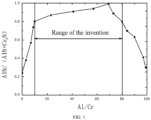
- FIG.1 schematically shows the relationship between Al/Cr and nitride inclusions in the non-oriented electrical steel plate according to the present invention.
- AlN/(AlN+Cr 2 N) As shown in FIG.1 , in the steel in the present invention, as Al/Cr increases, AlN/(AlN+Cr 2 N) first increases rapidly, and when Al/Cr reaches 10%, AlN/(AlN+Cr 2 N) reaches 0.80; Afterwards, as Al/Cr continues to increase, AlN/(AlN+Cr 2 N) increases slowly to a maximum value, and then begins to gradually decrease rapidly, and after Al/Cr reaches 80%, AlN/(AlN+Cr 2 N) reaches 0.80 or less again, which fails to meet the design requirements according to the present invention.
- FIG.2 schematically shows the relationship between the soaking time/time in furnace and the control effect of inclusions in the non-oriented electrical steel plate of the present invention.
- the soaking time/ time in furnace when the continuous casting slab is heated in a heating furnace, the soaking time/ time in furnace must be controlled within a suitable range, i.e., 0.10-0.25h.
- a suitable range i.e., 0.10-0.25h.
- the proportion of nitride inclusions of 0.2-1.0 ⁇ m to all nitride inclusions is less than 50% or less, and the quantity of nitride inclusions in the final steel plate is greater than 2.5 ⁇ 10 7 /mm 3 .
- the proportion of inclusions of 0.1-1.0 ⁇ m to all nitride inclusions and the quantity of nitride inclusions show an increasing or decreasing trend respectively with the increase of soaking time/time in furnace.
- the quantity of nitride inclusions in the final steel plate gradually increases again and exceed the design requirement of 2.5x10 7 /mm 3 , at the same time, the quantity of nitride inclusions of 0.2-1.0 ⁇ m decreases, leading to that the proportion of nitride inclusions of 0.2-1.0 ⁇ m to all nitride inclusions decreases to 50 % or less.
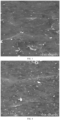
- FIG.3 is a microstructure photograph of the non-oriented electrical steel plate of example 6.
- the quantity of inclusions mainly composed of AlN is very small, and the average size of the two types of inclusions is relatively large.
- the statistical results show that in example 6, the proportion of nitride inclusions in the range of 0.2-1.0 ⁇ m accounts for 63% of all nitride inclusions, and the quantity of nitride inclusions in the final steel plate is greater than 0.93x10 7 /mm 3 .
- FIG.4 is a microstructure photograph of the comparative steel of comparative example 2.
Landscapes
- Chemical & Material Sciences (AREA)
- Engineering & Computer Science (AREA)
- Mechanical Engineering (AREA)
- Materials Engineering (AREA)
- Metallurgy (AREA)
- Organic Chemistry (AREA)
- Physics & Mathematics (AREA)
- Crystallography & Structural Chemistry (AREA)
- Thermal Sciences (AREA)
- Electromagnetism (AREA)
- Manufacturing & Machinery (AREA)
- Dispersion Chemistry (AREA)
- Power Engineering (AREA)
- Chemical Kinetics & Catalysis (AREA)
- General Chemical & Material Sciences (AREA)
- Manufacturing Of Steel Electrode Plates (AREA)
- Soft Magnetic Materials (AREA)
Abstract
Description
- The present invention relates to a steel plate and a manufacturing method therefor, in particular to a non-oriented electrical steel plate and a manufacturing method therefor.
- In recent years, many steel smelting plants have increasingly higher requirements for the purity of non-oriented electrical steel plates when practically producing non-oriented electrical steel plates due to the user market's demand for excellent electromagnetic properties of steel plates.
- In the current prior art, in order to obtain non-oriental electrical steel plates with high purity, it is usually hoped that the contents of the harmful elements nitrogen and sulfur in the steel are as low as possible, especially the nitrogen content is as low as possible. This is because that the nitrogen and sulfur elements in the steel will eventually be converted into nitride and sulfide inclusions remaining in the steel, which eventually inhibit the growth of grain size and the development of favorable texture in the finished steel plate. However, it should be noted that excessive reduction of the nitrogen and sulfur contents in steel will also greatly increase the difficulty of steel production.
- Therefore, at present, researchers have conducted a lot of research and proposed various new solutions in the hope of effectively reducing nitride inclusions in steel without excessively reducing the nitrogen content.
- For example:
Japanese patent document with the publication number of 06-128618, published on May 10, 1994 CN101914730A, published on December 15, 2010 , entitled "Vanadium-containing titanium-containing cold-rolled non-oriented electrical steel and a manufacturing method therefor" discloses a vanadium-containing titanium-containing cold-rolled non-oriented electrical steel and a manufacturing method therefor, which can effectively reduce the precipitation of fine dispersed vanadium-titanium carbonitrides through reasonable design of the composition. In this technical solution, the manufacturing method adopted is to control the temperature in the heating step to 1140~1170°C, the start rolling temperature of the finishing rolling to ≥1030°C, the final rolling temperature to 890-930°C, and the temperature in the coiling step to ≥650°C, so as to further suppress the formation and influence of vanadium-titanium precipitates from the perspective of thermodynamics and kinetics through design of the process. By suppressing the adverse effects of vanadium and titanium, the technical solution can effectively produce vanadium-containing and titanium-containing non-oriented electrical steel that meet the requirements for electromagnetic performance, which expands the source range of raw materials for smelting non-oriented electrical steel, especially the utilization of recycled steel, and can effectively reduce the production cost of non-oriented electrical steel. - Based on this, different from the above-mentioned existing technical solutions, the inventors design and expect to obtain a new non-oriented electrical steel plate with a low nitride inclusion content and a manufacturing method thereof, so as to improve the purity of non-oriented silicon steel and thus meet the needs of the market and users.
- One of the objects of the present invention is to provide a non-oriented electrical steel plate with a low nitride inclusion content, which aims to improve the purity of the non-oriented electrical steel plate to solve the problem of inclusion control effect. The steel plate can effectively meet the needs of the market and users and has good promotion and application prospects.
- In order to achieve the above-mentioned objective, the present invention provides a non-oriented electrical steel plate. the steel comprises Fe and inevitable impurities, and comprises the following chemical elements in percentage by mass:
- 0≤C≤0.01%, 0<Si≤4.5%, Mn: 0.05~2.0%, Al: 0.1~2.0%, Cr: 0.005~0.2%;
- a mass percentage ratio of Al and Cr further satisfy: 10≤Al/Cr≤80.
- Further, the non-oriented electrical steel plate according to the present invention comprises the following chemical elements in percentage by mass:
- 0≤C≤0.01%, 0<Si≤4.5%, Mn: 0.05~2.0%, Al: 0.1~2.0%, Cr: 0.005~0.2%, the balance being Fe and inevitable impurities;
- the mass percentage ratio of Al to Cr further satisfies: 10≤Al/Cr≤80.
- In the non-oriented electrical steel according to the present invention, design principles of the chemical elements are as follows:
- C: In the non-oriented electrical steel plate according to the present invention,the element C can strongly hinder the growth of the grains of the finished strip steel, and the element C is easy to combine with Nb, V, Ti, etc. to form fine precipitates, thereby causing increased losses and producing magnetic aging. Therefore, considering the influence of C on the properties of steel, in the non-oriented electrical steel plate according to the present invention, the content of C must be strictly controlled, and the mass percentage content of C is specifically controlled to be 0<C≤0.01%.
- Si: In the non-oriented electrical steel plate according to the present invention,the element Si can increase the resistivity of the material and effectively reduce the iron loss of the steel. It should be noted that the Si content in the steel should not be too high. When the Si content in the steel is high than 4.5%, it will significantly reduce the magnetic induction of the steel and lead to strip breaking in cold rolling. Therefore, in the non-oriented electrical steel plate according to the present invention, the content of Si must be strictly controlled, and the mass percentage content of Si is specifically controlled to satisfy: 0<Si≤4.5%.
- Mn: In the non-oriented electrical steel plate according to the present invention, Mn and S can combine to form MnS, which can effectively reduce the damage to the magnetic properties of the steel. When the Mn content in steel is less than 0.05%, the S fixation effect of the Mn element is poor, and when the Mn content in steel is higher than 2.0%, the manufacturing cost of steel will be greatly increased. Therefore, in the non-oriented electrical steel plate according to the present invention, the mass percentage content of Mn is controlled between 0.05 and 2.0%.
- Al: In the non-oriented electrical steel plate according to the present invention, Al is an important deoxidizing element. When the Al content in steel is less than 0.1%, it will fail to achieve good deoxidation effect, and when the Al content in steel exceeds 2.0%, it will lead to casting difficulties in continuous casting and deteriorates the workability of cold rolling. Based on this, in order to exert the beneficial effect of Al, in the non-oriented electrical steel plate according to the present invention, the mass percentage content of Al is controlled between 0.1 and 2.0%.
- Cr: In the non-oriented electrical steel plate according to the present invention, Cr element can combine with N to generate Cr2N, thereby effectively fixing N. When the Cr content in the steel is less than 0.005%, the N fixing effect of Cr will deteriorate, and when the Cr content in the steel exceeds 0.2%, it will cause abnormal grain refinement. Therefore, in order to exert the beneficial effect of Cr, in the non-oriented electrical steel plate according to the present invention, the mass percentage content of Cr in the steel must be strictly controlled, and the mass percentage content of Cr is specifically controlled between 0.005 and 0.2%.
- Certainly, in some preferred embodiments, in order to obtain better implementing effects, the mass percentage content of Cr can be further preferably controlled between 0.01 and 0.12%.
- Accordingly, while controlling the mass percentage content of a single chemical element, the present invention further controls the mass percentage ratio of Al to Cr in the steel to satisfy: 10≤Al/Cr≤80.
- In the present invention, the mass percentage ratio of Al to Cr in the steel is controlled to satisfy: 10≤Al/Cr≤80, which can ensure that AlN and Cr2N inclusions of appropriate quantity and proportion are formed during the solidification in casting of molten steel and the hot rolling of continuous casting slabs, thereby achieving the control requirement of 0.8≤[AlN]/([AlN]+[Cr2N]) ≤0.99. This is because, during the solidification in casting of molten steel, Al preferentially combines with N to form AlN inclusions. Generally, the lower the contents of Al and N and the lower the temperature of the molten steel, the later the precipitation of AlN inclusions, the smaller the size of AlN inclusions and the greater the harm of AlN inclusions. In this case, by adding an appropriate amount of Cr to the steel, Cr together with Al can combine with N at the end of continuous casting to form coarse-sized and small-quantity Cr2N inclusions in advance, thereby greatly reducing the harm of AlN precipitation in the later stage. Therefore, in order to ensure the quality of steel, 10≤Al/Cr≤80.
- When the Al/Cr ratio in the steel is more than 80, it means that the proportion of Cr in the steel is too law; thereby the formation time of Cr2N will be significantly delayed, and the size of Cr2N will be small when it is precipitated and the harm of Cr2N will be great. When the Al/Cr ratio in the steel is lower than 10, it means that the content of Cr in the steel is too high. In this case, the precipitation time of AlN is significantly delayed, and the AlN formed has small quantity and size, and great harm. At the same time, the formation time of Cr2N is significantly advanced, and the quantity of Cr2N will increase significantly when it is precipitated. Due to the low melting point of Cr2N, when the quantity of Cr2N is large, the Cr2N will re-solubilize during hot rolling process, and then precipitate again during the finish rolling and coiling processes, resulting in a sharp reduction in size, a significantly larger amount, and greater harm. Therefore, [Al]/[Cr] in steel must be strictly limited.
- Further, in the non-oriented electrical steel plate according to the present invention, wherein among the inevitable impurities, P≤0.2%, S≤0.005%, N≤0.005%, O≤0.005%. In the non-oriented electrical steel according to the present invention, P element, S element, N element and O element are all impurity elements in the non-oriented electrical steel plate, which are impurity elements introduced from the steel raw materials and auxiliary materials or the production process. Under the condition that technical conditions permit, in order to obtain a steel with better performance and better quality, the content of impurity elements in the steel should be reduced as much as possible.
- P: In the present invention, when the mass percentage of P in steel exceeds 0.2%, it is easy to cause the occurrence of cold brittleness and reduce the manufacturability during the cold rolling process. Therefore, in the non-oriented electrical steel plate according to the present invention, the mass percentage of P is controlled to be: P≤0.2%.
- S: In the present invention, when the mass percentage of S in steel exceeds 0.005%, the quantity of harmful inclusions such as MnS and Cu2S increases greatly, thereby causing the iron loss of steel to deteriorate. Therefore, in the non-oriented electrical steel plate according to the present invention, the mass percentage of S is controlled to be: S≤0.005%.
- N: In the present invention, when the mass percentage of N in steel exceeds 0.005%, the precipitates of Nb, V, Ti, Al, etc. with N increases greatly, which strongly hinders the growth of grains, thereby deteriorating the magnetic properties of the steel. Therefore, in the non-oriented electrical steel plate according to the present invention, the mass percentage of N is controlled to be: N≤0.005%.
- O: In the present invention, when the mass percentage of O in steel exceeds 0.005%, the quantity of oxide inclusions increases greatly, which is not conducive to adjusting the proportion of favorable inclusions and deteriorates the magnetic properties of steel. Therefore, in the non-oriented electrical steel plate according to the present invention, the mass percentage of O is controlled to be: O≤0.005%.
- Further, in the non-oriented electrical steel plate according to the present invention, the content of Cr is 0.01~0.12%.
- Further, in the non-oriented electrical steel plate according to the present invention, the nitride inclusions in the steel are mainly single Cr2N and/or AlN composite inclusions encapsulated with Cr2N.
- Further, in the non-oriented electrical steel plate according to the present invention, the volume ratio of nitride inclusions AlN and Cr2N satisfies: 0.80≤[AlN]/([AlN]+[Cr2N]) ≤0.99.
- Further in the non-oriented electrical steel plate according to the present invention, the quantity of nitride inclusions is ≤2.5×10⁷/mm3.
- Further, in the non-oriented electrical steel plate according to the present invention, nitride inclusions with a size of 0.2 to 1.0 µm account for≥50% of all nitride inclusions by volume percentage.
- Accordingly, another object of the present invention is to provide a method for manufacturing the above-mentioned non-oriented electrical steel plate, the method is simple and feasible, by which a non-oriented electrical steel plate with high purity can be obtained.
- In order to achieve the above-mentioned object of the present invention, the present invention provides a method for manufacturing a non-oriented electrical steel plate, comprising the following steps:
- (1) smelting and casting;
- (2) heating and rolling: when the continuous casting slab is heated in a heating furnace and a temperature is raised to 1020°C or more, a heating rate is controlled to be 0.8~2.0°C/min; and a soaking time of the continuous casting slab in the heating furnace/a time of the continuous casting slab in the heating furnace is controlled to be 0.10-0.25;
- (3) pickling;
- (4) cold-rolling;
- (5) continuous annealing;
- (6) coating.
- In the present invention, the inventors optimize the design of the steel's chemical composition and defines a reasonable manufacturing process. After a continuous casting slab is obtained through smelting and casting, by optimizing the heating and temperature rising process during hot rolling for the continuous casting slab and combining with the subsequent pickling, cold rolling, continuous annealing and coating process, a high-purity non-oriented electrical steel plate with nitride inclusions being low in content and large in size can be effectively prepared. The high-purity non-oriented electrical steel plate has the characteristics such as simplicity, being easy to control, good stability, low cost and wide application.
- In the above heating and rolling of step (2) according to the present invention, the continuous casting slab is heated in a heating furnace, when the temperature is rised to 1020°C or more, the heating rate is required to be limited to 0.8~2.0°C/min. Herein, the main consideration is that when the heating rate is lower than 0.8°C/min, the solid solution amount of AlN inclusions and Cr2N inclusions will increase significantly; accordingly, during the subsequent finish rolling and coiling process, as the temperature of the steel plate decreases, AlN and Cr2N inclusions will precipitate again, in this case, the size of the precipitated inclusions is small, the number of the precipitated inclusions increases significantly, thus the purity of the steel is significantly reduced. Correspondingly, when the temperature rises to 1020°C or more, if the heating rate is controlled to be higher than 2.0°C/min, the solid solution amount of AlN inclusions and Cr2N inclusions reduces significantly. In this case, the fine AlN inclusions, especially Cr2N inclusions, precipitated at the end of solidification in casting of molten steel cannot be fully dissolved and still exist in a single form, and a small size, which harms the recrystallization and the formation of favorable texture of the hot-rolled microstructure. Therefore, in order to promote its effective growth and avoid hazards as much as possible, it is necessary to ensure that the soaking time of the continuous casting slab/the time of the continuous casting slab in the furnace during the hot rolling process is limited to 0.10 to 0.25.
- In the limited range, under long-term and high temperature conditions, it is beneficial for AlN and Cr2N inclusions to grow and coarsen, and some nitride inclusions are mainly single Cr2N and/or AlN composite inclusions encapsulated with Cr2N, so the quantity of AlN and Cr2N inclusions is greatly reduced, thereby it can be ensured that nitride inclusions with a size of 0.2 to 1.0 µm can account for 50 % or more of all nitride inclusions, and the quantity of nitride inclusions in the final steel plate is ≤2.5 × 10⁷/mm3. It should be noted that when the soaking time of the continuous casting slab/ the time of the continuous casting slab in the furnace is less than 0.1h, the AlN and Cr2N inclusions in the steel cannot effectively grow and coarsen; when the time is more than 0.25h, the solid solution content of AlN and Cr2N inclusions increase significantly, which leads to a significant increase in AlN inclusion precipitation in the steel during the subsequent finish rolling and coiling processes, the nitride inclusions with a size of 0.2 to 1.0 µm fails to reach 50 % or more of all nitride inclusions, and the quantity of nitride inclusions in the steel plate greatly exceeds 2.5×10⁷/mm3.
- Compared with the prior art, the non-oriented electrical steel plate and the manufacturing method thereof according to the present invention has the following advantages and beneficial effects:
In the non-oriented electrical steel plate according to the present invention, the inventors optimize the chemical element composition ratio and the related manufacturing process. After a continuous casting slab is obtained through smelting and casting, by optimizing the parameters of the heating and temperature rising process of the continuous casting slab during hot rolling, and combining with subsequent pickling, cold rolling, continuous annealing and coating processes, a high-purity non-oriented electrical steel plate with a low nitride inclusion content and a large size can be prepared effectively, thereby obtaining the electromagnetic properties required by the design of the present invention. - The design concept of the chemical element of the present invention is completely different from the prior art. It has the characteristics such as being simple and easy to control, good stability, low cost, and wide application, and the inclusions in steel can be effectively controlled. The prepared non-oriented electrical steel plate has high purity and has good promotion prospects and application value.
-
-
FIG.1 schematically shows the relationship between Al/Cr and nitride inclusions in the non-oriented electrical steel plate according to the present invention. -
FIG.2 schematically shows the relationship between the soaking time/ time in furnace and the control effect of inclusions in the non-oriented electrical steel plate according to the present invention. -
FIG.3 is a microstructure photograph of the non-oriented electrical steel plate of example 6. -
FIG.4 is a microstructure photograph of the comparative steel of comparative example 2. - The non-oriented electrical steel plate and the manufacturing method therefor according to the present invention will be further explained and illustrated below with reference to drawings of the description and specific examples. However, the explanations and illustrations do not constitute an unduelimitation on the technical solutions of the present invention.
- Table 1 lists the mass percentages of the chemical elements in the non-oriented electrical steel plates of examples 1-7 and the comparative steel plates of comparative examples 1-3.
Table 1. (The balance is Fe and inevitable impurities other than P, S, O, and N) Number Chemical elements Al/Cr C (wt%) Si (wt%) Mn (wt%) P (wt%) S (wt%) Al (wt%) Cr (wt%) O (wt%) N (wt%) Example1 0.0008 0.08 1.98 0.02 0.0018 0.11 0.009 0.0011 0.0011 12.2 Example2 0.0032 0.27 0.97 0.02 0.0050 0.47 0.006 0.0021 0.0028 78.3 Example3 0.0089 0.99 1.25 0.13 0.0027 0.98 0.02 0.0010 0.0048 49.0 Example4 0.0041 1.32 0.23 0.09 0.0038 1.35 0.05 0.0017 0.0032 27.0 Example5 0.0062 2.04 1.56 0.10 0.0019 1.67 0.12 0.0022 0.0027 13.9 Example6 0.0098 3.28 0.06 0.05 0.0037 2 0.2 0.0010 0.0009 10.0 Example7 0.0021 4.44 0.48 0.02 0.0044 1.73 0.08 0.0007 0.0018 21.6 Comparative example1 0.0047 0.17 0.18 0.10 0.0013 0.13 0.02 0.0017 0.0055 6.5 Comparative example2 0.0021 2.32 2.22 0.05 0.0039 0.83 0.005 0.0021 0.0037 166.0 Comparative example3 0.0092 5.45 0.89 0.04 0.0022 1.94 0.1 0.0009 0.0018 19.4 - The non-oriented electrical steel plates of examples 1-7 and the comparative steel plates of comparative example 1-3 are prepared by the following steps:
- (1) Smelting and casting with the chemical composition ratio shown in Table 1: during the smelting process, the design of the steel's chemical composition is adjusted according to the design requirements of the present invention to ensure a specific relationship between Al and Cr, thereby obtaining molten steel that meets the design requirements of chemical composition. The molten steel is then cast and solidified into a continuous casting slab according to the specified size.
- (2) Heating and rolling: the obtained continuous casting slab is input into a heating furnace for heating and temperature rising. During this period, the heating rate of the continuous casting slab is adjusted in stages according to the design requirements. When the temperature rises to 1020°C or more, the heating rate is controlled to be 0.8~2.0°C/min. The soaking time of the continuous casting slab in the heating furnace/the time of the continuous casting slab in the furnace is controlled to be 0.10~0.25.
- (3) Pickling: removing the iron oxide scale from the surface of hot-rolled steel plates using HCl turbulent picking.
- (4) Cold rolling: rolling to the target thickness of the steel plate at one time using a continuous rolling mill or a reciprocating rolling mill.
- (5) Continuous annealing: controlling the annealing temperature to be 650~1050°C, the annealing time to be ≤180s, and the annealing atmosphere to be a mixture of H2 and N2, wherein the volume ratio of H2 is 20%~60%.
- (6) Coating: coating a semi-organic insulating coating on the surface of the finished steel plate.
- It should be noted that, in the present invention, the chemical compositions and related process parameters of examples 1-7 all meet the control requirements of the design specification of the present invention. The comparative steels of comparative examples 1-3 are also prepared by the above process steps, but there are parameters that do not meet the design requirements of the present invention in their chemical element composition and /or related process parameters.
- Table 2 lists the specific process parameters of the non-oriented electrical steel plates of examples 1-7 and the comparative steel plates of comparative examples 1-3 in the above manufacturing process flow.
Table 2 Number Step (2) Step (5) Heating rate when the temperature rises to 1020°C or more (°C/min) Soaking time/time in furnace Example1 0.8 0.20 Example2 1.0 0.12 Example3 1.6 0.14 Example4 1.2 0.17 Example5 2.0 0.25 Example6 1.4 0.20 Example7 1.8 0.10 Comparative example1 0.2 0.09 Comparative example2 0.9 0.35 Comparative example3 2.2 0.18 - The finished non-oriented electrical steel plates of examples 1-7 and comparative steel plates of comparative examples 1-3 finally obtained are sampled respectively, and the steel samples of examples 1-7 and comparative examples 1-3 are observed and analyzed. It is found that the steels of each example and comparative example contain a variety of inclusion components, and the main inclusions are nitrogen-containing inclusions. Through further analysis and testing, the quantity of nitride inclusions and the composition and proportion of each nitride inclusion in the steel plate samples of examples 1-7 and comparative examples 1-3 can be obtained respectively. The relevant results of observation and analysis are listed in the following Table 3.
- Table 3 lists the detection results of inclusions of the non-oriented electrical steel plates of examples 1-7 and the comparative steel plates of comparative example 1-3.
Table 3 Number Quantity of AlN inclusions (x107/mm3) Quantity of Cr2N number (x107/mm3) [AlN]/([AlN] + [Cr2N]) The proportion of nitride inclusions of 0.2~1.0 µm to all nitride inclusions (%) Quantity of nitride inclusions (x107/mm3) Example1 2.41 0.02 0.99 54 2.43 Example2 1.54 0.11 0.93 81 1.65 Example3 0.52 0.06 0.90 67 0.58 Example4 2.17 0.31 0.88 91 2.48 Example5 1.33 0.22 0.86 56 1.55 Example6 0.76 0.17 0.82 63 0.93 Example7 2.14 0.1 0.95 77 2.25 Comparative example1 2.49 0.51 0.83 42 3.00 Comparative example2 3.24 1.71 0.65 82 4.95 Comparative example3 3.83 0.29 0.93 23 4.12 Note: In the above Table 3, AlN and Cr2N represent their corresponding volume percentage of nitride inclusions. - When observing the inclusions of the steel plates of various examples and comparative examples, the researchers find that in the non-oriented electrical steel plates of examples 1-7 prepared in the present invention, the nitride inclusions in the steel are mainly single Cr2N and/or AlN composite inclusions encapsulated with Cr2N.
- After detecting the inclusions of the samples of steel plates of each example and comparative example, it is found that in the non-oriented electrical steel plates of examples 1-7, the quantity of AlN inclusions is 0.52-2.41×10⁷/mm3, the quantity of Cr2N inclusions is 0.02-0.31×10⁷/mm3, 0.82≤[AlN]/([AlN]+[Cr2N])≤0.99, and the proportion of nitride inclusions with a size of 0.2 to 1.0 µm to all nitride inclusions is 54-91 %, and the quantity of nitride inclusions is 0.58-2.48× 10⁷/mm3.
- However, in comparative example 1, Al and Cr elements are not added according to the requirement of the present invention, and the Al/Cr ratio is 6.5, which is lower than the lower limit of 10 of the design requirement of the present invention; In addition, the heating rate of comparative example 1 is only 0.2°C/min when at 1020°C or more, which is lower than the lower limit of 0.8°C/min of the design requirement of the present invention. Therefore, the nitride inclusions of 0.2~1.0 µm in the comparative steel plate of comparative example 1 finally prepared account for only 42% of all nitride inclusions, and the quantity of small-sized AlN and Cr2N inclusions in the steel is large, ultimately leading to a total amount of nitride inclusions in the steel being as high as3.0×107/mm3. It fails to achieve the effect of the design of the present invention.
- In comparative example 2, Al and Cr elements are not added according to the requirement of the present invention, and the Al/Cr ratio is as high as 166, which is higher than the upper limit of 80 of the design requirement of the present invention; In addition, the soaking time of the continuous casting slab in the heating furnace/the time of the continuous casting slab in the furnace of comparative example 2 is 0.35, resulting in a ratio of [AlN]/([AlN]+[Cr2N]) being only 0.65, which does not meet the lower limit of 0.80 as required by the design of the present invention. The quantity of fine Cr2N inclusions in the corresponding steel is as high as 1.71 × 10⁷/mm3, thereby resulting in a total amount of nitride inclusions in the steel being as high as 4.95×10⁷/mm3, which fails to achieve the effect of the design of the present invention.
- In comparative example 3, when the continuous casting slab of comparative example 3 is in the heating furnace, the heating rate is as high as 2.2°C/min when being at 1020°C or more, which is higher than the upper limit of 2.0°C/min required by the design of the present invention. As a result, the small-sized AlN and Cr2N generated during the solidification in casting of the molten steel cannot effectively grow or precipitate in advance after solid solution during the hot rolling heating process due to the high temperature and short time. Therefore, the nitride inclusions of 0.2~1.0 µm of the comparative steel plate of comparative example 3 account for only 23% of all nitride inclusions, the quantity of small-sized AlN inclusions is as high as 3.83×10⁷/m3. Finally, the total amount of nitride inclusions in the steel is as high as 4.12×10⁷/mm3, which fails to achieve the effect of the design of the present invention.
- In summary, it can be seen that the design concept of the chemical elements of examples 1-7 designed by the present invention is completely different from the prior art, and it has the characteristics of being simple and easy to control, good stability, low cost, and wide application, and can effectively control the inclusions in steel. The prepared non-oriented electrical steel plate has a very high purity, and has good promotion prospects and application value.
-
FIG.1 schematically shows the relationship between Al/Cr and nitride inclusions in the non-oriented electrical steel plate according to the present invention. - As shown in
FIG.1 , in the steel in the present invention, as Al/Cr increases, AlN/(AlN+Cr2N) first increases rapidly, and when Al/Cr reaches 10%, AlN/(AlN+Cr2N) reaches 0.80; Afterwards, as Al/Cr continues to increase, AlN/(AlN+Cr2N) increases slowly to a maximum value, and then begins to gradually decrease rapidly, and after Al/Cr reaches 80%, AlN/(AlN+Cr2N) reaches 0.80 or less again, which fails to meet the design requirements according to the present invention. -
FIG.2 schematically shows the relationship between the soaking time/time in furnace and the control effect of inclusions in the non-oriented electrical steel plate of the present invention. - As shown in
FIG.2 , in the specific hot rolling process in the present invention, when the continuous casting slab is heated in a heating furnace, the soaking time/ time in furnace must be controlled within a suitable range, i.e., 0.10-0.25h. When the soaking time/ time in furnace is less than 0.1h, the proportion of nitride inclusions of 0.2-1.0 µm to all nitride inclusions is less than 50% or less, and the quantity of nitride inclusions in the final steel plate is greater than 2.5×10⁷/mm3. The proportion of inclusions of 0.1-1.0 µm to all nitride inclusions and the quantity of nitride inclusions show an increasing or decreasing trend respectively with the increase of soaking time/time in furnace. When the soaking time/ time in furnace is higher than 0.25h, the quantity of nitride inclusions in the final steel plate gradually increases again and exceed the design requirement of 2.5x10⁷/mm3, at the same time, the quantity of nitride inclusions of 0.2-1.0 µm decreases, leading to that the proportion of nitride inclusions of 0.2-1.0 µm to all nitride inclusions decreases to 50 % or less. -
FIG.3 is a microstructure photograph of the non-oriented electrical steel plate of example 6. - As shown in
FIG.3 , In the typical microstructure photograph of the non-oriented electrical steel plate of example 6, the quantity of inclusions mainly composed of AlN is very small, and the average size of the two types of inclusions is relatively large. The statistical results show that in example 6, the proportion of nitride inclusions in the range of 0.2-1.0 µm accounts for 63% of all nitride inclusions, and the quantity of nitride inclusions in the final steel plate is greater than 0.93x10⁷/mm3. -
FIG.4 is a microstructure photograph of the comparative steel of comparative example 2. - As shown in
FIG.4 , in the typical microstructure photograph of the comparative steel of comparative example 2, there are a large quantity of inclusions mainly compose of AlN, and the average size of both types of inclusions are very small. The statistical results show that in comparative example 2, although the proportion of nitride inclusions in the range of 0.2-1.0 µm accounts for 82% of all nitride inclusions, the quantity of nitride inclusions in the final steel plate is greater than 4.95×10⁷/mm3. - It should be noted that the prior art part in the protection scope of the present invention is not limited to the embodiments provided in the present application. All prior arts that do not contradict the solution of the present invention, including but not limited to prior patents, prior publications, prior public uses, etc., can all be included in the protection scope of the present invention.
- In addition, the combination manners of technical features in the present invention are not limited to the combination manners described in the claims the specific embodiments of the present invention, and all the technical features described in the present invention can be freely combined or incorporated in any manners unless contradicted by each other.
- It should be further noted that the embodiments listed as above are merely specific examples of the present invention. Obviously, the present invention is not limited to the above-mentioned embodiments, similar variations or modifications made therewith is obvious for those skilled in the art or can be directly obtained from the disclosure of the present invention by those skilled in the art, all of which fall within the protection scope of the present invention.
Claims (9)
- A non-oriented electrical steel plate, the non-oriented steel plate comprises Fe and inevitable impurities, wherein the non-oriented steel plate further comprises the following chemical elements in percentage by mass:0<C≤0.01%, 0<Si≤4.5%, Mn: 0.05~2.0%, Al:0.1~2.0%, Cr: 0.005~0.2%;a mass percentage ratio of Al to Cr further satisfies: 10≤Al/Cr≤80.
- The non-oriented electrical steel plate according to claim 1, wherein the steel comprises the following chemical elements in percentage by mass:0<C≤0.01%, 0<Si≤4.5%, Mn: 0.05~2.0%, Al:0.1~2.0%, Cr: 0.005~0.2%; the balance being Fe and inevitable impurities;the mass percentage ratio of Al to Cr further satisfies: 10≤Al/Cr≤80.
- The non-oriented electrical steel plate according to claim 1 or 2, wherein, among the inevitable impurities, P≤0.2%, S≤0.005%, N≤0.005%, and O≤0.005%.
- The non-oriented electrical steel plate according to claim 1 or 2, wherein a content of Cr element is 0.01-0.12%.
- The non-oriented electrical steel plate according to claim 1 or 2, wherein nitride inclusions in the steel include single Cr2N and/or AlN composite inclusions encapsulated with Cr2N.
- The non-oriented electrical steel plate according to claim 5, wherein a volume ratio of the nitride inclusions AlN and Cr2N satisfies: 0.80≤[AlN]/([AlN]+[Cr2N]) ≤0.99.
- The non-oriented electrical steel plate according to claim 5, wherein a quantity of the nitride inclusions is ≤2.5×10⁷/mm3.
- The non-oriented electrical steel plate according to claim 5, wherein, by volume percentage, nitride inclusions with a size of 0.2 to 1.0 µm account for 50% or more of all nitride inclusions.
- A method for manufacturing the non-oriented electrical steel plate according to any one of claims 1 to 8, comprising following steps:(1) smelting and casting;(2) heating and rolling: when the continuous casting slab is heated in a heating furnace and a temperature is raised to 1020°C or more, a heating rate is controlled to be 0.8~2.0°C/min; and a soaking time of the continuous casting slab in the heating furnace/a time of the continuous casting slab in the heating furnace is controlled to be 0.10-0.25h;(3) pickling;(4) cold-rolling;(5) continuous annealing;(6) coating.
Applications Claiming Priority (2)
| Application Number | Priority Date | Filing Date | Title |
|---|---|---|---|
| CN202210861072.XA CN117467888A (en) | 2022-07-20 | 2022-07-20 | Non-oriented electrical steel plate and manufacturing method thereof |
| PCT/CN2023/108442 WO2024017347A1 (en) | 2022-07-20 | 2023-07-20 | Non-oriented electrical steel sheet and manufacturing method therefor |
Publications (2)
| Publication Number | Publication Date |
|---|---|
| EP4549605A1 true EP4549605A1 (en) | 2025-05-07 |
| EP4549605A4 EP4549605A4 (en) | 2025-07-16 |
Family
ID=89617185
Family Applications (1)
| Application Number | Title | Priority Date | Filing Date |
|---|---|---|---|
| EP23842409.7A Pending EP4549605A4 (en) | 2022-07-20 | 2023-07-20 | Non-oriented electrical steel sheet and manufacturing process therefor |
Country Status (7)
| Country | Link |
|---|---|
| US (1) | US20260015699A1 (en) |
| EP (1) | EP4549605A4 (en) |
| JP (1) | JP2025523700A (en) |
| KR (1) | KR20250029946A (en) |
| CN (1) | CN117467888A (en) |
| CA (1) | CA3262029A1 (en) |
| WO (1) | WO2024017347A1 (en) |
Family Cites Families (13)
| Publication number | Priority date | Publication date | Assignee | Title |
|---|---|---|---|---|
| JP2797866B2 (en) | 1992-10-19 | 1998-09-17 | 日本鋼管株式会社 | Manufacturing method of electrical steel sheet with few inclusions |
| JP4507316B2 (en) * | 1999-11-26 | 2010-07-21 | Jfeスチール株式会社 | DC brushless motor |
| CN101713047B (en) * | 2009-12-22 | 2011-05-11 | 武汉钢铁(集团)公司 | Cr-contained non-oriented electrical steel and production method thereof |
| CN101914730B (en) | 2010-09-10 | 2012-08-08 | 攀钢集团钢铁钒钛股份有限公司 | preparation method of vanadium and titanium containing cold rolling non-oriented electrical steel |
| JP5668440B2 (en) * | 2010-12-03 | 2015-02-12 | Jfeスチール株式会社 | Hot rolling method for silicon-containing steel slabs |
| CN103436796B (en) * | 2013-09-10 | 2015-10-14 | 武汉钢铁(集团)公司 | A kind of frequency-changeable compressor non-oriented electrical steel and production method thereof |
| WO2016136095A1 (en) * | 2015-02-24 | 2016-09-01 | Jfeスチール株式会社 | Method for producing non-oriented electrical steel sheets |
| KR101892231B1 (en) * | 2016-12-19 | 2018-08-27 | 주식회사 포스코 | Non-oriented electrical steel sheet and method for manufacturing the same |
| CN110536971B (en) * | 2017-03-30 | 2022-12-02 | 杰富意钢铁株式会社 | Manufacturing method of non-oriented electrical steel sheet, manufacturing method of motor core, and motor core |
| WO2021117325A1 (en) * | 2019-12-09 | 2021-06-17 | Jfeスチール株式会社 | Non-oriented electromagnetic steel sheet, motor core, and methods respectively for manufacturing same |
| US12348079B2 (en) * | 2019-12-16 | 2025-07-01 | Jfe Steel Corporation | Motor core and method of manufacturing the same |
| CN112030076A (en) * | 2020-08-10 | 2020-12-04 | 武汉科技大学 | A kind of high-strength electrical steel for high-speed motor and preparation method thereof |
| CN114086058B (en) * | 2021-10-25 | 2023-05-02 | 马鞍山钢铁股份有限公司 | Non-oriented silicon steel with good notch corrosion resistance and production method thereof |
-
2022
- 2022-07-20 CN CN202210861072.XA patent/CN117467888A/en active Pending
-
2023
- 2023-07-20 US US18/994,679 patent/US20260015699A1/en active Pending
- 2023-07-20 KR KR1020257003401A patent/KR20250029946A/en active Pending
- 2023-07-20 JP JP2025502528A patent/JP2025523700A/en active Pending
- 2023-07-20 WO PCT/CN2023/108442 patent/WO2024017347A1/en not_active Ceased
- 2023-07-20 CA CA3262029A patent/CA3262029A1/en active Pending
- 2023-07-20 EP EP23842409.7A patent/EP4549605A4/en active Pending
Also Published As
| Publication number | Publication date |
|---|---|
| CN117467888A (en) | 2024-01-30 |
| JP2025523700A (en) | 2025-07-23 |
| KR20250029946A (en) | 2025-03-05 |
| US20260015699A1 (en) | 2026-01-15 |
| EP4549605A4 (en) | 2025-07-16 |
| CA3262029A1 (en) | 2025-04-29 |
| WO2024017347A1 (en) | 2024-01-25 |
Similar Documents
| Publication | Publication Date | Title |
|---|---|---|
| KR101582581B1 (en) | Non-oriented Silicon Steel and Its Manufacturing Method | |
| KR102240395B1 (en) | High-magnetic-induction low-iron-loss non-oriented silicon steel sheet and its manufacturing method | |
| EP3272898B1 (en) | High magnetic induction and low iron loss non-oriented electrical steel sheet with good surface state and manufacturing method therefor | |
| EP3719160B1 (en) | Non-oriented electrical steel sheet with excellent magnetism and manufacturing method therefor | |
| EP4617393A1 (en) | Non-oriented silicon steel plate and production method therefor | |
| EP4001450A1 (en) | 600mpa grade non-oriented electrical steel sheet and manufacturing method thereof | |
| EP4450661A1 (en) | Non-oriented electrical steel plate with good magnetic performance and manufacturing method therefor | |
| CN117127110B (en) | High-grade non-oriented silicon steel with excellent surface and preparation method thereof | |
| CN114540711B (en) | A kind of high-grade non-oriented electrical steel and its preparation method | |
| US12104215B2 (en) | High-magnetic-induction low-iron-loss non-oriented silicon steel sheet and manufacturing method therefor | |
| CN116790999B (en) | A high-grade non-oriented silicon steel with low magnetic anisotropy and its preparation method | |
| EP4001451A1 (en) | Cu-containing non-oriented electrical steel sheet and manufacturing method therefor | |
| CN110640104B (en) | Non-oriented electrical steel plate with excellent magnetic property and manufacturing method thereof | |
| EP4541919A1 (en) | Non-oriented electrical steel plate and manufacturing method therefor | |
| EP4435131A1 (en) | Non-oriented electrical steel plate with good magnetic performance and manufacturing method therefor | |
| US20260015699A1 (en) | Non-oriented electrical steel plate and manufacturing method therefor | |
| EP4653571A1 (en) | High-strength and low-iron-loss non-oriented electrical steel plate and manufacturing method therefor | |
| EP4610383A1 (en) | Ferritic stainless steel with improved workability and ridging resistance and manufacturing method thereof | |
| JP3424178B2 (en) | Non-oriented electrical steel sheet with low iron loss | |
| JPH11124626A (en) | Manufacturing method of non-oriented electrical steel sheet with low iron loss | |
| CN121826308A (en) | Method for improving HC500LA performance stability of low-alloy high-strength steel | |
| JPH10330893A (en) | Non-oriented electrical steel sheet with low iron loss after low-temperature short-time magnetic annealing | |
| JPH11315327A (en) | Method for producing non-oriented electrical steel sheet with low iron loss and non-oriented electrical steel sheet with low iron loss | |
| JPH11189824A (en) | Manufacturing method of non-oriented electrical steel sheet with low iron loss | |
| JPH11199989A (en) | Non-oriented electrical steel sheet with low iron loss |
Legal Events
| Date | Code | Title | Description |
|---|---|---|---|
| STAA | Information on the status of an ep patent application or granted ep patent |
Free format text: STATUS: THE INTERNATIONAL PUBLICATION HAS BEEN MADE |
|
| PUAI | Public reference made under article 153(3) epc to a published international application that has entered the european phase |
Free format text: ORIGINAL CODE: 0009012 |
|
| STAA | Information on the status of an ep patent application or granted ep patent |
Free format text: STATUS: REQUEST FOR EXAMINATION WAS MADE |
|
| 17P | Request for examination filed |
Effective date: 20250128 |
|
| AK | Designated contracting states |
Kind code of ref document: A1 Designated state(s): AL AT BE BG CH CY CZ DE DK EE ES FI FR GB GR HR HU IE IS IT LI LT LU LV MC ME MK MT NL NO PL PT RO RS SE SI SK SM TR |
|
| A4 | Supplementary search report drawn up and despatched |
Effective date: 20250613 |
|
| RIC1 | Information provided on ipc code assigned before grant |
Ipc: C22C 38/00 20060101AFI20250606BHEP Ipc: C22C 38/02 20060101ALI20250606BHEP Ipc: C22C 38/04 20060101ALI20250606BHEP Ipc: C22C 38/06 20060101ALI20250606BHEP Ipc: C22C 38/18 20060101ALI20250606BHEP Ipc: C21D 6/00 20060101ALI20250606BHEP Ipc: C21D 8/02 20060101ALI20250606BHEP Ipc: C21D 8/12 20060101ALI20250606BHEP Ipc: C21D 9/46 20060101ALI20250606BHEP Ipc: C22C 38/38 20060101ALI20250606BHEP Ipc: B21C 37/02 20060101ALI20250606BHEP Ipc: C21D 1/76 20060101ALI20250606BHEP Ipc: C22C 38/34 20060101ALI20250606BHEP Ipc: H01F 1/147 20060101ALI20250606BHEP Ipc: H01F 1/16 20060101ALI20250606BHEP |
|
| DAV | Request for validation of the european patent (deleted) | ||
| DAX | Request for extension of the european patent (deleted) | ||
| STAA | Information on the status of an ep patent application or granted ep patent |
Free format text: STATUS: EXAMINATION IS IN PROGRESS |
|
| 17Q | First examination report despatched |
Effective date: 20260210 |