EP4548777A1 - Fermented seasoning - Google Patents
Fermented seasoning Download PDFInfo
- Publication number
- EP4548777A1 EP4548777A1 EP22949384.6A EP22949384A EP4548777A1 EP 4548777 A1 EP4548777 A1 EP 4548777A1 EP 22949384 A EP22949384 A EP 22949384A EP 4548777 A1 EP4548777 A1 EP 4548777A1
- Authority
- EP
- European Patent Office
- Prior art keywords
- fermented seasoning
- methylthio
- ethanol
- seasoning
- soy sauce
- Prior art date
- Legal status (The legal status is an assumption and is not a legal conclusion. Google has not performed a legal analysis and makes no representation as to the accuracy of the status listed.)
- Pending
Links
Images



Classifications
-
- A—HUMAN NECESSITIES
- A23—FOODS OR FOODSTUFFS; TREATMENT THEREOF, NOT COVERED BY OTHER CLASSES
- A23L—FOODS, FOODSTUFFS OR NON-ALCOHOLIC BEVERAGES, NOT OTHERWISE PROVIDED FOR; PREPARATION OR TREATMENT THEREOF
- A23L27/00—Spices; Flavouring agents or condiments; Artificial sweetening agents; Table salts; Dietetic salt substitutes; Preparation or treatment thereof
- A23L27/50—Soya sauce
-
- A—HUMAN NECESSITIES
- A23—FOODS OR FOODSTUFFS; TREATMENT THEREOF, NOT COVERED BY OTHER CLASSES
- A23L—FOODS, FOODSTUFFS OR NON-ALCOHOLIC BEVERAGES, NOT OTHERWISE PROVIDED FOR; PREPARATION OR TREATMENT THEREOF
- A23L27/00—Spices; Flavouring agents or condiments; Artificial sweetening agents; Table salts; Dietetic salt substitutes; Preparation or treatment thereof
- A23L27/20—Synthetic spices, flavouring agents or condiments
- A23L27/202—Aliphatic compounds
- A23L27/2022—Aliphatic compounds containing sulfur
Definitions
- the present invention relates to a fermented seasoning and a method for producing a fermented seasoning.
- Soy sauce is a seasoning produced by fermentation of raw materials such as soybeans, wheat, and a common salt using yeasts or the like. Food materials can be dipped in soy sauce or soy sauce can be dripped over food materials. Soy sauce has a wide variety of applications, such as use for cooking of boiled food, broiled food, sauté, and the like. Soy sauce is also used as raw materials of soup, sauce, and the like.
- soy sauce In order to provide a desirable flavor in food materials and cooked products, soy sauce is required to have umami. It is conventionally common that a sulfur-containing compound imparts body, lastingness, and spreading to an umami solution (Non-Patent Literature 1). It is also common that by heating a seasoning liquid in which soy sauce, soup stocks, or the like is mixed with a sulfur-containing compound such as cysteine or glutathione, the aroma, flavor, or desirable taste of the seasoning liquid is enhanced (Patent Literature 1).
- a method for producing a soy sauce-like seasoning having an enhanced heated meat-like aroma includes a step of heating soy sauce in the presence of pentose, 4-hydroxy-5-methyl-3(2H)-furanone (HMF) and/or a sulfur-containing compound (Patent Literature 2).
- Non-Patent Literature 1 Ueda Y et al., Composition of Sulfur-Containing Components in Onion and Their Flavor Characters, Biosci. Biotech. Biochem., January 1, 1994, Volume 58, Issue 1, pages 108-110
- Patent Literatures 1 and 2 do not refer to an influence of a sulfur-containing compound on umami of soy sauce.
- An object of the present invention is to provide a novel fermented seasoning imparted with umami.
- the present invention is as follows.
- a fermented seasoning having desirable and lasting umami can be provided.
- a method for producing a fermented seasoning having desirable umami can be provided.
- yeast seasoning means a seasoning obtained by fermentation.
- examples of the fermented seasoning include yeast-fermented seasoning, lactic acid bacteria-fermented seasoning, yeast lactic acid bacteria-fermented seasoning, and soy sauce-like seasoning.
- a yeast-fermented seasoning is preferred.
- the yeast-fermented seasoning means a seasoning obtained by fermentation using yeast
- the lactic acid bacteria-fermented seasoning means a seasoning obtained by fermentation using lactic acid bacteria
- yeast lactic acid bacteria-fermented seasoning means a seasoning obtained by fermentation using yeast and lactic acid bacteria.
- sauce means the “soy sauce” defined by The Japanese Agricultural Standards (May 28, 2015, Ministry of Agriculture, Forestry and Fisheries, Notification No. 1387 ).
- soy sauce-like seasoning preferably refers to a liquid seasoning used for the same purposes as the "soy sauce” defined by The Japanese Agricultural Standards, and is a concept including soy sauce and processed soy sauce products.
- Raw materials for example, soybeans, and wheat
- soy sauce-like seasoning is used for the same purpose as the "soy sauce”.
- the soy sauce-like seasoning in the present description may be "one that is authentically brewed" in the same manner as described for the "soy sauce” defined by The Japanese Agricultural Standards.
- the fermented seasoning in the present description may contain additives such as a fruit juice, a vegetable juice, extracts, soup stocks, sugars, seasoning, alcohol, fermented seasoning, acidulants, and flavoring agents.
- the fermented seasoning in the present description may be obtained by using a cereal-derived raw materials such as soybean, barley or wheat, rice, broad bean, foxtail millet, and pea, or vegetables or a fruit such as tomato, onion, carrot, and grape.
- koku attribute means a deep, pleasant flavor with lasting tastes including umami, that stays in the mouth after eating or drinking.
- the fermented seasoning according to the present embodiment contains 2-(methylthio)ethanol in an amount of 3 mg/L to 100 mg/L.
- the fermented seasoning contains 2-(methylthio)ethanol in an amount of 3 mg/L to 100 mg/L
- the fermented seasoning has desirable umami and the umami lasts.
- the concentration of 2-(methylthio)ethanol can be appropriately set in a range of 3 mg/L to 100 mg/L according to the intended use, the type of the fermented seasoning, and the like.
- the concentration of 2-(methylthio)ethanol is preferably 3 mg/L to 100 mg/L, and more preferably 3 mg/L to 30 mg/L, from the viewpoint of maintaining the balance of the overall flavor in the seasoning.
- the concentration of 2-(methylthio)ethanol can be measured by, for example, a gas chromatograph mass spectrometer (GC-MS).
- GC-MS gas chromatograph mass spectrometer
- the fermented seasoning according to the present embodiment may contain malic acid in an amount of 600 mg/L to 4,000 mg/L from the viewpoint of reducing the potato-like odor derived from 2-(methylthio)ethanol.
- concentration of malic acid can be appropriately set in a range of 600 mg/L to 4,000 mg/L according to the intended use, the type of the fermented seasoning, and the like.
- the concentration of malic acid is preferably 600 mg/L to 4,000 mg/L, and more preferably 1,000 mg/L to 3,000 mg/L, from the viewpoint of maintaining the balance of the overall flavor in the seasoning.
- the concentration of malic acid can be measured by, for example, a liquid chromatograph mass spectrometer (LC-MS).
- LC-MS liquid chromatograph mass spectrometer
- the fermented seasoning according to the present embodiment may contain phenethyl acetate in an amount of 40 ⁇ 10 -3 mg/L to 1,000 ⁇ 10 -3 mg/L from the viewpoint of reducing the potato-like odor derived from 2-(methylthio)ethanol.
- concentration of phenethyl acetate can be appropriately set in a range of 40 ⁇ 10 -3 mg/L to 1,000 ⁇ 10 -3 mg/L according to the intended use, the type of the fermented seasoning, and the like.
- the concentration of phenethyl acetate is preferably 40 ⁇ 10 -3 mg/L to 1,000 ⁇ 10 -3 mg/L, and more preferably 40 ⁇ 10 -3 mg/L to 200 ⁇ 10 -3 mg/L, from the viewpoint of maintaining the balance of the overall flavor in the seasoning.
- the concentration of phenethyl acetate can be measured by, for example, GC-MS.
- the fermented seasoning according to the present embodiment may contain 4-Hydroxy-2 (or 5) ethyl-5 (or 2) methyl-3(2H)-furanone (hereinafter also referred to as "HEMF").
- the concentration of HEMF in the fermented seasoning is preferably 0.2 mg/L to 500 mg/L, and particularly preferably 5.0 mg/L to 200 mg/L.
- preferred aroma of soy sauce is sensed.
- the concentration of HEMF is 5.0 mg/L or more
- preferred aroma of soy sauce is further remarkably sensed.
- the concentration of HEMF is 500 mg/L or less, the aroma of components does not become extremely strong, and the balance of the aroma can be ensured.
- HEMF can be analyzed and quantified by a gas chromatography method (refer to Journal of Agricultural and Food Chemistry Vol.39, 934 (1991 )).
- the salt concentration of the fermented seasoning according to the present embodiment is not particularly limited, but is preferably 20% (w/v) or less, and more preferably 17% (w/v) or less, from the viewpoint of flavor for the application such as dipping, dropping , or cooking.
- a lower limit of the salt concentration is not particularly limited, and may be 0% (w/v) (non-salt).
- the salt concentration can be measured by a common method such as potentiometry and the Mohr's method.
- Examples of a non-limiting specific aspect of the fermented seasoning according to an aspect of the present invention include a fermented seasoning in which the contents of 2-(methylthio)ethanol and malic acid are (1-1) and (1-2) as follows, respectively:
- Examples of a non-limiting specific aspect of the fermented seasoning according to an aspect of the present invention include a fermented seasoning in which the amount of malic acid is preferably 6 parts by weight to 1,333 parts by weight, and more preferably 33 parts by weight to 1,000 parts by weight, with respect to 1 part by weight of 2-(methylthio)ethanol.
- Examples of non-limiting specific aspect of the fermented seasoning according to an aspect of the present invention include a fermented seasoning in which the contents of 2-(methylthio)ethanol and phenethyl acetate are (1-2) and (3-2) as follows, respectively:
- Examples of a non-limiting specific aspect of the fermented seasoning according to an aspect of the present invention include a fermented seasoning in which the amount of phenethyl acetate is preferably 0.0004 parts by weight to 0.333 parts by weight, and more preferably 0.001 parts by weight to 0.067 parts by weight, with respect to 1 part by weight of 2-(methylthio)ethanol.
- Examples of a non-limiting specific aspect of the fermented seasoning according to an aspect of the present invention include a fermented seasoning in which the contents of 2-(methylthio)ethanol, malic acid, and phenethyl acetate are (1-3), (2-3), and (3-3) as follows, respectively:
- Examples of a non-limiting specific aspect of the fermented seasoning according to an aspect of the present invention include the fermented seasoning in which the amounts of malic acid and phenethyl acetate are preferably 6 parts by weight to 1,333 parts by weight and 0.0004 parts by weight to 0.333 parts by weight, respectively, and more preferably 33 parts by weight to 1,000 parts by weight and 0.001 parts by weight to 0.067 parts by weight, respectively, with respect to 1 part by weight of 2-(methylthio)ethanol.
- the fermented seasoning according to the present embodiment may be used in the same manner as the "soy sauce” of The Japanese Agricultural Standards, or may be used by being blended into any food and beverages.
- a seasoning such as tsuyu (broth, soup, dipping sauce, sauce), tare (sauce), Japanese soup stocks, Western soup stocks, Chinese soup stocks, dressing, soup, ketchup, tomato sauce, Worcestershire sauce, and other sauces.
- a method for producing a fermented seasoning containing 2-(methylthio)ethanol in an amount of 3 mg/L or more and 100 mg/L or less includes adding 2-(methylthio)ethanol to a base fermented seasoning.
- a method for producing a fermented seasoning containing 2-(methylthio)ethanol in an amount of 3 mg/L or more and 100 mg/L or less of and malic acid in an amount of 600 mg/L or more and 4,000 mg/L or less in one aspect of the present embodiment includes adding 2-(methylthio)ethanol and malic acid to a base fermented seasoning.
- a method for producing a fermented seasoning containing 2-(methylthio)ethanol in an amount of 3 mg/L or more and 100 mg/L or less and phenethyl acetate in an amount of 40 ⁇ 10 -3 mg/L or more and 1,000 ⁇ 10 -3 mg/L or less in one aspect of the present embodiment includes adding 2-(methylthio)ethanol and phenethyl acetate to a base fermented seasoning.
- a method for producing a fermented seasoning containing 2-(methylthio)ethanol in an amount of 3 mg/L or more and 100 mg/L or less, malic acid in an amount of 600 mg/L or more and 4,000 mg/L or less, and phenethyl acetate in an amount of 40 ⁇ 10 -3 mg/L or more and 1,000 ⁇ 10 -3 mg/L or less in one aspect of the present embodiment includes adding 2-(methylthio)ethanol, malic acid, and phenethyl acetate to a base fermented seasoning.
- the final concentration of 2-(methylthio)ethanol in the fermented seasoning to be produced can be appropriately set to 3 mg/L or more and 100 mg/L or less, preferably 3 mg/L to 100 mg/L, and more preferably 3 mg/L to 30 mg/L.
- the final concentration of malic acid in the fermented seasoning to be produced can be appropriately set to 600 mg/L or more and 4,000 mg/L or less, preferably 600 mg/L to 4,000 mg/L, and more preferably 1,000 mg/L to 3,000 mg/L.
- the final concentration of phenethyl acetate in the fermented seasoning to be produced can be appropriately set to 40 ⁇ 10 -3 mg/L or more and 1,000 ⁇ 10 -3 mg/L or less, preferably 40 ⁇ 10 -3 mg/L to 1,000 ⁇ 10 -3 mg/L, and more preferably 40 ⁇ 10 -3 mg/L to 200 ⁇ 10 -3 mg/L.
- the production method according to the present embodiment may include measuring the amount of at least one of 2-(methylthio)ethanol, malic acid, and phenethyl acetate in the base fermented seasoning before adding at least one of 2-(methylthio)ethanol, malic acid, and phenethyl acetate to the base fermented seasoning.
- the production method according to the present embodiment may not include heating the fermented seasoning after the above-mentioned components are added to the base fermented seasoning.
- dilution, concentration (deaeration, heating, drying, heating/deaeration under reduced pressure, and the like), addition of various additives, and the like may be performed as necessary.
- soy sauce or liquid seasoning produced by a common method can be used as the base fermented seasoning.
- a fermented seasoning containing 2-(methylthio)ethanol in an amount of 3 mg/L or more and 100 mg/L or less can be produced by adding 2-(methylthio)ethanol in an amount of 2 mg/L to 99 mg/L.
- the fermented seasoning according to the present embodiment can also be produced by producing 2-(methylthio)ethanol or the like in the base fermented seasoning through microbial fermentation.
- microbe used for the microbial fermentation include lactic acid bacteria and yeast.
- the obtained fermented seasoning may be refined.
- the refining method is not limited, and may be performed by common methods such as a membrane process, diatomaceous earth filtration, centrifugation, aggregation, and sedimentation.
- the obtained fermented seasoning may be pasteurized or processed for removal of bacteria.
- the process involves a heat pasteurization step.
- the heating may be performed under the heating conditions used in a common soy sauce production process.
- the fermented seasoning is heated at 80°C to 85°C for 20 minutes to 60 minutes, or at 110°C to 120°C for 5 seconds to 20 seconds, and then cooled. Because the heating may produce sediments, the fermented seasoning is allowed to stand for a few days, and the supernatant is separated from the sediment to obtain the product fermented seasoning.
- the fermented seasoning is, for example, filtered using a common MF membrane, and the filtrate is obtained as the product fermented seasoning.
- 2-(methylthio)ethanol was added to a koikuchi (dark-colored) soy sauce ("KOIKUCHISHOYU" manufactured by KIKKOMAN CORPORATION) to achieve the final concentration thereof as illustrated in Table 2.
- the above-mentioned koikuchi (dark-colored) soy sauce contains 2-(methylthio)ethanol in an amount of 1.5 mg/L, malic acid in an amount of 364 mg/L, and phenethyl acetate in an amount of 16 ⁇ 10 -3 mg/L.
- the fermented seasoning described in Table 2 was subjected to sensory evaluation.
- the sensory evaluation was made by ten panelists having a discrimination ability.
- the panelists were asked to evaluate 1: taste ( umami ), 2: aftertaste ( umami ), 3: potato-like or meat-like odor, and 4: overall flavor, in seven levels as shown in Table 1, relative to a koikuchi (dark-colored) soy sauce to which 2-(methylthio)ethanol was not added as the reference level (0 point), and average values and standard deviations were calculated.
- the taste refers to a taste that is sensed gradually after containing the seasoning in the mouth.
- the aftertaste refers to a taste that stays in the mouth as an afterglow after taking in the seasoning.
- Evaluation criteria 1 strength of taste ( umami )
- Evaluation criteria 3 strength of potato-like or meat-like odor
- 3 Strength of taste ( umami ) is very strong.
- 3 Strength of at least one of potato-like or meat odor is very strong.
- 2 Strength of taste ( umami ) is strong.
- 2 Strength of at least one of potato-like or meat-like odor is strong.
- 1 Strength of taste ( umami ) is slightly strong.
- 1 Strength of at least one of potato-like or meat-like odor is slightly strong.
- 0 Strength of taste ( umami ) is not different from the reference level.
- 0 Strength of potato-like and meat-like odor is not different from the reference level.
- -1 Strength of taste ( umami ) is slightly weak.
- 1 Duration and extension of aftertaste ( umami ) is slightly strong. 1 Slightly preferred as compared with the reference level. 0 Duration and extension of aftertaste ( umami ) is not different from the reference level. 0 No difference of preference as compared with the reference level. -1 Duration and extension of aftertaste ( umami ) is slightly weak. -1 Slightly not preferred as compared with the reference level. -2 Duration and extension of aftertaste ( umami ) is weak. -2 Not preferred as compared with the reference level. -3 Duration and extension of aftertaste ( umami ) cannot be sensed. -3 Particularly not preferred as compared with the reference level.
- FIG. 2A illustrates the results of sensory evaluation of the fermented seasoning described in Table 3.
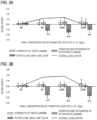
- FIG. 2B illustrates the results of sensory evaluation of the fermented seasoning described in Table 4.
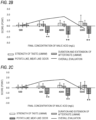
- FIG. 2C illustrates the results of sensory evaluation of the fermented seasoning described in Table 5.
- the potato-like odor was reduced as compared with the case where malic acid was not added.
- the sourness and harshness of the fermented seasoning in which the final concentration of malic acid was 5,000 mg/L were strong, and the score of the overall evaluation was low. Accordingly, the concentration range of malic acid that contributes to achievement of the preferred effect was 600 mg/L to 4,000 mg/L.
- FIG. 3A illustrates the results of sensory evaluation of the fermented seasoning described in Table 6.
- FIG. 3B illustrates the results of sensory evaluation of the fermented seasoning described in Table 7.
- FIG. 3C illustrates the results of sensory evaluation of the fermented seasoning described in Table 8.
- the potato-like odor was reduced as compared with the case where phenethyl acetate was not added.
- the rose-like aroma of the fermented seasoning in which the final concentration of phenethyl acetate was 1,200 ⁇ 10 -3 mg/L was strong, and the score of the overall evaluation was low. Accordingly, the concentration range of phenethyl acetate that contributes to achievement of the preferred effect was 40 ⁇ 10 -3 mg/L to 1,000 ⁇ 10 -3 mg/L.
- 2-(methylthio)ethanol, malic acid, and phenethyl acetate were added to the foxtail millet soy sauce (manufactured by OHTAKASHOYU CORPORATION) and the broad bean soy sauce (manufactured by TAKAHASHI SHOTEN), respectively, to achieve the final concentrations thereof as illustrated in Tables 11 and 12.
- the contents of 2-(methylthio)ethanol, malic acid, and phenethyl acetate in the above-described foxtail millet soy sauce and broad bean soy sauce are as illustrated in Table 10.
- the broad bean soy sauce and the foxtail millet soy sauce to which 2-(methylthio)ethanol, malic acid, and phenethyl acetate were not added were used as the reference level (0 point), respectively.
- the fermented seasoning described in Table 11 and Table 12 were subjected to the sensory evaluation in the same manner as in Example 1 except that the fermented seasoning used as the reference level was different.
- Table 11 and FIG. 5 illustrate results of the fermented seasoning using the broad bean soy sauce
- Table 12 and FIG. 6 illustrate results of the fermented seasoning using the foxtail millet soy sauce.
- the fermented seasoning according to the present embodiment contains 2-(methylthio)ethanol in an amount of 3 mg/L to 100 mg/L to have desirable and lasting umami.
Landscapes
- Health & Medical Sciences (AREA)
- Nutrition Science (AREA)
- Life Sciences & Earth Sciences (AREA)
- Chemical & Material Sciences (AREA)
- Engineering & Computer Science (AREA)
- Food Science & Technology (AREA)
- Polymers & Plastics (AREA)
- Seasonings (AREA)
- Soy Sauces And Products Related Thereto (AREA)
Abstract
Description
- The present invention relates to a fermented seasoning and a method for producing a fermented seasoning.
- Soy sauce is a seasoning produced by fermentation of raw materials such as soybeans, wheat, and a common salt using yeasts or the like. Food materials can be dipped in soy sauce or soy sauce can be dripped over food materials. Soy sauce has a wide variety of applications, such as use for cooking of boiled food, broiled food, sauté, and the like. Soy sauce is also used as raw materials of soup, sauce, and the like.
- In order to provide a desirable flavor in food materials and cooked products, soy sauce is required to have umami. It is conventionally common that a sulfur-containing compound imparts body, lastingness, and spreading to an umami solution (Non-Patent Literature 1). It is also common that by heating a seasoning liquid in which soy sauce, soup stocks, or the like is mixed with a sulfur-containing compound such as cysteine or glutathione, the aroma, flavor, or desirable taste of the seasoning liquid is enhanced (Patent Literature 1). Further, it is common that a method for producing a soy sauce-like seasoning having an enhanced heated meat-like aroma, includes a step of heating soy sauce in the presence of pentose, 4-hydroxy-5-methyl-3(2H)-furanone (HMF) and/or a sulfur-containing compound (Patent Literature 2).
-
- Patent Literature 1:
Japanese Patent No. 3588817 - Patent Literature 2:
JP2018-042497A - Non-Patent Literature 1: Ueda Y et al., Composition of Sulfur-Containing Components in Onion and Their Flavor Characters, Biosci. Biotech. Biochem., January 1, 1994, Volume 58,
-
Patent Literatures - As a result of diligent studies to solve the above problems, the present inventors have found that when a fermented seasoning contains 2-(methylthio)ethanol in a certain amount, umami is surprisingly enhanced and lasting, and has completed the present invention based on this finding.
- That is, the present invention is as follows.
- [1] A fermented seasoning containing 2-(methylthio)ethanol in an amount of 3 mg/L or more and 100 mg/L or less.
- [2] The fermented seasoning according to [1], containing malic acid in an amount of 600 mg/L or more and 4,000 mg/L or less.
- [3] The fermented seasoning according to [1] or [2], containing phenethyl acetate in an amount of 40 × 10-3 mg/L or more and 1,000 × 10-3 mg/L or less.
- [4] A method for producing the fermented seasoning according to [1], the method including adding 2-(methylthio)ethanol to a base fermented seasoning.
- According to the present invention, a fermented seasoning having desirable and lasting umami can be provided. According to the present invention, a method for producing a fermented seasoning having desirable umami can be provided.
-
- [
FIG. 1] FIG. 1 is a graph illustrating results of a sensory evaluation of the fermented seasoning in Example 1. An average value is indicated by a bar graph, and a standard deviation is indicated by an error bar. Note that ** means that the difference is statistically significant (p < 0.05) by a t-test. - [
FIG. 2A] FIG. 2A is a graph illustrating results of a sensory evaluation of the fermented seasoning containing 2-(methylthio)ethanol in an amount of 3 mg/L and malic acid in various concentrations in Example 2. An average value is indicated by a bar graph, and a standard deviation is indicated by an error bar. Note that ** means that the difference is statistically significant (p < 0.05) by a t-test. - [
FIG. 2B] FIG. 2B is a graph illustrating results of a sensory evaluation of the fermented seasoning containing 2-(methylthio)ethanol in an amount of 50 mg/L and malic acid in various concentrations in Example 2. An average value is indicated by a bar graph, and a standard deviation is indicated by an error bar. Note that ** means that the difference is statistically significant (p < 0.05) by a t-test. - [
FIG. 2C] FIG. 2C is a graph illustrating results of a sensory evaluation of the fermented seasoning containing 2-(methylthio)ethanol in an amount of 100 mg/L and malic acid in various concentrations in Example 2. An average value is indicated by a bar graph, and a standard deviation is indicated by an error bar. Note that ** means that the difference is statistically significant (p < 0.05) by a t-test. - [
FIG. 3A] FIG. 3A is a graph illustrating results of a sensory evaluation of the fermented seasoning containing 2-(methylthio)ethanol in an amount of 3 mg/L and phenethyl acetate in various concentrations in Example 3. An average value is indicated by a bar graph, and a standard deviation is indicated by an error bar. Note that ** means that the difference is statistically significant (p < 0.05) by a t-test. - [
FIG. 3B] FIG. 3B is a graph illustrating results of a sensory evaluation of the fermented seasoning containing 2-(methylthio)ethanol in an amount of 50 mg/L and phenethyl acetate in various concentrations in Example 3. An average value is indicated by a bar graph, and a standard deviation is indicated by an error bar. Note that ** means that the difference is statistically significant (p < 0.05) by a t-test. - [
FIG. 3C] FIG. 3C is a graph illustrating results of a sensory evaluation of the fermented seasoning containing 2-(methylthio)ethanol in an amount of 100 mg/L and phenethyl acetate in various concentrations in Example 3. An average value is indicated by a bar graph, and a standard deviation is indicated by an error bar. Note that ** means that the difference is statistically significant (p < 0.05) by a t-test. - [
FIG. 4] FIG. 4 is a graph illustrating results of a sensory evaluation of the fermented seasoning in Example 4. An average value is indicated by a bar graph, and a standard deviation is indicated by an error bar. Note that ** means that the difference is statistically significant (p < 0.05) by a t-test. - [
FIG. 5] FIG. 5 is a graph illustrating results of a sensory evaluation of the fermented seasoning using broad bean soy sauce in Example 5. An average value is indicated by a bar graph, and a standard deviation is indicated by an error bar. Note that ** means that the difference is statistically significant (p < 0.05) by a t-test. - [
FIG. 6] FIG. 6 is a graph illustrating results of a sensory evaluation of the fermented seasoning using foxtail millet soy sauce in Example 5. An average value is indicated by a bar graph, and a standard deviation is indicated by an error bar. Note that ** means that the difference is statistically significant (p < 0.05) by a t-test. - Hereinafter, a fermented seasoning and a method for producing a fermented seasoning according to the present invention will be described in detail, but these are examples of desirable embodiments. The present invention is not limited to these contents.
- The expression "to" of a numerical range is a range including the numerical values before and after it. For example, "0 mass% to 100 mass%" means a range of 0 mass% or more and 100 mass% or less.
- As used herein, "fermented seasoning" means a seasoning obtained by fermentation. Examples of the fermented seasoning include yeast-fermented seasoning, lactic acid bacteria-fermented seasoning, yeast lactic acid bacteria-fermented seasoning, and soy sauce-like seasoning. A yeast-fermented seasoning is preferred. The yeast-fermented seasoning means a seasoning obtained by fermentation using yeast, the lactic acid bacteria-fermented seasoning means a seasoning obtained by fermentation using lactic acid bacteria, and the yeast lactic acid bacteria-fermented seasoning means a seasoning obtained by fermentation using yeast and lactic acid bacteria.
- As used herein, "soy sauce" means the "soy sauce" defined by The Japanese Agricultural Standards (May 28, 2015, Ministry of Agriculture, Forestry and Fisheries, Notification No. 1387).
- As used herein, "soy sauce-like seasoning" preferably refers to a liquid seasoning used for the same purposes as the "soy sauce" defined by The Japanese Agricultural Standards, and is a concept including soy sauce and processed soy sauce products. Raw materials (for example, soybeans, and wheat) derived from a soy sauce koji are not necessarily required to be used for the soy sauce-like seasoning, provided that the soy sauce-like seasoning is used for the same purpose as the "soy sauce". The soy sauce-like seasoning in the present description may be "one that is authentically brewed" in the same manner as described for the "soy sauce" defined by The Japanese Agricultural Standards.
- The fermented seasoning in the present description may contain additives such as a fruit juice, a vegetable juice, extracts, soup stocks, sugars, seasoning, alcohol, fermented seasoning, acidulants, and flavoring agents. In addition, the fermented seasoning in the present description may be obtained by using a cereal-derived raw materials such as soybean, barley or wheat, rice, broad bean, foxtail millet, and pea, or vegetables or a fruit such as tomato, onion, carrot, and grape.
- As used herein, "koku attribute" means a deep, pleasant flavor with lasting tastes including umami, that stays in the mouth after eating or drinking.
- The fermented seasoning according to the present embodiment contains 2-(methylthio)ethanol in an amount of 3 mg/L to 100 mg/L. When the fermented seasoning contains 2-(methylthio)ethanol in an amount of 3 mg/L to 100 mg/L, the fermented seasoning has desirable umami and the umami lasts.
- The concentration of 2-(methylthio)ethanol can be appropriately set in a range of 3 mg/L to 100 mg/L according to the intended use, the type of the fermented seasoning, and the like. In the fermented seasoning according to the present embodiment, the concentration of 2-(methylthio)ethanol is preferably 3 mg/L to 100 mg/L, and more preferably 3 mg/L to 30 mg/L, from the viewpoint of maintaining the balance of the overall flavor in the seasoning.
- The concentration of 2-(methylthio)ethanol can be measured by, for example, a gas chromatograph mass spectrometer (GC-MS).
- The fermented seasoning according to the present embodiment may contain malic acid in an amount of 600 mg/L to 4,000 mg/L from the viewpoint of reducing the potato-like odor derived from 2-(methylthio)ethanol. The concentration of malic acid can be appropriately set in a range of 600 mg/L to 4,000 mg/L according to the intended use, the type of the fermented seasoning, and the like.
- In the fermented seasoning according to the present embodiment, the concentration of malic acid is preferably 600 mg/L to 4,000 mg/L, and more preferably 1,000 mg/L to 3,000 mg/L, from the viewpoint of maintaining the balance of the overall flavor in the seasoning.
- The concentration of malic acid can be measured by, for example, a liquid chromatograph mass spectrometer (LC-MS).
- The fermented seasoning according to the present embodiment may contain phenethyl acetate in an amount of 40 × 10-3 mg/L to 1,000 × 10-3 mg/L from the viewpoint of reducing the potato-like odor derived from 2-(methylthio)ethanol. The concentration of phenethyl acetate can be appropriately set in a range of 40 × 10-3 mg/L to 1,000 × 10-3 mg/L according to the intended use, the type of the fermented seasoning, and the like.
- In the fermented seasoning according to the present embodiment, the concentration of phenethyl acetate is preferably 40 × 10-3 mg/L to 1,000 × 10-3 mg/L, and more preferably 40 × 10-3 mg/L to 200 × 10-3 mg/L, from the viewpoint of maintaining the balance of the overall flavor in the seasoning.
- The concentration of phenethyl acetate can be measured by, for example, GC-MS.
- The fermented seasoning according to the present embodiment may contain 4-Hydroxy-2 (or 5) ethyl-5 (or 2) methyl-3(2H)-furanone (hereinafter also referred to as "HEMF"). The concentration of HEMF in the fermented seasoning is preferably 0.2 mg/L to 500 mg/L, and particularly preferably 5.0 mg/L to 200 mg/L. When the concentration of HEMF is 0.2mg/L or more, preferred aroma of soy sauce is sensed. When the concentration of HEMF is 5.0 mg/L or more, preferred aroma of soy sauce is further remarkably sensed. When the concentration of HEMF is 500 mg/L or less, the aroma of components does not become extremely strong, and the balance of the aroma can be ensured.
- HEMF can be analyzed and quantified by a gas chromatography method (refer to Journal of Agricultural and Food Chemistry Vol.39, 934 (1991)).
- The salt concentration of the fermented seasoning according to the present embodiment is not particularly limited, but is preferably 20% (w/v) or less, and more preferably 17% (w/v) or less, from the viewpoint of flavor for the application such as dipping, dropping , or cooking. In the fermented seasoning according to the present embodiment, a lower limit of the salt concentration is not particularly limited, and may be 0% (w/v) (non-salt).
- The salt concentration can be measured by a common method such as potentiometry and the Mohr's method.
- Examples of a non-limiting specific aspect of the fermented seasoning according to an aspect of the present invention include a fermented seasoning in which the contents of 2-(methylthio)ethanol and malic acid are (1-1) and (1-2) as follows, respectively:
- (1-1) Content of 2-(methylthio)ethanol: 3 mg/L to 100 mg/L
- (2-1) Content of malic acid: 600 mg/L to 4,000 mg/L
- Examples of a non-limiting specific aspect of the fermented seasoning according to an aspect of the present invention include a fermented seasoning in which the amount of malic acid is preferably 6 parts by weight to 1,333 parts by weight, and more preferably 33 parts by weight to 1,000 parts by weight, with respect to 1 part by weight of 2-(methylthio)ethanol.
- Examples of non-limiting specific aspect of the fermented seasoning according to an aspect of the present invention include a fermented seasoning in which the contents of 2-(methylthio)ethanol and phenethyl acetate are (1-2) and (3-2) as follows, respectively:
- (1-2) Content of 2-(methylthio)ethanol: 3 mg/L to 100 mg/L
- (3-2) Content of phenethyl acetate: 40 × 10-3 mg/L to 1,000 × 10-3 mg/L
- Examples of a non-limiting specific aspect of the fermented seasoning according to an aspect of the present invention include a fermented seasoning in which the amount of phenethyl acetate is preferably 0.0004 parts by weight to 0.333 parts by weight, and more preferably 0.001 parts by weight to 0.067 parts by weight, with respect to 1 part by weight of 2-(methylthio)ethanol.
- Examples of a non-limiting specific aspect of the fermented seasoning according to an aspect of the present invention include a fermented seasoning in which the contents of 2-(methylthio)ethanol, malic acid, and phenethyl acetate are (1-3), (2-3), and (3-3) as follows, respectively:
- (1-3) Content of 2-(methylthio)ethanol: 3 mg/L to 100 mg/L
- (2-3) Content of malic acid: 600 mg/L to 4,000 mg/L
- (3-3) Content of phenethyl acetate: 40 × 10-3 mg/L to 1,000 × 10-3 mg/L
- Examples of a non-limiting specific aspect of the fermented seasoning according to an aspect of the present invention include the fermented seasoning in which the amounts of malic acid and phenethyl acetate are preferably 6 parts by weight to 1,333 parts by weight and 0.0004 parts by weight to 0.333 parts by weight, respectively, and more preferably 33 parts by weight to 1,000 parts by weight and 0.001 parts by weight to 0.067 parts by weight, respectively, with respect to 1 part by weight of 2-(methylthio)ethanol.
- The fermented seasoning according to the present embodiment may be used in the same manner as the "soy sauce" of The Japanese Agricultural Standards, or may be used by being blended into any food and beverages. For example, it can be used by being added to a seasoning such as tsuyu (broth, soup, dipping sauce, sauce), tare (sauce), Japanese soup stocks, Western soup stocks, Chinese soup stocks, dressing, soup, ketchup, tomato sauce, Worcestershire sauce, and other sauces.
- A method for producing a fermented seasoning containing 2-(methylthio)ethanol in an amount of 3 mg/L or more and 100 mg/L or less according to the present embodiment includes adding 2-(methylthio)ethanol to a base fermented seasoning.
- A method for producing a fermented seasoning containing 2-(methylthio)ethanol in an amount of 3 mg/L or more and 100 mg/L or less of and malic acid in an amount of 600 mg/L or more and 4,000 mg/L or less in one aspect of the present embodiment includes adding 2-(methylthio)ethanol and malic acid to a base fermented seasoning.
- A method for producing a fermented seasoning containing 2-(methylthio)ethanol in an amount of 3 mg/L or more and 100 mg/L or less and phenethyl acetate in an amount of 40 × 10-3 mg/L or more and 1,000 × 10-3 mg/L or less in one aspect of the present embodiment includes adding 2-(methylthio)ethanol and phenethyl acetate to a base fermented seasoning.
- A method for producing a fermented seasoning containing 2-(methylthio)ethanol in an amount of 3 mg/L or more and 100 mg/L or less, malic acid in an amount of 600 mg/L or more and 4,000 mg/L or less, and phenethyl acetate in an amount of 40 × 10-3 mg/L or more and 1,000 × 10-3 mg/L or less in one aspect of the present embodiment includes adding 2-(methylthio)ethanol, malic acid, and phenethyl acetate to a base fermented seasoning.
- The final concentration of 2-(methylthio)ethanol in the fermented seasoning to be produced can be appropriately set to 3 mg/L or more and 100 mg/L or less, preferably 3 mg/L to 100 mg/L, and more preferably 3 mg/L to 30 mg/L.
- The final concentration of malic acid in the fermented seasoning to be produced can be appropriately set to 600 mg/L or more and 4,000 mg/L or less, preferably 600 mg/L to 4,000 mg/L, and more preferably 1,000 mg/L to 3,000 mg/L.
- The final concentration of phenethyl acetate in the fermented seasoning to be produced can be appropriately set to 40 × 10-3 mg/L or more and 1,000 × 10-3 mg/L or less, preferably 40 × 10-3 mg/L to 1,000 × 10-3 mg/L, and more preferably 40 × 10-3 mg/L to 200 × 10-3 mg/L.
- The production method according to the present embodiment may include measuring the amount of at least one of 2-(methylthio)ethanol, malic acid, and phenethyl acetate in the base fermented seasoning before adding at least one of 2-(methylthio)ethanol, malic acid, and phenethyl acetate to the base fermented seasoning. In addition, the production method according to the present embodiment may not include heating the fermented seasoning after the above-mentioned components are added to the base fermented seasoning. In the production method according to the present embodiment, dilution, concentration (deaeration, heating, drying, heating/deaeration under reduced pressure, and the like), addition of various additives, and the like may be performed as necessary.
- As the base fermented seasoning, for example, soy sauce or liquid seasoning produced by a common method can be used.
- For example, when the base fermented seasoning contains 2-(methylthio)ethanol in an amount of 1 mg/L, a fermented seasoning containing 2-(methylthio)ethanol in an amount of 3 mg/L or more and 100 mg/L or less can be produced by adding 2-(methylthio)ethanol in an amount of 2 mg/L to 99 mg/L.
- As another example, the fermented seasoning according to the present embodiment can also be produced by producing 2-(methylthio)ethanol or the like in the base fermented seasoning through microbial fermentation. Examples of microbe used for the microbial fermentation include lactic acid bacteria and yeast.
- The obtained fermented seasoning may be refined. The refining method is not limited, and may be performed by common methods such as a membrane process, diatomaceous earth filtration, centrifugation, aggregation, and sedimentation.
- The obtained fermented seasoning may be pasteurized or processed for removal of bacteria. In the case of pasteurization, the process involves a heat pasteurization step. The heating may be performed under the heating conditions used in a common soy sauce production process. Preferably, the fermented seasoning is heated at 80°C to 85°C for 20 minutes to 60 minutes, or at 110°C to 120°C for 5 seconds to 20 seconds, and then cooled. Because the heating may produce sediments, the fermented seasoning is allowed to stand for a few days, and the supernatant is separated from the sediment to obtain the product fermented seasoning. For removal of bacteria, the fermented seasoning is, for example, filtered using a common MF membrane, and the filtrate is obtained as the product fermented seasoning.
- Hereinafter, the present invention will be described more specifically based on Examples. However, the present invention is not limited to the following Examples.
- An influence of adding 2-(methylthio)ethanol on a fermented seasoning was evaluated.
- <Production of Fermented Seasoning Containing 2-(methylthio)ethanol> 2-(methylthio)ethanol was added to a koikuchi (dark-colored) soy sauce ("KOIKUCHISHOYU" manufactured by KIKKOMAN CORPORATION) to achieve the final concentration thereof as illustrated in Table 2. The above-mentioned koikuchi (dark-colored) soy sauce contains 2-(methylthio)ethanol in an amount of 1.5 mg/L, malic acid in an amount of 364 mg/L, and phenethyl acetate in an amount of 16 × 10-3 mg/L.
- The fermented seasoning described in Table 2 was subjected to sensory evaluation. The sensory evaluation was made by ten panelists having a discrimination ability. The panelists were asked to evaluate 1: taste (umami), 2: aftertaste (umami), 3: potato-like or meat-like odor, and 4: overall flavor, in seven levels as shown in Table 1, relative to a koikuchi (dark-colored) soy sauce to which 2-(methylthio)ethanol was not added as the reference level (0 point), and average values and standard deviations were calculated. The taste refers to a taste that is sensed gradually after containing the seasoning in the mouth. The aftertaste refers to a taste that stays in the mouth as an afterglow after taking in the seasoning. Results are illustrated in Table 2 and
FIG. 1 .[Table 1] Evaluation criteria 1: strength of taste (umami) Evaluation criteria 3: strength of potato-like or meat- like odor 3 Strength of taste (umami) is very strong. 3 Strength of at least one of potato-like or meat odor is very strong. 2 Strength of taste (umami) is strong. 2 Strength of at least one of potato-like or meat-like odor is strong. 1 Strength of taste (umami) is slightly strong. 1 Strength of at least one of potato-like or meat-like odor is slightly strong. 0 Strength of taste (umami) is not different from the reference level. 0 Strength of potato-like and meat-like odor is not different from the reference level. -1 Strength of taste (umami) is slightly weak. -1 Strength of at least one of potato-like or meat-like odor is slightly weak. -2 Strength of taste (umami) is weak. -2 Strength of at least one of potato-like or meat-like odor is weak. -3 Strength of taste (umami) cannot be sensed. -3 Strength of at least one of potato-like or meat-like odor cannot be sensed. Evaluation criteria 2: the presence or absence of duration and extension of aftertaste (umami) Evaluation criteria 4: overall evaluation (as entire flavor) 3 Duration and extension of aftertaste (umami) is very strong. 3 Particularly preferred as compared with the reference level. 2 Duration and extension of aftertaste (umami) is strong. 2 Preferred as compared with the reference level. 1 Duration and extension of aftertaste (umami) is slightly strong. 1 Slightly preferred as compared with the reference level. 0 Duration and extension of aftertaste (umami) is not different from the reference level. 0 No difference of preference as compared with the reference level. -1 Duration and extension of aftertaste (umami) is slightly weak. -1 Slightly not preferred as compared with the reference level. -2 Duration and extension of aftertaste (umami) is weak. -2 Not preferred as compared with the reference level. -3 Duration and extension of aftertaste (umami) cannot be sensed. -3 Particularly not preferred as compared with the reference level. [Table 2] Final concentration/evaluation results Aroma component 2-(methylthio)ethanol (mg/L) 1 3 50 100 150 Evaluation items Strength of taste (umami) 0.0 1.2 2.2 2.3 2.8 Duration and extension of aftertaste (umami) 0.0 1.5 2.2 2.7 2.8 Potato-like, meat-like odor 0.0 1.2 1.2 1.8 2.8 Overall evaluation 0.0 1.8 1.8 1.3 -1.2 - By adding 2-(methylthio)ethanol to the koikuchi (dark-colored) soy sauce, an effect of enhancing the umami from taste to aftertaste was confirmed. The potato-like odor of the fermented seasoning in which the final concentration of 2-(methylthio)ethanol was 150 mg/L, was strongly sensed, and the score of the overall evaluation was low. Accordingly, the concentration range of 2-(methylthio)ethanol that contributes to achievement of the preferred effect was 3 mg/L to 100 mg/L.
- An influence of addition of 2-(methylthio)ethanol and malic acid on a fermented seasoning was evaluated.
- 2-(methylthio)ethanol and malic acid were added to a koikuchi (dark-colored) soy sauce ("KOIKUCHISHOYU" manufactured by KIKKOMAN CORPORATION) to achieve final concentrations thereof as illustrated in Table 3, Table 4, and Table 5.
- In the fermented seasoning of Table 3, a fermented seasoning to which malic acid was not added and in which the final concentration of 2-(methylthio)ethanol was 3 mg/L was used as the reference level (0 point). In the fermented seasoning of Table 4, a fermented seasoning to which malic acid was not added and in which the final concentration of 2-(methylthio)ethanol was 50 mg/L was used as the reference level (0 point). In the fermented seasoning of Table 5, a fermented seasoning to which malic acid was not added and in which the final concentration of 2-(methylthio)ethanol was 100 mg/L was used as the reference level (0 point). The fermented seasonings described in Table 3, Table 4, and Table 5 were subjected to the sensory evaluation in the same manner as in Example 1 except that the fermented seasoning used as the reference level was different. The results are illustrated in Table 3, Table 4, Table 5,
FIG. 2A ,FIG. 2B, and FIG. 2C .FIG. 2A illustrates the results of sensory evaluation of the fermented seasoning described in Table 3.FIG. 2B illustrates the results of sensory evaluation of the fermented seasoning described in Table 4.FIG. 2C illustrates the results of sensory evaluation of the fermented seasoning described in Table 5.[Table 3] Final concentration/evaluation results Aroma component Final concentration of 2-(methylthio)ethanol (mg/L) 3 3 3 3 Final concentration of malic acid (mg/L) 500 600 4,000 5,000 Evaluation items Strength of taste (umami) 0.2 0.7 0.8 0.8 Duration and extension of aftertaste (umami) 0.2 0.3 0.3 0.3 Potato-like, meat-like odor 0.2 -1.2 -1.2 -1.0 Overall evaluation 0.2 1.8 1.7 -0.2 [Table 4] Final concentration/evaluation results Aroma component Final concentration of 2-(methylthio)ethanol (mg/L) 50 50 50 50 Final concentration of malic acid (mg/L) 500 600 4,000 5,000 Evaluation items Strength of taste (umami) 0.2 0.3 0.5 0.8 Duration and extension of aftertaste (umami) 0.2 0.3 0.3 0.5 Potato-like, meat-like odor 0.2 -1.2 -1.5 -1.3 Overall evaluation 0.2 1.2 1.7 -0.5 [Table 5] Final concentration/evaluation results Aroma component Final concentration of 2-(methylthio)ethanol (mg/L) 100 100 100 100 Final concentration of malic acid (mg/L) 500 600 4,000 5,000 Evaluation items Strength of taste (umami) 0.2 0.3 0.5 0.3 Duration and extension of aftertaste (umami) 0.2 0.3 0.3 0.5 Potato-like, meat-like odor 0.2 -1.2 -1.5 -1.2 Overall evaluation 0.2 1.3 1.7 -0.5 - By adding malic acid to the koikuchi (dark-colored) soy sauce in addition to 2-(methylthio)ethanol, the potato-like odor was reduced as compared with the case where malic acid was not added. The sourness and harshness of the fermented seasoning in which the final concentration of malic acid was 5,000 mg/L were strong, and the score of the overall evaluation was low. Accordingly, the concentration range of malic acid that contributes to achievement of the preferred effect was 600 mg/L to 4,000 mg/L.
- An influence of addition of 2-(methylthio)ethanol and phenethyl acetate on a fermented seasoning was evaluated.
- 2-(methylthio)ethanol and phenethyl acetate were added to a koikuchi (dark-colored) soy sauce ("KOIKUCHISHOYU" manufactured by KIKKOMAN CORPORATION) to achieve the final concentrations thereof as illustrated in Table 6, Table 7, and Table 8.
- In the fermented seasoning of Table 6, a fermented seasoning to which phenethyl acetate was not added and in which the final concentration of 2-(methylthio)ethanol was 3 mg/L was used as the reference level (0 point). In the fermented seasoning of Table 7, a fermented seasoning to which phenethyl acetate was not added and in which the final concentration of 2-(methylthio)ethanol was 50 mg/L was used as the reference level (0 point). In the fermented seasoning of Table 8, a fermented seasoning to which phenethyl acetate was not added and in which the final concentration of 2-(methylthio)ethanol was 100 mg/L was used as the reference level (0 point). The fermented seasonings described in Table 6, Table 7, and Table 8 were subjected to the sensory evaluation in the same manner as in Example 1 except that the fermented seasoning used as the reference level was different. The results are illustrated in Table 6, Table 7, Table 8,
FIG. 3A, FIG. 3B , andFIG. 3C .FIG. 3A illustrates the results of sensory evaluation of the fermented seasoning described in Table 6.FIG. 3B illustrates the results of sensory evaluation of the fermented seasoning described in Table 7.FIG. 3C illustrates the results of sensory evaluation of the fermented seasoning described in Table 8.[Table 6] Final concentration/evaluation results Aroma component Final concentration of 2-(methylthio)ethanol (mg/L) 3 3 3 3 Final concentration of phenethyl acetate (mg/L) 30 × 10-3 40 × 10-3 1,000 × 10-3 1,200 × 10-3 Evaluation items Strength of taste (umami) 0.2 0.3 0.3 0.5 Duration and extension of aftertaste (umami) 0.2 0.3 0.5 0.3 Potato-like, meat-like odor 0.2 -1.2 -1.5 -1.0 Overall evaluation 0.2 1.2 1.3 -0.2 [Table 7] Final concentration/evaluation results Aroma component Final concentration of 2-(methylthio)ethanol (mg/L) 50 50 50 50 Final concentration of phenethyl acetate (mg/L) 30 × 10-3 40 × 10-3 1,000 × 10-3 1,200 × 10-3 Evaluation items Strength of taste (umami) 0.2 0.3 0.3 0.5 Duration and extension of aftertaste (umami) 0.2 0.3 0.3 0.2 Potato-like, meat-like odor 0.2 -1.5 -1.8 -1.7 Overall evaluation 0.2 1.7 1.8 -0.2 [Table 8] Final concentration/evaluation results Aroma component Final concentration of 2-(methylthio)ethanol (mg/L) 100 100 100 100 Final concentration of phenethyl acetate (mg/L) 30 × 10-3 40 × 10-3 1,000 × 10-3 1,200 × 10-3 Evaluation items Strength of taste (umami) 0.2 0.2 0.3 0.5 Duration and extension of aftertaste (umami) 0.2 0.3 0.3 0.2 Potato-like, meat-like odor -0.2 -1.2 -1.8 -1.7 Overall evaluation 0.2 1.7 1.3 -0.2 - By adding phenethyl acetate to the koikuchi (dark-colored) soy sauce in addition to 2-(methylthio)ethanol, the potato-like odor was reduced as compared with the case where phenethyl acetate was not added. The rose-like aroma of the fermented seasoning in which the final concentration of phenethyl acetate was 1,200 × 10-3 mg/L was strong, and the score of the overall evaluation was low. Accordingly, the concentration range of phenethyl acetate that contributes to achievement of the preferred effect was 40 × 10-3 mg/L to 1,000 × 10-3 mg/L.
- An influence of addition of 2-(methylthio)ethanol, malic acid, and phenethyl acetate on a fermented seasoning was evaluated.
- 2-(methylthio)ethanol, malic acid, and phenethyl acetate were added to a koikuchi (dark-colored) soy sauce ("KOIKUCHISHOYU" manufactured by KIKKOMAN CORPORATION) to achieve the final concentrations thereof as illustrated in Table 9.
- In the fermented seasoning of Table 9, a fermented seasoning to which malic acid and phenethyl acetate were not added and in which the final concentration of 2-(methylthio)ethanol was 3 mg/L was used as the reference level (0 point). The fermented seasoning described in Table 9 was subjected to the sensory evaluation in the same manner as in Example 1 except that the fermented seasoning used as the reference level was different. The results are illustrated in Table 9 and
FIG. 4 .[Table 9] Final concentration/evaluation results Test example A B C Aroma component Final concentration of 2-(methylthio)ethanol (mg/L) 3 3 3 Final concentration of malic acid (mg/L) 600 364 600 Final concentration of phenethyl acetate (mg/L) 16 × 10-3 40 × 10-3 40 × 10-3 Evaluation items Strength of taste (umami) 0.5 0.3 0.7 Duration and extension of aftertaste (umami) 0.3 0.3 0.7 Potato-like, meat-like odor -1.2 -1.2 -1.5 Overall evaluation 1.0 1.2 2.3 - In the fermented seasoning to which three components of 2-(methylthio)ethanol, malic acid, and phenethyl acetate were added, an effect of reducing the potato-like odor derived from 2-(methylthio)ethanol was confirmed, and the score of the overall evaluation was also high. Accordingly, it was found that the fermented seasoning obtained by adding three components of 2-(methylthio)ethanol, malic acid, and phenethyl acetate also exerts excellent effects similar to the fermented seasoning obtained by adding two components of 2-(methylthio)ethanol and malic acid or phenethyl acetate.
- An influence of addition of 2-(methylthio)ethanol, malic acid, and phenethyl acetate on a broad bean soy sauce and a foxtail millet soy sauce was evaluated.
- 2-(methylthio)ethanol, malic acid, and phenethyl acetate were added to the foxtail millet soy sauce (manufactured by OHTAKASHOYU CORPORATION) and the broad bean soy sauce (manufactured by TAKAHASHI SHOTEN), respectively, to achieve the final concentrations thereof as illustrated in Tables 11 and 12. The contents of 2-(methylthio)ethanol, malic acid, and phenethyl acetate in the above-described foxtail millet soy sauce and broad bean soy sauce are as illustrated in Table 10.
[Table 10] 2-(methylthio)ethanol Malic acid Phenethyl acetate Broad bean soy sauce 0.038 mg/L 0.016 mg/L 6.7 × 10⁻³ mg/L Foxtail millet soy sauce 0.025 mg/L 128 mg/L 10.4 × 10⁻³ mg/L - In the fermented seasoning of Tables 11 and 12, the broad bean soy sauce and the foxtail millet soy sauce to which 2-(methylthio)ethanol, malic acid, and phenethyl acetate were not added were used as the reference level (0 point), respectively. The fermented seasoning described in Table 11 and Table 12 were subjected to the sensory evaluation in the same manner as in Example 1 except that the fermented seasoning used as the reference level was different. Table 11 and
FIG. 5 illustrate results of the fermented seasoning using the broad bean soy sauce, and Table 12 andFIG. 6 illustrate results of the fermented seasoning using the foxtail millet soy sauce.[Table 11] Final concentration/evaluation results Test example D E F G Aroma component Final concentration of 2-(methylthio)ethanol (mg/L) 3 3 3 3 Final concentration of malic acid (mg/L) 0.016 600 0.016 600 Final concentration of phenethyl acetate (mg/L) 6.7 × 10⁻³ 6.7 × 10⁻³ 40 × 10-3 40 × 10-3 Evaluation items Strength of taste (umami) 1.6 1.8 1.4 1.8 Duration and extension of aftertaste (umami) 1.4 1.8 1.8 2 Potato-like, meat-like odor 1.4 0.2 0.2 0.2 Overall evaluation 0.8 1.8 2 2.2 [Table 12] Final concentration/evaluation results Test example H I J K Aroma component Final concentration of 2-(methylthio)ethanol (mg/L) 3 3 3 3 Final concentration of malic acid (mg/L) 128 600 128 600 Final concentration of phenethyl acetate (mg/L) 10.4 × 10⁻³ 10.4 × 10⁻³ 40 × 10-3 40 × 10-3 Evaluation items Strength of taste (umami) 1.4 1.4 1.4 1.4 Duration and extension of aftertaste (umami) 1.4 1.8 1.8 2.0 Potato-like, meat-like odor 1.8 0.6 0.4 0.2 Overall evaluation 0.8 1.8 2.0 2.2 - It was confirmed that when 2-(methylthio)ethanol, malic acid, and phenethyl acetate were added to each of the broad bean soy sauce and the foxtail millet soy sauce, they had the effect of enhancing and lasting umami, and the effect of suppressing the potato-like odor as well as the cases where these components were added to the koikuchi (dark-colored) soy sauce.
- The fermented seasoning according to the present embodiment contains 2-(methylthio)ethanol in an amount of 3 mg/L to 100 mg/L to have desirable and lasting umami.
Claims (4)
- A fermented seasoning comprising 2-(methylthio)ethanol in an amount of 3 mg/L or more and 100 mg/L or less.
- The fermented seasoning according to claim 1, comprising malic acid in an amount of 600 mg/L or more and 4,000 mg/L or less.
- The fermented seasoning according to claim 1 or 2, comprising phenethyl acetate in an amount of 40 × 10-3 mg/L or more and 1,000 × 10-3 mg/L or less.
- A method for producing the fermented seasoning according to claim 1, the method comprising adding 2-(methylthio)ethanol to a base fermented seasoning.
Applications Claiming Priority (1)
| Application Number | Priority Date | Filing Date | Title |
|---|---|---|---|
| PCT/JP2022/026114 WO2024004110A1 (en) | 2022-06-29 | 2022-06-29 | Fermented seasoning |
Publications (2)
| Publication Number | Publication Date |
|---|---|
| EP4548777A1 true EP4548777A1 (en) | 2025-05-07 |
| EP4548777A4 EP4548777A4 (en) | 2026-04-08 |
Family
ID=89382347
Family Applications (1)
| Application Number | Title | Priority Date | Filing Date |
|---|---|---|---|
| EP22949384.6A Pending EP4548777A4 (en) | 2022-06-29 | 2022-06-29 | FERMENTED SPICE |
Country Status (3)
| Country | Link |
|---|---|
| EP (1) | EP4548777A4 (en) |
| JP (1) | JPWO2024004110A1 (en) |
| WO (1) | WO2024004110A1 (en) |
Family Cites Families (6)
| Publication number | Priority date | Publication date | Assignee | Title |
|---|---|---|---|---|
| JP3588817B2 (en) | 1994-05-27 | 2004-11-17 | 味の素株式会社 | How to make soy sauce with dashi |
| JP5634069B2 (en) * | 2009-11-09 | 2014-12-03 | キッコーマン株式会社 | Liquid seasoning with improved taste |
| JP2014076010A (en) * | 2012-10-11 | 2014-05-01 | Ogawa & Co Ltd | Production method of seafood flavor |
| JP6234413B2 (en) * | 2014-12-27 | 2017-11-22 | ヤマサ醤油株式会社 | Calcium-enriched soy sauce seasoning |
| JP2018042497A (en) | 2016-09-14 | 2018-03-22 | キッコーマン株式会社 | Manufacturing method of soy source-like seasoning with enhanced heated meat-like flavor |
| JP6815549B1 (en) * | 2020-05-22 | 2021-01-20 | キッコーマン株式会社 | Container-packed seasoning composition and its use, and packaged processed foods |
-
2022
- 2022-06-29 JP JP2024530183A patent/JPWO2024004110A1/ja active Pending
- 2022-06-29 EP EP22949384.6A patent/EP4548777A4/en active Pending
- 2022-06-29 WO PCT/JP2022/026114 patent/WO2024004110A1/en not_active Ceased
Also Published As
| Publication number | Publication date |
|---|---|
| WO2024004110A1 (en) | 2024-01-04 |
| EP4548777A4 (en) | 2026-04-08 |
| JPWO2024004110A1 (en) | 2024-01-04 |
Similar Documents
| Publication | Publication Date | Title |
|---|---|---|
| EP4070668B1 (en) | Acetic acid-containing food or drink | |
| EP4066652B1 (en) | Acetic acid-containing food or drink | |
| KR101848127B1 (en) | Method of manufacturing functionality seasoning source utilizing a shiitake extract and aged soybean paste | |
| CN1976597B (en) | Liquid seasoning and method for producing same | |
| WO2008004378A1 (en) | Process for producing tomato vinegar and tomato vinegar | |
| JP5989301B2 (en) | seasoning | |
| JP5881190B2 (en) | Soy sauce-like seasoning | |
| JP5101727B2 (en) | Soy sauce-like seasoning | |
| CN111447840B (en) | Sauce composition and method for preparing the same | |
| US20250255334A1 (en) | Pasteurized soy sauce | |
| WO2013073249A1 (en) | Soy sauce-like seasoning | |
| EP3207808B1 (en) | Low-ph soy sauce | |
| JP5290721B2 (en) | Flavor improving method for bonito extract or seasoning containing bonito extract | |
| JP6253182B2 (en) | Tomato-containing seasoning | |
| KR102168356B1 (en) | Soy sauce style seasoning | |
| JP7619817B2 (en) | Vinegar | |
| WO2024004110A1 (en) | Fermented seasoning | |
| KR102713457B1 (en) | Method for Preparing Soy Sauce with Improved Flavor Using Two Stage Decoction | |
| JP6563205B2 (en) | Soy sauce-like seasoning or soy sauce flavor improver containing low molecular weight esters | |
| EP3997987B1 (en) | Food product containing heated vegetable substance, cooked vegetable processed substance-containing food product, method for producing the same, and method for reducing undesirable taste of vegetable | |
| KR20250096855A (en) | How to improve flavor | |
| JP2025101750A (en) | Onion extract that imparts heat resistance to foods and beverages | |
| WO2021246518A1 (en) | Fermented onion seasoning liquid |
Legal Events
| Date | Code | Title | Description |
|---|---|---|---|
| STAA | Information on the status of an ep patent application or granted ep patent |
Free format text: STATUS: THE INTERNATIONAL PUBLICATION HAS BEEN MADE |
|
| PUAI | Public reference made under article 153(3) epc to a published international application that has entered the european phase |
Free format text: ORIGINAL CODE: 0009012 |
|
| STAA | Information on the status of an ep patent application or granted ep patent |
Free format text: STATUS: REQUEST FOR EXAMINATION WAS MADE |
|
| 17P | Request for examination filed |
Effective date: 20250127 |
|
| AK | Designated contracting states |
Kind code of ref document: A1 Designated state(s): AL AT BE BG CH CY CZ DE DK EE ES FI FR GB GR HR HU IE IS IT LI LT LU LV MC MK MT NL NO PL PT RO RS SE SI SK SM TR |
|
| XX | Miscellaneous (additional remarks) |
Free format text: THE APPLICANT HAS FILED AN ABSTRACT WITH WHICH IT IS INTENDED TO BRING THE TRANSLATION INTO CONFORMITY WITH THE APPLICATION AS FILED (ART. 14(2) EPC). |
|
| DAV | Request for validation of the european patent (deleted) | ||
| DAX | Request for extension of the european patent (deleted) | ||
| A4 | Supplementary search report drawn up and despatched |
Effective date: 20260309 |
|
| RIC1 | Information provided on ipc code assigned before grant |
Ipc: A23L 27/20 20160101AFI20260303BHEP Ipc: A23L 27/00 20160101ALI20260303BHEP Ipc: A23L 27/50 20160101ALI20260303BHEP |